Categories
Contents

Borderless, July 2025

Art by Sohana Manzoor

Editorial

‘…I write from my heart of the raging tempest…’.Click here to read.

Translations

Jibanananda Das’s poem, Given the Boon of Eternity, has been translated from Bengali by Professor Fakrul Alam. Click here to read.

Karim Dashti’s short poems have been translated from Balochi by Fazal Baloch. Click here to read.

Five poems by Sangram Jena have been translated from Odia by Snehprava Das. Click here to read.

Surya Dhananjay’s story, Mastan Anna, has been translated from Telugu by Rahimanuddin Shaik. Click here to read.

The Last Letter, a poem by Ihlwha Choi  has been translated from Korean by the poet himself. Click here to read.

Tagore’s Probhatey (In the Morning) has been translated from Bengali by Mitali Chakravarty. Click here to read.

Poetry

Click on the names to read the poems

Luis Cuauhtémoc Berriozábal, Snehaprava Das, David R Mellor, Snigdha Agrawal, George Freek, Laila Brahmbhatt, Tracy Lee Duffy, John Swain, Amarthya Chandar, Craig Kirchner, Shamim Akhtar, Jason Ryberg, Momina Raza, Ryan Quinn Flanagan, Shahriyer Hossain Shetu, Rhys Hughes

Musings/ Slices from Life

What is Great Anyway?

Farouk Gulsara explores the idea of ‘greatness’ as reflected in history. Click here to read.

From Cape Canaveral to Carnarvon

Merdith Stephens writes of her museum experiences with photographs from Alan Nobel. Click here to read.

A Journey through Pages

Odbayar Dorj writes of library culture in Japan and during her childhood, in Mongolia. Click here to read.

By the Banks of the Beautiful Gomti

Prithvijeet Sinha strolls through the park by the riverfront and muses. Click here to read.

Dhruba Esh & Amiyashankar

Ratnottama Sengupta muses on her encounter with the writings of eminent artist and writer, Dhruba Esh, and translates one his many stories, Amiyashankar Go Back Home from Bengali. Click here to read.

Musings of a Copywriter

In Gastronomy & Inspiration? Sherbets and More…, Devraj Singh Kalsi looks at vintage flavours. Click here to read.

Notes from Japan

In Summer Vacation in Japan: Beetle Keeping and Idea Banks, Suzanne Kamata narrates her experience of school holidays in Japan. Click here to read.

Essays


It doesn’t Rain in Phnom Penh

Mohul Bhowmick writes of his trip to Phnom Penh and Siem Reap. Click here to read.

Haunted by Resemblances: Hunted by Chance

Aparajita De introspects with focus on serendipity. Click here to read.

Stories

Blue Futures, Drowned Pasts

Md Mujib Ullah writes a short cli-fi based on real life events. Click here to read.

Unspoken

Spandan Upadhyay gives a story around relationships. Click here to read.

Misjudged

Vidya Hariharan gives a glimpse of life. Click here to read.

Nico Returns to Burgaz

Paul Mirabile writes about growing up and reclaiming from heritage. Click here to read.

Feature

A review of Anuradha Kumar’s Wanderers, Adventurers, Missionaries: Early Americans in India and an interview with the author. Click here to read.

Book Excerpts

An excerpt from Rhys Hughes’ The Eleventh Commandment And Other Very Short Fictions. Click here to read.

An excerpt from Snehprava Das’s Keep It Secret. Click here to read.

Book Reviews

Somdatta Mandal reviews Dilip K Das’s Epidemic Narratives: The Cultural Construction of Infectious Disease Outbreaks in India. Click here to read.

Rakhi Dalal reviews Rajat Chjaudhuri’s Wonder Tales for a Warming Planet. Click here to read.

Gower Bhat has reviewed Neha Bansal’s Six of Cups. Click here to read.

Bhaskar Parichha reviews Jagadish Shukla’s A Billion Butterflies: A Life in Climate and Chaos Theory. Click here to read.

.

Click here to access the Borderless anthology, Monalisa No Longer Smiles

Click here to access Monalisa No Longer Smiles on Amazon International
Categories
Editorial

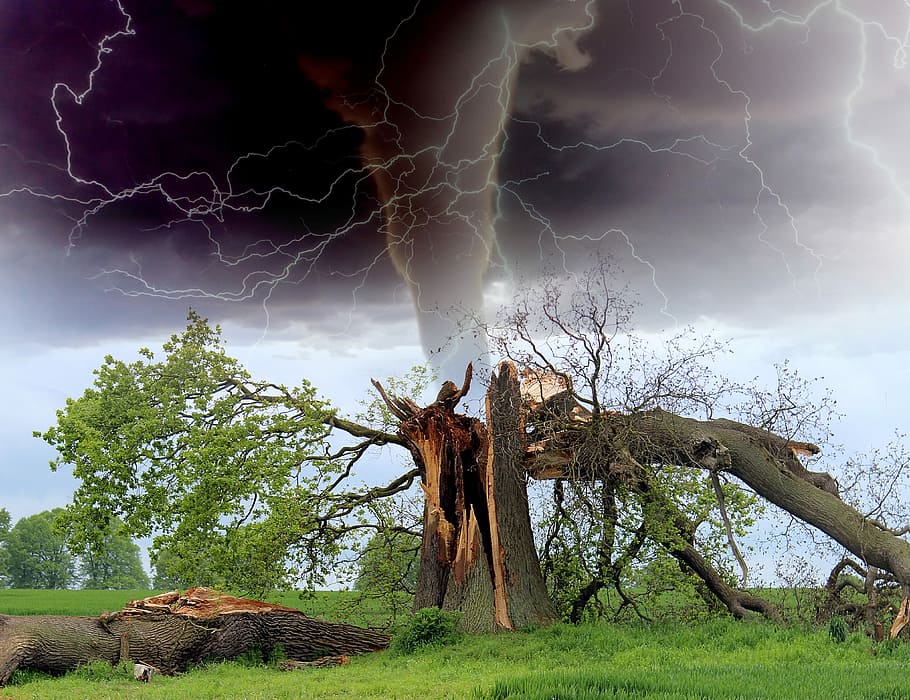
‘…I write from my heart of the raging tempest…’

I can see the heartbreak, 
Hear the wailing, the awakening,
I write from my heart
Of the raging tempest.

— Translation of Probhatey or ‘In the Morning’ by Rabindranath Tagore (1906)

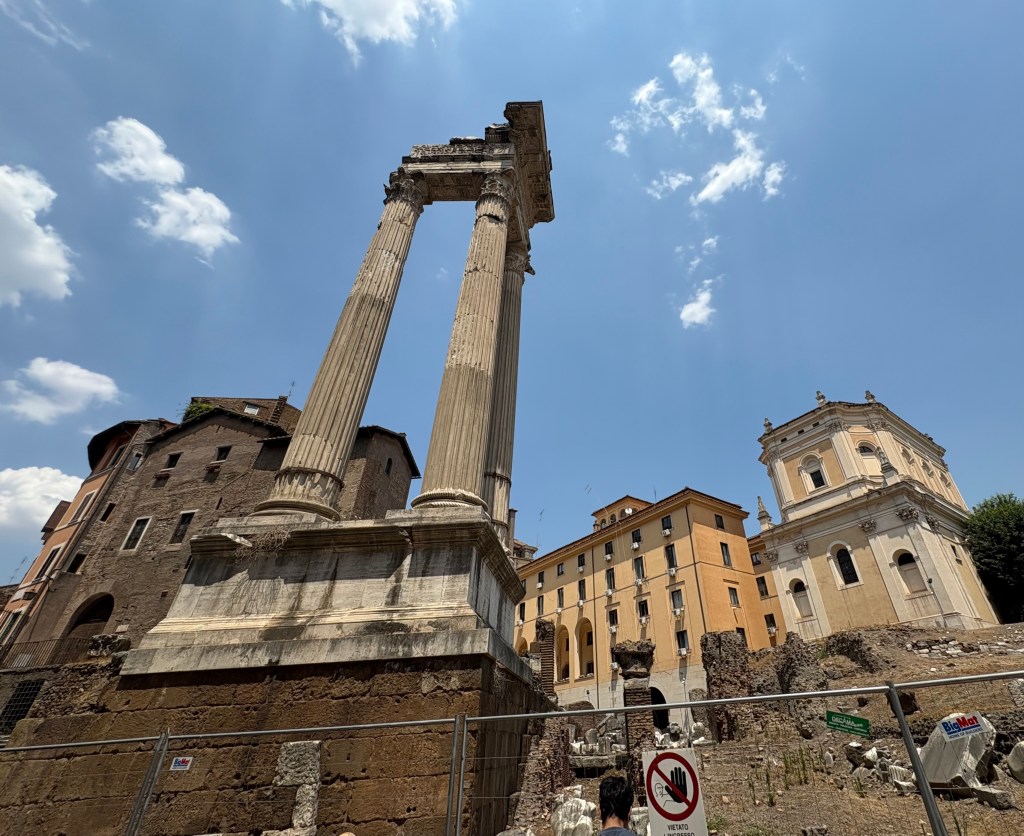
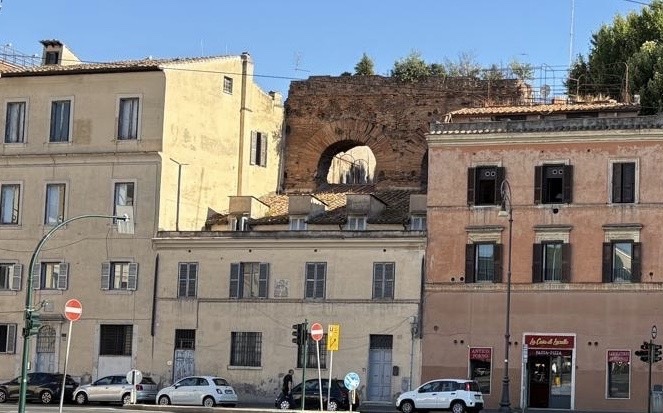
All around us, we hear of disasters. Often, we try to write of these as Tagore seems to do in the above lines. However, these lines follow after he says he draws solace and inspiration from a ‘serene lotus’, pristine and shining with vibrancy. He gazes at it while looking for that still point which helps him create an impact with words. That is perhaps what we can hope to do too — wait for a morning where clarity will show us the path to express not just what we see, but to find a way to heal and help. Finding parallels in great writings of yore to our own attempts at recreating the present makes us realise that perhaps history is cyclical. In Rome, new structures rear up against thousand-year walls, reflecting how the past congeals into the present.

Congealing the past into our present in this July’s issue are stories of American migrants — like Tom Alter’s family who made India their home — by Anuradha Kumar in her new non-fiction Wanderers, Adventurers, Missionaries: Early Americans in India. We feature this book with a review and an interview with the author where she tells us how and why she chose to write on these people. We have more people writing of their own wanderings. Mohul Bhowmick wanders into Cambodia and makes friends over a local sport while Prithvijeet Sinha strolls by the banks of the River Gomti in Lucknow. Meredith Stephens not only takes us to the Prime Meridien in Greenwich but also to Carnarvon which houses a science and technology centre in Australia. Devraj Singh Kalsi wanders with humour to discover gastronomical inspiration and hopes for sweeter recompense.

The dialogue started by Professor Fakrul Alam on libraries earlier with his essay and by Kalsi (with a pinch of humour) has been continued by Odbayar Dorj. She talks of the fading culture of libraries in Mongolia, her home country, and the vibrant culture that has blossomed in Japan. Suzanne Kamata writes of the rituals of summer holidays in Japan… including looking after a pet dung beetles.

Farouk Gulsara muses on ‘greatness’ as a concept with irony. Aparajita De muses on the word serendipity, applying it to her own situation while Ratnottama Sengupta muses on her encounter with the writings of eminent cover artist and writer who is not only a recipient of the Bangla Academy literary award but also immensely popular with children, Dhruba Esh, and translates one his many stories from Bengali.

In translations, Professor Alam has brought to us a beautiful poem by Jibanananda Das. Karim Drashti’s Balochi short poems have been rendered in English by Fazal Baloch and Snehaprava Das has found for us Odia poems of Sangram Jena in translation. Ihlwha Choi has rendered his own Korean poem to English while Tagore’s poem, ‘Probhatey (In the Morning)’ winds up the poetry in this section. We have more in prose — Surya Dhananjay’s story, Mastan Anna, translated from Telugu by Rahimanuddin Shaik.

In fiction, we have stories from around the world. Paul Mirabile sets his story in Burgaz. Spandan Upadhyay gives a mysterious narrative set in a world outside our waking consciousness and Vidya Hariharan gives us a glimpse of life in modern day India. From Bangladesh, Md Mujib Ullah writes a short cli-fi based on real life events.

Taking up the theme of cli-fi, Rajat Chaudhuri’s Wonder Tales for a Warming Planet seems to bring hope by suggesting adapting to changing climes. Rakhi Dalal tells us in her review: “It dares to approach the climate crisis through the lens of empathy and imagination rather than panic or guilt. In doing so, Rajat Chaudhuri gives us what many adult climate narratives fail to deliver—a reason to believe that another world is not only possible but already being imagined by the young. All we need to do is listen.” Bhaskar Parichha has discussed the autobiography of a meteorologist and Distinguished University Professor at George Mason University, Jagadish Shukla. In A Billion Butterflies: A Life in Climate and Chaos Theory, he claims Shukla has “revolutionised monsoon forecasting.” Somdatta Mandal has written about Dilip K Das’s Epidemic Narratives: The Cultural Construction of Infectious Disease Outbreaks in India. And Gower Bhat reviews Neha Bansal’s best-selling poetry collection, Six of Cups.

Poetry awakens myriad of hues in Borderless with verses from across the world. We have poems from Luis Cuauhtémoc Berriozábal, Ryan Quinn Flangan, Snehprava Das, George Freek, Laila Brahmbhatt, Tracy Lee Duffy, Amarthya Chandar, Jason Ryberg, Momina Raza, Shahriyer Hossain Shetu and more. Snigdha Agrawal gives a fun-filled poem about a duck and Rhys Hughes has given us a collection of verses like puzzles where we need to guess the animals! We also have an excerpt from Hughes’ The Eleventh Commandment And Other Very Short Fictions and Das’s short stories, Keep It Secret.

With that, we wind up the contents of this month’s issue. Do pause by our content’s page to check it out in more details.

This month’s edition would not have been possible without all our contributors, our fabulous team and especially Sohana Manzoor’s artwork. Huge thanks to all of them and to our wonderful readers who make it worthwhile for us to write and publish. Do write in to us if you have any feedback. Five years ago, we chose to become a monthly from a daily… We have come a long way from then and grown to host writers from more than forty countries and readers from almost all over the world. For this, we owe you all – for being with us and encouraging us to find fresh pastures.

Enjoy the reads!

Wishing you peace and happiness,

Mitali Chakravarty,

borderlessjournal.com

Click here to access the contents for the July 2025 Issue

READ THE LATEST UPDATES ON THE FIRST BORDERLESS ANTHOLOGY, MONALISA NO LONGER SMILES, BY CLICKING ON THIS LINK.

Categories
Poetry

No Eyes to Cry

By Shahriyer Hossain Shetu

No eyes to cry.
Only the weight of numb eyes.
Like a scream
That stopped just short
of the throat.
Somewhere, someone waits --
not to be found,
Just to be remembered.

There is a kind of loneliness
that doesn’t shout.
You sit in it.
Feed it.
Let it braid itself into your spine.
And when you try to speak,
even silence looks away.

The world keeps moving
like a feed you can’t pause.
It scrolls past your face,
your name,
your grief.
And you learn how to be present
without being anywhere.

Shahriyer Hossain Shetu is a Bangladeshi writer and researcher currently pursuing his Master’s in Sustainability Management at University of Waterloo, Canada.

.

PLEASE NOTE: ARTICLES CAN ONLY BE REPRODUCED IN OTHER SITES WITH DUE ACKNOWLEDGEMENT TO BORDERLESS JOURNAL. 

Click here to access the Borderless anthology, Monalisa No Longer Smiles

Click here to access Monalisa No Longer Smiles on Kindle Amazon International

Categories
Contents

Borderless, May 2023

Art by Sohana Manzoor

Editorial

Dancing in May? … Click here to read.

Translations

Aparichita by Tagore has been translated from Bengali as The Stranger by Aruna Chakravarti. Click here to read.

The Kabbadi Player, a short story by the late Nadir Ali, has been translated from Punjabi by Amna Ali. Click here to read.

Carnival Time by Masud Khan has been translated from the Bengali poem by Fakrul Alam. Click here to read.

Desolation, a poem by Munir Momin, has been translated from Balochi by Fazal Baloch. Click here to read.

Loneliness, a poem, has been translated from Korean to English by the poet himself, Ihlwha Choi. Click here to read

Jonmodiner Gaan or Birthday Song by Tagore has been translated by Mitali Chakravarty. Click here to read.

Conversations

A conversation with Mitra Phukan about her latest novel, What Will People Say? A Novel along with a brief introduction to the book. Click here to read.

Shantanu Ray Chaudhuri converses with Prerna Gill on her poetry and her new book of poetry, Meanwhile. Click here to read.

Poetry

Click on the names to read the poems

Michael Burch, Lakshmi Kannan, Ryan Quinn Flanagan, Shahriyer Hossain Shetu, Peter Cashorali, K.V. Raghupathi, Wilda Morris, Ashok Suri, William Miller, Khayma Balakrishnan, Md Mujib Ullah, Urmi Chakravorty, Sreekanth Kopuri, Rhys Hughes

Poets, Poetry & Rhys Hughes

In What I Thought I Knew About India When I was Young, Rhys Hughes travels back to his childhood with a soupçon of humour. Click here to read.

Musings/Slices from Life

A Towering Inferno, A Girl-next-door & the Big City

Ratnottama Sengupta writes of actress Jaya Bachchan recounting her first day on the sets of Satyajit Ray’s Mahanagar. Click here to read.

Kissed on Kangaroo Island

Meredith Stephens travels with her camera and her narrative to capture the flora and fauna of the island. Click here to read.

Musings of a Copywriter

In The Reader, Devraj Singh Kalsi revisits his experiences at school. Click here to read.

Notes from Japan

In Making Chop Suey in South Carolina, Suzanne Kamata recaptures a flavour from her past. Click here to read.

Essays

Rabindranath’s Monsoonal Music

Professor Fakrul Alam brings to us Tagore songs in translation and in discussion on the season that follows the scorching heat of summer months. Click here to read.

A Night Hike in Nepal

Ravi Shankar hikes uphill in Nepal on a wet and rainy night along with leeches and water buffaloes. Click here to read.

Moving Images of Tagore

Ratnottama Sengupta talks of Tagore and cinema. Click here to read.

Stories

Threads

Julian Gallo explores addiction. Click here to read.

The Whirlpool

Abdullah Rayhan takes us back to a village in Bangladesh to give a poignant story about a young boy who dreamt of hunting. Click here to read.

Look but with Love

Sreelekha Chatterjee writes a story set in the world of media. Click here to read.

The Mysterious Murder of Adamov Plut

A globe-trotting murder mystery by Paul Mirabile, a sequel to his last month’s story, ‘The Book Hunter’. Click here to read.

Book Excerpts

An excerpt from Aruna Chakravarti’s Daughter’s of Jorasanko describing the last birthday celebration of Tagore. Click here to read.

An excerpt from Bhubaneswar@75 – Perspectives, edited by Bhaskar Parichha/ Charudutta Panigrahi. Click here to read.

Book Reviews

Meenakshi Malhotra revisits Tagore’s Farewell Song, translated from Bengali by Radha Chakravarty. Click here to read.

Somdatta Mandal reviews KR Meera’s Jezebel translated from Malayalam by Abhirami Girija Sriram and K. S. Bijukumar. Click here to read.

Lakshmi Kannan has reviewed Jaydeep Sarangi’s collection of poems, letters in lower case. Click here to read.

Bhaskar Parichha reviews Journey After Midnight – A Punjabi Life: From India to Canada by Ujjal Dosanjh. Click here to read.

PLEASE NOTE: ARTICLES CAN ONLY BE REPRODUCED IN OTHER SITES WITH DUE ACKNOWLEDGEMENT TO BORDERLESS JOURNAL

Click here to access the Borderless anthology, Monalisa No Longer Smiles

Click here to access Monalisa No Longer Smiles on Kindle Amazon International

Categories
Editorial

Dancing in May?

Courtesy: Creative Commons
“May is pretty, May is mild,
Dances like a happy child…”

Annette Wynne (Early twentieth century)

Each month is expressed in a different form by nature in various parts of the world. In the tropics, May is sweltering and hot — peak summer. In the Southern hemisphere, it is cold. However, with climate change setting in, the patterns are changing, and the temperatures are swinging to extremes. Sometimes, one wonders if this is a reflection of human minds, which seem to swing like pendulums to create dissensions and conflicts in the current world. Nothing seems constant and the winds of change have taken on a menacing appearance. If we go by Nazrul’s outlook, destruction is a part of creating a new way of life as he contends in his poem, ‘Ring Bells of Victory’ — “Why fear destruction? It’s the gateway to creation!” Is this how we will move towards ‘dancing like a happy child’?

Mitra Phukan addresses this need for change in her novel, What Will People Say — not with intensity of Nazrul nor in poetry but with a light feathery wand, more in the tradition of Jane Austen. Her narrative reflects on change at various levels to explore the destruction of old customs giving way to new that are more accepting and kinder to inclusivity, addressing issues like widow remarriage in conservative Hindu frameworks, female fellowship and ageing as Phukan tells us in her interview. Upcoming voice, Prerna Gill, lauded by names like Arundhathi Subramaniam and Chitra Divakaruni, has also been in conversation with Shantanu Ray Choudhuri on her book of verses, Meanwhile. She has refreshing perspectives on life and literature.

Poetry in Borderless means variety and diaspora. Peter Cashorali’s poem addresses changes that quite literally upend the sky and the Earth! Michael Burch reflects on a change that continues to evolve – climate change. Ryan Quinn Flanagan explores societal irritants with irony. Seasons are explored by KV Raghupathi and Ashok Suri. Wilda Morris brings in humour with universal truths. William Miller explores crime and punishment. Lakshmi Kannan and Shahriyer Hossain Shetu weave words around mythical lore. We have passionate poetry from Md Mujib Ullah and Urmi Chakravorty. It is difficult to go into each poem with their diverse colours but Rhys Hughes has brought in wry humour with his long poem on eighteen goblins… or is the count nineteen? In his column, Hughes has dwelt on tall tales he heard about India during his childhood in a light tone, stories that sound truly fantastic…

Devraj Singh Kalsi has written a nostalgic piece that hovers between irony and perhaps, a reformatory urge… I am not quite sure, but it is as enjoyable and compelling as Meredith Stephen’s narrative on her conservation efforts in Kangaroo Island in the Southern hemisphere and fantastic animals she meets, livened further by her photography. Ravi Shankar talks of his night hikes in the Northern hemisphere, more accurately, in the Himalayas. While trekking at night seems a risky task, trying to recreate dishes from the past is no less daunting, as Suzanne Kamata tells us in her Notes from Japan.

May hosts the birthday of a number of greats, including Tagore and Satyajit Ray. Ratnottama Sengupta’s piece on Ray’s birth anniversary celebrations with actress Jaya Bachchan recounting her experience while working for Ray in Mahanagar (Big City), a film that has been restored and was part of celebrations for the filmmaker’s 102nd Birth anniversary captures the nostalgia of a famous actress on the greatest filmmakers of our times. She has also given us an essay on Tagore and cinema in memory of the great soul, who was just sixty years older to Ray and impacted the filmmaker too. Ray had a year-long sojourn in Santiniketan during his youth.

Eulogising Rabindrasangeet and its lyrics is an essay by Professor Fakrul Alam on Tagore. Professor Alam has translated number of his songs for the essay as he has, a powerful poem from Bengali by Masud Khan. A transcreation of Tagore’s first birthday poem , a wonderful translation of Balochi poetry by Fazal Baloch of Munir Momin’s verses, another one from Korean by Ihlwha Choi rounds up the translated poetry in this edition. Stories that reach out with their poignant telling include Nadir Ali’s narrative, translated from Punjabi by his daughter, Amna Ali, and Aruna Chakravarti’s translation of a short story by Tagore. We have more stories from around the world with Julian Gallo exploring addiction, Abdullah Rayhan with a poignant narrative from Bangladesh, Sreelekha Chatterjee with a short funny tale and Paul Mirabile exploring the supernatural and horror, a sequel to ‘The Book Hunter‘, published in the April issue.

All the genres we host seem to be topped with a sprinkling of pieces on Tagore as this is his birth month. A book excerpt from Chakravarti’s Daughters of Jorasanko narrates her well-researched version of Tagore’s last birthday celebration and carries her translation of the last birthday song by the giant of Bengali literature. The other book excerpt is from Bhubaneswar@75 – Perspectives, edited by Bhaskar Parichha/ Charudutta Panigrahi. Parichha has also reviewed Journey After Midnight – A Punjabi Life: From India to Canada by Ujjal Dosanjh, a book that starts in pre-independent India and travels with the writer to Canada via UK. Again to commemorate the maestro’s birth anniversary, Meenakshi Malhotra has revisited Radha Chakravarty’s translation of Tagore’s Farewell Song. Somdatta Mandal has critiqued KR Meera’s Jezebeltranslated from Malayalam by Abhirami Girija Sriram and K. S. Bijukuma. Lakshmi Kannan has introduced to us Jaydeep Sarangi’s collection of poems, letters in lower case.

There are pieces that still reach out to be mentioned. Do visit our content page for May. I would like to thank Sohana Manzoor for her fantastic artwork and continued editorial support for the Tagore translations and the whole team for helping me put together this issue. Thank you. A huge thanks to our loyal readers and contributors who continue to bring in vibrant content, photography and artwork. Without you all, we would not be where we are today.

Wish you a lovely month.

Mitali Chakravarty

borderlessjournal.com

Categories
Poetry

The First Time Their Eyes Met

By Shahriyer Hossain Shetu

Their eyes locked in a momentary glance,
The first time they met was by mere chance.
But neither could forget the other's face.
’Twas as if their souls had exchanged places.

She grew restless and dissatisfied,
For nothing in the world could provide
The same joy that his presence brought.
She yearned to know who he was, her thoughts distraught.

"Who is he? Where has he gone?
Appearing briefly, then withdrawn,
Am I dreaming, or is this real?
My heart aches, weakened by what I feel."

He, too, was plagued by thoughts of her,
His discipline and propriety a mere blur,
As he longed for another fleeting sight,
Of the girl on the balcony, his heart's delight.

Their hearts beating in harmony,
Drawn together by a mysterious symphony,
They could not help but yearn for more,
A thousand more times, they wished to explore.


(Inspired by RK Narayan’s Ramayana, the scene where Sita and Rama see each other for the first time)

Shahriyer Hossain Shetu is a student of English and Humanities who indulges in writing prose fiction and poetry during his free time. His philosophy is to live life to the fullest.

PLEASE NOTE: ARTICLES CAN ONLY BE REPRODUCED IN OTHER SITES WITH DUE ACKNOWLEDGEMENT TO BORDERLESS JOURNAL

Click here to access the Borderless anthology, Monalisa No Longer Smiles

Click here to access Monalisa No Longer Smiles on Kindle Amazon International

Categories
Contents

Borderless July, 2021

Editorial

Reach for the Stars… Click here to read.

Interviews

In conversation with an American poet, Jared Carter, who has received multiple encomiums like the Walt Whitman Award, the Poets’ Prize, a Guggenheim fellowship and much more. He tells us of his life and how he writes a poem. Click here to read.

In conversation with eminent academic and translator, Radha Chakravarty. Click here to read.

Translations

Two songs by Tagore written originally in Brajabuli, a literary language developed essentially for poetry, has been translated by Radha Chakravarty. Click here to read.

Balochi poetry of Akbar Barakzai translated by Fazal Baloch. Click here to read.

Korean Poetry written and translated to English by Ihlwha Choi. Click here to read.

Poetry in Bosnian from Bosnia & Herzegovina, written and translated by Maid Corbic. Click here to read.

Translation of ‘Dushomoy’ by Tagore, from Bengali to English by Mitali Chakravarty on behalf of Borderless Journal. Click here to read and listen to Tagore’s voice recite his poem in Bengali.

Poetry

Click on the names to read

Suzanne Kamata, Lorraine Caputo, Rhys Hughes, Kinjal Sethia, Emalisa Rose, Shahriyer Hossain Shetu, John Herlihy, Reena R, Mitra Samal, Ryan Quinn Flanagan, Shubham Raj, George Freek, Marc Nair, Michael R Burch, Jay Nicholls, Jared Carter

Poets, Poetry & Rhys Hughes

In The Scottish Homer: William McGonagall, Rhys Hughes assays into the times of this bard known as the best of worst poets! Click here to read.

Nature’s Musings

Penny Wilkes takes us Down the Path of Nostalgia with a mix of old and new photography and prose and poetry on how a decade after the end of the Second World War, she started her love affair with photography and nature. Click here to read

Musings/Slices from Life

Summer Studio

Jared Carter writes of a childhood in mid-twentieth century America. Click here to read.

Three Men at the Lalbagh Fort

Marjuque-ul-Haque explores Mughal Lalbagh fort left unfinished in Dhaka, a fort where armies were said to disappear during the Sepoy Mutiny of 1857. Click here to read.

A Stroll through Kolkata’s Iconic Maidan

Nishi Pulugurtha journeys with her camera on the famed grounds near Fort William, a major historic site in Kolkata. Click here to read.

Musings of a Copywriter

In Managing Bookshelves, Devraj Singh Kalsi cogitates with wry humour while arranging his book shelves. Click here to read.

Adventures of the Backpacking Granny

Sybil Pretious concludes her adventures this round with a fabulous trip to Generous Indonesia, a country with kind people, islands and ancient volcanoes. Click here to read.

Essays

Peace: Is it Even Possible?

Candice Lousia Daquin explores war and peace through history. Is peace possible? Click here to read.

Corona & the Police

Subhankar Dutta reflects on the role the police has taken in a pandemic torn world. Click here to read.

A Prison of Our Own Making

Keith Lyons gives us a brief essay on how we can find freedom. Click here to read.

Bhaskar’s Corner

In Richard Hughes: The Reporter Who Inspired Ian Fleming, Bhaskar Parichha showcases a journalist who wrote globally, spicing it up with humour. Click here to read.

Stories

Flash Fiction: Horizon

Tan Kaiyi evokes the spirit of the Singapore National Day amidst the darkness spread by a deadly virulence. Click here to read.

Flash Fiction: Ice Storm

Niles Reddick tells a weatherman’s story with a twist of humour. Click here to read.

Mr Roy’s Obsession

Swagato Chakraborty spins a weird tale about an obsession. Click here to read.

Magnum Opus

Ahsan Rajib Ananda shows what rivalries in creative arts can do. Click here to read.

Adoption

A poignant real life story by Jeanie Kortum on adopting a child. Click here to read

The Literary Fictionist

In Scarecrow, Sunil Sharma explores urban paranoia. Click here to read.

Book Excerpt

The Parrot’s Tale, excerpted from Rabindranth Tagore. The Land of Cards: Stories, Poems and Plays for Children, translated by Radha Chakravarty, with a foreword from Mahasweta Devi. Click here to read.

Book Reviews

A Sense of Time by Anuradha Kumar reviewed by Rakhi Dalal. Click here to read.

Murder in Daisy Apartments by Shabnam Minwalla reviewed by Gracy Samjetsabam. Click here to read.

The Third Eye of Governance–Rise of Populism, Decline in Social Research by Dr N Bhaskara Rao reviewed by Bhaskar Parichha. Click here to read.

A Special Tribute

Dilip Kumar: Kohinoor-e-Hind

In a tribute to Bollywood legend Dileep Kumar,  Ratnottama Sengupta, one of India’s most iconic arts journalists, recollects the days the great actor sprinted about on the sets of Bombay’s studios …spiced up with fragments from the autobiography of Sengupta’s father, Nabendu Ghosh. Click here to read.

Categories
Contents

Borderless, June 2021

Editorial

Restless Stirrings… Click here to read.

Interviews

In conversation with Fakrul Alam, an eminent translator, critic and academic from Bangladesh who has lived through the inception of Bangladesh from East Bengal, translated not just the three greats of Bengal (Tagore, Nazrul, Jibanananda) but also multiple political leaders. Click here to read.

In conversation with Arindam Roy, the Founder and Editor-in-cheif of Different Truths, an online portal for social journalism with forty years of experience in media and major Indian newspapers. Click here to read

Poetry

Click on the names to read

Jared Carter, Geetha Ravichandran, Heena Chauhan, Michael R. Burch, Ruchi Acharya, Jim Bellamy, Bibek Adhikari, Rhys Hughes, Ihlwha Choi, Sutputra Radheye, Jay Nicholls, Geethu V Nandakumar, John Grey, Ana Marija Meshkova

Limericks by Michael R. Burch

Nature’s Musings

Changing Seasons, a photo-poem by Penny Wilkes.

Poets, Poetry & Rhys Hughes

In Never Knowingly Understood : The Sublime Daftness of Ivor Cutler, Rhys Hughes takes us to the world of a poet who wrote much about our times with a sense of humour. Click here to read.

Translations

Akbar Barakzai’s poem, The Law of Nature, translated by Fazal Baloch. Click here to read.

Kazi Nazrul Islam’s poem, Shammobadi (The Equaliser) translated by Shahriyer Hossain Shetu. Click here to read.

Tagore’s Amar Shonar Horin Chai (I want the Golden Deer) translated by Mitali Chakravarty, edited and interpreted in pastel by Sohana Manzoor. Click here to read.

To mark the birth centenary of Satyajit Ray, Ratnottama Sengupta translates from Nabendu Ghosh’s autobiography experience of Pather Panchali ( Song of the Road) — between covers and on screen. Click here to read.

Musings

An Immigrant’s Story

Candice Louisa Daquin tells us what it means to be an American immigrant in today’s world. Click here to read.

Navigating Borders

Wendy Jones Nakanishi, an academic who started her life in a small town called Rolling Prairie in midwestern US, talks of her journey as a globe trotter — through Europe and Asia — and her response to Covid while living in UK. Click here to read.

I am a Jalebi

Arjan Batth tells us why he identifies with an Indian sweetmeat. Click here to read why.

The Significance of the Roll Number

Shahriyer Hossain Shetu writes of ironing out identity at the altar of modern mass education. Click here to read.

Musings of a Copywriter

In Creative on Campus, Devraj Singh Kalsi with a soupcon of humour, explores young romances and their impact. Click here to read.

Adventures of a Backpacking Granny

Sybil Pretious visits volcanoes and lakes in Frenetic Philippines. Click here to read.

Essays

Here, There, Nowhere, Everywhere

‘Did life change or did I change from the events of the last year,’ ponders New Zealander Keith Lyons who was in the southern state of Kerala when the first cases of Covid-19 were detected in India last January. Click here to read.

The Story of a Bald Eagle & a Turkey

A photo essay by Penny and Michael B Wilkes on the American bald eagle to commemorate their Independence Day. Click here to read.

The Day Michael Jackson Died

A tribute  by Julian Matthews to the great talented star who died amidst ignominy and controversy. Click here to read.

Remembering Shiv Kumar Batalvi

Amrita Sharma has written a memorablia on the Punjabi poet, Shiv Kumar Batalvi, who wrote in the 1960s. Click here to read.

Tagore and Guru Nanak’s Vision

Parneet Jaggi talks of the influence Guru Nanak on Tagore, his ideology and poetry. Click here to read.

Bhaskar’s Corner

In Amrita Sher-Gil: An Avant-Garde Blender of the East & West, Bhaskar Parichha shows how Amrita Sher-Gil’s art absorbed the best of the East and the West. Click here to read.

Stories

Flash Fiction: Peregrine

Brindley Hallam Dennis tells us the story of a cat and a human. Click here to read.

The Crystal Ball

Saeed Ibrahim gives us a lighthearted story of a young man in quest of a good future. Click here to read

The Arangetram or The Debut

Sheefa V. Mathews weaves lockdown and parenting into a story of a debuting dancer. Click here to read.

Ghumi Stories: The Other Side of the Curtain

Nabanita Sengupta explores childhood and its experiences. Click here to read.

The Literary Fictionist

Sunil Sharma explores facets of terrorism and its deadly impact on mankind in Truth Cannot Die. Click here to read.

Book Reviews

Neelima Dalmia Adhar’s The Secret Diary Of Kasturba reviewed by Meenakshi Malhotra. Click here to read.

Shrilal Shukla’s Fragments of Happiness translated by Niyati Bafna and reviewed by Rakhi Dalal. Click here to read

Bhaskar Parichha reviews Transformational Leadership in Banking edited by Anil K. Khandelwal. Click here to read.

Book Excerpt

An excerpt from Enter Stage Right by Feisal Alkazi with a visual of young Alkazi dancing in one of the earliest discos of New Delhi. Click here to read.

Categories
Musings

The Significance of Roll Numbers

By Shahriyer Hossain Shetu

“What is your roll number in the class?”

I was never able to answer this question. At a very young age, I realised that the importance of having a roll number is highly significant in our society. This significance includes three important aspects that reflect a student’s life: First, on a scale of balance, the weight of a roll number placed next to a grade is heavier than any other qualities of a student. Second, it adds an enormous impact on careers availing people to differentiate between the best and the worst. And third, it clarifies who deserve all the importance as well as compliments from everyone.

Back then, I was not familiar with the concept. Due to my unfamiliarity with the term, I ended up questioning my Abbu (father), “What exactly is this roll number thing, why does everyone keep on asking me this question?” His answer, being straightforward as always, was, “Ask your Ammu (mother).” His reply was very much expected considering how hasty he has always been because of his work as a journalist. Asking my Ammu would have been a waste because she too would give me a similar response to Abbu. The scenario was like a football match where I, like a football, was being passed between one player to the another from the same team, unable to determine where exactly I was going.

Before getting admitted to a school, I mostly spent my time watching television. CN (Cartoon Network) was my best mate with whom I had spent most of my childhood. I got so obsessed with the fictional characters of CN that I started to draw them on papers using pens of different colors. My obsession started to develop into a habit and gradually to an escape from reality. But my escape route had to be closed as I was told by my parents that it is religiously prohibited to draw human figures. Plus, there is no particular future in such an obsession. “The real talent only lies in books and knowledge.” And to have a bright future, the first step is to reach the top position in the classroom. Thus, I stopped drawing.

I did my schooling in an ordinary English Medium institution located in Dinajpur. Because of my father’s job as a district correspondent, I was lucky to spend my childhood in that beautiful region. One well-known place in Dinajpur is the Boromaath (literally, Large Field), a huge green field that can be considered as the heart of the district. My school was close to Boromaath and we would often bunk our classes to play cricket or football on the big field. Our school was the only English medium institution in that locality and the idea of O and A level was not much appreciated by people who lived outside the capital. Thus, very few students in our vicinity were English medium students because people were also suspicious of the system in such schools.

As we were fewer student, the idea of having roll numbers was futile. Although, instead of roll numbers, we had registration numbers that were not given based on any academic excellence, capability, or talent. These numbers were like a code that they had shared with us as evidence for being a part of that institution. One can say that the numbers were an unnecessary adjunct, occupying an extra space in our school identity cards right under our long names.

The idea of classifying students was visible, even though we had no discriminating term as the roll number next to our grades in school. This categorisation of students based on academic grades came with extraordinary packages that concerned only the top candidates — too much care from the teachers, applause from parents, and the privilege of having too many friends. Unfortunately, I was not among the good ones to receive such privileges as my marks were never satisfactory and the dream of achieving the “extraordinary package” was never a reality for me. Due to my incapability, I had to go through an extreme ordeal of taunts and insults from my surroundings. I was already declared as the “worst” kind.

The ordeal phase was mostly because of a particular distant relative who could’ve been a millionaire if criticising could be called his full-time vocation. I still can recall the face of that overly concerned person who loved to critique my every action like a war hawk. He assumed that I was too embarrassed to share my roll number with anyone because of my poor grades. I wasn’t sure of the reason for his fantastic assumption. His way of speaking seemed too absurd to me, and I ended up raising my voice to prove my point, wrecking all traditional beliefs. As a result, I received the title of a “discourteous” child in the family. He even informed my other relatives about my “rudeness” just to prove his point.

Being raised by a middle-class family that only follows ethics and traditions, I am not supposed to defend myself from elders (not even to save my dignity) as it is religiously as well as societally prohibited. Although, using the code of “seniority,” an elder can cut and split me into two with his sharp-edged words.

He still reprimands my parents for not raising me properly because of that particular reason. How can defending ourselves from senior citizens who are almost toxic, wicked, and torturous be wrong? What does it have to do anything with our parent’s nurturing method? I still couldn’t figure it out.

The importance of roll number is still high in our country. Is it necessary to analyze a child’s future just by seeing his academic grades and categorizing him/her in first to last numbers? I don’t know. But I do know that this idea is destroying lives before it even started.

.

Shahriyer Hossain Shetu is a student in the Department of English & Humanities, ULAB. Some of his writing has appeared in Daily Star, Bangladesh.

.

PLEASE NOTE: ARTICLES CAN ONLY BE REPRODUCED IN OTHER SITES WITH DUE ACKNOWLEDGEMENT TO BORDERLESS JOURNAL

Categories
Nazrul Translations

The Equaliser

A Translation of Kazi Nazrul Islam’s poem “Samyabadi” by Shahriyer Hossain Shetu

Samyabadi recited in Bengali by Kazi Sabyasachi, Nazrul’s son
I sing the song of equality --
Where all obstacles have become one,
To unite Hindus, Buddhists, Muslims, Christians.
I sing the song of equality!
Who are you? -  A Parsee? A Jain? A Jew? A Santhal, a Bhil, a Garo?
Confucius? Charbakh Chela? State, state again and again.
My friend, regardless of what you want to be,
Whichever scriptures or books you carry on your stomach, back, shoulders, brain --
Read as much of Quran-Purana-Veda-Vedanta-Bible-
Tripitaka-Zendabesta-Granthasaheb as you can.
But why would you carry these burdens that only hurt?
Why bargain at stores when fresh flowers bloom in your path?
You have all the books, the knowledge of all ages,
You will find all the holy texts if only, my friend, you open your life!
All religions and eons reside inside you,
Your heart is the abode of all the Gods.
Why search for the divine in dead scriptures and skeletons?
He smiles within the immortal nectar that lies concealed in  your heart.

My friend, I am not lying,
This is the place where all royal crowns bow down.
This is the heart where can be found Nilachal, Kashi, Mathura, Vrindavan,
Buddha-Gaya, Jerusalem, Madina, Kaaba-Bhaban,
Here are the mosques, the temples, the churches,
Here Jesus and Joshua were introduced to the truth.
On this battlefield, the youth who played the flute chanted the great Geeta,
Shepherds and prophets met God on this field as friends.
Here is the heart that made the Sakyamuni meditate,
Discarding his kingdom for the cry of suffering humanity.
In the mountainous cave, the beloved son of Arabs heard his calling
To recite the verses of equality in the Quran.
I haven’t heard a lie, my friend,
No temple or Kabah is bigger than this heart.

Shahriyer Hossain Shetu is a student in the Department of English & Humanities, ULAB.

.

PLEASE NOTE: ARTICLES CAN ONLY BE REPRODUCED IN OTHER SITES WITH DUE ACKNOWLEDGEMENT TO BORDERLESS JOURNAL