Ratnottama Sengupta sings her own paean in which a chorus of voices across the world join her to pay a tribute to a legend called Lata
Lata with Prime Minister, Indira Gandhi and minister of state, NKP Salve, 1984Lata Mangeshkar: Courtesy: Creative Commons
She was a “pint-sized bundel of musical genius,” wrote the TIME Magazine. The melody queen of India was, they said, “a singer with moonlight in her throat.”
Dr Javed Iqbal was the former Principal and HOD (Surgery) in Qaid-e-Azam Medical College, Bahawalpur, the 11th biggest city of Pakistan. Until a week ago I knew its name only because of Bahawalpur House, the mansion of the former monarch in Delhi, which is now the National School of Drama in the Capital’s Mandi House area. But on February 6, 2022, I gained acquaintance with this surgeon courtesy Whatsap. I heard in wonder as he paid a personal tribute to the just demised Nightingale of India. And I bowed my head twice in deference to the legendary singer and then, to the doctor who, by his own admission, was no scholar of music, yet provided a unique significance of Lata Mangeshkar.
Let me translate what I heard him say in Urdu. “As you know, I’m a surgeon. And when I came to Bahawalpur, I introduced a number of new procedures which contributed to my popularity as Principal and professor. So, students came to interview me for the college magazine. They asked me, ‘Sir where did you learn such good surgery?’ I don’t know why but instantly I answered, ‘From Lata Mangeshkar.’
“The students were surprised, ‘How can that be? She’s not a surgeon! How can you master surgery from her?’ ‘Have you heard her sing?’ I asked them. ‘The way she clears the dues of each harf, every letter of the alphabet; the way she conveys the nuances of every word without erring on even a fraction of the note or messing with a beat – this is the artistry that should permeate the work of every artist. Just the way a single stroke of a painter’s brush can make the painting a masterpiece or can mar it, in the same way a single movement of the finger holding the surgeon’s scalpel, a single cut, a single stitch, a single dissection through a cautery can transform the entire operation into an exemplary art or spoil it for life.’
“Many years ago, it struck me that the way Lata Mangeshkar does justice to every inflection of her songs, should be the yardstick to measure any art. Every breath should transform your performance into the best of your ability. If you listen to any song by Lata Mangeshkar, you will realise that, if the word is written with a chhoti-ii (pronounced: ‘e’) then you will hear a short vowel; and if it is a badi-ii (pronounced: ee) you will hear a long vowel. If you hear ain you can tell that it is written with ain/ euyin and if it is the Arabic letter qaaf then you will hear the guttural sound. But at the same time not a single demand of the melody will be ignored. I’m not an expert nor a scholar of music – and in the past few years I have not been hearing her often – but I can say that this is one quality that makes her mumtaz – the Best.
“Today when she has passed away, I feel like sharing this: The reason why humans are distinct from other living creatures is that physicality is the dominant need of other animals whereas humans are driven by the combined needs of physicality, intellect, emotion and spirituality. The creature whose life revolves around physicality alone will end when Death comes. But the more a person’s intellect, emotion and spirituality contributes to his/her actions, the greater will be his/her claim on immortality. Death is inevitable, Death is mighty, but Death is only so powerful as to make the 5-feet-something Lata Mangeshkar disappear from the face of the earth. Death is not so powerful as to end her art and erase her voice and make her songs disappear. Because the Lata Mangeshkar who was a khatun, a 5-feet-something lady has passed away. But the Lata Mangeshkar who made her ‘The Lata Mangeshkar’ will never die…”
*
Kumar Gandharva (1924-1992), the late Classical vocalist whose signature style refused to be bound by gharana traditions, once said that “Often people ask about Lata Mangeshkar’s place in the pantheon of Classical music. In my opinion, this question is redundant, because there can be no comparison between classical music and film songs. While serious development of notes is the constant concern of one, fast beat and fickleness or agility is the main trait of the other.”
At the other end is Nitish Bharadwaj who is still revered for his much-loved evocation of Lord Krishna in the phenomenal serial Mahabharat. The actor has been like a brother to me since he debuted on the Hindi screen with Trishagni directed by my father Nabendu Ghosh. In his homage to the legend, he said, “Since her childhood Lata Didi has lived her life in pursuit of her art, as upasana, contemplation. Her career has not been to amass wealth, it has been as upasak, a worshipper or sadhak, devotee. Which is why she has succeeded in leaving behind thousands of songs for us…”
It is a fact that Lata Mangeshkar has more recordings to her name than any singer in the world. But it is not merely the number, it is the impact of the songs that astounds the world. I will quote an unidentified fan with whom my generation can easily identify. For she writes, “As a child you woke me up with Jago Mohan pyare (Rise my child, Krishna) and lulled me to sleep with Aa ja re aa nindiya tu aaa (Come, Sleep to rest in my baby’s eyes). You made me feel good as you sang Bacche man ke sacche (Children are born pure, with heart of gold). When you sing Humko man ki shakti dena, (Give us the strength to win over our mind) you take me back to my classroom. Solah baras ki bali umar (Sixteen going on seventeen), I experienced in your voice the blossoming of my first crush. Ajeeb dastaan hai ye (What a strange story, this!) stirred the deepest chord of my heart. Aaj phir jeene ki tamanna hai you gave voice to the abandonment of a spirit freed from bonding. And the countless times I heard Aye mere watan ke logon (Cry, O people of my land)tears flowed down my cheeks…”
Three days after Lata Mangeshkar bid adieu to sunlight, Rabindra Sarobar – close to my house in Lake Gardens – offered a unique proof of her abiding life. Let me share it in the words of Mudar Patherya, my secularist friend who initiated a revival of the lake by hosting morning concerts and inculcated pride in one’s neighbourhood by painting icons on otherwise defaced walls.
“DEAR LATA AUNTY,” he wrote on his FB wall, “this morning, for a change, we sang for you. Beginning with Allah tero naam, Ishwar (God are your names too) – we feel you are that too. Then, we went on to Naa jeyo naa (Do not go away), Lag jaa gale (Come, hold me in your arms), Rahein na rahein hum (If I’m there or I’m gone), Piya tose (My eyes have met yours, beloved) and others. We ended with Ai mere watan ke logo.
“We were a few. We took kalam, printouts of the lyrics. We read the words. Emphasised the huroof, letters of the alphabet. Sang from deep within.
“‘Singing for you,’ we said.
“Nobody said Wah wah, Well done. Nor kya gaaya, encore.
“But…
“One Sarobar walker stopped and joined us.
“Another doing his press-ups did not rise, easing into restfulness after the fourth.
“Rowers – members of the Rowing Club next door – came close to where we were sitting, lifted their oars and glided lazily for seconds.
“The lady walking purposefully said ‘Wait a sec’ to her husband and stayed till the end.
“A yogi, engaged in the specific type of controlled breathing called anulom-vilom,, dropped his fingers halfway and meditated.
“A lady, who was a part of our audience, closed her eyes and rocked gently.
“The surgeon who played the harmonium for us shook his head in a gentle parabola as if he’d just comprehended something new.
“The lady with a DSLR to shoot birds capped her lens and sat down.
“The stranger who chanced by perched himself on the durrie and asked ‘Gaaitay paari? Can I join in?’
“Schedules were interrupted, agendas disturbed, focus distracted.
“At the end, someone suggested something radical.
“‘Can we have this for the whole day?’ “
*
Don’t worry dear, I would say in reply. We will — for the rest of our lives.
.
Glossary
Khatun: A woman of rank
Aaj phir jeene ki tamanna hai: I want to live again today.
.
Ratnottama Sengupta, formerly Arts Editor of The Times of India, teaches mass communication and film appreciation, curates film festivals and art exhibitions, and translates and write books. She has been a member of CBFC, served on the National Film Awards jury and has herself won a National Award.
.
PLEASE NOTE: ARTICLES CAN ONLY BE REPRODUCED IN OTHER SITES WITH DUE ACKNOWLEDGEMENT TO BORDERLESS JOURNAL
Sardar Dayal Singh had lived all his life in a predominantly Punjabi neighbourhood. The cluster of Sikh families provided a feeling of warmth, making him feel safe even when the threat to life and property assumed horrific proportions. In 1984, the entire colony was converted into an impenetrable fortress, with the men and boys ready with a stockpile of soda bottles and swords, prepared to put up a brave fight against the pillaging mob. Fortunately, the area remained safe from any such orchestrated communal attack. Despite the presence of over a hundred Sikh families, it was a mystery why Kishanganj was not looted when the entire city witnessed sporadic incidents of violence against the minority community in those three days. The most plausible reason that surfaced was its distant location on the outskirts of the city.
The Sikhs of Kishanganj gave asylum to persecuted Sardars who fled from other localities and stayed with them for several weeks before returning to their burnt homes to salvage what remained, to collect the debris, and make a fresh beginning. For Sardar Dayal Singh, it was mentally less agonising as he realised how being together with people of the same community ensured safety when the entire city was up in communal flames.
Three decades later, after retirement from his job, Sardar Dayal Singh was not the same man who basked in the warmth of his community. A series of incidents had shaken him. All he wanted was to sell the ancestral house in Kishanganj and move into a gated community, a mixed society where he would feel safe. With the young generation relocating to foreign countries in search of a better future, those left behind in Kishanganj were small traders and pensioners.
With rising intolerance against the minorities, the high-rise complex was the safest place for Sardar Dayal Singh who did not want to flaunt his nameplate on the door. The flat number was a safe identity on the letterbox or the initials of his name on the main door of his apartment. The upper floor apartment in a high-rise building would keep him closer to God all the time and also provide him with safety from an irate mob. He did not expect any frenzied outsider, armed with a weapon, to climb the fifteenth floor to reach his flat and hack him into pieces.
Sardar Dayal Singh and his spouse, Charan Kaur moved into a spacious luxury apartment, equipped with Jacuzzi and Spa, with an extra-wide balcony to enjoy the sunset and a glass of whiskey. His Canada-based son was glad to hear that he had sold his ancestral house and bought a three-bedroom flat where the old couple would now get trained to accept a cosmopolitan daughter-in-law.
Charan Kaur, fondly called Charno by her friends and relatives, did not find the new life exciting. She missed her Punjabi friends in Kishanganj. Within a few months of moving to the apartment, Charno started feeling lonely — as if she was living in a foreign country. She had to mingle with neighbours who spoke other languages she was not fluent in. While Sardar Dayal Singh was happy to adapt, Charno often complained that the gurudwara was located far away from the residential complex. She had not found a single Sardar family in the entire building with who she could interact. This was the place where she felt she was living in a minority environment but in Kishanganj, with scores of Punjabi families around, she never felt she belonged to a minority community.
To stay connected to her roots, Charan Kaur began to listen to Punjabi music and watched Punjabi channels. Even if others spoke in Hindi or English, she replied in Punjabi, as if it was her duty to keep the language alive and in circulation inside the residential complex. When she spoke to the housemaid, the liftman, or the security guard, she used Punjabi all the time without bothering to know if they understood it or not.
Sardar Dayal Singh noted the emergence of a communal streak in his wife. He hoped the people would not take the old lady seriously. His advice to become liberal and speak in other languages was ignored by her. She started organising a small together every weekend and invited her Punjabi friends from Kishanganj, to make her new neighbours understand that she had a robust social network of Punjabi women who would rally behind her if the situation demanded. Charan Kaur was happy to spend time with them and sometimes she went to Kishanganj to revive old memories.
During her last visit, Charan Kaur stood in front of their ancestral house that was demolished. A new building was yet to come up, but the old mango tree stood tall in the vacant land. She told her close friends she was not happy with the decision to sell such a big house and live in a flat. She blamed Sardar Dayal Singh for the reckless decision and wiped her tears.
On the eve of their fiftieth marriage anniversary, she invited the entire Sardar community from Kishanganj to her flat. Sardar Dayal Singh used this opportunity to influence some other retirees to move into this residential complex by selling their properties in Kishanganj, but Charan Kaur fiercely opposed his suggestion, “Never sell your house. Guru would protect all in Kishanganj even if the younger generation is away.” Turning to Sardar Dayal Singh, she asked, “Is there a place or an address where death does not come, Sardarji?” He could not reply to her in front of the guests who supported Charan Kaur on this issue.
Gathering the courage to explain his point of view in the hope that he would not be misunderstood by his people, Sardar Dayal Singh said, “Cluster living was dangerous for a small community these days. We did not have the option of apartments then, but now with so many complexes coming up we should mix and spread everywhere, to avoid detection based on religion. Mobs do not come looking for one or two heads – they need hundreds to loot and plunder and a Sikh locality is a prime target.”
His views were diametrically opposite now and there were no supporters. His old-time friend, Sardar Jasbir Singh finally spoke his mind, “Dayal, only the fear of death does not keep us together. We are together in Kishanganj because we love to be together, for culture and bonding. It is good for mental wellbeing and mutual help. You live in a flat now, but I am sure you miss the manji (charpoy) sessions in the courtyard where we sat together and drank and discussed everything under the sun.”
The core point Sardar Dayal Singh was making was that the safety of Sikhs was high in residential complexes. He defended his stance: “Nobody knows a Sardar family is living here. I am safe from mad mobs, but you are still facing the same threat we survived in 1984. When you have a chance now, why not spread here and there? We can still keep meeting wherever we want and keep our social connections strong.”
Sardar Jasbir Singh responded with greater conviction, “One crazy man is enough to kill a dozen. Such mad people are there in these residential complexes as well. If something untoward happens, if Sikhs hog the headlines for the wrong reasons anywhere in the world, imagine the possibility of the liftman stabbing you in the elevator to seek revenge. Have you given this a thought?”
Sardar Dayal Singh was hit hard, and he could deny this possibility. There were many such incidents of men going berserk and opening fire, those racial attacks of stabbing and firing at point black range.
The next morning, Sardar Dayal Singh was wary of the liftman who glared at him. There was a case of sacrilege in Punjab and a youth had been lynched. The liftman charged him while he was coming out of the lift. “Sardarji, do you think what happened in Amritsar yesterday was right? All Sikhs come together and beat a young man to death. Is this Sikh justice?”
When the security guard also joined the liftman, Sardar Dayal Singh tendered an apology and condemned the incident. The tobacco-chewing security guard sought updates from the liftman who checked his smartphone for the latest feed on this issue.
Sardar Dayal Singh came home from the market and sought a candid opinion from his wife, “How likely is that the liftman goes mad and stabs me in the lift?”
Charan Kaur gauged something was not right but maintained her calm demeanour. Handing him a glass of water, she replied, “It is very much possible. You are wrong to think the people inside this complex will not turn into a crazy mob and attack us if the situation worsens. If a riot breaks out in the city, maybe a big mob does not get in here but two crazy people like the liftman or the gardener can open fire at us. Even if they do not kill us, they can threaten us, abuse us, make barbed comments, or torture us. Such repeated attacks will hurt sentiments and disturb our mental peace.”
Sardar Dayal Singh kept observing their behaviour in the coming days. He found nothing worth complaining to the committee. But there were undercurrents he could feel. Such behaviour or reaction based on stray incidents in a far-off place was really strange and he was not supposed to answer anything. He thought if he complained and the liftman lost his job, he could become violent and seek revenge.
Sardar Dayal Singh reduced his daily trips downstairs. He tried to placate the liftman with smiles whenever he met him. He followed the same strategy with the security guard who made a weird statement one evening: “We thought Sardarjis are good.” Sardar Dayal singh avoided answering it but his reticence seemed to annoy the guard who waited for a reply while he stepped out of the main gate.
Sardar Dayal Singh spoke about the simmering discontent with his son on the telephone and he advised him to keep some emergency helpline numbers ready.
When the farmer protests started, Sardar Dayal Singh sensed a fresh series of verbal attacks. He desperately wanted Sikhs to remain out of the headlines. Just keep the culture beat alive with Bhangra and Balle-Balle and keep making sacrifices at the border to keep the nation convinced of patriotic fervour.
Whenever the Khalistan issue was raised abroad, the domestic atmosphere got vitiated. What happened on Republic Day was indeed shameful and he felt the Sikhs were inviting trouble for no reason. Those extremist-minded groups wanted to destabilise the state by demanding a separate homeland. He felt ashamed and wrote fiery letters to the editors. He felt it was important to assert his national identity to stay safe.
Charan Kaur wanted to visit Kartarpur in Pakistan, but Sardar Dayal could not decide. On the one side, he also wanted to visit the place where Guru Nanak lived for so many years and on the other side, he was fearful of the consequences of visiting that country.
“If you don’t dare to go, I will go there with my friends from Kishanganj,” Charan Kaur clarified. Finding her determined, Sardar Dayal Singh agreed to join her and Kishanganj friends on this pilgrimage trip.
After returning from Kartarpur, Sardar Dayal Singh warned his wife to keep it a secret. He urged her not to reveal where they had been to, not to any neighbour or even the housemaid. But within a couple of days, he was surprised to hear the liftman say with a grin, “Pakistan settle ka plan, Sardarji?”
Sardar Dayal Singh was numbed to hear that. He found almost the entire complex had come to know of their visit to Pakistan. So, there was no point denying and creating further discord. To be called a spy at this age would be really humiliating for the elderly couple.
Sardar Dayal Singh remembered that the small reaction he gave to a national TV channel reporter at the border was a blunder. Neighbours started to isolate themselves and their gnawing silence was felt by Sardar Dayal Singh and his wife. There was nothing to explain but they thought he was a Pakistan sympathiser at heart. He had just gone to pay respects to Guru Nanak. Was this modern nation not going to allow him that?
His car parked in the covered parking zone was likely to be attacked. IK Onkar sticker on the windshield was immediately removed to avoid identification. But the security guard knew it was Sardarji’s car. Sardar Dayal Singh was reminded to be careful by the liftman whenever he met him. He felt the old couple could get killed in the flat by crazy people any day.
Charan Kaur decided to move to Kishanganj, and Sardarji supported her decision. He rented his flat to a company instead of an individual and went to stay in a rented house in Kishanganj. Although Sardar Dayal Singh faced no direct threat, he lived under the gaze of threat all the time. A lot had changed in one year. The farm laws were repealed, and the farmers returned home after several incidents of violence.
In Kishanganj, some TV reporters came to report the reaction of the Sikhs. They were bursting crackers to celebrate victory when the reporters arrived with guns in a black SUV emblazoned with a press sticker. “You Sardars still depend on Kirpan, have some AK-47, and stay secure.”
Sardar Dayal Singh stood in front and urged them to go back with their guns. The local Sikhs chased them away and gathered their swords and soda bottles. They did not want to launch an attack but were prepared to defend themselves. The video of Sardars with swords on the rooftops went viral and they were projected as bloodthirsty goons. While no offensive was launched, it was a clever move to lure them with guns and get their reaction. The identity of those reporters who came with guns remained unknown. It was certainly an act of mischief, and the Sikhs were trapped.
As Republic Day was approaching, Sardar Dayal Singh wanted the community to hoist the national flag, shoot a video and post it online. They wanted Kishanganj Sikhs to be seen as patriotic and nation lovers.
While addressing the mixed crowd of Sikhs spanning three generations, Sardar Dayal Singh thundered: “Sikhs have to stop talking of past sacrifices. They have to make new sacrifices and avoid taking credit for what their earlier generations did. With new sacrifices, we become known as real patriots and assert our love for the country…We should be the first to hoist the flag early in the morning and conduct celebratory events the whole day. The blood donation camp is the best event planned for Republic Day tomorrow. Sikhs must give their blood to save the nation and save human lives. If health permits, all Sikhs must donate blood. Instead of spilling it on the roads due to mob attack, we should donate blood.”
Sardar Jasbir Singh raised a query at this point: “Should we call it Sikh Blood Donation Camp? Or Blood Donation Camp?”
1984: Riots between Hindus & Sikhs after the assassination of PM Indira Gandhi.
‘Pakistan settle ka plan’ — You plan to settle in Pakistan, Sardarji?
.
Devraj Singh Kalsiworks as a senior copywriter in Kolkata. His short stories and essays have been published in Deccan Herald, Tehelka, Kitaab, Earthen Lamp Journal, Assam Tribune, and The Statesman. Pal Motors is his first novel.
PLEASE NOTE: ARTICLES CAN ONLY BE REPRODUCED IN OTHER SITES WITH DUE ACKNOWLEDGEMENT TO BORDERLESS JOURNAL.
Ideally, I would love to start the New Year with laughter and happiness! Then perhaps, the whole year would be dotted with humour …
Laughter clubs often practice laughing for health benefits. I know the pandemic makes both guffawing outdoors or in a group hard but think of the funniest possible thing and, perhaps, you will start laughing. For me what works other than children’s and monkeys’ antics, are my trips to the dentist, especially the trip where I wondered on the fringe benefits of ‘laughing gas’ (as given in the PG Wodehouse novel of the same name), only to be informed that it was used exclusively for young children. For me, an adult, there was only — you have guessed it — the jab that numbs your lip function to lubber. I discovered if I could make light of a dentist drilling by learning from Harry Potter (the spell to get rid of the terrifying boggart, who took the shape of the thing you feared most, was to imagine the funniest thing, focus on the humour in it, and shout ‘Riddikulus’ with a wand pointed at the creature in the form of your worst nightmare), then I could pretty much get rid of most fears.
The other thing I have been wondering for sometime is can one write an editorial that is humorous when the content is serious? I would have wanted to ask that question to many, including Ruskin Bond, who continues as one of my idols. I would love to touch hearts with the humour and the sensitivity that flavours his writing. It is tough to convey a complex thought with the simplicity and elegance of a writer who can be read and understood easily. I think we have a few of them around and I interviewed one. You all probably know him well— Rhys Hughes. I have given the reasons for the interview in lieu of Mr Bond, who continues a distant star beyond the horizon of online interviews. We discussed humour and its role in literature, leaving out completely in the cold, the fictional Mr Bond who answers to the names of James and 007 and has made entertaining films, which can be seen as serious or non-serious.
Hughes has of course, given some writerly advice not just in the interview but in ‘Making Something of Nothing’ – pretty much the advice that God had probably been given when he asked an unspecified friend on how to create the universe and multiple realities. Hughes has also added to our galaxy of poets where Michael Burch, Ryan Quinn Flanagan, Anasuya Bhar, Vernon Daim, William Miller, Pramod Rastogi, Mike Smith, Jay Nicholls and many more continue to sparkle. Taking up the theme of God’s creations, Devraj Singh Kalsi has added to more humour with a dream of divine intervention to make the ‘New Normal’ in 2022 – a plan for this year. Will it ever be real?
Another major issue in this world currently is climate change. In keeping with the need for acceptance of this reality, Keith Lyons introduced us to a nature lover, author and adventurer Kenny Peavy, who loved the fictional adventurer called Indiana Jones and has been working towards living in harmony with nature. He moved to Indonesia from America and is trying to raise awareness. You can find much, though not elephants, in the interview that encompasses the story of a man who cycled across a continent on a bike made of bamboo. However, you can find some writing on a king who acquired the skill to ride and tame elephants in our book excerpt from Shazi Zaman’sAkbar: A Novel of History. The excerpt does not showcase his elephant taming skills as did the Bollywood blockbuster Jodha Akbar but is focussed on bringing out the syncretism in the Mughal monarch’s outlook which made him seek out exponents of other religions. Sangita Swechcha’s and Andrée Roby’s anthology, A Glimpse Into My Country, with excerpts of short stories from Nepal and Zimbabwe, like Kenny Peavy, cycle across multiple borders as does our fiction. We feature stories from within and without the continent with Fazal Baloch recombining a couple of folklores from Balochistan to a single tale. Fiction from young writers highlight compassion and a varied perspective. Steve Ogah has a story from Nigeria which almost rings with overtones of Alex Haley’s Roots. Sohana Manzoor has given us a poignant narrative with an inspiring twist at the end, an absolute antithesis of the humorous one she rolled out for us last month. Candice Louisa Daquin has also given us an exceptional short fiction along with her column where she discusses the changing face of families in the current context.
While Daquin’s focus is mainly towards the West, we have an essay from Sanjay Kumar on families that live in the greyer zones of big cities, children from an outcropping called Nithari in Delhi, where they or theirs suffered neglect, abuse, carnage and cannibalism in their formative years. Introducing the impacted children, Kumar explains how they transcended the wounds that lacerated their lives. This piece is a precursor to a column called ‘Children of Nithari’. Starting February, the abuse victims will give us a story a month which will be translated by young volunteers from pandies’, an activist theatre group founded by Kumar, and published in Borderless. Another article from Balochistan reflects on the lack of literacy and efforts to bring children into the folds of schooling. Pakistan ranked 99th out of 132 countries on the literacy survey in 2021. We are privileged to be the voice of the unheard.
Two essays that ring of concerns raised in the Kenny Peavy interview are to do with climate crisis in the Sunderbans and waste disposal in Delhi. Both of these are written by researchers who are working on these issues.
We have travel pieces from Australia – one is a sailing adventure by Meredith Stephens and the other is about a trip to the Sand Dunes of Western Australia by Shernaz Wadia. Ravi Shankar has also taken us through winters from the Everest to New York with his globe-trotting non-fiction. Penny Wilkes takes us on a flight of creativity with beautiful photography.
We have a stellar layout of translations. Professor Fakrul Alam translated another poem by Jibananada Das and Borderless is honoured to publish it to the world for the first time. We have a translation from Korea and another of a Brahmo hymn, Aji Shubho Dine, by Tagore, which is sung often during festivals. The icing in our Tagore section in this issue is Ratnottama Sengupta’s translation of the Kobiguru’s ‘Two Birds’ (Khanchar Pakhi Chhilo) along with a musing which reflects on the perspectives of the two contemporaries, Tagore and Saratchandra. She has also translated a well-known Bengali poet, Michael Madhusudan Dutt. Dutt wrote just before the advent of Tagore and had an interesting past which has been vividly depicted by Sunil Gangopadhyay in Those Days (Sei Somoy in Bengali), a novel that has been translated by Aruna Chakravarti. Bhaskar Parichha has given us a tribute on the occasion of the birth anniversary of Fakir Mohan Senapati, who, he claims, has the same standing in Odia literature as Tagore in Bengali or Premchand in Hindi.
Parichha has also reviewed Amit Ranjan’sJohn Lang; Wanderer of Hindoostan; Slanderer in Hindoostanee; Lawyer for the Ranee. It looks like an interesting read where an immigrant Australian came supported Rani of Jhansi in India. Rakhi Dalal has reviewed Selma Carvalho’s Sisterhood of Swans, again a story of migrants and their lives. The theme seems to echo among the books that have been reviewed this time, including Gracy Samjetsabam’s take on Anuradha Kumar’s The Hottest Summer in Years, a story about a German immigrant to India in the twentieth century. Meenakshi Malhotra’s review of Somdatta Mandal’s translation of A Bengali Lady in England by Krishnabhabini Das (1885) highlights the views of a traveller rather than an immigrant as the lady did return home after a ten-year sojourn in Britain. As Meenakshi contends, “The process of travel offers opportunities for emancipation where exposure to other cultures offers her a way of viewing and of gaining a perspective on her own experiences and that of her sisters in India. Krishnabhabini constantly refers to her Indian sisters and bemoans their sorry state and ignorance when she sees how active British women were in their families and societies…”
I was supposed to try my hand at a humorous editorial, but I realise that is tough when the ground is small. For humour, we need rolling acres where we can etch out each detail till it cannot be milked further for laughter. But I promise you I will keep trying to please the readers till one evolves to write like Ruskin Bond.
I would like to thank my fabulous team who even if not actively contributing to content are always at hand to advise and help. I would especially want to thank both Sohana Manzoor and Sybil for their fantastic artwork, which is as wonderful as their writings. I would like to give heartfelt thanks to all the contributors who have made this journal possible and each reader who comes back to our journal for more every month. Some of the pieces remain unmentioned adding to the mystery of the content, just like, Christmas gifts which need to be unwrapped and continue a reality even in January in some parts of the world – the Russians celebrate on January 7th and the Spaniards extend their festivities to January 6th.
Do take a look at this month’s edition for not just the stories mentioned here but for more.
I wish you all a wonderful New Year filled with laughter.
Commemorating fifty years of Bangladesh which struggled for the right to freedom from oppression and succeeded finally on 16th December, 1971
Landscape in Bengal. Painting by Sohana Manzoor
Bengal went through three Partitions, the final one being in 1971, when Bangladesh came to be its own entity. The first Partition of Bengal was in 1905, when Lord Curzon sliced it along the lines of faith, which as Ratnottama Sengupta points out in her musing was the result of the colonial policy of divide and rule implemented along religious lines for earlier when Hindus and Muslims had combined forces against colonials, it took a year to quell the revolt of 1857. Due to opposition from many, including Tagore, the colonials were forced to revoke the Partition in 1911.
19051947Post-1971The three Partitions of Bengal in Maps: Courtesy: Creative Commons
In 1947, the subcontinent was again divided along religious lines. So, technically, there was Pakistan and India. Pakistan included East (Bengal) and West. As Fakrul Alam tells us in his essay, the Bengalis resented the imposition of Urdu by Pakistan. After a struggle of three decades, and a war in which India supported East Pakistan and America supported West Pakistan, Bangladesh gained complete independence in 1971 with Sheikh Mujibur Rahman, the founding father of the country, at its helm.
We present to you a glimpse of this part of history as told by various contributors on our forum.
Interview
Professor Fakrul Alam, the translator of Bongobondhu (friend of Bengal) Mujibur Rahman’s autobiography, to takes us on a journey to the inception of Bangladesh and beyond. Click here to read the interview.
Professor Fakrul Alam takes us through the three Partitions of Bengal whichultimately led to the creation of Bangladesh, with focus on the role of Dhaka University. Click hereto read.
Ratnottama Sengupta recaptures vignettes from her past, from across the border where the same language was spoken, some in voices of refugees from East Pakistan to India. Click here to read.
Rakibul Hasan Khan pays a tribute with a twist to a recently deceased Bangladeshi writer, Hasan Azizul Huq, a writer who wrote of the Partition victims. Click here to read.
Aruna Chakravarti reviews Golden Bangladesh at 50: Contemporary Stories & Poemseditedby Shazia Omar, bringing to focus the Partition between 1905-1911. She also explains the story of the creation of Aamar Shonar Bangla (My Golden Bengal, the Bangladesh National Anthem) by Tagore around this period. Click here to read.
Professor Fakrul Alam takes us through the Partitions of Bengal which ultimately led to the creation of Bangladesh, with focus on the role of Dhaka University.
In Dhaka University: the Convocation Speeches, a volume compiled with an introduction by Serajul Islam Choudhury in 1988, we read that the university was established by the British as a “splendid imperial compensation” for the Muslims of East Bengal (Choudhury, 26). They had wanted the current rulers of India to make up through it for the loss, they felt, they had suffered because of the reunion of Bengal in 1911. Delivering his inaugural speech as the Chancellor of Dhaka University (DU) in 1923, Lord Lytton had not only made this point but had also expressed the hope that it would soon become “the chief center of Muhammadan learning” in India and would “devote special attention to higher Islamic studies” (26). However, Lytton had ended his speech by urging graduands to conceive of the institution “as an Alma Mater in whose service the Muhammadan and the Hindu can find a common bond of unity” (Choudhury, 29). The subsequent history of the university reveals that while some of its future students would viewed it as a site for cultivating Islamic values and consolidating the Islamic heritage of the part of Bengal in which it was located, others would claimed it as a space where a democratic and secular notion of being Bengalis could be disseminated.
DU started playing a decisive role in Bangladeshi national identity formation almost as soon as the Islamic state of Pakistan was born. It became the center of the movement that would lead to the creation of the country born out of the ashes of East Pakistan in 1971. The key issue here was language and the catalyst was the insistence by the central government of Pakistan that Urdu should be the lingua franca of the country, regardless of the fact that only three percent of Pakistanis actually used it in their everyday lives. For two successive days on 5 and 6 December 1947, teachers and students of the university demonstrated on campus and the streets of Dhaka against the government decision and in favour of Bengali.
The Pakistani government, however, paid no heed to the protests and went ahead with its decision to impose Urdu as the sole official language of the country. In response to this ruling DU students mobilised on 26 February, 1948 to form an “All Party Language Committee of Action.” Not daunted, Mohammad Ali Jinnah, the Governor General of Pakistan, and identified as the “Father of the Country” by the official media, reiterated publicly while on a visit to Dhaka on the 21st of March that “the state language of Pakistan is going to be Urdu and no other language” (Islam, 224). When he made the same point in addressing the DU Special Convocation on the 22nd of March, Bengali students present at the convocation protested. On March 11, 1950 the Dhaka University Language Action Committee was formed. In essence, the movement that was being spearheaded by university students and that soon spread across East Pakistan, ultimately led to the break-up of Pakistan, a state built entirely on Islamist nationalism.
A direct outcome of the language movement was that the government that had been held responsible for bruising the Bengali consciousness was voted out of power in East Pakistan in 1954. Instead, a short-lived but popular coalition government that was viewed to be pro-Bengali took over up the administration of the province. Students had played a major part in the election and the tradition of student activism in the cause of Bangladeshi nationalism became very noteworthy in national politics from this point onwards.
In retrospect, we can see the Pakistani period was one which had witnessed a continuous tussle between successive Pakistani regimes wielding state power to curb Bengali rights and impose an Islamist state at the expense of Bengali language and culture and Bengali nationalism. DU teachers and students played a crucial part in the confrontation. It was mostly because of them that the Pakistani state apparatus failed to suppress Bengalis and prevent them from expressing themselves. The campus was at the heart of activity that promoted an awareness of secularism and brandished democracy as a goal to be achieved in national life.
It was to be expected, then, that when the Pakistani state made one last desperate attempt to suppress Bengalis clamouring for full autonomy and democracy on March 26, 1971 they would do so by targeting DU and attempting to mow down Dhaka university faculty members and students ruthlessly. When the Pakistani government decided to postpone the National Assembly meet, where the Awami League had got an absolute majority and where they were in a position to claim self-rule for East Pakistan and dominate Pakistani politics for the first time in that nation’s history, the campus broke out once again in loud protest. On the 7th of March, when the Awami League’s chief, Sheikh Mujibur Rahman, gave his historic speech claiming full autonomy and threatening to launch an armed movement that would drive away the Pakistanis from East Pakistan forever, DU student leaders were at his side as he spoke in Ramna Park, which borders the university.
What happened on 26 March was nothing less than a calculated bid to blast DU to smithereens, murder student leaders and selected faculty members, and drive out all students from the campus for playing leading roles in the movement against the Pakistani state. The Pakistani Army was nothing short of murderous in attempting to neutralize dissent. Inevitably, DU bore the brunt of their initial fury. Anybody found in the university that night was mowed down and dorms, faculty residences and the DU Teacher’s Club were shot at indiscriminately. The Shaheed Minar was razed to the ground and Bangla Academy was subject to artillery fire. Even university non-teaching staff and cafeteria officials were not spared. Madhu’s canteen – the favorite haunt of student politicians throughout the sixties – was attacked and Madhu – the benign owner of the cafeteria – was murdered. The huge bot tree (banyan) which provided shade under which student leaders delivered speeches and from which they had given the declaration of independence on one of the turbulent March days – was blasted out of existence.
It was clear that the Army had decided that DU was the ultimate symbol of the unacceptable form Bangladeshi national identity formation was assuming. As Professor Serajul Islam Chowdhury observes in “Ekattor O Dhaka Visva-Bidyalaya (1971 & DU),” the university ambience encouraged people to not merely dream about freedom and equality but to create an environment where the dream seemed to come close to reality. Also, the University had been consistently a site of resistance in its efforts to impose a theocratic or monolingual state on Bengalis, as on-campus happenings from the time of Jinnah’s 1948 declaration about making Urdu the only state language and the protest movements of the fifties and sixties that culminated in the month-long protests of March 1971 demonstrated. The six-point program proposed by the Awami League for financial and political autonomy had been drafted by DU professors.
In the nine-month liberation war that followed the Pakistani army crackdown on DU and the rest of Bangladesh, the university once again became a microcosm of the country in that almost all of its entire faculty and students fled it. Academic activities came to a standstill and it became a campus bereft of students who had deserted it along with most of their teachers since they were unwilling to kowtow to the Pakistani design to create a quiescent institution run by quislings and were not inclined to impart or acquire education in line with proto-Islamist and/or totalitarian concepts of nationalism. Many students died in the course of the next nine months fighting for liberation or suspected of doing so. When the birth of Bangladesh seemed imminent at the end of the year, the Pakistani Amy and its local collaborators carried out a systematic search of faculty members on, and outside, the campus to murder the ones still around, holding them largely responsible for the breakup of the country they had not been able to prevent from cracking up.
When independence finally came to Bangladesh on December 16, it was fitting that the Pakistani Army would surrender in the open space adjacent to the university known as Ramna Park. The many teachers and students who had been murdered since March 26 as well as the resistance put up by them were later commemorated with structures erected all over the campus, the most prominent of them being the “Aporajeyo Bangla” or “Invincible Bengal” sculpture in front of Kala Bhabhan or the Arts faculty building, the martyrs plaque put up opposite the central mall, and the sculpted figures of the freedom fighters erected in front of the Teachers-Students Centre. December 14 became from then on the day when the DU Liberation War martyrs were to be ceremonially remembered and December 16 the day when DU faculty and staff joined the rest of the country in celebrating Victory Day.
“Aporajeyo Bangla” or “Invincible Bengal” sculpture. Courtesy: Creative Commons
Ratnottama Sengupta recaptures a time when as a teenager she witnessed a war that was fought to retain a culture
At the border of the two Bengals: Photo Courtesy: Ratnottama Sengupta
“Joy Bangla!”
I was startled by the greeting. I was sixteen-going-on-seventeen and — en route to Darjeeling — I was visiting Malda, my ‘Mamabari’ where my mother lived until she was married at sixteen-just-turned-seventeen. I had just finished my school finals in ‘Bombai’ and was enjoying the long summer break with my school friend Swapna, my paternal didi, Tandra, and my maternal didi, Nanda. My Mama’s son, Shyamal, and his friend, Subhash, had graciously taken upon them the onus of taking us around Gaur, Pandua and Adina. All these are relics of the historical capitals that hark back to a glorious Bengal long past and — for most Indians – lost in oblivion. And here, in the 12-gate mosque of Baroduari, they were singing paeans to the Shahs and Sens and Pals of a medieval Bengal!
I was soon to face history-in-the-making. For, the rectangular brick and stone structure with three aisles, eleven arched openings, and so-many-times-that domes, built sometime in the 16th century and now in the care of Archeological Survey of India, was teeming with barely-clad men women and kids who were fleeing on a daily(or hourly?)-basis the gola-barood of the Razakars – the paramilitary force General Tikka Khan had unleashed in the eastern wing of Pakistan. This was May of 1971 and, even in the apolitical clime of the tinsel town in Bombay, we knew that the Pakistani President Yahya Khan was hounding supporters of the Awami League leader, Sheikh Mujibur Rahman.
I was therefore thrilled to hear the boom-boom-boom periodically rupturing the hazy horizon in the distant. Was it the spiteful army goons or was it the guerrillas fighting back? “How wonderful it would be to meet some of them!” the romantic in me spoke aloud to the red-eyed men and women who had greeted me with ‘Joy Bangla!’
“Don’t!” Shyamal Da and Subhash drew me aside. “Don’t get close to them – don’t you see they have all got ‘joy bangla’?”
“So what?!” I retaliated, “They are all infected with the love for their country – that’s why they are saying ‘Joy Bangla’! Isn’t that good!”
“No, they are all infected with conjunctivitis – it is highly infectious and spreading rapidly in the camps. So now, not only in Malda but all through West Bengal, ‘joy bangla’ is the name for conjunctivitis.”
.
Mangoes. Raw, green, going yellow-orange-red. Stretch out your hand, pluck them off the tree, hit hard on them with your fist and bite into the sour-sweet flesh… But we girls failed to emulate what Shyamal and Subhash could do with such ease on our way to Singhabad, the last stop for our trains this side of the border in that part of Bengal. Nevertheless, the fragrances of Amrapali, Moutuski, Kishanbog and Fazli remain fresh in my memory years after Shyamal, Nandadi, Swapna, Tandradi have all followed Bangobandhu to a borderless land beyond the clouds.
Singhabad is where my mother Kanaklata owned some 27 bighas of cultivable land inherited from her father: Chandrakanta Ghosh had, in 1940s, apportioned plots to his city dwelling daughters, Malati and Ranjita too, worried that they might face difficulties if their ‘job-dependent’ husbands lost their all to the Partition! He had reasons to worry. He had exchanged most of his land in Dinajpur but the daughters were married into families that had their base in Dhaka, Munshigunj and Kustia. Before you turn to your Google Guru let me tell you – all these were part of East Bengal and are now in Bangladesh.
Much later, in 2001, I would understand my grandfather’s angst when centurion Bhabesh Chandra Sanyal told me in Delhi: “This part of the subcontinent has seen three partitions – in 1905, 1947 and 1971.” The doyen of modernism in Indian painting, who had moved from Calcutta to Lahore in his youth and from Lahore to Delhi in 1947, had brought alive another chapter of history that most of us in India or Bangladesh don’t often recall. Yes, in 1905 the ‘territorial reorganisation’ of the Bengal Presidency by Lord Curzon was said to be for “better administration” since Bengal, for centuries, was spread right up to Burma in the East and well into Assam and Tripura in the North-East, into Bihar and Jharkhand in the West and in the South to Odissa. Noted: but why did it have to be along religious lines, separating the ‘Muslim-dominated’ areas from the ‘Hindu-majority’ ones? Because together the Hindus and Muslims had taken up arms against the goras in 1857, and starting from Barrackpore the mutiny had spread to Lucknow, Jhansi, Gwalior, Meerut, Delhi… After 1857, the last Mughal Badshah, 82-year-old Bahadur Shah Zafar, had to be exiled in Rangoon while in 1885 the last emperor of Burma, Thibaw Min, was forced to live in exile at Ratnagiri…
If it were not so tragic, it would have been ludicrous, this ‘exchange’ of emperors.
.
Nandadi’s brother, Nirjhar, now 79, vividly recalls crossing the newly defined boundary to come away for good from Meherpur, in Dinajpur of East Bengal, to Malda with his mother — my aunt — Pramila, his three-year-old sister, Nanda, and a just-born brother, Nirmal. “We were coming in three bullock carts: the first one driven by a certain Mongra carried our eldest Mama, his wife Charulata and youngest son Subrata; and the last had our younger Mama’s wife Gayatri, son Suvendu and daughter Maitreyi. Many people were coming just like us, there was no knowledge of the word ‘Passport’ and no concept of ‘Visa’. Since our Dadu – maternal grandfather Chandra Kanta – had to stay back to wind up things after us, he took us to a dear friend of his, a Muslim named Sukardi Chowdhury, in Anarpur and asked him to accompany us since he had a gun.
“He was to reach us to Jagannathpur where Dadu had built a house on the newly exchanged land just six kilometers away from Meherpur. Sukardi Chowdhury lived two kilometers from the border but we had to cross river Punarbhaba on a boat and then we followed the road along the railway line. All of a sudden, we were startled by a piercing cry in a female voice. ‘Who is this? Who goes there?’ demanded Sukardi Chowdhury. He climbed on to the railway track and witnessed some miscreants harassing a woman. He fired his gun in the air and the rascals fled. He walked up to the woman and found that the malefactors had bitten off the nipples of the woman who was bleeding and writhing in pain.
“Sukardi Chowdhury had a gamchha tied around his head like a bandana. He took it off and wound it around the chest of the victim. He advised her companions to go along the railway track straight to Singhabad station, take a train to Malda and seek medical aid there. ‘That will save your life,’ he assured her. I will never forget.” Incidentally Nirjhar’s father, Makhan Chandra Ghosh, did not cross the border until 1980. Along with his ageing mother he had stayed back to care for his widowed sister since their land further inside Dinajpur could not be exchanged.
.
This 27-acre land in Singhabad adjacent to the No-Man’s Land on the Bangladesh border was so dear to Kanaklata that she would not hear a word about selling it off although she lived far away with her husband, Nabendu, who was busy scripting films. “One should never forget one’s roots,” she told me in 1971 when she went around with a donation-book raising chanda for the Bangla refugees. She was delighted when – later – the government of India issued Refugee Relief stamps that had to be affixed to every letter, be it a postcard, an envelope, or an inland letter. Was it because deep within she identified with the uprooted people who were forced by history to cross borders?
Ma’s love for her land had, perhaps, infected us. When she passed on in 1999, we dispersed her ashes in the pond on this land. In 2007, before my son, Devottam, was to depart for higher studies abroad, he visited this innermost corner of his land. In 2017, when Ma would have turned ninety, my husband, Debasis, celebrated by planting mango trees around the pond and released fish, the sales of which now pays for a Durga Puja on the land. Yet, just last December, we severed our formal ties by selling off the ‘two-acre land.’ But no, Kanaklata is not forgotten by the men and women – many of whom studied in the school she helped set up long before government aid came their way. They are setting up a temple in her memory…
.
But hang on friends, that’s not the end of my story, “picture abhi baaki hai!”
On December 13, 1971, Tandra’s elder sister Chhanda got married. She came from Patna where Nabendu’s brother lived; the groom, Animesh, came from Delhi. But Kanaklata had organised everything in Bombay, in the same house in Malad where our family has lived since 1951. This Goan-style bungalow had a garden surrounding it and this tiny ‘lawn’ was to be the wedding venue. However, ten days before the event when the invitations had gone out and the baratis had already booked their tickets, aerial strikes on Indian air stations led to an all-out war with Pakistan.
This was ominous for many reasons. Six years before this, during another war with Pakistan, my grandfather had passed away in August 1965. This time around, the mighty Seventh Fleet of the USA had entered the Bay of Bengal to support Pakistan in the war. Sirens were being sounded at regular intervals and we joked that – since both the bride and the groom were trained musicians – these sirens were ‘replacing’ shehnai by Bismillah and party. Why? Because the police showed up to warn us that no conch shells or ululations that mark traditional revelry at Bengali weddings were to be sounded — and not even a single ray of light should evade the black-cloth-wrapped pandal that had to be erected to cover the house!
Ill omens? Never mind. You can’t stop a wedding because a war was on! All the Bengali families of Bollywood united that evening to celebrate with bated breath. And on December 16, when the bride was being formally inducted into the groom’s family in Delhi over the sumptuous meal of Boubhat, news came that General Niazi of Pakistan had surrendered to General Jagjit Singh Arora of India.
So Vijay Diwas is one day that unites India and Bangladesh in celebrating its actual secession from Pakistan. “Joy Bangla!” – we all said as Chhanda and Animesh led a chorus that sang,
Aamar Sonar Bangla, aami tomay bhalobashi!*
Oh my glittering Bengal, I love you…
Malda: Photo Courtesy: Ratnottama Sengupta
Glossary
Didi – elder sister
Mama – mother’s brother
golaa-barood — ammunition
Amrapali, Moutuski, Kishanbog and Fazli – Varities of mango
bighas – acres
goras – whites
Badshah — Emperor
chanda – donations
picture abhi baaki hai – The movie is still not over
Boubhat – wedding reception, traditionally
*Song by Tagore that became the national anthem of a free Bangladesh
Ratnottama Sengupta, formerly Arts Editor of The Times of India, teaches mass communication and film appreciation, curates film festivals and art exhibitions, and translates and write books. She has been a member of CBFC, served on the National Film Awards jury and has herself won a National Award.
.
PLEASE NOTE: ARTICLES CAN ONLY BE REPRODUCED IN OTHER SITES WITH DUE ACKNOWLEDGEMENT TO BORDERLESS JOURNAL
Hasan Azizul Huq. Photo Courtesy: Rakibul Hasan Khan
Hasan Azizul Huq (1939-2021), one of the leading Bangladeshi writers, passed away on 15 November 2021, leaving behind him an exceptional body of works. He was mainly a short story writer, but he also wrote three novels and many essays. His first book, Samudrer Swapna (Dream of the Ocean), Shiter Aranya (Winter Garden) a collection of short stories, was published in 1964. Each volume he published since then contributed to cementing his position as one of the most powerful writers of Bangla literature. Therefore, he is supposed to be remembered for long, at least as long as there will be those who care about the lives of the people whose stories he wrote. I wish I could say that he will be always remembered. I sincerely wish that, but the grim reality is that the number of those who care about the lives of the people whose stories he narrated is disconcertingly decreasing. Whose stories did he narrate? Simply put, he wrote the stories of suffering humanity – the oppressed, people at the margins, the outcasts, and most prominently, the victims of the Partition of India.
Huq was not a popular writer in the typical sense; rather, I would say that he was one of the most “unpopular” writers of Bangla literature. This statement may sound outrageous to those who hold him dear to their hearts for the irresistible attraction of his writings, but I consider them the most endangered species as readers, precariously hanging on the verge of extinction. My premonition is that Huq will be mostly forgotten within a not-so-long-time because there will be very few readers left worthy of his works.
On the other hand, the type of society we are heading towards will consciously and cunningly make him irrelevant, and this process has already started. Huq will soon be considered as a dangerous writer, neither because he is extremely revolutionary nor because he is uncompromisingly rebellious, but because his writings make people think, and thinking is a very dangerous activity. Thinking people are considered dangerous for social harmony and progress, and in future they will be treated as criminals. Even so, there will be some such criminals who will try to read him, but ultimately they will throw his books away with utter disgust and horror because his writings, be it a short story, a novel, or an essay, will inevitably fill their minds with profound shame and guilt for being complicit in perpetuating the suffering of those whose stories he wrote. Since hypocritical and insensitive readers will not be able to read him, gradually his works will lose readership in the days to come.
I can imagine how disbelievingly and contemptuously such a dark vision of the future will be received by Huq’s present readers, admirers, and family members. Huq himself would definitely disagree with me, for he had faith in people and their indomitable spirit as we can see it in so many of his characters, perhaps most notably in the character of the old woman in Agunpakhi (Firebird). But I am very optimistic about my pessimism, and think that such a dispassionately passionate writer like Huq will hardly find any reader in future. Some of his works, of course, will be read, especially those which have already got “classic” status in Bangla literature, but his overall readership will be miserably poor contrasting with his greatness. The smart generation of the smart age will spend their time smartly on their smartphones, smart TVs, smart cards, and all the other smart things that the world has to offer them, rather than troubling themselves with the works of a writer who is not that smart. They will hardly find any interest and time to read an “unsmart” and “unpleasant” writer like Huq.
Huq is in his distinct way a truly unpleasant writer, and he never tried to please anybody by his writing, neither readers nor the people in power. This quality makes him different from many writers. Another reason of his unpopularity is his persistence in using Partition as a recurring theme. Probably this particular feature of his works draws more attention in West Bengal than in Bangladesh, for partition is largely a subject matter of distant past for most Bangladeshis, grossly overshadowed by the more recent memories of the liberation war in 1971.
The oppressive rule of Pakistan period from 1947 to 1971 and the struggle for national liberation of the then East Pakistanis resulted in the general amnesia of Partition memories for the post-liberation generation. This is why, many of Huq’s readers, especially those who are a product of the de-historicising process that dominates our culture and curriculum, struggle to connect with his themes. The paradox that pervades the national imagination of the Bangladeshis in general is that they imagine Partition as a distant and altogether different phenomenon residing outside of their “national” issues. Against this backdrop of the general amnesia of Partition memories, Huq’s writings on the theme are like slaps of words to recuperate a recall of the bitter past. And who likes to be slapped?
Yet, there are those who know how overwhelmingly enchanting Huq’s writings are, and they can derive pleasure from the “unpleasant”. Probably here lies the hope. The future of Huq’s readership may not be so bleak after all! However, the opposite of what I feared will not happen automatically, unless some conscious effort is made by those who really care about his works. We should bear in mind that Huq is a type of writer who “educates” his readers in the process of reading him. So, if a reader can overcome the primary challenge of dealing with his unique style of writing and his “weighty” subject matters, they will eventually emerge as a competent reader to relish his works. Therefore, it is important to create an atmosphere that general readers might become more interested in reading his works.
To this end, it is immensely important to create a culture of critical engagement with the works of Huq. Academics and literary critics are the first who should come forward to invest their time on his works and communicate their readings with general readers. Along with them, translators are those magicians who can really give an appropriate afterlife to his works. To prove ourselves worthy of what he has left behind for us, we need to read him, remember him, and try as far as possible to establish an egalitarian and happy society he envisioned through his works.
Rakibul Hasan Khan is a PhD candidate in the Department of English and Linguistics at the University of Otago, New Zealand. He can be reached at rakib.hasan82@gmail.com.
.
PLEASE NOTE: ARTICLES CAN ONLY BE REPRODUCED IN OTHER SITES WITH DUE ACKNOWLEDGEMENT TO BORDERLESS JOURNAL
His poetry rings with the spaces between mountains. It rushes like the wind of freedom, taking you to the heart of the land and people he writes about.
Balochistan has a bit of the blood and bones of many cultures and people through the ages – dating back to Harappa and Indus Valley civilisations. Akbar Barakzai, the Baloch poet and activist, writes about transcending the suffering that exudes from hurts inflicted on humankind. He urges the masses to voice out against oppression.
Don’t ever bury the word
In the depth of your chest
Rather express the word
Yes, speak it out.
The Word brings forth
Freedom and providence.
--Akbar Barakzai, The Word
He writes for freedom from injustices and lives by his beliefs and principles. Having been forced to move countries to run journals, he is an immigrant in quest of a future that will unite the East and the West. Gently opposing oppressors with his writing, beliefs and ideas, Barakzai made news when he turned down the Pakistan Academy of Literature award last year because he says; “The Pakistan Academy of Literature is sponsored by the Islamabad rulers. I cannot accept an award from an organisation that operates at the beck and call of the tormentors of my people.” A writer who continues to emote for his people and their rights, he has been translated to English by a lecturer, Fazal Baloch, and published.
Barakzai calls himself “a part time poet” – but his poetry moves our hearts and minds – it makes us think, imagine a better world. Is he really a part time poet or a major inspiration crying out for mankind to move out of ‘messiahdom’, dogmatism and take charge of their own lives? In this interview, Barakzai not only reveals his life but also his sense of freedom from oppression, his love of human rights which forced him to move countries to conserve the voice of his people.
Since when have you been writing poetry? What set your muse going?
I started writing poetry in 1954 when I was still in school. I was inspired by our people’s long struggle for freedom and justice against the Pakistani and Iranian occupiers.
Your poetry mixes many strands of thoughts and many lores. Can you tell us what influences your writing? Books, music, writers?
My writing has been influenced by many poets and writers from different languages and cultures. The lasting influence on my art has been that of classical Balochi poetry. However, I must mention some great names from diverse poetic traditions who have had an impact on my poetry, such as the Persian poets Hafiz, Rumi and Nima Yushij; Urdu poets Ghalib and Mir; English poets Shelley and Keats; Russian poets Pushkin and Pasternak and the Chilean poet Pablo Neruda.
Your poem ‘Waiting for Godot’ depicts the theme of the play by Samuel Beckett. It has a beautiful mingling of East and West. What led to it?
Beckett’s Godot is perhaps the most mysterious character in modern (world) literature. My poem is a reminder that the so-called Messiahs never return to this world. Mankind has to find its own solutions. East and West are two different aspects of the same coin. Unlike the infamous poem by Rudyard Kipling, that great apologist of Western imperialism, the East and the West are slowly but steadily inching towards each other. Despite enormous odds “the twain” are destined to “meet” and be united to get rid of the geographical lines created by imperialist powers.
You deal with both the political and the spiritual in your poetry. How do you attune Che Guevara with the God who even if ruthless exists in your poetry?
I made peace with God quite some time ago. I hope we understand each other better now. I do not believe that God is necessarily ruthless. It may sound strange, but my spirituality is not religious at all, it is based on humanism. Your interpretation of my poem is different from what I had intended. I am not sure if such a dichotomy exists in the poem. However, it appears that poetic curiosity in the end has succeeded in detecting some kind of duality. With regard to Che, he symbolizes the primordial fighter for justice. He embodies all those millions of people who have fought against the forces of darkness. Hence the allusion to Phoebus Apollo and the ever-conquering brilliance of the sun.
Do you write only in Balochi? You must be fluent in English having lived in England for many years. Why do you not write in English? Or translate your own poems?
I used to write in Urdu and Persian in my younger years, until I discovered that I could write a lot better in my mother tongue. As far as writing in English is concerned, I do not feel confident enough to write in it.
Your poetry, the little I have read, takes on elemental truths and uses nature, intermingles those to arrive at larger truths toward the end. Is it all spontaneously expressed? Or do you need to work on it? Tell us a bit about your poetic process.
My experience of the poetic process tells me that it is spontaneous. Design and architecture of the poem occupy a secondary position. After a poem is formed in my mind my main concern would then be to revise and improve its language. This process may take any length of time. I must confess that I am an obsessive reviser. For example, one of my longer poems took many long years to complete.
As a poet, you continue shrouded in mystery. Tell us about your life.
My life is and has always been an open book. I don’t think a few random poems are sufficient to reveal the life story of any poet. However, without these fistful of poems, I would have appeared to be a greater mystery. My life, like the billions of ordinary people in this world, is indeed very ordinary. My great grandfather migrated from Western (Iranian) Balochistan as a result of the brutal military operations in the early twentieth century in which thousands of old men, women and children were killed and injured and thousands of others migrated to Sindh. My great grandfather was a small-time farmer. As a result of the Iranian atrocities, he was forced to abandon his land and livestock and move to Eastern (now Pakistani) Balochistan and finally to Sindh. In 1928, Reza Shah of Iran ultimately succeeded in occupying our country. Once they settled in Sindh my great grandfather and grandfather worked as labourers until they saved enough to buy a small shop.
My father had a basic English education. He had left high school when still in the 4th or 5th grade to support the family with odd jobs. A few years later, he opened his own shop, a ration shop. These shops had mushroomed all over during the war as the English authorities introduced a food rationing system in India. I believe with this background I must have belonged to the lowest rungs of the class system. But my family worked hard to improve their lot.
When I was ten or twelve, my father thought I was strong enough and responsible enough to work in the shop. I would go to school in the morning. As soon as I finished school, I would rush to the shop to help my father.
A few years before I finished high school, my father got a job in the Directorate of Civil Supplies as the manager of a warehouse. He rented out the shop. With two incomes our lot did improve a little. I was now in high school. I didn’t have to work in the shop anymore. During this period, I became interested in books – any books. These were mainly Urdu, Persian, Sindhi and Balochi books. I read a lot, but my reading wasn’t systematic. I wrote a few nondescript poems during this period and became interested in politics, particularly in Baloch politics. By then I was in college reading literature and related subjects. However, I was more interested in politics than in my studies which meant I wasn’t a good student. Despite this I somehow managed to graduate from Karachi University. My father wanted me to study further and enter the Civil Service. But by then I was completely radicalised. I think I disappointed him then by refusing to continue my studies in order to take competitive exams to join the civil service. However, a few years later as a result of the escalating Pakistani military operations in Balochistan, he told me that although at the time he was not happy with my refusal, he confessed wholeheartedly that my decision was absolutely right. I was so proud of him that he had finally approved of my decision. Although he passed away a long time ago, because of this confession I do love him and miss him more.
This rather lengthy snapshot of my life should be sufficient to explain why my poetry is expressly concerned with social and political issues.
What led to your move to England?
This was the busiest period of my political activism. It was the time when General Ayub Khan had imposed Martial Law in Pakistan and was trying to consolidate his rule by hook or by crook. In Balochistan he had re-ordered the military to crush the Baloch resistance once and for all. But the resistance has outlived Ayub Khan, and his military might. It has grown stronger and stronger with the passage of time albeit with huge sacrifices sustained by ordinary people. The rulers treated the Baloch people like dirt and our leaders as traitors who “deserved” to be hanged. By 1965, the military government stepped up its operations in cities and towns, especially in Karachi where the Baloch formed a sizable minority and naturally supported the struggle for freedom. By this time the majority of our leaders were imprisoned in various Pakistani jails. Hundreds of young activists were also put behind bars. I was constantly harassed by the secret police. They raided my house three times and confiscated all my books and papers. These included some precious manuscripts left by a maternal uncle of mine. I was told that they would be returned “in due course”, but I never saw them again.
In those days, at least in the big cities, the government showed that they believed in the legal system. However, things would soon change. They started arresting people at will, without producing them in a court of law. People would languish in prisons for many years without any charges brought against them. They kept on introducing new forms of brutality, including bombing the population and “disappearing” activists and ordinary people. Under their “kill and dump” policy, they to this day torture and kill activists and then dump their bodies in the periphery of a town or village. So far, they have “disappeared” about 5,000 activists and their family members. Recently they have started abducting young female activists and then dumping their bodies. Almost all of these victims have been assaulted and raped.
I was picked up twice by the secret police. The second time they brought the great poet Gul Khan Naseer (the Baloch Nazrul) from prison. We were both delighted to see each other. We hugged and exchanged greetings in Balochi. We were told firmly not to speak in Balochi. We protested at this suggestion. Without reacting, they started the interrogation which took about three or four hours. Naseer was taken back to prison. I was told to go home but be prepared for further sessions.
I was advised by our leadership to go underground and eventually leave the country and head for the Gulf region to organise the Baloch migrants working in that part of the world. I did exactly as I was instructed to do. Because of visa problems, I could not stay in the Gulf for long. I therefore moved to Syria, Lebanon and finally to Iraq where in 1973-74, I was joined by some other friends. Together we used to edit a monthly newspaper in Balochi called Tipaakie Raah (Path of Unity). In fact, this used to be the Balochi edition of the paper which was also published in Arabic, Persian, Azari (Azarbaijani) and Kurdish editions. We also managed a daily radio programme in Balochi. Additionally, we published a monthly newspaper in English from London which was called People’s Front. This task was assigned to a senior friend who moved from Baghdad to London for this purpose. Our stay in Iraq would soon be short lived. After Saddam Hussain and the Shah of Iran met in North Africa to end the dispute over Shatt al Arab waterway, the situation in Iraq changed drastically. We were told very politely that the “world situation” had changed. We would still be welcome to live in Iraq, but the publication of the newspaper and the radio broadcasts must stop. It was therefore decided I should move to London. With the help of a doctor friend, I obtained a British visa and moved to London.
Your poetry still cries out for your motherland. Do you want to return? Is a return possible?
Who wouldn’t want to go back to the country they love? But it is not possible. I am only tolerated if I keep silent and remain as far away from Balochistan as possible.
Why did you turn down the Pakistan Academy of Literature award?
The Pakistan Academy of Literature is sponsored by the Islamabad rulers. I cannot accept an award from an organisation that operates at the beck and call of the tormentors of my people.
You have published very selectively — do you have more writing which you have not published? If so, do you have plans to publish those?
I have never been a prolific writer or a poet. I keep on telling people that I am a part-time poet.
What message would you like to give to emerging writers?
As a part-time poet I don’t feel I am in a position to advise young writers. I can only say this much to them — be honest to yourselves and your art.
Cry, My Beloved Country (1948) reflected the plight of Africans and the deep divides that created schisms between different groups in South Africa. The book won the author, Alan Paton, a Nobel prize. Another remarkable book that was published in the same year was a non-fiction written by a student of Tagore called Syed Mujtaba Ali. Mujtaba Ali wrote Deshe Bideshein Bengali. This has been translated in recent times by the former BBC editor, Nazes Afroz, as In a Land Far from Home: A Bengali in Afghanistan. It is an outstanding memoir that demystifies and explains what led to the issues that are being faced by a country repeatedly jostled by varied regimes, a country that seems to be so steeped in problems that worrying about the pandemic remains a far cry for the common inhabitants.
Deshe-Bideshe in Bengali, published 1948
Nazes Afroz’s translation brought out by Speaking Tiger Books (2015)
For many decades this book had been feted by only a small group of readers, though the book is no lesser than Paton’s in crying out against injustices, terrors of violence and starvation, because it was written in Bengali. It was so witty and flavourful that people were afraid to translate it for the fear of losing the nuances of the original. As Afroz tells us in this interview, he had similar reservations. A book written by a scholar, it peppers history and political issues with lucidity and humour, making it an enjoyable experience for the lay reader. The author has a way of turning the mundane or intellectual into an amusing anecdote. During a conversation at an embassy party, the author through the voice of a fellow professor, makes a hilarious observation – but also, one that does convey much about Afghanistan despite its attempts at liberalisation.
“Madame Vorvechievichi argued, ‘But there are mullahs in this country.’
“Dost Muhammad said reassuringly, ‘No need to worry, Madame. I know these mullahs very well. Their knowledge of religion is very little and I can teach you all of it in three days. However, a woman can’t be a mullah.’
“Madame Vorvechievichi said angrily, ‘Why not?’
“With a deep sigh Dost Muhammad said, ‘Because she can’t grow a beard.’”
The book is speckled with multiple such instances. Along with these witticisms, the pathos of the country, the plight of the people is well captured by poignant observations:
“The real history of the country was buried beneath the soil, much like the way that Indian history was hidden in its Puranas, Mahabharata-Ramayana. Afghanistan is a poor country; Afghans do not have the time or the resources for archaeological excavations to write their own history.”
The writer, Syed Mujtaba Ali (1904-1974) a polyglot, scholar, traveller and humanitarian did just that – he recorded the history of the time he spent in Afghanistan, a time when a swift takeover from the liberal king Amanullah (1892-1960) was staged by Bacha-ye-Saqao (1891-1929) during the Afghan Civil War (1928-29). Does this sound familiar, reminding one of the recent August 2021 takeover by Taliban?
A Humboldt scholar, Mujtaba Ali was conversant in fourteen languages, lived in five countries, including Afghanistan, where he had gone to teach. That his erudition never interfered but enhanced without marring the simplicity of rendition is what makes the book an attractive read for all lay persons. His astute observations are laced with wit and realism. The residue of the book lingers as the vibrant narrative flows — vicariously bringing to life, with humour and empathy, a culture that is distinct and yet warm in its uniqueness. His style is reflective of an in depth understanding of the situation and a sense of empathy for the common people with who he interacted daily – like his man Friday and the colleagues he mentions. For the author, everyone, from an uneducated villager to the crown prince (who invited him to play tennis), seemed to grow effortlessly into a rounded persona of a friend. All these have been transmitted by Afroz in the translation too. Translating two cultures across borders in a language that does not have all the words to capture the intimate nuances is not an easy feat, but it has fruited into an unusual and captivating read.
Nazes Afroz
Afroz’s maiden venture at translation was shortlisted for the Raymond Crossword Book Award. Afroz himself has spent a long stretch of time in Afghanistan. He joined the BBC in London in 1998. He was a senior editor in charge of South and Central Asia for a number of years. He has visited Afghanistan, Central Asia and West Asia regularly for over a decade. In 2013, he moved back to India. A passionate photographer, he writes in English and Bengali for various newspapers and magazines. In recent articles, he has been voicing his own concerns about developments in Afghanistan. In this interview, he reflects on what led him to translate the book, the situation as it was then and as it is now. He dwells not only on the historic civil war as captured in the book but also on current day politics and the Taliban takeover.
You are a journalist. What got you interested in translating a Bengali classic from the last century?
I became a journalist five years after I read Deshe Bideshe. I was still a teenager when I picked up the book from a library rack. Reading Mujtaba Ali at that age had a profound impact on me. The erudition, the smooth sailing between multitude of cultures and languages, the gripping storytelling in his writing mesmerised me. I had never read anything like that in Bangla. Every Bengali reader of Syed Mujtaba Ali had felt the same way as I did. As a child I had the uncontrollable urge for travels and seeing the world. In Mujtaba Ali I found a role model. Deshe Bideshe stayed with me since then. It was one book that I would read two to three times a year from my teenage. So, by the time I decided to translate Deshe Bideshe more than thirty years after I first laid my hands on the book, I had read it for more than a hundred times! I knew its each page, I knew its each story and Afghanistan had seeped inside me permanently as I could relate to all the characters of the book.
While working for the BBC World Service in London, I had the opportunity to go to Afghanistan in 2002 soon after the Taliban were dislodged from power in a short war towards the end of 2001. I visited the country a number of the times in the following few years. As I travelled more, I befriended my BBC colleagues there and met other journalists and people on various walks of life. Some of them became good friends as well. I used to refer to events from the times of King Amanullah while discussing Afghanistan. They were surprised to hear all the details that I mentioned from a time that they said, ‘Even we don’t know!’ So, I mentioned how a Bengali scholar came from Kolkata to Kabul in 1927 and taught here, was a participant of the modernisation project of Amanullah by teaching English and French, played tennis with the crown prince Inyatullah (1888-1946) became an eyewitness of the rebellion against the king, got caught in the anarchy in the winters of 1928-29, and nearly perished starving before managing to go back to India. Hearing my story, they asked if there was any English translation of the book as they were keen to read. I told them that there was none as it was untranslatable!
As years went by and more and more of my Afghan friends got to know about Deshe Bideshe, they demanded that I did the translation. But I had my doubts. Would I be able to capture Mujtaba Ali’s unique language? Would I be able to transpose his wicked sense of humour? Would I be able to convey his erudition?
Eventually in 2011, I had already made up my mind to quit the BBC and move back to India. At that point my day-to-day workload in the BBC was significantly reduced. As I had ample time in hand, I thought I would attempt the translation. At that point I didn’t think of any publication; I wanted to do it just for fun and for my Afghan and non-Afghan friends who knew about the book and were keen to read it. I thought I would give them a taste of Mujtaba Ali’s writing by doing a few chapters. So, I did the first few chapters and shared them with a few friends. After reading those chapters they wanted to read more. I felt encouraged and I carried on with the translation for the following few months. Eventually the whole book was complete in about a year. After completing the translation, I let it sit for a few months before picking it up again and reread it as new text without looking at the original text. That exercise went on several times over the following one year till the final manuscript shaped up.
How many countries have you worked from? You were also in Afghanistan for several years I believe. Can you share your experiences?
My work has taken me to a dozen country or so. But as an intrepid traveller, I have visited more than 40 countries so far across four continents. Apart from my regular visits to Afghanistan, I spent months at a stretch on several occasions. Working in Afghanistan was certainly a unique experience. It wasn’t a country where one could travel and roam around freely. There were always the security alerts. One needed to negotiate security barriers everywhere. The accommodations – hotels, guesthouses were guarded by armed men. In the early years – in 2002 to 2004, there weren’t so much security in the hotels or guesthouses we stayed in. But that started to change from 2010 onwards as the Taliban had at that time started to regroup, and they made their presence felt in the country and in Kabul. Even at that time, cities like Mazar-e-Sharif and Herat were considered lot safer than Kabul. With increased and unpredictable attacks by the Taliban, the country became more and more edgy.
What was it about the book that drew you to it?
As I mentioned earlier, the uniqueness of Mujtaba Ali was that his erudition wasn’t frightening. He penned Deshe Bideshe almost twenty years after he left Kabul. By then, he had completed his PhD in comparative religion from Germany as a Humboldt scholar, did his post-doctoral research from al-Azhar university in Cairo, learned more than a dozen languages, and travelled extensively in Europe. So, even though his narrative of Afghanistan was drawn from what he had witnessed in his mid-twenties while teaching there, when he decided to write the book, he had acquired profound knowledge in philosophy, literature, culture and history of the world in many languages. The multilingual and multicultural references with an oblique yet gripping story-telling style infused with a wicked sense of humour that came in his writing, had been drawing ardent followers, including me, since 1948 when Deshe Bideshe was first published.
The book highlighted a growing divide between the minority with liberal education and the majority without education. Is that true still? Would you call the book relevant to the present-day crisis?
Yes, that divide between the educated and the not educated that Mujtaba Ali elicited in Deshe Bideshe is still there. But the gap has certainly reduced. The years between 1929 to 1978 had been relatively stable and peaceful in Afghanistan. Modern education had spread but without giving a jolt to the conservative society and keeping the clergy more or less content. In Kabul and other major cities, girls and women were getting more and more education; they were also seen in public life more. Following the coup through which the communists – the People’s Democratic Party of Afghanistan or PDPA came to power in 1978, there was a big push for universal education. This created a much bigger educated class. Women were the biggest beneficiary of that time in terms of acquiring knowledge and finding jobs. Women were joining the police and military as well. Following the capitulation of the PDPA government in 1992, the modern education system collapsed during the Mujahideen civil war years until 1996 and then after the takeover of virtually the whole of the country by the Taliban.
Girl in class
Camerawoman
Afroz’s camera captured women at work in Afghanistan. Courtesy: Nazes Afroz
A large number of Afghans – almost a quarter of the population became refugees in neighbouring countries or elsewhere. When the American led international forces ousted the Taliban from power in 2001 following the 9/11 attacks in the USA, the population got a fresh chance to get education. Schools opened again. Both girls and boys went back to school. Internationally there were many programmes to give scholarships to Afghan women and men who were seeking higher education. As a country with a very young population (the average age of Afghanis is 18), a large number of students joined the public and private universities. So, tens of thousands of young women and men are now educated holding masters or even PhD degrees in the country. But the rural areas lagged behind. So, the gap is more of the city and rural areas.
Do you find similarities between the Afghanistan of then and of now?
The way the Afghan society works, based on its ethnic and tribal identities as witnessed by Mujtaba Ali, still exist. The stranglehold that the clergy had on the uneducated mass about a century ago has possibly changed; it’s been replaced with more political interpretation of their religion. The ethnic divisions have sharpened for multitude reasons – primarily due to the outside interference and the way ethnic groups have been used in the larger geo-political game of the world powers.
One of the issues that tussles through the book is that people were basically poor and lacked education. Syed Mustaba Ali spoke of the vicious cycles of poverty, how much has it changed from what he wrote and what you experienced? Please elaborate.
Mujtaba Ali talked about how poverty contributed to the cycle of unrest in Afghan history. Yes, that poverty still exists but with that, a toxic potion of religio-politics has been added to the cauldron. The conflict of the past four decades is more due to the global religio-political dynamics rather that its own poverty.
Did/ do you find parallels in the political situation where Amanullah and his brother escaped from the invading hardliner, Bacha-ye-Saqao? Would you see Bacha as a precursor of Taliban?
The only parallel that one can draw between 1929 when Amanullah and his brother Inayetullah fled and now in 2021 is that the suddenness of the events. Amanullah’s fall happened in months and Bacha took over Kabul in matter of days – almost the same way the Taliban took control of the country.
I don’t think Bacha-ye-Saqao or Habibullah Kalakani as he called himself, was a precursor of the Taliban. Bacha was more of an opportunist; he grabbed the opportunity that came his way. But the Taliban are more of an organised religio-political force what was the product of the geo-politics of the last decade of the Cold War. So, they two are not comparable.
Did the American or Russian intrusions into Afghanistan serve any purpose? Did they actually help the Afghans?
The short answer is no. Both the superpowers came to achieve their own strategic and foreign policy objectives. The Soviets came to expand their sphere of influence beyond their borders in Central Asia. In the process they were badly bruised and had to retreat. The Americans came to get hold of Osama-bin-Laden and dismantle the al-Qaeda infrastructure. It was never about helping a nation that had been devastated by decades of conflict in which they had no role. They just became pawns in the greater game of geopolitics.
By the descriptions in the book, Afghans seem to be fairly open as humans and yet, they have a distinct identity borne of their culture, their ethos — very different from any other. Was that undermined in any way by the attempts at modernisation?
Like many other rural, traditional and old societies, Afghans are hospitable and warm people. They are bound and governed by their age-old custom and codes of conduct.
Even when they are outside of their own land – in the West too, they extend their hospitality to strangers the same way they would in their own country and their behaviour would not differ much. It is not the question, if modernisation has or will undermine their tradition. They have had encounters with modernisation – the way modernisation is understood from the Western prism. Did that change the people who had experienced that modernisation in the time of Amanullah? Mujtaba Ali saw that the ‘so called’ modern people did not lose their Afghan-ness. The same can be said now. As a people they have largely remained unchanged despite connecting with the outside world like never before.
In the book, the international community was practically chased off Afghanistan. As the US troops left, one felt the same way. Do you feel intervention from the international community is necessary in Afghanistan? Why?
The backdrops of 1929 and the present are not identical. In 1929, the rebellion was against the king who had lost the support of the clergy. The king did not come to power with foreign intervention. So, the international community was not chased out in 1929. The Europeans left because of the chaos and the violence. The rebels didn’t fight with the foreigners. Yes, there was an armed opposition to the presence of the USA since the war in 2001, but that opposition wasn’t big enough to send the USA packing.
The USA left because they had achieved their goals in Afghanistan, and it was becoming hugely expensive for them to stay on. Many are also drawing parallels of the US’s departure from Afghanistan with their hasty retreat from Vietnam in 1975. But they were again not identical. In Vietnam, the USA visibly lost the war. But in Afghanistan they did not lose. They could have stayed on if they wanted but it made no sense to them to spend tens of billions of dollars each year. Hence, they left. They had been talking about withdrawing from Afghanistan since 2012, a year after they killed Osama bin Laden in Pakistan.
The intervention that the Afghans had been experiencing since 1979 – first by the Soviets, then Pakistan and finally the US led Western nations, devastated the country and the ordinary Afghans had been paying for it with all they had. No external intervention is beneficial for any country. It’s not desirable to have; certainly not the way the global powers had been intervening for the past 40 odd years in various corners of the world. But the question is, if unspeakable atrocities are committed on certain sections of a country or society, what does the international community do? Should the international community intervene? The world powers have unfortunately always used these as pretexts to intervene to further and achieve their own objectives not only in Afghanistan but in other countries too.
In the book, only foreigners with work seemed to be in Afghanistan. Is/ Was it possible for tourists to visit Afghanistan, even before the Taliban took over?
In the last twenty years, Afghanistan had been unstable. Violent incidents kept happening. So, it was not advisable for tourist to go there. But the country always issued tourist visa for short visits! For a few years, Japanese tourist used to come to visit the ancient Buddhist sites like Bamiyan. That too waned due to the escalating conflict.
Thank you for this wonderful interview and also for the flawless translation of a classic memoir.
Born free
As free as the wind blows
As free as the grass grows
Born free to follow your heart
-- Born Free by Andy Williams
These are lines from a song by Andy Williams, a pop icon whose song was the theme song in Born Free, a film made in 1966 about a lion cub bred in captivity, who had to be trained to live free even though she was born free. Does that apply to all living creatures, including humans? What is freedom? And who is free? Does political independence mean ultimate freedom?
We celebrate political ‘freedom’ of countries as national or independence days. Sometimes, as in the case of India and Pakistan, independent nationhood can be laced with bloodshed and grief . Two new countries were born of a single colonial India in the August of 1947. Pakistan awoke as a country on the midnight of 14th August and India called the late hour 15th August. Nehru’s speech has become an iconic one: “Long years ago we made a tryst with destiny, and now the time comes when we shall redeem our pledge… At the stroke of the midnight hour, when the world sleeps, India will awake to life and freedom…”
Lord & Lady Mountbatten with Nehru on 15th August 1947
Lord & Lady Mountbatten with Jinnah and his sister, Fatima, 14 August 1947.
Lord Mountbatten was the last Viceroy of colonial India. Courtesy: Creative Commons
Common people while crossing the boundary line between the two new nations lost their lives, homes and lands over the mob violence. The resentment still simmers in a few hearts. In an attempt to find peace and amity, we have put forward a combined selection of writing from across borders, words devoid of angst or hate, words that look for commonality and harmony.
In Conversation with Goutam Ghose, multiple award-winning filmmaker, writer, actor discusses his films, film-books and journey as a humanitarian artiste who makes cross cultural films across all boundaries. Click here to read.
In The Idea of India: Bharata Bhagya Bidhata – The Making of a MotherlandAnasuya Bhar explores the history around the National Anthem of India which started as a song, composed by Tagore. Only the first paragraph of the whole song in Bengali was adapted as the National Anthem. We include the translations of the complete song both by Tagore and by Aruna Chakravarti. Click here to read.
In An August Account of ‘Quit India’ MovementRatnottama Sengupta, translates from Bengali the excerpts recorded by Sandhya Sinha (1928-2016), who witnessed an upsurge in the wake of the Quit India Movement. Click here to read.
In Seventy-four Years After Independence…“Mil ke rahe gi Azadi”(We will get our Freedom), Aysha Baqir muses on Pakistani women’s role in the independence movement and their current state. Click here to read.
In 2147 without Borders, Devraj Singh Kalsi meanders over Partitions, borders and love stories and looks for an amicable solution in a happier future. Click here to read.
Fiction
Bundu, Consoler of the Rich is a story based on memories of Partition by Nadir Ali, translated from Punjabi by Amna Ali. Click here to read.
In The Best Word, Maliha Iqbal explores the impact of wars in a spine chilling narrative, journeying through a range of emotions. Click here to read.
In Do Not Go!, Moazzam Sheikh explores dementia, giving us a glimpse of the lives of Asian immigrants in America. Click here to read.
In The Chained Man Who Wished to be Free, Sunil Sharma explores freedom and democracy versus conventions. We are left wondering is this the freedom we fought for? Click here to read.
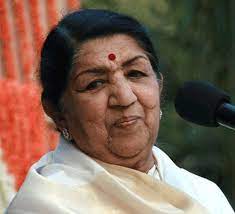
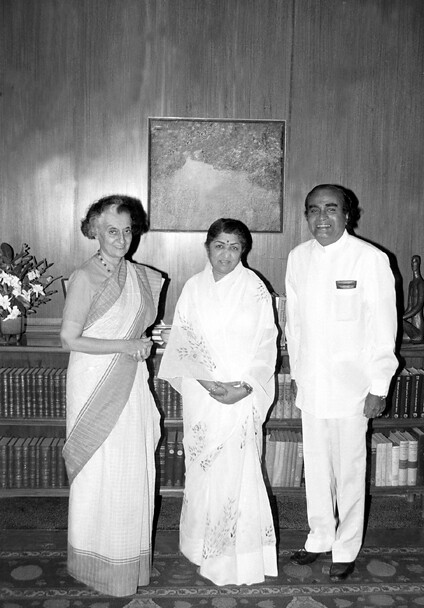
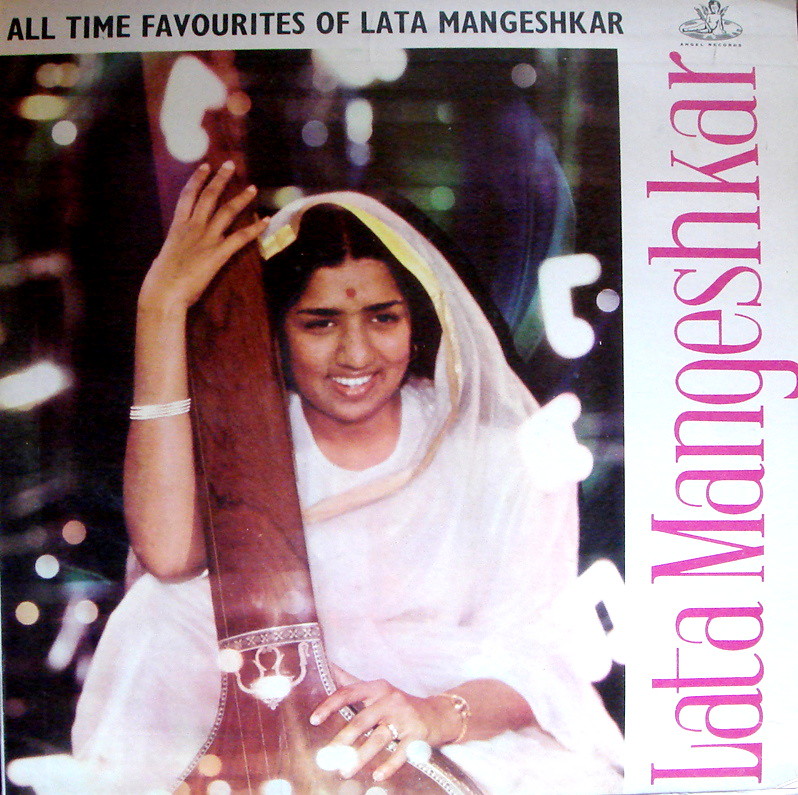


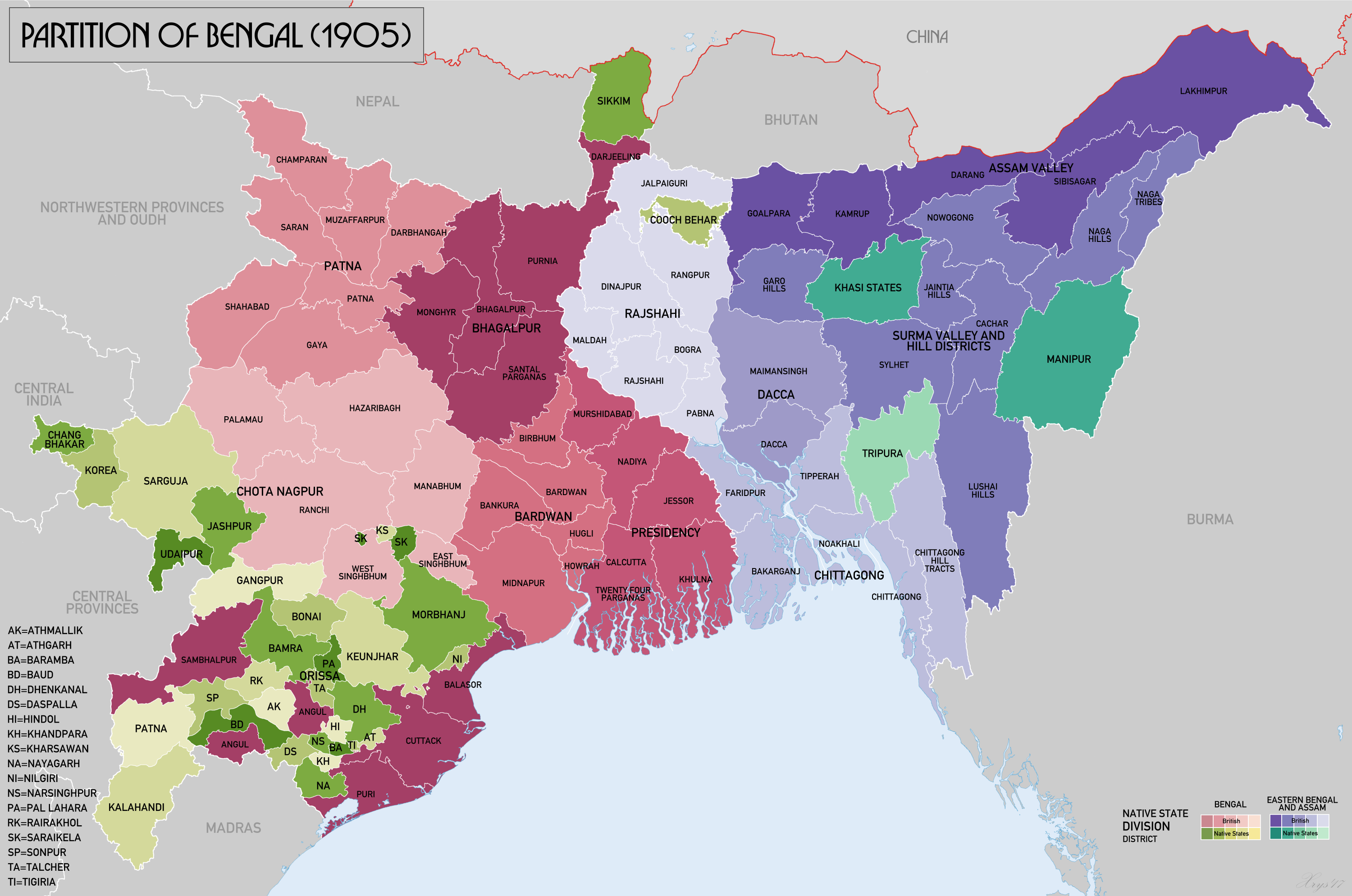
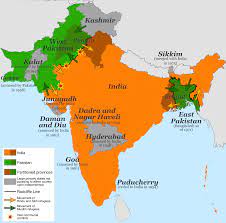
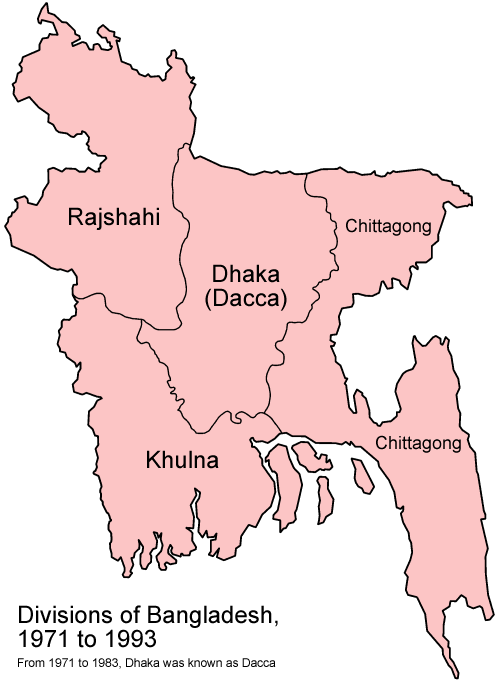
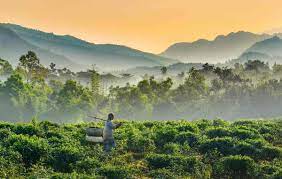

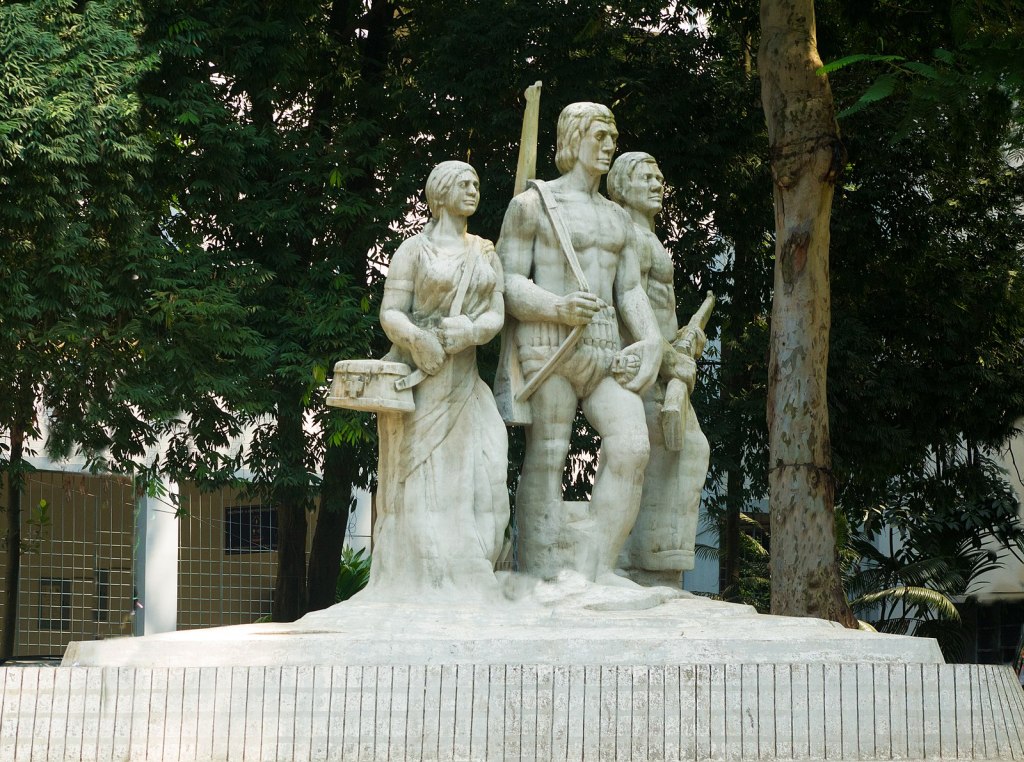


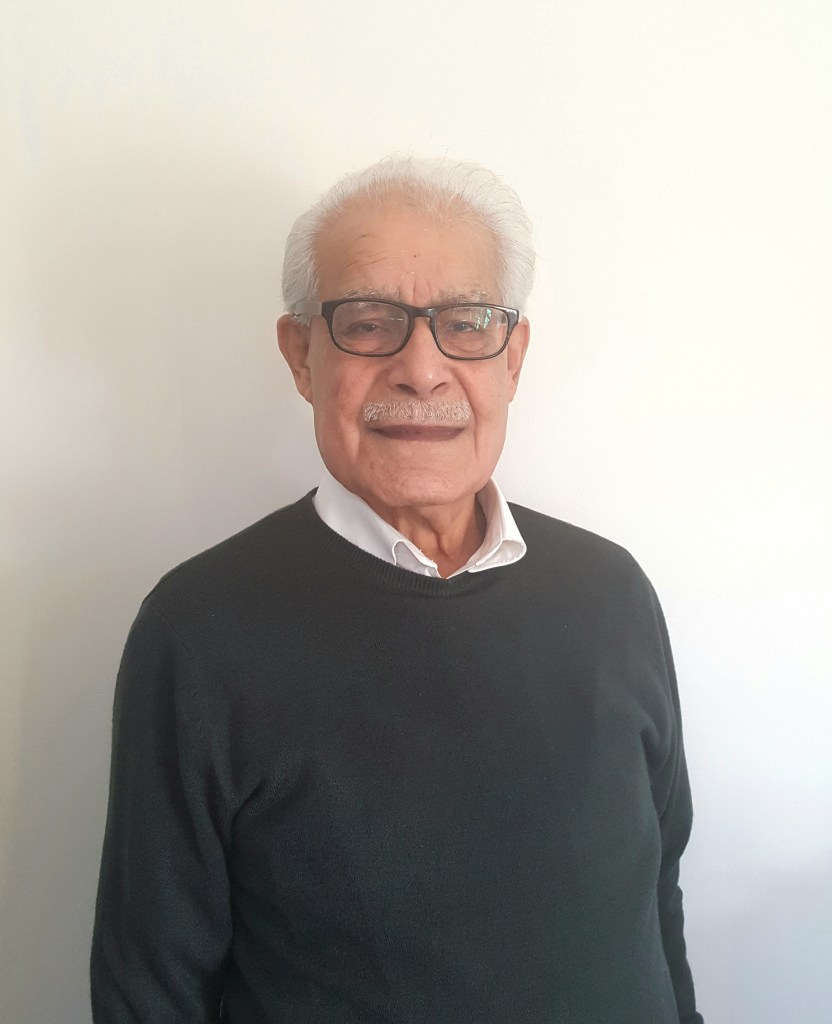
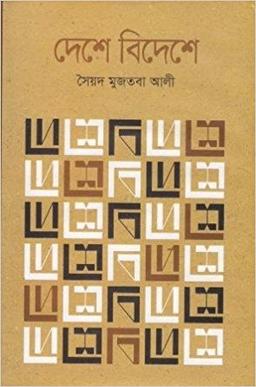
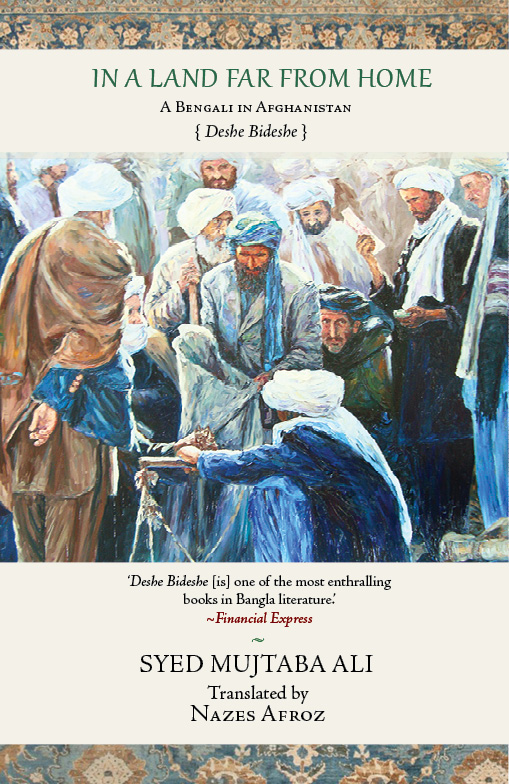
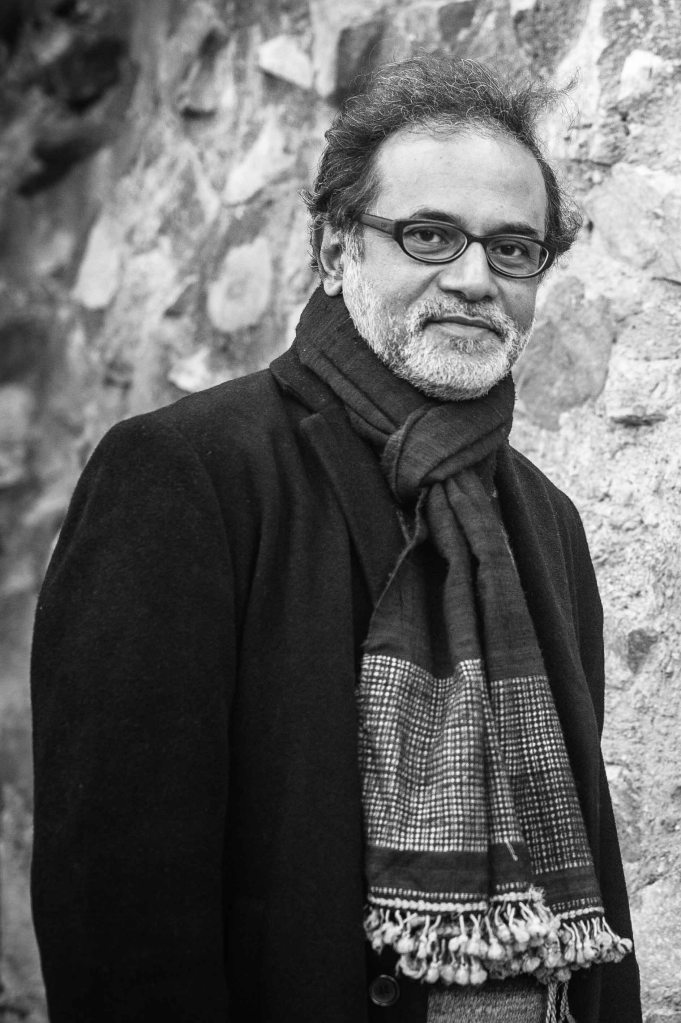
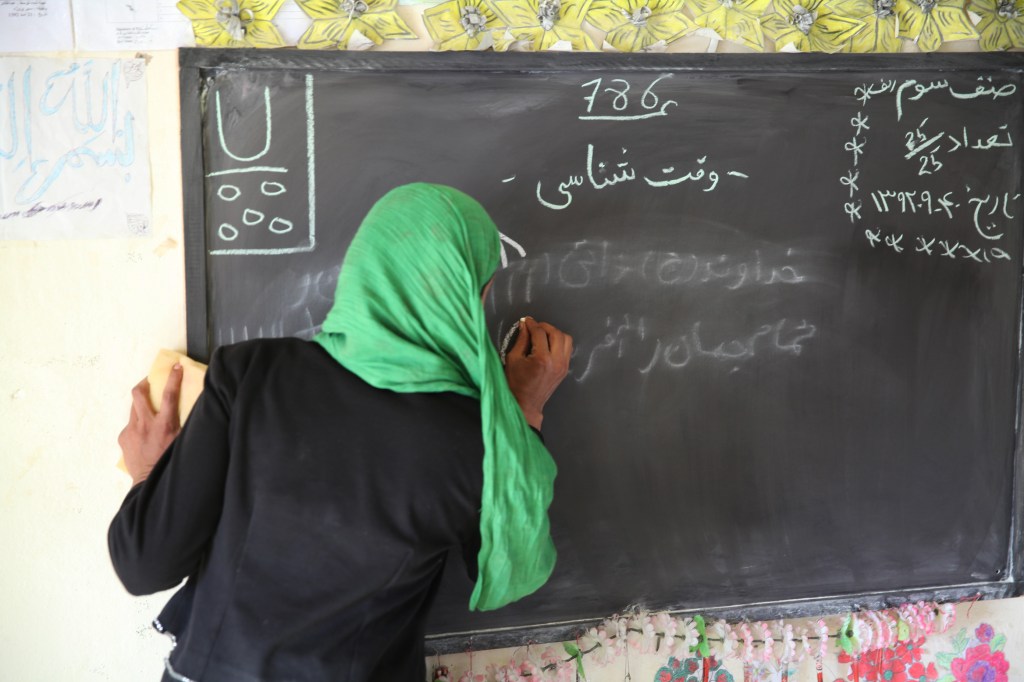
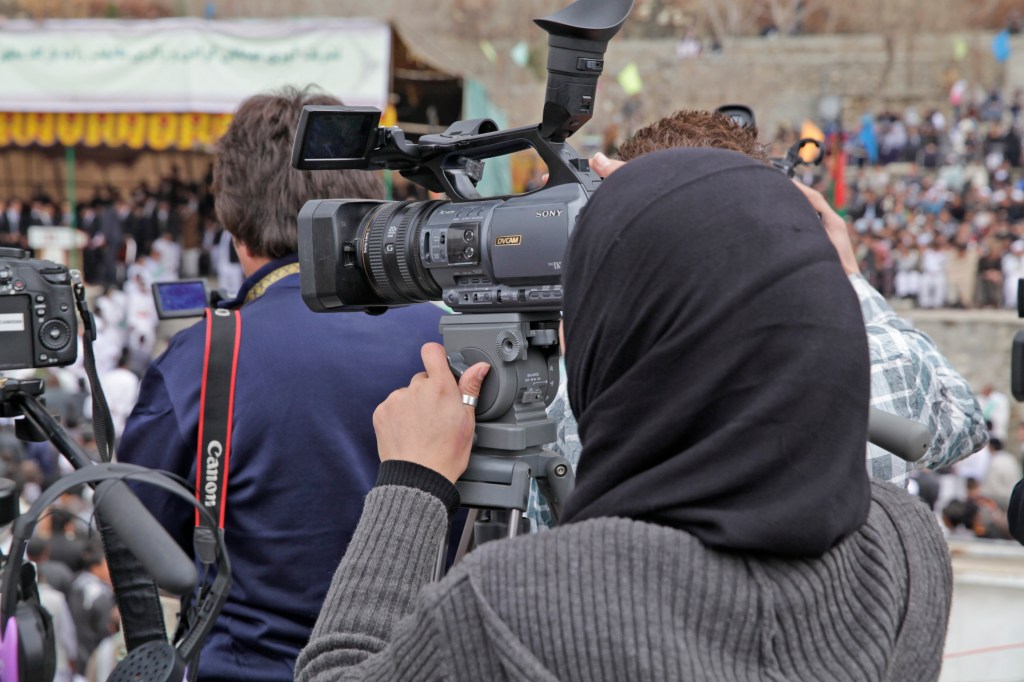

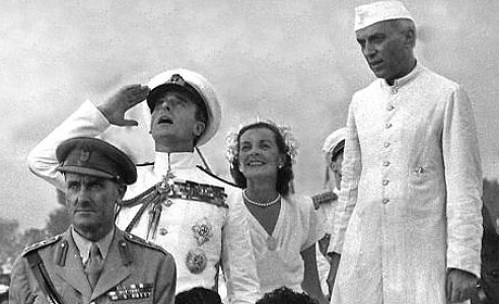
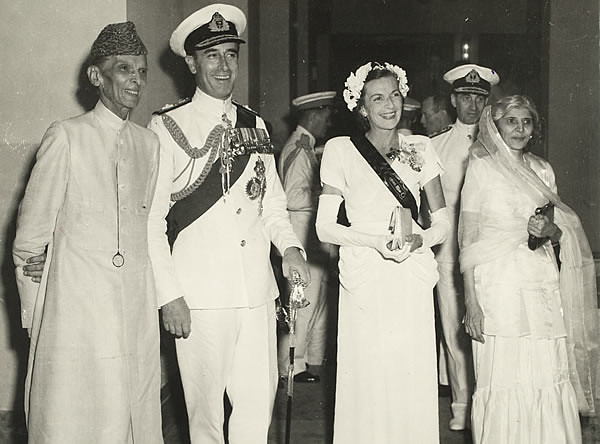

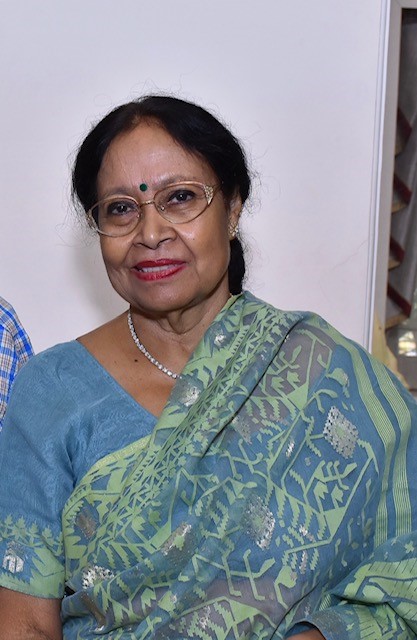
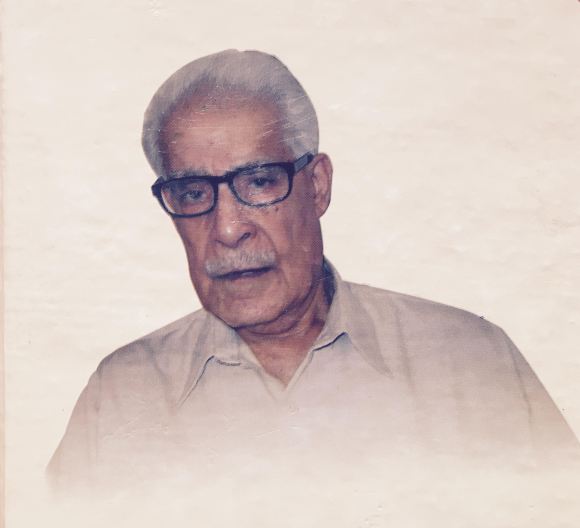
 Borderless