Parry Lines was an ordinary fellow, so much so that even his friends couldn’t be bothered to find out his actual name and were content to call him “Parallel,” his nickname since childhood. Regular, indeed nondescript features were surmounted by his trademark bald pate; the most you could say was that occasionally he wore a bright plaid shirt in neon pastels to liven things up a bit.
Ten weeks A.G. (After Gherkin)
Yet his death (by gherkin) caused a butterfly effect that changed the world. Until the incident with the gherkin, the most notable thing that had ever happened to Parry was when his surprisingly dashing teenaged son had consumed an entire teacup full of gravy during Thanksgiving dinner. Honoured guests had watched in horror as Parry Jr. (PJ for short), notable for his twinkling hazel eyes and flowing chestnut hair, gulped down the rich, brown fluid–though they should have expected something of the kind when he poured the gravy from the pitcher on the table into the China cup ready at his place setting for after-dinner tea.
Present at that event, and at the gherkin incident as well, was Mrs. Honoria Tadpole, English professor and amateur sleuth. Her demure, conservative appearance (she always wore a smart, tailored suit–or at least the best the local thrift shop could provide–and had her silver-blonde hair cut in a perky, short bob) and her self-effacing manner and diminutive (if plump) stature belied the sharpest mind north of California. It would fall to her to unravel the complicated mystery that the local paper dubbed “Gherkingate.”
Interviewed by the features’ editor, as the criminal trial of the alleged murderer dragged on, Mrs. Tadpole was asked the inevitable question of how it had all started. The interview took place in Mrs. Tadpole’s well-appointed parlour, a room replete with Victorian bric-a-brac. With characteristic hospitality, she poured out a strong brew of BC Bold to accompany the delicate sandwiches (ham, egg, and cucumber) and homemade oatmeal cookies that were her signature “high tea,” known to local islanders as a four o’clock tradition at the old manse where Mrs. Tadpole rented a small suite.
“Now, Mrs. Catchpole, I understand you were part of the original party that travelled to Moany Bay,” the interviewer began.
“Tadpole,” Mrs. Tadpole corrected. A veteran instructor of nineteen- and twenty-year-olds, she was used to misspellings and mispronunciations. Marpole, Rumpole, Toadpole: she had heard and seen it all, and could make the necessary correction without even flinching anymore. She cast her mind back almost three months to a mid-summer weekend off British Columbia’s Sunshine Coast.
She began with an allusion to classic culture: “Just sit right back and you’ll hear a tale, a tale of a fateful trip…”
Sadly, the features’ editor of the Island Gleaner failed to catch the reference to Gilligan’s Island, one of the best sit-coms of the 1960s. Mrs. Tadpole had been a toddler when the series was first aired, but its popularity throughout her childhood made it a touchstone for, really, almost everything in life, according to her observations. She knew that some people accorded such a status to the iconic, original Star Trek, but what did Captain Kirk have that “the Skipper” did not? Not much, thought Mrs. Tadpole.
The premise of Gilligan’s Island was classic: a small number of people, randomly-assorted, stranded on an island together with no real prospect of deliverance. After all, wasn’t that just the paradigm of human existence? You didn’t need to be an English proffessor (though Mrs. Tadpole was one, of course) to figure that out.
That fateful weekend, when the seeds of the gherkin incident was sown, had been rife with undertones of Gilligan’s Isle.
Breathing deeply of the fresh Pacific breeze, the passengers sat out on the deck of the vessel as it hugged the rugged BC coastline. The rushing water behind the Skirmish flumed out into a fan of spray, while the murky depths offshore spat out seals and sealions–even the occasional humpback whale–with random irregularity. Black bears hid among the rocks and evergreens in the uninhabited areas; cabins dotted the beaches in the populated areas of cottage country. On the way up the coast, the party of friends and family had composed their own version of the theme song, with each member of the group assigned to a role from the original cast. Mrs. Tadpole was the Professor, of course. Never mind that the community college where Mrs. Tadpole worked had opted not to accord academic titles to their teachers, or that the original Professor in the TV series was a man. (As Mrs. Tadpole had been known to say to her first-year college students, we live in a post-gender, post-glass-ceiling world. And if we don’t, we should).
Aboard the Bayliner, Skirmish, Parry Lines was the Skipper, and his hapless, gravy-drinking son was typecast as the irrepressible Gilligan, full of mischief and ridiculous ideas. Mrs. Tadpole could only hope that her adorable niece, Mary Anne (same name as her Gilligan’s Island counterpart!), was immune to his sauce-swilling charms.
The Millionaire role was assumed by the reclusive entrepreneur Deadhead, Mickey Garcia (if that were in fact his real name), accompanied by his charming wife, Penelope, a voluptuous brunette. Together they had built an empire founded on tribute bands and biopics. The rumour mill had it that there was trouble in paradise, but no one outside his immediate family had seen Mickey for years, so it was difficult to substantiate the gossip.
The cast was fleshed out (so to speak) with a bona fide movie star, the internet sensation who began as one of the central figures in a YouTube series called Project Man Child (“For the price of a cup of coffee… you can buy this underemployed househusband a cup of coffee!”) and had gone on to a viral barrage of TikToks under the sobriquet of “The Naked Gardener”. Mrs. Tadpole was relieved (as no doubt were the others) to note that all the passengers aboard the Skirmish, including this one, appeared to be fully clothed.
At least, all whom she could see wore conventional travelling attire: Mr Garcia, recovering from surgery and groggy with heavy opiates, was shrouded in a blanket and wearing dark glasses. He slumped a little to the side, and his heavy breathing attested to a well-earned reputation for napping as a pretense in order to ignore his surroundings.
As Mrs Tadpole later told the Gleaner interviewer, the real concern of the trip quickly emerged: not the rapprochement of Mary Anne and Parallel Jr., but the burgeoning, even violent antagonism between Parry Sr. and Penelope Garcia, whom the latter insisted on calling “Cherry” with a suggestive leer while her husband languished in his bunk. “Is he grateful? Or just dead?” quipped Lines. One night, Penelope went so far as to brandish a knife in Lines’ general direction and had to be restrained by Mrs Tadpole and Mary Anne in tandem.
Although Madame Garcia was the only one to meet his taunts with open animosity, no one was spared the self-proclaimed wit of Parallel Lines.
He had the nerve to call Mrs Tadpole’s beloved niece, whose sunny disposition was outshone only by the sweet, fair face that perched above her perfect figure, “Mistress Mary, Quite Contrary” –nothing could have been further from the truth! Of course, Mary Anne merely smiled and shrugged it off, as if no insult could penetrate her cheerful exterior … but others were less armour-clad.
The bully referred mercilessly to the Naked Gardener as “Jamie Oliver, the Naked Chef” (whom he slightly resembled) a slur that obviously got under the man’s skin (“I couldn’t boil an egg to save my life!” he protested angrily. “That’s not my brand at all! He’d better watch his back…”).
Even Mrs. Tadpole (surprisingly resilient after having been bullied through her shy youth as resembling a chubby little toad) came in for her share of abuse, rechristened as “Mrs Toad” after making her one of specialties, toad-in-the-hole, for her shipmates. (Once she discovered that the galley of the Bayliner was stocked with a potato ricer and La Ratte potatoes, there was no holding her back. A ring of caramelized onions surrounded each serving dish, with two nut-brown sausage-ends sticking out of the centre, for all the world like a couple of froggy eyes.) “No one calls me Toad,” she intoned ominously.
Cruelly and unaccountably, Parallel Lines saved his worst tirade for his own son. Recalling that terrible moment of youthful folly, that mind-gripping shame that only time could heal, the father saluted the son like a champion hog-caller summoning his prize sow. “Sooooo-Eeeeee! Want some gravy with that?” Alternatively, he would break into song to the tune of ‘Hey, Jude’:
"Au jus,
Just make it fat,
Take some gravy
And make it wetter..."
It was pitiful to see the boy’s response, especially in front of Mary Anne. His pale face was suffused with a ruddy glow beneath his chestnut fringe, and hot, angry tears rose in his sensitive, hazel eyes.
“I’ll kill him,” PJ muttered under his breath.
And now the tranquil Mary Anne, who couldn’t have cared less about any vitriol directed her way, was at last roused to fury in defense of her maligned and helpless friend. “I’ll do it for you!” she offered. “By G—!”
Two Hours B.G. (Before Gherkin)
Suffice it to say, no one was all that distressed when Parallel Lines failed to return to the Skirmish after an afternoon in the seaside village of Egmont (pronounced with an “egg” and not an “edge”).
Penelope had steered Mickey off in a collapsable wheelchair they had stowed on the boat; “the millionaire and his wife” were off for lunch al fresco, heading for a picnic table in an accessible, though private, spot. Roast beef sandwiches and condiments, along with champagne and a couple of plastic flutes, had been assembled into a decorative yet sturdy straw basket which the amazon-like Penelope slung easily over one arm as she manouevred the wheelchair down the forest path.
The movie star had gone in search of Egmont’s famous cream cheese cinnamon buns, hoping to be recognised at the Forest Cafe by someone who would do a double take and exclaim, “Hey! Wait! Aren’t you that man child?”
Mrs Tadpole and her niece decided to go for a refreshing swim in the brisk waters of the bay, washing off the grime of shipboard life before stopping at the Village Green Room for a bowl of veggie curry soup and some fresh, hot rolls.
As for PJ, he declared himself too upset to leave the Skirmish, and was hoping to curl up with a graphic novel, a diet soda, and a bag of Doritos, to forget all his cares for a few hours while the rest of the party looked around Egmont Village.
But where was Parallel? It was time to cast off. If they didn’t leave soon, they wouldn’t make it to the Coastal Lodge before dark. And–not to mention–P. Lines was the skipper!
“I’m perfectly capable of getting us there,” insisted PJ, fortified by his power nap. “I’ll bet you anything, dad’s holed up at the Drifter Pub, and he’ll crash at the hotel there. I’m sure he’s as tired of us as we are of him. Let’s just go. We’ll all have cooled off by tomorrow morning, and I’ll swing back and get him then, bring him up to the Lodge for the rest of the weekend.”
The plan sounded good, and all agreed to it willingly. Off they set for the rustic cabin someone had dubbed the Coastal Lodge in hopes (quite justified, as it turned out) of charging a tidy sum in AirBnB rates. Never mind that it featured a remote outhouse and a camp kitchen; the setting was beyond beautiful, and the (now) congenial group looked forward to beach and forest walks, blazing bonfires, and midnight swims. Mrs Tadpole insisted on taking charge of the outdoor kitchen: she had brought the ingredients for her famous moussaka and looked forward to the challenge of cooking it in a casserole dish on the barbecue. PJ and Maryanne diced feta, tomatoes, onions and cucumbers for a Greek salad, while the movie star tried in vain to get a cell signal and the millionaires played cribbage by the big bay window in the cabin.
Parallel Lines could cool his heels at the Drifter until morning, thought PJ and crew.
G.T. (Gherkin Time)
“So,” said Mrs. Tadpole to her interviewer, “Can you guess who did it?”
“Uh,” said the Features editor. “Nope.”
“I’ll give you a hint: don’t ask who was the perpetrator. Ask who was the victim!”
“Well, that would be Mr. Lines, would it not?”
“Would it? What if the wheelchair-bound invalid, Mr. Garcia, was really Parallel Lines in disguise?”
“But–”
“He was wrapped in a blanket, wearing dark glasses and a mask, slumped in his chair. And there was a switcheroo.”
“A what?”
“A switch. In the forest.”
“Well, I’ll be jiggered. Why haven’t you said anything?”
“Blackmail.”
“You’re blackmailing the unlikely lovers? Parry Lines and Madame G?”
“No, they’ve been blackmailing me. But it’s time to come out. My trans-formation is at hand!”
“Mrs Tadpole! What a story for the Gleaner–and for the world! May I be the first to congratulate you?”
“You may.”
Deborah Blenkhorn is a poet, essayist, and storyteller living in Canada’s Pacific Northwest. Her work fuses memoir and imagination, and has been featured in over 40 literary magazines and anthologies in Canada, the United States, Britain, the Netherlands, Germany, Australia, Brazil, India, and Indonesia.
PLEASE NOTE: ARTICLES CAN ONLY BE REPRODUCED IN OTHER SITES WITH DUE ACKNOWLEDGEMENT TO BORDERLESS JOURNAL
For as long as I can remember, I have been an introvert — this is who I am and will always be. Yet, few believe it. I come from Madagascar, a distant island where the people are called the Malagasy — a community bound by culture, tradition, and a shared sense of identity. Malagasy people are known for their warmth and generosity, often revealing a talkative side as they delight in conversation, and playful exchanges. In contrast, I am reserved — a shy person who expresses myself freely only when comfortable and among those I trust.
As a child, I was the most talkative among my siblings, recounting every detail of my school day to my parents. I delighted in describing the funny expressions my primary school teacher made while explaining lessons, or the mischievous boys who always stuck their chewing gum on the pupils’ desks and all the tasks I had accomplished. I wanted my parents to know I was doing well, that the teacher praised me, and that I helped classmates who struggled.
Both my parents are very talkative, especially my father, from whom I inherited the gift of words. Speaking in front of my family comes naturally, yet in front of others, my words often falter — a fear that has always troubled me. I speak freely only with those I know well— my family and a few close friends.
Facing a large audience has always been daunting. My father encouraged me to confront this fear, to be confident, and to meet the audience’s gaze. I tried many times: presenting in group projects, speaking as a class representative, even addressing an audience at a classmate’s parent’s funeral.
As I grew older, my determination to overcome this fear grew. I devoured books and videos on public speaking, eager to communicate with confidence. My first real test came in 2018, when I delivered a speech in a Japanese language contest. I had loved Japanese language since childhood, captivated by its culture, and dreamed of becoming fluent. Entering the contest was a dream — an opportunity to speak publicly and a chance to win a trip to Japan.
I was guided by two close friends who practiced with me daily. They corrected my mistakes, offered feedback, and most importantly, encouraged me. Having known me for years, they understood how terrifying standing on stage could be, yet they supported me out of love, friendship, and belief in my potential.
During rehearsals, I gave my utmost effort, memorising the script when necessary. Still, doubts lingered about meeting expectations, conquering fears, and not disappointing those who believed in me. The days of practice passed quickly, and soon, the big day arrived. Nervous at first, I gradually became more at ease while speaking. I managed to control my anxiety but knew my performance was imperfect. I focused on each word, yet my mind occasionally went blank, struggling with the judges’ questions. Embarrassment washed over me; I feared I had let my friends and family down.
In the end, I did not win the first prize, but my closest friends congratulated me. They reminded me that the true milestone was stepping onto the stage, speaking in front of an audience, and maintaining composure. Their encouragement helped me realise that courage and effort mattered more than the outcome itself.
As an introvert, talking to strangers is challenging, let alone addressing a crowd. Hearing the words “public speaking” makes my stomach tighten, palms sweat, and heart race. Stage fright, fear of facing many people and sharing my thoughts has always been real. Each time my name is called, I shake, my mind blanks, heart pounds, mouth dries, and confidence seems to vanish before I start. Yet, I have never lost hope. Deep down, I knew a strength within me would help rise above fear and grow into a better version of myself.
One year later, I stood again in the same contest. This annual competition was a goal I refused to let go of. As before, my friends encouraged, pushed, and trained with me every day until the D-day. Their support gave me the strength to continue. I prepared even more fiercely — joining language clubs and volunteering in storytelling activities. But it was not easy. I never felt comfortable speaking or working with strangers. I was told teamwork required discussion, sharing, and collaboration — a nightmare for an introvert.
Solitude had been my ally, yet suddenly, I was surrounded by people of all ages and personalities. Cooperation was no longer optional. However, through this challenge, I discovered an important truth: whether introverted or extroverted, whether silent or talkative, we must learn to connect with others. Survival and growth depend on collaboration and support.
The big day of the speech contest arrived in May, a season of transition between summer and winter. I arrived at the hall just in time, accompanied by a close friend. A staff member guided me to my seat, only a few meters from the judges. I felt cheerful, and calm, even giving a fist bump to nearby contestants. For the first time, I felt truly ready to give a speech — optimistic, and at peace. Perhaps it was the preparation or my friends’ wholehearted support, or maybe I had begun to trust myself.
There were four contestants in the advanced level, and I was the last to speak. Each of us hoped to win the grand prize — a trip to Japan. I did not worry about the others. I believed in my success and was determined to win first place. Just days before, I even dreamed of visiting Japan, so nothing could stand in my way.
Finally, it was my turn. I adjusted the microphone, greeted in Japanese, and bowed to the judges and audience. I spoke for about five minutes on how Malagasy parents raise children. Three judges asked each two questions. Thanks to countless practice hours and mock questions and answers sessions with my best friends, I answered every tricky question. For the first time, right after my speech, I felt like a winner.
The event lasted about three hours, and the final verdict came. The Master of Ceremonies announced winners, starting with the beginner level, then the advanced. Among the four in my category, only two remained. The Master of Ceremonies paused dramatically before announcing the first-place winner… and pronounced my name. I whispered a silent thanks to God. This result — the goal I had worked so hard for — had become reality. The trip to Japan was the reward, and even more importantly, I had overcome stage fright. I spoke naturally and confidently in front of the audience — another milestone achieved.
Later that year, in 2019, I visited Japan for the first time. The experience was magical. I met wonderful people, explored my favorite country, and fulfilled a long-cherished dream.
Six years later, I returned to the Land of the Rising Sun—this time as an international student. I now live in Tokushima prefecture, which is in southeastern Japan, far from the bustling cities, in a quiet countryside where few tourists venture. Yet, the city and its neighbourhoods are simply wonderful. It is peaceful, surrounded by greenery, and while the locals may seem reserved, they are incredibly welcoming. Even with some grasp of the local language, adapting to a new country as a foreigner is challenging. Still, thanks to the support of my seniors and friends who have lived here for years, I managed to navigate my first six months successfully.
The city where I live hosts an annual Japanese speech contest open to foreigners who have been residing here for some time. I was encouraged to participate, partly because I could speak some Japanese, and partly because it was a great chance to gain experience. I thought, why not? After all, I gradually grew more comfortable speaking in front of others.
This time, participants could choose their own topics, though it was suggested to focus on their experience in Japan or explore cultural connections between their home country and Japan. I was eager to participate, but selecting a topic was harder than I expected. Inspiration felt scarce, and I had no clear direction. Still, I knew that finding my own perspective was key to making the speech meaningful.
Overwhelmed by my studies, I barely noticed the passage of time. Before I knew it, the deadline had arrived. I had not written a single word, though ideas swirled in my mind. I opened my laptop, took a deep breath, and began writing everything that came to my mind. Reflecting on my experiences in Japan, I realised that people often struggled to pronounce my name correctly. That inspired me to talk about the hidden culture behind Japanese and Malagasy names.
With my theme set, I focused on making my speech coherent and captivating. I tend to draw inspiration at the last minute. I wrote, rewrote, and proofread repeatedly, staying up all night without noticing morning approaching.
Finally, I finished my manuscript and emailed it to one of my Japanese teachers to check for grammatical errors. She responded immediately, and her quick proofreading allowed me to submit my speech on the deadline. I felt relieved, yet strangely nervous, a sensation I could not quite describe.
Six years have passed since I last spoke in front of an audience. Preparing another speech made me feel nostalgic, bringing back memories of long rehearsals, the advice of my best friends, and countless sleepless nights.
A month after submitting my manuscript, I received an email from the event organizer announcing my selection. I was among the fourteen candidates chosen to compete. I whispered a quiet “wow,” but doubts immediately surfaced. I had two months to prepare. To understand what awaited me, I watched recordings of previous competitions, while my seniors and Japanese teacher helped me refine my speech.
Four students were selected from my university. The other three were Asian students with extensive experience in Japanese language and culture. They read Kanji (Japanese characters)effortlessly and conversed naturally. And then, there was me. Though I had been exposed to Japanese language and culture since childhood, memorising every character reading and grasping dialects was never easy. Back in my country, despite growing interest in Japanese language and culture, opportunities to use it in daily life remain limited. Once again, I faced a new challenge—this time in the Land of the Rising Sun.
Time flew, and soon the two months of preparation had passed. Finally, the big day arrived. Early that morning, a kind university staff member greeted us with a bright smile. As I descended from my dormitory, I saw her waiting by her car near the main gate, bowing politely. Her excitement was palpable. Three of us rode in her car; she asked about our preparations and told jokes, perhaps to ease our nerves, which were all visible.
After twenty minutes, we arrived at a large building and walked up to the fifth floor through corridors decorated in traditional style. Japanese architecture and design have always fascinated me, and I was struck by their beauty once again. The event hall was medium-sized, with a small table at the entrance holding our name tags.
One by one, the other candidates arrived. We were then led to a smaller room for a preparatory meeting. While waiting, we chatted briefly to get to know one another. The competition began in the early afternoon. We were instructed to enter the hall one by one, greeted with warm applause. Observing the other candidates, I could tell they were ready. Fourteen contestants competed in total. Thirteen were Asians from countries including China, Vietnam, India, Indonesia, the Philippines, Taiwan, Sri Lanka, and Thailand. I was the only African, from a distant country few people knew. Before each speech, the Master of Ceremonies shared a brief anecdote about the candidate’s country, offering the audience a glimpse into its culture. Each contestant then delivered a five-minute speech.
There were two types of awards: the Golden Prize for first and second place, followed by four Silver Prizes. I had hoped to place among the top five while preparing my speech.
As I listened to the first three candidates, I was deeply impressed. Their speeches were powerful, emotional, and delivered with near-native fluency. I was surprised by how advanced and impressive their speaking skills were. I was the sixth speaker. Perhaps it had been so long since I last addressed an audience, or perhaps it was the absence of my closest friends but standing alone in a foreign country in front of strangers was overwhelming. My hands trembled. When my name was announced, I feared I might not endure those five minutes on stage.
Still, I stood before hundreds of people. I bowed, held the microphone firmly, and began. My heart raced and sweat ran down my face and back. Gradually, the pressure eased. When I shared the example of the longest name in the world—from my country, the audience reacted with surprise and amusement. I realised how attentive they were and regained inner calm. Although I forgot one line, I finished my speech smoothly and expressively.
The remaining eight candidates were equally impressive. Their eloquence was such that, with eyes closed, one might mistake them for native speakers. It was the highest-level contest I had ever participated in. Each theme and presentation were unique, and every contestant spoke with confidence. I doubted whether I would receive a prize, but reassured myself that even without one, the experience was worthwhile. Most participants had lived in Japan for over three years, and the Chinese and Taiwanese contestants were especially strong in oral expression. Yet, standing among such talented competitors was an honor.
After a break that was supposed to last twenty minutes but stretched to fifty, results were announced. They began with six Encouragement Prizes. I thought I might be among them, but my name was not called. Two more awards followed, still not mine. A friend nudged me, whispering, “Congratulations!” I replied, “Stop joking. Congratulations to you instead!”
Finally, the Silver Prizes were announced. They first called my country, then my name. The applause and cheers overwhelmed me, and tears welled in my eyes. I had not expected to win a Silver Prize, given the competition’s level. One friend from my university won the Golden Prize, and the second Golden Prize went to a Vietnamese contestant.
Participating in such a high-level competition was a tremendous challenge. Every step—from manuscript preparation to standing on stage—pushed me beyond my comfort zone. Yet, when it was over, I felt immense pride. I had once again delivered a speech before a large audience, this time in the country whose language I had cherished for years.
Though I had been nervous, the audience remained unaware. Their attentive expressions and warm applause carried me through. Afterwards, my Japanese teachers praised my performance, saying I had done exceptionally well. In that moment, I realised every hour of preparation, every doubt, and every fear had been worthwhile. I had faced a formidable challenge, stood my ground, and expressed myself fully, a reminder that courage, practice, and determination can transform daunting experiences into triumphs. It is a memory I will treasure forever.
.
Randriamamonjisoa Sylvie Valencia is from Madagascar and is currently studying in Japan as a trainee student. She enjoys reading, writing, listening to music, and traveling to explore new cultures.
PLEASE NOTE: ARTICLES CAN ONLY BE REPRODUCED IN OTHER SITES WITH DUE ACKNOWLEDGEMENT TO BORDERLESS JOURNAL
Borderless Journal started on March, 14, 2020. When the mayhem of the pandemic had just set in, we started as a daily with half-a-dozen posts. Having built a small core of writings by July, 2020, we swung to become a monthly. And we still continue to waft and grow…
Art by Sohana Manzoor
We like to imagine ourselves as floating on clouds and therefore of the whole universe. Our team members are from multiple geographies and we request not to be tied down to a single, confined, bordered land. We would welcome aliens if they submitted to us from another galaxy…
On our Fifth Anniversary, we have collected celebratory greetings from writers and readers stretched across the world who share their experience of the journal with you and offer suggestions for the future. We conclude with words from some of the team, including my own observations on being part of this journey.
Aruna Chakravarti
Heartiest congratulations to Borderless on the occasion of its fifth anniversary! Borderless, an international journal, has the distinction of carrying contributions from many eminent writers from around the world. From its initiation in 2020, it has moved from strength to strength under the sensitive and skillful steering of its team. Today it is considered one of the finest journals of its kind. I feel privileged to have been associated with Borderless from its very inception and have contributed substantially to it. I wish to thank the team for including my work in their distinguished journal. May Borderless move meaningfully towards the future and rise to greater and greater heights! I wish it every success.
Professor Fakrul Alam
Five years ago, when Borderless set out on its literary voyage, who would have imagined the length and breadth of its imaginative crossings in this span of time? The evidence, however, is digitally there for any reader who has seen at least some of its issues. Creative writing spanning all genres, vivid illustrations, instant links giving resolute readers the option to track a contributor’s creative voyaging—here is boundless space always opening up for those seeking writing of considerable variety as well as originality. The best part here is that unlike name-brand journals, which will entice readers with limited access and then restrict their spaces unless you subscribe to them, all of Borderless is still accessible for us even though it has attracted a wide readership in five years. I certainly hope it will stay that way.
And what lies ahead for Borderless? Surely, more opportunities for the creative to articulate their deepest thoughts and feelings in virtual and seemingly infinite space, and innumerable avenues for readers to access easily. And let us hope, in the years to come Borderless will extend itself to newer frontiers of writing and will continue to keep giving space to new as well as emerging writers from our parts of the world.
May the team of Borderless, continue to live up to their claim that “there are no boundaries to human imagination and thought!”
Radha Chakravarty
Since its inception, Borderless Journal has remained true to its name, offering a vital literary space for writers, artists and scholars from around the world to engage in creative dialogue about their shared vision of a world without borders. Congratulations Borderless, and may your dream of global harmony continue to inspire.
Somdatta Mandal
According to the famous Chicana academic and theorist Gloria Anzaldua, the Borderlands are physically present wherever two or more cultures edge each other, where peopIe of different races occupy the same territory, where under, lower, middle and upper classes touch, where the space between two individuals shrinks with intimacy. Hatred, anger and exploitation are the prominent features of this landscape. There, at the juncture of cultures, languages cross-pollinate and are revitalized; they die and are born. Borders are set up to define the places that are safe and unsafe, to distinguish us from them. A border is a dividing line, a narrow strip along a steep edge. A borderland is a vague and undetermined place created by the emotional residue of an unnatural boundary. It is in a constant state of transition. The prohibited and forbidden are its inhabitants.
About five years ago, when a new online journal aptly called Borderless Journal was launched, these ideas which we had been teaching for so long were simply no longer applicable. Doing away with differences, with limits, it became a suitable platform where disparate cultures met, where people from all disciplines could express their views through different genres, be it poetry, translation, reviews, scholarly articles, creative writing and so on. Many new writers from different parts of the world became regular contributors to this unique experimentation with ‘borderlessness’ and its immense possibilities are very apt in this present global context where social media has already changed many earlier notions of scholarship, journalism, and creativity.
Jared Carter
In its first five years Borderless has become an important witness for international peace and understanding. It has encouraged submissions from writers in English based in many different countries, and has offered significant works translated from a wide range of national literatures. Its pages have featured writers based in India, Pakistan, China, Taiwan, Japan, South Korea, Australia, the UK, and the US. In the future, given the current level of world turmoil, Borderless might well consider looking more closely toward Africa and the Middle East. As the magazine continues to promote writing focused on international peace and freedom, new horizons beckon.
Teresa Rehman
The best part of this journal is that it is seamless and knows no margins or fringes. It is truly global as it has cut across geographical borders and has sculpted a novel literary genre called the ‘borderless’. It has climbed the mountains of Nepal, composed songs on the Brahmaputra in Assam, explored the hidden kingdom of Bhutan, walked on the streets of Dhaka, explored the wreckage of cyclones in Odisha, been on a cycling adventure from Malaysia to Kashmir, explored a scenic village in the Indo-China border, taken readers on a journey of making a Japanese-Malayalam dictionary, gave a first-hand account of the war in Bosnia-Herzegovina and described the syncretic culture of Bengal through its folk music and oral traditions. I hope it continues telling the untold and unchartered stories across mountains, oceans and forests.
Kirpal Singh
In a world increasingly tending towards misunderstandings across borders, this wholesome journal provides a healthy space both for diverse as well as unifying visions of our humanity. As we celebrate five distinguished years of Borderless Journal, we also look forward to another five years of such to ensure the underlying vision remains viable and visible as well as authentic and accurate.
My heartfelt Congratulations to all associated with this delightful and impressive enterprise!
Asad Latif
The proliferation of ethnic geographies of identity — Muslim/Arab, Hindu/Indian, Christian/Western, and so on — represents a threat to anything that might be called universal history. The separation and parcelling out of identities, as if they are pre-ordained, goes against the very idea (proclaimed by Edward Said) that, just as men and women create their own history, they can recreate it. Borders within the mind reflect borders outside it. Both borders resist the recreation of history. While physical borders are necessary, mental borders are not. This journal does an admirable job in erasing borders of the mind. Long may it continue to do so.
Anuradha Kumar
I have been one of Borderless’ many readers ever since its first issue appeared five years ago. Like many others, I look forward with great anticipation to every issue, complete with stories, , reviews, poems, translations, complemented with interesting artwork.
Borderless has truly lived up to its name. Within its portal, people, regardless of borders, but bound by common love for literature, and the world’s heritage, come together. I would wish for Borderless to scale even greater heights in the future. As a reader, I would very much like to read more writers from the ‘Global South’, especially in translation. Africa, Asia and Australasia are host to diverse languages, many in danger of getting lost. Perhaps Borderless could take a lead in showcasing writers from these languages to the world. That would be such an invaluable service to readers, and the world too.
Ryan Quinn Flanagan
To me, Borderless Journal is a completely free and open space. Topics and styles are never limiting, and the various writers explore everything from personal travelogues to the limp of a helpful druggist. Writers from all corners of the globe contribute, offering a plethora of unique voices from countless circumstances and walks of life. Because of this openness, Borderless Journal can, and likely will continue to grow and expand in many directions simultaneously. Curating and including many new voices along the way. Happy 5th Birthday to a truly original and wonderfully eclectic journal!
George Freek
I feel the Borderless Journal fills a special spot in the publishing world. Unlike many journals, which profess to be open-minded and have no preference for any particular style of poetry, Borderless actually strives to be eclectic. Naturally, it has its own tastes, and yet truly tries to represent the broad spectrum which is contemporary poetry. I have no advice as to where it should go. I can only say keep up the good work, and stooping to a cliche, if it’s not broken, why try to fix it?
Farouk Gulsara
They say time flies when one is having fun. It sure does when a publication we love regularly churns out its issues, month after month, for five years now.
In the post-truth world, where everybody wants to exert their exclusivity and try to find ways to be different from the person standing next to them, Borderless gives a breath of fresh air. At a time when neighboring countries are telling the world they do not share a common history, Borderless tries to show their shared heritage. We may have different mothers and fathers but are all but “ONE”!
We show the same fear found in the thunderous sounds of a growling tiger. We spill the exact hue of blood with the same pain when our skin is breached. Yet we say, “My pain is more intense than yours, and my blood is more precious.” Somehow, we find solace in playing victimhood. We have lost that mindfulness. One should appreciate freedom just as much as we realise it is fragile. Terrorism and fighting for freedom could just be opposing sides of the same coin.
There is no such thing as a just war or the mother of all wars to end all wars as it has been sold to us. One form of aggression is the beginning of many never-ending clashes. Collateral damage cannot be justified. There can be no excuse to destroy generations of human discoveries and turn back the clock to the Stone Age.
All our hands are tainted with guilt. Nevertheless, each day is another new day to make that change. We can all sing to the tune of the official 2014 World Cup song, ‘Ola Ola,’ which means ‘We are One.’ This is like how we all get together for a whole month to immerse ourselves in the world’s favourite sport. We could also reminisce about when the world got together to feed starving kids in Africa via ‘Band-Aid’ and ‘We Are the World’. Borderless is paving the way. Happy Anniversary!
Ihlwha Choi
I sincerely congratulate Borderless Journal on its 5th anniversary. I am always delighted and grateful for the precious opportunity to publish my poetry in English through this journal. I would like to extend my special thanks for this.
Through this journal, I can read a variety of literary works—including poetry, essays, and prose—from writers around the world. As someone for whom English is a foreign language, it has also been a valuable resource for improving my English skills. I especially enjoy the frequent features on Rabindranath Tagore’s poetry, which I read with great joy. Tagore is one of my favourite poets.
I have had the privilege of visiting Santiniketan three times to trace his legacy and honor his contributions to literature and education. However, one aspect I find a little disappointing is that, despite having published over 30 poems, I have yet to receive any feedback from readers or fellow writers. It would be wonderful to have such an opportunity for engagement.
Additionally, last October, a Korean woman received the Nobel Prize in Literature—the first time an author from South Korea has been awarded this honor by the Swedish Academy. She is not only an outstanding novelist but also a poet. I searched for articles about her in Borderless Journal but was unable to find any. Of course, I understand that this is not strictly a literary newspaper, but I would have been delighted to see a feature on her.
I also feel honoured that one of my poems was included in the anthology Monalisa No Longer Smiles: An Anthology of Writings from across the World. I hope such anthologies will continue to be published. In fact, I wonder if it would be possible to compile and publish collections featuring several poems from contributing poets. If these were made available on Amazon, it would be a fulfilling experience for poets to reach a broader audience.
Moving forward, I hope Borderless Journal will continue to reach readers worldwide, beyond Asia, and contribute to fostering love and peace. Thank you.
Prithvijeet Sinha
The journey of authorship, self-expression and cultural exchange that I personally associate with Borderless Journal’s always diverse archives has remained a touchstone ever since this doorway opened itself to the world in 2020. Going against the ramshackle moods of the 2020s as an era defined by scepticism and distances, The journal has upheld a principled literary worldview close to the its pages and made sure that voices of every hue gets representation. It’s also an enterprise that consistently delivers in terms of goodwill and innocence, two rare traits which are in plenteous supply in the poems, travelogues, essays and musings presented here.
The journey with Borderless has united this writer with many fascinating, strikingly original auteurs, buoyed by a love for words and expression. It is only destined for greatness ahead. Happy Birthday Borderless! Here’s to 50 more epochs.
From Our Team
Bhaskar Parichha
As Borderless Journal celebrates its fifth anniversary, it is inspiring to see its evolution into a distinguished platform for discourse and exploration. Over the years, it has carved a unique niche in contemporary journalism, consistently delivering enlightening and engaging content. The journal features a variety of sections, including in-depth articles, insightful essays, and thought-provoking interviews, reflecting a commitment to quality and fostering dialogue on pressing global issues. The diverse contributions enrich readers’ understanding of complex topics, with a particular focus on climate change, which is especially relevant today. By prioritising this critical issue, Borderless informs and encourages engagement with urgent realities. Having been involved since its inception, I am continually impressed by the journal’s passion and adaptability in a changing media landscape. As we celebrate this milestone, I wish Borderless continued success as a beacon of knowledge and thoughtful discourse, inspiring readers and contributors alike.
Devraj Singh Kalsi
Borderless Journal has a sharp focus on good writing in multiple genres and offers readable prose. The platform is inclusive and does not carry any slant, offering space to divergent opinions and celebrating free expression. By choosing not to restrict to any kind of ism, the literary platform has built a strong foundation in just five years since inception. New, emerging voices – driven by the passion to write fearlessly – find it the ideal home. In a world where writing often gets commercialised and compromised, Borderless Journal is gaining strength, credibility, and wide readership. It is making a global impact by giving shape to the dreams of legendary poets who believed the world is one.
Rakhi Dalal
My heartiest congratulations to Borderless and the entire team on the fifth Anniversary of its inception. The journal which began with the idea of letting writing and ideas transcend borders, has notably been acting as a bridge to make this world a more interconnected place. It offers a space to share human experiences across cultures, to create a sense of connection and hence compassion, which people of this world, now more distraught than ever, are sorely in need of. I am delighted to have been a part of this journey. My best wishes. May it continue to sail through time, navigating languages, literature and rising above barriers!
Keith Lyons
Is it really five years since Borderless Journal started? It seems hard to believe.
My index finger scrolls through Messenger chats with the editor — till they end in 2022. On the website, I find 123 results under my name. Still no luck. Eventually, in my ‘Sent’ box I find my first submission, emailed with high hopes (and low expectations) in March 2020. ‘Countdown to Lockdown’ was about my early 2020 journey from India through Thailand, Malaysia, Indonesia, and Australia to New Zealand as COVID-19 spread.
Just like that long, insightful trip, my involvement with Borderless Journal has been a journey. Three unique characteristics stand out for me.
The first is its openness and inclusiveness. It features writers from all over the globe, with various contributions across a wide range of topics, treatments and formats.
The second feature of the journal is its phenomenal growth, both in readers and writers, and in its reach. Borderless really does ‘walk the talk’ on breaking down barriers. It is no longer just a humble literary journal — it is so much bigger than that.
The third unique aspect of Borderless is the devotion endowed in nurturing the journal and its contributors. I love the way each and every issue is conceived, curated, and crafted together, making tangible the aspiration ‘of uniting diverse voices and cultures, and finding commonality in the process.’
So where can we go from here? One constant in this world is change. I’d like to think that having survived a global pandemic, economic recession, and troubling times, that the core values of Borderless Journal will continue to see it grow and evolve. For never has there been a greater need to hear the voices of others to discover that we are all deeply connected.
Rhys Hughes
I have two different sets of feelings about Borderless Journal. I think the journal does an excellent job of showcasing work from many different countries and cultures. I want to say it’s an oasis of pleasing words and images in a troubled sea of chaos, but that would be mixing my metaphors improperly. Not a troubled sea of chaos but a desert of seemingly shifting values. And here is the oasis, Borderless Journal, where one can find secure ideals of liberty, tolerance, peace and internationalism. I appreciate this very much. As for my other set of feelings, I am always happy to be published in the journal, and in fact I probably would have given up writing poetry two years ago if it wasn’t for the encouragement provided to me by regular publication in the journal. I have written many poems especially for Borderless. They wouldn’t exist if Borderless didn’t exist. Therefore I am grateful on a personal level, as a writer as well as a reader.
Where can Borderless Journal go from here? This is a much harder question to answer. I feel that traditional reading culture is fading away year after year. Poets write poetry but few people buy poetry books. They can read poems at Borderless for free and that is a great advantage. I would like to see more short stories, maybe including elements of fantasy and speculative fiction. But I have no strategic vision for the future of the journal. However, one project I would like to try one day is some sort of collaborative work, maybe a big poem with lots of contributors following specific rules. It’s an idea anyway!
Meenakshi Malhotra
Borderless started with a vision of transcending the shadow lines and has over time, evolved into a platform where good writing from many parts of the world finds a space , where as “imagination bodies forth/ The forms of things unknown, the poet’s pen/Turns them to shapes and gives to airy nothing/A local habitation and a name.”
It has been a privilege to be a part of Borderless’s journey over the last few years. It was a journey based on an idea and a vision. That dream of creating solidarity, of transcending and soaring over borders and boundaries, is evident in almost every page and article in the journal.
Mitali Chakravarty
Looking at all these responses, thinking on what everyone has said, I am left feeling overwhelmed.
Borderless started as a whimsical figment of the imagination… an attempt to bring together humanity with the commonality of felt emotions, to redefine literary norms which had assumed a darker hue in the post Bloomsbury, post existentialist world. The journal tried to invoke humour to brings smiles, joys to create a sense of camaraderie propelling people out of depression towards a more inclusive world, where laughter brings resilience and courage. It hoped to weave an awareness that all humans have the same needs, dreams and feelings despite the multiple borders drawn by history, geographies, academia and many other systems imagined by humans strewn over time.
Going forward, I would like to take up what Harari suggests in Homo Deus — that ideas need to generate a change in the actions of humankind to make an impact. Borderless should hope to be one of the crucibles containing ideas to impact the move towards a more wholesome world, perhaps by redefining some of the current accepted norms. Some might find such an idea absurd, but without the guts to act on impractical dreams, visions and ideas, we might have gone extinct in a post-dino Earth.
I thank the fabulous team, the wonderful writers and readers whose participation in the journal, or in engaging with it, enhances the hope of ringing in a new world for the future of our progeny.
The Kuala Terengganu Skyline. Photo courtesy: Ravi Shankar
The lighting was subtle but magnificent. The transparent minarets glowed red, green, pink, and blue in turn. We were at the Masjid Kristal on the island of Wan Man at Kuala Terengganu in the state of the same name in northern Malaysia.
Majid Kristal
The mosque is among the most photographed monuments in the Islamic Heritage Park, and we could easily guess why. This is the first intelligent mosque in the country with an IT infrastructure and wi-fi connection. We were glad we came. The reflection of the mosque lights on water was enchanting. Getting around KT — as Kuala Terengganu is lovingly called by the locals — could sometimes be tricky without your own vehicle. Ride hailing services may not work optimally in the peak hours of the evening. We were informed by one of the cab drivers that Maxim is the most popular e-hailing app in the city.
The population in KT loves to eat out and in the evenings the restaurants are usually crowded. We were staying at the Intan Beach Resort at Pantai Batu Burok and the eating places by the beach were always crowded. The beach is popular with locals with several attractions and rides during the evenings. There is a three-kilometre walking path by the side of the beach. As we stayed right by the beach, we could enjoy early morning strolls on the soft sand.
Panti Batu Burok: Photo Courtesy: Ravi Shankar
The Kuala Terengganu state museum was huge and is located on over 23 acres of land. The museum was officially opened in 1996 and was designed by a well-known Malaysian architect, YM Raja Dato’ Kamarul Bahrin Shah, who also happens to be related to the royal family of Terengganu. The building is designed in traditionally Malay style and the outer façade was left undecorated. There are nine different galleries, and these include the Royal gallery, the historical gallery, the textiles gallery, the Islamic gallery, the handicrafts, the natural resources, the shipping and trading and the marine resources galleries.
Tha Batu Bersurat. Photo Courtesy: Ravi Shankar
The ‘Batu Bersurat’ (lettered stone) is the museum centrepiece and of great significance to the state. The stone is estimated to be 700 years old and mentions the position of Islam and the application of Islamic laws in the state. The stone is written in the Jawi script using Arabic characters. Jawi script is still used in Terengganu though in many areas Malay is written mostly in the Roman script. In the museum grounds, there is a good collection of different old cars and other vehicles used by the King and Chief Ministers of the state.
The Islamic Heritage Park is a major attraction located on the island of Wan Man. The park has small scale replicas of famous global Islamic monuments. Among the monuments represented are the mosques at Medina and Mecca in Saudi Arabia, Dome of the rock in Jerusalem, the Taj Mahal in India, and a mosque in Aleppo, Syria. The national mosque of Malaysia and mosques in Singapore, Indonesia, Pakistan, Iran, China, Tatarstan, Uzbekistan, and Iraq are also on display. Replicas of these famous monuments were displayed in the vast gardens of the monument. I liked this concept, and the monuments were well maintained except one or two that may require more attention.
The Floating Mosque. Courtesy: Creative CommonsDetails of the Floating Mosque. Courtesy: Ravi Shankar
The sun was hot, and I had to drink copious amounts of water. In the evening, my friend, Binaya, and I went to the floating mosque situated in Kuala Ibai Lagoon near the estuary of Kuala Ibai River, 4 km from Kuala Terengganu Town. The mosque combines modern and Moorish architecture, and is a white structure situated in five acres of land. There is also a floating mosque in Penang.
The next morning, we went to the Science and Creativity Centre. The centre is housed in a huge, modern building. There are multiple galleries to explore. I was fascinated by the stainless-steel exhibit showing the structure of DNA, the blueprint of life. The encounter with the dinosaurs was the highlight of the trip. The dinosaurs were colour coded in red (dangerous), yellow (exercise caution) and green (safe). Tyrannosaurus Rex was the highlight. Raptors, allosaurus and other dinos filled the hall with their cries and screams. The Stegosaurus had scales on the back. When I was young, I was a big fan of Phantom comics created by Lee Falk and Phantom had a stegosaurus as a pet. The inflatable dome on the top floor had a delightful cosmic show and you can see the universe projected above your head. The museum had plenty of things to see and do and is a big hit with children.
Photo Courtesy: Ravi Shankar
The Masjid Sultan Ismail Chendering has delicate artwork and is built entirely in white. The simple design and the beautiful artwork had me mesmerised. The mosque has a long history. The small Lebai Zainal Mosque which could accomodate150 people was first built near the current location of the mosque before being replaced by the Raja Chendering Mosque and then replaced again by a new mosque which is the Sultan Ismail Mosque.
Photo Courtesy: Ravi Shankar
Soon it was time for lunch. There are plenty of food options near our hotel. I enjoyed nasi kerabu, a Malaysian rice dish, in which blue-coloured rice is eaten with dried fish or fried chicken, crackers, pickles and other salads. The blue colour of the rice comes from the petals of Clitoria ternatea flowers, which are used as a natural food colouring.
In the evening, we went to see the Abidin Mosque which is Terengganu’s old state royal mosque built by Sultan Zainal Abidin II between 1793 and 1808. The Royal mausoleum is located next to the mosque. Istana Maziah, the official palace of the Sultan of Terengganu is located close to the mosque at the foot of the mountain, Bukit Puteri. The palace is the official venue for important functions such as royal birthdays, weddings, conferment of titles and receptions for local and foreign dignitaries. We wanted to climb Bukit Puteri, but the place was under renovation and closed.
We continued along the waterfront to the Shah Bandar jetty. A cool breeze was blowing, and many people were strolling along the promenade. We were moving toward the Kuala Terengganu drawbridge constructed in 2019 inspired by the London drawbridge. We waited for the sky to darken so that we could see the lights on the bridge.
Photo Courtesy: Ravi Shankar
Buses from KL take the highway to Kuantan and then bypass the town. The journey continues to the town of Paka and then takes the coastal highway through Dungun. Some parts of this state reminded me of my home state of Kerala in South India. Plenty of coconut trees were seen. Coconut trees grow so well in Kerala and in many areas along the west coast of India.
The expressways in Malaysia are well-designed and maintained. Traveling on these are usually a smooth experience though they get very crowded during major holidays when people leave Kuala Lumpur for their hometowns and villages. KT is about 400 km from KL and takes around eight hours by bus. Malaysia’s northern state on the East Coast can be a good getaway. The town and the state has culture, history, natural beauty, delicious food, and serene beaches. The islands off the coast were still closed. Redang island was mentioned to be one of the most beautiful islands in the world. Hopefully, we will visit these during our next trip. God willing, we shall!
.
Dr. P Ravi Shankar is a faculty member at the IMU Centre for Education (ICE), International Medical University, Kuala Lumpur, Malaysia. He enjoys traveling and is a creative writer and photographer.
.
PLEASE NOTE: ARTICLES CAN ONLY BE REPRODUCED IN OTHER SITES WITH DUE ACKNOWLEDGEMENT TO BORDERLESS JOURNAL
A moss-grown tree stump. Photo courtesy: PG Thomas
Ouseph’s gloom was accentuated by the rustling of dry leaves in the yard of his ancestral home. It was twilight and a movement near his feet made him glance down. He froze as he saw a little chameleon, climb up onto his designer shoe. It climbed up to his right toe, and tilting its head, looked at Ouseph with one bulging eye. Ouseph kicked wildly to dislodge the creature, and panting with fright, he found his gloom had been replaced by a series of shivers down his body.
“What am I doing here?” he wondered. He had last visited his ancestral house more than ten years ago, dragged there from Bombay by his father, who was keen on his child connecting with his roots. As a young boy, he had detested the countryside and his relatives; with their rustic stories and weird humour. Now a quirk of fate and the unexpected death of his bachelor uncle, had found the ancestral property bequeathed to him.
Ouseph lived ensconced in his techie world in Bangalore, where he spent his free time playing music and reading from his surprisingly large collection of books. His inheritance had come to him with the jarring notes of a thunderclap. But his now widowed mother had been firm, “Just go down, see the place and complete the legal formalities to make the property yours. Your father was attached to it and its worth quite a lot. Be practical and we can decide what to do with it later.”
He had travelled down from Bangalore to reach the remote countryside in Kerala at dusk. Pulling himself together from the reptilian shock, he knocked on the thick wooden weather beaten front door of his ancestral home. The door had creaked open into a dimly lit room, to reveal servants seemingly as old as the house itself. They had expected their new master to be young, but their incredulity at the sight of this gangly young man with tousled hair showed in their eyes. One obligingly took his suitcase from his hands but was surprised when he refused to part with his knapsack containing his laptop. He had been led to a musty smelling room, which did nothing to improve his mood.
The next morning, the sound of a broom swishing over the yard floor woke him up. Yawning and scratching his head, he stumbled into the smoky kitchen. A wood fire was burning, and Mariamma the elderly cook gave him a kind smile, and asked if he would like tea. With mug in hand, he stepped out of the house into the still misty morning. He wandered around the compound and looked anew at his inheritance. Noises unfamiliar to a city dweller assaulted his ears. The cow’s lowing seemed like a long drawn complaint, amidst which a rooster crowed, only for it to be picked up and repeated by another some distance away.
A sudden flurry of flapping wings drew his attention to the roof. He saw a startled covey of pigeons rise from the terracotta tiled roof. His eye then caught a single short piece of wire, suspended from a rafter under the eaves of the roof. He wondered if it was the remnant of an aerial wire from the bygone days of the wireless radio. He paused as he noticed a shabby looking ball attached to the end of the wire.
“It’s a sunbird’s nest,” whispered a voice from behind. He turned to see a sweeper women looking at him with laughing eyes.
“Oh!” was all Ouseph could muster. But as he gazed up again, he was rewarded by the sight of a little purple bird with a curved beak pop out of the opening in the nest. It sat there an instant; shimmering in the morning sunlight, and then with a whirr of its wings it flew away. “Oh!” said he again.
The sweeper smiled and said, “This pair has been nesting here for years, and has raised so many chicks in it.”
“Oh.”
He had wrangled leave from his software company on the condition of continuing to work online. But he now felt so befuddled with his bizarre inheritance in the countryside. He struggled to handle its finances and could not figure out how the place worked. “I might as well have landed on Mars,” he grumbled.
Rummaging through a list of relatives, Ouseph reached his cousin Anish, who readily offered to introduce him to his lawyer. The lawyer, a frail elderly man with an old world charm in his manners, took the proffered will and asked, “You’re Jacob’s son, aren’t you?”
“You knew my father?”
The lawyer’s eyes twinkled, and he said, “Your father and I were schoolmates here.”
This little exchange was inexplicably comforting to Ouseph. The lawyer asked for two days time to offer his legal opinion. Anish and Ouseph walked back along the narrow country road. Noting Ouseph’s anxiety, Anish said, “We’re glad you are here and the property has come to you.” They walked on under the canopy of trees over the road; Ouseph in his designer clothes and Anish in his home tailored short sleeved shirt and a cotton dhoti (a wrap-around lower garment).
They parted at the gate to Ouseph’s place. As Ouseph walked through the tree shrouded compound to the house, his phone rang. It was his mother from Bombay.
“Yes Amma, I met the lawyer. It looks like it will take a few days.”
A lunch of steaming rice, a coconut milk based chicken curry and a clutter of home grown vegetables done, Ouseph wandered out into the compound. He found a quiet place under the wood apple tree. The tall tree threw a filigreed crown of gnarled branches and tiny leaves against the blue sky. Ouseph sat down on a moss covered uprooted tree stump. The floor was thick with layers of shed leaves. Its soft cushiony feel reminded him of his boss’s carpeted office in Bangalore. But here the similarity ended. The cry of cicadas filled this place, and a crow pheasant’s ‘oopoopoop’ sounded through the thick greenery. He let the events of the past few days run through his mind.
The days following were consumed by visits to sleepy government offices. His cousin guided the process and taught Ouseph the art of greasing the wheels of the government machinery. But strangely, Ouseph found himself looking forward to returning to his ancestral house, and to his evening walks through the quiet of the verdant house compound. He did attend to his work online, but his metabolism seemed to have synchronised itself to the pulse of this ancient house.
For Mariamma the cook, with her plump face and grey streaked hair, her new geek master had roused all her latent mothering instincts. But she now observed him with concern. Ever pragmatic, she decided he needed tethering, and began by suggesting he visit his neighbours.
The first was the Ayurvedic apothecary and doctor. There was no response to Ouseph’s knock on the front door. But the noise of grinding and thumping drew him to the side of the house. He walked into a drying yard, where medicinal herbs of various colours and aromas were drying in the bright sunlight. He saw an old man on the side verandah, bent over a mortar and pestle. He worked at a steady pace and seemed totally absorbed in his work. Fairly certain that the old man was his neighbour Krishna Vaidyan (an Ayurvedic doctor), he volunteered a hello, and was waved to a seat on the verandah. The grinding and pounding continued for a few more minutes. The Vaidyan then stopped his work and looked up. A pair of keen eyes from between an aquiline nose and bushy white eyebrows scrutinised Ouseph, “Well?”
“Oh, I’m Ouseph, your new neighbour.”
An expression of confusion was soon replaced by a smile of comprehension and a friendly laugh, “Yes, yes, I heard you had come.” And after a pause he added, “This is your home, this is your land. I am happy you are back.”
.
The phone vibrated irritatingly, “Ouseph, this is your uncle Scaria. I’ll be there by eleven tomorrow. I am coming to help sell the property.” Scaria was his mother’s brother, for whom Ouseph had evinced a distaste when just an infant. He was the last person he had wanted to meet. Politeness prevented him raising any objections to his uncle’s visit.
The next day a car drew up, and his uncle Scaria stepped out in an orb of strong perfume. Furtive eyes from below a sweat speckled bald dome crawled over Ouseph, and then Scaria patted his shoulder patronisingly. Drawing himself up, Scaria looked around the compound, and nodded in approval at what he saw, “How many acres did you say this was?”
The two of them spent an hour walking around the compound. Ouseph was impressed by his uncle’s detailed scrutiny of the place. “You have quite a bit of valuable timber here,” and then he indicated he would like to see the house.
Over steamed tapioca, red fish curry and fierier chutney, Scaria delivered his seemingly implacable verdict, “You will not be able to manage this house and property. It will be a white elephant to you. Sell it at the best offer you get, and go back to your computer world, Ouseph.”
The last sentence was tinged with scorn, but Ouseph ignored it with, “The paper work is not yet complete.” He did not feel the need to elaborate. His uncle left him with a foul taste in his mouth, and Mariamma who overheard the conversation, looked anxiously at Ouseph’s face.
.
Ouseph began to get unsolicited enquiries for the property. He called his uncle and told him that he had not consented to sell the property. It had ended unpleasantly with implied threats and ingratiating offers from his uncle of a good price. Ouseph had complained to his mother, she merely replied, “You know your uncle. I can do nothing from Bombay. Think about It.”
His uncle’s perfidy had stunned him, and he began to feel bullied and pressured. He met and poured out the story to Anish and the lawyer. The lawyer couldn’t hide his amusement at the predicament of his innocent young client, “Your uncle is an artful crook. We will have to watch him.”
As they walked back, Anish, far more experienced in the ways of the world, threw his arm over the shoulders of his young despondent cousin, “Don’t worry, we are all here with you.”
Dusk was approaching as the two of them walked past the temple compound. There was an unusual buzz around the temple. Anish mentioned that a temple festival was on that night. Ouseph gazed at the temple with its age old banyan and peepul trees, now silhouetted against a red evening sky. The raucous cry of flocks of mynas roosting in the trees filled the air. Hundreds of lit oil lamps lined the walls and the walkway to the temple. It was all doubly lit up in the reflection of the temple pond.
“Looks like a big do Anish!”
“Yes and there will be night long performances too.”
That night, as the lights in his house were doused one after another, Ouseph lay back in his bed and listened to the night noises emanating from his compound. The drone of cicadas had become therapeutic to him now. There were screeches from the mango tree, as fruit bats squabbled over the ripe fruit, and a great Indian horned owl kept up its forlorn hooting above it all. And then, a ripple of drums carried over to him from the temple. “Must be the Kathakali dance ensemble warming up,” thought Ouseph.
And in a while, the distinctive percussion music of the Kathakali dance began to pulsate through the night. It was mesmerising. Ouseph knew only a little about this traditional dance of Kerala. But he knew that it portrayed archetypal characters and situations from Indian mythology and folk lore. The stories were told through the medium of dance and music. The archetypal characters portrayed were always dressed typically, to make identification easy for the audience. A green painted face signified divinity, shining makeup purity, and black demonic and so on.
Ouseph wondered at the enduring appeal of this art form among the local populace. He thought of his own problem with his uncle Scaria, and fantasised dressing him up as a Kathakali artiste, “Maybe I’ll give him the demon’s black face. Or maybe the red beard of a villain would be more suitable.” Ouseph in his fantasy finally picked the black bearded villain, for that signified a scheming villain.
He put his hands behind his head and listened to the distant drum beats. He fancied his uncle Scaria gyrating and dancing with theatrical gestures of a slimy schemer. Ouseph had to admit his phantasm danced well; and at this he began to giggle. Ouseph’s giggling increased and he thought he was becoming hysterical. His giggles became guffaws and he rolled over and buried his face in his pillow to smother them. His paroxysm abated and he drifted into a peaceful slumber. His pillow was wet with the tears of his laughter.
.
Ouseph leapt out of bed in the morning with the thought that Benji and Maya would be there that day. They arrived to voluble greetings and back thumping. In the lazy afternoon, the three of them sat on the tree stump under the shade of the wood apple tree. Ouseph took his friends through the details of his difficulties with his conniving uncle, and of how he struggled with his unexpected inheritance. He said his mother too, was not sure he could manage the property.
Benji said, “Ouseph, this place is most unusual. Think well before you do anything.”
Maya agreed too, “This place has great bones for a resort.”
Ouseph knew he too was falling under the spell of the place. But he needed to make a pragmatic decision. As they walked back to the house, he showed them the sunbird’s nest. He got them to be silent long enough to hear the cry of chicks from within the nest.
Ouseph had come prepared to handle the legal aspects of his unexpected inheritance. But as he stayed on, the house and its world, began to appeal subtly to his imagination and emotions in ways unexpected. The old house, with its moss grown tiled roof sat amidst the trees. The smell of some blossom or other invariably lingered in the air. The cry of birds and farm noises seeped through the rich vegetation. An irresistible, palpable primal energy seemed to flow from the compound. And all of this seemed to exist within an intense quietness; like the brooding silence of a sacred grove. And within this nestled the ancient house, an inseparable part of it all.
The place whispered to any that cared to listen. The house built in the distinctive wood architecture style of Kerala, nevertheless showed Chinese and Arabic influences too; influences that had permeated because of the ancient maritime spice routes. Inside, paintings and fading photos of ancestors stared from their frozen frames.
The compound also had traces of the more recent past. A curious seeker would find here, growing cheek by jowl with indigenous trees, breadfruit from the Pacific islands, nutmeg and mangosteen from Southeast Asia, clove trees from the Molaccas[1] and so on. It was a reminder of colonialism’s great botanical transplants of the past centuries. The heritage of his ancestral house was etched on it in myriad ways.
“Gosh!” exclaimed Maya, “it’s as if the house will always be here, and we are just passing through.”
It was then that Ouseph had this surrealistic feeling; the inkling that in the end, the decision would not be his. It seemed to have already been made in some strange way. This ancestral house seemed to be claiming him as one of its own, and every circumstance seemed to prod him to stake his claim and fight for things that he had earlier been indifferent to.
.
If some power grew this new symbiotic relationship between Ouseph and his heritage, then it seemed that events came cascading down to rivet it firmly together. It came on a morning as Ouseph was on the front verandah speaking with one of the servants. A white car drove up. The rapid opening of all its doors and the climbing out of several men set off alarm bells in Ouseph’s head. But he waited quietly for the people to approach him.
The leader smirked, “We have come to see a certain Ouseph.”
“I’m Ouseph; and what do you want?”
They climbed onto the verandah uninvited and sat down. “Scaria, your uncle sent us to look at the timber here. We understand it is for sale.”
Ouseph flushed and his voice rose, “Uncle Scaria has nothing to do with this property, and I have no timber to sell.”
The leader chuckled, rolled his eyes and tugging at the ends of his long mustache said, “We were warned that you would play games.”
“Games?”
Benji and Maya heard the altercation. Benji wondered if he should intervene, but Maya was out in a flash. She walked up to the chair besides Ouseph, sat down, crossed her legs and looked the apparent hoodlum in the face. Benji joined them too, and the sudden appearance of strangers, particularly of a determined young woman momentarily threw the visitors off balance. The leader began to say something, and then thought the better of it.
Ouseph saw one of his servants make a dash for the gate, but was too preoccupied to wonder why. He heard a shuffle behind him and turned to see the wide girth of Mariamma his cook behind him. She carried a wooden ladle in her hand.
“Who are you?” asked Ouseph.
“I am Chellapan.” The speaker then leaned back, as if awaiting a reaction. The name didn’t mean anything to Ouseph, but he heard Mariamma behind him draw in a sharp breath.
By ones and twos the servants and neighbours began to congregate. They stood quietly listening, but their faces glowered. Ouseph saw Krishna Vaidyan approach slowly. He was using a walking stick. Without a word, he climbed the steps to the verandah, and seated himself on Ouseph’s side. There was no mistaking his intention.
Chellapan made another attempt, “I know that you have made a commitment to Scaria, and I have paid him an advance for the timber here.”
Ouseph was surprised by the change in the tone of his own voice as he answered, “For the last time I tell you, Scaria has nothing to do with this property. If you have given him money, then take up the matter with him.” Then Ouseph heard himself distinctly say, “This property came to me through my ancestors, and I will not sell it during my lifetime. I will not violate it. I will pass it on as it is, to those that follow me.”
The visitors rose threateningly, but seemed unsure for the first time.
“And what is going on here?” It was a voice that was used to being obeyed. It was Lakshmiamma, the matriarch of the nearby Nair household. She was accompanied by two young men and she was sweating profusely from her barefooted walk to the house. All rose as she climbed the steps with difficulty. She lumbered across the verandah to the chair that Benji had vacated for her. She reached out and took hold of Ouseph’s wrist, and drawing him close to her asked the visitors, “Who are you?”
Mariamma sidled up to Lakshmiamma and whispered, “Its Chellapan.”
Lakshmiamma let out a short derisive laugh. Her snow white hair and the large vermillion dot on her forehead, set off her blazing mascara lined jet black eyes. She pointed at Chellapan and said, “I have heard of you. But before we drive you out, I want you to know something. We are here not just for our Ouseph. We are here because your conduct is a threat to us all. We will not permit such lawlessness in our area. So, when you go back to your rat hole, tell your bandicoot friends there, that we will break the legs of anyone attempting any such thing in future here… Now get out.”
Chellapan was quivering with rage and humiliation. But he looked around at the gathering of neighbours and servants. They reminded him of a wild elephant herd gathering around a vulnerable elephant calf. He was smart enough to know the game was up. Lakshmiamma had been explicit. But it was the unexpressed, simmering outrage of the gathering that really unnerved him. He turned his ire elsewhere and spat out, “We were set up by Scaria. Come on,” he roared, “Let’s go see Scaria.”
He strode out muttering obscenities under his breath. The crowd silently parted to let him and his lackeys through. And as Ouseph watched the retreat, somewhere in his own fevered imaginings; a Kathakali chant began. The accompanying drums and cymbals rose in throbbing waves to a crescendo. It was building up for the climax of Uncle Scaria’s final dance.
.
The storm broke at midnight with a crackle of thunder. It was followed by a wind that whistled through the many chinks in the old house and lashed at the trees in the compound; ruffling and driving their dry leaves in a stream. And then the rain came in as a steady downpour; and it lulled the household back to sleep.
Ouseph awoke to a pristine rain washed morning. He found his friends awaiting their morning cuppa in the dining room. Mariamma fondly served the kids, and just as Ouseph lifted his cup to his lips; Maya tremulously asked, “Would the sunbird’s nest have survived the storm?”
Leaving their tea steaming on the table, the trio scrambled out. They reached the nest and looked up anxiously. The nest, tucked under the eaves of the roof showed no damage. Amidst relieved laughter, Benji murmured, “Well, it seems that millions of years of evolution have taught the sunbird to build its nest in safe places.” Shining faces and gleaming eyes concurred.
Ouseph gave a little gasp and pointed up to a nearby windowsill. On it sat the brown and yellow mother sunbird, and next to her sat a chick. The chick was a male, and white downy feathers stuck out irregularly through his purple plumage. He was moulting. The mother bird signalled some anxiety at the chick’s first outing with little flutters of her wings. But the chick sat there calmly, as if he knew, that all he needed to do was to be true to that instinct within him; and then he would grow to be a perfect little purple sunbird.
Kenny Peavy, an environmentalist, revisits his trip across Asia, exploring the enormous biodiversity and conservation efforts.
Bamboo Bicycle. Photo provided by Kenny Peavy
An idea is born
Like all good adventures, it started in a pub.
I was attending a weekend workshop on service learning and how to implement service projects with students. One of the other participants, Jamie, had come into Kuala Lumpur from Japan. We’d partnered on a few of the activities during the day and hit it off immediately. I was eager to get to know him better so invited him out for a beer to show him around town. I always liked sharing local restaurants and watering holes with visitors and this time was no exception.
Jamie agreed and we visited a few trendy spots in Bukit Bintang, downtown Kuala Lumpur.
After a walking tour of a few famous walking streets, we hit the town for a bit of street food. As Fate would have it, we soon ended up sharing a couple of drinks at Little Havana, a cool hang out spot on the corner with live music and, pub grub and nice draught beers.
After a couple of drafts of Guinness Stout, I boldly announced to Jamie my intentions to leave classroom teaching and set out on an adventure. I was burnt out and needed a break.
Hiking across Malaysia was being floated around as an idea. Being from the USA, we have plenty of cross-country trails such as the Appalachian Trail and the Pacific Crest Trail that, in my youth, had inspired me as bucket list adventures I would aspire to complete someday.
Now was the time. I needed play time. I needed adventure time. I needed to explore and roam for a spell. Hiking across a rainforest didn’t seem as feasible since there really were no trans Malaysia trails to be found. Cycling was also tossed about as an idea. Cycling across Asia had been done before. It seemed a more achievable adventure.
Back in 2012, I was not very Internet savvy and the number of blogs, vlogs and social media sites with information about how to cross Asia on a bicycle was scarce. As a result, we had to rely on our imaginations, grit and a bit of pragmatic know-how and determination to figure out what we would do and how we would do it.
During the excited and rambunctious discussion in the pub we let every wild idea and notion fly. I could ride across China. I could ride around Thailand. Maybe I could venture into Vietnam, Laos or Cambodia. All sorts of options were tossed about and floated around.
After the weekend workshop, Jamie returned to Japan. We stayed in touch.
More ideas were thrown about, and we eventually decided that a trip from Thailand to Bali would be a good course of action and something that could be achieved. Soon thereafter, Jamie announced that he’d join me!
The plan was coming together slowly but surely. An idea was taking shape.
We wanted to do something centered around conservation or environmental issues. We could focus on that during our bike ride. The idea fit because cycling is eco-friendly. No fossil fuels. No pollution. Since Jamie was joining me, it would have to be done during the school holidays which meant we had approximately six weeks to complete the adventure in July and August. Yes. We could do it!
I talked to people in my network. Someone knew someone and they sent the word out to bike shops, cycling enthusiasts and adventurers. Shortly, Sunny from Singapore reached out to us and said he made bamboo bicycles. He asked if we’d like to try them out on our Thailand to Bali adventure.
Sure, why not?!
Sunny himself had ridden a bamboo bike across China and was designing and building bamboo bikes for long haul trips. We’d get to test one out and provide feedback. The experimental science guy in me said YES!
He sent us images and catalogues and we picked a mountain bike model since we figured the roads would get a bit messy at some point and we would want fat tires for any back roads, dirt roads, palm plantations, or gravel we might encounter.
We finally had bikes! Now we just needed a route!
We’d make our way through Thailand on to Malaysia across into Singapore and then onwards to Java and eventually end up in Bali for the grade finale.
We finally had a route! Now we just needed a name!
I honestly don’t remember how the name came about but I do remember quite a few failed attempts.
I wanted something that made us sound like superheroes! Green Warriors! Eco-Adventurers!
Firstly, it was one of the oldest and most biodiverse rainforests in southeast Asia. Secondly, I knew a guy that had a resort, and he could sponsor our first night by giving us accommodation and food!
We spent the first night in a small bamboo chalet next to a gorgeous turbulent river amidst the sounds of cicadas, swirling rapids and a myriad of jungle critters making their nightly sojourn throughout the forest by moonlight. It was paradise on Earth. The next morning, the sound of gregarious chirping birds welcomed the morning through the open-air bamboo chalet and mosquito nets.
With brand spanking new bamboo bikes, way too much gear, an adventurous spirit, and no idea on how the adventure might play out, we hit the road. Within a hundred meters my bike rack fell off and eagerly dispersed its burdensome contents onto the rich humus of the rainforest floor! Apparently, the marriage between an overburdened metal bike rack and a bamboo bike frame was not a match made in Heaven.
With plenty of laughing onlookers from the launch of Green Riders, Jamie and I made short work of the repairs and set off on the road.
During the six-week adventure we saw numerous indescribably beautiful and wild places.
We made acquaintance with numerous interesting and intriguing people and immersed ourselves in a wide array of cultural diversity ranging from the village life of rural Thailand and Malaysia to the hyper-developed modern city state of Singapore on to the chaos of the port of Jakarta and finally the super touristy island of Bali. With a tip from a local at a roadside food stall and coffee kiosk, we ended up visiting the first rubber tree planted in Thailand. Apparently, the rubber sapling had been stolen from the botanical gardens in Singapore and smuggled across borders in 1899 that eventually resulted in the booming and habitat destroying rubber industry of the 1980’s and 1990’s.
We spent the night in a pristine an efficient locally run Eco-village situated in a mangrove on the Isthmus of Kra which lies on the border of Thailand with Malaysia. There children roamed freely playing, exploring, and jumping in the brackish water as part of their daily free time. A place where a deep connection with the rhythms of the tides, the moon and the daily fishing harvest are intimately woven in the psyche of the Thai villagers that inhabit that ecosystem.
With yet another tip from a local in a pizza joint in Krabi, we made an unplanned sidetrack to see a very cool playground in a small village in Thailand that had been built from recycled and repurposed tires pulled from their local river. We ended up helping a nearby village copy the design and build their own playground and plant shade trees at a local school.
We ferried from Singapore to Jakarta aboard a defunct cruise ship, full of deportees and work permit violators from Java and Sumatra that were being deported back to their country of origin. Another crazy adventure we could not have planned.
We learned the hard way that Baluran National Park in East Java was dry and had not even a single measly roadside stall to sell water or food, making an arduous trek uphill even harder. Within the first hour of that particular day, we quickly depleted our supplies and road around for six sweaty, throat parching hours in search of liquids and sustenance. On the last leg of the ride, we sprinted as fast as we could to exit the park and crashed into the first shop to empty their barren stock of the bottles, water and soft drinks!
When we finally landed on the shores of West Bali National Park, we stood in amazement of all we had seen, done and accomplished.
Photos provided by Kenny Peavy
We spent the last days wallowing in the company of Menjangan deer, water monitors, mangrove trees, wild boar, ebony langurs, various shore birds and the coveted Bali starling, an endangered endemic species of gorgeous bird in its protected habitat. Green Riders provided more explorations and adventures that we had counted on or even imagined!
On the road, we became absorbed in a Zen like trance that comes from 8 to 10 hours of singular focus on pedaling and riding. We learned the value of clearing the mind through the monotony of riding all day every day with a single purpose to keep pedaling.
The experience of being connected with self, with others and with Nature were priceless and life changing.
For when your troubles starting multiplying
And they just might
It's easy to forget them without trying
With just a pocketful of starlight

Catch a falling star and put it in your pocket
Never let it fade away (never let it fade away)
Catch a falling star and put it in your pocket
Save it for a rainy day

'Catch a Falling Star' by Paul Vance and Lee Pockriss
Perhaps, it is time to find that fallen star popularised by pop singer Perry Como is 1957. Optimism glimmers faintly, sometimes even conceals itself, in a world passing through a dark phase in history. For instance, few of us would know that we might find more answers to tackle climate change as dinosaur fossils (from the time an asteroid hit the planet) have been unearthed recently. That sounds like solutions can be had to what was perceived as inevitable doom.
Another bit of news that perhaps will cheer some is the first anthology of Borderless Journal will soon be available in market. It has been accepted by a publisher, an old, trusted and reputed name from India, Om Books International. They have bookshops splattered all over — should make it easy for buyers to access the book. Hopefully, you can target the anthology for your Diwali or Christmas gift hampers. Om Books has one of the most iconic editors-in chief, Shantanu Ray Chaudhuri. A multiple award-winning editor, he has worked in Penguin and Harper Collins and is currently churning out wonderful books from Om with a fabulous production team, working with whom has been a pleasure. Ray Chaudhuri is an outstanding film writer and poet. He is part of a group that is creating a film archive online. To know more about him or his views on publishing, you can read our online conversation with him.
The energy one gets from optimism like starlight from a fallen star, lightens the darker shadows that create gloom with the war leading to rise in prices and threats of recession in a post pandemic scenario. Lesya Bakun, the refugee from Ukraine whose story we carried last month, finds her starlight by sharing updates of her story. She added to her narrative with the news that her cousin has been taken as a prisoner of war by Russia from the besieged factory in Ukraine. Though sharing does not alleviate suffering, Bakun’s ability to cling to hope and imagine a future where she gets her dream highlights the strength of her convictions. The other thing that is revealed by her narrative and media coverage is exclusivity and boxes of ideology split humankind, erase families, cities, countries, lives and sanity. The war can appease only the lust of warlords. Against this desolation caused by the devastation, what could be the starlight that would lead to a happier future?
Laughter. Unleashing the ability to laugh at oneself is as potent as laughter that generates relief and lightens our mood, so that we can view differences as whimsical, treat them with tolerance and compassion and not destroy the diversities that add colours to the world. Perhaps, that is why Tagore took to humour too. Somdatta Mandal has translated a series of humorous skits by Tagore. We are featuring one of these called the ‘Ordeal of Fame’. Yet another translation or transcreation of a poem called ‘Lukochuri’ or ‘Hide and Seek’ reflects the playful in Tagore’s oeuvre. These, along with Rhys Hughes humour on the pandemic in poetry and prose, bring good cheer into our journal. Hughes has also used his column to tell us why he curated a new humorous anthology of verses by seventeen poets called Wuxing Lyrical. I wonder if he is serious or joking!
As we trot around the globe, Suzanne Kamata tells us about a Monet museum in Japan where she ate madeleines made with the artist’s recipe! Meredith Stephens sails to Tasmania with her camera and gives us a glimpse of nature’s plenty. Ravi Shankar relates his trekking adventures among the Himalayas in Nepal, with awesome photographs of these mountains, while Kenny Peavy who lives in Indonesia dwells on the value of falling down and getting up in a light humorous vein against the backdrop of nature – though metaphorically perhaps the world needs to do that. We have G Venkatesh’s story about his stay in Johannesburg where he discovers that skin tones do not matter.
Ratnottama Sengupta makes the whole world look like a home with the story of a legendary screenwriter, Jean Claude Carriere, who wrote the script of Mahabharata for Peter Brook’s play (1985) of the same name and the subsequent film (1989) — with characters drawn from all over the world. Candice gives us an overview of the pandemic, with more focus on US where she lives.
Mike Smith travels back to another time when an ailment called World War II raged and has revived a writer from the past, HE Bates (1905-1974). We have another essay by Dan Meloche on a legendary book which turned 100 this year — Herman Hesse’s Siddhartha. Rakhi Dalal revisits more than a century old translation by Devabrata Mukherjee of Tagore’s The Post Office which bears relevance to the present day as it shows how the human spirit endures over even the darkness of death.
Bhaskar Parichha has reviewed Radhika Gupta’s Limitless: The Power of Unlocking Your True Potential, by his assessment a book that inspires youngsters to take charge of their future. On the other hand, there are books that explore the darkest in humans. Basudhara Roy has reviewed a collection short stories by Sunil Sharma called Burn the Library & Other Fiction. Indrashish Banerjee reviews Upamanyu Chatterjee’s latest novel based on modern day crimes, Villainy, from which we are carrying a book excerpt too. The other excerpt is from a narrative written from a refugee’s perspective, Ramy Al-Asheq’s Ever Since I Did Not Die, translated by Isis Nusair from Arabic. Born in a refugee camp in Damascus, this Syrian-Palestinian poet defies all genres to touch hearts with brutal honesty. No less sincere is Michael Burch’s poetry on summer that ushers in the season as much as Sohana’s beautiful painting that we are using as our cover photo. We have poetry from not just Shantanu Ray Chaudhuri but also by George Freek, S. Srinivas, Tohm Bakelas, Abin Chakraborty, Marianne Tefft and many more. As usual, I have not mentioned all the treats in store for you. Delve into our contents page and browse to find out more.
Before winding up, I would want to extend my thanks not only to our team and contributors, but also to our publisher who is willing to republish our content with some tweaking. Thanks to our readers who, I hope, will be excited to have selected content between their palms as a hardcopy anthology with 49 of our most iconic pieces. We have more than a thousand published works. This anthology will be an iconic sample that you can carry anywhere with you even if there is no internet – that would include Mars and Moon!
I wish you happy reading, happy dreaming and hope… plenty of it.
In Conversation with Professor Uma Das Gupta, Tagore scholar, author of A History of Sriniketan: Rabindranath Tagore’s Pioneering work in Rural Reconstruction published by Niyogi Books, 2022
Tagore (1861-1941) has been celebrated as one of the greatest poets of the world, a great philosopher, a writer, an artist, a polyglot but what did the maestro himself perceive as his greatest ‘life work’?
He wrote: “My path, as you know, lies in the domain of quiet integral action and thought, my units must be few and small, and I can but face human problems in relation to some basic village or cultural area. So, in the midst of worldwide anguish, and with the problems of over three hundred millions staring us in the face, I stick to my work in Santiniketan and Sriniketan hoping that my efforts will touch the heart of our village neighbours and help them in reasserting themselves in a new social order. If we can give a start to a few villages, they would perhaps be an inspiration to some others—and my life work will have been done.” This was in a letter in 1939 to an agricultural scientist, Leonard Elmhirst (1893-1974), who helped him set up Sriniketan, a craft and agricultural development project for the villages which fell under the purview of the Tagore family zamindari.
To Tagore, his ‘life work’ lay in the welfare of humankind and poetry was just one of the things he did, like breathing. He told a group of writers, musicians, and artists, who were visiting Sriniketan in 1936: “The picture of the helpless village which I saw each day as I sailed past on the river has remained with me and so I have come to make the great initiation here. It is not the work for one, it must involve all. I have invited you today not to discuss my literature nor listen to my poetry. I want you to see for yourself where our society’s real work lies. That is the reason why I am pointing to it over and over again. My reward will be if you can feel for yourself the value of this work.”
Uma Das Gupta
These are all incidents woven into a book called A History of Sriniketan by historian and Tagore biographer, Uma Das Gupta, who did her post-doctoral research on the maestro and the history of the educational institutions he founded at Santiniketan and Sriniketan. She moved out of Oxford and pursued her studies in Calcutta. She has highlighted Tagore uniquely as an NGO (Non-governmental organisation) operator and also an educator. Mahasweta Devi (1926-2016) in her book Our Santiniketan, recently translated by Radha Chakravarty, focussed on his role mainly as an educator who sought to revive values, a love for nature along with rigorous academics to create thinkers and change makers like the author herself.
A History ofSriniketan is about his work among villagers to bridge gaps. Often, his poetry and writing expresses the empathy he felt for pain and suffering, his need to instil beauty and well-being into humankind so that they could evolve towards a better world — an ideal which he described to an extent in poems like ‘Where the Mind is Without Fear’ and India’s national anthem.
Dasgupta did this by not only delving into Tagore’s own writings but by devoting her life to unearth the depth of the maestro’s commitment and the hard work and money he invested in the project he described as his ‘Life’s work’. She even visited the villages and talked to the beneficiaries and workers. Her book is peppered with photographs of Tagore in Sriniketan. It is amazing to see pictures of the poet with people from Sriniketan sitting on the ground or celebrating festivities.
Tagore, Das Gupta tells us, poured all his Nobel prize money, into the Sriniketan Bank project which was led by his son, Rathindranath. The project hoped to free the peasant from debt. How well were these experiments received by Tagore’s contemporaries? Das Gupta writes in her book: “It would not be an exaggeration to say that Rabindranath had to encounter all of those things, that is, to ‘overcome opposition’ and to ‘conquer space and time’, in no uncertain measure. In short, he had to drive hard to do anything good for a better village life. As a first step, he insisted that Indians should unite to provide nation-building services to the village and not look to the State for doing what was our own duty towards our people. For him, this had to be the more important function of the Swaraj being sought from alien rule.
“In Rabindranath’s view, what had misled society in our transition to modernity was the introduction of the Western concepts of private property and material progress. What this led to was that mankind, though never free from greed, now crossed the limits, within which it was useful rather than harmful. What came about as a result was that property became individualistic and led to the abandoning of hospitality to our people and loss of communication with them. As a consequence, there was an increasing divide between city and village. He found all that to be the reality, when trying to bring about changes, both in his family’s agricultural estates and in the villages surrounding Santiniketan-Sriniketan.”
Tagore, Nandalal Bose & Leonard Elmhirst are together in this picture taken in 1924. Lord Elmhirst, then Tagore’s secretary/assistant stands at the back with Nandalal Bose between him and Gurudev. Courtesy: Creative Commons
To bridge this divide, Sriniketan was created with the involvement of more of the Tagore family, agriculturists, scientists from all over the world, like Leonard Elmhirst whom Tagore had invited in 1921 to lead the Sriniketan work, and artists, like Nandalal Bose. It was a path breaking experiment which found fruition in the long run. They adapted from multiple cultures without any nationalistic biases. Rathindranath brought batik from Indonesia into the leather craft of Sriniketan. We are told, “One of the early influences was from Santiniketan’s association with a group of creative thinkers from Asia, who were spearheading a Pan-Asian Movement that questioned Western hegemony in art and artistic expression. A pioneer of the Pan-Asian Movement was Kakuzo Okakura (1863–1913, Japanese scholar and author of The Book of Tea). He came to Calcutta in 1904, when he met Rabindranath, and they became friends. Okakura admired and supported Rabindranath’s Santiniketan school. Nandalal’s Kala-Bhavana syllabus included Okakura’s artistic principles of giving importance to nature, tradition, and creativity, which were the same as Rabindranath’s artistic principles.”
That Tagore’s effort was unique and overlooked by the mainstream is well brought out through the narrative which does not critique but only evidences. For instance, Das Gupta contends: “He (Tagore) wrote the same to Lord Irwin, the Viceroy, in a letter dated 28 February 1930, when appealing for a government grant towards agricultural research. ‘I hope I shall have the opportunity on my return for another talk with Your Excellency in regard to what has been my life’s work and in which I feel you take genuine personal interest.’ Lord Irwin had come for a visit to Sriniketan at the time and Rabindranath was told of his favourable impression of what he saw during his visit to Sriniketan. In his letter, Rabindranath wrote how he was doing the work ‘almost in isolation’, without any understanding from his people or from the government.” Does that often not continue to be the story of many NGOs?
Sriniketan by Dasgupta is a timely and very readable non-fiction which brings to light not just the humanitarian aspect of Tagore but the need for the world to wake up to the call of nature to unite as a species beyond borders created by humans and live in harmony with the Earth. It all adds up in the post-pandemic, climate-disaster threatened world. To survive, we could learn much from what is shared with us in this book. I would love to call it a survival manual towards a better future for mankind. Scholarship has found a way to connect with the needs of the real world. The book is reader friendly as Das Gupta writes fluently from the bottom of her heart of a felt need that is being voiced by modern thinkers and gurus like Harari — we need to bridge borders and unite to move forward.
Das Gupta retired as Professor, Social Sciences Division, Indian Statistical Institute. She was Head of the United States Educational Foundation in India for the Eastern Region. Recently, she has become a National Fellow of the Indian Institute of Advanced Study (IAAS), Shimla, and a Delegate of Oxford University Press. Her publications include Rabindranath Tagore: A Biography; The Oxford India Tagore: Selected Essays on Education and Nationalism; A Difficult Friendship: Letters of Rabindranath Tagore and Edward Thompson, 1913–1940; Friendships of ‘largeness and freedom’: Andrews, Tagore, and Gandhi, An Epistolary Account, 1912–1940. In this interview, she focusses mainly on her new book, A History of Sriniketan, while touching on how Tagore differed from others like Gandhi in his approach, his vision and enlightens us about a man who created a revolution in ideological and practical world, and yet remained unacknowledged for that as in posterity he continues to be perceived mainly as an intellectual, a poet and a writer.
Uma Das Gupta in the corridors of the Indian Institute of Advanced Studies (IIAS), Shimla, where she was visiting as a National Fellow (2012 – 2014) to advise on a permanent exhibit on Tagore’s life and work. The project was sponsored by the Ministry of Culture in celebration of Tagore’s 150th anniversary. This Institute is housed in the erstwhile Viceregal Lodge of imperial times. Photo provided by Uma Das Gupta
You are a well-known biographer of Tagore and have done extensive research on him. What made you put together A History of Sriniketan?
Grateful for your kind appreciation.
Writing a history of Sriniketan has been a priority for me. As a Tagore biographer, my dominant theme is about a poet who was an indefatigable man of action. His work at Sriniketan is of prime importance in that perspective. The secondary theme is of him as a poet and writer of many a genre, lyric, poetry, narratives, short stories, novels and plays. I had to make a choice of emphasis between the two themes since I did not intend to write a full-scale biography covering all aspects of Tagore’s life, equally. My choice was to explore his educational ideas and to examine how he implemented them at his Santiniketan and Sriniketan institutions. His work as an educator and rural reformer is even today hardly known because his genius as a poet and a song writer overshadowed his work as an educator, rural reformer, and institutional builder. That area of research was quite virgin when I started it as a post-doctoral project in the mid-1970s. For perceptions about his poetry and his large oeuvre I have drawn on the work of the scholars who know the subject better than I do.
My focus is on the concerns that featured persistently in Tagore’s writings and his actions. These were about the alienation in our own society between the elite and the masses, about race conflict and the absence of unity in our society, India’s history, nationalism, national self-respect, internationalism, an alternative education, religion, and humanism as elaborated by him in his collection of essays titled The Religion of Man (1931).
A History of Sriniketan is a detailed presentation about his ideas and his work on rural reconstruction. The idea of doing something to redeem neglected villages came to him when he first went to live in his family’s agricultural estates in East Bengal. His father sent him as manager in 1889. The decade that he spent there was his first exposure to the impoverished countryside. He was then thirty, already a poet of fame, and had lived only in the city till then. The experience played a seminal part in turning him into a humanist and a man of action. The closer he felt to the masses of his society the further he moved from his own class who were indifferent to the masses. His independent thinking gave him the courage of conviction to work alone with his ideas of ‘constructive swadeshi’.
As a pragmatist he knew there was not a lot he could do given his meagre resources as an individual in relation to the enormity of the needs. But he was determined at least to make a beginning with the work. His goals were a revitalized peasantry, village self-reliance through small scale enterprises, cottage industries and cooperative values. He wrote, “If we could free even one village from the shackles of helplessness and ignorance, an ideal for the whole of India would be established…Let a few villages be rebuilt in this way, and I shall say they are my India. That is the way to discover the true India.”
Disillusioned with nationalist politics he turned to his own responses to the many troubled questions of his times. Tagore was convinced there could be no real political progress until social injustices were removed. He pointed repeatedly to the sectarian elements of Indian nationalism which kept our people divided. He hoped that the Santiniketan-Sriniketan education would create a new Indian personality to show the way out of the conflict of communities. He thus brought a different dimension to nationalism by arguing for universal humanity. It led to doubts about his ‘Indianness’ among his contemporaries. He had the courage to defy the idea of rejecting the world as a condition for being ‘Indian’. In fact, he tried continuously to break out of the isolation imposed on his country by colonial rule. He had the foresight to sense that the awakening of India was bound to be a part of the awakening of the world.
What is the kind of research that went in into the making of this book? What got you interested in Tagore in the first place?
I am a historian by training. Historians have to back up every statement they make in their analysis by written documents. That is why the historian’s main source is the archives. Likewise, my research for this book has been mainly archival. I searched for written documentation from 1922 when the Sriniketan scheme of rural reconstruction work was officially launched. The documentation included the minutes of meetings, memoranda exchanged among the workers of the Institute of Rural Reconstruction, official notes, and annual reports written and filed.
In addition, I used to visit the villages in which the scheme was implemented to get an understanding of the ground reality. The work was started with six villages in 1922, extended to twenty-two more villages in the first ten years, and to many more villages afterwards. When the work was being run on a small scale, the Institute tried to post a village worker to stay in the village itself and work along with the villagers to implement the Sriniketan scheme. Some of these villages actually kept notes and records of their work which I could use as part of my local level research. I also interviewed some of the workers who had retired but who were still living around Sriniketan in their old age though their number was small. I have used those oral interviews in my documentation. Some of the Village Workers had their own private correspondence to which they gave me access.
There is also extensive personal correspondence in the Rabindra-Bhavana Archives between the leaders of the Sriniketan work. Among them first and foremost are Rathindranath Tagore and the British agricultural scientist, Leonard Elmhirst, whom Tagore had invited in 1921 to lead the Sriniketan work. Elmhirst had been to India earlier as a Wartime Volunteer during World War 1. When Tagore came to know of him through another British agriculturist working in Allahabad, Sam Higginbottom by name, he contacted Elmhirst with a request to come to Santiniketan and to lead the Sriniketan work. One of Tagore’s prime targets was to implement Scientific Agriculture in the villages. In fact, many years earlier, in 1906, he had sent his son Rathindranath and another student of the Santiniketan school, Santoshchandra Majumdar, who was Rathindranath’s classmate, to the University of Illinois at Urbana-Champagne to study Agriculture with the view that they would bring back the expertise for the Sriniketan work at the completion of their studies.
Elmhirst was in Sriniketan from 1922 to 1924 after which he returned to his work in England. He worked closely with the Sriniketan team even from far through the letters they exchanged. Rathindranath consulted Elmhirst regularly over Sriniketan’s work in progress and this correspondence is in the archives.
There is also a very charming body of personal letters between Tagore and Elmhirst. Tagore’s originals are among the Elmhirst Papers in the Dartinghall Hall Trust archives in Devonshire, UK, and Elmhirst’s original letters are in the Rabindra-Bhavana archives, Santiniketan. This correspondence has been published.
Another very important source of documentation is available in the Diaries of Leonard Elmhirst which he wrote from the start of the Sriniketan work in 1922. Elmhirst’s Diaries were published by Visva-Bharati titled Poet and Plowman. There are some day-to-day accounts of how the work was being done on the ground by a group of senior students from Santiniketan who had chosen this field for training and of course by the Village Workers who had been appointed by the Institute. There were other leaders who helped with the work throughout like Kalimohan Ghose who later carried out the pioneering Surveys of the Villages. I have included some of these path breaking Surveys in the Appendices of A History of Sriniketan.
Last but not the least important for my research were Tagore’s ideas of education and rural reconstruction about which he wrote several essays in two important collections, namelyPalli-Prakriti(Countryside and Nature) and Sikshya (Education). Some of the essays were autobiographical as to how he started the rural work in his family’s agricultural estates in East Bengal where his father sent him in 1889. He stayed at Selidaha, the Estates’ headquarters, with his family till 1900 when he moved to Santiniketan in South Bengal’s Birbhum district where his father had founded an ashram and called it Santiniketan, the ‘Abode of Peace’. It was not a monastic ashram but one for householders to spend some days in prayer and meditation away from their household responsibilities. This is where Tagore and his young family moved in 1900-01 with his plans to start a school for children in the heart of nature. It was to be a school where the children could learn to creatively assimilate the knowledge imparted to them instead of in the classroom that characterised colonial education. This was how his Santiniketan school was founded in 1901.
Santiniketan was located within two miles of the Bolpur Railway Station on the East Indian Railway Line. It was situated on high ground, in the middle of a wide plain, open to the horizon on all sides. There, father and son had planted noble groves of mainly mango and sal trees. There, in the heart of nature not far from a big city, Tagore had the advantage of being able to draw upon both raw materials and cultural products in equal measure as it were. There was the influence of trees, open fields, and the seasons changing so starkly on the one hand; on the other hand, there was the inspiration of artists, science teachers, libraries, and hand-made, machine-made, equipment.
You ask why I got interested in working on Tagore. There is a very personal story to share. When our son was born in Oxford where my husband and I were working with University Fellowships during 1972-73, we decided to move to Visva-Bharati on an invitation from the then Vice-Chancellor, the eminent historian Pratul Chandra Gupta. We were of course attracted to the possibility of being at Tagore’s institution and also to the prospect of raising our child in its pastoral environment. We did thus move to Visva-Bharati in 1973 leaving our Calcutta jobs at Presidency College, where my husband was Professor of History, and Jadavpur University, where I was teaching. Once we went Visva-Bharati, I began to explore the possibility of doing post-doctoral research on Tagore rather than on colonial history as was the area of my doctoral dissertation at the University of Oxford.
What would be the purpose of such a book? Do you think Tagore’s model would work if multiple NGOs adopted his ideas?
As I have already mentioned I am a biographer of Tagore’s educational ideas and the history of his institutions at Santiniketan and Sriniketan. To me writing this book on a history of Sriniketan was an integral part of my research. But at a personal level, I was concerned that the history of that practical and experimental work that Tagore did under the most difficult of circumstances might get completely forgotten if it were not documented. That was a genuine concern because of two reasons. Firstly, while Santiniketan has retained its charm as a popular tourist spot, and as Santiniketan’s oldest buildings of exceptional architecture had become heritage buildings, Sriniketan did not have anything to show or display for outsiders to connect with its one-time strident presence in bringing life and action to the villages. Secondly, Sriniketan never reinvented the wheel but just carried on from the 1950s as a unit of Visva-Bharati University to fill in for routine bureaucratic and funding purposes. Even its beautiful and thriving craft work that brought acclaim to Sriniketan from well beyond its precincts, would slowly but surely erode.
Therefore, the primary purpose of this book is to document a pioneering humanistic enterprise for posterity, and also for the next generations who were expected to be engaged in the field of rural development even though the original model was not necessarily practically and theoretically viable in today’s socio-economic scenario. The book is also for the scholar and for the generally interested person. When I was starting my work in the mid 1970s, there was no doubt in my mind that Sriniketan was becoming less visible.
As for whether multiple NGOs could use the Tagore model is for the NGOs to tell us, but I do know that in its neighbourhood, Sriniketan remains an important inspiration for mobilizing villages non-politically. There have been one or two such movements in the vicinity of Santiniketan-Sriniketan which are continuing to work actively at grassroots. One is Pannalal Das Gupta’s ‘Tagore Society for Rural Development’. Founded in 1969-70 as a registered society, the Tagore Society specialises in motivating villagers to take on environmental self-help projects. There is also the ‘Amar Kutir Society for Rural Develoment’ located very close to Sriniketan which was once a shelter for runaway political prisoners. Founded in 1923 by Susen Mukhopadhyaya, a young revolutionary freedom fighter then, who was attracted to Tagore’s work in rural reconstruction. We learn from his writing that he kept observing the work while coming in and out of jail himself. ‘Amar Kutir’ developed the work of organising local crafts persons, upgrading their skills, training them in design, and in marketing their products for economic rehabilitation. The Birbhum district had several families of traditional weavers. Some of them had been engaged in trade by the East India Company.
Another such non-governmental private initiative for rural development has come up more recently in 1984 in the outskirts of Sriniketan called the ‘Elmhirst Institute of Community Studies’, (EICS), whose members are working mainly in the areas of women and child development including family counselling, family adoption, de-addiction and rehabilitation, HIV/AIDS education and intervention. They were started with substantial moral and financial support from Elmhirst who was interested in spreading Sriniketan’s pioneering enterprise and taking the ideas further to meet the needs of the later day.
In other parts of India individual leaders were drawn to the work of building village self-reliance and a few had dedicated themselves to the cause in post-independence India. For his Ashrams at Sabarmati and Wardha, Gandhi himself kept closely in touch with Sriniketan which he visited several times even after Tagore’s passing and knew it well. Gandhi’s follower, Baba Amte, in Madhya Pradesh was a key worker in the field. More contemporarily one reads of the utopian commune ‘Timbaktu Collective’ in rural Andhra Pradesh where a husband-and-wife team, Bablu and Mary Ganguly, have organised the hapless farm labourers of Anantapur district to work for the regeneration of wasteland and start projects on organic farming, soil conservation, propagation of traditional food crops and have also taken steps for women’s and Dalit empowerment and rural health. Most of these ideas were at one time born and nurtured in the holistic laboratory for socio-economic development that Sriniketan was. Bablu Ganguly acknowledges Fukuoka as his mentor. Being Bengali by birth, it would not be surprising if he was aware of Tagore but perhaps only as a poet and songwriter.
Tagore withdrew from the national movement to develop villages, which is where, he felt lived a large part of India. Gandhi had a similar outlook. So, where was the divide?
With his deepening sympathy for the suffering millions of his country, Tagore became increasingly critical of the changes that Britain had brought to India. But he also felt strongly for the West’s ideas of humanism and believed they were of benefit to Indian society. Revolutionary changes were inescapably entering into our thoughts and actions. This was evident in the proposition that those whom our society decreed to be ‘untouchables’ should be given the right to enter temples. The orthodox continued to justify their non-entry into temples on scriptural pretexts, but such advocacy was being challenged and resisted. The people’s ‘voice’ had put out the message that neither the scriptures nor tradition nor the force of personality could set a wrong right. Ethics alone could do so.
There were important factors that led gradually to this new way of thinking. The impact of English literature was one such. Tagore pointed out that acquaintance with English Literature gave us not only a new wealth of emotion but also the will to break man’s tyranny over man. This was a novel point of view. The lowly in our society had taken it for granted that their birth and the fruits of their past actions could never be disowned; that their sufferings and the indignities of an inferior status had to be meekly accepted; that their lot could change only after a possible rebirth. Society’s patriarchs also held out no hope for the downtrodden. But contact with Europe became a wake-up call. It was no surprise that in his landmark essay Kalantar (Epoch’s End) Tagore recalled and endorsed the British poet Robert Burns’s unforgettable line, “A man’s a man for a’ that”.
It was in that longing to bring hope to the deprived people that Tagore and Gandhi felt really close. They were both carrying out rural reconstruction work because they knew that the majority of Indians lived in villages and wanted to bring awakening and national consciousness to the villages as the prime goal to freedom. Both men focused their attention on the peasantry as the largest class within Indian society who were paralysed by anachronistic traditions and weighed down by poverty and the absence of education.
The major issues on which Tagore and Gandhi differed were debated nationally. Before discussing the specific issues in the controversy, it would be useful to examine their general positions on freedom and nationalism. In The Religion of Man (1931), Tagore developed the position that the history of the growth of freedom is the history of the “perfection of human relationship”. Gandhi applied the same principle to resolving India’s racial conflict. Tagore took the idea further and challenged the credo of nationalism. Tagore argued that the basis of the nation-state was a menace to the ideal of universal harmony or to the “perfection of human relationship”. But to the nationalist leadership all over the country, including Gandhi, political self-rule or swaraj came to be understood as a necessary phase of spiritual self-rule, or swarajya, and nationalism as the first step towards attaining free human fellowship.
Tagore alone spoke out against that trend. He argued that the crucial stumbling block in India’s future lay in the social problems of the country such as the absence of human rights for the masses and the alienation between the educated classes and the masses. He emphasised what the country needed most of all was constructive work coming from within herself and the building of an ethical society as the best way for rousing national consciousness. The rest would inevitably follow, even political freedom.
In his novel, Ghare Baire (The Home and the World, 1916), Tagore seemed critical of Gandhi’s call for Khadi and burning of mill cloth imported from England. Yet, Sriniketan was a handicraft forum for villagers to find a way to earn a living through agriculture and craft. So, why the dichotomy of perspectives as both were promoting local ware? Where was the clash between Gandhi’s interpretation of Khadi and Tagore’s interpretation of selling indigenous craft?
There was never any conflict in their perceptions or feelings for the poor, Gandhi’s and Tagore’s. Other issues were stirred in relation to the Khadi campaign and the burning of foreign cloth. For instance, the Congress in 1924 moved a resolution under Gandhi’s recommendation enlisting its members to spin a certain quantity of cloth on the charka (spinning wheel) as a monthly contribution. The idea was to give the movement country-wide publicity, and also, to make spinning a means of bonding between the masses and the politicians.
Tagore was wholly opposed to the idea of using the charka as a political strategy for swaraj and explained his position in his 1925 essay titled ‘The Cult of the Charka’. He argued that there was no short-cut to reason and hard work if anything was to succeed; that nothing worthwhile was possible by mass conversion to an idea; that our poverty was a complex phenomenon which could not be solved by one particular application such as spinning and weaving Khadi. Tagore raised the question if our poverty was due to the “lack of sufficient thread”, or due to “our lack of vitality, our lack of unity”?
On burning clothes Tagore’s position was that such a method hurt the poor by forcing them to sacrifice even what little they obtained from selling those clothes. He concluded that buying and selling foreign cloth should be delegated to the realm of economics. In his reply Gandhi wrote, that he did not draw “a sharp or any distinction between economics and ethics”. He added that the economics that hurt the moral well-being of an individual or a nation “are immoral and therefore sinful”.
Is Sriniketan unique? Can it be seen as Tagore’s model for rural development?
To the best of my knowledge there is no parallel institution in India.
I am not aware if Tagore was ever talking of a ‘model’ that he expected others to follow. He was certainly hoping, as he wrote, that his work will help to establish an “ideal” [his word] for the rest of the country.
My own sense is that an “ideal” has been established given that empowerment of the villages through the Panchayats has become a nationwide project. Of course, the government’s approach is not fully in character with Tagore’s holistic vision for the individual’s humanistic development. Today the individual hardly counts, politics and economics are what matter. All the same it has to be said that the villages are getting some attention and are not left to rot as had been the case in the earlier century.
You have said that Tagore faced criticism for the way he used Nobel Prize money. Can you enlighten us on this issue? Tell us a bit about the controversy and Tagore’s responses.
As anyone would surmise the Nobel Prize money was very precious also to the Santiniketan community because the teachers and workers there had to struggle over the resources for the institution. But contrary to the community’s expectation, Tagore decided that the Prize money would be given to the cause of rural credit. He had started the Patisar Krishi (farmers’) Bank in 1906 followed by the Kaligram Krishi Bank. According to Tagore’s biographer, Prasanta Pal, the total investment in the rural banks in 1914 amounted to Rs 75,000 of which Rs 48,000 was invested in the Patisar Krishi Bank at 7% interest per annum and Rs 27,000 at the same rate of interest in the Kaligram Krishi Bank. Tagore decided that only the interest from those investments could be used to pay for the maintenance of the Santiniketan school. The actual purpose of the fund was to give loans to the poor peasants so as to relieve them from exploitation by moneylenders and some unethical landlords too. In order to repay their loans, the peasants had to sell their produce at a rate lower than the market price immediately after drawing the harvest. This phenomenon was causing them perpetual indebtedness. The Krishi Banks were to loan money to the peasantry at a lower rate than the money lenders and relieve them from the age-old exploitation.
Tagore was firm that the primary beneficiary of his Nobel Prize money would be the poor peasantry of his family’s estates, and the Santiniketan school would be only the secondary beneficiary. He tried thus to balance his two main concerns when settling the future of his Nobel Prize money.
It cannot be said there was a ‘controversy’ over this as Gurudev (which was how the community addressed Tagore) was too revered for a controversy to be raised about a decision that he had taken. But there was disappointment. It seemed strangely that even his inner circle had not realised his deep emotional attachment and ideological commitment to the cause of the impoverished peasantry. Perhaps, my response to your earlier question may explain why.
Tagore had noticed the gaps between the different strata of Indian society. Sriniketan was an attempt to bridge the gap. How far did his ideals succeed?
There was tremendous societal gap between the different strata of Indian society. With all of Tagore’s will and effort, it cannot be said that the Sriniketan ideals could bridge the gap. Even today, a perceptive visitor, who visits Santiniketan and Sriniketan, located only within two miles of each other, can tell the difference between the two. Santiniketan looks bright and thriving, but Sriniketan looks neglected.
Community life in the Indian villages was seen to break for the first time with the emergence of professional classes among the English-educated Indians. The city began to attract them away from the villages. Those Indians were happy to let the government take over guardianship of the people and relinquish to it their own traditional duties to society. The result was a widening gap between town and country, city and village. Tagore knew from his life’s direct experience that none of those who dominated the political scene in his time felt that the villagers ‘belonged’. The political leadership apprehended that recognising this vast multitude as their own people would force them to begin the real work of ‘constructive swadeshi’. They were not even interested to try. That was where the Sriniketan effort was invaluable to Tagore. He saw that the endeavour built at least a relationship with the village, if nothing else.
The Sriniketan scheme sought to bridge the gap by bringing to the village a combination of tradition and experiment. Tagore knew that a civilisation that comprises of only village life could not be sustained. “Rustic” was a synonym for the “mind’s narrowness”, he wrote. In modern times, the city had become the repository of knowledge. It was essential therefore for the village to cooperate with the city in accessing the new knowledge. One such vital area of expertise was in agriculture. His study of “other agricultural countries” had shown that land in those countries was made to yield twice or thrice by the use of science. A motor tractor was bought for Sriniketan in 1927 because he believed that the machine must find its way to the Indian village. He wrote, “If we can possess the science that gives power to this age, we may yet win, we may yet live.”
Your book tells us that Sugata Dasgupta’s publication, A Poet & A Plan(1962) showed that Sriniketan had benefitted the villages it adopted decades after Tagore’s death. Has there been further development of these communities or is it status quo?
No, it cannot be said that it is status quo from the 1960s. There have been changes for sure. There have been benefits to the villages from the Government’s projects. Indeed, the government had adopted some of their early projects from Sriniketan’s original work.
More interventions are needed of course but it has to be said something is being done. Of course, the changes I can mention that have benefitted the condition of the villages and therefore the villagers’ lives came well after Sugata Dasgupta’s publication. The three that I can mention are communications, roads, and electricity. Today there are more long-distance buses than ever before transporting people to and from the villages. Totos and cycle rickshaw-vans take passengers from the bus stands to the interior villages. Roads are another major development. Besides the highways, the mud paths in the villages are now being converted to metalled roads. There is electricity in the villages.
I should mention one other significant change which is that secondary education is now fairly common to the present-day rural populace. College education has also come within their reach.
What is the current state of the present day Sriniketan? What do you see as the future of Sriniketan?
Presently, Sriniketan runs as a department or unit of Visva-Bharati University and works according to the University’s requirements. I am not acquainted with the requirements. I continue to be a regular user of the University’s Rabindra-Bhavana archives even now. But I have not been connected with the University in any official capacity after the 1980s which is a long time ago.
Thank you for your time.
(This is an online interview conducted by Mitali Chakravarty.)
PLEASE NOTE: ARTICLES CAN ONLY BE REPRODUCED IN OTHER SITES WITH DUE ACKNOWLEDGEMENT TO BORDERLESS JOURNAL
Title: The Best of Travel Writing of Dom Moraes: Under Something of a Cloud
Author: Dom Moraes
Publisher: Speaking Tiger Books
Travel books that I have read so far, broadly fall into two categories. One is investigative and the other is a spontaneous account of the author’s experience. If one is analytical, the other is immediate. It’s not necessary that the two styles can’t be combined. V.S Naipaul’s A Million Mutinies Now(1990) is a good example of that: a mix of investigation of a place’s past and present through ordinary people’s lives combined with day-to-day travel details. Bill Bryson’s Travels in Small-Town America (1989) is about Bryson’s experience of visiting the towns of America with occasional dosage of nostalgia.
The Best of Travel Writingof Dom Moraes: Under Something of a Cloud falls into the second category – a spontaneous account of events as seen by the author. However, where it’s different from travel books in general (and the ones mentioned above) is that it doesn’t stick to a singular theme. A collection of essays, some autobiographical, some reports, the book takes the reader through a kaleidoscopic journey spanning continents, lives and topics ranging from when the author takes his first steps into the world of writing as a child to the time he is a mature travelling journalist covering topics as diverse as Suharto’s rule in Indonesia to dacoits in India.
If you are familiar with Dom Moraes ((1938-2004) as a poet, novelist and columnist, you will not be surprised by the sheer finesse of writing you encounter as you move from one essay to another, although you may have your own favourites. Regarded as one of the giants of Indian English literature, Moraes won the prestigious Hawthornden Prize when he was just 20 followed by Sahitya Academy Award and a series of other literary awards in England, America and India.
The book starts with an introduction by Sarayu Srivastava recounting the last days of Moreas with detours to his past. The introduction has a morbid element to it, as did Moraes’s life. But, surprisingly, the morbid mood the introduction sets, vaporises in the pieces that follow.
The first two travel pieces are purely autobiographical. ‘His Father’s Son’ (1945) recollects the carefree childhood days of Dom Moraes in Ceylon (now Sri Lanka) where is father, a reporter with Times of India, was posted. There is a strong visual element to how the natural world of these places has been described. Anecdotes about a child – Moraes – discovering this natural world slowly almost reads like the formative pages of a novel. In ‘Figures in the Landscape’ (1955) Moraes is equally carefree, if a little awkward, going through a range of experiences, some writerly, others potentially amorous, in that global capital of arts, artists and sensuality, Paris.
But there is a tragic and frightening aspect to the pieces, too, which appears and retreats only to reappear as if to remind you that life is not just about gambolling. That aspect is the gradual mental deterioration of Dom Moreas’s mother who was given to violence. Her fits of violence form a recurrent theme until she leaves Ceylon and returns to Bombay to stay with her relatives. But even after she departs, her presence constantly lurks in the background. And when she does reappear, either actually or via recollection, the atmosphere of the essay instantly changes.
She, although absent from many other pieces in the collection, casts a shadow on her son such that some of the actions of the son, particularly his introverted and melancholic personality, seem to be coloured by his mother’s tragedy. One can sense in later essays where the author has grown up, how the derangement of the mother would have affected the son. That almost becomes a subterranean subtheme.
The following opening passage of ‘The Chinese at the Doorstep’ is a case in point.
“One recalled the oddest things: I remember a toy-shop in a Knightsbridge arcade where I used to go when very unhappy, during my first days in London, in order to buy small delicate glass toys which I later smashed, one by one, in the fireplace of my flat, with a malediction against anything beautiful.”
Moraes had a complex relationship with his mother. And in the essays that are a throwback to his childhood days, you meet a helpless child unable to make up his mind whether he loves his mother for who she is, or is indifferent to her — seeing her from a distance with a sense of fright and awe.
As the book progresses, the world of Moraes opens up further. ‘The Chinese at the Doorstep’ (1959) is about a sudden journey to Sikkim and surrounding places. There is a tension in the place that it’s abuzz with Chinese spies, and that China is engaged in incursions and military build-up in the Indian border states. The year is 1959 and developments are admittedly a precursor to the things to come in 1962. Written more than half a century ago, the essay reads disturbingly current. The essay’s narrative is much tauter, almost like a spy thriller, than the other essays.
Since the global brouhaha about climate change is not older than roughly a decade and half, we tend to locate all climate disasters to recent times, having settled into the belief that the past generations were coexisting with nature in peace and harmony. However, the subcontinent has always been home to extreme climate events going back to the 18th century.
“Geography as well as history has always been linked to East Pakistan.” When I read this sentence, the first sentence in ‘Death by Water’ (1970), I thought I was in for an account of the atrocities on the Hindu population of East Pakistan during that period but was surprised to find an extremely well-informed report on a cyclone which had hit the region in 1970. The sea level had risen to a great height creating a ‘water wall’, according to eyewitnesses, which had then crashed on the land raging inland with a monster force and then stopping and moving back into the sea. The next day when helicopters were sent to survey the damage, bodies of humans and cattle were found floating in the sea, river and crevices.
In ‘Dispatches from Indonesia’ (1972), Moraes visits a country under the tyrannical rule of General Suharto. The dictator had come to power seven years before his visit through a military coup, and immediately after, there was a crackdown on the intelligentsia. Some were executed and some sent to prison camps. Moraes travels to one such prison camp outside the city and meets two famous prisoners, Suprapto (Soeprapto), the former Attorney General, and Pramudja (Pramudya Ananta Tur), a famous writer. Their lives are a reflection of the losses and tragedies the critics of the regime suffered.
In ‘The Company of Dacoits’ (1981), Moraes withdraws from the world of dictators and devastating floods and enters the rugged terrain of dacoits. We meet Lajjaram, who is dead and whose body is being constantly mishandled by the police, and Lakshman Singh Rathore, alias Lachhi, an eighteen-year-old boy who was thrust into dacoity by his circumstances, first to seek help to avenge his father being deceived, and then to pay for the help received by becoming a fulltime bandit. The rest of the essay is about Lachhi trying to get himself acquitted of the crimes committed by other dacoits in his group.
Likewise, the other pieces also deal with human conditions in varied settings.
The essays are undoubtedly dated, but the subjects they deal with brim with recency: human disaster, tyrannical govt, national expansionism, inaccessibility of justice. Over a period of time, these subjects, of course, have acquired a new lexicon: territorial conflict, climate change, human right excesses and so on.
The collective time span of the pieces is almost 60 years. Dom Moraes’s gaze is that of a writer, rather than of a journalist, always looking out for human tragedies, helplessness and intricacies within bigger narratives of climate disaster, military coups and national conflicts.
.
Indrasish Banerjee has been writing and publishing his works for quite some time. He has published in Indian dailies like Hindustan Times and Pioneer, and Café Dissensus, a literary magazine. Indrasish is also a book reviewer with Readsy Discovery. Indrasish stays and works in Bangalore, India.
.
PLEASE NOTE: ARTICLES CAN ONLY BE REPRODUCED IN OTHER SITES WITH DUE ACKNOWLEDGEMENT TO BORDERLESS JOURNAL
December is often a time when we look forward to a vacation and travel. Through the pandemic ravaged years, moving out of the house itself had become a challenge. Now as the world opens up slowly (hopefully the Omicron variant of the virus will be more benign), travel stretches its limbs to awaken to a new day with new trends and rules. Borderless invites you to savour of writing that takes you around the world with backpackers, travellers, hikers, sailors and pirates — fantastical, imaginary or real planned ones in a post-pandemic world. Enjoy!
Rhys Hughes time travels back to the first century voyaging vicariously with his imagination and a Welsh king who resisted Roman invasion. Click here to read.
Do you enjoy babysitting nieces, nephews on trips and have you ever traveled with ‘hundreds of pieces of luggage, a few coolies, five women and only one man’? Tagore did. Somdatta Mandal translates hilarious writings from young Tagore on travel. Click here to read.
Travel through Bengal with Shorodhoni, a woman dubbed a ‘Daini’ or witch, in her quest to find a home in Aruna Chakravarti’s translation of Tarasankar Bandhopadhyay’s poignant story. Click here to read.
“Stories that tell us about human lives and human emotions highlight one simple thing: Humans are the same everywhere.” That is what Ratnottama Sengupta concludes as she vicariously travels through the famed route from the past. Click here to read.


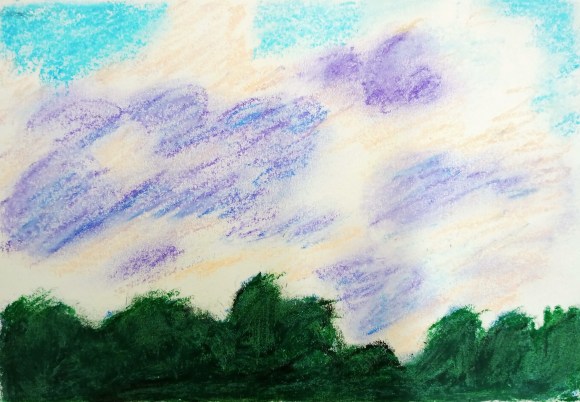


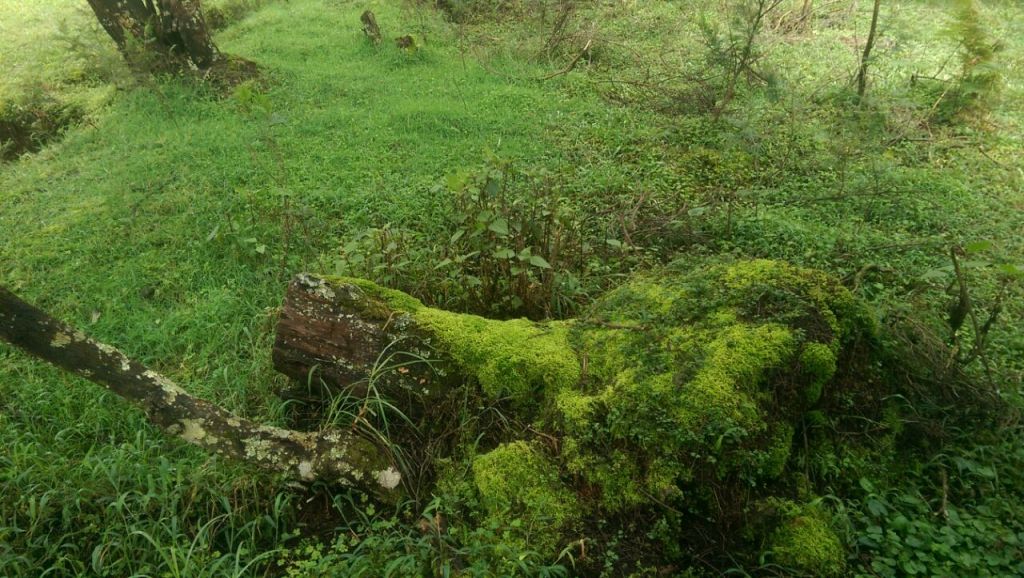
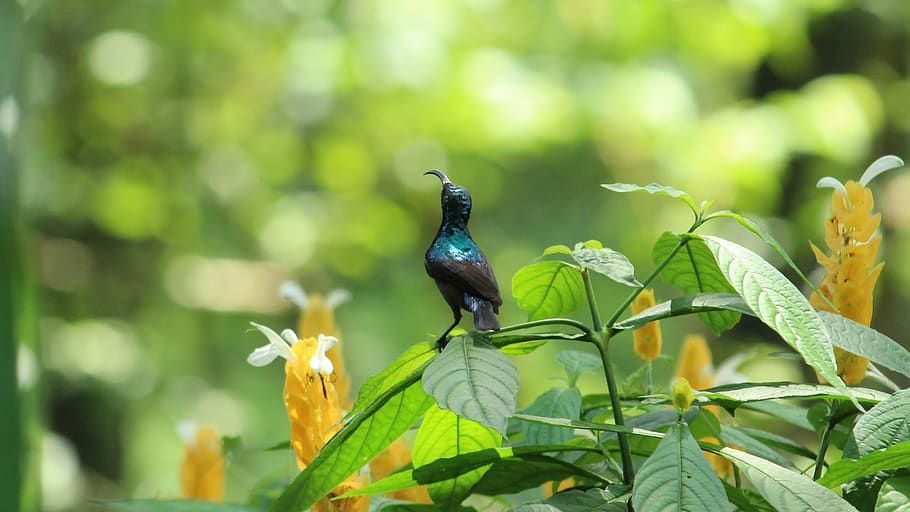





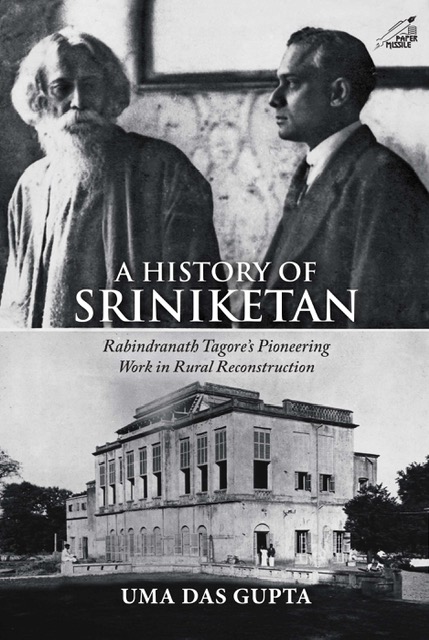
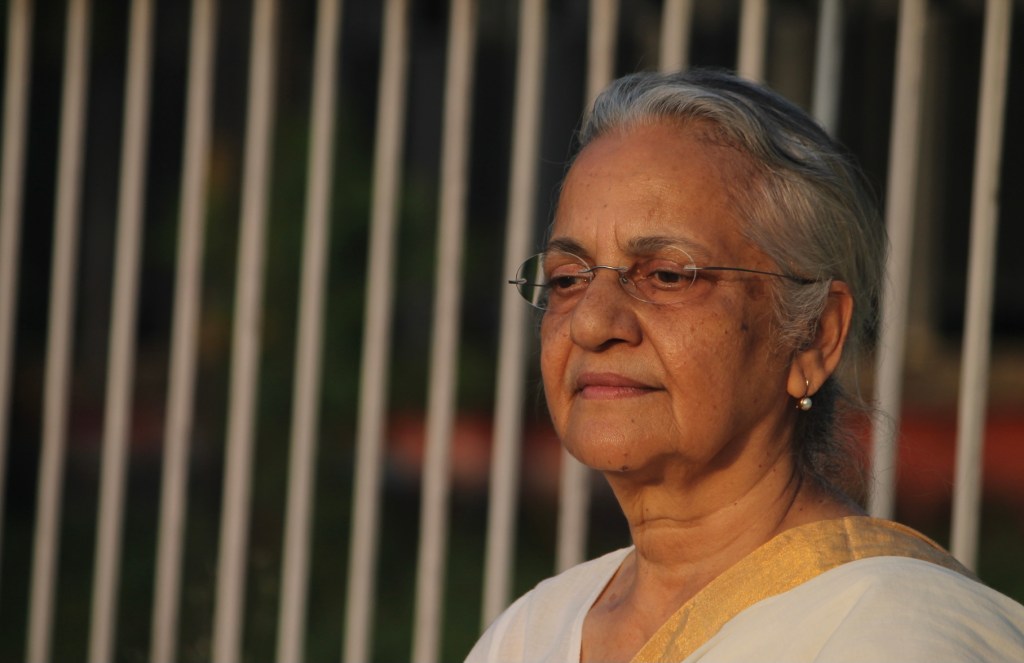


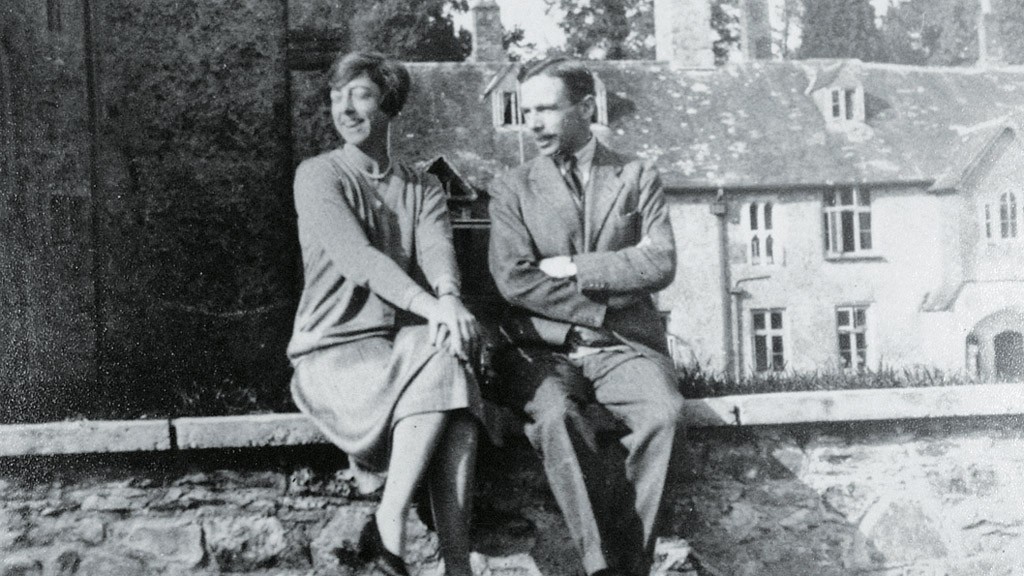





 Borderless