Out on my usual morning walk. A lovely June morning, the air fresh, cool, the rising sun obscured by a belt of sleepy, moving cloudlets. The sun’s soft, mellow rays dried the dew on the large, leafy trees and blossoming flowers of Holland Park.
As always, I bent my steps towards my favourite bench where, I could sit alone and quiet, near to the ponds, yet far enough not to hear too many voices. The air smelt fragrant that particular morning. I hastened to start on my adventures with Dickens’ David Copperfield as I turned a sharp bend on the path that took me to the bench and the great, sprawling oak tree that homed the myriad rooks and scurrying squirrels. I halted. A seedy-looking man was slowly sitting up on my bench! I had never found someone occupying my bench before. He was scratching an unshaven face and an uncombed head of black, curly hair.
Snapping out of my astonishment, I boldly went up to him. “Sir, have you been sleeping on this bench?”
Hardly looking at me, he softly replied, “In fact I have, my good man. And I will add, I enjoyed a very quiet and relaxed sleep. Not a soul in the park at two in the morning, not even the squeaking of a squirrel.” He said all this with considerable aplomb.
“Well, I’m very happy to hear that. Of course you shall be leaving soon?”
“Not that soon, I’m afraid. When I sleep out, which is almost always, I arrive here in Holland Park at 2pm. and leave at three in the afternoon, sometimes a bit later.”
I bit my lip. “What do you, eye little girls with bad intent?”
“I should think not — that is very uncouth.”
“ Spit out pieces of your broken luck?”
“Hardly. My luck has remained intact, I’m proud to say.”
“Warm your feet in the sun?”
“They keep very warm in this season, even with my shoes off.”
The bench-sleeper took out a cigarette from a torn shirt pocket, lit it, then smeared his shabby clothes with greasy fingers. “Want a smoke?”
“No thank you, I don’t smoke.”
“May I ask you why you have chosen this particular bench to sleep on?” I resumed, as he puffed away, staring blankly into space. “This is my reading bench, sir. It has been for over two years. I come almost every morning to have a good read before breakfasting at the Duck or Grouse across the road.”
“Ah ! The Duck or Grouse, I know it well. The barmaid is an acquaintance of my wife.”
“You have a wife?”
“Yes, and two children. Does that shock you?” Before I could answer he pointed a slender finger at my book: “A rather dreary read in the morning, no? I mean, why not something more droll like David Lodge or Oscar Wilde?”
“I prefer Dickens if you don’t mind,” I responded, taken aback by the man’s impertinence. The impertinent man yawned, took a bright, red apple from his trouser pocket and began munching on it.
“Sorry to have disrupted your morning reading, old chap, but oftentimes in life we are confronted by unforeseen events or encounters contrary to our habits. The question is: Should we disregard the event or investigate the meaning behind it? Why on this particular morning, on this particular bench have you been confronted by someone who has hindered your daily morning ritual? Is it accidental or providential? Please, sit down.” I did unthinkingly sit down and watched him blow blue smoke rings into the still air. I will admit that I was a bit awed by him.
He went on calmly: “Does my appearance really offend you, cause you any discomfiture? Retard your reading of Dickens, who I must say, I have never really taken a liking to?”
“Oh, so now you insult my choice of reading?” I fumed.
“I meant no insult, sir, only a reminder you that there are morning readings, afternoon readings, evening and night readings. And I’m sorry to inform you that Dickens is not a morning reading, especially David Copperfield.”
“Well, I’m sorry to disappoint you, but if you are to remain seated on this, my bench, then you will be subjected to my perusal of David Copperfield; and whether it pleases you or not will not change my habit of doing so.” My bold affirmation seemed not to disturb the blighter’s rings of smoke that sailed lightly up into the broad leaves of the oak tree.
He wrinkled his nose: “Habits are terrible enemies.”
“Are they?”
“Yes, that’s why I oftentimes change a bench … even a park: St James is lovely with its lake. Richmond, Finsbury and Circus Gardens are very pleasant, too … You see, I despise habits, they instil an implacable rigor mortis.”
I ignored him and frowned: “So, you believe I’m a silly, old dolt because I read David Copperfield every morning on the same bench?”
“Of course not,” he responded quickly, tying the laces of his heelless shoes. “I simply wished to make clear to you on this lovely morning that a stranger has sat on ‘your’ bench, and that you have yet to ask him whether he is a beggar or not!”
The bench-sleeper’s remark put so point blank did indeed pique my curiosity, so I took up his defiance: “Are you not a beggar then?”
“Have I asked for money?” was his snappy reply.
“No … not yet, anyway.”
“Nor will I. So what are your deductions?” He peered at me with a mischievous gleam in his eye.
“That you are not begging for money and that you have given me the occasion to snap my habit by engaging in conversation with you.”
“You have expressed it wonderfully!” he exclaimed.
“In that case, why do you sleep out on park benches, when you said that you have a wife and children, and you have no need of money?”
He shook the dew out of his hair. “Is there anything ambiguous or incongruous about that?” he countered.
“I think there is! I have a wife and a home, and at night I sleep in my home, not on park benches.”
“And children?”
I sat back. “No, in fact we have no children.”
He took out another cigarette. “ So?”
“So what?”
“Oh, nothing. My children often visit me in the parks when not at school, and my wife, when she’s not working.”
“I can’t believe all this!” I stuttered.
“Why not ? Have you something against a gesture so innocent, so insignificant than a man who sleeps on park benches, who is visited by his dear family, when, in fact, he could sleep in a lovely, soft bed next to his charming wife? Let us say that park benches have become my second residence.”
I gasped at that last remark mentioned so candidly. I changed the subject: “Tell me then, what do you do until two or three o’clock on this bench? You have no book to read.”
He chuckled. “My book lies outside written pages. My readings are people whom I observe, the flowers that I smell, the singing birds or gambolling squirrels that I hear. The conversations I have with many a good person, like yourself. I do read books — just the other day I found a copy of Lawrence’s The Rainbow in the trash bin. Can you imagine someone throwing away a classic of that sort?”
“Yes, that is a crime. So your days seem to pass by splendidly, a full agenda, if I may say so without irony.”
“You may say exactly that, my good man.” He stretched his limbs, took another cigarette and smoked dreamily, peering into the thick leafy foliage of the oak tree. Songbirds had been accompanying his well-stated sentences for some time now; they seemed to punctuate them, rhythmically. The manner in which he smoked his cigarette mystified me. There was a touch of delicacy, elegance, even refinement in his gestures. His speech, too, prompted me to think that he was no ordinary tramp.
He pointed to the sun: “When did you say you breakfast at the Duck or Grouse?”
“At ten o’clock.”
“Judging by the sun, it must be very close to ten.”
I glanced at my watch. “How right you are!” I said, stunned by the accurate time-telling of this unusual man.
“I’m afraid I have prevented you from reading one sentence of Dickens.”
“No bother ; I have many mornings to do so … unless …”
“Unless you find me lying or seated here every day ? Not to worry; as I said, I change benches and parks quite regularly. But who knows, we may meet again in different circumstances.” And he smiled while his eyes shone a roguishness that confounded me.
“Right!” I returned. “Perhaps we shall meet again.” I stood up to leave.
“Bon appetit,” he called out as I wended my way to the front gate.
Finishing my breakfast, I hurried home eager to share that odd encounter with my wife, at that moment busy with her morning gardening. “You’ll never know how I spent my morning, dear.”
“Reading your book, I suppose, as you always do,” my wife replied tritely without looking up, pulling out the weeds from the borders of coneflowers, forget-me-nots, asters and chrysanthemums below the bay window of our newly bought duplex.
“Not at all,” I responded. “I had a very strange conversation with a man who sleeps on park benches every night, and sits on them until three in the afternoon.”
She stood and eyed me strangely. “Talking to beggars, hey? How much did he wrest from you?”
“He wasn’t a beggar Helen. He simply sleeps and sits on park benches. In fact, he had a refined way of smoking his cigarette. Very well-spoken, too.”
She continued to stare at me without a word. “He even has a wife and children who visit him in the parks.”
“Does he ? Well I’ll be damned if he wasn’t putting you on, Marvin. Do you think I’d visit you in a park, sleeping on a bloody bench?” I smiled weakly. “He’s a smooth talker, that one is. Be careful, he might put ideas in your head, ”she concluded and attended to her peonies and snapdragons.
I felt odd and asked, “How about a restaurant tonight, dear? I’ve had a handsome pay rise, you know. Let’s dine at the Galvin La Chapelle.”
Helen jumped up like a Jack-out- of-the-Box. “Are you mad? I think that beggar or bench-sleeper got the better of you. The Galvin La Chapelle is the most expensive restaurant in London … eighty or ninety quid a menu!”
“Yes, I know. But I really feel like having a wonderful meal. After all, it’s only money…”
My wife went back to her edging and weeding.
So that night, dressed in our best clothes, we stepped under the chapelled vaults of the Galvin La Chapelle in Spitalfields, whose French cuisine and romantic atmosphere knew no rival in London, perhaps even in the whole of England. We were seated at our reserved table for two in the middle of the enormous dining hall, where we could admire the polished marble pillars supporting the stone ceiling, the timbered vaults and the arched windows. We both felt so paltry surrounded by such grandiose mediaeval decor.
“Such a posh restaurant, I’ve never seen such lovely architecture and decoration. And feel this tablecloth, it wasn’t bought at Primark,” Helen remarked blissfully, passing her rough, garden-versed fingers over the silken cloth after having been seated in a red-upholstered chair by a charming young waiter.
“I knew you’d like it, darling.” I beamed, thoroughly delighted at my wife’s first impressions. “You deserve it, haven’t we’ve worked hard: first the duplex then the car?” The Maître d’Hôtel[1] greeted them in French, then with much studied decorum, lay two menus on the table in the middle of which had been placed a vase of intoxicating tuberoses whose fragrance almost caused Helen to faint in ecstasy. Marvin ordered cocktails.
Suddenly his face turned white as a ghost. Helen, snapping out of her ecstatic state, searched the sudden whiteness for a reason: “Marvin … Marvin, are you alright ? Is it the flowers or the prices on the menu that have turned your face into stone ? I told you this place was dear. We’re not at MacDonald’s, you know …”
Marvin struggled to speak: “No … no … it’s not the menu, dear.” He turned to observe the Maître d’Hôtel presently leaning on the counter of the cocktail bar. He was attired in the most striking satin canvas double-breasted tuxedo with a black, silk bow tie whose tips brushed lightly against the red-laced lining of his vest. His tailored trousers grazed daintily a pair of Crockette and Jones shoes, the dearest in London. There he leaned on his right elbow, chatting up the barmaid. With the most refined gesture, he took out a cigarette from a gold-plaited case and lit it.
Marvin gasped: “It’s him! It’s him, Helen!”
“What are you on about?”
“The head-waiter talking to the waitress at the bar…It’s the bench-sleeper in the park. I’m sure of it.”
Helen sat back, a bit ruffled at her husband’s outlandish outbursts. The young waiter brought the hors d’oeuvres[2]: duck liver royal and buffalo milk panna cotta. As soon as the waiter had served them: “Are you daft!” she whispered so as not to be heard by two couples who had just been seated near to them. “Stop this nonsense, Marvin. Control yourself. Don’t forget where we are. How can a tramp on a park bench be the head waiter of the most expensive restaurant in London?”
“But the way he smokes his cigarette…it’s exactly like the beggar’s! And his grey eyes, those glazed, blurry, grey eyes are his. Helen I can’t believe it!”
“Then don’t believe it because it can’t be him. Calm down and eat your duck liver. Look, he’s coming to take down our main dish, which because of your foolishness, we haven’t chosen yet.”
The stately Maître d’Hôtel glided over, pad in hand. Marvin, red as a lobster, buried his face in the menu. Helen scanned hers, marvelling at the names.
“Let me suggest the crab ravioli,” His soft voice sailed in between them. A voice very familiar to Marvin.
“That sounds lovely,” Helen said, staring impatiently at her husband who was hiding his face behind the menu. “With a lot of ricotta cheese, please. I’ll also order a free range aged duck sauce à l’orange. And you darling, what will it be?” she added, barely disguising her anger.
“I shall have the Iberico pork with chimichurri sauce, please,” Marvin ordered, peering over his menu at the head waiter.
“Of course, sir, we serve the finest French cuisine in England ; une cuisine exquisite!”
“How about some wine, dear?” Helen interrupted, peevishly.
The Maître d’Hôtel suggested: “An Aloxe-Corton Latour red wine goes well with pork. As to the crab, why not a carafe of Chardonnay?” Helen and Marvin acquiesced by simply nodding their heads. “If I’m not mistaken, this is your first time here? Perfect. Then permit me to offer you, on the house, our burnt honey custard tart for dessert. It simply melts in your mouth.” The first-comers wreathed in smiles, albeit Marvin’s somewhat withered, nodded again in ostentatious gratitude. The Mâitre d’Hôtel glided off across the stone-paved floor with velvet steps.
Marvin leaned over the table, his nose ruffling the tuberoses. “Helen, I’m telling you it’s him. I’m going over there to settle this mystery once and for all. I know he recognised me, that’s why he offered that dessert to us.”
“Don’t be rude, Marvin. I shan’t be embarrassed because of your ill-behaviour. That beggar has got to your head. Sip your cocktail, why are you ruining such a lovely evening, especially one that will cost you over two hundred quid?” Helen bit her lip.
“But dear, I shan’t embarrass you ; I’ll just casually stroll over to the fellow and hint at David Copperfield. He’ll get the message. He’ll know I’m on to him.”
“What do you mean ‘on to him’ ? He’s not a criminal! Stop this immediately or I’ll leave you eating your two-hundred pound meal alone!” With those stern words that brooked no rebuke, the affair appeared settled …
Marvin, however, was not to be foiled …
He stood up. Gathering courage, he made a bee-line for the cocktail bar where the Maître d’Hôtel was serving himself a drink. Marvin in a low but firm voice said: “Sir, I believe we have met elsewhere.”
Being much taller than Marvin, the Maître d’Hôtel bent over him, drawing closer. He placed a comradely hand on his shoulder : “My good man, how observant you are! My disguise has not fooled you for a moment. But please, look at your lovely wife,” and he sighed. “She’s almost in tears, worrying over your stubbornness to know the truth. The truth? Of what? About a sleeper on a park bench, one who harbours a certain disdain for Dickens in the mornings? If I were to reveal the mystery of our morning’s encounter, would you please return to your table and enjoy the meal with your wife.”
Marvin remained speechless, although he did scoop out a handful of cashew nuts from a porcelain dish on the cocktail bar counter.
“You see,” the head waiter continued philosophically, “here in this restaurant I play the role of a Maîtred’Hôtel. I wear the weeds and mask of social bearing, parade about this remarkable dining room with aristocratic ease. I follow the rigid rules of proper etiquette. Where we met and spoke this morning is my breath of fresh air, my dwelling of unconfined freedom. There I dispose my mask, divest my constraining costume and don the clothes and air of a bird that has flown out of its cage. Here inside, I’m an actor. There, outside, a spectator no longer on stage constrained to act, but react to those whom I observe. And that my good man is the essence of freedom. In the parks, I regain a sense of reality by observing the simplicity of Nature, the grass beneath my feet, the sun, moon and stars above my head. The trees and the songbirds. In the restaurant, albeit it be the finest in England, I merely act, opined as a social asset, as a means to cater to people’s needs for costly pleasures, and of course to my own and those of my family’s, although mine and theirs are far from costly. Look, I shouldn’t be smoking this, but it is the only pleasure, the only soupçon of outside freedom that I can afford myself here.”
Marvin, awed by this avowal, said nothing. The Maître d’Hôtel concluded: “Now hurry back to your charming wife who has been impatiently waiting for your return. I do believe your main course will be promptly served. But let me say this, please do not disclose the reason for my bench-sleeping activities. That will be our little secret, one only between us. Look, your wife appears so upset, why subject her to trivialities? Discretion, my good man. Discretion. Put her at ease and enjoy your meal.” The Maître d’Hôtel causually strolled to a nearby table, smiling.
Marvin shuffled to his table, where indeed Helen was fuming. “Well ! Has he called the ambulance to have you packed off to Bedlam?”
Marvin winced. The irony of her remark cut deep into his emotions. He appeared lost in thought: “No … We had a smashing conversation, in fact. He’s quite a decent chap, well-read on Dickens, too.”
“Good, then let us get on with this wonderful meal. Cheers darling, and thank you, the wine is heavenly and the crab, well, what can I say?” Helen raised her glass: “To us … and Dickens!”
Paul Mirabile is a retired professor of philology now living in France. He has published mostly academic works centred on philology, history, pedagogy and religion. He has also published stories of his travels throughout Asia, where he spent thirty years.
.
PLEASE NOTE: ARTICLES CAN ONLY BE REPRODUCED IN OTHER SITES WITH DUE ACKNOWLEDGEMENT TO BORDERLESS JOURNAL
The description in ‘Hot Dry Summers’ is not of hell but what is perceived as happening on certain parts of Earth due to global warming or climate change. Forest fires. Nearer the equator, the storms have become harsher with lightning strikes that seem to connect the Earth to the sky. Trees get uprooted as the soil is softened from excessive rain. Sometimes, they fall on passers-by killing or injuring them. There is no rain in some places, forest fires or flooding in others… The highest temperatures touched 55 degrees Celsius this year. Instead of worrying about losing our homes lodged on land masses to the oceans that continue to rise, becoming dark heat absorbers due to loss of white ice cover, we persistently fight wars, egged on by differences highlighting divisive constructs. It feels strange that we are witness to these changes which seem to be apocalyptic to doomsday sayers. Are they right? Our flora, fauna and food will also be impacted by global climate change. How will we survive these? Will we outlive these as a species?
Poetry in our translations’ section travels to Balochistan, from where a Hafeez Rauf translated from Balochi by Fazal Baloch, talks of burning tyres, again conflicts. It takes on a deeper hue as Ihlwha Choi translates his poignant poem from Korean, reflecting on the death of his mother. We have a translation of Tagore’s less popular poem, Mrityu[1], reflecting on the same theme. His reflections on his wife’s death too have been translated by Professor Fakrul Alam who has also shared a song of Nazrul, written and composed on the death of Tagore. Another lesser-known poet but brilliant nonetheless, Nirendranath Chakraborty, has been translated for us by Debali Mookerjea-Leonard. And what a tremendous poem it is when the person called Amalkanti wanted to be sunshine! We have a story too — ‘Speech Matters’ by Naramsetti Umamaheswararao translated by Johny Takkedasila.
Our stories as usual travel around the world — from Holland (by Paul Mirabile) to Hyderabad (by Mohul Bhowmick) and with a quick pause at Bangalore (by Anagha Narasimha). Travels in the real world are part of our non-fiction. Sai Abhinay Penna takes to a the second largest mangrove forest in the world and Ravi Shankar to Colombo. Madhuri Bhattachrya gives us a glimpse of an Indian summer and Snigdha Aggrawal explores the impact of climate change in her part of the world. Farouk Gulsara actually writes his reflections at a traffic junction. And it reads droll…
We have an in memoriam by Keith Lyons on Morgan Spurlock, the documentary maker who ate McDonald fare for a month and then made a film on it. We have two tributes to two legends across time. Wayne F Burke has given a brief piece on the iconic illustrator, Norman Rockwell. And Aruna Chakravarti, the queen of historic fiction who brought the Tagore family alive for us in her two very well researched novels, Jorasanko and Daughters of Jorasanko, has given us a fabulous tribute to Tagore on the not-so common aspects of him.
Suzanne Kamata, the novelist who does a column from Japan for us normally, has spoken to us about her new novel, Cinnamon Beach, which overrides multiple manmade constructs. It’s an interesting read from someone who lives her life across multiple cultures and transcends many boundaries.
This is a bumper issue, and it is difficult to convey the vibrant hues of words that colour this edition. Please do pause by our contents page for a more comprehensive look.
This issue would not have been possible without all our fabulous contributors and a wonderful, dedicated team. We are delighted that Rakhi Dalal — who has done many reviews and shares her poetry with us in this issue — has agreed to be a writer-in-residence with us. A huge thanks to all of you, and especially Sohana Manzoor for her artwork. I am truly grateful to our readers for popularising our efforts to put together an online space with free and vibrant reads.
I would like to end with a few lines that gives me hope despite climate change, wars and doomsday predictions.
There’s more to life, he says to me, than what you choose to see.
Title: Once Around the Sun: From Cambodia to Tibet
Author: Jessica Mudditt
Chapter 20 – In or out?
As I walked the streets of downtown Hohhot in search of a travel agency, I felt further than five hundred kilometres from Beijing. I was still in East Asia, but the capital city of Inner Mongolia had Central Asian influences too, such as the cumin seed flatbread I bought from a hawker with ruddy cheeks and a fur hat. I passed a Muslim restaurant with Arabic lettering on the front of its yellow-and-green facade, and many street signs and shops featured Mongolian script as well as Mandarin. With its loops, twirls and thick flourishes, Mongolian looked more similar to Arabic than Chinese. In actual fact, the top-down script is an adaptation of classical Uyghur, which is spoken in an area not far to the west.
The winds that blew in from the Russian border to the northeast were icy cold, so I was glad to soon be inside a travel agency. It was crammed with boxes of brochures and a thick film of dust covered the windowpanes. Hohhot is the main jumping-off point for tours of the grasslands, so I was able to get a ticket for a two-day tour that began the following morning.
I wasn’t enthusiastic about going on a tour because I preferred to move at my own pace, however there was no other way to access the grasslands. The upside was that I was guaranteed to sleep inside a ger, which is a circular tent insulated with felts. The Russian term of ‘yurt’ is better known. I had read that Inner Mongolia was a bit of a tourist trap for mainland Chinese tourists, but I was nonetheless excited to get a glimpse of the Land of the Weeping Camel.
I walked into a noodle shop and a customer almost dropped her chopsticks when she saw me. The girls at the cash register were giggling and covering their faces as I pointed at a flat noodle soup on a laminated menu affixed to the counter.
Foreign tourists must be thin on the ground in Hohhot, I thought as I carried my bowl over to a little table by the window.
Inner Mongolia was one of the few places that Lonely Planet almost discouraged people from visiting: ‘Just how much you can see of the Mongolian way of life in China is dubious.’ But I was still keen to see what I could.
I ate slowly, enjoying each fatty morsel of mutton. I was pretty good with chopsticks by that point – I’d never be a natural, but I didn’t drop any bits of mutton into the soup with a splash, as I used to in Vietnam.
Hohhot seemed a scruffy, rather bleak sort of city – or at least in the area where I was staying close to the train station. Street vendors stood cheek by jowl on one side of the road, calling out the prices of their wares. The opposite side was under construction and the one still in use was unpaved, which meant that two lanes of traffic had to navigate a narrow area of bumpy stones while avoiding massive potholes and piles of dirt. I saw a motorbike and a three-wheel truck almost collide.
I spent the next few hours wandering around the Inner Mongolia Museum, which has a staggering collection of 44,000 items. Some of the best fossils in the world have been discovered in Inner Mongolia because its frozen tundra preserves them so effectively. The standout exhibit for me was the mammoth. It had been discovered in a coal mine in 1984 and most of its skeleton was the original bones rather than replicas. I gazed up at the enormous creature and tried to imagine it roaming the earth over a million years ago. Mind-boggling.
I admired the black-and-white portraits of Mongolian tribesmen, and then took photos of a big bronze statue of Genghis Khan astride his galloping mount. The founding leader of the Mongol Empire was the arch-nemesis of China, and parts of the Great Wall had been built with the express purpose of keeping out his marauding armies. Genghis Khan must have rolled in his grave when China seized control of a large swathe of his territory in 1947.
What was once Mongolia proper became a Chinese province known as ‘Inner Mongolia Autonomous Region’. This long-winded name is an example of Orwellian double-speak. So-called ‘Inner Mongolia’ is part of China, whereas the independent country to the north is by inference ‘Outer Mongolia’. Nor is the Chinese region autonomous. The Chinese state has forced Mongolians to assimilate. Their nomadic lifestyle and Buddhist beliefs had been pretty much eradicated, and although speaking Mongolian wasn’t outlawed, learning the state language of Mandarin was non-negotiable.
On top of this, the government provided tax breaks and other financial incentives to China’s majority ethnic group, the Han Chinese, if they relocated to Inner Mongolia. Mongolians now account for just one in five people among a total population of 24 million. The same policies of ethnic ‘dilution’ exist in China’s four other ‘autonomous regions’, which include Tibet and Xinjiang, the home of the Uyghurs.
Shortly before I left the museum, I came to a plaque that described the official version of history, which was at odds with everything I’d read in my Lonely Planet.
‘Since the founding of Inner Mongolia Autonomous Region fifty years ago, a great change has happened on the grasslands, which is both a great victory of the minority policy and the result of the splendid leadership of the Communist Party of China. The people of all nationalities on the grassland will never forget the kind-hearted concerns of the revolutionary leaders of both the old and new generations.’
I rolled my eyes, snapped a photo of the plaque for posterity, and continued walking.
* * *
I didn’t venture far from my hotel for dinner because I planned on having an early night. I chose a bustling restaurant with lots of families inside and was waiting for a waiter to come and start trying to guess my order when a group of men at the next table caught my eye. They seemed to be waving me over.
Me? I asked by pointing at myself.
Yes, they were nodding. Shi de.
I happily joined the group and introduced myself by saying that I was from ‘Aodàlìyǎ’. I think they were Han Chinese, as they didn’t look Mongolian. I whipped out my phrasebook and tried to say I had come from Beijing, but I was fairly certain they didn’t understand me.
Anyhow, no matter. Ten shot glasses were filled from a huge bottle of baijiu, and I was soon laughing as if I was with old friends. One of the slightly older guys used a set of tongs to place wafer-thin slices of fatty pork into the bubbling hotpot on the table, followed by shiitake mushrooms and leafy greens. As the impromptu guest of honour, my bowl was filled first once it was cooked – by which time I’d already had three shots.
The hotpot was fantastic, and I had to remind myself not to finish everything in my bowl. Bethan had told me that Chinese etiquette requires a small amount of food not to be eaten at each meal. This indicates that it was so satisfying that it wasn’t necessary to eat every last bite. As a kid, it was ingrained in me to finish everything on my plate. I loved food and was generally in the habit of licking my bowl clean, so I had to exercise a certain amount of restraint.
I had just rested my chopsticks across the top of my bowl to signal I was finished when I was invited to go sit on the wives’ table, which was across from the men’s. The women were very sweet and a couple of them seemed to be around my age. I once again tried to communicate using my phrasebook, but I was hopelessly drunk by then. I could hardly string a sentence together in English, let alone Mandarin. I was also beginning to feel queasy from the baijiu, so I gratefully accepted a cup of green tea from the porcelain teapot that came my way on the lazy Susan. After taking some photos together, I bid the two groups ‘zaijian’ (goodnight). I tried to contribute some yuan for the meal, but they wouldn’t hear of it. I curtsied as a stupid sort of thank-you, and then I was on my way.
* * *
More hard liquor awaited me the following day. A striking woman in a red brocade gown with long sleeves handed me a small glass of baijiu as I stepped off the minibus a bit before noon.
‘It’s a tradition,’ she said with a smile, while holding a tray full of shots.
I downed the baijiu with my backpack on and grinned as the backpacker behind me did the same. There were four foreign tourists on the tour, and about eight domestic ones. The liquor gave me an instant buzz, which I needed. I hadn’t slept well and woke up feeling lousy, so I’d kept to myself during the two-hour journey. Even though I should have been excited, I got grumpier and grumpier as the reality of being on a tour began to sink in. Plus, the landscape was not the verdant green steppes I’d been expecting. At this time of year, it was bone dry and dusty. It hadn’t occurred to me to check whether my visit coincided with the low season.
I began chatting to the other tourists. The guy who had the baijiu after me was Lars from Holland. There was also a couple from Germany. I could immediately tell they were pretty straitlaced. Their clothes looked very clean and functional, and the girl refused the baijiu.
The woman in red introduced herself as Li, our tour guide. Then she led us along a path lined with spinifex to a dozen gers. They faced each other in a circle, and off to the right was a much larger ger with the evil eye painted on its roof and Tibetan prayer flags fluttering in the fierce winds. There were no other buildings in sight and no trees.
Li told us to meet inside the big ger in fifteen minutes after we’d put our stuff in the smaller gers she proceeded to assign us. Lars and I would be spending the night in a ger with ‘82’ painted on its rusted red door. There certainly weren’t eighty gers, so the logic behind the numbering system wasn’t clear – but no matter. The German couple took the ger to the right of ours.
These were not portable tents for nomads. Each ger was mounted on a concrete base and I think the actual structure was made of concrete too, and merely wrapped in grey tarpaulins. The door was made of metal and at the top was a sort of chimney structure – perhaps for ventilation. Like igloos, the only opening was the door, and it was pitch-black inside. I located a dangling light switch as I entered.
‘Ah – I love it!’ I exclaimed.
It was a simple set-up, with single beds lining the perimeter and a low table in the middle of the room. Patterned sheets were draped from the concave ceiling. I chose the bed with a framed portrait of Genghis Khan above it. Lars put his backpack next to a bed on the other side. I was happy enough to share a ger with him. He gave off zero sleazy vibes.
‘I might just take a couple of those extra blankets,’ I said to Lars as I piled on a few extra floral quilts from another bed. The wind had an extra iciness to it out on the steppes and I shuddered to think what the temperature would drop to overnight. We zipped our jackets back up and headed out.
I wandered over to the toilet block, which was quite a distance from the gers. I made a mental note to drink as little as possible before getting into bed to avoid having to go in the night. Once I got closer to the toilets, I was glad they were so far away. The stench was unbelievable.
In the female section were two concrete stalls without doors. In the middle of the floor in each was a rectangular gap. I almost gagged. Just a few centimetres away from the concrete was an enormous pile of shit. I could make out bits of used toilet paper and sanitary pads and there were loads of flies buzzing around. Without running water or pipes, the excrement just sat there, day after day, building up. I would have turned and walked straight back out but I was busting for a wee. I held my breath so I wasn’t inhaling the smells. I wanted to close my eyes too, but I was terrified of falling in, so I had to look at what I was doing. I couldn’t get out of there fast enough.
‘Oh my god, Lars – the drop toilets are totally disgusting,’ I said after I met up with him in the big ger. ‘It’s just a pit of shit without running water.’
‘I know an American girl who fell into a drop toilet in China last year,’ he said.
‘No way,’ I said with a shudder.
‘Yeah. She said it was terrible. She was in a really poor village somewhere in central China and she went to the toilet at night. She couldn’t see that some of the wooden planks had gaps in them – and then one of them broke and she fell in. She was up to her neck in shit. She was screaming for people to come help her. Apparently, it took them half an hour to fish her out, and all the while she could feel creatures writhing around her body. She cut her trip short and had to get counselling when she got home.’
‘I bet she did,’ I said. ‘That’s the most disgusting thing I’ve ever heard in my life. The poor girl.’
Just then Li appeared and said we were heading outside to watch horse racing and traditional wrestling after some sweet biscuits and tea. We assembled around a fenced area where there were about thirty ponies tethered to poles. Some were lying down while still saddled.
‘Horses usually sleep while standing up, so these ponies must be knackered – pardon the pun,’ I joked to Lars.
Notwithstanding, they looked to be in reasonably good condition, with shiny coats and no protruding ribs. There were chestnuts, bays and dapple greys.
I heard the sound of hoofbeats and looked behind me. A group of men on horseback came thundering across the steppes. It was a magnificent sight, and any lingering resentment I had about being on a tour melted away.
One of the men rode ahead of the rest. He was wearing a cobalt-blue brocaded tunic and his wavy black hair came down past his ears. He was really good-looking. He approached Li with a smile, said something to her and dismounted with the ease of someone who had probably started riding horses before he learned to walk. Li and the man exchanged a few words – I definitely saw her blush – and then he got back on.
‘Gah!’ he yelled as he dug his heels into his horse’s sides.
The other horsemen followed after him with whoops, leaving a trail of dust in their wake. These Mongolian ponies were only about twelve or thirteen hands, but they sure were fast and could turn on a dime. I loved watching them carve up the dry earth.
Next a group of men on motorcycles appeared along the track. There were quite a lot of them – at least twenty. We formed a big circle, and the traditional wrestling began. I wasn’t sure what the rules were, but it was fairly self-explanatory: one man got another in a headlock and thumped him to the ground. The next man came along and fought the winner, and so on and so forth. The spectators egged on the fighters with what I assumed were good natured cat calls. Everyone was grinning. By the time the wrestling matches were over, the fighters were absolutely covered in dust and the sun was beginning to set. I’m sure it was all staged for our benefit, but it was good fun.
With the seamless orchestration of a tour that has been done a thousand times before, we gravitated to the big ger. Dinner was bubbling away in a large clay pot and it smelled pretty good. There was also a big vat of noodles with black sauce and the ubiquitous Chinese vegetables of thinly sliced carrot, bok choy, baby corn and onion. There was a bottle of baijiu on each table.
We were serenaded with traditional music while we ate. One of the instruments reminded me of the didgeridoo and there was also a violin. I had read that strands of horse mane are used to make violin strings. The male singer had a deep voice that was almost a warble, and it was hauntingly beautiful.
Five men and women emerged from behind a red curtain and began to dance. They wore long-sleeved, billowing satin tunics that were cinched at the waist with embroidered belts. One of the women had a tall hat made of white beads that dangled down to her waist. It must have been heavy. It was a high-energy display of kicks and splits and parts of it were reminiscent of Irish dancing. They twirled their billowing skirts like sufis. The Chinese tourists started clapping in time with the music and then we all joined in. Sure, it was a bit cheesy, but I was really enjoying myself. At the end of the concert, we had photos with the performers as they were still trying to catch their breath.
We were given torches to light our way back to our gers. It was absolutely freezing, so I wore all my clothes to bed. I snuggled into my blankets and pulled them right up to my chin, feeling grateful for the warmth of Bethan’s jumper.
Mercifully, I slept right through until morning and avoided a late-night visit to the shit pit.
When I wandered out of the ger the next morning, breakfast was being prepared nearby. The carcass of a freshly slaughtered sheep was hanging from the back of a trailer. A man was skinning it while the blood drained out of its neck into a big metal bowl. Its head was in a second bowl, while squares of wool were laid out flat to dry on a tarp. A toddler in a puffy orange jacket was playing in the dust while his mother worked away at skinning parts of the wool. What distressed me more than butchery up close was the live sheep that was watching on from the back of the trailer. He presumably knew he was next.
After a breakfast of ‘sheep stomach stew with assorted tendons’ (as Li described it) we headed out for a ride on the steppes. I couldn’t wait to ride a horse again. I’d spent most of my childhood obsessed with horses, and I was lucky enough to have one for a few years, until I got older and became more interested in hockey and parties.
I rode a stocky bay with a trimmed mane that bobbed up and down as it trotted along the path. I looked over its perky little ears. The saddle had an uncomfortable pommel that kept jabbing me in the stomach, but I loved being under the wide open sky. It was a pale blue with just a few wispy clouds. Sheep grazed and crows rested on clumps of rocky outcrops.
I winced at the Chinese guy ahead of me, who was bouncing out of time to the rhythm of his horse’s gait and landing with a heavy bump in the saddle; his oversized suit flapping in the wind and his feet poking out straight in the stirrups. Much easier on the eye was the guide two horses ahead of him. He was every inch the Mongolian cowboy. Dressed from head to toe in black, he wore a leather jacket, cowboy hat and scuffed black cowboy boots. He never took off his wraparound sunglasses and he spoke little. He smouldered like the heartthrob actor, Patrick Swayze.
We’d travelled several kilometres when we came to a building block that was the same greyish brown as the earth. Inside it had a cottage feel. We sat around a table covered with a frilly tablecloth and drank yak milk. As we did, Lars told me about his day trip to North Korea. While in South Korea for a couple of weeks, he had visited the demilitarised zone (better known as the ‘DMZ’), where a ceasefire was negotiated between the two Koreas in 1953. In a military building is what is known as the ‘demarcation line’ – and Lars had one foot in North Korea and another in South Korea. I hung on his every word.
Our conversation got me thinking about how cool it would be to go to North Korea. I was actually quite close to the border. When I got back to the ger, I retrieved my Lonely Planet out of my bag and thumbed to the section titled ‘Getting there and away’, which had instructions for every country that borders China.
‘Visas are difficult to arrange to North Korea and at the time of writing, it was virtually impossible for US and South Korean citizens. Those interested in travelling to North Korea from Beijing should get in touch with Koryo Tours, who can get you there (and back).’
I was pretty sure the cost would be prohibitive for my budget and decided to stick with my existing plan of cutting south-west towards Tibet. Maybe one day I’d get the chance to visit North Korea, but it wouldn’t be on this trip.
Once back in Hohhot, I boarded a train bound for Pingyao. As I watched the apartment blocks pass by in a blur, I thought with satisfaction about the past twenty-four hours. Any visit to Inner Mongolia is problematic, but I couldn’t fault the Chinese tour company. They had made every effort to keep us entertained. Mongolian culture was so new to me that I couldn’t even tell whether something was authentic or staged, but I had seen and done all the things I hoped to during my visit. And, sure, my time there was really brief. But I’d be forever grateful to have seen a part of the world I thought I’d only ever get to see in a documentary.
Photo Courtesy: Jessica Muddit
About the Book: While nursing a broken heart at the age of 25, Jessica Mudditt sets off from Melbourne for a year of solo backpacking through Asia. Her willingness to try almost anything quickly lands her in a scrape in Cambodia. With the nation’s tragic history continuing to play out in the form of widespread poverty, Jessica looks for ways to make a positive impact. She crosses overland into a remote part of Laos, where friendships form fast and jungle adventures await.
Vietnam is an intoxicating sensory overload, and the hedonism of the backpacking scene reaches new heights. Jessica is awed by the scale and beauty of China, but she has underestimated the language barrier and begins her time there feeling lost and lonely. In circumstances that take her by surprise, Jessica finds herself hiking to Mount Everest base camp in Tibet.
From a monks’ dormitory in Laos to the steppes of Inner Mongolia, join Jessica as she travels thousands of kilometres across some of the most beautiful and fascinating parts of the planet.
About the Author: Jessica Mudditt was born in Melbourne, Australia, and currently lives in Sydney. She spent ten years working as a journalist in London, Bangladesh and Myanmar, before returning home in 2016. Her articles have been published by Forbes, BBC, GQ and Marie Claire, among others. Once Around the Sun: From Cambodia to Tibet is a prequel to her earlier book, Our Home in Myanmar.
.
PLEASE NOTE: ARTICLES CAN ONLY BE REPRODUCED IN OTHER SITES WITH DUE ACKNOWLEDGEMENT TO BORDERLESS JOURNAL
The Scream by Edvard Munch(1863-1944). Courtesy: Creative Commons
I met Gustav Beekhof twice whilst travelling in North Africa, once in Tunisia on the island of Djerba, and then in Algeria when I emerged from the desert after spending about seven months living amongst the Touregs.
Gustav was a Dutchman, tall, slender, long blond hair falling to his rounded shoulders. His blue eyes shone like scintillating mountain lakes in the morning sun. He spoke excellent English, French and German, all learned at school but polished and refined ‘on the road’ as he said in his high, nasalised voice.
Over a glass of tea, we spoke about many subjects, he emphasising that the voyager must touch Africa with his or her feet, and not ‘do’ it either in vans or in Land-Rovers as so many ‘doers of Africa do’. Gustav indeed had a whiff of smugness about him.
We split, the cocky Dutchman en route to Morocco, I back into the desert to Tamanarasset. Before leaving, however, he gave me his phone number and insisted that if I ever found myself in Amsterdam I should look him up. He threw back his long blond hair and as he got up to leave, said that he held my friendship in high regard.
Seven years later this was exactly what I did! I had been shuffling between Madrid and Burgundy France as a Flamenco guitarist at Rosario’s dance studios in the mornings and Antonio’s mesón[1]at night, and as a grape-picker at several farms between Dijon and Beaune in Burgundy. Every Autumn I would hitch to Burgundy from Madrid and for a month or so labour in the fields, in the wine-cellars, bottle wine and study oenology with the wine-growers in my spare hours.
The life of a mediocre musician and a seasonal farm labourer made no sense. I needed a change. Was not life a thick forest of possibilities ? One day as I treaded wine in one of the enormous kegs that aligned the cellar of a famous wine-grower, what the Burgundians call ‘piger‘, I suddenly thought of Gustav Beekhof. That night, back in my little room on the farm, I searched through my belongings and found his address. Yes, I would go to Amsterdam for that change.
When my work had finished on the farm I left my guitar with some friends, borrowed a bicycle and cycled up to Holland via Liechtenstein and Belgium, a strenuous journey, given the fact that the bicycle had no gears. I arrived in Amsterdam, thoroughly exhausted, but immediately set out to find my ‘friend’, if I may say so at this point in my narrative.
And indeed I did find him: having telephoned Gustav, that nasalised voice gave me directions to his home. I set off on my bike in search of him. It took me hours as I crossed bridges, turned in and out of little roads and lanes. As I struggled on, I had a strange feeling that Gustav did not know with whom he was speaking over the phone. Be that as it may, I finally found his ‘humble home’ as he merrily said, one of the many barges that float listlessly in the canals that criss-cross Amsterdam. A rather shoddy one at that, but its bohemian appearance did suit the personality of the individual I had met some seven or eight years ago in North Africa, and who was at present standing on the plank that led to the barge from the grassy pavement-bank. He was all smiles. He gestured for me to come ‘aboard’, shook my hand and led me into his ‘humble home’ …
A home that rocked and rolled ever so gently when a barge cruised by. Gustav warned me that to live in a barge one must develop sea-legs. He laughed, and the twinkle in his eye intuited that the Dutchman had no idea with whom he was speaking. I felt rather uncomfortable at first, but this loss of memory seemed not to disturb my host who spread out his long arms as if to engulf all the belongings that swam before my eyes: dozens and dozens of paintings, either framed, rolled up in clusters or on easels covered the uncarpeted ‘bottom deck’ along with hundreds of acrylic paint tubes, whilst more books and documents rose in high stacks against the unpanelled ‘starboard’, barring the grey afternoon light from penetrating two ‘portholes’. Large packages lay on a bunk bed at the ‘stern’. There were no rooms, only a very long and narrow ‘hole’ with a kitchenette at the ‘prow’. Rusting red-painted iron beams horizontally crossed the ‘hull’. Two tables had been placed in middle of this capharnaum[2], one for writing, I presumed, and one for eating ; both had seen better days. The toilet, a cubby hole, was located on ‘portside’ …
I was overwhelmed by the quantity of paintings, some of which I recognised.
“How do you like my prized collection ?” Gustav began. His tone had an undercurrent of secrecy. “I have acquired them at great pains, some are originals, others copies … and a few a result of my own genius.” Modesty was never a quality of Gustav’s personality … not even false modesty !
“But you have a Jasper Johns[3] … a Frans Van Mieris[4] and a Nicolais Astrup[5]!” I rejoined in amazement. They must have cost a fortune. My host shrugged his shoulders.
“Why do you think I live on a rubbishy barge and not in a golden palace, my dear lad ?” He threw back his long blond hair and motioned to the hackney table, where two plates, two forks and two knives had been neatly set. I sat opposite a lovely Laurits Andersen Ring painting: Road in thevillage of Bunderbrøde. Original or copy ? From the kitchenette Gustav sailed back gingery to the table carrying a large tray of chips ; they were dripping with oil. I put one or two in my mouth and felt sick to my stomach. From a cupboard near the toilet he brought forth a bottle of Jenever which presumedly was to wash down the chips. I looked over to his writing table and observed an open notebook.
“My Waybook,” he laughed. “I’m writing a collection of poems and stories about my voyages in India, Central Asia and Africa. Poems and stories written out ‘on the road’, but here in my barge-solitude, polished to a lacquered lustre.” My host was beaming with self-complacency.
I let Gustav make inroads on that greasy stack of chips whilst I cast cursory glances at those many paintings… “Remember those horrible mosquitoes in Africa ?” he reminisced. “They always bit me … perhaps because my blood is so sweet.” His voice had a fluty tone to it. I nodded perfunctorily.Was his blood sweeter than mine ?
I left about midnight, rather sozzled from all that Jenever.
For the next few days, my Dutch friend took me about Amsterdam, especially to the bars where we would invariably get thoroughly drunk, but also to the countryside on bicycle, gliding by the still standing windmills cranking their sails, the tulip fields in blushing bloom, over a streamlet or two, our bicycles poled over on small barques. One day we stopped near one of those streamlets to indulge in some Gouda and Edam cheese. It was there that Gustav, his mouth full of cheese and bread, made me a proposition which I was to regret for the rest of my living days …
“Listen,” he began, munching merrily, washing down his cheese and bread with a few shots of Jenever. “Since you’re out of work, how about working for me ?” I raised a quizzical eyebrow. He gave me a sly wink. “Don’t worry, it’s not hard labour. I need an itinerant salesman for my paintings. You know, I’m stuck here in Amsterdam and can’t meet the demands of all my clients. I have clients in Italy, Spain, France, England ; all over Eastern Europe, too. You’d be a perfect dealer for me, you know many languages, you have a bit of artistic talent yourself to explain certain niceties, and above all, you’re honest. I know you won’t cheat me.” His grin stretched from ear to ear. A strange grin, plastic-like. “I’ll give you ten percent of the proceeds.” And he had another spot of Jenever.
“Why ten ?”
“Why not ? It’s a number like any other. And don’t forgot, some of those paintings are going for over 8,000 Guilders, even double that in other currencies. What do you think ?” He eyed me fixedly, the deep blue of those two tarns swirling before me like turbulent whirlpools.
It took me three days to think over his proposition, and during those three days, when I visited him, we tramped about Amsterdam’s bars, drinking and conversing. Never once did he enquire about my decision. It was whilst licking off the foam of my Heineken in one of Gustav’s favourite bars, where it was his wont to reach into a drinker’s open poach of tobacco, serve himself a good pinch and roll a cigarette without ever asking permission, a rite that he alone exercised at the counter, that I decided to accept his offer. “Fifteen percent !” I added. He winced at first, but that mask slowly transformed into a broad smile. We shook hands and the deal was sealed. He ordered another round for us whilst pinching a bit more tobacco from the pouch of his displeased but stoic neighbour …
And that is how I became an itinerant dealer for Gustav Beekhof’s paintings. My wanderings took me to the most remotest of European towns, and to the most hideous suburbs of those towns. Instead of dealing with rich bourgeois families, small museum curators or private collectors, Gustav’s mailed instructions directed me to shifty-eyed men, well-dressed and well-spoken indeed, but shifty in our negotiations. Besides, we effected our transactions in the oddest of places: warehouses, depots, repositories, seedy hotel rooms. I would remove the paintings from long, plastic cylinders similar to those that the Chinese use to carry their scrolls, unroll the merchandise they were expecting, and after a thorough inspection, the head of these delegations would produce a wad of bills, and without counting them push them into the pocket of my vest. They would leave me standing there without a word, although now and then, one of them was given orders to drive me to the centre of the town and drop me off at my hotel.
Gustav had advised me to deduct my fifteen percent from the purchases, deposit the maximum amount of cash that was permitted in one of the subsidiaries of a Dutch bank, found in Greece, Norway, Belgium, France, England, Luxembourg and Germany. If a large amount of cash remained, I was to travel to another country, locate another subsidiary and deposit the rest. Gustav had absolute faith in my integrity; at any time, I could have run off with thousands of francs, liras, pounds or any currency and simply disappeared. Of course the thought never occurred to me. As to the paintings themselves, they were sent through a special mail service along with a note at one of my hotels directing to the addresses where I had my the appointments. In this way I had no need to return to Amsterdam.
These proceedings continued without respite for two years as I scurried from country to country and town to town. I must admit that over the course of time I began to question the probity of the individuals I was dealing with, for all these transactions seemed enshrouded in mystery, carried out by dubious characters, each and every one of whom bore a rank odour of unprincipled morals, although their behaviour towards me was always impeccably polite, aloof indeed, but nevertheless perfectly respectful. I, thus, disregarded these apprehensions; after all, I was earning vast amounts of money. And I wasn’t one to, as the French say, cracher dans la soupe[6] !
One fine Spring day, I received six paintings at my hotel in Thessaloniki, Greece, and a note directing me to Istanbul, where an Armenian merchant was waiting impatiently to buy the paintings at a very handsome price. However, the note warned me that the merchant was a bit of a rogue, and a clever one at that. I smiled inwardly; I had been to Istanbul several times and could negotiate quite well in Turkish. I rubbed my hands ready for the joust …
It was on the fourth day of my arrival in Istanbul by bus from Thessaloniki that our appointment had been fixed in the Armenian’s small shop near the Armenian Church of Üç Horan (Trinity) inside the Fish Market. His shop, crowded with every object that one could possibly find on the face of the earth: wooden religious statues, candelabras, thuribles, musical instruments, Ottoman-styled hanging lamps, church paintings, ikons, antique furniture, travelling chests dating from the Ottoman Empire, sabres and shields, made it difficult for me to find the merchant seated behind a long, knotty mahogany table upon which had been stacked books, paper-weights and a scruffle of yellowing documents. He had a sinister look about him, doleful, suspicious, a darkly look that matched his dark frizzy hair, thick eyebrows and beard. When he noted my arrival he sat there in frozen silence which lasted longer than I had expected of a potential buyer of Gustav’s long-sought paintings. I sensed something amiss … something which did not sit well in this Ali Baba’s cave.
The Armenian stood and cleared away the books that encumbered his table. He bade me deposit the paintings in his outstretched arms. I took them out of the cylinder and placed them gently in the crooks of his arms, where like a mother holding her child, he cradled them for a few long seconds before laying them delicately on the knotty mahogany table.
Without a word he unrolled each one, admiring the colours, the textures, the shapes, the lines.
“Very nice … lovely !” he finally said in rough Turkish. “The colour saturation of this one is marvellous. And here, the crackle paste indeed gives the village a mediaeval aura. The application of mica flake certainly highlights the effects of the tempest over the sea, whilst here, the dry brush technique impresses an eerie velatura of the Scandinavian landscape.” He looked up at me. “And what do you think of Jasper Johns’ Between the Clock and the Bed ?” The question snapped me out of my reverie; no client had ever posed a question to me concerning the contents or quality of the paintings ; all my dealings had always been conducted with the utmost taciturnity.
“I don’t know … I’m not an art specialist, only a dealer.”
He chuckled : “Are you now ?” He touched the painting ever so delicately. “Pop art ? Expressionism ? What do you think, dealer ?” I remained silent, fidgeting about, the atmosphere had become unbearably oppressive. “Look, these fourteen colours set out like a lithograph should have been painted on Japan paper … do you follow me ?” I shook my head, ignorant of all these technical details. “Well, Mr Dealer, this is not Japan paper, consequently, the painting it not an original, which leads me to surmise that it’s a forgery !” The word forgery shot through me like a bullet. “So are those four, all falsified due to over-enthusiastic scrambling[7]. Only one is an original: The Scream, one of the eight versions by Munch, stolen this year from the Munchmusect in Oslo !” He stopped, stealing a glance at me. “How did you steal it?” he asked in a deep-toned voice, authoritative, one that does not brook rebuke. “And all the others stolen from museums, private collectors and galleries ? Just how do you do it ?” I cringed, feeling engulfed in a welter of confusion.
Mouth agape, I stammered : “I’m not a thief … I sell paintings for Gustav Beekhof, that’s all. I know nothing about where the paintings come from, except that …”
“I shall repeat the question once again,” retorted that deep-toned voice: “How do you steal them ?”
I stepped back. The whole affair was becoming a nightmare. “I told you I sell paintings for Gustav …”
My interrogator bent over the table and slapped me twice in the face. The violence sent me reeling backwards into some wooden statues. He circled round the table and stood menacingly over me. “We have been following your doings for months and months Mr Gustav Beekhof. Your repugnant affair has brought death and destruction to many innocent people.”
“Please, I don’t understand …”
“Shut up and listen !” And he punched me in the stomach, doubling me over. “Interpol shall be here in a moment or two to question you. But I would suggest you tell me everything here and now, for their methods are far from savoury.”
“Really … I’m not Gustav Beekhof … my name is Vigilius Notabene …”
“Oh really ?Vigilius Notabene ? Well now, Mr Notabene, let me inform you that you have been selling stolen paintings and forgeries to underworld criminal organisations and terrorist groups. Do you understand what that means Mr Notabene ? That means with the money they earn by selling what you have sold them for double or triple your amount, they buy arms to execute military personal and politicians, bombs to blow up train stations and aeroports. Did you think you could continue your lucrative affair with impunity ?” He grasped my collar, his face screwed up.
Suddenly, the shop door swung open. Three or four burly men dressed in civilian clothes wove their way towards us. They took me by the arms whilst the Armenian slapped me repeatedly across the face. I began to swoon. He turned to the men: “Gustav says his name is Vigilius Notabene.”
“But … I’m not Gustav !” I whimpered.
“Shall I juggle your memory ?” continued the Armenian. And that powerful fist drove into my chest. I cried out, hanging limp in the strong arms of the agents who looked on indifferently. “No, I’ll tell you your real name. Javier Fuentes, born and raised in Madrid, lover of bullfights and flamenco music. You left Spain for Holland where you changed your nationality and became Gustav Beekhof, amateur painter, counterfeiter and arch-cozen. Do you think we would never get on to your little affair ?” Again that hairy fist ploughed into my ribs.
I gasped for air. In low voices, the agents spoke to the Armenian in Dutch and in Turkish. I was amazed that I understood every word that was said. “Yes, yes Mr Beekhof, you understand everything we are saying. Polyglot, dilettante painter and musician, intrepid thief and casual traveller — it has taken us a while to corner you. And here we all are in my little shop. Cozy, eh ?”
A blow to the midriff sent me hurtling against a gaggle of porcelain geese, where I then slid squirming to the floor breaking the necks of two ! The agents violently grabbed my long, blond hair and stood me up.
“I’ll give you Gustav’s address …” I managed to gasp, my mouth filling with blood. Two agents squeezed my rounded shoulders so hard that I buckled over.
“Still on about Gustav, eh ? There is no Gustav Beekhof in Amsterdam on a barge. Gustav is right here in front of me, and there he will remain until he tells us the truth … If not …” I lifted my arms to ward off a blow, albeit none came.
“Come, come Gus, your mind has been unsettled by all these false identities ; all these wanderings in and out of cheap hotels, dealing with a bunch of thugs and killers. Fifteen percent ? Why give yourself fifteen percent when you deposit the rest in your own name in a Dutch bank account ? You must be completely daft!” I stared at my interrogator in disbelief. How did he know such precise details ?
“We know everything about you, Gussy!” as if reading my mind. “Everything except how you managed to steal these paintings from the museums. That remains a mystery to us all.”
“I’m Vigilius Notabene, born in Gotland on a farm. My parents died when I was thirteen so I left for Holland, Spain and France. In France …”
“Enough!” The Armenian began pummelling me. The agents stopped him. Then I heard the door of the shop swing open. I caught a glimpse of four men dressed in white ; tiny, white skull-caps coiffed their bald heads. They forced me into a straitjacket and hurried me into an ambulance. I was given an injection and that is all I remember until now …
I awoke in a small room, an all ghost-white room: white walls, door, window bars, curtains, bed and bedsheets, writing table. The whiteness pricked my eyes. My arms were strapped to my sides ; they had straitjacketed me. I lay helplessly surrounded by all this monochromatic melodrama.
One day a man, dressed in white whisked into the room, threw me a cursory glance, laid a notebook and pen very carefully on the white, metal table then strode to the bedside. He undid the straps of the straitjacket, pointed to the notebook on the table, and left as quickly as he came, wordlessly.
I stretched my stiff limbs and sat at the table. I had no idea where I was, and no one to turn to: no family, no friends, no lawyers … no one. I stared down at the white, lineless, notebook pages. Yes, I knew what they wanted from me. Ah, Gustav, you are a slippery sod. Here you are at last slipping out of that phantasmagoria of so many faces and places. So many existences that never existed! Take note that Vigilius Notabene will expose the truth of the past. As to Javier Fuentes, he had no future. Gustav is the true wayfarer, the ever-questing pilgrim present, here and now.
So in a renewed state of extreme excitement I now record on those very white pages :
“I met Gustav Beekhof whilst travelling in North Africa…”
.
[1] A small bar or tavern where people eat, drink and listen to flamenco music if there is a guitarist and a singer present.
[7] A technique that allows to paint over areas of a painting to enhance the tone of dark-coloured areas.
Paul Mirabile is a retired professor of philology now living in France. He has published mostly academic works centred on philology, history, pedagogy and religion. He has also published stories of his travels throughout Asia, where he spent thirty years.
.
PLEASE NOTE: ARTICLES CAN ONLY BE REPRODUCED IN OTHER SITES WITH DUE ACKNOWLEDGEMENT TO BORDERLESS JOURNAL
Ratnottama Sengupta gives a glimpse of the life of a woman impacted by the Partition, spirited enough to be a celebrated performer and to have a compelling saga written on her life posthumously, Zohra: A Biography in Four Acts by Ritu Menon, published by Speaking Tiger Books. This feature is based on the book and Sengupta’s own personal interactions with the aging Zohra Sehgal.
Zohra Sehgal. Photo provided by Ratnottama Sengupta
Zohra Sehgal[1] mirrors, in a strange kind of way, the story of the Indian subcontinent.
Born a Khan in 1912, raised in purdah by the Nawabs of Rampur in palaces and mansions in Lucknow and Dehradun, educated in Queen Mary’s College of Lahore; trained in Western dance in pre-Hitler Germany; whirling through the globe and basking in limelight as the dancing partner of the phenomenal Uday Shankar; setting up her own dance school with husband Kameshwar Segal in pre-Partition Lahore; rising to carve a niche for herself as a member of Prithvi Theatres; dominating the screen as a nonagenarian cast against the legendary Amitabh Bachchan… Sahibzadi bestowed with an impulse to find her way in the world, made of her life what she would.
So, was it all sunshine and moonlight in the life of the lady who, when she turned 100, had the wit to say, “You are looking at me now, when I am old and ugly… You should have seen me when I was young and ugly…”? No. She had seen the failure of Uday Shankar Cultural Centre in Almora; the closure of her own dance school in Lahore. She’d relocated to Bombay and be a less appreciated ‘side-kick’ to her ‘prettier’ younger sister in Prithvi Theatres. She performed in makeshift stages more often than in the Opera House; traveled in third class compartments with the troupe, slept on trunks, washed her own clothes. She had to worry about providing for her children and their father. She had to cope with the whimsicality, alcoholism, depression and finally, the suicide of her husband… But the caravan of misfortunes never dampened her spirit. “If I were to be reborn, I’ll be back as a blue-eyed, five feet five, 36-24-36,” she could repartee with humorist Khushwant Singh.
But then, much of the tragedy unfolded around the Independence cum Partition at Midnight. And I thank Ritu Menon’s ‘ABiography in Four Acts’ for lifting the curtain on this side of Zohra Segal – the phenomenon I had the good fortune to know through the years we spent in Delhi’s Alaknanda area.
Zohra’s father, Mohammed Mumtazullah Khan had descended from Maulvi Ghulam Jilani Khan, the warrior chieftain of a clan of the Yusufzai tribe[2] and a religious scholar of repute who came to the Mughal court in Delhi possibly in 1754. Along with infantry and cavalry and the title of Khan Saheb he was given Chitargaon Pargana in Bihar, but since the British rulers were taking over Bengal and Bihar, he fled to Rohilkhand and joined the Rohilla chieftains who survived the battle against the Nawab of Awadh and rose to become Nawab of Rampur.
Zohra’s mother, on the other hand, descended from Najibuddaulah, another Rohilla Pathan[3] in the service of Ahmad Shah Abdali and the Mughals, who founded Najibabad in 1740 and received the hereditary title of Nawab. By 1760, the tract of land he ruled included Dehradun, Najibabad, Meerut, Muzaffarnagar, Badayun, Bijnor and Bulandshahar. After 1887 his descendents, being incharge of the Regency Council that looked after the affairs of the Nawabs, set up schools to teach English, impart western education, encourage education of girls…
So, like many of India’s Muslim royalty and landed gentry, the Mumtazullahs were largely liberal, often westernised, and mostly secular. Their daughters, educated in English medium schools, went on to become hightly qualified professionals, including as ophthalmologist or Montessori teacher. Their sons went abroad for further studies, as did Zohra’s betrothed Mahmud — her maternal uncle’s son who went to school in England, graduated from Oxford, became a Communist, married a comrade and distributed all his inherited land in Moradabad to the peasants. Her elder sister Hajra married Z A Ahmed, an alumni of the London School of Economics who, as a committed communist, organised railway coolies, press workers, farmers and underground members of the then CPI[4].
Yet, even for such a family it was unusual to send the daughter to a boarding school — Queen Mary College, founded in 1908 — in a distant city like the cosmopolitan Lahore. It was a purdah school for girls from aristocratic families from where Zohra matriculated in 1929. By then she had imbibed the secular, broadminded values of her mostly-British teachers, and of an education that placed equal emphasis on physical activities – sports, to be precise. Here Zohra was initiated into both, art and acting – two passions of Uday Shankar who proved providential in her life.
It wasn’t so surprising then, that after matriculating, she set out on an arduous, even hazardous, overland trip across Afghanistan, Iraq, Turkey and Middle East, with a kindred spirit: her strong willed maternal uncle Memphis who, being a maverick much like Zohra herself, endorsed all her unconventional choices. He enrolled her in Mary Wigman Tanz Schule in Dresden; he financed her stay as too her owning a teeny-weeny car so she wouldn’t have to travel by train! None of this, however, ruled out her performing Namaz five times a day or reading the Koran. Years later, it was he who unreservedly stood by her decision to marry Kameshwar Sehgal when her own family was wary of the choice. And they spent their honeymoon in his house ‘Nasreen’ – now well-known as Welham Girls’ School. Built by an Irishman on five acres of land, it had pointed roofs, gables and half-timbering with extensive lawns, gravel pathways and exotic trees…
Young Zohra. Photo provided by Ratnottama Sengupta
‘Can you dance?’ Mary Wigman had asked Zohra. It wasn’t to her disadvantage that her sheltered childhood did not have the scope for that. A radical artiste herself, Wigman had rejected formal technique in favour of improvisation although Zohra had to master theories, alongside choreography and dramatic pieces that entailed limbering up exercises for the whole body, from fingertips and wrists to arms and shoulder, neck, head, back, chest, hips, knees, legs, toes… There were no mirrors: the training did not allow them to look at themselves while composing since, Wigman held, “consciousness and awareness should proceed from within rather than from an external image.”
All this was different from the grammar of classical Indian dancing – and by the end of her third year, when Hitler was hovering on the horizon, she was nimble on her toes dancing foxtrot, waltz, polka and tango. When she returned to Dehradun, she enjoyed a newfound freedom that expressed itself in cutting all her silk burqas to make petticoats and blouses!
Zohra delighted in the adventure of travel, in discovering new places and people. She sought out travel agents, pored over brochures, spotted packages to travel with groups, by trains or buses, walked with friends, rucksacks on their back and sandwiches in their pocket, to Norway, Austria, Hungary, Switzerland, France. This was the time when Uday Shankar and Simkie – Simone Barbier[5] – were crisscrossing Europe. These stars of the Uday Shankar Dance Company were rapturously received by audiences who were mesmerised by the oriental exotica that had little to do with classical or folk dances of India. Instead, it offered romance and sensuousness wrapped in myth and mysticism. The blithe Adonis and his graceful energy cast a spell with his ‘physical beauty,’ ‘transcendental expression,’ ‘grandness’ and ‘command of muscles’. The ‘deep charm of the indescribable nobility’ of his dance became the face of ‘the rare yet mysterious personality of Modern India.”
When she joined Shankar in Calcutta as he prepared to tour Rangoon, Singapore, Moulmein and Kuala Lumpur, Zohra not only learnt to apply western make-up on an Indian face. She had to adapt if not unlearn her training at Wigman’s, to discipline her body and rehearse, rehearse and rehearse. For, at Shankar’s, there was no rule or theory. Instead, there were parties and dinners, meetings with the Viceroy and the Governor of Bengal, driving fast cars and boating, ballroom dances and cabarets too! If Zohra reveled in this, she also soon imbibed the almost religious atmosphere of Shankar’s performances that required them to travel regardless of the time of day or night and be in the theatre well before the hour in order to shed every thought other than the dance — one in which movements radiated from a concept and merged back into it.
Most of all, Shankar’s physical beauty and creative iconoclasm proved irresistible, and Zohra happily succumbed to the dancer and his stage lights. She saw how his unorthodox dance imagination reveled in sensuality and she marveled at its potential. None in India then was experimenting with form and movement nor choreographing for an ensemble. And then, Shankar was using a unique orchestra of violin, sitar, piano, sarod, gongs, drums and cymbals. The musicians composed for the dance, the dancers in glittering costumes moved on dazzling sets to their music. This transported audiences to unexplored aesthetic heights and conquered the world.
With Shankar, Zohra performed in Palestine, Syria, Iraq, Egypt, Greece, the Balkans, Czechoslovakia, Italy, Switzerland. Belgium, Holland, Poland, Italy, France. By now, the company included Allauddin Khan[6], Ravi Shankar, Kathakali artiste Madhavan Nair, and Zohra’s younger sister Uzra. Names, all, that would go on to shine long after Shankar set up the Almora Dance Centre – modeled after Dartington Hall, a country estate in Devon, UK that promoted forestry, agriculture and education too, besides the arts. Before that, however, Zohra toured America performing love duets with Shankar, in New York, Chicago, Boston, Philadelphia. Wherever they went, they were greeted by applause and bouquets, photographs, reviews and receptions. Besotted audiences treated them like rockstars and on one occasion Pearl S Buck presented ‘the princess’ an autographed copy of The Good Earth.
On a subsequent visit to Bali with Shankar, she had the heady experience of romance and passionate discovery – of the splendours of dance and music on the island as much as her very being. The magnetic field that was Shankar aroused her senses thrilling awareness of her body. And on her return to India, she met Rabindranath in Santiniketan…
*
When the Uday Shankar Cultural Centre opened in 1940 at Almora, there were only ten students. As its repertoire kept growing, so did its popularity. Soon they were joined by Nehru’s nieces, Nayantara[7] and Chandralekha[8]; Guru Dutt who would one day become a celluloid maestro; Shanta Kirnan — later Gandhi — who’d shine on stage; Sundari Bhavnani who’d become Shridharani, the founder of Delhi’s Triveni Kala Sangam; and Shiela Bharat Ram, of the industrial family, who gained stardom as Baba Allauddin Khan’s disciple. Classes in technique combined with training under gurus of Kathakali, Bharatanatyam and Manipuri — Sankaran Namboodiri, Kandappa Pillai, Amoebi Singh — and to music by Shankar’s brother Ravi, and Baba’s son, Ali Akbar.
Zohra, besides assisting Shankar just like Simkie, also prepared a five-year course for the learners to improvise intricate movements. If theories of Shankar’s art gave form to his dreams, Zohra also learnt the importance of walking elegantly, suppleness of facial expression, and relaxation of mood, prior to dancing. The training evoked in his dancers the consciousness of the body as a whole. A body that moved in space to form patterns of intrinsic beauty.
Kameshwar Segal, a Rossetti-like boy, slim and fair with curly locks, slender hands and feet, fitted right into the scenario. The great grandson of one of the dewans – prime ministers – of the then princely state of Indore, he was well versed in Urdu and Hindustani besides his mother tongue, Punjabi. Soon he was a painter, set designer, light designer, mask-maker, handyman. Though Zohra, being involved with Shankar, had decided never to marry, she admired Kameshwar’s ingenuity, loved his humour and responded to his banter. Soon he proposed to his teacher. Zohra, senior to him by eight years, was aware of the odds against them. Yet she responded, perhaps because by now, the air in Almora was thick with romance and its byproduct, jealousy. Besides Simkie, so far recognised as his prime dance partner, there was Amala Nandi, whom Shankar would garland as his life partner. Simkie herself settled down with Prabhat Ganguly; Rajendra Shankar married Lakshmi Shankar, and Ravi Shankar married Baba’s daughter, Annapurna.
Photographs provided by Ratnottama Sengupta
Uzra, who had met Hameed Butt in Calcutta, also married the same year – 1942 – as Zohra. But, unlike Uzra she had to reconcile with a vegetarian, orthodox Hindu family of Radha Soami sect. Surprisingly, her uneducated mother-in-law welcomed the alliance more readily than Zohra’s own father who was used to the interfaith marriages of his own communist sons but didn’t wish for either Zohra or Kameshwar to convert. Jawaharlal Nehru was to attend the civil wedding which took place on 14 August 1942, in Feroze Gandhi[9]’s mother’s house in Allahabad, Zohra had learnt from his secretary. Her brother-in-law being Nehru’s secretary, the future prime minister of India had even shared that he would gift them Persian rugs. But two days before that the Quit India Movement[10] started, and Jawaharlal Nehru was jailed. Zohra, ever her sprightly self, had revealed her own story to me: “My brother received him on his release, and the first thing he asked was ‘Where is the young couple?’ I asked my brother, ‘Why didn’t you ask him where are the Persian rugs?’”
*
However, the dream wedding may have been the peak moment of happiness in the life of Kameshwar and Zohra. There on the WW2 gained in intensity, transportation became difficult, food and money too got scarce. In a couple of years, Shankar downed the shutters at Almora and went on to film his dream project, Kalpana. Simkie soon left India never to return. Sachin Shankar set up his ballet unit in Bombay. But before that, when Zohra put her all into starting Zoresh Dance School in Lahore of 1943, Kameshwar staked his claim as director.
Photo provided by Ratnottama Sengupta
When the school was inundated with students, she was forced into motherhood. When she returned to the stage, they went on a national tour with boxes and curtains from Lahore to Amritsar, Bareilly, Dehradun, Meerut, Lucknow, Allahabad, Patna, Asansol and Calcutta. Artistically a huge success, the school, however, left the coffers dry. More importantly, at the end of the Big War in 1945, Britain didn’t rule the waves and India was restive. The Muslim League was at loggerheads with the Congress, equations between the Hindus and Muslims had soured, their Muslim friends were looking at them with misgivings. Lahore clearly was not an ideal place for a couple like them. Kameshwar and Zohra relocated to Bombay, where Uzra and Hameed had set up home.
But in the city of celluloid dreams Zohra did not stand a chance in cinema. Not only was she short, somewhat plump, not quite a beauty; in cinema, a nachnewali was merely a nautch girl. In fact, she did not ever dance on stage again. She re-invented her fluidity of movement and expression to make her mark as a choreographer in Prithvi Theatres where her sister was already a leading lady. Eventually, in mid-1950s she choreographed for a few films such as Navketan’s Nau Do Gyarah and Guru Dutt’s CID.
Their bungalow on Pali Hill – a neighbourhood that was home to British, Catholic and Parsi families — was surrounded with Uma and Chetan Anand, his brothers Dev and Goldie, Balraj and Damayanti Sahni, Meena Kumari, Dilip Kumar, the Kapoors… Frequent visitors included Guru Dutt, Raj Khosla, Mohan Segal, Geeta Dutt, Nasir Khan[11], writers Sahir Ludhianvi, Sardar Jafri, Vishwamitra Adil, Amita Malik, composers S D Burman, and Ravi Shankar … Names that would in the next decade become Bollywood royalty.
Cinema was of course the big thing in Bombay of 1940s. Bombay Talkies had already heralded glory days with titles like Achhut Kanya (1936, untouchable maiden), Kangan(1939, Bangles), Bandhan (Ties, 1940), Jhoola(Swing, 1941), Sikandar(Alexander the Great, 1941). Devika Rani, Ashok Kumar, Leela Chitnis, Sohrab Modi, Prithviraj Kapoor were stars who would soon be joined by Punjabis from Lahore such as K L Saigal, Jagdish Sethi, B R Chopra, F C Mehra. Partition wasn’t a certainty yet, in the city of the political beliefs of Right and Left, mixed with industrialists and progressive writers and struggling artistes, the cry for freedom had created a ferment of ideas and the house resounded with scripts, arguments, reading, dancing, painting. K A Abbas, Sajjad Zaheer, Sadat Hasan Manto, Ismat Chughtai, Shahid Lateef[12] – they would associate with Utpal Dutt, Ritwik Ghatak, Salil Chowdhury, Hamid Sayani, Ebrahim Alkazi, Balraj Sahni and Prithviraj Kapoor[13], to pledge that they would present the crisis of the times through the medium of theatre.
*
Prithviraj[14], although a superstar on screen, believed that theatre should proliferate every city, not temples and mosques. Instead, he urged, “spend on theatres that would become centres for cultural education.” After the first election, when he was nominated to the Rajya Sabha in 1952, he’d said, “In that temple called theatre, a Hindu, Muslim, Christian, Jew, Parsi and Sikh all come together. No one cares whether it’s a pandit or a mulla [15]sitting next to them. Communists sit with communalists, to laugh together and cry together. It would be the biggest temple for the benefit of the nation.”
Such a person could not reconcile to the Partition of the subcontinent. It meant, in his own words, that “You will turn me out of Peshawar, and leave my unfortunate Muslim brethren here in the lurch, with their roots uprooted from the soil!” His protest took the shape of four plays that started in 1945 by underscoring the folly of dividing lives on religious basis.
The quartet began with Deewar (Wall), an original play thoroughly contemporary in its politics and communicating its message in a language everyman could follow. The Partition was symbolised by two brothers who, egged on by the foreign wife of one brother – played by Zohra – insist on dividing their ancestral home into two halves by erecting a wall. At a time when Jinnah was raising his pitch for a Muslim nation, the play interpolated the dialogue with speeches by him, Gandhi and Macaulay. So prescient was the message that the British government refused to allow the performance without a green signal from the Muslim League, despite the go-ahead by its CID and the IG Police.
Eventually, despite objection by certain Urdu papers, the play continued to play till 1947 with the peasants pulling down the wall in the climax. In reality, though, the Radcliffe Line concretised the division on the midnight of 14/ 15 August, unleashing bloodshed and misery for millions. On that fateful day, the play was exempted from Entertainment Tax for one full year. Deewar was performed 712 times between 1945 and 1959, until Prithvi Theatres folded up.
The secular credentials of the company is summed up in one practise: The actors began their days with voice production handled by Prithviraj himself, and singing rehearsed by the music director Ram Gangoli. And what did they sing? The base tones were practised by singing Allah Hu! While the high pitches intoned Ram! Ram!
In another expression of his secularism, after the Direct Action Day[16] riots unleashed on August 16th by Jinnah’s demand for Pakistan, leaving 5000 dead and 15000 homeless in Calcutta alone, Prithviraj drove through the city in an open truck with Uzra and Zohra on either side. However, this Hindu-Muslim amity resulted in death threats for them.
And on the eve of Independence, the entire company gathered in the compound of Prithvi Theatres, unfurled the Indian Tricolour, sang Vande Mataram, then took out a procession. Zohra danced with abandon on the streets of Bombay, while Prithviraj’s son Raj Kapoor played the drum. The euphoria did not last: at a personal level Kameshwar was annoyed; on a larger level, death and destruction stalked the streets and the country was engulfed in the horror of untold violence.
Prithviraj’s immediate response was to stage Pathan, the story of two friends – a Muslim Pathan and a Hindu Dewan. When Tarachand dies, Sher Khan promises to look after his son as his own. Local feuds result in a revenge killing where Vazir is implicated. When tribal custom demands an eye for an eye, Khan sacrifices his own son, Bahadur. And when this scene was enacted, there would be no dry eye in the auditorium. Uzra and, in particular, Zohra immersed herself in the play along with Raj and Shammi, the two sons of Prithviraj, who played the two boys. Raj, then only 23, also travelled to Peshawar to design and redesign to perfection the single set of the play. The play was staged 558 times between 1947 and 1960, when curtain fell on Prithvi Theatres.
When rehearsals for the play were on, so was rioting in the cities and towns across India. Prithviraj would, without fail, visit the affected mohallas[17]and hold peace processions. The one dialogue that resonated long after the play ceased to be staged is still pertinent: “Do you want that Hindus should sacrifice their lives for Muslims and the Muslims should not sacrifice their lives for Hindus? Why should they not when they know they belong to one country, eat the same food, drink the same water, and breathe in the same air? Knowing this, you still raise this hateful question of Hindu-Muslim?”
Prithviraj truly believed that religion does not make for conflict, only the abuse of religion, turning it into the handmaiden of vandals, created conflict. “And it is the responsibility of art to present the true aspect of reality.” So, his next production, Ghaddar (Traitor) covered the period from Khilafat Movement to 1947 to deal with the question of the four million Muslims who had remained in India. If they were traitors, who had they betrayed – Islam or Pakistan? Prithviraj as Ashraf and Uzra as his wife join Muslim League but remain staunch nationalists. Shattered by the violence unleashed in Punjab after August 15, he vows to stay back and serve his motherland. He is therefore shot dead by a ‘friend’ Muslim Leaguer.
Zohra loved the cameo she played of a maidservant who refuses to go to Pakistan. Fully identifying with the sentiments of the character — whom she crafted after the family retainers in her mother’s home — she would add extempore dialogue, and these endeared her to the audiences. She was deeply pained that the Partition created personal loss in her family as many of her own people moved across while she, married to a Hindu, never even considered it. But, in covering the thirty-year span of the play she had to enact an old woman – and “feeling old from within” was against the grain of the ever-exuberant lady who, even at 102, would go to bed with a smile on her lips as she whispered to her long dead husband, “Wait just a little longer Kameshwar, I’m on my way to be with you…”
As with Deewar, Ghaddar too faced problems with censor board clearance. The chief minister of Bombay asked Prithviraj to approach the Central government. Sardar Patel introduced him to Nehru, who sent him to Maulana Azad. The Education and Culture minister not only gave him a letter of clearance but also a 50 percent reduction in train fare for all cultural troupes. But the Muslims boycotted the play; Muslim Leaguers in Cochin threatened to burn down the theatre; and some crazy elements wanted to shoot Prithviraj. When he invited people from Bhendi Bazar to watch the play, they concluded that, “People who have been shown as Ghaddar deserve to be shown as traitors.”
Meanwhile the entire population of villages — where their neighbours were their community, their family — were being uprooted in Punjab and Bengal. They were going crazy trying to decide, “To go or to stay?” People who didn’t know any borders were figuring out if, by crisscrossing the imaginary line, they would remain Indians or become Pakistanis. Would they forego their lifestyle by going or ditch their religion by staying? The questions assumed frightening proportion as two of Zohra’s brother, one of her sisters, and even her dearest Uzra relocated themselves in Lahore and Karachi.
However, the real tragedy in all this for Zohra was that Kameshwar had distanced himself from her. Never having found a foothold for himself in Bombay, he had taken to alcoholism, substance support, and perhaps occult activities. Her touring with the Theatre did not make matters easy. But the need to put food on the table combined with the draw of footlights, and acting became Zohra’s calling and, yes, her second nature.
Ahooti (Sacrifice), Prithvi’s final play in the Partition Quartet, was the story of Janki, who is abducted and raped on the eve of her wedding. She’s rescued by Mohammed Shafi and reconciled with her father in a relief camp. But when the family moves to Bombay, she is subjected to slander, and although her fiancee is willing to marry her, his father forbids that, compelling her to commit suicide. The story mirrored the life of countless ‘Partition widows’ – on either side of the border — who have found place in literature and, much later, in films like Shahid-e-Mohabbat Buta Singh(The Sacrificing Lover, Buta Singh, 1991) and Gadar:Ek Prem katha (Rebellion: A Love Story, 2001)too. The published estimates of the number of women abducted by the governments of both the fledgling countries put the figure at 50,000 Muslim women in India and 33,000 non-Muslim women in Pakistan. The enormity of the problem led the two governments to enter into an agreement to locate, recover and restore all such women to their respective families. But what of the women who had, in the meantime, acquired a new family?
In the original script it was to be the story of a mother and daughter but since Uzra had left the country, Prithviraj rewrote it as the story of a father and his daughter. Zohra did not have her heart in the play: first, becaue Uzra was not there; then, because her original role had been altered. Here too, she discerned Prithviraj’s self-indulgence. The play opened in 1949 to tepid reception and dull reviews that dubbed it ‘boring’. But the Deputy Genral of Bombay Police was moved by the girl’s plight and offered his services to help all such women. Prithviraj introduced him to one refugee whose daughter had been separated in the chaos of fleeing – and within days the daughter was found and restored to him. That is not all: at the end of the play the larger-than-life personality would stand with shawl spread out to collect any donation dropped into it, to help the relief work. Such was the emotional response that women even dropped their jewellery in the shawl – which Prithviraj soon requested them to desist from doing.
The Partition Quartet was to first perhaps to see where the rhetoric of religious difference can lead, the contest over territory can entail, the violence and violations that can result. Whatever the quantum of success or criticism they earned, they certainly provoked debate and affected political discourse that still hasn’t lost its sting. Zohra’s heart would swell with pride when Prithviraj rose to address conventions; call on people to turn his moves into a movement for peace. Through him she found herself performing in Punjab’s Firozpur jail, for prisoners who sat with hands and feet in chain… and she also got to witness the hanging of a man scheduled for the next dawn.
All this changed Zohra in a fundamental way: she shed her arrogance; she learnt to respect the dignity of everyone she worked with; she understood the transformative power of theatre. And perhaps she came to love her country, her people, her roots a little more.
Ratnottama Sengupta, formerly Arts Editor of The Times of India, teaches mass communication and film appreciation, curates film festivals and art exhibitions, and translates and write books. She has been a member of CBFC, served on the National Film Awards jury and has herself won a National Award. Ratnottama Sengupta has the rights to translate her father, Nabendu Ghosh.
.
PLEASE NOTE: ARTICLES CAN ONLY BE REPRODUCED IN OTHER SITES WITH DUE ACKNOWLEDGEMENT TO BORDERLESS JOURNAL
Tulip of Istanbul was originally written in Turkish in 2009, is a historical novel by Iskender Pala. The translation to English by Ruth Whitehouse and its publication by Niyogi Books in December 2021 has put it within the reach of the larger community of Anglophone readers.
Iskender Pala is a professor of Turkish (Ottoman) Divan Literature, an author, and a columnist. He is a recipient of the Turkish Writer’s Association Prize (1989), The Turkish Language Foundation (1990), The Turkish Writer’s Association Essay Prize (1996), and was honoured with The Presidential Culture and Arts Grand Award in literature in 2013. He has been conferred the title of “The People’s Poet” by popular vote in Usak, Turkey. Ruth Whitehouse is a scholar of Modern Turkish Literature and translator with multiple translations from Turkish.
Tulip of Istanbul , a fictionalised historical romance, is a murder mystery that is woven to highlight the period that followed the Treaty of Passarowitz in 1718. The story spans 1729 to 1730. Also known as the Tulip Age, this was a time when the glory of the peaceful period since the 1718 treaty was interrupted by an outbreak of a public revolt that showed resentment to over-indulgence and wastage, leading to social and economic downfall. The book has 66 brief chapters that seek to answer a question that is set as the title of each chapter. In the ‘Preface’, the author claims he wrote the book under the influence of a handwritten anthology of Turkish poetry by an anonymous compiler from an “Auction of Stamp Collections and Old Books” outside Istanbul’s Marmara Hotel. Impressed by the book, he wanted to showcase part of the Ottoman history as a storyteller. Thus was born the One Murder, Sixty-six Questions in Turkish translated as the Tulip of Istanbul.
The ‘Prologue’ reveals that “truth must not remain concealed” and so, the story is told two weeks after the October Revolution that deposed Sultan Ahmet III and slayed his son-in-law Grand Vizier Ibrahim Pasha of Nevsehir. The book opens with the question, “Is There No Limit to Self-Sacrifice?” The mysterious murder of Naksigul, the bride with heavenly beauty on the first night of the wedding, left the husband, Falco, distraught and deranged. The death of his wife had him thrown to prison as the prime suspect. Naksigul was holding a rare and beautiful purple twin bud tulip when she died. Two lovers were brought together by fate when Falco escaped the jailors. They jointly set out to solve the mystery.
In the story, Pala beautifully alludes to the rich culture and history of Istanbul. He manages to introduce the readers to the ninth-century music therapy called “Farabi”; historical figures who visited the empire of the time, the poet Nedim, the painter Van Mour and dignitary Lady Wortley Montagu; and to the Empire’s culture of maintaining insane asylums, prisons, lodges, and coffee houses. The narrative is interestingly infused with plots that are a story-within-a-story about the social life of the Ottoman Empire, the accounts behind the architectural beauties of the walled city of Istanbul, the picturesque sunsets of the Turkish straits be it by the Bosporus or sea of Marmara, the magnificent domed mosques, and palaces with fashionable gardens.
The action peaks to an important juncture at the house and garden of the most coveted tulip cultivator Hafiz Celebi. In the story, Pala includes mesmerising tales on the nomenclature, symbols, and meanings of the “Tulip” flower, which metaphorically and literally relate to the flourishing business, architectural beauty, and exchange of politics, art, and aesthetics of the Empire with the countries like Iran, Austria, Holland or Crimea. Through the story, Pala aptly accommodates how the Horticulturist community indirectly played a role in the policies and well-being of the state. Tulips are strewn through the story binding it into a poetic whole. Pala mentions the upgrade in information sharing with the coming of the first printing press in Turkey and succeeds in connecting it to the ongoing social unrest and the gruesome revolt that ensued in the Tulip Era. The mystery livens up till the end of the story where love guides and transforms, its own meaning and the seeker.
The language used by the translator in the story aids in understanding the appreciation for elegance and perfection in the art and aesthetics of the Ottoman Empire. Tulip of Istanbul is a potent read with a capacity to broaden the perspective about a culture one knows less about, a perfect springtime read. Changing seasons and social change serve as the backdrop to the dreamlike story filled with intrigues of royal secrets and suspense wreaths with those that pursued power alongside those that pursued love.
.
Gracy Samjetsabam teaches English Literature and Communication Skills at Manipal Institute of Technology, MAHE, Manipal. She is also a freelance writer and copy editor. Her interest is in Indian English Writings, Comparative Literature, Gender Studies, Culture Studies, and World Literature.
.
PLEASE NOTE: ARTICLES CAN ONLY BE REPRODUCED IN OTHER SITES WITH DUE ACKNOWLEDGEMENT TO BORDERLESS JOURNAL
That’s the title of a narrative that needs explaining. I have to start off by being quite honest: I was raised in a cloud of cynicism and despair. As I’ve already hinted — my upbringing was classically dysfunctional with a broken home at age six and all kinds of attendant problems. Poverty was one. Actually, poverty is never one problem because it has a ricochet effect like shooting a gun in a metal room as it leads to a whole bagful of treats that make life that much more difficult. Apart from the outward signs of misery, there were all kinds of internalised ones.
I am a huge optimist by nature and why I don’t know. It might have to do with a faulty IQ or some brain injury suffered in youth that I can’t recall, for obvious reasons. Mind you, I did fall out of my highchair when I was a toddler in Cairo, Egypt. I don’t know if the highchairs at that time were substandard or perhaps my mother didn’t bother to do up my safety belt, but I went down like a ton of bricks to the non-carpeted floor. I’m sure there was no permanent damage, except for the fact that there is an indent in the middle of the top of my head.
When I was young and had hair, I remember occasionally coming across that indent and thinking “Thank God I have hair to cover THAT thing up with!” But God has a delicious sense of irony and between Him and gravity, or rather with gravity working as his foot soldier, time chipped, or rather pulled away at my hair. And as my hairline receded like a Maple Leaf fan’s playoff hopes, that deformity became a feature of mine. I’m not a vain man, by any stretch, but this was a bit to deal with. Over time, I got used to it.
I recall one day I was helping out in one of my daughter’s grade two classrooms. I was sitting reading a story to several cute little kids when one of the girls asked, in a completely good-natured way, “What’s that big lump on your head?” I wanted to explain that rather than a big lump it was actually a crevice which gave the appearance of a big lump, but how lame would that have sounded? Instead, I did more of that thinking on my feet thing and said, “You see, Ariana, I have so many smart thoughts that I don’t have room for them in my brain. So, I store them there.”
She looked wide-eyed at this new marvel she had never heard of before and I could tell she was impressed. I had turned what could have been a potentially embarrassing deformity for my daughter into a point of admiration. I had new cache as the really smart guy. Score one for Dad.
Thinking back on that highchair fall, there was another potentially brain damaging incident that took place in Cairo. Given that there were two such events it’s amazing I can even remember them. But I guess the damage was fairly minimal, though I’m sure several former teachers of mine would claim otherwise. We had just arrived in Cairo as my father was posted at the Canadian embassy, but our house wasn’t ready yet. That meant a two week stay at the Cairo Hilton on the public coin. Being a toddler, I couldn’t entirely appreciate how cool this was, but my family did and when Dad was at work we spent a lot of time at the pool. I couldn’t walk then but neither could a lot of the guests who made good use of the pool-side bar. My Mum no doubt did, and my siblings were busy playing childish games. I was plopped on the steps of the shallow end of the pool to bake in the sun and hopefully not teeter into the water. Hope is a fine thing, but you don’t want to risk a toddler’s life on it. And sure, as shooting I did the teetering and as with the highchair, toppled to the bottom. The landing wasn’t so bad, it’s just that there was no resurfacing to go with it and so I sat comically at the bottom, no doubt waving my arms and looking wide eyed.
Meanwhile, on terra firma, someone thought to look for me.
“Has anyone seen Erwin?’
If I had a toddler that was missing poolside, I would have phrased it a little more urgently. But the whole family circled the pool until my brother Eddy spotted me at the bottom, now fairly blue through lack of oxygen and called out.
“There he is!” I believe he said it like a child finding a hidden Easter egg in a hunt instead of a drowning sibling. But for all that they did pull me out, dry me off and I was not much the worse for wear. Here’s a funny follow up lest you think that our childhood experiences don’t have some kind of resonance in our adult years. I was never told of this almost drowning incident until I was well into my teens, for some reason. Yet my whole life I had been, and am still, subject to a recurring nightmare where, you guessed it, I am at the bottom of a pool, gasping for breath and I wake up panting. As the song says, take good care of your children. If you don’t they might end up with misshapen heads and poor sleeping habits.
There was a third incident in Cairo involving a camel and the pyramids. My God, but it sounds like I’ve had this exciting life but really most of it has been spent holding onto a channel changer and dreaming of better days. While in Cairo the family decided to take a tour around the pyramids riding camels because, hey, that’s the thing to do there. And it would have been a grand idea except that my Mum had just strapped the baby me onto the camel before she got on when the camel decided that one passenger was enough, and it bolted. Camels are ornery beasts and when they get a mind to something they do it and apparently kidnapping the blonde baby was a bee in its bonnet so off it went. Soon one of the camel instructors leapt onto another camel and chased me down in the Sahara after a few minutes. Had he not, I might well have wound up as a Bedouin being raised in the desert as some sort of a poor man’s Lawrence of Arabia. Looking back on my time in Egypt, it seems clear that my parents had decided to do away with me but lacked the foresight for a proper plan or the energy to keep at it. But I hold no grudge. They did have three other mouths to feed, after all.
Despite all those damages to my brain at an early age I have managed to negotiate this old world with some degree of success. And one of the points I want to make in this narrative is that people are extraordinarily able to do things they think they wouldn’t otherwise be able to do, if that doesn’t sound too convoluted a sentence. In other words, we can accomplish things under the most enormous pressure and under terrible conditions that we think we might not be able to do even under ideal circumstances. What this says about human beings is that we are to be marveled at and not despaired over, as we so often do. We look down on our species and God knows we look down on ourselves countless times a day.
The old ‘pop’ psychology of examining the self is not just a cutesy way of filling up self-help books with advice. Self-help books are generally, a dark alley to visit. They are great at momentary inspiration but generally don’t last beyond the initial reading. That’s why people keep poring over them again and again. And here is one of the problems with self-help books; they tell us what we already know to be true and what should be done. The advice is common-sensical. But following advice is much more difficult than just seeking it out and so we repeat the patterns of dumb behavior. And as long as we are seeking advice from a friend or a book, we get the feeling we are doing something. It calls to mind the Roman emperor Marcus Aurelius who said, “No longer talk about what a good man should be. Be one.” Or in the words of my father, “shit or get off the pot.” I’ve always thought a good title to reveal this problem with self-help books would be Breaking the Self-Help Dependency Cycle: Volume 8.
Returning to my narrative highlighting the amazing things people can do and not even realise they can do it. I have a life and death example from World War II. I knew an old woman whose life had been a series of tragedies. Sure, she had had some joy. She was born in the First World, had children she loved and grandchildren, had friends and all manner of hobbies from knitting to crocheting and everything in between. Mind you knitting and crocheting are close so there might not seem a great deal in between, but there is, and she pursued them, getting a joy out of the little things in life. This despite the fact that she was raised in Nazi occupied Holland, had a brother who died in a Nazi work camp, one of her children was killed in a traffic accident while just a boy, her husband had died of cancer, she had defeated cancer, well, the list goes on. But despite the list of reasons to give up and surrender to despair she found joy where she could, displaying a strength of character that people who have suffered much less and whined much more would do well to learn from.
Here is her story of doing what you think you can’t when circumstances demand you step up and find a solution instead of an excuse. This lady, Gail, was living on a farm near some woods during the Nazi occupation of her country. One of her two brothers had died in that German work camp so the other one who was at the same camp, decided that he was not going to stay. He escaped from Germany and somehow made his way home to the farm. His family hid him, but he had to spend a lot of time living in the woods to avoid the SS (Shutzstaffel) who knew he was there but couldn’t catch him. One day he was at the farm splitting wood when word came that the SS were coming for him. He naturally ran to the woods. Here was the trouble. The Nazis arrived and demanded to know where he was. Gail was the only one home and denied that he had been there for over a year. The crafty head of the unit spied the partially split pile of wood and asked who had been doing this job. Gail calmly said she had, and as the Nazis had taken away the men, she had no choice, now did she? The head of the unit nodded calmly and in an equally calm manner took out his revolver.
“You are doing a very good job. You’re pretty skilled for a little farm girl, aren’t you?”
He looked at her smilingly and gestured to the pile of logs.
“Show me how it’s done. If you can prove it wasn’t your brother who did this, well, that will be fine. If you cannot, you die here and now at the hands of an officer that you’ve lied to.”
He stepped back, keeping the gun pointed at Gail. She told me she had never picked up an axe in her life, but she knew that if there was ever a time to do it and to learn how, this was it. She said that she was trembling inside but knew that that fear had to be kept hidden. She also knew that if she failed and was killed it would redouble the SS man’s commitment to track down her brother. Even when her life was hanging by the swing of an axe, she was concerned with the fate of someone else. And this also speaks to me about the true nature of humanity. Despite the fact that whatever selfish tendencies we have can be played upon to act in more selfish ways by people who make a profit out of selfishness, we are fundamentally a caring species with streaks of unselfishness that are not merely streaks but represent our true colours.
Gail stepped up to the pile, picked up the ax and said a silent prayer of desperation and hope while she put on a brave face,
“Dear God, please, just let me swing this axe true, just this once.”
She had seen others do it and tried to replicate their movements, placing a log on the stand, shifting her hands down the shaft and giving a mighty swing. The log split in two with the softest sound. She hid her own amazement and looked at the man holding his gun and her life in his hands with a bored “See?” sort of expression. The Nazi uncocked his gun and placed it back in the holster.
“Couldn’t have done better myself. Carry on,” and he and his men walked away to continue the search for the brother that I’m happy to say was never successful. That’s the brother whom I knew as a delightful old man who had given me those sharks teeth all those years ago. He, like his sister, was so full of life and happiness despite all they had gone through. Or perhaps not despite but because of all they had gone through. From the wonder of a hundred-year-old shark’s tooth to the smile of their babies in their arms, they loved all that life had to offer because they knew how precious and, surprisingly, readily available joy is in this world.
.
Erwin Coombs is a retired teacher of philosophy, history and literature who has rejected all forms of retirement. He is an avid writer, reader, and observer of life. When not observing and reading and living, he is writing. Erwin has lived in Egypt, Jamaica, England and travelled a great deal but, in his mind, not enough. His writing is a celebration of people and opportunity, both of which life gives in abundance. These narratives are from his, as yet unpublished book, Dusty the Cat: Her Part in My Downfall.
PLEASE NOTE: ARTICLES CAN ONLY BE REPRODUCED IN OTHER SITES WITH DUE ACKNOWLEDGEMENT TO BORDERLESS JOURNAL
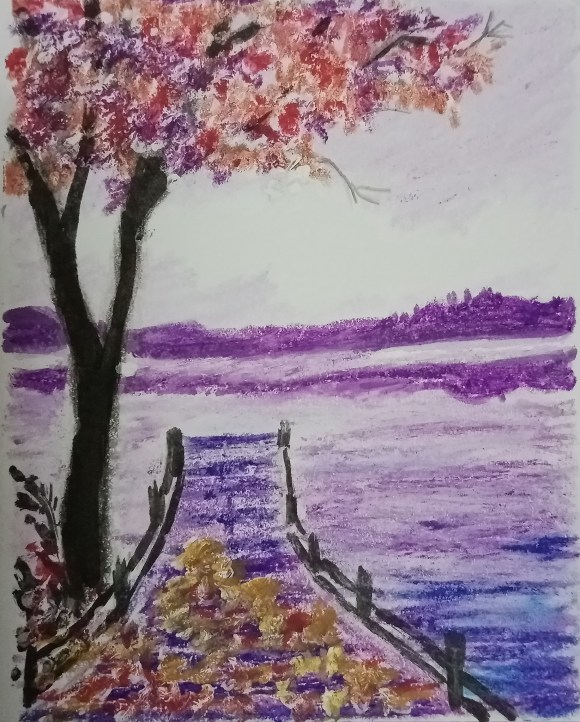
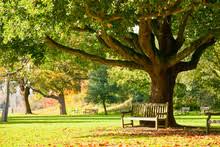




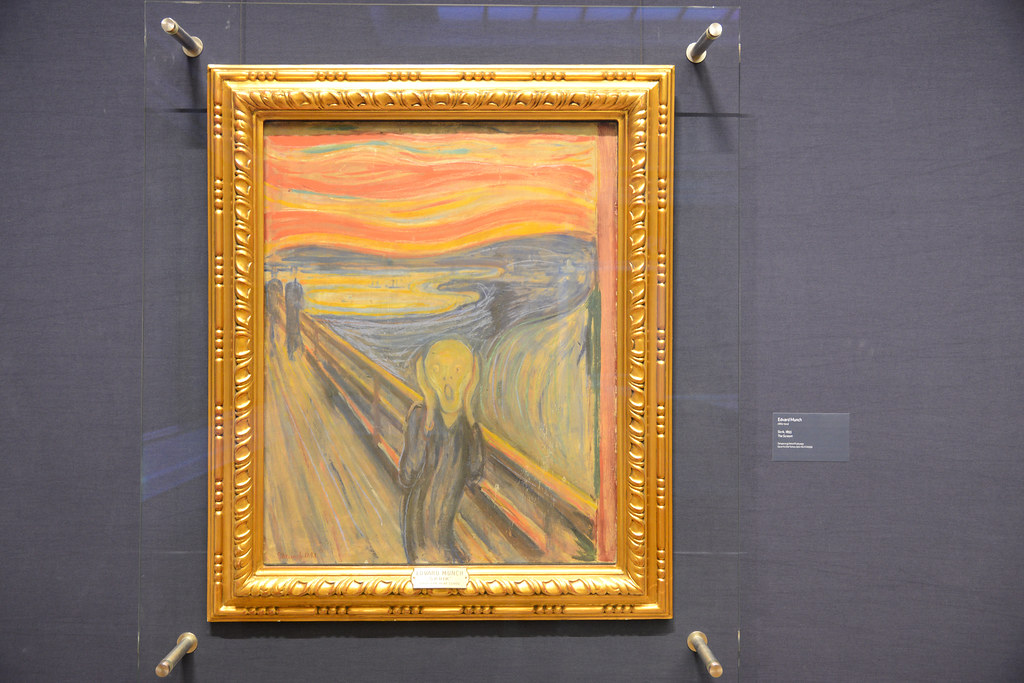
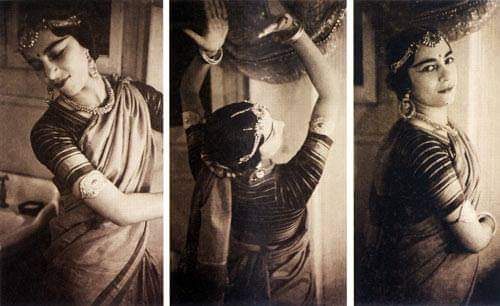

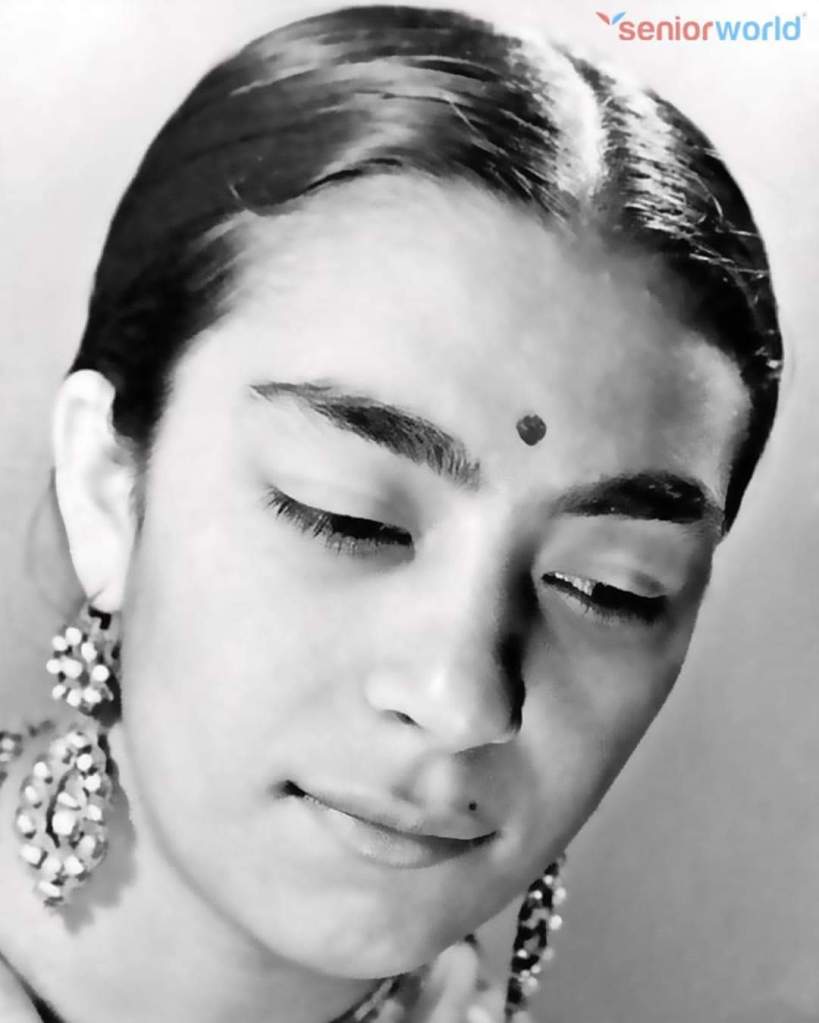
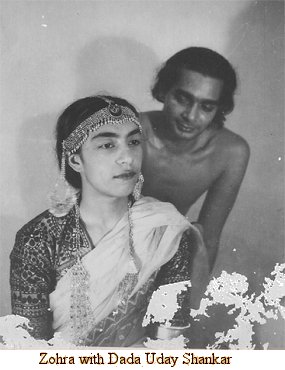

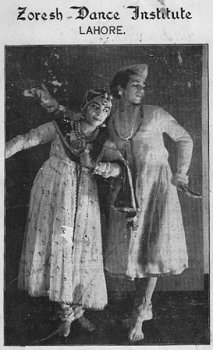

 Borderless