Categories
Essay

Travels of Debendranath Tagore

Narrative by Debendranath Tagore, translated from Bengali by Somdatta Mandal

Note from the Translator

Debendranath, Father of Rabindranath Tagore

Born to Dwarkanath Tagore in Shelaidah, Debendranath Tagore (15 May 1817 – 19 January 1905) was a Hindu philosopher and religious reformer. One of the founders of the Brahmo religion in 1848, his journey in the role of ‘Maharshi’, the great ascetic, was an attempt to spread the Brahmo faith and he travelled extensively to various places, especially in different parts of the Himalayas like Mussourie, Shimla, Kashmir, and Dalhousie.  He even constructed a house in Bakrota called ‘The Snow Dawn’ where he used to reside for months. Although Debendranath was deeply spiritual, he managed to continue to maintain his worldly affairs — he did not renounce his material possessions, as some Hindu traditions prescribed, but instead continued to enjoy them in a spirit of detachment. His considerable material property included estates spread over several districts in Bengal. Debendranath was a master of the Upanishads and played no small role in the education and cultivation of the faculties of his sons.

In his memoir, Jeevan Smriti [Memories of Life], Rabindranath also narrates in detail about his trip with his father in the Himalayas when he was just eleven years old. Debendranth founded the Tattwabodhini Patrika (1843) as a mouthpiece of the Brahmo Samaj and apart from his autobiography, wrote several other prose pieces which also reveal his wanderlust.

Among the two entries included here, we have ‘Moulmein Bhraman’ which is an interesting travel piece narrating his sojourn in Burma in September/October 1850. In the Chaitra 1817 Saka issue of Tattwabodhini Patrika, a travelogue ‘Mori Bhraman’ narrating Debendranath’s trip to Mori was published. Interestingly, as a prologue to this piece Sri Chintamani Chattopadhyay tells us that he was so enamoured after listening to Debendranath’s oral narration of the trip undertaken 28 years earlier, that he decided to transcribe it for the satisfaction of the readers.

Moulmein Bhraman (Travel to Moulmein)

After a year, the splendour of autumn revealed once again and the desire to travel blossomed in my mind. I could not make up my mind where to go for a trip this time. I thought I would make a trip on the river and so went to the bank of the Ganges to look for a suitable boat. I saw that several khalasis — dockyard workers – of a huge steamer were busy at their work. It seemed that this steamer would soon set sail.

“When would this steamer go to Allahabad?” I asked them.

In reply they said, “Within two or three days this will venture into the sea.”

On hearing that this steamer would go to the sea, I thought that this was the easiest way my desire for a sea journey could be fulfilled. I went to the captain instantly and rented a cabin and in due time boarded that steamer to begin my sea journey.

I had never seen the blue colour of the sea water before. I kept on watching the beautiful sights by day and night amid the continuous bright blue waves and remained immersed in the glory of the eternal spirit. After entering the sea and swaying with the waves for one night, the ship dropped anchor at three o’clock the next afternoon. In front of us, I saw a stretch of white sand and something that looked like human habitation. So, I took a boat and went to see it. As I was wandering about the place, I saw a few Bengali men from Chittagong with charms around their necks coming towards me. I asked them, “How come you are here? What do you do?”

“We do business here. We have procured the idol of Goddess Durga in this month of Ashwin[1],” they replied.

I was really surprised to hear that they celebrate Durga puja here in Khaekfu town of Burma. Durga puja was celebrated even here!

From there, I came back to the ship and started towards Moulmein. When the ship left the sea and entered the Moulmein River, I remembered the scene of leaving Gangasagar Island and going into the Ganges River. But this river did not offer any such good scenery. The water was muddy and full of crocodiles; no one bathed in it. The ship came and dropped anchor at Moulmein. Here a Madrasi resident called Mudeliar came and greeted me[2]. He came on his own and introduced himself. He was a high-level government official and a true gentleman. He took me to his house, and I remained a guest there and accepted his hospitality for the few days I stayed at Moulmein. I stayed very comfortably in his house.

The streets in the city of Moulmein were wide and clean. The shops that lined both sides of the street selling different kinds of things were all manned by women. I bought a box, and some very fine silk clothes from them. Going around the marketplace I went to the fish market at one time. I saw big fish for sale displayed on huge tables.

 “What are these big fish called?”

They replied, “Crocodiles.” So, the Burmese ate crocodiles; they spoke verbally about ahimsa and the Buddhist religion, but their stomachs were filled with crocodiles!

One evening when I was wandering on the wide streets of Moulmein, I saw a man walking towards me. When he came close, I understood that he was a Bengali. I was quite surprised to see a Bengali there. From where did this Bengali arrive across the ocean? It seemed there were no places where Bengalis did not go. I asked him, “From where have you come?”

“I was in trouble and so came here,” he replied.

Instantly I understood his trouble[3]. I asked him further, “How many years of trouble?”

“Seven years,” he replied again.

“What did you do?”

“Nothing much. I just duplicated some papers of a company. Now my term is over, but I cannot go home because I do not have the money.”

I offered to give him the passage money. But how will he go home? He had set up a business, had got married, and was living quite comfortably. Would he ever go back to our country to show his shameful black face there?

Mudeliar told me that there was a mountain cave here which people went to visit[4]. If I wished he would accompany me there. I agreed. On the first moon night[5], he brought a long boat during the high tide. There was a wooden cabin in the centre of that boat. That night, Mudeliar, I, the captain of the ship and seven or eight other people boarded the boat and it left at two o’clock at night. We sat up for the whole night in that boat. The foreigners kept on singing English songs and requested me to sing Bengali songs. So, I kept on singing Brahma-sangeet occasionally. No one understood anything. They did not like them and went on laughing. We travelled for about twenty-seven miles that night and reached our destination at four o’clock in the morning.

Our boat reached the shore. Everything was still dark. On the shore I saw a cottage full of trees and creepers from which light was coming out. I got curious and ventured alone to that unknown place in the darkness. On reaching there I found it was a tiny cottage. Inside several bald-headed priests in yellow ochre robes were placing candles in different parts of the room. I was quite surprised to see people resembling the priests of Kashi[6] here. How did they come here? Later I came to know that they were the leaders of the Buddhist monks and known as Phungis. I hid myself and observed them playing with the lamps but suddenly one of them saw me and took me inside. They gave me a mat to sit on and water to wash my feet. I had come to their house, so this was their way of entertaining guests. According to the Buddhists, serving guests was a sacred act.

I returned to the boat at early dawn. The sun rose. Mudeliar and the other invited guests came and joined us. This made us fifty in number. Mudeliar fed all of us there. He had arranged for several elephants; about two or four people got on each elephant and proceeded towards the dense jungle. There were small hills all around and in between was that dense forest. There was no other way of travelling here except on elephant back. We reached the entrance of the cave in the mountain around three o’clock in the afternoon.

We descended from the back of the elephants and started to walk in the jungle where the undergrowth was waist high. The entrance to the cave was small; we had to crawl in. After crawling in a little we could stand up straight. It was very slippery inside and we kept on slipping and falling. So, we started walking very cautiously. It was pitch dark inside. Though it was three in the afternoon it seemed like three at night. I was scared that if we lost our way in the tunnel, we would not be able to come out. We would then have to wander inside the cave for the whole day. So, wherever I went, I kept an eye on the faint light at the entrance of the cave. All the fifty of us spread ourselves in various parts of the cave and everyone had sulfur powder in their hands. Then each person put a little sulfur powder in the little holes in the cave next to where he was standing.

After everyone’s place was defined, the captain lit his share of the sulfur powder. Instantly each one of us lit matches and ignited our portion. Now the cave was lit simultaneously at fifty different places like fireworks, and we could see the inside clearly. What a huge cave it was! On looking up to the ceiling our vision could not gauge its height. We saw the different natural formations that had been caused by rainwater seepage inside and were really surprised.

Later, we came out and had a picnic in the forest and then came back to Moulmein. On our way back we heard different musical instruments being played together. Locating that sound, we went forward and saw a few Burmese people dancing with all kinds of gestures of their bodies. Our captain and the foreigners also joined them and started to dance in a similar manner. They found great pleasure. A Burmese lady was standing at the entrance of her house. She watched the mimicry of the foreigners and went and whispered something in the men’s ears.  They stopped their singing and dancing immediately, and all of them suddenly left the scene and disappeared somewhere.  The captain went on entreating them to resume their dance, but they did not listen. It was amazing to see how much hold the Burmese women had over their men.

We came back to Moulmein. I went to meet a high-level Burmese official at his house. He received me very politely. There was a huge room and in its four corners sat four young women stitching something.

When I sat down, he said “Ada[7].”

One of the girls instantly came and handed me a round box full of betel leaves. On opening it I found it to contain different condiments. This was the local Buddhist custom of receiving guests. He then gifted me some excellent saplings resembling the Ashok flower. I had brought them home and planted them in my garden, but they did not survive despite great care. The fruit of this tree is very popular with the Burmese. If someone had sixteen rupees then he would spend the entire amount to buy that fruit. We disliked their favourite fruit because of its smell[8].

Mori Bhraman (Travel to Murree)

On the 10th of Pous, 1789 Saka[9], I abandoned all work and ventured in full earnest to go for a tour in the west. I did not decide where I would go. Just as a confined river feels overjoyed when released, I too left home with equal enthusiasm. Two servants accompanied me. One was a Punjabi Sikh called Gour Singh, the other was Kashi Singh, an Odiya Kshatri. At that time the train went only up to Delhi.

Upon arriving at Delhi, I found out that there was no other way to go except by mail coach. So, I booked a seat on it. My destination was Punjab. The horses of the coach in which I travelled up to a place near Sutlej were not steady. Because of them the coach swayed on both sides. I feared that it might topple, and it did tilt on one side and fell down on the ground.

I got out of the coach through its panel and shouted at the driver in the topmost voice – “You made me fall down, the body is hurt in many places and the nose is bleeding.” The driver had assumed that I had already died under the pressure of the carriage. Feeling assured after hearing my voice he replied, “Baancha to – at least you are alive.” My servant brought some water from a nearby well. I washed my nose. It was almost evening by then. Seeing a rest house nearby, I spent the night there.

Early next morning, I boarded the mail carriage again. It crossed the huge bridge upon the river Sutlej. Upon looking down I saw that the water had a tremendous current. I had never seen such a large bridge before. The wind was blowing fiercely. The strange sound of the waves hitting one another created great pleasure in my mind.

After that I reached an inn near the Beas River. Having our lunch there, I boarded the coach again at four in the afternoon. It was almost evening; we hadn’t progressed far when all of a sudden, a heavy storm rose. The road was just along the river. Sand started blowing to form clouds and cover the surroundings. Nothing was visible in front of us. Sand filled our nostrils and the coach could hardly move. I couldn’t decide where to go and take shelter. We found a settlement a little further ahead. Seeing a two-storied house I got off the coach and spent the night there. The storm continued unabated till three o’clock at night. As soon as it stopped, I boarded the coach again.

In this manner, travelling from one inn to another, I ultimately reached Amritsar. Earlier when I had gone to Shimla, I had spent a few days with great pleasure in Amritsar in an old, dilapidated house located next to a narrow sewer line. Immediately upon reaching Amritsar, I went looking for that beloved house.

I came next to the sewage line but saw that the house did not exist anymore. There wasn’t even a sign of it anywhere. This was an example that nothing was permanent in our lives.

I came back from there in a depressed mood. I rented a small single storied hut next to the road. As a traveller on the road, I stayed there amid the dust in that small room quite stoically but with great excitement. I cannot express in words how much I enjoyed living in such seclusion. The room wasn’t much taller than the road. Unknown travellers would stop by and speak to me in a manner as if we had been acquainted before. I was also happy to interact with them. One of them was a devotee of Hafiz and I too became an admirer. He did not want to leave me and became an earnest friend of mine.

Days went by in this manner. One day a Brahmo gentleman called Shibchandra babu came from the Brahmo Samaj at Lahore. He said that he had been sent by the Brahmos there once they heard that I was here, and I had to go to Lahore. Seeing his eagerness I started for Lahore. Babu Nabinchandra Roy had arranged for my accommodation beforehand in a house located next to a wide road at Anarkali. Once I reached there, the Brahmos came and surrounded me with devotion. During my stay in Lahore, I even had to deliver a lecture in Hindi.

From there the Brahmos arranged for my stay inside a garden. Surrounded by lime trees, the dwelling house was in the middle. With only two servants accompanying me, who was going to cook for me? I developed diarrhoea after eating the hard rotis that were served. Soon, I was also attacked by malaria. The Brahmos informed a Muslim doctor, and he came and saw me. I did not take the medicines prescribed by him. My own medicine was powdered Myrobalan and I took that. The next day there was a lot of emission of blood. I became weak; wanting fresh air I went up to the first floor. There I felt the tremendous heat of the sun and my head started reeling. The very next moment I fainted. Upon hearing this news, two Brahmos came and started feeding me sugar cane and I regained my consciousness after their nursing.

The body was in a miserable condition. The next day I sat wondering where I could go in such a state and that too without a cook. How could I return home in the heat of summer? As I was feeling tense thinking about it and could not decide what to do, my heart suddenly said, “Go to Murree.”

Thinking this to be a god-sent instruction I started preparing to go to Murree. The local Brahmos came to meet me at around two in the afternoon. My body was still very weak, and I didn’t have the energy to even talk much. They asked me what I wanted to do now, and I told them that I had decided to go to Murree and would begin my journey that day itself. After they left, Nabin babu and a few other Brahmos came.

I told them, “I want to go to Murree today so please arrange for a coach.”

They sent Gour Singh and arranged a mail carriage for me. Nabin babu asked me what I would eat on the way. He then gave me two bottles of pomegranate juice. After the coach arrived, I had the two big trunks loaded on its roof and got inside with the two bottles of juice as sustenance. Two servants sat on the roof of the coach. Despite my objection, the Brahmos dismantled the horses and started pulling the coach by themselves. I had to persuade them to stop. The coachmen attached the horses again and started moving.

After travelling a little I realised that the coach was swaying too much, and it was also not strong enough. The Sikh Gour Singh who was sitting on top was very strong, and there were two heavy trunks; if the roof collapsed on my head, there would be nothing I could do. I started feeling scared. Travelling in this manner, I reached a dak bungalow. It was a great relief and I felt that my life was saved. After eating there, I boarded the coach again. Gradually I came to the Jhelum. Gour Singh’s house was located there. He stopped the coach and was pleased to call his relatives and introduce me to them.

In this manner I arrived at Rawalpindi, which was situated in the Murree valley. From this point the road went up and down. Many broken wheels lay scattered here and there as proof of this dangerous road. I became scared on seeing them and kept wondering what would happen to me if the wheels of this unstable coach also broke. But by God’s grace, we overcame all these various hurdles and safely reached another dak bungalow[10]. As soon as I arrived there, the local Bengali gentlemen came to meet me. The pain in my body and the strain of travel made it difficult for me to speak. A gentleman called Dwarik babu started taking special care of me. He went here and there looking for a house, and at last went and requested a Parsi gentleman to allow me to stay in his garden.

I stayed in that garden and a Punjabi doctor came to see me. I told him that milk was my only food, but I could not digest that milk very well. I asked him for some medicines that would help me to digest that milk and was slightly relieved with what he gave me. I had become very weak. At night when I went to bed, I felt that I would not be able to get up the next day.

When Dwarik babu came the following day, I told him that I wanted to go to Murree. He told me that there were still no shops and markets at Murree, and I would find it difficult to stay there. But I went on pestering him. So having no other way he arranged for two basket carriages called dulis that would take me to Murree. I went in one duli and my luggage was put in the other one, while the servants went walking. I reached Murree after three days and a lot of hardship.

It was situated at a height of 7,500 feet. The bearers asked me where I wanted to go, and I told them to take me to the place where the sahibs usually landed. They took me to a huge house which was totally deserted and not a single human being was around.

I told them, “Why did you bring me here? Take me to a bungalow where people are staying.”

So, they took me to another bungalow. But the people there told me that it was a club house and not a place for travellers to stay. So, I could not put up there. I told the bearers to take me back to that same uninhabited house where they had taken me at first. They got annoyed and went back there and said that they would not go anywhere else. They placed my duli under a tree in front of that house. Looking up I saw the sky overcast with clouds. Here in the hills, it doesn’t take long for clouds to gather and rain. I was worried and wondered where to go now. I asked the bearers to take me inside and they carried the duli up to the verandah. I got down and inspected the house. There was no one anywhere. I selected a room and again asked the bearers to bring all by bedding from the carriage and spread it out near the wall so that I could sit up and take some rest. They did that and the very next moment quickly disappeared with their dulis.

A little later it started raining. The servants had not reached till then. Through the windowpanes, I could see that a heavy storm was raging outside. The leafless branches of all the big trees were fiercely swaying and big hailstones started hitting the windowpanes as if they would break them, but nothing happened. I kept on thinking that if I arrived here a little late then I would surely have died inside the duli in this severe hailstorm.

After a while the two servants came shivering. With the cold, the rain, and the hailstorm, they were in very bad shape. After wringing their clothes, they came near me. I told Gour Singh to look for a bearer or the caretaker of this hotel and bring him to me.

So he went and got the chowkidar. I asked him to fetch the furniture for the room, but he said he couldn’t do that till he received orders from the master. I threatened him that if he did not bring the furniture out under my orders and if his owner got to know about it, then he would be instantly dismissed from his job. The man got scared and then brought out a charpoi. I spread out my bedding on that cot and lay down. That night Gour Singh brought me a roti and some water. I could neither eat that hard roti nor drink the ice-cold water of Murree. So, I spent the night without any food. In the morning, I sent Gour Singh to fetch some milk and kept on counting the hours until his return.

It was eight o’clock and still there was no sign of Gour Singh. Those eight hours seemed like eight days. At last, he came back at 9 am with some buffalo milk. Upon drinking it, I found it to be diluted with water and tasteless. I could not digest that milk, and nothing remained in my stomach. The milk just passed out as it was. I covered myself with layers of blankets and shawls and went to sleep in the charpoi in that tremendously cold weather.

While I was lying down, I saw a shivering sahib entering my room. I realised how extremely cold it was outside when I found his teeth were chattering. He lit a fire in the next room and because of that I felt a bit comfortable.

The next day Gour Singh brought such diluted buffalo milk once again. I drank it but again the milk went out of my body as it is. Having starved for three nights I felt almost half-dead on the third night. I laid down quite comfortably on the charpoi with all the warm clothes layered upon my body and did not feel any pain. I felt as if someone like my mother was sitting near my head. I was breathing and along with that breath I saw my friend, Sajuja, also looking at me.  Breathing in and out in that manner I spent the whole night doing easy yoga and cannot describe how happy I felt.

Soon the night was over, and it was morning. Once again Gour Singh brought that kind of diluted buffalo milk. I drank it. How strange! I digested the milk that day. Since pure milk was unavailable here, I told Gour Singh that it would be nice if he went looking for a cow.  So, he went to Rawalpindi and bought a small cow for thirty rupees. He said that she gave ten seers of milk per day. Now milk has become my staple diet.

After drinking that milk my body became a little stronger. I had been staying in Bekereya Hotel from the beginning but now I decided that it was not feasible to continue staying there any longer. So, I went to look for a rented house. I went up the hill in that extremely weak condition and found an empty house. But it was so cold there that I did not find it suitable. A little lower from that point I found another house and liked it. I rented it for nine hundred rupees and started staying there. The next day the postal peon brought me a letter from my nephew Gnanendranath. I opened it with excitement, and he had included a Brahma-sangeet which read thus:

Gao rey tahar naam
Rochito jaar visvadhaam.
Dayar jaar nahi biram
Jharey abitito dhaarey.

[Sing His name/He who has created this world/Whose blessings endless/Falls continuously on earth]

I had already received His blessings to get back my life from the verge of death; the same blessings that were referred to in this song made me feel excited and my heart leaped with joy. This sort of a letter, and at such a time! How strange! How strange!

In this new house I managed to get a cook. He prepared green moong dal for me, and I liked its taste. It was sufficient for my lunch. After a long time, I felt satiated after an afternoon meal. As my health started improving, I gradually began to increase the quantity of my milk consumption. Early in the morning after the upasana was over, they brought the cow in front of me, and I would immediately send a bowl for the cow to be milked before my eyes. The bowl of milk was brought to me; I drank it and sent the bowl back. The cow would then be milked again, and I would once again drink from the bowl. This procedure was repeated several times and after drinking four or five bowls of milk, I would go for a walk in the mountains. Walking in the fresh cool breeze and under the direct rays of the morning sun, I wandered here and there and then came home. Instantly I would have tea, chocolate, and milk. During lunch I would drink milk again, and in the evening, and before going to bed. In this manner, I would drink about ten seers of milk each day and whatever was left over was made into butter to be consumed with rotis the next morning.

Within seven days, I regained my strength and, feeling exuberated started travelling in the mountains. I started singing songs praising the grace of our creator and there was no end to those songs. For a long time, I had been cherishing dreams of visiting Kashmir and it seemed that our creator would now fulfill it. So, I started enquiring about how to go to Kashmir. By the beginning of May, Murree became full of people and the place took a new look with the red uniform of the British soldiers and the fanciful clothes of the other British men and women. Deserting its shabby look, even nature filled up the place with varieties of flowers. After staying in Murree for three months, I heartily began my journey to Kashmir on the 4th of September.

 [ Excerpted from Wanderlust: Travels of the Tagore Family. Translated and Edited by Somdatta Mandal. Kolkata: Visva-Bharati, 2014]

[1] Septemmber-October

[2] Sri Murugesam Mudeliar was the then Commissariat contractor of the military outpost at Moulmein.

[3] The fact was that the man had been banished here. Usually, political prisoners were interned in Moulmein prior to 1848.  But after 1848 Port Blair in the Andaman Islands was made the new place for banishment and imprisonment. This narrative is dated 1850.

[4] The local name of this famous cave was Kha-yon-gu, and Farm Cave in English. It was situated in the northeast part of Moulmein town and was approachable through the Ataran River.

[5] This was on the 4th of November, 1850.

[6] Varanasi

[7] In the Burmese language a guest was called ai the(y), which was pronounced like ‘aah’ and which when suddenly heard sounded like ‘ada’.

[8] The Durian looks somewhat like a jackfruit but is leaner and smaller in size.

[9] This would be 1867 CE.

[10] A dak bungalow was a circuit house along the postal route for the administrative officials to spend nights.

Somdatta Mandal, critic and translator, is a former Professor of English from Visva-Bharati University, Santiniketan, India.

.

PLEASE NOTE: ARTICLES CAN ONLY BE REPRODUCED IN OTHER SITES WITH DUE ACKNOWLEDGEMENT TO BORDERLESS JOURNAL

Click here to access the Borderless anthology, Monalisa No Longer Smiles

Click here to access Monalisa No Longer Smiles on Kindle Amazon International

Categories
Slices from Life

Serenading Sri Lanka

Photographs and Narrative by Mohul Bhowmick

Sri Lanka can be savoured best via its street food stalls; the aroma of the spices that emanates from the flurry of dishes left drying in the hot sun is supposed to hold the flavour of the country in its entirety.

Quite appropriately, I step out of the airport in Colombo just as dark clouds assemble overhead for an impromptu November gathering. The path to the bus terminal is waylaid in the melee, and the eventual taxi that comes around is met with immense gratitude for the warmth it emanates from within.

Meanwhile, the clouds have picked up pace and lambasted in full strength upon my flimsy raincoat. As the taxi — a Tata Nano — pulls out of the airport, I read a sign that tells me, rather ominously, ‘Welcome to Sri Lanka!’

.

But have I arrived? The drizzle accompanies me all day even as I try to venture out northwest from my dorm near the Galle Face Green towards Independence Square and Viharamahadevi Park. The park has a tinge of tenderness that makes me long for home barely six hours after I have left.

The soldier who has been entrusted to protect the monument of Gautama in the centre of the park slights me at first by asking me to put my camera away, but something about my nationality sparks enough curiousity and reverence in him to apologise and show me around its premises.

Named after the mother of the great Sri Lankan king Dutugemunu [161-137 BCE], who united the island under his banner after generations of oppression from Indian invaders, the park is tranquil in a manner that only the moneyed can afford to be. To be welcomed here by a member of the Lankan military seems ironic to me. Quite intrinsically, I discover that the affluent neighbourhood of Cinnamon Gardens is merely a stone’s throw away.

.

The sunset at Galle Face Green is where I lay my eyes upon the Indian Ocean for the first time; the gentle disappearance of the disk of fire in its graceful attire with lakhs of denizens of the city in attendance is not an event to be forgotten in a hurry.

It strikes me in the bouts of consciousness I still have with me on the start-stop train to Anuradhapura the next morning, which miraculously manages to reach the ancient capital of the island only moments after its scheduled time of arrival despite having spent about fifteen stoppages in the rough-hewn greenery of north-central Lanka.


The Isurumuni Royal Temple, Anuradhapura.

The Vanni, which separates the north from Anuradhapura, begins here, and I do not think I have gathered enough courage to bypass it just yet.

The Maha Sri Jaya Bodhi — a sapling of the Bodhi Tree under which the ascetic Sakyamuni had sat all night in meditation in the fifth century BCE and attained Enlightenment in Gaya — transposes much of the tranquillity one must have felt had Gautama himself been around; instead, hundreds of his lay followers deify his idol and consecrate his ideals with flowers and oaths of incorruptibility.

The compound where the Maha Bodhi stands allows one the permission to whisk the mind away from its constant whirl of thought and towards action based on feeling; its way, as Gautama’s, holds that offering the grant of ‘self-realisation’ to one’s fellow man is far more sumptuous a gift than an endowment of land or capital can ever accomplish.


Novice monks at the Ruwanwella Dagoba in Anuradhapura.

The Ruwanwella Dagoba, which the great Dutugemunu had painstakingly built, offers the refuge that the Maha Bodhi implores one to seek by going inwards. Two quarts of the Buddha’s relics are enshrined here, and the inflow of visitors ensures that the joyful policemen on duty are hard put to shred their visages of quietude, which one would have moments ago thought to be beyond them.

The next morning, with a German fellow traveller — whom I met at dinner while watching India decimate New Zealand on television in the semifinal of the cricket World Cup — I excavate whatever innards of peace and serenity I could from the Isurumuni Royal Temple.

My new friend from Germany tells me of of his experiences while travelling in Japan. He explains how he had made good use of the public parks (greens) at night as the locals did not use them after dark. He did not have money to sleep in hostels/ hotels and used benches in the public parks instead!

I offer him freshly plucked oranges from the gardens abutting the temple, where princes and princesses of an earlier age used to amble while seeking matches.

I get so drawn into the ethics that Gautama’s teachings must have instilled among the laypeople of the island that I almost forget to notice when my landlord — from whom I had also borrowed a bicycle — casually doubles the rate of his homestay when I check out. I learn — only much later — that he is no believer in the path Sakyamuni trod and speaks Tamil.


The Sigiriya rock fortress from afar.

Sigiriya seems much hotter than Anuradhapura1 was, and I write this even as the sun goes down and I climb up to a hidden rock far from the one which gives the town its name. The sun sets farther still from the Sigiriya Galla, and along with a bunch of British fellow travellers, I enjoy the last beads of light seeping past the horizon.

My evening is considerably brightened when our guide Vasu points me towards a green-looking hillock supposed to be the one Hanuman brought from the Himalayas as he sought for the life restoring ‘sanjeevani’ herb. While descending, a girl from Cornwall shrieks in considerable awe of the girth of the trunk of the first elephant she has ever seen.

The hike up Kasyapa’s fortress2 takes little effort, and the sparse crowd makes it feel worthwhile all the more. My newfound British friends — devoid of the SAARC3 protection of a reduced entry ticket to the top — climb the eastward facing Pidurangala instead. They tell me much later that they found the visage of Sigiriya quite appealing from the top of the latter; in a picture they show me, I cannot help but speculate that the black spot on the top of the rock was my shadow.

A dip in a hidden lake authorised by the owner of the backpacker’s hostel we are in is sprinkled liberally with views of the fortress in the backdrop; even the arrival of a slimy water snake that nibbles at my friend Jackson Price — a former telecommunications manager from Bristol — is not enough to shatter our sense of innate wellbeing.

.

There is just about enough time to catch the temple near the centre of Dambulla town unawares before Rapahel Nuding — a mechanical engineer from Stuttgart — and I take the bus south to Kandy. The carvings on the rocks inspire us both differently; me to poetry and him to decode how it could possibly have been done without the help of modern-age machinery.

Kandy is damp and misty when we arrive; the flecks of raindrops prance around nicely as neither of us wants to close the window shades of the rusty old bus we are travelling in. The lake can be sensed before we can see it; within an hour, we are back in the area to witness the ceremony at the Temple of the Tooth Relic where the dante dhatu, or the tooth relic, is displayed to laypeople.

Temple of the Tooth Relic

I help Raphael tuck into his — and my first this trip — masala dosa in the hordes of Tamil restaurants near the temple; I wonder if he asks for a second helping of the mango lassi to cool his inflamed tongue down or merely because he has liked the sensation the frozen — and possibly preserved — fruit. He stays back for a day, but I sling my bag to get on the morning train to Nuwara Eliya, having had enough of the cultural capital of Lanka already.

.

The bitter cold that greets me in Nuwara Eliya is only slightly lessened by the endless cups of tea that keep rolling through the night at the Laughing Leopards backpackers’ hostel. I struggle to explain to Helen Brinkmann, a post-graduate student from Dortmund, why I shall go to bed in tears having watched Australia demolish India in the final of the World Cup; the memories keep plaguing me a few days later in Ella when I sit down to get a grip upon myself and form an understanding of the ill-fated event.

Of the twin haunts of Nuwara Eliya and Ella, it is the journey that fascinates me the most; the rickety old contraption that passes off as a train is as old as I am in spirit and wanders only slightly off the gorgeous trails that have to perforce be left behind. Quite like the train, I am too enamoured by the countryside to trade it for the capital a week later.


The hills of Uva, as seen from Ella.

The hills that rise from the extensive green wildernesses filled with shrubs of undefinable assortment catch my eye in Ella, and it is some time before I can catch a grip of my sentiments and force myself to sit down. The bats and monkeys that gather in numbers at the Ravana Ella — or Ravana’s cave — scare me out of my wits before I can even put my foot into the mouth of the opening. Outside, the sun shines generously on a creek drifting past the hills in a muted whirr that only the sapient can perceive.

.

It speaks highly of the natural largesse that Sri Lanka possesses. Within hours of leaving the cool climes and peaks of Ella, I arrive at sea level, and the Indian Ocean peeks in patches to the left when the bus turns right from Matara, the southernmost tip of the isle. Indeed, I have breakfast in the hills and lunch on the coast.


Sunset at the beach in Mirissa

Mirissa, where I am headed next, brags of pristine beaches uninjured by the droves of tourists that fill it during the season. On arrival that evening, I find a rock to the west that garnishes a panorama that is stunning. My first encounter with kottu roti is astride a charitable helping of coconut sambal which my tongue finds excitable, and I tell myself that I am finally in the south.

.

Excursions are made to the beaches that litter the southern Lankan coast without rhyme or reason, or even distinction to one’s name or creed. Weligama, Midigama, Ahangama, the air force base at Koggala, Habaraduwa and Unawatuna all become names interchangeable with rapture perpetuated by the lack of inaccessibility. From another country, people struggle to reach me on my cell, and their needs stay blissfully away from my purview.

The sun shines on the coast much like it had done when I was in the west; the north and central parts of the country are barraged by untimely rains and I am glad to have left them behind.


The harbour as seen from Galle Fort.

Galle, where I am to stay for a night before heading back to Colombo, charms me out of my wits and looks askance as I walk away evincing a wry smile from the preposterous shindig that one might as well call a fort. The cricket ground stirs a longing for a home I have no rush to return to; on account of the goodwill and record I enjoy, I am allowed into the members’ stand for a gracious helping of a local under-19 match.

The entrapments that the Portuguese, the Dutch and the British had all in turn instituted — that now passes off as a spectacle of great pleasure — protect the town of Galle from outsiders, and also, it seems to me, from itself. Inward-looking to a fault, the Sinhalese of Galle have been known to open their hearts and hearths to all but those who have boasted of a skin tone less plentiful than white.

Upon being given to understand the intricacies of such delights and lodging in a palatial mansion owned by a Lankan Muslim family, I exult in the first serious gelato I have had in my life; an egg roti earlier in the day had barely served the purpose it was intended for.

.

Return to Colombo. I see the capital with eyes that I had not been endowed with when I first landed on these shores; it seems to be a lifetime ago now. The polished highway outside the President’s House, which abut the Chinese-funded port and end up at the imperial inheritance of the Galle Face Green purport me to a world I thought I had left behind in the countryside.

I put it down to my lack of vision but the night creeps up on me unannounced even as I try to trudge out of the humongous man-eating machine they call the One Galle Face shopping mall. It is not without some discomfort that I take flight, aware that it may not be for the last time.

.

  1. Kingdom of Dutugemunu ↩︎
  2. Built during the reign of King Kasyapa [477-495 CE] ↩︎
  3. South Asian Association for Regional Cooperation ↩︎

Mohul Bhowmick is a national-level cricketer, poet, sports journalist, essayist and travel writer from Hyderabad, India. He has published four collections of poems and one travelogue so far. More of his work can be discovered on his website: www.mohulbhowmick.com.

PLEASE NOTE: ARTICLES CAN ONLY BE REPRODUCED IN OTHER SITES WITH DUE ACKNOWLEDGEMENT TO BORDERLESS JOURNAL. 

Click here to access the Borderless anthology, Monalisa No Longer Smiles

Click here to access Monalisa No Longer Smiles on Kindle Amazon International

Categories
Contents

Borderless, October 2023

Artwork by Sohana Manzoor

Editorial

We had Joy, We had Fun … Click here to read

Conversations

A conversation with Nazes Afroz, former BBC editor, along with a brief introduction to his new translations of Syed Mujtaba Ali’s Tales of a Voyager (Jolay Dangay). Click here to read.

Keith Lyons converses with globe trotter Tomaž Serafi, who lives in Ljubljana. Click here to read.

Translations

Barnes and Nobles by Quazi Johirul Islam has been translated from Bengali by Professor Fakrul Alam. Click here to read.

Cast Away the Gun by Mubarak Qazi has been translated from Balochi by Fazal Baloch. Click here to read.

One Jujube has been written and translated from Korean by Ihlwha Choi. Click here to read.

A Hymn to an Autumnal Goddess by Rabindranath Tagore,  Amra Beddhechhi Kaasher Guchho ( We have Tied Bunches of Kaash), has been translated by Mitali Chakravarty. Click here to read.

Poetry

Click on the names to read the poems

Michael Burch, Gopal Lahiri, Ryan Quinn Flanagan, Hawla Riza, Reeti Jamil, Rex Tan, Santosh Bakaya, Tohm Bakelas, Pramod Rastogi, George Freek, Avantika Vijay Singh, John Zedolik, Debanga Das, Rhys Hughes

Poets, Poetry, and Rhys Hughes

In Do It Yourself Nonsense Poem, Rhys Hughes lays some ground rules for indulging in this comedic genre. Click here to read.

Musings/Slices from Life

Onsen and Hot Springs

Meredith Stephens explores Japanese and Californian hot springs with her camera and narrative. Click here to read.

Kardang Monastery: A Traveller’s High in Lahaul

Sayani De travels up the Himalayas to a Tibetan monastery. Click here to read.

Ghosts, Witches and My New Homeland

Tulip Chowdhury muses on ghosts and spooks in Bangladesh and US. Click here to read.

Musings of a Copywriter

In Red Carpet Welcome, Devraj Singh Kalsi re-examines social norms with a scoop of humour. Click here to read.

Notes from Japan

In Baseball and Robots, Suzanne Kamata shares how both these have shaped life in modern Japan. Click here to read.

Stories

The Wave of Exile

Paul Mirabile tells a strange tale started off by a arrant Tsunami. Click here to read.

Glimpses of Light

Neera Kashyap gives a poignant story around mental health. Click here to read.

The Woman Next Door

Jahanavi Bandaru writes a strange, haunting tale. Click here to read.

The Call

Nirmala Pillai explores different worlds in Mumbai. Click here to read.

Essays

The Oral Traditions of Bengal: Story and Song

Aruna Chakravarti describes the syncretic culture of Bengal through its folk music and oral traditions. Click here to read.

Belongingness and the Space In-Between

Disha Dahiya draws from a slice of her life to discuss migrant issues. Click here to read.

A City for Kings

Ravi Shankar takes us to Lima, Peru with his narrative and camera. Click here to read.

The Saga of a Dictionary: Japanese-Malayalam Affinities

Dr. KPP Nambiar takes us through his journey of making a Japanese-Malyalam dictionary, which started nearly fifty years ago, while linking ties between the cultures dating back to the sixteenth century. Click here to read.

Book Excerpts

An excerpt from Kailash Satyarthi’s Why Didn’t You Come Sooner?: Compassion In Action—Stories of Children Rescued From Slavery. Click here to read.

An excerpt from Rhys Hughes’ The Coffee Rubaiyat. Click here to read.

Book Reviews

Somdatta Mandal reviews Usha Priyamvada’s Won’t You Stay, Radhika?, translated from Hindi by Daisy Rockwell. Click here to read.

Aditi Yadav reviews Makoto Shinkai’s and Naruki Nagakawa’s She and Her Cat, translated from Japanese by Ginny Tapley Takemori. Click here to read.

Gemini Wahaaj reviews South to South: Writing South Asia in the American South edited by Khem K. Aryal. Click here to read.

Bhaskar Parichha reviews One Among You: The Autobiography of M.K. Stalin, translated from Tamil by A S Panneerselvan. Click here to read.

.

Click here to access the Borderless anthology, Monalisa No Longer Smiles

Click here to access Monalisa No Longer Smiles on Kindle Amazon International

Categories
Essay

Chandigarh: A City with Spaces

By Ravi Shankar

I was apprehensive. I had spent time in New Delhi when I was very young. But after that, I had never travelled to the north of India. I was traveling by chair car on the Rajdhani Express to Delhi and from there, by bus to Chandigarh. Sleeping on a chair is difficult though the coach offers enough legroom, and the seats are wide. The time was December, and the weather would be cold. The bus journey to Chandigarh from New Delhi took a long time. I was moving through the flat plains of Haryana with fields on both sides of the road. The sun set early during winter in the north. By 5 pm, it was beginning to get dark. The sun had truly set by the time I reached Chandigarh.

The cold was a de novo experience. Using a quilt was something new though later I began the appreciate the gentle warmth provided using the body’s own heat. Coming from the claustrophobic confines of Mumbai, the wide-open spaces of Chandigarh were a welcome change. Some of the traffic circled the roundabouts that were larger in this city than apartment complexes in Mumbai. Space, space, and plenty of space was my first impression of the city.

Chandigarh is believed to have been named after the Goddess Chandi whose temple is located near the city. Garh means a fort. This was India’s first planned city. Various teams of architects had been commissioned and the Swiss-French artist, Le Corbusier was the last in the series. Le Corbusier designed several buildings in Chandigarh including the secretariat, the high court, and the Palace of Assembly. He created an open-hand sculpture like he had done in the other cities designed by him. He designed many structures at the Postgraduate Institute of Medical Education and Research (PGIMER) where I was a resident doctor. His influence was also seen in Panjab University across the road in Sector 14. One of the challenges with a sprawling low-density design was services were located far away and you required a vehicle to access services and go to different areas. In high-density areas like Mumbai, you can just step down to access shops and services. This was in the days before online ordering and e-commerce platforms.

The city is divided into sectors. I settled in the Old Doctor’s Hostel or ODH in Sector 12, where the institute was located. I eventually shifted to the D block of ODH, the newest to be constructed. This had the benefit of a wash basin within the room reducing your trips to the shared restrooms. The research blocks and the college canteens had the trademarks of Le Corbusier’s design. He was fond of using primary colours like blue, yellow, and red as evidenced in the bright hues of the doors and windows of the hostel. The original structure was good but was constructed in the 1960s. By the late 1990s, living standards had improved and the rooms began to feel inadequate. He was also fond of using curves in his buildings and each room had a curve and there was a specially made wooden table to fit into the curve. Most of these had been destroyed over the years. The hostel rooms were single occupancy. This was especially important for the residents in clinical departments as it allowed them to rest after long hours of duty.

Sector 17 was the main commercial hub of the town and had several high-end restaurants and shops. People were fashionably dressed though the cold weather during winter required a lot of clothing. Winter mornings could get very foggy. In those days air pollution levels were still low and winters were generally pleasant. The food was good — ranging from aloo parathas (Indian flatbread stuffed with a spicy potato mix), gobi parathas (made with a stuffing of cauliflower), mooli parathas (Indian flatbread stuffed with a spicy radish mix), tandoori chicken (chicken grilled in a clay oven called the tandoor), tikkis (a small cutlet made of potatoes, chickpeas and different spices), chole bhature (a type of chana masala and puris) and samosas (triangular fried pastry with a savoury filling). Punjabis love their food. The food is wholesome but may be high in saturated fats. There were several tandoori chicken restaurants and chicken was a perennial favourite. The tandoor is a great invention though it may be difficult for the person making rotis in the heat of peak summer. But tandoori rotis eaten piping hot dipped in a spicy gravy on a cold night are a pure delight.

The sector 11 market was the nearest to PGI and there were two or three dhabas (roadside eateries) serving Punjabi delicacies. There was also a more upscale restaurant serving variations of the dosa. These had been modified to north Indian tastes and this was my first introduction to chicken dosa. The taste was good, but the stuffing was very unconventional. The buses were old and had seen better days. I usually took the bus to Sector 17 and to The Tribune colony in Sector 29. Started in 1881, The Tribune is one of the oldest newspapers in North India and one of my father’s acquaintances worked at the newspaper.                 

The Panjab University had a sprawling campus just across the road at Sector 14. I loved to roam through the beautiful campus. The market at the university had shops selling delightful Punjabi samosas. These were large, the covering was crisp, and the stuffing of potatoes and chickpeas was spicy and tasty. Those days a samosa cost around one rupee and fifty paisa — light on the pocket though wages were lower those days.

The northern sectors of the city including 12 where PGI was located were the older ones and more prosperous. The Zakir Hussain Rose Garden in sector 16 was named after India’s former president and had over 1600 species of roses. I used to visit occasionally, especially during the winters when the roses were in bloom. Summers in Chandigarh are hot but less than in many other places in the plains due to the closeness to the hills.

The Rock Garden is a major attraction. The garden was begun to be built by Nek Chand in 1957. The garden was built illegally but later became world famous. It is built entirely from discarded household and industrial waste. There is also a doll’s museum inside the garden. One of my fellow residents knew Nek Chand very well and he used to play with his son when he was young. Models of rock gardens have since been built in several Indian cities.

Summers in Chandigarh are difficult. The sun is relentless. The institution timings change. Before the onset of summer, one visits the desert cooler shops to buy new grass screens for the coolers. The cooler is a great invention with a water pump and screens moistened by water through which air is drawn to cool the room. They work well but when there were power outages in summer, they stopped functioning. The onset of the monsoon in late July makes things difficult. The humidity is high, and the temperature is still above 35 degrees celsius. October to December and March to April are usually pleasant. Late December, January, and February are cold and there is a threat of western disturbances that bring rain and cold damp weather. The city has two satellite townships, one in Punjab (Mohali) and the other in Haryana (Panchkula).

Chandigarh has one of the highest human development indicators in India. I enjoyed my three years in this planned city at the foothills of the Himalayas and I look forward to a visit in the future!  

Dr. P Ravi Shankar is a faculty member at the IMU Centre for Education (ICE), International Medical University, Kuala Lumpur, Malaysia. He enjoys traveling and is a creative writer and photographer.

.

PLEASE NOTE: ARTICLES CAN ONLY BE REPRODUCED IN OTHER SITES WITH DUE ACKNOWLEDGEMENT TO BORDERLESS JOURNAL

Click here to access the Borderless anthology, Monalisa No Longer Smiles

Click here to access Monalisa No Longer Smiles on Kindle Amazon International

Categories
Slices from Life

Apples & Apricots in Alchi

Narrative and photographs by Shivani Shrivastav


River Indus en route to Alchi, near Village Saspol.

I pulled my cap a little lower as I started for Alchi, after getting a full can of petrol from the Leh petrol pump. It was a very new thing for me — I marvelled at how a city could have just one petrol pump, and that too for miles around. Moreover, it served the neighbouring villages as well.

To reach Alchi, I had chosen the Delhi-Srinagar route. The distance would be approximately 66 kilometres from Leh, and would perhaps normally have taken two hours, but because of my propensity to stop and admire the rivers, trees and clouds, I knew it would be more than that.

The ageing two-wheeler I had rented was the last one available, but I was just grateful just to go, even though it was with prayers in my heart for a safe journey. The interesting part was, if I wanted to go straight, I had to aim the scooter a little to the right, which in itself was a scary thing, because if I lost myself in admiring the natural beauty too much, I could end up veering to one side, risking an unwanted encounter with the huge army trucks that passed through the remote roads from time to time.

As I started, I noticed the Himalayas in the distance, the white peaks were getting covered in the fresh falling snow, right before my eyes. It seemed propitious, and I started with a smile. Passing through the straight road, repeating the simple directions in my head — follow the road, reach the village Nimmoo, then just keep going on the same road — I felt at peace somehow. It was just me, the long, straight road, the puffy white clouds and the endlessly stretch of brown mountains. And of course, the blue sky that seemed to travel with me everywhere I went.

The journey to Nimmoo was smooth, with just the sound of the wind in my ears and no network on my cell phone. At Nimmoo, I stopped for a cup of tea and some biscuits. I saw the confluence of the Indus and Zanskar rivers on the way, near Nimmoo. I paused to take in the scene — the mixing of the greenish Indus and the bright teal-coloured Zanskar creating a mesmerising palette against the browns of the mountains. Some trees created a layer of green too – I think they are poplars and willows.

As I turned around to restart the drive, across the way, I saw a lady bent over by the side of the road. She was sweeping the road free of small stones that fell from the mountains onto the path. She stopped for a drink from a metal bottle from a backpack that she was carrying. I took the opportunity to talk to her about her motivation for this hard work. She said, “I am a government servant. It’s my job to clear the roads of small stones so that travelers can drive safely. For larger stones, I call other workers who work with shovels and machines.”

I asked, “No one is watching you here; why don’t you rest for a while?” She replied with an open smile, “But I know what I’m doing; I’m watching myself. I have already taken my lunch break. I will stop before it is dark and go back to my village.” Saying this, she pointed to a place not visible from where we stood. I’m reminded that I too, should reach Alchi before dark. Bidding her a respectful and heartfelt “Julley[1]”, I again started on my way.

I passed under mountains extending over the road. I was so hypnotised by the sights and the river and the song of the wind in my ears that I did not notice the huge army truck until it passed to my right. Another foot or so and I would have been history. A little shaken, I anchored myself more firmly to the task at hand and took the final left turn towards the village. I passed a beautiful small bridge made of metal, on both sides of which were poplars turning their leaves yellow and orange. A little further, I reached a huge prayer bell mounted by the side of a road, beyond which were mountains standing like sentinels, and yaks grazing the fields.

It was idyllic and pristine. After a quick drink of water and some photos, I was on to the last leg of the journey. Finally, just as evening was about to fall, I reached the village. Entering it, I could see hay bales, shingled houses and the boundaries of houses made of grey and brown stones stacked together, and rosy-cheeked children playing under trees. With a sigh of relief, I stopped my vehicle some distance from the monastery, taking it as close as I could get. The monastery was the main reason for my visit here. It was supposed to be one of the oldest in Ladakh; made around the year 1024 by hand. Somewhere in my mind, I was also worried about the fact that the seat of the vehicle would not lock, so I could not leave anything in it. By this time, I was famished that I decided to eat first and ask at the restaurant for a homestay nearby, trusting the goodness of the human heart and leaving some of my basic stuff inside the seat of the vehicle.

The restaurant was called ‘Alchi Kitchen’ and appeared to be the only one there. As I climbed the stairs with my backpack and my camera bag, I could see the mountains, the village stretched out below and the monastery. It was surprisingly comfortable, with low seating and gleaming brass and copper cookware in the open-plan kitchen inside. I ordered a plate of Manchurian and rice and watched them make it. The owner and her two young assistants were laughing and chatting as they cooked, their actions precise and practised.

Nearby was a group of youngsters, who appeared to be done with their meal. While waiting, I walked out to the balcony, in front of which was a mountain with the setting sun glinting off it, and prayer flags on its summit waving in the wind. After a few pictures, I just stood and gazed, absorbing the peace radiating from the mountains. Nature is always a balm for the soul. The mountain seemed like an old friend somehow, familiar, whom I was meeting after a long time.

Suddenly called back from my reverie by the owner’s call, I returned inside.  The meal was simple but had layers of flavours. I devoured it feeling grateful towards the people who prepared it. Once I had eaten, refusing the offer of dessert, for I truly was stuffed, I thanked the owner and her friendly assistants and asked about a homestay. They guided me to a house just to the left of the monastery complex, saying that I should tell them that Padma had sent me.

I went to the house as directed. It was a beautiful old wooden three-storied house, with a big courtyard and trees all around. All the evidence of the busy and full household could be seen in the yard – a child’s bicycle, many pairs of shoes, sandals and rubber slippers, flowers planted in pots, random jars and even cut-off plastic bottles, clothes drying on a clothesline and some puppies and chickens playing in the lawn. Such a scene of blissful domesticity!

I asked the homeowner who was just coming out of the house if it was indeed Tsering Dolma’s house. He confirmed and asked if I needed a room. I affirmed that but added a request to see the room before I finally decided. He led me inside, up two flights of stairs, and showed me to a room which had windows from top to bottom, along two walls. These opened out into the backyard, that had a view of the monastery, the river Indus flowing behind it and the mountains beyond it.

I immediately said “Yes!” In all my 30 years of age, I had never once travelled or stayed alone anywhere, let alone at such a remote location, where even the mobile reception was sketchy! However, there was something about this place that seemed so comforting and welcoming, with a feeling of déjà vu.

Smiling, the friendly Tsering asked if I would like some butter tea. Although it was slightly late to be having tea, I could not resist his sweet smile and graceful manner and agreed. He asked his grandson to request his mother for two cups of tea for us. Having kept my stuff in the room, I washed my hands and face and came out. Tsering was sitting in the upstairs sitting room, which had beautiful low seating in front of hand-carved windows. The windows looked out over their lawn studded with apple and apricot trees.

Somehow, it was very easy to talk to Tsering, regardless of his age – he was a grandfather, and we were from such different backgrounds and our life experiences were diverse, yet there was a common thread of humanity and communion that linked us. I had found that people in Ladakh were open-hearted, warm and welcoming if we were friendly. I had never been very outgoing myself, but faced with such spontaneous acceptance, it was hard not to be receptive and equally responsive. Tsering told me about his family and his children’s studies, and we were discussing Ladakhi culture and life at Alchi when his daughter-in-law brought our tea. Smiling shyly, she placed the teacups on the hand-carved table. Tsering asked her to join us, but she said that since dinner was almost ready, she had better take care of that. She did stay, however, to tell me proudly about the children, aged five and two. The older boy I had already met; the younger — a daughter — was playing with her grandmother. After chatting with them both, I asked them if I it was safe to stroll outside for a while. He said that it was perfectly safe and that I could walk around, but to be sure to take a flashlight, or my mobile, as there were no streetlights there.

I took my phone and went outside. The street had small houses on both sides. In one, some women were lighting a clay lamp in a small alcove in front of their house, while chanting something which seems extremely melodious. The scene seemed out of this world, so removed from my usual life. I slipped into this new reality, which seemed far more real than from what I had left behind.

I looked around. The sky was full of stars. The chill breeze was interrupted with the scent of food being cooked in kitchens all around. I took a deep breath and rooted myself deeper into the present moment.

From somewhere came the smell of incense. I walked slowly through the short lane, looking up at the endless sky from time to time. After a slow walk around the monastery walls, I was back at the homestay. Skipping dinner in favour of a light soup served in their kitchen, I chatted a little with the family and then slept early, for I planned to catch the morning light for my photographs.

In the morning, I am woken up by birds outside my window. There were only three sounds I heard – the birdsong, the sound of chanting, and the sound of bells from the monastery. I got up and after freshening up, went out to find Tsering waiting outside in the hall. He said that breakfast could be ready soon and that if I went to the monastery early, I might catch the morning prayers there.

After a sumptuous breakfast of homemade khambir [2] and homemade apricot jam (made by Tsering’s family and even supplied to many shops and emporiums at Leh), along with piping hot butter tea, I went down to the lawn. I found Tsering’s grandchildren playing there with their friends. Enchanted by their animated play, I sat there for a while, clicking them after taking Tsering’s permission. Then I went to the monastery.

The street en route was being readied for the day’s market — people were setting up tables and taking out handmade wares — jewelry, masks, bronze statues, shells and more. As I entered the grounds of the monastery, a deep silence seemed to calm my being. Walking straight down to the main temple, I could feel the history of the place, soaked in the meditation and prayers of so many people.

I went inside, where there was a tall painting of the Buddha, decorated with gold leaves. I looked up at the wooden rafters. I thought how long ago, the common people would have crafted this by hand. I went around with my hand on the prayer wheels placed along one wall of one of the smaller buildings there.

Afterwards, as I stood there looking at a small boy praying with his mother, I tried to feel the stillness inside me. It was something new; a total contrast to the constant activity that was my norm. After sitting there to my heart’s content, I started to circumambulate. A local woman’s two-year-old was doing the same. The child was imitating her mother, who I noticed was not forcing the child to do anything.  Little Amo, for that was her name, smiled at me shyly from behind her mother’s legs. I photographer too. When I said that I admired that she was not pushing her child to do anything, she replied that she was proud of her culture and religion and would just like to present them to her daughter and let her make her own choices. It was okay if she chose a different life, but at least she would do so knowing the alternative.

Amazed and humbled by the generosity of spirit of a young mother in such a remote place, I followed her as she finished her circumambulations. On my third round around one of the corners of the monastery complex, I felt this sudden urge to go down to the river Indus flowing behind the building. After I was done at the monastery, saying bye to Amo and her mother, I asked for directions and people guided me to a tiny lane going down the hill, behind some houses, right down to the riverbed.

I was thankful I was wearing my sports shoes and not the pair of sandals I had also brought. Walking down was a little harder than I had thought, and I was slightly out of breath by the time I reached the grey, stony bed of the mighty Indus. Taking off my shoes, I descended to the edge of the river. It turned out to be a wise choice, for the stones were a little slippery, being rounded and shaped over centuries by the river. I scooped up some handfuls of the river water and drank, excited about being in aa place I had only imagined in my wildest dreams. The water, as I brought up my hand to my mouth, sparkled, giving off rays of reflected light from the morning sun. It cooled my hand. I took a few pictures. Then keeping aside my camera, felt like sitting and meditating beside the slowly flowing river.

The flow rushed and slowed down in certain spots as the river wound around big grey rocks on its path. I sat to listen to the gentle gurgle and sounds of the ebbs and flow and lost track of time. After some time, I sensed another presence and opened my eyes. I saw a stranger a little distance away, setting up his tripod and making slow changes by trying to balance it on the rocks. He was wearing an orange sweater with a loose black jacket over it, jeans and a pair of those sandals that serious trekkers wear. He had extremely curly black hair and appeared to be lost in what he was doing. However, as if he sensed my gaze, he turned my way and smiled. As I rose, I could sense my heart decide that I would trust this person; I felt as if we had already met, or rather known each other for ages. Something in his eyes spoke to my soul in a way that was both soothing and familiar. I knew I could trust this person; he was no stranger — my soul recognised him.

He simply said, “Nice to meet you. I am Kabir.”

“I am Shivani. Same here.”

“Sorry to disturb your meditation.”

“No, you did not disturb me; I just felt your presence.” I responded.

He smiled and asked if I could help him position the tripod and focus his camera for a few pictures and videos. I agreed to help, and sitting as he directed, let him set the focusing timer on this camera, so he could take my place and shoot himself sitting in meditation along the riverbank.

He asked me to arrange some flat stones that are symbolic of a prayer to the elements. I was a little hesitant but when he said that the video would only show the stones and my hands, not my face, I relaxed and let him take his shots. After he finished, we sat there for a long while, sometimes speaking, most often just sharing the silence.

I did not want the meeting to end somehow. I sensed that he was feeling the same; he asked me where I was staying. I told him; he said that he had just put his stuff there too, that very morning, and came directly to the riverside. He must have arrived after I had already left for the monastery.

This meeting had a sense of déjà vu, a synchronicity to it. As we got up to go back to the homestay for lunch, our eyes met. For some seconds, the sound of the rushing river, the insistent wind and the distant bird calls all faded away and it seemed as if I was in a vacuum stretching across time, with just the two of us. I knew that this was a new beginning of an old connection. He felt something too, and we started walking in companionable silence, comforted by the shared upswing of so many emotions. The sense of having done this before created a bridge between our souls, across time and beyond. I felt I was finally home.

[1] Greeting in Ladakhi (Hello/Thank you/Goodbye)

[2] Khambir – Ladakhi bread, ref. Khambir and Butter Tea | Butter Tea | Ladakh Cuisine | About Ladakh (ladakhdekho.com)

Shivani Shrivastav is a a UK CGI Chartered Secretary and a Governance Professional/CS. She loves meditation, photography, writing, French and creating.

PLEASE NOTE: ARTICLES CAN ONLY BE REPRODUCED IN OTHER SITES WITH DUE ACKNOWLEDGEMENT TO BORDERLESS JOURNAL

Click here to access the Borderless anthology, Monalisa No Longer Smiles

Click here to access Monalisa No Longer Smiles on Kindle Amazon International

Categories
Editorial

Dancing in May?

Courtesy: Creative Commons
“May is pretty, May is mild,
Dances like a happy child…”

Annette Wynne (Early twentieth century)

Each month is expressed in a different form by nature in various parts of the world. In the tropics, May is sweltering and hot — peak summer. In the Southern hemisphere, it is cold. However, with climate change setting in, the patterns are changing, and the temperatures are swinging to extremes. Sometimes, one wonders if this is a reflection of human minds, which seem to swing like pendulums to create dissensions and conflicts in the current world. Nothing seems constant and the winds of change have taken on a menacing appearance. If we go by Nazrul’s outlook, destruction is a part of creating a new way of life as he contends in his poem, ‘Ring Bells of Victory’ — “Why fear destruction? It’s the gateway to creation!” Is this how we will move towards ‘dancing like a happy child’?

Mitra Phukan addresses this need for change in her novel, What Will People Say — not with intensity of Nazrul nor in poetry but with a light feathery wand, more in the tradition of Jane Austen. Her narrative reflects on change at various levels to explore the destruction of old customs giving way to new that are more accepting and kinder to inclusivity, addressing issues like widow remarriage in conservative Hindu frameworks, female fellowship and ageing as Phukan tells us in her interview. Upcoming voice, Prerna Gill, lauded by names like Arundhathi Subramaniam and Chitra Divakaruni, has also been in conversation with Shantanu Ray Choudhuri on her book of verses, Meanwhile. She has refreshing perspectives on life and literature.

Poetry in Borderless means variety and diaspora. Peter Cashorali’s poem addresses changes that quite literally upend the sky and the Earth! Michael Burch reflects on a change that continues to evolve – climate change. Ryan Quinn Flanagan explores societal irritants with irony. Seasons are explored by KV Raghupathi and Ashok Suri. Wilda Morris brings in humour with universal truths. William Miller explores crime and punishment. Lakshmi Kannan and Shahriyer Hossain Shetu weave words around mythical lore. We have passionate poetry from Md Mujib Ullah and Urmi Chakravorty. It is difficult to go into each poem with their diverse colours but Rhys Hughes has brought in wry humour with his long poem on eighteen goblins… or is the count nineteen? In his column, Hughes has dwelt on tall tales he heard about India during his childhood in a light tone, stories that sound truly fantastic…

Devraj Singh Kalsi has written a nostalgic piece that hovers between irony and perhaps, a reformatory urge… I am not quite sure, but it is as enjoyable and compelling as Meredith Stephen’s narrative on her conservation efforts in Kangaroo Island in the Southern hemisphere and fantastic animals she meets, livened further by her photography. Ravi Shankar talks of his night hikes in the Northern hemisphere, more accurately, in the Himalayas. While trekking at night seems a risky task, trying to recreate dishes from the past is no less daunting, as Suzanne Kamata tells us in her Notes from Japan.

May hosts the birthday of a number of greats, including Tagore and Satyajit Ray. Ratnottama Sengupta’s piece on Ray’s birth anniversary celebrations with actress Jaya Bachchan recounting her experience while working for Ray in Mahanagar (Big City), a film that has been restored and was part of celebrations for the filmmaker’s 102nd Birth anniversary captures the nostalgia of a famous actress on the greatest filmmakers of our times. She has also given us an essay on Tagore and cinema in memory of the great soul, who was just sixty years older to Ray and impacted the filmmaker too. Ray had a year-long sojourn in Santiniketan during his youth.

Eulogising Rabindrasangeet and its lyrics is an essay by Professor Fakrul Alam on Tagore. Professor Alam has translated number of his songs for the essay as he has, a powerful poem from Bengali by Masud Khan. A transcreation of Tagore’s first birthday poem , a wonderful translation of Balochi poetry by Fazal Baloch of Munir Momin’s verses, another one from Korean by Ihlwha Choi rounds up the translated poetry in this edition. Stories that reach out with their poignant telling include Nadir Ali’s narrative, translated from Punjabi by his daughter, Amna Ali, and Aruna Chakravarti’s translation of a short story by Tagore. We have more stories from around the world with Julian Gallo exploring addiction, Abdullah Rayhan with a poignant narrative from Bangladesh, Sreelekha Chatterjee with a short funny tale and Paul Mirabile exploring the supernatural and horror, a sequel to ‘The Book Hunter‘, published in the April issue.

All the genres we host seem to be topped with a sprinkling of pieces on Tagore as this is his birth month. A book excerpt from Chakravarti’s Daughters of Jorasanko narrates her well-researched version of Tagore’s last birthday celebration and carries her translation of the last birthday song by the giant of Bengali literature. The other book excerpt is from Bhubaneswar@75 – Perspectives, edited by Bhaskar Parichha/ Charudutta Panigrahi. Parichha has also reviewed Journey After Midnight – A Punjabi Life: From India to Canada by Ujjal Dosanjh, a book that starts in pre-independent India and travels with the writer to Canada via UK. Again to commemorate the maestro’s birth anniversary, Meenakshi Malhotra has revisited Radha Chakravarty’s translation of Tagore’s Farewell Song. Somdatta Mandal has critiqued KR Meera’s Jezebeltranslated from Malayalam by Abhirami Girija Sriram and K. S. Bijukuma. Lakshmi Kannan has introduced to us Jaydeep Sarangi’s collection of poems, letters in lower case.

There are pieces that still reach out to be mentioned. Do visit our content page for May. I would like to thank Sohana Manzoor for her fantastic artwork and continued editorial support for the Tagore translations and the whole team for helping me put together this issue. Thank you. A huge thanks to our loyal readers and contributors who continue to bring in vibrant content, photography and artwork. Without you all, we would not be where we are today.

Wish you a lovely month.

Mitali Chakravarty

borderlessjournal.com

Categories
Excerpt

Poetry of Love & Longing by Abhay K

Title: Monsoon: A Poem of Love and Longing

Author: Abhay K

Publisher: Sahitya Akademi

1

I wake up with your thoughts

your fragrance reaching me                           1

all the way from the Himalayas

to the island of Madagascar

.

brought by monsoon

from the blessed Himalayan valley                 2

to the hills of Antananarivo[1]

on its return journey

.

I dream of you every night, the shimmering dawn

snatches my dreams but the morning breeze comes  3

whispering your name, permeating my being

with your thoughts, only your thoughts, my love

.

I’m far away in this Indian Ocean island

yearning for your touch, gazing at the Moon,         4

Venus and myriad star constellations,

hoping you’re gazing at them too

.

I wait for the monsoon to be born[2]

to send you sights, sounds and aroma                   5

of this island, redolent of vanilla, cloves,     

Ylang-ylang[3] and herbs of various kinds

.

O’ Monsoon, wave-like mass of air,

the primeval traveller from the sea                    6

to the land in summer, go to my love

in the paradisiacal Himalayan valley

.

for eons you’ve ferried traders across the Indian Ocean,

guided the legendary Sinbad and Vasco da Gama    7

and brought wealth and joy to millions,

your absence, alas, brings famine and death

.

the bounty of Indra[4] offered through rains

at times just a spell of scattered showers,       8

at times unceasing torrents for days at a stretch

whetting passion of lovers with your thunder-drums

.

lovesick and far away from my beloved,

I beseech you to take my message to her                9

along with amorous squeals of Vasa parrots[5],

reverberating songs of Indri Indri[6]

.

the sound of sea waves crashing on coral beaches

mating calls of the Golden Mantellas[7]              10

mellifluous chirps of the Red fody

sonorous songs of the Malagasy Coucal

.

the sight of ayes-ayes[8] conjoined blissfully

at midnight in Masoala rainforests             11

fierce fossas[9] mating boisterously at Kirindy

colourful turtles frolicking in the Emerald Sea

.

yellow comet moths swarming Ranomafana[10]

Radiated tortoises carrying galactic maps        12

Soumanga sunbirds sipping nectar

white Sifakas[11] dancing in herd

.

ring-tailed lemurs feasting on Baobab[12] flowers

Vasa parrots courting their mates                  13

painted butterflies fluttering over fresh blossoms

blooming jacarandas painting the sky purple

.

Traveller’s palms[13] stretching their arms in prayer

Baobabs meditating like ascetics turned upside down  14

Giraffe-necked red weevils[14]  necking their mates

fragrant Champa flowers—galaxies on the earth

.

colourful Mahafaly tombs[15] dotting the countryside

erotic Sakalava sculptures[16] arousing longings in mind,   15

innumerable sculpted rock-temples at Isalo[17]

each one a homage to Lord Pashupatinath[18]

.

the rich dialect of the old Gujarati

still spoken here with great zeal,             16

O’ Monsoon, I urge you to carry these

to my love in the pristine Himalayan valley

.

as you glide over the Indian Ocean gently

caressing her curvaceous body,              17

the humpback whales will amuse you

with their mating songs

About the Book

Monsoon is a poem of love and longing that follows the path of monsoon which originates near Madagascar and traverses the Indian Ocean to reach the Himalavas and back to Madagascar. As monsoon travels, the rich sights and sounds, languages and traditions, costumes and cuisine, flora and fauna, festivals and monuments, and the beauty and splendour of the Indian Ocean islands and the Western Ghats, East and North India, Bhutan, Nepal and Tibet are invoked. The poem weaves the Indian Ocean Islands and the Indian Subcontinent into one poetic thread connected by monsoon, offering an umparalleled sensuous experience through strikingly fresh verses which have the immense power to transport the readers to a magical world.

About the Author

Abhay K is the author of nine postry colfections including The Magic of Madagascar (1’Harmattan Paris, 202 I), The Alphabets of Latin America (Bloomsbury India, 2020), and the editor of The Book of Bihari Literature (Harper Collins, 2022), The Bloomsbury Anthology of Great Indian Poems, CAPITALS, New Brazilian Rems and The Bloomsbury Book of Great Indian Love Poems. His poems have appeared in over 100 literary journals. His “Earth Anthem” has been translated into over 150 languages. He received SAARC Literary Award 2013 and was invited to record his poems at the Library of Congress, Washington, D.C. in 2018. His translations of Kalidasa’s Meghaduta (Bloomsbury India, 2021) and Ritusamhara (Bloomsbury India, 2021) from Sanskrit have won KLF Poetry Book of the Year Award 2020-21.


[1] Antananarivo is the capital of Madagascar

[2] Monsoon is born in the Mascarene High near Madagascar.

[3] Ylang-ylang is a tropical tree valued for perfume extracted from its

flowers

[4] Indra is the rain god in Hindu mythology.

[5] Vasa parrots are grey-black parrots endemic to Madagascar notable for

their peculiar appearance and highly evolved mating life.

[6] Indri Indri is the largest species of surviving lemur. It is critically

endangered.

[7] Mantellas are Madagascar’s golden or multi-coloured poison frogs.

[8] Aye-aye is a long-fingered species of lemur active at night.

[9] Fossas are the largest predators endemic to Madagascar.

[10] Ranomafana is a rainforest located to the southeast of Antananarivo in

Madagascar.

[11] Sifaka is a critically endangered species of lemurs also known as the

dancing lemurs.

[12] Baobab is a deciduous tree that grows in the arid regions of Madagascar.

Out of eight species of Baobab, six are endemic to Madagascar. They live

for thousands of years and are also known as the tree of life.

[13] Native to Madagascar, the Traveller’s Palm has enormous leaves which are

fan shaped.

[14] Giraffe-necked red weevil is a bright-red-winged, long-necked rainforest

beetle that uses its extended neck to battle for a mate.

[15] The Mahafaly people of Madagascar honour their dead by creating

imposing tombs.

[16] Sakalava sculptures, usually wooden nude female and male figures, adorn

the tombs of Sakalava Chiefs.

[17] Isalo is a national park in south Madagascar known for its natural rock

massif.

[18] Pashupatinath is another name of Lord Shiva.

Click here to read Abhay K’s interview

PLEASE NOTE: ARTICLES CAN ONLY BE REPRODUCED IN OTHER SITES WITH DUE ACKNOWLEDGEMENT TO BORDERLESS JOURNAL. 

Click here to access the Borderless anthology, Monalisa No Longer Smiles

Categories
Interview

Modern-day Marco Polo

Blazing trails, as well as retracing the footsteps of great explorers, Christopher Winnan, a travel writer, delves into the past, and gazes into the future while conversing with Keith Lyons.

Chris Winnan in Shangri La. Photo courtesy: Chris Winnan

Christopher Winnan is a man of many hats. He has travelled widely throughout Asia, seeking out the latest breakthroughs and emerging technologies; with an uncanny ability to pick and forecast trends. As a travel writer and location scout, he’s explored off-the-beaten-track places; contributing to National Geographic and Frommers. When not consulting or publishing about Asia’s newest frontiers, he has an on-going fascination with past exploration, from the karst landscapes of south China’s opium trails to the ancient tea-horse trading routes across the Tibetan borderlands and eastern Himalayas. He writes on a wide range of subjects, both non-fiction and fiction, transporting guests to worlds old and new. Keith Lyons introduces us to the multi-faceted persona of Christopher Winnan, his past, present and future…

Tell us about growing up in the UK. When did you first get into writing?

The first paid writing gigs that I had in the UK were for top shelf men’s magazines, titles like Mayfair, Knave and Men Only. I was still too young to write the Readers Wives’ Real Stories, and so instead, I would pitch them bizarre subjects that they used as factual fillers. One I remember doing was a deep dive on the Scottish cannibal Sawney Beane, and another was about the Sultan’s harem in Constantinople. I used to find obscure books at the library on strange subjects and then compress them into articles.  I may not have been Pulitzer Prize work, but the pay was good, and the work was steady.

Before you moved to Asia, what things did you do?

In the UK, I worked as a manager in a pet food warehouse, and I was one of the first casualties in the steady move to logistics automation.  Just about everybody I worked with has since been replaced by AI and robots. I was not all that cut up because I had been working almost every hour that God sent, and the great boss that had originally hired me had since moved on a replaced by someone I could not get along with.  I was happy to go, just to get away from him. Fortunately, I got a nice redundancy settlement, and decided to spend it on one of those round-the-world air tickets.  I always thought that I would be back in twelve months and find another job. I would not have believed that I was never going back.

What first brought you to visit Asia, and where did you go? What was your first impression?

I heard about a big military parade in Seoul, and so I decided to make that my first stop. I was only planning to stay a couple of days before moving onto Tokyo, but an Australian at my guesthouse persuaded me to go for an interview at a local English school. I had never done a days’ teaching in my life, but they did not seem to care, and I was hired on the spot. I started work two days later. The school was a massive Hagwon[1], a cram school right in the middle of downtown. There were at least 300 foreign teachers, and about two-thirds of us were illegals, working on three-month tourist visas.  Back in those days, the authorities did not care. South Korea was an Asian Tiger economy and everybody and their dog wanted to learn English. The Korean won was really strong against the dollar, and so we were all making bank. We would do three months on and three months off. During the down time, we would go off and explore other parts of Asia, and party like animals. Then we would come back and work like dogs for three months.  I can remember that it was not long that I knew all the textbooks by heart and was teaching 14 contact hours a day, starting at 6am and finishing at 10pm. I had taught just about every class at least a dozen time so my prep time was minimal, and honestly, I loved every minute of it.  The entire country was on a massive growth streak, and everybody had high hopes for the future. It was an amazing time. Eventually, I started dating one of the Korean teachers at my school. Unfortunately, she was not an ordinary local. He father had been an ambassador, she had studied at Oxford, and Papa was now the mayor in Korea’s second largest city. When he found out that his precious daughter was with a dirty foreigner, he hit the roof. The following Monday six immigration officers turned up at the office of my Director of Studies. They were all wearing long black trench coats and dark glasses and looked like the Gestapo.

“Tell us which classroom Chris Winnan is in. If you do not tell us we will arrest every teacher you have and close down the entire school.” Clearly, he did not have a lot of choice.  I spent a couple of nights in an out-of-town jail and was then on a plane back to the UK.  I was not too cut up about it, because at the time, Kim Il-sung[2] in North Korea, was jumping up and down threatening to turn Seoul into “a sea of fire”. A lot of the other teachers were desperate to leave but could not get out of their contracts.  Anyway, it had been a good run. I had only planned to be in Seoul for three days, but I ended up staying for nearly three years. 

And China, what was your first encounter like, and what made you decide to live and work there?

Like I said, we were doing three months on and three months off in Seoul, which gave us plenty of chance to explore the rest of Asia. Some places were just starting to open-up in those days. We went wreck diving in the largest WWII warship graveyard in the Philippines and ancient coin hunting in Cambodia. Cambodia, for example, was still a scary place in those days. The Khmer Rouge had only recently been ousted from power, and there were still UN peacekeepers everywhere.  The markets were full of weapons, and much of the country was still off limits. We went down to Sihanoukville because we heard about an intrepid Frenchman was setting up the country’s first dive centre down there. When we went back three months later, he had been murdered by Khmer Rouge militants.  We took the once-a-week train back to Phnom Penh and then just a week later, Khmer Rouge bandits kidnapped a dozen westerners and twenty odd locals off the very same train.  Every one of them was executed and ended up in a shallow cave.  That was a very close shave.  If we had been travelling just one week later, we too would have been on this train, and I would not be talking to you now. Unsurprisingly, there were not a lot of other travellers at the time. Back in the capital, we met a Swiss who was smuggling looted artefacts out of places like Angkor back to Europe. Then there was the young Belgium kid who was trying to buy authentic Khmer Rouge uniforms. He was heading off to Battambang, which was the militants last remaining stronghold. We never saw or heard from him again.  

It was dangerous but incredibly cheap. We met an American who had rented a massive nine-bedroom villa out of town for just a hundred dollars a month. It turned out he was a bit of an idiot though. He was petrified of being abducted and so he went to the Russian market and bought a load of land mines. He buried them all around the perimeter of his place, and then that night the monsoons rains came, and washed them all away.

When I was deported from Korea, I was still quite flush with cash and I had really enjoyed my teaching experience, so I decided to do a year-long intensive TEFL[3] course back at university in the UK. The course itself was a waste of time, far too academic to be of any real practical use in the real world, but I was one of the only native speakers, on the course so I had a wonderful time partying with teachers in training from all over the world. Even in those days, the universities were corporate money-making machines. My course had about thirty students and nearly all of them were non-EU residents, which meant that they were paying around four or five times as much we UK residents. 

This was long before the influx of mainland Chinese students, but there were at least half a dozen Koreans and Japanese in my class. They could barely speak a word of English between them, but the professors were instructed to give them every possible assistance, in order that they would come back and sign on for even more lucrative Masters and PhD courses. The faculty would bend over backwards to help them and practically wrote their essays for them, while we English students were generally ignored.  I can only imagine that universities are far, far worse now that they are full of rich tuhao[4] Mainlanders. At my university, there were only two Mainlanders in the whole place out of about 6,000 students in total, and they both looked as though they had stepped right out of the Cultural Revolution.  They were more like a pair of North Koreans than the Chinese students you see today.

Their English was excellent, but they both wore Mao caps, and they talked as if they had come out of a time warp. They wanted to exchange stamps and discuss Marxism, while everybody else wanted to go down to the student union and get drunk.  They must have had a tough time of it.  Talking to them I realised that mainland China was about the only place in Asia I had not yet visited and so once I finished my course, that was where I decided to go.

What was China like when you first went, and how has it changed?

I initially went to Shanghai and worked at the very first English First language school.  I soon saw what cowboys they were at that company, but fortunately, there was an abundance of work in Shanghai at the time, so I quickly jumped ship and went to work as a ‘Training Manager’ at a local five-star hotel. There were only a handful[5] of luxury foreign hotels in Shanghai, and so I was really lucky to have landed such a plum job. I got my own room and ate like a king at the restaurants along with the other executives.  My hours were few, especially when compared to that of the interns who had come out from the UK and who had to share rooms and eat in the staff canteen.

Shanghai in those days felt much like it must have done in the twenties nearly a century earlier. In the clubs that we went to at the weekend, famous MTV VJs and Cantopop stars from Hong Kong would fly in to party. There were so few foreigners at that time, that we still had a kind of rock star status, which I fully took advantage of. I ended up dating the Prima Ballerina from the Shanghai Ballet, which gave me all kinds of incredible introductions to the local movers and shakers.  For a year or so, I felt like I was living a charmed life.

Unfortunately, all good things come to an end. Shanghai was growing so fast that scores of new five-star hotels were being built.  The one where I worked was one of the first, and therefore one of the oldest.  Occupancy rates dropped as other more exciting options came online. They had to make cuts and having a full time English teacher on the management roster seemed to be rather extravagant and so I was one of the first to be let go.

I decided to take a job in Guangzhou at the Guangdong Foreign Language University. I went for that option because I had heard that university jobs were becoming more prestigious, even if they were not as well paid.  The salary back then was 1,100 RMB per month which was about US$100. Fortunately, I had been earning ten times that at the hotel, and as it was full board, I had been able to save most of it.   

I can still remember the staff of the foreign affairs office picking me up at the Railway Station and how we drove though the downtown of Guangzhou. We passed a couple of big five-star hotels, and I immediately felt more comfortable, thinking that this will not be so bad after all.  We then continued to drive for another hour, and I found out to my dismay, that I was going to be working out in a secondary campus way out in the sticks. 

The teacher apartments had definitely seen better days and the student canteen was like something out of the Cultural Revolution. This time, I was in for a major culture shock. Fortunately, the students were all very keen and enthusiastic.  They were mainly from poor second and third tier cities out in the hinterland. Most of them had been delighted to be accepted into this particular big city university, but like me, hit the ground with a bump when they realised that were going to be at an out of town, secondary campus.

Immediately, corruption reared its ugly head.  The waiban (the foreign affairs office) had a nice little earner going where they would hire out their teachers to the local joint ventures at the weekend for inordinate corporate rates. I was immediately placed at Coca Cola in a nearby industrial city.  The money was good, but it was two hours travel either way and really ate into my weekend.

The other big problem that I was one of only two qualified teachers.  All the other foreigners were undercover Christian missionaries from some American church organisation, who actually paid the University to hire them.  Most of them were far more interested in preaching than teaching.

After a couple of months of extreme boredom, stuck out in the middle of the Chinese countryside, I started to take the long bus trip downtown to explore Guangzhou.  The city itself was amazing and far more interesting than Shanghai, as it really was the Workshop of the World in those days. It was filled with every kind of wholesale market you could imagine.  If it was a ‘Made-in-China’ product that ended in the west, it was guaranteed that it had gone through the markets in Guangzhou first. And they were huge sprawling places, as big as any shopping mall back home, and each one focussed on just one range of products.  There were vast buildings filled with suppliers of tools, toys, Tupperware and textiles.  Every time I ventured downtown, I would visit a new one and it would usually take me the whole day to explore the entire place.

I remember the day I first went to the Toy Market.  There was a peasant woman outside with a bunch of plastic Star Trek figures on a piece of battered plastic tarp.  Upon closer inspection, I found that they were all stamped with serial numbers on the feet, and most of them were very low numbers indeed. There was a 0001 Captain Picard, a 0002 Commander Riker and a 0003 Mr Data. I quickly realised that these were probably the factory prototypes, the original production batch that had gone up to marketing for displays and presentations before the main quantity was shipped out. I made her an offer and bough the lot, some thirty or forty figures. This was in the days before Ebay, so I went on a few early Star Trek collectors’ forums and told them what I had found and offered them for sale. Unfortunately, I made the mistake of telling them where I had found these, and everybody immediately accused that the figurines were fakes.  China’s reputation was terrible even in those days. I could not give them away, let alone sell them, and so I sent them back to a friend in the UK as a gift.  I hear that many of them are now worth hundreds of dollars apiece. This experience got me very interested in export opportunities, and from then on, I bolstered my measly teaching income by buying all kinds of oddities that I would stumble across in my travels and sell them overseas.  One day I found the factory who made all the patches and insignia for the FBI and the Secret Service.  For many years, I exported vast quantities to collectors in the US.  I was buying them for pennies and selling them at high prices on eBay, with the help of a couple of partners in the US.

How was your experience in Beijing, Guangzhou and Shanghai?

Guangzhou was an interesting place to be in the early days.  It really felt as though I had been taken back in a time machine.  In the decade before the handover, Hong Kong was at its most exciting and vibrant, and crossing the border back into the mainland after a visa run was like suddenly going back fifty years. Bicycles ruled the road, there was no such thing as the internet and there was not even any English language TV. I might as well have been on another planet. Guangzhou was the first city to open up to western business interests, and this had also been the case in the past, and so the people that were drawn there were curious about all things western and what was going on in the largely unknown outside world. The city had been hosting the world’s largest international Trade Fair for more than fifty years, and so twice a year I was able to make friends with intrepid entrepreneurs from the remotest corners of the earth. I remember developing a passion for Yemeni cuisine, partying with Senegalese ambassador and exploring the factory slums with a group of businessmen from Madagascar.

Living conditions were most definitely in the hardship category, but the opportunities were immense.  I left the university and went to work for an American corporate training company right in the heart of downtown, and fully immersed myself in what was, at the time, the most exciting city on earth.  I had always felt myself to be somewhat of an ugly duckling, but here I quickly transformed into a tall, handsome swan. While I was coaching the eager new managers at the world’s biggest multi-nationals, I had a nice little sideline in modelling gigs. One year, I played the role of visiting businessman in an advertisement for the first state-owned five-star hotel in the city, and suddenly, my face was on TV all over Guangdong and Hong Kong, twenty times a night. I could not walk down the street without people recognising me and wanting to talk to me.

It was ironic that I was so popular downtown because my name was mud back at the University that I had just left. I was talking to some of my old students, and they told me that one of the missionary teachers had been caught in bed with one of the students. Rather than fire and deport the missionary, they expelled the student. They then announced at a student assembly that it was me that had been caught en-flagrante, and that I had been fired for this indiscretion. This was of course a lie, but I was no longer there to defend myself, and it also meant that they got to keep a missionary teacher that they did not have to pay.

I later landed a short-term six-month contract at the brand new computing campus of BeiDa, Beijing’s most prestigious university, and I hated just about every minute of it. I had been looking forward to working with the crème de la crème of Chinese education, but the students turned out to be robotic study machines, superb exam takers, many with photographic memories, but barely a shred of imagination between the lot of them. Nobody ever asked any pointed questions, contradicted what I said or suggested interesting alternatives. All that they were capable of was rote-memorisation and mindless regurgitation of the textbook.

Obviously, any discussion of current affairs, geo-politics and domestic issues was completely off the table. Here I was, with what was supposed to be a few thousand of the brightest young minds in China, and not one of them wanted to discuss anything of consequence. To make things worse the climate was appalling, the freezing temperatures made worse by industrial smog that was so thick that you could cut it with a knife and spread on your toast for breakfast. I did a little bit of sightseeing on my days off, but everywhere had been so thoroughly transformed with revisionist propaganda that I soon gave up. Even the food was appalling. Chinese cuisine is disappointing at the best of times, especially if you have spent any length of time in any other Southeast Asian countries but coming directly from Guangzhou where Cantonese really bucks the national trend, being in Beijing was like being on prison rations.  After six months, I was going crazy and incredibly relieved to leave.

What has it been like to be in China at its peak in terms of energy, growth, dynamism?

I am not really sure I saw China at its peak, not by a long shot. You have to remember that China was way ahead of the rest of the world back in the days of Confucius and then again back in the Tang and Ming Dynasties. When I was there in the nineties, China was still reeling from a series of the worst man-made disasters that the world has ever seen, including the Great Famine and The Cultural Revolution. It was not surprising the Deng Xiaoping era was a period of rapid growth. They were after all starting from almost nothing and just about every other country on the planet was years ahead of them.  People talk about the Chinese economic miracle, but in hindsight, which other way could it have gone? They were already at rock bottom in terms of economy and technology. From there the only way was up.

I was very lucky that I was living there as a foreigner with all the advantages that entailed, but it was still pretty unpleasant to be a Chinese citizen, especially a female. For ordinary Chinese people, life was not much better than it is in Iran, Russia or even North Korea.  It was slightly better for a few years after Deng’s reforms, up until, say the Beijing Olympics, but it was not some Golden age of equality and mass prosperity.

As foreigners, we were somewhat isolated from the most unpleasant aspects.  In fact, many existed entirely inside an expat bubble of privilege and protection, not even wanting to know what was going on in the real China.  As an explorer, I saw with my own eyes what life was like in the mega-city slums, or back in the quasi-medieval villages of the hinterlands, and it was really grim. I can only imagine what it is like now, with the mass lock downs and large-scale crackdowns.

Most of the expats I knew enjoyed the exoticness of their existences, but it is not like we lived like the British colonials of the Raj. Yes, occasionally you met the kind of expat businessman who live in a gated villa and threw away a thousand dollars a night on karaoke whores, but most of us were teachers who lived in regular apartments and shopped at local wet markets. The fact was that life in China was so unpleasant that the really rich folks simply did not want to go there. I can remember briefly doing some consulting work for the heir to the VW[6] fortune, who was planning to invest millions, if not billions in green technology and environmentalism. Once he arrived, he found that he hated the place so much that he immediately flew back to Tokyo permanently and handed off all responsibility to his subordinates. Once his initial enthusiasm disappeared, so did the funds and the whole thing came to nothing.

I can also remember meeting an eighty-year-old who was backpacking his way around Yunnan, staying in hostels and guesthouses with youngsters that were around a quarter of his age. It turns out that he had been stationed in Shanghai as a Marine, just after the war when he was still in his twenties. For me, that would have been a much more interesting period to experience China, or maybe even earlier, in the days of Chiang Kai Skek and the gangsters that ruled the city.  

How did you get into researching and writing travel articles and guidebooks?

I was on a visa run in Hong Kong, browsing through the China travel books in a bookstores in Tsim Sha Tsui.  I was quite proud of the growing body of knowledge that I was slowly accumulating on the growing megalopolis of Guangzhou, and I wanted to see what the existing guidebooks said about the place.

I was very disappointed when I saw that the writer for Frommer’s claimed the entire city was a complete waste of time. He talked about a few lacklustre tourist sites, but this was completely unfair as Guangzhou was never a tourist city. It was an international business hub. He practically ignored all the wholesale markets, and the vibrant restaurant culture. I was very disappointed and wrote to the publisher telling them so, and that Guangzhou deserved much better. They agreed and asked me if I would contribute to their forthcoming edition, and could I cover another eight provinces at the same time. 

When did you venture into Southwest China and how did it contrast with other parts of coastal city China?

It was when I got that first commission that I really started venturing into the Hinterlands. Obviously, I was required to cover all the coastal cities, but honestly, most of them were just provincial versions of Guangzhou filled with pop up factories and very little else. Huizhou Hangzhou, Fuzhou, Wenzhou and every other bloody Zhou were almost all identical. A few fake temples to replace everything that had been destroyed during the Cultural Revolution, but otherwise all pretty similar and boring.  I was glad to get out into the sticks and explore the mountains and the countryside.  Of course, this also had its downsides. 

The second time I worked for Frommers’, I recommended a guy that I had met on the road who had been working for Rough Guides. They gave him Shanghai, Beijing and Xinjiang, all the places that I did not want and so it worked out really well. I had just had a meeting in Shenzhen with the new Director of PR for Shangri La hotels, who had been incredibly gracious and offered to comp me at any of her properties all over the country. I was grateful, but back in those days there were only about two Shangri Las in all the provinces that I was covering, so it was not really a big deal. Anyway, I told my friend Simon from Rough Guides to get in touch with her, and she quickly offered him the same deal.  There were so many Shangri Las in his patch that over the next twelve months he enjoyed more than 200 free room nights completely at her expense. She was so happy with all the free coverage that he gave the brand, that she put him and his entire family up for a two-week, all-expenses-paid vacation at the company’s flagship hotel in Hong Kong. All meals included, unlimited bar tab, limo, everything. It must have been the holiday of a lifetime. As for me, I can remember turning up at the Shangri La in Beihia, and it was a worn-out shell of a state-owned enterprise dump that had yet to be renovated. I took one look at the place and decided to pay for a guest house in town out of my own pocket instead.

Exploring an old town in China. Photo Courtesy: Chris Winnan

Whats your fascination with things like the ancient tea-horse routes or opium trails?

I was very lucky working for Frommers’, as the editor encouraged me to explore and find new places. She gave me a freedom that most other guidebook writers did not enjoy.  If you work for Lonely Planet, you have to cover the three must see sites, the three most popular eateries and three of the most well-known hotels. They cover so much that there simply is not room for anything else.

With Frommers, I had much more autonomy. For example, the first edition that I did they asked me to go and cover the up-and-coming destination of Hainan. It was so disappointing that I told them if they insisted that I go back, I would not be doing another edition for them. Fortunately, they agreed.

I was fascinated by the real history of China, not the propaganda that the official guides had to memorise in tourism school. I knew that there were stories that were being suppressed, fascinating takes of history and adventure that deserved to be told. The Opium Trails was a great example. For hundreds of years opium has been the main cash crop in Southern China, and much of the North too. Not only was in popular domestically as a recreational drug, but it was also exported to feed the habits of all the coolies that worked in the Chinese enclaves that existed all over Southeast Asia and beyond. So much of it was grown by the greedy landlords that it often led to regional famines and conflict. When the Communists took over, they changed the names of most cities, but if you start looking at the old records, you soon see that opium was the key commodity of the domestic economy.  In Kunming alone, there were more than 120 opium distilleries.

How do you feel as a guidebook writer knowing later others will use your expertise to make it easier, but also that it might change a place?

Nowhere stays the same forever. Brigadoon is not real. Everywhere changes, whether I write about or not. In fact, it would be incredibly arrogant of me to assume that I can do anything alter the vector of a specific location. I agree that tourism can cause irreparable damage to pristine environments, but that is a problem that is caused by the many flaws of capitalism, not by me writing about it. To be honest, most of the very best places that I ever discovered are still relatively unknown even by the most adventurous travellers. For a while I did consider keeping them a secret, but I soon realised that was completely pointless. The real damage is caused by mass tourism, not by a few adventurous backpackers trying to get off the beaten path. From what I have seen, even the most remote locations were pillaged and plundered long before I was even born. Occasionally, I would find a remnant of what existed before, but it is usually just a brief glimpse of what was there previously.

How have you managed to stay at the cutting edge of ideas, new places, trends etc?

I love to read old guidebooks that have long been out of print. One time, I found an eighties paperback that had been compiled by a couple of overseas language students who wanted to explore the provinces of Guangxi and Guizhou during their summer vacation.  Much of what they had written was tips on how to avoid the local authorities and visit places that were usually off limits to foreigners.  Back in those days, nearly everywhere was forbidden and those two guys seemed to have spent half their holiday being escorted onto buses by local policemen who really did not want them to be there. Their explorations were long before the first Lonely Planet, and so their guidebook was filled with places that I never heard of before. This is the main problem with guidebooks. They establish well-travelled routes, which then receive so much traffic that everywhere else is usually ignored, even if the places recommended in the book have gone so far downhill that they are hardly worth considering any more.

I was always on the lookout for new places that I had never heard of. Whenever I arrived in a new town, the first place that I would check out was the local Xinhua bookstore. In the days before mobile phone and even owning a GPS device was completely illegal and likely to get you arrested as a spy, locally printed maps were always a treasure trove of information. Libraries are few and far between in rural China, but everywhere has a state-owned bookstore that disseminates all the government propaganda and school textbooks.

Sometimes I would really on local expertise. I remember one time I was travelling through Yunnan with a really glamorous Shanghai socialite. I think that she was slumming it with me, probably to enrage her parents. While we were in Kunming, she insisted on visiting one of the most expensive hairdressers in town for a suitably elegant coiffure. I asked her to quiz the head stylist on the trendiest new restaurants in town, and he gave us some amazing leads. One of the best was an amazingly innovative new place that had set up shop in what was previously a retail outlet for the local, state-owned Chinese medicine factory. It was full-on oriental apothecary in style, wall-to-wall with all those tiny wooden drawers that they used to store all the herbs and tinctures inside. The menu was a bamboo pot full of temple shaker sticks, the kind that are used by Chinese fortune tellers. You shake the sticks and depending on what falls out they tell you your future. In this case, we shook the sticks in order to decide what to order. All the food had medicinal ingredients like Lion’s Mane mushroom, gingko nuts and goji berries. It was a unique experience, that I would never have found by myself. Sometimes, insider information is essential.

How glamorous is being a travel writer and how does the reality compare with the perception?

As I explained before with regard to my friend from Rough Guides and all his free comps, it can be extremely glamorous. I imagine that if you are working for the New York Times and writing about the Caribbean, it must be a non-stop life of luxury. If, on the other hand you are out in the back of beyond in rural China, working for an English language guidebook in a place where absolutely zero percent of the population speaks any English, it is more of a challenge. In a place like China, in terms of finding interesting places, you have to kiss an awful lot of frogs before you ever meet any princes. Unfortunately, I can never be absolutely sure of that fact until I had actually been there and had a good look around for myself.

There again, some of the most spectacular discoveries come from the most uncomfortable conditions. The further you get away from civilisation, the more unspoiled the nature becomes, but the harder the travel becomes. I can remember spending endless hours in a horribly cramped minibus to reach a remote one-donkey mountain village that probably had barely changed in the last five hundred years. The accommodation would have been considered hardship conditions even by Mary and Joseph. There was no heating, the bed was carved into the bare rock and the toilet was a couple of planks over the adjoining pig sty. Despite all of this, the terrain was some of the most spectacular karst that I have ever seen, ancient stone staircases cut directly into the side of the mountains surrounded by vistas straight out of a Tolkien epic poem.

Whats the process of writing for you? How do you find topics or get ideas?

I try to keep abreast of interesting new developments by dipping into a wide as range of media as possible. Fortunately, this is easier than ever with the modern internet. I especially like websites that have very active comments sections, where people express a wide range of opinions and add valuable insights to the original article.

It is only when you dig into sites that have very active comments sections that you start to get some contrary opinions and interesting leads to follow up. Reddit is obviously one of the most useful resources, while Youtube videos have by far the most comments.

I recently watched a video about the future of resin 3D printers, and the presenter asked his viewers to share their thoughts on the way that that the industry was heading in the comments. The result was a selection a very knowledgeable individuals offering some very valuable insights that would have been difficult to find anywhere else. Good videos can often have thousands of individual comments and so in that case, I find that it is always good to sort them by the most replies received.  That way you can start with the most active conversations and avoid all the mundane monosyllabic comments.

I recently found an interesting website called Exploding Topics. They have a regular newsletter where they highlight the most searched for trending topics on Google. Most of them are quite obscure but it is still interesting what is going viral before it hits the mainstream.

With subjects that I am especially interested in, I will do a regular Youtube search every month or so and sort the results by date uploaded.  This way I can see all the latest content since I last searched and see for myself what is trending. For example, I regularly search for new 3D printing related videos, and recently discovered that the field of 3D musical instruments is suddenly taking off. Some wind instruments, such as clarinets can be extremely expensive, often requiring rare tropical hardwoods and craftsman engineering for all of the finger controls. Seeing and hearing some of the 3D printed versions showed me that the technology is rapidly catching up, and it probably will not be long before we see the very first entirely 3D printed orchestras. A 3D printed violin might not sound like a Stradivarius, but open-source designs are being improved on all the time and are vastly reducing the cost of entry for any aspiring musicians.

The general media is slowly being eviscerated and they simply have not got the resources to cover all the interesting stories out there.  Even with the field of 3D printing, there are so many new areas opening up. Mainstream media cannot be expected to cover niche topics such as 3D printed firearms, 3D printed clockwork mechanisms or 3D printed crossbows, but all of these are making very rapid advancements and are fascinating subjects to watch develop.

What satisfaction do you get from being an expert in your many fields, getting positive reviews, gaining acknowledgement?

I am not sure it is possible to really become an expert these days, especially when so many fields are advancing so rapidly. It is good to try and keep an overview over a broad range of topics. Anyway, that is where the most interesting breakthroughs come from. From people in different fields making imaginative connections between topics that would otherwise seem completely unrelated. Hopefully, one day I will be able to make one of those world-changing cross-fertilisations that nobody else had ever considered before.

How vital are language skills, contacts, connections and your own drive to help find the latest?

The world has become such a huge place that I am not sure that personal networks are really of all that much value as they were in the past. If anything, I would say that social media is a distinct disadvantage in this sense.  It is too much of distraction and too often becomes an echo chamber.  Look at Wechat in China for example. Everybody is separated out into their little special interest groups which really makes it difficult to get an accurate view of the bigger picture. It is for this reason that I choose not to have a phone, and I notice that slowly, more and more people are starting to see the advantages of this choice. Not many at the moment, admittedly, but I recently found out that both Alan Moore[7] and Andy Hamilton[8] both choose not to have mobiles.  These are two great examples of amazing writers, and so I am tempted to believe that I am following the right path.

How do you stay disciplined for your writing?

My last job in China was as the director of Marketing with a Chinese travel agency. The Chinese owner had very little clue of what was involved in the creation of quality content. Towards the end of my contract, she signed a contract that would have required me to write about 400,000 words in a matter of months. In the end, the project never came to fruition, but for a for weeks, I found myself under enormous pressure and realised that I was quite capable of writing 10,000 words per day, something that I would never have dreamed possible previously. I would not like to have to maintain that kind of output on a regular basis, but it is very useful to know that you can do it when push comes to shove.

These days, I like to get at least a thousand words out of the way first thing in the morning before I check my email or get sucked into Reddit. This gives me a sense of achievement early in the day and means that I can be more productive for the rest of the day.

How has the guidebook industry changed from the days of Lonely Planet/Frommers to now in the digital age?

On-line Travel Agencies such as Agoda, Tripadvisor and Booking.com killed the guidebook publishing industry stone dead.  I hear that there are still a few Lonely Planet guidebooks being published, but they do not really count, as that company never paid a decent living wage in the first place. I read that that the brand has been sold twice in the last couple of years and are now a major money sink.  Unfortunately, the OTAs are no better, and in many ways much worse. Having worked in the travel industry for such a long and having experienced all the tricks that hotels and travel agencies get up to, I would estimate that at least 90% of TripAdvisor reviews are fakes. They might not be paid for in cash, but are usually part of some quid pro quo deal, like a kind of insider trading within the hospitality industry. The remaining 10% that might be genuine are usually for the most popular, well-travelled places that everybody already knows about. The end result is that there are plenty of reviews of five-star business hotels that are paid for with points or exchanged air miles, but hardly anybody is going out finding new routes, and discovering new places.

The other main problem is the fact that the OTAs charge 20% or 30% per booking which has put huge financial pressure on a lot of the smaller accommodations. Admittedly, this was also partly true for Lonely Planet. In any location, the three places that got included in the book usually had more business than they could handle, while everybody else struggled to find customers. The OTAs have only made the situation far worse and have caused endless numbers of smaller operations to simply give in and shut up shop completely.

Still, what grates me most about about the OTAs is that they did away with one of the most rewarding jobs in the world. Anybody that was paid to be a professional travel writer literally had their dream job. I am all for automating as many of the dull, dirty and dangerous jobs out of existence as possible, but why do away with the most exciting jobs on the planet, just so that another Internet company can improve its bottom line by a few bucks?  The demise of the paid guidebook writer is the end of an era, amazing job opportunities that future generations will never even know existed. 

How different is factual writing from writing fiction?

Writing fiction is far more difficult because you need to be constantly creating an original storyline.  Either you need to be a natural born storyteller, or you need to do a lot of drugs. I have been working on a solar punk novel for many years now but it requires much more effort than non-fiction. Rather than repackaging facts, you have you come up with truly novel ideas and then back them up with believable facts anyway, which makes it at least twice the work of producing non-fiction. Some of the more prolific novelists seem to be able to channel stories from another dimension. I remember reading that Robert E Howard[9], for example, would just sit down at the typewriter and the character of Conan the Barbarian would just flow out of him, like he was possessed by some literary spirit.  Only very occasionally have I had that kind of experience, but I sure wish it was something that I could turn on and off at will. Now I understand why so many fiction writers struggle with writer’s block. At least when you are writing about real world facts for a work of non-fiction, you can always go out and do some more research. It is really frustrating when you are halfway through a fictional plot line and suddenly the inspiration just dries up and will not come back. 

What is travel like post-Covid? What have been the best places youve lived in, and where are you now?

Honestly, I have not yet done any post Covid travel.  It is still too much hassle to consider at the moment and anyway, I am lucky that I have spent the lock downs in a very pleasant Thai beach resort, and I could not have been more comfortable if I had tried.

As for the best places that I have lived, well I always found that tourist locations were a better bet than solely industrial or commercial centres.  Tourist towns are usually popular with good reason, and as long as you find one that is not too developed, then they are often quite affordable. Obviously, this does not apply to the Bahamas or Tahiti or Monte Carlo.  While I was living up in the Himalayas, I would often bump into fellow guidebook writers who were there on vacation, but who like me had chosen to live full time in one of their favourite discoveries. I met an Australian who had relocated to Thimphu in Bhutan, a Kiwi that was living up on the terraces of Ubud above Bali, and a couple who were enjoying the high life in Hong Kong. This was shortly after the handover but still long before the descent into despair, back when Hong Kong was still a world class city.

What was interesting was that most guidebook writers would choose to settle somewhere that had been a highlight in their travels, and that these places were often far more attractive than any of the places that you see in these entirely fabricated Top Ten Places to Retire articles.  The only exception was the Lonely Planet writer who was compiling the latest China edition.  It turned out that he lived in Ulan Bataar of all places, the capital of Inner Mongolia. It turned out that he had married a Mongolian girl and that is why he was stuck in Bataar.

These days, there are far fewer places to choose from than before. Most countries have clamped down on long term visas, and the end of the globalisation era will see far fewer long-term expats than I have experienced in my lifetime.  A worldwide wave of fear and xenophobia prevails all over and the only foreigners that are welcome are those with huge amounts of disposable cash, even though they often end up wrecking the housing market and the economy for the locals.

I was very lucky to experience as much travel as I did, and it is sad to see that current generations will not have the same opportunities.  When I was young it was easy to travel and find work as an English teacher or in the tourist industry, but those days have rapidly come to a close, and in the future, I think that if you really want to travel to exotic climes, you will probably have to go with the military as part of an invasion force.

Untried paths. Photo courtesy: Chris Winnan

How about air travel in the age of climate change? Is it better to view documentaries?

Oh yes, definitely. I gave up flying in the early part of my writing career, but I was lucky in that I had plenty of time to travel, and so going everywhere by boat and train was an adventure that I could justify. These days the new cost of flying is so prohibitive that it is going to be restricted mainly to the very wealthy from now on. The good news is that you can explore many of the most amazing parts of the world through travel documentaries. When I was young, we were lucky to see the occasional show about the rain forest or the outback, but these days, there are amazing films of some of the most remote places on the planet. These guys that jet around the globe with the aim of visiting every single country on the planet, honestly make me sick. What utterly narcissistic excess, when you can now travel all the way around the globe from the comfort of your very own armchair!

What future travel plans do you have?

Not many at the moment.  Covid has put pay to just about everything and it looks like we are entering into a global recession that will make travel expensive and difficult for a long time to come. Still, there were not all that many places left on my bucket list anyway.  It is ironic that most of the places that I really wanted to tick off were locations that most people had either never heard of or would never dream of actually visiting.  For example, Kigali, the capital of Rwanda, has been at the very top of my list for a long time now, and yet the UK government only considers it a place to forcibly deport unwelcome refugees. In truth, Kigali was one of the fastest developing cities in Africa, attracting lots of high-tech investment and with a wonderfully cool climate and beautiful countryside. Admittedly, it was not ideal when it came to democracy and freedom of speech. I really wanted to experience the urban chaos and incredible opportunities of Lagos in Nigeria.

I always wanted to see the Tepuis of Venezuela, and I always fancied the idea of living in one of those medieval tower blocks in Sana’a in Yemen. Unfortunately, more and more of these places are now becoming off limits to even the most intrepid of travellers, and so maybe I will have to wait until my next life before I get chance to experience their charms.

The good news is that life in Thailand is really not so bad.

Whats your advice for aspiring writers?

There is good money to be made on Amazon, but only if you approach writing as a business. This means putting in long hours and hard work when you are getting started. It means having a wide selection of attractive products for your potential customers to choose from and making sure that they are up to date and relevant. I took all the unique experience that I built in Guangzhou and created the world’s only guidebook to the city and its hundreds of specialist wholesale markets. Unfortunately, as soon as the Chinese economic miracle began to grind to a halt, so did my sales.  Although I had recommendations from embassies, consulates and chambers of commerce, I could not get any official backing at all from the local government or tourist authorities. Then, on top of this I had to deal with assassination reviews from local tour guides and interpreters because my work was so thorough that it negatively impacted their business. Finally, Covid struck and by now, my book is probably completely out of date. 

Initially it took years of adventure and exploration to compile, and now I doubt that I could ever afford to update it, even if I could get back into the country in the first place. Therefore, my advice is to try and make sure that your writing has a long shelf life. If you want to create an evergreen title that provides you with a long-term passive income, then you will need to choose your subject matter very carefully. Find a good cover designer on Fiverr or develop the necessary skills yourself. A good cover sells your work and a bad cover will quickly consign it to Amazon oblivion. Find a fellow author who will help you with proof-reading and editing.  You will never catch every single spelling mistake by yourself, no matter how many times to go over your work, and this will be the first thing that readers will complain about in their reviews. Professional editors are very expensive, so find someone who you can share the task with.

Always be looking for new subjects to write about. Your breakthrough book will very likely be the title that you least expected to succeed, but the more you publish, the more you increase your chances of it happening.

.

[1] Korean word for a for-profit private school

[2] Kim Il-Sung (1912-1994), politician and founder of North Korea

[3] Teach English as a Foreign Langauge

[4] A Chinese word for a person of wealth

[5] The first five-star hotel opened in Shanghai in the 1990s

[6] Volkswagon

[7] Alan Moore: British Writer born in 1953

[8] Andy Hamilton: British writer and comedian born in 1954

[9] Robert E Howard: American writer, 1906-1936

Keith Lyons (keithlyons.net) is an award-winning writer, author and creative writing mentor, who gave up learning to play bagpipes in a Scottish pipe band to focus on after-dark tabs of dark chocolate, early morning slow-lane swimming, and the perfect cup of masala chai tea. Find him@KeithLyonsNZ or blogging at Wandering in the World (http://wanderingintheworld.com).

PLEASE NOTE: ARTICLES CAN ONLY BE REPRODUCED IN OTHER SITES WITH DUE ACKNOWLEDGEMENT TO BORDERLESS JOURNAL

Categories
Slices from Life

Keep walking….

Ravi Shankar recommends walking as a panacea to multiple issues, health and climate change and takes us on a tour of walks around the world, including in the Everest region and the island of Aruba in the Caribbean

Walks in Kuala Lumpur where the author is located currently.

The Government Medical College, Thrissur, Kerala, India has a sprawling and densely wooded campus. The old TB sanatorium at Mulangunathukavu (quite a mouthful even for Malayalis) had been taken over and modified to establish a medical college. There were villages on the outskirts of the vast campus. My undergraduate medical education days at the sylvan campus introduced me to the joys of walking. There were several quiet spots, and you could easily get among nature. The campus was rocky in places and may not have been prime agricultural land. The place could reach 40 degrees Celsius during the peak of summer in April and May.       

We occasionally walked to the tea stalls located in the villages and the walk along unpaved roads among blooming nature was interesting. The campus was much less crowded than it is today, and we enjoyed a relatively sheltered experience. Many of us eventually took to jogging in the early morning. Hitting the tarmac early before the activities of the day begin is a cleansing experience.

The Postgraduate Institute of Medical Education and Research (PGIMER), a premier health science institution in the city of Chandigarh, north India, hosts a number of attractive sites for walking.  Chandigarh was the first planned city in the country and sector 12 where the institute is located is congested but just across the road, the vast expanses, and the green lawns of Punjab University were inviting. The city is spread out and expansive and offers good opportunities for walking. The rose garden and the rock garden are vast. The heat during summer can be a challenge but even at the peak of summer, Chandigarh is a bit cooler compared to the cities on the plains and lovely to explore on foot.

The lakeside city of Pokhara is situated in the middle of the Himalayan country of Nepal. The city and the surrounding hills offer plenty of opportunities for walking and hiking. I occasionally walked between the two campuses of the Manipal College of Medical Sciences (MCOMS). We had to walk through the Prithvi Narayan (PN) campus and cross a suspension bridge across the milky Seti River. Rivers cut spectacular gorges through the soft limestone rocks in the valley. Later PN campus blocked access to outsiders and we had to take a longer way. There are also magnificent walks to Damside and Lakeside. The walk to the village of Batulechaur from the Deep Heights campus of MCOMS is also spectacular. The city is full of magnificent walks and hikes. Winter is the best time, and the views of the snow-covered Himalayas are spectacular.

Walks along the Himalayas

Hiking in the hills of Nepal is a unique experience. Change is coming slowly to the hills. For city-born and bred folks stepping into the hills may mean stepping out of one’s comfort zone. It can often be a journey back in time to a simpler existence. The ascents and descents are long and steep. The trail can deteriorate very quickly, and landslides are common. New trails have been created and some have eventually become rough jeep friendly roads. The trail to Manang north of Pokhara is now blasted through solid rock. The trail passes very close to Annapurna II and in bad weather, the trail can seem threatening.  Walking through the magical Manang valley provides you with a view of the back side of the Annapurnas. The flat trail is mostly easy but can get very dusty. The trail climbs steadily uphill and after Manang village climbs through barren hillsides.  

View from Pokhara

Weather changes quickly in the mountains and can transform from bright and sunny to cloudy and snowy within an hour. Sunny weather elevates the mood while cloudy and snowy weather seems threatening. A trail with a risk of avalanches is the one to the Machapucchare base camp (MBC). The classical pyramidal fishtail (Machapucchare) seen from Pokhara is seen as two separate peaks from MBC. I had hiked to the base camp in March and saw avalanches coming down on the other side of the river.

The Everest region Nepal

In the Everest region, the hike to Everest Base Camp (EBC) from Gorak Shep is a rocky one along the moraine of the Khumbu glacier. I had done this hike while I was staying at Lobuche for a high-altitude research project. The weather was cloudy and low-lying clouds soon closed in. It started snowing steadily and fresh powdery snow soon covered the rocky trails making walking slippery and difficult. The psychological effect of bad weather and the threatening silhouettes of the highest mountains on earth made me deeply uneasy.

Dusk at Wilhemina Park. Photo Courtesy: Ravi Shankar

The island nation of Aruba like most other parts of the world is becoming increasingly obese and overweight. Aruba created a network of walking paths to encourage physical activity. Aruba advertises itself as ‘One happy island’. I used to walk along the Caribbean coast from Wilhelmina Park to the airport. Rains are rare in Aruba and the paved trail is well maintained.

The Sun can be hot though the trade winds keep the temperature bearable. The plan is to extend the linear park from palm beach in the tourist area to the airport. Aruba has beautiful sandy beaches, and a lot of effort is expended on their maintenance and care. The Atlantic coast is less settled, and the waves crash against the rocky shoreline. There are excellent walks among the barren hills and along the old gold mine.

The city of Kuala Lumpur in Malaysia also has good walking paths. The Bukit Komanwel (Commonwealth hill) near my apartment has inviting walks. Due to the constant rains, the trail can be slippery in places, and caution is needed.

The city is green and the Perdana Botanical Garden in the heart of the city is well-maintained and has several walking trails. The pavements are usually maintained though due to the constant heavy rains they may be wet and covered with moss.  

One of the most difficult cities for a walker in my opinion would be the city of Mumbai, India. It is crowded, the traffic is chaotic, and the pavements are blocked by hawkers, stalls, and parked vehicles, and most shop owners keep their goods on the pavements. The concept of the pavement as a protected area for pedestrians seems to be lacking. The pavements are often dug up and the perpetually ongoing metro railway projects ensure more than half of the road may be unusable. Most open areas and woodlands have long been converted into housing projects and/or slums. The situation has steadily deteriorated during the last four decades.

The modern age has several conveniences and labour-saving devices. With increasing prosperity most people now own cars. Families have multiple cars. Cars can be a double-edged sword in reference to health. I think cars are addictive and the convenience makes you take them everywhere. You end up waking less and less unless you properly plan and stick to your exercise routine. Studies now indicate that all steps taken by a person are useful and can add up over the course of a day. In Malaysia recently there have been several virtual races motivating people to accumulate steps over the course of a day and month. The university where I work has a corporate wellness program and several virtual races are held over the course of a year.      

We are facing one of our biggest challenges in the form of climate change. A steady increase in carbon dioxide emissions since the start of the industrial revolution has caused global temperatures to rise. Sea level rise, super hurricanes, extremely heavy and concentrated rainfall, forest fires, and scorching summers are all being experienced. We seem set for at least a two-degree celsius rise in global temperature and we are still learning the catastrophic changes this can bring. Walking results in insignificant carbon dioxide emissions and helps us do our bit to save the planet. We are only taking care of planet Earth for future generations as, currently, humanity does not have a planet B.

Though I am a teetotaller a good quote promoting walking may be the one provided by Johnnie Walker, the whisky distillery. After the shutdown due to the pandemic, they launched a new campaign to get the world moving again. Keep walking!

.

*All the photographs have been provided by Ravi Shankar.

Dr. P Ravi Shankar is a faculty member at the IMU Centre for Education (ICE), International Medical University, Kuala Lumpur, Malaysia. He enjoys traveling and is a creative writer and photographer.
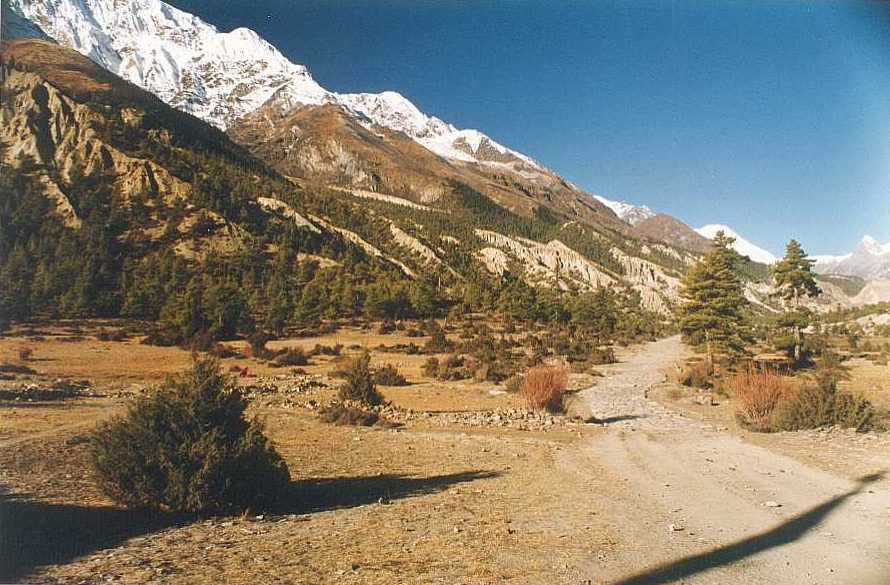
.

PLEASE NOTE: ARTICLES CAN ONLY BE REPRODUCED IN OTHER SITES WITH DUE ACKNOWLEDGEMENT TO BORDERLESS JOURNAL

Categories
Essay

A Salute to Ashutosh Bodhe

A tribute from Ravi Shankar to a fellow trekker & a recap of their adventures in the Himalayas

Ama Dulam and Lohtse peaks on the way to Everest. Photo courtesy: Ravi Shankar

A very fit and energetic person strode into my office. My good friend, Varun, accompanied and introduced him as a newly joined faculty member in the Physiology department at the Manipal College of Medical Sciences (MCOMS), Pokhara. My friend always called himself Ashutosh though he quickly became famous at MCOMS by his surname Bodhe.

Bodhe was always in perpetual motion. During our five years of close interactions, I rarely saw him sitting quietly in one place. He was a member of the college mess but rarely ate from there. I sometimes saw him around 2 or 3 pm having noodles and eggs from the private food stall located within the mess. He was fond of repairing things. He could put back together nearly everything — except maybe, broken hearts. His tool kit consisted of a soldering iron, screwdriver, screws, insulation tape, clamps, and a multimeter; rather strange appurtenances for a doctor.   

During my conversations with him, I came to know that he had always wanted to be an engineer and had secured admission into a premier engineering college in Mumbai, India. He also later qualified for admission to the medical course and his family insisted that he switch over to medicine. He would walk around the city of Pokhara, Nepal at strange times of the day and night. He would walk from the lakeside to the college campus after 10 pm. This seemed strange in a city that usually goes to sleep by nine.  

The hill overlooking the Fewa Lake. Photo Courtesy: Ravi Shankar

Bodhe, on occasions, also joined us on day hikes in the Pokhara valley. Pokhara is a trekker’s paradise. The walk up to the Shanti Stupa on the hill slopes overlooking the Fewa lake can be a good Saturday morning activity. Rowboats are available on the shore of Fewa Lake and are mainly used to visit the Tal Barahi temple located on an island in the middle of the lake. The stupa was built by a Japanese monk with the help of locals in the early 1970s. The stupa stands on Anadu hill in the onomatopoeic village of Pumdi Bhumdi and is a good hour’s climb. After the visit, you can climb down to Damside, continue to Lakeside, and return after a delicious lunch.

Boats on the shore of the Fewa Lake. Photo Courtesy: Ravi Shankar

Occasionally, Bodhe would join us on our Saturday walks to Lakeside. The walk would take about 90 minutes. We continued along the lake to a ‘Korean[1]’ restaurant. The restaurant constituted of small huts by the side of the lake with tables and chairs. It was a magnificent location for a feast! We used to have Nepali daal bhaat tarkari maasu (lentil curry, rice, vegetables and meat, usually chicken). In many Nepalese restaurants, food is usually prepared fresh after you order. The food takes around an hour to be prepared. This leaves plenty of time for conversation. The food by the lake was always fresh and piping hot. The country chicken was beautifully spiced, and the green leafy vegetables were perfect.

 Our other go-to place for lunch on Saturdays (the weekly off in Nepal) was the Pokhara Thakali Kitchen. Thakalis are originally from the Thak Khola (the upper Kali Gandaki River) around the Nigiri Himals to the north of Pokhara. They are successful businessmen and run some of the best hotels and restaurants in the country. I simply loved their rich, thick green daal and their potatoes fried in ghiu (clarified butter). The other specialty was dhido (a thick paste) made from either corn or buckwheat flour.

Bodhe, me, and a group of students hiked to the Everest Base Camp and Kala Pathar. We flew to Lukla (from Kathmandu) and the Tenzing Hillary airport at around 2800 m. This is one of the most dangerous airports in the world and accidents were not uncommon. The runway was only around 600 m and then it is a steep drop to the river below. We had lunch at a lodge in Lukla while we waited for our porters. Most hikers spent the first night on the trail at the settlement of Phakding. The first thing we noticed was that the Everest region was much colder than the Annapurna trekking region just north of Pokhara. A large portion of the hike is at heights of over 3000 m.

The peak autumn trekking season was underway and there were large groups of hikers on the trail. We were racing against each other to find a place for the night. Those were the days before online booking and land telephone and internet access were still not available in Khumbu.

Namche Bazaar, the ‘Sherpa Capital’[2] was packed with tourists, and we were lucky to find rooms at a small lodge. The next morning dawned clear and frosty and the views of the Himals were spectacular. Bodhe, while chewing tobacco, was busy clicking photos and we were dancing vigorously to various songs. He really liked the song Kaanta laga[3]. He would reminisce about the wild morning and mention the ruckus we had created, chewing his usual wad of tobacco for he seemed addicted to the stuff.

Bodhe was a man with tremendous energy and a useful person to have on a long trek. He was impulsive and a practical joker but a kind soul with the energy to get going when the going becomes tough. He sprinted uphill on hikes and then climbed a tree or went off sprinting into the bushes. He did not reach a lodge or a settlement early as he was easily diverted by wayside attractions. He was fascinated by the term boche which stands for a flat land seen from a hilltop. In a very rugged and mountainous landscape, flat land is a coveted commodity. There are many boches in the Everest region – Pangboche, Deboche, Dingboche, Pheriche Tengboche among others.

We eventually reached the settlement of Gorak Shep at 5300 m. The weather was cloudy and freezing. The temperature was well below zero. We were shivering under our quilts in the lodge. It was the eve of Kojagiri Purnima[4], and the moon was beginning to rise. Bodhe motivated a group of students to carry and pitch a tent on the slopes of Kala Pathar (Black Stone) in the freezing cold. They donned all the winter clothing they had and spent the night on the rock photographing the world’s highest mountains in moonlight. The cold chilled their marrows and sleep was out of the question. They arrived around eight the next morning with wild stories of their hair-raising night.

We eventually returned to Lukla and reconfirmed our flight tickets for the following morning. Our flight was scheduled for eleven am and the last night at the lodge was a wild one. Bodhe was in full form and we were all relieved that the trek was over, and we were flying back to Pokhara. It was raining heavily the next morning and our flight was repeatedly delayed. Flights to and from Lukla are notoriously fickle. We were the last flight to take off as rainy weather closed in.

It was a long drive in the rain from Kathmandu to Pokhara. Clouds and mist draped the hills. Soon after reaching the hostel, one of the students who had joined us on the trek mentioned that the next day was a holiday as the roof of the Manipal Teaching Hospital had collapsed. We chided him for his fertile imagination but slowly realised that he was telling the truth. The hospital roof had collapsed that afternoon killing a few patients in the waiting area and seriously injuring a few others.

We hiked with Bodhe, some other faculty, and a few postgraduate students to the village of Ghandruk. Ghandruk (also called Ghandrung) is the second largest Gurung[5] village in Nepal. The hike was along a rocky riverbank and then through stone staircases. The sun was up full force and our trek to the village was hot. Mule trains raised dust clouds as they move up and down the trail. The village is the headquarters of the Annapurna Conservation Area Project (ACAP). There are several excellent lodges in the village and the Annapurna South and Hiunchuli Himals can be viewed from there. One of the finest lodges in the village was the Himalaya lodge, a Kerr and Downey resort located at the top of the village. The lodge was an additional twenty-minute hike, but it is well worth the effort. The views are stupendous and the rooms beautiful. They provide down jackets and slippers for the comfort of their guests. There was a good porch and a magnificent lawn in front. Bodhe absolutely loved this place.  

Sadly, Bodhe never stayed in touch after he left Pokhara. There were rumours of him working in the Caribbean, in Mauritius, and in different places in India. In a circuitous fashion, I came to know about his death last year. We do not know the details yet. Looking back on his life, I am reminded of so many unfulfilled promises. The man had a first-rate intellect and boundless energy. He could have achieved much only if he had been able to focus and channel his God-given gifts. But, he lived his life in his own terms. Dear friend, I sincerely hope you are finally at peace. Ashutosh Bodhe – tujhe salaam[6]!       


Bodhe

[1] The restaurant mainly catered to Korean tourists and used to serve primarily Korean food but also cooked Nepalese dal bhaat

[2] Most Sherpas are from the Namche region

[3] A thorn has pricked me

[4] Fullmoon in October – supposed to be auspicious

[5] An ethnic group that lives in the foothills of the Annapurna range and one of the groups recruited as Gorkha soldiers

[6] A salute to Ashutosh Bodhe

Dr. P Ravi Shankar is a faculty member at the IMU Centre for Education (ICE), International Medical University, Kuala Lumpur, Malaysia. He enjoys traveling and is a creative writer and photographer.
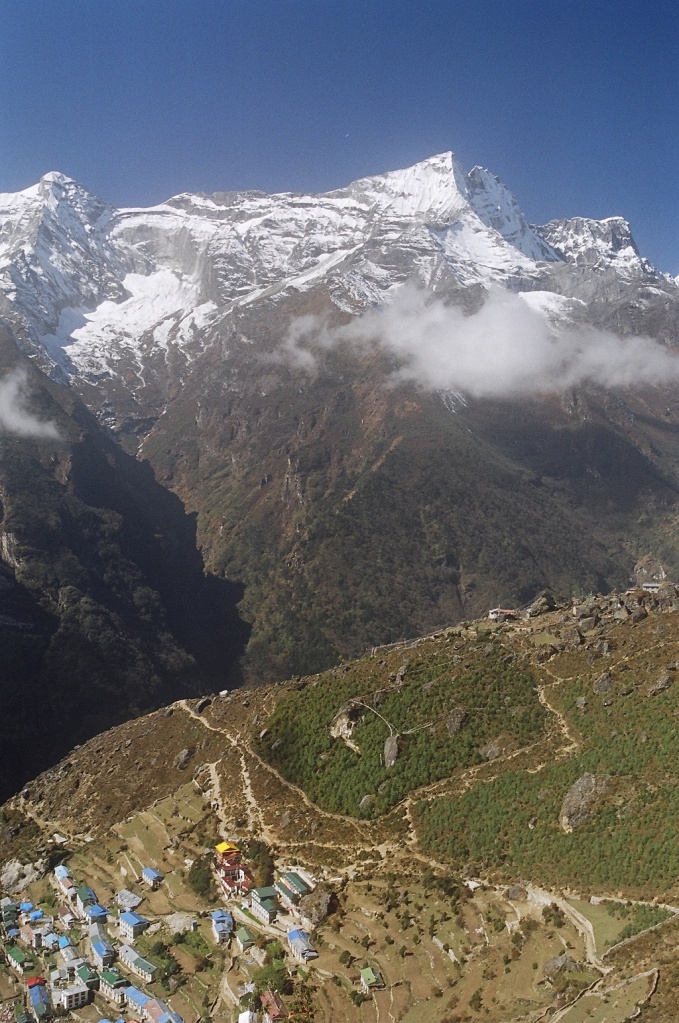
.

PLEASE NOTE: ARTICLES CAN ONLY BE REPRODUCED IN OTHER SITES WITH DUE ACKNOWLEDGEMENT TO BORDERLESS JOURNAL