Categories
Tagore Translations

Classifications in Society by Rabindranath Tagore

This essay was first published in Tattwabodhini Patrika, Ashwin issue, 1319 B.S.(September-October, 1912) and reprinted in Pather Sanchoy (Gleanings of the Road). It has been translated from Bengali by Somdatta Mandal.
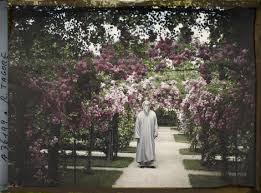
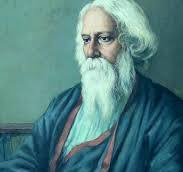
Tagore at Paris, 1921. From Public Domain

When we travel to Vilayet[1], then it is not simply going from one country to another; for us it is like entering a new household. The external differences of lifestyle are not that important. It is expected that there will be a difference between us and the foreigners in our dress, ornaments, eating and pleasure habits and so that doesn’t bother us too much. But not only in lifestyle, there is a deeper dissimilarity in our evaluation of life and to find a sense of direction there suddenly becomes a very difficult task.

We start feeling this from the moment we board the ship. We understand that we will have to abide by the rules of another different household. This sudden change is not to the liking of man. This is why we do not try to understand it very clearly; we somehow try to follow it or feel disgusted and then utter to ourselves—their manner and behaviour is too artificial.

The truth is that what is important is the difference we have with them regarding our social position. Our society has come and stopped within the limits of our family and village. Within those limits we have evolved certain fixed rules about how to behave with one another. Keeping those limits in mind it has been decided what we should do and what we should not. Some of those rules are superficial whereas others are quite normal.

But the society which is the target of these rules being framed is not very big in size and it is a society of relatives. So, our habits are quite domesticated. You cannot smoke tobacco in front of your father, you are supposed to pay obeisance to the guru and pay him some money, the sister- in- law must cover up her face in the presence of the elder brother-in-law and close proximity to your uncle- in- law is totally prohibited. Those rules that are outside the family or village society are based on caste(varna) differences.

It can be said that the thread of caste difference has tied our village society and families like a chain or necklace. We have reached a conclusion. India has resolved its societal problems once and for all and she feels that if this system can be permanently retained then there is nothing to worry about. That is why modern India is trying to strengthen in all manner this family and social bonding laws woven through the thread of varnashram[2].

It has to be admitted that India had been able to find a solution to the problems it was facing at one point of time. She has somehow reconciled the differences between diverse castes, she has pacified the struggle between diverse classes; by classifying professions she has managed to contain competition and disputes and has staved off the vanity created by differences of wealth and capacity through the fence of caste differences. Though, on the one hand, India has maintained through all means the independence of Brahmins who are at the helm of society to the people belonging to other castes, at the same time, she has also spread out small and big processes through which all facilities and education could be disseminated among the others. This is why what the rich person enjoys in India is also partly distributed among the ordinary people on various pretexts and in this way, by giving shelter to the ordinary and appeasing them, the powerful retains his power. In our country, there is no reason to go into a major clash between the rich and the poor and the necessity has not arisen by which the incapable person has to be protected by legal means.

The Western society is not family oriented; it is an open and large society which is much more widespread than ours. It is more on the outside than on the inside. The concept of family that is there in our country is absent in Europe and that is why the people of Europe are spread everywhere.

The nature of this spread-out society is such that on the one hand it is loosely assimilated and on the other it is more diverse and stronger. It is like composing a prose piece. Poetry is restricted within its rhymes and that is why its binding is simpler. But the prose spreads out. That is why on the one hand it is independent and on the other its steps are bound through logic and reason, through diverse rules on ideas about the development of the mind in a greater way.

Because the English society is so spread out and because all its activities are externally motivated, it must be always prepared for different social rituals. It hardly has time to wear casual domestic clothes. It must remain dressed up because its social area is not that of relatives. Relatives pardon you, tolerate you, but you cannot expect such tolerance on the part of outsiders. Everyone must do each and every work in due time, otherwise one will encroach upon another. If the rail line is in my area or is under the control of a few of my friends and relatives, then we can run the train as we wish and can even halt each other’s train as and when we desire. But if we try to detain a train for five minutes in the ordinary train route where lots of trains move up and down, then there will be lots of problems and that will be difficult to tolerate. Because our society is extremely domesticated or maybe because we are habituated with domestic practices, we behave with each other very loosely—we spread ourselves as much as possible, waste time and criticise formal behaviour as lacking in fraternal feelings. This is the first thing that prevents us from feeling at home in English society—there one cannot act in a carefree manner and then expect that people will pardon us. They have created different rules that will on an average benefit the maximum number of people. They have set up fixed rules for meeting each other, for invitation formalities, for dressing up, for entertaining guests. If we try and impose the laxity that we display with relatives in a place that is not actually a society of relatives, then everything turns out to be horrible and life becomes impossible.

Till now this wide European society has not come up with any solutions. It has made an effort through certain rules and regulations in external rituals and behaviour to retain self-restraint and gracefulness but is unable to make arrangements by which the internal strife at a personal level can be resolved. Europe is only going through experimentation, change and revolution. There is a constant rivalry cropping up between men and women, between religious society and professional society, between the power of the ruler and the ruled, between businessmen and worker groups. It has not pacified itself like the halo round the moon. Even now it is ready like a volcano waiting to erupt.

But how can we say that we have solved all our problems, have finalised our social structure, and are resting as peacefully as dead bodies? Even though time has elapsed, we can retain the system for some time, but we cannot keep the situation in chains. We are facing the entire world, now we cannot do with our domesticated society; these people are not merely our fathers, grandfathers or uncles, they are outsiders. They belong to different countries and so we should be extremely alert while interacting with them. If we are absent-minded and behave in a loose manner, then one day we will be totally unfit to act.

We are proud of our tradition, but it is not at all true that the society of India has not evolved through history. In different situations even India had to go through newer revolutions—there is no doubt about that—and history is replete with instances. But I don’t want to even utter that it is the end of all treading for her and from now on till eternity she will just be there and hold on to her traditionality. Society gets fatigued after each large revolution; during that time, it shuts its doors, switches off all lights and prepares to go to sleep. After the Buddhist revolution India had gone off to sleep latching her doors and windows with the hook of strict laws. She was sleepy. But to boast about this as eternal sleep will become a laughable though pitiable thing. Sleep is good only during the night, when there are no crowds of people outside, and when all the big shops and markets are shut down. But in the morning when everyone is awake and there is activity all around, if you go on quietly lying down and close all the old doors and windows, then you will be the loser.

The rules of the night are very simple. Its arrangements are sparse, and its requirements are very little. That is why we can complete all our tasks and go to sleep in an unperturbed manner. Then things go on lying where they were kept because there is no one to move them. The arrangements during the day are not so simple and completing the job once and for all in the early morning does not mean that one can relax and smoke tobacco the rest of the day. Work keeps pouring down our necks. We must keep attempting new things and if we cannot adjust ourselves to the flow of the outside world, then everything else falls out of place.

For some time, India has spent her nights in a system of strict and fixed set of rules. That does not mean that that situation will permanently remain very comfortable. Getting a beating is most painful and difficult, especially when it falls upon a sleeping body. Daytime is the period to receive such blows. That is why it is most comfortable to remain awake during the daytime.  

It is time for us to wake up whether we wish it or not, whether we are full of laziness or not. We are constantly being hurt both internally and externally in society and so we are sad. We are suffering from poverty and famine. The society is breaking down; the joint family system is being split into bits and pieces. And the role of the Brahmins in society has become so demeaning that with the aid of ‘Brahmin societies’ and such other things, they keep on shouting loudly to prove their existence and thus only attest to their weakness. The panchayat[3] system worn in the neck by the government’s chaprasi[4] has committed suicide and its ghost is dominating the village. The food in the country is incapable of satiating the small village schools. Due to famine, they are now relying on the charity of government dole. The rich people of the country have doused the light in their birthplaces and are roaming around in Calcutta in motor cars, and people of noble descent are ready to sacrifice their entire wealth and their daughters at the feet of a graduate groom. There is no point in blaming the Kaliyuga[5], or the foreign king or the native English-speaking people for this misfortune. The truth is that our lord has sent his assistant during the daytime, and he will not stop till such time he can drag us out of our traditional bedrooms. So, we cannot forcibly close our eyes and try to create the night at odd hours. The world that has come to our threshold has to be welcomed inside our house. If we don’t give it a cordial welcome, then it will break open our doors and gain entry. Hasn’t the door not yet been broken now?

So once again, we must think about resolving our problems. It cannot be done by imitating Europe, but we must learn from her. Learning and imitating are not the same thing. Actually, if we learn in the correct way, we will be relieved from the art of imitating. If we cannot know the other truly, then we cannot understand the truth ourselves.

But I was saying that we cannot adjust ourselves in the European society with our loose domestic habits. We can never prepare ourselves in any way. It seems that everyone is pushing us aside, no one is waiting for us for a moment. We are pampered human beings; we feel out of place without our relatives in society. After coming here, I have noticed that since our students are not used to entering other people’s houses, most of them come here and learn things by heart but they do not keep any contact with the society here. The society here is large and so it has more responsibilities. Only if we undertake those responsibilities, can we find a sort of connection with the people of this society. If we cannot connect then we shall be deprived of the greatest learning prevalent here. This is because society is the greatest truth here. The greatest strength, the greatest sublimity is in the society here and not in the battlefield. Sacrifice and self-respect suitable for a broad-minded society are being expressed at every step. They are nurtured here and are preparing themselves in different ways to sacrifice their lives for the welfare of man. In modern India, the educated class of people still consider school education to be the true education. They are deprived of the education of greater society. Even after coming here and entering the school factory, if they come out simply as mechanical things and do not enter the birthplace of humanity visible here then they will be deprived even after coming to a foreign country.
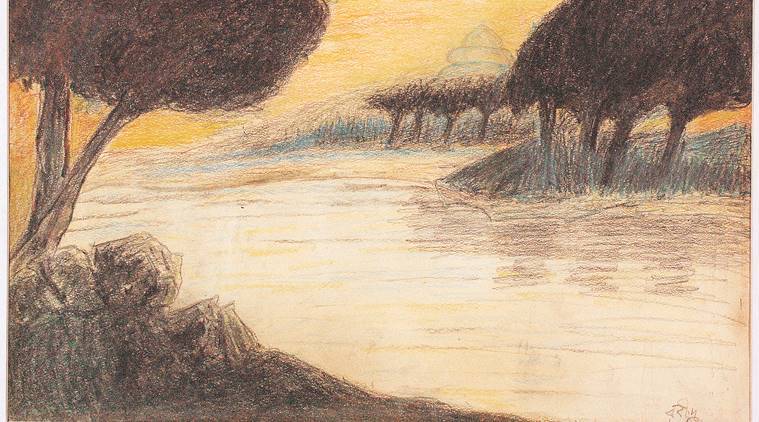
Art by Rabindranath Tagore. From Public Domain

[1] England or the Western world

[2] Casteism

[3] Villages in India are still administered by the panchayat, a council of five selected members from the community.

[4] Peon

[5] The current age in Hindu mythology which ends when the Kalki avatar comes to rescue humanity from darkness.

Somdatta Mandal is a critic and translator and a former Professor of English at Visva-Bharati, Santiniketan, India. An earlier version of this essay was published in Gleanings of the Road (Niyogi Books, pg 20).

.

PLEASE NOTE: ARTICLES CAN ONLY BE REPRODUCED IN OTHER SITES WITH DUE ACKNOWLEDGEMENT TO BORDERLESS JOURNAL

Click here to access the Borderless anthology, Monalisa No Longer Smiles

Click here to access Monalisa No Longer Smiles on Amazon International
Categories
Celebrating Translations

Transmitting across Cultures

Rabindranath Tagore (1861-1941)

Translations are like bridges. Three years ago, we decided to start a bridge between Tagore’s ideas and the world that was unfamiliar with his language, Bengali. He has of course written a few pieces in Brajbuli too. We started our journey into the territory of Tagore translations with Aruna Chakravarti’s Songs of Tagore. Now we have expanded hugely this section of our translations with many prose pieces and more translations of his lyrics and poetry by writers like Aruna Chakravarti, Fakrul Alam, Radha Chakravarty, Somdatta Mandal, Himadri Lahiri, Ratnottama Sengupta, Chaitali Sengupta and Nishat Atiya other than our team’s efforts. To all these translators our heartfelt thanks. We share with you their work celebrating one of the greatest ideators of the world.

Prose

Stories

.Aparichita by Tagore :This short story has been translated as The Stranger by Aruna Chakravarti. Click here to read. 

Musalmanir Galpa (A Muslim Woman’s Story): This short story has been translated by Aruna Chakravarti. Click here to read.

One Small Ancient Tale: Rabindranath Tagore’s Ekti Khudro Puraton Golpo (One Small Ancient Tale) from his collection Golpo Guchcho ( literally, a bunch of stories) has been translated by Nishat Atiya. Click here to read.

 Bolai: Story of nature and a child translated by Chaitali Sengupta. Click here to read.

Humorous Skits

(All translated by Somdatta Mandal)

 Playlets by Rabindranath Tagore : Click here to read.

 The Ordeal of Fame: Click here to read.

The Funeral: Click here to read. 

The Welcome: Click here to read.

 The Treatment of an Ailment: Click here to read.

Non-fiction

Baraf Pora (Snowfall) : This narrative gives a glimpse of Tagore’s first experience of snowfall in Brighton and published in the Tagore family journal, Balak (Children), has been translated by Somdatta Mandal . Click here to read.

 Travels & Holidays: Humour from Rabindranath: Translated from the original Bengali by Somdatta Mandal, these are Tagore’s essays and letters laced with humour. Click here to read.

Himalaya Jatra ( A trip to Himalayas) :This narrative about Tagore’s first trip to Himalayas and beyond with his father, has been translated from his Jibon Smriti (1911, Reminiscenses) by Somdatta Mandal. Click here to read.

Raja O Praja or The King and His Subjects, an essay by Tagore, has been translated by Himadri Lahiri. Click here to read.

 Library: A part of Bichitro Probondho (Strange Essays) by Rabindranath Tagore, this essay was written in 1885, translated by Chaitali Sengupta. Click here to read.

Book Excerpts

The Parrot’s Tale: Excerpted from Rabindranth Tagore. The Land of Cards: Stories, Poems and Plays for Children, translated by Radha Chakravarty, with a foreword from Mahasweta Devi. Click here to read

Rabindranath Tagore Four Chapters: An excerpt from a brilliant new translation by Radha Chakravarty of Tagore’s controversial last novel Char Adhyay. Click here to read.

Farewell Song :An excerpt from Radha Chakravarty’s translation of Tagore’s  novel. Click here to read.

An excerpt from Kobi’ and ‘Rani’: Memoirs and Correspondences of Nirmalkumari Mahalanobis and Rabindranath Tagore, translated by Somdatta Mandal, showcasing Tagore’s introduction and letters. Click here to read.

 Letters from Japan, Europe & America :An excerpt from letters written by Tagore from Kobi & Rani, translated by Somdatta Mandal. Click hereto read.

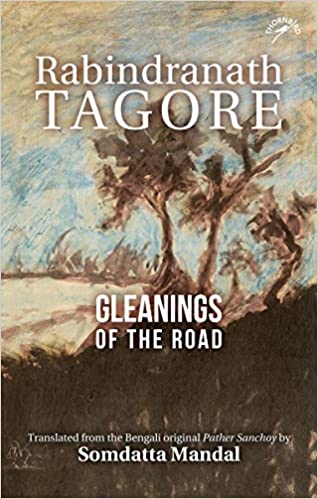
Gleanings of the Road: Book excerpt brilliantly translated by Somdatta Mandal. Click here to read.

Songs and Poems

Songs of Seasons: Translated by Fakrul Alam

Bangla Academy literary award winning translator, Dr Fakrul Alam, translates seven seasonal songs of Tagore. Click here to read.

  • Garland of Lightening Gems (Bajromanik Diye Gantha
  • In The Thunderous Clouds (Oi Je Jhorer Meghe
  • The Tune of the New Clouds (Aaj Nobeen Megher Shoor Legeche)
  • The Sky’s Musings (Aaj Akashe Moner Kotha
  • Under the Kadamba Trees (Esho Nipo Bone
  • Tear-filled Sorrow (Ashrubhara Bedona)

Endless Love: Tagore Translated by Fakrul Alam

Ananto Prem (Endless Love) by Tagore, translated from Bengali by Professor Fakrul Alam. Click here to read.

Giraffe’s Dad by Tagore

Giraffer Baba (Giraffe’s Dad), a short humorous poem by Tagore, has been translated from Bengali by Professor Fakrul Alam. Click here to read. 

Oikotan or Harmonising

Oikotan (Harmonising) has been translated by Professor Fakrul Alam and published specially to commemorate Tagore’s Birth Anniversary. Click hereto read.

Monomor Megher O Shongi (or The Cloud, My friend) has been translated by Professor Fakrul Alam. Click here to read. 

Professor Fakrul Alam has translated Tomra Ja Bolo Tai BoloHridoy Chheele Jege and Himer Raate — three songs around autumn from Click here to read.

Tagore’s Achhe Dukhu, Achhe Mrityu(Sorrow Exists, Death Exists) has been translated from Bengali by Fakrul Alam. Click here to read.

Colour the World: Translated by Ratnottama Sengupt: Rangiye Diye Jao, a song by Tagore, transcreated by Ratnottama Sengupta. Click here to read.

Bhumika (Introduction) by Tagore has been translated  by Ratnottama Sengupta. Click here to read.

On behalf of Borderless Journal 

Esho, He Baisakh, Esho Esho (Come Baisakh: A song to welcome the Bengali New Year) Click here to read.

Tagore Songs in Translation. Click here to read the next five.

  • Kothao Amar Hariye Jawa Nei Mana ( Losing myself)
  • Akash Bhora Shurjo Tara (The Star-studded Sky)
  • Krishnokoli ( Inspired by a girl who lives in a village)
  • Phoole Phoole Dhole Dhole (The Swaying Flowers)
  • Shaongagane Ghora Ghanaghata (Against the Monsoon Skies, Brajbuli to English)

Tagore’s Diner Sheshe Ghoomer Deshe (At the close of the day, in the land of sleep).Click here to read the translation.

Tagore’s Amar Shonar Horin Chai (I want the Golden Deer). Click here to read the translation.

Tagore’s long poem, Dushomoy (translated as Journey of Hope though literally the poem means bad times). Click here to read the poem in English and listen to Tagore’s voice recite his poem in Bengali. We also have a sample of the page of his diary where he first wrote the poem as ‘Swarga Pathhe'(On the Path to Heaven).

Deliverance by Tagore: ‘Tran’ by Tagore, a prayer for awakening of the subjugated. Click here to read the translation.

Abhisar by Tagore: A story poem about a Buddhist monk by Rabindranath Tagore in Bengali. Click here to read the translation.

Amaar Nayano Bhulano Ele describes early autumn when the festival of Durga Puja is celebrated. Click here to read the translation from Bengali.

Morichika or Mirage by Tagore is an early poem of the maestro that asks the elites to infringe class divides and mingle. Click here to read the translation from Bengali. 

 Purano Sei Diner Kotha or ‘Can old days ever be forgot?’ based on Robert Burn’s poem, Auld Lang Syne. Click here to read the translation.

 Aaji Shubhodine Pitaar Bhabone or On This Auspicious Day, a Brahmo Hymn. Click here to read the translation.

Raatri Eshe Jethay Meshe or Where the Night comes to Mingle , a song written in 1910. Click here to read the translation.

 Anondodhara Bohichche Bhubone (The Universe reverberates with celestial ecstasy), a song …Click here to read the translation.

Ebar Phirao More (Take me Back) a poem… Click here to read the translation.

Lukochuri has been translated from Bengali as Hide and Seek. Click here to read the translation.

Taal Gaachh or The Palmyra Tree, a lilting light poem, has been translated from Bengali. Click here to read the translation.

Nobobarsha or New Rain, a poem describing the rain transports one to Tagore’s world. Click here to read the translation.

Hobe Joye has been translated as  Song of Hope for that is exactly what it is in spirit. Click here to read.

Eshechhe Sarat, a poem describing autumn in Bengal, has been translated as Autumn. Click here to read the translation.

Aalo Amar Aalo is a paean to light and its impact on us. Click here to read the translation.

Tomar Shonkho Dhulay Porey (your conch lies in the dust), is an inspirational poem to shed apathy. Click here to read the translation.

 Prothom Diner Shurjo (The Sun on the First day) is one of the last poems of Tagore. Click here to read the translation.

 Banshi or Flute is an inspirational poem delving into the relationship with the divine muse. Click here to read the translation.

 Somudro or Ocean has probably been written during Tagore’s travels. Click here to read the translation.

 Borondala (Basket of Offerings) is a poem of ecstasy. Click here to read the translation.

Nobo Borsho or New Year, is a poem written on the Bengali New Year, urging people to rid themselves of past angst. Click here to read the translation.

Bhoy hote tobo is the first Birthday Song by Tagore, a poem written in 1899. Click here to read the translation.

Pran or Life, a poem that reflects the poets outlook on life. Click here to read the translation.

Megh or Cloud is a poem about clouds with spiritual undertones reflecting transience . Click here to read.

Proshno or Question  with its poignant overtones continues relevant to this date. Click here to read.

Sharat or Autumn, describes Bengal in the season of sharat or early autumn. Click here to read.

Amra Bedhechhi Kasher Guchho (We have Tied Bunches of Kash) is a hymn to an autumnal goddess. Click here to read. 

Tomar Kachhe Shanti Chabo Na (I Will Not Pray to You for Peace) is a song that inspires to survive the dark phases of life. Click here to read.

Tagore’s 1400 Saal (The Year 1993), was read in London in 1993, including Tagore’s own rather brief translation and had a response from Nazrul. Click here to read.

Prarthona or Prayer is a poem in which the poet seeks inner strength. Click here to read.

Tagore’s Dhoola Mandir or Temple of Dust is a poem that questions norms, even from the current times. Click here to read.

Phalgun or Spring  describes spring in Bengal. Click here to read.

Pochishe Boisakh (25th of Baisakh) is a birthday poem Tagore wrote in 1922 and from he derived the lyrics of his last birthday song written in 1941. Click here to read.

Chhora or Rhymes , a poem describing the creative process, it was written in 1941. Click here to read.

Okale or Out of Sync gives a glimpse of how out of sync situations are also part of our flow. Click here to read.

Mrityu or Death dwells on Tagore’s ability to accept death as a reality. Click here to read.

 Olosh Shomoy Dhara Beye (Time Flows at an Indolent Pace) reflects his perspective on history. Click here to read.

Suprobhat or Good Morning gives an unusual interpretation to morning. Click here to read.

Book Excerpts

Songs of TagoreSeven songs translated by Aruna Chakravarti from a collection that started her on her litrary journey and also our Tagore translation section. Click here to read.

Songs from Bhanusingher Padabali: Translated by Radha Chakravarty: Two songs by Tagore written originally in Brajabuli, a literary language developed essentially for poetry, has been translated by Radha Chakravarty. Click here to read.

Categories
Contents

Borderless, July 2022

Art by Sohana Manzoor

Editorial

Whispers of Stones… Click here to read.

Translations

Tagore’s Mono Mor Megher Shongi (‘The Clouds, My Friends‘)has been translated by Professor Fakrul Alam. Click here to read.

The Welcome, a skit by Tagore, has been translated by Somdatta Mandal. Click here to read.

The Bus Conductor, a short story by Dalip Kaur Tiwana has been translated from Punjabi by C. Christine Fair. Click here to read.

Hasan Sol: A Balochi Folktale from Geedi Kessah-4(Folktales Vol: 4) compiled and retold by Gulzar Khan Mari, has been translated by Fazal Baloch from Balochi. Click here to read.

Cry of the Sunflower written in Korean and translated to English by Ihlwha Choi, a poem for Ukraine. Click here to read.

Tagore’s Nobobarsha (or ‘New Rains’) has been translated by Mitali Chakravarty. Click here to read.

Pandies’ Corner

This narrative is written by a youngster from the Nithari village who transcended childhood trauma and deprivation. Lockdown had been written in Hindustani by Jishan and translated to English by Grace M Sukanya. Click here to read.

Poetry

Click on the names to read

Michael R Burch, Supatra Sen, Jenny Middleton, Pramod Rastogi, Ron Pickett, George Freek, Devangshu Dutta, Candice Louisa Daquin, David Francis, Raja Chakraborty, Michael Lee Johnson, Ashok Suri, Ryan Quinn Flanagan, Sutputra Radheye, Maid Corbic, Rhys Hughes

Poets, Poetry & Rhys Hughes

In The Anthology in my Mind, Rhys Hughes talks of a make believe anthology. Click here to read and find out what he imagines.

Conversations

Eminent film journalist, Ratnottama Sengupta, converses with legendary actress, Deepti Naval, on her literary aspirations at the Simla Literary festival, Unmesh, in June 2022. Click here to read.

Keith Lyons interviews Steve Carr, a writer who has written 500 short stories and has founded the Sweetycat Press. Click here to read.

Stories

A Cat Story

Sohana Manzoor leaves one wondering if the story is about felines or… Click here to read.

My Christmas Eve “Alone”

Erwin Coomb has a strange encounter at night. Is it real? Click here to read.

Bus Stop

The story by Rinu Antony focusses on chance encounter at a bus stop. Click here to read.

Murder at the ‘Pozzo di San Patriza’

Paul Mirabile travels to 1970s Italy to experience a crime inside a sixteenth century well. Click here to read.

Musings/ Slices from Life

Grune Point and an Inkling of Eternity

A poetic account by Mike Smith as he explores the area that hovers between England and Scotland. Click here to read.

Olympic Game Farm: Meeting and Greeting Animals from Disney Movies

Hema Ravi visits a farm that houses animals that had a past in Disney. Click here to read.

Notes from Japan

In A Visit to the Isamu Noguchi Garden Museum, Suzanne Kamata visits a Museum dedicated to an American Japanese artist. Click here to read.

Musings of a Copywriter

In Shopping for my Funeral, Devraj Singh Kalsi goes on a bizarre spree. Click here to read.

Mission Earth

In On a Bamboo Bicycle from Thailand to Indonesia, Kenny Peavy revisits his trip across Asia exploring the biodiversity and conservation efforts. Click here to read.

Essays

Discovering Books and Places: The Voyage from Eden

Meredith Stephens sails the Australian coastline, recording her experiences with words and her camera. Click here to read.

Trekking to Tilicho Lake

Ravi Shankar treks up to Tilicho Tal at 4940 m. Click here to read his trekking adventures.

A Modern-day Animal Fable with Twists

Dan Meloche visits a contemporary Canadian novel written as an animal fable to draw an unexpected inference. Click here to read.

The Observant Immigrant

Is it okay to be ordinary? by Candice Louisa Daquin explores the responses of people to being accepted as ordinary. Click here to read.

Book Excerpts

An excerpt from The Mendicant Prince (based on the Bhawal sannyasi case) by Aruna Chakravarty. Click here to read.

An excerpt from Nabendu Ghosh’s Dadamoni: The Life and Times of Ashok Kumar. Click here to read.

Book Reviews

Meenakshi Malhotra reviews Tagore’s Gleanings of the Road translated by Somdatta Mandal. Click here to read.

Rakhi Dalal reviews Geetanjali Shree’s Mai, Silently Mother, a Sahitya Akademi winning translation of the Hindi novel by Nita Kumar. Click here to read.

Indrashish Banerjee reviews Nabendu Ghosh’s Dadamoni: The Life and Times of Ashok Kumar. Click here to read.

Bhaskar Parichha reviews Prosanta Chakrabarty’s Explaining Life Through Evolution. Click here to read.

Categories
Editorial

Whispers of Stones

When the mountains and grass
had life, stones whispered
how the world came to be…

'Stonehenge', Daily Star

And as the world came to be, there was war — war that seems to rage in some part of the world or other. The British Museum has an exhibit which states the first battle was staged 13,000 years ago… in what is now Sudan, long before the advent of written history. This was even before the advent of people who built the ancient Stonehenge which was constructed around 3000-2000 BCE. And battles still continue to rage. The Jebel Sahaba casualties in Sudan 13000 years ago were less than 100. But the current conflicts claim in terms of tens of thousands which prolonged could stretch to millions. The last world war (1939-1945) which lasted for six years had a total of  75-80 million persons who perished. Ukraine-Russia conflict has within five months had a casualty count of more than 14000. And yet weapons and nuclear arms continue to proliferate decimating humanity, nature and towns, destroying homes, erasing ruthlessly and creating more refugees. The only need for such battles seem to be to satiate the hunger of the warlords secure in their impenetrable fortresses while tens of thousands are annihilated and natural or nurtured landscapes lie emaciated, mutilated and polluted.

What would be a good way of ending such wars?

Tagore sought the development of better instincts in humankind as an antidote. He wrote in the last century: “Any teaching concerning man must have human nature for its chief element. How far it will harmonise with human nature is a matter of time.”

With wars getting deadlier and more horrific, we can only try to awaken, as Tagore suggests, the better nature in man to move towards a peaceful world. What would be a more effective way of doing it than writing with the hope of a kinder and accepting future?

For that let us start with translations of the maestro Tagore himself. We have a song about the season — monsoon, ‘Monomor Megher Songi (My Friends, the Clouds)’, translated by Professor Fakrul Alam, a painting by Sohana Manzoor interpreting the lyrics and a transcreation of Nababarsha or New Rains’ was shrunken into a popular Rabindra Sangeet and reduced to twenty lines in English by Tagore himself. The connect with nature is an important aspect that enables humans to transcend petty concerns leading to dissensions of different kinds as evidenced in the maestro’s humorous feline skit, translated by Somdatta Mandal. A translation of Dalip Kaur Tiwana’s ‘The Bus Conductor’ from Punjabi by C. Christine Fair adds zest to this section. Fazal Baloch has translated a folktale from Balochistan involving the supernatural and Ihlwha Choi has taken on the cry for peace on behalf of Ukraine while translating his own poem in Korean. The Nithari column has a story by Jishan in Hindustani, translated to English by Grace M Sukanya, showcasing the struggle of a youngster during the pandemic – rather a sad narrative, which though fictitious has its roots in reality. 

Our poetry section touches upon the timelessness of dissensions and darkness with Michael R Burch’s poem on Stonehenge and Supatra Sen’s poem on Ukraine. This has been allayed by love poetry by Maid Corbic from Bosnia. George Freek’s poem ruffles with its reflective lines. And in the midst of it all, is poetry by Ryan Quinn Flanagan reflecting on the seven stages of man. Will the process of aging or human nature ever change? I wonder if Rhys Hughes can find an answer for that in humorous verses as he has shared in this issue. In his column, Hughes has written about an imagined anthology of short stories.

Our short story section has echoes of humour around felines by Manzoor, somewhat in tune with the mind frame seen in Tagore’s skit on this issue. Humour rings tinged with an apparition in Erwin Coombs’s narrative – should one call it dark humour or is it just his style? Paul Mirabile goes for gothic darkness in his meanderings around Italy.

Strangely, we seem to have a focus on short stories this time. Keith Lyons has interviewed Steve Carr, a journalist, a publisher and writer of 500 short stories who is questing to create a ‘perfect short story’. Reading out excerpts from her short story at a literary festival in Simla, Bollywood celebrity, Deepti Naval, was in conversation with eminent film journalist, Ratnottama Sengupta. She spoke of her literary aspirations while unveiling her autobiography in verse, A Country Called Childhood. This conversation has been shared by Sengupta with Borderless. It is interesting to see how Naval’s reactions to social malaise contrasts with that of the film director, cinematographer and actor, Goutam Ghose, who was present during the unveiling of her book. He had responded to communal violence by making a film on Lalan Fakir extolling virtues of love and kindness, called Moner Manush (2010) and then made a book on the film called, The Quest (2013) which has beautiful translations of Lalan Fakir’s lyrics by Sankar Sen.  

Our non-fiction sections seem to be hosting multiple travel stories across UK by Mike Smith, along the Australian coastline by Meredith Stephens, on the Himalayas with Ravi Shankar and an unusual visit by Hema Ravi to a farm in US where animals that had been used in Disney films in the past are homed. Our environmental columnist, Kenny Peavy, actually wrote about his cycling trip from Thailand to Indonesia on a bamboo cycle made by a Singaporean! And from Japan, Suzanne Kamata explored a museum in the neighbouring town of Mure. The museum on a hill hosts the art of American Japanese Artists, Isamu Noguchi.

We do have non-fiction that moves away from travel: noir humour by Devraj Singh Kalsi and an essay by Candice Louisa Daquin on a very interesting subject – ‘Is it Okay to be Ordinary?’ Is it?  Dan Meloche has written a literary essay on Canadian novelist Andre Alexis’s award-winning novel, Fifteen Dogs: An Apologue (2015). While Meloche spoke of how the novel departed from Orwell’s Animal Farm, his narrative brought to my mind a novel closer to our times set in England by Jasper Fforde called Constant Rabbit (2020) – this a science fiction while Alexis’s was an apologue or an animal fable. Fforde did use the rabbits rather well to highlight the current times.

We have book excerpts of two recent books that I would call really outstanding. One of them is Aruna Chakravarti’s The Mendicant Prince, which is being released this week, and is based on the evergreen contentious case of the prince of Bhawal that has even been explored even in cinema. The other, Dadamoni: The Life and Times of Ashok Kumar by Nabendu Ghosh, has been published posthumously and is not a translation from Bengali but written in English originally by this trilingual writer.  

Called ‘Dadamoni’ affectionately, iconic actor Ashok Kumar is regarded as “the one personality who symbolises Indian cinema’s journey from Bombay Talkies to Bollywood”.  This book has been reviewed by Indrashish Banerjee, who calls it ‘a reflection on the Hindi film industry’ as well as a biography. Rakhi Dalal has reviewed Booker winner Geetanjali Shree’s Mai, Silently Mother, a Sahitya Akademi winning translation of her Hindi novel by Nita Kumar, reiterating the dialogue that had been kindled on motherhood last month by Rinki Roy Bhattacharya and Maithili Rao’s The Oldest Love Story (2022). Bhaskar Parichha has reviewed Prosanta Chakrabarty’s Explaining Life Through Evolution plotting how life evolved on earth. Parichha tells us: “Meaningful, wide-ranging and argumentative, this is a must-read book. It will propel us to imagine and reimagine life around us.” Another book that sounds like a must-read has been reviewed by Meenakshi Malhotra, Tagore’s Gleanings of the Road, translated by Mandal. She tells us: “ ‘Gleanings’ represents the quintessential Tagore…Ably introduced and translated by Somdatta Mandal, a renowned Tagore scholar, the translation captures the iridescent and luminous quality of Tagore’s prose and its chiaroscuro effects.”

There is more to tempt. Please stop by on our contents page and take a look.

We would like to hugely thank all our contributors and readers for being with us and helping us grow. I would like to thank my team, who despite hurdles they face, always lend a helping hand and wonderful words from their pens or computers to get Borderless on its feet. I apologise for the delay and thank you all for your patience. Special thanks to Sohana Manzoor for her fabulous artwork.

I wish you all a wonderful July and peace in a war-torn world. We are all affected by the ongoing conflicts. Let us hope for peaceful and just resolutions.

Thanks.

Mitali Chakravarty

borderlessjournal.com

Categories
Review

Tagore’s Cartography of the Imagination

Book review by Meenakshi Malhotra

Title: Gleanings of the Road

Author: Rabindranath Tagore Translator: Somdatta Mandal

Publisher: Niyogi Books

Travels formed an integral part of the personae and creative artist that was Rabindranath Tagore. During his travels to England and the America (1912-13 and 1920) Tagore wrote essays for publication in various Bengali journals. Rabindranath Tagore was an inveterate traveller who travelled to the furthest corners of the globe. Detailing his travels in the  colloquial everyday language (also referred to as ‘chalit’ bhasha or language)  during his tour of England and USA in 1912-13, he used to publish regularly in journals like Prabasi, Bharati and Tattwabodhini Patrika. As the translator-editor Somdatta Mandal  informs us, Vishwa Bharati Publication Department in 1946 decided to discard Rabindranath’s own selection. They went back to the earlier formal register and included writings of the 1912 tour, irrespective of whether they were related to his travel.  

 The book blurb says: “In 1939, Tagore selected fourteen of these essays and an appendix containing seven letters he had written to some of the teachers in the Santiniketan ashram while he was on these trips, for publication as a volume. It was at this point that he rewrote the original essays then using the colloquial instead of the formal language; he also revised the texts substantially. Later editions altered the number of essays, sometimes digressing from Tagore’s own selection, sometimes going back to Tagore’s original formal language.”

The travelogue, if it can be called that, provides an insight into Tagore’s perception of the different facets of western life and the diverse philosophical issues that cross his mind as he journeys from one continent to another. Thus perhaps it is more appropriate that the collection is named “gleanings’’ rather than a travel account or narrative. They are philosophical ruminations where Tagore holds forth on various aspects of civilizations and cultures.

In the very first segment, Tagore’s critical observations about Indian society comes to the fore. Thus he comments on what he sees as  cultural differences and civilizational clashes, in “Prelude to the Journey”: “We always comfort ourselves by saying that we are a religious and spiritual race”. He sees this as a compensatory move by Indians to cover up our own sense of inadequacy, about our “weakness”  in the external world.(Tagore was acutely conscious of India’s status as a colonised country). “Many of us boast that poverty is our asset”, dwelling perhaps in a haze of pseudo-spiritualism which balks at admitting that this attitude is merely a kind of bravado.

Tagore’s essay here unpacks the notion of the binary that the West is materialistic while the East is spiritual by lauding certain aspects of Western and European culture. Thus he writes that “if we go to Europe with the aim of a pilgrimage, our journey will not be in vain”. He further explains that  this is not only because of the material developments achieved by Western culture, but their spirit and attitude.

Power, according to Tagore, is more than an external manifestation; rather, it has to do with a sense of real inner strength. He goes on to cite the instance of the Titanic and people’s altruism and self-sacrifice that was in evidence at that time, to interrogate the view, held by many Indians, that the average European is self-centred and self-serving. On the other hand, Tagore also gives plenty of instances where the spiritual poverty of Indians was in evidence. Thus he writes, “I know there has been a clash between our welfare and that of Europe and because of that we are suffering deep anguish and pain. We do not trust their religion and we criticise their culture as being too materialistic.” However, he continues that there are aspects of European culture which are worthy of emulation, which we would do well to follow, without feeling that it threatens our culture. He strongly commends that the path to seek the truth is a pilgrimage on which we should proceed without being blinded by ego, prejudice and false pride.

Coupled with this contrast of cultures, are observations about people and places. Thus he talks about the women of Bombay who are visible on the beaches of Bombay and contrasts it with the city of Calcutta, which according to him, is bereft of women in public places. Tagore also muses on the vast and limitless ocean which to him offers a cornucopia of literal and symbolic meanings. The sea and the ocean signify  vastness, depth, boundlessness and infinitude, as well as the lure of the unknown. In contrast, he bemoans  the loss of man’s ties with nature signified to him by the colonial appropriation of the river. He reflects that the river “Ganges was once one of Calcutta’s ties with nature…It was the one window of the city from where you could look out and realize that the world was not confined to this settlement.” He bemoans the fact that the once natural strength of the Ganga had been dissipated, “it has been dressed up in such tight clothes on both its banks and its waist band has been tightened so that the Ganges seems to be the image of a liveried footman of the city”. In contrast, the “special glory of the sea is that it serves man but does so without wearing the yoke of slavery on its neck.” His evocative description brings to life the various aspects of the landscape in full measure.

Tagore’s ‘travel’ writing is not just a mapping of people and places, but shows him as the supreme cartographer of the imagination. Witness his contrast of the earth and the ocean. The earth is compared to an excessively doting mother who binds her children to her and does not allow them to venture far away; the ocean by contrast “constantly allures him to venture towards the unattainable”. He adds, “Those who responded to that call and moved out are the ones who conquered the world.” Moreover, “that race of people on this earth who have specially welcomed this ocean have also found the unceasing effort of the ocean in their character.” Travelling on the Arabian sea, glimpsing distant shores, he stresses that the union of the two — the land and the ocean — signifying stability and movement are vital to an understanding of the truth.

The urge to travel, to move forward continuously, is forever present in man. In a philosophical vein , the poet muses that the soul “always wants to travel” and that it dies if it does not do so.In a series of similes and metaphors drawn from nature, he reflects: “Let us keep moving on, like the waterfall, the waves of the ocean, the birds at dawn, the light at sunrise.” He even transcends to the next plane when he says that “even the call of death is nothing but just a call to change the dwelling place”. In almost the same breath, he compares himself to a fairy princess who is fast asleep and who cannot be woken from her slumber, except with a golden wand.

Part anthropological study– at one point, the poet reflects that the vastness of the surrounding sea would have elicited devotion among many Indians, unlike the European traveller who is intent on enjoying the comforts and varieties of entertainment on the ship-part philosophic meditation, “Gleanings” represents the quintessential Tagore. His interrogation of Indian claims to spirituality is made in the tone of a concerned father warning his children not to fall prey to false pride and vanity. Deeply patriotic as well as an internationalist, he straddled two contrasting worlds of materiality and spirituality, without succumbing to limiting binaries and stereotypes.

Ably introduced and translated by Somdatta Mandal, a renowned Tagore scholar, the translation captures the iridescent and luminous quality of Tagore’s prose and its chiaroscuro effects.  

CLICK HERE TO READ THE BOOK EXCERPT

  Dr Meenakshi Malhotra is Associate Professor of English Literature at Hansraj College, University of Delhi, and has been involved in teaching and curriculum development in several universities. She has edited two books on Women and Lifewriting, Representing the Self and Claiming the I, in addition  to numerous published articles on gender, literature and feminist theory.       

.

PLEASE NOTE: ARTICLES CAN ONLY BE REPRODUCED IN OTHER SITES WITH DUE ACKNOWLEDGEMENT TO BORDERLESS JOURNAL

Categories
Contents

Borderless, June 2022

Art by Sohana Manzoor

Editorial

We are All Going on a Summer HolidayClick here to read.

Interviews

In Conversation with Rinki Roy (daughter of legendary director Bimal Roy) about The Oldest Love Story, an anthology on motherhood, edited and curated by journalist and authors, Rinki Roy and Maithili Rao. Click here to read.

Achingliu Kamei in conversation with Veio Pou, author of Waiting for the Dust to Settle, a novel based on the ongoing conflicts in North-east India. Click here to read.

Translations

The Funeral, a satirical skit by Tagore, translated by Somdatta Mandal. Click here to read.

Three Shorter Poems of Jibananda Das have been translated from Bengali by Professor Fakrul Alam. Click here to read.

The Magic Staff , a poignant short story about a Rohingya child by Shaheen Akhtar, translated from Bengali by Arifa Ghani Rahman. Click here to read.

Fakir Khizmil & the Missing Princess, a Balochi Folktale has been translated by Fazal Baloch. Click here to read.

Pie in the Sky is a poem written and translated from Korean by Ihlwha Choi. Click here to read.

Taal Gaachh or The Palmyra Tree, a lilting light poem by Tagore, has been translated from Bengali by Mitali Chakravarty. Click here to read.

Pandies’ Corner

This narrative is written by a youngster from the Nithari village who transcended childhood trauma and deprivation. Dhaani has been written in Hindi and translated to English by Kiran Mishra. Click here to read.

Poetry

Click on the names to read

Jared Carter, Sutputra Radheye, Ryan Quinn Flanagan, Antara Mukherjee, David Francis, Alpana, George Freek, Prashanti Chunduri, John Grey, Ashok Suri, Heather Sager, G Venkatesh, Candice Louisa Daquin, Elizabeth Ip, Rhys Hughes, Michael R Burch

Poets, Poetry & Rhys Hughes

In From a Kafkaesque Dream to the Penguin Cafe Orchestra, Rhys Hughes brings out a new strain of tunes that grew out of Jeff Simon’s unusual journey and it continues to persist beyond his life. Click here to read.

Stories

Oliver’s Soul

Paul Mirabile weaves a story of murder and madness in Madrid of 1970s. Click here to read.

The Wallet

Atreyo Chowdhury spins a tale set in Kolkata. Click here to read.

Flowers on the Doorstep

Shivani Shrivastav writes of an encounter with a mysterious child in Almora. Click here to read.

A Riverine Healing 

PG Thomas’s narrative set in Kerala, explores a leader’s old age. Click here to read.

Pagol Daries

Indrashish Banerjee creates a humanoid scenario where robots take on human roles. Click here to read.

Musings/ Slices from Life

In Memoriam: Star of the Stage Shines on Screen

Ratnottama Sengupta pays a tribute to famed actress, Swatilekha Sengupta (May 1950- June 2021). Click here to read.

Pizzas En Route to Paradise

Keith Lyons discovers the import and export of desires in Varanasi, one of the oldest cities in the world, beside one of the most revered rivers. Click here to read.

Notes from Japan

In Marathon Blues, Suzanne Kamata talks of pandemic outcomes in Japan in a lighter tone. Click here to read.

Musings of a Copywriter

In Journey of an Ant, Devraj Singh Kalsi explores life from an insect’s perspective. Click here to read.

Mission Earth

In Tuning in to Nature, Kenny Peavy tells us how to interact with nature. Click here to read.

Essays

Kabir & His Impact on Tagore

Mozid Mahmud explores Kabir and his impact on Tagore, which ultimately led to a translation of the great medieval poet. Click here to read.

A view of Mt Everest

Ravi Shankar travels in the freezing cold of Himalayan splendour and shares magnificent photographs of Mt Everest. Click here to read.

The Good, the Bad, and the Benign: Back across Bass Strait

Meredith Stephens shares a photographic and narrative treat from Tasmania. Click here to read.

The Observant Immigrant

In Season’s in the Sun, Candice Louisa Daquin explores what intense positivity can do to people. Click here to read.

Book Excerpts

Excerpt from Tagore’s Gleanings of the Road, translated by Somdatta Mandal. Click here to read.

Excerpt from Waiting by Suzanne Kamata. Click here to read.

Book Reviews

Meenakshi Malhotra revisits Harsh Mander’s Locking down the Poor: The Pandemic and India’s Moral Centre. Click here to read.

Indrashish Banerjee reviews Keki N Daruwalla’s Going:Stories of Kinship. Click here to read.

Gracy Samjetsabam reviews Pronoti Datta’s Half-Blood. Click here to read.

Bhaskar Parichha reviews Deepti Priya Mehrotra’s Her Stories –Indian Women Down the Ages — Thinkers, Workers, Rebels, Queens. Click here to read.

Categories
Editorial

We are All Going on a Summer Holiday…

Yes! It is vacation time, and we are all able to travel at last. Though the pandemic which had closed borders for us seems to be evolving as an endemic, another huge human crisis, a war which cannot be justified in any way, stares us in the face. Loss of lives, homes, towns, cities and threats of global recession follow in the footsteps of refugees wandering into our lives. Lesya Bakun, the Ukrainian refugee whose story we have been following, told me four of her relatives’ homes in Mariupol have been erased out of existence and her extended family has scattered where they found safety as her cousin continues a prisoner of war, captured while defending the iron and steel factory at Azovstal. While majority of the world expresses solidarity with the Ukrainians, another set of refugees remain in shadows. They have completely lost their country in which they had lived from ancient times. I am referring to the Rohingya of Arakan. CNN world states:

“The Rohingya are a stateless Muslim minority in Myanmar’s Rakhine State, thought to number about 1 million people.

“Myanmar does not recognize them as citizens or one of the 135 recognized ethnic groups in the country.”

 We are privileged to host a powerful poignant translation by Arifa Ghani Rahman of Shaheen Akhtar’s short story about such a voiceless Rohingya child in a refugee camp. Though this is a fiction inspired by Akhtar’s visits to such shelters, we hope at some point these children will be able to build new lives to create a world free of violence, intolerance, hatred and greed.

One of the questions that springs to one’s mind, watching such atrocities destroy innocent lives is that should one accept bullies and give in to their pressure tactics? Bullies can be found among world leaders as well as perpetrators of decadent societal norms which are often critiqued by satires. Somdatta Mandal has translated one such satirical playlet where social conventions are targeted in a lighter vein by Tagore. In the same spirit, the maestro’s iconic poem about a palmyra tree called Taal Gaachh has been transcreated to bring the joy of innocent wanderings back into the narrative, creating an island of healing thoughts. We continue with our translations of Jibananada Das by Professor Fakrul Alam, a Korean poem by Ihlwha Choi and a magical Balochi folktale by Fazal Baloch. Let us read such translations to connect with varied cultures so that compassion and acceptance of diverse perspectives end horrors like wars, starvation and hunger.  

Tagore’s writings translated to English by Mandal in Gleanings of the Road, a collection covering the maestro’s travel to the West, is part one of our book excerpts and highlights Rabindranath’s perspectives on the need to connect with the larger world. The other book excerpt, from Waiting, poetry by Suzanne Kamata, takes up the theme of victimisation, crime and murder. Dwelling on no less horrific narratives, though justified as non-criminal, is a review by Meenakshi Malhotra of Harsh Mander’s Locking down the Poor: The Pandemic and India’s Moral Centre. Gracy Samjetsabam’s assessment of Half-Blood by Pronoti Datta informs about the greyer areas of a whole community in Mumbai. Indrashish Banerjee reviewed Keki Daruwalla’s stories on human relationships anthologised in a collection called Going: Stories of Kinship while Bhaskar Parichha has acquainted us with Deepti Priya Mehrotra’s Her Stories –Indian Women Down the Ages — Thinkers, Workers, Rebels, Queens, a non-fiction that visits inspiring women.

Inspiration can also be drawn from Rinki Roy Bhattacharya’s and Maithili Rao’s The Oldest Love Story, featuring a medley of men and women writing on the theme of motherhood along with some narratives about their mothers or on the experience of being one. The medley includes well-known names from films and literature like Shabana Azmi, Saeed Mirza, Shashi Deshpande, Nabanita Dev Sen and more. We interviewed Roy Bhattacharya to find out more about this impactful book. Achingliu Kamei, an academic and writer, has conversed with Naga writer, Veio Pou, whose award-winning book, Waiting for the Dust to Settle, was reviewed earlier — a book that gives a glimpse of conflicts in the Northeast of India.

Taking on the theme of conflicts at a personal level, Atreyo Chowdhury’s and Banerjee’s stories create a sense of disquiet as Paul Mirabile’s explores crime, madness and its impact on humans. G Thomas takes a relook at heroism and bravery as a concept. His story set in Kerala shakes our complacency, upending traditional concepts of heroism and bravery just as Candice Louisa Daquin has upended the cult of positivity in her essay. Notes of discord and accord seem to ring through this edition and the undertones of greys spread out towards an exploration of life and death. We have multiple ghost stories this time, even from the Nithari column written by Kiran Mishra, a youngster who got over the trauma of violence in the community and discovered her place as a bilingual writer and educator.

Our poetry section is honoured to host Walt Whitman Award winner, Jared Carter, again with his poetry on a Japanese artefact as George Freek’s continues to be inspired by the style of Song dynasty poets. Michael Burch writes beautiful love poems. We have a vibrant poetry section with Daquin, Sutputra Radheye, Ryan Quinn Flanagan, Antara Mukherjee, Rhys Hughes, who has also revisited ‘The Penguin Café Orchestra‘. This band started a new kind of musical trend with nothing but passion and conviction. Hughes of course cannot escape the bonds of his tongue-in-cheek style, also adopted by Devraj Singh Kalsi while he pretends to be an ant.

Keith Lyons has got the bug of tongue-in-cheek too as he gives us a piece on his travels in Varanasi that well captures the dichotomies we find in India. Dwelling on social dichotomies also is Ratnottama Sengupta’s powerful tribute to Swatilekha Sengupta, a film and theatre doyenne who brought to life Tagore’s novel, Ghare Baire (Home and the World, 1985). An essay by Mozid Mahmud exploring both the syncretic elements in Tagore’s and Kabir’s works, the medieval poet’s impact on the Nobel laureate and a dispute over Rabindranath’s own translation blends with the tone of greys in this edition.

Travel narratives and photographs by Meredith Stephens sailing the seas in Tasmania and Ravi Shankar trekking on the slopes of the Himalayas to get a view of Mt Everest make for perfect holiday adventures. From Japan, Kamata has given us a narrative set in the pandemic. And environmentalist Kenny Peavy dwells on reconnecting with nature in Mission Earth.

We have a fair deal from across the globe in the June issue. But, as usual, some of the treats in the content have not been mentioned though they are wonderful pieces of writing too. We look forward to your continued support as you delve into our treasure trove of gems from across the oceans. A huge thanks to our fabulous team, to the contributors and readers. I especially want to thank Sohana Manzoor for sharing her lovely artwork and wish you all a wonderful read!

I hope you have a fabulous summer.

Thank you.

Mitali Chakravarty

borderlessjournal.com