Abhirup Dhar, a horror writer whose books are being extensively adopted by Bollywood, talks about his journey and paranormal experiences. Click here to read.
Translations
Munshi Premchand’s Balak or the Child has been translated from Hindi by Anurag Sharma. Click hereto read.
Atta Shad’s Today’s Child has been translated from Balochi by Fazal Baloch. Click here to read.
Masud Khan’s History has been translated from Bengali by Professor Fakrul Alam. Click here to read.
Ihlwha Choi translates his own poem,Lunch Time, from Korean. Click here to read.
Tagore’s Somudro or Ocean has been translated from Bengali by Mitali Chakravarty. Click here to read.
Ratnottama Sengupta is riveted by the phantasmagoric Bhooter Naach, the Ghost Dance, in Satyajit Ray’s legendary film — Goopy Gyne Bagha Byne — that has no precedence nor any sequel in cinema worldwide.
Some years ago, I was preparing for my talk on dance in Hindi Films, given to the Film Appreciation students at the Film and Television Institute of India in Pune. I noticed that every major director in the earlier years, from Uday Shankar (Kalpana, 1948), V Shantaram (Jhanak Jhanak Payal Baje, 1955), and K Asif (Mughal-e-Azam, 1960), to Guru Dutt (Saheb Bibi Aur Ghulam, 1962), K A Abbas (Pardesi, 1957) and Sohrab Modi (Mirza Ghalib, 1954) had started with Indian classical dance in its purest form – Kathak — and the leading ladies Vyjayanthimala, Waheeda Rahman and Padmini came equipped with the dance of thedevadasis, Bharatanatyam. Subsequently however, most filmmakers diluted the purity of these dances, perhaps to suit the situation in their films. And in recent years that dilution has gone further to take the form of fusion dance, westernised dancing, and group dancing to add volume to the glamorous visual of female torsos in movement.
Suddenly it struck me that Satyajit Ray (1921-92) too had used Kathak in its purest form in Jalsaghar (1958) and then ‘diluted’ the purity of classical movements to design the rhythmic footwork of disembodied spirits. And it dawned on me what level of genius could create a dance that becomes a visual statement on the history of the land itself! Of course, I am talking about the ‘Dance of the Ghosts’ in Goopy Gyne Bagha Byne(1969). The towering presence had ‘choreographed’ this dance which has simply no parallel in the world of cinema. Yes, the director — who also penned the lyrics besides screenwriting his grandfather’s adventure story first published in Sandeshin 1915 – had diluted the classicism of Kathakali and Manipuri. But he had fused in so many more art forms like masks, paper cutouts, shadow art, pantomime, celluloid negatives and special effects that it emerged as a class in itself, giving even today’s viewers an experience nonpareil.
In this fantasy that ends as a fable with a timeless moral, Ray experimented with a psychedelic burst of dancing. The narrative pivots on a tone-deaf singer and a bumbling drummer. Essentially though Ray’s telling of the ‘fairytale’ was a garbed plea against war. The message he sent out loud and with laughter: “When people have palatable food to fill their belly and music to fill their soul, the world will bid goodbye to wars.”
But Ray’s recounting of the story was far from didactic. Indeed, he himself is known to have said, “I don’t know if you can truly demarcate fantasy and fable.” So, instead of categorising it as one other the other, he recommended that we see Goopy Gyne Bagha Byne (GGBB) only as the story of a duo of untalented musicians. Their playing earns ridicule from fellow villagers and contempt from their king but appeals to the upside-down aesthetics of ghosts. The charmed King of Ghosts appears with an eerie twinkling of stars and a disembodied voice to bless them with three boons. With an enjoined clap of their hands, they could feed to their heart’s content, they could travel where they want to in their charmed shoes, and their music could entrance their listeners.
Building upon this children’s story, Ray himself wrote the dialogue, designed the music, the costumes of the entire cast, and the choreography of the Ghost Dance that is redolent of Uday Shankar’s Kalpana. The dead come alive when Goopy-Bagha play and perform a surreal dance that briefly echoes the past of India — because bhoot kaal in Bengali means ‘past tense’.
The celluloid representation depicts in minute details the division of society into caste, class and creed since time turned ‘civilised’. Ghosts in the first group are the royals – from the age of Puranas through Buddha’s times to the rule of Kanishka Gupta. The shadowy, amorphous shapes in the second lot belonged perhaps to the lowest strata of those they ruled – peasants, artisans, Santhals, Bauls, Mussalmans. The third set of ghosts recall the story of colonisation by people who are suited-booted, wear hats, walk with a stick, indigo planters who drink whisky from bottles and strike awe with their body language. The fourth group comprises potbellied ghosts whom Ray identified as ‘Nani Gopals’. They wear costumes that remind us of city-dwelling zamindars, money lenders, padres who try to teach Bible and orthodox priests who run away from them. Their bulky forms contrast the skeletal shadows that precede them on the screen – perhaps because they thrived by exploiting the plebians?
All these ghosts are described later by Goopy and Bagha: they are Baba bhoot Chhana bhoot, Kancha bhoot Paka bhoot Soja bhoot Banka bhoot, Roga bhoot Mota bhoot. Thin or fat, short or tall, crooked or straight, simple or strange… between them, they are the world we inhabit across time and space!
Each group appears separately, in harmony; then they reappear to fight a war and kill one another. The pantomime is danced only to the clash of percussion instruments – and makes us wonder, when did homo-sapiens get so divided?
The allegorical dance in four segments is a phantasmagoria of styles and moods that mesmerises at every repeat viewing – as much by the visuals as by its conceptualisation. But what were the technical feats that shaped the fantastic performance? In an interview given to Karuna Shankar Roy for Kolkata, a magazine edited by Jyotirmoy Dutta, for its special edition on Ray (published on May 2, 1970), the master himself had guided viewers through the Bhooter Naach. Let me retrace part of the journey.
*
Ray had, since Teen Kanya (Three Daughters, 1961), scored the music for his films as the ustads he earlier collaborated with were too engrossed in their ragas to understand the needs of a film script. In GGBB, in addition to the theme music that has always borne his signature, the songs had to speak, act, develop the characters…
Let me elaborate. The original story simply said Goopy is a singer. But when Ray sat down to write the songs he had to draw upon words, and since words have meaning, the songs “say” something. When Goopy sings to arrest the march of the advancing soldiers, what could the words say? Clearly they couldn’t say, “Dekho re nayan mele jagater bahar! Open your eyes to the wondrous beauty of this earth” – that is the ditty Goopy sings right after being blessed by the King of Ghosts. Set in the calming morning raga Bhairavi, it would not be appropriate here. So he sings, “O re Halla Rajar sena, tora juddha korey korbi ki ta bol! Tell us, oh soldiers of King Halla, what will you achieve through war? You will only sacrifice your life at the altar of weapons!” At once the song becomes a diatribe against wars worldwide and through history.
So, the words are fed by the situation in which the song is being sung – and the movements were stylisation that sometimes leaned towards the Western classical form of Opera and sometimes towards Bengal’s very own Jatra[1]. GGBB is in that sense a complete musical. Yet, I notice that the songs here don’t carry the story forward – instead, they arrest movement. In that sense they can be said to owe their lineage to Jatra where the songs act like the Greek chorus, commenting on the action and acting as the conscience keeper.
Ray did not settle for the obvious, much heard folk songs of Bengal, be it Baul or Bhatiali, Bhawaiya or Gambhira, Kirtan or Shyama Sangeet, Agamani or Patuar Gaan. Nor did he entirely shun the robust classicism of ragas. He crafted his own folksy scheme that was close to the soil of the rustic protagonists yet uncomplicated enough to appeal to the strangers inhabiting the land where they find themselves amid scholastic vocalists. Here, in the distant land where Goopy-Bagha had travelled in their magical shoes, their music had to transcend the barrier of language. In Ray’s own words, “it had to be deshottar, kaalottar[2]”. And in being so, every one of their songs has become timeless. Be it Mora sei bhashatei kori gaan/ We sing the melody of that or any language, or Aay re aay manda mithai/ Rain down on us, sweets for every taste – today they are a part of Bengal’s cultural ethos.
Ray may have caricatured the learned ustads seasoned in ragas but, repeatedly and in various ways, he uses Carnatic music. When Goopy and Bagha are fleeing from the lock-up, the stylised flight parodies Bharatanatyam movement – “Goopy re Bagha re Pala re pala re! Run run run…” Contrast this with the forlorn music of “Dukkho kise hoy? What causes sadness?” The score uses merely two string instruments – a dotara, a two-stringed instrument, and a violin which is widely used in Carnatic music “but here it is played much like the sarinda that is popular in East Bengal,” Ray had explained in the 1970 interview reprinted in Sandesh.
However, I am most fascinated by the use of Carnatic musical instruments in the Ghost Dance at the outset. As in the rest of the film, this sequence too has heavy orchestration — but the movements are choreographed not to a song, only to a quartet of percussion instruments.
At the risk of repeating myself I underscore that Bhooter Naach has no precedent nor any sequel in any movie made in any country at any point of time. So, to understand the process of its creation, we can only listen to Ray. “The story simply said, ‘the ghosts came and danced’. But how could I realise that in visual terms? Bengal of course has a conventional description of ghosts: their ears are like winnows, their teeth stick out like radish, they are pitch-dark, with arched back. But this would not be artistic. Nor could this meagre description sustain me through an entire sequence that had to create an impact deep enough for the film to rest on. Besides, there is no convention about their dancing. That is why I started to think: What if those who actually lived and died, were to come back? How would their bhoot look and behave?”
Here, let me add that for Satyajit Ray as for Upendra Kishore too, the term bhoot was not synonymous with the English ghost or spirit. Indeed, ghosts have been part of our folklore since our forefathers peopled Bengal, so much so that villagers still won’t utter the word after sunset, preferring to refer to them as “They”. In fact, the bhoot always had a different connotation in Bengal’s literary convention that has an entire genre thriving on bhoot-pret-jinn-petni-sakchunni-dainee-Brahmadaitti… Not only is the phantom celebrated in Sanskrit literature’s Betal Panchavimsati, Tagore, talking of his childhood, writes how he expected one of them to stretch out a long arm from the trees after nightfall. Ray’s ‘Lilu Pishi’ – Leela Majumdar – had authored Sab Bhuturey[3], a collection of ghost stories, while Ray himself gave us Baro Bhuter Galpo[4]a fun collection of 12 stories meant to exorcise fear! The tradition continues to live on, through the pen of Sirshendu Mukherjee, author of Nabiganjer Daitya[5], Gosain Baganer Bhoot[6], and Rashmonir Goynar Baksho[7]that was made into a film by Aparna Sen.
Now, to circle back to the Ghost Dance: Once Ray had transformed the ‘positive’ – read, live humans — into their ‘negative’, the dead, he realised that they could be kings and colonists as in history books, and they could be farmers and sepoys, Buddhists and Bauls, preachers and rioters too. After all, there were miles of burial ground in Birbhum — the location where Ray was shooting — that were the resting ground for Europeans who had breathed their last in Bengal. Thus, organically, came the thought of the four categories of ghosts distinctly identified through the visuals: A) the royals; B) the exploited class; C) the firangees or foreign imperialists; D) the bloated exploiters – baniyas or shopkeepers, capitalists, preachers.
The ghosts of imperialists
In the Kheror Khata, notebooks where he drafted every frame for GGBB, Ray actually names his ghosts. So, Warren Hastings, Robert Clive and Cornwallis are resurrected with their guns and their swords. This reminded me of the Terracotta Soldiers I have seen in Xian: the funerary sculptures depicting the army of Qin Shi Huang, the first emperor of China, were modelled on actual lived soldiers, I had learnt. Similarly, the thought of Chatur Varnashram[8]may have led to the four classification of ghosts – and the depiction of rows of simplified human figures on many of our temple walls – including Konark — could have inspired the vertical arrangement of the four groups, one on top of the other.
In execution, these ‘disembodied’ figures were given body by actual dancers. “We spent long hours together choreographing the sequence,” Ray said of Shambhunath Bhattacharya who had trained students in his dance school to take turn in dancing the classical footsteps. Their costumes and make up were, of course, designed by Ray and devised by art director Bansi Chandragupta, in keeping with their station in life. The exception was the Europeans: Ray used shadow puppets dancing 16 frames a second to evoke their mechanised manner. The action was in ‘five movements’: They come, they dance, they clash and war, they build up a frenzy that is resolved in harmony. The ghosts, after all, cannot die again!
Realising the movements was a challenge that the genius overcame technically. “If the four rows had to be physically shot, with four rows of dancers standing one over another, it would have needed a three-storey space. So, we arranged two rows at first, photographed them by masking top half of the film. Then we reversed the film and operated the camera to capture two more rows. The camera was on a crane and at the precise moments marked by music, we had to zoom back from the close up…”
The music for Bhooter Naach has its origin in the Carnatic taal vadya kacheri – an orchestra of percussion instruments that Ray first heard on radio, then witnessed at the inauguration of an International Film Festival of India (IFFI) in Delhi. He decided to use a unique quartet comprising of mridangam, ghatam, kanjira and morsing. For the uninitiated: mridangam is a double-sided drum (somewhat like Bengal’s terracotta drum, khol) with a body made from hollowed jackfruit wood and the two mouthpieces covered by stretched goatskin. Ghatam, known as ghara in Punjab and matka in Rajasthan, is a clay pot with a narrow mouth whose pitch varies with its size. Kanjira, belonging to the tambourine family, has a single pair of jingles on it. And morsing, a plucked instrument held in the mouth to make the ‘twang twang’ sound, is also found in Rajasthan and Sindh. Ray used mridangam for the royals “because it is classical,” and their dance movement is also purely classical. Kanjira, with its semi-folk sound, he used for the farmers, and ghatam with its somewhat rigid sound was right for the rather wooden, mechanical movement of the Europeans. And the croaking sound of the morsing? Yes, it was just what the comical bloated figures needed!
Bhooter Raja or the ghost king
Finally, we come to the most haunting part of the stellar performance: the Ghost King who grants Goopy Baagha the three boons that change their lives, the lives of the kingdoms of Shundi and Halla, and the definition of fantasy in cinema. Chumki, the decorative spangles predominantly used in zardozi, combined with a soft light that diffused the reflected shine of the beads to work ethereal magic. The radish-like teeth crafted from shola pith – the milky white Indian cork that is hallowed by its association with Puja in Bengal — stuck out of the pitch-black body that had eyebrows whitened with paint. Finally, a thick white ‘sacred thread’ across its chest completed the appearance of the gigantic holy demon, Brahma Daitya.
The matching intonation? We all know by now: It was The Master’s Voice. Sound engineer Babu Sarkar had recorded Ray’s baritone, then played at double speed, and rerecorded it…
Only a genius of Ray’s stature could visualise this!
This essay is part of the online website dedicated to the Kheror Khata Satyajit Ray maintained, detailing the making of Goopy Gyne Bagha Byne. This was launched to celebrate the Birth Centenary of the legend. Republished with permission from TCG Crest.
Ratnottama Sengupta, formerly Arts Editor of The Times of India, teaches mass communication and film appreciation, curates film festivals and art exhibitions, and translates and write books. She has been a member of CBFC, served on the National Film Awards jury and has herself won a National Award.
.
PLEASE NOTE: ARTICLES CAN ONLY BE REPRODUCED IN OTHER SITES WITH DUE ACKNOWLEDGEMENT TO BORDERLESS JOURNAL
Ratnottama Sengupta continues her narrative about her family’s journey from the past to the present
Bengal Volunteers with young Netaji Subhash Chandra Bose, where young Kshiti Prasanna Sengupta volunteered. Photo sourced by Ratnottama Sengupta
Upendra Mohan Roy opened the telegram and stood still. He was on his way to London, to study at the Royal College of Art. But could he leave knowing that his mother was on her deathbed? No question. He turned around and returned from Bombay to Cachar in Assam, then East Bengal. Only to see that his mother, hale and hearty, had fixed his marriage!
Angry and dejected, he stormed out of home and headed for the tea gardens where his father worked. Soon he set up a ‘business’ there. He would go from one tea estate to another with a hand operated projector and a generator in an ‘Army reject’ jeep and show silent films on a makeshift screen in these remote pockets of India. That was the beginning of his life as an exhibitor which culminated in his setting up a cinema hall, Annapurna, in Silchar after the movies started speaking… This was one of the many businesses he eventually set up, in Tinsukia, Dibrugarh and Margarita. The prime of his ventures was in manufacturing — armatures and generators — and it led to setting up Surama Electrical Store in Silchar.
Labanya, the young lady his mother had chosen to be his wife, was a homemaker. As per the custom of the times, she channelised her spare hours in stitching clothes for the children, in knitting and embroidering. But far more importantly, she excelled at cooking. Not only the homely ‘Bangal’ cuisine of labda[1] and maricher jhol[2] but also pulau and chop, cutlets and kebabs – the latter pretty fancy, and even forbidden dishes in most Bengali kitchens of her times. That is probably how Minoo/ Aparna, the youngest born after the daughters Amiya Bala, Renu Bala, Smriti Kana and son Birendra Mohan, developed her culinary skills. But more of that later…
*
Upen Roy’s enterprise was probably not unique: the Baidyas of Bengal are known for their business acumen. But Satish Chandra Sengupta of Gaopara village in Dhaka Bikrampur district was the copy book Baidya: He was a country doctor who carried on the family trade of administering ayurvedic medicine to the ailing villagers. His son Kshiti Prasanna was just four and Rama, the baby daughter, was barely born when his first wife died. So the two siblings were sent to the care of his eldest brother Ambika Prasanna, a hugely successful lawyer practising in Midnapore.
This is where Kshiti grew up, going to school and tending to the needs of the large extended joint family that made up the household. The members included not only Ambika Prasanna’s sons Guru Prasanna, Satya Prasanna, Jyoti Prasanna and daughter Shanti — there were also those of his other brothers. Among them was Kusum Rani, who was married to Jyotish Chandra Gupta, whose brother Dinesh Gupta had to seek home with them when he had to flee Dhaka after he participated in an action against the British authorities.
This is how Kshiti came to join Bengal Volunteers, the revolutionary group that took action — with the blessings of Netaji Subhas Chandra Bose — against three successive British District Magistrates: ICS James Peddy in 1931, ICS Robert Douglas 1932, and ICS Bernard Burge in 1933. Consequently, a few day after his Matriculation exams, Kshiti was arrested and forced to live in incarceration for 13 years 8 months — going from Hijlee to Buxar to Alipore Central Jail and more. But he put the years to gainful use and completed his IA, BA, MA and M.Com exams creditably. That is why, when he was set free as India prepared for its immanent independence from the British yoke, he could join Ashutosh College as a Professor of Economics.
*
Kshiti Prasanna with his wife, Aparna
By then Kshiti Prasanna was 31 years old, which was considered pretty old to marry in 1948. But he was adamant: he would not marry anyone younger to him by more than 10 years. So the matchmaker advised Upen Roy to present his darling daughter Aparna as 21 years of age, when in reality she was only 18! Thankfully the subterfuge did not come in the way of their happiness together. Nor did the fact that Kshiti took responsibility of getting his step sisters — Bharati, Putul, Madhabi and Golapi — married and support his successive brothers Shankar, Bhaskar, Runu, Haru, Naru — until they settled in jobs. For, the only thing Aparna made her husband promise was that he should get the best of education for their son Debasis and best of life for Bubun, their darling daughter Madhumanti…
This was after his heart too, for if there was anything Kshiti Prasanna regretted in life, it was that he himself could not go for a Ph D as guides were not allowed inside jails. So he ensured his son got the best of schooling at St Xavier’s School; the best of higher education at IIT Kharagpur, and then proceeded for his doctorate to Texas, at the A&M University, USA. “My nameplate reads ‘Adhyapak Kshiti Prasanna Sengupta,’ yours will read ‘Dr Debasis Sengupta,'” he dreamt.
The father’s dream came true in 1977 when his Bappa completed his Doctor of Engineering in Biotechnology. Only, KPS saw his convocation from the Heavens…
From that perch, he also saw his daughter – a consummate Odissi dancer – complete her graduation in Economics, take to the then new subject of Computer Science, finish a course in Law, peak in a corporate career, then retire to write the story of his stormy years with the Bengal Volunteers…
Ratnottama Sengupta, formerly Arts Editor of The Times of India, teaches mass communication and film appreciation, curates film festivals and art exhibitions, and translates and write books. She has been a member of CBFC, served on the National Film Awards jury and has herself won a National Award.
.
PLEASE NOTE: ARTICLES CAN ONLY BE REPRODUCED IN OTHER SITES WITH DUE ACKNOWLEDGEMENT TO BORDERLESS JOURNAL
In Conversation with Abhay K, a poet turned diplomat, translator and a polyglot, converses of how beauty inspired him to turn poet and translating Kalidasa and other poets taught him technique. Click here to read.
Between 1990 and 2017 one in seven people in India suffered from mental illness. However, the depiction of this in cinema has been poor and sensationalist contends Shantanu Ray Chaudhuri. Click hereto read.
The Observant Immigrant
In The Immigrant’s Dilemma, Candice Louisa Daquin explores immigrants and the great American Dream. Click hereto read.
Book display at Om BookstoreBook display at Midlands
The first month of 2023 has been one of the most exciting! Our first book, Monalisa No Longer Smiles: An Anthology of Writings from across the World, is now in multiple bookstores in India (including Midlands and Om Bookstores). It has also had multiple launches in Delhi and been part of a festival.
Delhi University panellists from left to right: Shantanu Ray Chaudhuri, Meenakshi Malhotra, Debraj MookerjeePanellists at Om Bookstore launch: Aruna Chakravarti, Mitali Chakravarty, Radha Chakravarty
We, Meenakshi Malhotra and I, were privileged to be together at the physical book events. We met the editor in chief of Om Books International, Shantanu Ray Chaudhuri, the editor of our anthology, Jyotsna Mehta, along with two translators and writers I most admire, Aruna Chakravarti and Radha Chakravarty, who also graced a panel discussion on the anthology during our physical book launch. The earlier e-book launch had been in November 2022. My heartfelt thanks to the two eminent translators and Chaudhuri for being part of the discussions at both these launches. Chaudhuri was also in the panel along with Debraj Mookerjee at a launch organised by Malhotra and the English Literary Society steered by Nabaneeta Choudhury at Hans Raj College, Delhi University. An energising, interactive session with students and faculty where we discussed traditional and online publishing, we are immensely grateful to Malhotra for actively organising the event and to the Pandies’ founder, Sanjay Kumar, for joining us for the discussion. It was wonderful to interact with young minds. On the same day, an online discussion on the poetry in Monalisa No Longer Smiles was released by the Pragati Vichar Literary Festival (PVLF) in Delhi.
At the PVLF session, I met an interesting contemporary diplomat cum poet, Abhay K. He has translated Kalidasa’s Meghaduta and the Ritusamhara from Sanskrit and then written a long poem based on these, called Monsoon. We are hosting a conversation with him and are carrying book excerpts from Monsoon, a poem that is part of the curriculum in Harvard. The other book excerpt is from Sanjay Kumar’s Performing, Teaching and Writing Theatre: Exploring Play, a book that has just been published by the Cambridge University Press.
Perhaps because it is nearing the Republic Day of India, we seem to have a flurry of book reviews that reflect the Sub-continental struggle for Independence from the colonials. Somdatta Mandal has reviewed Priya Hajela’s Ladies Tailor: A novel, a book that takes us back to the trauma of the Partition that killed nearly 200,000 to 2 million people – the counts are uncertain. Bhaskar Parichha has discussed MA Sreenivasan’s Of the Raj, Maharajas and Me, a biography of a long serving official in the Raj era — two different perspectives of the same period. Rakhi Dalal has shared her views on Shrinivas Vaidya’s A Handful of Sesame, translated from Kannada by Maithreyi Karnoor, a book that dwells on an immigrant to the Southern part of India in the same time period. The legendary film writer K.A. Abbas’s Sone Chandi Ke Buth: Writings on Cinema, translated and edited by Syeda Hameed and Sukhpreet Kahlon, has been praised by Gracy Samjetsabam.
We have a piece on mental health in cinema by Chaudhuri, an excellent essay written after interviewing specialists in the field. Ratnottama Sengupta has given us a vibrant piece on Suhas Roy, an artist who overrides the bounds of East and West to create art that touches the heart. Candice Louisa Daquin has written on border controls and migrants in America. High profile immigrants have also been the subject of Farouk Gulsara’s ‘What do Freddy Mercury, Rishi Sunak & Mississipi Masala have in Common?’ Sengupta also writes of her immigrant family, including her father, eminent writer, Nabendu Ghosh, who moved from Bengal during the Partition. There are a number of travel pieces across the world by Ravi Shankar, Meredith Stephens and Mike Smith — each written in distinctively different styles and exploring different areas on our beautiful Earth. Sarpreet Kaur has revisited the devastation of the 2004 tsunami and wonders if it is a backlash from nature. Could it be really that?
The flavours of cultures is enhanced by the translation of Nazrul’s inspirational poetry by Professor Fakrul Alam, Korean poetry written and translated by Ihlwha Choi and a transcreation of Tagore’s poem Banshi (or flute) which explores the theme of inspiration and the muse. We have a story by S Ramakrishnan translated from Tamil by R Sathish. The short stories featured at the start of this year startle with their content. Salini Vineeth writes a story set in the future and Paul Mirabile tells the gripping poignant tale of a strange child.
With these and more, we welcome you to savour the January 2023 edition of Borderless, which has been delayed a bit as we were busy with the book events for our first anthology. I am truly grateful to all those who arranged the discussions and hosted us, especially Ruchika Khanna, Om Books International, the English Literary Society of Hans Raj College and to the attendees of the event. My heartfelt thanks to the indefatigable team and our wonderful writers, artists and readers, without who this journey would have remained incomplete. Special thanks to Sohana Manzoor for her artwork. Many thanks to the readers of Borderless Journal and Monalisa No Longer Smiles. I hope you will find the book to your liking. We have made a special page for all comments and reviews.
I wish you a wonderful 2023. Let us make a New Year’s wish —
May all wars and conflicts end so that our iconic Monalisa can start smiling again!
Left to right: Mitali Chakravarty, Sanjay Kumar, Shantanu Ray Chaudhuri, Meenakshi Malhotra and Debraj Mookerjee After the event with a few students and teachersAt Delhi University
.
Left to right: Radha Chakravarty, Mitali Chakravarty, Aruna Chakravarti, Shantanu Ray ChaudhuriLeft to right: Shantanu Ray Chaudhuri, Aruna Chakravarti, Mitali Chakravarty, Radha Chakravarty, Jyotsna MehtaAt Om Bookstore, Ambiance Mall, GurgaonWith book reviewer Rakhi Dalal
Insta Link to an excerpt of the launch at Om Bookstore. Click here to view.
E-Launch of the first anthology of Borderless Journal, November 14th 2022. Click here to view.
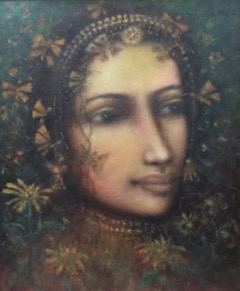
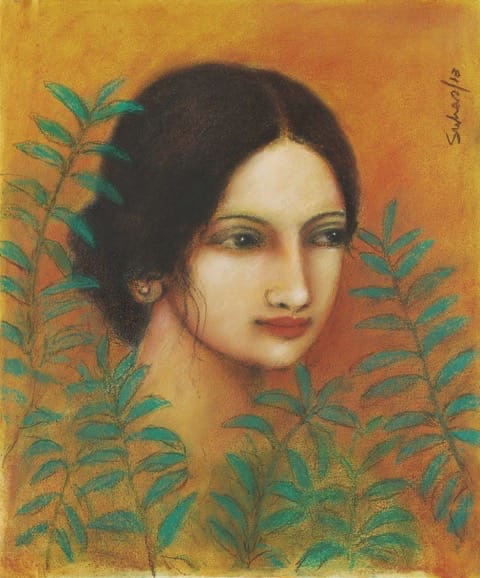
Ratnottama Sengupta journeys with the signature art of Suhas Roy as it transformed in theme, style, and medium
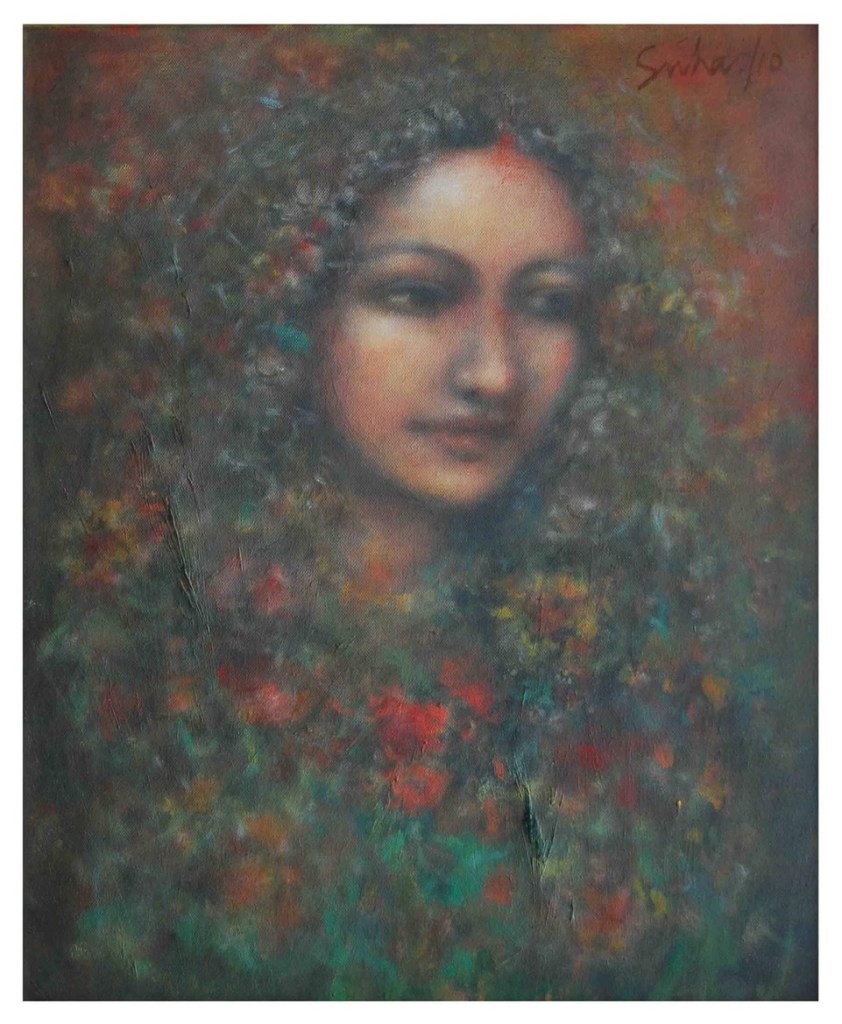
Suhas Roy = Radha.
Correct.
Suhas Roy = Crows.
Right.
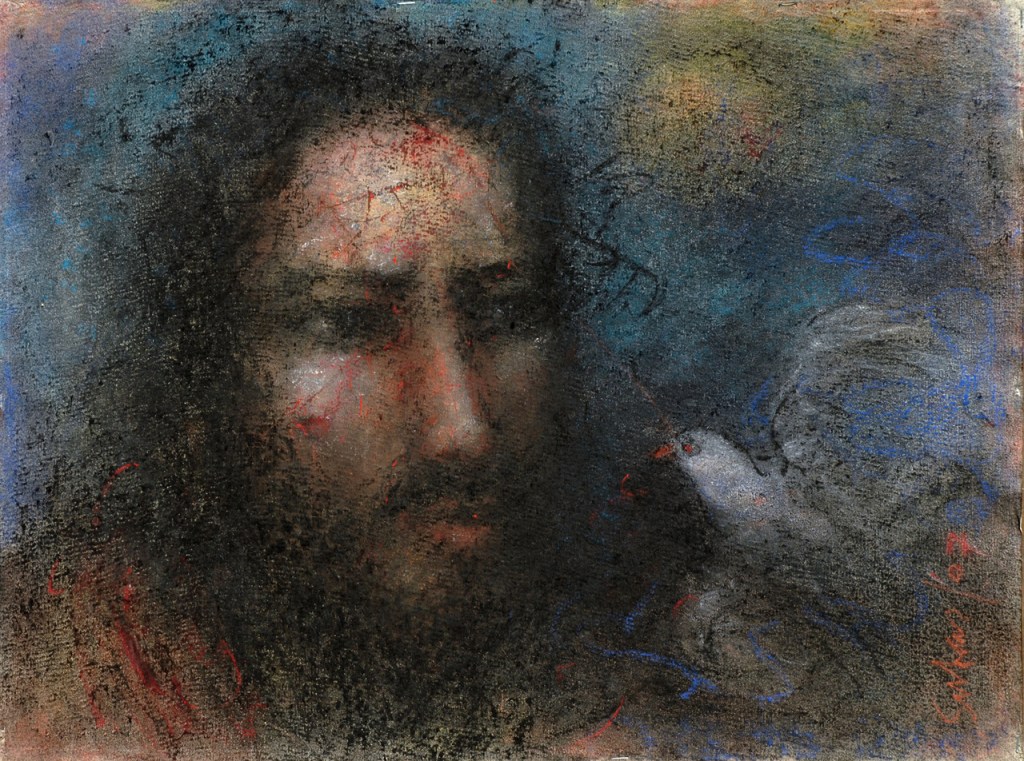
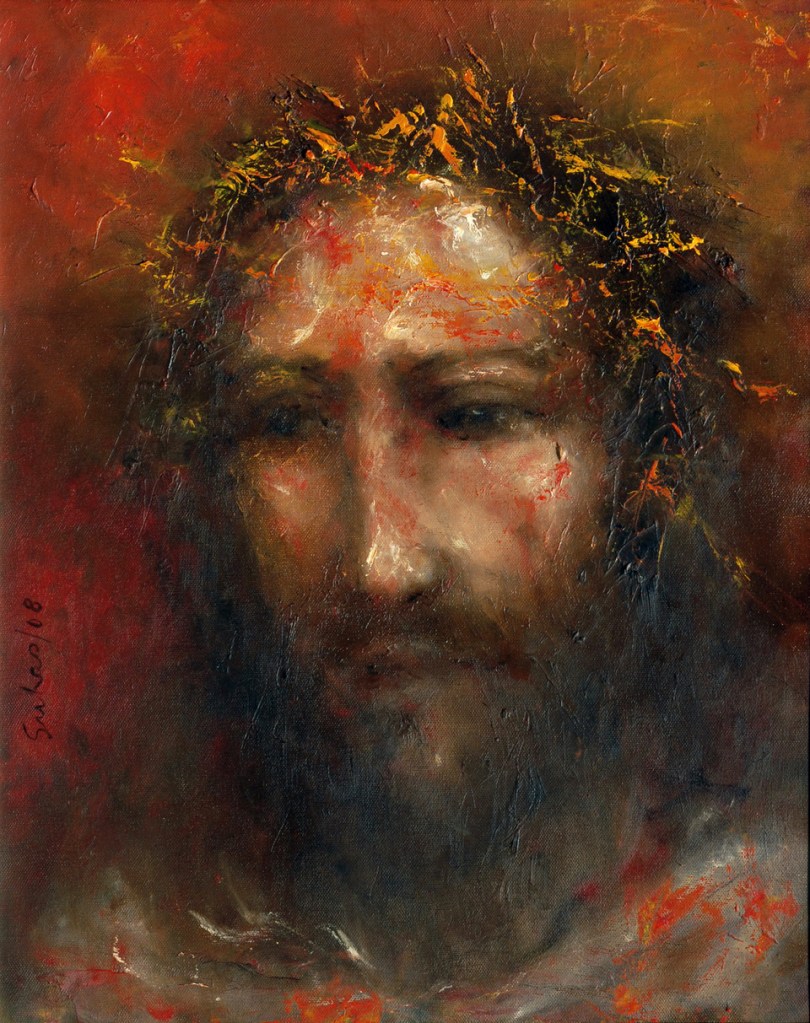
Suhas Roy = Jesus.
So true.
Suhas Roy = Sensuality.
Yes. Witness the Mistress of the Moon.
For each of these Suhas Roy (1936-2016) was chased by galleries and collectors. His works have been widely exhibited and are well documented. Many of them on view at Mumbai’s prestigious Jehangir Art Galley (January 17 to 23, 2023) are not on sale. The intention is to train viewers on the diversity and skilfulness of the much loved artist from Bengal. In short, to hold up the totality of the artist who enriched Contemporary Indian Art with sketches in Western Academic style, graphics, landscapes; with his series on Crow, Jesus, Radha, The Seductress of Khajuraho; with aluminium paint on glass, acrylic on paper, egg tempera on canvas…
So where do we start? Where did he? There’s a story at every turn in the journey, so let’s start at the very beginning.
A little boy in Tejgaon, now in Bangladesh, had lost his father when he was not even two. One Kaji Saheb, who taught geography in the village school and doubled as the art teacher, took the child under his wings. If the boy learnt to outline India on the blackboard, he could also draw papayas and brinjals. And everything he drew scored 10 on 10. His teacher would say, “It seems you’ll grow up to be an artist!”
The boy loved to spend all his hours drawing and fishing. “How will these pleasures serve you in life?” the family elders would admonish him. The youth would smile in reply and go on, eventually to join the Indian Art College, study new methods of printmaking under Somenath Hore and S W Hayter, visit Paris and Florence to study Michelangelo’s David and Pieta…
Suhas Roy
However, Paris post WWII was an eye-opener for artists like Suhas Roy and, a decade before him, for Krishna Reddy, who had graduated from Santiniketan. Both India and Europe had come out of prolonged periods of turmoil. But, poised on the threshold of an independent existence as a sovereign nation, India was looking back to its roots for defining its identity, whereas England and France and Germany – which were eager to get over the bitterness left by their recent history – were looking for a complete break with the past. For Suhas Roy, returning home meant returning to his cultural roots. And Venus emerging from the Water became kin of the image of goddess Lakshmi emerging from the lotus-laden pond closer home.
*
This Indian-ness was reinforced when he joined Santiniketan as a painting teacher. The lush green environs, the ponds and rivulets, the chirping birds and rustic villagers took him back to the childhood haven snatched away by the politics of religion that had culminated in the Partition of the Subcontinent. Suhas Roy, raised in the British Academic mood, with undying admiration for the values of the Italian Renaissance and the visions of the French Classicists, riding the high tide of Modernism, debating whether to go Abstract or Semi-Abstract, started painting landscapes!
Yes, landscapes. Regardless of what the critics said – just as they did for the Bengal Masters – Suhas Roy was not being ‘regressive’. For, he did not paint any particular spot with fidelity to topography – as John Constable did. Instead, his landscapes were an expression of his yearning for a paradise lost: his place of birth. When he moved from Kolkata to Santiniketan, in a reflection of spatial reality the neighbourhood palm trees started putting their heads up in his paintings. His sensitive foliage, the birds and animals and ponds were all in answer to his quest for the luxuriant green he had left behind, across the Radcliffe Line.
“Santiniketan gave me back the opportunity to go fishing as I used to in East Bengal, and I rediscovered the beauty and calming effect of Nature,” he had said to me when I curated the Living Santiniketan exhibition in Delhi of late 1990s. “It came as a relief to me, burdened as I was with the constant thought of ‘What to paint?’ For, Nature constantly changes.” Additionally, he realised that appreciation of beauty is not confined to a class or profession. “Doctors and poets alike love flowers. So, I decided to go back to landscape, taking no note of whether it was in fashion or out of it.”
*
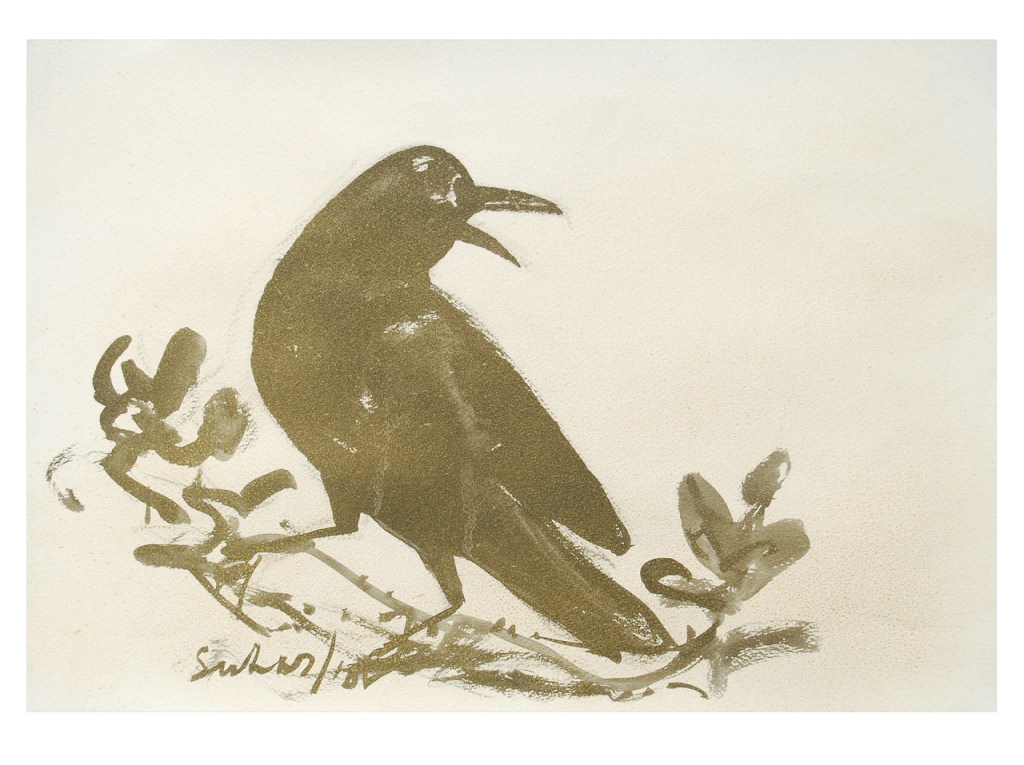
The crow, very much a part of the Bengal landscape, then became his signature in the 1970s. The scavenger was an attraction because of its black feathers. Japanese water-colourist Yokoyama Taikan (1868-1958) — notable for his role in creating the painting technique of Nihonga — had come to Bengal in early 20th century with scholar Okakura Kakuzo (1863-1913) and helped Abanindranath Tagore master the medium. He had done a series of Mount Fuji in black-n-white. Chancing upon that in the Santiniketan library, Suhas was so impressed as to reach for the austere palette. The crow readily lent itself to the scheme. Spraying the canvas with acrylic paint before construing the image in watercolour, Suhas would use a Japanese colour stick to create tones and dimensions. The Far Eastern concept of an object in a wide open space came to be highly appreciated and widely collected – including by philanthropist politician, Karan Singh.
In Indian philosophy and literature, Nature is the Eternal Feminine. That could be why, after ten years of doing landscape, Suhas Roy’s imagination sought out the allied image of tribal girls. It was a natural progression, for women – especially tribal women – have a symbolic if not symbiotic link with trees. Often, he would counterpoise a tree with a woman. Taru[1], he titled one done in an art workshop.
From a woman in a landscape to Radha was just one step away. For an exhibition on Krishna organised by Gallery 88 of Kolkata, Suhas Roy played with the concept of the Blue God being the Ultimate Being. Melding Purush and Prakriti – the Male and the Female forces of the Universe – his canvas sported a nude woman against a dark blue background. The painting, titled ‘Radha’, not only sold for an enviable sum, but it also set in motion an astonishing demand for the image that shows no sign of abating.
Truly he basked in the adulation of resolved collectors, one of whom said, “When I am tossed and tired of problems, I look at your paintings. They act like balms.” Yet, for painting these very ‘balms’ the artist had to hear the criticism that he was feeding the appetite for calendar art. His Radha was a concept no better than the ‘mass produced’ icons ubiquitous in Indian spaces. But the master was far from apologetic. “It is the very definition of icons,” he had pointed out to me one afternoon. “Images of personalities deified by popular imagination, be they mythical, historical or social, are repeated again and again, generation after generation, in different styles and contexts.” If one age worshipped them as bronze figurines and gold paintings, another flaunted them in oleographs and calendars. It has been so with Radha-Krishna, Ram-Sita, Buddha-Jesus, and even with Gandhi-Tagore-Teresa, I realised.
*
Jesus, though, had entered Suhas Roy’s world long before Radha. Sometime in 1969 he had visited Florence to see David. He found the sculpture epitomising masculine beauty “too proportionate”, and wandered into the church next door preserving Dante’s Divine Comedy in parchment. There, in one corner, he saw the last work of Michelangelo – an unfinished Pieta. Such infinite pathos! The artist could not brush it off his memory even after he returned to Calcutta and one day its picture postcard inspired him to paint a Jesus. When he stopped, the canvas was sporting a contemporary pieta – Jesus without the head, his body descending from the heavens.
As a persona, Suhas Roy had deep regards for Jesus. He was, to the Bengali artist, a symbol of forbearance. Perhaps he also saw the serene visage of the Prophet sporting a Crown of Thorns as a reflection of his own self – or was it of his country, that had been crowned with an Independence bloodied by Partition? Somewhere Suhas, a father who in his own lifetime lost both his children to Eternal Sleep, saw Jesus as a redeemer who showed mankind how to bear every suffering and pain that was a mortal’s lot. That is why such palpable love, even when tinged with sorrow, pain or sadness, flows out of His veins. This must have prompted even Vatican to acquire his Jesus in 2006.
Suhas Roy arrived at ‘Khajuraho’ in the mature years of his well lived life. He was intrigued by the carvings on the walls of the temples in central India that have embarrassed some and outraged some. Considered the descendants of the celestial Moon, the Chandela rulers had celebrated love in every expressed formation. Love, the invincible bonding between man and woman, man and man, indeed between man and all living beings, is made explicit here. Surely Suhas Roy was not equating love with lust. Was there a spiritual pursuit layering the physicality of the actions immortalised in stone?
No doubt there was. For Moon has always been equated with romance, love, passion. The artist was exploring the mysticism that wraps the ascetic deity inside the temple. Much like the sculptors of yore, his ‘Seductress’ is a quest for the sublime. If the ancients believed that you must leave all your worldly longings outside the temple door if you seek moksha, deliverance, the contemporary artist continually sought nirvana, redemption from conflict, in the beauty of peace.
*
Rigidity was unknown to Suhas Roy. The changes in his art came spontaneously, and every good result goaded him to go on. He dwelt on a theme only until another creative urge besieged him, be it Khajuraho, the series he titled Mistress of the Moon, or Cappadocia in Turkey. Never shy of experimenting, his foremost concern – always – was meticulous quality. His temperas would have egg yolk with oil and Japanese porcelain, gelatin with resin and tamarind seed. If it held the promise of a finer texture for details, he would use a watercolour brush for oil paintings. For, he would repeat, “Good art will never lose its demand just as diamond will never lose its market.”
For Suhas Roy, the aesthetic and the spiritual were one and the same. And even the hurly-burly of political turmoil had to adhere to his norms of aesthetics. Did Suhas Roy, then, live in an ivory tower away from social realities? No, he insisted, he “never ran away…” Once, on a fishing trip outside Santiniketan, he witnessed dead bodies being fished out of water following a flash flood in Ilam Bazar. Haunted by that image he had painted the Disaster series, depicting landscapes with shrouded bodies. Indeed, when the Naxalite period gave rise to despondency, he was tossed by the political reality of his land. But he prophesized that “every turmoil, be it social or political – including the ongoing one at Singur – would be short-lived.” So, if contemporary art became mere documentation, then that too would be short-lived!
“Only when it transcends the here-and-now can art have lasting value,” maintained the artist even when disturbed by the dark side of humanity. So, though distressed by cruelty, he chose to decry war by showing not blood-spill but the meditative power of peace and sublimity of love. “I focused on what has lasting appeal. Flowers blossom in the same fields that are crushed by battling soldiers. I speak of the war through the Buddha who transcended war.”
This sublime pursuit of Suhas Roy explains the unending appeal of his Seductress, his Radha, his Jesus.
*All the photographs have been sourced by Ratnottama Sengupta
Ratnottama Sengupta, formerly Arts Editor of The Times of India, teaches mass communication and film appreciation, curates film festivals and art exhibitions, and translates and write books. She has been a member of CBFC, served on the National Film Awards jury and has herself won a National Award. Ratnottama Sengupta has the rights to translate her father, Nabendu Ghosh.
.
PLEASE NOTE: ARTICLES CAN ONLY BE REPRODUCED IN OTHER SITES WITH DUE ACKNOWLEDGEMENT TO BORDERLESS JOURNAL
Ratnottama Sengupta travels down the path of nostalgia with her ancestors, her parents, eminent writer, Nabendu Ghosh and his wife, Kanaklata
Nabendu with his children. From right to left: Ratnottama Sengupta, Nabendu Ghosh & Shubhankar Ghosh. Photo provided by Ratnottama Sengupta
Nabadwip Chandra Ghosh of Dhaka was an advocate who had mastered in both, Sanskrit and History. And he was a kirtan[1] singer par excellence. Both these traits have familial roots: His father was a court clerk, his cousin a doctor of those times. And all the males in the Vaishnav family — devotees of Prabhu Jagadbandhu Sundar of Faridpur — were good singers, a talent that was to continue with his sons and grandsons.
It was for his kirtans in particular that P R Das, brother of freedom fighter Chittaranjan Das (1870-1925), asked Nabadwip Chandra to join him as his junior in Patna High Court. The year was 1920. Bihar which was a part of the Bengal Presidency, was steeped in casteism. The Ahirs — Yadavs who tended cattle and sold milk — were exploited by the Bhoomihars, who were Brahmins, and if they retaliated, they were arrested and put in jails. By 1920s, the freedom movement too had gained steam but the political prisoners were also clubbed with the ‘hooligan’ Yadavs. Nabadwip Chandra fought courtroom battles to win this deprived section their political right, and came to be highly respected – a father figure for a large section of people in Bihar.
In fighting those battles Nabadwip realised one thing: the acute need for education among the so called Backward Classes. “Unless a person has education, he or she is not respected and remains vulnerable to exploitation, economic or otherwise,” he maintained. And education is best spread through mothers. Consequently he sought marriage alliances for his sons with daughters of teachers, sisters of lawyers and doctors, and — later — with undergraduates and graduates.
His elder son was married to Kalyani, the daughter of a school teacher. His third son’s wife, IA passed Sundara, was the daughter of a BA-BL – a lawyer in Bhagalpur. His fourth son’s wife, Namita was again the daughter of a teacher from Ranchi — and she was a graduate who was already teaching before she married, and did her MA after her wedding. So had Nabadwip Chandra’s daughter Rani who, after her tying the knot with Mahesh Chandra of Jorhat, completed her schooling and mastered in Economics. Further she taught in JB College, Jorhat and went on to become the vice principal whose students included Tarun Gogoi who rose to hold the high office of the Chief Minister of Assam.
In fact, Nabadwip Chandra’s own wife, Suniti Bala, was the daughter of a minister in the minor royalty of Jessore — a man who won a gold medal as one of the first matriculates of British India. His entire family was keen on education — and Suniti was not only literate, she received formal education at home before she was married at the age of 15 — which was pretty advanced for the first decade of 1900s. All her life, after child bearing, rearing kids, attending to household chores in the kitchen, she would spend her ration of leisure hours reading books and in her later years, telling stories to her grandchildren.
*
Nabadwip and Suniti’s second son Nabendu inherited his parents’ love for letters. And he took it to a much higher level as a writer who carved a place for himself in the history of Bengali literature and of Hindi Cinema. He started writing early, when still in middle school, as he wrote for and co-edited a handwritten magazine. Even as a teenager he would attend Sahitya Sammelans and while in College he got published in sought-after literary magazines.
But Nabendu did not stop with words alone. Along with singing kirtans, a talent he inherited from his father, he trained himself to dance in the mould of Uday Shankar. He would regularly dance and act on stage, in Patna and elsewhere in the state, and subsequently played memorable cameos in Bombay films too. Before he passed away at the full age of 91, he had penned 16 novels, 28 collections of stories, and nearly a hundred screenplays for Bollywood classics.
On January 31, 1944 he married Kanaklata. Sister of advocate Bhupendranath Ghosh from Malda. She turned out to be an architect of human lives. Kanak was born to Chandrakanta Ghosh, a landed gentry who was forward looking enough to will large tracts of agricultural land to his daughters at a time when all they were entitled to was Streedhan — jewellery given at the time of marriage. Still, his wife Dakshayani, who was ‘Karta’ — head of the Hindu joint family — after his death, decided to live a part of her sunset years in Vrindavan, the holy land of Vaishnavs.
Kanaklata had not completed her school years when she was married to Nabendu. But being a doughty soul, the 16-year-old not only read Nayak O Lekhak — Nabendu’s first published novel; she got it critiqued by an academic cousin (who later became a professor) before she consented to the marriage with a man older to her by ten years.
Kanaklata’s own education had to be shelved as she became a mother twice over; lost her first born; faced an uncertain future as Nabendu lost two successive government jobs because of his ‘seditious’ – anti-imperialist — writings; and then Partition uprooted the family that had to leave Bengal and seek livelihood in Bombay’s tinsel town. But, despite her young years, it was she who instilled in her husband the spirit to soldier on with his pen and not succumb to any compromise in his literary efforts.
Kanaklata: Photo Courtesy: Monobina Roy
She herself did not surrender her appetite for formal education to circumstances. Years after her sons and daughter had graduated from universities and she had become a grandmother thrice over, she enrolled in Open Classrooms and got her Master’s certificate in Bengali language.
In the intervening years? Her home provided a platform to umpteen writers, country cousins, sisters, nephews, nieces, even to nobodies. She was there at 2 Pushpa Colony when they wanted to pursue higher education in Bombay, or make a career in the country’s financial capital, or shine in the tinsel town. She helped to negotiate marriage proposals, and she supported in every way she could, those who sought medical intervention by specialists. Simultaneously she secured the financial future of her nuclear family by judiciously building houses and investing in government bonds.
Most of all, Kanaklata was the architect of the lives of her three offspring. Her eldest son Dipankar who, as a child, was legendary in family gatherings for his mischiefs and pranks, was groomed in Shivaji Military Preparatory School. Thereafter she ensured that he trained in Medicine at the Nil Ratan Sarkar Medical College in Kolkata. Once he became a doctor he served with Oxfam during the Bangladesh Liberation War.
This education stood him in good stead when he went to UK and joined the Royal Army Medical Corp that swung into action during skirmishes in Belize, the Carribian country in Central American land, in 1986, and again in Desert Storm, the first Gulf War of 1991. When the Berlin Wall fell in 1990, he was serving in Belsen, where the Nazis had set up a concentration camp sometime in 1943. He went to the minefields of Bosnia, which Princess Diana visited in 1997. In mid-1990s he was stationed in Brunei, where the British Military protects the Sultan; at the turn of the millennium, he was in Cyprus, which the British forces use as base for both military and humanitarian operations in the region that often saw dissonance. What a rich life of experiences in helping the injured and ailing!
At her insistence, Kanaklata’s second son Subhankar was trained in direction at the Film and Television Institute of India. He came out to be Associate Director of Damul (1984). He rose to partner his father in the making of the classic, Trishagni (1989), to direct the National award winning Woh Chhokri (1993). With teleserials like Yugantar, Nishkriti and Dances of India showing on Doordarshan he was a name to reckon with on the National network in its heyday. Then he went on to teach filmmaking in Mumbai’s Whistling Woods and to set up the wing of Filmmaking Studies in the National University of distant Fiji.
*
And Kanaklata raised the youngest of her brood, their only daughter Ratnottama, to cultivate the inheritance from her father, in literature, cinema and the arts. Even before the word global environment gained currency, by demonstrating how not to chuck everything in the bin, she drove home to her daughter the concepts of ‘re-use and re-cycle’. Blessed with green fingers, she shared with neighbours and friends the fruits of her ‘farming’ in the patch of green surrounding their Goan-style bungalow in the Mumbai suburb of Malad – and inculcated in her children the importance of green environs. Cooking, she taught me, was as significant in our everyday life as banking or management of money. And she drilled into me when I was still in school, that “you must earn, even if it’s only a hundred rupees every month. Else, even your own children will not respect you.”
I am always delighted to give this one example of her practical thinking. Soon as her daughter joined college, the home-maker booked a Life Insurance policy for her and directed her to pay the annual premiums. And how could she do it without compromising on her studies? “Simple. Clean the house, sell the waste to the raddiwala; put the ‘income’ in the bank.” At the end of the year, she had the money for the insurance premium and also the experience of banking. This, at a time, when majority of account holders in the bank were men.
Through all this, long before the world started celebrating International Women’s Day, Kanaklata had taught her daughter to be “no less than a son.” For, she ingrained in her, “there is nothing you cannot do if it spells well-being for people in your care…”
Nabendu and his wife, Kanaklata. Photo provided by Ratnottama Sengupta
Ratnottama Sengupta, formerly Arts Editor of The Times of India, teaches mass communication and film appreciation, curates film festivals and art exhibitions, and translates and write books. She has been a member of CBFC, served on the National Film Awards jury and has herself won a National Award.
.
PLEASE NOTE: ARTICLES CAN ONLY BE REPRODUCED IN OTHER SITES WITH DUE ACKNOWLEDGEMENT TO BORDERLESS JOURNAL
The right to exist with freedom to choose is threatened when dictatorial regimes try to erase a culture or linguistic group as we can see in the current conflict that rages between Russia and Ukraine. In 1971, Bangladesh came into existence over a similar issue. The colonials had divided the Indian subcontinent on the basis of religion — not culture. Before this division, Bengal was a whole. In 1905, Tagore had marched against the British directive to divide Bengal and Lord Curzon, the Viceroy of India. In 1911, Bengal was reunited to be slashed again in 1947 and made a part of Pakistan with Urdu as its national language. Bangladesh fought a war to find the right to exist as an entity outside of Pakistan — adopting their favoured language Bangla. Throwing off the yoke of Urdu, Bangladesh came to its own. On 16th December, the battle against cultural hegemony was won with warplanes drawing to a halt.
Celebrating freedom from oppression, we have an article by Fakrul Alam giving the historical background of the struggle. A musing from across the border about the 1971 refugee exodus into India has been written by Ratnottama Sengupta. Asad Latif muses on the need to identify with a culture. We have translations of poetry by Nazrul to add a dash of seasoning.
The Birth of Bangladesh & the University of Dhaka: Professor Fakrul Alam takes us through the Partitions of Bengal which ultimately led to the creation of Bangladesh, with focus on the role of Dhaka University. Click here to read.
Joy Bangla: Memories of 1971: Ratnottama Sengupta recaptures a time when as a teenager she witnessed a war that was fought to retain a culture. Click here to read.
Wherever I look, a golden light
Suffuses a vision of holidays,
The festive sun rises in the woods
Of puja* blossoms drenched in gold rays.
             -- Tagore, Eshechhe Sarat
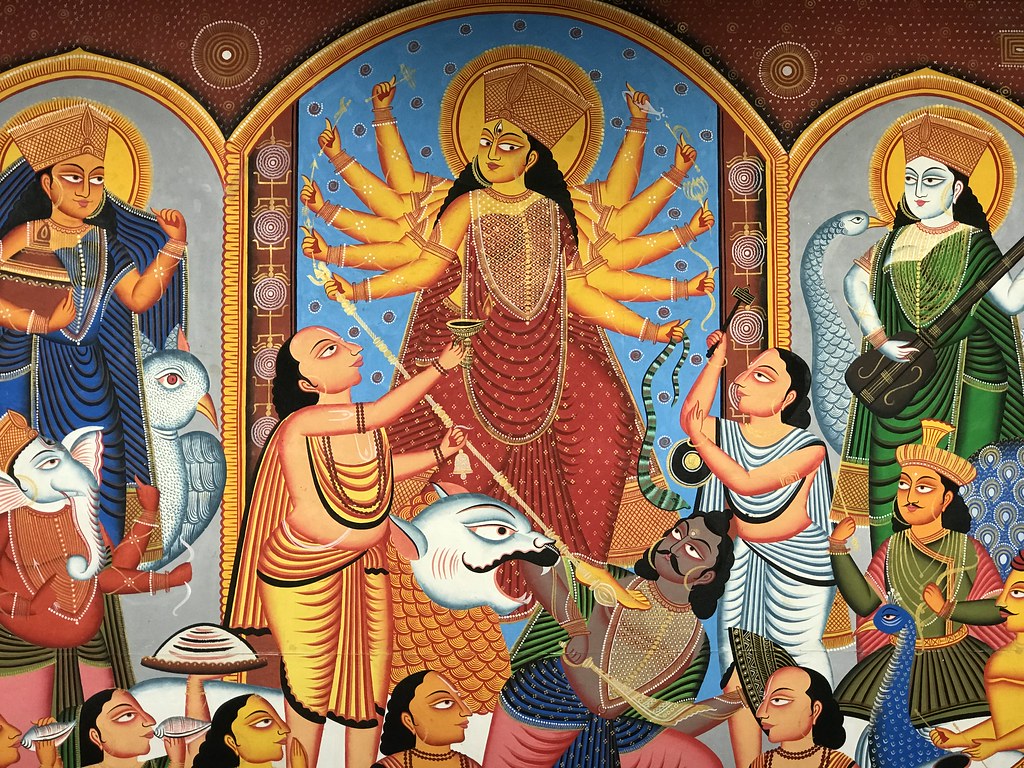
This has been a favourite poem of many who grew up reading Tagore, lines that capture the joy and abandon of the spirit that embodies the celebration of Durga Puja, a festival that many Bengalis deem as important as Christmas, Chinese New Year, Diwali or Eid. It is a major celebration in Bengal and large parts of the sub-continent, though not in all parts.
The reason that reviving the lore associated with this fiesta has become very important is that it centres around women. Given the situation in Iran, where the battle over how to wear headscarves has turned bloody, murderous and violent, celebrating an empowered woman, even if mythical, takes precedence over all else. Mythology has it that Durga was empowered by weapons given to her by various deities, all of who were men, and then, she did what all the male Gods failed to do — destroyed a demon called Mahisasur. Rama too prayed to Durga for victory around this time. And on Bijoya Doushami, the last day of the Durga Puja, some celebrate Rama’s victory over Ravana and call it Dusshera or Dashain.
Taking up this theme of the narratives around Durga Puja and how it has been made into an “Intangible Cultural Heritage of Humanity” by UNESCO is Meenakshi Malhotra’s essay on the festival. Part of the citation reads: “During the event [Durga Puja], the divides of class, religion and ethnicities collapse….”
To bring to you a flavour of the Puja, we have translations of poetry by Tagore describing the season and of a poet who was writing before Rabindranath, Michael Madhusdan Dutt, by Ratnottama Sengupta, verses exploring the grief of parting Durga’s mother expresses as her daughter returns to her husband’s home. This is also a festival of homecoming for, like Durga, those living far from their homes return to the heart of their families. Rituparna Mukherjee has woven a story specially around this aspect of the festival. Journals in Bengal, traditionally, brought out special editions with writings of eminent persons, like Satyajit Ray. We have an interview with a writer who wrote a book on Satyajit Ray, an actor called Barun Chanda, to bring a flavour of that tradition along with the translation of a celebrated contemporary Bengali writer, Prafulla Roy, by Aruna Chakravarti. We hope you enjoy savouring our Durga Puja Special.
Poetry
Eshechhe Sarat(Autumn) , describing the season of Durga Puja, by Tagore has been translated from Bengali by Mitali Chakravarty. Click here to read.
Bijoya Doushumi, a poem on the last day of Durga Puja, by the famous poet, Michael Madhusudan Dutt, has been translated from Bengali by Ratnottama Sengupta. Click here to read.
Homecoming by Rituparna Mukherjee is a poignant story about homecoming during Durga Puja. Click here to read.
Nagmati by Prafulla Roy has been translated from Bengali as Snake Maiden by Aruna Chakravarti. Click here to read.
Interview
Meet Barun Chanda, an actor who started his career as the lead protagonist of a Satyajit Ray film and now is a bi-lingual writer of fiction and more recently, a non-fiction published by Om Books International,Satyajit Ray:The Man Who Knew Too Much in conversation Click here to read.
Since 1991, Ukraine has been celebrating its Independence Day on August 24th. As another year of its independent existence starts, it is unfortunately embroiled in a state of war for the last six months where large parts of its territory have been forcefully conquered by the invading Russian army and cities have faced erasure — razed to the ground by incessant, unceasing, ruthless violence. Many human lives have been lost, more refugees generated and thousands have been wounded or taken prisoners. Families have been torn and natural resources depleted.
This year of all years, it’s most important to commemorate Ukraine’s Independence Day — to reaffirm the recognition given to a region and a culture that binds the residents together into an independent entity. One wonders if dreams as Lennon’s of “all the people/ Livin’ life in peace” could ever come true and have us create a beautiful haven on Earth where wars would be a narrative from the past…
Imagine there's no heaven
It's easy if you try
No hell below us
Above us, only sky

Imagine all the people
Livin' for today
Ah

Imagine there's no countries
It isn't hard to do
Nothing to kill or die for
And no religion, too

Imagine all the people
Livin' life in peace
You....

Imagine all the people
Sharing all the world
You

{Excerpted from "Imagine"(1971) by John Lennon (1940-1980)}
Voicing out in unison against the violence and violations faced by our fellow humans in war zones, we bring to you poetry and prose by fourteen writers from nine different countries, including one who had to flee Ukraine as the shelling shattered Kharkiv.
Poetry
Poetry from across the world in support of peace and voicing concerns over the humanitarian crisis in Ukraine, we have Ukranian Lesya Bakun give us poetry as a war victim, a refugee. Rhys Hughes, Ron Pickett, Michael R Burch, Kirpal Singh, Malachi Edwin Vethamani, Suzanne Kamata, Mini Babu, Sybil Pretious and Mitali Chakravarty have contributed poetry written for the Ukraine crisis. Click here to read “How Many Times Must the Cannonballs Fly…?”
Cry the Sunflower by Ihlwha Choi, who wrote the poem in Korean and translated it for our readers. Click here to read.
‘When will we ever learn? Oh, will we ever learn?’: Ratnottama Sengupta,comments on the situation in Ukraine while dwelling on her memorable meeting with folk legend Pete Seeger, a pacifist, who wrote ‘Where have all the Flowers gone’, based on a folk song from Ukraine. Click here to read.










 Borderless