Categories
Contents

Borderless, February 2025

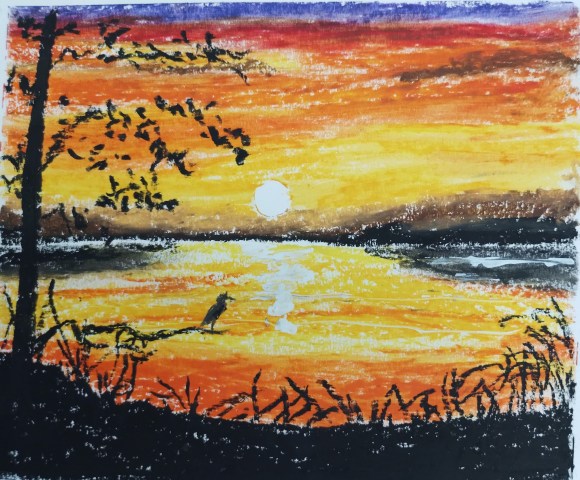
Art by Sohana Manzoor

Editorial

The Kanchejunga Turns Gold … Click here to read.

Translations

Tumi Kon Kanoner Phul by Tagore and Anjali Loho Mor by Nazrul, love songs by the two greats, have been translated from Bengali by Professor Fakrul Alam. Click here to read.

Tumi to Janona Kichu (You seem to know nothing) by Jibananda Das has been translated from Bengali by Professor Fakrul Alam. Click here to read.

Where Lies the End of this Unquenchable Thirst?, a poem by Atta Shad, has been translated from Balochi by Fazal Baloch. Click here to read.

The Bird’s Funeral a poem by Ihlwha Choi  has been translated from Korean by the poet himself. Click here read.

Kheya or Ferry, a poem by Tagore, has been translated from Bengali by Mitali Chakravarty. Click here to read.

Poetry

Click on the names to read the poems

Michael Burch, Shamik Banerjee, John Drudge, Ashok Suri, Cal Freeman, Lokenath Roy, Stuart McFarlane, Thompson Emate, Aditi Dasgupta, George Freek, Gazala Khan, Phil Wood, Srijani Dutta, Luis Cuauhtémoc Berriozábal, Akbar Fida Onoto, Ryan Quinn Flangan, Rhys Hughes

Musings/Slices from Life

Just Another Day?

Farouk Gulsara muses on the need to observe various new year days around the globe and across time. Click here to read.

Of Birthdays and Bondings…

Ratnottama Sengupta reminiscences on her past experiences. Click here to read.

As Flows the Gomti: A Palace of Benevolence

Prithvijeet Sinha takes us for a tour of the Bara Imambara in Lucknow with his words and camera. Click here to read.

The Midwife’s Confession and More…

Aparna Vats shares a narrative around female infanticide centring her story around a BBC interview and an interview with the journalist who unfolded the narrtive. Click here to read.

Juhu

Lokenath Roy gives a vignette of the world famous beach. Click here to read.

Musings of a Copywriter

In The Heroic Fall, Devraj Singh Kalsi explores dacoits and bravery. Click here to read.

Notes from Japan

In Finding Inspiration in Shikoku’s Iya Valley, Suzanne Kamata has written of a source of inspiration for a short story in her recently published book. Click here to read.

Essays

Reminiscences from a Gallery: MF Husian

Dolly Narang recounts how she started a gallery more than four decades ago and talks of her encounter with world renowned artist, MF Husain. Click here to read.

In The Hidden Kingdom of Bhutan

Mohul Bhowmick explores Bhutan with words and his camera. Click here to read.

When a New Year Dawns…

Ratnottama Sengupta writes of the art used in calendars and diaries in India. Click here to read.

What Is Your Name?

Fakrul Alam recalls his mother as a person who aspired for fairplay for women. Click here to read.

Stories

Vasiliki and Nico Go Fishing

Paul Mirabile gives a heartwarming story set in a little Greek island. Click here to read.

Naughty Ravi

Naramsetti Umamaheswararao writes of an awakening. Click here to read.

The Wise One

Snigdha Agrawal gives a touching story around healing from grief. Click here to read.

Conversations

Ratnottama Sengupta converses with Joy Bimal Roy, author of Ramblings of a Bandra Boy. Click here to read.

A discussion on managing cyclones, managing the aftermath and resilience with Bhaksar Parichha, author of Cyclones in Odisha: Landfall, Wreckage, and Resilience. Click here to read.

Book Excerpts

An excerpt from Bhaskar Parichha’s Cyclones in Odisha, Landfall, Wreckage and Resilience. Click here to read.

An excerpt from Joy Bimal Roy’s Ramblings of a Bandra Boy. Click here to read.

Book Reviews

Somdatta Mandal reviews Amitav Ghosh’s Wild Fiction: Essays. Click here to read.

Meenakshi Malhotra reviews Syed Mujtaba Ali’s Shabnam, translated from Bengali by Nazes Afroz. Click here to read.

Bhaskar Parichha reviews Abhay K’s Nalanda: How it Changed the World. Click here to read.

.

Click here to access the Borderless anthology, Monalisa No Longer Smiles

Click here to access Monalisa No Longer Smiles on Amazon International
Categories
Poetry

Poems by Phil Wood

From Public Domain
CLING

The nimble promise of half-light
finds me, while nested sleep claims you
to solitude. I know your curves.

Allegro weaves my waking cloth,
a scimitar of nestlessness,
I have no rest. You clothe in leaves.

The morning forest stretches songs,
not tremulous, no tentative
whisper. They scythe a curve of moon.

A wakeful door, a hem of sun,
the hum of bees, wakefulness splashes
so loud you turn around to me...

Like the curve of the moon,
Like the curve of the hills,
Like leaves you cling to curves,
I stretch to you.

BEACH OBSERVATION

His hands behind his head,
no weight, what with the sky
shuttered and sea at play
along the sleepy bay.

Eyes closed, and yet he knows
this weight, the busy spade
and bucket pouring time
over his feet. He trusts

her even when the worry
of sand comes on his heart.
A father gives his time
no weight. His daughter digs.

Phil Wood was born in Wales. He has worked in statistics, education, shipping, and a biscuit factory.  He enjoys painting and learning German. His writing can be found in various places, most recently in: Byways (Arachne Press Anthology), The Lake, Fevers of the Mind (a collaboration with photographer John Winder), and the Borderless Journal.

.

PLEASE NOTE: ARTICLES CAN ONLY BE REPRODUCED IN OTHER SITES WITH DUE ACKNOWLEDGEMENT TO BORDERLESS JOURNAL

Click here to access the Borderless anthology, Monalisa No Longer Smiles

Click here to access Monalisa No Longer Smiles on Amazon International
Categories
Contents

Borderless April, 2024

Art by Sohana Manzoor

Editorial

April Showers… Click here to read.

Translations

Baraf Pora (Snowfall) by Rabindranath Tagore, gives a glimpse of his first experience of snowfall in Brighton and published in the Tagore family journal, Balak (Children), has been translated from Bengali by Somdatta Mandal. Click here to read.

Himalaya Jatra ( A trip to Himalayas) by Tagore, has been translated from his Jibon Smriti (1911, Reminiscenses) by Somdatta Mandal from Bengali. Click here to read.

Bhumika (Introduction) by Tagore has been translated from Bengali by Ratnottama Sengupta. Click here to read.

The Fire-grinding Quern by Manzur Bismil has been translated from Balochi by Fazal Baloch. Click here to read.

The Tobacco Lover by Ihlwha Choi has been translated from Korean by the poet himself. Click here to read.

Pochishe Boisakh (25th of Baisakh) by Tagore(1922), has been translated from Bengali by Mitali Chakravarty. Click here to read.

Pandies Corner

Songs of Freedom: Dear Me… is an autobiographical narrative by Ilma Khan, translated from Hindustani by Janees. These narrations highlight the ongoing struggle against debilitating rigid boundaries drawn by societal norms, with the support from organisations like Shaktishalini and pandies’. Click here to read.

Poetry

Click on the names to read the poems

Michael Burch, Kirpal Singh, Scott Thomas Outlar, Nusrat Jahan Esa, George Freek, Snigdha Agrawal, Phil Wood, Pramod Rastogi, Stuart McFarlane, Ahmad Al-Khatat, Shamik Banerjee, Ryan Quinn Flanagan, Lisa Sultani, Jenny Middleton, Kumar Bhatt, Rhys Hughes

Poets, Poetry & Rhys Hughes

In The Desk, Rhys Hughes writes of his writerly needs with a speck of humour. Click here to read.

Musings/Slices from Life

Heatwave & Tagore

Ratnottama Sengupta relates songs of Tagore to the recent heatwave scorching Kolkata. Click here to read.

The Older I get, the More Youthful Feels Tagore

Asad Latif gives a paean in prose to the evergreen lyrics of Tagore. Click here to read.

No Film? No Problem

Ravi Shankar takes us through a journey of cameras and photography, starting with black and white films. Click here to read.

Musings of a Copywriter

In Witches and Crafts: A Spook’s Tale, Devraj Singh Kalsi finds a ghostly witch in his library. Click here to read.

Notes from Japan

In Of Peace and Cheese, Suzanne Kamata gives us a tongue in cheek glimpse of photo-modelling mores. Click here to read.

Essays

Discovering Rabindranath and My Own Self

Professor Fakrul Alam muses on the impact of Tagore in his life. Click here to read.

The Lyric Temper

Jared Carter explores the creative soul of poets through varied times and cultures. Click here to read.

Bengaliness and Recent Trends in Indian English Poetry: Some Random Thoughts

Somdatta Mandal browses over multiple Bengali poets who write in English. Click here to read.

Stories

Hope is the Waking Dream of a Man

Shevlin Sebastian gives a vignette of life of an artist in Mumbai. Click here to read.

Viceregal Lodge

Lakshmi Kannan explores patriarchal mindsets. Click here to read.

The Thirteen-Year Old Pyromaniac

Paul Mirabile gives a gripping tale about a young pyromaniac. Click here to read.

Conversation

Ratnottama Sengupta in conversation about Kitareba, a contemporary dance performance on immigrants, with Sudarshan Chakravorty, a choreographer, and founder of the Sapphire Dance Company. Click here to read.

Book Excerpts

An excerpt from Jessica Mudditt’s Once Around the Sun – From Cambodia to Tibet. Click here to read.

An excerpt from Bhaskar Parichha’s Biju Patnaik: The Rainmaker of Opposition Politics. Click here to read.

Book Reviews

Meenakshi Malhotra reviews Mahasweta Devi: Writer, Activist, Visionary, edited by Radha Chakravarty. Click here to read.

Basudhara Roy reviews Out of Sri Lanka: Tamil, Sinhala and English Poetry from Sri Lanka and its Diasporas, edited by Vidyan Ravinthiran, Seni Seneviratne, Shash Trevett. Click here to read.

Swagata Chatterjee reviews Sanjukta Dasgupta’s Ekalavya Speaks. Click here to read.

Bhaskar Parichha reviews Bhang Journeys: Stories, Histories, Trips and Travels by Akshaya Bahibala. Click here to read.

.

Click here to access the Borderless anthology, Monalisa No Longer Smiles

Click here to access Monalisa No Longer Smiles on Amazon International

Categories
Editorial

April Showers

Whan that Aprill with his shoures soote
The droghte of March hath perced to the roote,
….
Thanne longen folk to goon on pilgrimages.

— Prologue, The Canterbury Tales, Geoffrey Chaucer (1342-1400)

Centuries ago, April was associated with spring induced travel… just as pilgrims set out on a journey in Chaucer’s Canterbury Tales. Some of the journeys, like to Mecca, become a part of religious lore. And some just add to the joie de vivre of festivities during different festivals that punctuate much of Asia during this time — Pohela Boisakh (Bengali), Songkran (Thai), Navavarsha (Nepali), Ugadi (Indian), Vaisakhi (Indian), Aluth Avurudda (Sri Lankan) and many more.

A hundred years ago, in April 1924, Tagore had also set out to journey across the oceans to China — a trip which, perhaps, led to the setting up of Cheena Bhavan in Vishwa Bharati. Recently, Professor Uma Dasgupta in a presentation stated that Tagore’s Nobel prize winning Gitanjali, and also a collection called The Crescent Moon (1913), had been translated to Chinese in 1923 itself… He was renowned within China even before he ventured there. His work had been critically acclaimed in literary journals within the country. That arts connect in an attempt to override divides drawn by politics is well embodied in Tagore’s work as an NGO and as a writer. He drew from all cultures, Western and Eastern, to try and get the best together to serve humankind, closing gaps borne of human constructs. This spirit throbbed in his work and his words. Both towered beyond politics or any divisive constructs and wept with the pain of human suffering.

This issue features translations of Tagore’s writings from his childhood — both done by professor Somdatta Mandal — his first trip with his father to the Himalayas and his first experience of snow in Brighton. We have a transcreation of some of his lyrics by Ratnottama Sengupta. The translation of his birthday poem to himself — Pochishe Boisakh (his date of birth in the Bengali calendar) along with more renditions in English of Korean poetry by Ihlwha Choi and Manzur Bismil’s powerful poetry from Balochi by Fazal Baloch, add richness to our oeuvre. Bismil’s poetry is an ode to the people — a paean to their struggle. It would seem from all the translations that if poets and writers had their way, the world would be filled with love and kindness.

Yet, the world still thunders with wars, with divides — perhaps, there will come a time when soldiers will down their weapons and embrace with love for, they do not fight for themselves but for causes borne of artificial human divides. It is difficult to greet people on any festival or new year, knowing there are parts  of the world where people cannot celebrate for they have no food, no water, no electricity, no homes and no lives… for many have died for a cause that has been created not by them as individuals but by those who are guided solely by their hankering for power and money, which are again human constructs. Beyond these constructs there is a reality that grows out of acceptance and love, the power that creates humanity, the Earth and the skies…

Exploring the world beyond these constructs are poems by Scott Thomas Outlar, Nusrat Jahan Esa and Shamik Banerjee, who spins out an aubade to Kanchenjunga extolling the magnificence of a construct that is beyond the human domain.  Michael Burch brings in the theme of evolution and adaptation — the survival of the fittest. We have colours of life woven into our issue with poetry from Ryan Quinn Flangan, Kirpal Singh, George Freek, Stuart McFarlane, Lisa Sultani, Jenny Middleton, Phil Wood, Kumar Bhatt, Snigdha Agrawal and more. Rhys Hughes adds a zest of humour as he continues to explore signs and names with poetry and, in his column, he has written to extoll the virtues of a writing desk!

Humour is brought into non-fiction by Devraj Singh Kalsi’s narrative about being haunted by an ancient British ghost in Kolkata! Suzanne Kamata adds to the lightness while dwelling on modelling for photographs in the Japanese way. Ravi Shankar plunges into the history of photography while musing on black and white photographs from the past.

Tagore again seeps into non-fiction with Professor Fakrul Alam and Asad Latif telling us what the visionary means to the Bengali psyche. Starting with precursors of Tagore, like Michael Madhusudan Dutt, and post-him, Sarojini Naidu, Mandal has shared an essay on Bengaliness in contemporary poetry written by those born to the culture. Jared Carter has given discussed ‘the lyric temper’ in poetry — a wonderful empathetic recap of what it takes to write poetry. Exploring perspectives of multiple greats, like Yeats, Keats, George Santyana, Fitzgerald, Carter states, “Genuine lyricism comes only after the self has been quieted.”

Sengupta has conversed with a dance choreographer, Sudershan Chakravorty, who has been composing to create an awareness about the dilemmas faced by migrants. An autobiographical narrative in Hindustani from Ilma Khan, translated by Janees, shows the resilience of the human spirit against oppressive social norms. Our fiction has stories from Lakshmi Kannan and Shevlin Sebastian urging us to take a relook at social norms that install biases and hatred, while Paul Mirabile journeys into the realm of fantasy with his strange story about a boy obsessed with pyromania.

We carry excerpts from journalistic books by Jessica Muddit, Once Around the Sun: From Cambodia to Tibet, and by Bhaskar Parichha, Biju Patnaik: The Rainmaker of Opposition Politics.  Parichha has also reviewed for us an interesting book by Akshaya Bahibala, called Bhang Journeys: Stories, Histories, Trips and Travels. Basudhara Roy has explored migrant poetry in Out of Sri Lanka: Tamil, Sinhala and English Poetry from Sri Lanka and its Diasporas, edited by Vidyan Ravinthiran, Seni Seneviratne, Shash Trevett. Meenakshi Malhotra has discussed the volume brought out by Radha Chakravarty on the legendary Mahasweta Devi — Mahasweta Devi: Writer, Activist, Visionary. Meenakshi concludes her review contending:

“It is an ironical reflection on our times that a prolific and much awarded Indian writer– perhaps deserving of the Nobel prize — should be excised from the university syllabus of a central university. This move has, perhaps paradoxically, elicited even more interest in Mahasweta Devi’s work and has also consolidated her reputation as a mascot, a symbol of resistance to state violence. A timely intervention, this volume proves yet again that a great writer, in responding to local, regional, environmental ethical concerns sensitively, transcends his/her immediate context to acquire global and universal significance.”

There is more content than I mention here. Do pause by our current issue to take a look.

I would hugely like to thank the Borderless team for their unceasing support, and especially Sohana Manzoor, also for her fantastic art. Heartfelt thanks to all our wonderful writers and our readers. We exist because you all are — ubuntu.

Hope you have a wonderful month. Here’s wishing you all wonderful new years and festivals in March-April — Easter, Eid and the new years that stretch across Asian cultures.

Looking forward and hoping for peace and goodwill.

Mitali Chakravarty

borderlessjournal.com

.

Click here to access the content page for the April 2024 Issue.

.

READ THE LATEST UPDATES ON THE FIRST BORDERLESS ANTHOLOGY, MONALISA NO LONGER SMILES, BY CLICKING ON THIS LINK.

Categories
Poetry

Poetry by Phil Wood


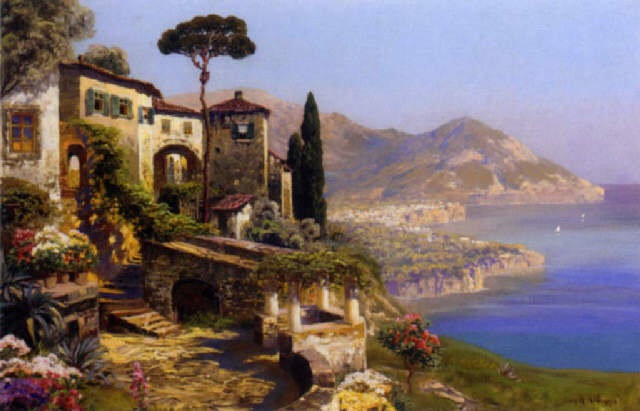
Sorrento (italy) by Alois Arnegger (1879–1967)
SORRENTO 

I gaze across the piazza --
you're lounging with our daughters
who are sipping limoncello

A wall lizard loiters in dimming light --
distracted by your yellow blouse
it ignores the pulse of moths

I pause too, not wanting the intermezzo
to end with a Ciao --
I linger under the lemon tree's shade

CWTCH

Our cosy rooms do not become timeless,
removing clocks is just a childish gesture.

This sharing space – a spicy spaghetti
in bed, a bubbly bath - both knowing pleasure

adds up a cost. But cuddling on the settee,
the room unmoors with cartoon repeats.

A wine, no half-life measure: happiness
will breathe carefree, no careless cough defeats.

KEATS

reading
rooted in mind
and tasting ripe berries
the oozing winking scent
window open
writing

Phil Wood was born in Wales. He enjoys chess and learning German. His writing can be found in various places, including : The Seventh Quarry, Borderless, and Arachne Press (Byways Anthology).

.

PLEASE NOTE: ARTICLES CAN ONLY BE REPRODUCED IN OTHER SITES WITH DUE ACKNOWLEDGEMENT TO BORDERLESS JOURNAL

Click here to access the Borderless anthology, Monalisa No Longer Smiles

Click here to access Monalisa No Longer Smiles on Kindle Amazon International

Categories
Contents

Borderless, April 2023

Painting by Sohana Manzoor

Editorial

Can Love Change the World?… Click here to read.

Conversation

Keith Lyons interviews Asian Australian poet Adam Aitken about cross-cultural identity, and the challenges of travel, writing, and belonging. Click here to read.

Translations

Gandhiji, a short story by Nabendu Ghosh, has been translated from Bengali by Ratnottama Sengupta. Click here to read.

Khaira, the Blind, a story by Nadir Ali, has been translated from Punjabi by Amna Ali. Click here to read.

Clothes of Spirits, a folktale, has been translated from Balochi by Fazal Baloch. Click here to read.

Many Splendored Love, four poems by Masud Khan, have been translated from Bengali by Fakrul Alam. Click here to read.

Birds are Alive, has been written and translated from Korean by Ihlwha Choi. Click here to read.

Nobo Borshe or on New Year, Tagore’s poem on the Bengali New Year, has been translated from Bengali by Mitali Chakravarty for the occasion this April. Click here to read.

Poetry

Click on the names to read the poems

Michael R Burch, Vipanjeet Kaur, William Miller, Sutputra Radheye, Jim Landwehr, Namrata Varadharajan, Phil Wood, Akshada Shrotryia, Richard Stevenson, Abdul Jamil Urfi, Scott Thomas Outlar, Anasuya Bhar, George Freek, Malachi Edwin Vethamani, Ryan Quinn Flanagan, Rhys Hughes

Poets, Poetry & Rhys Hughes

In My Love for RK Narayan, Rhys Hughes discusses the novels by ths legendary writer from India. Click here to read.

Musings/Slices from Life

Magic of the Mahatma & Nabendu

Ratnottama Sengupta shows the impact of Gandhi and his call for non-violence on Nabendu Ghosh as she continues to emote over his message of Ahimsa and call for peace amidst rioting. Click here to read.

Kindred Spirits

Anjali V Raj writes of an endearing friendship. Click here to read.

Colorado comes to Eden

Meredith Stephens sails to meet more people in Eden. Click here to read.

Us vs Them

Shivani Agarwal talks of sharing the planet with all creatures great and small. Click here to read.

Musings of a Copywriter

In To Be or Not to Be, Devraj Singh Kalsi muses on food fads. Click here to read.

Notes from Japan

In Olives and Art in the Inland Sea, Suzanne Kamata explores the island of Sodoshima. Click here to read.

Essays

Charlie and I: My Visit to Corsier-sur-Vevey

Nirupama Kotru talks of her trip to Charlie Chaplin’s home and writes about the legendary actor. Click here to read.

The Wonderland of Pokhara

Ravi Shankar explores, Pokhara, a scenic town in Nepal. Click here to read.

Stories

Sparks

Brindley Hallam Dennis captures the passing of an era. Click here to read.

The Moulting

PG Thomas brings us a glimpse of Kerala — the past merging to create a new present. Click here to read.

The Book Hunter

Paul Mirabile gives a tale about a strange obsession. Click here to read.

Book Excerpts

An excerpt from What Will People Say?: A Novel by Mitra Phukan. Click here to read.

An excerpt from The Wistful Wanderings of Perceval Pitthelm by Rhys Hughes. Click here to read.

Book Reviews

Somdatta Mandal reviews Chitra Banerjee Divakaruni’s Independence. Click here to read.

Rakhi Dalal reviews Song of the Golden Sparrow – A Novel History of Free India by Nilanjan P. Choudhary. Click here to read.

Basudhara Roy reviews Ukiyo-e Days… Haiku Moments by Bina Sarkar Ellias. Click here to read.

Bhaskar Parichha reviews Japanese Management, Indian Resistance: The Struggles of the Maruti Suzuki Workers by Anjali Deshpande and Nandita Haksar. Click here to read.

.

.

Click here to access the Borderless anthology, Monalisa No Longer Smiles

Click here to access Monalisa No Longer Smiles on Kindle Amazon International

Click here to learn more about our first anthology, Monalisa No Longer Smiles

Categories
Poetry

Unbinding by Phil Wood

Courtesy: Creative Commons
We took to not talking in the easy hours
of walking. Worry days, study days, days
like wasps that never pause, that made life sour
with fret and flit... out of those woods we came

to fallow fields loitered with restless rooks,
then through a brambled kissing gate and found
a bridge, and from the rushing river leapt
a trout with appetite, its nature bound

in blood to hide and seek. We wandered back
along a pockmarked lane, tufted with grass,
hedge-tight. An unmapped night, the sky crow-black,
no moon disclosed. Not talking, just walking.

Phil Wood was born in Wales. He studied English Literature at Aberystwyth University. He has worked in statistics, education, shipping, and a biscuit factory. He enjoys watercolour painting, bird watching, and chess. His writing can be found in various places, including recently : London Grip, Noon Journal of the Short Poem, Borderless and a featured collaboration with photographer John Winder at Abergavenny Small Press.

PLEASE NOTE: ARTICLES CAN ONLY BE REPRODUCED IN OTHER SITES WITH DUE ACKNOWLEDGEMENT TO BORDERLESS JOURNAL

Click here to access the Borderless anthology, Monalisa No Longer Smiles

Click here to access Monalisa No Longer Smiles on Kindle Amazon International

Categories
Contents

Borderless, December 2022

Art by Sohana Manzoor

Editorial

It’s Only Hope… Click here to read.

Conversations

Shantanu Ray Chaudhari converses with writer Gajra Kottary, a well-known writer of Indian TV series, novels and stories. Click here to read.

A discussion on Samaresh Bose’s In Search of the Pitcher of Nectar, a book that takes us to the heart of the Kumbh Mela, a festival recognised by the UNESCO as an Intangible Cultural Heritage, with the translator, Nirmal Kanti Bhattacharjee. Click here to read.

Translations

Nazrul’s Why Provide Thorns has been translated by Professor Fakrul Alam. Click here to read.

Mercy, a story be P. F. Mathews, has been translated from Malayalam by Ram Anantharaman. Click here to read.

Even A Simurgh Cannot Change Destiny, a Balochi folktale translated and retold by Fazal Baloch. Click here to read.

Confessions, a poem written by and translated from Korean by Ihlwha Choi. Click here to read.

The Sun on the First Day, a translation of Tagore’s Prothom Diner Shurjo by Mitali Chakravarty. Click here to read.

Pandies’ Corner

Songs of Freedom: Vikalangta or Disability is an autobiographical narrative by Kajal, translated from Hindustani by Janees. These narrations highlight the ongoing struggle against debilitating rigid boundaries drawn by societal norms, with the support from organisations like Shaktishalini and Pandies. Click here to read.

Poetry

Click on the names to read

Jared Carter, Sukrita Paul Kumar, Rhys Hughes, Asad Latif, Luis Cuauhtémoc Berriozábal, Santosh Bakaya, Phil Wood, Sharanya B, George Freek, Saibal Chatterjee, Jonathan Chan, Sutputra Radheye, Shambhu Nath Banerjee, Michael Burch

Poets, Poetry & Rhys Hughes

In Some Differences Between Wales and India, Rhys Hughes makes some hilarious comparisons. Click here to read.

Musings/ Slices from Life

Near-Life Experiences: Hiking in New Zealand

Keith Lyons escapes city life to find his happy place while hiking in New Zealand. Click here to read.

The Seven Grandfather Teachings

Saeed Ibrahim introduces us to Native Indian lore from Canada and shows its relevance in the current times. Click here to read.

Dismasted in Bass Strait

Meredith Stephens takes us for a sailing adventure with photographs in the Southern Hemisphere. Click here to read.

Musings of a Copywriter

In Of Mice & Men, Devraj Singh Kalsi talks of his encounters with rats. Click here to read.

Notes from Japan

In A Clean Start, Suzanne Kamata tells us how the Japanese usher in a new year. Click here to read.

Stories

Annapurna Bhavan

Lakshmi Kannan closes class divides in Chennai over a meal. Click here to read.

Two Faces of a Mirror

Tulip Chowdhury gives us a story set in a Bangladeshi village. Click here to read.

The Slip

Sushma R Doshi takes a look at the pandemic against an Indian middle-class set up. Click here to read.

Till Life Do Us Part

Devraj Singh Kalsi explores a strange new trend. Click here to read.

Essays

Orangutans & a School at Sarawak

Christina Yin, a conservationist, travels to Borneo in an attempt to create awareness for conserving the Orangutan. Click here to read.

Taiping of the Raj Era

Ravi Shankar explores Taiping in Malaysia with a camera and words. Click here to read.

Ivory Ivy & Stephen Dedalus

Paul Mirabile explores James Joyce’s Stephen Dedalus and his passion for words keeping in mind the hundred year old Ulysees & the even older, A Portrait of the Artists as a Young Man. Click here to read.

Book Excerpts

An excerpt from Radha Chakravarty’s translation of Tagore’s Farewell Song. Click here to read.

An excerpt or two short narratives from Rhys Hughes’ Yule Do Nicley. Click here to read.

Book Reviews

Somdatta Mandal reviews The Shaping of Modern Calcutta: The Lottery Committee Years, 1817 – 1830 by Ranabir Ray Chaudhury. Click here to read.

Rakhi Dalal reviews Freny Manecksha’s Flaming Forest, Wounded Valley: Stories from Bastar and Kashmir. Click here to read.

Basudhara Roy reviews Manoranjan Byapari’s How I Became a Writer: An Autobiography of a Dalit. Click here to read.

Bhaskar Parichha reviews In Search of the Divine: Living Histories of Sufism in India by Rana Safvi. Click here to read.

.

Click here to access the Borderless anthology, Monalisa No Longer Smiles

You are all welcome to the book talks of our first anthology

Categories
Poetry

Epistle to Ms Austen by Phil Wood

Phil Wood
EPISTLE TO MS AUSTEN 

Dear Jane, although I do not have your mind,
A mind that makes a moral choice so clear,
Now clear enough for me to right my wrongs,
The wrongs that take refuge in daily muddles,
For muddles marinade in solitude;
Yet solitude gives thought for humankind,
A humankind in which we both belong,
Belong because we live not for our puzzles,
Those puzzles are a solace only for fears,
For fears will offer no solicitude.
I learn solicitude from you dear Jane.

Phil Wood was born in Wales. He studied English Literature at Aberystwyth University. His writing can be found in various places, including recently : Ink Sweat and Tears, Noon Journal of the Short Poem, and a collaboration with John Winder at Abergavenny Small Press.

PLEASE NOTE: ARTICLES CAN ONLY BE REPRODUCED IN OTHER SITES WITH DUE ACKNOWLEDGEMENT TO BORDERLESS JOURNAL

Click here to access the Borderless anthology, Monalisa No Longer Smiles