Categories
celebrations

Festivals of Humanity

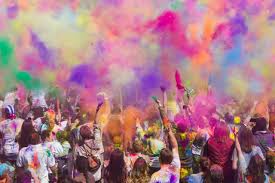
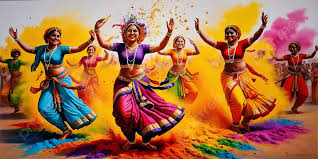
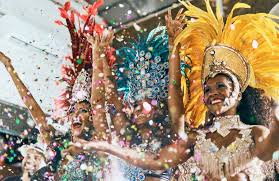
Festivals are affirmations of joy and love that bind humanity with their sense of hope even in a world torn by violence and climate change. As the end of the year approaches, we invite you to savour flavours of festivals past and, a few, yet to come, before the cycle starts again in the new year. The colours of celebrations are vibrant and varied as shades of nature or the skies.

We have new years spread out over the year, starting with January, moving on to the Chinese New Year around February, the Bengali new year in April to festivals of environment, light, darkness as in Wiccan beliefs, Tagore’s birth, more conventional ones like Deepavali, Eid, Durga Puja and Christmas. People celebrate in different ways and for different reasons. What we have also gathered is not only the joie de vivre but also the sadness people feel when celebrations are muted whether due to the pandemic, wars or for social reasons. In some cases, we indulge in excesses with funny results! And there are of course festivals of humanity … as celebrated by the bauls — the singing mendicants of Bengal — who only recognise the religion of love, compassion and kindness. 

Enjoy our fare! 

Poetry

 Aaji Shubhodine Pitaar Bhabone or On This Auspicious Day, a Brahmo Hymn by Tagore. Click here to read the translation by Mitali Chakravarty.

Potpouri by Isa Kamari familiarises us with Malay-Singaporean traditions that are observed during festivals. Click here to read.

Eid Poems by Afsar Mohammad. Click here to read.

 Ramakanta Rath’s Sri Radha celebrating the love of Radha and Krishna have been translated from Odiya by the late poet himself, have been excerpted from his full length translation. Click here to read.

Bijoya Doushumi, a poem on the last day of Durga Puja, by the famous poet, Michael Madhusudan Dutt, has been translated from Bengali by Ratnottama Sengupta. Click here to read.

Groundhog Day by John Grey. Click here to read. 

Christmas Cheer by Malachi Edwin Vethamani. Click here to read.

Christmas Poems by Rhys Hughes. Click here to read.

Poem on Christ by  Rabindranath Tagore: Verses excerpted from  ‘The Child‘, a poem originally written in English by the poet. Click here to read.

 Purano Sei Diner Kotha or ‘Can old days ever be forgot?’ by Tagore, based on Robert Burn’s lyrics, Auld Lang Syne. Click here to read the translation by Mitali Chakravarty.

Prose


 A Clean StartSuzanne Kamata tells us how the Japanese usher in a new year. Click here to read.

Shanghai in Jakarta: Eshana Sarah Singh takes us to Chinese New Year celebrations in Djakarta. Click here to read.

Cherry Blossom Forecast: Suzanne Kamata brings the Japanese ritual of cherry blossom viewing to our pages with her camera and words. Click here to read.

Pohela Boisakh: A Cultural Fiesta: Sohana Manzoor shares the Bengali New Year celebrations in Bangladesh with interesting history and traditions that mingle beyond the borders. Click here to read.

The New Year’s BoonDevraj Singh gives a glimpse into the projection of a new normal created by God. Click here to read.

A Musical Soiree: Snigdha Agrawal recalls how their family celebrated Tagore’s birth anniversary. Click here to read.

Not Everyone is Invited to a Child’s Haircut Ceremony: Odbayar Dorje muses on Mongolian traditions. Clickhere to read.

A Golden Memory of Green Day in JapanSuzanne Kamata tells us of a festival where she planted a tree in the presence of the Japanese royalty. Click here to read.

An Alien on the Altar! Snigdha Agrawal writes of how a dog and lizard add zest to Janmashtami (Krishna’s birthday) festivities with a dollop of humour. Click here to read

Memories of Durga Puja : Fakrul Alam recalls the festivities of Durga Puja in Dhaka during his childhood. Click here to read.

From Bombay to Kolkata — the Dhaaks of Durga : Ratnottama Sengupta explores a UNESCO Intangible Cultural Heritage Festival. Click here to read.

KL Twin Towers near Kolkata?: Devraj Singh Kalsi visits the colours of a marquee hosting the Durga Puja season with its spirit of inclusivity.  Click here to read.

The Oral Traditions of Bengal: Story and Song: Aruna Chakravarti describes the syncretic culture of Bengal through its folk music and oral traditions. Click here to read.

From Diana to ‘Dayaan’: Rajorshi Patronobis talks of Wiccan lore. Click here to read.
Dim Memories of the Festival of Lights: Farouk Gulsara takes a nostalgic trip to Deepavali celebrations in Malaysia. Click here to read. 

When Nectar Turns Poisonous!: Farouk Gulsara looks at social norms around festive eating. Click here to read.

 Hold the roast turkey please Santa: Celebrating the festive season off-season with Keith Lyons from New Zealand, where summer solstice and Christmas fall around the same time. Click here to read.

 Indian Christmas: Essays, MemoirsHymns, an anthology edited by Jerry Pinto and Madhulika Liddle, has been reviewed by Somdatta Mandal. Click here to read.

 I Went to KeralaRhys Hughes treads a humorous path bringing to us a mixed narrative of Christmas on bicycles . Click here to read.

The Bauls of Bengal: Aruna Chakravarti writes of wandering minstrels called bauls and the impact they had on Tagore. Click here to read.
Categories
Contents

Borderless, November 2025

Art by Sohana Manzoor

Editorial

Spring in Winter?… Click here to read.

Translations

Nazrul’s Musafir, Mochh re Aankhi Jol (O wayfarer, wipe your tears) has been translated from Bengali by Professor Fakrul Alam. Click here to read.

Four of his own Malay poems have been translated by Isa Kamari. Click here to read.

Five short poems by Munir Momin have been translated from Balochi by Fazal Baloch. Click here to read.

Five poems by Rohini K.Mukherjee have been translated from Odia by Snehprava Das. Click here to read.

S.Ramakrishnan’s story, Steps of Conscience, has been translated from Tamil by B.Chandramouli. Click here to read.

Tagore’s poem, Sheeth or Winter, has been translated from Bengali by Mitali Chakravarty. Click here to read.

Poetry

Click on the names to read the poems

Ryan Quinn Flanagan, Usha Kishore, Joseph C. Ogbonna, Debadrita Paul, John Valentine, Saranyan BV, Ron Pickett, Shivani Shrivastav, George Freek, Snehaprava Das, William Doreski, Mohit Saini, Rex Tan, John Grey, Raiyan Rashky, Luis Cuauhtémoc Berriozábal

Poets, Poetry & Rhys Hughes

In Nomads of the Bone, Rhys Hughes shares an epic poem. Click here to read.

Musings/Slices from Life

When Nectar Turns Poisonous!

Farouk Gulsara looks at social norms around festive eating. Click here to read.

On a Dark Autumnal Evening

Ahmad Rayees muses on Kashmir and its inhabitants. Click here to read.

The Final Voyage

Meredith Stephens writes of her experience of a disaster while docking their boat along the Australian coastline. Click here to read.

Embracing the Earth and Sky…

Prithvijeet Sinha takes us to the tomb of Saadat Ali Khan in Lucknow. Click here to read.

Musings of a Copywriter

In A Fruit Seller in My Life, Devraj Singh Kalsi explores the marketing skills of his fruit seller a pinch of humour. Click here to read.

Notes from Japan

In Return to Naoshima, Suzanne Kamata takes us to an island museum. Click here to read.

Essays

The Trouble with Cioran

Satyarth Pandita introduces us to Emil Cioran, a twentieth century philosopher. Click here to read.

Once a Student — Once a Teacher

Odbayar Dorj writes of celebrating the start of the new school year in Mongolia and of their festivals around teaching and learning. Click here to read.

Bhaskar’s Corner

In ‘Language… is a mirror of our moral imagination’, Bhaskar Parichha pays a tribute to Prof. Sarbeswar Das. Click here to read.

Stories

Visions

Fabiana Elisa Martínez takes us to Argentina. Click here to read.

My Grandmother’s Guests

Priyanjana Pramanik shares a humorous sketch of a nonagenarian. Click here to read.

After the Gherkin

Deborah Blenkhorn relates a tongue-in-cheek story about a supposed crime. Click here to read.

Pause for the Soul

Sreenath Nagireddy writes of migrant displacement and adjustment. Click here to read.

The Real Enemy 

Naramsetti  Umamaheswararao gives a story set in a village in Andhra Pradesh. Click here to read.

Feature

A conversation with Amina Rahman, owner of Bookworm Bookshop, Dhaka, about her journey from the corporate world to the making of her bookstore with a focus on community building. Click here to read.

Book Excerpts

An excerpt from from Love and Crime in the Time of Plague: A Bombay Mystery by Anuradha Kumar. Click here to read.

An excerpt from Wayne F Burke’s Theodore Dreiser – The Giant. Click here to read.

Book Reviews

Somdatta Mandal reviews M.A.Aldrich’s Old Lhasa: A Biography. Click here to read.

Satya Narayan Misra reviews Amal Allana’s Ebrahim Alkazi: Holding Time Captive. Click here to read.

Anita Balakrishnan reviews Silver Years: Senior Contemporary Indian Women’s Poetry edited by Sanjukta Dasgupta, Malashri Lal and Anita Nahal. Click here to read.

Bhaskar Parichha reviews Diya Gupta’s India in the Second World War: An Emotional History. Click here to read.

.

Click here to access the Borderless anthology, Monalisa No Longer Smiles

Click here to access Monalisa No Longer Smiles on Amazon International

Categories
Editorial

Spring in Winter?

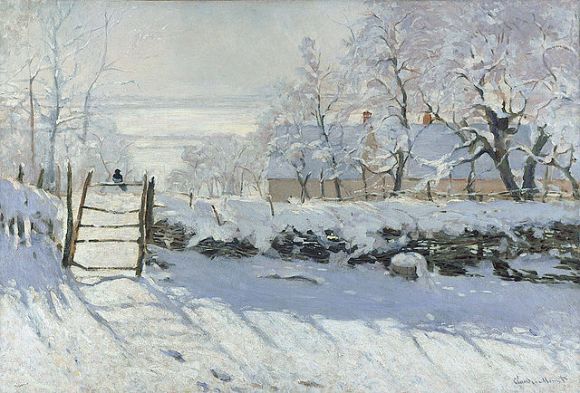
Painting by Claude Monet (1840-1926)
If Winter comes, can Spring be far behind?

'Ode to the West Wind', Percy Bysshe Shelley (1792 -1822)

The idea of spring heralds hope even when it’s deep winter. The colours of spring bring variety along with an assurance of contentment and peace. While wars and climate disasters rage around the world, peace can be found in places like the cloistered walls of Sistine Chapel where conflicts exist only in art. Sometimes, we get a glimpse of peace within ourselves as we gaze at the snowy splendour of Himalayas and sometimes, in smaller things… like a vernal flower or the smile of a young child. Inner peace can at times lead to great art forms as can conflicts where people react with the power of words or visual art. But perhaps, what is most important is the moment of quietness that helps us get in touch with that inner voice giving out words that can change lives. Can written words inspire change?

Our featured bookstore’s owner from Bangladesh, Amina Rahman, thinks it can. Rahman of Bookworm, has a unique perspective for she claims, “A lot of people mistake success with earning huge profits… I get fulfilment out of other things –- community health and happiness and… just interaction.” She provides books from across the world and more while trying to create an oasis of quietude in the busy city of Dhaka. It was wonderful listening to her views — they sounded almost utopian… and perhaps, therefore, so much more in synch with the ideas we host in these pages.

Our content this month are like the colours of the rainbow — varied and from many countries. They ring out in different colours and tones, capturing the multiplicity of human existence. The translations start with Professor Fakrul Alam’s transcreation of Nazrul’s Bengali lyrics in quest of the intangible. Isa Kamari translates four of his own Malay poems on spiritual quest, while from Balochi, Fazal Baloch bring us Munir Momin’s esoteric verses in English. Snehprava Das’s translation of Rohini K.Mukherjee poetry from Odia and S.Ramakrishnan’s story translated from Tamil by B.Chandramouli also have the same transcendental notes. Tagore’s playful poem on winter (Sheeth) mingles a bit for spring, the season welcomed by all creatures great and small.

John Valentine brings us poetry that transcends to the realms of Buddha, while Ryan Quinn Flanagan, Ron Pickett and Saranyan BV use avians in varied ways… each associating the birds with their own lores. George Freek gives us poignant poetry using autumn while Luis Cuauhtémoc Berriozábal expresses different yearnings that beset him in the season. Snehaprava Das and Usha Kishore write to express a sense of identity, though the latter clearly identifies herself as a migrant. Young Debadrita Paul writes poignant lines embracing the darkness of human existence. Joseph C. Ogbonna and Raiyan Rashky write cheeky lines, they say, on love. Mohit Saini interestingly protests patriarchal expectations that rituals of life impose on men. We have more variety in poetry from William Doreski, Rex Tan, Shivani Shrivastav and John Grey. Rhys Hughes in his column shares with us what he calls “A Poem Of Unsuccessful Excess” which includes, Ogden Nash, okras, Atilla the Hun, Ulysees, turmeric and many more spices and names knitting them into a unique ‘Hughesque’ narrative.

Our fiction travels from Argentina with Fabiana Elisa Martínez to light pieces by Deborah Blenkhorn and Priyanjana Pramanik, who shares a fun sketch of a nonagenarian grandma. Sreenath Nagireddy addresses migrant lores while Naramsetti Umamaheswararao gives a story set in a village in Andhra Pradesh.

We have non-fiction from around the world. Farouk Gulsara brings us an unusual perspective on festive eating while Odbayar Dorj celebrates festivals of learning in Mongolia. Satyarth Pandita introduces us to Emil Cioran, a twentieth century philosopher and Bhaskar Parichha pays a tribute to Professor Sarbeswar Das.  Meredith Stephens talks of her first-hand experience of a boat wreck and Prithvijeet Sinha takes us to the tomb of Sadaat Ali Khan. Ahmad Rayees muses on the deaths and darkness in Kashmir that haunt him. Devraj Singh Kalsi brings in a sense of lightness with a soupçon of humour and dreams of being a fruit seller. Suzanne Kamata revisits a museum in Naoshima in Japan.

Our book excerpts are from Anuradha Kumar’s sequel to The Kidnapping of Mark Twain, Love and Crime in the Time of Plague: A Bombay Mystery and Wayne F Burke’s Theodore Dreiser – The Giant, a literary non-fiction. Our reviews homes Somdatta Mandal discussion on M.A.Aldrich’s Old Lhasa: A Biography while Satya Narayan Misra writes an in-depth piece on Amal Allana’s Ebrahim Alkazi: Holding Time Captive. Anita Balakrishnan weaves poetry into this section with her analysis of Silver Years: Senior Contemporary Indian Women’s Poetry edited by Sanjukta Dasgupta, Malashri Lal and Anita Nahal. And Parichha reviews Diya Gupta’s India in the Second World War: An Emotional History, a book that looks at the history of the life of common people during a war where soldiers were all paid to satiate political needs of powerbrokers — as is the case in any war. People who create the need for a war rarely fight in them while common people like us always hope for peace.

We have good news to share — Borderless Journal has had the privilege of being listed on Duotrope – which means more readers and writers for us. We are hugely grateful to all our readers and contributors without who we would not have a journal. Thanks to our wonderful team, especially Sohana Manzoor for her fabulous artwork.

Hope you have a wonderful month as we move towards the end of this year.

Looking forward to a new year and spring!

Mitali Chakravarty

borderlessjournal.com

CLICK HERE TO ACCESS THE CONTENTS FOR THE NOVMBER 2025 ISSUE.

.

READ THE LATEST UPDATES ON THE FIRST BORDERLESS ANTHOLOGY, MONALISA NO LONGER SMILES, BY CLICKING ON THIS LINK.

Categories
Essay

Once a Student — Once a Teacher

Odbayar Dorj writes of celebrating the start of the new school year on September 1st in Mongolia and of their festivals around teaching and learning

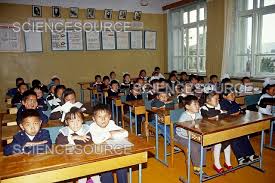
Mongolians are a people who celebrate festivals wholeheartedly and work with the same kind of enthusiasm. Among our many traditions, one of the most beautiful and meaningful to me is the way we welcome each new school year. In Mongolia, September 1st is not just the beginning of classes—it is a joyful national celebration for teachers and students. On this day, schools across the country hold ceremonies to mark the opening of the academic year. Students eagerly wait for this day, dressed in clean uniforms, their faces full of excitement. Traditionally, the new school year officially begins with a special lesson taught by the President of Mongolia, often about Mongolian script or history, which symbolises the importance of education and cultural heritage.

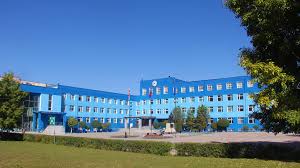
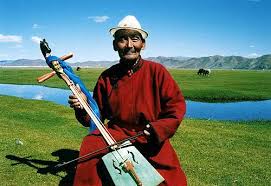
My own memories of this day are filled with music, excitement, and warmth. Unlike in many countries, Mongolian schools do not separate students into different buildings for primary, lower secondary, and upper secondary levels. Instead, everyone studies in the same school building, simply moving from classroom to classroom as they grow older. This creates a strong sense of community—older students and younger students share the same space, the same celebrations, and the same traditions. The ceremony usually begins with a speech from the school principal, followed by short performances by younger students. Songs about schools and teachers are sung, and the gentle melodies of the morin khuur—the traditional horsehead fiddle—fill the air. We sing, dance, and perform music to welcome the new academic year. Sometimes, I wonder how many other nations celebrate the start of school with such joy and artistry.

A man holding a morin khuur, whose music has been named as an Intangible Cultural Heritage of Humanity by UNESCO. From Public Domain

One of the most touching parts of the ceremony is the first bell ringing. This moment marks the official opening of the school year. First graders who are starting school for the very first time are given the honor of ringing a small handbell, while teachers line up their classes and lead them ceremoniously into the building. To ring the bell is considered a great honor, both for the child and their family. I will never forget the day my daughter entered first grade. She was chosen, together with a little boy, to represent all first graders and ring the bell. It was a chilly September morning, as it usually is in Mongolia. With one hand tucked into her uniform pocket to keep warm, she raised her other hand high to match the boy’s height and rang the bell. She was one of the smallest children in her class, but in that moment she seemed so brave and proud. That image remains clear in my mind even now—such memories stay with us forever.

For Mongolians, bells carry deep meaning. We even call our graduation ceremonies “Bell Ceremonies”. These are held for students finishing 5th grade (primary), 9th grade (lower secondary), and 12th grade (upper secondary). For 12th graders, the final bell has special significance: it is the last time they will hear the school bell as students before moving on to university or the adult world. That sound marks both an ending and a new beginning.

For teachers, September 1st is a day of joy. It is the moment we reunite with our students after the long summer break and see how much they’ve grown and changed in just three months. For students, it’s the thrill of seeing their classmates again. The entire month of September is a period of readjustment to school life, and it is followed in early October by Teacher’s Day, one of the few days in the year when teachers can celebrate their profession. Another beloved tradition in Mongolia is “Student Day.” On this day, graduating students—or, if the class is small, students from other classes too—take on the role of teachers for one day, while teachers become students. It’s a playful and meaningful role reversal that leaves deep impressions on both sides.

I still remember my first Student Day vividly. I was in 9th grade when my Mongolian language and literature teacher selected me to become a teacher for the day. It was the first time a lower secondary student had been chosen. I was nervous, especially standing alongside the older students from upper secondary school. I spent the entire night preparing, determined not to let my teacher down. On that day, I taught a 9th grade literature class. I was frightened at first, but the time passed in a flash, leaving me exhilarated.

The following years, I was chosen again—first as a biology teacher in 10th grade, then as a Russian language teacher in 11th grade. I participated as a student-teacher for three consecutive years. I especially remember the biology lesson; that day, I felt a special joy and excitement, a spark that would later lead me to choose teaching as my profession.

Years later, after graduating from university, I returned to school as a real teacher. During my first year at a public school, Student Day came again—this time, from the teacher’s side. My 12th

grade students drew lots to choose teachers, and a sweet girl named Khulan was selected to teach English in my place. She told me with a smile, “Teacher, you probably don’t have a student uniform anymore, so you can borrow mine tomorrow and join our class as a 12th grader.” The next day, the 12th graders handed us invitations, asking us to come to their class as students. Attached to each invitation was a class schedule for the day. When I put on the school uniform again, it truly felt as if I had traveled back in time to my childhood.

As a student, I used to think, “I can’t wait to grow up and start working. I’m tired of wearing this uniform.” But as a teacher, wearing it again brought back a wave of nostalgia. Returning to the classroom as a student for one day became one of the most unforgettable experiences of my life. On Student Day, everyone—teachers, administrators, and staff—puts on uniforms and attends classes together as “students.” The day is filled with laughter and playful mischief. Some pretend to be naughty students: interrupting class, asking silly questions, teasing each other. We laugh and call each other “bad students”.

At the end of the day, both the student-teachers and teacher-students gather to share their thoughts. This is always a moving moment. Older students often talk about how difficult it is to teach large classes and apologise for times when they had been troublesome. They express a newfound respect for their teachers, having experienced the challenges themselves. For us teachers, hearing this is incredibly rewarding. If there were a train that could take us back to our childhood, I think everyone would want to ride it. For teachers, Student Day is exactly that—a once-a-year chance to return to childhood.

For the past three years, I have spent September 1st, Student Day, and Teacher’s Day far away from Mongolia. At first, when I saw my friends’ photos and posts on social media, I felt a quiet envy. But at the same time, remembering these traditions filled me with warmth, pride, and a deep love for my profession. Throughout my life, I have met many wonderful teachers. Thanks to them, I have continued to learn and grow, always inspired by their example. These traditions, these bells, these memories—they are not just part of my past. They are part of who I am, both as a former student and as a teacher.

No matter where I am in the world, once a student, once a teacher—those identities live within me, carrying the echoes of September bells wherever I go.

.

Odbayar Dorj is an international student from Mongolia currently studying in Japan. Her writing reflects on cultural identity, personal memory, and the power of connection across borders and generations.

.

PLEASE NOTE: ARTICLES CAN ONLY BE REPRODUCED IN OTHER SITES WITH DUE ACKNOWLEDGEMENT TO BORDERLESS JOURNAL

Click here to access the Borderless anthology, Monalisa No Longer Smiles

Click here to access Monalisa No Longer Smiles on Amazon International

Categories
Contents

Borderless, July 2025

Art by Sohana Manzoor

Editorial

‘…I write from my heart of the raging tempest…’.Click here to read.

Translations

Jibanananda Das’s poem, Given the Boon of Eternity, has been translated from Bengali by Professor Fakrul Alam. Click here to read.

Karim Dashti’s short poems have been translated from Balochi by Fazal Baloch. Click here to read.

Five poems by Sangram Jena have been translated from Odia by Snehprava Das. Click here to read.

Surya Dhananjay’s story, Mastan Anna, has been translated from Telugu by Rahimanuddin Shaik. Click here to read.

The Last Letter, a poem by Ihlwha Choi  has been translated from Korean by the poet himself. Click here to read.

Tagore’s Probhatey (In the Morning) has been translated from Bengali by Mitali Chakravarty. Click here to read.

Poetry

Click on the names to read the poems

Luis Cuauhtémoc Berriozábal, Snehaprava Das, David R Mellor, Snigdha Agrawal, George Freek, Laila Brahmbhatt, Tracy Lee Duffy, John Swain, Amarthya Chandar, Craig Kirchner, Shamim Akhtar, Jason Ryberg, Momina Raza, Ryan Quinn Flanagan, Shahriyer Hossain Shetu, Rhys Hughes

Musings/ Slices from Life

What is Great Anyway?

Farouk Gulsara explores the idea of ‘greatness’ as reflected in history. Click here to read.

From Cape Canaveral to Carnarvon

Merdith Stephens writes of her museum experiences with photographs from Alan Nobel. Click here to read.

A Journey through Pages

Odbayar Dorj writes of library culture in Japan and during her childhood, in Mongolia. Click here to read.

By the Banks of the Beautiful Gomti

Prithvijeet Sinha strolls through the park by the riverfront and muses. Click here to read.

Dhruba Esh & Amiyashankar

Ratnottama Sengupta muses on her encounter with the writings of eminent artist and writer, Dhruba Esh, and translates one his many stories, Amiyashankar Go Back Home from Bengali. Click here to read.

Musings of a Copywriter

In Gastronomy & Inspiration? Sherbets and More…, Devraj Singh Kalsi looks at vintage flavours. Click here to read.

Notes from Japan

In Summer Vacation in Japan: Beetle Keeping and Idea Banks, Suzanne Kamata narrates her experience of school holidays in Japan. Click here to read.

Essays


It doesn’t Rain in Phnom Penh

Mohul Bhowmick writes of his trip to Phnom Penh and Siem Reap. Click here to read.

Haunted by Resemblances: Hunted by Chance

Aparajita De introspects with focus on serendipity. Click here to read.

Stories

Blue Futures, Drowned Pasts

Md Mujib Ullah writes a short cli-fi based on real life events. Click here to read.

Unspoken

Spandan Upadhyay gives a story around relationships. Click here to read.

Misjudged

Vidya Hariharan gives a glimpse of life. Click here to read.

Nico Returns to Burgaz

Paul Mirabile writes about growing up and reclaiming from heritage. Click here to read.

Feature

A review of Anuradha Kumar’s Wanderers, Adventurers, Missionaries: Early Americans in India and an interview with the author. Click here to read.

Book Excerpts

An excerpt from Rhys Hughes’ The Eleventh Commandment And Other Very Short Fictions. Click here to read.

An excerpt from Snehprava Das’s Keep It Secret. Click here to read.

Book Reviews

Somdatta Mandal reviews Dilip K Das’s Epidemic Narratives: The Cultural Construction of Infectious Disease Outbreaks in India. Click here to read.

Rakhi Dalal reviews Rajat Chjaudhuri’s Wonder Tales for a Warming Planet. Click here to read.

Gower Bhat has reviewed Neha Bansal’s Six of Cups. Click here to read.

Bhaskar Parichha reviews Jagadish Shukla’s A Billion Butterflies: A Life in Climate and Chaos Theory. Click here to read.

.

Click here to access the Borderless anthology, Monalisa No Longer Smiles

Click here to access Monalisa No Longer Smiles on Amazon International

Categories
Editorial

‘…I write from my heart of the raging tempest…’

I can see the heartbreak, 
Hear the wailing, the awakening,
I write from my heart
Of the raging tempest.

— Translation of Probhatey or ‘In the Morning’ by Rabindranath Tagore (1906)

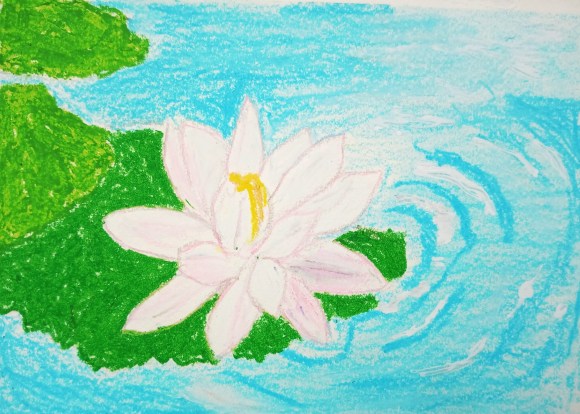
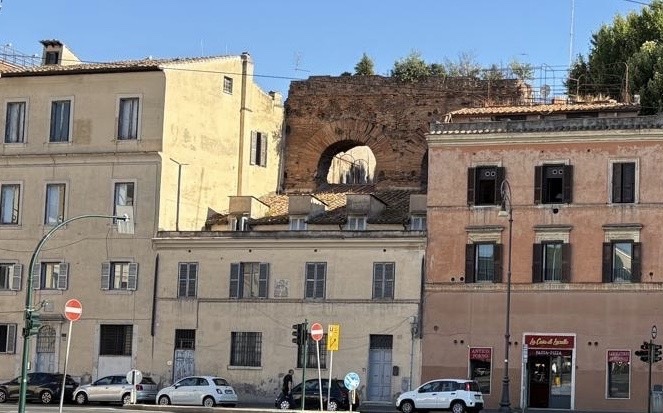
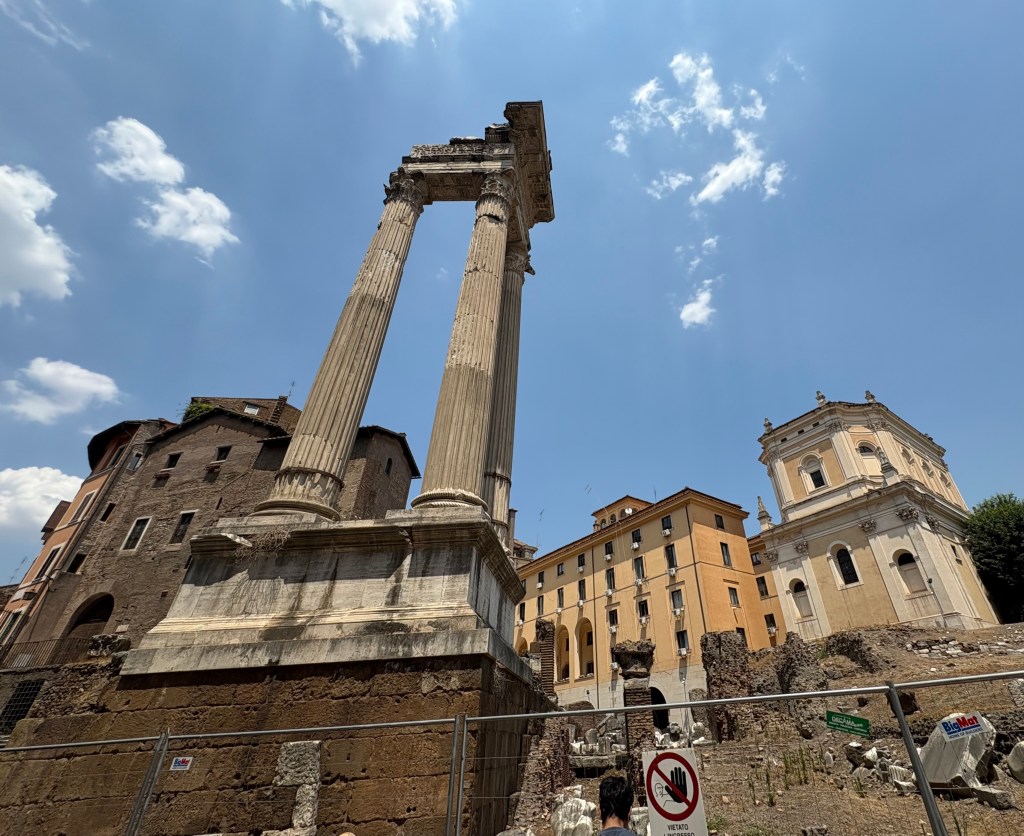
All around us, we hear of disasters. Often, we try to write of these as Tagore seems to do in the above lines. However, these lines follow after he says he draws solace and inspiration from a ‘serene lotus’, pristine and shining with vibrancy. He gazes at it while looking for that still point which helps him create an impact with words. That is perhaps what we can hope to do too — wait for a morning where clarity will show us the path to express not just what we see, but to find a way to heal and help. Finding parallels in great writings of yore to our own attempts at recreating the present makes us realise that perhaps history is cyclical. In Rome, new structures rear up against thousand-year walls, reflecting how the past congeals into the present.

Congealing the past into our present in this July’s issue are stories of American migrants — like Tom Alter’s family who made India their home — by Anuradha Kumar in her new non-fiction Wanderers, Adventurers, Missionaries: Early Americans in India. We feature this book with a review and an interview with the author where she tells us how and why she chose to write on these people. We have more people writing of their own wanderings. Mohul Bhowmick wanders into Cambodia and makes friends over a local sport while Prithvijeet Sinha strolls by the banks of the River Gomti in Lucknow. Meredith Stephens not only takes us to the Prime Meridien in Greenwich but also to Carnarvon which houses a science and technology centre in Australia. Devraj Singh Kalsi wanders with humour to discover gastronomical inspiration and hopes for sweeter recompense.

The dialogue started by Professor Fakrul Alam on libraries earlier with his essay and by Kalsi (with a pinch of humour) has been continued by Odbayar Dorj. She talks of the fading culture of libraries in Mongolia, her home country, and the vibrant culture that has blossomed in Japan. Suzanne Kamata writes of the rituals of summer holidays in Japan… including looking after a pet dung beetles.

Farouk Gulsara muses on ‘greatness’ as a concept with irony. Aparajita De muses on the word serendipity, applying it to her own situation while Ratnottama Sengupta muses on her encounter with the writings of eminent cover artist and writer who is not only a recipient of the Bangla Academy literary award but also immensely popular with children, Dhruba Esh, and translates one his many stories from Bengali.

In translations, Professor Alam has brought to us a beautiful poem by Jibanananda Das. Karim Drashti’s Balochi short poems have been rendered in English by Fazal Baloch and Snehaprava Das has found for us Odia poems of Sangram Jena in translation. Ihlwha Choi has rendered his own Korean poem to English while Tagore’s poem, ‘Probhatey (In the Morning)’ winds up the poetry in this section. We have more in prose — Surya Dhananjay’s story, Mastan Anna, translated from Telugu by Rahimanuddin Shaik.

In fiction, we have stories from around the world. Paul Mirabile sets his story in Burgaz. Spandan Upadhyay gives a mysterious narrative set in a world outside our waking consciousness and Vidya Hariharan gives us a glimpse of life in modern day India. From Bangladesh, Md Mujib Ullah writes a short cli-fi based on real life events.

Taking up the theme of cli-fi, Rajat Chaudhuri’s Wonder Tales for a Warming Planet seems to bring hope by suggesting adapting to changing climes. Rakhi Dalal tells us in her review: “It dares to approach the climate crisis through the lens of empathy and imagination rather than panic or guilt. In doing so, Rajat Chaudhuri gives us what many adult climate narratives fail to deliver—a reason to believe that another world is not only possible but already being imagined by the young. All we need to do is listen.” Bhaskar Parichha has discussed the autobiography of a meteorologist and Distinguished University Professor at George Mason University, Jagadish Shukla. In A Billion Butterflies: A Life in Climate and Chaos Theory, he claims Shukla has “revolutionised monsoon forecasting.” Somdatta Mandal has written about Dilip K Das’s Epidemic Narratives: The Cultural Construction of Infectious Disease Outbreaks in India. And Gower Bhat reviews Neha Bansal’s best-selling poetry collection, Six of Cups.

Poetry awakens myriad of hues in Borderless with verses from across the world. We have poems from Luis Cuauhtémoc Berriozábal, Ryan Quinn Flangan, Snehprava Das, George Freek, Laila Brahmbhatt, Tracy Lee Duffy, Amarthya Chandar, Jason Ryberg, Momina Raza, Shahriyer Hossain Shetu and more. Snigdha Agrawal gives a fun-filled poem about a duck and Rhys Hughes has given us a collection of verses like puzzles where we need to guess the animals! We also have an excerpt from Hughes’ The Eleventh Commandment And Other Very Short Fictions and Das’s short stories, Keep It Secret.

With that, we wind up the contents of this month’s issue. Do pause by our content’s page to check it out in more details.

This month’s edition would not have been possible without all our contributors, our fabulous team and especially Sohana Manzoor’s artwork. Huge thanks to all of them and to our wonderful readers who make it worthwhile for us to write and publish. Do write in to us if you have any feedback. Five years ago, we chose to become a monthly from a daily… We have come a long way from then and grown to host writers from more than forty countries and readers from almost all over the world. For this, we owe you all – for being with us and encouraging us to find fresh pastures.

Enjoy the reads!

Wishing you peace and happiness,

Mitali Chakravarty,

borderlessjournal.com

Click here to access the contents for the July 2025 Issue

READ THE LATEST UPDATES ON THE FIRST BORDERLESS ANTHOLOGY, MONALISA NO LONGER SMILES, BY CLICKING ON THIS LINK.

Categories
Musings

A Journey through Pages


By Odbayar Dorj

Before I ever stepped into a classroom, I had already learned to read and write. Over twenty years ago in Mongolia, children typically started school at the age of eight. But I began a year earlier—at seven—already recognising the letters and words on the page.

I don’t remember exactly how I learned, but I do recall asking my mother, who worked at a school dormitory, to bring me a copy of the Tsagaan Tolgoi (Alphabet Book) from the school library. With the help of my grandparents, I memorized all 35 letters and began reading. Because my mother worked at a school, we often visited the homes of her coworkers. On one such visit, we stopped by the home of the school librarian, Mr. Bayaraa. I remember flipping through one of the literature books for older students and seeing a drawing of a giant with one eye standing before frightened people in a cave. Later, I realised it must have been The Odyssey. From that moment on, I was fascinated. I longed to read every book I could find—especially those with pictures and stories.

When I finally started school, I couldn’t wait to dive into books. But the first-grade routine quickly wore me down: we spent most of our time copying words neatly into our notebooks. Then our family moved from the countryside to the city, and I transferred to a new school. By fourth grade, I was enrolled in a class called Reading and Writing, which would later become Literature. It was my favorite subject. Our teacher encouraged us to borrow books from the school library and read outside of class. That was, without a doubt, the most exciting homework I’d ever been given.

Still, getting into the school library wasn’t easy. Our school operated in two shifts, and my classes were in the morning—from 8:00 to 11:00. I lived nearby and could be home in under five minutes. My grandmother always had lunch ready, usually a warm bowl of bantan. Those were some of my happiest moments.

In the afternoons, I would walk back to school and try to visit the library. But the teacher on duty at the entrance always interrogated me: “Where are you going? Who are you meeting?” I explained that I just wanted to visit the library. Even after getting permission, I often found a sign on the door that read: “Closed for internal work.” Many times, I left disappointed. The librarian never opened the door.

Everything changed when I entered junior high school and gained the independence to ride buses. I started visiting the National Public Library named after D. Natsagdorj. It took about thirty minutes by bus, and I could only afford to go once or twice a week. The library was mostly empty, except for a few elderly men reading newspapers. It used the old Soviet-era catalog system, which was difficult to navigate. Instead, I approached the librarian directly and told her the kinds of books I liked. She always picked something out for me, and even though I never knew what it would be, the anticipation became one of my favorite parts of the week. I spent many summer days in the tiny reading room, lost in stories. When the fall semester began and university students returned, seats became scarce. They, too, relied on public libraries for study space.

By the time I entered high school, our school librarian had changed. Finally, we were allowed to use the library after classes. It had a wide range of books—both Mongolian and international literature. It felt like a dream come true.

Years later, in 2020, my daughter started school. In Mongolia, we celebrate the moment children finish learning their 35 letters with a Tsagaan Tolgoi celebration—a joyful milestone that marks the beginning of reading and writing. Sadly, due to COVID, my daughter never got to experience that celebration. More than that, she never even had a chance to experience a library. Unlike my school, hers didn’t even have a library corner. Due to overcrowding, the library space had been converted into a classroom. After textbooks were distributed during the first few weeks of the school year, the “library” served no other purpose.

As a mother and a former student, I couldn’t help but feel heartbroken by this quiet loss.

Now, as I study in Japan, I’ve started volunteering as an English teacher for first- to fourth-grade students at a local elementary school. It was my first time being at a Japanese school not as a visitor, but as a teacher. Two retired female teachers welcomed me warmly and introduced me to the principal. I would start teaching on May 1st. Even though my Japanese was limited, I felt their kindness beyond words.

We visited the classroom—a spacious room, half of it open for movement and activities. I was shown the storage room where they kept teaching materials, including flashcards. I was given two weeks to prepare. I was thrilled—not just to be working, but to finally be using my professional skills.

I reviewed every flashcard, thinking carefully about how to incorporate them into my lessons. I created a 12-week lesson plan and excitedly prepared for my first class.

But the first class didn’t go as I imagined. Sixteen students joined the English club, and as soon as I started speaking in English, some children looked surprised. Because I am Mongolian and physically resemble Japanese people, many often assume I am Japanese. The students seemed confused—some even asked if I was pretending or acting, wondering why a “Japanese-looking” person was speaking to them in English. I had prepared fun activities like Simon Says and The Alphabet Song, hoping to create a lively atmosphere, but without help from the two retired teachers, it was hard to hold their attention. Somehow, I made it through the class, but I left feeling defeated.

Thankfully, the teachers encouraged me: “Don’t be discouraged,” they said. “Especially with first graders—it’s only been a month since they started school.”

I spent the following week stressed and unsure. How could I communicate with children from another culture? How could I teach kids of different ages and learning levels?

There’s a Mongolian saying: “If God doesn’t know, ask a book.” I realised books were my only hope.

Just like the times I hesitated to enter unfamiliar spaces in Japan, I found myself nervous about entering the university’s children’s library. But I gathered courage, walked in, and soon found myself surrounded by picture books in English.

There were so many beautiful titles—more than I had ever imagined. I felt I was more excited than the children. Since then, finding the right book for my students has become my favourite part of lesson planning. I spend hours reading reviews, flipping through pages, and selecting stories that are both accessible and engaging.

At the same time, I couldn’t help but reflect on how lucky Japanese children are. Back in Mongolia, many children grow up without ever experiencing a library. And here I am, surrounded by cozy furniture and shelves filled with books, just a few steps away from the classroom.

Every week, I arrive an hour early to prepare for class. Right next to my classroom is the school’s library—bright, welcoming, and full of choices. Sometimes I see the first graders visiting with their teacher, eagerly choosing books and settling into child-sized chairs to read. And I think of my daughter. I feel sad—not only because I miss her, but because I know she doesn’t have access to a space like this. At her school in Mongolia, there is no library—not even a reading corner. Watching these children enjoy books so freely makes me wish my daughter could experience the same joy and comfort that comes from being surrounded by stories.

I remember my childhood dream: to one day have a small children’s library of my own. A place where I could read aloud to children, draw with them, fold origami, and spend quality time. That dream has only grown stronger.

In Mongolia, there are very few children’s book authors. Most publishers produce simplified versions of Disney movies or classic tales, often filled with too much text to engage young readers. Finding the right book for my daughter has always been a challenge. That’s when I began to dream—not just of reading books, but of writing one myself. After all, books hold countless lives, stories, and dreams. They are entire worlds we can live in.

I miss my daughter very much. I often make a list of things we could do together—places I want to show her if she ever comes here, places I want to go with her. I especially dream of going to the library with her, choosing and reading books together. I want to read aloud to her the book I think is the most beautiful, and then watch what she imagines, what she draws, and what she creates after reading it.

Sitting here in my university’s children’s library, I felt like I became a child again, and I found myself wishing that children everywhere in the world could have access to a library like this—one that sparks their imagination. That’s when I began writing this essay.

Because libraries are not just buildings filled with books—they are spaces where children begin to dream. I hope that one day, more schools in Mongolia will make room for those dreams. And until then, I’ll keep turning pages, teaching stories, and imagining that little library I still dream of—for my daughter, and for so many others like her.

Odbayar Dorj is an international student from Mongolia currently studying in Japan. Her writing reflects on cultural identity, personal memory, and the power of connection across borders and generations.

.

PLEASE NOTE: ARTICLES CAN ONLY BE REPRODUCED IN OTHER SITES WITH DUE ACKNOWLEDGEMENT TO BORDERLESS JOURNAL

Click here to access the Borderless anthology, Monalisa No Longer Smiles

Click here to access Monalisa No Longer Smiles on Amazon International

Categories
Editorial

“Imagine all the people/Living life in peace”

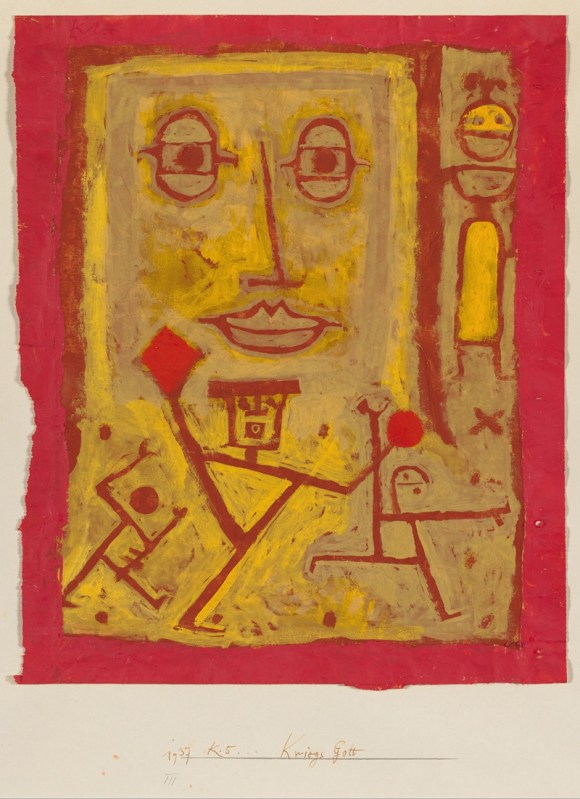
God of War by Paul Klee (1879-1940)
The sky weeps blood, the earth cannot contain
The sorrow of the young ones we've slain.
How now do dead kids laugh while stricken by red rain?

— from Stricken by Red Rain: Poems by Jim Bellamy

When there is war
And peace is gone
Where is their home?
Where do they belong?

— from Poems on Migrants by Kajoli Krishnan

Poetry, prose — all art forms — gather our emotions into concentrates that distil perhaps the finest in human emotions. They touch hearts across borders and gather us all with the commonality of feelings. We no longer care for borders drawn by divisive human constructs but find ourselves connecting despite distances. Strangers or enemies can feel the same emotions. Enemies are mostly created to guard walls made by those who want to keep us in boxes, making it easier to manage the masses. It is from these mass of civilians that soldiers are drawn, and from the same crowds, we can find the victims who die in bomb blasts. And yet, we — the masses — fight. For whom, for what and why? A hundred or more years ago, we had poets writing against wars and violence…they still do. Have we learnt nothing from the past, nothing from history — except to repeat ourselves in cycles? By now, war should have become redundant and deadly weapons out of date artefacts instead of threats that are still used to annihilate cities, humans, homes and ravage the Earth. Our major concerns should have evolved to working on social equity, peace, human welfare and climate change.

One of the people who had expressed deep concern for social equity and peace through his films and writings was Satyajit Ray. This issue has an essay that reflects how he used art to concretise his ideas by Dolly Narang, a gallery owner who brought Ray’s handiworks to limelight. The essay includes the maestro’s note in which he admits he considered himself a filmmaker and a writer but never an artist. But Ray had even invented typefaces! Artist Paritosh Sen’s introduction to Ray’s art has been included to add to the impact of Narang’s essay. Another person who consolidates photography and films to do pathbreaking work and tell stories on compelling issues like climate change and helping the differently-abled is Vijay S Jodha. Ratnottama Sengupta has interviewed this upcoming artiste.

Reflecting the themes of welfare and conflict, Prithvijeet Sinha’s essay takes us to a monument in Lucknow that had been built for love but fell victim to war. Some conflicts are personal like the ones of Odbayar Dorj who finds acceptance not in her hometown in Mongolia but in the city, she calls home now. Jun A. Alindogan from Manila explores social media in action whereas Eshana Sarah Singh takes us to her home in Jakarta to celebrate the Chinese New Year! Farouk Gulsara looks into the likely impact of genetic engineering in a world already ripped by violence and Devraj Singh Kalsi muses on his source of inspiration, his writing desk. Meredith Stephens tells the touching story of a mother’s concern for her child in Australia and Suzanne Kamata exhibits the same concern as she travels to Happy Village in Japan to meet her differently-abled daughter and her friends.

As these real-life narratives weave commonalities of human emotions, so do fictive stories. Some reflect the need for change. Fiona Sinclair writes a layered story set in London on how lived experiences define differences in human perspectives while Parnika Shirwaikar explores the need to learn to accept changes set in her part of the universe. Spandan Upadhyay explores the spirit of the city of Kolkata as a migrant with a focus on social equity. Both Paul Mirabile and Naramsetti Umamaheswararao write stories around childhood, one set in Europe and the other in Asia.

As prose weaves humanity together, so does poetry. We have poems from Jim Bellamy and Kajoli Krishnan both reflecting the impact of war and senseless violence on common humanity. Ryan Quinn Flanagan introduces us to Canadian bears in his poetry while Snigdha Agrawal makes us laugh with her lines about dogs and hatching Easter eggs! We have a wide range of poems from Snehprava Das, George Freek, Niranjan Aditya, Christine Belandres, Ajeeti S, Ron Pickett, Stuart McFarlane, Arthur Neong and Elizabeth Anne Pereira. Rhys Hughes concludes his series of photo poems with the one in this issue — especially showcasing how far a vivid imagination can twist reality with a British postman ‘carrying’ sweets from India! His column, laced with humour too, showcases in verse Lafcadio Hearn, a bridge between the East and West from more than a hundred years ago, a man who was born in Greece, worked in America and moved to Japan to even adopt a Japanese name.

Just as Hearn bridged cultures, translations help us discover how similarly all of us think despite distances in time and space. Radha Chakravarty’s translation of Kazi Nazrul Islam’s concerns about climate change and melting icecaps does just that! Professor Fakrul Alam’s translation of Nazrul’s lyrics from Bengali on women and on the commonality of human faith also make us wonder if ideas froze despite time moving on. Tagore’s poem titled Asha (hope) tends to make us introspect on the very idea of hope – just as we do now. At a more personal level, a contemporary poem reflecting on the concept of identity by Munir Momin has been translated from Balochi by Fazal Baloch. From Korean, Ihlwah Choi translates his own poem about losing the self in a crowd. We start a new column on translated Odia poetry from this month. The first one features the exquisite poetry of Bipin Nayak translated by Snehprava Das. Huge thanks to Bhaskar Parichha for bringing this whole project to fruition.

Parichha has also drawn bridges in reviews by bringing to us the memoirs of a man of mixed heritage, A Stranger in Three Worlds: The Memoirs of Aubrey Menen. Andreas Giesbert from Germany has reviewed Rhys Hughes’ The Devil’s Halo and Somdatta Mandal has discussed Arundhathi Nath’s translation, The Phantom’s Howl: Classic Tales of Ghosts and Hauntings from Bengal. Our book excerpts this time feature Devabrata Das’s One More Story About Climbing a Hill: Stories from Assam, translated by multiple translators from Assamese and Ryan Quinn Flangan’s new book, Ghosting My Way into the Afterlife, definitely poems worth mulling over with a toss of humour.

Do pause by our contents page for this issue and enjoy the reads. We are ever grateful to our ever-growing evergreen readership some of whom have started sharing their fabulous narratives with us. Thanks to all our readers and contributors. Huge thanks to our wonderful team without whose efforts we could not have curated such valuable content and thanks specially to Sohana Manzoor for her art. Thank you all for making a whiff of an idea a reality!

Let’s hope for peace, love and sanity!

Best wishes,

Mitali Chakravarty

borderlessjournal.com

Click here to access the contents page for the May 2025 Issue

READ THE LATEST UPDATES ON THE FIRST BORDERLESS ANTHOLOGY, MONALISA NO LONGER SMILES, BY CLICKING ON THIS LINK.

Categories
Musings

Not Everyone is Invited to a Child’s Haircut Ceremony

By Odbayar Dorj

Mongolians hold a special ceremony called the “haircut celebration” for young children, but not everyone is invited to this event. Especially not someone like me, who has gone through a divorce.

I had been meaning to write about this for a while, and now, nine months later, I finally find myself sitting in front of my computer, ready to share my thoughts. After coming to Japan as a student for the second time, I have had the opportunity to take many interesting classes. Among them, the most captivating one was Kamata-sensei’s English Language Cultural Class. Every week, the professor selected a story for us to read before class, and during the lessons, we would discuss our favorite parts and share our thoughts. Sometimes, the professor would ask thought-provoking questions, sparking lively discussions. This class quickly became one of my favorites, something I eagerly looked forward to each week.

We primarily read short stories written by foreign authors living in America. I was amazed by how much emotion, thought, and complexity could be packed into such short narratives. The professor’s careful selection of stories made me admire her even more.

One of the stories we read was Kyoko Mori’s Yellow Mittens and Early Violets. During our class discussion, we talked about cultural differences across countries. There were only four students in our class—one from Morocco, one from Mongolia (me), one from the Philippines, and one from Japan—plus our American professor. This small group allowed us to exchange ideas freely and truly listen to one another. It was fascinating to see how five people from five different cultural backgrounds could read the same story but interpret it in completely different ways.

During this discussion, I shared a personal story about Mongolian traditions, which I now want to write about here.

For Mongolians, hair holds deep symbolic meaning. For instance, women traditionally do not leave their hair loose; it is always braided. Only those in mourning let their hair down. Similarly, if a child’s hair is left uncombed and tangled, it is believed to shorten their lifespan and diminish their fortune.

One of Mongolia’s most significant traditions related to hair is the sevleg urgeh (first haircut) ceremony. Since ancient times, Mongolians have referred to a young child’s untouched hair as sevleg or daakhi, showing deep respect for it. The first haircut is performed with great care, wishing the child a long, prosperous life.

Traditionally, a girl’s hair is cut in mid-summer, guided by the call of the cuckoo, while a boy’s hair is cut in mid-autumn, following the sound of the stag. Families invite relatives and friends to participate in the ceremony. The ritual is conducted when boys reach an odd-numbered age (for example, 3, 5) and girls reach an even-numbered age (for example, 2, 4). This belief stems from the Mongolian spiritual concepts of arga (odd numbers, representing action) and bileg (even numbers, representing wisdom).

The ceremony begins with an elder—typically the most senior and respected person present—touching the child’s hair with a wooden knife before using scissors to snip the first lock. The elder then dips the wooden knife into a cup of milk, allowing a drop to fall onto the scissors. This ritual ensures that the blade does not “harm” the child, symbolically purifying the act. The child’s father carves the wooden knife himself, while the mother sews the child’s traditional deel (Mongolian robe) for the occasion.

Guests take turns cutting a small lock of hair, offering blessings as they do so. The cut hair is respectfully wrapped in a ceremonial scarf (khadag) and preserved. Those invited to touch the child’s hair are carefully chosen; they must be seen as virtuous, fortunate, and stable figures.

I, however, do not belong in this category.

I became a mother at nineteen, and although my daughter’s father and I once dreamed of a future together, our paths eventually diverged. In Mongolian culture, divorced individuals are not invited to participate in a child’s haircut ceremony. There is a belief that if someone like me were to touch a child’s hair, the child might also face a broken marriage in the future. This tradition, deeply rooted in the idea that a person’s energy influences a child’s life, means that people like me are excluded.

At first, it hurt.

Now, I have grown used to it. Though I have come to accept this tradition, I still wonder—should cultural heritage come at the cost of human connection? Perhaps the true essence of tradition is not just in preserving rituals, but in ensuring that no one is made to feel like an outsider in their own culture.

I sometimes wonder—have we become so devoted to tradition that we have forgotten the importance of human compassion?

This was the story I shared in class—the story of why I am not allowed to take part in one of my own culture’s most sacred ceremonies.

.

Odbayar Dorj is an international student from Mongolia currently studying in Japan. She reflects on cultural traditions, personal experiences, and the intersection of human connection and societal norms in her writing.

.

PLEASE NOTE: ARTICLES CAN ONLY BE REPRODUCED IN OTHER SITES WITH DUE ACKNOWLEDGEMENT TO BORDERLESS JOURNAL

Click here to access the Borderless anthology, Monalisa No Longer Smiles

Click here to access Monalisa No Longer Smiles on Amazon International