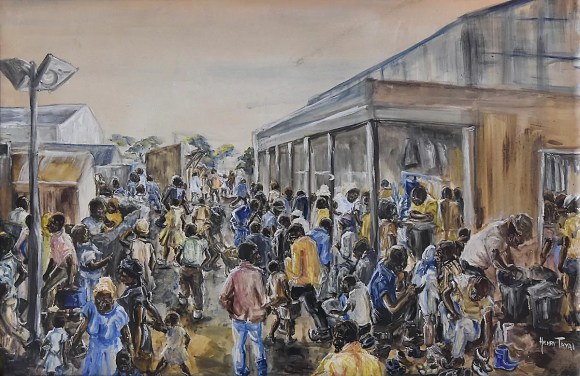
Art by Henry Tayali(1943-1987). From Public Domain
Let us imagine a world where wars have been outlawed and there is only peace. Is that even possible outside of John Lennon’s song? While John Gray, a modern-day thinker, propounds human nature cannot change despite technological advancements, one has to only imagine how a cave dweller would have told his family flying to the moon was an impossibility. And yet, it has been proven a reality and now, we are thinking living in outer space, though currently it is only the forte of a few elitists and astronomers. Maybe, it will become an accessible reality as shown in books by Isaac Asimov, Arthur C Clarke or shows like Star Trek and Star Wars. Perhaps, it’s only dreamers or ideators pursuing unreal hopes and urges who often become the change makers, the people that make humanity move forward. In Borderless, we merely gather your dreams and present them to the world. That is why we love to celebrate writers from across all languages and cultures with translations and writings that turn current norms topsy turvy. We feature a number of such ideators in this issue.
Nazrul in his times, would have been one such ideator, which is why we carry a song by him translated by Professor Fakrul Alam. And yet before him was Tagore — this time we carry a translation of an unusual poem about happiness. From current times, we present to you a poet — perhaps the greatest Malay writer in Singapore — Isa Kamari. He has translated his longing for changes into his poems. His novels and stories express the same longing as he shares in The Lost Mantras, his self-translated poems that explore adapting old to new. We will be bringing these out over a period of time. We also have poems by Hrushikesh Mallick translated from Odia by Snehprava Das and a poignant story by Sharaf Shad translated from Balochi by Fazal Baloch.
Book reviews homes an indepth introduction by Somdatta Mandal to Banu Mushtaq’s Heart Lamp: Selected Stories, translated from Kannada by Deepa Bhasthi. We have a discussion by Meenakshi Malhotra on Contours of Him: Poems, edited and introduced by Malaysian academic, Malachi Edwin Vethamani, in which she concludes, “that if femininity is a construct, so is masculinity.” Overriding human constructs are journeys made by migrants. Rupak Shreshta has introduced us to immigrant Sangita Swechcha’s Rose’s Odyssey: Tales of Love and Loss, translated from Nepali by Jayant Sharma. Bhaskar Parichha winds up this section with his exploration of Kalpana Karunakaran’s A Woman of No Consequence: Memory, Letters and Resistance in Madras. He tells us: “A Woman of No Consequence restores dignity to what is often dismissed as ordinary. It chronicles the spiritual and intellectual evolution of a woman who sought transcendence within the rhythms of domestic life, turning the everyday into a site of resistance and renewal.” Again, by the sound of it a book that redefines the idea that housework is mundane and gives dignity to women and the task at hand.
We wind up the October issue hoping for changes that will lead to a happier existence, helping us all connect with the commonality of emotions, overriding borders that hurt humanity, other species and the Earth.
Huge thanks to our fabulous team, especially Sohana Manzoor for her inimitable artwork. We would all love to congratulate Hughes for his plays that ran houseful in Swansea. And heartfelt thanks to all our wonderful contributors, without who this issue would not have been possible, and to our readers, who make it worth our while, to write and publish.
I learnt early that life is never fair. They say time and tide wait for no man, moving along their own trajectory.
I heard money solves all problems or at least eases the pain of tough times. There was a time I ventured into saving mode. I started my own piggy bank, dropping in a coin almost daily into a plastic-mould chick figurine. I patted myself on the back as the clink of coins became louder and louder. It was not much, but every jingle reminded me of the value of money and the comfort it would provide me one day. The trouble was that my sisters were equally pleased that my coffers were filling to the brim. They began needling out coin after coin to finance their addiction of buying little treats. I felt frustrated. I knew saving was hard, but I never expected reaching my goal to be so difficult. My sisters’ malfeasance came to light one day when I noticed that the piggy bank had been displaced away from its usual place, tucked behind my nice shirts. That was when I confronted my sisters.
In my eyes, I did nothing wrong. Instead of admonishing my sisters and compensating for my loss, Amma claimed it was my fault. She taught me the harsh truths of life. It was my responsibility to safeguard my property, not anyone else’s. After that realisation, I sought out other ways to save money.
Then, I had a new group of friends. I joined a competitive group of classmates who wanted to excel academically. I thought that would be easy. I devoted all my time to studying and paying attention in class. It seemed easy, but it was a different story when the examination results were released. It was the class jester, for whom everything was a joke, who came out on top. Another valuable lesson I learnt was not just to study hard, but to study smart.
As I grew older and the screaming radio became a constant background to my daily life, I realised that the world was not a peaceful place. On one hand, songs promised a tranquil world of apple trees and honeybees[1]; from the same country, they sent tanks and bombs to annihilate each other. It seemed that the Vietnam War would never end. Peace in the Middle East was merely a pipe dream.
Amidst all that, a hippie song emerged, envisioning a world without boundaries, an airspace free from control, and a peaceful existence [2]. It instilled a sense of hope that life might indeed have something to look forward to after all. The image of two figures dressed entirely in white playing a white grand piano remains permanently etched in my mind as the beacon of hope that one day everything will be all right. And life went on.
After many years of burning the midnight oil and reaping bitter seeds, its sweet fruit finally emerged. Yet, all my classmates who were partying and living life to the full had already gained a head start in their careers. They had ascended the ladders of their professions and were cruising around in flashy cars, while I was starting as an intern with little to show except a few letters behind my name. The competitive streak within me, however, reassured me that academic excellence is superior to the acquisition of wealth.
I continued my healing work, convincing myself that what I was doing would be returned in kind and that I would receive blessings of a different kind. As time passed, I realised that those were merely comforters to soothe a colicky baby. The old adage ‘health is wealth’ was a fallacy. In the real world, wealth buys health, just as one gets justice with all the money one can afford to pay for legal services. The youthful cry of ‘Can’t Buy Me Love’ [3] was another lie. Money buys everything, and it feels better to cry in a BMW than by the footpath of the street.
So, there I was, thinking that if I were to follow the ways prescribed by the elders, I would be all right. “Tell no lies.” They said. “Speak only the truth!” Then there were people who made lying— or they would call it ‘bending the truth’— the pillar of their profession. “Don’t be materialistic, look at humanity!” Tell that to the stockholders who do not take it kindly when the conglomerate shows high praises and blessings but announces no monetary returns in dividends. For one thing, even big countries help each other not for altruistic reasons but for geopolitical and economic interests. There is no such thing as a free lunch. Everything comes with its encumbrances.
I was advised not to fight back but to turn the other cheek. Yet, behind my back, the world has regarded me as a fall guy, and I was merely a useful idiot—someone they could blame for all their wrongdoings because I was naïve enough to admit my mistakes. Now my friends urge me to strike before the other party draws first blood and to never admit to any wrongdoings.
As human beings, we yearn for a world without conflict. We all desire peace of mind—a world where everyone follows a single prescribed path, where everything falls into place, a utopia in which one person sees another not by the colour of their skin or the tunic they wear, but by the strength of their character. Most prayers we offer to a higher being invariably end with ‘Peace on Earth’ or ‘Happiness for All’. Prayers like ‘Sarve Bhavantu Sukhinaha‘ [4] and ‘Om Shanti‘ [5] assume that everyone can have things their way at one given time, creating a win-win situation. Such a situation can only exist in our imagination. Regardless of what everyone else says, life is a zero-sum game. For someone to win, another must lose, somewhere, somehow. For the lion colony to be happy, a goat must be sacrificed. Contentment is achieved when we acknowledge our limitations and accept that sometimes things do not go in our favour. Outcomes may improve if we recognise that we can only do so much.
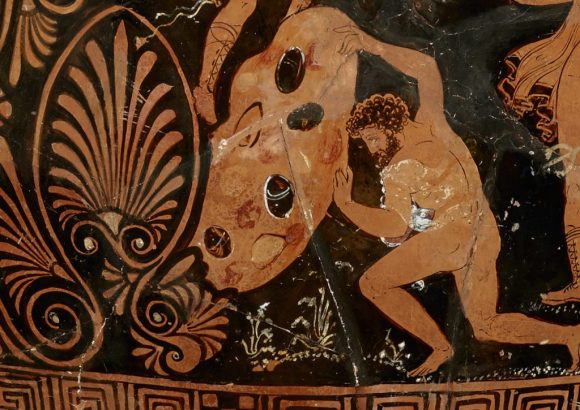
An Earth without conflict is a pipe dream. The natural course of events is entropy interspersed with instances of chaos and order. One can choose to adopt a nihilistic view of our existence and do nothing, or be like Sisyphus [6] — resigned to the fact that we are in a hopeless situation — but strive to find joy in setting small targets and achieving modest successes, filling our hearts with laughter and happiness during the lull before the storm, and endeavour to leave a better future for the next generation.
When everyone found it impossible to carry a big load, the human mind devised the wheel. When the greener pastures across the lake obsessively stirred the curious, it took one brave young man with the imagination to make a raft of fallen tree trunks. Hope springs eternal in the human breast[7]. The change we want the world to embody starts with the man in the mirror. Numerous social experiments have repeatedly shown that doing a kind gesture is contagious. One good turn deserves another. No good deed remains unreturned. We can try.
Sisyphus: From Public Domain
[1] A verse from The New Seekers’ “’I’d Like To Teach the World to Sing” became a jingle for Coca-Cola later.
[2] John Lennon’s most successful solo single, ‘Imagine’, envisions a world of peace without materialism, without borders separating nations, and without religion.
[3] The Beatles’ 1964 hit ‘Can’t Buy Me Love’ is a McCartney composition that naively preaches that true love cannot be bought. In the later stages of his life, McCartney discovered the hard way that divorce, without a pre-nuptial agreement for someone of his stature, could be financially draining. Money can’t buy love, but falling out of it can be costly.
[6] In Greek mythology, Sisyphus was a shrewd king. The gods condemned him to roll a boulder up a hill for eternity, only to see it roll down again after reaching the summit. Albert Camus, in his book ‘The Myth of Sisyphus,’ implies that Sisyphus was happy. He found performing and completing the act itself meaningful. He gave meaning to the meaningless.
[7] “Hope springs eternal in the human breast,” an excerpt from Alexander Pope’s poem “An Essay on Man.”
.
Farouk Gulsara is a daytime healer and a writer by night. After developing his left side of his brain almost half his lifetime, this johnny-come-lately decided to stimulate the non-dominant part of his remaining half. An author of two non-fiction books, Inside the twisted mind of Rifle Range Boy and Real Lessons from Reel Life, he writes regularly in his blog, Rifle Range Boy.
.
PLEASE NOTE: ARTICLES CAN ONLY BE REPRODUCED IN OTHER SITES WITH DUE ACKNOWLEDGEMENT TO BORDERLESS JOURNAL
Imagine a land of milk and honey, a destination, where manna rains down to nourish us all.
In that space, greed and hunger have no room. Trust reigns. Even fear disappears.
We no longer startle at loud sounds or imagine shotguns mowing down innocent bystanders.
There’s no standing army. Penguins walk freely in the Falklands, where once men were afraid to tread because of land mines.
We lock eyes, find glimmers of smiles, trust our leaders. We break bread with strangers because there aren’t any.
Miriam Bassuk is inspired by her daily walks — the teeming life of eagles, herons, and the occasional sighting of Orcas that thrive in the Puget Sound. She has been published in The Journal of Sacred Feminine Wisdom, Raven Chronicles, PoetsWest Literary Journal, and 3 Elements Review. She was one of the featured poets in the digital portion of the WA 129 project sponsored by the Washington State poet laureate.
.
PLEASE NOTE: ARTICLES CAN ONLY BE REPRODUCED IN OTHER SITES WITH DUE ACKNOWLEDGEMENT TO BORDERLESS JOURNAL
Where the mind is without fear … Where the world has not been broken up into fragments … Where the clear stream of reason has not lost its way … Where the mind is led forward by thee Into ever-widening thought and action…
As we complete the fourth year of our virtual existence in the clouds and across borders, the world has undergone many changes around us, and it’s not only climate change (which is a huge challenge) but much more. We started around the time of the pandemic — in March 2020 — as human interactions moved from face-to-face non-virtual interactions to virtual communication. When the pandemic ended, we had thought humanity would enter a new age where new etiquettes redefining our social norms would make human existence as pandemic proof as possible. But before we could define new norms in the global context, takeovers and conflicts seem to have reft countries, regions and communities apart. Perhaps, this is a time when Borderless Journalcan give a voice to all those who want to continue living as part of a single species in this world — where we can rise above our differences to find commonalities that make us human and part of the larger stream of humanity, that has been visualised by visionaries like Tagore or John Lennon — widely different cultural milieus but looking for the same things — humankind living together in harmony and moving towards a world without violence, without hate, without rancour and steeped in goodwill and love.
Talking of positive values does not make sense in a world that seems to be veering towards darkness… Many say that humankind is intrinsically given to feelings of anger, hate, division, lust, shame and violence. But then we are just as much inclined towards happiness, fun, love, being respectful and peaceful. Otherwise, would we be writing about these? These are inherited values that have also come down to us from our forefathers and some have been evolving towards embalming or healing with resilience, with kindness and with an open mind.
If you wake up before sunrise, you will notice the sky is really an unredeemable dark. Then, it turns a soft grey till the vibrant colours of the sun paint the horizon and beyond, dousing with not just lively shades but also with a variety of sounds announcing the start of a new day. The darkest hours give way to light. Light is as much a truth as darkness. Both exist. They come in phases in the natural world, and we cannot choose but live with the choices that have been pre-made for us. But there are things we can choose — we can choose to love or hate. We can choose resilience or weakness. We can choose our friends. We can choose our thoughts, our ideas. In Borderless, we have a forum which invites you to choose to be part of a world that has the courage to dream, to imagine. We hope to ignite the torch to carry on this conversation which is probably as old as humanity. We look forward to finding new voices that are willing to move in quest of an impractical world, a utopia, a vision — from which perhaps will emerge systems that will give way to a better future for our progeny.
In the last four years, we are happy to say we have hosted writers from more than forty different nationalities and our readers stretch across almost the whole map of the world. We had our first anthology published less than one and a half years ago, focussing more on writing from established pens. Discussions are afoot to bring out more anthologies in hardcopy with more variety of writers.
In our fourth anniversary issue, we not only host translations by Professor Fakrul Alam of Nazrul, by Somdatta Mandal of Tagore’s father, Debendranath Tagore, but also our first Mandarin translation of a twelfth century Southern Song Dynasty poet, Ye Shao-weng, by Rex Tan, a journalist and writer from Malaysia. From other parts of Asia, Dr Haneef Sharif’s Balochi writing has been rendered into English by Fazal Baloch and Ihlwha Choi has transcreated his own poetry from Korean to English. Tagore’s Phalgun or Spring, describing the current season in Bengal, adds to the variety in our translated oeuvre.
Devraj Singh Kalsi has explored darker shades of humour in his conversation with God while Suzanne Kamata has ushered in the Japanese spring ritual of gazing at cherry blossoms in her column with photographs and narrative. Keith Lyons takes us to the beautiful Fiordlands of New Zealand, Ravi Shankar to Malaysia and Mohul Bhowmick trapezes from place to place in Sri Lanka. Farouk Gulsara has discussed the elusiveness of utopia — an interesting perspective given that we look upto ideals like these in Borderless. I would urge more of you to join this conversation and tell us what you think. We did have Wendy Jones Nakashini start a discussion along these lines in an earlier issue.
I would want to thank our dedicated team from the bottom of my heart. Without them, we could not have brought out two issues within three weeks for we were late with our February issue. A huge thanks to them for their writing and to Sohana Manzoor for her art too. Thanks to our wonderful reviewers who have been with us for a number of years, to all our mentors and contributors without who this journal could not exist. Huge thanks to all our fabulous loyal readers. Devoid of their patronage these words would dangle meaninglessly and unread. Thank you all.
Wish you a wonderful spring as Borderless Journal starts out on the fifth year of its virtual existence! We hope you will be part of our journey throughout…
Enjoy the reads in this special anniversary issue with more content than highlighted here, and each piece is a wonderful addition to our oeuvre!
Perhaps, most sceptics will say it is against human nature to stop fighting and fanning differences. The first recorded war was fought more than 13,000 years ago in what is now a desert but was green long ago. Nature changed its face. Continents altered over time. And now again, we are faced with strange shifts in climate that could redefine not just the dimensions of the surface area available to humankind but also our very physical existence. Can we absorb these changes as a species when we cannot change our nature to self-destruct for concepts that with a little redefining could move towards a world without wars leading to famines, starvation, destruction of beautiful edifices of nature and those built by humankind? That we could feed all of humans — a theory that won economist Abhijit Banerjee his Nobel Prize in 2019 so coveted by all humanity — almost seems to have taken a backseat. This confuses — as lemmings self-destruct…do humans too? I would have thought that all humanity would have moved towards resolving hunger and facing the climate crises post-2019 and post-pandemic, instead of killing each other for retaining constructs created by powerbrokers.
In the timeless lyrics of ‘Imagine’, John Lennon found peace by suggesting we do away with manmade constructs which breed war, anger and divisions and share the world as one. Wilfred Owen and many writers involved in the World Wars wrote to showcase the desolation and the heartfelt darkness that is brought on by such acts. Nazrul also created a story based on his experience in the First World War, ‘Hena’, translated for us by Sohana Manzoor. Showcasing the downside of another kind of conflict, a struggle to survive, is a story with a distinctive and yet light touch from S Ramakrishnan translated from Tamil by B Chandramouli. And yet in a conflict-ridden world, humans still yearn to survive, as is evident from Tagore’s poem Pran or ‘Life’. Reflecting it is the conditioning that we go through from our birth that makes us act as we do are translations by Professor Fakrul Alam of Masud Khan’s poetry and from Korean by Ihlwha Choi.
A figure who questioned his own conditioning and founded a new path towards survival; propounded living by need, and not greed; renounced violence and founded a creed that has survived more than 2500 years, is the man who rose to be the Buddha. Born as Prince Siddhartha, he redefined the norms with messages of love and peace. Reiterating the story of this legendary human is debutante author, Advait Kottary with his compelling Siddhartha:The Boy Who Became the Buddha, a book that has been featured in our excerpts too. In an interview, Kottary tells us more of what went into the making of the book which perhaps is the best survivor’s guide for humanity — not that we need to all become Buddhas but more that we need to relook at our own beliefs, choices and ways of life.
Another thinker-cum-film maker interviewed in this edition is Vinta Nanda for her film Shout, which highlights and seeks resolutions for another kind of crisis faced by one half of the world population today. She has been interviewed and her documentary reviewed by Shantanu Ray Chaudhuri. Chaudhuri has also given us an essay on a bookshop called Kunzum which continues to expand and go against the belief we have of shrinking hardcopy markets.
Gastronomical adventures seem to be another concurrent theme in this edition. Rhys Hughes has written of the Indian sweets with gulab jamun as the ultimate life saver from Yetis while trekking in the Himalayas! A musing on lemon pickle by Raka Banerjee and Ravi Shankar’s quest for the ultimate dosaaround the world — from India, to Malaysia, to Aruba, Nepal and more… tickle our palate and make us wonder at the role of food in our lives as does the story about biryani battles by Anagaha Narasimha.
Talk of war, perhaps, conjures up gastronomic dreams as often scarcity of food and resources, even potable water and electricity is a reality of war or conflict. Michael Burch brings to us poignant poetry about war as Ramesh Karthik Nayak has a poem on a weapon used in wars. Ryan Quinn Flanagan has brought another kind of ongoing conflict to our focus with his poetry centring on the National Day (May 5th) in Canada for Vigils for Missing and Murdered Indigenous Women by hanging red clothes from trees, an issue that perhaps has echoes of Vinta Nanda’s Shout and Suzanne Kamata’s poetry for her friend who went missing decades ago as opposed to Rachel Jayen’s defiant poetry where she asserts her womanhood. Ron Pickett, George Freek and Sayantan Sur have given us introspective perspectives in verse. We have more poetry asking for a relook at societal norms with tongue-in -cheek humour by Jason Ryberg and of course, Rhys Hughes with his heartfelt poem on raiders in deserts.
The piece that really brought a smile to the lips this time was Farouk Gulsara’s ‘Humbled by a Pig’, a humorous recount of man’s struggles with nature after he has disrupted it. Keith Lyons has taken a look at the concept of bucket lists, another strange construct, in a light vein. Devraj Singh Kalsi has given a poignant and empathetic piece about trees with a self-reflective and ironic twist. We have narratives from around the world with Suzanne Kamata taking us to Osaka Comic Convention, Meredith Stephens to Sierra Nevada and Shivani Shrivastav to Ladakh. Paul Mirabile has travelled to the subterranean world with his fiction, in the footsteps perhaps of Jules Verne but not quite.
We are grateful to all our wonderful contributors some of whom have not been mentioned here but their works were selected because they truly enriched our June edition. Do visit our contents page to meet and greet all our wonderful authors. I would like to thank the team at Borderless without whose efforts and encouragement our journal would not exist and Sohana Manzoor especially for her fantastic artwork as well. Thank you all.
Wish you another lovely month of interesting reads!
Does having a to-do list help or hinder your journey, whether it be exploring the world or having a sense of achievement in your life? Keith Lyons ponders on the pointlessness and purpose of such lists.
In an article I recently came across on how to live with no regrets, it started out with the words ‘Make a bucket list’.
I admit, I didn’t read further. I dislike the term ‘bucket list’. Whether it is a list of random destinations you want to visit before you die, or some vague wish list of goals and accomplishments, there is something fundamentally flawed about creating ‘The List’.
So what’s so bad about coming up with a list of goals and experiences you’d like to complete in your lifetime? I have several qualms about this approach to life.
Firstly, bucket lists imply that you have to be close to actually ‘kicking the bucket’ before you start working on that list. That means they can be put off until there is time. Wait til you’ve raised your family. Defer til you’ve retired from work. Pull out the list when your doctor gives you half a year to live.
The second issue I have about bucket lists is we never know when we are doing to die. The assumption of a bucket list is often that we will live well into old age. Perhaps even make it to 100. But as Allen Saunders pointed out in 1957 Reader’s Digest (and John Lennon later echoed), ‘Life is what happens while you’re busy making other plans’. The upshot is that by ‘kicking the can down the road’ , we end up putting off what we desire the most.
Thirdly, often the formation of these lists comes from fantasy, illusion and magical thinking. We add sights or experiences to the list not from our own innermost selves, but to conform to the aspirations, social norms, and dreams of others. We might hear about a friend’s amazing holiday experiences, be inspired by a travel documentary, or adopt someone’s wish list items, without having compelling reasons or an authentic ownership of the list.
I’ve seen how this plays out in my previous roles as a professional tour guide and travel writer. Some readers have admitted to me that after coming across an article I’ve written about a remote island eco-resort in the Andaman Sea or a Buddhist temple on the hill flanks of a bamboo forest where monks serve green tea to pilgrims that they’ve added the location to their bucket list. But given that we all experience places differently, how can they hope to replicate my (peak) experience? The other problem with having a bucket list is that it creates great expectations, and those perfect ideals might not match the harsh realities.
I believe we shouldn’t focus so much on external achievements and tick-box experiences because often the joy and satisfaction they possibly offer can sometimes be fleeting, ephemeral or non-existent. I’ll give you three examples from my own life of some bucket list goals and how their attainment wasn’t all it was made out to be. Maybe you have the same three on your list: running a marathon, seeing the Taj Mahal, and having a story published in a major newspaper.
Crossing the finish line after 42.195km is a wonderful feeling of completion and exhaustion, and while I still look back on that marathon and marvel at how I managed to sustain my effort over three plus hours, I gained greater satisfaction in training for the run on the coastal hills near my hometown. Perhaps it was the ‘runners high’ and the feelings of agency, freedom and bodily locomotion. I do know the day after the marathon I couldn’t walk up any stairs.
Not all bucket list endeavours are over-hyped. When I finally made it to Agra to witness for myself the immense white marble mausoleum of the Taj Mahal, I got the standard photo sitting on a bench in front of the reflected structure. But just as memorable were the hours I spent on-site before the tourist throngs packed the grounds, meditatively wandering and pausing to observe and appreciate the monument as the sun rose over the Yamuna River. For me, my time and experience there exceeded my expectations. But other visitors I met during my travels reported vastly different perceptions of the heritage ‘Wonder of the World’.
When I was studying post-graduate journalism at university, I had a bet with a colleague about paying our fees by selling articles to newspapers. The first story I had published took up the front page of the features section of the newspaper, and I got two copies of the newspaper to keep for posterity’s sake. So, imagine how I felt the next day seeing a discarded newspaper floating in the lake beside the university library. Working on bigger projects such as books can also be a roller coaster of emotions varying from elation and excitement to anxiety and relief. Still harbour the deep desire to turn your life story into a book? If so, what have you done lately to put your pen to paper?
As you can see from my examples — and from your lived experience — there is often a gap between how we reckon things will be and how they pan out in the end. There are also another couple of issues with having bucket lists. What we want and truly desire can change over time. What’s important in our 20s or what we are expected to do by our peers and communities can evolve over the decades. Swimming with dolphins might drop from the list if you learn about the treatment of marine mammals. Driving on Route 66 might not have that allure and mystique when you look at the practicalities. Crashing a stranger’s wedding to object to the coupling might have other consequences. As we mature, we might find that our achievement orientation and ambition for success wanes, and that being becomes more important than doing.
I suspect that many people who do have bucket lists don’t actually do many of the things they have declared will signal they have accomplished something in their lives. They might talk about the things they want to have and exotic places they wish to see, but it is easy to have those items on the list unfulfilled. Not today. Maybe later.
By the same token, there are many, many people who aspire to better themselves by getting their dream job, migrating to a faraway country, or winning the lottery who never succeed. Having a bucket list is a First World problem. Going through a divorce, developing an addiction, and clocking up debt might be other life experiences we didn’t think we’d signed up for.
The term bucket list comes from the Justin Zackham’s screenplay which was made into the 2007 film featuring Jack Nicholson and Morgan Freeman as two terminally ill guys making a list of things to do before they die. In another (better-known) movie, The Shawshank Redemption, Freeman as Red is told by Andy Dufresne (played by Tim Robbins) the sage advice ‘Get busy living or get busy dying’. Perhaps that is the answer to living in the now without regret, rather than having a list of unobtainable items. What’s the best motivation for you?
Palliative nurse Bronnie Ware compiled a list, but it wasn’t a bucket list. Instead, through her work with the ill and dying, she put together their top five regrets. Number one was ‘I wish I’d had the courage to live a life true to myself, not the life others expected of me’. The second was ‘I wish I hadn’t worked so hard’ — every male patient said this, missing their children’s youth and their partner’s companionship.
Third on the list was ‘I wish I’d had the courage to express my feelings’. Many people suppressed their feelings in order to keep peace with others. As a result, they settled for a mediocre existence and never become who they were truly capable of becoming. According to Ware, many developed illnesses relating to the bitterness and resentment they carried as a result.
Number four on the list of regrets was ‘I wish I’d stayed in touch with my friends’, while the fifth regret was ‘I wish I’d let myself be happier’. “Many did not realise until the end that happiness is a choice. Fear of change had them pretending to others and their selves, that they were content, when deep within, they longed to laugh properly and have silliness in their life again.”
How about you? Anything on this list that resonates with you? Carpe the hell out of this Diem (Don’t let life pass you by!)
.
Keith Lyons (keithlyons.net) is an award-winning writer and creative writing mentor originally from New Zealand who has spent a quarter of his existence living and working in Asia including southwest China, Myanmar and Bali. His Venn diagram of happiness features the aroma of freshly-roasted coffee, the negative ions of the natural world including moving water, and connecting with others in meaningful ways. A Contributing Editor on Borderless Journal’s Editorial Board, his work has appeared in Borderless since its early days, and his writing featured in the anthology Monalisa No Longer Smiles.
.
PLEASE NOTE: ARTICLES CAN ONLY BE REPRODUCED IN OTHER SITES WITH DUE ACKNOWLEDGEMENT TO BORDERLESS JOURNAL
And as imagination bodies forth
The forms of things unknown, the poet's pen
Turns them to shapes and gives to airy nothing
A local habitation and a name.

-- Midsummer Night's Dream (premiered 1605)by William Shakespeare
Imagine… if words could weave a world in harmony! Perhaps… then as Shakespeare declared and more recently John Lennon wrote in his song ‘Imagine’ (1971), we might have constructed a new world…
In hope of the same perhaps, Nazrul had published his poem, ‘Bidrohi‘ or the rebel a hundred years ago, a few months before TS Eliot published Wasteland, again a poem raising humane concerns and reinforcing values post the First World War. More recently Akbar Barakzai who has passed on at the start of this month, wrote about a better world in his poem, ‘We are all Human‘. And yet we have a war …
In response to the war, we have modern voices that ring out in harmony, including the voice of a Ukranian refugee. In reaffirmation of a world that can transcend divisions created by human constructs and soar in a virtual world, we also present to you interviews of half-a-dozen poets.
From the Treasury
Rebel or ‘Bidrohi’: Nazrul’s signature poem from 1922, ‘Bidrohi‘, translated by Professor Fakrul Alam. Click here to read.
A Special Tribute
We are All Humanby Akbar Barkzai, translated by Fazal Baloch, has been published as not only a tribute to the poet who left us forever on 7/3/2022, but also as his paean to humanity to rise about differences which lead to war and horror, to unite us as one humankind. Clickhere to read.
War, Peace and Poetry
Poetry from across the world in support of peace and voicing concerns over the humanitarian crisis in Ukraine, we have Ukranian Lesya Bakun give us poetry as a war victim, a refugee. Rhys Hughes, Ron Pickett, Michael R Burch, Kirpal Singh, Malachi Edwin Vethamani, Suzanne Kamata, Mini Babu, Sybil Pretious and Mitali Chakravarty have contributed poetry written for the Ukraine crisis. Click here to read.
Poets across Borders
Half-a-dozen poets from different continents tell us about their poetry. The poets include Ryan Quinn Flanagan, George Freek, Luis Cuauhtémoc Berriozabal, Ihlwha Choi, Sutputra Radheye, Anusuya Bhar. Click here to read.
“I may be a dreamer,
 But I’m not the only one.”
 -- John Lennon (Imagine).
As a child I remember understanding on a very basic level the concept of cruelty. I recall vaguely thinking in the simple way children think; “Why is that person so mean?” It wasn’t because I wasn’t getting what I wanted and stomping my foot, it was more observing a cruelty and trying to make sense of it. Bottom line, children understand these things pretty early on and it forms what becomes their moral compass.
We can and do change over time but those early lessons tend to stick around. My early lesson was that I recognised that I cared. I observed that some other people did care too and some other people did not. I think ever since then I have wondered why some people are cruel.
More recently there has been a debate of sorts over the ‘value’ of being sensitive. Can you be too sensitive? Is there value in being sensitive? The issue is split. Some believe sensitivity is a weakness. Others recognise it makes life harder. Some think sensitivity is related to mental illness, whilst some believe we need more sensitivity in this world.
As a therapist I am often asked this question. I have also asked it of myself. I tend to berate myself when I am ‘too’ sensitive, but this is a learned behavior, based on being shamed for being sensitive in the past. The truth is I think you can literally speaking be too sensitive (for your own good, because it’s you who is hurt most by it) but most people who are told ‘you are too sensitive’ are being gaslighted or manipulated.
Through my life I have been told so a few times. Predictably, I felt ashamed because society perceives sensitivity as weakness. I consider myself a strong person, a resilient person, but I know the way I’m perceived by those who know I’m (also) sensitive, is weaker. This has never been truer than since moving to America, where the ‘bad ass’ mentality rules and women over-compensate by being emotionless and ‘strong’ as a rebuke against sensitivity.
Sensitivity is out of fashion; it has been for a long time. Maybe, by rejecting sensitivity, people believe they are automatically stronger (and perceived by others to be) we hold up role-models of impossibly strong people who are not depicted as sensitive. None of us seem to revere sensitive, kind people. On the contrary, we usually suspect them. We admire the person who is sarcastic, quick-witted, a little ruthless, and undefeatable. Therefore, I will seem like a sensitive person trying to justify sensitivity by writing this. And you wouldn’t be wrong. I think sensitivity has a bad rap and I’m personally tired of how insensitive people are. I don’t think this is commendable, cooler or something to aspire to, but sometimes I feel I’m in the minority.
Most recently I had two conversations within a day of each other, where I was told ‘maybe you’re being too sensitive’ and shortly after that I talked to a good friend of mine about this. Her answer got me thinking about the way sensitivity is perceived and how wrong-headed we are. She said ‘well maybe more people should be sensitive’ and those simple words were a bombshell. Exactly! We wouldn’t have to go around covered in armor if people were more sensitive! We wouldn’t have to be ‘bad ass’ if others were kind and thoughtful!
When did we become a people who worshipped coldness over warmth and compassion?
I might sound like a spiritual evangelist writing this, and ironically, I don’t believe in God, but many of my concepts are in keeping with those you might see in the Bible. Treat others as you would wish to be treated. Be compassionate and kind to those who need it. Those are not concepts we enact, instead we admire the person who is rude, emotionless, ruthless even. What happened to make this happen?
When I left university the first time, armed with my degrees I thought (naively) I could go out into the world and get a good job. Why shouldn’t I have thought that? I had worked hard I deserved it, didn’t I? When I recall how I thought back then, I was really a naïve person (though I thought I knew everything) with no comprehension of how hard the world could be. Not only was the job-market seemingly impenetrable, but nobody was impressed with anything I had to offer, and I felt utterly deflated within a short period of time.
Some would say bringing down a peg or two is a rite most young people go through when they get into the real world. But I still recall that time as being one of deep despair and sadness, to imagine a world that wasn’t fair or kind. I had genuinely thought it could be! The struggle to establish myself financially was uphill and took a long time. During which I experienced repeated knocks to my confidence and was told over and over that I was nothing/nobody. It seemed like colleagues, bosses, etc. thrived on putting down the young people who got on the first rung of the ladder.
I have never forgotten that. I ask people even now if they had the same experience(s); Some say yes, some say no. Initially I took it personally because it felt personal, but I came to realise it was a rite of passage, where young people were put down and put in their place by those who had come before them. It remains a horrible practice with no real value, after all, we need to believe in ourselves, not be trashed and put down. For some, it may be easier to get over than others. I was in the latter camp. I had grown up being put down, so the last thing I needed was for it to happen again.
This is when the idea of grin and bear it, muscle through, take it or leave it, man up, comes into play. This is but one of many times in life where the emphasis is on being ‘strong enough to endure it’ and to put aside one’s true feelings about a situation (outrage, hurt, confusion) in favor of ‘sucking it up.’ Given that I had not joined the military, I found the urge to react this way very strange. I wanted instead to ask why it had to be this way, why people let it be this way?
This relates back to my earliest understanding that some people are cruel. But our response to some people being cruel is weird. Instead of calling them out and doing something collectively about it so that they do not continue to have the power to be cruel, we seem to want to join them? The shaming of those who are sensitive seems a way to a line with those who would be cruel, even as logically all those who a line with the cruel, might once have been sensitive.
Why do we think being sensitive is such a weakness when it is far weaker to be a hard-nosed uncaring person who doesn’t give to anyone, than to be a caring person who wants to treat others as they would wish to be treated? I can’t say I understand it now any better than I did years ago. When my clients ask me, I remain as perplexed at people’s cruelty as I ever have. There simply seems no good justification for it. And moreover, why people glorify cruelty and think kindness is ‘suspect’ ‘insincere’ or ‘weak’ baffles me.
Sensitivity means you notice when someone is upset and you care. Insensitivity means you don’t care to notice what happens to anyone and you don’t give a damn. When you put that bluntly, I find it hard to understand why someone would wish to be the latter, other than it’s easier, and might be less work. But what about conscience and morality? For many of us, we have that prickling of conscience if we have mistreated someone, we want to be a good person. We try to help others, so how could we ever want to align ourselves with someone who didn’t give a damn?
Yet how often, from the schooldays onward, do we see the popular kid is the mean kid, or the most liked child is the one who does nothing for others, but is considered ‘cool’ or the boss who is mean but somehow respected, or the adult who has lots of friends though they never do a thing to help others? It’s not always the kind, sensitive person who is popular, in fact their motivations are often suspected, and they might be considered weak and cloying.
Moving to America I struggled with this considerably. I tend to wear my heart on my sleeve, if I like someone, I do go out of my way to be a good friend to them. I think that’s how it should be. But my good intentions were often suspected, people would even say to me (as an insult) “you’re so NICE” (meaning: Boring) or they wouldn’t believe my kindness was genuine. As to being sensitive, I was told I was ‘too’ sensitive if I stepped over the formality people had with each other, where people didn’t really ask how someone was doing, or follow up and care enough to get closer.
In fact, I didn’t understand how people got close, because everything was so superficial and formal. I began to see that many friendships were just that, convenience based. Those who had children hung out with others who had children, and car pooled. Those who went to the gym talked to others who worked out a lot and maybe met on weekends to work out, etc. But the moment you no longer had that in common, you rarely kept in touch. The deep friendships I had sustained back home, seemed rarer.
I was told this was because you made those kinds of friendships in childhood and once you were an adult you didn’t make friends like that. I wondered why not? All the rules of friendship baffled me and the difficulty of getting meaningfully close to people seemed incredibly hard all of a sudden. With colleagues a work — those I had known for years and whom I worked with closely — I wrongly assumed we were also friends. But they saw me only as a tool for the job I did. They invested no more in me as a person as they would in someone they had just met, even if we worked side-by-side for years.
To this day that strikes me as strange. I’m not standing on a moral high horse saying that I can’t fathom these things, I think I’m just stating a fact. I find it difficult to understand why someone would be cruel. Why someone would make someone else feel bad (deliberately) or why someone would put someone else down for being ‘weak’ just because they’re sensitive and care. Since when were those ever-bad attributes? Could it be in our rejection of older morals, we have adopted ones that cut our nose off to spite our face?
Having been told people do not trust ‘nice’ people I began to understand what that meant. Sometimes socially when you meet someone who is initially really friendly, they turn out to be less than you imagined, whereas someone else, who was perhaps initially aloof, can turn out to be a great person. I have learned friendliness doesn’t always equate to good people. Sometimes it is a front or an act. However, if you are a genuine person and sensitive to others, this is more than just initial friendliness and yet, you might be suspected because of people’s previous experience with ‘kind or friendly’ people.
When did it become rare to be kind and when did we begin to be suspicious of kindness? Intellectually I understand it but emotionally it’s so strange. I have had conversations about related subjects such as why women don’t like other women (they think they are backstabbers) or why women aren’t feminists (their experience has been women are often worse to them than men, so why would they be a feminist?) and I think they’re all related themes.
When we can’t trust the motivations of others, we might suspect the worst if that is our prior experience. Nowadays we’re more liable to mistrust a kind person than someone who is aloof or sarcastic. We’ve got things around the wrong way. And all because some of us are cruel and delight in hurting others, which includes warping the truth. Because the truth hasn’t changed. Being sensitive means caring about others, and this should never be something to ridicule or deride. Nor is it weak.
If after reading this you conclude I’m writing this to justify my own sensitivity, then you wouldn’t be wrong. I hope you see it’s leading to a much bigger picture too. I also hope you know I am not justifying sensitivity emotionally but defending it based on reason and fact. After all, sensitivity isn’t all emotional. We have often mistaken sensitivity for some kind of mental illness but it’s nothing of the kind. True, some mentally ill people may be sensitive, but that’s all. Sensitivity, unless it’s pathological in its extremity, is a natural human response. But still those who wear their heart on their sleeve are humiliated by those who are still in the school yard.
I would love a world that embraced the idea you can be sensitive and strong, because I truly believe you can. I also like the idea of a world where people’s past experiences wouldn’t close them to trusting someone’s kindness, or suspecting kindness of motivation. Do we really want a world where we’re all so removed from each other we no longer care? Is that the world you want to live in? It’s not the world I want to live in. I want my boss to care if I’m struggling, I think on a logical, emotional and realistic level this will improve our relationship. I don’t think humans are robots or unconnected. I think caring is how we connect and I want to. Living in a disconnected world where nobody cares what happens to anyone else, seems a dystopian nightmare. As we grow in numbers this is logistically more likely to occur. Let’s at least let those who are sensitive, flourish rather than shut them down and shame them.
Candice Louisa Daquin is a Psychotherapist and Editor, having worked in Europe, Canada and the USA. Daquins own work is also published widely, she has written five books of poetry, the last published by Finishing Line Press called Pinch the Lock. Her website is www thefeatheredsleep.com
.
PLEASE NOTE: ARTICLES CAN ONLY BE REPRODUCED IN OTHER SITES WITH DUE ACKNOWLEDGEMENT TO BORDERLESS JOURNAL.
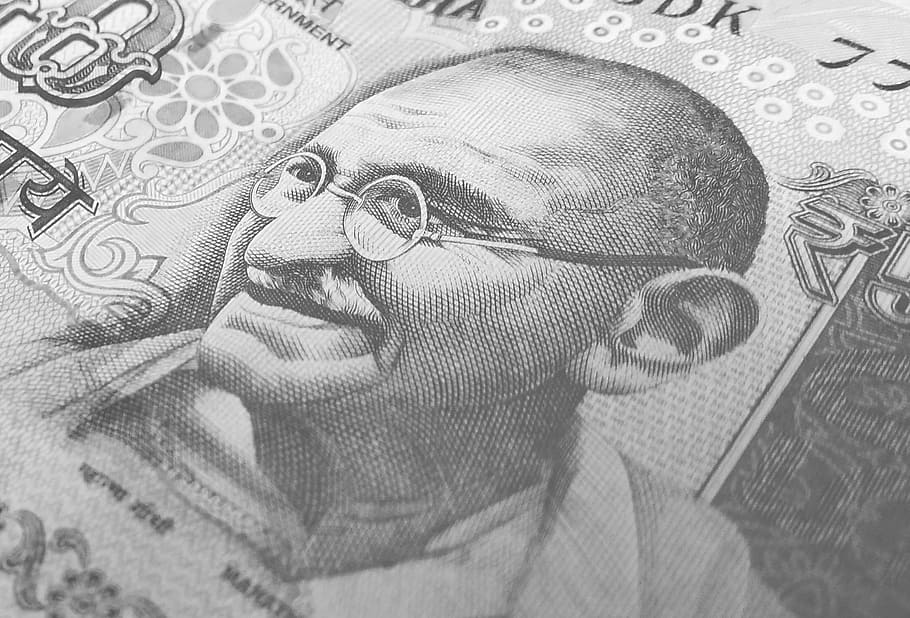
Bapu or Gandhi (2 October 1869 – 30 January 1948) on India’s currency. Courtesy: Creative commons
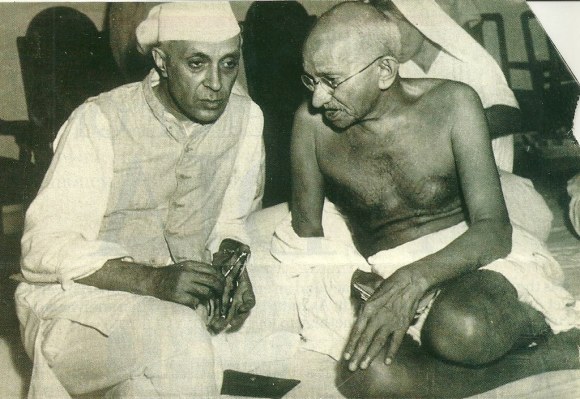
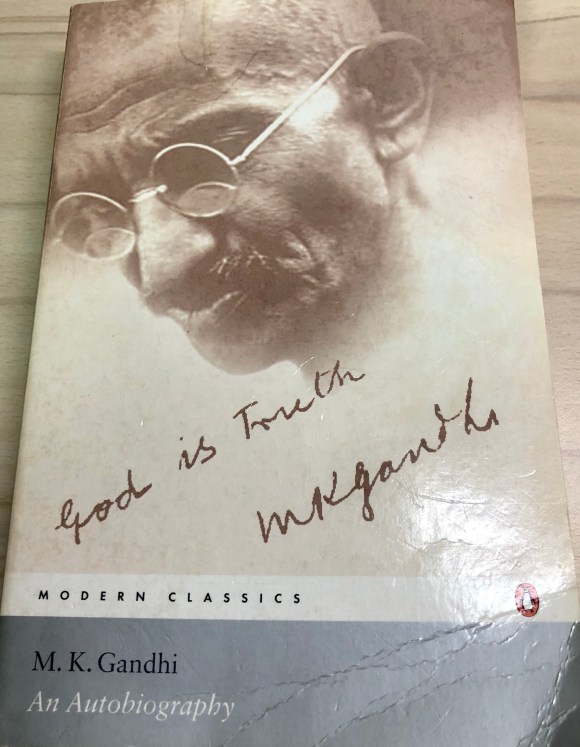
Gandhi with his call to combat violence and hatred with non- violence and truth is perhaps a voice that needs to be recalled out of history books on dusty shelves. His ideals cry out to be retrieved beyond the reach of currency notes, statues, buildings, names of parks and roads. Like Tagore, we may not agree with all his ideas but he put together an ideology which, perhaps, could be realised and implemented to make a better world across borders. If peace is forced by nuclear warheads and the ruthless are allowed a field day to govern any country because they have the might, perhaps it is time to question the efficacy of manmade constructs created through history, especially after the Second World War. Do we want bloodshed, chaos and the pandemic to be part of our daily news? Or, can we explore the philosophy of a man who mingled the best from the East and the West to create a system which has impacted many across the world? Leaders and great statesmen learnt from him — Martin Luther King Junior, Nelson Mandela, Al Gore, Barack Obama, John Lennon and Albert Einstein to name a few — just as he had learnt from greats across the world.
Today, in an attempt to recall the best in Gandhi’s philosophy, we wanted to present to you a selection that tries to connect us with his ideals — give a glimpse of his dreams that might have led to a better world if we only had listened and acted. Of the pieces we are showcasing here, some have painted a world that needs a Gandhi while others have written what they imbibed from his ideals into their own lives. Can we ride on the crescendo with these voices to achieve a better future for our children by embedding and internalising his values?
Interview
Santosh Bakaya interviews Tushar Gandhi, great-grandson of Mahatma Gandhi. Click here to read.
A poem relooking at Gandhi’s ideology in the present context, written in Manipuri by Thangjam Ibopishak and translated by RobinS Ngangom. Click hereto read.
Michael R Burch wrote this poem under the spell of the famed “I Have a Dream” speech by Martin Luther King Junior, an ardent practitioner of Gandhi’s ideology, a student and disciple of the Mahatma. Click here to read.
Fiction
In Bapu, Denied, Sunil Sharma pulls Gandhi down from a pedestal and explores his ideals in the current world. Clickhere to read.
From our treasury, Debraj Mookerjee reflects on how syncretism impacts greats like Gandhi, Tagore, Tolstoy, Emerson, Martin Luther King Jr and many more. Click hereto read.
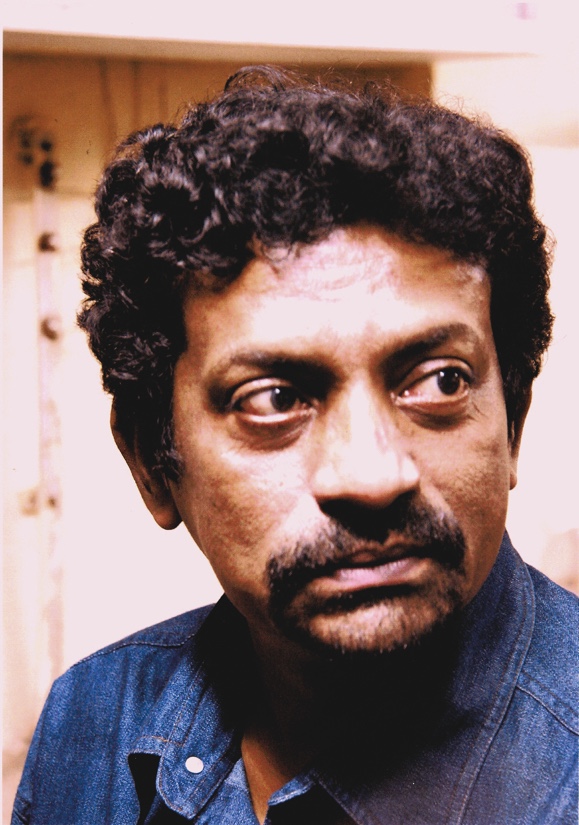
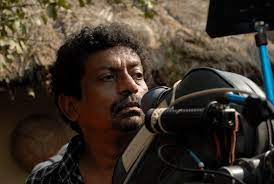
Goutam Ghose is a well-known award-winning film director, scriptwriter and even actor. He has been the only Indian to have received the Vittorio Di Sica Award from Italy in 1997 and was awarded the Knighthood of the Star of the Italian Solidarity in July 2006. Ghose has won fifteen National Awards, besides Filmfare Awards and a number of international awards like Silver Balloon, Nantes Film Festival, UNESCO Award at Venice, Golden Semurg at Tashkent, Fipresci Award and Red Cross Award at Verna Film Festival.
But did you know he has also authored a number of books? Just as he bridges borders with his poetic films that touch the human heart with a range of emotions, he does the same with his books. He takes up burning issues with artistry, never inciting with rage or hatred but conveying by his skill with the camera and words. He has created a world without borders with his transcontinental outlook and approach.
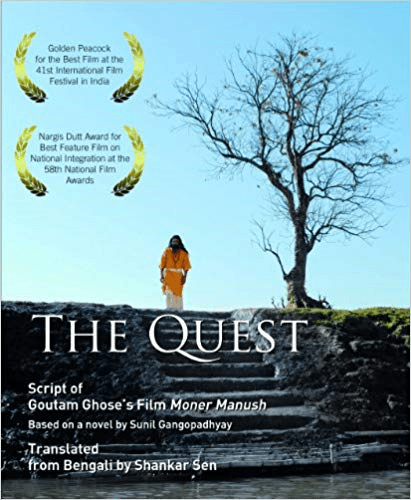
His reaction to the Ram Janmabhoomi riots was Moner Manush(2010), a film based on Lalon Fakir’s life, knitting together the best in Muslim and Hindu traditions instead of filming the clashes and the violence. Published in English as The Quest (2013), the book is a powerful dramatisation with pictures from the film. The book, like the film, is also an emotional lesson in humanism. Based on Sunil Gangopadhyay’s novel on Lalon Fakir’s life, the film is beautiful. But the book allowed me to mull over the words, which have been translated by Sankar Sen. It is a book that needs to be read when casteism and religious divides take precedence over humanitarian values. By bringing these songs into translation to readers unfamiliar with Bengali, both Ghose and Sen have opened a world of love and tolerance to new readers, who will hopefully find the time to mull over the wisdom of these songs.
‘What was your caste when you came here,
What caste did you take on arrival, dear,
What would be your caste when it’s time to go --
Ponder and tell me if you know.’

-- Translated by Sankar Sen, from The Quest
His other book that traverses the silk route and journeys through China, Beyond the Himalayas(2019), transcends boundaries and fills the reader with a sense of exhilaration. It is based on his documentary of the same name. Both these recordings of their journey along the silk route are worth viewing and reading. They show humans are the same across all borders. The book, interspersed with lovely pictures of the landscape and mature writing pauses on history at the right junctures. The narration is poetic in both the book and the documentary.
Though Ghose claims that these texts and photographs capture memories of the film, both his books transported me to a different time and space. I saw the films after reading the books, but both were energising, emotionally charged and entertaining. The journey takes one through different parts of the world and gives a new perspective to a 4000-year-old route. Initiated and organised by Major Hari SinghAhluwalia and Deng Xiaoping’s son, the travels in Beyond the Himalayas took me across borders to areas I have never visited and now, I hope to visit post pandemic. Both the book and the film acquainted me with cultures that excite. And The Quest reinforced the belief, through the depiction of Lalon’s life, that humanism exists despite the degradations of history. That riots can be calmed with the soothing notes of Lalon’s lyrics, rich in wisdom, would be a win for the human spirit.
Like all great artistes, Ghose speaks in beautiful poetic sentences about concepts that touch the human heart and imagination. In this exclusive, he speaks not just about his film-books, but about the real journey and issues he is facing through the pandemic, including the delay of his film with an Italian male lead and his new short film on the current times, Covid-worn and waiting…
You are a very well-known film director, cinematographer, and music director. You have directed award winning Bollywood and Tollywood movies. Normally books come before films but from two of these films, you have made books. Why did you go in for making books of the films?
I have loved books since my childhood. The shape and form of it, the touch and smell of a book fascinate me. They will never die even if we read on the screen rather than by turning pages of a physical object. A certain sense of the sacred has surrounded books from civilisations’ inception. In cinema, be it fiction or non-fiction, we write a script at the pre-production stage. A film-book is all about times gone by — a book of memories, of both cyclic and linear time. My producer from Bangladesh, Habibur Rehman Khan, had liked the idea of film books and had published three wonderful books on Padma Nodir Majhi(Boatman of the Padma River, filmed in 1993), Moner Manush (filmed in 2010 ) and Shankhachil (Unbound, filmed in 2016) in Bengali. Niyogi books of India has published a beautiful pictorial English version of Moner Manush as The Quest and also Beyond the Himalayas, my journey along the Silk Road. Another lovely film book is Pratikshan’s bilingual centenary tribute to Bismillah Khan (Bismillah in Banaras the film Goutam Ghosh made, 2017).
Is dubbing or subtitling the film not an easier option than doing a film-book?
Well, dubbing or subtitling is for watching a language film, but a film book is meant for reading. It becomes a part of your book collections. I have some wonderful film books published from Europe and United States.
Moner Manush is based on Lalon Fakir’s life and on the novel by Sunil Gangopadhyay. Why did you feel there was a need for a separate book after you made a very powerful film on it?
Lalon Fakir is an eternal savant. Scholars have been doing research on Lalon’s life and philosophy since long. It is heard that Lalon was an illiterate man. But going through the words of his songs and the implied significance, it seems as if he was an erudite scholar tutored in an age-old system of education. His faith was not guided by any particular religion, rather it could be said to be comprised of the mysticism of Sufi and the love and forgiveness of Vaishnavism and the liberalism of the tantric sect of Buddhism. My film on Lalon fakir is research on this great man aswell. The Bengali film book contains important articles by scholars besides the script, reviews and memoirs.
Do you feel that the message of Moner Manush is relevant in a world beset by not just divides but even a pandemic? Is there something we can learn from the story?
Yes, of course the message of Moner Manush is even more relevant in today’s intolerant world, a world of greed and opportunism. The pandemic has victimised the togetherness of the human race but how can we survive without empathy? I don’t know how good the film is, but Moner Manush will serve as a gospel to those who revere humanity.
Lalon says as his own introduction “I am a human.” How important is that for humankind to see themselves as humans over titles of caste, profession, and economics?
The baul (minstrels in Bengal) community had renounced all recognised institutions of religion and revolted against long established rites, customs and faiths. Breaking down the barriers of the narrow confines of communal faith, they had found a large expanse under the sky which had served as a bountiful meeting place of many religions. Under that open sky, Lalon had found the truth in Humanism.
Lalon dreamt of a borderless world. Do you think adopting his outlook can change the outlook of nations which draw borders between the species? Do you think it is implementable at a personal, national or international level?
I think all mystics believe in borderless space of Earth where all centennial beings live in peace and harmony. But the wheel of time had moved in the direction of Divide and Rule. John Lennon’s Imagine has become the iconic song on the dream of a borderless world. It may have been a failed dream, but I confess it might have been one I shared growing up in India and will cherish till the last breath of my life. Let it be a dream and a wonderful utopia.
Beyond The Himalayas was first a documentary film. How long was it and when was it screened? How many episodes is the film?
Beyond the Himalayas was made as a documentary film during our expedition through the Silk Road in 1994. The final edited version is four-and-a-half hour long. It was shown in Discovery Channel in five parts in the late nineties. A shorter version was screened in BBC as well. The Indian national TV had screened a Hindi version of all five episodes.
The book seems to cover lesser than the documentary. Is that true or do the visuals/ music just seem to impact us more? Why did you leave out Pakistan?
Well watching the film with arresting visuals and absorbing the soundtracks of the trail is a linear viewing of our journey along the fabled Silk Road. It is very, very exciting indeed. But the film is also a journey back in time with many references and anecdotes from history. For instance, while showing the travel through the deadly Taklamakan desert, I referred to Sven Hedin’s(1865-1952) expedition of the region. I quote: ‘The first European to map this desolate region was the Swedish explorer, Sven Hedin. His first expedition in 1895 was very nearly his last. The local guide supplied enough water for four days in the desert instead of ten requested. When the caravan lost its way, the guide was the first to die. The others became insane with thirst, drinking anything — even Sheep’s blood and camel’s urine. By the fifth day, the men, camels and other livestocks were all dead except for Sven Hedin and one other man. Hedin writes in Through Asia, “If I was doomed to die in the sand, I wanted to be properly attired. I wanted my burial clothes to be both white and clean.” But fate was on its side. Spying the dark green side of an oasis, he dragged himself to safety. “I stood on the brink of a pool with fresh cool water, beautiful water. I drank, drank, drank time after time. Every blood vessel and tissue of my body sucked up the life-giving liquid like a sponge.”’
Here the film-book helps the readers. One can refer back to the time past and time present more deeply to understand time as a metaphor of history.
How many days were you on the road? What was the experience like?
We were out for almost ten weeks covering a distance of 14,000 kms. The journey was fascinating for the entire team. There can be no journey more enchanting than the route we took. The collective trove of memories has made the Silk Road so memorable. We had to negotiate extreme weather conditions in Central Asia and Tibet. In a single day, we experienced two extremes. While negotiating the desert, temperatures rose to 48 degrees Celsius, and by nightfall when we pitched camp at Tianshan mountains, the temperature fell to 2 degrees. The situation is almost like the scenes of Satyajit Ray’s Goopy Gyne Bagha Byne — desert to snow in the blink of an eye.
Did you travel through the part of the route Marco Polo used? Did you find it much different from what you had imagined?
Well, the travels of Marco Polo described the wonders of the silk road, cities far greater than his own and a world more significant than anything imagined by the insular backward Europe of the thirteenth century. But he was a late traveller. The silk road was one of the greatest trade routes in history and men had already been travelling along for 4,000 years. Before sea routes were discovered in the fifteenth century, this trans-Asian highway was the sole link between the East and the West. It ran from Xian in China to all the way to the Mediterranean. There were many tributaries to the mighty river, not least of which were caravan routes across the Himalayan mountain range between India and Central Asia. We could not follow the planned route through Pakistan and Afghanistan to Central Asia via Khyber Pass because of the civil war. The government of India did not want us to take such risks. All the members of the expedition, including the jeeps and equipment, were flown from Delhi to Uzbekistan on 18th May, 1994.
With the silk route being revived, do you think this film has significance?
Xuanzang took back over 600 Sanskrit text. Courtesy: Creative Commons
Yes, the film is still significant because it carries the memories of time. We were the first group of travellers after many, many years to cross three new republics after the collapse of Soviet Union and a vast territory of China. Now, the route is open to tourists, and I was told that many travel packages are available all along the mighty river and its tributaries. I would like to revisit the cauldron once again to understand how those multi-ethnic republics have survived the onslaught of modern times with its regional rivalries, new mafias, and consumerist pressures. I wish the new silk route trade brings peace and harmony in this intolerant world. Travellers today can choose from many trails as we did during our expedition. My favourite was Xuanzang’s (602-664 AD) trail. I quote from my book. “At 27, he set out his pilgrimage until he was 43. Unconvinced by the translations available in China, he sought the true teachings of Buddha in the holy lands of India. He walked alone into the great unknown, crossing the world’s greatest deserts and its highest mountain ranges. He faced death many times and his courage and equanimity impressed kings, bandits and barbarians alike. He lectured at monasteries and debated with learned monks and by the time he reached his destination, his reputation as a great sage had already preceded him. Xuan Zhang was not the only Chinese pilgrim to visit the homeland of Buddhism, but he was the most important. Like a death star that keeps releasing energy for thousands of years, he continues to be a valuable source of knowledge and inspiration.”
You are making a new film I believe rooted in the present pandemic. What is it about? Will you be making that too into a book?
My 2019 film Rahagir or Wayfarer, starring Adil Hussain, Tillotama Som, Neeraj Kabir, had travelled to many festivals and received awards and appreciations but unfortunately, we could not release it in public theatres due to the pandemic. Another multilingual film is also stuck for obvious reasons. I could finish the Italian shoot in January 2020, but the Indian shoot did not happen till date. It is so frustrating.
Meanwhile, I have finished a short film Memories of Time on pandemic days. It is about a happy, cultured couple living in the heart of Kolkata. Like everyone else, they are caught in the claustrophobia of the pandemic and the consequent lockdown. The film travels back and forth in time as they try to navigate through these hard times and search for fresh air and sanity. The film is an exploration of their fears, realisation and going back to nature. It’s from my own experience — how I have navigated 2020 and moving through the course of this pandemic. I think one can really publish a film-book because it has so many elements, the fear of people and the inhuman approach of the human race and then the migrant labours — their terrible conditions, the psychological problem of people confined inside their home and the most importantly, the problem of the children. They are confined as if in a prison. They can’t go to school. They can’t really meet their friends. I think this could be a very, very interesting material for a film-book.





 Borderless