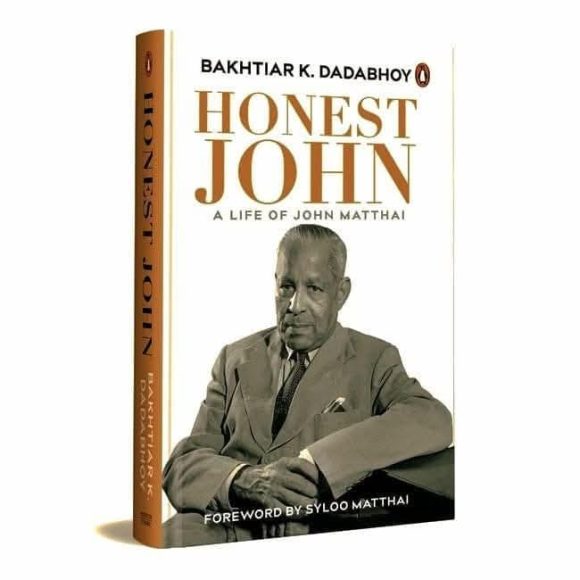
John Matthai’s name has little resonance for today’s generation, but he was one of the brightest stars in the firmament of his time, and even in retrospect. He cultivated many gardens, starting his life as a lawyer and later becoming a professor, administrator, banker, corporate leader, and Minister. In this delightful biography of Matthai, whom Nehru called “Honest John”, Bakhtiar K Dadabhoy tells us of the different hats worn by him. For his students in Madras, he was a shy professor who was one of the most lucid exponents of a dry subject like economics. JRD Tata would always turn to him for sagacious advice.
For Nehru, who greatly respected his ability and integrity, Matthai filled two cabinet posts, even though the parting was somewhat unpleasant when Matthai resigned as Finance Minister, as he feared that the newly created Planning Commission would be a ‘parallel cabinet’ and would be in perennial conflict with his department. CD Deshmukh, the redoubtable civil servant who succeeded him as FM in the Matthai Memorial Lecture said: “He was one of the most cultured products of India, having a perceptive and thoughtful mind, a sobriety of judgment of men and affairs, a rare concern for principles, scholarliness, with its flames kept lit by regular reading.”
He was the first Indian to get his DSc from LSE in 1916 and worked under Professor Sidney Webb, a Fabian socialist, who was at the height of his powers and fame. Though Webb was his guide, he was at no time a Leftist or socialist Professor of Economics. He had a thorough understanding of what free enterprise could do. He was one of the principal authors of the Bombay Plan, a memorandum submitted to the government in 1944 led by Tata, Birla and Thakurdas.
The Bombay Plan represented a search for a new style of capitalism that would chart a middle path between state-led planning and private enterprise. This was in the background of a fierce intellectual debate fought in England between two towering economists, Hayek and Keynes.
While Keynes advocated active state intervention and the desirability of state-funded programs, Hayek favored non-interventionism and free trade. It was to the credit of Matthai that the planners envisaged a mixed economy, in which the state and the private sector would play a complementary role, thus proposing a visionary compromise between two systems, free market and state control.
Ironically, he resigned as Finance Minister after failing to reconcile with Nehru on the setting up of the Planning Commission. According to historian Rakesh Ankit, it was an individual and an institution that made the widening differences unbridgeable. It was Trone, born to Jewish parents and an engineer with General Electric involved in an electrification drive in the USSR, who impressed Nehru with his All India Plan of a ‘managed mixed economy’ that was sufficiently controlled to ensure equity.
While Nehru was taken by Trone’s view that a Planning Commission would reflect regional aspirations and diversity, and his view that Indian capitalists were only out to make profits, Matthai did not share his enthusiasm. In a letter to Nehru, he wrote that the Indian economy was like a “damaged ship and our job is to repair it and not as naval architects but experienced, competent workmen.” Nehru responded by defending planning as ‘a positive active policy’, giving examples of planned progress made by England, Germany, Italy, the Soviet Union, and Japan since the war.
Unlike Patel, who was a hard-headed realist, Nehru loved the abstract argument and delighted in drawing generalised inferences from situations that offered the slightest provocation to his nimble mind. Speaking six years later, after the Planning Commission was formed, Matthai said that “the planning commission has become a body of amateurs, with whom, for all practical purposes, the final decision rests in matters of economic development.” Most of Matthai’s fears about the Planning Commission proved to be well-founded. Critics like Kripalini and Rajagopalachari openly showed their displeasure. Rajaji founded the anti-socialist party.
Dadabhoy also gives a glimpse of how Liaquat Ali Khan, as FM in the interim government, proposed a business profits tax, an increase in corporate tax, a dividend tax, capital gains tax and a high-powered tribunal to deal with tax evasion. Matthai was the only non-league cabinet minister to defend the budget in public. But Patel and Rajgopalchari, who made no secret of being pro-capitalist, saw the budget as a way of harassing businessmen.
Ventilating his frustration with the hegemony planning enjoyed, he wrote to Nehru: “I fear a church is growing around the God of Planning”. However, planning remained the master narrative, and the plans laid the foundation for infrastructure in sectors like steel, fertilizers, cement and chemicals, promoting agricultural self-sufficiency and focusing on inclusive growth and social justice.
Wavell noted in his diary on 5th March 1947, “Nehru, Patel & Bhabha find that the budget is not popular with their big business supporters and are trying to rat or hedge.”Matthai abolished the capital gains tax and reduced super taxes. Pandit Kunzru doubted, “If such reductions would lead to greater productivity. A time has come if free enterprise is to be given a free hand or the country should opt for a socialist economy.” It was only a decade ago that Prime Minister Modi abolished the Planning Commission without any discussion.
Matthai had an unconventional approach to budget presentation. He is the only railway minister to deliver a budget speech without a prepared text. In 1950, he chose to deliver his Union Budget speech extempore. Dadabhoy also brings out unknown facets of Matthai’s personality. He approached Nehru and Patel to bail out his son, who had run over someone while driving his car in Allahabad. Nehru was reluctant to help, but Patel intervened, and Matthai’s son was bailed out and quietly sent to England to escape the net of law. Matthai was known for his honesty and uprightness, but his fondness for his son blinded him to those values.
Matthai, despite his serious differences with Nehru on the issue of the Planning Commission, was a great admirer of Nehru. He wrote after his first meeting with him, “If he ever asked me to go to prison with him, I should find it difficult to refuse.” Mathai considered his long association with the Tatas to be the happiest period of his life. Sir Homi Mody, a Tata luminary later to become the governor of Uttar Pradesh was known for his wit. Homy contended, “Matthai had all the advantages of face, figure, manner, and voice and invested everything he said with an air of profundity. Matthai was a technocrat of different timber who did not mix personal respect with policy differences.”
Though trained under Fabian socialist, Sydney Webb, whom Nehru adored, he did not jump into the trap of socialism. He was a pragmatist who looked at India’s damaged ship, post-Partition, through the lens of competent workmen. Judging a visionary like Nehru and a pragmatist like Matthai can be a nightmare for any biographer. However, Dadabhoy skirts the issue with skill.
.
Professor Satya Narayan Misra is a distinguished expert in Public Procurement & Contracts with over three decades of experience in the Indian Economic Service & Indian Defence Accounts Service. He has made significant contributions in drafting a manual for defence procurement and bolstering self-reliance in critical technology. He has authored seven influential books and published 127 research articles, including 18 in prestigious Scopus-indexed journals such as the Economic and Political Weekly (EPW) and Defence Studies (UK). He looks at macroeconomic issues through the lens of Constitutional expectations. He is a Professor Emeritus and a sought-after speaker on public policy, budget, development issues, and Constitutional Cases.
.
PLEASE NOTE: ARTICLES CAN ONLY BE REPRODUCED IN OTHER SITES WITH DUE ACKNOWLEDGEMENT TO BORDERLESS JOURNAL
In Did He Ever?,Rhys Hughes gives fun-filled verses on Lafcadio Hearn, a bridge between the East and West from more than a hundred years ago. Clickhere to read.
Dolly Narang muses on Satyajit Ray’s world beyond films and shares a note by the maestro and an essay on his art by the eminent artist, Paritosh Sen. Clickhere to read.
Poetry, prose — all art forms — gather our emotions into concentrates that distil perhaps the finest in human emotions. They touch hearts across borders and gather us all with the commonality of feelings. We no longer care for borders drawn by divisive human constructs but find ourselves connecting despite distances. Strangers or enemies can feel the same emotions. Enemies are mostly created to guard walls made by those who want to keep us in boxes, making it easier to manage the masses. It is from these mass of civilians that soldiers are drawn, and from the same crowds, we can find the victims who die in bomb blasts. And yet, we — the masses — fight. For whom, for what and why? A hundred or more years ago, we had poets writing against wars and violence…they still do. Have we learnt nothing from the past, nothing from history — except to repeat ourselves in cycles? By now, war should have become redundant and deadly weapons out of date artefacts instead of threats that are still used to annihilate cities, humans, homes and ravage the Earth. Our major concerns should have evolved to working on social equity, peace, human welfare and climate change.
One of the people who had expressed deep concern for social equity and peace through his films and writings was Satyajit Ray. This issue has an essay that reflects how he used art to concretise his ideas by Dolly Narang, a gallery owner who brought Ray’s handiworks to limelight. The essay includes the maestro’s note in which he admits he considered himself a filmmaker and a writer but never an artist. But Ray had even invented typefaces! Artist Paritosh Sen’s introduction to Ray’s art has been included to add to the impact of Narang’s essay. Another person who consolidates photography and films to do pathbreaking work and tell stories on compelling issues like climate change and helping the differently-abled is Vijay S Jodha. Ratnottama Sengupta has interviewed this upcoming artiste.
Reflecting the themes of welfare and conflict, Prithvijeet Sinha’s essay takes us to a monument in Lucknow that had been built for love but fell victim to war. Some conflicts are personal like the ones of Odbayar Dorj who finds acceptance not in her hometown in Mongolia but in the city, she calls home now. Jun A. Alindogan from Manila explores social media in action whereas Eshana Sarah Singh takes us to her home in Jakarta to celebrate the Chinese New Year! Farouk Gulsara looks into the likely impact of genetic engineering in a world already ripped by violence and Devraj Singh Kalsi muses on his source of inspiration, his writing desk. Meredith Stephens tells the touching story of a mother’s concern for her child in Australia and Suzanne Kamata exhibits the same concern as she travels to Happy Village in Japan to meet her differently-abled daughter and her friends.
As these real-life narratives weave commonalities of human emotions, so do fictive stories. Some reflect the need for change. Fiona Sinclair writes a layered story set in London on how lived experiences define differences in human perspectives while Parnika Shirwaikar explores the need to learn to accept changes set in her part of the universe. Spandan Upadhyay explores the spirit of the city of Kolkata as a migrant with a focus on social equity. Both Paul Mirabile and Naramsetti Umamaheswararao write stories around childhood, one set in Europe and the other in Asia.
Do pause by our contents page for this issue and enjoy the reads. We are ever grateful to our ever-growing evergreen readership some of whom have started sharing their fabulous narratives with us. Thanks to all our readers and contributors. Huge thanks to our wonderful team without whose efforts we could not have curated such valuable content and thanks specially to Sohana Manzoor for her art. Thank you all for making a whiff of an idea a reality!
There is a word I’ve never been able to say. Just three letters in Mongolian—“ААВ” (father)—but for me, it’s the most difficult word of all. I’ve never called anyone by that name.
Duut in Mongolia. From Public Domain
I remember second grade in Duut Soum, one of the most remote and elevated villages in Mongolia. It was a small, close-knit place where everyone knew each other. My classmates and I had grown up together—from kindergarten to school, playing outside in the same familiar streets. Because there weren’t many children, each grade had only one class. Ours was one of the largest.
One day, our teacher assigned us to write a composition titled “My Father”. It was a simple assignment for most, but for someone who had never known a father, I didn’t know where to begin. For the first time, I asked my mother for help. I remember her thinking of her own father—my grandfather—and guiding me gently: “Write that when he comes home, it feels like a mountain’s shelter fills the house.”
I wrote exactly what she said and turned in my paper.
Later, our teacher read aloud one of the essays she liked best. To my surprise, she read mine. I was so embarrassed, I wanted to disappear from my seat. I still wonder why she chose it — maybe because it touched her, or maybe because it came from a child imagining what she had never experienced. When she finished, some boys asked, “How can she write about a father if she doesn’t have one?” Their words cut deeply. I didn’t cry, but I wanted to.
From that moment on, every assignment about “father” became something I dreaded. It felt unfair that schools continued to assign such topics, as if everyone had the same kind of family. In a world where many grow up without a father or mother, why do we continue to teach in ways that exclude them?
Despite it all, I’m endlessly grateful to my mother. She raised me without letting me lack for anything. Because I never had a father to begin with, I didn’t know what I was missing—until much later.
In 2022, I came to Japan as a student. It became one of the most beautiful periods of my life. I met many wonderful people, and one of them was Toshio-san.
As summer approached, I was researching places to travel. When I showed Toshio-san my list, he pointed to one place, Shimanto River. “That’s near my home,” he said. “I can help you get there.”
We arranged to meet at the library the following week. Punctual as always, he was waiting at the entrance. We planned to go on August 22, and he suggested we stay two nights instead of one. I agreed. He called a friend to find accommodations and promised to take me to the Pacific Ocean.
Later, he returned from a trip with brochures and snacks for me, but due to rising COVID cases, he suggested we postpone. “But I promise, I’ll take you,” he said. I would have understood if it didn’t happen, but just before classes resumed, he contacted me again. He opened his calendar and asked about October 29–30. I had no plans, so I said yes.
Before leaving, he added, “Oh, one more thing. Do you know Yuto Ishihara? He’ll join us.” I did. Toshio-san thought I might feel uncomfortable traveling alone, so he arranged a friend for me.
I counted the days until October 29.
When the day came, he called at 5:55 a.m., right on time. We picked up Yuto and headed toward Kochi. It was a warm, golden day. Our first stop was Umi no Eki in Toyocho, famous for fresh raw fish. Unfortunately, I dislike raw fish—and raw eggs too, which was part of the breakfast set. When I asked if it was boiled, Toshio-san laughed and explained that Japanese people enjoy mixing raw eggs with rice and soy sauce.
Still, I ate the miso soup and rice and watched the surfers nearby.
“Kochi is known for its waves,” he said, smiling.
We visited a cave near Muroto, one of Tokushima’s 88 pilgrimage sites, and passed through orange fields. “Do you like oranges?” he asked.
“Yes, I love them!”
He immediately called a friend to find the best ones and bought me two bags. I shared a few, then ate the rest happily. Watching me, he said, “What else do you like? I’ll get it for you!” He was sincerely happy to make me happy.
That’s when a thought crossed my mind: What would it have been like to have a father?
I had never asked myself that before. But seeing someone care so sincerely, someone wanting to make me smile, I couldn’t help but wonder: If I had a father, would he have been like Toshio-san?
We visited the famous Hirome Market in Kochi for lunch. I told him I liked karaage (fried chicken), and he got me several types to try. Later, we drove to Tosashimizu. On the way, he talked on the phone—I guessed it had something to do with fish.
By the time we arrived, the sun was setting. We went to Tosashimizu Geopark to see the sunset. Though we were late, the orange glow lingered, and the lighthouse in the distance glowed beautifully.
That night, we visited an elderly woman, nearly 100 years old, who gifted me handmade crafts and an eco-bag. Then we went to a guesthouse run by another friend. Dinner was elaborate, and though they had prepared sashimi, Toshio-san had informed them in advance that I didn’t eat raw fish. They made grilled chicken just for me.
It was then that I realized: that phone call earlier had been for me.
Another guest joined us—a friend of Toshio-san’s who showed me his collection of sea shells and marine fossils, each labeled and categorized. He even gifted me one as a keepsake.
At that moment, I remembered a Mongolian proverb:
“When your father is alive, meet people. When your horse is healthy, travel far.”
I had never been introduced to so many people before. This was what that proverb meant.
The next morning, we woke early to watch the sunrise. Words can’t describe its beauty—the waves crashing, the golden light spreading over the ocean and cliffs, the lighthouse standing tall.
We visited Kawashijima Island, where the sea was so clear we could see fish without any equipment. Later, we had lunch at another friend’s restaurant—a tiny, spotless place where I had the best omurice I’ve ever tasted. While waiting, another friend of his joined us—a lively woman who had worked in elementary school and was now a river master.
Although it was only a two-day trip, I met so many new people and visited countless beautiful places. It became one of the most precious memories of my life—when I truly felt how beautiful this world is, and how many kind-hearted people there are in it. In those moments, I found myself thinking, If I had a father, maybe he would have taken me on a trip like this, introducing me to his friends, just like this.
And in those moments, it felt like the wound I’d carried deep in my heart for 26 years had finally started to heal. The thought: What if I had a father?
Just be kind. Your kindness may fill someone’s emptiness. It may even heal a wound they’ve been silently carrying for years. Maybe, at that time, Toshio-san didn’t even realize how much of that space he had filled in me. But I truly wanted to say the word I could never say for so many years—father—to him.
Even though we were born in different countries, speak different languages, and live in different cultures, I found the father I had long searched for—in Japan. I haven’t seen Toshio-san since, but if I’m ever asked about my father, I will tell this story again and again.
Because sometimes, it doesn’t take blood to become family.
Sometimes, a kind voice, a shared meal, or a smile from the heart is enough to fill what we thought would always be missing. In a quiet corner of Japan, through simple acts of kindness, I found a sense of belonging—and perhaps, the most unexpected gift of all: a father’s love.
Odbayar Dorj is an international student from Mongolia currently studying in Japan. Her writing reflects on cultural identity, personal memory, and the power of connection across borders and generations.
.
PLEASE NOTE: ARTICLES CAN ONLY BE REPRODUCED IN OTHER SITES WITH DUE ACKNOWLEDGEMENT TO BORDERLESS JOURNAL
A few weeks ago, my daughter invited me to go on an outing with her and her helper. My daughter, who is deaf and uses a wheelchair, lives in a group home in Osaka. She is becoming more and more independent, but she does have kind people around her to give her support, including a helper who is also deaf and uses Japanese Sign Language.
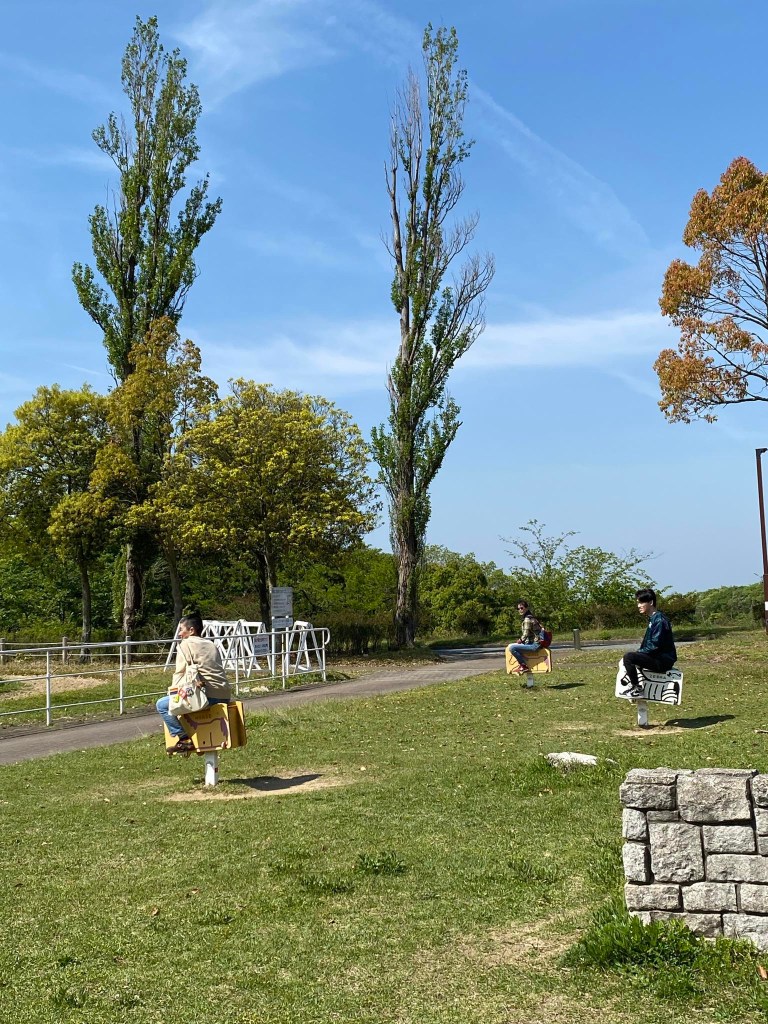
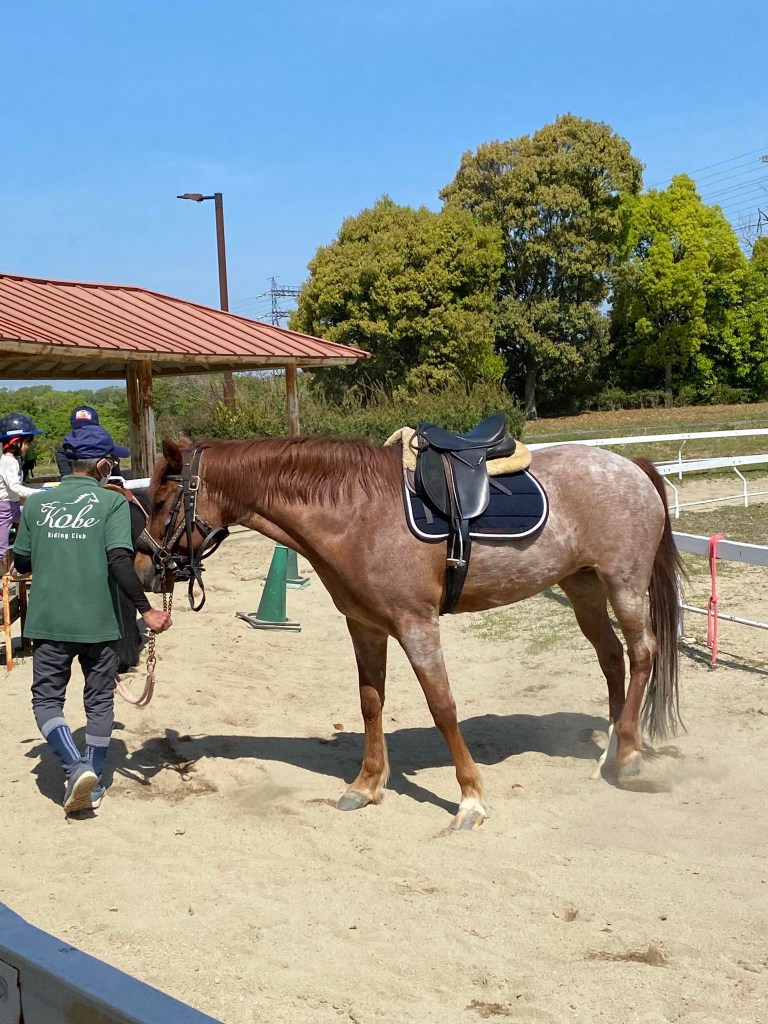
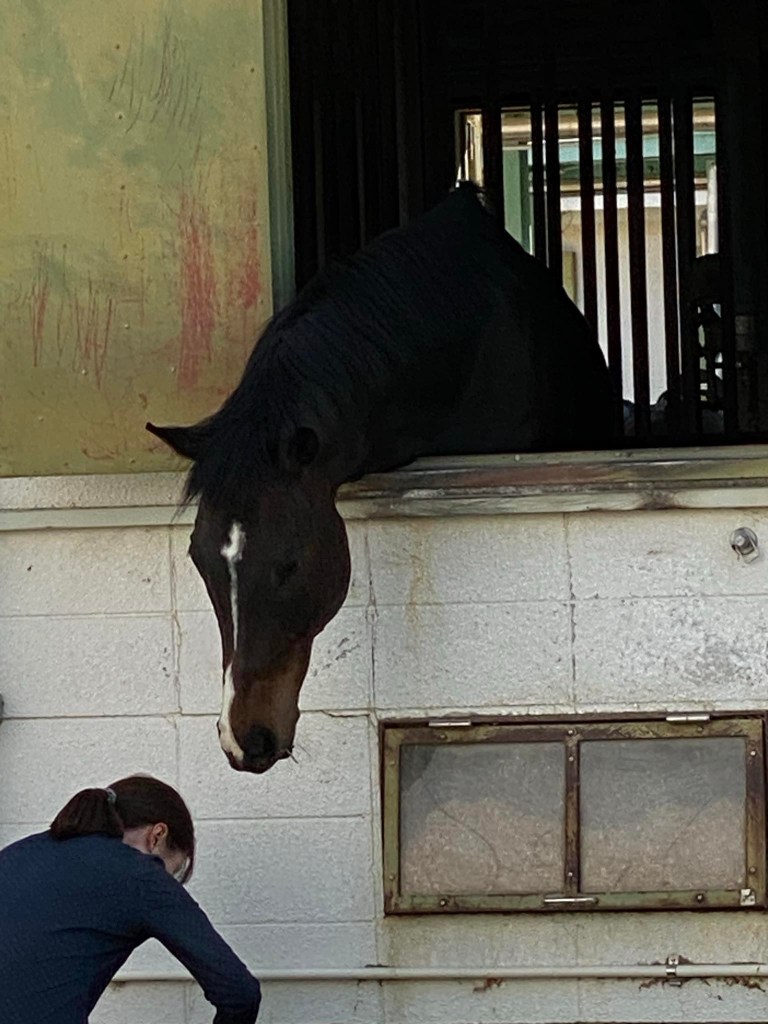
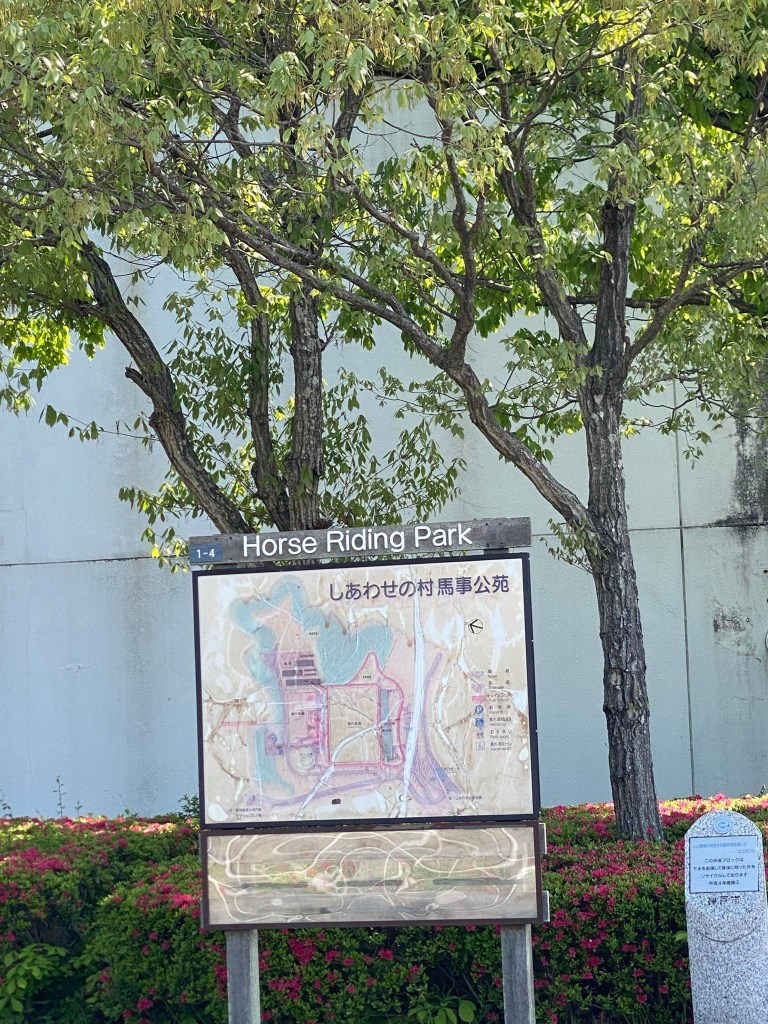
Actually, my daughter invited our entire family to accompany her and her helper on a weekend to Happy Village, a recreational facility in Kobe especially for persons with disabilities. We had visited the onsite stables years ago, and our twins had ridden around a ring on ponies. Having such pleasant memories of the place, I looked forward to visiting again.
My husband declined due to a golf tournament, and my son, who had just entered college as a graduate student, was concerned that he would have too much homework. My daughter informed me that her brother would meet us for a meal.
Although I was looking forward to seeing my daughter and getting to know her helper, I did have a few concerns. For one, I don’t have the confidence to drive in the megapolises of Japan. Kobe, for example, is a confusing city with many ramps, overpasses, and one-way streets, not to mention the traffic. I knew that Happy Village was on the outskirts, however, and I thought that maybe I could get myself there by car. I could have gone by bus or train, but it would have taken me two or three times as long to get there.
In addition, I was a bit worried about communication. I can converse with my daughter, more or less, in Japanese Sign Language, but my signing is not perfect. Since leaving home, my daughter’s vocabulary has expanded, and her signing has sped up. When among fluent JSL users, I can’t always follow the flurry of their fingers. Nevertheless, I know that my daughter often struggles to keep up with what hearing people are saying, and I thought it would be a valuable experience.
A couple days before, my daughter sent me a Google Maps link to the restaurant where we would meet. We would have a meal and then proceed to Happy Village. On the day of, I packed a bag, filled my car with gas, and set out. I had no idea what we would be doing. On trips with my husband, every hour was pre-planned. I thought it would be nice to just go with the flow. I was looking forward to seeing my two kids.
I managed to arrive at the restaurant with ten minutes to spare. I staked out a table and sat down to wait. While perusing my phone, I came across a link that I thought would interest my son. I sent it to him. He replied with a laughing emoji, followed by “Are you coming to Kobe tomorrow?”
A cold sweat broke out over me. “Tomorrow? I thought it was today.”
“She told me tomorrow,” he texted back.
“Oh, no.” I quickly scrolled through our communications and confirmed that we were indeed meeting him the following day. It was now ten minutes after the time I had agreed to rendezvous with my daughter at this restaurant. Or so I thought. Was I supposed to meet her tomorrow? Would I have to find a hotel for the night?
Panicking, I sent my daughter a text and a photo of the restaurant. “I’m here!”
She texted back that they would be a little late, and that there would be six of them.
Six! I had thought that there would only be the three of us. Now I was feeling really intimidated. I am an introvert, and I know my limits. The more people there are around me, the more I retreat into myself. Plus, there was the issue of communication.
Finally, my daughter and her entourage arrived. I met her helper, the helper’s husband, the helper’s twin sister, an older woman with cropped hair and rainbow socks, and a young man about my daughter’s age. We got down to the business of ordering food via the tablet on the table, and sorting our basic facts, such as my age, and that we would be meeting my son the following day at Sannomiya Station.
Sannomiya Station! That was in a busy district in the heart of Kobe. I hadn’t known that we were actually going into the city. I managed to sign that I was scared of driving in such an unfamiliar place. I was beginning to realise that I should have pried more details about this trip out of my daughter beforehand.
Three hours later, I followed the others in my car to Happy Village. My daughter and I were in one room, the others in their own rooms. By this time, my social battery was waning. I was ready to take a bath and curl up in bed with a book. My daughter, who is an extrovert, went down the hall for a couple more hours of JSL conversation and cake with her friends.
The next morning, we checked out of the hotel and stopped by the stables. Just as before, children rode ponies around the ring. My daughter zoomed around in her wheelchair, and the rest of us tried to keep up.
Next, we dropped by the helper’s apartment. I was invited to leave my car in the parking garage, and ride in the car with the others, for which I was very grateful. As we headed toward Kobe, I noted how quiet it was inside the car. No one tried to talk or sign. It would have been dangerous for the driver to take his hands off the wheel to form words, or to look away from the road for too long.
We finally connected with my son, and went to a restaurant. Because there were so many of us, we split up. My kids and I sat at one table, and the others sat at another. I brought my son up in English, and it remains our lingua franca. After my son and daughter exchanged a few words in sign language, my son and I talked a bit about the recent political situation in the United States. Although my daughter was curious, I couldn’t quite explain to her what we were talking about in JSL. I encouraged her to write notes to her brother. They communicated by pen and paper for a while.
After lunch, my son went back to his apartment to prepare a PowerPoint for his class the next day. The rest of us wandered around the city, window-shopping, until it was time for me to leave. My daughter wasn’t ready to go home, so the helper’s husband offered to give me a ride back to my car.
On the way, he said, “When you were talking to your son, your daughter didn’t understand.”
“That’s true,” I conceded. “We were speaking in English.” Although I had wanted to bring up my daughter in English, circumstances made it too difficult. Yet, my son was the only one in our family that I could freely communicate with in my native language.
“I felt sorry for her,” the helper’s husband continued.
I nodded. I had an idea of how my daughter felt. Although I had lived in Japan for many years, I often didn’t fully understand what people were saying around me.
He activated an app on his smartphone, which was affixed to the dashboard, which rendered spoken words into text. He suggested that my daughter could use such an app. I tried to explain that she already knew how to use the app, but for some reason she hadn’t tried to employ it in the restaurant.
I guess I could have been offended by his words, but instead I was moved. I was happy that my daughter was surrounded by people who cared so much about her, who were looking out for her best interests. How wonderful that she had finally found her tribe.
Suzanne Kamatawas born and raised in Grand Haven, Michigan. She now lives in Japan with her husband and two children. Her short stories, essays, articles and book reviews have appeared in over 100 publications. Her work has been nominated for the Pushcart Prize five times, and received a Special Mention in 2006. She is also a two-time winner of the All Nippon Airways/Wingspan Fiction Contest, winner of the Paris Book Festival, and winner of a SCBWI Magazine Merit Award.
PLEASE NOTE: ARTICLES CAN ONLY BE REPRODUCED IN OTHER SITES WITH DUE ACKNOWLEDGEMENT TO BORDERLESS JOURNAL
Poems of Longing by Jibananada Das homes two of his poems translated from Bengali by Professor Fakrul Alam. Clickhereto read.
Four cantos from Ramakanta Rath’sSri Radha, translated from Odiya by the late poet himself, have been excerpted from his full length translation. Clickhere to read.
Naramsetti Umamaheswararao takes us back to school. Click here to read.
Conversation
Ratnottama Sengupta talks to filmmaker and author Leslie Carvalhoabout his old film, The Outhouse, that will be screened this month and his new book, Smoke on the Backwaters. Clickhere to read.
On our third morning in the Lowveld, my travel companion and I woke up at 4:00 A.M. for our third game drive in Kruger National Park. We’d signed up for this over a year ago when we first booked ourselves on this group tour. We didn’t know then that it would be raining.
The other ten members of our group had chosen other options. Some were planning to hang out at the lodge, probably anticipating a day of lounging by the pool while kudu and impalas lingered nearby nibbling grass. Another cohort had signed up for a different sightseeing tour, involving waterfalls, with a later starting time. My friend and I were here, however, for the animals.
She and I had first met in Japan. We’d lived in the same town. Our kids had gone to the same schools, and we’d taught at the same universities. When she had moved back to Australia, we’d remained in touch. Both of us loved to travel, and both had dreamed of going on safari in Africa. Neither of us knew of anyone else who shared the same dream, so we vowed to go together. I had imagined that it would be years before I would be able to afford such a trip, but a little over a year ago, she’d come across a great deal. And now here we were, in South Africa.
Half-asleep, we quickly dressed, stuffed our sack-breakfasts into our backpacks, and stumbled out the heavy wooden door into the still dark morning. A light rain was falling. Although signs warned of roaming wild animals, and we’d seen plenty, it seemed safe to walk up to the office building to find our driver. His Toyota safari truck was already parked outside. After a few minutes, he appeared, and we climbed into the back middle seats of the open-sided truck, hoping to stay clear of the rain.
Our driver and guide, a local who drove 20-40 kilometers per hour over the speed limit and doled out one interesting animal fact per sighting, handed us lined ponchos to keep us warm on the forty-minute drive to the park. Then we zoomed off, passing pecan and macadamia groves, on the way to Numbi Gate. People were already waiting at bus stops along the way, probably on their way to work.
As the sky gradually lightened, we could make out the names of the shops along the road: Dragon Flame Car Wash, No Error Driving School, Drama’s Sneaker Wash, God is Able Beauty Salon, and an alarming number of small businesses offering funeral services.
When we finally reached the entrance to the game park, the guide parked and got out to register. Although the parking area had been crowded the previous two days, on this morning, we were the only ones there.
We had seen quite a few animals over the past two days, including elephants, giraffes, zebras, a rare white rhino, and a mama lion and cubs, albeit from a distance. We rattled off our wish list to the guide.
“A hippo out of the water,” my friend said. “And a male lion.”
I had been lucky enough to see both on a previous trip to Rwanda, but I had yet to see a leopard, one of the so-called “big five,” or a cheetah.
“When is the last time you saw a leopard or a cheetah?” I asked.
“I saw a leopard a week ago,” he said. “And a cheetah yesterday.”
He warned us, however, that because of the rain, we might not see anything at all. The animals might be seeking shelter. We understood and accepted that.
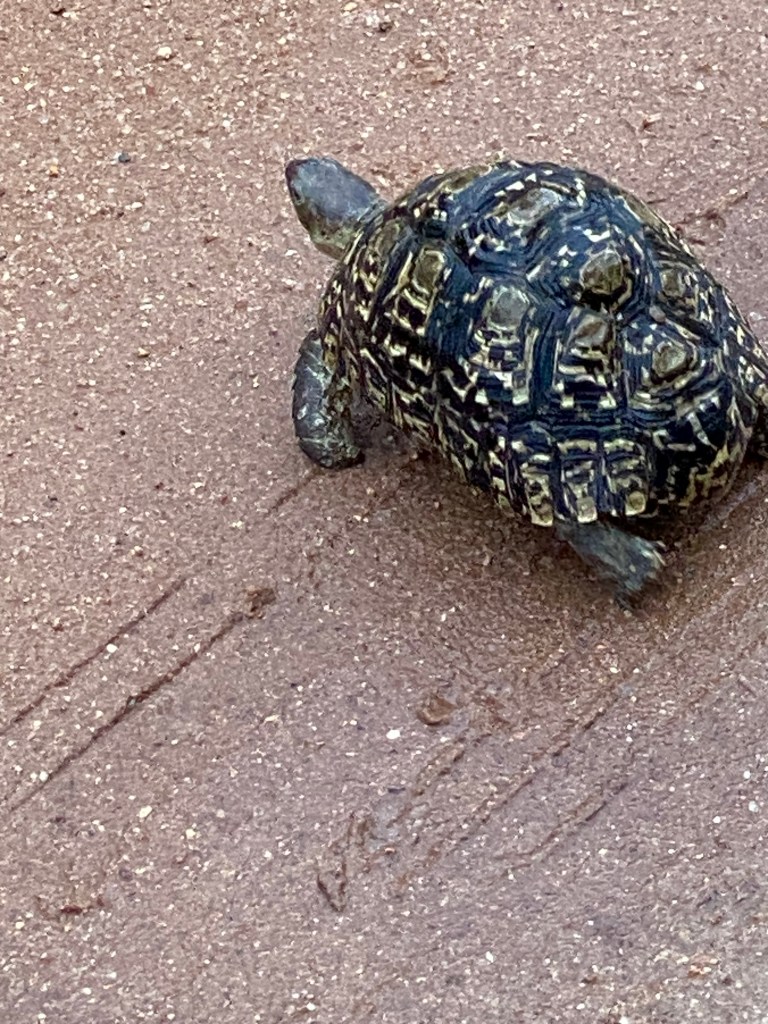
A few minutes into our drive, he braked the truck and pointed out a turtle making its way across the road. Understanding that this might be our biggest sighting of the day, I took a video of the creature with my smartphone. Soon after, we spotted some impalas. Although we’d seen so many the two days before that the guide no longer stopped for them, on this morning, we gave them our full attention.
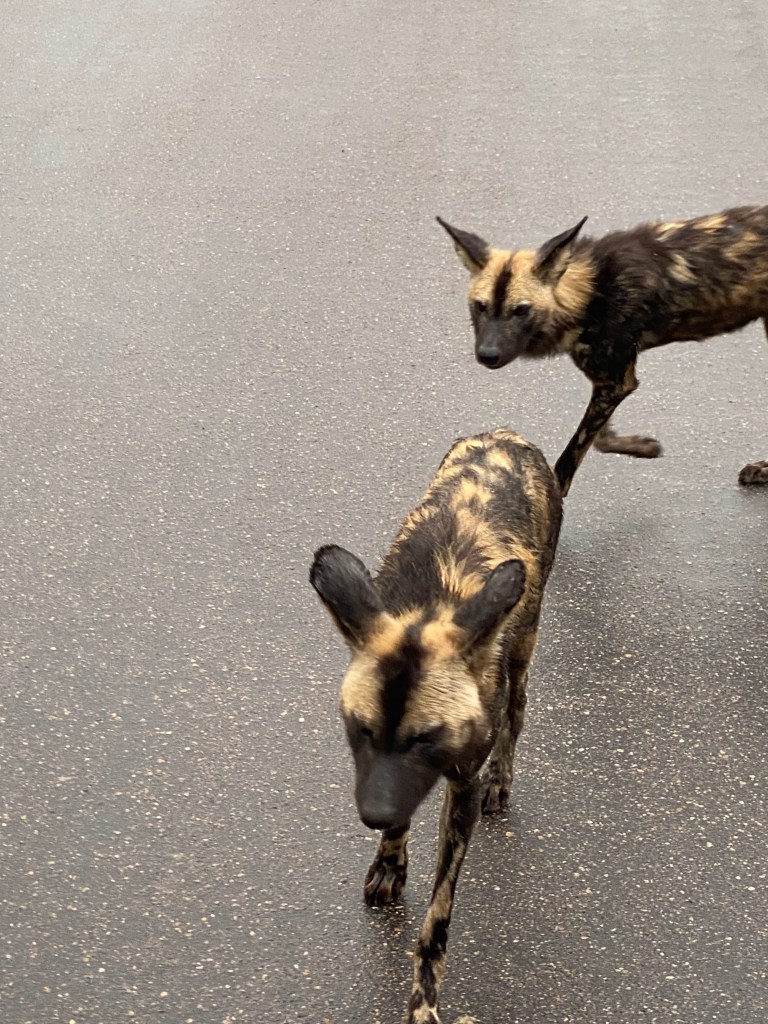
And then we saw something unusual—a pack of African wild dogs alongside and in the middle of the road. I had never seen canines with such colouring. Their fur was brown and black, almost tortoiseshell. These dogs were featured on a signboard at the park entrance indicating the day’s sightings.
“There are only about 150 of these dogs in the park,” our guide told us. He mentioned that they were expert hunters, that they attacked in groups. Since Kruger National Park is vast, with an area of 19,485 square kilometers, much of the terrain being well away from the road, I realized how lucky we were to see these dogs. They trotted along, sniffing at the road, mindless of the truck slowly following them.
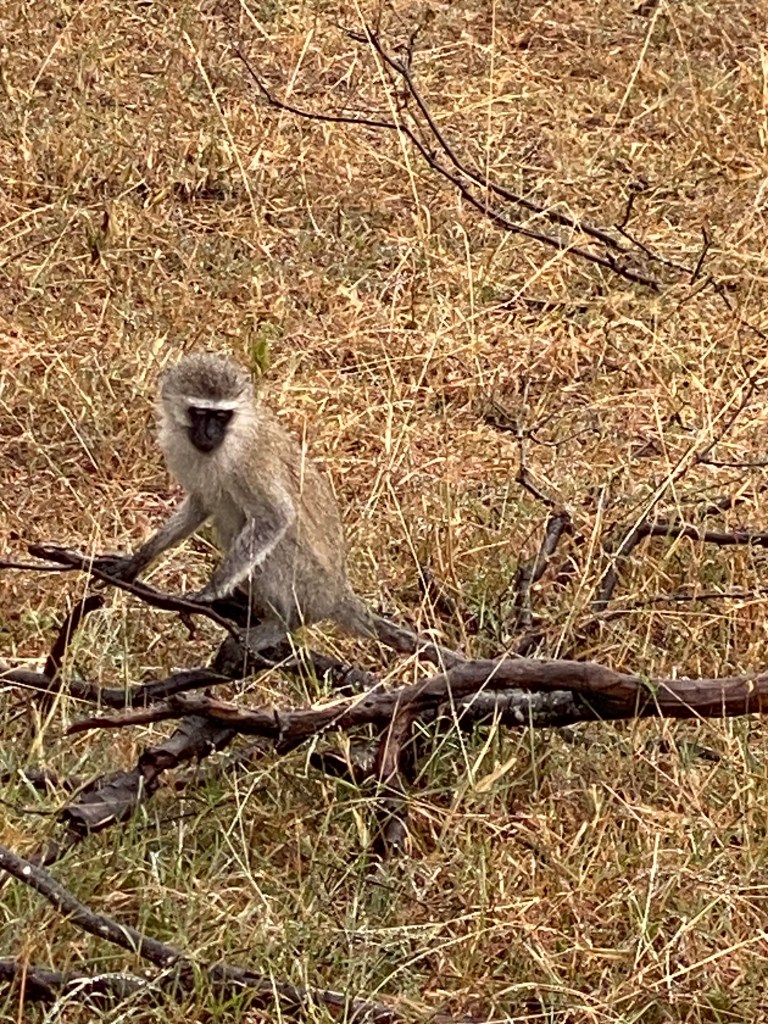
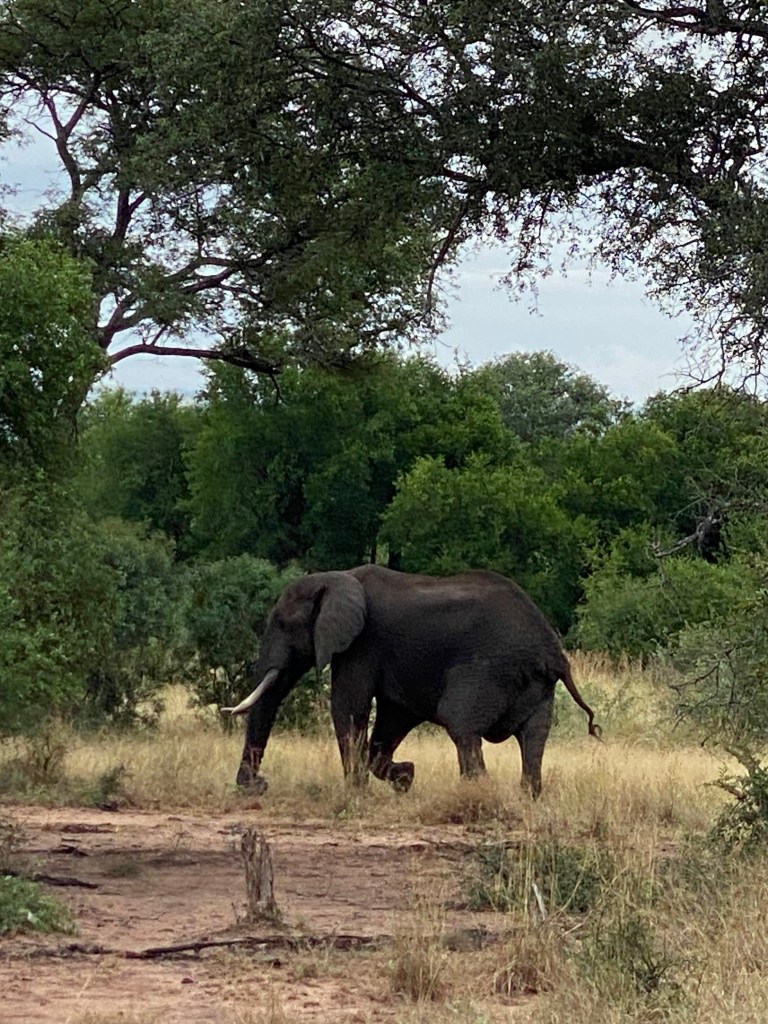
By this time, the rain had let up. Although we did not manage to see any hippos out of the water (they mostly come out at night to eat grass), we did see a herd of wildebeest, some vervet monkeys, an elephant, a water buffalo, baboons, and a Martial eagle perched on a high bare branch. And then our guide got a message on his phone and said, “From now, we’re not stopping for anything. Someone has spotted some cheetahs.”
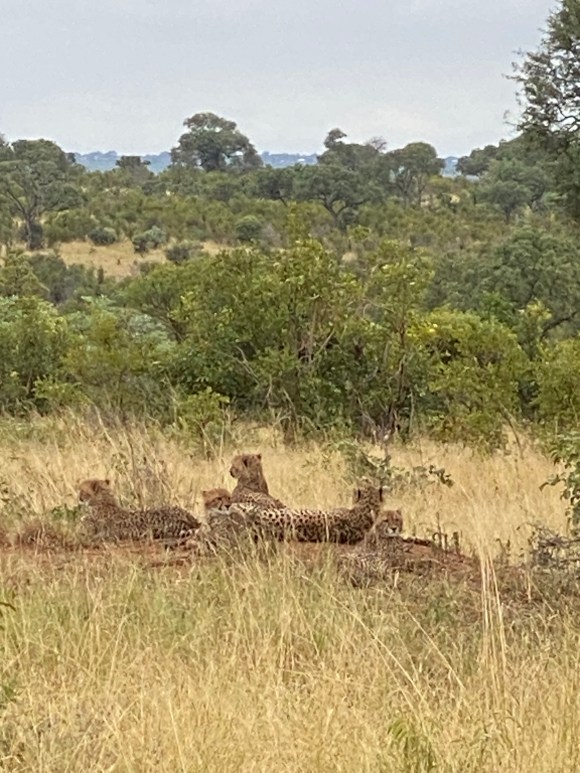
As he sped ahead, we crossed our fingers and readied our cameras. I expected the cheetahs to be far off in the distance, where they wouldn’t be scared off by the sound of cars, as the lions were. Why else would they stay in one place long enough for us to reach them? As it turned out, however, five cheetah cubs were gathered together, sitting still, gazing intently into the bush. They were near the road, only about fifty meters away.
“They’re waiting for their mother,” the guide said. “Maybe she will come back while we are waiting.”
My friend and I took turns admiring them through binoculars. How patiently they watched the impalas nearby. How diligently they groomed themselves. They were gorgeous, leaving us breathless.
We waited awhile, but there were others eager to see them, so our guide suggested it was time to move on. “Are you happy?” he asked us.
“Yes, very,” we both said.
Later, as we returned to the lodge, we thought about how jealous the rest of the group would be when they heard about the cheetahs. The rain started to fall again.
Suzanne Kamatawas born and raised in Grand Haven, Michigan. She now lives in Japan with her husband and two children. Her short stories, essays, articles and book reviews have appeared in over 100 publications. Her work has been nominated for the Pushcart Prize five times, and received a Special Mention in 2006. She is also a two-time winner of the All Nippon Airways/Wingspan Fiction Contest, winner of the Paris Book Festival, and winner of a SCBWI Magazine Merit Award.
PLEASE NOTE: ARTICLES CAN ONLY BE REPRODUCED IN OTHER SITES WITH DUE ACKNOWLEDGEMENT TO BORDERLESS JOURNAL
Mongolians hold a special ceremony called the “haircut celebration” for young children, but not everyone is invited to this event. Especially not someone like me, who has gone through a divorce.
I had been meaning to write about this for a while, and now, nine months later, I finally find myself sitting in front of my computer, ready to share my thoughts. After coming to Japan as a student for the second time, I have had the opportunity to take many interesting classes. Among them, the most captivating one was Kamata-sensei’s English Language Cultural Class. Every week, the professor selected a story for us to read before class, and during the lessons, we would discuss our favorite parts and share our thoughts. Sometimes, the professor would ask thought-provoking questions, sparking lively discussions. This class quickly became one of my favorites, something I eagerly looked forward to each week.
We primarily read short stories written by foreign authors living in America. I was amazed by how much emotion, thought, and complexity could be packed into such short narratives. The professor’s careful selection of stories made me admire her even more.
One of the stories we read was Kyoko Mori’s Yellow Mittens and Early Violets. During our class discussion, we talked about cultural differences across countries. There were only four students in our class—one from Morocco, one from Mongolia (me), one from the Philippines, and one from Japan—plus our American professor. This small group allowed us to exchange ideas freely and truly listen to one another. It was fascinating to see how five people from five different cultural backgrounds could read the same story but interpret it in completely different ways.
During this discussion, I shared a personal story about Mongolian traditions, which I now want to write about here.
For Mongolians, hair holds deep symbolic meaning. For instance, women traditionally do not leave their hair loose; it is always braided. Only those in mourning let their hair down. Similarly, if a child’s hair is left uncombed and tangled, it is believed to shorten their lifespan and diminish their fortune.
One of Mongolia’s most significant traditions related to hair is the sevleg urgeh (first haircut) ceremony. Since ancient times, Mongolians have referred to a young child’s untouched hair as sevleg or daakhi, showing deep respect for it. The first haircut is performed with great care, wishing the child a long, prosperous life.
Traditionally, a girl’s hair is cut in mid-summer, guided by the call of the cuckoo, while a boy’s hair is cut in mid-autumn, following the sound of the stag. Families invite relatives and friends to participate in the ceremony. The ritual is conducted when boys reach an odd-numbered age (for example, 3, 5) and girls reach an even-numbered age (for example, 2, 4). This belief stems from the Mongolian spiritual concepts of arga (odd numbers, representing action) and bileg (even numbers, representing wisdom).
The ceremony begins with an elder—typically the most senior and respected person present—touching the child’s hair with a wooden knife before using scissors to snip the first lock. The elder then dips the wooden knife into a cup of milk, allowing a drop to fall onto the scissors. This ritual ensures that the blade does not “harm” the child, symbolically purifying the act. The child’s father carves the wooden knife himself, while the mother sews the child’s traditional deel(Mongolian robe) for the occasion.
Guests take turns cutting a small lock of hair, offering blessings as they do so. The cut hair is respectfully wrapped in a ceremonial scarf (khadag) and preserved. Those invited to touch the child’s hair are carefully chosen; they must be seen as virtuous, fortunate, and stable figures.
I, however, do not belong in this category.
I became a mother at nineteen, and although my daughter’s father and I once dreamed of a future together, our paths eventually diverged. In Mongolian culture, divorced individuals are not invited to participate in a child’s haircut ceremony. There is a belief that if someone like me were to touch a child’s hair, the child might also face a broken marriage in the future. This tradition, deeply rooted in the idea that a person’s energy influences a child’s life, means that people like me are excluded.
At first, it hurt.
Now, I have grown used to it. Though I have come to accept this tradition, I still wonder—should cultural heritage come at the cost of human connection? Perhaps the true essence of tradition is not just in preserving rituals, but in ensuring that no one is made to feel like an outsider in their own culture.
I sometimes wonder—have we become so devoted to tradition that we have forgotten the importance of human compassion?
This was the story I shared in class—the story of why I am not allowed to take part in one of my own culture’s most sacred ceremonies.
.
Odbayar Dorj is an international student from Mongolia currently studying in Japan. She reflects on cultural traditions, personal experiences, and the intersection of human connection and societal norms in her writing.
.
PLEASE NOTE: ARTICLES CAN ONLY BE REPRODUCED IN OTHER SITES WITH DUE ACKNOWLEDGEMENT TO BORDERLESS JOURNAL
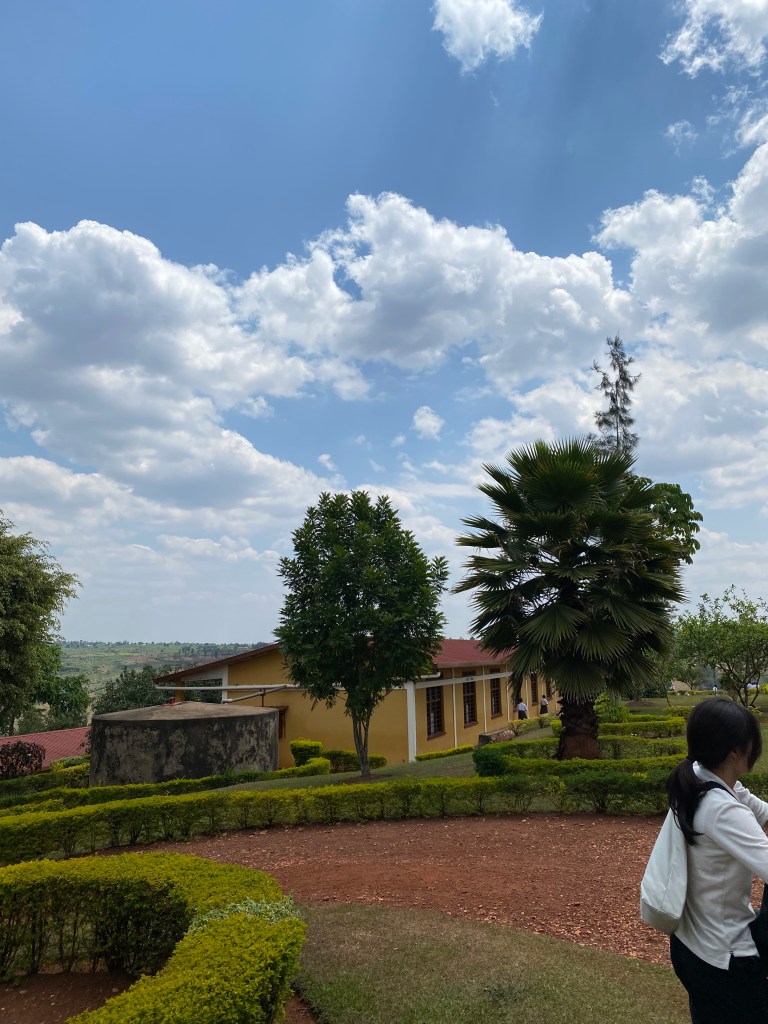
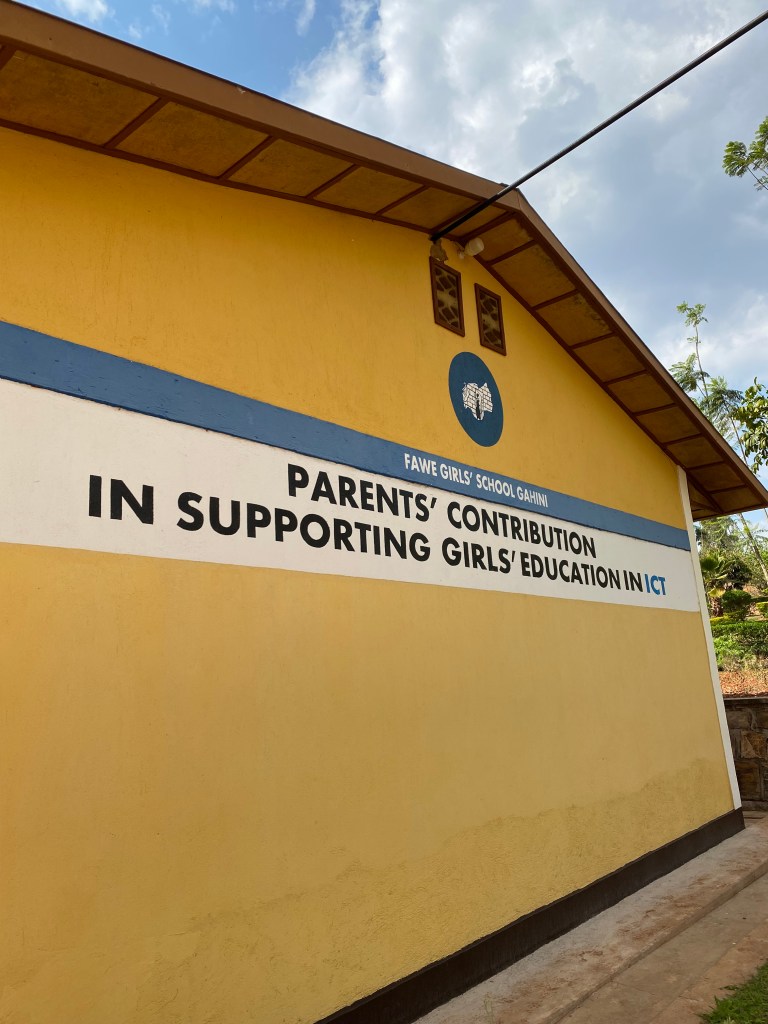
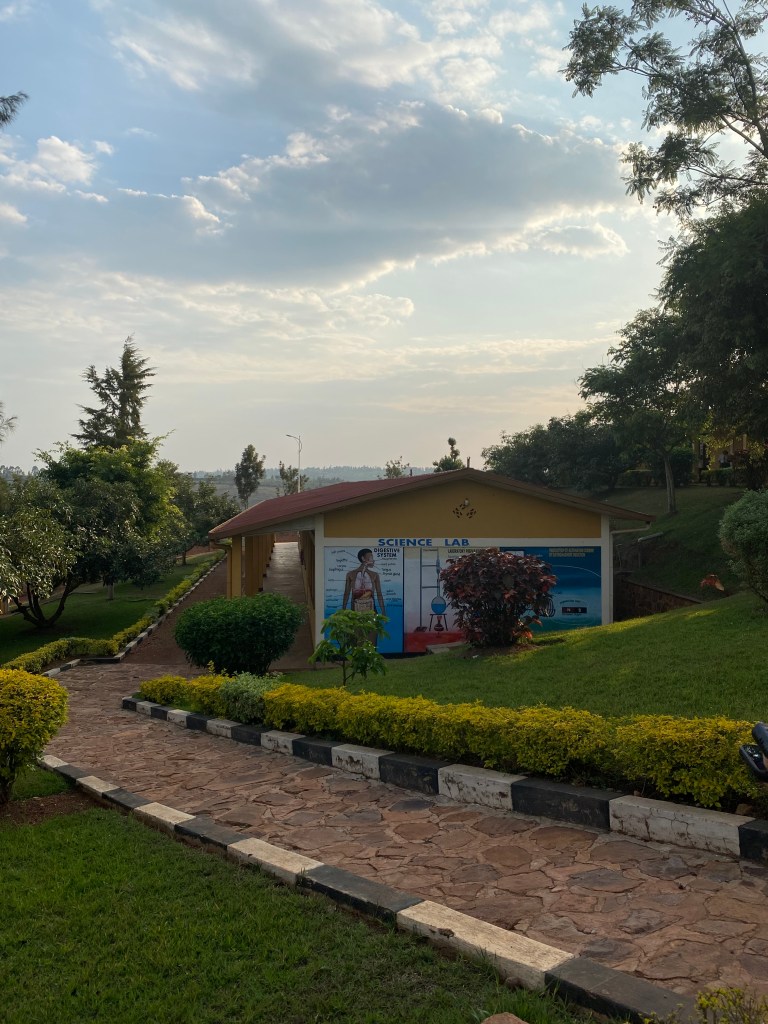
FAWE Girls’ School Gahini is in the Kayonza District of Rwanda, up a bumpy red-soiled road, on a hill overlooking acres of green. Various kinds of trees and shrubbery decorate the campus, which is made up of several small buildings painted yellow and roofed in red connected by walkways. Some are painted with murals or words extolling the importance of education. The outer wall of the Science Lab, for example, features a detailed diagram of the digestive system.
A male teacher in a white lab coat comes out to greet my three Japanese traveling companions and I as we alight from the air-conditioned Prado. Our driver Eugene, hired for this week by my colleague Satoshi, remains behind.
We have traveled here from Naruto, on the Japanese island of Shikoku, where two of us are professors and two, graduate students at a small teacher’s college, for a one-week research trip. Satoshi is going to conduct a survey on metacognition in solving math problems. This is part of an ongoing project for which he has visited Rwanda several times already. Last year, when he was about to embark on his trip, I mentioned that I had always wanted to go to Africa. Without hesitation, he said, “Let’s go!”
Of course, it was impossible for me to join him on such short notice, but he checked in with me periodically, telling me the dates of his next trip. I assured him that I was still eager to accompany him. For years I had included my dream of visiting Africa in my first day self-introduction to incoming students. Here was my chance.
I am not a math professor. I have an MFA in creative writing, but I have few chances to teach Japanese students how to write poems and short stories. Mainly, I teach English conversation, and academic writing courses. In the one class I devote to non-academic writing, an elective, I am lucky if even one undergraduate enrolls. Last year, the class included a visiting teacher from the Philippines and a graduate student, both of whom were auditing the class. Even the aspiring English teachers at our university mostly hate reading and writing. If it isn’t manga in Japanese, forget it! I keep a variety of popular novels in my office and press them into students’ hands when they ask me how they can improve their TOEIC[1] scores, but I feel victorious if even one student a year comes back for more.
During the trip, we would be visiting schools, and I would have the chance to conduct a few lessons. We would be visiting a private girls’ boarding school on the second day.
“You can do whatever you want,” Satoshi assured me.
Mostly, what I knew of Rwanda was from media reports about the 1994 genocide in which over a million Rwandans from the Tutsi ethnic group were killed by fellow Rwandans who identified as Hutu. I’d seen movies about the genocide, such as Hotel Rwanda, which the director of one of the memorials we visited would declare “a scam,” and read several books by the acclaimed Rwandan writer, Scholastique Mukasonga, who lost 37 family members in the massacre.
I boned up on education in Rwanda and found that as in some other African nations, such as Kenya, the country didn’t have much of a reading culture, although efforts are afoot to change that. In the epilogue to her poetry collection, Requiem, Rwanda, Laura Apol writes that in April 2009, at the International Symposium on the Genocide against Tutsi, the prime minister spoke of “the historical and literary necessity of having survivors not only tell their stories, but for the sake of history and art, write their stories as well.” Apol conducted writing workshops through a writing-for-healing project to help survivors and perpetrators process their grief and trauma. She’d helped Rwandans develop their writing over a week. I only had 30-40 minutes. Maybe I could get them to write a haiku.
Although there is still occasional violence by so-called Hutus against Tutsis (now simply Rwandans, according to their documents), the atrocities — which made up the genocide — occurred thirty years ago. The girls that I would be meeting hadn’t been born yet. I didn’t want to dwell on that sad historical event. I wanted to encourage Rwandan joy.
I prepared a PowerPoint presentation on haiku with photos, choosing examples that I thought would appeal to teenaged girls — a poem about eating ice cream, another about meeting a boy with “pirate eyes” on a beach, a poem featuring robots and a rainbow. I also included a sad haiku about violence against children in the United States, wanting to give them permission to write about tragedy, if they really wanted to.
I was hoping that they would write distinctly African poems, maybe featuring the gorillas that lived in the Western region, or the trees bearing mangoes, bananas, and avocadoes that seemed to grow everywhere. Perhaps they would write about the many people I saw bringing yellow plastic jerry cans to the river to gather water for daily use, the vendors of kitenge cloth in the markets, or the women who balanced loads upon their heads, or tended the fields with their hoes. They might write about the goat that they had sold to pay for their education, or the wild animals they’d seen on safari in Akagera National Park. But maybe all these things were cliches of Africa. I would not suggest these topics, would not insist that they reinforce my stereotypes.
On the day of the school visit, we are introduced to the smiling head teacher, a tall man who tells me that he has written both haiku and waka, the traditional five-lined Japanese poem. He seems bemused by our presence at his school. Nevertheless, he is affable and game to have us try to teach some girls something about Japan.
We are led to a dimly-lit classroom with four long tables. Laptops for each student’s use are on the tables connected to a power source. The English teacher, another man in a lab coat, sets up a projector, and I hand over my USB drive.
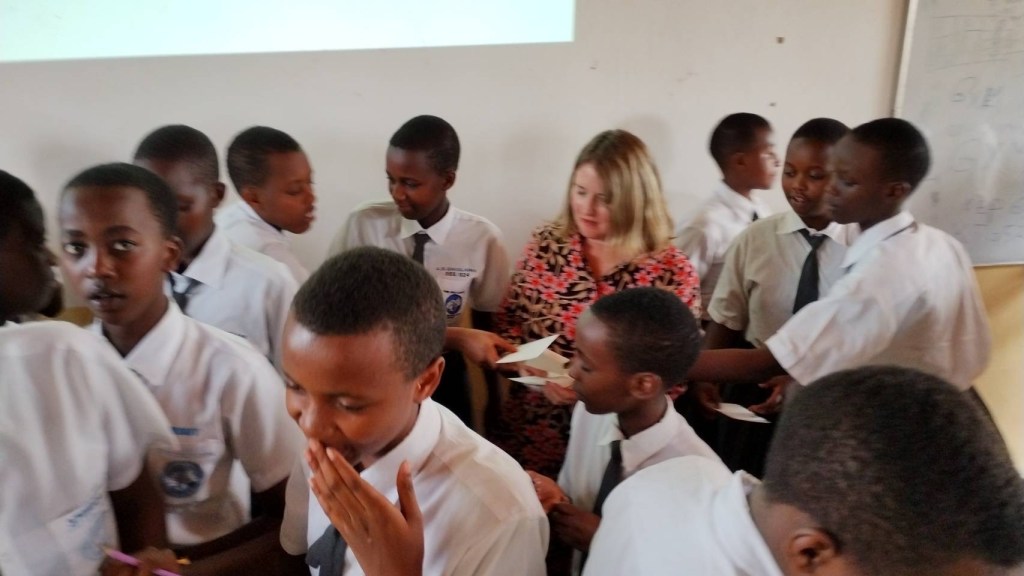
The girls file in, sit down, and automatically open the laptops. Their hair is shorn, and they are wearing white short-sleeved shirts, pleated gray skirts, and matching neckties. To get things started, Satoshi introduces our group and asks a few what they want to be in the future.
“Surgeon,” says one.
“Banker,” says another.
I remember how, when I had first arrived in bubble-era Japan as an assistant high school English teacher, the female students had replied “A good wife and mother.”
Okay. So these girls are good at English, and they are ambitious.
“Please close your laptops,” I say. I personally prefer to write poetry by hand, and I am always worried about students using generative AI, so I have brought pink and lavender pencils, which I bought at Daiso and sharpened back in Japan, and loose leaf lined paper.
I introduce myself briefly, explaining that I am an American, but I married a Japanese man, and have now lived in Japan for over thirty years. I also tell them that I am a writer, and I have brought some books by myself and others which I will donate to their library.
“A haiku,” I tell them, “is a short Japanese poem, usually consisting of 17 syllables, and including a kigo, or seasonal word.”
Their forty or so faces are turned toward me, but I can’t tell if they are engaging. When I ask if any of them have ever written poetry, four raise their hands. When I ask if they have ever written haiku, or even heard of it, the hands stay down. I go through my PowerPoint, noting their interest in a poem about Girls’ Day in Japan, on which families with daughters display ornate dolls representing the emperor, empress, and court.
“And now it’s your turn,” I tell them when I reach the last slide. “Let’s try to write a haiku.”
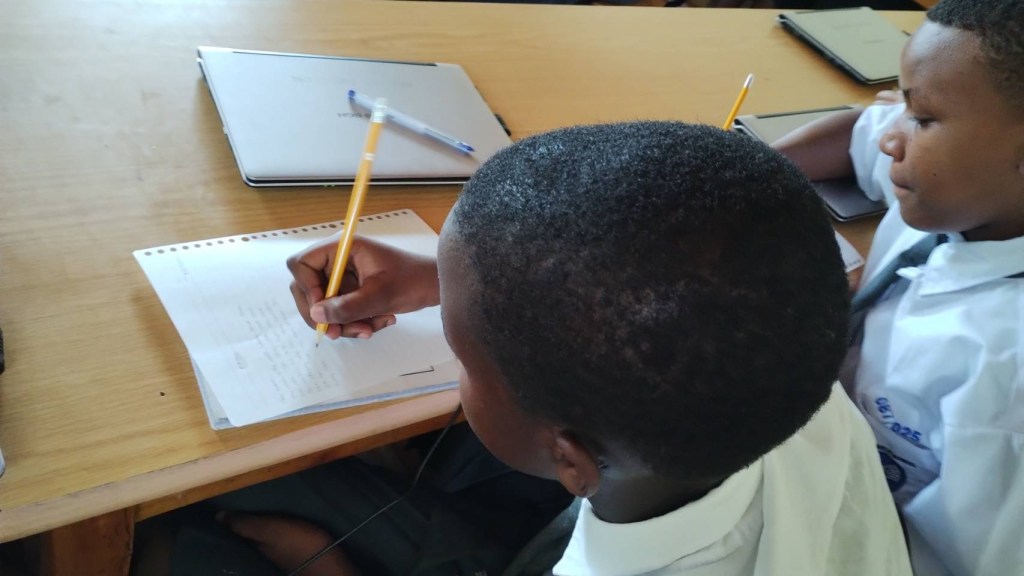
I ask them to think of an event, or a moment, and write whatever related words come into their heads over the next five minutes. They begin to scribble. When the timer on my phone goes off, I remind them that it’s okay to ignore the five-seven-five syllable rule, and that they don’t have to stick to seasonal topics. I tell them that if they are having trouble, they can use a poem from the PowerPoint as a template.
While they ponder and write, I wander along the rows, looking over their shoulders. I’m pleased to see that some have taken my suggestion to model their poem by one by Masaoka Shiki, about eating and drinking with friends on an autumn evening. But pizza? Ice cream? I’m a little disappointed that they didn’t use a more African dish, like brochettes, and banana beer. Then again, that is just my stereotype. Rwandans eat pizza, too.
Instead of writing a haiku, one girl writes a longer poem, which is clearly about the genocide. I realize that even though I want to encourage them to move on, to look to the future, to laugh and dance and celebrate, the trauma caused by the slaughter persists, hanging like a cloud over the country. Their parents probably lived through it, and there are reminders everywhere. Everyone has a story. Our driver tells me later that his father, sister, and brother were murdered. Rwandan students visit genocide memorials on school excursions as part of their education, just as Japanese students visit Hiroshima and Nagasaki. Peace education is deemed very important here, and, during this time of division, I can’t help thinking that it would be good in my own country as well.
At the end of the lesson, I tell them that what they have created belongs to them. I want them to keep their poems, but I also want to read them. I ask them to copy their haiku onto another piece of paper and give it to me.
“I hope you will keep writing haiku,” I tell them, my grandiose idea of promoting Rwandan literature in mind. I tell them of where they can send their poems for publication to an international audience. We pose for a group photo.
Later, I bring my books to the library.
“Bonjour,” says the nun librarian, who must have been schooled when French was the official medium of education.
I had not realised that this was a Catholic institution. I hope that no one takes offence that one of the books I am donating, which has been banned in some places in the United States, is about a Muslim girl. In another, a novel by a contemporary Zimbabwean writer, a teenaged girl confesses to having had premarital sex. A character is one of my own novels is a gay figure skater.
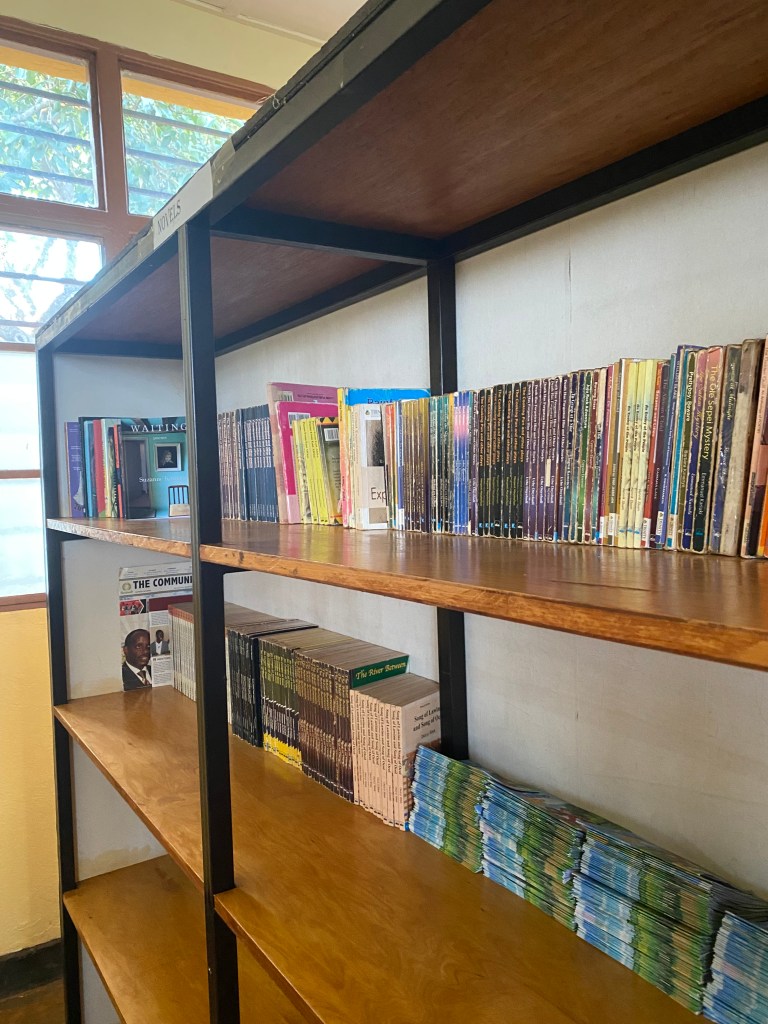
The nun accepts the books graciously and tells some tag-along students to place them on the fiction shelf. I stand back, noting that the ones already there are old and worn. Perhaps they do most of their reading online? In any case, there are no young adult novels for girls, nothing published in the past few years, and I know how expensive imported books are.
“I hope you will read them,” I say, thinking of my students back in Japan who hate to read.
“We will,” the girls promise.
I imagine a single girl, coming upon these novels and greedily devouring them one after another, perhaps seeking out more, and then beginning to write her own stories. I imagine coming across a novel in a bookstore written by a girl who grew up in Kayonza, who attended the FAWE Girls’ School Gahini. I imagine reading that book and posting about in on Instagram. And then I try to let go of my expectations, and say “murakoze,“ which means “thank you” in Kinyarwanda, and “goodbye.”
Hamburgers and fries
Speakers blare Billie Eilish
--lunch in Kigali

A Haiku by Suzanne Kamata
[1] The Test of English for International Communication
Suzanne Kamatawas born and raised in Grand Haven, Michigan. She now lives in Japan with her husband and two children. Her short stories, essays, articles and book reviews have appeared in over 100 publications. Her work has been nominated for the Pushcart Prize five times, and received a Special Mention in 2006. She is also a two-time winner of the All Nippon Airways/Wingspan Fiction Contest, winner of the Paris Book Festival, and winner of a SCBWI Magazine Merit Award.
PLEASE NOTE: ARTICLES CAN ONLY BE REPRODUCED IN OTHER SITES WITH DUE ACKNOWLEDGEMENT TO BORDERLESS JOURNAL
Borderless Journal started on March, 14, 2020. When the mayhem of the pandemic had just set in, we started as a daily with half-a-dozen posts. Having built a small core of writings by July, 2020, we swung to become a monthly. And we still continue to waft and grow…
Art by Sohana Manzoor
We like to imagine ourselves as floating on clouds and therefore of the whole universe. Our team members are from multiple geographies and we request not to be tied down to a single, confined, bordered land. We would welcome aliens if they submitted to us from another galaxy…
On our Fifth Anniversary, we have collected celebratory greetings from writers and readers stretched across the world who share their experience of the journal with you and offer suggestions for the future. We conclude with words from some of the team, including my own observations on being part of this journey.
Aruna Chakravarti
Heartiest congratulations to Borderless on the occasion of its fifth anniversary! Borderless, an international journal, has the distinction of carrying contributions from many eminent writers from around the world. From its initiation in 2020, it has moved from strength to strength under the sensitive and skillful steering of its team. Today it is considered one of the finest journals of its kind. I feel privileged to have been associated with Borderless from its very inception and have contributed substantially to it. I wish to thank the team for including my work in their distinguished journal. May Borderless move meaningfully towards the future and rise to greater and greater heights! I wish it every success.
Professor Fakrul Alam
Five years ago, when Borderless set out on its literary voyage, who would have imagined the length and breadth of its imaginative crossings in this span of time? The evidence, however, is digitally there for any reader who has seen at least some of its issues. Creative writing spanning all genres, vivid illustrations, instant links giving resolute readers the option to track a contributor’s creative voyaging—here is boundless space always opening up for those seeking writing of considerable variety as well as originality. The best part here is that unlike name-brand journals, which will entice readers with limited access and then restrict their spaces unless you subscribe to them, all of Borderless is still accessible for us even though it has attracted a wide readership in five years. I certainly hope it will stay that way.
And what lies ahead for Borderless? Surely, more opportunities for the creative to articulate their deepest thoughts and feelings in virtual and seemingly infinite space, and innumerable avenues for readers to access easily. And let us hope, in the years to come Borderless will extend itself to newer frontiers of writing and will continue to keep giving space to new as well as emerging writers from our parts of the world.
May the team of Borderless, continue to live up to their claim that “there are no boundaries to human imagination and thought!”
Radha Chakravarty
Since its inception, Borderless Journal has remained true to its name, offering a vital literary space for writers, artists and scholars from around the world to engage in creative dialogue about their shared vision of a world without borders. Congratulations Borderless, and may your dream of global harmony continue to inspire.
Somdatta Mandal
According to the famous Chicana academic and theorist Gloria Anzaldua, the Borderlands are physically present wherever two or more cultures edge each other, where peopIe of different races occupy the same territory, where under, lower, middle and upper classes touch, where the space between two individuals shrinks with intimacy. Hatred, anger and exploitation are the prominent features of this landscape. There, at the juncture of cultures, languages cross-pollinate and are revitalized; they die and are born. Borders are set up to define the places that are safe and unsafe, to distinguish us from them. A border is a dividing line, a narrow strip along a steep edge. A borderland is a vague and undetermined place created by the emotional residue of an unnatural boundary. It is in a constant state of transition. The prohibited and forbidden are its inhabitants.
About five years ago, when a new online journal aptly called Borderless Journal was launched, these ideas which we had been teaching for so long were simply no longer applicable. Doing away with differences, with limits, it became a suitable platform where disparate cultures met, where people from all disciplines could express their views through different genres, be it poetry, translation, reviews, scholarly articles, creative writing and so on. Many new writers from different parts of the world became regular contributors to this unique experimentation with ‘borderlessness’ and its immense possibilities are very apt in this present global context where social media has already changed many earlier notions of scholarship, journalism, and creativity.
Jared Carter
In its first five years Borderless has become an important witness for international peace and understanding. It has encouraged submissions from writers in English based in many different countries, and has offered significant works translated from a wide range of national literatures. Its pages have featured writers based in India, Pakistan, China, Taiwan, Japan, South Korea, Australia, the UK, and the US. In the future, given the current level of world turmoil, Borderless might well consider looking more closely toward Africa and the Middle East. As the magazine continues to promote writing focused on international peace and freedom, new horizons beckon.
Teresa Rehman
The best part of this journal is that it is seamless and knows no margins or fringes. It is truly global as it has cut across geographical borders and has sculpted a novel literary genre called the ‘borderless’. It has climbed the mountains of Nepal, composed songs on the Brahmaputra in Assam, explored the hidden kingdom of Bhutan, walked on the streets of Dhaka, explored the wreckage of cyclones in Odisha, been on a cycling adventure from Malaysia to Kashmir, explored a scenic village in the Indo-China border, taken readers on a journey of making a Japanese-Malayalam dictionary, gave a first-hand account of the war in Bosnia-Herzegovina and described the syncretic culture of Bengal through its folk music and oral traditions. I hope it continues telling the untold and unchartered stories across mountains, oceans and forests.
Kirpal Singh
In a world increasingly tending towards misunderstandings across borders, this wholesome journal provides a healthy space both for diverse as well as unifying visions of our humanity. As we celebrate five distinguished years of Borderless Journal, we also look forward to another five years of such to ensure the underlying vision remains viable and visible as well as authentic and accurate.
My heartfelt Congratulations to all associated with this delightful and impressive enterprise!
Asad Latif
The proliferation of ethnic geographies of identity — Muslim/Arab, Hindu/Indian, Christian/Western, and so on — represents a threat to anything that might be called universal history. The separation and parcelling out of identities, as if they are pre-ordained, goes against the very idea (proclaimed by Edward Said) that, just as men and women create their own history, they can recreate it. Borders within the mind reflect borders outside it. Both borders resist the recreation of history. While physical borders are necessary, mental borders are not. This journal does an admirable job in erasing borders of the mind. Long may it continue to do so.
Anuradha Kumar
I have been one of Borderless’ many readers ever since its first issue appeared five years ago. Like many others, I look forward with great anticipation to every issue, complete with stories, , reviews, poems, translations, complemented with interesting artwork.
Borderless has truly lived up to its name. Within its portal, people, regardless of borders, but bound by common love for literature, and the world’s heritage, come together. I would wish for Borderless to scale even greater heights in the future. As a reader, I would very much like to read more writers from the ‘Global South’, especially in translation. Africa, Asia and Australasia are host to diverse languages, many in danger of getting lost. Perhaps Borderless could take a lead in showcasing writers from these languages to the world. That would be such an invaluable service to readers, and the world too.
Ryan Quinn Flanagan
To me, Borderless Journal is a completely free and open space. Topics and styles are never limiting, and the various writers explore everything from personal travelogues to the limp of a helpful druggist. Writers from all corners of the globe contribute, offering a plethora of unique voices from countless circumstances and walks of life. Because of this openness, Borderless Journal can, and likely will continue to grow and expand in many directions simultaneously. Curating and including many new voices along the way. Happy 5th Birthday to a truly original and wonderfully eclectic journal!
George Freek
I feel the Borderless Journal fills a special spot in the publishing world. Unlike many journals, which profess to be open-minded and have no preference for any particular style of poetry, Borderless actually strives to be eclectic. Naturally, it has its own tastes, and yet truly tries to represent the broad spectrum which is contemporary poetry. I have no advice as to where it should go. I can only say keep up the good work, and stooping to a cliche, if it’s not broken, why try to fix it?
Farouk Gulsara
They say time flies when one is having fun. It sure does when a publication we love regularly churns out its issues, month after month, for five years now.
In the post-truth world, where everybody wants to exert their exclusivity and try to find ways to be different from the person standing next to them, Borderless gives a breath of fresh air. At a time when neighboring countries are telling the world they do not share a common history, Borderless tries to show their shared heritage. We may have different mothers and fathers but are all but “ONE”!
We show the same fear found in the thunderous sounds of a growling tiger. We spill the exact hue of blood with the same pain when our skin is breached. Yet we say, “My pain is more intense than yours, and my blood is more precious.” Somehow, we find solace in playing victimhood. We have lost that mindfulness. One should appreciate freedom just as much as we realise it is fragile. Terrorism and fighting for freedom could just be opposing sides of the same coin.
There is no such thing as a just war or the mother of all wars to end all wars as it has been sold to us. One form of aggression is the beginning of many never-ending clashes. Collateral damage cannot be justified. There can be no excuse to destroy generations of human discoveries and turn back the clock to the Stone Age.
All our hands are tainted with guilt. Nevertheless, each day is another new day to make that change. We can all sing to the tune of the official 2014 World Cup song, ‘Ola Ola,’ which means ‘We are One.’ This is like how we all get together for a whole month to immerse ourselves in the world’s favourite sport. We could also reminisce about when the world got together to feed starving kids in Africa via ‘Band-Aid’ and ‘We Are the World’. Borderless is paving the way. Happy Anniversary!
Ihlwha Choi
I sincerely congratulate Borderless Journal on its 5th anniversary. I am always delighted and grateful for the precious opportunity to publish my poetry in English through this journal. I would like to extend my special thanks for this.
Through this journal, I can read a variety of literary works—including poetry, essays, and prose—from writers around the world. As someone for whom English is a foreign language, it has also been a valuable resource for improving my English skills. I especially enjoy the frequent features on Rabindranath Tagore’s poetry, which I read with great joy. Tagore is one of my favourite poets.
I have had the privilege of visiting Santiniketan three times to trace his legacy and honor his contributions to literature and education. However, one aspect I find a little disappointing is that, despite having published over 30 poems, I have yet to receive any feedback from readers or fellow writers. It would be wonderful to have such an opportunity for engagement.
Additionally, last October, a Korean woman received the Nobel Prize in Literature—the first time an author from South Korea has been awarded this honor by the Swedish Academy. She is not only an outstanding novelist but also a poet. I searched for articles about her in Borderless Journal but was unable to find any. Of course, I understand that this is not strictly a literary newspaper, but I would have been delighted to see a feature on her.
I also feel honoured that one of my poems was included in the anthology Monalisa No Longer Smiles: An Anthology of Writings from across the World. I hope such anthologies will continue to be published. In fact, I wonder if it would be possible to compile and publish collections featuring several poems from contributing poets. If these were made available on Amazon, it would be a fulfilling experience for poets to reach a broader audience.
Moving forward, I hope Borderless Journal will continue to reach readers worldwide, beyond Asia, and contribute to fostering love and peace. Thank you.
Prithvijeet Sinha
The journey of authorship, self-expression and cultural exchange that I personally associate with Borderless Journal’s always diverse archives has remained a touchstone ever since this doorway opened itself to the world in 2020. Going against the ramshackle moods of the 2020s as an era defined by scepticism and distances, The journal has upheld a principled literary worldview close to the its pages and made sure that voices of every hue gets representation. It’s also an enterprise that consistently delivers in terms of goodwill and innocence, two rare traits which are in plenteous supply in the poems, travelogues, essays and musings presented here.
The journey with Borderless has united this writer with many fascinating, strikingly original auteurs, buoyed by a love for words and expression. It is only destined for greatness ahead. Happy Birthday Borderless! Here’s to 50 more epochs.
From Our Team
Bhaskar Parichha
As Borderless Journal celebrates its fifth anniversary, it is inspiring to see its evolution into a distinguished platform for discourse and exploration. Over the years, it has carved a unique niche in contemporary journalism, consistently delivering enlightening and engaging content. The journal features a variety of sections, including in-depth articles, insightful essays, and thought-provoking interviews, reflecting a commitment to quality and fostering dialogue on pressing global issues. The diverse contributions enrich readers’ understanding of complex topics, with a particular focus on climate change, which is especially relevant today. By prioritising this critical issue, Borderless informs and encourages engagement with urgent realities. Having been involved since its inception, I am continually impressed by the journal’s passion and adaptability in a changing media landscape. As we celebrate this milestone, I wish Borderless continued success as a beacon of knowledge and thoughtful discourse, inspiring readers and contributors alike.
Devraj Singh Kalsi
Borderless Journal has a sharp focus on good writing in multiple genres and offers readable prose. The platform is inclusive and does not carry any slant, offering space to divergent opinions and celebrating free expression. By choosing not to restrict to any kind of ism, the literary platform has built a strong foundation in just five years since inception. New, emerging voices – driven by the passion to write fearlessly – find it the ideal home. In a world where writing often gets commercialised and compromised, Borderless Journal is gaining strength, credibility, and wide readership. It is making a global impact by giving shape to the dreams of legendary poets who believed the world is one.
Rakhi Dalal
My heartiest congratulations to Borderless and the entire team on the fifth Anniversary of its inception. The journal which began with the idea of letting writing and ideas transcend borders, has notably been acting as a bridge to make this world a more interconnected place. It offers a space to share human experiences across cultures, to create a sense of connection and hence compassion, which people of this world, now more distraught than ever, are sorely in need of. I am delighted to have been a part of this journey. My best wishes. May it continue to sail through time, navigating languages, literature and rising above barriers!
Keith Lyons
Is it really five years since Borderless Journal started? It seems hard to believe.
My index finger scrolls through Messenger chats with the editor — till they end in 2022. On the website, I find 123 results under my name. Still no luck. Eventually, in my ‘Sent’ box I find my first submission, emailed with high hopes (and low expectations) in March 2020. ‘Countdown to Lockdown’ was about my early 2020 journey from India through Thailand, Malaysia, Indonesia, and Australia to New Zealand as COVID-19 spread.
Just like that long, insightful trip, my involvement with Borderless Journal has been a journey. Three unique characteristics stand out for me.
The first is its openness and inclusiveness. It features writers from all over the globe, with various contributions across a wide range of topics, treatments and formats.
The second feature of the journal is its phenomenal growth, both in readers and writers, and in its reach. Borderless really does ‘walk the talk’ on breaking down barriers. It is no longer just a humble literary journal — it is so much bigger than that.
The third unique aspect of Borderless is the devotion endowed in nurturing the journal and its contributors. I love the way each and every issue is conceived, curated, and crafted together, making tangible the aspiration ‘of uniting diverse voices and cultures, and finding commonality in the process.’
So where can we go from here? One constant in this world is change. I’d like to think that having survived a global pandemic, economic recession, and troubling times, that the core values of Borderless Journal will continue to see it grow and evolve. For never has there been a greater need to hear the voices of others to discover that we are all deeply connected.
Rhys Hughes
I have two different sets of feelings about Borderless Journal. I think the journal does an excellent job of showcasing work from many different countries and cultures. I want to say it’s an oasis of pleasing words and images in a troubled sea of chaos, but that would be mixing my metaphors improperly. Not a troubled sea of chaos but a desert of seemingly shifting values. And here is the oasis, Borderless Journal, where one can find secure ideals of liberty, tolerance, peace and internationalism. I appreciate this very much. As for my other set of feelings, I am always happy to be published in the journal, and in fact I probably would have given up writing poetry two years ago if it wasn’t for the encouragement provided to me by regular publication in the journal. I have written many poems especially for Borderless. They wouldn’t exist if Borderless didn’t exist. Therefore I am grateful on a personal level, as a writer as well as a reader.
Where can Borderless Journal go from here? This is a much harder question to answer. I feel that traditional reading culture is fading away year after year. Poets write poetry but few people buy poetry books. They can read poems at Borderless for free and that is a great advantage. I would like to see more short stories, maybe including elements of fantasy and speculative fiction. But I have no strategic vision for the future of the journal. However, one project I would like to try one day is some sort of collaborative work, maybe a big poem with lots of contributors following specific rules. It’s an idea anyway!
Meenakshi Malhotra
Borderless started with a vision of transcending the shadow lines and has over time, evolved into a platform where good writing from many parts of the world finds a space , where as “imagination bodies forth/ The forms of things unknown, the poet’s pen/Turns them to shapes and gives to airy nothing/A local habitation and a name.”
It has been a privilege to be a part of Borderless’s journey over the last few years. It was a journey based on an idea and a vision. That dream of creating solidarity, of transcending and soaring over borders and boundaries, is evident in almost every page and article in the journal.
Mitali Chakravarty
Looking at all these responses, thinking on what everyone has said, I am left feeling overwhelmed.
Borderless started as a whimsical figment of the imagination… an attempt to bring together humanity with the commonality of felt emotions, to redefine literary norms which had assumed a darker hue in the post Bloomsbury, post existentialist world. The journal tried to invoke humour to brings smiles, joys to create a sense of camaraderie propelling people out of depression towards a more inclusive world, where laughter brings resilience and courage. It hoped to weave an awareness that all humans have the same needs, dreams and feelings despite the multiple borders drawn by history, geographies, academia and many other systems imagined by humans strewn over time.
Going forward, I would like to take up what Harari suggests in Homo Deus — that ideas need to generate a change in the actions of humankind to make an impact. Borderless should hope to be one of the crucibles containing ideas to impact the move towards a more wholesome world, perhaps by redefining some of the current accepted norms. Some might find such an idea absurd, but without the guts to act on impractical dreams, visions and ideas, we might have gone extinct in a post-dino Earth.
I thank the fabulous team, the wonderful writers and readers whose participation in the journal, or in engaging with it, enhances the hope of ringing in a new world for the future of our progeny.





 Borderless