Meenakshi Malhotra writes of the diverse ways histories can be viewed, reflecting on the perspective from the point of view of water, climate, migrations or women. Click here to read.
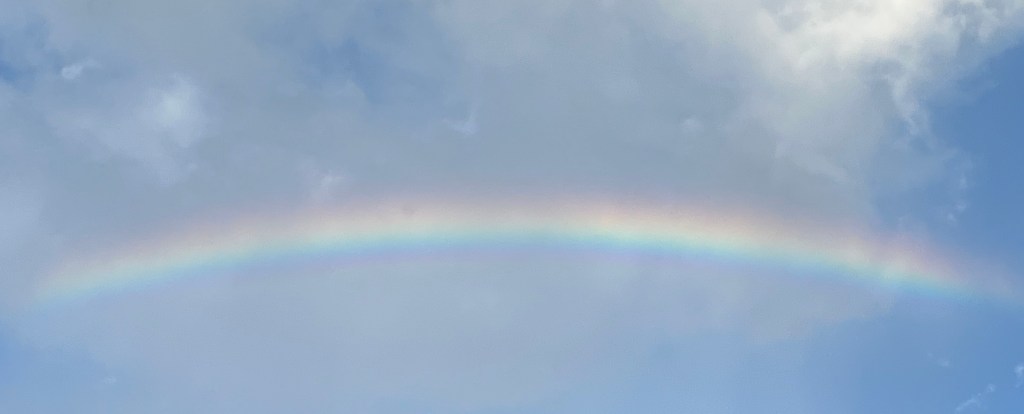
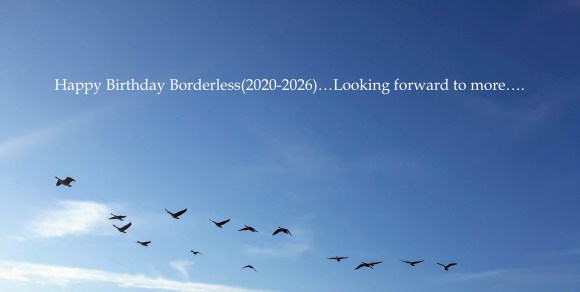
Sometimes, we have an idea, a thought and then it takes form and becomes a reality. That is how the Borderless Journal came to be six years ago while the pandemic raged. The pandemic got over and takeovers and wars started. We continued to exist because all of you continue to pitch in, ignoring the differences created by certain human constructs. We meet with the commonality of felt emotions and aesthetics to create a space for all those who believe in looking beyond margins. We try to erase margins or borders that lead to hatred, anger, violence and war. Learning from the natural world, we believe we can be like the colours of the rainbow that seem to grow out of each other or the grass that is allowed to grow freely beyond manmade borders. If nature gives us lessons through its processes, is it not to our advantage to conserve what nurtures us, and in the process, we save our home planet, the Earth? We could all be together in peace, enjoying nature and nurture, living in harmony in the Universe if only we could overlook differences and revel in similarities.
A young poet Nma Dhahir says it all in her poem that is a part of our journal this month —
This is how we stay human together: by refusing the easy damage, by carrying each other without calling it sacrifice, by believing that what we protect in one another eventually protects the world.
Translations has more poetry with Professor Fakrul Alam bringing us Nazrul’s Bengali lyrics in English and Fazal Baloch familiarising us with beautiful Balochi poetry of the late Majeed Ajez, a young poet who left us too soon. Isa Kamari translates his own poems from Malay, capturing the colours of the community in Singapore to blend it with a larger whole. And of course, we have a Tagore poem rendered into English from Bengali. This time it’s a poem called ‘Jatra (Journey)’ which reflects not only on social gaps but also on politics through aeons.
Christine C Fair has translated a story from Punjabi by Lakhvinder Virk, a story that reflects resilience in women who face the dark end of social trends, a theme that reverberates in Flanagan’s poetry and Meenakshi Malhotra’s essay, which while reflecting on the need of different perspectives in histories – like water and nomads — peeks into the need to recall women’s history aswell. This is important not just because March hosts the International Women’s Day (IWD) but because one wonders if women in Afghanistan are better off now than the suffragettes who initiated the idea of such a day more than a century ago?
This time our non-fiction froths over with scrumptious writings from across continents. Tamara-Lee Brereton-Karabetsos muses on looking at numbers and beyond to enjoy the essence of nature. Farouk Gulsara ideates about living on in posterity through deeds and ideas. Gower Bhat shares how he learns story writing skills from watching movies. Meredith Stephens talks of her experience of a fire in the Australian summer. Bhaskar Parichha writes with passion about his region, Odisha. We have a heartfelt tribute to Mark Tully, who transcended borders, from Bhowmick. And an essay on Arundhati Roy’s memoir, Mother Mary Comes to Me, from Somdatta Mandal, which explores not just the book but also the covers which change with continents. Prithvijeet Sinha travels beyond Lucknow and Suzanne Kamata brings to us stories about her trip to Phnom Penh.
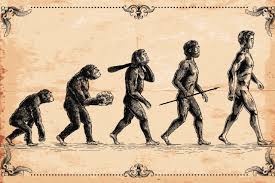
Keith Lyons draws from the current crises and writes about changing times, suggesting: “Changes aren’t endings, but thresholds.” Perhaps, if we see them as ‘thresholds of change’, the current events are emphasising the need to accept that human constructs can be redefined. I am sure a Neolithic or an Australopithecus would have been equally scared of evolving out of their system to one we would deem ‘superior’. Life in certain ways can only evolve towards the future, even if currently certain changes seem to be retrogressive. We can never correctly predict the future… but can only imagine it. And Devraj Singh Kalsi imagines it with a dollop of humour where tails become a trend among humans again!
Humour and absurdity are woven into a series of short fables by Hughes while Naramsetti Umamaheswarao weaves a fable around acceptanceof differences. In fiction, we have stories of resilience from Jonathon B Ferrini and Terry Sanville. Bhat gives us a story set in Kashmir and Sohana Manzoor gives us one set in Dhaka, a narrative that reminds one of Jane Austen… and perhaps even an abbreviated version of the 2001 film, Monsoon Wedding.
In reviews we have, Mohammad Asim Siddiqui discussing Anisur Rahman’s The Essential Ghalib. Rituparna Khan has written on Malashri Lal’s poetry collection reflecting on women, Signing in the Air. And Bhaskar Parichha has reviewed Deepta Roy Chakraverti’s Daktarin Jamini Sen: The Life of British India’s First Woman Doctor, a book that reflects on the resilience that makes great women. Thus, weaving in flavours of the IWD, which applauds women who are resilient while urging humans for equal rights for one half of the world population.
While we ponder on larger realities, Borderless Journal looks forward to a future with more writings centred around humanity, climate change, our planet and all creatures great and small. This year has not only seen a rise in readership and contributors — and the numbers rose further after our unsolicited Duotrope listing in October 2025 — but has also attracted writers from more challenged parts of the world, like Ukraine, Iran, Tunisia and Kurdistan. We are delighted to home writing from all those who attempt to transcend borders and be a part of the larger race of humanity. I would like to quote Margaret Atwood to explain what I mean. “I hope that people will finally come to realize that there is only one ‘race’—the human race—and that we are all members of it.” And I would like to extend her view to find solidarity with all living beings. I hope that there will be a point in time when we will realise there’s not much difference between, a lizard, a fly, a human or a tree… All these lifeforms are necessary for our existence.
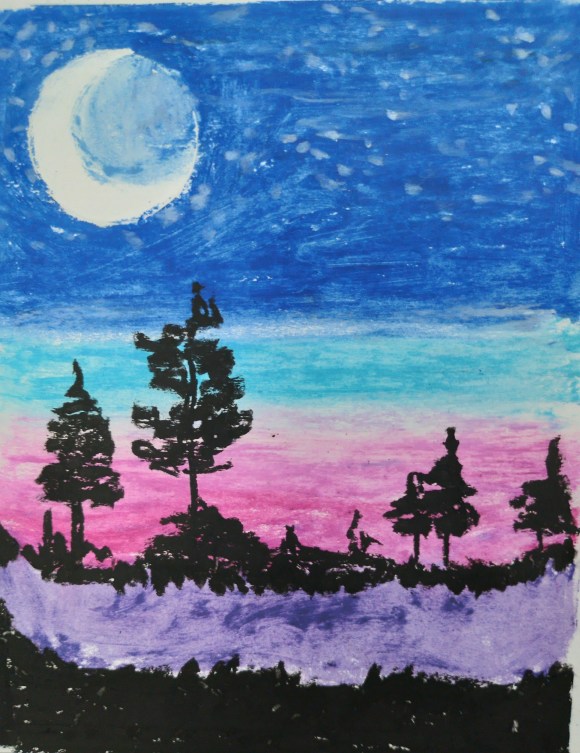
I would want to hugely thank all our team for stretching out and making this a special issue for our sixth anniversary and Manzoor for her fabulous artwork. Huge thanks to all our contributors and readers for being with us through our journey. Let’s change the world with peace, love and friendship!
In the evolutionary journey, we have achieved a lot to feel proud of. In the gradual process, we have lost something that could have proved to be an asset. However, there is no human record of regret ever registered to mourn its absence or disappearance. Instead, the actual loss is interpreted as a tangible gain for the entire human race that would have suffered a slowdown if the tail had remained an organic hurdle attached to our lives and bodies. Getting rid of it before we acquired the present shape and structure is, therefore, considered a divine blessing except by some crackpots who indulge in overthinking to find novel ways of making the tail relevant to human lives once again and shift perception in its favour through a robust narrative listing its utility value in a tech-driven world.
The tail remains alive in our vocabulary as many fellow inhabitants from the animal kingdom continue to sport it with style. Some cricketers are called tail-enders and heads and tails phrase is still relevant when it comes to tossing a coin. The aircraft went into a tailspin and so did the share prices – thus, it’s used in popular parlance. We have plenty of examples in various cultures, communities, and languages where the tail is fondly quoted for wisdom and comic relief but the ideas of strength, flexibility, and relevance are always derived from its appearance and existence in other animals, big or small and meek or beastly, to feed our collective imagination.
The tail would have been cumbersome for people already struggling with time management in the fast-paced world. The extra weight and length would have complicated mobility and added to maintenance costs. While there are multiple benefits of being born without a tail, the presence of the long rope-like appendage would have added the excitement of improvisation and made human beings look more animal-like, although they are already fiercely competitive in displaying beastly behaviour. Since nobody finds the time to focus on the aesthetic appeal and the swag the possession of the tail imparts to an animal, the side of beauty of the furry extension gets completely overlooked and the possibility of its attachment to the human body sounds more like a scary proposition rather than a meaningful addition.
Thinking of the tail gives handle to wild ideas. Imagine a ramp walk – or a cat walk – with super models of all genders flashing the latest apparel and strutting the stage with a tail sashaying behind to make them resemble flashy fashion icons. It is just the beginning of how the tail would acquire space in the minds of the young generation and the extent they would go to bring it back to their lives – opting for artificial ones to make themselves look different from the rest. Such a trendsetting development would raise further demand for the tail and the universe would receive messages for its re-introduction.
Losing the tail has cut us off from the animal world but we still tend to commit bestial acts by calling ourselves distinctly different in appearance from other tail-bearing animals. We boast of getting rid of the tail that is common to four-legged creatures such as dogs, donkeys, cats, cows, elephants, pigs, horses, tigers, and lions. The loss of the majestic tail, if one looks intently at animals, stokes feelings of envy and deprivation at times. The movement of the tail reveals a lot: when the dog experiences joy, the wagging of the tail is natural, mirroring how the pet feels inside. But a smiling human face, even that of a close friend, hides true feelings and often misleads. Maybe, the tail attached to human beings would become a true indicator of the state of mind, a kind of lie detector that exposes everything that the human face hides.
The wild horse of imagination is galloping fast. Designers would get the chance to explore innovative ideas of how to cover or style up the tail. Had the prized object been foldable or a wrap-around-the-waist type, unique ideas of carrying it like a belt could have been tried out. For menfolk, the tail would be easier to flaunt as a stylish accessory. For women, having managed long, flowing hair reaching below the waist, they are naturally adept at sporting long tails without fuss. Besides, the tail promised to be a safety weapon. With spikes erupting on its surface to shield the female sniffing danger of any kind. The tail could stiffen at the right time and prevent episodes of harassment in public spaces, inside crowded trains and buses, acting as a preferred, reliable tool of self-defence.
The furry tail could open up new businesses, with the introduction of a new range of tail-care products that include shampoo, oil, cream, and moisturizers. The beauty parlours struggling for more revenue would get clients looking for professional tail grooming sessions. Tail colouring products of the herbal kind, tail combs and glittering tail clips would deluge the market. Colouring the tail to match the outfit would become the new craze. If the same colour provided by nature turned dull and boring or lost its sheen, the person would have the freedom to colour it differently again and again.
With global temperatures rising, the tail could possibly work as a natural coolant for the body, warmer in winter and cooler in summer, allowing adjustable options. Toilet seats and chairs of all kinds would be redesigned to accommodate the new part of the human body. This would perk up trade and business, with the introduction of newly designed furniture items – chairs for offices, schools and college desks, and benches in courts and eateries giving space to the tail. Travelling inside trains, cars, or flying by airplanes would also involve remodelling of seats, thus providing a big fillip to the global industry.
The tail could assist humans as a sensor to gauge a lot in advance. Maybe the tail would get a vibrational alert of imminent natural disasters and sense earthquakes and tornadoes. If we had a tail, we could also become sensitive and kind to animals. The tail could be short in length or long, depending on the height of the person, and the colour of the tail would be a natural contrast. The tail should ideally be darker if one is fair — giving a pretty fair idea of how black and white can combine at the same time, taking pride in neither and considering colour to be immaterial, subtle or pronounced. Fair-skinned people, both men and women, should get dark tails and vice versa, making this world less unequal, less discriminatory.
In the age of robots, when human look-alikes are designed, it is time for nature to spring a surprise and the tail could well be a surprise in this regard. Recalibration would be required to align with the new shape of human structure and if the new-borns come to life with this new add-on, it could well be a game-changer of sorts, with the adult world clamouring for similar attachments to match with the evolutionary pace of nature even if it leads to reversal.
The fun element of having a tail cannot be sidelined. It amuses a lot to see animals around swishing it in style. When humans get the tail, they would need to adjust accordingly, and find multiple uses to justify its existence for centuries. The fear of the tail getting caught while closing door would be painful for its owner. Banging of doors would stop forever as people would be more careful about anger control. Any injury might prove serious and a replacement of the tail would not be available like other prosthetics designed by medical experts.
Instead of checking the pulse in the traditional manner, the tail would suffice for medical examination. Test vitamin D, lipid, haemoglobin, glucose levels with a prick on the tail instead of drawing blood like a vampire through the syringe. Body temperature and fever could be checked by placing the thermometer on the tail and the soft touch of the fur could reveal the perfect degree.
As everything is basing itself on face recognition, technology could also develop tail-based tests to study life span, DNA, and bring tail recognition tools to conduct psychological tests for memory, and neuron health to study personality types and disorders in the brain. Already, we have doctors who suggest a strong link between gut health and brain health and so the possibility of tail health and brain health would not be ruled out as future researches could reveal a deeper interconnection.
The tail could become a reliable source of support, making animals feel less threatened and closer to humans. The tail could be a unifying factor in this regard. Besides, holding hands and exchanging warm greetings could get replaced by simply wagging the tail. For romantically-inclined types, the shape and movement of the tail could offer compatibility insights. Tying the tails of the couple could be the equivalent of tying the nuptial knot. Covering up the tail in silk, brocade, polyester, or cotton could make it look fabulous. Matching clothes would render it stylish, engaging fashion icons with refined taste to bring out offbeat variants of couture clothing during festive seasons. Instead of shaking a leg, the new mantra would be all about grooving and shaking the tail.
People with fancy tails would become the new normal, exercising better control over their lives as the tail would carry profound secrets of success in life. The tail would have hidden mysteries revealed to those who would understand and respect the tail. Academics and professors would look smart with their restless tails inside the classrooms.
During free hours, the tail could be used as a handy tool swat flies. Dusting off seats in public spaces with the help of the tail would suffice and attaching heavy luggage to the tail instead of dragging suitcases for hands-free comfort would be another big benefit for the future generations travelling across the globe without the fear of theft lurking in their information-loaded minds. With the tail emerging as a clear favourite with immense utility value for people across gender and class, this tale should engage readers to build a strong defence and show tell-tale signs of how this weird demand should gather further momentum even if the appearance or availability of the tail as part of humans remains a fanciful idea for centuries to come.
From Public Domain
.
Devraj Singh Kalsiworks as a senior copywriter in Kolkata. His short stories and essays have been published in Deccan Herald, Tehelka, Kitaab, Earthen Lamp Journal, Assam Tribune, and The Statesman. Pal Motors is his first novel.
PLEASE NOTE: ARTICLES CAN ONLY BE REPRODUCED IN OTHER SITES WITH DUE ACKNOWLEDGEMENT TO BORDERLESS JOURNAL
Six years ago, a few of us got together to bring out the first issue of Borderless Journal. We started as a daily blog and then congealed into a monthly journal offering content that transcends artificial borders to meet with the commonality of felt emotions, celebrating humanity and the Universe. Today as we complete six years of our existence in the clouds, we would like to celebrate with all writers and readers who made our existence a reality. We invite you to savour writings collected over the years that reflect and revel in transcending borders, touching hearts and some even make us laugh while exploring norms.
In this special issue. we can only offer a small sample of writings but you can access many more like these ones at our site…Without further ado, let us harmonise with words. We invite you to lose yourselves in a borderless world in these trying times.
Rebel or ‘Bidrohi’, Nazrul’s signature poem, ‘Bidrohi‘, translated by Professor Fakrul Alam. Click here to read.
Manish Ghatak’s Aagun taader Praan (Fire is their Life) has been translated from Bengali by Indrayudh Sinha. Click here to read.
Tagore’s poem, Tomar Shonkho Dhulay Porey (your conch lies in the dust), has been translated from Bengali by Mitali Chakravarty as ‘The Conch Calls’. Click here to read.
Ihlwha Choi spent some time in Santiniketan and here are poems he wrote in reaction to his observations near the ‘home of R.Tagore’, as he names Santiniketan and the Kobiguru. Click here to read Nandini.
Rituals in the Garden: Marcelo Medone discusses motherhood, aging and loss in this poignant flash fiction from Argentina. Click here to read.
Navigational Error: Luke P.G. Draper explores the impact of pollution with a short compelling narrative. Click here to read.
Henrik’s Journey: Farah Ghuznavi follows a conglomerate of people on board a flight to address issues ranging from Rohingyas to race bias. Click hereto read.
The Magic Staff , a poignant short story about a Rohingya child by Shaheen Akhtar, translated from Bengali by Arifa Ghani Rahman. Click here to read.
A Cat Story : Sohana Manzoor leaves one wondering if the story is about felines or… Clickhere to read.
When West Meets East & Greatness Blooms: Debraj Mookerjee reflects on how syncretism impacts greats like Tagore,Tolstoy, Emerson, Martin Luther King Jr, Gandhi and many more. Click here to read.
The Day Michael Jackson Died: A tribute by Julian Matthews to the great talented star who died amidst ignominy and controversy. Click here to read.
Potable Water Crisis & the Sunderbans: Camellia Biswas, a visitor to Sunderbans during the cyclone Alia, turns environmentalist and writes about the potable water issue faced by locals. Click here to read.
My Love for RK Narayan, Rhys Hughes discusses the novels by ths legendary writer from India. Click here to read.
Travels ofDebendranath Tagore: These are travel narratives by Debendranath Tagore, father of Rabindranath Tagore, translated from Bengali by Somdatta Mandal. Click here to read.
Baraf Pora (Snowfall): This narrative gives a glimpse of Tagore’s first experience of snowfall in Brighton and published in the Tagore family journal, Balak (Children), has been translated by Somdatta Mandal . Clickhere to read.
The Day of Annihilation: An essay on climate change by Kazi Nazrul Islam has been translated from Bengali by Radha Chakravarty. Clickhereto read.
Reminiscences from a Gallery: The Other Ray: Dolly Narang muses on Satyajit Ray’s world beyond films and shares a note by the maestro and an essay on his art by the eminent artist, Paritosh Sen. Click here to read.
The Bauls of Bengal: Aruna Chakravarti writes of wandering minstrels called bauls and the impact they had on Tagore. Click here to read.
Most people like you and me connect with the commonality of felt emotions and needs. We feel hungry, happy, sad, loved or unloved and express a larger plethora of feelings through art, theatre, music, painting, photography and words… With these, we tend to connect. And yet, larger structures created over time to offer security and governance to the masses—of which you and I are a part — have grown divisive, and, by the looks of it, the fences nurtured over time seem insurmountable. To retain these structures that were meant to keep us safe, wars are being fought and many are getting killed, losing homes and going hungry. We showcase such stories, poems and non-fiction to create an awareness among those who are lucky enough to remain untouched. But is there a way out, so that all of us can live peacefully, without war, without hunger and with love and a vision towards surviving climate change which (like it or not) is upon us?
Creating an awareness of hunger and destruction wreaked by war is a heartrending story set in Gaza by JK Miller. While Snigdha Agrawal’s narrative gives a sense of hope, recounting a small kindness by a common person, Sayan Sarkar shares a more personal saga of friendship and disillusionment — where people have choice. But does war leave us a choice as it annihilates friendships, cities, homes and families? Naramsetti Umamaheswararao’s story reiterates the belief in the family – peace being an accepted unit. Vela Noble’s fantastical fiction and art comes like a respite– though there is a darker side to it — with a touch of fun. Perhaps, a bit of fantasy and humour opens the mind to deal with the more sombre notes of existence.
The translation section hosts a story by Hamiruddin Middya, who grew up as a farmer’s son in Bengal. Steeped in local colours, it has been rendered into English by V Ramaswamy. Nazrul’s song revelling in the colours of spring has been translated from Bengali by Professor Fakrul Alam. Atta Shad’s pensive Balochi lines have been brought to us in English by Fazal Baloch. Isa Kamari continues to bring the flavours of an older, more laid-back Singapore with translations of his own Malay poems. A couple of Persian verses have been rendered into English by the poet, Akram Yazdani, herself. Questing for harmony, Tagore’s translated poem while reflecting on a child’s life, urges us to have the courage to be like a child — open, innocent and willing to imagine a world laced with trust and hope. If we were all to do that, do you think we’d still have wars, violence and walls built on hate and intolerance?
Mario Fenech takes a look at the idea of time. Amir Zadnemat writes of how memory is impacted by both science and humanities while Andriy Nivchuk brings to us snippets from Herodotus’s and Pericles’s lives that still read relevant. Ravi Varmman K Kanniappan gives the journey of chickpeas across space and time, asserting: “The chickpea does not care about your ideology, your portfolio, or your meticulously curated identity. It will grow, fix nitrogen, feed someone, and move on without a press release.” It has survived over aeons in a borderless state!
In book excerpts, we have a book that transcends borders as it’s a translation from Assamese by Ranjita Biswas of Arupa Kalita Patangia’s Moonlight Saga. Any translation is an attempt to integrate the margins into the mainstream of literature, and this is no less. The other excerpt is from Natalie Turner’s The Red Silk Dress. Keith Lyons has interviewed Turner about her novel which crosses multiple cultures too while on a personal quest.
Holding on to that idea, we invite you to savour the contents of our February issue.
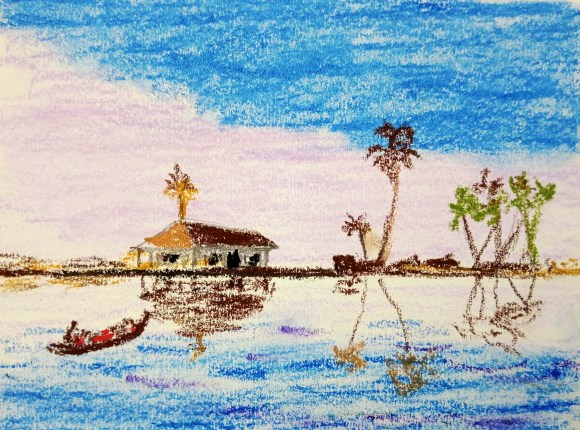
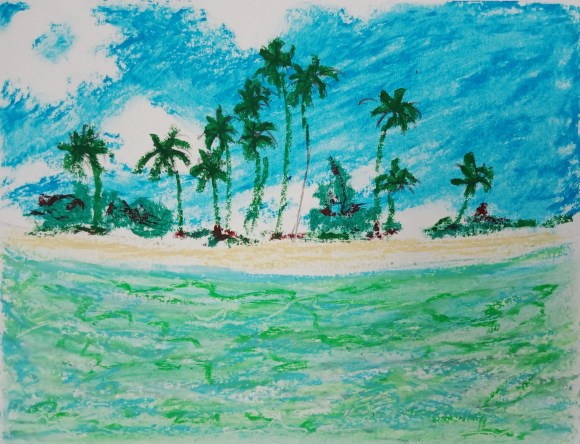
Huge thanks to all our contributors and readers for making this issue possible. Heartfelt thanks to our wonderful team, especially Sohana Manzoor for her fabulous artwork.
Enjoy the reads!
Let’s look forward to the spring… May it bring new ideas to help us all move towards more amicable times.
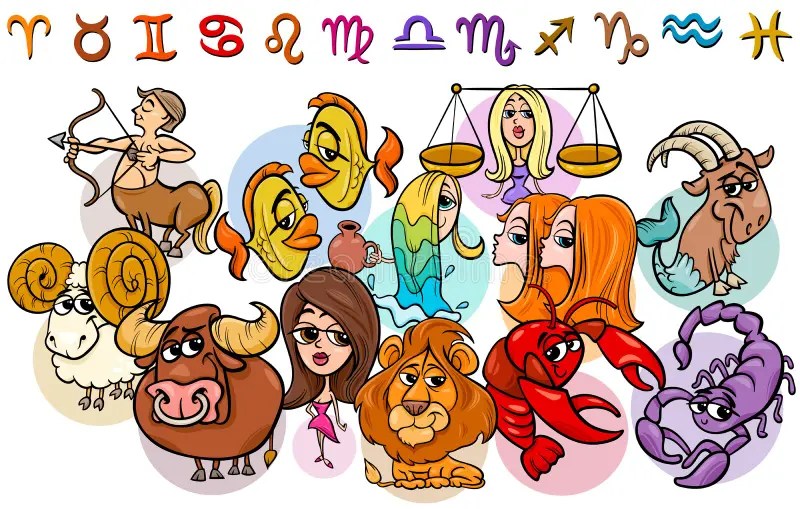
It is a matter of joy that my existence in this world has been largely successful in proving my birth chart predictions wrong. This has now fossilized into my belief even though my mother held a different viewpoint. Ever since I got to read the prized booklet in my teenage years, I was disturbed about my life as an adult and my life span. I was classified as an early achiever of success scheduled to play a long innings. So, I planned to delay almost everything and become a late bloomer instead. Success earned late lasts longer was the guiding thought. Imagine a young fellow who was destined to get his hands on everything considered worth acquiring. Contrast these projections with his determination to put everything on hold, to express solidarity with millions of others who have to struggle very hard and for too long to finally become an achiever. Being stubborn to refuse what fate has ordained sounds crazy and suicidal but that was the rebellious streak that glowed like a firefly in my head during those days.
Wherever I found I was supposed to clock a win or hovered close to winning, I chose to withdraw, step back, or slow down to help another person in greater need of it. Such noble sacrifices were not included in my horoscope, but I gave no scope to destiny to remote control my life. After all, it did not include any career option of my choice and so the glowing tales of a ‘successful’ life meant little. While my mother was glad that the birth chart made it sound all good for me, a roller-coaster ride worth envying, she was upset that I was in a challenging mode, holding my will superior to what the astrologers had outlined in those few hand-written pages. I had some vital questions to raise and clarify doubts. When I expressed the desire to meet the astrologer who drafted my future at the time of my birth, she said he had departed from earth, leaving no scope for me to chase him for an explanation or seek a partial rewrite. There was no way I could convince myself that I was supposed to spend my entire life as per his forecast even though he foretold an abundance of material possessions and windfall gains.
Considering the prediction that I was going to be settled abroad around the age of thirty, I chose not to seek my fortune outside the country, believing that only the meritorious students deserve to go abroad for higher studies or only the highly educated get employed there. Nothing could materialise without the passport, so I delayed acquiring it in my early twenties. My singular focus was to ensure that I was academically unfit for the international job market. Although the extended family gave importance to settling abroad, and many relatives of my generation were upskilling themselves and secretly planning for the big break in the foreign lands, my lack of ambition stoked serious concerns as they concluded it quite abnormal that a young fellow does not dream of flying across continents. When they offered real life examples of how some of our relatives had a better, more ‘secure’ life and they were doing exceptionally well in Canada and Australia, I showed no interest in their immigration tales and chose to furnish a divergent viewpoint of domestic success being a greater challenge in an overpopulated job market.
The holidaying arriviste from New York – an architect of a brilliant career in the field of computers – was eager to know what I was pursuing as we were the branches of the same family tree. When I disclosed that I was into media studies, he was visibly relieved that I would not be seeking any favours like sponsorship, internship, scholarship, or referrals. He was expecting me to praise his global success but my lack of curiosity in his professional breakthroughs made him furious within. His arched eyebrows suggested an element of shock when I mentioned I had zero interest in shifting to a foreign country in search of greener pastures. He read it as my lack of self-confidence to compete globally. He suggested I should mingle with those friends who have a strong urge to move abroad and develop a similar expansive mindset instead of remaining a frog in the well, with those outdated ideas of roots keeping me stuck and decaying my potential. His words failed to stir me or change my outlook, and I maintained that staying local but thinking global was sufficient for me. There have been big achievers who never boarded a ship or a plane, yet they were recognised by the world over for their contributions.
Many friends were exploring opportunities abroad although they kept it as a closely guarded secret to reduce competition. My steadfast refusal to ape them was as source of disappointment, generating fears that the horoscope must have missed out some crucial details or the exact time of birth was recorded incorrectly – a difference of a minute or two possibly changed the entire calculation grid. That I had managed to raise questions on the accuracy of the birth chart was a big achievement, but my mother started scanning the newspaper classifieds for another experienced astrologer who could accurately read my palm and forehead and find out what the future had in store for me. I was sure that the excessive crisscrossing of lines and their lengths and breaks would confuse any seasoned palmist, making him lose patience to further read between the lines.
When I told my close friends that writing could be practiced from any part of the world, they argued that the opportunities to succeed in writing were non-existent within the country. The Western world offered a better life to mediocre writers as well. When my mother understood that creative pursuits were a priority for me, she tried to find some linkage with the birth chart once again. She did succeed in establishing a connection with writing and the business of iron. After all, books and newspapers began their printing journey with the use of metal in the early stages.
As the years passed by, she was convinced that her son would not move out of the city, forget leaving the country. Applying for a passport when it was well past the ‘right’ time to migrate was explained as a necessary step to ensure a holiday abroad though the vacation never materialised. Aside from some minor errors in calculations, she was unwilling to concede that the horoscope was fundamentally misleading. Just then a work-related opportunity in a neighbouring country arrived my way. When I refused to accept it, she was relieved that though late, the horoscope was right to suggest the professional breakthrough abroad and it was my decision to let it go. No more arguments on the accuracy of the birth chart as she felt quite victorious after a long phase of wait. An international opportunity gone waste gave a high of a different kind. My satisfaction that I was not crossing the border disappointed my mother, but I was happy to stay in my homeland.
That I was supposed to be a businessman according to the birth chart was another prediction that haunted me like a nightmare. I was keen to prove it incorrect. Those were the days when the self-employed or freelance professional tag was not in circulation so there were just two categories for astrologers to focus on. The iron business forecast consumed my energy as I feared I would end up being a scrap dealer instead of a global metal magnet. My confidence remained perpetually low, and the fundamental lack of ambition drove me insane. An overdose of humility and modesty stifled my voice to rise and shine.
When I told her about words being the complete world for me, she was happy the prediction was right. Words and books need paper and printing press, so my business of writing had the iron component in it. As per her assessment, the astrologer won despite my best attempts to prove him wrong. She gave a creative spin to those predictions and find some solid connection with my choices. Being published abroad meant it was going international and writing had metal and mettle associated with it. While I stayed happy with the conclusion that the astrologer was wrong, she stayed happy that the astrologer had predicted everything correct and things were unfolding in accordance with what the birth chart foretold.
Talking about life span, it is better to stay silent. I should not pose a challenge just to prove the astrologer wrong. Though I hated the long life he predicted for me as I wondered what I was supposed to do for so many decades, with each passing year now, I feel there is so much to achieve and the prediction gives solace that there is still enough time to fulfil my pending dreams as the journey began late due to my stubborn approach. Whenever I am doubtful about my future on this earth, I fish out the horoscope and read the short paragraph highlighting my long-life span and heave a sigh of relief.
.
Devraj Singh Kalsiworks as a senior copywriter in Kolkata. His short stories and essays have been published in Deccan Herald, Tehelka, Kitaab, Earthen Lamp Journal, Assam Tribune, and The Statesman. Pal Motors is his first novel.
PLEASE NOTE: ARTICLES CAN ONLY BE REPRODUCED IN OTHER SITES WITH DUE ACKNOWLEDGEMENT TO BORDERLESS JOURNAL
Five poems by Pravasini Mahakudahave been translated to English from Odia by Snehaprava Das. Click here to read.
A Poet in Exileby Dmitry Blizniuk has been translated from Ukranian by Sergey Gerasimov. Click hereto read.
Kalponik or Imaginedby Tagore has been translated from Bengali by Mitali Chakravarty. Click hereto read.
Pandies Corner
Songs of Freedom: The Seven Mysteries of Sumona’s Life is an autobiographical narrative by Sumona (pseudonym), translated from Hindustani by Grace M Sukanya. These stories highlight the ongoing struggle against debilitating rigid boundaries drawn by societal norms, with the support from organisations like Shaktishalini and Pandies. Click here to read.
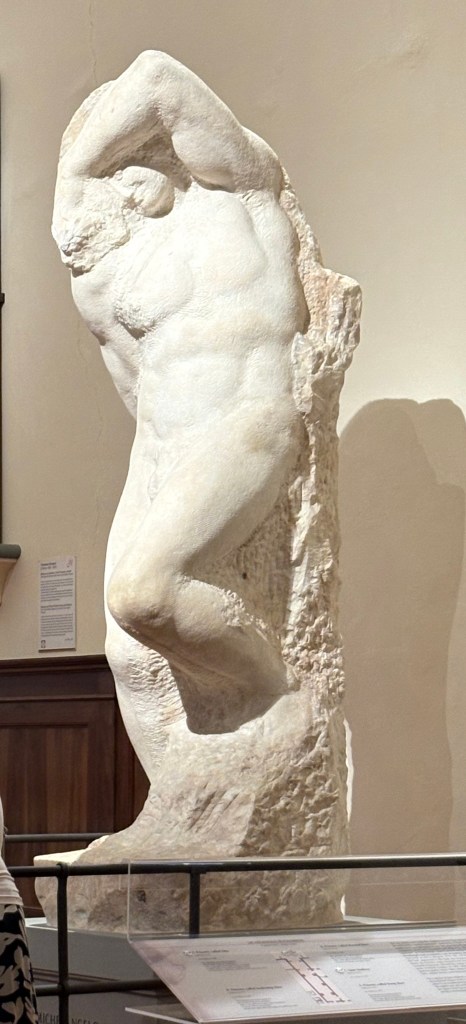
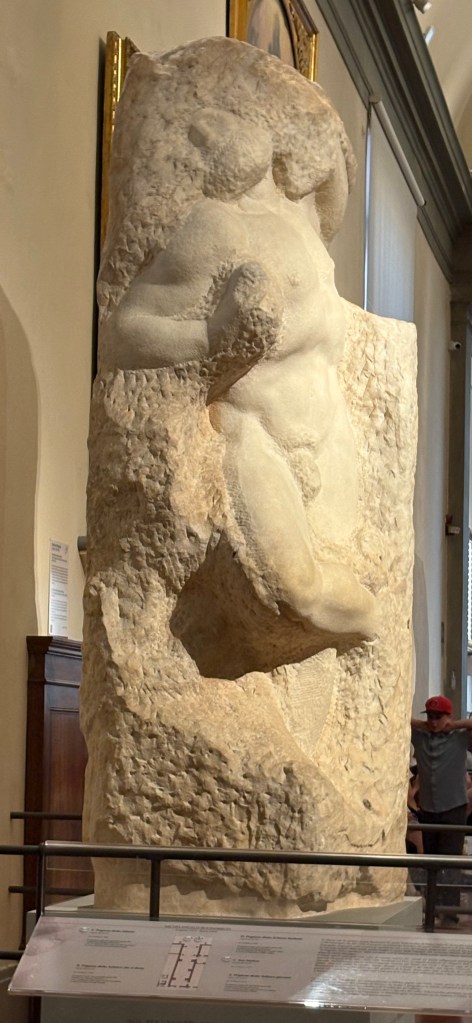
Incomplete statues of Michelangelo in Accademia Gallery, Florence
In the Accademia Gallery, Florence, are housed incomplete statues by Michelangelo that were supposed to accompany his sculpture of Moses on the grand tomb of Pope Julius II. The sculptures despite being unfinished, incomplete and therefore imperfect, evoke a sense of power. They seem to be wresting forcefully with the uncarved marble to free their own forms — much like humanity struggling to lead their own lives. Life now is comparable to atonal notes of modern compositions that refuse to fall in line with more formal, conventional melodies. The new year continues with residues of unending wars, violence, hate and chaos. Yet amidst all this darkness, we still live, laugh and enjoy small successes. The smaller things in our imperfect existence bring us hope, the necessary ingredient that helps us survive under all circumstances.
Imperfections, like Michelangelo’s Non-finito statues in Florence, or modern atonal notes, go on to create vibrant, relatable art. There is also a belief that when suffering is greatest, arts flourish. Beauty and hope are born of pain. Will great art or literature rise out of the chaos we are living in now? One wonders if ancient art too was born of humanity’s struggle to survive in a comparatively younger world where they did not understand natural forces and whose history we try to piece together with objects from posterity. Starting on a journey of bringing ancient art from her part of the world, Ratnottama Sengupta shares a new column with us from this January.
Drenched in struggles of the past is also Showkat Ali’s The Struggle: A Novel, translated from Bengali by V. Ramaswamy and Mohiuddin Jahangir. It has been reviewed by Somdatta Mandal who sees it a socio-economic presentation of the times. We also carry an excerpt from the book as we do for Anuradha Marwah’s The Higher Education of Geetika Mehendiratta. Marwha’s novel has been reviewed by Meenakshi Malhotra who sees it as a bildungsroman and a daring book. Bhaskar Parichha has brought to us a discussion on colonial history about Rakesh Dwivedi’s Colonization Crusade and Freedom of India: A Saga of Monstrous British Barbarianism around the Globe. Udita Banerjee has also delved into history with her exploration of Angshuman Kar’s The Lost Pendant, a collection of poems written by poets who lived through the horrors of Partition and translated from Bengali by multiple poets. One of the translators, Rajorshi Patranabis, has also discussed his own book of supernatural encounters, Whereabouts of the Anonymous: Exploration of the Invisible. A Wiccan by choice, Patranbis claims to have met with residual energies or what we in common parlance call ghosts and spoken to many of them. He not only clicked these ethereal beings — and has kindly shared his photos in this feature — but also has written a whole book about his encounters, including with the malevolent spirits of India’s most haunted monument, the Bhangarh Fort.
Bringing us an essay on a book that had spooky encounters is Farouk Gulsara, showing how Dickens’ A Christmas Carolrevived a festival that might have got written off. We have a narrative revoking the past from Larry Su, who writes of his childhood in the China of the 1970s and beyond. He dwells on resilience — one of the themes we love in Borderless Journal. Karen Beatty also invokes ghosts from her past while sharing her memoir. Rick Bailey brings in a feeling of mortality in his musing while Keith Lyons, writes in quest of his friend who mysteriously went missing in Bali. Let’s hope he finds out more about him.
Charudutta Panigrahi writes a lighthearted piece on barbers of yore, some of whom can still be found plying their trade under trees in India. Randriamamonjisoa Sylvie Valencia dwells on her favourite place which continues to rejuvenate and excite while Prithvijeet Sinha writes about haunts he is passionate about, the ancient monuments of Lucknow. Gulsara has woven contemporary lores into his satirical piece, involving Messi, the footballer. Bringing compassionate humour with his animal interactions is Devraj Singh Kalsi, who is visited daily by not just a bovine visitor, but cats, monkeys, birds and more — and he feeds them all. Suzanne Kamata takes us to Kishi, brought to us by both her narrative and pictures, including one of a feline stationmaster!
We've run away from the simmering house
like milk that is boiling over. Now I'm single again.
The sun hangs behind a ruffled up shed,
like a bloody yolk on a cold frying pan
until the nightfall dumps it in the garbage…

('A Poet in Exile', by Dmitry Blizniuk, translated from Ukranian by Sergey Gerasimov)
In translations, we have Professor Fakrul Alam’s rendition of Nazrul’s mellifluous lyrics from Bengali. Isa Kamari has shared four more of his Malay poems in English bringing us flavours of his culture. Snehaparava Das has similarly given us flavours of Odisha with her translation of Pravasini Mahakuda’s Odia poetry. A taste of Balochistan comes to us from Fazal Baloch’s rendition of Sayad Hashumi’s Balochi quatrains in English. Tagore’s poem ‘Kalponik’ (Imagined) has been rendered in English. This was a poem that was set to music by his niece, Sarala Devi.
After a long hiatus, we are delighted to finally revive Pandies Corner with a story by Sumona translated from Hindustani by Grace M Sukanya. Her story highlights the ongoing struggle against debilitating rigid boundaries drawn by societal norms. Sumana has assumed a pen name as her story is true and could be a security risk for her. She is eager to narrate her story — do pause by and take a look.
In fiction, we have a poignant narrative about befriending a tramp by Ross Salvage, and macabre and dark one by Mary Ellen Campagna, written with a light touch. It almost makes one think of Eugene Ionesco. Jonathan B. Ferrini shares a heartfelt story about used Steinway pianos and growing up in Latino Los Angeles. Rajendra Kumar Roul weaves a narrative around compassion and expectations. Naramsetti Umamaheswararao gives a beautiful fable around roses and bees.
With that, we come to the end of a bumper issue with more than fifty peices. Huge thanks to all our fabulous contributors, some of whom have not just written but shared photographs to illustrate the content. Do pause by our contents page and take a look. My heartfelt thanks to our fabulous team for their output and support, especially Sohana Manzoor who does our cover art. And most of all huge thanks to readers whose numbers keep growing, making it worth our while to offer our fare. Thank you all.
Here’s wishing all of you better prospects for the newborn year and may we move towards peace and sanity in a world that seems to have gone amuck!
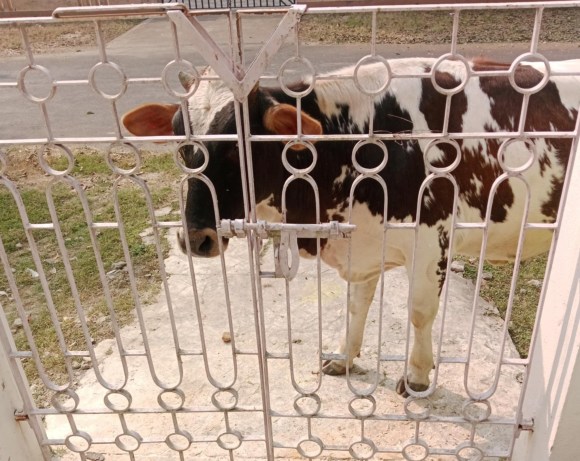
My neighbour, leaning against the boundary wall, informed me that the cow stood waiting for me at the entrance gate for more than an hour. While many people feel delighted to keep others waiting, a sense of guilt pervades me in case I am held responsible for delays. Although my friends never waited for more than five minutes for me, here was a new friend from the animal world telling me there are exceptions. I wore an apologetic look when I opened the gate, with the cow stepping back to grant me the space to enter comfortably with the year-end sale shopping bags.
Our regular bovine visitor stood firm on the hind legs of patience and mooed once or twice to draw my attention to the pending chores. A sort of gentle reminder that the feeding exercise should be marked as a priority since I was back home from the marketplace now. My communication skills with human beings are poor, and here I was faced with the bigger challenge of non-verbal communication. I did not know how to make the cow understand I was really sorry – and keen to make amends by serving her some something special. After the long hour of patient wait, the cow deserved a wholesome treat. Haven’t we all heard the popular saying that the fruit of patience is always sweet? Surely, it extends to other creatures belonging to this universe because the same laws of nature govern the lives of birds and animals as well.
When I returned to the gate, the cow looked at what was in my hands. As I served her a plateful of jaggery chunks, she relished the sweet offering instead of the usual serving of potatoes and vegetable peels. Her slow mastication while establishing direct eye contact with me seemed like an act of gratitude. I stood gazing at her to see if she needed a second helping. She chose to sit down and spread positive vibes. Guessing that she needed something else, I went inside to bring wheat flour or cabbage leaves. The offered items did not make the cow restless to stand up and eat, suggesting that she was already full. She focused on better digestion and exercised self-control unlike human beings who eat excessively and then complain of bloating and over-eating.
Her presence was certainly auspicious but the stray dogs stayed away from the heavyweight cow, lurking in the corner and waiting for their daily quota of biscuits for glucose boost-up to chase cyclists and bikers. As the biscuits descended in their direction like manna from heaven, they ran together for their share while the cow looked at them once and then shut her eyes to concentrate on relaxation techniques, occasionally swishing her tail to make flies maintain a healthy distance from her body. When a cawing jet-black crow flew down and perched on her back, scanning the crumbs lying scattered on the ground to pick up its booty, I stood amazed at the precision with which the bird clutched a big chunk in its beak and flew away to the nearest branch. The dogs kept barking to vent their frustration, to mourn the substantial loss of their share. Oblivious to the chaotic goings-on around, the cow maintained her posture and reminded me of how to stay unperturbed despite chaos and confusion happening around us.
The sight of a composed, unruffled cow was inspirational and it encouraged the dogs to come near and pick up the biscuit crumbs, occasionally keeping a sharp eye on the sudden movements of the cow. Just one quick glance at what these dogs were up to assured the cow that there was no imminent danger in sight. The neighbour, who stood watching this entire spectacle, chipped in with an acerbic comment, sarcastically calling me the chosen one to perform the act of service, blessed with the special ability to match the frequency level of other creatures instead of fellow human beings.
Suspecting it was his clever strategy to duck responsibilities, I urged him to generously feed these creatures whenever he found time from his busy schedule. He said no astrologer had advised him to balance his planetary positions by feeding birds and animals. Attaching a selfish motive to the selfless act meant he saw me as a rank opportunist. Perhaps he felt I was doing it for a short span of time and the bonding exercise would conclude in a month. That this was meant to last much longer was way beyond his imagination and my revealing such grand plans would stoke up further jealousy. It was safer to let him read and interpret everything the way he liked while I should focus on what I was doing – without bothering about how my neighbours reacted to my activities. The day was not far when they would scold and shoo away the birds for turning up at my gate for their dietary needs every day.
As I turned back to enter the house, the birds swooped down in search of foodgrains. While the other species were having their share, sparrows and pigeons pecked around for the leftover stuffs. I replenished the stock on the cemented pavement garden – to enable them to locate the grains with ease. The gentle flock did not raise a flutter, allowing me the time and space to serve them with dignity.
After I came back, their chirping turned high-pitched as they gave a joyous, riotous welcome to the squirrels who came down from the rooftop. What I noticed for a change was some squirrels scoured the area for biscuit bites, suggesting a need for variety in their feed. It was not the staple grain diet but perhaps, they yearned for something sweet and tasty. While some birds were still engaged in pecking the grains, a few rebellious ones joined the troop of squirrels.
As I gained new insight into their dietary preferences, I chose to add biscuits to the menu. Their inclination to have grains looked compromised while the biscuit pieces were polished off really fast. That they were now, with each passing day, getting closer to me, feeling less threatened by human presence, flying over my head at times, and settling down near my feet, came as a pleasant surprise. That I was a harmless creature was certified by their fearlessness.
When the milkman came to deliver, he saw me surrounded by sparrows and wondered at their thriving presence in the mobile-driven world threatening their existence. Their playfulness was evident in their hopping around on the bed of grass. Their landing on the window grille to see the blooming, sun-kissed petunias created a photo-worthy scene and he clicked the fluttering birds on his smartphone before they took flight after this sudden intrusion. Maybe he clicked them mid-flight, in motion, snapping a picture worth sharing with friends and posting across social media platforms to celebrate the closeness.
The tall Asoka trees were where these birds built their nests and most of them disappeared into the green branches after this brief episode of invasion of privacy. That these birds did not have to search hard for food was a good thing since most of their daily needs were met inside the compound. Gaining easy access to eatables was ruining their habit of flying for hours. But to search for food for long hours and then return disappointed was also not a good outcome after a day of hard work. Something that demoralises and compromises the spirit of survival against all odds. The Most cute-looking in the backdrop of the photo frame were squirrels who held the biscuits firmly and took small bites. Being unable to carry them, they split the biscuits into tiny pieces and then rushed off with the booty to the garage rooftop where they could eat without any disturbance and also hoard some bits in the hollow pipes and wall cavities for consumption later.
This day offered a memorable learning lesson – a reminder that I should not leave the house without making provisions for them. I made a new year resolution: not to be casual about feeding these creatures. They should not be forced to wait for the resident to return home. Taking them for granted would amount to bad human behaviour, in line with how the world treats those who do not wield any kind of power. One never knows when their hunger pangs turn severe and when these animals turn up at the gate for their feed and relief. The refreshments should be laid out like a buffet spread – to pick whatever they like to eat, whenever they like to eat.
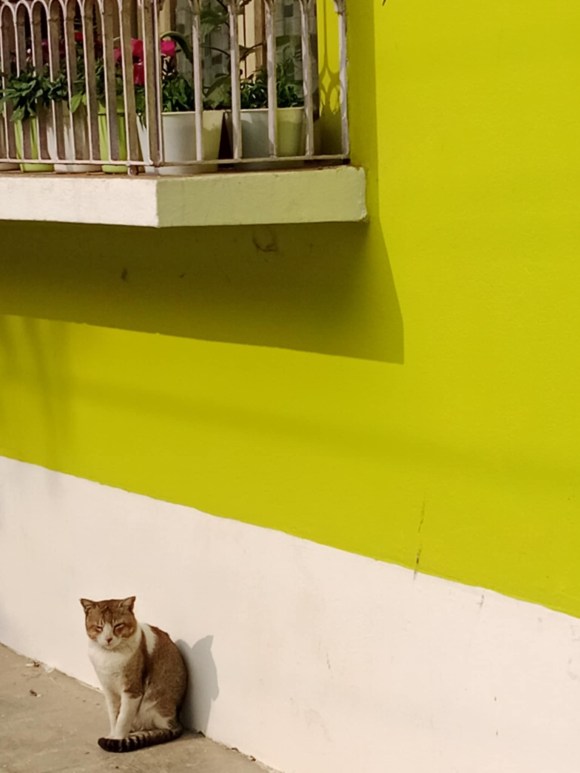
A diverse outdoor congregation cannot be complete without a special guest worth mentioning here: a white furry cat frequents the buffet for milk. The bowl was filled with milk. The cat slowly and cautiously emerged from behind the wall, and began to slurp from the container, taking small breaks to see what the other creatures were enjoying in the garden. Then the cat shook her head quite vigorously to signal the return of fresh energy and stretched her limbs. Spreading herself on the rubber doormat, she looks at my face. Her paws rested on her belly and this perfect chill-mode followed a wide yawn and the need for a post-lunch quick nap.
I disappeared from the scene, leaving the cat alone to enjoy some moments of privacy. Usually, the cat is afraid of dogs, but their presence outside the main gate did not impact her much. They barked a few times to assert their power and she meowed at a competitive pitch in response to register her disapproval during sleep time. Instead of choosing to retreat, the cat remained cosy in her space, and the dogs noticed the royal privilege she enjoyed inside the compound. Their mutual enmity took a backseat for the time being as the dogs chose not to waste their energy on the cat once they found an overloaded motor van to chase on the deserted road.
While they have not become best friends yet, their sense of fear and threat has reduced, giving way to tolerance. When I open the door in the morning, I find the dogs waiting outside and the cat resting on the mat on the stairs. They see each other every morning but they do not disturb each other. The same goes with birds. When the cow arrives, the dogs do not run away, just step aside to allow her space. With their growing acceptance I am more turning more sensitive to their needs.
The bowl meant for the cat has to be washed clean every day before the milk is poured. The grains for birds have to be checked for stones and the jaggery for the cow should be ant-free. No casual disposition but extreme care to ensure the best hygiene practices for them even though these creatures seem to be unaware of consuming clean things alone. Even when there is not much leisure time to serve, my conscience does not allow me to be flippant and finish off everything in a hurry. Cut down on screen time to care for them is what the inner voice urges me to do.
Ever since I chose to have other creatures as my friends, many of my lost friends and colleagues from the past have reconnected with me. Now the time I spend in the company of birds and cats and cows and dogs is claimed by human friends. I do not feel comfortable to invest heavily on my old friends who proved disloyal and seasonal. Finding a delicate balance between animal and human time is the key to keeping people as well as other creatures happy.
When I think of leaving this place, I am tied down by the needs of other creatures. A holiday trip would deprive them of food supplies so I must make arrangements for them, perhaps ask the caretaker to do it for some days. And if I leave this place forever, I must ask the person who comes next to be generous towards these creatures.
With this diversity of my animal family growing, with new members like mongoose and snakes, I am reminded of the need to be kind to all – instead of focusing on their capacity to harm. Let the slithering snake also join in and drink milk kept aside for the cat. I am confident the mixed community will not make it bare its fangs. The poison inside the snake is quite likely to remain saved unless the mongoose comes around for a challenging bloodbath session. Finding snake skin in the garage suggested it was shed recently and the serpent moved out soon after.
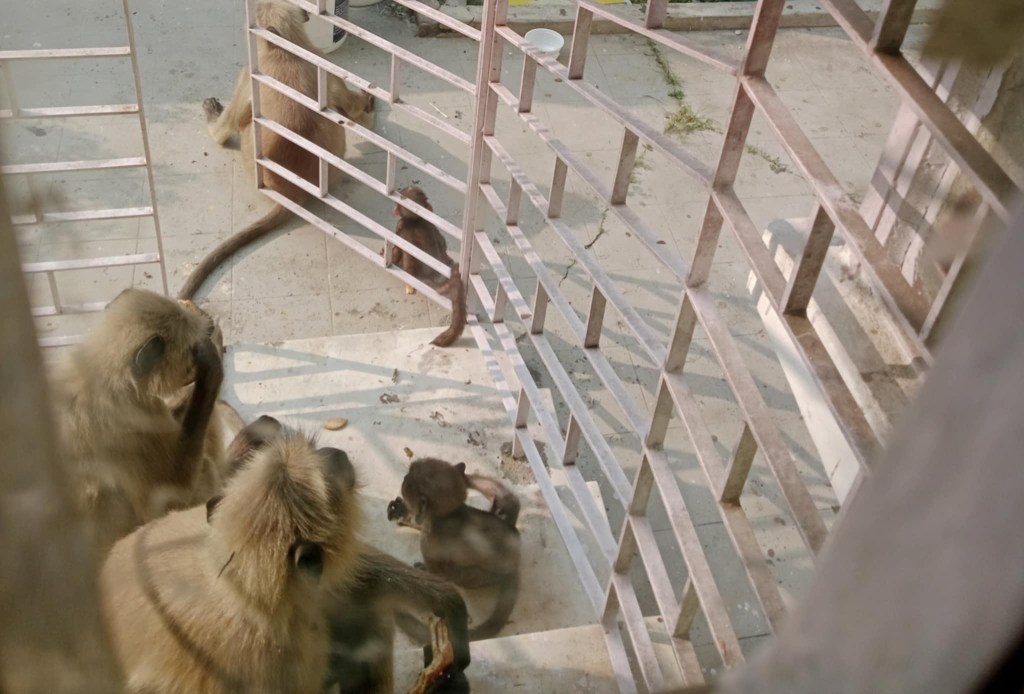
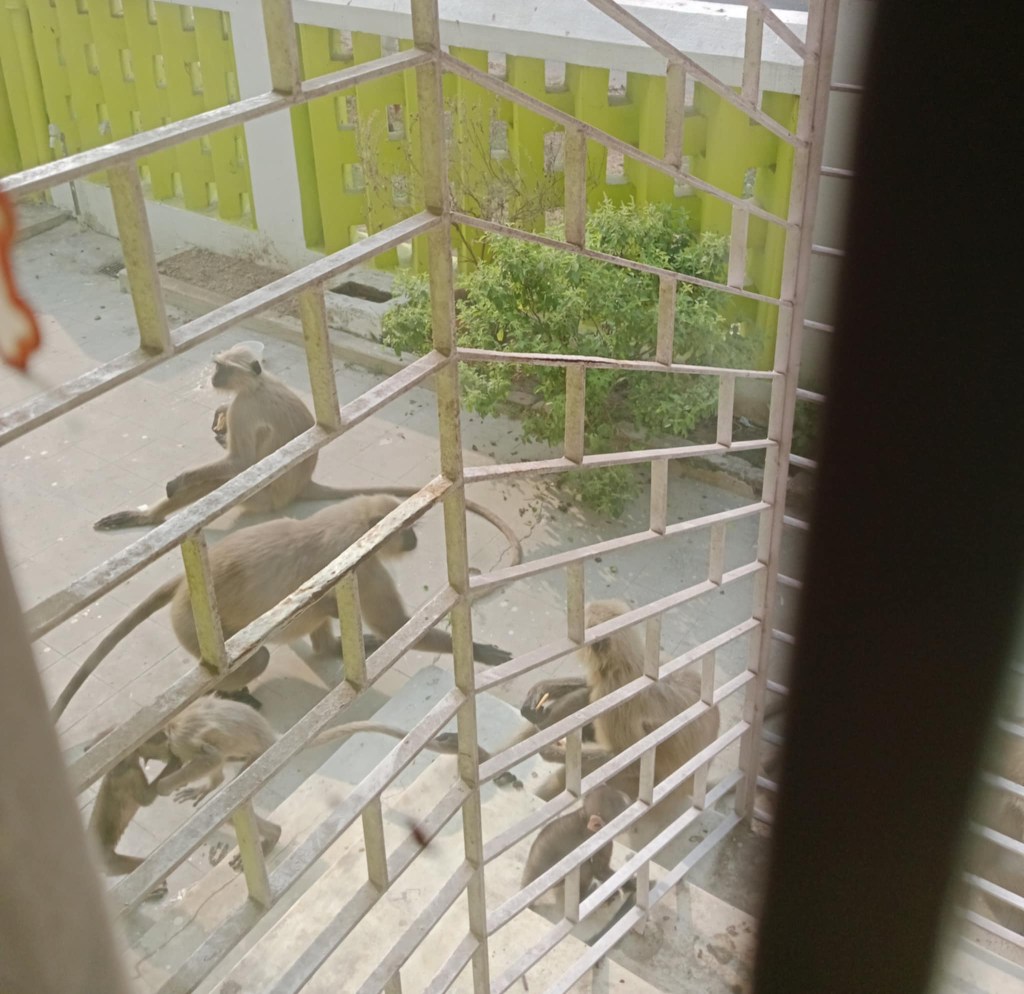
Now the provisions are arranged in advance to last for a month but when there are guests like monkeys trooping in once a week, the stockpile of bananas falls short. The grille gate is their acrobatic zone and they stay suspended to showcase their skills and impress. When I offer them something to eat, they come down fast and grab the eatables without a proper handshake.
Expecting surprises from monkeys is common. As the priest this year was about to perform annual prayer rituals in front of the car, a big monkey came down from the parapet and grabbed the coconut from the plate and cracked it open in front of the bonnet. The priest offered bananas and the monkey walked away quietly like a brave hero strutting the stage with swag. The priest chanted some mantras and stood watching in awe, calling it divine intervention. He said the monkey god had performed the puja successfully and there was not much left for him to do so he rode off on his scooter with mixed feelings. Whenever monkeys visit my humble abode, I am reminded of this incident that has stayed with me. Perched on the branches, they are least bothered by those shouting at them. The ground floor inhabitants do not matter at all. Learning to ignore is vital for survival. With so much to observe about animal behaviour and mannerisms, I realise I am not quite capable of understanding their feelings. The truth that the world has other important, valuable creatures we need to co-exist with becomes a palpable reality.
Devraj Singh Kalsiworks as a senior copywriter in Kolkata. His short stories and essays have been published in Deccan Herald, Tehelka, Kitaab, Earthen Lamp Journal, Assam Tribune, and The Statesman. Pal Motors is his first novel.
PLEASE NOTE: ARTICLES CAN ONLY BE REPRODUCED IN OTHER SITES WITH DUE ACKNOWLEDGEMENT TO BORDERLESS JOURNAL


 Borderless