Satyajit Ray(2 May 1921-23 April 1992) in New York. Courtesy: Creative Commons
A film-maker, writer, musician and more, perhaps Satyajit Ray can best be described in the maestro’s lead actor (Seemabadha, 1971) Barun Chanda’s words:
[O]ne would like to remember Ray as one of the last truly great renaissance men of Bengal, moulded much in the tradition of Tagore, in the sense that his genius manifested itself in manifold directions: film-making, photography, writing, composing poetry, limericks, music, designing, drawing, developing new typefaces, you name it.

For a long time, he was also our most distinguished cultural ambassador to the world.

-- Barun Chanda, Satyajit Ray: The Man Who Knew Too Much
Barun Chanda, introduces Satyajit Ray, the film maker, to us in his book, Satyajit Ray:The Man Who Knew Too Much. This in-depth conversation with the author and a review of his book introduces us to the unforgettable world of Satyajit Ray. Click here to read.
In When ‘they’ Danced…, Ratnottama Sengupta discusses the unique Bhooter Naach or the Ghost Dance, in Satyajit Ray’s Goopy Gyne Bagha Byne. Click hereto read.
Satyajit Ray, Bibhuti Bhushan & Nabendu Ghosh and a Famous Triology: Pather Panchali(Song of the Road) by Bibhuti Bhushan Bandopadhyay was a classic novel, immortalised further by Satyajit Ray’s films, also known know as the Apu Triology. Here is a translation from Nabendu Ghosh’s autobiography which introduces how the film came to be. This portion has been excerpted from Eka Naukar Jatri (Journey of a Lonesome Boat) and translated by Ratnottama Sengupta as a celebration of the Satyajit Ray Centenary. Click hereto read.
Abhirup Dhar, a horror writer whose books are being extensively adopted by Bollywood, talks about his journey and paranormal experiences. Click here to read.
Translations
Munshi Premchand’s Balak or the Child has been translated from Hindi by Anurag Sharma. Click hereto read.
Atta Shad’s Today’s Child has been translated from Balochi by Fazal Baloch. Click here to read.
Masud Khan’s History has been translated from Bengali by Professor Fakrul Alam. Click here to read.
Ihlwha Choi translates his own poem,Lunch Time, from Korean. Click here to read.
Tagore’s Somudro or Ocean has been translated from Bengali by Mitali Chakravarty. Click here to read.
“Here with a Loaf of Bread beneath the Bough,
A Flask of Wine, a Book of Verse -- and Thou
Beside me singing in the Wilderness --
And Wilderness is Paradise enow.”

― Omar Khayyám (1048-1131); translation from Persian by Edward Fitzgerald (Rubaiyat, 1859)
I wonder why Khayyam wrote these lines — was it to redefine paradise or just to woo his beloved? I like to imagine it was a bit of both. The need not to look for a paradise after death but to create one on Earth might well make an impact on humankind. Maybe, they would stop warring over an invisible force that they call God or by some other given name, some ‘ism’. Other than tens of thousands dying in natural disasters like the recent earthquake at the border of Turkiye and Syria, many have been killed by wars that continue to perpetrate divides created by human constructs. This month houses the second anniversary of the military junta rule in Myanmar and the first anniversary of the Ukrainian-Russian war that continues to decimate people, towns, natural reserves, humanity, economics relentlessly, polluting the environment with weapons of mass destruction, be it bombs or missiles. The more weapons we use, the more we destroy the environment of our own home planet.
Sometimes, the world cries for a change. It asks to be upended.
We rethink, reinvent to move forward as a species or a single race. We relook at concepts like life and death and the way we run our lives. Redefining paradise or finding paradise on Earth, redefining ‘isms’ we have been living with for the past few hundred years — ‘isms’ that are being used to hurt others of our own species, to create exclusivity and divisions where none should exist — might well be a requisite for the continuance of our race.
Voices of change-pleaders rang out in the last century with visionaries like Tagore, Gandhi, Nazrul, Satyajit Ray urging for a more accepting and less war-bound world. This month, Ratnottama Sengupta has written on Ray’s legendary 1969 film, Goopy Gyne, Bagha Byne: “The message he sent out loud and with laughter: ‘When people have palatable food to fill their belly and music to fill their soul, the world will bid goodbye to wars.’” Shantanu Ray Chaudhuri has given an essay on one of the greatest pacifists, Gandhi, and his attitudes to films as well as his depiction in movies. What was amazing is Gandhi condemned films and never saw their worth as a mass media influencer! The other interesting thing is his repeated depiction as an ethereal spirit in recent movies which ask for changes in modern day perceptions and reforms. In fact, both these essays deal with ghosts who come back from the past to urge for changes towards a better future.
Delving deeper into the supernatural is our interviewee, Abhirup Dhar, an upcoming writer whose ghost stories are being adapted by Bollywood. While he does investigative stories linked to supernatural lore, our other interviewee, Andrew Quilty, a renowned journalist who has won encomiums for his coverage on Afghanistan where he spent eight years, shows in his book, August in Kabul:America’s Last Days in Afghanistan and the Return of the Taliban, what clinging to past lores can do to a people, especially women. Where does one strike the balance? We also have an excerpt from his book to give a flavour of his exclusive journalistic coverage on the plight of Afghans as an eyewitness who flew back to the country not only to report but to be with his friends — Afghans and foreigners — as others fled out of Kabul on August 14 th 2021. While culturally, Afghans should have been closer to Khayyam, does their repressive outlook really embrace the past, especially with the Taliban dating back to about only three decades?
This intermingling of life and death and the past is brought to life in our fiction section by Sreelekha Chatterjee and Anjana Krishnan. Aditi Yadav creates a link between the past and our need to travel in her musing, which is reminiscent of Anthony Sattin’s description of asabiyya, a concept of brotherhood that thrived in medieval times. In consonance with wanderlust expressed in Yadav’s essay, we have a number of stories that explore travel highlighting various issues. Meredith Stephens travels to explore the need to have nature undisturbed by external interferences in pockets like Kangaroo Island in a semi-humorous undertone. While Ravi Shankar travels to the land’s end of India to voice candid concerns on conditions within Kerala, a place that both Keith Lyons and Rhys Hughes had written on with love and a sense of fun. It is interesting to see the contrasting perspectives on Southern India.
Professor Fakrul Alam has also translated poetry where a contemporary Bengali writer, Masud Khan, cogitates on history while Ihlwha Choi has translated his own poem from Korean. A translation of Tagore’s poem on the ocean tries to capture the vastness and the eternal restlessness that can be interpreted as whispers carried through eons of history. Fazal Baloch has also shared a poem by one of the most revered modern Balochi voices, that of Atta Shad. Our pièce de resistance is a translation of Premchand’s Balak or the Child by Anurag Sharma.
This vibrant edition would not have been possible without all the wonderful translators, writers, photographers and artists who trust us with their work. My heartfelt thanks to all of you, especially, Srijani Dutta for her beautiful painting, ‘Hope in Winter’, and Sohana for her amazing artwork. My heartfelt thanks to the team at Borderless Journal, to our loyal readers some of whom have evolved into fabulous contributors. Thank you.
Do write in telling us what you think of the journal. We look forward to feedback from all of you as we head for the completion of our third year this March.
Ratnottama Sengupta is riveted by the phantasmagoric Bhooter Naach, the Ghost Dance, in Satyajit Ray’s legendary film — Goopy Gyne Bagha Byne — that has no precedence nor any sequel in cinema worldwide.
Some years ago, I was preparing for my talk on dance in Hindi Films, given to the Film Appreciation students at the Film and Television Institute of India in Pune. I noticed that every major director in the earlier years, from Uday Shankar (Kalpana, 1948), V Shantaram (Jhanak Jhanak Payal Baje, 1955), and K Asif (Mughal-e-Azam, 1960), to Guru Dutt (Saheb Bibi Aur Ghulam, 1962), K A Abbas (Pardesi, 1957) and Sohrab Modi (Mirza Ghalib, 1954) had started with Indian classical dance in its purest form – Kathak — and the leading ladies Vyjayanthimala, Waheeda Rahman and Padmini came equipped with the dance of thedevadasis, Bharatanatyam. Subsequently however, most filmmakers diluted the purity of these dances, perhaps to suit the situation in their films. And in recent years that dilution has gone further to take the form of fusion dance, westernised dancing, and group dancing to add volume to the glamorous visual of female torsos in movement.
Suddenly it struck me that Satyajit Ray (1921-92) too had used Kathak in its purest form in Jalsaghar (1958) and then ‘diluted’ the purity of classical movements to design the rhythmic footwork of disembodied spirits. And it dawned on me what level of genius could create a dance that becomes a visual statement on the history of the land itself! Of course, I am talking about the ‘Dance of the Ghosts’ in Goopy Gyne Bagha Byne(1969). The towering presence had ‘choreographed’ this dance which has simply no parallel in the world of cinema. Yes, the director — who also penned the lyrics besides screenwriting his grandfather’s adventure story first published in Sandeshin 1915 – had diluted the classicism of Kathakali and Manipuri. But he had fused in so many more art forms like masks, paper cutouts, shadow art, pantomime, celluloid negatives and special effects that it emerged as a class in itself, giving even today’s viewers an experience nonpareil.
In this fantasy that ends as a fable with a timeless moral, Ray experimented with a psychedelic burst of dancing. The narrative pivots on a tone-deaf singer and a bumbling drummer. Essentially though Ray’s telling of the ‘fairytale’ was a garbed plea against war. The message he sent out loud and with laughter: “When people have palatable food to fill their belly and music to fill their soul, the world will bid goodbye to wars.”
But Ray’s recounting of the story was far from didactic. Indeed, he himself is known to have said, “I don’t know if you can truly demarcate fantasy and fable.” So, instead of categorising it as one other the other, he recommended that we see Goopy Gyne Bagha Byne (GGBB) only as the story of a duo of untalented musicians. Their playing earns ridicule from fellow villagers and contempt from their king but appeals to the upside-down aesthetics of ghosts. The charmed King of Ghosts appears with an eerie twinkling of stars and a disembodied voice to bless them with three boons. With an enjoined clap of their hands, they could feed to their heart’s content, they could travel where they want to in their charmed shoes, and their music could entrance their listeners.
Building upon this children’s story, Ray himself wrote the dialogue, designed the music, the costumes of the entire cast, and the choreography of the Ghost Dance that is redolent of Uday Shankar’s Kalpana. The dead come alive when Goopy-Bagha play and perform a surreal dance that briefly echoes the past of India — because bhoot kaal in Bengali means ‘past tense’.
The celluloid representation depicts in minute details the division of society into caste, class and creed since time turned ‘civilised’. Ghosts in the first group are the royals – from the age of Puranas through Buddha’s times to the rule of Kanishka Gupta. The shadowy, amorphous shapes in the second lot belonged perhaps to the lowest strata of those they ruled – peasants, artisans, Santhals, Bauls, Mussalmans. The third set of ghosts recall the story of colonisation by people who are suited-booted, wear hats, walk with a stick, indigo planters who drink whisky from bottles and strike awe with their body language. The fourth group comprises potbellied ghosts whom Ray identified as ‘Nani Gopals’. They wear costumes that remind us of city-dwelling zamindars, money lenders, padres who try to teach Bible and orthodox priests who run away from them. Their bulky forms contrast the skeletal shadows that precede them on the screen – perhaps because they thrived by exploiting the plebians?
All these ghosts are described later by Goopy and Bagha: they are Baba bhoot Chhana bhoot, Kancha bhoot Paka bhoot Soja bhoot Banka bhoot, Roga bhoot Mota bhoot. Thin or fat, short or tall, crooked or straight, simple or strange… between them, they are the world we inhabit across time and space!
Each group appears separately, in harmony; then they reappear to fight a war and kill one another. The pantomime is danced only to the clash of percussion instruments – and makes us wonder, when did homo-sapiens get so divided?
The allegorical dance in four segments is a phantasmagoria of styles and moods that mesmerises at every repeat viewing – as much by the visuals as by its conceptualisation. But what were the technical feats that shaped the fantastic performance? In an interview given to Karuna Shankar Roy for Kolkata, a magazine edited by Jyotirmoy Dutta, for its special edition on Ray (published on May 2, 1970), the master himself had guided viewers through the Bhooter Naach. Let me retrace part of the journey.
*
Ray had, since Teen Kanya (Three Daughters, 1961), scored the music for his films as the ustads he earlier collaborated with were too engrossed in their ragas to understand the needs of a film script. In GGBB, in addition to the theme music that has always borne his signature, the songs had to speak, act, develop the characters…
Let me elaborate. The original story simply said Goopy is a singer. But when Ray sat down to write the songs he had to draw upon words, and since words have meaning, the songs “say” something. When Goopy sings to arrest the march of the advancing soldiers, what could the words say? Clearly they couldn’t say, “Dekho re nayan mele jagater bahar! Open your eyes to the wondrous beauty of this earth” – that is the ditty Goopy sings right after being blessed by the King of Ghosts. Set in the calming morning raga Bhairavi, it would not be appropriate here. So he sings, “O re Halla Rajar sena, tora juddha korey korbi ki ta bol! Tell us, oh soldiers of King Halla, what will you achieve through war? You will only sacrifice your life at the altar of weapons!” At once the song becomes a diatribe against wars worldwide and through history.
So, the words are fed by the situation in which the song is being sung – and the movements were stylisation that sometimes leaned towards the Western classical form of Opera and sometimes towards Bengal’s very own Jatra[1]. GGBB is in that sense a complete musical. Yet, I notice that the songs here don’t carry the story forward – instead, they arrest movement. In that sense they can be said to owe their lineage to Jatra where the songs act like the Greek chorus, commenting on the action and acting as the conscience keeper.
Ray did not settle for the obvious, much heard folk songs of Bengal, be it Baul or Bhatiali, Bhawaiya or Gambhira, Kirtan or Shyama Sangeet, Agamani or Patuar Gaan. Nor did he entirely shun the robust classicism of ragas. He crafted his own folksy scheme that was close to the soil of the rustic protagonists yet uncomplicated enough to appeal to the strangers inhabiting the land where they find themselves amid scholastic vocalists. Here, in the distant land where Goopy-Bagha had travelled in their magical shoes, their music had to transcend the barrier of language. In Ray’s own words, “it had to be deshottar, kaalottar[2]”. And in being so, every one of their songs has become timeless. Be it Mora sei bhashatei kori gaan/ We sing the melody of that or any language, or Aay re aay manda mithai/ Rain down on us, sweets for every taste – today they are a part of Bengal’s cultural ethos.
Ray may have caricatured the learned ustads seasoned in ragas but, repeatedly and in various ways, he uses Carnatic music. When Goopy and Bagha are fleeing from the lock-up, the stylised flight parodies Bharatanatyam movement – “Goopy re Bagha re Pala re pala re! Run run run…” Contrast this with the forlorn music of “Dukkho kise hoy? What causes sadness?” The score uses merely two string instruments – a dotara, a two-stringed instrument, and a violin which is widely used in Carnatic music “but here it is played much like the sarinda that is popular in East Bengal,” Ray had explained in the 1970 interview reprinted in Sandesh.
However, I am most fascinated by the use of Carnatic musical instruments in the Ghost Dance at the outset. As in the rest of the film, this sequence too has heavy orchestration — but the movements are choreographed not to a song, only to a quartet of percussion instruments.
At the risk of repeating myself I underscore that Bhooter Naach has no precedent nor any sequel in any movie made in any country at any point of time. So, to understand the process of its creation, we can only listen to Ray. “The story simply said, ‘the ghosts came and danced’. But how could I realise that in visual terms? Bengal of course has a conventional description of ghosts: their ears are like winnows, their teeth stick out like radish, they are pitch-dark, with arched back. But this would not be artistic. Nor could this meagre description sustain me through an entire sequence that had to create an impact deep enough for the film to rest on. Besides, there is no convention about their dancing. That is why I started to think: What if those who actually lived and died, were to come back? How would their bhoot look and behave?”
Here, let me add that for Satyajit Ray as for Upendra Kishore too, the term bhoot was not synonymous with the English ghost or spirit. Indeed, ghosts have been part of our folklore since our forefathers peopled Bengal, so much so that villagers still won’t utter the word after sunset, preferring to refer to them as “They”. In fact, the bhoot always had a different connotation in Bengal’s literary convention that has an entire genre thriving on bhoot-pret-jinn-petni-sakchunni-dainee-Brahmadaitti… Not only is the phantom celebrated in Sanskrit literature’s Betal Panchavimsati, Tagore, talking of his childhood, writes how he expected one of them to stretch out a long arm from the trees after nightfall. Ray’s ‘Lilu Pishi’ – Leela Majumdar – had authored Sab Bhuturey[3], a collection of ghost stories, while Ray himself gave us Baro Bhuter Galpo[4]a fun collection of 12 stories meant to exorcise fear! The tradition continues to live on, through the pen of Sirshendu Mukherjee, author of Nabiganjer Daitya[5], Gosain Baganer Bhoot[6], and Rashmonir Goynar Baksho[7]that was made into a film by Aparna Sen.
Now, to circle back to the Ghost Dance: Once Ray had transformed the ‘positive’ – read, live humans — into their ‘negative’, the dead, he realised that they could be kings and colonists as in history books, and they could be farmers and sepoys, Buddhists and Bauls, preachers and rioters too. After all, there were miles of burial ground in Birbhum — the location where Ray was shooting — that were the resting ground for Europeans who had breathed their last in Bengal. Thus, organically, came the thought of the four categories of ghosts distinctly identified through the visuals: A) the royals; B) the exploited class; C) the firangees or foreign imperialists; D) the bloated exploiters – baniyas or shopkeepers, capitalists, preachers.
The ghosts of imperialists
In the Kheror Khata, notebooks where he drafted every frame for GGBB, Ray actually names his ghosts. So, Warren Hastings, Robert Clive and Cornwallis are resurrected with their guns and their swords. This reminded me of the Terracotta Soldiers I have seen in Xian: the funerary sculptures depicting the army of Qin Shi Huang, the first emperor of China, were modelled on actual lived soldiers, I had learnt. Similarly, the thought of Chatur Varnashram[8]may have led to the four classification of ghosts – and the depiction of rows of simplified human figures on many of our temple walls – including Konark — could have inspired the vertical arrangement of the four groups, one on top of the other.
In execution, these ‘disembodied’ figures were given body by actual dancers. “We spent long hours together choreographing the sequence,” Ray said of Shambhunath Bhattacharya who had trained students in his dance school to take turn in dancing the classical footsteps. Their costumes and make up were, of course, designed by Ray and devised by art director Bansi Chandragupta, in keeping with their station in life. The exception was the Europeans: Ray used shadow puppets dancing 16 frames a second to evoke their mechanised manner. The action was in ‘five movements’: They come, they dance, they clash and war, they build up a frenzy that is resolved in harmony. The ghosts, after all, cannot die again!
Realising the movements was a challenge that the genius overcame technically. “If the four rows had to be physically shot, with four rows of dancers standing one over another, it would have needed a three-storey space. So, we arranged two rows at first, photographed them by masking top half of the film. Then we reversed the film and operated the camera to capture two more rows. The camera was on a crane and at the precise moments marked by music, we had to zoom back from the close up…”
The music for Bhooter Naach has its origin in the Carnatic taal vadya kacheri – an orchestra of percussion instruments that Ray first heard on radio, then witnessed at the inauguration of an International Film Festival of India (IFFI) in Delhi. He decided to use a unique quartet comprising of mridangam, ghatam, kanjira and morsing. For the uninitiated: mridangam is a double-sided drum (somewhat like Bengal’s terracotta drum, khol) with a body made from hollowed jackfruit wood and the two mouthpieces covered by stretched goatskin. Ghatam, known as ghara in Punjab and matka in Rajasthan, is a clay pot with a narrow mouth whose pitch varies with its size. Kanjira, belonging to the tambourine family, has a single pair of jingles on it. And morsing, a plucked instrument held in the mouth to make the ‘twang twang’ sound, is also found in Rajasthan and Sindh. Ray used mridangam for the royals “because it is classical,” and their dance movement is also purely classical. Kanjira, with its semi-folk sound, he used for the farmers, and ghatam with its somewhat rigid sound was right for the rather wooden, mechanical movement of the Europeans. And the croaking sound of the morsing? Yes, it was just what the comical bloated figures needed!
Bhooter Raja or the ghost king
Finally, we come to the most haunting part of the stellar performance: the Ghost King who grants Goopy Baagha the three boons that change their lives, the lives of the kingdoms of Shundi and Halla, and the definition of fantasy in cinema. Chumki, the decorative spangles predominantly used in zardozi, combined with a soft light that diffused the reflected shine of the beads to work ethereal magic. The radish-like teeth crafted from shola pith – the milky white Indian cork that is hallowed by its association with Puja in Bengal — stuck out of the pitch-black body that had eyebrows whitened with paint. Finally, a thick white ‘sacred thread’ across its chest completed the appearance of the gigantic holy demon, Brahma Daitya.
The matching intonation? We all know by now: It was The Master’s Voice. Sound engineer Babu Sarkar had recorded Ray’s baritone, then played at double speed, and rerecorded it…
Only a genius of Ray’s stature could visualise this!
This essay is part of the online website dedicated to the Kheror Khata Satyajit Ray maintained, detailing the making of Goopy Gyne Bagha Byne. This was launched to celebrate the Birth Centenary of the legend. Republished with permission from TCG Crest.
Ratnottama Sengupta, formerly Arts Editor of The Times of India, teaches mass communication and film appreciation, curates film festivals and art exhibitions, and translates and write books. She has been a member of CBFC, served on the National Film Awards jury and has herself won a National Award.
.
PLEASE NOTE: ARTICLES CAN ONLY BE REPRODUCED IN OTHER SITES WITH DUE ACKNOWLEDGEMENT TO BORDERLESS JOURNAL
Between 1990 and 2017 one in seven people in India suffered from mental illness ranging from depression and anxiety to severe conditions such as schizophrenia. However, the depiction of this in cinema has been poor and sensationalist contends Shantanu Ray Chaudhuri.
‘In a lot of films there is the underlying message that all the patient really needs is love and affection. There is a tendency in films to try and normalise mental illness by saying that patients don’t need treatment, they need love. The audience gets the two extremes and what we are not getting are portrayals of people with chronic illness.’ – Dr Cleo Van Velsen, psychiatrist
A poet loses his mental balance on seeing his beloved fall to her death. And what do his family members do? They approach a dancing girl in a brothel to marry him in a bid to get him cured. In a fit of madness, he even rapes her, and she becomes pregnant. But the typical ‘good Indian woman’ that she is, she perseveres in her effort. A few convoluted plot-turns later, the poet gets into a brawl with the villain, resulting in the latter falling to his death, much like his lover. Lo and behold! He is cured, though now he has no memory of the dancing girl.
A nurse in a mental hospital is asked to take care of a patient as part of an ‘experiment’ that its dictatorial army doctor president wants to conduct. The patient is cured but it affects the nurse’s emotional stability. Insensitive to her turmoil, the doctor, preening with the ‘success’ of his experiment, more or less browbeats her into another one with a new patient. With disastrous consequences. Not only is the science/medicine of it dodgy (romantic love to cure a person), it also has the doctor spouting a line like ‘there’s nothing like a woman’s love and care to heal an unstable mind’, while the inmates going around the institute are, in the words of writer and critic Madhulika Liddle, the quintessential Hindi-film, “singing-screeching-long-haired lunatics in films like Khilona, Pagla Kahin Ka, Anhonee, etc”.
These are two of Hindi cinema’s most celebrated films, both huge commercial and critical successes: Khilona and Khamoshi. And both equally and criminally unaware of what mental health entails. Over fifty years later, on the evidence of films like Atarangi Re, Hasee Toh Phasee, Judgemental Hai Kya, Bhool Bhulaiyaa, Anjana Anjani, Tere Naam (in Hindi) and Hridpindo, Habgi Gabji and Bela Shuru (in Bengali), films continue to be as clueless about mental health conditions (MCHs) and how to deal with them.
As Vidushi Duggal, clinical psychologist and co-founder of Accept, says, “Mental health issues are grossly misrepresented in Hindi cinema. First, there is a tendency among filmmakers to select only the more overt (and hence the more ‘dramatic’) MHCs for portrayal, such as schizophrenia, bipolar disorder, dissociative identity disorder to name a few. Second, the lack of proper understanding and research, coupled with creative liberties aimed at sensational dramatisation, manifests as misinformed content.”
Her colleague and co-founder of Accept, Nikita Ramachandran, also a clinical psychologist, adds, “The depiction of mental health, despite advancement in literature, conversations and growing awareness remains largely uninformed. The core of this depiction is a viewing of mental health from the lens of chronicity and severity of illness. The scope of mental health has largely been limited to insidious mental health conditions such as depressive disorders, OCD, schizophrenia, with some focus on developmental disorders such as intellectual disability, autism or learning disorders. This depiction itself poses a problem, due to the association of mental health with illness/disease. The illness-lens fails to consider a fundamental truth – that mental health exists by virtue of being human.”
Leave alone such classic portrayals as A Streetcar Named Desire, Ingmar Bergman’s Persona and Hour of the Wolf, going back to the 1950s and ’60s, to more contemporary ones as One Flew Over the Cuckoo’s Nest, What’s Eating Gilbert Grape, A Beautiful Mind, Silver Linings Playbook, one would be hard-pressed to find one Hindi or Bengali film which addresses the theme with any verisimilitude till almost the new millennium.
There was the odd Mahesh Bhatt film like Arth and Phir Teri Kahani Yaad Aayi. One character that might escape attention when we talk of MHCs is the tenacious cop played by Boman Irani in Jijy Philip’s My Wife’s Murder, which has an interesting and understated subtext linking a food fetish with subtle melancholia.
Over the last couple of decades, films depicting mental illnesses have proliferated, sadly, with little responsibility and almost no understanding. While it is interesting that the films that managed to get some of it right were all made in the new millennium – reflecting a greater awareness about MHCs and greater acceptance in popular discourse – it is equally frustrating that some of the most pathetic films too have been made in the last two decades. As Vidushi Duggal says, “They depict an oversimplified and skewed portrayal of the MHCs in question, replete with stereotypical and insensitive portrayals that are magnified for dramatic effect.”
But this has been par for the course from, say, a Pagla Kahin Ka in 1970 and other films of the era which showed electroconvulsive therapy (ECT) as the cure for all symptoms of ‘madness’, to Krazzy 4 in 2008, where four patients suffering from every disorder possible escape the institution they have been committed to. Their experiences and conditions are then played out for laughs in a manner that is not only insensitive but also offensive.
The Films That Got It Partly Right
Dear Zindagi: That this Gauri Shinde film has been feted in the India media despite its problematic therapist-client relationship says a lot about how starved we are of responsible content. It needs to be applauded for its very nuanced take on mental health (Alia Bhatt[1] is a revelation), with none of the cliches that we are used to. It is also one of the few films that has its protagonist seeking therapy and that depicts sessions with a psychiatrist. As Vidushi Duggal says, “I can think of no realistic psychiatrist in Indian cinema. SRK’s[2] character may come close to a halfway decent portrayal of a psychotherapist in practice, but it too has problematic elements.” One major problem pertains to the relationship between the client and therapist with the latter even taking the former out to the beach for ‘sessions’ and talking about his own failed marriage and relationship with his son. A strict no-no as far as therapy is concerned in real life. As Anupama Chopra pointed out, the film offers a “Vogue version of therapy – a lovely expansive Goa house, sessions during walks on the beach, cycling together and dialogue like har tooti hui cheez jodi ja sakti hai[3]. It’s manicured and pat.”
Taare Zameen Par: This much-lauded film gave us the very real world of a dyslexic child and his relationship with a teacher who recognises his problem and inspires him and people around him to come to terms with and understand the very real gifts the child possesses. Though the child’s trouble with simple arithmetic is more a trait of dyscalculia than dyslexia, it remains a rare Hindi film that has found mention in peer-reviewed academic journals like Annals of Indian Academy of Neurology and Indian Journal of Psychiatry. These journals have praised the film for its general accuracy in depicting dyslexia which “deserves to be vastly appreciated as an earnest endeavour to portray with sensitivity and empathetically diagnose a malady”, blending ‘modern professional knowledge’ with a ‘humane approach’ in working with a dyslexic child. However, it needs to be mentioned that dyslexia is a learning disability and not a mental illness. That the filmmakers club it with other mental illnesses shows how mental health is not correctly understood.
15 Park Avenue: The story of a woman, Mithi (Konkona Sen Sharma[4]), conjuring a utopia in her mind – an imaginary house, 15 Park Avenue, that gives the film its name, happy mother of five imaginary children, wife of an imaginary husband – and living with it, Aparna Sen’s [5]film, shattering and affecting in equal measure, addresses mental illness with a sensitivity and accuracy that almost all Indian films lack. The telling moment when Mithi’s sister (played by Shabana Azmi[6]) tells the psychiatrist (Dhritiman Chatterjee[7]), “What right do we have to take away the happiness she gets from her imaginary world?”, raises an issue that is rarely addressed, the subjectivity of reality: hallucinations can be just as compelling as ‘reality’. Just because someone’s perceptions of reality is at variance from ours, does it give us the right to term the former ‘abnormal’ or object to it?
Death in the Gunj: Konkona Sen Sharma’s directorial debut is another rare film that addresses the unravelling of a fragile mind over a family holiday. Given that the film is set in 1979, an era when there was no conversation around the subject, there is no overt mention of mental health. Also, though Shutu (Vikrant Massey[8]) may be the one who comes across as prone to what could be called mental health issues, the film strips the veneer off the ‘loving family’ to show how we are complicit with our toxic masculinity and bullying in driving a frail mind off the rails.
Other films that got aspects of it right are Black, which despite going over the top in many crucial sequences offers a very nuanced understanding of Alzheimer’s, and Kartik Calling Kartik, one of the first Hindi films dealing with schizophrenia.
The Bad and the Ugly
Tere Naam: Leading the list would be this Salman Khan [9]starrer that featured a mentally unstable protagonist whose head is shaved, and who is tied in chains. The mental hospital sequence in the film is a gratuitous misrepresentation. In a gross failure of messaging, like Shah Rukh Khan’s Rahul in Darr, Radhe Mohan’s obsessiveness, in keeping with the tradition of ‘heroes’ stalking women in Hindi films, is presented as worthy of emulation. One aspect of Hindi films dealing with mental health issues that needs to be called out is the manner in which they position unrequited love/obsession as a trigger, often portraying that as a fashionable antihero statement. Which of course harks back to Saratchandra Chattopadhyay’s Devdas, the original ‘antihero’ who could have done with psychiatric consultation.
Vidushi Duggal says, “While many films have gone on to give this impression, I would be wary of making that connection as it is yet another example of misinformed sensationalisation. Mental health issues are complex and have multiple causal factors – genetic, biological, psychological and social/environmental. Nikita Ramachandran adds: “The depiction of someone unravelling or descending into a breakdown or developing a mental health condition is an inaccurate portrayal, as well as an overgeneralisation that caters to the general theme of love, attempting to add an ‘interesting’ dimension or layer to this portrayal of love. Equally problematic is the manner in which mental health has been pathologised for a long time. Behaviour seen as deviant, classified as ‘abnormal’, characters depicted with mental health issues were villainized. The violent death has been an age-old trope of a satisfactory ‘The End’, where closure has been synonymous with death and a general depiction of ‘good over evil’.”
Bhool Bhulaiyaa: A psychological horror comedy (!) that ostensibly deals with dissociative identity disorder (DID), this colossal hit makes a series of missteps about mental disorders. Hypnosis as a cure for DID, ‘treatments’ rooted in superstition (including a psychological condition that is cured when the doctor slaps the patient), ‘psychiatrists’ who applaud themselves as godmen – it is an endless list of shocking distortions. Akshay Kumar [10] as a psychiatrist. Need one say more?
Atarangi Re: ‘I am a psychiatrist, and I know women.’ That’s a dialogue a doctor mouths and that’s the level of discourse around mental health this film stoops to. In another sequence the doctor clubs together people with bipolar, psychiatrist disorders and schizophrenia in a manner that’s downright offensive. In one sequence, the ‘imaginary’ character Sajjad, a magician, is supposed to make the Taj Mahal disappear and fails to do so only because the patient has popped a pill immediately before the ‘act’. Filmmaker Aanand L. Rai is a serial offender when it comes to woeful depiction of mental health issues, with the protagonists of Tanu Weds Manu Returns shown consulting a marriage counsellor in an asylum! The man describes his wife’s irrational behaviour as an example of bipolarity to which the doctor responds: “In that case, every woman is bipolar.”
Anjana Anjani: Writing about the ‘hollow space in my heart’ that made her use the term ‘death thoughts’, Therese Borchard says in her blog, “The most difficult thing I will ever do in my lifetime is to not take my life.” That is everything that is wrong Anjana Anjani, where two adults battling life crises enter a pact to take their own lives. A hugely problematic representation that romanticises suicide, it makes a mockery of the breakdown that drives people to such despair.
Hasee Toh Phasee: The protagonist here, described as ‘mental Meeta’ in the film’s promotional material, blinks her eyes incessantly, twitches her nose, is extremely jittery – all of which are shown as symptomatic of ‘madness’. She is constantly popping pills to control these sensations which lead to odd situations.
The Situation in Bengali Cinema
Such is the paucity of characters dealing with MHCs in Bengali cinema that a few filmmakers I reached out to, could not come up with a single film on the subject. One pointed out Aparna Sen’s Paromitar Ekdin for its realistic and heartfelt delineation of the character of Khuku, a girl with intellectual disability who is referred to as ‘schizophrenic’ by other characters in the film. Uttam Kumar’s[11]1955 film Hrad, based on a novel by Bimal Kar, is another instance of a film that places its protagonist in an asylum. He seems to have forgotten parts of his life and behaves in a manner that make people feel he is ‘mad’. There’s of course Deep Jwele Jaai, the Bengali original of Khamoshi.
Three recent films stand out as examples of how clueless writers and filmmakers are when it comes to depiction of MHCs. Shieladityo Moulik’s Hridpindo is the story of a woman who, because of an accident and the brain surgery that follows, is left with her fourteen-year-old self, with no memory of her life after, including her husband. However, her pronounced lisp and the way she behaves, constantly demanding attention, leaves you wondering if she is a child of seven! Not to mention that a film dealing with a brain surgery is called Hridpindo.
Raj Chakraborty’s Habgi Gabji, the title a take-off on PUBG, addresses the very relevant theme of gaming and mobile addiction and its frightening consequences on young minds. Bolstered by a good turn by child actor Samantak Dyuti Maitra, the film, despite its noble intentions, suffers from the same problems that beset many other films of the genre. The child is taken to a psychiatrist. However, the session does not take place in a professional space but in the doctor’s drawing room. There is little emphasis on understanding, prevention and cure, with a large part of the meandering script devoted to the child’s violence and alienation. Which is disappointing given that the WHO has defined gaming disorder as a “pattern of behaviour characterised by impaired control over gaming, increasing priority given to gaming over other activities” and has flagged the escalation of gaming as a major health risk.
Bela Shuru, one of the biggest successes of 2022, is a high-intensity melodrama with a social message, typical of films by the filmmaker duo Nandita Roy and Shiboprasad Mukherjee. It addresses the onset of Alzheimer’s in the elderly but the symptoms that the wife displays – smearing her face with vermilion, among others – is more in tune with lunacy than the more insidious effects of Alzheimer’s. It is obvious that the filmmakers opt for the overdramatic and take creative liberties in the depiction of mental health issues, dumbing down the narrative, in the process bracketing different illnesses under the same umbrella and distorting the truth.
The lack of proper representation in Bengali cinema is also surprising given that its biggest icon, Satyajit Ray, introduced the world to many unheard-of mental health issues in his stories. Nakur Chandra Biswas in the Shonku books, for example, is a psychic who experiences flashes of the past and future. Barin Bhowmick-er Byaram is the story of a kleptomaniac who has been through therapy. The protagonist of Bipin Chowdhury-r Smritibhrom suffers from a curious case of memory loss, while Fritz explores the childhood trauma of its 37-year-old protagonist. In the Feluda story, Dr Munshi-r Diary, we have a patient who suffers from a persecution complex, an irrational fear or feeling that one is the object or target of collective hostility and persecution. What is fascinating is that Ray wrote about these conditions decades before they became part of the public discourse in India. However, none of these were adapted into cinema.
The Responsibility of Filmmakers and Writers
It is critical to note that cinema plays a significant role in shaping, creating and developing one’s understanding of reality. Films have of late started investing in an intimacy director/coordinator. Maybe it is time to have good psychiatric consultants too. Nikita Ramachandran says, “Mental health and emotional well-being are nuanced, and every story is different. It is challenging to depict the many layers, and also portray these in ways that will resonate or connect with the larger audience.” Vidushi Duggal is of the opinion that, “While acknowledging that an exhaustive depiction of all nuances of mental health is beyond the scope of a time-limited medium that is essentially designed for entertainment, as a community we need to remain cognizant of the potent and pervasive influence of cinema on creating awareness and developing/shaping attitudes. This calls for responsible filmmaking that involves adequate research on the mental health issues being portrayed.”
(Note: For Vidushi Duggal, who listened. Nikita Ramachandran, thank you for your inputs.)
A shorter version of this essay was published in Telegraph earlier
Shantanu Ray Chaudhuriis a film buff, editor, publisher, film critic and writer. Books commissioned and edited by him have won the National Award for Best Book on Cinema twice and the inaugural MAMI (Mumbai Academy of Moving Images) Award for Best Writing on Cinema. In 2017, he was named Editor of the Year by the apex publishing body, Publishing Next. He has contributed to a number of magazines and websites like The Daily Eye, Cinemaazi, Film Companion, The Wire, Outlook, The Taj, and others. He is the author of two books: Whims – A Book of Poems(published by Writers Workshop) and Icons from Bollywood (published by Penguin/Puffin).
In a medium that is known for its regressive content, Gajra Kottary, novelist and short-story writer, has time and again gone against the tide and broken taboos. Shantanu Ray Chaudhuri looks at five shows she has written that went against the grain and emerged triumphant…
Growing up in the 1980s, one of the many pleasures of a less cluttered and leisurely time was the birth of the TV series. Many people I know would swear by the fact that the first of these represented the best of Indian television. Even close to forty years later, I can still rattle off the days on which each was telecast: Karamchand on Mondays; Hum Log[1]and then Buniyaad[2] on Tuesdays and Saturdays; Khandan[3] on Wednesdays; Ados Pados[4]on Thursdays; Yeh Jo Hain Zindagi[5]on Fridays. You had stalwarts like Satyajit Ray, Mrinal Sen, Shyam Benegal and Basu Chatterjee make fine works for the television.
Sometime by the end of the decade kitsch entered in the shape of Ramayan and Mahabharat. I moved on and lost touch. A resurgence of sorts happened with the coming of cable television, and we had path-breaking shows like Shanti and Tara. And then it became increasingly difficult to keep track of TV shows. The shows changed beyond recognition. Led by the likes of Kyunki Saas Bhi Kabhi Bahu Thi,[6] they became more and more ridiculous in the worlds they represented. One word came to be bandied about regularly with respect to soap operas: regressive.
However, like all generalised judgements, a blanket application of the word is unfair to a number of serials that tried to, and often succeeded in breaking taboos, while operating within the limitations dictated by the medium and the grammar of its narrative. And the one writer who has time and again bucked the trend, gone against the tide, is Gajra Kottary, the creator of historic shows like Astitva: Ek Prem Kahani[7]and Balika Vadhu.[8]
Gajra Kottary with Shantanu Ray Chaudhuri. Photo provided by Shantanu Ray Chaudhuri
Journalism and Fiction Writing
One of the reasons Gajra manages to break new ground in her television narratives might have something to do with her training as a journalist. “IIMC [Indian Institute of Mass Communication] was a tough course to get into and we had a few fresh graduates like me, and a whole lot of older and established professional journalists from other non-aligned countries studying with us, a great mix,” she says. It provided her with a grounding in fact-based narratives while polishing her skills as a writer, of which she had provided glimpses in college, when two stories she wrote got published in Eve’s Weekly, along with two fiction-style middles in TheTimes of India. “The IIMC stint helped because as I have observed over the years, I have more respect for the sanctity of facts even while taking my flights of fancy than others in the business. I take fewer creative liberties than others. I have done more realistic shows on television which helped forge a distinct identity for my writing.” But it also left her confused since political and economic writing held no interest for her and Delhi offered avenues only for those.
Destiny intervened in the form of Cupid. Falling in love with Sailesh Kottary, a “hotshot and hardcore journalist”, she moved to Bombay. It was here, as a “stay-at-home mom”, that she gave wings to her imagination and honed her writing skills. Watching serials like Saans[9] and The Bold and the Beautiful might also have helped imbibe certain aspects of writing for a visual medium. Her first work of fiction, Fragile Victories, a collection of stories, led to her first assignment in television. She had sent a copy of the book to Mahesh Bhatt, who passed it on to Soni Razdan. Impressed by the collection, the latter signed Gajra up for the story and screenplay of her first TV production, Hamare Tumhare[10](2000), which marked her TV debut, before Astitva made everyone sit up and take notice.
If IIMC shaped her in some ways, another skill-set that has held her in good stead probably came from her experiments in writing fiction. Fragile Victories was followed by another collection of stories, The Last Laugh, and the novels Broken Melodies, Once Upon a Star, Girls Don’t Cry and Not Woman Enough. These helped her to keep to a discipline that could go missing in the never-ending juggernaut that is the TV soap opera. They also are testimony to her willingness to push the envelope when it comes to narratives and characters. Not many know that much before Indian writers, particularly women, began addressing issues of sexual identity and same-sex relationships, Gajra had written about these in her fiction. As she puts it, these themes “continued to ‘consume’ me”. Not Woman Enough may have been published as an e-book only recently, but it evolved from a story that she had published way back in 2003. “I felt that I hadn’t done justice to the theme in the short format, so I wrote a full-length novel titled Not Woman Enough and felt finally relieved of my obsession.” Another story, ‘Two Gold Guineas’, evolved to her third novel Girls Don’t Cry, a pun on the expression ‘boys don’t cry’ and “an ode to the bravery of women and the friendship between a grandmother, mother and daughter”.
What is startling about these works of fiction is her ability to address taboos. Not Woman Enough not only deals with a same-sex relationship, but Gajra has the audacity to set it in rural Rajasthan as opposed to an urban setting, where it would have probably been just another story. She has the perspicacity to understand that the stakes are so much higher for first-generation characters experiencing the forces of social liberation while battling age-old customs. It is the same acuity that she brings to bear upon her iconic TV shows, which have time and again shown what is possible in a medium that allows little leeway for out-of-the-box thinking.
Astitva: Ek Prem Kahani (2002-2006, Zee TV)
Running 668 episodes, over a period of three-and-a-half years, this is the series that launched Gajra into the big league. Today, twenty years after the first episode was aired, an older woman-younger man relationship might appear staid. But back then it was bold, and Indian television had not seen anything like it. It made an icon of its lead, Niki Taneja, who plays a doctor who falls in love with a man ten years younger. What stood out is the maturity with which the series unfolds, largely devoid of the excesses that came to mark television in later years. “The first TV show maker I decided to call upon was Ajai Sinha, who had directed shows like Hasratein[11]and Justajoo[12]. He had been planning a show called Astitva with a bold theme and my timing was bang-on. It spoilt me enough to believe that television too was conducive to the kind of work I felt happy doing.” That this show managed to hold its own against a raging Kyonki[13], speaks volumes of the writer.
Balika Vadhu (2008-2016, Colors TV)
2167 episodes! Yes, you read that right. One of the longest-running shows on Indian television, this cemented Gajra’s reputation as a writer. Here again, Gajra was going out on a limb addressing a much-abused tradition prevalent in large parts of India. And sure enough, the press wasn’t flattering. It is one show that divided opinion like few others. “Yes, we received some negative press, because Anandi was this irrepressible kid, a happy child who kept bouncing back despite dealing with the dark consequences of child marriages of the past playing out in the present. It was a calculated approach as child marriage is a dark and gloomy issue. It was a conscious decision here as we needed to keep the cheer, but critics felt that we were glorifying child marriage. I think they were missing the woods for the trees.”
One possibly needs to understand the medium and its viewership to get a sense of what Gajra means. Unless the packaging is glossy enough – colourful clothes and jewellery – audiences might have been put off entirely by what is a repulsive subject. “And that would mean we would not be able to get across the underlying message of the show. These tactics are important due to the challenge of the medium of television, and the terror of the remote control. It was a classic case of the sugarcoated pill doing its work.”
Apart from the writing, the series was also recognised for its iconic performances and comments on several social issues that ail Indian society, which were woven in organically without being preachy. It also had an authentically rustic feel thanks to Purnendu Shekhar, whose concept it was. Those decrying the glossy packaging forget that the issues the series addressed included girl child education; peer, sibling and parental pressure to do the best; child labour; the begging racket; forced prostitution behind a legal façade; quacks and medical malpractices; date rape; adoption; alcoholism; divorcee and widow remarriage; trafficking in women; surrogacy; juvenile delinquency and teenage crimes, among others. From the comfort of our air-conditioned condos and offices, far removed from these realities, it was easy for the elitist press to criticise the series.
One standout episode dealt with the protagonist’s first experience of menstruation. This is a subject still, despite Padman and the increased conversation around it, spoken of in hushed tones. It is fascinating to hear Gajra’s take on this: “I remember how we involved Avika’s [the child actor who played Anandi] mother to explain to the child privately about menstruation before we shot the scene showing a young girl’s trauma when it happens to her as a bahu in a conservative household. Lots of people wrote to us about delaying the marriages of their girl children after watching Balika Vadhu. There was a girl who was emboldened enough to annul her marriage that had happened as a child when she turned eighteen. We received mails even from parents of city girls who were now reversing their decisions to get their girls married by the time they were sixteen.”
There was of course the flipside of popularity, when the writer received a death threat on Twitter if she dared to kill off the character of Shiv (played by Siddharth Shukla). “Those were the early days of social media, so real people started to write in with their reactions which were usually very intense and sometimes downright ridiculous.”
This series, spanning 55 one-hour episodes, was a huge challenge, involving as it did a historical figure, and one of the most important religious figures of the world. But trust Gajra to approach the subject from a refreshing point a view: as she points out, in school textbooks we go straight from the story of Gautama leaving home to being under the Bodhi tree and achieving enlightenment. But his experiments to arrive at the truth had many stages to it. As she says, “What it did was to dispel my own myths about the Buddha’s life. I had always felt disturbed about his abandonment of his wife and child for his own spiritual search.”
It helped that the show came to her at a point in life when the strong opinions and idealism of youth, both professionally and personally, had given way to the realisation that nothing is or can be ‘perfect’. By the time the show was done she too had evolved to accept that the Buddha had to be true to his heart’s calling. “I understood the ‘larger purpose’ of his life. I came to terms with the ‘abandonment’, though my heart still bleeds for Yashodhara and Rahul. What also helped was learning about Yashodhara’s evolution, albeit painfully, to want to join his sangha voluntarily, and him helping her find her ‘larger purpose’.” The series focuses on aspects of his life after the Enlightenment that many are not aware of. It is this larger view that shapes the series, making it a departure from the dime-a-dozen ‘mythological/religious’ shows with ‘special effects’ that blight our senses.
Extramarital affairs are the oxygen to the beast that is the TV serial. Offhand, I can think of not one serial that does not have a million and more permutations and combinations of the theme. So, it takes a really perceptive writer to give this tired trope a new perspective, and Gajra manages that in Silsila, upending the traditional way that extramarital affairs are portrayed. “Is the ‘other’ woman necessarily a femme fatale, a super-cool career woman, and the wife a boring domestic goddess or could it be the other way round also?” she asks.
The series provides further proof of her ability to give a new spin to a theme that’s been done to death. As she says, “I am emotional about this show as it was inspired by what happened with some close friends and associates. I needed a relief from all the social stuff in Balika Vadhu. Also, I believe that an author’s voice in terms of standing for the right thing can and should reflect in any kind of story, even if it’s not apparently one on a social issue. The classic extramarital affair with the eternal conundrum is a fascinating aspect of human relationship … does a third person enter the picture because a marriage is already collapsing or does the entry of a third person lead to the collapse of a marriage. Is it the cause or effect?”
Molkki (2020-2022, Colors TV)
After Silsila, it was back to a classic social issue for Gajra. At the heart of this show is the tradition of bride-buying in Haryana, which in turn has its roots in the scarcity of brides due to female feticide/infanticide. As Gajra says, “Molkki was a Covid baby, my second project with Ekta Kapoor and it was made keeping in mind all commercial considerations.”
Female infanticide is a recurrent theme in several of her stories. She writes about it in her novel, Girls Don’t Cry, while Not Woman Enough, published as an e-book by Juggernaut, has this as a strong strand, being part of the protagonist’s backstory impacting her psyche. Again, what needs to be noted here is the writer’s willingness to explore issues that contemporary television is not known for, even if the execution falters given the demands of the medium.
Addressing the Regressive Nature of Television
But Gajra does agree that on the whole, television is regressive. Though it is described as a writer’s medium, there’s only so much that writers can do in terms of trying to infuse new ideas and nuanced storytelling in the face of TRPs[16] and other market considerations and entrenched beliefs that ‘bas yahi chalta hai’[17]. So, writers take the easy way out, churning out what the studio executives want. “For the handful of people prepared to take the risk and at least try to do things differently, there are scores of others who would like to use every gimmick in their book and keep regurgitating bad content.”
In terms of audience profiling too, what’s happening with television is that most of the intelligentsia has shifted to web shows. The television viewership class has gone lower down in the social scale. So when content is being made and consumed by a non-thinking class, it also starts reflecting in the TRP studies. The classic chicken-and-egg syndrome.
Looking Ahead
Gajra is currently basking in the success of her latest show, Na Umr Ki Seema Ho,[18] which recently celebrated its hundredth episode. The show is being hailed as ‘different’ by many. As she says, “The most heartening comment that I often get to hear is that ‘it’s the first TV show I have started watching after many years’, from people who had switched full time to watching web shows.”
Shantanu and Gajra with the lead actors of Na Umr Ki Seema Ho. Photo provided by Shantanu Ray Chaudhuri
Any grand obsession, a show she would like to write? “As far as TV goes, I have always dreamed of doing a version of one of my all-time favourite films, Abhimaan[19], with or without the music background. The subject becomes more and more relevant every decade. Frankly, no channel wants to touch it. Though the people one speaks to share my admiration for the story, the ‘system’, they say, is not conducive to making it. I also want to adapt my first novel, Broken Melodies, as a web show or film. It’s the story of a girl growing up in the seventies, torn between the values and stifling world that her classical musician father [an autobiographical element given that Gajra is the daughter of the classical maestro Pandit Amarnath] represents and the liberation that the English education sponsored by her mother affords her.”
One can only say, more power to writers like her, and the breaking of glass ceilings and taboos.
(Originally published in The Telegraph, Kolkata)
Addendum
Shantanu: You grew up in Delhi in the 1980s. That was the birth of the TV era with Hum Log, Buniyad, and all those glorious serials. Did any of these influence you?
Gajra: You’re so right, Shantanu, they hugely did, except that there was no plan that I had then, to actually use that impact to write something similar. I loved both these shows purely as a viewer. HumLog did tackle social issues, for example, dowry, but why I liked it was that it showed the clash of values within a family with different generations, and through that, it entertained and made one feel and think – the sensitization process as its termed. Later, I learned that Hum Log was inspired by the Sabido method (originating in Mexico) where TV is used as a medium to bring about positive social change by making viewers ‘feel and think’ rather than preaching to them.
I loved Buniyaad for a purely sentimental reason. My parents were from Lahore and Multan respectively and had come as refugees to Delhi, so we had grown up hearing stories of Partition and here was a show that brought that era alive for me in an extremely moving and entertaining way. So maybe subconsciously both these shows did impact my psyche – as in it was possible to talk emotions that were universal, even while having a responsible author’s voice.
Shantanu: What do you attribute the change in the style and content in TV soaps, first with Tara and Shanti, and then Kyunki Saas Bhi…
Gajra: Tara and Shanti were the first movers, coming in like a breath of fresh air after the DD days which were associated with somewhat stodgy storytelling, Buniyaad etc., being the shining exceptions. Tara and Shanti were great in terms of revolving around thinking and evolved women, but perhaps were ahead of their times…they still are, given where TV storytelling has gone.
By the time Kyunki Saas came to TV screens, middle- and lower-middle-class homes could afford a TV set, so there was a genuine need for TV to go more middle class in its appeal. So, we had a plethora of shows with joint families and generations under one roof, which truly was the reality of such homes, and which therefore connected with the masses easily. Ekta Kapoor also upped the drama quotient hugely, so there was no way it wasn’t going to work with the masses.
Unfortunately, however, everyone went about copying the formula and there was the overdose factor. So, TV honchos were afraid of trying different subjects and worlds and that for a very long time became the bane of TV writers.
Shantanu: On Buddha: ‘dispel your own myths, you say …’ What apart from his abandonment of his wife and child haunted you. Do you reconcile with the abandonment once you had done the writing for this? Did it make sense now?
Gajra:Buddha, the show, came to me at a point in life when the strong opinions and idealism of youth – both in professional and family life – had given way to some acceptance and the realisation that actually nothing is or can be ‘perfect’. And certainly not any decisions of life that we might make. So, we might as well make the decision, and accept and live with the consequences as positively as one can. I know that that’s so ‘anti’ the way today’s youngsters think!
So yes, from his wife and family’s point of view his decision seemed ‘selfish’ but he had to be true to his heart’s calling and that so-called ‘selfishness’ of his is what made him give so much to the world to make it a better one. I understood the ‘larger purpose’ part of the Buddha’s life after I started researching more and more while writing the story for the show. I came to terms with the ‘abandonment’, though my heart still bleeds for Yashodhara and Rahul, when I think about them. What also helped was me learning the historical truths about how Yashodhara evolved, albeit painfully, to want to join his sangha voluntarily at some point, and him helping her find her ‘larger purpose’.
Also, what I realised is that in school textbooks we go straight from the story of Buddha leaving home to being under the Bodhi tree and achieving enlightenment and uplifting the world. This had been my myth too. But, in reality, the Buddha’s many experiments to arrive at the truth had many stages to it. He went through extreme deprivation, abnegation, self-loathing and much else, before he arrived at the eight-fold path – the most practical and fair way to lead life in any time and space.
And he certainly did not advocate renunciation for all or even the perception of Buddhism as a religion. His was the ultimate live-and-let- live approach to life – just that his methods helped his followers lead a life of peace and equanimity within their chosen path. Through writing the show I realised that there could be no other way of life that was so compatible with the modern way of thinking and doing. So I am not a ‘Buddhist’ but I still try to recall the eight-fold path at various difficult points in my life and it really helps me.
Shantanu Ray Chaudhuriis a film buff, editor, publisher, film critic and writer. Books commissioned and edited by him have won the National Award for Best Book on Cinema twice and the inaugural MAMI (Mumbai Academy of Moving Images) Award for Best Writing on Cinema. In 2017, he was named Editor of the Year by the apex publishing body, Publishing Next. He has contributed to a number of magazines and websites like The Daily Eye, Cinemaazi, Film Companion, The Wire, Outlook, The Taj, and others. He is the author of two books: Whims – A Book of Poems(published by Writers Workshop) and Icons from Bollywood (published by Penguin/Puffin).
An exhaustive essay by Shantanu Ray Chaudhuri, one of the best film critics from India, an editor and writer along with an interview with the writers of the book, The Ultimate Biography, on the film legend and genius called Kishore Kumar
Kishore Kumar
Introducing the Genius of Kishore Kumar
Singer, composer, lyricist, director, writer, actor — Kishore Kumar was all this and more. Apart from Satyajit Ray, I can think of no other person in cinema whose talents ranged across so many departments. As a playback singer, he had no parallels – not Mohammad Rafi, not Hemant Kumar, no one came close. As an actor, he was almost surreal in comedies like Half Ticket and Chalti Ka Naam Gaadi[1]. It is only because we do not view comedy as an artform at par with tragedy and melodrama that his contribution as an actor has not been acknowledged. As a director and writer, he balanced the almost surreal Badhti Ka Naam Dadhi[2] with the minimalist Door Wadiyon Mein Kahin[3]. It is immensely sad that he did not have more films and songs to his credit as a composer and lyricist.
Take a look at these dialogues —
Kya dekh rahe ho, Prashant?
(What are you seeing Prashant)
Uss raaste ko jo duur pahariyon ke beech kho gaya.
(I lost myself in that distant road among the hills)
Haan, musafir aur raaste ka gehra sambandh hai. Shayad uss raaste ko dekh kar tum apni naye safar ke shuruwat ke barey me soch rahe hogay.
(Yes, the traveller and the road has a deep relationship. Perhaps seeing that road, you are thinking of a new start for yourself)
Jindegi ek safar hai, Joseph sahab, aur uss raaste ka koi anth nahin. Har purani raah ek nayi raah ko janam deti hai aur manzilon ke silsile kabhi khatam nehi hote. Sirf uska saath denewale musafir badal jatein hai.
(Life is a journey, Joseph sahab, and that way has no ending. A new path is born of old roads and the stories never end. Only the traveller changes.)
Theek kaha tumney, Prashant. Saath denewala musafir hamesha badal jatey hain. Magar na jane kyon log phir bhi jazbaati ho jatein hai. Darasal zindagi ka maqsad hai zindagi ka saath nibhana, par tum in raston ka saath nibhakar chaltey ho. Aisa kyon?
(You are right, Prashant. The travelling companions always change. But people for some unknown reason become emotional. Actually, the goal of life is to be with life, but you walk along the paths. Why?)
Unhi raaston mein hi toh zindagi hai, Joseph sahab … kahin khushi, kahin ansoo, kahin dukh, kahin hahakar, kahin itni bhook aur lachari ki insaan par zindagi bhari hain, aur kahin itni khushiyan ki aadmi sambhal hi nahin sambhalta. Hamein in sab ka saath nibhatey chalna hai … uss anjaney andekhe path par … jiska koi anth nahin…
(Those paths is where you find your life, Joseph Sahab… Our Life is full of happiness, tears, sorrows, despair, sometimes it is full so much hunger and desperation that life becomes a burden and sometimes there is so much happiness that it spills over. That unknown, untrod path knows no end.)
So entrenched is his reputation as a comic star that it might come as a surprise that this exchange above was scripted, directed and acted by Kishore Kumar in one of his most atypical roles.
In the wake of his madcap antics in Chalti Ka Naam Gaadi (1958) and Jhumroo (1961), and the sustained lunacy of Half Ticket (1962, where he plays Vijaychand vald Lalchand vald Dhyanchand vald Hukumchand alias the child Munna, as also his own mother, in a performance that has no parallel in Hindi cinema), Door Gagan Ki Chhaon Mein[5](1964) was probably what audiences and critics of the era might have least expected from Kishore Kumar.
Why only audiences and critics? As film folklore has it, even elder brother Ashok Kumar was sceptical of his ability to deliver the emotion required for serious songs. Composer Chitragupt had reportedly composed the beautiful ‘Itni badi yeh duniya’[6](Toofan Mein Pyar Kahan[7],1966) only with Kishore Kumar in mind and even recorded it. Only to have the star of the film, Ashok Kumar, on whom the song was to be picturized, veto it. Ashok Kumar felt that his younger sibling did not have it in him to give the song the pathos it required and that only Mohammed Rafi could do it justice. The song was recorded again, this time by Rafi who did a brilliant job.
And yet in his directorial ventures, Kishore Kumar time and again presented a facet of himself that other filmmakers never tapped and no other producer had the vision to explore. Which is why each of these films had the singer multitasking as producer, director, actor, writer and composer.
Door Gagan Ki Chhaon Mein
Based on the 1958 Western The Proud Rebel, starring Alan Ladd, Door Gagan Ki Chhaon Mein is the story of a soldier, Shankar (Kishore Kumar), who returns from a war to find that his wife and father have perished in a fire that has destroyed his house. The trauma has robbed his ten-year-old son Ramu (Amit Kumar in his maiden film appearance) of his voice. Shankar sets out on a quest to treat his son and restore his voice. On the way, they are waylaid by a villainous Thakur (Raj Mehra) and his thuggish sons (played by Iftikhar and Sajjan). They are rescued by the kind-hearted Meera (Bengali superstar Supriya Devi), who shelters them and becomes a surrogate mother to Ramu.
It is unlike any film that Kishore Kumar had starred in (barring probably Hrishikesh Mukherjee’s Musafir[8]). And though the inspiration may have been James Edward Grant’s story directed by Michael Curtiz, it is the influence of Satyajit Ray that is apparent in the making. The singer-director had reportedly watched Ray’s Pather Panchali[9] thirteen times before embarking on his directorial debut. The setting is rural (barring one sequence set in the city) and the director gives us a close look at the landscape, the ramshackle hutments, the swaying fields, the water rippling in the ponds, even the dog that follows Ramu every step of the way.
The film is of course now part of Hindi film legend because of its songs. Kishore Kumar himself wrote that ultimate father-son anthem ‘Aa chal ke tujhe’, a sequence that in the bonding between the two recalls the final sequences of Ray’s Apur Sansar[10]. Shailendra penned the other classics, including Koi lauta de meray[11]and Jin raaton ki bhor nahin hai[12]and two Asha Bhosle gems. But it is in the way that Kishore Kumar eschews all trappings of his comic persona to capture the little moments around the characters that the film stands out in the midst of the fluffy entertainers that characterised the era. Interestingly enough, Iftikhar, who plays the main villain, also designed and painted the film’s title cards.
The film was critically well-received, with even the impossible-to-please Baburao Patel of Filmindia calling it a film that “just misses out on being a classic”. Though not a big commercial success, the film did well enough, and Kishore Kumar had the last laugh vis-à-vis another film at the time which was expected to be a blockbuster. As Kishore Kumar narrated in his now-cult interview with Pritish Nandy, “It started with an audience of 10 people in Alankar. I know because I was in the hall myself … Even its release was peculiar. Subhodh Mukherjee, the brother of my brother-in-law, had booked Alankar for 8 weeks for his film April Fool[13], which everyone knew was going to be a blockbuster. My film, everyone was sure, was going to be a thundering flop. So, he offered to give me a week of his booking. Take the first week, he said flamboyantly, and I’ll manage within seven. After all, the movie can’t run beyond a week. It can’t run beyond two days, I reassured him. When 10 people came for the first show, he tried to console me. Don’t worry, he said, it happens at times. But who was worried? Then, the word spread. Like wildfire. And within a few days, the hall began to fill. It ran for all 8 weeks at Alankar, house full! Subodh Mukherjee kept screaming at me but how could I let go the hall? After 8 weeks when the booking ran out, the movie shifted to Super, where it ran for another 21 weeks! That’s the anatomy of a hit of mine. How does one explain it? … Can Subodh Mukherjee, whose April Fool went on to become a thundering flop?”
With Door Ka Rahi (1971), Kishore Kumar goes a step further with his character. Hindi cinema seldom has a drifter as the protagonist. As a people, we do not take to characters who do not have a definite goal in life – in the world of Hindi films that either means pursuing the girl you love or avenging the death of your family and loved ones. Prashant (Kishore Kumar) is unlike any hero in Hindi cinema. He does not have a love interest. He has no family of his own. He refuses to settle down at one place. Prashant reminds me of Larry Darrell, the protagonist of Somerset Maugham’s Razor Edge[15].
The film opens with a sequence of an old man trudging his way through the snow before collapsing. As he breathes his last, he reminisces about his life and the many people he has known and whose lives he has touched. There’s Karuna who wants to set up home with him, there’s a group of orphans he takes care of, there’s his friend Vimal (Abhi Bhattacharya) and his family that includes his wife and her brother Jeetu (Amit Kumar) who are being exploited by their local zamindar and moneylender. In the final episode of the film, he comes across a widow Monica (Tanuja) and her father-in-law Joseph (Ashok Kumar). He reminds them of George, Joseph’s son and Monica’s husband. Even as Joseph proposes that he stay back and make a life with Monica, Prashant has to take a decision on the larger calling that beckons him.
If one thought that Door Gagan Ki Chhaon Mein would be a hard act to follow musically, Door Ka Rahi goes one better with what are possibly the finest philosophical numbers in any Hindi film ever. No other Hindi film in my view has songs that so evocatively capture the essence of a film. If Shailendra’s ‘Chalti chali jaaye[16]’, rendered by Hemanta Kumar in a splendid baritone, echoes the eternal journey that is life, Irshad’s words in ‘Panthi hoon main’, ‘Khushi do ghadi ki’ and the ephemeral ‘Beqarar dil tu gaaye ja’ evoke a spirit that few lyricists in Hindi cinema have managed. There’s also Manna Dey’s ‘Ek din aur gaya’ and the Kishore songlet ‘Mujhe kho jaane do’.
Door Wadiyon Mein Kahin
While Door Gagan Ki Chhaon Mein and Door Ka Rahi marked a break from the standard film fare of the times and Kishore Kumar’s image as an actor, Door Wadiyon Mein Kahin (1980) demonstrated his penchant for experimentation – one that earned the filmmaker plaudits from none other than Satyajit Ray himself.
He not only did away with songs – in itself a huge creative decision given his stature as a singer – he decided to shun music altogether in the film. Thus, you have that rare Hindi film that does not have a background score. Instead, there is a remarkable array of natural sounds filling in – the crunch of feet on snow, the rustle of leaves, the soughing of the breeze, and silences which accentuate the bleak and forlorn ambience of the film.
The film begins with an extreme close-up of a pair of eyes watching a bird in flight against the vast expanse of the sky, accompanied by the azaan[17] on the soundtrack. The camera pulls back to reveal a man holding on to the bars of a prison window. Aslam (Kishore Kumar) is serving a term in this jail set in the middle of inhospitable mountainous terrain. He talks to the warden (Raza Murad – who is nameless in the film and is always addressed as ‘Inspector Sahab’) about how suffocating imprisonment can be for a man, and how envious he is of birds. At the first opportunity he gets, Aslam makes a run for it with his prison mate Ghulam Ali.
While Ghulam Ali dies during the escape, Aslam finds himself in a farm inhabited by a mother-daughter duo, Olivia (Bindu, in quite a turn with her grating voice, in one of her rare starring roles) and Jennifer (Shyamalee). His presence sets off a chain of events involving the women, both of whom take a fancy to this man from nowhere. Interestingly, if in Door Ka Rahi, Prashant is a free spirit refusing to be tied down to one place or any human attachment, in Door Wadiyon Mein Kahin, Aslam seeks to break free but fails. The escape from the prison only leads him to another one in the form of Olivia and Jennifer’s house. As he tells the inspector at the end, the world, life itself, is a prison. The only difference with his erstwhile prison is in scale. And the only escape lies in death.
The last of these atypical films that he directed was his final outing too – Mamta Ki Chhaon Mein (1989). Unfortunately, Kishore Kumar passed away while the film was in production and it was Amit Kumar who completed it. Unlike the others in this list, Mamta Ki Chhaon Mein is not a very distinguished piece of filmmaking with a dated story celebrating the greatness of motherhood that belongs more to the hoary 1950s. It is surprising that Kishore, who broke away from established mores in the other films, zeroed in on this hackneyed theme for his swansong, which looks more like a love-letter to wife, Leena Chandavarkar.
The film tells the story of Gauri (Leena Chandavarkar) who brings up her son Niranjan (Amit Kumar) single-handedly. She nurses a secret about Niranjan’s father which forms the crux of the film. Niranjan grows up with the question about his father haunting him all his life. He travels to the nearby town for his higher studies, and it is here that he comes in contact with a man (Raj Babbar) who claims to know Gauri and gives Niranjan an unsavoury take on her past. Niranjan confronts his mother, but she refuses to divulge her secret, leading to the two falling out. The rest of the film deals with the story of Gauri’s past and Niranjan’s realization that he has been unfair to his mother.
It’s a poor film in every respect but it’s impossible not to feel nostalgic about a film that recreates one of Kishore’s cult crazy songs, ‘Allah Allah … Bhagwan bhagwan’ (Hum Do Daku[19], 1967). Or one that has what is probably Kishore’s last playback for Rajesh Khanna (who has a cameo in the film), aptly titled ‘Mera geet adhoora hai’[20]. It was reported in the media at the time that the director had wanted Amitabh Bachchan in the role. However, the star was not forthcoming and that affected the relationship between the two. Kishore in fact hinted at this in an interview at the time and named Manmohan Desai as the one responsible for the rift between him and the star whose voice he was.
Then there is the music of course. A standout album, this has some of Kishore’s most lovingly crafted songs. He himself sings two gems while Amit Kumar has four numbers which count among his best, including ‘Main ik panchhi matwala re’ [21](which he had earlier rendered in Door Ka Rahi) and the life-affirming ‘Beeti jaaye’ [22](the mukhda[23] of which harks back to the antara[24] of one of his hits from Jhumroo, ‘Ge ge ge geli jara Timbuktoo’[25]. The composer in Kishore Kumar could not have asked for a better album to bid adieu.
The Call of the Distant Horizon
There are certain aspects that one finds in common across these films. An old man looking back on life. A loner as the protagonist – a man with a love for the road as well as the road less taken. A man with a unique philosophy of life. Time and again in these films you have the protagonist articulating that he does not know who he is, nor where he comes from or is bound for. As the character in Door Ka Rahi says – door ko apne qareeb bula leta hoon aur khud ko apne se door kar leta hoon (I embrace that which is faraway while I distance myself from me). There’s a lingering sense of the fleeting nature of life, a longing for a lost past. These lines from the film that Kishore hums hold true for almost all the protagonists across these films:
There’s an affinity for birds and the freedom they epitomize, for animals roaming in the wilderness, and for people at the margins, for example, the madman who befriends Ramu in Door Gagan Ki Chhaon Mein. And a genuine feel for harmony. It says something that the protagonist in Door Wadiyon Mein Kahin is a Muslim (the climax has a beautifully understated sequence where Aslam offers namaz while the police officer waits to arrest him) while Christians are pivotal characters in two of these films.
None of these films is set in a city. The cinematography (Aloke Dasgupta in the first two and Nando Bhattacharya in the rest) captures the everyday sight and sound of the countryside. There’s a song in a bullock cart in each of these films (barring Door Wadiyon Mein Kahin) which articulate a philosophy of life and that of the film – Door Ka Rahi and Mamta Ki Chhaon Mein begin with such a song. There’s a feel for the topography that is very ‘Western’ in its look. Parts of Door Ka Rahi evoke Shane[27]as the man rides from one destination to the next (Shane was probably a favourite of the singer as his unfinished film Neela Aasmaan[28]has a song, ‘Akela hoon main is jahan mein[29]’, inspired by Shane’s theme). Door Gagan Ki Chhaon Mein is of course based on a Western and Kishore invokes the look of the original at many places. Door Wadiyon Mein Kahin stands out for some breath-taking shots of the barren snowy terrain against which the drama plays out.
These film of Kishore Kumar may not have been great commercial successes. And his craft as a filmmaker may not secure him a rank among the best. There is however no denying his desire to go out on a limb and give us films that leave you with something to reflect on. He was seemingly unperturbed by the fact that the films wouldn’t run. As he told Pritish Nandy, “I tell my distributors to avoid my films. I warn them at the very outset that the film might run for a week at the most … Where will you find a producer-director who warns you not to touch his film because even he can’t understand what he has made.”
And yet he made them. Why? “Because,” as he said, “the spirit moves me. I feel I have something to say.”
On the evidence of these films, despite their flaws, the spirit behind them has the power to move the viewer too.
Book Review of The Ultimate Biography
Given the range of his contribution and the eccentricities that defined his personal life, a biography of Kishore Kumar that adequately covers his life and times is a tall ask. Anirudha Bhattacharjee and Parthiv Dhar’s exhaustive biography of the legend, audaciously titled The Ultimate Biography, pulls it off – well, almost.
For one, it is a pleasure to come across a biography of a legend like Kishore Kumar that does not seem like an armchair hack job (refer to, say, Aseem Chhabra’s book on Shashi Kapoor, Yaseer Usman’s on Guru Dutt, Rajeev Vijaykar’s atrocious ones on Laxmikant-Pyarelal and Dharmendra and the many banalities that go for biographies these days). At close to 600 pages, this one is a painstakingly researched tome. And it does not even talk about his repertoire as a singer in that great a detail. As co-author Anirudha Bhattacharjee tells me, “If I were to make a selection of even a hundred of his songs – an impossible task – and talk about them, this book would have gone beyond 2000 pages.”
Despite that, what the book covers by way of the trajectory of Kishore’s life is commendable. The authors have gone to great lengths to get first-person accounts, supplementing that with a great eye for trivia and other obscure facts. They incorporate all of this in bite-sized chapters, most of them three to four pages long, so that the reading never gets tedious. It also gives the book that essential quality in an era of short attention spans: you can open to any page and start reading. Though it does come at the cost of a detailed analysis of any one aspect.
And it is a delight to have such detailed indexes – a general one and a song index – in a book. Most publishers have abandoned the index to cut costs.
If I say the authors ‘almost’ pull it off, it is because the language leaves something to be desired. It could have done with a more rigorous copy-edit. The book gets off to an unfortunate start with the preface whose first paragraph had me scratching my head. And the inelegancies continue to haunt the careful, close reader off and on, with erroneous words, wrong sentence construction, often the syntax at odds. The authors seem to get carried away with the information they have to share, and some passages are a trifle overblown.
One would also have loved to see the authors playing it a little less safe, assessing Kishore Kumar vis-à-vis his contemporaries, or providing a more comprehensive reading of his directorial ventures. Or for that matter talking of what accounts for his popularity in the years after his death. During my growing years, I distinctly remember reading about him being dismissed offhand – Naushad’s comments are part of cinematic folklore (he in fact left the jury when it was decided to honour Kishore with the Tansen Samman). I grew up with people who swore by Rafi and Manna Dey, Naushad and Madan Mohan. And Kishore, despite his popularity, was someone who always came off second best in these conversations. Something shifted in the last thirty years. It would have been fascinating to understand what did. In response to my question on this, Parthiv Dhar says, “Nothing changed. Naushad was an aberration.” He goes on to mention the crowds at Kishore’s funeral. Which is not the issue here. Something in the way we consume music has led to a Kishore and RD [30] fandom like it probably never existed during their lifetimes. Why is it that with the opening of the airwaves, so to say, Kishore and RD have ruled almost all channels broadcasting music? None of their contemporaries – not Rafi, not Laxmikant-Pyarelal, definitely not Naushad or Mukesh – have enjoyed the kind of revival they have.
The authors do not leave anything out – but the text often tends to become a chronological litany of facts. Fascinating, no doubt. And invaluable. But I could never shrug off the feeling that a book that has so much history and offers such delights, with authors who know the subject so well and don’t stint on research, should have been a little more.
Interview
Tell us something about the process of writing the book. Given that all the dramatis personae are long gone, how difficult was it to put information together.
Parthiv Dhar: Anirudha-da and I go a long way. In fact, around 2004-05, we started a campaign for the Bharat Ratna for Kishore Kumar, and did quite a fair bit of work. Probably it was at that time that writing a book on Kishore Kumar crossed our minds. I remember, we were clueless on the structure of the book owing to the multidimensional persona that Kishore was. My visit to Khandwa in 2010 and Anirudha-da’s book on R.D. Burman (with Balaji Vittal) winning the national award provided the much-needed impetus. Graduating to Kishore was a natural progression.
The visit to Khandwa made me realise that it would be a crime not to write a book on him, given the paucity of knowledge. Kishore himself did not help matters much by being extremely economical with the press. The Khandwa and Indore visits brought me close to his friends and their families, his caretaker at the Ganguly House, his college professors who went out of their way in sharing with us breath-taking anecdotes and documents. Fittingly, the book is dedicated to Khandwa. Apart from that we had a fantastic time at Bhagalpur, interacting with his relatives like Ratna-di, daughter of his cousin Arun Kumar, getting a treasure trove of unknown events related to his maternal side. Meeting his secretary Abdul was also a high point in the making of the book.
The decision to structure the narrative by ragas and their times: dawn, afternoon, evening. You slot Aradhana[31] in the evening. I found that interesting.
Anirudha Bhattacharjee: The structure with ragas developed organically given the enormous amount of material we had. The first draft was over a 1000 pages long. Giving it the structure enabled us to get clarity. As for Aradhana appearing under an evening raga … Madhubala passed away in 1969. That was probably a setback. His mother too passed away after a year. Kishore’s tenure as a hero had almost come to an end. He was forty. If we go back in time, K.L. Saigal passed away at the age of forty-two. Critics were urging Lata to stop singing in the late 1960s. She withdrew from the Filmfare awards after 1969. Hence, we equated the time with the evening of their lives. And extrapolated it to Kishore Kumar’s as well. Kishore had great strength of character and turned the tide … but that’s another story.
Would you say that Kishore was the one true maverick genius of Hindi cinema, maybe even Indian cinema? The only other person who comes to mind is Satyajit Ray.
Parthiv Dhar: Kishore Kumar was a phenomenon, the likes of whom you rarely encounter. He was perhaps the only person in showbiz whose reel and real lives were mirror images of each other. Precisely why there was no reason for him to ‘act’. You never knew whether he was acting on screen or being his own self. That held true even for his real life. His ratio of hits to total songs composed must be one of the highest in the world. He tried everything that the camera and the studios offered but unfortunately there were occupational hazards that clipped his wings. Had some of his unreleased songs and movies seen the light of day, he would have been unassailable. That he did all these only by pure observations and without any formal training made him a genius. As Rama Varma told us in a chat, he had the ability to identify shortcomings in a particular guitar string in the midst of a session without even looking at the guitar or the guitarist. Genius would be too small a word for him. However, we have not assumed much in the book and left the readers to judge for themselves.
What in your view is his greatest contribution to the art of playback singing in India? The one thing that sets him apart from all the rest.
Parthiv Dhar: Definitely the fact that he made singing appear so easy that emulation became an everyday affair. The clones would, of course, realise that the songs were after all not everybody’s cup of tea. But everyone would attempt a Kishore song. The very fact that he was an actor made him think like one when he would playback. Also, he was perhaps the only one to develop his texture and baritone with infrastructural progress each decade after independence. This led to him being probably the only one to realize that tragic songs need to make the audience cry, not the singer.
Anirudha Bhattacharjee: All our male singers except Bhupinder and too some extent Yesudas have been tenors. Maybe the timber has varied, but they are tenors, nevertheless. In my opinion, K.L. Saigal, Kishore Kumar and Pankaj Mullick were tenors who had a unique quality in their voice: ‘dhaar’ and ‘bhaar’ (sharpness and weight). This they used to great advantage. For other singers, it was a case of either/or. Hence, Kishore could playback for Dev Anand using his ‘dhaar’ (Hum hain rahi pyaar ke[32]), complement it with some ‘bhaar’ and ‘mizaaz[33]’ when he sang for Rajesh Khanna (Kuch toh log kahenge[34]), and use his ‘bhaar’ when he sang for Amitabh Bachchan (O saathi re[35]). He also had a strong swarranth[36], which gave the songs resonance. Plus, his flux density was unique. Even with such a heavy voice, it would remain steady when negotiating long notes, something very difficult to achieve. I know from experience as I sing.
He sang Saigal’s ‘Dil jalta hai’ [37]in reverse, set the Malthusian theory to tune, introduced scatting, yodelling, nonsense/gibberish words (bam chik chik) to music in India … where would you place these innovations in his output? Do you think his comic genius came in the way of him being taken seriously as a singer for the longest time?
Parthiv Dhar: He was born to innovate, and his childhood is testimony to that. Lateral thinking and he went hand in hand. Domesticating jackals, singing in reverse, giving nicknames to almost every friend, composer … the list is endless. How he handled the goof-up in Baap re Baap[38]is a terrific example of his innovation. Similarly, making a wardrobe malfunction in Badhti Ka Naam Dadhi the reason for executing anything and everything as a director’s prerogative could be another.
However, it is probably not true that his comic persona had anything to do with his singing. He started his career with several serious songs while simultaneously making people laugh in his movies. He gained recognition as a serious actor courtesy his roles in Bandi[39] and Naukri and was known as a sufficiently good actor. He sang for all the top music directors till as late as 1958. That he had a long gap after that could be attributed to his preoccupation with Madhubala’s health.
Let’s talk about him as an actor … would you agree that as a comic he had no parallels in India? It is only because comedy is not regarded as a genuine art form in India that there has been little recognition of him as an actor.
Parthiv Dhar: A very difficult question and not proper to say that he had no parallels. It should not be forgotten that he was a hero in almost 99 per cent of his films, a fact renowned actors would be proud of. While reviewing Bandi, critics had placed him above his more famous brother (in those days). As mentioned earlier, he did not enact comedy, it was in his DNA although by nature he was an equally serious person. His comedy was a mix of slapstick, mimicry, antics. Very few would enact comic role as a hero for the entire length of time without appearing stale. Kishore Kumar had that quality.
Where would you rank him as a filmmaker? Do you think he tended to overcompensate for his madcap image with his own films which were ‘serious’? Door Wadiyon Mein Kahin is a rather daring experimentation, even if the execution is amateurish. Even Ray commended its sound design. Your comments.
Anirudha Bhattacharjee: As a filmmaker, he was a lateral thinker. He tried unique subjects. But the issue is that he got entangled in too many activities at the same time and could never devote himself properly to making films. Had he concentrated only on filmmaking, he might have made some great films. Door Gagan Ki Chhaon Mein and Door Wadiyon Mein Kahin could have been classics.
You devote an entire chapter to Laxmikant Pyarelal. His songs with LP are not spoken of as much. You correct that, though you focus on their early collaborations…
Anirudha Bhattacharjee: We focused on Mr X in Bombay[40], Sreemaan Funtoosh[41]and Hum Sab Ustaad Hain[42] primarily because these films gave him the dimension of a singer first and a hero later. Till then Kishore was viewed as an actor who also used to sing. People forgot Mr X in Bombay (it was a bad film) but remembered ‘Mere mehboob qayamat hogi’[43]. Ditto for SreemaanFuntoosh and Hum Sab Ustaad hain. Most did not even see these films. But ‘Yeh dard bhara afsana[44]’ and ‘Ajnabee tum jaane pehchane se lagte ho’[45] became classics. So, on one side, Kishore emerged as a singer, while the actor gradually faded into the background. LP had a key role in this transformation.
(Originally published in The Telegraph, Kolkata)
Shantanu Ray Chaudhuriis a film buff, editor, publisher, film critic and writer. Books commissioned and edited by him have won the National Award for Best Book on Cinema twice and the inaugural MAMI (Mumbai Academy of Moving Images) Award for Best Writing on Cinema. In 2017, he was named Editor of the Year by the apex publishing body, Publishing Next. He has contributed to a number of magazines and websites like The Daily Eye, Cinemaazi, Film Companion, The Wire, Outlook, The Taj, and others. He is the author of two books: Whims – A Book of Poems (published by Writers Workshop) and Icons from Bollywood (published by Penguin/Puffin).
[1] 1958 movie produced by Kishore Kumar, also the lead actor.
[2] 1974 movie directed by Kishore Kumar, also the lead actor.
[3] In the Distant Valleys, 1980 film directed by Kishore Kumar, also the lead actor.
Let me loose myself from the sight of the world
Where no one can find me:
No voices reach me, no tears be shed for me,
No straw, no inklings trace my thoughts.
Drape my body in a white shroud.
Even spirits should lose sight of me --
My being should only waft in the breeze…
Shantanu Ray Chaudhuriis a film buff, editor, publisher, film critic and writer. Books commissioned and edited by him have won the National Award for Best Book on Cinema twice and the inaugural MAMI (Mumbai Academy of Moving Images) Award for Best Writing on Cinema. In 2017, he was named Editor of the Year by the apex publishing body, Publishing Next. He has contributed to a number of magazines and websites like The Daily Eye, Cinemaazi, Film Companion, The Wire, Outlook, The Taj, and others. He is the author of two books: Whims – A Book of Poems(published by Writers Workshop) and Icons from Bollywood (published by Penguin/Puffin).
Anthony Sattin, an award winning journalist and travel writer in conversation about Nomads: The Wanderers Who Shaped our World, his recent book published by Hachette, India. Click hereto read.
VR Devika talks of the dynamic Muthulakshmi Reddy, the first woman in the world to preside over a Legislative Assembly who sought justice for Devadsis and prostitutes and discusses her book, Muthulakshmi Reddy: A Trailblazer in Surgery and Women’s Rights published by Niyogi Books. Click hereto read.
Translations
Daridro or Poverty by Nazrul has been translated from Bengali by Professor Fakrul Alam. Click here to read.
The Browless Dolls by S.Ramakrishnan, has been translated from Tamil by B Chandramouli. Click hereto read.
Two poems from Italy by Rosy Gallace have been translated from Italian by Irma Kurti. Click hereto read.
Aalo Amar Aalo (Light, My Light) a song by Tagore, has been translated by Mitali Chakravarty from Bengali. Click hereto read.
Pandies Corner
Songs of Freedom: Moh-Reenis an autobiographical story by Amreen, translated from Hindustani by Janees. These stories highlight the ongoing struggle against debilitating rigid boundaries drawn by societal norms, with the support from organisations like Shaktishalini and Pandies. Click hereto read.
Ravi Shankar recommends walking as a panacea to multiple issues, health and climate change and takes us on a tour of walks around the world. Click here to read.
Ali Jan Maqsood introduces us to a strong matriarch from a Balochi village. Click here to read.
Musings of a Copywriter
In Drill, Fill, Just Chill, Devraj Singh Kalsi gives us humour while under a dentist’s drill. Click here to read.
Notes from Japan
Suzanne Kamata writes of herA Ramble on Bizan, focussing on a writer, also by the surname of Moraes, who lived on Mount Bizan more than century ago, moving to Japan from Portugal having fallen violently in love. Click hereto read.
It stretches without borders, without interruptions, without contentions, unifying all under its life-giving ambience. We live nurtured by the sky, the water and the Earth. If we think back to times before humans made constructs and built walls to guard their own, to times when their ancestors roamed the Earth and moved to meet their needs, the population was not huge, and resources were abundant. Our species lived in consonance with nature. People revered natural forces and found trends that evolved into traditions and constructs which eventually made their progeny forget that the sky, water and Earth did not belong to them. These belong or perhaps exist for some reason that we do not comprehend despite the explanations given by science and religions. Being merely transient passers-by through these, humanity, unlike dinosaurs, has an urge to survive and be like the sky — with a past, present and future and a sense of the eternal. Though we all have short lives compared to the sky, Earth or universe, we continue to find ourselves in a homo centric world that considers all else to be made to meet their aspirations. But there was a time, when humans lacked this arrogance. They just tried to survive. And move with shifting rivers in an unbordered world.
Exploring such times, is Anthony Sattin’s profound book, Nomads: The Wanderers Who Shaped our World. He converses to reinforce reviving the concept of asabiyya or bonding between humans so that they find it in their hearts to move forward with necessary changes to avoid following in the footsteps of mammoths. A change maker who redefined constructs for humankind, a devdasi’s[1] daughter who rose to become a pioneering doctor and activist a hundred years ago, is Dr Muthulakshmi Reddy. We have an interview with her recent biographer, R Devika, who authored Muthulakshmi Reddy: A Trailblazer in Surgery and Women’s Rights.
The books reviewed this time include one featuring the writings by the greatest change maker in cinema — Satyajit Ray. Bhaskar Parichha has reviewed Satyajit Ray Miscellany: On Life, Cinema, People & Much More while Professor Somdatta Mandal has given us a candid opinion on BM Zuhara’s The Dreams of a Mappila Girl: A Memoir, translated from Malayalam by Fehmida Zakir. Taranath Tantrik and Other Tales from the Supernatural by Bibhutibhushan, translated from Bengali by Devalina Mookerjee brings unexplored dark mysterious forces into play and has been reviewed by Basudhara Roy. We have an excerpt from the titular stories of Tarantath Tantrik. Bibhutibhushan Bandopadhyay(1894-1950) was a legendary writer from Bengal. He wrote stories and novels, some of which were immortalised in cinema, such as the Apu triology by Satyajit Ray. The other book excerpt is from a translation from Kannada by an upcoming voice that needs to be heard, Maithreyi Karnoor. She has brought to the anglophone world Shrinivas Vaidya’s Handful of Sesame.
Evoking humour is not easy, but we do have a few such writers who manage it very well. Hughes has given us a tongue-in-cheek piece on the dateline, which has more than humour. And Devraj Singh Kalsi has shared his discovery that laughter is the best medicine to shrug off a dentist’s drill. He has also visited the colours of Durga Puja which, with its spirit of inclusivity, transported visitors in one marquee near Kolkata to the iconic Malaysian Twin Towers. Thus, bringing festivals in October into our purview. Candice Lousia Daquin has actually explored why we celebrate festivals and the God gene… Did you know we have a biological need for spirituality?
Suzanne Kamata has introduced us to Mount Bizan, which houses a writer by the surname of Moraes – Wenceslau José de Souza de Moraes, an expat writer who lived in Japan at the turn of the twentieth century. Wonder if he could have been related to the Anglo Indian writer, Dom Moraes? Aditi Yadav has also given us an essay on the Japanese philosophy of Wabi-sabi with its world view centred on imperfections and transience. Ravi Shankar has suggested walks for all of us, sharing his experiences in the Himalayas, the Caribbean island of Aruba and in many more places. Meredith Stephens has written of sailing to Tasmania.
The essay that brought back a flavour of home for me is one by Asad Latif, now a journalist in Singapore but long ago, he was an icon in India. We are very privileged to have his writing on what borders do for us… a piece exploring the idea on which we base our journal, also perhaps with a touch of Anthony Sattin’ s asabiyya. ‘Pandies’ Corner‘ starts another run, showcasing women’s tryst for freedom. Amreen’s ‘Moh-Reen’, her own story, translated from Hindustani by Janees, is a brave start to the series. The voices ring out asking for a change, to heal social norms to accommodate love and kindness with the backing of Shaktishalini and Pandies as does the unsupported solo voice of an older woman from Balochistan, Ganji Baloch, brought to our notice by Ali Jaan Maqsood.
We have fiction from Sohana Manzoor – again bringing to fore strange stories of women rebelling against social norms. Paul Mirabile explores death and the sea in a horrific story. Sunil Sharma’s fiction explores madness and ideators, making a social comment on recent happenings. As the sky stretches out to accommodate all kinds of writings, all creatures great and small, we try our best to give voice to a fair cross section from around the world as we have done thistime too.
There are as usual pieces that we have not mentioned in this note but they are all worth a read. Do drop in to check out our contents in this October issue. We are truly grateful to our contributors who continue to connect with words and thoughts that waft along with clouds. We would like to thank Sohana Manzoor especially for her wonderful artwork. The journal would not be a possibility without the support of the whole team and our valuable readers who make writing worth the effort. It is lovely to be read and remembered for the words we write.
Title: Satyajit Ray Miscellany: On Life, Cinema, People & Much More
Author: Satyajit Ray
Publisher: Penguin Randomhouse
There could be any number of books on Satyajit Ray. Even after thirty years after his death, he continues to be written about. The present book Satyajit Ray Miscellany: On Life, Cinema, People & Much More, as the title suggests, is everything that the veteran filmmaker India had put in black and white.
As part of the Penguin Ray Library, the book has more than seventy rarest essays on filmmaking, screenplay writing, autobiographical pieces, and rare photographs and manuscripts.
“Ray is a singular symbol of what is best and most revered in Indian cinema” as the film director and scriptwriter, Adoor Gopalakrishnan, has put it and the actor, Ben Kingsley, complimented him: “Satyajit Ray, I salute you. The greatest of our poets of the cinema.”
One of the doyens of world cinema, Ray gave a “unique aesthetic expression to Indian cinema, music, art, and literature. His writings, especially, autobiographical works, thoughts on filmmaking, screenplay writing, and eminent personalities from art, literature, and music, among others, are considered treasure troves, which largely remained unseen and therefore less known till date.” Ray was a writer of repute – his short stories, novellas, poems, and articles, written in Bengali and translated into English, have been immensely popular. Author of the famous Feluda stories, Ray’s Bengali books have long been bestsellers.
Ray was awarded the Oscar for Lifetime Achievement by the Academy of Motion Picture Arts and Sciences in 1992 – the year he was also awarded India’s highest civilian honour the Bharat Ratna, and also when he breathed his last.
Writes Sandip Ray in the ‘Foreword’ to the book: “Since his schooldays, my father was a cinema addict in the true sense of the term – lapping up Hollywood movies of Billy Wilder, William Wyler, Frank Capra, and others as well as the timeless comedies of Chaplin and Keaton. The hobby gradually turned into a serious interest. The formation of the Calcutta Film Society in 1947 with a few like-minded friends opened to him the diverse range of European cinema, and in a sense, acting as a catalyst to his writings on cinema. In his first two articles, he heavily criticized the make-believe stereotypes of erstwhile Bengali cinema and called for soul-searching among the filmmakers. The result as he himself remarked later amusingly – ‘Nothing of that sort happened. The piece was simply shrugged off by the people of the trade as yet another piece of tomfoolery by some arrogant upstart who saw only foreign films and knew nothing of local needs and local conditions.’”
The book has been enchantingly divided into: ‘Satyajit Ray – A Self-Portrait’, ‘A Director’s Perspective’, ‘Personal Notes’, ‘Reminiscences’, ‘Festival greetings LP Sleeve Notes’, and ‘Miscellaneous Writings’. There is also a chapter on the ‘Preservation of Satyajit Ray Archives’. Together, these writings bring to the fore fascinating anecdotes of Ray’s eventful life.
About the art of Rabindranath Tagore, Ray wrote: “Tagore took to painting at a later stage in his life. Some manuscripts dating back to his youth show doodles in the margin which suggest a natural flair for drawing. After that, there is nothing to show that he had any interest in visual expression until, when he was well over sixty; fantastic forms began to appear in his manuscripts. Where one would normally cross out a word or a sentence, Rabindranath turned them into grotesque creatures. These emendations were stung together until the whole page took on the appearance of a tapestry of words and images. In time, paintings and calligraphic drawings began to appear as independent efforts, unrelated to manuscripts. Blue-black ink gave way to transparent colors, and the subjects became more and more varied. The output clearly suggests that Rabindranath was absorbed in his new pursuit and enjoying the experience. The lack of formal training was compensated by an instinctive feel for rhythm, texture, and spacing. There was also the calligraphic virtuosity when he used the pen. (His unique and beautiful Bengali handwriting– which came to be known as the “Rabindrik” script has been widely imitated.) But the brush, too, was frequently used. Some of the efforts were purely abstract while others dealt with subjects which covered a wide field.’
Ray considered scriptwriting to be an integral part of direction. Initially, he refused to make a film in any language other than Bengali. In his two non-Bengali feature films, he wrote the script in English; translators adapted it into Hindustani under Ray’s supervision. Such was the purist in Ray!
In the section ‘The Outlook for Bengali Films’ Ray was fairly real-world: “It is generally conceded that the film industry in Bengali is facing a big crisis. Some have gone so far as to predict a total annihilation of the Bengali film as such, and the sprouting up in its place of a product not dissimilar to the well-known type created by Bombay. This may be the height of pessimism, but there is no denying some alarming symptoms. Firstly, the area of exploitation of the Bengali film has been considerably reduced by the Partition; secondly, for reasons we shall presently examine, the exhibitors in Bengal have grown increasingly distrustful of the home product preferring the unpretentious, brassy, and frankly escapist products of Bombay and more recently, Madras.”
Nemai Ghosh was Satyajit Ray’s only cinematographer who did almost all his films. Ray wrote: “We founded the Calcutta Film Society in 1947 with the help of a few friends and associates. Nemai Ghosh was one of them. Like me, he was also enamoured by the cinema; so we got along very well. I was a mere cineaste then but he was already a practitioner as a cameraman. However, he harboured the desire to direct films himself at the back of his mind. The chance came his way during the late forties when he made Chhinnamul (The Uprooted, 1952) on the theme of Partition. It was the first instance of realism in Bengali cinema. But thereafter he was compelled to head for Madras for want of work in Calcutta and had to spend the rest of his life there. Being a leftist to the core, he did a lot for the cinema workers in Madras. We exchanged correspondence only occasionally. But whenever we met, the old warmth of friendship was revived. Today I am feeling his absence intensely and I am sure the cine workers of Madras are also feeling likewise.”
Satyajit Ray Miscellany, the second book in the Penguin Ray Library series, brings to light some of the rarest essays and illustrations by Ray that opens a window to the myriad thought-process of this creative genius. With more than seventy gripping write-ups and rare photographs and manuscripts, this 275-page book is undoubtedly a collector’s item.
.
Bhaskar Parichha is a journalist and author of Unbiased, No Strings Attached: Writings on Odisha and Biju Patnaik – A Political Biography. He lives in Bhubaneswar and writes bilingually. Besides writing for newspapers, he also reviews books on various media platforms.
.
PLEASE NOTE: ARTICLES CAN ONLY BE REPRODUCED IN OTHER SITES WITH DUE ACKNOWLEDGEMENT TO BORDERLESS JOURNAL
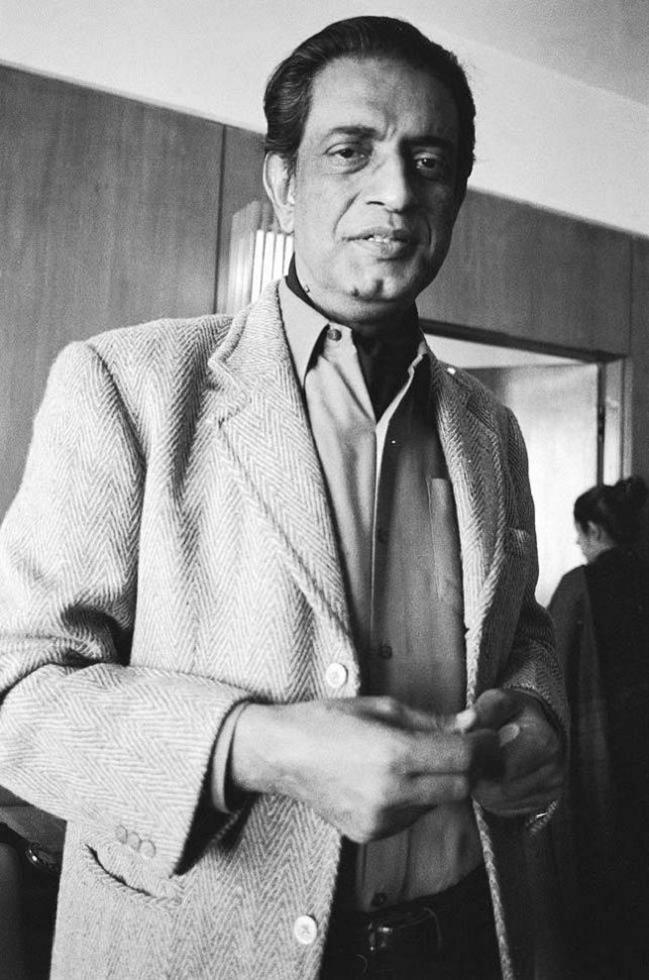

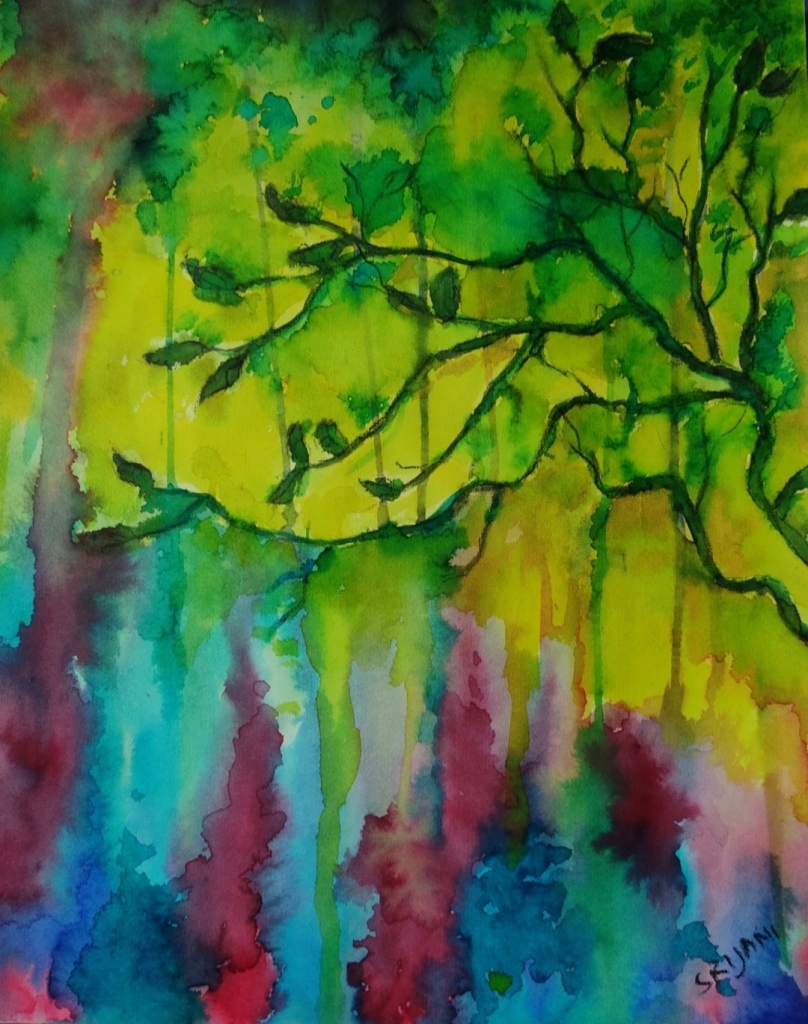


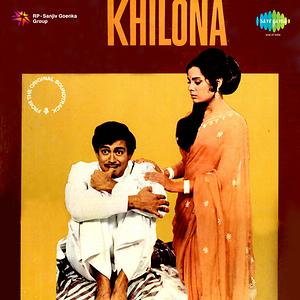
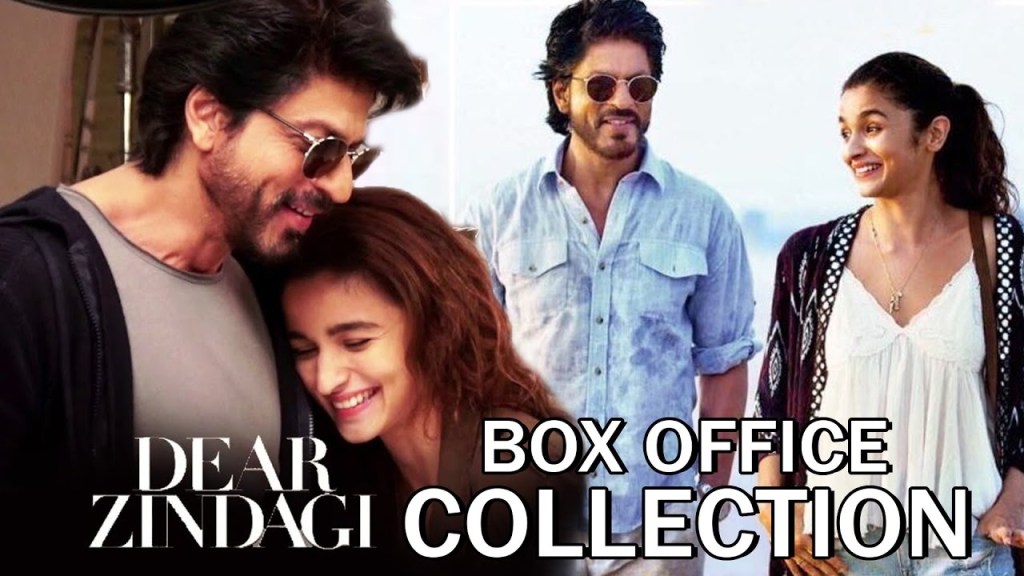
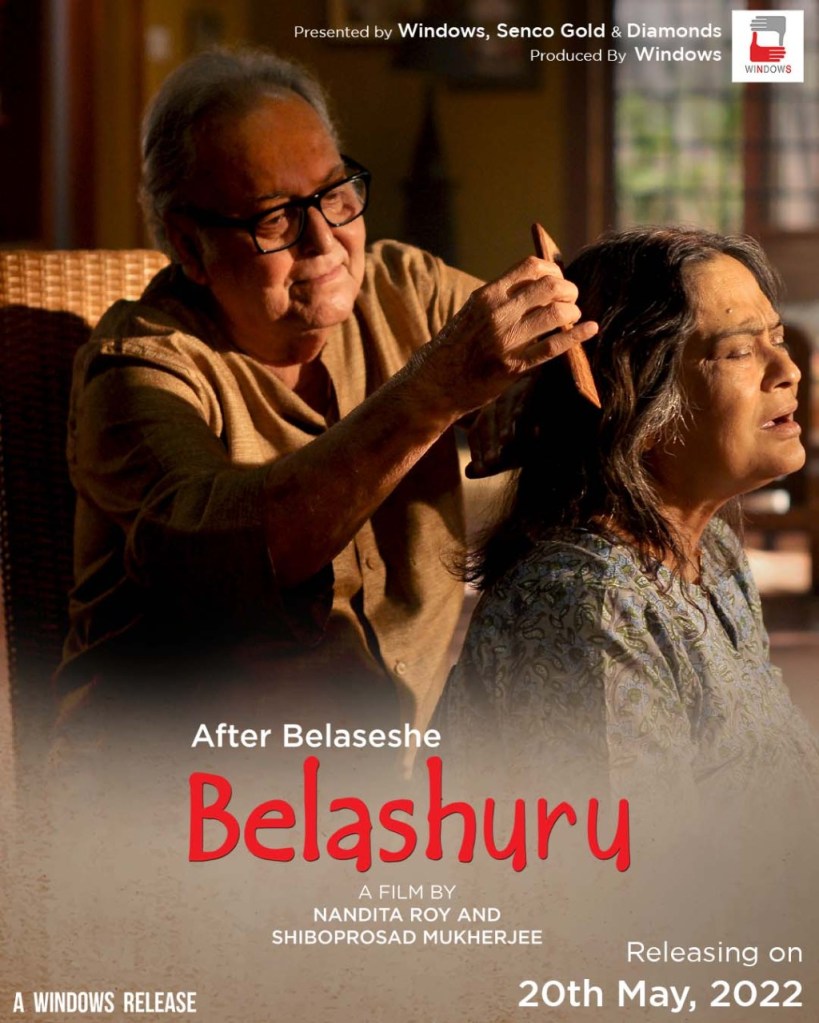
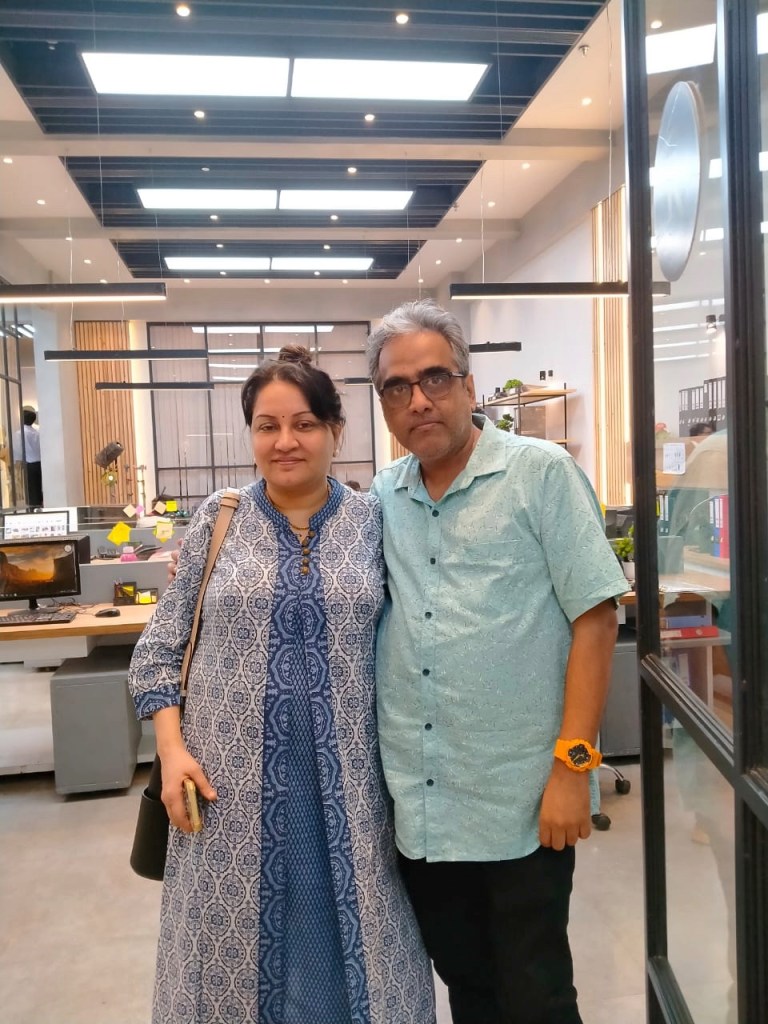
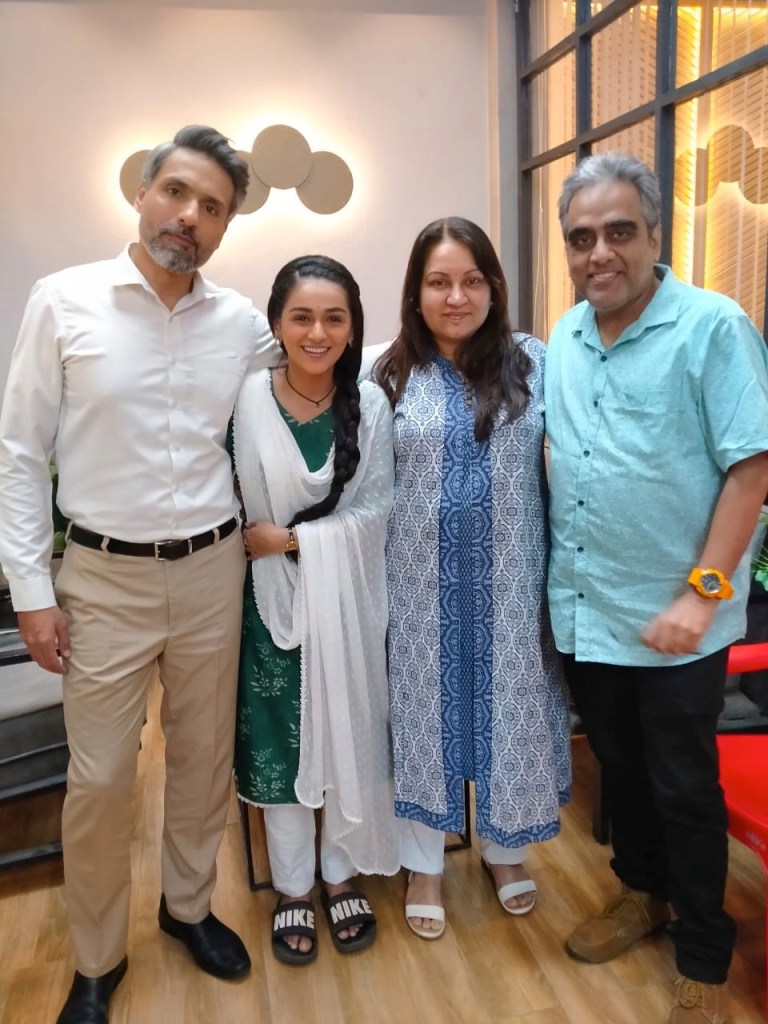
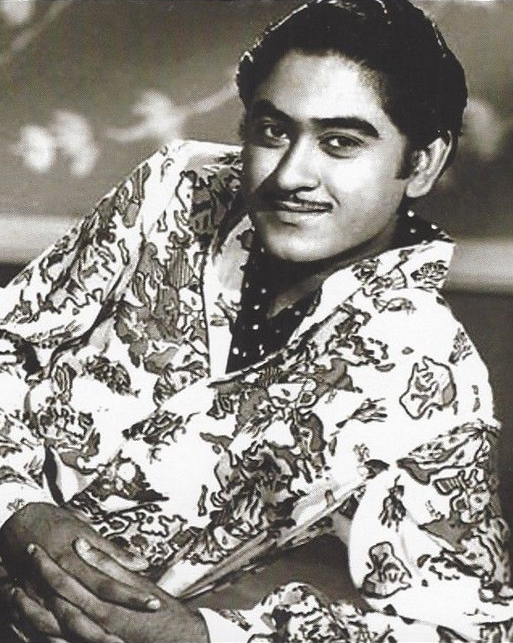


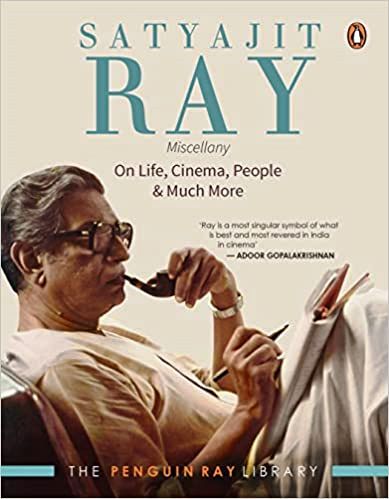
 Borderless