Categories
pandies' corner

Songs of Freedom: What are the Options?

By Jyoti[1], translated from Hindustani by Lourdes M Supriya

Songs of Freedom bring stories from women — certainly not victims, not even survivors but fighters against the patriarchal status quo with support from the organisation Shaktishalini[2].

–Sanjay Kumar, founder, pandies

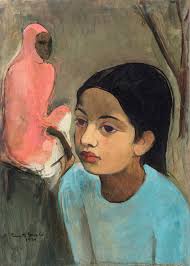
Painting by Amrita Shergil (1913-1941)
What are the Options?

“So then what happened?”

Nothing. My father came and took me back to his house. My nana-nani [3] didn’t stop him. He put me in a good school though, so this time I didn’t mind going back there. Last time he took me, I hated it.

“Why did you hate it?”

He wasn’t a nice man. I think that’s why my grandparents took me in. They knew what kind of a man he was. I loved being at my grandparents’. My mama, mother’s brother, he would take me shopping during holidays. I could pick anything in the entire shop, he’d never say no. Whenever I wanted new clothes, my masi, mother’s sister, took me to the markets\. She was like my mother. I was so loved there. But then my father took me away…

He had too many restrictions. My mother and I weren’t allowed to leave the house. I couldn’t leave after I came back from school. He kept an eye on us from his shop, it was down the street. Then the drinking got too much, the yelling, the swearing. I was afraid of his footsteps. I could tell from the sound of them what the night was going to be like. My mother was very scared of him, she couldn’t protect me from him. She felt helpless, I felt really bad for her. Then I was sent away again to my grandparents. I liked it there. I was studying in a government school. I did well in studies. I liked it. But then he came and took me back to the village. I had to repeat my third standard[4] there. I cried a lot at first, but it was a private school, better than the government one in Delhi.

“So this was the second time you were going there?”

Yes. I’ve lived at my father’s a couple of times. Sometimes I ran away and came back to my grandparents’, sometimes my mother brought me with her and stayed. But she always went back pretty soon. The first time he took me, I used to cry to my grandparents every night to take me back. I had to repeat classes so many times, I’m really behind on my studies. This has ruined my education. That’s why I hate it.

“What about the last time you were there? What happened then?”

Nothing. The same. But worse. He was more violent. My mother herself asked me to go with her to my grandparent’s. But I had exams in a month. I was a good student. I’d worked so hard. That year was especially bad at home; I’d put all my energy into school. I didn’t want to just drop it all and repeat the class again. I begged my mother to stay till the end of the term. He would beat her over everything. So I had to beg her. I promised her I would support her if she’d just let me give those exams. I was 14. I was old enough to start working.

“So did she stay?”

Yes. And then I came back to my grandparents’. But she went back the second day. Then she stopped taking my calls. Finally, I called her from someone else’s phone. She recognised my voice. I could tell. She didn’t say anything for a long time. I kept asking her to come. Then she said, “Aaj se tera mera rishta khatam; you’re not my daughter anymore. Don’t call again.”

I felt very alone. Things at my grandparents’ were also changing. My aunt was getting married. Everyone was busy with the preparations.

Nana[5] used to drive the auto 15 hours a day to save up for it. But he first had to pay back the loan he took out for the auto before he could save for the wedding. It was his last installment and they were really breathing down on him. One day he came home and told us he was short of 1000 bucks and it was time to make the payment. He asked my uncle, who was married by then, but his wife said they couldn’t spare it since they were also paying for the wedding and saving for the baby they planned to have next year. My uncle didn’t even have the balls to refuse his father himself. His wife had to do it. My grandfather turned to my mother, but she said, she couldn’t spare it either, she’d spent it all on me.

“Wait, your mother was there?”

Yes. She’d come eventually, some two months after me. She was working as a cook. It was really nice. For the first time, it felt like she was there. But that day she had used me as an excuse. I didn’t see any of that money. She wasn’t even paying for my school fees. I took tuitions and paid for it. I was starting to resent her too, I could see why the rest of them hated her.

“Wait, who hated her? Why did you resent her, you just said she was there for you.”

She was. When she came. She got a job. She got offs on Sunday and she would spend those with me. On Sundays, I didn’t have to cook for the family, she did. She even gave me money for school supplies, like new copies or pens, whenever I asked for it. She got me a small phone too. But this didn’t last long. She met someone. She used to take the same rickshaw to work everyday. He’d take her from one place to the next, they used to talk, then she’d talk to him at night too. She kept to herself. She started spending her Sundays with him. He wasn’t a good man. One day, he went to the village.

I thought it would end but her late-night conversations continued. They hated her, my grandparents and my uncle, his wife, even my mother’s sister. She knew her sister was to get married soon but she was roaming around with a man. All the neighborhood knew about it. What would they think? And then she stopped contributing to the house. How much could my grandfather do? She didn’t even give me any money anymore. Not even for notebooks. I had to work. And it was so difficult. I had to make breakfast for everyone in the house in the mornings, pack my lunch, rush back and do all the cleaning of the house, make lunch for everyone, then clean up the kitchen and wash the vessels. Then my kids would come. But everyone was selfish then. They were angry with my mother, and then with me. I gave my grandmother a part of my earnings, and I paid for my school. I did everything. She’d stopped staying home on Sundays too, so I had to do the work. That day, when my grandfather asked for money, she said she didn’t have any. He got so angry with her, he called her a slut, a leach, a parasite, draining him, killing him slowly, he slapped her. She ran away. I noticed that he didn’t react the same way when his daughter-in-law had refused to give him the money. But he was just so upset, he started crying. I couldn’t bear it. So I took one thousand from the money I’d saved for all those months and gave it to him. My grandmother took me aside and told me I shouldn’t have done it, that she could have dipped into the money I gave her. I told her that was for her. She didn’t have any money at all. And she’d been so kind to me. She was the only one who didn’t resent me. But she respected my grandfather too much to contradict him when he called me names.

“I thought your grandparents were supportive, that you’d felt safe in their house?”

I did. But my aunt was getting married, that changed everything. And I understand why they were angry with my mother. She brought us so much shame. One day, that man that she’d been having an affair with, he went to her workplace and started beating her up. He forced her onto his rickshaw, holding her hair throughout, and then brought her to our neighborhood and dragged her through the streets by her hair to his friend’s house. She’d started an affair with his friend when he’d gone to his village, and he found out about it. All the people heard him that day. She was so scratched up when he finally let her go. I took her to the police station but they didn’t file a complaint. My grandparents also encouraged her to file a complaint. But she didn’t. The new man she was seeing told her he was going to help her. So she listened to him, trusted that he would get her justice. I’ve never seen him, none of us had. But she really trusted him.

One day my aunt was really anxious. She came into the room when I was taking a class, and she asked me to go to the terrace because she needed the room. I had to move all the kids upstairs, take all the chairs. When I came back after the class, she started yelling at me, telling me I’m a burden, then she started beating me, abusing my mother too. I didn’t say anything to her when she was beating me; she left me in the room. I waited for my mother to come and comfort me. But she didn’t come. So I went looking for her, thinking this could bring us together. But I found her on the terrace, talking to her new boyfriend, telling him about all this. I felt really abandoned. She couldn’t even bother to check on me but she wanted his sympathy. Then they got into a fight. At one point, I overheard her begging him not to leave her or she’d kill herself. It made me so angry, I felt like I could break something.  I didn’t like this man at all. One day, she just got up left. I asked my grandparents to file a missing person’s report but they didn’t want to do it because it would bring shame to the family and my aunt was getting married. So they waited till it was over and then filed it, three years later. But I haven’t seen her since. I think she’s missing, we need to find her.

“How long ago was this?”

I don’t know. I can’t tell.

“What happened after your mother left?”

They all blamed me, they said I drove her to do it, that I hated her, that I was like her. They asked me to start contributing to the house, to stop living like a freeloader. I started giving all my tuition money home. I couldn’t continue school anymore. But they were so angry. One day, after my aunty’s marriage, the police came to our house in response to the missing person’s complaint I’d made them file. They wanted to ask questions about my mother and her boyfriend. I think she planned her escape. She’d been staying overnight at his house 2-3 times a week, and slowly taking her clothes there. The police pointed this out,  how she couldn’t have taken a big bag when she escaped, or we’d have seen her packing. I think they’re right. She abandoned me.

“Do your grandparents believe she’s okay, living somewhere else?”

Yes. It makes sense. She didn’t like it at home. They felt so ashamed by the police visit. They were angry that I’d made them file the complaint only to find out that their daughter had run away willingly. My grandfather was livid that day. He beat me up, then tried to drag me down the stairs. But I fell down at the 3rd floor landing so he started kicking me. Then he left me lying there. My grandmother didn’t come to help me. I was so distraught. I couldn’t even go to school, everyone hated me. What future did I have? No one wanted to help me, I didn’t know anyone who could help me or even who to turn to. I jumped off the landing there. I tried to commit suicide. That’s why I’m here now. Now I go to school.

[1] Note: Loosely based on the writer’s lived experiences

[2]  “Establishing itself as a premier women’s organisation in India from 1987, Shaktishalini has spread out and deals with all kinds of gender based violence. A shelter home, a helpline and more than that a stunning activist passion are the hallmarks of this organisation. 

pandies and Shaktishalini – different in terms of the work they do but firmly aligned in terms of ideological beliefs and where they stand and  speak from. It goes back to 1996 when members of the theatre group went to the Shaktishalini office to research on (Dayan Hatya) witch burning for a production and got the chance to learn from the iconic leaders of Shaktishalini, Apa Shahjahan and Satya Rani Chadha. And collaborative theatre and theatre therapy goes back there. It is a mutual learning space that has survived over 25 years. Collaborative and interactive, this space creates anti-patriarchal and anti-communal street and proscenium performances and provides engaging workshop theatre with survivors of domestic and societal patriarchal violence. Many times we have sat together till late night, in small or large groups debating what constitutes violence? Or what would be gender equality in practical, real terms? These and many such questions will be raised in the stories that follow.” — Sanjay Kumar

[3] Maternal grandparents

[4] Grade. Third grade

[5] Maternal grandfather

Jyoti Kaur is a 19-year-old from Delhi, currently pursuing her 10th grade studies. She likes to dance, read books and loves to travel at night.

Lourdes M Supriya is a Delhi based filmmaker, editor, and theatre practitioner who has been associated with pandies’ theatre since 2015.

PLEASE NOTE: ARTICLES CAN ONLY BE REPRODUCED IN OTHER SITES WITH DUE ACKNOWLEDGEMENT TO BORDERLESS JOURNAL

Click here to access the Borderless anthology, Monalisa No Longer Smiles

Click here to access Monalisa No Longer Smiles on Kindle Amazon International

Categories
pandies' corner

Songs of Freedom: An Ordinary Tale

Story by Nandani, translated from Hindustani by Janees

Songs of Freedom bring stories from women — certainly not victims, not even survivors but fighters against the patriarchal status quo with support from the organisation Shaktishalini[1]

–Sanjay Kumar, founder, pandies


Nandani is an 18 year-old from Delhi, currently studying in the 10th grade. In her free time, she loves to read biographies, hang out with her friends, dancing and singing. She calls books as good friends of hers and looks forward to travelling across the world once in her lifetime. 

An Ordinary Tale

A story set in the year 2002. An ordinary story I must tell.

When a girl child is born in a Panditfamily, the mother welcomes Goddess Lakshmi. But the mother-in-law is unable to fathom bahu’s [2] joy over the girl baby. Call it outdated, archaic, outmoded. For the saas[3], a son would have proven to be a boon, a blessing straight from the heavens, a support to the family’s genes. She, like many others, was of the belief that a girl born is nothing but a burden who must be ‘disposed’ off to another family at the earliest. What are women but estranged wealth?! The world is run by men, their divine masculinities, their valour, by their being. Women are absolute subordinates to men. She failed to understand that being born a ‘male’ is simply a matter of – birth.

But bahu was not ready to give up. She would put in efforts to make her family think otherwise. She named her daughter Avantika. When Avantikahad grown up a bit, the saas one day cunningly said, “Bahu! See I like to put forward things as they are, no sugar-coating. I want you to focus on giving birth to my grandson now. I hope I will not be disappointed this time.”

The poor bahu was busy attending household chores. She tended to ignore the otherwise outrageous demands the mother-in-law burdened her with. Meanwhile the saas thought to herself, “Now that I have explicitly expressed my wish to bahu, maybe it’s better to let my raja beta[4] know of my justified desire.” So, she made sure she had her wish conveyed to her son. “My dear son, I have expressed my wish to Bahu – for a grandson, with whom I can enjoy the joys of grandmotherhood.” For the son, the mother’s wish was as good as a divine decree.

The bahu, who has overheard their conversation, felt betrayed and outraged. “How could you say yes on my behalf? What about my consent? I am not ready for another child. You don’t have a job. You don’t let me go out and work. You are living off your mother’s expenses… drinking, beating me to death every night! I don’t want to traumatise another child the way Avantikahas been traumatised.”

Her husband retorted, “How dare you? Who are you to stop me from taking decisions?” Basically, what he meant was that she was his slave and had no authority in deciding how many kids she wanted, when to have and so on and so forth.

The saas interfered in the matter and somehow convinced, or rather forcibly convinced the bahu to bear a child. We will not go into the details of this.

2005

Another girl child was born! The saas, was not just disappointed this time. She experesses her intolerance of this development. “All I ever wanted was one grandson! Not five or eight. Bahu is deliberately depriving me of this privilege. It was wrong of me to trust her.” Again, she simply failed to comprehend how sex and science works!

With the birth of Nira, the bahu’s life became hell … rather was made hell by her mother-in-law and husband. Violence grew. “Ever since this girl has taken birth, a curse has taken over the joys and prosperity of our home. I refuse to accept her.  Her arrival is a time of tribulation for us.”

The contempt and disgust if the saas towards the bahu and her daughters were echoed by the husband and father, who had turned more violent than before, and why not ? He had all the more reason to inflict pain on his wife. Backed by his mother, he started beating his wife every day, cursed her all day. When Niraturned one-and-a-half, the hostility worsened. The bahu turned numb. A wish as simple as wanting a decent life was out of her reach. “Because of you I live a miserable life despite being a man. You are the reason my brothers and mother don’t respect me. You and your daughters have ruined my relations with them….”

One day something changed. She mustered the courage to say ‘no’ despite the routine beatings. She was not willing to take it anymore and so, with her two little daughters, she decided to leave the house.

“I have not sinned. I have given birth to daughters and that is no sin. There is not a single defect in me or my daughters. It is you, your intentions, and your mentality that is defective…I reject living a life like this.”

She sought refuge at her paternal home and soon began working to support her daughters. Now, she had a life that promised, to all intents and purposes, a relief from the darkness of the past. A few months later, she fell in love with a colleague at work. Nobody knew what occurred to her, but leaving her two daughters behind, the mother eloped with the lover to start a new life. She turned blind to the plight of her own daughters who were just starting out with the promise of a fresh start.

Avantika and Nira, unaware that another calamity had befallen them, adapted to the new life under the shadow of their maternal grandmother, their nani. Unable to look after the girls with growing time, nani took a difficult call due to her ailing health. “Can you look after the girls when I die? Can you take care of them?” she asked her other daughter (the girls’ aunt). “I wish I could…but in today’s time managing two more children… It’s beyond my capacity…I understand what they mean to you…so for you maybe I can look after Avantika, the elder one…however, something must be done about Nira

A few weeks later, the nani sent for their aunt and said, “I am here today, but who knows about tomorrow? We must take final decisions with regards to Avantika and Nira. All they have is me. I am glad you took charge of one of them. But something must be thought about the other as well. I am sure God will send help.”

“Mother, I have an acquaintance who is associated with a shelter home. Sending Nirato a girls’ hostel should take care of our worries. Let me get in touch with her.”

Little Nirawas sent to a girls shelter home. She cried a lot on separation from sister and nani. A year later the news of nani’s death upended the girls’ lives. Trying to cope with the grief, they adapted to their new lives – one day at a time, one goal at a time.

2023

Both Avantika and Nira are growing up at their own pace – finding new goals to focus on. They are not together, nor are they in touch. But they are fighters and survivors. And this is how this story has end for the time being. However, certain questions continue to haunt me…

Do you discriminate between a son and a daughter? What would Avantika and Nira’s mother do if her parents did not offer to support her? Can women discriminate against other women? Why is it that a woman often finds it difficult to find solidarities from fellow women?

It is quite difficult to single out the oppressor and the oppressed in this story, however, that does not spare us from rejecting to inflict this age-old atrocity on our women. This has to stop with our generation.

.

[1] “Establishing itself as a premier women’s organisation in India from 1987, Shaktishalini has spread out and deals with all kinds of gender based violence. A shelter home, a helpline and more than that a stunning activist passion are the hallmarks of this organisation. 

pandies and Shaktishalini – different in terms of the work they do but firmly aligned in terms of ideological beliefs and where they stand and  speak from. It goes back to 1996 when members of the theatre group went to the Shaktishalini office to research on (Dayan Hatya) witch burning for a production and got the chance to learn from the iconic leaders of Shaktishalini, Apa Shahjahan and Satya Rani Chadha. And collaborative theatre and theatre therapy goes back there. It is a mutual learning space that has survived over 25 years. Collaborative and interactive, this space creates anti-patriarchal and anti-communal street and proscenium performances and provides engaging workshop theatre with survivors of domestic and societal patriarchal violence. Many times we have sat together till late night, in small or large groups debating what constitutes violence? Or what would be gender equality in practical, real terms? These and many such questions will be raised in the stories that follow.” — Sanjay Kumar

[2] Daughter-in-law

[3] Mother-in-law

[4] Beta is son and raja is king

Janees is an independent researcher and theatre-practitioner who has been associated with Pandies for the past six years.

PLEASE NOTE: ARTICLES CAN ONLY BE REPRODUCED IN OTHER SITES WITH DUE ACKNOWLEDGEMENT TO BORDERLESS JOURNAL

Click here to access the Borderless anthology, Monalisa No Longer Smiles

Click here to access Monalisa No Longer Smiles on Kindle Amazon International

Categories
Contents

Borderless, January 2023

Painting by Sohana Manzoor

Editorial

Will Monalisa Smile Again? … Click here to read.

Translations

Nazrul’s Ring Bells of Victory has been translated from Bengali by Professor Fakrul Alam. Click here to read.

Nobody in the Sky by S Ramarishnan, has translated from Tamil by R Sathish. Click here to read.

The Bike Thief by Ihlwha Choi has been translated from Korean by the poet himself. Click here to read.

Tagore’s Banshi or Flute has been translated by Mitali Chakravarty from Bengali.Click here to read.

Poetry

Click on the names to read

Jared Carter, Ranu Uniyal, Rhys Hughes, Saranyan BV, Scott Thomas Outlar, Priyanka Panwar, Ron Pickett, Ananya Sarkar, K.S. Subramaniam, George Freek, Snigdha Agrawal, Jenny Middleton, Asad Latif, Michael R Burch

Poets, Poetry & Rhys Hughes

In I Went to Kerala, Rhys Hughes treads a humorous path. Click here to read.

Conversation

In Conversation with Abhay K, a poet turned diplomat, translator and a polyglot, converses of how beauty inspired him to turn poet and translating Kalidasa and other poets taught him technique. Click here to read.

Musings/Slices from Life

What do Freddy Mercury, Rishi Sunak & Mississipi Masala have in Common?

Farouk Gulsara muses on the human race. Click here to read.

Ghosh & Company

Ratnottama Sengupta relives the past. Click here to read.

Sails, Whales, and Whimsical Winds

Meredith Stephens continues on her sailing adventures in New South Wales and spots some sporting whales. Click here to read.

Tsunami 2004: After 18 years

Sarpreet Kaur travels back to take a relook at the tsunami in 2004 from Andaman and Nicobar Islands. Click here to read.

‘I am in a New York state of mind’

Ravi Shankar shares his travel adventures in the city. Click here to read.

Half a World Away from Home

Mike Smith introspects on his travels to New Zealand. Click here to read.

Musings of a Copywriter

In Back to the Past, Devraj Singh Kalsi muses on the need to relive nostalgia. Click here to read.

Notes from Japan

In The Year of the Tiger Papa, Suzanne Kamata gives us a glimpse of Japan’s education system with a touch of humour. Click here to read.

Essays

A Solitary Pursuit: The Art of Suhas Roy

Ratnottama Sengupta journeys with the signature art of Suhas Roy as it transformed in theme, style, and medium. Click here to read.

New Perspectives on Cinema & Mental Health

Between 1990 and 2017 one in seven people in India suffered from mental illness. However, the depiction of this in cinema has been poor and sensationalist contends Shantanu Ray Chaudhuri. Click here to read.

The Observant Immigrant

In The Immigrant’s Dilemma, Candice Louisa Daquin explores immigrants and the great American Dream. Click here to read.

Stories

The Book Truck

Salini Vineeth writes a story set in the future. Click here to read.

The Scholar

Chaturvedi Divi explores academia. Click here to read.

Little Billy

Paul Mirabile renders the poignant tale of a little boy. Click here to read.

Book Excerpts

An excerpt from Sanjay Kumar’s Performing, Teaching and Writing Theatre: Exploring Play. Click here to read.

An excerpt from Abhay K’s Monsoon: A Poem of Love & Longing. Click here to read.

Book Reviews

Somdatta Mandal reviews Priya Hajela’s Ladies Tailor: A novel. Click here to read.

Rakhi Dalal reviews Shrinivas Vaidya’s A Handful of Sesame, translated from Kannada by Maithreyi Karnoor. Click here to read.

Gracy Samjetsabam reviews K.A. Abbas’s Sone Chandi Ke Buth: Writings on Cinema, translated and edited by Syeda Hameed and Sukhpreet Kahlon. Click here to read.

Bhaskar Parichha reviews MA Sreenivasan’s Of the Raj, Maharajas and Me. Click here to read.

.

Click here to access the Borderless anthology, Monalisa No Longer Smiles

Categories
Editorial

Will Monalisa Smile Again?

The first month of 2023 has been one of the most exciting! Our first book, Monalisa No Longer Smiles: An Anthology of Writings from across the World, is now in multiple bookstores in India (including Midlands and Om Bookstores). It has also had multiple launches in Delhi and been part of a festival.

We, Meenakshi Malhotra and I, were privileged to be together at the physical book events. We met the editor in chief of Om Books International, Shantanu Ray Chaudhuri, the editor of our anthology, Jyotsna Mehta, along with two translators and writers I most admire, Aruna Chakravarti and Radha Chakravarty, who also graced a panel discussion on the anthology during our physical book launch. The earlier e-book launch had been in November 2022. My heartfelt thanks to the two eminent translators and Chaudhuri for being part of the discussions at both these launches. Chaudhuri was also in the panel along with Debraj Mookerjee at a launch organised by Malhotra and the English Literary Society steered by Nabaneeta Choudhury at Hans Raj College, Delhi University. An energising, interactive session with students and faculty where we discussed traditional and online publishing, we are immensely grateful to Malhotra for actively organising the event and to the Pandies’ founder, Sanjay Kumar, for joining us for the discussion. It was wonderful to interact with young minds. On the same day, an online discussion on the poetry in Monalisa No Longer Smiles was released by the Pragati Vichar Literary Festival (PVLF) in Delhi.

At the PVLF session, I met an interesting contemporary diplomat cum poet, Abhay K. He has translated Kalidasa’s Meghaduta and the Ritusamhara from Sanskrit and then written a long poem based on these, called Monsoon. We are hosting a conversation with him and are carrying book excerpts from Monsoon, a poem that is part of the curriculum in Harvard. The other book excerpt is from Sanjay Kumar’s Performing, Teaching and Writing Theatre: Exploring Play, a book that has just been published by the Cambridge University Press.

Perhaps because it is nearing the Republic Day of India, we seem to have a flurry of book reviews that reflect the Sub-continental struggle for Independence from the colonials. Somdatta Mandal has reviewed Priya Hajela’s Ladies Tailor: A novel, a book that takes us back to the trauma of the Partition that killed nearly 200,000 to 2 million people – the counts are uncertain. Bhaskar Parichha has discussed MA Sreenivasan’s Of the Raj, Maharajas and Me, a biography of a long serving official in the Raj era — two different perspectives of the same period. Rakhi Dalal has shared her views on Shrinivas Vaidya’s A Handful of Sesame, translated from Kannada by Maithreyi Karnoor, a book that dwells on an immigrant to the Southern part of India in the same time period. The legendary film writer K.A. Abbas’s Sone Chandi Ke Buth: Writings on Cinema, translated and edited by Syeda Hameed and Sukhpreet Kahlon, has been praised by Gracy Samjetsabam.

We have a piece on mental health in cinema by Chaudhuri, an excellent essay written after interviewing specialists in the field. Ratnottama Sengupta has given us a vibrant piece on Suhas Roy, an artist who overrides the bounds of East and West to create art that touches the heart. Candice Louisa Daquin has written on border controls and migrants in America. High profile immigrants have also been the subject of Farouk Gulsara’s ‘What do Freddy Mercury, Rishi Sunak & Mississipi Masala have in Common?’ Sengupta also writes of her immigrant family, including her father, eminent writer, Nabendu Ghosh, who moved from Bengal during the Partition. There are a number of travel pieces across the world by Ravi Shankar, Meredith Stephens and Mike Smith — each written in distinctively different styles and exploring different areas on our beautiful Earth. Sarpreet Kaur has revisited the devastation of the 2004 tsunami and wonders if it is a backlash from nature. Could it be really that?

Suzanne Kamata gives us a glimpse of the education system in Japan in her column with a humorous overtone. Devraj Singh Kalsi dwells on the need for nostalgia with a tongue-in-cheek approach. Rhys Hughes makes us rollick with laughter when he talks of his trip to Kerala and yet there is no derision, perhaps, even a sense of admiration in the tone. Hughes poetry also revels in humour. We have wonderful poetry from Jared Carter, Ranu Uniyal, Asad Latif, Anaya Sarkar, Michael R Burch, Scott Thomas Outlar, Priyanka Panwar, George Freek and many more.

The flavours of cultures is enhanced by the translation of Nazrul’s inspirational poetry by Professor Fakrul Alam, Korean poetry written and translated by Ihlwha Choi and a transcreation of Tagore’s poem Banshi (or flute) which explores the theme of inspiration and the muse. We have a story by S Ramakrishnan translated from Tamil by R Sathish. The short stories featured at the start of this year startle with their content. Salini Vineeth writes a story set in the future and Paul Mirabile tells the gripping poignant tale of a strange child.

With these and more, we welcome you to savour the January 2023 edition of Borderless, which has been delayed a bit as we were busy with the book events for our first anthology. I am truly grateful to all those who arranged the discussions and hosted us, especially Ruchika Khanna, Om Books International, the English Literary Society of Hans Raj College and to the attendees of the event. My heartfelt thanks to the indefatigable team and our wonderful writers, artists and readers, without who this journey would have remained incomplete. Special thanks to Sohana Manzoor for her artwork. Many thanks to the readers of Borderless Journal and Monalisa No Longer Smiles. I hope you will find the book to your liking. We have made a special page for all comments and reviews.

I wish you a wonderful 2023. Let us make a New Year’s wish —

May all wars and conflicts end so that our iconic Monalisa can start smiling again!

Mitali Chakravarty,

borderlessjournal.com

.

Photographs of events around Monalisa No Longer Smiles: An Anthology of Writings from across the World. Click here to access the Book.

.

Insta Link to an excerpt of the launch at Om Bookstore. Click here to view.

E-Launch of the first anthology of Borderless Journal, November 14th 2022. Click here to view.

Categories
Excerpt

Is Theatre a Sport?

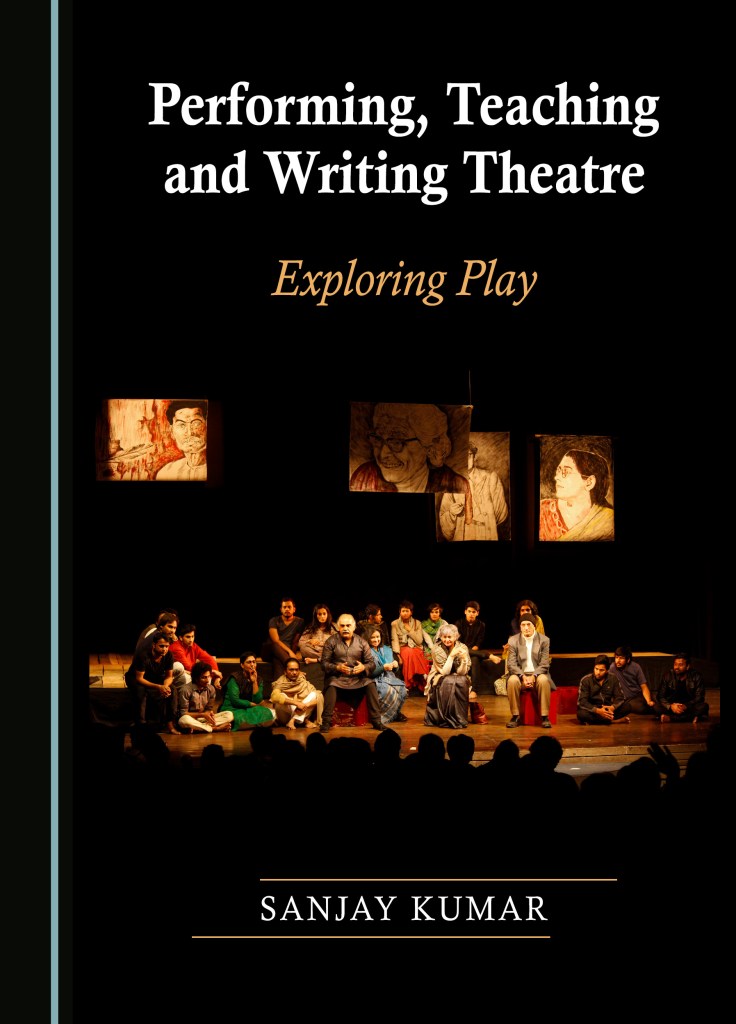
Title: Performing, Teaching and Writing Theatre: Exploring Play

Author: Sanjay Kumar

Publisher: Cambridge Scholar’s Publishing

A SUMMING UP / AN OPENING OUT

The ludic journey has taken us playing through performing, studying, researching, teaching, and writing theatre. It is a specific, experience-based journey, but it has a vastness and a depth that is just about beginning to reveal itself. The one thing that is clear is that creating theatre is an exercise in seeking an alternate way of life, constantly activist and constantly developmental.

Challenging the hegemonic crust, showing it to be the veneer that it is, theatre is the voice of all the diversity that lies beneath. Inimical to the state, in its purer, stronger, manifestations it questions all forms of authority, and beyond that, exposes the fallacies that constitute the very framing of authority. It is the reply to authoritarianism, and at best, often the only means to express the perspective of the unheard. It leads from the front against oppression and repression and becomes a vehicle for the two rudimentary rights of all thinking beings, the right to say ‘no’ and the right to question ‘why’. Hated by religious bigots, theatre is against the orthodox and the patriarchal, and also against the ossification of the radical, showing progress to be a verb in progress rather than an arrived noun. It is a performance that constantly seeks to outperform the deals dealt out to it.

A form existing as text, theory, and praxis from times immemorial, theatre integrally ties in with the histories of its times. Wallowing in many such oxymorons, theatre is historical in being located in its specific history and has a trans-historical dimension in being the perennial naysayer. And as the world sinks to newer levels of fascist authoritarianism, and detentions, arrests and persecutions abound, theatre reverts to metonymies, fantasies, dystopias and historical allegories to keep the fight going. All kinds of decadence are its target, from the toxic masculine to the religious bigot to capitalist power, theatre can, and does, oppose them all. Its biggest enemy remains the fascist, authoritarian, capitalist state in all its avatars, and it is possibly the best weapon against it.

The provisional aspect of its outcomes makes it capable of dealing with the ossified layers of its world and seeking alternate questions and meanings, continuing to show that the meanings that are rooted in hegemonic formations erode in time. An incomplete and malleable form, its multilayerity gives it the flexibility to explore diverse facets of the same reality.

The capitalist and the fascist seek to keep us entrapped in cocoons. Theatre, however, links people, it is a reaching out, and its transboundary aspect makes it possible for it to acquire an international dimension and combat the internationalism of the market. The history of theatre evidences its relative insularity to the forces of capitalism. After a capitalist takeover of our world, clearly since the 19th century in the west, and then in India, all over the world there exist traditions of theatre that prioritize working in the margins, and acquire a razor edge in showing the political through the prism of the peripheral. Critiquing the money-oriented world is where realism began, and the kind of distancing that left-wing theatre creates from this orientation takes the critique much further.

In our world, proscenium theatre can serve as a point of intersection between dominant processes and dominant policy making on the one hand, and the needs of the margins on the other. The pandies’ experience shows this across the class and gender divides, and in undermining notions of dominance and supremacism. Its strength lies in creating mutually performative playful zones where the audience goes along with the performing unit and sees through its own blindness to realize how easy it is to pass a lie as truth and vice versa. The creation of a developmental zone of shared ideology between the unit and the audience is the key to successful proscenium theatre. The challenge of theatre becomes to outperform and reach out to the class and power other. In its taking on of hegemony, it has the potential to be confrontationist. The challenge to regression can be outright or with subterfuge, as seen in the use of Manto by pandies’. Negotiating with those in power, the proscenium is also the space to impact the young privileged, to impact enough to use better, more inclusive paths, enabling us to make better decisions for the future. It is the perfect site for advocacy — social, medical, and even legislative. Its effectivity gains manifold if the performing unit makes a conscious effort to overcome, or at least mitigate, the class barrier, to get underprivileged voices in. This enables the margins to better penetrate hegemonic structures and provide leads to better courses of development.

With workshop-based theatre, we move into a zone that is probably most conducive to alternate formulations of amelioration and development. It opens the doors between the mainstream and its margins and enables those stories to come in, and it’s no longer a diseased margin that needs cure but a vital, throbbing entity with its own claims to be heard and developed on its own terms. This is the real site of out-performing, setting the problems and getting possible processes for solutions. The age-old problem is reframed in bold frieze – can those sitting in positions of power redress the problems of the disempowered? Can they even identify the problems holistically? On the margins, it gives the space to voice its position about its problems and judge back the power structures that profile it. One needs to give in to alterity, to at least a feeling that some of our fundamentally held beliefs can be wrong, or at the very least not pertaining to those away from the mainstream.

When we look at the workshops with the youth in Nithari, and with the platform boys, the certitudes of dominant classes get irrevocably displaced. The participants perform in all senses of the verb. And via proscenium theatre, these voices penetrate the mainstream. They raise new questions and review old problems. Co-ordinates of family, religion, and a good life do not hold any certitude for those in the margins. It stands bare that the system’s ameliorative processes are for the dominant only, and those in the margins continue to be used and exploited. And there is the special relationship between the facilitator and the participants that forms the core of understanding needs and moving towards possible methodologies of development.

Theatre assumes penetrative insights as one creates with communities in zones of conflict and war. Its potential in zones of war, not simply of usual peace processes but of understanding the conflict and seeking solutions from the engaged parties together is still untapped, as shown by the Kashmir experiences. The pioneer process showed possibilities in theatre, at par with workshopping at Nithari and with platform children. In zones of war, its characteristics become stronger and more capable, the defiance of an authoritative perspective, of not taking of one discourse as the final statement, the fluidity of negotiating binaries becomes a mode of understanding and bringing opposite positions closer. Again, voices that are totally removed in times of war, those of women and children, come to the fore and add perspectives to what is felt, and what is required. The process of theatre repeatedly showed that beneath the veneer of hegemonic dominant voices the suppressed voices wanted a cessation, of war, of conflict, of misery, of one and all. The incompleteness of theatre matches the incompleteness of the process, the bumps, the changes, the veering possibilities. Penetrating the chest-thumping veneer, it seeks out the vulnerability and takes us often, as elsewhere, into desire and imagination, the two sources capable of taking on most conflicts. Suspicion and hatred slowly give way to older traditions of love and togetherness. And there is potential for turning any, even loose, agenda on its head, as the workshop with the Sopore pelters showed. There is a kind of immediacy to the process. The form dips so much into the participants’ collective thought process and depends so much on what emerges from there, that it is this collectivity that at that moment forms the narrative.

All political formations seek to prescribe or proscribe theatre, and theatre exists in subversion, subterfuge, and open rebellion. Closer to our understanding of historical processes, theatre’s role has been more caustic as nations veer towards a right-swinging, fascist combination of patriarchy, religion, and capitalism, theatre has had to bite in hard. The proscenium theatre has played, and continues to play, its vital role, but it’s really theatre that emanates from various communities and underserved social formations that the more disturbing and relevant modes of theatre emerge. Arousing our critical faculties theatre goes places. The whole holistic mythos of the bourgeois success narrative from school to profession; the bigotry of all religions; legal, medical and social interventions — all are under its purview. And creating unique developmental zones in our societies it nudges to outperform ourselves, look beyond the decadent ideological frames of the worlds we inhabit, and seek out, or rather make, newer, better worlds.

About the Book:

Drawing on the writer’s experience of three and a half decades of performing, teaching and writing theatre, this book explores the performance practice of a theatre group (pandies’ theatre, Delhi) by placing this practice in a frame of international activist theatre movements. The teaching aspect provides a historical backdrop and the writing of plays adds depth and sharpens the political position. It identifies theatre as a force for changing society across the centuries and beyond national borders. The book examines a large variety of theatrical experiences, including well-known forms of proscenium, workshop and street theatre.

About the Author:

Sanjay Kumar has been part of the International Residency Programme at the Rockefeller Centre, Bellagio, Italy and an alum of the prestigious, US Government’s IVLP (International Visitors Leadership Program) and is the recipient of Delhi University’s (Vice Chancellor’s) Distinguished Teacher Award in 2009.

PLEASE NOTE: ARTICLES CAN ONLY BE REPRODUCED IN OTHER SITES WITH DUE ACKNOWLEDGEMENT TO BORDERLESS JOURNAL. 

Click here to access the Borderless anthology, Monalisa No Longer Smiles

Categories
pandies' corner

Songs of Freedom: ‘Viklangta’ or Disability

Story by Kajal, translated from Hindustani by Janees

Songs of Freedom bring stories from women — certainly not victims, not even survivors but fighters against the patriarchal status quo with support from the organisation Shaktishalini[1].

–Sanjay Kumar, founder, pandies

Kajal is from Ghaziabad, Uttar Pradesh. She is 24 years old and has completed her bachelors in Hindi. She is currently pursuing master’s in social work through distance education. She has found her voice in writing activist stories around the theme of gender violence and disability. She is currently working at an NGO as a special educator and wishes to fight for the specially-abled community’s right to education.

Viklangta or Disability

Is there no one who could see through my tears? Anyone who could hear the tumult my silence has put me in? Someone who could acknowledge if not accept my bare feelings? None I could talk to?

Everyone is known by their name and their profession, but my disability is my very identity. At least that’s what the whole world has always made me feel. Who am I? I shall choose to remain anonymous here just like many others who are rendered nameless owing to the ‘fact’ that they are considered ‘disabled’.

The house is filled with chirpings of joy and excitement today. Bahu (daughter-in-law) is expecting her first child. “Hey, it will be a boy for sure,” the mother-in-law remarked, “Although there is no harm if a girl child is born either…umm… all I pray is for a healthy mother and a healthy child…” But deep down the grandmother-to-be prayed for a son, “Dear Lord, I shall adorn your temple with numerous offerings if you bless this house with a son…”

The day had arrived. The entire family eagerly waited to hear of the outcome. The nurse came out of the delivery room, “Congratulations! It’s a girl! Goddess Lakshmi has blessed your household with her presence.” It seemed as if everyone in the family was struck with lightning. “Well, who can meddle with God’s affairs?” the grandmother frowned. It was coming from the same woman who was busy pampering the pregnant Bahu just a few months back. With every passing day, Bahu and the baby were being showered with taunts and disgust.

Wasn’t being born a female enough for one to be in hell, that soon the calamity of ‘disability’ struck the child. “We are being punished for our sins! God why us?! Now all life-long we have to cater to her special needs — expenses, treatment, care and God knows what all. What an awful misfortune has struck my son?” grandmother would go on uttering.

‘I’ who was de trop[2]right from the time of birth, had been disowned on many grounds by my own family. Troubled with a question – “What was my role in my plight? How was it my fault?”

As time passed by, the jibes thrown at me turned more spiteful. ‘Disabled’, ‘Lame’ and ‘Who will marry a disabled woman?’. From ‘Ton of dowry will have to be paid to get rid of this woman’ to ‘She should have died the moment she was born!’. I would yearn for someone to understand me, befriend me, and chase away my agony. It must be wonderful to be a reason for joy in someone’s life. Could I ever be one? Every night I would cry myself to sleep in painful hopes.

Since a young age, I have loved studying. I believed and still do that fulfilling a meaningful career through studies is the only way to stun them. Maybe my father and grandmother both will start loving me then. “What use is education to you?” or “Your ultimate place is the house of the man you will marry. Why waste time pursuing education?” — such taunts haunted my existence.

“Anyway, your education won’t come to save you or your parents from the humiliation of finding a boy for you.”

“Look for a boy with a disability for her or bribe a normal boy to marry her.”

“It’s time to get rid of her.”

I would keep going back to my thoughts — is there anyone who, with all their love and honestly, would move mountains for me? Just for me! Adorn a river with my name…

Amidst all the agony, I only had one person by my side – my Maa, my mother. It aches to admit that she couldn’t keep her stand firm for long, she too fell for what was being fed to her. I was a burden to her now. To my own mother. But I understand – she was not fully in command. She was never respected in that house. It must have been so tough for her to face them all, so much so that she was convinced to get rid of me at any cost. A mother is the one who loves her child unconditionally, the same mother was now cursing me for being in her life. I have come to a point in life where not a single moment passes without my blaming myself for existing. In fact, I am sure it must be karma – my mother’s sins that have put me in this state and are now haunting her in my form.

This never-ending dejection has started to make me weak… I feel weak… this mental fatigue seems to have physically manifested itself in me… my one and only support had left me. Mother tried to emotionally convince me for acquiring skills in household chores, after all that would make me a good fit for marriage. She believed I had gained enough education and needed to divert my attention to master home-making skills. One day Maa came to me and said, “I have endured so much because of you, can’t you consider my helplessness and give up on your resilience?” I wanted to ask her how she could turn a blind eye to my skills? Couldn’t she see how well I was doing at school, how extraordinarily well I was doing in the whole class?

When the one who gave birth to me has expressed dismay at my being, there remains no room for any other expectations. I must decide. I must fight this battle, alone! I have just myself to trust. I must help my own self because no one else will. That without having ‘able’ feet, I still need to stand on my own. And with this thought and courage, I set out on a journey to carve my own identity. The climb is long and arduous. It’s the fight to be. The fight for my identity– of ‘viklangta[3]’. And of leaving an imprint on this ugly society’s hypocrisy.

Million-dollar revelation — losing hope is worse than losing legs/arm. That was the first lesson. That one step of making my own decisions and here I am – on my own ‘feet’, without the debt of anyone’s support. I am self-sufficient, a burden to no one. My source of power is my soul, and souls are never ‘viklang’.

And just as you fall, you shall stand as well
If you falter, hold onto yourself
For when you seek strength within
The mountains promise a rendezvous

Is there no one who could see through my tears? Anyone who could hear the tumult my silence has put me in? Someone who could acknowledge if not accept my bare feelings. None I could talk to? It took me a long, difficult time to accept that ‘someone’ as ‘myself’ – the only one who knows my potential and who respects my struggles, who accepts this ‘disability’ and yet doesn’t let it take her down. Everyone is able and the only condition to that is one must keep moving forward with whatever resources in hand.

Don’t wait for miracles. Be your own miracle!

[1] “Establishing itself as a premier women’s organisation in India from 1987, Shaktishalini has spread out and deals with all kinds of gender based violence. A shelter home, a helpline and more than that a stunning activist passion are the hallmarks of this organisation. 

pandies and Shaktishalini – different in terms of the work they do but firmly aligned in terms of ideological beliefs and where they stand and  speak from. It goes back to 1996 when members of the theatre group went to the Shaktishalini office to research on (Dayan Hatya) witch burning for a production and got the chance to learn from the iconic leaders of Shaktishalini, Apa Shahjahan and Satya Rani Chadha. And collaborative theatre and theatre therapy goes back there. It is a mutual learning space that has survived over 25 years. Collaborative and interactive, this space creates anti-patriarchal and anti-communal street and proscenium performances and provides engaging workshop theatre with survivors of domestic and societal patriarchal violence. Many times we have sat together till late night, in small or large groups debating what constitutes violence? Or what would be gender equality in practical, real terms? These and many such questions will be raised in the stories that follow.” — Sanjay Kumar

[2] French for superfluous or unwanted

[3] Disability

Janees is an independent researcher and theatre-practitioner who has been associated with Pandies for the past six years.

PLEASE NOTE: ARTICLES CAN ONLY BE REPRODUCED IN OTHER SITES WITH DUE ACKNOWLEDGEMENT TO BORDERLESS JOURNAL

Click here to access the Borderless anthology, Monalisa No Longer Smiles

Categories
pandies' corner

Songs of Freedom: Moh-Reen

Story by Amreen, translated from Hindustani by Janees

Songs of Freedom bring stories from women — certainly not victims, not even survivors but fighters against the patriarchal status quo with support from the organisation Shaktishalini.[1]

–Sanjay Kumar, founder, pandies

Amreen hails from Khadoli village in Uttar Pradesh. She is 22 and currently pursuing distance education to complete her high school. She courageously braves writing down a peek of her life’s challenges as a survivor/fighter of gender and religion-based abuse with the intention of providing support and solidarity to underprivileged and disadvantaged women around the world.

Moh-Reen

How am I at fault Ammi? Abbu?

Are you upset that I am alive? (Does my being alive upset you to the core?)

You never tried to reach me, even for once!

You have never asked me how I was doing, never enquired whether Amreen was even alive….

I want to ask who gets to decide my worth?

Why have I been rendered helpless to make my own decisions?

Why is the conflict between humanity and religion forced upon us time and again? Are you telling me they cannot go hand-in-hand in harmony?

There always had been huge sermons on the unity of religions…of how all paths lead to the same God (Ishwar)…then why wasn’t my marriage with Mohit acceptable? Were we not in sync with our God who is the same, just called by different names?

Amreen hails from a small village, ‘Khadoli’ in the Meerut district of India’s largest state, Uttar Pradesh (UP). She is currently living in Delhi…but in fear…She has fled home.

Year 2005

Amreen, lovingly called ‘Lalli’, had a pleasant childhood…She would even go on describing it as happy and beautiful. Getting dressed for school early morning, then school, followed by a wave of excitement as the clock struck 3 and she was home. At home, she would have lunch in a rush only to catch up with her friends. Lalli loved her friends, what she loved more was spending time with them. After a long day of play and fun, Lalli would go back home and refuse to help with chores. After all, she had worked so hard at playing.

She loved wandering in the alleys of her village and wouldn’t trade anything in this world for that freedom.

Year 2010

Lalli’s life suddenly took a turn. Her elder sister got married as a virtue of which Lalli dropped out of school. Now her days were mostly marked with helping her Ammi with never-ending household chores. She lost touch with friends. Lalli had to grow up  at a tender age.

Amreen would get lost in her desperation and sing to herself: “The darkness has set foot on our path for a long time, come what may the sun must rise now…”

Year 2019

This is the year Mohit took their companionship and love a step ahead and proposed to Amreen.

“Put your hand in mine, with a promise of a love lifelong, I shall stand by your side.”

“I yearn to walk all my life with you. Let’s embark on this journey hand in hand, faith in souls.”

Year 2020

Amreen mustered the courage and disclosed her decision of marrying Mohit. She put in everything to convince her family. But is there a bigger sin in this world than loving/marrying someone from a different faith or caste? It turns out it’s a sin bigger than murdering entire humankind.

The moment Amreen disclosed her yearning to be with Mohit to her family, she understood what she had signed up for. All the mental and physical abuse on one side and now, her marriage was fixed with a man from her community. Yet she braved the decision to keep on trying to convince them, only to be met with pain and despair. Where else does one go with expectations and burdens other than to a family?

There seemed no other way, but the one Amreen dreaded the most. She never wanted to elope. In fact, she was hopeful that as parents, her Ammi and Abbu would understand her, or at least prioritise her happiness over all else. But alas, to fit into a society!

March 16, 2020

Amreen and Mohit left their respective homes. They embarked on a journey to make a home to be called theirs. They reached Delhi where a new hardship was awaiting their arrival. Due to the outbreak of Covid-19, a nation-wide lockdown was announced. As a result, all the courts were suspended indefinitely. Amreen needed a place to stay in the new city. She couldn’t live with Mohit. They feared the reactions of their families.  What if the police were after them and Mohit would be framed falsely in the case? What if the patriarchs of both the families were on their way to kill them? What if their village was being torn apart by communal violence because of what they had done?

Amidst this, the lockdown!

During this time, Dhanka Sanstha (an organisation for interfaith couples) and Shakti Shalini (an NGO that supports victims of gender and sexual violence) came to Amreen’s rescue. For the first time in her life, Amreen felt cared for, supported for her decision-making ability, and came to know what solidarity feels like.

July 29, 2020

After all the hardships and agony that Moh-Reen went through, the day they had been desperately seeking finally arrived. Amreen and Mohit tied the knot.

Year 2021

Moh-Reen were blessed with a little angel, whom they named, ‘Tamanna’ — a wish. It was their wish to have a daughter, a wish fulfilled. But it seemed Mohit’s family were upset with the sex of the child. They wanted a son – a son they would call theirs, not Muslim woman’s daughter.

It had only been five days after Tamanna was born and Amreen was brought home, that Mohit’s family started mistreating her. She was denied food. For days Amreen was only able to have tea and biscuits, which was also the time Tamanna was being breast fed by her famished mother. Amreen patched up with her elder sister, the only family member who was considerate enough to stay in contact. Her elder sister couldn’t bear to look at Amreen’s plight and took her home along with Tamanna, where they looked after the mother and child for almost two months.

The mistreatment continued even after Amreen moved back with Mohit’s family. She was verbally abused by her mother-in-law and sister-in-law for giving birth to a girl.

February 10, 2022

The previous year’s series of agonising events finally made Moh-Reen move out and rent a place of their own. Mohit, Amreen, and Tamanna live here peacefully. Amreen hopes her story is not confined within the frame of a short story but goes beyond touching lives of many people…even if it means changing a single woman’s life for good.

Mohit wants to fulfil Amreen’s dreams. Amreen is currently enrolled in tenth standard [grade] to catch up on her studies. She is on her to become someone – somebody known for her own self, where she will be known by her name and not just as someone’s wife, daughter, or mother.

Are we going to end this story with the same questions as asked in the beginning? Or are there questions that need to be asked from your side as well? There’s one definite question for sure – whom will you hold accountable?

.

Janees is an independent researcher and theatre-practitioner who has been associated with Pandies for the past five years.


[1] “Establishing itself as a premier women’s organisation in India from 1987, Shaktishalini has spread out and deals with all kinds of gender based violence. A shelter home, a helpline and more than that a stunning activist passion are the hallmarks of this organisation. 

pandies and Shaktishalini – different in terms of the work they do but firmly aligned in terms of ideological beliefs and where they stand and  speak from. It goes back to 1996 when members of the theatre group went to the Shaktishalini office to research on (Dayan Hatya) witch burning for a production and got the chance to learn from the iconic leaders of Shaktishalini, Apa Shahjahan and Satya Rani Chadha. And collaborative theatre and theatre therapy goes back there. It is a mutual learning space that has survived over 25 years. Collaborative and interactive, this space creates anti-patriarchal and anti-communal street and proscenium performances and provides engaging workshop theatre with survivors of domestic and societal patriarchal violence. Many times we have sat together till late night, in small or large groups debating what constitutes violence? Or what would be gender equality in practical, real terms? These and many such questions will be raised in the stories that follow.” — Sanjay Kumar

.

PLEASE NOTE: ARTICLES CAN ONLY BE REPRODUCED IN OTHER SITES WITH DUE ACKNOWLEDGEMENT TO BORDERLESS JOURNAL

Categories
A Wonderful World

What do We Need?

 “It is not enough to try to remove wants; you can never remove them completely from outside; the far greater thing is to rouse the will of the people to remove their own wants.” — Rabindranath Tagore, A History of Sriniketan by Uma Das Gupta, published by Niyogi Books.

Painting by Sohana Manzoor

Does political freedom eulogised by masses ensure housing, clothing, food, love kindness, self respect and education to all the beneficiaries of a newly structured country? Centring around this theme, we bring together writing around India’s Republic Day, when the country adopted its new constitution and called itself an independent republic with its own self-defined preamble. This happened on 26th January, 1950. Here we carry writing that reflects on the then and now of the people who have lived by that constitution defined in 1950. Some of the issues had been voiced centuries ago, by Akbar, the grand Mughal, subsequently by greats like Tagore who died long before India became an independent entity and more recently by Nabendu Ghosh. These issues, ranging from the basic needs of food, clothing, shelter, education, health have been variously taken up among people by NGOs and writers who have come forward to voice and act to awaken the majority to make a change. Are people then better off now than they were in the past?

Past Reflections

An excerpt from Shazi Zaman’s Akbar: A Novel of History detailing his interactions with Surdas and Braj, showcasing syncretic elements in the past, where homage to power clashes with spiritual aspirations. Click here to read.

Morichika or Mirage by Tagore: An early poem of the maestro that asks the elites to infringe class divides and mingle. Click here to read.

Give Me A Rag, Please:A short story by Nabendu Ghosh, translated by Ratnottama Sengupta, set in the 1943 Bengal Famine, which reflects on man’s basic needs. Click here to read

Current Musings

For the Want of a Cloth: Ratnottama Sengupta muses on an NGO who has won a Magsaysay Award for his work with cloth distribution in India contextualising it against the issues raised in Give Me a Rag, Please by Nabendu Ghosh. Click here to read.

Among Our People: Devraj Singh Kalsi gives a fictitious account of a common man’s quest for security in a country that is one of the world’s largest democracy. Click here to read.

We Consider Faith by Dibyajyoti Sarma: A poem that takes a look at the medley that defines faith in the current world. How has it evolved from Akbar’s times? Click here to read.

Potable Water Crisis & the Sunderbans: Camellia Biswas, a visitor to Sunderbans during the cyclone Alia, turns environmentalist and writes about the potable water issue faced by locals. The support often comes from beyond the border lines and from people who live through the ordeal. Click here to read.

The Malodorous Mountain: A Contemporary Folklore: Sayantan Sur looks into environmental hazards due to shoddy garbage disposal and describes how it can be resolved. Click here to read.

Dramatising an Evolving Consciousness: Theatre with Nithari’s Children: Sanjay Kumar gives us a glimpse of how theatre has been used to transcend trauma and create bridges. Click here to read.

Categories
Contents

Borderless January, 2022

Painting by Sohana Manzoor

Editorial

Elephants & Laughter… Click here to read.

Interviews

Keith Lyons introduces us to Kenny Peavy, an author, adventurer, educator and wilderness first-aider who has travelled far and wide and wishes everyone could connect with the natural world right outside their door. Click here to read.

In Rhys Hughes Unbounded, Hughes, an author and adventurer, tells us about his inclination for comedies. Click here to read

Translations

Professor Fakrul Alam translates If Life were Eternal by Jibananada Das from Bengali. Click here to read.

Ratnottama Sengupta translates Bengali poet Michael Madhusudan Dutt’s Bijoya Doushami. Click here to read.

Korean poet Ihlwha Choi translates his own poem, Sometimes Losing is Winning, from Korean. Click here to read.

Give Me A Rag, Please:A short story by Nabendu Ghosh, translated by Ratnottama Sengupta, set in the 1943 Bengal Famine, which reflects on man’s basic needs. Click here to read.

On This Auspicious Day is a translation of a Tagore’s song, Aaji Shubhodine Pitaar Bhabone, from Bengali by Mitali Chakravarty. Click here to read.

Poetry

Click on the names to read

Rhys Hughes, Ryan Quinn Flanagan, Anasuya Bhar, Jay Nicholls, Anuradha Vijayakrishnan, Vernon Daim, Mathangi Sunderrajan, William Miller, Syam Sudhakar, Mike Smith, Pramod Rastogi, Ivan Peledov, Subzar Ahmed, Michael R Burch

Nature’s Musings

In Best Friends, Penny Wilkes takes us for a photographic treat. Click here to read.

Poets, Poetry & Rhys Hughes

In Making Something of Nothing…, Rhys Hughes explores sources of inspirations with a dollop of humour. Click here to read.

Musings/Slices from Life

Wooing Children to School

Munaj Gul writes of how volunteers are engaged in wooing children from poverty stricken backgrounds to school in Turbat, Balochistan. Click here to read.

Historical Accuracy

Ravibala Shenoy ponders over various interpretations of the past in media and through social media. Click here to read.

The Ocean & Me

Meredith Stephens writes of her sailing adventures in South Australia. Click here to read.

Crotons

Kavya RK finds her fascination for plants flourish in the pandemic. Click here to read.

The Great Freeze

P Ravi Shankar trots through winters in different parts of the globe. Click here to read.

Two Birds

Ratnottama Sengupta muses as she translates a Tagore’s song. Click here to read.

Musings of a Copywriter

In The New Year’s Boon, Devraj Singh gives a glimpse into the projection of a new normal created by God. Click here to read.

Essays

Dramatising an Evolving Consciousness: Theatre with Nithari’s Children

Sanjay Kumar gives us a glimpse of how theatre has been used to transcend trauma and create bridges. Click here to read.

Potable Water Crisis & the Sunderbans

Camellia Biswas, a visitor to Sunderbans during the cyclone Alia, turns environmentalist and writes about the potable water issue faced by locals. Click here to read.

The Malodorous Mountain: A Contemporary Folklore

Sayantan Sur looks into environmental hazards due to shoddy garbage disposal. Click here to read.

Where Sands Drift Back in Time…

Shernaz Wadia explores Western Australia. Click here to read.

The Observant Immigrant

In The Changing Faces of the Family, Candice Louisa Daquin explores the trends in what is seen as a family now. Click here to read.

Bhaskar’s Corner

In Fakir Mohan: A Tribute, Bhaskar Parichha introduces us to Fakir Mohan Senapati, the writer he considers the greatest in Odia literature. Click here to read.

Stories

Folklore from Balochistan: The Pearl

Balochi folktales woven into a story and reinvented by Fazal Baloch highlighting the wisdom of a woman. Click here to read.

The American Wonder

Steve Ogah takes us to a village in Nigeria. Click here to read.

The Boy

Neilay Khasnabish shares a story on migrant labours with a twist. Click here to read.

Stranger than Fiction

Sushant Thapa writes of real life in Nepal, which at times is stranger than fiction. Click here to read.

The Solace

Candice Louisa Daquin takes us on a poignant story of longing. Click here to read.

The Doll

Sohana Manzoor tells a story around the awakening of a young woman. Click here to read.

Among Our PeopleDevraj Singh Kalsi gives a fictitious account of a common man’s quest for security in a country that is one of the world’s largest democracy. Click here to read.

Book Excerpts

An excerpt from Shazi Zaman’s Akbar: A Novel of History detailing his interactions with Surdas and Braj. Click here to read.

Excerpts from A Glimpse Into My Country, An Anthology of International Short Stories edited by Andrée Roby & Dr Sangita Swechcha. Click here to read.

Book Reviews

Meenakshi Malhotra reviews Somdatta Mandal’s translation of A Bengali Lady in England by Krishnabhabini Das (1885). Click here to read.

Gracy Samjetsabam reviews Anuradha Kumar’s The Hottest Summer in Years. Click here to read.

Rakhi Dalal reviews Selma Carvalho’s Sisterhood of Swans. Click here to read.

Bhaskar Parichha reviews Amit Ranjan’s John Lang; Wanderer of Hindoostan; Slanderer in Hindoostanee; Lawyer for the Ranee. Click here to read.

Categories
Editorial

Elephants & Laughter

Run, Painting by Sybil Pretious

Ideally, I would love to start the New Year with laughter and happiness! Then perhaps, the whole year would be dotted with humour …

Laughter clubs often practice laughing for health benefits. I know the pandemic makes both guffawing outdoors or in a group hard but think of the funniest possible thing and, perhaps, you will start laughing. For me what works other than children’s and monkeys’ antics, are my trips to the dentist, especially the trip where I wondered on the fringe benefits of ‘laughing gas’ (as given in the PG Wodehouse novel of the same name), only to be informed that it was used exclusively for young children. For me, an adult, there was only — you have guessed it — the jab that numbs your lip function to lubber. I discovered if I could make light of a dentist drilling by learning from Harry Potter (the spell to get rid of the terrifying boggart, who took the shape of the thing you feared most, was to imagine the funniest thing, focus on the humour in it, and shout ‘Riddikulus’ with a wand pointed at the creature in the form of your worst nightmare), then I could pretty much get rid of most fears.

The other thing I have been wondering for sometime is can one write an editorial that is humorous when the content is serious? I would have wanted to ask that question to many, including Ruskin Bond, who continues as one of my idols. I would love to touch hearts with the humour and the sensitivity that flavours his writing. It is tough to convey a complex thought with the simplicity and elegance of a writer who can be read and understood easily. I think we have a few of them around and I interviewed one. You all probably know him well— Rhys Hughes. I have given the reasons for the interview in lieu of Mr Bond, who continues a distant star beyond the horizon of online interviews. We discussed humour and its role in literature, leaving out completely in the cold, the fictional Mr Bond who answers to the names of James and 007 and has made entertaining films, which can be seen as serious or non-serious.

Hughes has of course, given some writerly advice not just in the interview but in ‘Making Something of Nothing’ – pretty much the advice that God had probably been given when he asked an unspecified friend on how to create the universe and multiple realities. Hughes has also added to our galaxy of poets where Michael Burch, Ryan Quinn Flanagan, Anasuya Bhar, Vernon Daim, William Miller, Pramod Rastogi, Mike Smith, Jay Nicholls and many more continue to sparkle. Taking up the theme of God’s creations, Devraj Singh Kalsi has added to more humour with a dream of divine intervention to make the ‘New Normal’ in 2022 – a plan for this year. Will it ever be real?

Another major issue in this world currently is climate change. In keeping with the need for acceptance of this reality, Keith Lyons introduced us to a nature lover, author and adventurer Kenny Peavy, who loved the fictional adventurer called Indiana Jones and has been working towards living in harmony with nature. He moved to Indonesia from America and is trying to raise awareness. You can find much, though not elephants, in the interview that encompasses the story of a man who cycled across a continent on a bike made of bamboo. However, you can find some writing on a king who acquired the skill to ride and tame elephants in our book excerpt from Shazi Zaman’s Akbar: A Novel of History. The excerpt does not showcase his elephant taming skills as did the Bollywood blockbuster Jodha Akbar but is focussed on bringing out the syncretism in the Mughal monarch’s outlook which made him seek out exponents of other religions. Sangita Swechcha’s and Andrée Roby’s anthology, A Glimpse Into My Country, with excerpts of short stories from Nepal and Zimbabwe, like Kenny Peavy, cycle across multiple borders as does our fiction. We feature stories from within and without the continent with Fazal Baloch recombining a couple of folklores from Balochistan to a single tale. Fiction from young writers highlight compassion and a varied perspective. Steve Ogah has a story from Nigeria which almost rings with overtones of Alex Haley’s Roots. Sohana Manzoor has given us a poignant narrative with an inspiring twist at the end, an absolute antithesis of the humorous one she rolled out for us last month. Candice Louisa Daquin has also given us an exceptional short fiction along with her column where she discusses the changing face of families in the current context.

While Daquin’s focus is mainly towards the West, we have an essay from Sanjay Kumar on families that live in the greyer zones of big cities, children from an outcropping called Nithari in Delhi, where they or theirs suffered neglect, abuse, carnage and cannibalism in their formative years.  Introducing the impacted children, Kumar explains how they transcended the wounds that lacerated their lives. This piece is a precursor to a column called ‘Children of Nithari’. Starting February, the abuse victims will give us a story a month which will be translated by young volunteers from pandies’, an activist theatre group founded by Kumar, and published in Borderless. Another article from Balochistan reflects on the lack of literacy and efforts to bring children into the folds of schooling. Pakistan ranked 99th out of 132 countries on the literacy survey in 2021. We are privileged to be the voice of the unheard.

Two essays that ring of concerns raised in the Kenny Peavy interview are to do with climate crisis in the Sunderbans and waste disposal in Delhi. Both of these are written by researchers who are working on these issues.

We have travel pieces from Australia – one is a sailing adventure by Meredith Stephens and the other is about a trip to the Sand Dunes of Western Australia by Shernaz Wadia. Ravi Shankar has also taken us through winters from the Everest to New York with his globe-trotting non-fiction. Penny Wilkes takes us on a flight of creativity with beautiful photography.

We have a stellar layout of translations. Professor Fakrul Alam translated another poem by Jibananada Das and Borderless is honoured to publish it to the world for the first time. We have a translation from Korea and another of a Brahmo hymn, Aji Shubho Dine, by Tagore, which is sung often during festivals. The icing in our Tagore section in this issue is Ratnottama Sengupta’s translation of the Kobiguru’s ‘Two Birds’ (Khanchar Pakhi Chhilo) along with a musing which reflects on the perspectives of the two contemporaries, Tagore and Saratchandra. She has also translated a well-known Bengali poet, Michael Madhusudan Dutt. Dutt wrote just before the advent of Tagore and had an interesting past which has been vividly depicted by Sunil Gangopadhyay in Those Days (Sei Somoy in Bengali), a novel that has been translated by Aruna Chakravarti. Bhaskar Parichha has given us a tribute on the occasion of the birth anniversary of Fakir Mohan Senapati, who, he claims, has the same standing in Odia literature as Tagore in Bengali or Premchand in Hindi.

Parichha has also reviewed Amit Ranjan’s John Lang; Wanderer of Hindoostan; Slanderer in Hindoostanee; Lawyer for the Ranee. It looks like an interesting read where an immigrant Australian came supported Rani of Jhansi in India. Rakhi Dalal has reviewed Selma Carvalho’s Sisterhood of Swans, again a story of migrants and their lives. The theme seems to echo among the books that have been reviewed this time, including Gracy Samjetsabam’s take on Anuradha Kumar’s The Hottest Summer in Years, a story about a German immigrant to India in the twentieth century. Meenakshi Malhotra’s review of Somdatta Mandal’s translation of A Bengali Lady in England by Krishnabhabini Das (1885) highlights the views of a traveller rather than an immigrant as the lady did return home after a ten-year sojourn in Britain. As Meenakshi contends, “The process of travel offers opportunities for emancipation where exposure to other cultures offers her a way of viewing and of gaining a perspective on her own experiences and that of her sisters in India. Krishnabhabini constantly refers to her Indian sisters and bemoans their sorry state and ignorance when she sees how active British women were in their families and societies…”

I was supposed to try my hand at a humorous editorial, but I realise that is tough when the ground is small. For humour, we need rolling acres where we can etch out each detail till it cannot be milked further for laughter. But I promise you I will keep trying to please the readers till one evolves to write like Ruskin Bond.

I would like to thank my fabulous team who even if not actively contributing to content are always at hand to advise and help. I would especially want to thank both Sohana Manzoor and Sybil for their fantastic artwork, which is as wonderful as their writings. I would like to give heartfelt thanks to all the contributors who have made this journal possible and each reader who comes back to our journal for more every month. Some of the pieces remain unmentioned adding to the mystery of the content, just like, Christmas gifts which need to be unwrapped and continue a reality even in January in some parts of the world – the Russians celebrate on January 7th and the Spaniards extend their festivities to January 6th.

Do take a look at this month’s edition for not just the stories mentioned here but for more.

I wish you all a wonderful New Year filled with laughter.

Mitali Chakravarty

Borderless Journal