Ratnottama Sengupta writes of a time when a language freed itself and a palace called Bardhaman House became the centre of a unique tryst against cultural hegemony. The Language Movement of 1952 that started in Dhaka led to the birth of Bangladesh in 1971. In 1999, UNESCO recognised February 21 as the Mother Language Day.
The window at Bardhaman House. Courtesy: Kamrul Mithon
All through the day Kamrul Mithon was standing in front of this window, waiting. He was waiting to be allotted a stall in Ekushey Book Fair 2022. This year the annual book fair in Dhaka is being hosted by the Bangla Academy from February 15 to 28.
This window is a part of the Bardhaman House. The first boimela or book fair had started under the banyan tree facing this very window. Kamrul Mithon, who earns his bread and butter by the click of his camera, is a book publisher by passion. The freelancer for National Crafts Council of Bangladesh is the Associate Visual Editor at Nymphea Publication who have just published titles like Cannes Diary and When the Mango Tree Blossomed, in the ongoing book fair. The day he spent facing the window was the day the lottery was held – so the best way to while his time was by clicking away, capturing all that captivated his fancy.
Later it occurred to him that he could post the pictures on Facebook to announce the forthcoming boimela. And when he did so, he captured my attention. “Is this a painting? A poster? A book cover?” My curiosity was piqued. “Neither,” Kamrul replied. He went on to give me a brief history of ‘Burdwan House’ – the architecture from the British Raj when Dhaka, the second biggest city of Bengal Presidency, housed estates of many erstwhile royalties including the Raja of Burdwan.
Maharajadhiraj Bahadur Sir Bijay Chand Mahtab (1881-1941) was the first in the Burdwan family to obtain formal education qualification, tour England and Europe, write his memoirs. Adopted at the age of six, he was bestowed the title of Rajadhiraj at the coronation in the Delhi Durbar. Though only eighteen then, he had the savvy to build a Gothic style gate to welcome Lord Curzon when the Governor General visited Bardhaman. That gate continues to be a historical landmark in the Indian state of West Bengal.
In 1908, when Bijoy Chand Mahtab risked his life to save that of Sir Andrew Fraser from a Nationalist bullet, Lord Minto elevated him to the title of Maharajadhiraj. He represented the Bengal zamindars in the Bengal Legislative Council and in the Imperial legislative Council for years. President of the British Indian Association, this philanthropist in education and health welfare was part of the committee that recommended replacement of Zamindari by the Ryotdari or tenancy system. After all this, though, he extended hospitality to Gandhi in 1925 and to Subhash Chandra Bose in 1928. Did he sense that the sun was soon to set on the British Empire?
The mansion in Dhaka was one of the many palaces of His Highness of Burdwan: the one in Darjeeling was his Summer Palace. Through the year he resided in the Burdwan House in Kolkata’s Alipore area. That stately home is now rented out for weddings and other occasions. So, I was especially happy to learn that Dhaka has transformed the classical architecture into a centre for research and preservation of Bangla. “Indeed this was where the Bangla Bhasha Andolan spread out from,” Mithon cues me in, “since this was where the instruction went out on the evening of February 21, to fire on the students of Dhaka University.”
Mithon further leads me through the various chapters of the Movement. “In 1952, being the residence of Nurul Amin, the Chief Minister of East Pakistan, Bardhaman House witnessed the escalation in our demand that Bengali be accorded equal status with Urdu as State Language of Pakistan.”
I remember hearing the backstory of the movement from my father, writer Nabendu Ghosh: he was forced to leave Kolkata, the home ground of Bengali literature, theatre, cinema, art – indeed, of Bengali culture – and live in Bombay after the Partition of the Indian subcontinent. Because? The readership of Bangla literature had been halved as had the viewership of Bengali films. Keen to build upon its Islamic genes, the government of the newly formed Pakistan decided that Urdu would be the state language. And to impose that decision even in East Pakistan, its eastern wing separated by 2000 miles of land and rivers, language and culture, it decreed that even Bengali, its lingua franca, must be written in the Arabic script!
Mithon encapsulates the story of rebellion against the firman – the decree — that took the masses unaware.
“1947, December 5. The working Committee of the Muslim League was meeting in Bardhaman House. The students and teachers of Dhaka University were stunned by the unfair decision that would impact the lives of the 44 million Bangla-speaking citizens who formed roughly 2/3rd of the 69 million population. They took out a procession to demand that Bengali be made the language of education and administration in the state — and at the Centre, it should be accorded the same dignity as Urdu, adopted by the Western wing of the divided India that encompassed large part of Punjab and Sindh, where the lingua franca was Pubjabi and Sindhi.
“1948, January 8. Evening at Bardhaman House. Leaders of the Language Movement met Prime Minister Najimuddin. The purpose? To protest the arrest and torture of the Bhasha Andolan (language revolution) activists — under section 144 — for demanding that they be allowed to freely read write and speak Bangla.
“1948, March 15. On the eve of signing the State Language Agreement, the then Governor Khwaja Najimuddin met the students involved in the Andolan. The next day a procession set out for Bardhaman House to demand the cancelation of the draft agreement. The police were let loose on them, for disobeying the orders under section 144, and the students and teachers were severely wounded.
“February 21, 1952, was Phalgun 8, 1358 on the Bengali calendar. Governor General Nurul Amin sent out the order that took the lives of Rafiq, Salam, Barkat, Abdul Jabbar, Shafiur Rahman, teenaged Aliullah, 17 other students, teachers, progressive intelligentsia and non-communal individuals, rickshawallahs and labourers… The tower that came up overnight in the University campus was not the only direct fallout of the inhuman firing: The symbol of Power, Bardhaman House became the target of people’s anger.
“After the heinous bloodbath, the demand to turn it into a Centre for Language Studies gathered momentum. And four years later, in 1954 it gained formal sanction prior to the elections. The 21-point Charter of Demands put forth by the Jukta (United) Front spelled out that the Prime Minister move into a less luxurious residence, leaving the mansion to be used as a Student’s Hostel and, subsequently, to be turned into a Research Centre for the language.
“Eventually the Pakistan government had to bow to the unrest: On May 7, 1954, Bengali was adopted as one of the state languages in the Constituent Assembly of Pakistan. And on December 3, 1954, the Chief Minister of East Pakistan, Abu Hosain, inaugurated the Bangla Academy in the Burdwan House.”
Quite naturally, along with research and nurturing of the language, Bangla Academy has taken care to perpetuate the memory of the Amar Ekush (eternal 21st) martyrs. The first floor of the Bardhaman House is home to the Bhasha Andolan Museum. Inaugurated on February 1, 2010, it preserves historical photographs, newspapers, memorial documents, cartoon, letters, publicity leaflets, manuscripts, book covers and memorabilia of the language martyrs. And in the ongoing Boimela, Nymphea has brought to the reading public volumes like Ekush: A Photographic History of the Language Movement (1947-1956) and Kaaler Kheya (The Boat of Time) about passing on Bangla from generation to generation.
The events of February 21, 1952, shed a long shadow that culminated in the emergence of the sovereign nation of Bangladesh which sings, Moder garab moder asha – Aa mori Bangla bhasha (Our pride, our inspiration, O sonorous Bangla!)… The love for its language has seen the nation adopt Tagore’s creation as its national anthem, Aamar Sonar Bangla. And even before that, Renaissance personality Satyajit Ray saluted the language by penning Moder nijer bhasha bhinna aar bhasha jaana nai … O maharaja, we speak no language other than our own, and we celebrate through that very language, Mora sei bhashatei kori gaan…
Indeed, the world salutes the struggle and sacrifices of the people of Bangladesh to be able to sing their songs. In November 1999, UNESCO paid tribute to Amar Ekush, the movement for safeguarding Bangla – with all its proverbs and poetry, myths and songs — by declaring February 21 as the International Mother Language Day.
.
Ratnottama Sengupta, formerly Arts Editor of The Times of India, teaches mass communication and film appreciation, curates film festivals and art exhibitions, and translates and write books. She has been a member of CBFC, served on the National Film Awards jury and has herself won a National Award.
.
PLEASE NOTE: ARTICLES CAN ONLY BE REPRODUCED IN OTHER SITES WITH DUE ACKNOWLEDGEMENT TO BORDERLESS JOURNAL
Sriniketan: Tagore’s “Life Work”: In Conversation with Professor Uma Das Gupta, Tagore scholar, author of A History of Sriniketan, where can be glimpsed what Tagore considered his ‘life’s work’ as an NGO smoothening divides between villagers and the educated. Click here to read.
Akbar: The Man who was King: In conversation with eminent journalist and author, Shazi Zaman, author of Akbar, A Novel of History. Click here to read.
Translations
One Day in the Fog, written by Jibananda Das and translated from Bengali by Professor Fakrul Alam. Click here to read.
Mahnu, a poem by Atta Shad, translated from Balochi by Fazal Baloch. Click hereto read.
Eyes of the Python, a short story by S.Ramakrishnan, translated from Tamil by Dr.B.Chandramouli. Click here to read.
Raatri Eshe Jethay Meshe by Tagore has been translated from Bengali as Where the Night comes to Mingleby Mitali Chakravarty. Click hereto read.
Pandies’ Corner
These stories are written by youngsters from the Nithari village who transcended childhood trauma and deprivation. The column starts with a story, Stranger than Fiction from Sharad Kumar in Hindustani, translated to English by Grace M Sukanya. Click here to read.
Ratnottama Sengupta sings her own paean in which a chorus of voices across the world join her to pay a tribute to a legend called LataMangeshkar. Click here to read.
P Ravi Shankar takes us through a breakfast feast around the world. Click here to read.
Musings of a Copywriter
In Life without a Pet, Devraj Singh Kalsi gives a humorous take on why he does not keep a pet. Clickhere to read.
Notes from Japan
In Bridging Cultures through Music, author Suzanne Kamata introduces us to Masaki Nakagawa, a YouTuber who loves Lativia and has made it big, playing for the President of Lativia at the Japanese coronation. Click here to read.
A tribute by Keith Lyons to the first New Zealand Booker Prize winner, Keri Hulme, recalling his non-literary encounters with the sequestered author. Click here to read.
Ratnottama Sengupta writes of a time a palace called Bardhaman House became the centre of a unique tryst against cultural hegemony. The Language Movement of 1952 that started in Dhaka led to the birth of Bangladesh in 1971. In 1999, UNESCO recognised February 21 as the Mother Language Day. Click here to read.
The Observant Immigrant
In To Be or Not to Be, Candice Louisa Daquin takes a close look at death and suicide. Click here to read.
‘Why does education in love not feature in today’s curriculum?’
— Mahasweta Devi, Our Santiniketan(Translated by Radha Chakravarty, 2022, Seagull Books)
As the world celebrates Valentine’s Day, one pauses to think how far commercialisation has seeped in over time that the very concept of a tender emotion was questioned by Tina Turner in a song called, “What’s love got to do with it” nearly four decades ago.
This was written even before Mahasweta Devi (1926-2016) published a nostalgic memoir of 1930’s Santiniketan in Bengali in 2001. She raised her pen to ask the very pertinent question that is quoted above. Why is education in love not a part of our curriculum anymore? She was reminiscing about her days in Santiniketan where children were brought up with rigorous academics while discipline was coloured with love and affection. They nurtured a love for nature in students too. This has become a rarity for many and perhaps needs to be revived as the Earth struggles to continue habitable for humankind. In the process of educating students to love and give, Santiniketan threw up many greats like the writer herself. We are delighted to host an excerpt from the start of Our Santiniketan translated beautifully by Radha Chakravarty.
Santiniketan was only the very visible part of a huge project taken on by Tagore (1861-1941). The other part now united with Santiniketan under the banner of Visva Bharati University is Sriniketan, a group of villages where Tagore experimented with raising consciousness and standards of villagers to integrate them into a larger world. He brought in new techniques in agriculture and crafts into the villages under this programme involving many prominent scientists, artists and humanists. And the project has blossomed. Did you know Tagore thought of himself as an NGO and his ‘life work’ he felt was developing villages (Sriniketan) and educating young minds to build a world where borders of knowledge, poverty and ignorance could be smoothened?
He wrote: “I alone cannot take responsibility for the whole of India. But even if two or three villages can be freed from the shackles of helplessness and ignorance, an ideal for the whole of India would be established.
“Fulfill this ideal in a few villages only, and I will say that these few villages are my India. And only if that is done, will India be truly ours.”
All this can be found in a book called A History of Sriniketan (Niyogi Books), written by Uma Das Gupta, a major authority on Tagore who moved from Oxford to Santiniketan and made Tagore’s work in these two institutions her own life’s work. We have featured her and her book in our interview/review section.
Raised out of such ashes of poverty that Tagore sought to dispel, are youngsters from the village of Nithari, where ceaseless efforts by volunteers of organisations like Saksham and pandies’ has given a new lease for life to those who have been exposed to violations, violence, divides, poverty and deprivation. One of them, Sharad Kumar, now studying to be an engineer, kicks off our new section called Pandies’ Corner with his story in Hindustani translated by a volunteer, Grace M Sukanya. His story learns from history and shows rather than tells.
A similar approach to view the present through lenses focussed on the past at a much grander scale has been taken by Shazi Zaman, an author and journalist, who has stepped into the Anglophone world with the transcreation of his own novel from Hindi to English, Akbar, A Novel of History (Speaking Tiger Books). He has brought to the fore how in days when sectarian violence based on religions killed, Akbar (1542-1605) tried to create a new path that would lead to peace so that he could rule over an empire united by administration and not broken by contentious religious animosities which often led to wars. In his interview, he tells us of the relevance of the Great Mughal in a period of history that was torn by divides, divisions so deep that they continue to smoulder to this day and date. That history repeats itself is evident though our living standards seem to improve over time. Bhaskar Parichha’s review of Growing up Jewish in India: Synagogues, Customs, and Communities from the Bene Israel to the Art of Siona Benjamin, edited by Ori Z. Soltes, also reinforces these divides and amalgamations in the modern context. The other books that have been reviewed include The Best of Travel Writing of Dom Moraes: Under Something of a Cloudby Indrashish Banerjee, and Gracy Samjetsabam has introduced us to an intriguing murder mystery in Masala and Murder by Patrick Lyons.
Translations have thrown up interesting colours this time with a Tamil story by a Sahitya Akademi winning writer, S Ramakrishnan, translated on our pages by B Chandramouli, one from Korean by Ihlwha Choi and of course a transcreation of Tagore’s songs where he sings of the meeting of horizons. A beautiful poem by eminent Balochi poet Atta Shad (1939-1997) has been translated by Fazal Baloch. We are again privileged to host an original translation of Jibananda Das(1899-1954) by Professor Fakrul Alam. We also managed to get permission to share some of Professor Alam’s fabulous translations of Jibananada Das from UPL (United Press Limited) and are starting it out by excerpting two of his poems on Banalata Sen, which were till now restricted to readership who only had access to the hardcopy. Rakibul Hasan Khan has given us an essay on these translations. An interesting essay on Satyajit Ray (1921-1992) by Rebanata Gupta and personalised tribute to the first Booker Prize winner from New Zealand, Keri Hulme (1947-2021), by Keith Lyons, who had many non-literary encounters with the sequestered author, add to the richness of our oeuvre.
Ratnottama Sengupta has also paid a moving tribute to the music legend, Lata Mangeshkar, who died at the age of 92 on 6th February, 2022. The choral symphony of multiple voices that hums through the paean recreating the larger than life presence of Lata reinforces that her lilting voice will stay embedded in many hearts and lives forever. Her perfect honing of musical skills delivered with the right emotions make her an epitome of human excellence. She gave the best of herself to the world.
Wrapped in more dry humour is Devraj Singh Kalsinarrative on why he does not want pets. Meredith Stephens, on the contrary loves pets and sails the seas of West Australia with her camera, words, seals and dolphins. Luke PG Draper also speaks for animals — for the intrusion of pollutants that harm creatures like whales in his short story. Hop all over the world with Ravi Shankar breaking nightly fasts with food from different cultures. More colour is brought in by Suzanne Kamata who starts a new column, Notes from Japan — introducing us to Japanese sensation, Masaki Nakagawa, who has sung his way to hearts with Lativian songs that he loves, so much so that he got to perform at the Japanese coronation and has pictures with the Latvian President.
The time has come to let you discover the mysterious pieces that have not been mentioned here in the February edition — and there are many.
Before I wind up till the next month, I would like to thank our fabulous team who make this journal possible. Keith Lyons has now become part of that team and has graciously joined our editorial board. Sohana Manzoor and Sybil Pretious deserve a special kudos for their fabulous artwork. Our grateful, heartfelt thanks to all our wonderful contributors and readers who keep the journal alive.
“It is not enough to try to remove wants; you can never remove them completely from outside; the far greater thing is to rouse the will of the people to remove their own wants.” — Rabindranath Tagore, A History of Sriniketan by Uma Das Gupta, published by Niyogi Books.
Painting by Sohana Manzoor
Does political freedom eulogised by masses ensure housing, clothing, food, love kindness, self respect and education to all the beneficiaries of a newly structured country? Centring around this theme, we bring together writing around India’s Republic Day, when the country adopted its new constitution and called itself an independent republic with its own self-defined preamble. This happened on 26th January, 1950. Here we carry writing that reflects on the then and now of the people who have lived by that constitution defined in 1950. Some of the issues had been voiced centuries ago, by Akbar, the grand Mughal, subsequently by greats like Tagore who died long before India became an independent entity and more recently by Nabendu Ghosh. These issues, ranging from the basic needs of food, clothing, shelter, education, health have been variously taken up among people by NGOs and writers who have come forward to voice and act to awaken the majority to make a change. Are people then better off now than they were in the past?
Past Reflections
An excerpt from Shazi Zaman’sAkbar: A Novel of Historydetailing his interactions with Surdas and Braj, showcasing syncretic elements in the past, where homage to power clashes with spiritual aspirations. Click here to read.
Morichika or Mirage by Tagore: An early poem of the maestro that asks the elites to infringe class divides and mingle. Click here to read.
Give Me A Rag, Please:A short story by Nabendu Ghosh, translated by Ratnottama Sengupta, set in the 1943 Bengal Famine, which reflects on man’s basic needs. Click here to read
Current Musings
For the Want of a Cloth: Ratnottama Sengupta muses on an NGO who has won a Magsaysay Award for his work with cloth distribution in India contextualising it against the issues raised in Give Me a Rag, Please by Nabendu Ghosh. Click here to read.
Among Our People: Devraj Singh Kalsi gives a fictitious account of a common man’s quest for security in a country that is one of the world’s largest democracy. Click here to read.
We Consider Faith by Dibyajyoti Sarma: A poem that takes a look at the medley that defines faith in the current world. How has it evolved from Akbar’s times? Click here to read.
Potable Water Crisis & the Sunderbans: Camellia Biswas, a visitor to Sunderbans during the cyclone Alia, turns environmentalist and writes about the potable water issue faced by locals. The support often comes from beyond the border lines and from people who live through the ordeal. Click here to read.
Translated by Ratnottama Sengupta from Bengali, Nabendu Ghosh’s short story brings out the absolute deprivation of basic needs of the common people during the Bengal Famine of 1943.
Courtesy: Creative Commons
Old man Ekkori was closing in on sixty. For two years his sight has been halved by cataract – in fact he’s as good as sightless. By doing this the Preserver of People’s Dignity had protected Harimati from the indignity of standing in the nude before her father-in-law – even her husband Teenkori admitted this.
Nude? Yes, what else but nude? The two saris that Harimati had been alternating on a daily basis had become so threadbare that, forget outings, it would be tough to maintain decorum even indoors if her father-in-law still had his power of vision. And this, even though they’re not gentlefolks, they’re mere peasants.
Harimati didn’t step out of the house until sundown. Fetching water, doing the dishes, washing the clothes – everything had to wait until darkness sets in. Yes, they’re from the lower strata but her sense of decorum and shame was not a mite less than that of a refined woman belonging to genteel society. It could actually be a bit more since Harimati had always been proud of one thing: Her father had studied till the Minor (primary) school examination – something beyond her husband Teenkori and his father Ekkori.
Still, she was managing. She was determined not to be bothered by embarrassment or chagrin. But things came to a head when an uninvited guest showed up with the claim of an uncalled for kinship. There was a time when a guest was worshipped as God but those times were long past. Time had taken that culture too with it. Now if things came to pass, a father disowned his son, a husband abandoned his wife, a mother sold her offspring. Even that could be excused – they may not have had any other option.
In a peasant’s family, even dire poverty did not deprive them of a coarse variety of rice and some greens that grew in their own courtyard. The bottle gourd climbing up their fence was about to blossom, the other end of the narrow stretch fenced off had a drumstick tree that caught attention with its healthy growth.
A distant cousin from Nandangachhi had showed up unannounced. Teenkori’s maternal aunt’s paternal cousin’s son Nandalal. Some work had drawn him to their town – he would go back the same evening. He was accompanied by a helping hand – belonging to the Tili community, a notch lower than them in social standing.
That wouldn’t be a problem. They’re guests for half a day – they could and would be taken care of. They would even be served a bowl of milk – borrowed from Tarini Mondal’s family who lived next door. But trouble arose when it came to serving them lunch.
It had been decided that Teenkori’s eleven-year-old sister Protima – the motherless Pooti – would serve the meal. But when it was time to seat the guest on the floor mats, she left on the pretext of fetching water from the nearby pond. Fact was, she too felt shy. A tense Harimati had called out to her two or three times but the girl didn’t look back. Consequently Harimati couldn’t avoid the task she was planning to all this while: she had to take upon herself the onus of serving food to the guests.
Teenkori started fidgeting halfway through the meal. A glance at his wife, and the food stuck in his throat. An old old sari soiled with time, torn in places and patch-worked at spots – she was trying to cover her body with the rag. Teenkori hasn’t forgotten the pedigree of the sari. Before the War broke out, before his stillborn son came into the world, when Harimati was given a shower in the seventh month, he had purchased a pair for two rupees and one anna. One of the duo had gone months ago, this one was worn occasionally and so had lasted a while longer. Since the last year, she was reduced to wearing it every single day, and now it was threadbare. Harimati had carefully draped it over her body, yet you could clearly make out the contours of her body. Her arms, her shoulder, fleshy bulge near her chest — they refused to be subdued by the rag. Had she the cover of a chemise, she would not feel so discomfited. But in a family where procuring a coarse sari barely five yards long was itself a feat, a chemise was a luxury they did not waste time thinking about.
Teenkori’s fidgeting could be traced to one more reason. All the men seated to lunch were focused on the meal, but the eyes of the boy accompanying Nandalal were restless, untamed. Even as he was gulping the mouthfuls, his oblique stare was devouring every part of Harimati’s body. She may not have been an eyeful, nor was she repulsive. Her youthful healthy body had an innate appeal. Earlier, she was even more healthy, even more sprightly. But the efforts to evade the decimation of the horrendous famine had taken a toll. She has withered, shrunk.
There was another reason. The famine that spared not a grain of rice, no food, not even greens that could sustain them, took with it the cynosure of her eyes, her two-year-old Khokon. But if Death is an inevitable truth, so is Life. Hence Harimati lived on. And at twenty-two she is not old enough to think of Death. So, youthful vigour was still overflowing her body. Naturally Nandalal’s helping hand would eye her every now and then. The effort to hide her nudity seemed to add to her appeal for the boy.
Harimati also realised that. That is why when she came in with the repeats, she took care to drape her father-in-law’s worn out gamchha over her chest. Teenkori looked at her, it seemed to him that tears had welled up in her eyes.
*
Precisely so.
Harimati did not touch her food. She was waiting for Teenkori. The minute Nandalal left with his help, and old man Ekkori surrendered to his siesta, Teenkori went indoors. Harimati came out of the kitchen and stood before him. The tears that she had so far kept within the guard of her eyelids now flowed over.
Teenkori took Harimati’s hand in his own. Trying to stem the hot spring of unhappiness with the palm of his right hand he asked, “What’s the matter bou?”
Harimati bit her lip so as not to break the silence.
Teenkori suddenly felt irritated. It was the monsoon month of Sravan halfway through the English month of July. There was so much left to do in the fields. It was just that there were guests at home, else he would have spent the whole day in tending to the fields. They held the key, the hope and happiness for the rest of the year. Rest, the unhappiness of the womenfolk, the need to love and be loved – now was not the time for all this. His debt was mounting at he moneylender’s who could now claim every hair on his head. With barely two rupees left to pull along till Diwali in November, he would have to borrow some more. Was this the time to cry?
“Why don’t you spit it out, woman?”
“Don’t you know what’s the matter? Can’t you see with your eyes?” – Harimati hissed at him like an angry serpent. She found it difficult to keep a hold on herself since their son died. At such times, the usually quiet woman terrified Teenkori.
“What? What’s the matter? How will I know if you don’t tell me, am I omniscient?”
“Your cousin’s help was gobbling me with his indecent eyes – didn’t you see that?”
“I did,” Teenkori hung his head low.
“Then do something about it. It’s better to go around nude than to be covered in revealing clothes!”
“What can I do about it?” Teenkori didn’t want to understand. And what could he actually do even if he did understand?
“Sari! Sari!!” Harimati impatiently stretched out her arms to her husband, “give me a piece of cloth, a sari… It’s so long since I asked you for one, don’t you remember? It is more than a year since you gave me one, for the pujas – can it last an entire lifetime? So many times I brought up the subject, you kept postponing it, ‘Not tomorrow, day after surely!’ ‘It’s very costly, prices have gone up, once the prices come down I’ll get you on…’ Words, words, words to fill in for inaction. You’ve caused me to go around semi-naked. Now? Now it’s impossible to go around. You get me a sari at any cost.”
The force of her words made Teenkori lose track of his thoughts. An indescribable impatience made him angry. So he spurned logic and picked on a phrase of Harimati, to vent his bitterness. With reddened eyes he glared at Harimati, “I’ve caused you to go around semi-naked?” he roared.
“You, you, you have. You’re the man of the house, can’t you get me a sari?”
“Where will I bring it from if there’s none in the market?” he demanded..
“I don’t care where you’ll get it from – just get it. I MUST HAVE IT. Issh! What an able husband, mine! Don’t they say…”
Tthaash!
Before she could say another word, Teenkori slapped Harimati hard on her cheek – he simply couldn’t take it any more.
“Hit me..! You hit me?!” Harimati’s fury fizzled out like water poured over a stove. Only tears streamed down her cheeks.
“Yes I hit you.” Teenkori grit his teeth and sat down to rummage through their trunk.
Old man Ekkori’s voice floated in, “What’s on with you guys, hunh?!”
“Nothing – go to sleep.” Teenkori shouted back at him.
“If you say so, son!” The old man’s voice echoed the dejection of the Blind King Dhritarashtra of the Mahabharat.
Teenkori extracted a few coins wrapped in a piece of rag kept safely in one corner of the trunk. They added up to some seven rupees, he counted before stashing them away in his waist. Then without a word he stepped out of the house.
*
But soon as he stepped out, he caused another uproar.
Pooti had just returned with a pitcherful of water poised on her hip. She was draped in an old gamchha around her waist, covering only the lower half of her body. That was all.
The sight of her stoked his asperity. Where was the need for the lass to go fetch water? Always evading work, always looking for fun.
“Pooti!”
“Yes?”
“Come here.”
Pooti put down the pitcher on the kitchen veranda and walked up to him. She could not fathom the reason for the summon in a grave voice.
The minute she stood by him, Teenkori traced the outline of all his five fingers on her cheek. “Where did you disappear, you brat? Didn’t your boudi tell you not to go, hunh? Went to fetch water!! Why did you go, hunh? WHY??”
The unexpected slap stunned Pooti. Pain and hurt choked her voice. She could not say a word in reply, only tears welled up in the large eyes like a dumb animal.
The reply came from Harimati. She was trembling with rage.
“So what if she had gone, why are you bossing?”
“Why should I not?”
“No, you cannot. You don’t have the right to. If you can, cast a glance on her chest.”
Teenkori cast a glance. It made Pooti swiftly retire into the kitchen. But that momentary glance was enough for Teenkori to ralise something that made him shut up.
He’d forgotten that Pooti has completed eleven. He’d forgotten that, in Bengali homes, this age spelt a lot of metamorphosis in a female anatomy. He only remembered that Pooti was his younger sister, much younger to him, even now.
But Teenkori does not know that there are glances other than a brother’s – glances that pierce through layers of clothings, so what to say of bare bodies. These glances do not make any concession for the innocence of a pre-teen girl.
Harimati chewed out every vowel, “She’s no longer a lass, she’s on her way to becoming a maiden. At this green age she’s more shy than I. Don’t you realise that?”
“Ayn?!”
Teenkori scurried out at the speed of an arrow released from the bow.
*
Teenkori walked some way at a very fast pace. Why, which way, he’d not stopped to think. He was still fuming in his mind. If his head were made of clay, then it might have let out steam into the air. Fortunately for all, his head was not made like an earthen pot.
Nibaran Dutta’s son Manish was walking down the mudpath. A young man of about twenty-six or –seven, he’d been incarcerated for five years for his involvement in the Nationalist movement. On his release three years ago he’d returned to the village. He still engaged in Nationalist activities. Dressed in a pleated Khadi dhoti, a half-shirt and a leather sandal on his feet, he had a cross-chested bag dangling by his side. It always held an assortment of books and papers. Every now and then he summons them, discusses various things about their well being, about the country’s well being. During the recent Famine and the epidemic he worked so hard – amazing! This was something to remember him by forever.
They – Manish and his partymen – were also agitating about the rationing of cloth, Teenkori was aware. At that moment he was like light at the end of a tunnel for Teenkori.
“O Manish Babu!”
“What’s new, brother?” – Manish smiled at him.
“I need something,” Teenkori’s vice bubbled with agitation.
“Tell me. But before that, come under the shade of that tree. I’ve been walking a long way you know, all the way from … Nimdanga.”
They walked under the banyan.
“Tell me what you want.”
“It’s become impossible to do without a sari.”
“That, I do know,” he smiled feebly. “That is exactly why I am going in every direction. Tomorrow we will take out a procession. All the boys and girls from poverty stricken families in the neighbouring villages will walk to the city to file an application. You must also join us without fail.”
Teenkori could not wait to communicate his own woes, he broke in, “Yes yes, I will but I must have one right away Manish Babu.”
Manish looked at Teenkori without speaking a word.
“You’re doing so much for the nation, and you can’t do this much?” – Teenkori’s voice lost its bite and sounded pathetic.
“Nation?” Manish smiled. “Yes, I am striving for the nation but Teenkori, it is still not swadesh, my country.”
“It might be so but you have to do this favour to me Manish Babu. You simply HAVE TO. If you don’t believe me, just go and take a peep at Pooti and her boudi.”
“No need,” Manish protested. “I don’t wish to add to your woes and humiliation. But what is the matter – haven’t you been to Fakir Miya’s yet?’
Fakir Miya was the president of the Union Board and secretary of the Food Committee. He’s the one who gives out the permit for clothes.
“Yes I’ve been to him. Several times. My shoes have worn out, so many visits I’ve made. But I haven’t got the permit.”
“Really? Come with me, let me see what can be done.”
*
At every step Teenkori thought to himself, “Something will surely materialise now.” Because, like everyone else in the village, Fakir Miya also had a lot of respect for Manish.
But nothing worked out.
Fakir Miya shook his head and said, “There’s no way to give a permit, because there is NO CLOTH.”
“Nothing at all can be done?” Manish asked with gentle smile.
Fakir Miya took a deep puff of his hookah and said, “How can it be? You’ll understand once you hear me out. There are 813 families in the village and the total of dhotis and saris we have received is 65. Now you tell me, who do I give and who do I deprive?”
“Whom have you given?”
“Those who came first.”
“And those who have references, and influences, isn’t it so?” Manish softly added with a grin.
A reddish tint played on Fakir Miya’s visage for an instant. He gave a gentle twist to his mehdi-tinted goatee, then said, “See Manish, I really hold you in deep regard, that is why I am not taking any offence at what you just said. But you have indeed spoken the truth. That is why I have decided that I will distribute the next lot only among the destitute and the needy. I will care for the poor first. This time I can’t help you – you really have no idea how helpless I feel.”
Manish smiled again. “I do understand, everything. I hope you will actually carry out what you are planning to do next time. Never mind: for the time being, do give me a permit, whether you have the stock or not. I have promised it to Teenkori, let me at least keep my word to him. Besides, his family is really finding it difficult to continue in society.”
Fakir Miya glanced at Manish, then at Teenkori who was waiting pale-faced and in all humility. Fakir Miya said, “I’ll honour your word Manish. I’ll write a permit.”
Manish went homeward. And, with the permit in his hand, Teenkori raced towards Chhaganlal’s shop, his heart beating fast, now with hope and now out of fear.
*
Chhaganlal Marwari has come to this village all the way from the deserts of Rajputana. From that distant corner of the land too he had learnt about the shortage of clothes in this unmapped village of Bengal – and in answer to that he had come via Kolkata with one lota and a bundle of clothings. In the weekly fairs that dot this and so many outlying villages, he personally carried such bundles of saris and dhotis for four full years. Then gradually, with the blessings of the Elephant-Faced God with a Big Belly he earned the benevolence of Goddess Lakshmi and prospered enough to own a double-storey building at the very front of the market – just like the Englishmen who came to trade with one ship full of goods and eventually built Fort William at the mouth of the Bay of Bengal.
This very Chhaganlal was reclining on a bolster post-lunch. Having loosened the knot of his dhoti around his tummy, he was glancing through the previous day’s accounts.
“Sethji!” – Teenkori called out softly.
Sethji looked up, “Yes? What is it?”
Teenkori brought up the permit, with the deference of a devotee offering flowers at the feet of a deity.
“What d’you want?” Sethji demanded again.
“Cloth – I mean a sari.”
“There’s none.”
“Here’s the permit. Fakir Miya himself gave it.”
Extremely irritated, Chhaganlal stood up. “So what if Miya has given a permit? If there is no sari in the stock where can I materialise it from? Leave now – come back next month.”
“I can’t go without one Sethji, please give me one.”
“Have you gone out of you mind, ayn? None – there is not a single sari, don’t you see all the almirahs are absolutely empty?”
“Yes I see that. Still, do give me one – it will be a big favour.”
“D’you want me to take off what I’m clad in and go naked?”
Teenkori could say nothing. He could think of nothing to say, he only looked around him vacantly.
His eyes fell on the colourful saris displayed from the hook at the shop window.
“Those – those are handloom saris?”
“Yes.”
“Price?”
“The lowest priced one costs twelve rupees and four annas.”
“Can’t you give for less than that?”
Chhaganlal lost his cool. “Go, leave now, go home right now… This isn’t a vegetable mandi, just go.”
Teenkori couldn’t buy a sari.
*
He walked some way, then sat down under a semul tree. The sun was strong. His temper was mounting too. Sitting there, under the semul tree, he tore up the permit into tiny pieces. In the depth of sorrow he felt like laughing. It wouldn’t be wrong on his part to laugh aloud – all the others who were passing that way were probably laughing at him! The difference was that Teenkori’s laughter was a distorted version of crying.
The village priest Mahesh Bhattacharjji was coming his way. He proudly displayed the twisted, unwashed sacred thread around his neck, his pigtail too was bobbing happily to declare his unadulterated Brahminhood. But he was clad in a lungi. Quite an example of how dearth helps people break tradition and adapt to new ways!
“Bhatt’charjji Sir, regards – pranam!” Teenkori strode up to him.
“May you prosper son! What news Teenu, all well?”
“How can things be well Sir?? But what’s this – Bhatt’charjji Mashai in a lungi!”
Bhattacharjji shook his head and smiled, a wan smile born of pain. His voice shook with emotion. He wanted to drape his wife’s sari but she warned him, “This is dearer than gold and gems now, it’s not for you to even touch.” Naturally he had to resort to this way of preserving his dignity – “can’t go out without a stitch on you, can you? And is this inexpensive? I had to kowtow to Manik Miya, go on pleading ‘Big Brother – you’re like my father!’ Only then I got it for four and half rupees. But I am not ashamed Teenu – the God who makes a lame climb mountains and a mute speak reams, is the same almighty who’s making a Brahmin dress like a Mullah!”
“Why, don’t you get offerings of sari and dhoti when you conduct pujas?”
“Ashes! Bananas!” Mahesh Bhattacharjji waved his right thumb in the air. “How many people organise pujas at that scale where you offer saris and dhotis? And even if they do, they just pay eight annas or a rupee saying, ‘Please buy yourself a cloth Sir!’”
Teenkori, though in deep anguish, couldn’t help but laugh.
They kept walking side by side. One of the village elders, Kalimuddin Sarkar was coming their way with something wrapped in a gamchha held under his armpit.
“How d’you do Morol {headman}? Where are you coming from?” Bhattacharjji hailed him.
“From the bazaar,” Kalimuddin grinned.
“You are laughing because I am in a lungi, aren’t you? Well, go on, laugh. But what’s that in your armpit, eh? So carefully you are clutching it – what’s it?” Bhattacharjji narrowed his sharp eyes.
Kalimuddin hesitated a bit before replying, “You won’t tell anyone, will you?”
“No dear, no –“
“Just bought a pair of dhoti from the Marwari.”
“Let’s see – let’s see –“ Bhattacharjji and Teenkori both said at once.
A pair of ordinary mill-produced dhotis.
“Did you get a permit?” Bhattacharjji enquired.
“Hunh!” – Kalimuddin pulled a face. “The permit is still in my pocket. This I bought in the black market. That too because he is known to me. These days you don’t get these even if you have the money.”
“How much did he charge?”
“Fifteen for the pair. He’d asked for twenty rupees.”
“Bastard! Thief!!” Bhattacharjji’s face went pale.
“And d’you know the price of saris? The mill-made ones are for 25, 30… the handloom ones are no less…”
Teenkori let out a sigh. If one had the money to pay for it, one could buy everything even when the situation was to the contrary. One who did not save money had to go without food and clothing – this is what Lord Almighty had ordained. At least in today’s world!
He would organise some money.
But money wasn’t for the asking!
The moneylender Ramkanta shook his head. “Ten rupees you want – but what else do you have to mortgage? Have you kept track of the balance still due to me? When will you clear that?”
“I remember – five rupees six annas. Apart from the interest.”
Teenkori went to many other people. Everyone shook his head just like Ramkanta. “No.”
Experiences and realisations build up the philosophy of our lives. Hence Teenkori had no hope, only hopelessness; no happiness, only unhappiness. Hence his life view was tragic, wrapped in a cover of ink-smeared darkness.
Manish turned grave on hearing the full account. He kept silent for quite a while, then said, “This is why we will take out the procession tomorrow. Be patient for some more days brother – there has to be some resolution.”
Teenkori spent the rest of the day going hither and thither. The whole day was wasted. There was work to be done in the fields – all had been undone. The next day also he would not be able to attend to the work, he had to join the procession. The nationalists were right: neither Teenkori by himself nor others like him – alone they could gain nothing. The strength of the poor and the deprived lies in their union, their coming together.
The procession would not draw immediate result; joining a party or raising slogans would not get Teenkori a sari for his wife. Still, would it all be wasted effort? Everyone would hear, everyone would know that nudity was forcing them to shed tears day and night.
*
Teenkori felt small going home. After darkness, he returned like a thief, stealthily. He felt relieved. Nandalal and his page had left in the evening.
Harimati entered the room after a while. Teenkori did not have the will to lift his head. Harimati fixed him with her gaze, then laughed a satirical smile and said, “Didn’t get it, did you? If you simply can’t, then this rag will have to be carefully donned – for a year, what d’you say?”
Slowly she walked out of the room.
Teenkori’s humiliation and remorse went up manifold at night. Harimati shut the door to their room, turned down the lamp and said, “Turn your face the other way.”
“Why?”
“There’s a reason…”
In the darkness she peeled off the torn yardage clinging to her body. With great care she folded it up and carefully she hung it on the clothes rack. She covered herself with the discarded gamchha of her father-in-law and came to bed.
The moment his hand touched Harimati he exclaimed, “What’s this?”
In a grave voice Harimati replied, “Can’t you imagine what will happen to the rag if I sleep in it?
Teenkori started sweating in the depth of the night.
*
At daybreak Teenkori showed up in the school playground. That’s where everyone was to assemble.
Manish was already there, and another 150 villagers. A few elderly women and a handful of girls too were in the crowd. People from the lowly communities of Bagdi, Jele (fisherfolk), Tili, poor peasants from both Hindu and Muslim communities were present. The dearth of clothes and of food did not differentiate on religious grounds.
Before setting out Manish and another young man gave them placards – slogans mounted on bamboo sticks. In English and Bengali, they said more or less the same thing: ‘We want clothes’ ‘Down with hoarders!’ ‘End the Shame of Nudity’ ‘Down with Black Market’ ‘Perish, Profiteers!’
Minutes later they started the march.
Intermittently they bellowed – “We want Saris! We want Dhotis!”
One voice shouted out: “Hoarders!” All others refrained: “Perish! Perish!”
“Down With…”
“Hoarders! Profiteers!”
While crossing the market Teenkori looked at Chhaganlal’s shop. It had yet to open, but along with others who sought to be entertained, Chhaganlal too was crowding the balcony. A sly smile of disdain hung from the corner of his lips. The bright beams of the baby sun shone brightly on the gold chain around his neck, casting an aura around him.
As they kept progressing, four or five other groups from two-three surrounding villages joined them. Their numbers now totalled at five hundred. It took about an hour to reach the city. It was almost eight by then.
Manish with all his men arrived at the bungalow of the District Magistrate. A policeman had joined forces with the watchman at the gate.
“Raise your voices brothers!” Manish urged. Before anyone else could respond Teenkori screamed, “We want cloth!” Everyone else joined in, “We want Cloth! We want Cloth!”
“Profiteers must perish!”
“Stop the black market!”
“Magistrate Sahib, give us justice!”
“We want clothing! Give us cloth!”
The policeman and the durwan barked something in unison. But, just as a river’s song would drown in the roar of the ocean, so too was their command drowned by the “We want clothing!” demand of the crowd.
At that moment District Magistrate Carter was discussing international politics with his wife and daughter. The slogans reached him like the sound of waves breaking on a distant shore.
“What’s that dear? Let me check,” Mrs Carter said.
“The same old story of naked men – they want clothing,” Carter replied.
Mrs Carter parted the green raw silk curtains and peeped outside. Their daughter Joanna came and stood behind her. Beyond the green lawn fenced by rose bushes, beyond the iron gate, a crowd of uncouth, underclad men were clamouring loudly. What were they crying out for? Mrs Carter and her daughter could not comprehend. But the numbers and the loud expression of their want filled them with panic.
“How pitiable!” Mother and daughter both agreed.
Durwan Ram Singh came in and saluted them.
“What is it Ram Singh?” Carter enquired.
“They’re asking for clothes Huzoor!”
“Why here?” Mrs Carter flared up. “Is this a shop for clothes?”
“Father is not a Marwari cloth merchant!” Joanna commented. “Ask them to go to the shop.”
Carter stood up. “Let’s go,” he said, lighting up his pipe.
Mrs Carter stopped him. Her blue blue eyes gleamed from fright. The August of 1942 was still fresh in her mind. “Carry your pistol darling,” she pleaded.
“Yes daddy,” Joanna echoed her, “do take that.”
“Nonsense!” Carter laughed. “People who don’t lift a finger even when they die of hunger, surely will not kill me for clothings!” He went off laughing.
Mrs Carter wasn’t pleased. These days you can’t trust Indians any more – the’ll go to any limit. What ought she to do? The sound of slogans was gradually rising outside.
“Mom – Mamma!”
“Yes?”
“Call the police please!”
“Right dear. I was also thinking of doing that.”
The sound of the phone being picked up filled the room.
Mr Carter stoutly stood at the gate. His pipe was ceaselessly blowing out the strong smell of tobacco while his other hand was twisting a white kerchief. On either side, stood a policeman and his personal guard, Ram Singh.
The assembly burst out like thunder, “Give us clothings!”
“Chup raho, silence!” Mr Carter roared at them. “Tell me peacefully what you want.”
“Clothings – that’s all we want,” they bellowed again. “Just organise that…”
“What?” Carter scanned the faces. “Aye you – come here, HERE…”
Teenkori was at the forefront, he was shouting his lungs out. Carter summoned him. With a high jump Teenkori tried to lose himself among the crowd at the back. Gora Sahib! Englishman!! Magistrate!!! Oh God!
Manish strode forward in his place. Carter scanned him from head to toe and asked, “Are you the leader?”
“I am not a leader, but I will tell you what they are here to tell you.”
“Then say – tell me.” Carter put the pipe back in his mouth.
No good came out of the effort. Meaningless assurance was all Carter could give them – they had to go back with the vague assurance that something would be done. But when? What? No word on that.
Teenkori wasn’t pleased. Walking the distance, shouting at the top of his voice – what result did that yield? They ambled through the city’s thoroughfares for another hour and then dispersed. It was almost 10 by this time.
Teenkori thought to himself, “I should try the city shops, may be I’ll get something within my means.”
But that wasn’t to be either. The black market crafted by profiteers and cheats had created a stock that was not available to anyone who did not have a certificate stating “My Candidate”. And what was available to those privileged was beyond his pocket.
Teenkori returned home empty handed.
*
Pooti was down with fever in the evening. Malaria. She was lying in a delirium, wrapped in a torn quilt.
After lunch, Teenkori went off to the fields with his bullocks. The sight of them brought tears to his eyes – both shrivelled, their ribs showing through their hide, they were unlikely to survive too long. What will be their fate then? Perhaps the Master of their Destiny too has no idea.
Harimati was in a jam. The dishes needed to be washed, there was no water at home, and Pooti was in the clutches of fever. No option but for her to go out.
But draping a piece of cloth doesn’t cover everything. The bulge of the breasts stands out, and the abdomen? That too remains visible.
Of course the pond wasn’t too far. Harimati didn’t go to the one frequented by most of her neighbours. Shame! She chose the one less frequented so that she could be away from human gaze. It had rained plenty in October, the ponds were still overflowing. She only had to reach out.
She’d almost finished washing when someone wolf-whistled right behind her. Startled, Harimati turned around. The good-for-nothing village loafer Avinash was oggling the exposed parts of her body with wolfish eyes.
Harimati tugged at one end of her sari to cover herself but the old wornout fabric gave way.
“Ahaha!” Avinash cackled, “you just tore your sari out of shame!”
“I’ll beat you lame, you monkey! Let Pooti’s brother come home from the fields…” Harimati retaliated.
Avinash cackled some more. “Damn all he can do. Why? What wrong have I done? I’ve not embraced you, not said anything indecent to you. I’m only gazing. God has given me eyes, and you have given things to gape at – so I’m looking. What’s wrong?”
Harimati swiftly gathered the vessels, filled up the bucket and took to her way.
Avinash called after her, “You need a sari, and I can get you one. Will you take it? Hear me!”
Harimati broke into a run, “God! Oh God!” she kept repeating.
The entity thus addressed did not reply.
Harimati started howling.
*
Teenkori’s veins were about to burst. “Quiet!” he said, not a word more! Just be quiet.”
Harimati’s wailing gave way to yelling. “Quiet?! What d’you mean, ‘Quiet’? I won’t shut up until you get me a sari.”
“How can I get one? Steal?”
“Do that.”
”All right, that’s what I’ll do.”
Teenkori stomped out of his house. It wasn’t too late at night, in fact they had not had their dinner yet. Only old man Ekkori had finished his dinner and gone to bed after dusk.
He actually went off?!
Harimati wiped off her tears, then went and stood outside. “Where are you?” she called out. “Where have you gone? I beg of you, come back and have your dinner.”
*
Teenkori did not ever come back to dinner.
In the middle of the night he was caught trying to steal a sari in Chhaganlal’s house.
Chhaganlal raised a huge hue and cry and gathered a large crowd. What a lynching Teenkori got! Slaps and kicks and boxing – it left him almost lifeless. The villagers who had gathered felt ashamed and sheepishly went back to their homes. In their heart they could not support Chhaganlal but openly they couldn’t let off Teenkori. All said and done, he had turned into a thief!
At daybreak Chhaganlal’s men took Teenkori all tied up to the police station. In that state he was left in their custody. His misery and despair had dried up his tears. His dejection and gloom made him only want to tear his hair.
*
The news reached Manish around 9 in the morning. “The docile, peaceable Teenkori could not keep a hold of himself!”
A few of the villagers pleaded with him to do something in the matter. Manish felt sorry for Teenkori. He felt it was his duty to do something, he hurried out.
When a man keeps asking for something basic and does not get it, what else can he do? Millions and zillion years of civilisation has taught him otherwise — today, how can he forget all that and accept nudity as normal? And, in terms of law too, how has Teenkori ‘erred’? How can age-old norms hold sway over changed circumstances and dire needs?
Manish went directly to Chhaganlal. He heard him out but refused to acquiesce. “That is not to be Manish Babu. He’s a thief, he ought to be jailed.”
Manish stood up, his eyes raining fire. “Don’t try to give a lesson in right and wrong. For the last time I’m pleading, with folded hands Chhaganlalji. Poor man, the lynching he has suffered has been punishment enough, please don’t send him to jail. If you destroy a family it will not bide well for you. Besides, I can prove that you are responsible for all this.”
Chhaganlal heard Manish speak and pondered over it. He has also been following the political trend, perhaps from afar, out of sheer curiosity, but yes, he has been following the trend. All of a sudden he felt that if the circle of time brings changes in history, when the present rule is over, perhaps he would find himself standing before these very people with folded hands. On that future date, it would not help to have these men as his opponents.
Chhaganlal also stood up. “Okay Manish Babu, I will do as you say, and let go of him. Come.”
Together the two went to the police station.
Not there. Half an hour before they got there, Teenkori had been transferred to the court.
Manish implored and took Chhaganlal with him to the court.
*
On hearing the news old man Ekkori had beseeched his neighbour Tarini and gone to the thana. The infirm, near-blind man had leaned on his walking stick and walked behind Tarini all the way to the police station and faced the policeman. He even met Teenkori. The son did not utter a word, only shed silent tears.
The station officer said, “How can I let him go, tell me? There’s a case filed against him. You better go to Chhaganlal.”
Oldman walked to Chhaganlal’s shop. Chhaganlal had just gone out.
Old man went back home, flopped on the floor and wailed, “I couldn’t, dear girl, I couldn’t bring him home!”
Harimati sat still like a corpse.
Ailing Pooti called out to her from inside, “Boudi I am starving. Give me a handful of puffed rice.”
Harimati made no reply. She went to the kitchen and tried to light a fire. She couldn’t, she just gave up. No fumes rising from the clay oven but her eyes were hurting, flooding with tears.
Harimati could almost see with her eyes that Teenkori had been sentenced to a long imprisonment. In the family that was already in dire straits, there was no one to bring home anything by way of livelihood. An emaciated father-in-law, a baby sister-in-law, she herself with no capability. She had no mother or father, no brother, no one to fall back on. She had only her husband, now he was gone. Even if she mortgaged all she could, it would not sustain them for long. The nudity would have to come into the open. The hyena eyes would feast on her, the indecent proposals would go up manifold. One man’s adversity emboldens the beast in other men: this is an eternal truth as the history of mankind shows. Many will offer her a bellyful of meal and a cloth to wrap her body in but in lieu she’ll have to lose her all — dignity, home, fidelity.
What good would be such a life?
*
Manish returned at sundown with Teenkori. Yes, he had succeeded in freeing him.
As soon as they drew near Teenkori’s house, they could hear wailing and commotion.
The minute they stepped into the courtyard, they could see Harimati’s semi clad body lying on the floor. Her dead eyes were wide open. She was surrounded by two-three elderly women, some men and a few children. Pooti and Ekkori were on the veranda.
Tarini was also present. He spoke, “She hung herself in the backyard of the Mukharjees. I found her an hour ago, on my way back with the cattle from the fields. Madhu has been dispatched to inform the police.”
Manish was speechless.
Teenkori was swaying.
Blind King Dhritarashtra had cried for a hundred sons – Ekkori was crying more than him for his only daughter-in-law. His weather-beaten face was swamped in tears.
Manish was immersed in thought. Are men and women governed by colonial rulers any better than dogs and wolves? So weak, so helpless, so pitiably helpless! Such tragedy befell them for the want of a piece of rag?! He turned his face away. The wailing, the howling, the half-naked body of Harimati – they were all taunting him, ridiculing his leadership, mocking his manhood.
A savage look had set in Teenkori’s eyes, the sort that descends in the eyes of soldiers when they confront their enemies. Many countless invisible enemies seemed to have aligned against him. His muscles swelled up. A desire to tear those enemies tingled at the tip of his fingers…
No, Teenkori would not cry.
Glossary
Anna — Currency. 1/16 of a rupee.
Gamchha — Coarse cotton cloth used like a towel.
Bou — Wife
Puja — Durga Puja
Boudi — Elder sister-in-law
Mandi — Market
Durwan — Security guard
Nabendu Ghosh’s (1917-2007) oeuvre of work includes thirty novels and fifteen collections of short stories. He was a renowned scriptwriter and director. He penned cinematic classics such as Devdas, Bandini, Sujata, Parineeta, Majhli Didi and Abhimaan. And, as part of a team of iconic film directors and actors, he was instrumental in shaping an entire age of Indian cinema. He was the recipient of numerous literary and film awards, including the Bankim Puraskar, the Bibhuti Bhushan Sahitya Arghya, the Filmfare Best Screenplay Award and the National Film Award for Best First Film of a Director.
Ratnottama Sengupta, formerly Arts Editor of The Times of India, teaches mass communication and film appreciation, curates film festivals and art exhibitions, and translates and write books. She has been a member of CBFC, served on the National Film Awards jury and has herself won a National Award. Ratnottama Sengupta has the rights to translate her father, Nabendu Ghosh.
.
PLEASE NOTE: ARTICLES CAN ONLY BE REPRODUCED IN OTHER SITES WITH DUE ACKNOWLEDGEMENT TO BORDERLESS JOURNAL
Sometime in 1949 writer-director-actor Manoj Kumar had heard a young man recite these lines in post-Partition Punjab. The simple line had stayed on in his mind and almost two decades later he came up with the film Roti Kapda aur Makaan (food, clothes and housing). By then India had its third prime minister Indira Gandhi who had swept into the office in 1967 winning with a huge popular mandate on the wings of the slogan Garibi Hatao (Do away with poverty). The three tenets of identifying poverty then outlined were – yes, lack of food, clothing, and roof over people’s head.
These, needless to add, were the prime concern of millions who had been uprooted, disowned by the nation they so far knew to be their own, driven out of their ancestral homes with barely a change of clothes, spending days and nights in refugee camp queues for one square meal and perhaps the vaguest hope of some employment.
In 1949 the Constituent Assembly was already meeting but had yet to formally adopt the Bharatiya Samvidhan – the Constitution of India that came into effect on 26th January 1950, the day that is gloriously celebrated every year with a gratifying display of our military might and cultural wealth on the Rajpath of the Capital. Full seven decades ago the Constitution laid down a framework that delineates the fundamental code, the directive principles that would govern the political structure, powers, and duties of the government and its institutions – as much as it set out the fundamental rights and the duties of citizens.
We were perhaps receiving our first lessons in civics when Indira Gandhi stepped into the prime minister’s office. We learnt by rote the Preamble that asserts the solemn resolution of the People of India to Constitute the land into a Sovereign Democratic Republic that would secure every one of its citizens Justice – social, economic and political; Liberty – of thought, expression, belief, faith and worship; Equality – of status and opportunity; and Fraternity which would assure the dignity of individual and unity of the nation.
We were not, however, aware at that age that the two years before India gave itself the Samvidhan, nations of the world had united in declaring that recognition of the inherent dignity and equal and inalienable rights of all members of the human family is the foundation of freedom, justice and peace in the world. By the end of the barbaric World War II they had realised that disregard and contempt for human rights had resulted in the nightmarish acts that continue to outrage the conscience of mankind. By this time, universally, nations were keen to forge a world wherein humans would enjoy “freedom of speech and belief, freedom from fear and want.” These, it was proclaimed by one and all, were “the highest aspiration of the common man,” anywhere on the globe.
By the time the British left India to its destiny, the imperial power too had realised that, if man were not compelled to recourse to the last resort – rebellion against tyranny and oppression – then human rights ought to be protected by the rule of law.
So, in the Charter, the peoples of the United Nations reaffirmed their “faith in fundamental human rights, in the dignity and worth of the human person, and in the equal rights of men and women.” The Human Rights Declaration was, then, meant “to promote social progress and better standards of life for larger freedom.”
By proclaiming the Universal Declaration of Human Rights as “a common standard of achievement for all peoples and all nations,” member States of the United Nations had pledged the promotion of universal respect for and observance of human rights as fundamental to every freedom. Keeping the Declaration constantly in mind, they will “strive by teaching and education to promote respect for these rights and freedoms, and by progressive measures, national and international, to secure their universal and effective recognition and observance.”
*
When I read this, I am astounded that Nabendu Ghosh, writing five years before the Universal Declaration of Human Rights, was almost setting the charter for nations to follow once they lose the harness of imperialism and emerge out of the shadow of colonialism. “When, despite repeated pleas, a man is deprived of his basic needs, what else can he do?” – wonders the leader portrayed in the mould of a Gandhi in Bastrang Dehi (Give Me a Rag, Please). “Millions and zillion years of civilisation has taught him to cover his natural anatomy, today how can he forget that nudity is primitive and accept nudity as normal? How can age-old norms hold sway over dire needs?” the writer poses.
In the swiftly developing crisis that engulfs the entire community which is suffering the aftermath of rationing and subsequent profiteering in clothes, the village Brahmin Bhattachajji is not apologetic for wearing a lungi, the mark of a mullah: bhaagte bhoot ki langot bhali! – one could add the Hindi proverb to imply, when one is running to save one’s skin, even a loincloth is most acceptable (something is better than nothing). Profiteering, we realise before the end draws up, is the worst of crime against mankind, for it fishes in troubled waters.
The writer ends by describing two opposite reactions – one, of a leader; the other, of a common man. Nationalist Manish turns his face away from the howling surrounding the half-naked corpse of Harimati: the sight and sound was ridiculing his leadership, taunting the failure of his processions to procure more than false promises, mocking his manhood, he felt. But Teenkori, Harimati’s husband, does not cry. He is lynched, he is jailed, he becomes a thief in his attempt to procure a sari for his abused wife who eventually commits suicide – but no, he does not shed a drop of tear. He becomes vicious, a savage look descends in his eyes, his fingers tingle just as do soldiers’ when they confront enemies.
To me, representing a generation which has, since it started walking, celebrated Republic Day by singing paeans to the Hindustan better than the rest of the world, Bastrang Dehi brought home truths that no history book has ever taught. Yes, I knew about the Bengal Famine of 1943 that saw millions starved for the want of rice dying on the streets of Calcutta – the erstwhile capital of the jewel in the British crown. Yes, they were uprooted; they were compelled to leave their homes and hearth in the villages and flock to the city in search of a meal. Yes, I knew that they died of cholera and dysentery as they snatched food out of bins from the jaws of snarling dogs too. But did I know that clothes too were rationed, and sold in the black market, sending saris and dhotis beyond the reach of peasants? Once the ‘Quit India!’ slogan rang out, most Indians would not touch the clothes from the English mills while the British were sending everything — food and handloom clothings produced in the Province — to the Theatre of the War in the North East, where American GIs were joining British Tommies to beat back the Japs who were regularly bombing Bengal.
Nabendu Ghosh, a devotee of the Buddha, must have read this gospel. A disciple of the Enlightened One complained that one of his flock was indifferent to his sermons. He was sorely disappointed that Tathagata’s teachings were falling on deaf ears. One day the Buddha accompanied the disciple to the hut from where he had been shooed away. The Buddha offered the man a bowl of rice, then turned to his disciple and calmly said, “Could you see the man was starving? Truth can be served to him only in a bowl of rice.”
Ghosh derived the title of Bastrang Dehi from the popular invocation of Goddess Durga that rings through Bengal year after year after year, at the advent of the Autumnal Festival: Rupang Dehi, Jayang Dehi, Yasho Dehi Disho Jayee! ( grant me Beauty, grant me Victory, grant me Fame!) By adapting the prayer to seek something as mundane as a piece of cloth, the writer underscores that food, clothing and shelter may be basic individual needs, but if humans constitute society these must be enshrined as basic rights even before we enshrine political liberty, rule of law, equality of worship, freedom of expression… Else democracy and justice and other lofty ideals of human life will go for a toss.
Decades after the history books have changed the way we look at the past, why do I still cringe when I read Bastrang Dehi? Because I know that those who do not learn from history are doomed to repeat it.
*
I am certain Anshu Gupta has never read Bastrang Dehi. But ‘Give me cloth’ was the plea that had launched his journey with Goonj – and it has earned him the Magsaysay Award, World Bank’s Development Marketplace award, Mother Teresa award, NASA’S Game Changing Innovation, the prestigious Ashoka fellowship… they are still coming in.
What had spurred the young man and his wife to start Goonj with merely 67 items of clothings? The realisation that clothing was overlooked as a basic human right.Today the NGO registered under Societies Act and for exemption under several sections and for foreign contributions etc, deals with more than 3500 tonnes of material every year.
A real life incidence had prompted Gupta to start this arduous journey. One night, going home in Delhi’s winter, he met a three-wheeler scooter rickshaw driver, Habib. His rickshaw had this inscribed on its side: Laawarish laash uthaane wala (I pick up unclaimed dead bodies). Talking to him Gupta learnt that for every dead body Habib carried to the crematorium, he got twenty rupees and two metres of cloth. That, workload in winter was more than in summer.That, many underprivileged families don’t have enough clothes to stave off the cold. So much so that Habib’s little daughter Bano told Anshu, “When I feel cold, I hug a dead body to sleep. It does not turn around, it does not trouble me…”
Anshu Gupta deserves every single award that has come his way. For, unlike nationalist Manish of Bastrang Dehi, he did not turn his face away. That one meeting ignited in him the impulse to address the sufferings of millions due to shortage of clothing. He started collecting under-utilised used material, to maintain human dignity rather than to give them as charity. In the process he has triggered development with dignity across the land.
*
Saare jahaan se achha... I still sing on Republic Day, and I still sing Sakal desher shera amaar janma bhoomi Independence Day. But when I run into Anshu Gupta at a conference perhaps in Budapest, I hang my head in shame. I am elated that Goonj has clothed millions. But even today, if a Tsunami, an Amphan or a Yaas sweeps the shores of Midnapur or Sundarbans, a Kendrapada or Bhadrak, in Bengal or Odisha – even today, I hear the cries of women and men cry out, ‘Give me a rag, please!”
It is a cry to save their dignity.
.
Glossary:
Saare jahaan se achha… A song written by Iqbal in 1904 and adapted as a song for marching by the Indian army. Literally, translated to mean, the best in the world.
Ratnottama Sengupta, formerly Arts Editor of The Times of India, teaches mass communication and film appreciation, curates film festivals and art exhibitions, and translates and write books. She has been a member of CBFC, served on the National Film Awards jury and has herself won a National Award.
.
PLEASE NOTE: ARTICLES CAN ONLY BE REPRODUCED IN OTHER SITES WITH DUE ACKNOWLEDGEMENT TO BORDERLESS JOURNAL
Keith Lyons introduces us to Kenny Peavy, an author, adventurer, educator and wilderness first-aider who has travelled far and wide and wishes everyone could connect with the natural world right outside their door. Click here to read.
In Rhys Hughes Unbounded, Hughes, an author and adventurer, tells us about his inclination for comedies. Click here to read
Translations
Professor Fakrul Alam translates If Life were Eternal by Jibananada Das from Bengali. Click here to read.
Ratnottama Sengupta translates Bengali poet Michael Madhusudan Dutt’sBijoya Doushami. Click here to read.
Give Me A Rag, Please:A short story by Nabendu Ghosh, translated by Ratnottama Sengupta, set in the 1943 Bengal Famine, which reflects on man’s basic needs. Click here to read.
On This Auspicious Day is a translation of a Tagore’s song, Aaji Shubhodine Pitaar Bhabone, from Bengali by Mitali Chakravarty. Click here to read.
Munaj Gul writes of how volunteers are engaged in wooing children from poverty stricken backgrounds to school in Turbat, Balochistan. Click here to read.
Camellia Biswas, a visitor to Sunderbans during the cyclone Alia, turns environmentalist and writes about the potable water issue faced by locals. Click here to read.
In Fakir Mohan: A Tribute, Bhaskar Parichha introduces us to Fakir Mohan Senapati, the writer he considers the greatest in Odia literature. Click here to read.
Sohana Manzoor tells a story around the awakening of a young woman. Click here to read.
Among Our People: Devraj Singh Kalsi gives a fictitious account of a common man’s quest for security in a country that is one of the world’s largest democracy. Click here to read.
Book Excerpts
An excerpt from Shazi Zaman’sAkbar: A Novel of Historydetailing his interactions with Surdas and Braj. Click here to read.
TWO BIRDS

In a coop of gold, lived Cage Bird,
In the forest dwelt Free Bird --
How did the twain meet on a dawn?
What had Fate ordained?

"Dear One in cage," Free Bird called out,
"Come, let's fly into the wood."
"You come inside," chirped Cage Bird,
"The enclosure can be our home!"
"No!" Free Bird cried, "the chains are not for me!"
"Alas!" Cage Bird sighed,
"How can I live in the holt!"

Free Bird sat outside and sang
All the forest songs he loved.
Cage Bird parroted all
The tricks it had been taught -
'Twas as if they spoke two tongues!
Free Bird pleaded, "Dear one!
For me sing one Forest song!""
Cage Bird said, "You better rote
Songs of the cage, loved one!"
"No!" Free Bird wailed,
"I do not parrot cliches!"
"Alas," sobbed Cage Bird,
"How do I sing what I've never heard!"

The Free Bird chimed, "Deep is the blue
Of the sky above,
There's no bar in its expanse!"
"See!" Cage Bird twittered,
"How well-netted is the aviary
on all its four sides!"
"Let go of yourself!" Free Bird whistled,
"In the clouds above, just once!"
"This cosy corner is so very tranquil!"
Cage Bird chirped, "Why not
Submit to its peace?"
"No! Where will I then fly?"
"Alas! Where in the clouds
Will I find a perch?"

Thus the two birds loved each other
But could not unite.
Through the gaps their beaks would kiss
Their eyes bespoke their longing
But neither could understand
Nor express to the other
Their biding constraints.
They flapped their wings
They stretched their arms
"Come to me dear, let me
Hold you to my heart!"
"No!" the Free Bird feared,
"The door might snap shut!"
"Alas!" lamented the Caged Bird
"I have no might to fly!"
Birds in a large cage in Saratchandra’s home. Photo Courtesy: Ratnottama Sengupta
Growing up in a Vaishnav family where kirtan was a part of daily life, I had always loved this song Rabindranath Tagore composed in the kirtan style. In my later years I thought the Universal Poet had penned the Natya Geeti — song drama — in the context of the Freedom Struggle. No, I learnt in an essay by the poet: it was penned in 1892 to put into words a more universal philosophy — the duality that is part of every human existence. Difficult to comprehend? Perhaps not, once we obliterate the sameness of the two birds and attribute gender markers to them. Tagore himself thought of the caged bird as the woman in every man, and the free bird as the man in every woman. Perhaps that is why it is structured along the lines of the traditional Shuk Shari samvad — a conversational song between between two birds (parrots perhaps?) — wherein Shuk is a follower of the masculine, Purushottam Krishna, and Shari of Radha, the essence of femininity. However, I was prompted to look up the poem recently when I saw a large birdcage in a corner of Saratchandra Chatterjee’s house in Deulti some 60 km from Kolkata. It was pretty routine, apparently, for households then to have aviaries ‘domesticating’ finches, canaries, parakeets, cockatiels, lovebirds and other feathered pets — much like today’s people with pet dogs and cats. But I was struck by a different thought: Did the two birds represent the two stalwarts of Bengali Literature who lived at the same time? Did one look inside homes and scan woes besetting the happiness of their human relationships? And did the other take off from his perch on a branch of the tree rooted in terra firma, to swim in the boundless ocean above? Even today, one draws you out into the vast expanse while the other pulls you homeward. Together? They give us a universe…
Notes:
Kirtan is devotional music.
Tagore (1861 to 1941) and Saratchandra (1876-1938) were contemporaries. While Saratchandra wrote stories based on real life to expose and reform social ills, Tagore’s work was more philosophically inclined, though he has written of such societal issues too.
In 1894, Rabindranath wrote in Aadhunik Saahitya while commenting on the works of the poet Biharilal Chakraborty –
“… There is an independently moving masculine entity within our nature, which is intolerant to bondage alongside a feminine one which preffers to be enclosed and secured within the walls of the home. Both of them remain united in an inseparable fashion. One is eager to develop significantly his undying strength in a diverse way by savouring ever-new tastes of life, exploring ever-new realms and manifestations and the other remains encircled within innumerable prejudices and traditional practices, enthralled with her habitual deliberations. One takes you out into the vast expanse and the other seems to pull towards home. One is a forest bird (or the free bird of the translation by Ratnottama Sengupta) and the other is a caged bird. This forest bird is the one that sings much. Although, its song expresses with its diverse melodies the whimper and its craving for unrestricted freedom.”
Rabindranath Tagore was a brilliant poet, writer, musician, artist, educator – a polymath. He was the first Nobel Laureate from Asia. His writing spanned across genres, across global issues and across the world. His works remains relevant to this day.
Ratnottama Sengupta, formerly Arts Editor of The Times of India, teaches mass communication and film appreciation, curates film festivals and art exhibitions, and translates and write books. She has been a member of CBFC, served on the National Film Awards jury and has herself won a National Award.
.
PLEASE NOTE: ARTICLES CAN ONLY BE REPRODUCED IN OTHER SITES WITH DUE ACKNOWLEDGEMENT TO BORDERLESS JOURNAL
Ratnottama Sengupta translates Bengali poet Michael Madhusudan Dutt’s Bijoya Doushami(the last day of the festival of Durga Puja when the Goddess is supposed to return to her own home from her visit to her parents). This poem is a lament of Durga’s mother, who addresses her daughter as ‘Sati’ in the poem.
Bust of Michael Madhusudan Dutt at his memorial in Jessore, Bangladesh. Courtesy: Creative Commons
Michael Madhusudan Dutt (1824-1873) was a poet and dramatist who was a prominent precursor to Rabindranath Tagore. In his youth, he converted to Christianity (1843) and wrote in English and later turned to writing in Bengali. A product of Western education and the Bengal renaissance, he challenged the traditional literary systems. Multi-lingual and cognisant of several Indian and European languages, including Bengali, Tamil, Sanskrit, Greek and Latin, MeghnadbadhKavya (1861) was his most important composition, an epic on the Ramayana theme and a tribute to Milton’s Paradise Lost. His repertoire includes Sarmistha (1858), based on an episode of the ancient Mahabharta, Brajangana (1861), a cycle of lyrics on the Radha- Krishna theme; and Birangana (1862), a set of 21 epistolary poems on the model of Ovid’s Heroides and much more.
DEPARTURE

“Do not, O night sky, leave
tonight, with your lot of stars --
Once you go, blissful night,
So will my heartbeat!
Once the merciless sun is up
in the East,
The apple of my eye will lose her shine!

“Full twelve months she shed true tears
before Uma came home. What a balm!
In mere three days, tell me
Oh starry-tressed,
can one have a fill
of delight?
The golden glow of brass lamps
has driven afar darkness
within and without.
Words, the sweetest of creation!
have circled my ears.

“Darkness twice as thick, I know
will engulf this homestead
once you blow out this lamp...”
Entreated the Queen of Girish,
at the close of the ninth night...
Ratnottama Sengupta, formerly Arts Editor of The Times of India, teaches mass communication and film appreciation, curates film festivals and art exhibitions, and translates and write books. She has been a member of CBFC, served on the National Film Awards jury and has herself won a National Award.
.
PLEASE NOTE: ARTICLES CAN ONLY BE REPRODUCED IN OTHER SITES WITH DUE ACKNOWLEDGEMENT TO BORDERLESS JOURNAL
Ratnottama Sengupta, formerly Arts Editor of The Times of India, teaches mass communication and film appreciation, curates film festivals and art exhibitions, and translates and write books. She has been a member of CBFC (Certified Board of Film Certification), served on the National Film Awards jury and has herself won a National Award.
A conversation about an eminent screenwriter and author, Nabendu Ghosh. His daughter, senior journalist Ratnottama Sengupta, unfolds stories about her father. Clickhereto read.
Eminent film journalist, Ratnottama Sengupta, converses with legendary actress, Deepti Naval, on her literary aspirations at the Simla Literary festival, Unmesh, in June 2022. Click hereto read.
Ratnottama Sengupta introduces Bulbul Sharma to converse with her on Mrinal Sen, the legendary filmmaker, reflecting on Bulbul Sharma’s experience as an actress in his film, Interview.Click here to read.
Ratnottama Sengupta presents the first hand account of the war in Bosnia-Herzegovina (1992-1995) from a letter from her brother, who was posted there as part of the peace-keeping troops. Click here to read.
Ratnottama Sengupta shows the impact of Gandhi and his call for non-violence on Nabendu Ghosh as she continues to emote over his message of Ahimsa and call for peace amidst rioting. Click here to read.
Ratnottama Sengupta explores the poetry in lyrics of Bollywood songs, discussing the Sahityotsav (Literary Festival) hosted by the Sahitya Akademi. Clickhere to read.
Ratnottama Senguptagives a glimpse of the life of Zohra Sehgal, based on the book Zohra: A Biography in Four ActsbyRitu Menon, and her own personal interactions with the aging Zohra Sehgal. Click here to read.
Ratnottama Sengupta,comments on the current situation in Ukraine while dwelling on her memorable meeting with folk legend Pete Seeger, a pacifist, who wrote ‘Where have all the Flowers gone’, based on a folk song from Ukraine. Click here to read.
Ratnottama Sengupta writes of a time a palace called Bardhaman House became the centre of a unique tryst against cultural hegemony. The Language Movement of 1952 that started in Dhaka led to the birth of Bangladesh in 1971. In 1999, UNESCO recognised February 21 as the Mother Language Day. Click here to read.
Ratnottama Sengupta sings her own paean in which a chorus of voices across the world join her to pay a tribute to a legend called LataMangeshkar. Click here to read.
Ratnottama Sengupta muses on an NGO who has won a Magsaysay Award for his work with cloth distribution in India contextualising it against the issues raised in Give Me a Rag, Please by Nabendu Ghosh. Click here to read.
In a tribute to Bollywood legend Dileep Kumar, Ratnottama Sengupta recollects the days the great actor sprinted about on the sets of Bombay’s studios …spiced up with fragments from the autobiography of Sengupta’s father, Nabendu Ghosh. Click here to read.
Ratnottama Sengupta recalls her experiences of the Egyptian unrest while covering the 35th Cairo International Film Festival in 2012. Click here to read.
Ratnottama Sengupta journeys to show how past and present are interlinked in art and pays tribute to a polyglot, Maniklal Chatterjee. Click hereto read.
Ratnottama Sengupta discusses how translations impact the world of literature. Click hereto read.
Translations
Gandhiji, a short story by Nabendu Ghosh, has been translated from Bengali by Ratnottama Sengupta. Click here to read.
A translation from Nabendu Ghosh’s autobiography, Eka Naukar Jatri(Journey of a Lonesome Boat), translated by Dipankar Ghosh, from Bengali post scripted by Ratnottama Sengupta. Clickhereto read.
Down the stairs by Nabendu Ghosh, a gripping story exploring the greyer areas of ethical dilemmas, has been translated by Sarmishta Mukhopadhyay with editorial input from Ratnottama Sengupta. Click here to read.
Give Me A Rag, Please:A short story by Nabendu Ghosh, translated by Ratnottama Sengupta, set in the 1943 Bengal Famine, which reflects on man’s basic needs. Click here to read.
Ratnottama Sengupta translates Bengali poet Michael Madhusudan Dutt’sBijoya Doushami. Click here to read.
Colour the World: Rangiye Diye Jao, a song by Tagore, transcreated by Ratnottama Sengupta. Click hereto read.
Yet, Forget Me Not…: Short story by actress film-maker Aparajita Ghosh translated from Bengali by Ratnottama Sengupta. Click here to read.
Across Time: Ratnottama Senguptatranscreates three poems from Bengali. Clickhereto read.
An August Account of ‘Quit India’ Movement: Ratnottama Sengupta translates from Bengali the excerpts recorded by Sandhya Sinha (1928-2016), who witnessed an upsurge in the wake of the Quit India Movement, part of India’s struggle against colonial rule. Click here to read.
The Magic Spell of Scheherazade’s Nights: Translated by Ratnottama Sengupta, these are reflections by Sandhya Sinha (1928-2016) on the magic of storytelling in Arabian Nights. Clickhere to read.
The Awaited Mother’s Day: Translated by Ratnottama Sengupta, a short story by Sandhya Sinha (1928-2016). Click here to read.


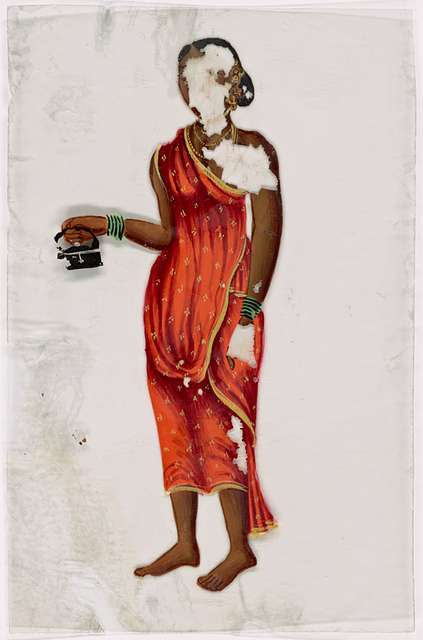



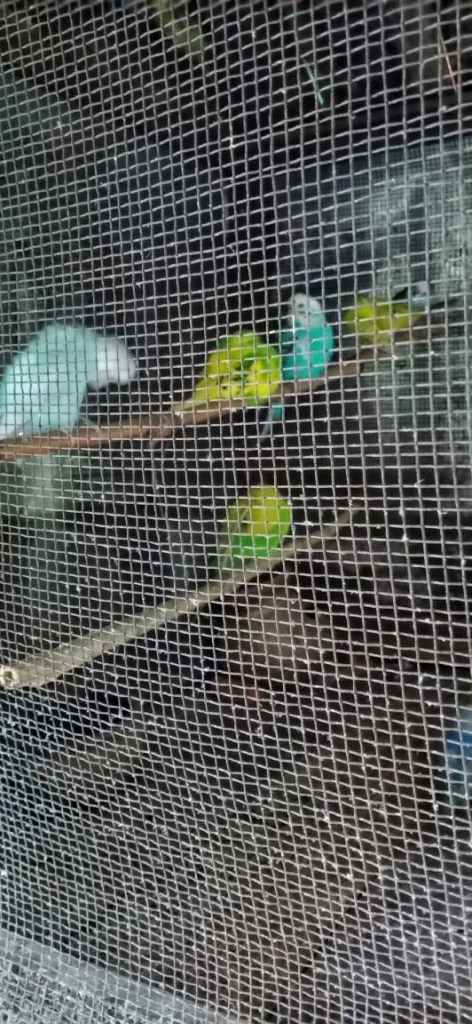


 Borderless