John Matthai’s name has little resonance for today’s generation, but he was one of the brightest stars in the firmament of his time, and even in retrospect. He cultivated many gardens, starting his life as a lawyer and later becoming a professor, administrator, banker, corporate leader, and Minister. In this delightful biography of Matthai, whom Nehru called “Honest John”, Bakhtiar K Dadabhoy tells us of the different hats worn by him. For his students in Madras, he was a shy professor who was one of the most lucid exponents of a dry subject like economics. JRD Tata would always turn to him for sagacious advice.
For Nehru, who greatly respected his ability and integrity, Matthai filled two cabinet posts, even though the parting was somewhat unpleasant when Matthai resigned as Finance Minister, as he feared that the newly created Planning Commission would be a ‘parallel cabinet’ and would be in perennial conflict with his department. CD Deshmukh, the redoubtable civil servant who succeeded him as FM in the Matthai Memorial Lecture said: “He was one of the most cultured products of India, having a perceptive and thoughtful mind, a sobriety of judgment of men and affairs, a rare concern for principles, scholarliness, with its flames kept lit by regular reading.”
He was the first Indian to get his DSc from LSE in 1916 and worked under Professor Sidney Webb, a Fabian socialist, who was at the height of his powers and fame. Though Webb was his guide, he was at no time a Leftist or socialist Professor of Economics. He had a thorough understanding of what free enterprise could do. He was one of the principal authors of the Bombay Plan, a memorandum submitted to the government in 1944 led by Tata, Birla and Thakurdas.
The Bombay Plan represented a search for a new style of capitalism that would chart a middle path between state-led planning and private enterprise. This was in the background of a fierce intellectual debate fought in England between two towering economists, Hayek and Keynes.
While Keynes advocated active state intervention and the desirability of state-funded programs, Hayek favored non-interventionism and free trade. It was to the credit of Matthai that the planners envisaged a mixed economy, in which the state and the private sector would play a complementary role, thus proposing a visionary compromise between two systems, free market and state control.
Ironically, he resigned as Finance Minister after failing to reconcile with Nehru on the setting up of the Planning Commission. According to historian Rakesh Ankit, it was an individual and an institution that made the widening differences unbridgeable. It was Trone, born to Jewish parents and an engineer with General Electric involved in an electrification drive in the USSR, who impressed Nehru with his All India Plan of a ‘managed mixed economy’ that was sufficiently controlled to ensure equity.
While Nehru was taken by Trone’s view that a Planning Commission would reflect regional aspirations and diversity, and his view that Indian capitalists were only out to make profits, Matthai did not share his enthusiasm. In a letter to Nehru, he wrote that the Indian economy was like a “damaged ship and our job is to repair it and not as naval architects but experienced, competent workmen.” Nehru responded by defending planning as ‘a positive active policy’, giving examples of planned progress made by England, Germany, Italy, the Soviet Union, and Japan since the war.
Unlike Patel, who was a hard-headed realist, Nehru loved the abstract argument and delighted in drawing generalised inferences from situations that offered the slightest provocation to his nimble mind. Speaking six years later, after the Planning Commission was formed, Matthai said that “the planning commission has become a body of amateurs, with whom, for all practical purposes, the final decision rests in matters of economic development.” Most of Matthai’s fears about the Planning Commission proved to be well-founded. Critics like Kripalini and Rajagopalachari openly showed their displeasure. Rajaji founded the anti-socialist party.
Dadabhoy also gives a glimpse of how Liaquat Ali Khan, as FM in the interim government, proposed a business profits tax, an increase in corporate tax, a dividend tax, capital gains tax and a high-powered tribunal to deal with tax evasion. Matthai was the only non-league cabinet minister to defend the budget in public. But Patel and Rajgopalchari, who made no secret of being pro-capitalist, saw the budget as a way of harassing businessmen.
Ventilating his frustration with the hegemony planning enjoyed, he wrote to Nehru: “I fear a church is growing around the God of Planning”. However, planning remained the master narrative, and the plans laid the foundation for infrastructure in sectors like steel, fertilizers, cement and chemicals, promoting agricultural self-sufficiency and focusing on inclusive growth and social justice.
Wavell noted in his diary on 5th March 1947, “Nehru, Patel & Bhabha find that the budget is not popular with their big business supporters and are trying to rat or hedge.”Matthai abolished the capital gains tax and reduced super taxes. Pandit Kunzru doubted, “If such reductions would lead to greater productivity. A time has come if free enterprise is to be given a free hand or the country should opt for a socialist economy.” It was only a decade ago that Prime Minister Modi abolished the Planning Commission without any discussion.
Matthai had an unconventional approach to budget presentation. He is the only railway minister to deliver a budget speech without a prepared text. In 1950, he chose to deliver his Union Budget speech extempore. Dadabhoy also brings out unknown facets of Matthai’s personality. He approached Nehru and Patel to bail out his son, who had run over someone while driving his car in Allahabad. Nehru was reluctant to help, but Patel intervened, and Matthai’s son was bailed out and quietly sent to England to escape the net of law. Matthai was known for his honesty and uprightness, but his fondness for his son blinded him to those values.
Matthai, despite his serious differences with Nehru on the issue of the Planning Commission, was a great admirer of Nehru. He wrote after his first meeting with him, “If he ever asked me to go to prison with him, I should find it difficult to refuse.” Mathai considered his long association with the Tatas to be the happiest period of his life. Sir Homi Mody, a Tata luminary later to become the governor of Uttar Pradesh was known for his wit. Homy contended, “Matthai had all the advantages of face, figure, manner, and voice and invested everything he said with an air of profundity. Matthai was a technocrat of different timber who did not mix personal respect with policy differences.”
Though trained under Fabian socialist, Sydney Webb, whom Nehru adored, he did not jump into the trap of socialism. He was a pragmatist who looked at India’s damaged ship, post-Partition, through the lens of competent workmen. Judging a visionary like Nehru and a pragmatist like Matthai can be a nightmare for any biographer. However, Dadabhoy skirts the issue with skill.
.
Professor Satya Narayan Misra is a distinguished expert in Public Procurement & Contracts with over three decades of experience in the Indian Economic Service & Indian Defence Accounts Service. He has made significant contributions in drafting a manual for defence procurement and bolstering self-reliance in critical technology. He has authored seven influential books and published 127 research articles, including 18 in prestigious Scopus-indexed journals such as the Economic and Political Weekly (EPW) and Defence Studies (UK). He looks at macroeconomic issues through the lens of Constitutional expectations. He is a Professor Emeritus and a sought-after speaker on public policy, budget, development issues, and Constitutional Cases.
.
PLEASE NOTE: ARTICLES CAN ONLY BE REPRODUCED IN OTHER SITES WITH DUE ACKNOWLEDGEMENT TO BORDERLESS JOURNAL
In 2015, Shashi Tharoor’s speech at the Oxford Union exploded across social media, striking a chord far beyond academic or diplomatic circles. Framed around the motion “This House Believes Britain Owes Reparations to Her Former Colonies”, Tharoor—alongside eloquent speakers from Ghana and Jamaica—argued persuasively for moral accountability from the former empire. Tharoor’s speech was widely appreciated in India because of the succinctness with which he illustrated how and why colonial rule exploited the subcontinent, and how violence and racism were the order of those days.
“It’s a bit rich to oppress, enslave, kill, torture, maim people for 200 years and then celebrate the fact that they are democratic at the end of it. We were denied democracy, so we had to snatch it, seize it from you,” he said to loud applause from the audience.
But while insightful points such as these formed the crux of Tharoor’s eloquent speech, it was his rapier barbs that had the esteemed audience (and netizens alike) crowing. “No wonder that the sun never set on the British Empire,” he says at one point, referencing a common boast used to illustrate the sheer extent of Britain’s power, “because even God couldn’t trust the English in the dark.”
The speech’s viral success revealed a yearning—particularly among millennials raised on televised debates and editorials—for a mode of discourse that is rapidly disappearing. Where once prime-time slots featured fiery discussions on social and political issues about caste, class, gender, and policy, today’s digital platforms prioritise speed, relatability, and aesthetics.
In the India of today, a viral tweet can spark more conversation than a peer-reviewed article. A beauty influencer’s “Get Ready With Me” vlog is more likely to trend than a lecture by a scholar on social justice. The thought leaders of the past were expected to speak with gravity; the content creators of the present are expected to sparkle. When public intellectuals are replaced by public influencers, the nature of cultural discourse changes. Popular culture, once a mirror held up to society, now leans into escapism. Complex socio-political debates are flattened into clickable soundbites, and intellectual inquiry is often sidelined by algorithm-friendly content categories, sorted by SEO value[1].
Intellectuals once forced us to think harder, ask more difficult questions, live with complexity. Influencers invite us to feel seen, validated, or soothed. One expands the self, the other simply flatters it.
India’s Golden Age of Thought: When Public Intellectuals Shaped the Nation’s Conscience
Once upon a time, India did not lack public intellectuals. In fact, the early decades after Independence saw them thrive because India’s tradition of intellectual dissent is long and storied. Figures like Nehru, Gandhi, Ambedkar, Tagore—they were not just leaders or writers; they were public philosophers.
Thinkers engaged with the moral and political questions of their time, not just within academia but in public forums, books, interviews, op-eds, and essays that reached a wide, engaged readership. They helped build the intellectual spine of a newly independent nation grappling with secularism, caste, democracy, and justice.
Even in Bollywood, cinema once offered social critique—from Guru Dutt’s Pyaasa (Thirsty, 1957) to Shyam Benegal’s Ankur (The Seedling, 1974). They were conscience-keepers, cultural critics, and truth-speakers. They didn’t shy away from controversy—many actively courted it. They weren’t afraid to speak against majoritarianism, economic inequality, censorship, or communalism.
Meanwhile, halfway across the world in Texas, a young boy named Wes Anderson—who would go on to become one of the most distinctive voices in contemporary cinema—found himself deeply influenced by Satyajit Ray. It wasn’t just Ray’s pioneering cinematic style that captivated him, but also his prolific work as a writer and illustrator, and his powerful engagement with public discourse. Through his films, Ray offered a radical and empathetic lens on Indian society, boldly confronting issues such as poverty, gender roles, the tension between tradition and modernity, and the human consequences of social change—perspectives that were remarkably ahead of their time and continue to resonate across cultures.
Dr. A.P.J. Abdul Kalam was one of modern India’s most beloved and influential public intellectuals—a scientist, teacher, and former President who embodied the rare blend of deep technical knowledge and visionary humanism. Revered as the “Missile Man of India” for his pivotal role in advancing the country’s space and defence programs, Kalam also brought science into the public imagination with clarity, humility, and hope. His presidency (2002–2007) was marked by an earnest outreach to young people, whom he inspired to dream beyond the limitations of circumstance. Unlike many in power, Kalam believed in the democratisation of knowledge—he made complex ideas accessible, challenged youth to innovate, and constantly linked progress with ethics and spirituality. In doing so, he redefined what it meant to be a public intellectual in India: not someone cloistered in academia, but a leader who imagined a better future and invited the nation to build it with him.
Brains Behind Paywalls: How Intellectualism Lost Its Spotlight
There’s no shortage of brilliant minds today—but intellectualism requires both platform and patience. Neither is abundant. A YouTuber dissecting colonial legacy in Indian education may get a few thousand views; a beauty blogger with “chai latte skin” content racks up millions. But now, intellectuals are trapped producing work for journals and conferences rather than the public sphere. As a result, public-centred intellectualism has become rare. It’s not because intellectuals of that caliber no longer exist, but that the structures that once made their ideas visible have been buried under layers of institutional gatekeeping.
The decline of the public intellectual isn’t just the result of a shifting media landscape—it’s also tied to how our access to and expectations around knowledge have evolved. There was a time when intellectuals were celebrated as generalists, able to navigate literature, politics, science, and philosophy, and translate complex ideas for a broader audience. Think of Susan Sontag or Bertrand Russell—figures who didn’t confine themselves to narrow academic lanes but moved fluidly across disciplines to spark public thought and dialogue.
Today, intellectual life has become increasingly siloed. Hyper-specialization has turned academia into an insular world where scholars speak primarily to other scholars. Rather than bridging the gap between advanced knowledge and public discourse, modern academics are often locked within their own echo chambers. The public philosopher who once commented on culture and politics has given way to specialists producing work for a niche audience of peers.
Even when academics do attempt to reach beyond their field, they’re often met with suspicion. A historian writing on political theory or a physicist reflecting on metaphysics is likely to be dismissed for stepping outside their “expertise.” Intellectual authority today is rigidly policed, and interdisciplinarity—once a hallmark of great thinkers—is now treated with skepticism.
From Public Intellectuals to Public Aestheticism: How Influence Got a Makeover
Today’s cultural powerhouses operate on a very different wavelength than their predecessors. Where figures like Susan Sontag or James Baldwin once shaped public consciousness through sharp intellect and critical writing, today’s influencers—like Kim Kardashian—wield their power almost entirely through aesthetics. Kardashian doesn’t publish essays; she sets the tone for global beauty trends. With each new look—glazed donut skin, brownie lips, strawberry makeup, and the almost comically indulgent cinnamon cookie butter hair—the Kardashians and Jenners reshape beauty norms with a force that rivals traditional intellectuals.
In India, the landscape mirrors this shift. Influencers like Ananya Panday and Ranveer Allahbadia amass millions of views despite offering little in terms of originality or eloquence. Much of their content borrows from what’s already been done, often repackaged with no clear voice of their own. Unlike cultural figures such as Shabana Azmi or even Priyanka Chopra[2]—whose words once commanded attention and mattered—many of today’s digital celebrities struggle when pulled out of the comfort zone of scripted, bite-sized platforms. Their polished online personas crumble under the pressure of unscripted public discourse.
What we’re left with is a curated illusion, a constant performance of identity. And the troubling part? Young audiences are watching, emulating, and internalising these facades—until, inevitably, a scandal breaks the spell. In an era ruled by surface and spectacle, authenticity has become the rarest currency of all.
If Joan Didion or Arundhati Roy represented a time when public intellectualism had mass appeal, these influencers represent what has replaced it: public aestheticism. A philosopher might spend years constructing a critique on our society, but an influencer can change peoples’ worldviews with a single Instagram post. Influence now moves at the speed of an Instagram story. The philosopher builds theory; the influencer sells a mood. In this new aesthetic economy, they are the message, the medium, and the marketplace all at once. This is not an incidental shift, but a reflection of our broader cultural transformation.
Although, this is absolutely not a wholesale condemnation of influencers. Many use their platforms to raise awareness, fundraise, and spotlight important issues. But influence has become aestheticised. And when beauty, brevity, and branding become the dominant currencies of expression, difficult truths become harder to hear.
Even figures with a platform one would consider intellectual, like a podcast or blog, tend to operate within a different framework than the public intellectuals of the past. The most successful are the ones who know how to package their ideas into easily consumable formats. Their content may demand engagement, but not necessarily deeper thinking. The most successful cultural critics of our digital age are simply a different kind of influencer, one who may sell a worldview rather than a skincare routine, but are selling something nonetheless.
Amidst all of this, we have lost the expectation of being challenged by our cultural figures. We have lost the collective memory of what it means to gather around an idea rather than a trend. We have lost the stamina for long-form thinking. We now crave hot takes instead of deep dives, personality over principle, vibes over values. We’ve also stopped expecting our cultural figures to challenge us. We ask them to inspire us, to entertain us, to market their authenticity. We no longer crowd into halls for heated debates—we scroll.
When Influence Replaces Insight: The Rise of Apathy and the Fall of Public Thought
The culture hasn’t gone quiet though. Indian influencers—fashion bloggers, tech reviewers, lifestyle curators, “finance bros”, even comic creators—are the new cultural capital. They dominate conversations on what matters to people: from wedding aesthetics and productivity hacks to skincare routines and budget investments. The currency of their influence isn’t depth but relatability, not dissent but delight. Even in the realm of “education”, we find influencers gamifying complex financial or political ideas into simplified carousels or 60-second explainers. It’s not necessarily bad—but it is diluted.
It’s also understandable why many hesitate to enter intellectual spaces today—there’s a prevailing sense that everything worth saying has already been said. We live in an age where every thought seems pre-articulated, every argument countered, every counterpoint already dissected. The landscape isn’t lacking in intellectual potential; it’s that fewer people feel confident stepping into the role of a public intellectual, believing true originality is no longer possible.
This mindset breeds an intellectual echo chamber. Rather than contributing to the discourse, many settle into passive consumption, convinced that someone else has already voiced every worthwhile idea.
But the truth is, no conversation is ever truly finished. History shows us that ideas are living things—they shift, adapt, and deepen depending on who engages with them and when. The same philosophical questions that animated thinkers centuries ago continue to evolve, finding new relevance in each generation. Feminism as it was understood in the 1970s is not the feminism of today. Jean Baudrillard’s meditations on media and hyperreality in the 1980s feel hauntingly prescient in our digital age—but our reading of him is inevitably shaped by the world we now inhabit. Every era reinterprets the past, and every new voice brings a fresh lens. That’s what keeps the intellectual tradition alive.
Reclaiming Thought: Can Intellectualism Survive the Age of Spectacle?
So, can the intellectual space be reclaimed, or has it been permanently absorbed into digital spectacle? Long-form discussions found in podcasts, essays, and forums are a great starting point. Platforms of these media types allow for deeper exploration of ideas, where nuance and depth are greatly valued.
And it’s not that intellectuals have disappeared. They are still here, writing essays, protesting laws, mentoring students. But they’ve been pushed to the peripheries of public attention. Their audiences are shrinking, and their words are often drowned out by the louder, shinier pull of influencer content.
But intellectual spaces aren’t only limited to these traditional platforms. Niche online communities like internet book clubs on Fable or Instagram create new ways for people to connect with unique ideas. You can also incorporate intellectual conversation into your everyday life. Attend local events, art galleries, or even start casual discussions among friends to make these topics more accessible and relevant. The intellectual sphere may have shifted, but it isn’t gone. We simply have to work to reclaim these spaces with people who are willing to engage deeply with ideas.
Ultimately, the death of the public intellectual may not be as tragic as it seems, it may just mean that intellectualism is taking on new forms. But we have to ensure we’re not losing sight of what really matters—the depth, complexity, and refusal to settle for easy answers in the pursuit of something greater.
Culture Is Still Loud—It Just Doesn’t Want to Make You Uncomfortable Anymore
There’s another reality unique to India: the active suppression of dissent. To be an intellectual in India today, particularly one critical of the status quo, is to court danger. Writers have been jailed (Anand Teltumbde), journalists have been shot (Gauri Lankesh), and students have been arrested for protest slogans. In such an atmosphere, who would choose to be a public intellectual?
The public intellectual, by definition, is someone who speaks truth to power. In India, speaking truth to power comes at a high cost. And so, instead, we scroll. Meanwhile, the influencer class thrives because they are apolitical by design. Their influence is rooted in apathy, in not asking uncomfortable questions. This is not a coincidence. It is by systemic design. The less we think, the more we consume. The more aestheticised our discontent, the less threatening it becomes. Influencers now perform the soft work of culture—sedating, distracting, pacifying—while hard truths are hidden behind paywalls, FIRs, and broken institutions.
But if the public intellectual is to make a comeback, we as an audience must do our part. We have to choose depth over dopamine, discomfort over convenience. We must resist the temptation to aestheticise every idea until it’s just another lifestyle choice.
Because when thought leaders become brand ambassadors, and reflection becomes a trend, we risk forgetting that ideas—not images—are what truly shape society.
The public intellectual may be on life support, but the conversation isn’t over. It never is.
[1] SEO (Search Engine Optimisation) value refers to the estimated monetary worth of organic traffic generated by a website through search engine optimisation efforts.
Lopamudra Nayak is a poet, freelance writer, and biotechnologist with a passion for literature and storytelling. She writes poetry, book reviews, and reflections on pop culture on her blog, Substack and Instagram.
.
PLEASE NOTE: ARTICLES CAN ONLY BE REPRODUCED IN OTHER SITES WITH DUE ACKNOWLEDGEMENT TO BORDERLESS JOURNAL.
Young lamas, or monks, appearing for their annual examinations in the monsatry of Simtokha Dzong, Thimphu.
Bhutan, 2024
The sun sets far too quickly for my liking in Phuentsoling. There is little to no entertainment to speak of that is worth its name. The town, by and large, presents itself in its entirety and goes to bed by the time my friend, S, and I crisscross our way to our hotel uphill. It does not help that we enter Bhutanese soil on its National Day, celebrated to mark the coronation of their first king Ugyen Wangchuk in 1907, and find most places of public convenience closed.
The stark contrast that the Indian border town of Jaigaon offers to its Bhutanese counterpart Phuentsoling is remarkable. The lack of men — and their wherewithal — on crossing the north-eastern frontier is welcome, as is the steep upkeep that the Himalayan kingdom pushes upon its citizens.
*
The Phuentsoling-Thimphu highway has improved by leaps and bounds since Queen Mother Ashi Dorji Wangmo Wangchuck made her initial foray into the hills of Kalimpong from the village of Nobgang in the 70s. I try my best to spot a mule — or its track — but am left disappointed by the presence of a modern-day state-of-the-art business college in Gedu[1] instead.
The lower reaches of the Himalayas that surround us to the east act as forbidding barriers into the hidden crevices of the hidden kingdom we are attempting to climb in a motor vehicle, the likes of which were first seen in this country in the 1980s. The light — of which I had been so painfully deprived in Phuentsoling — seeps in with zeal I have seldom seen in the plains of the Deccan, and the lifeblood that flows inside me is roused enough to taste the incandescent flavours of kewa datsi[2]with red rice. And before I know it, a lifelong love affair has begun with this enticing dish.
*
We are welcomed into Bhutan proper only after arriving in Thimphu the next day, or so it seems. The capital city of this virgin kingdom has evolved significantly from Pico Iyer’s assumptions in 1989 that all of it could be explored over the course of an afternoon. That the Druk Hotel in which the legendary essayist stayed remains steadfast beyond the clocktower that shows no change of hands is a testament to the art of stillness that the Bhutanese so pride themselves upon; at 11 AM on a weekday at a laundromat not far from the main street hangs a signboard proclaiming, ‘closed for lunch.’ Iyer is not too far off the mark even thirty-five years later.
That the people smile easily takes me by surprise; I have seldom known a populace so unburdened by the weight of living that they have overtaken all their consternations and settled finally upon the art of being. Jigme Khesar Namgyel Wangchuk, Bhutan’s present king, finds himself immortalised in pictures across every restaurant, hotel and store across the country.
The fervour seems, to me, all the more in Thimphu, where the local masses try to outdo their neighbours in anticipation of the gentle 44-year-old stepping out of the Tashicho Dzong grounds (his palace) to inspect these pictures and possibly reward their owners for their loyalty. I suspect this ardour stems as much from devotion to their ‘living God’ as to the fear of missing out or merely keeping up with the Joneses — or Wangchucks. Some modern predicaments seem to have crept into Druk after all.
It is not without these frailties that one’s mornings in Thimphu are strewed. Gather and scatter, as the bard Vikram Seth[3] was wont to have mentioned, applies less to the hounding of the dogs mid-street all night than to the karaoke bars that pride themselves on staying open when the rest of the world sleeps.
Had Nehru not arrived in Paro from Nathu La in 1958 on the back of a yak, this journey would have seemed almost romantic to that of the least fatalistic of Indian prime ministers. It is not known whether the venerable freedom fighter from Allahabad shared any of his midnight oil burning advice with the Bhutanese during his state visit; it appears for certain that the karaoke bars sprung up like mushrooms much later and took his guiding directions to heart.
*
If it is not the baying of the foolhardy dogs, it is the crowing of the late-night suppliers at the fifty shops selling similar products on the Thimphu main street that keeps me — and my journalistic tendencies — awake. Onitsuka Tiger [4]rubs shoulders with Adidas Samba[5] with a glee that one forsakes in favour of the warmth that a bowl of tofu thukpa[6]offers; before long, a handsome policeman in his impeccable uniform including a heartening jacket and betel-stained teeth joins me for a cup of tea. He has just finished his duty of acting as the traffic signal in a city that has no traffic signals.
With the precision best described as that of mimicking an archer — of whose credulity there is a lot in Bhutan — my newfound friend diverts the few cars that choose to make the hike into Thimphu’s central business district on this cold night. He tells me about how gently the tea goes with the thukpa I have with me, all while seated on the plank of a wooden crate left behind by the Adidas doppelgangers.
A plate of momos — beef for him, and cabbage for me — soon arrives from Kinley Tsering, a lady who sells home-cooked food at night after tending to her household all day to augment the family income. In a horror mixed with incomprehension of protocol, my friend in livery whips out his wallet to pay; I am stunned by an act I have never seen uniform-clad men do in the past. The temperature plunges to minus six degrees Celsius as I walk back with the numbing, tear-inducing breeze on my face. I feel exhilarated.
*
The Paro airport is considered to be one of the most dangerous places in the world to land in.
Paro[7], imperious, meek and all-abiding, comes too soon and whisks away any perceptible delight that one feels at having escaped the wrath that Thimphu denotes upon those who cannot see. The dzong, located several miles outside of town, is the only real attraction besides the museum on the way down; modern tourists — and locals besides — tend to find enjoyment in climbing up the steep hillocks to gain a view of a Druk Airplane taking flight from what is considered to be among the most dangerous airports in the world. Back on the main strip that connects this valley to Chuyul in the north, dinner consists of dried ema (Bhutanese chilli), vegetables and rice, with accompaniments of dumplings.
The Taktsang Lakhang[8] stands upright on the shoulder of a cliff the next day; I am perplexed as to how I could be so close as to see the finer details of its inner sanctum in my mind yet far enough to appreciate the impossible angle at which it is perched. The monastery, which had dominated so many of my dreams about Bhutan in the past, is often referred to as the ‘Tiger’s Nest’ by the West. It takes its name from a spot allegedly visited by the Indian guru, Padmasambhava[9], on the back of a mythical flying tiger in the eighth century to flay a demoness who was tormenting the locals of the area.
The Taktsang LakhangSunset at Taktsang Lakhang
The climb is demanding, but the panoramic views of the valley to the east make it seem less so. The ardour of the fellow pilgrim is contagious enough for me to push past the mental barriers I have erected for myself without even trying, and before I know it, we are at the halfway point where the government has been kind enough to let an eatery ply its trade. The Local Train’s Vaaqif[10] accompanies us as Taktsang appears all the more closer, and all the more dangerous.
The ascent, dusty and translucent though it is due to the lack of rain for several months, troubles me with its penchant for nonchalance. I loathe to fall into the reverie that takes me over every minute while glimpsing at a branch of the hundred-year-old rhododendron that has stood firm while men have grappled past their anxieties. I awaken soon enough with the realisation that my worries and physical ailments may seem impotent to the staunch Buddhist who makes the six-kilometre hike to the monastery by prostrating himself full-length, getting up and repeating the feat till he gets to the top a week after he has begun.
The top is still way off from where one reaches the monastery proper. Perched dangerously on the edge of this cliff, the monastery virtually hangs into oblivion attracting gusts of wind, who somehow choose not to play to the gallery. Yet, it has survived for centuries, and if faith were one’s sole determinator, it shall survive for several more. The inside has temples dedicated to Padmasambhava in his various forms: astounded, wrathful and compassionate.
Propitiating the gods — and as an extension, their other halves, the demons — is commonplace in Bhutan, and the same holds for ParoTaktsang. While the inordinate thangkas[11] and artefacts collected over the years provide the inner sanctum sanctorum of the monastery with its sheen, it is the historical hostility that the local deities have displayed towards demons that make it eerily attractive. Indeed, folk tales observe that several local, protective deities were demons won over by the Buddhist dharma when Padmasambhava arrived on the back of his mythical tiger.
And so it is that I find myself in the dark, indistinct crevices of the cliff on which the monastery proper is located but beneath which is the original Tiger’s Nest which the Bhutanese claim to have a pug mark of Padmasambhava’s beast. The descent into the darkness, almost as if plunging into the unknown, requires one to be on his back and flatten himself along the rocks to reach the acute angle where the pug mark is located.
A lonely candle blows in this unventilated corner of the cliff, and only a sliver of light to the east remains to remind me of the vast world outside, that which I have forsaken to witness this tiny fraction of hope at Taktsang. This hope flutters unabated, almost as if without any beginning or end, and for a moment, I am suspended in the brilliant sunshine overlooking a valley fit for the heroic landscapes I so fervently pursue. Might this be the only time when I forsake my attachment to life in search of a glorious future, real or imagined?
There is no end to the ruminations that I have while being assailed by the light that peeps in almost as if it is too shy to ask for permission. The way out may be more difficult than the way in — as in life — but how do I respond to the call I have heard inside, the one that compels me to sing the songs of my fathers in the temples of my gods?
The thought strikes with a speed I had not known I possessed until I see the boulder above me swerve in its position in a quarter of a millisecond; with an equal lack of precision and comfort, I come out of the cave, for all the world a dishevelled a youth with an abrasive attitude towards the world, but in my own estimation, a changed man. I did not need new eyes, but merely a new way of seeing.
*
The magnificent Punakha dzong is surrounded by the river Mo Chhu.
The dzong[12] of Punakha is a magnificent object of interest to lovers of history and architecture alike; straddled on an oasis that one must reach after crossing the timid-looking Mo Chhu River, it looms large into the thoughtful sunshine all the while immersed in a meditative calm that only its altitude has any makings of. Like all dzongs in Bhutan, the one in Punakha too is much more impressive from the outside. Tall, gaunt and imperial in its outlook, it acts more as a presence of the godly authority that the king and abbot enjoy in Bhutanese society, the former only matched in his regal bearing by the latter.
Even more impressive, if the word is right, is the suspension bridge that takes one across the river Po Chhu (the male consort of Mo Chhu) behind the dzong. There is little to look at but the other end as one sways with the wind — and the breeze is far too strong for my liking even at three in the afternoon here — while praying to the Gods, both Indian and Bhutanese, that the bridge does not give way and deposit me into the freezing waters of the river about three vertical kilometres below. The 160-metres bridge span seems more than a mile to me; awake finally at the reality of life slipping away from my grasp in the blink of an eye, I experience the innards of a fear that I thought I had buried deep inside myself.
For the entire time that I cross the bridge — and return — for there is nothing to see on the other side but an eatery that sells delightful ice cream, this fear flares in a bid to reignite my passions for a world I had once deeply cared for and strongly felt like changing. For all the lack of consideration that I display, either in terms of material or intangible riches, there is little that stays on par with this kind of fear, the one that reminds me at every step that I am virtually playing with my fate, and that everything I have with me, most perceptibly my heartbeat, could drown in a second if the heavens so choose. A strong gust of wind and I can finally sense what Matthiessen[13] meant when he wrote:
‘This is a fine chance to let go, to win my life by losing it…’
I am driven back to life when a local teenager rides across the heavily swaying bridge and into the sun — with the mildly flowering dandelions emitting a heady scent ideal for such gallant terrains, on his bicycle — too young to care about life’s intricacies, yet old enough to realise that everything one wants is on the other side of fear.
It is in such heroic landscapes that I change my stance towards the heavens; where I drink the water from the stream gurgling past the Po Chhu and gulp in the air that promises a revival of a dream seen long ago. Such dreams deserve their rightful places in a world shorn of temerity in a way that human emotions can seldom fathom. And yet the dandelions, by now competing with the rhododendrons that shall have to wait till spring, promise a tomorrow that may not get swayed by this incredible afternoon breeze.
*
When I wake up a month later in the arid plains of the Deccan, unsure if such dreams are still worth chasing — or life still worth living — I remember that the dandelions would soon be in bloom in the hidden kingdom I so arduously seek within myself.
The gently flowing Paro Chhu river makes one lie down beside it and do nothing.
[13] Peter Mattheissen (1927-2014) novelist, naturalist and CIA Agent
Mohul Bhowmick is a national-level cricketer, poet, sports journalist, essayist and travel writer from Hyderabad, India. He has published four collections of poems and one travelogue so far. More of his work can be discovered on his website: www.mohulbhowmick.com.
PLEASE NOTE: ARTICLES CAN ONLY BE REPRODUCED IN OTHER SITES WITH DUE ACKNOWLEDGEMENT TO BORDERLESS JOURNAL.
Shyam Benegal (1934-2024)Street art: Shyam Benegal From Public Domain
“If I enjoy the film I have made, then I am quite certain viewers will too. And what business do I have to burden viewers with what I myself do not enjoy?”
–Shyam Benegal (in an interaction with Ratnottama Sengupta)
Art is not elitist. Nor is artistic experience one that only the elite can enjoy. The world’s greatest art has been accessible to all mankind. Taj Mahal was erected in memory of Mumtaz Mahal but it is for the world to access and admire. The cave paintings at Ajanta propagated a certain philosophy but thousands of years later too they mesmerise one and all. And, anyone who goes to Tanjore temple experiences its magnificence. Cinema too is capable of providing such universal experience. What is more, it is possible to provide such an experience without distorting or oversimplifying an idea.
Shyam Benegal (1934-2024) had dinned this belief into me when I interviewed with him for the first time — in Bombay of 1980. Seven years before that he had proved it to the world with his debut film, Ankur (The Seedling, 1974). It had announced itself to cineastes through its nomination for the Golden Bear at the 24th Berlin Film Festival and had gone on to win three National Awards. In the wake of stylised trendsetters like Bhuvan Shome (directed by Mrinal Sen, 1969), Uski Roti (Others’ Bread, directed by Mani Kaul, 1969) and Maya Darpan (Illusory Mirror, directed by Kumar Shahani, 1972), everyone expected Ankur to be another “arty” film. In other words, “pretentious”, “pseudo intellectual”, even “boring”. Far from refusing to peter out of theatres due to lack of footfalls, the Rs 5-lakh budget film went on to garner millions because it engaged audiences of every shade and strata. And it was hailed as marking a new beginning in Indian cinema that had roots in the narrative tradition of earlier masters such as Bimal Roy and Benegal’s own cousin, Guru Dutt.
No, Ankur was not a fluke, Nishant (Night’s End, 1975) had proven. Once again, Benegal had set his film in Telengana, that part of Andhra Pradesh which had seen him grow up with his siblings in the household of his father whose livelihood came from a photo studio. “Alwal was a semi-rural semi-urban area, so I had seen both sides of a feudal society coming to grips with modernity setting in,” Benegal had explained to me.
Ankur had touched upon several ills of the feudal system: class difference, caste inequity, sexual exploitation of women, of the physically challenged, and even alcoholism among the poor. It had a sequence of thrashing, and it closed with the indication of violent protest. Almost all these themes would flower into independent saplings in Benegal’s subsequent films. Because the important thing for him, as he once said to BBC, was that “post-Independence India was changing its feudal character to the kind of society we wanted to create. Industrialisation at one level, creation of the middle class at another level, and disappearance of the regressive values of the feudal life.”
At that time, when I was yet to step out of my teens, I was deeply impacted by the oppressive ‘liberty’ of the caste person who thought he had a right over the lowborn woman. The empowerment of women was a theme Benegal felt strongly about. “The idea had started during the national movement with Gandhi, who first talked about women having equal responsibility,” pointed out the director of The Making of a Mahatma (1996). “They have to become aware of their strength and empower themselves because 50 percent of your population comprises of women.”
*
From the birth of a new nation to the birth of a nation, Benegal constantly grappled with these themes. With “the whole business of tradition and modernity,” to borrow his words. “In an ancient society like India where so much of tradition is still valued and revered, when will we get rid of the dubious virtues?” he wondered.
Benegal functioned with a sensibility that was native to the length and breadth of the land that was his canvas. “As long as one functions with one’s sensibility, it will resonate with every person of that sensibility,” he maintained.
To me the most endearing trait of a Benegal film is the simplicity of its narrative. His incidents came out of life, his characters were from his surroundings. And his unfolding, though devoid of gimmick, was not bereft of drama nor of violence. He learnt to steer clear of artifices while making ad films where, “because you have to make your point in one minute, you tend to fall back on gimmick.”
Clarity of purpose and simplicity of narration were the two rails that never let his script go off into a meander of ultra mystical or complex metaphors. Magic realism? Hyper realism? High pitched melodrama? Benegal had need for none of these ploys. “The most complex of ideas have a simple way of projecting themselves,” he’d say. That, and not its reverse, was the most valid mantra of his life.
Why did the Phalke or the Padma Bhushan awards like simple story telling? “Because I like to involve people, and that happens when there is a dramatic juxtaposition of characters.” The use of drama did not in any way dilute the significance of his subject — be it casteism (Samar, Conflict, 1999), women’s empowerment (Bhumika, Role, 1977), portrayal of the principles of national heroes (Making of the Mahatma), or the struggle to wrest power from an oppressor (Junoon, The Obsession, 1978). Be it in feudal Telengana (Nishant), in a Borgadar’s Bengal (Arohan, The Ascent, 1982), an industrial Bombay (Kalyug, The Age of Vice, 1981), in Bose’s Burma (The Forgotten Hero, 2005), or Mujib’s Bangla (Mujib: The Making of a Nation, 2023).
In the process he dispelled the notion that showing our reality in cinema cannot engross or entertain. In fact, he questioned the very definition of the word ‘Entertainment’. “If a serious talk or a news holds you spellbound, isn’t that also entertainment?” he had asked me.
So, in order to engage the viewers, Benegal plunged into problems and miseries of the marginalised Indian: the milkman (Manthan, The Churning, 1976) and the weaver (Susman, The Essence, 1978), the untouchable (Samar) and the glamorous (Bhumika), the royals (Zubeidaa, 2001) and the entertainer (Sardari Begum, 1996), the middle class households where women are mere birthing machines (Hari Bhari, 2000), or the illiterate voters of Sajjanpur (Welcome to Sajjanpur, 2008).
Through all these voters, men and women, landlords and servants, on the banks of Katha Sagar (A Sea of Stories, 1986, TV series) or in the arid Birbhum or in the Mandi (Market Place, 1983) of flesh, Benegal made spectators of us. “Even a road accident turns us into spectators, some mute, some aggressive, some caring,” he’d pointed out. “What is it we want to experience when we rush to the window when we hear a car screeching to a half?” he’d asked. “Why is an unanticipated death — or murder — part of the entertainment formula? Because the adrenaline rush, the excitement in these exorcises our fears,” he had explained.
But Benegal’s wasn’t a conventional definition of entertainment. Nor did he decry the use of violence in mainstream cinema. “Indeed, it helps society because viewers find vicarious release from the stress that builds up in the tension filled life in urban societies.” As for his own films rooted in the remote pockets away from the metros? “Sometimes we need to use force because some social problems have got so deeply entrenched,” he was unabashed about violence in his films. “Change in certain situations can come only from the use of violence. But be careful never to lose your moral compass,” he immediately warned me. “Violence cannot be indiscriminately justified nor universalised. And in no circumstance should it be glamourised.”
*
So human impulses, and social well-being were his prime concern. The constant interaction between an individual and his or her milieu; suffering inequities, and standing up against exploitation — we gained insight into these when we sat in darkened auditoriums to watch Arohan, Sardari Begum, Mammo (1994), Well Done Abba…(2010)
Socio-economic. Socio-political. Socio-legal. No label of genre could own Shyam Benegal. Because? “That will restrict my own thinking. How can I keep pace with the galloping changes that come with the ticking of centuries? And when the march of science unleashes computers and cellular phones, Internet and digital filmmaking?”
But what prompted his choice of subject every time he sat down to work on a script — with Shama Zaidi or Girish Karnad, Satyadev Dubey or Khalid Mohamed[1]? “There’s an electic streak in me that will not let me go where I’ve been before or do what I’ve done before,” Benegal was clear. So historical patterns to saw him go from The Making of a Mahatma on Gandhi, the advocate of non-violence, to Bose, The Forgotten Hero who escaped home incarceration and travelled through Himalayan hurdles and joined the Japanese to fight the British colonisers of India. From the Junoon of the Sepoy Rebellion of 1857, to Bharat Ek Khoj (India, a Search, 1988 TV serial) exploring the roots of India. From my Samvidhan (2010, TV mini-series), the formulation of the Constitution that is the firm foundation of the nation he mapped through his films, to Mujib on the birth of Bangladesh.
This refusal to be contained in a box had seen Benegal go from making promotional ads to documentaries on Steel Authority of India and Artificial Insemination in Animal Husbandry, on Nehru and Satyajit Ray. Benegal’s refusal to be boxed and labelled saw him make
Manthan and Hari Bhari — two prime examples of turning a documentary subject into a feature film. Why, his varied interest saw him making a documentary that mapped the course of a raga which originated with Mallikarjun Mansur hearing a leaking tap in the kitchenette of a friend in Bombay – and went on to capture the spirit of the financial capital!
What explains the prolificity of the man who celebrated his 90th birthday on December 16 and bade goodbye a week later? His indomitable and indefatigable spirit.
Unusual Concerts: The documentary on Mallikarjun Mansur (1910-1992) and Bombay
Ratnottama Sengupta, formerly Arts Editor of The Times of India, teaches mass communication and film appreciation, curates film festivals and art exhibitions, and translates and write books. She has been a member of CBFC, served on the National Film Awards jury and has herself won a National Award.
.
PLEASE NOTE: ARTICLES CAN ONLY BE REPRODUCED IN OTHER SITES WITH DUE ACKNOWLEDGEMENT TO BORDERLESS JOURNAL
Title:Let’s Be Best Friends Forever: Beautiful Stories of Friendship
Publisher: Talking Cub, Speaking Tiger Books
From ‘The Tunnel of Friendship’ by Ruskin Bond
I had already started writing my first book. It was called Nine Months, but had nothing to do with a pregnancy; it referred merely to the length of the school term, the beginning of March to the end of November, and it detailed my friendships and escapades at school and lampooned a few of our teachers. I had filled three slim exercise books with this premature literary project, and I allowed Azhar to go through them. He was my first reader and critic. ‘They’re very interesting. But you’ll get into trouble if someone finds them,’ was his verdict.
We returned to Shimla, having won our matches against Sanawar, and were school heroes for a couple of days. And then my housemaster discovered my literary opus and took it away and read it. I was given six of the best with a Malacca cane, and my manuscript was torn up. Azhar knew better than to say ‘I told you so’ when I showed him the purple welts on my bottom. Instead, he repeated the more outrageous bits he remembered from the notebooks and laughed, till I began to laugh too.
‘Will you go away when the British leave India?’ Azhar asked me one day.
‘I don’t think so,’ I said. ‘My stepfather is Indian. My mother’s family have lived here for generations.’
‘Everyone is saying they’re going to divide the country. I think I’ll have to go away.’
‘Oh, it won’t happen,’ I said glibly. ‘How can they cut up such a big country?’
‘Gandhi will stop them,’ he said.
But even as we dismissed the possibility, Jinnah, Nehru and Mountbatten and all those who mattered were preparing their instruments for major surgery.
Before their decision had any effect on our life, we found a little freedom of our own—in an underground tunnel that we discovered in a corner of the school grounds. It was really part of an old, disused drainage system, and when Azhar and I began exploring it, we had no idea just how far it extended. After crawling along on our bellies for some twenty feet, we found ourselves in complete darkness. It was a bit frightening, but moving backwards would have been quite impossible, so we continued writhing forward, until we saw a glimmer of light at the end of the tunnel. Dusty, a little bruised and very scruffy, we emerged at last on to a grassy knoll, a little way outside the school boundary. We’d found a way to escape school!
The tunnel became our beautiful secret. We would sit and chat in it, or crawl through it just for the thrill of stealing out of the school to walk in the wilderness. Or to lie on the grass, our heads touching, reading comics or watching the kites and eagles wheeling in the sky. In those quiet moments, I became aware of the beauty and solace of nature more keenly than I had been till then: the scent of pine needles, the soothing calls of the Himalayan bulbuls, the feel of grass on bare feet, and the low music of the cicadas.
World War II had just come to an end, the United Nations held out the promise of a world living in peace and harmony, and India, an equal partner with Britain, would be among the great nations…
But soon we learnt that Bengal and Punjab provinces, with their large Muslim populations, were to be bisected. Everyone was in a hurry: Jinnah and company were in a hurry to get a country of their own; Nehru, Patel and others were in a hurry to run a free, if truncated, India; and Britain was in a hurry to get out. Riots flared up across northern India.
At school, the common room radio and the occasional newspaper kept us abreast of events. But in our tunnel Azhar and I felt immune from all that was happening, worlds away from all the pillage, murder and revenge. Outside the tunnel, there was fresh untrodden grass, sprinkled with clover and daisies, the only sounds the hammering of a woodpecker, and the distant insistent call of the Himalayan barbet. Who could touch us there?
‘And when all wars are done,’ I said, ‘a butterfly will still be beautiful.’
‘Did you read that somewhere?’ Azhar asked.
‘No, it just came into my head.’
‘It’s good. Already you’re a writer.’
Though it felt good to hear him say that, I made light of it. ‘No, I want to play hockey for India or football for Arsenal. Only winning teams!’
‘You’ll lose sometimes, you know, even if you get into those teams,’ said wise old Azhar. ‘You can’t win forever. Better to be a writer.’
One morning after chapel, the headmaster announced that the Muslim boys—those who had their homes in what was now Pakistan—would have to be evacuated. They would be sent to their homes across the border with an armed convoy.
It was time for Azhar to leave, along with some fifty other boys from Lahore, Rawalpindi and Peshawar. The rest of us—Hindus, Christians, Buddhists, Sikhs and Parsis—helped them load their luggage into the waiting British Army trucks that would take them to Lahore. A couple of boys broke down and wept, including our departing school captain, a Pathan who had been known for his unemotional demeanour. Azhar waved to me and I waved back. We had vowed to meet again some day. We both kept our composure.
The headmaster announced a couple of days later that all the boys had reached Pakistan and were safe. On the morning of 15 August 1947, we were marched up to town to witness the Indian flag being raised for the first time. Shimla was still the summer capital of India, so it was quite an event. It was raining that morning. We were in our raincoats and gumboots, while a sea of umbrellas covered the Mall.
(Extracted from Let’s Be Best Friends Forever: Beautiful Stories of Friendship, with an introduction by Jerry Pinto. Published by Talking Cub, the children’s imprint of Speaking Tiger Books.)
ABOUT THE BOOK
An Afghan trader and a young Bengali girl form a touching connection that transcends cultural barriers in Rabindranath Tagore’s classic story ‘The Kabuliwala’. Jo March and Laurie from Little Women meet at a dull party and become companions for life. L. Frank Baum’s timeless characters Dorothy and Toto adventure around Oz forging magical bonds of friendship.
The brave queen of Jhansi and her ally Jhalkaribai come together to fight for freedom and dignity; Jesse Owens narrates an inspiring tale of sportsmanship and solidarity from his Olympic days; and twelve-year-old Kamala and her friends, Edward, Amir and Amma, endure the Partition riots together in Bulbul Sharma’s heart-warming story.
In these pages you will also meet Nimmi and her best pal, Kabir, whose school misadventures include spirited debates; Sunny, whose love for books leads to a new friendship on a trip to Darjeeling; Cyril and Neil, who face life’s challenges with inventive word games, and Siya, who discovers that true friends can come in the most unexpected forms—even as a cherished doll.
Animal lovers will delight in the escapades of Gillu, the charming squirrel, Harold, the handsome hornbill, Rikki-tikki-tavi, the loyal mongoose, Hira and Moti, the powerful oxen, and Bagheera, the brave panther who looks after the young boy Mowgli.
With stories from beloved and popular authors—Ruskin Bond, Rudyard Kipling, Mahadevi Varma, Jerry Pinto, Shabnam Minwalla, and many more—Let’s Be Best Friends Forever is an enchanting collection that celebrates the universal power and beauty of friendship.
.
PLEASE NOTE: ARTICLES CAN ONLY BE REPRODUCED IN OTHER SITES WITH DUE ACKNOWLEDGEMENT TO BORDERLESS JOURNAL
A brief introduction to Remaking History:1948 Police Action and the Muslims of Hyderabad, published by Cambridge University Press, and a conversation with the author, Afsar Mohammed
Afsar Mohammad
In a world given to wars and fanning differences, an in-depth study of history only reflects how we can find it repeating itself. In Remaking History:1948 Police Action and the Muslims of Hyderabad, academic and writer, Afsar Mohammad, takes us back to the last century to help us fathom a part of history that has remained hoary to many of us.
On 15thAugust, 1947, when India and Pakistan ‘awoke’ to a freedom amidst the darkness of hatred and bloody trains and rivers, there was a part of the subcontinent which remained independent and continued under the rule of a Nizam, Mir Osman Ali Khan, Asaf Jah VII. This was Hyderabad. Later, in post-Jinnah times, when India decided to integrate the independent kingdom, which had even found a name for its independent existence — ‘Osmanistan’ — what broke out was an episode called Police Action, code name Operation Polo. Mohammad’s book is an exhaustive relook at the integration of a people into the mainstream nation of India, using the voices of common people.
There were strands of communists in the Telangana movement and the mercenaries we know of as Razakars. His own family was involved in the events, and he had an uncle arrested for the performance of Burra Katha, a form of theatre used by Left to educate the audience, somewhat like a musical street theatre. Mohammad has interviewed survivors extensively and knitted into his narrative findings which make us wonder if religion or nationalism were used as a subtext of power play and greed. For, we have the local cultural lore where the people despite differences in faith had a tehzeeb or a way of life, where Hindu writers wrote in Urdu for the love of it and Muslims used Telugu.
Afsar Mohammad interviewing an activist from abasti in Old Hyderabad. Photo Credits: Sajaya Kakarla
Hyderabad was perceived by some as a sanctuary, like writer Jaini Mallaya Gupta. He contends: “Like me, many leftist writers and activists had migrated to the city at that point and they became popular by using pseudonyms. Hyderabad was like a sanctuary as it could hide us in its remote neighborhoods where we were supported by local Muslim community too. But we all became really closer to each other and more connected to the Urdu literary culture that indeed provided a model for our activities.”
But did things stay that way post Operation Polo? Razia, a witness to the police action, states: “It was a phase of unfortunate turns—everything so unexpected! Not about the Razakars or the Nizam, but most of the ordinary Muslims (ām Musalmān) whom I know fully well since my childhood had a hard time. Particularly young Muslim men and women … all suddenly became suspects and many of them from their homes leaving everything. They just wanted to live somewhere rather than dying in the bloody hands of the Razakars and Hindu fundamentalists.”
That cultural hegemony has a tendency of typecasting languages based on political needs is shown as a myth by Mohammad as both Hindu and Muslims used Urdu and Telugu in Hyderabad. His book revives Hyderabadi tehzeeb as the ultimate glue for defining a Hyderabadi. This is somewhat similar to what Bengal faced which had been divided along religious lines in 1947. Professor Fakrul Alam, a well-known academic, essayist and translator, tells us in his essay on the birth of Bangladesh in 1971, “The key issue here was language and the catalyst was the insistence by the central government of Pakistan that Urdu should be the lingua franca of the country…” Bangladesh emerged as a protest against linguistic and cultural hegemony. Eminent writer, Aruna Chakravarti, goes further back in history in her historical novel, Daughters of Jorasanko (2016), and shows how Tagore was involved in preventing the division of Bengal proposed by Lord Curzon in 1905. However, despite these historic precedents, we are seeing the world suffer wars from such divides and common people continue to be affected by the violence and bloodshed, losing their homes, livelihoods and often, their lives. What happened in the last century continues to reiterate itself more virulently in the current world. In times such as these, Remaking History surfaces as a book that has much to offer, perhaps if humanity is willing to learn lessons from history.
Your book is focussed on a small group of people, the common people of Hyderabad who suffered during the integration into a nation. Why would this be important in a larger context? How would it assimilate into stories of the world? By stories, I would mean plight of Rohingyas,Muslims, Jews … more or less plight of minority groups of people. Do you see any emerging patterns in all these stories?
In this work, I’ve consistently used the category of ordinary people as related to Hyderabad and Deccan. I needed this term to speak about both Hindus and Muslims as I was constantly reminded of the divisive politics persistent in this region and throughout South Asia. Despite the focus on the Muslims of Hyderabad, this work emphasises the inseparability of Hindus and Muslims when it comes to the violence and trauma of the Police Action of 1948. According to many interlocutors, the violence had inflicted the entire community — mostly the ordinary people of the Deccan.
I started writing this book with a primary idea that this lens of ordinariness helps us to not just this 1948 violence in Deccan, but many other religious conflicts now rampant through the globe. The examples you just mentioned above are not an exception. Since we’re blind to an ordinary person’s approach or emotional life, we totally failed to capture many dimensions of these violent events. Most patterns, either subjective or objective, that emerge out of this violence and trauma have their origins in this search for ordinariness.
Along with a few interviews, you have brought up the issues through writings of great Telugu and Urdu writers of that time. Can you tell us if literature actually translates to real life situations?
To be honest, being a writer and poet by myself, I’ve always believed that literature is half-truth which is filtered by multi-dimensional subjectivity of a writer. Specifically, when there’s a political situation, literary writings also tend to project a partial reality. However, these gaps could be filled by empirical evidence that we gather from the stories of ordinary people who not only witnessed the violence, but also suffered many setbacks caused by such violence. Yet, we require a balanced perspective to level these oral narratives and written materials. In this way, rather than relying fully on a singular story, we can explore the possibilities of multiple stories of a singular event.
Your family and you profess Leftist leanings. And yet, you write of religious minorities. Historically, the Left professes to be above traditional religions, like Hinduism and Islam. How do you integrate religion into communist ideology? Would you agree with Harari that Left is a religion unto itself?
One of the major critiques in this work is to contest the left-centric approach to 1948 and even the Telangana armed rebellion of 1946-1951. As I argued in this book, leftist writers, poets and ideologues completely failed to capture the reality of the day. I’ve presented evidence for this argument from various writings and witness narratives too. Since their high emphasis on economic determinism, many key social and religious dimensions remained their blind spots. Various religious and caste developments during the periods of the 1930s and 40s were determining factors of modern Indian history. Yes, of course, I still believe in the Leftist ideology, but never worship it though! To put it simply, I’m a critical Leftist and critical Muslim!
‘Popular understanding is largely shaped by what exists in circulation. This is what we see in the form of how people understand the Police Action across India as well as folklore, including the reconstructed folk narratives such as Adluri Ayodhya Rama Kavi’s burra katha. Such popular representations further reinforce the larger narrative peddled by the state.’ What exactly is burra katha? And what was your family involvement in it?
Burra katha was a popular storytelling and music genre in Telugu utilised by the leftist organisations to circulate their idea of resistance against the status quo in Telangana and elsewhere. Shaik Nazar was an icon of this radical narrative tradition and he also trained hundreds of disciples in this genre. Most artists and writers from the leftist camp were busy producing stories based on the Telangana armed rebellion and other resistance movements to gather the people in the public meetings between 1946 and 1952. My family also had some role in the production and circulation of this genre. However, it’s a story beyond my family’s history and had numerous political and performative implications that I’ve discussed in my book. I already have a detailed narrative of these personal and professional connections in my book and I encourage my readers to access them directly from the book. Just a brief note, many performers were arrested and put in prisons for months and months during this armed rebellion and they also suffered heavily due to the oppression of the Nehru’s government.
A burra katha performance
Do you see a parallel between what was happening then to such performers and protest writers in more recent times? Do you find still that popular opinion is being shaped by stuff circulating in media?
I see many parallels between the past and the present conditions of performers and writers who speak out against the hierarchies and status quo. Recent times, we see more strategic ways of silencing such protest and performance genres. Various apparatuses of the state have become extremely powerful and most writers/performers are being cleverly trapped into a governmental system. Nevertheless, there’re always exceptions. This book captures such intense moments that stubbornly contested the government-led media or privileges. We need more such strong voices to change the current state of things.
Were Razakars the Nizam’s army? I had been under the impression that they were mercenaries — irrespective of religion. But you say they were volunteers. Can you explain who were the Razakars exactly?
During the earliest phase of the Razakar activism, this was not Nizam’s army. It was supposed to be a group of young Muslims who volunteered to initiate radical changes in the Hyderabadi-Deccan Muslim community. In that sense, Razakar was a “volunteer,” the actual literal meaning of the term. Later, when Kasim Razvi became the president of this group, it took on a totally different manifestation. Razvi promoted a version of the Razakar activism that eventually served the military needs of the Nizam. I actually tried to show these different faces/phases of Razakar activism by collecting evidence from various writings and oral histories.
Before the Indian government ‘integrated’ the state of Hyderabad, there seems to have been a simmering of resentment against the Nawabi lifestyle and the common people, irrespective of their religious beliefs as you have shown. Do you find in the world context such reactions against wars or cultural hegemony currently?
Before, during and after the integration of the state into the Indian national government, it was an extremely complicated situation which we could name it as a “transition” period. It was similar to many states in India, but Hyderabad state had a peculiar situation due to its local politics and Deccani identity. Of course, there was a resistance to the Nawabi lifestyle as the new generation Muslims were engaging with many facets of modernity and embracing a reformist version of Islam. Nevertheless, these changes were not merely the products of local Muslim life. As I argued in the book, local Islam and Muslim sense of belonging was in constant dialogue with the larger networks of Islam and Muslim politics. I see similar thread continuing in contemporary Muslim discourse since 1992 when Hindu nationalism became a defining factor for many identities.
Did and do common people resent the “integration” as they did the Nawab? What would be the cause of that? Was it religion or economic and social discontent that becomes the focal point of riots then and as of now?
Whereas the Nawab’s resistance had his own political and private reasons, as I noticed from the evidence, the resistance from ordinary people had more to do with the common good and also, there was a protest against the way the entire military invasion was initiated and promulgated. People were concerned about the atrocities of the military which were aimed at wiping out the leftist movement on the first hand. At the end of the day, the Nawab and the Nehru government remained safe and friendly, while thousands of people were killed for this power sharing. Despite several different viewpoints, most of the public opinion was against this military invasion and the killings.
Why is evolving a Muslim, or for that matter any religious identity, important in today’s world? Will these not lead to conflict as we are experiencing in the post-pandemic twenty first century?
It’s not about a specific religious identity: now it’s high time for any identity to be discussed and disseminated. I see this more as a conflict resolution so that we become aware of our differences and learn the limits of our discourses. We’ve bigger issues that the pandemic. We’ve caste, religion, gender and regional issues that we need to sort out gradually. Many conflicts around us are due to our failure to acknowledge these identities and their role in the making of our community.
“The nationalist/textbook version of history is determined by the nation-state as is seen in how a nascent India emphasized and celebrated the ‘integration’ with an utter disregard for native opinion or the costs people paid associated with the bloody event.” Is this true not just in the Indian context but in context of the battles we see happening in the world?
Yes! Absolutely! The desire for “integration” is a product of hegemonic politics and turning into global phenomenon and we’re all plagued by the idea of nationalism and we’re forced to declare a singular nation, culture and language in many instances. We’ve too many examples right now to prove this and I don’t have to rehearse everything here.
Can you suggest a solution to finding and enforcing, peace, love, kindness and forgiving?
At first, we need to realise our mutual desire for such love and compassion. Our sheer dependence on political parties and making their goals as our own goals is a self-defeat by all means. I see community as a larger concept and we need to acknowledge its real sources of being and belongingness.
Thanks for your time and the comprehensive book.
.
PLEASE NOTE: ARTICLES CAN ONLY BE REPRODUCED IN OTHER SITES WITH DUE ACKNOWLEDGEMENT TO BORDERLESS JOURNAL.
Title:Journey After Midnight: A Punjabi Life from Canada to India
Author: Ujjal Dosanjh
Publisher: Speaking Tiger Books
50
A variation on the common Indian expression “Mullan de daur maseet taeen,” which roughly translates as “An imam’s ultimate refuge is the mosque,” sums up my relationship with the world: India is my maseet. I have lived as a global citizen, but India has been my mandir, my masjid, and my girja: my temple, my mosque, and my church. It has been, too, my gurdwara, my synagogue, and my pagoda. Canada has helped shape me; India is in my soul. Canada has been my abode, providing me with physical comforts and the arena for being an active citizen. India has been my spiritual refuge and my sanctuary. Physically, and in the incessant wanderings of the mind, I have returned to it time and again.
Most immigrants do not admit to living this divided experience. Our lack of candour about our schizophrenic souls is rooted in our fear of being branded disloyal to our adopted lands. I believe Canada, however, is mature enough to withstand the acknowledgement of the duality of immigrant lives. It can only make for a healthier democracy.
Several decades ago, I adopted Gandhi’s creed of achieving change through non-violence as my own. As I ponder the journey ahead, far from India’s partition and the midnight of my birth, there is no avoiding that the world is full of violence. In many parts of the globe, people are being butchered in the name of religion, nationalism and ethnic differences. Whole populations are migrating to Europe for economic reasons or to save themselves from being shot, beheaded or raped in the numerous conflicts in the Middle East and Africa. The reception in Europe for those fleeing mayhem and murder is at times ugly, as is the brutal discrimination faced by the world’s Roma populations. The U.S. faces a similar crisis with migrants from Mexico and other parts of South America fleeing poverty and violence, in some cases that of the drug cartels. Parents and children take the huge risk of being killed en route to their dreamed destinations because they know the deathly dangers of staying. Building walls around rich and peaceful countries won’t keep desperate people away. The only lasting solution is to build a peaceful world.
Human beings are naturally protective of the peace and prosperity within their own countries. A very small number of immigrants and refugees, or their sons and daughters, sometimes threaten the peace of their “host” societies. But regardless of whether the affluent societies of western Europe, Australia, New Zealand and North America like it or not, the pressure to accept the millions of people on the move will only mount as the bloody conflicts continue. Refugees will rightly argue that if the West becomes involved to the extent of bombing groups like ISIS, it must also do much more on the humanitarian front by helping to resettle those forced to flee, be they poverty-driven or refugees under the Geneva Convention. With the pressures of population, poverty and violence compounded by looming environmental catastrophes, the traditional borders of nation states are bound to crumble. If humanity isn’t going to drown in the chaos of its own creation, the leading nations of the world will have to create a new world order, which may involve fewer international boundaries.
In my birthplace, the land of the Mahatma, the forces of the religious right are ascendant, wreaking havoc on the foundational secularism of India’s independence movement. I have never professed religion to be my business except when it invades secular spaces established for the benefit of all. Extremists the world over—the enemies of freedom—would like to erase both the modern and the secular from our lives. Born and bred in secular India, and having lived in secular Britain and Canada, I cherish everyone’s freedom to be what they want to be and to believe what they choose to believe.
I have always been concerned about the ubiquitous financial, moral and ethical corruption in India, and my concern has often landed me in trouble with the rulers there. Corruption’s almost complete stranglehold threatens the future of the country while the ruling elite remain in deep slumber, pretending that the trickle of economic development that escapes corruption’s clutches will make the country great. It will not.
Just as more education in India has not meant less corruption, more economic development won’t result in greater honesty and integrity unless India experiences a cultural revolution of values and ethics. The inequalities of caste, poverty and gender also continue to bedevil India. Two books published in 1990, V.S. Naipaul’s India: A Million Mutinies Now and Arthur Bonner’s Averting the Apocalypse, sum up the ongoing turmoil. A million mutinies, both noble and evil, are boiling in India’s bosom. Unless corruption is confronted, evil tamed, and the yearning for good liberated, an apocalypse will be impossible to avert. It will destroy India and its soul.
On the international level, the world today is missing big aspirational pushes and inspiring leaders. Perhaps I have been spoiled. During my childhood, I witnessed giants like Dr. Saifuddin Kitchlew of the Indian freedom movement take their place in history and even met some of them. As a teenager, I was mesmerized by the likes of Nehru and John F. Kennedy. I closely followed Martin Luther King and Robert Kennedy as they wrestled with difficult issues and transformative ideas. I landed in Canada during the time of Pierre Trudeau, one of our great prime ministers. Great leaders with great ideas are now sadly absent from the world stage.
The last few years have allowed me time for reflection. Writing this autobiography has served as a bridge between the life gone by and what lies ahead. Now that the often mundane demands of elected life no longer claim my energies, I am free to follow my heart. And in my continuing ambition that equality and social justice be realized, it is toward India, the land of my ancestors, that my heart leads me.
Extracted from the revised paperback edition of Journey After Midnight: A Punjabi Life from Canada to India by Ujjal Dosanjh. Published by Speaking Tiger Books, 2023.
About the Book: Born in rural Punjab just months before Indian independence, Ujjal Dosanjh emigrated to the UK, alone, when he was eighteen and spent four years making crayons and shunting trains while he attended night school. Four years later, he moved to Canada, where he worked in a sawmill, eventually earning a law degree, and committed himself to justice for immigrant women and men, farm workers and religious and racial minorities. In 2000, he became the first person of Indian origin to lead a government in the western world when he was elected Premier of British Columbia. Later, he was elected to the Canadian parliament.
Journey After Midnight is the compelling story of a life of rich and varied experience and rare conviction. With fascinating insight, Ujjal Dosanjh writes about life in rural Punjab in the 1950s and early ’60s; the Indian immigrant experience—from the late 19th century to the present day—in the UK and Canada; post-Independence politics in Punjab and the Punjabi diaspora— including the period of Sikh militancy—and the inner workings of the democratic process in Canada, one of the world’s more egalitarian nations.
He also writes with unusual candour about his dual identity as a first-generation immigrant. And he describes how he has felt compelled to campaign against discriminatory policies of his adopted country, even as he has opposed regressive and extremist tendencies within the Punjabi community. His outspoken views against the Khalistan movement in the 1980s led to death threats and a vicious physical assault, and he narrowly escaped becoming a victim of the bombing of Air India Flight 182 in 1985. Yet he has remained steadfast in his defence of democracy, human rights and good governance in the two countries that he calls home—Canada and India. His autobiography is an inspiring book for our times.
About the Author: Ujjal Dosanjh was born in the Jalandhar district of Punjab in 1946. He emigrated to the UK in 1964 and from there to Canada in 1968. He was Premier of British Columbia from 2000 to 2001 and a Liberal Party of Canada Member of Parliament from 2004 to 2011. In 2003 he was awarded the Pravasi Bharatiya Samman, the highest honour conferred by the Government of India on overseas Indians.
April 13, 1948. It was on this day that the first Prime Minister of India Pandit Jawaharlal Nehru laid the Odisha capital city’s foundation stone. Since then, Bhubaneswar has remained a celebrated model of modern architecture and city planning with its prehistoric past as a temple city. Along with Jamshedpur and Chandigarh, Bhubaneswar is one of modern India’s first planned cities.
While laying the foundation-stone, Nehru observed: ‘Bhubaneswar would not be a city of high-rise buildings for officers and rich men without relation to the common masses. It would be consistent with the idea of reducing differences between the rich and the poor. The New Capital would embody the beautiful art of Odisha, and it would be a place for beauty…so that life might become an adjunct to beauty.’
Bhubaneswar is a temple town with a series of ancient sandstone temples varying in size from the towering eleventh century Lingaraja Temple. It was a city of temples. Once upon a time, there were more than 7,000 temples in and around Bhubaneswar. Today, there are only a few.
EXQUISITE ARCHITECTURE
From a religious standpoint, the Lingaraj temple is the most popular. Other temples include the 7th century Vaital temple, the impressive 10th century Mukteshwar temple, and the 11th century Raja Rani temple with its fine carvings. There are many other temples of exquisite architecture.
Several Grade-I temples of national importance have been protected by the Archaeological Survey of India (ASI) in Old Bhubaneswar, such as Ananta Basudeva, Mukteswara, Persurameswara, and Rajarani Temples, which are just a few examples. Bhubaneswar’s modern capital is shaped by Old Bhubaneswar’s ancient temples.
The state capital city planning began near the old temple town. The Master Plan for the upcoming city of Bhubaneswar was prepared by Dr Otto H Koenigsberger on the concept of neighbourhood unit planning. The original plan envisaged horizontal development rather than vertical growth for a population of 40,000 with administration as the primary function. Koenigsberger designed a linear pattern for the city, with administrative units on the main artery, and neighborhood units attached to them. Neighborhood units offer residents the most sophisticated amenities in a city. They were placed at short distances to give people easy access to schools, hospitals and other facilities.
CENTRAL VISTA
Six units were developed. Unit-V served as the site for the administrative complex, while other units were planned according to neighborhoods. As part of the town center, there was a market building, a weekly market, a day-to-day market, and a bus station. There was a central vista with views of the Raj Bhawan. There was also a commercial zone along Janpath and Bapuji Nagar up to the railway station. Koenigsberger’s planning zone provided characteristic weather control and a salubrious climate throughout the year. This area — the heart of the city — maintains the lushest green cover in the city with open space and a well-organized transportation system.
A neighborhood unit required that each child live within a quarter of a mile or a third of a mile of their school. Housewives were required to live within a half mile of the civic center to shop there and have access to medical facilities within the town. Distances between a person’s home and place of employment could conveniently be covered by a bicycle or a cycle rickshaw. Koenigsberger suggested 7 different types of roads for 7 different groups of users and 7 different functions. Those are footpaths, parkways, cycle paths, minor housing streets, major housing streets, main roads and main arteries.
Bhubaneswar was planned to be the state capital, but it is primarily a city for government officials. Residential quarters were designed to meet the needs of officials from various income groups. Planning was made to meet the ideal urban family’s requirements. This was done by providing them with single-storey independent houses with a front yard and kitchen and garden space in the back yard. Government bungalows have extensive open spaces around them and abundant space between one house and another. Those with high incomes occupy bungalows near the main employment complex.
Low income housing consists of mostly one and two bedrooms comprised of more than one unit broken into rows. Early in the planning process, residential quarters in different neighborhoods were mostly standardized. Small scale industries and manufacturing activities were added after 1980. Much of the original plan has changed in twenty years.
HERITAGE ZONE
Bhubaneswar has been declared a special heritage zone as Ekamra Kshetra, which consists of several significant structures. Various socio-cultural and religious heritages of Odisha are represented in the monuments, which represent different periods in Odisha’s history. In recent years, several of these significant elements have steadily lost their significance due to modern construction activities.
An integrated regional development plan has been prepared to meet the growing demand for services in the region. This plan has been declared as the Comprehensive Development Plan (CDP) of the Bhubaneswar Development Plan Area (BDPA). The BDPA comprises Bhubaneswar Municipal Corporation, Khurda Municipality, Jatani Municipality and adjoining 122 Mouzas. The Long Term Perspective Plan for Bhubaneswar-Cuttack Urban Complex (BCUC) provides a vision for the development of the whole region by 2030. Bhubaneswar-Cuttack Urban Complex being the hub of commercial, political, administrative and socio-cultural activities in Odisha, it has rich potential for development.
A lot of resentment was felt — and it still exists — when Bhubaneswar replaced Cuttack as the capital on 19 August 1949, two years after India gained independence from Britain. In recent times, Bhubaneswar and Cuttack have been called the ‘twin cities of Odisha’ – one with a modern look and another with a millennium-old history. Bhubaneswar and Cuttack have become closer since the Netaji Subhash Chandra Bose Bridge, also known as the Trisulia Bridge, opened on 19 July 2017.
BIG FIVE
There are a few Tier-2 cities in the country that host the top five IT companies in the country. Bhubaneswar is one of them. These companies include Infosys, Wipro, Tata Consultancy Services, Tech Mahindra, and Mindtree. It is considered one of the three most attractive places in the world to do business, according to the World Bank. Bhubaneswar has been selected as one of the first twenty cities in India to be developed as a smart city. This is part of his flagship ‘Smart Cities Mission’ which seeks to develop 100 smart cities in India.
Bhubaneswar was added to the World Heritage List (WHL) as part of the application process. The WHL requires that the site be of outstanding value, as well as having at least one of the ten selection criteria met. This is required for inclusion on this list. Bhubaneswar meets four of them. Over 100 cities have been designated World Heritage Sites by UNESCO.
Nations that nominate heritage sites and cities to UNESCO, and submit data, maps, and photographs, are given heritage status by the organization. World Heritage Status is the highest honor and most prestigious title given to heritage monuments, sites, and cities in recognition of their universal value.
Bhubaneswar, one of the two Indian capitals planned after independence, alongside Chandigarh, is today one of the most prominent cities in Odisha. It has a culture as vibrant as the city itself. With a population of one and a half million, Bhubaneswar has become known as one of the most happening cities in Eastern India. India’s evolving urban landscape places the city among its upcoming metropolises.
This book contains twenty-seven essays written by learned scholars on different aspects of Bhubaneswar. From temples to town planning, from becoming India’s sports capital to urban living, from culture to literature, and from business to education, the book says it all. It represents everything that has happened since the foundation stone was laid. It is a throwback to what we have witnessed.
It is hoped that by the time Bhubaneswar celebrates its centennial twenty-five years from now, the city’s signature identity and impeccable heritage will have been preserved and passed on to future generations in a more intact form.
Bhaskar Parichha
About the Book:
The capital of Odisha and a city that is still in the process of being shaped, Bhubaneswar is many things to many people. The Temple City, as it was once called, was home to thousands of temples at one time.
The foundation stone of ‘modern’ Bhubaneswar was laid in 1948 by Pandit Jawaharlal Nehru. It became the administrative capital of Odisha in the learly 1950s. Bhubaneswar was declared a ‘smart city’ under the urban initiative by the government of India in 2014.
Bhubaneswar, one of the two capitals planned after independence, is today a vibrant city in Odisha with an equally vibrant culture. With a population of one and a half million, Bhubaneswar has become known as one of the most happening cities in Eastern India. India’s evolving urban landscape places the city among its upcoming metropolises.
The book has 25 essays on different aspects of Bhubaneswar written by scholars of standing. From temples to town planning, from becoming India’s sports capital to urban living, from culture to literature, and from business to education, the book says it all. It is a compilation of all that has happened over the past 75 years.
A ‘portrait’ of the city is presented in the book.
About the Editors
Bhaskar Parichha (1957) is a senior journalist and author of five books Unbiased: Writings on India, No Strings Attached: Writings on Odisha, Madhubabau – The Global Indian, and BijuPatnaik – A Biography. He has edited an anthology of essays entitled Naveen @25 -Perspectives. He is a bilingual writer and lives in Bhubaneswar.
Charudutta Panigrahi (1968) is a social advocate and practicing intellectual. He has set upthink tanks in India and abroad. A TED Speaker and an author, he is a polymath whose work takes him everywhere. This is from the last mile in indigenous communities to the high table of global policy making. He lives between Gurgaon, Bhubaneswar, and Panjim with his family. His recent release, The Scent of Odisha, has been received well by readers all over and is acclaimed as an exceptional Odisha chronicle of current times. He is engaged in climate change work and has set up a global platform called Climatists in Berlin.
PLEASE NOTE: ARTICLES CAN ONLY BE REPRODUCED IN OTHER SITES WITH DUE ACKNOWLEDGEMENT TO BORDERLESS JOURNAL
This is a delightful book for two reasons: One, it is a reminiscence of a civil service official with the princely state of Mysore and Gwalior, and later with the government of British India. Secondly, the stream of language and the lucidness with which the author has penned his recollections is remarkable. What is more, it reflects on the administrative practices of the former princely states of India.
M.A. Sreenivasan (1897-1998) lived through almost the entire 20th century and was among the very few people who witnessed at close quarters the enormous changes that took place in India during this period. Born in Madras, he belonged to a family that traced his subsequent generations of Pradhans (ministers) of successive kings of Mysore for 150 years. Sreenivasan joined the Mysore Civil Service in 1918 and, after a varied career both with the Mysore Government and the Government of British India. He became a Pradhan of the Maharaja of Mysore in 1943. In 1947, he was invited by the Maharaja of Gwalior to become the Dewan of that State. During that momentous year, he was a member of the Constituent Assembly of India and in regular touch with many of the leading figures (including Mountbatten) involved in the transfer of power from British to Indian hands.
Much more than an autobiography, the bookis a rare portrait of India during and immediately after the British Raj. The princely States of India have been neglected by scholars, many of whom have tended to be unfairly critical. There is much in this book on the effectiveness of administration in two major princely States. It redresses the balance and makes the book a valuable document on the subject. Further, Sreenivasan provides sharp insights into the negotiations that led to the end of the Raj, and into the new polity that emerged after Independence.
Writes Sreenivasan about Louis Mountbatten: “I had seen and talked to Mountbatten at lunch parties in Viceroy’s House and meetings of the Chamber of Princes. Tall of stature, with an enviable reputation as Supreme Commander of the Allied Forces during the War, he impressed everyone with his fine personality and pleasing manner. Standing on the dais that day, wearing his bright, white naval uniform, festooned with medals and decorations, he addressed the gathering as Crown Representative of His Majesty, the King of Great Britain, his cousin, and spoke of the King’s concern for the Princes of India with whom the Crown’s long-standing associations and obligations were soon to come to an end.”
Elsewhere in the book he writes about Sir CP Ramaswamy Iyer: “He was a remarkable man. Endowed with a fine personality and a keen intellect, he was learned and brilliant, an eloquent speaker, and a brave and dynamic administrator. In his early years, he was a much sought-after lawyer and one of the first, most ardent, champions of Home Rule for India. CP, as he was called by friends, was among the leaders and statesmen whose views were sought by successive British missions. He did not, however, take part in the Constituent Assembly or its committees. I knew he had plans of making Travancore an independent maritime State. I had always held him in esteem as a distinguished elder statesman and called on him at Travancore House in New Delhi, asking him why he had not agreed to the accession of Travancore.”
Write Shashi Tharoor in the foreword: “This book is simultaneously an exploration of the region’s glorious past and present and a memorable personal history, tracing Sreenivasan’s life and career, which was as challenging as it was deeply interesting. From the ups and downs of local politics to navigating the bureaucracy of nascent independent India, not to mention moving forays into Sreenivasan’s home life particularly relating to his beloved and constantly supportive wife, Chingu, there is little that is not covered. The reader follows the author through his myriad journeys, from Mysore to New York and London, to the Chambal Valley and beyond.”
The last few chapters of the book are notable. Whether it is the merger of the princely states or Prime Minister Nehru, Sardar Patel and the two Nobel laurates- CV Raman and Dalai Lama – Sreenivasan’s chronicles make for an absorbing read.
In the epilogue, he writes: “The years have witnessed revolutionary changes in India. There has been impressive progress in many directions and many remarkable achievements. The scourge of smallpox and plague has been eradicated. The shame of human beings carrying night soil has ended in many cities and towns. Infant mortality has been reduced, and life expectancy enhanced.
“The production of food grains and other needed crops has vastly increased. Thanks to generous foreign aid and increased revenues, huge dams and reservoirs have been built. Hydro-and thermal power generating stations installed. An industrial revolution has taken place. Thousands of mills and factories turn out myriads of products, from cotton cloth and silk to telephones, television sets, computers, locomotives, motorcars, and aeroplanes. Transport and communication have also been revolutionized. Scores of universities, hundreds of engineering and medical colleges and research institutions have been started and equipped. India can boast of having perhaps the largest surplus of scientists and technologists in the world for export. But progress has not come with both hands full. With great gains have come great losses. An irreparable loss is the grievous vivisection of India.”
This captivating life story will be of particular interest to students and scholars of modern Indian history as well as the general reader.
Bhaskar Parichha is a journalist and author of Unbiased, No Strings Attached: Writings on Odisha and Biju Patnaik – A Political Biography. He lives in Bhubaneswar and writes bilingually. Besides writing for newspapers, he also reviews books on various media platforms.
.
PLEASE NOTE: ARTICLES CAN ONLY BE REPRODUCED IN OTHER SITES WITH DUE ACKNOWLEDGEMENT TO BORDERLESS JOURNAL
                     “Where are the songs of Spring? Ay, where are they?
                      Think not of them, thou hast thy music too…”

                                 — John Keats (1795-1851), To Autumn
Art by Sybil Pretious
For long writers have associated autumn with “mellow wistfulness”. That loss of spring, or loss of youth is not bleak or regretful has been captured not just by Keats but also been borne out by historical facts. Anthropocene existence only get better as the human race evolves … If we view our world as moving towards an autumn, we perhaps, as Keats suggests, need to find the new “music” for it. A music that is ripe and matures with the passage of time to the point that it moves more towards perfection. Though sometimes lives fade away after autumn gives way to winter as did those of Queen Elizabeth II (April 21st 1926 – September 8th 2022) after a reign of seventy historic years and Mikhail Gorbachev (2nd March 1931 – 30thAugust 2022) with his admirable efforts to bridge divides. Both of them have left footprints that could be eternalised if voices echo in harmony. Thoughts which create bonds never die – they live on in your hearts and mine.
Imagine… ten thousand years ago, were we better off? Recorded history shows that the first war had already been fought 13,000 years ago. And they have continued to rage – but, at least, unlike the indomitable Gauls in Asterix[1] comics – not all jumped into the fray. They did during the last World Wars — which also led to attempts towards institutionalising humanitarian concerns and non-alignment. Yes, we have not had a perfect world as yet but as we age, the earth matures and we will, hopefully, move towards better times as we evolve. Climate change had happened earlier too. At a point, Sahara was green. Continental shifts split Pangaea into seven continents – that was even earlier. That might have driven the dinosaurs to extinction. But I am sure mankind will find a way out of the terror of climate change and wars over a period of time, as long as we believe in deciphering the sounds of autumn as did Keats in his poem.
Tagore had also sung of the joys of autumn which happens to be a time for festivities. Professor Fakrul Alam has translated three such songs, reflecting the joie de vivre of the season, The translation of a small poem, Eshecche Sarat[2], brings the beauty of the season in Bengal to the fore. We have a celebration of youth and romance in a Balochi folksong, an anti-thesis to autumn and aging, translated for us by Fazal Baloch and also, poetic prose in quest of God and justice by Haneef Sharif, translated from Balochi by Mashreen Hameed. Lost romance recapitulated makes interesting poetry is borne out by Ihlwha Choi’s translation of his own poem from Korean. But the topping in our translation section is a story called ‘Nagmati[3]’ by eminent Bengali writer, Prafulla Roy, translated by no less than a Sahitya Akademi winning translator – Aruna Chakravarti. This story illustrates how terrifying youthful follies can lead to the end of many young lives, a powerful narrative about the snake worshipping community of Bedeynis that highlights destruction due to youthful lusts and an inability to accept diverse cultures.
When this cultural acceptance becomes a part of our being, it creates bonds which transcend manmade borders as did the films of Satyajit Ray. His mingling was so effective that his work made it to the zenith of an international cinematic scenario so much so that Audrey Hepburn, while receiving the Oscar on his behalf, said: “Dear Satyajit Ray. I am proud and privileged to have been allowed to represent our industry in paying tribute to you as an artist and as a man. For everything you represent I send you my gratitude and love.”
This and more has been revealed to us in a book,Satyajit Ray: The Man Who Knew Too Much, authored by a protagonist from Ray’s film, Barun Chanda. This book brought out by Om Books International reflects not just Ray as a person but also how he knitted the world together with his films and took the Indian film industry to an international level. Barun Chanda has been interviewed with a focus on Satyajit Ray. Keith Lyons has also interviewed a man who has defied all norms and, in the autumn of his life, continues his journey while weaving together cultures across, China, India and Thailand by his ethnographic studies on tribes, Jim Goodman. Goodman says he left America when speaking for a war-free world became a cause for censorship. This makes one wonder if war is a game played for supporting a small minority of people who rule the roost? Or are these ramblings of a Coleridge writing ‘Kubla Khan’ under the influence of narcotics?
Poetry also brings the season into our pages with an autumnal interpretation of life from Michael Burch. More poetry from Sunil Sharma, Ryan Quinn Flanagan, Gayatri Majumdar, George Freek, Ron Pickett, Sutputra Radheye, Marianne Tefft brings a wide range of concerns to our pages – from climate to the vagaries of human nature. Poetry by an Albanian writer, Irma Kurti, and photographs by her Italian spouse, Biagio Fortini, blend together the colours of humanity. Rhys Hughes as usual, makes it to the realm of absurd – perhaps voicing much in his poetry, especially about the environment and human nature, though he talks of woodpeckers on Noah’s ark (were there any?) and of cows, yetis, monkeys and cakes… He has also given us a hilarious cat narrative for his column. Can that be called magic realism too? Or are the edges too abstract?
A book excerpt from Hughes’ Comfy RascalsShort Fiction and a review of it by Rakhi Dalal makes us wonder with the reviewer if he is a fan of Kafka or Baudelaire and is his creation a tongue-in-cheek comment on conventions? A book review by Hema Ravi of Mrutyunjay Sarangi’s A Train to Kolkata and Other Stories and another by Bhaskar Parichha of Netaji Subhash Chandra Bose’s Life, Struggle and Politics, authored by Netaji’s nephew’s wife, Krishna Bose, translated and edited by her son, Sumantra Bose, unveils the narratives around his life and death.
A leader who quested for freedom and roamed the world after being passed over by the Congress in favour of Nehru, Netaji raised an army of women who were trained in Singapore – not a small feat in the first half of the twentieth century anywhere in the world. His death in an air crash remained an unsolved mystery — another one of those controversies which raged through the century like the Bhawal case. In his review, Parichha spells out: “Aiming to bring an end to the controversies and conspiracy theories surrounding the freedom fighter, the over 300-page book gives a detailed and evidence-based account of his death in one of its chapters.”
Our non-fiction also hosts humour from Devraj Singh Kalsi about his interactions with birds and, on the other hand, a very poignant poetic-prose by Mike Smith reflecting on the vagaries of autumn. From Japan, Suzanne Kamata takes us to the Rabbit Island – and murmurings of war and weapons. We have the strangest story about a set of people who are happy to be ruled by foreign settlers – we would term them colonials – from Meredith Stephens. G Venkatesh delights with a story of love and discovery in Korea, where he had gone in pre-pandemic times. Paul Mirabile travels to Turkey to rediscover a writer, Sait Faik Abasiyanik (1906-1954). And Ravi Shankar gives us an emotional story about his trek in the Himalayas in Nepal with a friend who has passed on. Candice Louisa Daquin has written of the possibilities towards integrating those who are seen as minorities and marginalised into the mainstream.
The edition this time is like Autumn – multi-coloured. Though I am not able to do justice to all our contributors by mentioning them here, my heartfelt thanks to each as every piece only enriches our journal. I urge you to take a look at the September edition.
I would like to give huge thanks to our readers and our team too, especially Sohana Manzoor and Sybil Pretious for their artwork. We could not have come this far without support from all of you.
[1] The men in the indomitable Gaulish village (which the Romans failed to conquer) in times of Julius Caesar loved to jump into a fight for no reason…Asterix was the protagonist of the comics along with his fat friend Obelix
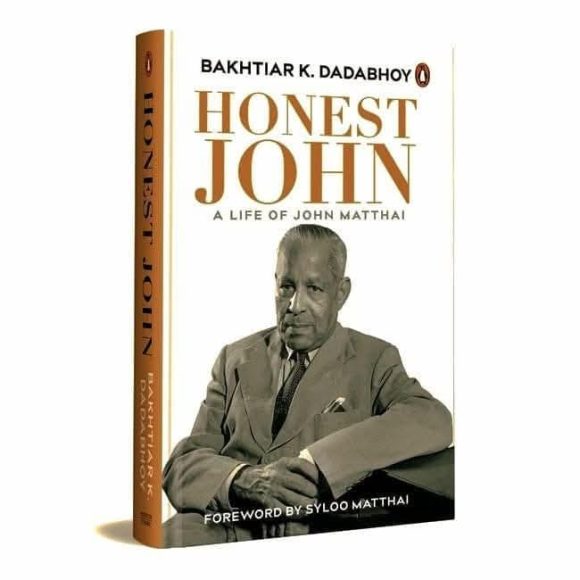


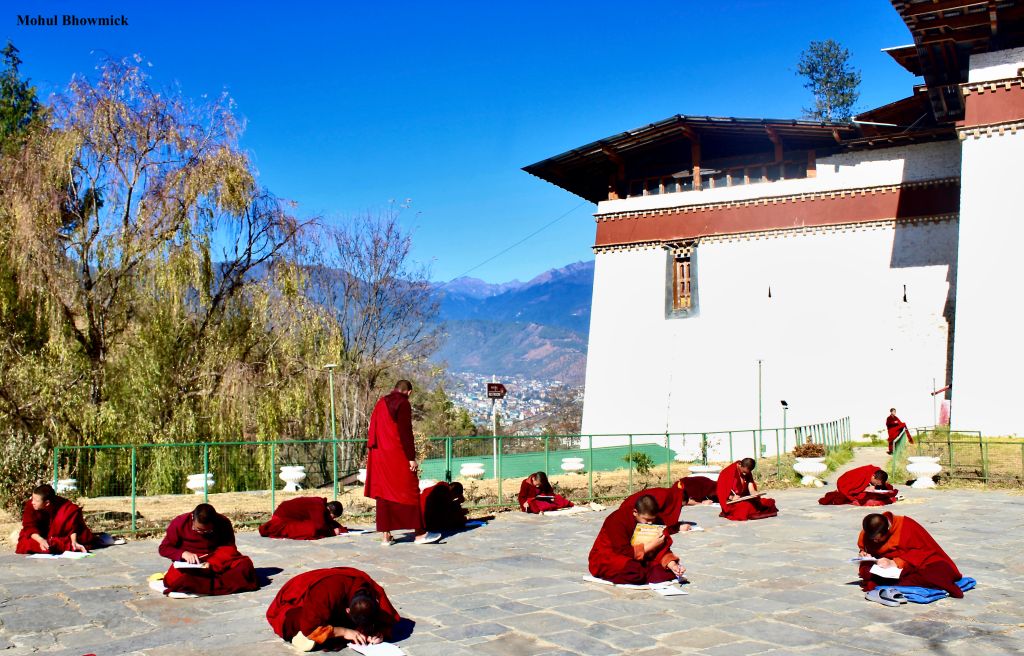
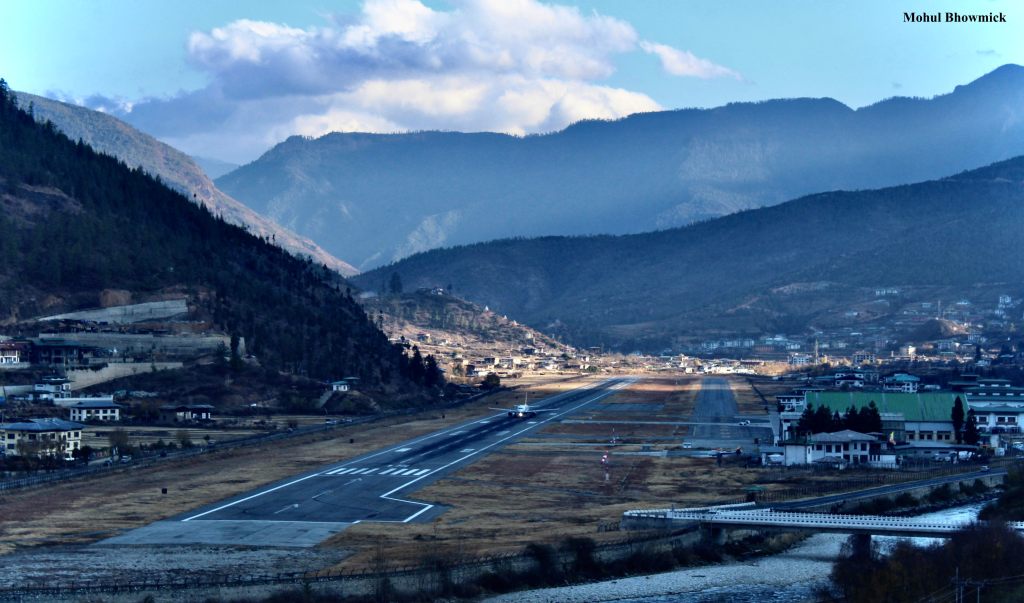
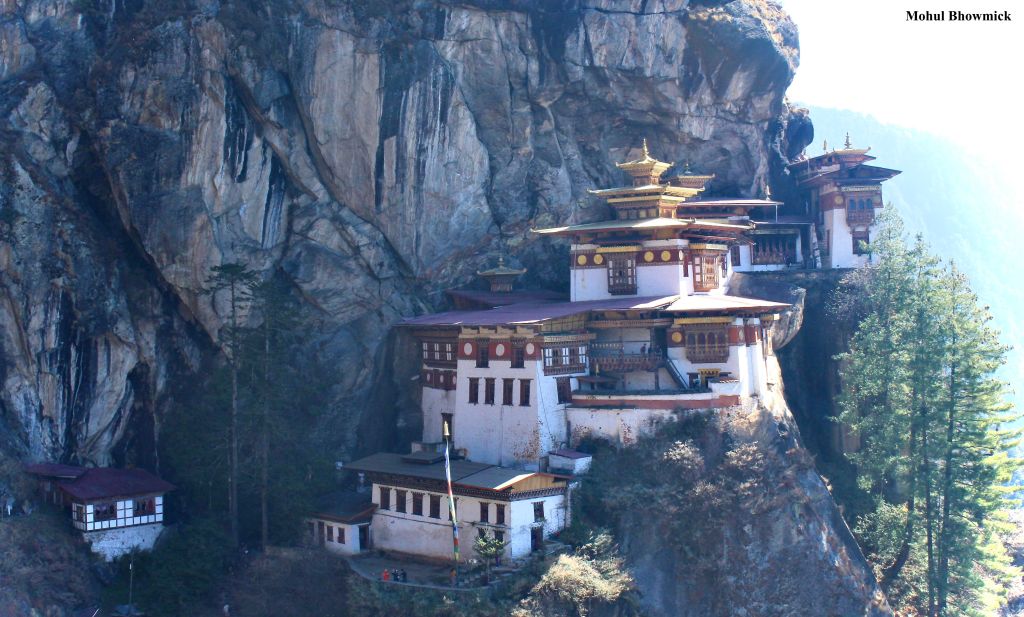
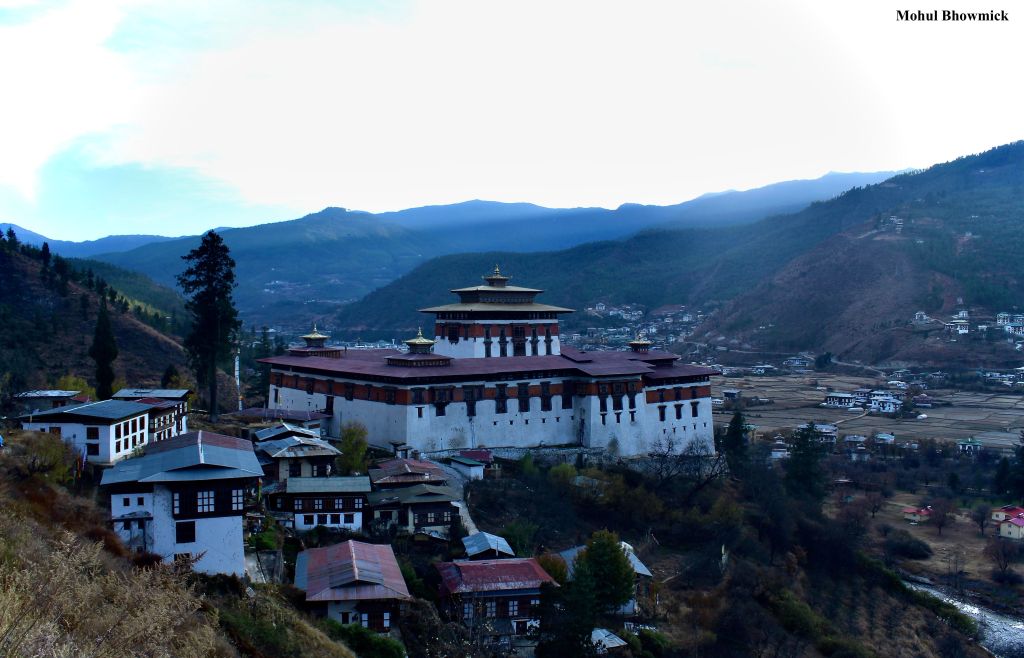
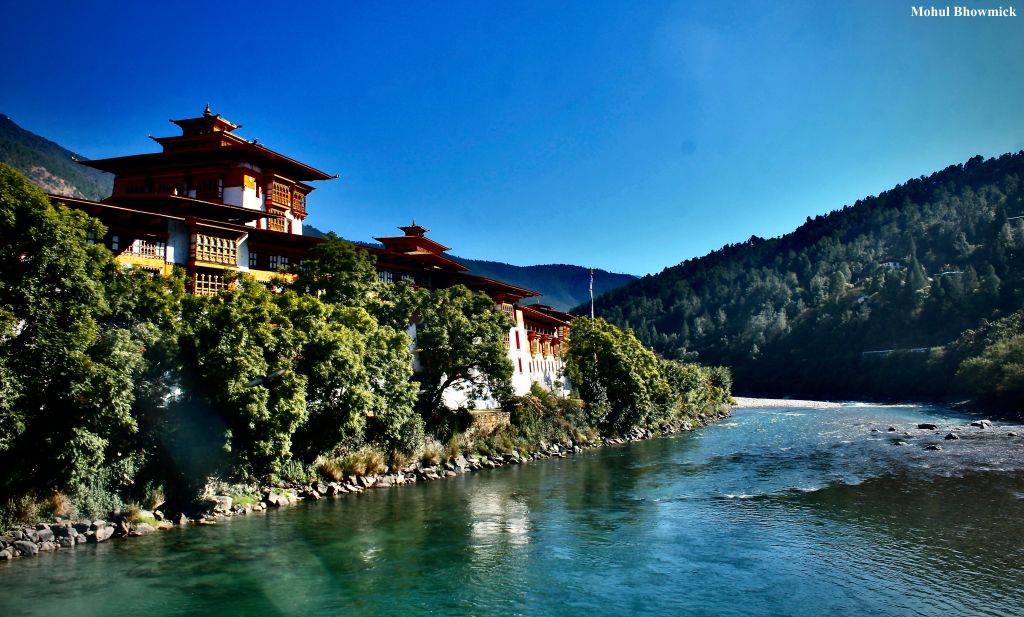
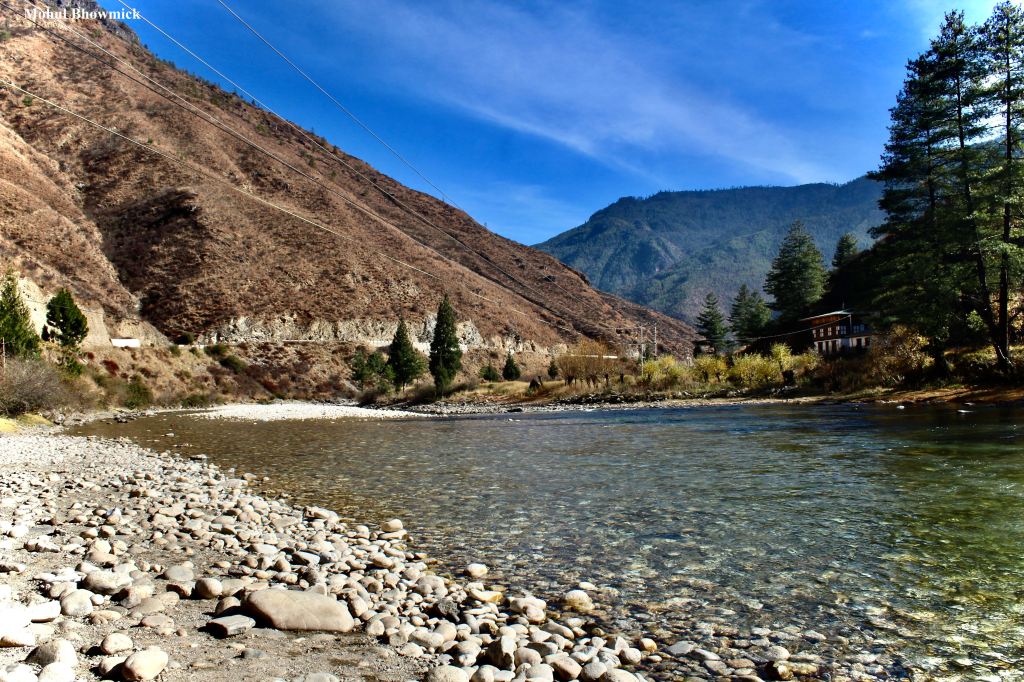
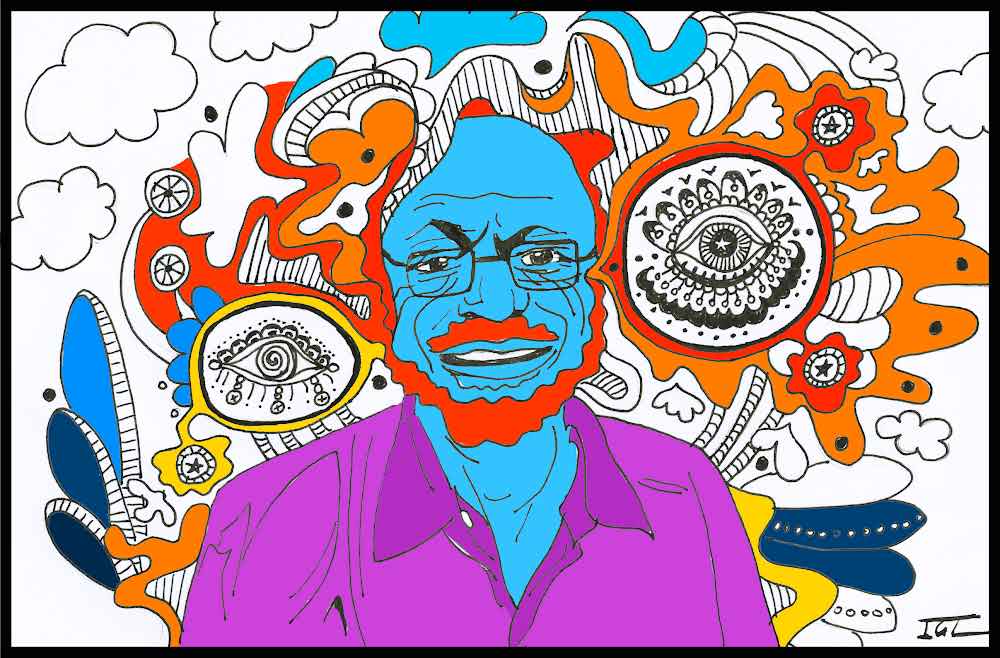



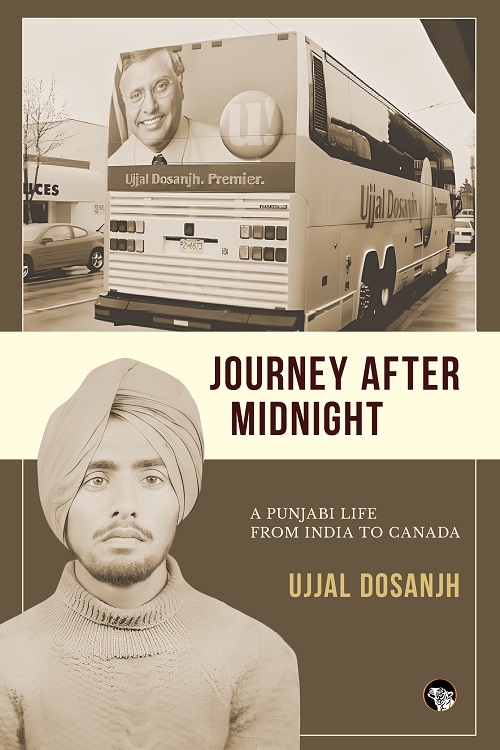


 Borderless