Categories
Celebrating Translations

We are the World

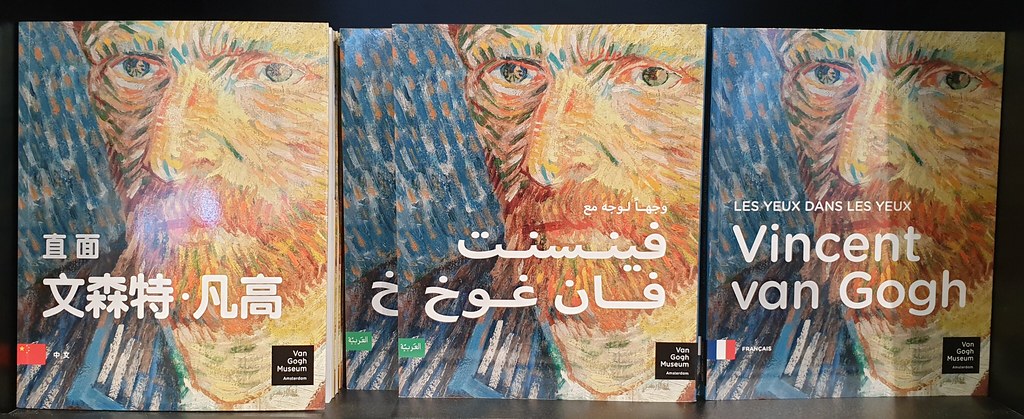
Vincent Van Gogh written is different scripts. Courtesy: Creative Commons

The whole world opens up in the realm of ideas that have existed wafting and bridging across time and space. Sometimes they find conduits to come to the fore, even though they find expression in different languages, under varied cultural milieus. One way of connecting these ideas is to translate them into a single language. And that is what many have started to do. Celebrating writers and translators who have connected us with these ideas across boundaries of time and place, we bring to you translated writings in English from twenty eight languages on the International Translation Day, from some of the most iconic thinkers as well as from contemporary voices. 

Prose

Tagore’s short story, Aparichita, has been translated from Bengali as The Stranger by Aruna Chakravarti. Click here to read. 

Travels & Holidays: Humour from Rabindranath, have been translated from Bengali by Somdatta Mandal. Click here to read.

Hena, a short story by Nazrul, has been translated from Bengali by Sohana Manzoor. Click hereto read.

Munshi Premchand’s Balak or the Child has been translated from Hindi by Anurag Sharma Click here to read.

Munshi Premchand’s Pus Ki Raat or A Frigid Winter Night  has been translated from Hindi by C Christine Fair. Click here to read.

Nadir Ali’s The Kabbadi Player has been translated from Punjabi by Amna Ali. Click here to read.

Kamaleswar Barua’s Uehara by  has been translated from Assamese and introduced by Bikash K. Bhattacharya. Click here to read.

S Ramakrishnan’s Muhammad Ali’s Singnature has been S. Ramakrishnan, translated from Tamil by Dr B. Chandramouli. Click here to read. 

PF Mathews’ Mercy,  has been translated from Malayalam by Ram Anantharaman. Click here to read.

Road to Nowhere, an unusual story about a man who heads for suicide, translated from Odiya by the author, Satya Misra. Click here to read.

An excerpt from A Handful of Sesame by Shrinivas Vaidya, translated from Kannada by Maithreyi Karnoor. Click here to read.

Writings from Pandies’ Corner highlight the ongoing struggle against debilitating rigid boundaries drawn by societal norms. Each piece is written in Hindustani and then translated by a volunteer from Pandies’ in English. Click here to read.

Rakhamaninov’s Sonata, a short story by Sherzod Artikov, translated from Uzbeki by Nigora Mukhammad. Click here to read.

Of Days and Seasons, a parable by the eminent Dutch writer, Louis Couperus (1863-1923), translated by Chaitali Sengupta. Click here to read.

The Faithful Wife, a folktale translated from Balochi by Fazal Baloch. Click here to read.

An excerpt from Ramy Al-Asheq’s Ever Since I Did Not Die, translated from Arabic by Isis Nusair, edited by Levi Thompson. The author was born in a refugee camp. Click here to read.

Poetry

Two songs by Tagore written originally in Brajabuli, a literary language developed essentially for poetry in the sixteenth century, has been translated by Radha Chakravarty. Click here to read. 

Rebel or ‘Bidrohi’, Nazrul’s signature poem,Bidrohi, translated from Bengali by Professor Fakrul Alam. Click here to read.

Banlata Sen, Jibananada Das’s iconic poem, translated from Bengali by Professor Fakrul Alam. Click here to read. 

Poetry of Michael Madhusudan Dutt has been translated from Bengali by Ratnottama Sengupta. Click here to read.

Our Children, a poem by well-known Iranian poet, Bijan Najdi, has been translated from Persian by Davood Jalili. Click here to read.

Akbar Barakzai’s Be and It All Came into Being has been translated from Balochi by Fazal Baloch. Click here to read.

Biju Kanhangad’s The Girl Who Went Fishing has been translated from Malayalam by Aditya Shankar. Click here to read.

Jitendra Vasava’s Adivasi Poetry,  translated from the Dehwali Bhili via Gujarati by Gopika Jadeja. Click here to read.

Sokhen Tudu’s A Poem for The Ol Chiki, translated from the Santhali by Hansda Sowvendra Shekhar. Click here to read.

Thangjam Ibopishak’s Gandhi & Robot translated from the Manipuri by Robin S Ngangom. Click here to read.

 Rayees Ahmad translates his own poem, Ab tak Toofan or The Storm that Rages, from Urdu to English. Click here to read.

Poetry by Sanket Mhatre has been translated by Rochelle Potkar from Marathi to English. Click here to read.

An excerpt from Evening with a Sufi: Selected Poemsby Afsar Mohammad, translated from Telugu by Afsar Mohammad & Shamala Gallagher. Click hereto read.

Ihlwha Choi’s Universal Language written at Santiniktan, translated from Korean by the poet himself. Click here to read.

Sangita Swechha’s Motherhood: A Tiny Life inside Me has been translated from Nepali by Hem Bishwakarma. Click here to read.

Rosy Gallace’s Two poems from Italy  have been translated from Italian by Irma Kurti. Click here to read.

Poetry in Bosnian written and translated from Bosnian by Maid Corbic. Click here to read.

Lesya Bakun translates three of her own poems from Ukranian and Russian to English. Click here to read.

Poems from Armenia by Eduard Harents translated from Armenian by Harout Vartanian. Click here to read.

Categories
World Poetry Day

We have a Dream…

Come make merry and let's dance.
The world is now in a prance.
Winds of change
Swirl and rage
Let's dream of a new world in a trance...
Courtesy: Creative Commons

Let’s dream of a new world with laughter and move towards a vision we treasure — of a world that we can build together with poetry, peopled with strange imaginary creatures who bring a smile to our lips or perhaps evoke laughter…

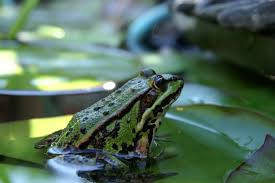
Kissing Frogs by Rhys Hughes. Click here to read.

Carnival of Animals by Rhys Hughes. Click here to read.

Walking Gretchums by Saptarshi Bhattacharya. Click here to read.

Limericks by Michael R Burch Click here to read.

Animal Limericks by Michael R Burch. Click here to read.

The Recliner by Santosh Bakaya. Click here to read.

The Decliner by Santosh Bakaya. Click here to read.

Katsaridaphobia/Gospel According to Cockroaches by Aditya Shankar. Click here to read.

Pirate Poems by Jay Nicholls. Click here to read.

Categories
Index

Carnival of Animals

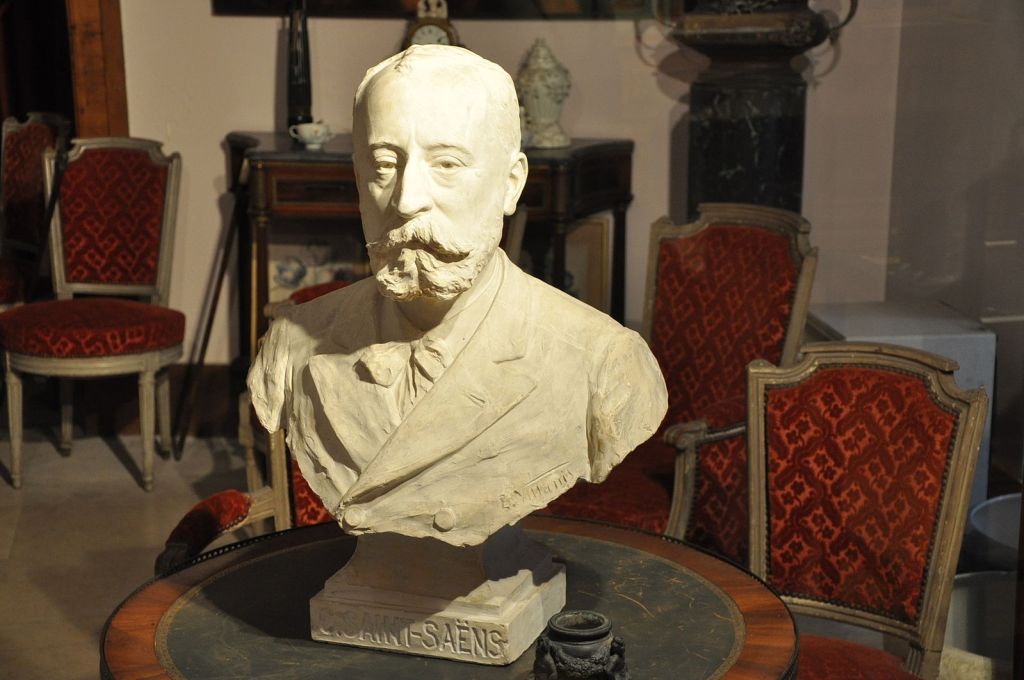
Carnival of animals other than being reminiscent of a circus, brings to the mind a humorous piece of music composed in 1886 by  Camille Saint-Saëns. In the short composition of less than half-an-hour, the range of animals start with lions and capers on to kangaroos, elephants, donkeys, fishes, swans and even fossils! Peeking into our treasure trove, we found gems frolicking with animal-based humour from creatures addressed in the composition of Saint Saëns to frogs, pandas and even cockroaches. So, we decided to do a special dedicated to Carnival of Animals on the Animal’s Rights Awareness Week, June 20-25. May we live in harmony with all animals and see ourselves as part of the same kingdom!

Let us begin with poetry in the lighter vein.

Poetry

Carnival of Animals by Rhys Hughes. Click here to read.

Katsridaphobia by Aditya Shankar. Click here to read.

Kissing Frogs by Rhys Hughes. Click here to read.

Avian Stories , photo-poems by Penny Wilkes. Click here to read.

We conclude our poetry ensemble by dedicating a few lines to the most learned and privileged of animals — the human — and his other friends.

PhD thesis
By Mitali Chakravarty

The elephant with its pink nose, 
Flung up his trunk and with outstretched toes,
Danced a little  stutitu
In a violet pink tutu.

The lion stood on its tail
And did a jig on the rail.

The giraffe twirled its forked tongue
And sang a song with a guitar strummed
By an Orangutan in purple pyjamas
With a gold tooth from Bahamas.

The music pranced. 
The animals danced.

The future PhD stood entranced
And did a thesis on the hippo's glance.
The lissome 'potamus batted its lid
And solved problems by Euclid.
The future PhD stood entranced
And did a thesis on the hippo's glance.

Prose

Our next movement is prose. We have much starting with humorous retellings of cats — I wonder why these felines were left out of the musical composition of Saint Saëns! Our stories make up for it with multiple humorous telling of cats.

A Day at Katabon Pet Shop , a short story set amidst the crowded streets of Dhaka, by Sohana Manzoor. Click here to read.

Peregrine, a flash fiction about a cat who is named after a bird by Brindley Hallam Dennis. Click here to read.

Of Cats, Classes, Work and Rest, a musing by Nishi Pulugurtha. Click here to read.

Bugs of Life, a slice of life by Sohana Manzoor, highlighting her ‘affection’ or the lack of it for bugs. Click here to read.

As we come to the end of our ensemble, listen to the grand finale of the Carnival of Animals and tell us if you could trace resonances of the frolicsome spirit of the composition of Saint Saëns in this selection.

Courtesy: Shourjo

.

PLEASE NOTE: ARTICLES CAN ONLY BE REPRODUCED IN OTHER SITES WITH DUE ACKNOWLEDGEMENT TO BORDERLESS JOURNAL
Categories
Contents

Borderless, May 2021

Editorial

And this too shall pass… Click here to read

Translations

Songs of Seasons: Translated by Fakrul Alam

Bangla Academy literary award winning translator, Dr Fakrul Alam, translates six seasonal songs of Tagore. Click here to read.

Temples and Mosques

Kazi Nazrul Islam’s fiery essay translated by Sohana Manzoor. Click here to read.

Purify My Life

Kazi Nazrul Islam’s poem, Purify my Life, translated by Shahriyer Hossain Shetu. Click here to read.

Waiting for Godot by Akbar Barakzai

Akbar Barakzai’s poem translated by Fazal Baloch. Click here to read.

Solus

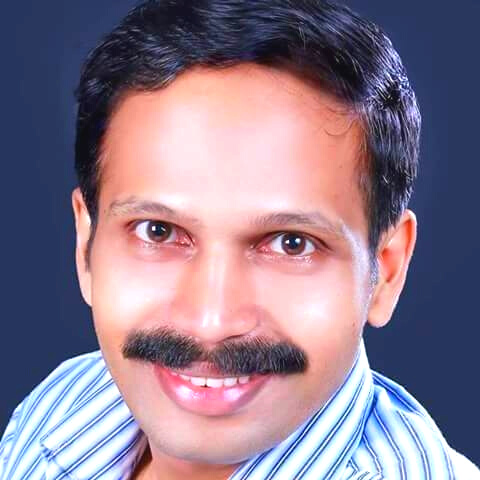
Aditya Shankar translates a poem by Sujith Kumar. Click here to read.

The Last Boat

Tagore’s Diner Sheshe Ghoomer Deshe translated by Mitali Chakravarty with an interpretation in pastels by Sohana Manzoor. Click here to read.

Poetry

Anasuya Bhar, Scott Thomas Outlar, Saranyan BV, Matthew James Friday, Nitya Mariam John, RJ Kaimal, Jay Nicholls, Tasneem Hossain, Rhys Hughes, Vatsala Radhakeesoon, Ihlwha Choi, Himadri Lahiri, Sunil Sharma, Mike Smith, Jared Carter

Nature’s Musings

Photo-Poetry by Penny & Michael Wilkes. Click here to read.

Poets, Poetry & Rhys Hughes

Lear and Far

As a tribute to the 209th anniversary of Edward Lear, Rhys Hughes writes of his famous poem, ‘Owl and the Pussycat’, and writes a funny ending for it rooted in the modern day. Click here to read.

Stories

If at all

Shobha Nandavar, a physician in Bangalore, depicts the trauma of Covid 19 in India with compassion. Click here to read.

First Lady

Rituparna Khan gives us a brief vignette from the life of one of the first women doctors in India, Dr Kadambari Ganguly. Click here to read.

Mr Dutta’s Dream

Atreyo Chowdhury takes us into the world of unquenchable wanderlust. Click here to read.

Neemboo Ka Achaar or Maa’s Lemon Pickle

A compelling flash fiction by Suyasha Singh hovering around food and a mother’s love. Click here to read.

The Literary Fictionist

In A Lunch Hour Crisis, Sunil Sharma raises humanitarian concerns that though raised in a pandemic-free world, have become more relevant and concerning given our current predicament. Click here to read.

Musings/Slices from Life

Serve the People

Danielle Legault Kurihara, a Quebecker in Japan, writes of differences in rituals. Click here to read.

Why I write?
Basudhara Roy tells us how writing lingers longer than oral communications. Click here to read more.

The Quiet Governance of Instinct

Candice Louisa Daquin, a psychotherapist, talks of the importance of trusting our instincts. Click here to read more.

Musings of a Copywriter

In Nations without NobelDevraj Singh Kalsi takes a fresh look at national pride with a soupçon of sarcasm and humour. Click here to read.

Adventures of the Backpacking Granny

In Visit to Rural BaoyingSybil Pretious travels to spend a night with a local family in rural China in a ‘hundred-year-old home’.Click here to read.

Essays

Four Seasons and an Indian Summer

Keith Lyons talks of his experiences of seasons in different places, including Antarctica. Click here to read.

Rabindranath and the Etchings of His Mind

Anasuya Bhar explores the various lives given to a publication through the different edited versions, translations and films, using Tagore as a case study and the work done to provide these online. Click here to read.

My Experiments with Identity

Tejas Yadav explores identity from the context Heraclitus, Rumi down to his own. Click here to read.

Can Songs be the Musical Conscience of a Film?

Prithvijeet Sinha uses Gaman (Departure), a Hindi movie around the pain of migrant workers, as a case study to highlight his contention that lyrics and songs convey much in Indian films. Click here to read.

Bhaskar’s Corner

In Manoj Das – The Master Storyteller, Bhaskar Parichha pays a tribute to one of the greatest storytellers from the state of Odisha, India, Manoj Das( 1934-2021). Click here to read.

Book Excerpt

Excerpted from A Bengali Lady in England (1885): Annotated Translation with Critical Introduction to Krishnabhabini Das’ Englandey Bangamahila by Nabanita Sengupta. Click here to read.

Book Reviews

A review of Feisal Alkazi‘s memoir, Enter Stage Right: The Alkazi Padamsee Family Memoir by Rakhi Dalal. Click here to read.

A review of Shakti Ghosal‘s The Chronicler of the Hooghly and Other Stories by Gracy Samjetsabam. Click here to read.

Bhaskar Parichha reviews Raising a Humanist by Manisha Pathak-Shelat‘s and Kiran Vinod Bhatia. Click here to read.

Interviews

Communication scholars and authors, Manisha Pathak-Shelat and Kiran Vinod Bhatia, discuss how to bring up children in these troubled times, based on their book, Raising a Humanist, which has just been released. Click here to read.

Sonya J Nair of Samyukta Poetry talks about the Samyukta Research Foundation and its affiliates and its festival, Anantha. Click here to read.

Sara’s Selections, May 2021

A selection of young person’s writings from Bookosmia. Click here to read.

Categories
Poetry

Malayalam Poetry in Translation

Aditya Shankar translates Sujith Kumar‘s Ottakkirikumbol

Sujith Kumar
Solus

Is being in solus
Spotting the droplet
That doesn’t flow over?

While forlorn,
He is not seen.

While forlorn,
It seems
He is another.
A multitude.
In absentia.
 
At times,
The tiny chirping bird
That sheds music
Seems to be
Singing his heart.
 
He turns out to be
So unlike him,
So full of him.
 
He turns out to
Be exactly that.
 
Is being in solus
Spotting the droplet
That doesn’t flow over?
 

Sujith Kumar is a poet and editor. He has served as the executive editor of Omega: Indian Journal of Science and Religion and also as the sub-editor of the magazines, Madhyamam and Ezhuthu.

Aditya Shankar is an Indian poet, flash fiction author, and translator. His work has appeared in international journals and anthologies of repute and translated into Malayalam and Arabic. Books: After Seeing (2006), Party Poopers (2014), and XXL (Dhauli Books, 2018). He lives in Bangalore, India.

.

PLEASE NOTE: ARTICLES CAN ONLY BE REPRODUCED IN OTHER SITES WITH DUE ACKNOWLEDGEMENT TO BORDERLESS JOURNAL

Categories
Contents

Borderless, April, 2021

Greetings from Borderless Journal for all Asian New Years! Click here to read our message along with the video and a translation of a Tagore song written to greet the new year, with lyrics that not only inspire but ask the fledgling to heal mankind from deadly diseases.

Editorial

New Beginnings

A walk through our content and our plans for the future. Click here to read.

Interviews

In Conversation with Arundhathi Subramaniam: An online interview with this year’s Sahitya Akademi winner, Arundhathi Subramaniam. Click here to read.

Sumana Roy & Trees: An online interview with Sumana Roy, a writer and academic. Click here to read.

Poetry

(Click on the names to read)

Arundhathi Subramaniam, Jared Carter, Matthew James Friday, Michael R Burch, Aparna Ajith, Jenny Middleton, Rhys Hughes, Jay Nicholls, Achingliu Kamei, Vatsala Radhakeesoon, Ihlwha Choi, Smitha Vishwanath, Sekhar Banerjee, Sumana Roy

Photo-poetry by Penny Wilkes

Poets, Poetry & Rhys Hughes

With an introduction to Blood and Water by Rebecca Lowe, Rhys Hughes debuts with his column on poets and poetry. Click here to read.

Translations

The Word by Akbar Barakzai

Fazal Baloch translates the eminent Balochi poet, Akbar Barakzai. Click here to read.

Malayalam poetry in Translation

Aditya Shankar translates a poem by Shylan from Malayalam to English. Click here to read.

Tagore Songs in Translation

To commemorate Tagore’s birth anniversary, we translated five of his songs from Bengali to English. Click here to read, listen and savour.

Tagore Translations: One Small Ancient Tale

Rabindranath Tagore’s Ekti Khudro Puraton Golpo (One Small Ancient Tale) from his collection Golpo Guchcho ( literally, a bunch of stories) has been translated by Nishat Atiya. Click here to read.

Musings/Slice of Life

Pohela Boisakh: A Cultural Fiesta

Sohana Manzoor shares the Bengali New Year celebrations in Bangladesh with colourful photographs and interesting history and traditions that mingle beyond the borders. Click here to read.

Gliding along the Silk Route

Ratnottama Sengupta, a well-known senior journalist and film critic lives through her past to make an interesting discovery at the end of recapping about the silk route. Click here to read and find out more.

The Source

Mike Smith drifts into nostalgia about mid-twentieth century while exploring a box of old postcards. What are the stories they tell? Click here to read.

Lost in the Forest

John Drew, a retired professor, cogitates over a tapestry of the Ras lila. Click here to read.

Tied to Technology

Naomi Nair reflects on life infiltrated by technology, by Siri and Alexa with a tinge of humour. Click here to read.

Adventures of a Backpacking Granny

In Inspiriting SiberiaSybil Pretious takes us with her to Lake Baikal and further. Click here to read.

Musings of a Copywriter

In Tributes & AttributesDevraj Singh Kalsi pays tribute to his late mother. Click here to read.

Essays

Reflecting the Madness and Chaos Within

Over 150 Authors and Artists from five continents have written on mental illness in an anthology called Through the Looking Glass. Candice Louisa Daquin, a psychotherapist and writer and editor, tells us why this is important for healing. Click here to read.

At Home in the World: Tagore, Gandhi and the Quest for Alternative Masculinities

Meenakshi Malhotra explores the role of masculinity in Nationalism prescribed by Tagore, his niece Sarala Debi, Gandhi and Colonials. Click here to read.

A Tale of Devotion and Sacrifice as Opposed to Jealousy and Tyranny

Sohana Manzoor explores the social relevance of a dance drama by Tagore, Natir puja. We carry this to commemorate Tagore’s birth anniversary. Click here to read

Photo Essay: In the Midst of Colours

Nishi Pulugurtha explores the campus of a famed university with her camera and words and shares with us her experiences. Click here to read.

Bhaskar’s Corner

Oh, That lovely Title: Politics

A short piece by Bhaskar Parichha that makes for a witty comment on the forthcoming Indian elections. Click here to read.

Stories

Pothos

Rakhi Pande gives us a story about a woman and her inner journey embroiled in the vines of money plant. Click here to read.

Elusive

A sensitive short story by Sohana Manzoor that makes one wonder if neglect and lack of love can be termed as an abuse? Click here to read

Ghumi Stories: Grandfather & the Rickshaw

Nabanita Sengupta takes us on an adventure on the rickshaw with Raya’s grandfather. Click here to read

Flash Fiction: The Husband on the Roof

Carl Scharwath gives us a story with a strange twist. Click here to read

Flash Fiction: Flight of the Falcon

Livneet Shergill gives us a story in empathy with man and nature. Click here to read

The Literary Fictionist

A playlet by Sunil Sharma set in Badaun, The Dryad and I: A Confession and a Forecast, is a short fiction about trees and humans. Click here to read.

Book reviews

Bhaskar Parichha reviews Reconciling Differences by Rudolf C Heredia, a book that explores hate and violence. Click here to read.

Nivedita Sen reviews Nomad’s Land by Paro Anand, a fiction set among migrant children of a culture borne of displaced Rohingyas, Syrian refugees, Tibetans and more. Click here to read

Candice Louisa Daquin reviews The First Cell and the Human Costs of Pursuing Cancer to the last by Azra Raza. Click here to read.

Book Excerpt

Excerpted from Raising a Humanist: Conscious Parenting in an Increasingly Fragmented World by Manisha Pathak-Shelat and Kiran Vinod Bhatia, the focus is on media and its impact. Click here to read.

Sara’s Selection, April 2021

A selection of young person’s writings from Bookosmia. Click here to read.

Categories
Poetry

Malayalam Poetry in Translation

Aditya Shankar translates a poem by Shylan

Shylan
Silencer

The silencer disengages
From the motorbike on the ascent.

Onward, 
The routes resonate multi-fold.

After stripping off 
The celebrated name 
That stuck by chance, 
May be my resonance too
Would turn glorious. 

Shylan (b.1975) is a poet and film critic. His poetry collections include Vettaikkaran, Nishkasithante Easter, Ottakappakshi, Thamraparni, and Deja Vu.

Aditya Shankar is an Indian poet, flash fiction author, and translator. His work has appeared in international journals and anthologies of repute and translated into Malayalam and Arabic. Books: After Seeing (2006), Party Poopers (2014), and XXL (Dhauli Books, 2018). He lives in Bangalore, India.

.

PLEASE NOTE: ARTICLES CAN ONLY BE REPRODUCED IN OTHER SITES WITH DUE ACKNOWLEDGEMENT TO BORDERLESS JOURNAL
Categories
World Poetry Day, 2021

Celebrating Poetry without Borders

“And as imagination bodies forth
The forms of things unknown, the poet’s pen
Turns them to shapes and gives to airy nothing
A local habitation and a name”

(William Shakespeare, A Midsummer's Night's Dream,1596)

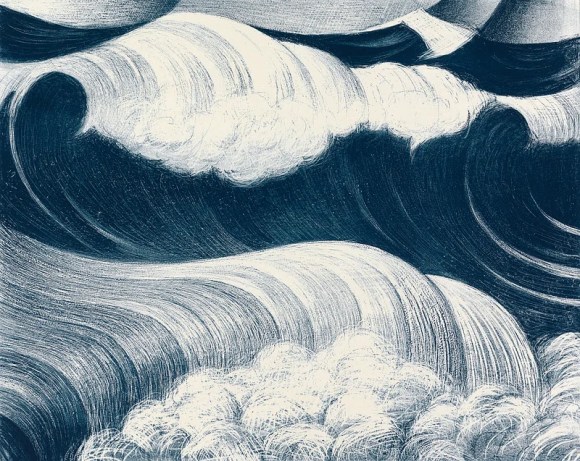
Like clouds float, words waft through currents of ideas and take shapes and forms. We celebrate poetry across the world, across space and time, with the greatest and the new… our homage in words to the past, present and future…

A paean to the skies, the Earth and empathy with nature sets the tone for this poetic treat. I offer you a translation/transcreation of a Tagore song, from the original lyrics penned by the maestro in Bengali…

The Star-Studded Sky  by Rabindranath Tagore

( A translation/transcreation of Akash Bhora, Shurjo Tara, 1924)

The sky replete with sun and stars, the Earth brimming with life,
In the midst of this universe, I have found my abode.
Spellbound by the plenitude, songs awaken in my being. 

The infinite, eternal waves that create planetary tides 
Resonate through the blood coursing in my veins.

As I walk to the woods, I step on the grass. 
Heady perfumes of flowers startle me into a rhapsody.
Benefactions of joy anoint the universe.

I have listened, I have watched, I have poured my life into the Earth.
Through knowing, I have sought the unknown. 
Spellbound by the plenitude, songs awaken in my being. 

(Translated/transcreated by Mitali Chakravarty on behalf of Borderless Journal,2021)

Poetry connects with eternal human emotions over space and time with snippets from old and verses from new.

Poets continue to draw from nature to express and emote. In empathy with the forces that swirl around us are poems written by moderns, like Jared Carter.

 What is that calling on the wind
           that never seems a moment still?
 That moves in darkness like a hand
           of many fingers taken chill?

(Excerpted from Visitant by Jared Carter)

Click here to read Jared Carter’s Visitant and more poems.

Tagore wrote and painted. Here we have a poem about a painting done by the poet-artist herself, Vatsala Radhakeesoon.

An endless expanse swirls
over the tropical island.
At the foot of the Meditative Mountain,
birds, bees and butterflies wonder --
who is this mystic blue?

(Excerpted from Swirling Blues by Vatsala Radhakeesoon)

Click here to read Swirling Blues by Vatsala Radhakeesoon and gaze at the painting.

Separated by oceans and decades, were poets empathetic?

I CELEBRATE myself, and sing myself,
And what I assume you shall assume,
For every atom belonging to me as good belongs to you...

The smoke of my own breath,...

My respiration and inspiration, the beating of my heart, the passing of blood and air through my lungs,
The sniff of green leaves and dry leaves, and of the shore and 
dark-color'd sea-rocks, and of hay in the barn,
The sound of the belch'd words of my voice loos'd to the eddies of the wind,
A few light kisses, a few embraces, a reaching around of arms,
The play of shine and shade on the trees as the supple boughs wag,
The delight alone or in the rush of the streets, or along the fields and hill-sides,
The feeling of health, the full-noon trill, the song of me rising from bed and meeting the sun.

(Excerpted from Song of Myself, Walt Whitman, 1881)

And despite exuberance of poets and their love of nature, came wars from across continents. Here are some of the responses of poets from all over the world to war and the pain it brings…

A soldier and a poet, Bijan Najdi (1941-1997) wrote in Persian, he captured the loss and the pain generated by war on children for us. This has been translated by Davood Jalili for Borderless

The world does not become bitter with the sword.

It does not become bitter with shooting, cries and fists.

The bitterness of the world

Is not the deer’s necks

And leopard’s tooth

And the death of a fish...

(Excerpted from Our Children by Bijan Najdi)

Click here to read Our Children by Bijan Najdi

Maybe children have a special place in poets’ hearts. Michael R Burch from across the Pacific writes of their longings too…

I, too, have a dream …

that one day Jews and Christians

will see me as I am:

a small child, lonely and afraid,

staring down the barrels of their big bazookas,

(Excerpted from I, too have a dream by Michael R Burch)

Click here to read Dreams of Children by Michael R Burch and more by him.

From Nepal, Manjul Miteri travelled to Japan to design a giant Buddha. While visiting the Hiroshima museum, he responded to the exhibits of the 1945 nuclear blast, a bombardment that ended not just the war, but many lives, many hopes and dreams… It heralded the passing of an era. Miteri’s poem was translated by Hem Biswakarma for us from Nepali.

Orimen*!
Oh, Orimen!
Mouthful of your Tiffin
Snatched by the ‘Little Boy’*!
The Tiffin box, adorned with flowers,
Scattered and spoilt,
Blown out brutally.

(Excerpted from Oh Orimen! by Manjul Miteri)

Click here to read Majul Miteri’s Oh Orimen!

Continuing on the theme of war, what can war weapons not do? Karunakaran has written a seemingly small poem about warplanes in Malayalam that embraces the nuclear holocaust and more. The words are few but they say much… It has been translated by Aditya Shankar for us.

No warplane 
has ever flown like a bird,
has lost way like a bird,
has halted mid-flight reminiscing a bygone aroma.

(Excerpted from No Warplane Has Ever Flown Like A Bird by Karunakaran)

Click here to read No Warplane Has Ever Flown Like A Bird by Karunakaran.

From wars and acquisition of wealth, grew the greed for immortality.

Aditya Shankar writes rebelling against man’s greed, greed that also leads to war.

Through the tube,

the world poured into that room

with news of war and blood.

(Excerpted from Human Immortality Project  by Aditya Shankar)

Click here to read Human Immortality Project by Aditya Shankar.

Continuing the dialogue on discrepancies is a poem written by a visiting professor from Korea. Ihlwha Choi was in Santiniketan and just like Tagore found poetry in Krishnokoli, he found poetry in Nandini…

There was Nandini’s small shop along with fruits' stalls and the bike shop.

Cows passing by would thrust their heads suddenly

Into the shop thatched with bamboo stems....

...There lived a flower-like little girl selling chai near the old house of Poet R. Tagore.

(Excerpted from Nandini by Ihlwha Choi)

Click here to read Nandini by Ihlwha Choi

Poetry is about moods — happiness and sadness, laughter and tears.

Reflecting on multiple themes that mankind jubilates and weeps about is the poetry of John Grey, camping out in Australian outbacks, revelling in the stars and yet empathising with hunger… A few lines from his poem hunger.

Hunger can sing soft but compelling

in the voice of the one who last

provided you with three meals a day.

That’s years ago now.

Hunger has no memory

but it assumes that you do.

(Excerpted from Hunger by John Grey)

Click here to read Camping out, Hunger and more … by John Grey

And now we introduce some laughter. A story-poem by Rhys Hughes, about an alien who likes to be tickled…

“Oh, tickle me under the chin,
   the chin,
 please tickle me
 under the chin.
 It might seem quite fickle
 or even a sin
 to make this request,
 to ask such a thing,
 but I must confess
 that to ease my distress
 there’s nothing so fine
    as a tickle.
 So please tickle me 
 under the chin,
    the chin.
 Tickle me under the chin.” 

(Excerpted from The Tickle Imp by Rhys Hughes)

Click here to read The Tickle Imp by Rhys Hughes

And here is a poem by Tamoha Siddiqui, jubilating the borderless world of friendship.

Yesterday I heard the sound of colourful feet

to Indonesian beats, in the middle of Michigan:

white, black, brown, all were one

pitter-patter paces in a conference hall.

(Excerpted from Birth of an Ally by Tamoha Siddiqui)

Click here to read Tamoha Siddiqui’s Birth of an Ally

We share with you now from the most unusual poetry we have on our site, from a book called Corybantic Fulgours. If you want to know what it means, click here to check it out!

Concluding our oeuvre to jubilate a world without borders, here are lines from a poet who probably has influenced and united majority of writers across the world…another truly universal voice.

Time present and time past
Are both perhaps present in time future,
And time future contained in time past.
If all time is eternally present
All time is unredeemable.
What might have been is an abstraction
Remaining a perpetual possibility
Only in a world of speculation.
What might have been and what has been
Point to one end, which is always present.
...
The dance along the artery
The circulation of the lymph
Are figured in the drift of stars
Ascend to summer in the tree
We move above the moving tree
In light upon the figured leaf
And hear upon the sodden floor
Below, the boarhound and the boar
Pursue their pattern as before
But reconciled among the stars.

Excerpted from TS Eliot's Four Quartets, Burnt Norton(1936)

The poetry of the historic greats are all woven by eternal threads that transcend man made boundaries. They see themselves almost as an extension of the Earth we live. Tagore, Whitman and Eliot write of the universe coursing through their veins. Shakespeare gives the ultimate statement when he brings in the play between imagination and nature to lift the mundane out of the ordinary. With inspiration from all these, may we move into a sphere, where poetry not only moves but also generates visions for a more wholistic and inclusive future.

.

PLEASE NOTE: ARTICLES CAN ONLY BE REPRODUCED IN OTHER SITES WITH DUE ACKNOWLEDGEMENT TO BORDERLESS JOURNAL

Categories
Poetry

Poetry in Translation

Aditya Shankar translates poetry by Krispin Joseph

Sleep

A hundred men
Unlikely to ever rise
Stands guard at the river bank
Though those buoyant feet
Would never let them float away.
The feet of the guard outlives
The primitive tribes of the river
And retreats, unsure if it is
The breast or the belly
That grazes their fingers.
To those who return from
The river, I need to enquire
About the taste of the girl
Who died yesterday.

(Urakkam, translated from Malayalam by Aditya Shankar)

Bio: Krispin is a poet, media person, editor and organizer. He has two poetry anthologies to his credit: La(R)va and Sharapova. He was the editor of an anthology of love poems for DC Books, Kerala. He has been part of the editorial team (both as team leader and sub editor) for the International Film Festival of Kerala (IFFK) and the International Documentary and short Film Festival of Kerala (IDSFFK).

Aditya Shankar is an Indian poet, flash fiction author, and translator. His work has appeared in international journals and anthologies of repute and translated into Malayalam and Arabic. Books: After Seeing (2006), Party Poopers (2014), and XXL (Dhauli Books, 2018). He lives in Bangalore, India.

.

PLEASE NOTE: ARTICLES CAN ONLY BE REPRODUCED IN OTHER SITES WITH DUE ACKNOWLEDGEMENT TO BORDERLESS JOURNAL

Categories
Poetry

Poetry in Translation

Aditya Shankar translates Sandhya NP‘s poetry from Malyalam to English

Sandhya NP


 Photograph
  
 This photograph
 Like the solitary bogie 
 That was arrested to a halt
 Even as the rest of the train 
 Sped past.
  
 (Photo, translated from Malayalam by Aditya Shankar)
  
 Solitary
  
 Would the yolk of the egg 
 Be wondering
 If it is alone in this world?
  
 Even if it assumes so,
 Would it consider 
 Posing that query to anyone?
  
 Once the egg hatches,
 It would know by default—
 Even the 'I' 
 Is absent in this world.
  
 (Otta, translated from Malayalam by Aditya Shankar)
  
 Light at the Bottom of the Pond
  
 The sun gleams on me
 just as it does 
 At the bottom of the pond.
  
 I will wipe it off with a cloth
 And go to bed.
  
 (Kulathinadiyile Velicham, translated from Malayalam by Aditya Shankar)

Sandhya N.P (b.1981) completed her education in Brennen College, Thalassery. Her poetry collection Svasikkunna Shabdam Mathram was published by Current Books, Thrissur.

.

Aditya Shankar is an Indian poet, flash fiction author, and translator. His work has appeared in international journals and anthologies of repute and translated into Malayalam and Arabic. Books: After Seeing (2006), Party Poopers (2014), and XXL (Dhauli Books, 2018). He lives in Bangalore, India.

.

PLEASE NOTE: ARTICLES CAN ONLY BE REPRODUCED IN OTHER SITES WITH DUE ACKNOWLEDGEMENT TO BORDERLESS JOURNAL