Categories
Essay

From Madagascar to Japan: An Adventure or a Dream?

By Randriamamonjisoa Sylvie Valencia

For as long as I can remember, I have been an introvert — this is who I am and will always be. Yet, few believe it. I come from Madagascar, a distant island where the people are called the Malagasy — a community bound by culture, tradition, and a shared sense of identity. Malagasy people are known for their warmth and generosity, often revealing a talkative side as they delight in conversation, and playful exchanges.  In contrast, I am reserved — a shy person who expresses myself freely only when comfortable and among those I trust.

As a child, I was the most talkative among my siblings, recounting every detail of my school day to my parents. I delighted in describing the funny expressions my primary school teacher made while explaining lessons, or the mischievous boys who always stuck their chewing gum on the pupils’ desks and all the tasks I had accomplished. I wanted my parents to know I was doing well, that the teacher praised me, and that I helped classmates who struggled.

Both my parents are very talkative, especially my father, from whom I inherited the gift of words. Speaking in front of my family comes naturally, yet in front of others, my words often falter — a fear that has always troubled me. I speak freely only with those I know well— my family and a few close friends.

Facing a large audience has always been daunting. My father encouraged me to confront this fear, to be confident, and to meet the audience’s gaze. I tried many times: presenting in group projects, speaking as a class representative, even addressing an audience at a classmate’s parent’s funeral.

As I grew older, my determination to overcome this fear grew. I devoured books and videos on public speaking, eager to communicate with confidence. My first real test came in 2018, when I delivered a speech in a Japanese language contest. I had loved Japanese language since childhood, captivated by its culture, and dreamed of becoming fluent. Entering the contest was a dream — an opportunity to speak publicly and a chance to win a trip to Japan.

I was guided by two close friends who practiced with me daily. They corrected my mistakes, offered feedback, and most importantly, encouraged me. Having known me for years, they understood how terrifying standing on stage could be, yet they supported me out of love, friendship, and belief in my potential.

During rehearsals, I gave my utmost effort, memorising the script when necessary. Still, doubts lingered about meeting expectations, conquering fears, and not disappointing those who believed in me. The days of practice passed quickly, and soon, the big day arrived. Nervous at first, I gradually became more at ease while speaking. I managed to control my anxiety but knew my performance was imperfect. I focused on each word, yet my mind occasionally went blank, struggling with the judges’ questions. Embarrassment washed over me; I feared I had let my friends and family down.

In the end, I did not win the first prize, but my closest friends congratulated me. They reminded me that the true milestone was stepping onto the stage, speaking in front of an audience, and maintaining composure. Their encouragement helped me realise that courage and effort mattered more than the outcome itself.

As an introvert, talking to strangers is challenging, let alone addressing a crowd. Hearing the words “public speaking” makes my stomach tighten, palms sweat, and heart race. Stage fright, fear of facing many people and sharing my thoughts has always been real. Each time my name is called, I shake, my mind blanks, heart pounds, mouth dries, and confidence seems to vanish before I start. Yet, I have never lost hope. Deep down, I knew a strength within me would help rise above fear and grow into a better version of myself.

One year later, I stood again in the same contest. This annual competition was a goal I refused to let go of. As before, my friends encouraged, pushed, and trained with me every day until the D-day. Their support gave me the strength to continue. I prepared even more fiercely — joining language clubs and volunteering in storytelling activities. But it was not easy. I never felt comfortable speaking or working with strangers. I was told teamwork required discussion, sharing, and collaboration — a nightmare for an introvert.

Solitude had been my ally, yet suddenly, I was surrounded by people of all ages and personalities. Cooperation was no longer optional. However, through this challenge, I discovered an important truth: whether introverted or extroverted, whether silent or talkative, we must learn to connect with others. Survival and growth depend on collaboration and support.

The big day of the speech contest arrived in May, a season of transition between summer and winter. I arrived at the hall just in time, accompanied by a close friend. A staff member guided me to my seat, only a few meters from the judges. I felt cheerful, and calm, even giving a fist bump to nearby contestants. For the first time, I felt truly ready to give a speech — optimistic, and at peace. Perhaps it was the preparation or my friends’ wholehearted support, or maybe I had begun to trust myself.

There were four contestants in the advanced level, and I was the last to speak. Each of us hoped to win the grand prize — a trip to Japan. I did not worry about the others. I believed in my success and was determined to win first place. Just days before, I even dreamed of visiting Japan, so nothing could stand in my way.

Finally, it was my turn. I adjusted the microphone, greeted in Japanese, and bowed to the judges and audience. I spoke for about five minutes on how Malagasy parents raise children. Three judges asked each two questions. Thanks to countless practice hours and mock questions and answers sessions with my best friends, I answered every tricky question. For the first time, right after my speech, I felt like a winner.

The event lasted about three hours, and the final verdict came. The Master of Ceremonies announced winners, starting with the beginner level, then the advanced. Among the four in my category, only two remained. The Master of Ceremonies paused dramatically before announcing the first-place winner… and pronounced my name. I whispered a silent thanks to God. This result — the goal I had worked so hard for — had become reality. The trip to Japan was the reward, and even more importantly, I had overcome stage fright. I spoke naturally and confidently in front of the audience — another milestone achieved.

Later that year, in 2019, I visited Japan for the first time. The experience was magical. I met wonderful people, explored my favorite country, and fulfilled a long-cherished dream.

Six years later, I returned to the Land of the Rising Sun—this time as an international student. I now live in Tokushima prefecture, which is in southeastern Japan, far from the bustling cities, in a quiet countryside where few tourists venture. Yet, the city and its neighbourhoods are simply wonderful. It is peaceful, surrounded by greenery, and while the locals may seem reserved, they are incredibly welcoming. Even with some grasp of the local language, adapting to a new country as a foreigner is challenging. Still, thanks to the support of my seniors and friends who have lived here for years, I managed to navigate my first six months successfully.

The city where I live hosts an annual Japanese speech contest open to foreigners who have been residing here for some time. I was encouraged to participate, partly because I could speak some Japanese, and partly because it was a great chance to gain experience. I thought, why not? After all, I gradually grew more comfortable speaking in front of others.

This time, participants could choose their own topics, though it was suggested to focus on their experience in Japan or explore cultural connections between their home country and Japan. I was eager to participate, but selecting a topic was harder than I expected. Inspiration felt scarce, and I had no clear direction. Still, I knew that finding my own perspective was key to making the speech meaningful.

Overwhelmed by my studies, I barely noticed the passage of time. Before I knew it, the deadline had arrived. I had not written a single word, though ideas swirled in my mind. I opened my laptop, took a deep breath, and began writing everything that came to my mind. Reflecting on my experiences in Japan, I realised that people often struggled to pronounce my name correctly. That inspired me to talk about the hidden culture behind Japanese and Malagasy names.

With my theme set, I focused on making my speech coherent and captivating. I tend to draw inspiration at the last minute. I wrote, rewrote, and proofread repeatedly, staying up all night without noticing morning approaching.

Finally, I finished my manuscript and emailed it to one of my Japanese teachers to check for grammatical errors. She responded immediately, and her quick proofreading allowed me to submit my speech on the deadline. I felt relieved, yet strangely nervous, a sensation I could not quite describe.

Six years have passed since I last spoke in front of an audience. Preparing another speech made me feel nostalgic, bringing back memories of long rehearsals, the advice of my best friends, and countless sleepless nights.

A month after submitting my manuscript, I received an email from the event organizer announcing my selection. I was among the fourteen candidates chosen to compete. I whispered a quiet “wow,” but doubts immediately surfaced. I had two months to prepare. To understand what awaited me, I watched recordings of previous competitions, while my seniors and Japanese teacher helped me refine my speech.

Four students were selected from my university. The other three were Asian students with extensive experience in Japanese language and culture. They read Kanji (Japanese characters)effortlessly and conversed naturally. And then, there was me. Though I had been exposed to Japanese language and culture since childhood, memorising every character reading and grasping dialects was never easy. Back in my country, despite growing interest in Japanese language and culture, opportunities to use it in daily life remain limited. Once again, I faced a new challenge—this time in the Land of the Rising Sun.

Time flew, and soon the two months of preparation had passed. Finally, the big day arrived. Early that morning, a kind university staff member greeted us with a bright smile. As I descended from my dormitory, I saw her waiting by her car near the main gate, bowing politely. Her excitement was palpable. Three of us rode in her car; she asked about our preparations and told jokes, perhaps to ease our nerves, which were all visible.

After twenty minutes, we arrived at a large building and walked up to the fifth floor through corridors decorated in traditional style. Japanese architecture and design have always fascinated me, and I was struck by their beauty once again. The event hall was medium-sized, with a small table at the entrance holding our name tags.

One by one, the other candidates arrived. We were then led to a smaller room for a preparatory meeting. While waiting, we chatted briefly to get to know one another. The competition began in the early afternoon. We were instructed to enter the hall one by one, greeted with warm applause. Observing the other candidates, I could tell they were ready. Fourteen contestants competed in total. Thirteen were Asians from countries including China, Vietnam, India, Indonesia, the Philippines, Taiwan, Sri Lanka, and Thailand. I was the only African, from a distant country few people knew. Before each speech, the Master of Ceremonies shared a brief anecdote about the candidate’s country, offering the audience a glimpse into its culture. Each contestant then delivered a five-minute speech.

There were two types of awards: the Golden Prize for first and second place, followed by four Silver Prizes. I had hoped to place among the top five while preparing my speech.

As I listened to the first three candidates, I was deeply impressed. Their speeches were powerful, emotional, and delivered with near-native fluency. I was surprised by how advanced and impressive their speaking skills were. I was the sixth speaker. Perhaps it had been so long since I last addressed an audience, or perhaps it was the absence of my closest friends but standing alone in a foreign country in front of strangers was overwhelming. My hands trembled. When my name was announced, I feared I might not endure those five minutes on stage.

Still, I stood before hundreds of people. I bowed, held the microphone firmly, and began. My heart raced and sweat ran down my face and back. Gradually, the pressure eased. When I shared the example of the longest name in the world—from my country, the audience reacted with surprise and amusement. I realised how attentive they were and regained inner calm. Although I forgot one line, I finished my speech smoothly and expressively.

The remaining eight candidates were equally impressive. Their eloquence was such that, with eyes closed, one might mistake them for native speakers. It was the highest-level contest I had ever participated in. Each theme and presentation were unique, and every contestant spoke with confidence. I doubted whether I would receive a prize, but reassured myself that even without one, the experience was worthwhile. Most participants had lived in Japan for over three years, and the Chinese and Taiwanese contestants were especially strong in oral expression. Yet, standing among such talented competitors was an honor.

After a break that was supposed to last twenty minutes but stretched to fifty, results were announced. They began with six Encouragement Prizes. I thought I might be among them, but my name was not called. Two more awards followed, still not mine. A friend nudged me, whispering, “Congratulations!” I replied, “Stop joking. Congratulations to you instead!”

Finally, the Silver Prizes were announced. They first called my country, then my name. The applause and cheers overwhelmed me, and tears welled in my eyes. I had not expected to win a Silver Prize, given the competition’s level. One friend from my university won the Golden Prize, and the second Golden Prize went to a Vietnamese contestant.

Participating in such a high-level competition was a tremendous challenge. Every step—from manuscript preparation to standing on stage—pushed me beyond my comfort zone. Yet, when it was over, I felt immense pride. I had once again delivered a speech before a large audience, this time in the country whose language I had cherished for years.

Though I had been nervous, the audience remained unaware. Their attentive expressions and warm applause carried me through. Afterwards, my Japanese teachers praised my performance, saying I had done exceptionally well. In that moment, I realised every hour of preparation, every doubt, and every fear had been worthwhile. I had faced a formidable challenge, stood my ground, and expressed myself fully, a reminder that courage, practice, and determination can transform daunting experiences into triumphs. It is a memory I will treasure forever.

.

Randriamamonjisoa Sylvie Valencia is from Madagascar and is currently studying in Japan as a trainee student. She enjoys reading, writing, listening to music, and traveling to explore new cultures.

PLEASE NOTE: ARTICLES CAN ONLY BE REPRODUCED IN OTHER SITES WITH DUE ACKNOWLEDGEMENT TO BORDERLESS JOURNAL

Click here to access the Borderless anthology, Monalisa No Longer Smiles

Click here to access Monalisa No Longer Smiles on Kindle Amazon International
Categories
Editorial

Storms that Rage

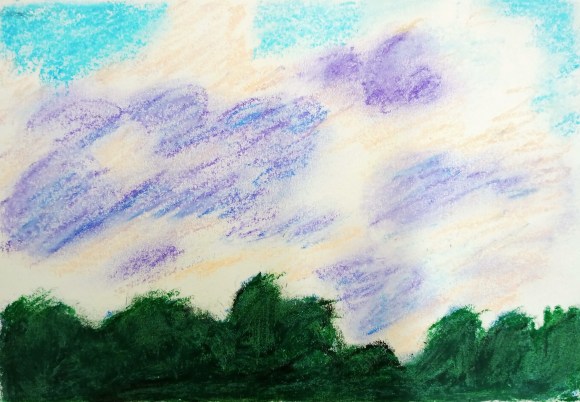
Storm in purple by Arina Tcherem. From Public Domain

If we take a look at our civilisation, there are multiple kinds of storms that threaten to annihilate our way of life and our own existence as we know it. The Earth and the human world face twin threats presented by climate change and wars. While on screen, we watch Gaza and Ukraine being sharded out of life by human-made conflicts over constructs made by our own ‘civilisations’, we also see many of the cities and humankind ravaged by floods, fires, rising sea levels and global warming. Along with that come divides created by economics and technology. Many of these themes reverberate in this month’s issue.

From South Australia, Meredith Stephens writes of marine life dying due to algal growth caused by rising water temperatures in the oceans — impact of global warming. She has even seen a dead dolphin and a variety of fishes swept up on the beach, victims of the toxins that make the ocean unfriendly for current marine life. One wonders how much we will be impacted by such changes! And then there is technology and the chatbot taking over normal human interactions as described by Farouk Gulsara. Is that good for us? If we perhaps stop letting technology take over lives as Gulsara and Jun A. Alindogan have contended, it might help us interact to find indigenous solutions, which could impact the larger framework of our planet. Alindogan has also pointed out the technological divide in Philippines, where some areas get intermittent or no electricity. And that is a truth worldwide — lack of basic resources and this technological divide.

On the affluent side of such divides are moving to a new planet, discussions on immortality — Amortals[1] by Harari’s definition, life and death by euthanasia. Ratnottama Sengupta brings to us a discussion on death by choice — a privilege of the wealthy who pay to die painlessly. The discussion on whether people can afford to live or die by choice lies on the side of the divide where basic needs are not an issue, where homes have not been destroyed by bombs and where starvation is a myth, where climate change is not wrecking villages with cloudbursts.  In Kashmir, we can find a world where many issues exist and violences are a way of life. In the midst of such darkness, a bit of kindness and more human interactions as described by Gower Bhat in ‘The Man from Pulwama’ goes some way in alleviating suffering. Perhaps, we can take a page of the life of such a man. In the middle of all the raging storms, Devraj Singh Kalsi brings in a bit of humour or rather irony with his strange piece on his penchant for syrups, a little island removed from conflicts which seem to rage through this edition though it does raise concerns that affect our well-being.

The focus of our essays pause on women writers too. Meenakshi Malhotra ponders on Manottama (1868), the first woman-authored novel in Bengali translated by Somdatta Mandal whereas Bhaskar Parichha writes on the first feminist Odia poet, Bidyut Prabha Devi.

Parichha has also reviewed a book by another contemporary Odia woman author, Snehaprava Das. The collection of short stories is called Keep it Secret. Madhuri Kankipati has discussed O Jungio’s The Kite of Farewells: Stories from Nagaland and Somdatta Mandal has written about Chhimi Tenduf-La’s A Hiding to Nothing, a novel by a global Tibetan living in Sri Lanka with the narrative between various countries. We have an interview with a global nomad too, Neeman Sobhan, who finds words help her override borders. In her musing on Ostia Antica, a historic seaside outside Rome, Sobhan mentions how the town was abandoned because of the onset of anopheles mosquitos. Will our cities also get impacted in similar ways because of the onset of global ravages induced by climate change? This musing can be found as a book excerpt from Abiding City: Ruminations from Rome, her book on her life as a global nomad. The other book excerpt is by a well-known writer who has also lived far from where he was born, MA Aldrich. His book, From Rasa to Lhasa: The Sacred Center of the Mandala is said to be “A sweeping, magnificent biography—which combines historical research, travel-writing and discussion of religion and everyday culture—Old Lhasa is the most comprehensive account of the fabled city ever written in English.”

With that, we come to our fiction section. This time we truly have stories from around the globe with Suzanne Kamata sending a story set in the Bon festival that’s being celebrated in Japan this week for her column. From there, we move to Taiwan with C. J. Anderson-Wu’s narrative reflecting disappearances during the White Terror (1947-1987), a frightening period for people stretched across almost four decades.  Gigi Gosnell writes of the horrific abuse faced by a young Filipino girl as the mother works as a domestic helper in Dubai. Paul Mirabile gives us a cross-cultural narrative about a British who opts to become a dervish. While Hema R touches on women’s issues from within India, Sahitya Akademi Award Winner, Naramsetti Umamaheshwararao, writes a story about children.

We have a powerful Punjabi story by Ajit Cour translated by C.Christine Fair. Our translations host two contemporary poets who have rendered their own poems to English: Angshuman Kar, from Bengali and Ihlwha Choi, from Korean. Snehaprava Das has brought to us poetry from Odia by Aparna Mohanty. Fazal Baloch has translated ‘The Scarecrow’, a powerful Balochi poem by Anwar Sahib Khan. While Tagore’s Shaishabshandha (Childhood’s Dusk) has been rendered to English, Nazrul’s song questing for hope across ages has been brought to us by Professor Fakrul Alam.

Professor Alam has surprised us with his own poem too this time. In August’s poetry selection, Ron Pickett again addresses issues around climate change as does Meetu Mishra about rising temperatures. We have variety and colour brought in by George Freek, Heath Brougher, Laila Brahmbhatt, Luis Cuauhtémoc Berriozábal, Snigdha Agrawal, William Miller, Ashok Suri, Scott Thomas Outlar, Dustin P Brown, and Ryan Quinn Flanagan. Rajorshi Patranabis weaves Wiccan lore of light and dark, death and life into his delicately poised poetry. Rhys Hughes has also dwelt on life and death in this issue. He has shared poems on Wales, where he grew up— beautiful gentle lines.

 In spring warm rain will crack
the seeds of life: tangled
roots will grow free again.

('Tinkinswood Burial Chamber' by Rhys Hughes)

With such hope growing out of a neolithic burial chamber, maybe there is hope for life to survive despite all the bleakness we see around us. Maybe, with a touch of magic and a sprinkle of realism – our sense of hope, faith and our ability to adapt to changes, we will survive for yet another millennia.

We wind up our content for the August issue with the eternal bait for our species — hope. Huge thanks to the fantastic team at Borderless and to all our wonderful writers. Truly grateful to Sohana Manzoor for her artwork and many thanks to all our wonderful readers for their time…

We wish you all a wonderful reading experience!

Gratefully,

Mitali Chakravarty.

borderlessjournal.com

[1] Homo Deus: A Brief History of Tomorrow (2015) by Yuval Noah Harari

.

Click  here to access the contents for the August 2025 Issue

.

READ THE LATEST UPDATES ON THE FIRST BORDERLESS ANTHOLOGY, MONALISA NO LONGER SMILES, BY CLICKING ON THIS LINK.

Categories
Stories

The Sixth Man

By C. J. Anderson-Wu

Lin Yuan-Kai strode past the basketball courts, flanked by two prison officers, when a basketball suddenly flew toward him, striking his left hip. Though unhurt, the impact startled him. Laughter erupted from the players on the court—it was no accident.

Without hesitation, he picked up the ball and gestured his intent to join them. The officers didn’t interfere. The inmates, momentarily caught off guard, watched as he lined up a shot. He missed, but his confidence and performance impressed them.

For the next seven minutes, they played. Two inmates stepped forward as his teammates for a mano a mano match. Together, they seized victory, defeating their opponents 12 to 8. When the game ended, the officers resumed their duty, escorting Lin Yuan-Kai away, as if nothing had happened.

The sun hung mercilessly overhead, its heat absorbed and magnified by the endless concrete walls stretching in every direction. The prison yard of cracked pavement and sun-bleached barriers offered little relief. The air shimmered above the surface, thick with dust and the scent of stone baking in the heat. A few trees, sparse and struggling, clung to life along the far edge of the yard, their thin, brittle leaves barely moving in the stagnant air. The little tree shades were claimed by the few inmates lucky enough to lean against their trunks, eyes squinted against the glare. 

Most others had no such luxury. They paced in the open, sweat slicking their skin. Conversations were short and clipped, words drowned out by the hum of cicadas whining from somewhere beyond the towering perimeter walls. The walls themselves, reinforced with layers of thick concrete, absorbed the heat like a furnace, turning corridors into suffocating tunnels of stifling air. 

Two years ago, Lin Yuan-Kai was commissioned by the Archives Bureau to conduct the analysis of political archives and the gaps left behind after multiple rounds of legal document collection. The task was immense, and many researchers had approached it by pinpointing missing records and overlooked events. However, that method lacked structure and rarely led to meaningful conclusions.

Given the limited timeframe, Lin Yuan-Kai devised an approach that combined institutional records, yearbooks, and interdepartmental meeting minutes to identify relevant agencies involved in political documentation. Not every agency maintained comprehensive records, and many yearbooks only covered relatively recent years, which complicated the search. Another method involved a quantitative breakdown of archival cases and items.

With these comparisons and insights gained from studying archives and conducting interviews, Lin Yuan-Kai suspected that there were unfound prison archives that might have been hidden, abandoned, or destroyed. Traditionally, archives had been collected by searching institutional catalogs through keyword and classification code queries. But that process had two major flaws—some documents were not indexed due to oversight, and institutional catalogs were often incomplete or poorly organised. The true scope of political archives lay not only in recorded files but also in the unindexed stacks of storage, filled with materials that had never been officially recognized as archives.

Determining which institutional catalogs to consult was another challenge. For instance, searching for prison records during martial law meant looking beyond the former Garrison Command and into its subordinate and sub-subordinate agencies that had been dismissed after the abolishment of martial law. Despite the obstacles, direct access to storage rooms was the most effective solution. That required perfect timing, coordination, and support from the right people. Fortunately, the Archives Bureau’s careful planning made it possible, allowing as much as possible access to the storage rooms where records had long been buried. Several times, young staff members had initially claimed that certain archives did not exist, only to uncover them once inside.

It was a rare opportunity, shaped by luck and determination, and it offered a glimpse into the missing history hidden in forgotten shelves.

Nevertheless, bureaucracy was a major obstacle of Lin Yuan-Kai’s mission. Authorities were never eager to be scrutinized, in the past as well as at the present. As he arrived at the former Alapawan prison, now a correctional institute, Lin Yuan-Kai felt the old walls, though renovated, still carried the weight of their history. Inside the building, the scent of disinfectant and old settings filled the air as he approached the front desk. A stern clerk barely glanced up from his files when Lin Yuan-Kai introduced himself and explained his purpose, citing his authorization letter from the Archives Bureau. The clerk took his paper, skimmed it for a brief moment, then sighed.

“The records you’re looking for don’t exist.”

Lin Yuan-Kai had anticipated resistance. Bureaucracy had a way of stalling progress, and Alapawan’s past was no exception. He tried to reason with the clerk. “These events happened only fifty years ago. Surely there are still some transcripts or reports? Can I enter your archive room and look for myself?”

Half a century ago, political prisoners in Alapawan attempted to seize weapons and ammunition from the prison guards, hoping to break free and ignite a large-scale revolt across the island—ultimately aiming to establish the Republic of Taiwan. But they failed.

Following the prison break, a Joint Command was formed, consisting of the Garrison Command, an army corps, and the police force, tasked with tracking down the fugitives. Within days, five chief conspirators were captured, and within months, these rebels previously imprisoned for separatism, disrupting social harmony, or sympathizing with communists were sentenced to death. This time, the charges were far graver: instigation of social disorder, treason, and espionage.

This chapter of the insurgence had been thoroughly investigated and studied. Lin Yuan-Kai had pored over nearly all available historical materials, including the official reports on its suppression and subsequent rehabilitation. To him, their plan had always seemed doomed from the start—too few participants, none of whom had ever been trained in combat, armed or unarmed.

Even if many sympathized with their idealism, organizing them into a unified force, let alone securing enough supplies to sustain an uprising, was nearly impossible.

What pressed on Lin Yuan-Kai’s mind, however, was not how they had failed—but what followed. How many more were purged in the aftermath?

Determined, he waited for the clerk’s response.

The man’s lips pressed into a thin line. “You’ll need an official request submitted through proper channels. A paper from the Archives Bureau can’t order us to upheaval our archive.”

Upheaval, Lin Yuan-Kai thought, that’s how they saw a search of the archive, it means the documentation must be in very bad condition. “Is there anyone I can speak to in person? Former officers, anyone who might have firsthand knowledge?”

The clerk shrugged.

“What about inmate logs? Medical reports?”

The man hesitated. “Accessing them requires approval from the warden’s office. But the documents don’t include materials from fifty years ago.”

Lin Yuan-Kai saw his chance. “Let me speak to the warden, please.”

After several more rounds of procedural explanations and lingering doubt from the clerk, Lin Yuan-Kai was finally escorted to the warden’s office. Warden Liu, an aging man with years of institutional experience behind him, sat at a desk cluttered with paperwork. His eyes held neither warmth nor hostility, just the weariness of a man accustomed to endless trivial administrative tasks.

“I understand you’re seeking records on the insurgents,” Liu said, leaning back in his chair. “Officially, we have no ties to the former Alapawan prison, and our institute does not comment on past political events.”

Lin Yuan-Kai sat forward. “I’m not here to stir controversy, only to understand what happened. The prisoners’ perspective, the conditions, their treatment during the conflict, those details are crucial to preserving history.”

What he withheld was the conversation with a relative of one of the cellmates. She had approached him upon learning about the Alapawan prison project.

“Dr. Lin, my granduncle disappeared after the prison insurgence, after the sentencing and execution of the five chief conspirators. We never found out why or what happened. There is no governmental paper detailing his release, or his death.”

The young woman, Hsiao Yi-Chun, retrieved a worn photograph: a man in a white shirt, his hair neatly trimmed in a business cut. “This is the only photo we have of our granduncle.”

Lin Yuan-Kai, who had spent years studying the White Terror, had seen countless images of its victims. Each one struck him deeply. In the faded photograph, the man’s dark eyes stared back at him—he was likely around his own age.

What would happen to his own family if he were to vanish?

Carefully, Lin Yuan-Kai wrote down the man’s name, his charge, the year he was sent to Alapawan prison, and snapped a picture of the worn portrait with his smartphone.

After their meeting, Lin Yuan-Kai tried to edit the portrait with his phone—unblurring it, brightening it a little, strengthening the contrast 20%, and testing almost all special effects. But, at last, he saved the original without keeping any edited image. Hsiao Yi-Chun said they were told that her granduncle was the “sixth man”, but no one knew what it meant. 

Standing in the warden’s office, Lin Yuan-Kai wondered if there was any clue that could lead him to the “sixth man”. The air was thick with the scent of stale paper and old ink, the kind that lingered on documents left untouched for years.

A single overhead lamp flickered, casting erratic shadows over the cluttered desk, its surface scarred by decades of use. Forgotten files lay in disarray, stacked haphazardly, their edges curling from time and neglect. The blinds were drawn, shutting out daylight, trapping the room in a suffocating stillness.

Officer Liu studied Lin Yuan-Kai for a long moment. Then, instead of responding, he rose from his chair and crossed the room to an old, rusted cabinet. With a quiet click, he unlocked a drawer and pulled out a worn box of folders.

“These are the only personnel notes from that time, kept by a former officer,” Liu said. “Unofficial and very incomplete, but if you want insight, this might be your best chance.”

Lin Yuan-Kai wiped the dust from his sleeves as he leaned over the crate, its brittle edges crumbling under his fingers. The box, long forgotten in the corner of the archive, promised secrets. But so far, it had yielded nothing but empty envelopes, rusted paper clips, and a cracked ceramic cup with faded initials no one could recognize.

Lin Yuan-Kai stood by the desk, flipping through the box’s contents with growing frustration. Bent clips, drawing pins, a hardened eraser, outdated requisition forms, a dust-coated key, each item more useless than the last. But the warden said nothing. He sat slumped in his chair, fingers laced together, watching the archivist with weary indifference. His gaze held neither curiosity nor concern, just the detached patience of a man accustomed to fruitless searches. The dim light caught in the deep lines of his face, revealing decades of service worn into his skin.

Lin Yuan-Kai kept searching, brushing aside brittle folders until his fingers found something different—a single slip of paper, folded with deliberate care. Slowly, he unfolded it, scanning its brief message.

“Documents regarding Deng Tse-Shan must be burned before May, together with this note.”

Obviously, it was a secret order but was not obeyed. The recipient had neither destroyed the note nor, perhaps, the documents it referenced.

Lin Yuan-Kai’s pulse quickened. He scanned the note again, absorbing its implications. If the files had been moved rather than burned, then someone had deemed them worth preserving, just not in the way history had dictated. His grip tightened. He glanced at the warden, searching for any reaction. None came. Silently, Lin Yuan-Kai tucked the paper into his pocket.

Back at the AirBnB, Lin Yuan-Kai let the cold shower wash away both the sweat and the lingering excitement. He reminded himself that he might not find anything beyond the note.

Later, in the shared living room, he settled into a chair, sipping the icy beer he had stored in the fridge earlier.

A westerner with a ponytail walked in. Seeing Lin Yuan-Kai, he asked politely, “Are you Dr. Lin Yuan-Kai?”

“Yes, I am,” Lin Yuan-Kai replied, surprised. How did a foreigner know him?

The man extended his hand. “I’m Dr. Morris. They told me you’re an archive expert.”

Lin Yuan-Kai shook his hand. In this isolated place, any outsider stood out, especially one visiting the prison, the largest institution in the region.

He gestured toward the beer. “Want one?”

They moved to a high table with their beers. Dr. Morris, an American sinologist, studied the inscriptions on headstones to trace the tempo-spatial patterns of migration to Taiwan from different regions of the world.

“They told me there are many headstones that might be of interest, so I came to see for myself,” he said. “I walked around and found graves with inscriptions suggesting that people from diverse backgrounds lived here from the late nineteenth to the early twentieth century. Some came from China, some from Southeast Asia, others from Taiwan’s west coast, and some relocated from the mountains to farm.” Lin Yuan-Kai was amazed that one could re-establish such a history through headstones.

Dr. Morris continued, “I copied down some of the names carved into the stones, at least the ones still legible. Some graves bear only a name, with no other details. Tomorrow, I am going to check out the old village office, hoping some documents have survived. The neighbourhood chief, Mr. Huang, agreed to take me.”

“What is in the village office?”

“They said the office kept tons of unattended documents, and I might find some matching the names on the headstones.”

“Can I go with you?” Lin Yuan-Kai asked, as an archive expert, the prospect of an unknown collection set his pulse racing.

“Of course, that’s what I intend to do.”

.

Around 7 o’clock next morning, they met in front of the dilapidated village office, and Mr. Huang brought a key to carefully open the door. Lin Yuan-Kai thought it was just a gesture, for the door was so unhinged, anyone could just kick it open.

The archive room was in the deepest side of the building, lying in stillness, untouched and forgotten. As the pale morning rays filtered through its dust-streaked high windows, shadows stretched long across the floor, tracing the outlines of scattered folders and crumbling stacks of paper that had surrendered to time.

Metal filing cabinets, their surfaces pockmarked with rust, stood in rows like sentinels guarding history’s remnants. Some drawers hung open, revealing brittle documents curled at the edges, their ink faded. The air smelled of damp paper and aged furniture, memories soaked into the very walls, lingering long after the last searcher had departed.

A single overhead light flickered weakly, its bulb on the verge of surrender. In the corner, a toppled chair lay beside a desk strewn with yellowed index cards, each inscribed in careful, long-forgotten handwriting. The room exuded a quiet decay—a blend of dust, brittle paper, and the faint musk of fraying linen threads that once bound volumes now crumbling with age. The air carried a musty dampness, heavy from years without ventilation, tinged with the metallic trace of ink that had long since bled into the paper’s grain.

They stood uncertainly, unsure where to begin. Then, a sharp shriek from a bird outside the window cut through the silence, startling them. A single leaf fluttered in through the broken screen and landed atop a half-open drawer. Lin Yuan-Kai took it as a sign, so he would start there.

Dr. Morris unfolded the papers where he had recorded names over the past few days, studying them as he tried to decipher the document arrangement. The records were categorized roughly by the number of strokes in the characters of family names: Wong, with four strokes, was placed first; Wu, with seven, followed after; and Lin, with eight, came next in the sequence.

While Dr. Morris remained buried in the worn-out documents, Lin Yuan-Kai turned his attention to the files of surnames with the most strokes. He examined those for Yen but found little of note, only a handful of records for the name. The files of Tsai were similar.

The documentation was inconsistent; some individuals had more detailed records, including birthplaces, occupations, marriages, and even death dates, while others had nothing beyond a name. Women, in particular, were often documented solely in relation to their husbands—identified, for instance, as Madam Tsai when married, and again only when widowed.

Lin Yuan-Kai thought of Hsiao Yi-Chun’s granduncle as he sifted through the files under the Hsiao surname. Unsurprisingly, he found nothing; the man had disappeared in 1970, while these records dated back only to the late 19th century through the mid-20th century.

Still, experience had taught him that archives always held something—hidden traces, faint echoes of the past, as if the ghosts of those denied closure lingered, guiding his search.

Political prisoners of that era were often in their twenties or thirties. If some had been locals born in the 1930s or 1940s, their names might still be buried in these files.

He retrieved the note he had secretly pocketed the day before—Deng Tse-Shan, the man the authorities had tried to erase.

At first, the documents of the Deng families revealed nothing. But as Lin Yuan-Kai scanned names that might be connected, Dr. Morris unfolded his own notes and pointed to an entry—a name containing Deng and Shan, though the middle character was unrecognisable

“Could they be the same person?”

“Very likely,” Lin Yuan-Kai said, leaning in. “Where did you find this name?”

“In the mass grave. He might be the ‘sixth man.’”

Sixth man. It was the second time Lin Yuan-Kai had heard that phrase.

Dr. Morris explained that, according to Prof. Jiang Ming-Shun, after the five chief conspirators for Taiwan’s independence were arrested and sentenced to death, the national leader Chiang Kai-Shek remained convinced that a sixth man had played a role in the prison break and ordered that he be found at all costs.

No one knew how Chiang had obtained this information, given that he lived and governed from Taipei, far from the prison in Taitung. But his word carried unquestioned authority. His judgment was treated as truth, and his directive was followed without hesitation.

The result was a wave of arrests and executions carried out with little to no evidence, culminating in the mass grave near the prison.

“So, there were more than one ‘sixth man’?”

“Based on what we counted in the mass grave, there were likely eight to twelve. Some mounds might not be graves at all, and others may have disappeared over time, lost to floods or landslides.”

Lin Yuan-Kai took over Dr. Morris’s notes, searching for Hsiao Yi-Chun’s granduncle. One name shared a matching character, but it wasn’t enough to confirm whether it was the same man, or if Hsiao Yi-Chun’s granduncle was among the “sixth man.”

A clearer picture has begun to emerge beyond the well-studied prison insurgence. In addition to the five chief conspirators, eight to twelve other men were accused of being accomplices and executed on the spot—without trial, without due process. The scale of this slaughter exceeded even that of the major trials. Each of these men—who may or may not have been involved in the uprising, who may or may not have supported Taiwanese independence, who may or may not have identified as Chinese or Taiwanese—was killed as the “sixth man”.

To their families, they simply vanished. To history, they became little more than unmarked remains, whose existence were left to be debated as part of Taiwan’s sovereignty decades later. 


C. J. ANDERSON-WU
 (吳介禎) is a Taiwanese writer who has published fiction collections about Taiwan’s military dictatorship (1949–1987), known as White Terror: Impossible to Swallow (2017) and The Surveillance (2021). Her third book Endangered Youth—Taiwan, Hong Kong, Ukraine has been launched in April 2025. Her works have been shortlisted for a number of international literary awards, including the International Human Rights Art Festival and the 2024 Flying Island Poetry Manuscript Competition. She also won the Strands Lit International Flash Fiction Competition, the Invisible City Blurred Genre Literature Competition, and the Wordweavers Literature Contest.

.

PLEASE NOTE: ARTICLES CAN ONLY BE REPRODUCED IN OTHER SITES WITH DUE ACKNOWLEDGEMENT TO BORDERLESS JOURNAL

Click here to access the Borderless anthology, Monalisa No Longer Smiles

Click here to access Monalisa No Longer Smiles on Kindle Amazon International

Categories
Greetings

Happy Birthday Borderless

Borderless Journal started on March, 14, 2020. When the mayhem of the pandemic had just set in, we started as a daily with half-a-dozen posts. Having built a small core of writings by July, 2020, we swung to become a monthly. And we still continue to waft and grow…

Art by Sohana Manzoor

We like to imagine ourselves as floating on clouds and therefore of the whole universe. Our team members are from multiple geographies and we request not to be tied down to a single, confined, bordered land. We would welcome aliens if they submitted to us from another galaxy…

On our Fifth Anniversary, we have collected celebratory greetings from writers and readers stretched across the world who share their experience of the journal with you and offer suggestions for the future. We conclude with words from some of the team, including my own observations on being part of this journey.

Aruna Chakravarti

Heartiest congratulations to Borderless on the occasion of its fifth anniversary! Borderless, an international journal, has the distinction of carrying contributions from many eminent writers from around the world. From its initiation in 2020, it has moved from strength to strength under the sensitive and skillful steering of its team. Today it is considered one of the finest journals of its kind. I feel privileged to have been associated with Borderless from its very inception and have contributed substantially to it. I wish to thank the team for including my work in their distinguished journal. May Borderless move meaningfully towards the future and rise to greater and greater heights! I wish it every success.

Professor Fakrul Alam

Five years ago, when Borderless set out on its literary voyage, who would have imagined the length and breadth of its imaginative crossings in this span of time? The evidence, however, is digitally there for any reader who has seen at least some of its issues. Creative writing spanning all genres, vivid illustrations, instant links giving resolute readers the option to track a contributor’s creative voyaging—here is boundless space always opening up for those seeking writing of considerable variety as well as originality. The best part here is that unlike name-brand journals, which will entice readers with limited access and then restrict their spaces unless you subscribe to them, all of Borderless is still accessible for us even though it has attracted a wide readership in five years. I certainly hope it will stay that way.

And what lies ahead for Borderless? Surely, more opportunities for the creative to articulate their deepest thoughts and feelings in virtual and seemingly infinite space, and innumerable avenues for readers to access easily. And let us hope, in the years to come Borderless will extend itself to newer frontiers of writing and will continue to keep giving space to new as well as emerging writers from our parts of the world.

May the team of Borderless, continue to live up to their claim that “there are no boundaries to human imagination and thought!”

Radha Chakravarty

Since its inception, Borderless Journal has remained true to its name, offering a vital literary space for writers, artists and scholars from around the world to engage in creative dialogue about their shared vision of a world without borders. Congratulations Borderless, and may your dream of global harmony continue to inspire.

Somdatta Mandal

According to the famous Chicana academic and theorist Gloria Anzaldua, the Borderlands are physically present wherever two or more cultures edge each other, where peopIe of different races occupy the same territory, where under, lower, middle and upper classes touch, where the space between two individuals shrinks with intimacy. Hatred, anger and exploitation are the prominent features of this landscape. There, at the juncture of cultures, languages cross-pollinate and are revitalized; they die and are born. Borders are set up to define the places that are safe and unsafe, to distinguish us from them. A border is a dividing line, a narrow strip along a steep edge. A borderland is a vague and undetermined place created by the emotional residue of an unnatural boundary. It is in a constant state of transition. The prohibited and forbidden are its inhabitants.

About five years ago, when a new online journal aptly called Borderless Journal was launched, these ideas which we had been teaching for so long were simply no longer applicable. Doing away with differences, with limits, it became a suitable platform where disparate cultures met, where people from all disciplines could express their views through different genres, be it poetry, translation, reviews, scholarly articles, creative writing and so on. Many new writers from different parts of the world became regular contributors to this unique experimentation with ‘borderlessness’ and its immense possibilities are very apt in this present global context where social media has already changed many earlier notions of scholarship, journalism, and creativity.

Jared Carter

In its first five years Borderless has become an important witness for international peace and understanding. It has encouraged submissions from writers in English based in many different countries, and has offered significant works translated from a wide range of national literatures. Its pages have featured writers based in India, Pakistan, China, Taiwan, Japan, South Korea, Australia, the UK, and the US. In the future, given the current level of world turmoil, Borderless might well consider looking more closely toward Africa and the Middle East. As the magazine continues to promote writing focused on international peace and freedom, new horizons beckon.

Teresa Rehman

The best part of this journal is that it is seamless and knows no margins or fringes. It is truly global as it has cut across geographical borders and has sculpted a novel literary genre called the ‘borderless’. It has climbed the mountains of Nepal, composed songs on the Brahmaputra in Assam, explored the hidden kingdom of Bhutan, walked on the streets of Dhaka, explored the wreckage of cyclones in Odisha, been on a cycling adventure from Malaysia to Kashmir, explored a scenic village in the Indo-China border, taken readers on a journey of making a Japanese-Malayalam dictionary, gave a first-hand account of the war in Bosnia-Herzegovina and described the syncretic culture of Bengal through its folk music and oral traditions. I hope it continues telling the untold and unchartered stories across mountains, oceans and forests.

Kirpal Singh

In a world increasingly tending towards misunderstandings across borders, this wholesome journal provides a healthy space both for diverse as well as unifying visions of our humanity. As we celebrate five distinguished years of Borderless Journal, we also look forward to another five years of such to ensure the underlying vision remains viable and visible as well as authentic and accurate.

My heartfelt Congratulations to all associated with this delightful and impressive enterprise!

Asad Latif

The proliferation of ethnic geographies of identity — Muslim/Arab, Hindu/Indian, Christian/Western, and so on — represents a threat to anything that might be called universal history. The separation and parcelling out of identities, as if they are pre-ordained, goes against the very idea (proclaimed by Edward Said) that, just as men and women create their own history, they can recreate it. Borders within the mind reflect borders outside it. Both borders resist the recreation of history. While physical borders are necessary, mental borders are not. This journal does an admirable job in erasing borders of the mind. Long may it continue to do so.  

Anuradha Kumar

I have been one of Borderless’ many readers ever since its first issue appeared five years ago. Like many others, I look forward with great anticipation to every issue, complete with stories, , reviews, poems, translations, complemented with interesting artwork. 

Borderless has truly lived up to its name. Within its portal, people, regardless of borders, but bound by common love for literature, and the world’s heritage, come together. I would wish for Borderless to scale even greater heights in the future. As a reader, I would very much like to read more writers from the ‘Global South’, especially in translation. Africa, Asia and Australasia are host to diverse languages, many in danger of getting lost. Perhaps Borderless could take a lead in showcasing writers from these languages to the world. That would be such an invaluable service to readers, and the world too.   

Ryan Quinn Flanagan

To me, Borderless Journal is a completely free and open space.  Topics and styles are never limiting, and the various writers explore everything from personal travelogues to the limp of a helpful druggist.  Writers from all corners of the globe contribute, offering a plethora of unique voices from countless circumstances and walks of life. Because of this openness, Borderless Journal can, and likely will continue to grow and expand in many directions simultaneously.  Curating and including many new voices along the way.  Happy 5th Birthday to a truly original and wonderfully eclectic journal!

George Freek

I feel the Borderless Journal fills a special spot in the publishing world. Unlike many journals, which profess to be open-minded and have no preference for any particular style of poetry, Borderless actually strives to be eclectic. Naturally, it has its own tastes, and yet truly tries to represent the broad spectrum which is contemporary poetry. I have no advice as to where it should go. I can only say keep up the good work, and stooping to a cliche, if it’s not broken, why try to fix it?

Farouk Gulsara

They say time flies when one is having fun. It sure does when a publication we love regularly churns out its issues, month after month, for five years now.

In the post-truth world, where everybody wants to exert their exclusivity and try to find ways to be different from the person standing next to them, Borderless gives a breath of fresh air. At a time when neighboring countries are telling the world they do not share a common history, Borderless tries to show their shared heritage. We may have different mothers and fathers but are all but “ONE”! 

We show the same fear found in the thunderous sounds of a growling tiger. We spill the exact hue of blood with the same pain when our skin is breached. Yet we say, “My pain is more intense than yours, and my blood is more precious.” Somehow, we find solace in playing victimhood. We have lost that mindfulness. One should appreciate freedom just as much as we realise it is fragile. Terrorism and fighting for freedom could just be opposing sides of the same coin.

There is no such thing as a just war or the mother of all wars to end all wars as it has been sold to us. One form of aggression is the beginning of many never-ending clashes. Collateral damage cannot be justified. There can be no excuse to destroy generations of human discoveries and turn back the clock to the Stone Age. 

All our hands are tainted with guilt. Nevertheless, each day is another new day to make that change. We can all sing to the tune of the official 2014 World Cup song, ‘Ola Ola,’ which means ‘We are One.’ This is like how we all get together for a whole month to immerse ourselves in the world’s favourite sport. We could also reminisce about when the world got together to feed starving kids in Africa via ‘Band-Aid’ and ‘We Are the World’. Borderless is paving the way. Happy Anniversary!

Ihlwha Choi

I sincerely congratulate Borderless Journal on its 5th anniversary. I am always delighted and grateful for the precious opportunity to publish my poetry in English through this journal. I would like to extend my special thanks for this.

Through this journal, I can read a variety of literary works—including poetry, essays, and prose—from writers around the world. As someone for whom English is a foreign language, it has also been a valuable resource for improving my English skills. I especially enjoy the frequent features on Rabindranath Tagore’s poetry, which I read with great joy. Tagore is one of my favourite poets.

I have had the privilege of visiting Santiniketan three times to trace his legacy and honor his contributions to literature and education. However, one aspect I find a little disappointing is that, despite having published over 30 poems, I have yet to receive any feedback from readers or fellow writers. It would be wonderful to have such an opportunity for engagement.

Additionally, last October, a Korean woman received the Nobel Prize in Literature—the first time an author from South Korea has been awarded this honor by the Swedish Academy. She is not only an outstanding novelist but also a poet. I searched for articles about her in Borderless Journal but was unable to find any. Of course, I understand that this is not strictly a literary newspaper, but I would have been delighted to see a feature on her.

I also feel honoured that one of my poems was included in the anthology Monalisa No Longer Smiles: An Anthology of Writings from across the World. I hope such anthologies will continue to be published. In fact, I wonder if it would be possible to compile and publish collections featuring several poems from contributing poets. If these were made available on Amazon, it would be a fulfilling experience for poets to reach a broader audience.

Moving forward, I hope Borderless Journal will continue to reach readers worldwide, beyond Asia, and contribute to fostering love and peace. Thank you.

Prithvijeet Sinha

The journey of authorship, self-expression and cultural exchange that I personally associate with Borderless Journal’s always diverse archives has remained a touchstone ever since this doorway opened itself to the world in 2020. Going against the ramshackle moods of the 2020s as an era defined by scepticism and distances, The journal has upheld a principled literary worldview close to the its pages and made sure that voices of every hue gets representation. It’s also an enterprise that consistently delivers in terms of goodwill and innocence, two rare traits which are in plenteous supply in the poems, travelogues, essays and musings presented here.

The journey with Borderless has united this writer with many fascinating, strikingly original auteurs, buoyed by a love for words and expression. It is only destined for greatness ahead. Happy Birthday Borderless! Here’s to 50 more epochs.

From Our Team

Bhaskar Parichha

As Borderless Journal celebrates its fifth anniversary, it is inspiring to see its evolution into a distinguished platform for discourse and exploration. Over the years, it has carved a unique niche in contemporary journalism, consistently delivering enlightening and engaging content. The journal features a variety of sections, including in-depth articles, insightful essays, and thought-provoking interviews, reflecting a commitment to quality and fostering dialogue on pressing global issues.
The diverse contributions enrich readers’ understanding of complex topics, with a particular focus on climate change, which is especially relevant today. By prioritising this critical issue, Borderless informs and encourages engagement with urgent realities.
Having been involved since its inception, I am continually impressed by the journal’s passion and adaptability in a changing media landscape. As we celebrate this milestone, I wish Borderless continued success as a beacon of knowledge and thoughtful discourse, inspiring readers and contributors alike.

Devraj Singh Kalsi

Borderless Journal has a sharp focus on good writing in multiple genres and offers readable prose. The platform is inclusive and does not carry any slant, offering space to divergent opinions and celebrating free expression. By choosing not to restrict to any kind of ism, the literary platform has built a strong foundation in just five years since inception. New, emerging voices – driven by the passion to write fearlessly – find it the ideal home. In a world where writing often gets commercialised and compromised, Borderless Journal is gaining strength, credibility, and wide readership. It is making a global impact by giving shape to the dreams of legendary poets who believed the world is one.  

Rakhi Dalal

My heartiest congratulations to Borderless and the entire team on the fifth Anniversary of its inception. The journal which began with the idea of letting writing and ideas transcend borders, has notably been acting as a bridge to make this world a more interconnected place. It offers a space to share human experiences across cultures, to create a sense of connection and hence compassion, which people of this world, now more distraught than ever, are sorely in need of. I am delighted to have been a part of this journey. My best wishes. May it continue to sail through time, navigating languages, literature and rising above barriers!

 Keith Lyons

Is it really five years since Borderless Journal started? It seems hard to believe. 

My index finger scrolls through Messenger chats with the editor — till they end in 2022. On the website, I find 123 results under my name. Still no luck. Eventually, in my ‘Sent’ box I find my first submission, emailed with high hopes (and low expectations) in March 2020. ‘Countdown to Lockdown’ was about my early 2020 journey from India through Thailand, Malaysia, Indonesia, and Australia to New Zealand as COVID-19 spread.

Just like that long, insightful trip, my involvement with Borderless Journal has been a journey. Three unique characteristics stand out for me. 

The first is its openness and inclusiveness. It features writers from all over the globe, with various contributions across a wide range of topics, treatments and formats. 

The second feature of the journal is its phenomenal growth, both in readers and writers, and in its reach. Borderless really does ‘walk the talk’ on breaking down barriers. It is no longer just a humble literary journal — it is so much bigger than that. 

The third unique aspect of Borderless is the devotion endowed in nurturing the journal and its contributors. I love the way each and every issue is conceived, curated, and crafted together, making tangible the aspiration ‘of uniting diverse voices and cultures, and finding commonality in the process.’

So where can we go from here? One constant in this world is change. I’d like to think that having survived a global pandemic, economic recession, and troubling times, that the core values of Borderless Journal will continue to see it grow and evolve. For never has there been a greater need to hear the voices of others to discover that we are all deeply connected.

Rhys Hughes

I have two different sets of feelings about Borderless Journal. I think the journal does an excellent job of showcasing work from many different countries and cultures. I want to say it’s an oasis of pleasing words and images in a troubled sea of chaos, but that would be mixing my metaphors improperly. Not a troubled sea of chaos but a desert of seemingly shifting values. And here is the oasis, Borderless Journal, where one can find secure ideals of liberty, tolerance, peace and internationalism. I appreciate this very much. As for my other set of feelings, I am always happy to be published in the journal, and in fact I probably would have given up writing poetry two years ago if it wasn’t for the encouragement provided to me by regular publication in the journal. I have written many poems especially for Borderless. They wouldn’t exist if Borderless didn’t exist. Therefore I am grateful on a personal level, as a writer as well as a reader.

Where can Borderless Journal go from here? This is a much harder question to answer. I feel that traditional reading culture is fading away year after year. Poets write poetry but few people buy poetry books. They can read poems at Borderless for free and that is a great advantage. I would like to see more short stories, maybe including elements of fantasy and speculative fiction. But I have no strategic vision for the future of the journal. However, one project I would like to try one day is some sort of collaborative work, maybe a big poem with lots of contributors following specific rules. It’s an idea anyway!

Meenakshi Malhotra

Borderless started with a vision of transcending the shadow lines and has over time, evolved into a platform where good writing from many parts of the world finds  a space , where as “imagination bodies forth/ The forms of things unknown, the poet’s pen/Turns them to shapes and gives to airy nothing/A local habitation and a name.”

It has been a privilege to be a part of Borderless’s journey over the last few years. It was a journey based on an idea and a vision. That dream of creating solidarity, of transcending and soaring over borders and boundaries, is evident in almost every page and article in the journal.

Mitali Chakravarty

Looking at all these responses, thinking on what everyone has said, I am left feeling overwhelmed.

Borderless started as a whimsical figment of the imagination… an attempt to bring together humanity with the commonality of felt emotions, to redefine literary norms which had assumed a darker hue in the post Bloomsbury, post existentialist world. The journal tried to invoke humour to brings smiles, joys to create a sense of camaraderie propelling people out of depression towards a more inclusive world, where laughter brings resilience and courage. It hoped to weave an awareness that all humans have the same needs, dreams and feelings despite the multiple borders drawn by history, geographies, academia and many other systems imagined by humans strewn over time.  

Going forward, I would like to take up what Harari suggests in Homo Deus — that ideas need to generate a change in the actions of humankind to make an impact. Borderless should hope to be one of the crucibles containing ideas to impact the move towards a more wholesome world, perhaps by redefining some of the current accepted norms. Some might find such an idea absurd,  but without the guts to act on impractical dreams, visions and ideas, we might have gone extinct in a post-dino Earth.

I thank the fabulous team, the wonderful writers and readers whose participation in the journal, or in engaging with it, enhances the hope of ringing in a new world for the future of our progeny.

Categories
Editorial

‘If Winter Comes, Can Spring be Far Behind…’

Where the mind is without fear

Where the world has not been broken up into fragments

Where the clear stream of reason has not lost its way

Where the mind is led forward by thee
Into ever-widening thought and action…

— ‘Where the Mind is without Fear’ (1910), by Rabindranath Tagore

As we complete the fourth year of our virtual existence in the clouds and across borders, the world has undergone many changes around us, and it’s not only climate change (which is a huge challenge) but much more. We started around the time of the pandemic — in March 2020 — as human interactions moved from face-to-face non-virtual interactions to virtual communication. When the pandemic ended, we had thought humanity would enter a new age where new etiquettes redefining our social norms would make human existence as pandemic proof as possible. But before we could define new norms in the global context, takeovers and conflicts seem to have reft countries, regions and communities apart. Perhaps, this is a time when Borderless Journal can give a voice to all those who want to continue living as part of a single species in this world — where we can rise above our differences to find commonalities that make us human and part of the larger stream of humanity, that has been visualised by visionaries like Tagore or John Lennon — widely different cultural milieus but looking for the same things — humankind living together in harmony and moving towards a world without violence, without hate, without rancour and steeped in goodwill and love.  

Talking of positive values does not make sense in a world that seems to be veering towards darkness… Many say that humankind is intrinsically given to feelings of anger, hate, division, lust, shame and violence. But then we are just as much inclined towards happiness, fun, love, being respectful and peaceful. Otherwise, would we be writing about these? These are inherited values that have also come down to us from our forefathers and some have been evolving towards embalming or healing with resilience, with kindness and with an open mind.  

If you wake up before sunrise, you will notice the sky is really an unredeemable dark. Then, it turns a soft grey till the vibrant colours of the sun paint the horizon and beyond, dousing with not just lively shades but also with a variety of sounds announcing the start of a new day. The darkest hours give way to light. Light is as much a truth as darkness. Both exist. They come in phases in the natural world, and we cannot choose but live with the choices that have been pre-made for us. But there are things we can choose — we can choose to love or hate. We can choose resilience or weakness. We can choose our friends. We can choose our thoughts, our ideas. In Borderless, we have a forum which invites you to choose to be part of a world that has the courage to dream, to imagine. We hope to ignite the torch to carry on this conversation which is probably as old as humanity. We look forward to finding new voices that are willing to move in quest of an impractical world, a utopia, a vision — from which perhaps will emerge systems that will give way to a better future for our progeny.

In the last four years, we are happy to say we have hosted writers from more than forty different nationalities and our readers stretch across almost the whole map of the world. We had our first anthology published less than one and a half years ago, focussing more on writing from established pens. Discussions are afoot to bring out more anthologies in hardcopy with more variety of writers.

In our fourth anniversary issue, we not only host translations by Professor Fakrul Alam of Nazrul, by Somdatta Mandal of Tagore’s father, Debendranath Tagore, but also our first Mandarin translation of a twelfth century Southern Song Dynasty poet, Ye Shao-weng, by Rex Tan, a journalist and writer from Malaysia. From other parts of Asia, Dr Haneef Sharif’s Balochi writing has been rendered into English by Fazal Baloch and Ihlwha Choi has transcreated his own poetry from Korean to English. Tagore’s Phalgun or Spring, describing the current season in Bengal, adds to the variety in our translated oeuvre.

An eminent translator who has brought out her debut poetry book, Radha Chakravarty, has conversed about her poetry and told us among other things, how translating to English varies from writing for oneself. A brief overview of her book, Subliminal, has been provided. Our other interviewee, Rajorshi Patranabis — interviewed by Jagari Mukherjee — has written poetry from a Wiccan perspective — poetry on love — for he is a Wiccan. We have poetry by Luis Cuauhtémoc Berriozábal, Jim Murdoch, Alpana, Baisali Chatterjee Dutt, John Grey, Shahalam Tariq, Saranyan BV, Rex Tan, Ron Pickett with poetry on the season and many more. Humour is brought into poetry with verses woven around a funny sign by Rhys Hughes . His column this month hosts a series of shorter poems — typically in Hughes’ own unique style.

Devraj Singh Kalsi has explored darker shades of humour in his conversation with God while Suzanne Kamata has ushered in the Japanese spring ritual of gazing at cherry blossoms in her column with photographs and narrative. Keith Lyons takes us to the beautiful Fiordlands of New Zealand, Ravi Shankar to Malaysia and Mohul Bhowmick trapezes from place to place in Sri Lanka. Farouk Gulsara has discussed the elusiveness of utopia — an interesting perspective given that we look upto ideals like these in Borderless. I would urge more of you to join this conversation and tell us what you think. We did have Wendy Jones Nakashini start a discussion along these lines in an earlier issue.

We have stories from around the world: C.J.Anderson-Wu from Taiwan, Paul Mirabile from France, Rakhi Pande, Kalsi and K.S. Subramaniam from India. Our book excerpts are from Out of Sri Lanka: Tamil, Sinhala and English Poetry from Sri Lanka and its Diasporas edited by Vidyan Ravinthiran, Seni Seneviratne and Shash Trevett and a Cli-fi book that is making waves, Rajat Chaudhauri’s Spellcasters. Mandal has also reviewed for us Ilse Kohler-Rollefson’s Camel Karma: Twenty Years Among India’s Camel Nomads. Bhaskar Parichha has discussed Mafia Raj: The Rule of Bosses in South Asia by Lucia Michelutti, Ashraf Hoque, Nicolas Martin, David Picherit, Paul Rollier, Clarinda Still — a book written jointly by multiple academics. Rakhi Dalal in her review of Anuradha Kumar’s The Kidnapping of Mark Twain: A Bombay Mystery has compared the novel to an Agatha Christie mystery!

I would want to thank our dedicated team from the bottom of my heart. Without them, we could not have brought out two issues within three weeks for we were late with our February issue. A huge thanks to them for their writing and to Sohana Manzoor for her art too. Thanks to our wonderful reviewers who have been with us for a number of years, to all our mentors and contributors without who this journal could not exist. Huge thanks to all our fabulous loyal readers. Devoid of their patronage these words would dangle meaninglessly and unread. Thank you all.

Wish you a wonderful spring as Borderless Journal starts out on the fifth year of its virtual existence! We hope you will be part of our journey throughout…

Enjoy the reads in this special anniversary issue with more content than highlighted here, and each piece is a wonderful addition to our oeuvre!

Mitali Chakravarty

borderlessjournal.com

Click here to access the content page for the March 2024 Issue.

.

READ THE LATEST UPDATES ON THE FIRST BORDERLESS ANTHOLOGY, MONALISA NO LONGER SMILES, BY CLICKING ON THIS LINK.

Categories
Review

Along the Tibetan Edge in China

Book Review by Bhaskar Parichha

Title: Journey to the End of the Empire: In China Along the Edge of Tibet

Author: Scott Ezell 

Publisher: Speaking Tiger Books

This is one of the rare travelogues written by a gifted writer. The topic Scott Ezell covers is equally intriguing- China and Tibet. In about two hundred eighty pages, he takes readers on a tour of the most contentious part of China. Journey to the End of the Empire: In China Along the Edge of Tibet is an essential read.

American musician and poet Scott Ezell has a background in Asia and indigenous cultures. Between 1992 and 2004, he lived in Taiwan and traveled extensively in China, India, and Japan. He has been working on a project since 2009 that documents the impacts of centralised state power, civil conflict, and destructive resource extraction in the China-Southeast Asia border region. A Far Corner is an account of his experiences living and working with an indigenous artist community in Taiwan over a period of three years.

Says the blurb: “On foot, by rattling truck and local bus, by jeep and motorcycle, American poet and musician Scott Ezell explores the Tibetan borderlands in the twenty-first century Chinese empire. The journey starts in Dali, in the foothills of the Himalaya in southwestern China, and extends north a thousand miles through towns and villages along the edge of Tibet, finally arriving at Kekexili, the highest plateau in the world, and crossing the Kunlun Mountains. Ezell takes us through landscapes of blond and gold barley fields, alpine meadows ablaze with wildflowers, silver-blue rivers beneath ‘clouds like burning aluminium’, and snow peaks ‘cracking and shattering into jagged resplendence against the sky’.”

Along the way, Ezell speaks Mandarin with farmers, shopkeepers, lamas, nomads, and police officers. Throughout Ezell’s account, there is also outrage, as he observes the rise of militarization, surveillance, destructive resource extraction, and the destruction of entire river ecosystems by massive dams over the course of many years and numerous trips.

Writes Ezell in the introduction: “In September 2004 I set out on a journey along the edge of Tibet. Starting from the foothills of the Himalayas in southwest China, I traveled north into further, higher landscapes by local bus, hitchhiking, and a motorcycle I bought along the way. I speak Mandarin, which allowed me to communicate all down the road with villagers, Buddhist lamas, nomads with chunks of bone braided in their hair, and police at security checkpoints. After six weeks and 1,200 miles, I reached Kekexili, a wilderness reserve 17,000 feet above sea level. From there I crossed the Kunlun Mountains and descended to Golmud, a city at the crossroads of Tibet, China proper, and Xinjiang. That journey is the basis for the narrative.

“Over the next fifteen years I returned a dozen times to Tibet and southwest China. I witnessed transformations so shocking that I felt I was taking blows to my own bones. Massive dam systems killed rivers and displaced communities, mountains were raked apart to provide gravel for construction projects, and the region was increasingly militarized and surveilled as China tilted toward its grim police state superpower status.”

Ezell strikes a sympathetic note when he says : “Today China holds one million Uyghurs in concentration camps in Xinjiang, democratic freedoms have been smashed in  Hong Kong, human rights lawyers are held in black jails, and the government openly surveils its population. But the systematic oppressions of ‘empire’ are not unique to China. The seizure of land and genocide against indigenous peoples in the United States and elsewhere, the legacy of slavery and the present-day wage-slavery of the global economy, and the colonization of Tibet as a means of territorial expansion and resource extraction these are all variations of centralized authority exerting power over minority, marginalized, and disenfranchised peoples.”

The book evokes the majesty of Tibetan landscapes, the unique dignity of the Tibetan people, and the sensory extremity of navigating nearly pre-industrial communities at the edge of the map, while also encompassing the erosion of cultures and ecosystems. Journey to the End of the Empire is both a love song and a protest against environmental destruction, centralised national narratives and marginalised minorities.

.

Bhaskar Parichha is a journalist and author of UnbiasedNo Strings Attached: Writings on Odisha and Biju Patnaik – A Political Biography. He lives in Bhubaneswar and writes bilingually. Besides writing for newspapers, he also reviews books on various media platforms.

.

PLEASE NOTE: ARTICLES CAN ONLY BE REPRODUCED IN OTHER SITES WITH DUE ACKNOWLEDGEMENT TO BORDERLESS JOURNAL

Click here to access the Borderless anthology, Monalisa No Longer Smiles

Click here to access Monalisa No Longer Smiles on Kindle Amazon International
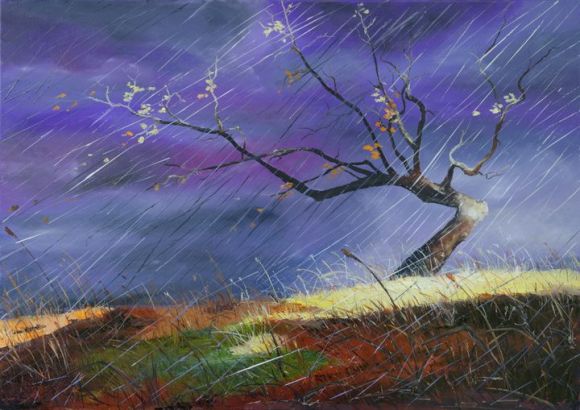
Categories
Review

Netaji: A Legend Revealed by the Family

Bhaskar Parichha reviews a non-fiction written on Netaji by his family.

Title: Netaji Subhas Chandra Bose’s Life, Struggle and Politics 

Author: Krishna Bose

Editor and Translator:  Sumantra Bose

Publisher: Picador India

Books on Netaji Subhas Bose are plentiful and readers are unvaryingly fascinated by every book that hits the bookshelves. The enigma and the ecstasy of Netaji’s short yet eventful life continue to enthrall people worldwide even after decades since his death in a plane crash.

This new book Netaji Subhas Chandra Bose’s Life, Struggle and Politics by the late Krishna Bose is a refreshingly new account of the great leader’s life. Three aspects of his life stand out prominently in the book: Subhas Chandra Bose’s political motivations, personal relationships, and the daring military campaigns he undertook to secure India’s independence. 

Krishna Bose (1930-2020) was a Member of Parliament thrice. A professor of English Literature, Krishna (nee Chaudhuri) married Dr. Sisir Kumar Bose — son of Netaji’s elder brother Sarat Chandra Bose. Sisir was Netaji’s chief aide in his daring escape from India in 1941 and drove the escape car from the family’s mansion on Kolkata’s Elgin Road. After Netaji’s death, Krishna helped Sisir build the Netaji Research Bureau at Netaji Bhawan. She served as NRB chairperson after Sisir’s death. 

The book offers a rare in-depth account of the Netaji’s meaningful life by one of Bose’s close family members. That makes the book authentic and stimulating. Originally written in Bengali, the writings reveal the “human being alongside the revolutionary and freedom fighter”. It traverses Bose’s life from childhood to his death in August 1945. With important chapters about his youth, political career, and the power equation with Mahatma Gandhi and Jawaharlal Nehru, the book subtly brings out different shades of Netaji’s personality.

Drawing on Netaji Research Bureau’s archives and decades of fieldwork and interviews, this book offers an unmatched portrait of Subhas Chandra Bose – the man, his politics, and his epic struggle for India’s freedom. Krishna Bose’s writings were compiled, edited, and translated from Bengali by her son Sumantra Bose.

Krishna Bose traveled the world and extensively to the subcontinent in order to find out more about Netaji’s life.  She strung together her findings, giving new insights into Subhas Chandra Bose’s political motivations, his personal relationships, his epic journeys, and the daring military campaigns he undertook to secure India’s independence. Written over six decades the book vividly reveals Netaji as a human being alongside his radical views.

The book has a detailed account of the women who influenced Netaji (his mother, adoptive mother, wife, and close friends as well as the soldiers of the all-women Rani of Jhansi regiment that was trained in Singapore), an eyewitness account of Netaji’s epic struggle in Europe and Asia, his secret submarine journey and escape from his Calcutta home and the Andamans where Netaji raised the national tricolour.

Divided into seven chapters (‘The Women who Influenced Netaji’; ‘Netaji’s relationships with Indian and World Leaders’; ‘Azad Hind Fauj’: ‘Netaji’s Epic Struggle in Europe and Asia’, ‘Netaji’s Soldiers: Remembering the Brave’; ‘The Liberated Lands’: ‘Visiting Manipur and the Andamans’; ‘Netaji and Women’: ‘In War and Friendship and Requiem’), the book is a truthful chronicle of Netaji.

The book contends: “[W]e visit the Manipur battlefields where the Indian National Army waged its valiant war, the Andamans where Netaji raised the national tricolor; Singapore, where the INA took shape; Vienna and Prague, his favorite European cities; and Taipei, where his life was tragically cut short. We meet Netaji’s key political contemporaries – from Nehru and Gandhi to Tojo and Hitler. And we learn in gripping detail about the Azad Hind Fauj’s spirit of unity and the bravery in the war of its men – as well as the women who fought as the Rani of Jhansi Regiment.”

In fact, Krishna Bose closely knew many personalities who feature in this book – Basanti Debi, Subhas’s adopted mother; Emilie Schenkl, his spouse; Lakshmi Sahgal, Abid Hasan, and many other leading soldiers of the Azad Hind movement – who all shared vital memories that helped complete Netaji’s life story.

Rabindranath Tagore and Subhas Chandra Bose are the two most iconic figures late modern Bengal has produced. The nature of their relationship is, however, not very well known. We are told: “Tagore and Bose first met at sea, in July 1921. Subhas, aged twenty-four was returning by ship from England to India after resigning from the Indian Civil Service to join the national struggle for freedom taking shape under Mahatma Gandhi’s leadership. Tagore, aged sixty, happened to be a co-passenger on the ship. In his book, The Indian Struggle, 1920-1934, published in London in January 1935, Netaji recalled that journey and wrote that he and Tagore had extensive discussions during the voyage.”

Aiming to bring an end to the controversies and conspiracy theories surrounding the freedom fighter, the over 300-page book gives a detailed and evidence-based account of his death in one of its chapters. Notwithstanding the mystery surrounding his demise, Netaji is widely believed to have died in a plane crash in Taiwan.

Featuring 95 images and letters from family albums and Netaji Research Bureau archives, this compilation by Krishna Bose on Netaji and his struggle for India’s freedom will enlighten readers, and especially the younger generation, about Subhas Chandra Bose’s ideals and his vision about the development of a free India.

.

Bhaskar Parichha is a journalist and author of UnbiasedNo Strings Attached: Writings on Odisha and Biju Patnaik – A Political Biography. He lives in Bhubaneswar and writes bilingually. Besides writing for newspapers, he also reviews books on various media platforms.

.

PLEASE NOTE: ARTICLES CAN ONLY BE REPRODUCED IN OTHER SITES WITH DUE ACKNOWLEDGEMENT TO BORDERLESS JOURNAL