Categories
Editorial

Towards a Brave New World

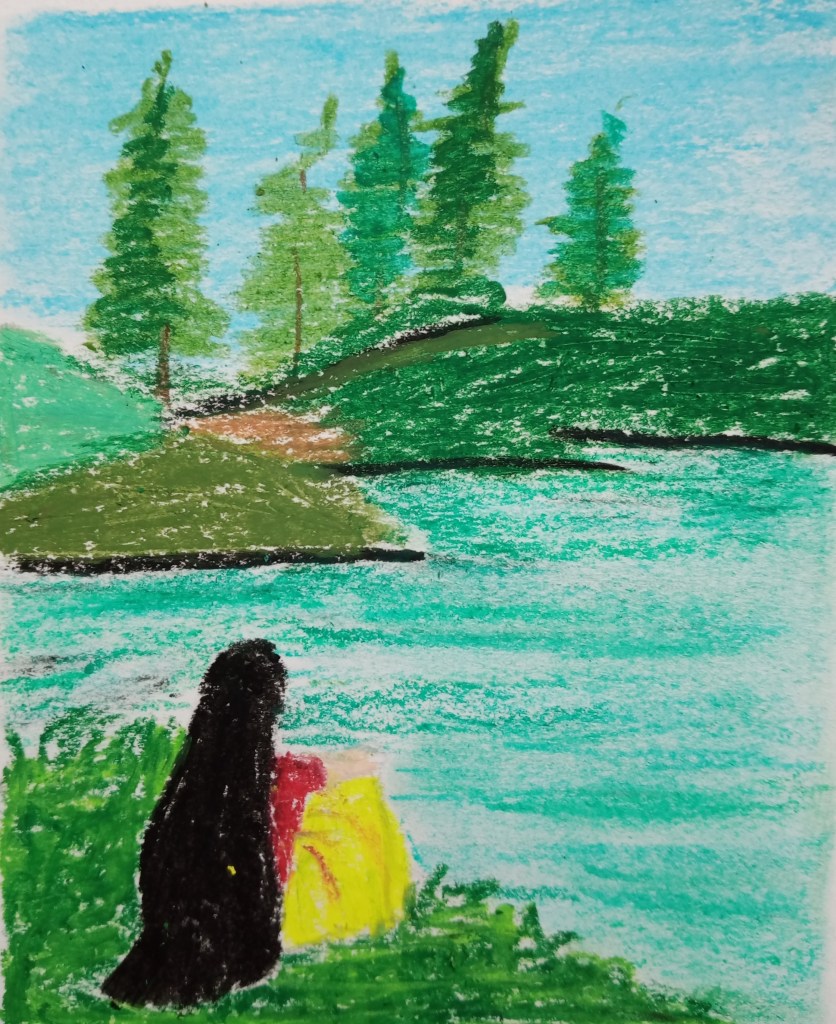
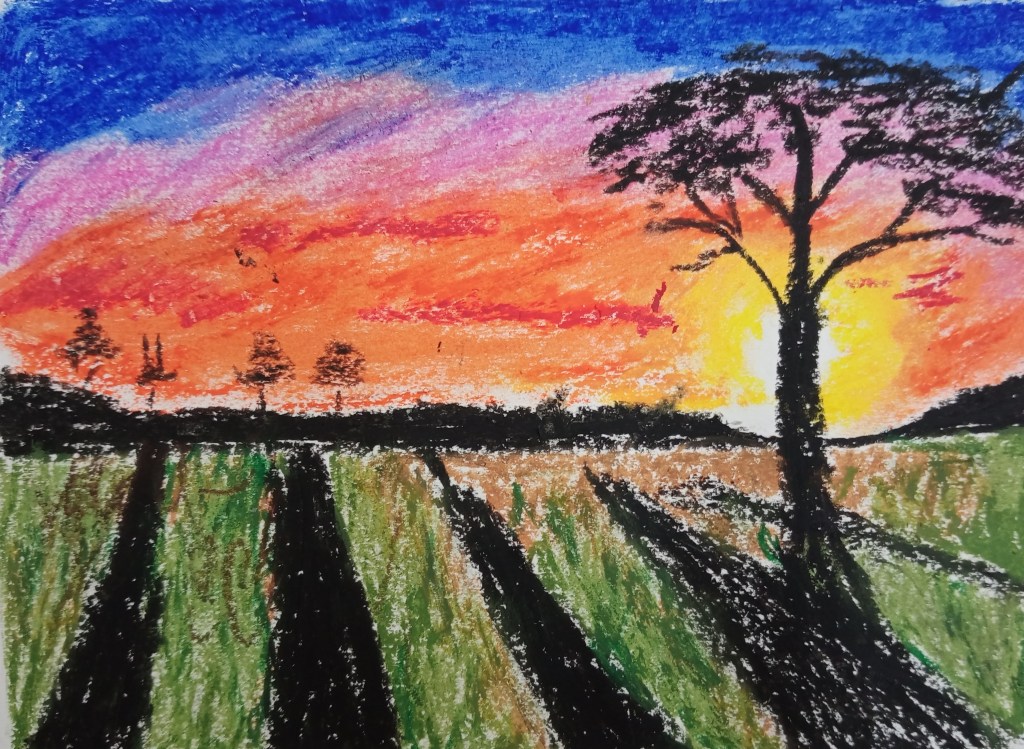
Painting by Sohana Manzoor

With Christmas at our heels and the world waking up slowly from a pandemic that will hopefully become an endemic as the Omicron seems to fizzle towards a common cold, we look forward to a new year and a new world. Perhaps, our society will evolve to become one where differences are accepted as variety just as we are fine with the fact that December can be warm or cold depending on the geography of the place. People will be welcomed even if of different colours and creed. The commonality of belonging to the same species will override all other disparities…

While we have had exciting developments this year and civilians have moved beyond the Earth — we do have a piece on that by Candice Louisa Daquin — within the planet, we have become more aware of the inequalities that exist. We are aware of the politics that seems to surround even a simple thing like a vaccine for the pandemic. However, these two years dominated by the virus has shown us one thing — if we do not rise above petty greed and create a world where healthcare and basic needs are met for all, we will suffer. As my nearly eighty-year-old aunt confided, even if one person has Covid in a remote corner of the world, it will spread to all of us. The virus sees no boundaries. This pandemic was just a start. There might be more outbreaks like this in the future as the rapacious continue to exploit deeper into the wilderness to accommodate our growing greed, not need. With the onset of warmer climates — global warming and climate change are realities — what can we look forward to as our future?

Que sera sera — what will be, will be. Though a bit of that attitude is necessary, we have become more aware and connected. We can at least visualise changes towards a more egalitarian and just world, to prevent what happened in the past. It would be wonderful if we could act based on the truth learnt from history rather than to overlook or rewrite it from the perspective of the victor and use that experience to benefit our homes, planet and all living things, great and small.  In tune with our quest towards a better world, we have an interview with an academic, Sanjay Kumar, founder of a group called Pandies, who use theatre to connect the world of haves with have-nots. What impressed me most was that they have actually put refugees and migrant workers on stage with their stories. They even managed to land in Kashmir and work with children from war-torn zones. They have travelled and travelled into different dimensions in quest of a better world. Travelling is what our other interviewee did too — with a cat who holds three passports. CJ Fentiman, author of The Cat with Three Passports, has been interviewed by Keith Lyons, who has reviewed her book too.

This time we have the eminent Aruna Chakravarti review Devika Khanna Narula’s Beyond the Veils, a retelling of the author’s family history. Perhaps, history has been the common thread in our reviews this time. Rakhi Dalal has reviewed Anirudh Kala’s Two and a Half Rivers, a fiction that focusses on the Sikh issues in 1980s India from a Dalit perspective. It brought to my mind a family saga I had been recently re-reading, Alex Haley’s Roots, which showcased the whole American Revolution from the perspective of slaves brought over from Africa. Did the new laws change the fates of the slaves or Dalits? To an extent, it did but the rest as fact and fiction showcase were in the hands that belonged to the newly freed people. To enable people to step out of the cycle of poverty, the right attitudes towards growth and the ability to accept the subsequent changes is a felt need. That is perhaps where organisations like Pandies step in.  Another non-fiction which highlights history around the same period and place as Kala’s novel is BP Pande’s In the Service of Free India –Memoirs of a Civil Servant. Reviewed by Bhaskar Parichha, the book explores the darker nuances of human history filled with violence and intolerance.

That violence is intricately linked to power politics has been showcased often. But, what would be really amazing to see would be how we could get out of the cycle as a society. With gun violence being an accepted norm in one of the largest democracies of the world, perhaps we need to listen to the voice of wisdom found in the fiction by Steve Davidson who meets perhaps a ghost in Hong Kong. Musing over the ghost’s words, the past catches up in Sunil Sharma’s story, ‘Walls’. Sharma has also given us a slice from his life in Canada with its colours, vibrancy and photographs of the fall. As he emigrated to Canada, we read of immigrants in Marzia Rahman’s touching narrative. She has opted to go with the less privileged just as Lakshmi Kannan has opted to go with the privileged in her story.

Sharma observes, while we find the opulence of nature thrive in places people inhabit in  Canada, it is not so in Asia. I wonder why? Why are Asian cities crowded and polluted? There was a time when Los Angeles and London suffered smogs. Has that shifted now as factories relocated to Asia, generating wealth in currency but taking away from nature’s opulence of fresh, clean air as more flock into crowded cities looking for sustenance?

Humour is introduced into the short story section with Sohana Manzoor’s hilarious rendering of her driving lessons in America, lessons given to foreigners by migrants. Rhys Hughes makes for  more humour with a really hilarious rendition of men in tea cosies missing their…I  think ‘Trouser Hermit’ will tell you the rest. He has perhaps more sober poetry which though imaginative does not make you laugh as much as his prose. Michael Burch has shared some beautiful poetry perpetuating the calmer nuances of a deeply felt love and affection. George Freek, Anasuya Bhar, Ryan Quinn Flanagan, Dibyajyoti Sarma have all given us wonderful poetry along with many others. One could write an essay on each poem – but as we are short shrift for time, we move on to travel sagas from hiking in Australia and hobnobbing with kangaroos to renovated palaces in Bengal.

We have also travelled with our book excerpts this time. Suzanne Kamata’s The Baseball Widow shuttles between US and Japan and Somdatta Mandal’s translation of  A Bengali lady in England by Krishnabhabi Das, actually has the lady relocate to nineteenth century England and assume the dress and mannerisms of the West to write an eye-opener for her compatriots about the customs of the colonials in their own country.

While mostly we hear of sad stories related to marriages, we have a sunny one in which Alpana finds much in a marriage that runs well with wisdom learnt from Kung Fu Panda.  Devraj Singh Kalsi has given us a philosophical piece with his characteristic touch of irony laced with humour on statues. If you are wondering what he could have to say, have a read.

In Nature’s Musings, Penny Wilkes has offered us prose and wonderful photographs of the last vestiges of autumn. As the season hovers between summer and winter, geographical boundaries too can get blurred at times. A nostalgic recap given by Ratnottama Sengupta along the borders of Bengal, which though still crossed by elephants freely in jungles (wild elephants do not need visas, I guess), gained an independence from the harshness of cultural hegemony on December 16th, 1971. Candice Louisa Daquin has also looked at grey zones that lie between sanity and insanity in her column. An essay which links East and West has been given to us by Rakibul Hasan about a poet who mingles the two in his poetry. A Bengali song by Tagore, Purano shei diner kotha,  that is almost a perfect trans creation of Robert Burn’s Scottish Auld Lang Syne in the spirit of welcoming the New Year, has been transcreated to English. The similarity in the content of the two greats’ lyrics showcase the commonalities of love, friendship and warmth that unite all cultures into one humanity.

Our first translation from Uzbekistan – a story by Sherzod Artikov, translated from Uzbeki by Nigora Mukhammad — gives a glimpse of a culture that might be new to many of us. Akbar Barakzai’s shorter poems, translated by Fazal Baloch from Balochi and Ratnottama Sengupta’s transcreation of a Tagore song, Rangiye Die Jao, have added richness to our oeuvre along with  one from Korean by Ihlwha Choi. Professor Fakrul Alam, who is well-known for his translation of poetry by Jibonanda Das, has started sharing his work on the Bengali poet with us. Pause by and take a look.

There is much more than what I can put down here as we have a bumper end of the year issue this December. There is a bit of something for all times, tastes and seasons.

I would like to thank my wonderful team for helping put together this issue. Sohana Manzoor and Sybil Pretious need double thanks for their lovely artwork that is showcased in our magazine. We are privileged to have committed readers, some of who have started contributing to our content too. A huge thanks to all our contributors and readers for being with us through our journey.

I wish you a very Merry Christmas and a wonderful transition into the New Year! May we open up to a fantastic brave, new world!

Mitali Chakravarty

Borderless Journal

Categories
Musings of a Copywriter

Statue Without Stature

By Devraj Singh Kalsi

 

The mere thought of having my statue installed in the locality raised excitement to an unprecedented level. Having seen so many historical giants standing tall in the thoroughfares across the city, with sticks or swords, mounted on horseback or covered with a concrete canopy shaped like an umbrella to stay protected from bird droppings, rain, and sunburn, I have also been inspired to strike a similar pose and occupy a prime position. But the problem is that I do not have anything called achievement to deserve such veneration from people or institutions. 

I am ready to purchase the commercial space and get the statue erected by a dubious local developer who would not probe why an ordinary mortal without any contribution to mankind should occupy that space. Since it is a private initiative and the expenses are borne by an individual, I am glad I am not wasting money from the public exchequer. My royalty and copywriting earnings should fund this venture. 

My brief to the artist was simple and direct. I should look like a man who is determined not to create a legacy. When he suggested I should at least hold a pen since I was a writer and look pensive, I opposed him saying I was a non-serious, humorous, frivolous, and small-time writer. Since the statue is not towering, a tiny accessory will not look good. Besides, I cannot flaunt a giant pen visible from far since mine is not mightier than the sword. I confessed I have not written anything award-worthy to deserve honours or a phone call from Sahitya Akademi or the Swedish Academy.  

 If my identity as a small-time writer is disclosed, achieving demi-god status in the league of small-time writers would be assured. Many aspirants would throng the spot to seek my blessings, to pay obeisance. Adding some inputs about the long, relentless struggle would inspire those who face rejections for years and decades. Offering their bound manuscript to me for blessings would comfort them before submitting it to literary agents and publishers. So go ahead and inspire them with a few lines on the granite marble slab mentioning how 50 rejections later, my first book was finally published. 

I shared the plan with a property dealer who said the price of land in my area had gone up. He suggested there were cheaper localities on the outskirts of the town where he could get me a bigger chunk of land for half the price. I argued nobody knows me there and he said nobody knows me here either. Well, he gave the right description of a non-descript writer. I abandoned the idea of erecting my statue near my home and conducted a recce to check the peripheral areas instead.   

I went with the real estate agent and selected a spot near the fish market. He introduced me to the seller who was safeguarding his land by building makeshift temples – in case a road widening or highway linking project got sanctioned in the future he would get a lucrative deal before eviction. I booked one hundred square feet area and asked the dealer to cordon that off with bricks and foliage, and erect a signboard in my name to ward off trespassers and generate buzz regarding my name.  

The construction process began immediately and the foundation was laid in a month. My grey bust was ready and the black granite slab encapsulated my story through an inscription. Not only the date of birth but the date of my death was also mentioned as it would increase the amount of respect. There was no formal inauguration ceremony since I prefer a low profile. However, some marigold garlands were put on the bust and rose petals made a carpet near the statue.

I began to visit the place every day – to gauge public response and observe their reactions. Curious people flocked and stopped for a while – to bust the secret behind the erection of the statue. I was dressed in traditional, formal clothes, with a mask and goggles to evade identification. Even when I moved around freely, nobody guessed it was my bust. Most of the people felt this was another revolutionary leader. Some felt the bust represented a sidelined social reformer or a low-key educator from the tribal areas. When they read the content in English, they could not recall what I had written. Some wondered where my books were sold: online platforms or brick and mortar bookstores. Some tech-savvy geeks tried to Google my name and the searches threw some odd pages. They found a photograph online and held it close to the statue to detect similarities. Soon, the bust image was shared by many visitors. It went viral within hours. 

The local bookseller reported there was a flurry of queries regarding my books but he could not get a single copy from the distributor since it was out of stock and out of print. He said many readers expressed sadness that I had left behind a treasure of books waiting to be discovered by the next generation. Some reporters from the regional press came to cover it and soon the local TV channel beamed the story of the statue. 

I reached many households including those in my locality. My neighbours approached me and said my statue was installed in a far-flung area. They found it offensive as I was mentioned dead though I was still alive. They suggested I should report this matter to the police and the miscreants should be caught. I said I did not want to get embroiled in any conflict or controversy but they promised to do it on my behalf.  Who can stop pesky neighbours from poking their ugly noses?!

They formed an independent committee to look into the matter. They went to the area to seek further details of the sponsors. When they could not achieve any breakthrough, they came back disappointed but promised to get justice. I said the matter was not worth pursuing as it was just a statue and it should remain there since I am surely going to die one day. It was good that the statue had been raised during my lifetime, to offer me a wonderful opportunity to admire the artwork while I was still around. In fact, I should go and click a selfie to bask in the glory and thank those who took the initiative.     

When I went there the next day, I found the spot vandalised, with my broken statue lying in pieces. I returned with the shattered bust in a shopping bag. I tried to fix it with an adhesive, to be kept as a memento, on the rooftop of my house. Not a bad idea to fill it with mud and plant a sapling, and see it grow. The attempt to immortalise myself in this small town had gone bust. But the remnants of the statue should remind me of the futile exercise to carve a niche in this world instead of winning hearts.   

.

Devraj Singh Kalsi works as a senior copywriter in Kolkata. His short stories and essays have been published in Deccan Herald, Tehelka, Kitaab, Earthen Lamp Journal, Assam Tribune, and The Statesman. Pal Motors is his first novel.  


PLEASE NOTE: ARTICLES CAN ONLY BE REPRODUCED IN OTHER SITES WITH DUE ACKNOWLEDGEMENT TO BORDERLESS JOURNAL. 

Categories
Contents

Borderless, November, 2021

Autumn: Painting in Acrylic by Sybil Pretious

Editorial

Colours of the Sky…Click here to read.

Interviews

In Conversation with Akbar Barakzai, a Balochi poet in exile who rejected an award from Pakistan Academy of Letters for his principles. Click here to read.

In Conversation with Somdatta Mandal, a translator, scholar and writer who has much to say on the state of Santiniketan, Tagore, women’s writing on travel and more. Click here to read.

Translations

Rebel or ‘Bidrohi’

Nazrul’s signature poem,Bidrohi, translated by Professor Fakrul Alam. Click here to read.

Motorcar

Jibonananda Das‘s poetry translated from Bengali by Rakibul Hasan Khan. Click here to read.

The Beloved City

Poetry of Munir Momin, translated from Balochi by Fazal Baloch. Click here to read.

Rebranding

A poem in Korean, written & translated by Ihlwha Choi. Click here to read.

Perhaps the Last Kiss

A short story by Bhupeen giving a vignette of life in Nepal, translated from Nepali by Ishwor Kandel. Click here to read.

Morichika or Mirage by Tagore

Tagore’s poetry translated by Mitali Chakravarty. Click here to read.

Poetry

Click on the names to read

Rhys Hughes, Sutputra Radheye, Luis Cuauhtémoc Berriozábal, Sheshu Babu, Michael Lee Johnson, Prithvijeet Sinha, George Freek, Sujash Purna,  Ashok Manikoth, Jay Nicholls, Pramod Rastogi, Ryan Quinn Flanagan, Vijayalakshmi Harish, Mike Smith, Neetu Ralhan, Michael R Burch

Poets, Poetry & Rhys Hughes

A story poem about The Clock Tower of Sir Ticktock Bongg. Click here to read.

Nature’s Musings

Penny Wilkes takes us for a stroll into the avian lives with photographs and poetry in Of Moonshine & Birds. Click here to read.

Stories

Waking Up

Christina Yin takes us on a strange journey in Sarawak, Malaysia. Click here to read.

Rains

A pensive journey mingling rain and childhood memories by Garima Mishra. Click here to read.

Khatme Yunus

Jackie Kabir brings us a strange story from Bangladesh. Click here to read.

First International Conference on Conflict Continuation

Steve Davidson explores an imaginary conference. Click here to read.

The Literary Fictionist

In Fragments of a Strange Journey, Sunil Sharma sets out with Odysseus on a tour of the modern day world. Click here to read.

Musings/Slices from Life

Yesterday Once More?

Ratnottama Sengupta recalls her experiences of the Egyptian unrest while covering the 35th Cairo International Film Festival in 2012. Click here to read.

Embroidering Hunger

An account of life of dochgirs (embroiderers) in Balochistan by Tilyan Aslam. Click here to read.

To Daddy — with Love

Gita Viswanath takes us into her father’s world of art and wonder. Click here to read.

Simon Says

Ishita Shukla, a young girl, explores patriarchal mindset. Click here to read.

Welcoming in the dark half of the year

Candice Louisa Daquin takes a relook at the evolution of Halloween historically. Click here to read.

Musings of the Copywriter

In Crematoriums for the Rich, Devraj Singh Kalsi regales his readers with a dark twist of the macabre. Click here to read.

Essays

Renewal

Jayat Joshi, a student of development studies, takes a dig at unplanned urban development. Click here to read.

Once Upon A Time in Burma: Leaving on a Jet Plane

John Herlihy’s last episode in his travels through Burma. Click here to read.

A Legacy of Prejudice, Persecution and Plight

Suvrat Arora muses on the impact of a classic that has been coloured with biases. Click here to read.

The Observant Migrant

In Is Sensitivity a Strength or a Weakness?, Candice Louisa Daquin explores our value systems. Click here to read.

Book Excerpts

Arundhathi Subramaniam’s Women Who Wear Only Themselves. Click here to read.

CJ Fentiman’s award winning book, The Cat with Three Passports. Click here to read.

Book Reviews

Himadri Lahiri reviews Somdatta Mandal’s ‘Kobi’ and ‘Rani’: Memoirs and Correspondences of Nirmalkumari Mahalanobis and Rabindranath Tagore. Click here to read.

Suzanne Kamata reviews Iain Maloney’s Life is Elsewhere/ Burn Your Flags. Click here to read.

Bhaskar Parichha reviews Anita Agnihotri’s Mahanadi –The Tale of a River, translated from Bengali by Nivedita Sen. Click here to read.

Meenakshi Malhotra reviews Turmeric Nation: A Passage Through India’s Tastes, authored by Shylashri Shankar. Click here to read.

Categories
Musings of a Copywriter

Crematoriums for the Rich

By Devraj Singh Kalsi

Courtesy: Creative Commons

It is useless to make an effort to remind a dead person that there is actually no travelling class on the last journey. One who has always maintained class, travelled first class, and classified himself as an ultra-rich person should not lie next to a beggar waiting for his turn to be cremated. Driven by the noble thought to enable his departure from a premium crematorium, I have started preparing a feasibility report before approaching a venture capitalist to fund what looks at the moment like an ambitious adventure of sorts.  

It is such a pitiable sight to witness a rich family jostle in the crowd of mourners from poor families. Those working-class people who may not have broken class barriers in life but in death they seem to have triumphed in establishing the non-discriminatory approach by juxtaposing the rich dead with the poor dead. When the sizeable, privileged class has the resources to afford something ostentatious, a visionary entrepreneur like me should grab the opportunity to create a viable business model that converts funerals into a lavish and luxurious affair.

Just like resorts built in the outskirts of the city, a vast open space would need to be identified and grabbed cheap from farmers to construct an upscale crematorium. There would be a parking lot for buses on hire arriving with mourners, hearse vans, and personal cars. Gun-toting security guards manning the parking zone, with hourly parking rates would be applicable. Once the family of mourners approaches the entrance, they will have three types of schemes – Gold, Diamond and Silver. Depending on their budget and choice, they can pick what suits them best. There will be a discount offer during the festive season. You would be able to consider yourself fortunate if someone in the family expires during the festival time around Diwali or Dussehra. Besides, there would be an EMI (Enterprise Management Incentive) scheme included to bring in the aspirational upper middle class keen to emulate the rich. Yes, the salaried folks should also get to enjoy the enriching experience. When they travel the world using credit cards, they should get the exclusive facility during the last journey.

At the moment, I am thinking of hiring the advertising agency I work with – to look after the branding exercise and build a nice teaser campaign.  I have some ideas to share but I know they will get killed for being too creative. So, I would prefer to let the creative head take charge and make this campaign go viral.

Once the family has booked the option of lighting a pyre or the electric option, they get a card to flash at the entrance. They are led in by a team of young girls and boys in flowing white dress. There are provisions for four funerals at the same time inside this facility. The dead body is taken in by the authorised staff and the family has nothing to do in this regard – notice the element of comfort and convenience packed in. They are led into a room with LED lights, with soft devotional music in the background. As they would  have already specified the religion at the time of booking, they would find devotional music related to their religion. For example, a Sikh would get get Shabad Kirtan related to death. Some sombre instrumental music will play in the background.

The Diamond scheme would be pegged at three lakh rupees, the Gold scheme would be worth two lakh rupees, and the Silver scheme would be up for grabs for just one lakh rupees. The facilities will vary depending on the selected scheme. There will be a theatre that shows how the soul travels after death. There will be some celebrity Gurus offering live discourses and a case-specific analysis of the soul reaching God. The audio-visual experience from the voice of a priest will be calming and comforting for the bereaved family at the hour of grief. There will be a dining room for lunch and dinner facility and the menu truly five-star but purely vegetarian. Leading chefs will prepare favourite dishes and the families with trains of mourners can avail of the meal served in silver utensils. 

Once the cremation starts, the address system will inform the family to get inside and witness the cremation process beamed live. There is a provision to hire Rudaalis (professional mourners) if the family so desires. There will be arrangements to serve tea, coffee, cold drinks and other refreshments like burgers, pastries while they wait and watch the cremation. There will be steam and sauna rooms, massage sections and salons to get back in shape refreshed after several hours inside. There will be counselling sessions for the nearest of the dead, to manage their grief. Such healing sessions are important so that they can carry on living without feeling sad all the time. The Grief Minimization Therapy should make them go back and feel lively and energetic within hours. Trained international experts with specialisation in death-related sorrow will be hired to administer this line of treatment.

Once the cremation is complete, the family will be taken to the ‘Immersion’ section where they will be handed over the urn with ashes. There will be a lake behind. The family will have the option of immersing it there or taking a chopper ride to hover over  the nearest river to sprinkle the ashes and flower petals from above. After the ritual is over, the family will  return to the crematorium to join the rest of the mourners. There will be some gift bags for all containing prayer books, CDS on spirituality, a personalised CD on the entire burning process, handkerchiefs, photo-frames, prayer mats, incense sticks, and other religion-related paraphernalia apart from the photographs of the dead body and the mourners.  More details will have to be fleshed out to make it attractive.

The personalised experience for the grief-stricken family is the USP (Unique Selling Proposition) here and adding luxurious dignity to the dead makes it more desirable. The class he belonged to is the class he will travel in when he leaves the world. This should generate the big idea for the success of this innovative venture. To leverage its strength, we can begin a chain of luxury crematoriums in the metro cities first and then proceed to Tier-2 and Tier-3 cities depending on the response generated. Presently, we need to think of a suitable name – not Yatra (journey), Safar (trip), Manzil (tier) types – for this start-up and make a shortlist of potential investors to approach for its funding.  Given the huge number of cremations every year, within three years it should recover the investment and bring in tons of profit.

.

Devraj Singh Kalsi works as a senior copywriter in Kolkata. His short stories and essays have been published in Deccan Herald, Tehelka, Kitaab, Earthen Lamp Journal, Assam Tribune, and The Statesman. Pal Motors is his first novel.  


PLEASE NOTE: ARTICLES CAN ONLY BE REPRODUCED IN OTHER SITES WITH DUE ACKNOWLEDGEMENT TO BORDERLESS JOURNAL. 
Categories
Contents

Borderless, October 2021

An Ode to Autumn: Painting by Sohana Manzoor.

Editorial

Making a Grecian Urn… Click here to read.

Interviews

Unveiling Afghanistan: In Conversation with Nazes Afroz, former editor of BBC and translator of a book on Afghanistan which reflects on the present day crisis. Click here to read.

The Traveller in Time: An interview with Sybil Pretious who has lived through history in six countries and travelled to forty — she has participated in the first democratic elections in an apartheid-worn South Africa and is from a time when Rhodesia was the name for Zimbabwe. Click here to read.

Translations

Travels & Holidays: Humour from Rabindranath

Translated from the original Bengali by Somdatta Mandal, these are Tagore’s essays and letters laced with humour. Click here to read.

The Quest for Home

Nazrul’s Kon Kule Aaj Bhirlo Tori translated from Bengali by Professor Fakrul Alam. Click here to read.

Mysteries of the Universe

Akbar Barakzai’s poetry in Balochi, translated by Fazal Baloch. Click here to read.

Gandhi & Robot

A poem reflecting the state of Gandhi’s ideology written in Manipuri by Thangjam Ibopishak and translated from the Manipuri by Robin S Ngangom. Click here to read.

Sorrows Left Alone

A poem in Korean, written & translated by Ihlwha Choi. Click here to read.

The Song of Advent by Tagore

Written by Tagore in 1908, Amaar Nayano Bhulano Ele describes early autumn when the festival of Durga Puja is celebrated. It has been translated from Bengali by Mitali Chakravarty. Click here to read.

Poetry

Click on the names to read

Michael R Burch, A Jessie Michael, John Grey, Rupali Gupta Mukherjee, Mike Smith, Saranyan BV, Tony Brewer, Baisali Chatterjee Dutt, Jay Nicholls, Beni S Yanthan, Luis Cuauhtémoc Berriozábal, Pramod Rastogi, Jason Ryberg, Michael Lee Johnson, Oormila Vijayakrishnan Prahlad, Rhys Hughes

Animal Limericks by Michael R Burch. Click here to read.

Nature’s Musings

In The Lords of Lights, with photographs and a story, Penny Wilkes makes an interesting new legend. Click here to read.

Poets, Poetry & Rhys Hughes

In Pessoa and Cavafy: What’s in a Name?, Rhys Hughes comically plays with the identity of these two poets. Click here to read.

Musings/ Slices From Life

At the Doctor’s

In this lighthearted narration, Farouk Gulsara uses humour to comment on darker themes. Click here to read.

Taking an unexpected turn

Nitya Pandey talks of a virtual friendship that bloomed across borders of countries during the pandemic. Click here to read.

Travel in the Time of Pandemics: Select Diary Entries of an Urban Nomad

Sunil Sharma gives us a slice from his travels with vibrant photographs, changing continents and homes during the pandemic. Click here to read.

Musings of a Copywriter

In Surviving to Tell a Pony-taleDevraj Singh Kalsi journeys up a hill on a pony and gives a sedately hilarious account. Click here to read.

Essays

A Season of Magical Mellow Wistfulness

Meenakshi Malhotra through folk songs that are associated with Durga Puja explores the theme of homecoming. Click here to read.

What Gandhi Teaches Me

Candice Louisa Daquin applies Gandhiism to her own lived experiences. Click here to read.

How Women’s Education Flourished in Aligarh Muslim University

Sameer Arshad Khatlani dwells on the tradition of education among Muslim women from early twentieth century, naming notables like Ismat Chughtai and Rashid Jahan. Click here to read.

Once Upon a Time in Burma: Of Friendships & Farewells

John Herlihy takes us through more of Myanmar with his companion, Peter, in the third part of his travelogue through this land of mystic pagodas. Click here to read.

When Needles Became Canons…

Ratnottama Sengupta, who has edited an encyclopaedia on culture and is a renowned arts journalist, gives us the role ‘kanthas’ (hand-embroidered mats, made of old rags) played in India’s freedom struggle. Click here to read.

Stories

Lunch with Baba Rinpoche in Kathmandu

Steve Davidson takes us for a fictitious interview with a Tibetan guru in Nepal. Click here to read.

The Tree of Life

An unusual flash fiction by Parnil Yodha about a Tibetan monk. Click here to read.

Odysseus & Me: A Quest for Home

A short fiction from Bangladesh by Marzia Rahman on immigrants. Click here to read.

Dawn in Calicut

Krishna Sruthi Srivalsan writes of a past that created the present. Click here to read.

I am a Coward with Priorities

Tejaswinee Roychowdhury tells a story from a soldier’s perspective. Click here to read.

The Literary Fictionist

In Bapu, Denied, Sunil Sharma explores the fate of Gandhiism in a world where his values have been forgotten. Click here to read.

Book Excerpts

An excerpt of In a Land Far From Home: A Bengali in Afghanistan by Syed Mujtaba Ali, translated by Nazes Afroz. Click here to read.

An excerpt from letters written by Tagore from Kobi & Rani, translated by Somdatta Mandal. Click here to read.

Book Reviews

Aruna Chakravarti reviews Golden Bangladesh at 50: Contemporary Stories & Poems edited by Shazia Omar. Click here to read.

Somdatta Mandal reviews Wooden Cow by T. Janakiraman, translated from Tamil by Lakshmi Kannan. Click here to read.

Gracy Samjetsabam reviews Suzanne Kamata’s The Baseball Widow. Click here to read.

Bhaskar Parichha reviews Mohona Kanjilal’s A Taste of Time: A Food History of Calcutta. Click here to read.


Categories
Editorial

Making a Grecian Urn

“Beauty is truth, truth beauty — that is all
                Ye know on earth, and all ye need to know.”  
  
John Keats (1795-1821), Ode to a Grecian Urn
‘Beauty is Truth’ : The Potato Eaters(1885) by Vincent van Gogh (1853-1890). Courtesy: Creative Commons

What makes for great literature? To me, great literature states the truth — the truth that touches your heart with its poignancy, preciseness, sadness, gentleness, vibrancy, or humour.  If Khayyam, Rumi, Keats, Tagore, Frost or Whitman had no truths to state, their poetry would have failed to mesmerise time and woo readers across ages. Their truths – which can be seen as eternal ones — touch all human hearts with empathetic beauty. Lalon Fakir rose from an uneducated illiterate mendicant to a poet because he had the courage to sing the truth about mankind — to put social norms and barriers aside and versify his truth, which was ours and still is. This can be applied to all genres. Short stories by Saki, O’ Henry or plays and essays by Bernard Shaw — what typifies them? The truth they speak with perhaps a sprinkle of humour. Alan Paton spoke the truth about violence and its arbitrariness while writing of South Africa — made the characters so empathetic that Cry, My Beloved Country (1948) is to me one of the best fictions describing divides in the world, and the same divides persist today. The truth is eternal as in George Orwell’s 1984 (1949) or Suskind’s Perfume (1985). We love laughter from Gerald Durrell or PG Wodehouse too because they reflect larger truths that touch mankind as does the sentimentality of Dickens or the poignancy of Hardy or the societal questioning of the Bronte sisters, George Eliot, and Jane Austen. The list of greats in this tradition would be a very long one.

 Our focus this time is on a fearless essayist in a similar tradition, one who unveiled truths rising above the mundane, lacing them with humour to make them easily digestible for laymen – a writer and a polyglot who knew fourteen languages by the name of Syed Mujtaba Ali (1904-1974). He was Tagore’s student, a Humboldt scholar who lived across six countries, including Afghanistan and spoke of the things he saw around him. Cherished as a celebrated writer among Bengali readers, he wrote for journals and published more than two dozen books that remained untranslated because his witticisms were so entrenched by cultural traditions that no translator dared pick up their pen. Many decades down the line, while in Afghanistan, a BBC editor for South and Central Asia, Nazes Afroz, translated bits of Mujtaba Ali’s non-fiction for his curious friends till he had completed the whole of the travelogue.

The translation named In a Land Far from Home: A Bengali in Afghanistan was published and nominated for the Crossword Awards. This month, we not only run an excerpt from the translated essays but also have an interview with the former BBC journalist, Afroz, who tells us not only about the book but also of the current situation in ravaged Afghanistan based on his own first-hand experiences. Nazes himself has travelled to forty countries, much like our other interviewee, Sybil Pretious, who has travelled to forty and lived in six. She had been writing for us till she left to complete her memoirs — which would cover much of history from currently non-existent country Rhodesia to apartheid and the first democratic election in South Africa. These would be valuable records shared with the world from a personal account of a pacifist who loves humanity.

We have more on travel — an essay by Tagore describing with wry humour vacations in company of his niece and nephew and letters written by the maestro during his trips, some laced with hilarity and the more serious ones excerpted from Kobi and Rani, all translated by Somdatta Mandal. We have also indulged our taste for Tagore’s poetry by translating a song heralding the start of the Durga Puja season. Durga Puja is an autumnal festival celebrated in India. An essay by Meenakshi Malhotra explains the songs of homecoming during this festival. It is interesting that the songs express the mother’s views as highlighted by Malhotra, but one notices, never that of the Goddess, who, mythology has it, gave up her life when the husband of her own choosing, Shiva, was perceived by her family as ‘uncouth’ and was insulted in her parent’s home.

In spirit of this festival highlighting women power and on the other hand her role in society, we have a review by Somdatta of T. Janakiraman’s Wooden Cow, translated from Tamil by Lakshmi Kannan, where the protagonist upends all traditional values ascribed to women. Another book which is flavourful with food and would be a real fit on every festive occasion is Mohana Kanjilal’s A Taste of Time: A Food History of Calcutta. Bhaskar Parichha tells us in his review, “In the thriving universe of Indian food books, this clearly stands out.”

Aruna Chakravarti’s review of Shazia Omar’s Golden Bangladesh at Fifty also stands out embracing the colours of Bengal. It traces the title back to history and their national anthem — a Tagore song called ‘Amaar Sonar Bangla – My Golden Bengal’. Gracy Samjetsabam’s review of Suzanne Kamata’s The Baseball Widow, a cross cultural novel with an unusual ending that shuttles between America and Japan, winds up our review section this time.

As Kamata’s book travels across two continents in a pre-covid world, Sunil Sharma in reality moved home from one continent to another crossing multiple national borders during the pandemic. He has written an eye-opening account of his move along with his amazing short story on Gandhi. Another unusual story creating a new legend with wonderful photographs and the narrative woven around them can be relished in Nature’s Musings by Penny Wilkes. This time we have fiction from India, Malaysia, Bangladesh and America. Steve Davidson has given a story based partly on Tibetan lore and has said much in a light-hearted fashion, especially as the Llama resumes his travels at the end of the story. Keeping in step with light humour and travel is Devraj Singh Kalsi’s account of a pony ride up a hill, except it made me laugh more.

The tone of Rhys Hughes cogitations about the identity of two poets across borders in ‘Pessoa and Cavafy: What’s in a Name?’ reminds me of Puck  or Narada! Of course, he has given humour in verses with a funny story poem which again — I am not quite sure — has a Welsh king who resisted Roman invasion or is it someone else? Michael Burch has limericks on animals, along with his moving poem on Martin Luther King Junior. We have much poetry crossing borders, including a translation of Akbar Barakzai’s fabulous Balochi poetry by Fazal Baloch and Sahitya Akademi winning Manipuri poet, Thangjam Ibopishak, translated by Robin S Ngangom. A Nazrul song which quests for a spiritual home has been translated from Bengali by no less than Professor Fakrul Alam, a winner of both the SAARC award and Bangla Academy Literary Award.

Former Arts Editor of Times of India, Ratnottama Sengupta, has shared an essay on how kantha (hand embroidered rug) became a tool to pass on information during the struggle against colonial occupation. The piece reminded me of the narrative of passing messages through mooncakes among Chinese. During the fourteenth century, the filling was of messages to organise a rebellion which replaced the Yuan dynasty (1271-1368) with the Ming (1368-1644). Now the filling is delicious lotus paste, chocolates or other edible delicacies. Women were heavily involved in all these movements. Sameer Arshad Khatlani has highlighted how women writers of the early twentieth century writing in Urdu, like Ismat Chughtai, created revolutionary literature and inspired even legendary writers, like Simone de Beauvoir. There is much more in our content — not all of which has been discussed here for again this time we have spilled over to near fifty pieces.

We have another delightful surprise for our readers – a cover photo of a painting by Sohana Manzoor depicting the season titled ‘Ode to Autumn’. Do pause by and take a look at this month’s issue. We thank our writers and readers for their continued support. And I would personally like to give a huge thanks to the team which makes it possible for me to put these delectable offerings before the world. Thank you all.

Wish you a wonderful month full of festivities!

Mitali Chakravarty,

Borderless Journal

Categories
Musings of a Copywriter

Surviving to tell a Pony-tale

Devraj Singh Kalsi writes of a hilly (or hilarious?) ride

Photo Courtesy: Devraj Singh Kalsi

I began to think about insurance after riding a pony on my way to a hill station some years ago. Those scary minutes worked better than the life insurance commercials that generate fear of untimely death and disaster.

 As the pony gathered speed while moving along the edge, the danger of tripping and falling into the gorge became palpable. But the man holding its rein assured me that it was highly experienced in such climbs and never made any mistake if the person seated atop did not spoil its mood. I displayed no such intention and maintained dignified behaviour to deserve a safe transit. The pony owner assured me that his pony enjoyed every bit of the muddy ride after the early morning downpour. He advised me not to touch its shampooed mane or any other sensitive part of its body because a tickling sensation could make the poor chap misinterpret and take a wrong step that would spell the untimely end of the rider. When it came to a close shave, I closed my eyes and thought of hugging it like a nervous child embraces the mother. The words of the pony owner rang alarm bells. Throughout the steep climb to reach the snow-capped heights of Kufri, I was firmly in the saddle, but I felt like a coalition government that could be toppled anytime by the withdrawal of support.

All kinds of thoughts entered my mind. I thought the poor animal suffered from suicidal tendencies after demonetisation but, then, it became clear that freedom meant everything to the pony who was finding its path in the treacherous terrain. It was safe not to imagine myself as one of those pillaging dacoits shown in mainstream Hindi films or fancy myself as a gallant king on horseback, galloping forth to counter the cabal of invaders, marauders, and plunderers.

The panoramic scenes of the valley did not grab my attention to click a single photograph as the pony seized all my attention with its stroll conducted in the zigzag style of a drunkard. From the unfenced edges, the pine trees and dense forest cover looked intimidating. One slip and gone forever, making this my last journey on planet earth. I felt so close to death that I regretted leaving behind my incomplete novel, realising the colossal waste of time very late. I fervently prayed for the pony to stop flirting with danger.   

I sought from the pony owner an estimate of the time left to reach the destination. But he was clueless. All he said was the pony appeared to be faster than on other days. I wondered how the pony got to know I loved fast cars and speed. I had paid an exorbitant fee without the faintest idea of the terror-stricken expedition to rejuvenate my senses. It was now a test of nerves and faith in the Divine. To ensure I did not do anything stupid to disturb its gay abandon. I did not even swat a fly near my nose nor scratch my itching neck. The pony’s upward climb continued at an accelerated pace. When in a contemplative frame of mind, it slowed down to collect the string of thoughts. The pony owner smacked his long, slim stick on the shiny brown wobbly posterior when the pony came to a grinding halt without any compulsion of obeying the traffic rules.

The pony owner boasted of the clean track record of zero casualties and no injuries either. He said the pony performed twenty trips in a single day and had been doing this stressful job without any break for four years. After going through the impressive CV ( curriculum vitae) of the pony, I felt it was fit for corporate life. He explained that the pony was comfortable with snow rather than sludge. The sudden rainfall had made the entire path muddy. It was difficult for the pony to maintain a steady gait. We engaged in a freewheeling chat about animal behaviour, how they lose cool, get provoked, collide against tree trunks, or kick them in the frustration of leading a celibate life. This diversion calmed my frayed nerves. He claimed to have the best pony in town and, though it was impossible to corroborate that, it was a relief to be safe in trained hands or legs.

While peace was returning to life, a charged pony from the opposite direction with a portly lady came running down at top speed. The angry pony was ready to collide against anything that came in its way, and the lady on its back looked prepared to be tossed in the air, with her sari pallu flying high to reveal her hefty bosom. For a moment, I felt she was going to land up in my lap as a beautiful gift from the skies above, but then it was a narrow escape as her pony applied brakes when it gradually came to senses after facing a human chain of tourist guides blocking its way. The worst appeared to be behind us now, but my pony stood and watched the thrilling show. The pony owner pulled it ahead, but it refused to budge an inch. Maybe it was keen to have a word with the other pony. Their communication was beyond my comprehension, but the pony kept looking in that direction while making a strange sound that was Greek to its owner. Probably it had no meaning of the kind I was imagining, and the poor fellow stood there to breathe easy before resuming the long walk. 

 While I was forbidden not to touch any part of the animal, the pony owner petted it and set it in motion. God knows what was so sensuous or seductive in the constant rubbing of the belly that the pony began to accelerate, and this last stretch was anything but sober. I lowered myself and almost buried my head in its back, resigned to fate, waiting for this exercise to end.  

Respite came within a short while. Once at the peak, I did not revel in the natural vistas of beauty. Rather, celebrating the fact that I was up and alive was more fulfilling. I dismounted with the pony owner’s mild assistance and felt like thanking him for the safe journey that the railways do not provide. I felt the pony deserved a round of applause and a grand salute.

The pony, parked in a corner, was given a plate of grams to munch as a healthy snack. It was busy keeping a close watch on me when its owner was sipping tea at a food stall. I looked the other way, at the orchards with melting snow. I took pictures of the mountain range and shot a portfolio of the photogenic pony from a distance – to go back and share with the world the harrowing experience of the pony ride.

It appeared the pony was in an apologetic mood and, during the return journey, it would take parental care of the rider. But the descent contravened my expectations as the pony rushed along at great speed. This time the pony owner also lost control, and the reckless pony hurtled down the slippery path. My only fear was whether it would take me on a blind date somewhere in those verdant valleys and gorges. Finally, I must thank the pony for exercising restraint and giving up the fascination for the thrills of walking along the edge. The fact that I am alive to tell this pony tale is nothing less than a miraculous escape. When the pony owner finally caught up with us, he apologised and patted the pony for taking good care of me. Perhaps good care meant depositing me safely at the ground level from  the heights where I had started this journey.

.

Devraj Singh Kalsi works as a senior copywriter in Kolkata. His short stories and essays have been published in Deccan Herald, Tehelka, Kitaab, Earthen Lamp Journal, Assam Tribune, and The Statesman. Pal Motors is his first novel.  


PLEASE NOTE: ARTICLES CAN ONLY BE REPRODUCED IN OTHER SITES WITH DUE ACKNOWLEDGEMENT TO BORDERLESS JOURNAL. 

Categories
Contents

Borderless, September 2021

Editorial

The Caged Birds Sing…Click here to read.

Interviews

Professor Anvita Abbi, a Padma Shri, discusses her experience among the indigenous Andamanese and her new book on them, Voices from the Lost Horizon. Click here to read.

Keith Lyons talks to Jessica Mudditt about her memoir, Our Home in Myanmar, and the current events. Click here to read.

Translations

Be and It All Came into Being

Balochi poetry by Akbar Barakzai, translated by Fazal Baloch. Click here to read.

Adivasi Poetry

A poem by Jitendra Vasava translated from the Dehwali Bhili via Gujarati by Gopika Jadeja. Click here to read.

A Poem for The Ol Chiki

 Poetry by Sokhen Tudu, translated from the Santhali by Hansda Sowvendra Shekhar. Click here to read.

About Time

Korean poetry on time written and translated by Ilwha Choi. Click here to read.

Of Days and Seasons

A parable by the eminent Dutch writer, Louis Couperus (1863-1923), translated by Chaitali Sengupta. Click here to read.

Road to Nowhere

An unusual story about a man who heads for suicide, translated from Odiya by the author, Satya Misra. Click here to read.

Abhisar by Tagore

A story poem about a Buddhist monk by Rabindranath Tagore in Bengali has been translated by Mitali Chakravarty. Click here to read.

Poetry

Click on the names to read the poems

Arundhathi Subramaniam, Michael R Burch, Sekhar Banerjee, Jeff Shakes, Ashok Suri, Tim Heerdink, Srinivas S, Rhys Hughes, A Jessie Michael, George Freek, Saranayan BV, Gigi Baldovino Gosnell, Pramod Rastogi, Tohm Bakelas, Nikita Desai, Jay Nicholls, Smitha Vishwanathan, Jared Carter

Nature’s Musings

In Sun, Seas and Flowers, Penny Wilkes takes us for a tour of brilliant photographs of autumnal landscapes with verses. Click here to read.

Poets, Poetry & Rhys Hughes

In Memory Gongs, Rhys Hughes creates a profound myth tinged with a tongue in cheek outlook … Click here to read.

Essays

Crime and the Colonial Capital: Detective Reid in Calcutta

Abhishek Sarkar explores the colonial setting up of the Calcutta detective department in 1887. Click here to read.

The Myth of Happiness

Candice Louisa Daquin ponders over the impositions on people to declare themselves happy. Click here to read.

Once Upon a Time in Burma: Of Babies and Buddhas

John Herlihy takes us through more of Myanmar with his companion, Peter, in the second part of his travelogue. Click here to read.

Bhaskar’s Corner

Bhaskar Parichha explores links between Politics & the Media. Click here to read.

Musings/Slices from Life

Cyclists

Mike Smith muses about a black and white photograph from his childhood. Click here to read.

Leo Messi’s Magic Realism

Sports fan Saurabh Nagpal explores the magic realism in famous footballer Messi’s play with a soupçon of humour. Click here to read.

Infinite Possibilities & Mysterious Riddles

Keith Lyons gives a lively account of traveling across borders despite the pandemic. Click here to read.

Word Play

Geetha Ravichnadran explores additions to our vocabulary in a tongue-in-cheek article. Click here to read.

Musings of a Copywriter

In When I Almost Became a Professor, Devraj Singh Kalsi gives humour tinged reasons on why he detached himself from being an academician. Click here to read.

Stories

Flash Fiction: Turret

Niles M Reddick relates a haunting tale of ghosts and more. Click here to read.

Silver Lining

Dipayn Chakrabarti travels through moods of the day and night. Click here to read.

Captain Andi is in love

Dr. P Ravi Shankar explores a future beyond climate change in Malaysia. Click here to read.

The Cockatoo

Revathi Ganeshsundaram captures the stardust in ripening years. Click here to read.

The Missing Tile

Saeed Ibrahim’s story reflects on the ties between an old teacher and a student. Click here to read.

The Literary Fictionist

In Return of the Ghost, Sunil Sharma explores the borders between life, ideas and death. Click here to read.

Book Excerpt

An excerpt from Kobi’ and ‘Rani’: Memoirs and Correspondences of Nirmalkumari Mahalanobis and Rabindranath Tagore, translated by Somdatta Mandal, showcasing Tagore’s introduction and letters. Click here to read.

Book Reviews

Rakhi Dalal reviews Anvita Abbi’s Voices from the Lost Horizon. Click here to read.

Basudhara Roy reviews Bina Sarkar Ellias’ Song of a Rebel and Other Selected Poems. Click here to read.

Bhaskar Parichha reviews Wendy Doniger’s Winged Stallion and Wicked Mares. Click here to read.

Categories
Editorial

The Caged Birds Sing

...Don't you know
They're talkin''bout a revolution
It sounds like a whisper...
-- Tracy Chapman,'Talkin 'Bout a Revolution
Thou shalt love thy neighbour as thyself. 
— Bible 

We are living in strange times that seem to be filled with events to challenge the innovativeness of man. As if the pandemic were not enough, concepts that had come out of the best in our civilisation to unite mankind have been convoluted by a minority to manipulate and hurt the majority into submission. Life is not about surviving with faint-hearted compliance but about having the courage to live it as you want, facing it full up front, to voice out in unison against injustices, wrongs, and most of all to loan strength to help and care for each other. Often to understand this, we need to hinge on to our past, to learn from our heritage. But do we do that? In the hectic drive to be successful, we tend to ignore important lessons that could have been imbibed from the past. Like, did you know that the tribes in the Andaman can save themselves from a tsunami?

Padma Shri Anvita Abbi tells us all about the Andamanese and her attempts to revive their moribund language in her interview and book, Voices from the Lost Horizon, reviewed by Rakhi Dalal. While the review focusses on the uniqueness of Abbi’s work and the publication with its embedded recordings of the tribe fast dissolving into the morass of mainstream civilisation, her interview highlights the need to revive their lores that evolved out of a 70,000-year-old culture. On the other hand, Jessica Mudditt, interviewed by Keith Lyons, dwells on the ongoing crisis in Myanmar, which has been clearly the focus of her book, Our Home in Yangon. This interview focusses on the here and now of the crisis. But most crises have their roots deep and perhaps an exploration of these could help. There are 135 ethnicities in Myanmar but how many are actually integrated into the mainstream? Are they in the process of getting ‘lost’ like the voices of the speakers of Greater Andamanese?

That is why we tried to showcase a few such strains that are going unheard in the loudness of the ‘civilised’ mainstream. We have translations in poetry from Santhali and Adivasi, touching on the concerns of those who are often considered underdeveloped. And, perhaps, as Abbi said in her interview about the Andamanese, we can say much the same for these tribes too.

“These tribes are neither poor, nor uneducated (their knowledge of environment comprising birds, fishes, medicinal plants and their … weather predictions, and the Earth they walk on is amazing) …”

Distinctions have been created by a ‘civilisation’ entrenched in mono-cognitive enforcements leading to the loss of trust, confidence, languages, cultures and valuable knowledge about basic survival. Perhaps we can attempt to heal such wounds by imbibing the openness, love, devotion and compassion shown by the Buddhist monk, Upagupta (who is still revered in Myanmar as Shin Upagutta), in the translation of Tagore’s story poem, ‘Abhisar’ or ‘The Tryst’.  Somdatta Mandal’s translation of Tagore’s letters introduce similar humanitarian concerns when the maestro mentions a German anthropologist and his wife who for the betterment of mankind were journeying to study tribals in India. Tagore remarks, “The people for whom they are willingly prepared to undergo hardship and to overlook all sorts of danger are not their relatives, nor are they civilised.” And yet even a century ago to fathom more about mankind, attempts were being made to integrate with our ancient lore. The concept of being ‘civilised’ is of course now much under the microscope. What is being ‘civilised’?

 Is it about having power? We have Akbar Barakzai’s poem translated by Fazal Baloch on creation looking at the divide between a ‘civilised’ God and man. The theme stresses the two sides of the divide. More translations from Odiya, Dutch and Korean further mingle different flavours of the world into our journal — each questioning the accepted norm in different ways.

In an edition focussed on myths and stories from which we evolved, Rhys Hughes has created an unusual legend around elephants. His poetry also deals with animals — cats. One wonders if the T S Eliot’s famed ‘Macavity, the Mystery Cat’ could have to do something with his choices?  We were fortunate to have Arundhathi Subramaniam share her poetry on myths around Indian figures like Shakuntala and Avvaiyar and the titular poem from When God is a Traveller that won her the 2020 Sahitya Akademi Award. Michael R Burch continues on the theme dwelling on Circe, Mary Magdalene and Helen. Sekhar Banerjee has a more iconoclastic approach to myths in his poetry. Jared Carter talks of modern myths perpetuated through art and cultural studies as does Mike Smith in his musings with his glance back at the last century through a photograph.

We have poetry by a Filipino writer Gigi Baldovino Gosnell from South Africa, looking for a new world, a new legend, perhaps a world without borders. Tohm Bakelas has given us a few lines of powerful poetry. Could these poems be a reaction to world events? Smitha Vishwanath has responded to the situation in Afghanistan with a poem. In this edition, photographs and verses in Penny Wilkes’ ‘Nature’s Musings‘ draw from the universe. She writes, “The sun never asks for applause” — a powerful thought and perhaps one mankind can learn from.

Ghost stories by Niles Reddick and Sunil Sharma perpetuate the theme, especially the latter has a ghost that questions myths of ‘isms’ created in the modern-day world. We also have a writer from Malaysia, P Ravi Shankar, with a futuristic legend set in a far-off time where man has embraced the reality of climate change and artificial intelligence. An interesting and fun read as is Devraj Singh Kalsi’s professions about why he did not become a professor, Geetha Ravichandran’s light musing on word play and a young writer Saurabh Nagpal’s musing, ‘Leo Messi’s Magic Realism‘ — a footballer viewed from a literary perspective!

While our musings make us laugh, our essays this time take us around the world with the myth of happiness deconstructed by Candice Louisa Daquin, to Burma and deep into Kolkata’s iconic history of the detective department started in the nineteenth century. There is an essay by Bhaskar Parichha that explores politics and media and mentions ‘gatekeepers’ of the media who need to be responsible for influencing public opinion. Guess who would be the gatekeepers?

Bhaskar Parichha’s review of Wendy Donniger’s non-fiction exploring myths around horses, Winged Stallion and Wicked Mares, and Basudhara Roy’s review of Bina Sarkar Ellias’ Song of a Rebel and Other Selected Poems perpetuate the theme of the importance of the past on the one hand and question it on the other. But that is what Borderless is about — exploring the dialectics of opposing streams to re-invent myths towards a better future.

We have a bumper issue again this time with nearly fifty posts. I invite our wonderful readers on a magical journey to unfold the hidden, unmentioned gems scattered on the pages of the September Issue of Borderless. Thank you again to an outstanding team, all our global contributors who make every edition an adventure and a reality and our wonderful readers. Thank you all.

Have a beautiful month!

Mitali Chakravarty

Borderless Journal

Categories
Musings of a Copywriter

When I almost became a Professor

By Devraj Singh Kalsi

It is scary to witness a cabal of professors locked up in the staff room by agitating students who want to harass, heckle, punish, manhandle, slap their chubby cheeks, dislodge the spectacles, and look menacingly and maniacally powerful jabbing a middle finger. Holed up in a stuffy room under a slowly whirring ceiling fan, professors keep praying for the quick intervention of the Vice-Chancellor and his meek acceptance of the charter of demands so that the irate students release them from captivity.

Getting roughed up by students with a political agenda or by those with personal grudges is a nightmarish experience for any professor. But it is a professional hazard that most professors are now aware of and prepared to face during their teaching days. Such bitter experiences are included in the annual package. As a precautionary move, they empty their bladders every two hours because ‘being gheraoed’ includes not getting permission from students to answer nature’s call. They keep instant energy drink tetra packs in their bags for emergency use in case of dehydration and some toffees in the handbags in case of sugar level dip. You never know when students decide to strike!      

Though we never had the opportunity to hold our professors hostage during our university days, there were reports of similar incidents happening elsewhere. Imagine the plight of professors who were castigated for no fault of theirs. The impact of such scenes was long-lasting on me. I realised this when I began to explore the option of becoming a professor. The fear of getting slapped and caught in crossfire made me rethink the pursuit of academics as a career after completing my journalism course – the horror of being dragged through the corridors, down the stairs, and punched by promising students.

My record was clean: did not rough up any academician in my life so the question of Karma catching up with me was not applicable. But if you are destined to get abused by students, it will happen even if you choose not to become an educator. During an early phase of my career, I did mentor some students to improve their language and test my communication skills. The horrendous experience made me realise teaching is indeed a dangerous territory. Some strong abusive words were hurled at me like crude bombs and it included vile threats of a bloody encounter in the local area. With guns and other weapons being so easily available in the market just like toys, it is better to take such threats seriously. My hyper-imaginative mind began to visualise getting lynched by vandals brandishing sticks and knives. I avoided venturing out after dark for almost a year.  

It would have been so shameful to return to the classroom and address the same crowd of students that dispatched the poor academician (me) to the hospital. While it is true that the entire student community was involved in the fracas, some nastier ones would vitiate the atmosphere. Earlier, films depicted how professors were ill-treated. But the real world surpasses the fictional world. The mauled professors are rushed to the hospital and their families are busy praying for their speedy recovery.

When most of the students began to prepare for eligibility tests to qualify as lecturers, I sensed I had no proper knowledge in any subject. It was important to have a proper grounding or specialisation in a particular subject before teaching that subject. My knowledge always seemed insufficient to teach a classroom. It was also like a case of stage fright, facing a crowd of students who could raise a question, compelling me to consult the book for an answer. Imagining myself in such a predicament made me feel jittery. I could not convince myself to face the crowd with my half-baked knowledge though many others were confident of doing the same with a poorer knowledge base.

All they wanted was a safe job, with zero passion for the subject and they went ahead to build a career in academics. Most of them did not have a scholarly mindset but they were hard-working to scale up and make the cut because it was a question of qualifying in an entrance test and they had to scrape through.    

The scope of remaining in the company of young babes and the possibility of appealing to them would be a bonus reward. After seeing films based on students falling in love with professors, it was going to be good. Imagine a besotted girl madly in love with the professor coming up with gifts, just to have a chat. If she happened to be beautiful, then males would be stabbed with jealousy. The tendency to imagine extremes egged me to think of attacks with weapons inside the campus. With newspaper headlines screaming the next morning: professor stabbed, jealous student lover accused. 

This rise to fame was notorious so I dropped the idea of becoming a professor with the motive of falling in love with a girl student. Possibly, the madly-in-love girl slapped charges or went to town pressing me-too charges against me. A risky proposition was cancelled but it was tough to resist this because the perks of being a professor include falling in love with a student. On the downside, I imagined an obsessed student jumping off the parapet unable to bear rejection in love. All sorts of possibilities and fatal outcomes of being a professor came to the forefront, a whirlpool that dissolved everything related to academics.   

Another incentive to explore this career was the prospect of holidays that would give them the freedom to write and find readers in the classroom. With a secured job and limited working hours, there was ample time to read and write and find publishers who went ahead because professors command a big circle of student readers who buy the books driven by the fear of scoring poor marks. Imagine a professor asking a student whether he has read his new novel, and he promises to read it as soon as possible. This makes it easier to sell more books even if there is a conflict of interest. Besides, other professors and writers also write kind stuff in their reviews – in the fond hope of a similarly favourable review when they publish their titles.   

Unfortunately, the desire to become a professor waned as creative work in the field of advertising became more exciting. When the pressure of corporate writing left me with less time to write for myself, then I realised I should have become a professor to get a whale of a time to write instead of working under the pressure of deadlines. Now well past the age of being a professor even in an unapproved college, it is better not to think of it.

The joy of being a writer who has not pursued a full-time job is boundless. The madness of writing under stress and anxiety creates better writing and this would not be possible when you wrote in a calm state of mind. This is one merit of not becoming a professor – of writing with a free mind, without the burden of erudition that damages the free, natural flow.

Whenever a professor reads or comments on a piece of mine, I become a devoted student ready to be mentored because writing without a literature background makes you susceptible to frequent attacks so it is better to surrender and admit your ignorance in front of literature professors who will grab the chance to correct you or bombard you with heavy literary quotes. Instead of becoming a silly fool with limited knowledge and nodding yes-yes after every sentence, it is better to stake no claims of scholarship and call it a hobby, to dabble in writing without knowing what writing is all about. The forever-learner tag is easier to wear when you remain a student for life.  


.

Devraj Singh Kalsi works as a senior copywriter in Kolkata. His short stories and essays have been published in Deccan Herald, Tehelka, Kitaab, Earthen Lamp Journal, Assam Tribune, and The Statesman. Pal Motors is his first novel.  


PLEASE NOTE: ARTICLES CAN ONLY BE REPRODUCED IN OTHER SITES WITH DUE ACKNOWLEDGEMENT TO BORDERLESS JOURNAL.