Categories
celebrations

Festivals of Humanity

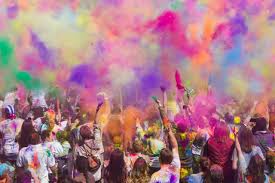
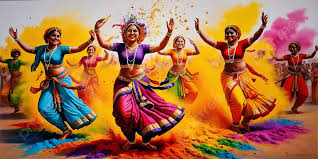
Festivals are affirmations of joy and love that bind humanity with their sense of hope even in a world torn by violence and climate change. As the end of the year approaches, we invite you to savour flavours of festivals past and, a few, yet to come, before the cycle starts again in the new year. The colours of celebrations are vibrant and varied as shades of nature or the skies.

We have new years spread out over the year, starting with January, moving on to the Chinese New Year around February, the Bengali new year in April to festivals of environment, light, darkness as in Wiccan beliefs, Tagore’s birth, more conventional ones like Deepavali, Eid, Durga Puja and Christmas. People celebrate in different ways and for different reasons. What we have also gathered is not only the joie de vivre but also the sadness people feel when celebrations are muted whether due to the pandemic, wars or for social reasons. In some cases, we indulge in excesses with funny results! And there are of course festivals of humanity … as celebrated by the bauls — the singing mendicants of Bengal — who only recognise the religion of love, compassion and kindness. 

Enjoy our fare! 

Poetry

 Aaji Shubhodine Pitaar Bhabone or On This Auspicious Day, a Brahmo Hymn by Tagore. Click here to read the translation by Mitali Chakravarty.

Potpouri by Isa Kamari familiarises us with Malay-Singaporean traditions that are observed during festivals. Click here to read.

Eid Poems by Afsar Mohammad. Click here to read.

 Ramakanta Rath’s Sri Radha celebrating the love of Radha and Krishna have been translated from Odiya by the late poet himself, have been excerpted from his full length translation. Click here to read.

Bijoya Doushumi, a poem on the last day of Durga Puja, by the famous poet, Michael Madhusudan Dutt, has been translated from Bengali by Ratnottama Sengupta. Click here to read.

Groundhog Day by John Grey. Click here to read. 

Christmas Cheer by Malachi Edwin Vethamani. Click here to read.

Christmas Poems by Rhys Hughes. Click here to read.

Poem on Christ by  Rabindranath Tagore: Verses excerpted from  ‘The Child‘, a poem originally written in English by the poet. Click here to read.

 Purano Sei Diner Kotha or ‘Can old days ever be forgot?’ by Tagore, based on Robert Burn’s lyrics, Auld Lang Syne. Click here to read the translation by Mitali Chakravarty.

Prose


 A Clean StartSuzanne Kamata tells us how the Japanese usher in a new year. Click here to read.

Shanghai in Jakarta: Eshana Sarah Singh takes us to Chinese New Year celebrations in Djakarta. Click here to read.

Cherry Blossom Forecast: Suzanne Kamata brings the Japanese ritual of cherry blossom viewing to our pages with her camera and words. Click here to read.

Pohela Boisakh: A Cultural Fiesta: Sohana Manzoor shares the Bengali New Year celebrations in Bangladesh with interesting history and traditions that mingle beyond the borders. Click here to read.

The New Year’s BoonDevraj Singh gives a glimpse into the projection of a new normal created by God. Click here to read.

A Musical Soiree: Snigdha Agrawal recalls how their family celebrated Tagore’s birth anniversary. Click here to read.

Not Everyone is Invited to a Child’s Haircut Ceremony: Odbayar Dorje muses on Mongolian traditions. Clickhere to read.

A Golden Memory of Green Day in JapanSuzanne Kamata tells us of a festival where she planted a tree in the presence of the Japanese royalty. Click here to read.

An Alien on the Altar! Snigdha Agrawal writes of how a dog and lizard add zest to Janmashtami (Krishna’s birthday) festivities with a dollop of humour. Click here to read

Memories of Durga Puja : Fakrul Alam recalls the festivities of Durga Puja in Dhaka during his childhood. Click here to read.

From Bombay to Kolkata — the Dhaaks of Durga : Ratnottama Sengupta explores a UNESCO Intangible Cultural Heritage Festival. Click here to read.

KL Twin Towers near Kolkata?: Devraj Singh Kalsi visits the colours of a marquee hosting the Durga Puja season with its spirit of inclusivity.  Click here to read.

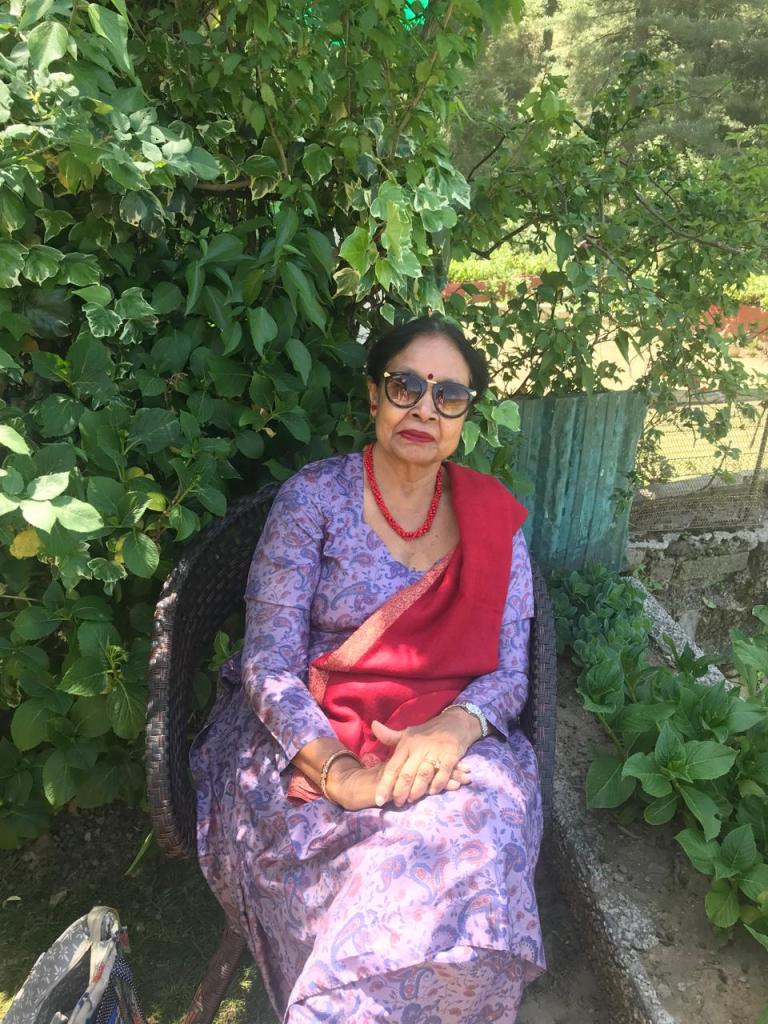
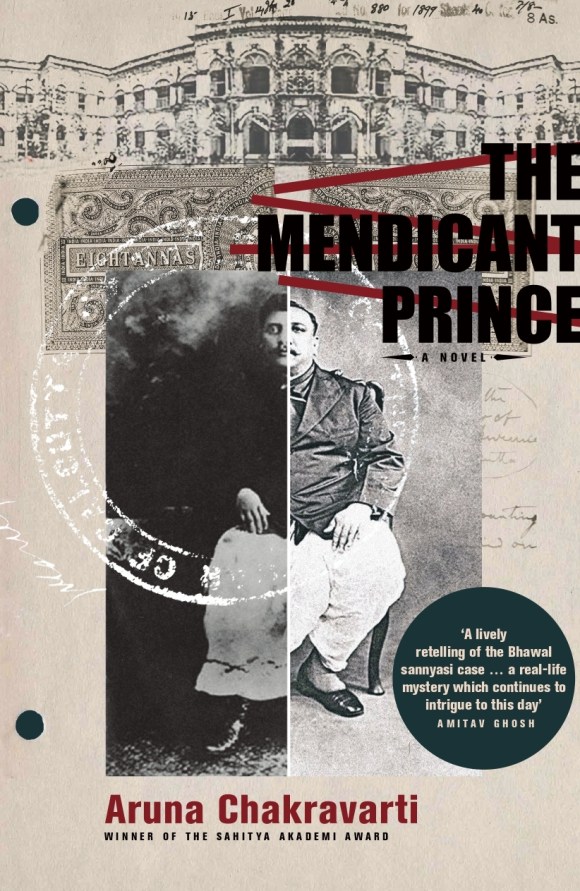
The Oral Traditions of Bengal: Story and Song: Aruna Chakravarti describes the syncretic culture of Bengal through its folk music and oral traditions. Click here to read.

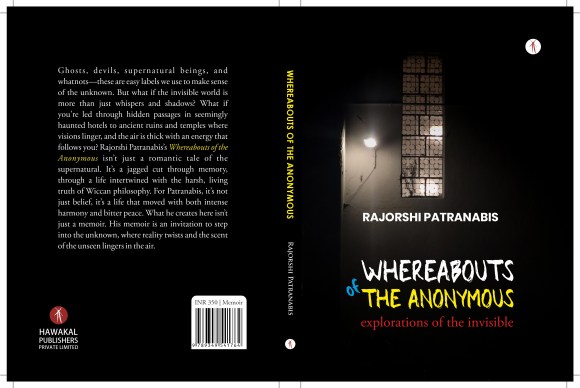
From Diana to ‘Dayaan’: Rajorshi Patronobis talks of Wiccan lore. Click here to read.

Dim Memories of the Festival of Lights: Farouk Gulsara takes a nostalgic trip to Deepavali celebrations in Malaysia. Click here to read. 

When Nectar Turns Poisonous!: Farouk Gulsara looks at social norms around festive eating. Click here to read.

 Hold the roast turkey please Santa: Celebrating the festive season off-season with Keith Lyons from New Zealand, where summer solstice and Christmas fall around the same time. Click here to read.

 Indian Christmas: Essays, MemoirsHymns, an anthology edited by Jerry Pinto and Madhulika Liddle, has been reviewed by Somdatta Mandal. Click here to read.

 I Went to KeralaRhys Hughes treads a humorous path bringing to us a mixed narrative of Christmas on bicycles . Click here to read.

The Bauls of Bengal: Aruna Chakravarti writes of wandering minstrels called bauls and the impact they had on Tagore. Click here to read.

Categories
Contents

Borderless, October 2024

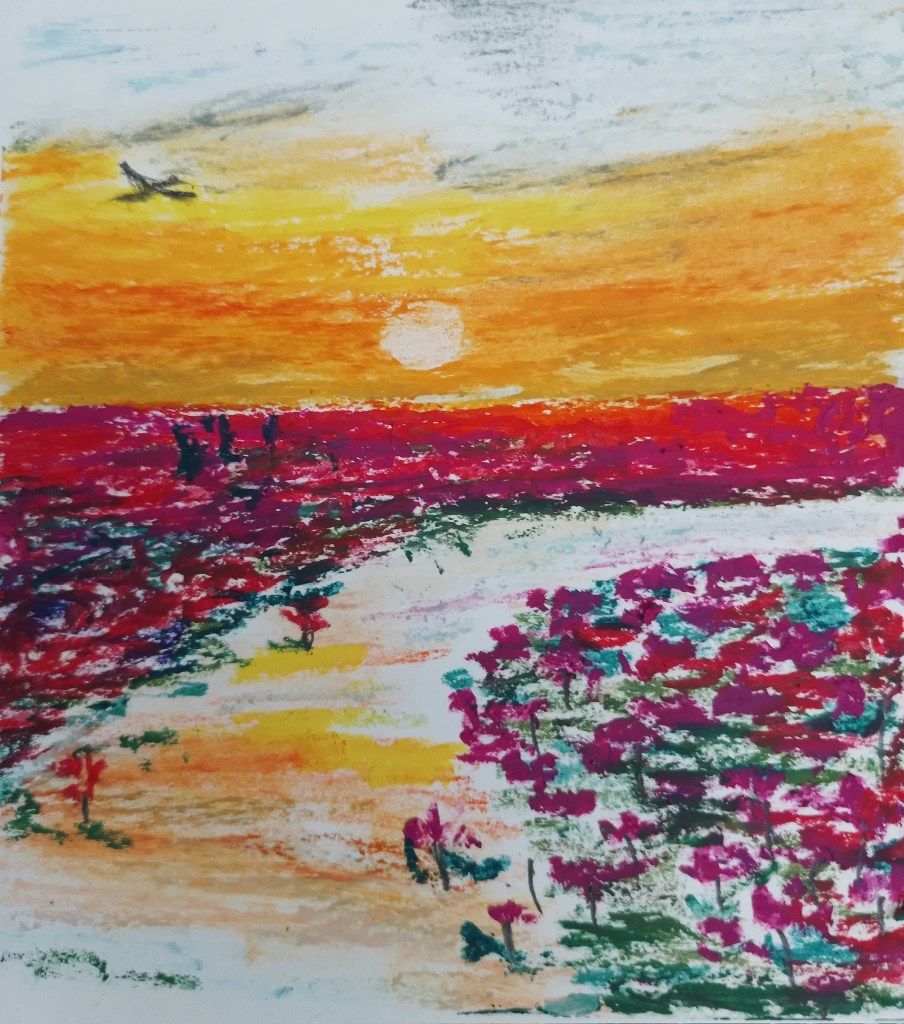
Art by Sohana Manzoor

Editorial

Where Are Those Happy Days? … Click here to read.

Conversations

In conversation with Malashri Lal with focus on her poetry book, Mandalas of Time. Click here to read.

Keith Lyons speaks to novelist Lya Badgley about her life, books and travels. Click here to read.

Translations

Tagore’s poem on Africa has been translated from Bengali by Debali Mookerjea-Leonard. Click here to read.

Nazrul’s Shukno Patar Nupur Paye (With Ankle Bells of dried leaves) has been translated from Bengali by Professor Fakrul Alam. Click here to read.

Veena Verma’s story, Galat Aurat or The Wrong Woman, has been translated from Punjabi by C Christine Fair. Click here to read.

Sharaf Shad’s story, The Melting Snow, has been translated from Balochi by Fazal Baloch. Click here to read.

Tagore’s Andhokaarer Utso Hote (From the Fount of Darkness) has been translated from Bengali by Mitali Chakravarty. Click here to read.

Poetry

Click on the names to read the poems

Rhys Hughes, Afsar Mohammad, Fhen M, Luis Cuauhtémoc Berriozábal, Shamik Banerjee, George Freek, Shahin Hossain, Stuart MacFarlane, Matthew James Friday, Udita Banerjee, Jenny Middleton, Alpa Arora, Stephen Philip Druce, Malashri Lal, Michael Burch

Poets, Poetry & Rhys Hughes

In Two Pizza Fantasies, Rhys Hughes recounts myths around the pizza in prose, fiction and poetry, Click here to read.

Musings/Slices from Life

An Alien on the Altar!

Snigdha Agrawal writes of how a dog and lizard add zest to festivities with a dollop of humour. Click here to read.

To Be or Not to Be…

Farouk Gulsara ponders over the nature of humanity. Click here to read.

Memories of my Grandfather

Alpana writes of her interactions with her late grandfather. Click here to read.

From Diana to ‘Dayaan’

Rajorshi Patronobis talks of Wiccan lore. Click here to read.

Musings of a Copywriter

In Libraries and Me, Devraj Singh Kalsi recalls his experiences in school and University in a lighter vein. Click here to read.

Notes from Japan

In Among Ghosts in the Land of a Thousand Hills, Suzanne Kamata travels with a Japanese colleague and students to Rwanda. Click here to read.

Essays

Memories of Durga Puja

Fakrul Alam recalls the festivities of Durga Puja in Dhaka during his childhood. Click here to read.

A Doctor’s Diary: Syncretic Festivities

Ravi Shankar writes of his early life in Kerala where festivals were largely a syncretic event. Click here to read.

Stories

The Return

Paul Mirabile unravels the homecoming of a British monk. Click here to read.

The Mango Thief

Naramsetti Umamaheswara Rao writes a story about peer pressure among children. Click here to read.

Sunset Memories

Saeed Ibrahim writes from near the Arabian Sea. Click here to read.

A Whiff of the Past…

Tanika Rajeswari V gives a haunting story set in Kerala. Click here to read.

Book Excerpts

An excerpt by Ruskin Bond from Let’s Be Best Friends Forever: Beautiful Stories of Friendship. Click here to read.

An excerpt from Lara Gelya’s Camel from Kyzylkum. Click here to read.

Book Reviews

Meenakshi Malhotra reviews Anjum Katyal’s Safdar Hashmi: Towards Theatre for a Democracy. Click here to read.

Somdatta Mandal reviews Ammar Kalia’s A Person Is a Prayer. Click here to read.

Bhaskar Parichha reviews Selected Works of Vyasa Kavi Fakir Mohan Senapati, edited by Monica Das. Click here to read.

.

Click here to access the Borderless anthology, Monalisa No Longer Smiles

Click here to access Monalisa No Longer Smiles on Amazon International

Categories
Editorial

Where Are Those Happy Days?

Festivals are like friends.

They bring hope, solace and love to those who believe in them. But, when the structures holding the fiestas in place start to crumble, what do we do then?

Our lives have moved out of wilderness to cities over centuries. Now, we have covered our world with the gloss of technology which our ancestors living in caves would have probably viewed as magic. And yet we violate the dignity of our own kind, war and kill, destroy what we built in the past. The ideological structures seem ineffective in instilling love, peace, compassion or hope in the hearts of the majority. Suddenly, we seem to be caving in to violence that destroys humanity, our own kind, and not meting out justice to those who mutilate, violate or kill. Will there be an end to this bleak phase? Perhaps, as Tagore says in his lyrics[1], “From the fount of darkness emerges light”. Nazrul has gone a step further and stated clearly[2], “Hair dishevelled and dressed carelessly/ Destruction makes its way gleefully. / Confident it can destroy and then build again …Why fear since destruction and creation are part of the same game?”

And yet, destruction hurts humans. It kills. Maims. Reduces to rubble. Can we get back the people whose lives are lost while destruction holds sway? We have lost lives this year in various wars and conflicts. As a tribute to all the young lives lost in Bangladesh this July, we have a poem by Shahin Hossain. Afsar Mohammad has brought in the theme of festivals into poetry tying it to the current events around the world. In keeping with the times, Michael Burch has a sense of mirthlessness in his poems. Colours of emotions and life have been woven into this section by Malashri Lal, Luis Cuauhtémoc Berriozábal, Fhen M, Shamik Banerjee, George Freek, Matthew James Friday, Jenny Middleton and many more. This section in our journal always homes a variety of flavours. Stuart MacFarlane has poems for Wordsworth… and some of it is funny, like Rhys Hughes’ poem based on photographs of amusing signposts. But then life has both sorrows and laughter, and poetry is but a slice of that as are other genres. We do have non-fiction in a lighter vein with Hughes’ story and poem about pizzas. Devraj Singh Kalsi has given a tongue in cheek narrative about his library experiences.

Suzanne Kamata has written for us about her visit to Rwanda. Farouk Gulsara has pondered over humanity’s natural proclivitiesWiccan lore has been discussed by Rajorshi Patranabis. And Snigdha Agrawal has tuned into humour with her rendition of animal antics that overran festivities. Ravi Shankar, on the other hand, has written about the syncretic nature of festivals in Kerala. Professor Fakrul Alam has given a nostalgic recap of Durga Puja during his childhood, a festival recognised as an “Intangible Cultural Heritage of Humanity” by UNESCO, and known for its syncretic traditions where people from all backgrounds, religions and cultures celebrate together.

Festivals have also been taken up in fiction by Tanika Rajeswari V with a ghostly presence hovering over the arrangements. Paul Mirabile has taken us around the world with his story while Saeed Ibrahim writes from his armchair by the Arabian sea. Sahitya Akademi winner for his children’s stories, Naramsetti Umamaheswara Rao, has showcased peer pressure among youngsters in his narrative.  

Two stories have also featured in our translations. Christine C Fair has rendered Veena Verma’s Punjabi story about an illegal immigrant into English. Hinting at climate concerns, Sharaf Shad’s fiction, has been translated from Balochi by Fazal Baloch. Tagore’s powerful poem on Africa has been brought to Anglophone readers by Debali Mookerjea-Leonard as well as his inspiring lyrics, Andhokaarer Utso Hote (From the Fount of Darkness), by our team. Nazrul’s vibrant lyrics, Shukno Patar Nupur Paye (With Ankle Bells of Dried Leaves), has been rendered into English from Bengali by Professor Alam.

Our reviews explore immigrant stories in fiction with Somdatta Mandal reviewing Ammar Kalia’s A Person Is a Prayer. Bhaskar Pariccha has written about Selected Works of Vyasa Kavi Fakir Mohan Senapati, edited by Monica Das. Fakir Mohan is a legendary writer from Odisha. Meenakshi Malhotra has discussed a book on another legend, Safdar Hashmi, one of the greatest names in street theatre in India. The book is by Anjum Katyal and called, Safdar Hashmi: Towards Theatre for a Democracy.

Our book excerpts usher good cheer with a narrative by Ruskin Bond from Let’s Be Best Friends Forever: Beautiful Stories of Friendship. And also hope with a refugee’s story from Ukraine, which travels through deserts, Italy and beyond to US and has a seemingly happier outcome than most, Lara Gelya’s Camel from Kyzylkum. This issue’s conversations take us around the world with Keith Lyons interviewing Lya Badgley, who has crossed continents to live and write. Malashri Lal, the other interviewee, is an academic and writer with sixteen books under her belt. She travels through the world with her poetry in Mandalas of Time.

Huge thanks to the Borderless team for putting this issue together – the last-minute ties – and the art from Sohana Manzoor. Without all this, the edition would look different. Heartfelt thanks to our contributors without whose timely submissions, we would not have a journal. And most of all we thank our readers – we are because you are – thank you for reading our journal.  As all our content, despite being indispensable, could not be mentioned here, do pause by our content’s page for this issue.

We wish you a wonderful month!

Cheers,

Mitali Chakravarty

borderlessjournal.com

[1] Tagore’s Andhokaarer Utso Hote (From the Fount of Darkness)

[2] Nazrul’s Proloyullash translated by Professor Alam as The Frenzy of Destruction

Click here to access the content’s page for the October 2024 Issue.

.

READ THE LATEST UPDATES ON THE FIRST BORDERLESS ANTHOLOGY, MONALISA NO LONGER SMILES, BY CLICKING ON THIS LINK.

Categories
Contents

Borderless, March 2024

Art by Sohana Manzoor

Editorial

‘If Winter Comes, Can Spring be Far Behind…’ Click here to read.

Translations

Travels of Debendranath Tagore are narratives translated from Bengali by Somdatta Mandal. Click here to read.

The Yellow Flower, a narrative by Haneef Sharif, has been translated by Fazal Baloch from Balochi. Click here to read.

Ye Shao-weng’s poetry ( 1100-1150) has been translated from Mandarin by Rex Tan. Click here to read.

Nazrul’s Amamai Nahi Go Bhalobashleo (Even if you don’t love me) has been translated by Professor Fakrul Alam from Bengali. Click here to read.

Rough Stone by Ihlwha Choi has been translated from Korean to English by the poet himself. Click here to read.

Phalgun or Spring by Rabindranath Tagore has been translated from Bengali by Mitali Chakravarty. Click here to read.

Conversations

A discussion with Radha Chakravarty on her new book, Subliminal, and a brief review of the book. Click here to read.

Jagari Mukherjee interviews Rajorshi Patranabis, discussing his new book, Checklist Anomaly and Wiccan philosophy. Click here to read.

Poetry

Click on the names to read the poems

Rhys Hughes, Alpana, Ron Pickett, Shamik Banerjee, Stuart McFarlean, Baisali Chatterjee Dutt, John Grey, Shahalam Tariq, Jim Murdoch, Kumar Ghimire, Peter Magliocco, Saranyan BV, Rex Tan, Samina Tahreem, Luis Cuauhtémoc Berriozábal

Poets, Poetry & Rhys Hughes

In Lines for Loons, Loonies and Such-like, Rhys Hughes shares a rare treat. Click here to read.

Musings/Slices from Life

The Elusive Utopia?

Farouk Gulsara discusses the ideal of a perfect world. Click here to read.

Serenading Sri Lanka

Mohul Bhowmick backpacks in Sri Lanka with a camera. Click here to read.

Musings of a Copywriter

In A Conversation with God, Devraj Singh Kalsi has a bargaining chip. Click here to read.

Notes from Japan

In Cherry Blossom Forecast, Suzanne Kamata brings the Japanese ritual of cherry blossom viewing to our pages with her camera and words. Click here to read.

Stories

Prison Break

C.J.Anderson-Wu gives a poignant flash fiction. Click here to read.

Terrace

Rakhi Pande relates a strange tale from Goa. Click here to read.

The Temple-going Snake

Devraj Singh Kalsi almost creates a fable but not quite. Click here to read.

Monsoon Arc

K.S. Subramaniam shows the human spirit pitched against the harshness of monsoon storms. Click here to read.

Felipe Jimenez’s Quest of the Unheard

Paul Mirabile travels to Spain of Goya’s times with an imaginary friend who takes after perhaps, Don Quixote? Click here to read.

Essays

Where the Rice is Blue and Dinosaurs Roar…

Ravi Shankar takes us on a tour of a Malaysian town. Click here to read.

Conquering Fears: Bowing to the Mountains 

Keith Lyons tells us of his challenging hike in New Zealand. Click here to read.

Book Excerpts

An excerpt from Out of Sri Lanka: Tamil, Sinhala and English Poetry from Sri Lanka and its Diasporas edited by Vidyan Ravinthiran, Seni Seneviratne and Shash Trevett. Click here to read.

An excerpt from Rajat Chaudhuri’s Spellcasters. Click here to read.

Book Reviews

Somdatta Mandal reviews Ilse Kohler-Rollefson’s Camel Karma: Twenty Years Among India’s Camel Nomads. Click here to read.

Rakhi Dalal reviews Anuradha Kumar’s The Kidnapping of Mark Twain: A Bombay Mystery. Click here to read.

Bhaskar Parichha reviews Mafia Raj: The Rule of Bosses in South Asia by Lucia Michelutti, Ashraf Hoque, Nicolas Martin, David Picherit, Paul Rollier, Clarinda Still. Click here to read.

.

Click here to access the Borderless anthology, Monalisa No Longer Smiles

Click here to access Monalisa No Longer Smiles on Amazon International

Categories
Editorial

‘If Winter Comes, Can Spring be Far Behind…’

Where the mind is without fear

Where the world has not been broken up into fragments

Where the clear stream of reason has not lost its way

Where the mind is led forward by thee
Into ever-widening thought and action…

— ‘Where the Mind is without Fear’ (1910), by Rabindranath Tagore

As we complete the fourth year of our virtual existence in the clouds and across borders, the world has undergone many changes around us, and it’s not only climate change (which is a huge challenge) but much more. We started around the time of the pandemic — in March 2020 — as human interactions moved from face-to-face non-virtual interactions to virtual communication. When the pandemic ended, we had thought humanity would enter a new age where new etiquettes redefining our social norms would make human existence as pandemic proof as possible. But before we could define new norms in the global context, takeovers and conflicts seem to have reft countries, regions and communities apart. Perhaps, this is a time when Borderless Journal can give a voice to all those who want to continue living as part of a single species in this world — where we can rise above our differences to find commonalities that make us human and part of the larger stream of humanity, that has been visualised by visionaries like Tagore or John Lennon — widely different cultural milieus but looking for the same things — humankind living together in harmony and moving towards a world without violence, without hate, without rancour and steeped in goodwill and love.  

Talking of positive values does not make sense in a world that seems to be veering towards darkness… Many say that humankind is intrinsically given to feelings of anger, hate, division, lust, shame and violence. But then we are just as much inclined towards happiness, fun, love, being respectful and peaceful. Otherwise, would we be writing about these? These are inherited values that have also come down to us from our forefathers and some have been evolving towards embalming or healing with resilience, with kindness and with an open mind.  

If you wake up before sunrise, you will notice the sky is really an unredeemable dark. Then, it turns a soft grey till the vibrant colours of the sun paint the horizon and beyond, dousing with not just lively shades but also with a variety of sounds announcing the start of a new day. The darkest hours give way to light. Light is as much a truth as darkness. Both exist. They come in phases in the natural world, and we cannot choose but live with the choices that have been pre-made for us. But there are things we can choose — we can choose to love or hate. We can choose resilience or weakness. We can choose our friends. We can choose our thoughts, our ideas. In Borderless, we have a forum which invites you to choose to be part of a world that has the courage to dream, to imagine. We hope to ignite the torch to carry on this conversation which is probably as old as humanity. We look forward to finding new voices that are willing to move in quest of an impractical world, a utopia, a vision — from which perhaps will emerge systems that will give way to a better future for our progeny.

In the last four years, we are happy to say we have hosted writers from more than forty different nationalities and our readers stretch across almost the whole map of the world. We had our first anthology published less than one and a half years ago, focussing more on writing from established pens. Discussions are afoot to bring out more anthologies in hardcopy with more variety of writers.

In our fourth anniversary issue, we not only host translations by Professor Fakrul Alam of Nazrul, by Somdatta Mandal of Tagore’s father, Debendranath Tagore, but also our first Mandarin translation of a twelfth century Southern Song Dynasty poet, Ye Shao-weng, by Rex Tan, a journalist and writer from Malaysia. From other parts of Asia, Dr Haneef Sharif’s Balochi writing has been rendered into English by Fazal Baloch and Ihlwha Choi has transcreated his own poetry from Korean to English. Tagore’s Phalgun or Spring, describing the current season in Bengal, adds to the variety in our translated oeuvre.

An eminent translator who has brought out her debut poetry book, Radha Chakravarty, has conversed about her poetry and told us among other things, how translating to English varies from writing for oneself. A brief overview of her book, Subliminal, has been provided. Our other interviewee, Rajorshi Patranabis — interviewed by Jagari Mukherjee — has written poetry from a Wiccan perspective — poetry on love — for he is a Wiccan. We have poetry by Luis Cuauhtémoc Berriozábal, Jim Murdoch, Alpana, Baisali Chatterjee Dutt, John Grey, Shahalam Tariq, Saranyan BV, Rex Tan, Ron Pickett with poetry on the season and many more. Humour is brought into poetry with verses woven around a funny sign by Rhys Hughes . His column this month hosts a series of shorter poems — typically in Hughes’ own unique style.

Devraj Singh Kalsi has explored darker shades of humour in his conversation with God while Suzanne Kamata has ushered in the Japanese spring ritual of gazing at cherry blossoms in her column with photographs and narrative. Keith Lyons takes us to the beautiful Fiordlands of New Zealand, Ravi Shankar to Malaysia and Mohul Bhowmick trapezes from place to place in Sri Lanka. Farouk Gulsara has discussed the elusiveness of utopia — an interesting perspective given that we look upto ideals like these in Borderless. I would urge more of you to join this conversation and tell us what you think. We did have Wendy Jones Nakashini start a discussion along these lines in an earlier issue.

We have stories from around the world: C.J.Anderson-Wu from Taiwan, Paul Mirabile from France, Rakhi Pande, Kalsi and K.S. Subramaniam from India. Our book excerpts are from Out of Sri Lanka: Tamil, Sinhala and English Poetry from Sri Lanka and its Diasporas edited by Vidyan Ravinthiran, Seni Seneviratne and Shash Trevett and a Cli-fi book that is making waves, Rajat Chaudhauri’s Spellcasters. Mandal has also reviewed for us Ilse Kohler-Rollefson’s Camel Karma: Twenty Years Among India’s Camel Nomads. Bhaskar Parichha has discussed Mafia Raj: The Rule of Bosses in South Asia by Lucia Michelutti, Ashraf Hoque, Nicolas Martin, David Picherit, Paul Rollier, Clarinda Still — a book written jointly by multiple academics. Rakhi Dalal in her review of Anuradha Kumar’s The Kidnapping of Mark Twain: A Bombay Mystery has compared the novel to an Agatha Christie mystery!

I would want to thank our dedicated team from the bottom of my heart. Without them, we could not have brought out two issues within three weeks for we were late with our February issue. A huge thanks to them for their writing and to Sohana Manzoor for her art too. Thanks to our wonderful reviewers who have been with us for a number of years, to all our mentors and contributors without who this journal could not exist. Huge thanks to all our fabulous loyal readers. Devoid of their patronage these words would dangle meaninglessly and unread. Thank you all.

Wish you a wonderful spring as Borderless Journal starts out on the fifth year of its virtual existence! We hope you will be part of our journey throughout…

Enjoy the reads in this special anniversary issue with more content than highlighted here, and each piece is a wonderful addition to our oeuvre!

Mitali Chakravarty

borderlessjournal.com

Click here to access the content page for the March 2024 Issue.

.

READ THE LATEST UPDATES ON THE FIRST BORDERLESS ANTHOLOGY, MONALISA NO LONGER SMILES, BY CLICKING ON THIS LINK.

Categories
Interview

Checklist Anomaly: A Wiccan’s Journey of Exploration

Jagari Mukherjee in conversation with Rajorshi Patranabis

It was an exquisite late spring morning when the poet, Rajorshi Patranabis, and I met up for this interview at 8th Day Cafe and Bakery in Salt Lake. Over two pots of dark golden Earl Grey tea, Rajorshi answered my questions in his charmingly candid fashion, elaborating on our favourite subject, poetry; in particular, his book published by Hawakal in September 2023. We read aloud from the book, Checklist Anomaly, in between our conversation, and altogether spend a delightful hour-and-a-half figuratively floating on the gossamer wings of poesy.

Jagari: Congratulations, Rajorshi, for bringing out the first-ever individual collection of gogyoshi 1 in India. Checklist Anomaly, like your previous book, The Last Drop of Your Tears, is a seminal volume replete with love poems. Can you tell us a bit about the form and why you chose to express yourself in it?

Rajorshi: Last Drop of Your Tears was my first foray into five-line poetry, but I had previously done Japanese poetic forms like haiku and haibun. Gogyohka2 gave me some more lines to express myself albeit with some conditions of phrase and metaphor in every line. Gogyoshi was a natural transition from gogyohka wherein it is the freest form of five-line Japanese poetry. Gogyoshi should have a title and every line starts with a capital letter. When I started writing these forms, I had no idea that both Tears and Checklist Anomaly would be seminal collections. I’m personally extremely grateful to Hawakal Publishers for having the gumption to publish something to which they didn’t have any past reference points.

Jagari: Going through Checklist Anomaly, I was struck by your depiction of the beloved in your love poems. For instance, on page 16, I found the following poem:

She embraced to feel
Doused to drown
She kissed deep
Bitten lips strip
She seduced to engulf

Unlike the western courtly poetry tradition, your beloved is not a passive figure perceived through male gaze, but a powerful woman who defies the virgin/whore dichotomy. Could you tell me how did you create such an empowered feminine figure?

Rajorshi: A very few people know that I’m a Wiccan by philosophy and practice and Wicca is perhaps the first ever feminist movement. We look up to strong women like Luciana and Joan of Arc, amongst others for inspiration. Having been taught Wicca by my teacher in India, the reference to the 64 yoginis of Hirapur cannot be avoided. Yoginis are nothing but witches and the epitome of ‘Shakti (strength)’. As a direct consequence, love poems from my pen cannot possibly have a beloved who leans upon me for support. The other way round is the truth and it is time that poets realise that a beloved actually is the Shakti and love is the force.

Jagari: Your poems are lacquered with colours. I know that for a certainty that you are diagnosed as colour-blind. So, how does a colour-blind poet perceive hues and tints?

Rajorshi: Oh no, not again! Being colour-blind doesn’t mean I don’t decipher colours at all. I understand all the primary colours. Colours for me are emotions. In the poem ‘Lone Red Venom’ from Checklist Anomaly, I say, “Night of the flipped moon/I sit on your lone red venom.” Here, red is a metaphor—a colour normally not associated with poison. Here, it is more of an emotion. I leave it to the reader to decipher it through their own perspective, through their own eyes.

Jagari: Your answer brings to my mind another gogyoshi, titled ‘Incomplete Refrain’ on page 110.

My night shrouded in violet
Your dawn smelling in springtime lavender
Your flight took you to life
My fall broke my splinters of roving greed
Twilight murmurs about our incomplete refrain

Tell me, does the ‘fall’ in this poem refer to a post-lapsasarian world? Would you say that religion/spirituality is deeply infused into your poetry?

Rajorshi: First things first. The version of Wicca that I’ve been initiated into by my teacher (Wiccan High Priestess Ipsita Roy Chakraverti), encompasses every faith, every culture and every philosophy. So, you won’t actually find anything overtly or covertly pointing at any particular religion whatsoever. By the way, this ‘fall’ is actually autumnal fall for me; having said that, I’m happy that you have perceived it differently. This is perhaps where poetry wins.

Jagari: So, what’s next on the creative cards, Rajorshi?

Rajorshi: Something on the lines from the diary of Osiris which are Wiccan prose poems and I am also working on my second collection of gogyohka.

Jagari: That’s wonderful! We will wait for you to contribute new gems and ornaments to the poetic world.

  1. Gogyoshi is a form of Japanese poetry. It is the simplest as it has just five lines. ↩︎
  2. Gogyokha five line form of Japanese poetry but different from gogyoshi. Gogyoshi is considered the freest of Japanese poetic forms, as the poems do not have syllabic restrictions, specific line breaks, or a rhyme scheme. However, the style differs from other five-line forms, such as tanka and gogyohka, by the titling of its poems. ↩︎

Jagari Mukherjee is the Editor-in-chief of Narrow Road Literary Journal and the Chief Executive Editor of EKL Review. She is the winner of Women Empowered Gifted Poet Award, the Reuel International Prize For Poetry, the Bharat Award for Short Story, and the Rabindranath Tagore Literary Prize for Book Review. Jagari has three full-length poetry collections and two chapbooks and a bestselling ebook to her credit.

PLEASE NOTE: ARTICLES CAN ONLY BE REPRODUCED IN OTHER SITES WITH DUE ACKNOWLEDGEMENT TO BORDERLESS JOURNAL

Click here to access the Borderless anthology, Monalisa No Longer Smiles

Click here to access Monalisa No Longer Smiles on Amazon International