Title: Love and Crime in the Time of Plague: A Bombay Mystery
Author: Anuradha Kumar
Publisher: Speaking Tiger Books
Maya is Discomfited
What shall we talk about?’ Maya asked in her irrepressible way, a lilt in her voice. That afternoon she was out cycling with Henry when the rain came down, turning heavy in moments. It was August and the middle of the monsoon season.
‘Tell me more about what you found. More about those…mysterious sketches. You have two minutes,’ Henry rolled his eyes playfully as he pulled out his watch.
Dark, thick clouds loomed over the sea and gathered by the palm trees and rocks lining the shore. Leaving their bicycles against the tall, old Ashoka tree, they had run, like many times before, toward the old Prong’s lighthouse to their right. Its white walls were damp-streaked and moss-stained, and the grey rocks huddled by it were dotted by foamy flecks. The sea swirled in noisily with an insistent rhythm.
They stood on the low stoop, looking out at the gravestones across the road. The door behind, blue paint flaking in places, creaked in the wind. The room in the old lighthouse always smelt musty. It was sparsely furnished with wooden chairs, a table, and a cupboard. Faded red curtains fluttered on the windows. A part of the roof near the fireplace leaked, and rainwater often dripped down into a large wooden tub. Soon, Henry always joked, it would fill up with fish. The keeper, an old Eurasian, waved to them from an upstairs window, his beard flailing through its rusting iron bars.
They were right at the tip of the city on the island of Colaba, and the new bicycles—shipped to Henry only that summer—were safe to ride on, with their evenly spaced wheels, pneumatic tyres, and a chain system. Henry was pleased with these new ‘Rover’ cycles, made by a company in Chicago, Henry’s home town. The wind left a mist on their faces, the gulls were noisy on the rafters, and they waited for the rain to ease.
The Causeway, its white stones grey in the wan light, stretched to the mainland. Built some fifty years ago, it now connected what had been the separate islands of Colaba, and the Old Woman’s Island to the bigger island of Bombay. If they craned their necks and looked to the left, through the palm trees, the stone walls of the old fort were clearly visible.
Henry took his cap off, twirled it with his fingers then placed it back on his head. Maya scraped the soles of her muddy boots against the stoop, and leaned against the door. They heard a sharp clear call, two eagles were majestically scouring the skies, their wings spotted white, and lighting up when the sun momentarily breathed through the clouds.
‘You’ve been thinking about the sketches, haven’t you?’
Maya nodded, her eyes the colours of the stormy sea. The eagles, she was thinking, maybe they were the White-bellied Sea Eagles familiar to these parts.
‘Tell me about it,’ Henry encouraged, stealing a look upstairs, and noting the open window. The keeper was probably all ears. They were always the subject of gossip, and Henry ruefully accepted this, always with a turmoil in his heart. He enjoyed Maya’s company and tried not to think too much of the future; most times he failed. Sometimes he thought Maya felt the same way.
~
Maya had found the sketches only a fortnight ago. In a room, dark, mysterious and unused, at the very back of the grey-stone ‘doctors’ house’ where Maya lived. She had wanted to use the room as a study. The doctors’ house stood on a narrow lane leading off the Colaba Causeway, on the sliver of land where Bombay stretched into the sea in a crab-like way. One walked through the house’s main hallway, and the study appeared after a series of small steps. Next to the study was the covered courtyard and on the left, its lone window faced the garden, with its wooden latticed fence, the bougainvillea and oleander creepers, and tall palm trees. Farther beyond, closer to the sea, lay the asylum and a part of the lighthouse, always visible from the upper floor windows of the doctors’ house. Sounds of the horse-drawn tramcars, the bells of the Afghan Church, the train coming in every morning and in the late afternoon, and the constant rolling of the sea, shaped a pleasing backdrop to everyday life in the house.
Once owned by Hormuzji Dorabji, a merchant whose business interests spread across Bombay, Surat, East Africa and Natal, the doctor Edith Pechey had first rented it when she came to Bombay to manage the city’s first women’s hospital. Soon there were two of them, when Charlotte Ellaby responded to Edith’s invitation, and that was how the bungalow got its name. Then about two years ago, though Maya felt it was much longer, the doctors’ house had a new resident when Maya joined them, a few weeks after reaching Bombay as part of a travelling theatre troupe from Lahore. The troupe soon moved on to another city, but Maya had stayed back. For a while only, she had thought at first, but months had flown by and the ‘doctors’ house’ was her home now. Edith had moved out when she married Herbert Phipson, an American businessman with offices in Bombay, and Maya still stayed on with Charlotte. Finding her feet in a city, warm and lively. Finding her heart too, but with that Maya wanted to take more time.
~
For Maya, the string-bound folder with the sketches was an unexpected find. It lay in the old wooden almirah, lost among dusty old account ledgers, old books, in old Pali and Persian, and crinkled maps brown with age.
‘They look so old, and so skilfully done.’ Henry still remembered the awed expression on Maya’s face the afternoon she told Charlotte and him about it. They had shared Maya’s delight, looking at the sketches—lifelike depictions of birds, drawn mainly in black ink, with distinct colours on some.
(Excerpted from Love and Crime in the Time of Plague: A Bombay Mystery by Anuradha Kumar. Published by Speaking Tiger Books, 2025)
ABOUT THE BOOK
It is 1896. A ship docks in Bombay Harbour, and as the workers rush to unload the cargo, a scream rings out. A large black rat, frothing at the mouth, has bitten one of the men.
Within weeks, a miasma of fear engulfs the city as ship-borne rats overrun its nooks and crannies, and more and more of its inhabitants fall sick—and die. Dr Acacio Viegas is the first to ring the alarm—it is the plague. The only way to control it is to sanitize the city’s slums, clean its drains, report any fever, and stay at home. The British Administration embarks on these measures on a war footing—until warning notes begin to turn up at Doctors’ House, where Maya Barton lives with Dr Charlotte Ellaby, and at the Women’s and Children’s Hospital—notes that threaten those who are ‘interfering’ with people’s religion and customs with dire consequences—all signed by the ‘Native Society’.
Maya and her friend Henry Baker, the American trade counsel, are soon hot on the trail of the Society, which leads them to the formidable Rangnekar Bhau, the Society’s founder, and its Secretary, the treacherous Satarkar, who hates everything new and ‘modern’, whether the British and the brown sahibs, and their so-called anti-plague drive, or women like Maya, who think too much of themselves.
As Maya and Henry unravel the mystery, they draw closer to each other and to what could be a future together. And Maya learns more about Reverend Barton, who could have been her father, and the Kashmiri woman who might have been her mother.
Anuradha Kumar once again uses her talent for recreating a period setting and engaging characters to brilliant effect in this sequel to the acclaimed The Kidnapping of Mark Twain, her first Bombay Mystery.
ABOUT THE AUTHOR
Anuradha Kumar has worked for the Economic & Political Weekly. She has an MFA in Writing from the Vermont College of Fine Arts (VCFA). Her stories have won awards from the Commonwealth Foundation, UK, and The Little Magazine, India. She writes regularly for Scroll.in. Her stories and essays have appeared in publications like Fiftytwo.in, The India Forum, The Missouri Review, among others.Two of her essays received notable mention in ‘Best American Essays’ editions of 2023 and 2024. Her essay collection, The Sound of Lost Memories, was recently a finalist for the Gournay Prize (University of Iowa) and will be published (2027) by Cornerstone Press (University of Wisconsin, Stevens-Point).
PLEASE NOTE: ARTICLES CAN ONLY BE REPRODUCED IN OTHER SITES WITH DUE ACKNOWLEDGEMENT TO BORDERLESS JOURNAL
Belated realisation that it played a key, though passive, role in the demolition of homes owned by minority communities generated a sense of remorse. So much so that it has now chosen to demolish what was an item of proud display inside its own home. Whether this fall-out is entirely an act of atonement or just a far-sighted move to avoid tons of rubble of its own reputation built over the years is a matter of speculation at this point. So long as the earth-moving juggernaut refuses to explain whether it has also embarked on a search for the meaning of life, quite like Lorenzo[1], the façade of credibility will continue to be bull-dozed by carping critics and authors.
The three alphabets of its brand name, sounding strikingly similar to ABC, facilitate quick, easy recall of its association with acts of destruction deemed legal though held morally incorrect and interpretative[2]. With images of the demolition drives flashing across various media channels, one name that stands readable is that of the behemoth monster employed and operated to execute controversial missions. While there are domestic brands for everything, this foreign giant emerges as the clear favourite in the construction business. Delivering targets with agility and precision is what has portrayed the entity in bad light. The crushing potential has built the negative brand image that cannot be demolished now. Usually, brands are switched when they do not meet the needs, but in this case, its preferred status due to super performance has wrecked its brand image. Ironical, isn’t it?
The intellectual voices remain shrill, signing letters to lampoon the role of the company in destroying homes and building literary careers. These contradictions cannot go together is the common refrain. Is there any sane voice to enlighten writers that the company does not sponsor the destruction of homes and it cannot insert any clause before product sale to prohibit its use in the razing of homes with it? Surely, they know a manufacturer has no control over how its product will be used or misused. On this count, the corporate shenanigan cannot be held responsible.
Literature gives space to all – including criminals and gangsters – to tell stories and many such memoirs gain legitimacy as works of art later. Misled folks, misfits, and all sorts of misleading characters enjoy the freedom to enter the world of books in some form or the other. If an underworld don decides to set up a chain of brick-and-mortar bookstores and launch a publishing house, the reaction of published authors is a predictable boycott. The literary world that boasts of freedom of speech for all is much likely to shrink and apply the moral compass to ensure its ouster even if the intent of the new entrant is reformist. The world of writing should be, ideally speaking, like a place of worship where the identity of a visitor or his background does not matter when he bows before the Lord.
When a large group of authors come together to use the collective power of the pen to dismantle the role of an award sponsor and question its right to distribute such awards, there is not much the corporate player can do to remain engaged in it. The prize tried to promote writers and writing, not just English but other regional languages, and the hefty prize money enabled many winners to earn a decent income from the job of writing. Now the critical authors seem to rejoice that their objections have been powerful enough to make the company do a rethink or at least for the time being stay out of the awards game. One hopes the protesting writers also launch a similar drive against respected awards that have ignoble connections — many of which they have also competed for or served as a jury member.
The winners and shortlisted authors of this prize will have nice memories of its brief existence, and they will credit it for bringing regional writers to global limelight. There is another side of this story that requires focus. With Indian regional writers also winning the much bigger and more prestigious International Booker prize (two winners in five years), the unique distinction for bringing regional literature to the global platform gets shared unequally between the two prizes. It cannot champion itself as the sole promoter of Indian languages and literature anymore. That the apparently defunct prize was the first one to give a major boost to Indian regional literature is its solid, solitary achievement that should not be brushed aside on account of the recent episodes of misuse of its quality products.
Whether the discontinuation is permanent or temporary will be clear within a year – in case the company makes a formal announcement regarding its fate. Till then, speculation gathers froth that the award will have a new avatar and broaden its range and reach to align with the expansive mindset of the flagship corporate brand. As a British major, it is already a force to reckon with in developing countries and it would probably not like to disassociate itself from the world of literature forever. But in case it has already decided to give the prize a silent burial, the voices of dissent will also go down the same path. With some more awards calling it the end of their journey, there is a lot of suspense in the story that will unfold over a period of time.
Many governments the world over have committed atrocities but they continue to be associated with prestigious awards. The sheen of respectability for decades seems to carry global acceptance. For new entrants in literature or cinema, a litmus test is always involved. When there is so much flak to face, to pass the test of time, to prove purity in earnings and non-involvement in fraudulent activities, one thing emerges quite clearly: the new awards cannot beat the veteran ones even if they are tainted.
In such a murky, unequal scenario, isn’t it better to demolish all awards? Awards were set up to recognise talent, to make the tough journey easy with encouragement and monetary compensation. But awards have failed in their objective and turned creative people into chronic fame-seekers. Once it goes out of the system forever, writers will realise they have to write well to be read more. If they do not earn handsome royalty, they will have to pursue some other jobs for a living. This hard truth should be crystal clear. There’s no ray of hope that a big award will come their way to take care of their pension needs.
Writing is addictive because those who want to write will write irrespective of whether there is money or agony. Many classics that are read today have never won any award – because there were no awards to contest and win. Many great authors have produced masterpieces but they never had trophies to display as a mantlepiece. A return to such a perfect world will demolish the false gods of literary stardom.
.
[1]Lorenzo Searches for the Meaning ofLife by Upamanyu Chatterjee was given the JCB award in 2024. Funded by a construction company, (Joseph Cyril Bamford from UK), the award was started in 2018 and closed down in 2025.
Devraj Singh Kalsiworks as a senior copywriter in Kolkata. His short stories and essays have been published in Deccan Herald, Tehelka, Kitaab, Earthen Lamp Journal, Assam Tribune, and The Statesman. Pal Motors is his first novel.
PLEASE NOTE: ARTICLES CAN ONLY BE REPRODUCED IN OTHER SITES WITH DUE ACKNOWLEDGEMENT TO BORDERLESS JOURNAL
The announcement of a ‘major retrospective’ sent Alice’s friends giddy with excitement. Reviews in The Guardian raved. The five stars awarded barely seeming adequate.
Alice remained silent. In truth she had never heard of the American artist. Her tastes were more European; Turner, Vermeer, Caravaggio.
Some friends raced to become early bird visitors. They had joined queues like static conga lines and came away gushing with praise. But to Alice, the Hoppers became like an irritating family, who mutual friends declared “You will love’. However past experience had taught her that when introduced, she had found no common ground.
“We must put it on the list,” declared Julia. Her closest friend and partner for any such cultural initiatives. Julia hated finding herself on the back foot at parties when the latest event was mulled over by guests who had already taken it in.
Alice nodded noncommittally, changed the subject by drawing attention to a stylish pair of shoes in a store window.
Fortnightly visits to the Maudsley psych hospital in southwest London had become routine to her now. A years’ worth of psychotherapy was succeeding in untangling her past. She no longer entered the outpatients with eyes fixed on the squares of carpet tiles. A ploy in those early days to avoid any interaction with the human flotsam that mental health had beached in the waiting room.
But over time she saw that this was a place where calmness was carefully curated. Pictures of flowers bloomed on the walls. The décor was always spruce and the staff — from receptionists to psychiatrists — treated the patients, however ramshackle, with respect.
Now she and her therapist Margaret would chit chat as key codes where punched into pads, in order to gain admittance to each level of the labyrinthine building. The sounds like birds of prey that issued from the acute wing no longer made her start.
This particular Monday morning, her appointment was at a bleary eyed 8 am. Fine if she lived in London — however she was a two hours train ride away so her alarm clock blared reveille at 5 am.
Her session was finished by nine. “You’ve got the rest of the day to yourself,” Margaret remarked as she shouldered the final door whose second line of defence seemed to be that it always stuck. Alice was at a loss as to how to spend this time. London brimmed with museums and galleries, but nothing tempted her. “You know what Dr Johnson said,” grinned her therapist.
“When a man is tired of London, he is tired of life,” responded Alice. “Probably not the best sentiments to quote in Maudsley,” they both agreed.
Since the peak hour ticket had been expensive Alice felt the outlay should reward her with more than counselling. She was not in the mood for aimless shopping. But scrolling from memory through the current exhibitions, she found there was a dearth, except of course for the Hoppers at the Tate. It was a short tube ride away. “Well there’s always cappuccino and cake in the café afterwards.” She consoled herself.
On the Victoria line, as the train jolted to a halt at each station, her carriage never fully aligned with hoardings that trumpeted the event. And as the tube accelerated away, she only got a zoetrope impression of images that did nothing to ignite her enthusiasm.
“If it’s crowed,” she decided, “I won’t bother.” Envisaging hordes of retirees, school parties and tourists mobbing the entrance, all waiting for 10am like a starting gun.
In truth most exhibitions only admitted a hundred or so visitors every hour. But even so, from past experience, she knew there would be a funeral pace past each picture as if it was laying in state.
Alice blamed those headphones that explained each painting down to the final daub. Visitors planted themselves in front of the picture until the recording told them to move onto the next image. “Just look and form your own opinion,” she would mutter whilst craning to catch a glimpse of the artwork.
The Thames accompanied her towards the Tate. There was a Monday morning feeling in this part of London, as if the area was drawing breath after a busy weekend. The district was dedicated to tourism with The Globe and The Turner being near neighbours.
The gallery was housed in a decommissioned power station designed by the architect Sir Giles Gilbert Scot, in a time when even functional buildings were given an aesthetic flourish. The conversion to art gallery had retained the original deco building but also made sympathetic modern additions. The brickwork was cleaned back to its original red and the towering chimney advertised itself on the London skyline.
With the internal machinery removed, the empty core allowed for spacious galleries ideal for art on an ambitious scale. The turbine hall alone was so vast that it dwarfed the escalators that bore visitors up to the galleries. Here even Michelangelo’s’ 17 ft David would look lonely.
Alice was quite accustomed to taking herself off to the cinema, theatres, exhibitions alone. Most of her friends were married, therefore had commitments. She was often too impatient to wait whilst they managed the logistics of their domestic lives, to find time to accompany her.
There was a freedom in being on her own, a spontaneity that meant she could hop on a train, and head to London whenever she felt inclined.
Friends found her ease at flying solo incomprehensible. “You’re so brave,” they would remark in tones that simultaneously managed to be admiring but also patronising, “I could never do anything like that on my own.”
“It’s practice,” she would explain. As an only child she had grown up used to her own company. Moreover, without a partner now, the fact was if she wanted the rich cultural life she craved, Alice had to take matters into her own hands.
Over time she had developed strategies that gave her confidence. Aware that even in the 21st , a single woman going to the theatre or cinema on her own still garnered curious glances, she was, therefore, always accompanied by a book.
Arriving at the Tate’s ticket desk, Alice was surprised to find only a dribble of people. 10 am on a Monday morning was apparently too early even for the keenest of visitors.
Consequently, with extraordinary timing she had the luxury of being the only person in the exhibition. Grinning at her good fortune she placed herself in the centre of the largest room. She then made a 360 degrees turn to get an overview of the Hoppers before moving in on specific images that beckoned to be examined.
What she saw utterly contradicted her preconceptions of the artist and his work. These were not the cosy representations of American life she had expected.
Human loneliness was delineated in every scene. There were no cosy family meals or girlfriends gossiping. Indeed, these people seemed to possess no faculty for laughter. Married couples who had run out of things to say to each other long ago, now gazed off into their own private horizons. Solitary men sat on stoops smoking with blank expressions as if they had given up on thinking. Many eyes were cast down, or concealed beneath hats, so that all emotional cues were transferred to their body language whose droop spoke of hopelessness.
This despair was not confined to cityscapes. There were landscapes too, where forests growled at the edges of civilisation, and unkept grass prowled up to the stoops of solitary white wooden houses. These homes were personified as if conveying by proxy the emotions the characters in other pictures could not. Doors screamed and windows gaped.
Above all she had never seen an artist paint silence so effectively. It emanated from the pictures, seeming to seep into the gallery itself.
In all the years of visiting exhibitions she had never seen one that reflected back her own experience of life. The images did not bring her mood down rather she felt exhilarated that she was able to look these pictures in the face without flinching.
Alice returned home buzzing with a convert’s zeal. As a result, her friend hastily cleared a Saturday. She farmed her kids off to their cousins for the day and left a ready meal for her husband in the fridge. Of course, Alice was champing to revisit the exhibition, although she was savvy enough to understand that she would never be able to recreate the timely conditions or the wonder she had experienced on first seeing the pictures.
The two women arrived at the gallery early enough for there to be a lunchtime lull. From past experience she knew her friend did not work her way methodically through an exhibition but liked to see the artist’s greatest hits first. Juila made for the voyeuristic
‘Night Windows’, where a woman is observed in a bedsit, her back to an open window from which curtains billow, a favoured image for fridge magnets and coasters.
Alice felt the same rush of enthusiasm for the pictures. She was desperate to enjoy again images that had particularly affected her, but good manners tethered her to Julia’s side. Nevertheless, she could not help breathlessly pointing out details in ‘Night Windows’ that had struck her before. Alice’s words tumbled out in her desire to share the image with her friend. However, Julia seemed to have left her enthusiasm with her coat in the cloakroom. She regarded the painting in silence. Alice grimaced inwardly wondering if her effusiveness was deterring her friend so turned off her gush of words.
Julia still did not engage with this painting or indeed any others. She paused before each image briefly without comment. Alice trailed behind her at a loss. She wondered if her friend had suddenly become unwell. There was a precedent for this when she had once passed out from a UTI at the theatre. And she knew her friend well enough that if she hated an exhibition, she was quick to speak her mind.
“Are you feeling okay?” she whispered.
“I’m fine,” Julia responded. But the ‘fine’ was loaded with a subtext Alice could not at that moment fathom.
Julia stood briefly before the artist’s other well-known pictures as if mentally ticking them off. Alice desultorily picked out a detail here and there like offering titbits to someone who had lost their appetite. Her friend merely nodded or squeezed out a ‘hmmm’.
From her peripheral vision the paintings she ached to enjoy again beckoned to her. Finally, she made her way to them, hoping that by giving her friend some space she might find some way into the works. However, looking over her shoulder she saw Juia had begun to move past the paintings without pausing, barely glancing at the images. Eventually feeling as if she was abandoning her friend at a party of strangers she returned to her side. They had reached ‘Night Hawks’. “Surely she’ll respond now,” she thought. Her friend did but not with appreciation, instead she raised her hand to her eyes as if shielding her gaze. Alice was reduced to foolishly gesturing ‘the famous one’ as if trying to chivvy a child’s interest.
“Well I think we’ve seen enough,” Julia suddenly found her voice again, “Let’s get out of here.” And without waiting for Alice, she bolted through the exit and plonked herself in a comfy armchair in the coffee shop and took a deep breath as if the atmosphere in the gallery had tried to choke her. In an effort to raise her friend’s spirits, Alice brought her a double shot cappuccino and a slab of cake. Seated by a large picture window looking down on the Thames, Alice commented on a few landmarks by way of breaking the silence. It was still a one-way conversation though until revived by the food, Julia began to join in.
Clearly there was not to be their usual post event discussion. This was unprecedented. They could not even agree to disagree as they had many times before if they could not even discuss the exhibition. During this smallest of small talk, Alice tried to make sense of her friend’s reaction. She began to feel as if she had forced Julia to accompany her. Then remembered it was actually her friend’s agency that had brough them to the Tate. Reasoning to herself that they couldn’t spend the rest of their lives avoiding all reference to the Hoppers she brushed the small talk aside, took a breath and blurted out, “Did you not like the exhibition?”
Julia paused before speaking, “Look, I know you love them but for me, there was no beauty in there.” She gestured with her head towards the gallery they had come from. “They are so dreary.” Her tone verged on whining as if the exhibition had got her there under false pretences. Alice was quick to point out that they had seen other exhibitions genuinely devoid of conventional beauty — Rothko, Warhol, Gilbert and George. None of whose work could have comfortably inhabited a sitting room.
“But I know what to expect with abstract art,” her friend pointed out. “I can stomach geometric shapes and dribbled paint because they engage my mind not my emotions,” she paused, “also somehow they don’t reflect real life.” The caffein had clearly loosened her tongue. “I expect at least some beauty in representational art.” She began to list Hopper’s faults. “Why are there so few people in the city? It looks post-apocalyptic. And they are so miserable. That picture of the psycho house seems to sum up the whole collection.” She added as a last shot.
Alice felt as if her friend’s criticism was aimed at her as well as the artist. She attempted to put her case for the paintings. “But don’t you see that they reflect the isolation of modern life?” Her friend’s face remained adamant. Alice searched for a comparison then had a brain wave, “Look’ we both studied TS Eliot at uni. Can’t you see it’s ‘The Waste Land’ translated into art?” She felt rather pleased with her analogy.
But Juila shook her head. “You can distance yourself from words, but pictures,” she grimaced. “Nothing erases an image, once seen it gets trapped in your mind.”
Alice pondered the two divergent responses to the Hoppers. Both were extreme in their own ways. She wondered if the roots of their reactions lay in their backgrounds. Her own history, even her therapist agreed, verged on the Gothic. Whereas Julia had enjoyed an Enid Blyton childhood. Throughout her life she had been adored by her father and encouraged by her mother. Her marriage to Jim was that rare thing, a pairing that lasted without a whiff of infidelity. Admittedly their life together had not been entirely charmed — ill health, a father’s dementia — redundancy had been faced down over time. Now their reward was a very comfortable life.
Her friend seemed to have read her thoughts. “I know I have a good life compared to most,” Juila admitted. “And I know there’s ugliness in the world. I just don’t want to be reminded of it on a day out.”
Alice began to understand that the pictures were an uncomfortable reminder of less kind lives. Whilst they were not in the face brutality of war, instead they showed men and women recognizably modern whose lives were the playthings of circumstance and as such had visibly given up.
They seemed to have awakened some existential fear in her friend, perhaps a dread of feeling hopeless. The Hoppers were a reminder that even middle-class lives could falter and fall if fate gave a push.
Julia suddenly changed the subject with a hand brake turn. She gave a round up of her daughters’ careers and love lives, her husband’s progress on the kit car he was building. She seemed in this way to be deploying her family as a buffer against the images she had just seen.
Making for the exit, it was usually part of their ritual to visit the gift shop. But whilst Alice turned to enter, eager to buy more Hopper related merchandise, Juila swept passed deep in describing the minutiae of her family’s next trip to Italy . Alice shrugged, “I’ll pop in next time,” she thought.
.
Fiona Sinclair has had several collections of poetry published by small presses. Her short stories have been published in magazines in the UK, US and Australia.
.
PLEASE NOTE: ARTICLES CAN ONLY BE REPRODUCED IN OTHER SITES WITH DUE ACKNOWLEDGEMENT TO BORDERLESS JOURNAL
Borderless Journal started on March, 14, 2020. When the mayhem of the pandemic had just set in, we started as a daily with half-a-dozen posts. Having built a small core of writings by July, 2020, we swung to become a monthly. And we still continue to waft and grow…
Art by Sohana Manzoor
We like to imagine ourselves as floating on clouds and therefore of the whole universe. Our team members are from multiple geographies and we request not to be tied down to a single, confined, bordered land. We would welcome aliens if they submitted to us from another galaxy…
On our Fifth Anniversary, we have collected celebratory greetings from writers and readers stretched across the world who share their experience of the journal with you and offer suggestions for the future. We conclude with words from some of the team, including my own observations on being part of this journey.
Aruna Chakravarti
Heartiest congratulations to Borderless on the occasion of its fifth anniversary! Borderless, an international journal, has the distinction of carrying contributions from many eminent writers from around the world. From its initiation in 2020, it has moved from strength to strength under the sensitive and skillful steering of its team. Today it is considered one of the finest journals of its kind. I feel privileged to have been associated with Borderless from its very inception and have contributed substantially to it. I wish to thank the team for including my work in their distinguished journal. May Borderless move meaningfully towards the future and rise to greater and greater heights! I wish it every success.
Professor Fakrul Alam
Five years ago, when Borderless set out on its literary voyage, who would have imagined the length and breadth of its imaginative crossings in this span of time? The evidence, however, is digitally there for any reader who has seen at least some of its issues. Creative writing spanning all genres, vivid illustrations, instant links giving resolute readers the option to track a contributor’s creative voyaging—here is boundless space always opening up for those seeking writing of considerable variety as well as originality. The best part here is that unlike name-brand journals, which will entice readers with limited access and then restrict their spaces unless you subscribe to them, all of Borderless is still accessible for us even though it has attracted a wide readership in five years. I certainly hope it will stay that way.
And what lies ahead for Borderless? Surely, more opportunities for the creative to articulate their deepest thoughts and feelings in virtual and seemingly infinite space, and innumerable avenues for readers to access easily. And let us hope, in the years to come Borderless will extend itself to newer frontiers of writing and will continue to keep giving space to new as well as emerging writers from our parts of the world.
May the team of Borderless, continue to live up to their claim that “there are no boundaries to human imagination and thought!”
Radha Chakravarty
Since its inception, Borderless Journal has remained true to its name, offering a vital literary space for writers, artists and scholars from around the world to engage in creative dialogue about their shared vision of a world without borders. Congratulations Borderless, and may your dream of global harmony continue to inspire.
Somdatta Mandal
According to the famous Chicana academic and theorist Gloria Anzaldua, the Borderlands are physically present wherever two or more cultures edge each other, where peopIe of different races occupy the same territory, where under, lower, middle and upper classes touch, where the space between two individuals shrinks with intimacy. Hatred, anger and exploitation are the prominent features of this landscape. There, at the juncture of cultures, languages cross-pollinate and are revitalized; they die and are born. Borders are set up to define the places that are safe and unsafe, to distinguish us from them. A border is a dividing line, a narrow strip along a steep edge. A borderland is a vague and undetermined place created by the emotional residue of an unnatural boundary. It is in a constant state of transition. The prohibited and forbidden are its inhabitants.
About five years ago, when a new online journal aptly called Borderless Journal was launched, these ideas which we had been teaching for so long were simply no longer applicable. Doing away with differences, with limits, it became a suitable platform where disparate cultures met, where people from all disciplines could express their views through different genres, be it poetry, translation, reviews, scholarly articles, creative writing and so on. Many new writers from different parts of the world became regular contributors to this unique experimentation with ‘borderlessness’ and its immense possibilities are very apt in this present global context where social media has already changed many earlier notions of scholarship, journalism, and creativity.
Jared Carter
In its first five years Borderless has become an important witness for international peace and understanding. It has encouraged submissions from writers in English based in many different countries, and has offered significant works translated from a wide range of national literatures. Its pages have featured writers based in India, Pakistan, China, Taiwan, Japan, South Korea, Australia, the UK, and the US. In the future, given the current level of world turmoil, Borderless might well consider looking more closely toward Africa and the Middle East. As the magazine continues to promote writing focused on international peace and freedom, new horizons beckon.
Teresa Rehman
The best part of this journal is that it is seamless and knows no margins or fringes. It is truly global as it has cut across geographical borders and has sculpted a novel literary genre called the ‘borderless’. It has climbed the mountains of Nepal, composed songs on the Brahmaputra in Assam, explored the hidden kingdom of Bhutan, walked on the streets of Dhaka, explored the wreckage of cyclones in Odisha, been on a cycling adventure from Malaysia to Kashmir, explored a scenic village in the Indo-China border, taken readers on a journey of making a Japanese-Malayalam dictionary, gave a first-hand account of the war in Bosnia-Herzegovina and described the syncretic culture of Bengal through its folk music and oral traditions. I hope it continues telling the untold and unchartered stories across mountains, oceans and forests.
Kirpal Singh
In a world increasingly tending towards misunderstandings across borders, this wholesome journal provides a healthy space both for diverse as well as unifying visions of our humanity. As we celebrate five distinguished years of Borderless Journal, we also look forward to another five years of such to ensure the underlying vision remains viable and visible as well as authentic and accurate.
My heartfelt Congratulations to all associated with this delightful and impressive enterprise!
Asad Latif
The proliferation of ethnic geographies of identity — Muslim/Arab, Hindu/Indian, Christian/Western, and so on — represents a threat to anything that might be called universal history. The separation and parcelling out of identities, as if they are pre-ordained, goes against the very idea (proclaimed by Edward Said) that, just as men and women create their own history, they can recreate it. Borders within the mind reflect borders outside it. Both borders resist the recreation of history. While physical borders are necessary, mental borders are not. This journal does an admirable job in erasing borders of the mind. Long may it continue to do so.
Anuradha Kumar
I have been one of Borderless’ many readers ever since its first issue appeared five years ago. Like many others, I look forward with great anticipation to every issue, complete with stories, , reviews, poems, translations, complemented with interesting artwork.
Borderless has truly lived up to its name. Within its portal, people, regardless of borders, but bound by common love for literature, and the world’s heritage, come together. I would wish for Borderless to scale even greater heights in the future. As a reader, I would very much like to read more writers from the ‘Global South’, especially in translation. Africa, Asia and Australasia are host to diverse languages, many in danger of getting lost. Perhaps Borderless could take a lead in showcasing writers from these languages to the world. That would be such an invaluable service to readers, and the world too.
Ryan Quinn Flanagan
To me, Borderless Journal is a completely free and open space. Topics and styles are never limiting, and the various writers explore everything from personal travelogues to the limp of a helpful druggist. Writers from all corners of the globe contribute, offering a plethora of unique voices from countless circumstances and walks of life. Because of this openness, Borderless Journal can, and likely will continue to grow and expand in many directions simultaneously. Curating and including many new voices along the way. Happy 5th Birthday to a truly original and wonderfully eclectic journal!
George Freek
I feel the Borderless Journal fills a special spot in the publishing world. Unlike many journals, which profess to be open-minded and have no preference for any particular style of poetry, Borderless actually strives to be eclectic. Naturally, it has its own tastes, and yet truly tries to represent the broad spectrum which is contemporary poetry. I have no advice as to where it should go. I can only say keep up the good work, and stooping to a cliche, if it’s not broken, why try to fix it?
Farouk Gulsara
They say time flies when one is having fun. It sure does when a publication we love regularly churns out its issues, month after month, for five years now.
In the post-truth world, where everybody wants to exert their exclusivity and try to find ways to be different from the person standing next to them, Borderless gives a breath of fresh air. At a time when neighboring countries are telling the world they do not share a common history, Borderless tries to show their shared heritage. We may have different mothers and fathers but are all but “ONE”!
We show the same fear found in the thunderous sounds of a growling tiger. We spill the exact hue of blood with the same pain when our skin is breached. Yet we say, “My pain is more intense than yours, and my blood is more precious.” Somehow, we find solace in playing victimhood. We have lost that mindfulness. One should appreciate freedom just as much as we realise it is fragile. Terrorism and fighting for freedom could just be opposing sides of the same coin.
There is no such thing as a just war or the mother of all wars to end all wars as it has been sold to us. One form of aggression is the beginning of many never-ending clashes. Collateral damage cannot be justified. There can be no excuse to destroy generations of human discoveries and turn back the clock to the Stone Age.
All our hands are tainted with guilt. Nevertheless, each day is another new day to make that change. We can all sing to the tune of the official 2014 World Cup song, ‘Ola Ola,’ which means ‘We are One.’ This is like how we all get together for a whole month to immerse ourselves in the world’s favourite sport. We could also reminisce about when the world got together to feed starving kids in Africa via ‘Band-Aid’ and ‘We Are the World’. Borderless is paving the way. Happy Anniversary!
Ihlwha Choi
I sincerely congratulate Borderless Journal on its 5th anniversary. I am always delighted and grateful for the precious opportunity to publish my poetry in English through this journal. I would like to extend my special thanks for this.
Through this journal, I can read a variety of literary works—including poetry, essays, and prose—from writers around the world. As someone for whom English is a foreign language, it has also been a valuable resource for improving my English skills. I especially enjoy the frequent features on Rabindranath Tagore’s poetry, which I read with great joy. Tagore is one of my favourite poets.
I have had the privilege of visiting Santiniketan three times to trace his legacy and honor his contributions to literature and education. However, one aspect I find a little disappointing is that, despite having published over 30 poems, I have yet to receive any feedback from readers or fellow writers. It would be wonderful to have such an opportunity for engagement.
Additionally, last October, a Korean woman received the Nobel Prize in Literature—the first time an author from South Korea has been awarded this honor by the Swedish Academy. She is not only an outstanding novelist but also a poet. I searched for articles about her in Borderless Journal but was unable to find any. Of course, I understand that this is not strictly a literary newspaper, but I would have been delighted to see a feature on her.
I also feel honoured that one of my poems was included in the anthology Monalisa No Longer Smiles: An Anthology of Writings from across the World. I hope such anthologies will continue to be published. In fact, I wonder if it would be possible to compile and publish collections featuring several poems from contributing poets. If these were made available on Amazon, it would be a fulfilling experience for poets to reach a broader audience.
Moving forward, I hope Borderless Journal will continue to reach readers worldwide, beyond Asia, and contribute to fostering love and peace. Thank you.
Prithvijeet Sinha
The journey of authorship, self-expression and cultural exchange that I personally associate with Borderless Journal’s always diverse archives has remained a touchstone ever since this doorway opened itself to the world in 2020. Going against the ramshackle moods of the 2020s as an era defined by scepticism and distances, The journal has upheld a principled literary worldview close to the its pages and made sure that voices of every hue gets representation. It’s also an enterprise that consistently delivers in terms of goodwill and innocence, two rare traits which are in plenteous supply in the poems, travelogues, essays and musings presented here.
The journey with Borderless has united this writer with many fascinating, strikingly original auteurs, buoyed by a love for words and expression. It is only destined for greatness ahead. Happy Birthday Borderless! Here’s to 50 more epochs.
From Our Team
Bhaskar Parichha
As Borderless Journal celebrates its fifth anniversary, it is inspiring to see its evolution into a distinguished platform for discourse and exploration. Over the years, it has carved a unique niche in contemporary journalism, consistently delivering enlightening and engaging content. The journal features a variety of sections, including in-depth articles, insightful essays, and thought-provoking interviews, reflecting a commitment to quality and fostering dialogue on pressing global issues. The diverse contributions enrich readers’ understanding of complex topics, with a particular focus on climate change, which is especially relevant today. By prioritising this critical issue, Borderless informs and encourages engagement with urgent realities. Having been involved since its inception, I am continually impressed by the journal’s passion and adaptability in a changing media landscape. As we celebrate this milestone, I wish Borderless continued success as a beacon of knowledge and thoughtful discourse, inspiring readers and contributors alike.
Devraj Singh Kalsi
Borderless Journal has a sharp focus on good writing in multiple genres and offers readable prose. The platform is inclusive and does not carry any slant, offering space to divergent opinions and celebrating free expression. By choosing not to restrict to any kind of ism, the literary platform has built a strong foundation in just five years since inception. New, emerging voices – driven by the passion to write fearlessly – find it the ideal home. In a world where writing often gets commercialised and compromised, Borderless Journal is gaining strength, credibility, and wide readership. It is making a global impact by giving shape to the dreams of legendary poets who believed the world is one.
Rakhi Dalal
My heartiest congratulations to Borderless and the entire team on the fifth Anniversary of its inception. The journal which began with the idea of letting writing and ideas transcend borders, has notably been acting as a bridge to make this world a more interconnected place. It offers a space to share human experiences across cultures, to create a sense of connection and hence compassion, which people of this world, now more distraught than ever, are sorely in need of. I am delighted to have been a part of this journey. My best wishes. May it continue to sail through time, navigating languages, literature and rising above barriers!
Keith Lyons
Is it really five years since Borderless Journal started? It seems hard to believe.
My index finger scrolls through Messenger chats with the editor — till they end in 2022. On the website, I find 123 results under my name. Still no luck. Eventually, in my ‘Sent’ box I find my first submission, emailed with high hopes (and low expectations) in March 2020. ‘Countdown to Lockdown’ was about my early 2020 journey from India through Thailand, Malaysia, Indonesia, and Australia to New Zealand as COVID-19 spread.
Just like that long, insightful trip, my involvement with Borderless Journal has been a journey. Three unique characteristics stand out for me.
The first is its openness and inclusiveness. It features writers from all over the globe, with various contributions across a wide range of topics, treatments and formats.
The second feature of the journal is its phenomenal growth, both in readers and writers, and in its reach. Borderless really does ‘walk the talk’ on breaking down barriers. It is no longer just a humble literary journal — it is so much bigger than that.
The third unique aspect of Borderless is the devotion endowed in nurturing the journal and its contributors. I love the way each and every issue is conceived, curated, and crafted together, making tangible the aspiration ‘of uniting diverse voices and cultures, and finding commonality in the process.’
So where can we go from here? One constant in this world is change. I’d like to think that having survived a global pandemic, economic recession, and troubling times, that the core values of Borderless Journal will continue to see it grow and evolve. For never has there been a greater need to hear the voices of others to discover that we are all deeply connected.
Rhys Hughes
I have two different sets of feelings about Borderless Journal. I think the journal does an excellent job of showcasing work from many different countries and cultures. I want to say it’s an oasis of pleasing words and images in a troubled sea of chaos, but that would be mixing my metaphors improperly. Not a troubled sea of chaos but a desert of seemingly shifting values. And here is the oasis, Borderless Journal, where one can find secure ideals of liberty, tolerance, peace and internationalism. I appreciate this very much. As for my other set of feelings, I am always happy to be published in the journal, and in fact I probably would have given up writing poetry two years ago if it wasn’t for the encouragement provided to me by regular publication in the journal. I have written many poems especially for Borderless. They wouldn’t exist if Borderless didn’t exist. Therefore I am grateful on a personal level, as a writer as well as a reader.
Where can Borderless Journal go from here? This is a much harder question to answer. I feel that traditional reading culture is fading away year after year. Poets write poetry but few people buy poetry books. They can read poems at Borderless for free and that is a great advantage. I would like to see more short stories, maybe including elements of fantasy and speculative fiction. But I have no strategic vision for the future of the journal. However, one project I would like to try one day is some sort of collaborative work, maybe a big poem with lots of contributors following specific rules. It’s an idea anyway!
Meenakshi Malhotra
Borderless started with a vision of transcending the shadow lines and has over time, evolved into a platform where good writing from many parts of the world finds a space , where as “imagination bodies forth/ The forms of things unknown, the poet’s pen/Turns them to shapes and gives to airy nothing/A local habitation and a name.”
It has been a privilege to be a part of Borderless’s journey over the last few years. It was a journey based on an idea and a vision. That dream of creating solidarity, of transcending and soaring over borders and boundaries, is evident in almost every page and article in the journal.
Mitali Chakravarty
Looking at all these responses, thinking on what everyone has said, I am left feeling overwhelmed.
Borderless started as a whimsical figment of the imagination… an attempt to bring together humanity with the commonality of felt emotions, to redefine literary norms which had assumed a darker hue in the post Bloomsbury, post existentialist world. The journal tried to invoke humour to brings smiles, joys to create a sense of camaraderie propelling people out of depression towards a more inclusive world, where laughter brings resilience and courage. It hoped to weave an awareness that all humans have the same needs, dreams and feelings despite the multiple borders drawn by history, geographies, academia and many other systems imagined by humans strewn over time.
Going forward, I would like to take up what Harari suggests in Homo Deus — that ideas need to generate a change in the actions of humankind to make an impact. Borderless should hope to be one of the crucibles containing ideas to impact the move towards a more wholesome world, perhaps by redefining some of the current accepted norms. Some might find such an idea absurd, but without the guts to act on impractical dreams, visions and ideas, we might have gone extinct in a post-dino Earth.
I thank the fabulous team, the wonderful writers and readers whose participation in the journal, or in engaging with it, enhances the hope of ringing in a new world for the future of our progeny.
Title: Return to Sri Lanka: Travels in a Paradoxical Island
Author: Razeen Sally
Publisher: Simon & Schuster India
Sri Lanka’s culture is characterised by several paradoxical aspects that reflect its rich history, diverse population, and the complexities of contemporary society. Here are some notable contradictions: Home to various ethnic groups, including Sinhalese, Tamils, and Muslims, each has its distinct languages and traditions. However, there is a prevailing sentiment among some that prioritises Sinhalese culture over others, leading to tensions and conflicts regarding national identity and rights.
While Sri Lanka has a history of female activism and women hold significant positions in politics (e.g., former President Chandrika Kumaratunga), gender inequality persists in many sectors. Women often face societal pressures that limit their roles despite their contributions to the economy and community. The tiny country has made strides in economic development and infrastructure, yet significant poverty remains, particularly in war-affected regions like the North and East. This disparity highlights the uneven benefits of economic progress across different communities
The island is also known for its religious diversity, with Buddhism, Hinduism, Christianity, and Islam practiced by its citizens. However, this coexistence is often marred by sectarian violence and discrimination, particularly against minority groups during political upheavals.
As Sri Lanka embraces globalization and modern influences, there is a tension between adopting new lifestyles and preserving traditional customs. This cultural clash can lead to generational divides within families and communities.
Razeen Sally’s book, Return to Sri Lanka: Travels in a Paradoxical Island, explores these complexities and contradictions. The memoir combines personal narrative with historical and political analysis, offering readers an immersive journey through various regions of Sri Lanka—from the bustling capital of Colombo to the tranquil beaches and verdant hill country. Sally reflects on his childhood experiences while addressing the island’s tumultuous history, including its colonial past and the long-lasting effects of civil war.
Razeen Sally, the son of a Sri Lankan Muslim father and a Welsh mother, was raised in Colombo and educated in the UK. After teaching at the London School of Economics, he now teaches at the Lee Kuan Yew School of Public Policy in Singapore. In his early forties, he felt a strong urge to return to Sri Lanka for the first time since childhood and has spent the past ten years exploring the island.
Sally viewed Sri Lanka as a paradise during his childhood, but conflict soon disrupted their lives, fracturing his family’s connection to the island. Return to Sri Lanka tells the story of his journey towards reconciliation in the twenty-first century, as Sally, now an academic and political adviser, revisits his birthplace. This travel memoir addresses significant political issues and is rich in beauty and profound reflections, written by someone who feels like both a local and a visitor.
The words, “Paradoxical Island”, in the title encapsulates the duality of Sri Lanka, where hospitality coexists with high rates of violence and societal divisions. Despite interactions among ethnic groups like Tamils and Sinhalese, underlying tensions often surface, revealing deep-seated issues regarding rights and representation.
Sally provides insight into how historical events, such as the policies of successive governments and the impact of colonialism, have shaped contemporary Sri Lankan society. He discusses significant political figures and movements while critiquing policies that have led to economic challenges, including a brain drain among educated youth.
The book highlights Sri Lanka’s diverse cultural landscape, examining how various religions and ethnicities contribute to both its charm and its conflicts. Sally emphasises the importance of understanding these dynamics to appreciate the island’s true essence.
Return to Sri Lanka is not just a travelogue but a profound exploration of a nation grappling with its identity. Sally’s reflections offer hope for reconciliation and progress, urging readers to engage with Sri Lanka’s complexities while appreciating its inherent beauty. These paradoxes illustrate the complexities of Sri Lankan culture, where historical legacies continue to shape contemporary realities, creating a vibrant yet challenging social landscape.
Bhaskar Parichha is a journalist and author of Cyclones in Odisha: Landfall, Wreckage and Resilience, Unbiased, No Strings Attached: Writings on Odisha and Biju Patnaik – A Political Biography. He lives in Bhubaneswar and writes bilingually. Besides writing for newspapers, he also reviews books on various media platforms.
.
PLEASE NOTE: ARTICLES CAN ONLY BE REPRODUCED IN OTHER SITES WITH DUE ACKNOWLEDGEMENT TO BORDERLESS JOURNAL
burdened with all the characteristics of our makers, we are struck down with their every trait for our precise imitation,
once the fresh dewy offspring shoots in the new wind, we rose from the good earth as one-off hopefuls,
the first day of spring -
"damn!, I'm turning into my mother!" shrieked one,
"I'm turning into my father!" shrieked another,
"We didn't bloom unique, we're all copies!" chanted the endless sea of petals, washed away by their own tears,
true, we are our makers,
what we do, and the way we do it,
every detail, passed down, traced back, and nobody ever broke the mold, never a break,
we're all sentenced to the same fate and there is no escape,
that's the fix,
so think twice before you roll the dice.
StephenPhilip Druce is based in Shrewsbury UK. He is published in the USA, India, the UK and Canada. He’s written for theatre plays in London and BBC 4 Extra.
Contact: Instagram – @StephenPhilipDruce
.
PLEASE NOTE: ARTICLES CAN ONLY BE REPRODUCED IN OTHER SITES WITH DUE ACKNOWLEDGEMENT TO BORDERLESS JOURNAL
Shailaja woke up reluctantly with the phone alarm at six in the morning and switched on the pump. The first day of the odd semester! She hadn’t got much sleep, but she was still looking forward to meeting the students. She had worked quite hard in the vacation: reading Gone with the Wind, word by word, and photocopying and collating secondary material. Preparing for the new course on popular fiction had given her an insight into romance; teaching it would be therapeutic, she told herself firmly.
The morning passed too quickly with the ever-voluble Rajni ki Ma[1]. She laid out Shailaja’s green chiffon sari on the bed. A gift from Ranjan in a previous life! Or had it been just last year?
‘Didi, wear this today,’ she commanded.
‘I have to go to college. This sari is thin and transparent. It is for the evening.’
Rajni ki Ma started off another tirade about single women dressing like widows and driving away men from their doorsteps.
‘One should not fight all the time. It can’t be his fault totally. Can one clap with one hand? After all, he came and gave the car, didn’t he? Who gives away something so expensive! You could have talked to him, offered him something to eat. There was enough food and I could have made more. As it is, you people eat so little…’ She went on. Shailaja thought she had a point but she still hung the sari back in the wardrobe and took out a yellow salwar and a grey kurta instead.
Rajni ki Ma made a face. ‘Uh, not even matching. Other madams have everything matching, even sandals. Buy some new clothes, no!’
Shailaja emerged from her new home. She felt young—about five years old. The poha[2]Rajni ki Ma had prepared for her—the Maharashtrian way, with peanuts, curry leaves and a dash of sugar—had been piquant with green chilies. She really enjoyed breakfast in spite of the heartache. Her class began at ten-thirty. It was a good forty-minute drive from Vasant Kunj to college. Shailaja shot out of the parking; it was ten already.
But then she had to brake rather precipitately. A huge water tanker was squatting right outside the parking in the middle of the narrow road to the colony gate. What was she to do? As usual, there were cars parked on both sides of the lane all the way till the gate. The parking areas inside the colony were woefully inadequate to contain the Indian automobile revolution that had resulted in two-three cars per flat. With the tanker standing where it was, it was a complete roadblock. In fact, the sides of the tanker were brushing the parked cars on both sides. Shailaja honked. A woman resplendent in a parrot-green dressing gown appeared from the thicket at the side of the road. ‘Two minutes, Madam,’ she said.
Shailaja noted that the huge pipe that emerged from the underbelly of the tanker and vanished into the hedgerow was vibrating. It was dispensing water into one of the monstrous black storage water tanks behind the hedgerow. The tanker was, no doubt, from the state water department and had been sent to pacify the irate residents. Water was supplied for only half an hour that morning.
Another woman in a frilly pink nightgown arrived on the scene and said to parrot-green, ‘I called the tanker. How is it that you are taking water before me?’
It was Mrs Gandhi underneath the pink frills. But she did not even look at Shailaja. She was busy holding her own with parrot-green.
‘If you keep sitting inside having tea, the whole world is not going to wait for you,’ parrot-green attacked.
‘I had called the tanker,’ repeated Mrs Gandhi.
‘So what, I had called him yesterday and the day before, and you took water before me both days.’
Shailaja stuck her head out of the window. ‘Nilima-ji, it’s me.’
‘There is not a drop in my home, and Mr Gandhi has to leave for work,’ she said turning to Shailaja at last.
Mr Gandhi? Husband… Wow! ‘So do I, Nilima-ji. I have work too. My class begins in twenty minutes,’ said Shailaja poking her head out further. ‘Please move the tanker and let me pass.’
Both the women looked askance. ‘Not a drop of water,’ repeated parrot-green.
‘This is emergency, Shailaja. One day the children can wait for five minutes,’ said the betraying Mrs Gandhi.
‘You know I teach in a college. And can’t the water wait five minutes?’ Shailaja persisted.
‘No, it can’t. Why should we ask the tanker to move? He got here first,’ replied parrot-green querulously.
‘I will lose my job,’ Shailaja pleaded.
‘Teachers in Delhi University are always late,’ said the treacherous Mrs Gandhi as her partner-in-crime nodded her agreement. ‘Nobody ever loses job. You only said!’
‘That’s not true. Like in every other job, there are some who are conscientious and others who aren’t,’ replied Shailaja, cursing herself for bitching about her colleagues to all and sundry.
‘It is a good job for women,’ conceded parrot-green. ‘You’re a woman. You must understand the kind of problems one can have without water,’ she continued in a sisterly way.
‘I’m not telling you to not take water; I’m only requesting you to let me pass. Where is the driver?’ said Shailaja, feeling a little desperate now.
‘How do I know? He must be around,’ replied parrot-green.
‘Don’t get so impatient, Shailaja. Try and see it from Mrs Malhotra’s point of view,’ said Mrs Gandhi brokering Buddhist peace. She had been nattering about her ‘new way of worship’ all through summer.
By then, there were three cars honking behind Shailaja. Somebody yelled, ‘Which so and so is blocking the road today?’
Mrs Gandhi and parrot-green looked at each other and, in unspoken agreement, disappeared behind the hedgerow like exotic birds startled by rude tourists in a bird sanctuary.
‘Nilima-ji, I will get very late,’ whined Shailaja but she was talking to thin air.
A man strode out of the car, ‘Inconveniencing everybody!’ he hollered. ‘Blocking traffic at ten in the morning! Driver!’ he called.
Nothing happened.
‘Whose tanker is this?’ The man demanded.
‘There were a couple of ladies here a minute ago,’ said Shailaja, trying to help.
The man gave her a scornful look. ‘Mrs Gandhi!’ he growled. ‘She seems to have a swimming pool in her flat. Water came for an hour in the morning; still this truck from Jal Board has to be called!’
‘I think the water came for just half an hour this side. There was also this other woman, Mrs Malhotra… In fact, she was taking water,’ the ever fair and loyal Shailaja tried to explain.
The man paid no attention to her. He walked to the tanker and turned off the water supply; the fat tube stopped vibrating. Shailaja wondered about him, obviously a man of consequence. His tummy protruded so confidently, like that of her college principal. A thin boy emerged from the thicket. He looked about fifteen.
‘Move the tanker, you…. Next time I’ll get you arrested,’ the man commanded.
The boy jumped into the driver’s seat and the tanker began to roll back.
Law of inertia: roadblocks in Vasant Kunj don’t move without the use of rude force.
I should have got out of the home earlier, rued Shailaja. She would be very late.
Law of inertia: Rajni ki Ma won’t stop unless there is an equal force against her.
She was trapped between the home and the world, powerless, helpless! Panic had her stomach in knots, the road seemed to rise to block her way, the trees on either side gesticulated menacingly. The big tanker was challenging her to pass from the narrow alley that it had created by rolling back just a couple of feet. The car behind her was honking. She breathed deeply, released the clutch and wove her way around the monster. The car nipping at her heels seemed to snort derisively at her lack of expertise.
She had learnt driving just a couple of years ago; Ranjan’s driver had taught her. They had bought a second-hand car for her commute to college. She hadn’t used her skill much because the driver was usually free to drop her to college in Ranjan’s brand new sedan. But at least she could drive and had a car, Shailaja told herself, in an unconscious echo of Mrs Gandhi’s Buddhism.
Three women try Buddhist chanting, activism, and fermented drinks of various kinds to make sense of their fast-changing worlds.
Shailaja, abandoned but lovelorn, wistfully teaching romance in a Delhi University college; Mrs Gandhi, plump and garrulous, dedicated to providing endless cups of tea and plates of biskut[3] to all and sundry; and firebrand Dini, ensconced in her idyllic female world, simply cannot see eye to eye.
But suddenly, their lives take unexpected turns. A lecherous boss, a cheating husband and a completely unsuitable but irresistible lover make them seek out each other. Will Vasant Kunj, with its tight shared spaces, encroached pathways and perennial water and electricity crises provide intersections for unlikely friendships? Or will they continue to collide at Aunty Point, where they’ve all been cast ashore?
Written mainly in the form of witty dialogue, the novel is like a play about warring world views. The three women act out Buddhism, feminist activism, and love and longing but in doing so they improvise their acts and their roles merge into a shared femaleness. Indian society is sometimes described in terms of conflict between the pre-modern and the post-modern. In this novel such confusion is located within individuals and the conflict is always psychosocial. So while it details the bizarre dailiness of middle class Vasant Kunj — the illegal water pumps and power breakdowns — the novel also touches lightly on universal dilemmas about identity and conflicting social roles that women face all over the world. It is an accessibly written book intended to make the reader chuckle and think.
About the Author
Anuradha Marwah is the author of four novels The Higher Education of Geetika Mehendiratta, Idol Love,Dirty Picture, and Aunties of Vasant Kunj and five plays. She has co-authored the textbooks for Creative Writing prescribed by Delhi University for undergraduate students and by the NCERT for class nine. She is recipient of the Charles Wallace Writer’s Residency (2001) to three universities in the UK and Fulbright-Nehru Academic and Professional Excellence (FNAPE) fellowship to the University of Minnesota-Twin Cities (2017). She is Professor of English at Zakir Husain Delhi College, Delhi University and lives in Vasant Kunj with her partner.
.
PLEASE NOTE: ARTICLES CAN ONLY BE REPRODUCED IN OTHER SITES WITH DUE ACKNOWLEDGEMENT TO BORDERLESS JOURNAL
Ratnottama Sengupta in conversation with Sohini Roychowdhury, who uses dancing to build bridges across cultures
“Meet my daughter Sohini,” Uma Di was introducing the dancer who then lived in Madrid. And my first response was, “Why isn’t she in the movies?!”
Sohini Roy Chowdhury. Courtesy: Sohini Roy Chowdhury
Tall, fair, lissome, agile, Sohini Roychowdhury is the stuff beauty queens and show stoppers are made of. That wasn’t surprising: after all, Uma Roychowdhury herself is the picture of perfection in aesthetics.
It didn’t take me long to realise that, much like the well regarded sculptor’s bronzes, her daughter too was made of enduring stuff. One day she was teaching Bharatanatyam to French, Spanish, and Italian enthusiasts. The next day she was lecturing on mythology in New York. One day she was dancing to ‘Jai Ho![1]’ for the director of the Oscar winning Hollywood movie[2]. Another day she was delineating Durga in an Anthropology Museum…
None of these saw her run out of breath. Nor does she, ever, run out of time. When she’s not holding her fingers in a dance mudra, she is holding a metaphoric pen. This month she unveiled her second book, Dance of Goddess Kali. Yes, she has rings on her fingers and bells on her toes — and wherever she goes, there’s dance on the cards!
Here is what she had to say when I spoke to her:
The Dance of Kali follows Dancing with the Gods. How are the two books different?
Dancing With the Gods and The Dance of Kali are two distinct works, each focusing on different aspects of my artistic and spiritual journey.
Conceived by Monideepa Mukherjee and Sutapa Sengupta, featuring photos from Sohinimoksha
Dancing With the Godsis a pictorial, coffee-table book stemming from my journey as a classical Indian dancer with a multinational dance troupe. Its vivid visuals showcase my onstage performances and behind-the-scenes moments. These are highlights of my career as a dancer, both solo and with Sohinimoksha World Dance and Communications[3].
This visually captivating book focuses on imagery and aesthetics. It offers glimpses into my artistic expression through dance, celebrates my journey around the world, and highlights my life-mantra of connecting civilisations through my craft. This tracing of Sohinimoksha’s journey is for a broader audience: Indian dance enthusiasts, art lovers, and individuals interested in my achievements. The aim is to inspire through visually compelling storytelling.
In contrast, The Dance of Kali is a treatise on the ethos of Goddess Kali and Shaktism. It delves into the deeper spiritual and philosophical aspects associated with the goddess, exploring Kali’s symbolism, mythology, and significance within the context of Shaktism, a Hindu tradition of worshiping the divine feminine energy. The tone of this work is contemplative, as it delves into the profound symbolism and the spiritual aspects associated with the Goddess. It incorporates scholarly research, analysis, and interpretations from various perspectives. Hopefully it offers readers a deeper understanding of Kali’s significance in Hindu spirituality.
May I point out here that The Dance of Kali is not a religious book. It is for readers with a specific interest in Hindu mythology, spirituality, or the myths and legends around the resident Goddess of Kolkata. Those seeking a deeper understanding of Kali’s symbolism and philosophical underpinnings within the context of Shaktism, will find this book dispels disrespectful misrepresentations and unfounded Western misconceptions surrounding the images of Kali as a demonic goddess.
To sum up: both the books reflect different facets of my artistic and spiritual journey. However, they differ significantly in their subject matter, focus, tone, and intended audience. One celebrates my achievements as a dancer through captivating visuals. The other is an academic tome exploring the profound symbolism and spirituality associated with Goddess Kali.
What prompted you, an international dancer, to pick such a rooted in mythology subject?
I have always had a personal affinity with or inclination towards Goddess Kali. Many artistes draw inspiration from their own beliefs, experiences, and cultural backgrounds when choosing subjects for their work. I am no different. For me the depiction of the Goddess is an opportunity for artistic exploration. Kali, with her complex symbolism and multifaceted persona, offers rich material for creative interpretation through the arts, be it dance, literature or visual arts.
This book also celebrates India’s rich mythological heritage and the way it connects to other ancient cultures, in Mesopotamia, Egypt, Spain and France. Kali, with her global soul sisters Ishtar or Sara La Kali, holds significant cultural and religious importance, not just in Hinduism, but other cultures as well, particularly within the contexts of worshipping Mother Goddesses. I delve into Kali’s mythology and symbolism to honour this aspect of Indian life, and its universal resonance.
Yes, Goddess Kali is rooted in Indian mythology. But the themes she embodies — feminine power, transformation, and liberation —transcend cultural boundaries. I hope this book will serve to explore universal themes of empowerment and spirituality. It also aims to provide a deeper understanding of Hindu mythology, and the symbolism associated with the Dark Goddess. Effectively I seek to promote intercultural dialogue and foster greater appreciation for diverse religious traditions. Most significantly, I hope to dispel the uneducated interpretations of Kali as a horrific, savage, demonic goddess. How often she is typecast as a symbol of evil — in popular Western films, books and even as Halloween costumes for disrespectful celebrities like Heidi Klum!
I have witnessed your performance as Durga in an anthropology museum in Madrid. I have noted your commitment to meaningful, even profound themes in your endeavours. What has been your grooming in dance?
I started dancing at a young age under renowned Bharatanatyam Guru, Thankamany Kutty. Later I learnt from Kalamandalam Venkitt in Kolkata. I received rigorous training in Bharatanatyam, the dance that originated in the temples of Tamil Nadu. My dedication to classical art led me to delve deep into its nuances. I mastered intricate footwork, expressions, and storytelling techniques. Over the years, I refined my technique and expression through consistent practice and performance and came to embody the essence of Bharatanatyam.
Your father was a renowned sitarist living in Germany. Your mother is a reputed sculptor of Kolkata. Why did you, an only child, not take to any of these streams of creative expression?
Indeed I was born into a family of accomplished artists. My father, Pandit Subroto Roychowdhury was a renowned sitarist, and my mother, Uma Roychowdhury, is a reputed sculptor. But I chose a different path for myself.
As an only child, I was exposed to various forms of creative expression. But my passion for dance was ignited after watching a riveting performance by Yamini Krishnamurthy when I was about four years old. While I deeply respect my family’s artistic legacy, I followed my own calling and embarked on a journey to carve my niche in the world of dance.
What are the values you have imbibed from them individually?
My father’s sitar schools in Germany have produced hundreds of students — including distinguished sitar players. From him I imbibed a profound appreciation for music and rhythm. I learned discipline, dedication, and the importance of perseverance in mastering an art form. From my sculptor mother I inherited a keen love for aesthetics and eye for details. I learned the importance of expressing emotions and stories through visual and performing arts.
Together these values have steered me towards excellence and innovation in my journey as a dancer and communicator.
Mixed genre performance by Sohini Roychowdhury. Courtesy: Sohini Roy Chowdhury
You have lived in Moscow and Madrid. You are guest professor in far-flung Universities, in America and Columbia. You have danced Bharatanatyam and you have danced to Jai ho! at the premiere of Slumdog Millionaire. What have you gained through your international exposure?
My international exposure has enriched me both personally and professionally. Living in cultural environments as diverse as Moscow and Madrid have broadened my perspectives and deepened my understanding of global arts and communication.
More than 2000 students have ‘graduated’ through my two dance schools in Spain — Casa Asia and Sohinimoksha Artes de la India. In Moscow, more than 80 Russian students performed with me on stage at the Embassy of India and Nehru Centre at the end of their course. As a guest professor in universities across Europe, USA and Latin America, teaching dance, Natyashastra [theory of dance] and Indology, I have not only shared my expertise — I have learnt from students, artistes and scholars from different backgrounds.
Through my performances of Bharatanatyam, and collaborations with international artists, have bridged cultural divides. My dancing to Jai Ho! at the European premiere of Slumdog Millionaire showcased the universal appeal of Indian dance and music. It highlighted its ability to connect with people across borders. Today I can confidently claim to have promoted cross-cultural exchange globally.
Coming from an aristocratic, old Calcutta background, what merit do you see in Bollywood dancing?
Despite coming from an aristocratic background rooted in old Calcutta, I recognise the merit in Bollywood dancing which has become a global phenomenon. Not surprising. For, characterised by vibrant energy, expressive movements, and fusion of multiple dance styles — from Salsa to Tango, Twist to ChaChaCha – Bollywood dancing holds mass appeal. It serves as a platform for artists to showcase their talents to diverse audiences and has contributed to the popularization of Indian culture worldwide. It is rooted in traditional Indian dance forms, yet embraces modern influences. And it reflects the evolving tastes of contemporary audiences.
Since the 1960s, Bollywood has drawn inspiration from various musical traditions across the world. This imparted its films a rich tapestry of global influences. This fusion of world music and dance enriched the aesthetic of Bollywood — and in turn contributed to its cultural significance and global appeal.
In the 1960s, Indian cinema underwent a transformation with the emergence of filmmakers like Guru Dutt and Raj Kapoor, who infused their films with elements of Western music and dance. The most iconic example of this is seen in the song Mera joota hai Japani [my shoes are Japanese] from Shree 420 (1955): here Raj Kapoor’s character sings about wearing Japanese shoes, English pantaloons, and Russian caps — all of which symbolised the growing influence of the West in post-colonial India. And yet, as the song stresses, at core these films are Hindustani — Indian.
Throughout the ’60s, ’70s and ’80s, the industry witnessed the rise of dance and music directors who played a pivotal role in incorporating world music and dance forms into Hindi cinema. Composers like OP Nayyar, Shankar Jaikishan, SD Burman, C Ramachandran, Kalyanji Anandji, RD Burman, Laxmikant-Pyarelal, and Bappi Lahiri experimented with disparate musical styles. These ranged from rock-n-roll, rumba, flamenco to disco, reggae and jazz. This infused their compositions with international flavours.
Similarly, choreographers Sohanlal, PL Raj, Herman Benjamin, Suresh Bhatt, Saroj Khan, Chinni and Rekha Prakash, Shiamak Davar, Farah Khan, Remo D’Souza, Terence Lewis, Vaibhavi Merchant, and Prabhu Deva have blended Indian classical dance with Western styles. This has created the unique dance style that is now identified as Bollywood dancing. It has homogenised movements from hip-hop to salsa and contemporary dance.
Soon stars like Shammi Kapoor, Helen, Asha Parekh, Hema Malini, Rishi Kapoor, Mithun Chakraborty, Jeetendra, Govinda, Hrithik Roshan, Madhuri Dixit, and Sridevi became synonymous with Bollywood’s larger-than-life dance numbers. For, it showcased their versatility and flair for different dance steps. Embracing the twist and turn era of the ’60s to the disco craze of ’70s and the hip-hop-inspired moves of the 2000s, Bollywood stars captivated audiences with their energy and charisma.
Along with Western influences, Bollywood also drew from traditional Indian dances. Its choreography incorporated elements of Bharatanatyam, Kathak, and Odissi. Dance sequences like Dola Re Dola from Devdas (2002) and Pinga from Bajirao Mastani (2015) exemplify the fusion of classical and contemporary dances, blending intricate footwork with dynamic movements and expressions.
In recent years, Bollywood has continued to evolve, reflecting the changing tastes and preferences of global audiences. Directors, like Sanjay Leela Bhansali and Farah Khan, have pushed the boundaries of traditional filmmaking, creating visually stunning spectacles that showcase the diversity of world music and dance. Stars like Priyanka Chopra, Deepika Padukone, and Ranveer Singh have embraced this eclectic mix of styles, bringing their own unique interpretations to the screen.
Spanish, Bulgarian and other European dancers from my own troupe, Sohinimoksha World Dance, have performed specially choreographed fusion dance items set to popular Bollywood tracks. Kristina Veselinova danced toMere Dholnafrom Bhool Bhulaiya; Violeta Perez and Lola Martin to Senorita! from Zindagi Na Milegi Dobara and Maria Sanz on Padmavat’s Ghoomer on stages across India and the world. So I readily acknowledge the significance of Bollywood dance in preserving India’s cultural heritage while adapting to changing times.
Would you say our films are taking our dance traditions to votaries abroad? Just as Indian musicians of the 1960s had taken our ragas to the West?
In the 1960s, Ravi Shankar, Ali Akbar Khan and other maestros played a crucial role in initiating the West in the rich notes of Indian classical music — and that had enriched the global cultural landscape. My own father, Pandit Subroto Roychowdhury, spent more than 40 years in Germany and other European countries, spreading and popularising Indian classical music through concerts and classes. Today Indian films, particularly Bollywood, are carrying forward this legacy. They are showcasing the wealth that is Indian dance — often fused with world dance influences. Just as our musicians shared the wealth of ragas with the West, Bollywood films are spreading the infectious exuberance of Indian dance to enthusiasts around the globe. This is fostering cultural exchange on an international scale. Small wonder that Bollywood is now acknowledged as India’s most potent soft power.
What, in your opinion, is needed to make GenNext learn from our past traditions?
If we want GenNext to learn from our past traditions, we must provide them with comprehensive exposure to our rich cultural heritage. For this, we must integrate our arts and cultural practices into educational curricula. We must foster appreciation through interactive experiences — workshops, performances, cultural events. Additionally we must leverage modern technologies and platforms to disseminate information. Let’s make traditional arts more accessible and engaging for the young. Let’s cultivate mentorship programs and intergenerational exchanges. For, we must bridge the gap between past traditions and contemporary lifestyles, to ensure their relevance and continuity for the generations to come.
Sohini I have seen you at close quarters, as a mother, wife, daughter, and daughter-in-law even as you criss-cross the world for your dance. How do you still find time to write, which is such a demanding, reflective expression?
I am fortunate to be able to balance my roles as a mother, wife, daughter, daughter-in-law, and a performing artiste. My experience as much as my dedication to my craft honed my time-management skills. Despite crisscrossing the world for performances, lecture tours, and other professional commitments, I carve out time to write, for I recognise its significance as a reflective form of expression.
To effectively manage my time, I set priorities, create schedules, and maximize productivity during the available windows of time. I designate specific periods for writing, be it early mornings, late evenings, or during travel downtime. I try to integrate writing into my daily routine, seizing moments of inspiration and reflection to jot down ideas or draft passages.
My passion for writing is a driving force — it motivates me to make time for it amidst my busy schedule. Writing provides a creative outlet for introspection, and intellectual exploration. It complements my artistic endeavours and enriches my personal and professional growth.
I am grateful for the support I receive from the network of my family, friends, and collaborators. They play a crucial role in facilitating my writing pursuits. My latest book, The Dance of Kali, was co-written with my son Rishi Dasgupta, an Economics MSc from the University of St Andrews, UK.
However, at the end of the day, that I find time to write amidst my multifaceted life, reflects my passion for engaging in reflective expression. Because? It contributes to my holistic development as an artist and an individual.
[1] A song from the 2008 Bollywood movie, Slumdog Millionaire
[3] A dance troop started by Sohini Roychowdhury with presence in Madrid, Berlin and Kolkata
.
Ratnottama Sengupta, formerly Arts Editor of The Times of India, teaches mass communication and film appreciation, curates film festivals and art exhibitions, and translates and write books. She has been a member of CBFC, served on the National Film Awards jury and has herself won a National Award.
.
PLEASE NOTE: ARTICLES CAN ONLY BE REPRODUCED IN OTHER SITES WITH DUE ACKNOWLEDGEMENT TO BORDERLESS JOURNAL
Mother & Child by Jamini Roy (1887-1972)Mother and Child by Picasso (1881-1973)
‘Victory to Man, the newborn, the ever-living.’ They kneel down, the king and the beggar, the saint and the sinner, the wise and the fool, and cry: ‘Victory to Man, the newborn, the ever-living.’
This is the month— the last of a conflict-ridden year— when we celebrate the birth of a messiah who spoke of divine love, kindness, forgiveness and values that make for a better world. The child, Jesus, has even been celebrated by Tagore in one of his rarer poems in English. While we all gather amidst our loved ones to celebrate the joy generated by the divine birth, perhaps, we will pause to shed a tear over the children who lost their lives in wars this year. Reportedly, it’s a larger number than ever before. And the wars don’t end. Nor the killing. Children who survive in war-torn zones lose their homes or families or both. For all the countries at war, refugees escape to look for refuge in lands that are often hostile to foreigners. And yet, this is the season of loving and giving, of helping one’s neighbours, of sharing goodwill, love and peace. On Christmas this year, will the wars cease? Will there be a respite from bombardments and annihilation?
We dedicate this bumper year-end issue to children around the world. We start with special tributes to love and peace with an excerpt from Tagore’s long poem, ‘The Child‘, written originally in English in 1930 and a rendition of the life of the philosopher and change-maker, Vivekananda, by none other than well-known historical fiction writer, Aruna Chakravarti. The poem has been excerpted from Indian Christmas: Essays, Memoirs, Hymns, an anthology edited by Jerry Pinto and Madhulika Liddle, a book that has been reviewed by Somdatta Mandal and praised for its portrayal of the myriad colours and flavours of Christmas in India. Christ suffered for the sins of humankind and then was resurrected, goes the legend. Healing is a part of our humanness. Suffering and healing from trauma has been brought to the fore by Christopher Marks’ perspective on Veronica Eley’s The Blue Dragonfly: healing through poetry. Basudhara Roy has also written about healing in her take of Kuhu Joshi’s My Body Didn’t Come Before Me.Bhaskar Parichha has reviewed a book that talks of healing a larger issue — the crises that humanity is facing now, Permacrisis: A Plan to Fix a Fractured World, by ex-British Prime Minister Gordon Brown, Nobel Laureate Michael Spence, Mohamed El-Erian and Reid Lidow. Parichha tells us that it suggests solutions to resolve the chaos the world is facing — perhaps a book that the world leadership would do well to read. After all, the authors are of their ilk! Our book excerpts from Dr Ratna Magotra’s Whispers of the Heart – Not Just A Surgeon: An Autobiographyand Manjima Misra’s The Ocean is Her Titleare tinged with healing and growth too, though in a different sense.
The theme of the need for acceptance, love and synchronicity flows into our conversations with Afsar Mohammad, who has recently authored Remaking History: 1948 Police Action and the Muslims of Hyderabad. He shows us that Hyderabadi tehzeeb or culture ascends the narrow bounds set by caged concepts of faith and nationalism, reaffirming his premise with voices of common people through extensive interviews. In search of a better world, Meenakshi Malhotra talks to us about how feminism in its recent manifestation includes masculinities and gender studies while discussing The Gendered Body: Negotiation, Resistance, Struggle, edited by her, Krishna Menon and Rachana Johri. Here too, one sees a trend to blend academia with non-academic writers to bring focus on the commonalities of suffering and healing while transcending national boundaries to cover more of South Asia.
That like Hyderabadi tehzeeb, Bengali culture in the times of Tagore and Nazrul dwelled in commonality of lore is brought to the fore when in response to the Nobel laureate’s futuristic ‘1400 Saal’ (‘The year 1993’), his younger friend responds with a poem that bears not only the same title but acknowledges the older man as an “emperor” among versifiers. Professor Fakrul Alam has not only translated Nazrul’s response, named ‘1400Saal’ aswell, but also brought to us the voice of another modern poet, Quazi Johirul Islam. We have a self-translation of a poem by Ihlwha Choi from Korean and a short story by S Ramakrishnan in Tamil translated by T Santhanam.
Our short stories travel with migrant lore by Farouk Gulsara to Malaysia, from UK to Thailand with Paul Mirabile while chasing an errant son into the mysterious reaches of wilderness, with Neeman Sobhan to Rome, UK and Bangladesh, reflecting on the Birangonas (rape victims) of the 1971 Bangladesh Liberation war, an issue that has been taken up in Malhotra’s book too. Sobhan’s story is set against the backdrop of a war which was fought against linguistic hegemony and from which we see victims heal. Sohana Manzoor this time has not only given us fabulous artwork but also a fantasy hovering between light and dark, life and death — an imaginative fiction that makes a compelling read and questions the concept of paradise, a construct that perhaps needs to be found on Earth, rather than after death.
The unusual paradigms of life and choices made by all of us is brought into play in an interesting non-fiction by Nitya Amlean, a young Sri Lankan who lives in UK. We travel to Kyoto with Suzanne Kamata, to Beijing with Keith Lyons, to Wayanad with Mohul Bhowmick and to Langkawi with Ravi Shankar. Wendy Jones Nakanishi argues in favour of borders with benevolent leadership. Tongue-in-cheek humour is exuded by Devraj Singh Kalsi as he writes of his attempts at using visiting cards as it is by Rhys Hughes in his exploration of the truth about the origins of the creature called Humpty Dumpty of nursery rhyme fame.
Poetry again has humour from Hughes. A migrant himself, Jee Leong Koh, brings in migrant stories from Singaporeans in US. We have poems of myriad colours from Ryan Quinn Flanagan, Patricia Walsh, John Grey, Kumar Bhatt, Ron Pickett, Prithvijeet Sinha, Sutputra Radheye, George Freek and many more. Papia Sengupta ends her poem with lines that look for laughter among children and a ‘life without borders’ drawn by human constructs in contrast to Jones Nakanishi’s need for walls with sound leadership. The conversation and dialogues continue as we look for a way forward, perhaps with Gordon Brown’s visionary book or with Tagore’s world view of lighting the inner flame in each human. We can hope that a way will be found. Is it that tough to influence the world using words? We can wish — may there be no need for any more Greta Thunbergs to rise in protest for a world fragmented and destroyed by greed and lack of vision. We hope for peace and love that will create a better world for our children.
As usual, we have more content than mentioned here. All our pieces can be accessed on the contents’ page. Do pause by and take a look. This bumper issue would not have been possible without the contribution of all the writers and our fabulous team from Borderless. Huge thanks to them all and to our wonderful readers who continue to encourage us with their comments and input.
Here’s wishing you all wonderful new adventures in the New Year that will be born as this month ends!
It may seem perverse to submit an article advocating the benefits of borders to a journal entitled Borderless. I hasten to explain that I agree with the guiding principle of this publication – that the human spirit should be encouraged to soar, transcending cultural limitations and national boundaries. But I’m also reminded of the observation made by the American poet Robert Frost that high fences make good neighbours.
Borders! It’s one of those words that has developed an almost completely negative connotation in recent years, having taken on the emotive sense of exclusion and unfairness. A second example of this phenomenon is the term patriotism, which now is denigrated for similar reasons. Borders and patriotism refer to values and beliefs valorized in the past that are currently under vigorous attack. Their stock has plunged dramatically in this modern globalised society.
It’s no wonder. We inhabit the age of EDI – equality, diversity, and inclusion. Few voices are raised to question its tenets. Most people seem, for example, unreservedly to believe in multiculturalism as an undisputed good, and love of one’s own country has become a questionable – often dismissed as a deplorable – sentiment.
The present disdain for borders and patriotism is unsurprising. We are witnessing the mass migration of people from one part of the world to others on a scale unseen since the post-1945 refugee crisis, when an estimated 175 million people were on the move, in part because of the defeat of the Axis powers but also because of new civil wars. Nowadays, the US, the UK and Europe are proving particularly attractive destinations for individuals fleeing countries troubled by violence, corruption, poverty, religious persecution, and social discrimination. I would like here to explain why I believe in the benefits of borders while acknowledging their potential demerits.
I think the propensity to erect borders is an essentially human trait, coexistent with human existence. The world’s first walls originated with its first cities – places like Jericho in the Bible, constructed twelve thousand years ago – where Joshua waged his famous battle to bring them down. The ancient cities had walls for defensive purposes. Walls intended to divide countries came much later, with the first instance originating in Mesopotamia in 2000 BC.
David Frye observes in his book Walls: A History of Civilization in Blood and Brick that the idea of constructing barriers to keep people out is as ancient as human civilisation. It is only the people excluded that has changed. In the past, it was invading hordes of armed warriors. Now barriers are erected to control immigration, to keep out terrorists, and to halt the flow of illegal drugs.
In Frye’s opinion, borders originated as a means of creating a safe space where civilization could develop and flourish. Walls gave people the security to sit and think. Frye links the building of the Great Wall of China in the late third century B.C. with the creation of the ancient Chinese state. In Britain, Hadrian’s Wall was constructed around 112 A.D. by the Romans to keep out the ‘barbaric’ tribes in the north while they ‘civilized’ the inhabitants further south.
Borders seem to be coming back into vogue. Donald Trump’s vow to expand and reinforce the Mexico-United States barrier was a crucial component of his successful 2016 presidential campaign platform. But in January 2021, the newly elected president Joe Biden halted construction of what had become known as ‘Trump’s Wall’. Since that date, the southern border of the States has been swamped with illegal migrants, and in July 2022 Biden backtracked, announcing a plan to fill in four gaps in the barrier in Arizona that had seen some of the busiest illegal crossings. Some might argue it’s too little too late. In July 2022, there were reports of four thousand Mexican family encounters at the border; a year later, that number had quadrupled. And that’s only Mexican immigrants. Economic and political turmoil in such countries as Venezuela, Haiti, Ecuador, and Columbia has seen large numbers of people trying to escape to the States: their near neighbor where they seek not only safety but a place where they can aspire and thrive.
Similarly, the EU is in the process of having to reconsider what it once identified as one of its guiding principles: the unrestricted movement of people (in particular, workers) within its twenty-eight EU member states. Countries such as Austria and Denmark have significant percentages of their populations who are opposed to this policy. It has been argued that citizens in richer member states are more likely to have negative views. Until the 2000s, only one percent of EU citizens lived in a country other than the country of their birth. That situation has changed dramatically in recent years with the EU’s enlargement to central and eastern Europe. Now intra-EU migration involves millions of EU nationals who are, in general, their countries’ best and brightest – their most highly educated or highly skilled workers – moving from poorer to richer EU member states. What some EU nationals see as an opportunity, others regard as a threat.
Borders not only keep people out but also keep people in. That is one of their least attractive features. The barbed wire that was the first manifestation of the structure that came to be known as the Berlin Wall appeared almost overnight in August 1961. But this wall had an unusual purpose. It was erected to prevent immigration from East Germany to West Germany when the economy of the former was on the verge of collapse because of the many people fleeing to the west. The Berlin Wall staunched that flow of emigration, leading President Kennedy to observe that ‘A wall is a hell of a lot better than a war’.
Arguably the Korean Demilitarized Zone constructed after 1953, which is 250 kilometers long and five kilometers wide, separating the north and south of what was once a single country, has similarly acted as a deterrent to armed conflict. It has been described as a ‘comfortable wall’ that ensures an ‘uncomfortable peace’. For the North Korean government, it acts as a barrier to invasion from the far more prosperous and less repressive government of South Korea. But it has also trapped millions of people in a state that increasingly resembles a huge prison camp. North Koreans are among the poorest people in the world as well as the least economically free. It is estimated that a tenth of the population died during a famine that lasted from 1995 to 1998. While a thousand escape the country every year, many are imprisoned, tortured, and even killed while making the attempt. But they are willing to brave the danger, reluctant to remain in a country where they are systematically denied any civil, religious, or political rights.
Borders are not limited to the demarcation of cities and countries. Physical structures indicating property limits are a fact of everyday life for people throughout the world. In my native America, fences are a prominent feature, indicating boundaries for houses and fields. In Japan, where I lived for many years, the traditional family compound – including farmhouse and storehouse and courtyard – is enclosed within clay walls. In the corner of northwest England where I am currently residing, the countryside of rolling green hills is crisscrossed by dry stone walls and hedges. Hedges in Britain have their origins in the Bronze Age (2500-700 BC), when they were used to manage cattle and to keep them separate from crops. There is speculation that some hedges of sufficient age, density and size may even have once served as military defenses. But while their first function was to act as barriers, they now serve an important role in the environment, as the preserve of insects and wildlife, including sixty species of nesting birds.
A house itself represents a kind of delimitation: a declaration of private space as opposed even to the yard or garden, which are semi-public. Americans tend to be house-proud, their dwellings often boasting large picture windows that afford a view to passers-by of the carefully decorated front room. Japanese, on the other hand, are sometimes ashamed of inhabiting a cramped small house sometimes separated only by a matter of inches from their neighbours’ homes on either side, and they tend to use opaque rather than clear windows to preserve their privacy. Even the big traditional Japanese farmhouse is somehow secretive – bearded in heavy shrubbery, stooping under the weight of a heavy tiled roof. Of course, there are many types of houses in Britain, but I happen to live in one of the most common – a terraced house with a tiny garden out front and a cement yard at the back. My bay window looking out onto the street has its lower half shrouded in a thin net curtain. When I stand nearby, I can look out at my domain – my little plot of earth densely planted with bushes, flowers, and shrubs.
Living in the UK, I’m often reminded of the saying ‘An Englishman’s house is his castle’. The typical British home has an emphasis on the cozy and comfortable, and while few still have coal fires, many retain the old fireplaces as a decorative feature. Alas, nowadays, many British people pave over their little front gardens to use the space for parking. But traveling by train affords wonderful views of long strips of narrow gardens backing on to the tracks, and I sometimes think their owners are like public benefactors, entertaining us with the sight of their patios and pergolas, their beds of flowers and rose trellises as we speed to our destinations.
The observant reader may have noticed that I have begun this short essay on borders by examining those surrounding countries and cities, and then continuing with an ever-narrowing perspective. I would like to conclude by looking at the barriers we put up between ourselves and others.
As I noted at the beginning of this piece, the American poet Robert Frost wrote a poem eulogising high fences for ensuring good relations with our neighbors. Because the States is a relatively new country – and one of considerable size – many Americans can enjoy the luxury of living in houses surrounded by a good deal of land. Driving through any suburb you can see large expanses of grassy lawn separating the house, often a ranch-style dwelling, from the road. In that sense, Frost’s high fences aren’t needed. Unlike the Japanese, crammed into close quarters with each other, or Europeans, fond of renting flats, Americans are used to having their own space. The pioneer spirit lingers on with a focus on rugged individualism.
This can be a curse as well as a blessing. There have been shocking instances in recent years of abducted American women and children spending years as captives in houses so remote or so barricaded against the outside world that their kidnappers could act with near impunity.
Such a situation is unimaginable in Japan. Many Japanese, and especially those in Japan’s cities, live in what they call ‘mansions’ – huge buildings with apartments the inhabitants own rather than rent. Few secrets can be kept in such an environment. In towns and rural areas, the strong emphasis on community activities means that there is constant interaction between households.
While many Americans like to preserve a physical distance from others, the Japanese have developed ways to preserve their privacy in public places as a sort of psychic skill. During my long residence in Japan, I often marveled at how the Japanese can make a virtue of necessity, and this is a case in point. On packed trains, the Japanese self-isolate by reading or dozing or using their phones. In dense crowds in cities, they manage to retain personal space by skillfully skirting each other, scarcely touching, as they walk. Whenever I find myself in one of the huge subway stations in Tokyo or Osaka, I occasionally pause to marvel at what looks like a carefully choreographed dance. Throngs of well-dressed people silently rush past me. They are dignified, intent on their own business, and no confusion or chaos is perceptible. Despite the closest proximity imaginable to each other, they somehow manage to preserve their own personal borders.
The situation in the UK is between those two extremes. Despite inhabiting one of the most densely populated countries in Europe, the British can enjoy incomparable scenery preserved as so-called ‘green belt’ areas around cities as well as landscapes protected by their designation as national parks or as areas of outstanding natural beauty. Unsurprisingly, the British are great walkers. As an American, I’ve had to learn that when a friend suggests a stroll, it can easily mean a four or five-mile hike. The British can escape to the great outdoors when they feel a need to be alone.
There are those who dismiss national stereotypes as nonsense, but I’m inclined to credit them with at least a grain of truth. I think, for example, there are affinities between the Japanese and the British that are perhaps attributable to their both inhabiting island nations and being, as a result, insular. They are bad at learning other languages. They are traditionally characterised by a certain reserve – lacking, for example, the American fondness for confessing details of their private lives to complete strangers.
Borders. Patriotism. The two are connected. It is often said that those who do not learn from the mistakes of the past are doomed to repeat them. The lesson we might be tempted to draw from the bloody history of the twentieth century is that nationalism is reprehensible and that borders can lead to wars.
But I prefer to draw another moral. It can be argued that the world was plunged into two world wars because evil, opportunistic leaders like Hitler chose not to respect national borders while also twisting patriotism felt by Germans and Austrians into a perverted version of what is a normal human impulse to love one’s own country. As I write this piece, I can’t help but think of how topical it is, with the tragedy unfolding in the Middle East which concerns borders and contested land. I pray a just settlement can be reached and peace achieved as soon as possible.
Finally, I believe we all resort to a variety of measures to define ourselves. We are individuals; we are residents of a certain neighborhood; we are citizens of a particular country. I believe that it is by respecting each other’s borders – personal and public – that we can achieve the ideal of living together on this crowded globe in harmony. Public borders – such as the political boundaries of our own country – can inspire altruism by leading us to identify with an entity greater than ourselves. Private borders – those parameters for conduct and behavior we draw for ourselves, in our daily lives – can confer peace and a sense of individual self.
Wendy Jones Nakanishi has published widely on English and Japanese literature and, under her pen name of Lea O’Harra, has written four crime fiction novels available on Amazon.
PLEASE NOTE: ARTICLES CAN ONLY BE REPRODUCED IN OTHER SITES WITH DUE ACKNOWLEDGEMENT TO BORDERLESS JOURNAL
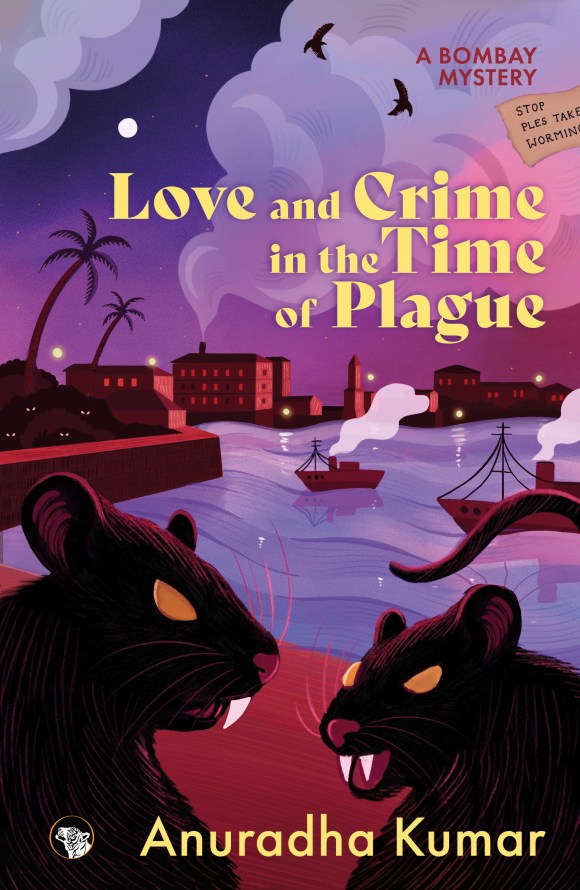


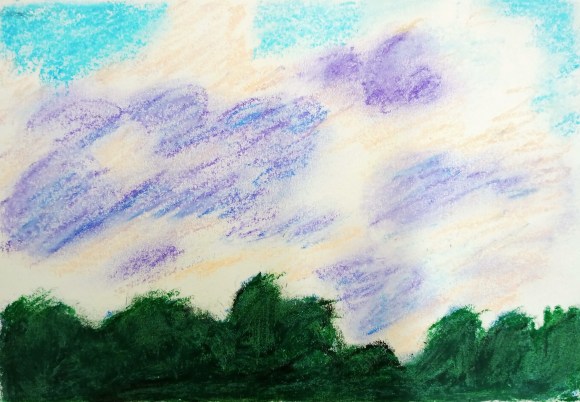
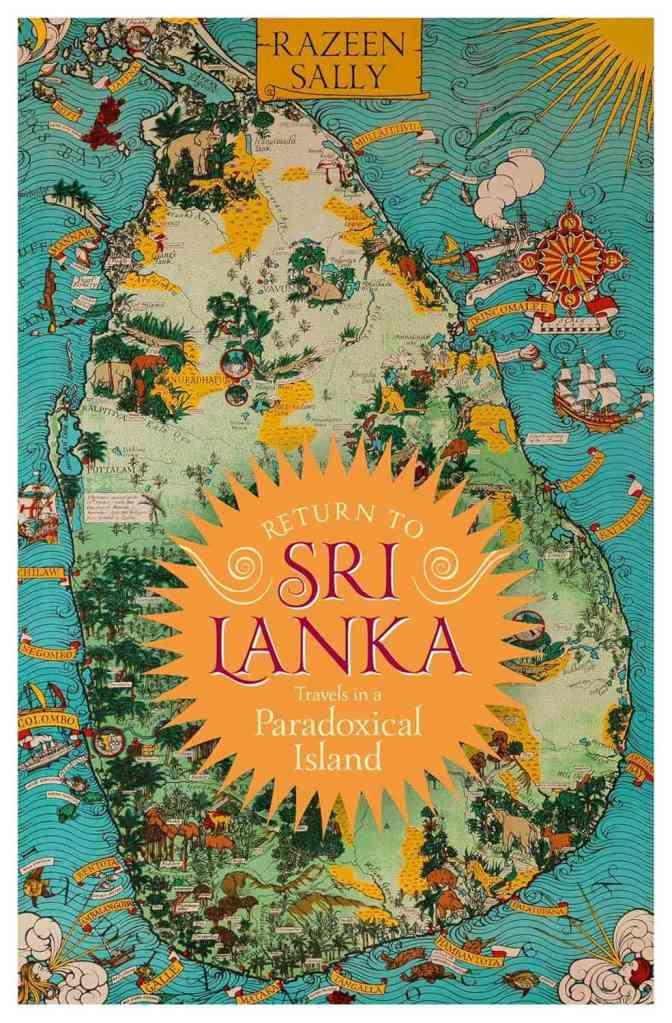
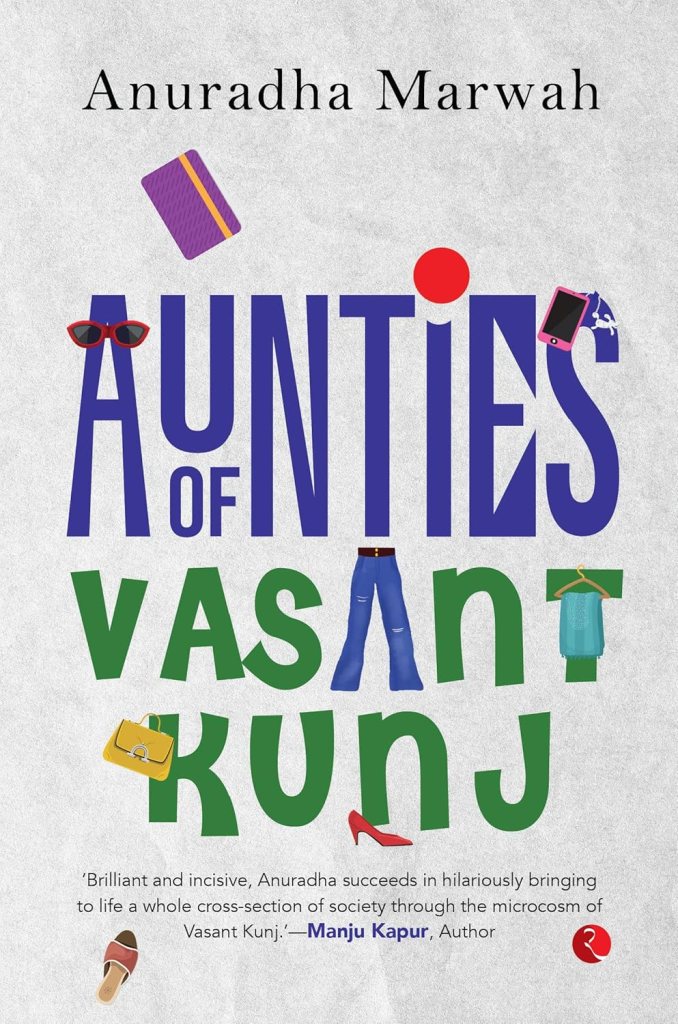




 Borderless