Mulla Fazul (died around 1858) is considered one of the greatest poets of classical period. He is credited to have assigned new dimensions to classical Balochi poetry in terms of themes and diction. He also wielded equal command in Arabic and Persian languages which is evident in his poetry. The following poems have been taken from the anthology called, Drapshokin Sohail1, compiled and edited by Faqeer Shad.
MY BELOVED


Like the moon of the fourteenth night,

My beloved’s face glows bright.

She is the lightning on rainclouds,

Above the mountains that does strike,

Or a pomegranate

That ripens in weeks

Its blooming buds.

How desperately my ailing heart seeks!


WORLD


She seduces and ensnares a stranger

And her husband she cheats on and betrays.

The world is an unfaithful woman,

Each day she flirts in a new way.


HATRED TOWARDS BRETHREN


If a man harbours

Hatred towards his brother,

Off his sanity and wisdom will go.

The comforts of his abode

Away the scorching wind will blow

And soon the foemen

Subdue him with the sword.


DISUNITY


In disunity, what will you gain, after all?

The sun has gone past the horizons.

Night has descended on the world.

It’s dark wherever I cast a glance.
.
Translation from Balochi: A Shining Star in Ursa Minor ↩︎
Fazal Baloch is a Balochi writer and translator. He has translated many Balochi poems and short stories into English. His translations have been featured in Pakistani Literature published by Pakistan Academy of Letters and in the form of books and anthologies.
PLEASE NOTE: ARTICLES CAN ONLY BE REPRODUCED IN OTHER SITES WITH DUE ACKNOWLEDGEMENT TO BORDERLESS JOURNAL
When you encounter something beautiful,

Even if you are not familiar with beauty,

Be willing to approach it,

Rather than hesitating and distancing yourself.


When something good is in front of you,

Even if it feels unfamiliar,

Show an interest,

Instead of being overly critical and parting ways.


When you encounter something true,

Even if you usually don't care much about it,

In the realm of human existence, truth is necessary.

Knowing that truth ultimately stays with us,

Accept it, instead of discarding it like an old rag.


Unacceptance, leads to inevitable collisions,

And regrets -- both big and small.

You end up being tossed around and remain indecisive at every turn.
Ihlwha Choi is a South Korean poet. He has published multiple poetry collections, such as Until the Time When Our Love will Flourish, The Color of Time, His Song and The Last Rehearsal.
.
PLEASE NOTE: ARTICLES CAN ONLY BE REPRODUCED IN OTHER SITES WITH DUE ACKNOWLEDGEMENT TO BORDERLESS JOURNAL.
Banjara author Ramesh Karthik Nayakdiscusses his new book, Chakmak (flintsone), giving us a glimpse of his world. We also have a brief introduction to his work. Clickhere to read.
Translations
Demanding Longevityby Quazi Johirul Islam has been translated from Bengali by Fakrul Alam. Clickhere to read.
Moonlight, a poem by Bashir Baidar, has been translated from Balochi by Fazal Baloch. Clickhere to read.
Maithili Poetryby Vidyanand Jha has been translated from Maithili by the poet himself. Click hereto read.
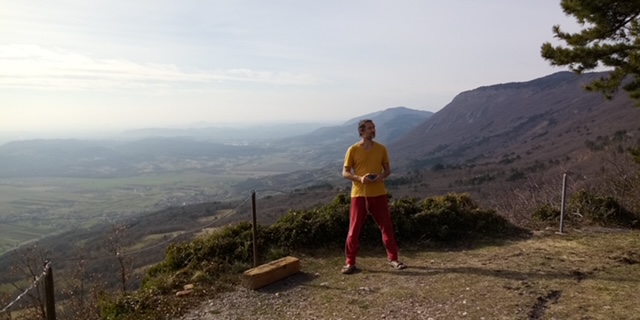
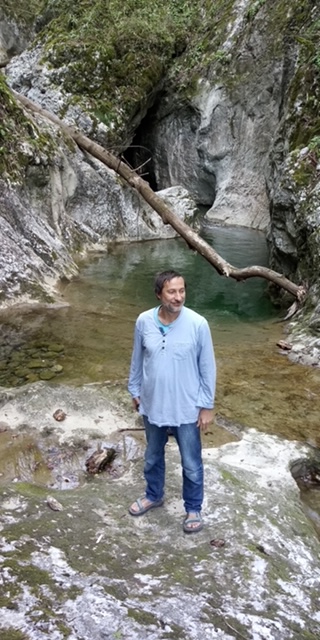
If he had stayed in his first job as a bank clerk, perhaps Tomaž Serafi would never have discovered new worlds beyond the borders of the small central European country he grew up in. But he ventured out to find both ancient wisdom and inner truths. He talks to an old friend Keith Lyons.
In Mahayana Buddhism, there is a term ‘Bodhisattva’ for those who reach the threshold of enlightenment, but choose instead to remain behind delaying personal liberation, to dedicate themselves to the benefit of others. To me, Tomaž Serafi is like a compassionate Bodhisattva, gently opening doors for others, and encouraging them to go through.
But then, what do I know? I first met Tomaž more than 20 years ago, connected by a woman we loved. But when I recently scanned a map of Europe, one of the first things that came to mind was that in a modest apartment overlooking the Ljubljanica River near the heart of Slovenia’s capital, Tomaž was doing his thing, living his life to the fullest, letting his light shine.
He doesn’t just feature in my own personal geography or spiritual map of the world. Over the last two decades when travelling in Asia or Australasia I’ve come across people from Ljubljana, and on too many occasions, it turns out they also know Tomaž.
What can you tell us about where you live, in Ljubljana?
Ljubljana is located in the heart of Europe, nestled between Italy, Austria, Hungary, Croatia, and the Adriatic Sea. Slovenia’s capital city is neither large nor small, with a population of 300,000. It’s a delightful place to reside, featuring a vibrant community of young people, and hosting numerous cultural events.
I live in the city centre, right alongside the picturesque green river known as the Ljubljanica. From my window, I enjoy a spectacular view of Ljubljana’s castle perched atop a hill and the flowing river. If I wish to take a stroll in nature, there’s a forest just a 3-minute walk from my house in one direction and 15 minutes in the other. Even in the city centre, there are plenty of trees and green spaces.
Ljubljana is a hidden gem in Europe, and not many people know about its story. What can you say about the country and its people?
When I was born in 1962 Slovenia was a part of Yugoslavia, which was a non-aligned country, not affiliated with either the capitalist Western bloc or the communist Eastern bloc. Yugoslavia was a socialist country, somewhere between communism and capitalism. It was wealthier than communist countries but not as affluent as capitalist ones. Back then, we didn’t have much, but there were no truly impoverished people. Nobody was starving, and nobody was wealthy.
Today, we have a significant number of very wealthy individuals alongside many who are extremely poor, struggling with hunger and homelessness. Presently, life in Slovenia is not significantly different from that in other European countries.
What was it like for you growing up in the 1960s and 1970s in Slovenia?
Back then, we didn’t have cell phones and computers, so we spent most of our time outdoors playing with friends. We played games like hide and seek and competed to see who could run the fastest, jump the highest, climb the highest tree, and so on. When I was a child, I either played outside with friends or read books.
Where did reading books take you?
Books became my passion from the moment I learned how to read. Through books, I learned about other places on Earth and different cultures. I especially adored books about Native Americans. I read all of Karl May’s books [1]– Apache chief Winnetou was my number one hero.
So your interest in the whole wide world came from books?
Yes, my love of books furthered my fascination with other cultures. I’ve always been an avid reader. When I recognised that our own culture was not faring well, that it was troubled and leading us toward a precipice, I became curious about other cultures, especially indigenous ones. I began to delve into literature about Native American, Aboriginal, Celtic, and other cultures, exploring their spirituality and beliefs.
What put you on a path of exploring spirituality?
When I was 15, I fell off a rock wall in a canyon while I was climbing, plummeting 15 meters to the ground. I lay there, unable to move, and had to be rescued and taken to the hospital. Fortunately, it turned out that nothing was broken, but that incident profoundly changed my life. I began to contemplate the concepts of life and death. Death came close, examined me, and decided to spare me for a while longer.
Since that moment, I haven’t been afraid of death anymore. I also started pondering the meaning of life, which became the most significant question for me: What is the meaning of life? That question guided me towards spirituality and spiritual growth. Ever since, spirituality has been the most vital aspect of my life, (alongside, of course, the elements of sex, drugs, and rock and roll).
How were your first experiences venturing overseas?
My first journey took place when I was 15 years old, and I hitchhiked through Europe. I passed through Italy, and in Genoa, I attempted to buy marijuana. I gave money to a guy who entered a house but never returned. It was only then that I realised he had exited through another entrance at the back of the house.
Later in the Côte d’Azur, I purchased LSD, only to discover that I had received plain candy instead. In Nice, I was robbed by a group of 14-year-old Algerians. While hitchhiking on the highway outside of Paris, a large truck deliberately ran over my backpack, scattering all my belongings on the road. Moments later, the police arrived and informed me that hitchhiking on the highway was prohibited. When I showed them what had happened to my backpack, they simply shrugged and drove away.
In Brittany, a kind couple invited me to sleep in their house because it was raining, and I had intended to sleep outside in my sleeping bag. In Paris, a young man around 20-years-old invited me to stay in his apartment, but as we shared the same bed, he tried to put his hand into my underwear.
From these experiences, I learned that I couldn’t trust everyone and that I needed to be cautious. I also discovered that some people are incredibly generous and trustworthy. Most importantly, I learned that I am the master of my life, and it’s best to rely on myself. I also realized that the world is vast, and not every place is the same as my small Slovenia. I encountered people of various nationalities and skin colours, broadening my horizons. I understood that a person’s nationality doesn’t matter; fundamentally, we are all the same. In every country, there are both good and not-so-nice people. But regardless of where they are, everyone shares the same desire: to find happiness.
Has your style of travel changed over time from those first adventures in Europe?
When I was younger, I was restless and eager to explore as many places as possible, often staying in one place for no more than a day or two. However, as time went on, I came to realise that the longer I remain in one location, the more fulfilling it becomes. I grow more peaceful and content, and it’s only then that I can truly savour and fully immerse myself in the experiences.
I also came to understand that the slower I travel, the more profoundly I connect with the landscapes I traverse. When I travel by car, it feels like I’m merely watching the scenery on a television screen. Travelling by bicycle is a much richer experience. Walking on foot is even better, as I absorb every step of the journey. Travelling by public transport has its own appeal. On a bus, I can keenly observe the locals, their personalities, and their customs, which offers a splendid perspective on the places I visit.
What has been a really memorable travel experience for you?
One of the most memorable places that I visited in Ghana was a village called Sonyon. I was travelling by bicycle, and wherever I went, I would tell the people that I wasn’t a tourist but a pilgrim who had come to bestow blessings upon them. You can only reach this village on foot or by bicycle. Later, I learned that it’s a spiritual village where people from all over come to heal or achieve specific goals. They perform offerings, and then conduct certain ceremonies, and they say it has a powerful effect.
The houses in this village are single-story, made of mud, and have flat roofs. They are built close together, so in the evening, the villagers go up to the roofs, where it’s cooler due to a gentle breeze, and they walk around the village from house to house, like on a promenade. They even sleep there sometimes. I lay on the roof, and children came up and started touching me because they were curious about my white skin. I lay on my stomach, patted my back, and said, “You can touch me here,” and they began to stroke and massage me. It was a fantastic feeling, like being caressed and massaged by five or six children!
And how about when travelling in my home country, New Zealand?
One of the most memorable experiences during my first trip to New Zealand’s North Island was while stopping for a short break near a magnificent coastline while hitchhiking. I wanted to stay there for a while. So, I headed towards the coast, found a suitable spot, and set up camp. I spent quite a few days there. I was truly enjoying myself. I remained naked throughout the experience, frequently leaping into the water, singing loudly, dancing, and engaging in meditation, among other activities.
Then I was walking for a long time and eventually, I ran out of water and food. With my last bit of strength, I managed to reach the top of a hill. According to the information in my book, I should have soon come across the first settlement along the way. However, the path had disappeared. Tall grass had grown all around me. I climbed onto a rock and saw a belt of forest nearby, with a path beyond it. I headed towards the forest. Wild boars ran past me. The forest was so overgrown that it took me an hour to reach a path about a hundred meters away. I was dirty and scratched, my clothes were torn, and I was hungry and thirsty. It was Christmas Eve.
Soon, I heard human voices and saw a holiday trailer. People were having a picnic. I asked them if I was heading in the right direction towards the main road. They confirmed it and said, “Wait a minute. Are you thirsty, or hungry? Have a beer. It’s Christmas Eve.” I stayed with them. Soon, Māori friends joined them. We sat around the fire, ate and drank, talked, an elderly Māori woman shared stories of their spirituality and sang their songs, and I sang some of ours. I couldn’t have asked for a better Christmas gift.
Let’s go back to your earlier existence. What happened for you to give up a career working in a bank?
It all began with Illusions (1989) by Richard Bach. I was still employed at a bank when I came across this book – and it had a profound impact on me. It meant so much to me that I made a personal commitment to translate it, despite having no prior experience in translation. And so, I translated it. Subsequently, I submitted my translation to all the publishers in Slovenia, but unfortunately, none of them were interested (back then, the book didn’t align with the socialist Yugoslavia prevailing system). Undeterred, I took matters into my own hands. I photocopied 200 copies of my translation and sold them independently. With the proceeds from those sales, I was able to print an additional 500 copies. To my surprise, I found that I was earning more from these efforts than I would have if a publishing house had purchased my translation.
This realization led me to make a life-altering decision—I left my job at the bank and embarked on a journey of translating and publishing other books that I believed had the power to touch people’s hearts and were of great importance. Authors such as Kahlil Gibran, J.R.R. Tolkien, the Dalai Lama, Louise Hay, William Bloom, Paul Solomon, Dan Millman, and Lobsang Rampa were just a few of the writers whose works I translated and shared with the Slovenian audience.
What do you think is the purpose of your life?
When I was going through a very difficult period in my life and couldn’t sleep one night, I went to the balcony and suddenly heard a voice loudly asking me, “Tomaž, why are you here, why did you come to this world?” Suddenly, it dawned on me, and I replied, “I came here to be happy!” The voice replied, “That’s right, Tomaž. Now, take a look at yourself. Are you happy?”
That’s when I decided to be happy. Once I made that decision, I stuck to it, and I truly was happy.
Later, many years later, I realised that I didn’t just come to be happy. I discovered that I’m even happier and more fulfilled when I make someone else happy. Gradually, I realised that my mission is to help others. I help them in various ways. At one point, I helped by translating and publishing books that benefited them. Later, I assisted them with counselling at the New Age Information Centre, which I founded. Now, I help them with therapeutic massages, with conscious and loving touch.
So what’s your superpower?
My superpower is undoubtedly my touch. However, this transforms into true power only when I am fully aware of it and fill it with love. In fact, my superpower is the awareness that everything is one, that all that exists, the entire universe, and all the things and beings that fill it, both material and immaterial, are actually one vast super being or God.
What things do you do most days to keep you balanced?
For a long time now, I’ve had a morning routine that fulfils me and makes mornings the most beautiful part of my day. When I wake up, I first express gratitude for the night and greet the new day that lies ahead, even before I open my eyes. Then I engage in exercise. I limber up all my joints, perform tantric exercises, breathing exercises, practice yoga, tai chi, and chi gong.
Afterwards, I sit down to meditate and spend some time in silence. Only then am I prepared for the day’s responsibilities. Similarly, in the evening, when I close my eyes, I give thanks for the day I’ve lived and bid goodnight to the night that approaches.
How do you think you’ve made an impact on the lives of others?
When I was publishing books, I received a lot of feedback from my customers which made my heart sing. Some were praising my translations, and some were thankful that I decided to publish such beautiful and meaningful books.
I receive even more grateful feedback from the people I massage. One client commented “I was led to the place where everything just is and exists.” And, Frida, gave me this wonderful endorsement, “For a moment you caught me in timelessness that lasted and lasted. My body was dancing under your loving hands and melted with your grace. Thank you for this magical experience. Your love for the work you are doing and for the people can be felt and it is healing.”
Recently I received this feedback, with the person saying “This was not an ordinary massage. Tomaž’s gentle presence made me feel safe, so I entrusted him with my process.” Another wrote “Tomaž, your creation is truly something special. You’ve given the world a wonderful gift, and I thank you for it.” I’m grateful to people like Medeja who thank me by saying “As if a flock of angels, completely devoted and determined angels, guided me through all possible processes — fears, pains, freedom, love, and beauty — and brought me to their home, where it is so beautiful and pleasant that there are no words to replace this feeling.”
What are the most important things you’ve learned?
I’ve learned that the most important thing for me is to live my soul.
I’ve also learned that no one is more important than another, that there is no good or bad, and that life isnot serious; rather, everything is like dust in the wind of the Universe, or as I like to say, “chickenshit.”
The most fulfilling action one can take is to help others because it brings genuine joy. As socialbeings, our connections with others are the most crucial aspects of life, far surpassing thesignificance of material possessions.
If you have a message or advice for others, what would it be?
Don’t worry; life is not so serious. Follow your heart and live your soul. Be yourself; you don’t have to be somebody else, you don’t have to pretend to be somebody else. Everything is changing; nothing is permanent; everything will end or transform. Live fully, live, and be aware of every moment of your life. That’s why we are here: to live our life fully, to experience everything from joy to sadness, from anger to love, from despair to fulfilment. And to be aware of all of this.
[1] Karl May( 1842-1912) German author. Winnetou was a novel by him.
Keith Lyons (keithlyons.net) is an award-winning writer and creative writing mentor originally from New Zealand who has spent a quarter of his existence living and working in Asia including southwest China, Myanmar and Bali. His Venn diagram of happiness features the aroma of freshly-roasted coffee, the negative ions of the natural world including moving water, and connecting with others in meaningful ways. A Contributing Editor on Borderless journal’s Editorial Board, his work has appeared in Borderless since its early days, and his writing featured in the anthology Monalisa No Longer Smiles.
PLEASE NOTE: ARTICLES CAN ONLY BE REPRODUCED IN OTHER SITES WITH DUE ACKNOWLEDGEMENT TO BORDERLESS JOURNAL.
Ujjal Dosanjh, former Minister from Canada and former Premier of British Columbia, discusses his autobiography, Journey After Midnight – A Punjabi Life: From India to Canada, and the need for a world with less borders. Click hereto read.
Professor Fakrul Alam discusses his new book of Tagore translations, Gitabitan: Selected Song-Lyrics of Rabindranath Tagore. Click here to read.
Translations
Tagore’sMusalmanir Galpa(A Muslim Woman’s Story) has been translated from Bengali by Aruna Chakravarti. Clickhere to read.
Masud Khan’s poem,In Another Galaxy, has been translated from Bengali by Professor Fakrul Alam. Click hereto read.
Wakeful Stays the Door, a poem by Munir Momin, has been translated from Balochi by Fazal Baloch. Click here to read.
Songs of Freedom: An Ordinary Taleis a narrative by Nandani based on her own experiences, translated from Hindustani by Janees. These narrations highlight the ongoing struggle against debilitating rigid boundaries drawn by societal norms, with the support from organisations like Shaktishalini and Pandies. Click hereto read.
Bankim Chandra Chattopadhyay’s Bangalar Nobbyo Lekhokdiger Proti Nibedon(a request to new writers of Bengali), has been translated from Bengali and introduced by Abdullah-Al-Musayeb. Clickhere to read.
Poetry on Rain by Masud Khanhas been translated from Bengali by Professor Fakrul Alam. Click here to read.
Dancerby Bashir Baidar, has been translated from Balochi by Fazal Baloch. Click here to read.
Ratnottama Sengupta presents the first hand account of the war in Bosnia-Herzegovina (1992-1995) from a letter from her brother, who was posted there as part of the peace-keeping troops. Click here to read.
Published in 1906,Megh (cloud)can be found in Tagore’s collection called Kheya (boat).
Adrift, without a beginning and an end,
With an awning of black and white blend,
        The sky is dressed whimsically.
We are all merely mounds,
Stacks of wafting clouds.
    I think only of him and his whimsicality.
We have no boundaries nor home,
We come and we are gone.

Suns, planets, stars shine bright.
Though they are garlands of lights,
        They remain tied to eternal tasks.
With permanence, they grace
Words illuminating a dark page.
         We are merely like drafts—
 With myriad of colours filled,
Re-written and erased at will.

Sometimes, when we are free,
We call out in a spree,
              Smiling without a reason.
Does our caprice create an illusion?
The rain still falls without evasion.
            The lightning is not a diversion.
Only, my friend, we do not stay.
With the breeze, we drift in or float away.
(This poem has been translated by Mitali Chakravartywith editorial support from Sohana Manzoor)
PLEASE NOTE: ARTICLES CAN ONLY BE REPRODUCED IN OTHER SITES WITH DUE ACKNOWLEDGEMENT TO BORDERLESS JOURNAL
Since I struggled with poor health most of my life, I imagined those who enjoyed good health must be happier too. As the saying goes, “Be fit and healthy and the world is yours!” The strong ones can till and plow the land, but that doesn’t win them the world, as far as I can tell. When I was younger, I naively believed that only the athletes at our college were truly vibrant and alive. The entire college and district worshiped Ahsanullah. Kabbadi[1] was a popular sport back then, and Ahsanullah a peacock strutting in the kabbadi arena. He would tag the opponent and remain standing. “Dare to tackle me big guy!” he seemed to say, before slipping away. Clapping his hands, he would be off and running and onlookers would marvel – “There he goes!”
We witnessed a new race of men when the team from Jullundhar’s Khalsa College arrived. The players — tall, big and heavy– were built like wrestlers. Unlike us, they didn’t tackle opponents with moves like the scissor or the squeeze or run with lightning speed. They would simply grab a man by the arm and immobilise him with sheer force. When they were the ones caught, a few vigorous shoves were enough to help them escape. But they failed against Ahsanullah. They couldn’t even touch him. He slapped the opponent, grabbed him in a tight embrace as if a vine had wrapped itself around the Sardar. Then he spun him to make him lose his balance. A carefully applied tug followed, enough to send him crashing to the ground. The Sardars realised that Ahsanullah’s slight frame was misleading. He was strong as iron. In the end, his opponents always lay defeated at his feet. Thanks to Ahsan and Shareefa, Zamindara College came first in all of Punjab. Khalsa College Jullundhar came in second. But gone are the days of college and kabbadi. Zamindara College was never the same and hockey and kabbadi met their demise. What a strange race everyone joined once the sports grounds disappeared.
I remained friends with all the kabbadi players. Shareefa became the head of a police-station and even played for the police. Ahsanullah would be invited to the village or the college for informal matches. Once he got married, worries seemed to swallow him up. Glasses appeared on his studious face. Kabbadi proved useless for all the players, except Shareefa who put it to good use, tackling and hustling even at his prison job. Thana, Bala, Qooma, Abdullah Raja, all my companions, simply disappeared from my life. The game of life is all about money and power. Some of them were even so-called leaders, honoured with titles like Chaudhry of the village, but being a Chaudhry is meaningless without also being a crook. Despite my ill health, I managed some thuggishness now and then. But those farmers didn’t manage too well. Some thirty years passed.
I left my job and moved to the US, but college days remained etched in my memory. Gujrat had turned into a graveyard where my youth lay buried. Lahore swallowed up everyone. And from Lahore I made my way to the US. The United States – a place filled with endless worry and anxiety, in which everyone seemed to be in a rush to get somewhere. The bright lights and women added some colour, but there was no time to look up.
One day, in the midst of all this, a man caught my eye. A partner in misery, he was staring at the ground. He was wearing glasses and sat slightly hunched, but I recognised that jawline of chiseled iron and the long nose sticking out. “Ahsan Sahab!” I called out. He looked up but his face showed no emotion. “I am Nadir Ali, from Dharekan!” I said.
“What fix have you gotten yourself into?” he asked. No greeting, no salam. What sort of a question was this? He shook my hand without enthusiasm and patted my back. “Managed to find any work?” he asked. I had addressed him as Sahab out of respect for my kabbadi hero. But this man was bent on remaining distant.
“Yes, I did, by the grace of Allah,” I replied mechanically.
“The grace of God does not make it to distant places like New York. It has yet to reach me,” he went on.
“What’s the matter Ahsan Sahab? Is everything alright? Are you well?” I asked.
“The night refuses to end!” he said. “Earlier, I worked a night shift. Now I work at a store at the bottom of a skyscraper. By the time sunlight makes it to the ground, it is evening.” His eyes, full of sadness, seemed to be longing for the sun just then.
“We are in a foreign land, Ahsan Sahab!” I said, acting all mature suddenly.
“Well, it is not like Pakistan is our father’s estate either!” he replied. He got off at the 34th Street station in midtown. I was free and decided to accompany him. He was carrying some stuff for the store, and I gave him a hand. It was not a long walk.
We both stood outside the store. The owner hadn’t yet arrived. Ahsan took out a hash-filled cigarette and lit it. “You didn’t smoke back then!” I commented, trying to put him at ease.
“It’s not like I play kabbadi anymore!” he said and smiled sweetly at last. He didn’t seem to be doing too well. He didn’t ask about Gujrat, and I didn’t bring it up. “I get off at six in the evening. Stop by if you are free,” he said, extending some warmth for the first time.
I returned at a little before six that evening and noticed that he smiled again. It was faint, yet for me that smile was worth a million. “Like the road to my village, like the path that leads me home”– words from one of my poems came to mind. He took me to a bar. “Two whiskeys!” he called out and presented cash at the bar as was New York’s custom. He sat silent. He had always been on the quiet side. But we were both comfortable in our silence.
A few drinks later, I noticed a slight sparkle in his eyes that hadn’t been there before. I felt intoxicated. “Brother, I should stop now,” I said, “I have exceeded my quota.” Once we were outside, I blurted out, “Ahsan Sahab, I write poetry.” What a thing to say! I noticed the moon was visible in the sky. “I have never been able to see the moon in New York before! How did it manage to survive the rough and tumble and make it up there tonight? Good lord, the memories!”
Ahsan Sahab benevolently prodded me — “What are you remembering?”
“You are the moon, Ahsan Sahab! Somehow, God made you appear tonight.”
“But this is the waning moon, Chaudhry!” he replied, sighing deeply.
Two weeks later, he was dead. Someone at the mosque mentioned that they were raising funds to return the dead body to Pakistan. Words tumbled out of my mouth as I helped lift the coffin for the journey. “He was worth his weight in gold!”
.
[1] Traditional contact sport of Punjab. Players “raid” the opponent’s territory and tag or touch opponents and then attempt to make it back. The defending team tries to stop the player from returning.
.
This story is a translation of Nadir Ali’s short story, first published in a collection titled Kahani Paraga , published by Suchet Kitab Ghar in 2004 in Lahore.
Nadir Ali (1936-2020) was a Punjabi poet and short story writer. In 2006, he was awarded the Waris Shah Award for his collection Kahani Praga. Coming late to writing, particularly fiction, Nadir Ali is credited with spearheading a unique style, blurring the boundaries between significant and petty, artistic and ordinary, primarily due to his preference for and command over the chaste central dialect understood by the majority of Punjabi speakers. He is also noted for writing and speaking about his experiences as an army officer posted in East Pakistan at the height of the 1971 war.
Amna Ali is Nadir Ali’s daughter. She translated a selection of Nadir Ali’s short stories into English in collaboration with Moazzam Sheikh. The translations were published by Weavers Press in USA in a book titled Hero and Other Stories in 2022. She is a librarian and lives in San Francisco with her husband and two sons.
PLEASE NOTE: ARTICLES CAN ONLY BE REPRODUCED IN OTHER SITES WITH DUE ACKNOWLEDGEMENT TO BORDERLESS JOURNAL
Premchand is the pen name adopted by the Indian writer, Dhanpat Rai Srivastava (31 July 1880- 8 October 1936). He was a pioneer of modern Hindi-Urdu literature which focused upon contemporary social issues including caste, the treatment of women, day labour and other socio-political concerns. He remains one of the most heralded writers in South Asia. His oeuvre includes more than a dozen novels, about 300 short stories, numerous essays as well as translation of foreign literary works into Hindi.
Balak or the Child
1
All the servants greeted me from afar, as soon as they saw me. Gangu being the only exception, he never greeted me. He probably expected a palagan [1] salute from me. Everyone said he was a Brahmin. I bet he was because he never touched my dirty utensils [2]. Even in the hot and sweaty summer, I never dared to ask him to fan [3] me. When Gangu saw that I was sweaty and there were no other servants around, he picked up the fan on his own. But his posture made clear that he was doing me a favour and I snatched the fan away from his hand.
Gangu could not tolerate disrespect from anyone. He had few friends. He didn’t mix with my other servants. He couldn’t socialise easily either. He was full of contradictions. Unlike my other servants, he neither smoked, nor drank. On the other hand, despite being called a Brahmin, he seemed illiterate. I never saw him worship like most Brahmins do, nor take a vacation to visit pious rivers. He still expected the respect generally offered to a Brahmin, which seemed reasonable. When non-Brahmins have rights to material assets inherited from their ancestors as if they had earned those themselves, then why would Gangu renounce the prestige and honour that was earned by his forefathers through selfless dedication and sacrifices of many generations? That was his proud legacy.
Being an introvert, I spoke very less to my servants. I didn’t want them to approach me without being called. And I didn’t like calling them for simple tasks. It was much easier to pour water from a pitcher myself, light a lamp, put on my shoes, or take out a book from the shelf without waiting for a servant. My servants had also become accustomed to my personality, so they didn’t approach me without need.
They generally came to me for advance payment of wages, occasionally to complain about another servant. I despised both actions. I paid everyone’s salary on the first day of the month. I hated anyone asking for something extra in the middle; I couldn’t keep an account of two or four extra rupees. Besides, when a person had a full month’s wages, he had no right to spend it in fifteen days and beg for a loan or an advance? I was equally disgusted by their complaints. I considered these complaints to be a sign of weakness, or the petty gesture of toad-eating.
So, one morning when Gangu entered my room and stood in front of me, it made me unhappy.
Shrugging my shoulders, I asked, “What’s wrong? I didn’t call you.”
I was struck by the unexpected humility, and hesitation on Gangu’s normally sharp and arrogant face. It appeared as if he wanted to answer, but he couldn’t find the right words. I paused, and asked again, with a little humility this time, “What is the matter? Speak up. You know that I am getting late for my walk.”
Gangu sounded disappointed, “No problem, sir, please go and enjoy fresh air, I will come later.”
His response worried me. If he told his story then and there, I could ask him to finish quick as he knew that I was in a hurry. Postponing it to another occasion could cause a disturbance in my writing and reading later since the servants may not even have considered that as serious work. They may have just considered my thinking time, which is the most difficult practice for me, as my rest time. I didn’t want him to come and irritate me while I was working on a plot. Considering all these consequences of delaying the discussion, I relentlessly said, “If you come to ask for advance payment, the answer is no.”
“No sir, I never asked for an advance payment.”
“Well, do you want to complain about anyone? I hate complaints.”
“No sir, that’s not my nature.”
Gangu stood up straight. It was clear from his gestures that he was gathering all his strength to make a move. He paused and spoke in a faltering voice, “Let me leave you sir. I can no longer work here. I want to quit.”
His proposal surprised me. It hurt my ego. I considered myself a reflection of humanity, I never insulted my servants, I tried to be as humble as possible. I was shocked at this proposal. I asked in a curt voice, “Why? What’s your complaint?”
‘I have no complaints sir. You have got a good temperament. You are the best master a servant can get. But I can’t work here anymore because I don’t want you to feel upset because of me.”
I got confused. My curiosity flared up. I sat on a porch chair and asked with a sense of surrender, “What’s going on? Speak up clearly?”
Gangu said very humbly, “The thing is… that… Gomati Devi, the woman, who has just been expelled from the widows shelter home …”
He paused. I got impatient and said, “Yes, she was fired, then what? What does she have to do with your job here?”
Gangu paused for a moment as if he was trying to remove some heavy burden from his head, “I want to marry her sir!”
I stared at him with astonishment. This illiterate Brahmin of antiquated ideas, who never caught the breath of modern civilisation, was going to marry a woman of such questionable character that she would not even be allowed to enter any gentleman’s home.
Gomati had caused a bit of a stir in the peaceful atmosphere of her locality. After her husband’s death, she was moved to the shelter housing widows. She was made to marry by the staff of the shelter thrice, but each time she returned within 10-15 months. The last time she returned to the shelter, the minister of the home for widows threw her out. After being banished from the shelter, she lived in a closet in the neighbourhood. She soon became the centre of gossip for the loners of the entire locality.
I was angry after hearing about Gangu’s poor choice. This idiot couldn’t find another woman in the whole world to marry. I also felt sorry for his simplicity. I was sure that the woman who ran away from three comparatively rich husbands wasn’t going to stay for long with him. Had he been wealthy, the relationship would probably have lasted for six months. This naïve man didn’t even have a chance for a week.
“Do you know the life story of this woman?” I asked him with a sense of warning.
“All lies sir, people slandered her,” Gangu replied with the confidence of an eyewitness.
“What are you talking about, didn’t she run away from three husbands?”
“What if they kicked her out of their homes?”
“Are you foolish? Why would a man who comes to the shelter to marry abandon the woman after spending thousands of rupees?”
Gangu said passionately, “No woman can live in a place where there is no respect for her. A woman deserves some love and affection, not just bread and clothes. Those men would think that they had done a great favour by marrying a widow. They wanted to own her body and control her mind. They don’t understand that you can’t enslave other humans. To make others your own, you need to surrender first. Moreover, she has some health issues too. Sometimes she passes out suddenly. Those men considered her a burden because of her sickness.”
“Do you really want to marry such a woman?” I shook my head, “Understand that such a marriage would make your life bitter.”
Gangu said excitedly like a would-be martyr, “I understand everything sir, God willing!’
I insisted, “So you have made up your mind?”
‘Yes, sir!”
“In that case, I will accept your resignation.”
I was not afraid of futile conventions. But keeping a servant who married a wicked woman was a complicated problem. Every day could throw up new issues, new problems, and possibly police cases, and lawsuits. There could also be an accusation of domestic violence, or theft. It would be good to be away from this swamp. Gangu appeared to act like a monkey jumping at the sight of bread without realising that the bread was greasy, stale, dry, and completely inedible. I explained him the situation, but he didn’t care. It was difficult for him to work with thought and intelligence.
2
Five months had passed since Gangu married Gomati. They lived in the same locality in a tiny house. Whenever I saw him in the market, I checked to ask how he was. I had developed a curiosity about his new life. It was a test of psychological as well as social issues. I wanted to see the result of his bold action. I always found him happy. He appeared to be careless, somewhat prosperous, and confident. He had a daily sale of 20 to 25 rupees resulting in a saving of approximately 10 rupees. This was a meagre livelihood; But he certainly had a boon of some God. Because he had no sign of poverty, shame, or disgrace. There was a glimpse of self-development and joy on his face, a reflection, perhaps, of his peace of mind.
One day, I heard that Gomati ran away from Gangu’s house. I was strangely delighted. Not that I was jealous of Gangu’s contented and happy life. But I was waiting for something to happen to him – a bad thing, a catastrophe, a shameful event. I warned him earlier because I had my own doubts. Now my fears had been confirmed. Gangu had to bear the brunt of his short-sightedness. He, then lunged as if he was getting a rare substance. As if the gates of paradise had opened for him. Alas, now he would realise that those who tried to prevent this marriage were his true well-wishers. We warned him about that woman’s character. We reminded him that she had not been faithful in her earlier relationships, and he too would be cheated ultimately. But he didn’t pay any attention. I was eager to meet Gangu and remind him of his mistake in confusing this woman with a boon from the Goddess.
By chance, I ran into Gangu in the market that same day. He appeared depressed, anxious, and totally lost. On seeing me, he started crying. He didn’t cry out of embarrassment when he saw me; he cried out of grief. “Sir,” he said when he approached me, “… Gomati left me.”
“It’s your fault Gangu. You didn’t listen to my advice. I warned you, but you didn’t care. Now tell me, what can you do except bearing the pain patiently?” I showed him superficial sympathy, “Did she take all your money or left something?”
Gangu placed a hand on his chest as if my question pierced his heart.
‘No sir! Please don’t say that … she took nothing. She left everything behind, even her personal belongings. No idea what evil she perceived in me. I guess I was not worthy of her. She is educated, and I am as illiterate as a buffalo. I am fortunate that she stayed with me for so many days. Had she lived with me for some more time, she would have turned me into a fine man. I will be indebted to her forever. She was like a divine blessing of a deity to me. I must have done something seriously wrong because she always ignored my everyday mistakes with grace. After all, I am a man with no status. She managed the home so well with my petty earnings.”
I was deeply disappointed to hear these words. I thought he would tell the story of her infidelity and I would get a chance to express sympathy for his blind devotion. But the fool’s eyes had not opened yet. He was still reciting her mantra. Of course, he was still in shock.
“Are you certain she didn’t steal anything from your house?” I teased him.
“Not even a rag, sir,” he replied.
“But she left you…. And you think she really cared about you?”
“You’re right, sir; I’ll cherish her love until I die.”
“She abandoned you despite all the love?”
“That’s the mystery I can’t decipher, sir. “
“Have you ever heard the term ‘Triya-Charitra’ [4]?”
“Hey sir, don’t say that. I will sing her praise even if someone puts a knife on my neck.”
“Then go and find her.”
“Yes, sir. I am not going to give up until I find her. I’m confident that once I find her, I can convince her to come back to me. And sir, my gut tells me she will return to me without a doubt. She didn’t run away from me out of rage. I will go and look for her, even if it means wandering for several months. I will search for her everywhere –the woods, the mountains, and the deserts. I’ll come back to see you if I succeed in my mission.”
Before I could reply, he quickly walked away from me.
3
After a few days, I had to go to Nainital for a month-long assignment. I had just returned from Nainital when Gangu approached me holding a new-born infant in his lap. He exuded fatherly pride and joy in every aspect of his appearance, including his walk, posture, face, and eyes.
I asked, “Maharaj [5], you went to find Gomati, did you find her?”
“Yes Sir, with your blessings, I found her in a maternity hospital in Lucknow. Before leaving, Gomati instructed a girlfriend of hers to keep checking if I started getting too nervous about her absence. That friend told me where Gomati was. I ran to Lucknow and met her in the hospital, where she gave birth to this adorable child.” He raised the child with pride and came closer to me. As if a player is displaying the trophy after winning the match.
I asked sarcastically, “Well, she gave birth to this boy? Perhaps that’s why she ran away from here. Is this your child?”
“This is God’s gift for me.”
“So, he was born in Lucknow, right?”
“Yes Sir, he is just a month old.”
“How many days have you been married exactly?”
“… nearly seven months sir.”
“So, he is born within sixth month of your marriage?”
“Correct sir.”
“And you think of him as your son?”
“Yes, sir.”
“Have you lost your mind?”
He either ignored, or completely missed my intention. He exclaimed, “She had almost died sir. For three days and three nights, she kept on suffering. I can’t tell more but it’s like a new birth for her.”
I got a bit sarcastic now, “This is first time that I saw a child born in six months.”
He got my point this time, and smiled, “Okay, I understand! I did not even notice it earlier. Gomati ran away from home because of this fear only. But I told her not to care about what people say.”
He continued, “I told her she was free to leave me if she got tired of me. I would leave so as not to bother her ever again, but I would always be available should she require assistance. I told her that I had married her because I loved her and believed she wanted me, not because she was a Goddess. I am the parent of this child. He was born to us after our marriage.” saying this, he laughed loudly.
My eyes started to shine. I forgot how exhausted I was after the long trip. All my inherent hatred was suddenly washed away by a fresh shower of love. I kissed that little boy as I held him in my lap. Probably I didn’t show that much affection to my own children as I did to the helpless child in my lap.
“Sir, you are a wonderful gentleman.” Gangu continued, “I keep mentioning you to Gomati. I’ve asked her to come here with me so we can meet you once. But she is hesitant to meet new people.”
Me and gentleman? The innocent demeanour of Gangu had just opened my eyes. I was ashamed of my narrow-mindedness, my voice was filled with devotion towards him as I uttered, “No, I am not a gentleman, you are one. And this child is the fragrant flower that results from your kindness. Why would Gomati come here to meet a shallow man like me? Come on, I’m coming with you to see her.”
I walked towards Gangu’s house, holding the child close to my chest.
Translator’s notes:
[1] Palagan was a common respectful greeting offered to the brahmins in Hindi belt of North India
[2] Indian culture is very particular about purity of kitchen and observance of cleanliness of food and utensils. Any utensil that has been used once for serving or eating food or touched by someone is considered unfit for use until washed and cleaned properly.
[3] Except for a few princely states like Mysore, most Indian homes didn’t have access to power supply during British rule. Hand fans were commonly used during summer months in every household.
[4] Triya-Charitra – Complex character of a women, as discussed in Indian literature.
[5] Maharaj – Literally king of kings, a respectful address for the brahmins throughout India and Nepal
Anurag Sharma is a writer and the co-founder of Radio Playback India. Anurag has been instrumental in podcasting over 300 short stories, radio dramas and Vinoba Bhave’s lectures on Gita. He is the editor-in-Chief of Setu, Pittsburgh.
PLEASE NOTE: ARTICLES CAN ONLY BE REPRODUCED IN OTHER SITES WITH DUE ACKNOWLEDGEMENT TO BORDERLESS JOURNAL.
Meet Barun Chanda, an actor who started his career as the lead protagonist of a Satyajit Ray film and now is a bi-lingual writer of fiction and more recently, a non-fiction published by Om Books International,Satyajit Ray:The Man Who Knew Too Much in conversation Click here to read.
Jim Goodman, an American traveler, author, ethnologist and photographer who has spent the last half-century in Asia, converses with Keith Lyons. Click here to read.
Translations
Professor Fakrul Alam has translated three Tagore songs around autumn from Bengali. Click here to read.
Nagmati by Prafulla Roy has been translated from Bengali as Snake Maiden by Aruna Chakravarti. Click here to read.
A Balochi Folksong that is rather flirtatious has been translated by Fazal Baloch. Click here to read.











 Borderless