Categories
Review

‘A Story of Moral Contradictions and Human Cost’

Book Review by Bhaskar Parichha

Title: India in the Second World War: An Emotional History

Author: Diya Gupta

Publisher: Rupa Publications

When we think of the Second World War, the images that most often come to mind are those of Europe’s ruin — the Blitz in London, the camps in Poland, the victory parades in Paris. India, though one of the largest contributors of men and material to the Allied cause, usually slips to the margins of that global story.

Diya Gupta’s India in the Second World War: An Emotional History sets out to correct that imbalance — and does so not by recounting battles or strategies, but by uncovering the feelings, memories, and private sufferings that shaped India’s wartime experience.

In this groundbreaking work, Gupta turns away from generals and governments to listen instead to soldiers, families, poets, and activists. Through letters, diaries, photographs, memoirs, and literary texts in both English and Bengali, she reconstructs the emotional life of a country caught in the contradictions of fighting for freedom while serving an empire. Her book is as much about the inner weather of a people at war as it is about history itself.

The story begins with the strange binary of India’s position in the 1940s. The British declared India a participant in the war without consulting its leaders. While nationalist politics in the country were reaching their boiling point, over two million Indian men were dispatched to fight on foreign fronts — from North Africa to Burma — under the Union Jack. They fought for a cause that was not their own, for a government that denied them liberty.

Gupta’s focus on emotion allows her to expose this moral paradox with nuance. The letters of sepoys from the Middle East reveal homesickness, confusion, and occasional pride; families back home are haunted by anxiety, caught between imperial propaganda and the whisper of rebellion. The result is a portrait of divided loyalties — of men and women who inhabited both the empire’s war and the nationalist struggle at once.

But it was the Bengal Famine of 1943 that made the war’s cost most brutally visible. Triggered by colonial economic mismanagement and wartime policies, it claimed nearly three million lives. Gupta’s chapter, ‘Every Day I Witness Nightmares’, captures this catastrophe through eyewitness accounts and literature that tried to make sense of it. Hunger, she suggests, became not only a physical condition but an emotional state — an emblem of the moral starvation of empire.

In poems and essays by writers such as Sukanta Bhattacharya and Mulk Raj Anand, the famine appears as a mirror held up to civilisation’s collapse. Tagore’s haunting late work, ‘Crisis in Civilisation’, forms a central thread in Gupta’s narrative — the poet’s disillusionment with humanity, his grief at the world’s descent into barbarism, and his call for renewal through compassion.

One of Gupta’s greatest achievements lies in her ability to braid together the intimate and the historical. The war years, she shows, were also years of reflection and redefinition. In the chapter named ‘The Thing That Was Lost’, she explores how the idea of “home” was transformed by displacement — whether through the departure of men to distant fronts or through the forced migrations caused by famine and air raids. Home, once a site of safety, became a space of longing and loss.

Another chapter, ‘Close to Me as My Very Own Brother”, turns the spotlight on male friendships in Indian war writing. Here, Gupta uncovers the tenderness that often underpinned comradeship — relationships that blurred the lines between duty and affection, and that offered emotional sustenance amid violence and uncertainty. In these pages, she challenges the stereotypes of stoic masculinity, showing that vulnerability and empathy were also part of the soldier’s story.

While the battlefield has long been the focus of war history, Gupta gives equal weight to those who remained behind. The women who waited, worked, and wrote — often in silence — emerge as witnesses in their own right.

Activists such as Tara Ali Baig, nurses and doctors on the Burma front, and countless unnamed mothers and wives populate the emotional landscape she paints. Through their letters and memoirs, we see how war invaded domestic spaces, transforming everyday life into a theatre of endurance.

Gupta writes of “anguished hearts” not as metaphor but as historical evidence. The fear of air raids, the sight of hungry children, the absence of loved ones — these, too, were the realities of India’s war. By restoring emotion to the historical record, she argues that feelings are not soft data but vital clues to understanding how societies survive crisis.

What makes the book so compelling is its insistence on looking at the global war from the Indian perspective. For Britain, the war was a fight for democracy and civilisation; for India, it was also a confrontation with the hypocrisy of those ideals. As Gupta notes, the same empire that called for liberty in Europe jailed Gandhi and suppressed the Quit India movement at home.

Seen from Calcutta rather than London, the war ceases to be a heroic narrative of Allied victory and becomes instead a story of moral contradictions and human cost. Gupta’s intervention is both historiographical and ethical: she reminds us that global history must include the emotions of those who bore its burdens without sharing in its glory.

A historian with literary sensibility, Gupta writes with precision, empathy, and grace. Her prose balances academic rigour with narrative warmth, allowing the reader to move effortlessly between archival fragments and the larger questions they evoke. Each chapter unfolds like a story, yet the cumulative effect is that of a symphony — voices rising and blending, carrying echoes of pain, pride, and endurance.

Gupta’s work has been widely celebrated for its originality and emotional depth. Shortlisted for the 2024 Gladstone Book Prize, it has drawn praise from scholars and critics alike for its fresh approach to war history. What distinguishes her study is not only its range of sources but its refusal to treat emotion as peripheral. For Gupta, feelings are the connective tissue of history — the invisible threads binding individuals to events, memory to nationhood.

The book is  more than the  war. It is about the human capacity to feel in times of fracture — to love, mourn, and imagine even amid devastation. It shows that the emotional life of a people can illuminate their political choices, their artistic expressions, and their vision of freedom.

By reassembling scattered memories and forgotten emotions, Diya Gupta offers a new way of reading both India and the world in the 1940s. Her India is not a passive colony swept along by imperial tides, but a living, feeling community navigating grief and hope in equal measure. The war, as she reminds us, did not just redraw maps; it reshaped minds and hearts.

In giving voice to those who seldom found one in history books — the sepoy writing from the desert, the poet confronting famine, the mother waiting for news — Gupta transforms statistics into stories, and stories into testimony. Her book stands as a reminder that history is not only written in treaties or timelines but in tears, silences, and the fragile language of feeling.

It ensures that those emotional histories, too long buried under the dust of archives, are heard again — quietly, insistently, and with the full weight of their truth.

.

Bhaskar Parichha is a journalist and author of Cyclones in Odisha: Landfall, Wreckage and ResilienceUnbiasedNo Strings Attached: Writings on Odisha and Biju Patnaik – A Political Biography. He lives in Bhubaneswar and writes bilingually. Besides writing for newspapers, he also reviews books on various media platforms.

PLEASE NOTE: ARTICLES CAN ONLY BE REPRODUCED IN OTHER SITES WITH DUE ACKNOWLEDGEMENT TO BORDERLESS JOURNAL

Click here to access the Borderless anthology, Monalisa No Longer Smiles

Click here to access Monalisa No Longer Smiles on Amazon International

Categories
Review

‘…Water is achromatic and otherwise called life…’

Book Review by Pradip Mondal

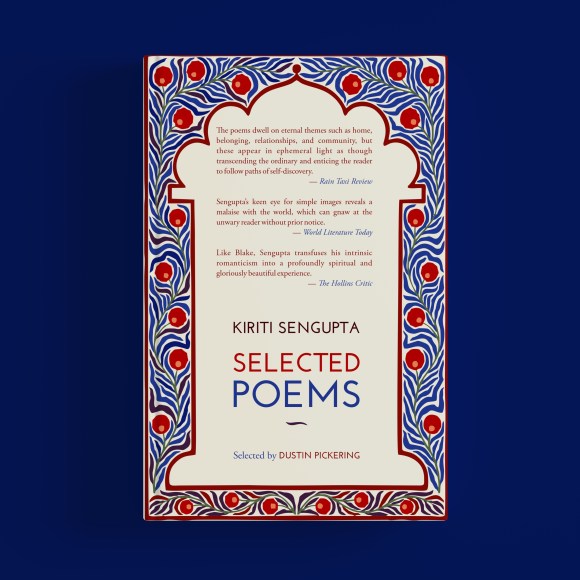
Title: Selected Poems

Author: Kiriti Sengupta

Publisher: Transcendent Zero Press (Texas)

Sir Philip Sidney, in his An Apology for Poetry, argues that the primary purpose of poetry is to “teach” and “delight”. Kiriti’s Sengupta’s Selected Poems serves both purposes though the poems do not preach at any point but leave the readers mulling over the ideas with the play of words. The book contains more than 125 poems, selected by Dustin Pickering, a writer and the founding editor of Transcedent Zero Press. The content covers an eclectic range of subjects—from personal musings to ecology, memory to myths and more — mostly republications from his earlier collections and some from journals.

An award-winning poet, publisher, editor, translator and critic, Sengupta believes himself twice-born as he states in his poem of the same name — ‘Twice Born’, written specially for this collection.  He has embraced the calling of a poet, forsaking the lucrative profession of a doctor. It’s not that he doesn’t vacillate: “The ink has dried on the paper; the pot can’t be refilled with scribbles. Do I now surrender my pen?” But poetry is his vocation; it would sound ludicrous if someone could ask a noted poet, “What if you weren’t a poet?”(“Intrinsic’)

There is a sense of flow in the poems despite his stylistic terseness. Water permeates his poetry. The poet believes: “…water is achromatic and otherwise called life.” As the poet is a deep observer of nature and its surroundings, he observes that water carries out its own duty: “Water has no call, no décor either; it floats the bone and/ the ash free.” In ‘Evening in Varanasi’, the poet assigns the water of the Ganges with exceptional qualities: “The water here is not/a fire extinguisher. /Flames rise through the water.” He connects the water to the Sun: “O Sun, I remember/I’ve bathed your feet/with the water of the Ganges”. ‘River of Tears and Mother’ airs the deep concern about the recalcitrance of those who ignore ecological issues: “Ganga has her stories to tell;/wish she had someone to listen to her.”

Ecological strains seep through Sengupta’s poems. In ‘The Pillars of Soil’, he draws a fine connection between human beings and trees through the image of the roots. The poet invokes a supreme spirit: “the world would need another maestro/who could sing for the seasoned flesh—/those who walked the earth—/whose roots ran deep into the ground”. In ‘Hibiscus’, he evocatively draws a curious connection between the colour of hibiscus flower and human blood: “…I’ll bloom/like a hibiscus:/the blush will endorse/my bloodline.” The epigraph of the poem, translated by Sengupta from a poem by the noted ‘rebellious’ Bengali poet, Sukanta Bhattacharya, re-enforces his stance.  

Concern for extreme air pollution in cities yields sardonic poetry: “Nature made the nasal frame fragile. /How do they breathe the vain air?” He also highlights pollution caused by plastics: “The earth has grown plastic. Water takes eons to seep”.

Some of Sengupta’s poems convey a sense of domesticity. “Clarity”deals with gastronomy as the poet succinctly invites the reader to succor ghee with all their five senses. In this piece, the poet reminisces about the aroma of ghee that his mother used to prepare. The poet here compares his mother’s organic ghee with his organic memory: “So organic is my memory—/the granular residue lifted us to heaven. /Ah! Pious Ghee, and incorrigible.”

In poems such as ‘Experience Personified’, the poet records his experience of the commonplace things: “Tiny droplets envelop my feet/and permeate the toes. /I don’t call it a feeling, I will name it/my experience”. It reminds a me of lines by Tagore: “But I haven’t beholden/what lies two steps away from my home/on a blade of paddy grain, a dazzling drop of dew”. Sengupta also doesn’t shy away from the recent happenings in India. In ‘The Untold Saga’, the poet recalls the abominable “Nirbhaya episode” and rues that, unlike Durga, Nirbhaya could not create an epic due to her untimely death.

The poet turns metaphysical – almost like John Donne[1]— when he asserts, “I now look beyond the flesh, bone and keratin, /I’ve been told/the finer body dwells undressed.” Though most of the poems are contemplative, the book offers some light-hearted ones too: “To my complete bewilderment, if the ghost appears, I’ve decided to offer it a chair first, and then I’ll plead, ‘Take a seat and relax! Let us share our stories.’” In ‘Gravity’, the poet offers a lighter note for the turbulence caused in the aircraft due to the inclement weather. He gives solace to his terrified son: “Relax, Bumps help us/ realize the earth.” In a haiku, punning on the word ‘wisdom’, the poet realises that it’s a test of a surgeon’s wisdom to pluck out a wisdom tooth (biologically called ‘the third molar’) of a patient.

Sengupta’s Selected Poems is a fabulous collection. These poems are like chosen seeds that contain intrinsic vigour to sprout through the age-old concrete floor, giving a message of hope in the face of all odds. Sengupta’s penetrating observations, coupled with his poetic prowess, can be vividly experienced by delving into the rich treasures hidden in between the covers.

.

[1] John Donne (1572-1631), Metaphysical poet

.

Pradip Mondal teaches at L. B. S. Govt. P. G. College Halduchaur, Nainital (India). He has been published in journals like Suburban Witchcraft (Serbia), Muse India (India), and Indi@logs (Spain).

.

PLEASE NOTE: ARTICLES CAN ONLY BE REPRODUCED IN OTHER SITES WITH DUE ACKNOWLEDGEMENT TO BORDERLESS JOURNAL

Click here to access the Borderless anthology, Monalisa No Longer Smiles

Click here to access Monalisa No Longer Smiles on Amazon International

Categories
Contents

Borderless, June 2025

Art by Sohana Manzoor

Editorial

‘How do you rebuild a life when all that remains is dust?’… Click here to read.

Translations

The Great War is Over and A Nobody by Jibanananda Das have been translated from Bengali by Professor Fakrul Alam. Click here to read.

Sukanta Bhattacharya’s poem, Therefore, has been translated from Bengali by Kiriti Sengupta. Click here to read.

 Five poems by Soubhagyabanta Maharana  have been translated from Odia by Snehaprava Das. Click here to read.

Animate Debris, a poem by Sangita Swechcha has been translated from Nepali by Saudamini Chalise. Click here to read.

Lost Poem, a poem by Ihlwha Choi  has been translated from Korean by the poet himself. Click here to read.

Sonar Tori (Golden Boat), a poem by Tagore, has been translated from Bengali by Mitali Chakravarty. Click here to read.

Poetry

Click on the names to read the poems

Allan Lake, Shobha Tharoor Srinivasan, Ron Pickett, Ananya Sarkar, George Freek, Bibhuti Narayan Biswal, Jim Bellamy, Pramod Rastogi, Vern Fein, Saranyan BV, Ryan Quinn Flanagan, Juairia Hossain, Gautham Pradeep, Jenny Middleton, Mandavi Choudhary, Rhys Hughes

Musings/Slices from Life

Where Should We Go After the Last Frontiers?

Ahamad Rayees writes from a village in Kashmir which homed refugees and still faced bombing. Click here to read.

The Jetty Chihuahuas

Vela Noble takes us for a stroll to the seaside at Adelaide. Click here to read.

Hope Lies Buried in Eternity

Farouk Gulsara muses on hope. Click here to read.

Undertourism in the Outback

Merdith Stephens writes from the Australian Outback with photographs from Alan Nobel. Click here to read.

Musings of a Copywriter

In Driving with Devraj, Devraj Singh Kalsi writes of his driving lessons. Click here to read.

Notes from Japan

In The Tent, Suzanne Kamata visits crimes and safety. Click here to read.

Essays

Public Intellectuals Walked, So Influencers Could Run

Lopamudra Nayak explores changing trends. Click here to read.

Where No One Wins or Loses a War…From Lucknow with Love

Prithvijeet Sinha takes us to a palace of a European begum in Lucknow. Click here to read.

Bhaskar’s Corner

In Can Odia Literature Connect Traditional Narratives with Contemporary Ones, Bhaskar Parichha discusses the said issue. Click here to read.

Feature

The story of Hawakal Publishers, based on a face-to-face tête-à-tête, and an online conversation with founder Bitan Chakraborty with his responses in Bengali translated by Kiriti Sengupta. Click here to read.

Stories

The Year the Fireflies Didn’t Come Back

Leishilembi Terem gives a poignant story set in conflict-ridden Manipur. Click here to read.

The Stranger

Jeena R. Papaadi writes of the vagaries of human relationships. Click here to read.

The Opening

Naramsetti Umamaheswararao relates a value based story in a small hamlet of southern India. Click here to read.

Book Excerpts

An excerpt from Wendy Doniger’s The Cave of Echoes: Stories about Gods, Animals and Other Strangers. Click here to read.

An excerpt from Mohua Chinappa’s Thorns in My Quilt: Letters from a Daughter to Her Father. Click here to read.

Book Reviews

Somdatta Mandal reviews Madhurima Vidyarthi’s Job Charnock and the Potter’s Boy. Click here to read.

Rakhi Dalal reviews Dhruba Hazarika’s The Shoot: Stories. Click here to read.

Satya Narayan Misra reviews Bakhtiyar K Dadabhoy’s Honest John – A Life of John Matthai. Click here to read.

Bhaskar Parichha reviews David C Engerman’s Apostles of Development: Six Economists and the World They Made. Click here to read.

.


Click here to access the Borderless anthology, Monalisa No Longer Smiles

Click here to access Monalisa No Longer Smiles on Amazon International

Categories
Editorial

‘How do you rebuild a life when all that remains is dust?’

The Great War is over
And yet there is left its vast gloom.
Our skies, light and society’s soul have been overcast…

'The Great War is Over' by Jibanananda Das (1899-1954), translated from Bengali by Professor Fakrul Alam.

Jibanananda Das wrote the above lines in the last century and yet great wars rage even now. As the world struggles to breathe looking for a beam of hope to drag itself out of the darkness induced by natural calamities, accidents, terror attacks and wars that seem to rage endlessly, are we moving towards the dystopian scenario created by George Orwell in 1984, which would be around the same time as Jibanananda Das’s ‘The Great War is Over’?

Describing such a scenario, Ahmed Rayees writes a moving piece from the Kashmiri village of Sheeri, the last refuge of the displaced refugees who were bombarded after peace was declared in their refuge during the clash across Indo-Pak borders. He contends: “People walked back not to homes, but to ruins. Entire communities had been reduced to ash and rubble. Crops were destroyed, livestock gone, schools turned into shelters or craters. How do you rebuild a life when all that remains is dust?”

People could be asking the same questions without finding answers in Gaza or Ukraine, where the cities are reduced to rubble. While we look for a ray of sunshine, amidst the rubble, Farouk Gulsara muses on hope that has its roots in eternity. Vela Noble wanders on nostalgic beaches in Adelaide. And Meredith Stephens travels to the Australian outback. Devraj Singh Kalsi brings in lighter notes writing of driving lessons while Suzanne Kamata creeps back to darker recesses musing on likely ‘criminals’ and crimes in her neighbourhood.

Lopamudra Nayak writes on social media and its impact while Bhaskar Parichha writes of trends that could be brought into Odia literature.  What he writes could apply well to all regional literature, where they lose their individual colouring to paint dystopian realities of the present world. Does modernising make us lose our ethnic identity and how important is that? These are questions that sprung to the mind reading his essay. As if in an attempt to hold on to the past ethos, Prithvijeet Sinha wafts around old ruins in Lucknow and sees a cemetery for colonial soldiers and concludes: “Everybody has formidable stakes, and the dead don’t preach the gospel of victory or sombre defeat.”

Taking up a similar theme of death and war is a poem from Saranyan BV. In poetry, we have colours from around the world with poems from Allan Lake, Ron Pickett, Ananya Sarkar, George Freek, Jim Bellamy, Ryan Quinn Flanagan, Juairia Hossain, Gautham Pradeep, Jenny Middleton, Mandavi Choudhary and many more. Multiple themes are woven into a variety of perspectives, including nature and environment, with June hosting the World Environment Day. Rhys Hughes gives a funny poem on the Welsh outlaw, Twm Siôn Cati.

We have mainly poetry in translation this time. Snehaprava Das has brought to us Soubhagyabanta Maharana’s poems from Odia and Ihlwha Choi has translated his own poem from Korean. Sangita Swechcha’s poem in Nepali has been rendered to English by Saudamini Chalise. From Bengali, other that Jibanananda Das’s poems translated by Professor Fakrul Alam, we have Tagore’s pensive and beautiful poem, Sonar Tori (the golden boat). Yet another Bengali poet, one who died young and yet left his mark, Sukanta Bhattacharya (1926-1947), has been translated by Kiriti Sengupta. Sengupta has also translated the responses of Bitan Chakravarty in a candid conversation about his dream child — the Hawakal Publishers. We also have a feature on this based on a face-to-face conversation, giving the story of how this publishing house grew out of an idea. Now, they publish poetry traditionally, without costs to the poet. Their range of authors are spread across continents.

Our fiction again returns to the darkness of war. Young Leishilembi Terem has given a story set in conflict-ridden Manipur from where she has emerged safely — a story that reiterates the senselessness of violence and politics. While Jeena R. Papaadi writes of modern human relationships that end without commitment, Naramsetti Umamaheswararao relates a value-based story in a small hamlet of southern India. 

From stories, our book excerpts return to the real world, where a daughter grieves her father in Mohua Chinappa’s Thorns in My Quilt: Letters from a Daughter to Her Father while Wendy Doniger’s The Cave of Echoes: Stories about Gods, Animals and Other Strangers, dwells on demystifying structures that create borders. We have two non-fiction reviews. Parichha writes about David C Engerman’s Apostles of Development: Six Economists and the World They Made. And Satya Narayan Misra discusses Bakhtiyar K Dadabhoy’s Honest John – A Life of John Matthai. Somdatta Mandal this time explores a historical fiction based around the founding of Calcutta, Madhurima Vidyarthi’s Job Charnock and the Potter’s Boy while Rakhi Dalal looks at fiction born of environmental awareness, Dhruba Hazarika’s The Shoot: Stories.

We have more content. Do pause by our contents page and take a look.

Huge thanks to all our contributors without who this issue would not have materialised. Heartfelt thanks to the team at Borderless for their support, especially Sohana Manzoor for her iconic artwork that has almost become a signature statement for Borderless.

Let’s hope that next month brings better news for the whole world.

Best wishes,

Mitali Chakravarty

borderlessjournal.com

Click here to access the contents for thJune 2025 Issue

READ THE LATEST UPDATES ON THE FIRST BORDERLESS ANTHOLOGY, MONALISA NO LONGER SMILES, BY CLICKING ON THIS LINK.

Categories
Poetry

Therefore: A Poem by Sukanta Bhattacharya

Translated from Bengali by Kiriti Sengupta

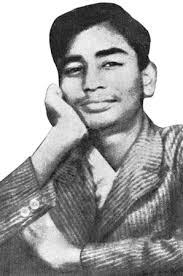
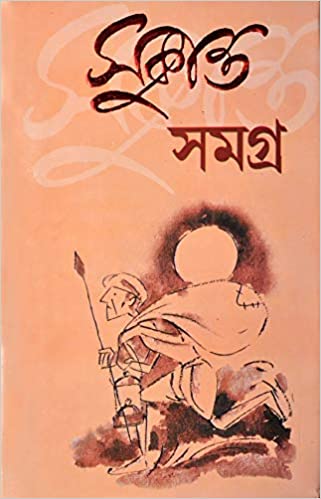
Sukanta Bhattacharya (15th August 1926-31st May 1947):  Called “Young Nazrul” and Kishore Bidrohi Kobi[1], Sukanta Bhattacharya died at the tender age of twenty of tuberculosis. He, like Nazrul, wrote poetry to protest the colonial atrocities. His poems describe the suffering of common people and looked forward to a world free of exploitation. His writings were anthologised in Sukanta Samagra (Complete Works of Sukanta, 1967), published posthumously, simultaneously in East Pakistan and West Bengal.

The once-paved paths 
are now vitiated.
How can I endure
the trauma without
divine intervention?

Death, death, everywhere...

Life's earnings
must be renounced.
When the means
become futile,
they are best discarded like tattered rags

[1] Youthful Rebel Poet: Nazrul was called the rebel poet of Bengal. He wrote a poem called Bidrohi or Rebel and his poetry had been that of rebellion like Sukanta Bhattacharya’s.

Kiriti Sengupta, awarded the 2018 Rabindranath Tagore Literary Prize and the 2024 Nilim Kumar National Honour, has had his poetry featured in various publications, including The Common, The Florida Review Online, Headway Quarterly, The Lake, Amethyst Review, Dreich, Otoliths, Outlook, and Madras Courier. He has authored fourteen books of poetry and prose, published two translation volumes, and edited nine anthologies. Sengupta serves as the chief editor of Ethos Literary Journal and leads the English division at Hawakal Publishers Private Limited, one of the top independent presses established by Bitan Chakraborty. He resides in New Delhi. Further information is available at www.kiritisengupta.com.

.

PLEASE NOTE: ARTICLES CAN ONLY BE REPRODUCED IN OTHER SITES WITH DUE ACKNOWLEDGEMENT TO BORDERLESS JOURNAL

Click here to access the Borderless anthology, Monalisa No Longer Smiles

Click here to access Monalisa No Longer Smiles on Kindle Amazon International