Categories
Editorial

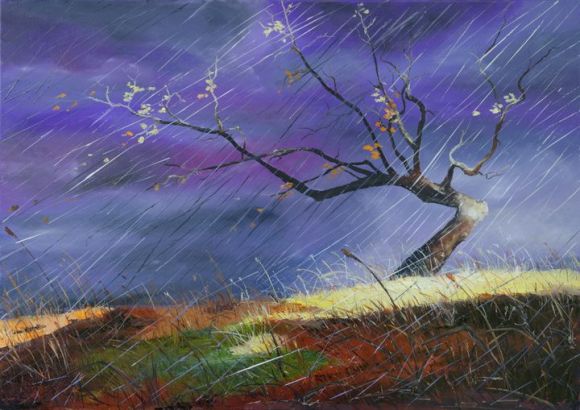
‘…I write from my heart of the raging tempest…’

I can see the heartbreak, 
Hear the wailing, the awakening,
I write from my heart
Of the raging tempest.

— Translation of Probhatey or ‘In the Morning’ by Rabindranath Tagore (1906)

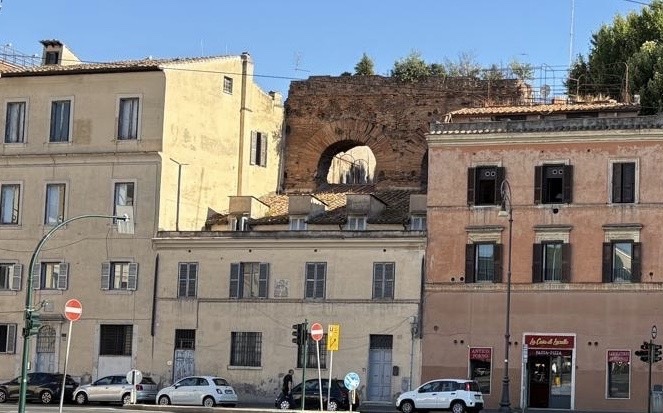
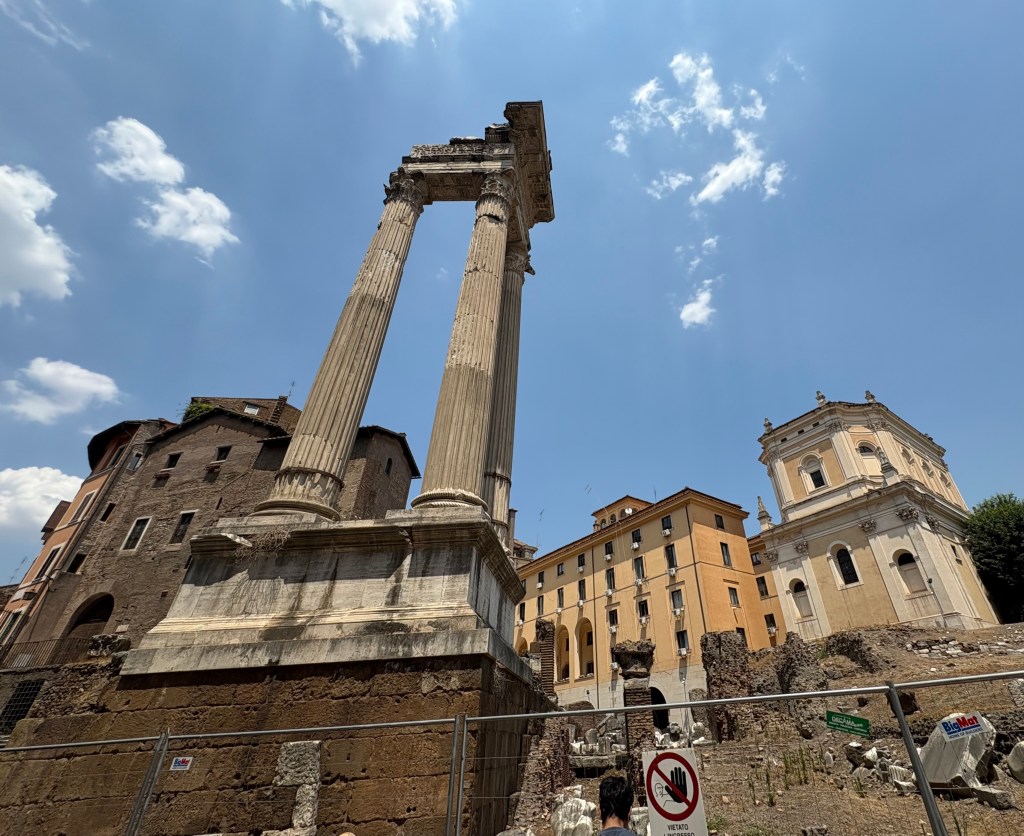
All around us, we hear of disasters. Often, we try to write of these as Tagore seems to do in the above lines. However, these lines follow after he says he draws solace and inspiration from a ‘serene lotus’, pristine and shining with vibrancy. He gazes at it while looking for that still point which helps him create an impact with words. That is perhaps what we can hope to do too — wait for a morning where clarity will show us the path to express not just what we see, but to find a way to heal and help. Finding parallels in great writings of yore to our own attempts at recreating the present makes us realise that perhaps history is cyclical. In Rome, new structures rear up against thousand-year walls, reflecting how the past congeals into the present.

Congealing the past into our present in this July’s issue are stories of American migrants — like Tom Alter’s family who made India their home — by Anuradha Kumar in her new non-fiction Wanderers, Adventurers, Missionaries: Early Americans in India. We feature this book with a review and an interview with the author where she tells us how and why she chose to write on these people. We have more people writing of their own wanderings. Mohul Bhowmick wanders into Cambodia and makes friends over a local sport while Prithvijeet Sinha strolls by the banks of the River Gomti in Lucknow. Meredith Stephens not only takes us to the Prime Meridien in Greenwich but also to Carnarvon which houses a science and technology centre in Australia. Devraj Singh Kalsi wanders with humour to discover gastronomical inspiration and hopes for sweeter recompense.

The dialogue started by Professor Fakrul Alam on libraries earlier with his essay and by Kalsi (with a pinch of humour) has been continued by Odbayar Dorj. She talks of the fading culture of libraries in Mongolia, her home country, and the vibrant culture that has blossomed in Japan. Suzanne Kamata writes of the rituals of summer holidays in Japan… including looking after a pet dung beetles.

Farouk Gulsara muses on ‘greatness’ as a concept with irony. Aparajita De muses on the word serendipity, applying it to her own situation while Ratnottama Sengupta muses on her encounter with the writings of eminent cover artist and writer who is not only a recipient of the Bangla Academy literary award but also immensely popular with children, Dhruba Esh, and translates one his many stories from Bengali.

In translations, Professor Alam has brought to us a beautiful poem by Jibanananda Das. Karim Drashti’s Balochi short poems have been rendered in English by Fazal Baloch and Snehaprava Das has found for us Odia poems of Sangram Jena in translation. Ihlwha Choi has rendered his own Korean poem to English while Tagore’s poem, ‘Probhatey (In the Morning)’ winds up the poetry in this section. We have more in prose — Surya Dhananjay’s story, Mastan Anna, translated from Telugu by Rahimanuddin Shaik.

In fiction, we have stories from around the world. Paul Mirabile sets his story in Burgaz. Spandan Upadhyay gives a mysterious narrative set in a world outside our waking consciousness and Vidya Hariharan gives us a glimpse of life in modern day India. From Bangladesh, Md Mujib Ullah writes a short cli-fi based on real life events.

Taking up the theme of cli-fi, Rajat Chaudhuri’s Wonder Tales for a Warming Planet seems to bring hope by suggesting adapting to changing climes. Rakhi Dalal tells us in her review: “It dares to approach the climate crisis through the lens of empathy and imagination rather than panic or guilt. In doing so, Rajat Chaudhuri gives us what many adult climate narratives fail to deliver—a reason to believe that another world is not only possible but already being imagined by the young. All we need to do is listen.” Bhaskar Parichha has discussed the autobiography of a meteorologist and Distinguished University Professor at George Mason University, Jagadish Shukla. In A Billion Butterflies: A Life in Climate and Chaos Theory, he claims Shukla has “revolutionised monsoon forecasting.” Somdatta Mandal has written about Dilip K Das’s Epidemic Narratives: The Cultural Construction of Infectious Disease Outbreaks in India. And Gower Bhat reviews Neha Bansal’s best-selling poetry collection, Six of Cups.

Poetry awakens myriad of hues in Borderless with verses from across the world. We have poems from Luis Cuauhtémoc Berriozábal, Ryan Quinn Flangan, Snehprava Das, George Freek, Laila Brahmbhatt, Tracy Lee Duffy, Amarthya Chandar, Jason Ryberg, Momina Raza, Shahriyer Hossain Shetu and more. Snigdha Agrawal gives a fun-filled poem about a duck and Rhys Hughes has given us a collection of verses like puzzles where we need to guess the animals! We also have an excerpt from Hughes’ The Eleventh Commandment And Other Very Short Fictions and Das’s short stories, Keep It Secret.

With that, we wind up the contents of this month’s issue. Do pause by our content’s page to check it out in more details.

This month’s edition would not have been possible without all our contributors, our fabulous team and especially Sohana Manzoor’s artwork. Huge thanks to all of them and to our wonderful readers who make it worthwhile for us to write and publish. Do write in to us if you have any feedback. Five years ago, we chose to become a monthly from a daily… We have come a long way from then and grown to host writers from more than forty countries and readers from almost all over the world. For this, we owe you all – for being with us and encouraging us to find fresh pastures.

Enjoy the reads!

Wishing you peace and happiness,

Mitali Chakravarty,

borderlessjournal.com

Click here to access the contents for the July 2025 Issue

READ THE LATEST UPDATES ON THE FIRST BORDERLESS ANTHOLOGY, MONALISA NO LONGER SMILES, BY CLICKING ON THIS LINK.

Categories
Musings Stories

Dhruba Esh & Amiyashankar

Ratnottama Sengupta introduces a prolific, popular and celebrated Bengali writer and an artist

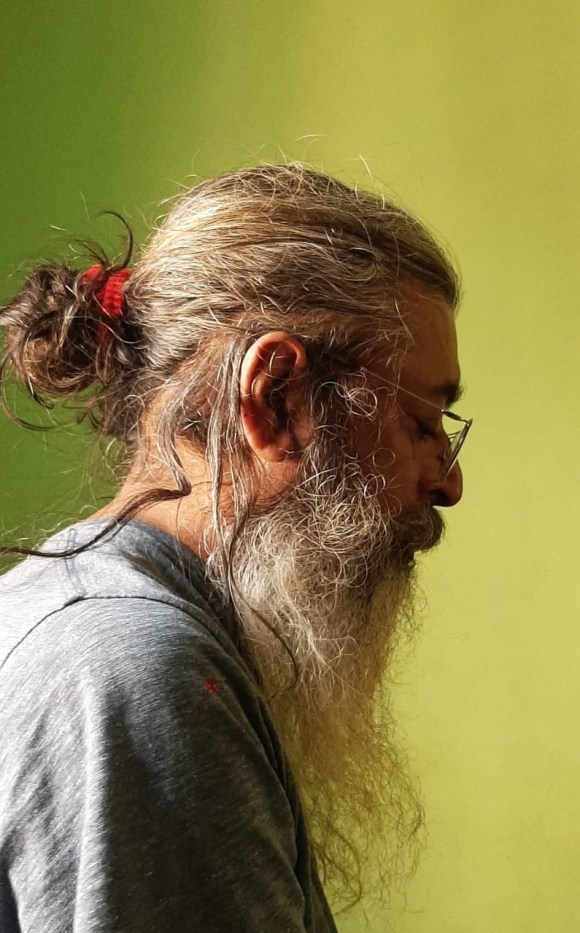
Dhruba Esh; Courtesy: Kamrul Hasan Mithon


Dhruba Esh, born 1967, is a full time cover designer – and a part time writer. He has authored stories for children and thrillers for grown-ups. A total of 40 books — or maybe more.”

This is from the cover flap of one of the artist’s published works. Cryptic? Yes. But it does not fail to convey the whimsy every Dhaka-based publisher and poet identifies with the name, Dhruba Esh. Read what Humayun Ahmed (1948-2012), a prolific author, dramatist and director of unforgettable films like Ghetuputra Kamola[1], saysabout the designer in Chaley Jaay Basanta Din[2]. “Must get hold of Dhruba Esh. For some unknown reason he’s been out of reach. Pasted on the front door of the flat he lives in is an A4 sized paper. It is adorned with the sketch of a crow in flight and is signed off with these words in Dhruba’s handwriting: ‘The Bird has Flown the Nest.’

“What I need to do is this: Throw away that A4 sheet and replace it with another, inscribed by these words: ‘Come back, Birdie!’

“Dhruba Esh might not know, but a bird that takes to its wings always returns to its nest. Only the caged bird has nowhere to fly off to. Its only reality is to stay put in one location…” 

Why am I taking a serious note of what Humayun Ahmed wrote? Not only because Dhruba Esh has penned the biography, Tumi Achho Kemon, Humayun Ahmed? More so because this custodian of Bangladesh literary culture, who continues to be a top seller at Ekushe Book Fair[3], is one of the cornerstones of modern Bengali literature on either side of the barbed wires.

Dhruba Esh is himself a legend in the Bangla literary firmament, I learn from Kamrul Hasan Mithon, a photographer turned publisher cum writer has been instrumental in reconnecting me with my father, Nabendu Ghosh’s roots in Kalatiya, once a village in Dhaka district that is now a suburb of the capital city. Bhaiti, as I affectionately address him, has been writing a column, Dyasher Bari (Ancestral Home), in Robbar (Sunday) magazine published online from Kolkata. Featured in it are all the major names of Bengali art, literary and cinema world — from Suchitra Sen, Mrinal Sen, Paritosh Sen to Ganesh Haloi, Miss Shefali, Sabitri Chatterjee and not forgetting Baba.

“Dhruba Esh is just one of his kind. He does not have a wife, no mobile, nor a Facebook page. He does not even ride a bus or train. If a destination is too long to walk, he travels only by rickshaw. He is most indifferent to money matters. But he is most enthusiastic about painting and designing. 

“Starting in 1989, when he was still a second year student at the Dhaka University, he has designed nearly 25,000 book covers. In addition he has designed music albums – and T’s too! Three years ago he was bestowed with the Bangla Academy Literary Award for his contribution to Children’s Literature – with titles such as Ayng Byang Chang [4] and Ami Ekta Bhoot[5].”

I fell for ‘Amiyashankar…’ at the very first reading. How effortlessly the surreal narrative etches a contemporary reality obtaining in the land of my forefathers!

Amiyashankar Go Back Home

Story by Dhruba Esh, translated from Bengali by Ratnottama Sengupta

Subachani or Bar footed Geese flying over Himalayas: From Public Domain

Amiyashankar Go Back Home!”

“That’s the title of the book?”

 “Yes Sir.”

“Is there a poem by this name?”

“No Sir. There’s no mention of Amiyashankar in my poetry.”

“No mention at all? Oh!”

“Can I send you some of my poems?”

“You may send.”

“Can you do the cover within this month?”

“Not this month. You’ll get it on the 12th of the next month. Only sixteen days to go now.”

He started laughing.

He’s a small town poet. A young professor. I have been to the town where he teaches in a girls’ College. It’s like a watercolour painting. There’s a river to the north of the town. Blue mountains in the distance complete the view.

The geese of Subachani had flown over this town on their journey towards the Manasarovar to restore Ridoy to his human size. The poet was unaware of this. He has not read Buro Angla[6].

“What is the book about? Birds?”

“You can find the PDF on Google.”

“Thanks. I will read it.”

Two days later he called. “Reading Buro Angla has sparked some fireflies in my mind. I’d not read the book until now.”

He was given my number by Rasul Bhai, a poet and a cricketer from the same town. He just about looks after the family publishing business. A good person. Last year I had done the cover for his book of poems, Lake Mirror of the Full Moon.

The poet had emailed his poems. He had said he’d send some poems, instead he had sent the PDF of the complete book. On the basis of Divine Selection I read 13 poems. He cannot be faulted for not reading Buro Angla. This poet writes good poetry. In two days I readied the cover for his book.

*

“Is Amiyashankar a friend of yours?”

“No.”

“Why are you telling him to go back home?”

“Because he is Amiyashankar.”

“What?”

“His wife waits for him.”

“He has no one of his own but his wife?”

“He has kids. One son, one daughter.”

“What does he do?”

“He’s a teacher in a government primary school.”

I was startled. Subhankar, Tushar, Amiyashankar, me — we are childhood friends. Our Amiyashankar is a teacher in a government primary school. He has a son and a daughter. The poet who lives in another town has never been to our town. He is not likely to have set his eyes on or made an acquaintance of Amiyashankar. Or, is a person likely to know another person through social media?

“I am not on social media,” said the poet.

“Why?”

“I get disoriented. Confused.”

“Oh. Your Amiyashankar’s wife is named Mitra?”

“Mitra. Yes, I did not tell you, sorry. Amiyashankar’s son is called Arnab, his daughter is Paramita.”

“Why are you creating Amiyashankar?”

“I have no friend.”

Our Amiyashankar’s wedded wife is Mitra. His son is Anu, Miti his daughter.

I call him.

“Hey, what’s the proper name of Anu and Miti?”

“Here — Anu is Arnab…”

“And Miti is Paramita?”

“Yes. You know it already.”

Really tough to suffer this.

I mentioned the poet. Amiyashankar did not read or write poetry. He had never heard of the poet.

“A modern poet?” he was curious.

“A post-modern modern poet.”

“Now what is THAT? Good to eat or wear?”

“Eat. Wear.”

“Does it hide your shame?”

“It covers your shame.”

“Good if it hides all.”

“Yes. Right. Where are you now?”

“I’m here, at Moyna and Dulal’s stall, sipping tea.”

“Aren’t you cold? Go back home.”

Amiyashankar, go back home.

*

On the 12th I sent the EPS file of the cover to the poet.

“If you don’t like it you may discard it,” I messaged.

Reply: “Will you design another cover then?”

Reply: “No.”

Reply: “This will do. I like it. There’s no Amiyashankar but one can visualise him. Thanks. Do I pay you online through bKash?”

I sent my bKash number. He sent the money.

End of give-and-take.

*

I blocked the poet’s number. I deleted every bit of communication in the mail. We had an Amiyashankar in flesh and blood. The poet had concocted an identical Amiyashankar. That Amiyashankar did not live and breathe – how’s that? Such convolution and complication! I was fed up of continuously, endlessly, unendingly living in complexity.

Better to shut my eyes and think of uncomplicated glow worms in my mind.

.

[1] A 2012 film by Humayun Ahmed centring around the exploitation of ghetupatras – young boy performers, Komala being a ghetupatra.

[2] The spring day passes

[3] Known as Eternal Twenty-first Book Fair is the largest organised by the government in Bangladesh.

[4] Bang is frog in Bengali. The rest are fun rhyming words.

[5] I am a ghost

[6] Book by Abanindranath Tagore (1871-1951, nephew of Rabindranath Tagore) published in 1953. Buro Angul is Thumb in Bengali. This is the humorous story about a mischievous boy, Ridoy, who was shrunk to the size of a thumb. He had to journey to the Mansarovar in Himalayas to regain his original size and meets various creatures, including the geese referred to here.

Dhruba Esh, born 1967, is a full time cover designer — and a part time writer. He has authored stories for children and thrillers for grown-ups. A total of 40 books — or maybe more. This story was first published in Bengali in a hardcopy journal called Easel.

Ratnottama Sengupta, formerly Arts Editor of  The Times of India, teaches mass communication and film appreciation, curates film festivals and art exhibitions, and translates and writes books. She has been a member of CBFC, served on the National Film Awards jury and has herself won a National Award. 

.

PLEASE NOTE: ARTICLES CAN ONLY BE REPRODUCED IN OTHER SITES WITH DUE ACKNOWLEDGEMENT TO BORDERLESS JOURNAL

Click here to access the Borderless anthology, Monalisa No Longer Smiles

Click here to access Monalisa No Longer Smiles on Amazon International

Categories
Contents

Borderless, May 2025

Art by Sohana Manzoor

Editorial

“Imagine all the people/ Living life in peace”… Click here to read.

Translations

The Day of Annihilation, an essay on climate change by Kazi Nazrul Islam, has been translated from Bengali by Radha Chakravarty. Click here to read.

Arise O Woman and Two Flowers on One Leafstalk, lyrics by Nazrul, have been translated from Bengali by Professor Fakrul Alam. Click here to read.

Five poems by Bipin Nayak have been translated from Odia by Snehaprava Das. Click here to read.

Identity by Munir Momin has been translated from Balochi by Fazal Baloch. Click here to read.

Among Strangers, a poem by Ihlwha Choi  has been translated from Korean by the poet himself. Click here to read.

Asha or Hope by Tagore has been translated from Bengali by Mitali Chakravarty. Click here to read.

Poetry

Click on the names to read the poems

Ryan Quinn Flangan, Jim Bellamy, Snehprava Das, George Freek, Niranjan Aditya, Christine Belandres, Ajeeti S, Ron Pickett, Kajoli Krishnan, Stuart McFarlane, Snigdha Agrawal, Arthur Neong, Elizabeth Anne Pereira, Rhys Hughes

Poets, Poetry & Rhys Hughes

In Did He Ever?, Rhys Hughes gives fun-filled verses on Lafcadio Hearn, a bridge between the East and West from more than a hundred years ago. Click here to read.

Musings/ Slices from Life

Will Dire Wolves Stalk Streets?

Farouk Gulsara writes of genetic engineering. Click here to read.

The Boy at the Albany Bus Stop

Meredith Stephens dwells on the commonality of human emotions. Click here to read.

The Word I Could Never Say

Odbayar Dorj muses on her own life in Mongolia and Japan. Click here to read.

Social Media Repetition

Jun A. Alindogan discusses the relevance of social media. Click here to read.

Shanghai in Jakarta

Eshana Sarah Singh takes us to Chinese New Year celebrations in Djakarta. Click here to read.

Musings of a Copywriter

In My Writing Desk, Devraj Singh Kalsi writes of the source of his inspiration. Click here to read.

Notes from Japan

In Feeling Anxious in Happy Village, Suzanne Kamata relates a heartwarming story. Click here to read.

Essays

Reminiscences from a Gallery: The Other Ray

Dolly Narang muses on Satyajit Ray’s world beyond films and shares a note by the maestro and an essay on his art by the eminent artist, Paritosh Sen. Click here to read.

This Garden Calls Out to Me: A Flaneur in Lucknow’s Sikandar Bagh

Prithvijeet Sinha takes us back to a historical landmark, made for love but bloodied by war. Click here to read.

Stories

Going to Meet the Hoppers

Fiona Sinclair writes a layered story on human perspectives. Click here to read.

The Ritual of Change

Parnika Shirwaikar explores the acceptance of change. Click here to read.

The Last Metro

Spandan Upadhyay explores the spirit of the city of Kolkata. Click here to read.

Nico Finds His Dream

Paul Mirabile narrates how young Nico uncovers his own yearnings. Click here to read.

The Bequest

Naramsetti Umamaheswararao gives a story reflecting a child’s lessons from Nature. Click here to read.

Conversation

Ratnottama Sengupta introduces and converses with photographer, Vijay S Jodha. Click here to read.

Book Excerpts

An excerpt from Devabrata Das’s One More Story About Climbing a Hill: Stories from Assam, translated by multiple translators from Assamese. Click here to read.

An excerpt from Ryan Quinn Flangan’s Ghosting My Way into the Afterlife. Click here to read.

Book Reviews

Somdatta Mandal reviews Arundhathi Nath‘s translation, The Phantom’s Howl: Classic Tales of Ghosts and Hauntings from Bengal. Click here to read.

Andreas Giesbert reviews Rhys Hughes’ The Devil’s Halo. Click here to read.

Bhaskar Parichha reviews Aubrey Menen’s A Stranger in Three Worlds: The Memoirs of Aubrey Menen. Click here to read.

.

Click here to access the Borderless anthology, Monalisa No Longer Smiles

Click here to access Monalisa No Longer Smiles on Amazon International

Categories
Editorial

“Imagine all the people/Living life in peace”

God of War by Paul Klee (1879-1940)
The sky weeps blood, the earth cannot contain
The sorrow of the young ones we've slain.
How now do dead kids laugh while stricken by red rain?

— from Stricken by Red Rain: Poems by Jim Bellamy

When there is war
And peace is gone
Where is their home?
Where do they belong?

— from Poems on Migrants by Kajoli Krishnan

Poetry, prose — all art forms — gather our emotions into concentrates that distil perhaps the finest in human emotions. They touch hearts across borders and gather us all with the commonality of feelings. We no longer care for borders drawn by divisive human constructs but find ourselves connecting despite distances. Strangers or enemies can feel the same emotions. Enemies are mostly created to guard walls made by those who want to keep us in boxes, making it easier to manage the masses. It is from these mass of civilians that soldiers are drawn, and from the same crowds, we can find the victims who die in bomb blasts. And yet, we — the masses — fight. For whom, for what and why? A hundred or more years ago, we had poets writing against wars and violence…they still do. Have we learnt nothing from the past, nothing from history — except to repeat ourselves in cycles? By now, war should have become redundant and deadly weapons out of date artefacts instead of threats that are still used to annihilate cities, humans, homes and ravage the Earth. Our major concerns should have evolved to working on social equity, peace, human welfare and climate change.

One of the people who had expressed deep concern for social equity and peace through his films and writings was Satyajit Ray. This issue has an essay that reflects how he used art to concretise his ideas by Dolly Narang, a gallery owner who brought Ray’s handiworks to limelight. The essay includes the maestro’s note in which he admits he considered himself a filmmaker and a writer but never an artist. But Ray had even invented typefaces! Artist Paritosh Sen’s introduction to Ray’s art has been included to add to the impact of Narang’s essay. Another person who consolidates photography and films to do pathbreaking work and tell stories on compelling issues like climate change and helping the differently-abled is Vijay S Jodha. Ratnottama Sengupta has interviewed this upcoming artiste.

Reflecting the themes of welfare and conflict, Prithvijeet Sinha’s essay takes us to a monument in Lucknow that had been built for love but fell victim to war. Some conflicts are personal like the ones of Odbayar Dorj who finds acceptance not in her hometown in Mongolia but in the city, she calls home now. Jun A. Alindogan from Manila explores social media in action whereas Eshana Sarah Singh takes us to her home in Jakarta to celebrate the Chinese New Year! Farouk Gulsara looks into the likely impact of genetic engineering in a world already ripped by violence and Devraj Singh Kalsi muses on his source of inspiration, his writing desk. Meredith Stephens tells the touching story of a mother’s concern for her child in Australia and Suzanne Kamata exhibits the same concern as she travels to Happy Village in Japan to meet her differently-abled daughter and her friends.

As these real-life narratives weave commonalities of human emotions, so do fictive stories. Some reflect the need for change. Fiona Sinclair writes a layered story set in London on how lived experiences define differences in human perspectives while Parnika Shirwaikar explores the need to learn to accept changes set in her part of the universe. Spandan Upadhyay explores the spirit of the city of Kolkata as a migrant with a focus on social equity. Both Paul Mirabile and Naramsetti Umamaheswararao write stories around childhood, one set in Europe and the other in Asia.

As prose weaves humanity together, so does poetry. We have poems from Jim Bellamy and Kajoli Krishnan both reflecting the impact of war and senseless violence on common humanity. Ryan Quinn Flanagan introduces us to Canadian bears in his poetry while Snigdha Agrawal makes us laugh with her lines about dogs and hatching Easter eggs! We have a wide range of poems from Snehprava Das, George Freek, Niranjan Aditya, Christine Belandres, Ajeeti S, Ron Pickett, Stuart McFarlane, Arthur Neong and Elizabeth Anne Pereira. Rhys Hughes concludes his series of photo poems with the one in this issue — especially showcasing how far a vivid imagination can twist reality with a British postman ‘carrying’ sweets from India! His column, laced with humour too, showcases in verse Lafcadio Hearn, a bridge between the East and West from more than a hundred years ago, a man who was born in Greece, worked in America and moved to Japan to even adopt a Japanese name.

Just as Hearn bridged cultures, translations help us discover how similarly all of us think despite distances in time and space. Radha Chakravarty’s translation of Kazi Nazrul Islam’s concerns about climate change and melting icecaps does just that! Professor Fakrul Alam’s translation of Nazrul’s lyrics from Bengali on women and on the commonality of human faith also make us wonder if ideas froze despite time moving on. Tagore’s poem titled Asha (hope) tends to make us introspect on the very idea of hope – just as we do now. At a more personal level, a contemporary poem reflecting on the concept of identity by Munir Momin has been translated from Balochi by Fazal Baloch. From Korean, Ihlwah Choi translates his own poem about losing the self in a crowd. We start a new column on translated Odia poetry from this month. The first one features the exquisite poetry of Bipin Nayak translated by Snehprava Das. Huge thanks to Bhaskar Parichha for bringing this whole project to fruition.

Parichha has also drawn bridges in reviews by bringing to us the memoirs of a man of mixed heritage, A Stranger in Three Worlds: The Memoirs of Aubrey Menen. Andreas Giesbert from Germany has reviewed Rhys Hughes’ The Devil’s Halo and Somdatta Mandal has discussed Arundhathi Nath’s translation, The Phantom’s Howl: Classic Tales of Ghosts and Hauntings from Bengal. Our book excerpts this time feature Devabrata Das’s One More Story About Climbing a Hill: Stories from Assam, translated by multiple translators from Assamese and Ryan Quinn Flangan’s new book, Ghosting My Way into the Afterlife, definitely poems worth mulling over with a toss of humour.

Do pause by our contents page for this issue and enjoy the reads. We are ever grateful to our ever-growing evergreen readership some of whom have started sharing their fabulous narratives with us. Thanks to all our readers and contributors. Huge thanks to our wonderful team without whose efforts we could not have curated such valuable content and thanks specially to Sohana Manzoor for her art. Thank you all for making a whiff of an idea a reality!

Let’s hope for peace, love and sanity!

Best wishes,

Mitali Chakravarty

borderlessjournal.com

Click here to access the contents page for the May 2025 Issue

READ THE LATEST UPDATES ON THE FIRST BORDERLESS ANTHOLOGY, MONALISA NO LONGER SMILES, BY CLICKING ON THIS LINK.

Categories
Conversation

‘Words, still photos, moving images – they are all storytelling’

Ratnottama Sengupta introduces and converses with a photographer who works at the intersection of art and social issues, Vijay S Jodha

Vijay S Jodha was yet to become one of India’s leading lens-based artists at the intersection of art and social issues. Back then, in the 1990s, he had no inkling that 30 years later he would be the chairperson of UGC-CEC[1] jury for selecting the best educational films made in India. Or that he would be the national selector and trainer in photography for the National Abilympics Association of India.

When I first met him, he was mounting a collaborative exhibition of his work with the elderly, their contribution to society and the care they deserve. Little did I know that the entire bent of this journalist-turned documentary filmmaker-turned photo artist would go on to focus on subjects ranging from mob violence, riot victims, farmers’ suicide, 75 years of Indian constitution to Joys of Christmas and the Bus Art of Tamil Nadu. 

Not surprising that the International Confederation of NGOs has honoured Vijay with the Media Citizen Award for using media to drive social change. And it is only one among hundreds of honours he has received in two dozen countries. These include awards and grants, from Swiss Development Agency to Ford Foundation and Bill & Melinda Gates Foundation. Screening of his films on 75 channels worldwide and in 250 festivals in 60 countries.

These seem tedious details? So, interestingly, two public showings of his work have been vandalised. And a false police case against him took eight years to be thrown out by India’s courts!

Conversation

Vijay how did you come into photography? 

I’m a trained filmmaker – I mastered in film production – and have been making films for two decades. My films have shown on 75 stations including Discovery, CNN, BBC. But training in photography I have none. All my photography is non-fiction work. Actually my films are also non-fiction or reality based work. I just find still photography very relaxing because, unlike films where a director is responsible for so many things, here I’m on my own. But there’s no production deadline. No huge budget is needed. I can address any subject that catches my fancy and pursue it over several years, without any worry. Otherwise it’s the same: photos or films, you’re storytelling around substantial issues that interest you, in a manner that does justice to those issues, and — hopefully — engaging to the viewers.

So who was your inspiration?

In photography it is obviously the greats who defined the grammar of the medium itself such as Robert Frank[2] and Cartier Bresson[3]. They’ve inspired us all in some manner. I’m fortunate that, as a part time journalist in New York decades ago, I got to meet and interview top filmmakers and photographers like Gordon Parks and Richard Avedon. 

I once did a course at New York’s School of Visual Arts where they honoured Mary Ellen Mark and she had come across. As a journalist, I covered Sebastião Salgado’s launch of his workers’ project that put him on the map (of photography). I met Raghubir Singh while doing a project on Ayodhya in India, and again in New York where we put up the same exhibition. He also photographed some of us – myself, Siddharth Varadarajan, the editor-publisher of The Wire who was then a student at Columbia University, and other Indian students — were protesting some human rights issue.

I’m also fortunate to have our finest photo-journalists and lens-based artists as friends. I can take across my work to get a feedback or pick their brains. This beats the best photo schools in the world. In fact years ago I did a book which had photos from all of them! This was the biggest photo project on the Tiranga[4] as listed in the Limca Book of Records. They have all done many books on their own but this is the only one where all these masters appear in a single volume, their works united thematically. Apart from Raghu Rai, Ram Rahman, Prashant Panjiar,  Dayanita Singh,  T Narayan, and the late TS Satyan, I’d also interviewed people across India, from the then Prime Minister Vajpayee to those selling flags at traffic lights for a few meagre rupees.

You did not go to any international school to train in the art or the technology aspect. So what prompted your PhD?

Three decades back when I decided to go into mass communication as a career there were few computers, no internet, no private TV channels, or mobile phones. Sorry if that makes me seem Jurassic but it was a world with very few media opportunities. Post college, I had got  admissions into a trainee programme with a newspaper as well as in the MA programme in International Relations at India’s premier Jawaharlal Nehru University. My father felt that a masters and exposure at JNU would be a better investment for journalism – probably the single best advice I’ve got in my entire career — and I followed that. 

Then for some time I worked in print media: I freelanced for newspapers, edited and published a journal for a business house, scripted for a film and worked on a book with one of my journalism heroes – late Kuldip Nayar. But in the pre-internet era newspaper articles had a very short life, so I felt the need to produce something that would last longer such as film. So I decided to get a degree in Film. It also encompassed all my interests, from writing to art to music, travel and photography.

You’ve not been a photo-journalist working for any journal or newspaper. Yet you felt inclined to do projects on environment, elder care, survivors of riots and mob violence, farmer suicide, art that travels. Was it inevitable, given your father’s background?

Actually I’ve done a bit of photo journalism too. During my film school days at NYU I was a writer-photographer for their student-run newspaper, Washington Square News. I’ve also been a stringer for mainstream dailies including The Economic Times where I shot images parallel to my writing. I did stills for Mira Nair’s Monsoon Wedding and of course stills for my own film projects. So I’ve a lot of published images in papers worldwide though my main gig has been films. 

Frankly I don’t see much difference between these mediums. Be it words, stills or moving images; an academic paper, photo books, or films, short or long – all this is story telling. I’m a story teller.

And subjects? I’ve filmed every possible subject except wildlife: I just don’t have the patience for that. Otherwise everything, from artist biopics — on Paritosh Sen and Prokash Karmakar, whose inaugural screening you also attended in Calcutta years ago — to films on environment. My The Weeping Apple Tree (2005) was among the first ones on climate change in India. It won the UK Environment Film Fellowship Award 2005 and had multiple screenings on Discovery, with an introduction by Sir Mark Tully.

At that time, few knew about climate change. So Delhi govt organised a special screening for their MLAs and officers of water, electricity and sanitation departments. It was screened at UNEP headquarters in Nairobi and in various festivals. UNIDO and other grassroots level NGOs used it to create awareness. Some years back an IFS {Indian Forest Service} officer told me that Himachal government uses it to train their forest officers. 

My film on gender, Pedalling to Freedom (2007) revisited an old initiative in one of the poorest parts of the world. It traced the life-changing impact of teaching 100,000 women to ride the bicycle. That film is in the US Library of Congress. It was also chosen for archiving at OSA Budapest, world’s premier repository of materials dealing with human rights. 

Then there are films that get food on the table. Training films. Corporate films. I once did a ‘funeral film’ on a well-known personality whose passing received a lot of press coverage in India but the NRI son could not come for the funeral.

What motivates you Vijay — money, international honour, or the possibility of social change?

Well, all this is livelihood so the money part is important. But doing work that gets recognised far and wide, that is substantial, to hold good for a long time – that’s a huge motivator. 

I have a slightly spiritual take towards this. I feel that regardless of our profession we are all bound by a dharmic or sacred duty. A teacher’s duty is to teach and a doctor’s is to heal. For those in the business of storytelling — including photographers — the sacred duty is to document, bear witness, push things forward. And believe you me, this has little connect with means or accessibility. 

To give you an extreme example: After the Nazis lost the war and Berlin fell, soldiers from the victorious allies army raped virtually every woman in Berlin. Few rapists were taken to task and  to top it, despite all the extensive coverage of the allies victory by forgotten photographers as well as superstars like Margaret Bourke-White  (known to us through her famous Gandhiji with charkha portrait) or Robert Capa (regarded as the greatest war photographer of all time), there was no coverage of this mass outrage in Berlin by anyone be it in photo essays in Life Magazine, or World War photo books. It appears in no Hollywood film or TV series.  

Likewise, fifty years ago, when India came under the draconian Emergency, our courts also endorsed the robbing of our Constitutional rights. Nobody documented, then or since, the forced sterilisation of 6,000,000 who were stripped of their reproductive rights. We, as photographers and filmmakers, failed on this front.

The First Witnesses is my project around farmer suicides. It is not an unheard issue nor something hard to get access. But how many have found it worth their while to document the issue? How many are documenting a disappearing art form or livelihood? Or our urban heritage being torn down? Our movie theatres once represented cinema as an inexpensive and readily accessible mass culture. Now they are being torn down even in smaller towns. Each had a unique character. Is anyone documenting that?

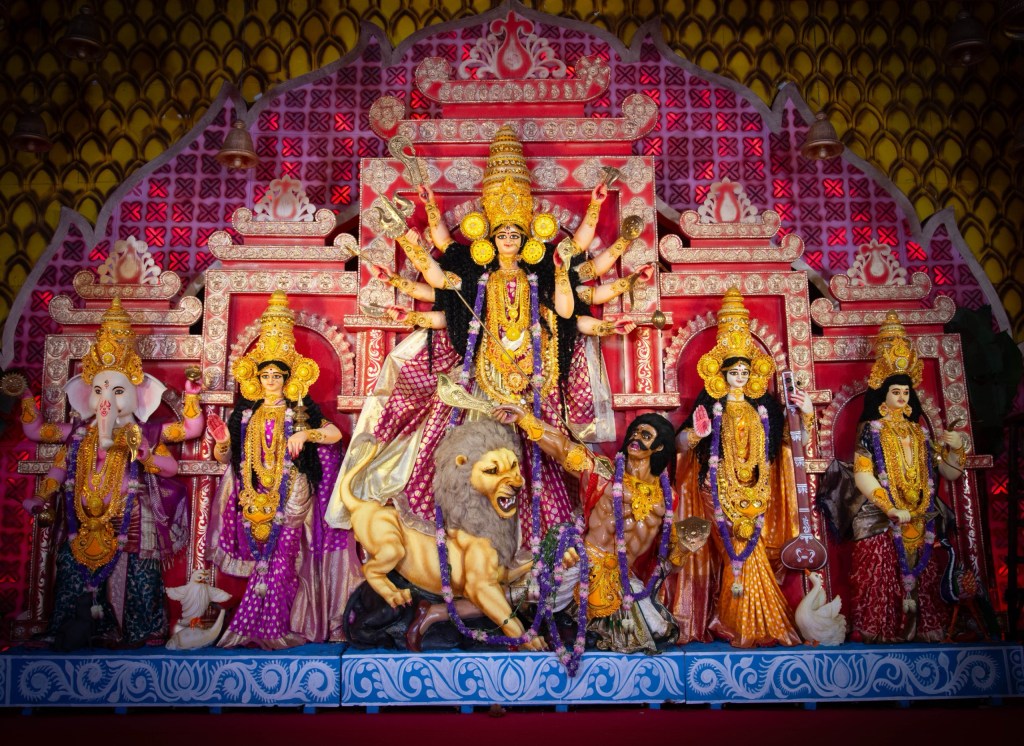
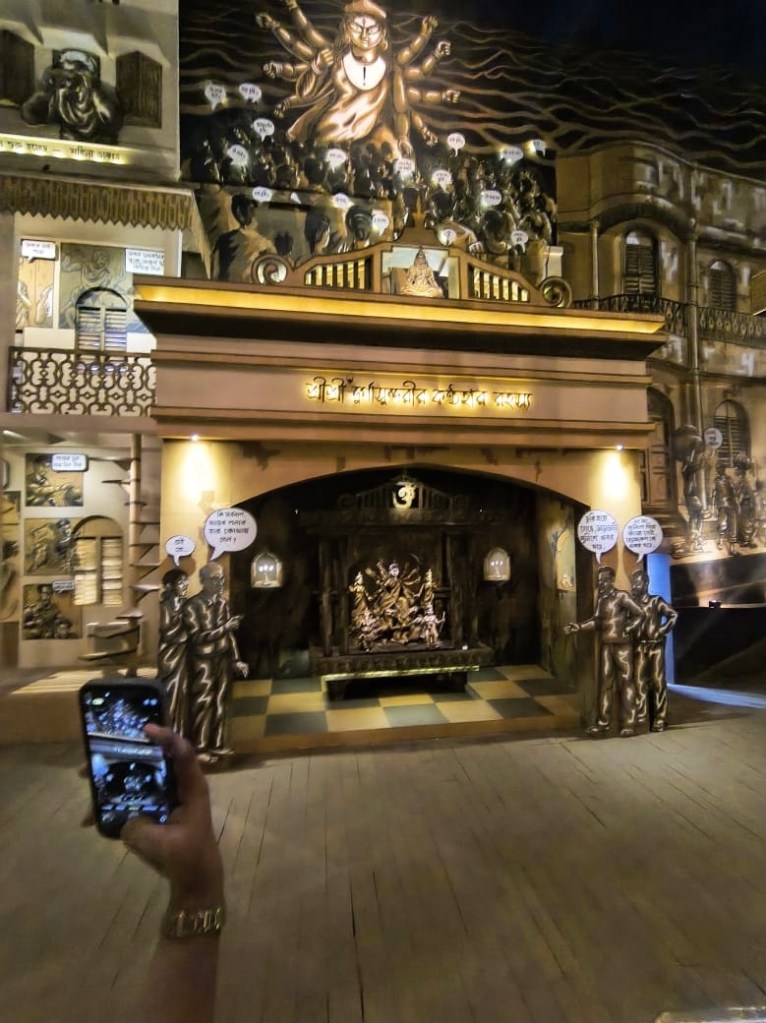
I documented Durga Puja in Kolkata 20 years ago when I was working with painters there. Durga astride a tiger, slaying the demonic Mahisasur emerging out of a buffalo: these elements get interpreted in hundreds of ways across the city each year. Each pandal has a different aesthetic interpretation, inside and outside. The religious aspect is no less important. But  these are also like site-specific installation art works shaped by the imagination of so many talented people but designed for impermanence. How many books of photos exist around this work now recognised by UNESCO as Intangible Cultural Heritage of Humanity?

How successful have you been in achieving this?

The merit of my work is for others to judge. I’m happy that, though India doesn’t have many foundations or support for non-commercial oriented art, I’ve been able to do at least a few things that are genuinely pathbreaking, substantial and have gone around the world. To be invited to UNESCO headquarters in Paris to screen a film and address delegates from 193 countries, or be honoured by our President for India’s best ever performed at Abilympics — these are certainly my career highlights.

Vijay S Jodha at UNESCO introducing his film. Photo provided by Vijay S Jodha

My work has received over a hundred honours across 24 countries, but what truly motivates me is when people I look up to, my heroes, appreciate what I do. That kind of recognition carries a different weight. For instance, Magsaysay awardee P Sainath, whose ground-breaking reportage has long inspired me, saw my farmers project when it was exhibited alongside his photographic work at the Chennai Photo Biennale 2019. We hadn’t met before, so when he praised my effort, it felt like receiving a medal.

Another moment that has stayed with me was post my time at NYU. My professor, George Stoney, referred to as the father of public access television and mentioned in history books on documentary cinema, mentored Oscar-winning directors like Oliver Stone, Martin Scorsese, Spike Lee, and Ang Lee. When he watched The Weeping Apple Tree, he said, “Vijay, this is better than Al Gore’s An Inconvenient Truth. That was a glorified PowerPoint by comparison.” That one comment meant more to me than most awards ever could.

As a photo artist what is the biggest moment of joy for you — technical hurray or the joy of the subjects?

As I just said, recognition and praise of my heroes gives the maximum joy. There are other honours. Two photo projects listed in Limca Book of Records for being the biggest and path breaking. The first was on ageing that I did over eight years with my brother Samar Jodha – he did the images while I did the concept research, writing and interviews. The other was the aforementioned Tiranga. My film Poop on Poverty (2012) won a Peabody award, the oldest honour for documentary films, and more international honours than any non-fiction film produced out of India. 

After landmark exhibitions in Hong Kong and New York I donated two complete sets of The First Witnesses, my farming crisis project, to two farmer unions including our oldest and biggest All India Kisan Sabha (AIKS). They are using it for awareness raising across villages. That’s a real high as a photographer.

Then there’s high coming from those we pass down our expertise to. Among those I’ve taught or mentored is a highly talented though physically challenged youngster from Vijayawada with missing digits and motoring issues. His family runs a Kirana shop. When he started school, they sent him back saying he cannot even hold a pencil. He won a bronze medal in photography for India at the last Abilympics in France. Another student has himself become a photography teacher in a school for hearing impaired. This is the kind of stuff that gets me very excited. 

Thirty years ago as a volunteer writer and researcher I helped Sanskriti Foundation set up India’s first international artist retreat. That novel venture raised crores in grants and set up three museums. Today it is being scaled back as its founder O P Jain is in his 90s. But that idea caught on and you have scores of artist retreats across India. 

How has digital technology influenced photography as an art form? Has it done more harm? Or widened its spread?

Digital has been a mixed experience. It democratised the process of production and dissemination — be it still images or movies. This is a fantastic thing. But it killed a lot of the processes and livelihoods such as the printing labs, film production and processing facilities. It has also killed an art form like print making. It’s a specialised skill in itself, so a lot of artistry, understanding, appreciation and sustenance of it has got compromised.

The emergence of deep fake images and piracy of work is bad news too. But it has allowed more people to become story tellers. They now bear witness, as filmmakers and photographers, of issues and events that was earlier impossible.

I can cite examples from my work. I’m National Selector and Trainer in photography for National Abilympics Association of India (NAAI) and my students are in different parts of India. Two are hearing impaired, two others have motoring issues and physical challenges. Thanks to digital tools, we’re running long distance classes every week. NAAI provides me sign language interpreter but I can send and receive digital files, use zoom to conduct classes, use google translate to send instructions in Tamil, English and Marathi to my students. Now one student, despite hearing challenge, is running a photo studio. The student who has issues with his leg also works as wedding photographer. Workshops with institutions and festivals, within and outside India, are now easy and inexpensive thanks to these digital tools and communication modes.

Has selfies on mobile camera shortened the life of portraiture?

It has certainly democratised the process while the average person’s patience to study or appreciate any art work — portrait or landscape photo — is shrinking by the minute. Of course, good portraiture requires some skill to make as well as appreciate – that cultural literacy is a challenge everywhere, not just in photo medium. As a seasoned art critic you would have noticed that in the world of painting and sculpture too. Sadly we don’t have that education in our schools. 

You have continued with still images even after doing many documentaries. What is the joy in either case?

I’m doing still photography and movies parallel to each other. Last month I had a book on public policy, as I mentioned. Also launched last month – by our defence minister –was my film on our Armed Forces Medical Corps – it’s one of the oldest divisions in the world, going back 260 years. I’m working on a project on the Indian Constitution and a biopic on Amitabh Sen Gupta, the artist whose retrospective exhibition this year is organised by Artworld Chennai. My still photography project on the farmers crisis is also going on for the past 7-8 years.

All projects are joyous and offer their own challenges. It’s like bringing children into the world. You do the best you can, hope they’ll do well and go far, but you don’t know which one will. Regardless of their line of work you feel happy with each of them and what they achieve. 

What is the future of Arriflex, Mitchell, Kodak Brownie? And that of Yashica, Nikon, Canon, Leica, Olympus…?

Some old camera brands like Konica and Minolta have merged, or evolved into digital Avatars like Arriflex. Others, like Kodak, have faded into history. Interestingly, a small Indian company has licensed their name to market TVs under Kodak brand name now. For those of us from the analogue generation, it’s a bittersweet feeling. When a beloved brand disappears, it feels like saying goodbye to an old friend. But such is the nature of change.

My friend Aditya Arya, one of India’s eminent photographers and a passionate camera collector, has created a remarkable space to preserve this legacy. He established the Museo Camera in Gurgaon, a non-profit centre promoting photographic art, which has become not only a camera museum but also a leading art and culture hub in the Delhi national capital region. If you’re an old time photographer passing through Delhi, it’s a wonderful place to revisit these “old friends.”

(Website of Museo Camera https://www.museocamera.org)

[1]  University Grants Commission-Consortium for Educational Communication

[2] Robert Frank (1924-2019) was a photographer and documentary filmmaker. 

[3] Henri Cartier-Bresson (1908-2004) was a humanist photographer, a master of candid photography, and an early user of 35mm film. One of the founding members of Magnum Photos in 1947, he pioneered the genre of street photography, and viewed photography as capturing a decisive moment.

[4] Three colours, published in 2005

Ratnottama Sengupta, formerly Arts Editor of  The Times of India, teaches mass communication and film appreciation, curates film festivals and art exhibitions, and translates and writes books. She has been a member of CBFC, served on the National Film Awards jury and has herself won a National Award. 

.

PLEASE NOTE: ARTICLES CAN ONLY BE REPRODUCED IN OTHER SITES WITH DUE ACKNOWLEDGEMENT TO BORDERLESS JOURNAL

Click here to access the Borderless anthology, Monalisa No Longer Smiles

Click here to access Monalisa No Longer Smiles on Amazon International

Categories
Contents

Borderless, April 2025

Art by Sohana Manzoor

Editorial

Seasons in the Sun?….Click here to read.

Translations

An excerpt from Tagore’s long play, Roktokorobi or Red Oleanders, has been translated by Professor Fakrul Alam. Click here to read.

Tagore’s essay, Classifications in Society, has been translated by Somdatta Mandal. Click here to read.

Poems of Longing by Jibananada Das homes two of his poems translated from Bengali by Professor Fakrul Alam. Click here to read.

Four cantos from Ramakanta Rath’s Sri Radha, translated from Odiya by the late poet himself, have been excerpted from his full length translation. Click here to read.

An excerpt from Syad Zahoor Shah Hashmi’s Nazuk, has been translated from Balochi by Fazal Baloch. Click here to read.

Disappearance by Bitan Chakraborty has been translated from Bengali by Kiriti Sengupta. Click here to read.

Roadside Ritual, a poem by Ihlwha Choi  has been translated from Korean by the poet himself. Click here to read.

Tagore’s Pochishe Boisakh Cholechhe (The twenty fifth of Boisakh draws close…) from Bengali by Mitali Chakravarty. Click here to read.

Poetry

Click on the names to read the poems

Luis Cuauhtémoc Berriozábal, Thompson Emate, Pramod Rastogi, George Freek, Vidya Hariharan, Stuart McFarlane, Meetu Mishra, Lizzie Packer, Saranyan BV, Paul Mirabile, Hema Ravi, Ryan Quinn Flanagan, Rhys Hughes

Poets, Poetry & Rhys Hughes

In Three Gothic Poems, Rhys Hughes explores the world of horrific with a light touch. Click here to read.

Musings/Slices from Life

The Day the Earth Quaked

Amy Sawitta Lefevre gives an eyewitness account of the March 28th earthquake from Bangkok. Click here to read.

Felix, the Philosophical Cat

Farouk Gulsara shares lessons learnt from his spoilt pet with a touch of humour. Click here to read.

Not Everyone is Invited to a Child’s Haircut Ceremony

Odbayar Dorje muses on Mongolian traditions. Click here to read.

From a Bucking Bronco to an Ageing Clydesdale

Meredith Stephens writes of sailing on rough seas one dark night. Click here to read.

Musings of a Copywriter

Stay Blessed! by Devraj Singh Kalsi is a tongue-in-cheek musing on social norms and niceties. Click here to read.

Notes from Japan

On Safari in South Africa by Suzanne Kamata takes us to a photographic and narrative treat of the Kruger National Park. Click here to read.

Essays

Songs of the Adivasi Earth

Ratnottama Sengupta introduces us to the art of Haren Thakur, rooted in tribal lores. Click here to read.

‘Rajnigandha’: A Celebration of the Middle-of-the-Road

Tamara Raza writes of a film that she loves. Click here to read.

‘Climate change matters to me, and it should matter to you too’

Zeeshan Nasir writes of the impact of the recent climate disasters in Pakistan, with special focus on Balochistan. Click here to read.

Bhaskar’s Corner

Ramakanta Rath: A Monument of Literature: Bhaskar Parichha pays a tribute to the late poet. Click here to read.

Stories

Jai Ho Chai

Snigdha Agrawal narrates a funny narrative about sadhus and AI. Click here to read.

The Mischief

Mitra Samal writes a sensitive story about childhood. Click here to read.

Lending a hand

Naramsetti Umamaheswararao takes us back to school. Click here to read.

Conversation

Ratnottama Sengupta talks to filmmaker and author Leslie Carvalho about his old film, The Outhouse, that will be screened this month and his new book, Smoke on the Backwaters. Click here to read.

Book Excerpts

An excerpt from Anuradha Kumar’s Wanderers, Adventurers, Missionaries: Early Americans in India. Click here to read.

An excerpt from Snigdha Agrawal’s Fragments of Time (Memoirs). Click here to read.

Book Reviews

Somdatta Mandal reviews Sheela Rohekar’s Miss Samuel: A Jewish Indian Saga, translated by Madhu Singh. Click here to read.

Gracy Samjetsabam reviews Tony K Stewart’s Needle at the Bottom of the Sea: Classic Bengali Tales from the Sundarbans. Click here to read.

Bhaskar Parichha reviews Raisina Chronicles: India’s Global Public Square by S. Jaishankar & Samir Saran. Click here to read.

.

Click here to access the Borderless anthology, Monalisa No Longer Smiles

Click here to access Monalisa No Longer Smiles on Amazon International

Categories
Editorial

Seasons in the Sun?

April is a month full of celebrations around the world. Asia hosts a spray of New Year festivities. Then there are festivals like Qing Ming Jie, Good Friday and Easter. All these are in a way reminders of our past. And yet, we critique things as old fashioned! So, where does tradition end and ‘outdated’ or ‘outmoded’ start? Meanwhile we continue to celebrate these festivals with joy but what happens to those who have lost their home, family and their living due to war or climate disasters? Can they too join in with the joie de vivre? Can we take our celebrations to them to give solace in some way?

In our April issue, we have stories from climate and conflict-ridden parts of the world. From Bangkok, Amy Sawitta Lefevre gives an eyewitness account of the March 28th Earthquake that originated in Myanmar. While in her city, the disaster was managed, she writes: “I’m also thinking of all the children in Myanmar who are sleeping in the open, who lost loved ones, who are feeling scared and alone, with no one to reassure them.” As news reels tell us, in Myanmar there have been thousands of casualties from the earthquake as well as shootings by the army.

From another troubled region, Pakistan, Zeeshan Nasir gives a heartrending narrative about climate change, which also dwells on the human suffering, including increase in underage marriages.

Human suffering can be generated by rituals and customs too. For instance, if festivals dwell on exclusivity, they can hurt those who are left out of the celebrations. Odbayar Dorje muses along those lines on Mongolian traditions and calls for inclusivity and the need to change norms. On the other hand, Devraj Singh Kalsi hums with humour as he reflects on social norms and niceties and hints at the need for change in a light-hearted manner. Farouk Gulsara makes us laugh with the antics of his spoilt pet cat. And Suzanne Kamata dwells on her animal sightings in Kruger National Park with her words and camera while Meredith Stephens takes us sailing on stormy seas… that too at night.

Art is brought into focus by Ratnottama Sengupta who introduces artist Haren Thakur with his adaptation of tribal styles that has been compared to that of Paul Klee (1879-1940). She also converses with filmmaker Leslie Carvalho, known for his film The Outhouse, and his new novel, Smoke on the Backwaters. Both of these have a focus on the Anglo-Indian community in India. Also writing on Indian film trends of the 1970s is Tamara Raza. Bhaskar Parichha pays tribute to the late Ramakanta Rath (1934-2025), whose powerful and touching poetry, translated from Odia by the poet himself, can be found in our translations section.

We have an excerpt from Professor Fakrul Alam’s unpublished translation of Tagore’s Red Oleanders. It’s a long play and truly relevant for our times. Somdatta Mandal shares with us her translation of Tagore’s essay called ‘The Classification in Society’, an essay where the writer dwells on the need for change in mindsets of individuals that make up a community to move forward. A transcreation of a poem by Tagore for his birthday in 1935 reflects the darkness he overcame in his own life. Two poems expressive of longings by Jibananada Das have been translated from Bengali by Professor Alam aswell. From Balochistan, we have an excerpt from the first Balochi novel, Nazuk, written by the late Syad Zahoor Shah Hashmi and rendered into English by Fazal Baloch. Among contemporaries, we have a short story by Bitan Chakraborty translated from Bengali by Kiriti Sengupta, a poignant story that reflects on gaps in our society. And a Korean poem by Ihlwha Choi rendered to English by the poet himself.

Our poetry section celebrates nature with poetry by Lizzie Packer. Many of the poems draw from nature like that of George Freek and Luis Cuauhtémoc Berriozábal. Some talk of the relationship between man and nature as does Stuart McFarlane. We have a variety of themes addressed in poems by Thompson Emate, Meetu Mishra, Saranyan BV, Paul Mirabile, Pramod Rastogi, Ryan Quinn Flanagan and many more. Rhys Hughes brings in both humour and social commentary of sorts with his poem. And in his column, Hughes has shared three gothic poems which he claims are horrible but there is that twinge of fable and lightness similar to the ghosts of Ebenezer Scrooge’s world[1]— colourful and symbolic.

Stories sprinkle humour of different shades with Snigdha Agrawal’s narrative about mendicants and AI and Mitra Samal’s strange tale about childhood pranks. Naramsetti Umamaheswararao takes us back to schooldays with his narrative. We have a fun book excerpt from Agrawal’s Fragments of Time (Memoirs), almost in tone with some of her stories and musings.

An extract from Anuradha Kumar’s latest non-fiction making bridges across time and geographies. Called Wanderers, Adventurers, Missionaries: Early Americans in India, the book is an intriguing read. We have a review by Professor Mandal of Sheela Rohekar’s Miss Samuel: A Jewish Indian Saga, translated by Madhu Singh. Highlighting syncretic folk traditions, Gracy Samjetsabam has discussed the late Tony K Stewart’s translation of oral folklore in Needle at the Bottom of the Sea: Classic Bengali Tales from the Sundarbans. Parichha has written about a high-profile book that also hopes to draw bridges across the world, Raisina Chronicles: India’s Global Public Square, by S. Jaishankar and Samir Saran.

This issue has been made possible because of support from all of you. Huge thanks to the team, all our contributors and readers. Thanks to Sohana Manzoor for her fabulous artwork. Do pause by our contents page as all the content could not be covered here.

Perhaps, world events leave a sense of pensiveness in all of us and an aura of insecurity. But, as Scarlett O’ Hara of Gone with the Wind[2] fame says, “After all, tomorrow is another day.” 

Looking forward to a new day with hope, let’s dream of happier times filled with sunshine and change.

Enjoy the reads!

Mitali Chakravarty

borderlessjournal.com

[1] A Christmas Carol by Charles Dickens, 1843

[2] Gone With the Wind, a novel by Margaret Mitchell, published in 1936

Click here to access the contents page for the April 2025 Issue

READ THE LATEST UPDATES ON THE FIRST BORDERLESS ANTHOLOGY, MONALISA NO LONGER SMILES, BY CLICKING ON THIS LINK.

Categories
Conversation

From Outhouse to Backwaters

Ratnottama Sengupta tracks the journey of Leslie Carvalho over a quarter century

It seems like only the other day. The International Film Festival of India, IFFI, 1998 was on. Along with a colleague, I was seated on the steps outside Siri Fort I auditorium connected to a long corridor going to Siri 2. Someone introduced Leslie Carvalho. “Aha! The young filmmaker from Mangalore?”  I responded. “There’s a write up on you in The Times of India today. It says there’s a lot of expectation from The Outhouse.”

The “delightfully sweet” film had lived up to the expectation of the critics. It was bestowed the Aravindan Puraskaram, presented by the Kerala Chalachitra Film Society to commemorate the iconic Malayalam director, and the first Gollapudi Srinivas award, another national level award to recognise filmmakers marking their debut in Indian cinema. So I was not surprised to meet him next as a co-member of the jury for the National Film Awards 2000.

The Tennis coach who is also a German language teacher with a passion for painting has now published his first novel, Smoke on the Backwaters. It centres on Rosa, a twenty-year-old from Mangalore, who is forced to flee overnight because of the storm of gossip, fear and shame unleashed by a single incident in her life. Her unexpected journey across continents becomes a path of healing. Seven years later, armed with education and maturity, she returns home, determined to pursue her purpose in life. But how much had the town she left altered from its old ways?

RS: Leslie, before we talk Backwaters, can we briefly revisit The Outhouse? From where did you derive its content? And what was your compulsion for choosing that subject?

Provided by Ratnottama Sengupta

LC: The Outhouse was a simple, linear narrative about moving on in life despite the odds. A young mother’s need to gain economic independence to supplement the family income; the help she received from her financially independent sister; a kind hearted Bengali landlady’s generosity which causes stress and violence in the Anglo-Indian couple’s day to day life, and how it affects the two children growing up.

RS: Why did you choose this subject as your debut vehicle? If you were to travel in a time machine, would you choose a ‘mainstream’ subject?

LC: I chose this subject as my debut vehicle as I had seen quite a bit of violence in the Anglo- Indian community in the Lingarajapuram area of Bangalore I grew up in.

I was itching to make a movie after my six-month course at the New York Film Academy. As I was working on a very tight budget, I just stuck to what was taught — to keep it simple, straightforward and just tell a story using the various tools of cinema — in short, to make it cinematic.

If I were to go back in time, I don’t think I would have chosen a ‘mainstream subject’. I derived immense satisfaction along with the cast and crew as we felt we were working on something we were passionate about. We all felt drawn towards the characters, the story and the theme of the film.

RS: How did you get interested in cinema? And what were the problems you faced while filming The Outhouse – in terms of funding, casting, shooting location, distribution?

LC: I grew up watching Tamil, Kannada, Hindi, a couple of Konkani and lots of Hollywood films. My mother tailored clothes at home, and she taught a whole lot of women stitching. They were fans of Tamil cinema, especially of Sivaji Ganesan, MGR, and the heroes of Kannada cinema, Dr. Rajkumar and Vishnuvardhan. She also enjoyed the Hindi films of Rajesh Khanna, Dharmendra, Hema Malini, Amitabh Bachchan, Sanjeev Kumar, Jaya Bhaduri and Rekha — that is the popular cinema.

And my father, being an Army person, took us to see English films, like The Ten Commandments, The Bible, Hatari, To Sir, With Love[1]. Also, St. Germain’s School where I studied, screened English films every Friday afternoon in the Hall, from spools off a projector that made a jarring sound. It was an amazing experience — black and white Charlie Chaplin, Laurel & Hardy films and also Patton with all the bad words. Later, when in college, we would bunk classes to watch most of the popular Hindi and English movies.

At the New York Film Academy, I was exposed to an entire range of the world’s best in cinema. Satyajit Ray, Akira Kurosawa, Ingmar Bergman, Antonioni, John Ford, William Wyler, Fellini, Jean Renoir… And I watched a whole lot of films on the American Movie Chain (AMC). There I discovered all of Spencer Tracy’s films and fell in love with his sense of timing and under playing. It was also a time when I discovered Guru Dutt and marveled at his brand of filmmaking from Pyaasa, Kaagaz Ke Phool, Chaudhvin Ka Chand, Sahib Biwi Aur Ghulam to Aar Paar and Mr & Mrs 55[2].

It is hard to believe I began the shoot for The Outhouse on September 18, 1996, and completed it in 14 days – on October 1. After we went through the rushes, we required two more shots to link the gaps. Since I was on a shoestring budget of a few lakh rupees, I had rehearsals with the cast for close to three months. I doff my hat to them in gratitude as 90% of the film was canned on first takes. I could not afford retakes, and I worked with a brilliant cameraman, S Ramachandra, who was very supportive and encouraging. He shot most of B V Karanth, Girish Karnad, and Girish Kasaravalli films as well as the popular tele-serial Malgudi Days[3]. A number of first-time directors like myself, had benefitted immensely by his generosity and patience.

Since it was an independent film, whatever little finance I had, I sunk into the film. And then it took me a year to complete post-production for lack of finance.

I was particular about the casting. I wanted the Anglo-Indian look, feel, mannerisms, costume, interiors to be authentic. I met each cast member and spoke to them at length about the vision I had for my film. Almost all of them were from the Bangalore English Theatre, and all of them were cooperative. Moreover, Cooke Town is a quaint little place with many English bungalows and outhouses. After some struggle, I found one on Milton Street which suited my story perfectly.

After The Outhouse was selected for the Indian Panorama in IFFI ’98 and received the two national awards, I just walked into Plaza Theatre on MG Road in Bangalore and met the owner, Mr Ananthanarayan. He had heard about the film and asked me to meet the distributor, Nitin Shah of Hansa Pictures in Gandhi Nagar, the biggest distributor of English films. He put it on for a noon show for three weeks while Fire was on for the matinee and evening shows. The distributor then put it in Mangalore and Udupi for a week. And when I received the Gollapudi Srinivas National Award in Chennai, Aparna Sen was one of the honoured guests. She saw a small portion of the film and said that she would speak to Mr Ansu Sur to screen it at Nandan in Kolkata — founded by Satyajit Ray to help screen small independent films. A theatre owner in Kolkata recommended a person who took the film to the North East. It was also screened in parts of Kerala.

Coincidentally, this April 30th, The Outhouse will be screened in the leafy neighbourhood of Cooke Town next to the outhouse where the film was shot.

RS: In the last 50 years we have seen films by directors like Aparna Sen, Ajay Kar, Anjan Dutt. Even before these, Ray had touched upon Anglo Indians in Mahanagar. These are all films made in Kolkata. Is it because this is the erstwhile capital of the Raj?

LC: Many of the films on Anglo-Indians were based in Calcutta. It was the influence of the British Raj and its culture that was so much a part of their long history of ruling there. Of course their influence was in other parts of the country as well like Madras, Hyderabad, Bangalore, Whitefield and Kolar Gold Fields, the railway colonies all over the country, the hill stations, and many other cities which has pockets of Anglo-Indians.

RS: I remember one Hindi film, Julie that had an Anglo-Indian protagonist. How has the community been projected in popular culture? Was it lopsided or biased?

LC: Throughout our film history Anglo-Indians have played bit roles here and there. Some significant roles came their way in Bhowani Junction, the teleserial Queenie, 36 Chowrighee Lane, Bow Barracks Forever, Bada Din, Cotton Mary, The Outhouse, Saptapadi, Mahanagar, Julie, and Calcutta I’m Sorry[4].

Some of the characterisations have been quite biased; some not well fleshed out; some in passing fleeting moments of drunkenness, prostitution. The song and dance sequences have not helped the community, sadly.

RS: What led you to writing? The screenplay for The Outhouse?

LC: I wrote the screenplay of The Outhouse on plain A4 sheets of paper, on both sides. This is not done but I did it to save on cost. I gave the screenplay to my cinematographer S. Ramachandra, and in his generosity he understood my purpose. I went by what was taught at the New York Film Academy. Of course, I had to combine all the elements to make it whole. The idea of the screenplay came to me while I was at the film school in 1995.

RS: What was the trigger for writing Smoke in the Backwaters?

LC: As an artist, filmmaker, and writer, I have tried to combine all the elements of story-telling – fact and fiction — keeping in mind the flow of ideas, pace and momentum to engage and interest my audience and readers.

I remember beginning to write the novel two decades ago when my mother — who studied in Kannada medium — said, “I hope you will write it in simple English so I can read it too.”

And I wanted it to be reader friendly with regard to the font size, the brightness of the paper, the spacing, the clarity and the size of the book. I was lucky my publisher ‘Anglo-Ink’ was supportive and combined well to find that centre.

Provided by Ratnottama Sengupta

RS: How are you marketing the book? Through Litfests? Bookstore readings? Airport bookstalls? A H Wheelers?

LC: Since Anglo-Ink is a small-time publisher, we’ve had a dream launch in my hometown Bangalore at the Catholic Club. My book seller is Bookworm on Church Street in the heart of Bangalore and for people in Cooke Town it is in The Lightroom’ library.

We are looking at launches in various cities as well, through book readings, LitFests, Airport book stalls, AH Wheelers, readings at schools and colleges.

Since a major portion of the novel is set in Germany, we are looking at translating it into German. I hope to get it translated in a few Indian languages as well.

RS: Since the sunset decade of 1900s, Anglo Indians have been migrating to Australia and Canada. What triggered this migration? Economics or politics?

LC: The migration of Anglo-Indians was inevitable. It was bound to happen for reasons more than one, be it political, economic or social. First under the ‘Whites Only’ policy, many fair skinned Anglo-Indians migrated — the brown and dark skinned were left behind. Slowly they opened up and even they left. Some felt they would adapt better to a western culture, and have adopted their new country as their homeland.

RS: You were a big support for me when my son joined NLSUI in 2000. Again, when I curated Anadi, the exhibition of paintings by Contemporary and indigenous artists from MP and Chhattisgarh. Bangalore has since become an international megalopolis. How has life changed for the locals?

LC: Bangalore has changed dramatically and drastically. The change was bound to happen because of its growing prominence of an International City. The IT industry brought jobs, slowly other industries, started picking up from real estate, fashion, digital technology and social media platforms, start-ups, academics, sports, games, recreational and tourism.

The moderate climate was a huge bonus that attracted people from all over. Bangalore has always been cordial, encouraging and accommodative of people from all over through their mild manners, hospitality and gentleness.

Today Bangalore is unrecognisable. Still, some pockets retain that old world charm of neat, clean and green Bengaluru from the old Pensioners Paradise of Bangalore.

.

[1] The Ten Commandments (1956), The Bible (1966), Hatari (1962), To Sir, with Love (1967)

[2] Pyaasa (Thirsty, 1957), Kaagaz Ke Phool (Paper flowers, 1959), Chaudhvin Ka Chand (The Full Moon, 1960), Sahib Biwi Aur Ghulam (The Master, the Wife and the Slave, 1962), Aar Paar (This shore or that, 1954), Mr &Mrs 55 (1955).

[3] From 1986 to 2006.

[4] Bhowani Junction (1956), TV miniseries Queenie (1987), 36 Chowrighee Lane (1981), Bow Barracks Forever (2004), Bada Din (1998), Cotton Mary (1999), Saptapadi (Seven Steps, 1981), Mahanagar (The Big City, 1963), Julie (1975), and Calcutta I’m Sorry (2019)

Ratnottama Sengupta, formerly Arts Editor of  The Times of India, teaches mass communication and film appreciation, curates film festivals and art exhibitions, and translates and write books. She has been a member of CBFC, served on the National Film Awards jury and has herself won a National Award. 

.

PLEASE NOTE: ARTICLES CAN ONLY BE REPRODUCED IN OTHER SITES WITH DUE ACKNOWLEDGEMENT TO BORDERLESS JOURNAL

Click here to access the Borderless anthology, Monalisa No Longer Smiles

Click here to access Monalisa No Longer Smiles on Amazon International

Categories
Contents

Borderless, March 2025

Happy Birthday Borderless… Click here to read.
Art by Sohana Manzoor

Editorial

Celebrating a Borderless World… Five Years and Counting… Click here to read.

Translations

Jibanananda Das’ poems on war and for the common masses have been translated from Bengali by Professor Fakrul Alam. Click here to read.

A Scene with an Aged Queen, a poem by Ihlwha Choi  has been translated from Korean by the poet himself. Click here to read.

Tagore’s Esho Bosonto, Esho Aj Tumi (Come Spring, Come Today) has been translated from Bengali by Mitali Chakravarty. Click here to read.

Pandies’ Corner

For Sanjay Kumar: To Sir — with Love has been written for the founder of pandies’ theatre by Tanvir, a youngster from the Nithari village where pandies’ worked with traumatised victims. Over time, these kids have transcended the trauma to lead fulfilling lives. The late Sanjay Kumar passed on this January. This is a tribute to him by one of his students. It has been translated from the Hindustani original by Lourdes M Surpiya. Click here to read.

Poetry

Click on the names to read the poems

Luis Cuauhtémoc Berriozábal, Kiriti Sengupta, Ryan Quinn Flanagan, Snehaprava Das, Stuart McFarlane, Arshi Mortuza, George Freek, Jyotish Chalil Gopinathan, Ahmad Al-Khatat, Michael Burch, Bibhuti Narayan Biswal, Mark Wyatt, Owais Farooq, Adriana Rocha, Rakhi Dalal, Rhys Hughes

Musings/Slices from Life

Nobody Knows…

Farouk Gulsara muses on the dichotomies in life exploring beliefs that shape our world. Click here to read.

Beachcombing on the Abrolhos Islands

Meredith Stephens goes beachcombing in a thinly inhabited island. Click here to read.

As Flows the Gomti: A Monument of Tranquility 

Prithvijeet Sinha takes us to the past of Lucknow. Click here to read.

Musings of a Copywriter

In All Creatures Great and Small, Devraj Singh Kalsi talks of living in harmony with nature… is it tongue in cheek? To find out, click here to read.

Notes from Japan

In Haiku for Rwandan Girls, Suzanne Kamata writes of her trip to Africa where she teaches and learns from youngsters. Click here to read.

Essays

Take One

Ratnottama Sengupta takes stock of women in Bengali cinema over the last fifty years. Click here to read.

Drinking the Forbidden Milk of Paradise…

Meenakshi Malhotra explores the past of poetry and women writers. Click here to read.

Where have all the Libraries Gone?

Professor Fakrul Alam writes of the loss of libraries as we knew them. Click here to read.

Stories

In the Realm of Childhood

Paul Mirabile gives us a story set in Scotland. Click here to read.

The Appropriate Punishments

Naramsetti Umamaheswararao gives a fable set in a forest. Click here to read.

Eyes of Inti

Swati Basu Das shares a lighthearted flash fiction. Click here to read.

‘Solitude is a Kind of Freedom…’

Munaj Gul gives an introspective story set in Balochistan. Click here to read.

Why I Stopped Patronising that Cheese Maker’s Shop…

Zoé Mahfouz shares a humorous vignette of Parisian life. Click here to read.

Conversations

Ratnottama Sengupta discusses the famous actor, Soumitra Chatterjee, with his daughter, Poulami Bose Chatterjee. Click here to read.

Keith Lyons interviews Malaysian author and editor, Daphne Lee. Click here to read.

Book Excerpts

An excerpt from Frank S Smyth’s The Great Himalayan Ascents. Click here to read.

An excerpt from Rhys Hughes’ The Devil’s Halo. Click here to read.

Book Reviews

Somdatta Mandal reviews Tsering Namgyal Khortsa’s non-fiction, Little Lhasa: Reflections in Exiled Tibet and fiction, Tibetan Suitcase, together. Click here to read.

Malashri Lal reviews Rachna Singh’s Raghu Rai: Waiting for the Divine. Click here to read.

Bhaskar Parichha reviews Sandeep Khanna’s Tempest on River Silent: A Story of Last 50 Years of India. Click here to read.

Vignettes from a Borderless World… Click here to read a special fifth anniversary issue.
Categories
Editorial

Celebrating Borderless… Five Years and Counting…

Emerging by Sybil Pretious

Drops of water gather to make a wave. The waves make oceans that reshape land masses over time…

Five years ago, on March 14th, in the middle of the pandemic, five or six of us got together to start an online forum called Borderless Journal. The idea was to have a space that revelled with the commonality of felt emotions. Borderless was an attempt to override divisive human constructs and bring together writers and ideators from all over the Earth to have a forum open to all people — a forum which would be inclusive, tolerant, would see every individual as a part of the fauna of this beautiful planet. We would be up in the clouds — afloat in an unbordered stratosphere— to meet and greet with thoughts that are common to all humans, to dream of a world we can have if we choose to explore our home planet with imagination, kindness and love. It has grown to encompass contributors from more than forty countries, and readers from all over the world — people who have the same need to reach out to others with felt emotions and common concerns.

Borderless not only celebrates the human spirit but also hopes to create over time a vibrant section with writings on the environment and climate change. We launch the new section today on our fifth anniversary.

Adding to the wealth of our newly minted climate and environment section are poems by Luis Cuauhtémoc Berriozábal on the LA fires, Green by Mark Wyatt and Ecopoetry by Adriana Rocha in our March issue. We also have poetry on life in multiple hues from Kiriti Sengupta, Ryan Quinn Flanagan, Snehaprava Das, Stuart McFarlane, Arshi Mortuza, George Freek, Ahmad Al-Khatat, Jyotish Chalil Gopinathan, Michael Burch, Bibhuti Narayan Biswal, Owais Farooq and Rakhi Dalal. Tongue-in-cheek humour in poetry is Rhys Hughes forte and he brings us just that in his sign poem.

 Devraj Singh Kalsi with a soupçon of ironic amusement muses on humans’ attitude to the fauna around him and Farouk Gulsara lays on a coating of sarcasm while addressing societal norms. Meredith Stephens brings us concerns for a green Earth when she beachcombs in a remote Australian island. Prithvijeet Sinha continues to familiarise us with his city, Lucknow. Suzanne Kamata, on the other hand travels to Rwanda to teach youngsters how to write a haiku!

Professor Fakrul Alam takes us to libraries in Dhaka with the hope that more will start writing about the waning of such paradises for book lovers. Other than being the month that hosts World Environment Day, March also homes, International Women’s Day. Commemorating the occasion, we have essays from Meenakshi Malhotra on the past poetry of women and from Ratnottama Sengupta on women in Bengali Cinema. Sengupta has also interviewed Poulami Bose Chatterjee, the daughter of the iconic actor Soumitra Chatterjee to share with us less-known vignettes from the actor’s life. Keith Lyons has interviewed Malaysian writer-editor Daphne Lee to bring to us writerly advice and local lores on ghosts and hauntings. 

Our fiction truly take us around the world with Paul Mirabile giving us a story set Scotland and Naramsetti Umamaheswararao giving us a fable set in a Southern Indian forest. Swati Basu Das takes us on an adventure with Peruvian food while sitting by the Arabian Sea. Munaj Gul gives a heart-rending flash fiction from Balochistan. And Zoé Mahfouz shares a humorous vignette of Parisian life, reflecting the commonality of felt emotions.

Celebrating the wonders of the nature, is a book excerpt from Frank S Smyth’s The Great Himalayan Ascents. While the other excerpt is from Hughes’ latest novel, The Devil’s Halo, described as: ‘A light comedy, a picaresque journey – like a warped subterranean Pilgrim’s Progress.’ We have reviews that celebrate the vibrancy of humanity. Bhaskar Parichha writes of Sandeep Khanna’s Tempest on River Silent: A Story of Last 50 Years of India, a novel that spans the diversity that was India. Malashri Lal reviews Rachna Singh’s Raghu Rai: Waiting for the Divine, a non-fiction on the life and works of the famous photographer. Somdatta Mandal discusses two book by Tsering Namgyal Khortsa reflecting the plight of Tibetan refugees, a non-fiction, Little Lhasa: Reflections in Exiled Tibet and a fiction, Tibetan Suitcase.

One of features that we love in Borderless is that language draws no barriers — that is why we have translations by Professor Alam of Jibananada’s short poems on the impact of war on the common masses. We have a small vignette of Korea from Ihlwha Choi’s self-translated poem. And we have a translation of Tagore’s verses invoking the healing power of spring… something that we much need.

We also have a translation by Lourdes M Supriya from Hindustani of a student’s heartrending cry to heal from grief for a teacher who faced an untimely end — a small dirge from Tanvir, a youngster with his roots in Nithari violence who transcended his trauma to teach like his idol and tutor, the late Sanjay Kumar. With this, we hope to continue with the pandies corner, with support from Lourdes and Anuradha Marwah, Kumar’s partner.

Borderless has grown in readership by leaps and bounds. There have been requests for books with writings from our site. On our fifth anniversary, we plan to start bringing out the creative writing housed in Borderless Journal in different volumes. We had brought out an anthology in 2022. It was well received with many reviews. But we have many gems, and each writer is valued here. Therefore, Rhys Hughes, one of our editorial board members, has kindly consented to create a new imprint to bring out books from the Borderless Journal. We are very grateful to him.

We are grateful to the whole team, our contributors and readers for being with us through our journey. We would not have made it this far without each one of you. Special thanks to Sohana Manzoor for her artwork too, something that has almost become synonymous with the cover page of our journal.  Thank you all from the bottom of my heart.

Wish you all happy reading! Do pause by our content’s page and take a look at all the wonderful writers.

Best wishes,

Mitali Chakravarty

borderlessjournal.com

Click here to access the contents page for the March 2025 issue

Happy Birthday Borderless… Click here to read.

Vignettes from a Borderless World… Click here to read a special fifth anniversary issue.