Categories
Contents

Borderless September 2023

Art by Sohana Manzoor

Editorial

What do They Whisper?… Click here to read.

Conversations

Shantanu Ray Chaudhuri in conversation with M.S. Viraraghavan and Girija Viraraghavan ( grand daughter of President Sarvepalli Radhakrishnan) on their new book, Roses in the Fire of Spring: Better Roses for a Warming World and Other Garden Adventures. Click here to read.

In conversation with Isa Kamari, a celebrated writer from Singapore, with focus on his latest book, Maladies of the Soul. Click here to read.

Translations

A Hunger for Stories, a poem by Quazi Johirul Islam, has been translated by Professor Fakrul Alam. Click here to read.

A Hand Mill, a story by Ammina Srinivasaraju, has been translated from Telugu by Johny Takkedasila. Click here to read.

Kiyya and Sadu, a part of this long ballad on the legendary lovers from Balochistan, has been translated from Balochi by Fazal Baloch. Click here to read.

The Time for the Janitor to Pass by, poetry written in Korean and translated by Ilhwah Choi. Click here to read.

Sharat or Autumn, a poem by Tagore, has been translated from Bengali by Mitali Chakravarty. Click here to read.

Poetry

Click on the names to read the poems

Jared Carter, Rhys Hughes, Santosh Bakaya, Luis Cuauhtémoc Berriozábal, Sagar Mal Gupta, Nirmala Pillai, George Freek, Pramod Rastogi, Peter Devonald, Afshan Aqil, Hela Tekali, Swarnendu Ghosh, Alpana, Michael Burch

Poets, Poetry & Rhys Hughes

In Tintin in India, Rhys Hughes traces the allusions to India in these iconic creations of Hergé while commenting on Tintin’s popularity in the subcontinent. Click here to read.

Musings/Slices from Life

Black Pines and Red Trucks

Meredith Stephens shares the response of some of the Californian community to healing after the 2020 forest fires with a narrative and photographs. Click here to read.

Remembering Jayanta Mahapatra

KV Raghupathi travels down nostalgia with his memories of interactions with the recently deceased poet and his works. Click here to read.

The Toughness of Kangaroo Island 

Vela Noble draws solace and lessons from nature around her with her art and narrative. Click here to read.

Where is Your Home?

Madhulika Vajjhala explores her concept of home. Click here to read.

A Homecoming like No Other

Saumya Dwivedi gives a heartwarming anecdote from life. Click here to read.

Musings of a Copywriter

In Hair or There: Party on My Head, Devraj Singh Kalsi explores political leanings and hair art. Click here to read.

Notes from Japan

In Against Invisibility, Suzanne Kamata challenges traditions that render a woman invisible with a ‘sparkling’ outcome. Click here to read.

Essays

Jayanta Mahapatra: A Tribute to a Poetic Luminary

Dikshya Samantrai pays tribute to a poet who touched hearts across the world with his poetry. Click here to read.

Celebrating the novel… Where have all the Women Writers Gone?

G Venkatesh writes about a book from 1946. Click here to read.

Chandigarh: A City with Spaces

Ravi Shankar travels back to Chandigarh of 1990s. Click here to read.

The Observant Immigrant

In Climate Change: Are You for Real?, Candice Louisa Daquin explores the issue. Click here to read.

Stories

The Infamous Art Dealer

Paul Mirabile travels through Europe with an art scammer. Click here to read.

Getting Old is like Climbing a Mountain

Saranyan BV explores aging and re-inventing homes. Click here to read.

The Airport

Prakriti Bandhan shares a short, whimsical narrative. Click here to read.

Book Excerpts

An excerpt from Syed Mujtaba Ali’s Tales of a Voyager (Joley Dangay), translated by Nazes Afroz. Click here to read.

An excerpt from Sanket Mhatre’s A City Full of Sirens. Click here to read.

Book Reviews

Somdatta Mandal reviews Begum Hazrat Mahal: Warrior Queen of Awadh by Malathi Ramachandran. Click here to read.

Basudhara Roy reviews Sanket Mhatre’s A City Full of Sirens. Click here to read.

Bhaskar Parichha reviews Samragngi Roy’s The Wizard of Festival Lighting: The Incredible Story of Srid. Click here to read.

.

Click here to access the Borderless anthology, Monalisa No Longer Smiles

Click here to access Monalisa No Longer Smiles on Kindle Amazon International
Categories
Editorial

What do they Whisper?

No, they whisper. You own nothing.
You were a visitor, time after time
climbing the hill, planting the flag, proclaiming.
We never belonged to you.
You never found us.
It was always the other way round.

‘Moment’ by Margaret Atwood

With an unmanned mission reaching the moon — that moon that was chipped off the Earth’s surface when Theia bashed into the newly evolving planet — many feel mankind is en route to finding alternate biomes and perhaps, a solution to its housing needs. Will we also call moon our ‘Homeland’ and plant flags on it as we do on Earth?  Does the Earth — or the moon — really belong to our species. Do we have proprietary rights on these because of lines drawn by powerbrokers who say that the land belongs to them?

These are questions Margaret Atwood addresses in her writings which often fall into a genre called cli-fi. This is gaining in popularity as climate has become uncertain now with changes that are wringing fear in our hearts. Not all fear it. Some refuse to acknowledge it. While this is not a phenomenon that is fully understood by all of us, it’s impact is being experienced by majority of the world — harsh stormy weather, typhoons, warmer temperatures which scorch life and rising water levels that will eventually swallow lands that some regard as their homeland. Despite all these prognostications, wars continue to pollute the air as much as do human practices, including conflicts using weapons. Did ‘climbing a hill’ and ‘planting the flag’ as Atwood suggests, ever give us the rights over land, nature or climate? Do we have a right to pollute it with our lifestyle, trade or wars — all three being human constructs?

In a recent essay Tom Engelhardt, a writer and an editor, contended, “Vladimir Putin’s greatest crime wasn’t simply against the Ukrainians, but against humanity. It was another way to ensure that the global war of terror would grow fiercer and that the Lahainas of the future would burn more intensely.” And that is true of any war… Chemical and biological weapons impacted the environment in Europe and parts of Afghanistan. Atom bombs polluted not only the cities they were dropped in, but they also wreaked such havoc so that the second generation’s well-being continues impacted by events that took place more than seven decades ago. Yet another nuclear war would destroy the Earth, our planet that is already reeling under the impact of human-induced climate change. Flooding, forest fires and global warming are just the first indications that tell us not only do we need to adapt to living in changed times but also, we need to change our lifestyles, perhaps even turn pacifist to survive in a world evolving into an altered one.

This month some of our content showcase how to survive despite changes in norms. Suggesting how to retain our flora in a warming world is a book, Roses in the Fire of Spring: Better Roses for a Warming World and Other Garden Adventures, by M.S. Viraraghavanand Girija Viraraghavan, the grandson-in-law and granddaughter of the second President of India, Sarvepalli Radhakrishnan (1888-1975). They have been in conversation with Shantanu Ray Chaudhuri to explain how they have adapted plants to create hybrids that survive changing climes. Would it be wishful to think that we can find solutions for our own survival as was done for the flora?

Critiquing the darker trends in our species which leads to disasters is a book by an eminent Singaporean writer, Isa Kamari, called Maladies of the Soul. He too looks for panacea in a world where the basic needs of humans have been satiated and they have moved on towards overindulgence that can lead to redundancy. In a conversation, he tells us how he hopes his writings can help towards making a more hopeful future.

This hope is echoed in the palliative poems of Sanket Mhatre from his book, A City full of Sirens, excerpted and reviewed by Basudhara Roy. Bhaskar Parichha’s review of Samragngi Roy’s The Wizard of Festival Lighting: The Incredible Story of Srid, is a tribute also from a granddaughter to her grandfather celebrating human achievements. Somdatta Mandal’s discussion of fiction based on history, Begum Hazrat Mahal: Warrior Queen of Awadh by Malathi Ramachandran not only reflects the tenacity of a woman’s courage but also explores the historicity of the events. Exploring bits of history and the past with a soupcon of humour is our book excerpt from Syed Mujtaba Ali’s Tales of a Voyager (Joley Dangay[1]), translated from Bengali by Nazes Afroz. Though the narrative of the translation is set about ninety years ago, a little after the times of Hazrat Mahal (1820 –1879), the excerpt is an brilliant introduction to the persona of Tagore’s student, Syed Mujtaba Ali (1904-1974), by a translator who describes him almost with the maestro’s unique style. Perhaps, Afroz’s writing bears these traces as he had earlier translated a legendary work by the same writer, In a Land Far from Home: A Bengali in Afghanistan. Afroz starts with a startling question: “What will you call someone who puts down his profession as ‘quitting job regularly’ while applying for his passport?”

Other than a semi-humorous take on Mujtaba Ali, we have Rhys Hughes writing poetry in a funny vein and Santosh Bakaya giving us verses that makes us laugh. Michael Burch brings in strands of climate change with his poems as Jared Carter weaves in nature as we know it. George Freek reflects on autumn. We have more poetry by Luis Cuauhtémoc Berriozábal, Pramod Rastogi, Peter Devonald, Afshan Aqil, Hela Tekali and many more, adding to the variety of colours that enhance the vivacity of conversations that run through the journal. Adding more vibrancy to this assortment, we have fiction by Paul Mirabile, Saranyan BV and Prakriti Bandhan.

In non-fiction, we have Devraj Singh Kalsi’s funny retelling of his adventures with a barber while Hughes‘ essay on the hugely popular Tintin makes us smile. The patriarchal past is reflected in an essay by G Venkatesh, whereas Suzanne Kamata from Japan talks of women attempting to move out of invisibility. Meredith Stephens and Candice Louisa Daquin both carry on the conversation on climate change. Stephens explores the impact of Californian forest fires with photographs and first-hand narrative. Vela Noble draws solace and strength from nature in Kangaroo Island and shares a beautiful painting with us. Madhulika Vajjhala and Saumya Dwivedi discuss concepts of home.

Two touching tributes along with a poem to recently deceased poet, Jayanta Mahapatra, add to the richness of our oeuvre. Dikshya Samantrai, a researcher on the poet, has bid a touching adieu to him stating, “his legacy will continue to inspire and resonate and Jayanta Mahapatra’s name will forever remain etched in the annals of literature, a testament to the enduring power of the poet’s voice.”

Our translations this time reflect a diverse collection of mainly poetry with one short story by Telugu writer, Ammina Srinivasaraju, translated by Johny Takkedasila. Professor Fakrul Alam has introduced us to an upcoming voice in Bengali poetry, Quazi Johirul Islam. Ihlwha Choi has translated his own poetry from Korean and brought to us a fragment of his own culture. Fazal Baloch has familiarised us with a Balochi ballad based on a love story that is well known in his region, Kiyya and Sadu. Our Tagore translation has attempted to bring to you the poet’s description of early autumn or Sharat in Bengal, a season that starts in September. Sohana Manzoor has painted the scene depicted by Tagore for all of us to visualise. Huge thanks to her for her wonderful artwork, which invariably livens our journal.

Profound thanks to the whole team at Borderless for their support and especially to Hughes and Parichha for helping us source wonderful writings… some of which have not been mentioned here. Pause by our content’s page to savour all of it. And we remain forever beholden to our wonderful contributors without who the journal would not exist and our loyal readers who make our existence relevant. Thank you all.

Wish you all a wonderful month.

Mitali Chakravarty

borderlessjournal.com

[1] Translated literally, it means Water & Land

.

.

Visit the September edition’s content page by clicking here

READ THE LATEST UPDATES ON THE FIRST BORDERLESS ANTHOLOGY, MONALISA NO LONGER SMILES, BY CLICKING ON THIS LINK.

Categories
Poetry

History in the Making

By Pramod Rastogi

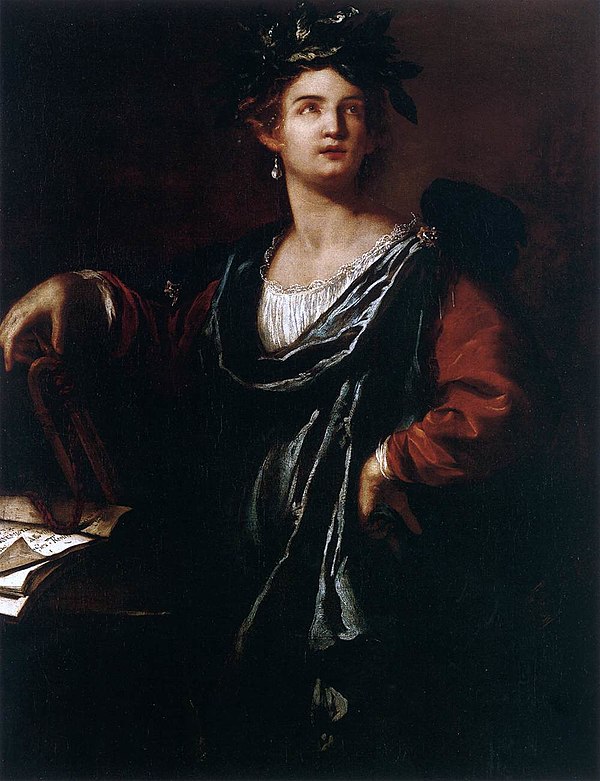
Clio, Muse of History, Painting by
Artemisia Gentileschi (1593 – 1656). Courtesy: Creative Commons
History has a long past, shrouded
In layers of the mist of Time,
Most of which is unseen in a museum. 
History has a future vast as an ocean.

Of times whose tides are frontline,
We are in the middle of the flow
Between a past catching up on us
And a future we are catching up to.  

We must dig deep in the gaping ruins 
To perceive all that remains cloaked 
In the halls of maligned controversies, 
In tune with ruling elites of the times.  

Painted dark might be the white,
And painted white might be the black,
This is how history is entrenched
And has seen snowflakes fall in the Sahara.

The past is in the jaws of the present
Which is incessant in its slither
Into the jaws of a future, rather nebulous, 
To drag it into the past sliding behind.

A lava of tears flows down the cheeks  
Of history as we wield its resolute truth 
Until it remains a shadow of itself.
It sheds one last tear and sails on.

Pramod Rastogi is an Emeritus Professor at the EPFL, Switzerland. He is a poet, academician, researcher, author of nine scientific books, and a former Editor-in-chief (1999-2019) of the international scientific journal, Optics and Lasers in Engineering. He has published over ninety poems in international literary journals.

PLEASE NOTE: ARTICLES CAN ONLY BE REPRODUCED IN OTHER SITES WITH DUE ACKNOWLEDGEMENT TO BORDERLESS JOURNAL

Click here to access the Borderless anthology, Monalisa No Longer Smiles

Click here to access Monalisa No Longer Smiles on Kindle Amazon International

Categories
Contents

Borderless, October 2022

Art by Sohana Manzoor

Editorial

The Sky … Click here to read.

Conversations

Anthony Sattin, an award winning journalist and travel writer in conversation about Nomads: The Wanderers Who Shaped our World, his recent book published by Hachette, India. Click here to read.

VR Devika talks of the dynamic Muthulakshmi Reddy, the first woman in the world to preside over a Legislative Assembly who sought justice for Devadsis and prostitutes and discusses her book, Muthulakshmi Reddy: A Trailblazer in Surgery and Women’s Rights published by Niyogi Books. Click here to read.

Translations

Daridro or Poverty by Nazrul has been translated from Bengali by Professor Fakrul Alam. Click here to read.

The Browless Dolls by S.Ramakrishnan, has been translated from Tamil by B Chandramouli. Click here to read.

Two poems from Italy by Rosy Gallace have been translated from Italian by Irma Kurti. Click here to read.

Flowers of Love Bloom Everywhere, a poem for peace, written by and translated from Korean by Ihlwha Choi. Click here to read.

Aalo Amar Aalo (Light, My Light) a song by Tagore, has been translated by Mitali Chakravarty from Bengali. Click here to read.

Pandies Corner

Songs of Freedom: Moh-Reen is an autobiographical story by Amreen, translated from Hindustani by Janees. These stories highlight the ongoing struggle against debilitating rigid boundaries drawn by societal norms, with the support from organisations like Shaktishalini and Pandies. Click here to read.

Poetry

Click on the names to read

Michael R Burch, Kirpal Singh, Ryan Quinn Flanagan, Jonathan Chan, Ron Pickett, Saranyan BV, George Freek, Pramod Rastogi, Mike Smith, Gayatri Majumdar, John Grey, Vandana Kumar, Ahmad Al-Khatat, Rhys Hughes

Poets, Poetry & Rhys Hughes

In Crossing the Date Line, Rhys talks of his fascination with this imagined construct. Click here to read.

Essays

Epaar Bangla, Opaar Bangla:  Bengals of the Mind

Asad Latif explores if homeland is defined by birth. Click here to read.

The Wabi-Sabi of Making a Living

Aditi Yadav calls for taking a break from hectic work schedules. Click here to read.

Just a Face on Currency Notes?

Debraj Mookerjee writes of Gandhi’s relevance and evolution. Click here to read.

A Mother, a Daughter & a Demon Slayer?

Meenakshi Malhotra checks out the festival of Durga Puja, declared the a heritage festival by UNESCO. Click here to read.

The Observant Immigrant

Candice Lousia Daquin explores festivals and the God gene in We had Joy, We Had Fun…. Click here to read.

Musings/Slices from Life

KL Twin Towers near Kolkata?

Devraj Singh Kalsi visits the colours of a marquee hosting the Durga Puja season with its spirit of inclusivity. Click here to read.

A Five Hundred Nautical Mile Voyage to Tasmania

Meredith Stephens writes of sailing to Tasmania when the pandemic had just started loosening its grip. Click here to read.

Keep Walking…

Ravi Shankar recommends walking as a panacea to multiple issues, health and climate change and takes us on a tour of walks around the world. Click here to read.

The Matriarch of Hirronk

Ali Jan Maqsood introduces us to a strong matriarch from a Balochi village. Click here to read.

Musings of a Copywriter

In Drill, Fill, Just Chill, Devraj Singh Kalsi gives us humour while under a dentist’s drill. Click here to read.

Notes from Japan

Suzanne Kamata writes of her A Ramble on Bizan, focussing on a writer, also by the surname of Moraes, who lived on Mount Bizan more than century ago, moving to Japan from Portugal having fallen violently in love. Click here to read.

Short Stories

Half-Sisters

Sohana Manzoor explores the darker regions of human thought with a haunting psychological narrative about familial structures. Click here to read.

Homecoming

Rituparna Mukherjee gives a poignant story about missing home. Click here to read.

The Phosphorescent Sea

Paul Mirabile journeys with his protagonist into the depths of the ocean. Click here to read.

The Literary Fictionist

In Deathless are the Words, Sunil Sharma explores madness and ideators who believe in the power of words. Click here to read.

Book Excerpts

An excerpt from Taranath Tantrik and Other Tales from the Supernatural by Bibhutibhushan, translated from Bengali by Devalina Mookerjee. Click here to read.

An excerpt from A Handful of Sesame by Shrinivas Vaidya, translated from Kannada by Maithreyi Karnoor. Click here to read.

Book Reviews

Somdatta Mandal has reviewed BM Zuhara’s The Dreams of a Mappila Girl: A Memoir, translated from Malayalam by Fehmida Zakir. Click here to read.

Basudhara Roy has reviewed Taranath Tantrik: And Other Tales from the Supernatural by Bibhutibhushan, translated from Bengali by Devalina Mookerjee. Click here to read.

Bhaskar Parichha has reviewed Satyajit Ray Miscellany: On Life, Cinema, People & Much More, a collection of the maestro’s writings and illustrations. Click here to read.

Categories
Poetry

A Murmur in the Wind

By Pramod Rastogi

DAWN 

There is a murmur in the wind.
The night is on the alert to flee. 
Daybreak is dawning
As shades of soft white mix
To make the darkness light.
 
Trees are barely visible
In the silence of the dawn.
Birds awaken, chirp aloud.
Golden hues paint the sky
To give the dawn a bridal glow.
 
Hung high are the curtains  
Of the dawn, which blow open
On landscapes of hopes anew.
But dawn’s span is short.

A torrent of light let loose
Is set to conquer the world
As dawn awaits in reverence
To breathe in the freshness 
Of its first droplet.
 
Draped in the first rays of light,
Dawn bows out of the stage.

Pramod Rastogi is an Emeritus Professor at the Swiss Federal Institute of Technology (EPFL) in Lausanne, Switzerland. He is a Member of the Swiss Academy of Engineering Sciences. He is the 2014 recipient of the SPIE Dennis Gabor Award. He is currently a guest Professor at the IIT Gandhinagar, India.

.

PLEASE NOTE: ARTICLES CAN ONLY BE REPRODUCED IN OTHER SITES WITH DUE ACKNOWLEDGEMENT TO BORDERLESS JOURNAL

Categories
Contents

Borderless, July 2022

Art by Sohana Manzoor

Editorial

Whispers of Stones… Click here to read.

Translations

Tagore’s Mono Mor Megher Shongi (‘The Clouds, My Friends‘)has been translated by Professor Fakrul Alam. Click here to read.

The Welcome, a skit by Tagore, has been translated by Somdatta Mandal. Click here to read.

The Bus Conductor, a short story by Dalip Kaur Tiwana has been translated from Punjabi by C. Christine Fair. Click here to read.

Hasan Sol: A Balochi Folktale from Geedi Kessah-4(Folktales Vol: 4) compiled and retold by Gulzar Khan Mari, has been translated by Fazal Baloch from Balochi. Click here to read.

Cry of the Sunflower written in Korean and translated to English by Ihlwha Choi, a poem for Ukraine. Click here to read.

Tagore’s Nobobarsha (or ‘New Rains’) has been translated by Mitali Chakravarty. Click here to read.

Pandies’ Corner

This narrative is written by a youngster from the Nithari village who transcended childhood trauma and deprivation. Lockdown had been written in Hindustani by Jishan and translated to English by Grace M Sukanya. Click here to read.

Poetry

Click on the names to read

Michael R Burch, Supatra Sen, Jenny Middleton, Pramod Rastogi, Ron Pickett, George Freek, Devangshu Dutta, Candice Louisa Daquin, David Francis, Raja Chakraborty, Michael Lee Johnson, Ashok Suri, Ryan Quinn Flanagan, Sutputra Radheye, Maid Corbic, Rhys Hughes

Poets, Poetry & Rhys Hughes

In The Anthology in my Mind, Rhys Hughes talks of a make believe anthology. Click here to read and find out what he imagines.

Conversations

Eminent film journalist, Ratnottama Sengupta, converses with legendary actress, Deepti Naval, on her literary aspirations at the Simla Literary festival, Unmesh, in June 2022. Click here to read.

Keith Lyons interviews Steve Carr, a writer who has written 500 short stories and has founded the Sweetycat Press. Click here to read.

Stories

A Cat Story

Sohana Manzoor leaves one wondering if the story is about felines or… Click here to read.

My Christmas Eve “Alone”

Erwin Coomb has a strange encounter at night. Is it real? Click here to read.

Bus Stop

The story by Rinu Antony focusses on chance encounter at a bus stop. Click here to read.

Murder at the ‘Pozzo di San Patriza’

Paul Mirabile travels to 1970s Italy to experience a crime inside a sixteenth century well. Click here to read.

Musings/ Slices from Life

Grune Point and an Inkling of Eternity

A poetic account by Mike Smith as he explores the area that hovers between England and Scotland. Click here to read.

Olympic Game Farm: Meeting and Greeting Animals from Disney Movies

Hema Ravi visits a farm that houses animals that had a past in Disney. Click here to read.

Notes from Japan

In A Visit to the Isamu Noguchi Garden Museum, Suzanne Kamata visits a Museum dedicated to an American Japanese artist. Click here to read.

Musings of a Copywriter

In Shopping for my Funeral, Devraj Singh Kalsi goes on a bizarre spree. Click here to read.

Mission Earth

In On a Bamboo Bicycle from Thailand to Indonesia, Kenny Peavy revisits his trip across Asia exploring the biodiversity and conservation efforts. Click here to read.

Essays

Discovering Books and Places: The Voyage from Eden

Meredith Stephens sails the Australian coastline, recording her experiences with words and her camera. Click here to read.

Trekking to Tilicho Lake

Ravi Shankar treks up to Tilicho Tal at 4940 m. Click here to read his trekking adventures.

A Modern-day Animal Fable with Twists

Dan Meloche visits a contemporary Canadian novel written as an animal fable to draw an unexpected inference. Click here to read.

The Observant Immigrant

Is it okay to be ordinary? by Candice Louisa Daquin explores the responses of people to being accepted as ordinary. Click here to read.

Book Excerpts

An excerpt from The Mendicant Prince (based on the Bhawal sannyasi case) by Aruna Chakravarty. Click here to read.

An excerpt from Nabendu Ghosh’s Dadamoni: The Life and Times of Ashok Kumar. Click here to read.

Book Reviews

Meenakshi Malhotra reviews Tagore’s Gleanings of the Road translated by Somdatta Mandal. Click here to read.

Rakhi Dalal reviews Geetanjali Shree’s Mai, Silently Mother, a Sahitya Akademi winning translation of the Hindi novel by Nita Kumar. Click here to read.

Indrashish Banerjee reviews Nabendu Ghosh’s Dadamoni: The Life and Times of Ashok Kumar. Click here to read.

Bhaskar Parichha reviews Prosanta Chakrabarty’s Explaining Life Through Evolution. Click here to read.

Categories
Poetry

A Painter’s Despair

By Pramod Rastogi

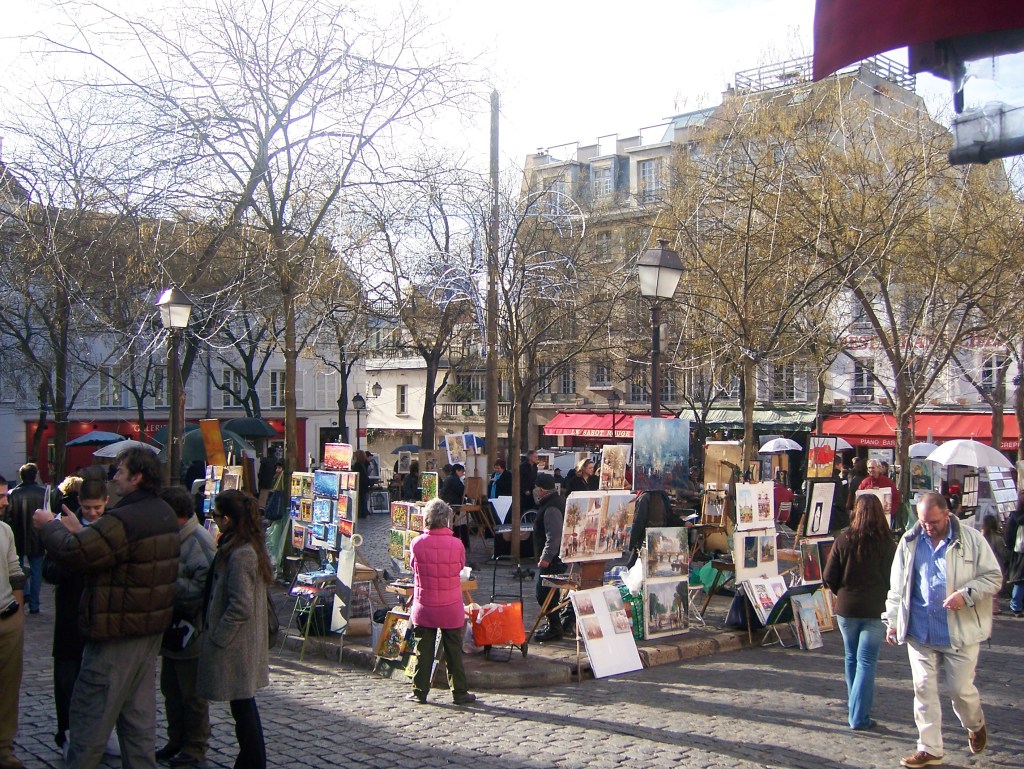
Montmartre: Courtesy: Creative Commons
A PAINTER’S DESPAIR
 
A painter fancies Nature and spends days to paint the dawn
In its rising and its shadows before it disappears
Into the surge of village life.
 
Nature watches life on the move, as does the day
It peeps at the painter's work posed on a large wooden easel, 
While the painter keeps pouring his heart,
 
Brushes and paints in hand, to create a vibrant palette. 
The painter gazes at his artwork. In his eyes, the dawn he beholds
Is not the same as on his canvas.
 
Nature, gracious and humble, bows to the artist's dawn.
Paints fuse to give the dawn a glow, the like of which Nature 
Could never have composed.
 
In despair is the artist – he has failed to ornament Dawn’s
Natural smile for the day. Two perspectives of the same
Dawn, so distant, yet united in one.

Pramod Rastogi is an Emeritus Professor at the Swiss Federal Institute of Technology (EPFL) in Lausanne, Switzerland. He is a Member of the Swiss Academy of Engineering Sciences. He is the 2014 recipient of the SPIE Dennis Gabor Award. He is currently a guest Professor at the IIT Gandhinagar, India.

.

PLEASE NOTE: ARTICLES CAN ONLY BE REPRODUCED IN OTHER SITES WITH DUE ACKNOWLEDGEMENT TO BORDERLESS JOURNAL

Categories
Contents

Borderless, March 2022

Painting by Sohana Manzoor

Editorial

Where Have All the Sunflowers Gone?… Click here to read.

Ukranian Refrains

In When will we ever learn? Oh, will we ever learn?, Ratnottama Sengupta, comments on the current situation in Ukraine while dwelling on her memorable meeting with folk legend Pete Seeger, a pacifist, who wrote ‘Where have all the Flowers gone’, based on a folk song from Ukraine. Click here to read.

In Can Peace come Dropping by,Candice Louisa Daquin explores war and peace pausing over the attack on Ukraine. Click here to read.

Three Poems from Ukraine by Leslya Bakun. Click here to read.

Translations

Manush: Nazrul’s Lines for Humankind: Translated from Bengali by Professor Fakrul Alam. Click here to read.

Jibananda Das’s Where have all these Birds Gone & On the Pathways for Longtranslated from Bengali by Professor Fakrul Alam. Click here to read.

Munir Momin’s You & I translated from Balochi by Fazal Baloch. Click here to read.

Down the stairs by Nabendu Ghosh, a gripping story exploring the greyer areas of ethical dilemmas, has been translated by Sarmishta Mukhopadhyay with editorial input from Ratnottama Sengupta. Click here to read.

Autumn is Long, a poem written in Korean and translated to English by Ihlwha Choi. Click here to read.

Tagore’s Anondodhara Bohichche Bhubone (The Universe reverberates with celestial ecstasy)…translated from Bengali by Mitali Chakravarty. Click here to read.

Pandies’ Corner

These narratives are written by youngsters from the Nithari village who transcended childhood trauma and deprivation. A letter to God by Tanveer Hussain  uses the epistolary technique to asks questions that would be relevant for all humankind. It has been translated from Hindustani by Vritika Thareja. Click here to read.

Poetry

Click on the names to read

Kirpal Singh, Rhys Hughes, Sutputra Radheye, Jay Nicholls, Uma Gowrishankar, Mike Smith, Anasuya Bhar, Luis Cuauhtémoc Berriozábal, Supatra Sen, George Freek, Pramod Rastogi, Ryan Quinn Flanagan, Ananta Kumar Singh, Michael R Burch, Shaza Khan

Nature’s Musings

In Storms & Seas, Penny Wilkes explores birds and the ocean during rough weather. Click here to read.

Poets, Poetry or Rhys Hughes

In Tall or Short Tales, Rhys Hughes explores the absurd. Click here to read.

Musings/Slices from Life

Eva Zu Beck & Marco Polo

San Lin Tun writes of how, in Yangon, he spends the lockdown watching a travel blog by Eva Zu Beck. Click here to read.

Messages through Space and Time

Meredith Stephens explores how the art of letter writing creates links across borders of time and place. Click here to read.

It’s Amazing the Things We can Do

Erwin Coombs takes us through his life in Egypt and has a relook at Nazi occupied Europe with a dollop of humour to come to an amazing conclusion. Click here to read.

An Existential Dilemma

G Venkatesh uses the laws of thermodynamics to try to interpret the laws that define life. Click here to read.

Musings of a Copywriter

Devraj Singh Kalsi ponders on his Visit to a Book Fair. Click here to read.

Notes from Japan

In Imagining a Possible Future: Filmmaker Felicity Tillack, Suzanne Kamata introduces us to an Australian film maker who is making films in Japan now and some are in Japanese. Click here to read.

Mission Earth

Kenny Peavy starts his column with Mama Calling, a cry to go back to living with nature. Click here to read.

Interviews

From the Himalayas to the Banks of Thames: In Conversation with Sangita Swechcha, a writer shuttles between England and Nepal and writes of her homeland. Click here to read.

At Home Across Continents : In Conversation with Neeman Sobhan, a Bangladeshi-born writer who writes of her experiences as an expat in Pakistan, Bangladesh, Italy and America. Click here to read.

Stories

The Man Who got Eaten

 Kieran Martin tells a tall tale or is it short? Click here to read.

Death Will Come

Munaj Gul Muhammed captures the wafting sadness of grieving in this short poetic narrative. Click here to read.

SofieMol

Sharika Nair paints a vignette of the past merging with the present in her narrative. Click here to read.

Faith & Fortune

Devraj Singh Kalsi shows how the twists of faith are aligned to wealth and fame. Click here to read.

Henrik’s Journey

Farah Ghuznavi follows a conglomerate of people on board a flight to address issues ranging from Rohingyas to race bias. Click here to read.

Essays

The Kaleidoscopic World of Satyajit Ray

Anasuya Bhar takes us into the literary world of Satyajit Ray, the world famous film director. Click here to read.

Are Some of Us More Human than Others ?

Meenakshi Malhotra ponders at the exclusivity that reinforces divisions, margins and borders that continue to plague humankind, against the backdrop of the Women’s Month, March. Click here to read.

The Observant Immigrant

In The Paradox of Modern Communication, Candice Louisa Daquin takes us through the absurdities that haunt modern verbal communication. Click here to read.

Book Excerpts

An excerpt from Friends in Wild Places: Birds, Beasts and Other Companions by Ruskin Bond. Click here to read.

An excerpt of a short story by Yang Ming from Asian Anthology, edited by Ivy Ngeow. Click here to read an excerpt.

Book Reviews

Meenakshi Malhotra reviews Mahasweta Devi, Our Santiniketan translated by Radha Chakravarty. Click here to read.

Indrashish Banerjee reviews The Tombstone in My Garden: Stories From Nagaland by Temsula  Ao. Click here to read.

Keith Lyons reviews Asian Anthology: New Writing Vol. 1: Stories by Writers from Around the World, edited by Ivy Ngeow. Click here to read.

Bhaskar Parichha reviews Why They Killed Gandhi; Unmasking the Ideology and the Conspiracy by Ashok Kumar Pandey. Click here to read.

Special Issues

Imagine… Click here to read our World Poetry Day Special.

Categories
Poetry

If My Life were Only a Dream

By Pramod Rastogi

Courtesy: Creative Commons
IF MY LIFE WERE ONLY A DREAM

How much would I feel unburdened
If my life were only a napping dream?
I would simply be a handful of water 
That springs from the melting glaciers
And flows down to embrace the ocean. 
 
But life as real as the sun and the moon
Is more like a candle flame
That a man carries within him
Always. Storms and typhoons rage.
If the flame blows away, life goes away.
 
The plot of life is as simple as it is tender.
Smiling joy and deepest despair are so visible
When we view life as a sheet of glass;
Yet, life is also as brittle. 
It could fall and shatter. 
 
The Creator has made man a part of His dream, 
And the dream on His part to accompany him.
Dreams are neither on sale, nor on barter.
They must be built, nurtured, and lived.
Dreams are of infinite shades, vivid and coloured,
And can silently fall asleep but never die.
 
Is dream an illusion, delusion, or reality?
It is all that and more, tethered in its veiled silence.

Pramod Rastogi is an Emeritus Professor at the Swiss Federal Institute of Technology (EPFL) in Lausanne, Switzerland. He is a Member of the Swiss Academy of Engineering Sciences. He is the 2014 recipient of the SPIE Dennis Gabor Award. He is currently a guest Professor at the IIT Gandhinagar, India.

.

PLEASE NOTE: ARTICLES CAN ONLY BE REPRODUCED IN OTHER SITES WITH DUE ACKNOWLEDGEMENT TO BORDERLESS JOURNAL

Categories
Contents

Borderless January, 2022

Painting by Sohana Manzoor

Editorial

Elephants & Laughter… Click here to read.

Interviews

Keith Lyons introduces us to Kenny Peavy, an author, adventurer, educator and wilderness first-aider who has travelled far and wide and wishes everyone could connect with the natural world right outside their door. Click here to read.

In Rhys Hughes Unbounded, Hughes, an author and adventurer, tells us about his inclination for comedies. Click here to read

Translations

Professor Fakrul Alam translates If Life were Eternal by Jibananada Das from Bengali. Click here to read.

Ratnottama Sengupta translates Bengali poet Michael Madhusudan Dutt’s Bijoya Doushami. Click here to read.

Korean poet Ihlwha Choi translates his own poem, Sometimes Losing is Winning, from Korean. Click here to read.

Give Me A Rag, Please:A short story by Nabendu Ghosh, translated by Ratnottama Sengupta, set in the 1943 Bengal Famine, which reflects on man’s basic needs. Click here to read.

On This Auspicious Day is a translation of a Tagore’s song, Aaji Shubhodine Pitaar Bhabone, from Bengali by Mitali Chakravarty. Click here to read.

Poetry

Click on the names to read

Rhys Hughes, Ryan Quinn Flanagan, Anasuya Bhar, Jay Nicholls, Anuradha Vijayakrishnan, Vernon Daim, Mathangi Sunderrajan, William Miller, Syam Sudhakar, Mike Smith, Pramod Rastogi, Ivan Peledov, Subzar Ahmed, Michael R Burch

Nature’s Musings

In Best Friends, Penny Wilkes takes us for a photographic treat. Click here to read.

Poets, Poetry & Rhys Hughes

In Making Something of Nothing…, Rhys Hughes explores sources of inspirations with a dollop of humour. Click here to read.

Musings/Slices from Life

Wooing Children to School

Munaj Gul writes of how volunteers are engaged in wooing children from poverty stricken backgrounds to school in Turbat, Balochistan. Click here to read.

Historical Accuracy

Ravibala Shenoy ponders over various interpretations of the past in media and through social media. Click here to read.

The Ocean & Me

Meredith Stephens writes of her sailing adventures in South Australia. Click here to read.

Crotons

Kavya RK finds her fascination for plants flourish in the pandemic. Click here to read.

The Great Freeze

P Ravi Shankar trots through winters in different parts of the globe. Click here to read.

Two Birds

Ratnottama Sengupta muses as she translates a Tagore’s song. Click here to read.

Musings of a Copywriter

In The New Year’s Boon, Devraj Singh gives a glimpse into the projection of a new normal created by God. Click here to read.

Essays

Dramatising an Evolving Consciousness: Theatre with Nithari’s Children

Sanjay Kumar gives us a glimpse of how theatre has been used to transcend trauma and create bridges. Click here to read.

Potable Water Crisis & the Sunderbans

Camellia Biswas, a visitor to Sunderbans during the cyclone Alia, turns environmentalist and writes about the potable water issue faced by locals. Click here to read.

The Malodorous Mountain: A Contemporary Folklore

Sayantan Sur looks into environmental hazards due to shoddy garbage disposal. Click here to read.

Where Sands Drift Back in Time…

Shernaz Wadia explores Western Australia. Click here to read.

The Observant Immigrant

In The Changing Faces of the Family, Candice Louisa Daquin explores the trends in what is seen as a family now. Click here to read.

Bhaskar’s Corner

In Fakir Mohan: A Tribute, Bhaskar Parichha introduces us to Fakir Mohan Senapati, the writer he considers the greatest in Odia literature. Click here to read.

Stories

Folklore from Balochistan: The Pearl

Balochi folktales woven into a story and reinvented by Fazal Baloch highlighting the wisdom of a woman. Click here to read.

The American Wonder

Steve Ogah takes us to a village in Nigeria. Click here to read.

The Boy

Neilay Khasnabish shares a story on migrant labours with a twist. Click here to read.

Stranger than Fiction

Sushant Thapa writes of real life in Nepal, which at times is stranger than fiction. Click here to read.

The Solace

Candice Louisa Daquin takes us on a poignant story of longing. Click here to read.

The Doll

Sohana Manzoor tells a story around the awakening of a young woman. Click here to read.

Among Our PeopleDevraj Singh Kalsi gives a fictitious account of a common man’s quest for security in a country that is one of the world’s largest democracy. Click here to read.

Book Excerpts

An excerpt from Shazi Zaman’s Akbar: A Novel of History detailing his interactions with Surdas and Braj. Click here to read.

Excerpts from A Glimpse Into My Country, An Anthology of International Short Stories edited by Andrée Roby & Dr Sangita Swechcha. Click here to read.

Book Reviews

Meenakshi Malhotra reviews Somdatta Mandal’s translation of A Bengali Lady in England by Krishnabhabini Das (1885). Click here to read.

Gracy Samjetsabam reviews Anuradha Kumar’s The Hottest Summer in Years. Click here to read.

Rakhi Dalal reviews Selma Carvalho’s Sisterhood of Swans. Click here to read.

Bhaskar Parichha reviews Amit Ranjan’s John Lang; Wanderer of Hindoostan; Slanderer in Hindoostanee; Lawyer for the Ranee. Click here to read.