Title:Let’s Be Best Friends Forever: Beautiful Stories of Friendship
Publisher: Talking Cub, Speaking Tiger Books
From ‘The Tunnel of Friendship’ by Ruskin Bond
I had already started writing my first book. It was called Nine Months, but had nothing to do with a pregnancy; it referred merely to the length of the school term, the beginning of March to the end of November, and it detailed my friendships and escapades at school and lampooned a few of our teachers. I had filled three slim exercise books with this premature literary project, and I allowed Azhar to go through them. He was my first reader and critic. ‘They’re very interesting. But you’ll get into trouble if someone finds them,’ was his verdict.
We returned to Shimla, having won our matches against Sanawar, and were school heroes for a couple of days. And then my housemaster discovered my literary opus and took it away and read it. I was given six of the best with a Malacca cane, and my manuscript was torn up. Azhar knew better than to say ‘I told you so’ when I showed him the purple welts on my bottom. Instead, he repeated the more outrageous bits he remembered from the notebooks and laughed, till I began to laugh too.
‘Will you go away when the British leave India?’ Azhar asked me one day.
‘I don’t think so,’ I said. ‘My stepfather is Indian. My mother’s family have lived here for generations.’
‘Everyone is saying they’re going to divide the country. I think I’ll have to go away.’
‘Oh, it won’t happen,’ I said glibly. ‘How can they cut up such a big country?’
‘Gandhi will stop them,’ he said.
But even as we dismissed the possibility, Jinnah, Nehru and Mountbatten and all those who mattered were preparing their instruments for major surgery.
Before their decision had any effect on our life, we found a little freedom of our own—in an underground tunnel that we discovered in a corner of the school grounds. It was really part of an old, disused drainage system, and when Azhar and I began exploring it, we had no idea just how far it extended. After crawling along on our bellies for some twenty feet, we found ourselves in complete darkness. It was a bit frightening, but moving backwards would have been quite impossible, so we continued writhing forward, until we saw a glimmer of light at the end of the tunnel. Dusty, a little bruised and very scruffy, we emerged at last on to a grassy knoll, a little way outside the school boundary. We’d found a way to escape school!
The tunnel became our beautiful secret. We would sit and chat in it, or crawl through it just for the thrill of stealing out of the school to walk in the wilderness. Or to lie on the grass, our heads touching, reading comics or watching the kites and eagles wheeling in the sky. In those quiet moments, I became aware of the beauty and solace of nature more keenly than I had been till then: the scent of pine needles, the soothing calls of the Himalayan bulbuls, the feel of grass on bare feet, and the low music of the cicadas.
World War II had just come to an end, the United Nations held out the promise of a world living in peace and harmony, and India, an equal partner with Britain, would be among the great nations…
But soon we learnt that Bengal and Punjab provinces, with their large Muslim populations, were to be bisected. Everyone was in a hurry: Jinnah and company were in a hurry to get a country of their own; Nehru, Patel and others were in a hurry to run a free, if truncated, India; and Britain was in a hurry to get out. Riots flared up across northern India.
At school, the common room radio and the occasional newspaper kept us abreast of events. But in our tunnel Azhar and I felt immune from all that was happening, worlds away from all the pillage, murder and revenge. Outside the tunnel, there was fresh untrodden grass, sprinkled with clover and daisies, the only sounds the hammering of a woodpecker, and the distant insistent call of the Himalayan barbet. Who could touch us there?
‘And when all wars are done,’ I said, ‘a butterfly will still be beautiful.’
‘Did you read that somewhere?’ Azhar asked.
‘No, it just came into my head.’
‘It’s good. Already you’re a writer.’
Though it felt good to hear him say that, I made light of it. ‘No, I want to play hockey for India or football for Arsenal. Only winning teams!’
‘You’ll lose sometimes, you know, even if you get into those teams,’ said wise old Azhar. ‘You can’t win forever. Better to be a writer.’
One morning after chapel, the headmaster announced that the Muslim boys—those who had their homes in what was now Pakistan—would have to be evacuated. They would be sent to their homes across the border with an armed convoy.
It was time for Azhar to leave, along with some fifty other boys from Lahore, Rawalpindi and Peshawar. The rest of us—Hindus, Christians, Buddhists, Sikhs and Parsis—helped them load their luggage into the waiting British Army trucks that would take them to Lahore. A couple of boys broke down and wept, including our departing school captain, a Pathan who had been known for his unemotional demeanour. Azhar waved to me and I waved back. We had vowed to meet again some day. We both kept our composure.
The headmaster announced a couple of days later that all the boys had reached Pakistan and were safe. On the morning of 15 August 1947, we were marched up to town to witness the Indian flag being raised for the first time. Shimla was still the summer capital of India, so it was quite an event. It was raining that morning. We were in our raincoats and gumboots, while a sea of umbrellas covered the Mall.
(Extracted from Let’s Be Best Friends Forever: Beautiful Stories of Friendship, with an introduction by Jerry Pinto. Published by Talking Cub, the children’s imprint of Speaking Tiger Books.)
ABOUT THE BOOK
An Afghan trader and a young Bengali girl form a touching connection that transcends cultural barriers in Rabindranath Tagore’s classic story ‘The Kabuliwala’. Jo March and Laurie from Little Women meet at a dull party and become companions for life. L. Frank Baum’s timeless characters Dorothy and Toto adventure around Oz forging magical bonds of friendship.
The brave queen of Jhansi and her ally Jhalkaribai come together to fight for freedom and dignity; Jesse Owens narrates an inspiring tale of sportsmanship and solidarity from his Olympic days; and twelve-year-old Kamala and her friends, Edward, Amir and Amma, endure the Partition riots together in Bulbul Sharma’s heart-warming story.
In these pages you will also meet Nimmi and her best pal, Kabir, whose school misadventures include spirited debates; Sunny, whose love for books leads to a new friendship on a trip to Darjeeling; Cyril and Neil, who face life’s challenges with inventive word games, and Siya, who discovers that true friends can come in the most unexpected forms—even as a cherished doll.
Animal lovers will delight in the escapades of Gillu, the charming squirrel, Harold, the handsome hornbill, Rikki-tikki-tavi, the loyal mongoose, Hira and Moti, the powerful oxen, and Bagheera, the brave panther who looks after the young boy Mowgli.
With stories from beloved and popular authors—Ruskin Bond, Rudyard Kipling, Mahadevi Varma, Jerry Pinto, Shabnam Minwalla, and many more—Let’s Be Best Friends Forever is an enchanting collection that celebrates the universal power and beauty of friendship.
.
PLEASE NOTE: ARTICLES CAN ONLY BE REPRODUCED IN OTHER SITES WITH DUE ACKNOWLEDGEMENT TO BORDERLESS JOURNAL
These days, it seems to sixty-year-old Husna that the past is clearer than the blur of her mirror…
The black Morris had come to a halt near the major crossing on Top-Khana road. In the back seat, feeling as plump as the upholstery, Husna was sweating and dabbing her pretty twenty-year-old face and neck with the anchal end of her cotton Jamdani sari.
Pregnancy had made it hard for her to fit into the long tunics and gathered pants of her hitherto comfortable shalwar-kameez outfits. Beside her lay the folded newspaper that Baba, her father Dr. Rahman, had left behind that morning, when he got dropped at the Dacca Medical College. She picked it up to fan herself. It was the Bengali language daily, Azad[1], dated February 20, 1952. The headlines wafted back and forth, screaming in print the news of the continuing agitations around Dacca, East Pakistan, on the language issue.
Without needing to look at the paper, she knew about the meeting that day of the Language Action Committee from her youngest brother Shonju, the student activist. She knew that they were meeting to discuss a nationwide hartal[2]scheduled for tomorrow, a general strike against the government’s repressive policies and disregard for the legitimate demand of the people that their mother language be given its rightful place as one of the two state languages of the country.
Since January, when she had returned home from West Pakistan for her confinement, all the discussion around the family dinner table involved the Prime Minister Khwaja Nazimuddin’s reiteration of Governor-General of Pakistan, Jinnah’s enraging declaration of two years ago that “Urdu, and only Urdu shall be the state language of Pakistan.”
She glanced at driver Rashid Miya. The middle-aged man seemed unaffected by the heat, unlike Husna. She was due for delivery in a “matter of days”, as Daktar Chacha[3], her father’s MD friend, had promised during the last check-up, patting her head as if she were still the teen-aged, newly married bride, who had left for West Pakistan a year ago with her banker husband, Jamil.
In a way she was glad that Jamil and she had left their familiar world of Dacca immediately after their arranged marriage, helping two newlywed strangers to bond over the shared adventure of starting life as Bengalis new to the quasi-foreign, Urdu-speaking territory of Karachi in West Pakistan.
Not that Urdu was unfamiliar to Husna. Despite problems with gender in the language, she could manage basic social conversation (though, it annoyed her that she never found any Urdu speaking Pakistani who could utter even a word of Bengali, or tried to). But she was proud that just by listening to the radio she had learnt to sing the popular film ghazals of her favourite Indian playback singer Talat Mahmood, or Noor Jahan, now a Pakistani singer, who migrated to Lahore recently, after the Partition of India five years ago.
It was a bit disappointing that Jamil preferred her to sing the Tagore and Nazrul songs her music teacher had taught her since childhood, when all along her heart hummed with film songs. Songs from Bengali and Hindi films that her strict mother had seldom allowed her to see, unless escorted to the cinema halls by friends and relatives, and on special occasions, like Eid.
She had hoped to right this wrong immediately upon getting married. After all, Ma always said, “Do whatever you wish….after you’re married.” And Jamil did take her to the cinema, though, mostly to see English films. Matinees or late shows at the Rex or Ritz, or an early show at the Odeon followed by dinner in a hotel like Beach Luxury. Once she had seen a belly dancer from Beirut or Cairo perform there and had felt embarrassed yet fascinated by the lissom female body, the unfettered, uninhibited moves. She had felt a dizzy sense of freedom just watching the dancer.
She sighed, running her hand over the watermelon that was her belly! Today she didn’t feel like that bright eyed young girl in Karachi anymore. Nor even a mother-to-be. She just felt like a bloated animal, she sulked looking out of the car window. They were at a standstill for what seemed like an hour. Minutes crawled like the runnels of sweat under Husna’s new high-necked blouse, inspired by the popular Indian Bengali actress Suchitra Sen. She dabbed the constant beading of her nose and upper lip that Jamil always said he found endearing.
She started a mental reply to his last letter. “Dearest one. . . ” She began, then floundered. This would be her third letter to him since she arrived in Dacca, but she was still not convinced about how to address him in writing. Some of her Urdu-speaking female acquaintances in Karachi called their husbands by name, though often using the polite pronoun “aap[4].” Ma always called Baba “Ogo[5]” or “Shuncho?” as in “Are you listening?” That was funny because even if Baba were not listening, Ma would chatter on.
She felt awkward and insincere mimicking the spontaneous affection in Jamil’s letters, calling her “Beloved” and his “Myna bird” and so many other endearments, while she was unable to address him in a way that felt comfortable and not a lie. As usual, she settled for no salutations but an outright “Kemon acho?”
How’re you? I’m as well as can be expected. It’s only February and already Dhaka is uncomfortably warm. How is Karachi? Here, it’s not just the weather that’s heating up, but the political environment as well. The ‘bhasha andolon’, which the English newspapers refer to as ‘the Language Movement’ is going on full force. Baba and Ma are always worrying about Shonju, who is out on the streets every day and in student meetings at all hours. He creeps home late and stores all his protest posters and fliers under my bed and fills me in on what’s going on. I often have to cover for him to the family….”
She pulled forward the end of her sari and tried to cover her belly and wipe her glistening face. Oh! Pregnancy was so boring; and this heat was claustrophobic. If only she could be like Shonju, free to just come and go, walk the streets or ride the cycle or take a rickshaw.
“Ki holo, Rashid Bhai? What’s up?” she asked, as she wound the window all the way down.
“Apa[6], I think there’s a procession approaching. I feel we should take a side street. This road is blocked.” Rashid was already turning the steering wheel.
“Oh! Then, no New Market today? I wanted to collect my harmonium that I left for tuning.” Husna’s voice was lost in a volley of shouts that came from somewhere ahead. Meanwhile, a rickshaw edged close to the car, and two boys, possibly students, with cloth bags hanging from their shoulders, started throwing pamphlets through the windows of a few buses and into other rickshaws that were milling around.
One pamphlet landed on Husna’s lap like the silly, anonymous love-note she had once received while being driven to college, just two years ago. She smiled. She had often wished the author had been her elder brother’s friend and her girlhood crush, Farid. But he was hardly the type to write something romantic to her. Certainly not “Beloved one” or “My Myna bird.” No, it was hard to imagine that serious, brooding, good-looking face bent over anything but medical books.
Rashid stopped to make way for a group of demonstrators, banners folded under their arms. Some raised a slogan and the rest joined in. “Manbo na! Manbo na! Never will we accept!” Husna’s heart pumped. Ah! Unlike her, these boys dared to proclaim that they rejected whatever was being imposed on them. Was this possible? She wished she could get out of the car and walk with the boys, raise her voice in slogans. Unthinkable and unladylike, of course; plus, she was a waddling, pregnant beast.
Rashid Miya swung the car around and they entered a narrow street that led out to a wider road. He braked to give way to a truck that sped past, full of khaki-uniformed police, their rifles flashing in the sun. “Too many demonstrations today near the university, Apa. I hope tomorrow, your father will not go to Medical College. And our Shonju Bhaiyya should be careful. He and his friends were getting on a rickshaw at the gate this morning, when I was wiping the car, and they were talking about processions tomorrow. I kept hearing the date. 21st…Ekushey February. God only knows what will happen!”
“We better go home, Rashid Bhai. Shall we pick up Baba?”
“No, it’s only past 5. I’ll come for him later. Let me drop you first.”
Suddenly, preceded by the rumble of microphone, a van came into view. As it crawled past, it left the sputtering debris of words in crackling Bengali. She could decipher only: Section 144 imposed in the city… for 30 days…a ban on gatherings of more than 4 people in public places…processions or demonstrations to be severely punished…
Husna grew restless for Shonju. She prayed he would come home safely and not get embroiled in something foolhardy. He usually confided in her. At least, he used to till Husna got married. They were the closest among their many siblings. Even on the eve of her wedding, it was he and not one of her sisters who had insisted that if she had any doubts about this arranged marriage, it was not too late to speak up.
But she had never mustered enough courage. Or conviction. After all, Farid had not really confessed his feelings for her, and, from what she discovered about Jamil, he was a perfectly decent human being. In fact, she had no complaints about her husband, except that he was not the one her heart had chosen. If only she had met him on her own, and he had not been imposed on her, as if by state decree: “Jamil, and only Jamil shall be your husband!” And… if only elusive Farid had been clear about his feelings. Even if it were non-reciprocal, she would have felt free. Her heart would not now feel so mute.
Why was the language of the heart so complicated, so hard to decipher? It was as if its familiar truths, which could be accessed non-verbally, instinctively, were now locked in a foreign alphabet that she had to relearn in order to decode their meanings. Almost like that ridiculous proposal in the Legislative Assembly two years ago that Shonju had laughed with her about, regarding the use of Arabic script to write Bengali!
“Just imagine, Bubu, the word ‘mother’ would still be pronounced ‘Ma’ but not written ‘moye-akar’ but ‘meem-alef’! Our Brahmi script curling and prancing forward gracefully from left to right would be attacked from right to left by the slanting arrows of the Nastaliq squiggles, and then both colliding explosively in the middle!”
NastaliqBengali script
Oh! Shonju was so dramatic! A laugh escaped Husna, then she fell silent.
They were driving past the Ramna Racecourse. Her baby shifted in her womb. Later. . . many years later, she would think that her son Azeem knew that they were passing what in two decades would be a historical spot: the pulse point of an unprecedented political gathering on a March morning in 1971. On the seventh day of that month, a voice would rise like a colossal bird filling the Dhaka sky with its fateful, uncompromising call, announcing that the time had come “for the ultimate struggle, the struggle for freedom”: Ebarer shongram, shadhinotar shongram!
Had she been clairvoyant, known that the heady creature would swoop down and snatch her son and hurl them all into the whirlpool of destiny, perhaps she would have told Rashid Miya to change route, take another road. But would that have changed the course of history, erased the scribbling of fate?
For the moment, the Black Morris like a rigid pen on paper drives inexorably forward, and the future is drowned out by the sporadic shouts in the distance of “Rashtro bhasha Bangla chai! We demand Bangla for national language!”
The baby came early. In fact, the very evening after she returned from her outing, the pains started. There was no time to shift her to the maternity ward of the private clinic of Daktar Chacha, so he sent a nurse over to help deliver her baby at home. Early in the morning of February 21, her baby son arrived.
A trunk call was made to Karachi to give Jamil the good news. Then there was much rejoicing in the house with relatives dropping in to see the baby. By late afternoon, however, the atmosphere in the house became subdued as disturbing news from the streets filtered through.
The police had opened fire on protesting students. There were hushed discussions so she would not hear. But she overheard the day nurse telling the night nurse before she left that injured students had been taken to the Medical College. The very next day, Husna’s elder brother, the final year medical student, Monju Bhaijan, had come to the breakfast table shouting in rage that a student had succumbed to his wounds, and the body of another had been found on the floor behind the Anatomy room. Baba confirmed it with sadness.
Even Jamil’s letter to her after the joy of the news of Azeem’s birth contained a postscript: “Stay safe. These are volatile times. Worried about Shonju. The Dawn newspaper here carried an editorial saying that the people of West Pakistan have no objection to Bangla getting a status equal to Urdu. Why is there always such a divide between the wielders of political power and the populace?”
A few days later, Husna wasn’t sure if it was the 25th or 26th, Ma and the nurse had just taken away the baby when Shonju arrived. He was carrying a box of sweets. “Moron Chand and Sons” it said on the box. Inside were her favourite sweets: the soft, creamy white, renin-based balls of rose-scented pranhara-shondesh.
Ma must have bought the sweets and forced him to come visit his newborn nephew. Husna breathed a sigh of relief, seeing her brother, who paced restlessly, refusing to sit.
“I saw the baby in Ma’s room on my way in. Looks like Dulabhai.”
“Really? I think he has our family nose.”
“Poor kid! Hope not.” Shonju finally grinned, but his mind was elsewhere. He was wearing a black badge of mourning on his white kurta sleeve.
Husna stretched her arm and took his hand: “My heart aches for those who died, Shonju. But I’m so grateful you are okay.”
He didn’t let go of her hand but turned his angry face away.
“We students are still in battle mode. It will continue, the andolon, the protests, the confrontation. The Shaheed Minar memorial we constructed outside Medical College was destroyed, but we will rebuild it.”
He pulled his hand away, clicking his tongue: “Oh! Don’t worry. Nothing will happen to me. When you fight for a cause you feel superhuman, invincible. The collective spirit strengthens us, makes us feel immortal. We are more than an individual life. What will our enemies do? Kill or wound one person, right? But the cause… they can’t defeat that. We are the multitudes… ”
“Uff! Stop this speechifying!” Husna rolled her eyes. “Mothers don’t want multitudes. They just want their sons. Sisters want their brothers. Yes, even though you’re a moron, I’d rather have you than a street full of heroes.”
Shonju laughed. “In that case, Bubu, you better start speaking only in Urdu. Sell your mother tongue to these politicians.”
After Shonju left, the nurse brought the baby to be fed. Husna touched baby Azeem’s toes, his petal-like fingers. Once, she had laughed at her elder sister for her incessant baby talk when her son was born. Now it spilled out of her, and she felt no embarrassment. Soft, mashed up balls of Bengali words lisped with maternal love, sweeter, and more tender than the pranhara in the box.
Was that how all mother tongues started? With silly, besotted mothers cooing to the babies in their language? She realised that if she had to make up baby talk in another language, she probably couldn’t do it. There was something about expressing oneself in one’s own tongue, heard from infancy. It was the home that one carried within, because the earliest memories of the mother’s voice absorbed from the womb animated it. It was a birth right that no one could be permitted to take away or undermine.
But was it worth dying for? Worth being martyred like the student the police had shot on Thursday, the twenty-first?
A week later, after lunch, the house suddenly filled with voices. Shonju entered, followed by Monju Bhaijan, and Farid. Husna looked at him surreptitiously. His face was impassive and he gave her a distracted nod. What else could he do, or say, Husna could understand. After all, there she was, much married and a mother, to boot.
Loudly ordering tea to be served, sounding like a housewife, she left the room, disappointed in herself that despite her show of poise and indifference, her heart still ached in a dim way.
She asked herself, if, in the past, she and Farid had been granted the opportunity and the courage to express to each other what she was certain was a mutual attraction, would her life be different? Would the knowledge that her feelings were requited, or not, have made a difference to her sense of self?
When Jamil’s proposal of marriage came to her parents, and they had accepted on her behalf. It was too late. Farid was not around, having gone to visit his parents in Barishal, so nothing had been acknowledged. There had been no beginning, and subsequently, no closure.
During her impending wedding she had to make sure her feelings did not go into a Bhasha Andolon of sorts within her, agitating and demanding the right of her heart’s true language to be respected. Instead, she had gagged her heart, imposed on herself another language: a formal, emotionally correct, and socially acceptable language. The vocabulary of wedded propriety appropriate to an obedient daughter and daughter-in-law. An official language, foreign to her, like Urdu.
She sighed. Language supposedly empowered humans and differentiated them from animals. But if, despite the ability to verbalise, people could not make their wishes known or heard, were they not equal to dumb beasts? What use was the mother tongue when ones’ own mother had not understood her daughter’s unspoken wish just because she could not speak out: “I don’t want to marry, yet. I want to wait! Manbo na! Manbo na!” And what use was language when Farid too, had failed to use his tongue, express himself at the right time, ask her clearly to wait and not accede to the arranged marriage.
*
No, it was better that the Bengalis had spoken out. It was better that they had taken to the streets. This andolon would lead them to express their rights and desires, claim what was true. Of course, it would take four more years for Bengali to be constitutionally recognised as a state language of Pakistan, along with Urdu. But time was a tiny link in the cosmic chain of historical and personal events. Obviously, this last was not something thought up by Husna at the time, but by the Husna of today, watching her past self.
Today, she observed herself through the telescope of time, on the first day the young mother Husna nursed her baby son. Surely, she was unaware at that moment that everything was connected: her breast milk and baby talk in Bangla nourished not just her child, Azeem, but through him later, Shonju’s “multitudes” of a future generation, as a whole nation journeyed from Ekushey or twenty-first, to Ekattor or seventy-one: from the upheaval for language of February 21, 1952 to claiming a home for it in the war of independence of 1971. All were linked, even if separated by time and generation. In the end, everything existed in a grand NOW, where past and present simmered together.
Needless to say, all this was what she would think many years later, as an older sixty-year-old woman, looking back on her life as she wrote her journal, sitting in her room in her daughter’s suburban home in Maryland, in the US.
She dusted the photo frames on the painted bureau. Her doting late husband Jamil, and her gentle yet impassioned elder son Azeem looked at her from the distance of lost eras. One was gone in 1966 in a helicopter crash. The other in 1971, as a freedom fighter.
Farid, unframed, was a forbidden, almost forgotten memory. Lost like an unspoken language. Lost, because she had never fought for him.
She has a fanciful wish: in some after life she would like to ask those who had agitated and fought for a cause, and even laid down their life for it: in the end, was the sacrifice worth it?
“Today is February 21, 2002. Commemorated as Omor Ekushey in Bangladesh. But just another day here…” She wrote in her diary in Bangla, a language that her grandchildren could not speak.
She pulled out from under her bed the harmonium her daughter had recently bought for her from an Indian family that was moving back to India. She sat down on the rug, stroking the black and white keys with one hand and pumping lightly on the bellows at the back of the instrument.
On top of her harmonium lay open her old songbook, marked and written on by the music teacher of her childhood. She was a trained singer, and in 1950, she with a group from her school had performed some mass anthems and marching songs on what was then Radio Pakistan Dacca. There, they had met a musician named Abdul Latif, who would later put to melody a poem written by a journalist named Abdul Gaffar Choudhury for the student who had died on February 21. Later, the song would be recomposed by a noted composer named Altaf Mahmud and emerge as an anthem for what became Mother Language Day.
For her, of course, the day had a different and personal significance. It was the sacred anniversary of her motherhood that she had entered so reluctantly. On this day, every year, she sang to the son who had taught her the ultimate lesson of love and sacrifice and of never forgetting.
She started to hum the familiar refrain as she tried out a few chords.
Her granddaughter Zainab peeked through the door.
“What’re you singing, Nani[8]?” She said in her American accent.
“It’s a song about love, sweetie. About loving one’s language.”
“Which language, Nani?”
“Any language that you love, sweetheart. For me it’s Bangla, which you hear me speak with your mom.”
She sang the first lines. Zainab sat down beside Husna, gazing at her moving fingers.
“Cool! It’s like a portable piano! Can I learn to play it?”
“Well, only if you also learn to sing this song with me.”
“Deal!”
In bed that night, Husna wrote in her journal: “Today is February 21. International Mother Language Day. Today Zainab learnt to sing the Ekushey song, especially the refrain ‘Ami ki bhulite pari?’ And when I tested her on what it meant, she got it right as she ran away giggling and yelling: ‘Can I ever forget it?’
So, today turned out to be. . . not just another day, after all.”
Husna closed her eyes with a smile on her face. Just before she fell asleep, she felt as if she understood the world not with the uttered meanings of any language, but like an unborn baby breathing in the womb its mother’s voice, dreaming his or her first spoken word.
Dreaming in whatever language would become their home, their motherland.
Neeman Sobhan is anItaly based Bangladeshi writer, poet, columnist and translator. Till recently, she taught Bengali and English at the University of Rome. She has an anthology of columns, An Abiding City: Ruminations from Rome; fiction collection: Piazza Bangladesh; Poetry: Calligraphy of Wet Leaves. Armando Curcio Editore is publishing her stories in Italian. This short story was first published in Ekhushey Anthology 1952-2022, edited by Niaz Zaman, writers.ink in 2022.
.
PLEASE NOTE: ARTICLES CAN ONLY BE REPRODUCED IN OTHER SITES WITH DUE ACKNOWLEDGEMENT TO BORDERLESS JOURNAL
An introduction to Ratna Magotra’sWhispers of the Heart: Not Just a Surgeon (Konark Publishers) and a conversation with the doctor who took cardiac care to the underprivileged.
“I slept and dreamt that life was joy. I awoke and saw that life was service. I acted and behold, service was joy?”— Tagore, Whispers of the Heart: Not Just a Surgeonby Ratna Magotra
“There are at least five estimates of the number of poor people in India, which put the number of poor in India between 34 million (equivalent to the population to Kerala) to 373 million (more than four times the population of West Bengal). This puts the number of the poor between 2.5% of the population to 29.5%, based on different estimates between 2014 and 2022.”
How are the healthcare needs of the poverty stricken met in a country with a vast number who are unable to foot their daily food, housing, and potable water needs? This has been a question that confronts every doctor in cities where labourers who build housing for the middle class are themselves homeless just like the street side immigrants who beg. Even dwellers of shanties that spring up around colonies of the well-to-do to provide informal labour to the affluent are hardly any better off. Few in the medical profession move towards finding solutions to bridge this gap.
Dr Ratna Magotra, who moved from Jammu to find a career in healthcare in Mumbai, is one such person. Recently, she wrote an autobiography which has consolidated the work being done by cardiologists to bridge this gap. In her book, Whispers of the Heart: Not Just a Surgeon, while identifying this divide, she writes: “Poverty, inequality, deficient primary healthcare, unequal access, and the escalating commercialisation of medical care were causing an angst that I found difficult to make peace with. As medical practitioners, our expertise lies in providing treatment, but we often overlook the broader social factors underlying ill health. It might escape the attention of a surgeon performing intricate heart surgery that a child who survived a complex heart surgery could succumb to diarrhoea due to the lack of access to clean drinking water. Issues like malnutrition, skin infections, superstitious beliefs, and poverty may be the harsh realities in the patient’s actual living conditions beyond the confines of sanitised medical environment. /Medical training, regrettably, seldom includes the connection between poverty and disease.”
The land reforms laws that followed post-Partition[1] led to her family losing their wealth. But Magotra bears no ill-will or scars that have crippled her ability to contribute to a world that needs to heal — of taking healthcare to those who can’t afford it. She starts her biography with vignettes from her childhood: “I recall that the agricultural land we owned in our village in Jammu was considered very fertile with the best Basmati rice grown there. Though I was very young, I have faint memories of the house amidst lush paddy fields and a small stream that we had to cross to enter the village. It was very close to the international border between India and Pakistan. The way my mother was respected reflected the high esteem that villagers had for my father. Though their tenant status had changed to that of being landowners, the villagers visited the house as they did before and received generous gifts from her. /They would indulge us children with home-made sweets made of peanuts, jaggery and spices. Rolling in heaps of post-harvest grains piled up in open fields was great fun.”
She lost all that and her father. But with supportive family and friends, drawn to healthcare, she became a doctor in times when women doctors were rare. If they at all specialised, it was mainly in gynaecology. She chose cardiac surgery trained in UK and US. She made friends where she went and with a singular dedication, found solutions to access the underprivileged. She elaborates: “The quantum leap in India’s healthcare sector occurred during the 1990s following the economic reforms and the liberalisation of the economy. The end of the licence raj system facilitated the imports of advanced technology and medical equipment. Specialists, who had long settled abroad, began contemplating a return to India.”
While she attended an International Course in Cardiac Surgery at Sicily to update her skills, she tells us: “During our interactions, some German surgeons raised questions about the rationale behind a developing country like India engaging in an expensive speciality like cardiac surgery. I realised how biased opinions can be formed and spread, though rooted in ignorance. /By this point, however, I had grown accustomed to explaining the paradox — why it was essential for India to advance in specialised care alongside its priorities in basic healthcare and poverty alleviation.”
She cites multiple instances of cases that she dealt with from the needy rural population, for who to pay prohibitive costs would mean an end to their family’s meals. Magotra writes, “I had seen numerous poor heart patients who suffered not only from the ailment itself but also from financial burden of the treatment. The medical expenses incurred for a single family member affected the well-being of entire household, depleting their limited resources and savings. Unfortunately, medical education does not include health economics as a subject. As a result, doctors, especially specialists, trained in a reductionist approach to diseases tend to move away from a holistic perspective. They readily embrace new technological advances, often neglecting proven and cost-effective treatment options. This, in turn, drives up healthcare costs and makes it unaffordable for the common man.”
Living through a series of historical upheavals, she brings to light some interesting observations. She came in contact with Jinnah’s personal physician while looking for a placement in Mumbai. There she mentions that many wondered if the Partition of India could have been averted if this doctor had shared the information that Jinnah had limited life expectancy as he had advanced tuberculosis. She has lived through floods in Mumbai and riots and wondered: “I was staring at the blood on my clothes, which had come from multiple patients. In that quiet moment, I couldn’t help but wonder if there was a ‘test’ to distinguish between a Hindu blood and a Muslim blood.” She joined the anti-corruption movement started by Anna Hazare and fasted! She has travelled and watched and collected her stories and she jotted these down during the pandemic to share her world and her concerns with all of us. In the process, recording changes in health care systems over the years… the historic passing of an era that documents the undocumented people’s needs.
Dr Ratna Magotra
An award-winning doctor for the efforts she has made to connect with people across all borders and use her experience, she talks to us in this interview about her journey and beliefs.
What made you write this book? Who were the readers you wanted to reach out to?
I had asked myself the same questions before I started and even while I was writing: Why and for whom?
Some younger friends and family members would find the anecdotes and stories, I would relate to them from time to time, interesting. They would often prod me to write about these. People, situations, my travels to places — not the usual popular tourist destinations, invoked further curiosity in them to know more about my life. As such I like to write my thoughts (usually for myself) and have been contributing small articles to newspapers, magazines, and Bhavan’s Journal for their special Issues. The pandemic provided me an opportunity to contemplate further when I seriously considered about writing an autobiographical narrative.
As I progressed with my account, I envisaged a wider readership outside the medical community as multiple facets emerged about places, people and events of varying interests.
What were the hurdles you faced while training as a doctor — in terms of gender and attitudes of others?
Fortunately, I can’t recall any specific hurdle or adverse experience because of my being a woman. Studying for MBBS degree at Lady Hardinge Medical College (LHMC), made it a normal affair as LHMC was an all-women medical college.
The struggle that I faced in getting PG admission in Bombay also had nothing to do with gender. The problem was being an outsider in Bombay when number of seats were limited. Students from local medical colleges and rest of Maharashtra had first preference for selection to PG courses. Anyone in my place would have had to go through a similar grind as I did.
Once PG admission was secured, it was smooth sailing through training and working alongside male colleagues! I asked for no concessions being a woman and worked as hard as they did or may be little more. We had a very close and harmonious working relationship with healthy mutual respect leading to lasting friendships.
What made you choose cardiac surgery over other areas of specialisation?
The decision to become a doctor and a surgeon was firmed very early in life. Interest in Cardiac surgery was acquired much later when I started working with Dr Dastur in Bombay. Seeing and touching a beating heart was fascinating and at the same time very challenging at that time. I was tempted to take it up for further specialisation. And yes, it was a very glamorous specialty at that time with names like Denton Cooley[2] and Christiaan Barnard [3]making waves in mainstream conversations!
Cardiac surgery was perceived by some as the forte of the rich, but you have shown how many villagers also had the need for the same specialised care. So, what was it that made you realise that? What could be seen as the incident that made you move towards closing social gaps in your horizon?
Heart disease affects the rich as also the poor. In fact, in earlier times when lifestyle diseases were not as common, it was the poor who suffered more from many afflictions including heart disease. Rheumatic heart disease was the bane of the underprivileged, living in overcrowded spaces with repeated streptococcal throat infections that eventually ravaged their heart valves. Congenital heart disease was common though not diagnosed as often. While the rich and affluent could afford to travel abroad to get treatment, in turn costing precious foreign exchange to the nation, others had to make do with whatever was available. Indian surgeons stretched their resources, skills and imagination to fill the gaps in the infrastructure.
Working in teaching hospitals, I saw the suffering and helplessness of the poor from very close. Inadequacies in healthcare stared at us every day. Moreover, those days cardiac surgery was being performed only in 4-5 teaching hospitals in the country.
I tried looking beyond the patient, connecting their illness with the social and economic environment they came from. Their personal courage, resilience and faith in overcoming difficult moments of life stirred something inside me. One such incidence involved a patient, Ahir Rao, from interiors of Maharashtra. His surgery at KEM and my subsequent visit to his home opens the chapter on ‘Reaching the Unreached’ in my book.
Ironically flip side of development and changing economic status, is that lifestyle diseases like hypertension, diabetes and heart disease are affecting less affluent even more. Lack of awareness about diet, and rapidly adopting urban fads have changed the rural-urban spectrum of heart disease.
The prejudices and biases of the developed countries influenced many in the country also to question a developing country like India from investing in super-specialty like cardiac surgery instead of focussing on providing basic amenities to the people.
It was amusing to see the BBC presenters asking the chronic questions as recently as the landing of Chandrayaan on moon in August 2023 — whether India should have space missions? Persistence of same mind set exposed their ignorance about the benefits the technology and the science bring to common man as also reluctance to accept the progress India has made!
How did your travels to other countries impact your own work and perspectives?
Traveling is a great education to broaden one’s horizon. My travels in India and to different countries contributed towards my personal growth by helping me connect to the geography, nature as also the people belonging to different cultures and sensibilities. Different foods, attires or attitudes but with one common underlying bond of humanity with similar aspirations.
Professionally, going to advanced centres exposed me to a work culture that was very different from ‘chalta hai’[4] attitude back home. Staying ahead with the best research, better working conditions, new technology were just the stimulants I needed in doing better for our patients.
There were many people you have mentioned who impacted you and your work. Who would you see as the persons/organisations who most inspired and led you to realise your goals?
I owe so much to so many people, whom I met at different stages of my life and who influenced my thinking, values and my work. It is difficult to pick one or two, however, if asked to narrow down to three or four most important individuals, these would be my mother and Prof Rameshwar in early years, and Dr K. N Dastur in my professional choice and career. However, biggest influence in my later life has been my Guru, Swami Ranganathananda — who imparted the wisdom of practical vedanta giving ultimate message of oneness and freedom of thought and action for universal good as propagated by Swami Vivekananda.
Why did you join Anna Hazare and his organisation? How did it impact you? What were your conclusions about such trysts?
I had heard of Anna Hazare as an anti-corruption crusader and had met him once at his village while accompanying Dr Antia. It was very admirable the way he had motivated the village people to participate voluntarily in the economic and social development making Ralegaon Siddhi a model village. This simple rustic person could stand up to the high and mighty and often made news in local newspapers; the politicians took his protests seriously at least in Maharashtra. When India Against Corruption (IAC) came into existence in 2011, I didn’t think twice before joining the unique coming together of civil society to fight corruption in the highest corridors of power. I was personally convinced that corruption had eroded and marred the dream of India keeping the common people poor and backward even as the corrupt flourished. As an individual, one could not do much beyond complaining and paying a price for a principled life. It required the civil society to stand up collectively to oppose the corrupt who were (are) actually very powerful!
There was nothing personal to gain by joining the protest but only lend my voice to the common objective of checking, if not eradicating, the menace of corruption.
The experience, highs and lows of the movement form a chapter in my book. The movement becoming political and losing the momentum of a countrywide movement was a big disappointment.
What would be the best way of closing the divides in healthcare?
There has been some forward movement in healthcare at grass root levels in last two decades or so. These gains need to be streamlined as at present we have islands of excellence with vast areas of dismal healthcare — the imbalance needs correction.
Increased spending by the State for healthcare, forward looking national health policy keeping in mind the diverse needs of such a vast country, rural urban realities are the way forward. Investment in medical and nursing education, primary health care, paramedics, rational use of appropriate technologies — all these need to be considered in totality and not in isolation.
Lot of the healthcare work is bridged by NGOS as per your book. Do you think a governmental intervention is necessary to bring healthcare to all its citizens?
My narrative belongs to the eighties and nineties when NGOs were vital in taking basic medical services to remote places where none existed. These organisations did a herculean task and several continue to be a significant provider even as the governments, both at the Centre and State level, have initiated many schemes that include healthcare besides general rural development. I personally think that the NGOs too need to retune their earlier approach of being stand-alone providers seeking funding from government and foreign donors to remain relevant. NGOs, though a vital link between the governments and the communities, have traditionally taken adversarial position to the governments. While keeping their independence of work, maybe they should strive to avoid duplication of services; provide authentic data, and create awareness. These along with constructive criticism and cooperation would benefit the communities and the stakeholders alike. Health education, women empowerment, strengthening the delivery of healthcare integrated with holistic rural development are best done by NGOs working at ground level.
What reform from the government would most help bridge these gaps and can these reforms be made a reality?
The question has been partially answered as above. Increase in budgetary allocation and intent are the prime requirement with focus on nutrition, clean drinking water, sanitation (end of open defecation, provision of toilets, is a major reform) and clean cooking fuel impact public health at grassroots substantially, especially that of women and children. These alone should reduce the load of common diseases and prevent 70 to 80 percent of maladies in a community. This is similar to what Dr Antia used to advocate — “People’s health in People’s hands”. No medical specialists are required, and community health workers would be fully capable of taking care of routine illness. The gains would need to be evaluated periodically to see the impact by way of reduced infant mortality, maternal health, reduction in school dropouts and increase in rural household incomes. Use of technology is an important tool to connect the masses with healthcare centres for more advanced care.
More thought is necessary for specialist oriented medical care. I am aware that we have some very wise and thinking people at the top deciding on national medical policy that should actually map the number of specialised centres and the doctors in each specialty and super specialities (SS) required over say next 10 years. The number of training programmes should be tailored accordingly. It is saddening to know that so many seats for post-doctoral training continue to remain vacant. It is specially so in surgical SS like cardiovascular, pediatric, and neurosurgery that are seeing less demand with interventional treatment making roads in treatment.
The change in the attitudes of administration as also the medical community is important. The benefits should be harvested with honest appraisals for course correction where needed for better planning in consultations with doctors, civil society, and the NGOs working in the rural areas.
Another idea close to my heart has been to motivate or even incentivise the senior medical practitioners to serve the rural areas for 2-3 years prior to their retirement from active service. They would carry experience and wisdom to manage medical needs even with limited resources as compared to enforced bonds for fresh graduates who are short of practical experience, anxious about their future and that of the families. Seniors on the other hand have fulfilled their responsibilities and may be really looking forward to satisfaction of giving back to the society. Having secured their future and relatively in good health, can be very useful human resource for the governments and the communities. This should be entirely out of volition and not under any pressure from the authorities.
Now that you have retired, what are your future plans?
Life is unpredictable at my age. I would, however, wish to remain in reasonable health to be able to be a useful citizen. I have no firm plans and will go where the life takes me like I have done so far.
I am aware that the age would no longer allow me to continue with specialised and highly technical profession I am trained for. Modern communication has narrowed the distances and made it possible to stay connected. I should be satisfied if I can provide any meaningful inputs, retain the attitude of service and remain contended in my personal being.
A brief introduction to Remaking History:1948 Police Action and the Muslims of Hyderabad, published by Cambridge University Press, and a conversation with the author, Afsar Mohammed
Afsar Mohammad
In a world given to wars and fanning differences, an in-depth study of history only reflects how we can find it repeating itself. In Remaking History:1948 Police Action and the Muslims of Hyderabad, academic and writer, Afsar Mohammad, takes us back to the last century to help us fathom a part of history that has remained hoary to many of us.
On 15thAugust, 1947, when India and Pakistan ‘awoke’ to a freedom amidst the darkness of hatred and bloody trains and rivers, there was a part of the subcontinent which remained independent and continued under the rule of a Nizam, Mir Osman Ali Khan, Asaf Jah VII. This was Hyderabad. Later, in post-Jinnah times, when India decided to integrate the independent kingdom, which had even found a name for its independent existence — ‘Osmanistan’ — what broke out was an episode called Police Action, code name Operation Polo. Mohammad’s book is an exhaustive relook at the integration of a people into the mainstream nation of India, using the voices of common people.
There were strands of communists in the Telangana movement and the mercenaries we know of as Razakars. His own family was involved in the events, and he had an uncle arrested for the performance of Burra Katha, a form of theatre used by Left to educate the audience, somewhat like a musical street theatre. Mohammad has interviewed survivors extensively and knitted into his narrative findings which make us wonder if religion or nationalism were used as a subtext of power play and greed. For, we have the local cultural lore where the people despite differences in faith had a tehzeeb or a way of life, where Hindu writers wrote in Urdu for the love of it and Muslims used Telugu.
Afsar Mohammad interviewing an activist from abasti in Old Hyderabad. Photo Credits: Sajaya Kakarla
Hyderabad was perceived by some as a sanctuary, like writer Jaini Mallaya Gupta. He contends: “Like me, many leftist writers and activists had migrated to the city at that point and they became popular by using pseudonyms. Hyderabad was like a sanctuary as it could hide us in its remote neighborhoods where we were supported by local Muslim community too. But we all became really closer to each other and more connected to the Urdu literary culture that indeed provided a model for our activities.”
But did things stay that way post Operation Polo? Razia, a witness to the police action, states: “It was a phase of unfortunate turns—everything so unexpected! Not about the Razakars or the Nizam, but most of the ordinary Muslims (ām Musalmān) whom I know fully well since my childhood had a hard time. Particularly young Muslim men and women … all suddenly became suspects and many of them from their homes leaving everything. They just wanted to live somewhere rather than dying in the bloody hands of the Razakars and Hindu fundamentalists.”
That cultural hegemony has a tendency of typecasting languages based on political needs is shown as a myth by Mohammad as both Hindu and Muslims used Urdu and Telugu in Hyderabad. His book revives Hyderabadi tehzeeb as the ultimate glue for defining a Hyderabadi. This is somewhat similar to what Bengal faced which had been divided along religious lines in 1947. Professor Fakrul Alam, a well-known academic, essayist and translator, tells us in his essay on the birth of Bangladesh in 1971, “The key issue here was language and the catalyst was the insistence by the central government of Pakistan that Urdu should be the lingua franca of the country…” Bangladesh emerged as a protest against linguistic and cultural hegemony. Eminent writer, Aruna Chakravarti, goes further back in history in her historical novel, Daughters of Jorasanko (2016), and shows how Tagore was involved in preventing the division of Bengal proposed by Lord Curzon in 1905. However, despite these historic precedents, we are seeing the world suffer wars from such divides and common people continue to be affected by the violence and bloodshed, losing their homes, livelihoods and often, their lives. What happened in the last century continues to reiterate itself more virulently in the current world. In times such as these, Remaking History surfaces as a book that has much to offer, perhaps if humanity is willing to learn lessons from history.
Your book is focussed on a small group of people, the common people of Hyderabad who suffered during the integration into a nation. Why would this be important in a larger context? How would it assimilate into stories of the world? By stories, I would mean plight of Rohingyas,Muslims, Jews … more or less plight of minority groups of people. Do you see any emerging patterns in all these stories?
In this work, I’ve consistently used the category of ordinary people as related to Hyderabad and Deccan. I needed this term to speak about both Hindus and Muslims as I was constantly reminded of the divisive politics persistent in this region and throughout South Asia. Despite the focus on the Muslims of Hyderabad, this work emphasises the inseparability of Hindus and Muslims when it comes to the violence and trauma of the Police Action of 1948. According to many interlocutors, the violence had inflicted the entire community — mostly the ordinary people of the Deccan.
I started writing this book with a primary idea that this lens of ordinariness helps us to not just this 1948 violence in Deccan, but many other religious conflicts now rampant through the globe. The examples you just mentioned above are not an exception. Since we’re blind to an ordinary person’s approach or emotional life, we totally failed to capture many dimensions of these violent events. Most patterns, either subjective or objective, that emerge out of this violence and trauma have their origins in this search for ordinariness.
Along with a few interviews, you have brought up the issues through writings of great Telugu and Urdu writers of that time. Can you tell us if literature actually translates to real life situations?
To be honest, being a writer and poet by myself, I’ve always believed that literature is half-truth which is filtered by multi-dimensional subjectivity of a writer. Specifically, when there’s a political situation, literary writings also tend to project a partial reality. However, these gaps could be filled by empirical evidence that we gather from the stories of ordinary people who not only witnessed the violence, but also suffered many setbacks caused by such violence. Yet, we require a balanced perspective to level these oral narratives and written materials. In this way, rather than relying fully on a singular story, we can explore the possibilities of multiple stories of a singular event.
Your family and you profess Leftist leanings. And yet, you write of religious minorities. Historically, the Left professes to be above traditional religions, like Hinduism and Islam. How do you integrate religion into communist ideology? Would you agree with Harari that Left is a religion unto itself?
One of the major critiques in this work is to contest the left-centric approach to 1948 and even the Telangana armed rebellion of 1946-1951. As I argued in this book, leftist writers, poets and ideologues completely failed to capture the reality of the day. I’ve presented evidence for this argument from various writings and witness narratives too. Since their high emphasis on economic determinism, many key social and religious dimensions remained their blind spots. Various religious and caste developments during the periods of the 1930s and 40s were determining factors of modern Indian history. Yes, of course, I still believe in the Leftist ideology, but never worship it though! To put it simply, I’m a critical Leftist and critical Muslim!
‘Popular understanding is largely shaped by what exists in circulation. This is what we see in the form of how people understand the Police Action across India as well as folklore, including the reconstructed folk narratives such as Adluri Ayodhya Rama Kavi’s burra katha. Such popular representations further reinforce the larger narrative peddled by the state.’ What exactly is burra katha? And what was your family involvement in it?
Burra katha was a popular storytelling and music genre in Telugu utilised by the leftist organisations to circulate their idea of resistance against the status quo in Telangana and elsewhere. Shaik Nazar was an icon of this radical narrative tradition and he also trained hundreds of disciples in this genre. Most artists and writers from the leftist camp were busy producing stories based on the Telangana armed rebellion and other resistance movements to gather the people in the public meetings between 1946 and 1952. My family also had some role in the production and circulation of this genre. However, it’s a story beyond my family’s history and had numerous political and performative implications that I’ve discussed in my book. I already have a detailed narrative of these personal and professional connections in my book and I encourage my readers to access them directly from the book. Just a brief note, many performers were arrested and put in prisons for months and months during this armed rebellion and they also suffered heavily due to the oppression of the Nehru’s government.
A burra katha performance
Do you see a parallel between what was happening then to such performers and protest writers in more recent times? Do you find still that popular opinion is being shaped by stuff circulating in media?
I see many parallels between the past and the present conditions of performers and writers who speak out against the hierarchies and status quo. Recent times, we see more strategic ways of silencing such protest and performance genres. Various apparatuses of the state have become extremely powerful and most writers/performers are being cleverly trapped into a governmental system. Nevertheless, there’re always exceptions. This book captures such intense moments that stubbornly contested the government-led media or privileges. We need more such strong voices to change the current state of things.
Were Razakars the Nizam’s army? I had been under the impression that they were mercenaries — irrespective of religion. But you say they were volunteers. Can you explain who were the Razakars exactly?
During the earliest phase of the Razakar activism, this was not Nizam’s army. It was supposed to be a group of young Muslims who volunteered to initiate radical changes in the Hyderabadi-Deccan Muslim community. In that sense, Razakar was a “volunteer,” the actual literal meaning of the term. Later, when Kasim Razvi became the president of this group, it took on a totally different manifestation. Razvi promoted a version of the Razakar activism that eventually served the military needs of the Nizam. I actually tried to show these different faces/phases of Razakar activism by collecting evidence from various writings and oral histories.
Before the Indian government ‘integrated’ the state of Hyderabad, there seems to have been a simmering of resentment against the Nawabi lifestyle and the common people, irrespective of their religious beliefs as you have shown. Do you find in the world context such reactions against wars or cultural hegemony currently?
Before, during and after the integration of the state into the Indian national government, it was an extremely complicated situation which we could name it as a “transition” period. It was similar to many states in India, but Hyderabad state had a peculiar situation due to its local politics and Deccani identity. Of course, there was a resistance to the Nawabi lifestyle as the new generation Muslims were engaging with many facets of modernity and embracing a reformist version of Islam. Nevertheless, these changes were not merely the products of local Muslim life. As I argued in the book, local Islam and Muslim sense of belonging was in constant dialogue with the larger networks of Islam and Muslim politics. I see similar thread continuing in contemporary Muslim discourse since 1992 when Hindu nationalism became a defining factor for many identities.
Did and do common people resent the “integration” as they did the Nawab? What would be the cause of that? Was it religion or economic and social discontent that becomes the focal point of riots then and as of now?
Whereas the Nawab’s resistance had his own political and private reasons, as I noticed from the evidence, the resistance from ordinary people had more to do with the common good and also, there was a protest against the way the entire military invasion was initiated and promulgated. People were concerned about the atrocities of the military which were aimed at wiping out the leftist movement on the first hand. At the end of the day, the Nawab and the Nehru government remained safe and friendly, while thousands of people were killed for this power sharing. Despite several different viewpoints, most of the public opinion was against this military invasion and the killings.
Why is evolving a Muslim, or for that matter any religious identity, important in today’s world? Will these not lead to conflict as we are experiencing in the post-pandemic twenty first century?
It’s not about a specific religious identity: now it’s high time for any identity to be discussed and disseminated. I see this more as a conflict resolution so that we become aware of our differences and learn the limits of our discourses. We’ve bigger issues that the pandemic. We’ve caste, religion, gender and regional issues that we need to sort out gradually. Many conflicts around us are due to our failure to acknowledge these identities and their role in the making of our community.
“The nationalist/textbook version of history is determined by the nation-state as is seen in how a nascent India emphasized and celebrated the ‘integration’ with an utter disregard for native opinion or the costs people paid associated with the bloody event.” Is this true not just in the Indian context but in context of the battles we see happening in the world?
Yes! Absolutely! The desire for “integration” is a product of hegemonic politics and turning into global phenomenon and we’re all plagued by the idea of nationalism and we’re forced to declare a singular nation, culture and language in many instances. We’ve too many examples right now to prove this and I don’t have to rehearse everything here.
Can you suggest a solution to finding and enforcing, peace, love, kindness and forgiving?
At first, we need to realise our mutual desire for such love and compassion. Our sheer dependence on political parties and making their goals as our own goals is a self-defeat by all means. I see community as a larger concept and we need to acknowledge its real sources of being and belongingness.
Thanks for your time and the comprehensive book.
.
PLEASE NOTE: ARTICLES CAN ONLY BE REPRODUCED IN OTHER SITES WITH DUE ACKNOWLEDGEMENT TO BORDERLESS JOURNAL.
Author: Ali Akbar Natiq (Written originally in Urdu)
Translator: Naima Rashid
Publisher: Penguin Random House India
The recent interest of big publishing houses in India venturing to bring out translated texts from various regional languages and bhasha[1] literatures into English is adding not only richness to the publishing arena but is also spreading the awareness of the existence of so many classic Indian texts which were inaccessible to the layman reader due to their inability to read the language used by the author. This has not only increased pan-Indian readership but spread the richness of Indian literature worldwide.
The novel, Naulakhi Kothi[2], containing 56 chapters and 464 pages, was written originally in Urdu by Ali Akbar Natiq, and has been translated into English by Naima Rashid. It contains a wide historical and meticulous geographical canvas in the micro-level as well as the sweeping narrative of rural Punjab that begins in British India and goes on in the years leading up to the Partition and ends around the nineteen-eighties. It brings us face to face with the lived culture of this place. The days of ordinary people of the entire rural Punjab region going about their business also come alive before us.
The wide canvas of Naulakhi Kothi offers more or less three simultaneous perspectives – that of the feud in the villages of Punjab between the Muslims and the Sikhs and the role of the British administrators who, in trying to maintain law and order in the region, also have their own axe to grind. In the sprawling canvas of characters, in the intricate, multi-layered world that Natiq conjures, with subtext, backstory and arcs, it seems as if we are literally living in the world and conversing daily with its contours.
The first chapter aptly titled “Homecoming” tells us the story of one of the protagonists of the novel, the Britisher, William, who after eight long years in England was returning to Hindustan, the land he had spent his childhood, to work as the newly appointed assistant commissioner of Jalalabad in eastern Punjab. He dreamt of returning ‘home’ to the idyllic Naulakhi Kothi, the titular bungalow built by his grandfather. The manner in which the Britishers had been spoilt silly in Hindustan made many families live like Nawabs and they lived a class apart – often more powerful than the kings who ruled the country. Throughout the novel William is warned by the hardened commissioner Hailey that his behaviour and softness towards the locals does not bode well for any British officer living in Hindustan. His nature was said to display “signs of a certain rebellion and a proclivity towards a poetic bent of mind”. He was reminded that the British were there to rule these lands and not to romance them. He was asked to maintain a distance between the ruler and the ruled and in dispensing justice, distance himself from the wrongdoer and the wronged.
For the four years he was posted in Jalalabad, William took many radical steps. He toiled so diligently, putting his heart and soul in his work that he managed to change the entire face of the region. The standard of education alone had surpassed that in all other tehsils[3] of Punjab. He also had a new canal and several other small streams built. As a result of these, there was a plentiful supply of water across the tehsil, and an abundant produce of wheat, rice, and maize crops; a general well-being began to show on people’s faces. Because of his connections he could prevent his transfer from the place for some time but could not do so for ever. Through many twists and turns of events, after frequent transfers, and after the war broke out, he realised there was a grand conspiracy in which everyone had teamed up against him – the Hindus, the Muslims and the British. By the end of the novel, we find a decrepit old man who, shorn of his former British glory and power, living a lonely life in Naulakhi Kothi when his wife and children left him and went back to England. But soon he was even thrown out of that place to settle in one of the nehri kothis[4]nearby, and in the end, he died like a pauper with no one to even remember him. So much for his love for Hindustan!
The next sub-plot centres around Maulavi Karamat who for the past thirty years, had been the head imam of the small village mosque. The poor people of the village who could barely make ends meet, could not pay him a salary but instead supplied him with rotis daily which were religiously collected every day by his son Fazal Din. Whatever Maulavi Karamat had learnt from his father, Ahmed Din, and even that which he didn’t fully know, he used to transfer it all to Fazal Din, for the survival of their family rested with him. The fortunes of this man took a good turn when he was appointed by William to become the head munshi in Jalalabad and teach Urdu, Arabic and Persian to young children. This move was basically undertaken to do away with the disparity and poor percentage of Muslim students attending the government schools. From then on, we find Maulavi’s fortunes rising and gradually his son Fazal Din turns into a mature and sensible sarkari babu[5]. After two years of working at the Governor House, Fazal Din had enough to buy his own land and build a house. Post Partition, Fazal Din’s work increased considerably and with adequate means to prepare false property documents, he got enmeshed in corruption and amassed a great amount of wealth. His desire to learn more English and to go to Britain to rise above his class is an example often found among those who worked in the administrative service of the government.
The other most significant strand in the narrative is of course the constant enmity between the Muslims and the Sikhs. We are given the story of Sher Haidar who was the zamindar of a certain area being killed by Sardar Sauda Singh and his men — not in a clandestine way, but in an open, offensive manner. Ghulam Haidar, the son of Sher Haidar was entrusted by his subjects and relatives who pledged their loyalty to the new heir to take revenge of the killing and after a lot of incidents, looting, and fighting that ensues between the two rival religious groups, their fortunes kept fluctuating while the ordinary villagers continue suffering. The Sikh leader who was accused of murder remains free and he showed his prowess by moving around with arms in the open. Detailed descriptions of attack and counterattacks between the warring groups are narrated meticulously and one becomes aware of the looting, arson and treachery that prevailed in the villages of Punjab at that time.
It is difficult do justice to the vast canvas of storyline that Natiq so brilliantly interweaves throughout the novel in this review. The problems the British rulers faced during the world war, the changing equations in the country with the Quit India Movement, Jinnah’s policy for an independent Pakistan, the role of the Muslim League, the silent exodus of the British leaving Hindustan, the idea of Partition that had silently started ripping the population apart, the resultant flow of refugees after the Partition was officially declared, the exodus – all these find detailed mention in the narrative as well.
Ali Akbar Natiq’s unique narrative style and the equally brilliant translation by Naima Rashid that stays close to the Urdu text preserving the flavour of Urdu sprinkled with regional dialect is to be really appreciated. There are no footnotes or glossaries but the context holds enough clues for flow of the narrative. In the translator’s note at the beginning, Rashid mentions that in the creative choices she has made. She favoured the mood and tone of the original – “If it’s bitingly sarcastic or insulting in the original, I’ve attempted to recreate the same tone and tailored the other choices accordingly.” Throughout the novel the very detailed descriptions of characters and incidents create a great visual impact upon the reader, and we see the sequences like we do in films. Natiq has managed to cover such a wide canvas of the storyline with dexterity by juxtaposing chapters in such a way that they unfold like a cinematic reel in front of our eyes. Thus, despite its length, this novel with its social, political, religious, historical, and geographical issues covering a wide cross-section of the Punjab region remains a page-turner and is strongly recommended for all classes of reader alike.
.
[1] Language, referring to different languages of India
[2] Translates to House of nine lakhs(ninety thousand)
Ratnottama Sengupta shows the impact of Gandhi and his call for non-violence on her father, Nabendu Ghosh as she continues to emote over his message of Ahimsa and call for peace amidst rioting
Eka Naukar Jatri (Journey of a Lonesome Boat)Gandhi. Courtesy: CReative Commons
The ferocity and senselessness of riots — Nabendu Ghosh had personal experience of both. In his autobiography, Eka Naukar Jatri (Dey’s Publication, 2008, Journey of a Lonesome Boat), he writes at length about grappling with the riots that had rocked Calcutta, Bengal — nay, the entire Subcontinent on 16th August 1946.
The Direct Action Day call was given out by Mohammad Ali Jinnah to press the demand for a separate Muslim State, Pakistan. The epicentre was Calcutta, a flourishing centre of business and education, that had Suhrawardy of Muslim League as its chief minister. On that black Friday, they unleashed unprecedented bloodletting along communal lines. At least 4000 deaths were reported on the very first day of the ‘Great Calcutta Killing’ that continued for more than four days. Many women were raped, many were kidnapped, many killed and hung naked in public areas… Dismemberment, forced conversion, bustees set on fire… Violence spread to Khulna in East Bengal, and Bihar. Within a year the hatred ignited on religious grounds culminated in the Partition of India.
The savagery of the mindless bloodbath had left such a deep dent on the yet-to-be-thirty writer, that he wrote a number of stories and novels on the theme: Phears Lane, Dweep, Trankarta, Ulukhar, ‘Chaaka’(Full Circle), and ‘Gandhiji’.
Gandhiji builds majorly on the author’s own memories of a darshan[1]of Mohandas Karamchand Gandhi while he was passing through Patna, sometime in early 1931. This is how he records his ‘encounter’ with the Saint of Sabarmati who worked magic on the masses with the mantra of Ahimsa, non-violence.
“By 1930 all of India and its British rulers too were uttering one name with awe: Gandhi. One evening it came to my ears that the Mahatma would reach Patna at 7 am the next morning, spend the day in the city and leave by the Punjab Mail at night.
“I did not sleep well that night. I was up at the crack of dawn and left home at 5 am on the pretext of getting a book from a friend. But I could not get anywhere near the Patna railway station, which was teeming with people who had arrived before sunrise. It was no different along the path he would be driven down. I hung around at one end of the platform, eyes glued to the exit gate.
“Policemen on horseback trotted past me. A police van was parked close by. Those patrolling the platform carried bayonets and batons. Because of my green years and my small built, I was allowed to inch ahead. From time to time the sky was rent with the cry of ‘Mahatma Gandhi ki jai! Long live the Mahatma!’
“All of a sudden, perhaps to steel myself, I started to whisper: ‘Vande Mataram! I salute you, my Motherland!’ As if on a cue, the man next to me cried out aloud: ‘Vande Mataram!’ The crowd roared in an echo: ‘Vande Mataram! Vande Mataram!!’
“Suddenly a train rolled in with a long whistle. And people all around me broke into the cries of ‘Mahatma Gandhi ki jai!’ ‘Bharat Mata ki jai!’ ‘Vande Mataram!’ I found myself matching their voice…
“Soon people started saying, ‘There he goes…’ Some cars came forward with Gandhi-topi clad volunteers. And then, there was the face so familiar from the newspapers, peering out of a hood-open Ford. Mahatma Gandhi, clad in a knee-length khadi dhoti, a chadar draped over his bare torso, a volunteer on either side, was greeting everyone with folded hands. What an inspiring image!
“I also broke into the cry of ‘Mahatma Gandhi ki jai!’‘ The crowd had started running behind the moving car. I joined them, without a pause in the slogan. A few paces later, I bumped into someone and fell down by the wayside. As an elderly gentleman lifted me up and soothingly dusted me off. I felt a resolve surface in my thoughts: ‘Freedom must be won!'”
*
Nabendu Ghosh may or may not have had another prototype for the protagonist Ratan in Gandhiji. But it is said there actually lived close to College Street — where Nabendu lived at the time — a person named Gopal Mukherjee who owned a meat shop. He was a devotee of Subhash Chandra Bose and a critique of Gandhi. Reportedly this ‘paatha‘ — butcher — was funded by some Marwari businessmen and he led his team to retaliate from the fourth day of riots. After Independence, when he was urged to surrender his guns, knives and sword to Gandhiji, he apparently refused, saying, “I would willingly lay down my arms for Netaji, but not for Gandhiji. Why didn’t he stop the killings in Noakhali?”
The author may have woven in some traits of Gopal Paatha but, like a mirror image that is identical yet opposite, his protagonist Ratan is transformed by the iconic personality so that he surrenders his weapons — expressed symbol of violence — at the feet of the Mahatma.
*
As I watched Kamal Hasan’s Hey! Ram (2000), I was reminded of this story, ‘Gandhiji’ that was published in the collection Raater Gaadi (The Night Train) in 1964. Perhaps unknowingly the character played in the film by Om Puri reflects the protagonist Ratan.
In Hey! Ram, A rioteer who has snuffed out scores of lives walks up to the fasting Gandhi in Beliaghata, throws a roti towards him and says, “I have bloodied my hands with many lives but I will not have your death on my conscience.” He resonates Ratan, the butcher who finds his biggest high in draining out human blood but once he rests his eyes on the frail sage, something happens deep inside him. He who wondered why his taking a life should matter to ‘Gendo’, stakes his own life to protect a Muslim.
*
Nabendu Ghosh experienced the magic of the Mahatma at age fourteen, long years before he became my father.
I felt the magic of the man whom Rabindranath Tagore gave the name of Mahatma when I was well into my forties, and was doing a Fellowship in Oxford, on a Charles Wallace award, on John Ruskin and his Influence on Gandhi and Tagore.
Then, almost 20 years later, we were at the critical juncture in time when we were completing 70 years of Gandhi’s passing and approaching his Sesquicentennial Birth Anniversary. That is when I started wondering: “What does Mohandas Karamchand mean to those acquiring voting rights in India now? Is he only the face on every Indian currency note? Is he only ‘M G Road’ — the high street of every city in India? Is he a boring memory who forces every one of his countrymen to shun drinking on his birthday?”
Or, is there any valid reason to recall what he said — in Natal and Transvaal and Pietermaritzburg; in Kolkata and Noakhali, Chowri Chowra and Dandi, Bombay and Delhi? Is there anything in his actions that can change the lives of not only Indians but everywhere in the world where people are tired of terror strikes and gunshots and discrimination in the name of caste or creed or colour?
For, influence he certainly did, the lives of so many personalities… Not for nothing was Mohandas of Porbandar to become Gandhiji, Mahatma, Bapu, Father of the Nation.
Ratnottama Sengupta, formerly Arts Editor of The Times of India, teaches mass communication and film appreciation, curates film festivals and art exhibitions, and translates and write books. She has been a member of CBFC, served on the National Film Awards jury and has herself won a National Award.
.
PLEASE NOTE: ARTICLES CAN ONLY BE REPRODUCED IN OTHER SITES WITH DUE ACKNOWLEDGEMENT TO BORDERLESS JOURNAL
An innovative rap contest between Gandhi and Martin Luther King, Gandhi as a stand-up comedian, his life as a musical, and at least seventeen actors portraying him across numerous films. No other political and spiritual leader has influenced our cultural discourse as much as M.K. Gandhi. This despite Gandhi’s deep-rooted aversion to cinema and theatre. Shantanu Ray Chaudhuri looks at the legacy of Gandhi in films, plays, songs and TV shows.
“Slim be a combination of an actual kamikaze and Gandhi.” This is Eminem, seventy years after the Mahatma was assassinated, in a song from his 2018 album Kamikaze, that also became the theme song of the Marvel film Venom. It is interesting to conjecture what the bhajan-loving apostle of peace and non-violence would have to say about being referenced by the hip-hop rapper in a song whose very next lines talk of killing and use the F-word.
Probably no other political leader anywhere in the world has been part of popular culture – films, songs, music videos, animation shows, graphic novels – as much as Mohandas Karamchand Gandhi. Newsreels on him run into hundreds of hours. A China-based journalist, A.K. Chattier, put together one of the first celluloid versions of the Mahatma’s life and times from archival material available, sourcing rare footage. Unfortunately, both the print and the negative have been lost.
Beginning with the American feature documentary Mahatma Gandhi: Twentieth-century Prophet in 1953, to The Gandhi Murder, a conspiracy theory film on the assassination, in 2019, he has been part of at least thirty films. Even the Marvel film Age of Ultron has his footage. As many as seventeen actors have played him onscreen: J.S. Casshyap, Ben Kingsley, Sam Dastor, Jay Levey, Yashwant Satvik, Annu Kapur, Rajit Kapur, Mohan Gokhale, Naseeruddin Shah, Surendra Rajan, Mohan Jhangiani (voiced by Zul Vilani), Dilip Prabhavalkar, Dr Shikaripura Krishnamurthy, Avijit Datta, S. Kanagaraj, Neeraj Kabi and Jesus Sans.
Of these, Sam Dastor featured as the Mahatma in Lord Mountbatten: The Last Viceroy (1986) and Jinnah (1998), while Surendra Rajan has donned Gandhi’s garb as many as six times, in Veer Savarkar (2001), The Legend of Bhagat Singh (2002), Netaji Subhash Chandra Bose: The Forgotten Hero (2005), the TV movie The Last Days of the Raj (2007), the short film Gandhi: The Silent Gun (2012) and Srijit Mukherji’s Gumnaami (2019).
Gandhi and Early Indian Cinema
It was common in the 1930s and 1940s for film hoardings to have life-size pictures of Gandhi over the photographs of the stars. The protagonist of Kanjibhai Rathod’s mythological Bhakta Vidura (1921), the first film to be banned in India, resembled Gandhi, cap and all. Ajanta Cinetone’s Mazdoor (1934), written by Munshi Premchand, too was banned, and promoted as ‘the banned film’, as it dealt with Gandhian principles. Produced by Imperial Film Company and directed by R.S. Chaudhary, Wrath (1931) had a character called Garibdas who fights untouchability. The censors cut out many of its scenes and renamed it Khuda Ki Shaan. Vinayak Damodar Karnataki’s Brandy Ki Botal (1939) took up Bapu’s campaign against liquor and referred to Gandhi as ‘azadi ka devta’.
The Feature Biopics
The most well-known of these is Richard Attenborough’s 1982 film. In the making for over twenty years, it remains, warts and all, the definitive film on Gandhi. And though Attenborough made the cardinal error of falling prey to what Nehru had warned him against at the outset when the director had met him with the proposal in 1963 – “Whatever you do, do not deify him … that is what we have done in India … and he was too great a man to be deified” – there is no doubt that this is an epic labour of love that delivers a series of spectacular set-pieces of great emotional heft.
As the filmmaker himself observed, “It took me 20 years to get the money to get that movie made. I remember my pitch to 20th Century Fox. The guy said: ‘Dickie, it’s sweet of you to come here. You’re obviously obsessed. But who the f***ing hell will be interested in a little brown man wrapped in a sheet carrying a beanpole?’” As it turned out, the whole world was, as was the Oscar committee. And Ben Kingsley set a benchmark for the onscreen Gandhi that has been impossible to top over forty years later. So complete was the identification that a few years later a popular Hindi film, Peechha Karro (d: Pankaj Parashar, 1986), had a character swear by Ben Kingsley instead of Gandhi.
Ben Kingsley
Surprisingly, despite the many incarnations of the Mahatma on cinema, Gandhi is only one of two full-length feature films to deal with his life. The other one being Shyam Benegal’s The Making of the Mahatma (with Rajit Kapoor essaying the role), which as its Hindi title, Gandhi Se Mahatma Tak, suggests, deals primarily with his experiences as a barrister and in South Africa. Several biopics on national leaders of the freedom movement feature Gandhi in important cameos. These include Sardar (d: Ketan Mehta, 1993, Annu Kapoor as Gandhi) and Jabbar Patel’s Dr B.R. Ambedkar (2000, with Mohan Gokhale as Gandhi), probably the first time the Mahatma was shown in a negative light. There was also the 2011 film Dear Friend Hitler, based on his correspondences with Adolf Hitler (played by Raghubir Yadav).
These biographical films include Gandhi, My Father, which deals with his tortured and tumultuous relationship with his son, Harilal Gandhi. Based on the latter’s biography Harilal Gandhi: A Life by Chandulal Bhagubhai Dalal, the film was directed by Feroz Abbas Khan, who had earlier helmed a stage version, Mahatma Vs Gandhi (based on Dinkar Joshi’s Gujarati novel Prakashno Padchhayo), starring Naseeruddin Shah and Kay Kay Menon as Gandhi and Hiralal respectively. The film version starred Darshan Jariwala and Akshaye Khanna as father and son respectively.
The Adversarial Gaze
Existing with the eulogies are a handful of films that portray the world of his adversaries – people like Nathuram Godse and Veer Savarkar, in particular. Unfortunately, none of these have the rigour of the works of Richard Attenborough and Shyam Benegal and have been rightly dismissed as sensationalist. Ashok Tyagi’s 2017 short film Why I Killed Gandhi, which released in early 2022, became controversial for allegedly showing Godse as a hero, forcing its lead actor to apologise for playing the role of Godse. In the same vein is Ved Rahi’s Veer Savarkar (2001). Kamal Haasan’s Hey Ram (2000), a fictional tale of the moral dilemmas facing a would-be assassin of Gandhi, is in comparison a more nuanced take, though Naseeruddin Shah is probably the healthiest Gandhi onscreen ever.
Naseeruddin Shah as Gandhi
But by far the more interesting fiction came close to sixty years ago. In 1963, around the time that Attenborough was talking to Pandit Nehru about his film on Gandhi, Nine Hours to Rama created quite a flutter for its purportedly ‘sympathetic’ take on Nathuram Godse. Narrating the last nine hours of the life of Gandhi’s assassin, this one is a strange beast. Dismissed by academic Ravinder Singh as “a heady concoction of a little history and too much fiction”, the film shows Godse involved in an affair with a married woman and even an encounter with a prostitute. Godse tries to lure the former into sharing a room with him, describing the sexual encounter likely to follow as ‘dessert’ after a meal. No wonder, the film, as well as the novel of the same name by Stanley Wolpert on which it was based, faced protests from both Congress and Godse’s supporters, and an eventual ban.
A laughable enterprise in all respects – the only thing it probably gets right are the three bullets, and even that scene is followed by a ridiculous one where Gandhi forgives Godse who is shown as repenting his act immediately afterwards – what is surprising about it are the credentials of the people involved with the project. The director Mark Robson is well known for Hollywood blockbusters like The Bridges of Toko Ri, The Harder They Hall, Peyton Place and Von Ryan’s Express. The screenwriter Nelson Gidding scripted critically acclaimed ones like The Haunting and Andromeda Strain. And among the cast, we have respected actors such as Jose Ferrer (who essayed the definitive Cyrano de Bergerac on stage and screen) and Robert Morley.
What makes this somewhat of a curio are the smattering of Indian actors in cameos, including David as a policeman, Achala Sachdeva (as Godse’s mother) and P. Jairaj as G.D. Birla. By far the most interesting and innovative aspect of the film is its credit titles – comprising the ticking of an old-fashioned pocket watch – designed by Saul Bass, which is deserving of a full-length article.
The Shadow of Gandhi: Gandhigiri
Gandhi’s life and philosophy have cast long shadows, particularly in Hindi cinema. Almost all films that show a police station invariably have his photograph up there on the wall as part of the background décor. However, it is in the subtle messaging of Hindi cinema that his influence is most strongly felt, particularly the way our films have for the longest time made a virtue of being poor, equating money with all evil.
Possibly the one film that epitomises the enduring legacy of the Mahatma and was instrumental in reintroducing him in popular discourse is Raju Hirani’s Lage RahoMunna Bhai (2006). In a stroke of genius, the filmmakers have a goonda hallucinating about the Mahatma, who inspires him to ‘Gandhigiri’ (the term caught on in a big way, leading to a 2016 film starring Om Puri titled Gandhigiri) instead of gundagiri as a tool to get your way
Munnabhai and Gandhi
Though not as influential as the Munna Bhai film, Jahnu Barua’s Maine Gandhi Ko Nahin Mara (2005) is as important. The film, about a retired professor whose dementia-wasted mind begins to believe that he was accused of killing Gandhi, is a metaphoric exposition of what Gandhi and the values he espoused mean today, how he has been reduced to a statute, a road and a stamp. If Munna Bhai has the two goondas recalling Gandhi only from his photo on currency notes and on account of 2 October being a dry day, Barua’s film highlights how we remember the man only on two days – 2 October and 30 January
Gandhi’s influence on the national psyche has been part of many other films tangentially. The 2009 film Road to Sangam is the story of a Muslim mechanic entrusted the job of repairing an old V8 ford engine, little knowing that the car had once carried Gandhi’s ashes to the sangam for immersion. While Shah Rukh Khan’s character in Swades is named Mohan, and the film, according to Mahatma Gandhi’s grandson Tushar Gandhi, “epitomises Gandhi’s values”, A. Balakrishnan’s Welcome Back Gandhi (2012) imagines the leader returning to contemporary India and dealing with a country he barely recognises.
Girish Kasaravalli’s Koormavatara (2011) tells the story of a government employee who is selected to portray Gandhi in a TV series, owing to his strong resemblance to the leader. Having never acted before and not a believer in Gandhian principles, he resists before reluctantly taking up the assignment. Reading on Gandhi and his philosophies transforms his life as people start flocking to him and he must negotiate the tricky terrain of being regarded as a modern-day Gandhi.
Different Strokes
Imagine Gandhi and and civil rights champion Martin Luther King Jr engaged in a battle of rap! That is exactly what Keegan Michael Key and Jordan Peele did in the popular web series Key and Peele, which has Gandhi and King going the hip-hop way to decide who is the better pacifist.
While the inspiration behind the name of the Canadian punk rock band, Propagandhi, is not hard to ascertain, the animated TV series Clone High, made by Phil Lord, Christopher Miller and Bill Lawrence, imagined teenage versions of legends, among them Gandhi, who is shown as a ‘fun-loving, hyperactive teenage slacker’. An episode in the popular TV show Seinfeld has a character claiming to have met Gandhi and having an affair with him. In the TV series FamilyGuy, Gandhi shows up as a stand-up comedian while South Park has a character meeting Gandhi in hell.
Following in the footsteps of Mahatma Vs Gandhi and Lillete Dubey’s Sammy, from Pratap Sharma’s play (the title derived from the word ‘swami’ which was used by South African whites as a demeaning term for Indian workers), Danesh Khambata went the Broadway-style musical way with his theatrical production, Gandhi: The Musical. The play covers the leader’s life through sixteen songs, a dozen dances, featuring a cast of over forty dancers, incredibly introducing song-and-dance routines into the Mahatma’s life.
The impact that playing Gandhi has on an actor and the process that it involves also need to be explored at greater length as it provides insights on how influential he continues to be. Joy Sengupta, who portrayed Gandhi in Sammy, says, “It changed my perspective in life. I was all revolutionary and fashionably loathing Gandhi. I had even directed a play on Bhagat Singh, taking pot-shots at Gandhi. Sohail Hashmi told me not to do that, as Gandhi was the only and the most powerful secular symbol surviving in India. That kind of opened a few clogs in my head regarding what secularism is, whether it could coexist with spiritualism, etc. Ten years later, Sammy happened. I gave up all mainstream work for four months to focus on the play. I went to every Gandhi institution I could, pored over every photograph to imbibe the body language. Every films division reel to get his body rhythm. Recording of his speeches gave me his intonation and pitch. I switched to a Gandhian diet and lost 12 kg. I travelled by local transport. I took in all the hardships and drew strength from the Gandhian perspective of using your negatives by turning them into your strengths. This is something I had read when I was a kid in a school textbook, and it had remained with me. Now it became my full-blown philosophy – hardships and punishment can go on to make you a better man. I did not go for any complicated process – Gandhi believed in simplicity and executed everything in its simple organic form (something the intellectual Nehru found difficult to understand). It was simple. Be transparent, rely on truth, accept faults and do penance, forgive others, do it yourself, and always look at the poorest and most vulnerable as a consequence of your actions. Most importantly, listen to your inner voice for guidance. If you really mix all that, you get a simple childlike man who was always busy doing simple things to improve his inner being. I aimed for his essence, focussing on catching his spirit on stage and not mimicking him.”
Songs eulogising Gandhi are dime a dozen in India, of course. These include the reverential non-film ‘Suno-suno ae duniya waalon Bapu ki ye amar kahani’(Mohammad Rafi) and ‘Gundham hamare Gandhiji’ (S.D Burman).
While the celebrated ‘De di hamme azadi bina khadag bina dhal, Sabarmati ke sant tune kar diya kamal’ (Jagriti, 1953) spoke of Gandhi as someone to look up to, to emulate, Lage Raho Munna Bhai’s sensational ‘Bande mein tha dum’ made Gandhi cool, a buddy you can count on when in trouble, giving us a Gandhi for Generation Z.
For someone who has been such an integral part of popular culture, and for someone almost deified for his pacifism, Gandhi’s views on cinema are stridently illiberal. In fact, some of his pronouncements almost echo those of the bigoted ‘right’ that keeps calling for bans and boycotts. Describing cinema as a ‘sinful technology’ and a ‘corrupting influence [as bad as] a drinking bout, he said, “If I was made prime minister, I would close all the cinemas and theatres…” and “if I had my way, I would see to it that all cinemas and theatres in this country were converted into spinning halls”.
He watched just two films in his life, and hated both. The first one was Mission to Moscow (1943), which Miraben insisted he watch. The film, based on the memoirs of Joseph Davies, the US ambassador to Russia, featured scantily clad women in a few dancing scene. Horrified, Gandhi admonished the people there ‘for showing such nude dances’ to him. Soon after, he happened to watch Vijay Bhatt’s production Ram Rajya, at the insistence of the film’s art director, Kanti Desai. Extremely reluctant, Gandhi agreed only because, as he said, “I will have to see an Indian film as I have made the mistake of watching an English one.” And contrary to popular opinion, as industrialist Shanti Kumar Morarje mentioned, he disliked it ‘especially because of the shouting and uproar in the film’.
Such was his abhorrence for cinema – “The cinema, the stage, the race-course, the drink-booth and the opium-den – all these [are] enemies of society …” – that industry stalwarts like Khwaja Ahmad Abbas and Baburao Patel wrote open letters and editorials to Gandhi, articulating “the positive contribution of cinema to entertainment and its utility as a tool to further the cause of Indian freedom movement.” Patel wrote: “Let this champion of Daridra Narayan come down and meet us and we shall try to convince him, or be convinced. Surely as workers in the film field, we are not worse than the poor untouchables for whom the old Mahatma’s heart so often bleeds. And if he thinks we are, the more reason why he should come to our rescue.”
But to no avail. Gandhi remained unmoved. As he said, “I refuse to be enthused about [cinema] and waste God-given time [on it] … in Ahmedabad children get headaches, lose power of thinking, get fever and die … The disease is caused by going to cinemas.”
The dislike defied all logic and was so deep-rooted that it probably needs a psychiatric assessment. Or better still, a film that addresses the great man’s aversion to cinema.
(Parts of this essay was first published in The Telegraph)
Shantanu Ray Chaudhuriis a film buff, editor, publisher, film critic and writer. Books commissioned and edited by him have won the National Award for Best Book on Cinema twice and the inaugural MAMI (Mumbai Academy of Moving Images) Award for Best Writing on Cinema. In 2017, he was named Editor of the Year by the apex publishing body, Publishing Next. He has contributed to a number of magazines and websites like The Daily Eye, Cinemaazi, Film Companion, The Wire, Outlook, The Taj, and others. He is the author of two books: Whims – A Book of Poems(published by Writers Workshop) and Icons from Bollywood (published by Penguin/Puffin).
PLEASE NOTE: ARTICLES CAN ONLY BE REPRODUCED IN OTHER SITES WITH DUE ACKNOWLEDGEMENT TO BORDERLESS JOURNAL
Professor Fakrul Alam takes us through the Partitions of Bengal which ultimately led to the creation of Bangladesh, with focus on the role of Dhaka University.
In Dhaka University: the Convocation Speeches, a volume compiled with an introduction by Serajul Islam Choudhury in 1988, we read that the university was established by the British as a “splendid imperial compensation” for the Muslims of East Bengal (Choudhury, 26). They had wanted the current rulers of India to make up through it for the loss, they felt, they had suffered because of the reunion of Bengal in 1911. Delivering his inaugural speech as the Chancellor of Dhaka University (DU) in 1923, Lord Lytton had not only made this point but had also expressed the hope that it would soon become “the chief center of Muhammadan learning” in India and would “devote special attention to higher Islamic studies” (26). However, Lytton had ended his speech by urging graduands to conceive of the institution “as an Alma Mater in whose service the Muhammadan and the Hindu can find a common bond of unity” (Choudhury, 29). The subsequent history of the university reveals that while some of its future students would viewed it as a site for cultivating Islamic values and consolidating the Islamic heritage of the part of Bengal in which it was located, others would claimed it as a space where a democratic and secular notion of being Bengalis could be disseminated.
DU started playing a decisive role in Bangladeshi national identity formation almost as soon as the Islamic state of Pakistan was born. It became the center of the movement that would lead to the creation of the country born out of the ashes of East Pakistan in 1971. The key issue here was language and the catalyst was the insistence by the central government of Pakistan that Urdu should be the lingua franca of the country, regardless of the fact that only three percent of Pakistanis actually used it in their everyday lives. For two successive days on 5 and 6 December 1947, teachers and students of the university demonstrated on campus and the streets of Dhaka against the government decision and in favour of Bengali.
The Pakistani government, however, paid no heed to the protests and went ahead with its decision to impose Urdu as the sole official language of the country. In response to this ruling DU students mobilised on 26 February, 1948 to form an “All Party Language Committee of Action.” Not daunted, Mohammad Ali Jinnah, the Governor General of Pakistan, and identified as the “Father of the Country” by the official media, reiterated publicly while on a visit to Dhaka on the 21st of March that “the state language of Pakistan is going to be Urdu and no other language” (Islam, 224). When he made the same point in addressing the DU Special Convocation on the 22nd of March, Bengali students present at the convocation protested. On March 11, 1950 the Dhaka University Language Action Committee was formed. In essence, the movement that was being spearheaded by university students and that soon spread across East Pakistan, ultimately led to the break-up of Pakistan, a state built entirely on Islamist nationalism.
A direct outcome of the language movement was that the government that had been held responsible for bruising the Bengali consciousness was voted out of power in East Pakistan in 1954. Instead, a short-lived but popular coalition government that was viewed to be pro-Bengali took over up the administration of the province. Students had played a major part in the election and the tradition of student activism in the cause of Bangladeshi nationalism became very noteworthy in national politics from this point onwards.
In retrospect, we can see the Pakistani period was one which had witnessed a continuous tussle between successive Pakistani regimes wielding state power to curb Bengali rights and impose an Islamist state at the expense of Bengali language and culture and Bengali nationalism. DU teachers and students played a crucial part in the confrontation. It was mostly because of them that the Pakistani state apparatus failed to suppress Bengalis and prevent them from expressing themselves. The campus was at the heart of activity that promoted an awareness of secularism and brandished democracy as a goal to be achieved in national life.
It was to be expected, then, that when the Pakistani state made one last desperate attempt to suppress Bengalis clamouring for full autonomy and democracy on March 26, 1971 they would do so by targeting DU and attempting to mow down Dhaka university faculty members and students ruthlessly. When the Pakistani government decided to postpone the National Assembly meet, where the Awami League had got an absolute majority and where they were in a position to claim self-rule for East Pakistan and dominate Pakistani politics for the first time in that nation’s history, the campus broke out once again in loud protest. On the 7th of March, when the Awami League’s chief, Sheikh Mujibur Rahman, gave his historic speech claiming full autonomy and threatening to launch an armed movement that would drive away the Pakistanis from East Pakistan forever, DU student leaders were at his side as he spoke in Ramna Park, which borders the university.
What happened on 26 March was nothing less than a calculated bid to blast DU to smithereens, murder student leaders and selected faculty members, and drive out all students from the campus for playing leading roles in the movement against the Pakistani state. The Pakistani Army was nothing short of murderous in attempting to neutralize dissent. Inevitably, DU bore the brunt of their initial fury. Anybody found in the university that night was mowed down and dorms, faculty residences and the DU Teacher’s Club were shot at indiscriminately. The Shaheed Minar was razed to the ground and Bangla Academy was subject to artillery fire. Even university non-teaching staff and cafeteria officials were not spared. Madhu’s canteen – the favorite haunt of student politicians throughout the sixties – was attacked and Madhu – the benign owner of the cafeteria – was murdered. The huge bot tree (banyan) which provided shade under which student leaders delivered speeches and from which they had given the declaration of independence on one of the turbulent March days – was blasted out of existence.
It was clear that the Army had decided that DU was the ultimate symbol of the unacceptable form Bangladeshi national identity formation was assuming. As Professor Serajul Islam Chowdhury observes in “Ekattor O Dhaka Visva-Bidyalaya (1971 & DU),” the university ambience encouraged people to not merely dream about freedom and equality but to create an environment where the dream seemed to come close to reality. Also, the University had been consistently a site of resistance in its efforts to impose a theocratic or monolingual state on Bengalis, as on-campus happenings from the time of Jinnah’s 1948 declaration about making Urdu the only state language and the protest movements of the fifties and sixties that culminated in the month-long protests of March 1971 demonstrated. The six-point program proposed by the Awami League for financial and political autonomy had been drafted by DU professors.
In the nine-month liberation war that followed the Pakistani army crackdown on DU and the rest of Bangladesh, the university once again became a microcosm of the country in that almost all of its entire faculty and students fled it. Academic activities came to a standstill and it became a campus bereft of students who had deserted it along with most of their teachers since they were unwilling to kowtow to the Pakistani design to create a quiescent institution run by quislings and were not inclined to impart or acquire education in line with proto-Islamist and/or totalitarian concepts of nationalism. Many students died in the course of the next nine months fighting for liberation or suspected of doing so. When the birth of Bangladesh seemed imminent at the end of the year, the Pakistani Amy and its local collaborators carried out a systematic search of faculty members on, and outside, the campus to murder the ones still around, holding them largely responsible for the breakup of the country they had not been able to prevent from cracking up.
When independence finally came to Bangladesh on December 16, it was fitting that the Pakistani Army would surrender in the open space adjacent to the university known as Ramna Park. The many teachers and students who had been murdered since March 26 as well as the resistance put up by them were later commemorated with structures erected all over the campus, the most prominent of them being the “Aporajeyo Bangla” or “Invincible Bengal” sculpture in front of Kala Bhabhan or the Arts faculty building, the martyrs plaque put up opposite the central mall, and the sculpted figures of the freedom fighters erected in front of the Teachers-Students Centre. December 14 became from then on the day when the DU Liberation War martyrs were to be ceremonially remembered and December 16 the day when DU faculty and staff joined the rest of the country in celebrating Victory Day.
“Aporajeyo Bangla” or “Invincible Bengal” sculpture. Courtesy: Creative Commons
On August 8th 2021, the chief of the International Olympic Committee, Thomas Bach, pointed out during the closing ceremony that these games were “unprecedented” and brought messages of “hope, solidarity and peace” into a world torn with the desolation generated by the pandemic. It was a victory of the human spirit again, a precursor of what is to come. That the Japanese could get over their pandemic wrought hurdles, just as they did post the nuclear disasters wrought by the Second World War and by the 2011 earthquake-tsunami at Fukushimaya, to host something as spectacular and inspiring as these international games reflects, as the commentators contended, a spirit of ‘harmony and humility’. The last song performed by many youngsters seemed to dwell on stars in the sky — not only were the athletes and organisers the stars but this also reminded of unexplored frontiers that beckon mankind, the space.What a wonderful thing it was to see people give their best and unite under the banner of sports to bring messages of survival and glimpses of a future we can all share as human beings! Our way of doing things might have to evolve but we will always move forward as a species to thrive and expand beyond the known frontiers.
One such explorer of yet unknown frontiers who mingles the historic with the contemporary, Goutam Ghose, an award-winning filmmaker and writer, has honoured our pages with an extensive interview showing us how art and harmony can weave lores that can help mankind survive. This is reinforced by the other interview with Singaporean academic, Dr Kirpal Singh, whose poetry reflects his convictions of a better world. With our intelligence, we can redefine processes that hold us back and grind our spirits to dust — be it the conventional ‘isms’ or norms that restrict our movement forward – just as Tagore says in the poem, we have translated this time, ‘Deliverance’.
…On this auspicious dawn,
Let us hold our heads high in the infinite sky
Amidst the light of bounteousness and the heady breeze of freedom.
As the Kobiguru mentioned earlier in the poem, the factors that oppress could be societal, political, or economic. Could they perhaps even be the fetters put on us by the prescribed preconceived definition of manmade concepts like ‘freedom’ itself? Freedom can be interpreted differently by multiple voices.
This month, on our pages, ‘freedom’ has found multiple interpretations in myriad of ways — each voice visualising a different dream; each dream adding value to the idea of human progress. We have discussions and stories on freedom from Nigeria, Argentina, India, Pakistan, Myanmar, Malaysia and more. Strangely enough, August holds multiple independence/ national days that are always for some reason seen as days of being ‘freed’ by many — at least from oppression. But is that true?
From Malaysia, Julian Matthews and Malachi Edwin Vethamani cry out against societal, religious and political bindings – quite a powerful outcry at that with a story and poems. Akbar Barakzai continues his quest with three poems around ideas of freedom translated from Balochi by Fazal Baloch. Jaydeep Sarangi and Joan Mcnerny pick up these reverberations of freedom, each defining it in different ways through poetry.
Jared Carter takes us back to his childhood with nostalgic verses. Ryan Quinn Flanagan, Michael Lee Johnson, Vandana Sharma and many more sing to us with their lines. Rhys Hughes has of course humour in verse that makes us smile as does Jay Nicholls who continues with her story-poems on Pirate Blacktarn – fabulous pieces all of them. The sport of hummingbirds and cats among jacaranda trees is caught in words and photographs by Penny Wilkes in her Nature’s Musings. A poetic tribute to Danish Siddiqui by young Sutputra Radheye rings with admiration for the Pulitzer prize-winning photographer who met his untimely end last month on 16th while at work in Afghanistan, covering a skirmish between Taliban and Afghanistan security forces. John Linwood Grant takes up interesting issues in his poetry which brings me back to ‘freedom’ from colonial regimes, perhaps one of the most popular themes for writers.
Indo-Pak independence, celebrated now on 14th (Pakistan) and 15th August (India), reflects not only the violence of the Partition which dislocated and killed millions historically but also the trauma caused by the event. Capturing this trauma is a short story based on memories of Partition by Nadir Ali, translated from Punjabi by his daughter, Amna Ali. Ratnottama Sengupta translates from the diary of Sandhya Sinha (1928-2016), a woman’s voice from the past that empathises with the subjugated who were subdued yet again after an upsurge of violence during the Quit India Movement (1942) against the colonials. Sinha contends that though the movement frittered away, the colonials were left with an after-taste of people hankering for self-rule. A thought-provoking short story by Sunil Sharma explores the results of self-rule in independent India.
Alluding to Jinnah’s vision for women, Aysha Baqir muses emotionally about the goals that remain yet to be fulfilled 74 years after independence. Moazzam Sheikh’s story of immigrants explores dementia, giving us a glimpse of the lives of Asian immigrants in America, immigrants who had to find a new home despite independence. Was this the freedom they dreamt of — all those who fought against various oppressive regimes or colonialism?
Tagore’s lyrics might procure a few ideas on freedom, especially in the song that India calls its National Anthem. Anasuya Bhar assays around the history that surrounds the National Anthem of India, composed by Tagore in Bengali and translated to English by the poet himself and more recently, only by Aruna Chakravarti. We also carry Dr Chakravarti’s translation of the National Anthem in the essay. Reflecting on the politics of Partition and romance is a lighter piece by Devraj Singh Kalsi which says much. ‘Dinos in France’ by Rhys Hughes and Neil Reddick’s ‘The Coupon’ have tongue-in-cheek humour from two sides of the Atlantic.
A coming-of-age story has been translated from Nepali by Mahesh Paudyal – a story by a popular author, Dev Kumari Thapa – our first Nepali prose piece. We start a four-part travelogue by John Herlihy, a travel writer, on Myanmar, a country which has recently been much in the news with its fight for surviving with democracy taking ascendency over the pandemic and leaving the people bereft of what we take for granted.
Candice Louisa Daquin discusses a life well-lived in a thought provoking essay, in which she draws lessons from her mother as do Korean poet, Ihlwha Choi, and Argentinian writer, Marcelo Medone. Maybe, mothers and freedom draw similar emotions, of blind love and adulation. They seem to be connected in some strange way with terms like motherland and mother tongue used in common parlance.
We have two book excerpts this time: one from Beyond the Himalayas by the multi-faceted, feted and awarded filmmaker we have interviewed, Goutam Ghose, reflecting on how much effort went in to make a trip beyond boundaries drawn by what Tagore called “narrow domestic walls”. We carry a second book excerpt this time, from Jessica Muddit’s Our Home in Myanmar – Four years in Yangon. Keith Lyons has reviewed this book too. If you are interested in freedom and democracy, this sounds like a must read.
Maithreyi Karnoor’sSylvia: Distant Avuncular Ends,is a fiction that seems to redefine norms by what Rakhi Dalal suggests in her review. Bhaskar Parichha has picked a book that many of us have been curious about, Arundhathi Subramaniam’s Women Who Wear Only Themselves. Parichha is of the opinion, “Elevated or chastised, exonerated or condemned, the perturbation unworldly women in India face is that they have never been treated as equal to men as spiritual leaders. This lack of equality finds its roots not only in sociological and cultural systems, but more particularly at the levels of consciousness upon which spirituality and attitudes are finally based.”One wonders if this is conclusive for all ‘unworldly women’ in India only or is it a worldwide phenomenon or is it true only for those who are tied to a particular ethos within the geographical concept of India? The book reviewed by Meenakshi Malhotra, Somdatta Mandal’s The Last Days of Rabindranath Tagore in Memoirs, dwells on the fierce independence of the early twentieth century women caregivers of the maestro from Bengal. These women did not look for approval or acceptance but made their own rules as did Jnadanandini, Tagore’s sister-in-law. Bhaskar Parichha has also added to our Tagore lore with his essay on Tagore in Odisha.
As usual, we have given you a peek into some of our content. There is more, which we leave for our wonderful readers to uncover. We thank all the readers, our fantastic contributors and the outstanding Borderless team that helps the journal thrive drawing in the best of writers.
I wish you all a happy August as many of the countries try to move towards a new normal.
I dreamt of you again. Waves of lazy mustard fields rolled over the plains. Crowns of ancient firs, pines and deodars, brushed the feet of the giant mist-drenched peaks. Silver white sprays surged and throbbed down bare, black rocky slopes and foamed into turquoise pools. The rise and fall of the gold sand stilled the earth.
I was part of you when you broke into the world and drank your first breath. Now I am alive in over a hundred and eleven million pulsing hearts and minds and spread over your countless tribes and towns. Yet, I remain, in most part, ignored, abused, oppressed, and repressed. I am struck and beaten with sticks and rods. I am stripped, raped, and paraded naked. I am doused in petrol and set on fire. I am shot and beheaded. I am killed for honour they stuck between my legs. You gained your independence; yet I still seek mine in the promises you made me. You swore to honour and protect me with the rights my religion freed me with over a thousand years ago. And on this day, seventy-four years after Independence, I tell myself again and again, mil ke rahe gi azadi.
You forget I sacrificed my life for yours when you were a whisper, a glimmer, and gossamer of hopes and dreams. You forget how I risked my life and honour and stole out of my safe home into the treacherous shadows to join secret councils and meetings in which they spoke your name for the first time. I clapped and cheered for you on the roundtables. Breaking laws and curfews, I spied and snuck out letters and telegrams. I traded my gold bangles to fuel your strength. I disobeyed and defied my family, friends, and everyone else who dared to oppose your right to exist. I ran out into the streets, marched along the crowds, led the protests, and screamed your name when they charged me with lathis. I raced up the civil secretariat to pull down the British flag and replaced it with yours. When I was arrested and imprisoned, I continued to protest without food and medicine, and when I was freed, I joined the women’s National Guard. As the violence erupted, I rushed to the refugee camps to aid the injured, distribute food, and boost the broken spirits. “Muslim women are… more impatient for Pakistan than men,”[i] I clung to the mantra feverishly even when my breath and body burnt and ached.
At dawn, before I could rise, stand tall and step out, you pushed me inside, shrouded me with a chador (stole), and bound me to your newfound, draconian ideals of law, religion, and culture. I fought for your freedom, and you seized mine. With every act and ordinance, you suppressed my right to speak, to be heard, and slashed the worth of my testimony and evidence. You questioned my right to education and work. You shredded my right to be safe in my country. I am made of brilliant shades, yet you chose to see the dullest in me.
Even then, blazed by determination fiercer than fire, I trudge to triumph and break barriers to win awards for sports, science, poetry, prose, business, theatre, entrepreneurship, academics, and filmmaking in an infinite longing to make you recognise me as your own. Yet every day you sell more of me, over and over again, into slavery, drudgery, and lifetime of servitude. I live in jhuggis (huts) of mud, rusted tin and cardboard and watch light fade from my daughters’ eyes while they watch me sweep your streets, gutters, and toilets. I earn less than you can count, and my earnings are not mine. I sow and harvest your fields from dawn to dusk; yet my daughters wither into waste, hungry.
I make up nearly half the country, yet in your parliament I represent less than twenty percent of the total. In your courts my testimony is never enough. My mind is starved; yet, just over half of me attends a primary school. And all of me, over a hundred million of me, is threatened by violence inside and outside my house. I am told to cover up, but I am groped and pinched in the crowded bazaars. I am hauled out of my car and raped in front of my small children. I am violated for the crimes my sons, brothers, and fathers commit. When I am assaulted, you subject me to the “two finger” test or call me immoral. When I protest, I am silenced in the name of honour. I am coerced to forgive and accept blood money. Some dare to taunt me “Apni Izzat Apne Haath Main (your honour is in your own hands).” I promise you that if I held my honour in my hands, I would not cower like a hunted beast, I would hold it up high above my head, and march free through your lands.
You declare I have a right to education but forbid me from going to school or marry me off when I am eleven, twelve, or thirteen. You offer me rights with one hand and snatch them away with the other. I carry and birth your children when I am a child myself. When my husband beats me, my father begs him to forgive me and when my religion grants me my due share, you cheat me out of my inheritance. You sign accords, and agreements, local and international with powers big and small, but tomorrow if my brother, lover, husband father chops me into pieces; you tell me it is my fault, and the perpetrator walks away free. Sometimes. I tell myself it’s my fault. I am a daughter, a wife, a mother, a sister, but I am also a traitor to myself. Where is my self-worth?
Even the earth protests. The dry winds over the cracked barren soil moan my pain. The dark wet sounds of the rising sea echo my resentment. When I cheer for my champions, conflict tears and cuts the conversation. You call me a liar. You twist and wrench my heroes, the ones who struggle for my freedom, and turn them into demons and traitors. What if Malala Yousafzai was a boy? Would you have protected and honoured her, and called her yours? Would you have given her a home? In the end you forget that your independence will never be complete without mine. You forget I am part of you. “There are two powers in the world; one is the sword and the other is the pen. There is a great competition and rivalry between the two. There is a third power stronger than both, that of the women.”[ii]
Courtesy: Creative Commons : Quaid-i-Azam or Great Leader — the sobriquet stands for Mohammad Ali Jinnah, the first Prime Minister of Pakistan
[i] Quote by Begam Jahan Ara Shah Nawaz, Dec 25, 1945
[ii] Quote by Quaid-e-Azam Muhammad Ali Jinnah, Jinnah Islamia College for Women, Lahore, 25 March 1940
.
Aysha Baqir grew up in Pakistan. Her time in college sparked a passion for economic development. In 1998 she founded a pioneering not for profit economic development organization, Kaarvan Crafts Foundation, with a mission to alleviate poverty by providing business and marketing training to girls and women in low-income communities. Her novel Beyond the Fields was published in January 2019 and she was invited to launch her book at the Lahore and Karachi Literary Festivals and was featured in the Singapore Writers Festival and Money FM Career 360 in Singapore. Her interviews have appeared in Ex-pat Living, Mount Holyoke Alumnae Quarterly, Kitaab, and The Tempest. She is an Ashoka Fellow. www.ayshabaqir.com
PLEASE NOTE: ARTICLES CAN ONLY BE REPRODUCED IN OTHER SITES WITH DUE ACKNOWLEDGEMENT TO BORDERLESS JOURNAL.
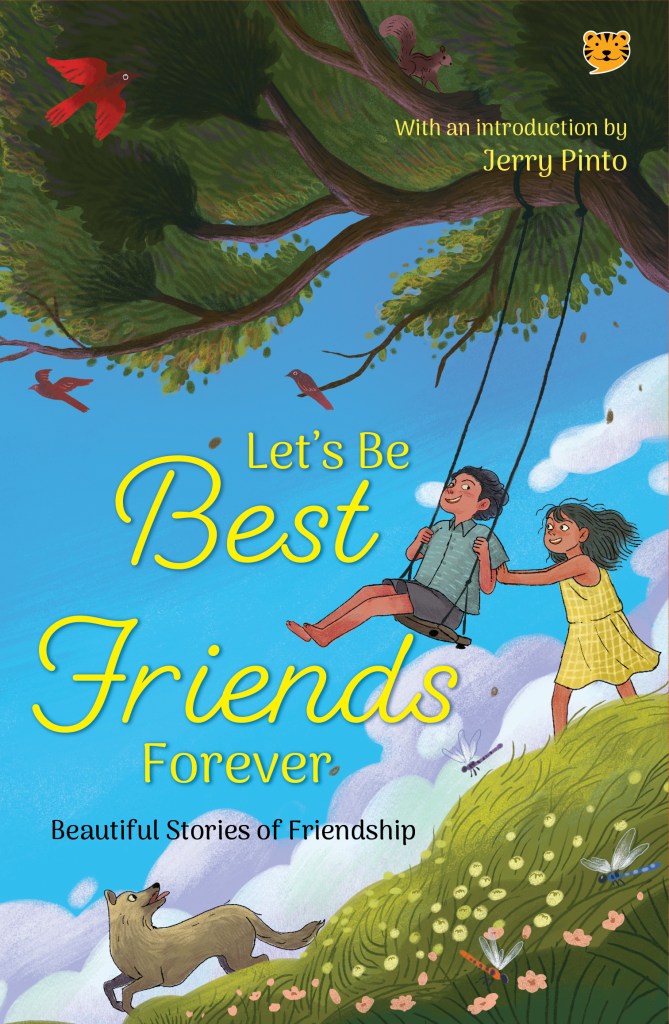
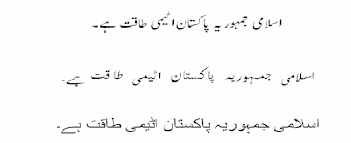
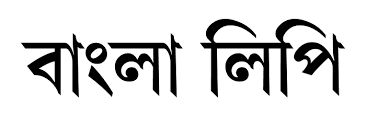


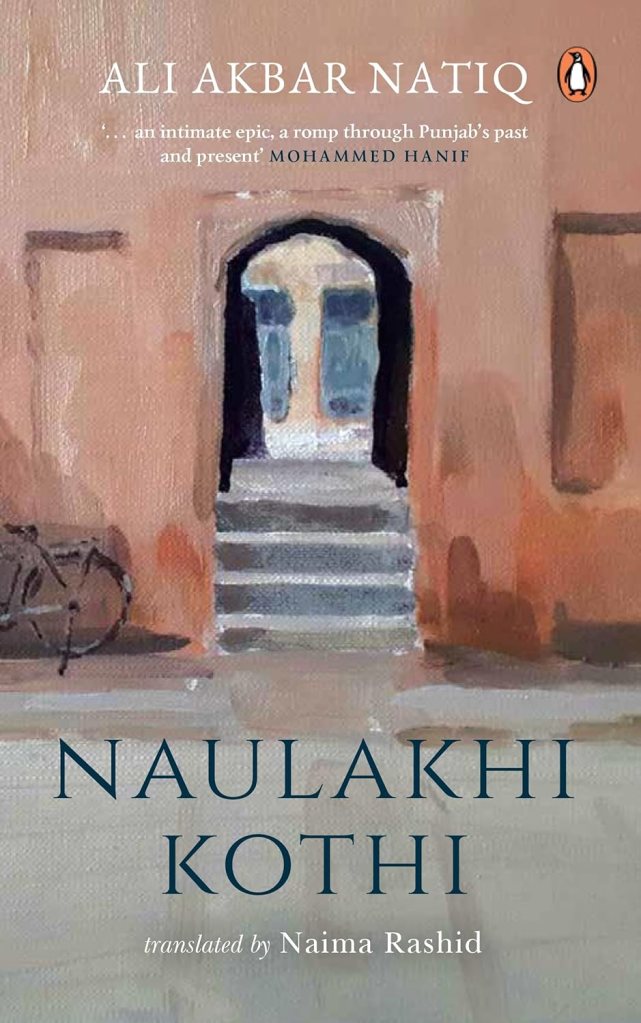
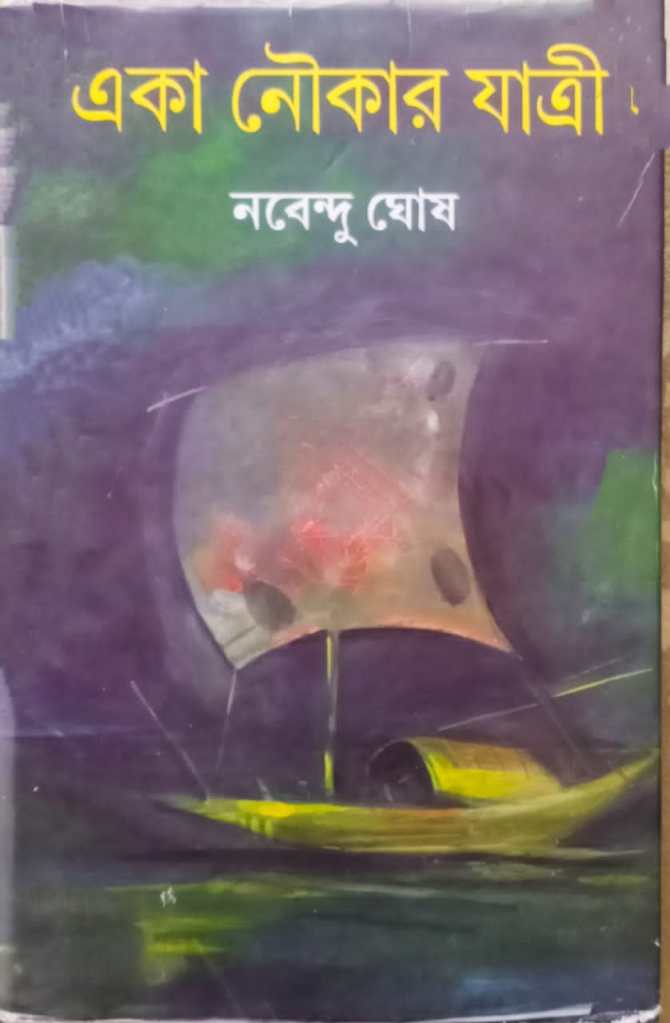
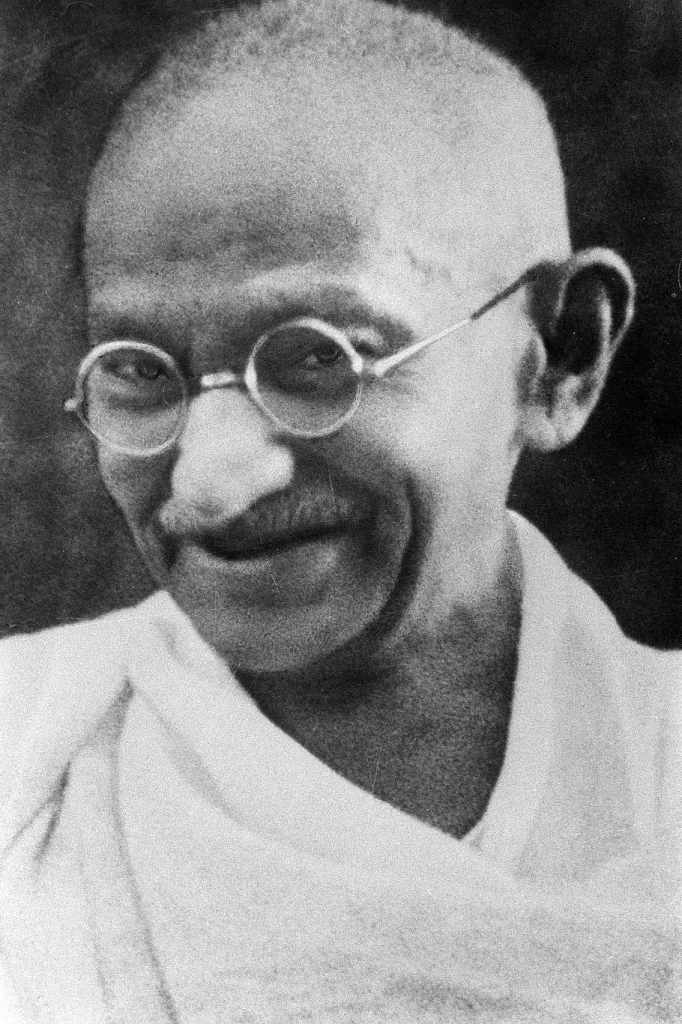



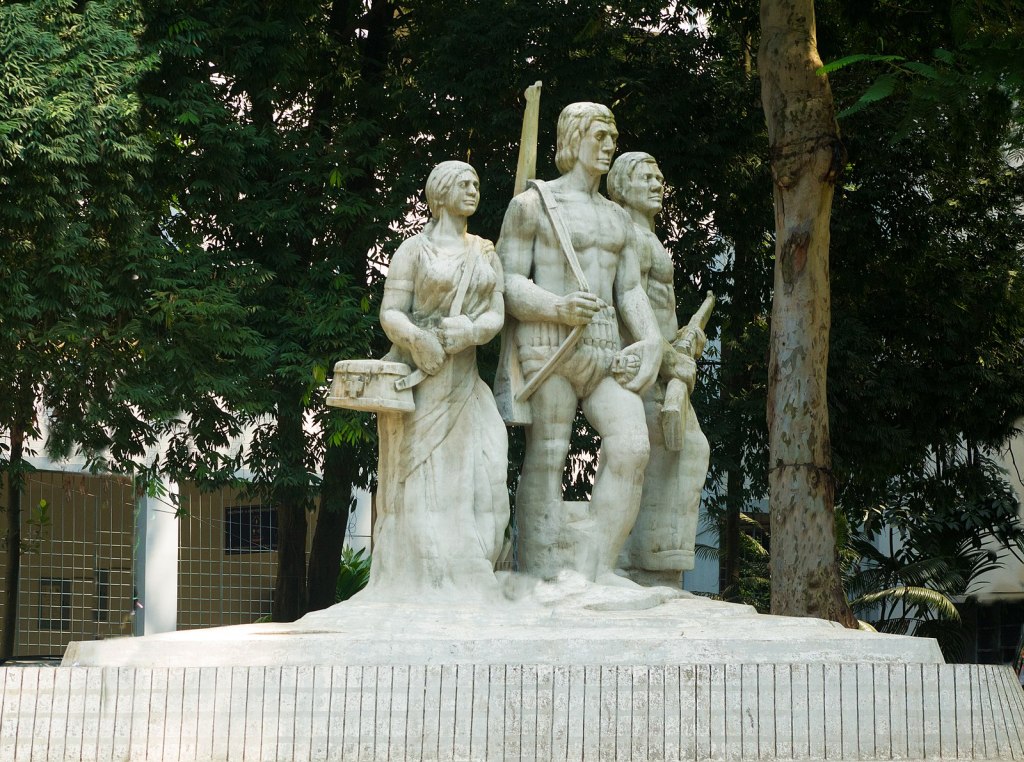


 Borderless