Sometimes, when my visitors to Rome, arriving in the sweltering month of July or August, voice over-zealous ambitions to ‘do’ Pompeii, I don’t have the heart to discourage them. But I beg off from accompanying them. I have nothing against Pompeii as such, but I am not sufficiently suicidal to relish the thought of trudging miles of arid ruins under a punishing sun for the twenty-third time!
It’s at this point, usually, that I try to sell what I call my ‘Lazy man’s Pompeii’: Ostia Antica. I could have called it the ‘Poor man’s Pompeii’ as well, but the riches of the ancient city can almost equal a Herculaneum to the imaginative tourist. And its biggest plus-point is that it is so much closer to Rome (as against Pompeii, about 200 kilometers away, towards Naples), and may I add, that much shadier!
Less than an hour away from Rome, Ostia Antica was founded in the fourth century B.C by King Arcus Martius (a historical persona of whom I readily admit to being shamelessly ignorant) it became Ancient Rome’s commercial and military port, and during Emperor Constantine’s time, it boasted a population of 100,000!
Ostia reminds me of another ancient city I once visited and loved: Fatehpur Sikri in India, the Mughal king Akbar’s doomed capital near Agra. The comparison to Akbar’s city is justified because, although Ostia is a remarkable example of historic Roman towns like Pompeii and Herculaneum, unlike them, it was not destroyed, rather, like Fatehpur Sikri, it was abandoned.
While the Mughal city was abandoned due to a lack of sustainable water supply, in the case of the Roman city, it was mosquitoes. Strange but true thatan epidemic of malaria drove out the inhabitants of this once flourishing port city. An odd quirk of history and biology that a puny anopheline community managed to drive out a powerful anthropical one, hundred times its size!
A quick reminder here: in talking about Ostia, we must make a clear distinction between Ostia Antica, the archeological site, and the present-day beach town of Ostia, a popular seaside resort within the municipality of Rome, further down.
The excavated areas of ancient Ostia abound in numerous ruins and reminders of a thriving commercial city of times past: public and private buildings, streets, defensive walls, and harbors.
I find the residential streets most fascinating because it brings to life a real world of ordinary people. Much has been written about Roman tenement-housing and remains of these buildings abound in Ostia.
Reconstructed models apparently reveal that a typical apartment block could be five-storeys high, and that the flats were probably quite functional, mostly reached from courtyards or from the street by stairs running between shops on the ground floors.
I think of all this as I stop at a crumbled courtyard here, touch a moth-eaten wall there, step over a threadbare threshold, or mount a mysterious flight of steps that end abruptly in mid-air, leading nowhere.
For me, it’s in this residential environment that I find the faint but persistent pulse of a bygone life. Visiting it on some empty afternoon, while I might be sitting on the broken steps of a roofless room, I can surmise the life of the ordinary man or woman who once lived here: I smell the fragrance of fresh baked bread in the gutted bakery next door; I hear the sound of children playing in the silent streets, or the hum of voices in the tavern with its dusty counter; and suddenly, the entire history of the humble populace seems to be whispered and echoed by the sea-spiked breeze among the pines and cypresses.
Let the Archeologist and Historian keep their details. To me the romance of a ruined city is not necessarily in the structures themselves, in the revealed or concealed splendor of its remains, it is in the mystique of its very presence, its undefined shape as a messenger from lost times, telling us stories of the long ago.
A dead city serves to remind us that it once existed, and that the past, although it is no more, is never completely wiped out, never obliterated from the collective memory of the world. In leaving behind its footprints, the spirit of the city has defied negation and accompanies me this afternoon.
And thus, I love to sit, under the peristyle of a vanished villa, absorbing the atmosphere of this long-deserted city, contemplating the history not just of this particular Roman town, but all the nameless cities of countless civilizations in the past. I wonder at the basic story it tells of our collective and individual engagement with Life, of the heroic audacity of the human spirit attempting, again and again, to build its sandcastles against the wind, trying to carve a permanent niche on the elusive surface of Time.
Whether the crumbling habitation is in Ostia Antica or Mohenjo-Daro, in Petra or Machu-Pichu, in Moinamoti or Fatehpur Sikri; each is a monument to the Spirit of Man, the builder of cities, the creamer of dreams.
[ Extracted from An Abiding City: Ruminations from Rome. Published by UPL (University Press Limited, Dhaka), 2002 ]
ABOUT THE BOOK
An Abiding City: Ruminations from Rome is a fresh look at Italy and Rome from the perspective of a long-time resident of non-Italian origin. Neeman Sobhan, living in Italy, since 1978 wrote for two decades a personal column in the Bangladesh English language daily, The Daily Star, spinning vignettes and sketches out of her daily encounters and reflections living in Rome. Here, in vivid prose and poetic detail are selections from her work.
Among some of the myriad themes in this collection of essays and poems: the charm of everyday Rome; the romance of history; the adventure of the expatriate’s eternal quest for home; the poetry of seasonal transformations; the mysteries of relationships; the kaleidoscope of life in general, and of one woman in particular, who within her journey through the Eternal City, shares with her readers her passage through life.
The writing is enhanced by ink sketches by Italian-American artist/writer Ginda Simpson.
ABOUT THE AUTHOR
Neeman Sobhan is a Bangladeshi-Italian fiction writer, poet, columnist. She writes in English, and her fiction and poetry have appeared in many anthologies and literary journals within the sub-continent. Till recently she taught English and Bengali at the University of Roma, La Sapienza.She lives in Rome with her husband. She has a collection of short stories, Piazza Bangladesh (2014) which has been recently translated to Italian; a volume of poetry, Calligraphy of Wet Leaves (2015) and a collection of her columns, An Abiding City: Ruminations from Rome (2002). Presently, she is finishing her first novel, and lives between her home in Rome and Dhaka.
.
PLEASE NOTE: ARTICLES CAN ONLY BE REPRODUCED IN OTHER SITES WITH DUE ACKNOWLEDGEMENT TO BORDERLESS JOURNAL
A brief overview of Rajat Chaudhuri’s Spellcasters, published by Niyogi Books, and a conversation with the author.
Spellcasters by Rajat Chaudhuri is a spellbinding fast paced adventure in a phantasmagorical world against the backdrop of climate change and environmental disasters. Chaudhuri, a proponent of solarpunk[1], has nine books under his belt, including the Butterfly Effect (2018) a few fellowships (like Charles Wallace), and a sense of fun as the characters hurtle through the book gripping the readers with their intensity.
In this novel, Chaudhuri’s universe is run by a council, based on Akbar’s Navratnas[2]. They seem to be people in charge of running a chaotic world. This group — though not drawn from Akbar’s court but from various parts of the world — are known as the ‘Nine Unknown Men’. They are said to host great people from the past in another dimension. As they “fold the dimensions and transform matter from one form to another”, manipulating and yet healing characters like Chanchal Mitra, his protagonist, putting the world to ‘rights’ by destroying villainous capitalists who sport shrunken heads of their enemies and indulge in creating drugs that can lead to annihilation of humankind, there is a fine vein of coherence which gives credibility to Chaudhuri’s imagined world.
The locales are all fictitious but highlight real world problems of climate change, unethical scientific research and uncontrolled economic growth that only pamper the pockets of the rich craving power. He weaves in episodes that had made headlines in Indian media, like Ganesha drinking milk, and Himalayan disasters, a result of interferences by human constructs like dam building and ‘development’. A sensuous mysterious woman with curly hair, Sujata, who sets Mitra back on track and is as good as a Marvel heroine when accosted with villains, adds to the appeal of the book.
He describes a barefoot tribe which seems more idyllic than real. But given that it is a phantasmagorical fantastical novel, one would just accept that as a part of the Spellcasters’ world. However, the import of the message the tribal leader conveys to the characters on the run is astute. “We take little from this land and try to return what it gives us. So did our forefathers and all those who walk this country with the animals. But the settlers in villages and cities never tire of drawing out the last drop of earth’s riches…” A similar take on nomadism and settler communities can be found in nonfiction in Anthony Sattin’s Nomads: The Wanderers Who Shaped our World, who talks of the spirit of brotherhood, or asabiyya, that bound the nomads together, a concept borne in the fourteenth century in the Middle East. One wonders if the Nine Unknown Men who cast spells are also bound by some such law as at the end the ‘Perfect Lovers’ disappear into another adventure in time… perhaps, to resurface in Chaudhuri’s next book?
Chaudhuri is poetic with words. He writes stunning descriptions of storms and climate events: “The rivers are boisterous and overflowing, the skies are being torn apart by forests of lightning. The great snow-capped peaks from where these rivers emerge have vanished behind walls of water tumbling down from the skies.”
The thing that makes his book truly unique is the way his characters seem to internalise or grow out of the miasma that encapsulates the world below the mountains. They seem like an extension of the chaotic external environment with strange happenings. Even in the council meeting held by the Nine Unknown Men, some of the crowd seem to be wisps of mists. Chanchal Mitra has to go above the hovering fog to start healing back to normal. The novel starts in a seemingly dystopian setting. The ending is more of a fantasy. There is a strain of Bengaliness in his wry humour, in small factual details, like we find Jagadish Chandra Bose seated in the council hall, though LJ drawn from RL Stevensons’ fictional pirate from Treasure Island (1883), Long John Silver, and Caligari from The Cabinet of Dr Caligari (1920), have larger and more crucial roles in the novel. Spellcasters is a thriller that entices with words, a gripping plot and suspense — set against a backdrop of strange climate events that are becoming a reality in today’s world, though the characters are more interesting than those drawn from real life.
The novel is written by an author who is compelled by perhaps more than a need to record his times. He has a vision… though not clearly laid out as a didactic message. But it hovers in the fog that is part of the book. One of the things that came across[3] was to create utopia, we need the chaos of dystopian existence…a theme that rebel poet Nazrul addresses in his poem, ‘Proloyullash’ (The Frenzy of destruction): “Why fear destruction? It’s the gateway to creation!”
Rajat Chaudhuri
In a past life, Chaudhuri had been a consumer rights activist, an economic and political affairs officer with a Japanese Mission and a climate change advocate at the United Nations, New York. Working in such capacities could have generated his vision, his worldview. Let us find out more about it by asking him directly:
What made you turn to writing from being an activist and climate change advocate? How long have you been writing fiction? What made you turn to fiction?
I am still involved with activism through my work with NGOs and my writing for popular media and other venues. However, I have gradually shifted my energies to creative fiction through which, nowadays, I try to engage with climate change and other planetary crises.
I have been writing fiction for nearly two decades now, my first novel, Amber Dusk was published seventeen years ago. As a full-time activist I have had the opportunity to interact and work with people from various strata of society right from the villages of India to international fora like the United Nations, where I have often noticed a tug-of-war of ideas between big business, sections of civil society, governments and other major groups like women, indigenous people and so on. While watching and participating in these, I had begun to realise how stories can open another flank in our efforts to communicate our ideas.
Today, you see, storytelling is everywhere. Stories are being recruited for issues big or small, important or completely worthless, even dangerous! In my case, I realised that stories can be an important vehicle for communicating issues surrounding planetary crises to my audience. Stories tend to be sticky — they remain with us for a long time and studies are now showing that well told stories can trigger changes in perceptions, beliefs and ideas. But it took me a long time to transform this realisation into book projects. Before that I had written other books – contemporary fiction, urban fantasy and so on.
What made you conceive Spellcasters? How long did it take you to write?
There are two or three strands that came together in the writing of Spellcasters. Most important among these is my interest in psychology and mental disorders and specifically in the fact that the ideas that dominate the world today, you can call them spells too, make us behave like we are affected by some kind of mental illness. Ideas and practices like limitless growth, conspicuous consumption and so on, make us behave as if we have lost our minds as we go on plundering the planet for energy and resources despite the fact that `nature’ is striking back at us with ever-increasing fury. So, our mental illness is causing planetary illness and at the centre of all this are these powerful, mesmerising, false beliefs, which right from the time of the Club of Rome have been known to be dangerous.
So, when I began to plan this novel, all these thoughts were in my mind partly driven by my activism. And at the same time, I had been reading Sudhir Kakar’s works about magic and mysticism in India and the parallels between Indian and western psychology so all of that came together. It took me about five years to complete Spellcasters not at one go, there was other stuff I have worked on in between.
What kind of research went into making the book?
To create the main character, the journalist Chanchal Mitra, I worked closely with my psychoanalyst friend Anurag Mishra who happens to be a student of Sudhir Kakar. And that research was really intense. We had long face-to-face and online sessions and I read a lot about the varieties and specificities of mental disorder.
Then there is of course that background layer of interest which oftenseeds ideas in your mind. This usually comes from your reading, and I had been interested in reading about the occult traditions of the East and the West for many years. Characters like Mme Alexandra David-Neel[4], the magic healers among indigenous peoples, the power of entheogenic substances like mushrooms have always fascinated me, and some of that came back while researching this book. Writing the climate layer of the story was comparatively easier because of my first-hand activist experience.
Do you have a vision or a message that you tried to address in this novel? I felt it moved from a dystopian setting to that of a fantasy — though not to utopia. Do you think a dystopian vision is necessary to evolve utopia?
The message is simple, and we all know it: Ideas of limitless growth have affected us mentally and so we behave and act in ways (resource extraction, carbon emission) that are making the planet sick. We are passing on our illness to the planet. The belief in limitless growth is a zoonotic disease that our species has transferred to the living planet. Still, we do not act because we are under the effect of these powerful ideas, these powerful spells, that’s where the novel gets its name. The message, if we can call it one, is to be aware of this and try to break out of these spells.
The path to utopia is not necessarily through dystopia. We can start hoping and acting today before things get really bad. Which is the locus of the whole solarpunk movement with which I am closely associated as an editor and creator. But `darkness’ can be redeeming too. Jem Bendell writes about this in detail. Grief and sorrow can indeed make us stronger; author Liz Jensen navigates grief and encounters hope in Your Wild and Precious Life, which is a must read for everyone asking these questions. But coming back to Spellcasters it is really neither dystopia or utopia if we are talking about the climate layer of the story, it’s very much set in the present. What might look dystopian are the gothic and magical elements and settings which serve as a counterpoint to the cold logic of the scientist character, Vincent.
Your novel has broken various barriers by mingling different constructs. So, tell us, how do you combine realism with fantasy, science with literature and create your own world?
It’s not difficult actually. Fantasy, magic and `unreason’ are woven around the borders of the familiar. We see them often without noticing it. Leaping a little higher or using a prescription eye-cleanser can do the trick!
To answer the other part of your question, science and literature or nature and culture were never apart in the first place. They were sundered because of the partitioning project of modernity which goes back to the work of Hobbes and Boyle and has its own history and protagonists. Science fiction as you know does not care much for this division. Climate fiction because of its scaffolding of science and reason needs to bring the two together. As a climate fiction writer, I try to keep the scientific complexities in the background, but they remain as building blocks of the story. In this book however we have a full chapter which is out of a scientist’s journal, and I did that for a change in flavour and in the spirit of experimentation.
Are your imaginary locales based on real cities? Please elaborate.
Often so. In Spellcasters the cities of Anantanagar and Aukatabadare modelled on Calcutta and Delhi respectively. A close reader can easily pick out the similarities but then I also enjoy changing some details especially when I am writing mixed-genre work like this one. So, there is no Chinese joint (like the one Chanchal hangs out at) in Calcutta where you can openly smoke weed but there are places quite similar to the one I described and there is indeed a real person with an eye of glass who used to hang out in one of these.
You have spoken of storms on the hills. Do you also see this as an impact of climate change? Do you think building roads, tunnels or hydel power stations on the hills can, over a period of time, have adverse effects on climate or humanity? Can you suggest an alternative to such ‘development’?
The avalanches, the unseasonal rains, especially the cloudbursts are all closely connected to climate change. Having said that, we also have to be careful to avoid climate reductionism. Often it is a concatenation of factors (including carbon emissions and climate change) and processes, their effects amplified by feedback loops, that precipitate disasters. This is very true if we study migration, for which climate change can be one of the driving forces but there could be other factors like economic opportunities, cultural patterns etc implicated in such flows.
Mindless development which does not take into account the fragility of nature and the interconnections between all beings big and small, microscopic or enormous, animate or inanimate, will set into motion processes that will precipitate crises like climate change. Yes, big dams are definitely a problem and small hydro is always a better option. We often hear that nature is self-healing or that there have been many previous extinctions, and that the planet has made and remade itself, but that’s like telling ourselves, please prepare for suicide while the super-rich and the cults of preppers, especially in the advanced industrialised nations, can escape to their doomsday bunkers.
The alternatives to the current development model is to be found in the ideas of Gandhi, of Schumacher, in solarpunk literature, in Vandana Shiva’s works among plenty of other places. The basic idea is to live in harmony with the planet, cut down on emissions, reduce resource extraction, try community based participatory solutions to problems instead of relying on economic, high-tech or market-based instruments, step back, go slow and let nature cloth and feed us so that we can live with dignity while forsaking greed.
In Spellcasters, you show climate change as an accepted way of life at the end. Do you think that can be a reality? Do you think climate change can be reversed?
A novel often presents itself as a bouquet of ideas without the author demonstrating any clear bias for one over the others. But as an activist-writer I usually drop clear hints as to what is more desirable without making it too obvious. There is always this ongoing duel between politics and aesthetics in a novel and the best among us balance the two quite well.
Climate change can of course be engaged with, controlled and reversed, if we can stick to the ambitious targets of the Paris climate agreement with the rich nations facilitating the process with more funds to poorer nations. Both producers and consumers have a role to play here, and we need serious lifestyle changes in the advanced industrial nations (or rather the global North) and a serious focus on climate justice for any meaningful change to occur. Only planting trees and carbon-trading won’t do.
Your language is very poetic. Do you have any intention of trying poetry as a genre?
Thank you. I haven’t ever thought of writing poetry because I am not gifted with the art of brevity which I think is essential there. But I have enjoyed translating poetry from Bengali to English, which was published as a book. I plan to do more of that.
What can we next expect from your pen?
I have been trying to finish a work of non-fiction about climate change and I hope to do this by the end of the year.
Let me also take this opportunity to thank you Mitali and your team at Borderless Journal for your service to literature. You are doing important work here and I am really grateful for your interest in my novel.
Thank you so much for giving us your time and sharing your wonderful book.
.
[1]Solarpunk is a sci-fi subgenre and social movement that emerged in 2008. It visualizes collectivist, ecological utopias where nature and technology grow in harmony. Read more by clicking her
[2]Navratnas or the nine gems were a bunch of very gifted men in his court, like Birbal and Tansen.
[3]The author does not agree to this reading in the interview. He sees his novel evolve out of the solarpunk movement.
Tahira Naqvi, the Pakistani American writer, has extensively translated the works of Saadat Hasan Manto, Khadija Mastur, Hajra Masroor, and the majority of works by Ismat Chughtai from Urdu into English. As a teacher/professor of Urdu language and literature at New York University, she has regaled us with several short stories that speak of cross-cultural encounters of immigrant Pakistanis in America, especially about how women experience acculturation in the New World. The History Teacher of Lahore is her first novel where she recollects the sights, sounds, and ambience of growing up in Lahore in intimate details. The setting of this novel is the nineteen eighties, which was particularly a time of unrest in Lahore. In this debut political novel, Naqvi eloquently portrays the struggle between a besieged democracy and the rise of Islamic fundamentalism on the one hand, and the thriving cultural traditions of Urdu poetry on the other.
The story begins with the young protagonist Arif Ali who moves from his hometown of Sialkot to Lahore with a dream of being a history teacher and a poet. A ‘tall, slight man in his late twenties,’ we find him relaxing on a bench in Jinnah Park — a place that has become haven for him to spend his time reading, far away from the ferocity of traffic and street crowds. In the days that followed, Arif realised that in the Government Model School for Boys where he taught, he was forced to teach the boys another kind of history for his sake as much as theirs. But that required deep thought, time, and enthusiasm. He befriended Salman Shah, another teacher in his school, and his rapport with him grew stronger by the day. But once again, Arif found the atmosphere in the school was becoming increasingly confining. He would often engage in animated chatter with the high school Islamiyat teacher Samiullah Sheikh, whom he found disagreeable. Not only dressed in Shariyah compliant clothes, but this man was also waiting for his opportunity to teach at a madrassah[1]. This was the period when bans were being imposed on popular music of the kind Nazia Hasan and her brother sang for the younger generation, and even though ‘Disco Deewane’ and ‘Dreamer Deewane’ were sung loud, fear had become an elixir for rebellion. Arif was forced to resign from the school and along with his friend Salman. he ultimately got another position as a history teacher in another private school, Lahore Grammar Institute, where there was more freedom to teach than in the earlier one. The free socializing among the sexes here was new and noteworthy for Arif.
As Arif’s impotent rage towards the increasing religious intolerance grew, he joined his friend’s uncle Kamal and his partner Nadira to secretly help them rescue underprivileged children in clandestine ways. In the meantime, his poetic creations found great impetus when he found a secret admirer in Roohi, Salman’s sister, and started sending her his poems regularly. Though they never met, Roohi would write letters to him every week, and gradually, the more letters Arif received from her, the more his feelings for her grew. The secrecy of their epistolary courtship continued for quite some time till things were disclosed and after a lot of twists and turns in the story, they were finally engaged to get married.
In the meantime, his friend Salman got engaged to a colleague Zehra Raza, and despite the Shia-Sunni clashes that prevailed in society all around, they were unaffected by such ideology. The three of them developed a close camaraderie among themselves, but soon after, the General’s death brought in a lot of political turmoil in the city. The mentality of the public also changed, people went en-masse to watch public flogging, and trouble loomed ahead when Sunni Shia, Ahmadi non-Ahmadi, Punjabi Urdu-speaking, Protestant-Catholic, divisions and sub-divisions, inter-faith, inter-class and inter-religion issues became more and more marked in all spheres of society. The warp and weft of faith produced such tangled intricacies as could only be imagined in nightmares.
As the nation was caught in the vortex of religious extremism, Arif’s position also underwent a great change in the school when he wanted to teach ‘true’ history to his students. He was caught in a dilemma when he found he was forced to teach false historical information in the doctored textbook that Aurangzeb with his hatred of other religions was adored whereas Akbar with more religious tolerance was totally sidelined. He tried to rectify the errors by providing supplementary notes to his students, but that landed him in more trouble. Apart from differences of opinion with the other teachers in school, Arif’s was gripped with a kind of fear and frustration when some unidentified goons threatened him to stay away from issues that did not concern him. Things got worse when a Christian student in his class was falsely accused of blasphemy and Arif decided to save him from being arrested. He embarked on a dangerous mission to resolve this Christian-Muslim conflict that landed him in the middle of sectarian clashes and without giving out all the details, one just mentions that the novel ends at a tragic moment.
In the acknowledgement section Naqvi states that she is grateful to her father for many things but especially for his Urdu poetry which she has used freely in translation. These poems, ghazals and nazms, help to explain the different moods of the protagonist and his mental situation very clearly. One interesting aspect of the novel is that each of the twenty-two chapters is prefaced by a small quote that in a way summarizes the mood and content of that chapter. Most of these quotes are from Jean-Paul Sartre, while others are from Spinoza, Ghalib, Shakespeare’s Sonnet 116, H.W. Longfellow, Jacques Derrida, Tertullian, Thomas Mann, and four entries particularly from The Lahore Observer dated 15 September 1990, December 1990, January 1997, and January 1998 respectively. These wide-ranging quotes not only increase the story-telling impact, but also endorse the erudition of the novelist herself.
To conclude we can say that Bapsi Sidhwa’s The Ice-Candy Man gave us the sights, sounds and details of Lahore during the Partition in 1947, and the same city becomes wonderfully alive again through the pen of another woman writer from Pakistan who had spent her growing years there, and who gives us details about it from the 1980’s onwards when the political situation of the country was once again very murky. The novel wonderfully portrays the radical Islamisation of the country that included murder, mayhem, and public flogging and more that was visible in Lahore, as this process resulted in terrible uncertainty in the lives of the city’s residents from all walks of life. Strongly recommended for all readers, we eagerly wait for more novels by Tahira Naqvi in the future. The insider-outsider’s point of view offered by her is remarkable and this debut novel can be counted as a collector’s item.
Ujjal Dosanjh left his village in Punjab in quest of a better life. He had a bare smattering of English, very less money and some family overseas when he left his home at Dosanjh Kalan at the age of seventeen. That was in 1964. He spent the first three years in Britain and then, moved to Canada to become a prominent lawyer, activist and political figure.
When he started in the 1960s, to earn a livelihood in England, he shunted trains in the British Railways. He left for Canada in hope of a better future. He had to work initially in sawmills and factories to support himself. Eventually, he could get an education and satisfy his ambitions in British Columbia, which became his home. Coming from a family which contributed to the freedom struggle of India, it was but natural that he would turn towards a public life. His uprightness, courage, tolerance, openness and commitment had roots in his background, where his parents despite different political ideologies, lived together in harmony. His family, despite their diverse beliefs, stood by him as he tried to live by his values.
Dosanjh voiced out against separatist forces that continue to demand an autonomous country for Sikhs to this day. In 1985, he was beaten almost to death by such Khalistani separatists as he boldly opposed the movement that had earlier led to the assassination of the Indian Prime Minister, Indira Gandhi (1917-1984) and to the bombing of an aircraft where all 329 people aboard died. However, undaunted by such attacks, he continues to talk unity, welfare for the underprivileged and upholds Mahatma Gandhi as his ideal. He went into Canadian politics with unfractured belief in the Mahatma. Dosanjh was the Health Minister of Canada and earlier the Premier of British Columbia. He has been honoured by both the Indian and Canadian governments. In 2003, he received the highest award for diaspora living outside India, Pravasi Bharatiya Samman, and, in 2009, he was a recipient of the Top 25 Canadian Immigrant Award.
Now, sixty years from the time he left his country of birth, he shares his narratives with the world with his updated autobiography — the first edition had been published in 2016 — and also with fiction. As an immigrant with his life spread over different geographies, he tells us in his non-fiction, Journey After Midnight – A Punjabi Life: From India to Canada:“Canada has been my abode, providing me with physical comforts and the arena for being an active citizen. India has been my spiritual refuge and my sanctuary.”He writes of what he had hoped could be a better future for humankind based on the gleanings from his own experiences and contributions to the world: “If humanity isn’t going to drown in the chaos of its own creation, the leading nations of the world will have to create a new world order, which may involve fewer international boundaries.”
In this interview, he shares his journey and expands further his vision of a world with diminishing borders.
You travelled from a village in Punjab, through UK and ended up in the Canadian cabinet to make changes that impacted humanity in your various public roles as a politician. Would you have been able to make an impact in a similar public role if you had never left India? Was the journey you went through necessary to help you become who you are?
It’s almost next to impossible to imagine what actually would have happened to my life in India had I stayed there. The most complicating element would be the standards that I would apply in such reimagining, the standards I most certainly wouldn’t have known or applied to my Indian life’s journey. I do think though and I have said it often in conversations with friends that had I stayed in India I would have either turned into a saint or devil; nothing in between for one who in 1964, the year I left, already hated the beginnings of the corruption that has now almost completely enslaved the country’s polity and ensnared the society.
Even though what has guided me throughout my life were the lessons I learnt from my freedom fighter maternal grandfather, my activist father and Mahatma Gandhi’s life, I believe the ethics and mores of public life, first in Britain and then in Canada helped shape and sculpt who I became and how I conducted myself. Had I not been to Britain and not lived most of my life in Canada, it’s impossible even to imagine the ‘me’ that would now be walking upon our planet earth.
While within five years of landing in Canada, you were studying in University of British Columbia and driving an Austin, some other immigrants fifteen years down the line continued in abject poverty. What does it take to rise out of endemic poverty? Do you see that happening in the world around us today?
The way you phrased the question conceals the fact that before I resumed full time college in January 1970s and went on to complete my BA and then LL.B. in 1976, I had spent full six years of my life in UK and Canada working jobs including shunting trains with British Rail, making crayons in a factory, being a lab assistant in a secondary school and pulling lumber on the green chain in a saw mill in Canada while often attending night school.
And I must add that my extended family and my spouse were largely responsible for paying my way through my B.A. and LL.B.
While even then it wasn’t easy, I do recognise the union wage then available to students in summer employment enabled them to save enough for the school year; with most summer jobs that’s not the case now. The students now more often than not have to depend on loans or help from the parents.
A significant section of the immigrant diaspora has done reasonably well while for many it’s becoming harder and harder to just make ends meet.
And by the way the Austin, you refer to, was the used Austin 1100, Austin Mini’s sister, I had bought for the then princely sum of six hundred dollars; it took mere six dollars to fill its tank.
That’s truly interesting. At the beginning of your biography, you stated ‘politics is a noble calling’. Later you have written, “I had realized I needed to make a clean break from thepettiness of politics.” Which of these is true? And why the dichotomy — pettiness as opposed to nobleness? And what made you change your perspective?
No, I have not changed my view of politics. It is a noble calling but only if you do it for the right reasons. More and more I found that a significant number of people seeking public office did so for glory that they perceived the elected public office bestowed upon them. Shorn of any lofty ideals and the pursuit of public good politics often degenerates into petty squabbles rather than the giant battles of great and contrasting ideas.
The pettiness is the result of small minds pursuing the mirage of glory in phony battles that barely move the needle on the bar of public good. I often refer to the absence of great leaders in the political landscape of India and the world; Canada has not escaped the current curse of the dearth of great minds in the political arena. Hence my exasperation at the situation I found myself in.
The world over, politics seems to have become the refuge of intellectual dwarfs—no offence intended to our shorter brothers and sisters. The small minds tend not to see too far into the future; they are oblivious to the need to constantly challenge the world to be what it could be.
After a lifetime of activism and close to eighteen years of elected office it was only natural for me to tire of the myopia and pettiness in what otherwise remains a noble endeavour.
You met Indira Gandhi — the second woman to lead a country in a prime ministerial role — and had this to say of her “Indira Gandhi loved India immensely. One can be an imperfect leader and yet a patriot”. Do you think she was an effective leader for India?
My wife and I spent an hour speaking with Indira Gandhi on the afternoon of January 13, 1984. We spent the first few minutes comparing notes about our grandparents and parents as freedom fighters and activists before discussing the issues related to the agitation in Punjab, its growing militancy and increasing violence in and outside the Golden Temple. From what she said it was clear she was extremely troubled about the dangerous situation of the militants holed up in the Temple and the toll it was taking on the peace, politics and the economy of the state. I sensed a certain helplessness in this otherwise quite brave woman when describing the unsuccessful efforts she and her office had made to reach a peaceful settlement of the issues raised by the Sikh agitation. Because I had met both the militant Bhindranwale and the peace loving leader of the agitation, Longowal, and understood the tension between the two men and their followers, I knew she was grappling with a political minefield. All of this and much more that we discussed left me in no doubt about her love for the country and all its people.
But I do believe she allowed the situation at the Golden Temple to linger too long and deteriorate before trying to bring it under control; thus, it and the Operation Bluestar, her ultimate response to the armed militants holed up in the Temple, remains one of her great misjudgements—perhaps as grave as the declaration of the National Emergency in 1975.
Imperfection being part of the human condition, one isn’t surprised that Indira Gandhi who saw all Indians as equally Indian, too, was imperfect; a strong but imperfect leader.
“Sikri was the capital for the new world of unity that Akbar had wanted to create. Ashoka took a similarly bold leap toward peace after a bloody war. Two millennia after Ashoka and four centuries after Akbar, Mahatma Gandhi shared with India a similar vision and a path out of colonialism. India killed him.” Please explain why you feel India killed Gandhi.
One can’t and mustn’t blame an entire country for the actions of one or two persons and yet what I said of Gandhi’s assassination, at least figuratively if not literally, can be said with ample justification; not one but several attempts were made to end Gandhi the mortal. If many Indian hearts and minds—and there were many in his lifetime, perhaps not as many as there are in Modi’s India—wanted Gandhi and his philosophy of nonviolence and love for all dead, then I must say, even without resorting to the writers’ licence, India stands accused and guilty of his January 30th, 1948 assassination; India killed Gandhi.
Even before the advent of Modi on the national scene India’s politicians had substantially diminished and damaged Gandhi’s legacy of Truth, Love and Non-violence. Considering the so few prominent voices in the public domain criticising the Modi regime’s single-minded undermining of Gandhi’s legacy, almost to the point of extinction, it can be said that if it already hasn’t done so, India is close to annihilating Gandhi’s Truth, Love and Non-violence.
“To India’s shame, the rich and ruling classes of today mimic the sahibs of yore. Some of them still head to the hills with their servants, the Indian equivalent of the slaves of the United States.” As Gandhi is seen as one of the architects of modern India, what would have Gandhi’s stand been on this?
When Gandhi lived in England and South Africa, he was part of the diaspora of his time and learnt new things as such. Today with social and digital media one hopes even living in India he would have been aware of the yearning of humanity for equality and economic and social justice. The way most rich and powerful treat the poor and the weak in India is absolutely antithetical to what an egalitarian India would demand of them.
I’m aware of how Gandhi didn’t support the abolition of caste and of his position or lack thereof on the question of equality for the blacks of South Africa at the time. But different times throw up leaders with different and perhaps better approaches to the fundamental issues. Were he alive today, he would have argued for the abolition of caste, equality for all and he wouldn’t have accepted or ignored how India treats its workers, poor and the powerless.
You have told us “India leads the world in the curse of child slavery and labour. Millions of India’s children are trapped in bonded labour, sex trafficking and domestic ‘help’ servitude.” Most people plead poverty and survival when they talk of children working. Do you see a way out? Is there a solution?
Yes, like all problems, this, too, has a solution:
Legislate, legislate and legislate.
Enforce, enforce and enforce the legislation.
I know some laws do exist but we need legislation with more teeth. The laws regarding minimum wage, hours of work, overtime and holiday pay and health regulations must be strengthened and more vigorously enforced, in particular, in the so-called domestic help sector. Better wages and working conditions rigorously enforced would attract adult workers who would be able to send their children to proper schools rather than thrust them in to slavery in exploitative homes, factories and workplaces.
Not much will improve on this front though unless Indians end the endemic corruption in law enforcement. You see corruption confronts and stares us in almost all, if not all, issues Indian; it is the elephant almost in each and every room.
“Violence can never be a tool for change in a modern, democratic nation.” You tried to use Gandhian principles through your life — even in Canada. Do you think non-violence can be a way of life given the current world scenario with wars and dissensions? How do you view Gandhi sanctioning the participation of soldiers in the first and second world wars? Can wars ever be erased or made non-violent?
First let’s deal with Gandhi’s sanction of the soldiers in the two world wars. Whether or not he had sanctioned their participation, the soldiers would have gone to war; most of them fought for wages, not for the love of war or the country except those for whom the Second World War was a war against fascism and hence justified.
I don’t believe Gandhi ever stated that in fighting a violent enemy or a perceived enemy one was not allowed to use violence. All I ever remember him saying was that you throw your unarmed body wrapped in soul force in front of the enemy but if you are too chicken to do so or can’t do so for some other reason but fight an aggressor you must, violence is better than doing nothing.
As for countries fighting each other I don’t believe he ever said that, in an uncertain world where the military of another country could invade at any moment, a country must forego a military of its own.
As for nonviolence being a way of life, it can and must be for a country in its internal life. On the borders however one always has to deal with what one is presented with; you can’t ask Ukraine to not fight; in the face of a suddenly expansionist China or a belligerent Pakistan, Gandhi wouldn’t have urged the Buddha’s meditational pose for India; he didn’t do so in late 1947 when Pakistani fighters invaded Kashmir.
As for wars being non-violent, they can never be if the likes of Russia continue to invade others.
You opposed the Khalistani separatists and stood for a united India. What is your stand on Khalistan, given the recent flare up? Did you do anything this time to allay the situation in Canada?
I have always been opposed to countries being carved out on ethnic, linguistic or religious basis; I am a firm believer in multilingual, multi-ethnic, multi-religious and multi-racial populations living together in peace within the boundaries of peaceful countries; for that to happen, secularism remains a sine qua non[1]. That is why I so passionately continue to support a secular and inclusive India.
As for me doing something in the face of what is happening in Canada today vis a vis the Khalistanis, I didn’t say anything because I don’t believe it would have added to the debate; everyone already knows what I think and believe.
What does concern me though is the weak-kneed response and reaction of the public leaders of Canada; they have not unconditionally condemned the glorification of terrorists, known murderers or those who on the streets of Canada glorify and revere the killers of Air India passengers or of Mrs. Indira Gandhi. For me, someone who immigrated to Canada in 1968 when the elder Trudeau became the Prime Minister of the country, the near silence of our politicians on Khalistani violence and its glorification has been a low point; the older Trudeau knew how to deal with the terrorists; he didn’t and wouldn’t have pussy footed around terrorism or its glorification.
When your autobiography was published the first time in 2016, your column in Indian Express was cancelled. As many of us grew up in India of the past, we believed in secularism and democracy with freedom of expression. How has it changed over a period of time?
After I left India and particularly when I was introduced to the Hyde Park, I reflected on India and it seemed to be one of the freest places in the world; any intersection of a city road or a corner of the village served as a mini Hyde Park; from the millions of speeches made in such Hyde Parks all over India, millions of ideas tumbled forth from the lips of ordinary but engaged Indians.
Of course, I do realise that in the lives of the poor and the powerless, the freedom hadn’t shone as bright. The imprisoning of the Naxalites without charges and Indira Gandhi’s Emergency were the first real jolts of un-democracy and unfreedom I felt India as a whole had suffered. From there it went downhill; that sporadic communal riots continued; that Godhra was done to the Muslims as was done the post Indira assassination violence to the Sikhs; lynchings of Muslims and Dalits continue today.
India’s response to the first major unfreedom, Indira’s Emergency censorship, was encapsulated in the blank front pages of the censored Indian Express, that symbol of the Journalism of Courage. That symbol may still burn today but it is smouldering and clearly less bright enveloped as it and others are in the atmosphere of fear of the likes of ED[2] and CBI[3]; almost none amongst the traditional media homes shines much or at all; the digital media has thrown up some brave examples like The Wire. But the overall scene is dismal. India needs many revolutions; one of them is the reawakening of some semblance of fortitude in India’s Godi[4] media outlets.
Over repeated trips to India, you observed that people did not want to talk of major issues like availability of potable water but wanted to discuss issues like the eroding culture among the diaspora. Why do you think this has happened? Is there a way to change this mindset?
Human mind is an amazing thing; it seeks engagement but when the immediate is painful to observe and feel, it finds solace in contemplating the scenes afar; for sheer survival in its troubled and troubling milieu it develops numbness; such numbness shields it from the immediate while thinking about the distant problems, imagined or real, offer it a sense of engagement. Such is what I thought happened to many in Punjab.
Another troubling thing was that much beyond the essential human pride a sense of chauvinism and superiority, at least among its rich and powerful, has plagued Punjab for a long time which has blinded it to the need for change and progress—one didn’t need to improve what one believed to be perfect and hence superior.
Punjab has significantly slipped in the Human Development Index. That this humbling fact is now quite widely acknowledged in intellectual and political circles gives me some hope that things may improve.
“There are massive water shortages across the country. There’s a crisis in health care…Under the weight of crippling debts and droughts, small and marginal farmers are killing themselves. There aren’t enough jobs being created for the millions of youth joining the job market every year. The human-rights record of the Indian State inKashmir, the Northeast and other parts in the grip of insurgency is horrific and shameful. Dalits and Muslims are lynched with impunity by Hindutva-inspired mobs for skinning dead cows, or being in the vicinity of meat that may or may not be beef.” Do you see a way out? What can India do to step out of the condition you have described so accurately?
I have argued for some time that what India needs is a new freedom struggle, a Values’ Revolution, to rid itself of corruption—rishwat[5], unethicality, religious and cultural fanaticism that impinges on many Indians’ right to life, dignity and liberty. In arguing this I am aided by Gandhi’s dictum—that I have always alluded to in my own writings—that he was engaged in not creating a new India but a new Indian; my reading of what he said has led me to conclude he meant a caring, humane, compassionate, egalitarian and an ethical Indian. To create an India with 1.4 billion ethical and progressive Indians requires a mammoth revolutionary change in our values; hence a Values’ Revolution.
At the moment I see the country’s civil society under constant attack by the forces of social division whereas in fact social solidarity and cohesion are sorely needed. A Values’ Revolution will require giant leaders; I see none on the scene today but I’m not disheartened because once begun the Revolution itself may, as do all revolutions, throw up the necessary giants.
You are an immigrant who has lived out of India for almost half a century. Do you think as part of the diaspora living outside India, we could all act together to heal a region broken by its own inability to live up to the vision created by those who wrote the constitution of the country? What would be your vision of India?
The diaspora coming together to even slightly nudge India forward is an emotionally compelling and noble thought; many of us constantly dream of doing something for the country we have left behind. Some of us do so while others revel in its imaginings only.
A major stumbling block to the diasporic unity on this question has been the ideological divisions amongst the Indians abroad which usually mirror India’s domestic political fault lines and unfortunately those difference have been only rendered sharper by the way elements of the diaspora have recently been employed in aid of India’s domestic political machinations. The old diasporic divisions now seem and feel more rabid; it is as if the political battles of India now rage equally actively in the diaspora itself.
I always dream of India as a caring, compassionate, egalitarian and ethical India. One that values all its citizens equally and brims with social and economic justice.
That is such a wonderful thought with which many of us agree wholeheartedly. You have written: “If humanity isn’t going to drown in the chaos of its own creation, the leading nations of the world will have to create a new world order, which may involve fewer international boundaries.” What is the world order you suggest?
For starter no order can be imposed by the so-called leading nations, no matter how powerful. It may take a significant amount of nudging and cajoling by them to change anything.
When I wrote my autobiography, I was imagining the world moving, at least to begin with, in the direction of regional groupings like the European Union. We saw that as the number of member states of the United Nations trended upwards, Europe witnessed the opposite where many countries dared to create the EU practically erasing borders; granted Britain rebelled – but even within its borders a referendum held today would most likely approve it re-joining the EU.
As a possible beginning for the rest of the world, our best hope lies in grand imaginings such as a South Asian Common Market at once reducing the expense of standing militaries staring angrily at each other across the borders; Southeast Asia, Africa, South America could follow; North American Free Trade Agreement already exists creating at least an economic union.
If to begin with the countries regionally moved toward the free flow of human beings along with the necessary and more convenient local trading, one could foresee the international will and desire developing toward a world populated by fewer borders and more freedom. Hopefully that would move humanity toward more international egalitarianism, prosperity and fewer wars.
Hopefully, the vision materialises. Thank you very much for giving us your time and wonderful books that make us think and emote.
Kabir’s life still holds importance in a society in pursuit of the one true Lord, steeped in religiosity and caste. He was born at a time when the Hindu-Muslim strife was raging across the subcontinent. Divided into various sects, Hindu society was already engaged in conflict and the arrival of the Muslims and the expansion of Islam intensified the conflict of the time. The two camps – followers of foreign and indigenous religions – could not find a way to come together. Arbitrary rituals and sacrifices were damaging their dignity and short-selling God’s glory. In such a time, Kabir was the most significant of intellectual sages who bridged gaps through his clarity of thought, unwavering devotion to the Lord, and humanist reading of all belief systems. In simple, clear and logical language he pointed out the irrationalities of men, without outright attacking any faith. His teachings were not only effective to his devotees but were helpful to adherents of other doctrines as well. One did not have to be part of his sect to receive his teachings and capture the meaning behind his words. Anyone free from the shackles of self-interest were able to accept it.
Though there is little to deny in Kabir’s words, there is much debate among the experts regarding the period of his birth and death. The historical facts contain many contradictory components as well. Evidently, one sees that there are two versions of Kabir’s life visible. One has been constructed through analysing historical data, the other through beliefs and commentary provided over the ages by his followers and devotees, though all such projection by his disciples cannot be understood in the same light. Yet it should be noted that the accuracies regarding some of Kabir’s facts of his life do not pose any doubt to his teachings and appreciation for beauty. Still, in light of the contemporary commentary, a brief biography of the poet is outlined here.
According to Kshitimohan Sen (1880-1960), a scholar and acting chancellor of Visva-Bharati, Kabir was born on 1398 in Varanasi and died on 1518 in Maghar village. While specifics are understandably hard to gather, most experts agree that he was of the time when Sikander Lodi (1458-1517) ruled over Delhi’s throne. Kabir had met the man, too. Lodi had arrived at Varanasi in 1498. Rabindranath had talked of this in his translation of Kabir’s One Hundred Poems, which was published from Macmillan. There, it is said he was born in 1440. Though Kabir’s Hindu devotees liken him as a devotee of the Vaishnava poet-saint Ramananda, it is still a matter of debate, for Ramananda was born in 1298 and most texts that refer to their connection can only be traced a hundred years after Kabir.
In his writings, mentions of the poets Jayadeva (1170-1245) and Namdev (1270-1350) are found. Though one was active in the 12th century and the other in the 14th. Moreover, one can find references to Kabir in the works of Raydas, Garib Das, Dharma Das, Pipa and Tukaram. Some of Kabir’s verses can be found in the Sikh religious text Guru Granth Sahib too.
There is much debate over his parentage and religion too. However, it is taken as fact today that he was born in a Muslim family or was raised in one. It is hypothesised that he had come from a family of Muslim weavers, who had a trade in cloth. Another legend had him as the virgin son of a Brahmin woman, born through seedless conception and then he was abandoned and found floating in a basket. The fact that he was born in a Muslim family is mostly evidenced by the fact that he had an Arabic name, which meant “Great”. There is further doubt on his race and caste. According to Hazari Prasad Dwivedi, Kabir belonged to a Yogi community, for he would refer to his father as Gosai, meaning Guru. They were principally disciples of Nath-Panthis – worshippers of Shiva. While they had accepted Islam as their religion, they continued in their old ways as of yore. But Kabir did not proclaim himself as either a Hindu or a Muslim. As a result, many surmised that he probably wanted to be known as someone from the lower caste, who remained out of these two binaries.
The issue of caste might have irked him as well. It might have had no importance to him. This reticence had led to most communities intending to co-opt him for them, constructing all sorts of imaginary relationships. A Muslim guru of the time, Sheikh Taqi, had complained to Lodi that Kabir saw himself as a deity. His low-born caste led him to a path of constant discrimination. There are accounts of this discrimination in texts. He had been humiliated for proposing the idea of a formless God. Many a time he had been tied behind his back and beaten up. Let me account some of the accounts of his torture here.
The Emperor of Delhi, Sikander Lodi, had demanded Kabir be arrested and brought to his court. When he was somehow brought over, he stood there in silence.[i] The Emperor grew angry and asked, “Why don’t your curse at the Emperor, Kaffir?” Kabir answered, “Those who understand the other’s torment are called Pir, and those who don’t are termed Kaffirs.”
When the Emperor asked him why it took him so long to get to his court, he replied that he had seen such a scene on the way that he could not but be late. A line of camels was entering a gully as narrow as a needle’s eye. The Emperor thought he was being ridiculed and grew angrier. But Kabir said, “Oh Emperor! Can you feel the distance between the heavens and the Earth? The distance between the Sun and the Moon can be filled with innumerable elephants and camels, yet we can see these stars through a drop in our eyes.” The Emperor was so moved by the statement that he let him go.[ii]
Once, after a few Brahmin priests had complained, the Emperor ordered his death by tying him to a stone and throwing him off a boat. But while the boat itself drowned, Kabir was said to have been found unharmed and floating. When they tried to burn him, the fire wouldn’t take to his skin. They even accused him of being a witch and tried getting a mad elephant to stamp on him. But the animal got scared seeing Kabir and ran away – there are numerous myths of these nature surrounding Kabir.
Kabir did not receive a formal education. He did not know how to read and write. There is no evidence of him attending a school to learn of language and philosophy. Moreover, he had barely any experience with his weaving. Many are of the opinion that the “guru” he talks about in his texts refer to God or the Creator and that he did not have any mentors. However, researchers at times hold the opinion that he was a devotee of the Sufi mystic Sheikh Taqi. It is evident he was influenced by Sufism. He had similarities with the Persian poets Attar, Hafez, Khayyam and Rumi. Besides, he was considered a key disciple of the Hindu monotheist mystic Ramananda. Kabir hadn’t mentioned anyone directly in his texts. But through his songs, various interpretations are made by the public. Kabir’s best teacher seems to have been just life. The hypocrisy, short-sightedness, superiority regarding one’s beliefs and inconsistencies of men and society around him angered him, it made him anxious. This torment had put him to the path of sage hood. Kabir characteristically expressed his perceptions through simple and irrefutable arguments devoid of any personal animosity toward anyone.
Kabir was not an ascetic who abandoned his family to attain higher forms of consciousness. He lived with his wife and son and daughter. In his writings, he showed contempt against the sages who left their families. His wife was called Loi and his son and daughter were Kamal and Kamali. His second wife was Ramjania. According to Dr Ramkumar Verma, the second wife was possibly a prostitute. However, Kabir was not quite happy in his marriages. His devotion to his poetry and philosophy made him less attentive to the task of earning a livelihood through weaving. Some days, his family found themselves short of food after feeding his visiting devotees. He was thin, meditative and enthusiastic, and hated to beg for alms to survive.
We know from his works that he visited many places. It is believed he had gone on pilgrimage to Mecca. But it isn’t clear if he really physically visited the place or had a transcendental experience. Similarly, there isn’t any evidence of his visiting Baghdad, Bukhara and Samarkand. But it has been proved that he had visited many of the local pilgrimage sites around him.
Like his birth, the date of his death is cloaked in controversy. Some say he lived till the age of eighty. Others maintain that he was alive when he was 120. There’re broadly four dates that could refer to his passing. 1447, 1511, 1517, and 1518 AD.[iii] There is doubt, too, about his resting place. Some say he died in Ayodhya, some claim in Puri. The latter place is mentioned in the Mughal Emperor Akbar’s book Ain-i-Akbari.
Kabir’s literature and philosophy
The divisions and discriminations of religion had a profound effect on him. The communal conflict and the blatant ownership of God deeply tormented Kabir. He realised that God did not exist for any particular religion or people. He wasn’t a single entity either, but omnipresent. His realisations were a result of the overarching philosophical conflicts of his time. The clash and assimilation of various cultures into the Indian way of living had given way to myriads of philosophies and religions in the region. Among them, the radical ones, which professed to one sect’s superiority over the other were beginning to widen separatism in society. The first of these great conflicts were between the Aryans and Non-Aryans. It took many years for the two to assimilate.
Kabir and Rabindranath
Rabindranath had a prominent role in spreading Kabir’s words in Bengal. About a hundred years ago in 1910, he had written a preface to a book of translations of Kabir’s poetry. Kabir was among the few poets whose works were preserved at Santiniketan. Kshitimohan Sen had grown up in Varanasi, among the saints there, nursing a love for Kabir from a young age. A few months before his translations had come out from Santinektan’s press, Rabindranath had published Gitanjali. It was not possible to avoid drawing comparisons, with some claiming Rabindranath was inspired by the sage’s poetry. In Prasanta Kumar Pal’s biography of Tagore, the matter is discussed at length. He had written that in the original manuscript of Gitanjali, there were poems of various poets of such ages written over. Dr. Rameshor Mishra thought they were written by Rabindranath, but Pal could not agree with him. He had maintained that Kabir had been well-known as a poet over the years. Even before Kshitimohan’s translation, it would not have been unlikely for the young poet to have been aware of Kabir. Kshitimohan himself had dwelled on the matter saying that he had introduced Kabir’s poetry to Rabindranath after reading Gitanjali and finding the similarities in the balance of tone.
Whatever the case was, the fact that Rabindranath and Kabir wrote in a similar spirit cannot be denied. Rabindranath was heavily influenced by the Persian Sufis. One could clearly see the presence of both Sufism and Vaishnavism in Gitanjali. Rabindranath’s father was a devotee of the Persian poet Hafez. Hafez impacted Rabindranath as well. He had talked about this when visiting Iran at the end of his life. “My father was an admirer of Hafez,” he had said, “I have listened to his recitations and translations many a time. It is that beauty of Iran that has entered my heart during my travels here.”[iv] Around this time, he was studying Sufi theory as well. Therefore, one cannot claim it was solely Kabir who had an influence on Tagore’s Gitanjali. But Kabir did have an effect on Rabindranath, if for a little while.
Rabindranath began to work on Gitanjali in the early 1900s. He had written to Kshitimohan around then, saying, “I have been expecting Kabir. Do not delay.” The next year he wrote back to say, “Give my respects to him.”[v] From these letters we can see that Rabindranath had a good deal of interest in reviving Kabir. In one of those letters, he had maintained, “I have told you. One should not deviate from the principle aspect. If there is ambiguity regarding the literalness, then be it. Some of it is needed, or else the poetry loses some of its meaning.
“It is better to use the next most literal word when there is no direct translation possible. Kabir uses ‘word’ to express his songs and it seems that particular word does not work in all instances. There is a historicity to ‘word’ – one thinks of a child’s first cry, the first chants of creation. It is quite simpler and more complex than a song.”
Published as part of Santiniketan’s book series, Kshitimohan wrote in the preface of his translation that without the encouragement and help of Rabindranath he would not have been able to publish a work like this, that he was quite grateful to him. Rabindranath had a hands-on approach to Kabir’s translated poetry. That this happened around the time the poet was working on Gitanjali was a thing of co-incidence. Kshitimohan himself had talked of how he had brought Kabir to the poet’s attention after hearing about Gitanjali.
However, the matter has refused to die down. In books on Kabir, there have often been calls for Rabindranath to recognise the debt of Kabir in his texts, that Tagore’s mysticism had arrived solely from Kabir, which was merely given an occidental polish to accommodate the Poet’s international audience and that Rabindranath’s fame came from a decoration of mysticism for the pleasure of Europeans. Even as one notices the ludicrousness of such claims, it is understandable that much of Rabindranath’s spiritualism is a product of Sufi mysticism. Moreover, there was always a strain of India’s old traditions that included Kalidasa and the worship of beauty. He had discovered the bauls (minstrels) when looking for folk literature in his youth. He was fascinated with Lalon. However, Kshitimohan Sen had claimed that Rabindranath was not one to be heavily influences by these mystics. “The era of Gitanjali came head-to-head with the revival of these mystics. No one is indebted to anyone here.”
But how much of Kabir was on Rabindranath’s mind? Many would go ahead and say a great deal. That he had devoted to Kabir more so than Gitanjali in this period. Perhaps the indulgence toward both texts was a united effort in the pursuit of true worship. Two events around this time are noteworthy. One is Ajit Kumar Chakravarty’s translation of Kabir under Rabindranath’s guidance and the other is his own translations of Kabir. This was when Ezra Pound, too, was interested in Kabir’s poetry. There is no doubt that it was Tagore who had got Pound into it during their discussions on mysticism. Helped by his encouragement, Pound, who had little knowledge of Hindi or Kabir, made ten translations of Kabir’s poetry with the help of Kalimohan Ghosh. They were published in the 1913 January issue of Modern Review under the title, “Certain Poems of Kabir/ Translated by Kali Mohan Ghosh and Ezra Pound/ From the edition of Mr. Kshitimohan Sen.”
Rabindranath could have had the biggest scandal in his life regarding Kabir due to Ajit Kumar’s English translation. Ajit Kumar had decided to translate about 114 poems from the 4-volume work of Kshitimohan Sen while enjoying his summer vacation in Orissa. He was helped by Pearson. Rabindranath had to face quite a lot of criticism after winning the Nobel, both at home and abroad.
In his travels to America and Britain, he had to explain the mysticism apparent in Gitanjali. Moreover, when the text was published there, many Christian preachers had taken to saying that Christ had said it way before already. That Rabindranath had written these inspired by Christ’s sayings. This was a reason why Rabindranath felt it was important for the West to be acquainted with medieval poets and mystics such as Kabir, so that the long Indian tradition of spiritualism wasn’t co-opted by the West as one of their own. He even wanted to take Kshitimohan there and get to translating some of this poetry himself. He wished to show that the sages in India were preaching these truths long before the Europeans had arrived in their shores. If there is a sliver of debt that Rabindranath should recognise it is in this context. Gitanjali is not a deviation from Indian poetry; rather it is part of the land’s grand tradition. However, Rabindranath’s own translations did not seem to have gone far enough. He relied on Ajit Kumar’s.
Before leaving for America, Rabindranath was introduced to Evelyn Underhill, a Catholic writer and pacifist. She was a great admirer of both Jesus and Indian mysticism, authoring a book on the subject in 1911 called Mysticism. Rabindranath had referred to her as quite highly educated and influential in his letters. Tagore had even told Kshitimohan that with her help it would be possible to publish Kabir’s biography and poetry from Harvard University, urging him to take all necessary equipment with him. He had told Ajit Kumar that with the help of Ms. Underhill they would polish their translations and make it worth publishing. A review of the correspondence is enough to see that this translation project would come out under Ajit Kumar’s name. But that did not happen in the end. It came out as One Hundred Poems of Kabir, as translated by Rabindranath Tagore with a preface by Underhill.
Both Ajit Kumar and Kshitimohan were upset with this. How this had happened no one could know clearly. Whether it was Underhill’s doing or of Rabindranath himself, one could not know. From reading Rabindranath’s letters, it was quite evident that he had also thought the manuscript would come out under Ajit Kumar’s name. He had assured him as such in more than one letters. That Underhill might cut him out bothered Ajit and Rabindranath had written to him saying, “You have misunderstood. Evelyn does not wish to take your name off the Kabir Manuscript. Secondly, it is not my wish to leave you and Kshitimohan out financially.” In another letter he had said, “I don’t know how your book would do financially. Of course, there won’t be any lack of trying, but it is better to not hope much. Be content with what they give you.” [vi]
All we have in this case are conjecture. No concrete facts. Underhill in her preface had merely thanked Ajit and Kshitimohan and nothing more.
This had sparked a bit of controversy then and Rabindranath was accused of depriving Ajit Kumar of his credit. Rabindranath’s explanations regarding this matter was that it wasn’t intentional. That he did not even know this had happened until it was too late. It was Macmillan house that did this to bring more sales to the book. Rabindranath claimed to have sent in Ajit’s name under the title, but the publishers had disregarded it. It was the West’s commercialism at play, he said.
“Getting into the literary scene here is quite difficult. One is hard-pressed to enter if they don’t possess any reputation beforehand,” he said. But whatever Tagore’s excuse was, many did not see it sympathetically. Referring to his letters to Ajit, many pointed out his growing fascination with the manuscript. In one of the letters Rabindranath had said, “I finished the Kabir book after all this while. It seems that if I had done these translations it would’ve taken me far less an effort to read them through. I’ve had to write many poems but yours does make one clap.”[vii] There is no doubt that Rabindranath got most of the credit for the Kabir book that Macmillan had published. But many found the omission of Ajit had left a bad taste. Many felt his name should have at least been part of the conversation.
Bibliography
Rabindra Kokkhopothe Khitimohan Sen By Pranati Mukhopadhyay
Gurudeb O Shantiniketon By Syed Mujtaba Ali
RabiJiboni By Prasanta Kumar Paul
100 poems of Kabir By Rabindranath Tagore
[i]Who Invented Hinduism: Essays on Religion in History. David N. Lorenzen
[ii]The Bijak of Kabir. Kabir. Oxford University Press.
[iii]Bharatiya Madhyauge Sadhanar Dhara. Kshitimohon Sen. Pg.61
[iv] “Rabindranath Tagore’s Syncretistic Philosophy and the Persian Sufi Tradition”. Lewisohn, L
Mozid Mahmud is a poet, novelist, and essayist based in Bangladesh. Some of his notable works include In Praise of Mahfuza (1989), Nazrul – Spokesman of the Third World (1996), and Rabindranath’s Travelogues (2010). He has been awarded the Rabindra-Nazrul Literary Prize and the country’s National Press Club Award, among others.
.
PLEASE NOTE: ARTICLES CAN ONLY BE REPRODUCED IN OTHER SITES WITH DUE ACKNOWLEDGEMENT TO BORDERLESS JOURNAL
‘Why does education in love not feature in today’s curriculum?’
— Mahasweta Devi, Our Santiniketan(Translated by Radha Chakravarty, 2022, Seagull Books)
As the world celebrates Valentine’s Day, one pauses to think how far commercialisation has seeped in over time that the very concept of a tender emotion was questioned by Tina Turner in a song called, “What’s love got to do with it” nearly four decades ago.
This was written even before Mahasweta Devi (1926-2016) published a nostalgic memoir of 1930’s Santiniketan in Bengali in 2001. She raised her pen to ask the very pertinent question that is quoted above. Why is education in love not a part of our curriculum anymore? She was reminiscing about her days in Santiniketan where children were brought up with rigorous academics while discipline was coloured with love and affection. They nurtured a love for nature in students too. This has become a rarity for many and perhaps needs to be revived as the Earth struggles to continue habitable for humankind. In the process of educating students to love and give, Santiniketan threw up many greats like the writer herself. We are delighted to host an excerpt from the start of Our Santiniketan translated beautifully by Radha Chakravarty.
Santiniketan was only the very visible part of a huge project taken on by Tagore (1861-1941). The other part now united with Santiniketan under the banner of Visva Bharati University is Sriniketan, a group of villages where Tagore experimented with raising consciousness and standards of villagers to integrate them into a larger world. He brought in new techniques in agriculture and crafts into the villages under this programme involving many prominent scientists, artists and humanists. And the project has blossomed. Did you know Tagore thought of himself as an NGO and his ‘life work’ he felt was developing villages (Sriniketan) and educating young minds to build a world where borders of knowledge, poverty and ignorance could be smoothened?
He wrote: “I alone cannot take responsibility for the whole of India. But even if two or three villages can be freed from the shackles of helplessness and ignorance, an ideal for the whole of India would be established.
“Fulfill this ideal in a few villages only, and I will say that these few villages are my India. And only if that is done, will India be truly ours.”
All this can be found in a book called A History of Sriniketan (Niyogi Books), written by Uma Das Gupta, a major authority on Tagore who moved from Oxford to Santiniketan and made Tagore’s work in these two institutions her own life’s work. We have featured her and her book in our interview/review section.
Raised out of such ashes of poverty that Tagore sought to dispel, are youngsters from the village of Nithari, where ceaseless efforts by volunteers of organisations like Saksham and pandies’ has given a new lease for life to those who have been exposed to violations, violence, divides, poverty and deprivation. One of them, Sharad Kumar, now studying to be an engineer, kicks off our new section called Pandies’ Corner with his story in Hindustani translated by a volunteer, Grace M Sukanya. His story learns from history and shows rather than tells.
A similar approach to view the present through lenses focussed on the past at a much grander scale has been taken by Shazi Zaman, an author and journalist, who has stepped into the Anglophone world with the transcreation of his own novel from Hindi to English, Akbar, A Novel of History (Speaking Tiger Books). He has brought to the fore how in days when sectarian violence based on religions killed, Akbar (1542-1605) tried to create a new path that would lead to peace so that he could rule over an empire united by administration and not broken by contentious religious animosities which often led to wars. In his interview, he tells us of the relevance of the Great Mughal in a period of history that was torn by divides, divisions so deep that they continue to smoulder to this day and date. That history repeats itself is evident though our living standards seem to improve over time. Bhaskar Parichha’s review of Growing up Jewish in India: Synagogues, Customs, and Communities from the Bene Israel to the Art of Siona Benjamin, edited by Ori Z. Soltes, also reinforces these divides and amalgamations in the modern context. The other books that have been reviewed include The Best of Travel Writing of Dom Moraes: Under Something of a Cloudby Indrashish Banerjee, and Gracy Samjetsabam has introduced us to an intriguing murder mystery in Masala and Murder by Patrick Lyons.
Translations have thrown up interesting colours this time with a Tamil story by a Sahitya Akademi winning writer, S Ramakrishnan, translated on our pages by B Chandramouli, one from Korean by Ihlwha Choi and of course a transcreation of Tagore’s songs where he sings of the meeting of horizons. A beautiful poem by eminent Balochi poet Atta Shad (1939-1997) has been translated by Fazal Baloch. We are again privileged to host an original translation of Jibananda Das(1899-1954) by Professor Fakrul Alam. We also managed to get permission to share some of Professor Alam’s fabulous translations of Jibananada Das from UPL (United Press Limited) and are starting it out by excerpting two of his poems on Banalata Sen, which were till now restricted to readership who only had access to the hardcopy. Rakibul Hasan Khan has given us an essay on these translations. An interesting essay on Satyajit Ray (1921-1992) by Rebanata Gupta and personalised tribute to the first Booker Prize winner from New Zealand, Keri Hulme (1947-2021), by Keith Lyons, who had many non-literary encounters with the sequestered author, add to the richness of our oeuvre.
Ratnottama Sengupta has also paid a moving tribute to the music legend, Lata Mangeshkar, who died at the age of 92 on 6th February, 2022. The choral symphony of multiple voices that hums through the paean recreating the larger than life presence of Lata reinforces that her lilting voice will stay embedded in many hearts and lives forever. Her perfect honing of musical skills delivered with the right emotions make her an epitome of human excellence. She gave the best of herself to the world.
Wrapped in more dry humour is Devraj Singh Kalsinarrative on why he does not want pets. Meredith Stephens, on the contrary loves pets and sails the seas of West Australia with her camera, words, seals and dolphins. Luke PG Draper also speaks for animals — for the intrusion of pollutants that harm creatures like whales in his short story. Hop all over the world with Ravi Shankar breaking nightly fasts with food from different cultures. More colour is brought in by Suzanne Kamata who starts a new column, Notes from Japan — introducing us to Japanese sensation, Masaki Nakagawa, who has sung his way to hearts with Lativian songs that he loves, so much so that he got to perform at the Japanese coronation and has pictures with the Latvian President.
The time has come to let you discover the mysterious pieces that have not been mentioned here in the February edition — and there are many.
Before I wind up till the next month, I would like to thank our fabulous team who make this journal possible. Keith Lyons has now become part of that team and has graciously joined our editorial board. Sohana Manzoor and Sybil Pretious deserve a special kudos for their fabulous artwork. Our grateful, heartfelt thanks to all our wonderful contributors and readers who keep the journal alive.
In Conversation with Shazi Zaman, author of Akbar: A Novel of History, published by Speaking Tiger Books
“I profess the religion of love, and whatever direction
Its steed may take, Love is my religion and my faith.”
— Ibn-i-Arabi (1165-1240), Akbar: A Novel of History by Shazi Zaman
These lines were written by a mystic from Spain who influenced Emperor Akbar (1542-1605), a ruler who impacted the world with his broad outlook. Based on such ideology as preached by Ibn-i-Arabi more than three hundred years before him, with an urge to transcend differences and unite a world torn by strife, the great Mughal founded his own system of beliefs. He had few followers. But Akbar chose to be secular and not to impose his beliefs on courtiers, many of whom continued to follow the pre-existing religions. He tried to find tolerance in the hearts of practitioners of different faiths so that they would respect each other’s beliefs and live in harmony, allowing him to rule impartially.
Akbar is reported to have said: “We perceive that there are varying customs and beliefs of varying religious paths. For the teachings of the Hindus, the Muslims, the Parsis, the Jews and the Christians are all different. But the followers of each religion regard the institutions of their own religion as better than those of any other. Not only so, but they strive to convert the rest to their own way of belief. If these refuse to be converted, they not only despise them, but also regard them for this very reason as their enemies. And this causes me to feel many serious doubts. Wherefore I desire that on appointed days the books of all the religious laws be brought forward, and that the doctors meet together and hold discussions, so that I may hear them, and that each one may determine which is the truest and the mightiest religion.” Of such discussions and ideals was born Akbar’s new faith, Din-i-ilahi.
Was it exactly like this? Were these Akbar’s exact words?
They have been put in perspective by an author and a journalist who has written a novel based on his research on the grand Mughal, Shazi Zaman. He tells us in the interview why he opted to create a man out of Akbar rather than a historical emperor based only on facts. He has even mentioned that Akbar might have been dyslexic in the introduction. But Zaman’s admiration for the character he has recreated for us overflows and floods the reader with enthusiasm for this legendary Mughal. Akbar is depicted as a man who was far ahead of his times. He talked of syncretism and secularism in a world where even factions within the same religion were killing each other.
Akbar by Shazi Zaman in Hindi
The novel was first written and published in Hindi in 2017 by the bilingual Zaman, who started his three-decade-long career in broadcast journalism at Doordarshan and has since, worked with several media organisations. Zaman trans created his Hindi novel on Akbar to English to reach out to a broader audience. The whole experience has been a heady one for Zaman as the interview shows but for the reader what is it like? To start with one felt like the Connecticut Yankee in King Arthur’s court, except one was flitting around in the Indian subcontinent of the sixteenth century, with a few incursions to the Middle-East, but mostly within India. Transported to a different age, it takes a while to get one’s bearings. Once that is established, the novel is a compelling read.
The first part deals with Akbar’s developmental years and the second part with his spiritual outlook which helped him create an empire with many colours of people and religions. This is a novel that has been written differently from other historical novels, like Aruna Chakravarti’sJorasanko (2013), for the simple reason that it belongs to a different time and ethos which was farther from our own or Tagore’s times. Akbar has a larger tapestry of people across a broader canvas than Jorasanko and it takes time to grasp the complexities of relationships and interactions. The other recent non-fiction which springs to the mind while reading Akbar is Avik Chanda’sDara Shukoh: The Man Who would be King (2019) about the great grandson of the emperor who lived from 1615-1659. Again, this was a narrative closer to our times and was not a novel, but a creative non-fiction based strongly on history. While Dara’s character painted by Chanda showed weaknesses like an inability to respect the nobility or plan wars, Akbar painted by Zaman is kind but a man of action who ruled and intended to rule well. A leader — one has to remember — is not always the most popular man. Nor was Akbar with his eccentricities and erudition despite his inability to read — the book does tell us why he did not learn to read and how he educated himself. Most of the novel is a work of passion based on extensive research over two decades. As Henry Kissinger had said at a much later date, “The task of the leader is to get their people from where they are to where they have not been.” And the Akbar recreated by Zaman does just that.
Shazi Zaman
Zaman who had been with the ABP (Anand Bazar Patrika) News Network as their Group Editor, was on the governing bodies of the Film and Television Institute of India, Pune, and the Indian Institute of Mass Communication, Delhi. He has worked with Aaj Tak, Zee News, Star News and also with the BBC World Service, London. He has served as the Director, Video Services of the Press Trust of India. Akbar is his third novel. He has authored two novels in Hindi earlier. In Akbar: A Novel of History (2021), Zaman with his journalistic background and his love for literature inherited from his novelist father, Khwaja Badiuzzaman, has done the mammoth task of astutely bringing to life a character who might have been a perfect solution to the leadership crisis that many are facing in the current day.
If you are still wondering how close this novel comes to the Bollywood movie called Jodha Akbar (2008), the major things in common were the grand Mughal’s sense of justice and his ability to tame wild elephants! For a deeper understanding of both the emperor and the book, in this exclusive, Zaman tells us what went into the making of this novel and his journey.
Why did you choose to write of Akbar?
One has to have a bit of Akbar inside oneself to write on him—and to read about him as well. Writing on Akbar was not a conscious decision. By the time I realised that I was going to write a novel of history on Akbar, my sub-conscious was miles ahead. Of course his personality had attributes that appealed to me consciously and sub-consciously, especially his belief in primacy of ‘aql’ (reason) over ‘naql’ (blind imitation of tradition) and his ability to question all orthodoxies.
Do you think Akbar is relevant in the current context?
I believe that his message is so ennobling that it transcends the boundaries of space and time. Across ages and across geographies, and within a geography by various groups and communities, his memory has been kept alive.
There was a book a few years ago called Dara Shukoh: The Man who would be King. Would you say he would be more relevant for our times than Akbar or is Akbar a better choice?
It is difficult to give them a comparative score. Dara could have been a very worthy successor to Akbar. And his initiatives and writings are really inspiring. Robustness of ideas and your resolve to push them are tested when faced with exigencies of statecraft. Sadly, Dara did not get that chance and Akbar did. I find that Akbar could navigate but sometimes be audacious to the extent that his courtier poet-musician Tansen had to caution, ‘dheere dheere dheere man, dheere hi sab kachhu hoye (Slowly, slowly, slowly, all happens at a slow pace)’.How would Dara have navigated while on throne is an unanswered question in Indian history. Having said this, his defeat in the battle of succession should not undermine the originality of his initiatives.
Why did you choose to write this in a novel form? Dara Shukoh was a non-fiction. Have you introduced fiction into this?
History largely tells us what happened. Most often it does not tell us of the state of mind that brought people to the point where we find them take momentous decisions. I think momentous events or actions are rooted in mental journeys. And these journeys are seldom documented. When Akbar faced a mental crisis—‘haalat-i-ajeeb’ (a strange state) as a contemporary called it— in the summer of 1578 on the banks of the river Jhelum, one wants to map what was happening in his mind and what had brought him to that point.
What lay behind the agitation of this man who was one of the mightiest emperors of the world, who had never lost a battle and was at the peak of his power ? Were there some forces testing his patience ? Or as he stood at a place linked to the history of his forefathers, did he wonder about the trauma they had faced ? Or when he dealt a physical blow to a top cleric of yester years, there must have been a mental journey preceding this act. One can try and go into a person’s mind by closely studying his actions and utterances as also that of people and texts that influence him. We all know that people often mean much more than what they choose to say and sometimes, they say one thing and mean the other.
A close examination of this maze can give a glimpse of what was happening inside the great mind. As you try to create a period piece around his state of mind you mine information from all available sources—textual, aural, visual, architectural. For me fidelity to known facts is essential even in historical fiction. But there does come a point when the trail goes cold. Even the best documentary evidence might be insufficient in finding all the pieces of the period piece. For example, we do not know what Akbar was wearing the night he experienced the ‘haalat-i-ajeeb‘ but we have a Mughal miniature in all likelihood of the next morning when Akbar takes an unexpected decision about the great game. Now, it has come down to us that he appeared wearing last night’s clothes. So we know what he was probably wearing at the time he was in ‘haalat-i-ajeeb’ of the previous day. Or we do not know the details of the carpet of the room where he lay dying. Nobody recorded that. Thankfully, some details have come down to us of carpets of those times. I have chosen to use them. After exhausting all means of finding the right pieces of this period piece, I have exercised my imagination. So this is fiction very much rooted in history. If I have been able to do what I had intended, you would feel you have read his mind as also feel that you are actually standing backstage in the Akbarian arena.
In the debate I often encounter about the element of history in historical fiction, perhaps we miss a basic point. Most fiction has history in it. Some have history that is known. Some have history that is personal or unique to the author. It is only when known history figures in your work that the issue of reality versus fiction surfaces. Otherwise, this mingling is not questioned.
What was the kind of research you did? How long did it take you to research and write this book? Tell us about its evolution.
The idea had been simmering under the surface since early years. As I have mentioned in my preface, a childhood incident imprinted Akbar on my mind. During my school days, a member of the education department of the government made a surprise inspection and gave a short introduction to Akbar’s life and his relevance to our times. It left a mark. I was especially blessed to have teachers who stoked my interest. I shall be eternally grateful to my teacher Muhammad Amin–Amin Saheb as he was called at St.Stephen’s College (Delhi University) — to have brought history to life in classroom and sessions outside classroom. Amin Saheb taught us Akbar’s ‘sulh-i-kul’ , which he said stands not for tolerance or co-existence because even these terms denote some separation. He said, Akbar’s ‘sulh-i-kul’ meant harmony. Amin Saheb taught us about Akbar’s desire to build bridges and his respect for diversity. Many like me graduated from the university but never left his class. I feel privileged that for quarter of a century after leaving College I continued to sit at his feet and learn about Akbar. A good teacher teaches and also shows the path to further learning.
My interest in Mughal miniatures took me to various museums within the country and abroad and of course to places like Fatehpur Sikri–a city that Akbar created with a purpose– very often. Over decades I have gathered in my personal collection most of what has been written about Akbar and almost all books published on his art and architecture. I can say that all published Mughal miniatures reside in my study now. So Akbar was a character I had been breathing much before it became the idea of a novel. However, for a period spread over two decades I did consciously try to piece together a story.
How did you create the character of Akbar ?
Akbar was not merely a historical figure. He was also acutely conscious that he was making history. And as a person conscious of this, he left ample footprints.
When you try to get into a person’s mind you piece together all he saw and read (or in case of Akbar, was read to) and experienced; all he interacted with; all he surrounded himself with; all he spoke and wanted to be spoken, read and spread; and all that he created. Foremost, of course, is Akbarnama which was a monumental image building exercise entrusted to a close and trusted courtier, Abul Fazl. Abul Fazl knew what went on in Akbar’s mind. This work is rich in details and is a comprehensive history of Akbar and his forefathers. Akbar also commissioned others who knew his forefathers to write histories that would help Abul Fazl in his work. Akbarnama is an official account. It was vetted by Akbar and tells us how Akbar wanted to be seen by his contemporaries and by future generations. It is extremely useful in giving us the image the emperor aimed to project.
Then there were many others who wrote their histories during his reign. But it is the history called Muntakhab-ut-Tawarikh by a disgruntled cleric, Mulla Abdul Qadir Badayuni, which was written secretly that gives us an unofficial perspective. I am grateful to the anonymous author of the historic Rajasthani work, Dalpat Vilas, for giving an informal and unique access into the emperor’s mind. Anybody studying Akbar feels especially grateful for the elaborate atelier —tasveer khana — as it was called — that the emperor established. Paintings made under his direction and patronage give us a vivid picture of what he thought was worth projecting. If you look closely, Mughal miniatures of his time often have a story and even a back story that gives you an indication of the emperor’s mind.
Akbar built at a huge scale and many of his buildings still stand tall and the stones speak even now of why he gave them the shape that he did. Then of course are works related to his ancestors like Baburnama which Akbar was fond of and later, of his son’s Tuzuk-i-Jahangiri. Akbar’s public contact and communication was prolific. We might well have seen him if we were living in that age. He travelled and interacted widely.
Almost every morning of his half a century long reign he appeared at the balcony so that the subjects could see him. Even those who did not see him felt his presence. Banarsidas, a trader of his time, who also wrote a chronicle, notes the widespread alarm amongst common people when the emperor fell ill. Letters Jalaluddin Muhammad Akbar wrote to Uzbek and Persian kings, the emperor of Spain and Portugal, to nobles and others have been handed down to us. His interactions with religious persons find mention in Vaishnavite, Jain and Mahdawi literature. The letters that Jesuits at his court were writing to their superiors are useful for their perspective as also for the ‘unofficial’ details. Then there were personalities Akbar drew to his court who were poets, warriors, administrators and diplomats who were themselves eminent enough to be written about, or were writers themselves. I closely studied them.
Abdur Rahim Khan-i-khanan was like a son to Akbar and wrote poetry that is timeless in its appeal. Tansen, an eminent poet and musician at his court wrote ‘takhat baitho Mahabali ishvar hoye avtar (the mighty Emperor sits on the throne as incarnation of God)’, which is how Akbar would have wanted to be described. Works written on Raja Mansingh like Mancharit and Mancharitra Raso helped me understand a mighty noble, who again was like a son—‘farzand’—to Akbar. Akbar himself is believed to have been a poet and pieces of poetry deemed to be his have come down to us. His memory resonates even now in folk songs.
In terms of material evidence of personal effects, we have an armour of Akbar which was helpful in ascertaining his approximate height. Of course, this was achieved with the help of experts. Not all that one gathered necessarily went into this work but I tried to gather as much as I could so as to know how Akbar lived, ate, slept, worked, played, deliberated, relaxed, fought and thought and what was the world he inhabited, and also what was the kind of world he wanted to inhabit.
I must say that I tried to access original sources in Persian, Sanskrit and other languages with the help of experts, in addition to what I could read myself in English, Hindi and Urdu.
In your introduction you have said Akbar might have been dyslexic or bipolar. Why? What made you think he might have been dyslexic or bipolar? Could it not be that as a child he was not just into books and therefore did not learn to read?
There has been some academic work on some of the issues Akbar faced. I think his behaviour on the full moon night of the year 1578 on the banks of the river Jhelum and on occasions before that definitely call for more investigations in that direction, though one is conscious that the emperor himself is not available for close examination. As for dyslexia specifically, one can say that the man loved books. He commissioned and collected them at a huge scale but he did not read them. They were read out to him. Historical sources indicate that he could not read or write. Though I have seen copies of his handwriting, they seem laboured. It would be a fair assumption that he was dyslexic. I think he was a great visual learner. That is why no Mughal emperor before or after had as big a tasveer khana as him.
You have repeated this phrase thrice in the book. ‘Hindus should eat beef, Muslims should eat pork, and if not this, fry a sheep in the pan. If it turns into pork, Hindus and Muslims should have it together. If it turns into beef, Hindus and Muslims should have it together. If it becomes pork, Muslims should have it. If it becomes beef, Hindus should have it. A divine miracle would thus happen.’ Why?
More than one account reveal puzzling behaviour and utterances of the emperor. This forced one person to say that this was ‘haalat-i-ajeeb’. Nobody at that time could fully understand his state or his words. I feel that it was reflective of his anguish over religious disputes and religious orthodoxy. An emperor who had never lost a contest was getting impatient. In moments of mental crisis it is possible for a person to say things which have layers of meaning. One has to peep underneath the words to fathom the anguish of a sensitive mind. This was one such utterance.
What is the most endearing quality you found in Akbar? And why?
It is difficult to pinpoint one in a person who embodied numerous qualities. His belief in giving precedence to ‘aql’ (reason) over ‘naql’ (blind adherence to tradition). His spirit of enquiry and his desire to provide space for differing thoughts. He believed—“It is my duty to have good understanding with all men. If they walk in the way of God’s will, interference with them would be in itself reprehensible; and if otherwise, they are under the malady of ignorance and deserve my compassion.”
There is an incident mentioned in the book. The Jesuits who came with the intention of converting Akbar finally despaired because he would give them ample space and ample attention but stop short of conversion. So one evening, they came and sought leave since their embassy had failed in its purpose. Jalaluddin Muhammad Akbar replied, “…how can you say that the time you have spent with us has been profitless, seeing that formerly the Muslims had so much credit in my land that if any had dared to say that Jesus Christ was the true God, he would straightway have been put to death; whereas you are now able to say this, and to preach the same in all security ?”
You wrote the novel first in Hindi and then trans created it to English. Why? What is the difference between the Hindi and the English versions?
The novel Akbar naturally came to my mind in Hindi, a language the emperor would have been comfortable with had he been alive. Having said this, I am grateful to my publishers, Rajkamal and Speaking Tiger, for initiating the idea of an English version. And I did immediately see the need to take Akbar to a wider audience because the novel has an idiom and language rooted in Hindustan but Akbarian thought and vision have an appeal that is wider than the regions he ruled. So the challenge was to take the text, sub-text and the idiom to an English audience. The challenge was also to make Akbar’s 16th century intelligible to 21st century English-speaking world. I have tried my best with help of editors at Speaking Tiger to make it a work English speakers would be at home with. I am sure they would be able to savour the milieu, the plot and the sensibility of 16th century Hindustan in their preferred language. A good translation should in fact be a trans creation and should read like it has been written in the same language.
You have two novels in Hindi. Do you plan to translate those too to English? Why? Why not write directly in English?
I believe that no thought is completely translatable into words and no words are completely translatable into another set of words. Thus the word transcreation. The first two novels Premgali Ati Sankri (The Narrow Alley of Love) and Jism Jism Ke Log (Various Bodies) have intense conversation between characters which is rooted in their shared understanding of an idiom. Translation is desirable and relatable because stories strike a chord across space but works have texts, sub-text and idiom. The problem and the challenge lies in taking the sub-text and the idiom into another language. That is why trans creation requires a deep understanding of the text, the sub-text and the idiom of the original work as also of the sensibilities of the audience for whom you are trans creating. Having said this, I would be happy to translate the first two novels for an English readership. The theme would strike a chord, the idiom would need some fine work.
Will you shuttle between English and Hindi in the future? Are you planning more books?
Shuttling between Hindi and English is an interesting thought. I am already seized by an idea that came to my mind as an English text. It is germinating. As for more books, I have already sent a Hindi novelet for publication which could be thematically seen as third in series after Premgali Ati Sankri and Jism Jism Ke Log. While telling stories to my children, and making them up as I went along, I created a short novel for children which awaits publication. I am also in the process of writing another novel in the genre of historical fiction.
Thank you for your time.
This is an online interview conducted on behalf of Borderless Journal by Mitali Chakravarty.
“It is not enough to try to remove wants; you can never remove them completely from outside; the far greater thing is to rouse the will of the people to remove their own wants.” — Rabindranath Tagore, A History of Sriniketan by Uma Das Gupta, published by Niyogi Books.
Painting by Sohana Manzoor
Does political freedom eulogised by masses ensure housing, clothing, food, love kindness, self respect and education to all the beneficiaries of a newly structured country? Centring around this theme, we bring together writing around India’s Republic Day, when the country adopted its new constitution and called itself an independent republic with its own self-defined preamble. This happened on 26th January, 1950. Here we carry writing that reflects on the then and now of the people who have lived by that constitution defined in 1950. Some of the issues had been voiced centuries ago, by Akbar, the grand Mughal, subsequently by greats like Tagore who died long before India became an independent entity and more recently by Nabendu Ghosh. These issues, ranging from the basic needs of food, clothing, shelter, education, health have been variously taken up among people by NGOs and writers who have come forward to voice and act to awaken the majority to make a change. Are people then better off now than they were in the past?
Past Reflections
An excerpt from Shazi Zaman’sAkbar: A Novel of Historydetailing his interactions with Surdas and Braj, showcasing syncretic elements in the past, where homage to power clashes with spiritual aspirations. Click here to read.
Morichika or Mirage by Tagore: An early poem of the maestro that asks the elites to infringe class divides and mingle. Click here to read.
Give Me A Rag, Please:A short story by Nabendu Ghosh, translated by Ratnottama Sengupta, set in the 1943 Bengal Famine, which reflects on man’s basic needs. Click here to read
Current Musings
For the Want of a Cloth: Ratnottama Sengupta muses on an NGO who has won a Magsaysay Award for his work with cloth distribution in India contextualising it against the issues raised in Give Me a Rag, Please by Nabendu Ghosh. Click here to read.
Among Our People: Devraj Singh Kalsi gives a fictitious account of a common man’s quest for security in a country that is one of the world’s largest democracy. Click here to read.
We Consider Faith by Dibyajyoti Sarma: A poem that takes a look at the medley that defines faith in the current world. How has it evolved from Akbar’s times? Click here to read.
Potable Water Crisis & the Sunderbans: Camellia Biswas, a visitor to Sunderbans during the cyclone Alia, turns environmentalist and writes about the potable water issue faced by locals. The support often comes from beyond the border lines and from people who live through the ordeal. Click here to read.
Now people began to hear of Badshah Salamat’s close links with the region of Braj. His visit was described in a dhrupad —
Shah Chhatrapati Akbar visits the Braj region,
Kings of the seven islands, nine regions and ten directions tremble.
Cavalry, infantry, elephants, and brave warriors,
With bows, arrows, swords and spears.
Not one blot on the clothes of Humayun’s son,
How formidable was the army of Jalaluddin Muhammad.
The region of Braj was not far from Fatehpur Sikri. It is said that Badshah Salamat, having listened to the poetry of Surdas, asked when he met him, ‘Surdas ji, God has made me powerful and all the talented people sing my praise. Why don’t you sing my praise too?’
Surdas sang the following words in reply: ‘No space in my heart.’
Badshah Salamat thought, ‘Why would he sing my praise? He would sing if he had the greed to seek something from me. He is a man of God.’
Finally, Surdas sang: ‘Seeing God is like nectar for the thirst that the eyes have.’
Badshah Salamat asked him, ‘Surdas ji, you can’t see. How do you know what this thirst is that the eyes have? How come this metaphor?’
When Surdas kept quiet, Badshah Salamat said, ‘His eyes are with God. He sees there and describes what they see.’
Badshah Salamat then thought, ‘He should be given something but he has been initiated into Vaishnavism. He has no desire.’
People say that when Badshah Salamat heard that the Vaishnav poet Govindswami sang very well, he went out to listen to him in disguise.
Badshah Salamat was fond of travelling incognito among people. In the sixth regnal year, corresponding to about 1560–61 ce, a large group from Agra had camped outside the city on the way to the shrine of Salar Masud Ghazi in Bahraich. Badshah Salamat went to their gathering incognito but some petty criminal recognized him and the word began to spread. To convince people otherwise,
Badshah Salamat rolled his eyes upwards. When people saw this they said, ‘Such eyes and expressions can’t be that of an emperor.’
As Govindswami sang the Raga Bhairav, Badshah Salamat was sure he would not be recognized. But suddenly, as he sat listening, these words escaped his lips, ‘Wah, wah!’
Recognizing him, Govindswami said, ‘This raga has lost its value.’
At this Jalaluddin Muhammad Akbar said, ‘I am the Emperor.’
Govindswami replied, ‘If you are the Emperor, keep to it. But this raga has lost its value because you listened to it.’
Badshah Salamat then thought, ‘I am the ruler of one country. For him, the grandeur of three worlds is meaningless. Why would he obey my command?’
It is said that Badshah Salamat heard an artiste sing the poetry of the Vaishnav poet Kumbhandas and said, ‘Would there be anyone like him who sees God in this manner?’
The artiste replied, ‘Saheb, he lives even now!’
An excited Badshah Salamat asked for Kumbhandas’s whereabouts. The artiste replied, ‘There is a village near Shrigovardhan called Jamunawat. He lives there.’
When Badshah Salamat’s men reached the residence of Kumbhandas he was in Parasoli. Reaching Parasoli, these men said, ‘Badshah Salamat has asked for you.’
Kumbhandas said to them, ‘I am no servant to the Emperor. What do I have to do with him?’
Badshah Salamat’s men said, ‘How do we know what you have been called for? We are under orders from the Emperor to get Kumbhandas ji. Here is a palanquin and a horse. Please mount and come with us. We have to take you.’
Kumbhandas had no option. Wearing his shoes, he said, ‘Brother! I have never mounted a conveyance. I will go on my own.’ When Kumbhandas reached Sikri on foot, Badshah Salamat
said, ‘Kumbhandas ji, come. Please be seated.’
Badshah Salamat’s elegant tent had precious stones and frills. Even so Kumbhandas felt his home Braj was far better because Shrigovardhannath ji played there.
Badshah Salamat said, ‘Kumbhandas ji, you have written much poetry in praise of Vishnu. That is why we have called you here. Sing for me some poetry in praise of Vishnu.’
Kumbhandas thought, ‘The real patron of my voice is Shrigovardhandhar. But now that I cannot avoid it, I better sing something to ensure he does not ever ask for me. Let me say harsh words. If he minds, so be it.’
Kumbhandas remembered, ‘One who has been adopted by Lord Krishna is always safe. He would come to no harm even if the whole world turns against him.’
Then he recited —
Devotees have no need of Sikri.
One walks one’s shoes threadbare, God’s name forgotten,
And salutes those whose face brings no joy.
O Kumbhandas, without Lord Krishna, these are false destinations.
They say Badshah Salamat felt unhappy when he heard this but said to himself, ‘If he had any greed he would sing my praise. He is a true devotee of his Lord.’
Irritated with Badshah Salamat, Mullah Abdul Qadir Badayuni said, ‘… Hindu infidels, who are indispensable, and of whom half the army, and country, will soon consist and as whom there is not among the Mughals or Hindustani Muslims a tribe so powerful, he could not have enough. But to other people, whatever they might ask for, he gives nothing but kicks and blows…’
When it began to be murmured in Fatehpur Sikri that Badshah Salamat had turned Hindu, Sheikh Abul Fazl was forced to respond,
‘This rumour is spread because His Majesty, being of an open mind, would meet Hindu holy men, raise the rank of Hindus and be kind to them in the interests of the welfare of the country… There were three reasons these rumours spread by evil men gained currency. First, people following different religions gathered in the darbar, and because there was something good in every faith, everybody got some bit of praise. Secondly, because of sulh-i-kul, people of various kinds got spiritual and worldy success. Third, the crooked ways of evil people of the age.’
(Excerpted from Akbar: A Novel of History by Shazi Zaman. Published by Speaking Tiger Books, 2021)
About the book
Conventional historical accounts tend to paper over seemingly minor events related to Akbar’s life, to the detriment of a comprehensive appreciation of one of the most important figures of Indian history. Shazi Zaman fills the gap with this remarkable novel rooted in history.
Akbar’s writ ran from the Hindukush in the west to the Bay of Bengal in the east, an empire his father Humayun and grandfather Babur had only dreamed of. And his religious policy, boldly unorthodox, was as fierce a contest with the clergy, particularly Islamic, as were his military campaigns with his political opponents. Most histories give us Akbar the commander who never lost on the battlefield, and the fearlessly iconoclastic ruler. But we rarely come across the restless, questing soul who wished to reconcile a sensitive and compassionate heart to the sometimes ruthless obligations of statecraft; and the man who, in his struggle for sulh-i-kul, peace with all, could dare to treat as equal not only all faiths—Hinduism, Islam, Christianity, Jainism, Zoroastrianism and others—but all life as well—human or animal.
With a scholar’s rigour and a storyteller’s insight, Shazi Zaman, in this transcreation of his acclaimed Hindi novel, sifts through fact and many an anecdote to paint a complex yet enchanting portrait of one of the world’s great monarchs. There isn’t another book, as vast in scope and as layered, to help us fully understand the phenomenon that was Akbar: the unsparing pragmatist and benevolent ruler; the austere leader and indulgent friend; the unlettered prince and philosopher-mystic.
About the Author
Shazi Zaman started his three-decade-long career in broadcast journalism at Doordarshan and has since then worked with several media organizations. He has had a long association with the ABP News Network as a senior executive producer and as their Group Editor. He has been on the governing bodies of the Film and Television Institute of India, Pune, and the Indian Institute of Mass Communication, Delhi. Akbar is his third novel. His earlier Hindi novels are Prem Gali Ati Sankri and Jism Jism ke Log.
.
PLEASE NOTE: ARTICLES CAN ONLY BE REPRODUCED IN OTHER SITES WITH DUE ACKNOWLEDGEMENT TO BORDERLESS JOURNAL
Sohana Manzoor shares the Bengali New Year celebrations in Bangladesh on April 14th, pausing on the commonality and differences with Poila Baisakh, the Indian version of Pohela Boishakh celebrated in the Eastern part of India
Happy & Prosperous New Year or ‘Shubho Nabobarsho’ in Bengali script
“Shubho Nabobarsho” (happy and prosperous new year) is the traditional greeting for the Bengali new year. The upcoming April 14 will herald the beginning of the Bengali year 1428 in Bangladesh, but in the Indian states of West Bengal, Tripura, Odisha and parts of Assam it will be the 15th of April. In Bangladesh, Pohela Boishakh is one of the biggest occasions of celebration, next to perhaps the two Eids.
Whereas the celebrations of Pohela Boishakh is now a regular thing, its history is somewhat unclear. According to most historians, the Bengali year or Bangabdawas introduced by the Mughal Emperor Akbar. In those days, agricultural taxes were collected according to the HijriCalendar. But then the Hijri calendar is a lunar calendar and naturally, it did not coincide with the agricultural year. The tax collecting time was not a time when the peasants and farmers could pay the taxes. It only added to the confusion of the people who tilled the land in various capacities. To streamline the tax collection, Akbar ordered a reformation of the calendar. As a result, in 1584 Bangabda was born. But the year started from 963, the Hijri year it was modeled on. According to some historians, however, it was adopted by another Muslim ruler called Hussain Shah of Bengal. There is yet another group that alludes to Shashanka, a seventh-century King of Bengal, for inventing Bangabda. It is quite possible that it existed before Akbar’s time and the Mughal Emperor reinvented it with the help of his royal astronomer and other pundits of his court.
An interesting aspect of Bangabda is that the names of the months were different in those times. The story of how the months of Farwardin, Urdibahish and Khordad became Baishakh, Jyoshthyha and Ashar is lost to us. But we do know that just as he had helped in modernizing the Bengali language, Dr. Muhammad Shahidullah helped in modernizing the Bengali year. Partially accepting his reformative suggestions, the Bangla Academy saw that the first six months had thirty-one days each and the last six, thirty. Hence there is no further confusion about which day of the Gregorian calendar Pohela Boishakh coincides with. In Bangladesh, it is always 14 April. But in West Bengal and other parts of India, it can be either 14 or 15 of April.
When the Bengali new year was first introduced, the most important activities on the first day of the year involved halkhata, opening of a new book for zamindars who would treat their tenants with sweets. On the last day of the old year, there would be Chaitra Sankranti, a day celebrating the end of the year. Actually, in rural areas, this day was more colourful than Pohela Baishakh. Charak Puja, a Hindu festival honouring the god Shiva is central to this celebration. The actual puja used to take place on the midnight of Chaitra Sankranti, and it was a very special kind of ritual and not too many people even know about it anymore. The preparation would start a month ahead of the actual puja and a total of twelve devotees would take part in it. There would be different kinds of festivities through the day, and snacks like puffed rice, ground gram called chhatu, dry sugary sweets like khoi, murki, batasha, kodma, and many varieties of leafy vegetables would be available. In today’s Bangladeshi scenario, Chaitra Sankranti has almost disappeared except in some distant villages. Only lately, some initiatives are being taken in Dhaka to reintroduce the fair, even though it looks like any other fair and very different from the original Chaitra Sankranti.
With urbanization, the more secular Pohela Boishakh became popular. However, some elements from Chaitra Sankranti have been integrated in Baishakhi celebration. For example, there are fairs that still showcase puffed rice, khoi, murki, batasha and kodma. There are products made by rural artisans. Performances on musical instruments like ektara, dotara and dhol by rural artists are show cased. Riding the nagardola (a mini and wooden version of the Ferris wheel, reminiscence of the charak) is a central attraction of the fair.
Nagardola on Pohela Boisakh
Special dishes for the New Year
It is impossible to conceive of any Bengali festival without food. The first food item that comes to mind regarding Pohela Baishakh, is hilsa fish. Different preparations of mouth-watering taste are prepared with hilsa. Then there are panta bhat (fermented rice) with green chili, all kinds of bhartas (mashes) starting with potatoes to tomatoes, sweet pumpkins, lentils, beans, shrimps and different types of fish, chutneys, shutki (bitters), authentic Bengali sweets, savoury snacks like fuchka, chotpoti and even traditional ice-creams, kulfi. Bigger cities find fairs and programmes in almost every locality.
Chhayanaut, an institution devoted to the propagation of Bengali culture, started celebrating the Bengali Nababarsha under the Ramna Botomul (a historic banyan tree) in 1967. Since the Liberation War of 1971, Pohela Boishakh has grown into a national festival for all Bangladeshis irrespective of religions. In Dhaka, the Pohela Boishakh procession begins from the Faculty of Fine Arts, University of Dhaka. The students start taking preparation for the procession from days ahead. They make masks and banners and wear elaborate costumes. This is known as the festive Mangal Shobhajatra, translated procession showcasing good fortune. In 2016, this festivity organized by the Faculty of Fine Arts was listed as UNESCO cultural heritage. Specific roads around Dhaka city are decorated with white and red alpanas, elaborate designs made with rice flour mixed with water.
Alpanas
Mangal Shobhajatra
Morning Programme by Chhayanaut
At the break of dawn on Pohela Boishakh, people gather at the Ramna batamul festival ground. The day starts with singing the famous Tagore song, “Esho he Boishakh*” along with many others. The whole day is spent in celebration. Radios and TV channels air special programs on the day too. People dressed in white and red and other colourful attire flock around the city. It is also observed as a national holiday and a fun-day for everybody.
Sohana Manzoor is an Associate Professor of English at ULAB. She is also the Literary Editor of The Daily Star.
.
PLEASE NOTE: ARTICLES CAN ONLY BE REPRODUCED IN OTHER SITES WITH DUE ACKNOWLEDGEMENT TO BORDERLESS JOURNAL
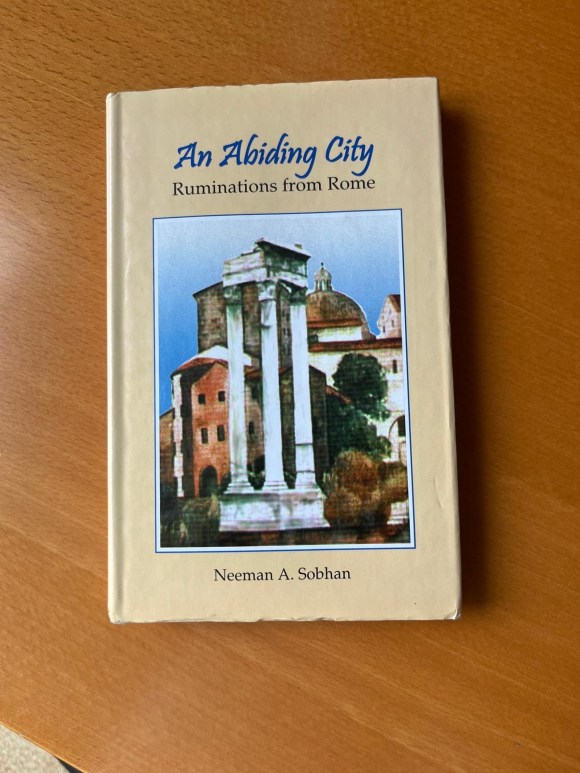


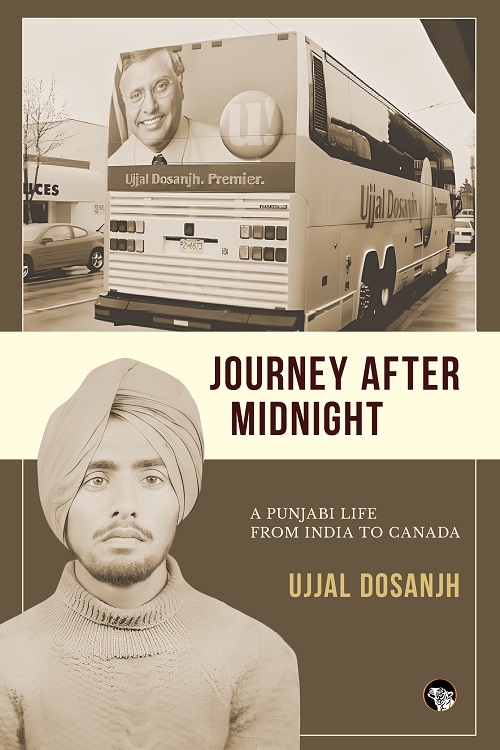
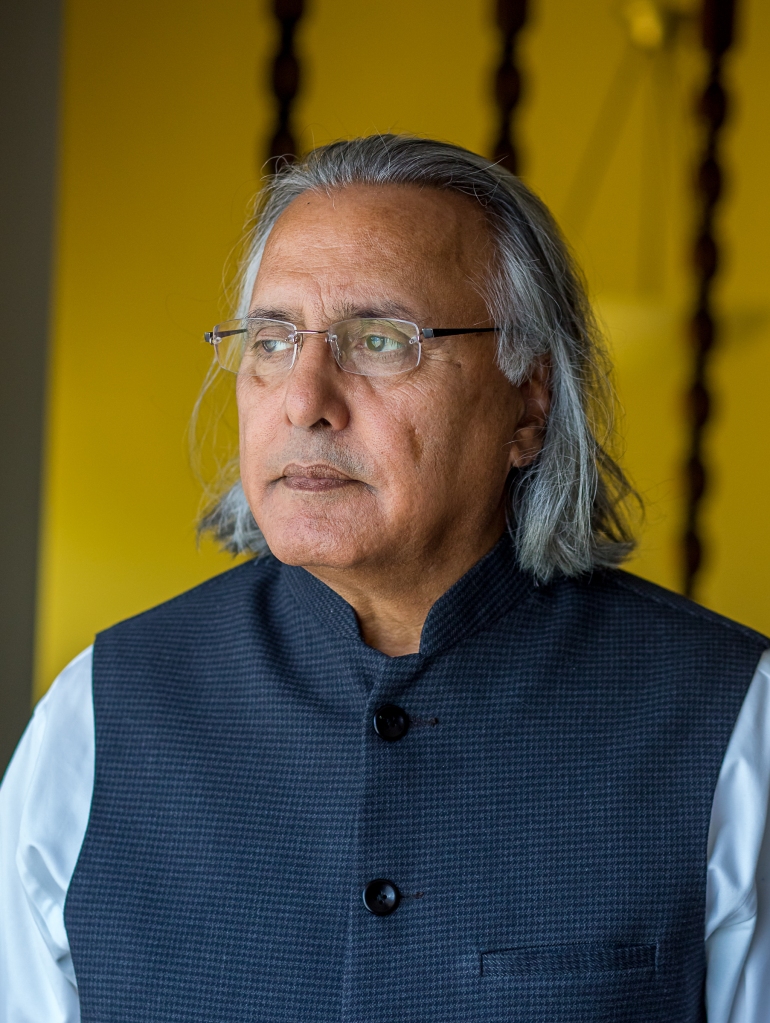
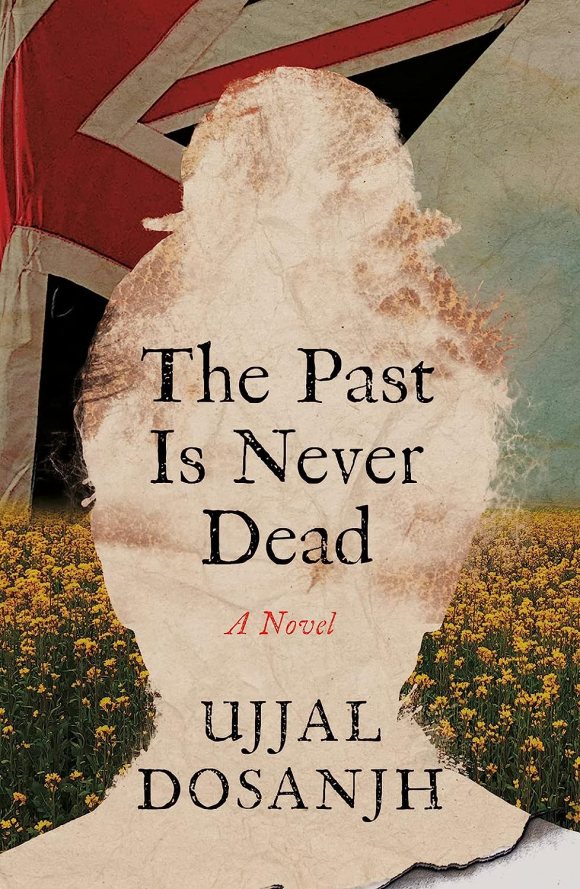


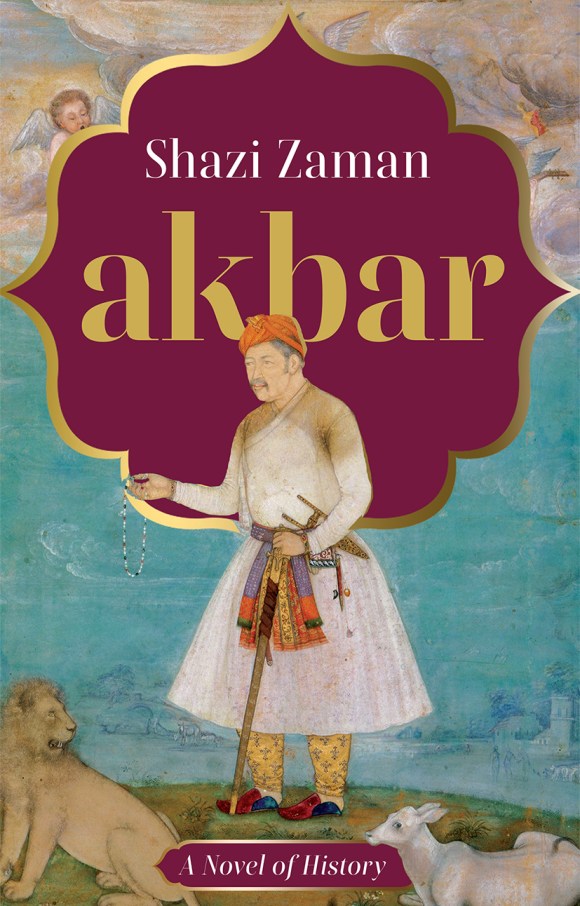
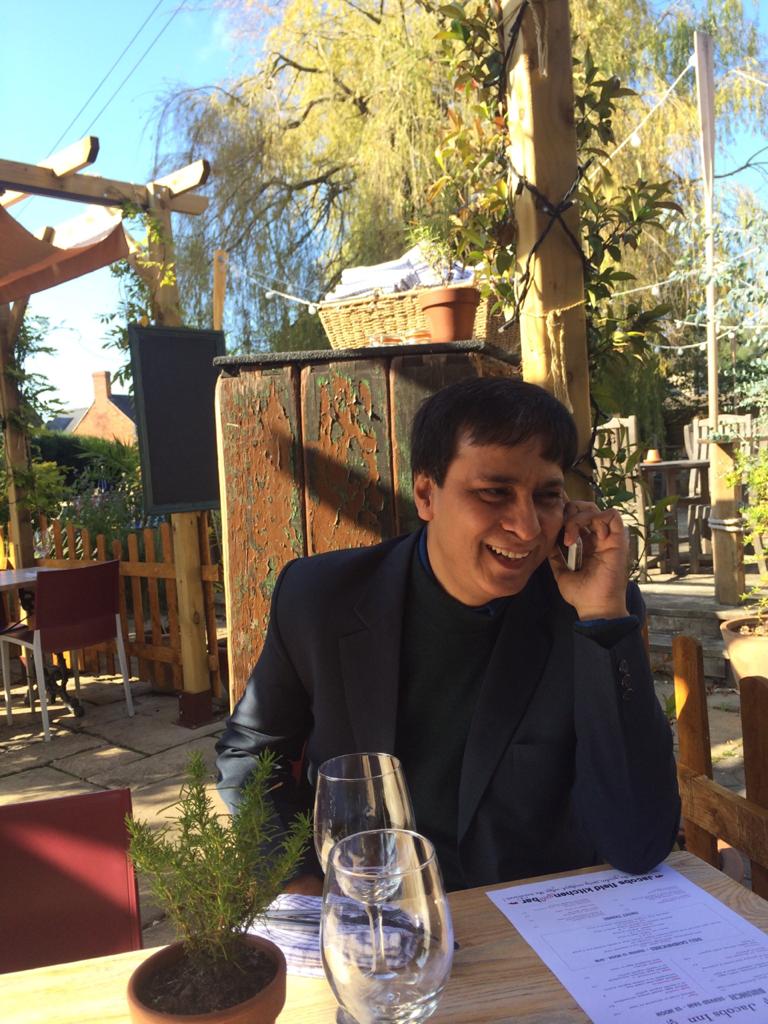
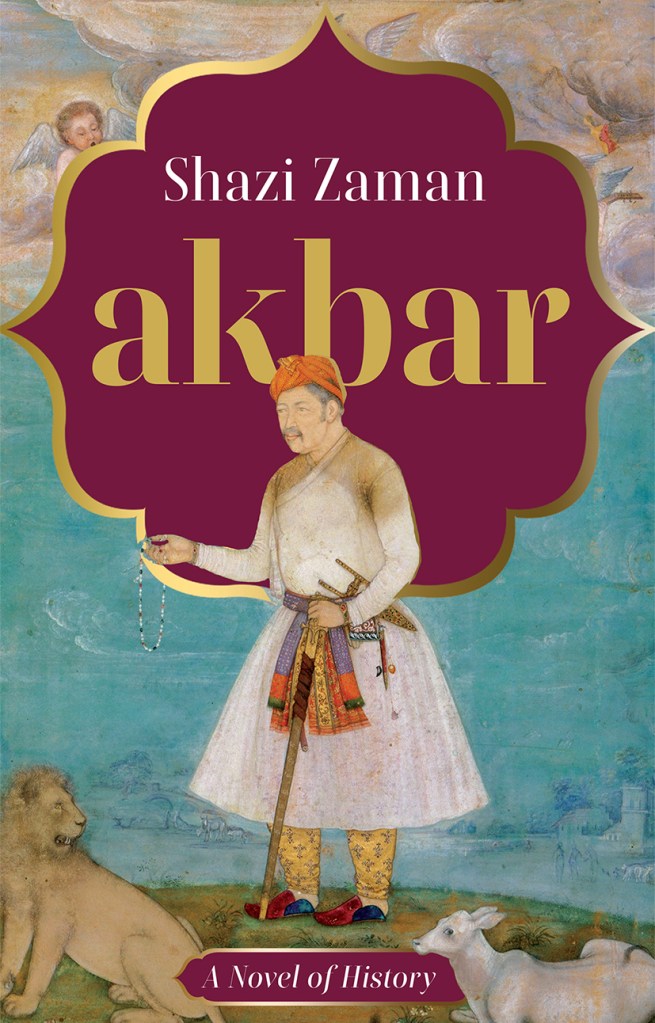
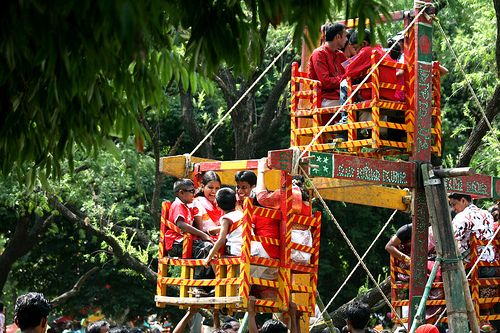

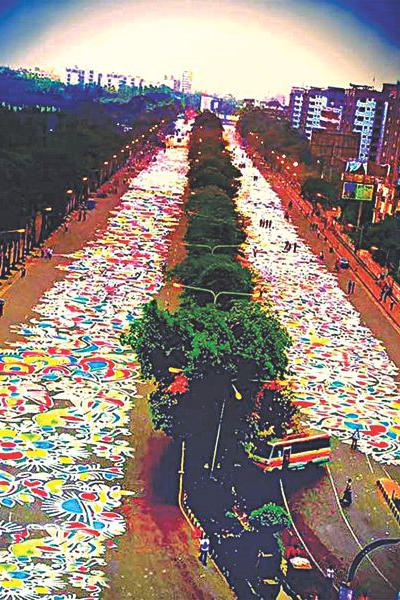
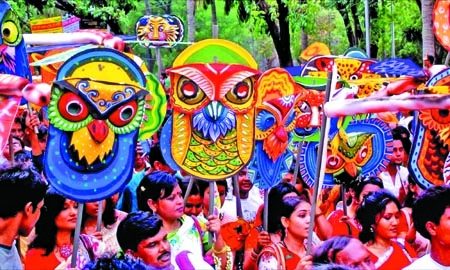
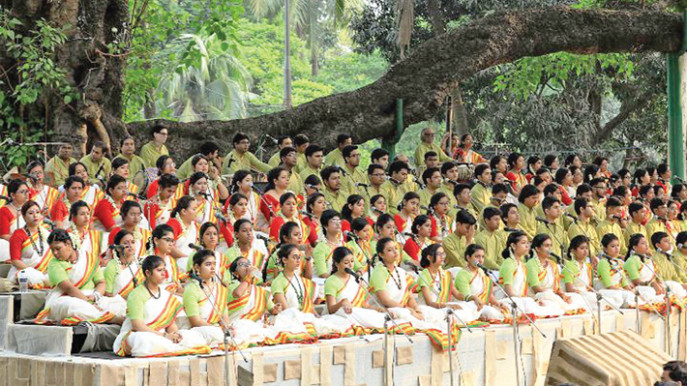
 Borderless