Yet again, I land in a new city, a new rented flat
After a long day’s work, I plan
to treat myself like royalty tonight
I imagine creamy mushroom risotto
that melts under the palette and complements wine

My appetite isn't willing to compromise
even though it’s late evening
Half of the stalls in the market
are wrapped in rags indicating
closure for the day
Some vendors have earned enough
to feed their family today

I silently look around for fresh mushrooms
in the unfamiliar narrow lanes
eyes scanning kaleidoscopic vegetable heaps
surrounding old and young women
hiding helplessness with grace
in the folds and gathers of the ageless fabric
that survives every weather

Their hopeful eyes follow me
Probably, their enough-for-the-day is yet to be
One of them tells me coldly,
"You won't find in poor man's market what's meant for the rich"
and that hit me

I change my mind and buy fresh vegetables instead
for a colourful salad too complements French wine
That instant energy
that one smile on the vendor’s face
was worth it
Pragya Bajpai, Ph.D., is serving at the National Defence Academy, Pune. She has authored a collection of poems and has edited four anthologies celebrating the armed forces. pragyabajpai@gmail.com Instagram: pragyabajpai29
.
PLEASE NOTE: ARTICLES CAN ONLY BE REPRODUCED IN OTHER SITES WITH DUE ACKNOWLEDGEMENT TO BORDERLESS JOURNAL.
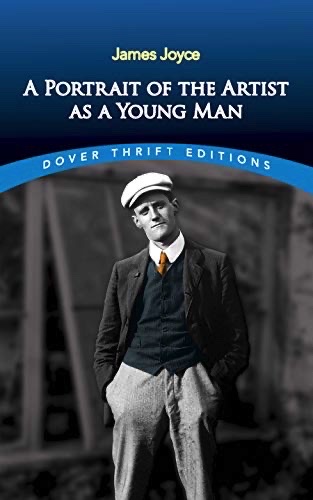
As the reader knows, syntactic and semantic rhythm in James Joyces’s writings was of capital importance. So important in fact that although he was staunchly anti-religious ( due no doubt to his severe religious schooling), the power and the movement of the sermons or homelies he heard when attending the Jesuit Seminary offered him ample linguistic material to contemplate and make full use of, as we shall see, in his A Portrait of an Artist as aYoung Man[1]. To demonstrate this rhythmic force, I shall succinctly explore Joyce’s adjectival use in chapter three of his 1916 novella, adjectives that function either as noun modifiers, predicate attributes or verbal modifiers[2].
The writing cadence of chapter three can be configured to a descrendo-crescendo movement whose scores of adjectives express the falling and rising of Stephen Dedalus’ inner oscillating, ambiguous emotions, his existential battle between Good and Evil. Joyce orchestrates, adjectivally, this movement with bombastic brio …
Every adjective, whatever its function be, underscores a movement, strikes up an image which represent the tortures and torments of Stephen Dedalus’ heart and mind, Joyce’s young hero. Each and every adjective rings a note of flat sadness or sharp happiness particular to Stephen’s waning or waxing states of mind. At the outset of chapter three, Joyce takes measure of Stephen’s inner and outer discordance with the following concaténation of adjectives : “December dusk, tumbling, dull day … dullsquare … gloomy, secret night … squalidquarter … devious course … darkcorner, clothlesstable … gawdy playbill … weary mind.” This melancholic opening movement sounds out Stephen’s visions as he roams through the“dulllight” and “colddarkness” of the streets of Dublin, or whilst listening to the sermons of the rector or preacher of his school. All the adjectives underscore Stephen’s terrible emotional ‘decrescendo’ which had been gradually spiralling downwards from the fabulous heights of joy that he had experienced at the end of chapter two.
And yet, the dark and grim adjectives go beyond the mere description of Stephen’s emotional state : they compose the vying forces of Good and Evil that rage within his heart ! In chapter three, Joyce communicates, with frightening precision, the impact of Good and Evil on his protagonist’s mind and body by the descriptions of Hell and sin as depicted by the rector or preacher. These descriptions galvanise the adolescent to such an extent that his only relief, his only vented recourse will be to take refuge in prayer to atone or repent for his sins by confessing them, and this, as I stated above, in spite of his anti-religious sentiments.
Chapter three takes place during a retreat. Stephen has become a prefect[3] at the sodality[4] of the Blessed Virgin Mary, and his contradictory way of life (sleeping with whores) has caused him to reflect upon his ambiguous existence. At first he displayed an apathetic indifference towards these feelings of remorse. Everything around him took on a sullen monotony which slowly seeped into his soul, so that “a cold, lucid indifference reigned in his soul”. ‘Lucid’ here, albeit etymologically evokes ‘light’, in fact denotes the opposite : a heaviness of spirit, a numbing of the soul. Adjectives such as ‘cold’ and ‘dull’ connote Stephen’s pangs of self-guilt : “The chaos in which his ardour extinguished itself was a cold indifferent knowledge of himself.” The ardour that he experienced in chapter two has now been extinguished, and in its place a coldness of indifference seizes him, whose benumbed iciness he then projects outwards towards his classmates in sullen mockery : “… he glanced coldly at the worshippers” at “their dull piety”.
This projection grows stronger as he ignores his classmates, wrapping himself up within himself. He becomes terribly aware of his tribulations, his tremulous soul, which appear to have gained the upper hand on him. His former preening hauteur has fallen into a “barren pride”. “… the dusk, deepening in the schoolroom, covered over his thoughts.” He felt himself to be “… the swamp of spiritual and bodily sloth in which his whole being had sunk.” Hence, “Stephen’s heart began slowly to fold and fade with fear like a withering flower”. Overwhelmed by the throngs of fear, Stephen’s thoughts and heart sank into a quagmire of self-abomination, highlighted not only by the verbal modifier ‘withering’, but also by the alliterating ‘f’s of ‘fold’, ‘fade’ and ‘fear’ which ‘resonate’ his crying, discordant soul …
It is only when the preacher had begun his sermon that Stephen’s fall — that is, his incapacity to pull himself out of the ‘swamp’-, reaches its vibrant pitch of self-maceration as he listened to the thundering words of the preacher, recalling to the students by enjoinment and injunction the great theological questions of Catholicism. Questions that hammered at our hero’s head, and which brooked no contradiction nor went unchallenged scientifically, the fiery and fearless proof of which drove deep into the souls of those who listened. And although some might not have been sinners, many if not all would inexorably become one ! As to Stephen, he knew his sins to be countless ! “In the silence their dark fire kindled the dusk into a tawny glow. Stephen’s heart had withered up like a flower of the desert that feels the simoon coming from afar.” Joyce’s metaphor of a ‘tawny’ or brownish, darkening glow, and a heart withering as a flower would without water or sunshine, marks his hero as having fallen into the arid, sand-filled vastitude of Evil, unable to refresh his soul with the cleansing waters of Good …
A running parallel develops thus between the preacher’s trenchant words and Stephen’s culpable conscience, transforming the preacher’s words into knives and daggers that cut and slice at his defiled body and spirit. Here the long sermon, filled with brimstone, Judgement, Hell, Fire and Death, made the young boy ponder over his present state of mind both in the chapel and outside it, roaming the streets of Dublin in quest of loose pleasure. The sermon made him reflect upon those unholy nights and days, whoring within the folds of “thick fog …” trapped within “… the fog of his mind” … in the “darkening street”, in “the dull night, and that was life”. Everything about him was laden with a loathing dullness. The adjective ‘dull’, veritable leitmotif, is repeated more than ten times in this chapter, rivalled only by ‘dark’, for ‘dull’ evokes both Stephen’s mental state and his sordid surroundings. It discloses the gravity or weightiness of his mind in the same way that it describes the depraved streets of Dublin, which are indeed both ‘dull’ and ‘dark’. ‘Dark’, too, are his thoughts as he struggles against the forces of Evil which leave : “Stephen’s face pale and drawn[…] his voice broken.” From those days of debauchery up till that ponderous sermon, his life had been inert, indolent, cloudy, due to the heavy fog that surrounded his heart and mind. Meanwhile, Stephen battled on in “listless despair[…] his dying limbs, his speech thickening and wandering and failing”. Joyce strings out four verbal modifiers which dramatically sound out the present state of his crestfallen hero. And if this terrible decrescendo were not enough, Stephen sees himself already in the grave, left “…to rot, to feed the mass its creeping worms and to be devoured by scuttling plump bellied rats”.
Stephen felt the weight of his sins as he imagined Doomsday to be near in sight : “The universe had become as sackcloth of hair …” “The moon was bloodred …” “The trumpet the brazen of death”. Religious signs popped up in his mind convincing him of his disloyalty towards God. And as the sermon reached its ringing crescendo, as each adjective struck sensitive chords in Stephen’s tortured mind and body, scenes of unmitigated rack followed one after the other : death, judgement, sin and blare of the trumpet. Joyce records that : “The preacher’s knife had probed deeply into his disclosed conscious and he felt now that his soul was festering in sin.”
Slowly but surely Stephen was being swayed by the preacher’s words in the chapel “flooded by the dull, scarlet light”. “The sordid details of his orgies stank under his very nostrils.” Everything was afire, filled with blood, ‘scarlet’ red. Joyce’s adjectival cadence rhythms Stephen’s suffering: his hero smells the brimstone and fire, tastes the unmitigated heat of the preacher’s admonitions. The images of blood, red for death, are evoked when Stephen imagines the Biblical Flood scene : the drowning people … death ! He soon sees himself as Lucifer, the greatest of all sinners, his hero ; one with whom he could identify himself in view of his present agony. The admonitions drive ever downwards into the very fiery pit of damnation as the preacher raves on and on about Hell, darkness, worms gnawing at eyes, the Devil that saints such as Catherine of Sienna have seen with their own eyes ! His words swell with precise facts and figures to render Stephen’s ordeal both mentally and physically more unbearable : The walls of Hell are four-thousand miles thick, its fires do not burn the flesh but maintain it in eternal torment. “Saint Francis Xavier converted 10.000 souls in just one month !” sermons gravely the sermoniser. These bombastic figures and unchallenged facts are intermingled with eye-witness accounts of Hell written by well-known saints[5]. All these details transform Stephen into Hell itself as he hears a chorus of shrieks ring out in his fissured skull : “His brain was simmering and bubbling within the cracking tenement of the skull. Flames burst forth from his skull like a corolla, shrieking like voices : Hell ! Hell ! Hell ! Hell !”
One may say that every adjective that poured forth from the preacher’s mouth (or Joyce’s pen!) would brand Stephen for life, the imprint or mark of which making him afraid to enter his own room lest Death sweep him away … These terrible moments of guilt, up till his confession, represent Stephen’s imprisoned thoughts seeking sanctuary in a form of self-recognition ; that is, a self-understanding that persuades him that up till then only the Church, or better phrased, the Church’s ‘semantic authority’ had persuaded him to capitualate. For indeed, in the first two chapters the vaunting vainglorious Stephen had refused to apologise to his mother (his family) over a trifling ; had adamantly declined to yield about Lord Byon during a literary dispute before his mates. But now because of the preacher’s booming sermon, he will confess his waywardly ways, and by doing so, acknowledge his faults to God, and more importantly, to himself. He will avow to a father-confessor his contradictory existence. Indeed, the preacher’s reverberating handling of words brought the proud pedant to bay …
Stephen mocked himself during that period. He damned himself. Adjectives such as lusty, unbearable, intolerable, thick, dark and agonizing filled his mind until he vomited them into the wash-basin of his bedroom, so repeatedly had they been beating inside his head.
It is only after the confession of his sins (and they were plentiful!) that we read the beginnings of Stephen’s atonement and repentance, the sharp movement upwards rising from the bowels of Hell, scaling and scaling ever higher, breaking out into some celestial aria where the bombastic crescendo reaches its most airy and consonant strains, acutely measured by the peals of adjectives that now clanged from Joyce’s pen : “His sins trickled from his lips, one by one, trickled in shameful drops from his soul, festering and oozing like a sore, squalid stream of vice. The last sins oozed forth, sluggish, filthy.” The ‘last’ sins of a befallen soul, rhythmed by six of the most abject adjectives, in fact trigger Stephen’s revival, rejuvenation … resuscitation ; glorify his now “purified body”. Indeed, the father confessor’s voice “fell like sweet rain upon his quaking parching heart”. Stephen’s confession soars him back to the heights of a joyous consonance he had enjoyed in chapter two. Now “the muddy streets were gay. He strode homeward, conscious of an invisible grace pervading and making light his limbs. His soul was made fair and holy once more, holy and happy.” (page 133). Yes, the ‘invisible’ grace is the grace of God whose shining benevolence upon Stephen has been prompted by the preacher’s excellent sermon and the father confessor’s astute forgiveness.
Stephen has indeed overcome Evil by the force of his elders’ well-chosen and -articulated words. We now read adjectives like ‘light’ which qualifies his limbs, those same limbs that at the outset of the chapter were ‘lifeless’. ‘fair’, ‘holy’ and ‘happy’ describe his now cleansed soul, vibrant substitutes for his former ‘dark’ and ‘dull’ soul. ‘Dark’ no longer modifies its nouns, but ‘clear’ and ‘white’ ring out on the pages : “white flowers’, ‘white pudding”. We read ‘morning light’ and no longer the ‘dark night’. ‘White’ flowers is repeated twice : “… white flowers were clear and silent as his own soul”, which, prior to the sermon and his confession, had been withering. He even felt that his classmates were ‘happy’ as they knelt in prayer at the chapel ! Our hero, thus, sums up his resonant revival : it is “beautiful to live”.
The battle between Good and Evil rose to a vibrant finale with Stephen’s triumphant victory. A victory in alliance with the preacher’s timely words which led him to the confession box, and to the father confessor’s humble but firm absolution. And although Stephen does admit that the father confessor’s words were ‘dull’ and ‘tepid’ as compared to the preacher’s horns and trumpets, there is no doubt that the power and vigour of language itself, be it flat or sharp, incited him to abdicate or surrender to his mixed and complicated juvenile emotions in order to receive absolution. For only the force of well-worded phrasings could have brought him to the confession box, could have breached his anti-religious rampart ; could have made him comprehend physically and psychologically the abyss which separates Good from Evil. In short, at the end of chapter three, Stephen’s crestfallen spirits reached the highest of pitches …
Now, whether or not Stephen Dedalus’ spirits will sustain that high pitch along the paths of his long life remains to be seen …
.
[1] A Portrait of an Artist as a Young Man, Penguin Modern Classics, London, England, 1931.
[2] Verbal modifiers are participles that function as adjectives. Another term for predicate attributes is attribute complement.
[3] A senior pupil in a religious school who maintains discipline.
[4] A place of retreat where a group of people spend a period of seclusion in prayer and meditation.
[5] For example Saint Theresa of Avila in her El Libro de la Vida (The Book of Life)..
Paul Mirabile is a retired professor of philology now living in France. He has published mostly academic works centred on philology, history, pedagogy and religion. He has also published stories of his travels throughout Asia, where he spent thirty years.
.
PLEASE NOTE: ARTICLES CAN ONLY BE REPRODUCED IN OTHER SITES WITH DUE ACKNOWLEDGEMENT TO BORDERLESS JOURNAL
LONG NIGHTS

In their speaking,
long nights
can’t stop weeping,
their sorrow transforms
into song
no man could hum.

The white moon can
hear it
and weeps as well.
The stars shine on in
clear skies
with unseen tears.

Snow falls gently
at night
and in the day.
Time cries and cries.

In their speaking
long nights
can’t stop weeping.


WHEN MY DESIRES BEGIN TO FADE

When my desires begin to fade,
that is when my senses will return.
I will take a small breath, a sigh,
and let the darkness come. I will
listen to the melody of night birds,
and hope my desires do not return.

THE DEAD LIVE IN MY DREAMS

The dead live in my dreams.
They wait for me to fall asleep.
Some are dear to me and
some are diabolical.

Decomposed and frail, they
walk like children taking their first
steps. Some walk with a limp.
I find it disconcerting.

I talk to those I love
again. I ask them to pray for
me. They are always waiting
for my body to tire out.

I listen to their complaints.
I wake up and remember what
they said. Some talk without breath.
Others do not utter a word.
Born in Mexico, Luis Cuauhtémoc Berriozáballives in California and works in the mental health field in Los Angeles, CA.His poetry has been published by Blue Collar Review, Borderless Journal, Escape Into Life, Kendra Steiner Editions, Mad Swirl, SETU, and Unlikely Stories.
PLEASE NOTE: ARTICLES CAN ONLY BE REPRODUCED IN OTHER SITES WITH DUE ACKNOWLEDGEMENT TO BORDERLESS JOURNAL
When New Zealand author Heidi North won an international Irish Poetry Prize in 2007, and was told by the Nobel Laureate, Seamus Heaney, to keep writing, it made her realise that not everyone wrote the way she did. Further recognition and confirmation of her own unique voice came just before Covid hit, when the band U2 used one of her poems in their Joshua Tree Tour on a gigantic screen before audiences of thousands. The writer of poems and fiction has been published in anthologies, journals and magazines around the world, but underlying her writing is a fascination with the human condition and how out of grief we make parcels of light.
When did you first start writing?
I’ve always been writing. I think I thought everyone just wrote poems and stories the way I did, when I was a kid. But as to when I started taking writing more seriously, that was when I won an Irish poetry prize in 2007 (The Feile Filiochta International Poetry), that’s when I realised that perhaps not everyone wrote quite the way I did.
What cultivated your love of words and storytelling?
My mother was a great storyteller and she often told me stories, especially family stories, growing up. In fact, a lot of those have made their way into an essay collection that I’m currently working on, a few decades later. My dad was an architect and artist, and my step mum is an artist, too so I grew up surrounded by creative people and books and a feeling that creativity was valued.
What do you enjoy about the process of writing?
It can be a frustrating one at times, there’s the gap between what you want things to be and where they are and finding the way to work from that point to another can be a challenge. But the great joy comes from the flow state, when you’re in that state, time and space are nothing, there is just you and the page and it’s joyful. You have to hold onto that as a writer, because a lot of the time is spent berating yourself for not actually writing, feeling deep despair about your work, and the process of editing, which can be joyful and painful too.
What differences are there between writing poetry and writing short stories/novels? Do you have to put a different ‘hat’ on to create?
For me, it’s sort of instinctual, I just know when what form things I want to explore will take. I was a poet first, so I did have to go through a process of really learning to write fiction. John Cranna from The Creative Hub (Auckland, New Zealand) really taught me how to bolt my fiction writing down. I feel like fiction adheres to the rules of gravity whereas poetry doesn’t have to. But writing both has made each form stronger, my poetry has become more narrative and my fiction benefits from the stripping back you do in poetry.
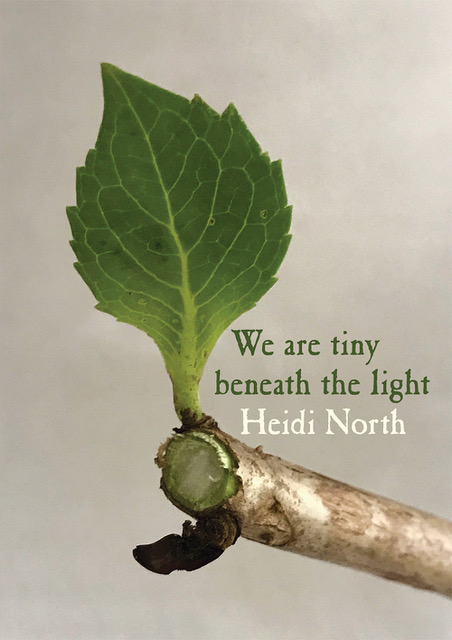
I wrote my second poetry collection, We are tiny beneath the light, as a sort of side project while I was working on my bigger project for my Masters. And it’s more a narrative than my first collection, Possibility of flight, which I published in 2015, for that reason.
How do you go about your writing? With planning, spontaneous, inspiration or contemplation?
These days, between work and kids and the obligations of adulthood, the writing has to be planned and I have to give myself deadlines and hold myself accountable to them. But in terms of what I want to write, that still is fairly spontaneous. I have never felt like I choose what I write about, things just tug at me until I make something out of them.
Does being a writer make you more observant, mindful or aware, or does noticing details and recording them make you a writer?
What a chicken and egg! My dad always says I was fascinated by why people did things, so I think writing perhaps helps me make sense of the world.
What did you gain from studying creative writing at university?
Every time I’ve done any writing study, there have been two great gifts of it; one, it ringfences writing time and gives me deadlines, and a place to play with writing, to read and to really think hard about both. But the second, and perhaps the greater gift, is the cohort. I finished my Master of Creative Writing at Auckland University in 2017, and that cohort of writers, and our lecturer, Paula Morris, have been so valuable to me since. Plus, I still keep in contact with, and champion writers from other courses I’ve taken along the way. I’ve taken several short courses at the IIML at Victoria University of Wellington and those always gave me new inspiration and introduced me to new writers, many of whom have stayed friends.
What was your experience in China/Shanghai like?
Being in Shanghai for the International Writers Program in 2016 was just such a wonderful, stimulating creative time. I’d lived in China, in Huizhou, 12 years earlier for a year teaching English at a language school there, so I had a bit of an idea of what China was like, so while in some ways I was prepared, it was also so different. I loved spending two months there. I loved having the time dedicated to writing and to being in a different culture and to be being part of a group of 10 writers from around the world and to spend time with Chinese writers and particulate in many literary events. I feel so very lucky and thankful to the Michael King Centre in New Zealand for the exchange.
It was also hard and challenging and bizarre to be away from home. I had a small daughter at home and my marriage had recently broken up. So it was many things, all at once.
How do you go about getting published?
Just sending things out and keep sending things out. Hopefully, you send things out that people like and they get published. I’ve had a lot of rejection letters, and I’ve also learnt that some people will love your work and some people won’t. It’s true what they say that everything is subjective. I’ve had work rejected by someplace that ends up winning a prize somewhere else.
How do you think writing can address difficult subjects, such as your ‘We are tiny beneath the light’?
Your hope as a writer, when you write about difficult subjects, such as I did in, ‘We are tiny beneath the light’, which is about the breakdown of my marriage and the process of rebuilding myself after that, is that it illuminates something for someone else. Maybe someone else going through a hard time reads my poems and it gives them a foothold into their own life, or a way to express their grief, or offers a sliver of hope. I go to hard writing in hard times, and it gives me great comfort.
Does writing from your own experience mean being vulnerable on the page? If so, how do you live with that?
It would be easier to step back from your work and say it’s not you, and in ‘We are tiny beneath the light’, I could no longer do that. Was I scared of being vulnerable? Yes, I was terrified. My publisher and editor Mary McCallum was invaluable through that process and trusting in her careful guidance helped me get to the heart of the story I was telling.
The other thing is, that writing anything truthful always contains poetic license, and even if it’s not about you people will make assumptions anyway, so that’s freeing in a way. And you have to get past what you think people might think of you if you’re a writer, or you’ll never write anything.
Being vulnerable is something I find quite difficult, and yet, both of the projects I’m currently working on have memoir elements, so demand a level of vulnerability. In the end, I think all good writing is an act of vulnerability of some kind, and when I’m scaring myself that’s when I know I’m going in the right direction.
How do you make a bridge with the reader for them to get into your writing?
I think it’s vulnerability. You don’t have to agree with me or like me, but you have to know I’m telling some kind of truth – which is widely subjective, but that’s what the reader is here for, to see the writer tell the truth they have in the best way they can.
How useful are deadlines, goals, and writing groups to writing and improving your work?
They cannot be underestimated! It’s not an understatement that the process of getting to the desk is extraordinary hard. It would be such a relief not to want to write, because it’s so fraught just getting to the page. You have to really want to write to overcome that dread. It makes absolutely no sense that something you love is so intensely hard to do. This is where deadlines and writing groups, that come with deadlines come in. And it’s great to be able to talk about the craft with people who care about it as much as you do.
How rewarding does it feel seeing your work and name in print?
Holding the copy of your book in your hands for the first time is such a wonderful feeling. And when you get accepted for any kind of publication there is just this instant bubble of joy. And you have to hold onto that, because the slog is hard, and the rejections keep coming. It can be hard to savour the feeling of reward that comes with seeing your work published, but it is why we continue writing, so that someone will read it.
How has your writing ended up being shared to the wider world? Is it true that U2 used your poem ‘Piha Beach, two years on’ in its New Zealand concert screen images?
Yes! Isn’t that just wild? Having my poem picked up and used by U2 is one of the most unexpected and wonderful things that being a writer has led to. I wrote about it — the surreal joy of having my poem selected to play on the largest screen I’ve ever seen – may ever see – in my life, to a crowd of thousands here: When one of the biggest bands in the world bought my tiny poem
If you can’t make a living from writing poetry, what other benefits are there from publishing poetry?
You don’t write poetry or short stories in New Zealand for the money, but being a writer has lead me to some extraordinary experiences, like an all-expenses-paid trip to Bali when I won the Asia New Zealand Foundation Short Story Competition, going to the Shanghai Writers Programme and all the wonderful experiences I had there, meeting Seamus Heaney and having him tell 26-year-old me sternly to keep writing when I picked up the Feile Filiochta poetry award in Ireland, and spending the evening in the Friends and Family lounge before the U2 concert in Auckland.
So, it’s not bought me great monetary riches, but it’s bought me great dinner party stories.
How important is winning awards, and getting feedback from readers in keeping your writing?
Really, really important. I’d like to say I don’t care what people think, but I do. I don’t mean in the way it stops me from writing hard things, but in the way that if I’d never had any positive feedback at all the doubt would have gotten the better of me and I would have stopped writing long ago.
How do you use your writing skills in your day job?
I work in strategic communications and engagement, which is all about how to communicate the bigger story and connect with people. It’s fulfilling to tell stories in different capacities.
How do you juggle your life and other responsibilities with making time to write?
I’ve learnt to write in snatches, when kids are playing noisily around me, when I don’t want to, when I’m too tired, when I’m feeling flat. There’s always something writing or writing-adjacent you can do, even when you may not be at your best and that way you keep a toe in the water. I do everything I can just to keep a toe in the water, and then sometimes that leads to full body immersion, but with kids and a job and a house there isn’t much glorious uninterrupted time these days.
What are you currently working on?
I always have multiple things on the go at the same time, so one project I’m working on is a personal essay collection about childhood, family politics, parenting and love. And the other is my Shanghai project, a hybrid novel memoir about a runaway bride who finds herself hiding in Shanghai – the last place she remembers being happy, and it’s also about me, on the Shanghai writers programme grappling with where I was in my life post-separation.
What’s your advice for aspiring writers?
Read, read, read. Do interesting things. Find your own voice. Allow yourself to write things without expectations or limits. Write into the things that make you scared. Then go deeper. Keep going.
What advice would you give to your younger self?
Don’t agonise so much, and just keep going.
How does writing make you a global citizen better connected to the world?
Participating in literary events and publications and exchanges creates so much connection and empathy with different cultures and ideas. It’s so important.
New Zealand writer Heidi North has won awards for both her poems and short stories, including an international Irish Poetry Prize, and has been published in anthologies and magazines around the world. Heidi was the New Zealand fellow in the Shanghai International Writers Programme in 2016. The same year she was awarded the Hachette/ NZSA mentorship to work on her first novel. Heidi has a Masters in Creative Writing from the University of Auckland and lives in Auckland with her family. Her first poetry collection, Possibility of flight was published by Makaro Press in 2015. Her second collection, We are Tiny Beneath the light (The Cuba Press 2019), was launched by U2 when they used one of her poems from the collection in their 2019 Joshua Tree Tour.
‘Piha Beach, two years on’ by Heidi North

My feet punch bruises in the black sand
and I am back in the burn of childhood summers

the circle of sentinel gulls
their grey wings tipped to catch the light

warn me back
but I go down to the white foam edge

bluebottles bloated with their pretty poison
yield to the sharp edge of my stick

I go down to the place
where the wind kicks holes through my heart

and there is a child down there
too close to the ribbony horizon line

holding his blue kite
towards the updraft

still smiling as it lurches
against the wide white blaze of sky –

and I smile and laugh and I run with him because how can I tell him
all the brutal things are yet to come

(‘We are tiny beneath the light’ has been published with permission from The Cuba Press)
Keith Lyons (keithlyons.net) is an award-winning writer, author and creative writing mentor, who gave up learning to play bagpipes in a Scottish pipe band to focus on after-dark tabs of dark chocolate, early morning slow-lane swimming, and the perfect cup of masala chai tea. Find him@KeithLyonsNZor blogging at Wandering in the World (http://wanderingintheworld.com).
PLEASE NOTE: ARTICLES CAN ONLY BE REPRODUCED IN OTHER SITES WITH DUE ACKNOWLEDGEMENT TO BORDERLESS JOURNAL
Let’s dream of a new world with laughter and move towards a vision we treasure — of a world that we can build together with poetry, peopled with strange imaginary creatures who bring a smile to our lips or perhaps evoke laughter…
Figments caught straying in whispers of a dream,
Weave together till they form a visible stream,
Filling a void with voices that sing,
With freedom and impunity ring,
Giving credence to a distant, imagined realm.

— Introduction, Monalisa No Longer Smiles: An Anthology of Writings from across the World
As we complete three years of our virtual existence in clouds, connecting, collecting and curating words of ideators, we step into our fourth year with the pleasurable experience of being in bookshops in hardcopy too. Monalisa No Longer Smiles: An Anthology of Writings from across the World, our first hardcopy anthology, takes us into the realm of real books which have evolved over eons in history. This anthology connects us to those who hesitate to step into the virtual world created by technology. And there are many such people – as ingrained in the human heritage is a love for rustling paper and the smell of books. We have had some excellent reviews, praising not just the content but also the production of the book – the cover, the print and the feel. The collection bonds traditional greats with upcoming modern voices. We are grateful to our publisher, Om Books International, Shantanu Ray Chaudhuri, Jyotsna Mehta and their team for giving our book a chance. We do look forward to more anthologies hopefully in the future.
The writings we have collected over the last three years are reflective of diverse voices— some in concurrence with our thought processes and some in discussion or even in divergence. We have a variety of forms — poetry, conversations, fiction and non-fiction. Some are humorous and some serious. We try to move towards creating new trends as reflected in our anthology and our journal. For instance, Monalisa No Longer Smiles starts with an experiment — a limerick was adapted to express the intent of our book and journal; whereas normally this form is used to express light, or even bawdy sentiments. Perhaps, as the limerick says, we will find credence towards a new world, a new thought, a restructuring of jaded systems that cry out for a change.
Borderless Journaldid not exist before 2020. Within three years of its existence, our published pieces have found voices in this anthology, in other books, journals and even have been translated to a number of languages. Our own translation section grows stronger by the day supported by translators like Aruna Chakravarti, Fakrul Alam, Radha Chakravarty and Somdatta Mandal. Our interviews and conversations probe to find similarities and divergences in viewpoints. Our stories tell a good tale rather than indulge in stylistic interplay and our poetry is meant to touch hearts, creating a bond between the writers and anglophone readers. What we hope to do is to expose our readers to writing that they can understand. Writers get lost at times with the joy of creating something new or unique and construct an abstraction that can be intimidating for readers. We hope to host writing that is comprehensible, lucid and clear to the lay person.
What we look forward to homing in the coming months is a mingling of different art forms to birth new ideas that will help our species move progressively towards a world in harmony, filled with peace and love, giving credence to voices like that of Tagore, Nazrul or Lennon. “Imagine there’s no heaven…Imagine there’s no countries…no religion, too…Imagine all the people/ Livin’ life in peace…Imagine all the people/ Sharing all the world…” The need to redefine has been felt and as Lennon says in his last paragraph: “You may say I’m a dreamer/ But I’m not the only one/ I hope someday you’ll join us/ And the world will live as one.” With this hope, we continue our journey into another year – a new adventure that will take us to a universe where heaven can be found on Earth, grounded and real, within the human reach and can be shared without war, greed, hatred and anger.
Here, we share with you a few iconic pieces that have found their way to our pages within the last three years.
Professor Anvita Abbi, a Padma Shri, discusses her experience among the indigenous Andamanese and her new book on them, Voices from the Lost Horizon. Click here to read.
In Conversation with Akbar Barakzai, a ‘Part-time Poet’ in Exile: The last interview of Akbar Barakzai where he says, ‘The East and the West are slowly but steadily inching towards each other. Despite enormous odds “the twain” are destined to “meet” and be united to get rid of the geographical lines…’ Click hereto read more.
Half-Sisters: Sohana Manzoor explores the darker regions of human thought with a haunting psychological narrative about familial structures. Click hereto read.
Rituals in the Garden: Marcelo Medone discusses motherhood, aging and loss in this poignant flash fiction from Argentina. Click here to read.
Navigational Error: Luke P.G. Draper explores the impact of pollution with a short compelling narrative. Click here to read.
Pandies’ Corner: These narratives highlight the ongoing struggle against debilitating rigid boundaries drawn by societal norms, with the support from organisations like Shaktishalini and Pandies. Click here to read.
Dilip Kumar: Kohinoor-e-Hind: Ratnottama Sengupta recollects the days the great actor sprinted about on the sets of Bombay’s studios …spiced up with fragments from the autobiography of Sengupta’s father, Nabendu Ghosh. Click here to read.
Farewell Keri Hulme: A tribute by Keith Lyons to the first New Zealand Booker Prize winner, Keri Hulme, recalling his non-literary encounters with the sequestered author. Click here to read.
Tagore Translations, including translations by Aruna Chakravarti, Fakrul Alam, Somdatta Mandal and Radha Chakravarty. Click here to read.
Nazrul Translations, including Professor Fakrul Alam and Sohana Manzoor. Click here to read.
Gandhi & Robot by Thangjam Ibopishak, translated from the Manipuri by Robin S Ngangom. Click here to read.
Songs of Freedom by Akbar Barakzai, poems translated from Balochi by Fazal Baloch. Clickhere to read.
Give Me A Rag, Please:A short story by Nabendu Ghosh, translated by Ratnottama Sengupta, set in the 1943 Bengal Famine, which reflects on man’s basic needs. Click here to read.
Thanks to our team, contributors and readers for being a part of our journey. Let’s sail onwards…
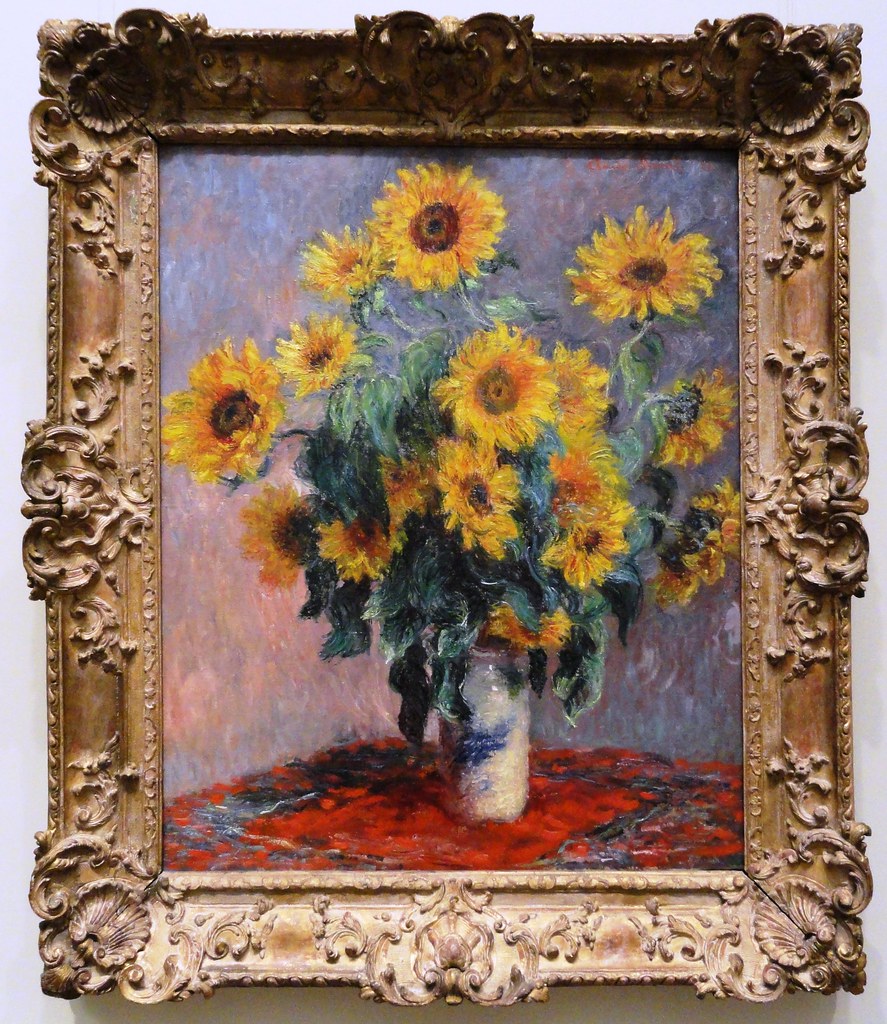
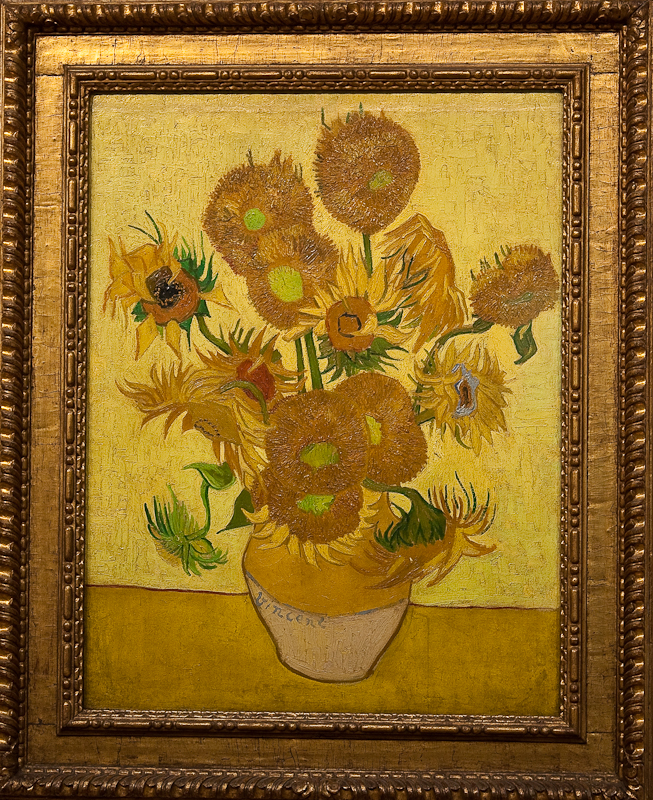
Sunflowers by Calude MonetSunflowers by Vincent VangoghCourtesy: Creative Commons
With resilience, they have withstood what could have become an international disaster for all humankind — an outbreak of a Third World War. The spirit that has resisted the ongoing invasion of Ukraine is admirable. They have stayed strong without bowing, crumbling or annihilating themselves in the wake of an onslaught that hurts humanity across all borders in different degrees and creates a huge population of refugees. We gave voice to one such refugee, Lesya Bakun — not just in our site but also in our first anthology — Monalisa No Longer Smiles: An Anthology of Writings from across the World.
This year, we quest for hope towards peace, a better, more accepting world with poetry on Ukraine. One of the poems here is accompanied by art from Ukrainian artist, Maria Kirichenko. We feature some of the poems gathered on Ukraine over the year.
“How Many Times Must the Cannonballs Fly…?” Featuring poetry by Lesya Bakun, Rhys Hughes, Ron Pickett, Michael R Burch, Kirpal Singh, Suzanne Kamata, Mini Babu, Malachi Edwin Vethamani, Sybil Pretious and Mitali Chakravarty. Click here to read.
Abhirup Dhar, a horror writer whose books are being extensively adopted by Bollywood, talks about his journey and paranormal experiences. Click here to read.
Translations
Munshi Premchand’s Balak or the Child has been translated from Hindi by Anurag Sharma. Click hereto read.
Atta Shad’s Today’s Child has been translated from Balochi by Fazal Baloch. Click here to read.
Masud Khan’s History has been translated from Bengali by Professor Fakrul Alam. Click here to read.
Ihlwha Choi translates his own poem,Lunch Time, from Korean. Click here to read.
Tagore’s Somudro or Ocean has been translated from Bengali by Mitali Chakravarty. Click here to read.
“Here with a Loaf of Bread beneath the Bough,
A Flask of Wine, a Book of Verse -- and Thou
Beside me singing in the Wilderness --
And Wilderness is Paradise enow.”

― Omar Khayyám (1048-1131); translation from Persian by Edward Fitzgerald (Rubaiyat, 1859)
I wonder why Khayyam wrote these lines — was it to redefine paradise or just to woo his beloved? I like to imagine it was a bit of both. The need not to look for a paradise after death but to create one on Earth might well make an impact on humankind. Maybe, they would stop warring over an invisible force that they call God or by some other given name, some ‘ism’. Other than tens of thousands dying in natural disasters like the recent earthquake at the border of Turkiye and Syria, many have been killed by wars that continue to perpetrate divides created by human constructs. This month houses the second anniversary of the military junta rule in Myanmar and the first anniversary of the Ukrainian-Russian war that continues to decimate people, towns, natural reserves, humanity, economics relentlessly, polluting the environment with weapons of mass destruction, be it bombs or missiles. The more weapons we use, the more we destroy the environment of our own home planet.
Sometimes, the world cries for a change. It asks to be upended.
We rethink, reinvent to move forward as a species or a single race. We relook at concepts like life and death and the way we run our lives. Redefining paradise or finding paradise on Earth, redefining ‘isms’ we have been living with for the past few hundred years — ‘isms’ that are being used to hurt others of our own species, to create exclusivity and divisions where none should exist — might well be a requisite for the continuance of our race.
Voices of change-pleaders rang out in the last century with visionaries like Tagore, Gandhi, Nazrul, Satyajit Ray urging for a more accepting and less war-bound world. This month, Ratnottama Sengupta has written on Ray’s legendary 1969 film, Goopy Gyne, Bagha Byne: “The message he sent out loud and with laughter: ‘When people have palatable food to fill their belly and music to fill their soul, the world will bid goodbye to wars.’” Shantanu Ray Chaudhuri has given an essay on one of the greatest pacifists, Gandhi, and his attitudes to films as well as his depiction in movies. What was amazing is Gandhi condemned films and never saw their worth as a mass media influencer! The other interesting thing is his repeated depiction as an ethereal spirit in recent movies which ask for changes in modern day perceptions and reforms. In fact, both these essays deal with ghosts who come back from the past to urge for changes towards a better future.
Delving deeper into the supernatural is our interviewee, Abhirup Dhar, an upcoming writer whose ghost stories are being adapted by Bollywood. While he does investigative stories linked to supernatural lore, our other interviewee, Andrew Quilty, a renowned journalist who has won encomiums for his coverage on Afghanistan where he spent eight years, shows in his book, August in Kabul:America’s Last Days in Afghanistan and the Return of the Taliban, what clinging to past lores can do to a people, especially women. Where does one strike the balance? We also have an excerpt from his book to give a flavour of his exclusive journalistic coverage on the plight of Afghans as an eyewitness who flew back to the country not only to report but to be with his friends — Afghans and foreigners — as others fled out of Kabul on August 14 th 2021. While culturally, Afghans should have been closer to Khayyam, does their repressive outlook really embrace the past, especially with the Taliban dating back to about only three decades?
This intermingling of life and death and the past is brought to life in our fiction section by Sreelekha Chatterjee and Anjana Krishnan. Aditi Yadav creates a link between the past and our need to travel in her musing, which is reminiscent of Anthony Sattin’s description of asabiyya, a concept of brotherhood that thrived in medieval times. In consonance with wanderlust expressed in Yadav’s essay, we have a number of stories that explore travel highlighting various issues. Meredith Stephens travels to explore the need to have nature undisturbed by external interferences in pockets like Kangaroo Island in a semi-humorous undertone. While Ravi Shankar travels to the land’s end of India to voice candid concerns on conditions within Kerala, a place that both Keith Lyons and Rhys Hughes had written on with love and a sense of fun. It is interesting to see the contrasting perspectives on Southern India.
Professor Fakrul Alam has also translated poetry where a contemporary Bengali writer, Masud Khan, cogitates on history while Ihlwha Choi has translated his own poem from Korean. A translation of Tagore’s poem on the ocean tries to capture the vastness and the eternal restlessness that can be interpreted as whispers carried through eons of history. Fazal Baloch has also shared a poem by one of the most revered modern Balochi voices, that of Atta Shad. Our pièce de resistance is a translation of Premchand’s Balak or the Child by Anurag Sharma.
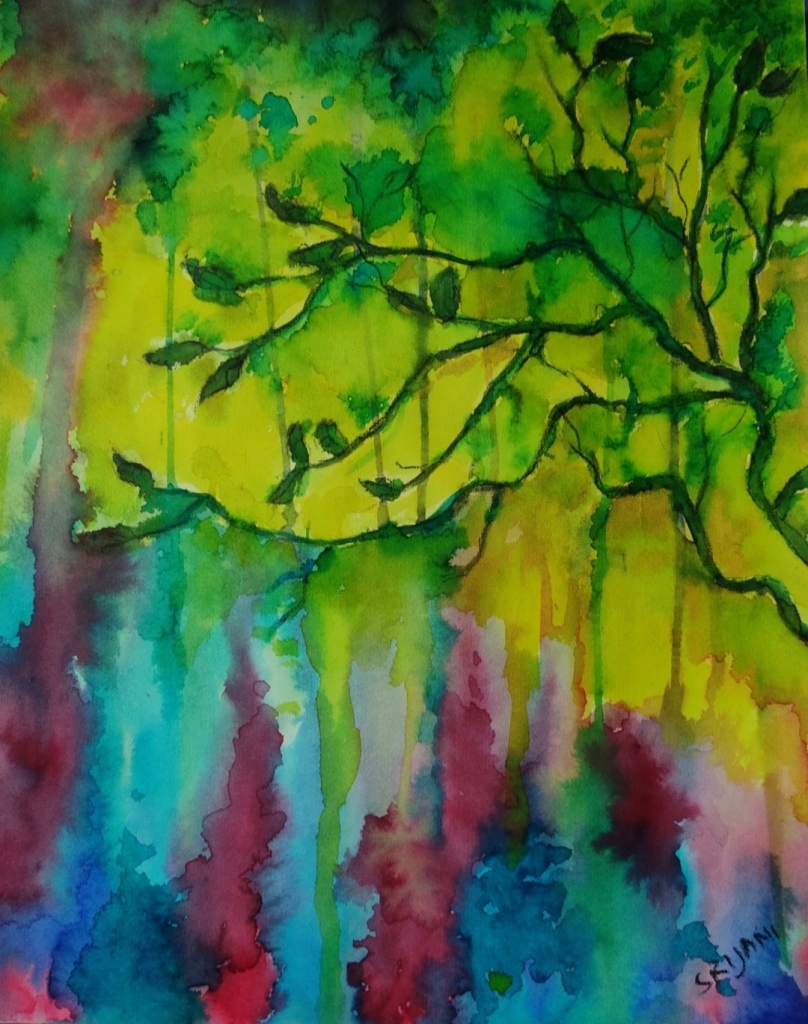
This vibrant edition would not have been possible without all the wonderful translators, writers, photographers and artists who trust us with their work. My heartfelt thanks to all of you, especially, Srijani Dutta for her beautiful painting, ‘Hope in Winter’, and Sohana for her amazing artwork. My heartfelt thanks to the team at Borderless Journal, to our loyal readers some of whom have evolved into fabulous contributors. Thank you.
Do write in telling us what you think of the journal. We look forward to feedback from all of you as we head for the completion of our third year this March.
Why is the vast ocean restless?
What bonds does it want to sunder?
It howls like a child in distress.
With incomprehensible words, it blusters.
Over eons, it rises, it soars,
It swells with an exhilarated gait —
Turbulent and huge, it roars.
The calm sky silently hears it reverberate.
Crushing its heart, it flays, it beats,
Against the rocky seaside. At high tide, its waves
Rise to smash, heralding apocalyptic feats.
Yet as the tide ebbs, the ocean gently laves
The dark core of nature, bordered by mud.
The ocean of tears continues to sway.
Each moment, desires staunched at the bud
Want to cry and drench the world away.
I yearn to be the scribe who translates
The ocean’s upheaves for humankind,
Calm the eternal unrest that agitates
The sea breeze to swish, shush and pine.
I yearn that my song rings day and night
Harmonising tunes with the Earth’s infinite…
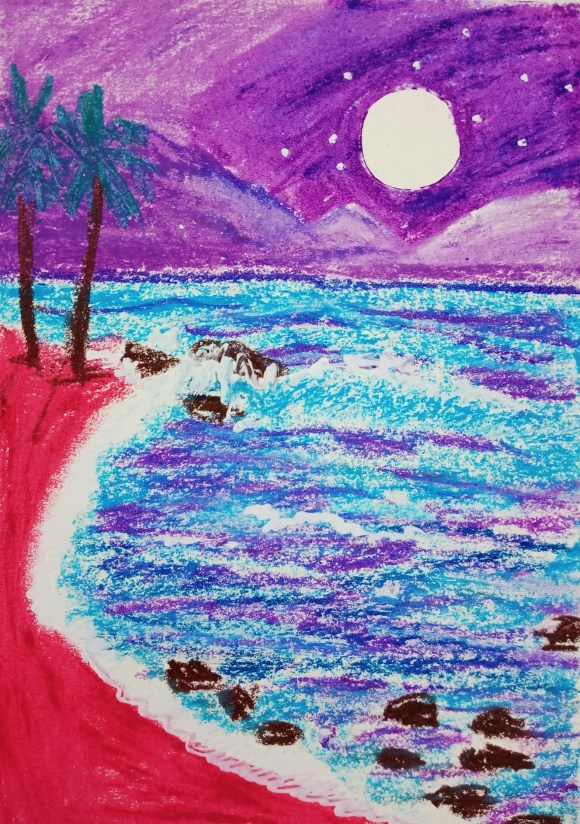
This poem has been translated by Mitali Chakravarty with editorial input from Sohana Manzoor and Anasuya Bhar & Art by Sohana Manzoor
PLEASE NOTE: ARTICLES CAN ONLY BE REPRODUCED IN OTHER SITES WITH DUE ACKNOWLEDGEMENT TO BORDERLESS JOURNAL







 Borderless