The Post Office by Tagore was written, translated and performed in multiple languages throughout Europe. Rakhi Dalalrevisits the original translation done by Devabrata Mukherjee in 1912.
Title: The Post Office
Author: Rabindranath Tagore
Translator: Devabrata Mukherjee
Publisher: Niyogi Books
Dakghar was written in Bengali by Rabindranath Tagore in 1911. Devabrata Mukherjee, an Oxford University student at the time, translated the play into English in 1912. It was first published in London by Cuala Press in 1914 with an introduction by W.B.Yeats. He, along with Lady Gregory, had also directed its first staging in English in 1913 by the Abbey Theatre in Dublin. The production then transferred to the Court Theatre, London, later the same year before the Bengali original was staged at Tagore’s Jorasanko theatre in Calcutta in 1917.
This play was translated into French by André Gide and was read on the radio the night before Paris fell to the Nazis. During World War II, there were 105 performances of The Post Office in concentration camps in Germany. Perhaps one of the most noteworthy was its staging by Janusz Korczak, a Polish-Jewish educator who ran a Jewish orphanage in a ghetto in Warsaw. It was there that the play was organised for children just a few weeks before they, as well as Korczak, were deported to the concentration camps of Treblinka.
The story revolves around a young child Amal, an orphan adopted by his Uncle Madhav, who suffers from an ailment. On the instruction of the physician treating him, he is restricted within the house and is not allowed to go outside. In his quest to explore the world beyond the confines of his home, he sits near a window facing a road and talks to people passing-by. He becomes fascinated by the newly constructed post office near his window and imagines receiving letters from the king. The play presents a vivid picture of Amal, his longings, his ideas of life and the limitations that he faces.
Nirmal Kanti Bhattacharjee, in the introduction to this edition, quotes the bard from the letter he wrote to Andrews in 1921 where he says, “Amal represents the man who has received the call of the open road – he seeks freedom from the comfortable enclosure of habits sanctioned by the prudent and from the walls of rigid opinion built for him by the respectable.”
The narrative traverses through the realms of a mind born free, eager to understand and appreciate the beauty of the natural world and, yet with time, constrained by the ideas fostered as acceptable by societal norms. Amal would rather venture outside and hop like a squirrel than sit at home, toiling at books which his Uncle thinks makes a man learn. He would rather cross mountains and go farther to seek work than be disheartened by their imposing structure. To his Uncle, the hills are barriers whereas to Amal, they are the hands of earth raised into the sky, beckoning people from far off.
The play also explores the nature of human dealings with outsiders, the usual conventions of a society while dealing with persons we may only come across as strangers and seem to emphasise upon the virtue of the sense of fraternity which the otherwise busier life tends to disregard. Amal meets a dairyman, a watchman, a flower gathering girl, a gaffer and a headman while sitting at his window and leaves an impression on each of them. He endears as a persona in harmony with nature as well as in his interactions with other people through his life so that the journey becomes more joyous for everyone.
This play is written in two acts. In the first act, Amal wishes to discover the world outside his restrictions while sitting at his window. In the second act his condition worsens, and he is confined to his bed where he spends his time waiting for the postman to deliver a letter from King. And finally, he sinks into his last sleep.
In its October issue of 1914, The Times Literary Supplement wrote: “This is the first impression that the play gives, as a play should: an impression of actuality, complete within the limits of human life as seen and heard in a real world.” The second act may be seen as a wait for the messenger of God/death which delivers the final fate for Amal. W.B. Yeats says that the “play conveys to the right audience an emotion of gentleness and peace” which is epitomised by Amal’s character.
This play translated by Mukherjee more than a hundred years ago continues to touch hearts to this date. Given our present context, impaired by the excessive capitalistic tendencies of the age, marred by wars, blurred by frenzies of hatred seeping into the fabric of societies, this comes as a gentle reminder of the necessity to live in peace, to approach nature and humans, even strangers, with compassion and to show more consideration in our dealings with them. It helps us understand that a mind that can live in harmony with nature and with humankind, can eventually embrace the final call in tranquillity.
The Post Office is a splendid play written with a poetic cadence which has elements of tragedy and yet manages to leave the reader with a sense of serenity that seems to be the writer’s message for a life to live in harmony with nature, with humankind and with oneself.
.
Rakhi Dalal is an educator by profession. When not working, she can usually be found reading books or writing about reading them. She writes at https://rakhidalal.blogspot.com/ .
.
PLEASE NOTE: ARTICLES CAN ONLY BE REPRODUCED IN OTHER SITES WITH DUE ACKNOWLEDGEMENT TO BORDERLESS JOURNAL.
ALL AFTERNOON LONG
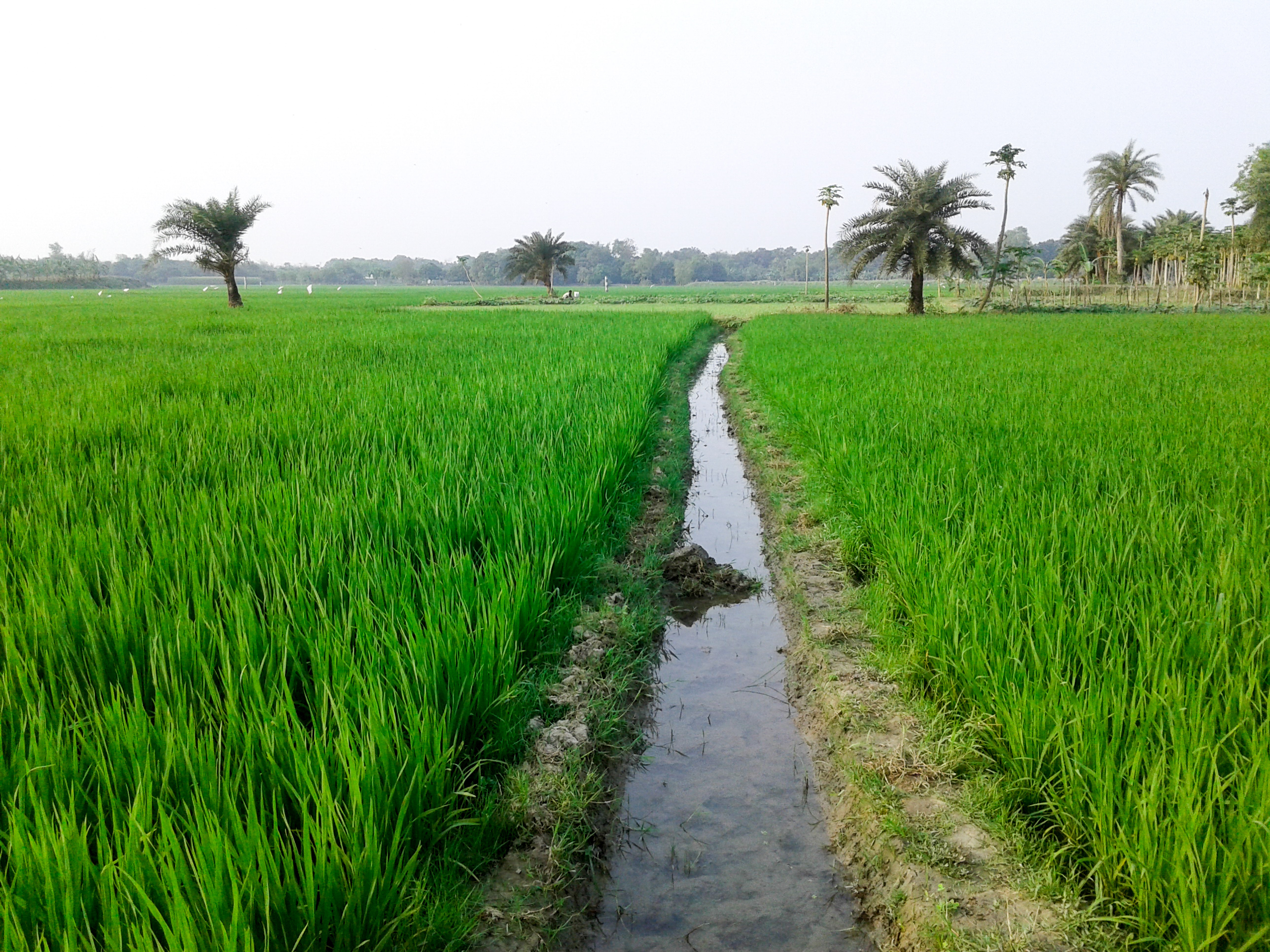
All afternoon long I saw Bashir inside the paddy field.
All through the afternoon the skeleton of that three-storied red brick building
Besides the paddy field was being set up.
				(Everything is turning urban!)
Who owns that building? Why is it being built?
	In the minds of the birds perched on this shore in fading evening light,
		Or unlike the birds, or the boatmen in the boats plying here or the other shore
With their usual outcries,
The blue sky looked on impassively, its mind vacant.
	In my dream at night, I saw Kolkata’s tram company getting ready to be here as well.
		Bashir’s bullocks twain out in this day’s sun look for a break
As domesticated quadrupeds of the world will.
		Which country’s what animals’ and which tribes’ sketches will they resemble
		In becoming museum tales for the high-born and in being immortalised?
						The truths about them will be lost steadily!
			And yet in this land of museums, in the soundless but open room of one of them,
Could it be they would go up in flames without making civilisation any poorer
				Despite its stupendous piston?
Here the only story everyone still knows is of the jackdaw and the fairy tale princess, Shankhamala!
There are innumerable bird, nests and eggs on treetops here but still they haven’t been able to build
 this day a scientific poultry shop!
(These translations are from Jibanananda Das: Selected Poems with an Introduction, Chronology and Glossary, translated by Fakrul Alam, published by The University Press Limited, Dhaka, 1999. Republished with permission from the original publisher.)
Jibonanada Das (1899-1954) was a Bengali writer, who now is named as one of the greats. During his life he wrote beautiful poetry, novels, essays and more. He believed: “Poetry and life are two different outpouring of the same thing; life as we usually conceive it contains what we normally accept as reality, but the spectacle of this incoherent and disorderly life can satisfy neither the poet’s talent nor the reader’s imagination … poetry does not contain a complete reconstruction of what we call reality; we have entered a new world.”
Was he a poet? A writer? A humorist? A social reformer…
Paintings by Rabindranath Tagore. Courtesy: Creative Commons
At an intellectual plane, we could keep arguing about labelling Tagore. He was truly a polymath. But, the most important thing is he touched our hearts with his words and used that to earn and pour into projects that benefitted the underprivileged. This year, on his 161st birth anniversary, we will explore some lesser known aspects of the maestro: Rabindranath, the social reformer and the humorist weaving both the Gregorian calendar (7th May) and the Bengali calendar (9th May) dates into our celebrations.
Tagore, the Humorist
Many of us from Bengal grew up reading light pieces by Tagore embracing his creations as a much-loved part of our hearts. We present translations by Fakrul Alam and Somdatta Mandal of Tagore’s humour — a light poem about a giraffe and playlets by the maestro.
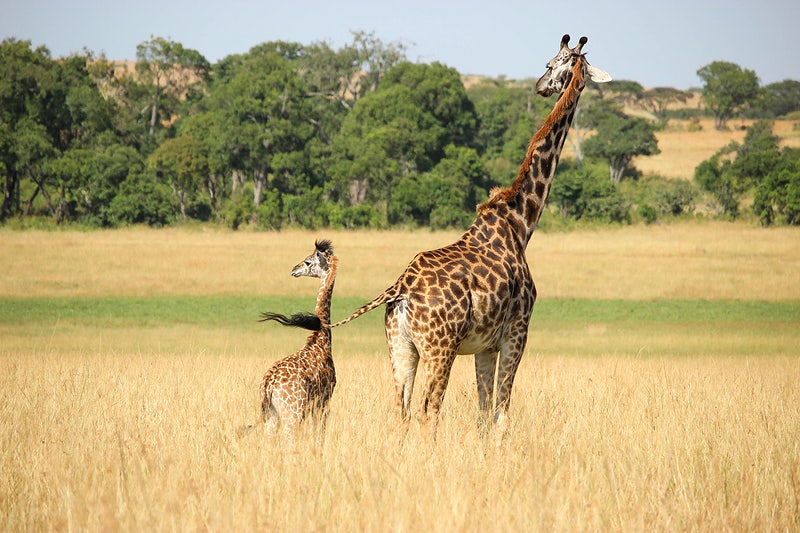
Giraffe’s Dad by Tagore: Giraffer Baba (Giraffe’s Dad), a short humorous poem by Tagore, has been translated from Bengali by Professor Fakrul Alam. Click here to read.
Playlets byRabindranath Tagore: Two skits that reveal the lighter side of the poet. They have been translated from Bengali by Somdatta Mandal. Click here to read.
Tagore, the Social Reformer
Tagore thought his “life work” lay in developing villages and bridging gaps. A recent book by Uma Dasgupta brought this to light. We have an interview and review of her book, A History of Sriniketan:Rabindranath Tagore’s Pioneering work in Rural ReconstructionAlong with that we have some translations of his poetry focussing on his call to bridge gaps — one of them by Fakrul Alam and another that has been mentioned in Dasgupta’s book as a description of his mindset that led to the Sriniketan project. Meenakshi Malhotra’s review of Radha Chakravarty’s translation of Mahasweta Devi’s Our Santiniketan and an interview with translator Somdatta Mandal, an ex-professor of Visva Bharati shifts the focus to Santiniketan. However, the icing on Tagore’s birthday cake is yet another excerpt from Radha Chakravarty’s latest translation of Char Adhyay or Four Chapters, his last and thirteenth novel which takes up issues of nationalism, gender, gaps in upbringing against the setting of a budding romance. The heroine is truly modern in her outlook and passionate about service to humanity.
Sriniketan: Tagore’s “Life Work” :In Conversation with Professor Uma Das Gupta, Tagore scholar, author of A History of Sriniketan, where can be glimpsed what Tagore considered his ‘life’s work’ as an NGO. Click here to read. (Review & Interview).
Oikotan(Harmonising) has been translated by Professor Fakrul Alam and published specially to commemorate Tagore’s Birth Anniversary. Click here to read.
Ebar Phirao More(Take me Back) a poem that calls for bridging gaps between the rich and poor translated by Mitali Chakravarty … Click here to read.
Rabindranath Tagore Four Chapters: An excerpt from a brilliant new translation by Radha Chakravarty of Tagore’s controversial last novel Char Adhyay. Click here to read.
Rabindranath’sOikotan (Harmonising) was first published in 1941. It has been translated by Professor Fakrul Alam specially to commemorate Tagore’s Birth Anniversary.
HARMONISING

How little I know of this immense world,
Of its countless countries, cities, capitals,
And the never-ending deeds of its peoples
As well as its rivers, hills, deserts and seas
And innumerable animals and strange trees—
So many things fated to be forever unknown
Such a vast assemblage
And yet my mind has to be content with only a corner!
Frustrated, I read as many books and travel tales as I can
With boundless enthusiasm.
I pick up too vividly written accounts I come across
With never-diminishing eagerness,
Satiating my knowledge deficit
With treasures I’ll gather by scavenging for them!

I am the world’s poet. Whatever of its sounds I hear
I try to reverberate in my flute later
But though this may be my intent
Many of earth’s notes still elude me
For despite my efforts, gaps remain!
I intuit earth’s amazing harmonies
Through leaps of my imagination
On many an occasion intense silence fills my soul
Notes sounding across remote snowy mountains
And the azure stillness of the sky too
Invite me to commune with them again and again!
The unknown star at the apex of the south pole
Reigning illustriously	through long nights
Illuminates my sleepless eyes on midnights.
Distant waterfalls cascading down
With immense force, flooding everything in sight,
Transmit their harmonies to the innermost me.
I connect intuitively as well with poets everywhere
Contributing to nature’s harmonies
All keep me company and give me immense delight
I receive offerings of lyric notes from the muse of songs
As well as intimations of the music of the spheres.

The outside world can’t fathom fully
The most inaccessible of being residing in us
For He is in our innermost part
And only when one enters it
One gets to know the Being who is truly Him
But I can’t find the door with which to enter there
Since I’ve erected fences in pathways everywhere!
Farmer who keep tilling the soil
Weavers threading yarn and fishermen casting nets—
Varied professions having far-reaching impact
On them all depend whole families and lifestyles.
But the honour due to them is confined
To people of the top tiers of the society I live in
We can only peep at them from narrow openings!
At times I’d take paths fronting their neighbourhoods
But never ever was resolute enough to enter inside!
If one can’t connect one’s life with another’s though
The songs one composes can become cumbersome
And so, I concede to charges levelled against me
And admit my own songs’ limitations.
I know my verses may have traversed varied paths
But they haven’t reached everywhere!
The one who can share a peasant’s life
And whose words and deeds are kins
Is the one who is truly close to the soil
And I’m all ears to listen to that kind of poet.
I may not have created a feast of literary delights
Yet, what I couldn’t attain I keep questing for
Let what I discover ring true
And let me not mislead others’ eyes with fakery
It’s not right to earn fame without paying its true price
It isn’t right at all to indulge in any kind of foppery!

Come poet, retrieve as many as you can
Of those voiceless ones whose minds are unheard
And relieve those nurturing deep hurt inside
In this land lacking spirit
Bereft of songs being sung on any side,
A land which has become an arid desert
For want of joy and the strain created by neglect
Fill with the essence of everything beautiful
And untie the spirit residing in one’s innermost being
 In literary festivals and musical concerts organised,
Let those playing the one-stringed ektara be duly feted.
And the muted ones who can’t express either joy or sorrow
And those whose heads are bowed and voices silent
While facing the world—
Oh gifted one,
Let me hear them all—near or far
Let them partake of your fame
As for me—
Again and again, I’ll pay homage to you
Tagore wrote humorous verses too. Giraffer Baba (Giraffe’s Dad) was published by him in 1937 in a collection called Khapchara (Eccentric).
GIRAFFE'S DAD

Giraffe’s Dad said,
“Son, looking at your body
My feelings for you ebb
For with so high a head
And so small a back
How do you walk at all?”

Giraffe’s son said,
 “Did you ever
Look at yourself dad?
Why mother loves you
No one can figure out at all!”
Ananto Prem(Endless Love) by Tagore, translated from Bengali by Professor Fakrul Alam. Click here to read.
Playlets byRabindranath Tagorereveal the lighter side of the poet. They have been translated from Bengali by Somdatta Mandal. Click here to read.
The Faithful Wife, a folktale translated from Balochi by Fazal Baloch. Click hereto read.
Leafless Trees, poetry and translation from Korean by Ihlwha Choi. Click here to read.
Ebar Phirao More(Take me Back) by Tagore, translated from Bengali by Mitali Chakravarty. Click here to read.
Pandies’ Corner
These narratives are written by youngsters from the Nithari village who transcended childhood trauma and deprivation. Will to be Human is based on a real life story by Sachin Sharma, translated from Hindustani by Diksha Lamba. Click here to read.
InStudies in Blue and White, PennyWilkes gives us a feast of bird and ocean photography along with poetry. Clickhere to read and savour the photographs.
G. Venkatesh looks at the ability to find silver linings in dark clouds through the medium of his experiences as a cricketeer and more. Click here to write.
What can be more scary and life-threatening than the risk of getting Covid-19? Keith Lyons finds how his daily joy has menacing dangers. Click hereto read.
Musings of the Copywriter
In When Books have Wings, Devraj Singh Kalsi talks of books that disappear from one book shelf to reappear in someone’s else’s shelf. Click here to read.
Notes from Japan
InOwls in Ginza, Suzanne Kamata takes us to visit an Owl Cafe. Clickhere to read.
Mission Earth
In No Adults Allowed!, Kenny Peavy gives a light hearted rendition in praise boredom and interaction with nature. Click hereto read.
P Ravi Shankar takes us on a trek to the Himalayas in Nepal and a viewing of Annapurna peak with a narrative dipped in history and photographs of his lived experience. Click here to read.
The Observant Immigrant
In A Bouquet of Retorts, Candice Louisa Daquin discusses the impact of changes in linguistic expressions. Click here to read.
Book Excerpts
An excerpt from a fast-paced novel set in Mumbai, Half-Blood by Pronoti Datta. Click here to read.
"I wish you survival,
Health
And the closed sky above you."

— Refugee in my own Country/I am Ukraine, Lesya Bakun
Despite this being the season of multiple new years around Asia, we cannot close our eyes to the skies that connect all the world like a blue dome. Though celebrations and humour continue to lighten the darkness of war, while Ukraine is being wrecked, can we turn our faces towards only festivities?
I had an interesting anecdote about how before the onset of the Gregorian calendar, new years in the world were celebrated around March and in some places in September. The Earth would turn fecund and green with spring, a beautiful season sprinkled with love and nostalgia as Michael R Burch tells us in his poetry. However, despite all the opulence of nature, it is hard to watch a country being bombed and families splintered to man a war that supposedly guards a human construct called ideology and blocs. Ukranian refugee, Lesya Bakun, in an interview says: “It is not a clash of ideologies. It is a fight for our country and nation to exist.” Listening to Lesya’s stories makes one amazed at the bravery of the Ukrainians battling what seems to be cultural hegemony. It reminds of the war in Bangladesh in 1971. Though incredibly courageous in voicing her experiences, Lesya is traumatised and has a psychosomatic cough as she sends her voice and text messages from her mobile through Telegram. There were times when she was just weeping or angry for the questions asked, and justifiably so, as her home in Kharkiv, where she lived was under attack, and the town of Mariupol, where she was born, has been wrecked by the war.
The refrain of the pain of a refugee continues to reverberate in a book reviewed by Rakhi Dalal, Ramy Al-Asheq’s Ever Since I Did Not Die, written originally in Arabic and translated by Isis Nusair. The Syrian-Palestinian poet refused to clarify whether his writing was prose or poetry — perhaps these borders and boxes drawn by humankind are breaking down in reality. Perhaps, this new year, the time is ripe to look forward to a new world that transcends these borders. This is also the first time we have had the privilege of carrying reviews of translations from Arabic and also from Turkish. Gracy Samjetsabam has reviewed a translation of a Turkish novel by Iskendar Pala called The Tulip of Istanbul, translated by Ruth Whitehouse. Bhaskar Parichha has reviewed a book by Kiran Manral, Rising: 30 Women Who Changed India while Candice Louisa Daquin has drawn our focus on a poetry collection by Marjorie Maddox, Begin with a Question, where the perceived divisions do not matter while the poet questions the larger issue of faith in quest of answers.
Is it the same kind of quest that has led Strider Marcus Jones to create the Lothlorien Journal, named reminiscently after Tolkien’s elvish ‘Lothlorien’ in Lord of the Rings? Find out Jones’s views and flow with his fluid poetry in the featured interview. Keith Lyons has been in conversation with Ivy Ngeow, an upcoming writer and the editor of a recent anthology of Asian writing where she has retained different styles of English across the world in a single book. While this could be beneficial to writers, would readers be comfortable reading stories with different styles or dialects of English without a glossary?
Our book excerpts are from more Asian books. The Year of the Rat and Other Poemsedited by Malachi Edwin Vethamani has an interesting title poem which has been shared in the excerpt. The other excerpt is from a fast-paced novel, Half-Blood, by Pronoti Datta. We also have a fast-paced story by a writer from France called Paul Mirabile set in Portugal; two that verge on the bizarre from Keiran Martin and Amjad Ali Malik; a poignant story from Sutputra Radheye and another that shows the positive side of voicing a protest against wrongs by Devraj Singh Kalsi. Kalsi has also given us a tongue in cheek musing called When Books have Wings.
On the lighter vein are travel essays by Ravi Shankar and Meredith Stephens. They take us to the Himalayas in Nepal and to Tasmania! Suzanne Kamata has taken us to an owl cafe in Japan! At the end of her column, one feels sad for the owls as opposed to Erwin Coombs’ narrative that evokes laughter with his much-loved pet cat’s antics.
Humour is evoked by G. Venkatesh who with an ability to find silver linings in dark clouds talks of cricket and lessons learnt from missing his school bus. Adnan Zaidi has also analysed his poetic abilities with tongue-in-cheek comments. Kenny Peavy gives a lighthearted rendition in praise of boredom and interactions with nature. It is good to have laughter to combat the darkness of the current times, to give us energy to transcend our grief. Keith Lyons hovers on the track between humour and non-humour with his cycling adventures. Rhys Hughes seems to talk of both his favourite poem and the war in a lighter shades, in no way insensitive but his observations make us wonder at the sanity of war. We have much of war poetry by a number of writers, poetry on varied issues by Luis Cuauhtémoc Berriozabal, George Freek, Sybil Pretious, Kisholoy Roy, J.D. Koikoibo and many more.
Candice Louisa Daquin has taken on the onus of bringing to our notice how language can impact us in the long run while Ratnottama Sengupta has explored beggary in films, fiction and fact. The Nithari column runs a real-life story of a young boy narrated by his brother, Sachin Sharma. It has been translated from Hindustani by Diksha Lamba. The trauma faced in 2006 is strangely not discussed in the story though it hovers in the backdrop between the lines. We also have a translation of a Balochi folk story by Fazal Baloch and a Korean poem by Ihlwha Choi. Translations from Tagore by Fakrul Alam and Somdatta Mandal have honoured our pages again. Mandal has sent us fun-filled skits by Tagore. But are they just fun or is there something more? We also have a translation of a long poem that explores a different aspect of Tagore, his empathy for the downtrodden which led him to create Sriniketan and regard it as his ‘life work’.
We have a bumper issue this time again — especially for the Asian new years; Thai, Nepalese, Bangladeshi, multiple Indian and more…
We would like to thank Sohana Manzoor for our cover painting and Gita Viswanath for her artwork. I would like to thank our wonderful team who with their contributions make this journal a reality. All the contributors deserve a huge thanks as do our loyal readers.
I wish you all a wonderful start to a non-Gregorian new year and hope that peace prevails over parts torn by wars and dissensions.
Tagore empathised with the suffering of humankind. Out of it was born Sriniketan, a project that hoped to initiate a slow merger of differences and reduce human suffering. Ebar Phirao More (Take me back) was a poem he wrote in 1894 on the plight of villagers steeped in poverty, servitude and ignorance. Tagore regarded his ‘life work’ as that of restoring the dignity and the economy of villages, deftly showcased in Professor Uma Das Gupta’s A History of Sriniketan, Rabindranath Tagore’s Pioneering work in Rural Reconstruction. Here, we present to you a transcreation/ translation of the poem.
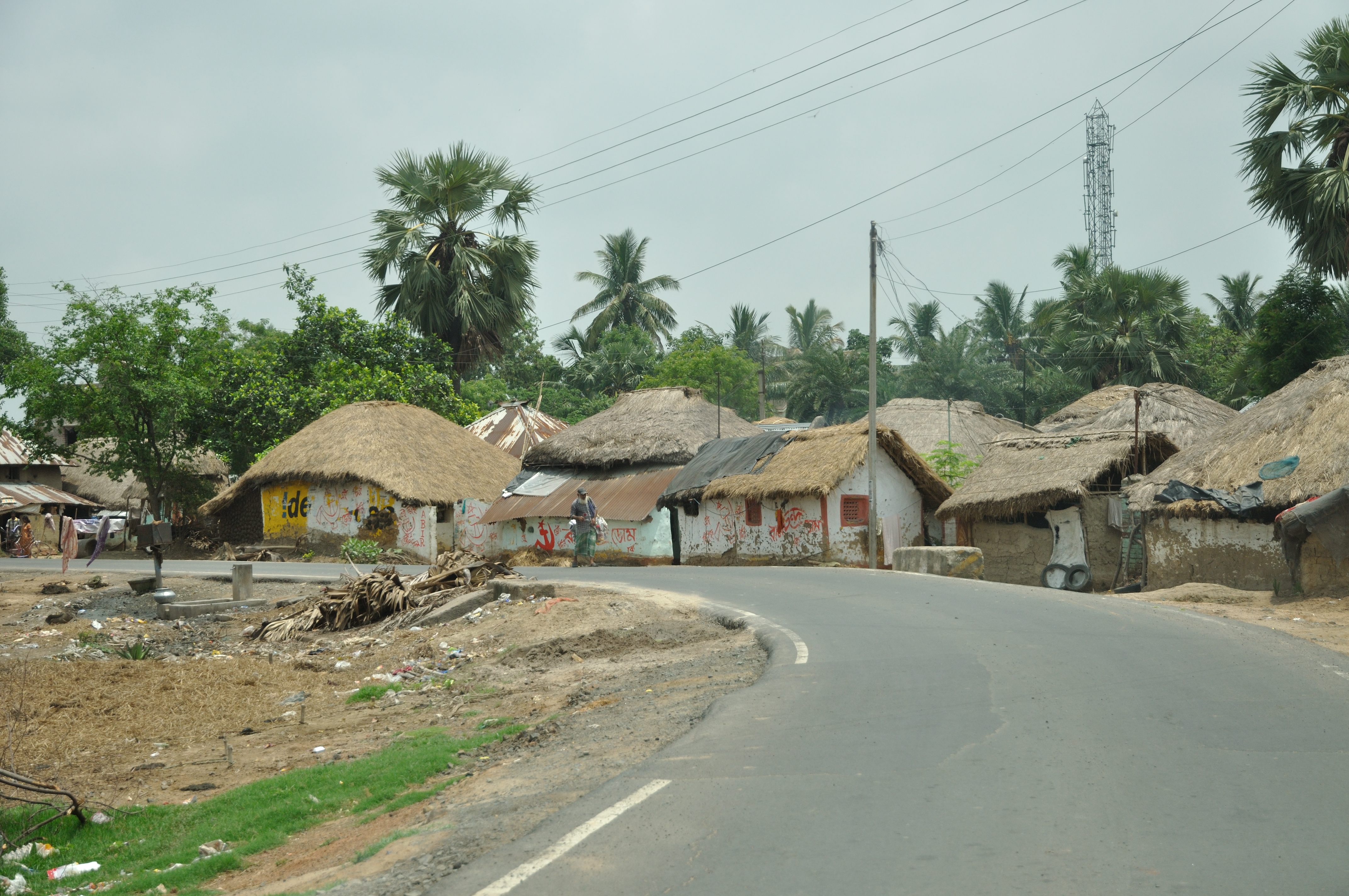
Gateway to the Srijani Shilpagram, SriniketanSurul: A village under the Sriniketan projectCourtesy: Creative Commons
TAKE ME BACK

While the world moves busily
You play the flute, like a truant boy,
Leaning under a shady tree in a field with
The fragrance of the forest floating on
A tired breeze. O, arise — there is a fire!
Who plays the conch to awaken
The world? Whose cries resound in space?
What dark shackles imprison the orphan
Asking for support? The burden of insults
heaped on the shoulders of the helpless
sup of their blood. The self-centred

Mock unjustly. Oppressed, scared slaves
Hide in disguise. There they stand with
Heads bowed, silent — centuries of pitiful
Exploitation written on their pallid faces.
As their shoulders are plied with growing
burdens, they move slowly till their last breath—
Then, their progeny inherit generations of this load.
They are not invisible, have no memory of criticism.
They do not blame humans, nor do they have pride.
They only look for a few grains of food to survive.
When their food is snatched away, when they are
Exploited, they do not know where to go for justice.
They call out to the God of the poverty stricken, then
Die silently. These silent souls need to be given a
Voice — their suffering souls have to be roused
With hope — a clarion call has to be given —
As of now, raise your heads, unite. The person
Who you fear is more of a coward than you.
When you awake to confront him, he will flee.
When you stand up to him, he will be terrified
To retreat, like a stray dog. In God’s court,
He will have no support as swollen with
False pride, he will know only contempt
In his heart.

   Poet, come forward — if you have only life,
Then get that with you, and dedicate that today.
With immense pain, sorrow, the deprived
Suffer hardships, weakness, death and darkness.
They need food to live, light to find the breeze of freedom.
They need strength, health, a bright happy future
Courage, guts. Amidst this poverty, O poet,
Inspire a vision of trust that creates a heaven.
Imagination, I bid your colours to take me back
To the edge of civilisation. Do not distract me with
The soft breeze, the waves and alluring illusions.
Do not let me stay steeped in lonely depression
In the shade of a bower. Day ends. Dusk sets in.
The direction is lost in darkness. The woods
Cry In hopeless despair. I step out
To be under the open skies, on the grey road that
Leads to the common man. Where do you go?
O traveler, I do not know you. Turn and look at me.
Tell me your name. Do not distrust me.
I have lived alone in this strange world
For many days and nights. That is why my
Garb is amazing. I am different — my eyes
Dream, my heart is hungry. When I returned to this world,
Why did you, o mother, give me this playful flute?
Over long days and long nights, mesmerised by
My own tunes, I have wandered far from the
Limitations imposed by civilisation. If the tunes that
I have learnt can inspire with exultation the
Music-less exhausted, if even for a moment, my
Music can instil life—giving hope in the lives of the
Hapless, if touched by the manna from heaven
they voice their sadness, the sleeping thirst is
Roused from deep within — then my song will be
Blessed, my dissatisfaction appeased to find nirvana.

What is sung or heard? Happiness are lies.
Sorrows are lies. A self-centred individual
has not learnt to live in a larger world.
With Truth as the guiding star, run fearlessly,
Dancing in unison with the waves of cosmic life.
There is no fear of death. The tears of poverty
Will rain on my head — in the midst of that,
I will go for a tryst with the person to whom
I dedicate my life forever. Who is that? I do not know —
I only know this— that he is the wayfarer through ages
Trudging in the darkness of the the night, amidst
Thunder and lightening, carrying a flickering lamp.
I only know he has heard the invocation and fearlessly
Come to help the needy, rejecting civilisation’s dictates,
He has embraced the cries of the tortured to his heart
Like a favourite tune. Burnt by flames,
Pierced by spears, pieced by an axe, he has
Gathered all his belongings and
Sacrificed all his desires through his life —
He has shredded his heart as an offering
With devotion for the repayment of his birth.
He has given up his life to serve the masses.
Influenced by him, the prince wears rags,
Disgusted with his wealth, akin to a beggar.
The great soul tolerates all tortures and derisions.
The intellectuals sneer in disbelief.
Loved ones mock at him. Close acquaintances are
Contemptuous while he silently forgives them all
with his merciful eyes. He is incomparable and

Beautiful. For him, the proud have forsaken
Their pride, the rich their wealth, the brave
Their lives. For his ideals, the poet has written
Poetry and spread it across the globe. I know
Praise for him is whispered by the breeze,
The seas. Paeans sung by dear ones soar
Across the land and the vibrant blue skies
To celebrate his victory, perfection, love
And kindness. I just know that he will
Sacrifice his own petty needs for the love of
Humankind. He will transcend all insults.
He will stand with his progressive head held high.
Fearlessness is inscribed across his forehead.
The dust of slavery has not contaminated him.
Internalise him. Move forward alone
On the thorny path of life, wipe away precious
Tears, face sorrows with patience,
Work relentlessly to please. When weary,
Worn with exhaustion at the end of the long
Journey of life, there will be an abode of
Peace and contentment. The celestial will
Smile and garland the devotee. At this abode,
There will be peace, relief from all grief,
All misfortune. Tears will cleanse all
Past anguishes. Embroidering hope,
Plead for mercy for life’s disabilities.
Maybe, the despondencies will dwindle and
Eternal love will quench life’s thirsts for ever.
(The poem has been translated for Borderless Journal by Mitali Chakravarty with editorial comments from Anasuya Bhar.)
.
PLEASE NOTE: ARTICLES CAN ONLY BE REPRODUCED IN OTHER SITES WITH DUE ACKNOWLEDGEMENT TO BORDERLESS JOURNAL
Rabindranath Tagore wrote several playlets for young people. These reveal the lighter side of the poet. Two of these have been translated from Bengali by Somdatta Mandal
Adwaita Charan Chattopadhyay and Chintamani Kundu.
Adwaita: Who are you?
Chintamani: I’m an Aryan, a Hindu.
Adwaita: What is your name?
Chintamani: Sri Chintamani Kundu.
Adwaita: What is your intention?
Chintamani: I want to contribute to your paper.
Adwaita: What would you like to contribute?
Chintamani: I’m an Aryan. I would like to write about the Aryan religion.
Adwaita: Sir, what is this thing that you call Aryan?
Chintamani: (surprised) Sir, you don’t know who an Aryan is? I’m an Aryan, my father Sri Nakur Kundu is an Aryan, his father, Late Nafar Kundu is an Aryan, his father —
Adwaita: I see! What is your religion?
Chintamani: That is a tough question! If I can put it in a nutshell, the religion of the non-Aryans is not that of the Aryans.
Adwaita: Now, who are the non-Aryans?
Chintamani: Those who are not Aryans are non-Aryans. I’m not a non-Aryan, my father Sri Nakur Kundu isn’t a non-Aryan, his father Late Nafar Kundu wasn’t a non-Aryan, his father—
Adwaita: Say no more! So, since Sri Nakur Kundu isn’t my father and since I have no relationship with Nafar Kundu, I’m a non-Aryan.
Chintamani: I can’t say that for sure.
Adwaita: (annoyed) What kind of talk is that? What do you mean that you can’t say for certain? Can’t you say for certain that Nakur isn’t my father? What caste are you? What could I have to do with the likes of you?
Chintamani: I’m not talking about caste, I’m talking about dynasty. You too have been born in the world-famous Aryan dynasty –
Adwaita: I born in the same dynasty in which your father Nakur Kundu was born? How dare you—the son of a peasant—even imagine such a thing?
Chintamani: Yes, sir. You might not be an Aryan, but I, and my respected father are Aryans. Alas! Where could my glorious ancestors be? Where are Kashyap, Bharadwaj, Bhrigu? What kind of talk is that?
Adwaita: What rot this man speaks? Kashyap happens to be my ancestor. We are all part of the Kashyap clan —how can Kashyap, Bharadwaj, Bhrigu be your ancestors?
Chintamani: You know nothing about these issues, so there is no point in discussing these things with you. I’m afraid this is all the tragic consequence of English education.
Adwaita: Hasn’t English education affected you?
Chintamani: Sir, you can’t blame me for such a thing. Because of the Aryan blood coursing through my veins, I ran away from school at quite an early age.
Enter Harihar Babu and several other writers.
Adwaita: Please come in. Have you got it all in writing?
Harihar: Yes. Here it is.
Chintamani: Sir, what have you been writing about?
Harihar: Lots of things.
Chintamani: Have you written anything about the Aryans?
Harihar: No.
Chintamani: About the science of the Aryans?
Harihar: The Europeans are Aryans and their science –
Chintamani: The Europeans are a very inferior race and compared to the knowledge that our Aryan forefathers had, they are really illiterate. I can prove this. Even now all descendants of Aryans invoke Aswathama before massaging oil over their bodies and then pour oil thrice on the earth. Do you know why they do so?
Harihar: No.
Chintamani: Do you?
Adwaita: No.
Chintamani: Do you?
First Writer: No.
Chintamani: If you don’t, then why talk about science? Do you know why Aryans click their fingers when they yawn?
All: (in unison) No, none of us do.
Chintamani: Really? Do you know the reason why our Aryan women beat the hand-fan on the floor if the fan touches the body of the person they are fanning?
All: No, not at all.
Chintamani: See, you know nothing. Without discussing these issues at all, without any sort of enquiry into such matters you persist in saying that European science is the best. And yet you don’t even know why Aryans sneeze, yawn or massage oil.
Harihar: All right, sir. You tell us. Why must oil be poured on the ground before it is poured over the body?
Chintamani: Magnetism! Nothing else. This is what is known in English as magnetism.
Harihar: (surprised) Have you read anything about magnetism in English science?
Chintamani: Nothing. No need for that. There is no need to study English to learn science or anything else. What do our Aryans say? There are three forces in nature – life force, causality and positivism. Just before bath the slippery force of oil being added to these forces creates physical negativity within our body. This is nothing but magnetism. Just think — the practice of wiping the body with a towel prevalent among Englishmen since the nineteenth century has been practiced by our Aryans for thousands of years for they have been using the gamcha for the same purpose since then.
The Writers: (with surprise) Wow! How commendable! What scientific skill the Aryans have! What great research our Aryan Kundu Sir has undertaken!
Harihar: We have fallen into the hands of a real idiot today! But there is no point in annoying him. He writes for several newspapers. I have heard that this Aryan Kundu is quite adept at cursing gentlemen a lot. That is why he is famous.
Chintamani: Look over there. That Aryan Brahmin is plucking flowers early in the morning. Why do you think is he doing such a thing?
Adwaita: To give them to the god during prayers.
Chintamani: Shame, shame. You don’t bother to get to the bottom of things. When the sages permitted the plucking of flowers at dawn it became obvious that they were aware of the presence of oxygen in the air. Since they knew of this, there is no doubt that they also knew of the presence of other gases too. In this manner we can clearly prove by moving from point to point that they were aware of all that was subsequently discovered by modern European chemistry. Why do we click our fingers when we yawn? That is also magnetism. When the rising gases combine with positivism, then the negative force conducted by the physical force exceeds the life force, causality and the positive force by its own power. Then the three qualities of sattwa, rajah and tama (excellence, essence of activity and lowest attributes) achieve exceptional attributes. During this phase, the heat caused in the air as a result of the friction between the middle finger and the thumb combines with the heat of the nervous system and solar heat to prevent the ultimate destruction of physical heat. If this can’t be called science, what can it be called? Isn’t it curious that none of our Aryan sages ever read any book by Darwin.?
The Writers: Amazing! Blessed be the achievements of the Aryans. All this time we couldn’t understand such theories.
Harihar: (to himself) But even today I don’t understand anything.
Chintamani: If you are wondering about the hitting of the hand fan on the floor, then that too is magnetism. Expansion, expulsion, repulsion and attraction – these physical acts add up to —
Adwaita: Spare us, spare us Sir. My head is reeling. You can write about the hitting of the hand fan in my newspaper. You have said enough already. Let me get you a paan.
Chintamani: No, sir. I haven’t come here to have a paan. You aren’t following Aryan customs and actions. The spiritual force flowing in our Aryan veins for generations, that force –
Adwaita: Enough, enough! I won’t give you a paan; you need not have one. If you permit me I will get you some tobacco instead.
Chintamani: Tobacco! What destruction! What a thought! It is even worse. Do you know why high caste people don’t smoke the hookah used by lower caste people? Why doesn’t one caste consume food touched by another caste? Why did the Aryan in earlier times not even tread over the shadow of a non-Aryan? Don’t you think there is a science behind it? Of course, there is. Let me explain it all to you. That too is magnetism. The three kinds of bodily radiance – excellent, mediocre and base –
Adwaita: Stop, stop. I won’t give you tobacco. You need not smoke the hookah. No need for paan or for tobacco – do what is convenient for you, something that will retain your bodily radiance.
The Writers: Shame on you, Adwaita babu. You did not allow us to listen to the learned words of Sri Kundu, the best of the Aryans.
First Writer: (to the second writer) Sri Kundu has such exceptional reasoning skills and knowledge. But, did you understand anything?
Second Writer: No, nothing. Let us ask him properly once again. Sir, you spoke of causality, reason and many other forces, what are they?
Chintamani: They are nothing than what is known in English as force and magnetism.
The Writers: (in unison) Oh, we’ve understood.
Harihar: Sir, I am none the wiser!
The Writers: (disgusted) You still can’t understand anything? Magnetism, force — these are easy concepts. You know what magnetism is. You know what force is. This is also the same thing. We know all of this because of the exceptional scientific enquiry pursued by the Aryans.
First Writer: If you have to understand these things clearly then you need to know all sorts of scriptures. Haven’t you read the scriptures?
Chintamani: No, I haven’t. My father and I, and Nafar Kundu are Aryans – that’s why I don’t consider it necessary to study the scriptures.
Second Writer: That’s true. But you’ve certainly read science very well.
Chintamani: Not at all. I’ve acquired the theories of sneezing, coughing, breaking the knuckles of the fingers and other specific scientific theories from my imagination. It wasn’t necessary for me to study science. You will probably not believe it, but swearing on the Aryan holy books I can say that I have studied neither Aryan scriptures nor scientific discourse. Everything that I know is the product of my imagination.
Harihar: Yes, but you certainly don’t need not swear by it. No one will ever accuse you of studying!
[Translated from “Arya O Anarya” (Chaitra 1292 B.S.) by Somdatta Mandal]
Testing the Student
The student is called Sri Madhusudan and Sri Kalachand Master is his tutor.
Enter the guardian.
Guardian: Kalachand babu, how is Madhusudan faring in his studies?
Kalachand: Sir, Madhusudan is very naughty but good in his studies. I never have to repeat anything twice to him. He never forgets what I have taught him once.
Guardian: Really! So let me put him to a test today.
Kalachand: Sure, go ahead.
Madhusudan: (to himself) Yesterday Mastermoshai beat me so badly that my back is still hurting. I will have my revenge today. I am going to have him thrown out.
Guardian: So now Modho, do you remember all that you’ve been taught till now?
Madhusudan: I remember whatever Mastermoshai has taught me.
Guardian: OK. Tell me then — what is a plant?
Madhusudan: Something that comes out of the earth.
Guardian: Give me an example.
Madhusudan: An earthworm!
Kalachand: (with eyes flashing) What did you just say?
Guardian: Shhh Sir…, don’t tell him anything now.
To Madhusudan
You have studied poetry; so, tell me, what blooms in the garden?
Madhusudan: Thorns.
Kalachand takes out a cane.
Why sir, why are you caning me? Am I lying?
Guardian: All right. Who destroyed Siraj-a-Daulah? What does history teach us?
Madhusudan: Insects.
He is caned again.
Sir, I am being caned for no reason at all! Not only Siraj-a-Daulah, but my entire history book has been eaten up by insects. Have a look.
He shows the book. Kalachand Master scratches his head.
Guardian: Do you remember any of the grammar you’ve been taught?
Madhusudan: Yes.
Guardian: What is a ‘subject’? Explain it with the help of examples.
Madhusudan: Okay. The subject is Joy Munshi who lives in the other village.
Guardian: Can you tell me why?
Madhusudan: He is a doer, busy with many virtuous rituals and activities.
Kalachand: (angrily) You must be off your head!
He canes him on his back.
Madhusudan: (startled) Sir, it’s not the head I am talking about, it’s my back.
Guardian: Tell me, what is the best way of compounding words?
Madhusudan: I don’t know.
Kalachand babu canes him again.
I know the answer to this one very well. It’s the grammar of the cane.
The guardian laughs. Kalachand babu is not amused at all.
Guardian: Have you learnt your maths lesson?
Madhusudan: Yes, I have.
Guardian: All right. Suppose you are given six and a half pieces of sweets and told to eat as many as you can in five minutes. Whatever remains will have to be given to your younger brother. If you need two minutes to eat one sweet, how many will you end up giving to your brother?
Madhusudan: Not a single piece.
Kalachand: How come?
Madhusudan: I’ll eat all of them. I wouldn’t want to give the sweets to anybody!
Guardian: All right. Suppose a banyan tree grows a quarter of an inch each day. If the tree was ten inches tall on the first of the month of Baisakh, how tall will it be on the first of Baisakh the next year?
Madhusudan: If the tree grows crooked then I won’t be able to say; but if it grows straight then we’ll be able to measure it and find out its exact height; but in the meantime if it dries up then there is nothing to be done.
Kalachand: Your brain won’t function at all till you get a good beating. Rascal, it’s only when I’ll beat you black and blue, that you’ll straighten up.
Madhusudan: Sir, even very straight things will bend if you keep beating them.
Guardian: Kalachand babu, you’re mistaken. Physical abuse won’t get you far. There is a saying that you cannot flog a donkey and turn it into a horse, but sometimes a flogged horse can turn into a donkey. Most students are capable of learning, but most teachers aren’t capable of teaching. But it’s the pupil who gets the beating. Please take yourself and your cane away and leave with your cane and let Madhusudan’s back rest for a few days, and then I myself will start teaching him.
Madhusudan: (to himself) Oh, I am so relieved!
Kalachand: Sir, I am so thankful. Only a labourer will enjoy teaching this boy—all it amounts to is manual labour. After working on him for thirty days all I get is only five rupees, while the same labour in tilling the earth would fetch me at least ten rupees per day!
[Translated from “Chhatrer Pariksha” in the Hasyakoutuk ]
Hasyakoutuk(1914) by Tagore
Somdatta Mandalis a former Professor of English and ex-Chairperson, Department of English, Visva-Bharati, Santiniketan, India. A recipient of several prestigious fellowships like the Fulbright Research and Teaching Fellowships, British Council Charles Wallace Trust Fellowship, Rockefeller Residency at Bellagio, Italy, Salzburg Seminar and Shastri Indo-Canadian Faculty Enrichment Fellowship, she has been published widely both nationally and internationally. She has also an award from Sahitya Akademi for the All India Indian Literature Golden Jubilee (1957-2007) Literary Translation Competition in the Fiction category for translating short stories series ‘Lalu’ by Sarat Chandra Chattopadhyaya.
.
PLEASE NOTE: ARTICLES CAN ONLY BE REPRODUCED IN OTHER SITES WITH DUE ACKNOWLEDGEMENT TO BORDERLESS JOURNAL
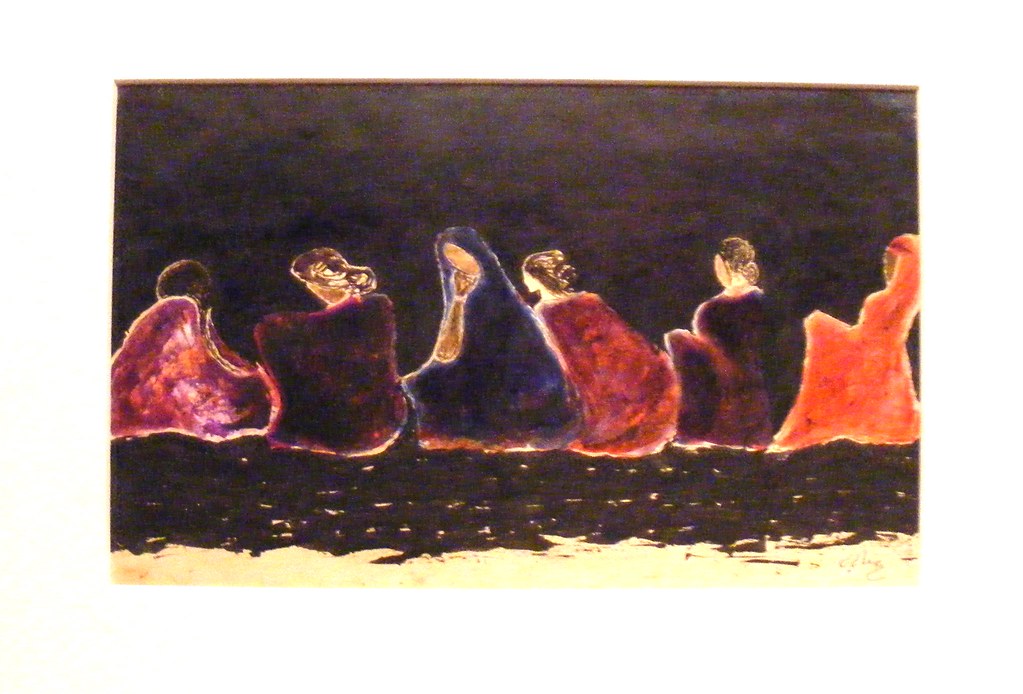
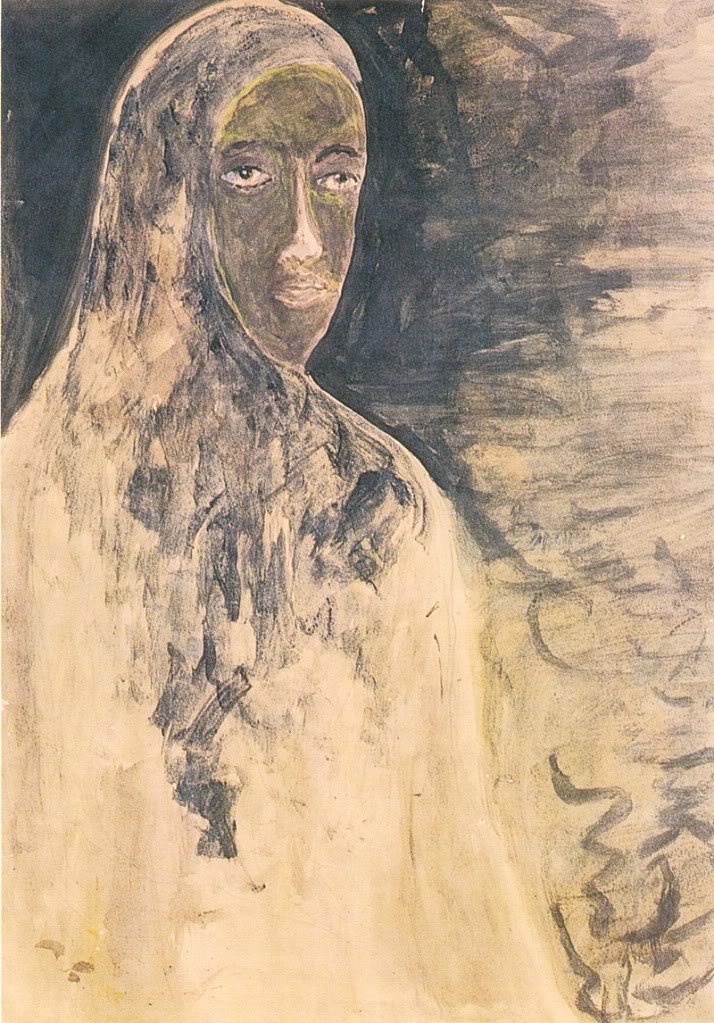
Veiled Woman: Painting by Rabindranath Tagore. Courtesy: Creative Commons
ENDLESS LOVE (Anonto Prem)

It is as if I’ve loved only you,
Hundreds of times, in hundreds of forms
In life after life, age after age, again and again!
Forever, and with an enchanted heart,
I wove necklaces of lyrics
Which you’d wear beautifully,
Accepting my gifts gracefully,
Life after life, age after age, again and again!
The more I hear stories from far away times
Of agonies lovers endured in ages long past,
Of tales of unions and separations
And whenever I look at events of days of yore,
Piercing the veil of darkness of times past
They appear in the form of an eternal star
In your visage.
The two of us float forward
In the current of a union
Emanating from eternity.
The two of us keep frolicking
Amidst millions of lovers,
Whose eyes moisten with tears of separation
Or light up with bashfulness as they meet—
In a love transcendental but in a guise all new
In love everlasting, but of this very day and age!







 Borderless