Title: The Greatest Indian Stories Ever Told: Fifty Masterpieces from the Nineteenth Century to the Present
Editor: Arunava Sinha
Publisher: Aleph Book Company
The Indian subcontinent has had a long tradition of storytelling that is referred to as ‘contes’ or tales, by the French. ‘Kathasaritsagar‘ by Somdev in Sanskrit compiled in the 11th century CE is a great example of this. Flavourful folk tales can also be found in renditions after the 11th Century CE — like the ‘Singhasan Battisi’[1].
Various Indian languages soon adopted this genre, gaining popularity throughout the country. Over the past 150 years, hundreds of memorable and popular stories have been written in more than 20 different languages. There are many ways in which they have become cultural cornerstones. Even those who do not read books often quote from a Premchand story or refer to a Tagore character in conversation. There are more people who know about our recent history as a result of Manto’s stories than any other history book published.
The Greatest Indian Stories Ever Told: Fifty Masterpieces from the Nineteenth Century to the Present edited by Arunava Sinha, is a welcome addition to the genre.As an English translator, Sinha specialises in translating Bengali fiction and non-fiction from Bangladesh and India into English, including classic, contemporary, and modern works. More than seventy of his translations have been published so far in India, UK, and USA. He has twice won India’s top translation prize, the Crossword Award for translated books. He teaches at Ashoka University, where he is also the co-director of the Ashoka Centre for Translation.
This anthology contains stories that draw inspiration from a wide range of Indian regional dialects, languages, literature, and cultures, and includes early masters of the form, contemporary stars, and brilliant writers who came of age during the twenty-first century.
Among these authors are some of the most revered in Indian literature and have, between them, won almost every major literary award, including the Nobel Prize for Literature, the Jnanpith Award, the Sahitya Akademi Award as well as numerous other honours at the state, national, and international level.
There is a plethora of literary delights in this collection, from Tagore’s evocative prose to Amrita Pritam’s emotional depth, from Ruskin Bond’s enchanting stories to Mahasweta Devi’s thought-provoking stories. It is a treasure trove of narratives translated to or written in English. If all these weaving the colours of the diversities in India are to be savoured across all the Indian states with diverse languages, they need to be in English. Collections of some of the best literary short fiction written by Indian writers began to emerge in the country at the end of the nineteenth century. And now in the twenty first century, the trend has been retained by this collection.
A must-have for any Indian literature enthusiast, The Greatest Indian Stories Ever Told provides a literary journey that explores space and time, which makes it a precious collector’s item that will become a valuable over time. Anyone who is interested in India’s rich cultural heritage as well as the rich tapestry of Indian storytelling should definitely read this anthology in order to gain some insight into the country’s rich cultural heritage. It promises to be an exciting and enticing literary feast, leaving readers awe-struck and enriched by the depth and beauty of Indian storytelling whether you are familiar with these eminent authors or are new to them, regardless of whether you know their work or not.
.
[1] Collection of ancient Indian folk tales; Literally, 32 tales of the throne, compiled after the 11th century CE
.
PLEASE NOTE: ARTICLES CAN ONLY BE REPRODUCED IN OTHER SITES WITH DUE ACKNOWLEDGEMENT TO BORDERLESS JOURNAL
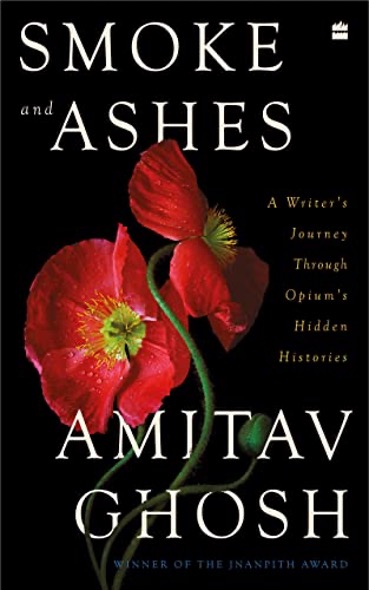
Title: Smoke and Ashes: A Writer’s Journey Through Opium’s Hidden Histories
Author: Amitav Ghosh
Publisher: HarperCollins India
Amitav Ghosh has been traversing the boundaries between fiction, non-fiction, history, anthropology with ease for a long time. After the publication of his Ibis Trilogy [Sea of Poppies (2008), River of Smoke (2011) and Flood of Fire (2012)] more than a decade earlier, he has been primarily focusing on issues related to environment, global warming and ecology in his later novels like Gun Island (2019), The Nutmeg’s Curse: Parables for a Planet in Crisis (2021), a non-fiction like The Great Derangement (2016), and two slim volumes of fables, Jungle Nama (2021) and The Living Mountain (2022). Now in his latest book Smoke and Ashes: A Writer’s Journey Through Opium’s Hidden Histories (2023), he blends travelogue, memoir, and historical tract into a multi-textured narrative that tells us about how ‘opium is a historical force in its own right’ and ‘must be approached with due attention to the ways in which it has interacted with humans over time.’ When he began his research for the Ibis Trilogy, he was startled to find how the lives of the nineteenth-century sailors and soldiers he wrote of were dictated not only by the currents of the Indian Ocean, but also by a precious commodity carried in enormous quantities on those currents: opium. Through both economic and cultural history, Ghosh traces the transformative effect the opium trade had on Britain, India and China; the trade and its revenues were essential to the Empire’s survival.
Of the eighteen chapters of the book, the first two enlighten the reader about little knowledge of China and the way tea (cha or chai) became an inevitable part of living both in the West and in India. It was after Ghosh’s first trip to Guangzhou (anglicized later to Canton) that the epiphany occurred about the very subtle influence of China and how the British actually stole the technology of tea plantation to make it flourish in the colonies. Thus ‘tea came to India as a corollary of a sustained contest – economic, social and military – between the West and China.’
From the third chapter onwards Ghosh gives us the history of the opium poppy and how social conventions that had developed through centuries of exposure to opium may have helped to protect some parts of Eurasia from highly addictive forms of opioid use and also how the drug was instrumental in the creation of a certain kind of colonial modernity. We get to know how it was the Dutch who led the way in enmeshing opium with colonialism, and in creating the first imperial narco-state, heavily dependent on drug revenues. But in India, the model of the colonial narco-state was perfected by the British. In the entire region of Purvanchal, the British created a system that was coercive to its core. The growth and cultivation of opium poppy was entirely controlled by them and the drug was mass produced in the two largest factories in Patna and Ghazipur. Though the dangers of opium were certainly no secret to the British government, yet they did not bat an eyelid in exporting the drug to China, knowing fully well it was a criminal enterprise utterly indefensible by the standards of its own time as well as ours.
Ghosh then gives details of the poppy cultivation in Malwa and the western provinces of India. By thwarting the British efforts to impose a monopoly on the trade, Malwa opium sustained Bombay and left a large share of the profits to remain in indigenous hands. Throughout the colonial era therefore, Calcutta and Bombay defined the two opposite poles of India’s political economy; the way in which business was conducted in the two cities were completely different and soon the Parsis turned out to be the maximum number of the non-western merchants who were present in Guangzhou in the years before the First Opium War. Thus, Bombay and its hinterlands benefited from Malwa’s opium in multiple ways. From Mumbai’s Parsis we go to the horticulturists and weavers, potters and painters of China, especially of the great city of Guangzhou. The intricacies of the Parsi Gara saris are traced back to weavers of Guangzhou, and so are the origins of an artistic ferment in Bombay when Jamsetji Tata, the founder of the Taj Mahal Hotel in Mumbai, brought back many paintings to India from China. The idea for an art school in Bombay came to Jamstjee Jejeebhoy after his Guangzhou visits, and the JJ School of Art came about.
Ghosh describes how opium money seeped so deeply into nineteenth century Britain that it essentially became invisible through ubiquity. After Britain, the country that benefited the most from the China trade and therefore, the global traffic in opium, was none other than the United States and the beneficiaries included many of the prominent families, institutions, and individuals in the land. By 1818 Americans were smuggling as much as a third of all the opium consumed in China thereby posing a major challenge to the East India Company’s domination of the market. Known as the Boston Concern, all the rich families from Boston, Massachusetts and the fortunate Americans were a series of names from the Northeastern upper crust — Astor, Cabot, Peabody, and so on. The young returnees from China ploughed their opium money into every sector of the rapidly expanding American economy. Even the opium money used in the railroad industry also came from China. “Opium was really a way that America was able to transfer China’s economic power to America’s industrial revolution”. In the United States the connection between opium and philanthropy has endured till the present day. It also left a distinct stamp on American architectural styles, modes of consumption, interior décor, philanthropy, and forms of recreation. Interestingly, Ghosh’s narrative keeps circling back to the present, when in the US as well in many countries around the world including India, the opioid crisis has reached epic proportions and the American government is bullish about its “War on Drugs”. Ghosh candidly states, “The ideology of Free Trade capitalism sanctioned entirely new levels of depravity in the pursuit of profit and the demons that were engendered as a result that have now so viscerally taken hold of the world that they can probably never be exorcised.”
Ghosh reiterates through the book that binary narratives about countries and culture — like, China is evil — that is entrenched in popular perception is misleading and takes away the historical context of trade relations among nations. “The staggering reality is that many of the cities that are now pillars of the modern globalised economy — Mumbai, Singapore, Hong Kong and Shanghai — were initially sustained by opium.”
There are many places in the book where Ghosh skilfully refers to his actual borrowing of historical details in his Ibis trilogy and these interjections add flavour to the non-fiction narration. Chapter Eight again is a memoir of Ghosh’s own lineage and how that has connections with the opium trade. Moving away from their ancestral home in East Bengal, it was the opium industry that took his ancestors to Chhapra in Bihar and kept them there. Like the millions of people that opium trading affected, uprooted, and dehumanised, his father told him stories of growing up in Chhapra and seeing opium ruin as well as make lives. These digressions add zing to the often-monotonous narration of facts and figures of the opium trade.
Ghosh goes on to devote pages to the nature of grassroots psychoactive substances and how opium was different in this class of psychoactive because it became a mainstay among pharmaceuticals too: “The reality is that all other efforts at curbing the spread of opioids have failed: the opium poppy has always found a way of circumventing them.” Towards the end of the book, after Ghosh finds that the wealthy and powerful people of the world to be suicidally indifferent to the prospect of a global catastrophe vis-s-vis the drug scenario, he asks a seminal question: “In such a world does it serve any purpose to recount this bleak and unedifying story?” Apparently, this question had haunted him since he first started working on the book, many years ago. It was the reason why, at a certain point, he felt he could not go on, even though he had already accumulated an enormous amount of material. It seemed to him then that Tagore had got it exactly right when he wrote: ‘in the Indo-China opium traffic, human nature itself sinks down to such a depth of despicable meanness, that is hateful even to follow the story to its conclusion.’ So persuaded was he of this that he decided to abandon the project: he cancelled the contracts he had signed and returned the advances he had been paid by his publishers.
Now we are happy that the story of the opium poppy had its cathartic effect upon Ghosh and in retrospect, after a period of more than a decade, he could give us the story from multiple perspectives today. Like his other books, this text is also accompanied by voluminous end notes which will deter the layman reader from enjoying the book. The amount of material and the different issues that Ghosh mentions is fit for at least four books but it is to his credit that he manages to present to us this world-roving tale in his signature method of weaving diverse narrative strands together into this book. How Ghosh establishes the interconnectedness of economic agency with geopolitics, a plant with human flourishing and wreckage and produces a narrative as luxuriant as it is painstaking in detail and density is his mastery as a prose writer and thinker.
.
Somdatta Mandal, author, academic and translator is former Professor of English at Visva-Bharati, Santiniketan, India.
PLEASE NOTE: ARTICLES CAN ONLY BE REPRODUCED IN OTHER SITES WITH DUE ACKNOWLEDGEMENT TO BORDERLESS JOURNAL
Professor Fakrul Alam discusses his new book of Tagore translations, Gitabitan: Selected Song-Lyrics of Rabindranath Tagore, published by Journeyman Books, Dhaka
Professor Fakrul Alam
Professor Fakrul Alam translates Tagore songs with a passion, refers to them as ‘song-lyrics’. In a recent essay, he claimed his favourite book is the Gitabitan, which houses 2232 songs by Tagore. The first edition of the book was published in 1931 and 1932 in three volumes. Over a period of time, Vishwa Bharati combined the three into one single volume.
During the pandemic, Professor Alam — a translator who has been lauded for his translation of Jibananda Das and also something as diverse from poetry as the autobiography of the founding father of Bangladesh, Sheikh Mujibur Rahman — took to translating Tagore songs to make a 300 strong collection, which has been published recently. When asked what was the basis for his selection of the songs, he responded: “What was the basis of my selections? Most important was my love for them. I listen to Rabindra Sangeet, that is to say, the songs of Rabindranath Tagore, every day without fail, unless I am travelling outside Bangladesh. Over the years, some songs by a few singers became so much a part of me that I began translating them. As was the case with my Jibanananda Das translations, you could say that translation was an act of homage as well as a way of coming really close to what you love. It strikes me also that many of the songs I ended up translating are by my favourite Tagore song singers — artistes like Debabrata Biswas and Kanika Bandhopadhyay for instance. Once again, translation as an act of possession!”
Professor Alam has been the recipient of both the Bangla Academy Literary Award for translation and the SAARC Literary Award. He has published around a hundred translations of Tagore songs and poems, edited and translated The Essential Tagore with Radha Chakravarty and lectured in a number of countries about Tagore. In his recently published translation, Gitabitan: Selected Song-Lyrics of Rabindranath Tagore, he brings to us a wide variety of songs which he has grouped into different sections. In this interview, he discusses his translated works, especially his new book.
You have translated Sheikh Mujibur Rahman, and Jibanananda Das, Nazrul and Tagore. What turned you towards translating poetry from prose?
Actually, I translated poetry first and then switched to translating prose. The first literary pieces I translated were poems by Jibanananda Das—surely the greatest Bengali poet of the twentieth century, if we leave aside Rabindranath Tagore who, of course, began writing poems towards the end of the nineteenth century and stood out among Bengali poets till his death in 1941. I then turned to translating some Tagore poems and songs for The Essential Tagore (2011) that I co-edited with Radha Chakravarty.
Also, from the time my book of translations of Das’s poems came out I either ventured into translating some poems by contemporary Bangladeshi poets from time to time either because I felt like doing so, or as responses to requests of a few poets to translate their verse. An example is Masud Khan, some of whose poems you have published in my translations in Borderless.
What moved you into translating?
I have to begin answering this question by once again naming the person I mentioned at the beginning of my answer to your previous question—Jibanananda Das. It was when I came across his works in Abdul Mannan Syed’s selection of his poems in the mid-1990s, and was so swept away by them, that I felt like translating Das’s verse. This was translation as an act consequent to being possessed—or if you like—gripped. Poems like “Banalata Sen” or “Abar Ashibo Pheere[1]” or “Bodh[2]” or “Aat Bachor Age Ek Deen[3]” seemed to want me to translate them. In fact, my translation of the word “Bodh” for the English poem is “Overwhelming Sensation” and that is how I would say I was taken by these works. And once I started with these poems I felt like translating a whole lot more.
You have a book of Das’s poetry and many poems of Tagore in various anthologies and sites. What made you decide to do a book of Tagore translations?
Rabindranath, of course, is the summit as far as Bengali poetry and song-lyrics are concerned. Because I grew up in a house where his songs were either being performed on the radio or on television, or sung by one of my sisters, in retrospect it appears to me that I was destined to translate them sooner or later. Once I had published Jibanananda Das: Selected Poems in 1999, I began to translate a poem or song by Rabindranath every once in a while. When I heard some of Rabindranath’s songs being sung by a singer like Debabrata Biswas or Kanika Badopadhyay, I felt I had to translate them. And that is how I ended up with the nearly 300 songs that constitute Gitabitan: Selected Song-Lyrics.
Is translating Tagore different from translating other poets?
Of course, and inevitably! Almost every great poet writes differently from his predecessor or contemporary poets and composes uniquely. As the great American critic, Harold Bloom, has put it in talking about Western canonical poets, they suffer from “the anxiety of influence” and must destroy all vestiges of their predecessor poets in them. They may begin conventionally but will soon find their distinctive voice or voices. They will as well move away from their earlier works all the time and not get stuck with one style. Thus, Tagore kept experimenting and, so to speak, shifting gears and taking new routes in versifying all the time. This is also true of Jibanananda. That makes the early Tagore or Das different from the later versions of these poets. In Tagore’s case, let me stress that he was particularly polymathic and kept opting for distinct poetic directions all the time. But as far as I can tell what makes him truly different is the musician in him. In particular, the songs have melodic components that take them away from established poetic forms. In fact, I would be happier with the term “song-lyrics” for his songs. Only in his later verses, did he move away from a melodic base towards relatively free verse or prose-poems. And so a translator of Tagore must strive to capture the music in his poetry, especially the songs, which makes the task of translating him quite a distinct as well as challenging task.
Tell us about this new book of Tagore translations. Are the translations a collection of your earlier publications or do you have new songs?
My new book is the result of years and years of translating the song-lyrics, something I do mostly during weekends. A few of them I published in Bangladeshi English language newspapers and a few came out in periodicals like Six Season Review, which I co-edited.
A few in have come out in Borderless. But all these years, I translated not with a definite plan but unsystematically. It was during the enforced period of home confinement during the pandemic years, however, that my translations of the songs gained momentum. I began at around this time to post my translations on FB regularly, hoping that the comments I receive would include constructive ones that would enable me to revise my work, if and when necessary. Nabila Murshed, an ex-student now living in the United States, then came up with the idea of forming a FB group called “Gitabitan in Translation” for not only my translations of the songs but also those of others who might be interested in contributing their own translations, or sharing their responses to the translated songs posted. She also decided to complement the translations with recorded versions of the songs that she collected from YouTube. All these things eventually led me to the idea of publishing a full book of translations.
I then hired an ex-student as a kind of assistant to sort out the songs I had been translating, according to the divisions and sequencing Tagore imposed on them in his collection. There are thus 13 divisions in my book, one of which, “Prokriti” or “Nature”, is itself divided into six sections following the six seasons of the Bengali calendar. But to sum up my answer to your question, the majority of the song-lyrics are going to see in print for the first time. I would say no more than 100 of them have been printed before.
Sometimes, your republications change from the earlier publications. The words change. Have you done that in this anthology too?
Occasionally. As I said previously, I translate a song when I hear it on YouTube. I might listen to the same song a couple of years later and feel like translating it again, forgetting at times that I had translated it before. This led occasionally to 2 or 3 versions of the same songs. Inevitably, while these versions would be close to each other, they would never end up being exactly similar. For the final round of selections for my book, however, I have chosen only one version of what I did, that is to say, the one I think was definitive. And, of course, I revised what I had done for the final print version.
Would you consider translating Tagore’ prose?
Of course. And I have translated a few already. For The Essential Tagore I translated “Hindus and Muslims” and “The Tenant Farmer”. And for Shades of Difference: Selected Writings of Rabindranath Tagore, I translated “The Co-operative Principle” and “The Divinity of the Forest.” As these titles indicate, Rabindranath is a writer whose works you can mine for topics that have continuing thematic relevance. That is why all translators will go back to him every now and then for essays and prose extracts relevant for our time.
Would you like to bring out a book of Nazrul translations too?
Who knows? I have translated about 12 of his poems and a short story by this great Bengali writer, who is also Bangladesh’s national poet. But at present I feel more inclined towards going back to Jibanananda Das and will continue to translate more of Rabindranath’s song-lyrics. This is because around the time I published my translations of his poems at the turn of the century, a trunk full of new poems by Das were discovered. Most of them have been published by now. If and when I can, I would like to bring out a new edition of my Das poems, incorporating some of these newly discovered ones. This is because I have already come across some that are truly memorable and deserve to be translated. Certainly, he is a poet the best of whose unpublished as well as published works need to be introduced everywhere.
Tagore is unique in as much he was socially committed to improving the lot of the villagers in Bengal. He practically created Santiniketan and Sriniketan. At a point, he wrote: “My path, as you know, lies in the domain of quiet integral action and thought, my units must be few and small, and I can but face human problems in relation to some basic village or cultural area. So, in the midst of worldwide anguish, and with the problems of over three hundred millions staring us in the face, I stick to my work in Santiniketan and Sriniketan hoping that my efforts will touch the heart of our village neighbors and help them in reasserting themselves in a new social order. If we can give a start to a few villages, they would perhaps be an inspiration to some others—and my life work will have been done.” This was in a letter in 1939 to Leonard Elmhirst, an agricultural scientist who helped him set up Sriniketan. Has any other poet done work of this kind in Bengal? What do you see as his greatest contribution —poetry or his ideals of human excellence and the work he did to realise his ideals?
Very few writers can come close to Tagore as far as the variety of his works are concerned. Such a polymath dedicated to the world of the spirit and the mind as well as human welfare is surely rarely to be found anywhere in any period of world history. Once he took charge of his father’s estates in what was then East Bengal and is now Bangladesh, Tagore plunged into work for the betterment of the people there and the surrounding areas. But he kept writing poems, fictional and nonfictional prose, plays and wrote all sorts of things for the amelioration of his people as well as his own need to articulate beauty and depict the Sublime in all its manifestations. And he would combine theory with practice, carrying out experiments and introducing new ideas for his tenants and others to implement in their farms and lives. His greatest contribution, however, was not only his poetry and prose but also his contribution to Bengali language and literature. I remember Dryden on Chaucer at this point: “He [Chaucer] found it [English writing] brick and left it marble.”
Thank you for giving us your time.
(The online interview has been conducted by emails by Mitali Chakravarty)
Tagore articles & Translations by Professor Fakrul Alam
Fakrul Alam brings to us Tagore songs in translation and in discussion on the season that follows the scorching heat of summer months. Click here to read.
Monomor Megher Songi (or The Cloud, My friend) has been translated by Professor Fakrul Alam. Click hereto read.
Giraffe’s Dad by Tagore: Giraffer Baba (Giraffe’s Dad), a short humorous poem by Tagore, has been translated from Bengali by Professor Fakrul Alam. Click here to read.
Oikotan(Harmonising) has been translated by Professor Fakrul Alam and published specially to commemorate Tagore’s Birth Anniversary. Click here to read.
.
[1] Fakrul Alam translates this as ‘Beautiful Bengal’, but lietrally, it means I will return again
[2] Fakrul Alam translates this as ‘An Overwhelming Sensation’, but literally, it means sensation.
Translated from Bengali by Aruna Chakravarti, who adds: ‘The story, Musulmani’r Galpa[1], was published posthumously in July 1995 in the journal Ritupatra. In all probability, it was dictated from the writer’s sick bed just before his death in 1941.’
Veiled Woman, Ink on paper, by Tagore, National Gallery of Modern Art, New Delhi. Courtesy: Creative Commons
This is a story of long ago. Of a period in our history when the seeds of evil governance had sprouted thorns all over the land. When fear and anxiety had trapped the soul of the common man in the skeins of such a stifling web that all other emotions had dwindled and died. When imagined assault from demonic forces gripped all minds. When the simple act of living turned into a nightmare and trust could be reposed in neither God nor Man. When the line between good and evil had blurred and tears were the only reality…
In an age such as this, the presence of a girl was deemed a curse in a middle-class family. More so if she was beautiful. Porarmukhi![2]May your fair face burn to ashes! Curses such as these, bitter and stinging, were heaped on the poor girl. “If we could only rid ourselves of this accursed creature,” the women of the family wailed, “we might sleep peacefully in our beds.”
Such a situation, exactly, had arisen in the household of Bangshibadan, the talukdar[3] of Teen Mahala. His niece Kamala was beautiful. Worse, she was an orphan. Had she died along with her parents the family could have breathed easy. But she had lived on as a burden in her uncle’s household and was made aware of it every passing minute. “Just look at my luck sister,” her aunt was often heard complaining to the neighbouring women, “The parents dumped this monumental responsibility on my shoulders and left for the other world. Evil glances are cast at her from all sides. Anything may happen at any time. I have young children of my own and can’t sleep from fear of what will become of them. I live in constant dread…”
Bangshibadan didn’t share his wife’s annoyance at Kamala’s presence in his house. He loved her dearly and had brought her up with great solicitude. He kept her hidden from prying eyes, personally supervising her welfare and taking care of her needs. Life went on somehow but when a marriage proposal came for her, she couldn’t be kept hidden anymore. “I will wed her only into a family which has the means to protect her,” Bangshibadan was in the habit of saying, and now it seemed as though he had found what he was looking for.
The boy was the second son of Paramananda Seth, the zamindar of Mochakhali. People feared Paramananda for his money power but even more for the posse of hefty Bhojpuri lathiyals[4] he kept to guard his house and possessions. “There isn’t one son of a gun in the whole district,” the prospective bridegroom boasted to Bangshibadan, “who’ll have the gall to lay a hand on her.” He was very proud of his father’s wealth and had devised many ways of spending it. Falcon flying, gambling, bird fights…he was a master of all these pursuits. He was, as well, extremely susceptible to feminine charm. Though he had a wife already he was looking for another, younger, one and when reports of Kamala’s beauty reached his ears, he decided that she was the bride for him.
Kamala was appalled when she heard what her uncle had in mind for her. “Where are you sending me Kakamoni?” She burst into tears, “You may as well set me adrift in the river.”
“If I had the power to, protect you,” Bangshibadan replied sadly, “I would have kept you clasped to my breast for all time to come. You know that Ma…”
The arrival of the wedding party at the bride’s house was accompanied by a lot of fanfare. The sound of drums and pipes rent the air. Bangshibadan was alarmed. “Babaji,” he folded his hands before the groom, “It would be better if the noise was toned down a bit. It is unwise to attract too much attention.” But the groom was unfazed. “Let’s see which son of a gun…” he repeated his old line, his chest puffed out with importance.
“I am a poor man with little clout,” Bangshibadan sighed and said, “I can’t vouch for the safety of everyone under my roof for long. I take responsibility only until the completion of the rituals. After that I will leave it to you to conduct your bride safely to your father’s house.”
“No need to worry. No need to worry,” The bridegroom twirled his moustache arrogantly and, watching him, the lathiyals were emboldened to twirl theirs as well.
It was nearing midnight when the wedding party set off with the bride for Mochakhali. A couple of hours later, while crossing the dreaded tract of land called Taaltarhir Maath, they were waylaid by the notorious dacoit Madhu Mallar and his gang. Bearing down on them with flaring torches and weapons far deadlier than lathis, the dacoits soon made short shrift of the lathiyals. The wedding guests fled in all directions abandoning the palanquin in which Kamala sat trembling with fear. Then, just as she was about to step out and try to hide in the bushes, she heard a man’s voice booming out of the dark. “Halt! Go back from where you came my sons. I am Habir Khan.”
Madhu Mallar and his gang stepped back instantly. They had great reverence for Habir Khan. In their eyes he was no less than a paigambar …a messenger from God.
“We can’t disobey you Khan Saheb,” Madhu Mallar said glumly, “but you’ve certainly ruined my business for the night.”
Habir Khan did not oblige him with a reply. Helping Kamala out of the palanquin he told her, “You are in great danger, child. You must leave this place at once. Come with me. I will take you to my house. It is only a short distance from here.” Seeing her shrink at his suggestion, he added, “I understand your reluctance. You are a Hindu, a brahmin’s daughter. It is natural for you to hesitate before entering a Muslim household. But let me tell you something. A truly devout Muslim respects a truly devout Hindu and won’t dream of harming him in any way. Trust me my child. You and your religion will be totally safe in my house.”
Habir Khan and Kamala walked through the woods till they came to a huge mansion. Leading her into one of its eight wings, he said, “This will be your home from now on. You will live here exactly as you did in your uncle’s house.” Kamala looked around. There was a yard with a temple at one end and a tulsi manch[5]at the other. The place looked no different from an upper-class Hindu abode. Everything she would need for her day-to-day living could be found here.
An elderly Brahmin came forward to greet her. “Come Ma,” he said in a kind voice. “Have no fear. This place is sacred. Your religion will be fully protected.”
Kamala burst into tears. “Please inform my uncle about what has happened. Tell him to come and take me home.”
“You are making a mistake child,” Habir Khan’s voice came to her ears, “After tonight’s incident you won’t find acceptance in any Hindu household. You’ll be thrown out into the streets.” He saw the expression on Kamala’s face and sighed. “Very well. I will take you there and let you see for yourself.”
Habir Khan led her to the door of Bangshibadan’s house and bade her go in. “I’ll be waiting here in case you need me,” he said.
Kamala flung herself on her uncle’s chest and wound her arms around his neck. “I have come back to you Kakamoni. Don’t send me away,” she begged. Bangshibadan’s eyes filled with tears. But before he could utter a word his wife burst into the room. “Throw her out,” she shrieked, “Throw the blighted creature out at once. She’s lived in a Muslim’s house. She’ll pollute us all.” Then turning to the weeping, shivering girl, she cursed and upbraided her in shrill penetrating tones. “Accursed one! How dare you show your face here after what you’ve done? Don’t you have any shame?”
Bangshibadan disengaged Kamala’s arms gently from his neck. “Forgive me Ma,” he said sadly. “I cannot take you back. I’m a Hindu. I’ll lose caste if I accept you. I’ll be ostracised by everyone in the village.” Kamala stood for a while, head bowed, then slowly made her way out of the house to where Habir Khan was waiting. She went away with him. The door of her old world was now shut against her for all time to come.
Kamala settled down in the rooms allotted to her. “All this is yours,” Habir Khan said to her waving his hands across the yard. “Not a single member of my family will set foot in this wing. Feel free to live in it the way you wish.”
This part of the mansion had a history. It even had a name. It was called Rajputani’r Mahal[6]. Many years ago, a nawab of Bengal had brought a Rajputani princess and installed her here. He had kept her with great dignity and made sure that she had no difficulty in practicing her religion. She was a very devout woman and an ardent worshipper of Shiva, so a temple was built for her in her own premises. She loved going on pilgrimages and arrangements for them were made with meticulous care. Over the years she became a role model for other Hindu begums and many of them found sanctuary under her sheltering wings.
Habir Khan was the Rajputani’s son. Though he followed his father’s religion he worshipped his mother like a goddess. He sought her guidance in every matter and it was from her that he had learned to respect the opposite sex. She had been dead these many years, but Habir Khan never forgot the vow he had made to her. To provide shelter to widowed and abandoned Hindu women. Scorned, persecuted, hated and stigmatised for no fault of theirs, many were forced to sell their bodies for a roof above their heads and a handful of rice in their stomachs.
As the days passed a realisation started dawning on Kamala. The freedom and comfort she enjoyed in this Muslim household was of a quality she hadn’t even dreamed of while living with her uncle. He cared for her but was powerless to protect her from ceaseless taunts, curses and abuses. She had grown so used to them… she had begun to think of herself as a blighted creature, a disgrace on the family, fit only to be thrown out on the streets. Here, in her new home, she was showered with luxuries. Every need of hers was taken care of by Hindu serving women. She was overwhelmed with kindness and love.
A few years went by. Slowly a change came over her. The winds of youth started to blow and her mind and body quivered with an unknown emotion. She fell in love with one of Habir Khan’s sons.
One day she opened her heart to her protector. Habir Khan’s face paled at her confession, but she went on calmly, “My love is my religion Baap jaan[7]. I have no other. I have worshipped many gods and goddesses in the past. I have poured out my heart and soul to them in prayer. I have begged for deliverance. Yet not one deity deigned to cast a glance at me or even send a sign that my prayer had been heard. What hope is left to me from a religion that leaves a poor, trusting, suffering girl rotting in a pit of abuse and persecution? I have known what it is to live, truly live, only after I stepped across your threshold. From you I’ve learned that even the lowest of human beings deserve love and protection.” Tears rolled down her cheeks. She wiped them away and continued, “From all the hardships I faced in life I have learned one lesson. The Lover and Protector is the true deity. He is neither Hindu nor Muslim. Baap jaan, I have given my heart to your second son, Karim, and my worship is now tied with his. In embracing Islam, I need not give up the faith I was born to. I can follow both.”
The marriage took place. Kamala’s name was changed to Meherjaan and she became a valued and integral part of Habir Khan’s family.
Now the time came for Bangshibadan to wed his own daughter. And history repeated itself as it is wont to do. While crossing Taaltarhir Maath the groom’s party was waylaid by Madhu Mallar’s men. They had been thwarted once. They were out for revenge. But as soon as they launched their attack a voice came out of the dark. “Khabardar[8]! Step back at once.”
“Ore baba re[9]!” the dacoits ran helter skelter, “It’s Habir Khan!” Abandoning the bride to her fate the wedding guests did the same. Suddenly, a figure appeared on the scene holding a banner aloft on a spear. It was Habir Khan’s banner with his emblem, a half- moon, painted on it. But the bearer was a woman. Approaching the palanquin, she helped the trembling girl out of it. “Don’t be afraid Sarala,” she said, “Your elder sister is here to save you. From today you’ll be under the protection of the One who loves and provides sanctuary to all human beings irrespective of caste, creed or religion.”
Turning to her uncle she said, “Pronam kaka[10]. Don’t be alarmed. I shall not pollute you by touching your feet. Take Sarala home. No one has dared to lay a finger on her. She’s as pure today as on the day she was born. And tell kaki[11]that I never thought I could pay back the debt I owe her. The debt of food and shelter so ungraciously doled out while I was her dependent. I am doing so now.” Putting a red silk sari and an asan[12] covered with rich brocade into her uncle’s hands, she added, “I brought these gifts for Sarala. Take them. And remember, if she’s ever in trouble her Muslim sister will be there for her. To give her all the care and protection she requires.”
Aruna Chakravartihas been the principal of a prestigious women’s college of Delhi University for ten years. She is also a well-known academic, creative writer and translator with fourteen published books on record. Her novels Jorasanko, Daughters of Jorasanko, The Inheritors, Suralakshmi Villa have sold widely and received rave reviews. The Mendicant Prince and her short story collection, Through a Looking Glass, are her most recent books. She has also received awards such as the Vaitalik Award, Sahitya Akademi Award and Sarat Puraskar for her translations.
.
PLEASE NOTE: ARTICLES CAN ONLY BE REPRODUCED IN OTHER SITES WITH DUE ACKNOWLEDGEMENT TO BORDERLESS JOURNAL
Bankim Chandra Chattopadhyay’s Bangalar Nobbyo Lekhokdiger Proti Nibedon(a request to new writers of Bengali), has been translated from Bengali and introduced by Abdullah-Al-Musayeb. Clickhere to read.
Poetry on Rain by Masud Khanhas been translated from Bengali by Professor Fakrul Alam. Click here to read.
Dancerby Bashir Baidar, has been translated from Balochi by Fazal Baloch. Click here to read.
Ratnottama Sengupta presents the first hand account of the war in Bosnia-Herzegovina (1992-1995) from a letter from her brother, who was posted there as part of the peace-keeping troops. Click here to read.
And as imagination bodies forth
The forms of things unknown, the poet's pen
Turns them to shapes and gives to airy nothing
A local habitation and a name

 A Midsummer Night's Dream (1595) by William Shakespeare
Famous lines by Shakespeare that reflect on one of the most unique qualities in not only poets — as he states — but also in all humans, imagination, which helps us create our own constructs, build walls, draw boundaries as well as create wonderful paintings, invent planes, fly to the moon and write beautiful poetry. I wonder if animals or plants have the same ability? Then, there are some who, react to the impact of imagined constructs that hurt humanity. They write fabulous poetry or lyrics protesting war as well as dream of a world without war. Could we in times such as these imagine a world at peace, and — even more unusually — filled with consideration, kindness, love and brotherhood as suggested by Lennon’s lyrics in ‘Imagine’ – “Imagine all the people/ Livin’ life in peace…”. These are ideas that have been wafting in the world since times immemorial. And yet, they seem to be drifting in a breeze that caresses but continues to elude our grasp.
Under such circumstances, what can be more alluring than reflective Sufi poetry by an empathetic soul. Featuring an interview and poetry by such a poet, Afsar Mohammad, we bring to you his journey from a “small rural setting” in Telangana to University of Pennsylvania, where he teaches South Asian Studies. He is bilingual and has brought out many books, including one with his translated poetry. Translations this time start with Bankim Chandra Chattopadhyay’s advice to new writers in Bengali, introduced and brought to us by Abdullah-Al-Musayeb. Tagore’s seasonal poem, ‘Megh or Cloud’, has been transcreated to harmonise with the onset of monsoons. However, this year with the El Nino and as the impact of climate change sets in, the monsoons have turned awry and are flooding the world. At a spiritual plane, the maestro’s lines in this poem do reflect on the transience of nature (and life). Professor Fakrul Alam’s translation of Masud Khan’s heartfelt poetry on rain brings to the fore the discontent of the age while conveying the migrant’s dilemma of being divided between two lands. Fazal Baloch has brought us a powerful Balochi poet from the 1960s in translation, Bashir Baidar. His poetry cries out with compassion yet overpowers with its brutality. Sangita Swechcha’s Nepali poem celebrating a girl child has been translated by Hem Bishwakarma while Ihlwha Choi has brought his own Korean poem to readers in English.
An imagined but divided world has been explored by Michael Burch with his powerful poetry. Heath Brougher has shared with us lines that discomfit, convey with vehemence and is deeply reflective of the world we live in. Masha Hassan is a voice that dwells on such an imagined divide that ripped many parts of the world — division that history dubs as the Partition. Don Webb upends Heraclitus’s wisdom: “War is the Father of All, / War is the King of All.” War, as we all know, is entirely a human-made construct and destroys humanity and one cannot but agree with Webb’s conclusion. We have more from Kirpal Singh, Ryan Quinn Flanagan, Nivedita N, John Grey, Carol D’Souza, Vernon Daim, George Freek, Saranyan BV, Samantha Underhill and among the many others, of course Rhys Hughes, who has given us poetry with a unique alphabetical rhyme scheme invented by him and it’s funny too… much like his perceptions on ‘Productivity’, where laziness accounts for an increase in output!
Ratnottama Sengupta takes us back to how imagined differences can rip humanity by sharing a letter from her brother stationed in Bosnia during the war that broke Yugoslavia (1992-1995). He writes: “It is hard to be surrounded by so much tragedy and not be repulsed by war and the people who lead nations into them.” This tone flows into our book excerpts section with Red Sky Over Kabul: A Memoir of a Father and Son in Afghanistanby Baryalai Popalzai and Kevin McLean. Popalzai was affected by the Russian invasion of Afghanistan in 1980 and had to flee. A different kind of battle can be found in the other excerpt from The Blue Dragonfly – healing through poetry by Veronica Eley – a spiritual battle to heal from experiences that break.
In our reviews section, KPP Nambiar reviews The Stolen Necklace: A Small Crime in a Small Town by Shevlin Sebastian and VK Thajudheen, a book that retells a true story. Sangeetha G’s novel, Drop of the Last Cloud, we are told by Rakhi Dalal, explores the matrilineal heritage of Kerala, that changed to patriarchal over time. Bhaskar Parichha reviews Burning Pyres, Mass Graves and A State That Failed Its People: India’s Covid Tragedy by Harsh Mander. Parichha emphasises the need never to forget the past: “It is a powerful book and sometimes it is even shattering. The narrative is a live remembrance of a national tragedy that too many of us wish to forget when we should, instead, etch it in our minds so that we can prevent another national tragedy like this one from recurring in the future.” While we need to learn from the past as Parichha suggests, Somdatta Mandal has given a review that makes us want to read Ujjal Dosanjh’s book, The Past is Never Dead: A Novel. She concludes that it “pays tribute to the courage and tenacity of the human spirit and its capacity for hope despite all odds.”
We have more content than mentioned here… all of it enhances the texture of our journal. Do pause by our July issue to savour all the writings. Huge thanks to all our contributors, artists, all our readers and our wonderful team. Without each one of you, this edition would not have been what it is.
Published in 1906,Megh (cloud)can be found in Tagore’s collection called Kheya (boat).
Adrift, without a beginning and an end,
With an awning of black and white blend,
        The sky is dressed whimsically.
We are all merely mounds,
Stacks of wafting clouds.
    I think only of him and his whimsicality.
We have no boundaries nor home,
We come and we are gone.

Suns, planets, stars shine bright.
Though they are garlands of lights,
        They remain tied to eternal tasks.
With permanence, they grace
Words illuminating a dark page.
         We are merely like drafts—
 With myriad of colours filled,
Re-written and erased at will.

Sometimes, when we are free,
We call out in a spree,
              Smiling without a reason.
Does our caprice create an illusion?
The rain still falls without evasion.
            The lightning is not a diversion.
Only, my friend, we do not stay.
With the breeze, we drift in or float away.
(This poem has been translated by Mitali Chakravartywith editorial support from Sohana Manzoor)
PLEASE NOTE: ARTICLES CAN ONLY BE REPRODUCED IN OTHER SITES WITH DUE ACKNOWLEDGEMENT TO BORDERLESS JOURNAL
Shadows, a poem in Korean, has been translated by the poet himself, Ihlwha Choi. Click hereto read.
Pranor Lifeby Tagore has been translated from Bengali by Mitali Chakravarty. Click hereto read.
Conversations
Shantanu Ray Chaudhuri converses withVinta Nanda about the Shout, a documentary by Vinta Nanda that documents the position of women in Indian society against the backdrop of the #MeToo movement and centuries of oppression and injustice. Click here to read.
Perhaps, most sceptics will say it is against human nature to stop fighting and fanning differences. The first recorded war was fought more than 13,000 years ago in what is now a desert but was green long ago. Nature changed its face. Continents altered over time. And now again, we are faced with strange shifts in climate that could redefine not just the dimensions of the surface area available to humankind but also our very physical existence. Can we absorb these changes as a species when we cannot change our nature to self-destruct for concepts that with a little redefining could move towards a world without wars leading to famines, starvation, destruction of beautiful edifices of nature and those built by humankind? That we could feed all of humans — a theory that won economist Abhijit Banerjee his Nobel Prize in 2019 so coveted by all humanity — almost seems to have taken a backseat. This confuses — as lemmings self-destruct…do humans too? I would have thought that all humanity would have moved towards resolving hunger and facing the climate crises post-2019 and post-pandemic, instead of killing each other for retaining constructs created by powerbrokers.
In the timeless lyrics of ‘Imagine’, John Lennon found peace by suggesting we do away with manmade constructs which breed war, anger and divisions and share the world as one. Wilfred Owen and many writers involved in the World Wars wrote to showcase the desolation and the heartfelt darkness that is brought on by such acts. Nazrul also created a story based on his experience in the First World War, ‘Hena’, translated for us by Sohana Manzoor. Showcasing the downside of another kind of conflict, a struggle to survive, is a story with a distinctive and yet light touch from S Ramakrishnan translated from Tamil by B Chandramouli. And yet in a conflict-ridden world, humans still yearn to survive, as is evident from Tagore’s poem Pran or ‘Life’. Reflecting it is the conditioning that we go through from our birth that makes us act as we do are translations by Professor Fakrul Alam of Masud Khan’s poetry and from Korean by Ihlwha Choi.
A figure who questioned his own conditioning and founded a new path towards survival; propounded living by need, and not greed; renounced violence and founded a creed that has survived more than 2500 years, is the man who rose to be the Buddha. Born as Prince Siddhartha, he redefined the norms with messages of love and peace. Reiterating the story of this legendary human is debutante author, Advait Kottary with his compelling Siddhartha:The Boy Who Became the Buddha, a book that has been featured in our excerpts too. In an interview, Kottary tells us more of what went into the making of the book which perhaps is the best survivor’s guide for humanity — not that we need to all become Buddhas but more that we need to relook at our own beliefs, choices and ways of life.
Another thinker-cum-film maker interviewed in this edition is Vinta Nanda for her film Shout, which highlights and seeks resolutions for another kind of crisis faced by one half of the world population today. She has been interviewed and her documentary reviewed by Shantanu Ray Chaudhuri. Chaudhuri has also given us an essay on a bookshop called Kunzum which continues to expand and go against the belief we have of shrinking hardcopy markets.
Gastronomical adventures seem to be another concurrent theme in this edition. Rhys Hughes has written of the Indian sweets with gulab jamun as the ultimate life saver from Yetis while trekking in the Himalayas! A musing on lemon pickle by Raka Banerjee and Ravi Shankar’s quest for the ultimate dosaaround the world — from India, to Malaysia, to Aruba, Nepal and more… tickle our palate and make us wonder at the role of food in our lives as does the story about biryani battles by Anagaha Narasimha.
Talk of war, perhaps, conjures up gastronomic dreams as often scarcity of food and resources, even potable water and electricity is a reality of war or conflict. Michael Burch brings to us poignant poetry about war as Ramesh Karthik Nayak has a poem on a weapon used in wars. Ryan Quinn Flanagan has brought another kind of ongoing conflict to our focus with his poetry centring on the National Day (May 5th) in Canada for Vigils for Missing and Murdered Indigenous Women by hanging red clothes from trees, an issue that perhaps has echoes of Vinta Nanda’s Shout and Suzanne Kamata’s poetry for her friend who went missing decades ago as opposed to Rachel Jayen’s defiant poetry where she asserts her womanhood. Ron Pickett, George Freek and Sayantan Sur have given us introspective perspectives in verse. We have more poetry asking for a relook at societal norms with tongue-in -cheek humour by Jason Ryberg and of course, Rhys Hughes with his heartfelt poem on raiders in deserts.
The piece that really brought a smile to the lips this time was Farouk Gulsara’s ‘Humbled by a Pig’, a humorous recount of man’s struggles with nature after he has disrupted it. Keith Lyons has taken a look at the concept of bucket lists, another strange construct, in a light vein. Devraj Singh Kalsi has given a poignant and empathetic piece about trees with a self-reflective and ironic twist. We have narratives from around the world with Suzanne Kamata taking us to Osaka Comic Convention, Meredith Stephens to Sierra Nevada and Shivani Shrivastav to Ladakh. Paul Mirabile has travelled to the subterranean world with his fiction, in the footsteps perhaps of Jules Verne but not quite.
We are grateful to all our wonderful contributors some of whom have not been mentioned here but their works were selected because they truly enriched our June edition. Do visit our contents page to meet and greet all our wonderful authors. I would like to thank the team at Borderless without whose efforts and encouragement our journal would not exist and Sohana Manzoor especially for her fantastic artwork as well. Thank you all.
Wish you another lovely month of interesting reads!
Pran or Life by Tagore was published in 1886 as part of his collection called, Kori O Komal (Sharp and Flat). The book featured 83 poems by him.
Art by Sohana Manzoor
LIFE

I do not desire death in this resplendent universe.
I want to live amidst the ocean of humanity.
In this radiant sunny garden of floral swirls,
I yearn for acceptance from hearts filled with vitality.
Life on Earth ebbs and flows in transient waves.
Partings and meetings are filled with tears and joys.
I want to bead these emotions into melodic strains,
To create songs that will be eternal and spirits buoy.
If I cannot achieve that, then as long as I live,
Let me find shelter in your midst.
Let me, every morning and evening, give
Lyrics that bloom like flowers waiting for a tryst.
Pluck the blossoms happily, and then, without a sigh,
Throw them away, alas, if they wilt or dry.
A recitation of the original poem in Bengali by Swati
(This poem has been translated by Mitali Chakravartywith editorial support from Sohana Manzoor)
PLEASE NOTE: ARTICLES CAN ONLY BE REPRODUCED IN OTHER SITES WITH DUE ACKNOWLEDGEMENT TO BORDERLESS JOURNAL








 Borderless