Ghoom, Darjeeling, is almost 2.5 km above sea level. Standing in the rarified air of Ghoom, you can watch the Kanchenjunga turn gold as it gets drenched in the rays of the rising sun. The phenomenon lasts for a short duration. The white pristine peak again returns to its original colour blending and disappearing among the white cirrus clouds that flit in the sky. Over time, it’s shrouded by mists that hang over this region. The event is transitory and repeats itself on every clear morning like life that flits in and out of existence over and over again…
Witnessing this phenomenon feels like a privilege of a lifetime as is meeting people who shine brightly and unusually, like the Kanchenjunga, to disappear into mists all too early. One such person was the founder of pandies’ 1 who coordinated the pandies’ corner for Borderless Journal, the late Sanjay Kumar (1961-2025). The idea of starting this column was to bring out the unheard voices of those who had risen above victimhood to find new lives through the work done by pandies’. In his book, Performing, Teaching and Writing Theatre: Exploring Play, published by Cambridge Scholars Publishing, he described his scope of work which in itself was stunning. His work ranged from teaching to using theatre and play to heal railway platform kids, youngsters in Kashmir, the Nithari survivors and more — all youngsters who transcended the scars seared on them by violations and violence. We hope to continue the column in coordination with pandies’.
Another very renowned person whose art encompassed a large number of social concerns and is now lost to time was the artist, MF Husain (1915-2011). This issue of Borderless is privileged to carry an artwork by him that has till now not been open to the public for viewing. It was a gift from him to the gallerist, Dolly Narang, on her birthday. She has written nostlgically of her encounters with the maestro who walked bare-feet and loved rusticity. She has generously shared a photograph of the sketch (1990) signed ‘McBull’ — a humorous play on his first name, Maqbool, by the artist.
Drenched with nostalgia is also Professor Fakrul Alam’s essay, dwelling on more serious issues while describing with a lightness his own childhood experiences. Many of the nonfiction in this issue have a sense of nostalgia. Mohul Bhowmick recalls his travels to Bhutan. And Prithvijeet Sinha introduces as to a grand monument of Lucknow, Bara Imambara. Lokenath Roy takes us for a stroll to Juhu, dwelling on the less affluent side. Suzanne Kamata describes her source of inspiration for a few stories in her new book, River of Dolls and Other Stories. A darker hue is brought in by Aparna Vats as she discusses female infanticide. But a light sprays across the pages as Devraj Singh Kalsi describes how his feisty grandmother tackled armed robbers in her home. And an ironic tone rings out in the rather whimsical musing by Farouk Gulsara on New Year days and calendars.
Everyone was at each other's throats, insistent that the world was ending. But I felt differently, as though I were just beginning, or just beginning again…
Poets, like visionaries across time and cultures, often see hope where others see despair. And humour always has that hum of hope. In a lighter tone, Rhys Hughes makes one laugh or just wonder as he writes:
I once knew a waiter who jumped in alarm when I somersaulted across his restaurant floor after entering the front door on my way to my favourite table: he wasn’t able to control his nerves and the meal he was bearing ended up on the ceiling with people staring as it started to drip down.
Translations feature poetry. Lyrics of Nazrul (1899-1976) and Tagore (1861-1941) appear together in Professor Alam’s translations of their love songs from Bengali. He has also transcreated a Bengali poem by Jibananada Das (1899-1854). Profoundly philosophical lines by Atta Shad (1939-1997) in Balochi has been rendered to English by Fazal Baloch for his birth anniversary this month. Ihlwah Choi has translated his poem from Korean, taking up the poignant theme of transience of life. A Tagore poem called ‘Kheya (Ferry)’, inspired by his rustic and beautiful surroundings, has been brought to us in English.
Huge thanks to all our contributors, the Borderless team for all these fabulous pieces. Thanks to Gulsara, Kamata, Bhowmick and Sinha for the fabulous photography by them to accompany their writings. Heartfelt gratitude to Sohana Manzoor for her cover art and to Dutta for her artwork accompanying her poem. Without all your efforts, this issue would have been incomplete. And now, dear readers, thank you for being with us through this journey. I turn the issue over to all of you… there is more as usual than mentioned here. Do pause by our contents page.
pandies’ was started in 1987. It’s spelled with a small ‘p’ and the name was picked by the original team. Read more about pandies’ by clicking here. ↩︎
It was Easter holiday. Nico had ten days off from school. His grandfather, Vasiliki, had promised his grandson to take him out on a fishing expedition for a few days on the island of Pontikos to the south-east of Hydra. It was a tiny island hardly inhabited by man where wildlife roamed freely. Vasiliki had been there several times with his father. They always stayed in a cave which lay hidden in a small creek, unknown to all, save of course, themselves …
So one April morning, the sky more or less clear and the sea calm, Vasiliki weighed anchor and they set out in his motorised sailing dinghy. Making sure the motor was not in gear he pulled the pull-starter to ignite it. An instant later he choked it.
“Why did you choke the motor, grandpa?” Nico enquired, eating sardines with a slab of goat cheese and bread.
“Have to warm her up a bit, my boy. The fuel needs a few seconds to fill her.” Vasiliki again tugged at the pull-starter and away they glided, humming slowly away from the make-shift pier, Nico now hauling in the tie-ropes. Vasiliki took firm hold of the throttle, steering the boat out of the coastal waters.
“Shouldn’t we hoist the jibe, grandpa?”
“Not today. There isn’t much wind and Pontikos is far off. Thanks to my new motor, we’ll get there quicker … Tonight we’ll be eating shrimp,” he shouted over the pleasant humming of his new motor. “ And tomorrow morning we’ll fish for sea bream. Prawns and shrimp rise to the surface of the water at night and sea bream during the day.”
“Why is that, grandpa?” Nico sat sleepily on coils of rope at the bow wiping off the pieces of bread that had fallen on his anorak. He enjoyed the smell of the sea, that briny, seaweed smell. The air had a sweet taste to it that he could not identify, perhaps oleander or fuchsia.
His grandfather scratched his silvery beard: “I really don’t know why. Fish are like us humans. They have different reactions to different circumstances.” Nico, although not quite satisfied with this response had not the heart to pursue the subject.
“The sky was red last night,” continued Vasiliki, gently manoeuvring the throttle, steering the sail-less dinghy further out away from the dangerous rocky shores of Hydra. “You know what they say: ‘Red at night, sailor take delight; red in the morning, sailor take warning.’ No storm will be on us this morning.”
“Why do they say that, grandpa?” asked the inquisitive Nico.
Vasiliki observed the clouds moving in behind Hydra: “I really don’t know, Nico. It’s just one of rhymes that fishermen and sailors have repeated for centuries.” Vasiliki sniffed the air: “The weather will be clear only for us up till tonight, Nico. Who knows, we just may see a rainbow.”
“Only for us, grandpa?”
Vasiliki smiled: “Well, we’re the only ones out on the sea this morning, right?”
Nico nodded. Indeed their vessel was the only one seen on the whole wide horizon. The boy looked up — white puffy clouds plodded across the blue like camels over desert sands.
The motor raced them out into an Aegean smooth as silk. Gentle wavelets slapped the sides of the dinghy. The plodding caravan continued it’s heavenly voyage, the sun peeping over and to the sides of their creamy white humps. Nico gasped, he was witnessing an amazing spectacle of Creation! The early morning breeze stung his cheeks a crimson red. It was his first time out on a fishing expedition with his grandfather. How excited he was. He shot a glance behind him: a few dark clouds rose above the bleak cliffs of Hydra.
“The northern winds, grandpa,” he informed the steering Vasiliki, his voice a bit shaky. “They’ll be on us.”
“No bother, my boy, we’re out-racing them thanks to our new motor. That’s why I didn’t hoist the jibe, you see. Don’t forget : ‘red at night is sailor’s delight !’ Anyway, we’ll be at Pontikos in a few hours, long before those nasty black clouds chase or swallow those lovely white puffy ones.”
“Like the sea monsters that swallow boats and their crew, grandpa?”
Vasiliki offered no reply.
Three hours later, Vasiliki slackened speed by gradually easing up on the motor until he pressed the choke button on the throttle. He then took up the oars and began rowing strenuously, the muscles of his arms and shoulders contracting to the rhythmic movements of the current.
“Why have you cut the motor, grandpa?”
“Cause we’re entering the creek where our cave is. We have to be very careful to avoid snags. The strong current will also help us through the creek and push us right to the mouth of the cave. I know these waters well, my boy. You see, I’m not even rowing, it’s the current that’s doing all the work. Just look at this creek, Nico. It’s magic to the eye.”
Vasiliki gazed dreamily at their surroundings. He had indeed pulled up the oars and now let the current eddy them through sprays of seaweed toward the sandy beachhead. With the rising mist, the towering cliffs of Pontikos loomed eerily before them, encircling the indented crescent creek, although paths could be discerned on the pebbly strand, widening and snaking amidst the huge fissures and cavities of the cliffs. Tiny maritime parasols clung precariously off the jagged crags. The ruddy colours of the late afternoon bathed the whole scene in a marvellous fairy-tale aura. Nico sat mesmerised before the slightly rolling reflexions of the craggy palisades in the turquoise waters of the creek, over which his grandfather was now rowing prudently to avoid any collisions with the flat rocks that surged up here and there on the foamy wavelets. He envisioned himself on a page of A Thousand and One Nights, or on one in Robert Louis Stevenson’s Treasure Island which he had just finished reading …
“There she is, Nico … the mouth of our cave. That’ll be our home for a few days.”
Suddenly Nico cried out: “Grandpa! Look, a seal on the rock, I heard her cry … There she is!”
Nico stood up at the bow to get a better look. “It’s a fat seal with tiny white eyes.” The seal squealed in delight and dived into the cool, clear waters. “What a beautiful seal, grandpa!” added an overjoyed Nico.
“She sure is, Nico. Now let’s do the same. We have to jump into the water to haul the boat on to the beachhead. Take off your sandals and roll up your trousers.”
“I’d love to dive like that fat seal,” Nico called out as he hauled away. “I’d be able to catch so many prawns and sea breams and …”
“Get a hold of the rope and tie it to a few of the trailing vines that criss-cross the beach,” broke in Vasiliki, rubbing his calloused hands. Then he dropped anchor. “Get our bags out of the dinghy, but leave the fishing gear inside.”
Nico gathered up their bed-rolls, firewood and spittle, carrying them into the cave. Meanwhile his grandfather busily cleared and smoothed the floor of the cave to make it comfortable to lie on and build a fire. “I hope she comes up again,” Nico said, listening to his echo.
“Who?”
“The seal, grandpa.”
“She’ll come up. My father and I always saw her come up and dive back down.”
“Can seals live that long?” Vasiliki glanced at his curious grandson.
“Well, I’m not sure she’s the same one. It may be her baby.” After that rather enigmatic reply, Vasiliki vanished into the deepest shades of the cave in search of prawns caught in the many shallow pools of water. Nico sat on the strand watching their boat dance suavely upon the wavelets that lapped the shore like ripples of laughter. The sun was setting over Hydra. The seagulls were laughing and the cormorants crying, both now on the wing, rising from the darkening waters, lifting their wet wings, flapping them madly. Suddenly the seal jumped up again on to the flat rock with a joyous squeal. The foamy waves brushed against the flat rock, soundlessly. She dived back into them. A call from the cave! Vasiliki had netted dozens of small prawns and was now scooping them out of the pools.
“Nico, get the big pot from the boat. We’ll be having boiled prawns with goat cheese, olives and bread tonight.” Vasiliki appeared stirred by the idea.
No sooner said than done! Whilst Nico searched for the big pot, Vasiliki dug a small hole, filled it with dry wood bits and made a fire. They used bottled water to boil and drink since no drinking water was found on Pontikos.
Nico and his grandfather ate a hearty meal that first night. Tired from their voyage, they spread out their bed-rolls and lay down in the silence of the dim, fire-lit cave. Nico used his anorak for a pillow. He observed the last plumes of smoke rising to the rocky ceiling where there, they fanned out, the wisps tracing weird configurations: shapes of birds perched upon gigantic cliffs, deep-sea fish and reptilic creatures all moving slowly … very slowly. Nico rubbed his exhausted eyes, the phantasmagoria gradually vanished into the black rock. The fire lowered, then died out …
Streams of orange rays broke into their dreamless sleep. Vasiliki awoke first: “Nico, go out and find some brush and underwood for our fire. Be careful on the paths between the boulders, there may be scorpions or snakes.”
Nico rolled out of his bed-roll, splashed his face with a bit of briny-scented seawater, then throwing a sack over his shoulder which he retrieved from the dinghy, set out in search of firewood. The agile boy had not been at it for long when he stopped dead in his tracks. On the strand lay a seagull shaking her orange legs, pecked at the reddening morning sky with her horny beak. He approached the bird carefully. She opened her eyes as if pleading for help. Vasiliki soon joined his grandson.
“What’s wrong with the bird?”
“She’s dying, grandpa.” Nico lamented. “Look, she can’t fly when she spreads her wings.” Vasiliki shook his head sadly and turned to leave.
“We got to get to the boat, my boy, the fishing will be good today.”
Nico cradled the seagull’s head in his hands then poured some seawater onto her beak. She shook her head violently, closed her eyes and lay still. The boy dug a hole in the warming sands, placed the dead bird gently in it then covered her with sand and pebbles. He erected a little mound on the burial spot. The gloom-filled boy retraced his steps to join his grandfather at the boat, his bag full of wood bits and dry brush.
“What’s wrong, Nico?” asked Vasiliki as they pushed the dinghy into the still waters.
“The seagull’s dead, grandpa. I buried her.”
Vasiliki eyes shone with warmth. “Seagulls die, my boy,” he mulled, waist deep in the creek. “Like us, we die too.”
Vasiliki took up the oars and rowed out towards the open sea. Pulling them in, he let the dinghy float gently on her own whilst he prepared the fishing lines.
“We’re not too far out, grandpa?” observed Nico, fixing his line with a plummet and baiting his hook with worms and not with pieces of fish as the fishermen of Hydra would always do much to the dislike of his grandfather.
“No … Have to keep that coastline in sight,” reminded Vasiliki. “These waters can change in a blink of an eye.”
Nico fixed his line and sent it spinning through the rod out into the choppy waters. He sat on the coil of ropes sniffing the pleasant morning breeze. The air smelt of flowers. He scanned the watery horizon where he felt overwhelmed by a strange sensation of encountering a primordial world when primitive men hunted, fished, built fires in caves … sang dirges to the dead. Would he chant a dirge for the dead seagull that night in the warmth of their cave fire?
Hours passed. Both stared dreamily into the sea as they held their rods steady, a sea so creamy, so milk-like. Now and then a slight turbulence, perhaps a whirlpool, tossed the dinghy from side to side.
“Do you see any mackerel?” Vasiliki asked, peering over the surface of the sea.
“I’m not sure if they’re mackerel or scad fish, grandpa,” answered the boy, tugging lightly at his rod.
“Well, the mackerel chase the scad, so you know that the mackerel are behind them.”
Nico nodded.
“Tell me about the seagull, Nico.”
Nico peered at this grandfather’s aging face, leathery from the wind and sun, at his deep, gimlet set eyes. “Which one, grandpa? The one I just buried or Dimitri’s?”
“Dimitri’s?”
“Yes, remember Dimitri, he was one of my classmates … He had a seagull for a pet.”
“A seagull for a pet? That’s strange. Tell me about her.”
“She was a different kind of seagull. A domesticated seagull. She would fly up on to a rock whenever Dimitri and his father were out fishing. From that rock, she would observe them with her beady eyes. Then she would dive straight down to the boat but she never perched on Dimitri’s father’s side of it, only on Dimitri’s side. His father was a grouchy old man and the seagull never cared for him. Dimitri would throw her fishbones, picarels and other bait. His father would get angry, saying that bait was for fishing and not for that blasted bird ! Dimitri never listened to his father. He would just wave a hand and keep feeding his companion. They were an inseparable pair, you know. When Dimitri died of the flu the seagull flew off and was never seen again … »
“Where did she fly off to?” enquired Vasiliki, intrigued by this tale.
“Perhaps she flew to China, grandpa … Like theNefeli[1]…”
“To China?” Vasiliki eyed his grandson thoughtfully.
“Yes, grandpa. Or to somewhere unknown, or at least not known to us.” Vasiliki bowed his head. They shook their rods : nothing yet …
The sun was high in the sky now. It warmed their bones and skin. Nico threw off his anorak. How beautifully the sunbeams bounced off the blue waters. They shimmered like the scales of a fish just caught on the line. From time to time, the gulls and the cormorants that glid over their heads swooped down and skimmed the surface of the white foam in search of scud or other schools of fish that were presently leaping at the surface. The birds certainly had more luck than our two fishermen. Plunging downwards, fluttering their huge wings, their graceful dives and surges hypnotised Nico. Meanwhile in the fathoms of the deep, millions of sea-creatures pursued millions others. The microscopic fish were swallowed up by the bigger fish, and in turn were swallowed up by even bigger fish! The whole lot of them were then completely disappeared in one enormous suction into the hollow vortex of the great whale. A great battle indeed was underway both in the inflamed sky and in the broiling sea. Nico felt enfolded in this chaotic struggle for life. Would he, too, be swallowed up along with his grandfather?
Nico shot a questioning glance at Vasiliki who suddenly broke the silence with cries of joy: “Ah ! Nico, here … a fish … two or three fishes!” Vasiliki, all agog, triumphantly displayed three flapping fish in his straw-weaved basket, their gills quivering silver in the intense sunlight. Nico, too, quite unexpectedly got lucky. Not only had he reeled in a mackerel, but also a big, white fleshy sea bream. He had at first lost his plummet, no doubt badly tied. But when Vasiliki showed him how to fix it properly the fish came to him as if the bait were a magnet.
“We’ll be having a hot-pot tonight, my boy,” rejoiced Vasiliki. “We’ll cook some vegetables with our catch. What do you think?”
Nico smiled. He thought it an excellent idea …That night when they had cleaned the fish, Vasiliki boiled them with an assortment of vegetables brought over from Hydra, especially egg-plant, red-pepper and tomato.
“How was the meal, Nico?” asked his grandfather when they had finished eating.
Nico, who had been listening to the moaning wind, turned to him: “Delicious, grandpa. But you know, I thought of the dead seagull all day when fishing. She should have been diving and catching fish with the others.” He paused a moment. “Grandpa, what did you think of my story?”
“What story?”
“About Dimitri’s pet seagull.”
“A good story, my boy. A beautiful story. A very beautiful one.” Vasiliki puckered his lips. “Why do you keep thinking about the seagull you buried ? Do you want to give her a name, like your boat that sailed to China?” Nico stared at his grandfather rather perplexed.
“No grandpa, I have no name for her. She’s gone far away … like the Nefeli … to another land …”
“We’ll build another boat together,” Vasiliki promised. “A bigger boat. The biggest of them all. But the seagull,” he hesitated. “The seagull has flown off to a land where we can never see her again. I’m sure it’s a beautiful land, like where the Nefeli is now on her way.”
“Wouldn’t you like to see that land, grandpa?”
“Well … not right now, my boy. Right now I’d like to close my eyes and sleep. Tomorrow we’ll be on the sea the whole day again. They’re biting out there.”
And that is exactly what the old man did …
The last embers of their fire cast undulating shadows on the walls of the cave. Vasiliki was sound alseep, snoring lightly. Nico strolled to the beachhead. The moon had risen, girt by a rosy halo. Darkened seagulls glided in and out of the misty moonbeams. They danced an eerie dance. Nico perceived Hydra’s beacon far, far off at the south-west tip of the island. A steamer passed over the sleepy waters heading for Hydra, her lights burning bright against the umber orb of the horizon. Nico thought of the Nefeli on her long voyage to China. Slicing unmanned, captainless over unchartered seas, like Dimitri’s pet seagull on the wing, perhaps she too flying towards unknown lands now that her master had long since departed. The seagull he had buried could also be flying off to some mysterious place, a paradise for seagulls where she could fly and fly and fly without a thought of ever diving for fish or of escaping the hunter’s gun. A peaceful place…
Nico’s grandfather told him that tomorrow night they would be eating mussels with lemon juice; a real regale his grandfather had beamed. With bread and olives, too. Olives always go so well with mussels, he said. Nico smiled. Why they always go so well together his grandfather never offered a reason. But Nico believed him. Nico believed everything that his grandpa told him, even about the monsters of the sea that swallow boats and their crews. Perhaps the Nefeli had been swallowed up by one of those monsters.
Nico stared at the shadowy moon. A slight wind began to groan. The dinghy tossed gently, the scraping of the pebbly strand under her bow prompted a rather strange rhythm like a saw sawing wood.
Nico strolled back into the dark cave. The fire had gone completely out. Nothing could be seen, only heard: his grandfather’s snoring, the seagulls screaming, the wavelets lapping, the dinghy scraping … He loved his grandfather. Yes, they would build a great, majestic boat, sturdier than the Nefeli — an unsinkable boat, one that would voyage all around the world like Magellan’s galleon. He would name the boat Mytho … Yes, that would be a fitting name for such a beautiful boat.
Nico stared at his unseen snoring grandfather. He would have liked to ask him why olives and mussels go so well together. And his grandfather would have probably answered: “Well my boy, it’s just a feeling I can’t really explain. But believe me, they do go well together.”
And Nico would have believed him. Would have accepted that answer as a perfectly acceptable answer …
Nico slipped into his bed-roll and immediately into a deep, deep sleep. He dreamed of seagulls on the wing, boats navigating on the high seas, underwater monsters with long, leathery tentacles chased by the great whale and caves full of gold and diamonds and other precious stones whose names Nico had not as yet learned but would surely ask his grandfather their names when he awoke.
Paul Mirabile is a retired professor of philology now living in France. He has published mostly academic works centred on philology, history, pedagogy and religion. He has also published stories of his travels throughout Asia, where he spent thirty years.
.
PLEASE NOTE: ARTICLES CAN ONLY BE REPRODUCED IN OTHER SITES WITH DUE ACKNOWLEDGEMENT TO BORDERLESS JOURNAL
Art by Sophia P, CypressArt by Hugo A, Quezon CityFrom Public Domain
In 1985, famous artistes, many of whom are no longer with us, collaborated on the song, We are the World, to raise funds to feed children during the Ethiopian famine (1983-85). The song was performed together by Michael Jackson, Willie Nelson, Bob Dylan, Ray Charles, Diana Ross, Stevie Wonder, Smokey Robinson, Paul Simon, Tina Turner, Dionne Warwick, Lionel Richie, Billy Joel and Bruce Springsteen. The producer, Julia Nottingham, said: “It’s a celebration of the power of creativity and the power of collective humanity.” The famine was attributed to ‘war and drought’.
Over the last few years, we have multiple wars creating hunger and drought caused by disruptions. Yet, the world watches and the atrocities continue to hurt common people, the majority who just want to live and let live, accept and act believing in the stories created by centuries of civilisation. As Yuval Noah Harari points out in a book written long before the current maladies set in, Homo Deus (2015), “…the stories are just tools. They should not become our goals or our yardsticks. When we forget that they are mere fiction, we lose touch with reality. Then we begin entire wars ‘to make a lot of money for the corporation’ or ‘to protect the national interest’. Corporations, money and nations exist only in our imagination. We invented them to serve us; why do we find ourselves sacrificing our lives in their service?”
What Harari says had been said almost ninety years ago by a voice from another region, by a man who suffered but wrote beautiful poetry, Jibanananda Das… and here are his verses —
“The stories stored in my soul will eventually fade. New ones— New festivals—will replace the old — in life’s honey-tinged slight.”
We carry the poem in this issue translated by Professor Fakrul Alam, lines that makes one dream of a better future. These ideas resonate in modern Balochi poet Ali Jan Dad’s ‘Roll Up Not the Mat’ brought to us in English by Fazal Baloch. Korean poet Ihlwha Choi’s translation takes us to longing filled with nostalgic hope while Tagore’s ‘Probhat’ (Dawn) gives a glimpse of a younger multi-faceted visionary dwell on the wonders of a perfect morning imbibing a sense of harmony with nature.
“I feel blessed for this sky, so luminous. I feel blessed to be in love with the world.”
Starting a new year on notes of hope, of finding new dreams seems to be a way forward for humanity does need to evolve out of self-imposed boundaries and darknesses and move towards a new future with narratives and stories that should outlive the present, outlive the devastating impact of climate change and wars by swapping our old narratives for ones that will help us harmonise with the wonders we see around us… wonders created by non-human hands or nature.
We start this year with questions raised on the current world by many of our contributors. Professor Alam in his essay makes us wonder about the present as he cogitates during his morning walks. Niaz Zaman writes to us about a change maker who questioned and altered her part of the world almost a century ago, Begum Roquiah. Can we still make such changes in mindsets as did Roquiah? And yet again, Ratnottama Sengupta pays homage to a great artiste, filmmaker Shyam Benegal, who left us in December 2024 just after he touched 90. Other non-fictions include musings by Nusrat Jan Esa on human nature contextualising it with Milton’s Paradise Lost (1667); Farouk Gulsara’s account of a fire in Sri Lanka where he was visiting and Suzanne Kamata’s column from Japan on the latest Japanese Literary Festival in the Fukushimaya prefecture, the place where there was a nuclear blast in 2011. What is amazing is the way they have restored the prefecture in such a short time. Their capacity to bounce back is exemplary! Devraj Singh Kalsi shares a tongue-in-cheek musing about the compatibility of banks and writers.
Exploring more of life around us are stories by Sohana Manzoor set in an expat gathering; by Priyatham Swamy about a migrant woman from Nepal and by Naramsetti Umamaheswararao set against rural Andhra Pradesh. While Ahmad Rayees gives a poignant, touching story set in a Kashmiri orphanage, Paul Mirabile reflects on the resilience of a child in a distant Greek island. Mirabile’s stories are often a throwback to earlier times.
In this issue, our book excerpts explore a writer of yore too, one that lived almost a hundred years ago, S. Eardley-Wilmot (1852-1929), a conservationist and one who captures the majesty of nature, the awe and the wonder like Tagore or Jibanananda with his book, The Life of an Elephant. The other book takes us to contemporary Urdu writers but in Kolkata —Contemporary Urdu Stories from Kolkata, translated by Shams Afif Siddiqi and edited by Shams Afif Siddiqi and Fuzail Asar Siddiqi. A set of translated stories of the well-known Bengali writer, Bibhutibhushan Bandopadhyay by Hiranmoy Lahiri, brought out in a book called Kaleidoscope of Life: Select Short Stories has been reviewed by Somdatta Mandal. Malashri Lal has discussed Basudhara Roy’s A Blur of a Woman. Roy herself has explored Afsar Mohammad’s Fasting Hymns. Bhaskar Parichha has taken us to Sri Lanka with a discussion on a book on Sri Lanka, Return to Sri Lanka: Travels in a Paradoxical Islandby an academic located in Singapore, Razeen Sally.
Bringing together varied voices from across the world and ages, one notices recurring themes raising concerns for human welfare and for the need to conserve our planet. To gain agency, it is necessary to have many voices rise in a paean to humanity and the natural world as they have in this start of the year issue.
I would like to thank all those who made this issue possible, our team and the contributors. Thank you all from the bottom of my heart. I cannot stop feeling grateful to Sohana Manzoor for her fabulous artwork too, art that blends in hope into the pages of Borderless Journal. As all our content has not been mentioned here, I invite you to pause by our content’s page to explore more of our exciting fare. Huge thanks to all readers for you make our journey worthwhile.
I would hope we can look forward to this year as being one that will have changes for the better for all humanity and the Earth… so that we still have our home a hundred years from now, even if it looks different.
Winter, together with the northern gales, reached the shores of Hydra, an island belonging to the group of Saronic islands in the Aegean Sea. On the north-eastern side of Hydra, save a few monks in two monasteries, few human beings had built their homes. Hoary pines and cypresses intertwined with other plants, providing shelter and shade for the gangs of dangerous feral cats that roamed amongst enormous, solitary rocks and deep precipices hunting for food. Weird, colourful birds built their nests in the crevices of the towering cliffs whose plateaus were carpeted with red poppies and violet cyclamen. It was a desolate landscape unfavourable to human existence, although it was told that certain ‘wild’ islanders did dwell in the porous caves of the cliffs sculptured by the winds and rains overhanging the foamy waters far below …
It was in the south where the islanders enjoyed a relatively decent living, when of course the fish and tourists were plentiful. Now, however, the bathing areas lay silent and the villas, lifeless. Winter was the time for fishing. The sailing dinghies, catamarans and rowboats that had been hauled in for repairs were once again seen bobbing up and down upon the choppy waves. Seabass abound, as well as sea bream and sardines. Brightly painted sailing dinghies brought fish uninterruptedly to the market. But deep in this particular winter, the fishermens’ nets held little catch, and the islanders had to resort to eating vegetables that survived the cold from their gardens, the bread from their ovens, and now and then a partridge or a quail shot by those who owned rifles. Fish could be purchased from other fishermen in the neighbouring islands. But they sold their catch at a dear price.
Old Vasiliki was preparing his multi-pronged fishhooks. The nets that he had mended long ago had snapped and ripped again. Up till then, winter’s catch proved hopeless. He had scarcely earned fifty drachma. Vasiliki still had earnings from renting the second floor of his house to summer tourists, but those savings were slipping away on fishing material, goods from the shops or fish bought from the fishermen of the other islands, where apparently the catch was abundant. Nico, his grandson, had fallen ill that winter and medicine was dear. The poor boy had not been to school for over two weeks …
School and notebooks cost money, too. So be it. Tonight, Vasiliki would go out fishing, so he carried on straightening out his turkey-feathered multi-pronged fishing-hooks, mending the rotten fishing lines, changing the rusting hooks. If he could catch a lot of fish, he could buy a petrol lamp and more candles for the house, a pair of shoes and a woollen vest for Nico. He would buy Nico a book of sailors’ tales that his curious-minded grandson longed to read. He would also buy him a huge picture of a Spanish galleon that he could pin up on to the yellow painted wall of his tiny room.
Vasiliki went out fishing in the evenings. Nico never knew when his grandfather would return …
Every night the boy dreamed the same enigmatic dream in the absence of his grandfather. He stood at the helm of a beautiful boat whose name was written in bold black letters but which he could never read. Enormous waves continuously surged and battered the solid vessel. Then a sudden volley of rocks or missiles assailed him from all sides out of a rising mist, accompanied by a deafening din of hysterical screams and raucous shouts. From above, a huge white-crested wave was about to engulf him … Nico would be startled out of this recurrent dream, never understanding how he escaped the missiles, the monstrous wave and screams because at that very instant he was startled out of sleep by the flapping of the curtains against the paneless window and the slow, heavy footsteps of his grandfather returning from fishing. Vasiliki, smelling of the briny sea, stepped into Nico’s room.
The boy sat up in bed: “Did you catch any fish, grandpa?”
“No, the sea was empty of fish tonight.”
“Empty?”
“A sea monster has surfaced, Nico. It is eating all the fish in the sea.” Nico blinked his eyes in mistrustful wonder.
“Have you seen the sea monster, grandpa?” The exhausted Vasiliki offered no answer. He shuffled out of his grandson’s room and retired to his own.
Whether Vasiliki really saw a monster always remained a mystery to Nico. He had read about weird sea creatures with lamps on their heads in the inky darkness of the deep; read about shoals of huge fish that swallowed dinghies and rowboats whole. His father, Constantine, had been swallowed up along with his crew by those horrible creatures … so his grandfather narrated, sadly. His mother, Myrto, died a few months later of tuberculosis … or of a broken heart. Or both. They were in their early thirties …
Vasiliki and his wife, Nefeli, took their grandson in. They did their best to bring up the lonely, melancholic boy. Then Nefeli fell ill with fever and died soon after. Vasiliki buried his beloved wife at the neighbouring cemetery. All that the old man cherished now was Nico, his taciturn grandson.
Vasiliki owned a small, green, two-storey wooden house, a house that belonged to his father. Summer was not far off so he could again rent out the second floor to tourists and earn a few lepta or drachma.
In the small sitting-room where the flower-dotted wall-paper was peeling off the badly cut boards, he had nailed photos of his wife and daughter, now yellowing due to the humidity. Vasiliki’s home was hardly furnished, although he had made an effort to provide low sofas, wicker chairs and sturdy tables for his guests upstairs. He even built a shower for them, a luxury that he and Nico dispensed with. They washed either in the sea or directly from the wash-basins in the garden behind the house. But since no one occupied the two rooms upstairs, ever so often they would shower upstairs and from the windows look out at the sea. Presently, Vasiliki climbed the five steps to one of the rooms, parted the laced curtains of the recently washed window and looked out towards the sea, whilst he mended his net, sang songs, thought of Nico’s future. His warm eyes slipped from his mending to the brilliant blue waters of the Argolic Gulf. That boy was all he had. His treasure. When he thought of Nico he awoke from his day-dreaming and smiled. He had promised him long ago that they would build a small boat and send it navigating on the high seas, like a bottle thrown amid the waves, and whose destination would be known to no one, a horizonless destiny for that little boat.
Vasiliki sighed: “I have to keep an eye on Nico. Those nasty children from town always take the thump him at school. He’s not big enough to fight on his own.” Vasiliki took up a needle and began stitching Nico’s torn trousers. “I have to walk him home after school so he won’t go sleeping under the olive trees or on the beach where the schoolboys could knock him up.” Vasiliki wondered where his grandson had gone …
Nico stood under a plane tree in front of his grandfather’s house. He was busy making a boat. It wouldn’t be his first boat. But this one would be the boat of all boats ! A long-voyage boat, built for the broad, open seas … the remote and unchartered seas, a boat that would weather stormy waves, glide over placid rolls, sail alongside monstrous creatures of the deep, a boat without a flag, a nationless boat, yet unmanned by pirates or corsairs, a boat completely independent. Nico put his whole heart into this project, his whole imagination of what such a boat should be made of, and how it should be navigated.
“Nico?” cried down Vasiliki from the upstairs window.
“Yes, I’m here, grandpa.”
“What are you doing?”
“Making a new boat.”
“Another one?”
“The biggest and the best, grandpa. It’ll sail to the other side of the world … to China …”
“Tomorrow you must go to school, don’t forget. You can work on your boat after school.”
“Yes, grandpa. I’ll work hard in school.”
“By the way, what will you name your boat?” Nico thought for a moment. At first ‘Neptune’ came to mind, but he quickly changed it as his grandfather’s eyes swelled with pride and joy at his grandson’s aspirations and imagination.
“I’ll call her Nefeli, grandpa.”
Vasiliki gave Nico an odd look. He didn’t know whether to smile or cry. He murmured the name several times on his lips, slowly, intimately. The old man burst out laughing: “Nefeli! Nefeli!” he shouted. “Your grandmother would have been proud to know that her name will navigate the four oceans of the earth, my boy. Don’t forget to prepare your things for school tomorrow. We’ll be having sardines tonight that I bought from Dimitri. He sold more than a dozen at half price.” And Vasiliki returned to his mending and stitching since the yellowish light of late afternoon allowed his eyes to do so …
Nico went to school the following morning, shuffling along the dirt-packed road. What a burden to acquire knowledge that he would never use in ‘real life’. Neither Nico’s classmates nor his teachers held any interest for him. His two weeks’ absence afforded him time to dream … to concentrate on his boat-building. The boys who crossed paths with him on the way to school never wished him a good morning, nor did they enquire about his health. He was ostensibly shunned by all and sundry, even several of his teachers took a dislike to him.
Nico shrugged his shoulders, sitting in the back of the stuffy classroom, heated by a pot-bellied stove, gazing out over the bungalows to the wide sea. He envisioned the decks of galleons gleaming white from a good scrub, their sails bellowing in the refreshing breeze. Nico filled his lungs with the fresh, clean, ocean air. Yes, only the sea afforded the boy a pleasure in life, along with, of course, the voice and affectionate gestures of his grandpa. All other things to him seemed dull, lifeless … empty.
The children in his class thought only of the tediousness and boredom of their school work and the silly games they played with or against each other to compensate for that tediousness and boredom. None had any project to impassion their lives. None envisioned a future further than the next day at school or in the market. Few went swimming in the bay, where he swam too. They shrank away from his boyish laughter splashing about in the water, avoiding his company completely.
When Nico was not day-dreaming in school he was busy reading or making boats — all kinds of boats. Cutter in hand, he whittled small sailboats and rowboats … even catamarans! Everyday he whittled a raft as he contemplated the steamers’ coming and going in the glimmering Aegean. But his next boat would be huge. A huge boat with a bridge, lower and upper decks, a hold for cargo, masts, sails, portholes and a crow’s nest. This boat would be the largest, the loveliest … and the sturdiest of them all. A boat which had never been built before by a fourteen year old boy. And that day came. Nico, the fourteen year old boat-builder had completed his dream boat. For him this boat meant the world. He felt his heart swell with pride and satisfaction. Vasiliki inspected his grandson’s remarkable vessel. It was painted marine-blue. At the bow he had painted the head of Neptune. He had even cut a hole in the starboard for the anchor to be weighed or dropped using a big fish-hook tied to a long, thin rusty chain. The deck had been sand-papered to a dazzling gloss. He equipped her with a four-cornered small jibe[1], as white as the flesh of a sea bream. He had taken great pains to whiten that piece of cloth of a sail, rubbing and scrubbing away with aqua fortis. It took him days to attain that candid sheen …
All the rigging on the bridge was fixed solidly to the wide deck by thin copper wires rising high above all the rest, held securely with copper wires screwed into the thick wood of the deck and reinforced with English twine. Portholes had been carved out on both the portside and starboard for the cabins, for although Nico’s boat would be captainless — unless he himself exercised this task– his imaginary crew would be like the Lilliputians that he had read of in Gulliver’s Travels. How he had enjoyed reading those stories of sea and island adventures … Nico had even cut and inserted pieces of broken glass he found scattered about the streets to window the portholes, which he polished to a shiny, brassy gleam.
When all had been fitted out properly, he painted the endearing name Nefeli in bold, black letters on her portside. Vasiliki stood in quiet admiration of his grandson’s months of hard labour. It was indeed a work of art. He embraced him. His grandson may not be the best of pupils, but he worked wonders with his hands. Someday he would be a great boat-builder, and not just a poor fisherman like his father and grandfather …
The rising sun peeked over the watery orb of the sea. It was Saturday. That day Nico launched his boat into the placid waters of the Argolic Gulf. Vasiliki accompanied him on this long-awaited day, eager to witness her maiden voyage. The Nefeli once launched, slid with ease. At first, the boat floated unsteadily on her portside. But when the wind picked up, she rose to her full splendour and ploughed through the clammy waters with amazing ease, all sails aswell. Nico let the spool of English twine slide quicker and quicker from its spool. It unravelled rapidly, but the boy had full control of the situation. The spool held hundreds of metres of twine.
The Nefeli skimmed over the wavelets like a shark racing towards its prey. Vasiliki stretched out on the pebbly shore to mend a torn net, eyeing both the Nefeli and his mending in mute jubilation. He thought of his daughter and how proud she would have been to see her son manœuvre his own hand-made boat. His grandson, too, jubilated, running to and fro along the shore to manœuvre the cruising vessel as she swayed to the rhythm of the breeze. Suddenly an easterly gale drove her towards the shore. Nico slackened the twine. At the same time, though, he pulled her away from some dangerous rocks and uprooted pines. Any collision might have caused great damage to the Nefeli. After all, it was only a little boat and the sea a powerful force that no one should underestimate. Two hours or so later, Nico pulled her in, and he and his grandfather returned triumphantly homeward to eat.
News of Nico’s remarkable boat reached every ear on that small island. People from the big town would come to the shore to watch this young boy of fourteen manoeuvre his vessel. As promised, Nico launched his boat only after school as soon as he had finished his homework. For weeks now, the Nefeli had withstood the brunt of several white-crested waves and a slight collision against the rocky part of the shore. All in all, Nico’s boat proved robust and his manoeuvring worthy of any captain of the sea.
One fine, sunny Saturday Nico, as always, launched the Nefeli near a large grove of pine trees. A slight south-easterly wind was blowing. The twine unravelled rather quickly, the boat lying on her side, her stern twisting and turning in the foamy waters like a fish’s tail. He pulled at the twine and managed to steady her route. Nico sighed in relief … Suddenly he heard shouts, cries and screams from behind him. A gaggle of children were racing along the shore targeting his boat with huge stones, one of which, incredibly enough, after hitting its target, propelled her further away from the volley of projectiles. Two or three boys, whom he recognised from his class, had sling-shots and were letting fly stones with great rapidity but not necessarily with great accuracy. Nico ran faster, pulled at the twine, quickening the speed of his boat. But there were too many boys, many of them running faster than him. More and more stones were slung or thrown, luckily off their mark. Nico thought to haul the boat back to shore near the rocky cliffs in the hope that the scoundrels’ pockets would be emptied of stones by then.
The poor boy, however, stopped in his tracks. The Nefeli seemed to navigate on her own, wind filling her sails, skimming high and mighty over the angered waves in spite of the deluge of catapulted missiles. Then in one tremendous volley four or five of the bigger boys hurled dozens and dozens of stones at the speeding Nefeli, some of which broke through portside, others splintered the bridge and still others burst into the jibe and crow’s nest.
Nico’s wonderful workmanship managed to stay afloat for a half hour before sinking to the bottom of the sea. The last thing that Nico saw of his boat were the bold, black letters of his grandmother’s name: Nefeli.
The children vanished into the pine groves as quickly as they had appeared …
Nico turned his back to the dramatic sinking of his vessel. Opening the gate to his grandfather’s front garden, he strolled up to him.
Vasiliki, cleaning several fish and shrimp that he had caught the previous night smiled at the approach of his grandson: “So, how did she sail …?” He suddenly noticed that Nico hadn’t the boat in his arms. He frowned and lowered his eyes.
“She set sail for the other side of the world, grandpa. She’s in route to China. The English twine snapped and off she sped out of the gulf towards the open seas disappearing over the edge of the waters …”
“Well, like a bottle thrown into the sea, right? You never know where she’ll land. I just hope the sea monster won’t swallow her up like it does all the fish.”
“No, grandpa. Monsters don’t swallow boats only fish. Did you see the monster last night?”
Vasiliki shook his head. “Can’t say that I did.” He put down his knife and scratched his white beard: “I caught some prawns last night Nico, what the Spanish call gambas. We’ll have a marvellous meal just you and me tonight.”
“It’s always just you and me that eat, grandpa,” Nico reminded his grandfather.
Vasiliki pursed his lips: “How right you are, my boy.” The old man paused for an instant taking up his knife: “Will you build another boat?”
The boy kicked up the yellowing grass in the garden with his torn sandals. “Yes, grandpa, I’ll build another one.”
“Bigger than the one that just sailed to China?”
“Yes, much bigger.”
“What will you name her?”
Nico furrowed his brow. He looked sadly into his grandfather’s eyes: “I’ll name her Myrto.”
Vasiliki eyed his grandson affectionately. “I like that name Nico. It’s a beautiful name …”
“I like it too, grandpa.” And the boy shuffled off to his room …
Paul Mirabile is a retired professor of philology now living in France. He has published mostly academic works centred on philology, history, pedagogy and religion. He has also published stories of his travels throughout Asia, where he spent thirty years.
.
PLEASE NOTE: ARTICLES CAN ONLY BE REPRODUCED IN OTHER SITES WITH DUE ACKNOWLEDGEMENT TO BORDERLESS JOURNAL
Art by Sohana ManzoorCourtesy: Suzanne Kamata Some of our visuals in 2024
As we wait for the new year to unfold, we glance back at the year that just swept past us. Here, gathered together are glimpses of the writings we found on our pages in 2024 that herald a world of compassion and kindness…writings filled with hope and, dare I say, even goodwill…and sometimes filled with the tears of poetic souls who hope for a world in peace and harmony. Disasters caused by humans starting with the January 2024 in Japan, nature and climate change, essays that invite you to recall the past with a hope to learn from it, non-fiction that is just fun or a tribute to ideas, both past and present — it’s all there. Innovative genres started by writers to meet the needs of the times — be it solar punk or weird western — give a sense of movement towards the new. What we do see in these writings is resilience which healed us out of multiple issues and will continue to help us move towards a better future.
A hundred years ago, we did not have the technology to share our views and writings, to connect and make friends with the like-minded across continents. I wonder what surprises hundred years later will hold for us…Maybe, war will have been outlawed by then, as have been malpractices and violences against individuals in the current world. The laws that rule a single man will hopefully apply to larger groups too…
Courtesy: Ratnottama Sengupta Courtesy: Farouk GulsaraSome of our visuals in 2024
Amalkantiby Nirendranath Chakraborty has been translated from Bengali by Debali Mookerjea-Leonard. Click hereto read.
The Mirror by Mubarak Qazi has been translated from Balochi by Fazal Baloch. Click hereto read.
Homecoming, a poem by Ihlwha Choi on his return from Santiniketan, has been translated from Korean by the poet himself. Click here to read.
Pochishe Boisakh(25th of Baisakh) by Tagore (1922), has been translated from Bengali by Mitali Chakravarty. Click here to read.
Nazrul’sGhumaite Dao Shranto Robi Re(Let Robi Sleep in Peace) has been translated from Bengali by Professor Fakrul Alam. Click hereto read.
Jibananada Das’sAndhar Dekhecche, Tobu Ache (I have seen the dark and yet there is another) has been translated from Bengali by Professor Fakrul Alam. Click here to read.
Tagore’sShotabdir Surjo Aji( The Century’s Sun today) has been translated from Bengali by Mitali Chakravarty. Clickhereto read.
A narrative by Rabindranath Tagore thatgives a glimpse of his first experience of snowfall in Brighton and published in the Tagore family journal, Balak (Children), has been translated from Bengali by Somdatta Mandal. Clickhere to read.
Suzanne Kamata discusses the peace initiatives following the terrors of the 1994 Rwandan Genocide while traveling within the country with her university colleague and students. Click here to read.
A story by Sharaf Shad, has been translated from Balochi by Fazal Baloch. Click here to read.
Conversations
Ratnottama Sengupta talks to Ruchira Gupta, activist for global fight against human trafficking, about her work and introduces her novel, I Kick and I Fly. Click here to read.
A conversation with eminent Singaporean poet and academic, Kirpal Singh, about how his family migrated to Malaya and subsequently Singapore more than 120 years ago. Click hereto read.
Jibananada Das’sAndhar Dekhecche, Tobu Ache (I have seen the dark and yet there is another) has been translated from Bengali by Professor Fakrul Alam. Click here to read.
Manish Ghatak’sAagun taader Praan (Fire is their Life) has been translated from Bengali by Indrayudh Sinha. Click hereto read.
Manzur Bismil’s poem,Stories, has been translated from Balochi by Fazal Baloch. Click here to read.
Homecoming, a poem by Ihlwha Choi on his return from Santiniketan, has been translated from Korean by the poet himself. Click here to read.
Tagore’sShotabdir Surjo Aji( The Century’s Sun today) has been translated from Bengali by Mitali Chakravarty. Clickhereto read.
Paul Mirabile wraps his telling like a psychological thriller. Clickhere to read.
Conversations
Ratnottama Sengupta converses with Divya Dutta, an award-winning actress, who has authored two books recently, Stars in my SkyandMe and Ma. Clickhere to read.
Painting by Claud Monet (1840-1926). From Public Domain
Acknowledging our past achievements sends a message of hope and responsibility, encouraging us to make even greater efforts in the future. Given our twentieth-century accomplishments, if people continue to suffer from famine, plague and war, we cannot blame it on nature or on God.
–Homo Deus (2015),Yuval Noah Harari
Another year drumrolls its way to a war-torn end. Yes, we have found a way to deal with Covid by the looks of it, but famine, hunger… have these drawn to a close? In another world, in 2019, Abhijit Banerjee had won a Nobel Prize for “a new approach to obtaining reliable answers about the best ways to fight global poverty”. Even before that in 2015, Yuval Noah Harari had discussed a world beyond conflicts where Homo Sapien would evolve to become Homo Deus, that is man would evolve to deus or god. As Harari contends at the start of Homo Deus, some of the world at least hoped to move towards immortality and eternal happiness. But, given the current events, is that even a remote possibility for the common man?
Harari points out in the sentence quoted above, acknowledging our past achievements gives hope… a hope born of the long journey humankind has made from caves to skyscrapers. If wars destroy those skyscrapers, what happens then? Our December issue highlights not only the world as we knew it but also the world as we know it.
In our essay section, Farouk Gulsara contextualises and discusses William Dalrymple’s latest book, The Golden Road with a focus on past glories while Professor Fakrul Alam dwells on a road in Dhaka , a road rife with history of the past and of toppling the hegemony and pointless atrocities against citizens. Yet, common people continue to weep for the citizens who have lost their homes, happiness and lives in Gaza and Ukraine, innocent victims of political machinations leading to war.
Just as politics divides and destroys, arts build bridges across the world. Ratnottama Sengupta has written of how artists over time have tried their hands at different mediums to bring to us vignettes of common people’s lives, like legendary artist M F Husain went on to make films, with his first black and white film screened in Berlin Film Festival in 1967 winning the coveted Golden Bear, he captured vignettes of Rajasthan and the local people through images and music. And there are many more instances like his…
It's always the common people who pay first. They don’t write the speeches or sign the orders. But when the dust rises, they’re the ones buried under...
Echoing the theme of the state of the common people is a powerful poem by Manish Ghatak translated from Bengali by Indrayudh Sinha, a poem that echoes how some flirt with danger on a daily basis for ‘Fire is their life’. Professor Alam has brought to us a Bengali poem by Jibanananda Das that reflects the issues we are all facing in today’s world, a poem that remains relevant even in the next century, Andhar Dekhecche, Tobu Ache (I have seen the dark and yet there is another). Fazal Baloch has translated contemporary poet Manzur Bismil’s poem from Balochi on the suffering caused by decisions made by those in power. Ihlwha Choi on the other hand has shared his own lines in English from his Korean poem about his journey back from Santiniketan, in which he claims to pack “all my lingering regrets carefully into my backpack”. And yet from the founder of Santiniketan, we have a translated poem that is not only relevant but also disturbing in its description of the current reality: “…Conflicts are born of self-interest./ Wars are fought to satiate greed…”. Tagore’s Shotabdir Surjo (The Century’s Sun, 1901) recounts the horrors of history…The poem brings to mind Edvard Munch’s disturbing painting of “The Scream” (1893). Does what was true more than hundred years ago, still hold?
Reflecting on eternal human foibles, Naramsetti Umamaheswararao creates a contemporary fable in fiction while Snigdha Agrawal reflects on attitudes towards aging. Paul Mirabile weaves an interesting story around guilt and crime. Sengupta takes us back to her theme of artistes moving away from the genre, when she interviews award winning actress, Divya Dutta, for not her acting but her literary endeavours — two memoirs — Me and Ma and Stars in the Sky. The other interviewee Lara Gelya from Ukraine, also discusses her memoir, Camels from Kyzylkum, a book that traces her journey from the desert of Kyzylkum to USA through various countries. In our book excerpts, we have one that resonates with immigrant lores as writer VS Naipual’s sister, Savi Naipaul Akal, discusses how their family emigrated to Trinidad in The Naipauls of Nepaul Street. The other excerpt from Thomas Bell’s Human Nature: A Walking History of the Himalayan Landscape seeks “to understand the relationship between communities and their environment.” He moves through the landscapes of Nepal to connect readers to people in Himalayan villages.
The reviews in this issue travel through cultures and time with Somdatta Mandal’s discussion of Kusum Khemani’s Lavanyadevi, translated from Hindi by Banibrata Mahanta. Aditi Yadav travels to Japan with Nanako Hanada’s The Bookshop Woman, translated from Japanese by Cat Anderson. Jagari Mukherjee writes on the poems of Kiriti Sengupta in Onenessand Bhaskar Parichha reviews a book steeped in history and the life of a brave and daring woman, a memoir by Noor Jahan Bose, Daughter of The Agunmukha: A Bangla Life, translated from Bengali by Rebecca Whittington.
We have more content than mentioned here. Please do pause by our content’s page to savour our December Issue. We are eternally grateful to you, dear readers, for making our journey worthwhile.
Huge thanks to all our contributors for making this issue come alive with their vibrant work. Huge thanks to the team at Borderless for their unflinching support and to Sohana Manzoor for sharing her iconic paintings that give our journal a distinctive flavour.
With the hope of healing with love and compassion, let us dream of a world in peace.
The Murderer by Edvard MunchThe Murder by Edvard Munch Paintings by Edvard Munch(1863-1944). From the Public Domain
The murder had been carried out with frightening rapidity and meticulousness. Roger preened before the mirror with unconcealed content at his exploit, however gruesome. At last, those evil eyes would never again stare stonily into his. Those lascivious lips curl into a sardonic snarl and snicker. And those hairy nostrils, never again to open in surly disdain. Two years of planning, two years of mounting tension … of burning desire — now that the vile individual was dead and buried, buried deep where no one, not even the sniffing police hounds could sense his other worldly lot, Roger breathed in relief and slept soundly, without apprehension or fear: his revenge had been just.
His hands, however, still trembled after the strangulation, still ached after hours of digging, his mind still aflame with abominable delight. Roger hence decided to take to the road to lead a life of a vagrant, of a wandering non-entity whose secret would lie hidden deep in a heart cleansed of ardent expectancy. He needed no one, desired nothing, only to guard that titillating secret entombed securely within that cleansed heart. Why did he leave now since his victim would no longer polluted his existence ? Because of his vile but indispensable act ? No. Because Roger had never befriended one person since his arrival at that town, never sought to marry and have children, never wished to climb the social rungs of power and prosperity at his mediocre profession. He was a person not without qualities, mind you, but whose indifference to those qualities confined him to the life of a unimaginative loner.
This being said, Roger always felt an instinctive drive for adventure, to strike out on his own so to speak, a picturesque wanderer, but at the same time terribly frightened of it. An adventurer fearful of adventure, however paradoxical that may sound! After the salutary slaying, he now experienced an élan that would send him forth into the wide horizons of the world as a mendicant, living from day to day with a knapsack for companionship, few thoughts of the future and certainly none of the past … Or so he wished …
So the fearless adventurer took to the road to experience a loneliness which he had voluntarily chosen, and this, regardless of the loathsome deed. Roger envisioned his departure merely as a reader who begins another chapter of a long novel.
Winter, spring, summer, autumn … How many seasons had come and gone ? He walked or hitch-hiked, sleeping under the stars or in abandoned, gutted homesteads, dreaming of vigilante squads at his heels, he hiding behind thick bushes or red tinted rocks, eyes scanning the horizon but never settling on his. Would the heavy rains drive the slain body upwards from its underworld plot for all eyes to see? To see and feast on the merciless truth? He dreamed these disturbing dreams, yet they never disrupted his slow but steady gait … never prompted misgivings. At times, the wanderer’s heart, albeit cleansed, longed for the silence of his act to break out of its soundless vault. Roger soon realised that his act was causing him an inexplicable sorrow, a sorrow that accentuated the mystery of his wanderings. Because in spite of his errantry he suffered the deed in lonesome insufferable suffering, the only person in the world to bear the secret of such an odious act. Had Roger fooled himself ? Had he been duped by his own vanity and puffy aplomb ?
He strode ever onwards, none the less, picking wild berries and figs during the day, laying his head on his knapsack or on lumps of grass on balmy nights. The brisk silvery air would, at times, revive his sunken spirits. His gait then would become more springy, more cheerful. There, in the violet blue above, a flock of kingfishers glided so majestically. He had an urge to join them on their migrating route. He arched his neck backwards; “Is the road not better than the tavern?” he wondered looking at the vanishing flock. As the last bird disappeared behind a cloudlet.
One warm spring evening as he shuffled along a dusty country road in an unknown shire, he was overtaken by a motley gaggle of beggars. They were singing bawdy songs of better days; days upon the bland or furious surface of the seas, of chopping wood in the mountainous forests, of pounding fists on the tables of taverns where beer and hydromel poured out of heady kegs. Roger bit his lower lip; these lewd ballads reminded him of an individual whom he had long despised and had disposed of. Yes, there was no doubt that he carried out what was absolutely essential to his well-being.
As soon as these songs died out, the beggars began arguing about something or someone, gesticulating wildly in their tattered garments, stomping their shredded boots. They stopped, hailing to Roger. One bent, glassy-eyed old fellow stepped forward and pulled at his sleeve, pressing him to bear witness on a vital issue: “Hey governor, you’ve heard the news about a murdered bloke rising up from his grave?” Roger suddenly stopped in his tracks.
The question baffled him. He shrugged his shoulders. “You see mates, he don’t know nothing about it!” the beggar cried out through rotting teeth, turning to his companions.
“Blimey, if he ain’t a halfwit,” coughed another. “Halfwit or just wanting to keep it all for himself.”
“The whole thing is rot, I say,” grumbled another, patting Roger on the shoulder. “Don’t worry governor, they don’t know what they’re on about.”
“The rains brought it up, I’m saying,” rejoined the first beggar, wheezing through his nose. “Strangled, dragged and buried he was by a pair of strong hands.” And the beggar took a covert glance at Roger’s strong hands. “The poor sod dragged like a sack of potatoes then thrown into a deep pit,” he stuttered, glancing harder at Roger’s hard hands.
“They’ll get the blighter for sure now,” added the still coughing beggar whose hair lay sticky on his broad shoulders. “They’ll hang him high. All the evidence is there.”
“What evidence?” Roger managed to ask, a bit distraught at all these insinuations, desperately trying to conceal his mounting fear.
“What evidence? What evidence?” he asks. They all howled in concert like a pack of wolves. “It’s written all over the corpse. Written in the stars, too. Just look up and read the evidence for yourself, mate.”
Roger involuntarily lifted his eyes to the darkening heavens where the stars were emerging in twinkling clusters. Was he able to decipher their twinkling? Were the beggars able to? When he lowered his eyes the whole pack had vanished round the bend of the road … Or so he thought. He wondered: “Was it a dream? An hallucination?” Roger sighed and moved on, glancing up every now and then up at the crowding stars.
Four weeks later as a harvest moon rose over some low-lying mountains, he trudged up to a cottage whose roof of browning straw and unsmoking chimney bespoke poverty. About to knock, his hand remained motionless mid-air: a woman’s voice reached his ears, a voice coarse but melodious, each syllable articulated in a maternal tone. The voice was reciting lullabies or children’s bedtime rhymes. A veil of sadness moistened his eyes. His mother, too, sang or recited nursery rimes and poems whenever her spirits had been dampened by grave or sombre events. And Roger mused: “Was the deed all that needful?” He knocked, his spirit traversed by qualms of uncertainty. A huge fat woman dressed in a thick woollen robe opened the door slowly. She stuck her red puffy face out: “Well, what do you want, tramp?”
“I’m down to the bone, good woman. Just a bit of bread and some water will do me. I’ve been on the road for so long.”
“Hungry hey! Had a good taste of the frost? And I suppose without a halfpence to your name. Well, come in and sit yourself at the table. I’ll give you some soup and bread … then off you be. I’m not particularly fond of vagrants.” The creaking of the door disturbed Roger who obsequiously side-stepped the fat, straightforward woman and sat down at a very long, knotty, oaken, wooden table. The ashes in the hearth lay cold like the atmosphere of the cottage … like the cold, dry voice of his host. Everything, cold as a grave …
She served him cold soup and rancid black bread. Roger ate with trembling hands, but without any real appetite. His head spun round; he felt estranged from his surroundings and from himself for reasons he couldn’t quite grasp. The woman wiped her huge, knotty hands on a greasy apron observing her ‘guest’ suspiciously: “Had enough? Want some more? You eat like a prisoner eats before execution.”
Roger gave her a strange look, but remained speechless. She scrutinised the speechless tramp: “Did you hear the news, they finally caught that lunatic who killed the real estate agent? I hope he gets what he deserves,” she rasped.
Roger shot her a terrified look: “Impossible!” he screeched, his mouth full of black bread.
“Why impossible? The bloody sod wasn’t very clever; he left so many fingerprints. He even left his calling card on the body. A real estate agent, they say he was. Probably a settling of scores.” Roger’s face went a deathly white.
“Did you see his photo in the papers?” Roger squeaked.
“I don’t read the dailies. It was the neighbours over the hill who told me. You act as if you know all about it. Did you know the victim?” Roger said nothing. “What’s up, cat got your tongue?” The fat woman eyed him leerily out of her beady eyes. “Your eyes tell me you have something heavy on your heart, something to hide,” she probed, a bit intrigued by the paleness of the tramp’s face, paling whiter and whiter. “Your lips move and move but no sound comes out, and you squirm in your seat like a worm on a fish-hook.”
The woman read Roger all too well; he, indeed, had fallen into a sudden whirlpool of words, repeating events of his childhood under his breath, vainglorious events and despicable lies. His voice then rose to a pitch that shocked his host. She suspected him of evil doing.
“You know mate, if they hadn’t caught that killer, I would say that you had strangled and buried the real estate agent.” She moved towards him, arms akimbo, beetling her brows.
“Strangled? Buried?” Roger pushed back his chair, he suddenly felt very tired. His thoughts whirled about in his head, chaotically. He stood, arms limp at his sides.
“I have to sleep,” he managed to stutter.
“Words are sharper than swords, hey! And you’ve said too much already. Your thoughts are impure, weighed down by some great burden. I don’t want anything to do with you. Go out and sleep in the haystack. But I want you off my property by morning, right?”
Roger thanked the fat, beady-eyed woman and stumbled out of her cold cottage into the colder air. The harvest moon had risen high, orangey-brown and round. He had taken a half loaf of bread with him. “How could they have caught the killer?” he murmured. “I’m the killer! I’m the killer!” He checked himself, listening to the wind.
“I forgot to fill my gourd.” Roger turned back but the cottage had disappeared. The haystack, too, was nowhere to be seen. He sat down, his back against an oak tree. “Must have lost my way,” he whispered to the oak tree.
The cold wind bit through his cotton vest. The silence of the forest frightened him, penetrated the uneasy thoughts of his confused mind. Would his victim’s grave become the mirror of his ever-lasting reflection? No! He was not to be intimidated. His act was a righteous one; how long had that individual plagued his dreams … poisoned his waking existence? An act of faith! Yes, that’s it, it was an act of faith. Roger rubbed his blood-shot eyes.
The eyes of the forest were upon him, the eyes of the animals, the trees and other night creatures ; large, owlish eyes that crouched behind thick bushes and gnarled trees. Relentlessly they followed his every move. He contemplated the moon’s valediction behind the dark, wooded hills then finally fell asleep…a very restless sleep …
The morning dew dripped off his long, unwashed hair, beard and foul-smelling clothes. His muscles ached. Roger felt wretched. He nibbled on some black bread, then set out to find a path that would lead him to a village or town. Hours passed. The sun, like his lies and vainglory, lay heavy on his bowed shoulders … on his furrowing brow, dripping with perspiration and weighed down his worn-out footfalls. Roger stopped abruptly.
He heard the tinkling of goat or sheep bells to his left. The tinkling was music to his ears; it brought an unexpected joy to his fatigued mental and physical state. The tinkling was then accompanied by snatches of a young chanting voice; pastoral verses intermingled with the tinkling which created a sort of contrapuntal rhythm. Roger experienced an estranged longing to relive his childhood, so comforting, so filled with maternal attention and love. Had he really undertaken that horrible deed? Had his hands stirred up the dust of such an unforgiving reality? At that moment, to his right he espied a large grassy pasture dotted with bleating sheep and goats. And there was a shepherd boy, no older than thirteen. “Perhaps he has some cheese and milk,” he thought excitedly.
Roger limped over the thick grass towards the hobbling boy who now approached, tapping his staff in rhythm to Roger’s hastening stride. Roger put up a trembling hand: “Good day shepherd. I’m down to the bone. Might you have a bit of cheese and bread for a poor mendicant?”
The shepherd boy, squint-eyed and long-haired, stroked one of his goats without answering. The boy was barefoot. He sized up the medicant and pronounced in a reproachful tone: “You don’t look like a sponger, sir.” Roger, taken aback by the boy’s bluntness, smiled sheepishly, avoiding his cross, roving eyes.
“How so?”
“Your face and hands tell me you’re not a sponger, that’s all. I’d say you’re a townsman.” Roger stood dumbfounded; he couldn’t quite fathom what the lad was on to.
“So you won’t give me some cheese and bread?”
“Of course I will, but stop playing the sponger. You need not beg, just ask.” And the boy handed Roger a large slab of goat’s cheese and bread.
He watched Roger eat the food with voracious grunts and groans, then asked him warily: “Did you hear about the killer … they freed him … the bloke who murdered the real estate agent?” Roger stopped munching.
“Freed ? Well, I’m glad to hear it. Then it wasn’t him after all who had killed that poor man.”
“No, it wasn’t him at all, sir. Do you know why?” Roger certainly did, but gestured indifferently that he hadn’t the faintest idea.
The shepherd lowered his squint eyes then chanted in a strange, fey voice: “The eyes, sir, the eyes are the windows of the soul. Through them all has been engraved, every word and deed all written bold. They are read like the stars by whose glitter stories are told. So put an end to your roaming days and come in from the cold.” The boy pointed his staff at Roger: “You are the murderer, sir ; the double-tongued wanderer who has senselessly misplaced the guardian of his heart and the shepherd of his thoughts.” The boy fell silent and began to caress his goat.
Roger felt faint; he wavered back and forth like a leaf clinging limply to its life-giving branch.
“I don’t understand you shepherd: guardian of the soul, shepherd of thoughts? Am I too ignorant to understand or are you having me on?”
The shepherd stared at Roger without compassion: “Like the shepherd who guards his herd, you are the guardian of your heart. Keep it simple, innocent of blood-letting, base defilement and scathing lies. Innocent like a child’s.”
“But if it has been contaminated?” Roger interrupted in a hushed voice.
The shepherd dropped his eyes, still caressing his goat. He replied : “Thoughts are like sheep; you must caress them and not let them wander into the clutches of wolves.”
“Wolves? What wolves?” All these enigmas troubled Roger dearly. The boy tapped his staff to the rhythm of the wind that had been steadily picking up, tinkling the bells of the herd animals.
“Those who wander in packs and feast upon the lone and parasitic sponger,” came the boy’s blunt reply.
“I only seek freedom, laddie. Freedom!” Roger said in a strident voice at a loss to grasp the shepherd’s intentions.
“Freedom from what, sir? Society? Your murderous hands? A bad conscious? Or free to be doomed? Doomed is true freedom.”
“That is a play on words,” the wanderer snapped scornfully.
“Is it ?”
A soft, silky evening veil mantled the wind-swept pastureland. The shepherd boy turned away, chanting a tune alien to Roger’s ears, but whose solemn undertone caused him to shudder. He suddenly turned round and shouted through the wind: “Stop bleating about the countryside like a lost sheep. You should know all this yourself. The murder that you have committed is like wind ripping through the weeping willows, a storm over the desert sands, a tempest upon the open seas. Right?”
Roger, mouth agape, could not reply to those metaphorical images as the shepherd hobbled away with his goats over the brow of a grassy hill.
Four more seasons passed in cheerless roaming …
Then one summer day, as lightning flashed and thunder boomed across the heavens, heavy rains pounded the parched earth. Roger was forced to find shelter in the dens of animals, cowering in the corners, petrified by the sudden lightnings, booms and downpours. He had never witnessed such a mystifying spectacle! Compunction pricked his heart with twinges of joy and grief, anger and jubilation, pleasure and remorse. Had the rains really lifted the corpse from its pit? Had the eyes that followed his every step penetrated the mask of apathy, the layers of indifference, the veils of contemptible aloofness? Perhaps he had never killed that real estate agent after all. Then the occult twinges and tugging made him doubtful while the lightning lit the heavens and the thunder resounded over the downs and through the dells. Was he really guilty of what he believed he had whole-heartedly accomplished, or simply pitied his empty, hapless existence?
One star-filled night when the storms had abated, Roger returned and slept in the same grassy pastureland where the shepherd boy had tended his gentle herd. Alas, the boy was nowhere to be seen. Roger felt terribly alone. And yet, he slept so soundly that night in the shepherd’s pasture; dreams of staring eyes, rising bodies, and he crouching in terror behind bushes or boulders had not plagued his slumber. A dreamless night the wanderer spent. A night without colours, without sounds, without memories … A dark night, the darkest of all nights …
So, waking refreshed, he left that green bed, glowing, strong and free like the morning sun rising from behind the dark surrounding hills …
*
The Dunghill Daily News obituaries announced that real estate agent Roger Snider died of a heart attack at his home at the age of forty-five most probably in his sleep. On the following page, the usual, daily bulletin urged the good residents of Dunghill to provide any information about another real estate agent, Ralph Richardson, who had disappeared four years ago without leaving a word either with his family or with his friends. If anyone had any information about his disappearance they were asked to contact the local police.
.
Paul Mirabile is a retired professor of philology now living in France. He has published mostly academic works centred on philology, history, pedagogy and religion. He has also published stories of his travels throughout Asia, where he spent thirty years.
.
PLEASE NOTE: ARTICLES CAN ONLY BE REPRODUCED IN OTHER SITES WITH DUE ACKNOWLEDGEMENT TO BORDERLESS JOURNAL
Nazrul’s Tumi Shundor Tai Cheye Thaki(Because you are so beautiful, I keep looking at you) has been translated from Bengali by Professor Fakrul Alam. Click here to read.
Hotel Acapulco, has been composed and translated from Italian by Ivan Pozzoni. Click hereto read.
Farouk Gulsara pays a tribute to a doctor and a friend. Click hereto read.
Musings of a Copywriter
InBecoming a ‘Plain’ Writer, Devraj Singh Kalsi explores the world of writer’s retreats on hills with a touch of irony. Clickhere to read.
Notes from Japan
In Educating for Peace in Rwanda, Suzanne Kamata discusses the peace initiatives following the terrors of the 1994 Rwandan Genocide while traveling within the country with her university colleague and students. Click here to read.
Bijoy K Mishra writes of cyclones in Odisha, while discussing Bhaskar Parichha’s Cyclones in Odisha – Landfall, Wreckage and Resilience. Clickhereto read.
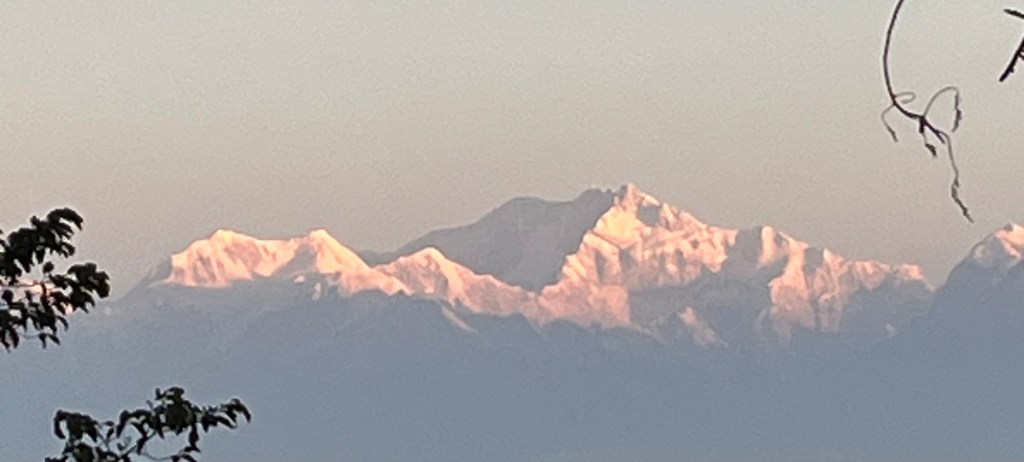
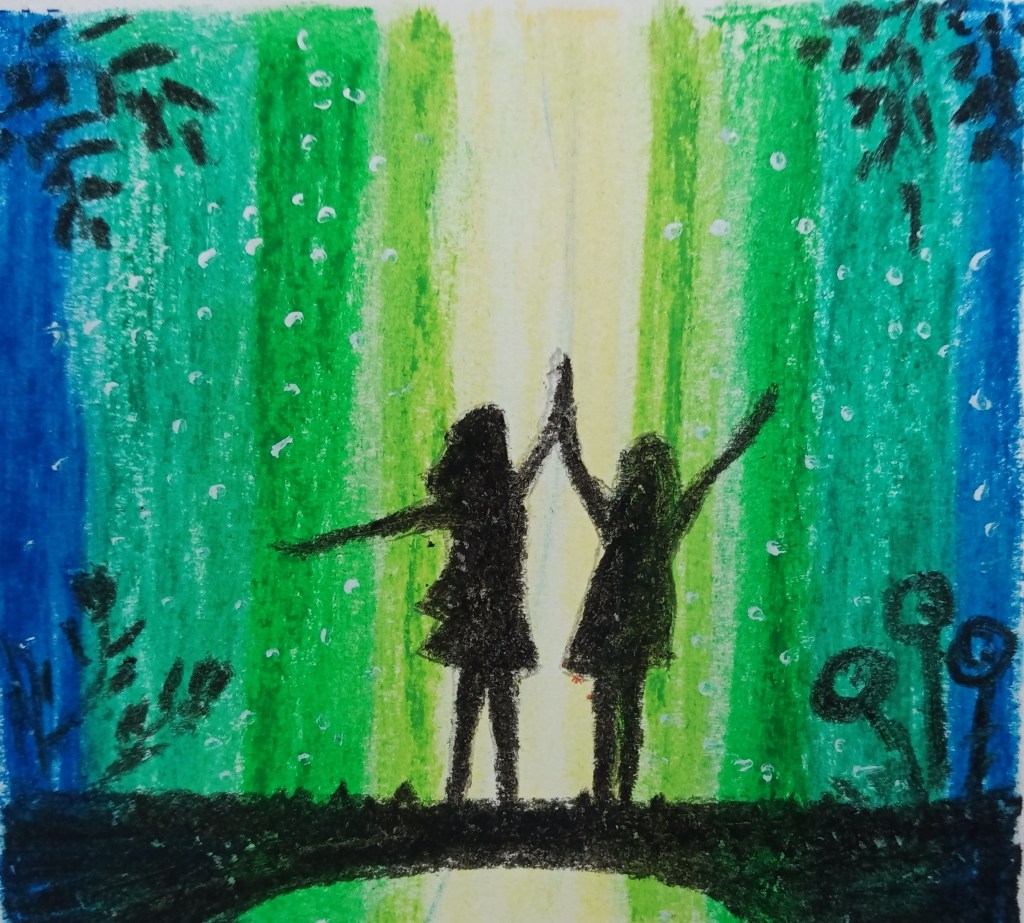


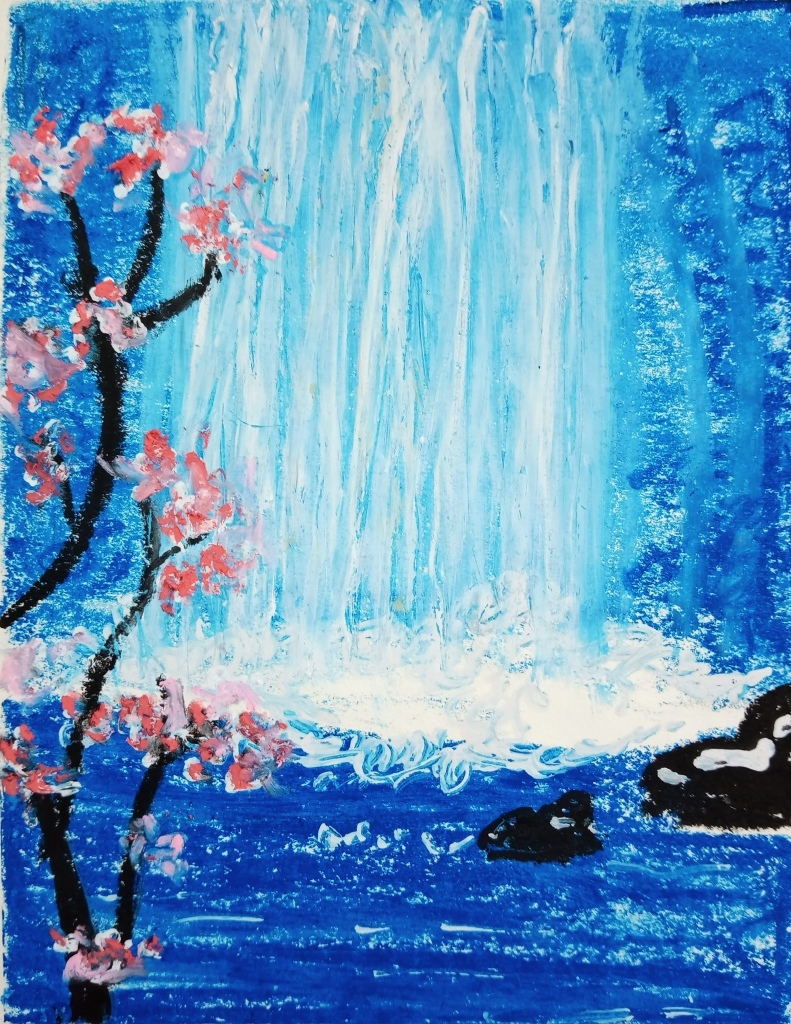


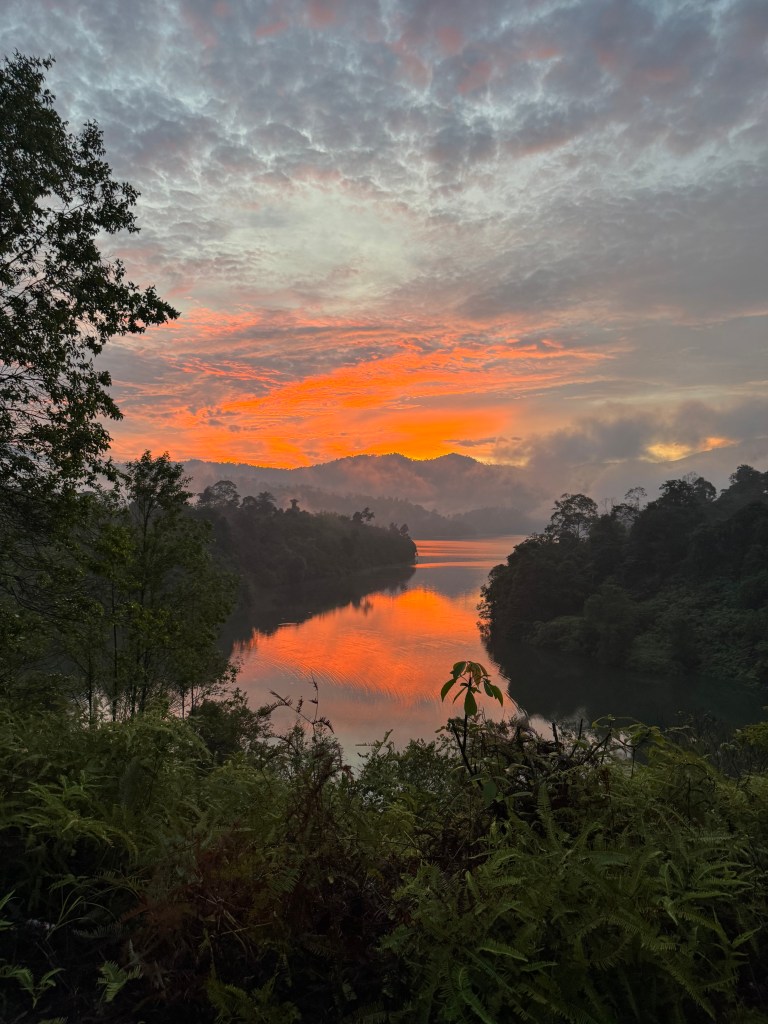
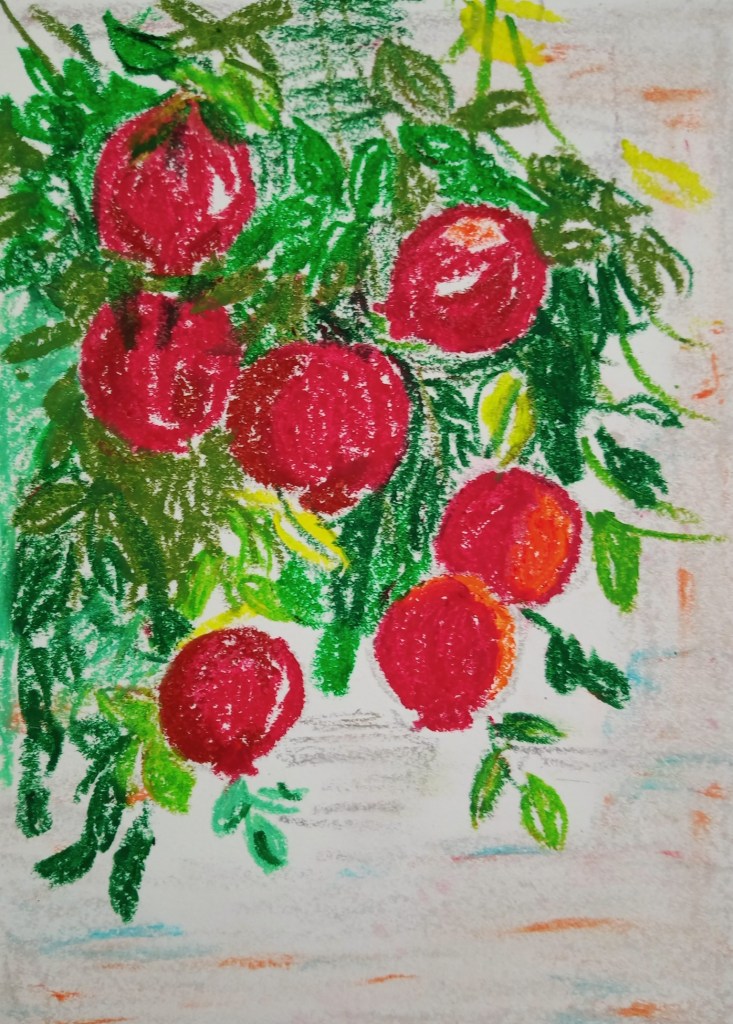

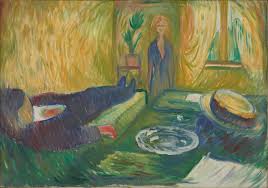
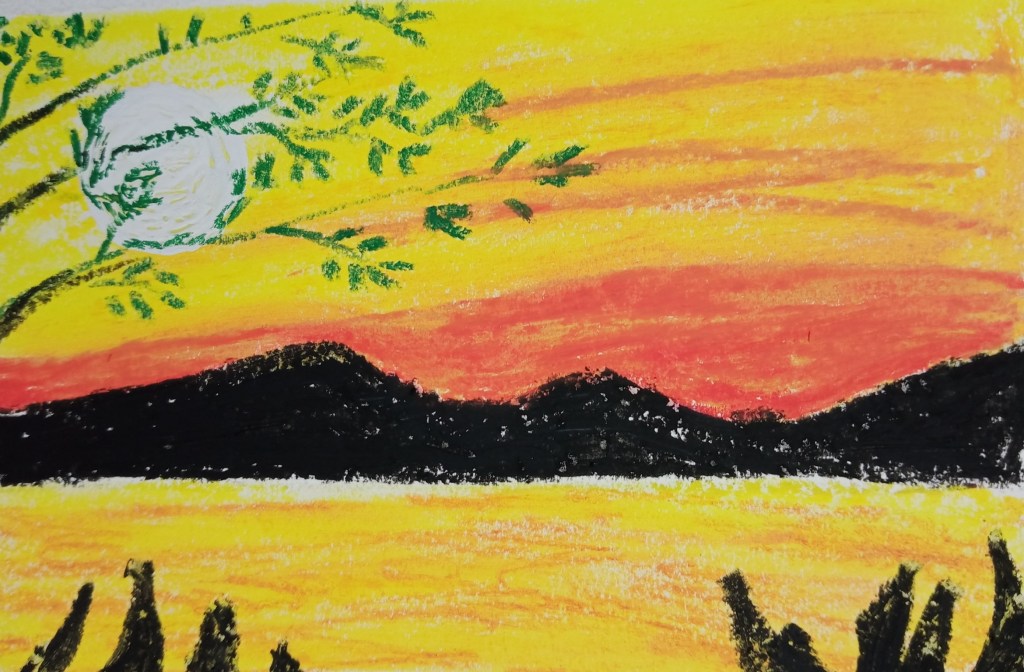
 Borderless