During an extensive interview, Pankaj Kapur, the highly acclaimed actor, director and writer, nostalgically remembered his days in NSD[1] as a student in the 70s and of Ebrahim Alkazi who was the guiding light of the school as the Director from 1962-77. Mandi House was the vibrant cultural hub where the quartet of NSD, Triveni Kala Sangam, Sriram Art Centre and Kamani Auditorium breathed cadences of art, music, dance and theatre. As the presiding deity of NSD, Alkazi’s prodigious talent in all aspects of theatre except costume (where his wife was the moving spirit) brought his dynamic genius into the quest for intercultural and interdisciplinary thinking in artistic expressions that was both transformative and liberative for his myriad students like Sai Paranjpye, Nasir, Om Puri, Surekha Sikri, Uttara Baokar and Pankaj Kapur[2], who later on lit the stage and celluloid though their exceptional talents and skill. He would have been a hundred this month. Amal Allana, his daughter has authored a biography of her father, Ebrahim Alkazi: Holding Time Captive. The book makes an absorbing read.
She brings out Alkazi’s early encounters and reception by the Hindi Theatrewallas of Delhi in the early 60s. It is the story of a western educated Bombayite who was presumptuous enough to think he could teach Delhi theatre buffs a thing or two. As a second-year student, Sai Paranjpye recalls Ebrahim as a storm under whom a metamorphosis took place in the NSD overnight. Walking in to the den of Hindiwallah writers’ camp, Alkazi caught them unawares by picking up the works of the most cerebral and experimental of the Hindi new wave movement; Mohan Rakesh’s Aashadh Ka Ek Din[3]and Dharmavir Bharat’s Andha Yug[4]. Aashadh ka Ek Din, a play with a rural background, was the story of the Indian villager, whose lifestyle, pace and values were succumbing to the inevitable onslaught of urbanisation. The basic theme was autobiographical to Mohan Rakesh himself, where he identified himself with a classical playwright like Kalidas. This mix of history and the present entwined in to a single entity, was a modernist strategy that Alkazi too had attempted while contemporising myths. He exquisitely crafted the mise en scene[5]that sparkled with delicate, nuanced performances from young student actors such as Sudha Sharma as Mallika and Om Shiv Puri as Kalidas.
India had lost a war with China in 1962. Alkazi had chosen Andha Yug, set during the last days of the Kurukshetra war, when Aswasthama stood in rage, prepared to use the ultimate weapon to annihilate the mankind. It was just not the play’s topicality, its anti-war thrust that drew Alkazi to it. Alkazi tried to shrug off the baggage of European modernism he was carrying, embarking now on a foundational journey towards a deeper ‘discovery of India.’ Through Andha Yug, Alkazi came closer to learning about India’s value system and philosophy as explored in the Mahabharata, while Aashad gave him an appreciation of the artistic sensibility of the great Sankrit poet-dramatist Kalidas, India’s veritable Shakespeare. From now on, he would engage with the idea of India between the two polarities: India as a myth and India as a kind of documented reality. Alkazi was introducing the idea that theatre was a performance art, not literature performed on stage. He was creating a language of performance that was distinct from the language of words.
The making of Tughlaq and its staging in Purana Qila is a watershed event in the theatre landscape of Delhi. Alkazi was greatly drawn to Girish Karnad’s play Tughlaq. Karnad had confided in him how Tughlaq was the most idealistic, the most intelligent king ever to come on the throne of Delhi and one of the greatest failures also. And how in the early sixties India had also come very far in the same direction. Alkazi felt that this play effectively reflected the trials and opposition a visionary leader faced, while trying to function within a corrupt political scenario. The cast of Tughlaq had some of the most brilliant actors, each painstakingly trained by Alkazi himself. There was Manohar Singh who was playing Tughlaq, Surekha Sikri and Uttara Baokar were doubled as Sauteli Ma, Nasiruddin Shah as the Machiavellian Aziz, Rajesh Vivek as Najeeb. The young reporter members included Pankaj Kapur, KK Raina, Raghuvir Yadav, a veritable who is who of latter-day cinema. Tughlaq was staged in 1972 at the Purana Qila (Old Fort) in Delhi, utilising the historical ruins as a backdrop for the dramatic spectacle. This production is considered a landmark event in Indian theatre, combining history, politics and performance to create a commentary on the reign of Tuqhlaq[6] and politics of the 60s.
Nehru’s dream of reconstructing the nation needed a powerful and unitary concept of ‘nationalism’ to recognise all productive forces in the country. Culture was very much a part of the reconstructive process that needed to be systematised and brought under one umbrella and for this purpose, three national academies had been set up: the Sangeet Natak Academy, the Lalit Kala Academy and the Sahitya Akademi. The desire to modernise Indian theatre was part of the same reconstructive cultural policy. And Alkazi was the mascot of the theatre movement and Mandi House, the epicentre of cultural conflation and crescendo.
The Purana Qila festival in 1972, with Tughlaq, Sultan Razia and Andha Yug became the most talked about cultural event of the decade He wanted to offer both the hoi polloi and the cognoscenti, including burqa clad women, high quality theatre that did not conform to ‘popular taste’; theatre that had a social relevance, that both instructed and entertained. This was Alkazi’s ideal of what constituted national theatre.
There have many stars in firmament of Indian theatre. Ebrahim revitalised Indian theatre. Habib Tanvir, blended folk traditions with modern drama. Badal Sirkar revolutionised Bengali theatre by challenging conventional norms. They are like the great troika of Indian Cinema, Satyajit Ray, Ritwick Ghatak and Mrinal Sen.
Alkazi left NSD as it was denied autonomy by scheming bureaucrats. Allana brings out how Alkazi passionately believed that an artist belongs to no political party, and has no religious ideology. An artist has to distance himself from each one of these in order to see each one of these objectively. “And finally, he has to distance himself from himself.” He wrote: “ It is our duty and moral responsibility to study history dispassionately, but with a passion for the truth, with humility and with a profound sense of responsibility and to ask ourselves seriously: What is the legacy that we shall leave behind?”
[6] A 1964 Kannada play by Girish Kannad, translated to Urdu in 1966 in NSD and most famously performed for in Purana Qila, New Delhi, in 1972
Satya Narayan Misra is a Professor Emeritus and author of seven books. The latest, Against the Binary, waspublished in December 2024. He is a regular columnist and reviewer of books for several leading newspapers in Odisha and digital platforms likeScroll.in and The Wire. He was associated with the NSD in the 70s.
.
PLEASE NOTE: ARTICLES CAN ONLY BE REPRODUCED IN OTHER SITES WITH DUE ACKNOWLEDGEMENT TO BORDERLESS JOURNAL
Malavika Rajkotia is a prominent divorce attorney based in Delhi. She has collaborated with numerous non-governmental organisations addressing civil liberties and human rights concerns. Additionally, she has a strong background in theatre, participating in approximately thirty productions in both Hindi and English. She has also served as the host of Shakti, the inaugural television talk show in India dedicated to women’s rights.
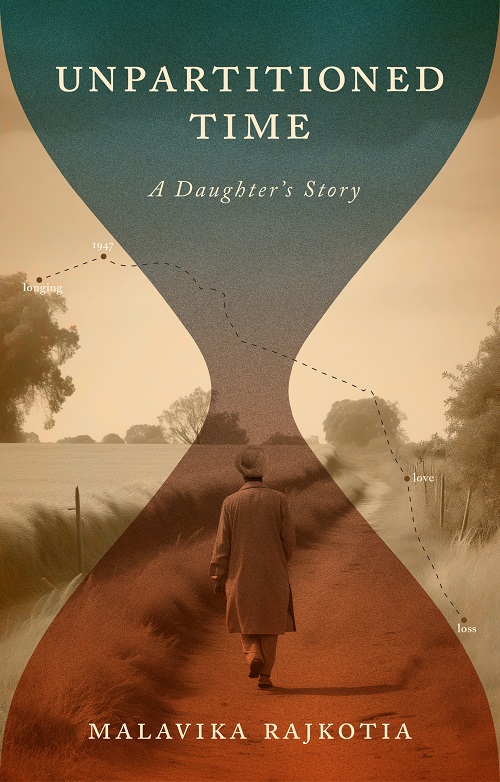
Her memoir, Unpartitioned Time: A Daughter’s Story, is a complex tale that intertwines the history and current experiences of a family following the Partition. Jindo, Malavika Rajkotia’s father, arrives in India amidst the chaos of the Partition riots. He is allocated a piece of desolate land in the small town of Karnal, where he must clear and cultivate the land to reclaim his role as landlord and patriarch. However, devoid of his past and confronted with an uncertain future in a place where the language is foreign to him, he undergoes a significant transformation. Rajkotia intricately weaves a narrative around this generous, humorous, loving, and increasingly despondent figure, delving into her family’s history and present.
The story explores themes of yearning and belonging, the nature of privilege and its loss, while reflecting on the resilience of a people stripped of their autonomy. Through her evocative and lyrical writing, she leads readers through the challenges faced by a large family—comprising uncles, aunts, siblings, cousins, and esteemed figures—who are all in pursuit of recognition, identity, and stability.
Rajkotia fearlessly confronts her milieu, whether navigating the radical Khalistan movement, the tensions between the Sikh faith and Hindu nationalism, or the pervasive cynicism of Indian politics. Her vivid, meditative, finely detailed portraits of a rich family life are filled with moments of tears, laughter, and music, and a diverse array of characters who are immensely relatable. Ultimately, this brave and moving book is about the enduring quest for meaning and fulfilment that transcends cultural boundaries.
Narrates Rajkotia: “The diffused light of dawn lit a dull, flat landscape cut by the highway, gleaming under randomly spaced streetlights. Until about thirty years ago, this single carriageway witnessed an almost daily carnage that left heavy and light motor vehicles, bicyclists, and bullock carts in confused mangles. Everyone had a personal story of loss on this road. Three of my family was killed in two separate accidents. A splintered windshield glass lodged in a young girl’s throat. An aunt and cousin died when their car rammed into a truck to avoid a cyclist.”
She has a detailed account of the road in Karnal town thus: “For over 2,500 years, this road has streamed with traders from Central Asia, scholars from China, adventurers from Europe, sadhus from the Himalayas, and armies coveting Hindustan. This portion of the road was the battlefield of the story of the eighteen-day Mahabharata war, marking the cusp of the end of the Dwapar Yuga and the rise of the Kali Yuga. Eighteen days of soldiers’ cries and trumpeting elephants and neighing horses, each ending with sunsets blackened by smoke from the funeral pyres hanging heavy until impelled by the sounds of wailing women.
“From myth, we come to somewhat recorded history in 300 BCE, when Chandragupta Maurya built this road to connect his fast-growing kingdom, spanning the north of the subcontinent from the source of the Ganga to its northwestern limits. The road was developed by Sher Shah Suri. My father remembered the time when it was called ‘Jarnailly Sadak’ under the British, and then GT Road, its official name, The Grand Trunk Road. The government of independent India called it Sher Shah Suri Marg, the Sanskrit ‘marg’ guillotining the English ‘road’ and the Urdu ‘sadak’.”
The memoir stands as a testament to the power of storytelling in bridging gaps between cultures and generations, ensuring that the voices of those who experienced Partition are heard and remembered. As part of the growing body of literature on this subject, it encourages further exploration and discussion, ultimately contributing to a more nuanced understanding of the complexities surrounding Partition and its enduring legacy.
.
Bhaskar Parichha is a journalist and author of Unbiased, No Strings Attached: Writings on Odisha and Biju Patnaik – A Political Biography. He lives in Bhubaneswar and writes bilingually. Besides writing for newspapers, he also reviews books on various media platforms.
.
PLEASE NOTE: ARTICLES CAN ONLY BE REPRODUCED IN OTHER SITES WITH DUE ACKNOWLEDGEMENT TO BORDERLESS JOURNAL
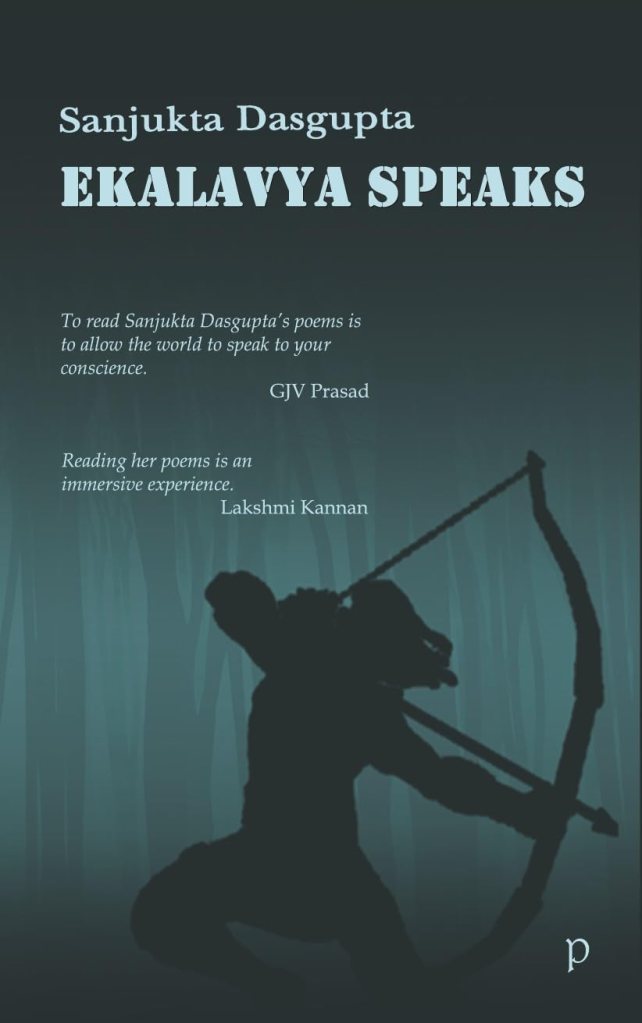
Poetry which goes beyond the boundaries of words and speaks for a greater cause calls for a captivating read. The lines become more significant when the verses address multiple socio-politico-cultural issues, aesthetically and without didacticism. Poet and academician Sanjukta Dasgupta’s latest book of poems Ekalavya Speaks is not merely a gathering of words, they rather, “[…] spread out their wings untiring/ And never rest in their flight” (Yeats) and attempt to hark at deaf ears and represent unheard voices. She is a strong voice for the otherized, marginalised sections raising issues from multiple spheres of life. Caste, gender, myth, history, pre-history, and technology all find space in her chosen selection of poems. The very last lines of the first poem, ‘Accident of Birth’ says,
“No accident could be More catastrophic than The accident of birth, alas.”
This sets the tone of the whole collection, bringing out the angst of not one voice or one poet but an entire nation. The poet is a strong voice, at times ironic as she says in her titular poem ‘Ekalavya Speaks’-
“The Sun also Rises for us I may claim your thumb some day.”
These lines are from Dronacharya, the tutor of the royal princes who asks his disciple to gift him his thumb after lopping it off as a fee to maintain his allegiance to the throne. Ekalavya, the tribal prince could not question the ‘guru’ in the Mahabharata, whereas the poet in the surreal space gives him the voice to speak for the treachery of the great guru. The guru reappears in the poem ‘Dronacharya: The Teacher of Princes’ where questions are thrown at the intentions of a biased guru who was “The glamourised bonded labour/ Leashed to the regal court.”
Her poem, ‘Kurukshetra-The Killing Field’, goes beyond the boundaries of territories and is akin to any war where lives are lost. At once Kurukshetra becomes the battleground of Ukraine or Gaza where humanity is killed every day. The crying mothers and wailing children are the same everywhere and they are representatives of the universal sorrow of pain and loss and how peace is a mere myth as “Peace was restored at the price/ of rivers of blood […]”. In fact, ‘In the Holy Land’, she talks of dying children and the toxic air of war-trodden Gaza; of the grief-ridden Bethlehem and Jerusalem.
In her greater narrative, Ekalavya and Karna unite to quest for justice, for a space in the mainstream, and for a better liberated world. In Dasgupta’s poetry, Ekalavya, Shambuka or Shikhandi are not figures from the great epics, they represent the backwards sections of society who perhaps after eons of silence they have now found the time to come out of death, saying– “ I rise from my ashes/ Resurrected!”
With Shikhandi, Draupadi’s brother in the Mahabharata, who was born a female and exchanged gender with a yaksha (nature spirit) for that of a male, Dasgupta brings in the suffering caused by gender identity. She sensitively writes about Oscar Wilde’s homosexuality in her poem ‘The Poet In Reading Gaol’. One’s sexual orientation can ironically be treated as a heinous crime. Heterogeny is also a kind of capitalism as the poet strongly urges and questions progressiveness and maligning of human rights.
In her earlier books Lakshmi Unbound, Sita’s Sisters, and Indomitable Draupadi. Dasgupta has primarily addressed the feminist question. Her latest includes poems like ‘Bapu’ and ’Manipur’. In ‘Bapu’, she talks about the rape of a 12-year-old child in the name of religion in India with sensitivity.
‘The Coffee Shop’ is an interesting and ironic poem. Dead leaders meet in a surreal space where neither murderer nor violence can touch them. They are ‘immortals’ and ‘martyrs’ and, now, are even invincible. It is utopian when Gandhi, Jesus, Martin Luther, and Julius Caesar meet each other. Religion and politics, peacemakers and warriors, all blend in a higher realm of understanding. The flavour of this poem is unique and different from the rest of the poems in the collection and yet thematically it stands out as a statement against violence and death. Death cannot bring an end to the ones whose deeds and ideals are immortal. The same can be said about another visionary poem, ‘Shakespeare and Kalidasa’.
In all the poems, the poet comes across as a strong, sensitive voice whose pen cuts across dogmas, blind faiths, violence and otherization. At the same time, she speaks for the cause of humanity. There are personal poems, like ‘I can’t breathe’; a brilliant poem describing psychological claustrophobia in a world where no peace or no prayers can end the suffering of souls. ‘The Exit’ or ‘Loss’ add richer gravity .
As a poet Dasgupta’s language is lucid and she draws her allusions and examples from the myths, from the past and the projected the future. She strongly voices her opinion. As an educator and as a responsible human being she becomes the voice of the many. Each poem unfolds a story to guides our way through obstructions, which are not physical but mental barriers from which one must liberate oneself. As I read her, I am reminded of a few lines by the great Urdu poet, Faiz Ahmad Faiz, who wrote:
Speak, your lips are free. Speak, it is your own tongue. Speak, it is your own body. Speak, your life is still yours.
Swagata Chatterjee is an Assistant Professor of English at a state-aided college under Vidyasagar University. She is an academician and a keen reader.
.
PLEASE NOTE: ARTICLES CAN ONLY BE REPRODUCED IN OTHER SITES WITH DUE ACKNOWLEDGEMENT TO BORDERLESS JOURNAL
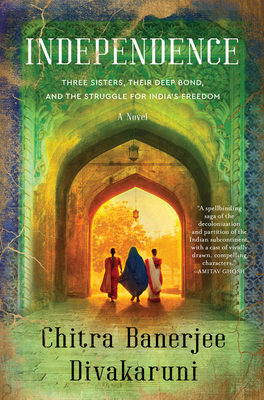
Over the last two or three decades, the Indian American writer, Chitra Banerjee Divakaruni, has managed to carve a niche for herself by regaling in stories of cross-cultural issues prevalent in India and the United States with special emphasis on experiences of diasporic immigrant women. Though most of her stories are women-centric, with time one notices a gradual tectonic shift in her selection of themes. Initially she would write on problems of immigration and culture clash plaguing Indians in the New World. In Palace of Illusions, she went back to the Indian epic and narrated the story of the Mahabharata told from Draupadi’s point of view. In her novel The Forest of Enchantments, she brought Sita at the centre of the epic narrative The Ramayana and accorded her parity with Ram, revealing her innate strength. Then she took recourse to Indian history and rebuilt the story of Maharaja Ranjit’s Singh’s empire in Punjab narrating it from the viewpoint of Rani Jindan Kaur, his last wife as one of the most fearless women of the nineteenth century. Apart from the available historical data, she filled in The Last Queen by imagining many things Jindan would have said and done and thus painted a complete picture of a woman from all perspectives. A perfect blending of fact with fiction, the novel interested all categories of readers, serious and casual alike.
Now with Independence, Divakaruni widens her canvas to tell us the story of a doctor’s family and his three daughters against the freedom movement in India, particularly Bengal, beginning from August 1946 till the epilogue in 1954. The story of India’s independence is narrated through the eyes of three sisters, each of whom is uniquely different, with her own desires and flaws. They live in a rural village Ranipur and right at the beginning of the novel, which is divided into five parts and an epilogue, the author manages to give us the idyllic ambience of the place in very selective poetic language:
“Here is a river like a slender silver chain, here is a village bordered by green gold rice-fields, here is a breeze smelling of sweet water-rushes, here is the marble balcony of a grand old mansion with guards at its iron gates and servants transporting trays of delicacies up the stairs, here are a man and a woman on carved teak chairs. Here is the country that contains them all.
“The river is Sarasi, the village is Ranipur in Bengal, the mansion belongs to Somnath Chaudhury, zamindar. He is playing chess with Priya, daughter of his best friend, Nabakumar Ganguly. The country is India, the year is 1946, the month is August.
“Everything is about to change."
Doctor Nabakumar Ganguly is an idealist and with his practice in their native village Ranipur, where the family resides, he also treats patients in a slum region in Calcutta. He is highly regarded but earns little as he refuses to charge patients without sufficient means. His wife Bina complains about this but supplements the family income by making exquisite quilts for sale and gifting them to those in need. Among the three daughters, Priya is intelligent and idealistic, and resolved to follow in her father’s footsteps she wants to become a doctor, though society frowns on it. She is fortunate to have the support of zamindar Somnath Chowdhury, her father’s best friend. The eldest daughter Deepa is very beautiful and is determined to make a marriage that will bring her family joy and status. The third daughter, Jamini, is devout, sharp-eyed, and a talented quiltmaker, with deeper passions than she reveals.
Theirs is a home of love and safety, a refuge from the violent events taking shape in the nation. This idyllic setting changes rapidly, as the violence of Direct Action Day in August 1946 takes Nabakumar’s life and introduces fear and a communal bitterness in the once largehearted Bina’s veins. Soon their neighbours turn against them, bringing the events of their country closer to home. Deepa is estranged from her mother and eventually isolated on the other side of the border in what becomes East Pakistan, when she falls in love with Raza, a Youth Leader at the Muslim League. As Priya is determined to pursue her career goal, her attempts to get into medical school in India are thwarted by a gender bias, and she finds herself at a college in America. But due to several reasons she cannot complete her degree there and comes back to India to run the clinic where her father worked. And Jamini attempts to hold her family together, even as she secretly longs for the handsome Amit, her sister’s fiancé. When India is partitioned, the sisters find themselves separated from one another, afraid of what will happen to not only themselves, but also each other. It is only then that they understand what it means to be independent, and the price one must pay for it.
After a lot of twists and turns to the story, including smuggling of arms and rescue mission on the Ichhamati River dividing the two Bengals, Amit shot to death, by the time we come to the Epilogue it is 1954 where we learn about Deepa’s daughter Sameera, Jamini’s son Tapan, Deepa managing the zamindari estate and Manorama and Somnath eager to find a suitable match for Priya when she tells them that she is happy as she is now. Feminism, communal amity, empathy, and self-growth are among the requisite qualities Divakaruni identifies for both a country and a human being to be truly independent. Though set in households more than seventy years ago, towards the end we still find some hope. The Postscript to the story is rather interesting as it comes even after the epilogue. It reads thus:
“Here is a river. Here is a wind rising. Here is a village. Here is the year.
“The river is time, ebbing, flooding. The wind is memory, it can carry flowers, it can carry flames. The village is the world, and you are at its centre. The year is now.
“What will you do with it? What will you do?”
As a Professor of Creative Writing in an American university, Divakaruni has gained the expertise of playing her cards well – her narrative technique in each of her novels and short story anthologies preaches what she teaches – the saleability and marketability of a book in this electronic age should be of utmost concern. Like her earlier novel The Oleander Girl, which seemed to have been written as a sort of film script in mind, (incidentally two other novels are being made into motion pictures at the moment), Independence too seems to follow suit with the right amount of ingredients necessary for promoting the book to different kinds of readers and in different forms as well. One is therefore taken by surprise to find a QR code even before the Contents page which tells us to “Listen to the soundtrack for Independence. A playlist of songs that inspired the freedom movement.” For her Western readers, Divakaruni managed to blend history and fiction very well where along with the fictitious characters we get to read about Mahatma Gandhi and the Noakhali riots, Sarojini Naidu, Nehru and others as they played their parts in the freedom movement. Here we find Priya actively engaged in conversation with Sarojini who gives a letter of recommendation to Bidhan Chandra Roy to help Priya to run a clinic.
One praiseworthy aspect of the novel is how Divakaruni manages to give us details of the streets and sounds of Calcutta – the Calcutta of the 1950s with her double decker buses, the shops at New Market, the quaint little restaurants with curtained cubicles to maintain privacy in a public place – all brought back from memory of the city in which she was born and brought up. The novel is also full of translations of several patriotic songs in Bangla which the swadeshis sang during that period. Several lines from Tagore’s songs are also interspersed to express the moods of characters – a technique used by Divakaruni in some of her earlier fiction as well. The exoticism of India, especially rural Bengal of the time is deftly portrayed through many other incidents of killing and looting at different regions of undivided Bengal. As for her Indian readers we are given the story of Priya’s brief stay in America to study medicine at the Woman’s Medical College in Philadelphia where along with her homesickness, we have Arthur, a lovelorn American doctor, who lends her support and patiently waits for her to come back to him as “his heart has been empty” without her.
Despite such manipulations to the story to bring in as wide a canvas as possible, including sufficient examples of Hindu-Muslim amity and hatred as well, the novel remains a page-turner no doubt and can be recommended for its lucid and racy style of narration, something that Chitra Banerjee Divakaruni excels in.
Somdatta Mandal, author, critic, and translator, is former Professor of English at Visva-Bharati, Santiniketan, India.
PLEASE NOTE: ARTICLES CAN ONLY BE REPRODUCED IN OTHER SITES WITH DUE ACKNOWLEDGEMENT TO BORDERLESS JOURNAL
Jibananda Das’s All Afternoon Long, translated from Bengali by Fakrul Alam. Click here to read.
The Colour of Time, Korean poetry composed and translated by Ihlwha Choi. Click here to read.
The Ordeal of Fame, a humorous skit by Rabindranath, translated by Somdatta Mandal. Click here to read.
Fazal Baloch translates a retold folktale from Balochi, The Precious Pearl. Click here to read.
Tagores’ Lukochurihas been translated from Bengali as Hide and Seek by Mitali Chakravarty. Click here to read.
Pandies’ Corner
These narratives are written by youngsters from the Nithari village who transcended childhood trauma and deprivation. The Story of Rajesh has been written by Yogesh Uniyal in a mix of English and Hindi, and translated fully to Hindi by Nirbhay Bhogal. Clickhere to read.
Rhys Hughes shares why he put together an anthology of humorous poetry with seventeen writers, Wuxing Lyrical. Is his logic funny or sane? Click here to find out.
In An Encounter with the Monet on Naoshima, Suzanne Kamata writes of snacking on Claude Monet’s hundred year old recipes while savouring his art and that of the famed artist who makes bold art with polka-dots, Yayoi Kusama. Click here to read.
An excerpt from Upamanyu Chatterjee’s Villainy. Click here to read.
An excerpt from Ramy Al-Asheq’sEver Since I Did Not Die, translated from Arabic by Isis Nusair, edited by Levi Thompson. The author was born in a refugee camp. Click here to read.
Book Reviews
Rakhi Dalal revisits Tagore’s The Post Office, translated from Bengali in 1912 by Devabrata Mukherjee. Click here to read.
Indrashish Banerjee reviews Upamanyu Chatterjee’s Villainy. Click here to read.
For when your troubles starting multiplying
And they just might
It's easy to forget them without trying
With just a pocketful of starlight
Catch a falling star and put it in your pocket
Never let it fade away (never let it fade away)
Catch a falling star and put it in your pocket
Save it for a rainy day
'Catch a Falling Star' by Paul Vance and Lee Pockriss
Perhaps, it is time to find that fallen star popularised by pop singer Perry Como is 1957. Optimism glimmers faintly, sometimes even conceals itself, in a world passing through a dark phase in history. For instance, few of us would know that we might find more answers to tackle climate change as dinosaur fossils (from the time an asteroid hit the planet) have been unearthed recently. That sounds like solutions can be had to what was perceived as inevitable doom.
Another bit of news that perhaps will cheer some is the first anthology of Borderless Journal will soon be available in market. It has been accepted by a publisher, an old, trusted and reputed name from India, Om Books International. They have bookshops splattered all over — should make it easy for buyers to access the book. Hopefully, you can target the anthology for your Diwali or Christmas gift hampers. Om Books has one of the most iconic editors-in chief, Shantanu Ray Chaudhuri. A multiple award-winning editor, he has worked in Penguin and Harper Collins and is currently churning out wonderful books from Om with a fabulous production team, working with whom has been a pleasure. Ray Chaudhuri is an outstanding film writer and poet. He is part of a group that is creating a film archive online. To know more about him or his views on publishing, you can read our online conversation with him.
The energy one gets from optimism like starlight from a fallen star, lightens the darker shadows that create gloom with the war leading to rise in prices and threats of recession in a post pandemic scenario. Lesya Bakun, the refugee from Ukraine whose story we carried last month, finds her starlight by sharing updates of her story. She added to her narrative with the news that her cousin has been taken as a prisoner of war by Russia from the besieged factory in Ukraine. Though sharing does not alleviate suffering, Bakun’s ability to cling to hope and imagine a future where she gets her dream highlights the strength of her convictions. The other thing that is revealed by her narrative and media coverage is exclusivity and boxes of ideology split humankind, erase families, cities, countries, lives and sanity. The war can appease only the lust of warlords. Against this desolation caused by the devastation, what could be the starlight that would lead to a happier future?
Laughter. Unleashing the ability to laugh at oneself is as potent as laughter that generates relief and lightens our mood, so that we can view differences as whimsical, treat them with tolerance and compassion and not destroy the diversities that add colours to the world. Perhaps, that is why Tagore took to humour too. Somdatta Mandal has translated a series of humorous skits by Tagore. We are featuring one of these called the ‘Ordeal of Fame’. Yet another translation or transcreation of a poem called ‘Lukochuri’ or ‘Hide and Seek’ reflects the playful in Tagore’s oeuvre. These, along with Rhys Hughes humour on the pandemic in poetry and prose, bring good cheer into our journal. Hughes has also used his column to tell us why he curated a new humorous anthology of verses by seventeen poets called Wuxing Lyrical. I wonder if he is serious or joking!
As we trot around the globe, Suzanne Kamata tells us about a Monet museum in Japan where she ate madeleines made with the artist’s recipe! Meredith Stephens sails to Tasmania with her camera and gives us a glimpse of nature’s plenty. Ravi Shankar relates his trekking adventures among the Himalayas in Nepal, with awesome photographs of these mountains, while Kenny Peavy who lives in Indonesia dwells on the value of falling down and getting up in a light humorous vein against the backdrop of nature – though metaphorically perhaps the world needs to do that. We have G Venkatesh’s story about his stay in Johannesburg where he discovers that skin tones do not matter.
Ratnottama Sengupta makes the whole world look like a home with the story of a legendary screenwriter, Jean Claude Carriere, who wrote the script of Mahabharata for Peter Brook’s play (1985) of the same name and the subsequent film (1989) — with characters drawn from all over the world. Candice gives us an overview of the pandemic, with more focus on US where she lives.
Mike Smith travels back to another time when an ailment called World War II raged and has revived a writer from the past, HE Bates (1905-1974). We have another essay by Dan Meloche on a legendary book which turned 100 this year — Herman Hesse’s Siddhartha. Rakhi Dalal revisits more than a century old translation by Devabrata Mukherjee of Tagore’s The Post Office which bears relevance to the present day as it shows how the human spirit endures over even the darkness of death.
Bhaskar Parichha has reviewed Radhika Gupta’s Limitless: The Power of Unlocking Your True Potential, by his assessment a book that inspires youngsters to take charge of their future. On the other hand, there are books that explore the darkest in humans. Basudhara Roy has reviewed a collection short stories by Sunil Sharma called Burn the Library & Other Fiction. Indrashish Banerjee reviews Upamanyu Chatterjee’s latest novel based on modern day crimes, Villainy, from which we are carrying a book excerpt too. The other excerpt is from a narrative written from a refugee’s perspective, Ramy Al-Asheq’s Ever Since I Did Not Die, translated by Isis Nusair from Arabic. Born in a refugee camp in Damascus, this Syrian-Palestinian poet defies all genres to touch hearts with brutal honesty. No less sincere is Michael Burch’s poetry on summer that ushers in the season as much as Sohana’s beautiful painting that we are using as our cover photo. We have poetry from not just Shantanu Ray Chaudhuri but also by George Freek, S. Srinivas, Tohm Bakelas, Abin Chakraborty, Marianne Tefft and many more. As usual, I have not mentioned all the treats in store for you. Delve into our contents page and browse to find out more.
Before winding up, I would want to extend my thanks not only to our team and contributors, but also to our publisher who is willing to republish our content with some tweaking. Thanks to our readers who, I hope, will be excited to have selected content between their palms as a hardcopy anthology with 49 of our most iconic pieces. We have more than a thousand published works. This anthology will be an iconic sample that you can carry anywhere with you even if there is no internet – that would include Mars and Moon!
I wish you happy reading, happy dreaming and hope… plenty of it.
Translated by Sarmishta Mukhopadhyay, edited by Nabendu Ghosh’s daughter, Ratnottama Sengupta, to mark his birth anniversary, Siri Beye Nichey (Down the Stairs) was first published in the Bengali weekly, Sharadiya Bartaman (1998) and subsequently in the anthology, Paresh Mandaler Laash ( Paresh Mandal’s Corpse, Publisher: Mitra & Ghosh).
A page from Down the Stairs in BengaliParesh Mandal’s Corpse by Nabendu GhoshPhoto Courtesy: Ratnottama Sengupta
“This does not feel like Bangur Hospital, Jibu,” Judhistir said to his son.
Jiban was leading the way. Sunayani was following with her husband, holding his hand to lend him support.
Jiban replied in a very low voice, “This is Bangur…”
“Can you again see with your eyes?” Sunayani snubbed her husband. On hearing this Judhistir fell silent.
But he was right: it was not Bangur, it was Chittaranjan Cancer Hospital.
Jiban and Sunayani did not utter ‘Cancer’ lest the word put a scare in Judhistir and he refused to go for the required tests. Of late Judhistir would cough continuously and groan, feeling pain on the right side of his back. So initially he was taken to Bangur Hospital. After the preliminary tests they referred him to this hospital for the final detection. That’s how they were all here this morning.
Judhistir was not blind by birth. He lost his eyesight when he was sixty — a fallout of Glaucoma. But he has implanted in his mind whatever he has seen over the last sixty years, so he can still make out where he is and which way he is going.
It took about four hours to finish all the tests. The results would be known to them in another three days. They all came out of the hospital.
At around two in the afternoon, they returned to their single bricked home in a Jadavpur shanty. A rented space where they’ve been living for the last thirty years, paying Rs 50 a month.
Their poverty set in when Judhistir went blind some fifteen years ago. That’s when they rented out two of their rooms and a small corner of the veranda to Shibnath for Rs 30 a month, to supplement their income.
Jiban’s four-year-old son, Nantu, was playing in the courtyard with Shanti’s eight-year-old daughter, Ritu. As soon as he saw his grandparents he ran up to them, hugged his grandma and asked, “What have you brought for me Thamma?”
With a smile Sunayani brought out a small parcel of sweets from her bag and gave Nantu and Ritu a piece each. She had bought these on her way back. It made both the kids very happy.
Judhistir coughed a couple of times and flopped on the bench in the veranda.
Shibnath’s widowed sister Shanti came out. Casting a glance at Judhistir she asked Sunayani, “What did the doctors say, Mashima?”
“They carried out the tests,” Jiban answered. “Nothing serious or to be scared of.” As he spoke, he looked at his mother, then at Shanti. Eye to eye they had a silent communication. Then Shanti said, “Well then Mashima, finish your bath and have your lunch. It’s already very late.”
“Yes Ma, I’m going in,” Sunayani said stepping towards her room. “Let me arrange for your Mesho Mashai’s bath first.”
When Jiban and Sunayani were by themselves she whispered to her son, “I’m scared for your father Jibu…”
“If you fear from now Maa, how will you survive?” Jiban smiled. “We will worry about fear after three days.”
*
After lunch when Sunayani brought the medicines to her husband, Judhistir said slowly, “Because of me both Jibu and you had to skip work today.”
Sunayani placed a hand on his shoulder as she said, “One of us stayed away for his father, another for her husband, so don’t you worry.”
Judhistir smiled. And repeated the words he always uttered, whenever he was happy or sorrowful: “Hari Hari Hari!”
*
Judhistir had been blind for the last 15 years but before that he had seen and enjoyed life. So even now, when the light was switched off he could feel the darkness deepen and when the sun rose he can feel that too, and his dull eyes shimmered with life. Slowly he rose from his bed and called out, “Jiban’s Maa, d’you hear me?”
“Coming dear,” her trembling voice answered.
The sweet smell of something frying in the pan entered his nostrils — it signalled that a new day had started.
Sunayani came and stood by him. The heat of the stove imparted a blush of pink to her fair skin. Her forehead gleamed with beads of sweat. Her face, though lined with wrinkles, showed that she was once a beautiful lady.
“Awake? Are you feeling well?”
“Yes dear, I am fine.”
Combing his unruly hair with her fingers, Sunayani said, ” Wait, I’ll get you your tea.”
“Is Jiban up?”
“Still lying in. I will wake him up with his morning cup.”
“Where’s Nantu?”
“Sleeping in Shanti’s room, next to Ritu.”
“Hari Hari Hari!”
*
The clock hands were racing. Judhistir realised that Jiban was up. Shanti’s brother Shibnath, his wife Jaba, Nantu and Ritu were all awake.
Shibnath worked as a salesman in a stationary shop at Gariahat. He was ready to leave. Jaba served as a maidservant in three houses in Jadavpur itself. She too would leave to be back by five in the evening. Sunayani would finish her cooking and go to one Sanjay Chatterjee’s house where she supervised the kitchen. Jiban, a peon in an advertising firm, was also preparing to leave. Sunayani and Jiban respectively brought home Rs 500 and Rs 800. This 1300/- was their total source of livelihood.
Sunayani helped her husband to wash up and take a bath. Then she fed him some roti and tea. She finished all her chores and kept lunch ready for him. Shanti had become like their daughter. All through the day she took care of not only Judhistir but also of Nantu. In her spare time she made paper bags. Every Saturday a man stopped by to collect them. The profit wasn’t much but even Rs 100 was not to be sneezed at.
By this time Jiban and Sunayani were ready to leave. “I’m off Baba,” he said to his father. “All right son — Hari Hari Hari!” “I’m off too — you take care.”
“Hyan, you too. Hari Hari Hari…”
*
Mother and son headed out of the house together. Once on the main road, they took a bus to Lord’s Crossing. Within five minutes they arrived at the junction. From there they reached the Lake Gardens Super Market where Sunayani sat down under a leafy tree near the eastern gate.
“Okay Maa, I’ll carry on now,” Jiban said to her.
“Hyan,” Sunayani nodded to him, “but be very careful while on work.”
“Yes Maa,” Jiban went his way.
Sunayani had come in a worn out, soiled sari. She pulled the pallu over her head and sat down. The bindi on her forehead was bright crimson. She leaned against the wall with the palm of her right arm stretched out. The passers-by, in a rush to get to the market, didn’t even cast a glance at her. But those coming out with their hands laden with purchases all noticed her saddened, poverty stricken beautiful face. Some of them stopped to drop ten paisa, 20 paisa or a quarter too in her outstretched hand. At times some of them moved on and then came back to give her something.
This was a daily occurrence. Sometimes two or three shoppers dropped even a rupee each while five-six others happily parted with 50 p coins. “May God bless you!” Sunayani gratefully muttered. Or she varied the blessing: “May you be victorious!”
In other words, Sunayani neither cooked nor supervised the kitchen in any house. She had taken to begging because she did not get a suitable job. But she did not tell this to Judhistir whose self-respect was intense although Shibnath, Jaba and Shanti were aware of this. This job easily earned her 300 to 400 rupees every month.
*
By now it was around 8 am. Jiban could be spotted in Lake Gardens. He had come out of the house wearing a dhoti and kurta. Now he had put the kurta away in a plastic bag and in its place, covered himself with a thin white cotton drape. His hair was ruffled. He’d not shaven since the previous day. In his underarm he was holding a rolled straw mat. He had grief writ over his face.
He entered a three-storeyed building and climbed up the stairs.
There were three flats on each floor. He pressed the first bell.
A lady opened the door. “What d’you want?”
“I’ve lost my mother Madam! Please help me, I’m too poor to observe the rituals of mourning.”
With sharp eyes the lady looked at Jiban. The sadness on his lean and tender face touched the mother in her. “Wait,” she told him and went indoors. A minute later she emerged with an almost-torn two rupee note.
Jiban bowed low as he took the money and slowly walked towards the staircase. As soon as the lady shut her door he turned around and pressed the bell on the second door.
*
“Who’s there?” A heavy voice floated out moments before the door opened. A thickset Punjabi gentleman in his mid-fifties came out.
“What do you want?” The gentleman asked with a frown, then repeated the question in Bengali, “Ki chai?”
A charming teenaged girl came and stood behind him. Jiban repeated what he’d just phrased: “I’ve lost my mother Sir! Please help me, I’m too poor to observe the rituals of Matridaay.”
“Matridaay?!” The Punjabi gentleman could not comprehend the term.
“Papa, his mother is dead,” the girl helpfully interpreted. “He needs money for her shraddha. He seeks some help.”
“Rubbish!” The man uttered and went in.
The girl stepped forward and asked in unaccented Bengali, “When did your mother die?”
“Day before yesterday sister.”
“What happened?”
“She had cancer.”
“Oh!” she said, and shouted, “Papa, his mother died of cancer.”
“Okay okay…” Once again the man stood framed by the doorway. He handed his daughter a two-rupee coin and said, “Go give it to him.”
The girl gave him the two rupees and said, “Our sympathy is with you.”
“Thank you sister, thank you.”
The girl closed the door.
*
Now the third flat. The door was opened by a bespectacled Bengali gentleman in pajama kurta. He would be in his forties.
The moment he saw Jiban he harshly demanded, “What d’you want? Help? Money?”
“Yes sir, for my mother’s last rites I need some help.”
“Help? No hope of that here.”
“Have pity on me sir!”
“No, I never pity anybody. Asking for pity is your business but not showing pity is my belief. Go, get lost.”
Jiban looked at the man as if crestfallen. He shut the door with a bang.
Defeated, Jiban slowly started to walk away. Just then the same gentleman opened the door again.
“Hey, come here.”
Giving him a rupee coin he ordered, “Scoot!”
Again the door closed with a bang.
*
Jiban climbed one floor down.
The door to the first flat was opened by a Bengali youth. He smiled as he asked, “Mother’s dead, isn’t that so?”
“Yes sir, my mother…”
“Oh what a truthful Yudhisthir!” he mocked. “Get lost!”
The door closed on Jiban’s face.
The next flat was opened by an elderly lady. She was saddened by Jiban’s mourning uniform and grief stricken appearance. “Wait,” she said before disappearing inside. She returned with a five rupee note.
The lady in the third flat also gave him a rupee.
Finally Jiban came to the ground floor. An elderly Marwari opened the first door. Patiently he listened to what Jiban parroted, then with a stern face and a quiet voice he said, “You cheat! Bolt – or I’ll call the police.” The door banged shut.
The next flat yielded Re 1, and a paan-chewing Marathi in the last flat also parted with a rupee.
Coming out of the building he counted his earning — Rs 13.
From one building to another, Jiban roamed about in the Lake Gardens area till 12.30 pm. Then he halted – “All the ranting will start now,” he thought to himself. So he counted his net collection of the morning – Rs 30.50. Not bad at all. Satisfied, he returned to the supermarket where his mother was waiting.
*
“Had your lunch?” Sunayani asked.
“No. What about you?”
“No. Come let’s eat together.” Both of them took out their tiffin boxes filled with three rotis each, some dry vegetables, and molasses. They ate, then had their fill of water. Aah! Deep satisfaction.
“How much did you earn this morning?”
“Good intake Maa, about Rs 30. And you?”
“Rs 11.”
A moment’s hesitation, then Sunayani said, “Sometimes I fear for you… This profession…”
“Maa, people are still kind,” Jiban reassured her, “if they hear something has happened to your parents they take pity on you.”
Sunayani fell silent. Then both of them rested under the same tree. It was 4 pm but the market was still dozing, the shops had their shutters down. Sunayani would stretch out her arms again at 5 but Jiban carried on. He tried his luck in ten-twelve other houses and stopped after sunset. This round fetched him another Rs 15. It would take another week to complete Lake Gardens. This was a classy area, and people still respect the word ‘Maa’. So his earning was bound to be good despite all the abuses.
*
It was late evening when Jiban returned home. Shanti was at the door, she gave him a sweet smile. At about twenty eight Shanti was lean, carelessly dressed, had no time for grooming and still was nice looking. They stared at each other for a few seconds, conveying their feelings to each other through their eyes. Then Jiban went in.
Judhistir heard Jiban’s footsteps and asked, “Jibu, hasn’t your mother come home yet?”
“No Baba but she will any minute now.”
“I was just a little worried. It’s a bit late today, isn’t it? Past 7…”
“No! It’s just 6.30…”
Judhistir kept quiet.
Jiban washed, bathed, put on a rather old but cheerful lungi and a fresh shirt. Cautiously he went out of the house, came to the main road and sat in Anil’s Tea Stall. “Come friend!” Anil invited him in. Jiban sat in a corner, picked up the day’s newspaper and started going through the headlines.
Half an hour later he asked his friend for a cup of tea. Like every other day Anil put two cups of tea next to him at one go. Jiban sat there till 9 pm. In between he lit up a cigarette, his one luxury. He sat there listening to all the conversations between the other customers. He set out for home when Anil closed shop for the day. This has become his daily routine.
Back home he played with Nantu and Ritu, he chit-chatted with Shibnath and Jaba, had small talk with the others. Then came dinner. After washing up, it was time to go to bed.
But for some reason Jiban couldn’t sleep. As on other days he woke up in the middle of the night. The fears that were buried deep within now started to haunt him. Images of his past life surfaced on the screen of his mind like scenes from a movie.
Jiban had studied up to class nine when he landed his first job — in a decent steel factory. In four years he mastered the job but just as he was to be made permanent in employment the Employees Union declared a strike. Jiban had played an active role in the strike. The labourers won after a month of striking work but six months down Jiban was laid off for a small mistake. The Union sympathized with him but did not come to his help as he was a “casual worker.” He was twenty six then.
After this he got a job as a peon in an office at Dharamtala. Around this time he married Shipra from his neighbourhood. His mother did not consent to the marriage but he was adamant. A year later Nantu was born and two years later Shipra eloped with the local hooligan, Paresh. What shame! No one knew their whereabouts now.
From then on his life changed. Unsuccessfully he tried his hand at different jobs and several businesses — all in vain. At last when he found no other way he took to earning by deceiving others. But now what?
His blind father’s condition was deteriorating by the day, his mother’s health was failing yet she had taken to begging on the streets under the open sky. And Nantu was growing up. What does the future hold for him?
The thought made him restless. Edgy. He got out of his bed and lit a cigarette — the second luxury of the day.
*
Old people don’t easily fall asleep, either.
From his bed Jiban could hear his parents talk.
Judhistir was whispering to his wife, “I feel nervous when you are gone from home for so long. I get depressed. I can’t see you even when you are at home but I feel…”
“Don’t I know that!” Sunayani placed a hand on his mouth. “And am I happy staying away from home for hours on end? But now please be quiet. Sleep…”
*
The next morning Jiban went to the Cancer Hospital to collect his father’s test report.
A long queue.
After about half an hour the doctor summoned him.
“Who are you to Judhistir Das? Any blood relation?”
“Yes, I’m his son.”
The doctor was sympathetic. “I’m sorry to inform you,” he shook his head, “your father has cancer in his right lungs and it has reached the terminal stage. You should have started the treatment long ago. Now he has a very limited his time span.”
Jiban gulped twice before speaking, “Even so, how many more years doctor?”
With a sombre face the doctor replied, “Six to seven months, at the most a year.”
It took Jiban some time to find his voice, “Any possible treatment?”
“Your father is beyond any treatment,” the doctor said, “but if, for your peace of mind, you wish to go for an operation, it would cost approximately Rs 20-25,000 here in Kolkata and about Rs 60-70,000 in Mumbai. It is for you to decide. Anyway, here are the reports and a prescription of the medicines he will need right away.”
As he took the reports Jiban felt as helpless as his blind father. When he staggered out of the hospital it was 11 am. It was late, still he went about his business as usual. He did the rounds of 10-12 houses in Lake Gardens repeating the same story of his mother’s death and managed to earn Rs 16.
Sunayani was anxiously waiting for her son. The moment she sighted him she eagerly asked, “Got the report?”
“Yes Ma,” he flopped next to his mother.
“What is ailing him?”
Jiban could not utter the ‘Cancer’ word.
“Why aren’t you answering? What’s wrong?”
Jiban recounted everything he’d heard from the doctor. Sunayani stared vacantly at him, then lay down on the ground.
“Maa!”
Sunayani did not respond.
“Maa it won’t do to break down. Oh Maa!”
“Let me get my breath back son…”
“Don’t breathe a word of this to him,” Jiban said, “not even by mistake.”
“But we must try to save him.”
“Yes Maa, we must. But if we break down who will try?”
Sunayani nodded, “Right.”
*
As soon as Sunayani entered the house in the evening Shanti rushed out and told her, “Mashima some relative of yours had come today — he saw you begging in the Lake Gardens Super Market and gave the news to Mesho Mashai. Since then he is livid and ranting like a madman.”
Sunayani thought it would be better not to face Judhistir then. She wanted to talk to Jiban first and decide how to deal with the situation.
Judhistir’s voice could be heard calling out, “Shanti! Ma Shanti!”
Shanti walked up to his room, “What d’you want Mesho Mashai?”
“Isn’t your Mashima home yet?”
“Shanti looked at Sunayani who shook her head to say “No.”
Shanti replied, “No Mesho Mashai.”
“And Jiban? He isn’t back too?”
“No Mesho Mashai, Jiban Da isn’t back either.”
“Hari Hari Hari! Oh god, please take me to you!”
Hearing his anguished cry Sunayani was reminded of the report from the hospital and tears welled up in her eyes. Somehow she controlled herself.
Nantu and Ritu were still playing in the courtyard. Shibnath returned from work followed by Jaba. In a low voice Shanti told them not to ask Sunayani anything.
After a while Judhistir again called out, “Shanti! O Ma Shanti!”
“Yes Mesho Mashai?”
“Your Mashima…”
“Still not back — nor is Jiban Da -“
“Why is Jiban’s mother so late today?”
At that very moment Jiban entered the house. Sunayani gestured to him to be quiet, drew him aside and told him all the developments. “What will happen now Jiban?” she asked him in despair.
Jiban thought for a while, then said, “We’ve lied to Baba all these years but now it’s time to tell him the truth.”
Again Judhistir called out, “Shanti! O my Shanti Ma!”
“Yes Mesho Mashai, tell me…” She came out of her room and spotted Jiban.
“Aren’t they home yet? Jiban? His mother?”
“Yes we’re home!” Sunayani spoke up. “What’s the matter? Why are you so agitated?”
“Both of you come to me right away,” the blind man’s voice resounded with sternness.
“Yes we’re here,” Sunayani came and stood near her husband.
Judhistir couldn’t see her but his sense of smell recognized her presence. Rudely he asked her, “Have I ever sinned against anyone? Have I committed any crime? Did I ever steal or pick any pocket?”
Sunayani stiffened, “Why? What happened?”
“Answer me first!”
“No you’ve not. True to your name you are truthful, pious.”
Jiban came and stood behind his mother, behind him stood Shanti. “Indeed!” Judhistir’s stern voice rose a pitch higher, “now you’re spewing sarcasm! Tell me, did I ever beg before anybody on the streets?”
“Never.”
“Then why do you?”
“Who gave you this news?”
“Sudhir, my first cousin. He saw you with outstretched arms. Tell me, is that true?”
“Yes, I was begging. But not just today, I’ve been doing that for the last two years, stretching out my hands to arouse pity in passers-by. Every human has God inside him, I spread my arms to that God. Because I want to live. I didn’t get any other job and I don’t have the strength to roam about in search of a new job. I have done no crime. If begging was a crime, people would not give me any money.”
Judhistir was dumbfounded. He remained speechless for some time, then said, “You… Are you preaching to me?”
“No, only you men can preach — tell us what to do and what not to do. You taught me all these years, and I lived the way you wanted me to. Now I will do as my conscience dictates. Yes I will beg — and you don’t say one more word on this.”
Judhistir suddenly screamed out, “Jiban!”
He stepped forward, “Yes Baba?”
“Do you know about your mother’s job?”
“Yes I do,” Jiban replied. “I also beg but in a different way, to earn our upkeep,” he went on. “We didn’t tell you because it would not be to your liking.”
Speechless, Judhistir stared vacantly into air.
Jiban continued to speak, “Baba don’t carry on like this, don’t be angry. This is where Fate has taken us. Now even if you want us to stop, we’ll carry on doing the same work.”
“What are you saying?!! You…y-o-u…”
“Yes, we’ll continue to do whatever we’re doing. I haven’t done what so many others are doing out of sheer necessity — hooliganism, thievery, hijacking, murder…”
Judhistir saw red. “Go away, get lost!” he screamed at the top of his voice. “You too go away, go away. I will not say a word more, not a word..”
Jiban moved out of the room, Shanti too returned to her room.
Sunayani stared at her husband for a few seconds, then she too slowly walked out.
*
Jiban didn’t care. Like every other day he put on his cheerful old lungi and a fresh kurta; went to Anil’s Tea Stall, stayed there till 9 pm and returned home.
Judhistir now started on a new track — hunger strike.
Sunayani came asking him to have his dinner and he declined. The more she asked him to have his meal the more vigorously he refused it, “No – no – no.”
Then Shanti came to plead with him, “Mesho Mashai don’t be angry, not with food!”
Judhistir folded his hands and shook his head, “No!”
Shibnath and Jaba came with the same request, and got the same reply, “No.”
“Oh Mesho Mashai…”
Before they could say anything else Judhistir folded his hands and shook his head, “My dears, please don’t ask me to eat. Why worry? I am not committing hara kiri — but I simply can’t swallow a morsel today.”
*
Only Jiban didn’t utter a single word.
Like every other day he went to bed but couldn’t sleep. The chronology of his failures danced before his eyes like a movie and then evaporated in thin air with his cigarette smoke.
Today he tried to listen in but couldn’t hear his parents talk. Instead he could hear his father cough. He was coughing incessantly. He must collect money for his father’s treatment. By hook or crook. He has made some friends in Anil’s Tea Stall — three of them were daredevils. They’re crazed by want — poverty — and greed. What if he planned with them to rob a bank in the suburbs of Kolkata?
But what if he could not do that? His father’s death would draw closer. It would be sooner, faster. “But what can be done?” Jiban thought philosophically. Humans came into this world and, like any creature big or small, like mosquitoes, house flies, cockroaches or ants, they die…
Irrelevant, but he also thought, “Will it be appropriate to marry Shanti before robbing the bank?”
*
In the morning Sunayani brought a cup of tea and sat next to her husband. Judhistir turned his face away from her. “What happened? You won’t have tea? Still angry?! Okay,” she said, “if you don’t, I’ll stop eating and drinking too. But do remember that I will not stop doing the work I do, because I’m doing it for our grandson.”
Sunayani stood up to go. Suddenly Judhistir reached out and caught hold of her hand. “Give me the tea,” he said.
Though Judhistir started to eat he didn’t speak with anybody. He simply couldn’t accept the fact that his wife was begging on the streets for a livelihood.
*
For ten days Jiban begged with everyone to help him in his ‘mother’s death’. After ten days he shaved off his beard. Now started another chapter of his life: he was collecting money for ‘Sri Gourango Ashram of Basirhat.’
This time around he was to be spotted in the Paikpara and Lake Town areas of North Kolkata. He was donning a white dhoti and a handwoven khadi kurta. He had a namavali – a folded stole printed with the name of gods – over one shoulder and on the other a white cotton sling bag. Inside the bag he had two receipt books and a pen. He sported a sandalwood tilak on his forehead and was singing the Vaishnav chant in praise of ‘Nitai Gaur Radhe Shyam’.
In this avatar Jiban collected donations from more or less everyone — even aetheists give him a rupee! When he plays this role Jiban went by the name of ‘Gobinda Das.’ He was very professional about the job: he signed a receipt for whoever donated some money, big or small. Then he folds his hands and humbly salutes like a born Vaishnav, “Jai Nitai Gaur!”
He spent ten days in this manner and then stopped. Next Jiban thought of another way to earn money. With his father’s cancer report and the prescriptions for medicines he went from door to door in the aristocratic area of Alipore. And he collected quite a bit of money. On the last day he did not shave. The next day he went back to the original strategy of seeking money on the pretext of “Matridaay”. “Mother’s funeral… Please help!” This time he chose to operate in the upper crust area of Ballygunge.
*
Jiban pressed the bell on the first door. It was opened by a handsome man in a dressing gown. “What d’you want?” he asked in Bengali. Jiban lowered his head, “My mother passed away the day before yesterday. I’m in mourning…”
“Silent!” The man roared like a blood hound. “Not a word more — just go out!”
The next door was opened by an aged lady. She heard Jiban out and handed him Rs 2.
A sober Punjabi gentleman emerged from the third door. On hearing what Jiban said he sighed. “Mother! Oh! Hold on son.” He went indoors and came out with a fiver. Handing it over he said, “May your mother find peace.”
The fourth door was opened by a Bengali youth in his twenties. Soon as Jiban uttered the word ‘Maatriday’ he lost his cool. “You cheat! Aren’t you tired of lying?” he shouted.
“What’s the matter Apurbo?” Another young man of his age came out.
This guy who lived in the Lake Gardens area recognized Jiban — he’d seen Jiban in his house in the same attire. “Yaar this man had come to our house a month back. What’s he saying now? His mother’s dead and he needs money for her funeral?”
“Correct. He’s saying he needs help for her shraddha.”
“No Apurbo, we must do a funeral for this cheat,” the boy angrily spewed out. “His mother’s been dying through an entire month!”
“No sir, you’re mistaken,” Jiban said with an innocent face.
“Cheat! You’ve the gumption to say I’m mistaken!” The Lake Gardens boy came out aggressively.
Sensing trouble, Jiban retreated and broke into a run. Now the Ballygunge boy came out.
“Grab him! Don’t let the cheat get away…” The Lake Gardens boy chased Jiban saying, “He deceives people by saying his mother’s dead and swindles them out of money!”
As the cousins ran after Jiban some boys on the street also joined the chase. Before they could lay their hands on him Jiban felt a stab of pain in his chest. He stopped running, tumbled, fell on the road and lost consciousness.
*
Jiban did not return home that night. When he remained missing the next morning Shibnath set out to lodge a ‘Missing’ diary at the Police Station. Just then a young man came with the news that Jiban was admitted in Dr K Basu’s private clinic. He’d suffered a heart attack but at present he was stable.
This worried Sunayani. She joined Shibnath and they followed the youth to Dr Basu’s clinic at Gariahat.
On seeing his mother Jiban gave her a wan smile.
Sunayani and Shibnath met Dr Basu. Before they could reveal their identities Dr Basu explained, “Yesterday I witnessed some commotion on the road and then saw this man lying on the footpath. I went to him and realised he’d had a heart attack. He would have died on the spot if he’d not been taken to a hospital. Since the government facilities were at quite a distance I brought him here to my clinic. Now his condition is under control. You can take him home after two days.”
The doctor continued to speak, “From his attire I can see his mother’s dead. I can also make out from his condition that he’s not well off. So you don’t need to pay me anything. But make sure he gets complete rest for at least two months. And he must be given proper food and medicine. He must undergo some tests as well.”
After two days Jiban came home in a taxi. He entered to see Nantu and Ritu playing in the courtyard. He kissed them both, went to his room holding Shanti’s hand and lay down in his bed.
Judhistir rushed out of his room to meet his son and collided against the wall. Sunayani led him by his hand and made him sit on Jiban’s bed. Judhistir scrambled around and placed his hand on his son’s head.
Two days passed.
Sunayani returned to her normal routine. She gave Judhistir and Jiban their morning tea, and their medicine; she finished cooking, fed her husband, gave some instructions to Shanti, then stood at the door of Judhistir’s room. “We’re in need of money,” she told him. “So I’m going to work, okay?”
Judhistir did not reply. Sunayani turned around to leave. But before she could cross the threshold Judhistir suddenly called out, “Listen Jiban’s Maa…”
*
Two boys in late teens were entering the Lake Gardens Super Market. Suddenly one of them started searching his pocket for his shopping list.
” Did you misplace it somewhere?” the other boy asked.
“No, here it is. Got it.”
Hearing their voices a beggar spoke from the corner, “Have mercy on me sons!”
The boys turned around to see the beggar.
“New face?”
“Blind.”
“Is he really blind or just acting?”
“Yes sons, I’m really blind,” the beggar said.
“Really?!” Suddenly the first boy swished out a knife and made to strike him on his nose. But the beggar did not react. He didn’t draw back or turn away his face. No expression.
“Oh, he’s really blind,” the second boy said.
” Then we must give him some alms.” The boy fished out a coin, “Here grandpa, stretch out your hand.”
They placed the coin in his palm.
Judhistir felt a deep satisfaction as he held the 50 p in his hand. It was his earning after long years, he sighed. And he thought to himself: “All these years my wife and my son have begged for my sake. Now on I will beg for my son and grandson.”
Glossary:
Thamma — Grandma
Mashima — aunty
Mesho moshai — uncle
Hyan — Yes
Pallu — the loose part of a sari, can be worn over the head or just left hanging over the shoulder like a scarf
Maatriday, Shraddha — Death rituals
Judhishtir or Yudhishtra, the eldest of the Pandavas in Mahabharta, was known for his legendary honesty.
Nabendu Ghosh & his daughter, Ratnottama Sengupta. Photo shared by Ratnottama Sengupta
Nabendu Ghosh’s (1917-2007) oeuvre of work includes thirty novels and fifteen collections of short stories. He was a renowned scriptwriter and director. He penned cinematic classics such as Devdas, Bandini, Sujata, Parineeta, Majhli Didi and Abhimaan. And, as part of a team of iconic film directors and actors, he was instrumental in shaping an entire age of Indian cinema. He was the recipient of numerous literary and film awards, including the Bankim Puraskar, the Bibhuti Bhushan Sahitya Arghya, the Filmfare Best Screenplay Award and the National Film Award for Best First Film of a Director.
Sarmishtha Mukhopadhyay is a retired teacher who has taken to translations and to writing travel blogs.
Ratnottama Sengupta, formerly Arts Editor of The Times of India, teaches mass communication and film appreciation, curates film festivals and art exhibitions, and translates and write books. She has been a member of CBFC, served on the National Film Awards jury and has herself won a National Award. Ratnottama Sengupta has the rights to translate her father, Nabendu Ghosh.
.
PLEASE NOTE: ARTICLES CAN ONLY BE REPRODUCED IN OTHER SITES WITH DUE ACKNOWLEDGEMENT TO BORDERLESS JOURNAL
Ratnottama Sengupta translates Bengali poet Michael Madhusudan Dutt’s Bijoya Doushami(the last day of the festival of Durga Puja when the Goddess is supposed to return to her own home from her visit to her parents). This poem is a lament of Durga’s mother, who addresses her daughter as ‘Sati’ in the poem.
Bust of Michael Madhusudan Dutt at his memorial in Jessore, Bangladesh. Courtesy: Creative Commons
Michael Madhusudan Dutt (1824-1873) was a poet and dramatist who was a prominent precursor to Rabindranath Tagore. In his youth, he converted to Christianity (1843) and wrote in English and later turned to writing in Bengali. A product of Western education and the Bengal renaissance, he challenged the traditional literary systems. Multi-lingual and cognisant of several Indian and European languages, including Bengali, Tamil, Sanskrit, Greek and Latin, MeghnadbadhKavya (1861) was his most important composition, an epic on the Ramayana theme and a tribute to Milton’s Paradise Lost. His repertoire includes Sarmistha (1858), based on an episode of the ancient Mahabharta, Brajangana (1861), a cycle of lyrics on the Radha- Krishna theme; and Birangana (1862), a set of 21 epistolary poems on the model of Ovid’s Heroides and much more.
DEPARTURE
“Do not, O night sky, leave
tonight, with your lot of stars --
Once you go, blissful night,
So will my heartbeat!
Once the merciless sun is up
in the East,
The apple of my eye will lose her shine!
“Full twelve months she shed true tears
before Uma came home. What a balm!
In mere three days, tell me
Oh starry-tressed,
can one have a fill
of delight?
The golden glow of brass lamps
has driven afar darkness
within and without.
Words, the sweetest of creation!
have circled my ears.
“Darkness twice as thick, I know
will engulf this homestead
once you blow out this lamp...”
Entreated the Queen of Girish,
at the close of the ninth night...
Ratnottama Sengupta, formerly Arts Editor of The Times of India, teaches mass communication and film appreciation, curates film festivals and art exhibitions, and translates and write books. She has been a member of CBFC, served on the National Film Awards jury and has herself won a National Award.
.
PLEASE NOTE: ARTICLES CAN ONLY BE REPRODUCED IN OTHER SITES WITH DUE ACKNOWLEDGEMENT TO BORDERLESS JOURNAL
“The 19th century Oriya novelist Fakir Mohan Senapati was a most oblique writer — he hardly said or meant anything in a straightforward manner. Much of his work is ironical and satirical, and of course irony and satire work through indirection, by way of the meaningful glance rather than the plainspoken word. Yet irony, while aiming to surprise, can sometimes be applied too predictably, and then it becomes as unsubtle as the more homespun narrative mode it disdains. Thankfully, this is not the case with Senapati: he worked with a very light and delicate hand.“
Father of modern Odia literature, Fakir Mohan Senapati’s birth anniversary is around the festival of Makar Sankranti (mid-January) every year. There are a bevy of festivals by various names celebrated across India during this period.
As a novelist, short story writer, poet, philosopher, social reformer and forerunner of Odia nationalism, Senapati (1843-1918) played a foremost role in establishing the distinct Odia identity. But for his sweat over a lifetime, Odia — which is today India’s sixth Classical language — wouldn’t have survived the onslaught by adjoining vernaculars. The life of Fakir Mohan is undeniably the story of the “resurgence” in Odia literature. He protected the Odia language from near extinction.
Mallikashpur village of Balasore district neighbouring West Bengal is where Senapati began his formal education — when he was nine years old. Since he could not pay for his tutoring, he is said to have even worked at his teacher’s house to pay the fee. Balasore’s Mission School was his Alma Mater, and he went to become a teacher where he served until 1871. Still later, he rose to become the headteacher. Around this time, he started teaching Odia to the Balasore Collector John Beames.
Fakir Mohan learnt English all by himself with the help of a dictionary. He readto read several famous classics — Arabian Nights, Robinson Crusoe, the English Bible, and Bengal Peasant Life by Lal Behari De — he started learning English at twenty-three. Fakir Mohan’s instinctive wisdom was recognised even by foreigners.
The early life of Fakir Mohan was one of courage and dexterity. His accomplishments were amazing. A multi-tasker, Fakir Mohan, even worked as a labourer in a port. He ventured into the wood and paper business having worked in a press only to become an editor. Besides being a teacher, Fakir Mohan became a dewan of Athagarh and later of Tekkali in Srikakulam district of Andhra Pradesh.
In the second phase of his life, Fakir Mohan worked as administrator in the princely states of Nilgiri, Dampada, Dhenkanal, Daspalla, Pallahara and Keonjhar. As a manager, Fakir Mohan was very efficient and successful. During Keonjhar Praja Meli (people’s agitation against the feudal lord), he escaped cleverly writing a symbolic letter to the king.
Mayadhar Mansingh, another celebrated, Odia called Fakir Mohan the ‘Thomas Hardy of Odisha’. He had the ability and expertise in whatever arena he laid his hand on. These prodigious abilities were reflected in his later-day writings as well. Although Senapati translated from Sanskrit, wrote poetry, and tried numerous forms of literature, he is known primarily as the father of modern Odia fiction. His four novels, written between 1897 and 1915, mirror the socio-cultural conditions of Odisha during the eighteenth and the nineteenth centuries.
The time in which Fakir Mohan lived was the darkest period in the history of modern Odisha. The infamous ‘Naanka’ Famine of 1866 — which one third of the region’s population — hurt the economic and social condition of Odisha beyond recovery. The deprivation during this period has been documented in many of his stories and novels. In course of time, he emerged as a novelist of rare caliber not only in Odia but also in a pan-Indian setting.
Senapati’s Rebati (1898) – recently translated into thirty-six Indian and foreign languages — is widely recognised as the first Odia short story. It is the tale of a young innocent girl ‘Rebati’ whose desire for education in the context of a backward conservative society went beyond the ordinary. The village where the protagonist lived was hit by the killer epidemic, cholera. Rebati’s grandmother – the last survivor — believed that it was the craving for education that brought misfortune to the family. In fact, ‘Rebati’ was one of the earliest stories in the realm of world pandemic literature.
‘Randipua Ananta’is a story of a very notorious, errant youth who in the end transforms himself. While the flood water entered the village through a hole of the river-embankment, Ananta pulled the wooden door of his house and covered the hole standing as the supporting pillar and asked villagers to pile soil onto it. Gradually, his body heaped-up up and at last he was buried. Ananta dedicated his life to the welfare of the village and was a rare character in the Odia short story genre.
‘Dak Munshi‘(The PostMaster), ‘Sabhya Zamindar‘ (The Educated Feudal Lord), ‘Patent Medicine’, ‘Adharma Bitta‘ (The Ill-gotten Money) are the other famous stories for which Senapati is known far and wide. But, it is the three novels — Chha Mana Atha Guntha (Six and a third Acres,1902), Mamu (Maternal Uncle, 1913)and Prayaschita (Penance, 1915) — which have made Senapati immortal because they explored the realities of community life in its manifold dimensions.
Chha Mana Atha Guntha is the first Indian novel to deal with the exploitation of landless peasantry by the feudal system. The importance of this novel is that it was written much before the October revolution and even before the emergence of Marxist ideas in India. Set in Orissa in the 1830s, it is about village politics, caste oppression, social malpractices, and land-grabbing under the zamindari system in colonial Odisha. Both a literary work and a historical document this novel provided a unique ‘view from below’ of Indian village life under colonial rule. Ten years after this novel came Mamu.
Prayaschita was the last of Fakir Mohan Senapati’s ‘trilogy of crime and justice’ novels — to use the epithet coined by the eminent Senapati scholar John Boulton. It was published just three years before the death of Fakir Mohan. The novel is unique because it sheds light on Senapati’s increasingly dark and tragic perception of colonialism. The novel was a defender of the traditional values and the Hindu way of life which the writer saw was gravely threatened by an alien value system of the British which had made huge inroads into Indian society.
Lachhama is another novel by Senapati dealing with the anarchic conditions of Odisha in the wake of Maratha invasions during the eighteenth century. It narrates the historical romance of Rajput lady Lachhama and her husband Badal Singh, in the backdrop of the political disturbances between the Mughals and Marathas to gain supremacy in Odisha. The story is set in a period of early advent of the British in India during which Nawab Alivardi Khan was Governor of Bengal. The depiction of love, honor, courage and revenge of the woman protagonist Lachamma is significant.
Fakir Mohan also wrote the first-ever autobiography in Odia – Atma Jeevan Charita. It gives a socio-cultural account of Odisha along with the novelist’s own life spanning over half a century and makes for prodigious reading.
Senapati wrote a long poem, Utkal Bhramanam, in 1892. Literally meaning Tour of Odisha, this poem is not a travelogue but a commentary on the state of affairs of that time, written satirically. He has also translated the Mahabharata, the Gita, the Ramayana and Boudhavatar Kavya into simple Odia verse.
Fakir Mohan’s innovative technique, ineradicable characters, humour, imaginativeness, and the insights into the rural milieu had few parallels. His contribution to Odia language and its revival was immense.
Senapati was a great genius, a versatile personality and an ardent literary artist who breathed his last on June 14, 1918, when Odisha hadn’t become a separate province for which Senapati fought relentlessly. He is unsurpassed and commands great respect among the authors. In the words of Dr. J.V. Boulton, Fakir Mohan is the Gorky of Odisha. The Dhammapada estate conferred on him the enviable title Saraswati. He was also endowed with the title of Katha Samrat (Emperor of Fiction) and is rightly called Vyasakavi.
His fiction and short stories reflected the theme of social realism, societal reform, and preservation of cultural values. Fakir Mohan dedicated his whole life to the development of the native language in the late 19th and changed the course of Odia literature.
Fakir Mohan is to Odia what Prem Chand is to Hindi and Rabindranath Tagore is to Bengali literature.
.
Bhaskar Parichha is a journalist and author of Unbiased, No Strings Attached: Writings on Odisha and Biju Patnaik – A Political Biography. He lives in Bhubaneswar and writes bilingually. Besides writing for newspapers, he also reviews books on various media platforms.
.
PLEASE NOTE: ARTICLES CAN ONLY BE REPRODUCED IN OTHER SITES WITH DUE ACKNOWLEDGEMENT TO BORDERLESS JOURNAL
Devi (The Goddess) is a 1960 Satyajit Ray film, based on a story by a writer called Prabhat Kumar Mukhopadhyay, that showcases nineteenth century India, where the silence of a young girl who is deified, wreaks havoc in her home, village and life. In an interview, Satyajit Ray contended that the film was to make people rethink ‘messiahdom’. The exact words he used to state this was that the film was against ‘religious dogmatism’ as the film and story literally dealt with the deification of a young bride. Tagore had similarly questioned blind deification in a number of his poems and plays. These (as Ray spelt out in his interview) did not address religion per se but malpractices, among them, the tendency to worship an idol to a point where flaws are justified, accepted and emulated. Satyajit Ray and Tagore were both Brahmos — which can be seen as a reform movement. These two were not criticising religion but talking of rising above gawky hero worship to think logically and arrive at logical conclusions. When we talk of characters from the Ramayana, the Mahabharata, other mythologies or substitute the adulated with stars, writers, politicians and businessmen who run huge concerns, we tend to idolise them. But these were and are all characters with flaws, whether fictitious or real. We can well learn from their mistakes, rather than deify and worship them to justify bad behaviour by quoting instances from lives of past legends or prominent persons in the current world.
Akbar Barakzai, a poet exiled from Balochistan, talks in a similar vein in his interview. You can see it in his poetry too — some of which can be found translated by Fazal Baloch in our pages. Barakzai talks of transcending barriers we draw for ourselves in the real world, of writing with honesty and sincerity. He has shared vignettes of his life as he changed countries to continue his work. Baloch has also brought to us another excellent poet in translation, Munir Momin. A major poem by Nazrul (the ‘bidrohi kobi’), ‘Bidrohi or Rebel’ has wound its way to our pages translated by Professor Fakrul Alam. We are honoured and grateful that Prof Alam chose to share this excellent translation with us. We have more translations: Jibonananda’s ‘Motorcar’(1934) by Rakibul Hasan Khan, a Korean translation by Ihlwha Choi, another short story from Nepal and Tagore’s powerful poem, ‘Morichika or Mirage’, which is a wake-up call for the inert affluent who hold themselves aloof from common masses. We have also interviewed a major prose translator of Tagore, Professor Somdatta Mandal. With much to share on Santiniketan, Nabanita Deb Sen and many interesting anecdotes, Mandal talks of her extensive work with her translations spanning many more writers from the past.
We have a colourful ensemble this time almost as vibrant as the autumnal colours that have invaded nature in some parts of the Northern Hemisphere. Michael R Burch has given us beautiful poems on autumn, including the autumn of life. We have a poem in a similar vein by George Freek whose work continues influenced by Liu Yong (1719-1805), an influential minister and calligrapher in the Qing Dynasty. Ryan Quinn Flanagan touches on Leonardo Da Vinci’s Mona Lisa in his poetry. Rhys Hughes has given us humour in both his poetry and his column. Our other humorist, Devraj Singh Kalsi has given us darker, more caustic black humour in his narrative. We have lovely photographs from Penny Wilkes with her verses in Nature’s Musings. It is amazing the way she photographs birds in flight. Stories from Malaysia, Bangladesh, India and America add to the richness of our oeuvre. Sunil Sharma has given us an avant-garde telling of Odysseus’s voyage in the modern world, transcending the borders of time and ethnicity.
A well-known senior journalist, Ratnottama Sengupta, has also travelled through time to give us a recall of her experience at the 35th Cairo Film Festival one November, nine years ago. Her narrative about the time that the Shariat law was adopted by Egypt reminds me of the way things moved in Afghanistan few months ago and what is even more stunning is the way in which organisations dubbed extremists earlier are allowed to run countries now. Is it really not yet time to get rid of messiahs and look for one world?
Do pause by and find many more authors who dot our November edition. As usual, naming each one will keep you away from our delectable reads for longer. We thank all our readers for their continued patronage, and I would like to thank my fabulous team who are now even providing visuals to brighten our pages. A huge thanks to Sohana Manzoor and Sybil Pretious, who write as well as they paint. Thanks to all our wonderful contributors for making Borderless a reality.