Art by Henry Tayali(1943-1987). From Public Domain
Let us imagine a world where wars have been outlawed and there is only peace. Is that even possible outside of John Lennon’s song? While John Gray, a modern-day thinker, propounds human nature cannot change despite technological advancements, one has to only imagine how a cave dweller would have told his family flying to the moon was an impossibility. And yet, it has been proven a reality and now, we are thinking living in outer space, though currently it is only the forte of a few elitists and astronomers. Maybe, it will become an accessible reality as shown in books by Isaac Asimov, Arthur C Clarke or shows like Star Trek and Star Wars. Perhaps, it’s only dreamers or ideators pursuing unreal hopes and urges who often become the change makers, the people that make humanity move forward. In Borderless, we merely gather your dreams and present them to the world. That is why we love to celebrate writers from across all languages and cultures with translations and writings that turn current norms topsy turvy. We feature a number of such ideators in this issue.
Nazrul in his times, would have been one such ideator, which is why we carry a song by him translated by Professor Fakrul Alam. And yet before him was Tagore — this time we carry a translation of an unusual poem about happiness. From current times, we present to you a poet — perhaps the greatest Malay writer in Singapore — Isa Kamari. He has translated his longing for changes into his poems. His novels and stories express the same longing as he shares in The Lost Mantras, his self-translated poems that explore adapting old to new. We will be bringing these out over a period of time. We also have poems by Hrushikesh Mallick translated from Odia by Snehprava Das and a poignant story by Sharaf Shad translated from Balochi by Fazal Baloch.
Book reviews homes an indepth introduction by Somdatta Mandal to Banu Mushtaq’s Heart Lamp: Selected Stories, translated from Kannada by Deepa Bhasthi. We have a discussion by Meenakshi Malhotra on Contours of Him: Poems, edited and introduced by Malaysian academic, Malachi Edwin Vethamani, in which she concludes, “that if femininity is a construct, so is masculinity.” Overriding human constructs are journeys made by migrants. Rupak Shreshta has introduced us to immigrant Sangita Swechcha’s Rose’s Odyssey: Tales of Love and Loss, translated from Nepali by Jayant Sharma. Bhaskar Parichha winds up this section with his exploration of Kalpana Karunakaran’s A Woman of No Consequence: Memory, Letters and Resistance in Madras. He tells us: “A Woman of No Consequence restores dignity to what is often dismissed as ordinary. It chronicles the spiritual and intellectual evolution of a woman who sought transcendence within the rhythms of domestic life, turning the everyday into a site of resistance and renewal.” Again, by the sound of it a book that redefines the idea that housework is mundane and gives dignity to women and the task at hand.
We wind up the October issue hoping for changes that will lead to a happier existence, helping us all connect with the commonality of emotions, overriding borders that hurt humanity, other species and the Earth.
Huge thanks to our fabulous team, especially Sohana Manzoor for her inimitable artwork. We would all love to congratulate Hughes for his plays that ran houseful in Swansea. And heartfelt thanks to all our wonderful contributors, without who this issue would not have been possible, and to our readers, who make it worth our while, to write and publish.
After Geetanjali Shree’s Tomb of Sand, the first novel to receive the International Man Booker Prize in 2022 for a work of fiction written in an Indian language and translated into English, history repeated itself once again when this year in 2025, Banu Mushtaq’s book of selected short stories Heart Lamp, written originally in Kannada and translated into English by Deepa Bhasthi, was recipient of the same coveted prize. It proved that translating from Indian bhasha languages to compete worldwide with other canonical literatures has gained maturity to impress the jury who finally evaluate the prize.
In the twelve stories of Heart Lamp, published originally in Kannada between 1990 and 2023, Banu Mushtaq exquisitely captures the everyday lives of women and girls in Muslim communities in southern India. As a journalist and lawyer, most of the stories are women-centric and in all of them she tirelessly champions women’s rights and protests all forms of caste and religious oppression. As a believer in the highly influential literary movement in Kannada during the 1970s and ‘80s – the Bandaya Sahitya tradition – that started as an act of protest against the hegemony of upper caste and mostly male-led writing that was then being published and celebrated, Banu Mushtaq’s literary career therefore gave importance to dissent, rebellion, protest, resistance to authority, revolution and its adjacent areas at par with the movement that urged women, Dalits and other social and religious minorities to tell stories from their own lived experiences.
The author goes on to highlight several harmful social practices that are still prevalent in the Muslim community and even supported by law, which impede girls including women of all ages, from having freedom to make positive choices, thus hampering them from realizing their full potential. In story after story, the deeply patriarchal structure of Muslim society is depicted in such a manner that it is not only applicable to the Muslims living in villages and town in south India but can be applicable elsewhere too. She shows how child marriage is still in practice and mentions the suffering and trauma women experience because of legally sanctioned polygamy which causes social and financial insecurity and hardship for women and their offspring. The curse of teen talaq[1]and the practice of issuing multiple fatwas[2] which are deliberately aimed at constricting women are urgently in need of being addressed legally.
In the very first story, ‘Stone Slabs for Shaista Mahal’, we find Iftikar’s too much effusive declarations of love for his wife Shaista vanish into thin air immediately after her death and he soon marries a young girl leaving all his children to be looked after by his eldest daughter. The ‘Fire Rain’ has mutawalli[3] Usman Saheb heading the community and making hundreds of decisions for others, but when her sister comes begging he refuses to give her the legitimate share of his ancestral house. Whereas the ‘Black Cobras’ has the mutawalli saheb refuse to help a woman whose husband has deserted her for giving birth to three daughters and provide any support for her youngest sick daughter who dies without any treatment. The story ends with a focus on female revolt when his own wife decides to go and have an operation to stop childbirth. In an interesting story ‘A Decision of the Heart’ the author narrates the plight of a man called Yusuf who is unable to balance the love between his wife and his mother and finally decides to arrange a nikah for his mother Mehaboob Bi.
One story that delves deep into Muslim customs that we generally are not aware of, is entitled ‘Red Lungi’. It tells us about a mass circumcision programme at the mosque for the poor where a young boy Arif undergoes the procedure and is cured in due course. His plight is then contrasted with Samad, the son of a rich man who remains weak and unfit despite the elaborate festivities for his circumcision and the gifts.
The titular story ‘Heart Lamp’ centres around Mehrun who is left to fend for herself as her husband falls for another woman. When she goes to her parents’ house for support, her brothers send her back. Leaving the responsibility of her children upon her eldest daughter Salma, she attempts to burn herself to death. The scene where her daughter begs her to stop and so finally, she aborts her suicide attempt, is extremely moving. The depiction of rural Karnataka comes out very clearly in ‘Soft Whispers’. The story narrates in detail the childhood antics of an eight-year-old girl visting her grandparent’s house in Mabenahalli village. Her young playmate, Abid, who would join her to play tricks, turns into the supervisor of a dargah[4]. When he comes to invite her to join the festival, he keeps his head lowered and does not even meet her eye.
Despite mentioning serious social issues pertaining to the average middle and lower-middle class Muslim families, Mushtaq’s stories are laced with a sense of wry humour and pathos. For instance, in ‘High-Heeled Shoes’, Niaz Khan envies his sister-in-law who comes from Saudi Arabia wearing gorgeous high-heeleded shoes and, in the end, manages to buy a pair for his pregnant wife Arifa which does not fit her at all. The difficulty in walking with those shoes on, and the interaction she has with her unborn child in her womb takes this story to a different level altogether. ‘A Taste of Heaven’ has Bi Dadi, who turns into stone after her ja-namaz[5]is soiled, gaining solace by drinking Pepsi and thinking it to be aab-e-kausar, the nectar from heaven, and starts living in a delusory world of her own in the company of her long-lost husband. In ‘The Arabic Teacher and Gobi Manchuri’, the young Maulvi Hazrat’s penchant for eating “gobi manchuri[6]” is the comic fulcrum on which the story turns. Again, Shazia’s desperate attempts in ‘The Shroud’ to locally procure a kafan[7] and sprinkle it with the holy zamzam water from Mecca after having callously forgotten to bring one for poor Yaseen Bua from her Hajj pilgrimage, makes her grief and being conscience-stricken rather ludicrous.
In the 2025 International Booker Acceptance Speech Mushtaq said: “This book is my love letter to the idea that no story is ‘local’ – that a tale born under a banyan tree in my village can cast shadows as this stage tonight…. [It] was born from the belief that no story is ever ‘small’ – that in the tapestry of human experience, every thread holds the weight of the whole.”
Her observation power is indeed very strong. Muslim women have been victims of deprivation and discrimination in various matters owing to a dearth in education and awareness. To bring a change in the family, a change in mentality is very crucial. The last story of this collection, ‘Be A Woman Once, Oh Lord!’ is a typical tale of male chauvinism, where deprived a dowry, a man throws out his sick wife and children to get married again.
A woman must construct her own identity besides being someone’s daughter, somebody’s wife or someone’s mother. Only education and self-dependence can establish a woman as a human being beyond her religious and family identities. But as her translator rightly points out, it would be a disservice to reduce Mushtaq’s work to her religious identity, for stories transcend the confines of a faith and its cultural traditions. So, she should not be seen as writing only about a certain kind of woman belonging to a certain community, that women everywhere face similar, if not the exact same problems, and those are the issues that she writes about.
Before concluding, a few words need to be written about the translator and the translation too. In the Translator’s Note, titled ‘Against Italics’, Deepa Bhashti reiterates that the “translation of a text is never merely an act of replacing words in one language with equivalent words in another: every language, with its idioms and speech conventions, brings with it a lot of cultural knowledge that often needs translating too.” She mentions that she was very deliberate in her choice to not use italics for the Kannada, Urdu and Arabic words that remain untranslated in English. She believes that italics serve to not only distract visually, but more importantly, they announce words as imported from another language, exoticizing them and keeping them alien to English. She also mentions that there are no footnotes used at all.
In her separate International Booker Prize Acceptance Speech, Bhasthi also tells us how through the work they could bring out what would otherwise be unread, uncelebrated texts to a new and very different sets of readers. She stated how the story of the world was really a history of erasures. It was “characterized by the effacement of women’s triumphs and the furtive rubbing away from collective memory of how women and those on the many margins of this world live and love.” Therefore, the stories in this collection are recommended for reading not by reducing Mushtaq’s work to her religious identity, but by transcending the confines of a faith and its cultural traditions.
[1] It’s an Islamic practice in which a Muslim man could divorce his wife by uttering the word “talaq” (divorce) three times.
Title: That’s A Fire Ant Right There! Tales from Kavali
Author: Mohammed Khadeer Babu
Translator: D.V. Subhashri
Publisher: Speaking Tiger Books
True-blue Palavenkareddy!
It’s only now when he’s running a Palav Center in front of Kavali Court that he’s able to see twenty-six rupees in his hand for every plate he sells, but there was a time in our childhood when Palavenkareddy too was down on his luck!
Palavenkareddy (Palav + Venkareddy) was my father’s best friend. He was also the one who got him married.
When my grandfather Mastan Sayibu was considering giving my mother’s hand in marriage to my father, it seems he went straight to Palavenkareddy to enquire about my father’s ‘conduct’.
‘Don’t worry about that boy, saami! He’s 24-carat gold. You can get them hitched with your eyes shut!’ Palavenkareddy reassured my grandpa and lifted a load off his mind.
Although seven-eight years older than my father, Palavenkareddy, always dressed in white, appeared much younger, with his toned muscles (he was a wrestler once, I might add), shining skin and dyed hair.
At the time of nikah, as my mother was still a young fourteen-year-old, Palavenkareddy used to address her as ‘ammayi’ or ‘girl’, and continued to call her that even after marriage. Whatever his feelings for my father, he definitely favoured my mother and had more affection for her.
If Sankranti was here, Palavenkareddy wouldn’t be far behind. He’d show up with a large steel carrier full of ariselu, manuboolu, laddulu and hand it to my mother saying, ‘Here you go, girl.’ Then he would take my father, my brother and me to his house, fill our leaf-plates full of sweet payasam and treat us to a full festival meal. (This is also the time to reveal yet another truth. Until recently, whenever my mother had to go to a wedding or any other function, she would borrow Palavenkareddy’s wife’s or daughter-in-law’s jewellery as if she had every right to do so.)
I don’t really know if he was into farming or not, but as kids we always saw she-buffaloes tied up at their house. His wife would wake up early and toil hard, tending to the buffaloes all day. Seemingly in an effort to reduce her drudgery, he dabbled in various businesses, but being a man of truth, failed to make money in any of them. Finally, he hit the jackpot when he opened the Palav Centre. And since then, his surname changed from Remala to Palav and he came to be known as Palavenkareddy to everyone in our town.
During our childhood, he owned a cloth store near the Ongole bus stand. Barely a metre would sell each day at the shop, but Palavenkareddy and his elder son could always be seen dutifully minding the store.
Now why I’ve been telling you this long story about Palavenkareddy is because when the month of Ramzan arrived we were forced to draw on his services—thanks to my mother’s pestering.
‘All the ladies in the street are going to Gademsetty Subbarao’s shop and getting themselves whatever clothes they want. Why don’t you also toss me a hundred or two? I’ll go get the children some new clothes.’ My mother had been badgering my father ever since Ramzan had begun.
My father responded with neither ‘aan’ nor ‘oon’. Ultimately, she decided that this was not the medicine for my father’s attitude and cleverly started instigating my grandma.
‘Rey abbaya! How heartless can you get! Even if we adults don’t buy anything, how can you not get a few pieces of cloth for the children? When other children in the street roam around wearing new clothes, won’t ours feel bad?’ poked my grandma.
Who knows what came over him, but he replied, ‘Send the older one and the second one to the shop in the evening. If I happen to get money by then, I’ll buy them some, alright,’ and left for work.
When evening came, with high hopes my mother dressed us up—not just me and my brother but also our sister—and sent us to our electrical shop on Railway Road.
And my father? What did he do? When we reached there, he was sitting at the table with a deadpan face and hands over his head. The moment he saw us, he stood up and said, ‘Not today. Go home,’ then picked up my little sister and prepared to lock the shop.
We were crestfallen. My brother was on the verge of tears.
That is exactly when, like Gods appearing out of nowhere, Palavenkareddy appeared before us. On seeing us, he laughed, ‘Endayyo? What’s up here? All the little Nawabs have descended together.’
My father too laughed and told him the matter. ‘What, Karim Sayiba? The children have come for their festival clothes and you’re taking them back empty-handed? Didn’t you think of my shop? Come, come, let’s go,’ Palavenkareddy urged him.
‘Not now, Enkareddy. We’ll see when I have the money,’ said my father reluctantly.
‘Do you ask for money when you do electric work in my house? Then why would I demand money for the children’s clothes?’ he insisted, herding us along. And so, together we all went to Palavenkareddy’s cloth shop near Ongole bus stand.
‘Karim Sayiba! It’s not as if you’re going to buy clothes again anytime soon, so might as well pick a sturdy fabric that will last a few days,’ he said, opening a wooden almirah and pulling out a tough-looking piece of blue cloth from the swathes of fabric inside.
‘Guarantee cloth. No question of tearing at all,’ he said.
Whenever my father hears the word ‘guarantee’, he forgets everything else and says, ‘Yes, give that one’, and so, he said the same to Palavenkareddy as well.
That was that! Before we knew it, in five minutes Palavenkareddy had cut the cloth and all of us had given our measurements to the tailor Sayibu beside the shop, who promptly soaked the cloth in an iron bucket.
(Excerpted from That’s A Fire Ant Right There! Tales from Kavali by Mohammed Khadeer Babu, translated by D.V. Subhashri. Published by Speaking Tiger Books)
ABOUT THE BOOK: Captured in the innocent voice of a young boy, Mohammed Khadeer Babu’s Chaplinesque-style of portraying misery through humour shines a sweeping light on Muslim lives in coastal Andhra. Populated with strong women, cheeky scamps, virtuous dawdlers and scrupulous teachers, his witty storytelling in the Nellore dialect is a riveting portrayal of the daily struggles of adapting to a majoritarian world in small-town India. Belying the nostalgic memories of childhood are scathing observations of the education system, child labour, social barriers, and casteist attitudes. Yet, the stories also resound with a clear message of friendship, especially among Hindus and Muslims, making this book essential reading in today’s fraught times, to remind ourselves of our inherited legacy of communal harmony—which makes it possible for the young narrator to say, ‘I’ve never regretted even once that I didn’t learn Urdu or that I don’t know Arabic, or that I have never even touched the Quran in these languages, only in Telugu.’
D.V. Subhashri’s unique translation, which retains all the richness of the original, quaint expressions and sounds et al, brings a smile to our faces, while showing us why the book made Khadeer Babu a household name in the Telugu community. This first English translation of his work opens up a new world for us.
ABOUT THE AUTHOR: Mohammed Khadeer Babu is a senior journalist and award-winning writer in Telugu with short stories, anthologies, non-fiction books and movies to his credit. A two-time Katha awardee, his stories have won various prizes at the state and national level and earned him the Government of Andhra Pradesh Achievement Award in 2023.
ABOUT THE TRANSLATOR: D.V. Subhashri is a multilingual writer and translator based out of Bangalore. Her stories and translations have appeared in various online magazines and her children’s books have won awards in Telugu and English. She is currently translating two books from Telugu and Kannada.
PLEASE NOTE: ARTICLES CAN ONLY BE REPRODUCED IN OTHER SITES WITH DUE ACKNOWLEDGEMENT TO BORDERLESS JOURNAL
Ratnottama Sengupta tracks the journey of Leslie Carvalho over a quarter century
Leslie CarvalhoPhotos provided by Ratnottama Sengupta
It seems like only the other day. The International Film Festival of India, IFFI, 1998 was on. Along with a colleague, I was seated on the steps outside Siri Fort I auditorium connected to a long corridor going to Siri 2. Someone introduced Leslie Carvalho. “Aha! The young filmmaker from Mangalore?” I responded. “There’s a write up on you in The Times of India today. It says there’s a lot of expectation from The Outhouse.”
The “delightfully sweet” film had lived up to the expectation of the critics. It was bestowed the Aravindan Puraskaram, presented by the Kerala Chalachitra Film Society to commemorate the iconic Malayalam director, and the first Gollapudi Srinivas award, another national level award to recognise filmmakers marking their debut in Indian cinema. So I was not surprised to meet him next as a co-member of the jury for the National Film Awards 2000.
The Tennis coach who is also a German language teacher with a passion for painting has now published his first novel, Smoke on the Backwaters. It centres on Rosa, a twenty-year-old from Mangalore, who is forced to flee overnight because of the storm of gossip, fear and shame unleashed by a single incident in her life. Her unexpected journey across continents becomes a path of healing. Seven years later, armed with education and maturity, she returns home, determined to pursue her purpose in life. But how much had the town she left altered from its old ways?
RS: Leslie, before we talk Backwaters, can we briefly revisit The Outhouse? From where did you derive its content? And what was your compulsion for choosing that subject?
Provided by Ratnottama Sengupta
LC: The Outhouse was a simple, linear narrative about moving on in life despite the odds. A young mother’s need to gain economic independence to supplement the family income; the help she received from her financially independent sister; a kind hearted Bengali landlady’s generosity which causes stress and violence in the Anglo-Indian couple’s day to day life, and how it affects the two children growing up.
RS: Why did you choose this subject as your debut vehicle? If you were to travel in a time machine, would you choose a ‘mainstream’ subject?
LC: I chose this subject as my debut vehicle as I had seen quite a bit of violence in the Anglo- Indian community in the Lingarajapuram area of Bangalore I grew up in.
I was itching to make a movie after my six-month course at the New York Film Academy. As I was working on a very tight budget, I just stuck to what was taught — to keep it simple, straightforward and just tell a story using the various tools of cinema — in short, to make it cinematic.
If I were to go back in time, I don’t think I would have chosen a ‘mainstream subject’. I derived immense satisfaction along with the cast and crew as we felt we were working on something we were passionate about. We all felt drawn towards the characters, the story and the theme of the film.
RS: How did you get interested in cinema? And what were the problems you faced while filming The Outhouse – in terms of funding, casting, shooting location, distribution?
LC: I grew up watching Tamil, Kannada, Hindi, a couple of Konkani and lots of Hollywood films. My mother tailored clothes at home, and she taught a whole lot of women stitching. They were fans of Tamil cinema, especially of Sivaji Ganesan, MGR, and the heroes of Kannada cinema, Dr. Rajkumar and Vishnuvardhan. She also enjoyed the Hindi films of Rajesh Khanna, Dharmendra, Hema Malini, Amitabh Bachchan, Sanjeev Kumar, Jaya Bhaduri and Rekha — that is the popular cinema.
And my father, being an Army person, took us to see English films, like The Ten Commandments, The Bible, Hatari, To Sir, With Love[1]. Also, St. Germain’s School where I studied, screened English films every Friday afternoon in the Hall, from spools off a projector that made a jarring sound. It was an amazing experience — black and white Charlie Chaplin, Laurel & Hardy films and also Patton with all the bad words. Later, when in college, we would bunk classes to watch most of the popular Hindi and English movies.
At the New York Film Academy, I was exposed to an entire range of the world’s best in cinema. Satyajit Ray, Akira Kurosawa, Ingmar Bergman, Antonioni, John Ford, William Wyler, Fellini, Jean Renoir… And I watched a whole lot of films on the American Movie Chain (AMC). There I discovered all of Spencer Tracy’s films and fell in love with his sense of timing and under playing. It was also a time when I discovered Guru Dutt and marveled at his brand of filmmaking from Pyaasa, Kaagaz Ke Phool, Chaudhvin Ka Chand, Sahib Biwi Aur Ghulam to Aar Paar and Mr & Mrs 55[2].
It is hard to believe I began the shoot for The Outhouse on September 18, 1996, and completed it in 14 days – on October 1. After we went through the rushes, we required two more shots to link the gaps. Since I was on a shoestring budget of a few lakh rupees, I had rehearsals with the cast for close to three months. I doff my hat to them in gratitude as 90% of the film was canned on first takes. I could not afford retakes, and I worked with a brilliant cameraman, S Ramachandra, who was very supportive and encouraging. He shot most of B V Karanth, Girish Karnad, and Girish Kasaravalli films as well as the popular tele-serial Malgudi Days[3]. A number of first-time directors like myself, had benefitted immensely by his generosity and patience.
Since it was an independent film, whatever little finance I had, I sunk into the film. And then it took me a year to complete post-production for lack of finance.
I was particular about the casting. I wanted the Anglo-Indian look, feel, mannerisms, costume, interiors to be authentic. I met each cast member and spoke to them at length about the vision I had for my film. Almost all of them were from the Bangalore English Theatre, and all of them were cooperative. Moreover, Cooke Town is a quaint little place with many English bungalows and outhouses. After some struggle, I found one on Milton Street which suited my story perfectly.
After The Outhouse was selected for the Indian Panorama in IFFI ’98 and received the two national awards, I just walked into Plaza Theatre on MG Road in Bangalore and met the owner, Mr Ananthanarayan. He had heard about the film and asked me to meet the distributor, Nitin Shah of Hansa Pictures in Gandhi Nagar, the biggest distributor of English films. He put it on for a noon show for three weeks while Fire was on for the matinee and evening shows. The distributor then put it in Mangalore and Udupi for a week. And when I received the Gollapudi Srinivas National Award in Chennai, Aparna Sen was one of the honoured guests. She saw a small portion of the film and said that she would speak to Mr Ansu Sur to screen it at Nandan in Kolkata — founded by Satyajit Ray to help screen small independent films. A theatre owner in Kolkata recommended a person who took the film to the North East. It was also screened in parts of Kerala.
Coincidentally, this April 30th, The Outhouse will be screened in the leafy neighbourhood of Cooke Town next to the outhouse where the film was shot.
Still from The Outhouse, provided by Ratnottama Sengupta
RS: In the last 50 years we have seen films by directors like Aparna Sen, Ajay Kar, Anjan Dutt. Even before these, Ray had touched upon Anglo Indians in Mahanagar. These are all films made in Kolkata. Is it because this is the erstwhile capital of the Raj?
LC: Many of the films on Anglo-Indians were based in Calcutta. It was the influence of the British Raj and its culture that was so much a part of their long history of ruling there. Of course their influence was in other parts of the country as well like Madras, Hyderabad, Bangalore, Whitefield and Kolar Gold Fields, the railway colonies all over the country, the hill stations, and many other cities which has pockets of Anglo-Indians.
RS: I remember one Hindi film, Julie that had an Anglo-Indian protagonist. How has the community been projected in popular culture? Was it lopsided or biased?
LC: Throughout our film history Anglo-Indians have played bit roles here and there. Some significant roles came their way in Bhowani Junction, the teleserial Queenie, 36 Chowrighee Lane, Bow Barracks Forever, Bada Din, Cotton Mary, The Outhouse, Saptapadi, Mahanagar, Julie, and Calcutta I’m Sorry[4].
Some of the characterisations have been quite biased; some not well fleshed out; some in passing fleeting moments of drunkenness, prostitution. The song and dance sequences have not helped the community, sadly.
RS:What led you to writing? The screenplay for The Outhouse?
LC: I wrote the screenplay of The Outhouse on plain A4 sheets of paper, on both sides. This is not done but I did it to save on cost. I gave the screenplay to my cinematographer S. Ramachandra, and in his generosity he understood my purpose. I went by what was taught at the New York Film Academy. Of course, I had to combine all the elements to make it whole. The idea of the screenplay came to me while I was at the film school in 1995.
RS: What was the trigger for writing Smoke in the Backwaters?
LC: As an artist, filmmaker, and writer, I have tried to combine all the elements of story-telling – fact and fiction — keeping in mind the flow of ideas, pace and momentum to engage and interest my audience and readers.
I remember beginning to write the novel two decades ago when my mother — who studied in Kannada medium — said, “I hope you will write it in simple English so I can read it too.”
And I wanted it to be reader friendly with regard to the font size, the brightness of the paper, the spacing, the clarity and the size of the book. I was lucky my publisher ‘Anglo-Ink’ was supportive and combined well to find that centre.
Provided by Ratnottama Sengupta
RS: How are you marketing the book? Through Litfests? Bookstore readings? Airport bookstalls? A H Wheelers?
LC: Since Anglo-Ink is a small-time publisher, we’ve had a dream launch in my hometown Bangalore at the Catholic Club. My book seller is Bookworm on Church Street in the heart of Bangalore and for people in Cooke Town it is in The Lightroom’ library.
We are looking at launches in various cities as well, through book readings, LitFests, Airport book stalls, AH Wheelers, readings at schools and colleges.
Since a major portion of the novel is set in Germany, we are looking at translating it into German. I hope to get it translated in a few Indian languages as well.
RS:Since the sunset decade of 1900s, Anglo Indians have been migrating to Australia and Canada. What triggered this migration? Economics or politics?
LC: The migration of Anglo-Indians was inevitable. It was bound to happen for reasons more than one, be it political, economic or social. First under the ‘Whites Only’ policy, many fair skinned Anglo-Indians migrated — the brown and dark skinned were left behind. Slowly they opened up and even they left. Some felt they would adapt better to a western culture, and have adopted their new country as their homeland.
RS:You were a big support for me when my son joined NLSUI in 2000. Again, when I curated Anadi, the exhibition of paintings by Contemporary and indigenous artists from MP and Chhattisgarh. Bangalore has since become an international megalopolis. How has life changed for the locals?
LC: Bangalore has changed dramatically and drastically. The change was bound to happen because of its growing prominence of an International City. The IT industry brought jobs, slowly other industries, started picking up from real estate, fashion, digital technology and social media platforms, start-ups, academics, sports, games, recreational and tourism.
The moderate climate was a huge bonus that attracted people from all over. Bangalore has always been cordial, encouraging and accommodative of people from all over through their mild manners, hospitality and gentleness.
Today Bangalore is unrecognisable. Still, some pockets retain that old world charm of neat, clean and green Bengaluru from the old Pensioners Paradise of Bangalore.
.
[1]The Ten Commandments (1956), The Bible (1966), Hatari (1962), To Sir, with Love (1967)
[2]Pyaasa (Thirsty, 1957), Kaagaz Ke Phool (Paper flowers, 1959), Chaudhvin Ka Chand (The Full Moon, 1960), Sahib Biwi Aur Ghulam (The Master, the Wife and the Slave, 1962), Aar Paar (This shore or that, 1954), Mr &Mrs 55 (1955).
[4]Bhowani Junction (1956), TV miniseries Queenie (1987), 36 Chowrighee Lane (1981), Bow Barracks Forever (2004), Bada Din (1998), Cotton Mary (1999), Saptapadi (Seven Steps, 1981), Mahanagar (The Big City, 1963), Julie (1975), and Calcutta I’m Sorry (2019)
Ratnottama Sengupta, formerly Arts Editor of The Times of India, teaches mass communication and film appreciation, curates film festivals and art exhibitions, and translates and write books. She has been a member of CBFC, served on the National Film Awards jury and has herself won a National Award.
.
PLEASE NOTE: ARTICLES CAN ONLY BE REPRODUCED IN OTHER SITES WITH DUE ACKNOWLEDGEMENT TO BORDERLESS JOURNAL
Mount Parnassus in Greece, where the muses were said to gather, was regarded as the home of poetry: From Public Domain
For the longest time, women were uncomfortable occupants of the house of poesy[1], particularly where there were existing canons of poetry established by the institutional gate-keepers and male custodians of literature. At best, they were viewed as Jane-come-latelies who sought to transgress the hitherto hallowed domains of high verse, interlopers to the hallowed heights of Parnassus who dared not “drink the milk of paradise”.
This ‘absence’ of women from the terrain of poetry is in spite of the fact that women have always written poetry, from ancient times to now. Sappho in the western tradition, was a Grecian poet from 5th-6th century BCE who was the pioneer of lyric poetry, a genre which apart from being set to music, also inaugurated the poetic ‘I’. In India, Buddhist nuns in the Mahayana and Theravadas who wrote poems known as the therigathas were early precursors of female poets. These early women poets engaged in the sometimes forbidden, sometimes lascivious charms of verse and versification. Down the ages, there were many others who joined them and kept the lamp of women’s versification lit. However, if women have always been versifiers, why has there been a resistance and grudging admission for women to the poetic domain, which becomes a sort of “No (Wo)man’s land”? Why do women poets have only a token presence in traditional poetic anthologies?
Some reasons have been offered, not least among them being the preponderance of male poets who have often also been self-proclaimed and self-appointed guardians, legatees and arbiters of poetic tradition. Canonical poetic traditions, many claim, require a knowledge and understanding of Latin and Greek in the West while a knowledge of Sanskrit/Persian in the Asian context was deemed necessary. Thus women, who, for the most part, lacked formal education and had but small Latin and less Greek, could only hover around the margins and fringes of poetry. The situation with Sanskrit and Persian was similar and women remained mostly absent from or shadowy denizens of poetic terrains. Even if and when women were writing, they were doing so in colloquial registers and in the languages of the common people and not in formal or decorative language, deemed essential for poetry, for the most part. Almost the first group of women writing poetry in India were Buddhist nuns who wrote in Pali, one of the many ancient languages in the ancient Indian subcontinent, which enshrined its own scholarly tradition. Sappho wrote in the Greek Aeolic dialect, which was difficult for Latin writers to translate.
Between 12th and 17th century, there was an advent of devotional mystic poetry called “Bhakti” and “Sufi” poetry. While the poems were uttered/written in a devotional idiom, the poems and songs were often rebellious and iconoclastic, rejecting institutional religions and social norms. This poetry was rooted in personal and unmediated devotion and rejected formal languages and established societal norms. Some of this poetry was in an informal register, colloquial language and performative with a strong dramatic quality. Thus we have lines in Kannada from Akka Mahadevi (1130-1160) who rejects her earthly husband:
I love the handsome one: He has  no death decay nor form… no end no clan, no land.
Take these husbands who die, decay, and feed them to your kitchen fires.(Vachanas)
Women poets for the longest time had a crisis of identity, identification and non-belonging. They laboured under the anxiety of authorship where they felt the absence of precursors and fore-mothers and the lack of a poetic tradition to which they could belong. They were often made to feel as if they lacked genuine poetic talent or that they were transgressors against womanhood and femininity.
In Aurora Leigh (1855) by Elizabeth Barrett Browning, the eponymous title character, considers the diverse fields of literature where women can exercise their talent and claim a space. The field of dramatic writing poses a challenge because the former demands that the woman writer be in the public eye in order to promote her plays. Further, to achieve or even aspire to the rank of Poet, Aurora must become capable of “widening a large lap of life to hold the world-full woe”. Over the course of the long epic poem, she tries to reconcile her femininity with her artistic aspirations. In both cases, she is denied emotional fulfilment. She refuses to accept the role of an obedient wife, since it would mean foregoing the intellectual independence needed to develop as an artist, but then she must also refuse the love of a husband. In Book Five, she mentions three poets, none of whom she admires for their “popular applause”. Yet she admits that she envies them for the time they can devote to their chosen vocation and the adoring women that surround them and provide emotional support and fill their days with glory.
Another issue with women’s writing and poetry is the uncomfortable positioning of women in relation to patriarchal language or male centred language. If as Dale Spender declares in “Man-made Language”, the masculine is asserted as the norm, where do we position women’s voices? While language is a universal medium of communication, man-made language is full of sexism and chauvinism and expresses reality from a predominantly masculine and patriarchal perspective. If language is a social system which women are persuaded or co-opted to use, how do they work within its confines to express their poetic aspirations? How do they stretch, bend, subvert language to express their own realities? Can we read techniques of irony, satire and other figurative and metaphoric strategies of defiance and subversion and an attempt to undermine from within?
Juliet Mitchell in her essay on ‘Femininity, Narrative and Psychoanalysis’ states that the woman writer/novelist must of necessity be a hysteric, straddling two opposed worlds. One world is that of male definitions and conceptions of femininity and the other, a resistance and defiance of such conceptualising, accompanied by an attempt to undermine from within. Her defiance and resistance makes her character that of a hysteric, one who defies accepted notions and standards of femininity and is therefore considered transgressive. She troubles fixed gender categories, roles and definitions. She also disrupts and challenges the symbolic order of language, one which insists on rules of grammar and linguistic structures through the semiotic order which uses word play, repetitions and childish rhymes, in order to express inner desires and drives. The symbolic order deals with the denotative aspects of language and the semiotic order with the affective aspect.
Women’s poetry often houses and accommodates the semiotic, seeming psychobabble that plays with and disturbs fixed notions of femininity and binary gender identities.
What are the popular themes that inform women’s poetry? Some themes are to with women’s search for authentic self-hood and identity, their search for roots and a space of their own. As we see in Aurora Leigh, much of women’s poetry is self-conscious and self-reflexive, about the act of writing itself, the “awful daring of a moment’s surrender which an age of prudence could never retract.”(T.S.Eliot)
Many contemporary women poets, across continents, have evinced a substantial interest in exploring their poetic self through their poems. On the one hand is the confessional poetry of Sylvia Plath and Anne Sexton, on the other the brief gnomic utterances of Emily Dickinson. Before the advent of the twentieth century, one hears of Barrett Browning, Emily Dickinson and Christina Rossetti, among many others. Names like Aphra Behn and Anne Bradstreet have been included in many syllabi, often as a token inclusion in an otherwise male centric course.
Women poets have talked about the horrors of war including rape, pillage and destruction. In their critique of war and violence, we find the forging of transnational solidarities, whether it is women’s poetry from Sri Lanka or Birangona (War heroines).
In India the many names that come to mind are that of Kamala Das, Eunice D’Souza, Meena Alexander, Sujata Bhatt and Sunuti Namjoshi. Women poets have employed effective means to explore the entire gamut of experience.The private and the public domain, their process of self-analysis; the process of poetic creativity and a probe into poetic identities are all significant fields of exploration. For these women writers, analysing the creative process becomes much more than just a poetic theme. As they unravel the mystery of their poetic psyche in their writings, it becomes an epiphanic journey for the poets and their readers.
Dr Meenakshi Malhotra is an Associate Professor of English Literature at Hansraj College, University of Delhi, and has been involved in teaching and curriculum development in several universities. She has edited two books on Women and Lifewriting, Representing the Self and Claiming the I, in addition to numerous published articles on gender, literature and feminist theory. Her most recent publication is The Gendered Body: Negotiation, Resistance, Struggle.
.
PLEASE NOTE: ARTICLES CAN ONLY BE REPRODUCED IN OTHER SITES WITH DUE ACKNOWLEDGEMENT TO BORDERLESS JOURNAL
Title: Maya Nagari: Bombay-Mumbai A City in Stories
Editors: Shanta Gokhale, Jerry Pinto
Publisher:Speaking Tiger Books
The very mention of the name Mumbai (or Bombay) brings to our minds a great city in India where the thriving metropolis grows at a rapid speed because people not only flock here from different parts of the country to make quick bucks and survive against all odds, but also because the film industry of Bollywood has also established it as a city of dreams, one that never sleeps and instead creates a mirage-of-sorts — an illusion, rightly labelled by the editors of this anthology as ‘Maya Nagari’. Edited by Shanta Gokhale and Jerry Pinto, this book, comprising twenty-one short stories about Mumbai takes the road less taken to create a non-uniform image of the metropolis. In tune with its multicultural and multilingual nature, we have stories about the city that is a sea of people and speaks at least a dozen languages. There are stories translated from Marathi, Urdu, Gujarati, Tamil, Hindi, Kannada, Malayalam, and stories written originally in English. Among the writers are legends and new voices—Baburao Bagul, Ismat Chughtai, Pu La Deshpande, Ambai,Urmila Pawar, Mohan Rakesh, Saadat Hasan Manto, Ambai, Jayant Kaikini, Bhupen Khakhar,Shripad Narayan Pendse, Manasi, Krishan Chander, Udayan Thakker, Cyrus Mistry, Vilas Sarang, Jayant Pawar, Tejaswini Apte-Rahm and Anuradha Kumar.
As Jerry Pinto clearly states in the introduction, the stories can be read as we like, we can begin with the first story or the last, or any story in between. The observant reader might notice that he and the other editor Shanta Gokhale have deliberately chosen not to organise the material according to chronology, or geography. This is partly because they believe that the city lives in several time zones and spaces at once, as does India, but also because there is something essentially chaotic about its nature. So, he says, “the stories echo and bounce off each other, they do not collide, but there is a Brownian motion to these patterns” and he hopes to let the readers find it. Here, Mumbai is stripped of its twinkle; it is deglamourised to reveal how it’s the quotidian that lends the city its character—warmth and hostility alike and as inhabitants of the city the editors call ‘home,’ they hope a narrative will emerge.
In the twenty-one stories of this collection, there is the city that labours in the mills and streets, and the city that sips and nibbles in five-star lounges, the city of Ganapati, Haji Malang and the Virgin Mary. What binds the stories together is ‘human muscle’ – the desperate attempts of men and women of all classes and castes to survive in this heartless city amid all odds.
The stories are of different lengths and written in different narrative styles. Of the five or six stories translated by Shanta Gokhale herself from Marathi, one is struck by the excessive length of the so called ‘short’ stories. The very first one “Oh! The Joy of Devotion” by Jayant Pawar, forty-five pages in length, narrates in detail about the Ganapati festival and how it is related to the fate of the local people. Pu La Deshpande’s story “A Cultural Moment is Born”, set in the 1940s, tells stories of people living in chawls [slums] and how they spend their cultural days. Another very long story translated by Gokhale called “The Ramsharan Story” tells us about the rise and fall of a bus conductor by the name of Ramsharan who turns out to become a union leader. Baburao Bagul’s “Woman of the Street”, written originally in Marathi and translated by Gokhale again, tells the story of Girija, a sex-worker trying to collect money to cure her son in the village. The story ends on a disturbing note, as it reaffirms the relativity of success.
Once again, Krishan Chander’s story “The Children of Dadar Bridge” translated from Hindustani by Jerry Pinto is so long that it qualifies to be called a sort of novella. In this powerful story God comes to earth to a chawl and offers food to the first-person narrator. Then, impersonating as a small and innocent child, and along with the child narrator, he moves around different places in the city to witness its activities firsthand — we get to know about behind the scene affairs that take place in the film studios, about satta[1] dens, about bribery, local dons who arm-twist every new hawker to carry on their business after receiving their weekly cut money and more. In “Civic Duty and Physics Practicals”, Malayalam writer Manasi reveals the different experiences one comes across living in a society defined by power equations. Issues of hooliganism, superstition, illegal colonies, corruption, intimidation and violence are explored in a single story where the narrator is struggling, for days, with blaring speakers at a wedding nearby, even as her son tries hard to prepare for his upcoming exams. The story soon takes a dark turn where power trumps over consideration for fellow human beings.
A very powerful story written by Ambai in Tamil called “Kala Ghora Chowk” deals with issues of Marxist ideology, trade unions and the fate of a raped woman called Rosa. Anuradha Kumar’s “Neera Joshi’s Unfinished Book” tells us the life story of one woman who “made the city” and the perennial problems of displaced mill workers when the closed mills give way to high-rise buildings. Some of the stories are of course written in a lighter vein, though they also depict different problems related to city life. As the title of Vilas Sarang’s story “An Afternoon Among the Rocks” suggests, it narrates the plight of a couple trying to make love in the deserted seashore and how they get hijacked by a smuggler! In “The Flat on the Fifth Floor”, Mohan Rakesh writes about two sisters who meet the narrator after one failed love affair. A moving picture of the closing down of cinema halls in Mumbai comes out very beautifully in the Kannada story “Opera House” by Jayant Kaikini, especially narrating the plight of one of the sweepers working there when the declaration of permanent closure is pasted everywhere. Tejaswini Apte-Rahm’s “Mili” tells the story of a man who meets his ex-girlfriend after five years.
Though it is not possible to give the details of each and every story included in this anthology in this review, one must mention some of the stories that were originally written in English. Cyrus Mistry’s “Percy” about a young and lonely Parsi boy is so compelling that it was even made into a Gujarati motion-picture. “House Cleaning” by Jerry Pinto tells the story of a woman cleaner and his son, who talks about the reality of street dwellers. Eunice de Souza’s “Rina of Queen’s Diamonds” is not a straightforward narration at all but offers a collage of different vignettes of life in Bombay.
Though most of the stories portray the seamier side of life and in some ways de-glamourise Mumbai, at the same time they also portray how human resilience can combat all sorts of odds, and the city can be revealed only through shared experiences. Thus, each of the twenty-one stories in this collection tells a different tale of Mumbai, Bombay, Momoi, Bambai, Manbai and many others. As the editors have rightly pointed out at the beginning of their introduction, “You cannot catch a city in words. You cannot catch a city at all.” They felt that “it is not meant to be caught…this city resists even more because it was not designed at all; it just happened and it keeps on happening.” Thus, the four-hundred plus pages of this anthology Maya-Nagari remains a book to be treasured and read now at leisure and also at any time in the future.
Title: Common Yet Uncommon: 14 Memorable Stories from Daily Life
Author: Sudha Murty
Publisher: Penguin Books
For those who have not listened to her humorous and motivational talks and seen her bright and smiling face on social media platforms and talk shows, Sudha Murty is an educator, author and philanthropist who is the chairperson of Infosys Foundation. She is married to the co-founder of Infosys, N. R. Narayana Murthy. Writing both in Kannada and English, she has authored collections of short stories, travelogues, technical books, non-fiction stories, novels, and children’s books. The present volume under review, as the sub-title rightly claims, are simple yet memorable stories from daily life.
In the ‘Preface’, the author tells us that she has written her stories based upon her personal experiences of a particular region in northern Karnataka where she was born and raised in a middle-class family and has chosen this area as the setting for this book since it is her homeland. She says: “The river Tungabhadra divides Karnataka into two parts – North and South. The northern part of Karnataka has its peculiar history…. There was an amalgamation of cultures, languages and food habits…. By and large, the people here are open-minded and outspoken, much like the flat and open land that Mother Nature has bestowed on them.”
Growing up in a small town with a distinct culture, she is well-versed with the customs of its community, though she herself has immensely changed with time.
Written in Sudha Murty’s inimitable style, Common Yet Uncommon is an invigorating picture of everyday life where the foibles and strange behaviour of ordinary people are charmingly depicted. In the fourteen tales that make up the collection, Murty delves into her memories of childhood, life in her hometown, and the people she’s crossed paths with. These and the other “unembellished” characters who populate the pages of this book do not possess wealth or fame. According to her, they are outspoken, transparent, and magnanimous and are not polished in their speech or appearance. The crude veneer is no testimony to their unparalleled love and affection. Yet, each one is unique. Their stories are tales of unvarnished humans, with faults and big hearts. But she has learnt something from each of them and they have left an indelible impression on her mind.
The title of each story is simple and tells us about fourteen unique characters who have nothing in common. They are “mutually exclusive but collectively exhaustive”. But in all of them, Sudha Murty herself appears as Nalini –- fondly called Nali by several –- who keeps on peeping in and out of every chapter, sometimes as a young girl, sometimes as a young adult and sometimes as a married woman.
In ‘Bundle Bindu’, she portrays the character of a man called Bindu who “had a knack for exaggerating”, but whatever knowledge of history and love for Kannada that she inculcated was not from the history teachers at her school but because of Bindu’s lessons. So, she considers him one of the most influential people from her childhood. ‘Jayant the Shopkeeper’ describes the failed business acumen of the protagonist and how many people would gather at his shop in the morning to drink tea, read the newspaper, and leave without buying anything. Later, after investing his entire savings, Jayant’s new shop called Modern Gift Centre also closed permanently within three months of its inauguration. Thus, he had no other option but to go and look after his son’s house and his child in Bangalore.
The next story, called ‘Jealous Janaki’, talks about an extremely assertive woman who was like a military commander and who “loved gossip, rumourmongering, misunderstandings, looking down on people and passing sharp remarks”. ‘Ganga the Unadaptable’ tells us how the beautiful Ganga would reject marriageable boys for different things and ultimately continued a spinster. In ‘Hema the Woman Friday’, Murty finds Hema to be one of the best philanthropists she had ever met as philanthropy doesn’t always mean giving money but helping others without expecting anything in return. A strange sort of husband-and-wife relationship comes out in a story called ‘Not Made for Each Other’, where one need not express his or her love only through words, but emotions prevail even in quietude. ‘Selfish Suman’ describes the activities of a woman who always remained “within the circumference of me, myself and mine” and one who only looked out for her advantage in any situation.
‘Adventurous Bhagirathi’ chronicles the worldly-wise acumen of a woman brought up in a joint family whose prime asset was the balance of her mind and ‘Miser Jeevraj’, relates the story of a man who had always thought that money gave him an edge, and his wife and children would listen to him because of it. As time passed, Jeevraj became lonely and in the end, he realized that money is required in life, but it is not everything. ‘Amba the Super Chef’ tells the story of a man who realised his wife’s worth only after she became ill with typhoid and could no longer make different dishes in different seasons and take care of his health. In ‘Sharada the Fortunate’, we read the story of a widow who chanced to meet an earlier rejected suitor, marry him in strange circumstances during a pilgrimage, and lead a new life once again with a new identity. ‘Chami the Charmer’ describes another woman protagonist who believed in making a strategy for everything in life and follow it. The final interesting story entitled ‘Lunch Box Nalini’ is narrated in the first person by the author herself and begins like this:
“I am Nalini Kulkarni. Elders have always called me Nali – a typical shortening of the name in North Karnataka. Here, Anand becomes Andya and Mandakini becomes Mandi. No wonder, the transition from Nalini to Nali was effortless.
Until now, I have peeped into everyone’s life and written about their characters. Now let me talk about myself – the best way to joke is not at someone else’s expense but at your own.
But how did lunch box get affixed to my name, you may wonder.”
The rest of the story is told in an extremely humorous manner of how her lost lunch box ultimately managed to find a groom for herself.
Testament to the unique parlance of a small town, Common Yet Uncommon speaks a universal language of what it means to be human. Reading these simple stories, one is instantly reminded of R.K. Narayan’s inimitable style and glorification of the common man. “Each character in these stories is a pearl. I am just the thread that weaves into this necklace, which I owe to my people and my land,” admits the author. A must read for everyone who loves to indulge in light-hearted reading and the spontaneous narrative style of Sudha Murty.
.
Somdatta Mandal, author, critic, and translator, is a former professor of English at Visva-Bharati University, Santiniketan, India.
PLEASE NOTE: ARTICLES CAN ONLY BE REPRODUCED IN OTHER SITES WITH DUE ACKNOWLEDGEMENT TO BORDERLESS JOURNAL
Short story by S Ramakrishnan, translated from Tamil by T Santhanam
It was Malavika who sent me the video of the monk who plays guitar. Malavika is my daughter. She is pursuing fashion designing course in Kingston University, England. Her desires and interests are a puzzle to me. Some days ago, she sent a recording of a poem by William Blake in her voice. After that, she sent a photo of her carrying a placard in a demonstration against global warming. As clouds change to forms unimaginable, her interests keep on changing. After watching a butterfly, she had sent her impressions in writing. It seemed as though it was from a seasoned writer.
Children who leave home for far off places, in a sense, leave us. She was no longer the girl she was in Chennai. The new country and new environment have changed her. The changes are reflected in her appearance and deeds. My wife did not like these alterations. Below the video of the monk who played guitar, she had given the caption: “Music is Meditation”. I could not understand her. At the age of twenty-two, I thought she would be fondly giving herself to worldly pleasure. But she was immersed in meditation, agitation and museum visits.
In the video sent by Malavika, the monk must have been about thirty years old. His head was tonsured. He wore a robe coloured orange. His ears were slightly big. He had a sharp nose and small lips where a smile was frozen. It was hard to find out if he was a Nepali or a foreigner. On his left arm, was tattooed the image of Buddha.
It was funny to see a Monk with a guitar. The image we have formed about saints and the looks of current day saints are not alike. Perhaps, we refuse to update that image. Perhaps, the meaning of sainthood has changed.
The musical piece was given the title “Falling flowers”. From the way he was playing, it seemed as real as the blossomed cherry leaves falling gently. The normal rapidity and gush associated with guitar music was not there. Like an insect that moves in the water, his fingers moved on the guitar strings. Music tunes to the past more easily than photographs. A small piece of music is enough to take us back to our school days.
I saw the video once or twice. I felt the urge to listen to it again and again. While listening at night, I felt as if the fragrance of incense was wafting into the vacant spaces of my heart. I found His name was Limang Tolma while searching for his other videos. There were hundreds of musical pieces by him. All of them were only seven minutes long. Evidently, he played the guitar for only seven minutes in a day. That too under the sal tree in Coben Monastery seated on a stool. Hundreds of people from various countries pour in to listen to his performance. All this I gathered while browsing the internet. His music was melodious and sweet. Why did he play for seven minutes only at each stretch was beyond comprehension.
To know more about Limang Dolma, I called Malavika on her mobile. She sent a message that she was observing silence for the past five days. Why this silence? Tongue can be tied down. But the mind?
I told my wife. She responded that she had scolded Malavika and that was why she was doing this.
I could not understand. What was the skirmish between mother and daughter? I sent a message to Malavika asking her how long her silence would continue. “God only knows,” was her reply.
As I am a senior executive in an automobile company, I had to conduct two to three meetings in a day. My blood pressure sometimes would rise after returning from these meetings.Sometimes, I would have a headache too. At times, the meetings would last for ten hours. After the meeting, I would feel as if somebody has placed a pile of iron on my shoulders. I would feel sick, wondering why we could not conduct our work without talking, discussing or fighting.
One day, before the commencement of the meeting, I started to listen to the monk’s guitar music from my cell phone rather impulsively. I closed my eyes for seven minutes as though I was in a deep meditation. It was as pleasant a feeling as a moist breeze caressing my body. There was peace in my heart and an exhilaration I had never known before. On that day, I could sense the change in my voice and the way I was moving towards a solution. Somehow the officials of the sales department seemed to understand this. After the conclusion of the meeting while coming down in the lift, Amarnath said, “There was something new in your speech today. You spoke like a Zen Master.”
“Yes” I nodded approvingly with a smile. I was just wondering how a small piece of music could bring such a tremendous change in me.
I wanted to know more about Limang Dolma. Searching through the internet I was more and more astonished. The real name of Limang Dolma is Christopher Cane. He was born in Milan. He had pursued Anthropology. After coming into contact with a Buddhist monk, he has embraced Buddhism and become a monk in the Buddhist Monastery. He plays the guitar only under the tree of the monastery and nowhere else. Young people throng to him. They listen to his music. Some of them stay there for days together to savour his music. They wear T-shirts bearing his image with the words, “Buddha plays Guitar”. In an interview, a young lady asks him. “All saints in India hold one or other instruments. Why does Buddha not play any instrument nor is seen holding one?”
“He himself is a musical instrument. One who knows how to tune himself finds no need for a musical instrument. In the same way, Nature tunes itself. Is there any tune better than what the water plays?”
“Why do you play only for seven minutes?”
“Seven is the symbol of consciousness in Buddhism.”
“Seven minutes is not enough for us. Can’t you play more?”
“Will you take honey in a gulp? Is a spoonful not enough?” he asks.
I admired Limong Dolma fo his speech, poise and the way he handled guitar. I too felt like wearing a T-shirt bearing his image. I sent the video of Limang Dolma to some of my friends asking them to listen to his music. Only Mohan Muralidharan, a neurologist and my school mate, sent a reply saying that a man from Turkey played better than the monk and shared the video. Why should one musician be compared to another? Can’t this foolishness be avoided?
I called Mohan and blurted out my irritation. He said in a mocking tone, “You’re aging. That is why you listen to a monk playing the guitar. Music should make us feel young. It should twinge our nerves. You have never touched a musical instrument in your entire life. Can you whistle atleast?”
Mohan was right. I haven’t even played the mouth organ which many played during my school days.
I felt like owning a guitar. The same evening, I went to a musical store in Leo mall. I showed the video of Limang Dolma and asked for a guitar like the one in the video. The face of the girl at the counter brightened. “Limang Dolma?” she asked. I felt glad that she too has listened to the music. She brought a guitar from inside. I told her, ” I don’t know how to play guitar. This is for my daughter.”
The girl told with a smile, “Limang Dolma was a thief. He was in prison. After his release, he became a Monk. People say he speaks to Buddha through his music.”
“Really!”
“I overheard two girls talk of it when they came to purchase a guitar.”
“Do you believe that?”
“I believe it partially.”
“Which part?”
“That he speaks to Buddha,” she smiled.
She looked like my daughter when she smiled. Perhaps for young girls Buddha is a different personality. May be, the Buddha known by the ones who have crossed fifty years like me and the Buddha these young girls adore are not the same.
When I brought guitar home, my wife chided me.
“Why have you brought this? Who will play?”
“Just let it be,” I responded.
“Is it a show piece to be kept just like that?” she asked.
I did not reply.
I placed the guitar in Malavika’s room close to her bed. I had a feeling that Malavika had returned. I sent that night the picture of guitar to Malavika by WhatsApp. She sent an emoji of two clapping hands. Also, she sent a message “We are going to visit Limang Dolma.”
Though I felt happy, I was eager to know who was the other in the ‘We’. I did not venture to ask Malavika. Instead, I asked, “When?” She did not respond.
After five days, she sent a picture to me. She was among the hundreds of youngsters before Limang Dolma, as he was playing the guitar. My eyes were cast on a young man with long hair, not on Limang Dolma. The young man hung his arms around Malavika’s shoulder.
Who was this fellow? How long had she known him? I could not see his face properly. I widened the image. An European face. Perhaps was he also a musician? I thought of asking Malaviika. But I curbed that thought and went on to ask about the musical event, as I called her. She was full of cheer. She told me,” Listening to Dolma’s music, one feels like a kite fluttering in the air. I do not know what to say. Flying to heaven.”
“I read somewhere that he was a thief,” I said.
” Oh, that’s a myth constructed by magazines. When asked about this, Dolma says raindrops do not have a past. Jonah and myself were in the Monastery for three days. Wonderful experience!”
A question arose on my mind as to who Jonah was. I was not sure whether to ask her or not. Why wouldn’t she talk about him?
I asked, “Is Jonah a musician?”
“Dad, how do you know? Indeed, he is. He plays the guitar well. It was he who introduced me to Dolma’s music.”
“Is Jonah your classmate?”
“No, he works in a bar where I hold a part time job.”
“You didn’t tell me,” I pretended to be angry.
“Dad, don’t tell Mom about this.”
“About your working in bar?” I asked deliberately.
“About Jonah too?” she laughed. As she was so laughing, she seemed to be some other young girl. After she hung up, I was thinking about Jonah. Was he a good person or bad? Was he also a thief earlier? Or could he be a drug addict? Who were his parents? Was he in love with Malavika? Had I become old? Was Mohan right? I
admired a Monk playing guitar somewhere. But I do not like Jonah who also plays guitar. Why? I was perplexed. Suppose if Limong Dolma put his arm around the shoulder of my daughter, would I dislike him too? I was confused.
Two days later, Malavika forwarded a video of Limang Dolma downloaded in her phone. Limong Dolma walked as though he was floating in the air. He sat under the tree. Peace was on his face as he tuned the guitar — the same music that I savoured earlier. No longer did I feel close to that music. Somehow, instead of Limang, Jonah’s face came before me. I felt as if a bitterness had settled down on my tongue.
The same night, Malavika called me. Before my asking anything, she said, ” After visiting Limang Dolma, I do not feel like listening to his music again”
“Why?” I asked as if I did not know anything.
“I do not like it any more just the way I suddenly liked it before.”
“How is Jonah?” I asked intentionally.
“Do not talk about him. I hate him. I hate whatever he introduced to me.”
Inwardly I was happy.
” Any problem? Shall I talk to Jonah?”
“Why should you talk to him? The days I moved with him, it was a nightmare. Daddy, why do you not rebuke me?”
“You are not a kid, after all.”
“But you think of me as a kid only. You don’t know me as Mom does.”
I was flummoxed. I could hear Malavika sobbing for the first time ever. I did not know how to console her. I hurriedly gave the phone to my wife. She started walking towards the kitchen with her words of consolation. What has transpired between her and Jonah? Why was she weeping? I could not make out. At the same time, I was happy that she disliked the world she created for herself and moved back towards my world. A thought arose that she was coming home. I asked my wife what Malavika had said.
“That boy is not good. I told her from the beginning itself. But she did not pay heed.”
“Did you know about Jonah before?”
“She told me six months back. I scolded her saying that your Dad will not like this. I have spoken to Jonah also.”
“To Jonah? You?”
“Yes, I could not understand a bit of what he spoke.”
“What is the problem now?”
“It’s over. No use talking about it!”
I could not understand what happened. But Malavika had been closer to her mother than to me. She had shared everything with her mother. I was pained at this. Why then did she asked me not to tell her mother? Why this drama? Children after growing up, treat their father as a plaything. The daughter I know is now the girl I do not know. I could not reconcile myself to this.
I heard the guitar music of the monk that night. I was more attracted to the tree than to the music.
Leaves do not stay on the tree for long. When a leaf falls, the tree does not reach out to catch it. When falling leaves sail along the wind, the trees can do nothing but look at them in silence. Somehow, the music stirred a grief in me.
As I prepared to leave for office next morning, I saw my wife keeping the guitar next to dustbin. What was the fault of the guitar after all?
” What are you going to do with this?” I asked.
“Anish told me, he will take it. What do we do with this? Malavika does not want it any more.”
I nodded giving the impression that she was right. But I felt sorry while doing that.
.
S. Ramakrishnan is an eminent Tamil writer who has won the Sahitya Akademi Award in the Tamil Language category in 2018. He has published 10 novels, 20 collections of short stories, 75 collections of essays, 15 books for children, 3 books of translation and 9 plays. He also has a collection of interviews to his credit. His short stories are noted for their modern story-telling style in Tamil and have been translated and published in English, Malayalam, Hindi, Bengali, Telugu, Kannada and French.
T Santhanam is a retired Bank Executive in Bangalore, India. He has a passion for literature with a special affinity for poetry. He writes poetry in Tamil. He is also a blogger.
.
PLEASE NOTE: ARTICLES CAN ONLY BE REPRODUCED IN OTHER SITES WITH DUE ACKNOWLEDGEMENT TO BORDERLESS JOURNAL
Our Tanda


Our tanda is a bird’s nest
our homes: broken refuges
and our lives are feathers
swirling in the air.

The moon and the sun
hatch time so long as they wish
and flee, leaving folds,
on the lips of time.

Mirrors raise our hopes
showing ourselves
break our knuckles quietly
shatter into fragments and prick hearts.

Goats, cows, buffaloes, sheep and hearts,
all dig out rivers of forests with desires
as kids draw winged horses on the black of night
with fingers
dreaming of sugary peppermints or custard blobs.

Mothers sing lullabies,
oil-lamps
embellishing the night
to sleep.

Fathers guard homes
one eye on the house
the other eye on the field
with their heads out of their windows
they turn into flaming torches.

The ippa flowers grieve
releasing inebriety
listening to the story of our tanda.


Chakmak


	I

There were a few chakmak
at the window, ants and insects wandered
among them.

Whenever I visit the window,
I licked the chakmak,
no sweetness touched my heart,
nor did smell hit my nostril,
though they look like candy jellies.

I picked them
and threw them out of the window.

Daada picked them up,
took them again into the house
and placed them at the sill.
I thought of doing the same again.
He taunted our hen indirectly —
I could understand that the hen was me.

I thought the mysterious relationship
of our folk remains untold,
hid in the skulls
about chakmak.


	II

One day when daadi was busy
in stitching her tukri
she kept the chakmak beside her
sharpening the needle on a chakmak.

I sat beside her staring at the chakmak —
darkness and light played about,
I was astonished by the sharp light
emitting from them.

The beads were placed in front of daadi
on a piece of cloth for stitching them on her tukri,
they stopped singing and rolling,
were trying to peep into daadi's honey eyes.

The needle writing the joy of tukri on the chakmak,
white stains swelled out from the black chakmak
when accidentally her sweat fell on it.

She saw me and asked me to sit beside her,
started narrating the tales of chakmak,
as I continued staring at them.


	III

Birth after the water broke —
you crept out of your mother's womb
with stains of the eternal world
giving her womb to rest from the eternal sea.

This black stone gave you the world,
cut your umbilical cord
but it suffered by your birth,
fevered, it one day burnt our hut.

At the age of two
when the moon was peeping into the rice
squeezed in my hand with milk,
my hand filled with moonlit serpents crawling down
that trembled in my blood tunnels.

Your daada sang a song —
the red stones brought joy to earth,
consoling the hard skin of daada's hand,
illuminating his loneliness

Then you got an invitation to the wonderland,
and there you slept in the bed of the red stone's reflection.

At the age of five,
we were summoned by the monsoon and started migrating.
We were stuck in the forest
you weeping of darkness and hunger,
in the fierce night.

Flesh-coloured stones devoured the darkness,
sprinkled its hunger on your fear
and roasted a few onions for you.

At the age of eight,
you were anxious about seeing the lunar eclipse —
the milk stone dragged the sky in its reflection.

She kept on stitching her tukri.
I was plunged into gazing at the chakmak,
my heart sensed something strange strange is about to happen.


	IV

I picked the chakmak into my palm.
The curves in the palms and lines on the chakmak
are trying to mate, and the curiosity in me reached my neck.
A cleft appeared in the chakmak.
I checked others for any more.

After a few minutes,
a butterfly soars from stone,
a man falls from its wing.
I take him in my hand,
he turns into a flute
made of animal bone.
I train my ear to hear him.

A voice from the bone flute starts talking
from the rusted past,
how we vanished from our identities,
how we were sheltered in the tortoise shells
and hung on horns of deers.

The world is trying to heap the chakmak together,
ransack our tribe for stones
and change the tanda into a haat
of banjara tribes.

The chakmak in the haat were ready to burst
with chronicles untold.
You gather the people.
The flute disappears.
I try fabricating the remaining tale.
Courtesy: Chakmak, art by Ramavath Sreenivas Nayak
Canvassing the Lives of Banjaras
By Surya Dhananjay
Banjara is an indigenous ethnic tribe of India. Banjara were historically nomads and later established settlements called tanda. Generally known as Gor-Banjara, they are also called Lambadis in Telangana, or Banjaras collectively across India. However, they are known by different names in various parts of the country, including Banjara, Gor, Gorya, Tanda, Laman, Lambadi, Sugali, Labhan, Labhana, Baladiya, Ladniya, Adavi, Banjari, Gypsy, Kora and Gormati, among others. The other names also indicate synonyms and signify the principal nature — wandering of Banjaras in various parts of the country.
Banjaras generally suffix Nayak with their names, along with other surnames such as Jadhav, Rathod and Pawar. Nayak was a title given by the local kings, Britishers and Mughals, as the Banjaras were warrior transporters, who transported essential commodities, such as salt, food grains (as well as weapons) on ladenis, bullock caravans for their armies. The titles were bestowed in appreciation of their honesty and hard work. Over time, the title has become the traditional name of many of the Banjaras.
The word Banjara is derived from the Sanskrit word Vana Chara — wanderer of the jungle. The word Lambani or Lamani, by which our community is also known, is derived from the Sanskrit word lavana (salt), which was the principal product the community transported across the country. Their moving assemblage on a pack of oxen was named tanda by the European traveller Peter Mundy in 1632 AD.
Historically, they were the original inhabitants of Rajputana, Rajasthan, and professional cattle breeders and transported these essentials to different parts of the region, using crucial transport routes. They are known to have invented Laman Margass1.
They then migrated to North India, East Asia and Europe in the ancient periods and to Central India and South India in the medieval periods along with the armies of Mughals from thirteenth to eighteenth century.
Banjaras lost their livelihood during British rule when the railways and roadways were constructed and they became the victims of predatory capitalism. Banjaras who were uprooted by the British government from their transportation profession were forced to indulge in petty crimes for their livelihood, which invited the wrath of the British and brought them under the ambit of the Criminal Tribes Act of 1871. Later, abandoning their traditional Ladeni profession, they settled wherever their Ladenis had halted in the colonial period and established their tandas, dwellings.
Traditionally, Banjaras depended on the pack of bullocks and bullock carts, called balder bandi in their Gorboli, for carrying out their ladenis and the cattle and oxen only were their properties for the ages, on which they built their livelihood through centuries. Many generations of Banjaras have taken birth on the balder bandi and have used it as shelter too.
Their language is called Gorboli, an Indo-Aryan language in addition to their own culture and traditions.
Gorboli has no script, it is either written in Devanagari script or the script of the local language, such as Hindi, Marathi, Telugu and Kannada, etc.
Most of their populations are concentrated in Maharashtra, Karnataka, Telangana, Andhra Pradesh, Bihar, Madhya Pradesh, Gujarat, Tamil Nadu, Himachal Pradesh, Orissa and West Bengal.
As such the local languages have much impact on their language, the words of which have found their way into Gorboli.
Owing to the fact that it is a dialect, the Banjaras do not have much written literature either. However, they keep their songs, lyrics, and literature alive orally. As there is no written literature available to the outer society about Banjaras, the chances of knowing their history, sentiments, culture and traditions are meagre.
Banjaras show a unique lifestyle, holding steadfast to their ancient dress code, perhaps the most colourful and elaborate of any tribal group in India.
The versatile and colourful Banjaras are found to be interspersed amidst tribal and non-tribal populations and yet tenaciously maintain their cultural and ethnic identity. Their dress and decoration and social practices have remained almost unchanged through the ages despite the habitation shift from northwest India to across India. Banjaras are a strong and virile race with tall stature and fair complexion.
The Banjara women’s dress and jewellery are auspicious and the whole outfit consists of elaborately embroidered and studded phetya or ghagro (skirt), kaacnhli or kaali (blouse), tukri and ghunghto (veil stitched in patches of cloth of various colours along with mirrors of different shapes, cowries and beads).
Women also wear baliya, bangles made of ivory to save their lives from wild animals. They wear many ornaments like topli, hanslo, rapiyar haar, wankdi, kasse, ghughara and phula pawla, which weigh nearly 20 kgs or more.
Banjara men (maati mankya) wear turban on their heads, a few wear babli (earrings) on the top of the right ear, kameez (white shirt) and dhoti, kolda (silver fat ring wrapped to wrist) in turban they hide chutta (cigar), tobacco, beedi leaves, cotton and chakmak (flint stone), etc.
Tattoos on their body parts define philosophies and memories of childhood. The main intention of tattoos is to sell them and buy food after death in heaven or hell. They make sacrifices to the earth and stones because they believe that God is in nature.
Banjaras have their own culture and traditions that reflect their life and beauty. Banjaras celebrate the festival of Goddess Seethla Matha (starting at the time of the rainy season to save us and our cattle from seasonal disease and for good yield) at the end of the rainy season.
They celebrate Teej Festival, a celebration of wheatgrass grown for nine days in bamboo baskets by maiden girls to get married to a good groom in the presence of Goddess Jagdamba,
Baar Nikler/ Baarand khayer is a feast in the forest, exposing the love towards nature that protects them.
Historically they had a big struggle to settle down since they led a nomadic life for centuries. During difficult times, they ate grass and clay. Their regular diet consists of grass poppies, leafy boiled dough-made baatis (chapattis), bran, maize, jowar, deer, pigeon, rabbit, fish, hen, turkey, peacock, tortoise, turtle, porcupine, goat, sheep, radish, raw onions, wild onions, green chilli, roasted potatoes, red clay, black clay, tamarind sprouts, rela pulu (golden shower flower as used to make curry) and monitor lizard.
Few folks sell their children, lands, traditional dress, ornaments and even wombs and many girls and women are known to have faced human trafficking. Many people have slaved as daily labours, women were sexually exploited, many of their tandas were wiped out and they have been killed.
Though The Constitution of India had provided many rights to the tribes, the provisions are unknown to these people who lead their lives as daily labourers, selling firewood and children for food, becoming street vendors, roadside chapati-makers and the like. People who do not know this stare at them. A small percentage of people use the reservation benefits, and most of them are subject to discrimination and exploitation.
As such, not much is spoken about in media channels and newspapers about the atrocities of land evictions and exploitations of Banjaras. This still happens throughout the country.
Only a few scholars have written books and presented papers on their lives. Few non-fiction collections have been published in Telugu, Kannada and Hindi languages. But no creative literature has been produced from the community.
This effort of bringing out the poetic illustration of the life of Banjaras is made by Ramesh Karthik Nayak, a young member of the Banjara community.
He hails from the small, remote village of VV Nagar Tanda of Jakranpally Mandal of Nizamabad District. He has published a poetry book, Balder Bandi (Ox Cart) and a short story collection, Dhaavlo (Mourning Song), canvassing the life of Banjaras in Telugu.
Both books have been received well by the literary world and have since opened the doors to Banjara literature. Within a short span, he has been able to bring before us this wonderful poetic format, which shows his interest in bringing out the historical, cultural, traditional and contemporary issues of Banjaras before the world.
I believe that he is like a popular flower called kesula (moduga puvvu in Telugu), which is seen brightly among all the trees in a jungle.
According to my knowledge, this is the first poetry collection written on the lives of Banjaras in the English language which brings out the rawness of Banjara’s lives and the poems are brilliantly written. It is a rare drop of honey from a kesula flower, in which the lives of Banjaras are carved transparently.
I believe that each poem of this collection is a chakmak, flint stone, which ignites many endless thoughts in the reader. I hope that this poetic creation of Ramesh Karthik Nayak will also definitely be received in a big way by all the literary minds. I hope this introduction about Banjara tribes will help you understand the tribal communities a little.
Finally, without going into the depth of his poems, I would like to quote a few lines from his poem ‘Tanda’:
Our tanda is a bird’s nest
our homes: broken refuges
and our lives are feathers
swirling in the air.
In this poem Ramesh has carved the picture of the status of the lives of Banjara tribes in the present-day context and earlier days. Banjara lives are indeed shattering day by day.
Courtesy: Chakmak, art by Ramavath Sreenivas Nayak
About the Book
Ramesh Karthik Nayak’s poems are marked by rich imagery, poignant stanzas, and moving stories about his people. I enjoyed reading his poems. — Hansda Sowvendra Shekhar
Ramesh Karthik Nayak distills all the pains and fears of his tribe to create a poetry of intense suffering and profound communion with nature. There is something primal, elemental, about his poetry that helps the reader distinguish it from the dominantly urban Indian English poetry. The poet brings a fresh voice, a new tone, and timbre seldom seen in traditional English poetry in the country, without making his poetry less sophisticated. — K Satchidanandan
Through his poems, Ramesh Karthik Nayak presents the celebratory life of the Banjara people; at the same time, he questions his existence. The questions he poses to us are both poignant and plausible. The poet expresses the truth with spontaneity and ferocity that if we are untouchables then, from nature to your vitality to your body, everything in this world has been touched by us. — Sukirtharani
Ramesh Karthik Nayak’s poems represent the dimensionalisation of Indian poetry in English. It’s appalling to think that a mature collection of poetry from a tribal/nomadic tribe poet had to wait for so long after Maucauley’s initiatives. Anchored in his cultural inheritance, Nayak documents with elan his dreams for the future. — Chandramohan S
About the Author
Ramesh Karthik Nayak is a Banjara (nomadic aboriginal community in South Asia) bilingual poet and short story writer from India. He Writes in Telugu and English. He is one of the first writers to depict the lifestyle of the Banjara tribe in literature. His writings have appeared in Poetry at Sangam, Indian Periodical, Live Wire, Outlook India, Nether Quarterly, and Borderless Journal and his story, “The Story of Birth was published in Exchanges: Journal of Literary Translation, University of IOWA. He was thrice shortlisted for the Sahitya Akademi Yuva Puraskar in Telugu.
Chakmak is his first collection of poems in English.
The poet can be reached at rameshkarthik225@gmail.com
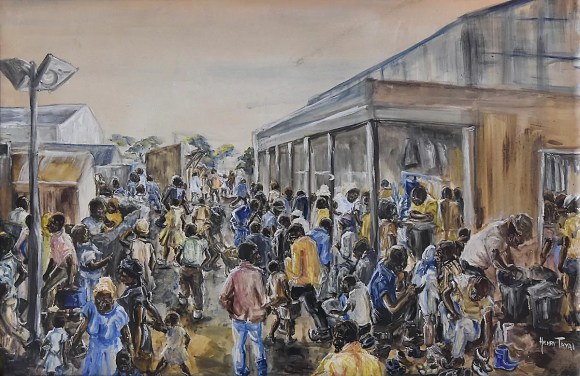

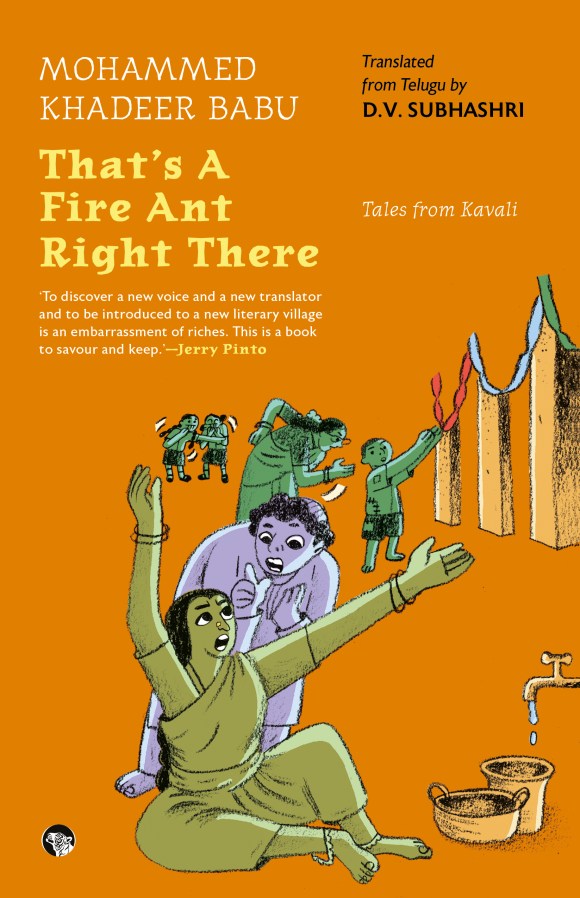
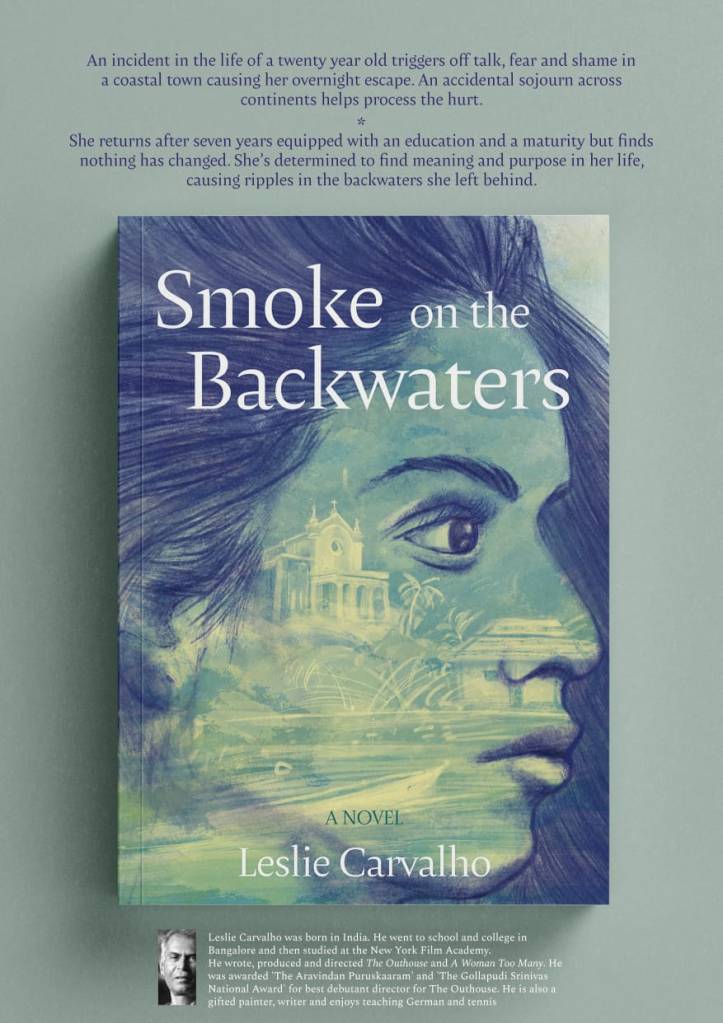
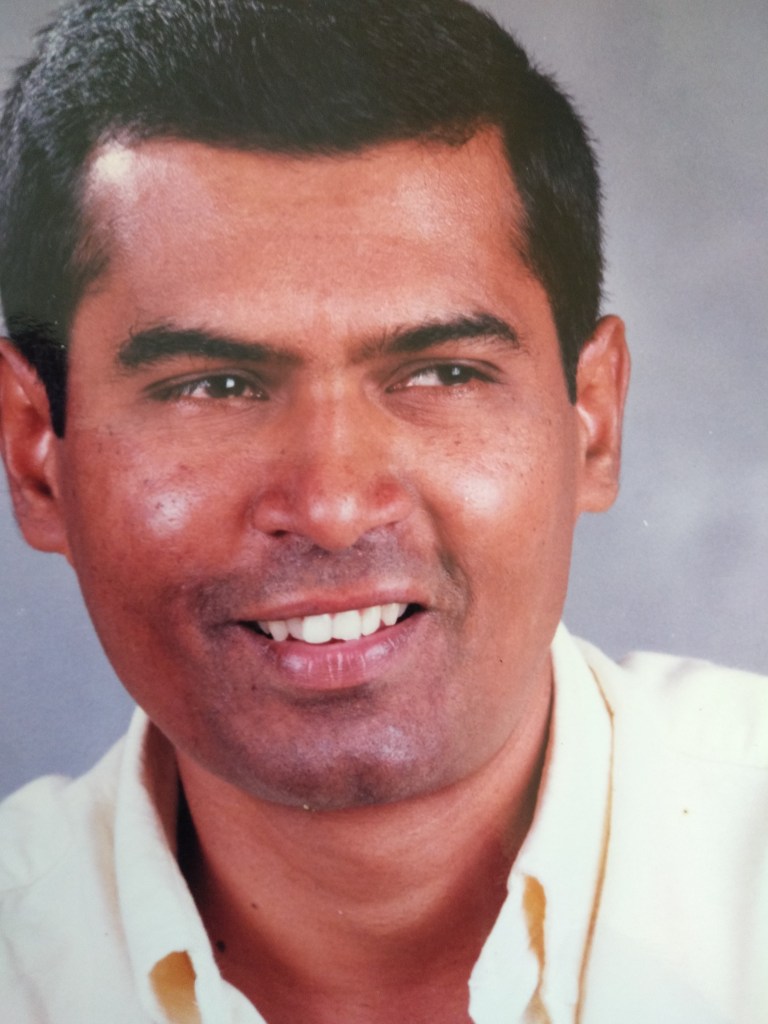
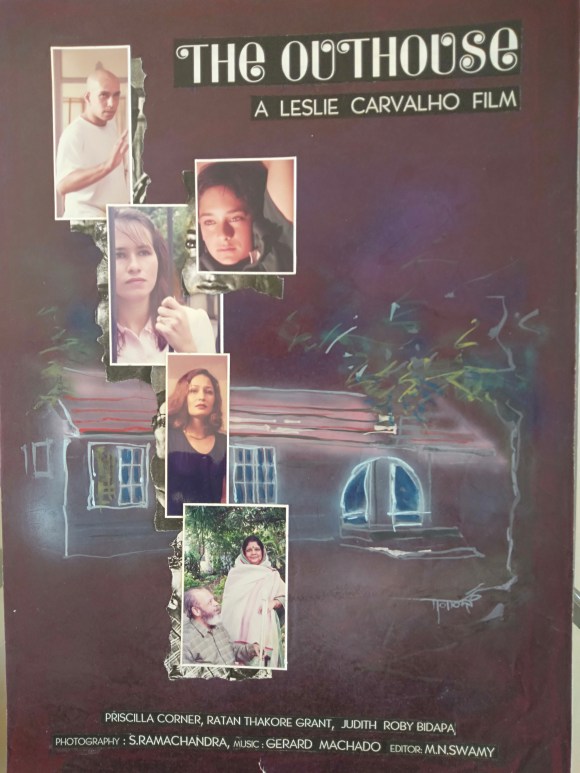
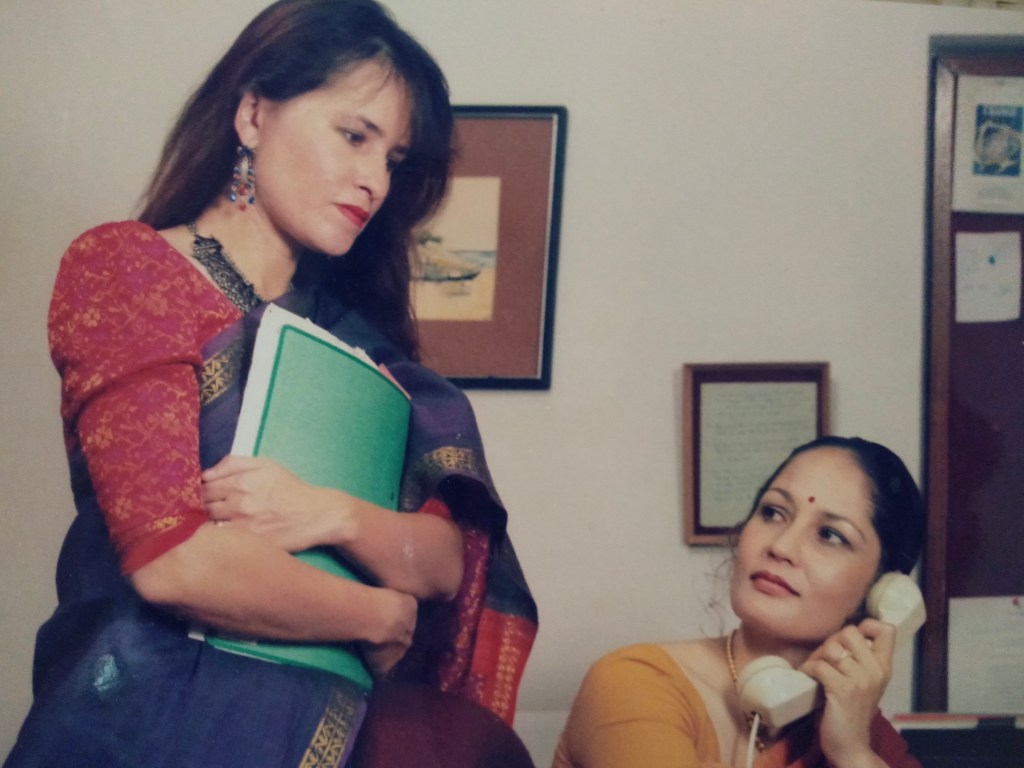
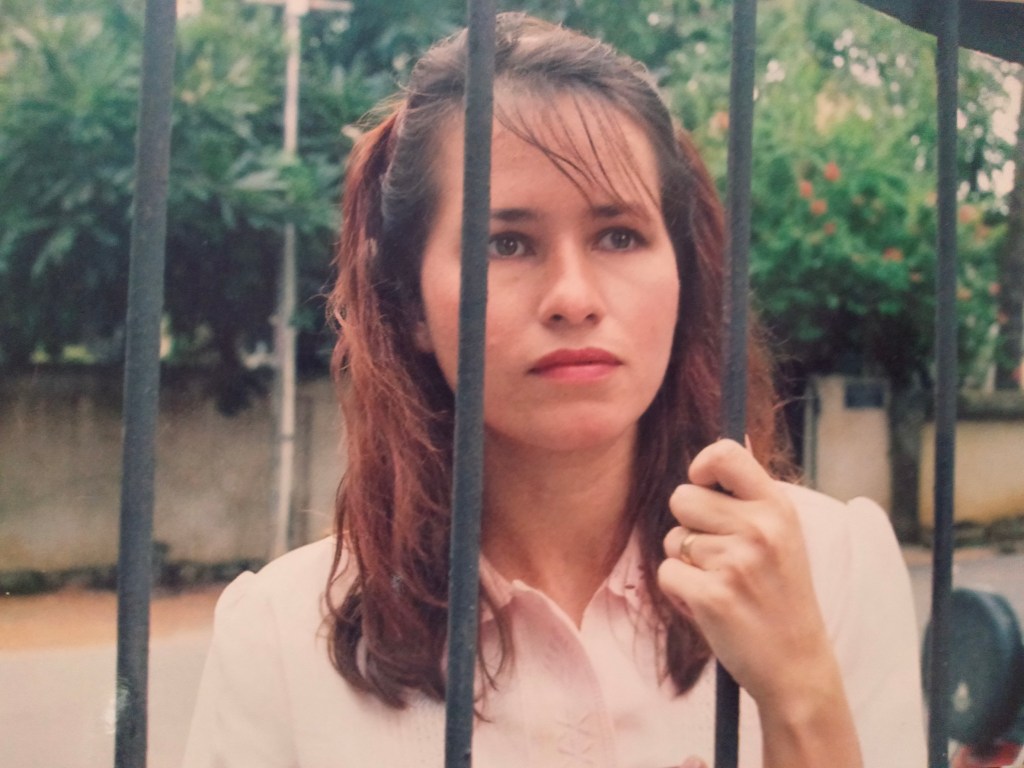
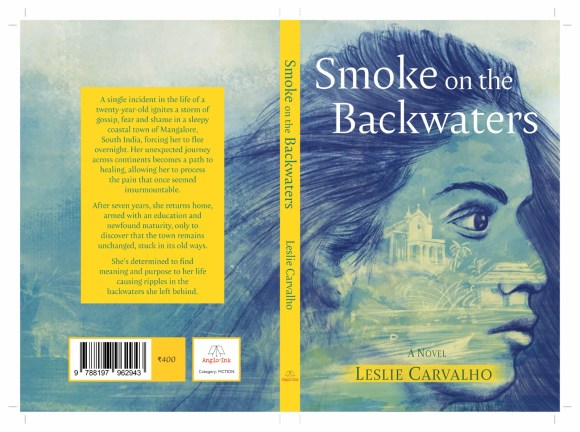
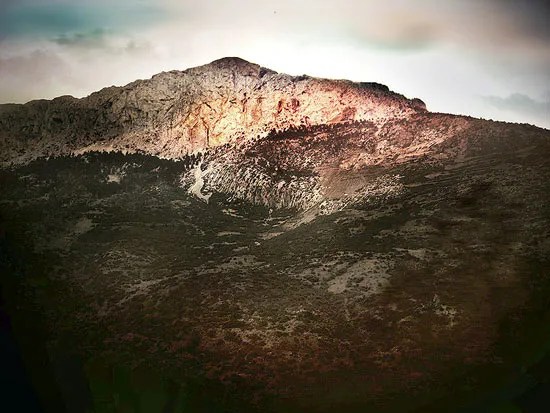
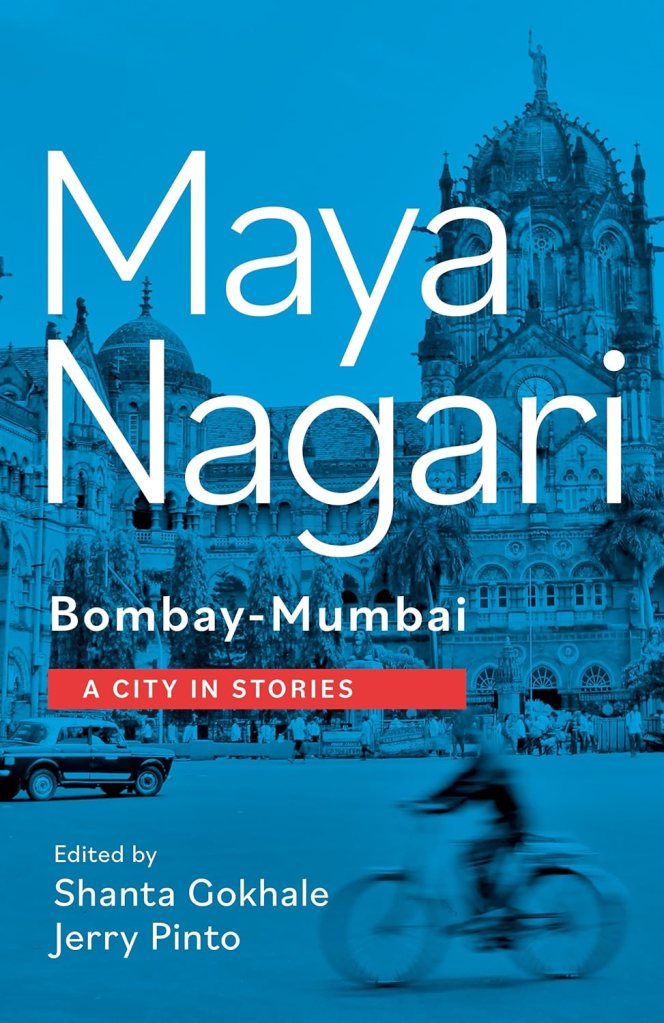


 Borderless