Ratnottama Sengupta muses on acts of terror and translates a Bengali poem by Tarik Sujat which had come as a reaction to an act of terror. Click here to read.
Renee Melchert Thorpe recounts her mother’s migration story, hopping multiple countries, starting with colonial Calcutta and Darjeeling. Click here to read.
Paul Mirabile wanders into the realm of the supernatural dating back to the Potato Famine of Ireland in the 1800s. Clickhere to read.
Conversations
In conversation with eminent Singaporean poet and academic, Kirpal Singh, about how his family migrated to Malaya and subsequently Singapore more than 120 years ago. Click hereto read.
There was a time when humans walked the Earth crossing unnamed landmasses to find homes in newer terrains. They migrated without restrictions. Over a period of time, kingdoms evolved, and travellers like Marco Polo talked of needing permissions to cross borders in certain parts of the world. The need for a permit to travel was first mentioned in the Bible, around 450BCE. A safe conduct permit appeared in England in 1414CE. Around the twentieth century, passports and visas came into full force. And yet, humanity had existed hundreds of thousand years ago… Some put the date at 300,000!
While climate contingencies, wars and violence are geared to add to migrants called ‘refugees’, there is always that bit of humanity which regards them as a burden. They forget that at some point, their ancestors too would have migrated from where they evolved. In South Africa, close to Johannesburg is Maropeng with its ‘Cradle of Humanity’, an intense network of caves where our ancestors paved the way to our evolution. The guide welcomes visitors by saying — “Welcome home!” It fills one’s heart to see the acceptance that drips through the whole experience. Does this mean our ancestors all stepped out of Africa many eons ago and that we all belonged originally to the same land?
And yet there are many restrictions that have come upon us creating boxes which do not allow intermingling easily, even if we travel. Overriding these barriers is a discussion with Jessica Mudditt about Once Around the Sun: From Cambodia to Tibet, her book about her backpacking through Asia. Documenting a migration more than a hundred years ago from Jullundur to Malaya, when borders were different and more mobile, we have a conversation with eminent scholar and writer from Singapore, Kirpal Singh. Telling the story of another eminent migrant, a Persian who became a queen in the Mughal Court is a lyric by Nazrul, Nur Jahan, translated by Professor Fakrul Alam from Bangla. Ihlwha Choi has self-translated his own poem from Korean, a poem bridging divides with love. Fazal Baloch has brought to us some exquisite Balochi poems by Munir Momin. Tagore’s poem, Okale or Out of Sync, has been translated from Bengali to reflect the strange uniqueness of each human action which despite departing from the norm, continue to be part of the flow.
We have a tongue in cheek piece from Devraj Singh Kalsi on traveling in a train with a politician. Uday Deshwal writes with a soupçon of humour as he talks of applying for jobs. Snigdha Agrawal brings to us flavours of Bengal from her past while Ratnottama Sengupta muses on the ongoing wars and violence as acts of terror in the same region and looks back at such an incident in the past which resulted in a powerful Bengali poem by Tarik Sujat. Kiriti Sengupta has written of a well-known artist, Jatin Das, a strange encounter where the artist asks them to empty fully even a glass of water! Ravi Shankar weaves in his love for books into our non-fiction section. Recounting her mother’s migration story which leads us to perceive the whole world as home is a narrative by Renee Melchert Thorpe. Urmi Chakravorty takes us to the last Indian village on the borders of Tibet. Taking us to a Dinosaur Museum in Japan is our migrant columnist, Suzanne Kamata. Her latest multicultural novel, Cinnamon Beach, has found its way to our book excerpts as has Flanagan’s poetry collection, These Many Cold Winters of the Heart.
In reviews, Somdatta Mandal has written about an anthology, Maya Nagari: Bombay-Mumbai A City in Storiesedited by Shanta Gokhale and Jerry Pinto. Rakhi Dalal has discussed a translation from Konkani by Jerry Pinto of award-winning writer Damodar Mauzo’sBoy, Unloved. Basudhara Roy has reviewed Trailokyanath Mukhopadhyay’s Tales of Early Magic Realism in Bengali, translated by Sucheta Dasgupta. Bhaskar Parichha has introduced us toThe Dilemma of an Indian Liberal by Gurcharan Das, a book that is truly relevant in the current times in context of the whole world for what he states is a truth: “In the current polarised climate, the liberal perspective is often marginalised or dismissed as being indecisive or weak.” And it is the truth for the whole world now.
Our short stories reflect the colours of the world. A fantasy set in America but crossing borders of time and place byRonald V. Micci, a story critiquing social norms that hurt by Swatee Miittal and Paul Mirabile’s ghost story shuttling from the Irish potato famine (1845-52) to the present day – all address different themes across borders, reflecting the vibrancy of thoughts and cultures. That we all exist in the same place and have the commonality of ideas and felt emotions is reflected in each of these narratives.
We have more which adds to the lustre of the content. So, do pause by our content’s page and enjoy the reads!
I would like to thank all our team without who this journal would be incomplete, especially, Sohana Manzoor, for her fabulous artwork. Huge thanks to all our contributors who bring vibrancy to our pages and our wonderful readers, without who the journal would remain just part of an electronic cloud… We welcome you all to enjoy our June issue.
A brief overview of Once Around the Sun : From Cambodia to Tibet (Hembury Books) by Jessica Mudditt and a conversation with the author
Jessica Mudditt
Jessica Mudditt’s Once Around the Sun: From Cambodia to Tibet is not just a backpacker’s diary but also her need to relate to humanity, to find friendships and even love, as she does with Kris, a photographer named after Krishna, the Hindu god, because his parents while visiting India fell in love with the divinity!
The Burmese translation of Our Home in Myanmar was published recently.
Hurtling through Cambodia, Vietnam, China, Tibet, young Mudditt concludes her narrative just at the brink of exploring Nepal, India and Pakistan in her next book… leaving the reader looking forward to her next adventure. For this memoir is an adventure that explores humanity at different levels. Before this, Mudditt had authored Our Home in Myanmar – Four years in Yangon, a narrative that led up to the Myanmar attack on Rohingyas and takeover by the military junta. Once Around the Sun: From Cambodia to Tibet is the first part of a prequel to her earlier book, Our Home in Myanmar, both published by her own publishing firm, Hembury Books.
What makes her narrative unique is her candid descriptions of life on a daily basis — that could include drunken revelry or bouts of diarrhoea — while weaving in bits of history and her very humane responses. Her trip to Angkor Wat yields observations which brings into perspective the disparities that exist in our world:
“I was gazing out at an empire that was once the most powerful and sophisticated in the world. In 1400, when London had a middling population of 50,000, the kingdom of Angkor had more than a million inhabitants and a territory that stretched from Vietnam to Brunei. It had flourished for six hundred years, from the ninth to the fifteenth centuries.
“But somehow Cambodia had become one of the world’s poorest countries, and surely the most traumatised too, following a recent war and genocide. I knew that when we came back down to the ground, there would be a collection of ragtag street kids and downtrodden beggars desperately hoping for our spare change. It was difficult to reconcile the grandeur of Cambodia’s past with its heart-breaking present in the twenty-first century. How did a country’s fortunes change so dramatically? Could the situation ever be turned around?”
How indeed?
Then, she writes of Vientaine in Vietnam:
“I was struck by the fact that sex work seemed to be the consequence for countless young women living in poverty. It made me angry, but mostly sad.”
In these countries broken into fragments by intrusions from superpowers in the last century, judged by the standards of the “developed countries” and declared “underdeveloped”, an iron rice bowl becomes more important to survive than adventure, discovering other parts of the world or backpacking to self-discovery. Travel really is the privilege of that part of the world which draws sustenance from those who cannot afford to travel.
Jessica showcases mindsets from that part of the Western world and from the mini-expat world in Hong Kong, which continue alienated from the local cultures that they profess to have set out to explore or help develop. One of the things that never ceases to surprise is that while the ‘developed’ continue to judge the ‘third world’, these countries destroyed by imposed boundaries, foreign values, continue to justify themselves to those who oppress them and also judge themselves by the standards of the oppressors.
Some of these ‘developing’ countries continue to pander to needs of tourism and tourists for the wealth they bring in, as Jessica shows in her narrative. She brings out the sharp differences between the locals from Asia and the budgeted backpackers, who look for cheap alternatives to experience more of the cultures they don’t understand by indulging in explorations that can involve intoxicants and sex, their confidence backed by the assurance that they can return to an abled world.
Backpackers from affluent countries always have their families to fall back on — opulent, abled and reliable. Mudditt with her candid narrative explores that aspect too as she talks of her mother’s response to her being sick and budgeting herself. Her mother urges her to cut short her trip. But she continues, despite the ‘adversities’, with an open mind. That she has a home where she can return if she is in any kind of trouble begs a question — what kind of ‘civilisation’ do we as humans have that she from an abled background has a safe retreat where there are those for whom the reality of their existence is pegged to what she is urged to leave behind for her own well-being? And why — as part of the same species — do we accept this divide that creates ravines and borders too deep to fathom?
Mudditt with her narrative does create a bridge between those who have plenty and those who still look for and need an iron rice bowl. She mingles with people from all walks and writes about her experiences. Hers is a narrative about all of us –- common humanity. Her style is free flowing and easy to read — quite journalistic for she spent ten years working as one in London, Bangladesh and Myanmar, before returning to her home in Australia in 2016. Her articles have been published by Forbes, BBC, GQ and Marie Claire, among others. This conversation takes us to the stories around and beyond her book.
What led you to embark on your backpacking adventure? Was it just wanderlust or were you running away from something?
It was primarily from wanderlust, but I also didn’t know what I was going to do with the rest of my life. After six years at university, I was still yet to have any particular calling. However, I was also glad I didn’t know. It meant that I was free to go and explore the world, because I wasn’t putting my career on hold. I had no career.
I also had a broken heart when I set off for Cambodia – but the trip was planned before that relationship had even begun. But again, part of me was glad that my boyfriend had called it quits, because my plan was to be away for a very long time (and it ended being a decade away).
What made you think of putting down your adventures in writing? As you say, this is a prequel to your first book.
It was the pandemic that made me realise that backpacking was really special. There was a period in 2020 when it looked like travel may never be so unrestricted again, so it motivated me to document my year of complete freedom. It was also before social media was even a thing. When I was lost, I was really lost, and I had to use my problem-solving skills.
Prior to the pandemic, I sort of thought that backpacking itself was too fun to write about. I hadn’t actually lived in any of the countries I visited – I was just passing through. But that is also a valid experience, and one that many people can fondly relate to. There were also some really confronting and difficult moments.
You have written of people you met. How have they responded to your candid portrayals? Or did you change their names and descriptions to convey the essence but kept your characters incognito?
While I was writing the book, I got back in touch with the people I travelled with – I can thank Facebook for still being in touch with most people mentioned. They helped me to remember past anecdotes and I got some of the back story of their own trips. I have only used first names to protect their privacy, although there are some photos in the book too. Thankfully the world is so big that the odds are small that anyone would recognise, say, an Irish guy from Adam in Vietnam in 2006! Clem from Shanghai has just sent me a photo of her with my book, and Romi from Vietnam actually came to my book launch, which was awesome.
What was your favourite episode in this book — as a backpacker and as a writer? Tell us about it.
I think it was crossing into China and meeting ‘the man.’ I felt so alive with every step I took into China after crossing over on foot from Vietnam. To be chaperoned in the way I was – without being able to communicate a single word – was unusual. His kindness left me speechless, so the anecdote has a nice story arc.
In your travels through China, you faced a language handicap and yet found people kind and helpful. Can you tell us a bit about it?
I foolishly underestimated the language barrier. It was profound. In Southeast Asia, there was always at least a sprinkling of English, and I sort of just assumed that I’d be fine. I entered China from Vietnam, so my first port of call was Nanning, where there is not even really an expat population. I couldn’t do the most basic things, from finding the toilet or an internet cafe or something to eat! I used sign language and memorised the Chinese character for ‘female’ to make sure I went into the right toilet! In a restaurant, I just pointed at whatever someone else was eating in the hope that they would bring me a bowl of whatever it was. There were times when I was seriously lost and lonely, but I ended up staying in China for two months and saw the comedic side. I was bumbling around like Mr Bean (who is hugely popular in China).
I met a lot of people who were really kind to me, and I was just so grateful to them. I didn’t have Wi-Fi on my phone back then, so getting lost in a massive city in China was a bit scary. I met a student called Mei-Xing who ‘adopted’ me for a few days in Guilin. We had a really nice time together and it was so great to hang out with a local.
What is/are the biggest takeaway/s you had from your backpacking in this part of the world? Tell us about it.
I think it’s something quite simple: the world can be a very beautiful place, and a very polluted place. Tourism can do a great deal of damage when there are too many people clambering over one area. There is also an incredible level of disparity in a material sense on our planet. Some humans are travelling into space on rockets. Others are pulling rickshaws, as though they are draught horses. It is profoundly inequitable.
Having travelled to large tracts of Asia, what would you think would be the biggest challenge to creating a more equitable world, a more accepting world? Do you think an exposure to culture and history could resolve some of the issues?
I think that democracy is key. It slows us down and forces us to act in the interest of the majority, not the top-level cronies. That is definitely also something I witnessed in Myanmar. When a few people hold all the power, the population is deprived of things that ought to be a human right.
I think that travel definitely alters your perspective and broadens your mind, and it is something I’d recommend to anyone. Realising that the way that things are done in your home country is not the only way of doing things is a valuable thing to learn.
Mostly, you met people off the street. In which country did you find the warmest reception? Why and how?
In Pakistan. The hospitality and friendliness was unparalleled. I think it was in part due to not having many tourists there. Nothing felt transactional. I met some fascinating people in Pakistan who would have a profound impact on my own life. I am still in touch with several people I met there.
At a point you wondered if the poverty you saw could be reversed back to affluence in the context of the Angkor kingdom. Do you have any suggestions on actually restoring the lost glory?
I believe that it is beginning to be restored. Pundits have called this the “Asian Century.” I am convinced that the United States and the UK are in decline, and this process will only speed up. India, to me, holds the most promise as the next superpower, because it is a democracy (albeit flawed – like all of them), English- speaking, enormous, beautiful, fascinating and its soft power is unmatched. China is facing headwinds. I blame that on making people sad by removing their agency.
How long were you backpacking in this part of the world? Was it longer than you had intended? What made you extend your stay and why?
My trip was exactly 365 days long. I planned it that way from the beginning. I wanted to travel for no less than a year (more than a year and I might stay feeling guilty for being so indulgent!). That is also why the book is called Once Around the Sun – my time backpacking was the equivalent of one rotation of the Earth. I set off on 1 June 2006 – the first day of winter in Australia – and I arrived on 1 June 2007 in London, on the first day of the British summer. I love the sunshine.
After having travelled around the large tracts of Asia and in more parts of the world, could you call the whole world your home or is it still Australia? Is your sense of wellbeing defined by political boundaries or by something else?
Home for me is Sydney. I absolutely love it. I get to feel as though I am still travelling, because my home city is Melbourne. I go down a new road every other day and I love that feeling. The harbour is beautiful, and the sun is shining most days. It’s very multicultural too.
My kids are three and five, so I haven’t travelled overseas for years. My plan is to travel with them as much as possible when they are a bit older. I hope they love it as much as me. I cannot wait to return to Asia one day. I am also desperate to visit New York City.
What are your future plans for both your books and your publishing venture?
The second part of Once Around the Sun will come out in 2025. It’s called Kathmandu to the Khyber Pass, and it covers the seven months I spent Nepal, India and Pakistan.
My goal is to complete my fourth memoir by 2027. It will be called My Home in Bangladesh (it will be the prequel to Our Home in Myanmar!).
My fifth book will be about how to write a book. I am a book coach and in a few years I will have identified the most common challenges people face when writing a book, and finding their voice.
In the next twelve months, there will be at least 12 books coming out with Hembury Books, which is my hybrid publishing company. I love being a book coach and publisher and I hope to help as many people as possible to become authors.
Please visit the website and set up a discovery call with me if you plan on writing a nonfiction book, or have gotten stuck midway: https://hemburybooks.com.au/.
Photographs from Once Round the Sun, provided by Jessica Mudditt
(The online interview has been conducted through emails and the review written by Mitali Chakravarty.)
Title: Once Around the Sun: From Cambodia to Tibet
Author: Jessica Mudditt
Chapter 20 – In or out?
As I walked the streets of downtown Hohhot in search of a travel agency, I felt further than five hundred kilometres from Beijing. I was still in East Asia, but the capital city of Inner Mongolia had Central Asian influences too, such as the cumin seed flatbread I bought from a hawker with ruddy cheeks and a fur hat. I passed a Muslim restaurant with Arabic lettering on the front of its yellow-and-green facade, and many street signs and shops featured Mongolian script as well as Mandarin. With its loops, twirls and thick flourishes, Mongolian looked more similar to Arabic than Chinese. In actual fact, the top-down script is an adaptation of classical Uyghur, which is spoken in an area not far to the west.
The winds that blew in from the Russian border to the northeast were icy cold, so I was glad to soon be inside a travel agency. It was crammed with boxes of brochures and a thick film of dust covered the windowpanes. Hohhot is the main jumping-off point for tours of the grasslands, so I was able to get a ticket for a two-day tour that began the following morning.
I wasn’t enthusiastic about going on a tour because I preferred to move at my own pace, however there was no other way to access the grasslands. The upside was that I was guaranteed to sleep inside a ger, which is a circular tent insulated with felts. The Russian term of ‘yurt’ is better known. I had read that Inner Mongolia was a bit of a tourist trap for mainland Chinese tourists, but I was nonetheless excited to get a glimpse of the Land of the Weeping Camel.
I walked into a noodle shop and a customer almost dropped her chopsticks when she saw me. The girls at the cash register were giggling and covering their faces as I pointed at a flat noodle soup on a laminated menu affixed to the counter.
Foreign tourists must be thin on the ground in Hohhot, I thought as I carried my bowl over to a little table by the window.
Inner Mongolia was one of the few places that Lonely Planet almost discouraged people from visiting: ‘Just how much you can see of the Mongolian way of life in China is dubious.’ But I was still keen to see what I could.
I ate slowly, enjoying each fatty morsel of mutton. I was pretty good with chopsticks by that point – I’d never be a natural, but I didn’t drop any bits of mutton into the soup with a splash, as I used to in Vietnam.
Hohhot seemed a scruffy, rather bleak sort of city – or at least in the area where I was staying close to the train station. Street vendors stood cheek by jowl on one side of the road, calling out the prices of their wares. The opposite side was under construction and the one still in use was unpaved, which meant that two lanes of traffic had to navigate a narrow area of bumpy stones while avoiding massive potholes and piles of dirt. I saw a motorbike and a three-wheel truck almost collide.
I spent the next few hours wandering around the Inner Mongolia Museum, which has a staggering collection of 44,000 items. Some of the best fossils in the world have been discovered in Inner Mongolia because its frozen tundra preserves them so effectively. The standout exhibit for me was the mammoth. It had been discovered in a coal mine in 1984 and most of its skeleton was the original bones rather than replicas. I gazed up at the enormous creature and tried to imagine it roaming the earth over a million years ago. Mind-boggling.
I admired the black-and-white portraits of Mongolian tribesmen, and then took photos of a big bronze statue of Genghis Khan astride his galloping mount. The founding leader of the Mongol Empire was the arch-nemesis of China, and parts of the Great Wall had been built with the express purpose of keeping out his marauding armies. Genghis Khan must have rolled in his grave when China seized control of a large swathe of his territory in 1947.
What was once Mongolia proper became a Chinese province known as ‘Inner Mongolia Autonomous Region’. This long-winded name is an example of Orwellian double-speak. So-called ‘Inner Mongolia’ is part of China, whereas the independent country to the north is by inference ‘Outer Mongolia’. Nor is the Chinese region autonomous. The Chinese state has forced Mongolians to assimilate. Their nomadic lifestyle and Buddhist beliefs had been pretty much eradicated, and although speaking Mongolian wasn’t outlawed, learning the state language of Mandarin was non-negotiable.
On top of this, the government provided tax breaks and other financial incentives to China’s majority ethnic group, the Han Chinese, if they relocated to Inner Mongolia. Mongolians now account for just one in five people among a total population of 24 million. The same policies of ethnic ‘dilution’ exist in China’s four other ‘autonomous regions’, which include Tibet and Xinjiang, the home of the Uyghurs.
Shortly before I left the museum, I came to a plaque that described the official version of history, which was at odds with everything I’d read in my Lonely Planet.
‘Since the founding of Inner Mongolia Autonomous Region fifty years ago, a great change has happened on the grasslands, which is both a great victory of the minority policy and the result of the splendid leadership of the Communist Party of China. The people of all nationalities on the grassland will never forget the kind-hearted concerns of the revolutionary leaders of both the old and new generations.’
I rolled my eyes, snapped a photo of the plaque for posterity, and continued walking.
* * *
I didn’t venture far from my hotel for dinner because I planned on having an early night. I chose a bustling restaurant with lots of families inside and was waiting for a waiter to come and start trying to guess my order when a group of men at the next table caught my eye. They seemed to be waving me over.
Me? I asked by pointing at myself.
Yes, they were nodding. Shi de.
I happily joined the group and introduced myself by saying that I was from ‘Aodàlìyǎ’. I think they were Han Chinese, as they didn’t look Mongolian. I whipped out my phrasebook and tried to say I had come from Beijing, but I was fairly certain they didn’t understand me.
Anyhow, no matter. Ten shot glasses were filled from a huge bottle of baijiu, and I was soon laughing as if I was with old friends. One of the slightly older guys used a set of tongs to place wafer-thin slices of fatty pork into the bubbling hotpot on the table, followed by shiitake mushrooms and leafy greens. As the impromptu guest of honour, my bowl was filled first once it was cooked – by which time I’d already had three shots.
The hotpot was fantastic, and I had to remind myself not to finish everything in my bowl. Bethan had told me that Chinese etiquette requires a small amount of food not to be eaten at each meal. This indicates that it was so satisfying that it wasn’t necessary to eat every last bite. As a kid, it was ingrained in me to finish everything on my plate. I loved food and was generally in the habit of licking my bowl clean, so I had to exercise a certain amount of restraint.
I had just rested my chopsticks across the top of my bowl to signal I was finished when I was invited to go sit on the wives’ table, which was across from the men’s. The women were very sweet and a couple of them seemed to be around my age. I once again tried to communicate using my phrasebook, but I was hopelessly drunk by then. I could hardly string a sentence together in English, let alone Mandarin. I was also beginning to feel queasy from the baijiu, so I gratefully accepted a cup of green tea from the porcelain teapot that came my way on the lazy Susan. After taking some photos together, I bid the two groups ‘zaijian’ (goodnight). I tried to contribute some yuan for the meal, but they wouldn’t hear of it. I curtsied as a stupid sort of thank-you, and then I was on my way.
* * *
More hard liquor awaited me the following day. A striking woman in a red brocade gown with long sleeves handed me a small glass of baijiu as I stepped off the minibus a bit before noon.
‘It’s a tradition,’ she said with a smile, while holding a tray full of shots.
I downed the baijiu with my backpack on and grinned as the backpacker behind me did the same. There were four foreign tourists on the tour, and about eight domestic ones. The liquor gave me an instant buzz, which I needed. I hadn’t slept well and woke up feeling lousy, so I’d kept to myself during the two-hour journey. Even though I should have been excited, I got grumpier and grumpier as the reality of being on a tour began to sink in. Plus, the landscape was not the verdant green steppes I’d been expecting. At this time of year, it was bone dry and dusty. It hadn’t occurred to me to check whether my visit coincided with the low season.
I began chatting to the other tourists. The guy who had the baijiu after me was Lars from Holland. There was also a couple from Germany. I could immediately tell they were pretty straitlaced. Their clothes looked very clean and functional, and the girl refused the baijiu.
The woman in red introduced herself as Li, our tour guide. Then she led us along a path lined with spinifex to a dozen gers. They faced each other in a circle, and off to the right was a much larger ger with the evil eye painted on its roof and Tibetan prayer flags fluttering in the fierce winds. There were no other buildings in sight and no trees.
Li told us to meet inside the big ger in fifteen minutes after we’d put our stuff in the smaller gers she proceeded to assign us. Lars and I would be spending the night in a ger with ‘82’ painted on its rusted red door. There certainly weren’t eighty gers, so the logic behind the numbering system wasn’t clear – but no matter. The German couple took the ger to the right of ours.
These were not portable tents for nomads. Each ger was mounted on a concrete base and I think the actual structure was made of concrete too, and merely wrapped in grey tarpaulins. The door was made of metal and at the top was a sort of chimney structure – perhaps for ventilation. Like igloos, the only opening was the door, and it was pitch-black inside. I located a dangling light switch as I entered.
‘Ah – I love it!’ I exclaimed.
It was a simple set-up, with single beds lining the perimeter and a low table in the middle of the room. Patterned sheets were draped from the concave ceiling. I chose the bed with a framed portrait of Genghis Khan above it. Lars put his backpack next to a bed on the other side. I was happy enough to share a ger with him. He gave off zero sleazy vibes.
‘I might just take a couple of those extra blankets,’ I said to Lars as I piled on a few extra floral quilts from another bed. The wind had an extra iciness to it out on the steppes and I shuddered to think what the temperature would drop to overnight. We zipped our jackets back up and headed out.
I wandered over to the toilet block, which was quite a distance from the gers. I made a mental note to drink as little as possible before getting into bed to avoid having to go in the night. Once I got closer to the toilets, I was glad they were so far away. The stench was unbelievable.
In the female section were two concrete stalls without doors. In the middle of the floor in each was a rectangular gap. I almost gagged. Just a few centimetres away from the concrete was an enormous pile of shit. I could make out bits of used toilet paper and sanitary pads and there were loads of flies buzzing around. Without running water or pipes, the excrement just sat there, day after day, building up. I would have turned and walked straight back out but I was busting for a wee. I held my breath so I wasn’t inhaling the smells. I wanted to close my eyes too, but I was terrified of falling in, so I had to look at what I was doing. I couldn’t get out of there fast enough.
‘Oh my god, Lars – the drop toilets are totally disgusting,’ I said after I met up with him in the big ger. ‘It’s just a pit of shit without running water.’
‘I know an American girl who fell into a drop toilet in China last year,’ he said.
‘No way,’ I said with a shudder.
‘Yeah. She said it was terrible. She was in a really poor village somewhere in central China and she went to the toilet at night. She couldn’t see that some of the wooden planks had gaps in them – and then one of them broke and she fell in. She was up to her neck in shit. She was screaming for people to come help her. Apparently, it took them half an hour to fish her out, and all the while she could feel creatures writhing around her body. She cut her trip short and had to get counselling when she got home.’
‘I bet she did,’ I said. ‘That’s the most disgusting thing I’ve ever heard in my life. The poor girl.’
Just then Li appeared and said we were heading outside to watch horse racing and traditional wrestling after some sweet biscuits and tea. We assembled around a fenced area where there were about thirty ponies tethered to poles. Some were lying down while still saddled.
‘Horses usually sleep while standing up, so these ponies must be knackered – pardon the pun,’ I joked to Lars.
Notwithstanding, they looked to be in reasonably good condition, with shiny coats and no protruding ribs. There were chestnuts, bays and dapple greys.
I heard the sound of hoofbeats and looked behind me. A group of men on horseback came thundering across the steppes. It was a magnificent sight, and any lingering resentment I had about being on a tour melted away.
One of the men rode ahead of the rest. He was wearing a cobalt-blue brocaded tunic and his wavy black hair came down past his ears. He was really good-looking. He approached Li with a smile, said something to her and dismounted with the ease of someone who had probably started riding horses before he learned to walk. Li and the man exchanged a few words – I definitely saw her blush – and then he got back on.
‘Gah!’ he yelled as he dug his heels into his horse’s sides.
The other horsemen followed after him with whoops, leaving a trail of dust in their wake. These Mongolian ponies were only about twelve or thirteen hands, but they sure were fast and could turn on a dime. I loved watching them carve up the dry earth.
Next a group of men on motorcycles appeared along the track. There were quite a lot of them – at least twenty. We formed a big circle, and the traditional wrestling began. I wasn’t sure what the rules were, but it was fairly self-explanatory: one man got another in a headlock and thumped him to the ground. The next man came along and fought the winner, and so on and so forth. The spectators egged on the fighters with what I assumed were good natured cat calls. Everyone was grinning. By the time the wrestling matches were over, the fighters were absolutely covered in dust and the sun was beginning to set. I’m sure it was all staged for our benefit, but it was good fun.
With the seamless orchestration of a tour that has been done a thousand times before, we gravitated to the big ger. Dinner was bubbling away in a large clay pot and it smelled pretty good. There was also a big vat of noodles with black sauce and the ubiquitous Chinese vegetables of thinly sliced carrot, bok choy, baby corn and onion. There was a bottle of baijiu on each table.
We were serenaded with traditional music while we ate. One of the instruments reminded me of the didgeridoo and there was also a violin. I had read that strands of horse mane are used to make violin strings. The male singer had a deep voice that was almost a warble, and it was hauntingly beautiful.
Five men and women emerged from behind a red curtain and began to dance. They wore long-sleeved, billowing satin tunics that were cinched at the waist with embroidered belts. One of the women had a tall hat made of white beads that dangled down to her waist. It must have been heavy. It was a high-energy display of kicks and splits and parts of it were reminiscent of Irish dancing. They twirled their billowing skirts like sufis. The Chinese tourists started clapping in time with the music and then we all joined in. Sure, it was a bit cheesy, but I was really enjoying myself. At the end of the concert, we had photos with the performers as they were still trying to catch their breath.
We were given torches to light our way back to our gers. It was absolutely freezing, so I wore all my clothes to bed. I snuggled into my blankets and pulled them right up to my chin, feeling grateful for the warmth of Bethan’s jumper.
Mercifully, I slept right through until morning and avoided a late-night visit to the shit pit.
When I wandered out of the ger the next morning, breakfast was being prepared nearby. The carcass of a freshly slaughtered sheep was hanging from the back of a trailer. A man was skinning it while the blood drained out of its neck into a big metal bowl. Its head was in a second bowl, while squares of wool were laid out flat to dry on a tarp. A toddler in a puffy orange jacket was playing in the dust while his mother worked away at skinning parts of the wool. What distressed me more than butchery up close was the live sheep that was watching on from the back of the trailer. He presumably knew he was next.
After a breakfast of ‘sheep stomach stew with assorted tendons’ (as Li described it) we headed out for a ride on the steppes. I couldn’t wait to ride a horse again. I’d spent most of my childhood obsessed with horses, and I was lucky enough to have one for a few years, until I got older and became more interested in hockey and parties.
I rode a stocky bay with a trimmed mane that bobbed up and down as it trotted along the path. I looked over its perky little ears. The saddle had an uncomfortable pommel that kept jabbing me in the stomach, but I loved being under the wide open sky. It was a pale blue with just a few wispy clouds. Sheep grazed and crows rested on clumps of rocky outcrops.
I winced at the Chinese guy ahead of me, who was bouncing out of time to the rhythm of his horse’s gait and landing with a heavy bump in the saddle; his oversized suit flapping in the wind and his feet poking out straight in the stirrups. Much easier on the eye was the guide two horses ahead of him. He was every inch the Mongolian cowboy. Dressed from head to toe in black, he wore a leather jacket, cowboy hat and scuffed black cowboy boots. He never took off his wraparound sunglasses and he spoke little. He smouldered like the heartthrob actor, Patrick Swayze.
We’d travelled several kilometres when we came to a building block that was the same greyish brown as the earth. Inside it had a cottage feel. We sat around a table covered with a frilly tablecloth and drank yak milk. As we did, Lars told me about his day trip to North Korea. While in South Korea for a couple of weeks, he had visited the demilitarised zone (better known as the ‘DMZ’), where a ceasefire was negotiated between the two Koreas in 1953. In a military building is what is known as the ‘demarcation line’ – and Lars had one foot in North Korea and another in South Korea. I hung on his every word.
Our conversation got me thinking about how cool it would be to go to North Korea. I was actually quite close to the border. When I got back to the ger, I retrieved my Lonely Planet out of my bag and thumbed to the section titled ‘Getting there and away’, which had instructions for every country that borders China.
‘Visas are difficult to arrange to North Korea and at the time of writing, it was virtually impossible for US and South Korean citizens. Those interested in travelling to North Korea from Beijing should get in touch with Koryo Tours, who can get you there (and back).’
I was pretty sure the cost would be prohibitive for my budget and decided to stick with my existing plan of cutting south-west towards Tibet. Maybe one day I’d get the chance to visit North Korea, but it wouldn’t be on this trip.
Once back in Hohhot, I boarded a train bound for Pingyao. As I watched the apartment blocks pass by in a blur, I thought with satisfaction about the past twenty-four hours. Any visit to Inner Mongolia is problematic, but I couldn’t fault the Chinese tour company. They had made every effort to keep us entertained. Mongolian culture was so new to me that I couldn’t even tell whether something was authentic or staged, but I had seen and done all the things I hoped to during my visit. And, sure, my time there was really brief. But I’d be forever grateful to have seen a part of the world I thought I’d only ever get to see in a documentary.
Photo Courtesy: Jessica Muddit
About the Book: While nursing a broken heart at the age of 25, Jessica Mudditt sets off from Melbourne for a year of solo backpacking through Asia. Her willingness to try almost anything quickly lands her in a scrape in Cambodia. With the nation’s tragic history continuing to play out in the form of widespread poverty, Jessica looks for ways to make a positive impact. She crosses overland into a remote part of Laos, where friendships form fast and jungle adventures await.
Vietnam is an intoxicating sensory overload, and the hedonism of the backpacking scene reaches new heights. Jessica is awed by the scale and beauty of China, but she has underestimated the language barrier and begins her time there feeling lost and lonely. In circumstances that take her by surprise, Jessica finds herself hiking to Mount Everest base camp in Tibet.
From a monks’ dormitory in Laos to the steppes of Inner Mongolia, join Jessica as she travels thousands of kilometres across some of the most beautiful and fascinating parts of the planet.
About the Author: Jessica Mudditt was born in Melbourne, Australia, and currently lives in Sydney. She spent ten years working as a journalist in London, Bangladesh and Myanmar, before returning home in 2016. Her articles have been published by Forbes, BBC, GQ and Marie Claire, among others. Once Around the Sun: From Cambodia to Tibet is a prequel to her earlier book, Our Home in Myanmar.
.
PLEASE NOTE: ARTICLES CAN ONLY BE REPRODUCED IN OTHER SITES WITH DUE ACKNOWLEDGEMENT TO BORDERLESS JOURNAL
What will the New Year bring? Will it connect us all like a tree that has its roots deep in the Earth but reaches out to the sky with its branches rearing high? Its blooms seem like stars on the planet, connecting all life and non-living in its embrace. We hope as global consciousness grows for living in harmony with nature and science, love and kindness, may we all move towards a better more connected world. We, at Borderless Journal, wish you all a happy start to a wonderful New Year!
Our oeuvre this time brings to you a selection from the year 2021 that showcases the change makers we met, and writing that with their values connect us or ring with goodwill and look forward to a better future.
Meet & Greet
These are people you can meet on our pages — people who impact the world in a way that touches lives.
Goutam Ghose, who finds colouring the world with syncretic lore as the best alternative to sectarian violence. Click here to read.
Anvita Abbi, an empathetic linguist who builds bridges to create a seamless world, accepting and co-existing with different ways of life as colours of a rainbow. Click here to read.
Nazes Afroz translated a book on Afghanistan by Tagore’s disciple, Syed Mujtaba Ali, a memoir that shows the roots of the current crises go deep. Also, a senior BBC editor of South Asia, Afroz takes us through the situation with compassion. Click here to read.
Jessica Mudditt travelled to Myanmar and wrote a book, which is an eye-opener about the current situation. She was brought to focus by Keith Lyons who interviewed her for us. Click hereto read.
Sanjay Kumar founded Pandies, an activist theatre group that educates, bridging gaps between the divides of University educated and the less fortunate who people slums or terror zones. Click here to read.
Sybil Pretious, a teacher who has taught in six countries to impact children, starting her career in Africa and living through and beyond Apartheid. Click here to read.
Poetry
Robert Burns & Tagore in Harmony : A transcreation of Tagore’s song, Purano Sei Diner Kotha, based on Robert Burn’s poem associated with new year’s revelries. Click here to read.
Snowball Earth: A long poem by Rhys Hughes in the spirit of a modern man’s Auld Lang Syne, touching on our climate debacle. Click here to read.
Gathering Blossoms: Poetry by Michael R Burch that lingers in the heart. Click here to read.
Near the River Chenab and Under The trees: Sunil Sharma in a poignant telling takes us on a journey to the banks of a river where life, love and death sheathed in terrorism cumulate to a peak. Click here to read.
One of the countries often in news nowadays is Myanmar or Burma. George Orwell’s novel,Burmese Days (1934), showcased a society afflicted by racism, exclusivity, nepotism and ignorance. Was his depiction accurate? What has changed from then to now? While the international community looks on, waiting for the country to solve its internal crises, citizens are victimised not only by the pandemic but also by a military coup. Some of them have been stateless for some time now, thrown out altogether for being ‘a threat to Buddhism’. Jessica Mudditt, an author and journalist, who spent four years in Myanmar saw fit to voice her experiences within a country with 135 ethnicities. Her memoir, Our Home in Myanmar – Four Years in Yangon ( 2021), showcases a country where anyone can be displaced at any point like the Rohingyas. With 90% of the populationfollowing Buddhism, how is the religion, born of the compassionate quest of a prince to alleviate human suffering, being interpreted? Recently, in an interview, Muddit said, “Most people outside Myanmar assume that Buddhism is a religion of peace, so they don’t understand why so much violence has taken place, or that Buddhism can turn militant and be infected with extreme nationalism.”
This special showcases Myanmar from various perspectives: from that of an expat journalist, from a travellers’, a local writer’s and it even has a translation of a Tagore poem that reflects on the compassion of a Buddhist sage revered in Myanmar, called Shin Upagutta or Upagupta. Why should Shin Upagutta’s devotees resort to violence? Seeking answers, we present this selection from our treasury.
Content
The Tryst, a story poem about Upagupta’s mercy by Rabindranath Tagore translated from Bengali. Click here to read.
In Once Upon a Time in Burma: Land of a Thousand Pagodas, John Herlihy explores the magnificent sites of Mandalay in company of a Slovenian friend in the first episode of his quartet on his Myanmar, set in the pre-covid world. Click here to read.
Professor Anvita Abbi, a Padma Shri, discusses her experience among the indigenous Andamanese and her new book on them, Voices from the Lost Horizon. Click here to read.
Keith Lyons talks to Jessica Muddittabout her memoir, Our Home in Myanmar, and the current events. Click here to read.
Geetha Ravichnadran explores additions to our vocabulary in a tongue-in-cheek article. Clickhere to read.
Musings of a Copywriter
In When I Almost Became a Professor, Devraj Singh Kalsi gives humour tinged reasons on why he detached himself from being an academician. Click here to read.
We are living in strange times that seem to be filled with events to challenge the innovativeness of man. As if the pandemic were not enough, concepts that had come out of the best in our civilisation to unite mankind have been convoluted by a minority to manipulate and hurt the majority into submission. Life is not about surviving with faint-hearted compliance but about having the courage to live it as you want, facing it full up front, to voice out in unison against injustices, wrongs, and most of all to loan strength to help and care for each other. Often to understand this, we need to hinge on to our past, to learn from our heritage. But do we do that? In the hectic drive to be successful, we tend to ignore important lessons that could have been imbibed from the past. Like, did you know that the tribes in the Andaman can save themselves from a tsunami?
Padma Shri Anvita Abbi tells us all about the Andamanese and her attempts to revive their moribund language in her interview and book, Voices from the Lost Horizon, reviewed by Rakhi Dalal. While the review focusses on the uniqueness of Abbi’s work and the publication with its embedded recordings of the tribe fast dissolving into the morass of mainstream civilisation, her interview highlights the need to revive their lores that evolved out of a 70,000-year-old culture. On the other hand, Jessica Mudditt, interviewed by Keith Lyons, dwells on the ongoing crisis in Myanmar, which has been clearly the focus of her book, Our Home in Yangon. This interview focusses on the here and now of the crisis. But most crises have their roots deep and perhaps an exploration of these could help. There are 135 ethnicities in Myanmar but how many are actually integrated into the mainstream? Are they in the process of getting ‘lost’ like the voices of the speakers of Greater Andamanese?
That is why we tried to showcase a few such strains that are going unheard in the loudness of the ‘civilised’ mainstream. We have translations in poetry from Santhali and Adivasi, touching on the concerns of those who are often considered underdeveloped. And, perhaps, as Abbi said in her interview about the Andamanese, we can say much the same for these tribes too.
“These tribes are neither poor, nor uneducated (their knowledge of environment comprising birds, fishes, medicinal plants and their … weather predictions, and the Earth they walk on is amazing) …”
Distinctions have been created by a ‘civilisation’ entrenched in mono-cognitive enforcements leading to the loss of trust, confidence, languages, cultures and valuable knowledge about basic survival. Perhaps we can attempt to heal such wounds by imbibing the openness, love, devotion and compassion shown by the Buddhist monk, Upagupta (who is still revered in Myanmar as Shin Upagutta), in the translation of Tagore’s story poem, ‘Abhisar’ or ‘The Tryst’. Somdatta Mandal’s translation of Tagore’s letters introduce similar humanitarian concerns when the maestro mentions a German anthropologist and his wife who for the betterment of mankind were journeying to study tribals in India. Tagore remarks, “The people for whom they are willingly prepared to undergo hardship and to overlook all sorts of danger are not their relatives, nor are they civilised.” And yet even a century ago to fathom more about mankind, attempts were being made to integrate with our ancient lore. The concept of being ‘civilised’ is of course now much under the microscope. What is being ‘civilised’?
Is it about having power? We have Akbar Barakzai’s poem translated by Fazal Baloch on creation looking at the divide between a ‘civilised’ God and man. The theme stresses the two sides of the divide. More translations from Odiya, Dutch and Korean further mingle different flavours of the world into our journal — each questioning the accepted norm in different ways.
In an edition focussed on myths and stories from which we evolved, Rhys Hughes has created an unusual legend around elephants. His poetry also deals with animals — cats. One wonders if the T S Eliot’s famed ‘Macavity, the Mystery Cat’ could have to do something with his choices? We were fortunate to have Arundhathi Subramaniam share her poetry on myths around Indian figures like Shakuntala and Avvaiyar and the titular poem from When God is a Traveller that won her the 2020 Sahitya Akademi Award. Michael R Burch continues on the theme dwelling on Circe, Mary Magdalene and Helen. Sekhar Banerjee has a more iconoclastic approach to myths in his poetry. Jared Carter talks of modern myths perpetuated through art and cultural studies as does Mike Smith in his musings with his glance back at the last century through a photograph.
We have poetry by a Filipino writer Gigi Baldovino Gosnell from South Africa, looking for a new world, a new legend, perhaps a world without borders. Tohm Bakelas has given us a few lines of powerful poetry. Could these poems be a reaction to world events? Smitha Vishwanath has responded to the situation in Afghanistan with a poem. In this edition, photographs and verses in Penny Wilkes’ ‘Nature’s Musings‘ draw from the universe. She writes, “The sun never asks for applause” — a powerful thought and perhaps one mankind can learn from.
Ghost stories by Niles Reddick and Sunil Sharma perpetuate the theme, especially the latter has a ghost that questions myths of ‘isms’ created in the modern-day world. We also have a writer from Malaysia, P Ravi Shankar, with a futuristic legend set in a far-off time where man has embraced the reality of climate change and artificial intelligence. An interesting and fun read as is Devraj Singh Kalsi’s professions about why he did not become a professor, Geetha Ravichandran’s light musing on word play and a young writer Saurabh Nagpal’s musing, ‘Leo Messi’s Magic Realism‘ — a footballer viewed from a literary perspective!
While our musings make us laugh, our essays this time take us around the world with the myth of happiness deconstructed by Candice Louisa Daquin, to Burma and deep into Kolkata’s iconic history of the detective department started in the nineteenth century. There is an essay by Bhaskar Parichha that explores politics and media and mentions ‘gatekeepers’ of the media who need to be responsible for influencing public opinion. Guess who would be the gatekeepers?
Bhaskar Parichha’s review of Wendy Donniger’s non-fiction exploring myths around horses, Winged Stallion and Wicked Mares,and Basudhara Roy’s review of Bina Sarkar Ellias’ Song of a Rebel and Other Selected Poems perpetuate the theme of the importance of the past on the one hand and question it on the other. But that is what Borderless is about — exploring the dialectics of opposing streams to re-invent myths towards a better future.
We have a bumper issue again this time with nearly fifty posts. I invite our wonderful readers on a magical journey to unfold the hidden, unmentioned gems scattered on the pages of the September Issue of Borderless. Thank you again to an outstanding team, all our global contributors who make every edition an adventure and a reality and our wonderful readers. Thank you all.
Keith Lyons interviews Jessica Mudditt, who spent four years in Myanmar and wrote a book about it
Jessica Mudditt holding her book. Photo sourced from author
Australian author and journalist Jessica Mudditt studied and worked in the UK, but it is the seven years she spent in Bangladesh and Myanmar which seems to have made the most significant impact on her professional career and personal life. Mainly covering business, technology and lifestyle, her articles have appeared in The Economist, BBC, The Telegraph, The Guardian, CNN, GQ and Marie Claire.
She lived and worked in Myanmar’s former capital Yangon in the mid-2010s, and after returning to Australia, Our Home in Myanmar – Four Years in Yangon (Hembury Press, May 2021) was published with an Epilogue placing the book’s focus in the context of the military coup which stole back power in February this year following democratic elections.
From Sydney, Jessica reflected on her time in Myanmar, and the recent events which have curtailed hopes for democracy, freedom and economic growth.
Looking back on what happened this year, does it make your time in Myanmar seem more special?
In a way, it makes even my most happy and carefree memories bittersweet. When I was reading back over the book as part of the editing process, some of the situations I described became quite poignant, knowing what I know in hindsight. For example, after the 2015 elections, it was Senior General Min Aung Hlaing who was the first to come out and say that as the commander-in-chief, he would respect the election results and the will of the people in voting for Aung San Suu Kyi’s party. Five years later, it was he who staged this terrible coup and is holding the entire country hostage. What changed for him, I wonder, between then and now? It was like he tried the shoe on one day and decided that it didn’t fit.
If you were still in Myanmar at the time of the coup, would you get out or stay given the dangerous time for journalists right now?
I would leave. It is simply too unsafe. There are no newspapers left to write for at any rate, other than The Global New Light of Myanmar. Mizzima and Irrawaddy and others have been stripped of their operating licenses and as such, are illegal entities. If you go on The Myanmar Times website, it turns black, and then a pop-up notice announces that the newspaper has been suspended for three months. That was six months ago. There are very, very few foreign journalists left inside the country. Of course, every expat was heartbroken to leave and many have expressed that they feel guilty about the people they have left behind. Everyone is in an impossible situation right now.
You added to the book from 2015 with updates on where some of the key players are now: The Myanmar Times co-founder Ross Dunkley was pardoned after the coup and is now back in Australia, have you had any contact with him, and if so, how do you feel about how it all panned out for him?
When Ross got a 13-year sentence in 2019 on drugs charges, I worried that he may not survive such a long period in prison. He is not a young man anymore. However, Ross turned out to be a cat with nine lives. He was released shortly after the coup (he joked in an interview that he is the only person to have benefitted from the coup). What astounded me was that despite everything he has been through in Myanmar, he expressed a wish to return there. I suppose it is his home, after all the years he has spent there. But even so! I sent him a message on Facebook just saying I was glad and relieved for him. However, I don’t think he has logged onto it since his release.
Photos of jailed former advisor to Aung San Suu Kyi, Sean Turnell, being vaccinated were released recently; are you concerned about his fate and also that of journalist Danny Fenster from Frontier who is also in Insein?
I feel sick when I think about them. I don’t know Danny personally, but Sean was a source for a few stories, and I met him in Sydney. I have so much respect for him, and he was always so kind and helpful. I am friends with his wife, Ha Vu, on Facebook, and her anguished posts are deeply upsetting. Yesterday was her birthday and she wrote that it was the first time in a decade that her husband hadn’t been able to wish her a happy birthday. She knew it would upset him. Sean has done nothing wrong – nor has Danny, of course – and I just wish that the military would let them go – along with the other 6,000 innocent people they have arrested.
Do you think you were lucky to have been in the country during its opening up and transformation?
I was incredibly lucky. The pace of change was so fast that I often had the sensation that I was watching history unfold in front of me. That may never happen again in my life. The liberalisation of the media was incredible. As a freelance journalist, when I had an idea for a story, I would google the topic to see what had been previously written. There were many instances when there was virtually nothing at all because it had never been possible to write of such topics under the draconian censorship laws (most of these laws were lifted not long after I arrived). I wrote the first stories on Myanmar’s human hair trade, cobras being found inside peoples’ homes in Yangon, children with cancer and elderly care. Journalism was challenging in Myanmar because there was a dearth of reliable data and finding sources could be tricky, as people were not always willing to speak as they still mistrusted the military (with good reason, it turned out). But it was also rewarding because it gave people the chance to tell their stories for the first time, and to provide information to readers that had perhaps not been in the public domain before.
What do you think attracted others from overseas to witness, take part or benefit from the changes?
One of the reasons I loved living in Yangon was because the ex-pat community was very interesting. At a party, for example, I could walk up to someone and ask, “What brought you to Myanmar?” or “What are you doing in Myanmar” and the answer would just about always be fascinating. Myanmar is a beautiful country with wonderful people, but it isn’t an easy place to live and many of the things associated with the ‘good life’ are unavailable. I think that if you moved to Myanmar, you wanted something different out of life, or to do things in a different way.
I’m pretty sure that there were a host of motivations though, and I’m sure that a few were motivated partially by greed. Myanmar was an untapped market with a large population, although spending power is comparatively low. There were also few laws regulating business dealings, so it was a bit of a wild west and that attracted a few shandy operators. But I think, for the most part, people’s intentions were good. They were there because they wanted to make a difference as well as to witness something really historic, in a political sense.
As a woman in Myanmar how safe did you feel, and do you think that helped or hindered your work?
I felt safe in Myanmar, as it has some of the lowest crime rates in Asia. I remember reading in Lonely Planet that muggings and pickpocketing are rare, and that if you accidentally drop money on the ground in a big city like Yangon, it’s more likely that someone will come chasing after you to return it. That actually happened to me. I would sit at a beer station in the evening with my bag slung behind my chair or on the ground or whatnot, and I never gave it a second thought. I wouldn’t do that in Sydney.
Sexual harassment is nowhere near as prevalent as it is in places such as India. In saying that, I am referring to sexual harassment against expat women. There were frequent reports of Burmese women being groped on crowded buses, for example.
Someone in Yangon told me last week that even though the current situation is desperate, and millions of people are starving and displaced, there is a huge amount of cooperation among the people, who help each other in any way they can. Sadly, we all know that the criminals in Myanmar are the military. The reams of razor wire that sit atop six-foot fences around people’s homes are there not because there are a lot of burglaries, but because the military comes for people in the night. They were doing it for decades before I arrived, and they are doing it again now.
What misconceptions about Myanmar do you think are held outside the country?
I’m not sure if it’s a misconception, but Myanmar’s political history is so complex that it can be difficult for people to get their head around it, and difficult to explain. The first thing most people say to me when the subject of Myanmar comes up is “What is the deal with Aung San Suu Kyi? I thought she was a good person – why did she fall from grace?” Or they will say they have heard of the terrible situation with the Rohingya, but they don’t understand how the genocide came about, or why they are still living in refugee camps. Most people outside Myanmar assume that Buddhism is a religion of peace, so they don’t understand why so much violence has taken place, or that Buddhism can turn militant and be infected with extreme nationalism.
Were you more surprised about the frosty reception you got from fellow ex-pats at your first newspaper job, or the treatment you got working for a newspaper once considered a mouthpiece for the military and government?
I was more surprised by the frosty reception I got at The Myanmar Times. I was wildly excited to be working there and went through a lot of difficulties to get my first visa (I brush over it in the book, but Sherpa and I initially applied from Bangladesh and were denied visas, so in the end we had to apply from Thailand). My colleagues at newspapers in Bangladesh had always been fantastically friendly, so it just never crossed my mind that my expat colleagues in Myanmar wouldn’t be friendly. My expectations were way too high, but I was pretty crushed, I have to say. Over time though, things improved, and I ended up with a terrific group of friends at work. We had a lot of fun nights out too.
My colleagues at The Global New Light of Myanmar were really kind and wonderful. I learnt so much about Myanmar from them, both on the job and during the casual conversations we’d have while smoking cigarettes or drinking whisky together after work. Myanmar people are so kind –so it wasn’t my colleagues’ kindness that surprised me. It was how strongly opposed to the military they were. I had not expected them to be staunch supporters of Aung San Suu Kyi, or even to themselves be former political prisoners. Many worked at the state-run newspaper because it was one of the few opportunities to use English in a professional context. To me, it showed just how pervasive the desire is for democracy and human rights among the people of Myanmar.
When did you get the idea for writing a book about your time in Myanmar?
I got the idea after I returned from Myanmar to Australia. Funnily enough, while I was living in Myanmar, I had been writing a book about Bangladesh. When I got back to Australia, I had no luck getting a publishing deal for the memoir on Bangladesh, so I decided to put it aside and start one on Myanmar. I started it in 2018 and finished it in April 2021. I’m glad that I decided to do that, because it would be hard to write the same book knowing that a coup would take place after I left. I am sure I would write it differently — with less optimism. As I mention in the epilogue, I thought I was simply writing about the ‘new Myanmar’ and that many books would follow in the same vein. I had no idea that I was inadvertently writing a history book.
In light of the events of 2021 with the military coup and Covid, do you see any hope for Myanmar, or is it a failed state?
There has possibly never been a darker time in Myanmar’s history, with the twin crises of COVID-19 and the military takeover to endure. But I don’t believe that this is how the story ends for Myanmar. It is evident that the people are unwilling to give up their democratic freedoms and human rights – I get the sense that they will fight until there is no one left standing.
However, the country is on the brink of becoming a failed state, if it isn’t already, and the suffering has already been immense. I know from my time in Myanmar that building back after half a century of dictatorship and a mismanaged economy was already difficult enough – I worry about how much this puts the country back on the path to progress. I take a long-term view of things though, and I believe that democracy will be restored, and the military will be booted out of all aspects of civilian life, including their 25% quota of parliamentary seats. I have no idea when this may occur, but I do believe that it will.
Keith Lyons (keithlyons.net) is an award-winning writer, author and creative writing mentor, who gave up learning to play bagpipes in a Scottish pipe band to focus on after-dark tabs of dark chocolate, early morning slow-lane swimming, and the perfect cup of masala chai tea. Find him@KeithLyonsNZor blogging at Wandering in the World (http://wanderingintheworld.com).
.
PLEASE NOTE: ARTICLES CAN ONLY BE REPRODUCED IN OTHER SITES WITH DUE ACKNOWLEDGEMENT TO BORDERLESS JOURNAL
The tide was out. But when it came back in, the waves would lap at Daw Myint Shwe’s house. Pointing towards the ocean, she told me the erosion was so bad that she’d been forced to move her bamboo shack four times, but could only ever move it a little further inland. She had lived in the area her entire life and was now in her sixties, but even so, she wished that she could start again in a safer place. The problem was that she didn’t have the money. And every year, the Bay of Bengal crept closer in.
As my translator asked Daw Myint Shwe another question on my behalf, my eyes strained to make out the horizon behind her, so muted were the colours of the landscape. The hazy sky seemed to melt into the taupe mud flats, where shallow pools of water looked like shards of broken glass. Debris was scattered across the soggy sand on which the three of us stood: a ripped blue tarpaulin, cracked ceramic bowls, coconut husks and discarded fishing nets.
The next person the United Nations had lined up for me to interview was U Myint Swe, who lived slightly further inland. Raising his voice to be heard over a noisy gust of wind, he told us that his main worry was for his three young children, who had to cross a river in a small boat to get to school.
‘During the wet season, when the waters are high and rough, U Myint Swe worries that the boat will capsize,’ my translator said. ‘He says that no one in the fishing village can afford life jackets – not even if they all chipped in together to buy them.’
U Myint Swe’s family was stuck in Labutta Township in the southern, low-lying Ayeyarwady Delta: the only jobs were there, near the coast. Even so, he only made about two American dollars a day as a fisherman.
‘Nowadays the weather is often too foul to go out in – and on those days he earns nothing,’ my translator said. ‘But he says he is grateful for the weather warnings that are broadcast through speakers at the local monastery.’
In 2008, there had been no warning before Cyclone Nargis swept through the 115 villages in U Myint Swe’s township and left 85,000 people dead in its wake. He told us several times that he was still haunted by the death and destruction he had seen, and I suspected that his current worries about his children were exacerbated by previous trauma.
But as arresting and poignant as these stories were, I was struggling to focus. My attention kept wandering from the people the United Nations had sent me to interview for a series of articles on climate change to my husband’s visa situation. Sherpa is from Bangladesh and getting a visa for Myanmar – or anywhere, for that matter – had never been straightforward. But in the four years we had been living in Yangon and working as journalists, it had never taken as long as it was taking this time around. He had submitted his passport to the immigration department three months ago, but when his go-between, Aye Chan Wynn, started calling to find out whether the visa was ready, his contact at the department wouldn’t return his calls. I was worried that Sherpa’s passport had been lost, as nothing else seemed to explain the delay.
I spent the next day in a village on an island so remote that accessing it required a two-hour journey by longboat. I was anxiously hoping for an update on the visa, but my phone lost reception soon after we set off through the mangroves. The island had no electricity and supplies of clean water were limited. Stagnant water, however, was abundant: it pooled under the residents’ shacks on stilts, so the mosquitoes bred incessantly. Later, I suspected it was our lunch in the village that gave me a painful and lasting bout of colitis.
While I was on the island, I met a young woman called May Thazin who worked at a prawn farm for fourteen hours a day. The work was seasonal, so she and her husband scavenged for crabs to get by in the off-months. She said that most of her friends had moved several hundred kilometres away to Yangon in search of a better life, but she was deterred by the bad stories she’d heard from those who couldn’t make a go of it and were forced to return. Her only fun was watching Korean soap operas on a solar-powered television.
When I got back to the bare bones guesthouse at dusk, there was still no news on Sherpa’s visa. He said that Aye Chan Wynn would keep trying to make contact and would go to the department in person if he had to. I lay in bed that night with an aching stomach, morosely thinking of my husband’s uncertain visa situation and how vulnerable Myanmar was to climate change. The United Nations was working with the government to boost resilience in places like Labutta Township – including practical courses on what to do in an emergency situation – but I could see that the challenge was immense. Everyone I had met depended on agriculture for a livelihood, and the need to take out high-interest loans to rebuild homes and farmland following a natural disaster trapped them in a continuous cycle of poverty. The UN had hired me as a sort of in-house journalist to draw attention to the need for urgent action.
After doing an interview at a government department in the morning, I farewelled my translator and hopped back in the UN’s oversized 4WD. With my completely silent driver at the wheel, I continued on to the drought-ravaged plains of Magway region in central Myanmar, where I heard harrowing stories of how a particularly terrible flood in 2010 swept entire families away in their beds one night. In the late afternoon, a surprise storm caused flash-flooding that almost made the road impassable on our way out. From there it was only a few hours to the capital city of Nay Pyi Taw, where I was scheduled to interview members of the environment ministry and work from the UN’s office. I was on the tail end of a ten-day mission, and my loneliness was compounded by Nay Pyi Taw being a bizarre place without a heart or soul. A visit there always left me feeling blue.
The junta abruptly moved Myanmar’s capital city to Nay Pyi Taw in 2006 and it was built in secret, possibly using slave labour. Nay Pyi Taw is the only place in Myanmar with 24-hour electricity and decent internet speeds. It is flat, deserted and massive: New York City is just a sixth of its size. But it wasn’t a case of ‘build it and they will come,’ as not even the embassies could be convinced to move to the purpose-built city, which is nothing short of dystopian. It is divided into ‘zones’ for retail, government, hotels and so forth, and it has a zoo that cost a fortune to build but scarcely sees any children pass through its gates. There are also oddities like the restaurant in an aeroplane that is parked out the front of a palatial hotel.
As we sped along an empty twenty-lane highway, my phone pinged with a text message from Sherpa.
‘Hey babe. Great news. My passport is ready to be collected. Aye Chan Wynn will go to the immigration department now to pick it up.’
I was so relieved that I wanted to cheer. We pulled up at an enormous hotel that looked like a wedding cake. I checked in at the vast, empty lobby, then unpacked my things and took a shower, humming all the while.
I’d been enjoying the warm water for a couple of minutes when someone started violently banging on the door of my room.
‘I’m in the—!’ I began to shout, but was drowned out by a deafening roar. It sounded as if artillery was hitting the building, so my first instinct was to crouch. As the ground beneath me gave way, I realised it was an earthquake. I tried to grab the bath rail but missed: my hands were covered in soap suds and wet hair covered my face.
The shaking lasted maybe a minute, and it was the most terrifying minute of my life. When it stopped, I stood there dripping wet and praying that it wouldn’t start again. With trembling hands, I wrapped a towel around me, then I went online and discovered that the epicentre of the 6.8 magnitude earthquake was 250 kilometres away in Magway region, where I’d just been. Photos were appearing on social media of the moment the earthquake struck Bagan’s thousand-year-old temples, leaving dozens of the ancient structures lying in the dust. One person was killed.
Still frightened, I called Sherpa. He listened to me recount the experience and said how sorry he was that he wasn’t there to comfort me. And then he said he had something to tell me. I could tell from his tone that something was amiss.
‘Aye Chan Wynn picked up my passport,’ he said quietly. ‘There was no visa inside. They wouldn’t say why they didn’t give me one.’
I felt unsteady on my feet all over again.
* * *
Three days later, I was back in Yangon and Sherpa and I were heading to the airport in a taxi through torrential rain. His plan was to get a visa from the embassy in Bangkok, while I would stay put in Yangon with our cat, Butters. But we were worried that he wouldn’t make it out of Myanmar at all – and that he may even be arrested at the airport. Overstaying a visa by several months could be considered a crime under local laws. It didn’t matter that it had been impossible for Sherpa to leave because the immigration department had his passport. We were scared and hadn’t slept.
The taxi ride through the rain seemed to take forever, but we eventually pulled up out the front of the new international terminal. It had opened just the previous week after years of hype about its refurbishment. A small group of taxi drivers in grotty white singlets and longyis, a long sarong tied at the waist, stood out the front and spat red daubs of betel nut onto the freshly laid cement as they waited for a fare. One fanned himself with a newspaper as he stood there shooting the breeze with the others, his gut protruding like a balloon and his singlet rolled up above his nipples. It looked like he was wearing a cut-off sports bra.
Sherpa handed over 6000 kyat to our driver, which was about US$5, and we leapt out of the taxi. He hadn’t any luggage, apart from the small backpack he took to work every day, into which he’d tossed a couple of t-shirts and his shaving gear. If he got out okay, it was only going to be a quickie visa run to Bangkok and back.
I shivered as a shot of icy air met us as we walked inside the terminal. The carpet was a sickly green with mustard-coloured swirls, but there was no denying that the place looked a lot more modern than it used to – the previous incarnation was more of a shed. The airport’s bigger size made it seem emptier than usual, but I took the upgrade as a reassuring sign that Myanmar was eager to be part of the global community after decades of self-imposed isolation. I hoped that perhaps it wouldn’t be heavy-handed in its treatment of outgoing foreigners like my husband.
Please just let him leave.
I squeezed Sherpa’s hand one last time before reluctantly letting go. He looked edgy and unsure of himself, which I knew wouldn’t bode well when he fronted up to the immigration counter. Our eyes locked for a second and we mouthed a quick ‘I love you’ – the most affection it was appropriate to show in the conservative Buddhist country. I wanted to run my hand through his mop of curly black hair but he was already walking away from me.
I crossed both my fingers behind my back and whispered ‘please, please, please’ under my breath as Sherpa approached the counter. Please let luck come our way. After all the time we’d spent in Myanmar, it was probably inevitable that its superstitious ways had rubbed off on me.
I watched on from behind a set of glass doors as Sherpa held up his green passport to the immigration officer, whom he was speaking to deferentially in Burmese. I held my breath. A minute passed, then two. Sherpa had his back to me and I couldn’t read the officer’s unchanging facial expression. He called another officer over. Another couple of minutes passed as they conversed. Just when I couldn’t bear to watch on any longer, I saw Sherpa reach for his wallet to retrieve the wad of US dollars he had ready to pay in overstay fees. As he was waved through to passport control I breathed an enormous sigh of relief. The months of worry were over.
Sherpa turned back to look at me from where I stood in the departures’ hall. His large brown eyes were lit up with happiness. I grinned back and made a stupid thumbs-up gesture, feeling giddy with relief.
I had no idea that this was the last time I’d ever see my husband in Myanmar.
Photo Courtesy: Excerpted from Our Home in Myanmar — Four years in Yangon
About the Book:
After a whirlwind romance in Bangladesh, Australian journalist Jessica Mudditt and her Bangladeshi husband Sherpa arrive in Yangon in 2012 – just as the military junta is beginning to relax its ironclad grip on power. It is a high-risk atmosphere; a life riddled with chaos and confusion as much as it is with wonder and excitement.
Jessica joins a small team of old-hand expat editors at The Myanmar Times, whose Burmese editor is still languishing in prison. Whether she is covering a speech by Aung San Suu Kyi, getting dangerously close to cobras, directing cover shoots with Burmese models, or scaling Bagan’s thousand-year-old temples, Jessica is entranced and challenged by a country undergoing rapid change.
But as the historic elections of 2015 draw near, it becomes evident that the road to democracy is full of twists, turns and false starts. The couple is blindsided when a rise in militant Buddhism takes a personal turn and challenges their belief that they have found a home in Myanmar. (Read the book review by clicking here.)
About the Author:
Jessica Mudditt is a freelance journalist whose articles have been published by The Economist, BBC, CNN, GQ, The Telegraph and Marie Claire. In the lead up to the general election of 2015, she became the first foreign journalist to be appointed on staff at Myanmar’s state-run newspaper, The Global New Light of Myanmar. She also worked as a consultant for the United Nations and the British Embassy.
.
PLEASE NOTE: ARTICLES CAN ONLY BE REPRODUCED IN OTHER SITES WITH DUE ACKNOWLEDGEMENT TO BORDERLESS JOURNAL.
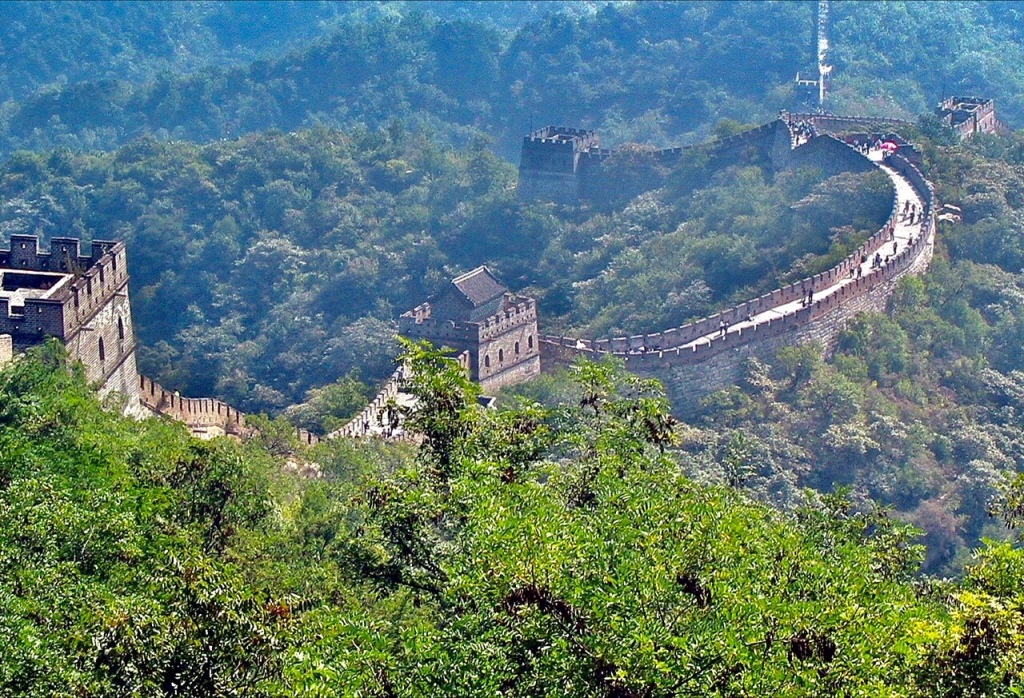
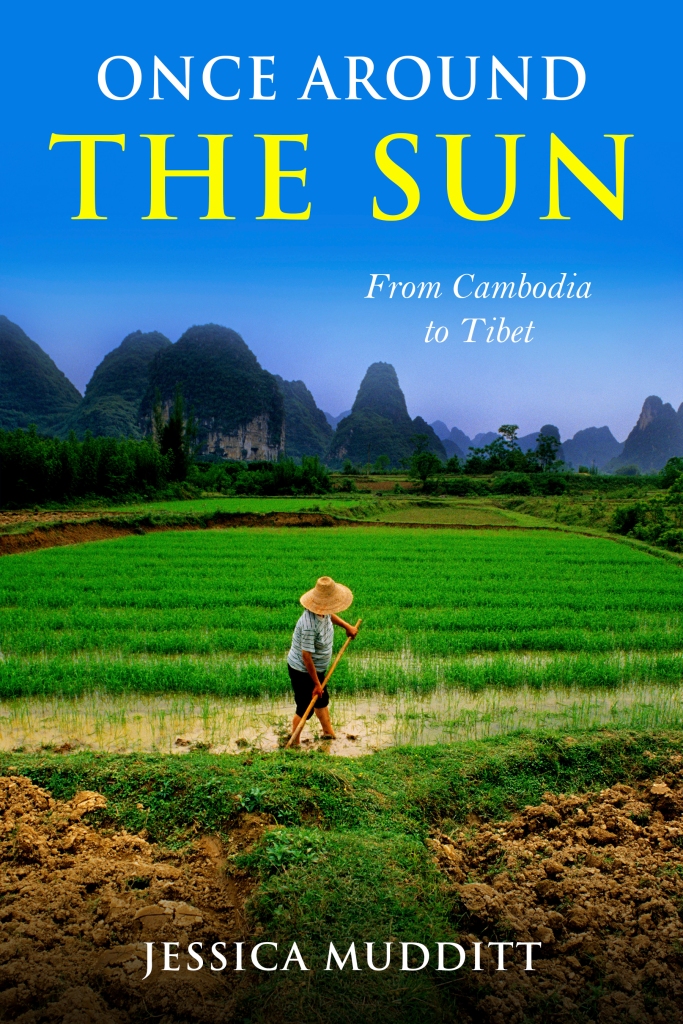


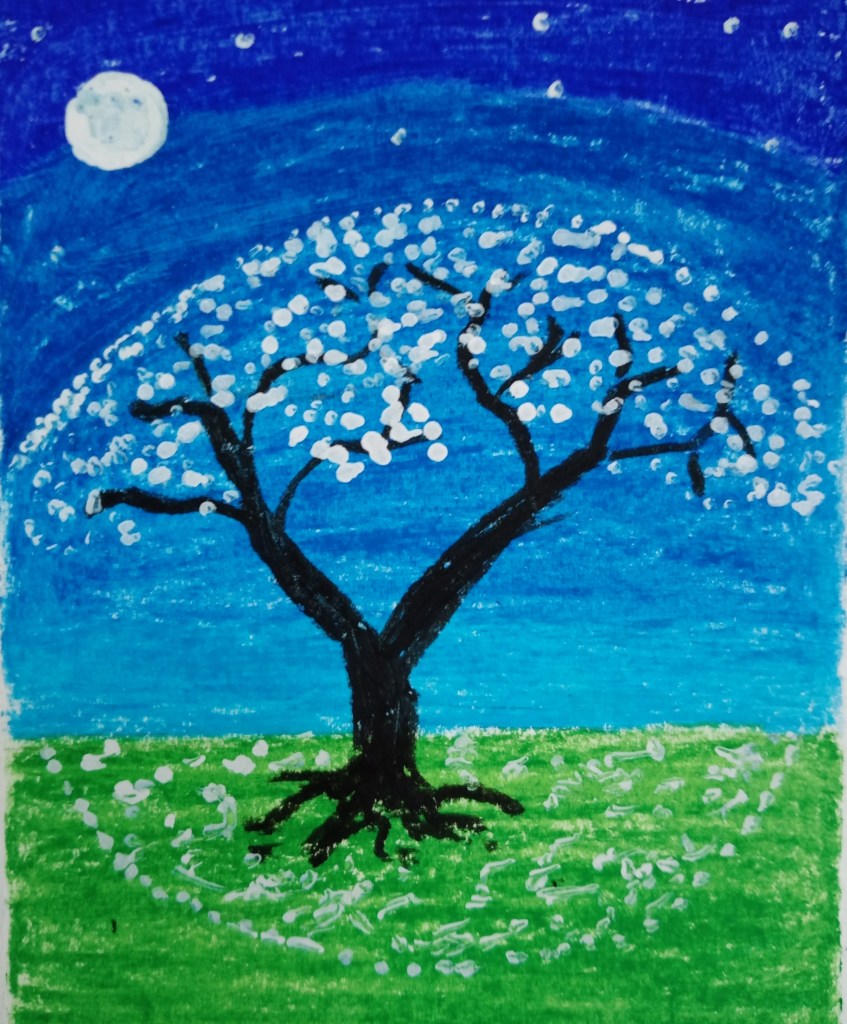


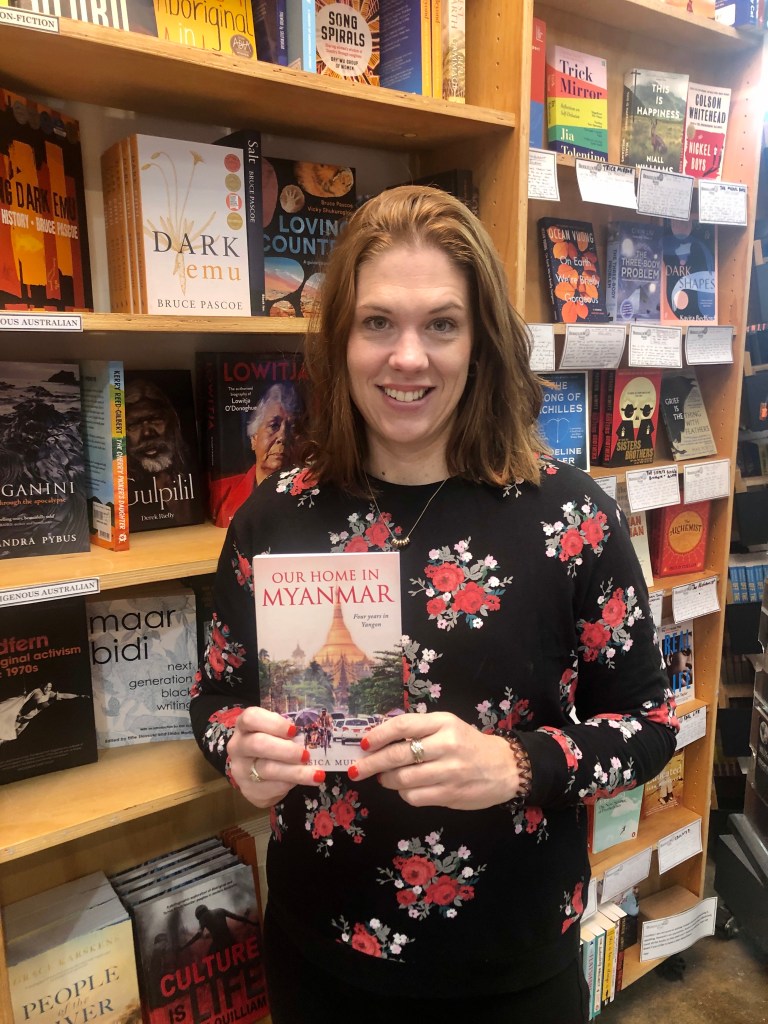

 Borderless