Rebranding


Once in a certain village there lived a young man.

He was so poor that he stole a sheep.

The villagers branded ST -- sheep thief – on his forehead.


The nickname of sheep thief followed the young man.

He was despised and treated coldly.

But he did his best and did his own work in silence.

He also threw himself into hard work in the village.

He was always honest and faithful, regretful of his past faults.


The villagers' attitudes began to change gradually.


With the passage of time, his black hair changed to white.

The villagers began to give him their sincere respect.

The ST on his forehead was no more the initials of a sheep thief.


Every villager regarded the letters as the initials of a Saint.

The young man condemned as a sheep thief

became a grand old man revered as a saint by the villagers.
Ihlwha Choi is a South Korean poet. He has published multiple poetry collections, such as Until the Time, When Our Love will Flourish, The Color of Time, His Song and The Last Rehearsal.
.
PLEASE NOTE: ARTICLES CAN ONLY BE REPRODUCED IN OTHER SITES WITH DUE ACKNOWLEDGEMENT TO BORDERLESS JOURNAL
After welcoming the dark half of the year with Halloween, we light lamps to observe yet one more homecoming festival — that of the legendary Rama. Though Diwali or Deepavali is interpreted variously in different parts of India, in the North, Rama’s homecoming after fourteen years of exile and victory over various demons is celebrated with the lighting of lamps and fireworks. Simultaneously, in Eastern India, they celebrate the victory of good over evil with the worship of Goddess Kali. In the Southern part, the victory of Krishna over a demon or asura known as Narakasura is jubilated. This festival is observed as a national holiday across a dozen countries now. There are a dozen different rituals, Gods and Goddesses correlated with the festivities. But victory of good over evil is a concurrent narrative along with prayers for prosperity and well being of the world. Both of these themes are a felt need in the present times.
In keeping with the theme of light, at Borderless, we celebrate this season with stories and poems connected with lights or lamps along with narratives around the festivals themselves… all from within our treasury.
The Traveller in Time: An interview with Sybil Pretious who has lived through history in six countries and travelled to forty — she has participated in the first democratic elections in an apartheid-worn South Africa and is from a time when Rhodesia was the name for Zimbabwe. Click here to read.
A poem reflecting the state of Gandhi’s ideology written in Manipuri by Thangjam Ibopishak and translated from the Manipuri by Robin S Ngangom. Click here to read.
Written by Tagore in 1908,Amaar Nayano Bhulano Eledescribes early autumn when the festival of Durga Puja is celebrated. It has been translated from Bengali by Mitali Chakravarty. Click here to read.
Sameer Arshad Khatlani dwells on the tradition of education among Muslim women from early twentieth century, naming notables like Ismat Chughtai and Rashid Jahan. Click here to read.
John Herlihy takes us through more of Myanmar with his companion, Peter, in the third part of his travelogue through this land of mystic pagodas. Click here to read.
Ratnottama Sengupta, who has edited an encyclopaedia on culture and is a renowned arts journalist, gives us the role ‘kanthas’ (hand-embroidered mats, made of old rags) played in India’s freedom struggle. Click here to read.
Sorrows Left Alone

When we apologise even to the flower,
the wind is sweet and the sunshine bright.
When we settle their misunderstandings,
a mound is tranquil and the birds' songs are friendly.

If birds stop singing and flowers fall blankly,
time will rattle like a wagon rolling over gravel.

We must not trust commonplace sorrow
only to heavens.

If humans do not come forward,
the world will be overthrown by the sea of tears
as only sorrows will retain their hold.
Ihlwha Choi is a South Korean poet. He has published multiple poetry collections, such as Until the Time, When Our Love will Flourish, The Color of Time, His Song and The Last Rehearsal.
.
PLEASE NOTE: ARTICLES CAN ONLY BE REPRODUCED IN OTHER SITES WITH DUE ACKNOWLEDGEMENT TO BORDERLESS JOURNAL
Professor Anvita Abbi, a Padma Shri, discusses her experience among the indigenous Andamanese and her new book on them, Voices from the Lost Horizon. Click here to read.
Keith Lyons talks to Jessica Muddittabout her memoir, Our Home in Myanmar, and the current events. Click here to read.
Geetha Ravichnadran explores additions to our vocabulary in a tongue-in-cheek article. Clickhere to read.
Musings of a Copywriter
In When I Almost Became a Professor, Devraj Singh Kalsi gives humour tinged reasons on why he detached himself from being an academician. Click here to read.
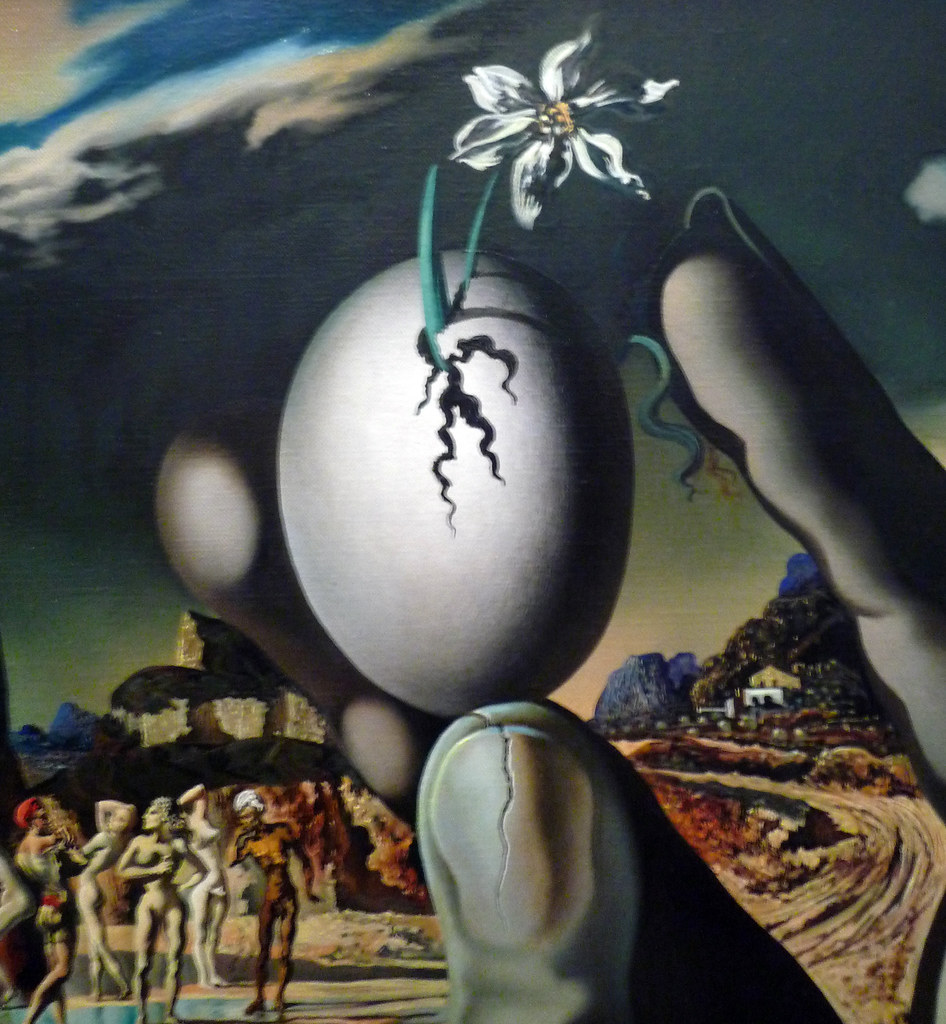
Salvador Dalí, Metamorphosis of Narcissus, 1937. Courtesy: Creative Commons
About Time

The flowers bloom and wither only to make people cry.
Tadpoles grow up to be frogs.
Just as robbers rob an old king's grave, a drunk catches frogs for a side dish.
Time does not take you like a river flowing with fallen petals,
but across the fixity of time,
seasons become spring, autumn and spring again.
The moving thing is not time but the sparrows,
the morning glories and the crescent moon.
Time does not bring you to the tomb step by step,
but it stays still without any facial expression,
while not only do the flowers bloom and the birds sing,
but also, you swim across the river of time towards a profound future.
You don't have to wait for the time when it takes you for a ride
but you must swim like a webfoot or with a fin
to build your own house on a housing lot of time like a silk carp, honeybee or kingfisher.
You must row on the milky way in the blue sky
with your own hands and feet like a pole,
your heart and brain like a mast.
Like a planet swimming in the universe,
you must fly across time like a kestrel.
The cornelian cherry and golden bells started to burst from yesterday.
Brilliant flowers bloom with their wings to build their own houses.
It is not that time brings you to the grand residence by taking you on the cloud train
but you are to walk struttingly through time to be a flower or a butterfly.
Ihlwha Choi is a South Korean poet. He has published multiple poetry collections, such as Until the Time, When Our Love will Flourish, The Color of Time, His Song and The Last Rehearsal.
.
PLEASE NOTE: ARTICLES CAN ONLY BE REPRODUCED IN OTHER SITES WITH DUE ACKNOWLEDGEMENT TO BORDERLESS JOURNAL
Goutam Ghose, multiple award-winning filmmaker, writer, actor discusses his films, film-books and journey as a humanitarian artiste. Click here to read.
DrKirpal Singh, a well-known poet and academic from Singapore, talks of his life and times through colonial rule, as part of independent Malaya, and the current Singapore. Click here to read.
Ratnottama Sengupta translates from Bengali the excerpts recorded by Sandhya Sinha (1928-2016), who witnessed an upsurge in the wake of the Quit India Movement, part of India’s struggle against colonial rule. Click here to read.
‘Tran’by Tagore translated from Bengali to English by Mitali Chakravarty, art and editing by Sohana Manzoor for Borderless Journal. Click here to read.
Anasuya Bhar explores the history of the National Anthem of India, composed by Tagore in Bengali and translated only by the poet himself and by Aruna Chakravarti. Click here to read.
John Herlihy explores the magnificent sites of Mandalay in company of a Slovenian friend in the first episode of his quartet on his Myanmar. Click here to read.
Bhaskar’s Corner
In Tagore & Odisha, Bhaskar Parichha explores Tagore’s interactions with Odisha, his impact on their culture and the impact of their culture on him. Click here to read
“Mil ke rahe gi Azadi”(We will get our Freedom) by Aysha Baqir muses on Pakistani women’s role in the independence movement and their current state. Click here to read.
Beyond The Himalayas by Goutam Ghose, based on a five-part documentary taking us on a journey along the silk route exploring parts of Pakistan and China. Click here to read.
On August 8th 2021, the chief of the International Olympic Committee, Thomas Bach, pointed out during the closing ceremony that these games were “unprecedented” and brought messages of “hope, solidarity and peace” into a world torn with the desolation generated by the pandemic. It was a victory of the human spirit again, a precursor of what is to come. That the Japanese could get over their pandemic wrought hurdles, just as they did post the nuclear disasters wrought by the Second World War and by the 2011 earthquake-tsunami at Fukushimaya, to host something as spectacular and inspiring as these international games reflects, as the commentators contended, a spirit of ‘harmony and humility’. The last song performed by many youngsters seemed to dwell on stars in the sky — not only were the athletes and organisers the stars but this also reminded of unexplored frontiers that beckon mankind, the space.What a wonderful thing it was to see people give their best and unite under the banner of sports to bring messages of survival and glimpses of a future we can all share as human beings! Our way of doing things might have to evolve but we will always move forward as a species to thrive and expand beyond the known frontiers.
One such explorer of yet unknown frontiers who mingles the historic with the contemporary, Goutam Ghose, an award-winning filmmaker and writer, has honoured our pages with an extensive interview showing us how art and harmony can weave lores that can help mankind survive. This is reinforced by the other interview with Singaporean academic, Dr Kirpal Singh, whose poetry reflects his convictions of a better world. With our intelligence, we can redefine processes that hold us back and grind our spirits to dust — be it the conventional ‘isms’ or norms that restrict our movement forward – just as Tagore says in the poem, we have translated this time, ‘Deliverance’.
…On this auspicious dawn,
Let us hold our heads high in the infinite sky
Amidst the light of bounteousness and the heady breeze of freedom.
As the Kobiguru mentioned earlier in the poem, the factors that oppress could be societal, political, or economic. Could they perhaps even be the fetters put on us by the prescribed preconceived definition of manmade concepts like ‘freedom’ itself? Freedom can be interpreted differently by multiple voices.
This month, on our pages, ‘freedom’ has found multiple interpretations in myriad of ways — each voice visualising a different dream; each dream adding value to the idea of human progress. We have discussions and stories on freedom from Nigeria, Argentina, India, Pakistan, Myanmar, Malaysia and more. Strangely enough, August holds multiple independence/ national days that are always for some reason seen as days of being ‘freed’ by many — at least from oppression. But is that true?
From Malaysia, Julian Matthews and Malachi Edwin Vethamani cry out against societal, religious and political bindings – quite a powerful outcry at that with a story and poems. Akbar Barakzai continues his quest with three poems around ideas of freedom translated from Balochi by Fazal Baloch. Jaydeep Sarangi and Joan Mcnerny pick up these reverberations of freedom, each defining it in different ways through poetry.
Jared Carter takes us back to his childhood with nostalgic verses. Ryan Quinn Flanagan, Michael Lee Johnson, Vandana Sharma and many more sing to us with their lines. Rhys Hughes has of course humour in verse that makes us smile as does Jay Nicholls who continues with her story-poems on Pirate Blacktarn – fabulous pieces all of them. The sport of hummingbirds and cats among jacaranda trees is caught in words and photographs by Penny Wilkes in her Nature’s Musings. A poetic tribute to Danish Siddiqui by young Sutputra Radheye rings with admiration for the Pulitzer prize-winning photographer who met his untimely end last month on 16th while at work in Afghanistan, covering a skirmish between Taliban and Afghanistan security forces. John Linwood Grant takes up interesting issues in his poetry which brings me back to ‘freedom’ from colonial regimes, perhaps one of the most popular themes for writers.
Indo-Pak independence, celebrated now on 14th (Pakistan) and 15th August (India), reflects not only the violence of the Partition which dislocated and killed millions historically but also the trauma caused by the event. Capturing this trauma is a short story based on memories of Partition by Nadir Ali, translated from Punjabi by his daughter, Amna Ali. Ratnottama Sengupta translates from the diary of Sandhya Sinha (1928-2016), a woman’s voice from the past that empathises with the subjugated who were subdued yet again after an upsurge of violence during the Quit India Movement (1942) against the colonials. Sinha contends that though the movement frittered away, the colonials were left with an after-taste of people hankering for self-rule. A thought-provoking short story by Sunil Sharma explores the results of self-rule in independent India.
Alluding to Jinnah’s vision for women, Aysha Baqir muses emotionally about the goals that remain yet to be fulfilled 74 years after independence. Moazzam Sheikh’s story of immigrants explores dementia, giving us a glimpse of the lives of Asian immigrants in America, immigrants who had to find a new home despite independence. Was this the freedom they dreamt of — all those who fought against various oppressive regimes or colonialism?
Tagore’s lyrics might procure a few ideas on freedom, especially in the song that India calls its National Anthem. Anasuya Bhar assays around the history that surrounds the National Anthem of India, composed by Tagore in Bengali and translated to English by the poet himself and more recently, only by Aruna Chakravarti. We also carry Dr Chakravarti’s translation of the National Anthem in the essay. Reflecting on the politics of Partition and romance is a lighter piece by Devraj Singh Kalsi which says much. ‘Dinos in France’ by Rhys Hughes and Neil Reddick’s ‘The Coupon’ have tongue-in-cheek humour from two sides of the Atlantic.
A coming-of-age story has been translated from Nepali by Mahesh Paudyal – a story by a popular author, Dev Kumari Thapa – our first Nepali prose piece. We start a four-part travelogue by John Herlihy, a travel writer, on Myanmar, a country which has recently been much in the news with its fight for surviving with democracy taking ascendency over the pandemic and leaving the people bereft of what we take for granted.
Candice Louisa Daquin discusses a life well-lived in a thought provoking essay, in which she draws lessons from her mother as do Korean poet, Ihlwha Choi, and Argentinian writer, Marcelo Medone. Maybe, mothers and freedom draw similar emotions, of blind love and adulation. They seem to be connected in some strange way with terms like motherland and mother tongue used in common parlance.
We have two book excerpts this time: one from Beyond the Himalayas by the multi-faceted, feted and awarded filmmaker we have interviewed, Goutam Ghose, reflecting on how much effort went in to make a trip beyond boundaries drawn by what Tagore called “narrow domestic walls”. We carry a second book excerpt this time, from Jessica Muddit’s Our Home in Myanmar – Four years in Yangon. Keith Lyons has reviewed this book too. If you are interested in freedom and democracy, this sounds like a must read.
Maithreyi Karnoor’sSylvia: Distant Avuncular Ends,is a fiction that seems to redefine norms by what Rakhi Dalal suggests in her review. Bhaskar Parichha has picked a book that many of us have been curious about, Arundhathi Subramaniam’s Women Who Wear Only Themselves. Parichha is of the opinion, “Elevated or chastised, exonerated or condemned, the perturbation unworldly women in India face is that they have never been treated as equal to men as spiritual leaders. This lack of equality finds its roots not only in sociological and cultural systems, but more particularly at the levels of consciousness upon which spirituality and attitudes are finally based.”One wonders if this is conclusive for all ‘unworldly women’ in India only or is it a worldwide phenomenon or is it true only for those who are tied to a particular ethos within the geographical concept of India? The book reviewed by Meenakshi Malhotra, Somdatta Mandal’s The Last Days of Rabindranath Tagore in Memoirs, dwells on the fierce independence of the early twentieth century women caregivers of the maestro from Bengal. These women did not look for approval or acceptance but made their own rules as did Jnadanandini, Tagore’s sister-in-law. Bhaskar Parichha has also added to our Tagore lore with his essay on Tagore in Odisha.
As usual, we have given you a peek into some of our content. There is more, which we leave for our wonderful readers to uncover. We thank all the readers, our fantastic contributors and the outstanding Borderless team that helps the journal thrive drawing in the best of writers.
I wish you all a happy August as many of the countries try to move towards a new normal.
By the small window of the distant city Santiniketan, I met the morning of my birthday.

I have arrived here by train and airplane, where language and customs are different.

Does my mother know this city? She stays in a land further than the sun and the moon.

Long, long time ago, I was a tiny seed in my mother’s womb.

She left for a land farther than the legend of the sutras,

Leaving the frail bud in this world like one who pushes away her own baby with hate.

The day when the tiny black seed sprouted for the first time in the garden is my birthday.

Mother usually remembers the small bud and the sunshine of that spring.

Today should have been my mother's joy, but she is in a land further than the sun and moon.

When I approached the window of the unfamiliar city in the twilight with my body and mind worn out,

Mother visited me as an afterglow of the evening sun.

After looking around my room and my face, she brought me my birthday dinner.

When I finished having dinner, she had already left me,

Putting aside the silent blanket of night next to me.

She left me with the afterglow of the evening to the land further than the sun and moon.
Ihlwha Choi is a South Korean poet. He has published multiple poetry collections, such as Until the Time When Our Love will Flourish, The Color of Time, His Song and The Last Rehearsal.
PLEASE NOTE: ARTICLES CAN ONLY BE REPRODUCED IN OTHER SITES WITH DUE ACKNOWLEDGEMENT TO BORDERLESS JOURNAL.
Five rupees

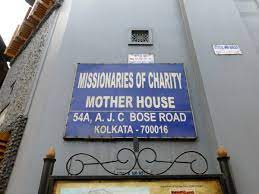
In front of the house where Mother Teresa was laid to rest,
Several women took up their position at the entrance with
Young six or seven years olds.
Whenever I went near the house,
They gathered around me shouting -- five rupees –-
with palms open, arms outstretched.
I gave each of them one coin several times.
That became the source of the calamity.
Whenever they saw me in the morning or the evening,
They scrambled to get a coin.
Especially one woman with a baby around her waist,
Approached me more vehemently, shouting five rupees.
She followed me not only to the distance of ten or twenty meters,
But also to the other side of the road.
So I gave her several times more.
I forgot the guide's request that I must not give them,
Because someone had victimised them for wealth.
I felt very sorry to shake off the hands of the women.
It hurts to think of the young mothers,
Who seemed not to eat a plate of cereal all day,
And the baby who seemed to have no more tears to shed.
Ihlwha Choi is a South Korean poet. He has published multiple poetry collections, such as Until the Time When Our Love will Flourish, The Color of Time, His Song and The Last Rehearsal.
PLEASE NOTE: ARTICLES CAN ONLY BE REPRODUCED IN OTHER SITES WITH DUE ACKNOWLEDGEMENT TO BORDERLESS JOURNAL.







 Borderless