TWO HUNDRED YEARS ago mountains were regarded as useless and terrible masses of inert matter where dragons had their lairs and the spirits of the damned lay in wait to claim the unwary. But as man emerged from the superstitions and materialisms of the Middle Ages he began to realise that mountains were beautiful and their summits worthy of attainment. The nineteenth century saw the conquest of the Alps. Unknown difficulties and dangers had to be faced by the pioneers of mountaineering. Disasters occurred, lives were lost, and mountaineering thrown into disrepute. The mountaineer was not dismayed. He knew that beauty was his for the seeking; he rejoiced in a newfound comradeship and in the acquirement and exercise of a new craft.
The great alpine summits fell one by one; traditions were established; a technique was evolved; a literature was born. The ripples of alpine mountaineering radiated outwards, bearing with them mountaineers to other ranges: the Caucasus, the Rockies, the Andes, the New Zealand Alps. On their highest peaks the skill acquired in the Alps was sufficient to ensure success. But there remained one great range that defied invasion of its strongholds – the Himalaya. There, the technique acquired in the Alps was not sufficient. Height alone was a physical deterrent, and coupled to height was steepness and danger. Expeditions had to be organised to reach even the foot of the great peaks; time and money had to be found. Yet, despite these disadvantages, Himalayan mountaineering and exploration progressed steadily. Pioneers such as the Schlagintweit Brothers, Sir Joseph Hooker, The Duke of the Abruzzi, Mr W.W. Graham, Lord Conway, Sir Francis Younghusband, Mr D.W. Freshfield, Doctor T.G. Longstaff, Doctor A.M. Kellas, General Bruce, Mr C.F. Meade, Doctor and Mrs Bullock Workman, Messrs. Rubenson and Monrad Aas, and many other pre-war pioneers opened up a region unsurpassed for its beauty and grandeur, and by their experiences pointed the way to the highest summits.
Many people refer to the Himalaya as though their limitations in scenery and climate were similar to those of the Alps. The tourist who gazes upon Kangchenjunga, 28,226 feet, from Darjeeling returns home saying that he has seen the Himalaya. So he has, but how much of two thousand miles of mountains stretching from the Pamirs to the borders of Indo-China, and beyond these limits, in terms of mountains? A lifetime might be spent wandering about the Himalaya, yet the knowledge acquired would embrace but an infinitesimal portion of that vast labyrinth of peaks, valleys and plateaux scrawled across the map of Asia.
In climate alone there is an extraordinary variety. From hot steamy tropical valleys, filled with luxuriant vegetation, it is but a few horizontal miles to zero temperatures and the highest snows in the world. Between these two extremes is an immense range of climate, the common despot of which is a fierce sun. Added to the complexities of climate due to height alone is the added complexity of seasonal weather fluctuations, due directly or indirectly to the influence of the monsoons and weather conditions emanating from the plateaux of Central Asia.
Racial characteristics are as diversified as the climate. From the people of Hunza and Chitral to the Sherpas and Bhotias of Northern Nepal, the almost extinct Lepchas of Sikkim and the wild races of Bhutan, the Himalaya can show many different types, for they form a natural frontier between India and Tibet, and a pudding-bowl wherein is stirred a mixture of Mongolian and Indian blood.
Politically, only a comparatively small portion of the Himalaya is accessible to the mountaineer and explorer. Democracy is unknown in Tibet and Nepal, and both these countries have closed their frontiers to Europeans and resolutely set themselves against infiltration of European thought and ideas. Some of the finest peaks of the Himalaya lie within the borders of Nepal, including the southern side of Everest, 29,140 feet, Dhaulagiri, 26,795 feet, Gosainthan (Shisha Pangma), 26,305 feet, and many other great peaks. In addition there are other districts where the mountaineer is not always welcomed, owing to political and other objections. The three most interesting districts accessible to mountaineers and explorers are the Karakorams, the Kumaun and Garhwal Himalaya and the Sikkim Himalaya, including the eastern side of Kangchenjunga, and it is in these three districts that the most notable mountaineering expeditions have been carried out, with the exception of Everest (now barred politically) and the northern side of Nanga Parba (forbidden territory to expeditions at present). Each of these districts is magnificent in its own way. In the Karakoram there is no glacier to rival in grandeur the Baltoro, and no peaks surpassing in ferocity the terrific ice- armoured spires dominated by K2 (Mount Godwin Austin), 28,187 feet. From the Kumaun Himalaya rises Nanda Devi, 25,645 feet; the highest peak entirely within the confines of the British Empire, a mountain so difficult to approach that no one has yet succeeded in treading the glaciers at the foot of it, whilst Kamet, 25,447 feet, dominates the ranges of Northern Garhwal. In Sikkim, Kangchenjunga boasts the most wonderful snow and ice scenery in the Himalaya, owing to its exposure to the moisture-laden airs of the monsoon. It has defeated three determined attempts to climb it, in 1929, 1930 and 1931 by mountaineers well versed in the technique of high-altitude mountaineering. The highest point reached was 26,000 feet, by the gallant Bavarian expedition in 1931 and that only after incredible difficulty.*
Geologically, the Himalaya are a young mountain range, due to an uplift of the ancient seabed covering Central Asia. This uplift took place so slowly that rivers such as the Indus and the Brahmaputra, which have their sources to the north of the Himalaya, have been able to carve their way through the range as it rose. This is the only explanation that can account for the deep valleys cutting through from Tibet to India.
.
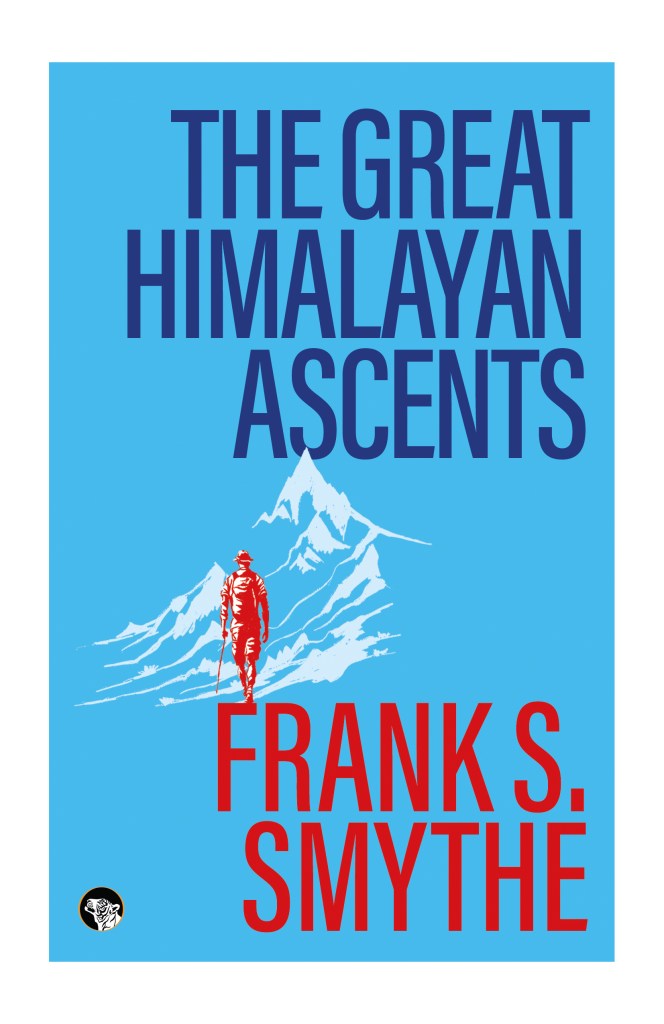
(Extracted from The Great Himalayan Ascents by Frank S. Smythe. Published by Speaking Tiger Books, 2025.)
About the Book
Frank S. Smythe (1900-1949) was one of the greatest mountaineers of the twentieth century, and a celebrated memoirist and adventure writer. This collection brings together three accounts of Smythe’s most thrilling ascents in the Himalayas—The Kangchenjunga Adventure, Kamet Conquered and Camp Six.
The Kangchenjunga Adventure narrates in detail the 1930 expedition to climb the third-highest mountain in the world: how Smythe, as part of an international team of mountaineers, attempts to reach the summit of Kangchenjunga, before a deadly avalanche—which kills one of the Sherpas— forces them to change course and scale the Jonsong Peak instead. In Kamet Conquered, Smythe makes a successful bid at ascending Mount Kamet in 1931, which was at that time still unscaled. On their way back, Smythe and his team chance upon the spectacular and colourful Bhyundar Valley, which they christen the ‘Valley of Flowers’, and which is now a National Park. Camp Six recounts a gripping adventure on the world’s highest mountain—the 1933 Everest Expedition, in which Smythe, climbing alone, ascends to a point higher than any human had reached before. Made without ropes or oxygen to support him, and in terrible snow conditions, the climb is regarded as one of the greatest endeavours in the history of mountaineering.
This majestic omnibus edition offers a fascinating window into early mountain climbing and Himalayan exploration. It is also a rare treat for every lover of fine, entertaining writing.
About the Author
Frank Sydney Smythe was a British mountaineer, botanist and adventurer. Smythe, who began his mountaineering career in the Alps, joined the international Kangchenjunga expedition of 1930 which ended in failure. In 1936, he led the expedition which successfully ascended Mount Kamet, then the highest peak ever to have been climbed. Subsequently, in the 1930s, Smythe was thrice part of teams which attempted to climb Mount Everest. An accomplished photographer and a prolific writer, Smythe wrote twenty-seven books in all, the best known among which are The Kangchenjunga Adventure, Kamet Conquered and Adventures of a Mountaineer. Smythe died in 1949.
.
PLEASE NOTE: ARTICLES CAN ONLY BE REPRODUCED IN OTHER SITES WITH DUE ACKNOWLEDGEMENT TO BORDERLESS JOURNAL
Farouk Gulsara on a cycling adventure through battleworn Kashmir
They say to go forth and explore, to go to the planet’s edge to increase the depth of your knowledge. Learning about a country is best done doing the things the local populace does, travelling with them, amongst them, not in a touristy way, in a manicured fashion in a tourist’s van but on leg-powered machines called bicycles. Itching to go somewhere after our memorable escapade in South Korea, cycling from Seoul to Busan, as the borders opened up after the pandemic, somebody threw in the idea of cycling from Kashmir to Ladakh. Long story short, there we were, living our dream. The plan was to cycle the 473km journey, climbing 7378m ascent in 8 days, between 6th July 2024 and 12th July 2024.
Our expedition started with us landing in Amritsar after a 5.5-hour flight from Kuala Lumpur. From there, it was another flight to Srinagar, where the crunch began.
Day 1. Amritsar
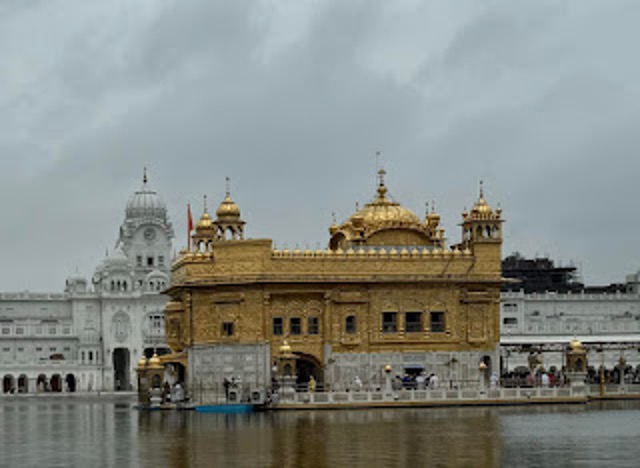
Amritsar Golden Temple. Photo Courtesy: Farouk Gulsara
After a good night’s sleep, everyone was game for a quick, well-spread breakfast and a leisurely stroll to the Harmandir, the Sikh Golden Temple. Much later, I realised the offering was 100% vegetarian and did not miss any non-vegetarian food. As a mark of respect, the vicinity around the temple complex served only vegetarian food, including a McDonald’s there. Imagine a McDonald’s without the good old quarter pounder! Hey, image is essential.
The usual showing of gratitude to the Almighty was marred by the unruly behaviour of the Little Napoleons, the Royal Guards. New orders were out, it seems, according to one guard with a chrome-plated spear and a steely sheathed dagger at his hip—no photography allowed. Then, on the other end of the Golden Pool, it was okay to photograph but only with a salutary (namaste) posture, with hands clasped on the chest. On the other side, it was alright. One can pose as he pleases. The guards were more relaxed there.
That is the problem when rules are intertwined with religion. People make their own goal post and shift it as they please. When little men are given power to enforce God’s decree on Earth, they go overboard. They feel it is their God-given raison d’etre and the purpose of existence. Since nothing is cast in stone and everyone in mankind is on a learning curve, what is appropriate today may be blasphemous tomorrow and vice versa. We distinctly remember snapping loads of pictures of the full glory of Harmandir day and night during our last visit, preCovid.
We all know what happened in the Stanford experiment when students were given powers to enforce order. It becomes ugly very quickly. Next, the flight to Srinagar.
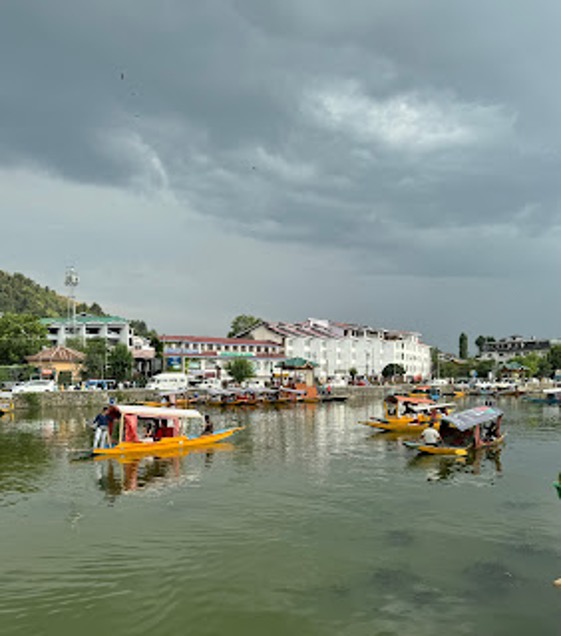
Boat House Dal Lake, Srinagar
Srinagar. Photo Courtesy: Farouk Gulsara
My impression differed from when Raj Kapoor and Vyajanthimala were seen spending their honeymoon boating around the lake in the 1964 mega-blockbuster Hindi movie Sangam. Then, it had appeared insanely cold, with mists enveloping the lake’s surface. Serenity was the order of the day. What I saw in the height of summer with a temperature hovering around 30C, was anything but peaceful. Even across the lake, the constant blaring of car horns was enough to make anyone go slightly mad.
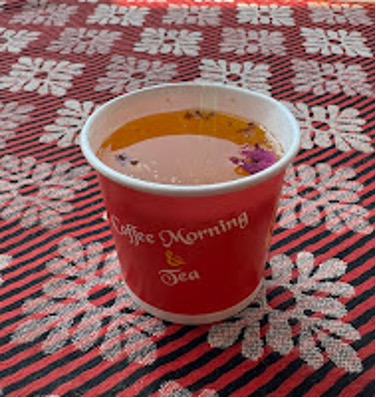
The lake is a godsend for dwellers around it. Many depend on the lake to transport tourists and sell memorabilia and other merchandise on their boats. The rows of boat houses are also popular sites for honeymooners and tourists to hire. Privacy may be an issue here. Imagine small-time Kashmiri silk vendors just landing at the boat house and showing produce to the occupants. They may want you to sample their kahwa,a traditional spiced-up, invigorating, aromatic, exotic green tea.
Day 2. Boat House, Dal Lake, Srinagar
Kashmiri Kahwa, a spiced tea. Photo Courtesy: Farouk Gulsara
Early morning starts with peaceful silence until the honking and murmur of the crowd start slowly creeping in. It was a leisurely morning meant to acclimatise ourselves to the high altitude (~1500m) before we began to climb daily till we hit the highest point of ~5400m. This would — aided by prophylactic acetazolamide –hopefully do the trick to keep altitude sickness at bay.
The morning tête á tête amongst the generally older crowd was basically about justifying our trip ahead. The frequent question encountered by these older cyclists was, ‘Why were they doing it?’ The standard answer was similar to what George Mallory told his detractors when he expressed his desire to climb the peak that became Everest.
“Why? Because it is there!” Mallory had said.
The cyclists told their concerned naysayers, “Because we can!”
Yeah, the general consensus was sobering. Time was running out, and so many things needed to be done before the big eye shut. There were so many places and so little time!
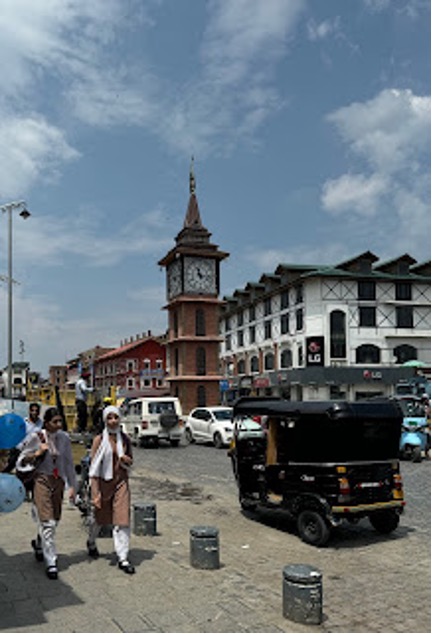
Lal Chowk. Photo Courtesy: Farouk Gulsara
Continuing the easy-peasy stance before the crunch, a trip to town was due. Backed with the symphony of the blaring of honks, we made a trip to the town square, Lal Chawk. After checking out how regular people got along with life, we realised the heavy presence of armed army personnel at almost every nook and corner of the town. Perhaps it was because it was Friday and prayers were in progress.
The return trip to our boat house was a trip down memory lane. After spending most of our adult lives in air-conditioned cars, the trip back on a cramped Srinagar town bus brought us back to our childhood, when rushing to get a place in the bus and squeezing through shoulder to shoulder in a sardine-packed bus was a daily challenge. That, too, was in the tropical heat minus the air conditioning.
By noon, temperatures had soared to a roasting 30C. So much for cool Kashmir!
Our trip coincided with the Amarnath Yatra, an annual pilgrimage for Shiva worshippers who pay obeisance to Holy Ice Lingam.
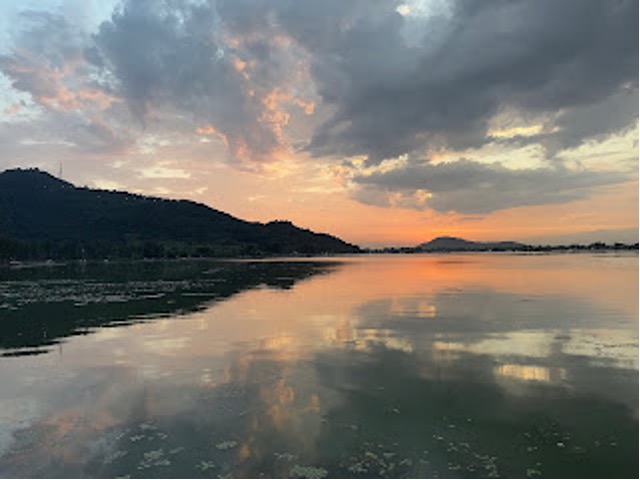
Dal Lake. Photo Courtesy: Farouk Gulsara
The evening was the time to familiarise ourselves with our machines, which involved a ride around the city. It was a nightmare of an experience where we had to simultaneously see our fronts, back, and sides. It was jungle fare. Nobody knew from which direction vehicles were going to barge at us. We survived somehow, if ever we were born in India, our most probable cause of death would be death by road traffic accident.
The ride brought us to the affluent part of Srinagar, which changed our perception of Kashmir as a war-torn zone. What we saw were nicely manicured lawns and neatly painted buildings. The only hint of disturbances is the apparent presence of armed army personnel nearby. It is said that the one single sign of peace is to see people hanging around lakes and esplanades. We did see this on this ride. Young families were strolling along the promenade to a string of shops selling potpourri of delicacies. Kashmir appeared peaceful.
Day 3. Srinagar…move it, move it…
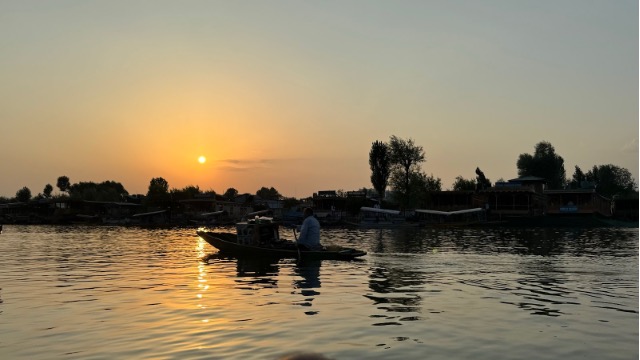
Sunset at Dal Lake. Photo Courtesy: Farouk Gulsara
It was 4am in Kashmir, and all through the night, it had been raining with occasional threats of thunder in the distance. The plan was to start riding as soon as the day broke with the first ray of the sun. That could be 5am or later. And it has probably nothing to do with Indian timing. Today’s ride would be a 90km challenging ride with an ascent of 4.5%.
All the cyclists survived the ordeal. Starting around 6am, after checking the machines and last-minute briefings, we were good to go.
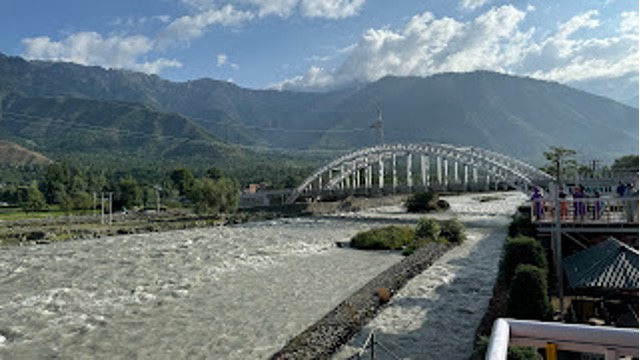
We did not know that Lake Dal was so huge. The first 20km was all about going around the lake. The first stop was at Mani Gam, a picturesque countryside with a massive tributary of the Sindh River, for an early breakfast of hot milk coffee.
As expected, the traffic was heavy because of the Amarnath Yatra. But one would expect attendees of a divine voyage like this to want to exhibit tolerance, patience, and softness. Unfortunately, the ugly side of drivers was in full glory. If the rest of the world would blare their honk with all their might just before a head-on collision, here, the same action is synonymous with informing another fellow road user that he is around.
To be fair, many pilgrims were in chartered vans, and the drivers were quite aggressive, overtaking in blind corners and swerving to the edge of the roads. All in the name of making more trips and making money for the family.
Sind River at Ganderbal. Photo Courtesy: Farouk Gulsara
They say with greater powers comes great responsibility. Apparently, the lorry drivers here missed the memo. Locally, they are known as the King of the Road, with multi-octaved ear drums rupturing high-decibel honks, sometimes to the tune of Bollywood numbers.
The cyclists continued grinding despite side disturbances that can push any person raving mad; the steady climb was unforgiving. Just when they thought that was the end of the climb, they were fooled for another just after the bend. The most gruelling part was the end of the day’s trip. We rode more than 85 km, climbed a total elevation of 2692 m, and still lived to tell.
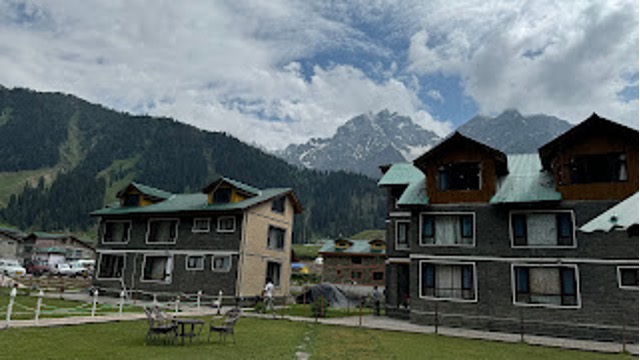
Hotel Thajwass Glacier, Sonamarg
Along Srinagar…Ladakh Highway. Photo Courtesy: Farouk Gulsara
Dinner was entirely vegetarian as a mark of respect to the hotel’s occupants who were there to fulfil their pilgrimage at Amarnath temple. The brouhaha that struck a chord amongst many occupants was the cancellation of helicopter services to the pilgrimage site. The pilgrims were given the choice of either walking a 15 or 22-km track to fulfil their vows or they could pre-book a helicopter ticket to go there. The trouble with the helicopter services is that their feasibility depended on the weather. Weather is controlled by God, the logical explanation would be that God was not too keen to give audience to the so-and-so who were scheduled on flight.
After the light chat with fellow hotel dwellers and answering their curious questions about why able bodies would want to torture themselves, it was time to hit the sack. We could have asked them why fly when they could walk, but we did not.
Day 4. Sonamarg
Sonamarg. Photo Courtesy: Farouk Gulsara
We decided to make it a day of light and easy. Everyone was left to their own devices after the spirit-sapping grind the day before. Most took a rain check on the initial hike but went for a long walk instead.
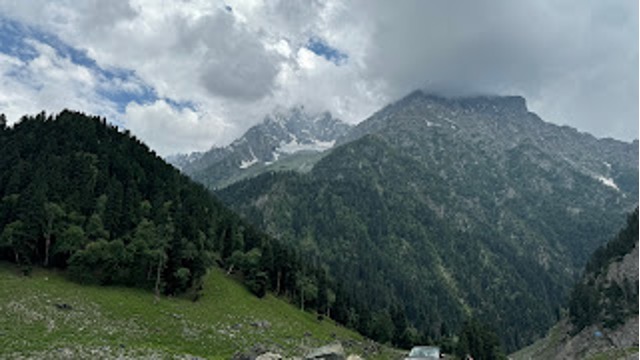
So, we took a stroll in the Kashmiri Valley, admiring the result of Nature’s choice of colours in His palette: the symphony of rushing cool mountain water and the refreshing cool breeze.
We met a couple from Chennai at the breakfast table with a sad tale. They had recently lost their only child who was born with cerebral palsy. They had to part from her after caring for their child for many years. They suddenly found plenty of free time on their hands. They decided to spend the rest of their remaining post-retirement lives doing short gigs, earning enough money to tour around and help out other families undergoing the same predicament as they did with their special child.
When we think we do not have nice shoes, we should not forget about those with no feet. No matter how big our problems seemed, others could have had it worse.
Sonamarg can be classified as a tourist town with rows of hotels on either side of the road, occasionally laced with souvenir shops and restaurants. The township appears to have been newly built, with freshly tarred roads, loose pebbles on the road shoulder, and unfinished touch-ups.
Day 5. Off to Drass
On the way… Photo Courtesy: Farouk Gulsara
We were off to Drass, the coldest inhabited place in India in winter. A quick read and one might read it as Dr-Ass, rather fitting of a name as one could use an examination of one’s derrière after a climb that was upon us. We will see you in hell. But wait, hell is supposed to be hot, is it not? Or hath hell frozen over?
At one point in the 1947-48, Drass was invaded and captured by Pakistan. Soon later, India recaptured Drass. We were only 12km from the line of control (LOC).
Hotel D’Meadow Drass
As expected, it was a gruelling ride. The first 21km were excruciatingly torturous, with narrow roads that had to be shared with the notorious motorists who thought that without the honk, one could not drive. We had to test our trail biking skills later as quite a bit of the stretch was undone or probably collapsed as a result of downpours. We were left with a sand tract and later fabricated stone tracks, which gave good knocking on our posterior ends. Remember our appointment with Dr Ass?
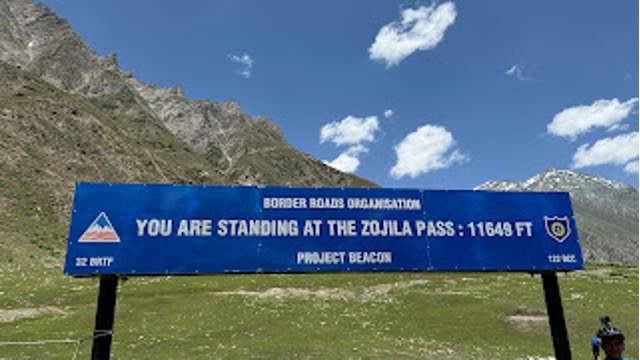
Zojila Pass. Photo Courtesy: Farouk Gulsara
After the 21 km mark, it was generally downhill, but our guide told us to unlock the mountain bike suspension for more comfort due to the violent bumping. The road improved as we entered Ladakh but was interspersed with occasional potholes that shook the machine.
After a short lunch break at a remote restaurant (referred to as a hotel), we were good to go and finally reached Drass at about 3 pm.
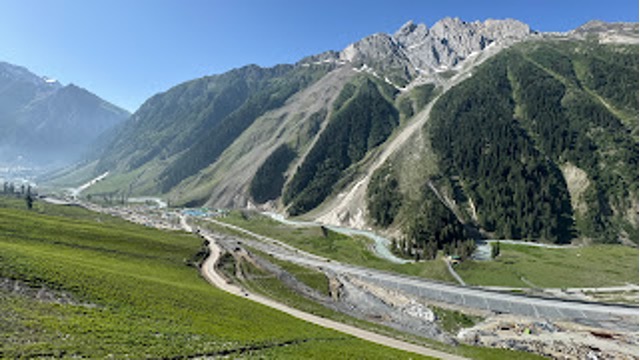
We had gone through the gruelling Zojila Pass. A tunnel is currently being built to connect Sonamarg and Drass. It would cut down travel from 4h to 1.5h.
Point to note: this Pass lives up to its name. When Japan was attacked by many post-nuclear attack monsters, the biggest one was referred to as Gojira. Hollywood decided to christian Gojira as Godzilla, giving rise to the meaning of gigantic as in Mozilla and Godzilla’s appetite. Zojila Gojira, what’s the difference? Both were scary.
Day 6. Drass to Kargil
Leaving the ‘Gateway to Ladakh’ and the ‘Coldest place in India’, we headed toward Kargil, which had been immortalised in annal of history when Pakistan and India fought a war in 1999.
Today’s cycling routine was less enduring compared to our previous rides. Most of the route was a downhill trend lined by dry, stony mountains on one side and the gushing blue waters of a tributary of the Indus on the other. The road condition was pretty good, with recently tarred roads, barring some stretches being tarred and resurfaced in various states.
After completing the close 60km trip to Kargil, we were told we were the fastest group the organiser had ridden with. Eh, not bad for a bunch of sixty-something madmen! Maybe they were just words of encouragement.
I was surprised to see Kargil as a bustling town with many business activities. Construction is happening here and there. Vendors were spreading their produce. Touters were busy looking for clientele. Hyundais, Marutis, and motorcycles thronged the streets, which were obviously not built to handle such tremendous volumes. Everyone was in a hurry. That is a sign of development.
We were housed in the tallest building around here. It was a four-story, four-star hotel with a restaurant and 24-hour hot water services. In most places we stayed, hot water was only supplied at short, predetermined intervals.
Day 7. Kargil to Budkharbu
The day started at about 6:45 am, with temperatures around 9C. This leg was expected to be tough. Two-thirds of our journey would be climbs, and there’d be more. It is expected to be sunny throughout, so we could expect a lot of huffing and puffing.
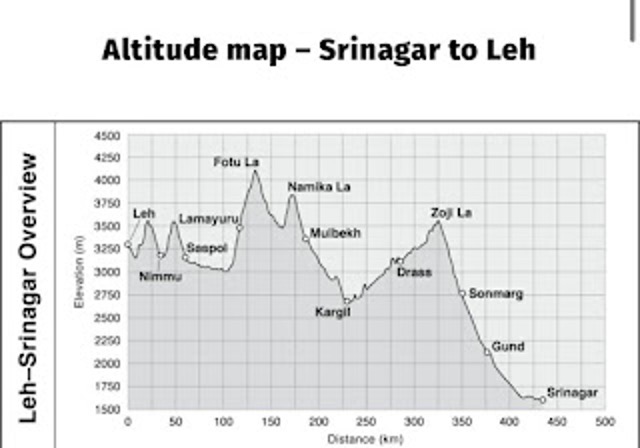
Today’s ride was easily the toughest one. Straddling on our saddles for 7.5 hours was no easy feat by any means. The climbs went on and on. The steepest and most prolonged ascent came after 39 km. It was a sustained climb for the next 10 km, hovering between 4% and 12% ascent.
Photo Courtesy: Farouk Gulsara
Nevertheless, we were feasted with some of the most mesmerising views of barren, arid landscapes, as though someone had painted them with hues in the brown range, occasionally speckled with malachite green and a top of sky blue. It was a feeling as if we were at the edge of heaven.
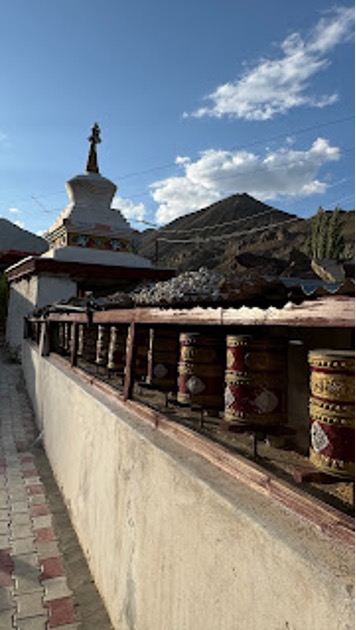
We pass through a small town called Malbech, which appears to be a Buddhist town with many temples and chanting over its public address system. I guess no one wants to keep their sacred words of God to themselves. They had a compelling desire to broadcast it to the world.
Many Shiva temples and mosques lined the road of our ride, all showing their presence with specific flags, colours and banners claiming those areas.
We finally reached Budhkharbu at 2 pm in the heat of summer Ladakh. The temperature was about 22C. The total biking time was 5h 43m. Everyone was shrivelled, depleted of glycogen and energy.
Budhkharbu is so far from civilisation that the occupants do not feel the need for digital connectivity. Only we, the town folks, were having withdrawal symptoms for not being able to upload our Strava data to earn instant gratification. Foreigners were not allowed to purchase SIM cards, so we were essentially crippled for a day.
Day 8. Padma Numbu Guest House, Budhkhorbu to Nurla
Photo Courtesy: Farouk Gulsara
Rise and shine. Rinse and repeat. Breakfast at the Guest House to a vegetarian, sorry, no eggs too, accompanied by the aroma of incense and the tune of ‘Om Jaya Jagatheeswara Hare1‘, we were good to go. I suspect the owners of this guest house were ardent BJP supporters. The keyholder to our rooms carried a lotus symbol. And the BJP mission office was their neighbour.
We were up on the saddle and ready to move by 7:15 am. The sun was already bright and shiny by then, and we were all enticed by the 26kms steep decline.
After 9 kms, we did not mind the initial steep climb traversing the unforgiving Fotula Pass. At one point, we almost reached 4,200m above sea level. Other than the occasional passerby and military barracks, there wasn’t a single inkling of life there. It was just barren, arid land for miles and miles.
64 km later, we arrived at our destination, Nurla. Nurla is a no man’s land and is not featured for first-time visitors to Ladakh. Nearby is a self-forming statue of the Sleeping Buddha and a giant statue of Maitreya Buddha. Here, the seed of the Namgyal Dynasty started. It is famous for Tibetan paintings. As temporary sojourners, we just learned and moved along.
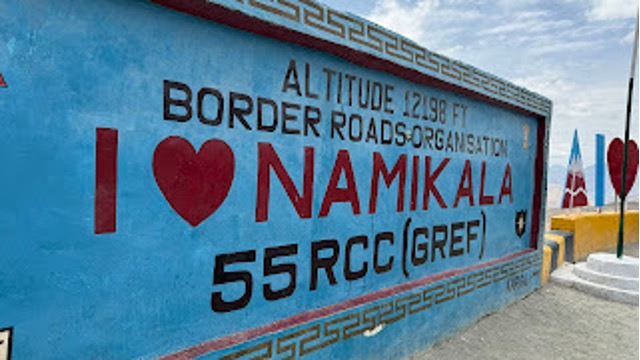
By now, we had learnt how the honking system worked. Even the brotherly advice from BRO (Border Road Organisation) advises using vehicle horns, especially at blind corners and overtaking another vehicle. At a telepathic level, the driver seems to converse with the other, ‘I can take charge of my vehicle as I overtake you. Now, don’t you make any sudden moves, can you?’ The melodious tone of honks, especially of lorries and buses, is just to liven up the monotonous journey, as do music (and movies).
Day 9.Travellers’Lodge, Nurla to Leh
We were told today’s leg would be challenging, with 85 km to cover and a steep one. Hence, we had to be up on our saddles by 5 am.
In essence, today’s outing was the toughest by far. We climbed two hills, and just when we thought everything was done and dusted, another climb to our hotel came. Overall, we covered 85km and 1672m elevation in 7h 2m.
We saw two essential tourist attractions as we approached Leh: Magnetic Hill and gurudwara. Magnetic Hill is believed to create an optical illusion of a hill in the area and surrounding slopes. The cars may be going uphill when they are, in fact, going downhill.
Sourced by Farouk Gulsara
The Guru Pathan Gurudwara is another curious worship site in the middle of nowhere. Legend has it that Guru Nanak stopped at this place, coming from Tibet and towards Kashmir. It was a Buddhist enclave. While meditating, an evil demon tried to crush him by rolling down a boulder. Hold behold, the stone turned waxy soft and did not injure the Guru.
An indestructible piece of rock was encountered while constructing this stretch of the highway. The Buddhist monks told the authorities of the legend, and the Gurudwara was erected. The Buddhists revered Guru Nanak and treated him as a great teacher.
The journey ended with a brutal, unrelenting climb to our final destination, Hotel Panorama in Leh.
The next journey the following day to Khardungla was optional. Only the young at heart opted for it. A 37 km journey with an inclination of 8% constantly with possible extreme subzero temperatures was too much to ask from my gentle heart. I opted out.
Thus ended our little cycling escapade from Srinagar to Leh, Ladakh. Few will attempt this journey with SUVs or superbikes; only madmen will do it with mountain bikes.
P.S. I want to thank Sheen, Adnan, Basil, and Samir of MTB Kashmir for their immaculate planning and supervision of the rides.
A holy chant extolling the lord of the Universe ↩︎
Farouk Gulsara is a daytime healer and a writer by night. After developing his left side of his brain almost half his lifetime, this johnny-come-lately decided to stimulate the non-dominant part of his remaining half. An author of two non-fiction books, Inside the twisted mind of Rifle Range Boy and Real Lessons from Reel Life, he writes regularly in his blogRifle Range Boy.
.
PLEASE NOTE: ARTICLES CAN ONLY BE REPRODUCED IN OTHER SITES WITH DUE ACKNOWLEDGEMENT TO BORDERLESS JOURNAL
A difficult hiking trail up into the mountains combined with bouts of inner doubt makes for an interesting big day out, as Keith Lyons discovers on an alpine route in New Zealand.
Photo Courtesy: Keith Lyons
The coroner’s reports make sobering reading. Two people had died on the same track within a couple of years – both deaths partly attributed to insufficient signage warning hikers heading down to cross the river at that point rather than continue to where cliffs, waterfalls and slippery rocks could be fatal. Both fatalities were preventable, the reports concluded. The one day, up and down rocky alpine route is recommended to only be attempted by experienced hikers, and in good weather, but when my friend and I set off recently on the Gertrude Saddle hike, in New Zealand’s Fiordland, it seemed ‘experienced’ was not a word I would describe the fellow walkers.
Inspired by photos on Instagram, guidebook recommendations in English, French and German, blogposts with photos, and travellers’ recommendations, the hike is popular and easily accessible. It is only 7km return, but 7km involving some risk and quite a lot of altitude gain and fall – 600m climb to be precise. Already nearly 30 cars, vans and motorhomes were parked in the carpark, close to the divide on the Te Anau-Milford Sound Scenic Highway. If you can’t find the marker signs, just look for the people hiking, one website had quipped.
Peering into the distance, we could make out hikers in waterproof jackets and wind blocking fabrics. In the carpark, I reiterated my expectation that if the trail proved slippery, crumbling or covered in snow or ice, then I wouldn’t want to continue. The start of the trail was picture-perfect, and the weather was fine – something of a rarity for a region that gets 200 days of rainfall in an average year. The first part of the 6-hour hike is along the flats of a valley with a meandering river, giving a chance to admire the alpine grasses and flowers, and look up to the amphitheatre of rugged mountains capped in the previous night’s snow.
Photo Courtesy: Keith Lyons
It was early autumn, but colder than normal, and we wore extra layers of clothing. I counted five layers, plus my gloves. It felt good to be on the move, to be enjoying the day, and the prospect of crowning our week’s trip with a route that neither of us had attempted before. From a previous trip to Fiordland I’d spied the valley, with a hundred waterfalls flowing thanks to the torrential rain, and having heard from friends that this was a great day out, remembered to add it to the possible hike list, when the weather was more favourable.
The first people we encountered were coming down. Maybe they’d started early and were the first back, I thought. As the trio approached, I inquired onto the track conditions. They hadn’t been to the saddle, instead turning around when the going got tough. There were rocks falling down from climbers above, and they didn’t feel safe. It was not the news we were hoping for, but at least I thought this gave us an opt-out.
Photo Courtesy: Keith Lyons
The trail veered left, out of the valley, and up. I felt my breathing become more laboured, and my calves straining. My companion had earlier talked about meeting Edmund Hillary, the first to climb Mt Everest, and being impressed with the size of his strong calves. When I met the New Zealand climber I didn’t get a chance to admire his gastrocnemius and soleus muscles, but when I shook his hand I realised that his hands were also strong, large and powerful.
We reached the river crossing below a waterfall, which was easily crossed with a hop, skip and jump, and then looked again at the route and markers, to ensure imprinted on our memory was the turn off for the river crossing, against the natural inclination to go down, down to where bluffs had claimed weary hikers too keen to get down to the valley below.
Photo Courtesy: Keith Lyons
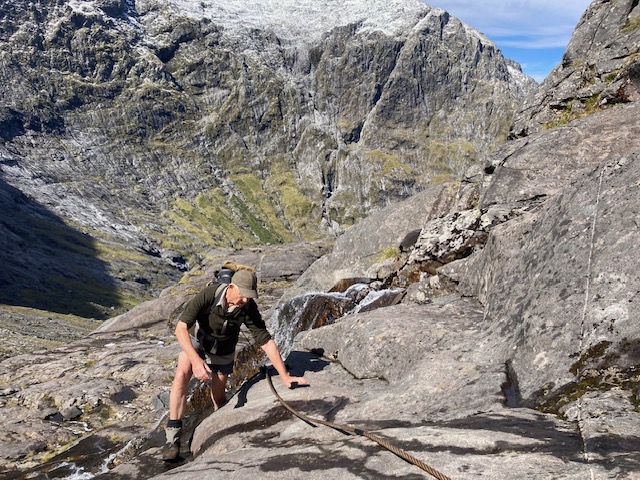
There were warning signs along the way, as if to reinforce the gravity of the situation. The track from the river crossing on is steep, and not suited to those with limited experience or a dislike for heights, the signs warn. “The track goes up steep rock slabs and is treacherous when wet or frosty — there are steel cables to assist you.” A young woman passed us with just a purse and mobile phone, wearing a spaghetti top. We saw another 20-something walking uphill texting with both thumbs – a feat I was curious about, given that I had no phone reception for my network. Millennials. Seemingly unprepared should the weather turn or they need extra energy for the hike.
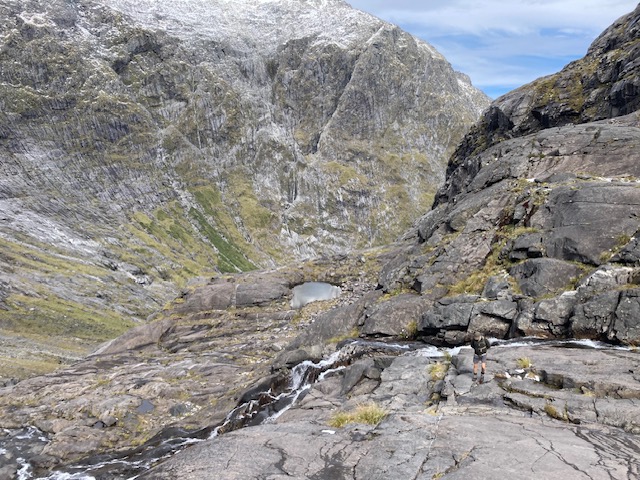
We stopped beside Black Lake, and saw a smaller blue lake below, perched above the river crossing waterfall. Other hikers stopped to have snacks or lunch, but we had already tucked into our sandwiches by the river, and I was anxious to keep moving in case the snows ahead melted into slush as the sun finally reached the boulder field. The clamber up with steel cables wasn’t too bad, it was more a case of avoiding damp areas where boots and shoes would slide and attack any confidence.
Photo Courtesy: Keith Lyons
The ridge by the Black Lake has proved to be a false summit, and there was still more climbing to do, on zig-zag tracks which displaced rocks and pebbles with every footfall, along uneven trails covered in pockets of snow, and over granite rocks worn smooth by the elements. Those rocks, where dry, proved to be the most satisfying to walk on, once it was established that the tread of shoes was sufficient to grip the surface.
Looking up, we could make out the silhouette of climbers who had made it to the ridge, which we presumed was the actual saddle. But it was hard to calculate just how far it was up. As more hikers started to come down, we asked, but assessments of the distance and time varied. When someone said ‘probably half an hour’ I realised that rather than turn back, we were probably going to make it to the top for the literally ‘breathtaking’ views. I was feeling good, and my companion was enjoying the rock scrambling.
Photo Courtesy: Keith Lyons
Picking our way among the rocks and boulder, we kept going, the prospect of views, a rest and a second lunch ahead. Eventually the steepness gave way to a more gentle terrain, and a few more steps and we were looking out to different mountains and valleys. We joined the other walkers admiring the view into the Milford Sound and savouring packed lunches. There were folk from the USA, France, Germany, India, China and Belgium, some of them on working visas in New Zealand, or enjoying ‘van life’. People asked others to take their photos, some standing on large boulders very close to drop offs of 700m. We looked around for the spaghetti-top woman. Maybe she had made it, or turned back.
At the top, some 1400m high, ice sat on top of small hollows, with snow melting to make the tracks muddy. My friend found a shelter build with rocks and had his nap, while I climbed a little higher for views both sides of the saddle. The saddle got its name some 140 years ago when the surveyor for the road hiked up with his wife Gertrude Holmes. She was likely wearing a dress, but most probably not a spaghetti top.
As Edmund Hillary once said, to climb a mountain successfully you not only have to hike up it, you have to hike back down too – and survive to tell the tale. With this message taken to heart, we carefully descended to the valley floor, and eventually back to the carpark.
.
Keith Lyons (keithlyons.net) is an award-winning writer and creative writing mentor originally from New Zealand who has spent a quarter of his existence living and working in Asia including southwest China, Myanmar and Bali. His Venn diagram of happiness features the aroma of freshly-roasted coffee, the negative ions of the natural world including moving water, and connecting with others in meaningful ways. A Contributing Editor on Borderless journal’sEditorial Board, his work has appeared in Borderless since its early days, and his writing featured in the anthology Monalisa No Longer Smiles.
.
PLEASE NOTE: ARTICLES CAN ONLY BE REPRODUCED IN OTHER SITES WITH DUE ACKNOWLEDGEMENT TO BORDERLESS JOURNAL.
The water was hot and the pressure optimum. For me the shower was a moment of pure bliss. I had heard poetic descriptions from fellow trekkers of the shower at the Eco Lodge. The hot water condensed in the cold air forming a welcome cocoon of warmth around me. Unfortunately, the shower duration was limited to five minutes. The water was heated using gas as was common throughout the Everest trekking region of Nepal. In the Annapurna region, north of the city of Pokhara, solar water heaters were common. Gas heaters always make me feel guilty about the environmental impact.
The water washed away the accumulated grime and sweat. The shower was expensive, and I was on a tight budget. My funds only permitted a shower once every ten to fourteen days. We were researchers involved in a clinical trial on high-altitude illness. The participants were enrolled at Pheriche more than 700 meters below and the study end point was at Lobuche (4900 m). Participants received two medical check-ups at high altitudes and two cups of tea/coffee for participating.
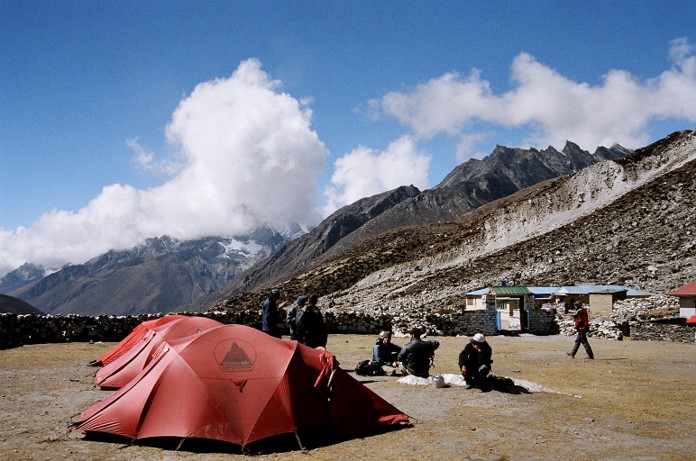
The Eco Lodge was an upmarket lodge in Lobuche in the year 2007 and we were staying there for over a month. Participants came to the lodge to complete the study and receive a second medical check-up. We listened to their chests, provided a physical examination, and measured their blood pressure and oxygen saturation. We had received a discount on the room rent but the food was expensive. Lobuche is situated at the foot of the Khumbu glacier. Everything had to be hauled from below.
For a long time, Lobuche had an unwelcome reputation due to the poor quality of the lodges. The restrooms were dirty, and the bedrooms flimsy. Maintaining hygiene in the cold dusty environment was a challenge. The Eco Lodge was the first upmarket lodge offering wood-panelled bedrooms with glass windows and clean toilets. The lodge had night toilets inside and day toilets outside. We were allotted an inside room in the main building. Dr Anup and I were the two doctors at Lobuche. The rooms were unheated and freezing though the main dining room had the ubiquitous cast iron heater burning yak dung. Yak dung is precious as fuel at these altitudes. It burns well with minimal smoke and residue and the flame is hot.
We were also the only doctors camped at Lobuche though some of the larger groups did have a doctor and the Sherpa guides were well-versed in altitude sickness. We did receive occasional calls for assistance. The Mountain Medicine Society of Nepal (MMSN) and the Himalayan Rescue Association (HRA) conduct clinical trials in the Everest and Manang regions of Nepal every fall. These provide medical students an opportunity to work with foreign experts and develop an interest in the subject. You receive transportation to the site, the services of a porter and a subsistence allowance.
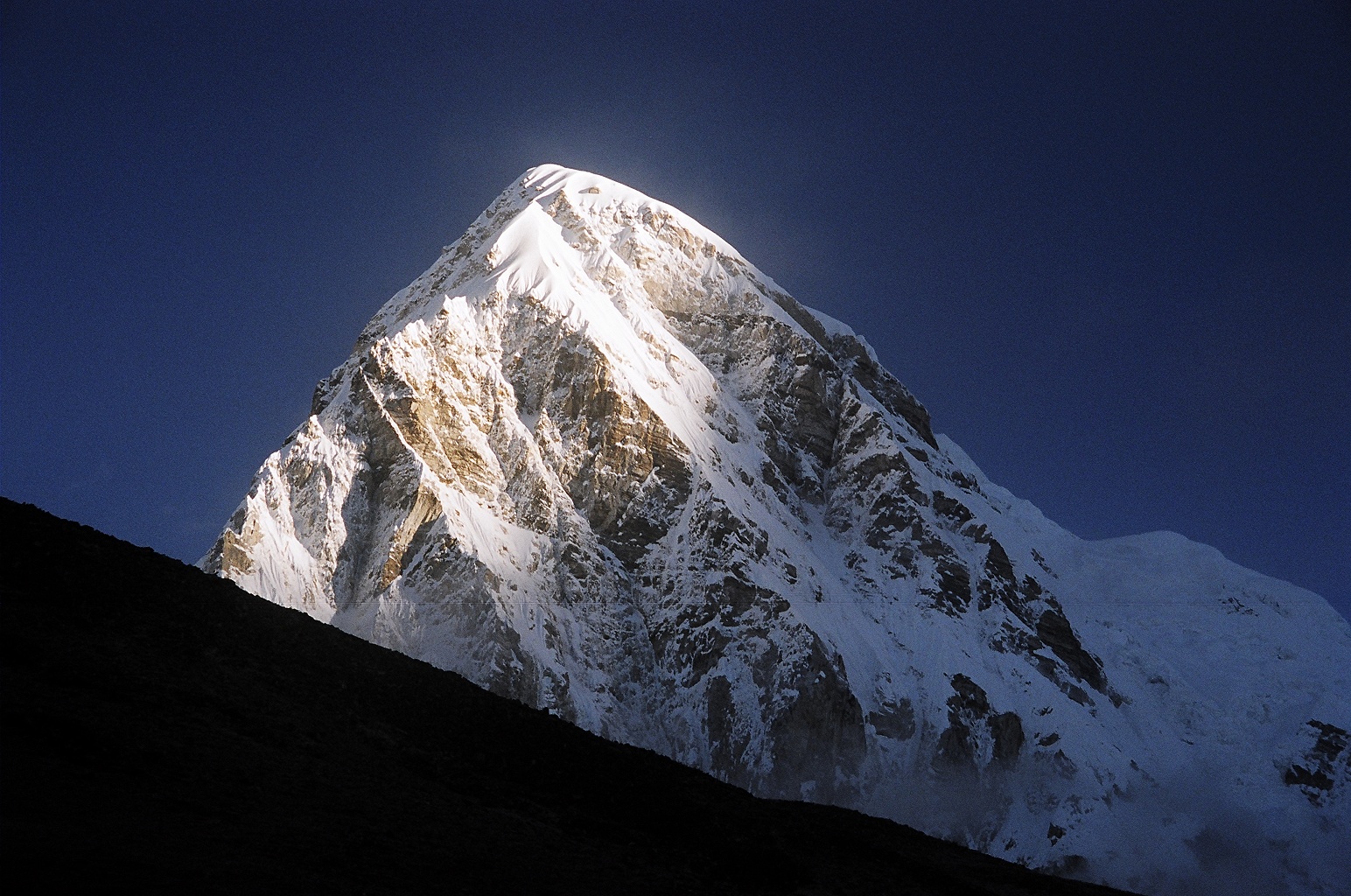
Participants in the study had been instructed to check in with us after they had settled in Lobuche. In the evening we used to go around the other lodges looking for participating trekkers who had not yet met us. The evenings were chilly, and a freezing wind blew from the high Himalayas across the glacier. On climbing the moraines of the glacier there were spectacular views of the snow peaks. Sunset on Mt Lobuche and Mt Nuptse is not to be missed. The peaks turn golden yellow, then red, different shades of pink and finally the light is slowly extinguished.
SunsetCampingPhoto courtesy: Ravi Shankar
The dining room at the Eco Lodge was smaller than the one at Nuru’s place in Pheriche and there was no green house. Dining rooms are the beating hearts of trekking lodges. At Lobuche the Sun was often covered in clouds and a cold wind blew off and on. The lodge did have glass tiles in the roof to capture the Sun. At night the dining room was cosy, and we met some interesting persons there during our stay. In those days there was no telephone service and no internet. A satellite phone was available in case of emergencies.
Nights in the room were freezing and I was reminded of Peter Matthiessen’s descriptions in the book The Snow Leopard of the long freezing nights in his tent at Shey Gompa in Dolpa. Our room was inside and out of the wind, and we also had a glass roof to catch the Sun. Anything kept outside in the room would be frozen solid by the morning. You had to keep stuff with you inside the quilt so that it could be gently warmed by your body heat. The long silent nights were conducive to meditating about life (and death).
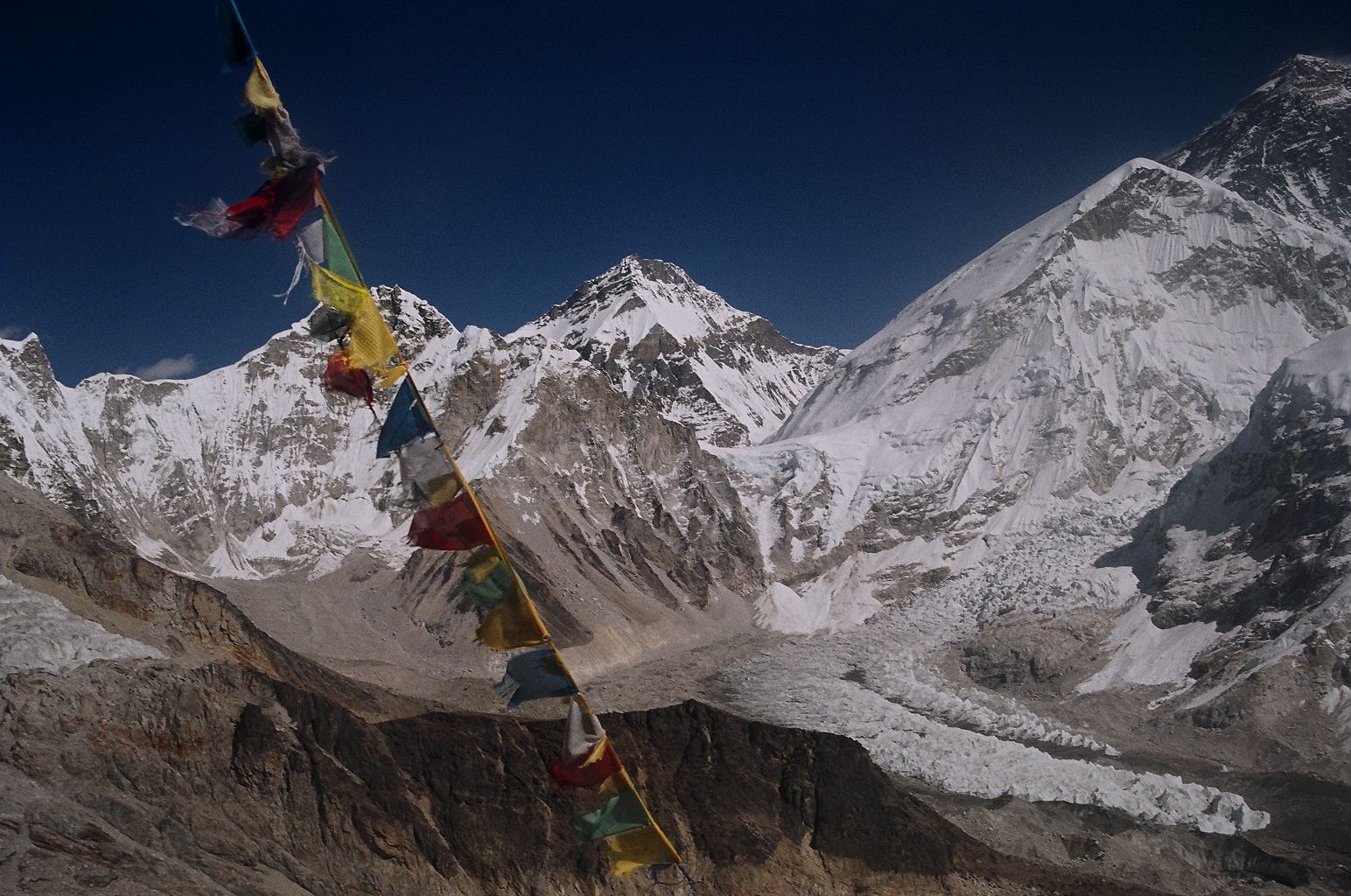
From Lobuche it is a four-hour hike to the Everest Base camp at 5400 m. The hike is through the Khumbu Glacier and through stones and boulders. Some of the boulders were larger than a house. Global warming has resulted in significant shrinking and drying of the glaciers and the Khumbu and Ngozumpa glacier in the Everest region have both retreated significantly. The hike passes through the settlement of Gorak Shep and the weather can change dramatically in a few minutes. I had started my trek on a clear, sunny day but halfway through clouds gathered and the mountains were shrouded in white. Soon it started snowing heavily. The boulders became slick and slippery in the snow and walking became difficult.
During a previous visit I had visited ‘The Pyramid’, a scientific research station run by an international consortium in association with the Nepal Academy of Science and Technology (NAST). The research facilities were great, and the station is located at a 20 minutes’ walk from the trail. The station is entirely powered by solar energy. The location is spectacular, and the station is located far from the trials and tribulations of our imperfect world.
Staying in a trekking lodge for over a month is a different experience. Trekkers come and go but we continued to remain in the lodge. The cold was our constant enemy. The tips of your fingers became numb after a few minutes in the cold wind. The ultraviolet rays were strong at the high altitude, and I was soon tanned a dark shade of brown. Lobuche was the highest altitude at which I had stayed for nearly 40 days. All things considered I still preferred staying with Nuru at Pheriche where the climate is more hospitable, and life was gentler.
My friend Anup left at the end of the month. I had changed my place of work and still had some time before I joined a new medical school being set up in the Kathmandu valley and could stay longer till the next group of doctors could reach Lobuche and manage the study. The settlement of Lobuche was set up to meet the requirements of trekkers to the Everest Base Camp and to Kala Pathar (black rock), a famous Everest viewpoint. I was alone in my room, and it felt strange. The second team soon reached us, and I briefed them about what had been done and handed over the study material. Soon it was time to trek down to Pheriche, Pangboche, Tengboche, Namche Bazar (the Sherpa capital) and eventually fly out from the Tenzing-Hillary airport at Lukla to Kathmandu.
Prayer flags in Kala PatharMt Everest from Kala PatharPhoto courtesy: Ravi Shankar
As mentioned, Lobuche for a long time had a terrible reputation. The quality of the lodges has steadily improved from bunk beds in dormitories to individual rooms. I was searching for lodges in Lobuche on the web recently. Many lodges now offer free wi-fi. The Pyramid also offers lodging at the 8000 Inn. With all these welcome developments, Lobuche can confidently and maybe, indignantly shrug off its reputation as the ‘arm pit’ of Nepal!
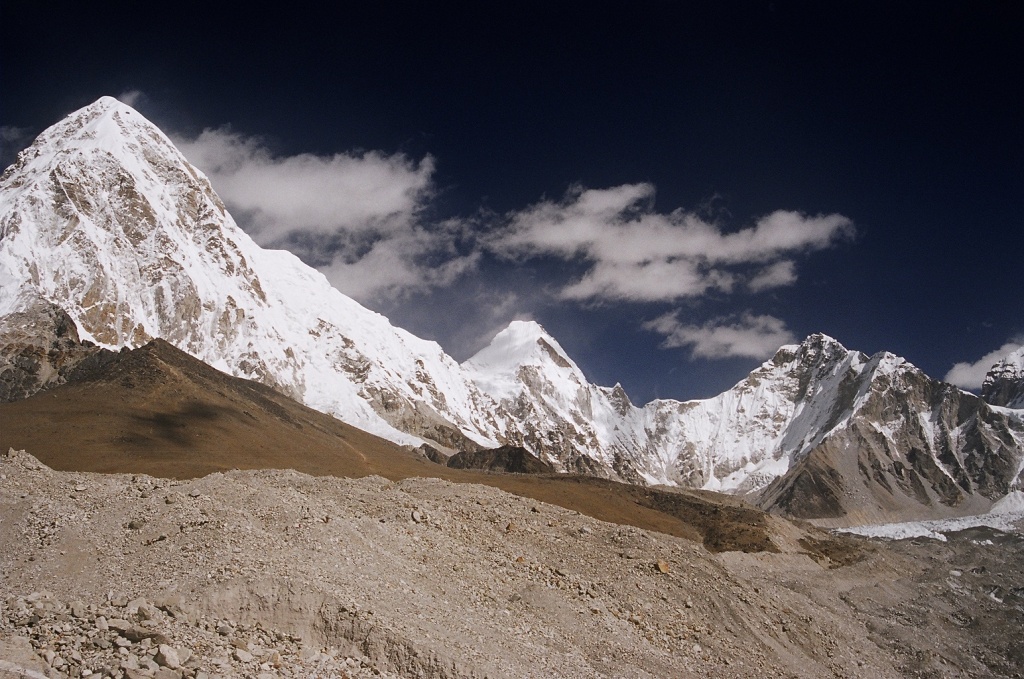
The Himals. Photo courtesy: Ravi Shankar
Dr. P Ravi Shankar is a faculty member at the IMU Centre for Education (ICE), International Medical University, Kuala Lumpur, Malaysia. He enjoys traveling and is a creative writer and photographer.
.
PLEASE NOTE: ARTICLES CAN ONLY BE REPRODUCED IN OTHER SITES WITH DUE ACKNOWLEDGEMENT TO BORDERLESS JOURNAL
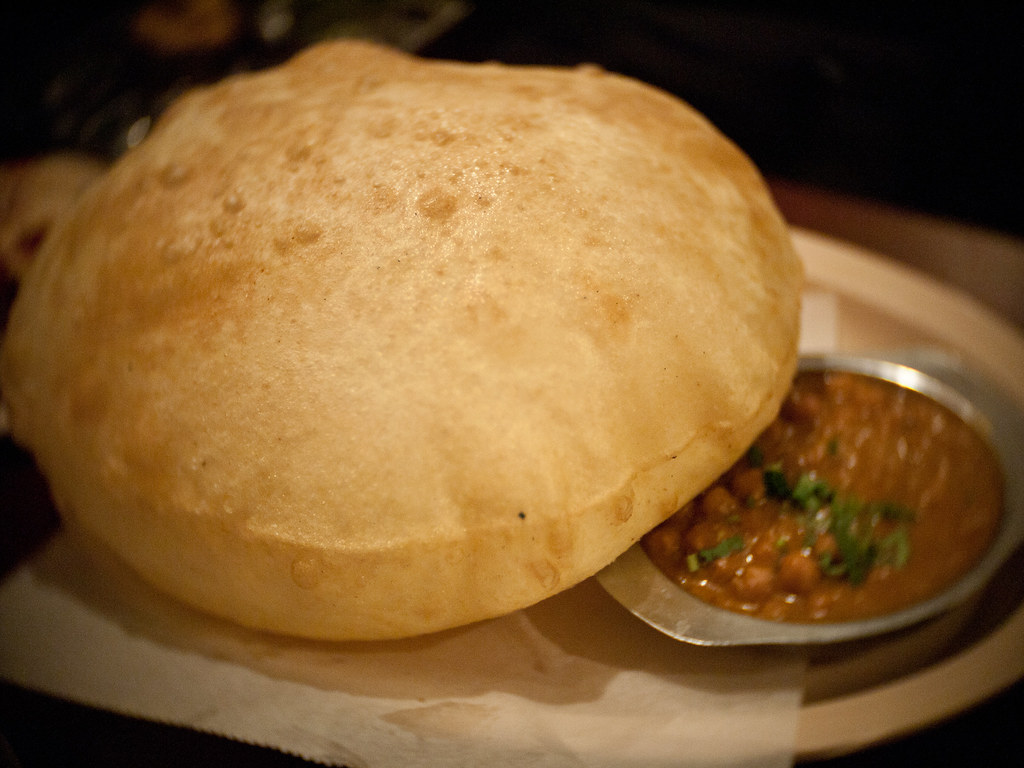
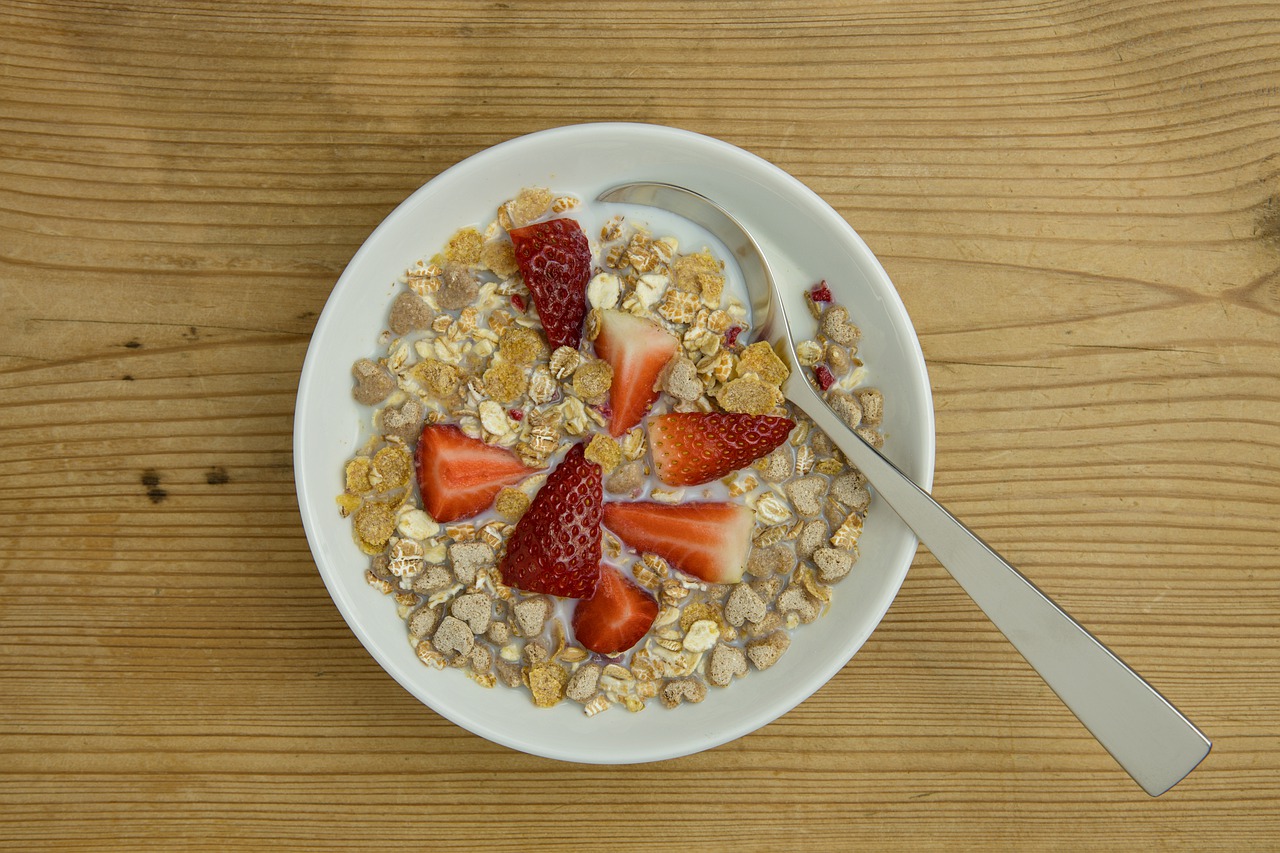
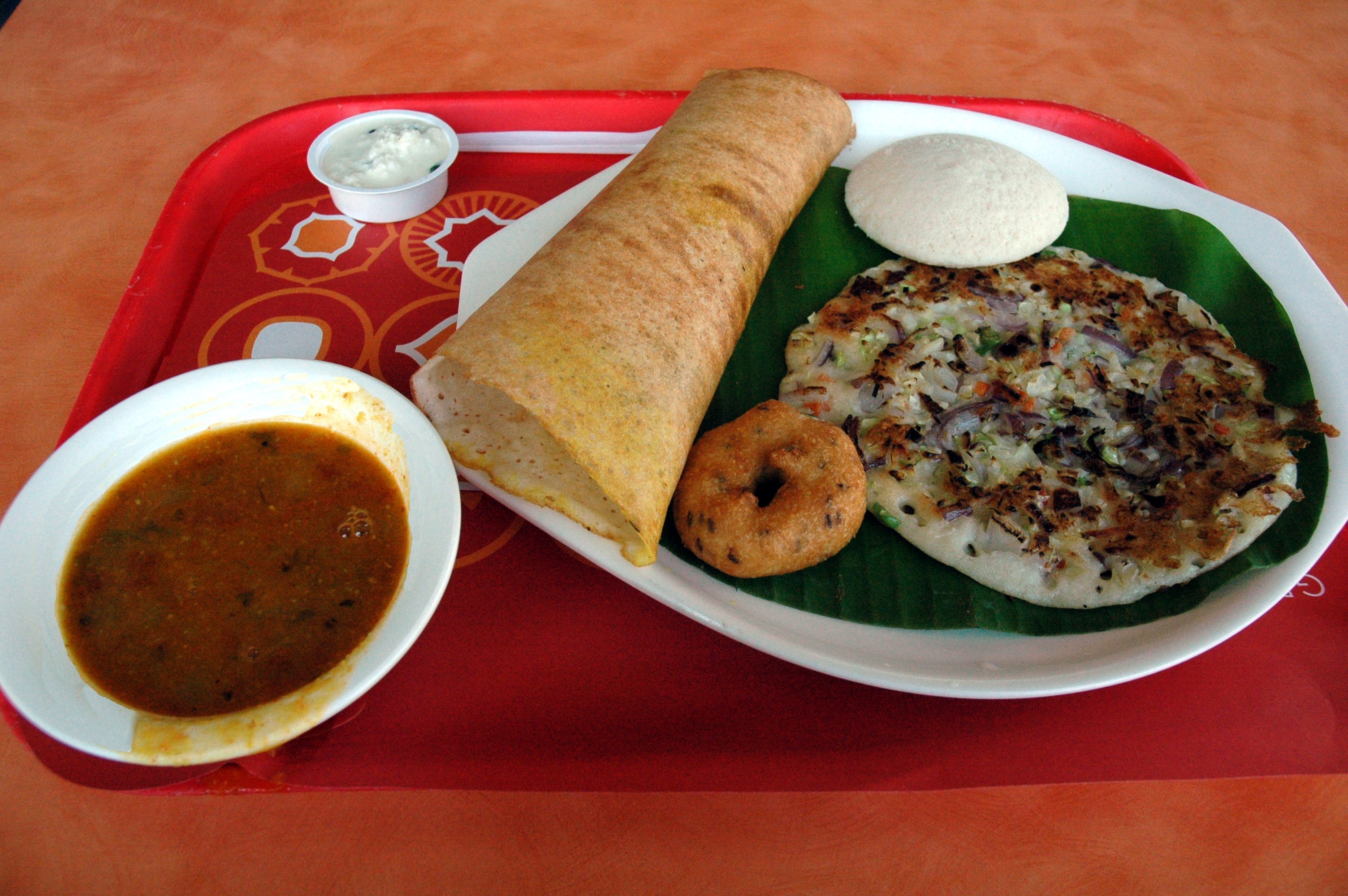
Chana BhaturaMeusliSouth Indian dosa, idli, uthappam Courtesy: Creative Commons
The dosa was perfect! Crisp, thin and a rich golden brown. A beautiful symphony of flavours with the green chilli and the red chilli chutneys and the spicy, aromatic sambar. I was enjoying the breakfast buffet at a hotel in Coimbatore, known as the Manchester of South India. A major manufacturing centre located at the foothills of the Western ghats, Coimbatore (also known as Kovai) is the second biggest city in the southern Indian state of Tamil Nadu.
I enjoy a hearty breakfast. I admit I am partial toward South Indian fare. I absolutely love dosais, and upma. I enjoy crispy medu vadas. Appam and coconut stew is a duet made in heaven. Panizhayaram is Tamil delicacy along with Pongal. I am not very fond of idlis, however. The breakfast buffets in Kovai are superb. I believe and many agree that Kovai combines the best of Tamil Nadu and Kerala. I also enjoy the wide variety of dishes in an American breakfast ranging from toast, eggs in different forms, porridge, cereal, hash browns, bacon, and sausage. All washed down with juices and coffee and tea. A variety of breads are available, especially in Europe. Pancakes are also delicious, especially with maple syrup. Many hotels in the United States do not serve a continental breakfast, however. A few hotels in Kovai offer you both South Indian and western breakfast choices.
As with most other beliefs created in today’s information overload, the role and status ofbreakfast has become confusing. The traditional advice was to never skip breakfast as it was the most important meal of the day. In today’s world, as prolonged periods of fasting and the requirement to have stretches of time with low blood sugar levels have gained footage, some began skipping breakfast and moved directly to lunch. Traditionally humans had their last meal of the day at sundown. A long period of fasting till breakfast, the next morning, was a natural outcome. With the advent of artificial lighting, the time of dinner was steadily pushed back.
In Nepal most people do not have a big breakfast. They usually have tea and biscuits and sit down for a big lunch at ten or even earlier in the morning. Different breakfast snacks are available in the Kathmandu valley. The trekking lodges in Nepal do offer breakfast on their menu to cater to western trekkers. The hotels in Kathmandu and other tourist towns also offer a variety of choices. In the plains bordering northern India, breakfast is usually north Indian fare. When I trek, my breakfast of choice is usually muesli with milk. This is filling and provides both instant and slow-release energy and keeps me going for a few hours. It is said to have been developed around 1900 by a Swiss physician, Maximilian Bircher-Benner for patients in his hospital. The major problem with muesli is that it is dry and requires effort and copious amounts of milk to wash down. Cornbread and toast sometimes find their way into the menu. Nepalese cooks are ingenious and dishes like Swiss rosti are also available. In the Everest region, potato pancakes are dominant though they may not be available for breakfast as they take long to prepare.
North India has a variety of filling breakfasts. Chana bhatura is filling though oily and most bus stations and train stations in the north will have breakfast stalls with such fare. Piping hot pooris are a perennial favorite. When I was working in Nepal, I sometimes used to travel through the eastern Uttar Pradesh town of Gorakhpur. The stuffed parathas are a delight to the palate and are filling. They can be made with aloo (potatoes), radish, cauliflower and even with finely minced meat. Having these piping hot with a dollop of clarified butter on a chilly winter morning is a pure joy. The lower canteen at PGI (Post Graduate Institute), Chandigarh, serves delicious aloo parathas. Kachoris are also eaten for breakfast along with jalebis. Samosas could make a hearty breakfast along with chole. Punjabi samosas are huge and filling and the stalls in the market at Punjab University in Sector 11 in Chandigarh has some of the best samosas I have eaten.
Many cultures may have independently discovered the nutritional benefits of combining cereals and pulses. Considering the lack of knowledge about nutrients and nutrient quality in those days, this was a significant achievement. The combination can be samosas and chickpeas, idlis/dosas and sambar, baked beans and bread, and so forth. Breakfast should provide immediate energy to get you going and slowly release sugars to continue to provide energy. Eggs provide high quality proteins and are an important part of the western breakfast. Meats are also eaten in many parts of the globe.
In Malaysia, noodles of different varieties are eaten for breakfast. Nasi lemak (rice cooked in coconut milk) is also a perennial favourite though I do struggle to eat rice early in the morning. Our breakfast habits are an acquired taste heavily influenced by our childhood. South Indian foods like thosai, idlis, upma, vada and Pongal are also available attesting to the multicultural diversity of the country. Breakfast can be creative in Kerala, God’s own country at the southern tip of India and considered one of the best breakfasts in the world. Among the highlights are appam with different vegetarian and non-vegetarian curries, puttu with black gram curry or puttu with small bananas. Puttu is made of steamed rice flour and grated coconut and can be dry hence requiring curry or bananas for lubrication.
Cultures globally have created a variety of rich and delicious foods for breakfast. There are similarities in the use of leavened or unleavened bread (in different forms and shapes), a combination of grains and pulses, eggs, fruits and tea or coffee. Many have fruit juices for breakfast. After the long overnight fast, getting your sugar levels up again and providing you with the energy resources to get through a long and challenging day is important. At Kuala Lumpur, I usually have my breakfast at the Shirdi Sai canteen at the university. I usually have dosas or upma and sometimes I have uthappams. They also make delicious pooris in the great Tamil tradition served with hot and filling yellow potato curry. Starting your day on a full stomach will surely make you happy, healthy, and wise and if you are lucky, even wealthy.
.
Dr. P Ravi Shankar is a faculty member at the IMU Centre for Education (ICE), International Medical University, Kuala Lumpur, Malaysia. He enjoys traveling and is a creative writer and photographer.
.
PLEASE NOTE: ARTICLES CAN ONLY BE REPRODUCED IN OTHER SITES WITH DUE ACKNOWLEDGEMENT TO BORDERLESS JOURNAL
Ideally, I would love to start the New Year with laughter and happiness! Then perhaps, the whole year would be dotted with humour …
Laughter clubs often practice laughing for health benefits. I know the pandemic makes both guffawing outdoors or in a group hard but think of the funniest possible thing and, perhaps, you will start laughing. For me what works other than children’s and monkeys’ antics, are my trips to the dentist, especially the trip where I wondered on the fringe benefits of ‘laughing gas’ (as given in the PG Wodehouse novel of the same name), only to be informed that it was used exclusively for young children. For me, an adult, there was only — you have guessed it — the jab that numbs your lip function to lubber. I discovered if I could make light of a dentist drilling by learning from Harry Potter (the spell to get rid of the terrifying boggart, who took the shape of the thing you feared most, was to imagine the funniest thing, focus on the humour in it, and shout ‘Riddikulus’ with a wand pointed at the creature in the form of your worst nightmare), then I could pretty much get rid of most fears.
The other thing I have been wondering for sometime is can one write an editorial that is humorous when the content is serious? I would have wanted to ask that question to many, including Ruskin Bond, who continues as one of my idols. I would love to touch hearts with the humour and the sensitivity that flavours his writing. It is tough to convey a complex thought with the simplicity and elegance of a writer who can be read and understood easily. I think we have a few of them around and I interviewed one. You all probably know him well— Rhys Hughes. I have given the reasons for the interview in lieu of Mr Bond, who continues a distant star beyond the horizon of online interviews. We discussed humour and its role in literature, leaving out completely in the cold, the fictional Mr Bond who answers to the names of James and 007 and has made entertaining films, which can be seen as serious or non-serious.
Hughes has of course, given some writerly advice not just in the interview but in ‘Making Something of Nothing’ – pretty much the advice that God had probably been given when he asked an unspecified friend on how to create the universe and multiple realities. Hughes has also added to our galaxy of poets where Michael Burch, Ryan Quinn Flanagan, Anasuya Bhar, Vernon Daim, William Miller, Pramod Rastogi, Mike Smith, Jay Nicholls and many more continue to sparkle. Taking up the theme of God’s creations, Devraj Singh Kalsi has added to more humour with a dream of divine intervention to make the ‘New Normal’ in 2022 – a plan for this year. Will it ever be real?
Another major issue in this world currently is climate change. In keeping with the need for acceptance of this reality, Keith Lyons introduced us to a nature lover, author and adventurer Kenny Peavy, who loved the fictional adventurer called Indiana Jones and has been working towards living in harmony with nature. He moved to Indonesia from America and is trying to raise awareness. You can find much, though not elephants, in the interview that encompasses the story of a man who cycled across a continent on a bike made of bamboo. However, you can find some writing on a king who acquired the skill to ride and tame elephants in our book excerpt from Shazi Zaman’sAkbar: A Novel of History. The excerpt does not showcase his elephant taming skills as did the Bollywood blockbuster Jodha Akbar but is focussed on bringing out the syncretism in the Mughal monarch’s outlook which made him seek out exponents of other religions. Sangita Swechcha’s and Andrée Roby’s anthology, A Glimpse Into My Country, with excerpts of short stories from Nepal and Zimbabwe, like Kenny Peavy, cycle across multiple borders as does our fiction. We feature stories from within and without the continent with Fazal Baloch recombining a couple of folklores from Balochistan to a single tale. Fiction from young writers highlight compassion and a varied perspective. Steve Ogah has a story from Nigeria which almost rings with overtones of Alex Haley’s Roots. Sohana Manzoor has given us a poignant narrative with an inspiring twist at the end, an absolute antithesis of the humorous one she rolled out for us last month. Candice Louisa Daquin has also given us an exceptional short fiction along with her column where she discusses the changing face of families in the current context.
While Daquin’s focus is mainly towards the West, we have an essay from Sanjay Kumar on families that live in the greyer zones of big cities, children from an outcropping called Nithari in Delhi, where they or theirs suffered neglect, abuse, carnage and cannibalism in their formative years. Introducing the impacted children, Kumar explains how they transcended the wounds that lacerated their lives. This piece is a precursor to a column called ‘Children of Nithari’. Starting February, the abuse victims will give us a story a month which will be translated by young volunteers from pandies’, an activist theatre group founded by Kumar, and published in Borderless. Another article from Balochistan reflects on the lack of literacy and efforts to bring children into the folds of schooling. Pakistan ranked 99th out of 132 countries on the literacy survey in 2021. We are privileged to be the voice of the unheard.
Two essays that ring of concerns raised in the Kenny Peavy interview are to do with climate crisis in the Sunderbans and waste disposal in Delhi. Both of these are written by researchers who are working on these issues.
We have travel pieces from Australia – one is a sailing adventure by Meredith Stephens and the other is about a trip to the Sand Dunes of Western Australia by Shernaz Wadia. Ravi Shankar has also taken us through winters from the Everest to New York with his globe-trotting non-fiction. Penny Wilkes takes us on a flight of creativity with beautiful photography.
We have a stellar layout of translations. Professor Fakrul Alam translated another poem by Jibananada Das and Borderless is honoured to publish it to the world for the first time. We have a translation from Korea and another of a Brahmo hymn, Aji Shubho Dine, by Tagore, which is sung often during festivals. The icing in our Tagore section in this issue is Ratnottama Sengupta’s translation of the Kobiguru’s ‘Two Birds’ (Khanchar Pakhi Chhilo) along with a musing which reflects on the perspectives of the two contemporaries, Tagore and Saratchandra. She has also translated a well-known Bengali poet, Michael Madhusudan Dutt. Dutt wrote just before the advent of Tagore and had an interesting past which has been vividly depicted by Sunil Gangopadhyay in Those Days (Sei Somoy in Bengali), a novel that has been translated by Aruna Chakravarti. Bhaskar Parichha has given us a tribute on the occasion of the birth anniversary of Fakir Mohan Senapati, who, he claims, has the same standing in Odia literature as Tagore in Bengali or Premchand in Hindi.
Parichha has also reviewed Amit Ranjan’sJohn Lang; Wanderer of Hindoostan; Slanderer in Hindoostanee; Lawyer for the Ranee. It looks like an interesting read where an immigrant Australian came supported Rani of Jhansi in India. Rakhi Dalal has reviewed Selma Carvalho’s Sisterhood of Swans, again a story of migrants and their lives. The theme seems to echo among the books that have been reviewed this time, including Gracy Samjetsabam’s take on Anuradha Kumar’s The Hottest Summer in Years, a story about a German immigrant to India in the twentieth century. Meenakshi Malhotra’s review of Somdatta Mandal’s translation of A Bengali Lady in England by Krishnabhabini Das (1885) highlights the views of a traveller rather than an immigrant as the lady did return home after a ten-year sojourn in Britain. As Meenakshi contends, “The process of travel offers opportunities for emancipation where exposure to other cultures offers her a way of viewing and of gaining a perspective on her own experiences and that of her sisters in India. Krishnabhabini constantly refers to her Indian sisters and bemoans their sorry state and ignorance when she sees how active British women were in their families and societies…”
I was supposed to try my hand at a humorous editorial, but I realise that is tough when the ground is small. For humour, we need rolling acres where we can etch out each detail till it cannot be milked further for laughter. But I promise you I will keep trying to please the readers till one evolves to write like Ruskin Bond.
I would like to thank my fabulous team who even if not actively contributing to content are always at hand to advise and help. I would especially want to thank both Sohana Manzoor and Sybil for their fantastic artwork, which is as wonderful as their writings. I would like to give heartfelt thanks to all the contributors who have made this journal possible and each reader who comes back to our journal for more every month. Some of the pieces remain unmentioned adding to the mystery of the content, just like, Christmas gifts which need to be unwrapped and continue a reality even in January in some parts of the world – the Russians celebrate on January 7th and the Spaniards extend their festivities to January 6th.
Do take a look at this month’s edition for not just the stories mentioned here but for more.
I wish you all a wonderful New Year filled with laughter.






 Borderless