Categories
Essay

Somdatta Mandal on ‘Mother Mary Comes to Me’

Let me begin by saying that like most readers enamoured by her works, I really enjoyed reading Arundhati Roy’s first work of memoir Mother Mary Comes to Me published in 2025. It is a soaring account, both intimate and inspiring, of how the author became the person and the writer she is, shaped by circumstance, but above all by her complex relationship to the extraordinary, singular mother she describes as a gangster, as ‘my shelter and my storm’. In the meantime, many reviews of the book have already been published, some full of praise and some quite critical, but it can be undoubtedly said that the book created a literary storm that one hadn’t experienced for quite a long time. And to add to that, social media is now flooded with her interviews, readings etc., some very recent and some as old as fifteen years. This essay delves into several issues pertaining to it that have struck me as unique.


Born out of the onrush of memories and feelings provoked by her mother Mary’s death in 2022, this is the astonishing, often disturbing and surprisingly funny memoir of the Arundhati Roy’s life, from childhood to the present, from her movement from Kerala to Delhi. There are forty-two chapters in this book, not numbered, but the titles themselves are self-explanatory. By following their interesting nomenclature, one can get an inkling of how Roy has laid out her narrative strategy, by talking not only about her own life but how it has been intertwined with her mother in a peculiar love-hate relationship. In the very first chapter titled ‘Gangster’, (which Roy has been reading in many gatherings till now), she tells us about her peculiar relationship with her mother. In her excellent and unique narrative style, she says:

“As a child I loved her irrationally, helplessly, fearfully, completely, as children do. As an adult I tried to love her cooly, rationally, and from a safe distance. I often failed. Sometimes miserably. I wrote versions of her in my books, but I never wrote her.”

She then advices her reader: “Most of us are a living, breathing soup of memory and imagination – and that we may not be the best arbiters of which is which. So read this book as you would a novel. It makes no larger claim.”

The narration of the incidents always does not follow a strict chronological order. Some of the stories are already quite well-known. This tells us how the young Syrian Christian Mary Roy married a Bengali tea planter in Assam and had to soon leave her husband because of his drunkenness and lack of responsibility towards his family. Having no support except for a bachelor’s degree in Education, she takes the bold decision of walking out of the marriage and lands in Ooty along with her two young children to live in her father’s cottage. A few months into her fugitive life, her estranged mother and elder brother arrived from Kerala to evict her. They told her that under the Travancore Christian Succession Act, daughter had no right to their father’s property and that they were to leave the house immediately. Years later Mary would challenge the act in the Supreme Court and demand an equal share of her father’s property, and luckily by winning the case in 1986 she became a sort of celebrity overnight.

The story then moves on to Kottayam and then to Ayemenem in Kerala (some of the details of which are beautifully narrated in The God of Small Things too) where Mary Roy struggles to find a foothold for herself and the children and open a school. That story of how that school began in a rudimentary form and how it gradually grew into the well-known residential institution called Pallikoodam designed by the famous architect Laurie Baker, how it remained a top priority in Mary Roy’s life ( the school children prioritised over her own)  along with her own eccentricities, her uncompromising nature and peculiar behaviour ( her refusal to be accepted as the mother of the famous writer Arundhati Roy, being one of them), till her death remains one major strand of the narrative.

The other major narrative strand pertains to Roy’s own life. Arundhati’s version of the story tells us how in the summer of 1976 she finished her high school at sixteen and leaving Kottayam (and of course her mother whom she wanted to dissociate forever), arrived alone without any contact in a completely alien territory in Delhi to take the entrance exam for the School of Architecture. Not having any contact with her mother for several years, she led a bohemian life, lived together with different people, saw partly the underbelly of life and did odd jobs to sustain herself. In the architectural school, she met Pradip Kishen and eventually married him (who was then the husband of the boss under whom she was working for a while). She scripted a screenplay for a movie called In Which Annie Gives It Those Ones about the college life and though it was once telecast in Doordarshan decades ago, it had been lost till recently the footage has been recovered, restored and set as an official entry in the Berlin Film festival this year but one which Roy refused to attend citing the cause of Palestine.

She was involved in another movie script Electric Moon and acted in minor roles in some off beat films like Massey Sahib till she changed her mission of life. After the publication of The God of Small Things, Roy stopped writing novels and got involved in political and social causes and got involved with social activists like Medha Patkar and the Maoists in the Chhattisgarh region and even faced jail for a day for her protests. The writing she produced for a couple of decades were all powerful political manifestos supporting leftist politics (“The Algebra of Infinite Justice” being one of the well- known texts and My Seditious Heart, published in 2019, is a collection of her non-fiction) till she came up with her second novel The Ministry of Utmost Happiness.

In the meantime, the handsome royalty she received from her first novel changed her living style and for the first time Arundhati Roy managed to eke out a comfortable lifestyle and even buy a house of her own. Her narration is interspersed with several interesting anecdotes, relating to her relationship with her brother whom she mentions throughout as LKC, and their chance meeting with Micky Roy, their father in pathetic condition in Delhi. The chapter titled ‘Mama Bear, Papa Bear’ is very interesting to read. It begins with the following lines: “Seven years had gone by since I’d last seen Mrs Roy. The strangest thing is that I cannot remember how she and I came to be in contact with each other again”. Then the joy of seeing her brother after so many years was exacerbated with their meeting of their father Micky Roy, who had totally disappeared from their lives when they were kids. The pathetic state of the man almost dying out of liquor addiction, we are told about how he was “as frail as a small bird, lame and hunched over …he was severely malnourished, like people in UN pamphlets.” This is how Roy narrates the incident:

‘You would never have believed I was your father. You look so much more like me than your mother. Doesn’t she, Kapil Dev? Same nose. Same eyes…sorry eye.’(Giggle.) ‘I say Orundhuti, do you hit the bottle?’

He pronounced my name the Bengali way.

‘Me? No.’

‘Oh, go on. Tell the truth. All good Roys hit the bottle. Whaddyou say, Kapil Dev?’

(Giggle. Slap.)

After going through all the ups and downs of life, especially in relation to her mother (too many to be narrated here), the story end in the last chapter aptly titled ‘A Declaration of Love’ when in January 2022 she got a message from her mother saying that she loved her. Despite everything that had happened between them, somehow, she knew that to be true. “My lifelong refusal to stop loving her, no matter what, had finally breached her barriers.” The story ends with her death, the details of her cremating process, the performance of the Kottayam Police Band, the 21-gun salute she received and ultimately the memorial they built for her in the bamboo grove where the headstone mentioned Mary Roy as ‘Dreamer Warrior Teacher’ and ‘Founder Pallikoodam.’  The strange love-hate relationship that persisted between Arundhati and her mother comes out beautifully in the end when she writes:

“The first night in a Mrs Roy-less world, I spun unanchored in space with no coordinates. I had constructed myself around her. I had grown into the peculiar shape that I am to accommodate her. I had never wanted to defeat her, never wanted to win. I had always wanted her to go out like a queen. And now that she had, I didn’t make sense to myself any more.”

Another interesting piece of information is revealed in this concluding chapter is about how Arundhati casually decided to get divorced from Pradip Kishen with the same lack of seriousness with which she had got married, so that he and the girls (and their property) had no legal connection to her. The order granting them the divorce had been delivered to her the previous morning, at the very moment Mrs Roy died. ‘So, I, free woman, free falling, was heir to nothing at all. But I was curious about our great will-making mother’s will.’ Later she gets to know that her brother had marked off Mrs Roy’s house and its compound from the rest of the school and had it registered in her name. So, she decided to renovate the house and build the Grove simultaneously in it.

The Cover Design

Before concluding, I want to draw the reader’s attention to the special care that has been taken to make and market this book. The cover design is a highly skilled piece of production. On the stark red cover of the book with the title embossed artistically, we have half a dust jacket in white with two different pictures of Roy on the front and the back cover– one a current photograph of the author with her head full of pepper and salt curls and with a discreet smile on her face. The other photograph is of a much younger and radical Arundhati with a distinct far-away look in her eyes and with a burning cigarette on her lips. Though the publisher gives the statutory warning that cigarette smoking is injurious to health and it does not support it in any way, a very stark visual statement about the unnatural bohemian nature of the author gets revealed through this photograph.

Incidentally, this selling of a book through its stark and attractive cover reminded me of a similar strategy undertaken in 1997 when Roy’s debut novel The God of Small Things won the Booker Prize and took the literary world by storm. The book came out in what was essentially the pre-internet and social media era and the maximum number of reviews and essays that came out during that time were in print. In an essay which I had authored then, calling it “The Making and Marketing of Arundhati Roy”, I had shown that the contents of the dust jacket of the book differed radically from region to region and it was done through a deliberate and effectively thought-out strategy. So, in the Indian edition we had a different story outline giving us a gist of what to expect inside, especially the love of a paravan, an untouchable man with an upper-caste woman, along with the local setting in Kerala, Ayenemem, to be exact.

In the Random House edition published from New York, the story outline was completely different, not only telling us about untouchability and the love between Radha and Krishna that would lure the western reader to pick up the book about a unique place in India defined as ‘God’s Own Country’ in tourist brochures.  Also, the photographs of Roy (both taken by her then husband Pradip Kishen) differed radically. With this new book, of course, such strategies didn’t work anymore. With innumerable book launches, readings by the author everywhere (a search on Youtube will even land you with interviews that are more than a decade old) we now come upon other ways and means through which the book has been popularised. But all said and done, I must conclude by saying that whether you agree or disagree with the extreme left wing political views that Arundhati Roy professes, those who still haven’t read this memoir have really missed reading a wonderfully written book with its 372 pages that is really unputdownable, with its lyrical as well as down to earth style of narration, full of new metaphors, new word coinages that are the USP of Arundhati Roy.

Somdatta Mandal, critic and translator, is former Professor of English at Visva-Bharati University, Santiniketan, India.

.

PLEASE NOTE: ARTICLES CAN ONLY BE REPRODUCED IN OTHER SITES WITH DUE ACKNOWLEDGEMENT TO BORDERLESS JOURNAL

Click here to access the Borderless anthology, Monalisa No Longer Smiles

Click here to access Monalisa No Longer Smiles on Kindle Amazon International

Categories
Editorial

What Do We Yearn for?

Most people like you and me connect with the commonality of felt emotions and needs. We feel hungry, happy, sad, loved or unloved and express a larger plethora of feelings through art, theatre, music, painting, photography and words… With these, we tend to connect. And yet, larger structures created over time to offer security and governance to the masses—of which you and I are a part — have grown divisive, and, by the looks of it, the fences nurtured over time seem insurmountable. To retain these structures that were meant to keep us safe, wars are being fought and many are getting killed, losing homes and going hungry. We showcase such stories, poems and non-fiction to create an awareness among those who are lucky enough to remain untouched. But is there a way out, so that all of us can live peacefully, without war, without hunger and with love and a vision towards surviving climate change which (like it or not) is upon us?

Creating an awareness of hunger and destruction wreaked by war is a heartrending story set in Gaza by JK Miller. While Snigdha Agrawal’s narrative gives a sense of hope, recounting a small kindness by a common person, Sayan Sarkar shares a more personal saga of friendship and disillusionment — where people have choice. But does war leave us a choice as it annihilates friendships, cities, homes and families? Naramsetti Umamaheswararao’s story reiterates the belief in the family – peace being an accepted unit. Vela Noble’s fantastical fiction and art comes like a respite– though there is a darker side to it — with a touch of fun. Perhaps, a bit of fantasy and humour opens the mind to deal with the more sombre notes of existence.

The translation section hosts a story by Hamiruddin Middya, who grew up as a farmer’s son in Bengal. Steeped in local colours, it has been rendered into English by V Ramaswamy. Nazrul’s song revelling in the colours of spring has been translated from Bengali by Professor Fakrul Alam. Atta Shad’s pensive Balochi lines have been brought to us in English by Fazal Baloch. Isa Kamari continues to bring the flavours of an older, more laid-back Singapore with translations of his own Malay poems. A couple of Persian verses have been rendered into English by the poet, Akram Yazdani, herself. Questing for harmony, Tagore’s translated poem while reflecting on a child’s life, urges us to have the courage to be like a child — open, innocent and willing to imagine a world laced with trust and hope. If we were all to do that, do you think we’d still have wars, violence and walls built on hate and intolerance?

While in a Tagorean universe, children are viewed as trusting and open, does that continue a reality in the current world that believes in keeping peace with weapons? Contemporary voices think otherwise. Manahil Tahir brings us a touching poem in a doll’s voice, a doll belonging to a child victimised by violence. While violence pollutes childhood, pollution in Delhi has been addressed by Goutam Roy in verse. Poignant lines from Luis Cuauhtémoc Berriozábal make one question the idea of home and borders while Snehaprava Das has interpreted the word ‘borderless’ in her own way. We have more colours of humanity from Allan Lake, Chris Ringrose, Alpana, Lynn White, C.Mikal Oness, Shamim Akhtar, Jim Bellamy,John Swain, Mohul Bhowmick and SR Inciardi. Ryan Quinn Flanagan has given fun lines about a snow fight while Rhys Hughes has shared a humorous poem about a clumsy giant.

Bringing in humour in prose is Devraj Singh Kalsi’s musing about horoscopes! While, with a soupçon of irony Farouk Gulsara talks of his ‘holiday’, Meredith Stephen takes us to a yacht race in Australia and Mohul Bhowmick to Pondicherry. Gower Bhat writes of his passion for words while discussing his favourite books. Ratnottama Sengupta introduces us to contemporary artists from her part of the world.

Mario Fenech takes a look at the idea of time. Amir Zadnemat writes of how memory is impacted by both science and humanities while Andriy Nivchuk brings to us snippets from Herodotus’s and Pericles’s lives that still read relevant. Ravi Varmman K Kanniappan gives the journey of chickpeas across space and time, asserting: “The chickpea does not care about your ideology, your portfolio, or your meticulously curated identity. It will grow, fix nitrogen, feed someone, and move on without a press release.” It has survived over aeons in a borderless state!

In book excerpts, we have a book that transcends borders as it’s a translation from Assamese by Ranjita Biswas of Arupa Kalita Patangia’s Moonlight Saga. Any translation is an attempt to integrate the margins into the mainstream of literature, and this is no less. The other excerpt is from Natalie Turner’s The Red Silk Dress. Keith Lyons has interviewed Turner about her novel which crosses multiple cultures too while on a personal quest.

In reviews, Somdatta Mandal discusses a book that explores the colours of a river across three sets of borders, Sanjoy Hazarika’s River Traveller: Journeys on the TSANGO-BRAHMAPUTRA from Tibet to the Bay of Bengal. Rakhi Dalal writes about a narrative centring around migrants, Sujit Saraf’s Every Room Has a View — A Novel. Anindita Basak reviews Taslima Nasrin’s poetry, Burning Roses in my Garden, translated from Bengali by Jesse Waters. Bhaskar Parichha reviews Kailash Satyarthi’s Karuna: The Power of Compassion. In it, Satyarthi suggest the creation of CQ — Compassion Quotient— like IQ and EQ, claiming it will improve our quality of life. What a wonderful thought!

Could we be yearning compassion?

Holding on to that idea, we invite you to savour the contents of our February issue.

Huge thanks to all our contributors and readers for making this issue possible. Heartfelt thanks to our wonderful team, especially Sohana Manzoor for her fabulous artwork.

Enjoy the reads!

Let’s look forward to the spring… May it bring new ideas to help us all move towards more amicable times.

Mitali Chakravarty

borderlessjournal.com

CLICK HERE TO ACCESS THE CONTENTS FOR THE FEBRUARY 2026 ISSUE.

.

READ THE LATEST UPDATES ON THE FIRST BORDERLESS ANTHOLOGY, MONALISA NO LONGER SMILES, BY CLICKING ON THIS LINK.

Categories
The Lost Mantras

It’s but a Memory… More Poems by Isa Kamari

Poetry and translations from Malay by Isa Kamari

THE BENCH

The melodious magpie on the bamboo twig --
the passing breeze welcomed the chirping.
Sitting on a dilapidated wooden bench,
under the thick canopy of the mango tree,
village folks rested in the shade,
calming the tremors of troubled hearts.
The hardship evident in the sighs,
still hopeful of tomorrow’s dreams,
drying the sweat of weariness.
Honest earnings chased away worries.
A pinch on the thigh, a cry of pain.
Laughter and jokes were shared merrily,
teasing the maiden sitting by the door,
smiling sheepishly, welcoming attention.
Recollecting a slice of an old tale,
fun and camaraderie were reminisced,
firm and amicable bonds were fostered.
It’s but a memory. It’s but a memory. It’s but a memory.
Now alone in a room,
gazing at the handphone screen,
chatting aimlessly in social media—
do we remember and long for the dilapidated bench,
crafting old tales, forging firm and amicable bonds?
Do we remember and pine
for the maiden sitting by the door?


CUSTOMS


Customs are not like banana fritters
coated with rice flour, dipped in hot oil,
served instantly, crispy and delicious, eaten warm,
accompanied by sips from a cup of black coffee.
Customs are like rain
that falls on the whims of the weather.
It’s always there, although infrequent,
temperamental and purposeful,
sometimes an inconvenience— plans thwarted—
but always invigorating
and instils a sense of acceptance.
If received with gratitude,
directed with perseverance,
and tempered with wisdom.
Life is beautiful with droplets of grace.
Life is fertile with the pouring of bounties.
Life is prosperous with love bestowed.
Customs make the earth supple.
Customs make the village noble.
Customs make a people well-mannered.
Once in a while,
relish a crispy banana fritter
and sip warm black coffee
while it rains cats and dogs.
Momentary disruption of plans,
the alleys and roads flooded—
moments of reflection,
moments of appreciation for the day,
is inherent in droplets of grace,
inherent in the pouring of bounties,
inherent in love bestowed.
Shifting of time and signs
the soil is tilled with purpose.
The village gathers and collectively agrees,
the people ready to realise
aspirations of good character
and respected stature.


SMOKE

Like smoke billowing amidst rubbish,
he burns his self-worth,
dances in the flames,
when the fire is meant
to warm breakfast and meals to school.
Now like smoke,
his children are floating,
begging for favours
at tips of cigarettes and cars’ exhaust pipes,
crushed by confusion in the stifling air.
Who would be hungry
if the smoke does not billow in the kitchen,
and for generations,
our humanity returns uncooked to God?


CURSE OF A WARRIOR

Hail the snake and its venom!
Call it a callous and rebellious act!
Shame be endured,
head decapitated!
Surrender not, carry the corpse!
Foolish is the mind,
desperate are the moves.
Let death fulfil the curses.
Let death be executed by the Angel.
Destroy my body, take my soul.
The wooden club hit the coffin.
Pierce my tongue and neck.
Stab my chest, guts dis-embowelled.
Blood spurts, life departs.
The warrior kisses the earth.
Blood turns into pus.
Pus turns into ambers of Hell.
Let me die so you die.
Let us die so everyone dies.
I give you my sin, my hurt, my sadness.
You’ll bathe in blood.


Isa Kamari has written 12 novels, 3 collections of poetry, a collection of short stories, a book of essays on Singapore Malay poetry, a collection of theatre scripts and lyrics of 3 music albums, all in Malay. His novels have been translated into English, Turkish, Urdu, Arabic, Indonesian, Jawi, Russian, French, Spanish, Korean, Azerbaijan and Mandarin. Several of his essays and selected poems have been translated into English. Isa was conferred the S.E.A Write Award from Thailand (2006), the Singapore Cultural Medallion (2007), the Anugerah Tun Seri Lanang (2009) from the Singapore Malay Language Council, and the Mastera Literary Award (2018) from Brunei Darussalam.

He obtained a BArch (Hons) from the National University of Singapore in 1989, an MPhil (Malay Letters) from Universiti Kebangsaan Malaysia in 2008 and is currently pursuing a PhD programme at the Academy of Islamic Studies, Univeristi Malaya. His area of research is on the problem of alienation and the practice of firasat (spiritual intuition) in selected Singapore Malay novels.

The Lost Mantras is a collection that blends spirituality, Malay cultural heritage, and universal human experience. First published as part of Menyap Cinta (Love Greetings, 2022, Nuha Books KL), these poems are like a bridge between mysticism and everyday life, where traditional images (betel, jasmine, kris[1], oil lamps, setanjak[2]) are woven with Qur’anic echoes, prayers, and existential questioning. The collection carries a Sufi resonance—always circling back to longing, humility, surrender, and beauty as signs of God. The poems are not only lyrical but also function as cultural memory: they preserve Malay traditions, communal practices, and village life, while situating them in a cosmic framework of faith, sin, and redemption. The use of Malay customs, rituals, and objects is powerful: it asserts that spirituality is not abstract but embedded in heritage. This makes the collection uniquely Southeast Asian despite its universal in appeal.

[1]A dagger

[2] Malay headgear

PLEASE NOTE: ARTICLES CAN ONLY BE REPRODUCED IN OTHER SITES WITH DUE ACKNOWLEDGEMENT TO BORDERLESS JOURNAL

Click here to access the Borderless anthology, Monalisa No Longer Smiles

Click here to access Monalisa No Longer Smiles on Kindle Amazon International
Categories
Poetry

Persian Poetry in Translation

Persian poems written and translated by Akram Yazdani

UNTRAVELED SUITCASE 

The suitcase never left.
Its lock held untold stories,
its corners heavy with silence.
Each day, the road waited, empty,
while unseen journeys
moved quietly beneath its lid.

MULTI-VOICED MIND

In his mind,
multiple voices whispered at once—
not to command,
not to warn—
but to open windows
that led to different times.

Moments
folded over one another,
like two seasons unfolding
simultaneously on a single page,
and every choice
breathed silently in the hidden world
before it could find a word.

There,
there were birds,
half-formed,
with feathers unaccustomed to the world,
yet knowing the weight of flight;
birds whose path
was neither toward sky
nor toward earth—
but somewhere between decision and fear.

He paused.
He breathed.
And gazed at the path passing through him.
And there, in the impartial silence,
one of those half-formed birds
called his name—
not from the past,
not from the future,
but from a moment yet to arrive,
already decided.

Akram Yazdani is a poet and writer from Mashhad, Iran. She writes her works in Persian and provides English translations for publication. Her writing explores silence, memory, and minimal moments of perception, seeking to connect personal reflection with shared human experiences.

PLEASE NOTE: ARTICLES CAN ONLY BE REPRODUCED IN OTHER SITES WITH DUE ACKNOWLEDGEMENT TO BORDERLESS JOURNAL

Click here to access the Borderless anthology, Monalisa No Longer Smiles

Click here to access Monalisa No Longer Smiles on Kindle Amazon International
Categories
Poetry

A Poet in Exile: Ukranian Poetry in Translation

Poetry by Dmitry Blizniuk, translated from Ukranian by Sergey Gerasimov

Dmitry Blizniuk

Dmitry Blizniuk is a poet from Ukraine. His most recent poems have appeared in POETRY Magazine, Five Points, Rattle, Los Angeles Review, The Cincinnati Review, The Nation, Prairie Schooner, Plume, The London Magazine and many others.  A Pushcart Prize nominee, he is also the author of The Red Fоrest (Fowlpox Press, 2018). His poems have been awarded RHINO 2022 Translation Prize and his folio had been selected as a runner-up in the Gregory O’Donoghue Competition and the 2025 Gabo Prize finalist.

Directory:   http://www.pw.org/directory/writers/dmitry_blizniuk

A POET IN EXILE 

The sky above the highway is low
like a cunning dog's muzzle above a steaming saucepan.
A one-winged angel of advertising
stands by the roadside:
Aquafresh, perfect water of gods.
And I'm an imperfect verb, just someone in a windbreaker,
with pieces of canvas on my head that flap like a pterodactyl.
Here's my garden,
set back some distance from history,
a prehistoric place for ancient bugs,
and one of them stands on its hind legs
in depression,
while the gloomy autumn stares from above.

We've run away from the simmering house
like milk that is boiling over. Now I'm single again.
The sun hangs behind a ruffled up shed,
like a bloody yolk on a cold frying pan
until the nightfall dumps it in the garbage,
while I'm looking for clean socks, sniffing noisily
like a dog with a mallard in its jaws.
I've had to leave the city and women behind,
make friends with the blissful world of sticks,
Like Lorca, I managed to avoid a firing squad.
He's grown old, he looks like a grey parrot with an earring,
keeps a rapier in his summer kitchen,
grows grapes and cucumbers, and something sparkles in his eyes
when blood pressure squeezes him
like a tube of Aquafresh.
If not for the Internet, I wouldn't exist.

A cat called Nostalgia
licks his balls on the windowsill.
The lampshade is a temple of flies, priestesses of summer schizophrenia.
I'm still destined to return,
I feel the power of a boomerang within me.
It's going to bend my way and carry me back to my youth,
otherwise, I don't care where.
An eyelid with long lashes has fallen away from the face of a garden doll.
The blue eye is unprotected now,
and the rubber body under the rain feels so at home in the garden.
For how many years will I decompose in the humus
in the garden of gods,
lie in the ground and see the black earth,
black caviar in the eyes of dawn,
then stretch up to the sky as a green needle of grass?
The smell of the rain that has just stopped is like spilled glue.
It's so fresh that I want to run up to the sky, but I can't.
A poet in exile is more than just a poet.
And a man? -- There is no man anymore.

Sergey Gerasimov is a Ukraine-based writer, poet, and translator of poetry. Among other things, he has studied psychology. He is the author of several academic articles on cognitive activity. His stories and poems written in English have appeared in Adbusters, Clarkesworld Magazine, Strange Horizons, J Journal, The Bitter Oleander, and Acumen, among many others. The poetry he translated has been nominated for several Pushcart Prizes. His books include Feuerpanorama: Ein ukrainisches Kriegstagebuch (dtv Verlagsgesellschaft mbH & Co. KG, 2022) and Oasis (Gypsy Shadow, 2018).

PLEASE NOTE: ARTICLES CAN ONLY BE REPRODUCED IN OTHER SITES WITH DUE ACKNOWLEDGEMENT TO BORDERLESS JOURNAL

Click here to access the Borderless anthology, Monalisa No Longer Smiles

Click here to access Monalisa No Longer Smiles on Amazon International

Categories
Essay

The Untold Stories of a Wooden Suitcase

By Larry S. Su

On the first day of college in today’s China, train stations and campuses unfold like a modern spectacle. Students step off high-speed trains, wheeling sleek polycarbonate suitcases or expandable fabric cases, an impressive display of China’s transformation and prosperity—worlds apart from the scene when I started college in the 1980s. Back then, students from the countryside, like me, arrived weighed down by clumsy, hand-built wooden suitcases—boxy, awkward, sometimes nailed shut or painted over in dull brown or red. Despite their lack of style and ease, these suitcases held far more than just clothes and books. They carried the weight of individual and family expectations, sacrifices, and the deep conviction that education was the key to a better life.

I was admitted to college in 1983, just six years after China resumed its national college entrance exam, which was halted during the Cultural Revolution from 1966 to 1976. For an entire decade, higher education had vanished like a dream interrupted.  When it returned, it did so with urgency and hope. Admission rates hovered in the single digits, and every name on the list felt like someone hitting the million-dollar jackpot.  

In my village of 150, tucked between dry hills and narrow paths, I was the first to make it to college. The news spread like wildfire down the dusty lanes, from the threshing fields to the courtyard kitchens. Old friends came by to shake my father’s hand. My mother quietly wiped her eyes with the corner of her apron. For families who had known only toil, harvests, and ration coupons, the word college opened the door of paradise.

For years, we had lived under the gaze of quiet scorn of certain snobbish and well-off villagers. Our poverty was visible in our patched clothes, our sunburnt skin, and our empty grain jars. Other villagers had watched us with indifference or pity. Now my college admission lifted my family’s status in a way nothing else could. I was no longer just a poor farmer’s son; I was a future cadre, or ganbu, with a guaranteed salary, a ration book, and an iron rice bowl that would never crack. No one else in the village had ever crossed that threshold.

For more than a decade, my family had invested everything—hope, sacrifice, and a few Yuan they could scrounge into my education. On days when the journey felt too long or the hunger too loud, they were the ones who kept me going. I remember one winter during high school when I was short of just one dollar of my tuition. My homeroom teacher, stern and unmoved, made me walk five miles home and warned me not to return without the full sum. My parents went from house to house in the village, humbly pleading for a small loan just for a week or two. Most turned them away, murmuring about their own hardships, but a few, out of pity or quiet admiration, handed over a Yuan or two. By late afternoon, the small offerings had added up. I returned to school at dusk, the cold wind at my back and the full tuition folded carefully in my coat pocket. This incident, instead of shaming and destroying me, further strengthened my conviction that no matter what price my family and I had to pay, I would go to college.  

To prepare for my departure to college, my father did something he had never done before. He hired a carpenter from a neighboring village to build a wooden suitcase. It was a costly decision, one that must have weighed heavily on him. We were truly poor. There were days when even salt felt like a luxury, when my siblings and I wore the same mended clothes year-round, and when my mother bartered eggs for school supplies. When unused, our tattered clothes were wrapped in a faded cloth, stored in the corner of the kang, our raised earthen bed connected with the earthen stove.

To have a suitcase made, father first had to find wood for the suitcase.  The lumber did not come from a store, nor from a tidy stack delivered by truck, but from the raw ribs of the mountains five miles away, remote, rugged, and indifferent to human need. It was hewn not with ease, but through toil born of necessity, from a land where poverty pressed against every doorstep like a hungry wolf.

In the villages near the foot of those mountains, the stooped peasants in worn jackets would venture up the steep trails in search of timber, not for craft, not for trade, but for survival. When harvests failed or granaries stood bare, they turned to the forest as their last resort. Trees were cut and sold in the black market for bread. A good haul of wood might mean a sack of corn to keep a family fed for another week.

But obtaining the wood was no simple act. The journey was long and unforgiving. They would rise before dawn, axes slung over their shoulders, climbing through thickets and boulder-strewn paths, deep into the mountain’s silence. There amid the mist and the call of unseen birds, they would fell the chosen trees, their sweat mingling with sap and soil. Because it was illegal to cut down the trees, the peasants had to keep alert not to be spotted by the forestry workers who, though sparse in number, might show up on the roadside, so they often chose dark evenings to carry the lumber home.

The return was even harder. The logs, heavy with sap and sorrow, pressed into their backs. When the burden became too great for one person, they’d cut the timber into several smaller chunks, but even then, each required the strength of two men to carry.  They would strap it to a thick bamboo pole pressured on their shoulders like a yoke of hardship.

Then the carpenter had to be hired.

In the last century, craftsmen were highly revered, especially in rural areas. A person with a particular skill was often treated as an honoured guest. As a result, there were many craftsmen at the time, covering every trade such as stonemasons, carpenters, roof tilers, lathe workers, scale makers, locksmiths, blacksmiths, and so on.

Most rural carpenters didn’t have a permanent workshop. Instead they traveled from home to home, carrying a heavy tool chest on a shoulder pole, often walking long distances between villages. A carpenter might spend days or weeks at a client’s home, eating and sleeping there, crafting everything from furniture to roof beams.

Electricity was rare in villages, so all labour was done by hand. Precision was essential; there was no room for error, and the quality of joints, mortises, and finishes distinguished a true master even though the tools they used were heavy and primitive such as chisels, hand planes, ink markers, hand saws, clamps, files, oiling pads, and so on.   

The carpenter my father hired was an elderly man clad in a worn-out black shirt. He exuded the quiet dignity of a lifetime spent in manual labor. His silver hair was cropped neatly, and his glasses rested securely on his nose, an emblem of careful, measured craftsmanship. Every detail of his posture spoke of experience: His back slightly hunched in concentration, his grip firm yet practiced, and his face calm but focused as he drove a wooden peg into place with a mallet. His labour, a simple wooden suitcase for college, was held together by mortise and tenon joints. Tools lay scattered around him, not as clutter, but as trusted companions making rhythmic movements guided by repetition, trial, and intuition. 

It took him a few days to prepare the timber and to complete the suitcase. It was crafted from elm with a thick lid and slightly raised base. It was built to survive train rides, jostling, and years of storage in dormitories or small rented rooms. He used metal corners and hinges, often made of blackened or rust-resistant steel, to reinforce its solidity. He fixed a metal lock plate to the front where I would attach a small padlock. The box rested on a slightly elevated base, not decorative but practical, to prevent moisture from seeping up through concrete or earthen floors. The inside was unlined, raw wood, rough to touch. It was rectangular and boxy, about 70 cm long, 40 cm wide, 40 cm high, and weighed over 10 kilograms when empty.

When the suitcase was completed, my father carried it on his shoulder to a village a few miles away to have it painted by a painter. Being a painter in rural China in the 1980s was a life marked by ingenuity, hardship, and quiet artistry.  While cities were beginning to modernise and reform under Deng Xiaoping’s opening-up policies, the countryside remained largely poor and traditional. In that setting, rural painters were admired for their skill, often called mister, xiansheng, or master, shifu, yet they were rarely paid well.  Their payment might be in kind—a few eggs, a meal, or a bag of grain. Many painters did manual labor or farming to survive.

These rural painters, to be sure, are not professional artists painting landscapes or portraits for galleries. They were locally recognised for their talent in New Year prints, nianhua, paper cuttings, or village murals. They painted gods, animals, good luck symbols, or local mythologies on temple walls or household altars; they also painted shop names, price boards, wedding banners, walls, furniture, doors, and coffins.

As bleak and barren as the region often felt, the village painters still found ways to infuse life with colour and meaning. With brushes dipped in leftover paint and hope, they adorned rough wooden furniture with scenes that reached beyond hardship. Floral patterns bloomed across cabinet doors. On headboards and chests, magpies took flight, dragons curled in motion, and phoenixes danced in pairs, each stroke a whisper of good fortune, power, or harmony.

The painter who adorned my suitcase turned a rough wooden box into something radiant, almost otherworldly. He coated it in a deep, lacquered red, and on its front panel, he conjured a scene of quiet enchantment: A still pond cradled by green reeds, golden fish drifting in lazy arcs beneath the surface, and birds poised on willow branches, their beaks open in mid-song as if singing to the silence. It was a landscape none of us had ever truly seen, except in schoolbooks or village tales whispered under oil lamps.

When my father brought the suitcase home days later, the sun hit its polished surface and sent a soft glow across the dusty courtyard. The red shimmered like embers, the painted water seemed to ripple in the light, and for a brief moment, the box did not look like something made for travel, but for reverence. It felt as though something sacred had entered our home, something beautiful and too delicate for hands weathered by fieldwork and ash. For most peasant families in the 1980s, such a thing was unthinkable, a luxury far beyond reach.

The day I left for college arrived under a weeping sky. Rain had fallen for weeks without pause soaking the hills and fields. The autumn wheat sowing, so crucial to the coming year’s harvest, had been delayed again and again, the absorbed fields swallowing the farmers’ footsteps as if resenting their labor. The dirt roads had turned into narrow canals of mud, where every step threatened to pull a shoe clean off your foot and suck it into the earth, but that morning there was no time to think of planting. I was to leave for college, six miles from the train station. We had no way to get there but on foot.

Everything I would need for the new life: My quilt and bedding, summer shirts and padded winter coat, two pairs of shoes, a few notebooks, and my admission documents, were packed neatly into the lacquered wooden suitcase, now wrapped tightly in sheets of plastic sliced from emptied fertilizer bags. The suitcase was too large and heavy to carry alone. No buses ran from our village to town; no donkey cart would dare the mire. My elder brother and I did what necessity demanded: We slid a bamboo pole through the knots tying the box, hoisted it between us, and prepared to carry it to the station in the rain.

Father rose early that morning, long before the faintest hint of light broke through the slate sky. He cut two makeshift raincoats for us from the same plastic sheeting, covering them loosely around our shoulders. They rustled with every movement, thin as cellophane, barely enough to keep the water out. For himself, he wore nothing. There was no extra plastic, and we had never owned an umbrella. He insisted on walking part of the way with us.

His cloth jacket was already damp before we reached the edge of the village, his cotton shoes dark with moisture, but he showed no sign of discomfort. He walked beside us quietly, his eyes fixed not on the muddy road but on the box, on the sum of so many sacrifices, so much hope, now swaying with each step as we bore it forward. Eventually, he stopped and said he would go no farther. “It’s your journey now,” he said simply.

It took close to three hours for my brother and me to carry the suitcase to the train station. It rode with me for seven hours to my college. It was indeed a prized possession handcrafted with care, a costly item that had occupied an honoured place in our home, but within days of arriving on campus, my affection for the suitcase began to falter. What once felt like a treasure now felt like a burden, heavy not just in weight, but in meaning. It stood there beside the dormitory beds, squat and old-fashioned, its lacquered wood and painted pond strangely out of place among the glossy synthetic trunks or sleek leather cases of my classmates who came from cities. Its sturdy bulk, once a symbol of care and craftsmanship, now seemed to shout my difference in the echoing corridors.

I had already felt the sting of dislocation—my homemade shirts hung too loosely, my accent turned heads for the wrong reasons, and my soles were so thin I could feel the gravel beneath them. The suitcase, with its rural weight and painted dreams, added another layer to my growing unease.

I dreaded the glances and the unspoken judgments. Would they smirk at the rough wood, the iron clasps, and the makeshift lock? Would the women in our class notice it when they visited our dorm? I imagined whispers, sideways glances, and quiet laughter. The suitcase suddenly seemed not like a carrier of dreams but of shame. It was a marker of poverty, of distance, and of the village accent still in my voice and the callouses still on my palms.

I tried to silence that shame by reminding myself what the suitcase had cost my family not just in money, but in care, pride, and hope. And yet despite my best efforts, a quiet sense of isolation would creep in, uninvited. I told myself to be grateful. Still, beneath gratitude lived an ache: The fear that no matter how far I had come, I would never truly belong.

In graduate school, my relationship with the old wooden suitcase quietly shifted. By then, I was no longer the anxious, self-conscious undergraduate who feared that the worn, bulky trunk might betray my rural background. I was now one of four graduate students sharing a cleaner and bigger dormitory room, markedly better than the ones assigned to undergraduates. The simple fact that I had made it to graduate school granted me a certain dignity and status, something visible in the way others addressed me and in the quiet respect I began to feel in myself. With that change came a subtle emotional distance from the suitcase that had once embarrassed me. It no longer defined me.

I began to see the suitcase not as a social burden but merely as a functional storage box. Its outdatedness did not offend me. I no longer examined it with self-doubt or compared it with others’ modern luggage. It just sat in a corner, silent and sturdy, holding things I didn’t need every day. I had more important things to think about: coursework, research, passion in literature, and my future beyond campus. The emotional weight the suitcase had once carried of family expectations, inferiority, and identity began to loosen its grip. I stopped resenting it.  I told myself it was old-fashioned and coming from a different era, but I was now moving beyond it. I believed, with growing confidence, that better things lay ahead: lighter luggage, freer choices, and a life not weighed down by symbols of poverty but propelled by the quiet strength and sacrifice that wooden box had always represented.

By the time I became a university faculty member, my relationship with the old wooden suitcase had become almost purely practical, stripped of the emotional charge it once held. I shared a dorm room with only one colleague, a considerable upgrade from the four-person graduate setup, and my financial situation had improved dramatically. I could now buy what I wanted like new clothes, books, even a suitcase in any style or color. If I had wanted to replace the wooden trunk with a sleek, fashionable one, I could have done it without a second thought. But I didn’t. I had reached a point in life where I no longer needed to prove anything through objects. I had become what I once dreamed of becoming: A university professor.

After I got married in 1992, my relationship with the old wooden suitcase entered its final, quiet stage. As my wife and I began setting up our new home, one of our first major purchases was a large modular furniture set made up of three sections. The middle part held our television and decorative items, while the tall cabinets on either side were designed for hanging clothes and storing household essentials. It was modern, elegant, and capacious, a clear symbol of how far I had come. The suitcase, once essential, now served no practical function. I placed it in the deep corner of the closet. Its role in my life had come to a quiet close.

Though the suitcase now rests on a shelf, its meaning and the stories it carries remain alive. Remembering it brings back the life my father and his generation endured. My father was born in 1938. When I entered college in 1983, he was 45, supporting a wife and five children, the youngest only seven. By the time I finished graduate school in 1990, he was 52, still living a hard life. I could send home a few hundred to a few thousand Yuan for seeds, fertiliser, or wedding gifts—small relief for him, though never enough. From 1990 to 1997, as a university faculty member in China, I sent as much as I could; life was still tough for him, but at least the family had enough to eat.

When I left for the United States in 1997 to pursue further studies, I lived on assistantships and could send nothing home. I knew they had food but still struggled to afford the most basic supplies. In 2004, when I secured a full-time, tenure-track professorship in an American college, I began sending money regularly. Three years later, in 2007, my father died at 69. I could not return for his funeral, but I sent enough to cover all expenses. I wanted him to be buried with dignity, for without him, there would be no educated professor named me.

Remembering the suitcase, I cannot help but think of my father and the sacrifices he made so I could become educated. He remains an unending source of inspiration. His stance toward life, his defiance in the face of hunger and humiliation, and his resilience against the weight of helplessness guide me every day. The hardships I have endured—four years of boarding school sustained by meagre food brought from home, the inability to pay even a few dollars of tuition, the shame of wearing threadbare clothes in public, and over a decade of isolation from my family while living in a foreign land—are nothing compared to what he faced. Because of him, I have always found the strength to forge ahead no matter the obstacles, carrying in my mind the unwavering gaze of my father as if to say, “If I could do it, so can you.”        

Now, at sixty, I have reached an age when I can slow my pace and begin to savour life. How different my days are from those of my father! As a professor at an American institution of higher learning, I can say without hesitation that I have lived my American dream. I am well-fed, well-clothed, and surrounded by all I need. When I buy food, it is not merely to stave off hunger; I choose wholesome meats, fresh vegetables, and ripe fruits—luxuries compared to the corn, potatoes, and sweet potatoes on which my father and his family relied for more than a decade. For him, the simple gift of wheat bread once a day would have been a source of deep contentment. My clothing, too, tells the story of this contrast: Nike shoes, Ralph Lauren shirts, Banana Republic trousers, each item costing enough to feed my father’s household for half a year or more.

In addition, I have the luxury of traveling internationally. Between the ages of fifty-four and sixty, I have visited France, Italy, Germany, Switzerland, Austria, Hungary, Monaco, the Czech Republic, the United Kingdom, Spain, Portugal, and Turkey. I can say, without boasting, that I have walked the streets of distant lands, savoured their foods, immersed myself in their cultures, and broadened both my horizons and my perspective.

The contrast with my father’s life could not be starker. For most of his years, his movements were limited to the fields near home. Occasionally, he traveled three miles to the rural market to sell produce or buy supplies, and only rarely journeyed twelve miles to the county township to exchange goods for cash. Never did he have the luxury of dining out, attending a show, or taking a day off from the relentless toil of farm life.  Seen in this light, that simple wooden suitcase of his era captures the noble, heroic, and sacrificial spirit of my father and of an entire generation.

Unless someone has lived through such hardships, it is hard to grasp how unforgiving life can be for some. I tell the stories of my school years to my son constantly, and I never fail to mention the wooden suitcase, a thing he has never seen. We brought him to the United States when he was close to five. He never experienced the life of my father’s generation, or even mine. Growing up in one of the richest and most powerful countries in the world, he naturally takes much for granted, and I do not blame him.

Our purpose in coming here was to create a better life for him and for us. On the first day of college in the fall of 2014, my wife and I packed all his necessities into our Honda CR-V and drove him to Northwestern University. He needed no suitcase, certainly not a cumbersome wooden one, yet he never forgot the stories I had told him about my wooden suitcase or the depth of its significance for my family and my generation.

He made the most of his college years, graduating in 2018 with a double major in statistics and economics, fully prepared for the career he now has at a Fortune 500 company. In this way, hardships and difficult journeys become wells that nourish the mind and soul of the next generation. And the stories of the suitcase, like a quiet legacy, will continue to inspire his children and his children’s children.

The wooden suitcase that traveled with me from 1983 to 1992 is far more than a piece of luggage; it is a vessel of hope, a keeper of dreams, and a silent witness to the shifting tides of my family’s life. Built and painted by calloused hands in lean years, it carries not only my possessions but also the love, expectations, and unspoken sacrifices of my family, especially my father. For those of us from villages along dusty roads, such a suitcase embodies the weight of our origins and the transformations we endured. Over time, its meaning deepens. It comes to represent not only my personal journey but also the shared story of a generation of rural college students who, rising from poverty, saw their futures irrevocably changed by the power of education. It also stands as a tribute to the previous generation, who gave everything so their children might leave the parched soil behind and begin anew in the cities. Even now, the worn corners of these wooden suitcases seem to murmur stories of struggle, resilience, transformation, and gratitude—tales not only of my own life, but also of a family, a village, and a nation in motion.

.

Larry S. Su has been a professor of literature and writing for the past thirty years.  He has also been a passionate reader and ardent writer since college.  He writes both in Chinese and English, and his writings have appeared extensively in the Chinese and English publications, mostly in the form of articles and essays. 

.

PLEASE NOTE: ARTICLES CAN ONLY BE REPRODUCED IN OTHER SITES WITH DUE ACKNOWLEDGEMENT TO BORDERLESS JOURNAL

Click here to access the Borderless anthology, Monalisa No Longer Smiles

Click here to access Monalisa No Longer Smiles on Kindle Amazon International

Categories
The Lost Mantras

Four Poems by Isa Kamari

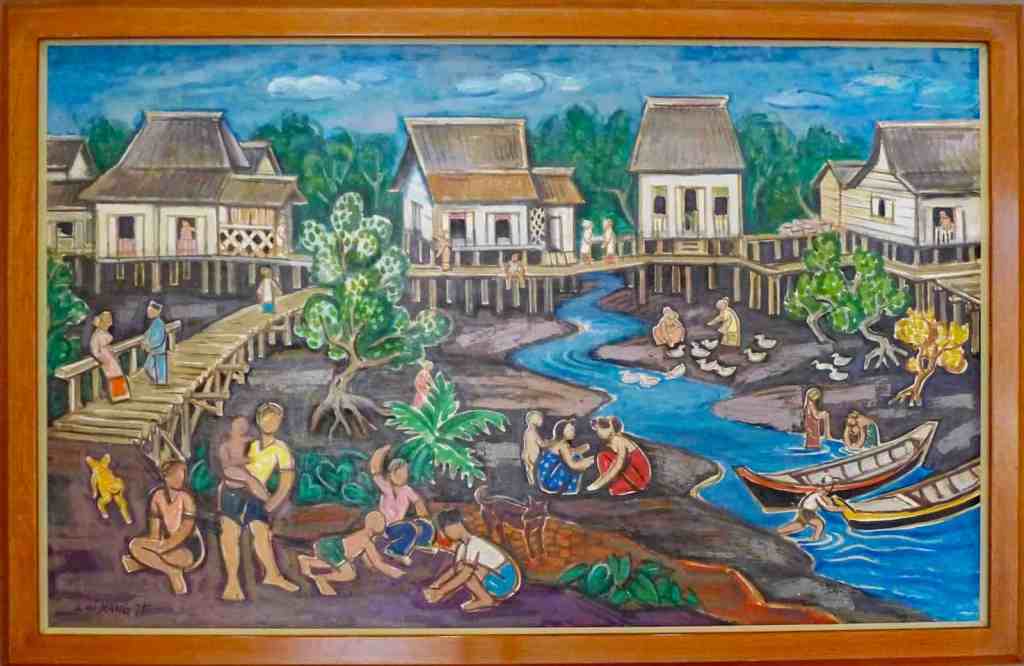
Women wearing baju kurongs and men wearing kain sampings. From Public Domain
OIL LAMPS

We did not taste chicken unless it was Hari Raya.
Mats laid on the corridor floor in front of ten doors—
the barrack houses at the end of Ramadan
decorated by oil lamps at each corner.
The gloomy village turned bright.
Each family brought out trays of varieties of dishes and cakes,
the feast welcoming Shawal.
The call of prayer from the radio,
followed by the hymns to glorify God.
Life in the village was indeed harmonious,
although sprinkled with misunderstandings,
slighted feelings throughout the year.
Exchanging delicious food,
extending congratulatory wishes,
laughter and tears flowed unimpeded.
The young proceeded to the field,
ignited the fuse of bamboo cannons
stuffed with carbide powder fodder.
The new moon was welcomed by blasts, claps, and cheers of happiness.
Flames of oil lamps swayed in the breeze,
resplendent till the morning,
before going to the mosque in groups,
wearing the baju kurung and kain samping.


THE BENCH

The melodious magpie on the bamboo twig,
the passing breeze welcomed the chirping.
Sitting on a dilapidated wooden bench,
the thick canopy of the mango tree,
village folks rested in the shade,
calming the tremors of troubled hearts.
The hardship evident in the sighs,
still hopeful of tomorrow’s dreams,
drying the sweat of weariness.
Honest earnings chased away worries.
A pinch on the thigh, a cry of pain,
laughter and jokes were shared merrily,
teasing the maiden sitting by the door,
smiling sheepishly, welcoming attention.
Recollecting a slice of an old tale,
fun and camaraderie were reminisced,
firm and amicable bonds were fostered.
It’s but a memory. It’s but a memory. It’s but a memory.
Now alone in a room,
gazing at the handphone screen,
chatting aimlessly in social media—
do we remember and long for the dilapidated bench,
crafting old tales, forging firm and amicable bonds?
Do we remember and pine
for the maiden sitting by the door?

CUSTOMS

Customs are not like banana fritters
coated with rice flour, dipped in hot oil,
served instantly, crispy and delicious, eaten warm,
accompanied by sips from a cup of black coffee.
Customs are like rain
that falls according to the weather.
It’s always there, although infrequent,
temperamental and purposeful,
sometimes an inconvenience— plans thwarted—
but always invigorating
and instils a sense of acceptance.
If received with gratitude,
directed with perseverance,
and tempered with wisdom,
life is beautiful with droplets of grace,
life is fertile with the pouring of bounties,
life is prosperous with love bestowed.
Customs make the earth supple.
Customs make the village noble.
Customs make a people well-mannered.
Once in a while,
relish a crispy banana fritter
and sip warm black coffee
while it rains cats and dogs.
Momentary disruption of plans,
the alleys and roads flooded—
a moment of reflection,
a moment of appreciation of the day,
inherent in droplets of grace,
inherent in the pouring of bounties,
inherent in love bestowed.
Shifting of time and signs
so the soil is tilled with purpose,
so the village gathers and collectively agrees,
the people ready to realise
aspirations of good character
and respected stature.

SIN

Sin is the earth,
Sin is the water,
Sin is the air,
Sin is the fire,
moved by a rebellious heart,
whispered by a vile intention.
Yes, Sin is the arrogance.
Yes, Sin is the pawn of power.
Yes, Sin is shamelessness.
Sin is a human,
who is given a will without limits,
without pity, who wants to be the reigning deity,
who wants to be the undeterred devil:
also, a human who chooses to want darkness,
wants to cheat, gorge, and be satiated:
the snake slithering in dark crevices,
the scorpion hiding in an undetected nest,
the leech waiting for prey in wetlands.
But Sin is the smelly compost that cultivates,
the cracked mirror that reflects form,
despondent valleys that look up to the summit,
tumultuous sea flowing from the openness of estuaries.
If the earth, water, air, and fire
are cleansed by seven skies, seven rivers, and seven blossoms,
moved by a modest heart,
whispered by a sincere intention,
Yes, the Sin will change to Repentance.
Yes, the Sin will change to Obedience.
The Sin will become Blissful and Fragrant.
Humanity.

Isa Kamari has written 12 novels, 3 collections of poetry, a collection of short stories, a book of essays on Singapore Malay poetry, a collection of theatre scripts and lyrics of 3 music albums, all in Malay. His novels have been translated into English, Turkish, Urdu, Arabic, Indonesian, Jawi, Russian, French, Spanish, Korean, Azerbaijan and Mandarin. Several of his essays and selected poems have been translated into English. Isa was conferred the S.E.A Write Award from Thailand (2006), the Singapore Cultural Medallion (2007), the Anugerah Tun Seri Lanang (2009) from the Singapore Malay Language Council, and the Mastera Literary Award (2018) from Brunei Darussalam.

He obtained a BArch (Hons) from the National University of Singapore in 1989, an MPhil (Malay Letters) from Universiti Kebangsaan Malaysia in 2008 and is currently pursuing a PhD programme at the Academy of Islamic Studies, Univeristi Malaya. His area of research is on the problem of alienation and the practice of firasat (spiritual intuition) in selected Singapore Malay novels.

The Lost Mantras is a collection that blends spirituality, Malay cultural heritage, and universal human experience. First published as part of Menyap Cinta (Love Greetings, 2022, Nuha Books KL), these poems are like a bridge between mysticism and everyday life, where traditional images (betel, jasmine, kris[1], oil lamps, setanjak[2]) are woven with Qur’anic echoes, prayers, and existential questioning. The collection carries a Sufi resonance—always circling back to longing, humility, surrender, and beauty as signs of God. The poems are not only lyrical but also function as cultural memory: they preserve Malay traditions, communal practices, and village life, while situating them in a cosmic framework of faith, sin, and redemption. The use of Malay customs, rituals, and objects is powerful: it asserts that spirituality is not abstract but embedded in heritage. This makes the collection uniquely Southeast Asian despite its universal in appeal.

[1]A dagger

[2] Malay headgear

PLEASE NOTE: ARTICLES CAN ONLY BE REPRODUCED IN OTHER SITES WITH DUE ACKNOWLEDGEMENT TO BORDERLESS JOURNAL

Click here to access the Borderless anthology, Monalisa No Longer Smiles

Click here to access Monalisa No Longer Smiles on Kindle Amazon International
Categories
Editorial

‘I wondered should I go or should I stay…’

I flow and fly
with the wind further
still; through time
and newborn worlds…

--‘Limits’ by Luis Cuauhtémoc Berriozábal

In winters, birds migrate. They face no barriers. The sun also shines across fences without any hindrance. Long ago, the late Nirendranath Chakraborty (1924-2018) wrote about a boy, Amalkanti, who wanted to be sunshine. The real world held him back and he became a worker in a dark printing press. Dreams sometimes can come to nought for humanity has enough walls to keep out those who they feel do not ‘belong’ to their way of life or thought. Some even war, kill and violate to secure an exclusive existence. Despite the perpetuation of these fences, people are now forced to emigrate not only to find shelter from the violences of wars but also to find a refuge from climate disasters. These people — the refuge seekers— are referred to as refugees[1]. And yet, there are a few who find it in themselves to waft to new worlds, create with their ideas and redefine norms… for no reason except that they feel a sense of belonging to a culture to which they were not born. These people are often referred to as migrants.

At the close of this year, Keith Lyons brings us one such persona who has found a firm footing in New Zealand. Setting new trends and inspiring others is a writer called Harry Ricketts[2]. He has even shared a poem from his latest collection, Bonfires on the Ice. Ricketts’ poem moves from the personal to the universal as does the poetry of another migrant, Luis Cuauhtémoc Berriozábal, aspiring to a new, more accepting world. While Tulip Chowdhury — who also moved across oceans — prays for peace in a war torn, weather-worn world:

I plant new seeds of dreams
for a peaceful world of tomorrow.

--‘Hopes and Dreams’ by Tulip Chowdhury

We have more poems this month that while showcasing the vibrancy of thoughts bind with the commonality of felt emotions on a variety of issues from Laila Brahmbhatt, John Grey, Saba Zahoor, Diane Webster, Gautham Pradeep, Daniel Gene Barlekamp, Annwesa Abhipsa Pani, Cal Freeman, Smitha Vishwanath, John Swain, Nziku Ann and Anne Whitehouse. Ramzi Albert Rihani makes us sit up by inverting norms while Ryan Quinn Flangan with his distinctive style raises larger questions on the need for attitudinal changes while talking of car parks. Rhys Hughes sprinkles ‘Hughesque’ humour into poetry with traffic jams as he does with his funny spooky narrative around Christmas.

Fiction in this issue reverberates across the world with Marc Rosenberg bringing us a poignant telling centred around childhood, innocence and abuse. Sayan Sarkar gives a witty, captivating, climate-friendly narrative centred around trees. Naramsetti Umamaheswararao weaves a fable set in Southern India.

A story by Nasir Rahim Sohrabi from the dusty landscapes of Balochistan has found its way into our translations too with Fazal Baloch rendering it into English from Balochi. Isa Kamari translates his own Malay poems which echo themes of his powerful novels, A Song of the Wind (2007) and Tweet(2017), both centred around the making of Singapore. Snehaprava Das introduces Odia poems by Satrughna Pandab in English. While Professor Fakrul Alam renders one of Nazrul’s best-loved songs from Bengali to English, Tagore’s translated poem Jatri (Passenger) welcomes prospectives onboard a boat —almost an anti-thesis of his earlier poem ‘Sonar Tori’ (The Golden Boat) where the ferry woman rows off robbing her client.

In reviews, we also have a poetry collection, This Could Be a Love Poem for You by Ranu Uniyal discussed by Gazala Khan. Bhaskar Parichha introduces a book that dwells on aging and mental health issues, Indira Das’s Last Song before Home, translated from Bengali by Bina Biswas. Rakhi Dalal has reviewed Anuradha Kumar’s Love and Crime in the Time of Plague:A Bombay Mystery, a historical mystery novel set in the Bombay of yore, a sequel to her earlier The Kidnapping of Mark Twain. Andreas Giesbert has woven in supernatural lore into this section by introducing Ariel Slick’s The Devil Take the Blues: A Southern Gothic Novel. In our excerpts too, we have ghostly lore with an extract from Ghosted: Delhi’s Haunted Monuments by Eric Chopra. The other excerpt is from Marzia Pasini’s Leonie’s Leap, a YA novel showcasing resilience.

We have plenty of non-fiction this time starting with a tribute to Jane Austen (1775-1817) by Meenakshi Malhotra. Austen turns 250 this year and continues relevant with remakes in not only films but also reimagined with books around her novels — especially Pride and Prejudice (which has even a zombie version). Bhaskar Parichha pays a tribute to writer Bibhuti Patnaik. Ravi Varmman K Kanniappan explores ancient Sangam Literature from Tamil Nadu and Ratnottama Sengupta revisits an art exhibition that draws bridges across time… an exploration she herself curated.

Suzanne Kamata takes us on a train journey through historical Japan and Meredith Stephens finds joy in visiting friends and living in a two-hundred-year-old house from the Edo period[3]. Mohul Bhowmick introduces a syncretic and cosmopolitan Bombay (now Mumbai). Gower Bhat gives his opinion on examination systems in Kashmir, which echoes issues faced across the world while Jun A. Alindogan raises concerns over Filipino norms.

Farouk Gulsara — with his dry humour — critiques the growing dependence on artificial intelligence (or the lack of it). Devraj Singh Kalsi again shares a spooky adventure in a funny vein.

We have a spray of colours from across almost all the continents in our pages this time. A bumper issue again — for which all of the contributors have our heartfelt thanks. Huge thanks to our fabulous team who pitch in to make a vibrant issue for all of us. A special thanks to Sohana Manzoor for the fabulous artwork. And as our readers continue to grow in numbers by leap and bounds, I would want to thank you all for visiting our content! Introduce your friends too if you like what you find and do remember to pause by this issue’s contents page.

Wish all of you happy reading through the holiday season!

Best wishes,

Mitali Chakravarty

borderlessjournal.com

CLICK HERE TO ACCESS THE CONTENTS FOR THE DECEMBER 2025 ISSUE.

[1] UNHCR Refugees

[2] Harry Ricketts born and educated in  England moved to New Zealand.

[3] Edo period in Japan (1603-1868)

.

READ THE LATEST UPDATES ON THE FIRST BORDERLESS ANTHOLOGY, MONALISA NO LONGER SMILES, BY CLICKING ON THIS LINK.

Categories
The Lost Mantras

A Song of the Wind & Other Poems by Isa Kamari

A SONG OF THE WIND 

I surrender my body and soul
to smoke, steam, and mist,
which I gather with one last fibre of strength.
Listen to this lonesome song,
for the sun is envious of my existence.
This life yearns for separation;
frailty is only human.
Ballads after ballads you would know.
An honest young man is always chided for his age.
The unending love of parents
sometimes makes them act as dictators.
If you feel life as silkworms
dreaming of freedom,
just remember your wings have broken
the moment you willingly accept
the smoothness of silk.
If the clouds are too heavy
for the roof of your home,
call the wind, summon the earth.
Then you would taste the sweetness of charity.
But remember,
a barren land sometimes is best left barren,
for art also seeks justice.
Proclaim, but do not claim,
for your worth is still in a balance.
As life is a bountiful gift,
be discreet in giving alms,
but you must be brave to challenge,
although it means
you have to burn a piece of love letter.
For God is closer than your jugular vein.
I come to you from a dusty journey
where I gather smiles from smoke, steam, and mist.
Listen to this lonesome song for a while,
for I am envious of the ensuing dusk.

MOTHER

Oh, Allah,
I know of your Love
from the binjai which she craved for—
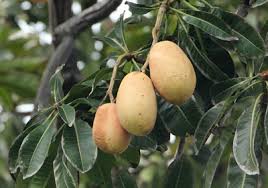
a slice from the only fruit plucked by a neighbour.
I know of your Mercy
from the warmth of the womb that protects a soul,
a frail presence in want of a mouthful of rice mixed
with soy sauce and fried fish,
under the thick foliage of the tree of Time,
offering shade to the unfolding age.
The moment she left to meet You,
the tree of Hope fell;
the kingdom of the Hereafter shook in my soul.
Parting will ultimately lead to meeting again.
Only to You I surrender,
begging for your love for Mother—
a straight path tracing her footsteps;
asking for your mercy for Mother—
which overrides your wrath over my life astray;
seeking your gentle affection,
as warm as Mother’s fingers.

TWEET

The chirping has escaped the cage.
The chirping is free; the trap is empty.
The chirping is returned and received.
The chirping is delirious on the rotten branch.
Your tail searches for the nest,
Your claws clench the twigs,
Your wings sift the wind,
Your beak catches the worm,
Your eyes survey the rainbow.
Hey you, the bird which has escaped!
Hey you, the bird which is free!
You bring along the cage in your flight.
The trap awaits your return.
If your tail is not guided by faith,
If your claws are not holding on to good deeds,
If your wings are not spreading grace,
If your beak is not chirping gratitude,
If your eyes are not seeking redemption—
Your song is a caged cry,
Your tweet is a prisoned anguish.
The resplendent feathers that you show off
are hiding a sadness as wide as the sky.

THE TRAIN

The door will close.
If religion is the track,
it does not determine
the path and destination for commuters.
They board and alight at different stations,
not the one, not the only one, not the same always.
Religion is like a map;
it does not make life boring,
does not block a journey,
shows the path anywhere you go,
not the one, not the only one, not the same always.
We are not carriages
that do not have choices.
Just make sure the meandering path is fun and secure,
the last stop safe and peaceful.
The door will close.
The One awaits there,
wherever it is.
The inside of a binjai mango. From Public Domain

Isa Kamari has written 12 novels, 3 collections of poetry, a collection of short stories, a book of essays on Singapore Malay poetry, a collection of theatre scripts and lyrics of 3 music albums, all in Malay. His novels have been translated into English, Turkish, Urdu, Arabic, Indonesian, Jawi, Russian, French, Spanish, Korean, Azerbaijan and Mandarin. Several of his essays and selected poems have been translated into English. Isa was conferred the S.E.A Write Award from Thailand (2006), the Singapore Cultural Medallion (2007), the Anugerah Tun Seri Lanang (2009) from the Singapore Malay Language Council, and the Mastera Literary Award (2018) from Brunei Darussalam.

He obtained a BArch (Hons) from the National University of Singapore in 1989, an MPhil (Malay Letters) from Universiti Kebangsaan Malaysia in 2008 and is currently pursuing a PhD programme at the Academy of Islamic Studies, Univeristi Malaya. His area of research is on the problem of alienation and the practice of firasat (spiritual intuition) in selected Singapore Malay novels.

The Lost Mantras is a collection that blends spirituality, Malay cultural heritage, and universal human experience. First published as part of Menyap Cinta (Love Greetings, 2022, Nuha Books KL), these poems are like a bridge between mysticism and everyday life, where traditional images (betel, jasmine, kris[1], oil lamps, setanjak[2]) are woven with Qur’anic echoes, prayers, and existential questioning. The collection carries a Sufi resonance—always circling back to longing, humility, surrender, and beauty as signs of God. The poems are not only lyrical but also function as cultural memory: they preserve Malay traditions, communal practices, and village life, while situating them in a cosmic framework of faith, sin, and redemption. The use of Malay customs, rituals, and objects is powerful: it asserts that spirituality is not abstract but embedded in heritage. This makes the collection uniquely Southeast Asian despite its universal in appeal.

[1]A dagger

[2] Malay headgear

PLEASE NOTE: ARTICLES CAN ONLY BE REPRODUCED IN OTHER SITES WITH DUE ACKNOWLEDGEMENT TO BORDERLESS JOURNAL

Click here to access the Borderless anthology, Monalisa No Longer Smiles

Click here to access Monalisa No Longer Smiles on Kindle Amazon International

Categories
Stories

A Lump Stuck in the Throat

Nasir Rahim Sohrabi

A Balochi short story by Nasir Rahim Sohrabi translated by Fazal Baloch

The bus had stopped in front of the roadside hotel, but the dust from the road still hung around it. The passengers, before getting off completely, were busy brushing the dust off the from their travel. The fatigue caused by the delipidated road was visible on their faces and in the creases of their clothes. I had been following the bus and was now sitting under the thatched shelter, drinking tea from a small boy’s cup. The sun was at its peak, glaring down like an angry man. The grime from the boy’s hands on the hot teacup had not yet dried when a red ambulance pulled up in front of the hotel. The dirt and dust stuck to it showed clearly that it had travelled a long way. Two men got out, dusted their clothes, and walked straight toward the water to wash their faces and hands.

The hotel waiter watched them closely. Then the back door of the ambulance opened and their third companion stepped out. His shoulders seemed burdened with many years, and he walked forward with heavy steps until he reached the shade of the shelter. He greeted everyone, and sat down leaning against a wooden pillar. A glass of water was placed before him, but he didn’t touch it. His eyes remained fixed on the ambulance, from which dust continued to rise as though it were still on the road.

After a while, the other two men joined him. Their faces were clean now, but the dust still clung to their ears, eyes, and nostrils. They ordered food. To their third companion they said only, “Come, let’s eat.” But he kept looking at the ambulance fixedly. They didn’t ask him again.

The young boy who had been watching him from a distance placed my tea before me and went toward the man. He touched his shoulder and asked,
“Why aren’t you eating?”

The man was startled as if waking from a deep sleep. His gaze shifted from the ambulance to the boy’s face. He looked at him the way someone, seeing the world for the first time after eye surgery.

“I can never eat alone,” he said. “Food never sits well with me unless someone eats with me. Will you sit here with me?”

The boy nodded.

Offering him the first bite, the man said, “I’ve always fed him the first bite. Until I fed him, he wouldn’t eat at all.”

“Who was he?” the boy asked.

The question seemed to trouble him. His teeth tried to chew the morsel while his eyes stayed fixed on the boy’s face. I saw clouds of dust gather in his eyes, and their darkness spread over his face. Pain began to pour like rain. Lakes of grief rose within him. His breath grew heavy. At last, composing himself, he said: “He was my son. But he had taken my father’s place in my life. When he was a child, I fed him. But over time, I became used to eating the bites he offered me. His mother left him and me long ago. She went away with those who were demanding water and electricity along with the young, the old, and the children. I pleaded with her not to go, but she didn’t listen. She left and never returned. At first, people wrote poems about her. But now, people have too much water in their eyes and too much brightness from electricity in their homes. Now they’re concerned only with their own reflection. She once lived in people’s memories, but the world has forgotten her now.”

After a pause, his eyes drifted again toward the ambulance, though the rain inside him didn’t stop.

“He was in a hurry too, just like his mother. He was always in a rush for everything. He would run to school and never delay returning home. He grew up before my eyes. One day he said to me, ‘Now you sit and rest. It’s my turn to look after you. I’ll feed you now.’ I insisted that my turn wasn’t over yet, but he was in a hurry and won the argument. Then he joined Captian Qasim’s boat as helmsman. But he didn’t stay there long. A year later he became a sailor on Ibrahim’s boat. He never hid anything from me, but after joining Ibrahim, I seldom knew when he left for the sea or when he came home. Whenever I asked, he only said, ‘Whenever the boss orders, we’re ready to go.’

This time too he was in a rush. The moment he came home, he said, ‘We’re leaving for the deep sea. We’ll be back in a few days.’ I wanted to stand up and hug him goodbye, but before I could rise, he had already stepped out the door. Then news came that their boat had caught fire. It didn’t sink, but it was badly burnt. Thanks to the boss, they sent us to Karachi by air. But maybe this time it was the order of the Great Boss. Or maybe the son was in a hurry to go to his mother. He didn’t stay in Karachi even for a day.”

The bus horn blared and the passengers hurried toward it. The boy got up too and began to put on his sandals.

“I haven’t even eaten yet,” the man said. “Where are you going?”

“Look, the bus is leaving. I have to hurry,” the boy replied.

The sun had now slipped behind the western mountains. The shelter had emptied. The red ambulance was gone too. But the old man still sat leaning against the wooden pillar, his eyes fixed on the road. The bus sped off, trailing dust behind it.

.

Nasir Rahim Sohrabi lives in Gwadar, Balochistan. He occasionally writes short stories. This story originally appeared in Monthly Balochi, Quetta in year 2000 and translated and published with  permission from the author.

Fazal Baloch is a Balochi writer and translator. He has translated many Balochi poems and short stories into English. His translations have been featured in Pakistani Literature published by Pakistan Academy of Letters and in the form of books and anthologies. 

.

PLEASE NOTE: ARTICLES CAN ONLY BE REPRODUCED IN OTHER SITES WITH DUE ACKNOWLEDGEMENT TO BORDERLESS JOURNAL

Click here to access the Borderless anthology, Monalisa No Longer Smiles

Click here to access Monalisa No Longer Smiles on Kindle Amazon International