
Categories
Editorial

‘I wondered should I go or should I stay…’

I flow and fly
with the wind further
still; through time
and newborn worlds…

--‘Limits’ by Luis Cuauhtémoc Berriozábal

In winters, birds migrate. They face no barriers. The sun also shines across fences without any hindrance. Long ago, the late Nirendranath Chakraborty (1924-2018) wrote about a boy, Amalkanti, who wanted to be sunshine. The real world held him back and he became a worker in a dark printing press. Dreams sometimes can come to nought for humanity has enough walls to keep out those who they feel do not ‘belong’ to their way of life or thought. Some even war, kill and violate to secure an exclusive existence. Despite the perpetuation of these fences, people are now forced to emigrate not only to find shelter from the violences of wars but also to find a refuge from climate disasters. These people — the refuge seekers— are referred to as refugees[1]. And yet, there are a few who find it in themselves to waft to new worlds, create with their ideas and redefine norms… for no reason except that they feel a sense of belonging to a culture to which they were not born. These people are often referred to as migrants.

At the close of this year, Keith Lyons brings us one such persona who has found a firm footing in New Zealand. Setting new trends and inspiring others is a writer called Harry Ricketts[2]. He has even shared a poem from his latest collection, Bonfires on the Ice. Ricketts’ poem moves from the personal to the universal as does the poetry of another migrant, Luis Cuauhtémoc Berriozábal, aspiring to a new, more accepting world. While Tulip Chowdhury — who also moved across oceans — prays for peace in a war torn, weather-worn world:

I plant new seeds of dreams
for a peaceful world of tomorrow.

--‘Hopes and Dreams’ by Tulip Chowdhury

We have more poems this month that while showcasing the vibrancy of thoughts bind with the commonality of felt emotions on a variety of issues from Laila Brahmbhatt, John Grey, Saba Zahoor, Diane Webster, Gautham Pradeep, Daniel Gene Barlekamp, Annwesa Abhipsa Pani, Cal Freeman, Smitha Vishwanath, John Swain, Nziku Ann and Anne Whitehouse. Ramzi Albert Rihani makes us sit up by inverting norms while Ryan Quinn Flangan with his distinctive style raises larger questions on the need for attitudinal changes while talking of car parks. Rhys Hughes sprinkles ‘Hughesque’ humour into poetry with traffic jams as he does with his funny spooky narrative around Christmas.

Fiction in this issue reverberates across the world with Marc Rosenberg bringing us a poignant telling centred around childhood, innocence and abuse. Sayan Sarkar gives a witty, captivating, climate-friendly narrative centred around trees. Naramsetti Umamaheswararao weaves a fable set in Southern India.

A story by Nasir Rahim Sohrabi from the dusty landscapes of Balochistan has found its way into our translations too with Fazal Baloch rendering it into English from Balochi. Isa Kamari translates his own Malay poems which echo themes of his powerful novels, A Song of the Wind (2007) and Tweet(2017), both centred around the making of Singapore. Snehaprava Das introduces Odia poems by Satrughna Pandab in English. While Professor Fakrul Alam renders one of Nazrul’s best-loved songs from Bengali to English, Tagore’s translated poem Jatri (Passenger) welcomes prospectives onboard a boat —almost an anti-thesis of his earlier poem ‘Sonar Tori’ (The Golden Boat) where the ferry woman rows off robbing her client.

In reviews, we also have a poetry collection, This Could Be a Love Poem for You by Ranu Uniyal discussed by Gazala Khan. Bhaskar Parichha introduces a book that dwells on aging and mental health issues, Indira Das’s Last Song before Home, translated from Bengali by Bina Biswas. Rakhi Dalal has reviewed Anuradha Kumar’s Love and Crime in the Time of Plague:A Bombay Mystery, a historical mystery novel set in the Bombay of yore, a sequel to her earlier The Kidnapping of Mark Twain. Andreas Giesbert has woven in supernatural lore into this section by introducing Ariel Slick’s The Devil Take the Blues: A Southern Gothic Novel. In our excerpts too, we have ghostly lore with an extract from Ghosted: Delhi’s Haunted Monuments by Eric Chopra. The other excerpt is from Marzia Pasini’s Leonie’s Leap, a YA novel showcasing resilience.

We have plenty of non-fiction this time starting with a tribute to Jane Austen (1775-1817) by Meenakshi Malhotra. Austen turns 250 this year and continues relevant with remakes in not only films but also reimagined with books around her novels — especially Pride and Prejudice (which has even a zombie version). Bhaskar Parichha pays a tribute to writer Bibhuti Patnaik. Ravi Varmman K Kanniappan explores ancient Sangam Literature from Tamil Nadu and Ratnottama Sengupta revisits an art exhibition that draws bridges across time… an exploration she herself curated.

Suzanne Kamata takes us on a train journey through historical Japan and Meredith Stephens finds joy in visiting friends and living in a two-hundred-year-old house from the Edo period[3]. Mohul Bhowmick introduces a syncretic and cosmopolitan Bombay (now Mumbai). Gower Bhat gives his opinion on examination systems in Kashmir, which echoes issues faced across the world while Jun A. Alindogan raises concerns over Filipino norms.

Farouk Gulsara — with his dry humour — critiques the growing dependence on artificial intelligence (or the lack of it). Devraj Singh Kalsi again shares a spooky adventure in a funny vein while Malachi Edwin Vethamani woos us with syncretic colours of Christmas during his childhood in Brickfields, Malaysia — a narrative woven with his own poems and nostalgia.

We have a spray of colours from across almost all the continents in our pages this time. A bumper issue again — for which all of the contributors have our heartfelt thanks. Huge thanks to our fabulous team who pitch in to make a vibrant issue for all of us. A special thanks to Sohana Manzoor for the fabulous artwork. And as our readers continue to grow in numbers by leap and bounds, I would want to thank you all for visiting our content! Introduce your friends too if you like what you find and do remember to pause by this issue’s contents page.

Wish all of you happy reading through the holiday season!

Best wishes,

Mitali Chakravarty

borderlessjournal.com

CLICK HERE TO ACCESS THE CONTENTS FOR THE DECEMBER 2025 ISSUE.

[1] UNHCR Refugees

[2] Harry Ricketts born and educated in  England moved to New Zealand.

[3] Edo period in Japan (1603-1868)

.

READ THE LATEST UPDATES ON THE FIRST BORDERLESS ANTHOLOGY, MONALISA NO LONGER SMILES, BY CLICKING ON THIS LINK.

Categories
The Lost Mantras

A Song of the Wind & Other Poems by Isa Kamari

A SONG OF THE WIND 

I surrender my body and soul
to smoke, steam, and mist,
which I gather with one last fibre of strength.
Listen to this lonesome song,
for the sun is envious of my existence.
This life yearns for separation;
frailty is only human.
Ballads after ballads you would know.
An honest young man is always chided for his age.
The unending love of parents
sometimes makes them act as dictators.
If you feel life as silkworms
dreaming of freedom,
just remember your wings have broken
the moment you willingly accept
the smoothness of silk.
If the clouds are too heavy
for the roof of your home,
call the wind, summon the earth.
Then you would taste the sweetness of charity.
But remember,
a barren land sometimes is best left barren,
for art also seeks justice.
Proclaim, but do not claim,
for your worth is still in a balance.
As life is a bountiful gift,
be discreet in giving alms,
but you must be brave to challenge,
although it means
you have to burn a piece of love letter.
For God is closer than your jugular vein.
I come to you from a dusty journey
where I gather smiles from smoke, steam, and mist.
Listen to this lonesome song for a while,
for I am envious of the ensuing dusk.

MOTHER

Oh, Allah,
I know of your Love
from the binjai which she craved for—
a slice from the only fruit plucked by a neighbour.
I know of your Mercy
from the warmth of the womb that protects a soul,
a frail presence in want of a mouthful of rice mixed
with soy sauce and fried fish,
under the thick foliage of the tree of Time,
offering shade to the unfolding age.
The moment she left to meet You,
the tree of Hope fell;
the kingdom of the Hereafter shook in my soul.
Parting will ultimately lead to meeting again.
Only to You I surrender,
begging for your love for Mother—
a straight path tracing her footsteps;
asking for your mercy for Mother—
which overrides your wrath over my life astray;
seeking your gentle affection,
as warm as Mother’s fingers.

TWEET

The chirping has escaped the cage.
The chirping is free; the trap is empty.
The chirping is returned and received.
The chirping is delirious on the rotten branch.
Your tail searches for the nest,
Your claws clench the twigs,
Your wings sift the wind,
Your beak catches the worm,
Your eyes survey the rainbow.
Hey you, the bird which has escaped!
Hey you, the bird which is free!
You bring along the cage in your flight.
The trap awaits your return.
If your tail is not guided by faith,
If your claws are not holding on to good deeds,
If your wings are not spreading grace,
If your beak is not chirping gratitude,
If your eyes are not seeking redemption—
Your song is a caged cry,
Your tweet is a prisoned anguish.
The resplendent feathers that you show off
are hiding a sadness as wide as the sky.

THE TRAIN

The door will close.
If religion is the track,
it does not determine
the path and destination for commuters.
They board and alight at different stations,
not the one, not the only one, not the same always.
Religion is like a map;
it does not make life boring,
does not block a journey,
shows the path anywhere you go,
not the one, not the only one, not the same always.
We are not carriages
that do not have choices.
Just make sure the meandering path is fun and secure,
the last stop safe and peaceful.
The door will close.
The One awaits there,
wherever it is.
The inside of a binjai mango. From Public Domain

Isa Kamari has written 12 novels, 3 collections of poetry, a collection of short stories, a book of essays on Singapore Malay poetry, a collection of theatre scripts and lyrics of 3 music albums, all in Malay. His novels have been translated into English, Turkish, Urdu, Arabic, Indonesian, Jawi, Russian, French, Spanish, Korean, Azerbaijan and Mandarin. Several of his essays and selected poems have been translated into English. Isa was conferred the S.E.A Write Award from Thailand (2006), the Singapore Cultural Medallion (2007), the Anugerah Tun Seri Lanang (2009) from the Singapore Malay Language Council, and the Mastera Literary Award (2018) from Brunei Darussalam.

He obtained a BArch (Hons) from the National University of Singapore in 1989, an MPhil (Malay Letters) from Universiti Kebangsaan Malaysia in 2008 and is currently pursuing a PhD programme at the Academy of Islamic Studies, Univeristi Malaya. His area of research is on the problem of alienation and the practice of firasat (spiritual intuition) in selected Singapore Malay novels.

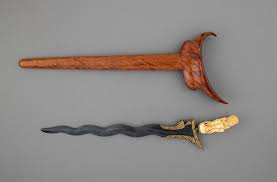
The Lost Mantras is a collection that blends spirituality, Malay cultural heritage, and universal human experience. First published as part of Menyap Cinta (Love Greetings, 2022, Nuha Books KL), these poems are like a bridge between mysticism and everyday life, where traditional images (betel, jasmine, kris[1], oil lamps, setanjak[2]) are woven with Qur’anic echoes, prayers, and existential questioning. The collection carries a Sufi resonance—always circling back to longing, humility, surrender, and beauty as signs of God. The poems are not only lyrical but also function as cultural memory: they preserve Malay traditions, communal practices, and village life, while situating them in a cosmic framework of faith, sin, and redemption. The use of Malay customs, rituals, and objects is powerful: it asserts that spirituality is not abstract but embedded in heritage. This makes the collection uniquely Southeast Asian despite its universal in appeal.

[1]A dagger

[2] Malay headgear

PLEASE NOTE: ARTICLES CAN ONLY BE REPRODUCED IN OTHER SITES WITH DUE ACKNOWLEDGEMENT TO BORDERLESS JOURNAL

Click here to access the Borderless anthology, Monalisa No Longer Smiles

Click here to access Monalisa No Longer Smiles on Kindle Amazon International

Categories
Stories

A Lump Stuck in the Throat

Nasir Rahim Sohrabi

A Balochi short story by Nasir Rahim Sohrabi translated by Fazal Baloch

The bus had stopped in front of the roadside hotel, but the dust from the road still hung around it. The passengers, before getting off completely, were busy brushing the dust off the from their travel. The fatigue caused by the delipidated road was visible on their faces and in the creases of their clothes. I had been following the bus and was now sitting under the thatched shelter, drinking tea from a small boy’s cup. The sun was at its peak, glaring down like an angry man. The grime from the boy’s hands on the hot teacup had not yet dried when a red ambulance pulled up in front of the hotel. The dirt and dust stuck to it showed clearly that it had travelled a long way. Two men got out, dusted their clothes, and walked straight toward the water to wash their faces and hands.

The hotel waiter watched them closely. Then the back door of the ambulance opened and their third companion stepped out. His shoulders seemed burdened with many years, and he walked forward with heavy steps until he reached the shade of the shelter. He greeted everyone, and sat down leaning against a wooden pillar. A glass of water was placed before him, but he didn’t touch it. His eyes remained fixed on the ambulance, from which dust continued to rise as though it were still on the road.

After a while, the other two men joined him. Their faces were clean now, but the dust still clung to their ears, eyes, and nostrils. They ordered food. To their third companion they said only, “Come, let’s eat.” But he kept looking at the ambulance fixedly. They didn’t ask him again.

The young boy who had been watching him from a distance placed my tea before me and went toward the man. He touched his shoulder and asked,
“Why aren’t you eating?”

The man was startled as if waking from a deep sleep. His gaze shifted from the ambulance to the boy’s face. He looked at him the way someone, seeing the world for the first time after eye surgery.

“I can never eat alone,” he said. “Food never sits well with me unless someone eats with me. Will you sit here with me?”

The boy nodded.

Offering him the first bite, the man said, “I’ve always fed him the first bite. Until I fed him, he wouldn’t eat at all.”

“Who was he?” the boy asked.

The question seemed to trouble him. His teeth tried to chew the morsel while his eyes stayed fixed on the boy’s face. I saw clouds of dust gather in his eyes, and their darkness spread over his face. Pain began to pour like rain. Lakes of grief rose within him. His breath grew heavy. At last, composing himself, he said: “He was my son. But he had taken my father’s place in my life. When he was a child, I fed him. But over time, I became used to eating the bites he offered me. His mother left him and me long ago. She went away with those who were demanding water and electricity along with the young, the old, and the children. I pleaded with her not to go, but she didn’t listen. She left and never returned. At first, people wrote poems about her. But now, people have too much water in their eyes and too much brightness from electricity in their homes. Now they’re concerned only with their own reflection. She once lived in people’s memories, but the world has forgotten her now.”

After a pause, his eyes drifted again toward the ambulance, though the rain inside him didn’t stop.

“He was in a hurry too, just like his mother. He was always in a rush for everything. He would run to school and never delay returning home. He grew up before my eyes. One day he said to me, ‘Now you sit and rest. It’s my turn to look after you. I’ll feed you now.’ I insisted that my turn wasn’t over yet, but he was in a hurry and won the argument. Then he joined Captian Qasim’s boat as helmsman. But he didn’t stay there long. A year later he became a sailor on Ibrahim’s boat. He never hid anything from me, but after joining Ibrahim, I seldom knew when he left for the sea or when he came home. Whenever I asked, he only said, ‘Whenever the boss orders, we’re ready to go.’

This time too he was in a rush. The moment he came home, he said, ‘We’re leaving for the deep sea. We’ll be back in a few days.’ I wanted to stand up and hug him goodbye, but before I could rise, he had already stepped out the door. Then news came that their boat had caught fire. It didn’t sink, but it was badly burnt. Thanks to the boss, they sent us to Karachi by air. But maybe this time it was the order of the Great Boss. Or maybe the son was in a hurry to go to his mother. He didn’t stay in Karachi even for a day.”

The bus horn blared and the passengers hurried toward it. The boy got up too and began to put on his sandals.

“I haven’t even eaten yet,” the man said. “Where are you going?”

“Look, the bus is leaving. I have to hurry,” the boy replied.

The sun had now slipped behind the western mountains. The shelter had emptied. The red ambulance was gone too. But the old man still sat leaning against the wooden pillar, his eyes fixed on the road. The bus sped off, trailing dust behind it.

.

Nasir Rahim Sohrabi lives in Gwadar, Balochistan. He occasionally writes short stories. This story originally appeared in Monthly Balochi, Quetta in year 2000 and translated and published with  permission from the author.

Fazal Baloch is a Balochi writer and translator. He has translated many Balochi poems and short stories into English. His translations have been featured in Pakistani Literature published by Pakistan Academy of Letters and in the form of books and anthologies. 

.

PLEASE NOTE: ARTICLES CAN ONLY BE REPRODUCED IN OTHER SITES WITH DUE ACKNOWLEDGEMENT TO BORDERLESS JOURNAL

Click here to access the Borderless anthology, Monalisa No Longer Smiles

Click here to access Monalisa No Longer Smiles on Kindle Amazon International

Categories
Poetry

Alive

By Annwesa Abhipsa Pani

ALIVE

Some mornings,
the air feels rehearsed.
The sun rises on cue.
Even my breath sounds like someone else’s prayer.

I want something less tidy —
a god with a scar,
a truth with bad grammar.

What is this ache that won’t name itself?
It hums under the skin,
a small rebellion against stillness.

I’ve tried silence.
It behaves well until it starts to echo.
I’ve tried love.
It arrives barefoot,
then asks for shoes.

Still, something in me keeps choosing
the risk of aliveness —
the heartbreak,
the astonishment,
the tremor in the voice
that says nothing,
but means everything.

Maybe that’s enough —
this pulse that refuses to explain
why it’s still pulsing.

Annwesa Abhipsa Pani is a poet, a Senior Manager in Organisation and People development and a student of English Literature based in Pune. Her work explores silence, belonging, and the delicate negotiations between inner and outer worlds. Her poems often linger at the intersections of tenderness and restraint, drawing from everyday moments to uncover quiet revelations.

.

PLEASE NOTE: ARTICLES CAN ONLY BE REPRODUCED IN OTHER SITES WITH DUE ACKNOWLEDGEMENT TO BORDERLESS JOURNAL

Click here to access the Borderless anthology, Monalisa No Longer Smiles

Click here to access Monalisa No Longer Smiles on Kindle Amazon International

Categories
Poetry

Found in Translation: Satrughna Pandab’s Odia Poems

Five poems by Satrughna Pandab have been translated to English from Odia by Snehaprava Das

Satrughna Pandab
SUMMER JOURNEY

Does this journey begin in summer?
After the mango buds go dry
And the koel’s voice trails away…
When simuli, palash and krishna chuda
Blaze in red?
Does it begin when the blood
After reveling in the festivities of flesh
Crosses over the bone-fencing
And gets cold,
When the burning soul yearns for
The fragrant and cool sandalwood paste?

And the soothing monsoon showers?
Where lies the destination --
At what border, which estuary,
Which desolate island of wordlessness?
The journey perhaps itself decides
The appropriate hour.
You embark upon this journey alone --
Without friends, without kins,
Without allies without adversaries.

You yourself are the mendicant here.
You are the violin, you too are the ektara.
You are the alms too.
And what are the alms after all?
At that ultimate point,
When the end would wear the
Garb of blue ascetism,
The scorch of summer
Turns to
Sandalwood paste,
Besmears the breath that
Leaves you overwhelmed
With its exotic fragrance.

A SKETCH OF FAMINE

The white wrap of the clouds
Is ripped into shreds.
The pieces are blown away in the wind.

The sky spreads out like
A grey cremation ground,
Where the sun, like some kapalika
Performs a tantric ritual
A sacrificial act,
And slits the throat of a virgin cloud --
Moon: The skull of a man just died,
Constellations: A crowd of beggars,
Night: A Ghost Land
Fissured farmlands: Human skeletons.

Flames leap.
Green vegetations char.
The blue of the sky turns ashy.
The tender earth
Lamenting its bruised honour
Sprawls in a pathetic, arid sprawl.

WAR (I)
(FROM KURUKSHETRA TO KUWAIT)

All the Dhritarasthras
Between Kurukshetra and Kuwait
Are blinded kings,
Pride boiling in their blood,

Not a single weapon misses the target
Each Ajatasatru fights another
Ceaselessly,
Neither of them returns from the battlefield,

The weapons have no ears for
The mantra of love
Or of brotherhood,
Nor does the blood recognise its kinsmen.
The battlefield does not care to know
Which warrior belongs to which camp.

Not a soul could be seen on the bank of
The bottomless river of blood
That flows across the battlefield
Desolate and forlorn.

And there is always an Aswatthama,
Ready with his Naracha, the iron arrow,
Awaiting the Parikshitas yet to be born.


AUTUMN

Is this river your body
Flowing, calm and pristine,
A translucent green?
Are the dazzling streamers of sunlight
Hanging from the sky of
Your glowing skin?
Are the rows of paddy fields
Stretching to the horizon,
Your sari?
Do you smell like the paddy buds?
Do the delicate murmur of the river waves
Or the cheery chirpings of the birds
Carry your voice?
The glimmering stars of the night --
Are they your ear-studs?
Do your eyes sparkle
Like those of some goddess?
Do you ever cry?
Really?
Are the dew drops clustering
On the grass your tears, then?

And the pool of blood under your
Lotus-like feet --
Whose blood is that?
Ripping apart the night
Coloured like the buffalo’s skin,
Your lotus-face gleams like stars,
My breath smells of the lotus, too.


A FAMILY MAN’S DAILY ROUTINE

The man stands
His back turned to the sun,
Or is it the wind?

A bare back, always
Rough hair, dry, windblown,
May be there is a hunch on his back,
Or, is it a load of some kind?
Heavy and sagging,
His toils do not show on his face.

He stands like a scarecrow,
Waving aimless, hollow hands
Warding off the emptiness
Around him, or the void within?

His face does not show it,
Or he does not have a face at all?
Just a headless body
Moves about here and there,
Brushing the dust off,
Mopping the sweat beads away.
The cracks on his palms and his heels
Could be seen, indistinct though.
There are, however, times, when
A face fixes itself to the headless torso,
When he comes to know
About the pregnancy of his unwed daughter,
Or, when he has to carry his dead son
Over his shagging shoulders,
The pair of eyes in that face look like marbles
Deadpan, stiff and blank.

How does a family man take it
When the harvest succumbs
To the tyranny of flood and famine,
When a dividing wall is raised
In the house or in the fields,
Does it matter to the family man?
May be,
A dagger rips his heart apart,
The pain does not show on the face.

Sometimes one can see something like
A basket on his back --
Who does the family man carry in that?
His blind parents? His kids?
Perhaps his name is Shravan Kumar
And he is on a pilgrimage,
Perhaps not!

He buries his already sinking feet
Some more under earth,
Beads of sweat shine like pearls on him.
His beards hang off his face,
Like the aerial roots of a Banyan tree,
Does he move on carrying
A dead sun on his back?
His face reveals not much.

Who does the man stand
Showing his bare back to?
To the sun or to the wind?
Who knows?
Nothing shows clear on the family man’s face.

Satrughna Pandab is a conspicuous voice in contemporary Odia poetry. A poet working with an aim to define the existential issues man is confronted with in all ages, he adopts a style that embodies traditionalism and modernity in a proportionate measure. Highly emotive and poignant, his poetry that reveals a fine synthesis of the experiences both individual and universal, are testimonies of a rare poetic skill and craftmanship. A recipient of the Odisha Sahitya Akademi Award, the Sarala Award, and several such accolades the poet has nine anthologies of poems and several critical and nonfictional writing to his credit.

Dr.Snehaprava Das, is a noted writer and a translator from Bhubaneswar, Odisha. She has five books of poems, three of stories and thirteen collections of translated texts (from Odia to English), to her credit. 

PLEASE NOTE: ARTICLES CAN ONLY BE REPRODUCED IN OTHER SITES WITH DUE ACKNOWLEDGEMENT TO BORDERLESS JOURNAL

Click here to access the Borderless anthology, Monalisa No Longer Smiles

Click here to access Monalisa No Longer Smiles on Kindle Amazon International

Categories
Editorial

Spring in Winter?

Painting by Claude Monet (1840-1926)
If Winter comes, can Spring be far behind?

'Ode to the West Wind', Percy Bysshe Shelley (1792 -1822)

The idea of spring heralds hope even when it’s deep winter. The colours of spring bring variety along with an assurance of contentment and peace. While wars and climate disasters rage around the world, peace can be found in places like the cloistered walls of Sistine Chapel where conflicts exist only in art. Sometimes, we get a glimpse of peace within ourselves as we gaze at the snowy splendour of Himalayas and sometimes, in smaller things… like a vernal flower or the smile of a young child. Inner peace can at times lead to great art forms as can conflicts where people react with the power of words or visual art. But perhaps, what is most important is the moment of quietness that helps us get in touch with that inner voice giving out words that can change lives. Can written words inspire change?

Our featured bookstore’s owner from Bangladesh, Amina Rahman, thinks it can. Rahman of Bookworm, has a unique perspective for she claims, “A lot of people mistake success with earning huge profits… I get fulfilment out of other things –- community health and happiness and… just interaction.” She provides books from across the world and more while trying to create an oasis of quietude in the busy city of Dhaka. It was wonderful listening to her views — they sounded almost utopian… and perhaps, therefore, so much more in synch with the ideas we host in these pages.

Our content this month are like the colours of the rainbow — varied and from many countries. They ring out in different colours and tones, capturing the multiplicity of human existence. The translations start with Professor Fakrul Alam’s transcreation of Nazrul’s Bengali lyrics in quest of the intangible. Isa Kamari translates four of his own Malay poems on spiritual quest, while from Balochi, Fazal Baloch bring us Munir Momin’s esoteric verses in English. Snehprava Das’s translation of Rohini K.Mukherjee poetry from Odia and S.Ramakrishnan’s story translated from Tamil by B.Chandramouli also have the same transcendental notes. Tagore’s playful poem on winter (Sheeth) mingles a bit for spring, the season welcomed by all creatures great and small.

John Valentine brings us poetry that transcends to the realms of Buddha, while Ryan Quinn Flanagan, Ron Pickett and Saranyan BV use avians in varied ways… each associating the birds with their own lores. George Freek gives us poignant poetry using autumn while Luis Cuauhtémoc Berriozábal expresses different yearnings that beset him in the season. Snehaprava Das and Usha Kishore write to express a sense of identity, though the latter clearly identifies herself as a migrant. Young Debadrita Paul writes poignant lines embracing the darkness of human existence. Joseph C. Ogbonna and Raiyan Rashky write cheeky lines, they say, on love. Mohit Saini interestingly protests patriarchal expectations that rituals of life impose on men. We have more variety in poetry from William Doreski, Rex Tan, Shivani Shrivastav and John Grey. Rhys Hughes in his column shares with us what he calls “A Poem Of Unsuccessful Excess” which includes, Ogden Nash, okras, Atilla the Hun, Ulysees, turmeric and many more spices and names knitting them into a unique ‘Hughesque’ narrative.

Our fiction travels from Argentina with Fabiana Elisa Martínez to light pieces by Deborah Blenkhorn and Priyanjana Pramanik, who shares a fun sketch of a nonagenarian grandma. Sreenath Nagireddy addresses migrant lores while Naramsetti Umamaheswararao gives a story set in a village in Andhra Pradesh.

We have non-fiction from around the world. Farouk Gulsara brings us an unusual perspective on festive eating while Odbayar Dorj celebrates festivals of learning in Mongolia. Satyarth Pandita introduces us to Emil Cioran, a twentieth century philosopher and Bhaskar Parichha pays a tribute to Professor Sarbeswar Das.  Meredith Stephens talks of her first-hand experience of a boat wreck and Prithvijeet Sinha takes us to the tomb of Sadaat Ali Khan. Ahmad Rayees muses on the deaths and darkness in Kashmir that haunt him. Devraj Singh Kalsi brings in a sense of lightness with a soupçon of humour and dreams of being a fruit seller. Suzanne Kamata revisits a museum in Naoshima in Japan.

Our book excerpts are from Anuradha Kumar’s sequel to The Kidnapping of Mark Twain, Love and Crime in the Time of Plague: A Bombay Mystery and Wayne F Burke’s Theodore Dreiser – The Giant, a literary non-fiction. Our reviews homes Somdatta Mandal discussion on M.A.Aldrich’s Old Lhasa: A Biography while Satya Narayan Misra writes an in-depth piece on Amal Allana’s Ebrahim Alkazi: Holding Time Captive. Anita Balakrishnan weaves poetry into this section with her analysis of Silver Years: Senior Contemporary Indian Women’s Poetry edited by Sanjukta Dasgupta, Malashri Lal and Anita Nahal. And Parichha reviews Diya Gupta’s India in the Second World War: An Emotional History, a book that looks at the history of the life of common people during a war where soldiers were all paid to satiate political needs of powerbrokers — as is the case in any war. People who create the need for a war rarely fight in them while common people like us always hope for peace.

We have good news to share — Borderless Journal has had the privilege of being listed on Duotrope – which means more readers and writers for us. We are hugely grateful to all our readers and contributors without who we would not have a journal. Thanks to our wonderful team, especially Sohana Manzoor for her fabulous artwork.

Hope you have a wonderful month as we move towards the end of this year.

Looking forward to a new year and spring!

Mitali Chakravarty

borderlessjournal.com

CLICK HERE TO ACCESS THE CONTENTS FOR THE NOVMBER 2025 ISSUE.

.

READ THE LATEST UPDATES ON THE FIRST BORDERLESS ANTHOLOGY, MONALISA NO LONGER SMILES, BY CLICKING ON THIS LINK.
Categories
Poetry

Five Short Poems by Munir Momin

Translated from Balochi by Fazal Baloch

From Public Domain
ENCHANTED

As I watched --
She wrapped the rainbow round her finger,
and drifted away -- slowly, ever so slowly.
Yet
The Heavens saw nothing.

EVENING

The wind wanders,
seeking the fragrance of your musk:
My heart and a fading leaf are carried along.

SPRING

The poor larks that returned this year
peck at the scent of your bosom,
still drifting through the footprints
along the path of yesteryear.

JUNGLE

Such terror stirs within,
none dare to face themselves.
The road runs deep with fear—
no one walks it alone.

THE WAIT

Shall I open a window?
Will you come—or the moon?

Munir Momin is a contemporary Balochi poet widely cherished for his sublime art of poetry. Meticulously crafted images, linguistic finesse and profound aesthetic sense have earned him a distinguished place in Balochi literature. His poetry speaks through images, more than words. Momin’s poetry flows far beyond the reach of any ideology or socio-political movement. Nevertheless, he is not ignorant of the stark realities of life. The immenseness of his imagination and his mastery over the language rescues his poetry from becoming the part of any mundane narrative. So far Munir has published seven collections of his poetry and an anthology of short stories. His poetry has been translated into Urdu, English and Persian.  He also edits a literary journal called Gidár.

Fazal Baloch is a Balochi writer and translator. He has translated many Balochi poems and short stories into English. His translations have been featured in Pakistani Literature published by Pakistan Academy of Letters and in the form of books and anthologies. Fazal Baloch has the translation rights to Munir Momin’s works. 

.

PLEASE NOTE: ARTICLES CAN ONLY BE REPRODUCED IN OTHER SITES WITH DUE ACKNOWLEDGEMENT TO BORDERLESS JOURNAL

Click here to access the Borderless anthology, Monalisa No Longer Smiles

Click here to access Monalisa No Longer Smiles on Kindle Amazon International

Categories
Review

‘A Story of Moral Contradictions and Human Cost’

Book Review by Bhaskar Parichha

Title: India in the Second World War: An Emotional History

Author: Diya Gupta

Publisher: Rupa Publications

When we think of the Second World War, the images that most often come to mind are those of Europe’s ruin — the Blitz in London, the camps in Poland, the victory parades in Paris. India, though one of the largest contributors of men and material to the Allied cause, usually slips to the margins of that global story.

Diya Gupta’s India in the Second World War: An Emotional History sets out to correct that imbalance — and does so not by recounting battles or strategies, but by uncovering the feelings, memories, and private sufferings that shaped India’s wartime experience.

In this groundbreaking work, Gupta turns away from generals and governments to listen instead to soldiers, families, poets, and activists. Through letters, diaries, photographs, memoirs, and literary texts in both English and Bengali, she reconstructs the emotional life of a country caught in the contradictions of fighting for freedom while serving an empire. Her book is as much about the inner weather of a people at war as it is about history itself.

The story begins with the strange binary of India’s position in the 1940s. The British declared India a participant in the war without consulting its leaders. While nationalist politics in the country were reaching their boiling point, over two million Indian men were dispatched to fight on foreign fronts — from North Africa to Burma — under the Union Jack. They fought for a cause that was not their own, for a government that denied them liberty.

Gupta’s focus on emotion allows her to expose this moral paradox with nuance. The letters of sepoys from the Middle East reveal homesickness, confusion, and occasional pride; families back home are haunted by anxiety, caught between imperial propaganda and the whisper of rebellion. The result is a portrait of divided loyalties — of men and women who inhabited both the empire’s war and the nationalist struggle at once.

But it was the Bengal Famine of 1943 that made the war’s cost most brutally visible. Triggered by colonial economic mismanagement and wartime policies, it claimed nearly three million lives. Gupta’s chapter, ‘Every Day I Witness Nightmares’, captures this catastrophe through eyewitness accounts and literature that tried to make sense of it. Hunger, she suggests, became not only a physical condition but an emotional state — an emblem of the moral starvation of empire.

In poems and essays by writers such as Sukanta Bhattacharya and Mulk Raj Anand, the famine appears as a mirror held up to civilisation’s collapse. Tagore’s haunting late work, ‘Crisis in Civilisation’, forms a central thread in Gupta’s narrative — the poet’s disillusionment with humanity, his grief at the world’s descent into barbarism, and his call for renewal through compassion.

One of Gupta’s greatest achievements lies in her ability to braid together the intimate and the historical. The war years, she shows, were also years of reflection and redefinition. In the chapter named ‘The Thing That Was Lost’, she explores how the idea of “home” was transformed by displacement — whether through the departure of men to distant fronts or through the forced migrations caused by famine and air raids. Home, once a site of safety, became a space of longing and loss.

Another chapter, ‘Close to Me as My Very Own Brother”, turns the spotlight on male friendships in Indian war writing. Here, Gupta uncovers the tenderness that often underpinned comradeship — relationships that blurred the lines between duty and affection, and that offered emotional sustenance amid violence and uncertainty. In these pages, she challenges the stereotypes of stoic masculinity, showing that vulnerability and empathy were also part of the soldier’s story.

While the battlefield has long been the focus of war history, Gupta gives equal weight to those who remained behind. The women who waited, worked, and wrote — often in silence — emerge as witnesses in their own right.

Activists such as Tara Ali Baig, nurses and doctors on the Burma front, and countless unnamed mothers and wives populate the emotional landscape she paints. Through their letters and memoirs, we see how war invaded domestic spaces, transforming everyday life into a theatre of endurance.

Gupta writes of “anguished hearts” not as metaphor but as historical evidence. The fear of air raids, the sight of hungry children, the absence of loved ones — these, too, were the realities of India’s war. By restoring emotion to the historical record, she argues that feelings are not soft data but vital clues to understanding how societies survive crisis.

What makes the book so compelling is its insistence on looking at the global war from the Indian perspective. For Britain, the war was a fight for democracy and civilisation; for India, it was also a confrontation with the hypocrisy of those ideals. As Gupta notes, the same empire that called for liberty in Europe jailed Gandhi and suppressed the Quit India movement at home.

Seen from Calcutta rather than London, the war ceases to be a heroic narrative of Allied victory and becomes instead a story of moral contradictions and human cost. Gupta’s intervention is both historiographical and ethical: she reminds us that global history must include the emotions of those who bore its burdens without sharing in its glory.

A historian with literary sensibility, Gupta writes with precision, empathy, and grace. Her prose balances academic rigour with narrative warmth, allowing the reader to move effortlessly between archival fragments and the larger questions they evoke. Each chapter unfolds like a story, yet the cumulative effect is that of a symphony — voices rising and blending, carrying echoes of pain, pride, and endurance.

Gupta’s work has been widely celebrated for its originality and emotional depth. Shortlisted for the 2024 Gladstone Book Prize, it has drawn praise from scholars and critics alike for its fresh approach to war history. What distinguishes her study is not only its range of sources but its refusal to treat emotion as peripheral. For Gupta, feelings are the connective tissue of history — the invisible threads binding individuals to events, memory to nationhood.

The book is  more than the  war. It is about the human capacity to feel in times of fracture — to love, mourn, and imagine even amid devastation. It shows that the emotional life of a people can illuminate their political choices, their artistic expressions, and their vision of freedom.

By reassembling scattered memories and forgotten emotions, Diya Gupta offers a new way of reading both India and the world in the 1940s. Her India is not a passive colony swept along by imperial tides, but a living, feeling community navigating grief and hope in equal measure. The war, as she reminds us, did not just redraw maps; it reshaped minds and hearts.

In giving voice to those who seldom found one in history books — the sepoy writing from the desert, the poet confronting famine, the mother waiting for news — Gupta transforms statistics into stories, and stories into testimony. Her book stands as a reminder that history is not only written in treaties or timelines but in tears, silences, and the fragile language of feeling.

It ensures that those emotional histories, too long buried under the dust of archives, are heard again — quietly, insistently, and with the full weight of their truth.

.

Bhaskar Parichha is a journalist and author of Cyclones in Odisha: Landfall, Wreckage and ResilienceUnbiasedNo Strings Attached: Writings on Odisha and Biju Patnaik – A Political Biography. He lives in Bhubaneswar and writes bilingually. Besides writing for newspapers, he also reviews books on various media platforms.

PLEASE NOTE: ARTICLES CAN ONLY BE REPRODUCED IN OTHER SITES WITH DUE ACKNOWLEDGEMENT TO BORDERLESS JOURNAL

Click here to access the Borderless anthology, Monalisa No Longer Smiles

Click here to access Monalisa No Longer Smiles on Amazon International

Categories
Stories

After the Gherkin

Deborah Blenkhorn

A Mrs Tadpole Mystery by Deborah Blenkhorn

Parry Lines was an ordinary fellow, so much so that even his friends couldn’t be bothered to find out his actual name and were content to call him “Parallel,” his nickname since childhood.  Regular, indeed nondescript features were surmounted by his trademark bald pate; the most you could say was that occasionally he wore a bright plaid shirt in neon pastels to liven things up a bit.

Ten weeks A.G. (After Gherkin)

Yet his death (by gherkin) caused a butterfly effect that changed the world.  Until the incident with the gherkin, the most notable thing that had ever happened to Parry was when his surprisingly dashing teenaged son had consumed an entire teacup full of gravy during Thanksgiving dinner.  Honoured guests had watched in horror as Parry Jr. (PJ for short), notable for his twinkling hazel eyes and flowing chestnut hair, gulped down the rich, brown fluid–though they should have expected something of the kind when he poured the gravy from the pitcher on the table into the China cup ready at his place setting for after-dinner tea.

Present at that event, and at the gherkin incident as well, was Mrs. Honoria Tadpole, English professor and amateur sleuth.  Her demure, conservative appearance (she always wore a smart, tailored suit–or at least the best the local thrift shop could provide–and had her silver-blonde hair cut in a perky, short bob) and her self-effacing manner and diminutive (if plump) stature belied the sharpest mind north of California. It would fall to her to unravel the complicated mystery that the local paper dubbed “Gherkingate.” 

Interviewed by the features’ editor, as the criminal trial of the alleged murderer dragged on, Mrs. Tadpole was asked the inevitable question of how it had all started. The interview took place in Mrs. Tadpole’s well-appointed parlour, a room replete with Victorian bric-a-brac.  With characteristic hospitality, she poured out a strong brew of  BC Bold to accompany the delicate sandwiches (ham, egg, and cucumber) and homemade oatmeal cookies that were her signature “high tea,” known to local islanders as a four o’clock tradition at the old manse where Mrs. Tadpole rented a small suite.

“Now, Mrs. Catchpole, I understand you were part of the original party that travelled to Moany Bay,” the interviewer began.

“Tadpole,” Mrs. Tadpole corrected.  A veteran instructor of nineteen- and twenty-year-olds, she was used to misspellings and mispronunciations. Marpole, Rumpole, Toadpole: she had heard and seen it all, and could make the necessary correction without even flinching anymore.  She cast her mind back almost three months to a mid-summer weekend off British Columbia’s Sunshine Coast.

She began with an allusion to classic culture: “Just sit right back and you’ll hear a tale, a tale of a fateful trip…”

Sadly, the features’ editor of the Island Gleaner failed to catch the reference to Gilligans Island, one of the best sit-coms of the 1960s.  Mrs. Tadpole had been a toddler when the series was first aired, but its popularity throughout her childhood made it a touchstone for, really, almost everything in life, according to her observations.  She knew that some people accorded such a status to the iconic, original Star Trek, but what did Captain Kirk have that “the Skipper” did not?  Not much, thought Mrs. Tadpole.

The premise of Gilligan’s Island was classic: a small number of people, randomly-assorted, stranded on an island together with no real prospect of deliverance.  After all, wasn’t that just the paradigm of human existence?  You didn’t need to be an English proffessor (though Mrs. Tadpole was one, of course) to figure that out. 

That fateful weekend, when the seeds of the gherkin incident was sown, had been rife with undertones of Gilligan’s Isle.

Breathing deeply of the fresh Pacific breeze, the passengers sat out on the deck of the vessel as it hugged the rugged BC coastline. The rushing water behind the Skirmish flumed out into a fan of spray, while the murky depths offshore spat out seals and sealions–even the occasional humpback whale–with random irregularity.  Black bears hid among the rocks and evergreens in the uninhabited areas; cabins dotted the beaches in the populated areas of cottage country.  On the way up the coast, the party of friends and family had composed their own version of the theme song, with each member of the group assigned to a role from the original cast.  Mrs. Tadpole was the Professor, of course.  Never mind that the community college where Mrs. Tadpole worked had opted not to accord academic titles to their teachers, or that the original Professor in the TV series was a man.  (As Mrs. Tadpole had been known to say to her first-year college students, we live in a post-gender, post-glass-ceiling world. And if we don’t, we should).

Aboard the Bayliner, Skirmish, Parry Lines was the Skipper, and his hapless, gravy-drinking son was typecast as the irrepressible Gilligan, full of mischief and ridiculous ideas. Mrs. Tadpole could only hope that her adorable niece, Mary Anne (same name as her Gilligan’s Island counterpart!), was immune to his sauce-swilling charms.

The Millionaire role was assumed by the reclusive entrepreneur Deadhead, Mickey Garcia (if that were in fact his real name), accompanied by his charming wife, Penelope, a voluptuous brunette. Together they had built an empire founded on tribute bands and biopics.  The rumour mill had it that there was trouble in paradise, but no one outside his immediate family had seen Mickey for years, so it was difficult to substantiate the gossip.

The cast was fleshed out (so to speak) with a bona fide movie star, the internet sensation who began as one of the central figures in a YouTube series called Project Man Child (“For the price of a cup of coffee… you can buy this underemployed househusband a cup of coffee!”) and had gone on to a viral barrage of TikToks under the sobriquet of “The Naked Gardener”.  Mrs. Tadpole was relieved (as no doubt were the others) to note that all the passengers aboard the Skirmish, including this one, appeared to be fully clothed. 

At least, all whom she could see wore conventional travelling attire:  Mr Garcia, recovering from surgery and groggy with heavy opiates, was shrouded in a blanket and wearing dark glasses. He slumped a little to the side, and his heavy breathing attested to a well-earned reputation for napping as a pretense in order to ignore his surroundings.

As Mrs Tadpole later told the Gleaner interviewer, the real concern of the trip quickly emerged: not the rapprochement of Mary Anne and Parallel Jr., but the burgeoning, even violent antagonism between Parry Sr. and Penelope Garcia, whom the latter insisted on calling “Cherry” with a suggestive leer while her husband languished in his bunk.  “Is he grateful? Or just dead?” quipped Lines. One night, Penelope went so far as to brandish a knife in Lines’ general direction and had to be restrained by Mrs Tadpole and Mary Anne in tandem.

Although Madame Garcia was the only one to meet his taunts with open animosity, no one was spared the self-proclaimed wit of Parallel Lines.

He had the nerve to call Mrs Tadpole’s beloved niece, whose sunny disposition was outshone only by the sweet, fair face that perched above her perfect figure, “Mistress Mary, Quite Contrary” –nothing could have been further from the truth!  Of course, Mary Anne merely smiled and shrugged it off, as if no insult could penetrate her cheerful exterior … but others were less armour-clad.

The bully referred mercilessly to the Naked Gardener as “Jamie Oliver, the Naked Chef” (whom he slightly resembled) a slur that obviously got under the man’s skin (“I couldn’t boil an egg to save my life!” he protested angrily.  “That’s not my brand at all! He’d better watch his back…”).

Even Mrs. Tadpole (surprisingly resilient after having been bullied through her shy youth as resembling a chubby little toad) came in for her share of abuse, rechristened as “Mrs Toad” after making her one of specialties, toad-in-the-hole, for her shipmates. (Once she discovered that the galley of the Bayliner was stocked with a potato ricer and La Ratte potatoes, there was no holding her back.  A ring of caramelized onions surrounded each serving dish, with two nut-brown sausage-ends sticking out of the centre, for all the world like a couple of froggy eyes.) “No one calls me Toad,” she intoned ominously.

Cruelly and unaccountably, Parallel Lines saved his worst tirade for his own son.  Recalling that terrible moment of youthful folly, that mind-gripping shame that only time could heal, the father saluted the son like a champion hog-caller summoning his prize sow. “Sooooo-Eeeeee! Want some gravy with that?” Alternatively, he would break into song to the tune of ‘Hey, Jude’:

"Au jus,
Just make it fat,
Take some gravy
And make it wetter..."

It was pitiful to see the boy’s response, especially in front of Mary Anne. His pale face was suffused with a ruddy glow beneath his chestnut fringe, and hot, angry tears rose in his sensitive, hazel eyes.

“I’ll kill him,” PJ muttered under his breath.

And now the tranquil Mary Anne, who couldn’t have cared less about any vitriol directed her way, was at last roused to fury in defense of her maligned and helpless friend.  “I’ll do it for you!” she offered.  “By G—!”

Two Hours B.G. (Before Gherkin)

Suffice it to say, no one was all that distressed when Parallel Lines failed to return to the Skirmish after an afternoon in the seaside village of Egmont (pronounced with an “egg” and not an “edge”).

Penelope had steered Mickey off in a collapsable wheelchair they had stowed on the boat; “the millionaire and his wife” were off for lunch al fresco, heading for a picnic table in an accessible, though private, spot.  Roast beef sandwiches and condiments, along with champagne and a couple of plastic flutes, had been assembled into a decorative yet sturdy straw basket which the amazon-like Penelope slung easily over one arm as she manouevred the wheelchair down the forest path.

The movie star had gone in search of Egmont’s famous cream cheese cinnamon buns, hoping to be recognised at the Forest Cafe by someone who would do a double take and exclaim, “Hey!  Wait!  Aren’t you that man child?”

Mrs Tadpole and her niece decided to go for a refreshing swim in the brisk waters of the bay, washing off the grime of shipboard life before stopping at the Village Green Room for a bowl of veggie curry soup and some fresh, hot rolls.

As for PJ, he declared himself too upset to leave the Skirmish, and was hoping to curl up with a graphic novel, a diet soda, and a bag of Doritos, to forget all his cares for a few hours while the rest of the party looked around Egmont Village.

But where was Parallel? It was time to cast off. If they didn’t leave soon, they wouldn’t make it to the Coastal Lodge before dark.  And–not to mention–P. Lines was the skipper!

“I’m perfectly capable of getting us there,” insisted PJ, fortified by his power nap.  “I’ll bet you anything, dad’s holed up at the Drifter Pub, and he’ll crash at the hotel there. I’m sure he’s as tired of us as we are of him.  Let’s just go.  We’ll all have cooled off by tomorrow morning, and I’ll swing back and get him then, bring him up to the Lodge for the rest of the weekend.”

The plan sounded good, and all agreed to it willingly.  Off they set for the rustic cabin someone had dubbed the Coastal Lodge in hopes (quite justified, as it turned out) of charging a tidy sum in AirBnB rates.  Never mind that it featured a remote outhouse and a camp kitchen; the setting was beyond beautiful, and the (now) congenial group looked forward to beach and forest walks, blazing bonfires, and midnight swims.  Mrs Tadpole insisted on taking charge of the outdoor kitchen: she had brought the ingredients for her famous moussaka and looked forward to the challenge of cooking it in a casserole dish on the barbecue.  PJ and Maryanne diced feta, tomatoes, onions and cucumbers for a Greek salad, while the movie star tried in vain to get a cell signal and the millionaires played cribbage by the big bay window in the cabin. 

Parallel Lines could cool his heels at the Drifter until morning, thought PJ and crew.

G.T. (Gherkin Time)

“So,” said Mrs. Tadpole to her interviewer, “Can you guess who did it?”

“Uh,” said the Features editor.  “Nope.”

“I’ll give you a hint: don’t ask who was the perpetrator. Ask who was the victim!”

“Well, that would be Mr. Lines, would it not?”

“Would it?  What if the wheelchair-bound invalid, Mr. Garcia, was really Parallel Lines in disguise?”

“But–”

“He was wrapped in a blanket, wearing dark glasses and a mask, slumped in his chair.  And there was a switcheroo.”

“A what?”

“A switch.  In the forest.”

“Well, I’ll be jiggered. Why haven’t you said anything?”

“Blackmail.”

“You’re blackmailing the unlikely lovers? Parry Lines and Madame G?”

“No, they’ve been blackmailing me.  But it’s time to come out. My trans-formation is at hand!”

“Mrs Tadpole!  What a story for the Gleaner–and for the world!  May I be the first to congratulate you?”

“You may.”        


Deborah Blenkhorn is a poet, essayist, and storyteller living in Canada’s Pacific Northwest.  Her work fuses memoir and imagination, and has been featured in over 40 literary magazines and anthologies in Canada, the United States, Britain, the Netherlands, Germany, Australia, Brazil, India, and Indonesia.

PLEASE NOTE: ARTICLES CAN ONLY BE REPRODUCED IN OTHER SITES WITH DUE ACKNOWLEDGEMENT TO BORDERLESS JOURNAL

Click here to access the Borderless anthology, Monalisa No Longer Smiles

Click here to access Monalisa No Longer Smiles on Amazon International

Categories
Poetry

Endlessly Lost by Rex Tan

Rex Tan
endlessly lost

again, I’m at a loss

lost in the rain

lost in the chain of burnt cigarettes

lost in the lines of empty verses

lost in the torn pages of calendars

lost at the day’s end


only to remember — there’s still tomorrow

Rex Tan is a journalist by trade and a poet at heart. As a Malaysian, he is fluent in English, Mandarin, and Malay yet calls none his first language.

.

PLEASE NOTE: ARTICLES CAN ONLY BE REPRODUCED IN OTHER SITES WITH DUE ACKNOWLEDGEMENT TO BORDERLESS JOURNAL

Click here to access the Borderless anthology, Monalisa No Longer Smiles

Click here to access Monalisa No Longer Smiles on Kindle Amazon International