Painting by SilajitArt by Mitali GangopadhyayProvided by Ratnottama Sengupta
Varied. Appealing. Accomplished.
These, to me, are the hallmark of the works of these six artists: Abhijeet Bhattacharya, Maitreyi Nondi, Mitali Gangopadhyay, Shampa Bhattacharya, Silajit Ghosh and Vani Chawla, in alphabetical order. And I am delighted to bring this motley group living and working in diverse geographical points of the Indian map, in this exhibition, befittingly titled C’est la Vie![1]
Let me expand on my response.
Variety, they say, is the spice of life. Why so? Variety, the dictionary would have us believe, is the quality of doing the same thing in different ways. In other words, even if the six artists here were using the same medium – oil perhaps? Or acrylic? May be water colour? Or if they boast the same palette, or the same brand of paintbrush, or canvas of the same thickness — they are not doing the same thing.
And I am not limiting the observation to the broad classification of figurative painting, abstract images, or landscape art. If Mitali is painting landscapes, Abhijit is painting humans in a landscape. If Vani is painting detailed or surrealistic human forms, Shampa’s humans have their contours distorted, for stylisation. Or perhaps to make a certain statement. If Maitreyi’s statement is garbed in the signs of the zodiac, Silajit enunciates his thoughts through the sheer flow of pigments.
What makes for the difference in their visual expression? Their different experiences. If these make life more interesting, can it be any less for art?
The difference in experiences accounts for the changes in life, likewise it accounts for the changes in the forms that come alive on their framed spaces.
*
Maitreyi, a Bachelor of Visual Arts from the Rabindra Bharati University, has been expressing herself through dynamic images of humans and icons, gods and goddesses, and not excluding life embracing animals and symbolic creatures. The Feminine Mystique, the Nirbhaya incident that had jolted the nation, Prakriti and Mahamaya, Ganesh Janani or Durga, the dreams and reflections of women — yes, and of men too. Why not, when she expresses her homage to, say, the Kargil heroes? She finds acceptance then, with the Society of Oriental Arts as with Arts Acre, with Dhoomimal Gallery of Delhi as with the artists group led by Jogen Chowdhury.
Needless to add that the forms and focus of this artist are driven by a consistent striving to empower women. But the war she thus wages is fuelled by the power of storytelling. It is a creative energy that flows through her veins as she claims the lineage of Dakshina Ranjan Mitra Mazumder, the word-smith celebrated across the boundaries of age, or maps, for Thakurmar Jhuli and Thakurda’s Tales[2]. So, her art constantly tries to explore new ways of recounting lived experiences.
*
Abhijit, born in the tea gardens of Assam, and raised in Visual Arts at Agartala, now heads the Government College of Art and Craft of Tripura. His art practice revolves around dreams and memories — but it has also gained its punch from the time he spent working as an illustrator for publications and designer for advertisements.
His art weaves in elements of fantasy to create a surreal atmosphere that takes viewers away from the stresses of ground reality. It is a foliage dotted with orange kadamba flowers against which his Krishna plays a flute — and, in dalliance, his Radha sprawls herself out on a luscious bed of luxurious green.
Elsewhere, a Buddha merges with a tree and a tall tree grows into a halo that surrounds a form of divinity which protects a snowhite dove at the core of its being.
*
Vani is nudged by balmy nature to breathe life into her canvases. Flora and butterflies and birds too flit through her frames then, as do quadrupeds and bipeds. Women in particular are her protagonists: attired in starkly modern clothes, they share their space with elemental forms. But like the English poet who wrote, “God made the country, and man made the town[3],” Vani is irked by the drastic changes humans have wrought to the natural landscape.
This artist, who majored in the stream of Commerce, is saddened by the greed that is overwhelming the planet’s green foliage with brick and mortar, concrete and steel. Her surroundings are criss-crossed by skyscraping structures of high-rise buildings and six-lane flyovers. Is this the region, the soil, the clime we must change for heaven? This fog-filled gloom that is overshadowing the celestial light of blue skies? What happened to the happy coexistence that once marked the harmony of food chains and cycles of life? How can we chant the Biblical hymn of “Peace on earth, goodwill to men?” Or the Shanti Mantra of benevolence towards not merely humanity but every spec under the sun?
*
For Mitali, the bright flowers that change with every season and the silence of undulating hills are not merely decorative art nor purely landscapes. One stands for impermanence; another for stability of aeons. But in the curves and rhythms of these contrasting forces of nature, she finds a reflection of her outer and her inner self. And in the fragility of petals? She sees her own resilience!
Is this a quest for identity, or a desire to belong to the bounteous world of Nature? The latter, methinks. For, nature has endowed women with the blessing of motherhood. That is creativity of the highest form — in the entire universe.
*
When Shampa designed a Durga for the Pujas last autumn, the Third Eye of the Icon took the shape of a pen. “The pen is truly the sword in today’s world,” she believes. Realism clearly is a counter point for mysticism in her art. Naturally the inner radiance of the forms created by this figurative artist — also born in Assam, and shaped by an MA in Philosophy — transcend the external circumstances of their natural existence. Witness the series of darkened women she mounts here: their vibrant smiles spell hope. And resilience. In fact, they symbolise the triumph of inner strength over outward appearance.
This is a philosophical expression of her credo: There’s no absolute sorrow nor pure happiness, just as day and night are a continuum…
*
Silajit’s paintings are envisaged as a space for the cohesive bonding of sharp, vibrant, even strident colours. The colours flow much like the Ganga, from north to south. They zigzag through the canvas but their course does not meander. They are very much like this self-taught artist who does not claim adherence to any art school nor formal initiation through a hoary institution. They are an expression of his deepest mental state, his meditative best. Yet the visuals are heightened by a certain experiential detachment. Silajit seems to be contemplating on the concept of zero — or a state of absolute void. As he puts it, through these paintings he observes himself as a medium of creation, not the creator himself.
*
Nearly 250 years have passed since the English poet William Cowper wrote in ‘The Task’ that “variety gives life all its flavour.” The lines have gone on to become a proverb which underscores that unexpected turns make life more fulfilling. I would then urge all the artists who have gathered under the umbrella of C’est la Vie to try new experiences, venture into untrodden landscapes, and catch a glimpse of new vistas. I will egg them on to be so adventurous as to break the monotony of even ‘vibgyor’ and create new rainbows…
[2] Translation from Bengali. Grandmother’s Bag and Grandfather’s Tales: Folklores and children’s fairytales from Bengal.
[3] A line from ‘The Task’, a poem by William Cowper(1731-1800)
.
Ratnottama Sengupta, formerly Arts Editor of The Times of India, teaches mass communication and film appreciation, curates film festivals and art exhibitions, and translates and writes books. She has been a member of CBFC, served on the National Film Awards jury and has herself won a National Award.
.
PLEASE NOTE: ARTICLES CAN ONLY BE REPRODUCED IN OTHER SITES WITH DUE ACKNOWLEDGEMENT TO BORDERLESS JOURNAL
After nearly twenty years, perhaps more, I bumped into Sadhu Kaka[1] again.
That meeting—sudden, strange—pulled me back. Back to a time before Google was born. When the world still moved at its own unhurried pace, unshackled by the glow of mobile screens; when days stretched longer; when people were simply, quietly human.
That morning, I sat at the bus stop with my wife and daughter. The air was still; the sunlight tender. We were on our way back to Bhubaneswar when he saw me—came running, shouting my name, and clasped my hands tightly. I felt the roughness of his palms, the faint tremor of age in his grip. A smile lingered on his lips—gentle, unguarded, like the soft fragrance of fresh jasmine. And yet, no matter how hard I tried, I could not bring myself to smile. Something within me had gone still, as if time itself had forgotten to move.
I looked at my wife, bewildered and uncertain. My guess had been right. By then, her face had set like stone, her eyes dulled by silence. She looked at me once, then at him, and turned away. A grimace flickered across her lips, carrying the sting of quiet satire. She stepped aside and stood there wordlessly, her gaze fixed on the road. Cars passed in a slow rhythm, their noise distant and unreal, as though the world around me had quietly lowered its volume.
I wasn’t surprised by my wife’s reaction. She had always flinched whenever I surrendered to the weakness of my heart. I knew my failing well, and what rose in me was not anger but a slow, lingering guilt. Men like Sadhu Kaka have long taken advantage of the tenderness in me, and each time, it was my family that carried the scar. Once, in a moment of misguided affection—or perhaps a surge of foolish tenderness—I had pushed my daughter into danger for his sake, and now, it was my turn to bleed before the world—this time, for the same fragile sentiment that refused to die, the one I still hold for my childhood friend, Jagabandhu.
There was a time when Jagabandhu and I sat side by side in class—sharing the same bench, the same cracked slate, the same fragile dreams that fluttered like paper kites in the dusty afternoon air.
Then one day, poverty came and sat beside him—silent, patient, and unyielding. From that day on, his place in the classroom remained empty. He began walking to the fields with his father instead, turning the soil where once he had turned the pages. The spade and the hoe became his prayer, the sun his only witness.
I went on, class after class, until the village felt too small for my growing dreams. I left, but he stayed behind, as though the earth itself had claimed him, unwilling to set him free.
The words came unbidden as I walked to the bus stop. Without intending to, I turned down the narrow lane that led to Jagabandhu’s house.
He was sitting beneath the guava tree in his courtyard, the same spot where I had seen him years ago. The tree had grown denser, its shadow trembling on the cracked earth. A brown cow stood nearby, chewing its cud in slow, unhurried rhythm.
When I saw Jagabandhu, I hesitated. It took a moment to recognise him. His face had grown thinner, his eyes sunken, as if time had quietly worked its way through him. His life, I thought, could have belonged to one of those tragic stories that never make it to paper.
The years had pressed heavily on him. The weight of poverty had bent his frame. Life, for him, had withered into a cruel jest of fate—an endless hum from some tired, indifferent machine. His wife lay ill inside the house. Last year, his eldest daughter had died. The papers called it suicide, but Jagabandhu whispered that her in-laws had murdered her. Three unmarried daughters still lived with him, and he carried their future like a stone in his chest. At night, he said, a dull pain rose from his stomach and stayed there until morning.
My eyes welled with tears the moment I heard of Jagabandhu’s plight. I have always been an emotional soul; sorrow, whether on screen or stage, seeps into me until I lose sense of where the story ends and my own ache begins. But this was no performance. This was the truth of a man’s suffering, and I was only a witness, powerless to soften his suffering.
A heaviness gathered in my chest. I laid my hand upon Jagabandhu’s shoulder. A long, tremulous sigh slipped out of me, as though my heart itself had grown tired of carrying sorrow.
“Give me five thousand rupees,” I said to my wife.
Startled, she looked up. Her eyes widened—half fear, half disbelief. I ignored her and pressed on, my voice firm. “Didn’t you hear what I said?”
For a moment, a spark of rebellion flared in her eyes, but she held it back. Wordlessly, she opened her purse. Her fingers trembled. She drew out a bundle of hundred-rupee notes and placed it in my hand as though it weighed a mountain.
I passed the money to Jagabandhu and whispered a silent prayer to Lord Jagannath. Not for fortune, but for mercy. Then I turned away and walked toward the bus stop, leaving him behind with his burden of sorrow.
The road stretched empty; my footsteps sounded hollow. It felt as if every sound within me had fallen still—as though the earth itself had grown quieter than it should be. I seemed to sink into a darkness so deep that I had not known it existed within me.
How does Jagabandhu live beneath such sorrow? How does he bear a life so heavy? Is what he endures truly a life—or a curse disguised in the clothes of living?
If I were in his place…
No. My body trembled. I tried to imagine it, but I could not. It was not merely difficult—it was impossible, like trying to build a ladder that reaches heaven.
Just as I was making a futile attempt to step into Jagabandhu’s shoes, and failing all the same, my wife’s voice drifted through the silence.
“You gave the last note to charity. Do you have money for the bus fare?”
I snapped out of my thoughts and asked, “Why? What about the money I gave you the day we came to the village?”
As though she had already anticipated my question, she quietly handed me a notebook where every expense was recorded, down to the last coin.
“The money you gave your friend was the last you ever gave me,” she said. “Now you’ll have to take care of the bus fare yourself.”
It was as if a cold hand had struck me awake. I stepped out of my daze into the harsh glare of truth: I was penniless. I didn’t even have enough to buy the bus tickets.
What madness drove me to Jagabandhu’s house? Why had I stopped there on my way to the bus stop?
He is my friend, yes—but that doesn’t mean I must lose my head every time I think of him. More than anything, why had that sudden tide of emotion risen in me the moment I saw him?
It would have been different if I’d been alone. But I wasn’t. My wife and daughter were there, silent witnesses to my grand stupidity. How could I tell the bus conductor, without shame, “Brother, I have not a paisa left. Take us to Bhubaneswar for nothing”?
My mind went blank. Darkness pressed close, thick and suffocating. I wished I could slap myself. And if anyone asked why, I’d tell them plainly: because I earned it.
Sadhu Kaka broke my trance. “Are you disturbed?” he asked gently. “Your wife doesn’t seem well. Has there been some disagreement between the two of you?”
I forced a smile. A thin, artificial smile.
I wanted to tell him, Life isn’t as simple as you think, Sadhu Kaka. You, who have stepped away from the world, can never truly understand it.
I studied, loved, built a home, became a father—and soon, I’ll be the one giving my daughter’s hand away. And yet, I still wonder if I’ve ever truly grasped the delicate mathematics of living.
If I had, would I, once again ensnared by emotion, have placed my last bit of money in Jagabandhu’s hands today—just as I did twenty years ago, when my daughter burned with fever and I gave you the money meant for her medicine?
I still remember it clearly: my daughter’s asthma had flared again after days of fever. The doctor had ordered an urgent injection, and I set out in haste to buy it.
Sadhu Kaka caught me in the traffic. He ran to me, gasping, and gripped my arm.
“Jayant, disaster has struck. I must leave for the village right now, but my bag is gone. Lend me some money. I’ll send you a money order the moment I reach home.”
I opened my wallet, not even sure why. There were three thousand rupees inside. The instant his eyes fell on them, he said, “That will do. Don’t worry, I’ll return it as soon as I reach the village.”
Before I could protest, he tore the notes from my hand and disappeared onto a bus.
I went back home with nothing. No medicine, no words to explain. My daughter’s condition worsened that night, and by morning she was in the ICU.
That morning never left me. Even now, the sound of an ambulance makes my chest tighten.
Twenty years have gone by since then.
And now, Sadhu Kaka again, after twenty long years.
I wanted to cry out, to shout until my voice broke. I wanted to grab Sadhu Kaka by the shoulders and plead:
“I desperately need that money today, Sadhu Kaka. Otherwise, the bus conductor will humiliate me in front of my wife and daughter. If only you could return what I gave you twenty years ago, it would save me now.”
But I said nothing. His vacant eyes, his frail face, left no space for words.
Long ago, he had loved someone. She betrayed him, and he never recovered. He lived only as long as duty required—until his parents were gone. Then he simply let the world slip past.
People say he has no place to call his own. No one knows what he does or where he lives. How could I expect anything from a man who has already abandoned everything, even himself?
The bus pulled in at the stop. My wife caught our daughter by the hand and climbed aboard. I loosened my grip on Sadhu Kaka’s hand and turned to follow them. But before I could reach the door, he ran after me. With trembling fingers, he straightened my collar and smoothed the stray hair from my forehead. Perhaps he wished to speak, but no words came.
For an instant, I faltered, my mind adrift. His face glowed before me like that of the Lord Buddha at the Peace Pagoda in Dhauli—calm, compassionate. Then I turned away in revulsion. I’ve always been vulnerable to such people. Who would help me now? Sadhu Kaka, or Jagabandhu?
My face hardened in defiance. I pushed him aside, climbed into the bus, and sank onto the three-seater beside my wife. My eyes closed. Inside me, it felt as though the cyclone of ninety-nine was still raging.
Ah, why does this keep happening to me? Why do I remain a slave to my own emotions? Even after stumbling into trouble time and again, why can’t I understand that charity is good—but never at the cost of losing yourself?
I don’t know when I drifted into sleep. A soft touch pulled me back. I opened my eyes. The bus conductor stood before me.
Oh my God!
Startled, I cried out silently. Sweat broke across my skin; the ground seemed to give way beneath my feet. My blood turned cold. I saw my wife and daughter staring at me, their faces pale with fear.
“Mr. Jayant, right?” the bus conductor said, smiling. “Here—your ticket to Bhubaneswar. And three thousand rupees.”
I looked up, uncertain I had heard him correctly.
A ticket… money… what was all this?
The bus conductor’s smile lingered.
“Sadhu Kaka bought the tickets for you,” he said. “He told me to give you the money as well. He was afraid you might refuse if he tried to hand it to you himself.”
So, this time in the crowded market place, both my wife and I smiled and looked with contrition at him. Before we could speak, he smiled and said, “Stay well!” Then he disappeared.
[1]Kaka means “uncle” and is often used in Odia as a respectful form of address for an elderly man. Thus, Sadhu Kaka may be understood as “Uncle Sadhu.”
Rajendra Kumar Roul is an acclaimed bilingual fiction writer. A professional feature journalist, he has written more than a hundred short stories, over a thousand feature articles for Odia daily newspapers, two novels and several plays for the stage.
.
PLEASE NOTE: ARTICLES CAN ONLY BE REPRODUCED IN OTHER SITES WITH DUE ACKNOWLEDGEMENT TO BORDERLESS JOURNAL
I was in Oxford on a Charles Wallace fellowship to study John Ruskin’s influence on M K Gandhi and R N Tagore. Like any other student I lived in a hostel, walked up to the Ruskin School of Art and Ashmolean Museum, to the High Street and the flea market, to the Bodleian Library, and – of course – the book stores that continue to make that ancient city of academic excellence such a delight for a person like me who started crawling in the midst of books.
What caught my fancy on the book-lined shelves in the hometown of a ‘legal deposit’ library? The screenplays of Quentin Tarantino. Countless books on Elizabeth 1 – perhaps because Shekhar Kapur’s Elizabeth had just released worldwide. And the volumes on art. The gorgeous reproductions halved the tedium of walking miles of museums and galleries. And the history of art rekindled my love for paintings from our collective past.
But what I didn’t take kindly to was the neglect of – if not bias against — art from my homeland. There were books on Greek, Chinese, Japanese , African, Egyptian, Mayan, Roman art, on Russian Icons and Stained Glass windows, on French Impressionists and German Expressionists, Cubists and Moderns… But Indian art? For crying out loud, where was Ajanta-Ellora? The glass paintings and Miniatures? Pichwai and Patachitra, Nathdwara and Kalighat Pat, Warli and Madhubani, Santiniketan and Baroda?
That’s when I told myself, “Put the journey of Indian paintings between covers.” For, which other country has a continuity that I can boast, of a tradition that has continued unchequered for three thousand years and more?
Once I was back home, my friend Reeta Dutta Gupta approached me to edit an Encyclopedia of Culture for the India Series she was nursing. And Dr Jain of Ratna Sagar entrusted me to author a Notebook that would recount for school-going children the story of Indian art from Bhimbetka to the present millennia. What luck!
*
Be it the hunters and the hunted of Bhimbetka, the rock art now on the UNESCO list of World Heritage, or Kolam and Alpana and Rangoli, the decorative designs of Kerala and Bengal and Maharashtra. Be it the Buddha of Ajanta Frescoes or the ploughmen and blacksmith of the Haripura Congress panels painted by the Bengal master Nandalal Bose, be it the illuminations in the Jain manuscripts or the Mughal manners immortalised by the kalams: art in India has grown out of everyday life. These art expressions have been an integral part of the people’s existence, regardless of the style or the period in which they were painted. Yes, down centuries Indian art has withstood change of regiments, religions, philosophy, social content, historical setbacks. And, aesthetic excellence has found an outlet in forms and lines, strokes and colours, whether these were obtained by crushing gems or pounded rice.
This has helped India enjoy a continuity that is rare even in the developed societies. From the sketches of Bhimbetka to those of the tribal artists of Warli, from the murals of ancient India to the art of contemporary masters, from the miniaturised figures to the Tantric patterns – art in India has reinvented itself again and again. And each time it has emerged with renewed vigour and vitality. Because, every age has related to art in an intimate way. By painting on the wall. Decorating the floor. Placing it on the altar. Or simply by keeping an account of the times.
Bhimbetka Cave paintings from prehistoryA fresco from the Ajanta caves, 2nd century BCE to 6th century CEArt from Indian past. From Public Domain
As A Ramachandran – then professor of art at Jamia Millia Islamia in Delhi – had said to me, “Even when our ancient language that was deemed the language of the gods, fell into oblivion, art transcended centuries because it was communicating through a universal language – the visual language of colours and hues.” The lines defined the form, and also created a unitary area for the use of colour, he had further explained. “No matter what the subject, comprehension was never a problem for the Indian – until he was confronted by the art that was imposed by the colonialists.”
The Western overemphasis on realism played havoc, with the native sensibility that allowed for imagination and stylization, Nair Sir had pointed out. That sensibility had no problem accepting a ten-armed goddess, Dasabhuja Durga, or Dasanan, the ten-headed Ravan. “Lifestyle changes too have led to the dilution of Indian aesthetics that once enveloped our workaday lives. The only living art today is the visual art traditions in the villages, but that too might not last as villagers now want to ‘rise’ to the level of the urbans!” he had lamented.
In such a situation, art becomes doubly significant in the life of a child. When she or he is exposed to it, the child can not only access the history and the continuity of a culture but also nurture it with love that can ensure it lives in the days to come… With this in mind, I will write to focus on the high points of Indian art.
Ratnottama Sengupta, formerly Arts Editor of The Times of India, teaches mass communication and film appreciation, curates film festivals and art exhibitions, and translates and writes books. She has been a member of CBFC, served on the National Film Awards jury and has herself won a National Award.
.
PLEASE NOTE: ARTICLES CAN ONLY BE REPRODUCED IN OTHER SITES WITH DUE ACKNOWLEDGEMENT TO BORDERLESS JOURNAL
Ratnottma Sengupta revisits an exhibition full 25 years later
Images from exhibits at Anadi . Provided by Ratnottama Sengupta
On November 1 of 1956 was born a state in Central India called Madhya Pradesh. And 44 years later, on exactly the same day of November 1, in the year 2000 it was remapped. A new state — Chhattisgarh — was carved out of the land that had been home to the oldest Indians: the men and women who had peopled the caves at Bagh and Bhimbetka.
Standing at the threshold of that new beginning, I had curated an exhibition titled Anadi – that which has no beginning and, therefore, no end. The exhibition card was designed by M F Husain who came on the inaugural day in Delhi. The next day was graced by the presence of Madhavrao Scindia, scion of the royal family that continues to throw up political leaders. I was fortunate to have friends like collectors Anand Agarwal and H K Kejriwal, bureaucrats Bhaskar Ghose and Sarayu Doshi, art lovers like poet Gulzar and artists like Yusuf Arakkal. Happily, then, the exhibition travelled to Birla Academy in Kolkata to Chitrakala Parishath in Bangalore to the National Gallery of Modern Art in Mumbai. And with it travelled a batch of youngsters who were soon to be among the most sought after names in Indian Contemporary Art.
What made that exhibition so special? The card? The multi-venue display? The star viewers? The exhilarating combination of tribal paintings, figurative sculpture, and abstract images? Twenty five years later, I will look back to find an answer.
Images from exhibits at Anadi . Provided by Ratnottama Sengupta
At the intersection of two millennia I was amazed to note there was no rupture in continuity. Anadi offered a fresh look at a continuum that lives on beyond the geopolitical redefinition, because it began at a time when Chhattisgarh was not Madhya Pradesh, nor the Central Province of the Raj. Bhopal, Indore, Raipur, Jagdalpur, Sanchi, Vidisha, Malwa… these cities had no chief minister back then, nor a Prime Minister. Why, there were no Begums nor a Buddha. No Baj Bahadur loved a Roopmati nor did Kalidasa send a Cloud as Messenger. It was a time when the intrepid fingers that harnessed stones and hunted hides also painted rocks to sing of life. In the process – around 10,000 BCE – they crafted the rockbed of Indian Art at Bhimbetka, the UNESCO World Heritage Site mere miles away from Bhopal.
Bare lines that captured with only a twist and a turn the vigor of hunting and the verve of dancing, rock art is that elusive genre which is narrative, figurative and abstract – all at one go. And that is a characteristic common to the tribal stream of art which flourishes in the state from a forgotten past. There is a story in every figure painted by Bhuri Bai or Sukho Korwa. She paints a cart and tells you of the festival day when on its wheels it goes round habitats, collecting all the bimari and driving illness out of the village. He paints a bird that pounces on a snake which devours a rat, recounting the lifecycle that sustains ecological balance. But where is the third dimension? Where’s the likeness to the world of five senses? We see no effort here to evoke either. Instead, there is a stylization which is unique to the region that is home to the Bhil, Gond, Sahariya, Baiga, Saur and other tribes. A stylisation that abstracts the essence of the physical reality they celebrate through colour and line.
Images from exhibits at Anadi . Provided by Ratnottama Sengupta
Dots and crosses, circles and squares all come into play as the vivacious blues and reds, yellows and greens acquire life. A line is not simply a straight line or curve: that would be an unappetising repetition. The quest for variety and individuality finds Kala Bai, Lado, Sumaru break up the lines into an intricate arrangement of countless motifs. When the subject is the same, as too the colour, it’s the dots and crosses, dashes and stars that give the work the imprint of individuality. In the process, these artists who work in a community and send off their creations to markets in distant cities, have worked out a way of ‘patenting’ artistic property. Tradition did not require them to ever sign off a work with their names. In the age of copyright awareness and intellectual property rights, they might put their signatures on the canvas – but the unmistakable imprint of the artists lie in the manner of their assembling the familiar patterns.
That, make no mistake, is the sign of a master, be he in the tribal mould or a modernist. For corroboration, we have only to look at a painting by Maqbool Fida Hussain, N S Bendre or Syed Haider Raza. Madhuri or Mahabharat, Gandhi or Indira, M F Husain constantly painted figures. Eminent and easily recognised ones at that. And yet, they lived not in the details of their features but in the lines and colours that spelt ‘Husain’ to seasoned viewers. Likewise Bendre’s forms had little concern for photographic realism. In Raza’s case, it is the arrangement of colourful geometrical bindus (circles) and squares alone that speaks of the artist. So, regardless of whether or not there is a ‘McBull’ or ‘Bendre’ inked on the canvas, we readily identify these masters who, incidentally, all came from this same state of Madhya Pradesh.
Images from exhibits at Anadi . Provided by Ratnottama Sengupta
Note one more thing about these names. Each of them had set new watersheds for Indian contemporary art. All of them had opened up new avenues for artists who came after them. Bendre, the first to head the art education at the Maharaja Sayajirao University of Baroda, gave not just one more centre for mastering the brush. He gave shape to an institution which still assimilates the best of the home and the universe, giving the MSU artists a rare acceptability in India and in the West. Raza, who lived in Paris for years and years, did not sever his umbilical cord with this soil, yet carved a niche for Indianness in the Mecca of contemporary art. And Husain? The life as too the art of this ‘Picasso from Indore’ had become a legend in his own lifetime. Who else but MF could raise the high water mark at auctions, again at again, at home and abroad? Who but him could open up the markets for Indian artists, including those who preceded him like Jamini Roy?
Images from exhibits at Anadi . Provided by Ratnottama Sengupta
Talking of the masters who opened vistas, especially in the context of Madhya Pradesh, one comes to J Swaminanthan who facilitated a two-way transaction. While holding the reins of Roopankar Museum in Bhopal, he assimilated tribal art to such an extent that he could understand it, explain it, talk about it, write about it and paint after them, using their earth colours, and the bareness of their lines. At the same time, the outsider who became an insider gave, through Bharat Bhavan, all of Madhya Pradesh a new standing in the realm of contemporary art. Artists from all over the country would congregate in Bhopal with their art, exhibit it, discuss it threadbare in seminars, impart it to those keen to learn. Small wonder, the state boasts a host of artists like Akhilesh and Anwar, Seema Ghuraiya and Manish Pushkale, Yogendra and Vivek Tembe, Jaya Vivek and Jangarh Shyam. Artists who steal the attention of the world today.
This breed, which was born with the emergence of the state, came of age in artistic terms as the province consolidated its presence on the marquee. And an overwhelming number of them express themselves in just lines and colours. They care not for things like market – which seems to have an insatiable appetite for figurative art. Nor for the narrative tradition of the forefathers who painted on rocks. These neo-masters are all distilling forms, extracting experiences, working out their own equations with abstraction.
But, come to think of it, isn’t this exactly what the original artists of this land – and every other land on earth – set out to do when they picked up the sharpened tool that was millennia away from the paint brush?
Ratnottama Sengupta, formerly Arts Editor of The Times of India, teaches mass communication and film appreciation, curates film festivals and art exhibitions, and translates and writes books. She has been a member of CBFC, served on the National Film Awards jury and has herself won a National Award.
.
PLEASE NOTE: ARTICLES CAN ONLY BE REPRODUCED IN OTHER SITES WITH DUE ACKNOWLEDGEMENT TO BORDERLESS JOURNAL
The idea of spring heralds hope even when it’s deep winter. The colours of spring bring variety along with an assurance of contentment and peace. While wars and climate disasters rage around the world, peace can be found in places like the cloistered walls of Sistine Chapel where conflicts exist only in art. Sometimes, we get a glimpse of peace within ourselves as we gaze at the snowy splendour of Himalayas and sometimes, in smaller things… like a vernal flower or the smile of a young child. Inner peace can at times lead to great art forms as can conflicts where people react with the power of words or visual art. But perhaps, what is most important is the moment of quietness that helps us get in touch with that inner voice giving out words that can change lives. Can written words inspire change?
Our featured bookstore’s owner from Bangladesh, Amina Rahman, thinks it can. Rahman of Bookworm, has a unique perspective for she claims, “A lot of people mistake success with earning huge profits… I get fulfilment out of other things –- community health and happiness and… just interaction.” She provides books from across the world and more while trying to create an oasis of quietude in the busy city of Dhaka. It was wonderful listening to her views — they sounded almost utopian… and perhaps, therefore, so much more in synch with the ideas we host in these pages.
Our content this month are like the colours of the rainbow — varied and from many countries. They ring out in different colours and tones, capturing the multiplicity of human existence. The translations start with Professor Fakrul Alam’s transcreation of Nazrul’s Bengali lyrics in quest of the intangible. Isa Kamari translates four of his own Malay poems on spiritual quest, while from Balochi, Fazal Baloch bring us Munir Momin’s esoteric verses in English. Snehprava Das’s translation of Rohini K.Mukherjee poetry from Odia and S.Ramakrishnan’s story translated from Tamil by B.Chandramouli also have the same transcendental notes. Tagore’s playful poem on winter (Sheeth) mingles a bit for spring, the season welcomed by all creatures great and small.
We have good news to share —Borderless Journal has had the privilege of being listed on Duotrope – which means more readers and writers for us. We are hugely grateful to all our readers and contributors without who we would not have a journal. Thanks to our wonderful team, especially Sohana Manzoor for her fabulous artwork.
Hope you have a wonderful month as we move towards the end of this year.
Five poems by Rohini K.Mukherjeehave been translated from Odia by Snehaprava Das
Rohini K.Mukherjee
AT THE MYSTICAL SANCHI

An unknown voice beckons
At the early hours of the morning.
Moved by a new surprise
Buddha relapses into meditation.
A crystal dawn, cold as marble,
Is traced
On his hands and feet
And his eyes and forehead.
Some instant, invisible signal prompts him
To turn on his side and sleep.

After Buddha’s Nirvana,
Calm settles in the valley, slowly.
Thousands of
Branches and branchlets
Radiate blissful divine light.
The trees too, in a lavish growth,
Spread out everywhere --
From the earth below to the sky above --
And meditate!


THE EXECUTIONER

No one could predict
The next scene.
But in the one enacted now
The executioner has
A prominent presence.

The executioner stalks the moon,
 His face hidden in the veil of clouds,
Knife in hand, a gleam of smile
On a phony face,
A sharp, keen gaze under the glasses,
Exuding the smell of
An expensive perfume.

The indistinct footfalls may
Prompt one to flick a look back
 But there would be no one behind
Only clouds clad in midnight blue
Sailing in the sky.
From somewhere far floats in the music
Of a mountain stream.
 Slowly, sorrow dissipates and a
 Path opens up for the spring,
 A wonderland of fairies.
In his unguarded moments,
The knife in the executioner’s grip
Glitters in the furtive moonlight.
Any moment that poison-coated knife
Could find the moon’s throat,
The moon knows that well.
But it forgives,
Because it also knows well
That the executioner cannot
Hide for long
And will be trapped in
The moonlit garden of tangled clouds.


THE DEATH OF A HAPPY MAN

One day, the eyes lost sleep
And all the locusts flew away,

Not one spectator had guessed
That one day
The man will sprawl out on
On the sea beach sands
Washed away by the waves
From distant lands.

The eyes lost sleep one day.
The flock of locusts flew away.

But no one could guess
The pains, the sobs
That seared that forlorn soul.

Petals drifted in piles
To make him a delicate shroud.
The smell of sandalwood came wafting
In the sea-breeze from the north.
Seagulls flocked around the body,
Unintimidated by the crowd in the beach,
Drowning the voice of
The living men there
With their loud squawks of dissent.
Ooh! What a long wished-for
Happy death
On a cool and blissful sea beach!

After the flock of locusts flew away
Carrying all the dreams back
On their wicked wings,
The eyes lost sleep!


ANKLETS OF THE NIGHT

There is still time for the nightfall.
But the air tinkles with the sound of
The anklets of the night
 As if someone is retreating from
An ineffectual, moon-washed garden,
 As if someone from the grave
Watching the landscape,
Or someone standing at the riverside
Hums the tune of a departed season,
Or someone hurrying aimlessly away
To escape the approaching dawn.

It is not yet night,
But the night’s anklets ring.
You are probably returning
To your shelter of old times
In search of a new hope.
Just take a look behind to see
The painting of a conflicting wind
Fluttering across the courtyard.

It is not yet night
But its anklets begin to jingle in the air.

How cool you appear in your
Evening chanting of the mantras!
 How calm and steady you are
In the pure fragrance of the descending steps
As you set out on the journey
Holding your heart on your palm
Like a burning clay-lamp.
May be when you arrive there
The dawn around you would be sonorous
With the notations of Raga Bhairavi.

There is still time for the nightfall
But the night’s anklets tinkle in the air!


THEY DID NOT COME

I waited for them, but
They did not come,
I waited all this time in vain, and
Knowingly, let myself fall a victim
To the first rays of the sun.
The sun’s whiplash spurred me on
To the jungle.
It forced me to cut wood
And tie them in bundles.
The hunger of the sunset hour
Prodded me back to where
I had started.
The smell of soaked rice, and the aroma of
Onions and oil
 Drifted thick in the air of my house.

The sun came in, an intruder,
Sat by me and watched.
Then it devoured all the food,
Leaving nothing,
Not even a single dried-up onion-peel.

Because they did not come,
For me the morning was
Meaningless in its futility.
I knew I was never one
In the list of their ultimate interests
When their tenure of life here ended.

The footfall of the light
Trod easy on my skin.
Days rolled on this way
In sun and light.
The sun was everywhere, all the time.
Whenever the door opened,
The sun stood there.
When the meteor came shooting down,
When words rode over
the waves of sleep to float in the air,
The treacherous sun always appeared.

And for me, there was
No hope of their coming back.

But, one day as I leapt up in a hurry
At the Sun’s summon,
I discovered the Sahara Desert
That I believed had
Remained hidden in my
School Geography book,
Lying face down all these days
Under my own hooves!
Rohini Kanta Mukherjee has authored, edited and co-edited several volumes of poetry and short stories in Odia and English. Many of his poems have been translated and published in various Indian languages , broadcast over several stations of All India Radio and Doordarshan . Some of his poems and translations have appeared in Wasafiri, Indian Literature, The Little Magazine , Purvagraha, Samasa among others. He retired as Associate Professor of English, from B.J.B Autonomous College, Bhubaneswar, Odisha.
Dr.Snehaprava Das, is a noted writer and a translator from Bhubaneswar, Odisha. She has five books of poems, three of stories and thirteen collections of translated texts (from Odia to English), to her credit.
PLEASE NOTE: ARTICLES CAN ONLY BE REPRODUCED IN OTHER SITES WITH DUE ACKNOWLEDGEMENT TO BORDERLESS JOURNAL
Whirling Dervishes, painting by Jean Baptiste Vanmour (1671-1737). From Public Domain
In 1976, I bought a small country cottage very pleasantly located near the town of Sheffield at Dronfield in South Yorkshire from an elderly woman who informed me she that had travelled quite extensively throughout Asia in the nineteen twenties and thirties before settling down here. She never married. The learned woman left no forwarding address.
Settling in took much time and energy because of my abundant belongings. At last, one rainy afternoon having nothing to do, I climbed the shaky stairway that led to the garret. The door had been left ajar. Inside the low-ceiling, ill-lite space, there was nothing but a large chest placed in the middle. The lid lay aslant. Its hinges were broken.
Curious about its contents, I began rummaging through the numerous newspaper and magazine clippings, booklets, letters and other documents. A particular envelop caught my eye because the red wax seal had been broken. Wax-sealed letters are very out-dated these days. When I opened the envelop I understood why it was sealed. A seven-page letter had been written in fine, elegant script, by Lady Sheil, dated 1869. Lady Sheil was quite a prominent woman in her time[1] . This indeed was a remarkable find. It baffled me why the former proprietor would leave in a chest of documents a letter of such archival interest. Since there was little light in the garret, I took the letter downstairs to read it. Unfortunately there was no addressee, so I assumed it was sent to the former proprietor. I must confess that a feeling of guilt touched me when I began my reading. Luckily I overcame this sensation because the contents of the letter proved extraordinary …
Lady Sheil details a very peculiar adventure of an Englishman who named himself Ali the Dervish -or as she spelt it, Deervish — who had undertaken a voyage to ‘Balochestan, Persia’[2]. As I read through her letter, I came to realise that the Englishman had abandoned his British ways entirely, adopting those of the semi-nomad Balochi. To such an extent was his assimilation that he even married a Balochi woman, something utterly unthinkable at that time — in the year 1856. Why Lady Sheil would write a long letter about this chap to an unknown reader or readers heightened my curiosity.
I began investigations at the Sheffield library and found Lady Sheil’s Glimpses of Persian[3] though I found nothing at all about Ali the Dervish. Lady Sheil mentioned something about his diary but nothing substantial came of this. Be that as it may, the letter fascinated me by its mysterious allusions and ellipses, especially concerning this unusual identity change. Not a simple task for a European in the nineteenth century, or even in our century for that matter. This Ali even outdid Sir Richard Burton’s bursts of outlandish impersonation …
Examining the letter carefully, I felt a strange, slight tremor goading me to do justice to this eccentric Ali. Something unsaid in the sentences urged me to read between them, to scrutinize the margins and the paragraph indents as if Lady Sheil had deliberately left out parts of her narrative for her reader to fill in those blank, yellowing spaces.
I picked up my pen, imagining myself to be both Lady Sheil and Ali the dervish, and began filling in the those blanks, writing in the gaps, the lacuna, the untold events and details so to speak. Indeed, I had convinced myself that the letter had been destined for me. And this resolution was enough for me to divulge the mystery of Ali …
Ali, whose English-born name was left unknown, had had the best of aristocratic educations in the fine arts, especially languages. He was fluent in Hindustani, Persian, Pashtun and Turkish, besides having mastered four or five European languages, including Hungarian. This was quite a linguistic feat, second only to Richard Burton whom, by the way, Ali had the occasion to meet in Lahore. A meeting which lasted two or three weeks according to a friend of Burton’s memoirs. Little, however, is reported about their relationship.
Prior to Ali’s arrival in India and that fortuitous encounter with Burton, he apparently had led a rather lukewarm existence in England, and this in spite of his family wealth, or perhaps because of it. His accumulation of capital was analogous to his successive accumulations of prolonged bouts of depression. They left him utterly exhausted. How and when he left England is not written in the letter, although he probably reached India by ship, then on horseback or foot into Northwestern India, accompanied often by erring minstrels and story-tellers. From whom Ali learned the art of dancing, chanting and story-telling. It was not a question of imitating these rituals and customs. Ali had integrated them as if they had been part of some distant, latent self that required jolts of recollection to surge up from the depths of the unconscious. In fact, Burton was quite taken aback by Ali’s very ‘unEnglish’ appearance. His manner of speaking English, too, possessed a curious twist of Persian and Hindustani syntax — a ring of their tonal stress.
To Ali’s pleasant surprise, he no longer suffered from bouts of violent depressions. The former Englishman on leaving Burton, perhaps in 1849, rid himself of paper money, donating it to missionaries, then rode off into the verdant valleys of North-western India towards Afghanistan carrying only the clothes on his back, two gourds of fresh water, several loaves of acorn-bread and a pouch of Arabic gum. Ali carried no weapon.
Ali’s sound knowledge of Hindustani, Pashtun and Persian offered him unparallel glimpses of these undomesticated lands. Lands of shifting desert sands whose rising heat conjured in the distance illusions of ravishing oases and sparkling cascades off tree-laden crags. Ali had been warned about these deceitful mirages (by Burton?) whose marvellous vision had been the death of many a brave adventurer.
He kept to the clayey track, accepting food and board from the hospitable villagers or sleeping under the silver stars on his woven kilim-saddle cloth. He rode days or nights penetrating landscapes of indescribable beauty, of terrifying singularity, of unbearable heat in the day and equally freezing nights. At one point in his wanderings, Ali, slumbering on his horse due to the rising heat and lack of food, looked up to discover a gigantic Buddha hewn into a tuft-like cliff. A small stream ran in front of the lithic niche along which flourished many date trees. There the Buddha stood, calm, reposed, sedentary, encased in his stone casket, home to a myriad birds who had made their nests on his rounded shoulders and shaven head. Ali jumped off his horse, filled his gourds with clean water, scouted about for fresh dates. With one last look at the towering Enlightened One he set off towards Persia, filled with equivocal sensations. He felt that his nomad days would soon be numbered …
A month or two passed. Now villagers tilling their fields or collecting wood no longer greeted or spoke Pashtun to him, but in Dehwari or Persian. He welcomed this language shift. Ali felt more at ease in Persian, albeit it be the Dehwari dialect, which he had learnt from one or two erring Zarathustrian talebearers in India. By then his uncombed beard touched his chest and his hair his shoulders. In one village he traded his khaki-coloured shorts for a shalwar[4] and his boots for goat-skin sandals. In another his Safari sun hat for a turban and his heavy flax shirt for a long, cotton tunic. Whenever he met tillers or merchants they would greet him with the customary ‘hoş amati’[5]. By their pronunciation and vocabulary Ali knew he was travelling southwards into Balochestan. Temperatures rose and rose — 37° C … 42° C. His horse trotted slower and slower. Her rider drooped soporifically over her mane. Ali no longer calculated his wanderings in farsakhs[6] but by the risings and settings of the sun …
Notwithstanding these discomfitures, the persevering Ali carried on. To his delight the track widened, hospitable shepherds driving before them their herds of sheep or goats offered the solitary traveller the warmth of their camp-fires, goat’s milk, cheese and acorn-bread. Caravans of transhumance nomads pressing towards the high plateaus nodded to him. The stony-faced herdsmen chanted in their own language which translated means —
 A breath of mountain breeze,
A breath of wind from the Sea,
In the middle,
We trudge
The pilgrims of the fountain…
Then they called after their huge, savage dogs. Ali seized upon that admirable chant and intoned it to himself or aloud …
One sparkling, azure day, Ali, road-weary, alighted from his horse in a large settlement of tents, called Sa’idi. There both Persian and Dehwari were spoken, judging from the scores of people who came to greet him. It was a charming settlement, surrounded by fields of red poppies, iris, bluer than the blue of the sky, crown imperials whose orange tints glowed like lit candles, and tulips. Horses, sheep and goats dotted the terraced rows of poppies on the hills and skirts of the low-laying piebald mountains, motionless. Ali, both dazzled and comforted by the undulating kaleidoscope colours decided to halt for the night in this welcoming settlement to rest his fatigued physical and mental state and his horse.
When he asked for the elder of the settlement, he was directed to a very large white tent. In fact, since his arrival the snowy-bearded elder had been eyeing the stranger askance. He threw open the flap of his tent and greeted him in Persian as custom would have it, inviting his visitor inside for tea. Sipping their respective glasses of sugared tea, the snowy-bearded elder’s deep-set black eyes peered into those hazel-brown of Ali’s. Though he was pleased to meet this curious traveller, he was confused about his identity. Finally he put the question point blank to his sipping visitor: “Are you Persian?”
Ali nodded neither yes nor no. His ambiguous nod set off the string of events that followed. events that transformed the already transforming Ali into a rather ambiguous Other …
The snowy-bearded elder had read that ambiguous nod as a sign of belonging. Ali’s sun-mat complexion, his extraordinary command of both Persian and Dehwari, his knowledge of social and religious habits and practices, mostly acquired during his years on the road, opened the elder’s heart and those of the Balochi people of Sa’idi, people who now had stepped into the tent, forming a large circle round Ali and the snowy-bearded elder. Out of this wide circle came the elder’s three sons and daughter to lead him to his own red tent at the outskirts of the settlement. His horse was led to pasture with the others.
On the thick carpets of his medium-sized tent, Ali sat and meditated upon that ambiguous nod. Had he really become the one of them? Deep within his heart, the former Englishman rejoiced … rejoiced at his ‘crossing over’. He had become what he really was …
Several years passed. Ali no longer felt guilty about leaving his past behind. His immersion seemed complete. He sang and danced round the ritual fire at night. He told stories night after night after a hard day’s work in the poppy fields, apple and peach orchards and the vineyards, the tribesmen chanted their chants of ancestral lore, joined him in his whirling dance, one palm to the Heavens and the other to the Earth, eyes staring into a void of quiescence …
It was in Sa’idi that he began to be called Ali the Dervish, whirling as he did before and behind the leaping flames. Ali taught his dance to the snowy-bearded elder’s three sons. In turn, the elder offered his daughter to him in marriage — a privilege since this signified entrance into the chieftain’s family.
Once the three-day marriage ceremonies were over, his lovely bride — for she was truly lovely — sat next to him in the nuptial red tent. His wife, whose name has never been recorded, demanded nothing of him. She accepted all his nightly hesitations … ‘failings’ … Her fruity laugh and obsidian back eyes spoke a language that communicated higher values … loftier treasures than uncertainty, physical gratification or hereditary obligations.
Ali slowly discovered that his young bride possessed the quality of a seer, perhaps even belonged to a long lineage of Central Asian mystics. Intense were her meditations and visions of the Other World, of events passed and those to come … His past … Their future … Ali, both bewildered and beguiled by this power of prophesy, would timidly question his bride about her unusual gifts. She would answer enigmatically: “One must remove the Husk before bringing in the Bride,” an adage he never fully understood, nor would she ever elucidate.
On other moonlit nights, alone within the sanctuary of their intimacy, Ali’s wife would envision scenes of his long aristocratic lineage, each member afflicted by physical or mental atrophies, plagued by wasting ennui. The Dervish listened in awe as she revealed events quite unknown to him. Yet, he remained speechless, peering into the almond-shaped eyes of this woman depicting scenes that could very well cost him his life. She said nothing. He yearned to avow everything to her but some fey voice prevented him each time. She read his mind and laughed her fruity laugh, delving ever deeper into his life … theirs !
Ali accompanied her with his eyes then turned them to the dying embers of the stove fire, the glowing logs sizzled lightly in the silence. Was he deluding himself? He knew that his wife had discovered his native idenity. But were all those past scenes his true identity? He indeed stemmed from that hoary lineage, the last scion. Was he the last to play a role on this world stage of masquerade and mummery? No ! He was Ali the Dervish … Here amongst these hearty tribesmen he played no role. He had overcome the hardships of childhood as a fatherless boy. That unknown gentleman had left for Africa never to return! Never a letter nor a message brought by acquaintances. Before dying of grief, his poor mother repeated to him everynight: “Look to the stars.” And the sullen boy looked, and believed that they would lead him to another life … another identity !
Once Ali began to cry softly listening to the sizzling embers and the light, rhythmical breathing of his strange wife.
Many years had passed and yet, they had no children. His hair and beard had greyed. Yet, no reprimand, no rebuke, no judgement ever came from the community, especially from her aging father. Was the power of her revelations known to him ? Would he be the last branch of that gnarled and rotten aristocratic tree ?
Ali rode often into the fields and mountains to gather wood to build tent-frames or glean fruit from the many apple and peach trees. During these solitary moments his past crept up on him, making him feel guilty. There seemed only one solution : speak openly, candidly to his wife about his British birth, his genuine desire to become the Other. She would surely understand since she had already read his former life by sounding his heart. That night he would go straight to his wife.
But, just then out of the blue sky his wife came galloping towards him, whipping up her stead. She jumped off, an odd expression wrinkling her forehead. Ali ran up to her, took her shoulders gently, admiring the sapphire blue that framed them so perfectly like a painting. There she stood, basking in the soft glow of the mellowing, evening sun. Before he could utter his rehearsed confession she put a hand to his lips.
“Father has just passed away,” she whispered softly, without emotion. “He has been freed from the trammels of worldly existence.” She smiled. “Now you too are free to divest yourself of a personage that has been conferred to you by the stars and the strength of your will.”
“But who am I really, my dear?” her husband wondered. She caressed his bearded, burning cheeks. She answered: “If you want the horse to neigh, you must slacken the reins.” Turning round, she rode back to the settlement to wash the body of her deceased father and prepare the three-day funeral rites with her brothers. Ali puzzled by that enigmatic counsel trudged to his horse.
He rode back far behind her, meditating his ‘freedom’. What other choice had he?
This sentence was the last in Lady Sheil’s long, detailed letter. On further investigation into this strange fellow at the London library, I discovered that Ali the Dervish had divorced and remarried his bride to one of her brother’s mates, then left Sa’idi. He was last seen in Tabriz, Persia. No document reports his whereabouts after his reaching that northwestern town in the lands of the Azeri people.
I have often wondered whether Lady Sheil ever knew who Ali the Dervish really was. I have my doubts. Only his Balochi wife knew, and of course, that mysterious person could have never been questioned. It’s also odd that Ali himself — whatever self that be– had never woven his thoughts and experiences into a book, never enlightened a Western public on integration and assimilation into a foreign culture.
As time went by I even considered that this letter might have been a hoax to hoodwink a naive fellow like myself into clothing Ali in legendary fashion. On second thought, though, who’s to arbitrate between fact and fiction ? Not I, in any case. For isn’t it a refreshing act of freedom to slip from one to the other without a pinch of guilt ?
[6] A Persian measurement equivalent to 5.35 kilometres
.
Paul Mirabile is a retired professor of philology now living in France. He has published mostly academic works centred on philology, history, pedagogy and religion. He has also published stories of his travels throughout Asia, where he spent thirty years.
.
PLEASE NOTE: ARTICLES CAN ONLY BE REPRODUCED IN OTHER SITES WITH DUE ACKNOWLEDGEMENT TO BORDERLESS JOURNAL
Titles: Little Lhasa: Reflections in Exiled Tibet and Tibetan Suitcase
Author: Tsering Namgyal Khortsa
Publisher: Speaking Tiger Books
Following the forced escape of His Holiness the Dalai Lama in March 1959, thousands of Tibetans were forced to flee Tibet, and it was these refugees who formed the early exiled community. The refugee community now stands at a figure of around 130,000, with Tibetans spread across numerous settlements in India, Nepal and Bhutan, and thousands more displaced all around the world. The Tibetan government in exile is based in Dharamsala, India. It is called the Central Tibetan Administration (CTA) and was founded in 1959 by the 14th Dalai Lama. In the 1980s, a second wave of Tibetans fled due to political repression. The CTA advocates for human rights, self-determination, and the preservation of religion and culture for Tibetans. The CTA has a parliament, judiciary, and executive branch and its principles include truth, non-violence, and genuine democracy. The Dalai Lama has said that the exile administration would be dissolved as soon as freedom is restored in Tibet.
After over seventy years of being in exile, a whole generation of Tibetans have come of age in a land far from home. With the Dalai Lama and other great masters as their spiritual guides, they have grown up cut off from their homeland. Their experiences have been unique, as they have, despite globalization, kept alive their religion and culture. In Little Lhasa: Reflections in Exiled Tibet, Tsering Namgyal Khortsa writes comprehensively about the different aspects of their life today. Comprising of ten essays and six interviews, this volume becomes an eye-opener on the multifarious aspects of the present situation of Tibetans at large. Beginning with different writers writing about Tibet and exile in the very first essay titled ‘Little Lhasa’, the next one ‘Shangrila Online’ tells us about the role of social media, internet cafes and how technology in remote Dharamsala often enables one to participate in other people’s experiences in real time. The writer describes in detail how such lifestyle changes in contemporary times have enabled the creation of a “virtual Tibet”. In the next essay ‘Buddha’s Children’, Khortsa describes the young generation of exiled children in India and how their religious identity has triumphed over all other identities. We are also told about the different kinds of foreigners who come to India to take religious courses, and the writer wonders whether they go home feeling merely inspired by their visit to India and their meetings with Tibetan masters or whether such exposure and experience actually triggers a paradigm shift in the way they view the world.
In the next essay we are told how Tibetans lead demonstrations in Dharamsala and other parts of India every year, especially the one held on March 10th that commemorates the anniversary of the failed uprising against Chinese invasion. ‘Movies and Meditation’ mentions a film festival in Dharamsala which reveals how recent Tibetan films highlight a growing and vibrant filmmaking community within the Tibetan diaspora, but Khortsa laments the paucity of full-length films about Tibetans in exile and the issues they confront, namely patriotism, individualism, and reconciliation of personal fulfilment with the Tibetan cause. The titles of the three following essays, ‘Dharma Talk’, ‘The Lure of India’ and ‘The Monk at Manali’ are self-explanatory. The last essay of this section ‘Nation of Stories’ tells us about writers who write and publish in the English language, and though diverse in terms of their education, upbringing, background and geographical location, one common condition that they all share is the collective trauma of the Chinese occupation of Tibet, which is invariably a leitmotif in Tibetan literature.
Part Two consists of six interviews, each one different in perspective than the other, and they must be mentioned here to understand the kaleidoscopic nature of the people involved in the Tibetan cause. Thus, we have conversations with Lisa Gray as ‘A Western Buddhist’, Ananda Nand Agnihotri as ‘An Indian Tibetan Buddhist,’ Ngawang Woeber, ‘An Ex-Political Prisoner’, Nyima Dhondup, ‘A Swiss Tibetan’, Tenzing Sonam, ‘A Tibetan Writer and Filmmaker’ and Tenphun, ‘The Tibetan Poet’. All in all, Little Lhasa becomes a valuable record of the life of a people who refuse to bow down or forget, and even while adapting to a rapidly changing world, continue to nurture their roots.
II
After the non-fiction, Tsering Namgyal Khortsa comes up with a brilliant piece of fiction and read together, each text complements the other beautifully. In the ‘Editor’s Note’ at the very beginning of the novel Tibetan Suitcase, Tsering Namgyal Khortsa tells us that while he was working as a business journalist in Hong Kong he once ran into Dawa Tashi, an old acquaintance and an aspiring novelist from Dharamsala, India who was working as a meditation teacher and was quite busy with his job. He had a suitcase full of letters and documents and wanted him to turn the contents of the suitcase into a book. After going through the collection, Khortsa discovered that the contents of the suitcase, if organized with care and discipline, could indeed make for an epistolary novel. So, he declares that except for correcting a few typos here and there and add note and datelines to the letters, he had not done anything. He also categorically states, “None of the letters are mine, except some entries that I wrote, making the book partly fictionalized.” He also wanted to leave room for readers to imagine (or ‘feel’ for themselves) what is not mentioned in the book, in deference to the Tibetan culture of reticence and taciturnity, rather than turning himself into an all-knowing chatterbox.
Tibetan Suitcase is a remarkable novel about the peripatetic Tibetan community in exile. It is divided into six parts, beginning roughly from 1995 to 2000. It opens in Hong Kong where a tycoon Peter Wong opens a meditation centre and employs Dawa Tashi, our protagonist as a meditation teacher and a guru, though he is not really trained to be a lama. Dawa Tashi is an India-born Tibetan. His parents fled Tibet when the Chinese invaded, and Dawa has grown up in the quiet, verdant Indian Himalayas. When Dawa applies to a well-known university in America (Appleton University in Wisconsin) to pursue a course in creative writing, his hitherto ordinary life changes dramatically. At the university he befriends, and falls in love with, Iris Pennington, an unusual American student who is studying Buddhist literature. He also comes in contact with Khenchen Sangpo, a renowned scholar of Buddhism and a reincarnated Rinpoche himself. Circumstances lead Dawa back to India too soon, but the connections he makes take his life into many new directions. Some, with Iris and Khenchen, take him deeper into the mystical and mysterious world of Buddhist scholarship. Other journeys take him back to his roots, making him question his life’s directions.
Apart from the interesting incidents and characters we meet in the first four parts of the novel, Part Five is an exceptionally engrossing to read. Beginning with the reportage in the Fall Issue of the journal Meridian, which is edited by Brent Rinehart, we are told that on his seventy-ninth birthday Khenchen decided that he had to go back to Tibet to see his native land. Having gained a quick residency status in the United States, and possessing an American passport, Khenchen still had many relatives in Tibet, some of them quite alive and well, despite the Chinese occupation. He travels to Lhasa in 1996 and goes for a trip to Lake Manasarovar but things take a different turn when he is arrested by the Chinese authority because he was apparently “endangering national security”. What follows are different press releases from the US Statement Department, reports from the International Association of Tibetan Studies in London, address by the President of Appleton University and as Iris writes to Dawa, she never expected herself to be so politically involved and “did not realize Tibet was such a political subject”. It was ironic that one of the world’s most spiritual places was one of its most burning political issues. Tibet might be a small place, but it has a reasonably big space in the collective consciousness of the world. Of course, Khenchen Sangpo is ultimately released and without disclosing the actual ending of the novel, which in a circular fashion ends in Hong Kong from where it began, many loose ends are tied up and life came to a full circle for everybody, especially for Iris Pennington who finally managed to find her roots.
Both the non-fiction and the fiction book by Tsering Namgyal Khortsa prove to be eye-openers for all readers who have very little knowledge about the sorrow and plight of the uprooted Tibetans who live in exile and many of whom do not even have a country to call their own. Based in Dehradun, India at present, Khortsa’s narratives are so powerful that it has aptly prompted Speaking Tiger Books to reprint the updated versions of both the books in 2024 and one can call it a yeoman service to readers both serious and casual. A must read.
.
Somdatta Mandal, critic and translator, is a former Professor of English at Visva-Bharati, Santiniketan, India.
.
PLEASE NOTE: ARTICLES CAN ONLY BE REPRODUCED IN OTHER SITES WITH DUE ACKNOWLEDGEMENT TO BORDERLESS JOURNAL
Farouk Gulsara on a cycling adventure through battleworn Kashmir
They say to go forth and explore, to go to the planet’s edge to increase the depth of your knowledge. Learning about a country is best done doing the things the local populace does, travelling with them, amongst them, not in a touristy way, in a manicured fashion in a tourist’s van but on leg-powered machines called bicycles. Itching to go somewhere after our memorable escapade in South Korea, cycling from Seoul to Busan, as the borders opened up after the pandemic, somebody threw in the idea of cycling from Kashmir to Ladakh. Long story short, there we were, living our dream. The plan was to cycle the 473km journey, climbing 7378m ascent in 8 days, between 6th July 2024 and 12th July 2024.
Our expedition started with us landing in Amritsar after a 5.5-hour flight from Kuala Lumpur. From there, it was another flight to Srinagar, where the crunch began.
Day 1. Amritsar
Amritsar Golden Temple. Photo Courtesy: Farouk Gulsara
After a good night’s sleep, everyone was game for a quick, well-spread breakfast and a leisurely stroll to the Harmandir, the Sikh Golden Temple. Much later, I realised the offering was 100% vegetarian and did not miss any non-vegetarian food. As a mark of respect, the vicinity around the temple complex served only vegetarian food, including a McDonald’s there. Imagine a McDonald’s without the good old quarter pounder! Hey, image is essential.
The usual showing of gratitude to the Almighty was marred by the unruly behaviour of the Little Napoleons, the Royal Guards. New orders were out, it seems, according to one guard with a chrome-plated spear and a steely sheathed dagger at his hip—no photography allowed. Then, on the other end of the Golden Pool, it was okay to photograph but only with a salutary (namaste) posture, with hands clasped on the chest. On the other side, it was alright. One can pose as he pleases. The guards were more relaxed there.
That is the problem when rules are intertwined with religion. People make their own goal post and shift it as they please. When little men are given power to enforce God’s decree on Earth, they go overboard. They feel it is their God-given raison d’etre and the purpose of existence. Since nothing is cast in stone and everyone in mankind is on a learning curve, what is appropriate today may be blasphemous tomorrow and vice versa. We distinctly remember snapping loads of pictures of the full glory of Harmandir day and night during our last visit, preCovid.
We all know what happened in the Stanford experiment when students were given powers to enforce order. It becomes ugly very quickly. Next, the flight to Srinagar.
Boat House Dal Lake, Srinagar
Srinagar. Photo Courtesy: Farouk Gulsara
My impression differed from when Raj Kapoor and Vyajanthimala were seen spending their honeymoon boating around the lake in the 1964 mega-blockbuster Hindi movie Sangam. Then, it had appeared insanely cold, with mists enveloping the lake’s surface. Serenity was the order of the day. What I saw in the height of summer with a temperature hovering around 30C, was anything but peaceful. Even across the lake, the constant blaring of car horns was enough to make anyone go slightly mad.
The lake is a godsend for dwellers around it. Many depend on the lake to transport tourists and sell memorabilia and other merchandise on their boats. The rows of boat houses are also popular sites for honeymooners and tourists to hire. Privacy may be an issue here. Imagine small-time Kashmiri silk vendors just landing at the boat house and showing produce to the occupants. They may want you to sample their kahwa,a traditional spiced-up, invigorating, aromatic, exotic green tea.
Day 2. Boat House, Dal Lake, Srinagar
Kashmiri Kahwa, a spiced tea. Photo Courtesy: Farouk Gulsara
Early morning starts with peaceful silence until the honking and murmur of the crowd start slowly creeping in. It was a leisurely morning meant to acclimatise ourselves to the high altitude (~1500m) before we began to climb daily till we hit the highest point of ~5400m. This would — aided by prophylactic acetazolamide –hopefully do the trick to keep altitude sickness at bay.
The morning tête á tête amongst the generally older crowd was basically about justifying our trip ahead. The frequent question encountered by these older cyclists was, ‘Why were they doing it?’ The standard answer was similar to what George Mallory told his detractors when he expressed his desire to climb the peak that became Everest.
“Why? Because it is there!” Mallory had said.
The cyclists told their concerned naysayers, “Because we can!”
Yeah, the general consensus was sobering. Time was running out, and so many things needed to be done before the big eye shut. There were so many places and so little time!
Lal Chowk. Photo Courtesy: Farouk Gulsara
Continuing the easy-peasy stance before the crunch, a trip to town was due. Backed with the symphony of the blaring of honks, we made a trip to the town square, Lal Chawk. After checking out how regular people got along with life, we realised the heavy presence of armed army personnel at almost every nook and corner of the town. Perhaps it was because it was Friday and prayers were in progress.
The return trip to our boat house was a trip down memory lane. After spending most of our adult lives in air-conditioned cars, the trip back on a cramped Srinagar town bus brought us back to our childhood, when rushing to get a place in the bus and squeezing through shoulder to shoulder in a sardine-packed bus was a daily challenge. That, too, was in the tropical heat minus the air conditioning.
By noon, temperatures had soared to a roasting 30C. So much for cool Kashmir!
Our trip coincided with the Amarnath Yatra, an annual pilgrimage for Shiva worshippers who pay obeisance to Holy Ice Lingam.
Dal Lake. Photo Courtesy: Farouk Gulsara
The evening was the time to familiarise ourselves with our machines, which involved a ride around the city. It was a nightmare of an experience where we had to simultaneously see our fronts, back, and sides. It was jungle fare. Nobody knew from which direction vehicles were going to barge at us. We survived somehow, if ever we were born in India, our most probable cause of death would be death by road traffic accident.
The ride brought us to the affluent part of Srinagar, which changed our perception of Kashmir as a war-torn zone. What we saw were nicely manicured lawns and neatly painted buildings. The only hint of disturbances is the apparent presence of armed army personnel nearby. It is said that the one single sign of peace is to see people hanging around lakes and esplanades. We did see this on this ride. Young families were strolling along the promenade to a string of shops selling potpourri of delicacies. Kashmir appeared peaceful.
Day 3. Srinagar…move it, move it…
Sunset at Dal Lake. Photo Courtesy: Farouk Gulsara
It was 4am in Kashmir, and all through the night, it had been raining with occasional threats of thunder in the distance. The plan was to start riding as soon as the day broke with the first ray of the sun. That could be 5am or later. And it has probably nothing to do with Indian timing. Today’s ride would be a 90km challenging ride with an ascent of 4.5%.
All the cyclists survived the ordeal. Starting around 6am, after checking the machines and last-minute briefings, we were good to go.
We did not know that Lake Dal was so huge. The first 20km was all about going around the lake. The first stop was at Mani Gam, a picturesque countryside with a massive tributary of the Sindh River, for an early breakfast of hot milk coffee.
As expected, the traffic was heavy because of the Amarnath Yatra. But one would expect attendees of a divine voyage like this to want to exhibit tolerance, patience, and softness. Unfortunately, the ugly side of drivers was in full glory. If the rest of the world would blare their honk with all their might just before a head-on collision, here, the same action is synonymous with informing another fellow road user that he is around.
To be fair, many pilgrims were in chartered vans, and the drivers were quite aggressive, overtaking in blind corners and swerving to the edge of the roads. All in the name of making more trips and making money for the family.
Sind River at Ganderbal. Photo Courtesy: Farouk Gulsara
They say with greater powers comes great responsibility. Apparently, the lorry drivers here missed the memo. Locally, they are known as the King of the Road, with multi-octaved ear drums rupturing high-decibel honks, sometimes to the tune of Bollywood numbers.
The cyclists continued grinding despite side disturbances that can push any person raving mad; the steady climb was unforgiving. Just when they thought that was the end of the climb, they were fooled for another just after the bend. The most gruelling part was the end of the day’s trip. We rode more than 85 km, climbed a total elevation of 2692 m, and still lived to tell.
Hotel Thajwass Glacier, Sonamarg
Along Srinagar…Ladakh Highway. Photo Courtesy: Farouk Gulsara
Dinner was entirely vegetarian as a mark of respect to the hotel’s occupants who were there to fulfil their pilgrimage at Amarnath temple. The brouhaha that struck a chord amongst many occupants was the cancellation of helicopter services to the pilgrimage site. The pilgrims were given the choice of either walking a 15 or 22-km track to fulfil their vows or they could pre-book a helicopter ticket to go there. The trouble with the helicopter services is that their feasibility depended on the weather. Weather is controlled by God, the logical explanation would be that God was not too keen to give audience to the so-and-so who were scheduled on flight.
After the light chat with fellow hotel dwellers and answering their curious questions about why able bodies would want to torture themselves, it was time to hit the sack. We could have asked them why fly when they could walk, but we did not.
Day 4. Sonamarg
Sonamarg. Photo Courtesy: Farouk Gulsara
We decided to make it a day of light and easy. Everyone was left to their own devices after the spirit-sapping grind the day before. Most took a rain check on the initial hike but went for a long walk instead.
So, we took a stroll in the Kashmiri Valley, admiring the result of Nature’s choice of colours in His palette: the symphony of rushing cool mountain water and the refreshing cool breeze.
We met a couple from Chennai at the breakfast table with a sad tale. They had recently lost their only child who was born with cerebral palsy. They had to part from her after caring for their child for many years. They suddenly found plenty of free time on their hands. They decided to spend the rest of their remaining post-retirement lives doing short gigs, earning enough money to tour around and help out other families undergoing the same predicament as they did with their special child.
When we think we do not have nice shoes, we should not forget about those with no feet. No matter how big our problems seemed, others could have had it worse.
Sonamarg can be classified as a tourist town with rows of hotels on either side of the road, occasionally laced with souvenir shops and restaurants. The township appears to have been newly built, with freshly tarred roads, loose pebbles on the road shoulder, and unfinished touch-ups.
Day 5. Off to Drass
On the way… Photo Courtesy: Farouk Gulsara
We were off to Drass, the coldest inhabited place in India in winter. A quick read and one might read it as Dr-Ass, rather fitting of a name as one could use an examination of one’s derrière after a climb that was upon us. We will see you in hell. But wait, hell is supposed to be hot, is it not? Or hath hell frozen over?
At one point in the 1947-48, Drass was invaded and captured by Pakistan. Soon later, India recaptured Drass. We were only 12km from the line of control (LOC).
Hotel D’Meadow Drass
As expected, it was a gruelling ride. The first 21km were excruciatingly torturous, with narrow roads that had to be shared with the notorious motorists who thought that without the honk, one could not drive. We had to test our trail biking skills later as quite a bit of the stretch was undone or probably collapsed as a result of downpours. We were left with a sand tract and later fabricated stone tracks, which gave good knocking on our posterior ends. Remember our appointment with Dr Ass?
Zojila Pass. Photo Courtesy: Farouk Gulsara
After the 21 km mark, it was generally downhill, but our guide told us to unlock the mountain bike suspension for more comfort due to the violent bumping. The road improved as we entered Ladakh but was interspersed with occasional potholes that shook the machine.
After a short lunch break at a remote restaurant (referred to as a hotel), we were good to go and finally reached Drass at about 3 pm.
We had gone through the gruelling Zojila Pass. A tunnel is currently being built to connect Sonamarg and Drass. It would cut down travel from 4h to 1.5h.
Point to note: this Pass lives up to its name. When Japan was attacked by many post-nuclear attack monsters, the biggest one was referred to as Gojira. Hollywood decided to christian Gojira as Godzilla, giving rise to the meaning of gigantic as in Mozilla and Godzilla’s appetite. Zojila Gojira, what’s the difference? Both were scary.
Day 6. Drass to Kargil
Leaving the ‘Gateway to Ladakh’ and the ‘Coldest place in India’, we headed toward Kargil, which had been immortalised in annal of history when Pakistan and India fought a war in 1999.
Today’s cycling routine was less enduring compared to our previous rides. Most of the route was a downhill trend lined by dry, stony mountains on one side and the gushing blue waters of a tributary of the Indus on the other. The road condition was pretty good, with recently tarred roads, barring some stretches being tarred and resurfaced in various states.
After completing the close 60km trip to Kargil, we were told we were the fastest group the organiser had ridden with. Eh, not bad for a bunch of sixty-something madmen! Maybe they were just words of encouragement.
I was surprised to see Kargil as a bustling town with many business activities. Construction is happening here and there. Vendors were spreading their produce. Touters were busy looking for clientele. Hyundais, Marutis, and motorcycles thronged the streets, which were obviously not built to handle such tremendous volumes. Everyone was in a hurry. That is a sign of development.
We were housed in the tallest building around here. It was a four-story, four-star hotel with a restaurant and 24-hour hot water services. In most places we stayed, hot water was only supplied at short, predetermined intervals.
Day 7. Kargil to Budkharbu
The day started at about 6:45 am, with temperatures around 9C. This leg was expected to be tough. Two-thirds of our journey would be climbs, and there’d be more. It is expected to be sunny throughout, so we could expect a lot of huffing and puffing.
Today’s ride was easily the toughest one. Straddling on our saddles for 7.5 hours was no easy feat by any means. The climbs went on and on. The steepest and most prolonged ascent came after 39 km. It was a sustained climb for the next 10 km, hovering between 4% and 12% ascent.
Photo Courtesy: Farouk Gulsara
Nevertheless, we were feasted with some of the most mesmerising views of barren, arid landscapes, as though someone had painted them with hues in the brown range, occasionally speckled with malachite green and a top of sky blue. It was a feeling as if we were at the edge of heaven.
We pass through a small town called Malbech, which appears to be a Buddhist town with many temples and chanting over its public address system. I guess no one wants to keep their sacred words of God to themselves. They had a compelling desire to broadcast it to the world.
Many Shiva temples and mosques lined the road of our ride, all showing their presence with specific flags, colours and banners claiming those areas.
We finally reached Budhkharbu at 2 pm in the heat of summer Ladakh. The temperature was about 22C. The total biking time was 5h 43m. Everyone was shrivelled, depleted of glycogen and energy.
Budhkharbu is so far from civilisation that the occupants do not feel the need for digital connectivity. Only we, the town folks, were having withdrawal symptoms for not being able to upload our Strava data to earn instant gratification. Foreigners were not allowed to purchase SIM cards, so we were essentially crippled for a day.
Day 8. Padma Numbu Guest House, Budhkhorbu to Nurla
Photo Courtesy: Farouk Gulsara
Rise and shine. Rinse and repeat. Breakfast at the Guest House to a vegetarian, sorry, no eggs too, accompanied by the aroma of incense and the tune of ‘Om Jaya Jagatheeswara Hare1‘, we were good to go. I suspect the owners of this guest house were ardent BJP supporters. The keyholder to our rooms carried a lotus symbol. And the BJP mission office was their neighbour.
We were up on the saddle and ready to move by 7:15 am. The sun was already bright and shiny by then, and we were all enticed by the 26kms steep decline.
After 9 kms, we did not mind the initial steep climb traversing the unforgiving Fotula Pass. At one point, we almost reached 4,200m above sea level. Other than the occasional passerby and military barracks, there wasn’t a single inkling of life there. It was just barren, arid land for miles and miles.
64 km later, we arrived at our destination, Nurla. Nurla is a no man’s land and is not featured for first-time visitors to Ladakh. Nearby is a self-forming statue of the Sleeping Buddha and a giant statue of Maitreya Buddha. Here, the seed of the Namgyal Dynasty started. It is famous for Tibetan paintings. As temporary sojourners, we just learned and moved along.
By now, we had learnt how the honking system worked. Even the brotherly advice from BRO (Border Road Organisation) advises using vehicle horns, especially at blind corners and overtaking another vehicle. At a telepathic level, the driver seems to converse with the other, ‘I can take charge of my vehicle as I overtake you. Now, don’t you make any sudden moves, can you?’ The melodious tone of honks, especially of lorries and buses, is just to liven up the monotonous journey, as do music (and movies).
Day 9.Travellers’Lodge, Nurla to Leh
We were told today’s leg would be challenging, with 85 km to cover and a steep one. Hence, we had to be up on our saddles by 5 am.
In essence, today’s outing was the toughest by far. We climbed two hills, and just when we thought everything was done and dusted, another climb to our hotel came. Overall, we covered 85km and 1672m elevation in 7h 2m.
We saw two essential tourist attractions as we approached Leh: Magnetic Hill and gurudwara. Magnetic Hill is believed to create an optical illusion of a hill in the area and surrounding slopes. The cars may be going uphill when they are, in fact, going downhill.
Sourced by Farouk Gulsara
The Guru Pathan Gurudwara is another curious worship site in the middle of nowhere. Legend has it that Guru Nanak stopped at this place, coming from Tibet and towards Kashmir. It was a Buddhist enclave. While meditating, an evil demon tried to crush him by rolling down a boulder. Hold behold, the stone turned waxy soft and did not injure the Guru.
An indestructible piece of rock was encountered while constructing this stretch of the highway. The Buddhist monks told the authorities of the legend, and the Gurudwara was erected. The Buddhists revered Guru Nanak and treated him as a great teacher.
The journey ended with a brutal, unrelenting climb to our final destination, Hotel Panorama in Leh.
The next journey the following day to Khardungla was optional. Only the young at heart opted for it. A 37 km journey with an inclination of 8% constantly with possible extreme subzero temperatures was too much to ask from my gentle heart. I opted out.
Thus ended our little cycling escapade from Srinagar to Leh, Ladakh. Few will attempt this journey with SUVs or superbikes; only madmen will do it with mountain bikes.
P.S. I want to thank Sheen, Adnan, Basil, and Samir of MTB Kashmir for their immaculate planning and supervision of the rides.
A holy chant extolling the lord of the Universe ↩︎
Farouk Gulsara is a daytime healer and a writer by night. After developing his left side of his brain almost half his lifetime, this johnny-come-lately decided to stimulate the non-dominant part of his remaining half. An author of two non-fiction books, Inside the twisted mind of Rifle Range Boy and Real Lessons from Reel Life, he writes regularly in his blogRifle Range Boy.
.
PLEASE NOTE: ARTICLES CAN ONLY BE REPRODUCED IN OTHER SITES WITH DUE ACKNOWLEDGEMENT TO BORDERLESS JOURNAL
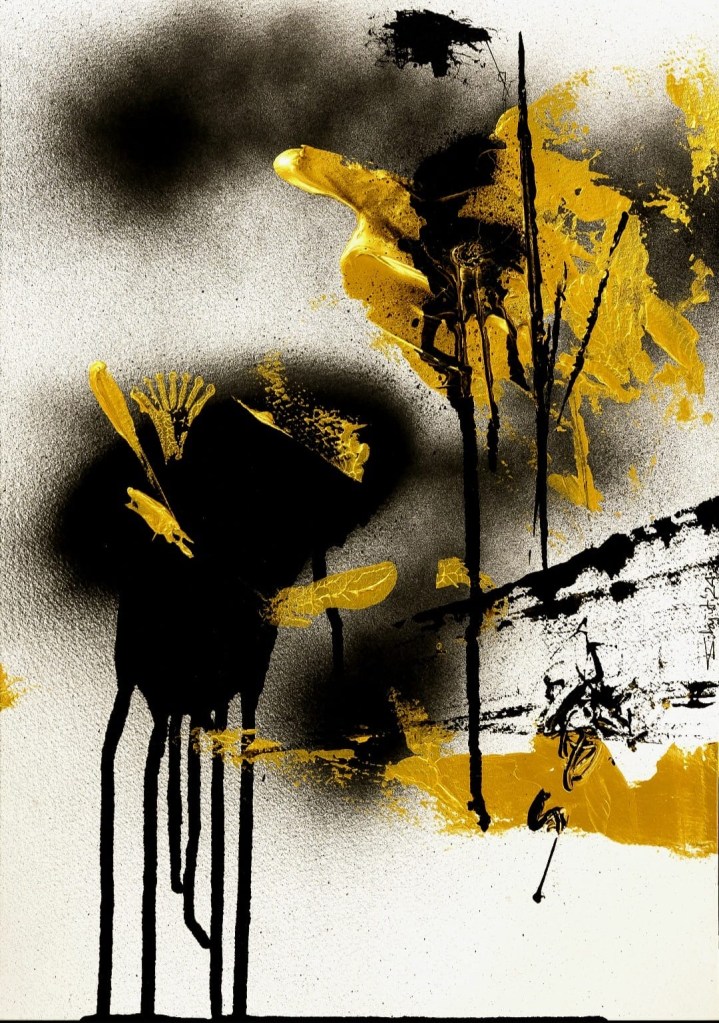
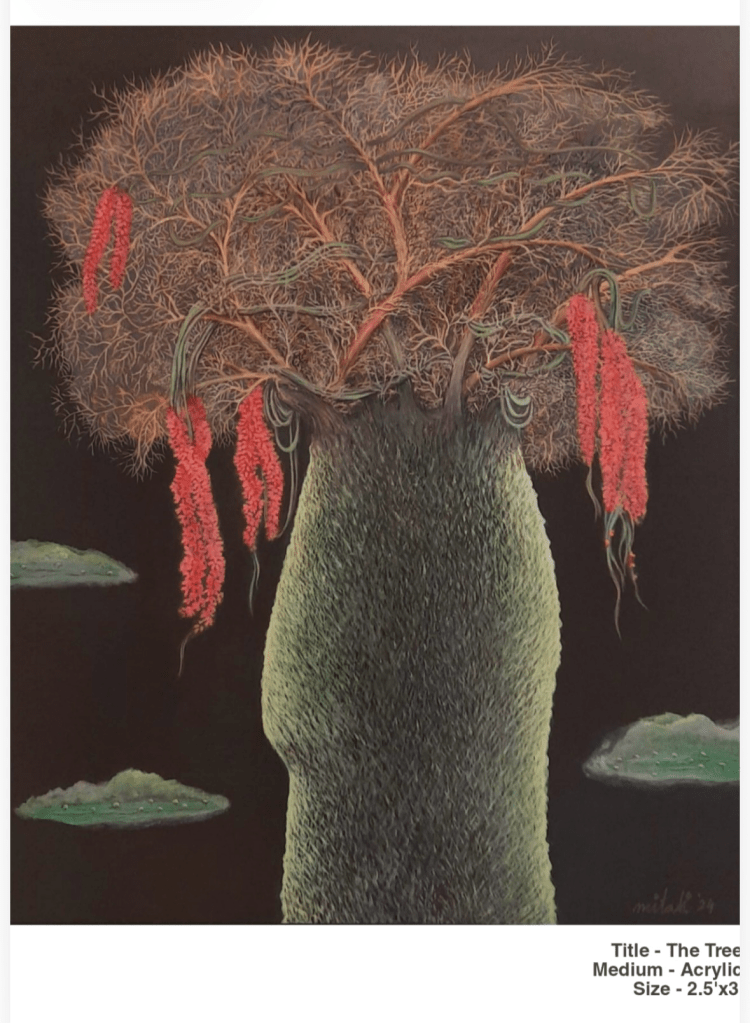
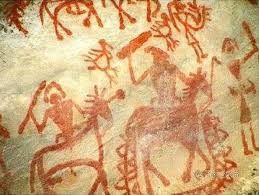
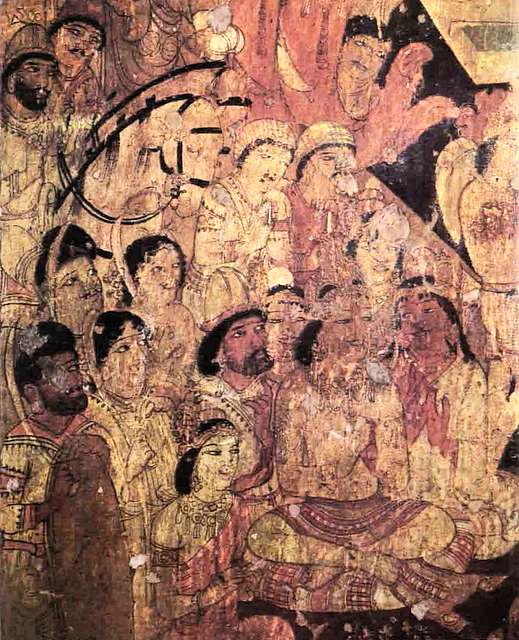
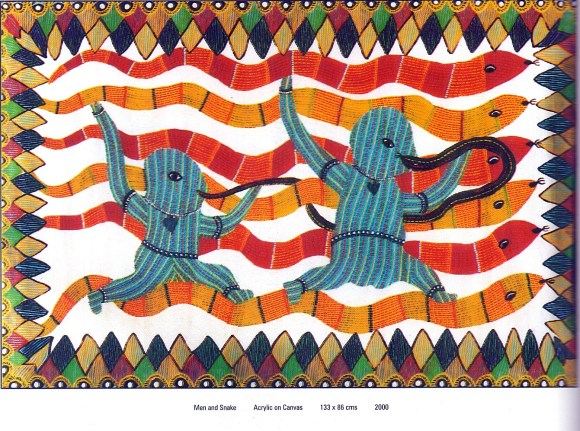
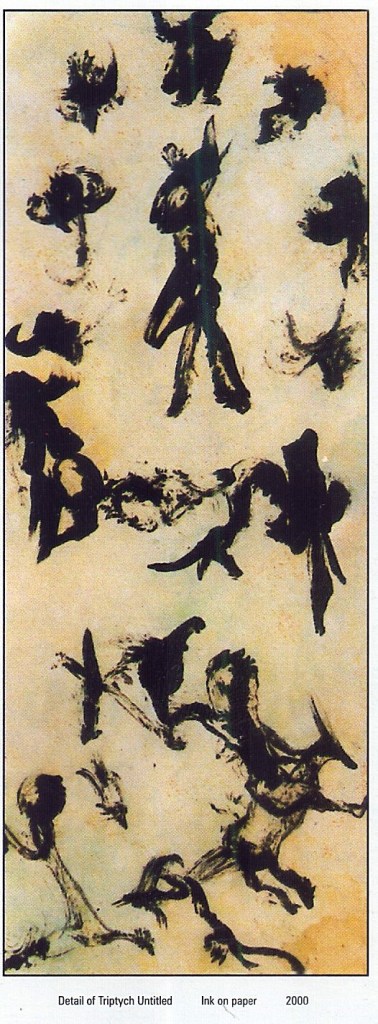
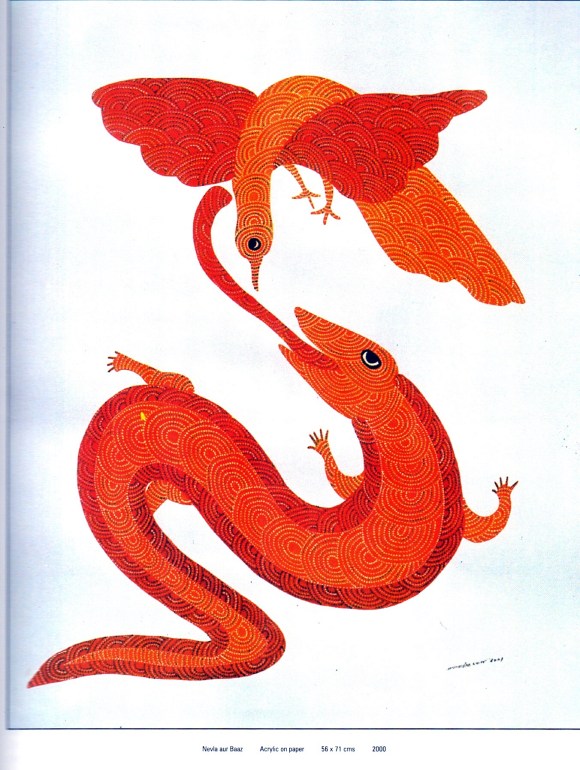
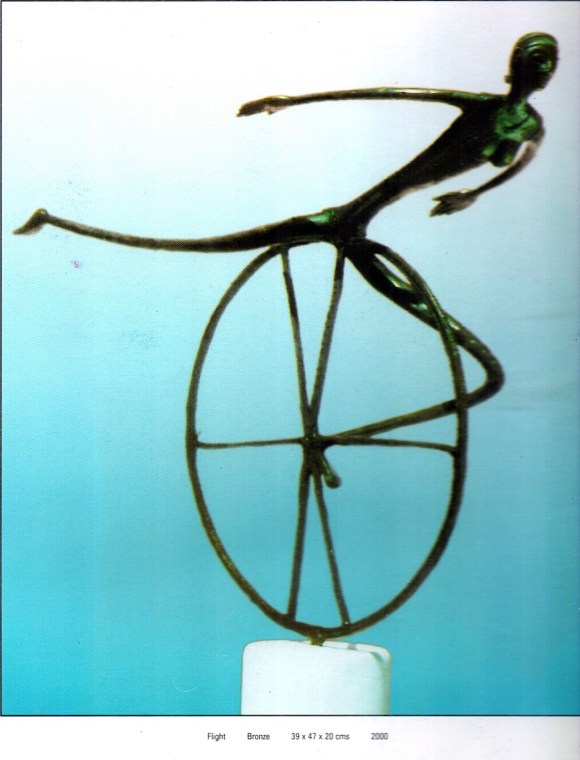
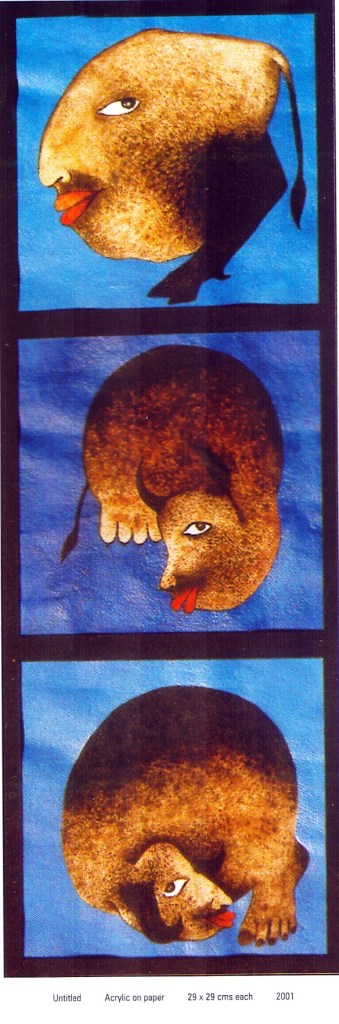

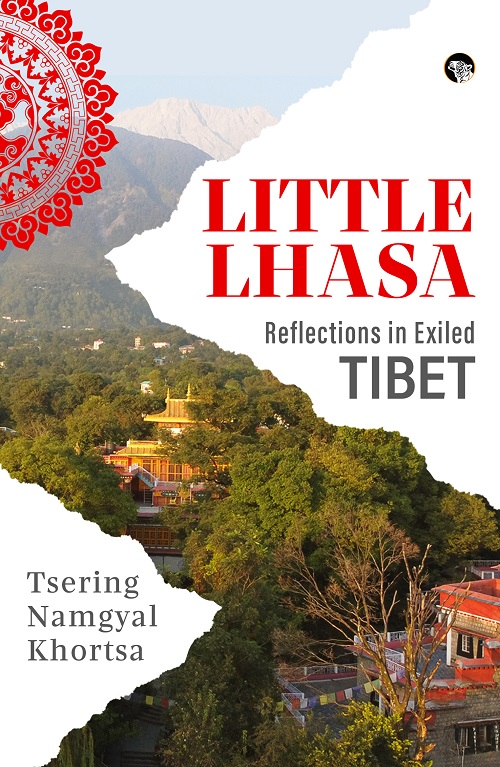
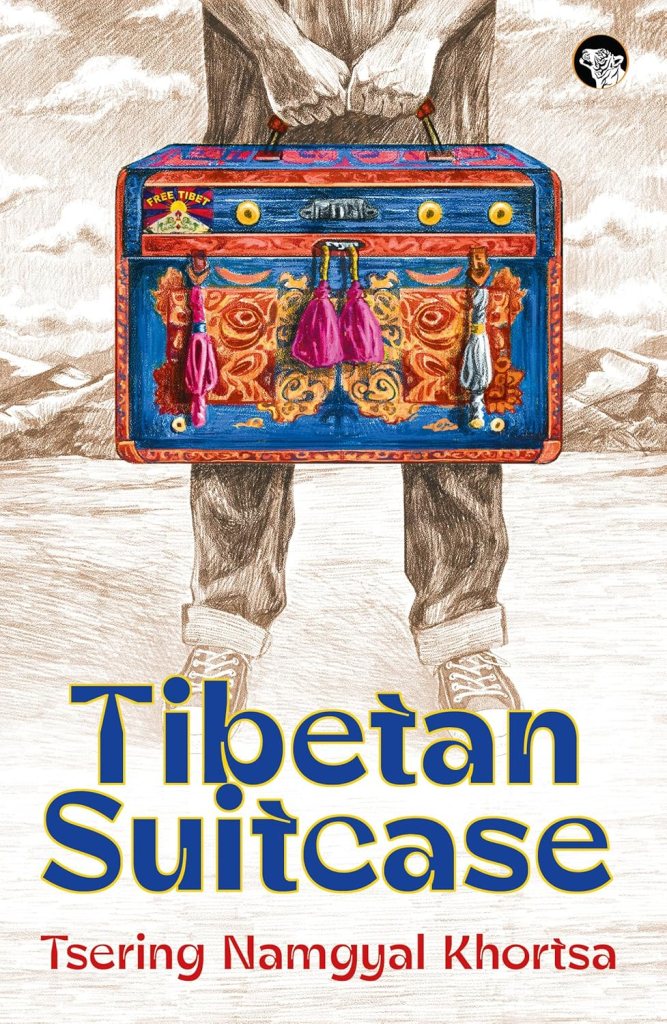
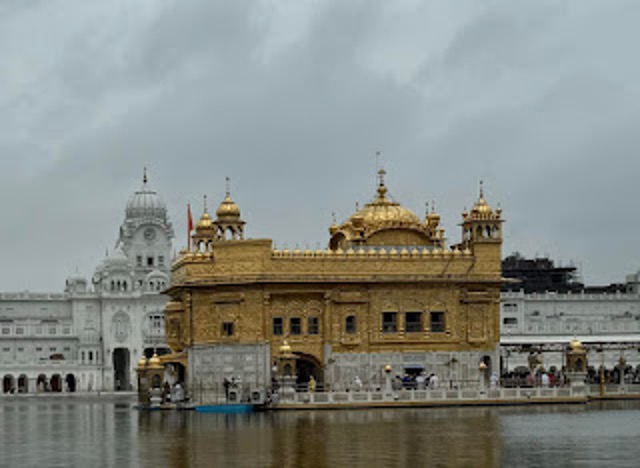
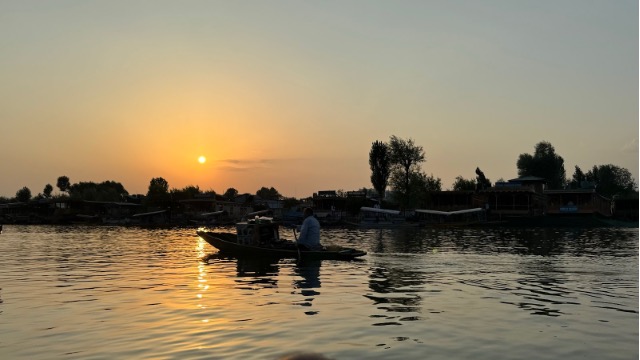
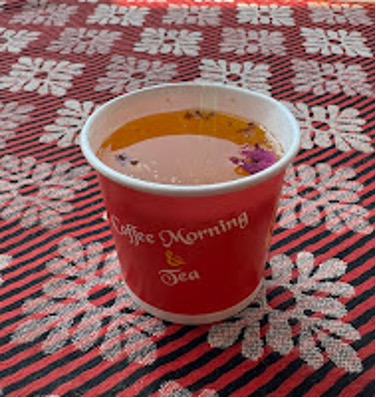
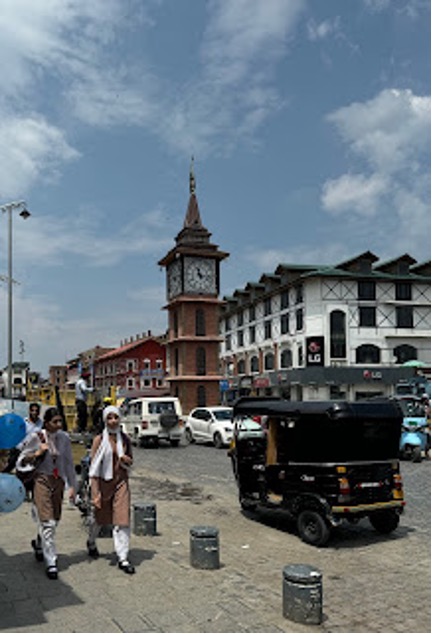
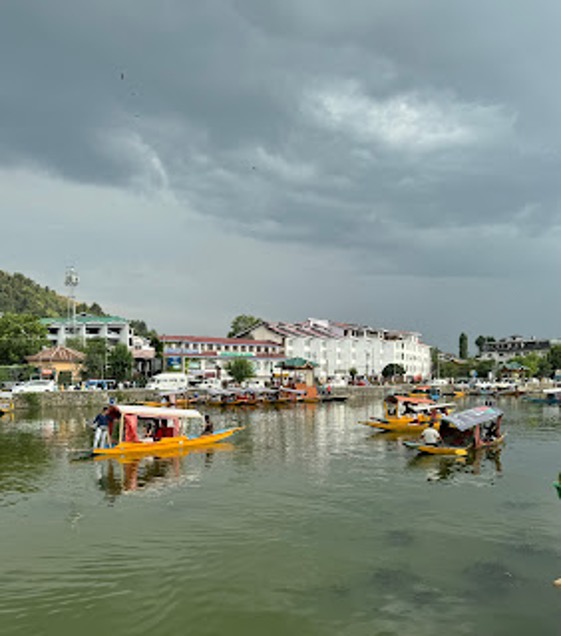
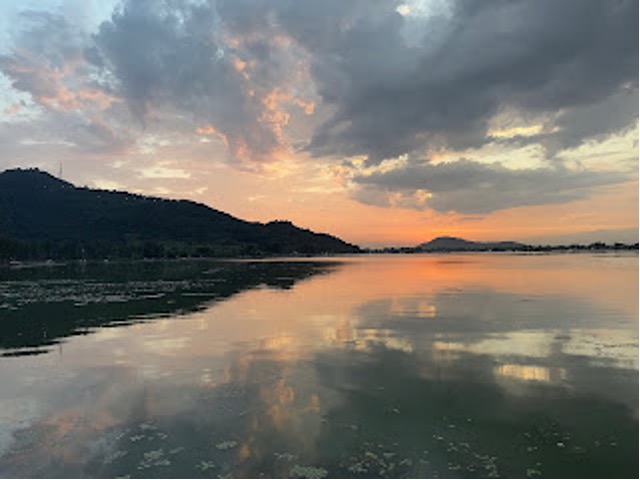
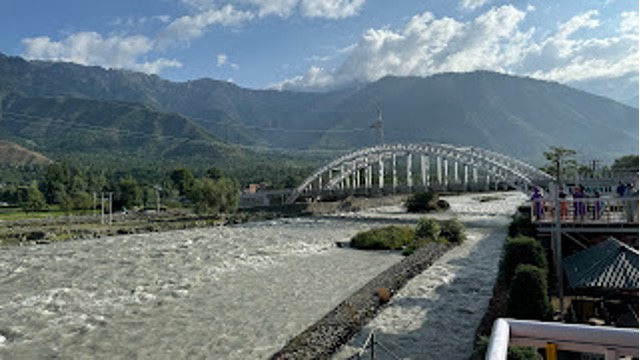
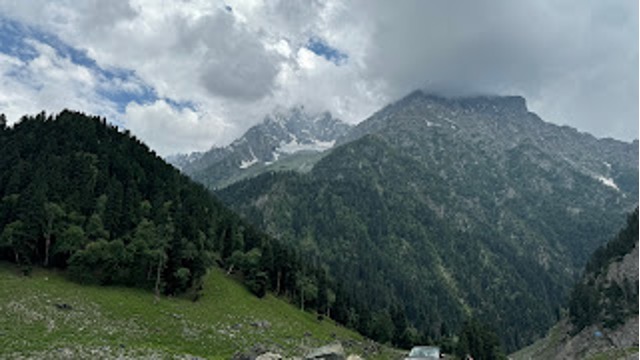
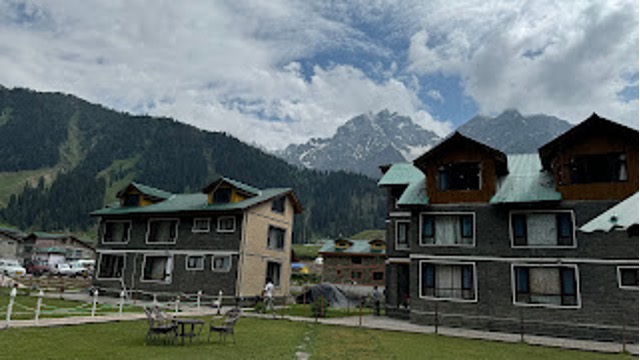
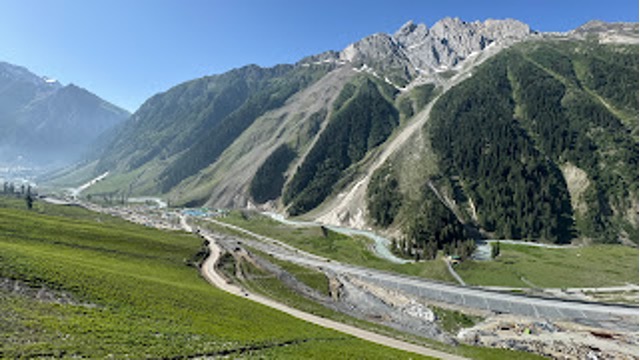
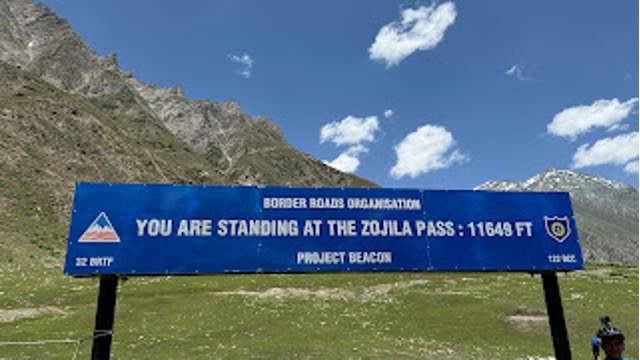
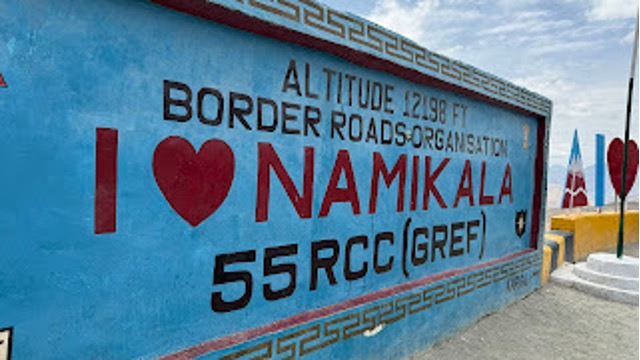
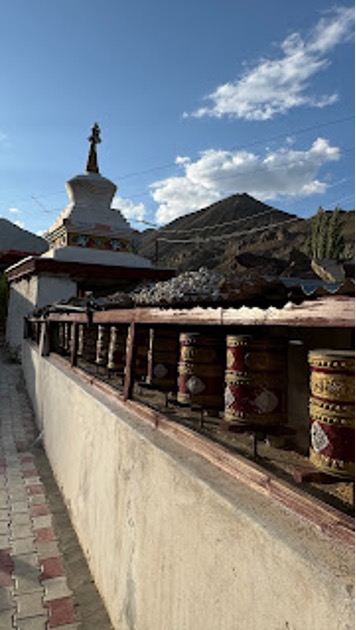
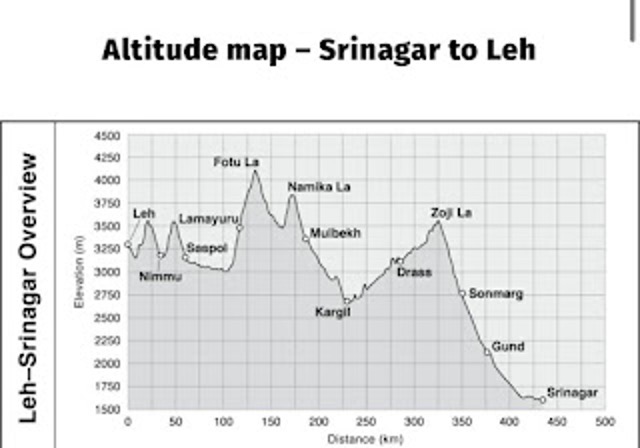
 Borderless