Categories
Interview Review

The Gendered Body

In conversation with Meenakshi Malhotra and a brief introduction to The Gendered Body: Negotiation, Resistance, Struggle (Scopus Index), edited by Meenakshi Malhotra, Krishna Menon and Rachana Johri, published by Routledge

Why would one half of the world population be seen as evolved from the rib of the first man, soulless or as merely subservient to fulfil the needs of the other half? This is a question that has throbbed for centuries in the hearts of that half that suffers indignities to this date, women. While feminism became a formalised idea only in the 18th-19th century and things started improving for certain groups of women around the world, in some regions, like Afghanistan, the situation has deteriorated in recent years. Their government, recognised by world leadership, has ensured that women do not have schooling, cannot work in senior positions, have to be accompanied by men if they go out and remain covered as the feminine body could tempt bringing shame, strangely, to the female but not to the man who has the right to be tempted and hence to violence and violate her body and her mind.

Given this ambience, any literature voicing protest for patriarchal mindsets that accept situations like in current day Afghanistan passively, should be celebrated as an attempt to shard the silence of suffering by one half of the world population. The Gendered Body: Negotiation, Resistance, Struggle, edited by three academics, Meenakshi Malhotra, Krishna Menon and Rachana Johri, does just that. At the start, we are told: “This book situates the discourse on the gendered body within the rapidly transitioning South Asian socio-economic and cultural landscape.  It critically analyzes gender politics from different disciplinary perspectives…”

Featuring 22 writers, the narratives take up a range of issues faced by women in Pakistan, India, Bangladesh and Srilanka. The Pakistani implementation of Islamic law, under the Hudood ordinances, has been addressed in a powerful essay by Aysha Baqir, subsequently by Anu Aneja, in her discourse on Urdu poetry. It was interesting to read how the ghazal form started as a male-only art form where women were depicted as mysterious houris or pining with sadness. Birangona — a phrase that was given to rape victims of the 1971 Bangladesh Liberation War — has been explored by Sohana Manzoor through a classic, Rizia Rahman’s novel, Rokter Okshor[1](1978), written about such women driven to prostitution. Women’s voices in the Sri Lankan LTTE have been explored by Simran Chaddha. Nayema Nasir has taken up decadent customs in the progressive Bohra community in Mumbai and shown how things are moving towards a change. Colonial and Dalit voices have found a hearing in Malhotra’s essay on Mahasweta Devi’s short story, ‘Draupadi’, set against the Naxalite movement of 1970s.

Dotted with women’s responses to a variety of current issues, including the Anti-CAA-NRC uprisings (Tamanna Basu), Shaheen Bagh (Meenakshi Gopinath, Krishna Menon, Rukmini Sen and Niharika Banerjea), and the pandemic (Krishna Menon, Deepti Sachdev and Rukmini Sen), there is even a case study by Shalini Masih dealing with psychiatric trauma where both the psychiatrist and the patient, who might have evolved into a stalker or a rapist without the therapy, heal. A certain sense of hope echoes through some of these narratives, a hope to heal from wounds that have sweltered over eons.

The flow of words is smooth and the ideas should be able to rise against the tide of erudition to touch our lives with lived realities. There are responses that transcend the heaviness of academic writing for instance the impassioned start made by Giti Chandra in her narrative: “A woman’s body is a story that men tell each other. When it is full-hipped, it is a tale of their healthy children; when it is fair, it speaks of their wealth; when it is narrow, it proclaims their access to gyms; and when it is tanned, it flaunts their ability to vacation on sunny isles. If its feet are not small enough to convey a leisure that does not require walking, they are bound and made smaller and more childishly submissive; if its legs are not long enough befitting its trophy status, bone-crippling heels are added to them. When it is raped it is an assertion of power, a chest-thumping; when it is raped it is an aggression over its owner; when it is raped its womb is stolen from the enemy…” Chandra points out some things that make one think, like quoting Rahila Gupta, she suggests victims is not the word we should use for women, but we should refer to the sufferers as survivors.

This collection of essays questions social norms and niceties to realise what early woman’s rights activist, Elizabeth Cady Stanton, drafted, that “all men and women [had been] created equal” in July 1848. While the struggle continues through centuries and the discourse of these narratives, the last essay by a man, Brijesh Rana, attempts to give a broader and more inclusive outlook to the whole human body. The book comes across as a tryst — of academic and feminist voices — to speak up for mankind to equalise.

To further understand the intent and scope of this book, we have in conversation one of the editors— Meenakshi Malhotra, who teaches gender studies and literature, has to her credit two Charles Wallace fellowships and a number of books. She reflects on the bridge that is being attempted between scholarship and activism.

How and when did you conceive this book? Tell us a bit about your journey from the conception to the publication of the book.

This book was originally conceived due to the positive response my co-editors and I received after presenting a panel at an American Association of Asian studies (AAS) conference back in 2017. We were approached by an international publisher who encouraged us to take forward the work with a focus on South Asia. We were unable to take it forward at that time, however we revived the project a few months into the lockdown in late 2020 when we felt we had a little more time. Also, along the way, we were able to reach out to fellow travellers, working in and on Pakistan, Bangladesh and Sri Lanka.

Three of you have collaborated to compile and edit this book. Collaborations to bring out books are not easy. Tell us about this collaboration.

As we three had presented on the same panel, the collaboration was a natural corollary since we had a sense of being fellow travellers and sister academics/scholars. That worked well for us because each of us were engaged in research and research guidance and wanted to showcase the recent work in this area. Both the co-editors, Krishna working on gender and its intersections with politics and Rachna on gender and psychology are very well-established scholars in the field of gender. I work on gender and literature, had my own network and I must mention that in the course of writing for Borderless Journal, I was able to access the work of others on that platform.

Explain to us the significance of the title of your book.

I think we arrived at the title through two processes-one was the immediate situation of Covid which left us in a state of precarity. However, we felt that even within the context of the contagion, women — and other genders — were endangered in specific ways. Second is the understanding that the body is always already produced by multiple matrices of gender, race, caste etc. The human body is also always a gendered body.

We had initially suggested that we call it ‘The Gendered Body and its Fragments’ to connote the bundling of several discursive strands on gendered bodies, but the idea was vetoed (by the initial reviewer) since “fragments” had   resonances and nuances which we did not have space (or expertise) to go into, at that point.

You have a variety of contributors, some of who are non- academic. What did you look for when you chose your content?

Variety as you point out, is the key term. We were looking for something new, something interesting, flagging the variegated cultures of South Asian societies. The book comprises a mix of experienced researchers and some researchers whose essays are their preliminary forays into publishing.

Your book is divided into different sections ‘Negotiation’, ‘Struggle’, ‘Resistance’, ‘Protest’, ‘Critique’, ‘Representations and New Directions’. Can you tell us the need to compartmentalise the essays into this structural frame?

Just to give it a structure, organisation and coherence. Having said that, there are also frequent overlaps.

Would you call this book feminist? Feminism is as such a human construct. Why would this construct be essential for treating people equally? What is the need for feminism?

It is feminist in its orientation to the research areas as well as its methodologies. The key concept here is collaboration and therefore we have two conversation as an expression of feminist epistemology or knowledge-making.

Feminism, like other modes of affirmative action — like reservations, quotas — are an attempt to create a level playing field for historically disprivileged groups  and oppressed minorities.

Having said that, I/we would like to point out that feminism has become inclusive and an umbrella term that also includes the work on masculinities and trans-identities since the 1990s.

Isn’t feminism the forte of only women?

Not at all and that is why we have the term feminisms. We hope to do more work subsequently on masculinities, on trans bodies in the future.

You have 21 women writers who write of women’s issues. Yet the last is an essay by a man — not on feminist issues— but more to create a sense of inclusivity, if I am not wrong. Why did you feel the need for this essay?

It is not so much about women’s issues as much as about gendered bodies in contemporary South Asia, about identities, subjectivities, bodies in motion gearing up for political action(the conversation and the essay on campus movements are instances).

Also, the last essay which articulates a post-humanist perspective, I felt, would take us beyond the materialities of gendered bodies and flag the way recent research/scholarship has looked at the Anthropocene. It was attempting to give a meta perspective, to bring in a way of seeing, which probably will have an impact on how we understand and conceptualise human bodies.

Your book blurb says: “Topical and comprehensive, this book will be useful for scholars and researchers of gender studies, sociology, political sociology, social anthropology, cultural studies, post-colonial studies and South Asian studies.” Why would you limit the scope of your book when you have some essays that should be read by many and are like eye openers, like the ones on Hudood, Birangonas, Bohras, even your own on ‘Draupadi’ and more?

I think Routledge as an academic publisher, probably does this routinely, to highlight the academic terrain any new book covers.

Having said that, we would definitely want the book to be of general interest. Some of the essays discussed issues which were possibly eye-openers for us as well.

What is the difference between academic writing and non-academic writing? You do both, I know.

Academic writing has often a thesis and an argument underpinning it, which is not to say that non-academic writing — especially the essay — cannot have them.

Also, many of the essays were based on student papers/MPhil and even PhD dissertations. The panel we were a part of was an academic conference on South Asian studies.

Would this book be classified as women’s writing as majority of the writers are women and have written on women’s issues… and yet there is a man? Is it necessary to have such classifications? Would it rule out male readers?

Not at all to every question. It just happens that many of our contributors are women, but I would like to dispel the idea that “gender” is about women only. It is about boxes, stereotypes and role-based expectations, which are to be questioned. 

Thanks for giving us a powerful book and your time.

[1] Words of Blood

(The online interview has been conducted through emails and the review written by Mitali Chakravarty.)

PLEASE NOTE: ARTICLES CAN ONLY BE REPRODUCED IN OTHER SITES WITH DUE ACKNOWLEDGEMENT TO BORDERLESS JOURNAL. 

Click here to access the Borderless anthology, Monalisa No Longer Smiles

Click here to access Monalisa No Longer Smiles on Kindle Amazon International
Categories
Contents

Borderless August 2023

Art by Sohana Manzoor

Editorial

Other Echoes in the Garden… Click here to read.

Interviews

Ujjal Dosanjh, former Minister from Canada and former Premier of British Columbia, discusses his autobiography, Journey After Midnight – A Punjabi Life: From India to Canada, and the need for a world with less borders. Click here to read.

Professor Fakrul Alam discusses his new book of Tagore translations, Gitabitan: Selected Song-Lyrics of Rabindranath Tagore. Click here to read.

Translations

Tagore’s Musalmanir Galpa (A Muslim Woman’s Story) has been translated from Bengali by Aruna Chakravarti. Click here to read.

Masud Khan’s poem, In Another Galaxy, has been translated from Bengali by Professor Fakrul Alam. Click here to read.

Wakeful Stays the Door, a poem by Munir Momin, has been translated from Balochi by Fazal Baloch. Click here to read.

Dangerous Coexistence, written in Korean and translated by Ilhwah Choi. Click here to read.

Proshno or Questions by Tagore has been translated by Mitali Chakravarty. Click here to read.

Pandies Corner

Songs of Freedom: An Ordinary Tale is a narrative by Nandani based on her own experiences, translated from Hindustani by Janees. These narrations highlight the ongoing struggle against debilitating rigid boundaries drawn by societal norms, with the support from organisations like Shaktishalini and Pandies. Click here to read.

Poetry

Click on the names to read the poems

Jared Carter, Rhys Hughes, Malachi Edwin Vethamani, Luis Cuauhtémoc Berriozábal, Saranyan BV, Ryan Quinn Flanagan, A Jessie Michael, Jahnavi Gogoi, George Freek, Koushiki Dasgupta Chaudhuri, David Francis, Akil Contractor, Michael Burch

Poets, Poetry & Rhys Hughes

In An Experiment with Automatic Poetic Translation, Rhys Hughes auto translates an English poem sequentially through 28 languages and then back to English with hilarious results. Click here to read.

Musings/ Slices from Life

Mister, They’re Coming Anyway

Timothy Jay Smith writes on the refugee crisis in Lesbos Island, Greece with photographs by Michael Honegger. Click here to read.

Migrating to Myself from Kolkata to Singapore

Asad Latif explores selfhood in context of diverse geographies. Click here to read.

Islands that Belong to the Seas

Paul Mirabile muses on how humans are like migrants on islands borrowed from the seas. Click here to read.

Of Dreams, Eagles and Lost Children

Aysha Baqir muses on the narrow, closed borders that condemn children. Click here to read.

Mushroom Clouds and Movies: Response from a Hibakusha’s Daughter

Kathleen Burkinshaw discusses Oppenhiemer the movie. Click here to read.

Sleepless in the High Desert, Slumber in the Sierra

Meredith Stephens covers Nevada to Columbia in a car with her camera. Click here to read.

My Hostel Days

Ravi Shankar reminisces on bygone days. Click here to read.

Musings of a Copywriter

In The Amateur Professional, Devraj Singh Kalsi writes of a amateur who thought of himself as a professional. Click here to read.

Notes from Japan

In How I Wound Up in Japan, Suzanne gives her story as an immigrant. Click here to read.

Essays

A Different Persuasion: On Jane Austen’s Novels & their Adaptations

Deepa Onkar delves into the world of Jane Austen books and films. Click here to read.

A Foray into Andamans

Mohul Bhowmik explores Andaman with a camera and narrative. Click here to read.

Bhaskar’s Corner

In Chittaranjan Das: A Centenary Tribute, Bhaskar Parichha discusses the life of one of the most legendary Odia writers. Click here to read.

Stories

Belacan

Farouk Gulsara shares a story based on the life of a migrant in 1950s. Click here to read.

The Japanese Maple

Shivani Shrivastav weaves a story of friendship and loneliness among migrants. Click here to read.

The Coin

Khayma Balakrishnan explores human and supernatural interactions in a school setting in Malaysia. Click here to read.

The Vagrant

Reeti Jamil narrates a strange tale set in a village and told by a farmer. Click here to read.

Book Excerpts

An excerpt from Ujjal Dosanjh’s Journey After Midnight: A Punjabi Life from Canada to India. Click here to read.

An excerpt from Roses in the Fire of Spring: Better Roses for a Warming World and Other Garden Adventures, by M.S. Viraraghavan and Girija Viraraghavan. Click here to read.

Book Reviews

Somdatta Mandal reviews Amitav Ghosh’s Smoke and Ashes: A Writer’s Journey Through Opium’s Hidden Histories. Click here to read.

Basudhara Roy reviews Greening the Earth: A Global Anthology of Poetry, edited by K. Satchidanandan & Nishi Chawla. Click here to read.

Bhaskar Parichha reviews Arunava Sinha’s The Greatest Indian Stories Ever Told: Fifty Masterpieces from the Nineteenth Century to the Present. Click here to read.

.

Click here to access the Borderless anthology, Monalisa No Longer Smiles

Click here to access Monalisa No Longer Smiles on Kindle Amazon International
Categories
Editorial

Other Echoes in the Garden…

“Other echoes
Inhabit the garden. Shall we follow?
Quick, said the bird, find them, find them…”

— TS Eliot, ‘Four Quartets: Burnt Norton’(1936)

Humans have always been dreamers, ideators and adventurers.

Otherwise, could we have come this far? From trees to caves to complex countries and now perhaps, an attempt to reach out towards outer space for an alternative biome as exploring water, in light of the recent disaster of the Titan, is likely to be tougher than we imagined. In our attempt to survive, to live well by creating imagined constructs, some fabrications backfired. Possibly because, as George Orwell observed with such precision in Animal Farm, some perceived themselves as “more equal”. Of course, his was an animal allegory and we are humans. How different are we from our brethren species on this beautiful planet, which can survive even without us? But can humanity survive without Earth? In science fiction, we have even explored that possibility and found home among stars with the Earth becoming uninhabitable for man. However, humanity as it stands of now, continues to need Earth. To live amicably on the planet in harmony with nature and all the species, including our own, we need to reimagine certain constructs which worked for us in the past but seem to have become divisive and destructive at this point.

Ujjal Dosanjh, former Minister in the Canadian cabinet and former Premier of British Columbia, in his autobiography, Journey After Midnight – A Punjabi Life: From India to Canada, talks of regionalism as an alternative to narrow divisive constructs that terrorise and hurt others. He writes in his book: “If humanity isn’t going to drown in the chaos of its own creation, the leading nations of the world will have to create a new world order, which may involve fewer international boundaries.” We have a candid conversation with him about his beliefs and also a powerful excerpt from his autobiography.

An interview with Professor Fakrul Alam takes us into Tagore’s imagined world. He discussed his new book of Tagore translations, Gitabitan: Selected Song-Lyrics of Rabindranath Tagore. He has brought out a collection of 300 songs translated to English. In a bid to emphasise an inclusive world, we also have a translation of Tagore’s ‘Musalmanir Galpa’ (A Muslim Woman’s Story) by Aruna Chakravarti. A transcreation of his poem, called ‘Proshno or Questions’ poses difficult challenges for humanity to move towards a more inclusive world. Our translation by Ihlwha Choi of his own Korean poem to English also touches on his visit to the polymath’s construct in the real world, Santiniketan. All of these centring around Tagore go to commemorate the month in which he breathed his last, August. Professor Alam has also translated a poem from Bengali by Masud Khan that has futuristic overtones and builds on our imagined constructs. From Fazal Baloch we have a Balochi translation of a beautiful, almost a surrealistic poem by Munir Momin.

The poetry selections start with a poem on ‘Wyvern’, an imagined dragon, by Jared Carter. And moves on to the plight of refugees by Michael Burch, A Jessie Michael, and on migrants by Malachi Edwin Vethamani. Ryan Quinn Flanagan has poetry that suggests the plight of refugees at a metaphorical level. Vibrant sprays of colours are brought into this section by Luis Cuauhtémoc Berriozábal, Saranyan BV, Jahnavi Gogoi, George Freek and many more. Rhys Hughes brings in a spot of humour with his mountainous poetry (literally) and a lot of laughter with his or rather Google’s attempt at automatic translation of a poem. Devraj Singh Kalsi has shared a tongue in cheek story about an ‘amateur professional’ — rather a dichotomy.

We travel to Andaman with Mohul Bhowmick and further into Sierra with Meredith Stephens. Ravi Shankar travels back in nostalgia to his hostel and Kathleen Burkinshaw dives into the past — discussing and responding to the media presentation of an event that left her family scarred for life, the atomic holocaust of 1945 in Japan. This was a global event more than seven decades ago that created refugees among the survivors whose homes had been permanently destroyed. Perhaps, their stories are horrific, and heart wrenching like the ones told by those who suffered from the Partition of India and Pakistan, a divide that is celebrated by Independence Days for the two nations based on a legacy of rifts created by the colonials and perpetrated to this day by powerbrokers. Aysha Baqir has written of the wounds suffered by the people with the governance gone awry. Some of the people she writes of would have been refugees and migrants too.

A poignant narrative about refugees who flock to the Greek island of Lesbos by Timothy Jay Smith with photographs by Michael Honegger, both of whom served at the shelters homing the displaced persons, cries out to halt wars and conflicts that displace them. We have multiple narratives of migrants in this issue, with powerful autobiographical stories told by Asad Latif and Suzanne Kamata. Paul Mirabile touches on how humans have adopted islands by borrowing them from seas… rather an unusual approach to migrations. We have an essay on Jane Austen by Deepa Onkar and a centenary tribute to Chittaranjan Das by Bhaskar Parichha.

The theme of migrants is echoed in stories by Farouk Gulsara and Shivani Shrivastav. Young Nandani has given an autobiographical story, translated from Hindustani to English by Janees, in which a migration out of various homes has shredded her family to bits — a narrative tucked in Pandies Corner.  Strange twists of the supernatural are woven into fiction by Khayma Balakrishnan and Reeti Jamil.

In reviews, Parichha has explored Arunava Sinha’s The Greatest Indian Stories Ever Told: Fifty Masterpieces from the Nineteenth Century to the Present. Somdatta Mandal’s review of Amitav Ghosh’s Smoke and Ashes: A Writer’s Journey Through Opium’s Hidden Histories seems to be an expose on how historical facts can be rewritten to suit different perceptions and Basudhara Roy has discussed the Greening the Earth: A Global Anthology of Poetry, edited by K. Satchidanandan and Nishi Chawla.

There is more wonderful content. Pop by our August’s bumper edition to take a look.

I would like to give my grateful thanks to our wonderful team at Borderless, especially to Sohana Manzoor for her fabulous artwork. Huge thanks to all our gifted contributors and our loyal readers. Borderless exists today because of all of you are making an attempt to bringing narratives that build bridges, bringing to mind Lennon’s visionary lyrics:

You may say I'm a dreamer
But I'm not the only one
I hope someday you'll join us
And the world will live as one

Thank you for joining us at Borderless Journal.

Have a wonderful month!

Mitali Chakravarty

borderlessjournal.com

.

Visit the August edition’s content page by clicking here

READ THE LATEST UPDATES ON THE FIRST BORDERLESS ANTHOLOGY, MONALISA NO LONGER SMILES, BY CLICKING ON THIS LINK.

Categories
Musings

Of Dreams, Eagles and Lost Children

By Aysha Baqir

Conceived in the twilight dreams of poets, philosophers, and political activists, you blazed in the dulled and drugged minds of millions caged and enslaved in the divided and ruled subcontinent. Inspired by the Divine word, Iqbal sought your freedom in his poetry and prose, and likened you to the Shaheen— the king of birds– and exhorted you to soar to freedom. He died nine years before your birth, but his figurative verses, by design or fate, fashioned you into the shape of the sublime and magnificent eagle.

Today, perched on the peak of the Arabian Ocean, you struggle to soar. Designed to defend and fortify your power, your predatory hand claws fetter and numb your mind and movement. You stretch your neck towards the east and tilt your hooked head. Your forward-pointing eyes boasting of binocular vision are fixed towards the rising sun for a glorious future, but you are blinded by fear and greed. Your blood vessels pulses with power and rhythm but you hunch, clench your long spiked wings, unable to spread them, stroke the wind, and take your place in the skies. Immobile and unable to nurture, you attack your own — the most vulnerable and the weakest.

Agreed that your birth, doctored by a misguided and designated cartographer, was both cruel and chaotic[1] The impatient foreigner, recklessly ignoring centuries of daily human connection, the age-old water ways, and land markings, fleshed you out from outdated maps and census reports. Fearing a dangerous rebellion that brewed in the burning summer and desperate to flee the threatening chaos, the imported white-man culled and cut the eight hundred thousand square kilometres of you in thirty-six days. You burst on the world map in the muggy, sweat-drenched August of 1947, soaked in blood and roughly clumped in the likeness of Iqbal’s eagle.

But with creation, there is demise – and your birth slit a wound that festered a carnage. Within days, unprecedented violence tore neighbourhoods and communities apart. Friends-turned-foes, looted, plundered, burnt down villages and raped and hacked thousands of innocent women and children to death. Lit by the hope to reach their new homeland, fifteen million Hindus, Muslims, and Sikhs, fled across the jagged border, but two million succumbed to death. Traumatised by your birth, you continue to kill and slaughter. Seventy-six years later, you deceive and double cross your ‘wajood ki wajah,’ your reason for existence, and with it, the spirit of your independence, idealism, and self-actualization.

Trapped in mnemophobia of suppression, you deny and desecrate the creed that your founder, Mohammad Ali Jinnah gifted you, i.e., the land and its freedom. “You are free to go to your temples, you are free to go to your mosques or any other place of worship in this State of Pakistan. You may belong to any religion or caste or creed, that has nothing to do with the business of State.”[2] Did Jinnah fight for your independence to lose you to your fanatical oppression of others? Did God gift you the cradle of fertile plains, the vast web of waterways, fortress-like mountains, havens of harbours, and mines of minerals so you could abuse your own?

In the wild, your namesake, the king of birds, knows better than to turn on its young. Driven by an intrinsic parental instinct, it patches a nest high in the branches and cliffs, secure from the sight of predators. Both parents, in turn, incubate the eggs until they hatch, nest their eaglets, spread their wings to protect them from cold and heat, and tear off the hunted meat to hold it close to the beaks of their young. In face of approaching danger, the male and female defend their young aggressively. They nurture their eaglets for weeks, teaching them to hunt and survive until the little ones can fly off to seek their food and future.

A parent to over ninety-five million children, how do you compare? Millions of your young ones live and work on the streets every day. They feed off garbage dumps and stray barefoot and in rags, unprotected from the onslaught of the harsh climate and the criminals, while you guard your pastures of livestock, fields of crops, and fruit-filled orchards. Yet, you choose not to feed your children – and only a chilling low of 3.6 per cent, aged six to twenty-three months, consume a minimum acceptable diet[3]

Abused and violated every day, the children are forced into selling drugs, prostitution, and trafficking, and many succumb to accidents or fatal diseases. More than half a million of your children are raped, assaulted and killed in one year – not by anyone else, but by you[4]. Over half of the little ones do not have access to health, hygiene, clean water, food, and more than forty million minds wither out of school[5]. When they turn into criminals you blame them for their condition. You hoard your wealth inside mansions, factories, banks and vaults outside the country and shackle millions of your children to hard, gruelling and unpaid labour. There are no laws enforced to protect the children, and according to leading experts an “eighty-eight per cent are subjected to violence and physical abuse within their homes regularly”[6]. After the catastrophic floods that ravaged your lands last year, more than four million of your children continue to drink the contaminated and stagnant waters[7].

You make laws to break them, sign treaties, pacts, and MOUs to betray them, print signs, banners, and pamphlets to tear them, and host meetings, dialogues and conferences to applaud your resounding lies while a frightening number of your children perish every day[8]. Is your independence a construct of borders and boundaries to keep others out, while you molest your own? Is your independence a construct to suppress, violate, and annihilate the weakest? Is your independence a construct to kill your children? If independence profits and feeds off the flesh of others, it is only a fool’s fabrication. Like a chain, a nation is only as strong as its weakest link. When you celebrate your independence, remember that you are only as strong as your weakest – the  malnourished and uneducated — forty-five percent of you. Thousands of your children will sleep shivering and starving tonight and some will not open their eyes tomorrow. One day you might not too. 

[1] https://www.telegraphindia.com/culture/a-sloppy-surgery-how-cyril-radcliffe-carved-the-indian-subcontinent/cid/1697854

[2] Presidential Address to the Constituent Assembly of Pakistan 11 August 1947. https://pakistan.gov.pk/Quaid/quotes_page2.html

[3] https://www.unicef.org/media/136311/file/Pakistan-2022-COAR.pdf

[4] https://www.thenews.com.pk/print/1005427-over-half-a-million-children-raped-in-pakistan-annually-but-most-cases-go-unnoticed-experts

[5] https://www.unicef.org/media/136311/file/Pakistan-2022-COAR.pdf

[6] https://www.thenews.com.pk/print/1005427-over-half-a-million-children-raped-in-pakistan-annually-but-most-cases-go-unnoticed-experts

[7] https://reliefweb.int/report/pakistan/4-million-children-pakistan-still-living-next-stagnant-and-contaminated-floodwater

[8] https://tribune.com.pk/story/2407303/child-sexual-abuse-up-by-33-in-2022-report

Aysha Baqir is an author and activist on a mission. She founded a pioneering not for profit economic development organization, Kaarvan Crafts Foundation, in 2004 to alleviate poverty.  Her novel Beyond the Fields was published in January 2019 in Singapore and 2022 in Pakistan and shortlisted for best-Debut English at the 9th UBL Literary Awards. She is an Ashoka Fellow and recipient of Vice Chancellor’s Alumni Achievement Award from LUMS. She is working on her second project.

www.ayshabaqir.com

.

PLEASE NOTE: ARTICLES CAN ONLY BE REPRODUCED IN OTHER SITES WITH DUE ACKNOWLEDGEMENT TO BORDERLESS JOURNAL

Click here to access the Borderless anthology, Monalisa No Longer Smiles

Click here to access Monalisa No Longer Smiles on Kindle Amazon International

Categories
Independence Day

Of Midnight’s Children and their Compatriots… 

At the stroke of midnight, on 14th-15th August, 1947, the colonials handed the Indian subcontinent back to the indigenous population — but they did not leave it as they had found it. They made changes: some reforms and alterations, like the introduction of railways  helped the subcontinent move towards a better future once the  plundering of raw materials and the transport of British mill cloth halted. However,  the major change which continues to create conflicts in the sub-continent to date was the Partition on the basis of religions. This was initiated by the colonial  policy of divide and rule, which came into play post the revolt of 1857 and is often perpetrated still by the local inheritors of the colonies. Was it justified and does the packaging by the colonials have to be given credence so that the progeny of the ruled keep othering and thinking of differences? 

To help you find answers, we bring to you writings about the days of the Raj like Aruna Chakravarti’s The Mendicant Prince, where the colonials try to deprive a state of its rightful ruler to fill their own coffers, and Premchand’s Pus ki Raat (A Frigid Winter Night) that reflects the sorry state of peasantry under the Raj. Prince or pauper — both suffered.  Voices that pleaded for secularism, like that of Nazrul, Tagore or Gandhi remained unheard by those who drew the lines of division. Bhaskar Parichha tells us in his review: “On his way to Noakhali and in the face of the large-scale massacre, to the question ‘Will Partition Change Us Forever?’ Mahatma Gandhi replied: ‘I have seen more of history than anyone of you, and I tell you that I have known Hindu boys who called Muslims ‘uncle’. Hindus and Muslims used to participate in each other’s festivals and other auspicious occasions.’”

And perhaps this is borne out from the life of Zohra Sehgal, a legendary dancer as reflected by the essay written by Ratnottama Sengupta, based on Ritu Menon’s Zohra: A Biography in Four Acts and her own interactions with the aging performer. Along with these, we have the voices from the present like that of G Venkatesh who finds that the borders may not be what the indigenous population had wanted and Aysha Baqir’s narrative reflecting on the darker aspects of life in the sub-continent.

Poetry

Arise, Arise O Patriot! and Helmsman Attention! by Kazi Nazrul Islam have been translated from Bengali by Professor Fakrul Alam. Click here to read.

Tagore’s Song of Hope or ‘Hobe Joye‘ has been translated from Bengali by Mitali Chakravarty. Click here to read.

Prose

Pus Ki Raat or A Frigid Winter Night by Munshi Premchand has been translated from Hindi by C Christine Fair. Click here to read.

Aruna Chakravarti unfolds through the life of a prince in pre-independence era in her latest novel, The Mendicant Prince, based on the prince of Bhawal controversy in the first part of the last century. Click here to read.

Ratnottama Sengupta gives a glimpse of the life of Zohra Sehgal, based on the book Zohra: A Biography in Four Acts by Ritu Menon, and her own personal interactions with the aging Zohra Sehgal. Click here to read.

In Istanbul, G Venkatesh stops over at the airport to make a friend from the other side of the divide. Click here to read.

In I am Not the End, Aysha Baqir takes on the persona of a computer to unleash a poignant and chilling story based on the darker side of modern living. Click here to read.

Bhaskar Parichha reviews Rakesh Batabyal’s Building a Free India, dynamic speeches by freedom fighters of the last century. Click here to read.

Categories
Stories

I am Not the End

By Aysha Baqir

Courtesy: Creative Commons

Inside the ancient haveli [1]a young girl, the great granddaughter of a Mughal nobleman forced into Her Majesty’s Service, moved slowly as if she sensed my presence.

The city had fed on the foam-white sprays of the surging Himalayan waters, and swelled from the invasions and intermarriages between the Persians, the Arabs, and the Mongols. By the time the British arrived, a fortress of thick walls hid a maze of winding lanes jammed with narrow red-brick, stone, wood-worked havelis and long, deep stalls of silks, spices, silver, gold, and gems. Time pushed forward relentlessly, tides receded, wars were fought and lost, and the river shrunk and shrivelled into grey, brown sludge promising revenge. The shaded streets of the bazaars darkened and despair closed in like a swarm of locusts. The dwellers with means and motives, packed their belongings, and struck out towards concrete and glass housing schemes. Some tottered and fumbled like drunkards, unsure whether to venture out or hide within.

Every day, except Sunday, the girl woke up early for the call to prayers. She scrubbed, washed, cleansed, and dressed for her last prayer of the day. She ignored the rubbery slice of white bread and the blob of blood-red jelly on the dusty breakfast table, pocketed her mother’s medicine prescription and slipped out of the door with a backpack and a day bag. Hidden under the burqa, she walked swiftly and left the winding lanes behind in minutes. A grey car with tinted windows waited for her at the deserted crossing. She sat in the car and pulled out her phone. When she connected, I tapped into her.

Half an hour later the car stopped. The girl squinted at the tall glass tower that caught molten fire from the morning sun. She stuffed the burqa in her backpack before alighting. She wore a smart black and white suit, something she had picked out from one of the swanky mirrored shops in the mall. When she snapped a selfie, I saw and saved it.  Whatever was online, was mine.

The girl had made herself up to please. Her round hazel eyes, set off by a dark liner, glinted under the bronze shadow. Her lips were pale but glossy. Her thick straight hair brushed her shoulders. She had cleared the six-month training with the highest score. No one could tell she wasn’t a bank executive.

She climbed up the wide marble stairs and the glass door with a metal latch sprang open. She cleared the security designed to recognise her thumbprint. There was no room for breach, not in this business. She entered the massive foyer adorned with wall mirrors and glossy planters, turned left, and pressed the button down to the basement. In a few minutes, she strode down a passageway and opened another door. The dim lights and murky matting matched the nature of the business, but she would have worked here for free to hide from the changing moods and madness of the city. 

The room was mostly empty except for a few men behind the glass cabin who never left the office. She made her way to her workspace. It was bare. She had no mugs, photographs, or other belongings.  The less people knew about her the better. The only equipment that sat on her desk consisted of one dark screen and the worn out keyboard. She pulled up her chair and pressed the button.

I sprang up, awake and alert. She fed in her details and hit enter. A vibe. A buzz. The girl jumped back feeling a current, something alive that pulsed and circled her. I smiled when she frowned. She felt me. I wanted her to feel my power. Within seconds her work order popped up, generated every morning at 6 AM for the morning shift and 6 PM for the evening shift. She had a busy day. She had to cover three areas, one park, one school, and the sabzi mandi, the wholesale vegetable market.  The numbers rose and the lines of poor grew every day, and some even bribed to jump the cue. Who wanted to work when there was an easier way to make more money?

Her boss, Mr. K Shah, boasted of the brainwave he had while attending a six-week training on social entrepreneurship at a global leadership institute. Before sending him on the course, his father had urged him to make a difference to his constituency, his ancestral lands, and to uphold the honour of his ancestors, the revered Sufis who had travelled from Iran to the Subcontinent. 

Karim Saab quickly grasped that there was opportunity in the chaos that fed upon millions of poor in his country.  He discovered a win-win. For him, for his company, and the poor. In that order. He had asked himself three questions. How much money did the country make? How much of it was lost on the streets? How much  could he get back?

He had returned to his country and funded an algorithm and business to do exactly that. He housed the business in the basement of the company he owned, and rumours ran that he made more money in the basement than in the bank. The business harnessed the poor across the city and then set them out on the streets. It ran upon a network of the drivers and guards belonging to the few hundred of the flagrantly wealthy and upon the millions of beggars, runaways, and ragpickers. The business model was built on detailed, precise communication and organisation in which the company excelled. The poor were happy to get a fixed income each day — three times higher than the national minimum wage. The calculations made sense even as the economy crashed, and the terror escalated. Even on the darkest days the numbers made sense. The more the people lost, the more they feared, and the more they gave.

The girl’s mind ran over the calculations. Fifty some beggars in one area per shift, add two shifts per day and then multiply it by over two hundred and fifty areas in the fast expanding city and the numbers swelled to a grand total of twenty-five thousand beggars per shift. With the average earning per beggar per shift coming to over two hundred rupees even on a bad day the total company revenue rocketed to over five million rupees per day. The costs were minimal.

There were problems. Sometimes, the children went missing. Part of running the business, shrugged Karim Saab. There were many more to take their place. The girl pushed back her chair and glanced around the empty, endless rows. In another few minutes they would be full. There were three rooms in total, one for each business. The model spared no one, not even the very young. There were rumours of a project up for a bid.  Karim Saab said they had to keep innovating otherwise others would catch up. So now they focused on street children. The city that once exported cotton, silk, and gems, now sold something else.

[1] Palatial house

Aysha Baqir founded a pioneering not for profit economic development organization, Kaarvan Crafts Foundation, with a mission to alleviate poverty by providing business and marketing training to girls and women in low-income communities. and has authored a novel based on her experiences called Beyond the Fields.

PLEASE NOTE: ARTICLES CAN ONLY BE REPRODUCED IN OTHER SITES WITH DUE ACKNOWLEDGEMENT TO BORDERLESS JOURNAL. 

Categories
National Day Special

Singapore Celebrates…

After a pause of the pandemic years, this island with its otters, idyllic beaches, palm trees, angsanas, parakeets and golden orioles mixed with modern technology and tall skyscrapers gears up to celebrate its National Day — a day when it came to its own fifty seven years ago. Veteran writer and academic, Kirpal Singh, who was a young boy at that time (1965), shares with us his memories of what had been the past in the years Singapore was born as a country. On the other hand, Tan Kaiyi, a young writer, celebrates the feeling of holiday in the air with a dark story — a typical local favourite — focussing on the parade. We also share from our treasury some pieces by expat writer Ayesha Baqir and poetry by iconic names from Singapore like Desmond Kon Zhicheng–Mingdé and Marc Nair — all these giving us a glimpse of Singapore of a post-independence era.

Prose

The ‘New Kid on the Block’ Celebrates…Dr Kirpal Singh ruminates over what led to the making of an island state, Singapore. Click here to read.

No Rain on the ParadeTan Kaiyi goes on a hunt for the National Day Killer. Click here to read.

Singapore’s Secret Recipe by Aysha Baqir … Click here to read.

Poetry

The Contingency of Saying and Eternal Motion by Desmond Kon… Click here to read.

Rasam & Sunil the Brahmin by Marc Nair. Click here to read.

Categories
Independence Day

Born Free

Born free
As free as the wind blows
As free as the grass grows
Born free to follow your heart
-- Born Free by Andy Williams

These are lines from a song by Andy Williams, a pop icon whose song was the theme song in Born Free, a film made in 1966 about a lion cub bred in captivity, who had to be trained to live free even though she was born free. Does that apply to all living creatures, including humans? What is freedom? And who is free? Does political independence mean ultimate freedom?

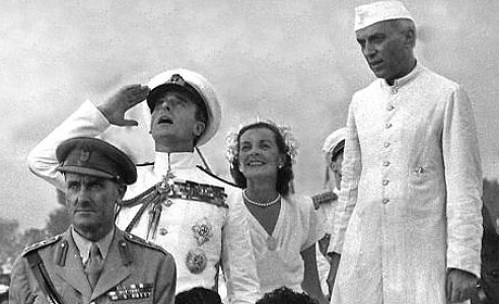
We celebrate political ‘freedom’ of countries as national or independence days. Sometimes, as in the case of India and Pakistan, independent nationhood can be laced with bloodshed and grief . Two new countries were born of a single colonial India in the August of 1947. Pakistan awoke as a country on the midnight of 14th August and India called the late hour 15th August. Nehru’s speech has become an iconic one: “Long years ago we made a tryst with destiny, and now the time comes when we shall redeem our pledge… At the stroke of the midnight hour, when the world sleeps, India will awake to life and freedom…”

Common people while crossing the boundary line between the two new nations lost their lives, homes and lands over the mob violence. The resentment still simmers in a few hearts. In an attempt to find peace and amity, we have put forward a combined selection of writing from across borders, words devoid of angst or hate, words that look for commonality and harmony.

Interview

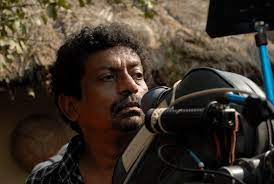
Goutam Ghose. Courtesy: Creative Commons

In Conversation with Goutam Ghose, multiple award-winning filmmaker, writer, actor discusses his films, film-books and journey as a humanitarian artiste who makes cross cultural films across all boundaries. Click here to read.

Poetry

Akbar Barkzai’s Songs of Freedom translated from Balochi by Fazal Baloch. Click here to read.

Poems by Jaydeep Sarangi: Click here to read

For Danish Siddiqui by Sutputra Radheye: Click here to read.

The Equalizer by Nazrul translated from Bengali to English by Shahriyer Hossain Shetu from Sammyabadi. Click here to read.

Deliverance by Tagore translated from Bengali to English from Tran (Sanchayita). Click here to read.

Non-Fiction

In The Idea of India: Bharata Bhagya Bidhata – The Making of a Motherland Anasuya Bhar explores the history around the National Anthem of India which started as a song, composed by Tagore. Only the first paragraph of the whole song in Bengali was adapted as the National Anthem. We include the translations of the complete song both by Tagore and by Aruna Chakravarti. Click here to read.

In An August Account of ‘Quit India’ Movement Ratnottama Sengupta,  translates from Bengali the excerpts recorded by Sandhya Sinha (1928-2016), who witnessed an upsurge in the wake of the Quit India Movement. Click here to read.

Temples & Mosques by Nazrul has been translated by Sohana Manzoor. Click here to read.

In Seventy-four Years After Independence…“Mil ke rahe gi Azadi” (We will get our Freedom), Aysha Baqir muses on Pakistani women’s role in the independence movement and their current state. Click here to read.

 In 2147 without Borders, Devraj Singh Kalsi meanders over Partitions, borders and love stories and looks for an amicable solution in a happier future. Click here to read.

Fiction

Bundu, Consoler of the Rich is a story based on memories of Partition by Nadir Ali, translated from Punjabi by Amna Ali. Click here to read.

In The Best Word, Maliha Iqbal explores the impact of wars in a spine chilling narrative, journeying through a range of emotions. Click here to read.

In Do Not Go!, Moazzam Sheikh explores dementia, giving us a glimpse of the lives of Asian immigrants in America. Click here to read.

In The Chained Man Who Wished to be Free, Sunil Sharma explores freedom and democracy versus conventions. We are left wondering is this the freedom we fought for? Click here to read. 

Categories
Contents

Borderless August 2021

Editorial

Triumph of the Human Spirit… Click here to read.

Interviews

Goutam Ghose, multiple award-winning filmmaker, writer, actor discusses his films, film-books and journey as a humanitarian artiste. Click here to read.

Dr Kirpal Singh, a well-known poet and academic from Singapore, talks of his life and times through colonial rule, as part of independent Malaya, and the current Singapore. Click here to read.

Translations

Bundu, Consoler of the Rich

A story based on memories of Partition by Nadir Ali, translated from Punjabi by Amna Ali. Click here to read.

Akbar Barakzai’s Songs of Freedom

Akbar Barakzai’s poetry translated from Balochi by Fazal Baloch. Click here to read.

An August Account of ‘Quit India’ Movement

Ratnottama Sengupta translates from Bengali the excerpts recorded by Sandhya Sinha (1928-2016), who witnessed an upsurge in the wake of the Quit India Movement, part of India’s struggle against colonial rule. Click here to read.

Froth

A short story by Dev Kumari Thapa, translated from Nepali by Mahesh Paudyal. Click here to read.

Mother’s Birthday Dinner Table

Ihlwha Choi translates his own poem set in Santiniketan from Korean to English. Click here to read.

Deliverance by Tagore

Tran’ by Tagore translated from Bengali to English by Mitali Chakravarty, art and editing by Sohana Manzoor for Borderless Journal. Click here to read.

Essays

The Idea of India: Bharata Bhagya Bidhata – The Making of a Motherland

Anasuya Bhar explores the history of the National Anthem of India, composed by Tagore in Bengali and translated only by the poet himself and by Aruna Chakravarti. Click here to read.

A Life Well-Lived

Candice Louisa Daquin discusses the concepts of a life well-lived. Click here to read.

Once Upon a Time in Burma: Land of a Thousand Pagodas

John Herlihy explores the magnificent sites of Mandalay in company of a Slovenian friend in the first episode of his quartet on his Myanmar. Click here to read.

Bhaskar’s Corner

In Tagore & Odisha, Bhaskar Parichha explores Tagore’s interactions with Odisha, his impact on their culture and the impact of their culture on him. Click here to read

Poetry

Click on the names to read the poems

Jaydeep Sarangi, Joan McNerney, Vandana Sharma Michael Lee Johnson, Priyanka Panwar, Mihaela Melnic, Ryan Quinn FlanaganKirpal Singh, Sutputra Radheye, John Linwood Grant, Julian Matthews, Malachi Edwin Vethamani, Rhys Hughes, Rachel Jayan, Jay Nicholls, Jared Carter

Nature’s Musings

Becoming Marco Polo: Poetry and photography by Penny Wilkes

Poets, Poetry & Rhys Huges

In Dinosaurs in France, Rhys Hughes explores more than tall tales; perhaps, the passage of sense of humour in our lives. Click here to read.

Musings/Slices from Life

Me and Mr Lowry’s Clown

Mike Smith’s nostalgia about artist Pat Cooke (1935-2000) takes us back to England in the last century. Click here to read.

Seventy-four Years After Independence…

“Mil ke rahe gi Azadi” (We will get our Freedom) by Aysha Baqir muses on Pakistani women’s role in the independence movement and their current state. Click here to read.

The Road to Freedom

Kanchan Dhar explores personal freedom. Click here to read.

The Coupon

Niles Reddick tells us how Covid and supermarkets combined into a discount coupon for him. Click here to read.

Musings of a copywriter

 In 2147 without Borders, Devraj Singh Kalsi meanders over Partitions, borders and love stories. Click here to read.

Stories

Rituals in the Garden

Marcelo Medone discusses motherhood, aging and loss in this poignant flash fiction from Argentina. Click here to read.

The Best Word

Maliha Iqbal explores the impact of wars in a spine chilling narrative, journeying through a range of emotions. Click here to read.

Do Not Go!

Moazzam Sheikh explores dementia, giving us a glimpse of the lives of Asian immigrants in America. Click here to read.

The Protests Outside

Steve Ogah talks of trauma faced by riot victims in Nigeria. Click here to read.

Brother Felix’s Ward

Malachi Edwin Vethamani takes us to an exploration of faiths and borders. Click here to read.

The Literary Fictionist

In The Chained Man Who Wished to be Free, Sunil Sharma explores freedom and democracy versus conventions. Click here to read.

Book Excerpts

Beyond The Himalayas by Goutam Ghose, based on a five-part documentary taking us on a journey along the silk route exploring parts of Pakistan and China. Click here to read.

Our Home in Myanmar – Four years in Yangon by Jessica Muddit, a first hand account of a journalist in Burma. Click here to read.

Book Reviews

A review by Meenakshi Malhotra of Somdatta Mandal’s The Last Days of Rabindranath Tagore in Memoirs, a translation from a conglomeration of writings from all the Maestro’s caregivers. Click here to read.

A review by Keith Lyons of Jessica Muddit’s Our Home in Myanmar – Four years in Yangon. Click here to read.

A review by Rakhi Dalal of Maithreyi Karnoor’s Sylvia: Distant Avuncular Ends. Click here to read.

A review by Bhaskar Parichha of Arundhathi Subramaniam’s Women Who Wear Only Themselves. Click here to read.

Categories
Musings

Seventy-four Years After Independence…

Mil ke rahe gi Azadi (We will get our freedom)

Aysha Baqir, an activist-author who works with and writes about women in Pakistan, passionately cries for a hearing

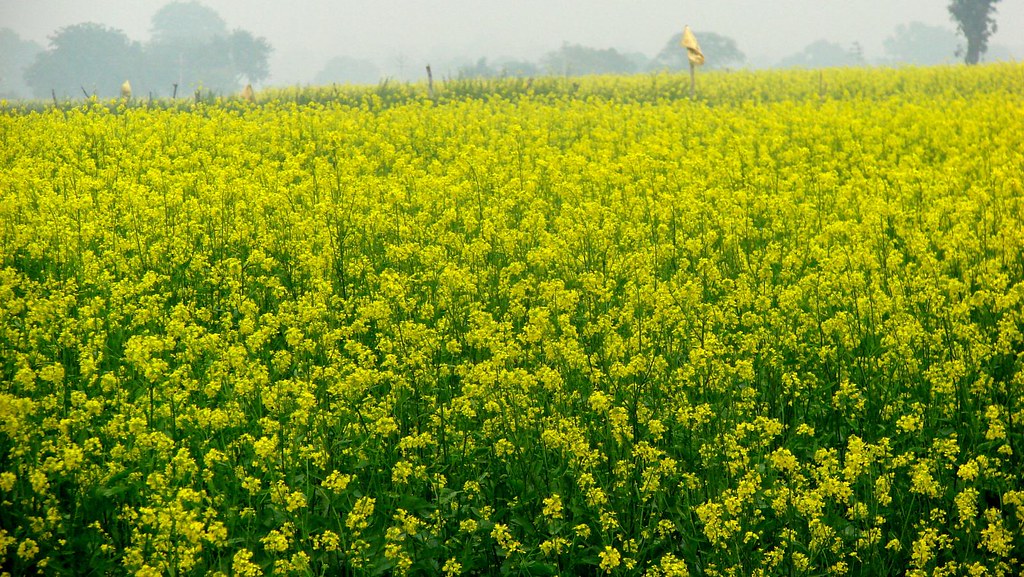
Mustard fields in Pakistan. Courtesy: Creative Commons

I dreamt of you again. Waves of lazy mustard fields rolled over the plains. Crowns of ancient firs, pines and deodars, brushed the feet of the giant mist-drenched peaks. Silver white sprays surged and throbbed down bare, black rocky slopes and foamed into turquoise pools.  The rise and fall of the gold sand stilled the earth.

I was part of you when you broke into the world and drank your first breath. Now I am alive in over a hundred and eleven million pulsing hearts and minds and spread over your countless tribes and towns. Yet, I remain, in most part, ignored, abused, oppressed, and repressed.  I am struck and beaten with sticks and rods. I am stripped, raped, and paraded naked. I am doused in petrol and set on fire. I am shot and beheaded. I am killed for honour they stuck between my legs. You gained your independence; yet I still seek mine in the promises you made me. You swore to honour and protect me with the rights my religion freed me with over a thousand years ago. And on this day, seventy-four years after Independence, I tell myself again and again, mil ke rahe gi azadi.

You forget I sacrificed my life for yours when you were a whisper, a glimmer, and gossamer of hopes and dreams. You forget how I risked my life and honour and stole out of my safe home into the treacherous shadows to join secret councils and meetings in which they spoke your name for the first time. I clapped and cheered for you on the roundtables. Breaking laws and curfews, I spied and snuck out letters and telegrams. I traded my gold bangles to fuel your strength. I disobeyed and defied my family, friends, and everyone else who dared to oppose your right to exist. I ran out into the streets, marched along the crowds, led the protests, and screamed your name when they charged me with lathis.  I raced up the civil secretariat to pull down the British flag and replaced it with yours. When I was arrested and imprisoned, I continued to protest without food and medicine, and when I was freed, I joined the women’s National Guard. As the violence erupted, I rushed to the refugee camps to aid the injured, distribute food, and boost the broken spirits. “Muslim women are… more impatient for Pakistan than men,”[i] I clung to the mantra feverishly even when my breath and body burnt and ached.

At dawn, before I could rise, stand tall and step out, you pushed me inside, shrouded me with a chador (stole), and bound me to your newfound, draconian ideals of law, religion, and culture. I fought for your freedom, and you seized mine. With every act and ordinance, you suppressed my right to speak, to be heard, and slashed the worth of my testimony and evidence. You questioned my right to education and work. You shredded my right to be safe in my country. I am made of brilliant shades, yet you chose to see the dullest in me.

Even then, blazed by determination fiercer than fire, I trudge to triumph and break barriers to win awards for sports, science, poetry, prose, business, theatre, entrepreneurship, academics, and filmmaking in an infinite longing to make you recognise me as your own. Yet every day you sell more of me, over and over again, into slavery, drudgery, and lifetime of servitude. I live in jhuggis (huts) of mud, rusted tin and cardboard and watch light fade from my daughters’ eyes while they watch me sweep your streets, gutters, and toilets. I earn less than you can count, and my earnings are not mine. I sow and harvest your fields from dawn to dusk; yet my daughters wither into waste, hungry.

I make up nearly half the country, yet in your parliament I represent less than twenty percent of the total. In your courts my testimony is never enough. My mind is starved; yet, just over half of me attends a primary school. And all of me, over a hundred million of me, is threatened by violence inside and outside my house. I am told to cover up, but I am groped and pinched in the crowded bazaars. I am hauled out of my car and raped in front of my small children. I am violated for the crimes my sons, brothers, and fathers commit. When I am assaulted, you subject me to the “two finger” test or call me immoral. When I protest, I am silenced in the name of honour. I am coerced to forgive and accept blood money. Some dare to taunt me “Apni Izzat Apne Haath Main (your honour is in your own hands).”  I promise you that if I held my honour in my hands, I would not cower like a hunted beast, I would hold it up high above my head, and march free through your lands.

You declare I have a right to education but forbid me from going to school or marry me off when I am eleven, twelve, or thirteen. You offer me rights with one hand and snatch them away with the other. I carry and birth your children when I am a child myself. When my husband beats me, my father begs him to forgive me and when my religion grants me my due share, you cheat me out of my inheritance. You sign accords, and agreements, local and international with powers big and small, but tomorrow if my brother, lover, husband father chops me into pieces; you tell me it is my fault, and the perpetrator walks away free. Sometimes. I tell myself it’s my fault. I am a daughter, a wife, a mother, a sister, but I am also a traitor to myself. Where is my self-worth?

Even the earth protests. The dry winds over the cracked barren soil moan my pain. The dark wet sounds of the rising sea echo my resentment.  When I cheer for my champions, conflict tears and cuts the conversation. You call me a liar. You twist and wrench my heroes, the ones who struggle for my freedom, and turn them into demons and traitors. What if Malala Yousafzai was a boy? Would you have protected and honoured her, and called her yours? Would you have given her a home? In the end you forget that your independence will never be complete without mine. You forget I am part of you. “There are two powers in the world; one is the sword and the other is the pen. There is a great competition and rivalry between the two. There is a third power stronger than both, that of the women.”[ii]

What would Mr. Jinnah say if he saw me today?

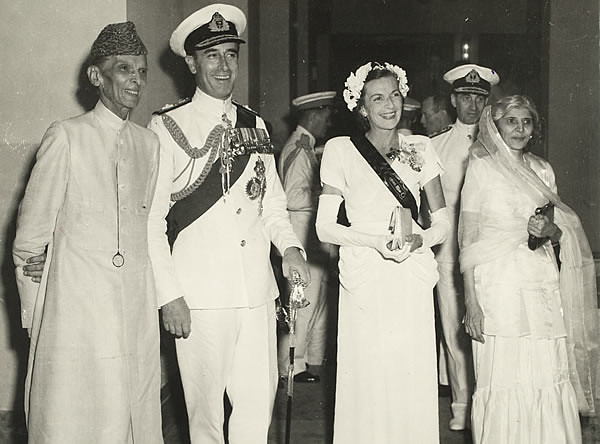
Courtesy: Creative Commons : Quaid-i-Azam or Great Leader — the sobriquet stands for Mohammad Ali Jinnah, the first Prime Minister of Pakistan

[i] Quote by Begam Jahan Ara Shah Nawaz, Dec 25, 1945

[ii] Quote by Quaid-e-Azam Muhammad Ali Jinnah, Jinnah Islamia College for Women, Lahore, 25 March 1940

.

Aysha Baqir grew up in Pakistan. Her time in college sparked a passion for economic development. In 1998 she founded a pioneering not for profit economic development organization, Kaarvan Crafts Foundation, with a mission to alleviate poverty by providing business and marketing training to girls and women in low-income communities. Her novel Beyond the Fields was published in January 2019 and she was invited to launch her book at the Lahore and Karachi Literary Festivals and was featured in the Singapore Writers Festival and Money FM Career 360 in Singapore. Her interviews have appeared in Ex-pat Living, Mount Holyoke Alumnae Quarterly, Kitaab, and The Tempest.  She is an Ashoka Fellow. www.ayshabaqir.com

PLEASE NOTE: ARTICLES CAN ONLY BE REPRODUCED IN OTHER SITES WITH DUE ACKNOWLEDGEMENT TO BORDERLESS JOURNAL.