Categories
Contents

Borderless, December 2024

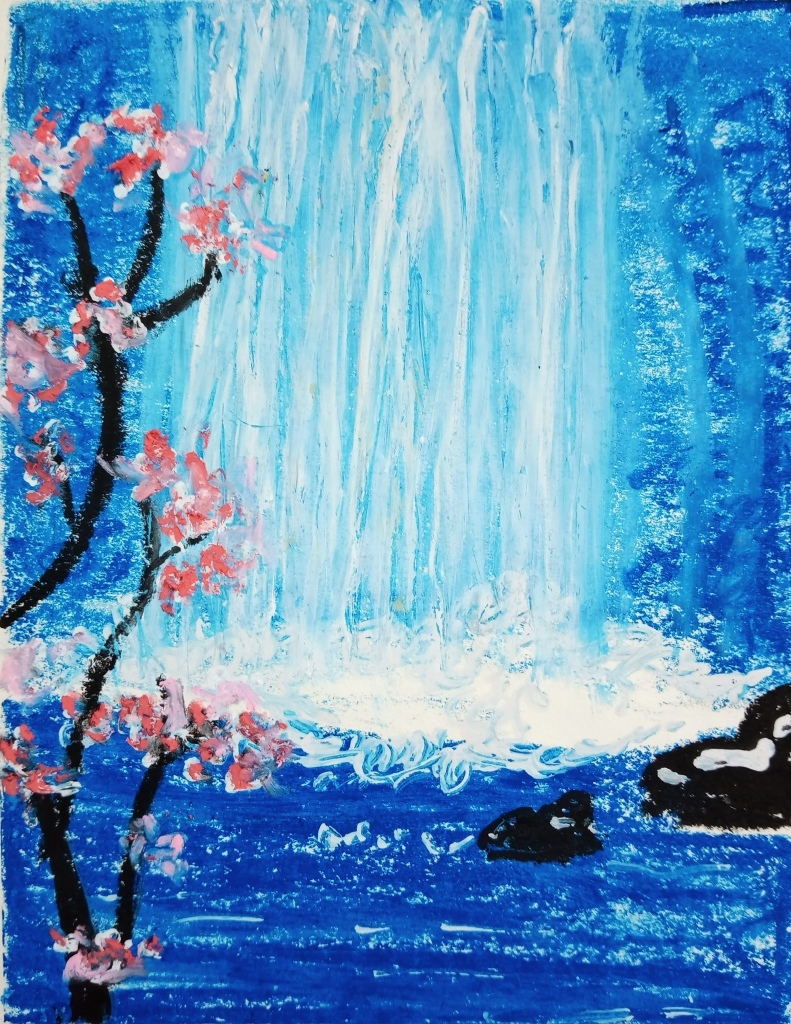
Art by Sohana Manzoor

Editorial

‘Footfalls Echo in the Memory’… Click here to read.

Translations

Jibananada Das’s Andhar Dekhecche, Tobu Ache (I have seen the dark and yet there is another) has been translated from Bengali by Professor Fakrul Alam. Click here to read.

Manish Ghatak’s Aagun taader Praan (Fire is their Life) has been translated from Bengali by Indrayudh Sinha. Click here to read.

Manzur Bismil’s poem, Stories, has been translated from Balochi by Fazal Baloch. Click here to read.

Homecoming, a poem by Ihlwha Choi on his return from Santiniketan, has been translated from Korean by the poet himself. Click here to read.

Tagore’s Shotabdir Surjo Aji ( The Century’s Sun today) has been translated from Bengali by Mitali Chakravarty. Click here to read.

Poetry

Click on the names to read the poems

Michael R Burch, Farah Sheikh, George Freek, Rajiv Borra, Kelsey Walker, Lokenath Roy, Thompson Emate, Joy Anne O’Donnell, Jayant Kashyap, John Grey, Aman Alam, Stuart McFarlane, Ayesha Binte Islam, Ryan Quinn Flanagan, Saranyan BV, Rhys Hughes

Musings/ Slices from Life

Autumn in Hyderabad

Mohul Bhowmick muses on Hyderabad. Click here to read.

Straight Back Across the Strait

Meredith Stephens gives a vignette of life in South Australia with a sailing adventure built in. Click here to read.

My Patchwork Year

Keith Lyons muses on what 2024 meant for him. Click here to read.

Musings of a Copywriter

In Byline Fever, Devraj Singh Kalsi travels down the path of nostalgia. Click here to read.

Essays

Still to Moving Images

Ratnottama Sengupta explores artists who have turned to use the medium of films… artists like the legendary MF Husain. Click here to read.

How Dynamic was Ancient India?

Farouk Gulsara explores William Dalrymple’s latest book, The Golden Road: How Ancient India Transformed the World. Click here to read.

A Short, Winding, and Legendary Dhaka Road

Professor Fakrul Alam takes us on a historical journey of one of the most iconic roads of Dhaka, Fuller Road. Click here to read.

Stories

Significance

Naramsetti  Umamaheswararao creates a fable around a banyan tree and it’s fruit. Click here to read.

The Dance of Life

Snigdha Agrawal explores ageism. Click here to read.

The Unsuspecting Suspect

Paul Mirabile wraps his telling like a psychological thriller. Click here to read.

Conversations

Ratnottama Sengupta converses with Divya Dutta, an award-winning actress, who has authored two books recently, Stars in my Sky and Me and Ma. Click here to read.

Lara Geyla converses about her memoir, Camels of Kyzylkum, and her journey as an immigrant. Click here to read.

Book Excerpts

An excerpt from Thomas Bell’s Human Nature: A Walking History of the Himalayan Landscape. Click here to read.

An excerpt from Savi Naipaul Akal’s The Naipauls of Nepaul Street, a retelling of VS Naipaul’s heritage in Trinidad by his sister. Click here to read.

Book Reviews

Somdatta Mandal reviews Kusum Khemani’s Lavanyadevi, translated from Hindi by Banibrata Mahanta. Click here to read.

Aditi Yadav reviews Nanako Hanada’s The Bookshop Woman, translated from Japanese by Cat Anderson. Click here to read.

Jagari Mukherjee reviews Kiriti Sengupta’s poetry collection, Oneness. Click here to read.

Bhaskar Parichha reviews Noor Jahan Bose’s Daughter of The Agunmukha: A Bangla Life, translated from Bengali by Rebecca Whittington. Click here to read.

.

Click here to access the Borderless anthology, Monalisa No Longer Smiles

Click here to access Monalisa No Longer Smiles on Amazon International

Categories
Editorial

‘Footfalls Echo in the Memory’

Painting by Claud Monet (1840-1926). From Public Domain

Acknowledging our past achievements sends a message of hope and responsibility, encouraging us to make even greater efforts in the future. Given our twentieth-century accomplishments, if people continue to suffer from famine, plague and war, we cannot blame it on nature or on God.

–Homo Deus (2015), Yuval Noah Harari

Another year drumrolls its way to a war-torn end. Yes, we have found a way to deal with Covid by the looks of it, but famine, hunger… have these drawn to a close? In another world, in 2019, Abhijit Banerjee had won a Nobel Prize for “a new approach to obtaining reliable answers about the best ways to fight global poverty”. Even before that in 2015, Yuval Noah Harari had discussed a world beyond conflicts where Homo Sapien would evolve to become Homo Deus, that is man would evolve to deus or god. As Harari contends at the start of Homo Deus, some of the world at least hoped to move towards immortality and eternal happiness. But, given the current events, is that even a remote possibility for the common man?

Harari points out in the sentence quoted above, acknowledging our past achievements gives hope… a hope born of the long journey humankind has made from caves to skyscrapers. If wars destroy those skyscrapers, what happens then? Our December issue highlights not only the world as we knew it but also the world as we know it.

In our essay section, Farouk Gulsara contextualises and discusses William Dalrymple’s latest book, The Golden Road with a focus on past glories while Professor Fakrul Alam dwells on a road in Dhaka , a road rife with history of the past and of toppling the hegemony and pointless atrocities against citizens. Yet, common people continue to weep for the citizens who have lost their homes, happiness and lives in Gaza and Ukraine, innocent victims of political machinations leading to war.

Just as politics divides and destroys, arts build bridges across the world. Ratnottama Sengupta has written of how artists over time have tried their hands at different mediums to bring to us vignettes of common people’s lives, like legendary artist M F Husain went on to make films, with his first black and white film screened in Berlin Film Festival in 1967 winning the coveted Golden Bear, he captured vignettes of Rajasthan and the local people through images and music. And there are many more instances like his…

Mohul Bhowmick browses on the past and the present of Hyderabad in a nostalgic tone capturing images with words. From the distant shores of New Zealand, Keith Lyons takes on a more individualistic note to muse on the year as it affected him. Meredith Stephens has written of her sailing adventure and life in South Australia. Devraj Singh Kalsi describes a writerly journey in a wry tone. Rhys Hughes also takes a tone of dry humour as he continues with his poems musing on photographs of strangely worded signboards. Colours are brought into poetry by Michael R Burch, Farah Sheikh, George Freek, Rajiv Borra, Kelsey Walker, John Grey, Stuart McFarlane, Saranyan BV, Ryan Quinn Falangan and many more. Some lines from this issue’s poetry selection by young Aman Alam really resonated well with the tone defined by the contributors of this issue:

It's always the common people who pay first.
They don’t write the speeches or sign the orders.
But when the dust rises, they’re the ones buried under...

Whose Life? By Aman Alam

Echoing the theme of the state of the common people is a powerful poem by Manish Ghatak translated from Bengali by Indrayudh Sinha, a poem that echoes how some flirt with danger on a daily basis for ‘Fire is their life’. Professor Alam has brought to us a Bengali poem by Jibanananda Das that reflects the issues we are all facing in today’s world, a poem that remains relevant even in the next century, Andhar Dekhecche, Tobu Ache (I have seen the dark and yet there is another). Fazal Baloch has translated contemporary poet Manzur Bismil’s poem from Balochi on the suffering caused by decisions made by those in power. Ihlwha Choi on the other hand has shared his own lines in English from his Korean poem about his journey back from Santiniketan, in which he claims to pack “all my lingering regrets carefully into my backpack”. And yet from the founder of Santiniketan, we have a translated poem that is not only relevant but also disturbing in its description of the current reality: “…Conflicts are born of self-interest./ Wars are fought to satiate greed…”. Tagore’s Shotabdir Surjo (The Century’s Sun, 1901) recounts the horrors of history…The poem brings to mind Edvard Munch’s disturbing painting of “The Scream” (1893).  Does what was true more than hundred years ago, still hold?

Reflecting on eternal human foibles, Naramsetti Umamaheswararao creates a contemporary fable in fiction while Snigdha Agrawal reflects on attitudes towards aging. Paul Mirabile weaves an interesting story around guilt and crime. Sengupta takes us back to her theme of artistes moving away from the genre, when she interviews award winning actress, Divya Dutta, for not her acting but her literary endeavours — two memoirs — Me and Ma and Stars in the Sky. The other interviewee Lara Gelya from Ukraine, also discusses her memoir, Camels from Kyzylkum, a book that traces her journey from the desert of Kyzylkum to USA through various countries. In our book excerpts, we have one that resonates with immigrant lores as writer VS Naipual’s sister, Savi Naipaul Akal, discusses how their family emigrated to Trinidad in The Naipauls of Nepaul Street. The other excerpt from Thomas Bell’s Human Nature: A Walking History of the Himalayan Landscape seeks “to understand the relationship between communities and their environment.” He moves through the landscapes of Nepal to connect readers to people in Himalayan villages.

The reviews in this issue travel through cultures and time with Somdatta Mandal’s discussion of Kusum Khemani’s Lavanyadevi, translated from Hindi by Banibrata Mahanta. Aditi Yadav travels to Japan with Nanako Hanada’s The Bookshop Woman, translated from Japanese by Cat Anderson. Jagari Mukherjee writes on the poems of Kiriti Sengupta in Oneness and Bhaskar Parichha reviews a book steeped in history and the life of a brave and daring woman, a memoir by Noor Jahan Bose, Daughter of The Agunmukha: A Bangla Life, translated from Bengali by Rebecca Whittington.

We have more content than mentioned here. Please do pause by our content’s page to savour our December Issue. We are eternally grateful to you, dear readers, for making our journey worthwhile.

Huge thanks to all our contributors for making this issue come alive with their vibrant work. Huge thanks to the team at Borderless for their unflinching support and to Sohana Manzoor for sharing her iconic paintings that give our journal a distinctive flavour.

With the hope of healing with love and compassion, let us dream of a world in peace.

Best wishes for the start of the next year,

Mitali Chakravarty

borderlessjournal.com

Footfalls echo in the memory
Down the passage which we did not take
Towards the door we never opened
Into the rose-garden.

TS Eliot, ‘Burnt Norton’, Four Quartets (1941)

Click here to access the content’s page for the December 2024 Issue

.

READ THE LATEST UPDATES ON THE FIRST BORDERLESS ANTHOLOGY, MONALISA NO LONGER SMILES, BY CLICKING ON THIS LINK.

Categories
Review

The Bookshop Woman

Book Review by Aditi Yadav

Title: The Bookshop Woman

Author: Nanako Hanada

Translator: Cat Anderson

Publisher: Brazen

There is a unique charm around books that talk of books and bookstores. Nanako Hanada’s The Bookshop Woman is an honest and touching memoir where she recounts and reflects on real life incidents that transpired in the rock-bottom phase of her life. Seamlessly translated from the Japanese by Cat Anderson, the narrative opens on a certain night in January 2013, with a distraught Nanako sitting listless and dejected in a restaurant at 2 a.m. in Yokohama. She had parted ways with her husband, and moved out of their flat. Living out of a suitcase, she moves through cheap hotels and public bathhouses, like a homeless drifter with an uncertain future.

Nanako is a manager at a branch of  Village Vanguard, a bookshop chain. She is depressed with the thought that there’s a lot lacking in her life. However, as we flip through the pages, we see the resilient side of Nanako. She intends to rise above the mess and her depression. She learns to walk with her head held high without feeling sorry for herself. She moves into a cramped apartment near Yokohama station, and also happens to join a new social networking site, the ‘Perfect Strangers’, which provides dating services. She embarks on her ‘Perfect Strangers’ journey with a profile that reads, “I’m the manager of a very unusual bookshop. I have access to huge database of over ten thousand books, and I’ll recommend the one that’s perfect for you.” Although a trivial trend of the modern times, joining this new virtual platform proved a turning point in Nanako’s life.

Through several encounters with random strangers, Nanako discovers a world beyond her broken relationship and self doubt. Meeting new people puts her social skills to test and starts her on a journey of self-discovery. She learns to open up without being over-conscious of herself. In the larger picture, she understands that accepting changes in life is the right way to embrace it. The discussions that Nanako holds with people provide insight into the conditions of the modern day world and human relationships. However, through the eyes of Nanako, Tokyo which “had only felt cold and inhospitable” turns interesting beyond her dreams when she just “tried opening! What freedom there was here!” , and all she wanted to do with this freedom was to introduce more people to new books.

Meanwhile, as the manager of the Village Vanguard, she passionately continues to do her best, innovating with selling strategies and tending to her customers. She gradually learns to “discern what was special about books that perhaps didn’t look so promising at first, and to distil their charm in words”.  She talks of the ‘joy of bookselling’ and gives a first-hand account of the challenges of her business. Nanako introduces readers to a host of books through the recommendations she offers during her Perfect Stranger sessions. There is even an appendix in the book that provides more details about these recommendations.

Experimenting with her ideas, Nanako also holds book jam sessions where people come over at a designated spot at an assigned time and share about their favourite books. These book jam sessions humbled her, as she realises that she had hitherto been ‘slightly condescending’ in recommending new books to people. This realisation transforms her outlook immensely.

Weaving through myriads of book suggestions and social meet-ups, Nanako evolves as a person and finds her footing in the real world. Even in the professional sphere she follows her heart and makes changes that resonate with her personal evolution. Her love for books and devotion to bookselling make her empathetic to the extent that she “would inadvertently get a glimpse of something deep in a person’s heart”.

Within a year of that dreary lonesome night in Yokohama, life comes a full circle for Nanako. As a result of her adventures and experiments, she finds peace within herself. Her divorce gets amicably finalised and she even quits the virtual platform to immerse herself in the natural flow of the delightful world she’d discovered — one full of meaningful human connections, friendships, the warmth of books and bookstores. We see Nanako wondering about the day when someone else would pick her books and recommend it to others, triggering an infinite loop– such is the power of books that turns drifters into trendsetters and dreams into reality. The book is indeed a must read to discover this incredible power and reaffirm one’s faith in resilience of human spirit!

Aditi Yadav is an amateur writer from India. She is also a South Asia Speaks fellow (2023). Her works appear in Rain Taxi Review, EKL Review, Usawa Literary Review, Gulmohur Quarterly, Narrow Road Journal, Borderless Journal and the Remnant Archive.

.

PLEASE NOTE: ARTICLES CAN ONLY BE REPRODUCED IN OTHER SITES WITH DUE ACKNOWLEDGEMENT TO BORDERLESS JOURNAL

Click here to access the Borderless anthology, Monalisa No Longer Smiles

Click here to access Monalisa No Longer Smiles on Kindle Amazon International

Categories
Contents

Borderless, February 2024

Art by Sohana Manzoor

Editorial

Finding Godot?… Click here to read.

Conversations

Ratnottama Sengupta talks to Ruchira Gupta, activist for global fight against human trafficking, about her work and introduces her novel, I Kick and I Fly. Click here to read.

A conversation with Ratna Magotra, a doctor who took cardiac care to the underprivileged and an introduction to her autobiography, Whispers of the Heart: Not Just a Surgeon. Click here to read.

Translations

Two poems by Nazrul have been translated from Bengali by Niaz Zaman. Click here to read.

Masud Khan’s poetry has been translated by Fakrul Alam. Click here to read.

The White Lady by Atta Shad has been translated from Balochi by Fazal Baloch. Click here to read.

Sparrows by Ihlwha Choi has been translated from Korean by the poet himself. Click here to read.

Tagore’s Dhoola Mandir or Temple of Dust has been translated from Bengali by Mitali Chakravarty. Click here to read.

Pandies Corner

Songs of Freedom: What are the Options? is an autobiographical narrative by Jyoti Kaur, translated from Hindustani by Lourdes M Supriya. These narrations highlight the ongoing struggle against debilitating rigid boundaries drawn by societal norms, with the support from organisations like Shaktishalini and pandies’. Click here to read.

Poetry

Click on the names to read the poems

Rhys Hughes, Maithreyi Karnoor, Luis Cuauhtémoc Berriozábal, Sivakami Velliangiri, Wendy Jean MacLean, Pramod Rastogi, Stuart McFarlean, Afrida Lubaba Khan, George Freek, Saranyan BV, Ryan Quinn Flanagan, Sanjay C Kuttan, Peter Magliocco, Sushant Thapa, Michael R Burch

Poets, Poetry & Rhys Hughes

In City Life: Samples, Rhys Hughes takes on the voice of cities. Click here to read.

Musings/Slices from Life

Ratnottama Sengupta Reminisces on Filmmaker Mrinal Sen

Ratnottama Sengupta travels back to her childhood wonderland where she witnessed what we regard as Indian film history being created. Click here to read.

Suga Didi

Snigdha Agrawal gives us a slice of nostalgia. Click here to read.

Healing Intellectual Disabilities

Meenakshi Pawha browses on a book that deals with lived experiences of dealing with intellectual disabilities. Click here to read.

Musings of a Copywriter

In Hobbies of Choice, Devraj Singh Kalsi explores a variety of extra curriculums. Click here to read.

Notes from Japan

In Becoming a Swiftie in my Fifties, Suzanne Kamata takes us to a Taylor Swift concert in Tokyo. Click here to read.

Essays

Walking about London Town

Sohana Manzoor takes us around the historic town. Click here to read.

How Do You Live?

Aditi Yadav explores the universal appeal of the translation of a 1937 Japanese novel that recently came to limelight as it’s rendition on the screen won the Golden Globe Best Animated Feature Film award (2024). Click here to read.

The Magic Dragon: Cycling for Peace

Keith Lyons writes of a man who cycled for peace in a conflict ridden world. Click here to read.

Stories

A Night at the Circus

Paul Mirabile tells a strange tale set in Montana. Click here to read.

Echoes in the Digital Expanse

Apurba Biswas explores a futuristic scenario. Click here to read.

Two Countries

Ravi Shankar gives a story about immigrants. Click here to read.

Chadar

Ravi Prakash writes about life in an Indo-Nepal border village. Click here to read.

Just Another Day

Neeman Sobhan gives a story exploring the impact of the politics of national language on common people. Click here to read.

Book Excerpts

An excerpt from Nabendu Ghosh’s Journey of a Lonesome Boat( Eka Naukar Jatri), translated from Bengali by Ratnottama Sengupta. Click here to read.

An excerpt from Upamanyu Chatterjee’s Lorenzo Searches for the Meaning of Life. Click here to read.

Book Reviews

Somdatta Mandal reviews The History Teacher of Lahore: A Novel by Tahira Naqvi. Click here to review.

Basudhara Roy reviews Srijato’s A House of Rain and Snow, translated from Bengali by Maharghya Chakraborty. Click here to read.

Bhaskar Parichha reviews Toby Walsh’s Faking It : Artificial Intelligence In a Human World. Click here to read.

.

Click here to access the Borderless anthology, Monalisa No Longer Smiles

Click here to access Monalisa No Longer Smiles on Amazon International

Categories
Editorial

Finding Godot?

Discard all prayers,
Meditation, hymns and rituals.
Why do you hide behind
Closed doors of temples?
....
There is no God in this house.

He has gone to visit the
Farmers who plough the hard ground,
The workers who break rocks ...


— Tagore, Dhoola Mandir or Temple of Dust (1910)

Love is a many splendoured thing and takes many forms — that stretches beyond bodily chemistry to a need to love all humankind. There is the love for one’s parents, family, practices one believes in and most of all nurtured among those who write, a love for words. For some, like Tagore, words became akin to breathing. He wrote from a young age. Eventually, an urge to bridge social gaps led him to write poetry that bleeds from the heart for the wellbeing of all humanity.  Tagore told a group of writers, musicians, and artists, who were visiting Sriniketan in 1936: “The picture of the helpless village which I saw each day as I sailed past on the river has remained with me and so I have come to make the great initiation here. It is not the work for one, it must involve all. I have invited you today not to discuss my literature nor listen to my poetry. I want you to see for yourself where our society’s real work lies. That is the reason why I am pointing to it over and over again. My reward will be if you can feel for yourself the value of this work.”

And it was perhaps to express this great love of humanity that he had written earlier in his life a poem called Dhoola Mandir that urges us to rise beyond our differences of faith and find love in serving humankind. In this month, which celebrates love with Valentine’s Day, we have a translation of this poem that is born of his love for all people, Dhoola Mandir.  Another poet who writes of his love for humanity and questions religion is Nazrul, two of whose poems have been translated by Niaz Zaman. Exploring love between a parent and children is poetry by Masood Khan translated from Bengali by Fakrul Alam. From the distant frontiers of Balochistan, we have a poem by Atta Shad, translated from Balochi by Fazal Baloch, for a fair lady — this time it is admiration. Ihlwha Choi translates poetry from Korean to express his love for a borderless world through the flight of sparrows.

Love has been taken up in poetry by Michael Burch. Borne of love is a concern for the world around us. We have powerful poetry by Maithreyi Karnoor that expresses her concern for humanity with a dash of irony or is it sarcasm? Luis Cuauhtémoc Berriozábal expresses his admiration for the poetry of Italian Poet Antonia Pozzi (1912-1938) in poetry. We have poems by Stuart McFarlane, Pramod Rastogi, Afrida Lubaba Khan, George Freek, Saranyan BV, Ryan Quinn Flanagan and many more. Rhys Hughes brings humour into poetry and voices out in his column taking on the persona of two cities he had lived in recently. There is truth and poignancy in the voices of the cities.

Suzanne Kamata writes a light-hearted yet meaningful column on the recent Taylor Swift concert in Tokyo.  Aditi Yadav takes up the Japanese book on which was based a movie that won the 2024 Golden Globe Best Animated Feature Film Award. Sohana Manzoor journeys to London as Devraj Singh Kalsi with tongue in cheek humour comments on extracurriculars that have so become a necessity for youngsters to get to the right schools. Snigdha Agrawal gives us a slice of nostalgia while recounting the story of a Santhali lady and Keith Lyons expresses his love for peace as he writes in memory of a man who cycled for peace.

Ratnottama Sengupta also travels down the memory lane to recall her encounters with film maker Mrinal Sen as he interacted with her father, Nabendu Ghosh. She has translated an excerpt from his autobiography to highlight his interactions with Ghosh. The other excerpt is from Upamanyu Chatterjee’s latest novel, Lorenzo Searches for the Meaning of Life.

In reviews, Somdatta Mandal has explored Tahira Naqvi’s The History Teacher of Lahore: A Novel. Srijato’s A House of Rain and Snow, translated from Bengali by Maharghya Chakraborty, has been discussed by Basudhara Roy and Bhaskar Parichha has reviewed Toby Walsh’s Faking It: Artificial Intelligence in a Human World. News and Documentary Emmy Award winner (1996) Ruchira Gupta’s daring novel born of her work among human traffickers, I Kick and I Fly, has been brought to our notice by Sengupta and she converses about the book and beyond with this socially conscious activist, filmmaker and writer. Another humanist, a doctor who served by bridging gaps between patients from underprivileged backgrounds, Dr Ratna Magotra, also conversed about her autobiography, Whispers of the HeartNot Just a Surgeon: An Autobiography , where she charts her journey which led her to find solutions to take cardiac care to those who did not have the money to afford it,

We have fiction this time from Neeman Sobhan reflecting on how far people will go for the love of their mother tongue to highlight the movement that started on 21st February in 1952 and created Bangladesh in 1971. Our stories are from around the world — Paul Mirabile from France, Ravi Shankar from Malaysia, Sobhan from Bangladesh and Ravi Prakash and Apurba Biswas from India — weaving local flavours and immigrant narratives. Most poignant of all the stories is a real-life narrative under the ‘Songs of Freedom’ series by a young girl, Jyoti Kaur, translated from Hindustani by Lourdes M Supriya. These stories are brought to us in coordination with pandies’ and Shaktishalini, a women’s organisation to enable the abused. Sanjay Kumar, the founder of pandies’ and the author of a most poignant book about healing suffering of children through theatre, Performing, Teaching and Writing Theatre: Exploring Play, writes, “‘Songs of Freedom’ bring stories from women — certainly not victims, not even survivors but fighters against the patriarchal status quo with support from the organisation Shaktishalini.”

While looking forward in hope of finding a world coloured with love and kindness under the blue dome, I would like to thank our fabulous team who always support Borderless Journal with their wonderful work. A huge thanks to all of you from the bottom of my heart. I thank all the writers who make our issues come alive with their creations and readers who savour it to make it worth our while to bring out more issues. I would urge our readers to visit our contents’ page as we have more than mentioned here.

Enjoy our February fare.

Mitali Chakravarty

borderlessjournal.com

Click here to access the content’s page for the February 2024 Issue.

.

READ THE LATEST UPDATES ON THE FIRST BORDERLESS ANTHOLOGY, MONALISA NO LONGER SMILES, BY CLICKING ON THIS LINK.

Categories
Essay

How Do You Live?

By Aditi Yadav

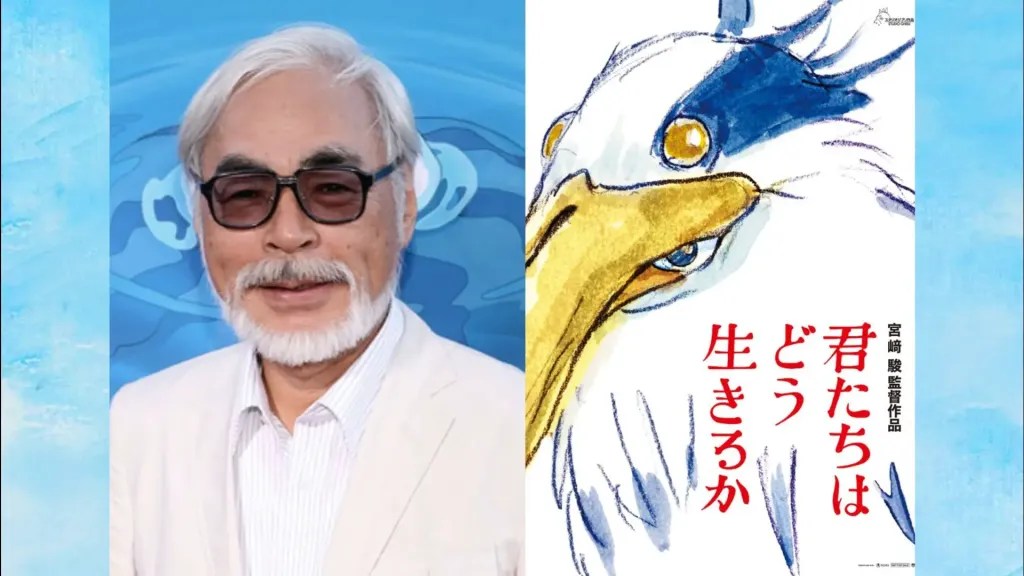
Hayao Miyazaki and the poster of The Boy and the Heron in Japanese

In January 2024, The Boy and the Heron became the first Japanese movie to win the Golden Globe Award for the Best Animated Feature Film. However, when the original movie was released by Studio Ghibli in the summer of 2023 in Japan, it was marketed with ‘no marketing at all’-without any trailers, TV commercials or newspaper advertisements. A minimalist movie poster carrying the sketch of a heron and the Japanese title Kimitachi wa Dō Ikiru ka, was all it took the movie to record the biggest box office opening in Studio Ghibli’s history.

Hayao Miyazaki, the godfather of Japanese animation who celebrated his 83rd birthday in January, 2024, broke a decade long hiatus to give his directorial swansong to the world. The movie is inspired by Miyazaki’s favourite book Kimitachi wa Dō Ikiru ka, written by Genzaburo Yoshino in 1937. This coming-of-age Japanese classic had been tenderly translated into English under the title How Do You Live? by Bruno Navasky and brought out by Penguin in 2021 with a foreword by a writer no less than Neil Gaiman.   

The protagonist of the story is Honda Junichi, a fifteen-year-old boy nicknamed ‘Copper’ after Copernicus, by his uncle.  He has a diminutive frame, but his intelligence, bright personality and athletic skills, make him a popular kid at school. As Copper has been raised by a single mother, his uncle, who is a fresh law graduate, is the only male guardian around him. Their bond is an interesting one: not only do they share a warm friendship, but also discuss about the world at large, its history, philosophy, human relationships, so on and so forth. 

 The book chronicles Copper’s world, his thoughts and day-to-day incidents, in a format that alternates between a third person narrative and notes from the diary Copper’s uncle. Copper’s everyday experiences are similar to those of any other school going child — peers bullying, fighting, discovering class differences, bonding over games, pranking one another, and so on. The book delves into the mind of the adolescent boy, trying to make sense of the world to understand how he’d transition to an adult. He approaches the world with an innocent curiosity, musing how people are ‘a little like water molecules’ in the vast ocean of human society.

His uncle deeply moved by these observations and expressions, begins to pen down about these interesting episodes in his notebook. He also adds facts and references associated with them, that encompass wide range of topics including art, science, economics, history, politics, philosophy and language. He probably thinks that when Copper reads the notebook later on, it would help him see the world better alongside his personal mental and moral evolution. These notebook entries bear sagacious titles like- ‘on ways of looking at things’, ‘on human troubles, mistakes and greatness’, ‘on human relationships’, ‘on poverty and humanity’, etc. However, the words do not intend to preach. They brim with warmth of empathy, and capture the strengths and vulnerabilities of being human: “If it means anything at all to live in this world, it’s that you must live your life like a true human being and feel just what you feel. This is not something that anyone can teach from the sidelines, no matter how great a person becomes.”

Yoshino wrote the book as a part of the “Nihon Shoukokumin Bunko” (Library of books for the Younger Generation) that aimed at disseminating progressive knowledge and ideas to Japanese young adults. The work is a precious one – a classic example of how thoughtful adults can help young children to have a healthy mind and human heart.

Published in 1937, this masterpiece itself is an act of resistance against all regressive beliefs and authoritarianism, as Navasky pens in his Translator’s note, the book is “…particularly valuable to us now, when violence against citizens is on the rise, and independent thinkers are being attacked by their governments”. The book itself was censured several times, before it could be printed in its originally intended form. It’s important to mention here that from 1911 to 1945, Tokubetsu Kōtō Keisatsu (or Tokko), the Special Higher Police, heavily monitored political groups and ideologies that posed a threat to the Empire of Japan.  The Peace Preservation Law passed in 1925, expanded the powers of Tokko to suppress all socialist and communist idea in Japan. The heavy-handed ‘thought policing, only ended in 1945 with Japan’s surrender in World War II.

How we live, invariably depends on how we think. The universality of the book lies in how it links thought processes across borders — individual and collective — will have decisive roles in the ideals we follow and the society we construct. Our journey from the primitive caves to modern skyscrapers has been a long and tumultuous one. The prowess of human mind and the resilience of human spirit has brought of this far, but a peaceful society demands empathy and honesty of the human heart. Copper is sensitive enough to realise this, when he jots down–

“I think there has to come a time when everyone-one in the world treats each other as if they were good friends. Since humanity has come so far, I think now we will definitely be able to make it to such a place.

So, I think I want to become a person who can help that happen.”

Charting the ups and downs in the life of young Copper, the book closes on a sunny fulfilling note where our protagonist sees the world with an open heart as his extended family. And so, this timeless classic that touches the heart ends with a deep question for all of us – “How will you live?”

.

Aditi Yadav is a public servant from India. As and when time permits she engages in creative pursuits and catches up her never-ending to-read list. Her works appear in Rain Taxi Review of books, EKL review, Usawa Literary Review, Gulmohur Quarterly, Narrow Road Journal and the Remnant Archive.

PLEASE NOTE: ARTICLES CAN ONLY BE REPRODUCED IN OTHER SITES WITH DUE ACKNOWLEDGEMENT TO BORDERLESS JOURNAL

Click here to access the Borderless anthology, Monalisa No Longer Smiles

Click here to access Monalisa No Longer Smiles on Amazon International
Categories
Contents

Borderless, October 2023

Artwork by Sohana Manzoor

Editorial

We had Joy, We had Fun … Click here to read

Conversations

A conversation with Nazes Afroz, former BBC editor, along with a brief introduction to his new translations of Syed Mujtaba Ali’s Tales of a Voyager (Jolay Dangay). Click here to read.

Keith Lyons converses with globe trotter Tomaž Serafi, who lives in Ljubljana. Click here to read.

Translations

Barnes and Nobles by Quazi Johirul Islam has been translated from Bengali by Professor Fakrul Alam. Click here to read.

Cast Away the Gun by Mubarak Qazi has been translated from Balochi by Fazal Baloch. Click here to read.

One Jujube has been written and translated from Korean by Ihlwha Choi. Click here to read.

A Hymn to an Autumnal Goddess by Rabindranath Tagore,  Amra Beddhechhi Kaasher Guchho ( We have Tied Bunches of Kaash), has been translated by Mitali Chakravarty. Click here to read.

Poetry

Click on the names to read the poems

Michael Burch, Gopal Lahiri, Ryan Quinn Flanagan, Hawla Riza, Reeti Jamil, Rex Tan, Santosh Bakaya, Tohm Bakelas, Pramod Rastogi, George Freek, Avantika Vijay Singh, John Zedolik, Debanga Das, Rhys Hughes

Poets, Poetry, and Rhys Hughes

In Do It Yourself Nonsense Poem, Rhys Hughes lays some ground rules for indulging in this comedic genre. Click here to read.

Musings/Slices from Life

Onsen and Hot Springs

Meredith Stephens explores Japanese and Californian hot springs with her camera and narrative. Click here to read.

Kardang Monastery: A Traveller’s High in Lahaul

Sayani De travels up the Himalayas to a Tibetan monastery. Click here to read.

Ghosts, Witches and My New Homeland

Tulip Chowdhury muses on ghosts and spooks in Bangladesh and US. Click here to read.

Musings of a Copywriter

In Red Carpet Welcome, Devraj Singh Kalsi re-examines social norms with a scoop of humour. Click here to read.

Notes from Japan

In Baseball and Robots, Suzanne Kamata shares how both these have shaped life in modern Japan. Click here to read.

Stories

The Wave of Exile

Paul Mirabile tells a strange tale started off by a arrant Tsunami. Click here to read.

Glimpses of Light

Neera Kashyap gives a poignant story around mental health. Click here to read.

The Woman Next Door

Jahanavi Bandaru writes a strange, haunting tale. Click here to read.

The Call

Nirmala Pillai explores different worlds in Mumbai. Click here to read.

Essays

The Oral Traditions of Bengal: Story and Song

Aruna Chakravarti describes the syncretic culture of Bengal through its folk music and oral traditions. Click here to read.

Belongingness and the Space In-Between

Disha Dahiya draws from a slice of her life to discuss migrant issues. Click here to read.

A City for Kings

Ravi Shankar takes us to Lima, Peru with his narrative and camera. Click here to read.

The Saga of a Dictionary: Japanese-Malayalam Affinities

Dr. KPP Nambiar takes us through his journey of making a Japanese-Malyalam dictionary, which started nearly fifty years ago, while linking ties between the cultures dating back to the sixteenth century. Click here to read.

Book Excerpts

An excerpt from Kailash Satyarthi’s Why Didn’t You Come Sooner?: Compassion In Action—Stories of Children Rescued From Slavery. Click here to read.

An excerpt from Rhys Hughes’ The Coffee Rubaiyat. Click here to read.

Book Reviews

Somdatta Mandal reviews Usha Priyamvada’s Won’t You Stay, Radhika?, translated from Hindi by Daisy Rockwell. Click here to read.

Aditi Yadav reviews Makoto Shinkai’s and Naruki Nagakawa’s She and Her Cat, translated from Japanese by Ginny Tapley Takemori. Click here to read.

Gemini Wahaaj reviews South to South: Writing South Asia in the American South edited by Khem K. Aryal. Click here to read.

Bhaskar Parichha reviews One Among You: The Autobiography of M.K. Stalin, translated from Tamil by A S Panneerselvan. Click here to read.

.

Click here to access the Borderless anthology, Monalisa No Longer Smiles

Click here to access Monalisa No Longer Smiles on Kindle Amazon International

Categories
Editorial

We had Joy, We had Fun…

There was a time when there were no boundaries drawn by humans. Our ancestors roamed the Earth like any other fauna — part of nature and the landscape. They tried to explain and appease the changing seasons, the altering landscapes and the elements that affected life and living with rituals that seemed coherent to them. There were probably no major organised structures that laid out rules. From such observances, our festivals evolved to what we celebrate today. These celebrations are not just full of joie de vivre, but also a reminder of our syncretic start that diverged into what currently seems to be irreparable breaches and a lifestyle that is in conflict with the needs of our home planet.

Reflecting on this tradition of syncretism in our folklore and music, while acknowledging the boundaries that wreak havoc, is an essay by Aruna Chakravarti. She expounds on rituals that were developed to appease natural forces spreading diseases and devastation, celebrations that bring joy with harvests and override the narrowness of institutionalised human construct. She concludes with Lalan Fakir’s life as emblematic of the syncretic lore. Lalan, an uneducated man brought to limelight by the Tagore family, swept across religious divides with his immortal lyrics full of wisdom and simplicity. Dyed in similar syncretic lore are the writings of a student and disciple of Tagore from Santiniketan, Syed Mujtaba Ali (1904-1974). His works overriding these artificial constructs have been brought to light, by his translator, former BBC editor, Nazes Afroz. Having translated his earlier book, In a Land Far from Home: A Bengali in Afghanistan, Afroz has now brought to us Syed Mujtaba Ali’s Tales of a Voyager (Jolay Dangay), in which we read of his travels to Egypt almost ninety years ago. In his interview, the translator highlights the current relevance of this remarkable polyglot.

Humming the tunes of Mujtaba Ali’s tutor, Tagore, a translation of Tagore’s song, Amra Beddhechhi Kasher Guchho (We have Tied Bunches of Kash[1]) captures the spirit of autumnal opulence which heralds the advent of Durga Puja. A translation by Fazal Baloch has brought a message of non-violence very aptly in these times from recently deceased eminent Balochi poet, Mubarak Qazi. Professor Fakrul Alam has translated a very contemporary poem by Quazi Johirul Islam on Barnes and Nobles while from Korea, we have a translation of a poem by Ihlwha Choi on the fruit, jujube, which is eaten fresh of the tree in autumn.

A poem which starts with a translation of a Tang dynasty’s poet, Yuan Zhen, inaugurates the first translation we have had from Mandarin — though it’s just two paras by the poet, Rex Tan, who continues writing his response to the Chinese poem in English. Mingling nature and drawing life lessons from it are poems by George Freek, Ryan Quinn Flanagan and Gopal Lahiri. We have poetry which enriches our treasury by its sheer variety from Hawla Riza, Pramod Rastogi, John Zedolik, Avantika Vijay Singh, Tohm Bakelas and more. Michael Burch has brought in a note of festivities with his Halloween poems. And Rhys Hughes has rolled out humour with his observations on the city of Mysore. His column too this time has given us a table and a formula for writing humorous poetry — a tongue-in-cheek piece, just like the book excerpt from The Coffee Rubaiyat. In the original Rubaiyat, Omar Khayyam (1048–1131) had given us wonderful quatrains which Edward Fitzgerald immortalised with his nineteenth century translation from Persian to English and now, Hughes gives us a spoof which would well have you rollicking on the floor, and that too, only because as he tells us he prefers coffee over wine!

Humour tinged with irony is woven into Devraj Singh Kalsi’s narrative on red carpet welcomes in Indian weddings. We have a number of travel stories from Peru to all over the world. Ravi Shankar takes us to Lima and Meredith Stephens to Californian hot springs with photographs and narratives while Sayani De does the same for a Tibetan monastery in Lahaul. Keith Lyons converses with globe trotter Tomaž Serafi, who lives in Ljubljana. And Suzanne Kamata adds colour with a light-veined narrative on robots and baseball in Japan. Syncretic elements are woven by Dr. KPP Nambiar who made the first Japanese-Malyalam Dictionary. He started nearly fifty years ago after finding commonalities between the two cultures dating back to the sixteenth century. Tulip Chowdhury brings in colours of Halloween while discussing ghosts in Bangladesh and America, where she migrated.

The theme of immigration is taken up by Gemini Wahaaj as she reviews South to South: Writing South Asia in the American South edited by Khem K. Aryal. Japan again comes into focus with Aditi Yadav’s Makoto Shinkai’s and Naruki Nagakawa’s She and Her Cat, translated from Japanese by Ginny Tapley Takemori. Somdatta Mandal has also reviewed a translation by no less than Booker winning Daisy Rockwell, who has translated Usha Priyamvada’s Won’t You Stay, Radhika? from Hindi. Our reviews seem full of translations this time as Bhaskar Parichha comments on One Among You: The Autobiography of M.K. Stalin, the current Chief Minister of Tamil Nadu, translated from Tamil by A S Panneerselvan. In fiction, we have stories that add different flavours from Paul Mirabile, Neera Kashyap, Nirmala Pillai and more.

Our book excerpt from Nobel laureate Kailash Satyarthi’s Why didn’t You Come Sooner? Compassion in Action—Stories of Children Rescued from Slavery deserves a special mention. It showcases a world far removed from the one we know. While he was rescuing some disadvantaged children, Satyarthi relates his experience in the rescue van:

“One of the children gave it [the bunch of bananas] to the child sitting in front. An emaciated girl and a little boy were seated next to me. I told them to pass on the fruit to everyone in the back and keep one each for themselves. The girl looked curiously at the bunch as she turned it around in her hands. Then she looked at the other children.

“‘I’ve never seen an onion like this one,’ she said.

“Her little companion also touched the fruit gingerly and innocently added, ‘Yes, this is not even a potato.’

“I was speechless to say the least. These children had never seen anything apart from onions and potatoes. They had definitely never chanced upon bananas…”

Heart-wrenching but true! Maybe, we can all do our bit by reaching out to some outside our comfort or social zone to close such alarming gaps… Uma Dasgupta’s book tells us that Tagore had hoped many would start institutions like Sriniketan all over the country to bridge gaps between the underprivileged and the privileged. People like Satyarthi are doing amazing work in today’s context, but more like him are needed in our world.

We have more writings than I could mention here, and each is chosen with much care. Please do pause by our contents page and take a look. Much effort has gone into creating a space for you to relish different perspectives that congeal in our journal, a space for all of you. For this, we have the team at Borderless to thank– without their participation, the journal would not be as it is. Sohana Manzoor with her vibrant artwork gives the finishing touch to each of our monthly issues. And lastly, I cannot but express my gratefulness to our contributors and readers for continuing to be with us through our journey. Heartfelt thanks to all of you.

Have a wonderful festive season!

Best wishes,

Mitali Chakravarty

borderlessjournal.com

[1] Wild long grass

.

.

Visit the October edition’s content page by clicking here

READ THE LATEST UPDATES ON THE FIRST BORDERLESS ANTHOLOGY, MONALISA NO LONGER SMILES, BY CLICKING ON THIS LINK.

Categories
Contents

Borderless, February 2023

Painting by Sohana Manzoor

Editorial

And Wilderness is Paradise Enow…Click here to read.

Conversations

Andrew Quilty, an award winning journalist for his features on Afghanistan, shares beyond his book, August in Kabul: America’s Last Days in Afghanistan and the Return of the Taliban, in a candid conversation. Click here to read.

Abhirup Dhar, a horror writer whose books are being extensively adopted by Bollywood, talks about his journey and paranormal experiences. Click here to read.

Translations

Munshi Premchand’s Balak or the Child has been translated from Hindi by Anurag Sharma. Click here to read.

Atta Shad’s Today’s Child has been translated from Balochi by Fazal Baloch. Click here to read.

Masud Khan’s History has been translated from Bengali by Professor Fakrul Alam. Click here to read.

Ihlwha Choi translates his own poem, Lunch Time, from Korean. Click here to read.

Tagore’s Somudro or Ocean has been translated from Bengali by Mitali Chakravarty. Click here to read.

Poetry

Click on the names to read the poems

Rhys Hughes, Chad Norman, Amit Parmessur, Sister Lou Ella Hickman, Anjali V Raj, Alex Z Salinas, Swati Mazta, Pragya Bajpai, John Grey, Saranyan BV, Dee Allen, Sanjukta Dasgupta, David Francis, Mitra Samal, George Freek, Vineetha Mekkoth, Ron Pickett, Ryan Quinn Flangan, Asad Latif

Poets, Poetry & Rhys Hughes

In Climbing Sri Pada, Rhys Hughes takes us on a trek to the hilltop with unusual perceptive remarks which could evoke laughter. Click here to read.

Musings/Slices from Life

Wanderlust or Congealed Stardust

Aditi Yadav meanders through the human journey and suggests travel as an ultimate panacea. Click here to read.

The Roy Senguptas

Ratnottama Sengupta continues with her own family saga looking back to the last century. Click here to read.

From Gatwick to Kangaroo Island

Meredith Stephens compares her experience of immigration at London airport to the bureaucracy she faces at Kangaroo Island. Click here to read.

Musings of a Copywriter

In Camel Ride in Chandigarh, Devraj Singh Kalsi talks of animal rides with a dollop of humour. Click here to read.

Notes from Japan

In Sweet Diplomacy, Suzanne Kamata tells us how candies can well save the day in Japan. Click here to read.

Essays

Gandhi in Cinema

Shantanu Ray Chaudhuri explores Gandhi in films and also his views on the celluloid screen. Click here to read.

Where Three Oceans Meet

P Ravi Shankar takes us on a photographic and textual tour of the land’s end of India. Click here to read.

When ‘they’ Danced…

Ratnottama Sengupta discusses the unique Bhooter Naach or the Ghost Dance, in Satyajit Ray’s Goopy Gyne Bagha Byne. Click here to read.

Stories

Between Light and Darkness

Sreelekha Chatterjee tells us a spooky tale of intrigue. Click here to read.

Letting Go

Tasneem Hossian gives a story of what bipolar disorders can do to a relationship. Click here to read.

Is it the End Today?

Anjana Krishnan gives a poignant flash fiction spanning eras. Click here to read.

Book Excerpts

An excerpt from Andrew Quilty’s August in Kabul: America’s Last Days in Afghanistan and the Return of the Taliban. Click here to read.

An excerpt from Vinoy Thomas’s Anthill, translated by Nandakumar K. Click here to read.

Book Reviews

Somdatta Mandal reviews Sudeshna Guha’s A History of India Through 75 Objects. Click here to read.

Meenakshi Malhotra reviews  Priyadarshini Thakur Khayal’s Padmini of Malwa: The Autobiography of Rani Ruupmati. Click here to read.

Bhaskar Parichha reviews Colleen Taylor Sen’s Ashoka and The Maurya Dynasty: The History and Legacy of Ancient India’s Greatest Empire. Click here to read.

.

Click here to access the Borderless anthology, Monalisa No Longer Smiles

Categories
Editorial

And Wilderness is Paradise Enow…

Hope in Winter(2020) by Srijani Dutta
“Here with a Loaf of Bread beneath the Bough,
A Flask of Wine, a Book of Verse -- and Thou
Beside me singing in the Wilderness --
And Wilderness is Paradise enow.”

― Omar Khayyám (1048-1131); translation from Persian by Edward Fitzgerald (Rubaiyat, 1859)

I wonder why Khayyam wrote these lines — was it to redefine paradise or just to woo his beloved? I like to imagine it was a bit of both. The need not to look for a paradise after death but to create one on Earth might well make an impact on humankind. Maybe, they would stop warring over an invisible force that they call God or by some other given name, some ‘ism’. Other than tens of thousands dying in natural disasters like the recent earthquake at the border of Turkiye and Syria, many have been killed by wars that continue to perpetrate divides created by human constructs. This month houses the second anniversary of the military junta rule in Myanmar and the first anniversary of the Ukrainian-Russian war that continues to decimate people, towns, natural reserves, humanity, economics relentlessly, polluting the environment with weapons of mass destruction, be it bombs or missiles. The more weapons we use, the more we destroy the environment of our own home planet. 

Sometimes, the world cries for a change. It asks to be upended.

We rethink, reinvent to move forward as a species or a single race. We relook at concepts like life and death and the way we run our lives. Redefining paradise or finding paradise on Earth, redefining ‘isms’ we have been living with for the past few hundred years — ‘isms’ that are being used to hurt others of our own species, to create exclusivity and divisions where none should exist — might well be a requisite for the continuance of our race.

Voices of change-pleaders rang out in the last century with visionaries like Tagore, Gandhi, Nazrul, Satyajit Ray urging for a more accepting and less war-bound world. This month, Ratnottama Sengupta has written on Ray’s legendary 1969 film, Goopy Gyne, Bagha Byne: “The message he sent out loud and with laughter: ‘When people have palatable food to fill their belly and music to fill their soul, the world will bid goodbye to wars.’” Shantanu Ray Chaudhuri has given an essay on one of the greatest pacifists, Gandhi, and his attitudes to films as well as his depiction in movies. What was amazing is Gandhi condemned films and never saw their worth as a mass media influencer! The other interesting thing is his repeated depiction as an ethereal spirit in recent movies which ask for changes in modern day perceptions and reforms. In fact, both these essays deal with ghosts who come back from the past to urge for changes towards a better future.

Delving deeper into the supernatural is our interviewee, Abhirup Dhar, an upcoming writer whose ghost stories are being adapted by Bollywood. While he does investigative stories linked to supernatural lore, our other interviewee, Andrew Quilty, a renowned journalist who has won encomiums for his coverage on Afghanistan where he spent eight years, shows in his book, August in Kabul: America’s Last Days in Afghanistan and the Return of the Taliban, what clinging to past lores can do to a people, especially women. Where does one strike the balance? We also have an excerpt from his book to give a flavour of his exclusive journalistic coverage on the plight of Afghans as an eyewitness who flew back to the country not only to report but to be with his friends — Afghans and foreigners — as others fled out of Kabul on August 14 th 2021. While culturally, Afghans should have been closer to Khayyam, does their repressive outlook really embrace the past, especially with the Taliban dating back to about only three decades?

The books in our review section have a focus on the past and history too. Meenakshi Malhotra’s review of Priyadarshini Thakur Khayal’s Padmini of Malwa: The Autobiography of Rani Rupmati, again focusses on how the author resurrects a medieval queen through visitations in a dream (could it be her spirit that visited him?). Somdatta Mandal writes of a book of history too — but this time the past and the people are resurrected through objects in Sudeshna Guha’s A history of India through 75 Objects. Bhaskar Parichha has also reviewed a history book by culinary writer-turned-historian Colleen Taylor Sen, Ashoka and The Maurya Dynasty: The History and Legacy of Ancient India’s Greatest Empire.

This intermingling of life and death and the past is brought to life in our fiction section by Sreelekha Chatterjee and Anjana Krishnan. Aditi Yadav creates a link between the past and our need to travel in her musing, which is reminiscent of Anthony Sattin’s description of asabiyya, a concept of brotherhood that thrived in medieval times. In consonance with wanderlust expressed in Yadav’s essay, we have a number of stories that explore travel highlighting various issues. Meredith Stephens travels to explore the need to have nature undisturbed by external interferences in pockets like Kangaroo Island in a semi-humorous undertone. While Ravi Shankar travels to the land’s end of India to voice candid concerns on conditions within Kerala, a place that both Keith Lyons and Rhys Hughes had written on with love and a sense of fun. It is interesting to see the contrasting perspectives on Southern India.

Hughes of course brings in dollops of humour with his travel to Adam’s Peak in Sri Lanka as does Devraj Singh Kalsi who writes about camel rides in Chandigarh, a place I known for its gardens, town planning and verdure. Suzanne Kamata colours Japan with humour as she writes of how candies can save the day there! Sengupta continues to travel to the past delving into the history of the last century.

Poetry that evokes laughter is rare but none the less the forte of Hughes as pensive but beautiful heartfelt poetry is that of Asad Latif. This February, the edition features poetry by Ryan Quinn Flanagan that borders on wry humour and on poignancy by George Freek. More poems by Pragya Bajpai, Sanjukta Dasgupta, Chad Norman, John Grey, Amit Parmessur, Sister Lou Ella Hickman, Saranyan BV and many more bring in varied emotions collected and honed to convey varieties that flavour our world.

Professor Fakrul Alam has also translated poetry where a contemporary Bengali writer, Masud Khan, cogitates on history while Ihlwha Choi has translated his own poem from Korean. A translation of Tagore’s poem on the ocean tries to capture the vastness and the eternal restlessness that can be interpreted as whispers carried through eons of history. Fazal Baloch has also shared a poem by one of the most revered modern Balochi voices, that of Atta Shad. Our pièce de resistance is a translation of Premchand’s Balak or the Child by Anurag Sharma.

This vibrant edition would not have been possible without all the wonderful translators, writers, photographers and artists who trust us with their work. My heartfelt thanks to all of you, especially, Srijani Dutta for her beautiful painting, ‘Hope in Winter’, and Sohana for her amazing artwork. My heartfelt thanks to the team at Borderless Journal, to our loyal readers some of whom have evolved into fabulous contributors. Thank you.

Do write in telling us what you think of the journal. We look forward to feedback from all of you as we head for the completion of our third year this March.

Best wishes,

Mitali Chakravarty

borderlessjournal.com

Click here to access the Borderless anthology, Monalisa No Longer Smiles