Categories
Conversation

Dance to Express Immigrant Angst

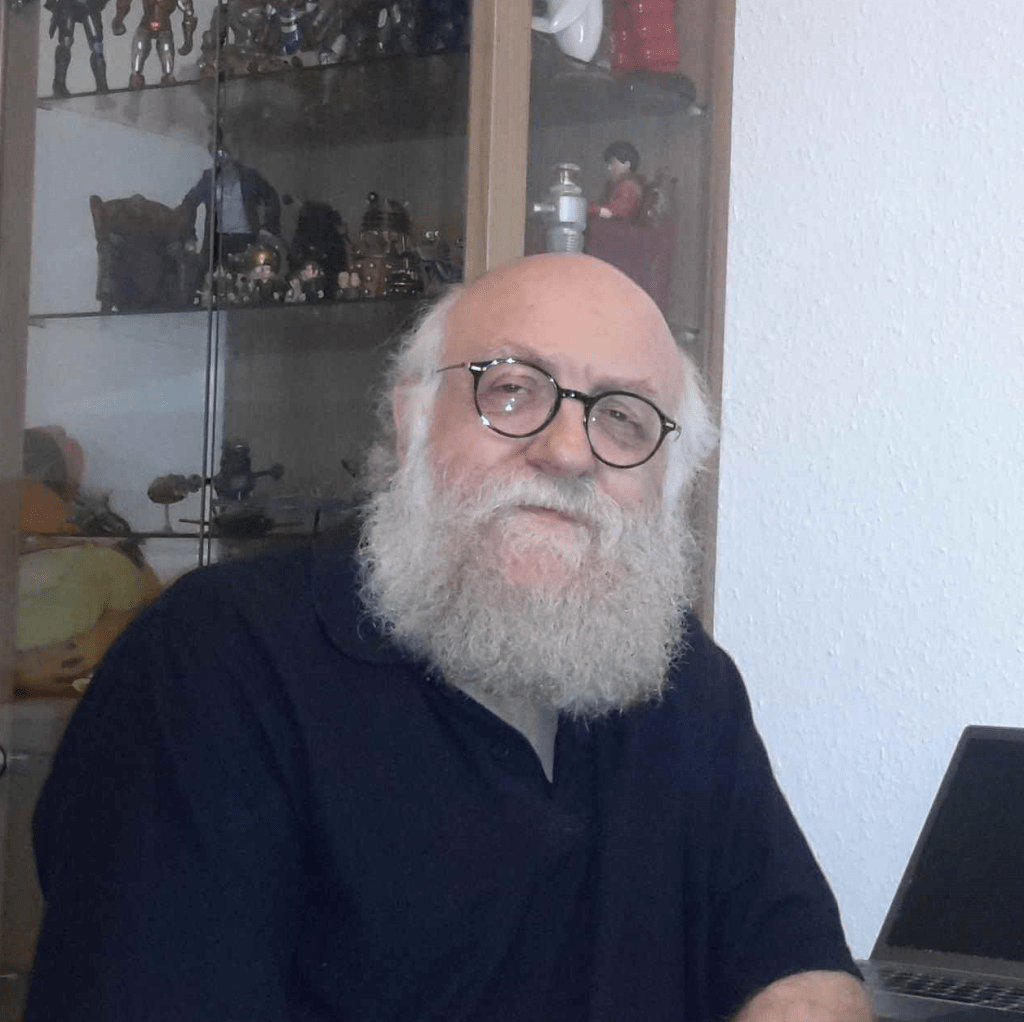
Ratnottama Sengupta in conversation about Kitareba, a contemporary dance performance on immigrants, with Sudarshan Chakravorty, a choreographer, and founder of the Sapphire Dance Company.

Photo provided by Ratnottama Sengupta

“Ankita! Rohan! Dipak! Mamta! Manish!”

A stentorian voice was calling out the names, just as they do during roll calls in jails. And in answer to every name a hand went up in the air — on stage, or in the auditorium. This was from a cast of dancers who had lived the lives of immigrants. “And me?” suddenly Sudarshan Chakravorty broke out in an anguished cry, “What about me? I am nobody!”

That’s when the tragedy of these uprooted souls hits you. And you ask yourself, “What is their identity? Before August 1947 they were Indians. Before March 1971 they were Pakistanis. Today they are Bangladeshis. Likewise so many passports and so many borders have changed. So many have left Punjab or gone from Kerala, so many have left Spain or sailed from Syria, so many trudged from Mexico or flown from China…”

But is the number of immigrants rising? And in the age of internet, what is eroding our identity? I decided to discuss the issue with Sudarshan Chakravorty as I walked out, deep in thought, after a performance of Kitareba by the contemporary dance group, Sapphire Creations Dance Company.

Ratnottama Sengupta (RS): Why did you think of doing Kitareba, a contemporary dance production on immigrants? Are you inspired by a movie? Or any news item? Or perhaps some incident in your own life? Or did all all three combine to spur you on?

Sudarshan Chakravorty (SC): Various personal events and conversations in recent years have triggered me to use the word ‘kitareba’, a Sylheti greeting. My father could speak no language other than Sylheti — and he would unapologetically speak the tongue with one and all, even those who couldn’t understand. I saw a pride in my father about his language, his culture and Sylheti roots. 

I was at times embarrassed when, in local grocery stores, he would ask for a brand like ‘Maagi’ – which loosely translated means wench. Or ‘Keo Karpin’ – the hair oil in complete Sylheti accent. But gradually I realised that it was part of his being. My cousins in Shillong would always complain of how tiresome it was when they had to speak with me only in ‘Calcuttian’ — read, pure deshaj Bangla. For them, it was a ‘foreign’ tongue. That was the seed of thoughts about shared language, culture, ritual and more. I wondered how the districts of Meghalaya and Assam, particularly Cachar, speak the same language, sport the same lifestyle, eat the same food, practice the same rituals, and have the same attitude. I became aware of this ‘oneness’ much later, in 2018, when I got to make a road trip to Sylhet via Guwahati, Shillong and Dawki. Migrants had perhaps trudged the same route in 1947 and then in 1971! Speaking this  language that was a binding factor regardless of the differences in their religion or caste. 

I was born in Shillong and had innumerable relatives there. And if I heard their dialect, even if I was standing in the Circuit House in the middle of Sylhet, I felt a strong kinship that made me emotional. This is what prompted me to ask, what is it that makes a new set of people — or a place — so familiar or ‘known’.

This production stems from my core interest to share this story which I carry in my DNA. I am not directly impacted by the Partition or any war, but the stories shared by my parents have influenced me – as have the movies I have seen over the years. These include films from both sides of the border – Ashani Sanket, (Children of War) , Ora Egarojon (Those Eleven People, Bangladesh) – as well as Schindlers List. I have also stored up conversations and anecdotes overheard in crowded bus or public spaces, both in India and abroad. There, when you are alone and isolated, the unexpected murmur of a known language comforts you. A sudden hug by a stranger saying ‘kitareba’  changes everything and transforms that space into ‘home’.

The Nazi atrocities as seen in films built around the holocaust acquired more vivid contours when I visited Poland and the Silesian museum to see for myself how the galleries use photos and installations to depict the concentration camps in Poland. It firmed my determination to recount my story since it is no longer about me or my country alone. Now it is a global narrative.

.

RS: What are the other productions of Sapphire Creations that focus on social issues? What were the issues – Environment? Gender equality? Gender fluidity? Apartheid? Any other?

SC: It has always been important for Sapphire Creations, which turns 32 this year, to use messaging as the spine of our dance. This form of creative expression, I strongly believe, can be a potent vehicle of raising social consciousness. So we have designed several productions on taboo subjects.  This has defined our position, not only as a Dance Company – we as dancers too have come to understand the true power of the arts.

Sample these. The Alien Flower (1996) explored the theme of same sex love nearly 20 years before India decriminalised homosexuality. Indian Erotica : Vedas To Millennium (2000) spoke about changing the power equation that existed between men and women, from the Vedic period to the times of AIDS. Positive Lives (2004) built on people living with HIV. Ekonama  (2016) contextualised global warming and climate change using Purulia Chhau dancers. Ekaharya (Losing Oneself, 2018) explored gender fluidity using the technique in classical dance where the same body, without changing anything, portrays different characters and even changing gender. Now we bring you Kitareba about the loss of identity of uprooted lives.

RS: How developed is Indian contemporary dance to deal with such serious content?

SC: Indian dance in particular builds on gender fluidity and role reversal adapting mythical stories of Gods. These stories are part of our traditional texts, used even by established gurus. However, eyebrows are raised by puritans when we apply the same inferences to daily life and talk about the real life of common people.

In 1996, I was cornered by my city’s dance fraternity after a production on same gender love. I was accused of importing Western influences into our cultural scene. It made me retaliate with  Indian Erotica — sexuality discourses in Indian history, literature, architecture, and religion through my lens.

Times have changed, yes, but it is still taboo to depict many topics openly. Fortunately  media and audience supported us immensely, for they understood that only such discourses can make the arts truly ‘educational’ and it need not remain mere ‘entertainment’. That, indeed, was the basic premise of the arts in India, as defined by the Natyashastra.

And now discourses on health, sex, and gender are becoming compulsory and applicable in schools and universities too, for the physical and mental wellbeing of the students.

I realise that we take lot of time to realise the immensity of any reality. In the process we lose lives! It was only when HIV became a reality in Delhi’s Tihar Jail — where only men were kept — that the authorities woke up to the reality of homosexuality and started distributing condoms!

For me it is important to voice my opinion through actual performances and not just discuss the issues in conferences and seminars. So I continue to do this through Sapphire, despite resistances!

RS: Form or content – what is more important in Contemporary Dance? And what is your foremost concern?

SC: I have been doing Contemporary Dance since 1990. Our generation was self-made. We were desperate to find a voice, our own personal vocabulary. In 1992-93, I started describing my form as ‘Electric Dance’ as I didn’t find a suitable nomenclature to define my form: the existing ones defined the traditional dances while the Western Modern or Contemporary was not what I was deriving from. I was inspired by people like Manjushree Chaki Sarkar (1934-1999), Narendra Sharma (1924-2008) and Astad Deboo (1947-2020), to imbibe a lexicon that is rooted in my DNA and craft my identity as an Indian dancer.

There was no internet then, so all our influences emanated from the immediate experiences of watching these Gurus – in their studios, homes, or on stage. These resonated with my urge to take Sapphire down a path  that was not a derivation but my own destination. 

Although we opened several windows of the West, through collaborations, to update our radar. But more than the form, these collaborations stressed a deep understanding of what is in our roots. For only our sensibilities and identities will give a ‘face‘ to Indian contemporary dance without stamping it a homogenous global form!

So, in my view, content and form must be equally balanced. One must not confuse them as two are independent identities. Sometimes the challenge is to find ‘newness’ in form to convey an ‘old’ content. At other times one must find a ‘form’ that is accessible for all to understand a new content. 

It remains a challenge for me after all these years…

RS: Tell me about your journey in dance. What led you to dance – which was even in 1980s considered a feminine art expression?

SC: My father was an engineer working in Nagaland of the 70s. He was posted in Kohima, Mokukchung, Tuensang, Dimpaur… During the Durga Pujas my mother would gather the neighbourhood children and put up a dance programme. I would quietly watch the rehearsals as a four-year-old but one day, I cried in desperation because I wanted to be on the stage. This was during a Durga puja in Tuensang — I got up on the stage and never came down!

I was quite a ’star’ kid as the only male dancer performing in schools and colleges. My tryst as a director too started in grade 3, at the age of nine. Visiting my father during the annual summer vacation, I made all my friends,  children of our neighbours and of father’s staff, to toil for a month and put up a variety show in our quarters. This community show built up my confidence as director, a team leader. And we put up dance, skits, Boney M. songs. That seeded my desire to lead my own dance team one day.

In Kolkata, Ma would always take my sister for dance and music lessons, never me. But I ended up getting major roles in the para[1] programmes as I accompanied my sister for drop and pick up and  never shied from demonstrating my skill – to the utter surprise of the organisers. So my sister remained a ‘sakhi[2]’ dancing at the back while her male brother assumed the lead role and became a ‘star’ attraction in the shows.

Soon I started getting offers to perform for clubs, and local newspapers carried my interviews. Meanwhile I was noticed by my dance teacher, Bandana Dasgupta in school — Julien Day in Ganganagar. Later Principal Sheila Broughton encouraged me to pursue dance. Ms Dasgupta started teaching me Bharatanatyam which remains in my muscle memory, making it an ardently core pedagogy of my own style in Sapphire productions.

After university, I started to take lessons in Kathakali from Govindan Kutty. This, most notably, influenced my dance vocabulary. But I was always restless to find new combinations and to see how I can change it a little and personalise it. 

I showed the same zest in my studies as I combined material/content to make my ‘answers’ completely different from others!

This attempt to be ‘me’ and not blend with others made me the centre of attention. On the other hand my not so deep voice, my femininity, was drawing flak. But I countered them all…

During a sports day in school there were separate lines for boys and girls. It was naturally assumed that all the boys will  play sports. I was left with no option but to join the girls since I was in the cultural/dance group. The sport teachers repeatedly cautioned me that I was in the wrong line. I smiled and said, “No sir, I am in the correct line…” 

And I chose to stay in that line forever!

RS: Did you learn from a traditional guru? Who? What is the merit of being rooted in a classical dance form/ tradition?

I started Sapphire with my own understanding of cultural dances and the Tagore dance dramas. Then I wanted to break barriers. I deviated from tradition to find my personal path away from the influences of my ‘old’ learning. I told my students, too, to  erase what they have learnt before in order to find their own language.

However now, in my early 50s, I realise that I was saved from the deadly impact of ‘globalisation’ which makes everything the ‘same’, because culture code cannot be same everywhere. And it is this uniqueness that makes your craft, your skill, your form — your own and contextual.

The dancers and choreographers who emerged in the 70s, 80s and 90s came from tradition. I was the only one amongst them who found my own way. Not just in my senses or intellect, physically too, I could keep my dance grounded. It helped me to recognise what I have received as body aesthetics in mandala, tribhanga and charis.

My exposure to various dance forms — from Uday Shankar style to traditional forms including poetries and songs of Bankimchandra, Rabindranath Tagore and Kazi Nazrul — gave me the lens to look at my ‘modernity’ and the ‘global’ perspective of my art without being bereft of my roots. Without disowning the cultural context of being a dancer from Bengal, from India. 

That, now more than ever before, I hold like a litmus! So today, the growing trend in the independent dance scenario to ape the West — that is completely uprooted from its soil — makes me nervous. I feel they can’t sustain this journey without knowing from where it all began. Most are not aware of the roots. And we need to help them look at those pages.

RS: So why had you felt the need to break away from tradition – the trodden on Indian forms — and go international?

SC: I think it had started with the feel of isolation.

In mid-90s, when we did Alien Flower and dancers and critics started saying we are an aberration, we wanted to counter that. We brought in dancers, choreographers and dance companies to find solidarity. We started INTERFACE, Eastern India’s First International Dance Biennial, in 2002 to share the work of fellow contemporary dancers in India and abroad. We shared the context with the audience and critics who loved my dance. And they started to accept our point of view. We built upon the gains with INCRES – International Choreographers Residency.

INTERFACE and INCRES were started to cue not just us but also the media and audience about the changing trends of contemporary dance worldwide. This found a community which, I am proud to say, we have sustained to date.

RS: Tell me how these collaborations with dancers, choreographers and musicians — from Israel, Poland, Malaysia, Croatia — have enriched you? And have they helped Indian Contemporary Dance?

The most important achievement of Sapphire was to keep these collaborations and relationships alive over 20 years. Many choreographers came as strangers but became friends for life!

It all started when our leading dancers and a couple of ‘new’ Contemporary dancers started to find faults in our technique and process of fusing improvisation as a tool. The first regiment of International choreographers who came for INCRES in 2006, patted us saying they had not seen such freedom in other dance companies in India. There, everything was driven by technique, in order to forge a homogeneous ‘global dance’ form. Some of these choreographers like Michel Casanovas from France, Christopher Lechner from Germany came back again and again. Marc Rossier from Switzerland collaborated with us in our production Parivahitam (2010) with live music that travelled to eleven cities in India. Such collaborations immensely impacted us, artistically, emotionally and spiritually. Their humility and surrender was  difficult to find in Indian collaborators. Selcuk Goldere, a Turkish choreographer from Ankara, helped with us mount   Ekonama.

Recently we celebrated 20 years of our association with Jacek Luminski. With this Polish choreographer, we have mounted several projects like Roots Of Dance. And this year we have co-produced What I Have Not Seen Before  for the Kolkata Literary Meet 2024.

We also have a strong connection with Joseph Gonzales from Ask Dance Company of Malaysia. Ever since we met during our first ever international tour in 1999, we have remained associates!

These associations have forced us to view contemporary dance through several lens. We have examined threadbare the context of practicing contemporary dance. Most of them encouraged us to build upon our roots. They showed this by using theirs. For instance, Jacek uses Polish folk dances as his take off point while Ask Dance Company integrates traditions in their lexicon. 

But none of them believe in a ‘copy-paste’ approach. They sniff the core aesthetics of tradition and use that to enliven their dance idiom. 

It can be inter cultural, or inter interdisciplinary. It might use songs, like we have in Kitareba, and musical instrument. These impart a viewpoint to me and my dancers and broaden our perspective.

RS: Who would you identify as the progenitor of Contemporary Dance in India? Has Uday Shankar been given his due as the father of this distinct dance style?

SC: Many a leader has carved out a new path and given new direction to Contemporary dance in India. In 2020, we could have celebrated 100 years of contemporary dance In India. This might sound childish when compared to our traditional dance streams which have a 3000 year old history! However, this is a reason why contemporary dance was not taken seriously. Both, the form and its practitioners were a ‘minority’, and they were side-lined by the mainstream dance fraternity. This included critics, festival organisers, policy makers as well as Government cultural agencies.

The problem started with the very nomenclature and it continues till date.

So if Uday Shankar was the Father of Indian Modern dance, it was practitioners like Astad Deboo, Daksha Seth, Jaychandran, Navtej Johar and Padmini Chettur who gave post-colonial meanders to the stream. It was only in 1990s,  when the cultural wing of German Embassy in India started the East West Encounter as  a conference, that a discourse was set in motion to define the intersections and destination of contemporary or experimental dance form as an ‘offshoot’ or an ‘independent’ form.

It is also to be seen that, since most contemporary dance practitioners originally came from tradition, they had a ‘hangover’. They were reluctant to come out of its clout and demand acknowledgement for their own form. That weakened our journey for many decades. So Uday Shankar was lost at a Pan India level where the very basis of his hybridity was questioned by puritans. The irony of it is that here, now, contemporary dance discourse is all about being intercultural, mixed media  and interdisciplinary!

The confusion remained and expanded. We find it difficult to decide ‘What is the contemporary dance practice?’ Be it in terms of form or idiom, philosophy or vision, now everything is ‘contemporary’. And it is ‘fashionable’ to practice across India.

RS: Does Sangeet Natak Akademi (SNA) — the national body for performing arts in India — recognise it? Did you have to struggle to get grants from the Ministry of Culture? Is your art being taught in any Indian university?

SC: SNA started recognising it as ballet, and from 2000 as experimental dance. It was apportioned slots in Young Dancers Festival and Nritya Sanrachna, where Sapphire performed several times.

As far as I know, to date, no university in India offers contemporary dance in its course. Worse: it does not figure even in ‘gradation’ for television or for government scholarships and fellowships. This further disqualifies the form, making it difficult for the young generations to keep faith and  pursue it at an academic level.

RS: You have choreographed dance for Bollywood movies as well as for Bengali films. Are choreographers being given as much recognition as a traditional dance guru? Or, are Bollywood choreographers given greater recognition than a dancer?

A difficult question!

On one hand, if a serious dancer is associated with films, he loses all his ‘points’. He may draw flak for diluting his form, for commercial gains. Funny, isn’t it, this accusation? We enjoy little patronage and less support. So where will these practitioners go? And if they find acceptance in the small window of such work, that shows their vitality, adaptability and skill set. Shouldn’t this  be lauded?

Contrast this with the life of legendary Gurus like Birju Maharaj — they found both money and fame in choreographing for films!

The irony of it is that songs and dances abound in Indian movies, in every region. More so in Bollywood, which is now an internationally recognised nomenclature. But not a single academy or university teaches film-choreography. So we are all self-taught and that makes it all the more difficult. 

Bollywood dancers and choreographers have an edge since they have had four to five generations of film choreographers.  Many have worked under them as assistants and that has enhanced their skill set to handle film choreography. This has made them a more desirable choice than us, self-taught choreographers.

RS: Why do Indian films (read, Bollywood) — which thrive on ‘Bollywood dance’ — today have no dancing star of the stature of Vyjayantimala, Waheeda Rehman or Kamal Haasan? This, even though we now have reality shows on TV channels; we have films like Yeh Ballet[3], and documentaries on the dancers who featured in that film. We have documentaries on choreographers like Saroj Khan, and biographies on dancers like Zohra Segal and Madame Menaka.

SC: There are many reasons for this. These generations were much more invested in learning (taalim) and pratice (riyaaz). They did not connect the two with monetisation. Now the stars start learning a craft or skill just to portray a certain character. Surely this need based approach to learning and up-skilling can’t be compared to those who lived these arts. Theirs was a discipline, a ritual, a part of daily regime irrespective of what they got or lost.

Today the idea of perusing arts have changed — more so in cinema. So we have no Vyjayanthimala, Waheeda Rehman, or Jaya Pradha. These stars were tutored from a young age by traditional gurus not for film roles but to become artistes. 

Now the very definition of ‘artiste’ is jeopardised. I ask my students as a rhetoric, “Why do you learn dance?” So the stories of Saroj Khan and Madame Menaka will be archived while ours might get lost!

Art needs patience, perseverance, devotion, dedication, discipline and determination… And yes…. Surrender to the Supreme!

[1] colony

[2] Friend literally, but here it refers to being a part of a chorus

[3] This Ballet

Ratnottama Sengupta, formerly Arts Editor of The Times of India, teaches mass communication and film appreciation, curates film festivals and art exhibitions, and translates and write books. She has been a member of CBFC, served on the National Film Awards jury and has herself won a National Award. 

.

PLEASE NOTE: ARTICLES CAN ONLY BE REPRODUCED IN OTHER SITES WITH DUE ACKNOWLEDGEMENT TO BORDERLESS JOURNAL

Click here to access the Borderless anthology, Monalisa No Longer Smiles

Click here to access Monalisa No Longer Smiles on Amazon International

Categories
World Poetry Day

What is Home?

Celebrating poetry around the world, our focus this year is on refugees, immigrants or poetry by migrants… In a way, we are all migrants on this Earth and yet immigration for both climate and war has created dissatisfaction in the hearts of many. Can mankind unify under the single blue dome which covers all our home?


“The Journey” by Alwy Fadhel, an asylum seeker to Australia. The piece is included in the Exile collection of the Refugee Art Project. Art from Public Domain.

We start by welcoming migrants from Jupiter but how do we react to human migrants within Earth… ?

All the Way from Jupiter

By Rhys Hughes

All the way
from Jupiter came the refugees,
their heads
made of hydrogen,
and helium, their knees.
No one cried:
depravity!
for we were pleased
to help them
relocate to Earth: we offered
them homes
inside plastic domes
uncrowded but
full of swirling clouds
blown by the music of
fierce trombones
to mimic the crushing gravity.

All the way
from one of our homegrown
war zones
came refugees on their knees
and we said:
no, no, no, and no again!
Go back home right now,
be killed,
assaulted,
it’s all your own fault
for being born here on Earth.
The newcomers
from Jupiter are tubular
like cucumbers,
but men, women and children
like yourselves
aren’t welcome.

And what do refugees from war-torn zones on Earth have to add?These are poems by those who had to escape to safety or move homes for the sake of conflict.

I am Ukraine brought to us by Lesya Bakun, while she was on the run from her home to a place of refuge outside her homeland. Click here to read.

Immigrant’s dream brought to us by Ahmad Al-Khatat, who migrated from Iraq to the West to find sustenance. Click here to read.

In some cases, the wounds lingered and the progeny of those who escaped earlier conflicts give voice to past injuries as well as some immigrants who wandered to find a better life share their experiences.

In 1947, Masha Hassan writes of her grandmother’s plight during the Partition of the Indian Subcontinent. Click here to read.

Bringing along their homeland by Abdul Jamil Urfi talks of immigrants from Lahore in Delhi in the 1960s. Click here to read.

Stories Left Unspoken: Auschwitz & Partition Survivors by Cinna give us stories of people who moved for wars and politics. Click here to read.

A Hunger for Stories by Quazi Johirul Islam, translated from Bengali by Professor Fakrul Alam, gives a migrant’s saga. Click here to read.

Reminiscence by Mitra Samal reflects on an immigrant’s longing for her home. Click here to read.

Finding the Self in Rooted Routes by Isha Sharma explores at an individual level the impact of immigration. Click here to red.

Birth of an Ally reflects Tamoha Siddiqui’s wonder with new flavours she experiences away from her original homeland. Click here to read.

Two Languages by Luis Cuauhtémoc Berriozabal explores linguistic diversity in immigrants. Click here to read.

These could be listed as turns of history that made people relocate.

Red Shirt Hung from a Pine Tree by Ryan Quinn Flanagan takes two issues into account — violence against humanity and colonial displacement of indigenous people — is that migration? Click here to read.

Products of War by Mini Babu talks of the displacement of humanity for war. Click here to read.

This Island of Mine by Rhys Hughes reflects on climate disaster. Click here to read.

Some empathise with those who had to move and write of the trauma faced by refugees.

Migrant Poems by Malachi Edwin Vethamani reflect on migrants and how accepted they feel. Click here to read.

Birds in Flight by A Jessie Michael empathises with the plight of refugees. Click here to read.

The Ceramicist by Jee Leong Koh records the story of a migrant. Click here to read.

And some wonder about the spiritual quest for a homeland… Is it a universal need to be associated with a homeland or can we find a home anywhere on Earth? If we stretch the definition of homeland to all the planet, do we remain refugees or migrants?

Anywhere Particular by Wendy Jean MacLean reflects on the universality of homes — perhaps to an extent on nomadism. Click here to read.

Where is Home? by Shivani Shrivastav meditates on the concept of home. Click here to read.

Sparrows, a poem translated from Korean by the poet — Ihlwha Choi — questions the borders drawn by human laws. Click here to read.

 Journey of Hope  by Tagore has been translated from Bengali by Mitali Chakravarty. It explores the spiritual quest for a home. Click here to read the poem in English and listen to Tagore’s voice recite his poem in Bengali. 

Some look forward to a future — perhaps in another galaxy — post apocalypse.

In Another Galaxy by Masud Khan translated from Bengali by Fakrul Alam wonders at the future of mankind. Click here to read.

And yet others believe in the future of humankind.

We are all Human by Akabar Barakzai, translated from Balochi by Fazal Baloch, is a paean to humanity. Click here to read.

We are all Human 

By Akbar Barakzai...

Russia, China and India,
Arabs and the New World*,
Africa and Europe,
The land of the Baloch and Kurds --
Indeed, the whole world is ours.
We are all human.
We are all human...

Click here to read the full poem.

.

PLEASE NOTE: ARTICLES CAN ONLY BE REPRODUCED IN OTHER SITES WITH DUE ACKNOWLEDGEMENT TO BORDERLESS JOURNAL. 

Categories
Contents

Borderless, March 2024

Art by Sohana Manzoor

Editorial

‘If Winter Comes, Can Spring be Far Behind…’ Click here to read.

Translations

Travels of Debendranath Tagore are narratives translated from Bengali by Somdatta Mandal. Click here to read.

The Yellow Flower, a narrative by Haneef Sharif, has been translated by Fazal Baloch from Balochi. Click here to read.

Ye Shao-weng’s poetry ( 1100-1150) has been translated from Mandarin by Rex Tan. Click here to read.

Nazrul’s Amamai Nahi Go Bhalobashleo (Even if you don’t love me) has been translated by Professor Fakrul Alam from Bengali. Click here to read.

Rough Stone by Ihlwha Choi has been translated from Korean to English by the poet himself. Click here to read.

Phalgun or Spring by Rabindranath Tagore has been translated from Bengali by Mitali Chakravarty. Click here to read.

Conversations

A discussion with Radha Chakravarty on her new book, Subliminal, and a brief review of the book. Click here to read.

Jagari Mukherjee interviews Rajorshi Patranabis, discussing his new book, Checklist Anomaly and Wiccan philosophy. Click here to read.

Poetry

Click on the names to read the poems

Rhys Hughes, Alpana, Ron Pickett, Shamik Banerjee, Stuart McFarlean, Baisali Chatterjee Dutt, John Grey, Shahalam Tariq, Jim Murdoch, Kumar Ghimire, Peter Magliocco, Saranyan BV, Rex Tan, Samina Tahreem, Luis Cuauhtémoc Berriozábal

Poets, Poetry & Rhys Hughes

In Lines for Loons, Loonies and Such-like, Rhys Hughes shares a rare treat. Click here to read.

Musings/Slices from Life

The Elusive Utopia?

Farouk Gulsara discusses the ideal of a perfect world. Click here to read.

Serenading Sri Lanka

Mohul Bhowmick backpacks in Sri Lanka with a camera. Click here to read.

Musings of a Copywriter

In A Conversation with God, Devraj Singh Kalsi has a bargaining chip. Click here to read.

Notes from Japan

In Cherry Blossom Forecast, Suzanne Kamata brings the Japanese ritual of cherry blossom viewing to our pages with her camera and words. Click here to read.

Stories

Prison Break

C.J.Anderson-Wu gives a poignant flash fiction. Click here to read.

Terrace

Rakhi Pande relates a strange tale from Goa. Click here to read.

The Temple-going Snake

Devraj Singh Kalsi almost creates a fable but not quite. Click here to read.

Monsoon Arc

K.S. Subramaniam shows the human spirit pitched against the harshness of monsoon storms. Click here to read.

Felipe Jimenez’s Quest of the Unheard

Paul Mirabile travels to Spain of Goya’s times with an imaginary friend who takes after perhaps, Don Quixote? Click here to read.

Essays

Where the Rice is Blue and Dinosaurs Roar…

Ravi Shankar takes us on a tour of a Malaysian town. Click here to read.

Conquering Fears: Bowing to the Mountains 

Keith Lyons tells us of his challenging hike in New Zealand. Click here to read.

Book Excerpts

An excerpt from Out of Sri Lanka: Tamil, Sinhala and English Poetry from Sri Lanka and its Diasporas edited by Vidyan Ravinthiran, Seni Seneviratne and Shash Trevett. Click here to read.

An excerpt from Rajat Chaudhuri’s Spellcasters. Click here to read.

Book Reviews

Somdatta Mandal reviews Ilse Kohler-Rollefson’s Camel Karma: Twenty Years Among India’s Camel Nomads. Click here to read.

Rakhi Dalal reviews Anuradha Kumar’s The Kidnapping of Mark Twain: A Bombay Mystery. Click here to read.

Bhaskar Parichha reviews Mafia Raj: The Rule of Bosses in South Asia by Lucia Michelutti, Ashraf Hoque, Nicolas Martin, David Picherit, Paul Rollier, Clarinda Still. Click here to read.

.

Click here to access the Borderless anthology, Monalisa No Longer Smiles

Click here to access Monalisa No Longer Smiles on Amazon International

Categories
Editorial

‘If Winter Comes, Can Spring be Far Behind…’

Where the mind is without fear

Where the world has not been broken up into fragments

Where the clear stream of reason has not lost its way

Where the mind is led forward by thee
Into ever-widening thought and action…

— ‘Where the Mind is without Fear’ (1910), by Rabindranath Tagore

As we complete the fourth year of our virtual existence in the clouds and across borders, the world has undergone many changes around us, and it’s not only climate change (which is a huge challenge) but much more. We started around the time of the pandemic — in March 2020 — as human interactions moved from face-to-face non-virtual interactions to virtual communication. When the pandemic ended, we had thought humanity would enter a new age where new etiquettes redefining our social norms would make human existence as pandemic proof as possible. But before we could define new norms in the global context, takeovers and conflicts seem to have reft countries, regions and communities apart. Perhaps, this is a time when Borderless Journal can give a voice to all those who want to continue living as part of a single species in this world — where we can rise above our differences to find commonalities that make us human and part of the larger stream of humanity, that has been visualised by visionaries like Tagore or John Lennon — widely different cultural milieus but looking for the same things — humankind living together in harmony and moving towards a world without violence, without hate, without rancour and steeped in goodwill and love.  

Talking of positive values does not make sense in a world that seems to be veering towards darkness… Many say that humankind is intrinsically given to feelings of anger, hate, division, lust, shame and violence. But then we are just as much inclined towards happiness, fun, love, being respectful and peaceful. Otherwise, would we be writing about these? These are inherited values that have also come down to us from our forefathers and some have been evolving towards embalming or healing with resilience, with kindness and with an open mind.  

If you wake up before sunrise, you will notice the sky is really an unredeemable dark. Then, it turns a soft grey till the vibrant colours of the sun paint the horizon and beyond, dousing with not just lively shades but also with a variety of sounds announcing the start of a new day. The darkest hours give way to light. Light is as much a truth as darkness. Both exist. They come in phases in the natural world, and we cannot choose but live with the choices that have been pre-made for us. But there are things we can choose — we can choose to love or hate. We can choose resilience or weakness. We can choose our friends. We can choose our thoughts, our ideas. In Borderless, we have a forum which invites you to choose to be part of a world that has the courage to dream, to imagine. We hope to ignite the torch to carry on this conversation which is probably as old as humanity. We look forward to finding new voices that are willing to move in quest of an impractical world, a utopia, a vision — from which perhaps will emerge systems that will give way to a better future for our progeny.

In the last four years, we are happy to say we have hosted writers from more than forty different nationalities and our readers stretch across almost the whole map of the world. We had our first anthology published less than one and a half years ago, focussing more on writing from established pens. Discussions are afoot to bring out more anthologies in hardcopy with more variety of writers.

In our fourth anniversary issue, we not only host translations by Professor Fakrul Alam of Nazrul, by Somdatta Mandal of Tagore’s father, Debendranath Tagore, but also our first Mandarin translation of a twelfth century Southern Song Dynasty poet, Ye Shao-weng, by Rex Tan, a journalist and writer from Malaysia. From other parts of Asia, Dr Haneef Sharif’s Balochi writing has been rendered into English by Fazal Baloch and Ihlwha Choi has transcreated his own poetry from Korean to English. Tagore’s Phalgun or Spring, describing the current season in Bengal, adds to the variety in our translated oeuvre.

An eminent translator who has brought out her debut poetry book, Radha Chakravarty, has conversed about her poetry and told us among other things, how translating to English varies from writing for oneself. A brief overview of her book, Subliminal, has been provided. Our other interviewee, Rajorshi Patranabis — interviewed by Jagari Mukherjee — has written poetry from a Wiccan perspective — poetry on love — for he is a Wiccan. We have poetry by Luis Cuauhtémoc Berriozábal, Jim Murdoch, Alpana, Baisali Chatterjee Dutt, John Grey, Shahalam Tariq, Saranyan BV, Rex Tan, Ron Pickett with poetry on the season and many more. Humour is brought into poetry with verses woven around a funny sign by Rhys Hughes . His column this month hosts a series of shorter poems — typically in Hughes’ own unique style.

Devraj Singh Kalsi has explored darker shades of humour in his conversation with God while Suzanne Kamata has ushered in the Japanese spring ritual of gazing at cherry blossoms in her column with photographs and narrative. Keith Lyons takes us to the beautiful Fiordlands of New Zealand, Ravi Shankar to Malaysia and Mohul Bhowmick trapezes from place to place in Sri Lanka. Farouk Gulsara has discussed the elusiveness of utopia — an interesting perspective given that we look upto ideals like these in Borderless. I would urge more of you to join this conversation and tell us what you think. We did have Wendy Jones Nakashini start a discussion along these lines in an earlier issue.

We have stories from around the world: C.J.Anderson-Wu from Taiwan, Paul Mirabile from France, Rakhi Pande, Kalsi and K.S. Subramaniam from India. Our book excerpts are from Out of Sri Lanka: Tamil, Sinhala and English Poetry from Sri Lanka and its Diasporas edited by Vidyan Ravinthiran, Seni Seneviratne and Shash Trevett and a Cli-fi book that is making waves, Rajat Chaudhauri’s Spellcasters. Mandal has also reviewed for us Ilse Kohler-Rollefson’s Camel Karma: Twenty Years Among India’s Camel Nomads. Bhaskar Parichha has discussed Mafia Raj: The Rule of Bosses in South Asia by Lucia Michelutti, Ashraf Hoque, Nicolas Martin, David Picherit, Paul Rollier, Clarinda Still — a book written jointly by multiple academics. Rakhi Dalal in her review of Anuradha Kumar’s The Kidnapping of Mark Twain: A Bombay Mystery has compared the novel to an Agatha Christie mystery!

I would want to thank our dedicated team from the bottom of my heart. Without them, we could not have brought out two issues within three weeks for we were late with our February issue. A huge thanks to them for their writing and to Sohana Manzoor for her art too. Thanks to our wonderful reviewers who have been with us for a number of years, to all our mentors and contributors without who this journal could not exist. Huge thanks to all our fabulous loyal readers. Devoid of their patronage these words would dangle meaninglessly and unread. Thank you all.

Wish you a wonderful spring as Borderless Journal starts out on the fifth year of its virtual existence! We hope you will be part of our journey throughout…

Enjoy the reads in this special anniversary issue with more content than highlighted here, and each piece is a wonderful addition to our oeuvre!

Mitali Chakravarty

borderlessjournal.com

Click here to access the content page for the March 2024 Issue.

.

READ THE LATEST UPDATES ON THE FIRST BORDERLESS ANTHOLOGY, MONALISA NO LONGER SMILES, BY CLICKING ON THIS LINK.

Categories
Tagore Translations

Phalgun or Spring by Rabindranath Tagore

Phalgun or Spring was published posthumously by Visva Bharati, in a collection of published and unpublished poems by Tagore called Chitra Bichitra (Picturesque Potpouri) in 1954.

Art by Sohana Manzoor
Phalgun* unfolds
Bright blooms,
Branches laden with
mango plumules.
Restless bees
Hum a melody,
Bamboo woods murmur
In harmony.

The vibrant river-water
Glitters and glimmers
In the moon light
As the sandbank shimmers.
The boat is tied to the shore.
The boatman is enticed
By the headiness
Of the full moon night.

From the shores, a song
soars soulfully.
A traveller plays the
Flute spontaneously.
The melody races
To distant fringes,
Crossing lonely
Trails and ridges.

In a distant bed
A dreamy-eyed boy, all alone,
listens to the melody and
Imagines on his own…
Late at night,
He is sailing avast,
Crossing the moonlit seas,
With the moon for a raft.

He travels all night,
On the moon-craft,
The boat touches the
Clouds that waft.
As night passes into dawn,
Birds chirp in the woods,
The moon-craft descends
Into the earth’s nook.

*Month in the Bengali Calendar
(normally from mid-February to mid-March)

This poem has been translated by Mitali Chakravarty with editorial input by Sohana Manzoor 

.

PLEASE NOTE: ARTICLES CAN ONLY BE REPRODUCED IN OTHER SITES WITH DUE ACKNOWLEDGEMENT TO BORDERLESS JOURNAL

Click here to access the Borderless anthology, Monalisa No Longer Smiles

Click here to access Monalisa No Longer Smiles on Kindle Amazon International

Categories
Poets, Poetry & Rhys Hughes

Lines for Loons, Loonies, and Such-like…

SAILING AWAY

I sailed across the seas
balanced on my knees,
each kneecap in a little
toy boat and for sails the
flaps of my big raincoat,
open to catch the breeze.

TURNING THE DIAL

Nash your teeth in envy, Ogden,
when you read this rhyme
for I have turned the dial higher
on the daftness amplifier
and now it’s on eleven,
which is two more than nine.


WHAT WE CALL

I sometimes wonder
what we call a sea
in which a brave dog
swims desperately
through tempestuous
and perilous waves?

Rough! Rough!

CALLING MY BLUFF

Someone called my bluff
earlier today while I was
sunning myself in the park.
“Here boy! Good bluff!
Who’s a good bluff then?”

And it actually came running!
I have seen some weird
stuff in my time but never
a bluff that runs. That was
tough on my sense of fun.

CROOKED SMILE

Someone just told me
that I have an old crooked smile
and I must confess it’s true.
My smile embezzled
100 doubloons from
the East India Company in 1642

CHARGING MY PHONE

I am
charging
my phone.

The field is
a large one
but I think I’ll be able to
gore it before it reaches
the gate.


THE WINDS IN SEASON

Spring Summer Autumn Winter
do your worst, blow your best.
There’s a splinter in the sprinter.
North, South, East, and West.

Winter Spring Summer Autumn
put your boots on and come forth.
Silver talons finally caught them.
East, West, South, and North.

Autumn Winter Spring Summer
scrub the dishes for the feast.
Fools in clover are made dumber.
South, North, West, and East.

Summer Autumn Winter Spring
Arch an eyebrow, gape a mouth.
Hark the harps unattended sing.
East, West, North, and South.

SCIENTIFIC POETRY

Newton with a suit on
Einstein eating limes
Archimedes in a tree
and that’s just three
who rhyme.

Von Neumann in a bath
Faraday on a trampoline
Gödel playing castanets
and that’s just three
who don’t.


MY BROTHER


My brother
is captain
of a soccer team
and he wants me to play
in goal. And he says
that if I refuse
they will lose the game
and he’ll weep
and do some other
melodramatic things.
But why should I
oblige him?
Am I my brother’s
keeper?


AS A SPOON

I went
to a fancy
dress party
yesterday.

Most of
the evening
remains
a blur.

But I know
that I was
the only man
in the room
dressed as
a spoon.

Caused quite a stir.


THE BAD BANDIT

The bad bandit
has been banned
from banditry
because his moustaches
when twirled
got out of hand
on his face.

So he joined a band
in which he plays
a rubber band mandolin
and now it’s only girls
who twirl on the
dance floor during
the encore.

Not his whiskers anymore.

Rhys Hughes has lived in many countries. He graduated as an engineer but currently works as a tutor of mathematics. Since his first book was published in 1995 he has had fifty other books published and his work has been translated into ten languages.

.

PLEASE NOTE: ARTICLES CAN ONLY BE REPRODUCED IN OTHER SITES WITH DUE ACKNOWLEDGEMENT TO BORDERLESS JOURNAL

Click here to access the Borderless anthology, Monalisa No Longer Smiles

Click here to access Monalisa No Longer Smiles on Amazon International

Categories
Poetry

Not Everything Belongs in a Poem…

By Jim Murdoch

WARDROBE MALFUNCTION

Instead of Narnia we wound up in Oz
which was fine aside from the lion
who took some getting used to.
PTSD is no joking matter.

The tiger on the other hand…


SIMPATICO


Quite often I finish
my wife’s sentences.
It’s not such a big deal.

I get it right too, well,
every ten or twelve goes.
I call that a win.


’NUFF SAID

There are many things not in this poem
but that is how it should be.

Not everything belongs in a poem
even if it can be made to fit.

Jim Murdoch has been writing poetry for fifty years for which he blames Larkin. Who probably blamed Hardy. He has published two books of poetry, a short story collection and four novels.

.

PLEASE NOTE: ARTICLES CAN ONLY BE REPRODUCED IN OTHER SITES WITH DUE ACKNOWLEDGEMENT TO BORDERLESS JOURNAL

Click here to access the Borderless anthology, Monalisa No Longer Smiles

Click here to access Monalisa No Longer Smiles on Kindle Amazon International

Categories
Interview Review

The Subliminal World of Radha Chakravarty’s Poetry

In conversation with Radha Chakravarty about her debut poetry collection, Subliminal, published by Hawakal Publishers

Radha Chakravarty

Words cross porous walls
In the house of translation—
Leaf cells breathe new air.

We all know of her as a translator par excellence. But did you know that Radha Chakravarty has another aspect to her creative self? She writes poetry. Chakravarty’s poetry delves into the minute, the small objects of life and integrates them into a larger whole for she writes introspectively. She writes of the kantha — a coverlet made for a baby out of soft old sarees, of her grandmother’s saree, a box to store betel leaves… Her poetry translates the culture with which she grew up to weave in the smaller things into the larger framework of life:

Fleet fingers, fashioning
silent fables, designed to swaddle
innocent infant dreams, shielding
silk-soft folds of newborn skin
from reality’s needle-pricks,
abrasive touch of life in the raw.

--'Designs in Kantha’

She has poignant poems about what she observes her in daily life:

At the traffic light she appears 
holding jasmine garlands
selling at your car window for the price
of bare survival, the promise
of a love she never had, her eyes
emptied of the fragrance
of a spring that, for her, never came.

--‘Flower Seller’

Some of her strongest poems focus on women from Indian mythology. She invokes the persona of Sita and Ahalya — and even the ancient legendary Bengali woman astrologer and poet, Khona. It is a collection which while exploring the poet’s own inner being, the subliminal mind, takes us into a traditional Bengali household to create a feeling of Bengaliness in English. At no point should one assume this Bengaliness is provincial — it is the same flavour that explores Bosphorus and Mount Everest from a universal perspective and comments independently on the riots that reft Delhi in 2020… where she concludes on the aftermath— “after love left us    and hate filled the air.”

The poems talk to each other to create a loose structure that gives a glimpse into the mind of the poetic persona — all the thoughts that populate the unseen crevices of her being.

In Subliminal, her debut poetry book, Radha Chakravarty has brought to us glimpses of her times and travels from her own perspective where the deep set tones of heritage weave a nostalgic beam of poetic cadences. Chakravarty’s poems also appear in numerous journals and anthologies. She has published over 20 books, including translations of major Bengali writers such as Rabindranath Tagore, Bankim Chandra Chatterjee, Mahasweta Devi and Kazi Nazrul Islam, anthologies of South Asian writing, and several critical monographs. She has co-edited The Essential Tagore (Harvard and Visva-Bharati), named ‘Book of the Year’ 2011 by Martha Nussbaum.

In this conversation, Radha Chakravarty delves deeper into her poetry and her debut poetry book, Subliminal.

Your titular poem ‘Subliminal’ is around advertisements on TV. Tell us why you opted to name your collection after this poem.

Most of the poems in Subliminal are independent compositions, not planned for a pre-conceived anthology. But when I drew them together for this book, the title of the poem about TV advertisements appeared just right for the whole collection, because my poetry actually delves beneath surfaces to tease out the hidden stories and submerged realities that drive our lives. And very often, those concealed truths are startlingly different from outward appearances. I think much of my poetry derives its energy from the tensions between our illusory outer lives and the realities that lurk within. In ‘Memories of Loss’, for example, I speak of beautiful things that conceal painful stories:

In a seashell held to the ear
the murmur of a distant ocean

In the veins of a fallen leaf
the hint of a lost green spring

In the hiss of logs in the fire,
the sighing of wind in vanished trees

In the butterfly’s bold, bright wings,
The trace of silken cocoon dreams

So, when and why did you start writing poetry?

I can’t remember when I started. I think I was always scribbling lines and fragments of verse, without taking them seriously. Poetry for me was the mode for saying the unsayable, expressing what one was not officially expected to put down in words. In a way, I was talking to myself, or to an invisible audience. Years later, going public with my poems demanded an act of courage. The confidence to actually publish my poems came at the urging of friends who were poets. Somehow, they assumed, or seemed to know from reading my published work in other forms, that I wrote poetry too.

Did being a translator of great writers have an impact on your poetry? How?

Yes, definitely. In particular, translating Tagore’s Shesher Kabita (as Farewell Song), his verses for children, the lush, lyrical prose of Bankimchandra Chatterjee (Kapalkundala) and the stylistic experiments of contemporary Bengali writers from India and Bangladesh (in my books Crossings: Stories from India and Bangladesh, Writing Feminism: South Asian Voices, Writing Freedom: South Asian Voices and Vermillion Clouds) sensitised me to the way poetic language works, and how the idiom, rhythm and resonances change when you translate from one language to another. Translating poetry has its challenges, but it also refined my own work as a poet. Let me share a few lines of poetry from Farewell Song, my translation of Tagore’s novel Shesher Kabita:

Sometime, when you are at ease, 
When from the shores of the past,
The night-wind sighs, in the spring breeze,
The sky steeped in tears of fallen bakul flowers,
Seek me then, in the corners of your heart,
For traces left behind. In the twilight of forgetting,
Perhaps a glimmer of light will be seen,
The nameless image of a dream.
And yet it is no dream,
For my love, to me, is the truest thing …

What writers, artists or musicians have impacted your poetry?

For me, writing is closely associated with the love for reading. Intimacy with beloved texts, and interactions with poets from diverse cultures during my extensive travels, has proved inspirational.

Poetry is also about the art of listening. As a child I loved the sound, rhythm and vivacity of Bengali children’s rhymes in the voice of my great-grandmother Renuka Chakrabarti. She has always been a figure of inspiration for me, a literary foremother who dared to aspire to the world of words at a time when women of her circle were not allowed to read and write. A child bride married into a family of erudite men, and consumed by curiosity about the forbidden act of reading, she took to hiding under her father-in-law’s four-poster bed and trying to decipher the alphabet from newspapers. One day he caught her in the act. Terrified, she crept out from her hiding place, and confessed to the ‘crime’ of trying to read. Things could have gone badly for her, but her father-in-law was an enlightened individual. He understood her craving to learn, and promised that he would teach her to read and write. Under his tutelage, and through her own passion for learning, she became an erudite woman, equally proficient in English and Bengali, an accomplished but unpublished poet whose legacy I feel I have inherited. Subliminal is dedicated to her.

As a child I absorbed both Bengali and English poetry through my pores because in our home, poetry, and music were all around me. I was inspired by Tagore and Nazrul, but also by modern Bengali poets such as Jibanananda Das, Sankho Ghosh and Shamsur Rahman. In my college days, as a student of English Literature, I loved the poetry of Shakespeare, Donne, Yeats, T. S. Eliot and the Romantics.

Later, I discovered the power of women’s poetry: Emily Dickinson, Sylvia Plath and Adrienne Rich, to name a few. I am fascinated by the figure of Chandrabati, the medieval Bengali woman poet who composed her own powerful version of the Ramayana. Art and music provide a wellspring of inspiration too, for poetry can have strong visual and aural dimensions.

You translate from Bengali into English. How is the process of writing poetry different from the process of translation, especially as some of your poetry is steeped in Bengaliness, almost as if you are translating your experiences for all of us?

Translation involves interpreting and communicating another author’s words for readers in another language. Writing poetry is about communicating my own thoughts, emotions and intuitions in my own words. Translation requires adherence to a pre-existing source text. When writing poetry, there is no prior text to respond to, only the text that emerges from one’s own act of imagination. That brings greater freedom, but also a different kind of challenge. Both literary translation and the composition of poetry are creative processes, though. Mere linguistic proficiency is not enough to bring a literary work or a translated text to life.

English is not our mother tongue. And yet you write in it. Can you explain why?

Having grown up outside Bengal, I have no formal training in Bengali. I was taught advanced Bengali at home by my grandfather and acquired my deep love for the language through my wide exposure to books, music, and performances in Bengali, from a very early age. I was educated in an English medium school. At University too, I studied English Literature. Hence, like many others who have grown up in Indian cities, I am habituated to writing in English. I translate from Bengali, but write and publish in English, the language of my education and professional experience. Bengali belongs more to my personal, more intimate domain, less to my field of public interactions.

Both Bengali and English are integral to my consciousness, and I guess this bilingual sensibility often surfaces in my poetry. In many poems, such as ‘The Casket of Secret Stories,’ ‘The Homecoming’ or ‘In Search of Shantiniketan’, Bengali words come in naturally because of the cultural matrix in which such poems are embedded. ‘The Casket of Secret Stories’ is inspired by vivid childhood memories of my great-grandmother’s  daily ritual of rolling paan, betel leaves stuffed with fragrant spices, and arranging them in the metal box, her paaner bata[1]. When she took her afternoon nap, my cousins and I would steal and eat the forbidden paan from the box, and pretend innocence when she woke up and found all her paan gone. Of course, from our red-stained teeth and lips, she understood very well who the culprits were. But she never let on that she knew. It was only later, after I grew up, that I realised what the paan ritual signified for the housebound women of her time:

In the delicious telling,
bright red juice trickling
from the mouth, staining
tongue and teeth, savouring
the covert knowledge
of what life felt like in dark corners
of the home’s secluded inner quarters,
what the world on the outside looked like
from behind veils, screens,
barred windows and closed courtyards
where women’s days began and ended,
leaving for posterity
this precious closed kaansha* casket,
redolent with the aroma of lost stories

*Bronze

But I don’t agree that all my poetry is steeped in Bengali. In fact, in most of my poems, Bengali expressions don’t feature at all, because the subjects have a much wider range of reference. As a globe trotter, I have written about different places and journeys between places.

Take ‘Still’, which is about Mount Everest seen from Nagarkot in Nepal. Or ‘Continental Drift’, about the Bosphorus ferry that connects Asia with Europe. Such poems reflect a global sensibility. My poems on the Pandemic are not coloured by specific Bengali experiences. They have a universal resonance. I contributed to Pandemic: A Worldwide Community Poem (Muse Pie Press, USA), a collaborative effort to which poets from many different countries contributed their lines. It was a unique composition that connected my personal experience of the Pandemic with the diverse experiences of poets from other parts of the world. The poem was nominated for the Pushcart Prize. I guess my poems explore the tensions between rootedness and a global consciousness.

What are the themes and issues that move you?

I tend to write about things that carry a strong personal charge, but also connect with general human experience. My poems are driven by basic human emotions, memory, desire, associations, relationships, and also by social themes and issues. Specific events, private or public, often trigger poems that widen out to ask bigger questions arising from the immediate situation.

Sometimes, poetry can also become for me what T. S. Eliot calls an “escape from personality,” where one adopts a voice that is not one’s own and assume a different identity. ‘The Wishing Tree’ and the sequence titled ‘Seductions’ work as “mask” poems, using voices other than my own. This offers immense creative potential, similar to creating imaginary characters in works of fiction.

There are a lot of women-centred poems in Subliminal. Consider, for example, ‘Designs in Kantha’, ‘Alien’, ‘River/Woman’, ‘That Girl’, ‘The Severed Tongue’ and ‘Walking Through the Flames’. These poems deal with questions of voice and freedom, the body and desire, and the legacy of our foremothers. Some of them are drawn from myth and legend, highlighting the way women tend to be represented in patriarchal discourses.

The natural world and our endangered planet form another thematic strand. I am fascinated by the hidden layers of the psyche, and the unexpected things we discover when we probe beneath the surface veneer of our exterior selves. My poems are also driven by a longing for greater connectivity across the borders that separate us, distress at the growing hatred and violence in our world, and an awareness of the powerful role that words can play in the way we relate to the universe. ‘Peace Process’, ‘After the Riot’ and ‘Borderlines’ express this angst.

How do you use the craft of poetry to address these themes?

Poetry is the art of compression, of saying a lot in very few words. Central to poetry is the image. A single image can carry a welter of associations and resonances, creating layers of meaning that would require many words of explanation in prose. Poems are not about elaborations and explanations. They compel the reader to participate actively in the process of constructing meaning. Reading poetry can become a creative activity too. Poems are also about sound, rhythm and form. I often write “in form” because the challenge of working within the contours of a poetic genre or form actually stretches one’s creative resources. In Subliminal, I have experimented with some difficult short forms, such as the Fibonacci poem, the Skinny, and the sonnet. Take, for instance, the Skinny poem called ‘Jasmine’:

Remember the scent of jasmine in the breeze?
Awakening
tender
memories
bittersweet,
awakening
buried
dormant
desires,
awakening,
in the breeze, the forgotten promise of first love. Remember?

The last two lines of the poem use the same words as the beginning, but to tell a different story. The form demands great economy.

I pay attention to the sound, and even when writing free verse, I care about the rhythm.  Endings are important. Many of my poems carry a twist in the final lines. I mix languages. Bengali words keep cropping up in my English poems.

Are your poems spontaneous or pre-meditated?

The first attempt is usually spontaneous, but then comes the process of rewriting and polishing, which can be very demanding. Some poems come fully formed and require no revision, but generally, I tend to let the first draft hibernate for some time, before looking at it afresh with a critical eye. Often, the final product is unrecognisable.

Which is your favourite poem in this collection and why? Tell us the story around it.

It is hard to choose just one poem. But let us consider ‘Designs in Kantha’, one of my favourites. Maybe the poem is important to me because of the old, old associations of the embroidered kantha with childhood memories of the affection of all the motherly women who enveloped us with their loving care and tenderness. Then came the gradual realisation, as I grew into a woman, of all the intense emotions, the hidden lives that lay concealed between those seemingly innocent layers of fabric. The kantha is a traditional cultural object, but it can also be considered a fabrication, a product of the creative imagination, a story that hides the real, untold story of women’s lives in those times. Behind the dainty stitches lie the secret tales of these women from a bygone era. My poem tries to bring those buried emotions to life.

As a critic, how would you rate your own work?

I think I must be my own harshest critic. Given my academic training, it is very hard to silence that little voice in your head that is constantly analysing your creative work even as you write. To publish one’s poetry is an act of courage. For once your words enter the public domain, they are out of your hands. The final verdict rests with the readers.

Are you planning to bring out more books of poems/ translations? What can we expect from you next?

More poems, I guess. And more translations. Perhaps some poems in translation. My journey has taken so many unpredictable twists and turns, I can never be quite sure of what lies ahead. That is the fascinating thing about writing.

Thank you for giving us your time.

[1] Container for holding Betel leaves or paan

(The online interview has been conducted through emails and the review written by Mitali Chakravarty.)

Click here to read poems from Subliminal.

PLEASE NOTE: ARTICLES CAN ONLY BE REPRODUCED IN OTHER SITES WITH DUE ACKNOWLEDGEMENT TO BORDERLESS JOURNAL. 

Click here to access the Borderless anthology, Monalisa No Longer Smiles

Click here to access Monalisa No Longer Smiles on Kindle Amazon International

Categories
Poetry

Southern Song Poetry in Translation

Ye Shao-weng translated from Mandarin to English by Rex Tan

Hangzhou in times of Southern Song Dynasty

Ye Shao-weng (1100-1150) was a Southern Song Dynasty poet from Zhejiang. An academician, he belonged to the Jianghu (Rivers and Lakes) School of poets, known for its unadorned style of poetry. He served in the imperial archives of the capital, Hangzhou.

BEFORE THE GARDEN’S GATE 

My knocks go unanswered
Left to echo
As my clogs
Lacerate the moss covered floor

Yet I see
A spring untamed
As the red apricot
Branches out the garden’s hedge

Rex Tan is a journalist by trade and a poet at heart. As a Malaysian, he is fluent in English, Mandarin, and Malay, yet he calls none his first language.

PLEASE NOTE: ARTICLES CAN ONLY BE REPRODUCED IN OTHER SITES WITH DUE ACKNOWLEDGEMENT TO BORDERLESS JOURNAL

Click here to access the Borderless anthology, Monalisa No Longer Smiles

Click here to access Monalisa No Longer Smiles on Amazon International

Categories
Stories

Prison Break

By C. J. Anderson-Wu

The thirteenth month. Late autumn.

The roughly hewn walls are damp, with patches of mold and fungus growing in the crevices. Water stains streak down, and the air is heavy with the scent of mildew and decay. The bricks are discoloured, their edges slicked by humidity. The dank, musty atmosphere lurks in every corner of the cell, sprawling to the skin and weighing down the spirits of the people living within.

These walls bear witness to the despair and suffering of those who ever had been confined in them, generation after generation. They hold their memories; hope, fear, determination, and regret. Their fabric is so coarse and patchy, it seems to seep in each man’s unfortunate personal history. 

The thirty-seventh month. Is it spring?

Tiny ferns break through and grow out of the crevices on the walls. Their delicate fronds, in vibrant green, fan out like miniature umbrellas, waving gently in the rare breeze blown from the high window. Their stems are slender and wiry, weaving in and out of the cracks in the walls.

I was a journalist, and I am a political prisoner, for my freedom-of-speech and anti-authoritarian-regime campaign*. I lost almost all contact with the outside world, and don’t know how much longer I will be here.

I imagine the ferns clinging tenaciously to the rough surface of my cell, their roots burrowing deep into the cracks, and eventually shattering down the walls.

These ferns are my will of survival, my prison break.

.

*Author’s Note: According to the Reporters Without Borders (Reporters Sans Frontieres, or RSF), as of 2022, there are 533 media professionals imprisoned all over the world. China remains the biggest jailer of journalists, followed by Myanmar and Iran.

.

C. J. Anderson-Wu/吳介禎 is a Taiwanese writer, her short stories have been shortlisted for a number of international literary awards, including the Creative Award by the International Human Rights Art Festival. She also won the Strands Lit Flash Fiction Competition, and the Invisible City Literature Competition.

.

PLEASE NOTE: ARTICLES CAN ONLY BE REPRODUCED IN OTHER SITES WITH DUE ACKNOWLEDGEMENT TO BORDERLESS JOURNAL

Click here to access the Borderless anthology, Monalisa No Longer Smiles

Click here to access Monalisa No Longer Smiles on Kindle Amazon International