Categories
celebrations

Borderless Birthday Bonanza

Figments caught straying in whispers of a dream,
Weave together till they form a visible stream,
Filling a void with voices that sing,
With freedom and impunity ring,
Giving credence to a distant, imagined realm.

— Introduction, Monalisa No Longer Smiles: An Anthology of Writings from across the World

As we complete three years of our virtual existence in clouds, connecting, collecting and curating words of ideators, we step into our fourth year with the pleasurable experience of being in bookshops in hardcopy too. Monalisa No Longer Smiles: An Anthology of Writings from across the World, our first hardcopy anthology, takes us into the realm of real books which have evolved over eons in history. This anthology connects us to those who hesitate to step into the virtual world created by technology. And there are many such people – as ingrained in the human heritage is a love for rustling paper and the smell of books. We have had some excellent reviews, praising not just the content but also the production of the book – the cover, the print and the feel. The collection bonds traditional greats with upcoming modern voices. We are grateful to our publisher, Om Books International, Shantanu Ray Chaudhuri, Jyotsna Mehta and their team for giving our book a chance. We do look forward to more anthologies hopefully in the future.

The writings we have collected over the last three years are reflective of diverse voices— some in concurrence with our thought processes and some in discussion or even in divergence. We have a variety of forms — poetry, conversations, fiction and non-fiction. Some are humorous and some serious. We try to move towards creating new trends as reflected in our anthology and our journal. For instance, Monalisa No Longer Smiles starts with an experiment — a limerick was adapted to express the intent of our book and journal; whereas normally this form is used to express light, or even bawdy sentiments. Perhaps, as the limerick says, we will find credence towards a new world, a new thought, a restructuring of jaded systems that cry out for a change.

Borderless Journal did not exist before 2020. Within three years of its existence, our published pieces have found voices in this anthology, in other books, journals and even have been translated to a number of languages. Our own translation section grows stronger by the day supported by translators like Aruna Chakravarti, Fakrul Alam, Radha Chakravarty and Somdatta Mandal. Our interviews and conversations probe to find similarities and divergences in viewpoints. Our stories tell a good tale rather than indulge in stylistic interplay and our poetry is meant to touch hearts, creating a bond between the writers and anglophone readers. What we hope to do is to expose our readers to writing that they can understand. Writers get lost at times with the joy of creating something new or unique and construct an abstraction that can be intimidating for readers. We hope to host writing that is comprehensible, lucid and clear to the lay person.

What we look forward to homing in the coming months is a mingling of different art forms to birth new ideas that will help our species move progressively towards a world in harmony, filled with peace and love, giving credence to voices like that of Tagore, Nazrul or Lennon. “Imagine there’s no heaven…Imagine there’s no countries…no religion, too…Imagine all the people/ Livin’ life in peace…Imagine all the people/ Sharing all the world…” The need to redefine has been felt and as Lennon says in his last paragraph: “You may say I’m a dreamer/ But I’m not the only one/ I hope someday you’ll join us/ And the world will live as one.” With this hope, we continue our journey into another year – a new adventure that will take us to a universe where heaven can be found on Earth, grounded and real, within the human reach and can be shared without war, greed, hatred and anger.

Here, we share with you a few iconic pieces that have found their way to our pages within the last three years.

Poetry

Poems by Arundhathi Subramaniam houses three poems. Click here to read. The following poems from her collection can be found here.

  1. When God is a Traveller (titular poem from her Sahitya Akademi Award winning book)
  2. Eight Poems for Shankuntala
  3. The Fine Art of Ageing

Murmuration by Jared Carter. Click here to read.

Poems by Sukrita Paul Kumar: Poetry on Ukraine. Click here to read.

Arthurian Legends by Michael R Burch. Click here to read.

Conversations

Keith Lyons talks to Jessica Mudditt about her memoir, Our Home in Myanmar, and the current events. Click here to read.

Unveiling Afghanistan: In Conversation with Nazes Afroz, former editor of BBC and translator of a book on Afghanistan which reflects on the present-day crisis. Click here to read.

Professor Anvita Abbi, a Padma Shri, discusses her experience among the indigenous Andamanese and her new book on them, Voices from the Lost Horizon. Click here to read.

In Conversation with Akbar Barakzai, a ‘Part-time Poet’ in Exile: The last interview of Akbar Barakzai where he says, ‘The East and the West are slowly but steadily inching towards each other. Despite enormous odds “the twain” are destined to “meet” and be united to get rid of the geographical lines…’ Click here to read more.

The Making of Historical Fiction: A Conversation with Aruna Chakravarti unfolds the creation of her latest novel, The Mendicant Prince, based on the prince of Bhawal controversy in the first part of the last century. Click here to read. 

Fiction

Half-Sisters: Sohana Manzoor explores the darker regions of human thought with a haunting psychological narrative about familial structures. Click here to read.

Rituals in the Garden: Marcelo Medone discusses motherhood, aging and loss in this poignant flash fiction from Argentina. Click here to read.

Navigational Error: Luke P.G. Draper explores the impact of pollution with a short compelling narrative. Click here to read.

The American Wonder: Steve Ogah takes us to a village in Nigeria. Click here to read.

Columns

Poets, Poetry & Rhys Hughes: A column by Rhys Hughes which can be fun poetry or prose. Click here to read.

Bhaskar’s Corner: Essays on contemporary life by Bhaskar Parichha. Click here to read.

Musings of a Copywriter: Humour by Devraj Singh Kalsi. Click here to read.

Pandies’ Corner: These narratives highlight the ongoing struggle against debilitating rigid boundaries drawn by societal norms, with the support from organisations like Shaktishalini and Pandies. Click here to read.

Notes from Japan by Suzanne Kamata: A column that takes us closer to Japan. Click here to read.

Non- Fiction

Dilip Kumar: Kohinoor-e-Hind: Ratnottama Sengupta recollects the days the great actor sprinted about on the sets of Bombay’s studios …spiced up with fragments from the autobiography of Sengupta’s father, Nabendu Ghosh. Click here to read. 

The Ultimate Genius of Kishore Kumar: Shantanu Ray Chaudhuri, an eminent film critic, writes on the legend of Kishore Kumar. Click here to read.

Farewell Keri Hulme: A tribute by Keith Lyons to the first New Zealand Booker Prize winner, Keri Hulme, recalling his non-literary encounters with the sequestered author. Click here to read.

Epaar Bangla, Opaar Bangla:  Bengals of the Mind: Asad Latif explores if homeland is defined by birth. Click here to read.

At Home in the World: Tagore, Gandhi and the Quest for Alternative Masculinities: Meenakshi Malhotra explores the role of masculinity in Nationalism prescribed by Tagore, his niece Sarala Debi, Gandhi and Colonials. Click here to read.

Just a Face on Currency Notes?: Debraj Mookerjee explores Gandhi-ism in contemporary times. Click here to read.

The Idea of India: Bharata Bhagya Bidhata – The Making of a Motherland: Anasuya Bhar explores the history of the National Anthem of India, composed by Tagore in Bengali and translated only by the poet himself and by Aruna Chakravarti. Click here to read.

Translations

Tagore Translations, including translations by Aruna Chakravarti, Fakrul Alam, Somdatta Mandal and Radha Chakravarty. Click here to read.

Nazrul Translations, including Professor Fakrul Alam and Sohana Manzoor. Click here to read.

Gandhi & Robot by Thangjam Ibopishak, translated from the Manipuri by Robin S Ngangom. Click here to read.

Songs of Freedom by Akbar Barakzai, poems translated from Balochi by Fazal Baloch. Click here to read.

Give Me A Rag, Please:A short story by Nabendu Ghosh, translated by Ratnottama Sengupta, set in the 1943 Bengal Famine, which reflects on man’s basic needs. Click here to read.

Thanks to our team, contributors and readers for being a part of our journey. Let’s sail onwards…
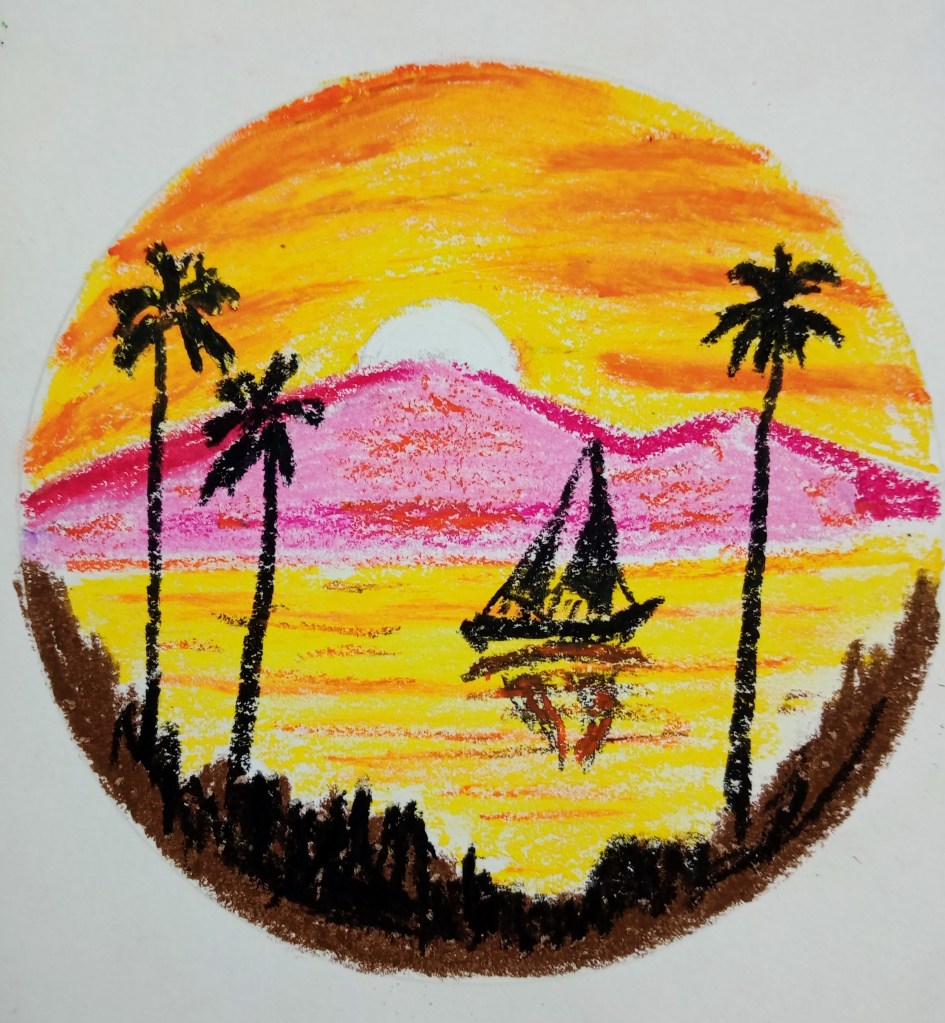
Painting by Sohana Manzoor

Mitali Chakravarty

borderlessjournal.com

Categories
A Special Tribute

Sunflowers of Resilience

With resilience, they have withstood what could have become an international disaster for all humankind — an outbreak of a Third World War. The spirit that has resisted the ongoing invasion of Ukraine is admirable. They have stayed strong without bowing, crumbling or annihilating themselves in the wake of an onslaught that hurts humanity across all borders in different degrees and creates a huge population of refugees. We gave voice to one such refugee, Lesya Bakun — not just in our site but also in our first anthology — Monalisa No Longer Smiles: An Anthology of Writings from across the World.

This year, we quest for hope towards peace, a better, more accepting world with poetry on Ukraine. One of the poems here is accompanied by art from Ukrainian artist, Maria Kirichenko. We feature some of the poems gathered on Ukraine over the year.

My friend, Maria Kirichenko by Vineetha Mekkoth. Click here to read.

Poetry by Chad Norman on Ukraine. Click here to read.

Poems by Sukrita Paul Kumar on Ukraine. Click here to read.

Poetry by Scott Thomas Outlar on Ukraine. Click here to read.

Cry of the Sunflower by Ihlwha Choi. Click here to read.

“How Many Times Must the Cannonballs Fly…?” Featuring poetry by Lesya Bakun, Rhys Hughes, Ron Pickett, Michael R Burch, Kirpal Singh, Suzanne Kamata, Mini Babu, Malachi Edwin Vethamani, Sybil Pretious and Mitali Chakravarty. Click here to read.

Categories
Contents

Borderless, December 2022

Art by Sohana Manzoor

Editorial

It’s Only Hope… Click here to read.

Conversations

Shantanu Ray Chaudhari converses with writer Gajra Kottary, a well-known writer of Indian TV series, novels and stories. Click here to read.

A discussion on Samaresh Bose’s In Search of the Pitcher of Nectar, a book that takes us to the heart of the Kumbh Mela, a festival recognised by the UNESCO as an Intangible Cultural Heritage, with the translator, Nirmal Kanti Bhattacharjee. Click here to read.

Translations

Nazrul’s Why Provide Thorns has been translated by Professor Fakrul Alam. Click here to read.

Mercy, a story be P. F. Mathews, has been translated from Malayalam by Ram Anantharaman. Click here to read.

Even A Simurgh Cannot Change Destiny, a Balochi folktale translated and retold by Fazal Baloch. Click here to read.

Confessions, a poem written by and translated from Korean by Ihlwha Choi. Click here to read.

The Sun on the First Day, a translation of Tagore’s Prothom Diner Shurjo by Mitali Chakravarty. Click here to read.

Pandies’ Corner

Songs of Freedom: Vikalangta or Disability is an autobiographical narrative by Kajal, translated from Hindustani by Janees. These narrations highlight the ongoing struggle against debilitating rigid boundaries drawn by societal norms, with the support from organisations like Shaktishalini and Pandies. Click here to read.

Poetry

Click on the names to read

Jared Carter, Sukrita Paul Kumar, Rhys Hughes, Asad Latif, Luis Cuauhtémoc Berriozábal, Santosh Bakaya, Phil Wood, Sharanya B, George Freek, Saibal Chatterjee, Jonathan Chan, Sutputra Radheye, Shambhu Nath Banerjee, Michael Burch

Poets, Poetry & Rhys Hughes

In Some Differences Between Wales and India, Rhys Hughes makes some hilarious comparisons. Click here to read.

Musings/ Slices from Life

Near-Life Experiences: Hiking in New Zealand

Keith Lyons escapes city life to find his happy place while hiking in New Zealand. Click here to read.

The Seven Grandfather Teachings

Saeed Ibrahim introduces us to Native Indian lore from Canada and shows its relevance in the current times. Click here to read.

Dismasted in Bass Strait

Meredith Stephens takes us for a sailing adventure with photographs in the Southern Hemisphere. Click here to read.

Musings of a Copywriter

In Of Mice & Men, Devraj Singh Kalsi talks of his encounters with rats. Click here to read.

Notes from Japan

In A Clean Start, Suzanne Kamata tells us how the Japanese usher in a new year. Click here to read.

Stories

Annapurna Bhavan

Lakshmi Kannan closes class divides in Chennai over a meal. Click here to read.

Two Faces of a Mirror

Tulip Chowdhury gives us a story set in a Bangladeshi village. Click here to read.

The Slip

Sushma R Doshi takes a look at the pandemic against an Indian middle-class set up. Click here to read.

Till Life Do Us Part

Devraj Singh Kalsi explores a strange new trend. Click here to read.

Essays

Orangutans & a School at Sarawak

Christina Yin, a conservationist, travels to Borneo in an attempt to create awareness for conserving the Orangutan. Click here to read.

Taiping of the Raj Era

Ravi Shankar explores Taiping in Malaysia with a camera and words. Click here to read.

Ivory Ivy & Stephen Dedalus

Paul Mirabile explores James Joyce’s Stephen Dedalus and his passion for words keeping in mind the hundred year old Ulysees & the even older, A Portrait of the Artists as a Young Man. Click here to read.

Book Excerpts

An excerpt from Radha Chakravarty’s translation of Tagore’s Farewell Song. Click here to read.

An excerpt or two short narratives from Rhys Hughes’ Yule Do Nicley. Click here to read.

Book Reviews

Somdatta Mandal reviews The Shaping of Modern Calcutta: The Lottery Committee Years, 1817 – 1830 by Ranabir Ray Chaudhury. Click here to read.

Rakhi Dalal reviews Freny Manecksha’s Flaming Forest, Wounded Valley: Stories from Bastar and Kashmir. Click here to read.

Basudhara Roy reviews Manoranjan Byapari’s How I Became a Writer: An Autobiography of a Dalit. Click here to read.

Bhaskar Parichha reviews In Search of the Divine: Living Histories of Sufism in India by Rana Safvi. Click here to read.

.

Click here to access the Borderless anthology, Monalisa No Longer Smiles

You are all welcome to the book talks of our first anthology

Categories
Editorial

Its Only Hope…

Painting by Sybil Pretious

New year, like a newborn, starts with hope.

The next year will do the same – we will all celebrate with Auld Lang Syne and look forward to a resolution of conflicts that reared a frightening face in 2022 and 2021. Perhaps, this time, if we have learnt from history, there will not be any annihilation but only a movement towards resolution. We have more or less tackled the pandemic and are regaining health despite the setbacks and disputes. There could be more outbreaks but unlike in the past, this time we are geared for it. That a third World War did not break out despite provocation and varied opinions, makes me feel we have really learnt from history.

That sounds almost like the voice of hope. This year was a landmark for Borderless Journal. As an online journal, we found a footing in the hardcopy world with our own anthology, Monalisa No Longer Smiles: Writings from Across the World, which had a wonderful e-launch hosted by our very well-established and supportive publisher, Om Books International. And now, it is in Om Book Shops across all of India. It will soon be on Amazon International. We also look forward to more anthologies that will create a dialogue on our values through different themes and maybe, just maybe, some more will agree with the need for a world that unites in clouds of ideas to take us forward to a future filled with love, hope and tolerance.

One of the themes of our journal has been reaching out for voices that speak for people. The eminent film critic and editor, Shantanu Ray Chaudhuri , has shared a conversation with such a person, the famed Gajra Kottary, a well-known writer of Indian TV series, novels and stories. The other conversation is with Nirmal Kanti Bhattajarchee, the translator of Samaresh Bose’s In Search of a Pitcher of Nectar, a book describing the Kumbh-mela, that in 2017 was declared to be an Intangible Cultural Heritage of Humanity by UNESCO. Bhattacharjee tells us how the festival has grown and improved in organisation from the time the author described a stampede that concluded the festivities. Life only gets better moving forward in time, despite events that terrorise with darkness. Facing fear and overcoming it does give a great sense of achievement.

Perhaps, that is what Freny Manecksha felt when she came up with a non-fiction called Flaming Forest, Wounded Valley: Stories from Bastar and Kashmir, which has been reviewed by Rakhi Dalal. Basudhara Roy has also tuned in with a voice that struggled to be heard as she discusses Manoranjan Byapari’s How I Became a Writer: An Autobiography of a Dalit. Somdatta Mandal has reviewed The Shaping of Modern Calcutta: The Lottery Committee Years, 1817 – 1830 by Ranabir Ray Chaudhury, a book that explores how a lottery was used by the colonials to develop the city. Bhaskar Parichha has poured a healing balm on dissensions with his exploration of Rana Safvi’s In Search of the Divine: Living Histories of Sufism in India as he concludes: “Weaving together facts and popular legends, ancient histories and living traditions, this unique treatise running into more than four hundred pages examines core Sufi beliefs and uncovers why they might offer hope for the future.”

In keeping with the festive season is our book excerpt from Rhys Hughes’ funny stories in his Christmas collection, Yule Do Nicely. Radha Chakravarty who brings many greats from Bengal to Anglophone readers shared an excerpt – a discussion on love — from her translation of Tagore’s novel, Farewell Song.

Love for words becomes the subject of Paul Mirabile’s essay on James Joyce’s Stephen Dedalus, where he touches on both A Portrait of the Artist as a young Man and  Ulysees, a novel that completed a century this year. Love for animals, especially orangutans, colours Christina Yin’s essay on conservation efforts in Borneo while Keith Lyons finds peace and an overwhelming sense of well-being during a hike in New Zealand. Ravi Shankar takes us to the historical town of Taiping in Malaysia as Meredith Stephens shares more sailing adventures in the Southern hemisphere, where it is summer. Saeed Ibrahim instils the seasonal goodwill with native Indian lores from Canada and Suzanne Kamata tells us how the Japanese usher in the New Year with a semi-humorous undertone.

Humour in non-fiction is brought in by Devraj Singh Kalsi’s ‘Of Mice and Men’ and in poetry by Santosh Bakaya. Laughter is stretched further by the inimitable Rhys Hughes in his poetry and column, where he reflects on his experiences in India and Wales. We have exquisite poetry by Jared Carter, Sukrita Paul Kumar, Asad Latif, Luis Cuauhtémoc Berriozábal, Michael R Burch, Sutputra Radheye, George Freek, Jonathan Chan and many more. Short stories by Lakshmi Kannan, Devraj Singh Kalsi, Tulip Chowdhury and Sushma R Doshi lace narratives with love, humour and a wry look at life as it is. The most amazing story comes from Kajal who pours out the story of her own battle in ‘Vikalangta or Disability‘ in Pandies’ Corner, translated from Hindustani by Janees.

Also touching and yet almost embracing the school of Absurd is PF Mathew’s story, ‘Mercy‘, translated from Malayalam by Ram Anantharaman. Fazal Baloch has brought us a Balochi folktale and Ihlwha Choi has translated his own poem from Korean to English. One of Tagore’s last poems, Prothom Diner Shurjo, translated as ‘The Sun on the First Day’ is short but philosophical and gives us a glimpse into his inner world. Professor Fakrul Alam shares with us the lyrics of a Nazrul song which is deeply spiritual by translating it into English from Bengali.

A huge thanks to all our contributors and readers, to the fabulous Borderless team without who the journal would be lost. Sohana Manzoor’s wonderful artwork continues to capture the mood of the season. Thanks to Sybil Pretious for her lovely painting. Please pause by our contents’ page to find what has not been covered in this note.

We wish you all a wonderful festive season.

Season’s Greetings from all of us at Borderless Journal.

Cheers!

Mitali Chakravarty

borderlessjournal.com

.

Click here to access the Borderless anthology, Monalisa No Longer Smiles

Categories
Poetry

Poems by Sukrita Paul Kumar

Sukrita Paul Kumar
TEDDY BEAR ON THE WAR FRONT
(News Report from Irpin, Ukraine, 2022) 
					
The teddy bear sits benumbed
presiding over the rubble
Of civilisation
Of compassion
Of humanity
A debris of fun and play

Teddy sits smirking over the  
Skeleton of the cat, her
Bones, a curled cadaver 
Her couch and cushions 
in smithereens

The house shredded by the missile 
Walls cracking and crumbling with the  
Child’s screams as shards
From the tiny throat

Teddy bear, the dumb survivor,
No arms to melt his frozen heart
Watching the carnage with
Big round buttons 
gyrated into unseeing eyes

Wrapped in grief
The gentle wool on Teddy spikes
The bristles stand stiff and sharp
Rivers of tears flow 
Into the turbulent ocean 

And a tsunami of teddy bears 
Marches into the war zone
Looking for children to comfort


TELLING VIGNETTES 
			
It’s dementia…

For grandmother
It’s a staccato war

Ends each day and
Starts the next morning again

            it is a re-wind
                     to World War II 

        the wake of bombing
        kills people seventy years later

*

Pregnant with deadly nightmares 
Moskva the missile cruiser sank

The Black Sea swallowed all her bombs 
Stuffed with a thousand deaths


*

Bullet marks on the walls
        remnants of war
people in homes behind
	unhealed  

*

Ghosts born of bombs
are stripped of death
        Sans the mortal attire 

        They live on to haunt

*


The web of nerves on
      the inert dog’s neck
             pulsates
                     with lifelessness
It’s wartime


*

More live than the forlorn dog
are the shadows of bullets on 
the walls of Irpin

Deep craters on the earth
hold silence
born of the boom

*

They are not moon craters 

       These on the earth mark 
       technology of warfare

       Massive progress
       in hunting and
       getting the big kill

Sukrita Paul Kumar, former Fellow of Indian Institute of Advanced Study, Shimla, held the prestigious Aruna Asaf Ali Chair at Delhi University. An honorary faculty at Corfu, Greece, she was an invited resident poet at the prestigious International Writing Programme at Iowa, USA. Her most recent collections of poems, are Vanishing Words, Country Drive and Dream Catcher. Her critical books include Narrating Partition, The New Story and Conversations on Modernism. She has co-edited many books, including Speaking for Herself: Asian Women’s Writings (Penguin). An Honorary Fellow at HK Baptist University, Hong Kong, she has published many translations and has held exhibitions of her paintings. Currently she is series co-editor of “Writer in Context” volumes being published by Routledge UK and South Asia.

PLEASE NOTE: ARTICLES CAN ONLY BE REPRODUCED IN OTHER SITES WITH DUE ACKNOWLEDGEMENT TO BORDERLESS JOURNAL

Click here to access the Borderless anthology, Monalisa No Longer Smiles