Six years ago, a few of us got together to bring out the first issue of Borderless Journal. We started as a daily blog and then congealed into a monthly journal offering content that transcends artificial borders to meet with the commonality of felt emotions, celebrating humanity and the Universe. Today as we complete six years of our existence in the clouds, we would like to celebrate with all writers and readers who made our existence a reality. We invite you to savour writings collected over the years that reflect and revel in transcending borders, touching hearts and some even make us laugh while exploring norms.
In this special issue. we can only offer a small sample of writings but you can access many more like these ones at our site…Without further ado, let us harmonise with words. We invite you to lose yourselves in a borderless world in these trying times.
Rebel or ‘Bidrohi’, Nazrul’s signature poem, ‘Bidrohi‘, translated by Professor Fakrul Alam. Click here to read.
Manish Ghatak’s Aagun taader Praan (Fire is their Life) has been translated from Bengali by Indrayudh Sinha. Click here to read.
Tagore’s poem, Tomar Shonkho Dhulay Porey (your conch lies in the dust), has been translated from Bengali by Mitali Chakravarty as ‘The Conch Calls’. Click here to read.
Ihlwha Choi spent some time in Santiniketan and here are poems he wrote in reaction to his observations near the ‘home of R.Tagore’, as he names Santiniketan and the Kobiguru. Click here to read Nandini.
Rituals in the Garden: Marcelo Medone discusses motherhood, aging and loss in this poignant flash fiction from Argentina. Click here to read.
Navigational Error: Luke P.G. Draper explores the impact of pollution with a short compelling narrative. Click here to read.
Henrik’s Journey: Farah Ghuznavi follows a conglomerate of people on board a flight to address issues ranging from Rohingyas to race bias. Click hereto read.
The Magic Staff , a poignant short story about a Rohingya child by Shaheen Akhtar, translated from Bengali by Arifa Ghani Rahman. Click here to read.
A Cat Story : Sohana Manzoor leaves one wondering if the story is about felines or… Clickhere to read.
When West Meets East & Greatness Blooms: Debraj Mookerjee reflects on how syncretism impacts greats like Tagore,Tolstoy, Emerson, Martin Luther King Jr, Gandhi and many more. Click here to read.
The Day Michael Jackson Died: A tribute by Julian Matthews to the great talented star who died amidst ignominy and controversy. Click here to read.
Potable Water Crisis & the Sunderbans: Camellia Biswas, a visitor to Sunderbans during the cyclone Alia, turns environmentalist and writes about the potable water issue faced by locals. Click here to read.
My Love for RK Narayan, Rhys Hughes discusses the novels by ths legendary writer from India. Click here to read.
Travels ofDebendranath Tagore: These are travel narratives by Debendranath Tagore, father of Rabindranath Tagore, translated from Bengali by Somdatta Mandal. Click here to read.
Baraf Pora (Snowfall): This narrative gives a glimpse of Tagore’s first experience of snowfall in Brighton and published in the Tagore family journal, Balak (Children), has been translated by Somdatta Mandal . Clickhere to read.
The Day of Annihilation: An essay on climate change by Kazi Nazrul Islam has been translated from Bengali by Radha Chakravarty. Clickhereto read.
Reminiscences from a Gallery: The Other Ray: Dolly Narang muses on Satyajit Ray’s world beyond films and shares a note by the maestro and an essay on his art by the eminent artist, Paritosh Sen. Click here to read.
The Bauls of Bengal: Aruna Chakravarti writes of wandering minstrels called bauls and the impact they had on Tagore. Click here to read.
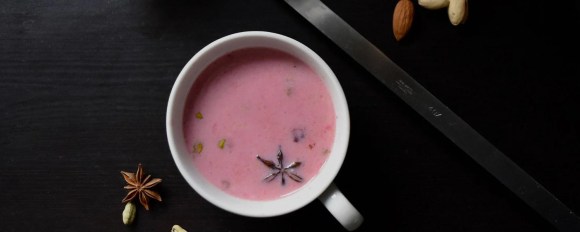
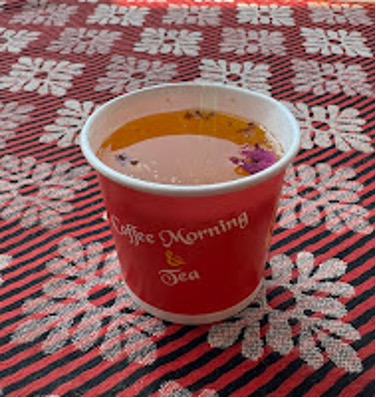
Nun chai, traditional pink tea from Kashmir. From Public Domain
The father sat across from me in a small tea shop in Srinagar, stirring his cup of nun chai. His face was lined with worry. His daughter had just enrolled in a well-known coaching centre, aiming to crack the NEET exam[1]. “The fees are high,” he said quietly. “We’ve had to dip into our savings. But what choice do we have?”
In Kashmir, the pursuit of higher education has led to a boom in private coaching centres. These institutions promise success in competitive exams, which have become almost essential for aspirants to institutions of higher learning. But this trend has brought significant financial and emotional burdens to families and students alike.
Over the past decade, Kashmir has seen a rapid increase in private coaching centres, especially in Srinagar. The cost of enrolling in these coaching centres is substantial. Fees can range from Rs50,000 to Rs150,000 per year, depending on the course and the institution’s reputation. For many families in the region, this represents a significant portion of their annual income. The financial strain is even greater when multiple children in a family seek such coaching, leading to difficult choices and sacrifices.
In theory, competitive exams are merit-based. But in reality, access to quality coaching has become a deciding factor. This has led to concerns that the system unfairly favours the wealthy. Children from less privileged backgrounds are often unable to afford the coaching necessary to compete, widening the educational divide.
The intense pressure to succeed in these exams takes a toll on students’ mental health. The relentless pursuit of high scores, coupled with the fear of failure, has led to increased anxiety and stress among students. In extreme cases, this pressure has resulted in self-harm or suicidal tendencies, highlighting the tragic dimensions of this educational race.
Another casualty of the coaching culture is the traditional schooling system. Many students attend school just for attendance and exams. The ‘real studying’ is perceived to take place in coaching classes. Some students even drop out of regular schools entirely, enrolling in “dummy” schools that allow them to focus solely on coaching. This shift undermines the holistic development that traditional schooling aims to provide.
Coaching institutes have turned into lucrative businesses. They hire aggressive marketing teams, use toppers’ faces on billboards, and charge extra for “elite” batches. Some teachers in these institutes earn significantly more than professors in universities. The focus has shifted from education to profit, raising concerns about the commercialisation of learning.
The rapid growth of private coaching centres has posed challenges for regulators. Concerns have been raised over the lack of a proper mechanism to regulate fee structures and ensure basic facilities for students. The absence of effective oversight has allowed some centres to prioritize profit over quality education, further exacerbating the issues faced by students and parents.
Addressing these challenges requires a multifaceted approach:
1. Strengthening Public Education: Improving the quality of education in public schools can reduce the dependency on private coaching. This includes enhancing infrastructure, updating curricula, and providing continuous teacher training.
2. Affordable Alternatives: Promoting online educational platforms that offer affordable or free resources can provide students with additional learning support without the hefty price tag associated with traditional coaching centres.
3. Mental Health Support: Integrating counselling services within schools and coaching centres can help students manage stress and build resilience, ensuring their well-being alongside academic pursuits.
4. Community Awareness: Educating parents and students about diverse career paths and the importance of holistic development can shift the focus from a narrow definition of success to a more inclusive one.
For now, parents will keep paying. Students will keep pushing. Coaching centres will keep expanding. And the question will remain—are we cracking an exam, or emptying our bank account?
The burgeoning private coaching industry in Kashmir reflects the aspirations and anxieties of a society striving for educational excellence. Balancing these ambitions with financial realities and mental well-being is crucial. As the region moves forward, a collective effort from educators, policymakers, parents, and students is essential to create an equitable and supportive educational environment.
.
[1] The NEET (National Eligibility cum Entrance Test) is a national entrance examination in India for admission to undergraduate medical programs.
Gowher Bhat is a published author of both fiction and non-fiction, a columnist, freelance journalist, and educator from Kashmir. He writes about memory, place, and the quiet weight of the things we carry, often exploring themes of longing, belonging, silence, and expression. A senior columnist in several local newspapers across the Kashmir Valley, he is also an avid reader and book reviewer. He believes the smallest moments can carry the deepest truths.
.
PLEASE NOTE: ARTICLES CAN ONLY BE REPRODUCED IN OTHER SITES WITH DUE ACKNOWLEDGEMENT TO BORDERLESS JOURNAL
Not Ptolemy’s Kasperia, nay, not Kashyap Mar – Kasheer is the abode of irrevocable loss. Homes razed to ground by centuries of betrayal: we stand as mute specters – the ruins and I.
Kalhana, your word is lost! Spiritual defeat has finally come to pass. The era of pit dwellers and sun worshippers is gone, And now the faithless grave worshippers abound.
“In time past, we were; in time future, we shall be; Throughout the ages, we have been,” quoth Laila Arifa. I shove back the diggers, frantic to cover the long-lost city buried in my mind.
Kasheer might have forgotten the monster Jalodbhava, Were it not for the wine bottles dangling from barbed wires. I had happily lost my memory of you, until It was revived by the fish bones on mountain tops.
The mythical, the legendary -- that Kasheer is non-existent. The snow endures longer than the memory of the dead. It’s getting way too dark. Tell me a new story– of Kasheer – the land reclaimed from the sea of sighs.
From Public Domain
Glossary
Kasperiais the ancient Greek name of Kashmir as mentioned by Ptolemy
Kashyap Mar is he abode of Kashyap, Kashmir, in Kashmiri
Kasheer is Kashmir in Kashmiri
Kalhan wrote Ratnagiri, an account of the history of Kashmir
Laila Arifa is a 14th century poetess who wrote in Kashmiri
Jalodbhava or Waterborn was a mythical demon who tormented the inhabitants of Lake Satisar in Kashmir. He was destroyed by the joint efforts of the sage Kashyap, Parvati and Vishnu. His destruction destroyed the lake and led to the formation of Srinagar, the current capital of Kashmir.
.
Saba Zahoor, an engineer from Kashmir and self-styled peasant poet, views poetry as a portal to alternate realities and has been published in several literary outlets.
.
PLEASE NOTE: ARTICLES CAN ONLY BE REPRODUCED IN OTHER SITES WITH DUE ACKNOWLEDGEMENT TO BORDERLESS JOURNAL.
There’s a kind of man who doesn’t need to announce his presence. You don’t see him on podiums, and his name rarely appears in headlines. He won’t interrupt a conversation, let alone command a crowd. And yet, if you were to trace the quiet veins of compassion that pulse through a place, you’d likely find him at their heart.
In Pulwama, that man is Gamgeen Majeed.
He doesn’t wear a badge. He doesn’t quote speeches. And yet, when someone needs a ride to the hospital, when a blood bank sends out a late-night request, or when a neighbour needs someone to listen as he’s already on his way. He doesn’t do it because he must. He does it because, for him, there is no other way.
In a time when kindness is often curated and shared online, Gamgeen’s way of living feels rare. It’s a quiet, unadvertised generosity. A way of being that seeks no witness. It is the opposite of performance as it is presence.
Gamgeen Majeed is from Pingalgam, a modest village in South Kashmir. If you ever pass through, you might notice the walnut trees, or the scent of burning wood curling up from small homes. You might see the narrow road that winds quietly through the landscape, lined with aging willows and old stories.
It’s not the kind of place you read about in books. But it’s the kind of place where lives like his are made humble, rooted, unwavering.
Gamgeen has spent decades doing what many people only dream of: living in service to others. He’s never been part of an NGO. He has no titles. There are no newspaper features with his name in bold. And yet, people remember him. Not for what he owns or says, but for the space he holds in the lives of others.
He has mopped hospital floors after storms, held hands in silence when words would only fail, and stood vigil in hospital corridors while doctors worked inside. His acts are not scripted. They are not fuelled by ambition. They arise, quietly and surely, like spring after a hard winter.
Perhaps the only visible trail of his quiet mission lies in the numbers: 207 pints of blood donated over the course of his lifetime. That number is staggering but not just for what it means physiologically, but for what it says about the man behind it.
But even numbers fail to tell the full story. Gamgeen didn’t walk into hospitals only when it was convenient. He answered calls in the middle of the night. He trekked in snow to reach clinics. He gave blood before breakfast. He often waited in hospital lobbies without being asked — just in case someone might need him.
He once said, softly and without ceremony:
“My blood is the least I can give. If it keeps someone breathing, that’s enough reward for me.”
There’s no fundraising banner that can capture that kind of thinking. No award can quite do it justice. Because his belief isn’t in acts of charity. It’s in human continuity — in being part of the thread that keeps another person alive, even if just barely.
From LD Hospital in Srinagar to the dust-covered wards of small rural clinics, Gamgeen’s blood has likely flowed through hundreds of lives. Children. Elders. Strangers. People he never met and never will. That’s the thing about quiet heroes: they don’t trace their impact. They simply live it.
It would be easy to call Gamgeen a saint or a hero. But doing so might miss the point. What makes his story remarkable is not grand achievement but his belief in small, repeatable, often unseen acts of goodness.
He visits patients he doesn’t know. He buys fruit for old men sitting alone in hospital lawns. He once stood for hours outside a labour ward because a nurse had mentioned they might need help if a donor didn’t show up. No one called him. He just showed up anyway.
There’s a term in philosophy — “ethics of care.” It speaks to a form of moral life cantered not on rules, but on relationships. It’s about showing up. Again, and again. Even when no one’s watching. Even when no one says thank you.
You might wonder where this kind of spirit comes from. Some say it’s upbringing. Others say it’s temperament. Maybe it’s both. But perhaps it’s also born from quiet observation from watching elders serve without speech, or mothers feed neighbours before eating themselves.
In the old ways of village life, compassion wasn’t taught. It was modelled. It was lived. You saw it when your uncle lent a hand to fix someone’s roof. You saw it when your grandmother lit an extra oil lamp — not for herself, but for the family next door.
It’s tempting to imagine that service comes only in certain shapes: doctors, social workers, teachers. But Gamgeen reminds us that you don’t need a role to make a difference. You don’t need an organization to help someone. You only need willingness and the courage to act.
Over the years, he’s become a sort of myth in the region — not because of anything he’s done to earn it, but precisely because he hasn’t tried to. His story spreads in whispers. A nurse tells a new recruit. A mother tells her son. A shopkeeper shakes his head in admiration when recounting how Gamgeen showed up one snowy evening, carrying warm tea and blankets for a patient’s family stuck outside.
He doesn’t knock. He doesn’t wait for praise. He just walks in, offers help, and leaves. Sometimes without even saying goodbye.
In a world where we’re often overwhelmed by scale — global problems such as climate change, mental health issues, deforestation — a man like Gamgeen is a kind of anchor. He reminds us that you don’t have to change the world to matter. You only have to show up for the person in front of you.
He reminds us that kindness doesn’t need to be viral. It needs to be real.
He reminds us that integrity doesn’t require recognition. It only requires consistency.
And perhaps, most of all, he reminds us that the greatest legacies are not built through declarations but through deeds.
We spend so much of our lives chasing light — chasing visibility, acknowledgment, a moment in the sun. But maybe the real task is not to find the light, but to let it fall where it belongs.
Because in every village, in every small place tucked away from the maps, there lives someone like him — someone who teaches, simply by living, showing that kindness doesn’t need permission.
It only needs practice.
.
Gowher Bhat is an author, columnist, freelance journalist, book reviewer, and educator from Kashmir. His work explores the human condition with depth and sincerity. He believes in the quiet power of words to inspire change and compassion.
.
PLEASE NOTE: ARTICLES CAN ONLY BE REPRODUCED IN OTHER SITES WITH DUE ACKNOWLEDGEMENT TO BORDERLESS JOURNAL
It was late evening in the Valley—the kind of dusky calm that usually tucks our village into a blanket of silence before nightfall. But that night, the situation wasn’t peaceful. It was tense, suffocating. A silence not of rest, but of retreat. A silence that echoed with the footsteps of the displaced, the sobs of children, and the distant rumble of a war edging ever closer.
Nestled along the Srinagar-Muzaffarabad Highway, my village (Sheeri) had never imagined becoming a place of refuge. But over the past few days, it had slowly transformed into a shelter—not by design, but out of sheer necessity. It wasn’t a government-built camp or an official safe zone. It was a modest private school—its classrooms stripped of desks, Its walls were painted green, and its floors were covered with modest mats. The blackboard still bore lessons from a world that now felt impossibly far away.
They came by the dozens—families from the frontier town of Uri and other nearby hamlets, fleeing the deadly storm that had erupted along the Line of Control. The shells and gunfire hadn’t spared anyone. Mothers clutching newborns, elderly men barely able to walk, children with dust in their hair and tears in their eyes—each carried with them a fear that couldn’t be packed away. Their homes? Gone or abandoned. Their cattle? Lost. Their belongings? Scattered to the wind. All they had brought with them was survival.
We did what little we could, each small act stitched together into a fragile lifeline—volunteers arriving with rations and essential supplies, neighbours wrapping strangers in donated blankets, and someone rigging a single battery-powered generator in the school courtyard to pierce the darkness—just enough light to charge phones and confirm what we already feared through shaky mobile updates: India and Pakistan were at war again.
Just as we began preparing food that night, the sky above us erupted into unnatural color—bursts of red and orange, glowing like fireworks. For a breathless second, we hoped it was a celebration somewhere far away. But the thunderous roar that followed shattered that hope. These were no celebrations. They were drones. Missiles. Rockets. Tools of destruction lighting up the sky like angry constellations.
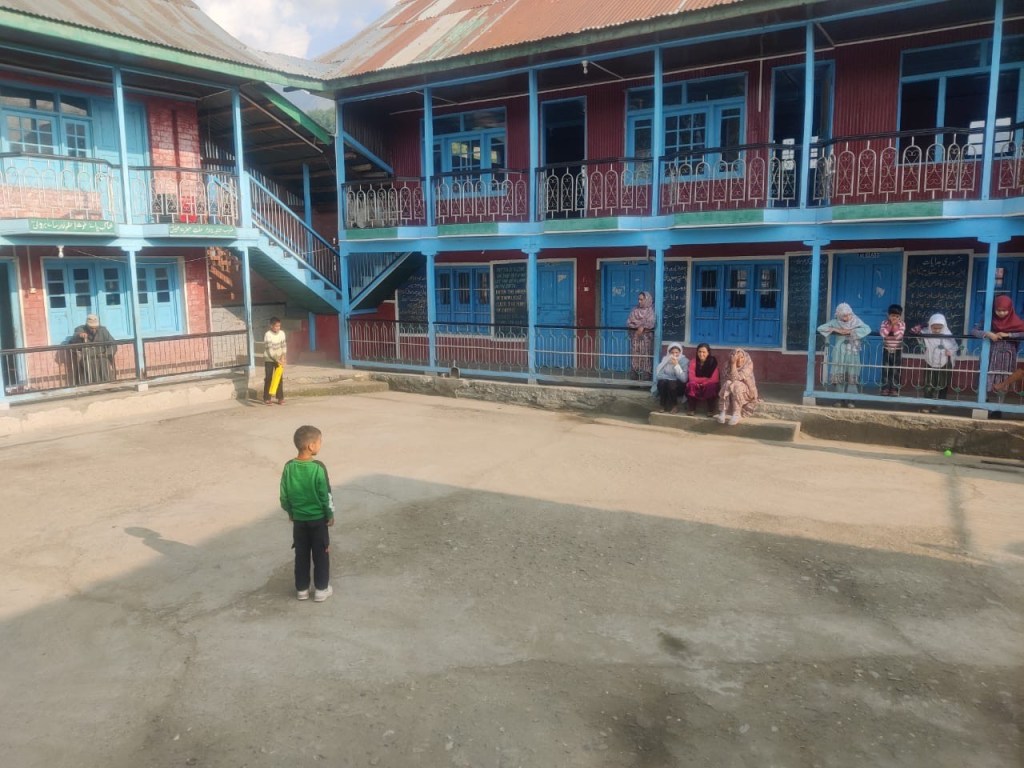
Photographs from the shelter camp: Provided by Rayees Ahmad
Panic was instant. Some people ran instinctively, nowhere in particular. Others froze. Mothers clutched children closer. Prayers spilled into the night air like smoke. The school—our fragile sanctuary—quaked with fear. And so did we.
I had heard stories of war. I had seen its images in books and on screens. But that night, war had a smell. A taste. A sound. That night, war breathed down our necks.
We stayed awake through the dark hours, huddled close under a full moon that bore witness to everything. The distant mountains glowed—not from moonlight, but from mortar fire.
The explosions echoed back and forth across the valley like angry giants arguing. Sleep was impossible. For many, so was hope.
For four harrowing days, the shelling continued. Relentless. Unforgiving. As India and Pakistan traded fire, villages on both sides were emptied. The front-lines moved like ghosts—never visible, always fatal. Each explosion wasn’t just an act of violence; it was a theft. It stole security, trust, homes, futures.
The ones who suffered weren’t the architects of war. They weren’t the men in polished suits or behind mahogany desks. They were farmers, schoolteachers, shopkeepers, daily wage earners. The ones who raised goats and crops, not guns. The ones who wanted nothing more than to be left alone.
And yet, here they were—broken by a war they didn’t start, begging for a peace that never came.
The soldiers too—barely out of their teens—were casualties in a different way. Sent to defend lines drawn generations ago, they carried weapons they barely understood, defending ideologies they didn’t create. On both sides, the blood spilled looked the same. The mothers’ grief sounded the same.
And as the bombs fell, something else collapsed quietly: Faith. Faith in leaders who promise peace and deliver bullets. Faith in ceasefires that last only until the next provocation. Faith that tomorrow would be better.
When the ceasefire was finally announced, there was no celebration. There were no cheers. Just silence—and not the comforting kind. It was the silence of disbelief, of loss too deep for words. People walked back not to homes, but to ruins. Entire communities had been reduced to ash and rubble. Crops were destroyed, livestock gone, schools turned into shelters or craters.
How do you rebuild a life when all that remains is dust?
These are the questions that haunt the air like the smoke refusing to clear —
Where should the birds fly after the last sky?
Where should we go after the last frontiers?
Where should the plants sleep after the last breathe of air? – Mahmoud Darwish
Ahmad Rayees is a freelance journalist and a fellow at Al-Sharq Youth fellow program.
.
PLEASE NOTE: ARTICLES CAN ONLY BE REPRODUCED IN OTHER SITES WITH DUE ACKNOWLEDGEMENT TO BORDERLESS JOURNAL
Tumi Kon Kanoner Phulby Tagore andAnjali Loho Morby Nazrul, love songs by the two greats, have been translated from Bengali by Professor Fakrul Alam. Click hereto read.
One Life, One Love, 300 Children : Keith Lyons writes of Tendol Gyalzur, a COVID 19 victim, a refugee and an orphan who found new lives for many other orphans with love and an ability to connect. Click here to read.
When West Meets East & Greatness Blooms: Debraj Mookerjee reflects on how syncretism impacts greats like Tagore,Tolstoy, Emerson, Martin Luther King Jr, Gandhi and many more. Click here to read.
Dilip Kumar: Kohinoor-e-Hind: In a tribute to Bollywood legend Dileep Kumar, Ratnottama Sengupta, one of India’s most iconic arts journalists, recollects the days the great actor sprinted about on the sets of Bombay’s studios …spiced up with fragments from the autobiography of Sengupta’s father, Nabendu Ghosh. Click here to read.
Are Some of Us More Human than Others ?: Meenakshi Malhotra ponders at the exclusivity that reinforces divisions, margins and borders that continue to plague humankind, against the backdrop of the Women’s Month, March. Click here to read.
Reminiscences from a Gallery: MF Husain: Dolly Narang recounts how she started a gallery more than four decades ago and talks of her encounter with world renowned artist, MF Husain. Click hereto read.
Baraf Pora (Snowfall) by Rabindranath Tagore,gives a glimpse of his first experience of snowfall in Brighton and published in the Tagore family journal, Balak (Children), has been translated from Bengali by Somdatta Mandal. Clickhere to read.
Cherry Blossom Forecast: Suzanne Kamata brings the Japanese ritual of cherry blossom viewing to our pages with her camera and words. Clickhere to read.
Two Pizza Fantasies, Rhys Hughes recounts myths around the pizza in prose, fiction and poetry, Click here to read.
An Alien on the Altar!: Snigdha Agrawal writes of how a dog and lizard add zest to festivities with a dollop of humour. Click here to read.
Where it all Began: Sybil Pretious recounts her first adventure, an ascent on Mt Kilimanjaro at the age of sixty. Clickhere to read.
Conversations
Rabindranath Tagore: A Universal Bard.: This conversation between Aruna Chakravarti and Sunil Gangopadhyay that took place at a Tagore Conference organised by the Sahitya Akademi in Kochy in 2011. Click here to read.
Sriniketan: Tagore’s “Life Work”: In Conversation with Professor Uma Das Gupta, Tagore scholar, author of A History of Sriniketan, where can be glimpsed what Tagore considered his ‘life’s work’ as an NGO smoothening divides between villagers and the educated. Click here to read. (Review & Interview).
In conversation with the late Akbar Barakzai, a Balochi poet in exile who rejected an award from Pakistan Academy of Letters for his principles. Click here to read.
Jim Goodman, an American traveler, author, ethnologist and photographer who has spent the last half-century in Asia, converses with Keith Lyons. Click here to read.
InBridge over Troubled Waters, the late Sanjay Kumar tells us about Pandies, an activist theatre group founded by him that educates, bridging gaps between the divides of university educated and the less fortunate who people slums or terror zones. Click here to read.
In Lessons Old and New from a Stray Japanese Cat, Keith Lyons talks with the author of The Cat with Three Passports, CJ Fentiman who likes the anonymity loaned by resettling in new places & enjoys creating a space for herself away from her birthplace. Click hereto read.
Fiction
Aparichitaby Tagore: This short story has been translated as The Stranger by Aruna Chakravarti. Click hereto read.
Hena by Nazrul has been translated from Bengali by Sohana Manzoor. Click here to read.
Playlets byRabindranath Tagore: Two skits that reveal the lighter side of the poet. They have been translated from Bengali by Somdatta Mandal. Click here to read.
Abhagi’s Heaven, a poignant story by Saratchandra Chattopadhyay translated by Aruna Chakravarti. Click here to read.
An Eternal Void, a Balochi story by Munir Ahmed Badini translated by Fazal Baloch. Click hereto read.
The Witch, a short story by renowned Bengali writer Tarasankar Bandopadhyay (1898 to 1971), translated by Aruna Chakravarti. Clickhere to read.
I Grew into a Flute: Balochi Folktale involving magic retold by Fazal Baloch. Click here to read.
Give Me A Rag, Please:A short story by Nabendu Ghosh, translated by Ratnottama Sengupta, set in the 1943 Bengal Famine, which reflects on man’s basic needs. Click here to read
Rakhamaninov’s Sonata: A short story by Sherzod Artikov, translated from Uzbeki by Nigora Mukhammad. Click hereto read.
The Magic Staff , a poignant short story about a Rohingya child by Shaheen Akhtar, translated from Bengali by Arifa Ghani Rahman. Click here to read.
Khaira, the Blind, a story by Nadir Ali, has been translated from Punjabi by Amna Ali. Click here to read.
The Browless Dolls by S.Ramakrishnan, has been translated from Tamil by B Chandramouli. Click hereto read.
No Man’s Land: Sohana Manzoor gives us surrealistic story reflecting on after-life. Click hereto read.
The Protests Outside: Steve Ogah talks of trauma faced by riot victims in Nigeria. Click here to read.
Flash Fiction: Turret: Niles M Reddick relates a haunting tale of ghosts and more. Click here to read.
Henrik’s Journey: Farah Ghuznavi follows a conglomerate of people on board a flight to address issues ranging from Rohingyas to race bias. Click hereto read.
Does this Make Me a Psychic?; Erwin Coombs tells a suspenseful, funny, poignant and sad story, based on his real life experiences. Click here to read.
Phôs and Ombra: Paul Mirabile weaves a dark tale about two people lost in a void. Click here to read.
A Queen is Crowned: Farhanaz Rabbani traces the awakening of self worth. Click here to read.
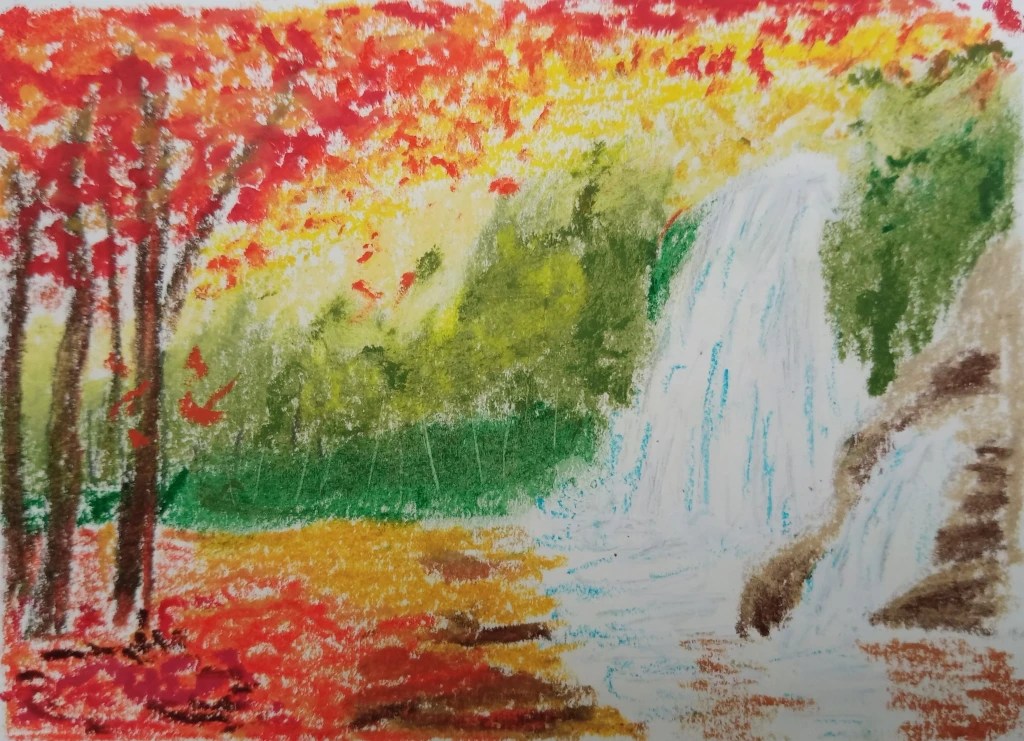
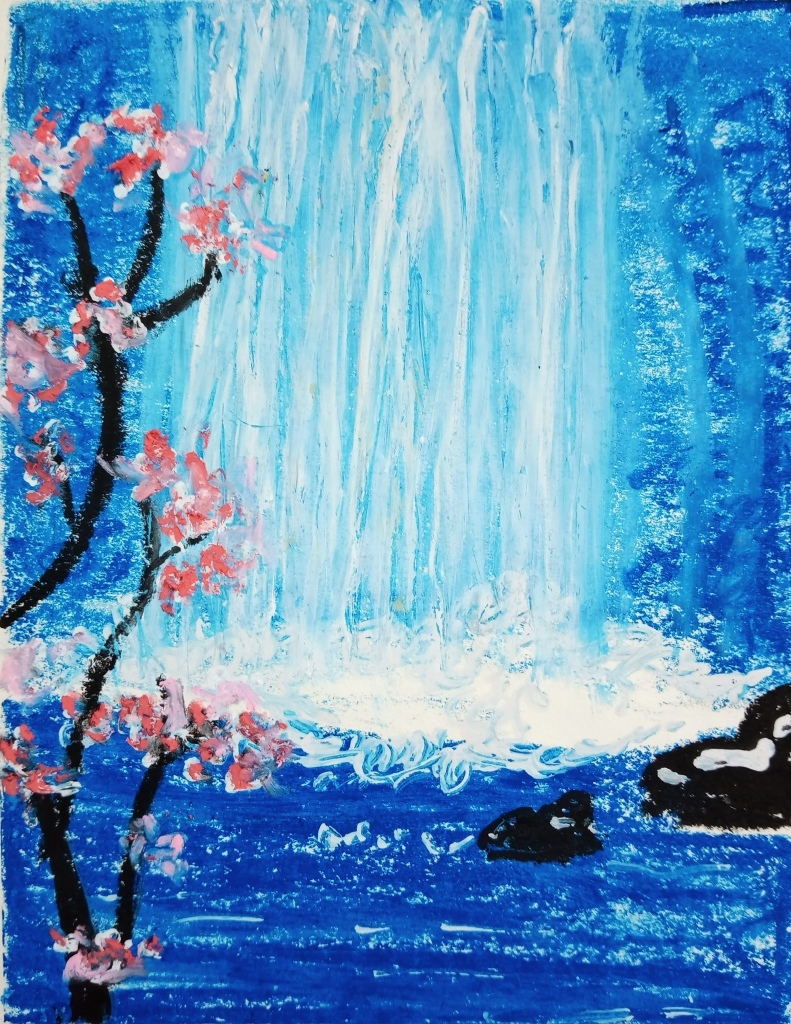
Art by Sohana ManzoorCourtesy: Suzanne Kamata Some of our visuals in 2024
As we wait for the new year to unfold, we glance back at the year that just swept past us. Here, gathered together are glimpses of the writings we found on our pages in 2024 that herald a world of compassion and kindness…writings filled with hope and, dare I say, even goodwill…and sometimes filled with the tears of poetic souls who hope for a world in peace and harmony. Disasters caused by humans starting with the January 2024 in Japan, nature and climate change, essays that invite you to recall the past with a hope to learn from it, non-fiction that is just fun or a tribute to ideas, both past and present — it’s all there. Innovative genres started by writers to meet the needs of the times — be it solar punk or weird western — give a sense of movement towards the new. What we do see in these writings is resilience which healed us out of multiple issues and will continue to help us move towards a better future.
A hundred years ago, we did not have the technology to share our views and writings, to connect and make friends with the like-minded across continents. I wonder what surprises hundred years later will hold for us…Maybe, war will have been outlawed by then, as have been malpractices and violences against individuals in the current world. The laws that rule a single man will hopefully apply to larger groups too…
Courtesy: Ratnottama Sengupta Courtesy: Farouk GulsaraSome of our visuals in 2024
Amalkantiby Nirendranath Chakraborty has been translated from Bengali by Debali Mookerjea-Leonard. Click hereto read.
The Mirror by Mubarak Qazi has been translated from Balochi by Fazal Baloch. Click hereto read.
Homecoming, a poem by Ihlwha Choi on his return from Santiniketan, has been translated from Korean by the poet himself. Click here to read.
Pochishe Boisakh(25th of Baisakh) by Tagore (1922), has been translated from Bengali by Mitali Chakravarty. Click here to read.
Nazrul’sGhumaite Dao Shranto Robi Re(Let Robi Sleep in Peace) has been translated from Bengali by Professor Fakrul Alam. Click hereto read.
Jibananada Das’sAndhar Dekhecche, Tobu Ache (I have seen the dark and yet there is another) has been translated from Bengali by Professor Fakrul Alam. Click here to read.
Tagore’sShotabdir Surjo Aji( The Century’s Sun today) has been translated from Bengali by Mitali Chakravarty. Clickhereto read.
A narrative by Rabindranath Tagore thatgives a glimpse of his first experience of snowfall in Brighton and published in the Tagore family journal, Balak (Children), has been translated from Bengali by Somdatta Mandal. Clickhere to read.
Suzanne Kamata discusses the peace initiatives following the terrors of the 1994 Rwandan Genocide while traveling within the country with her university colleague and students. Click here to read.
A story by Sharaf Shad, has been translated from Balochi by Fazal Baloch. Click here to read.
Conversations
Ratnottama Sengupta talks to Ruchira Gupta, activist for global fight against human trafficking, about her work and introduces her novel, I Kick and I Fly. Click here to read.
A conversation with eminent Singaporean poet and academic, Kirpal Singh, about how his family migrated to Malaya and subsequently Singapore more than 120 years ago. Click hereto read.
Ranu Bhattacharyya takes us back to Dhaka of the 1930s… and a world where the two Bengals interacted as one with her migration story. Click here to read.
Farouk Gulsara on a cycling adventure through battleworn Kashmir
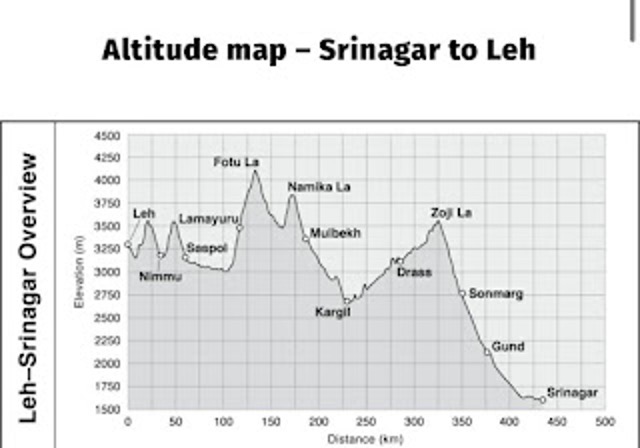
They say to go forth and explore, to go to the planet’s edge to increase the depth of your knowledge. Learning about a country is best done doing the things the local populace does, travelling with them, amongst them, not in a touristy way, in a manicured fashion in a tourist’s van but on leg-powered machines called bicycles. Itching to go somewhere after our memorable escapade in South Korea, cycling from Seoul to Busan, as the borders opened up after the pandemic, somebody threw in the idea of cycling from Kashmir to Ladakh. Long story short, there we were, living our dream. The plan was to cycle the 473km journey, climbing 7378m ascent in 8 days, between 6th July 2024 and 12th July 2024.
Our expedition started with us landing in Amritsar after a 5.5-hour flight from Kuala Lumpur. From there, it was another flight to Srinagar, where the crunch began.
Day 1. Amritsar
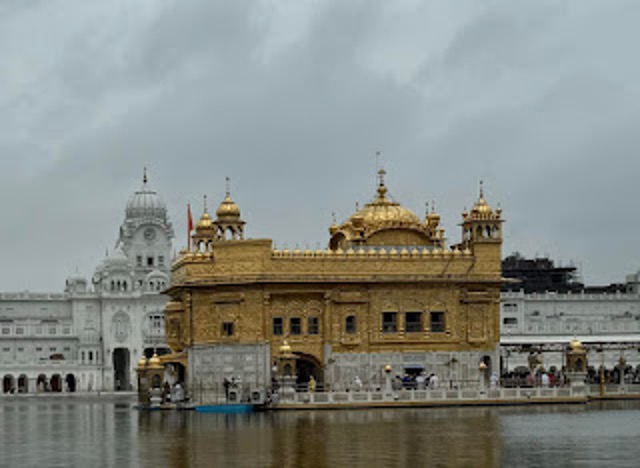
Amritsar Golden Temple. Photo Courtesy: Farouk Gulsara
After a good night’s sleep, everyone was game for a quick, well-spread breakfast and a leisurely stroll to the Harmandir, the Sikh Golden Temple. Much later, I realised the offering was 100% vegetarian and did not miss any non-vegetarian food. As a mark of respect, the vicinity around the temple complex served only vegetarian food, including a McDonald’s there. Imagine a McDonald’s without the good old quarter pounder! Hey, image is essential.
The usual showing of gratitude to the Almighty was marred by the unruly behaviour of the Little Napoleons, the Royal Guards. New orders were out, it seems, according to one guard with a chrome-plated spear and a steely sheathed dagger at his hip—no photography allowed. Then, on the other end of the Golden Pool, it was okay to photograph but only with a salutary (namaste) posture, with hands clasped on the chest. On the other side, it was alright. One can pose as he pleases. The guards were more relaxed there.
That is the problem when rules are intertwined with religion. People make their own goal post and shift it as they please. When little men are given power to enforce God’s decree on Earth, they go overboard. They feel it is their God-given raison d’etre and the purpose of existence. Since nothing is cast in stone and everyone in mankind is on a learning curve, what is appropriate today may be blasphemous tomorrow and vice versa. We distinctly remember snapping loads of pictures of the full glory of Harmandir day and night during our last visit, preCovid.
We all know what happened in the Stanford experiment when students were given powers to enforce order. It becomes ugly very quickly. Next, the flight to Srinagar.
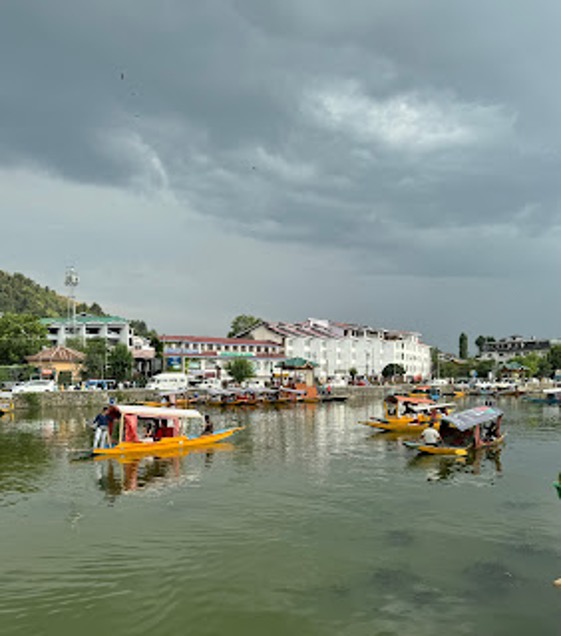
Boat House Dal Lake, Srinagar
Srinagar. Photo Courtesy: Farouk Gulsara
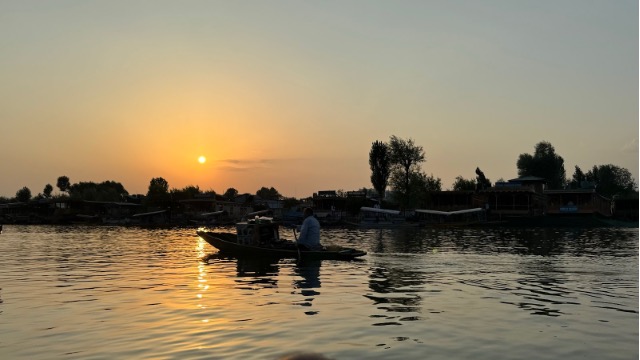
My impression differed from when Raj Kapoor and Vyajanthimala were seen spending their honeymoon boating around the lake in the 1964 mega-blockbuster Hindi movie Sangam. Then, it had appeared insanely cold, with mists enveloping the lake’s surface. Serenity was the order of the day. What I saw in the height of summer with a temperature hovering around 30C, was anything but peaceful. Even across the lake, the constant blaring of car horns was enough to make anyone go slightly mad.
The lake is a godsend for dwellers around it. Many depend on the lake to transport tourists and sell memorabilia and other merchandise on their boats. The rows of boat houses are also popular sites for honeymooners and tourists to hire. Privacy may be an issue here. Imagine small-time Kashmiri silk vendors just landing at the boat house and showing produce to the occupants. They may want you to sample their kahwa,a traditional spiced-up, invigorating, aromatic, exotic green tea.
Day 2. Boat House, Dal Lake, Srinagar
Kashmiri Kahwa, a spiced tea. Photo Courtesy: Farouk Gulsara
Early morning starts with peaceful silence until the honking and murmur of the crowd start slowly creeping in. It was a leisurely morning meant to acclimatise ourselves to the high altitude (~1500m) before we began to climb daily till we hit the highest point of ~5400m. This would — aided by prophylactic acetazolamide –hopefully do the trick to keep altitude sickness at bay.
The morning tête á tête amongst the generally older crowd was basically about justifying our trip ahead. The frequent question encountered by these older cyclists was, ‘Why were they doing it?’ The standard answer was similar to what George Mallory told his detractors when he expressed his desire to climb the peak that became Everest.
“Why? Because it is there!” Mallory had said.
The cyclists told their concerned naysayers, “Because we can!”
Yeah, the general consensus was sobering. Time was running out, and so many things needed to be done before the big eye shut. There were so many places and so little time!
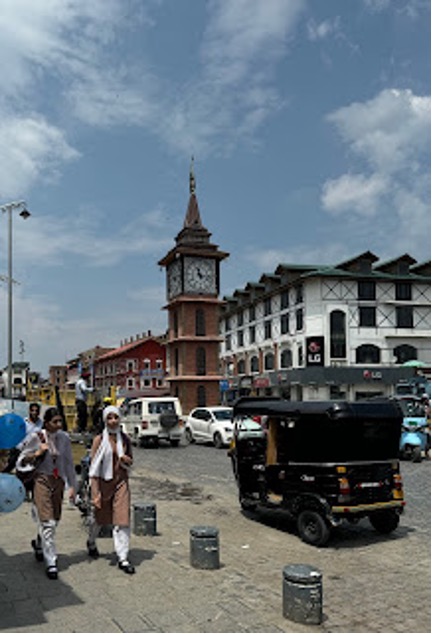
Lal Chowk. Photo Courtesy: Farouk Gulsara
Continuing the easy-peasy stance before the crunch, a trip to town was due. Backed with the symphony of the blaring of honks, we made a trip to the town square, Lal Chawk. After checking out how regular people got along with life, we realised the heavy presence of armed army personnel at almost every nook and corner of the town. Perhaps it was because it was Friday and prayers were in progress.
The return trip to our boat house was a trip down memory lane. After spending most of our adult lives in air-conditioned cars, the trip back on a cramped Srinagar town bus brought us back to our childhood, when rushing to get a place in the bus and squeezing through shoulder to shoulder in a sardine-packed bus was a daily challenge. That, too, was in the tropical heat minus the air conditioning.
By noon, temperatures had soared to a roasting 30C. So much for cool Kashmir!
Our trip coincided with the Amarnath Yatra, an annual pilgrimage for Shiva worshippers who pay obeisance to Holy Ice Lingam.
Dal Lake. Photo Courtesy: Farouk Gulsara
The evening was the time to familiarise ourselves with our machines, which involved a ride around the city. It was a nightmare of an experience where we had to simultaneously see our fronts, back, and sides. It was jungle fare. Nobody knew from which direction vehicles were going to barge at us. We survived somehow, if ever we were born in India, our most probable cause of death would be death by road traffic accident.
The ride brought us to the affluent part of Srinagar, which changed our perception of Kashmir as a war-torn zone. What we saw were nicely manicured lawns and neatly painted buildings. The only hint of disturbances is the apparent presence of armed army personnel nearby. It is said that the one single sign of peace is to see people hanging around lakes and esplanades. We did see this on this ride. Young families were strolling along the promenade to a string of shops selling potpourri of delicacies. Kashmir appeared peaceful.
Day 3. Srinagar…move it, move it…
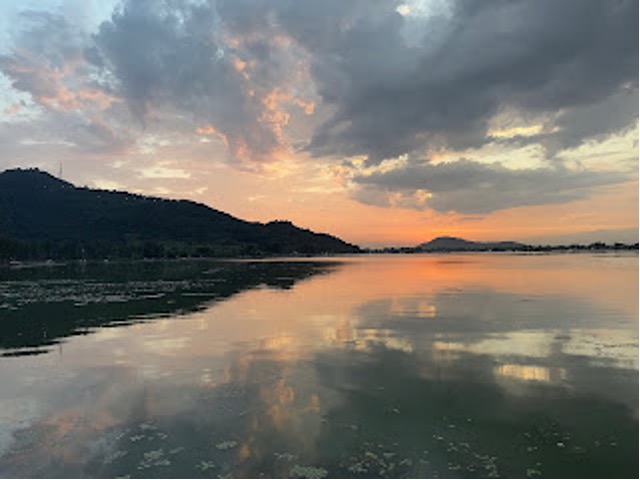
Sunset at Dal Lake. Photo Courtesy: Farouk Gulsara
It was 4am in Kashmir, and all through the night, it had been raining with occasional threats of thunder in the distance. The plan was to start riding as soon as the day broke with the first ray of the sun. That could be 5am or later. And it has probably nothing to do with Indian timing. Today’s ride would be a 90km challenging ride with an ascent of 4.5%.
All the cyclists survived the ordeal. Starting around 6am, after checking the machines and last-minute briefings, we were good to go.
We did not know that Lake Dal was so huge. The first 20km was all about going around the lake. The first stop was at Mani Gam, a picturesque countryside with a massive tributary of the Sindh River, for an early breakfast of hot milk coffee.
As expected, the traffic was heavy because of the Amarnath Yatra. But one would expect attendees of a divine voyage like this to want to exhibit tolerance, patience, and softness. Unfortunately, the ugly side of drivers was in full glory. If the rest of the world would blare their honk with all their might just before a head-on collision, here, the same action is synonymous with informing another fellow road user that he is around.
To be fair, many pilgrims were in chartered vans, and the drivers were quite aggressive, overtaking in blind corners and swerving to the edge of the roads. All in the name of making more trips and making money for the family.
Sind River at Ganderbal. Photo Courtesy: Farouk Gulsara
They say with greater powers comes great responsibility. Apparently, the lorry drivers here missed the memo. Locally, they are known as the King of the Road, with multi-octaved ear drums rupturing high-decibel honks, sometimes to the tune of Bollywood numbers.
The cyclists continued grinding despite side disturbances that can push any person raving mad; the steady climb was unforgiving. Just when they thought that was the end of the climb, they were fooled for another just after the bend. The most gruelling part was the end of the day’s trip. We rode more than 85 km, climbed a total elevation of 2692 m, and still lived to tell.
Hotel Thajwass Glacier, Sonamarg
Along Srinagar…Ladakh Highway. Photo Courtesy: Farouk Gulsara
Dinner was entirely vegetarian as a mark of respect to the hotel’s occupants who were there to fulfil their pilgrimage at Amarnath temple. The brouhaha that struck a chord amongst many occupants was the cancellation of helicopter services to the pilgrimage site. The pilgrims were given the choice of either walking a 15 or 22-km track to fulfil their vows or they could pre-book a helicopter ticket to go there. The trouble with the helicopter services is that their feasibility depended on the weather. Weather is controlled by God, the logical explanation would be that God was not too keen to give audience to the so-and-so who were scheduled on flight.
After the light chat with fellow hotel dwellers and answering their curious questions about why able bodies would want to torture themselves, it was time to hit the sack. We could have asked them why fly when they could walk, but we did not.
Day 4. Sonamarg
Sonamarg. Photo Courtesy: Farouk Gulsara
We decided to make it a day of light and easy. Everyone was left to their own devices after the spirit-sapping grind the day before. Most took a rain check on the initial hike but went for a long walk instead.
So, we took a stroll in the Kashmiri Valley, admiring the result of Nature’s choice of colours in His palette: the symphony of rushing cool mountain water and the refreshing cool breeze.
We met a couple from Chennai at the breakfast table with a sad tale. They had recently lost their only child who was born with cerebral palsy. They had to part from her after caring for their child for many years. They suddenly found plenty of free time on their hands. They decided to spend the rest of their remaining post-retirement lives doing short gigs, earning enough money to tour around and help out other families undergoing the same predicament as they did with their special child.
When we think we do not have nice shoes, we should not forget about those with no feet. No matter how big our problems seemed, others could have had it worse.
Sonamarg can be classified as a tourist town with rows of hotels on either side of the road, occasionally laced with souvenir shops and restaurants. The township appears to have been newly built, with freshly tarred roads, loose pebbles on the road shoulder, and unfinished touch-ups.
Day 5. Off to Drass
On the way… Photo Courtesy: Farouk Gulsara
We were off to Drass, the coldest inhabited place in India in winter. A quick read and one might read it as Dr-Ass, rather fitting of a name as one could use an examination of one’s derrière after a climb that was upon us. We will see you in hell. But wait, hell is supposed to be hot, is it not? Or hath hell frozen over?
At one point in the 1947-48, Drass was invaded and captured by Pakistan. Soon later, India recaptured Drass. We were only 12km from the line of control (LOC).
Hotel D’Meadow Drass
As expected, it was a gruelling ride. The first 21km were excruciatingly torturous, with narrow roads that had to be shared with the notorious motorists who thought that without the honk, one could not drive. We had to test our trail biking skills later as quite a bit of the stretch was undone or probably collapsed as a result of downpours. We were left with a sand tract and later fabricated stone tracks, which gave good knocking on our posterior ends. Remember our appointment with Dr Ass?
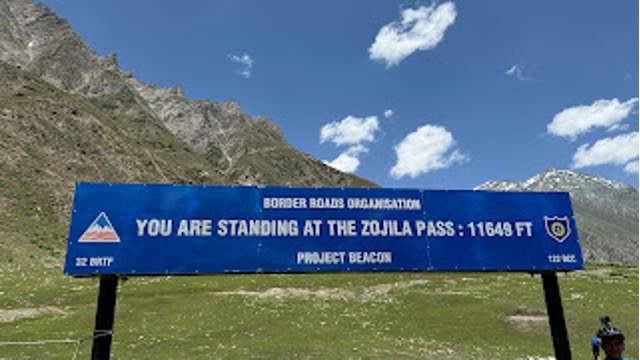
Zojila Pass. Photo Courtesy: Farouk Gulsara
After the 21 km mark, it was generally downhill, but our guide told us to unlock the mountain bike suspension for more comfort due to the violent bumping. The road improved as we entered Ladakh but was interspersed with occasional potholes that shook the machine.
After a short lunch break at a remote restaurant (referred to as a hotel), we were good to go and finally reached Drass at about 3 pm.
We had gone through the gruelling Zojila Pass. A tunnel is currently being built to connect Sonamarg and Drass. It would cut down travel from 4h to 1.5h.
Point to note: this Pass lives up to its name. When Japan was attacked by many post-nuclear attack monsters, the biggest one was referred to as Gojira. Hollywood decided to christian Gojira as Godzilla, giving rise to the meaning of gigantic as in Mozilla and Godzilla’s appetite. Zojila Gojira, what’s the difference? Both were scary.
Day 6. Drass to Kargil
Leaving the ‘Gateway to Ladakh’ and the ‘Coldest place in India’, we headed toward Kargil, which had been immortalised in annal of history when Pakistan and India fought a war in 1999.
Today’s cycling routine was less enduring compared to our previous rides. Most of the route was a downhill trend lined by dry, stony mountains on one side and the gushing blue waters of a tributary of the Indus on the other. The road condition was pretty good, with recently tarred roads, barring some stretches being tarred and resurfaced in various states.
After completing the close 60km trip to Kargil, we were told we were the fastest group the organiser had ridden with. Eh, not bad for a bunch of sixty-something madmen! Maybe they were just words of encouragement.
I was surprised to see Kargil as a bustling town with many business activities. Construction is happening here and there. Vendors were spreading their produce. Touters were busy looking for clientele. Hyundais, Marutis, and motorcycles thronged the streets, which were obviously not built to handle such tremendous volumes. Everyone was in a hurry. That is a sign of development.
We were housed in the tallest building around here. It was a four-story, four-star hotel with a restaurant and 24-hour hot water services. In most places we stayed, hot water was only supplied at short, predetermined intervals.
Day 7. Kargil to Budkharbu
The day started at about 6:45 am, with temperatures around 9C. This leg was expected to be tough. Two-thirds of our journey would be climbs, and there’d be more. It is expected to be sunny throughout, so we could expect a lot of huffing and puffing.
Today’s ride was easily the toughest one. Straddling on our saddles for 7.5 hours was no easy feat by any means. The climbs went on and on. The steepest and most prolonged ascent came after 39 km. It was a sustained climb for the next 10 km, hovering between 4% and 12% ascent.
Photo Courtesy: Farouk Gulsara
Nevertheless, we were feasted with some of the most mesmerising views of barren, arid landscapes, as though someone had painted them with hues in the brown range, occasionally speckled with malachite green and a top of sky blue. It was a feeling as if we were at the edge of heaven.
We pass through a small town called Malbech, which appears to be a Buddhist town with many temples and chanting over its public address system. I guess no one wants to keep their sacred words of God to themselves. They had a compelling desire to broadcast it to the world.
Many Shiva temples and mosques lined the road of our ride, all showing their presence with specific flags, colours and banners claiming those areas.
We finally reached Budhkharbu at 2 pm in the heat of summer Ladakh. The temperature was about 22C. The total biking time was 5h 43m. Everyone was shrivelled, depleted of glycogen and energy.
Budhkharbu is so far from civilisation that the occupants do not feel the need for digital connectivity. Only we, the town folks, were having withdrawal symptoms for not being able to upload our Strava data to earn instant gratification. Foreigners were not allowed to purchase SIM cards, so we were essentially crippled for a day.
Day 8. Padma Numbu Guest House, Budhkhorbu to Nurla
Photo Courtesy: Farouk Gulsara
Rise and shine. Rinse and repeat. Breakfast at the Guest House to a vegetarian, sorry, no eggs too, accompanied by the aroma of incense and the tune of ‘Om Jaya Jagatheeswara Hare1‘, we were good to go. I suspect the owners of this guest house were ardent BJP supporters. The keyholder to our rooms carried a lotus symbol. And the BJP mission office was their neighbour.
We were up on the saddle and ready to move by 7:15 am. The sun was already bright and shiny by then, and we were all enticed by the 26kms steep decline.
After 9 kms, we did not mind the initial steep climb traversing the unforgiving Fotula Pass. At one point, we almost reached 4,200m above sea level. Other than the occasional passerby and military barracks, there wasn’t a single inkling of life there. It was just barren, arid land for miles and miles.
64 km later, we arrived at our destination, Nurla. Nurla is a no man’s land and is not featured for first-time visitors to Ladakh. Nearby is a self-forming statue of the Sleeping Buddha and a giant statue of Maitreya Buddha. Here, the seed of the Namgyal Dynasty started. It is famous for Tibetan paintings. As temporary sojourners, we just learned and moved along.
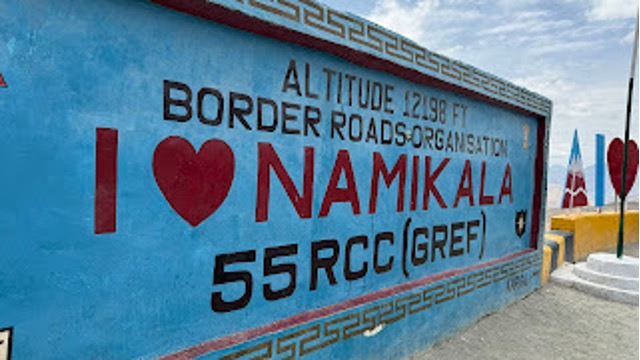
By now, we had learnt how the honking system worked. Even the brotherly advice from BRO (Border Road Organisation) advises using vehicle horns, especially at blind corners and overtaking another vehicle. At a telepathic level, the driver seems to converse with the other, ‘I can take charge of my vehicle as I overtake you. Now, don’t you make any sudden moves, can you?’ The melodious tone of honks, especially of lorries and buses, is just to liven up the monotonous journey, as do music (and movies).
Day 9.Travellers’Lodge, Nurla to Leh
We were told today’s leg would be challenging, with 85 km to cover and a steep one. Hence, we had to be up on our saddles by 5 am.
In essence, today’s outing was the toughest by far. We climbed two hills, and just when we thought everything was done and dusted, another climb to our hotel came. Overall, we covered 85km and 1672m elevation in 7h 2m.
We saw two essential tourist attractions as we approached Leh: Magnetic Hill and gurudwara. Magnetic Hill is believed to create an optical illusion of a hill in the area and surrounding slopes. The cars may be going uphill when they are, in fact, going downhill.
Sourced by Farouk Gulsara
The Guru Pathan Gurudwara is another curious worship site in the middle of nowhere. Legend has it that Guru Nanak stopped at this place, coming from Tibet and towards Kashmir. It was a Buddhist enclave. While meditating, an evil demon tried to crush him by rolling down a boulder. Hold behold, the stone turned waxy soft and did not injure the Guru.
An indestructible piece of rock was encountered while constructing this stretch of the highway. The Buddhist monks told the authorities of the legend, and the Gurudwara was erected. The Buddhists revered Guru Nanak and treated him as a great teacher.
The journey ended with a brutal, unrelenting climb to our final destination, Hotel Panorama in Leh.
The next journey the following day to Khardungla was optional. Only the young at heart opted for it. A 37 km journey with an inclination of 8% constantly with possible extreme subzero temperatures was too much to ask from my gentle heart. I opted out.
Thus ended our little cycling escapade from Srinagar to Leh, Ladakh. Few will attempt this journey with SUVs or superbikes; only madmen will do it with mountain bikes.
P.S. I want to thank Sheen, Adnan, Basil, and Samir of MTB Kashmir for their immaculate planning and supervision of the rides.
A holy chant extolling the lord of the Universe ↩︎
Farouk Gulsara is a daytime healer and a writer by night. After developing his left side of his brain almost half his lifetime, this johnny-come-lately decided to stimulate the non-dominant part of his remaining half. An author of two non-fiction books, Inside the twisted mind of Rifle Range Boy and Real Lessons from Reel Life, he writes regularly in his blogRifle Range Boy.
.
PLEASE NOTE: ARTICLES CAN ONLY BE REPRODUCED IN OTHER SITES WITH DUE ACKNOWLEDGEMENT TO BORDERLESS JOURNAL
River Indus en route to Alchi, near Village Saspol.
I pulled my cap a little lower as I started for Alchi, after getting a full can of petrol from the Leh petrol pump. It was a very new thing for me — I marvelled at how a city could have just one petrol pump, and that too for miles around. Moreover, it served the neighbouring villages as well.
To reach Alchi, I had chosen the Delhi-Srinagar route. The distance would be approximately 66 kilometres from Leh, and would perhaps normally have taken two hours, but because of my propensity to stop and admire the rivers, trees and clouds, I knew it would be more than that.
The ageing two-wheeler I had rented was the last one available, but I was just grateful just to go, even though it was with prayers in my heart for a safe journey. The interesting part was, if I wanted to go straight, I had to aim the scooter a little to the right, which in itself was a scary thing, because if I lost myself in admiring the natural beauty too much, I could end up veering to one side, risking an unwanted encounter with the huge army trucks that passed through the remote roads from time to time.
As I started, I noticed the Himalayas in the distance, the white peaks were getting covered in the fresh falling snow, right before my eyes. It seemed propitious, and I started with a smile. Passing through the straight road, repeating the simple directions in my head — follow the road, reach the village Nimmoo, then just keep going on the same road — I felt at peace somehow. It was just me, the long, straight road, the puffy white clouds and the endlessly stretch of brown mountains. And of course, the blue sky that seemed to travel with me everywhere I went.
The journey to Nimmoo was smooth, with just the sound of the wind in my ears and no network on my cell phone. At Nimmoo, I stopped for a cup of tea and some biscuits. I saw the confluence of the Indus and Zanskar rivers on the way, near Nimmoo. I paused to take in the scene — the mixing of the greenish Indus and the bright teal-coloured Zanskar creating a mesmerising palette against the browns of the mountains. Some trees created a layer of green too – I think they are poplars and willows.
As I turned around to restart the drive, across the way, I saw a lady bent over by the side of the road. She was sweeping the road free of small stones that fell from the mountains onto the path. She stopped for a drink from a metal bottle from a backpack that she was carrying. I took the opportunity to talk to her about her motivation for this hard work. She said, “I am a government servant. It’s my job to clear the roads of small stones so that travelers can drive safely. For larger stones, I call other workers who work with shovels and machines.”
I asked, “No one is watching you here; why don’t you rest for a while?” She replied with an open smile, “But I know what I’m doing; I’m watching myself. I have already taken my lunch break. I will stop before it is dark and go back to my village.” Saying this, she pointed to a place not visible from where we stood. I’m reminded that I too, should reach Alchi before dark. Bidding her a respectful and heartfelt “Julley[1]”, I again started on my way.
I passed under mountains extending over the road. I was so hypnotised by the sights and the river and the song of the wind in my ears that I did not notice the huge army truck until it passed to my right. Another foot or so and I would have been history. A little shaken, I anchored myself more firmly to the task at hand and took the final left turn towards the village. I passed a beautiful small bridge made of metal, on both sides of which were poplars turning their leaves yellow and orange. A little further, I reached a huge prayer bell mounted by the side of a road, beyond which were mountains standing like sentinels, and yaks grazing the fields.
It was idyllic and pristine. After a quick drink of water and some photos, I was on to the last leg of the journey. Finally, just as evening was about to fall, I reached the village. Entering it, I could see hay bales, shingled houses and the boundaries of houses made of grey and brown stones stacked together, and rosy-cheeked children playing under trees. With a sigh of relief, I stopped my vehicle some distance from the monastery, taking it as close as I could get. The monastery was the main reason for my visit here. It was supposed to be one of the oldest in Ladakh; made around the year 1024 by hand. Somewhere in my mind, I was also worried about the fact that the seat of the vehicle would not lock, so I could not leave anything in it. By this time, I was famished that I decided to eat first and ask at the restaurant for a homestay nearby, trusting the goodness of the human heart and leaving some of my basic stuff inside the seat of the vehicle.
The restaurant was called ‘Alchi Kitchen’ and appeared to be the only one there. As I climbed the stairs with my backpack and my camera bag, I could see the mountains, the village stretched out below and the monastery. It was surprisingly comfortable, with low seating and gleaming brass and copper cookware in the open-plan kitchen inside. I ordered a plate of Manchurian and rice and watched them make it. The owner and her two young assistants were laughing and chatting as they cooked, their actions precise and practised.
Nearby was a group of youngsters, who appeared to be done with their meal. While waiting, I walked out to the balcony, in front of which was a mountain with the setting sun glinting off it, and prayer flags on its summit waving in the wind. After a few pictures, I just stood and gazed, absorbing the peace radiating from the mountains. Nature is always a balm for the soul. The mountain seemed like an old friend somehow, familiar, whom I was meeting after a long time.
Suddenly called back from my reverie by the owner’s call, I returned inside. The meal was simple but had layers of flavours. I devoured it feeling grateful towards the people who prepared it. Once I had eaten, refusing the offer of dessert, for I truly was stuffed, I thanked the owner and her friendly assistants and asked about a homestay. They guided me to a house just to the left of the monastery complex, saying that I should tell them that Padma had sent me.
I went to the house as directed. It was a beautiful old wooden three-storied house, with a big courtyard and trees all around. All the evidence of the busy and full household could be seen in the yard – a child’s bicycle, many pairs of shoes, sandals and rubber slippers, flowers planted in pots, random jars and even cut-off plastic bottles, clothes drying on a clothesline and some puppies and chickens playing in the lawn. Such a scene of blissful domesticity!
I asked the homeowner who was just coming out of the house if it was indeed Tsering Dolma’s house. He confirmed and asked if I needed a room. I affirmed that but added a request to see the room before I finally decided. He led me inside, up two flights of stairs, and showed me to a room which had windows from top to bottom, along two walls. These opened out into the backyard, that had a view of the monastery, the river Indus flowing behind it and the mountains beyond it.
I immediately said “Yes!” In all my 30 years of age, I had never once travelled or stayed alone anywhere, let alone at such a remote location, where even the mobile reception was sketchy! However, there was something about this place that seemed so comforting and welcoming, with a feeling of déjà vu.
Smiling, the friendly Tsering asked if I would like some butter tea. Although it was slightly late to be having tea, I could not resist his sweet smile and graceful manner and agreed. He asked his grandson to request his mother for two cups of tea for us. Having kept my stuff in the room, I washed my hands and face and came out. Tsering was sitting in the upstairs sitting room, which had beautiful low seating in front of hand-carved windows. The windows looked out over their lawn studded with apple and apricot trees.
Somehow, it was very easy to talk to Tsering, regardless of his age – he was a grandfather, and we were from such different backgrounds and our life experiences were diverse, yet there was a common thread of humanity and communion that linked us. I had found that people in Ladakh were open-hearted, warm and welcoming if we were friendly. I had never been very outgoing myself, but faced with such spontaneous acceptance, it was hard not to be receptive and equally responsive. Tsering told me about his family and his children’s studies, and we were discussing Ladakhi culture and life at Alchi when his daughter-in-law brought our tea. Smiling shyly, she placed the teacups on the hand-carved table. Tsering asked her to join us, but she said that since dinner was almost ready, she had better take care of that. She did stay, however, to tell me proudly about the children, aged five and two. The older boy I had already met; the younger — a daughter — was playing with her grandmother. After chatting with them both, I asked them if I it was safe to stroll outside for a while. He said that it was perfectly safe and that I could walk around, but to be sure to take a flashlight, or my mobile, as there were no streetlights there.
I took my phone and went outside. The street had small houses on both sides. In one, some women were lighting a clay lamp in a small alcove in front of their house, while chanting something which seems extremely melodious. The scene seemed out of this world, so removed from my usual life. I slipped into this new reality, which seemed far more real than from what I had left behind.
I looked around. The sky was full of stars. The chill breeze was interrupted with the scent of food being cooked in kitchens all around. I took a deep breath and rooted myself deeper into the present moment.
From somewhere came the smell of incense. I walked slowly through the short lane, looking up at the endless sky from time to time. After a slow walk around the monastery walls, I was back at the homestay. Skipping dinner in favour of a light soup served in their kitchen, I chatted a little with the family and then slept early, for I planned to catch the morning light for my photographs.
In the morning, I am woken up by birds outside my window. There were only three sounds I heard – the birdsong, the sound of chanting, and the sound of bells from the monastery. I got up and after freshening up, went out to find Tsering waiting outside in the hall. He said that breakfast could be ready soon and that if I went to the monastery early, I might catch the morning prayers there.
After a sumptuous breakfast of homemade khambir[2] and homemade apricot jam (made by Tsering’s family and even supplied to many shops and emporiums at Leh), along with piping hot butter tea, I went down to the lawn. I found Tsering’s grandchildren playing there with their friends. Enchanted by their animated play, I sat there for a while, clicking them after taking Tsering’s permission. Then I went to the monastery.
The street en route was being readied for the day’s market — people were setting up tables and taking out handmade wares — jewelry, masks, bronze statues, shells and more. As I entered the grounds of the monastery, a deep silence seemed to calm my being. Walking straight down to the main temple, I could feel the history of the place, soaked in the meditation and prayers of so many people.
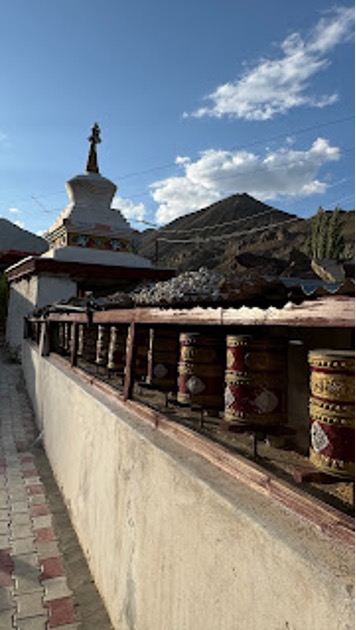
I went inside, where there was a tall painting of the Buddha, decorated with gold leaves. I looked up at the wooden rafters. I thought how long ago, the common people would have crafted this by hand. I went around with my hand on the prayer wheels placed along one wall of one of the smaller buildings there.
Afterwards, as I stood there looking at a small boy praying with his mother, I tried to feel the stillness inside me. It was something new; a total contrast to the constant activity that was my norm. After sitting there to my heart’s content, I started to circumambulate. A local woman’s two-year-old was doing the same. The child was imitating her mother, who I noticed was not forcing the child to do anything. Little Amo, for that was her name, smiled at me shyly from behind her mother’s legs. I photographer too. When I said that I admired that she was not pushing her child to do anything, she replied that she was proud of her culture and religion and would just like to present them to her daughter and let her make her own choices. It was okay if she chose a different life, but at least she would do so knowing the alternative.
Amazed and humbled by the generosity of spirit of a young mother in such a remote place, I followed her as she finished her circumambulations. On my third round around one of the corners of the monastery complex, I felt this sudden urge to go down to the river Indus flowing behind the building. After I was done at the monastery, saying bye to Amo and her mother, I asked for directions and people guided me to a tiny lane going down the hill, behind some houses, right down to the riverbed.
I was thankful I was wearing my sports shoes and not the pair of sandals I had also brought. Walking down was a little harder than I had thought, and I was slightly out of breath by the time I reached the grey, stony bed of the mighty Indus. Taking off my shoes, I descended to the edge of the river. It turned out to be a wise choice, for the stones were a little slippery, being rounded and shaped over centuries by the river. I scooped up some handfuls of the river water and drank, excited about being in aa place I had only imagined in my wildest dreams. The water, as I brought up my hand to my mouth, sparkled, giving off rays of reflected light from the morning sun. It cooled my hand. I took a few pictures. Then keeping aside my camera, felt like sitting and meditating beside the slowly flowing river.
The flow rushed and slowed down in certain spots as the river wound around big grey rocks on its path. I sat to listen to the gentle gurgle and sounds of the ebbs and flow and lost track of time. After some time, I sensed another presence and opened my eyes. I saw a stranger a little distance away, setting up his tripod and making slow changes by trying to balance it on the rocks. He was wearing an orange sweater with a loose black jacket over it, jeans and a pair of those sandals that serious trekkers wear. He had extremely curly black hair and appeared to be lost in what he was doing. However, as if he sensed my gaze, he turned my way and smiled. As I rose, I could sense my heart decide that I would trust this person; I felt as if we had already met, or rather known each other for ages. Something in his eyes spoke to my soul in a way that was both soothing and familiar. I knew I could trust this person; he was no stranger — my soul recognised him.
He simply said, “Nice to meet you. I am Kabir.”
“I am Shivani. Same here.”
“Sorry to disturb your meditation.”
“No, you did not disturb me; I just felt your presence.” I responded.
He smiled and asked if I could help him position the tripod and focus his camera for a few pictures and videos. I agreed to help, and sitting as he directed, let him set the focusing timer on this camera, so he could take my place and shoot himself sitting in meditation along the riverbank.
He asked me to arrange some flat stones that are symbolic of a prayer to the elements. I was a little hesitant but when he said that the video would only show the stones and my hands, not my face, I relaxed and let him take his shots. After he finished, we sat there for a long while, sometimes speaking, most often just sharing the silence.
I did not want the meeting to end somehow. I sensed that he was feeling the same; he asked me where I was staying. I told him; he said that he had just put his stuff there too, that very morning, and came directly to the riverside. He must have arrived after I had already left for the monastery.
This meeting had a sense of déjà vu, a synchronicity to it. As we got up to go back to the homestay for lunch, our eyes met. For some seconds, the sound of the rushing river, the insistent wind and the distant bird calls all faded away and it seemed as if I was in a vacuum stretching across time, with just the two of us. I knew that this was a new beginning of an old connection. He felt something too, and we started walking in companionable silence, comforted by the shared upswing of so many emotions. The sense of having done this before created a bridge between our souls, across time and beyond. I felt I was finally home.
Shivani Shrivastav is a a UK CGI Chartered Secretary and a Governance Professional/CS. She loves meditation, photography, writing, French and creating.
PLEASE NOTE: ARTICLES CAN ONLY BE REPRODUCED IN OTHER SITES WITH DUE ACKNOWLEDGEMENT TO BORDERLESS JOURNAL







 Borderless