The Bengali poet, Kazi Nazrul Islam (1899-1976), is widely remembered as the fiery iconoclast who fought against the structures of oppression and orthodoxy. The iconic bidrohi or ‘rebel poet’ of Bengal, Nazrul continues to be loved for his songs and poetry that were aimed at arousing the rebellious spirit of both Hindus and Muslims alike. But what of his prose, his journalism, and his politics? Selected Essays reveals to us the extraordinary versatility of Nazrul as a writer, thinker, and activist. Addressing subjects as diverse as social reform, politics, communal harmony, environmental concerns, education, aesthetics, ethics, and philosophy, this rich collection showcases Nazrul’s dynamic vision and unique use of language as an instrument of change. The essays chart his evolving consciousness as a thinker, writer, and activist, offering vivid glimpses of the ethos of his times, his relationships with leading figures such as Tagore and Gandhi, and his active engagement with social, political, and cultural processes.
Of the forty-one essays selected here, (three undated), the first thirteen are all written in different places all in the year 1920. That was the year Nazrul returned to Bengal after serving in Karachi during World War I as a member of the Bengal regiment of the colonial British army. Reacting to the Jallianwallah Bagh massacre he writes, “May the Dyer monument never allow us to forget Dyer’s memory” because on that occasion Hindus and Muslims embraced each other and wept together as brothers. They shared the same agony as children of the same womb. In ‘Strike’, he praises the social awareness that has swept among the ranks of the labouring class and believes that the “protest is not just a rebellion, but the death-bite of the suffering, moribund class”. When some migrants were fired upon after a clash with the armed police at a place called Kanchagarhi, he asked in ‘Who is Responsible for the Killing of Migrants?’, whether anyone can ever tolerate such injustice towards humanity, conscience, self-respect and independence and states that they are no longer going to passively accept such assaults. ‘Awakening Our Neglected Power’ contends that democracy or people’s power cannot be established in our country because of the oppression inflicted by the Bhadra[1] community.
There are several essays in which Nazrul speaks about the state of National Education, he envisages ‘A National University’, and in a very powerful piece that he wrote from Presidency Jail in Kolkata on 7 January 1923, titled ‘Deposition of a Political Prisoner’ he reveals his self-confidence:
“If anything has struck me as unjust, I have described it as injustice, described oppression as oppression, named falsehoods as falsehood. …For that endless mockery, insults, humiliation and assaults have been rained on me, from within my home and beyond. But nothing whatsoever has intimidated me into dishonouring my own truth or my own Lord. No temptation has overpowered me enough to compromise my integrity or to diminish the immense self-satisfaction gleaned through my own endeavours…. I repeat, I have no fear, no sorrow. I am the child of the elixir of immortality.”
Nazrul grew up in a traditional religious environment, yet in his writings he drew upon both Hindu and Islamic sources, and expressed a faith that transcended the limits of any single religion. In several essays, he harps on the problems of Hindu-Muslim amity and enmity and warns us about “this hideous business of purity of touch and untouchability”. He wants only humans to live in India as brothers and wants everyone to be wary of the terrible deceptions created by both the religions.
In the essay ‘Temple and Mosque‘, he states that both parties have the same leader, and his real name is Shaitan, the Devil. Written in response to the communal riots that broke out in Kolkata on 2 April 1926, he feels that those very same places of worship that ought to have been bridges between heaven and earth are instead causing harm to humanity today, and so those temples and mosques should be broken down. In another essay titled ‘Hindu-Muslim’, penned the same year, Nazrul talks about the question of an internal tail in human beings. He says, “There’s no telling what animal excitement lured the human mind to discover a substitute for tails in the beard or tiki[2]!” He further elaborates:
“Both Hindu and Muslim ways of life can be tolerated, but their faith in tikitwa and daritwa, the orthodox ways of tiki and beard, is not to be borne, for both instigate violence and killing. Tikitwa is not Hindutwa, it is perhaps punditwa, the way of the pundit! Likewise, the beard, too, is not Islamic, it is mullatwa, the way of the mullah. These two types of hair tufts, marked with religious dogma, are precisely the reason for all the conflict and hair-splitting we witness today!”
Though it is not possible to discuss all the different editorials, book reviews, and political pieces that are included in this collection, one must mention at least two essays that speak about literary issues as well. In 1932, Nazrul wrote for Patrika (subsequently reprinted in Bulbul the following year), an interesting piece titled ‘World Literature Today’. In it he states that there are two kinds of writers present in the world today and their different tendencies have assumed immense proportions.
“Ranged on both sides are great war heroes, champion charioteers of the battlefield. On one side are the dreamers, such as Noguchi, Yeats and Rabindranath, and on the other, Gorky, Johan Bojer, Bernard Shaw, Benavente and their ilk.”
But Nazrul’s ire in being ostracized comes out clearly in ‘A Great Man’s Love Is a Sandbank’ (1927), where he criticises the high-handedness of Rabindranath Tagore. He begins by telling us how he was a prisoner of state at the Alipore Central Jail when he was informed by the assistant jailor that Tagore had recognised Nazrul’s talent and dedicated his play Basanta to him. The other political prisoners present there had laughed at him not in joy but in incredulity. For him, the blessing turned into a curse. His very close friends and state prisoners also turned away from him. He realised what massive internal damage this outward gain had caused him. Busy with his political agenda, he didn’t have the time to sit and meditate as advised several times by Tagore. So Nazrul writes, “I find that the brighter my countenance shines in this glory, the darker some other famous poets’ faces seem to appear.” He mentions that he had grown accustomed to police torture but when literary personages begin to torment one, their brutality knows no bounds. “Alas, O youthful new literature!” His crime was that young people celebrated his work. He laments further,
“That Kabiguru[3], revered by both parties like the grandsire Bhisma, should assent to this plot of killing Abhimanyu, is the greatest sorrow of our times. …As for me, I have discarded that topi–pyjama—sherwani–beard look[4], only out of fear of being mocked as a ‘Mia Saheb’. But still there is no respite for me…. Now we get the feeling that the Rabindranath of today is not the same Rabindranath we have always known.”
That the trajectories and beliefs of Tagore and Nazrul went in the opposite direction is well- known. In the essay, Nazrul then further continues his complaints against Tagore. He questions whether they have been considered as his enemies, simply because they didn’t go to him frequently. Also, since the goddess of wealth blessed him, Kabiguru did not know what dire poverty the new writers had to struggle against, languishing in conditions of starvation or semi-starvation. So, he humbly requests Kabiguru not to sprinkle salt on their wounds by mocking the impoverishment that is their singular affliction, for that is one form of heartlessness that they cannot tolerate.
Of the last three essays written in 1960, namely, ‘The Science of Life’(where men “are surrounded by all sorts of travails and sufferings, and many of them cannot be alleviated”), ‘A Point to Ponder’(where the nation faces an immense problem regarding the dispute about the instructions and procedure for the worship of the mother, the Bharatmata, our Mother India) and in ‘What We Need Today’, Nazrul speaks of the necessity of a “vast tumult in India”. Making his readers aware of the vast duplicity and trickery in the name of religion, he warns that unless one avoids the baseness of being subjugated by an external power, there is no prospect of heaven for us, only the grotesqueness of hell. He wants the kalboishakhi, the wild summer storm, to “approach in all its fury, rearing his head like a hooded serpent swimming in the unchecked torrents of an ocean of blood” and sweep everything away.
Before concluding one should also make a few comments on the translation. As a veteran translator, Radha Chakravarty, has successfully managed to transcreate some very difficult Bengali idioms, cultural nuances and analogies that Nazrul used in some of his essays. As she admitted in the Introduction, “[T]ranslating Nazrul’s prose proved to be a challenge, as demanding as it was exhilarating. …The endeavour demanded experiment and creativity rather than mechanical lexical ability and involved some difficult choices…Literal translation has been avoided, with greater focus on the sense, emotion, intellectual import, rhetorical features and stylistic particularities of the Bengali source texts.” She further adds that the present translations stemmed from a desire to bring Nazrul’s essays to a contemporary audience in South Asia and the rest of the world, to draw attention to his literary achievement as well as his significance as a writer, thinker, activist, and visionary. Though a lot of research and translation projects on Nazrul has been going on in Bangladesh for quite some time (where he holds the status of National Poet), in India, especially in West Bengal, the response is still rather lukewarm. Hence this volume is strongly recommended as a collector’s item.
[1] Literally decent but here indicates the bourgeoisie.
Once more, Ratnottama Sengupta explores the contemporariness of Tagore ….
In empathy with Kolkata’s heatwave in April 2024
The continuing heatwave in Kolkata that has defied the geographical reality of Kaal Baisakhi — the norwester that brings relief to sun-scorched beings — prompted me to continuously hum this Tagore song in Brindavani Sarang Raag, written in 1922.
Darun Agni Baaney Re...
(Shafts of Fire)

Shafts of fire pour thirst on us --
Sleepless nights, long scorching days,
No respite in sight!
On withered branches,
A listless dove wails
Droopy doleful notes...
No fear, no scare,
My gaze is fixed on the sky,
For you will come in the
Form of a storm,
And shower rain on scorched souls.
And as I kept singing the song first penned in Santiniketan, I marvelled at the creativity of the giant whose words are true to this very day, more than 100 years later!
Kaal Baisakhi, the nor’wester known in Assam as bordoisila, is a localised rainfall and thunderstorm event which occurs in the Indian states of West Bengal, Bihar, Jharkhand, Odisha, Tripura, and Assam as well as in Bangladesh during the summer month of Baisakh (April 15-May 14). This first month of the Bengali calendar also saw the birth of Rabindranath Tagore. These storms generally occur in the afternoon or just before sunset, when thick dark black clouds appear over the sky and then bring gale-speed wind with torrential rain, often with hail, but spanning only a short period of time.
Kalbaisakhi
Tagore’s love for Nature had compelled him to set up in Santiniketan open air classrooms, where students would learn sitting on the ground in the bower, under trees where birds would chirp and gentle breeze would caress their tired brows.
And, his involvement also expressed itself in the 293 songs he wrote in the segment titled Prakriti (nature) Parjaay. There are songs about nature in general. But he himself further classified the songs under subsections — Upa parjaay — that focus on the six seasons: grishma (summer), barsha (Monsoon), sharat( early autumn), hemanta (late autumn or early winter), sheet (winter), basanta (spring).
Tagore clearly was taken up by the wild beauty of monsoon with its dark clouds and thunderous showers. For, he wrote 150 songs on the drops of nectar from the heavens, while summer elicited a tenth of this number! If this is half the number celebrating sharat, the festive season of Durga Puja, it is thrice the number dedicated to hemanta, the confluence of autumn and winter.
I take heart in the fact that Grishma subsection includes Chokkhe aamar trishna, Ogo trishna aamar bakkho jurey… [1]
Thirst fills my eyes, Dear,
Thirsty is my heart too...
I'm a rain-starved day of Baisakh
Burnt by the sun, heat stroked.
There's a storm brewing
In the ovenated air..
It sweeps my mind into the distance.
It rips me of my veil.
The blossom that lit up the garden
Has withered and fallen.
Who has reined in the stream
Imprisoned in heartless stone
At the peak of suffering?
And then, when it rained? The torrents poured balm on the angry burns. The fleet-footed lightning seared the heart of the cloud-covered darkness and extracted the nectar-like flow…
It assured us that no hardship lasts forever. It reiterated faith in the eternal words, “This too shall pass!” And, for me? It confirmed Tagore’s words that “You will come in the form of a storm and shower rain on scorched souls…”
Tagore lives on, 163 years after he came. In his words. In his imagery. In his empathy with every human situation…
[1] Thirst fills my eyes, Dear, /Thirsty is my heart too…
Ratnottama Sengupta, formerly Arts Editor of The Times of India, teaches mass communication and film appreciation, curates film festivals and art exhibitions, and translates and write books. She has been a member of CBFC, served on the National Film Awards jury and has herself won a National Award.
.
PLEASE NOTE: ARTICLES CAN ONLY BE REPRODUCED IN OTHER SITES WITH DUE ACKNOWLEDGEMENT TO BORDERLESS JOURNAL
Narrative by Debendranath Tagore, translated from Bengali by Somdatta Mandal
Note from the Translator
Debendranath, Father of Rabindranath Tagore
Born to Dwarkanath Tagore in Shelaidah, Debendranath Tagore (15 May 1817 – 19 January 1905) was a Hindu philosopher and religious reformer. One of the founders of the Brahmo religion in 1848, his journey in the role of ‘Maharshi’, the great ascetic, was an attempt to spread the Brahmo faith and he travelled extensively to various places, especially in different parts of the Himalayas like Mussourie, Shimla, Kashmir, and Dalhousie. He even constructed a house in Bakrota called ‘The Snow Dawn’ where he used to reside for months. Although Debendranath was deeply spiritual, he managed to continue to maintain his worldly affairs — he did not renounce his material possessions, as some Hindu traditions prescribed, but instead continued to enjoy them in a spirit of detachment. His considerable material property included estates spread over several districts in Bengal. Debendranath was a master of the Upanishads and played no small role in the education and cultivation of the faculties of his sons.
In his memoir, Jeevan Smriti [Memories of Life], Rabindranath also narrates in detail about his trip with his father in the Himalayas when he was just eleven years old. Debendranth founded the Tattwabodhini Patrika (1843) as a mouthpiece of the Brahmo Samaj and apart from his autobiography, wrote several other prose pieces which also reveal his wanderlust.
Among the two entries included here, we have ‘Moulmein Bhraman’ which is an interesting travel piece narrating his sojourn in Burma in September/October 1850. In the Chaitra 1817 Saka issue of Tattwabodhini Patrika, a travelogue ‘Mori Bhraman’ narrating Debendranath’s trip to Mori was published. Interestingly, as a prologue to this piece Sri Chintamani Chattopadhyay tells us that he was so enamoured after listening to Debendranath’s oral narration of the trip undertaken 28 years earlier, that he decided to transcribe it for the satisfaction of the readers.
Moulmein Bhraman (Travel to Moulmein)
After a year, the splendour of autumn revealed once again and the desire to travel blossomed in my mind. I could not make up my mind where to go for a trip this time. I thought I would make a trip on the river and so went to the bank of the Ganges to look for a suitable boat. I saw that several khalasis — dockyard workers – of a huge steamer were busy at their work. It seemed that this steamer would soon set sail.
“When would this steamer go to Allahabad?” I asked them.
In reply they said, “Within two or three days this will venture into the sea.”
On hearing that this steamer would go to the sea, I thought that this was the easiest way my desire for a sea journey could be fulfilled. I went to the captain instantly and rented a cabin and in due time boarded that steamer to begin my sea journey.
I had never seen the blue colour of the sea water before. I kept on watching the beautiful sights by day and night amid the continuous bright blue waves and remained immersed in the glory of the eternal spirit. After entering the sea and swaying with the waves for one night, the ship dropped anchor at three o’clock the next afternoon. In front of us, I saw a stretch of white sand and something that looked like human habitation. So, I took a boat and went to see it. As I was wandering about the place, I saw a few Bengali men from Chittagong with charms around their necks coming towards me. I asked them, “How come you are here? What do you do?”
“We do business here. We have procured the idol of Goddess Durga in this month of Ashwin[1],” they replied.
I was really surprised to hear that they celebrate Durga puja here in Khaekfu town of Burma. Durga puja was celebrated even here!
From there, I came back to the ship and started towards Moulmein. When the ship left the sea and entered the Moulmein River, I remembered the scene of leaving Gangasagar Island and going into the Ganges River. But this river did not offer any such good scenery. The water was muddy and full of crocodiles; no one bathed in it. The ship came and dropped anchor at Moulmein. Here a Madrasi resident called Mudeliar came and greeted me[2]. He came on his own and introduced himself. He was a high-level government official and a true gentleman. He took me to his house, and I remained a guest there and accepted his hospitality for the few days I stayed at Moulmein. I stayed very comfortably in his house.
The streets in the city of Moulmein were wide and clean. The shops that lined both sides of the street selling different kinds of things were all manned by women. I bought a box, and some very fine silk clothes from them. Going around the marketplace I went to the fish market at one time. I saw big fish for sale displayed on huge tables.
“What are these big fish called?”
They replied, “Crocodiles.” So, the Burmese ate crocodiles; they spoke verbally about ahimsa and the Buddhist religion, but their stomachs were filled with crocodiles!
One evening when I was wandering on the wide streets of Moulmein, I saw a man walking towards me. When he came close, I understood that he was a Bengali. I was quite surprised to see a Bengali there. From where did this Bengali arrive across the ocean? It seemed there were no places where Bengalis did not go. I asked him, “From where have you come?”
“I was in trouble and so came here,” he replied.
Instantly I understood his trouble[3]. I asked him further, “How many years of trouble?”
“Seven years,” he replied again.
“What did you do?”
“Nothing much. I just duplicated some papers of a company. Now my term is over, but I cannot go home because I do not have the money.”
I offered to give him the passage money. But how will he go home? He had set up a business, had got married, and was living quite comfortably. Would he ever go back to our country to show his shameful black face there?
Mudeliar told me that there was a mountain cave here which people went to visit[4]. If I wished he would accompany me there. I agreed. On the first moon night[5], he brought a long boat during the high tide. There was a wooden cabin in the centre of that boat. That night, Mudeliar, I, the captain of the ship and seven or eight other people boarded the boat and it left at two o’clock at night. We sat up for the whole night in that boat. The foreigners kept on singing English songs and requested me to sing Bengali songs. So, I kept on singing Brahma-sangeet occasionally. No one understood anything. They did not like them and went on laughing. We travelled for about twenty-seven miles that night and reached our destination at four o’clock in the morning.
Our boat reached the shore. Everything was still dark. On the shore I saw a cottage full of trees and creepers from which light was coming out. I got curious and ventured alone to that unknown place in the darkness. On reaching there I found it was a tiny cottage. Inside several bald-headed priests in yellow ochre robes were placing candles in different parts of the room. I was quite surprised to see people resembling the priests of Kashi[6] here. How did they come here? Later I came to know that they were the leaders of the Buddhist monks and known as Phungis. I hid myself and observed them playing with the lamps but suddenly one of them saw me and took me inside. They gave me a mat to sit on and water to wash my feet. I had come to their house, so this was their way of entertaining guests. According to the Buddhists, serving guests was a sacred act.
I returned to the boat at early dawn. The sun rose. Mudeliar and the other invited guests came and joined us. This made us fifty in number. Mudeliar fed all of us there. He had arranged for several elephants; about two or four people got on each elephant and proceeded towards the dense jungle. There were small hills all around and in between was that dense forest. There was no other way of travelling here except on elephant back. We reached the entrance of the cave in the mountain around three o’clock in the afternoon.
We descended from the back of the elephants and started to walk in the jungle where the undergrowth was waist high. The entrance to the cave was small; we had to crawl in. After crawling in a little we could stand up straight. It was very slippery inside and we kept on slipping and falling. So, we started walking very cautiously. It was pitch dark inside. Though it was three in the afternoon it seemed like three at night. I was scared that if we lost our way in the tunnel, we would not be able to come out. We would then have to wander inside the cave for the whole day. So, wherever I went, I kept an eye on the faint light at the entrance of the cave. All the fifty of us spread ourselves in various parts of the cave and everyone had sulfur powder in their hands. Then each person put a little sulfur powder in the little holes in the cave next to where he was standing.
After everyone’s place was defined, the captain lit his share of the sulfur powder. Instantly each one of us lit matches and ignited our portion. Now the cave was lit simultaneously at fifty different places like fireworks, and we could see the inside clearly. What a huge cave it was! On looking up to the ceiling our vision could not gauge its height. We saw the different natural formations that had been caused by rainwater seepage inside and were really surprised.
Later, we came out and had a picnic in the forest and then came back to Moulmein. On our way back we heard different musical instruments being played together. Locating that sound, we went forward and saw a few Burmese people dancing with all kinds of gestures of their bodies. Our captain and the foreigners also joined them and started to dance in a similar manner. They found great pleasure. A Burmese lady was standing at the entrance of her house. She watched the mimicry of the foreigners and went and whispered something in the men’s ears. They stopped their singing and dancing immediately, and all of them suddenly left the scene and disappeared somewhere. The captain went on entreating them to resume their dance, but they did not listen. It was amazing to see how much hold the Burmese women had over their men.
We came back to Moulmein. I went to meet a high-level Burmese official at his house. He received me very politely. There was a huge room and in its four corners sat four young women stitching something.
One of the girls instantly came and handed me a round box full of betel leaves. On opening it I found it to contain different condiments. This was the local Buddhist custom of receiving guests. He then gifted me some excellent saplings resembling the Ashok flower. I had brought them home and planted them in my garden, but they did not survive despite great care. The fruit of this tree is very popular with the Burmese. If someone had sixteen rupees then he would spend the entire amount to buy that fruit. We disliked their favourite fruit because of its smell[8].
Mori Bhraman (Travel to Murree)
On the 10th of Pous, 1789 Saka[9], I abandoned all work and ventured in full earnest to go for a tour in the west. I did not decide where I would go. Just as a confined river feels overjoyed when released, I too left home with equal enthusiasm. Two servants accompanied me. One was a Punjabi Sikh called Gour Singh, the other was Kashi Singh, an Odiya Kshatri. At that time the train went only up to Delhi.
Upon arriving at Delhi, I found out that there was no other way to go except by mail coach. So, I booked a seat on it. My destination was Punjab. The horses of the coach in which I travelled up to a place near Sutlej were not steady. Because of them the coach swayed on both sides. I feared that it might topple, and it did tilt on one side and fell down on the ground.
I got out of the coach through its panel and shouted at the driver in the topmost voice – “You made me fall down, the body is hurt in many places and the nose is bleeding.” The driver had assumed that I had already died under the pressure of the carriage. Feeling assured after hearing my voice he replied, “Baancha to – at least you are alive.” My servant brought some water from a nearby well. I washed my nose. It was almost evening by then. Seeing a rest house nearby, I spent the night there.
Early next morning, I boarded the mail carriage again. It crossed the huge bridge upon the river Sutlej. Upon looking down I saw that the water had a tremendous current. I had never seen such a large bridge before. The wind was blowing fiercely. The strange sound of the waves hitting one another created great pleasure in my mind.
After that I reached an inn near the Beas River. Having our lunch there, I boarded the coach again at four in the afternoon. It was almost evening; we hadn’t progressed far when all of a sudden, a heavy storm rose. The road was just along the river. Sand started blowing to form clouds and cover the surroundings. Nothing was visible in front of us. Sand filled our nostrils and the coach could hardly move. I couldn’t decide where to go and take shelter. We found a settlement a little further ahead. Seeing a two-storied house I got off the coach and spent the night there. The storm continued unabated till three o’clock at night. As soon as it stopped, I boarded the coach again.
In this manner, travelling from one inn to another, I ultimately reached Amritsar. Earlier when I had gone to Shimla, I had spent a few days with great pleasure in Amritsar in an old, dilapidated house located next to a narrow sewer line. Immediately upon reaching Amritsar, I went looking for that beloved house.
I came next to the sewage line but saw that the house did not exist anymore. There wasn’t even a sign of it anywhere. This was an example that nothing was permanent in our lives.
I came back from there in a depressed mood. I rented a small single storied hut next to the road. As a traveller on the road, I stayed there amid the dust in that small room quite stoically but with great excitement. I cannot express in words how much I enjoyed living in such seclusion. The room wasn’t much taller than the road. Unknown travellers would stop by and speak to me in a manner as if we had been acquainted before. I was also happy to interact with them. One of them was a devotee of Hafiz and I too became an admirer. He did not want to leave me and became an earnest friend of mine.
Days went by in this manner. One day a Brahmo gentleman called Shibchandra babu came from the Brahmo Samaj at Lahore. He said that he had been sent by the Brahmos there once they heard that I was here, and I had to go to Lahore. Seeing his eagerness I started for Lahore. Babu Nabinchandra Roy had arranged for my accommodation beforehand in a house located next to a wide road at Anarkali. Once I reached there, the Brahmos came and surrounded me with devotion. During my stay in Lahore, I even had to deliver a lecture in Hindi.
From there the Brahmos arranged for my stay inside a garden. Surrounded by lime trees, the dwelling house was in the middle. With only two servants accompanying me, who was going to cook for me? I developed diarrhoea after eating the hard rotis that were served. Soon, I was also attacked by malaria. The Brahmos informed a Muslim doctor, and he came and saw me. I did not take the medicines prescribed by him. My own medicine was powdered Myrobalan and I took that. The next day there was a lot of emission of blood. I became weak; wanting fresh air I went up to the first floor. There I felt the tremendous heat of the sun and my head started reeling. The very next moment I fainted. Upon hearing this news, two Brahmos came and started feeding me sugar cane and I regained my consciousness after their nursing.
The body was in a miserable condition. The next day I sat wondering where I could go in such a state and that too without a cook. How could I return home in the heat of summer? As I was feeling tense thinking about it and could not decide what to do, my heart suddenly said, “Go to Murree.”
Thinking this to be a god-sent instruction I started preparing to go to Murree. The local Brahmos came to meet me at around two in the afternoon. My body was still very weak, and I didn’t have the energy to even talk much. They asked me what I wanted to do now, and I told them that I had decided to go to Murree and would begin my journey that day itself. After they left, Nabin babu and a few other Brahmos came.
I told them, “I want to go to Murree today so please arrange for a coach.”
They sent Gour Singh and arranged a mail carriage for me. Nabin babu asked me what I would eat on the way. He then gave me two bottles of pomegranate juice. After the coach arrived, I had the two big trunks loaded on its roof and got inside with the two bottles of juice as sustenance. Two servants sat on the roof of the coach. Despite my objection, the Brahmos dismantled the horses and started pulling the coach by themselves. I had to persuade them to stop. The coachmen attached the horses again and started moving.
After travelling a little I realised that the coach was swaying too much, and it was also not strong enough. The Sikh Gour Singh who was sitting on top was very strong, and there were two heavy trunks; if the roof collapsed on my head, there would be nothing I could do. I started feeling scared. Travelling in this manner, I reached a dak bungalow. It was a great relief and I felt that my life was saved. After eating there, I boarded the coach again. Gradually I came to the Jhelum. Gour Singh’s house was located there. He stopped the coach and was pleased to call his relatives and introduce me to them.
In this manner I arrived at Rawalpindi, which was situated in the Murree valley. From this point the road went up and down. Many broken wheels lay scattered here and there as proof of this dangerous road. I became scared on seeing them and kept wondering what would happen to me if the wheels of this unstable coach also broke. But by God’s grace, we overcame all these various hurdles and safely reached another dak bungalow[10]. As soon as I arrived there, the local Bengali gentlemen came to meet me. The pain in my body and the strain of travel made it difficult for me to speak. A gentleman called Dwarik babu started taking special care of me. He went here and there looking for a house, and at last went and requested a Parsi gentleman to allow me to stay in his garden.
I stayed in that garden and a Punjabi doctor came to see me. I told him that milk was my only food, but I could not digest that milk very well. I asked him for some medicines that would help me to digest that milk and was slightly relieved with what he gave me. I had become very weak. At night when I went to bed, I felt that I would not be able to get up the next day.
When Dwarik babu came the following day, I told him that I wanted to go to Murree. He told me that there were still no shops and markets at Murree, and I would find it difficult to stay there. But I went on pestering him. So having no other way he arranged for two basket carriages called dulis that would take me to Murree. I went in one duli and my luggage was put in the other one, while the servants went walking. I reached Murree after three days and a lot of hardship.
It was situated at a height of 7,500 feet. The bearers asked me where I wanted to go, and I told them to take me to the place where the sahibs usually landed. They took me to a huge house which was totally deserted and not a single human being was around.
I told them, “Why did you bring me here? Take me to a bungalow where people are staying.”
So, they took me to another bungalow. But the people there told me that it was a club house and not a place for travellers to stay. So, I could not put up there. I told the bearers to take me back to that same uninhabited house where they had taken me at first. They got annoyed and went back there and said that they would not go anywhere else. They placed my duli under a tree in front of that house. Looking up I saw the sky overcast with clouds. Here in the hills, it doesn’t take long for clouds to gather and rain. I was worried and wondered where to go now. I asked the bearers to take me inside and they carried the duli up to the verandah. I got down and inspected the house. There was no one anywhere. I selected a room and again asked the bearers to bring all by bedding from the carriage and spread it out near the wall so that I could sit up and take some rest. They did that and the very next moment quickly disappeared with their dulis.
A little later it started raining. The servants had not reached till then. Through the windowpanes, I could see that a heavy storm was raging outside. The leafless branches of all the big trees were fiercely swaying and big hailstones started hitting the windowpanes as if they would break them, but nothing happened. I kept on thinking that if I arrived here a little late then I would surely have died inside the duli in this severe hailstorm.
After a while the two servants came shivering. With the cold, the rain, and the hailstorm, they were in very bad shape. After wringing their clothes, they came near me. I told Gour Singh to look for a bearer or the caretaker of this hotel and bring him to me.
So he went and got the chowkidar. I asked him to fetch the furniture for the room, but he said he couldn’t do that till he received orders from the master. I threatened him that if he did not bring the furniture out under my orders and if his owner got to know about it, then he would be instantly dismissed from his job. The man got scared and then brought out a charpoi. I spread out my bedding on that cot and lay down. That night Gour Singh brought me a roti and some water. I could neither eat that hard roti nor drink the ice-cold water of Murree. So, I spent the night without any food. In the morning, I sent Gour Singh to fetch some milk and kept on counting the hours until his return.
It was eight o’clock and still there was no sign of Gour Singh. Those eight hours seemed like eight days. At last, he came back at 9 am with some buffalo milk. Upon drinking it, I found it to be diluted with water and tasteless. I could not digest that milk, and nothing remained in my stomach. The milk just passed out as it was. I covered myself with layers of blankets and shawls and went to sleep in the charpoi in that tremendously cold weather.
While I was lying down, I saw a shivering sahib entering my room. I realised how extremely cold it was outside when I found his teeth were chattering. He lit a fire in the next room and because of that I felt a bit comfortable.
The next day Gour Singh brought such diluted buffalo milk once again. I drank it but again the milk went out of my body as it is. Having starved for three nights I felt almost half-dead on the third night. I laid down quite comfortably on the charpoi with all the warm clothes layered upon my body and did not feel any pain. I felt as if someone like my mother was sitting near my head. I was breathing and along with that breath I saw my friend, Sajuja, also looking at me. Breathing in and out in that manner I spent the whole night doing easy yoga and cannot describe how happy I felt.
Soon the night was over, and it was morning. Once again Gour Singh brought that kind of diluted buffalo milk. I drank it. How strange! I digested the milk that day. Since pure milk was unavailable here, I told Gour Singh that it would be nice if he went looking for a cow. So, he went to Rawalpindi and bought a small cow for thirty rupees. He said that she gave ten seers of milk per day. Now milk has become my staple diet.
After drinking that milk my body became a little stronger. I had been staying in Bekereya Hotel from the beginning but now I decided that it was not feasible to continue staying there any longer. So, I went to look for a rented house. I went up the hill in that extremely weak condition and found an empty house. But it was so cold there that I did not find it suitable. A little lower from that point I found another house and liked it. I rented it for nine hundred rupees and started staying there. The next day the postal peon brought me a letter from my nephew Gnanendranath. I opened it with excitement, and he had included a Brahma-sangeet which read thus:
Gao rey tahar naam
Rochito jaar visvadhaam.
Dayar jaar nahi biram
Jharey abitito dhaarey.

[Sing His name/He who has created this world/Whose blessings endless/Falls continuously on earth]
I had already received His blessings to get back my life from the verge of death; the same blessings that were referred to in this song made me feel excited and my heart leaped with joy. This sort of a letter, and at such a time! How strange! How strange!
In this new house I managed to get a cook. He prepared green moong dal for me, and I liked its taste. It was sufficient for my lunch. After a long time, I felt satiated after an afternoon meal. As my health started improving, I gradually began to increase the quantity of my milk consumption. Early in the morning after the upasana was over, they brought the cow in front of me, and I would immediately send a bowl for the cow to be milked before my eyes. The bowl of milk was brought to me; I drank it and sent the bowl back. The cow would then be milked again, and I would once again drink from the bowl. This procedure was repeated several times and after drinking four or five bowls of milk, I would go for a walk in the mountains. Walking in the fresh cool breeze and under the direct rays of the morning sun, I wandered here and there and then came home. Instantly I would have tea, chocolate, and milk. During lunch I would drink milk again, and in the evening, and before going to bed. In this manner, I would drink about ten seers of milk each day and whatever was left over was made into butter to be consumed with rotis the next morning.
Within seven days, I regained my strength and, feeling exuberated started travelling in the mountains. I started singing songs praising the grace of our creator and there was no end to those songs. For a long time, I had been cherishing dreams of visiting Kashmir and it seemed that our creator would now fulfill it. So, I started enquiring about how to go to Kashmir. By the beginning of May, Murree became full of people and the place took a new look with the red uniform of the British soldiers and the fanciful clothes of the other British men and women. Deserting its shabby look, even nature filled up the place with varieties of flowers. After staying in Murree for three months, I heartily began my journey to Kashmir on the 4th of September.
[ Excerpted from Wanderlust: Travels of the Tagore Family. Translated and Edited by Somdatta Mandal. Kolkata: Visva-Bharati, 2014]
[2] Sri Murugesam Mudeliar was the then Commissariat contractor of the military outpost at Moulmein.
[3] The fact was that the man had been banished here. Usually, political prisoners were interned in Moulmein prior to 1848. But after 1848 Port Blair in the Andaman Islands was made the new place for banishment and imprisonment. This narrative is dated 1850.
[4] The local name of this famous cave was Kha-yon-gu, and Farm Cave in English. It was situated in the northeast part of Moulmein town and was approachable through the Ataran River.
Title: Camel Karma: Twenty Years Among India’s Camel Nomads
Author: Ilse Kohler-Rollefson
Publisher: Speaking Tiger Books
Whenever we read about travel narratives by foreigners in India, especially Westerners, we assume it to be primarily superficial, skin-deep, and without much contact with ground reality. This non-fiction book, that can also be read as a sort of travelogue, busts that myth. It begins with a German veterinarian, Ilse Kohler-Rollefson’s arrival in Rajasthan in 1991 and almost twenty-five years of association with the same. On a field trip to Jordan in 1979, she first became fascinated by the relationship between pastoral peoples and the camels they shared their lives with. After a brief stint of camel field research in Sudan’s eastern desert, her choice to continue her research on camel husbandry led her naturally to India, the country with the third-largest camel population in the world, and she arrived at the National Research Centre on Camel (NRCC) in Bikaner, Rajasthan. Wanting to know more about the practical aspects of camel-keeping or its cultural foundation, she encountered the Rebaris, also called Raikas in Marwar, who are proper breeders of camels and whose whole lifestyle centred around it. She writes, “To me it seemed that the Raikas’ relationship with their animals was equally worthy of conservation as a uniquely human heritage.”
Historically, the Raika of Rajasthan have had a unique and enduring relationship with camels. They offer a compassionate alternative by keeping farm animals as part of nature, allowing them to move and do so in herds. Farm animals can thus extend their potential as humanity’s greatest asset. Their entire existence revolves around looking after the needs of these animals which, in turn, provide them with sustenance, wealth and companionship. Ilse is immediately enthralled by Raika’s intimate relationship with their animals, but she is also confronted with their existential problems.
For her, her research among them gave her not just a glimpse of the history and culture of Rajasthan, but also a way forward in her personal journey. Denying all kinds of creature comforts, the hope of saving both the camel and the Raika way of life took her and her spirited ally, Hanwant Singh Rathore, from vet labs in the city, to Raika settlements in the remotest corners of the Thar Desert, and everywhere in between. The intractable dilemmas— both bureaucratic and cultural—they were often confronted with required creative solutions. As they adapted to their circumstances, they found their orthodox Raika friends adapting with them. Kohler-Rollefson’s is a journey that is often exasperating, sometimes funny, but keeps revealing unexpected layers of rural Rajasthani mores and diverse cultures that make it such a fascinating place.
Spending her own research grants on a shoe-string budget, Kohler-Rollefson set up a base office in Sadri, close to the Kumbhalgarh Wildlife Sanctuary at the foothills of the Aravalli mountains, where she employs several Indians as research assistants (none of whom stay for long), veterinarians who help in administering the teeka, the vaccines to eradicate common camel diseases. With her trusted driver cum translator, her ally, she interacts with several nomadic tribes who rear camels, but whose caste and culture are radically different from one another as chalk and cheese. The narrative also gives details about her interactions with the local people — some of whom had earlier eyed her with suspicion of being an outsider, but later accepted her whole-heartedly.
She describes the sign-language with which she interacts with the womenfolk in the Raika households, her regular visits to the annual animal fair at Puskar, where she even bought a young female camel and named her Mira, leaving her to grow up and breed with the other camels of the Raika. Kohler-Rollefson learned that the Raika did not sell camel milk or eat camel meat. They used other camel by-products, but clearly the economic returns from a camel did not seem optimal. Mostly, they bred female camels to give birth to male camels that could be sold to other caste for work. She was surprised to find that “these camels resembled family members and were treated almost as intimately; nobody was afraid of them.”
Despite repeated setbacks, both from government apathy as well as social taboos, Kohler-Rollefson’s dedication to the cause was so sincere that she was able to found many organisations like the Lokhit Pashu-Palak Sansthan (LPPS), including the Camel Husbandry Improvement Project (CHIP), promote the study and documentation of ethno-veterinarian practices (the melding of traditional and modern approaches to treating camel diseases), highlighting the Raika’s grazing needs at the World Parks Conference (2003), and along with Rathore and a Raika team, even embarking on an arduous 800 km long yatra on camelback throughout Rajasthan to raise awareness and draw attention to the dwindling camel numbers.
She successfully organised a meeting where apart from the traditional Raika constituency, she could include members from a range of castes spanning the whole social spectrum of Rajasthan – Rajputs from Jaisalmer, Bishnois from Barmer, Jats from Bikaner, Gujjars from Nagaur and Sindhi Muslims from deep in the Thar. She even escorted a group of Raika, including a colourful Bhopa (a wandering minstrel who sings and narrates the story of various episodes of the mythical Pabuji’s life through unfolding of cloth scrolls) to Germany and then to Interlaken, Switzerland for an FAO (Food and Agriculture Organisation of the United Nations) conference. She set up the League for Pastoral Peoples and Endogeneous Livestock Development (LPP) in Germany. In other words, Kohler-Rollefson has been successful in drawing attention to the problems of camels rearing at an international level.
The first edition of this book came out in 2014. Since then, they have had a daunting roller-coaster ride, shuttling back and forth between the depths of despair where they thought all was lost to exhilarating heights from which they fleetingly espied camel nirvana: a scenario where camels, people, and the environment live together in harmony and mutually support each other. Interestingly, the second revised edition of Camel Karma was published in 2023 and the other good news is that 2024 has been declared the International Year of Camelids by the United Nations General Assembly, with the stated goal of raising awareness of the contribution of camelids to livelihoods, food security and nutrition. It also aims at encouraging all stakeholders, including national governments, to work towards recognising and valuing the economic, social, and cultural importance of camelids in the lives of communities, especially those that are highly vulnerable to extreme poverty.
In combination with the India government’s recent discovery and appreciation of the country’s pastoralist cultures, this may be just the constellation that successfully revives India’s camel sector. In a scenario where companies and countries are competing for shares in the globalised market, the unique selling point of Rajasthan’s camel milk is the Raika’s heritage of producing milk humanely and with compassion. The biodiverse diet of the state’s camels is composed of ayurvedic plants that add another unique quality.
Thus, it seems appropriate that we all read Camel Karma now and let the world know about the unique Raika heritage and to serve as a baseline to look back on ten or twenty years from now. Despite the rapid technological development in all spheres of life, the author sees a future, and even an urgent need, for both the camel and for the Raika and other nomadic livestock keepers. She is optimistic for several reasons as everything in India is cyclical. The camel is a versatile and multipurpose animal that can fulfil many basic needs of humans. Its role as transport and farm animal is certainly on the retreat, so long as oil is available and affordable. Yet its potential as a dairy animal remains huge. Apart from that, there is a range of other eco-friendly products that can be made from happy living camels and that may just satisfy that budding urge of urbanites – in India and abroad – to re-connect with nature.
Apart from wholeheartedly praising the endeavour of Kohler-Rollefson in spending twenty years of her life among India’s camel nomads, in sacrificing her personal and family life for the welfare of the camels, and in drawing the attention to their problems in various fora in the international context, Camel Karma is a must read for everyone who is interested in learning about the socio-economic lifestyle of several castes and tribes of rural people in Rajasthan. We are looking forward to reading the sequel to this book which the author is planning to write, and which she tentatively calls “Camel Dharma” – a book about finding the right way of living with camels!
.
Somdatta Mandal, critic, and translator, is former Professor of English at Visva-Bharati, Santiniketan, India
.
PLEASE NOTE: ARTICLES CAN ONLY BE REPRODUCED IN OTHER SITES WITH DUE ACKNOWLEDGEMENT TO BORDERLESS JOURNAL
Tahira Naqvi, the Pakistani American writer, has extensively translated the works of Saadat Hasan Manto, Khadija Mastur, Hajra Masroor, and the majority of works by Ismat Chughtai from Urdu into English. As a teacher/professor of Urdu language and literature at New York University, she has regaled us with several short stories that speak of cross-cultural encounters of immigrant Pakistanis in America, especially about how women experience acculturation in the New World. The History Teacher of Lahore is her first novel where she recollects the sights, sounds, and ambience of growing up in Lahore in intimate details. The setting of this novel is the nineteen eighties, which was particularly a time of unrest in Lahore. In this debut political novel, Naqvi eloquently portrays the struggle between a besieged democracy and the rise of Islamic fundamentalism on the one hand, and the thriving cultural traditions of Urdu poetry on the other.
The story begins with the young protagonist Arif Ali who moves from his hometown of Sialkot to Lahore with a dream of being a history teacher and a poet. A ‘tall, slight man in his late twenties,’ we find him relaxing on a bench in Jinnah Park — a place that has become haven for him to spend his time reading, far away from the ferocity of traffic and street crowds. In the days that followed, Arif realised that in the Government Model School for Boys where he taught, he was forced to teach the boys another kind of history for his sake as much as theirs. But that required deep thought, time, and enthusiasm. He befriended Salman Shah, another teacher in his school, and his rapport with him grew stronger by the day. But once again, Arif found the atmosphere in the school was becoming increasingly confining. He would often engage in animated chatter with the high school Islamiyat teacher Samiullah Sheikh, whom he found disagreeable. Not only dressed in Shariyah compliant clothes, but this man was also waiting for his opportunity to teach at a madrassah[1]. This was the period when bans were being imposed on popular music of the kind Nazia Hasan and her brother sang for the younger generation, and even though ‘Disco Deewane’ and ‘Dreamer Deewane’ were sung loud, fear had become an elixir for rebellion. Arif was forced to resign from the school and along with his friend Salman. he ultimately got another position as a history teacher in another private school, Lahore Grammar Institute, where there was more freedom to teach than in the earlier one. The free socializing among the sexes here was new and noteworthy for Arif.
As Arif’s impotent rage towards the increasing religious intolerance grew, he joined his friend’s uncle Kamal and his partner Nadira to secretly help them rescue underprivileged children in clandestine ways. In the meantime, his poetic creations found great impetus when he found a secret admirer in Roohi, Salman’s sister, and started sending her his poems regularly. Though they never met, Roohi would write letters to him every week, and gradually, the more letters Arif received from her, the more his feelings for her grew. The secrecy of their epistolary courtship continued for quite some time till things were disclosed and after a lot of twists and turns in the story, they were finally engaged to get married.
In the meantime, his friend Salman got engaged to a colleague Zehra Raza, and despite the Shia-Sunni clashes that prevailed in society all around, they were unaffected by such ideology. The three of them developed a close camaraderie among themselves, but soon after, the General’s death brought in a lot of political turmoil in the city. The mentality of the public also changed, people went en-masse to watch public flogging, and trouble loomed ahead when Sunni Shia, Ahmadi non-Ahmadi, Punjabi Urdu-speaking, Protestant-Catholic, divisions and sub-divisions, inter-faith, inter-class and inter-religion issues became more and more marked in all spheres of society. The warp and weft of faith produced such tangled intricacies as could only be imagined in nightmares.
As the nation was caught in the vortex of religious extremism, Arif’s position also underwent a great change in the school when he wanted to teach ‘true’ history to his students. He was caught in a dilemma when he found he was forced to teach false historical information in the doctored textbook that Aurangzeb with his hatred of other religions was adored whereas Akbar with more religious tolerance was totally sidelined. He tried to rectify the errors by providing supplementary notes to his students, but that landed him in more trouble. Apart from differences of opinion with the other teachers in school, Arif’s was gripped with a kind of fear and frustration when some unidentified goons threatened him to stay away from issues that did not concern him. Things got worse when a Christian student in his class was falsely accused of blasphemy and Arif decided to save him from being arrested. He embarked on a dangerous mission to resolve this Christian-Muslim conflict that landed him in the middle of sectarian clashes and without giving out all the details, one just mentions that the novel ends at a tragic moment.
In the acknowledgement section Naqvi states that she is grateful to her father for many things but especially for his Urdu poetry which she has used freely in translation. These poems, ghazals and nazms, help to explain the different moods of the protagonist and his mental situation very clearly. One interesting aspect of the novel is that each of the twenty-two chapters is prefaced by a small quote that in a way summarizes the mood and content of that chapter. Most of these quotes are from Jean-Paul Sartre, while others are from Spinoza, Ghalib, Shakespeare’s Sonnet 116, H.W. Longfellow, Jacques Derrida, Tertullian, Thomas Mann, and four entries particularly from The Lahore Observer dated 15 September 1990, December 1990, January 1997, and January 1998 respectively. These wide-ranging quotes not only increase the story-telling impact, but also endorse the erudition of the novelist herself.
To conclude we can say that Bapsi Sidhwa’s The Ice-Candy Man gave us the sights, sounds and details of Lahore during the Partition in 1947, and the same city becomes wonderfully alive again through the pen of another woman writer from Pakistan who had spent her growing years there, and who gives us details about it from the 1980’s onwards when the political situation of the country was once again very murky. The novel wonderfully portrays the radical Islamisation of the country that included murder, mayhem, and public flogging and more that was visible in Lahore, as this process resulted in terrible uncertainty in the lives of the city’s residents from all walks of life. Strongly recommended for all readers, we eagerly wait for more novels by Tahira Naqvi in the future. The insider-outsider’s point of view offered by her is remarkable and this debut novel can be counted as a collector’s item.
Title: Common Yet Uncommon: 14 Memorable Stories from Daily Life
Author: Sudha Murty
Publisher: Penguin Books
For those who have not listened to her humorous and motivational talks and seen her bright and smiling face on social media platforms and talk shows, Sudha Murty is an educator, author and philanthropist who is the chairperson of Infosys Foundation. She is married to the co-founder of Infosys, N. R. Narayana Murthy. Writing both in Kannada and English, she has authored collections of short stories, travelogues, technical books, non-fiction stories, novels, and children’s books. The present volume under review, as the sub-title rightly claims, are simple yet memorable stories from daily life.
In the ‘Preface’, the author tells us that she has written her stories based upon her personal experiences of a particular region in northern Karnataka where she was born and raised in a middle-class family and has chosen this area as the setting for this book since it is her homeland. She says: “The river Tungabhadra divides Karnataka into two parts – North and South. The northern part of Karnataka has its peculiar history…. There was an amalgamation of cultures, languages and food habits…. By and large, the people here are open-minded and outspoken, much like the flat and open land that Mother Nature has bestowed on them.”
Growing up in a small town with a distinct culture, she is well-versed with the customs of its community, though she herself has immensely changed with time.
Written in Sudha Murty’s inimitable style, Common Yet Uncommon is an invigorating picture of everyday life where the foibles and strange behaviour of ordinary people are charmingly depicted. In the fourteen tales that make up the collection, Murty delves into her memories of childhood, life in her hometown, and the people she’s crossed paths with. These and the other “unembellished” characters who populate the pages of this book do not possess wealth or fame. According to her, they are outspoken, transparent, and magnanimous and are not polished in their speech or appearance. The crude veneer is no testimony to their unparalleled love and affection. Yet, each one is unique. Their stories are tales of unvarnished humans, with faults and big hearts. But she has learnt something from each of them and they have left an indelible impression on her mind.
The title of each story is simple and tells us about fourteen unique characters who have nothing in common. They are “mutually exclusive but collectively exhaustive”. But in all of them, Sudha Murty herself appears as Nalini –- fondly called Nali by several –- who keeps on peeping in and out of every chapter, sometimes as a young girl, sometimes as a young adult and sometimes as a married woman.
In ‘Bundle Bindu’, she portrays the character of a man called Bindu who “had a knack for exaggerating”, but whatever knowledge of history and love for Kannada that she inculcated was not from the history teachers at her school but because of Bindu’s lessons. So, she considers him one of the most influential people from her childhood. ‘Jayant the Shopkeeper’ describes the failed business acumen of the protagonist and how many people would gather at his shop in the morning to drink tea, read the newspaper, and leave without buying anything. Later, after investing his entire savings, Jayant’s new shop called Modern Gift Centre also closed permanently within three months of its inauguration. Thus, he had no other option but to go and look after his son’s house and his child in Bangalore.
The next story, called ‘Jealous Janaki’, talks about an extremely assertive woman who was like a military commander and who “loved gossip, rumourmongering, misunderstandings, looking down on people and passing sharp remarks”. ‘Ganga the Unadaptable’ tells us how the beautiful Ganga would reject marriageable boys for different things and ultimately continued a spinster. In ‘Hema the Woman Friday’, Murty finds Hema to be one of the best philanthropists she had ever met as philanthropy doesn’t always mean giving money but helping others without expecting anything in return. A strange sort of husband-and-wife relationship comes out in a story called ‘Not Made for Each Other’, where one need not express his or her love only through words, but emotions prevail even in quietude. ‘Selfish Suman’ describes the activities of a woman who always remained “within the circumference of me, myself and mine” and one who only looked out for her advantage in any situation.
‘Adventurous Bhagirathi’ chronicles the worldly-wise acumen of a woman brought up in a joint family whose prime asset was the balance of her mind and ‘Miser Jeevraj’, relates the story of a man who had always thought that money gave him an edge, and his wife and children would listen to him because of it. As time passed, Jeevraj became lonely and in the end, he realized that money is required in life, but it is not everything. ‘Amba the Super Chef’ tells the story of a man who realised his wife’s worth only after she became ill with typhoid and could no longer make different dishes in different seasons and take care of his health. In ‘Sharada the Fortunate’, we read the story of a widow who chanced to meet an earlier rejected suitor, marry him in strange circumstances during a pilgrimage, and lead a new life once again with a new identity. ‘Chami the Charmer’ describes another woman protagonist who believed in making a strategy for everything in life and follow it. The final interesting story entitled ‘Lunch Box Nalini’ is narrated in the first person by the author herself and begins like this:
“I am Nalini Kulkarni. Elders have always called me Nali – a typical shortening of the name in North Karnataka. Here, Anand becomes Andya and Mandakini becomes Mandi. No wonder, the transition from Nalini to Nali was effortless.
Until now, I have peeped into everyone’s life and written about their characters. Now let me talk about myself – the best way to joke is not at someone else’s expense but at your own.
But how did lunch box get affixed to my name, you may wonder.”
The rest of the story is told in an extremely humorous manner of how her lost lunch box ultimately managed to find a groom for herself.
Testament to the unique parlance of a small town, Common Yet Uncommon speaks a universal language of what it means to be human. Reading these simple stories, one is instantly reminded of R.K. Narayan’s inimitable style and glorification of the common man. “Each character in these stories is a pearl. I am just the thread that weaves into this necklace, which I owe to my people and my land,” admits the author. A must read for everyone who loves to indulge in light-hearted reading and the spontaneous narrative style of Sudha Murty.
.
Somdatta Mandal, author, critic, and translator, is a former professor of English at Visva-Bharati University, Santiniketan, India.
PLEASE NOTE: ARTICLES CAN ONLY BE REPRODUCED IN OTHER SITES WITH DUE ACKNOWLEDGEMENT TO BORDERLESS JOURNAL
We all know that Christmas Day, the night that Jesus came to earth, bringing with him peace and love for all humanity, is celebrated by Christians all around the world with great enthusiasm and merriment. Interestingly, for a multicultural country like India, Christmas is equally celebrated — not only as a religious festival but also as a cultural one. For a country where less than three percent of the population is Christian, the central celebration is the birth of a child, but it takes on new meaning in different Indian homes. Known in local parlance also as “Burradin”[big day] Indians from all classes and communities look forward to this day when they can at least buy a cake from the local market, shower their children with stars, toys, red Santa caps and other decorative items, and go for a family picnic for lunch, dine at a fancy restaurant or visit the nearby church. This syncretic cult makes this festival unique, and for Jerry Pinto and Madhulika Liddle editing this very interesting anthology comprising of different genres of Indian writing on the topic – essays, images, poems and hymns, both in English and also translated from India’s other languages is indeed unique.
Mary and Jesus’ a painting by Sister Marie Claire. (Picture courtesy: SMMI Provincialate, Bengalaru) ‘Adivasi Madonna’, a painting by Jyoti SahiImages from Indian Christmas: Essays, Memories, Hymns
In his introduction which he titles “Unto All of Us a Child is Born,” Jerry Pinto reminisces how he was surprised when he saw his first live Santa Claus. He was a figure in red that Akbarally’s, Bombay’s first department store, wheeled out around Christmas week. “He was a thin man, not very convincingly padded… seemed to be from my part of the world, someone who would climb up our narrow Mahim stairs and leave something at the door for us at three or four a.m., then take the local back to his regular job as a postman or seller of second-hand comics. The man in the cards and storybooks preferred London and New York. And a lot of snow. … Today, it is almost a cliché to say that Christmas, like every other festival, is hostage to the market.”
The other editor, Madhulika Liddle in her introduction “Christmas in Many Flavours” states, “According to the annals of the Mambally Royal Biscuit Factory bakery in Thalassery, Kerala, its founder Mambally Bapu baked the first Christmas cake in India”. It was way back in 1883, at the instance of an East India Company spice planter he set about trying to create a Christmas cake. Liddle wondered what that first Christmas cake tasted like; how close it was to the many thousands of cakes still baked and consumed at Christmas in Kerala? She also writes about the situation in India, where instead of wholesale and mindless importing of Christmas ideas, the people have been discerning enough to amalgamate all our favourite (and familiar) ideas of what a celebration should be and fit them into a fiesta of our own.
Images from Indian Christmas: Essays, Memories, Hymns: dressed up as Santa Claus leave for school in Punjab. (Picture courtesy: Ecocabs,Fazilka).
There are several other aspects of Christmas celebrations too. The Christmas bazaars are now increasingly fashionable in bigger cities. The choral Christmas concerts and Christmas parties are big community affairs, with dancing, community feasts, Christmas songs, and general bonhomie. Across the Chhota Nagpur area, tribal Christians celebrate with a community picnic lunch, while many coastal villages in Kerala have a tradition of partying on beaches, with the partying spilling over into catamarans going out into the surf. In Kolkata’s predominantly Anglo-Indian enclave of Bow Bazar, Santa Claus traditionally comes to the party in a rickshaw, and in much of northeast India, the entire community may indulge in a pot-luck community feast at Christmas time. Thus Liddle states:
“Missionaries to Indian shores, whether St Thomas or later evangelists from Portugal, France, Britain, or wherever brought us the religion; we adopted the faith, but reserved for ourselves the right to decide how we’d celebrate its festivals.”
Apart from their separate introductions, the editors have collated twenty-seven entries of different kinds, each one more interesting than the other, that showcase the richness and variety of Christmas celebrations across the country. Though Christianity may have come to much of India by way of missionaries from Europe or America, it does not mean that the religion remained a Western construct. Indians adopted Christianity but made it their own. They translated the Bible into different Indian languages, translated their hymns, and composed many of their own. They built churches which they at times decorated in their own much-loved ways. Their feasts comprised of food that was often like the ones consumed during Holi or Diwali.
Thus, Christmas in India turned to a great Indian festival that highlighted the syncretism of our culture. Damodar Mauzo, Nilima Das, Vivek Menezes, Easterine Kire, Hansda Sowvendra Shekhar, Nazes Afroz, Elizabeth Kuruvilla, Jane Borges and Mary Sushma Kindo, among others, write about Christmas in Goa, Nagaland, Kerala, Jharkhand, Delhi, Kolkata, Mumbai, Shillong and Saharanpur. Arul Cellatturai writes tender poems in the Pillaitamil tradition to the moon about Baby Jesus, and Punjabi singers compose tappe-boliyan about Mary and her infant. There are Mughal miniatures depicting the birth of Jesus, paintings by Jyoti Sahi and Sister Claire inspired by folk art, and pictures of Christmas celebrations in Aizawl, Bengaluru, Chennai and Kochi and these visual demonstrations enrich the text further.
Seventeenth-century painting depicting Mary and Joseph travelling to Bethlehem. From a Mir’at al-quds of Father Jerome, 2005, Cleveland Museum of Art. (Wikimedia Commons) ‘Mother Mary and Child Christ’. Mid-eighteenth century, late Mughal, Muhammad Shah period. National Museum of India, New Delhi (Wikimedia Commons)Images from Indian Christmas: Essays, Memories, Hymns
Interestingly, the very first entry of this anthology is an excerpt from the final two sections of one of Rabindranath Tagore’s finest long poems, inspired by the life of Jesus Christ. Tagore wrote the poem “The Child” in 1930, first in English and translated it himself into Bengali the following year, titling it “Sishutirtha.” But many years even before that, every Christmas in Santiniketan, Tagore would give a talk about Christ’s life and message. Speaking on 25 December 1910, he said:
“The Christians call Jesus Man of Sorrow, for he has taken great suffering on himself. And by this he has made human beings great, has shown that the human beings stand above suffering.”
India celebrates Christmas with its own regional flair, its own flavour. Some elements are the same almost everywhere; others differ widely. What binds them together is that they are all, in their way, a celebration of the most exuberant festival in the Christian calendar.
Apart from the solemnity of the Church services, there is a lot of merrymaking that includes the food and drink, the song and dance. The songs often span everything from the stirring ‘Hallulujah Chorus’ to vibrant paeans sung in every language from Punjabi to Tamil, Hindi to Munda, Khariya and Mizo tawng.
Among the more secular aspects of Christmas celebrations are the decorations, and this is where things get even more eclectic. Whereas cities and towns abound in a good deal of mass decorating, with streets and public places being prettied up weeks in advance, rural India has its own norms, its own traditions. Wreaths and decorated conifers are unknown, for instance, in the villages of the Chhota Nagpur region; instead, mango leaves, marigolds and paper streamers may be used, and the tree to be decorated may well be a sal or a mango tree. Nirupama Dutt tells us how since her city had no firs and pines, she got her brother’s colleague to fetch a small kikar tree as kikars grew aplenty in the wild empty plots all over Chandigarh. In many entries we read about how Christmas decorations were rarely purchased but were cleverly constructed at home.
A very integral part of the Christmas celebrations of course is music. In many Goan Catholic neighbourhoods, Jim Reeves continued to haunt the listeners in his smooth baritone: “I’ll have a blue Christmas without you/ I’ll be so blue thinking about you/ Decorations of red on a green Christmas tree/ Won’t mean a thing, dear, if you’re not here with me.” Simultaneously, the words and music of “A Christmas Prayer” by Alfred J D’Souza are as follows: “Play on your flute/ Bhaiyya, Bhaiyya/ Jesus the saviour has come./ Put on your ghungroos/ Sister, Sister/ Dance to the beat of the drums!/ Light up a deepam in your window/ Doorstep, don with rangoli/ Strings of jasmine, scent your household/ Burn the sandalwood and ghee,/ Call your neighbour in, smear vermillion/ Write on his forehead to show/ A sign that we are one/ Through God’s eternal Son/ In friendship and in love ever more!/ Ah! Ah!” But the most popular Christmas song was of course “Jingle bells, jingle bells, jingle all the way….”
In “Christmas Boots and Carols in Shillong”, Patricia Mukhim tells us how the word ‘Christmas’ triggers a whole host of activities in Meghalaya and other Northeastern states that have a predominantly Christian population. Apart from cleaning and painting the houses, everything looks like fairyland during Christmas, a day for which they have been waiting for an entire year. She particularly mentions the camaraderie that prevails during this time:
“Christmas is a time when invitations are not needed. Friends can land up at each others’ homes any time on Christmas Eve to celebrate. Most friends drop by with a bottle of wine and others pool in the snacks and the party continues until the wee hours of morning. It’s one day in the year when the state laws that noise should end at 10 p.m. is violated with gay abandon. …Shillong [is] a very special place on Planet Earth. Everyone from the chief minister down can strum the guitar and has a voice that could put lesser mortals to shame. And Christmas is also a day when all VIPism and formalities are set aside. You can land up at anyone’s home and be welcomed in. It does not matter whether someone is the chief minister, a top cop, or the terrifying headmistress of your school.”
One very significant common theme in all the multifarious entries is the detail descriptions provided on food, especially the makeshift way Christmas cakes are baked in every home and the Indian way meat and other specialties are being prepared on the special day. There are several entries that give us details about the particular food that was prepared and consumed at the time along with actual recipes about baking cakes. “Christmas Pakwan[1]” by Jaya Bhattcharji Rose, “The Spirit of Christmas Cake” by Priti David, and “Armenian Christmas Food in Calcutta” by Mohona Kanjilal need special mention in this context. Liddle in her introduction wrote:
“Our Christmas cakes are a reflection of how India celebrates Christmas: with its own religious flair, its own flavour. Some elements are the same almost everywhere; others differ widely. What binds them together is that they are all, in their way, a celebration of the most exuberant festival in the Christian calendar.”
Later in her article “Cake Ki Roti at Dua ka Ghar[2],” the house where they lived in Saharanpur, Uttar Pradesh, she wrote how her parents told her that ‘bajre ki tikiyas’, thin patties made of pearl millet flour sweetened with jaggery, used to be a staple at Christmas teatime at Dua ka Ghar[3], though she has no recollection of those. She of course vividly recalls the ‘cake ki roti’. This indigenisation of Christmas is something that’s most vividly seen in the feasting that accompanies Christmas celebrations across the country. While hotels and restaurants in big cities lay out spreads of roast turkey (or chicken, more often), roast potatoes and Christmas puddings, the average Indian Christian household may have a Christmas feast that comprises largely of markedly regional dishes.
In Kerala, for instance, duck curry with appams is likely to be the piece de resistance. In Nagaland, pork curries rich in chillies and bamboo shoots are popular, and a whole roast suckling pig (with spicy chutneys to accompany it) may hold centre stage. A sausage pulao, sorpotel and xacuti would be part of the spread in Goa, and all across a wide swathe of north India, biriyanis, curries, and shami kababs are de rigueur at Christmas.
This beautifully done book, along with several coloured pictures, endorses the idea of religious syncretism that prevails in India. As a coiner of words, Nilima Das came up with the idea that ‘Christianism’ in our churches is after all, a kind of ‘Hinduanity’ (“Made in India and All of That”). This reviewer feels guilty of not being able to mention each of the unique entries separately that this anthology contains, so it is suggested that this is a unique book to enjoy reading, to possess, as well as to gift anyone during the ensuing Christmas season.
Author: Ali Akbar Natiq (Written originally in Urdu)
Translator: Naima Rashid
Publisher: Penguin Random House India
The recent interest of big publishing houses in India venturing to bring out translated texts from various regional languages and bhasha[1] literatures into English is adding not only richness to the publishing arena but is also spreading the awareness of the existence of so many classic Indian texts which were inaccessible to the layman reader due to their inability to read the language used by the author. This has not only increased pan-Indian readership but spread the richness of Indian literature worldwide.
The novel, Naulakhi Kothi[2], containing 56 chapters and 464 pages, was written originally in Urdu by Ali Akbar Natiq, and has been translated into English by Naima Rashid. It contains a wide historical and meticulous geographical canvas in the micro-level as well as the sweeping narrative of rural Punjab that begins in British India and goes on in the years leading up to the Partition and ends around the nineteen-eighties. It brings us face to face with the lived culture of this place. The days of ordinary people of the entire rural Punjab region going about their business also come alive before us.
The wide canvas of Naulakhi Kothi offers more or less three simultaneous perspectives – that of the feud in the villages of Punjab between the Muslims and the Sikhs and the role of the British administrators who, in trying to maintain law and order in the region, also have their own axe to grind. In the sprawling canvas of characters, in the intricate, multi-layered world that Natiq conjures, with subtext, backstory and arcs, it seems as if we are literally living in the world and conversing daily with its contours.
The first chapter aptly titled “Homecoming” tells us the story of one of the protagonists of the novel, the Britisher, William, who after eight long years in England was returning to Hindustan, the land he had spent his childhood, to work as the newly appointed assistant commissioner of Jalalabad in eastern Punjab. He dreamt of returning ‘home’ to the idyllic Naulakhi Kothi, the titular bungalow built by his grandfather. The manner in which the Britishers had been spoilt silly in Hindustan made many families live like Nawabs and they lived a class apart – often more powerful than the kings who ruled the country. Throughout the novel William is warned by the hardened commissioner Hailey that his behaviour and softness towards the locals does not bode well for any British officer living in Hindustan. His nature was said to display “signs of a certain rebellion and a proclivity towards a poetic bent of mind”. He was reminded that the British were there to rule these lands and not to romance them. He was asked to maintain a distance between the ruler and the ruled and in dispensing justice, distance himself from the wrongdoer and the wronged.
For the four years he was posted in Jalalabad, William took many radical steps. He toiled so diligently, putting his heart and soul in his work that he managed to change the entire face of the region. The standard of education alone had surpassed that in all other tehsils[3] of Punjab. He also had a new canal and several other small streams built. As a result of these, there was a plentiful supply of water across the tehsil, and an abundant produce of wheat, rice, and maize crops; a general well-being began to show on people’s faces. Because of his connections he could prevent his transfer from the place for some time but could not do so for ever. Through many twists and turns of events, after frequent transfers, and after the war broke out, he realised there was a grand conspiracy in which everyone had teamed up against him – the Hindus, the Muslims and the British. By the end of the novel, we find a decrepit old man who, shorn of his former British glory and power, living a lonely life in Naulakhi Kothi when his wife and children left him and went back to England. But soon he was even thrown out of that place to settle in one of the nehri kothis[4]nearby, and in the end, he died like a pauper with no one to even remember him. So much for his love for Hindustan!
The next sub-plot centres around Maulavi Karamat who for the past thirty years, had been the head imam of the small village mosque. The poor people of the village who could barely make ends meet, could not pay him a salary but instead supplied him with rotis daily which were religiously collected every day by his son Fazal Din. Whatever Maulavi Karamat had learnt from his father, Ahmed Din, and even that which he didn’t fully know, he used to transfer it all to Fazal Din, for the survival of their family rested with him. The fortunes of this man took a good turn when he was appointed by William to become the head munshi in Jalalabad and teach Urdu, Arabic and Persian to young children. This move was basically undertaken to do away with the disparity and poor percentage of Muslim students attending the government schools. From then on, we find Maulavi’s fortunes rising and gradually his son Fazal Din turns into a mature and sensible sarkari babu[5]. After two years of working at the Governor House, Fazal Din had enough to buy his own land and build a house. Post Partition, Fazal Din’s work increased considerably and with adequate means to prepare false property documents, he got enmeshed in corruption and amassed a great amount of wealth. His desire to learn more English and to go to Britain to rise above his class is an example often found among those who worked in the administrative service of the government.
The other most significant strand in the narrative is of course the constant enmity between the Muslims and the Sikhs. We are given the story of Sher Haidar who was the zamindar of a certain area being killed by Sardar Sauda Singh and his men — not in a clandestine way, but in an open, offensive manner. Ghulam Haidar, the son of Sher Haidar was entrusted by his subjects and relatives who pledged their loyalty to the new heir to take revenge of the killing and after a lot of incidents, looting, and fighting that ensues between the two rival religious groups, their fortunes kept fluctuating while the ordinary villagers continue suffering. The Sikh leader who was accused of murder remains free and he showed his prowess by moving around with arms in the open. Detailed descriptions of attack and counterattacks between the warring groups are narrated meticulously and one becomes aware of the looting, arson and treachery that prevailed in the villages of Punjab at that time.
It is difficult do justice to the vast canvas of storyline that Natiq so brilliantly interweaves throughout the novel in this review. The problems the British rulers faced during the world war, the changing equations in the country with the Quit India Movement, Jinnah’s policy for an independent Pakistan, the role of the Muslim League, the silent exodus of the British leaving Hindustan, the idea of Partition that had silently started ripping the population apart, the resultant flow of refugees after the Partition was officially declared, the exodus – all these find detailed mention in the narrative as well.
Ali Akbar Natiq’s unique narrative style and the equally brilliant translation by Naima Rashid that stays close to the Urdu text preserving the flavour of Urdu sprinkled with regional dialect is to be really appreciated. There are no footnotes or glossaries but the context holds enough clues for flow of the narrative. In the translator’s note at the beginning, Rashid mentions that in the creative choices she has made. She favoured the mood and tone of the original – “If it’s bitingly sarcastic or insulting in the original, I’ve attempted to recreate the same tone and tailored the other choices accordingly.” Throughout the novel the very detailed descriptions of characters and incidents create a great visual impact upon the reader, and we see the sequences like we do in films. Natiq has managed to cover such a wide canvas of the storyline with dexterity by juxtaposing chapters in such a way that they unfold like a cinematic reel in front of our eyes. Thus, despite its length, this novel with its social, political, religious, historical, and geographical issues covering a wide cross-section of the Punjab region remains a page-turner and is strongly recommended for all classes of reader alike.
.
[1] Language, referring to different languages of India
[2] Translates to House of nine lakhs(ninety thousand)
Pre-historic cave painting in France La Tauromaquia. Leap with the Spear by Picasso (1881-1973)Courtesy: Creative Commons
There was a time when there were no boundaries drawn by humans. Our ancestors roamed the Earth like any other fauna — part of nature and the landscape. They tried to explain and appease the changing seasons, the altering landscapes and the elements that affected life and living with rituals that seemed coherent to them. There were probably no major organised structures that laid out rules. From such observances, our festivals evolved to what we celebrate today. These celebrations are not just full of joie de vivre, but also a reminder of our syncretic start that diverged into what currently seems to be irreparable breaches and a lifestyle that is in conflict with the needs of our home planet.
Reflecting on this tradition of syncretism in our folklore and music, while acknowledging the boundaries that wreak havoc, is an essay by Aruna Chakravarti. She expounds on rituals that were developed to appease natural forces spreading diseases and devastation, celebrations that bring joy with harvests and override the narrowness of institutionalised human construct. She concludes with Lalan Fakir’s life as emblematic of the syncretic lore. Lalan, an uneducated man brought to limelight by the Tagore family, swept across religious divides with his immortal lyrics full of wisdom and simplicity. Dyed in similar syncretic lore are the writings of a student and disciple of Tagore from Santiniketan, Syed Mujtaba Ali (1904-1974). His works overriding these artificial constructs have been brought to light, by his translator, former BBC editor, Nazes Afroz. Having translated his earlier book, In a Land Far from Home: A Bengali in Afghanistan, Afroz has now brought to us Syed Mujtaba Ali’s Tales of a Voyager (Jolay Dangay), in which we read of his travels to Egypt almost ninety years ago. In his interview, the translator highlights the current relevance of this remarkable polyglot.
Humming the tunes of Mujtaba Ali’s tutor, Tagore, a translation of Tagore’s song, AmraBeddhechhi Kasher Guchho (We have Tied Bunches of Kash[1]) captures the spirit of autumnal opulence which heralds the advent of Durga Puja. A translation by Fazal Baloch has brought a message of non-violence very aptly in these times from recently deceased eminent Balochi poet, Mubarak Qazi. Professor Fakrul Alam has translated a very contemporary poem by Quazi Johirul Islam on Barnes and Nobles while from Korea, we have a translation of a poem by Ihlwha Choi on the fruit, jujube, which is eaten fresh of the tree in autumn.
A poem which starts with a translation of a Tang dynasty’s poet, Yuan Zhen, inaugurates the first translation we have had from Mandarin — though it’s just two paras by the poet, Rex Tan, who continues writing his response to the Chinese poem in English. Mingling nature and drawing life lessons from it are poems by George Freek,Ryan Quinn Flanagan and Gopal Lahiri. We have poetry which enriches our treasury by its sheer variety from Hawla Riza, Pramod Rastogi, John Zedolik, Avantika Vijay Singh, Tohm Bakelas and more. Michael Burch has brought in a note of festivities with his Halloween poems. And Rhys Hughes has rolled out humour with his observations on the city of Mysore. His column too this time has given us a table and a formula for writing humorous poetry — a tongue-in-cheek piece, just like the book excerpt from The Coffee Rubaiyat. In the original Rubaiyat, Omar Khayyam (1048–1131) had given us wonderful quatrains which Edward Fitzgerald immortalised with his nineteenth century translation from Persian to English and now, Hughes gives us a spoof which would well have you rollicking on the floor, and that too, only because as he tells us he prefers coffee over wine!
Humour tinged with irony is woven into Devraj Singh Kalsi’s narrative on red carpet welcomes in Indian weddings. We have a number of travel stories from Peru to all over the world. Ravi Shankar takes us to Lima and Meredith Stephens to Californian hot springs with photographs and narratives while Sayani De does the same for a Tibetan monastery in Lahaul. Keith Lyons converses with globe trotter Tomaž Serafi, who lives in Ljubljana. And Suzanne Kamata adds colour with a light-veined narrative on robots and baseball in Japan. Syncretic elements are woven by Dr. KPP Nambiar who made the first Japanese-Malyalam Dictionary. He started nearly fifty years ago after finding commonalities between the two cultures dating back to the sixteenth century. Tulip Chowdhury brings in colours of Halloween while discussing ghosts in Bangladesh and America, where she migrated.
The theme of immigration is taken up by Gemini Wahaaj as she reviews South to South: Writing South Asia in the American South edited by Khem K. Aryal. Japan again comes into focus with Aditi Yadav’s Makoto Shinkai’s and Naruki Nagakawa’s She and Her Cat, translated from Japanese by Ginny Tapley Takemori. Somdatta Mandal has also reviewed a translation by no less than Booker winning Daisy Rockwell, who has translated Usha Priyamvada’sWon’t You Stay, Radhika? from Hindi. Our reviews seem full of translations this time as Bhaskar Parichha comments on One Among You: The Autobiography of M.K. Stalin, the current Chief Minister of Tamil Nadu, translated from Tamil by A S Panneerselvan. In fiction, we have stories that add different flavours from Paul Mirabile, Neera Kashyap, Nirmala Pillai and more.
“One of the children gave it [the bunch of bananas] to the child sitting in front. An emaciated girl and a little boy were seated next to me. I told them to pass on the fruit to everyone in the back and keep one each for themselves. The girl looked curiously at the bunch as she turned it around in her hands. Then she looked at the other children.

“‘I’ve never seen an onion like this one,’ she said.

“Her little companion also touched the fruit gingerly and innocently added, ‘Yes, this is not even a potato.’

“I was speechless to say the least. These children had never seen anything apart from onions and potatoes. They had definitely never chanced upon bananas…”
Heart-wrenching but true! Maybe, we can all do our bit by reaching out to some outside our comfort or social zone to close such alarming gaps… Uma Dasgupta’s book tells us that Tagore had hoped many would start institutions like Sriniketan all over the country to bridge gaps between the underprivileged and the privileged. People like Satyarthi are doing amazing work in today’s context, but more like him are needed in our world.
We have more writings than I could mention here, and each is chosen with much care. Please do pause by our contents page and take a look. Much effort has gone into creating a space for you to relish different perspectives that congeal in our journal, a space for all of you. For this, we have the team at Borderlessto thank– without their participation, the journal would not be as it is. Sohana Manzoor with her vibrant artwork gives the finishing touch to each of our monthly issues. And lastly, I cannot but express my gratefulness to our contributors and readers for continuing to be with us through our journey. Heartfelt thanks to all of you.
Translations bridge borders, bring diverse cultures to our doorstep. But here is a translation of a man, who congealed diversity into his very being — Syed Mujtaba Ali (1904-1974), a student of Tagore, who lived by his convictions and wit. Like his guru, Mujtaba Ali, was a well-travelled polyglot, who till a few years ago was popular only among Bengali readers with his wide plethora of literary gems that can never be boxed into genres precisely. People were wary of translating his witty but touching renditions of various aspects of life, including travel and history from a refreshing perspective, till Nazes Afroz, a former BBC editor, took it up. His debut translation Mujtaba Ali’s Deshe Bideshe as In a Land Far from Home: A Bengali in Afghanistan in 2015 was outstanding enough to be nominated for the Crossword Prize. Recently, he has translated another book by Mujtaba Ali, Tales of a Voyager (Joley Dangay[1]), a book that takes us back a hundred years in time — a travelogue about a sea voyage to Egypt and travel within.
This narrative almost evokes a flavour of Egypt as depicted by Agatha Christie’s Death on the Nile (1937) or The Mummy (film, set in 1932), simply because it is set around the same time period. Afroz in his introduction sets the date of Mujtaba Ali’s travels translated here between 1935 and 1939. The book was published in 1955. This book is a treasure not only because it gives a slice of historic perspective but also weaves together diverse cultures with syncretism.
Mujtaba Ali has two young travel companions, Percy and Paul, who despite being British (one of them is on the way to study in Oxford) seem to have a fair knowledge of Indian lore and there is the inimitable Abul Asfia Noor Uddin Muhammad Abdul Karim Siddiqi, who almost misses a train while trying to argue about the discrepancies shown in the time between his Swiss watch and the clock at Cairo. The description is sprinkled with tongue-in-cheek humour.
The voyage starts at Sri Lanka and sails through the Arabian Sea to Africa, where the ship pauses at Djibouti. Here, Mujtaba Ali expands his entourage with the addition of the long-named Abul Asfia, well-described in the blurb as a man who “carried toffees, a gold cigarette case, and other sundry items in his capacious overcoat pocket and who had the answer to all problems though he barely spoke a word ever.” Afroz himself has given an excellent introduction to the writer and the book — almost in the style of Mujtaba Ali himself. This is a necessary addition as it highlights Mujtaba Ali’s perspectives and gives his background to contextualise the relevance of this translation.
Mujtaba Ali’s style is poetic and humorous. It demystifies erudition and touches the heart simultaneously. His ability to laugh at himself is inimitable. He tells us a story about how the giraffe from Africa was introduced to China by a king from Bengal. At the end, he and his companions reflect about the tallness of this tale!
Mujtaba Ali contends: “‘…One of my friends is learning Chinese in order to read Buddhist scriptures in that language. Possibly you know that many of our ancient scriptures were destroyed with the decline of Buddhism in India. But they are still available in Chinese translations. My friend came across this story while searching for Buddhist scriptures. He had it translated and published in Bengali with the copy of the painting in a newspaper. Or else Bengalis would never have known of this because there is no mention of it in our history books or documents in the archives in Bengal.’”
The irony is not lost that Buddha is of Indian origin and yet an Indian has to learn Chinese to read the scriptures. The narrative continues with more dialogues:
“Percy said, ‘But sir, it didn’t sound like history. It [the giraffe’s story] exceeds fiction.’
“I [Mujtaba Ali] replied, ‘Why, brother? There is the saying in your language, ‘Truth is stranger than fiction.’
“And my personal opinion was that if the narrative of an event could not rouse interest in someone more than fiction, then that event had no historical value. Or I would say that the narrator was not a true historian. In our land, most of our historians are such dry bores.”
As Mujtaba Ali’s renditions are colourful – is he a ‘true historian’ by his own definition? Such narratives dot the travelogue, generating curiosity about major issues in a light vein and linking ancient cultures with the commonality of human needs, creating bridges, taking us to another time, finding parallels and making learned, hard concepts comprehensible by the simplicity of his observations.
Similarly, he says of the rose: “The Mughal-Pathan era of India ended a long time ago, but can we say for how long the roses brought by them will continue to give us fragrance?”
Some of his renditions are poetic and beautiful. Mujtaba Ali watches the sunrise by the pyramids and describes it: “Streaks of light were gradually lighting up the liquid darkness. The white parting in the middle of black hair was becoming visible. There was a light daubing of vermillion on that.”
Borrowing from diverse cultures, Mujtaba Ali skilfully weaves the commonality of cultures, customs and countries into his narrative under the umbrella of humanity. Afroz with his journalistic background and a traveller himself, is perhaps the best person to translate this narrative of another traveller from the past. The depth of erudition simplified with humour has been well captured in this translation too. In this interview, Afroz discusses more about the author, his new translation and the relevance of the book in the present context.
Nazes Afroz
You have translated two books by Mujtaba Ali. Is he essentially an essayist? Were there many essayists and travel writers at that point, especially from within Bengal? Where would you place him as a writer in the annals of Bengali literature?
I don’t think that ‘essentially an essayist’ is the right description of Mujtaba Ali. Of course he wrote many essays but his repertoire included novels, short stories, funny anecdotal pieces based on his experiences (in Bangla they are called romyorochona) and stories from his travels, his encounters with extremely interesting people across the globe. He was deeply interested in culinary experiences. So he wrote a lot about food habits, multitude of cuisine and also gave recipes. Hence, it is difficult to box him into one genre of writing. With the publication of his first book, Deshe Bideshe, (serialised in 1948 in Bangla literary magazine Desh and as a book in 1949) he instantly occupied a significant place in Bengali literature.
Syed Mujtaba Ali
His Bangla prose, steeped in effortless and seamless multilingual and multicultural references, swept the discerning readers of Bangla literature off their feet. It was not only the prose that he created but the breadth and depth of subjects his pen touched was unparalleled. No author in Bangla language has been able to write on such a wide range of topics till date.
Coming to the other part of the question about travel writers and essayist in Bengal in early part of the twentieth century: the short answer is, yes there were many. Travel writing has been an important genre in Bangla literature. Bengalis had been travelling – for pilgrimage, for rest and recuperation following illnesses, or just for pleasure since the middle of the nineteenth century, which was the time of Bengal renaissance. Writers who undertook such journeys, wrote about their travels too. So Mujtaba Ali is no exception in that regard. He followed in the footsteps of his predecessors and also his peers.
You have called the book ‘Tales’ of the Voyager — would you say that some of the stories are like tall tales here — perhaps tales to convey an idea or a thought which in itself would be larger than history in explaining the truth of a civilisation, like the tale of the giraffe? Would you see this as a comment on the gap between popular and documented narratives in history and on the different interpretations of history?
Ali was an excellent raconteur. He was also gifted with an almost eidetic memory. This allowed him to learn a dozen languages – some with native proficiency. He was a voracious reader too. So, not only did he read tomes on history and philosophy in many languages across cultures but also he gathered fascinating tales from many corners of the world as he loved storytelling. Whenever opportunities came, he masterfully wove those stories into his writing. Thus the tale of the giraffe’s journey from Africa to China via Bengal found its way in this book as he was narrating stories from the east coast of Africa. There is another thing that makes Ali’s writing attractive. He weaves in fascinating quirky funny stories while discussing something apparently dense and dry. I have not come across many writers who have done that. I don’t know whether to name it as his comment on bridging the gap between popular and documented history. There’s no evidence to prove that he was trying to achieve that as he never mentioned it. We could only conclude that it was a style that he invented and mastered in an effort to engage with his readers.
A writer that came to mind while reading this book of Mujtaba Ali is, one who is really more entertaining than accurate –Marco Polo. We know he lived five centuries before Mujtaba Ali. Mujtaba Ali of course is erudite, a scholar, but he seems to have a similar fire within him, a wanderlust. Do you think he would have been impacted by the writings of Marco Polo? Was wanderlust not a very typical phenomenon that was part of the culture that had evolved in Bengal post the Tagorean renaissance? Did Mujtaba Ali also travel for wanderlust?
Reading Ali’s books, one may think that he had wanderlust in the true sense. It will be correct to assume that he was fidgety; he refused to settle down; he moved jobs; he moved cities and even continents. But to be truly smitten by wanderlust, one has to enjoy the travel, which wasn’t possibly the case for Ali. His son told me that even though he travelled extensively, Ali didn’t enjoy travelling much. There had been many, of his time, who were really smitten by wanderlust — like Rahul Sankrityayan (1893-1963, walked to Tibet twice and wrote only in Hindi), Bimal Mukherjee (1903-1996, a true globetrotter who cycled to London from Kolkata), Umaprasad Mukhopadhyay (1902-1997, who crisscrossed the Himalayas from one end to another), Probodh Kumar Sanyal (1905-1983, his travelogues of the Himalayas), Premankur Atorthi (1890-1964, author of Mahasthobir Jatok) — to name a few. While these authors were inherently bohemian and were drawn towards travelling only for the sake of it, Ali was more of an unsettled soul who travelled with a particular purpose and wrote about his experiences as he had picked up fascinating stories and observed connections between cultures. Because he loved to tell stories and also because he was infused with the idea of internationalism that he inculcated from Tagore, there was no way he could escape but narrating the stories and cultural experienced from his travels.
Tales of a Voyager takes us on a sea voyage to Egypt. Did you travel to Egypt while translating the book? Would you say that the Egypt of those times still resonates in the present day — especially after the 2011 uprising?
Even before his one night stopover in Cairo that he narrated in Tales of a Voyager, Ali had previous experience of Cairo where he spent a year as a post-doctoral scholar in 1933-34 at the Al-Azhar University. So there are many short pieces on Cairo and Egypt by him in his other books. He raved about the café-culture of Cairo and came to the conclusion that Egyptians surpassed the Bengali in terms of adda—hours of the purposeless sessions of chitchat and chinwag. I have been to Cairo at least half a dozen times and realised how acute his observation was. I witnessed in person why Ali mentioned that this was a city that never slept. The cafes and shops were open all night and the streets were full of people with families including children until well past midnight.
Late night, a cafe in Cairo. Photo Courtesy: Nazes Afroz
As expected, the political landscape that you mention in the question, would be completely different between Ali’s time in the 1930s and in 2010 when I started visiting Cairo. When Ali first went to Cairo in 1933, Cairo had just gained full independence from the forty years of British occupation (not as an annexed state but more of a protectorate). So there are some references of the political figures like Sa’ad Zaghloul Pasha[2] in his various writings but the main focus was on its cultures.
When I started travelling to Cairo from 2010, I witnessed some similarities in the cultural traits as elaborated by Ali. But politically by then, Egypt had moved far from where it was in the 1930. It had become an architect of the Non-Aligned Movement in the 1950s. It was the most prosperous country in North Africa and an important leader among the Arab nations. But it was also reeling under the oppression of one party rule and the youth were bubbling to break away from that. This is something we witnessed unfolding from 2011.
What were the challenges you faced while translating this book? Was it easier to handle as it was the second book by the same author?
The main challenge of translating Mujtaba Ali is transposing his unique language steeped in multi-lingual references into English. Also to get his oblique sense of wit and puns from Bangla into another language, which at times, may not have the right words for them. Translating the second book of the same author doesn’t make it easier as the challenges I just mentioned remain for every book.
Tell us what spurs you on to continue translating Mujtaba Ali. Please elaborate.
Syed Mujtaba Ali’s writing had a huge influence on me from my young age. His writing shaped my worldview, planted the seeds of curiosity about many societies, taught me how to make friends in distant lands and start making connections between cultures. So what I’m today is largely due to his writing. As an avid reader of his texts, I felt that it was my duty to introduce him to a wider readership. That’s the motivation of my taking up the translation of Ali. It is also a tribute to a writer who had such an impact on me.
In your introduction you have written of Mujtaba Ali and his writing. What had he written to be put on the Pakistani watchlist in 1950s?
He had penned an essay opposing the imposition of Urdu as Pakistan’s national language on the Bengalis who were in majority in the newly created East Pakistan. He even predicted how the Bengalis would rebel against such a policy, which came true in 1952 in the form of the Language Movement. He wrote this when he was the principal of a government college in Bogura. So he drew wrath of the Pakistani leaders and an arrest warrant was issued against him. That was the time when he left Pakistan and returned to India in 1949.
There also the other difficult personal situation. His wife (married in 1951) who was from Dhaka and was working in the education ministry, continued to live in East Pakistan with their two sons while he lived in India working for the Indian Government. So Pakistanis always thought he was an Indian spy while he was under suspicion in India that he was on the side of Pakistan!
Did Mujtaba Ali participate in the political upheaval between Pakistan and Bangladesh? Please elaborate if possible.
Ali was hugely affected in 1971 because of his personal situation as I just mentioned. I don’t know how deeply he was involved with the liberation war in Bangladesh but he wrote a novel, Tulonaheena (his last novel), against that backdrop – based in Kolkata, Shillong and Agartala and told through the story of a lover couple – Shipra and Kirti. So it is likely that he was involved in some capacity with the war efforts.
Tulonaheen( Incomparable), Syed Mujtaba Ali’s last novel Gurudeb and Santiniketan by Syed Mujtaba AliMore books by Syed Mujtaba Ali
Mujtaba Ali studied in Santiniketan — that would have been in the early days of the university. Would he have been influenced by Tagore himself and the other luminaries who were in Santiniketan at that time? Can you tell us how? And did that impact his work and outlook?
The simple answer is: it was huge. Tagore was the polar star for Mujtaba Ali, which he acknowledged every now and then in his writing. This experience also decided his life’s journey. He imbibed humanism and internationalism as a direct student of Tagore in Santiniketan. He also developed deep apathy towards all sorts of bigotry. So it was not surprising that he would find it very difficult to accept a country that was created on the basis of religion.
Do you find him relevant in the present-day context? Is your writing influenced or inspired by his style?
I feel that his relevance will never fade. His ability to create cultural connection from different corners of the world will continue to fascinate readers for generations. Yes, in this globalised world when information from around the world are at our finger tips with the click of a button but one also needs to learn how to look at those information beyond mere facts and go deep underneath to make a sense. Apart from being fun and entertaining read, I feel his writing is one such training tool to learn how to make cultural connections. This way, if one wants, one can truly become a global citizen.
As for me, my outlook towards the world is massively influenced by Ali’s writing but not my writing style. It’s simply because I’m not a polyglot like him! I’ll not be able to come anywhere close to his style even if I try.
Well, that is for the reader to judge I guess! You have books on Afghanistan. But you do travel with your camera often. Will you write of your own travels at some point — like Mujtaba Ali but in English?
I have only one book on Afghanistan – a cultural guide book that I co-authored with an Afghan friend. I was working on my own book on Afghanistan, which would have capture one decade of Afghan history and interspersed with my own direct experiences of the country between 2002 and 2015. But the research got stalled for lack of funding. I hope to revive it at some point. And, yes I would like to do my own writing from my travels. That’s there in the wish list.
What are your future plans as a journalist, writer and photographer?
Travel more, see the world more, make more friends and photograph more!
Thanks a lot for giving us your time and the wonderful translation.
[1] Literal translation from Bengali, In Water and On Land
[2] 1857-1957, Egyptian revolutionary and statesman


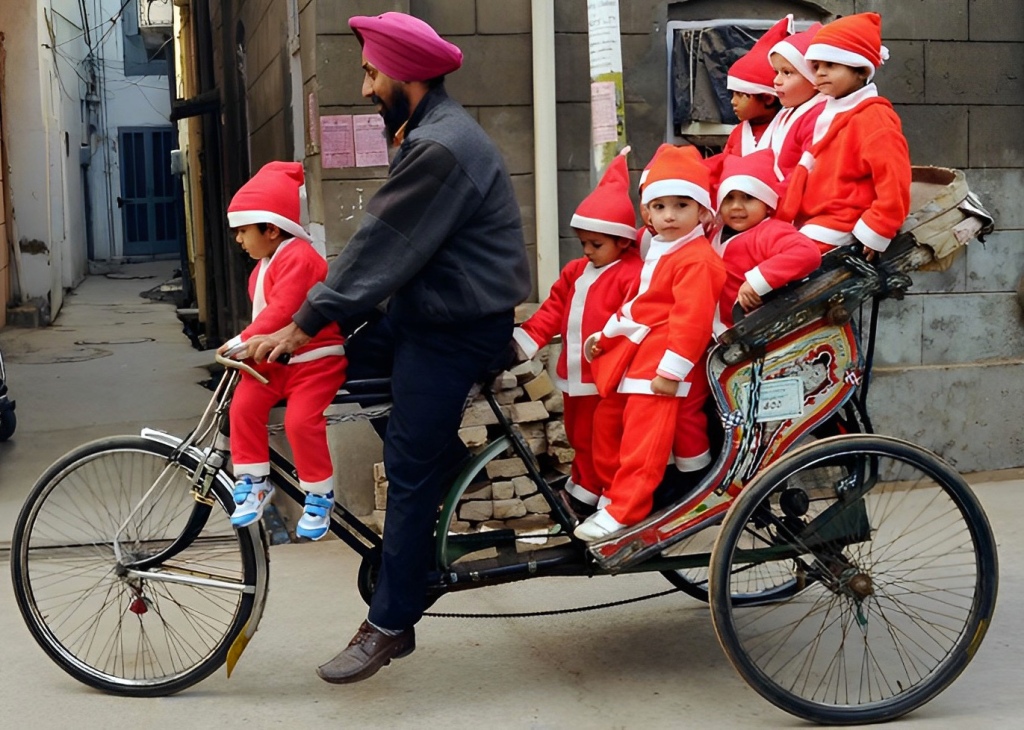
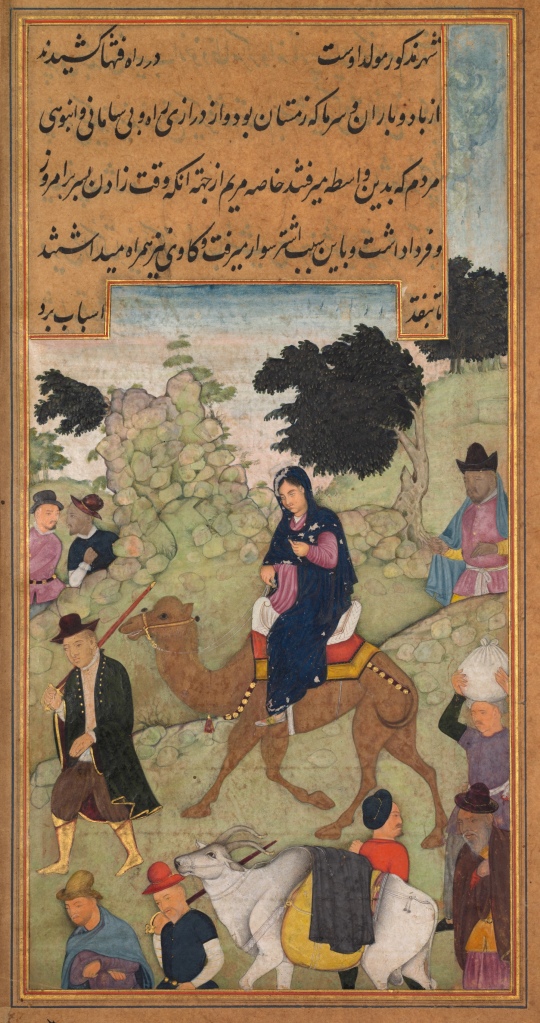

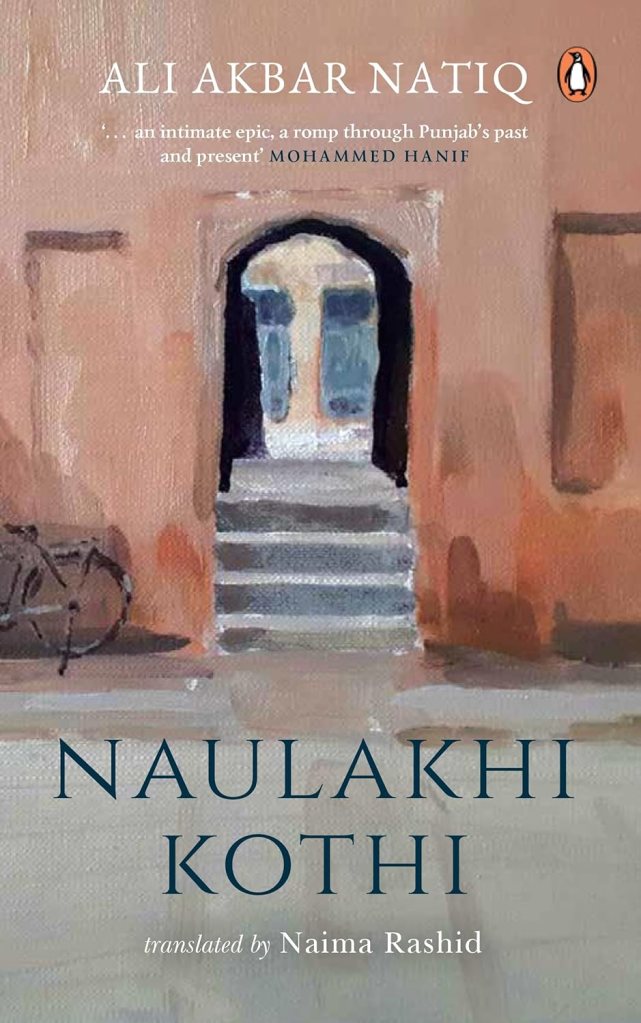


 Borderless