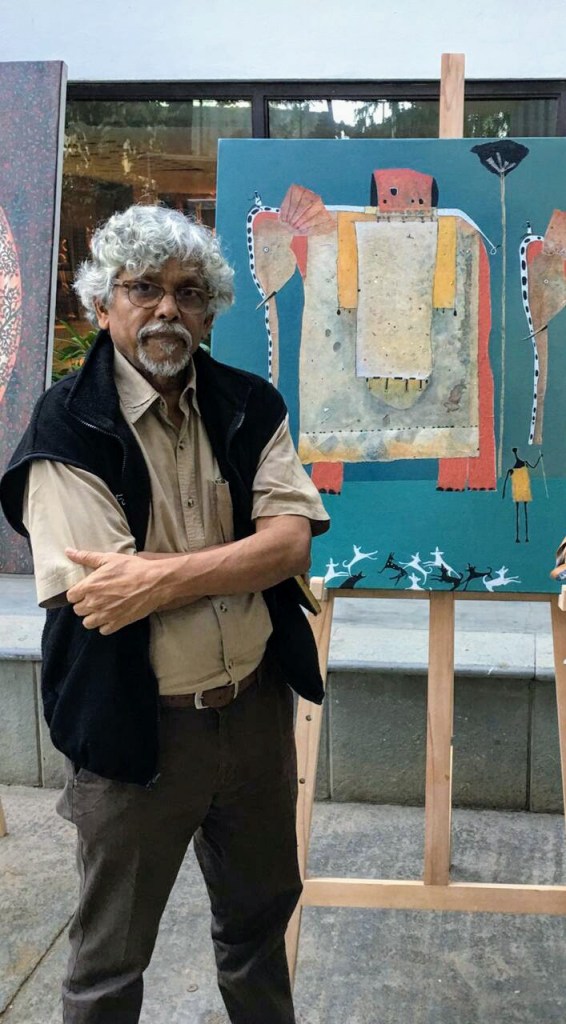
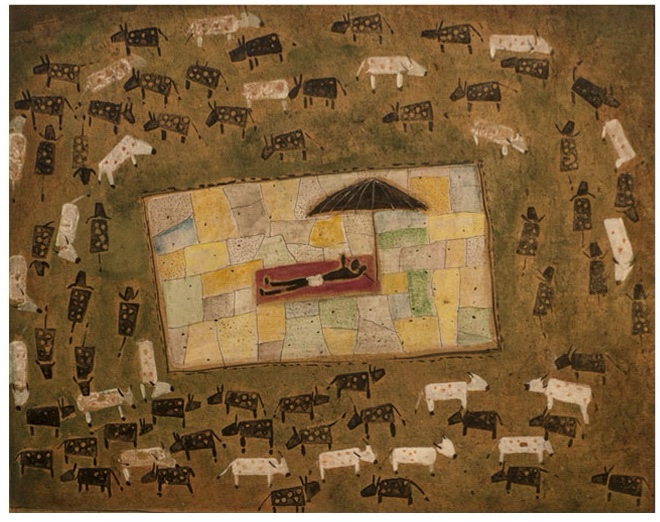
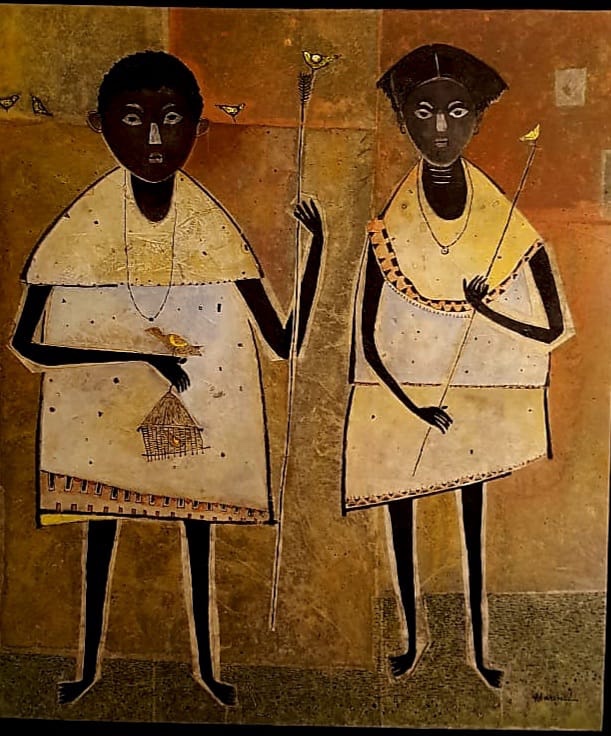
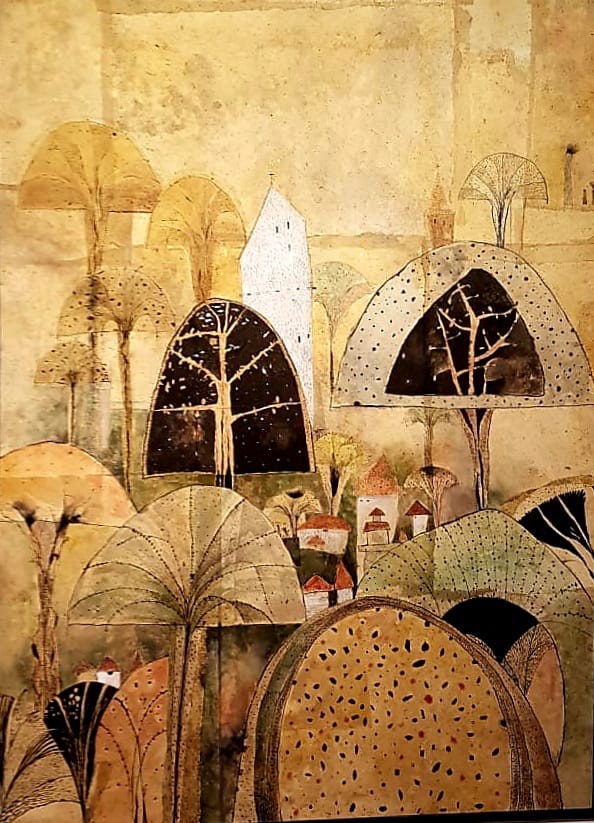
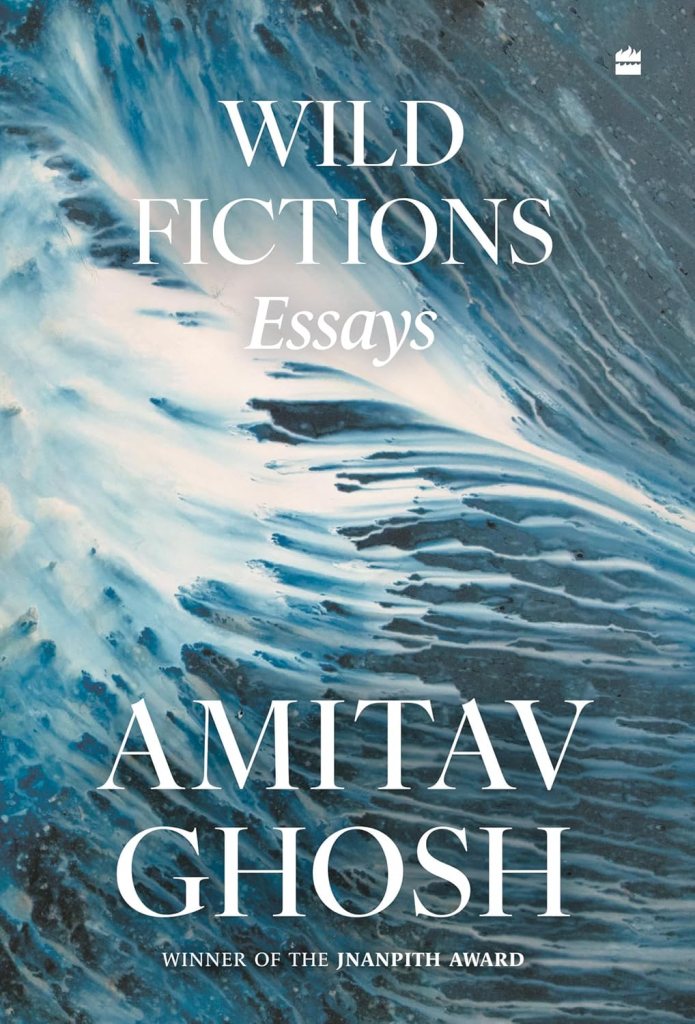
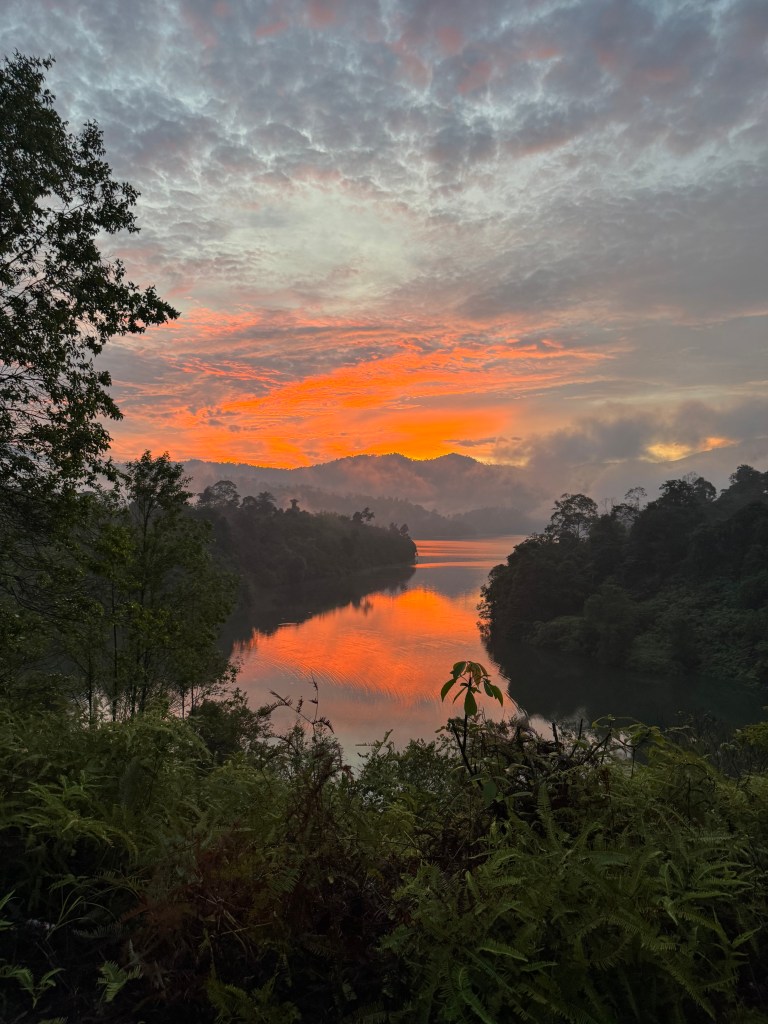
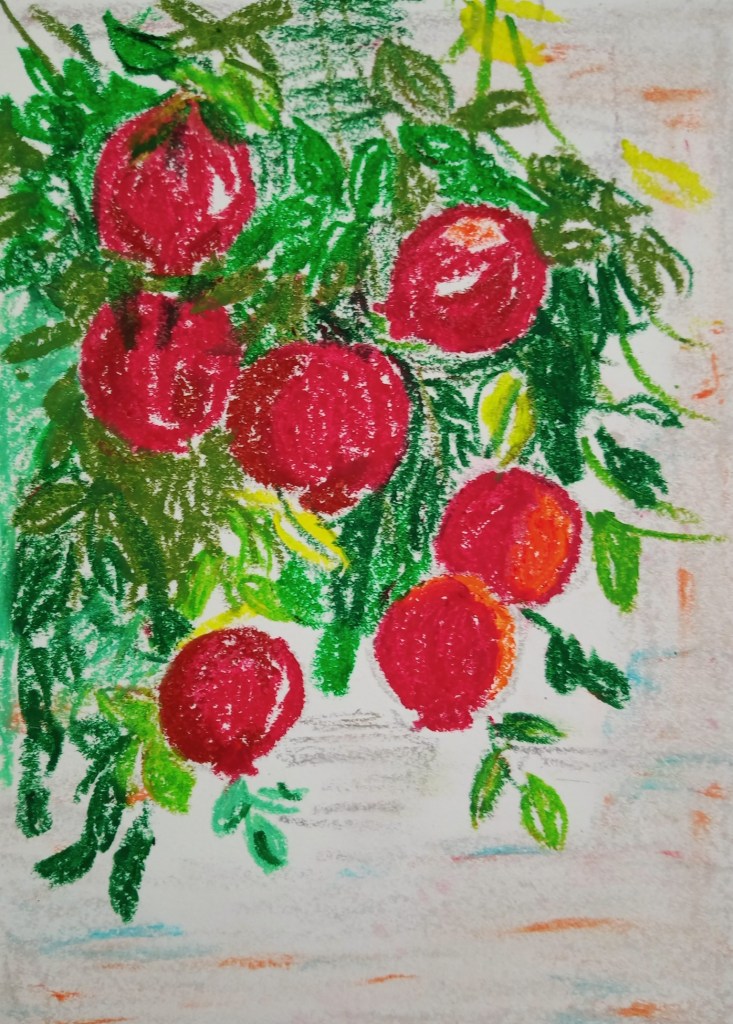
Art by Sohana ManzoorCourtesy: Suzanne Kamata Some of our visuals in 2024
As we wait for the new year to unfold, we glance back at the year that just swept past us. Here, gathered together are glimpses of the writings we found on our pages in 2024 that herald a world of compassion and kindness…writings filled with hope and, dare I say, even goodwill…and sometimes filled with the tears of poetic souls who hope for a world in peace and harmony. Disasters caused by humans starting with the January 2024 in Japan, nature and climate change, essays that invite you to recall the past with a hope to learn from it, non-fiction that is just fun or a tribute to ideas, both past and present — it’s all there. Innovative genres started by writers to meet the needs of the times — be it solar punk or weird western — give a sense of movement towards the new. What we do see in these writings is resilience which healed us out of multiple issues and will continue to help us move towards a better future.
A hundred years ago, we did not have the technology to share our views and writings, to connect and make friends with the like-minded across continents. I wonder what surprises hundred years later will hold for us…Maybe, war will have been outlawed by then, as have been malpractices and violences against individuals in the current world. The laws that rule a single man will hopefully apply to larger groups too…
Courtesy: Ratnottama Sengupta Courtesy: Farouk GulsaraSome of our visuals in 2024
Amalkantiby Nirendranath Chakraborty has been translated from Bengali by Debali Mookerjea-Leonard. Click hereto read.
The Mirror by Mubarak Qazi has been translated from Balochi by Fazal Baloch. Click hereto read.
Homecoming, a poem by Ihlwha Choi on his return from Santiniketan, has been translated from Korean by the poet himself. Click here to read.
Pochishe Boisakh(25th of Baisakh) by Tagore (1922), has been translated from Bengali by Mitali Chakravarty. Click here to read.
Nazrul’sGhumaite Dao Shranto Robi Re(Let Robi Sleep in Peace) has been translated from Bengali by Professor Fakrul Alam. Click hereto read.
Jibananada Das’sAndhar Dekhecche, Tobu Ache (I have seen the dark and yet there is another) has been translated from Bengali by Professor Fakrul Alam. Click here to read.
Tagore’sShotabdir Surjo Aji( The Century’s Sun today) has been translated from Bengali by Mitali Chakravarty. Clickhereto read.
A narrative by Rabindranath Tagore thatgives a glimpse of his first experience of snowfall in Brighton and published in the Tagore family journal, Balak (Children), has been translated from Bengali by Somdatta Mandal. Clickhere to read.
Suzanne Kamata discusses the peace initiatives following the terrors of the 1994 Rwandan Genocide while traveling within the country with her university colleague and students. Click here to read.
A story by Sharaf Shad, has been translated from Balochi by Fazal Baloch. Click here to read.
Conversations
Ratnottama Sengupta talks to Ruchira Gupta, activist for global fight against human trafficking, about her work and introduces her novel, I Kick and I Fly. Click here to read.
A conversation with eminent Singaporean poet and academic, Kirpal Singh, about how his family migrated to Malaya and subsequently Singapore more than 120 years ago. Click hereto read.
Jibananada Das’sAndhar Dekhecche, Tobu Ache (I have seen the dark and yet there is another) has been translated from Bengali by Professor Fakrul Alam. Click here to read.
Manish Ghatak’sAagun taader Praan (Fire is their Life) has been translated from Bengali by Indrayudh Sinha. Click hereto read.
Manzur Bismil’s poem,Stories, has been translated from Balochi by Fazal Baloch. Click here to read.
Homecoming, a poem by Ihlwha Choi on his return from Santiniketan, has been translated from Korean by the poet himself. Click here to read.
Tagore’sShotabdir Surjo Aji( The Century’s Sun today) has been translated from Bengali by Mitali Chakravarty. Clickhereto read.
Paul Mirabile wraps his telling like a psychological thriller. Clickhere to read.
Conversations
Ratnottama Sengupta converses with Divya Dutta, an award-winning actress, who has authored two books recently, Stars in my SkyandMe and Ma. Clickhere to read.
Painting by Claud Monet (1840-1926). From Public Domain
Acknowledging our past achievements sends a message of hope and responsibility, encouraging us to make even greater efforts in the future. Given our twentieth-century accomplishments, if people continue to suffer from famine, plague and war, we cannot blame it on nature or on God.
–Homo Deus (2015),Yuval Noah Harari
Another year drumrolls its way to a war-torn end. Yes, we have found a way to deal with Covid by the looks of it, but famine, hunger… have these drawn to a close? In another world, in 2019, Abhijit Banerjee had won a Nobel Prize for “a new approach to obtaining reliable answers about the best ways to fight global poverty”. Even before that in 2015, Yuval Noah Harari had discussed a world beyond conflicts where Homo Sapien would evolve to become Homo Deus, that is man would evolve to deus or god. As Harari contends at the start of Homo Deus, some of the world at least hoped to move towards immortality and eternal happiness. But, given the current events, is that even a remote possibility for the common man?
Harari points out in the sentence quoted above, acknowledging our past achievements gives hope… a hope born of the long journey humankind has made from caves to skyscrapers. If wars destroy those skyscrapers, what happens then? Our December issue highlights not only the world as we knew it but also the world as we know it.
In our essay section, Farouk Gulsara contextualises and discusses William Dalrymple’s latest book, The Golden Road with a focus on past glories while Professor Fakrul Alam dwells on a road in Dhaka , a road rife with history of the past and of toppling the hegemony and pointless atrocities against citizens. Yet, common people continue to weep for the citizens who have lost their homes, happiness and lives in Gaza and Ukraine, innocent victims of political machinations leading to war.
Just as politics divides and destroys, arts build bridges across the world. Ratnottama Sengupta has written of how artists over time have tried their hands at different mediums to bring to us vignettes of common people’s lives, like legendary artist M F Husain went on to make films, with his first black and white film screened in Berlin Film Festival in 1967 winning the coveted Golden Bear, he captured vignettes of Rajasthan and the local people through images and music. And there are many more instances like his…
It's always the common people who pay first. They don’t write the speeches or sign the orders. But when the dust rises, they’re the ones buried under...
Echoing the theme of the state of the common people is a powerful poem by Manish Ghatak translated from Bengali by Indrayudh Sinha, a poem that echoes how some flirt with danger on a daily basis for ‘Fire is their life’. Professor Alam has brought to us a Bengali poem by Jibanananda Das that reflects the issues we are all facing in today’s world, a poem that remains relevant even in the next century, Andhar Dekhecche, Tobu Ache (I have seen the dark and yet there is another). Fazal Baloch has translated contemporary poet Manzur Bismil’s poem from Balochi on the suffering caused by decisions made by those in power. Ihlwha Choi on the other hand has shared his own lines in English from his Korean poem about his journey back from Santiniketan, in which he claims to pack “all my lingering regrets carefully into my backpack”. And yet from the founder of Santiniketan, we have a translated poem that is not only relevant but also disturbing in its description of the current reality: “…Conflicts are born of self-interest./ Wars are fought to satiate greed…”. Tagore’s Shotabdir Surjo (The Century’s Sun, 1901) recounts the horrors of history…The poem brings to mind Edvard Munch’s disturbing painting of “The Scream” (1893). Does what was true more than hundred years ago, still hold?
Reflecting on eternal human foibles, Naramsetti Umamaheswararao creates a contemporary fable in fiction while Snigdha Agrawal reflects on attitudes towards aging. Paul Mirabile weaves an interesting story around guilt and crime. Sengupta takes us back to her theme of artistes moving away from the genre, when she interviews award winning actress, Divya Dutta, for not her acting but her literary endeavours — two memoirs — Me and Ma and Stars in the Sky. The other interviewee Lara Gelya from Ukraine, also discusses her memoir, Camels from Kyzylkum, a book that traces her journey from the desert of Kyzylkum to USA through various countries. In our book excerpts, we have one that resonates with immigrant lores as writer VS Naipual’s sister, Savi Naipaul Akal, discusses how their family emigrated to Trinidad in The Naipauls of Nepaul Street. The other excerpt from Thomas Bell’s Human Nature: A Walking History of the Himalayan Landscape seeks “to understand the relationship between communities and their environment.” He moves through the landscapes of Nepal to connect readers to people in Himalayan villages.
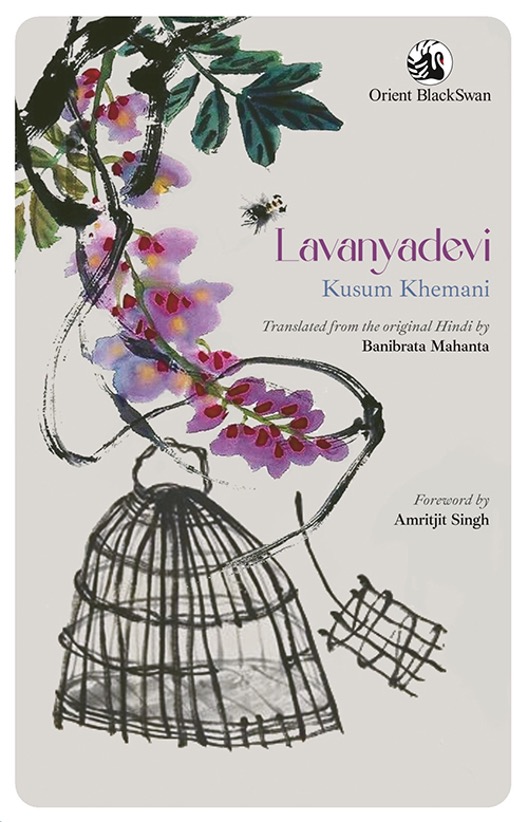
The reviews in this issue travel through cultures and time with Somdatta Mandal’s discussion of Kusum Khemani’s Lavanyadevi, translated from Hindi by Banibrata Mahanta. Aditi Yadav travels to Japan with Nanako Hanada’s The Bookshop Woman, translated from Japanese by Cat Anderson. Jagari Mukherjee writes on the poems of Kiriti Sengupta in Onenessand Bhaskar Parichha reviews a book steeped in history and the life of a brave and daring woman, a memoir by Noor Jahan Bose, Daughter of The Agunmukha: A Bangla Life, translated from Bengali by Rebecca Whittington.
We have more content than mentioned here. Please do pause by our content’s page to savour our December Issue. We are eternally grateful to you, dear readers, for making our journey worthwhile.
Huge thanks to all our contributors for making this issue come alive with their vibrant work. Huge thanks to the team at Borderless for their unflinching support and to Sohana Manzoor for sharing her iconic paintings that give our journal a distinctive flavour.
With the hope of healing with love and compassion, let us dream of a world in peace.
How much longer will my life's list remain? The journey, from trivialities to its end, is nearing. I gauge the volume of toothpaste and soap scraps, Count the dates of paid meals—homecoming is at hand. Writing a day's journal, I confirm the remaining path. The budget thins as much as my frame, Unfinished books and unfulfilled plans erased, Leaving behind the sprawling naps of stray dogs And the countless steps of wandering gods. Like autumn trees shedding leaves, I gather my departure. Endless cycles of meeting and parting, The wheel of samsara* turns again. With the endless procession of foreign words fading, I return again to a long-familiar daily life. Affection, like water colour, spreads too easily. The resilient chains of bonds encircle me like tree rings, I endure the pain like a sharp needle's prick, Packing all my lingering regrets carefully into my backpack. How many seasons must pass For the pain to ripen and fall once more?
*Sanskrit word for World
Ihlwha Choi is a South Korean poet. He has published multiple poetry collections, such as Until the Time When Our Love will Flourish, The Color of Time, His Song and The Last Rehearsal.
.
PLEASE NOTE: ARTICLES CAN ONLY BE REPRODUCED IN OTHER SITES WITH DUE ACKNOWLEDGEMENT TO BORDERLESS JOURNAL.
Author: Kusum Khemani (Translated from Hindi by Banibrata Mahanta)
Publisher: Orient BlackSwan Private Limited
Lavanyadevi is an award-winning 2013 novel by Kusum Khemani written in Hindi that chronicles five generations of a traditional aristocratic Bengali zamindar family as it transitions into modernity from British India to the present with the eponymous protagonist as its principal focus. Lavanyadevi—a compelling woman of perfection, extraordinary vision, qualities, and grace—remains real and credible because she is self-aware, self-critical, open to others, and to change. As a Marwari (people originally belonging to Marwar in Rajasthan) living in Kolkata, in Khemani’s fiction the schisms between ‘Bengali’ and ‘Marwari’ blur to reveal a delightfully plural, composite, and distinctively Indian ethos. Lavanyadevi is a story about women and their search for self, about shared laughter and friendships that endure across generations, beliefs and cultures—between mother and daughter, grandmother and granddaughter, and Marwari and Bengali women. Khemani’s women protagonists are strong, clear-sighted, both worldly and sublime, embodying a larger-than-life idealism while being grounded firmly in the everyday.
In his introduction to his novel Kanthapura (1938), Raja Rao had defined it as a sthala-purana[1], which he defined as a “legendary history” in which the old lady narrator in the village took recourse to the traditional Indian narrative technique, digressed at will to bring forth her point. Somehow the way Kusum Khemani takes recourse to multiple narrative techniques in Lavanyadevi and binds the different digressive stories and incidents into one contiguous whole when she tells us about the history of five generations of the Bengali zamindar family, reminds one of Raja Rao’s theory. She uses diverse narrative strategies like flashbacks, diaries, letters and emails, history, memory and the third person narrator to enrich its telling, lending it depth and range. A large part of the narrative revolves around telling us about past history when Lavanyadevi manages to lay her hands on her mother Jyotirmoyidevi’s diaries and finds great pleasure and thrill of reading one’s own family history. Not only do they offer a wonderful eye-witness account of the private and public sphere of Kolkata of those times, but they also make her easy transition into reading about her mother’s youth, her elaborate description of her magnificent wedding and the rituals that spread over almost a month.
The diary as metanarrative and the protagonist as reader/narrator are particularly effective, offering a telescopic perspective. Though at times it rambles a bit, the polyphonic structure of the novel engages Lavanyadevi the granddaughter, the daughter, the wife, the mother and the grandmother in conversations with her preceding and her succeeding generations. One must sometimes go back to the family tree and chart provided at the beginning of the novel to place people in proper perspective.
From the very beginning of the novel, Khemani portrays the character of Lavanyadevi in superlatives and this continues in different phases of her life till the end when she decides to remain incognito in the mountain ashram and yet control the lives of her descendants, well-wishers and others. From a child who always stood first in school and remained wholly ignorant of the real world, to her unusual marriage to a gentleman who moved over to Rangoon and then to London where she acquired many more degrees, till she came back to Kolkata, to rear her three children successfully, she seemed to excel in everything. This is how she is described at one place:
“Lavanyadevi was indefatigable. She administered the work of several institutions, her college and her home efficiently and with ease. She was never seen to panic. She was like Goddess Durga with her many hands – untiring in her zeal, handling all her duties unfailingly, responsibly and meticulously. No one could ever complain of being ignored by her. She loved all and treated everyone with the same degree of love and warmth. Scrupulous and hardworking, always upholding truth, Lavanyadevi was the unmatched standard of excellence in all aspects of life, her words worth their weight in gold.”
After judiciously assigning different welfare projects in the city as well as in far-flung places like Dhaka and the hills in Uttarkashi from the immense money she inherited from the family, and after her husband’s demise, Lavanyadevi decided it was time for her to leave the family premises and go and live in an ashram in the hills. There she did not stay in hibernation but her travels for work grew even more frenetic.
From the very beginning her rootedness and belief in the philosophical framework of Hinduism formed the core of her being. They propelled her to seek answers to questions of satya (truth) and mukti (liberation) that confronted her in the latter half of her life. She decided to transcend immediate personal concerns and address larger universal issues. Her transition from grihastha (householder) to sanyasa (renunciate) harkens back to the Hindu ideal of human life divided into four phases. However, contrary to the conception of life in isolation, Lavanyadevi, free of any kind of worldly considerations in this final phase of life, marshaled material and human resources to create a strong network of seva (social service) across the country and even beyond its borders. The list of her welfare schemes is too long to mention in the purview of this review, but ranged from renovating brothels in Kolkata’s red-light areas, creating self-help centres for rural women in Dhaka, de-addiction centres, eco-friendly schools in the hills, organic farming in South India, etc.
In the latter half of the novel, we find Lavanyadevi successfully transmitting her values and ideals to her children and grandchildren who are called the “Saptarshi Mandal friends” and who carry her legacy forward and emphasise that progress does not always mean breaking from the past. Here the novelist becomes too idealistic and brings in too many issues that seem a bit far-fetched. Issues of inter-caste and inter-religious relationships apart, the list of social welfare missions seems endless. Her “soul-children” unobtrusively usher in change and create space for diversity in relationships and ways of living. Harmonious cohabitation with nature became the foundational principle of all the education centres she built in the hills but the way she invisibly controls the activities of all her soldiers through emails and emphasises the middle path of life makes the advocacy of humanitarian concerns a bit overemphasised. She becomes larger than life for ideas and wish-fulfilment.
A Hindi novel about a Bengali family by a Marwari woman from Kolkata became significant when it was commissioned for translation into English. Winner of the PEN/Heim Translation Grant 2021, the jury called Lavanyadevi an ‘ambitious, far-reaching’ novel, lauding Khemani’s ‘energetic prose, deadpan sense of humor, and exquisite control’, and Banibrata Mahanta’s translation that ‘stretches and manipulates language to produce a vivid text’ and a must-read for lovers of Indian literature. Here one needs to mention the seriousness with which Mahanta gives us the ‘Translator’s Introduction’ at the beginning of the text and again ‘Translator’s Note’ at the end. This reviewer feels that both these could have been combined into one general essay highlighting the significance of the evolution of the Marwaris in Bengal, how Khemani’s novel is a hybrid artefact born out of multiple linguistic and cultural encounters, how the characters in the novel speak in languages other than Hindi produces dialogues in Bangla, Marwari, Haryanvi or Punjabi; and how between a breezy translation and a linguistically nuanced one, wherever possible the translator has eschewed the former and gone for the latter. As he rightly admits, translating this complex narrative into global or even a pan-Indian English is always risky, but Mahanta should be given due credit for overcoming all obstacles and bringing this immensely readable novel to a wide readership.
Title: The Collected Short Stories of Kazi Nazrul Islam
Editors: Syed Manzoorul Islam and Kaustav Chakraborty
Publisher: Orient Blackswan
He dons many mantles. Kazi Nazrul Islam (1899 – 1976), the national poet of Bangladesh, was a prolific Bengali poet, revolutionary, essayist, journalist, editor, activist and composer of songs. The very mention of his name conjures up the figure of a fiery iconoclast who fought against the structures of oppression and orthodoxy in society to bring about progress and change. In fact, his self-styled image as the volatile bidrohior ‘rebel poet’ overshadows his other literary achievements and that is how ordinary people still remember him.
This unique volume presents all twenty of Kazi Nazrul Islam’s short stories for the first time in English translation. Done by different hands, they feature rich imagery, evocative landscapes, references to music, classical poetry, folktales and more. The prominent characteristics of these stories are simplicity, vivacity and emotionality. They have been sourced from different anthologies. The first six stories are from the collection Harvest of Sorrow1. The opening story of the collection titled “Harvest of Sorrow”, is a collage of tales narrated by the three characters: Dara, Bedoura and Saiful Mulk. Dara, located in Iran’s Golestan, narrates his tale of love, separation and devotion to his motherland through a series of reminiscences. After that, we hear the same set of events narrated from Bedoura’s perspective. Then follows the account narrated by Saiful Mulk, portrayed as a sinner who tempted Bedoura into losing her virginity. Overcome by guilt, he joins the freedom struggle where he encounters Dara. What follows is a tale of redemption loss and transcendence of physical love to a more spiritual kind of love. “Hena”, the second story of the collection, is narrated by Sohrab, and its theme is also love and war – both internal and external battle. “In the Relentless Rain” is basically a story of love between strangers. The author doesn’t provide us the names of the lovers – rather both are addressed as dark-skinned. The next story, “Half Asleep”, is divided into two parts: Azhar’s story and Pari’s story. Azhar’s story is mainly about his sacrifices and why he favours detachment from the sensuousness. His renunciation of carnal pleasures towards attaining greater contentment ends his relationship with Pari, whose marriage he arranges with one of his friends. He ensures that Pari remains confined within the household structure. By making Pari assert that she will not betray her role as a loving wife without pretending to erase the love that she has for her former lover, Nazrul offers a critique of the conventional notion of ‘loyalty’ of wives to serve their husbands. The first-person narrator of “Insatiate Desire” soliloquizes on a saga of disunited love where the narrator falls in love with his childhood friend, feigns disinterest in her when her marriage is arranged to another man, and characterises his own actions as stemming from the most noble impulses. The final piece of the volume, “Letter from a Political Prisoner”, is an epistolary story of a political prisoner who has also been diagnosed with fatal tuberculosis. The story is addressed to the lady of his dreams, Manashi, who does not seem to have reciprocated his love.
The title story of the next section is from an anthology of the same name, The Agony of the Destitute2. The story centres around the glorification of war but in the process, it also raises questions related to war and gender. In sharp contrast to the narrator-protagonist of this narrative who detaches himself from domesticity to join the war, the protagonist of the very next story, “Autobiography of a Vagabond” suffers a tragic end to his domestic life and thereafter joins the army and eventually dies while fighting in Baghdad. “Meher Negar”, the third story of this section, is another tale of war and conflicts in love. Yusuf Khan, the protagonist, is a Pathan from the mountains of Waziristan who meets Meher Negar (whose actual name is Gulshan) after reaching a distant land to learn music. Later he joins the War of Independence for Afghanistan. Unable to forget her, he visits Meher Negar one last time only to discover that she is no more. As an allegorical piece of writing, “Evening Star” is about a man’s love for a distant beloved that is ultimately futile because of the probable demise of the beloved.
“Rakshasi” is written in the language spoken by the Bagdi community of the Birbhum district in West Bengal in which the speaker Bindi is a woman who complains to her friend about how society has stigmatized her as a demoness because she has killed her husband to save him from abandoning her and getting remarried to a notorious girl.“Salek” is a short moral story where, through a series of events, a dervish (later revealed to be Hafiz) shows an arrogant Kazi the path to salvation; the former becomes the latter’s salek or the one who shows the way. In “The Widow”, Begum, the narrator, speaks of her sorrowful youth, her happy married life and the miseries of her widowhood to her friend Salima. The story challenge multiple stereotypes that are often associated with the women of South Asia. The concluding tale of this volume is titled “The Restless Traveller” which is an impressionistic story centered round the urge towards finding freedom by restless youth.
The four stories that comprise the third volume of Nazrul’s stories and the next section, called The Shiuli Mala3, speak about Nazrul’s ecological sensitivity. The opening story “The Lotus-Cobras” is about Zohra and her human and non-human intimacies. As the editors rightly point out, “In the portrayal of Zohra’s attachment with her serpent sons, Nazrul seems to be very close to the essence of posthumanism where radical posthuman subjectivity is understood on the basis of an intersectional ethics of plurality”. “The King of the Djinns” is a tragicomic story about how Alla-Rakha, the protagonist, resorts to a series of tricks to get married to Chan Bhanu, the woman he desires. “The Volcano” deals with the disaster that is caused by the sudden eruption of repressed anger and egotistic pride in Sabur, the humble, helpful and uncomplaining protagonist of the story. It is a study of the anxiety of manliness. “The Shiuli Mala”, the concluding story of this section, is a testimony to Nazrul’s love for the trope of separated lovers or unrequited love. Set in Shillong, it primarily deals with a platonic and disunited love between Azhar, a well-known chess player, and Shiuli, the daughter of another brilliant chess player, Professor Chowdhury. Structured as a flashback, Azhar narrates the story to his friends who are part of a regular chess adda.
Two unanthologised stories end the collection. “Letter from a Lost Boy” is an epistolary account of a boy who writes to his mother about some incidents in his life that have occurred since he had left her until the time of his return. The story is a critique of child marriage and the consequent early widowhood that brings never-ending misery in the life of a woman. “The Hawk-Cuckoo from the Woods” tells the story of a marital discord between Dushasan Mitra and his wife Romola. Their friction widens after Romola becomes too attached to an injured hawk-cuckoo and her husband feels agitated by her gradual disconnect from their conjugal life. The story ends with Romola flaying her husband for throwing the bird away, finding and hugging the dying bird to her heart and plunging into the waters of the Padma.
All these twenty stories invite the reader to re-evaluate the ‘rebel poet’ as an empathetic humanitarian who also excelled in human relationships. Nazrul is essentially multilingual – he uses Hindi, Urdu, Arabic and Persian words along with Bangla. This book is the outcome of a project sponsored by the Nazrul Centre for Social and Cultural Studies, Kazi Nazrul University, Asansol, West Bengal. The volume is a transnational, collaborative labour of love bringing together the editors and translators from Bangladesh and India. Most of them are academics and have taken up the challenge to translate the stories, which in their infinite variety, is indeed a difficult task. The stories are accompanied by a timeline of Nazrul’s life and a detailed critical introduction that not only provides foundational context for the stories, but also highlights Nazrul’s attempt to counter majoritarianism and various hegemonies by dismantling hierarchies and celebrating intimate pluralities. In fact, at the end of their introduction, the editors Syed Manzoorul Islam and Kaustav Chakraborty ask two very pertinent questions. “In which category can we place Nazrul? Is there a need to formulate a different category altogether in order to position him?” The answers of course lie with the readers of the translated stories to decide. All said and done, this volume of short stories is strongly recommended for all classes of readers who are keen to discover the multi-faceted genius of Kazi Nazrul Islam and who could not earlier savour their uniqueness because they were only written in Bangla.
Byathar Daan (Harvest of Sorrows) published in March 1922 ↩︎
Rikter Bedon (Agony of the Destitute) published in January 1925 ↩︎
Shiuli Mala (Garland of Jasmines) published in October 1931 ↩︎
Somdatta Mandal, critic, academic and translator, is a former Professor of English at Visva-Bharati University, Santiniketan, India.
PLEASE NOTE: ARTICLES CAN ONLY BE REPRODUCED IN OTHER SITES WITH DUE ACKNOWLEDGEMENT TO BORDERLESS JOURNAL
In Conversation with Malashri Lal, about her debut poetry collection, Mandalas of Time, Hawakal Publishers
Professor Malashree Lal
Time present and time past Are both perhaps present in time future, And time future contained in time past. If all time is eternally present All time is unredeemable.
‘Mandalas’ means circle in Sanskrit, the root, or at last the influencer, of most of the Indian languages in the subcontinent. Sanskrit belongs to the Indo-Germanic family, which homes Latin and Greek among other languages. Malashri Lal, a former professor in Delhi University, has called her poetry collection Mandalas of Time.
Her poetry reiterates the cyclical nature of the title, loaning from the past to blend the ideas with the present and stretching to assimilate the varied colours of cultures around the world.
Embracing an array of subjects from her heritage to her family — with beautiful touching poems for her grandchild — to migrants and subtle ones on climate change too, the words journey through a plethora of ideas. Nature plays an important role in concretising and conveying her thoughts. In one of the poems there is a fleeting reference to wars — entwined with the Pilkhan (fig) tree:
The Pilkhan tree thinks of its many years Of shedding leaves, bearing inedible fruit, of losing limbs But smiles at his troubles being far less Than of unfortunate humans Who kill each other in word and deed But gather around the tree each Christmas With fulsome gifts and vacant smiles To bring in another New Year.
--Another New Year
Amaltas (Indian Laburnum) or Bougainvillea bind her love for nature to real world issues:
Only the Amaltas roots, meshed underground Thrust their tendrils into the earth’s sinews below. Sucking moisture from the granular sand, desperately. The golden flowers pendent in the sun, mock the traveller Plump, succulent, beacon-like, they tease with The promise of water Where there is none.
--Amaltas in Summer
And…
The Bougainvillea is a migrant tree, blossom and thorn That took root in our land And spread its deception Of beauty.
--Bougainvillea
Her most impactful poems are women centric.
Words crushed into silence Lips sealed against utterance Eyes hooded guardedly Body cringing into wrinkled tightness Is this what elders called ‘Maidenly virtue?’
--Crushed
There is one about a homeless woman giving birth at Ratlam station during the pandemic chaos, based on a real-life incident:
Leave the slum or pay the rent Who cares if she is pregnant, Get out — go anywhere. … Ratlam station; steady hands lead her to the platform. Screened by women surrounding her A kind lady doctor takes control. Pooja sees a puckered face squinting into the first light. "This is home," she mutters wanly, "Among strangers who cut the cord and feed my newborn,”
-- Ladies Special
In another, she writes of Shakuntala — a real-world migrant who gave birth during the covid exodus. She birthed a child and within the hour was on her way to her home again — walking. It reminds one of Pearl S Buck’s description of the peasant woman in Good Earth (1931) who pauses to give birth and then continues to labour in the field.
Most interesting is her use of mythology — especially Radha and Sita — two iconic characters out of Indian lore. In one poem, she finds a parallel to “Sita’s exile” in Italy, at Belisama’s shrine. In another, she finds the divine beloved Radha, who was older to Krishna and married to another, pining after the divinity when he leaves to pursue his life as an adult. And yet, she questions modern stances through poems on more historical women who self-immolated themselves when their husbands lost in battle!
Malashri Lal has turned her faculties post-retirement to literary pursuits. One of her co- authored books around the life of the poet Michael Madhusudan Dutt, received the Kalinga award for fiction. She currently serves on the English advisory board of Sahitya Akademi. In this conversation, Lal discusses her poetry, her journey and unique perceptions of two iconic mythological women who figure in her poetry.
When did you start writing poetry?
Possibly my earliest poetry was written when I was about twelve, struggling with the confusing emotions of an adolescent. I would send off my writing to The Illustrated Weekly which used to have pages for young people, and occasionally I got published. After that, I didn’t write poetry till I was almost in my middle age when the personal crisis of losing my parents together in a road accident brought me to the outpourings and healing that poetry allows.
What gets your muse going?
Emotional turmoil, either my own or what I observe within the paradigms of social change. With my interest in women’s issues, my attention is arrested immediately when I hear or read about injustice, violence, exploitation or negligence of women or girl children. It doesn’t have to be a dramatic or extreme event but even the simple occurrences of decision making by a husband without consulting his wife has me concerned about the dignity and agency of a woman. Some poems like “Escape”, hint at such inequality that society takes for granted. On the other hand, my poems about migrant women giving birth on the long march to a hypothetical village “home” during the pandemic, are vivid transferences from newspaper stories. “Ladies Special” is about Pooja Devi giving birth at Ratlam station; “The Woman Migrant Worker” is based on a report about Shakuntala who stopped by the roadside to give birth to a baby and a few hours later, joined the walking crowd again.
Why did you name your poetry book Mandalas of Time?
To me ‘Mandalas’ denote centres of energy. Each node, though distinct in itself, coheres with the others that are contiguous, thus resulting in a corporeal body of interrelatedness. My poems are short bursts of such energy, concentrated on a subject. They are indicative of a situation but not prescriptive in offering solutions. Hence the spiritual energy of ‘Mandalas’, a term used in many traditions, seemed best suited to my offering of poems written during periods of heightened consciousness and introspection. The poems are also multilayered, hence in constant flux, to be interpreted through the reader’s response. Many of them end in questions, as I do not have answers. The reader is implicitly invited to peruse the subject some more . It’s not about closure but openness. See for instance: “Crushed”, or “Shyamoli”.
Today, I rebel and tug at a Divided loyalty — The feudal heritage of my childhood Fights off the reformist Bengali lineage, My troubled feminism struggling Between Poshak and Purdah White Thaan and patriotism Can one push these ghosts aside?
--Shyamoli *Poshak: Rajasthani dress *Thaan: White saree worn by the Bengali widow
You have written briefly of your mixed heritage, also reflected in your poem dedicated to Tagore, in whose verses it seems you find resolution. Can you tell us of this internal clash of cultures? What exactly evolved out of it?
My bloodline is purely Bengali but my parents nor I ever lived in Bengal. My father was in the IAS in the Rajasthan cadre and my mother, raised in Dehradun, did a lot of social work. In the 1950s and 1960s, Rajasthan was economically and socially confined to a feudal heritage and a strictly hierarchical structure. Rama Mehta’s novel Inside the Haveli (1979), describes this social construction with great sensitivity. Elite homes had separate areas for men and women, and, within that, a layout of rooms and courtyards that were defined for specific use by specified individuals according to their seniority or significance. Such hierarchies existed in Bengal too — the ‘antarmahal[1]’ references bear this out — but the multiple layers in Rajasthan seemed more restrictive.
In my “mixed heritage” of being born of Bengali parents but raised in Rajasthan, I started noting the contrasts as well as the similarities. I recall that when my father went on tours by jeep into the interior villages along rutted roads, I would simply clamber on. At one time I lived in a tent, with my parents, during the entire camel fair at Pushkar. I would listen to the Bhopa singers of the Phad painting tradition late into the evening. So my understanding and experience of Rajasthan is deep into its roots.
Phad paintingBhopa singersFrom Public Domain
Bengal– that is only Calcutta and Santiniketan–I know through my visits to grandparents, aunts and uncles. My cousins and I continue to be very close. I saw a fairly elite side of Calcutta—the Clubs, the Race Course, the restaurants on Park Street, the shopping at New Market, and sarees displays at Rashbehari Avenue. Santiniketan though was different. I was drawn to the stories of the Santhal communities, visited their villages, attended the Poush Mela[2] regularly and knew several people in the university. After Delhi, the wide-open spaces, the ranga maati (red soil), the Mayurakhi River, and the tribal stories were fascinating. I am fluent in Bengali and because of my relatives in Calcutta as well as Santiniketan, I never felt an outsider. My father’s side of the family has been at Viswa Bharati since the time of Rabindranath Tagore. So, I felt comfortable in that environment. And through an NGO called Women’s Interlink Foundation, established by Mrs Aloka Mitra, I had easy access to Santhal villages such as Bonerpukur Danga.
Poush Mela, started by the Tagore Family in 1894Santhali Performance at Poush Mela
However, in summary, though I lived with both the strains of Bengal and Rajasthan, the daily interaction in Jaipur where I received all my education till PhD, was more deeply my world. The fragmented identity that some poems convey is a genuine expression of figuring out a cultural belonging. Poems such as “To Rabindranath Tagore” helped me to understand that one can have multiple exposures and affiliations and be enriched by it.
Do you feel — as I felt in your poetry — that there is a difference in the cultural heritage of Bengal and Rajasthan that leads you to be more perceptive of the treatment of women in the latter state? Please elaborate.
Indeed, you are right. Bengal has a reformist history, and my family are Brahmo Samaj followers. Education for women, choice in marriage partner, ability to take up a career were thought to be possible. My paternal grandmother, Jyotirmoyi Mukerji, was one of the early graduates from Calcutta University; she worked as an Inspectress of Schools, often travelling by bullock carts, and she married a school teacher who was a little younger than her. They together chose to live in Rangoon in undivided India, heading a school there. These were radical steps for women in the late 19th century. My father grew up in Rangoon and came to Rajasthan as a refugee during the Second World War. My grandmother, who lived with us, was a tremendous influence denoting women’s empowerment. But what we saw around us in Jaipur was the feudal system and purdah for women in Rajasthan.
Fortunately, Maharani Gayatri Devi had set up a school in 1943 in Jaipur to bring modern thinking in the women, and I was fortunate to study there till I went to university. Let’s recall that Maharani Gayatri Devi was from Coochbehar (Bengal) and had studied at Santiniketan. She brought Bengal’s progressive ideas to the privileged classes of Rajasthan. My classmates were mostly princesses. I visited their homes and families and delved deeply into their history of feudalism. Without being judgmental, I must say that Rajasthan’s heritage is very complex and one must understand the reasons behind many practices and not condemn them.
You have brought in very popular mythological characters in your poems — Sita and Radha — both seen from a perspective that is unusual. Can you explain the similarity between Sita’s exile and Belisama’s shrine (in Italy)? Also why did you choose to deal with Radha in a post-Krishna world?
Namita Gokhale and I have completed what is popularly known as the “Goddess Trilogy”. After In Search of Sita and Finding Radha, the latest book, Treasures of Lakshmi: The Goddess Who Gives, was launched in February 2024 at the Jaipur Literature Festival, and the Delhi launch was on 8th October 2024 to invoke the festive season.
Version 1.0.0
In answering your question let me say that myth is storytelling, an indirect way of contending with issues that are beyond ordinary logic or understanding. Sita and Belisama coming together is an illustration of what I mean. The backstory is that Namita Gokhale and I had a joint residency at Villa Serbelloni in Bellagio (Italy) and we were revising the final manuscript of our book In Search of Sita. The thrust of that book is to recall the strength of Sita in decision making, in being supportive of other women, in emerging as an independent minded person. Our research had unearthed a lot of new material including oral history and folklore. In Bellagio, we started enquiring about local mythical stories and chanced upon Belisama,[3] a Celtic goddess known for her radiant fire and light, and in the village we chanced upon an old grotto like structure. Unlike in India, where we have a living mythology of commonly told and retold tales, in Italy the ancient legends were not remembered. The poem “Bellagio, Italy” took shape in my imagination bringing Sita and Belisama, two extraordinary women, together.
As to my poems on Radha, I cannot think of a “post-Krishna” world since Vrindavan and Mathura keep alive the practices that are ancient and continuous. Radha is the symbol of a seeker and Krishna is the elusive but ever watchful divine. They are body and soul, inseparable. The stories about “Radha’s Flute” or “Radha’s Dilemma” in poems by those names have an oral quality about them. The craft of writing is important, and for me, the theme decides the form.
Interesting, as both the poems you mention made me think of Radha after Krishna left her for Rukmini, for his role in an adult world. You have a poem on Padmini. Again, your stance is unusual. Can you explain what exactly you mean — can self-immolation be justified in any way?
This is a poem embedded in the larger query about comparative cultural studies. Rani Padmini’s story was written by Jayasi[4] in 1540, and it described a ‘heroic’ decision by Padmini that she and her handmaidens should commit Jauhar (mass self-immolation) rather than be taken prisoners and face humiliation and violent abuse by the men captors. You will note that my poem ends on a question mark: “I ask you if you can rewrite /values the past held strong?” Self-immolation has to be seen in the context of social practices at the time of Padmini (13-14th queen in Mewar, Rajasthan). The jauhar performed by Rani Padmini of Chittor is narrated even now through ballads and tales extolling the act if one goes into oral culture. But there is counter thinking too, as was evident in the controversy over Sanjay Leela Bhansali’s film Padmavat (2018) which stirred discussions on historicity, customary practice and oral traditions. Sati and Jauhar are now punishable offences under Indian law, but in recording oral history can one change the storyline? It’s not just self-immolation that comes under such a category of questioning the past — polygamy, polyandry, child marriage, prohibitions on widows and many other practices are to be critiqued in modern discourse, but one cannot rewrite what has already been inscribed in an old literary text.
This is a question that draws from what I felt your poems led to, especially, the one on Padmini. Do you think by changing text in books, history can be changed?
“History” is a matter of perspective combined with the factual record of events and episodes. Who writes the “history” and in what circumstances is necessary to ask. The narration or interpretation of history can be changed, and sometimes ought to be. To take an obvious case why is the “Sepoy Mutiny” of 1857 now referred to as the “First War of Independence”? In current discussions on Rana Pratap[5] in Rajasthan’s history, there are documents in local languages that reinterpret the Haldighati battle of 1576 not as the Rana’s defeat but his retreat into the forests and setting up his new kingdom in Chavand where he died in 1597. The colonial writers of history—at least in Rajasthan– were dependent on local informers and had little understanding of the vast oral repertoire of the state. Even Col. James Tod’s Annals and Antiquities of Rajasthan (1829) about the history, culture, and geography of some areas in Rajasthan, is often reproducing what he has heard from the bards and balladeers which are colourful and hyperbolic renderings as was the custom then. In Bengal, the impact of Tod is seen in Abanindranath Tagore’s[6]Rajkahini (1946), which is storytelling rather than verified facts. I feel history cannot be objective, it is author dependent.
Nature, especially certain trees and plants seem to evoke poetry in you. It was interesting to see you pick a fig tree for commenting on conflicts. Why a Pilkhan tree?
The Pilkhan is an enormous, bearded old fig tree that lives in our garden and is a witness to our periodic poetic gatherings. Mandalas of Time is dedicated to “The Poets under the Pilkhan Tree” because my book emerged from the camaraderie and the encouragement of this group. I see the tree as an observer and thinker about social change—it notes intergenerational conflict in “Another New Year”, it offers consolation against the terrors of the pandemic in the poem “Krishna’s Flute”. It’s my green oasis in an urban, concrete-dominated Delhi. In the evening the birds chirp so loudly that we cannot hear ourselves speak. Squirrels have built nests into the Pilkhan’s wide girth. It’s not a glamorous tree but ordinary and ample—just as life is. By now, my poet friends recognise the joy of sharing their work sitting in the shadow of this ancient giant. There are no hierarchies of age or reputation here. We are the chirping birds—equal and loquacious!
You have successfully dabbled in both poetry and fiction, what genre do you prefer and why?
Mandalas of Time is my first book of poems and it comprises of material written unselfconsciously over decades. During the pandemic years, I decided to put the manuscript together, urged by friends. Meanwhile my poems started appearing in several journals.
As to fiction, I’ve published a few short stories and I tend to write ghostly tales set in the mountains of Shimla. Its possibly the old and the new that collides there that holds my attention. I’ve been urged to write a few more and publish a book—but that may take a while.
Should we be expecting something new from your pen?
Mandalas of Time has met with an amazing response in terms of reviews, interviews, speaking assignments, and online presentations. The translation in Hindi by 13 well known poets is going into print very soon. Permission has been sought for a Punjabi translation. I’m overwhelmed by this wide empathy and it is making me consider putting together another book of poems.
“This novel became a way to collect the strands of the past, to pull these disparate lives together and to give me an imagined place to stand upon.” Ammar Kalia
Debut novels have a unique quality – the author takes extra care to deliver his best, whether in the form of storyline, or setting or stylistic devices. And though either subconsciously or deliberately borrowing from family history, he always tries to justify that the novel is not autobiographical, but a piece of fiction. A similar thing takes place with Ammar Kalia, the author of this novel under review, who is a writer, musician and journalist living in London. Beginning and ending his narration in March 1955, he tells us the story of the Bedis, a Punjabi family who went through multiple migrations from India to Kenya and then to England. Like all diasporic Indians in search of their roots and still longing for somewhere they can call home, and find ‘something to belong to’, Kalia got the idea to develop this novel when he came to India in 2019, especially to Haridwar, to spread his grandmother’s ashes in the Ganges. As he stood in the dust near the river, several questions popped up in his mind – where did my grandparents grow up? How did they meet? Why did they move multiple continents in a lifetime (from Asia to Africa to Europe)? What were their dreams? Why did I never ask them anything important?
With all these questions lurking in his mind, Kalia opens Part I of the novel in March 1955 with a detailed description of how his grandfather Bedi’s marriage was arranged with a girl called Sushma through a middleman. Coming from far off Nairobi where he was the son of an engine driver and had seven other siblings, he came all the way to India, but Bedi was a tourist and not a prodigal son. We are given the details of the bride-viewing, the discussions of both parties on what they want and what to expect, and finally give the green signal to marry.
Part II of the book jumps straight ahead to February 1994, and it is located in London and Bournemouth where Bedi was spending his time trying to erase the past and not to be engaged in his three grown kids’ lives anymore, wanting to be left alone, to be respected from a distance, to ultimately be ignored. The story of his life in England is like all immigrants who had to make that a new home and go on living with the hope that maybe one day they would be able to go back. After mentioning the generation gap and how the children would not be stuck between continents, there is a sudden catastrophe in the family when Sushma goes out for a last-minute shopping trip for the family get-together and dies after meeting with a street accident. Everything goes haywire in their lives.
The story then moves ahead to September 2019 with three long sections comprising Part III of the novel and is narrated by the three siblings – Selena, Rohan and Tara – who come to India along with their family members on a ‘dreaded pilgrimage’ to scatter their father’s ashes in the Ganges at Haridwar. The heat knocked them out of their daze, and they could feel the looks of the surrounding men bearing down on them. They realsed they didn’t belong here but needed to be here as this was the only place they were meant to say goodbye. It was also a chance to reconnect with their ‘roots.’ By far the most powerful section in the entire novel, we are told how pilgrimage sites in India were dens of corrupt individuals, who tried to fleece the tourist or visitor at every step. After suffering from the heat and dust and a futile attempt to trace their father’s genealogical chart from the family records maintained by different pandits in the long family scrolls, they ultimately decide to scatter the ashes at the end of the day with the help of a new pandit and complete the ceremony for which they had travelled all the way from England.
Tara narrates:“We began to sprinkle him into the bubbling water and after each round we would watch as he dissolved like dropped candy floss in a puddle. … And now all of Dad is in the water and Sel and Rohan bow their heads for a moment of silence amid the strange harmonies of splashing, calling and praying. And I see myself, as if in a painting, unhook from their chain and step into the water, as if in my dreams, and I can feel its cold needles between my toes.”
Divided into several sub-sections and narrated in the first person, we get the detailed background and fill-up of the personal lives and family relationships of each of the three narrators. Kalia does a remarkable job here. We are told how each sibling follows a different profession, gets embroiled in different relationships, and how they ultimately behave with their own children. Incidentally, one is reminded of William Faulkner’s novel As I Lay Dying (1930), which narrates the story of the death of a matriarch in a family and keeping to her last wish, the family members carry her coffin for forty miles to the town of Jefferson to bury her next to her own kith and kin. While they are travelling, Faulkner devotes each chapter to a different family member who narrates the same incident in the first person and from a different point of view. Thus, it gives us his or her background along with the reason for travelling to Jefferson.
In the ‘Author’s Note’ at the end of the novel, Kalia categorically states: “I like to call it an act of remembrance, but it’s all fiction. It’s bringing people back to life – with those we can no longer reach. This is a story of a family like mine, but that isn’t mine; it is a novel about people hoping for a better future, longing for an idealized past and striving to survive in the present. It is about so many families.”
This personalisation and universalisation of the narration at the same time is what makes this novel a unique reading experience. Kalia’s narrative style is appreciable, and one can go through these 284 pages without feeling bored or mired into unnecessary details for long. The observant eye of a foreigner blends subjectivity and objectivity in balanced proportion and so the book is recommended for all classes of readers – serious and casual alike.
Somdatta Mandal, critic and translator, is a former Professor of English at Visva-Bharati University, Santiniketan, India.
PLEASE NOTE: ARTICLES CAN ONLY BE REPRODUCED IN OTHER SITES WITH DUE ACKNOWLEDGEMENT TO BORDERLESS JOURNAL
Imagine the world envisioned by John Lennon. Imagine the world envisioned and partly materialised by Tagore in his pet twin projects of Santiniketan and Sriniketan, training institutes made with the intent of moving towards creating a work force that would dedicate their lives to human weal, to closing social gaps borne of human constructs and to uplifting the less privileged by educating them and giving them the means to earn a livelihood. You might well call these people visionaries and utopian dreamers, but were they? Tagore had hoped to inspire with his model institutions. In 1939, he wrote in a letter: “My path, as you know, lies in the domain of quiet integral action and thought, my units must be few and small, and I can but face human problems in relation to some basic village or cultural area. So, in the midst of worldwide anguish, and with the problems of over three hundred millions staring us in the face, I stick to my work in Santiniketan and Sriniketan hoping that my efforts will touch the heart of our village neighbours and help them in reasserting themselves in a new social order. If we can give a start to a few villages, they would perhaps be an inspiration to some others—and my life work will have been done.” But did we really have a new social order or try to emulate him?
If we had acted out of compassion and kindness towards redefining with a new social order, as Miriam Bassuk points out in her poem based on Lennon’s lyrics of Imagine, there would be no strangers. We’d all be friends living in harmony and creating a world with compassion, kindness, love and tolerance. We would not have wars or regional geopolitical tensions which act against human weal. Perhaps, we would not have had the issues of war of climate change take on the proportions that are wrecking our own constructs.
Natural disasters, floods, fires, landslides have affected many of our lives. Bringing us close to such a disaster is an essay by Salma A Shafi at ground level in Noakhali. More than 4.5 million were affected and 71 died in this disaster. Another 23 died in the same spate of floods in Tripura with 65,000 affected. We are looking at a single region here, but such disasters seem to be becoming more frequent. And yet. there had been a time when Noakhali was an idyllic vacation spot as reflected in Professor Fakrul Alam’s nostalgic essay, filled with memories of love, green outdoors and kindnesses. Such emotions reverberate in Ravi Shankar’s account of his medical adventures in the highlands of Kerala, a state that suffered a stupendous landslide last month. While Shafi shows how extreme rainfall can cause disasters, Keith Lyons writes of water, whose waves in oceanic form lap landmasses like bridges. He finds a microcosm of the whole world in a swimming pool as migrants find their way to New Zealand too. Farouk Gulsara muses on kindness and caregiving while Priyanka Panwar ponders about ordinary days. Saeed Ibrahim gives a literary twist to our musings. Tongue in cheek humour is woven into our nonfiction section by Suzanne Kamata’s notes from Japan, Devraj Singh Kalsi’s piece on premature greying and Uday Deshwal’s paean to his sunglasses!
In translations, we have Nazrul lyrics transcreated from Bengali by Professor Alam and poetry from Korean by Ihlwha Choi. We pay our respects to an eminent Balochi poet who passed on exactly a year ago, Mubarak Qazi, by carrying a translation by Fazal Baloch. Tagore’s Suprobhat (Good morning) has been rendered in English from Bengali. His descriptions of the morning are layered and amazing — with a hint of the need to reconstruct our world, very relevant even today. A powerful essay by Tagore called Raja O Praja(The King and His Subjects), has been translated by Himadri Lahiri.
Our fiction hosts two narratives that centre around childhood, one by Naramsetti Umamaheswararao and another by G Venkatesh, though with very different approaches. Mahila Iqbal relates a poignant tale about aging, mental health and neglect, the very antithesis of Gulsara’s musing. Paul Mirabile has given a strange story about a ‘useless idler’.
A short story collection has been reviewed by Rakhi Dalal, Swadesh Deepak’s A Bouquet of Dead Flowers, translated from Hindi by Jerry Pinto, Pratik Kanjilal, Nirupama Dutt, Sukant Deepak. Somdatta Mandal has written about a book by a Kashmiri immigrant which is part based on lived experiences and part fictive, Karan Mujoo’s This Our Paradise: A Novel. Bhaskar Parichha has reviewed Ayurveda, Nation and Society: United Provinces, c. 1890–1950by Saurav Kumar Rai, a book which shows how healthcare was even a hundred years ago, politicised. Meenakshi Malhotra has reviewed Anuradha Marwah’s novel, Aunties of Vasant Kunj, of which we also have an excerpt. The other excerpt is from Mineke Schipper’s Widows: A Global History. Ratnottama Sengupta converses with Reba Som, author of Hop, Skip and Jump; Peregrinations of a Diplomat’s Wife.
We have more content that adds to the vibrancy of the issue. Do pause by this issue and take a look. This issue would not have been possible without all your writings. Thank you for that. Huge thanks to our readers and our team, without whose support we could not have come this far. I would especially like to thank Sohana Manzoor for her continued supply of her fabulous and distinctive artwork and Gulsara for his fabulous photographs.
Let us look forward to a festive season which awakens each autumn and stretches to winter. May we in this season find love, compassion and kindness in our hearts towards our whole human family.
Publisher: Ebury Press (an imprint of Penguin Random House)
“A debilitating symptom of exile is unfamiliarity with your homeland” – Karan Mujoo
For ages, Kashmir had been defined as a paradise on earth. However, with the advent of insurgency, political unrest, strife, bloodshed, terrorism and insecurity for the past several decades, this picture of the ideal and beautiful place has been largely shattered. This debut novel by a person of Kashmiri origin, now settled near Delhi, is a moving tale of the ground realities that have been taking place in this region for a long time. Adding the suffix of “A Novel” to the title, the author obviously wants to steer clear of all the controversies that might arise because as he himself states in the “Author’s Note” at the end, “the names and places in this book are a mix of the real and the imaginary… Certain incidents in the novel are based on real events. But their details have been imagined. Hence the names of victims and perpetrators have been changed or tweaked.”
The author was acutely aware of the fact that Kashmir is too large a canvas to be contained in a single book or movie, and so he tells the story of two Kashmiri families, one Hindu and the other Muslim. The stories of both families intertwine tragically in the end. In both cases, the boys are at the mercy of forces much larger than them. Both lose their Kashmir, in different ways. The first story is of a Kashmiri Pandit family who, when the narrative begins, is moving half-heartedly from their house in Bagh-i-Mehtab in Srinagar to their new home in Talab Tillo in Jammu, which was just a dilapidated 12×12 foot hovel with a tin roof and crumbling walls. The patriarch Papaji is a clerk in a food cooperative and his wife Byenji is a homemaker. He is very optimistic that all this is a temporary affair. He still believed in the inherent goodness of people, in ties built over generations and that things would soon turn for the better. The narrator is their eight-year-old grandson who is one of the thousands of children of exile who had nothing to do, nowhere to go. He spent his days playing cricket and climbing the tangkul[1]in the garden. Everything is rosy till 1989. But then, propelled by ISI and the Jamaat, a secessionist movement rises and changes everything. There was gun culture everywhere. For the media, too, Kashmiri Pandits became disposable footnotes in a far greater struggle. Slowly they joined the ranks of the forgotten and became a tragedy that could not be prioritised. At the end of the novel, we find that the idea of exile which harboured within it the hope of return, did not apply to them anymore. They were truly displaced.
Mujoo juxtaposes the earlier story with the story of a Muslim family, set in Zogam, a small village in Lolab Valley. There, after years of prayers, a boy named Shahid is born to Zun and her husband in 1968. Quarantined from everyone else in the village, Sahid’s days passed listening to tales and making them up. As a result, he slowly developed into a shy, quiet boy who found it difficult to mingle with others and liked being with nature. Compared to the slick city dwellers, the people of Zogam seemed like wretched beings with no dreams and ambitions. They were content with their lot because they were not exposed to the luxuries and opportunities life held. Sahid gradually grew up in a society where corruption and unemployment were rife. He made friends with Rashid, who believed that the system had to be dismantled. The trajectory of his life changes when he meets Syed Sahab ― an Islamic theologian and rabble-rouser, who wants to overthrow the Indian state. He brainwashes the young boys into believing that the day they made Sharia their lives, their lives would become Jannat[2]. He preached that Jihad[3] was coming to the Valley soon, and everyone should be ready for it.
The next section takes us back once again to the Pandit protagonists and their life story. The year is 1968 and our young narrator gradually turns worldly-wise when he is taken to different places by his young uncle, Vicky, including the Dal Lake and the Sheikh Colony – a settlement of sweepers, scavengers and tanners who were reviled by all Kashmiris. Believing that education would relieve them of all penury and social ostracisation, Vicky becomes their temporary teacher. Without the knowledge of his parents, he gradually gets enmeshed within other radical ideas and different military groups that had emerged in the city. On the other hand, Shahid realised he could either be a clerk and part-time Jamaat[4]sympathiser or a full-time Jamaat worker. In the end, he opts for the latter and believes that he was no longer a poor farmer’s son from Zogam whose life and death were insignificant.
An interesting section of the narrative told in minute details is how the young jihadis[5] are escorted over the difficult mountain terrain by a Gujjar guide and clandestinely taken across the border to makeshift and rudimentary Pakistani camps in Muzaffarabad. The aim was to indoctrinate the boys in orthodox Islamic ideology and impart basic military training. They were brainwashed into believing that the most important thing was to attack all symbols of India: blow up government banks and offices, kill army and police personnel, murder judges, bureaucrats, teachers, politicians, cripple the state, silence all the voices who oppose the Tehreek[6] and instill the fear of Allah in the hearts of all unbelievers. After they are once again brought back to the Indian side, the boys turn into hardcore terrorists and Sahid is no exception. No matter how hard his parents tried, he had simply become one of the thousands of boys who were ready to fight for the cause.
Without giving out further details of the parallel storylines, we can conclude by stating that through this book Karan Mujoo has tried to ask some fundamental questions. How does a boy become a terrorist? How does society crumble? What forces a family to go into exile? To serve this need, to create a picture of these chaotic years, he has attempted a certain sort of distillation. He only hopes that the illusion has been marginally successful. Through the vividly drawn characters whose lives intersect with one another, each navigating their own paths through love and life, the author successfully captures the essence of human experience and the eternal yet illusive search for paradise.
We have been reading fictional and non-fictional accounts of the problems in Kashmir for a long time, but the painstaking way in which this debut novelist has tried to give us the entire scenario in a nutshell is praiseworthy. The book is strongly recommended for all readers who would find the universal quest for happiness really moving, and how the author has blended fact and fiction with remarkable ease.