FALLS
Bodies strewn about the gym floor – 14, 15, 16! Nancy carries on.
I’ve seen bodies falling lately.
Not from great heights, simply disappearing from my field of view.
Missing the chair seat, losing the tenuous balance required to stand up
A little hazy, dizzy, vertigo.
Then the gathering, the collection of those nearest to the fallen person.
To help, to see, to be a part of the action – the crowd.
“911, call 911!”
“Call the front desk, call the Care Center.”
“Did he hit his head?”
“Wow that was loud.”
“Is he hurt?”
“Can he stand up?”
“Leave him alone.”
“The EMT will be here soon.”
“Why did it take so long to give the information to 911?”

I’ve seen bodies falling lately.
Old bodies, not limber pliable resilient bodies.
Tipping over backward is the worst – the back of the head impacts the floor.
Concrete is worse, wood not so bad, carpet is best.
Still, it is an aged, shrunken brain in a rigid skull.
A hip is bruised, damaged, cracked.
Recovery time is measured in months - if ever.
The hospital, rehab, have their own horrors.
“I don’t want to go to the hospital.
They will want to keep me overnight!
I’ve got things to do tomorrow!
I’m not going!”

I've seen bodies falling lately.
I check my balance, shift from side to side.  Feels OKAY I test the horizon; should I sit down?
I bend my knees, I flex, I’m feeling stable, strong, good.
What can I do for him?
What can I do for myself? Let’s get physical, get personal.
Stay strong, stretch, add muscle, do squats, get up from the chair, sit down in the chair, Repeat! Repeat.
Remember the sound of a body impacting the floor -- concrete, wood, carpet.
Stretch, balance, squat, squat, squat.
Ron Pickett is a retired naval aviator with over 250 combat missions and 500 carrier landings. His 90-plus articles have appeared in numerous publications. He enjoys writing fiction and has published five books: Perfect Crimes – I Got Away with It, Discovering Roots, Getting Published, EMPATHS, and Sixty Odd Short Stories.
.
PLEASE NOTE: ARTICLES CAN ONLY BE REPRODUCED IN OTHER SITES WITH DUE ACKNOWLEDGEMENT TO BORDERLESS JOURNAL
Meet Barun Chanda, an actor who started his career as the lead protagonist of a Satyajit Ray film and now is a bi-lingual writer of fiction and more recently, a non-fiction published by Om Books International,Satyajit Ray:The Man Who Knew Too Much in conversation Click here to read.
Jim Goodman, an American traveler, author, ethnologist and photographer who has spent the last half-century in Asia, converses with Keith Lyons. Click here to read.
Translations
Professor Fakrul Alam has translated three Tagore songs around autumn from Bengali. Click here to read.
Nagmati by Prafulla Roy has been translated from Bengali as Snake Maiden by Aruna Chakravarti. Click here to read.
A Balochi Folksong that is rather flirtatious has been translated by Fazal Baloch. Click here to read.
                     “Where are the songs of Spring? Ay, where are they?
                      Think not of them, thou hast thy music too…”

                                 — John Keats (1795-1851), To Autumn
Art by Sybil Pretious
For long writers have associated autumn with “mellow wistfulness”. That loss of spring, or loss of youth is not bleak or regretful has been captured not just by Keats but also been borne out by historical facts. Anthropocene existence only get better as the human race evolves … If we view our world as moving towards an autumn, we perhaps, as Keats suggests, need to find the new “music” for it. A music that is ripe and matures with the passage of time to the point that it moves more towards perfection. Though sometimes lives fade away after autumn gives way to winter as did those of Queen Elizabeth II (April 21st 1926 – September 8th 2022) after a reign of seventy historic years and Mikhail Gorbachev (2nd March 1931 – 30thAugust 2022) with his admirable efforts to bridge divides. Both of them have left footprints that could be eternalised if voices echo in harmony. Thoughts which create bonds never die – they live on in your hearts and mine.
Imagine… ten thousand years ago, were we better off? Recorded history shows that the first war had already been fought 13,000 years ago. And they have continued to rage – but, at least, unlike the indomitable Gauls in Asterix[1] comics – not all jumped into the fray. They did during the last World Wars — which also led to attempts towards institutionalising humanitarian concerns and non-alignment. Yes, we have not had a perfect world as yet but as we age, the earth matures and we will, hopefully, move towards better times as we evolve. Climate change had happened earlier too. At a point, Sahara was green. Continental shifts split Pangaea into seven continents – that was even earlier. That might have driven the dinosaurs to extinction. But I am sure mankind will find a way out of the terror of climate change and wars over a period of time, as long as we believe in deciphering the sounds of autumn as did Keats in his poem.
Tagore had also sung of the joys of autumn which happens to be a time for festivities. Professor Fakrul Alam has translated three such songs, reflecting the joie de vivre of the season, The translation of a small poem, Eshecche Sarat[2], brings the beauty of the season in Bengal to the fore. We have a celebration of youth and romance in a Balochi folksong, an anti-thesis to autumn and aging, translated for us by Fazal Baloch and also, poetic prose in quest of God and justice by Haneef Sharif, translated from Balochi by Mashreen Hameed. Lost romance recapitulated makes interesting poetry is borne out by Ihlwha Choi’s translation of his own poem from Korean. But the topping in our translation section is a story called ‘Nagmati[3]’ by eminent Bengali writer, Prafulla Roy, translated by no less than a Sahitya Akademi winning translator – Aruna Chakravarti. This story illustrates how terrifying youthful follies can lead to the end of many young lives, a powerful narrative about the snake worshipping community of Bedeynis that highlights destruction due to youthful lusts and an inability to accept diverse cultures.
When this cultural acceptance becomes a part of our being, it creates bonds which transcend manmade borders as did the films of Satyajit Ray. His mingling was so effective that his work made it to the zenith of an international cinematic scenario so much so that Audrey Hepburn, while receiving the Oscar on his behalf, said: “Dear Satyajit Ray. I am proud and privileged to have been allowed to represent our industry in paying tribute to you as an artist and as a man. For everything you represent I send you my gratitude and love.”
This and more has been revealed to us in a book,Satyajit Ray: The Man Who Knew Too Much, authored by a protagonist from Ray’s film, Barun Chanda. This book brought out by Om Books International reflects not just Ray as a person but also how he knitted the world together with his films and took the Indian film industry to an international level. Barun Chanda has been interviewed with a focus on Satyajit Ray. Keith Lyons has also interviewed a man who has defied all norms and, in the autumn of his life, continues his journey while weaving together cultures across, China, India and Thailand by his ethnographic studies on tribes, Jim Goodman. Goodman says he left America when speaking for a war-free world became a cause for censorship. This makes one wonder if war is a game played for supporting a small minority of people who rule the roost? Or are these ramblings of a Coleridge writing ‘Kubla Khan’ under the influence of narcotics?
Poetry also brings the season into our pages with an autumnal interpretation of life from Michael Burch. More poetry from Sunil Sharma, Ryan Quinn Flanagan, Gayatri Majumdar, George Freek, Ron Pickett, Sutputra Radheye, Marianne Tefft brings a wide range of concerns to our pages – from climate to the vagaries of human nature. Poetry by an Albanian writer, Irma Kurti, and photographs by her Italian spouse, Biagio Fortini, blend together the colours of humanity. Rhys Hughes as usual, makes it to the realm of absurd – perhaps voicing much in his poetry, especially about the environment and human nature, though he talks of woodpeckers on Noah’s ark (were there any?) and of cows, yetis, monkeys and cakes… He has also given us a hilarious cat narrative for his column. Can that be called magic realism too? Or are the edges too abstract?
A book excerpt from Hughes’ Comfy RascalsShort Fiction and a review of it by Rakhi Dalal makes us wonder with the reviewer if he is a fan of Kafka or Baudelaire and is his creation a tongue-in-cheek comment on conventions? A book review by Hema Ravi of Mrutyunjay Sarangi’s A Train to Kolkata and Other Stories and another by Bhaskar Parichha of Netaji Subhash Chandra Bose’s Life, Struggle and Politics, authored by Netaji’s nephew’s wife, Krishna Bose, translated and edited by her son, Sumantra Bose, unveils the narratives around his life and death.
A leader who quested for freedom and roamed the world after being passed over by the Congress in favour of Nehru, Netaji raised an army of women who were trained in Singapore – not a small feat in the first half of the twentieth century anywhere in the world. His death in an air crash remained an unsolved mystery — another one of those controversies which raged through the century like the Bhawal case. In his review, Parichha spells out: “Aiming to bring an end to the controversies and conspiracy theories surrounding the freedom fighter, the over 300-page book gives a detailed and evidence-based account of his death in one of its chapters.”
Our non-fiction also hosts humour from Devraj Singh Kalsi about his interactions with birds and, on the other hand, a very poignant poetic-prose by Mike Smith reflecting on the vagaries of autumn. From Japan, Suzanne Kamata takes us to the Rabbit Island – and murmurings of war and weapons. We have the strangest story about a set of people who are happy to be ruled by foreign settlers – we would term them colonials – from Meredith Stephens. G Venkatesh delights with a story of love and discovery in Korea, where he had gone in pre-pandemic times. Paul Mirabile travels to Turkey to rediscover a writer, Sait Faik Abasiyanik (1906-1954). And Ravi Shankar gives us an emotional story about his trek in the Himalayas in Nepal with a friend who has passed on. Candice Louisa Daquin has written of the possibilities towards integrating those who are seen as minorities and marginalised into the mainstream.
The edition this time is like Autumn – multi-coloured. Though I am not able to do justice to all our contributors by mentioning them here, my heartfelt thanks to each as every piece only enriches our journal. I urge you to take a look at the September edition.
I would like to give huge thanks to our readers and our team too, especially Sohana Manzoor and Sybil Pretious for their artwork. We could not have come this far without support from all of you.
[1] The men in the indomitable Gaulish village (which the Romans failed to conquer) in times of Julius Caesar loved to jump into a fight for no reason…Asterix was the protagonist of the comics along with his fat friend Obelix
EXTREME DROUGHT OR CALIFORNIA DREAMING


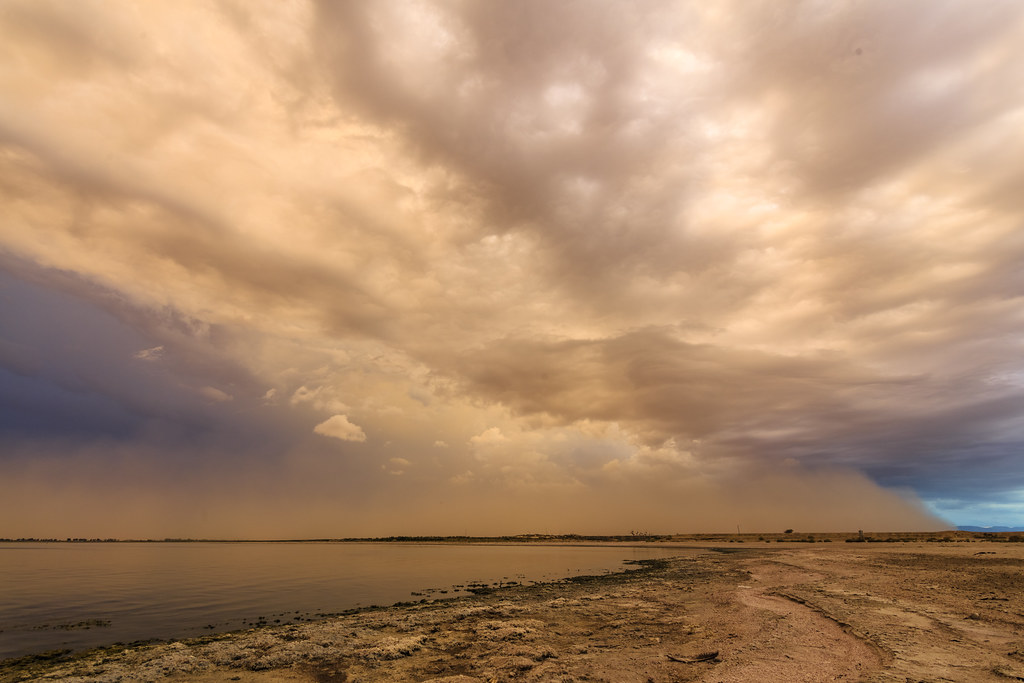
There, on the horizon, a cloud.
I watch it as it moves slowly closer.
I think I know clouds, all kinds of clouds.
This cloud moves toward me.
I see it change as it moves, it thins out,
Becomes lighter, less a cloud than a wispy space in the air.
It isn’t a rain cloud, I know that. However much I want it to be.
I’m disappointed. It’s an extreme drought --

Just beyond my window is a copse of magnificent gum trees.
The leaves and limbs move in the gentle breeze.
Downwind a spray of fine oil droplets hangs in the air.
It’s what gum trees do – it’s what makes them burn.
It’s the price we pay for fast-growing, softwood trees and their wonderful shade.
I’ve seen them burn and release their glowing embers.
I’ve watched their devastation move like a living, ravenous daemon.
Like a creature unleashed from a Japanese Sci-fi movie.

We cover the signs of the drought with green stuff.
It’s Cali and we do that here.
We douse the surface with water we pump from below or bring from 500 miles away
It’s Cali and that’s what we do.
We live in a luxurious, verdant world of green.
We are oblivious to the reality, the drought.
If we can’t see it, it isn’t really happening. It’s Hollywood.
So, there is no drought here, no extreme drought.

The lighted sign above the Freeway flashes EXTREME DROUGHT conserve water,
The edges of the freeway are green and lush and need to be mowed.
The sign over the freeway continues to tell us the big lie – Extreme Drought.
How can there be a drought? Everything I see is in denial, part of the deceit.
It’s a scam, a con, the government can’t be trusted.
Look at the Covid vaccines.
I must water my shrubs when I get home.

Longest in recorded history – that’s what they say.
Indian tribes moved their dwellings to a new place to follow the water.
We move the water to follow us. As long as there is water to move.
Droughts are always followed by floods, aren’t they?
We will wait for the floods.
El Nino isn’t going to save us this time. His sister is in charge.
One more year? Can we last for one more year?
The green will lose its power to deceive in a few months and then what?
Extreme Drought – conserve water!

PS: The freeway signs have changed!
Don’t drive drunk!
Ron Pickett is a retired naval aviator with over 250 combat missions and 500 carrier landings. His 90-plus articles have appeared in numerous publications. He enjoys writing fiction and has published five books: Perfect Crimes – I Got Away with It, Discovering Roots, Getting Published, EMPATHS, and Sixty Odd Short Stories.
.
PLEASE NOTE: ARTICLES CAN ONLY BE REPRODUCED IN OTHER SITES WITH DUE ACKNOWLEDGEMENT TO BORDERLESS JOURNAL
Since 1991, Ukraine has been celebrating its Independence Day on August 24th. As another year of its independent existence starts, it is unfortunately embroiled in a state of war for the last six months where large parts of its territory have been forcefully conquered by the invading Russian army and cities have faced erasure — razed to the ground by incessant, unceasing, ruthless violence. Many human lives have been lost, more refugees generated and thousands have been wounded or taken prisoners. Families have been torn and natural resources depleted.
This year of all years, it’s most important to commemorate Ukraine’s Independence Day — to reaffirm the recognition given to a region and a culture that binds the residents together into an independent entity. One wonders if dreams as Lennon’s of “all the people/ Livin’ life in peace” could ever come true and have us create a beautiful haven on Earth where wars would be a narrative from the past…
Imagine there's no heaven
It's easy if you try
No hell below us
Above us, only sky

Imagine all the people
Livin' for today
Ah

Imagine there's no countries
It isn't hard to do
Nothing to kill or die for
And no religion, too

Imagine all the people
Livin' life in peace
You....

Imagine all the people
Sharing all the world
You

{Excerpted from "Imagine"(1971) by John Lennon (1940-1980)}
Voicing out in unison against the violence and violations faced by our fellow humans in war zones, we bring to you poetry and prose by fourteen writers from nine different countries, including one who had to flee Ukraine as the shelling shattered Kharkiv.
Poetry
Poetry from across the world in support of peace and voicing concerns over the humanitarian crisis in Ukraine, we have Ukranian Lesya Bakun give us poetry as a war victim, a refugee. Rhys Hughes, Ron Pickett, Michael R Burch, Kirpal Singh, Malachi Edwin Vethamani, Suzanne Kamata, Mini Babu, Sybil Pretious and Mitali Chakravarty have contributed poetry written for the Ukraine crisis. Click here to read “How Many Times Must the Cannonballs Fly…?”
Cry the Sunflower by Ihlwha Choi, who wrote the poem in Korean and translated it for our readers. Click here to read.
‘When will we ever learn? Oh, will we ever learn?’: Ratnottama Sengupta,comments on the situation in Ukraine while dwelling on her memorable meeting with folk legend Pete Seeger, a pacifist, who wrote ‘Where have all the Flowers gone’, based on a folk song from Ukraine. Click here to read.
WRITERS, WRITERS

Writers, writers everywhere.
Writers, writers floating in the air.
Writers, writers tearing out their hair,
Writers, writers’ souls laid bare.

Poets, poets searching for a rhyme.
Poets, poets stretching space and time.
Poets, poets praying for a meter.
Poets, poets iambic pentameter.

Mysteries, mysteries where’s it going next?
Mysteries, mysteries the clues are in the text.
Mysteries, mysteries guilt will rise and fall.
Mysteries, mysteries now it’s time - reveal it all.

Romance, romance stories far from truth.
Romance, romance written just for youth.
Romance, romance delight, joy, and sigh.
Romance, romance never a leave a dry eye.

Drama, drama the play’s the thing.
Drama, drama a real drama queen.
Drama, drama work it all out.
Drama, drama it can end with a shout.

Scriptwriters, scriptwriters Act one, two, three,
Scriptwriters, scriptwriters full of unbridled glee
Scriptwriters, scriptwriters working In a team
Scriptwriters, scriptwriters living the dream.

Writers, writers everywhere I look
Writers, writers pitching their new book,
Writers, writers please please me, do.
Writers, writers can I be one too?


I WANT TO WALK LIKE A CROW

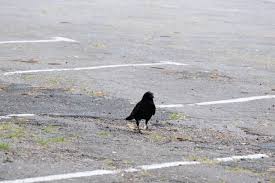
I want to walk like a crow.
I want to place one foot in front of me.
I want to move with purpose and grace.
I want to fly!
But I’ll settle for walking like a crow.
I see them on the tile roofs next door.
They don’t care!
Crows don’t care!
They are what they are.
All that they are and damned if they care what you think.
I want to walk like a crow!
Don’t care! Don’t worry! One foot in front of the other.
Move with ease and certainty.
Never trip or stumble!
I want to walk like a crow.
I’ll never fly.
There is a bright flash of sunlight reflecting from my chest –
My black shiny feathers tell the world a lot.
I’m strong healthy and available. definitely available.
I take the high spot, the crown of the roof.
My landings are a show of airmanship.
My legs take the shock.
My wings ease the weight onto the surface – any surface.
Watch me!
I just want to walk like a crow.
I’ll never fly.
Ron Pickett is a retired naval aviator with over 250 combat missions and 500 carrier landings. His 90-plus articles have appeared in numerous publications. He enjoys writing fiction and has published five books: Perfect Crimes – I Got Away with It, Discovering Roots, Getting Published, EMPATHS, and Sixty Odd Short Stories.
.
PLEASE NOTE: ARTICLES CAN ONLY BE REPRODUCED IN OTHER SITES WITH DUE ACKNOWLEDGEMENT TO BORDERLESS JOURNAL
Tagore’s Mono Mor Megher Shongi (‘The Clouds, My Friends‘)has been translated by Professor Fakrul Alam. Click here to read.
The Welcome, a skit by Tagore, has been translated by Somdatta Mandal. Click here to read.
The Bus Conductor, a short storyby Dalip Kaur Tiwana has been translated from Punjabi by C. Christine Fair. Click here to read.
Hasan Sol: A Balochi Folktale from Geedi Kessah-4(Folktales Vol: 4) compiled and retold by Gulzar Khan Mari, has been translated by Fazal Baloch from Balochi. Click here to read.
Cry of the Sunflower written in Korean and translated to English by Ihlwha Choi, a poem for Ukraine. Click here to read.
This narrative is written by a youngster from the Nithari village who transcended childhood trauma and deprivation. Lockdown had been written in Hindustani by Jishan and translated to English by Grace M Sukanya. Click here to read.
InThe Anthology in my Mind, Rhys Hughes talks of a make believe anthology. Clickhere to read and find out what he imagines.
Conversations
Eminent film journalist, Ratnottama Sengupta, converses with legendary actress, Deepti Naval, on her literary aspirations at the Simla Literary festival, Unmesh, in June 2022. Click hereto read.
Keith Lyons interviews Steve Carr, a writer who has written 500 short stories and has founded the Sweetycat Press. Click here to read.
Meenakshi Malhotra reviews Tagore’sGleanings of the Roadtranslated by Somdatta Mandal. Click here to read.
Rakhi Dalal reviews Geetanjali Shree’s Mai, Silently Mother, a Sahitya Akademi winning translation of the Hindi novel by Nita Kumar. Click hereto read.
A CONCERT ON THE BAY

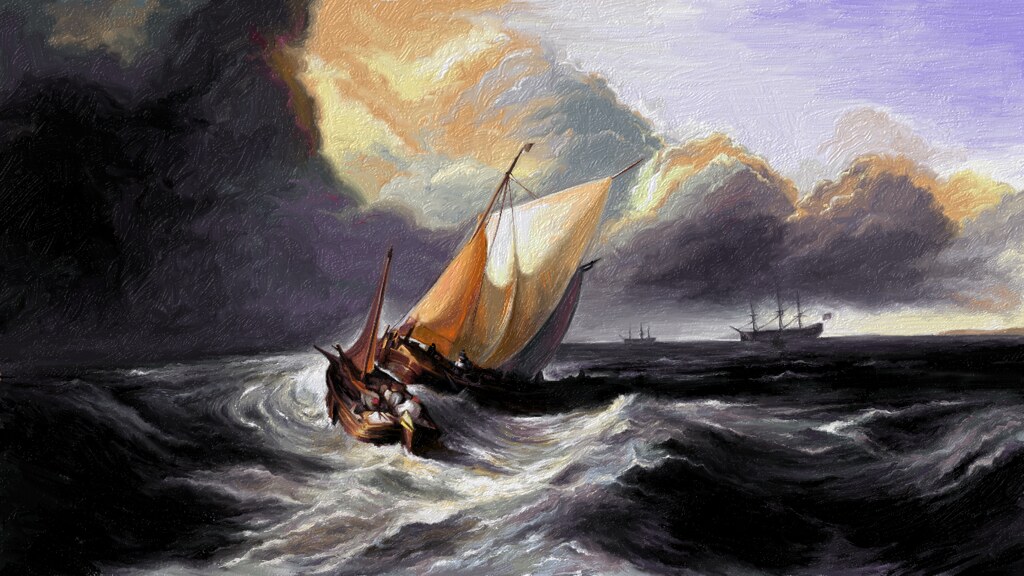
Debussy’s Dialogue of Wind and Sea
Flows from the shell.
The water in the bay reflects the setting sun.
A lone seagull soars smoothly above the crowd.
The dialogue is muted, the wind a gentle breeze.
The low rumble of the engine on an outgoing fishing boat blends with the timpani.
We are transported from the realities of the world.
The music and the bay have achieved their raison d’état.
There are two harps, Two!
Everyone watches the big screens.
The conductor becomes physically involved – emotionally.
His hair flows with the excitement of the music.
The air is chilled, moist, flowing across the audience.
A Sea-doo race ends; there is a clear winner.
The music, the magic ends with an explosion of applause.
We leave changed slightly, better.
The dialogue encompasses much more than the wind and sea.
Dialogue between Wind and Sea by Debussy (1862-1918)
Ron Pickett is a retired naval aviator with over 250 combat missions and 500 carrier landings. His 90-plus articles have appeared in numerous publications. He enjoys writing fiction and has published five books: Perfect Crimes – I Got Away with It, Discovering Roots, Getting Published, EMPATHS, and Sixty Odd Short Stories.
.
PLEASE NOTE: ARTICLES CAN ONLY BE REPRODUCED IN OTHER SITES WITH DUE ACKNOWLEDGEMENT TO BORDERLESS JOURNAL
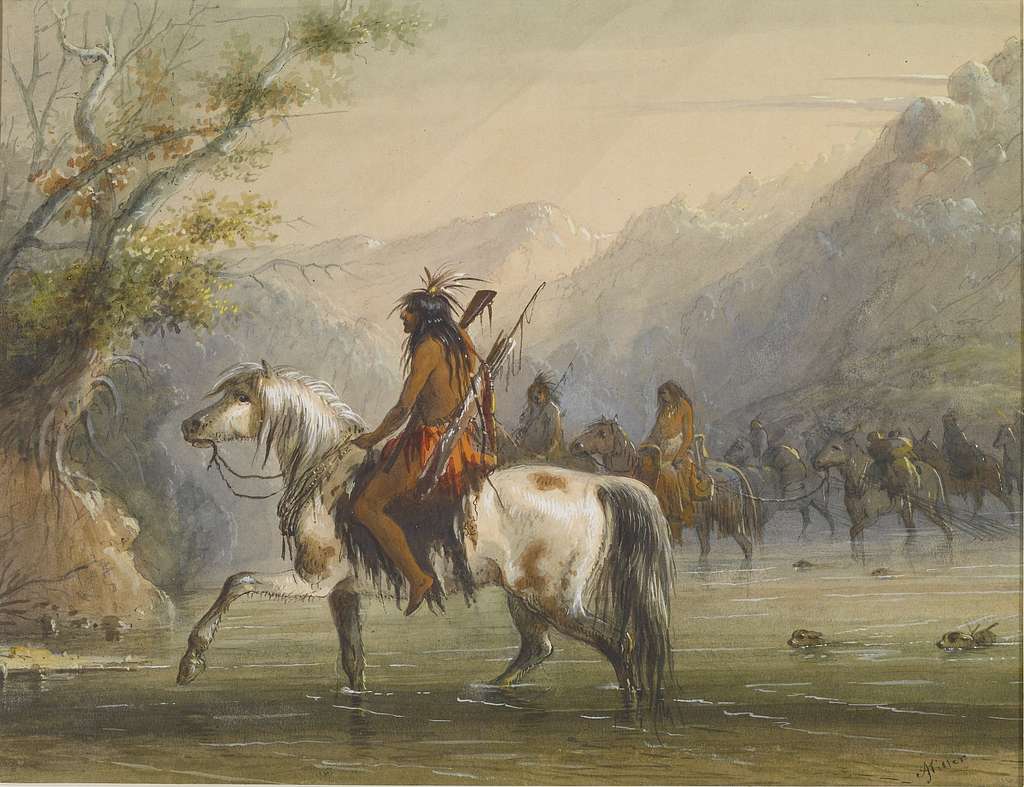
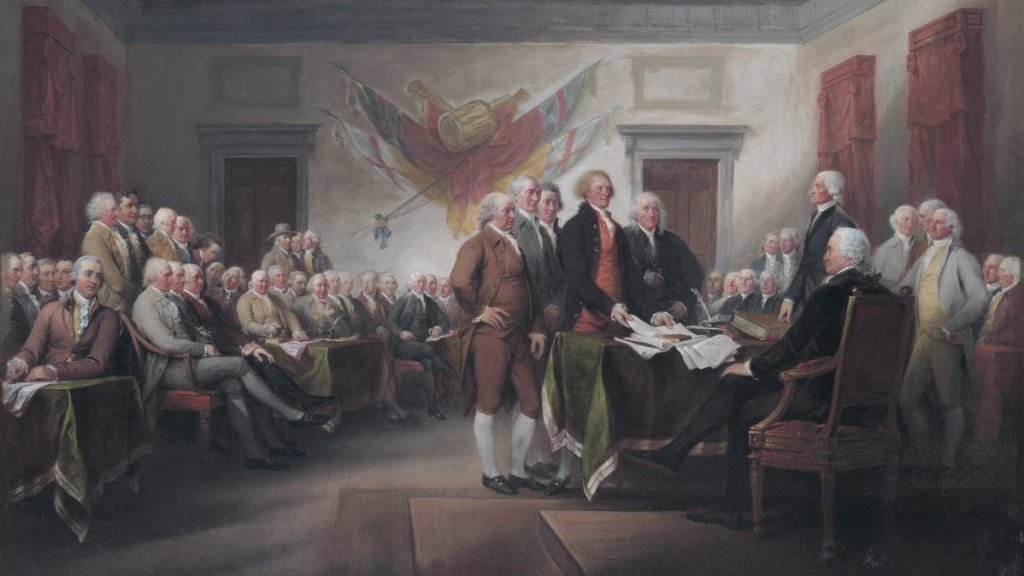
‘Shoshonee Indians – Fording a River,’ by Alfred Jacob Miller (1810-1874)The Declaration of Independence, July 4, 1776 by John Trumbull (1756-1843)Courtesy: Creative Commons
On the 4th of July, 1776, one of the world’s largest democracies came into being amidst revolution and violence. It grew as a land of immigrants to attract the best talents for many years. While the original inhabitants of the land who survived the exodus of the first generation immigrants were pushed into reserves, majority of the world looked up to the land of plenty in hope of a better life, especially post the two World Wars. Today, while looking forward to a new start in a post pandemic scenario, we present to you poetry that explores different facets of the United States of America.
Configuration by Jared Carter explores American impressionist Glen Cooper Henshaw (1880-1946) through art. Click here to read.
American Dreams, consisting of two poems by Michael R Burch, traces the historic growth of the country. Clickhereto read.
In the Honduran Dusk by Lorraine Caputo, giving voice to the spirit of exploration. Click here to read.
Languages Lost & Found, three poems by Luis Cuauhtémoc Berriozabal, gives voice to modern immigrants. Click here to read.
Waiting, four poems from Suzanne Kamata, give us glimpse of a heinous crime against women that is rampant worldwide, but to break silences helps move towards resolution. Click here to read.
Jibananda Das’s All Afternoon Long, translated from Bengali by Fakrul Alam. Click here to read.
The Colour of Time, Korean poetry composed and translated by Ihlwha Choi. Click here to read.
The Ordeal of Fame, a humorous skit by Rabindranath, translated by Somdatta Mandal. Click here to read.
Fazal Baloch translates a retold folktale from Balochi, The Precious Pearl. Click here to read.
Tagores’ Lukochurihas been translated from Bengali as Hide and Seek by Mitali Chakravarty. Click here to read.
Pandies’ Corner
These narratives are written by youngsters from the Nithari village who transcended childhood trauma and deprivation. The Story of Rajesh has been written by Yogesh Uniyal in a mix of English and Hindi, and translated fully to Hindi by Nirbhay Bhogal. Clickhere to read.
Rhys Hughes shares why he put together an anthology of humorous poetry with seventeen writers, Wuxing Lyrical. Is his logic funny or sane? Click here to find out.
In An Encounter with the Monet on Naoshima, Suzanne Kamata writes of snacking on Claude Monet’s hundred year old recipes while savouring his art and that of the famed artist who makes bold art with polka-dots, Yayoi Kusama. Click here to read.
An excerpt from Upamanyu Chatterjee’s Villainy. Click here to read.
An excerpt from Ramy Al-Asheq’sEver Since I Did Not Die, translated from Arabic by Isis Nusair, edited by Levi Thompson. The author was born in a refugee camp. Click here to read.
Book Reviews
Rakhi Dalal revisits Tagore’s The Post Office, translated from Bengali in 1912 by Devabrata Mukherjee. Click here to read.
Indrashish Banerjee reviews Upamanyu Chatterjee’s Villainy. Click here to read.






 Borderless