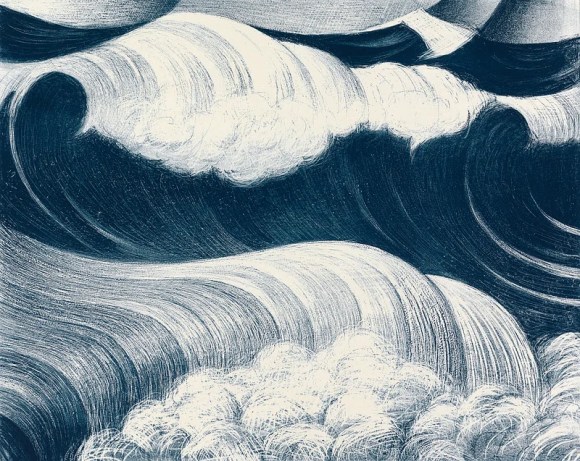
The Wave (1917), vintage illustration by C. R. W. Nevinson. From Public Domain
On world poetry day, we gather the colours of humanity to bring to you flavours of peace, compassion and love. With these poems, we seek solace and a future laced with the vibrant shades of humanity living in harmony with nature, the Earth and the Universe. These poems bring together not just writers from across the world but also some writings that are cross-cultural. Some of the poems express the condition of people living across the world. In this one page, we meet poets and translators from more than 25 countries fand translations from a dozen languages… Enjoy!
The Dragonfly, a poem by Ihlwha Choi, has been translated from Korean by the poet himself. Click here to read.
Four of his ownMalay poemshave been translated by Isa Kamari. Clickhere to read.
Hotel Acapulco, has been composed and translated from Italian by Ivan Pozzoni. Click hereto read.
Poetry in Bosnianfrom Bosnia & Herzegovina, written and translated by Maid Corbic. Click here to read.
Amalkantiby Nirendranath Chakraborty has been translated from Bengali by Debali Mookerjea-Leonard. Click hereto read
Poems of Longing by Jibananada Das homes two of his poems translated from Bengali by Professor Fakrul Alam. Clickhereto read.
Masud Khan’s poem,In Another Galaxy, has been translated from Bengali by Professor Fakrul Alam. Click hereto read.
Quazi Johirul Islam’s The White-Coloured Book has been translated from Bengali by Professor Fakrul Alam. Click here to read.
Four cantos from Ramakanta Rath’sSri Radha, translated from Odiya by the late poet himself, have been excerpted from his full length translation. Click here to read.
For Sanjay Kumar: To Sir — with Love has been written for the founder of pandies’ theatre by Tanvir, a youngster from the Nithari village where pandies’ worked with traumatised victims.
Miathili Poetryby Vidyanand Jha has been translated from Maithil by the poet himself. Click hereto read.
Meenakshi Malhotra writes of the diverse ways histories can be viewed, reflecting on the perspective from the point of view of water, climate, migrations or women. Click here to read.
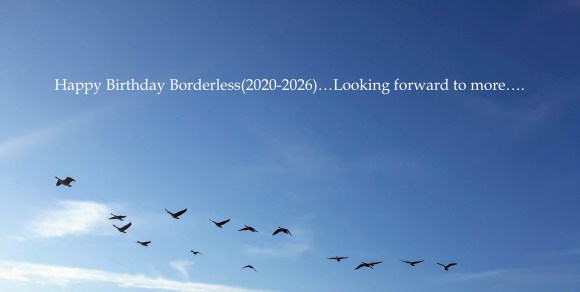
Sometimes, we have an idea, a thought and then it takes form and becomes a reality. That is how the Borderless Journal came to be six years ago while the pandemic raged. The pandemic got over and takeovers and wars started. We continued to exist because all of you continue to pitch in, ignoring the differences created by certain human constructs. We meet with the commonality of felt emotions and aesthetics to create a space for all those who believe in looking beyond margins. We try to erase margins or borders that lead to hatred, anger, violence and war. Learning from the natural world, we believe we can be like the colours of the rainbow that seem to grow out of each other or the grass that is allowed to grow freely beyond manmade borders. If nature gives us lessons through its processes, is it not to our advantage to conserve what nurtures us, and in the process, we save our home planet, the Earth? We could all be together in peace, enjoying nature and nurture, living in harmony in the Universe if only we could overlook differences and revel in similarities.
A young poet Nma Dhahir says it all in her poem that is a part of our journal this month —
This is how we stay human together: by refusing the easy damage, by carrying each other without calling it sacrifice, by believing that what we protect in one another eventually protects the world.
Translations has more poetry with Professor Fakrul Alam bringing us Nazrul’s Bengali lyrics in English and Fazal Baloch familiarising us with beautiful Balochi poetry of the late Majeed Ajez, a young poet who left us too soon. Isa Kamari translates his own poems from Malay, capturing the colours of the community in Singapore to blend it with a larger whole. And of course, we have a Tagore poem rendered into English from Bengali. This time it’s a poem called ‘Jatra (Journey)’ which reflects not only on social gaps but also on politics through aeons.
Christine C Fair has translated a story from Punjabi by Lakhvinder Virk, a story that reflects resilience in women who face the dark end of social trends, a theme that reverberates in Flanagan’s poetry and Meenakshi Malhotra’s essay, which while reflecting on the need of different perspectives in histories – like water and nomads — peeks into the need to recall women’s history aswell. This is important not just because March hosts the International Women’s Day (IWD) but because one wonders if women in Afghanistan are better off now than the suffragettes who initiated the idea of such a day more than a century ago?
This time our non-fiction froths over with scrumptious writings from across continents. Tamara-Lee Brereton-Karabetsos muses on looking at numbers and beyond to enjoy the essence of nature. Farouk Gulsara ideates about living on in posterity through deeds and ideas. Gower Bhat shares how he learns story writing skills from watching movies. Meredith Stephens talks of her experience of a fire in the Australian summer. Bhaskar Parichha writes with passion about his region, Odisha. We have a heartfelt tribute to Mark Tully, who transcended borders, from Bhowmick. And an essay on Arundhati Roy’s memoir, Mother Mary Comes to Me, from Somdatta Mandal, which explores not just the book but also the covers which change with continents. Prithvijeet Sinha travels beyond Lucknow and Suzanne Kamata brings to us stories about her trip to Phnom Penh.
Keith Lyons draws from the current crises and writes about changing times, suggesting: “Changes aren’t endings, but thresholds.” Perhaps, if we see them as ‘thresholds of change’, the current events are emphasising the need to accept that human constructs can be redefined. I am sure a Neolithic or an Australopithecus would have been equally scared of evolving out of their system to one we would deem ‘superior’. Life in certain ways can only evolve towards the future, even if currently certain changes seem to be retrogressive. We can never correctly predict the future… but can only imagine it. And Devraj Singh Kalsi imagines it with a dollop of humour where tails become a trend among humans again!
Humour and absurdity are woven into a series of short fables by Hughes while Naramsetti Umamaheswarao weaves a fable around acceptanceof differences. In fiction, we have stories of resilience from Jonathon B Ferrini and Terry Sanville. Bhat gives us a story set in Kashmir and Sohana Manzoor gives us one set in Dhaka, a narrative that reminds one of Jane Austen… and perhaps even an abbreviated version of the 2001 film, Monsoon Wedding.
In reviews we have, Mohammad Asim Siddiqui discussing Anisur Rahman’s The Essential Ghalib. Rituparna Khan has written on Malashri Lal’s poetry collection reflecting on women, Signing in the Air. And Bhaskar Parichha has reviewed Deepta Roy Chakraverti’s Daktarin Jamini Sen: The Life of British India’s First Woman Doctor, a book that reflects on the resilience that makes great women. Thus, weaving in flavours of the IWD, which applauds women who are resilient while urging humans for equal rights for one half of the world population.
While we ponder on larger realities, Borderless Journal looks forward to a future with more writings centred around humanity, climate change, our planet and all creatures great and small. This year has not only seen a rise in readership and contributors — and the numbers rose further after our unsolicited Duotrope listing in October 2025 — but has also attracted writers from more challenged parts of the world, like Ukraine, Iran, Tunisia and Kurdistan. We are delighted to home writing from all those who attempt to transcend borders and be a part of the larger race of humanity. I would like to quote Margaret Atwood to explain what I mean. “I hope that people will finally come to realize that there is only one ‘race’—the human race—and that we are all members of it.” And I would like to extend her view to find solidarity with all living beings. I hope that there will be a point in time when we will realise there’s not much difference between, a lizard, a fly, a human or a tree… All these lifeforms are necessary for our existence.
I would want to hugely thank all our team for stretching out and making this a special issue for our sixth anniversary and Manzoor for her fabulous artwork. Huge thanks to all our contributors and readers for being with us through our journey. Let’s change the world with peace, love and friendship!
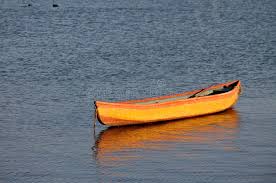
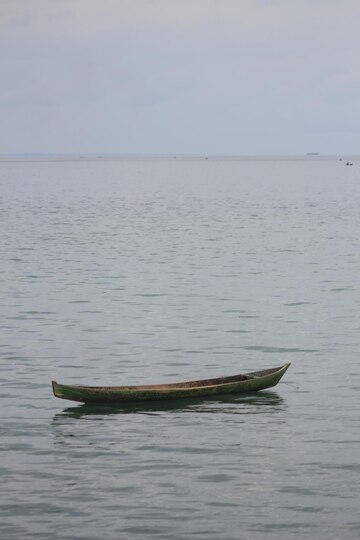
I’m a canoe.
How do you do?
I’m the sleekest
fastest vessel
on the wide ocean blue.


Yes, I’m a canoe
and I haven’t got a clue
how to arrest
my motion if I’m paddled
with devotion
by an energetic crew.


I’m a canoe.
How about you?
Fated by design
to rigorously combine
extreme elongation
with ease of navigation
I’ll pass through
all the sudden storms
and surging waves
that Neptune sends
to test the brave
and save the day.
I’m a valiant canoe.


But I’m no fool.
I have learned my lesson.
I avoid whirlpools,
whether hot or cool,
and grimy monsters
with grave expressions
who bathe in slimy caves
and yearn to take
possession of boats
of any description
or anything else that floats.


I’m a pragmatic canoe
like a sensible shoe,
slim not grim,
modelled for efficiency,
the envy of seagulls,
hoping to travel far
before I am eroded
by the pressure on my hull.


Are you a schooner?
I wish I’d met you sooner.
We can explore
the world together
no matter what the weather
and I will admire
your rudder as we
investigate the other
seascapes that exist beyond
the impenetrable drapes
of mist and fog,
those soggy vapours
that kissed a frog
long ago, so I’ve been told.


I’m a canoe.
There’s a ban on catamarans
where I come from
and that’s why I am single.
Would you care to mingle,
sooner rather than later,
dear schooner, procrastinator,
my seaworthy resistor
of a love that’s true?
I’m a canoe.
From Public Domain
Rhys Hughes has lived in many countries. He graduated as an engineer but currently works as a tutor of mathematics. Since his first book was published in 1995 he has had fifty other books published and his work has been translated into ten languages.
.
PLEASE NOTE: ARTICLES CAN ONLY BE REPRODUCED IN OTHER SITES WITH DUE ACKNOWLEDGEMENT TO BORDERLESS JOURNAL
A group of creatures sat on a wall watching the sunset. The wall had been constructed to stop the sand from the beach blowing over the fields where crops grew. The scene was beautiful.
The hare said, “Let’s jump down and dance for joy.”
And that’s exactly what he did.
The weasel cried, “I’m coming too!” and he also jumped down. So did the fox, cat, monkey, grasshopper and aardvark. They capered in the ruby light and their shadows on the beach were amazingly long. The millipede was scared and remained on the wall.
“It’s a long way down,” he said nervously.
The hare said, “Don’t worry. It won’t hurt if you just bend your knees when you land to absorb the impact.”
“Bend my knees!” exclaimed the millipede. “But it’s almost evening. I don’t have all day, you know!”
BATHTIME FOR MOONS
A crescent moon was feeling tired, so he decided to have a nice dip in the Pacific Ocean. He lay back on his curve and just floated there without a care in the world or a care in the moon.
But an iceberg happened to pass along and when it saw the moon it couldn’t believe its eyes, partly because it didn’t have any eyes and partly because it had no belief. Yet it was amazed.
“Oh my!” it muttered to itself. “Look at the size of that banana!”
NET PROFIT
Drifting along in space, a cosmic spider was explaining to a galactic moth how it caught supper for itself. “First I make a web and then if I wait long enough, I always catch something edible.”
The moth was intrigued. “What’s your favourite food?”
“Planets,” answered the spider.
“Do you catch many of those, I wonder?”
The spider nodded. “So many that I can’t eat them all, so I leave some in storage for a rainy day. We don’t get many rainy days in outer space, but you know what I mean. Anyway, the funny thing is that some of these planets are infested with parasites.”
“Civilisations, you mean?” queried the moth.
“Exactly. And the inhabitants of those civilisations often think that my webs are lines of latitude and longitude. They sometimes use the separate strands for navigational purposes.”
“That’s hilarious!” chuckled the moth.
“Isn’t it?” agreed the spider.
The moth said, “Well, it was nice talking to you, but I’ve got work to do now. I have to circle that star over there a hundred times and then try to extinguish it by flying into it.”
“Good luck. Take care,” said the spider.
NOT A PATCH
A cumulus cloud kept rushing through the atmosphere, north, south, east and west; it never stopped for a moment. A sentient hot-air balloon asked if it had lost something. “I can’t think of any other reason why you should be hurrying through the sky like that.”
“I’m looking for a patch on sunlight on the ground,” said the cumulus cloud, “because I have been told they are worth seeing, but whenever I learn that one has appeared somewhere, it always vanishes by the time I arrive at the designated location. All I get to see is a shadow that happens to be precisely the same shape as me.”
“That’s a weird coincidence,” said the hot-air balloon. “The same thing happens to me but on a smaller scale.”
SWEET TALK
A chimp, a scarf and a hive were debating among themselves which of them had the most beautiful life. “I can peel bananas with my feet,” said the chimp, “and that’s one of the most beautiful things anyone can ever hope to do.” But the scarf wasn’t intimidated in the slightest and shouted, “I get thrown around necks and often my ends just dangle down, but in a strong wind they stick out horizontally; how can any conceivable thing be more beautiful than that?” But the hive laughed and said, “Flying insects live inside me and fill me with honey.”
Beauty is in the ‘i’ of the bee-holder.
JAM ON AN AARDVARK’S NOSE
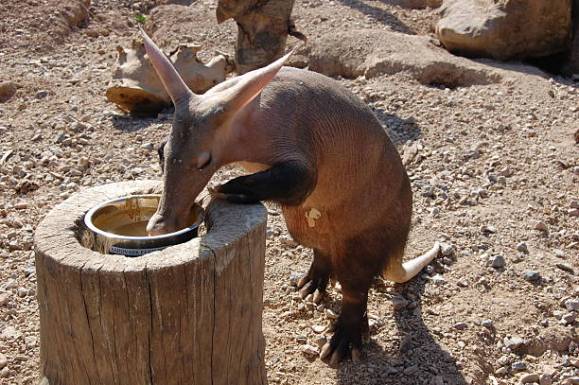
A gorilla was bored and made a private vow that he would do something that nobody else had ever done before, so he travelled for many months until he came across an aardvark asleep in the shade of a tree. “Sorry for waking you,” said the gorilla, “but I’m wondering if you can do me a favour?” The aardvark responded sleepily, “What’s that, my hairy friend from faraway?” The gorilla explained, “Just stay where you are while I spread some apricot jam on your nose.”
The aardvark sighed. “You didn’t have to wake me up to make that request! You could have just gone ahead and spread the jam when I was sleeping and I probably wouldn’t have noticed.” The gorilla accepted this rebuke meekly and opened the jam jar.
When the nose was completely covered in jam, the gorilla stood back to examine his work. “Are you satisfied?” asked the aardvark. “Yes, it’s not bad,” said the gorilla. “Did you want anything else?” questioned the aardvark. “No, that’s sufficient. I’ll go home now. Nice to meet you and thanks for this opportunity. Goodbye!”
And the gorilla began the journey back home, but when he arrived, he found that his female had run off with an ocarina.
An Ocarina. From Public Domain
ABOVE HIS STATION
A philosopher was travelling on a train from Swansea to Tenby. It was a nice journey, but he wasn’t happy because his mind was a blank. It was his official job to keep having ideas, but not a single new one had come to him for ages. When he reached his destination, he got out of the train with the words, “This is my station.”
As he stood on the platform, he wondered if jumping into the air might help. So he made a pole from the branch of a tree and pole-vaulted over the railway tracks. As he reached the highest point of his immense jump, a new idea finally came to him.
His delight was short lived. On the opposite platform a hippopotamus was waiting for its own train and it happened to be yawning at that exact moment, maybe because it was tired or practicing for a competition. The philosopher landed in its mouth and vanished down its throat and into its stomach, never to be seen again.
Don’t get ideas above your station.
THE ROOK AND THE JACKDAW
A crow that had recently eaten cheese and olives with a scarecrow was interested in unusual friendships. He saw a rook and a jackdaw together in a field and said, “Excuse me, but I’m curious to know why rooks and jackdaws always seem to get on so well. You never mix with ravens or magpies or jays or any other corvid.”
“Rooks and jackdaws are natural allies,” said the jackdaw.
“Yes, but why?” persisted the crow.
“Because we have a shared interest in chess,” said the rook.
The crow was amazed. “Really?”
“Yes, it’s true,” confirmed the jackdaw, “but you won’t see us with a board and we use random objects for pieces. For instance, this twig is the white king and this leaf is the queen.”
“What are the pawns?” asked the crow.
“These little stones here.”
“What about the bishops and the knights?”
“Worms and mushrooms.”
“And the piece that is shaped like a castle? I can’t remember its proper name. What do you use for that?”
“I play that part myself,” said the rook.
APPEARANCE OF THE REALM
A strange face materialised above the bed of a weasel. “What the heck are you?” muttered the trembling weasel.
“An unexplained appearance,” came the answer.
“Is that like a ghost?”
“Yes. Sort of.”
“Well, what do you want?” asked the weasel.
“I need to borrow some cash.”
“Whatever for?”
The appearance sighed sadly and said, “I’m not any old appearance but an appearance of the realm, which is the most significant kind. I lost my bulging wallet in a strong current.”
“Was that a current of water or a current of air?”
“Neither. A landslide of dried grapes.”
The weasel was sympathetic. “Look, I only have £35,000 on me at the present time. Is that sufficient?”
The appearance nodded. “Yes, I think so.”
The weasel handed the money over. “When will you pay me back?”
“Tomorrow,” said the appearance.
Then he dematerialised, leaving the weasel much poorer. “I think I’ve been tricked,” said the weasel to himself.
And it was true. He had. The appearance never returned. And when the weasel checked on Wikipedia, he learned that there was no such thing as an ‘appearance of the realm’.
¶ Appearances can be deceptive.
SILLY GOOSE
A meteorite skimmed low over a pond. “Duck!” cried a heron. All the birds dived under the water except one, who was grazed painfully by the passing of the fiery space stone. “Why didn’t you warn me?” it shouted at the heron. “But I did!” came the response. “No, you didn’t,” insisted the wounded bird. “I shouted out ‘Duck’,” said the heron. “Yes indeed,” was the retort to this, “but I’m a goose.”
A QUICK DRINK
Three friends went into a bar. “I’ll have a glass of brandy,” said the first friend, who was an old fellow.
“Vodka for me,” said the second friend, who was a tomb.
The barman served them efficiently.
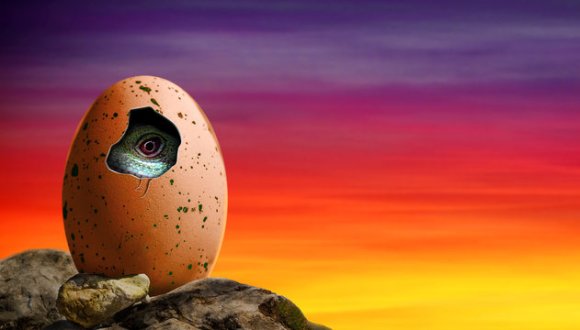
Now it was the third friend’s turn. He happened to be an egg. “Give me a stiff shot of rum!” he ordered.
The barman shook his head. “Sorry. You’re underage.”
“What do you mean?” cried the egg.
“You haven’t even hatched yet!” pointed out the barman.
“Look here,” responded the egg, “I’m much older than my two friends. The old fellow is only ninety-eight years old; the tomb dates merely from 450 BC; but I’m the egg of a dinosaur.”
From Public Domain
Rhys Hughes has lived in many countries. He graduated as an engineer but currently works as a tutor of mathematics. Since his first book was published in 1995 he has had fifty other books published and his work has been translated into ten languages.
.
PLEASE NOTE: ARTICLES CAN ONLY BE REPRODUCED IN OTHER SITES WITH DUE ACKNOWLEDGEMENT TO BORDERLESS JOURNAL
Six years ago, a few of us got together to bring out the first issue of Borderless Journal. We started as a daily blog and then congealed into a monthly journal offering content that transcends artificial borders to meet with the commonality of felt emotions, celebrating humanity and the Universe. Today as we complete six years of our existence in the clouds, we would like to celebrate with all writers and readers who made our existence a reality. We invite you to savour writings collected over the years that reflect and revel in transcending borders, touching hearts and some even make us laugh while exploring norms.
In this special issue. we can only offer a small sample of writings but you can access many more like these ones at our site…Without further ado, let us harmonise with words. We invite you to lose yourselves in a borderless world in these trying times.
Rebel or ‘Bidrohi’, Nazrul’s signature poem, ‘Bidrohi‘, translated by Professor Fakrul Alam. Click here to read.
Manish Ghatak’s Aagun taader Praan (Fire is their Life) has been translated from Bengali by Indrayudh Sinha. Click here to read.
Tagore’s poem, Tomar Shonkho Dhulay Porey (your conch lies in the dust), has been translated from Bengali by Mitali Chakravarty as ‘The Conch Calls’. Click here to read.
Ihlwha Choi spent some time in Santiniketan and here are poems he wrote in reaction to his observations near the ‘home of R.Tagore’, as he names Santiniketan and the Kobiguru. Click here to read Nandini.
Rituals in the Garden: Marcelo Medone discusses motherhood, aging and loss in this poignant flash fiction from Argentina. Click here to read.
Navigational Error: Luke P.G. Draper explores the impact of pollution with a short compelling narrative. Click here to read.
Henrik’s Journey: Farah Ghuznavi follows a conglomerate of people on board a flight to address issues ranging from Rohingyas to race bias. Click hereto read.
The Magic Staff , a poignant short story about a Rohingya child by Shaheen Akhtar, translated from Bengali by Arifa Ghani Rahman. Click here to read.
A Cat Story : Sohana Manzoor leaves one wondering if the story is about felines or… Clickhere to read.
When West Meets East & Greatness Blooms: Debraj Mookerjee reflects on how syncretism impacts greats like Tagore,Tolstoy, Emerson, Martin Luther King Jr, Gandhi and many more. Click here to read.
The Day Michael Jackson Died: A tribute by Julian Matthews to the great talented star who died amidst ignominy and controversy. Click here to read.
Potable Water Crisis & the Sunderbans: Camellia Biswas, a visitor to Sunderbans during the cyclone Alia, turns environmentalist and writes about the potable water issue faced by locals. Click here to read.
My Love for RK Narayan, Rhys Hughes discusses the novels by ths legendary writer from India. Click here to read.
Travels ofDebendranath Tagore: These are travel narratives by Debendranath Tagore, father of Rabindranath Tagore, translated from Bengali by Somdatta Mandal. Click here to read.
Baraf Pora (Snowfall): This narrative gives a glimpse of Tagore’s first experience of snowfall in Brighton and published in the Tagore family journal, Balak (Children), has been translated by Somdatta Mandal . Clickhere to read.
The Day of Annihilation: An essay on climate change by Kazi Nazrul Islam has been translated from Bengali by Radha Chakravarty. Clickhereto read.
Reminiscences from a Gallery: The Other Ray: Dolly Narang muses on Satyajit Ray’s world beyond films and shares a note by the maestro and an essay on his art by the eminent artist, Paritosh Sen. Click here to read.
The Bauls of Bengal: Aruna Chakravarti writes of wandering minstrels called bauls and the impact they had on Tagore. Click here to read.
Most people like you and me connect with the commonality of felt emotions and needs. We feel hungry, happy, sad, loved or unloved and express a larger plethora of feelings through art, theatre, music, painting, photography and words… With these, we tend to connect. And yet, larger structures created over time to offer security and governance to the masses—of which you and I are a part — have grown divisive, and, by the looks of it, the fences nurtured over time seem insurmountable. To retain these structures that were meant to keep us safe, wars are being fought and many are getting killed, losing homes and going hungry. We showcase such stories, poems and non-fiction to create an awareness among those who are lucky enough to remain untouched. But is there a way out, so that all of us can live peacefully, without war, without hunger and with love and a vision towards surviving climate change which (like it or not) is upon us?
Creating an awareness of hunger and destruction wreaked by war is a heartrending story set in Gaza by JK Miller. While Snigdha Agrawal’s narrative gives a sense of hope, recounting a small kindness by a common person, Sayan Sarkar shares a more personal saga of friendship and disillusionment — where people have choice. But does war leave us a choice as it annihilates friendships, cities, homes and families? Naramsetti Umamaheswararao’s story reiterates the belief in the family – peace being an accepted unit. Vela Noble’s fantastical fiction and art comes like a respite– though there is a darker side to it — with a touch of fun. Perhaps, a bit of fantasy and humour opens the mind to deal with the more sombre notes of existence.
The translation section hosts a story by Hamiruddin Middya, who grew up as a farmer’s son in Bengal. Steeped in local colours, it has been rendered into English by V Ramaswamy. Nazrul’s song revelling in the colours of spring has been translated from Bengali by Professor Fakrul Alam. Atta Shad’s pensive Balochi lines have been brought to us in English by Fazal Baloch. Isa Kamari continues to bring the flavours of an older, more laid-back Singapore with translations of his own Malay poems. A couple of Persian verses have been rendered into English by the poet, Akram Yazdani, herself. Questing for harmony, Tagore’s translated poem while reflecting on a child’s life, urges us to have the courage to be like a child — open, innocent and willing to imagine a world laced with trust and hope. If we were all to do that, do you think we’d still have wars, violence and walls built on hate and intolerance?
Mario Fenech takes a look at the idea of time. Amir Zadnemat writes of how memory is impacted by both science and humanities while Andriy Nivchuk brings to us snippets from Herodotus’s and Pericles’s lives that still read relevant. Ravi Varmman K Kanniappan gives the journey of chickpeas across space and time, asserting: “The chickpea does not care about your ideology, your portfolio, or your meticulously curated identity. It will grow, fix nitrogen, feed someone, and move on without a press release.” It has survived over aeons in a borderless state!
In book excerpts, we have a book that transcends borders as it’s a translation from Assamese by Ranjita Biswas of Arupa Kalita Patangia’s Moonlight Saga. Any translation is an attempt to integrate the margins into the mainstream of literature, and this is no less. The other excerpt is from Natalie Turner’s The Red Silk Dress. Keith Lyons has interviewed Turner about her novel which crosses multiple cultures too while on a personal quest.
Holding on to that idea, we invite you to savour the contents of our February issue.
Huge thanks to all our contributors and readers for making this issue possible. Heartfelt thanks to our wonderful team, especially Sohana Manzoor for her fabulous artwork.
Enjoy the reads!
Let’s look forward to the spring… May it bring new ideas to help us all move towards more amicable times.
He went for a walk
in the salty sea,
tripped over a ship,
a Spanish galleon.

He went for a stroll
in a summer meadow,
fell over a horse,
a thoroughbred stallion.

And every time
he stubbed his toes
he shouted, “Oh no!
I’m a clumsy giant.”

He went for a saunter
in haunted woodland,
tripped over a ghost
and injured his hand.

He went for a ramble
on a deserted beach,
slipped on a peach skin,
made a hole in the sand.

And every time
he stubbed his toes
he shouted, “Oh no!
I’m a clumsy giant.”

He liked to promenade
with a vat of lemonade
along the clifftop,
not afraid of the drop.

But accidents happen
and over he went
with a roll of thunder
accompanied by clapping.

And every time
he stubbed his toes
he shouted, “Oh no!
I’m a clumsy giant.”

Cyclops Billy was his friend,
Cyclops Billy advised him to mend
before he went walking again
and risked a tripping
over monsters
and men.

Cyclops Billy is tired of his groans,
Cyclops Billy adopted a tone
of gentle rebuke to the great fluke,
cushioned his bones
and proffered
him soup.

And every time
he stubbed his toes
he shouted, “Oh no!
I’m a clumsy giant.”

Thank you, Thank you,
I feel much better,
the giant admitted in a letter,
and then he went on his way
to take a tour
of pastures new,
to take a look and see the view,
hoping to do so
without any hassle.

He climbed a tree
higher and higher
and reached the top
with a skip and a hop
and took the look that he desired,
saw the sunset all on fire.

He climbed a mountain
even higher, reached the summit
before he retired,
scared the yeti who lived up there
until the poor creature
lost all its hair.

On an avalanche he descended,
soonest broken is soonest mended,
crashed into a castle
from a storybook,
rented by a vampire
but owned by a spook.

And every time
he stubbed his toes
he shouted, “Oh no!
I’m a clumsy giant.”
From Public Domain
Rhys Hughes has lived in many countries. He graduated as an engineer but currently works as a tutor of mathematics. Since his first book was published in 1995 he has had fifty other books published and his work has been translated into ten languages.
.
PLEASE NOTE: ARTICLES CAN ONLY BE REPRODUCED IN OTHER SITES WITH DUE ACKNOWLEDGEMENT TO BORDERLESS JOURNAL
Five poems by Pravasini Mahakudahave been translated to English from Odia by Snehaprava Das. Click here to read.
A Poet in Exileby Dmitry Blizniuk has been translated from Ukranian by Sergey Gerasimov. Click hereto read.
Kalponik or Imaginedby Tagore has been translated from Bengali by Mitali Chakravarty. Click hereto read.
Pandies Corner
Songs of Freedom: The Seven Mysteries of Sumona’s Life is an autobiographical narrative by Sumona (pseudonym), translated from Hindustani by Grace M Sukanya. These stories highlight the ongoing struggle against debilitating rigid boundaries drawn by societal norms, with the support from organisations like Shaktishalini and Pandies. Click here to read.



 Borderless