Categories
Stories

Two Countries

By Ravi Shankar

The decision to retire was a long, tough, and protracted one. The traditional wisdom always gave out doctors never retire. But we needed time to ourselves. We had long and fulfilling lives and now was the time to take things slow. The body was ageing and required more time to complete various activities. Some tasks were no longer possible.

I still remember the first day I met Rajendra on the orientation day of the Family Medicine residency program in upstate New York. Rajendra was from Jiri in the Himalayan country of Nepal. For a few decades, Jiri was the gateway to the Everest region. Then the hikers and mountaineers started flying to the air strip at Lukla. Roads were also progressing further and further in the country. We grew closer during the residency. We shared many interests including nature, hiking, photography, creative writing, and a strong empathy for the underdog. Our friendship slowly deepened, and by the end of the residency we decided to spend the rest of our life together.

We were also different in so many ways. I was a girl of mixed German and Colombian heritage. My family was well-to-do, and I had a privileged childhood. Raj was from a poor family and had to face many struggles in his life. He went to medical school on a government scholarship. Like most graduates of the Institute of Medicine in Kathmandu he then concentrated on being selected for a residency in the United States. Even in the early eighties this was a long, hard struggle.

He did a few ‘observerships’ and research attachments. He eventually went on to become a chief resident and we both worked for around two years in the Northeast health system after residency. Soon we had to decide on what to do next. I would have liked to continue in the United States. Raj however, was increasingly considering whether we should go back to Nepal. I told him that though I had never even visited Nepal I was OK with whatever he decided.

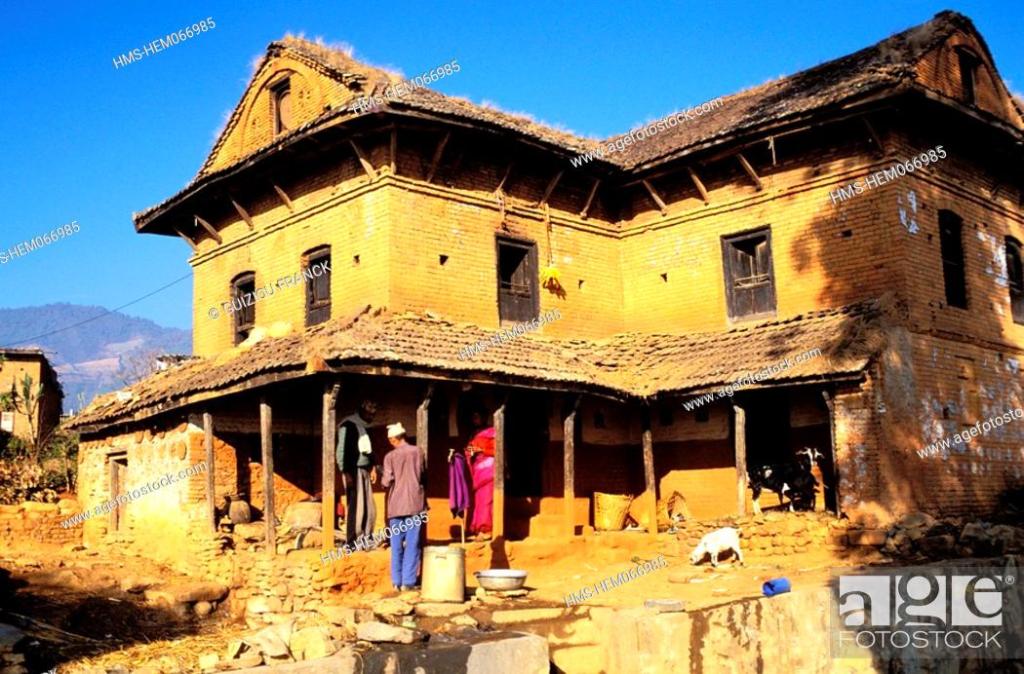
Though his family had settled in Jiri, Raj was a Newar. His full name was Rajendra Shakya. The religion of the Newars was complex tapestry of Hinduism and Buddhism. His family home was at Bungamati, a Newar village in Lalitpur district at the southern part of the Kathmandu valley. Newar Gods and Goddesses were complex and had both good and more wrathful aspects. Women were considered ritually impure during menstruation and were not allowed into the kitchen during this period, and they could not visit temples. In some rural parts of the country, the Chaupadi system was still followed, and women were banished to a cow shed during their periods. The Newars had their own caste system, and the concept of purity was important. In the Kathmandu valley the Newars had their ritual feasts (bhoj) and the buffalo was the most important animal in Newari cuisine.

The cow was sacred and killing one was a grave sin, but the poor black buffalo was fair game. I often reflected on this injustice. We first worked at the United Missions to Nepal hospital at Tansen at the foothills of the Himalayas. Tansen was a small town with a significant Newari influence and the hospital was the major and often only source of health care for a large population. The hospital was overcrowded, and we had to deal with a variety of patients. The houses for the doctors were lovely and picturesque, and we had a great community of both Nepalese doctors and expats. We stayed in Tansen for nearly a decade. There were delightful walks in the surrounding hills and a rather long hike to the Rani Mahal on the banks of the Kali Gandaki, often called the Taj Mahal of Nepal.

There was an opening for a doctor couple at Khunde hospital in the Everest region and as he was from Jiri, Raj wanted to apply. The hospital was at a height for around 4000 m and was set up by Sir Edmund Hillary. The hospital provides care to local residents, hikers, mountaineers, and porters from the lowlands. Initially it was a very isolated existence. Later a satellite phone was set up and eventually an internet connection followed. We dealt with all kinds of patients. The weather was cold, but I loved the picturesque cottage near the hospital. The region was becoming a popular trekking region and during the peak seasons of autumn and spring several thousand trekkers passed through.     

Patan hospital is one of the old and famous hospitals of Nepal located in the city of Lalitpur also known as Patan in the Kathmandu valley. Migration of doctors to developed nations was a major challenge for Nepal and the Institute of Medicine was not very successful in producing doctors for the country as most graduates left for developed nations. The importance of a family medicine/general practice programme was understood by the policy makers and the Patan Academy of Health Sciences (PAHS) was set up. MD was the postgraduate medical qualification in the country and a MD in General Practice and Emergency Medicine (MDGP) was started in this institution.

We were among the faculty for this program, and we were now working at Patan hospital. We had some family land at Bungamati and built a traditional Newari style house. There were smiling mustard fields around though the area was rapidly urbanising. Flowers grew well. In winters, the Himalayas could be seen on a clear day but air pollution and dust made this a rarer phenomenon.

My brother had retired and settled in our family land on the outskirts of Albany, New York. We had a rather large plot of land, and I was thinking of settling near him. We had followed different life trajectories, and it would be nice to spend some together in the autumn of our lives.    

Our work at Patan Hospital was hectic. After long conversations we decided to retire from the hospital and offer our expertise to the MDGP program as Emeritus Professors. Raj’s sister and brother had retired and were now living in Bungamati. Patan hospital would have loved for us to stay on.

We decided to divide our time between Albany and Bungamati. Summers in Albany and winters in Bungamati. Winters in upstate New York can be harsh and unforgiving. The long flight between the two locations will be a challenge as we did not handle long flights well. Let us see what fate had in store for us. Our son was a vascular surgeon in New York and we could be near to him. We were happy that we finally decided to retire and spend time with our families and our grandchildren. It was time to explore the road less travelled!      

.

Dr. P Ravi Shankar is a faculty member at the IMU Centre for Education (ICE), International Medical University, Kuala Lumpur, Malaysia. He enjoys traveling and is a creative writer and photographer.

.

PLEASE NOTE: ARTICLES CAN ONLY BE REPRODUCED IN OTHER SITES WITH DUE ACKNOWLEDGEMENT TO BORDERLESS JOURNAL

Click here to access the Borderless anthology, Monalisa No Longer Smiles

Click here to access Monalisa No Longer Smiles on Kindle Amazon International

Categories
Stories

Healing in the Land of the Free

By Ravi Shankar

The wind blowing across the Long Island Sound chilled his bones. The day was cloudless and the sky blue, but the sun lacked warmth. New York. Dr Ram Bahadur had called the big apple home for over three decades. Winters were cold and snowy. There were cold snaps and the dreaded northeaster brought snow and freezing temperatures. Summers could be surprisingly warm. February in New York was the depth of winter.

Long Island was blanketed in snow. He had spent the morning clearing snow from the driveway of his home. The suburb of Woodbury was quiet and peaceful. The trees had lost their foliage and were waiting for the warmth of spring to put on a new coat of green. He had a large house with floor to ceiling picture windows. The house was two storied with an attic. There were two bedrooms on the ground and three on the first floor. He had done well in life and was now prosperous.

He still recalled his first days in the big apple. He had just come to the United States from Nepal after completing his postgraduation in Internal Medicine. The first years were tough. He had some seniors doing their residency in New York city. The state of New York offered the largest number of residencies in the country. He did his residency again in internal medicine and then a fellowship in endocrinology.

All his training was completed in New York. He worked for over two decades in large hospital systems. But, for the last five years he started his own private practice. Compared to most other countries medicine in the States paid well. Private practice was certainly lucrative, though the cost of living in New York was high.

He did sometimes think about his home country of Nepal. The Kathmandu valley was still a beautiful place. His visits were few and far in between. Unplanned urbanisation had made the valley dusty and dirty. Winters in Kathmandu were cold but milder compared to New York. The Institute of Medicine (IOM) was the first medical school established in the country. The original intention was to create doctors for rural Nepal. The selection was tough and competitive. He still remembered his joy on learning that he had been selected for the medical course. During the closing decades of the twentieth century Nepal was in turmoil. The insurgency was ongoing, and blockades were the order of the day. Violence was rife and a lot of blood was spilled. 

Most doctors from IOM migrated in search of greener pastures. The others mostly practiced in the valley, the historic heartland of the country. Ram was originally from Gorkha, in the centre of the country but his family had migrated to the capital when he was a few years old. His father was a civil servant while his mother was a housewife. Civil servants did not make much and money was always in short supply. His father was a man of principle and never accepted bribes or tolerated corruption. He still remembered the argument he had with his father when he put forward the plan to migrate to the United States (US) to pursue his residency.   

His parents had both passed away and his siblings were also settled in North America. He rarely visited Nepal these days. The insurgency was followed by the overthrow of the monarchy and then a new constitution was promulgated. A federal structure was set up and while this did have benefits, the expenditures also increased. Each state had to set up an entirely new administrative machinery. He married an American academician who taught Spanish literature at the City University of New York. His wife’s family hailed from the country of Colombia.

New York had a substantial Hispanic population these days. He was now fluent in several languages: Nepali, his mother tongue; English, Spanish and Hindi. He also understood Newari, the language of the Newars, the original inhabitants of the Kathmandu valley. He did think on and off about his motherland. Many Nepali doctors left the country. Working conditions were hard and the pay was poor. To advance, you required political patronage. The frequent changes in government required you to be on good terms with several political parties.

He still missed the food of his childhood. New York was a very cosmopolitan place. There were several Indian restaurants and even a few Nepali ones. He was very fond of bara (a spiced lentil patty) and chatamari (Newari pizza), traditional Newari foods. These had earlier not been available in New York. Luckily for him, two years ago a Newari restaurant had opened in Queens. He was also particular to Thakali food. The Thakalis were an ethnic group who lived in the Kali Gandaki valley north of Pokhara. He particularly fancied green dal, sukuti (dried meat), kanchemba (buckwheat fries) and achar (pickle). Anil was a decent cook and had learned to cook a decent Nepali thali[1]and dhido (thick paste usually made from buckwheat or corn). He also made tasty momos (filled dumplings that are either steamed or fried) and these were much in demand among his companions.

Ram loved the professional opportunities that his adopted homeland provided. He had become a US citizen. Working in the US was more rewarding though the paperwork associated with medical care had steadily increased. Many of his batchmates and seniors lived and worked in New York state and across the state border in New Jersey.

Many of them did miss their homeland and had a vague feeling of guilt for not contributing their share to their original homeland. A few of them were working on a proposal of developing a hospital at the outskirts of Mahendranagar in the far west of Nepal. The Sudurpashchim province had a great need for quality medical care. The details were still being worked out. There were about twenty IOM graduates involved and they decided on an initial contribution of a million dollars each. Despite inflation twenty million dollars was still a substantial sum in Nepal. 

This group of friends collaborated on different social projects. They were also active in promoting a more liberal America where each citizen and resident had access to quality healthcare. The hospital would be their first project outside the US. A strong community outreach component was also emphasised in their project.

The US had made him wealthy. He was a proud American. However, he also owed a deep debt to his home country for educating him and creating a doctor. Now was the time for him to repay that debt, not wholly or in full measure but substantially to the best of his abilities! 

[1] Plate made of a few courses, completing the meal

.

Dr. P Ravi Shankar is a faculty member at the IMU Centre for Education (ICE), International Medical University, Kuala Lumpur, Malaysia. He enjoys traveling and is a creative writer and photographer.

.

PLEASE NOTE: ARTICLES CAN ONLY BE REPRODUCED IN OTHER SITES WITH DUE ACKNOWLEDGEMENT TO BORDERLESS JOURNAL

Click here to access the Borderless anthology, Monalisa No Longer Smiles

Click here to access Monalisa No Longer Smiles on Kindle Amazon International

Categories
Essay

Where Eagles Soar

Narratives and photographs by Ravi Shankar

Langkawi

Most passengers got down from the bus at Alor Setar, Kedah, north Malaysia. Binaya, my travel companion, shifted to the front seat of the double decker and later I followed him. It was after eight thirty in the evening and the road had become narrower. After driving on the six lane E1 expressway for most of the day, the narrower road looked confining. Traffic had also reduced. We got an excellent driver’s eye view of the road. One of the benefits of a double decker is the opportunity that you can pretend to be the driver. Malaysia’s northern most state of Perlis seemed different from the larger ones to the South. It was around nine-thirty at night when we reached the Kuala Perlis bus terminal. It was a short walk to our hotel near the jetty.

The Deepavali holidays had just begun and the exodus from Kuala Lumpur to various hometowns was in full swing. The expressway was packed with cars and our drive north was a slow crawl. The InterCity bus service (a private bus operator) used a double decker for this trip though the lower deck had been stripped of seats and used only for luggage and cargo. The seats were comfortable and the drive smooth though extremely slow due to the traffic.

Next morning, we had a traditional Malay breakfast of nasi lemak (rice cooked in coconut milk), fried anchovies and kueh (traditional cakes) along with teh tarikh (boiled and frothed tea). Pouring tea from a great height from one mug to another is a traditional South Indian way of cooling the drink and generating a thick head of foam. Tea shops do this with an extravagant flourish. We walked around the jetty and waited for our midday ferry to Langkawi.

The process of boarding the ferry was smooth and organised. We were seated right at the front. Roro ferries that could carry cars were approaching Kuala Perlis from Langkawi. The sea was calm, and the islands of Langkawi appeared after half an hour. The ferry went round the island and eventually approached the town of Kuah. Kuah is the district headquarters of Langkawi. There is the iconic Langkwai eagle statue near the jetty. The jetty was modern, and we took a taxi to our hotel located near Cenang Beach (Pantai Cenang in Malay).

Cenang Beach

The main island of Langkawi is surprisingly large, and taxis are the main means of transport. Cenang beach is popular with travellers. We were staying at the Cenang Langkwai House near Cenang beach. The room was spacious and well-equipped. Considerable thought had gone into the arrangements, and we had a pleasant stay. The first day I had noodles with prawns for lunch, and I was pleasantly surprised by their freshness and taste. Sea food was plentiful and enjoyable. Binaya was not comfortable with sea fish and preferred freshwater delicacies. I could understand his perspective as I always preferred sea fish and found freshwater fishes not very much to my liking. We dined in a large restaurant that was a few minutes’ walk from our hotel. One evening I tried mussels (delicious) while on another occasion I had laksa (Laksa is a spicy noodle dish popular in Southeast Asia. Laksa consists of various types of noodles, most commonly thick rice noodles, with toppings such as chicken, prawn, or fish).

My good friends, Naveen and Sunil, had recommended that we take the island-hopping tour. We booked the tour for the next morning. Langkawi is also famous for duty-free shopping and Binaya wanted to purchase a suitcase. The prices, however, were not lower than those in KL. Eventually I ended up purchasing some excellent chocolates at the Cenang Mall. Our stay was made sweeter!

Early next morning we walked down to the main thoroughfare to have roti canai is a South Indian flatbread dish popular in Malaysia). We waited on the white sands of Cenang Beach for our transportation to the tour jetty. Each boat had about 24 passengers and was well organised. Everyone had to wear life jackets while on the boat. We had our photos taken and this was our introduction to this Langkawi custom. The tour lasts for around four hours and covers three main islands south of the main island. Our first stop was the Pulau Dayang Bunting, where we entered a geopark to hike up the hills to a lake. The trail was well maintained. Humidity was the main problem. After the mandatory photo, we continued to the lake. The tiles on the water, like elsewhere in Langkawi, were made of a floating material stays afloat on lakes and seas but depresses slightly under your weight. Both of us were quiet and we were missing the energy and dash of Sunil, our friend from Monash University, Malaysia.    

Island Hopping

We continued to Pulau Singa Besar to watch eagles feed from boats. Pulau means island in Malay though it brought images of the fragrant rice dish to our minds. We continued to Pulau Beras Basah and the sandy beaches and the turquoise waters took me back in time to one happy island, Aruba. There were colourful beach huts and paragliding was available for more adventurous souls. The ride back to the main island was short and we could see a docked cruise ship in the distance. Our photo had been converted into a souvenir (a small plate on which the photo was printed). We had lunch at our morning restaurant. Binaya had nasi goreng (fried rice) while I had the all-day breakfast. This was a good deal and consisted of two pieces of toast with butter, two fried eggs, a chicken sausage, and baked beans. Binaya tried out different geographical varieties of nasi goreng from Pattaya to Cina to USA.

After lunch we went to the Underwater World. The aquarium has themed sections like tropical rain forest, subantarctic climate, and marine life sections among others. The main attractions were the seal show and the penguins. The seal performed a variety of tasks and received a treat after completing each successful task. This is mentioned as the largest aquarium in Malaysia. The one at KL has a spectacular underwater tunnel and you can watch marine life swim by all around you.

Langkawi means reddish brown eagle in the Malay language and is believed to be the place of Garuda. The islands have been a part of the Kedah sultanate for over two millennia. The islands have a geological history going back to over 550 million years. Langkawi is thought to have been cursed for seven generations in the early 18th century by Mahsuri, a woman who was falsely accused of adultery and executed unjustly. Langkawi was occupied by the Kingdom of Siam and became a part of Malaysia after the Anglo-Siam treaty. The islands were a sleepy backwater and were developed into a major tourist destination by Dr Mahathir Mohamed.

The next morning, we travelled to the cable car toward the north of the island. The Deepavali holidays brought many to the island. The tourist infrastructure’s good, and we did not experience crowds and long waiting times. The Langkawi sky cab provides an aerial link from the Oriental Village at Teluk Burau to the peak of Gunung Machinchang, which is the location of the Langkawi Sky Bridge. The total length is 2.2 km, with a journey time from the base to the top of around 15 minutes. It was officially opened in 2003. We were comparing this to the Manakamana cable car in Nepal. This one is longer and steeper. The elevation between the base and the middle station is said to be the steepest in the world. There were delightful views of the bay and the surrounding islands as we moved slowly toward the top. The Skybridge is a major attraction and is among the longest free span and curved bridge in the world. There are a few glass sections that allow you to look down into the valley. The views were majestic, and the bridge is around 660m above sea level. There is also a sky glide option with a comfortable cabin style vehicle that carries visitors from the top station to the sky bridge.

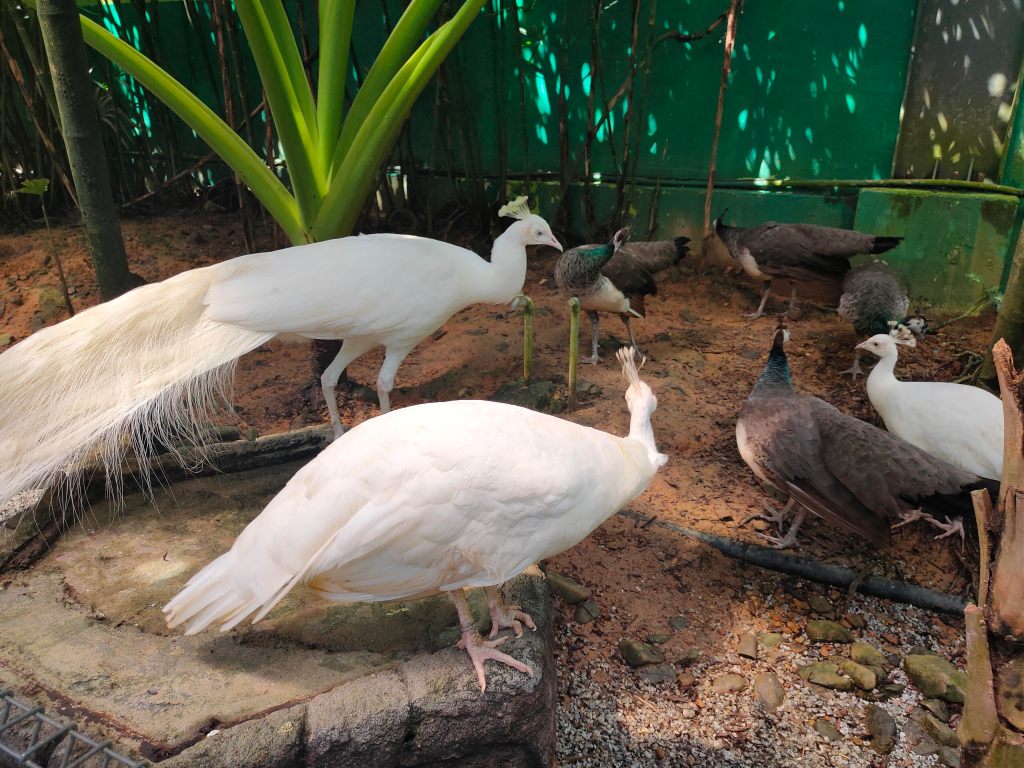
We took a taxi to the Langkawi Wildlife Park. Malaysia has some delightful animal parks and the one at Langkawi offers close encounters with animals. The animals are used to visitors and there are plenty of opportunities to touch, pet and feed them. Trained handlers were at hand. I was reminded of ‘Farm in the City’ at KL constructed around a similar theme. The covered walking path meanders through animal enclosures and the peafowls reminded me of the KL Bird Park. Feeding the small birds, the tortoises, deer, and the rabbits is a highlight of the visit. Like at other attractions there is a mandatory photo, and the exit is always through a duty-free shopping complex. That evening we had a spectacular thunderstorm. Being to the north the rains may be more seasonal at this tropical paradise.

The next morning, we had to depart back to routine life. We reached very early for our flight back to KL. We watched passengers boarding Air Asia, Malaysian Airlines and Scoot flights to Penang, KL and Singapore. Air Asia is a dominant player in the Southeast Asian market. The flights are cheap and usually fly on time. The aircrafts, however, may be older and the leg space is limited.

We had a pleasant break at one of Malaysia’s major tourist destinations. There are many attractions here that we are yet to experience. Time was limited and we did not want to rush ourselves from attraction to attraction during a leisurely break. We plan to return one day to the oldest land in Malaysia, 550 million years in the making as proudly proclaimed by the site Naturally Langkawi!

Dr. P Ravi Shankar is a faculty member at the IMU Centre for Education (ICE), International Medical University, Kuala Lumpur, Malaysia. He enjoys traveling and is a creative writer and photographer.

.

PLEASE NOTE: ARTICLES CAN ONLY BE REPRODUCED IN OTHER SITES WITH DUE ACKNOWLEDGEMENT TO BORDERLESS JOURNAL

Click here to access the Borderless anthology, Monalisa No Longer Smiles

Click here to access Monalisa No Longer Smiles on Kindle Amazon International

Categories
Poetry

Maithili Poetry by Vidyanand Jha

Translated by Vidyanand Jha from Maithili to English

Madhubani Painting or Mithila Art
TRANSLATION

My eyes made through swimming 
in the waters of the pond full of algae
carry greenery, see greenery everywhere. 

My blood made of the juice of Ladubbi mangoes,
flow in my veins continuously, sweet, juicy.

Made from pieces of Rohu fish,
made from Garai Garchunni fish, 
my body is shimmering, slick. 

The sound of the hooves of Salhesh’s* horses, 
the reverberations of the sound of the Chaukitora dance, 
the desolation of the consequences of Vidyapati*,
and my voice, my clear language
made from mixing all these — 

Gets translated —
speaking an unknown language outside my home, 
spending my life in an unknown place, some other place, 
losing myself, making myself into someone else 
making myself into a customer in a glittering market. 

And my Maithil existence
gets translated
into Indian citizenship. 

*Salhesh is a folk deity in Mithila(Nepal and Terai region in India)
*Vidyapati (1352-1448) was a Maithili poet


TOGETHERNESS

A filled in disused well reverberates with 
the mumbled Sahajiya song of a Vaishanvi*,
mixed with your name whispered softly,
mixed with the sound of a thundering river flowing in full spate. 
So many eager songs swirl,
straining to come out of our souls
to touch the heights of the sky.
Sounds are mumbled, words are mumbled
in a filled disused well. 

On the banks of a water tank
under a tree with leaves falling, 
in a locked old box
are kept for many years so many embraces, kisses so many,
pressed and folded for many years, 
the touch of your skin on mine - quivering, exciting,
impulses so many, so many disappointments. 
Everything is folded and kept inside. 
A box that is rusting slowly is thrown away. 
It’s becoming one with the earth slowly.

Routes to many cities utterly unknown, 
paths to many villages deserted
wait to be measured 
by your feet, by my feet. 
Many fabulous scenes, strange scenes many, 
sad scenes many, grotesque scenes many
await our eyes,
lost in an unknown corner of this Earth,
in a deathly silent lost village,
Or in an utterly unknown strange city.

Would my being be
yours?
Or maybe on the path of annicca*, 
I would be, you would be
separately, alone.
Or is that that I wouldn’t be, you wouldn’t be?

*Sahajiya -- a form of Hindu tantric Vaishnavism; Vaishnavi -- a woman follower of Vishnu
*annicca—Buddhist principle of impermanence 
Photo courtesy: Ira Jha

Vidyanand Jha is a poet, short story writer and literary critic in Maithili. He is also a translator translating texts from and into Maithili primarily to and from English. He has been publishing Maithili poems in literary journals since 1980s. He has three poetry collections to his credit: Parati Jakan (Like a Morning Song), published by Sahitya Akademi in 2002, now in its second edition; Bicchadal Kono Pirit Jakan (Like a Lost Love) published by Antika Prakashan in 2019 and Danufak phool Jakan (Like Danuf Flowers) published in 2021. He has received many prestigious awards for his poetry in Maithili. His translations from Maithili have appeared in journals like Indian Literature and Anthologies like The Book of Bihari Literature. He was awarded Katha Translation Award in 1998.

.

PLEASE NOTE: ARTICLES CAN ONLY BE REPRODUCED IN OTHER SITES WITH DUE ACKNOWLEDGEMENT TO BORDERLESS JOURNAL

Click here to access the Borderless anthology, Monalisa No Longer Smiles

Click here to access Monalisa No Longer Smiles on Kindle Amazon International
Categories
Review

Writing South Asia in the American South

Book Review by Gemini Wahaaj

Title: South to South: Writing South Asia in the American South

Editor: Khem K. Aryal

Publisher: Texas Review Press

Taken together, the stories and essays in the new anthology edited by Khem K. Aryal South to South, Writing South Asia in the American South, offer an intimate, richly articulated expression of what it means to live in the American South as a South Asian immigrant. Several stories construct the enduring feeling of loss, both for new immigrants and old. Sixteen authors have been featured. Some have dealt with the issue through fiction and some, through non-fiction.

In “The Immigrant”, a short story by Chaitali Sen, a young immigrant man Dhruv tries to compose a letter to his parents describing his new life in America but fails to find the language. While dining next to the hotel where he is staying during  a work trip, Dhruv is upset by the disappearance of a small boy and the fruitless search of the distraught parents, which reminds him of his own state in America, where he seems to have lost his way. In “Pine” by Hasantika Sirisena, a young Sri Lankan mother of two small children tries to hold on to her customs from home. Her husband walks out on her in a bid to make a new, successful life in America, unburdened by the trappings of culture and religion. She seems in danger of losing her two children also, who are more interested in Christmas trees than the rituals she wants to share with them. In a startling turn of events, she comes to terms with her own uprooting with touching courage.

Several stories remind us of the remarkable flexibility of South Asian immigrants, who transform themselves and become new people after putting down roots in a new place. One such story is Aruni Kashyap’s “Nafisa Ali’s Life, Love, and Friendships Before and After the Travel Ban”, about a young married woman from the war-torn region of Assam, whose mother and husband in India constantly worry about her safety. Nafisa lives next door to a couple as different from her as possible; they do not work, they drink and they have public sex – yet, Nafisa feels drawn to them as she embraces her new relationships and identity in America to escape her traumatic past. In “Nature Exchange”, Sindhya Bhanoo tells the story of a South Asian woman married to a white man whose relationship with her husband comes to an end when their son dies in an all too typical American phenomenon, a school shooting.

Repeatedly, we see immigrant women in a state of extreme desolation and isolation, left to their own devices to find meaning afresh in a foreign land. Whether they feel their children moving away from them or they literally lose a child, children seem to act as an anchor for the immigrant mother, but in each story, this most intimate of relationships only proves transitory. There are also contradictions. Whereas Sirisena’s story shows a man more willing to assimilate and adapt to America, in Kashyap’s story, the husband, sitting in India, draws easy conclusions about America (denouncing drinking, dancing, and their anti-immigration status), whereas the wife in America, tired of the stresses of living in a war-torn country, finds respite from her homeland’s history of trauma by partying with her office mates and Southern neighbors.

Parallel themes run through the entries. Both stories and essays articulate the craving for tea, one aspect of their identity that South Asians have carried overseas. Also poignant are tales of the early days of migration and the transformation people undergo over the years. Jaya Wagle writes of having an arranged marriage and making the long journey by plane with the man she marries to another country. The whole experience of her new marriage seems as unknown, fragmented, and mysterious as the new country to which they have come. The essay is poignant for the specificity of haunting details, and the transformation of an immigrant evident over the years.

But what makes these South Asian immigrant experiences uniquely southern? One pattern apparent through all the stories is the lack of public transport and public space. The new immigrants in these essays and stories are in cars and Ubers, tucked away in suburban houses or secluded apartments in small towns, the lack of public community accentuating their isolation. Added to this physical landscape is the South Asian immigrant’s alienation from the politics of the region.

The essays, compared to the stories, seem more concerned about identity and more strident about equating immigrant identity with patriotism and allegiance to the Democratic Party. In “Gettysburg”, Kirtan Nautiyal writes about playing the game Sid Meier’s Gettysburg based on the battle of Gettysburg, admiring Union army heroes, imbibing American history in school, and watching the film Gettysburg, wanting to prove himself an American. Throughout the essay, he seems to correlate being an immigrant with proving one’s patriotism towards his adopted country. He stretches it to a point where he would be willing die in a battle – a price, it seems, immigrants must be willing to pay to show their love for America. The essay, predictably, ends with the story of Captain Humayun Khan, who was killed in the Iraq war, told at the 2016 Democratic Convention. Anjali Erenjati writes about taking a fun car trip with her new immigrant friends who do not share her trauma of growing up in the deep South, where she faced a racist incident as a young teenager.

Essays, also, seem more directly to address the question of identity, specifically, being questioned about one’s identity. In Tarfia Faizullah’s humorous essay “Necessary Failure”, she is asked repeatedly where she is from, as her answer, “I grew up in Midland, Texas,” fails to satisfy her co-worker in a theater festival box office in Alabama. On Jaya Wagle’s first night in America, two policemen accost her husband in Texan English when she mistakenly calls 911. Later, the old women she meets at her library writing workshop ask her how long it took her to learn English, a language she has spoken all her life.

The editor Khem K. Aryal is an associate professor of English at Arkansas State University. He is a writer, editor, and translator from Nepal. His short-story collection, The In-Betweeners, is forthcoming from Braddock Avenue Books.

.

Gemini Wahhaj is the author of the forthcoming novel The Children of This Madness (7.13 Books, December 2023) and the forthcoming short-story collection Katy Family (Jackleg Press, Spring 2025). Her fiction is in or forthcoming in Granta, Third Coast, Chicago Quarterly Review, and other magazines.

PLEASE NOTE: ARTICLES CAN ONLY BE REPRODUCED IN OTHER SITES WITH DUE ACKNOWLEDGEMENT TO BORDERLESS JOURNAL

Click here to access the Borderless anthology, Monalisa No Longer Smiles

Click here to access Monalisa No Longer Smiles on Kindle Amazon International

Categories
Review

The Warrior Queen of Awadh

Book Review by Somdatta Mandal

Title: Begum Hazrat Mahal: Warrior Queen of Awadh

Author: Malathi Ramachandran

Publisher: Niyogi Books

Over the past few decades there has been a surge in the publication of Indian historical fiction where the authors are fascinated by India’s rich past, and the many human stories of love and loss buried beneath the larger narratives. Simplistically speaking, historical fiction is a literary genre in which the plot takes place in a setting related to the past events, but is fictional.  An essential element of historical fiction is that it is set in the past and pays attention to the manners, social conditions, and other details of the depicted period. Authors also frequently choose to explore notable historical figures in these settings, allowing readers to better understand how these individuals might have responded to their environments. After The Legend of Kuldhara (2017) and Mandu (2020), Malathi Ramachandran has now presented us with a fascinating novel, Begum Hazrat Mahal: Warrior Queen of Awadh (2023). She endeavours in her novel not just to re-create history as it happened long ago, but to also explore the lives and relationships of those who lived in those times.

The setting of the novel is Lucknow, 1857 where the First War of Independence against the British is fought. Wajid Ali Shah, the last Nawab of Awadh has been exiled by the British to Calcutta along with his courtiers and his coterie some months ago. Only his second wife, the beautiful queen Begum Hazrat Mahal, who had refused to accompany her husband to Calcutta stays back with her young twelve-year old prince Birjis Ali. Hazrat vows to fight the British and win back her beloved Awadh for her people and the crown for her son. She builds a rebel army and high drama ensues as they besiege the Residency, the walled British cantonment, for five months. A fictional saga based on actual events, this book takes us within the walls of the Residency where love and passion rage alongside the battle, and into the world of Begum Hazrat and her loyal band. From the beginning we encounter Hazrat’s interactions with Major Kenneth Murphy, the Company’s liaison officer who is enamoured by the beauty of the Begum and succumbs to her machinations. She wants his help to crown Birjis Ali the next Nawab and win back their lands and their properties. Then there are many stereotypical British characters – women who came from England to seek husbands and worked in evangelical missions, doctors, sergeants, and officers who took up native women for sexual gratification, and the like.

When Hazrat decides on action against the Angrez1, she forms baithaks2 comprising of the rich and poor, powerful and subordinate, Hindu, Muslim and Christian, all of whom feel that they had had enough of subjugation by these tyrants from another land. They would not take any more of their religious conversions, their oppression on the streets, their suppression in the garrisons. Her friendship with Jailal Singh, based on a shared love for Hindustan, blossomed and he promised her his allegiance in the fight against the British. She had found in Jailal a confederate, an able accomplice.

A large section of the narrative is then devoted to the details of the fight that ensued. There were times when the natives thought that they had managed to restrict the British soldiers from winning; at other times the tide of fortune turned in their disfavour when even after forming women’s brigade and defiant groups among the natives, success didn’t come in their favour. The reader is kept guessing whether the rebel army would storm the British bastion before their relief forces arrived or the tide would turn in a wave of loss and grief, crushing Hazrat Mahal’s dream for Awadh and her son. In November 1858, after more than nine months of fighting in Lucknow, and finally establishing complete control over North India, the Governor General, Lord Canning, presided over the Queen’s Durbar in Allahabad and read out the Proclamation from Queen Victoria. The territories of India, up until now governed by the East India Company, would now come directly under the Crown, and be governed by the Queen’s civil servants and military personnel.

After several turns of incidents Hazrat realises that defeated she and her army may be, but they would never be vanquished in spirit. In her chamber in the Baundi fort, she paces back and forth, the printed proclamation crumpled in her hand. Her close supporters watched in mute frustration. She would never agree to the British offer of clemency with all its benefits. She would rather live in penury than become one of their vassals. Deep inside the stone fortress, she sits huddled in her quilt, and feeling the loneliness and desolation of one who had fought and lost everything. The story ends with Hazrat and her son silently leaving the already orphaned Awadh and heading into the forests to cross over to Nepal on the other side and seek asylum there.  

Malathi Ramachandran must be appreciated for the racy narrative style of the novel that does not weigh down under the plethora of historical events. Here one must mention the similarity of incidents narrated about the plight of another Indian queen in another historical fiction titled The Last Queen written by Chitra Banerjee Divakaruni. This novel also tells us the story of Jindan Kaur, Maharaja Ranjit Singh’s youngest and last queen, his favourite. She became regent when her son, Dalip, barely six-years-old, unexpectedly inherited the throne. Sharp-eyed, stubborn, passionate, and dedicated to protecting her son’s heritage, Jindan distrusted the British and fought hard to keep them from annexing Punjab. Defying tradition, she stepped out of the zenana, cast aside the veil, and conducted state business in public. Addressing her Khalsa troops herself, she inspired her men in two wars against the ‘firangs3.’ Her power and influence were so formidable that the British, fearing an uprising, robbed the rebel queen of everything she had, including her son. She was imprisoned and exiled. But that did not crush her indomitable will. Like Begum Hazrat Mahal, she also had to live the last years of her life in exile, shorn of all her power and wealth. In both the novels, we learn about the strong and determined will power of Indian women who wanted to retain the pride of their motherland despite all odds and machinations of the British. A perfect blending of fact with fiction, the novel is strongly recommended for all categories of readers, serious and casual alike.

  1. British ↩︎
  2. Concerts ↩︎
  3. Foreigners ↩︎

Somdatta Mandal, author, critic and translator, is former Professor of English at Visva-Bharati University, Santiniketan, India.

PLEASE NOTE: ARTICLES CAN ONLY BE REPRODUCED IN OTHER SITES WITH DUE ACKNOWLEDGEMENT TO BORDERLESS JOURNAL

Click here to access the Borderless anthology, Monalisa No Longer Smiles

Click here to access Monalisa No Longer Smiles on Kindle Amazon International

Categories
Editorial

Where have All the People Gone?

Courtesy: Creative Commons

Can humankind ever stop warring and find peace?

Perhaps, most sceptics will say it is against human nature to stop fighting and fanning differences. The first recorded war was fought more than 13,000 years ago in what is now a desert but was green long ago. Nature changed its face. Continents altered over time. And now again, we are faced with strange shifts in climate that could redefine not just the dimensions of the surface area available to humankind but also our very physical existence. Can we absorb these changes as a species when we cannot change our nature to self-destruct for concepts that with a little redefining could move towards a world without wars leading to famines, starvation, destruction of beautiful edifices of nature and those built by humankind? That we could feed all of humans — a theory that won economist Abhijit Banerjee his Nobel Prize in 2019 so coveted by all humanity — almost seems to have taken a backseat. This confuses — as lemmings self-destruct…do humans too? I would have thought that all humanity would have moved towards resolving hunger and facing the climate crises post-2019 and post-pandemic, instead of killing each other for retaining constructs created by powerbrokers.

In the timeless lyrics of ‘Imagine’, John Lennon found peace by suggesting we do away with manmade constructs which breed war, anger and divisions and share the world as one. Wilfred Owen and many writers involved in the World Wars wrote to showcase the desolation and the heartfelt darkness that is brought on by such acts. Nazrul also created a story based on his experience in the First World War, ‘Hena’, translated for us by Sohana Manzoor. Showcasing the downside of another kind of conflict, a struggle to survive, is a story with a distinctive and yet light touch from S Ramakrishnan translated from Tamil by B Chandramouli. And yet in a conflict-ridden world, humans still yearn to survive, as is evident from Tagore’s poem Pran or ‘Life’. Reflecting it is the conditioning that we go through from our birth that makes us act as we do are translations by Professor Fakrul Alam of Masud Khan’s poetry and from Korean by Ihlwha Choi.

A figure who questioned his own conditioning and founded a new path towards survival; propounded living by need, and not greed; renounced violence and founded a creed that has survived more than 2500 years, is the man who rose to be the Buddha. Born as Prince Siddhartha, he redefined the norms with messages of love and peace. Reiterating the story of this legendary human is debutante author, Advait Kottary with his compelling Siddhartha: The Boy Who Became the Buddha, a book that has been featured in our excerpts too. In an interview, Kottary tells us more of what went into the making of the book which perhaps is the best survivor’s guide for humanity — not that we need to all become Buddhas but more that we need to relook at our own beliefs, choices and ways of life.

Another thinker-cum-film maker interviewed in this edition is Vinta Nanda for her film Shout, which highlights and seeks resolutions for another kind of crisis faced by one half of the world population today. She has been interviewed and her documentary reviewed by Shantanu Ray Chaudhuri. Chaudhuri has also given us an essay on a bookshop called Kunzum which continues to expand and go against the belief we have of shrinking hardcopy markets.

The bookshop has set out to redefine norms as have some of the books featured in our reviews this time, such as Rhys Hughes’ latest The Wistful Wanderings of Perceval Pitthelm. The reviewed by Rakhi Dalal contends that the subtitle is especially relevant as it explores what it says — “The Absurdity of Existence and The Futility of Human Desire” to arrive at what a person really needs. Prerna Gill’s Meanwhile reviewed by Basudhara Roy and poetry excerpted from Greening the Earth: A Global Anthology of Poetry, edited by K. Satchidanandan and Nishi Chawla, also make for relooking at the world through different lenses. Somdatta Mandal has written about Behind Latticed Marble: Inner Worlds of Women by Jyotirmoyee Devi Sen, translated by Apala G. Egan and Bhaskar Parichha has taken us on a gastronomic tour with Zac O’Yeah’s Digesting India: A Travel Writer’s Sub-Continental Adventures with the Tummy (A Memoir À La Carte).

Gastronomical adventures seem to be another concurrent theme in this edition. Rhys Hughes has written of the Indian sweets with gulab jamun as the ultimate life saver from Yetis while trekking in the Himalayas! A musing on lemon pickle by Raka Banerjee and Ravi Shankar’s quest for the ultimate dosa around the world — from India, to Malaysia, to Aruba, Nepal and more… tickle our palate and make us wonder at the role of food in our lives as does the story about biryani battles by Anagaha Narasimha.

Talk of war, perhaps, conjures up gastronomic dreams as often scarcity of food and resources, even potable water and electricity is a reality of war or conflict. Michael Burch brings to us poignant poetry about war as Ramesh Karthik Nayak has a poem on a weapon used in wars. Ryan Quinn Flanagan has brought another kind of ongoing conflict to our focus with his poetry centring on the National Day (May 5th) in Canada for Vigils for Missing and Murdered Indigenous Women by hanging red clothes from trees, an issue that perhaps has echoes of Vinta Nanda’s Shout and Suzanne Kamata’s poetry for her friend who went missing decades ago as opposed to Rachel Jayen’s defiant poetry where she asserts her womanhood. Ron Pickett, George Freek and Sayantan Sur have given us introspective perspectives in verse. We have more poetry asking for a relook at societal norms with tongue-in -cheek humour by Jason Ryberg and of course, Rhys Hughes with his heartfelt poem on raiders in deserts.

The piece that really brought a smile to the lips this time was Farouk Gulsara’s ‘Humbled by a Pig’, a humorous recount of man’s struggles with nature after he has disrupted it. Keith Lyons has taken a look at the concept of bucket lists, another strange construct, in a light vein. Devraj Singh Kalsi has given a poignant and empathetic piece about trees with a self-reflective and ironic twist. We have narratives from around the world with Suzanne Kamata taking us to Osaka Comic Convention, Meredith Stephens to Sierra Nevada and Shivani Shrivastav to Ladakh. Paul Mirabile has travelled to the subterranean world with his fiction, in the footsteps perhaps of Jules Verne but not quite.

We are grateful to all our wonderful contributors some of whom have not been mentioned here but their works were selected because they truly enriched our June edition. Do visit our contents page to meet and greet all our wonderful authors. I would like to thank the team at Borderless without whose efforts and encouragement our journal would not exist and Sohana Manzoor especially for her fantastic artwork as well. Thank you all.

Wish you another lovely month of interesting reads!

Mitali Chakravarty

borderlessjournal.com

.

READ THE LATEST UPDATES ON THE FIRST BORDERLESS ANTHOLOGY, MONALISA NO LONGER SMILES, BY CLICKING ON THIS LINK.

Categories
Essay

In Search of the Perfect Dosa

Ravi Shankar trots around the globe in quest of the perfect dosa

Dosa is a speciality of South Indian cuisine. Courtesy: Creative Commons

I was intrigued by the filling of the masala dosa. I had never come across a beetroot-based filling before. The dosas of my childhood used potatoes coloured yellow with large doses of turmeric as the filling. The dosa (a thin pancake made from a batter of fermented lentils and rice) was nice and the strong coffee enhanced the flavour. Indian Coffee House (ICH) is an institution in the Southern Indian state of Kerala though they have a few branches outside. The coffee workers’ cooperative operates over 400 outlets in India. The dosa is good and the chain serves decent food and has an old-fashioned vibe with turbaned servers and solid wooden furniture. There are several restaurants run by ICH in the town of Thrissur (Kerala’s cultural capital). There has been one operating for several years at the Government Medical College campus and two at the Swaraj Round in Thrissur.

Bharat is today a very popular hotel in Thrissur, Kerala, and is packed from morning till evening. People crowd all around you as you eat, waiting for you to finish and vacate your table so that they can enjoy their repast. I find this very disturbing and am unable to enjoy my food when someone is waiting in the wings. Bharat had introduced a triangular dosa in the nineties and they offered a good selection of chutneys and powders to accompany the dosa. The huge crowds mean that the server may not always be able to bring your dosa to the table at the optimum temperature.

Dosa should be served at the perfect temperature. Within a minute or two it should be on your plate from the griddle. Too long a wait and the dish become cold and soggy. Not all establishments are able to commit to this tight time frame. Serving a dosa at large gatherings may be challenging as people have to wait patiently for fresh dosas. Creating a perfect dosa requires expertise, commitment, patience, talented people, and maybe a little bit of magic.

In my opinion, there are two main varieties. The restaurant one is crisp, thinner, and larger while the home-made variety is thicker, smaller, and less crisp. There can be a variety of batters ranging from white rice, a combination of different varieties of rice and pulses and millets among others. Making dosas can be a tough task in hot climates. The kitchen is hot, the griddle is sizzling and the flame a glimpse of the fires of hell. Hot weather is needed for fermenting of the batter. Chefs in cold climes face challenges in this regard.

I have always preferred dosas right from childhood. My mother used to make one from a batter consisting of different types of rice and pulses and the thick dosa went well with spicy chutneys.

A dosa uses the nutritionally sound combination of cereals and pulses used by humans throughout the planet since ancient times. The oil required to roll out the dosa from the pan could be a worry for some. But with non-stick pans, the amount of oil required can be very much reduced.  

Our hostel mess at Thrissur used to make good dosas though we often had to rush into the kitchen to get it piping hot. We also visited a local tea stall where we had the more homely variety with onion chutney and coconut chutney. Pathans, an old restaurant and hotel in Thrissur serves great dosas as do several other hotels.  

Neer dosa with chicken curry. Courtesy: Creative Commons

During my residency in Chandigarh, I was introduced to more unconventional fillings. In sector 11 next to the Postgraduate Institute there was a restaurant that served a chicken dosa with a spicy filling. Punjabis love their chickens. For a brief period, the hospital canteen at Manipal, Pokhara, Nepal was run by a group from Mengaluru, India. I got to taste the neer[1]dosa that goes well with spicy chicken curry. Neer dosa uses water, true to its name. In Nepal, Marwaris carry on the Indian food tradition but their dosas usually are not up to my standards. I used to visit Coimbatore in Tamil Nadu, India as a FAIMER[2] fellow and faculty and this city has a rich tradition of dosa making. The PSG[3] Guest House has a famous dosa maker whose skills and reputation are legendary

The island nation of Aruba in the Caribbean may not be in your mind when you think of dosas. However, the Taj Mahal Indian restaurant in the capital, Oranjestad, would serve dosas every alternate Tuesday. The masala dosas were quite good and filling. I visited with my colleagues from the University. In Saint Lucia in the West Indies, the college canteen made good dosas and these were available in the mornings and afternoons.

Ragi dosas Courtesy: Creative Commons

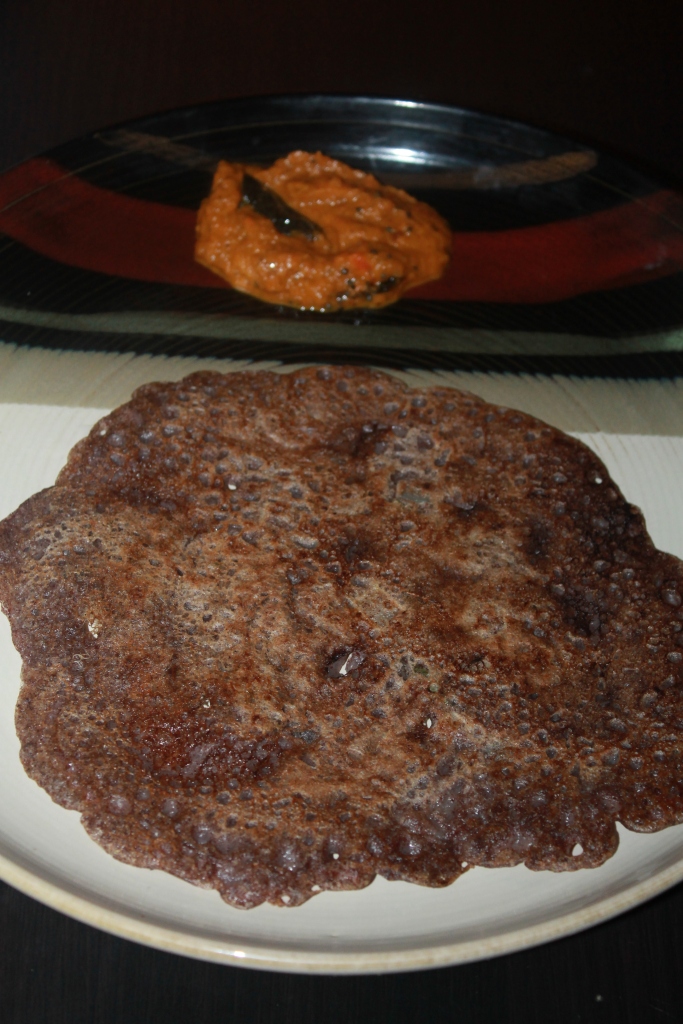
I was introduced to the ragi dosa in the town of Kolar in Karnataka, India. Ragi and millet have gained a formidable reputation as miracle foods. The ragi dosa is darker in color than its rice cousin, thicker, and may be more filling. I really enjoy ragi dosas. These days I occasionally go to MTR[4] in downtown Kuala Lumpur to enjoy this treat. The MTR ragi dosa plate has two delectable pieces with a small dollop of clarified butter and two chutneys and sambar. Filling and nutritious!In KL, I usually ate dosas for breakfast at the Sai Canteen in the International Medical University. The dosas are crisp and go well with the freshly ground chutney. The Indian restaurants in Brickfields in downtown KL serve very good dosas. Saravana Bhavan, Adyar Ananda Bhavan, and Sangeeta are a few examples. There may be a shortage of servers and the dosas may not always reach you piping hot and ready to eat. Making and serving dosas is labour intensive.

In Mumbai, the Udupi restaurants usually serve good quality dosas and these restaurants have become synonymous with South Indian food. I recently had a Mysore dosa at the Ram Ashraya restaurant in Matunga Mumbai. The Mysore dosa has a spicy lining on the inside and is a delightful concept. The waiting lines were long, and the restaurant was old-fashioned. I felt distinctly uncomfortable. The dosa however was delicious.

Pesarattu is a dosa mainly from Andhra and Telugu-speaking areas of south India made of green gram, ginger, cumin, and chillies. I was first introduced to this delight during lunch at PSGFAIMER, Coimbatore. Each afternoon there were specialties from a particular South Indian state. In KL, I can taste pesarattu at the Green Chillies restaurant near my apartment.

The accompaniments play a huge role in enhancing the taste of the dosa. A perfect sambar with drumstick and other vegetables, different types of chutneys, chamandi (a thick condiment made from chillies, coconut, ginger and a variety of other ingredients) and idli powder (termed gun powder). Chutneys can be made from red chilies, green chillies, and mint. There is also a gunpowder dosa, where a paste of gunpowder is smeared on the inner side of the dosa like a Mysore dosa.  

Spanish Masala movie poster

I remember watching the dosa-making skills of the actor, Dileep, in the Malayalam film Spanish Masala. Dileep was an illegal immigrant in Spain and invents a new filling for the dosa and names the dosa Spanish Masala. With a dosa batter, a hot griddle, cooking oil, clarified butter and passion you can create magic in the form of a rich, thin, crackling dosa. In many ways, the dosa is as adaptable as a pizza. Various fillings and batter can be used, and the dish can be adapted for various tastes. However, maintaining a dosa piping hot may be more challenging, which may account for its lesser popularity as a takeout item. I may have tasted perfection in a dosa only around twenty times in my life. Often, the dosa was not crisp enough, was not served at the optimum temperature, the accompaniments were not of good quality, or the place was too crowded. I often dream of the perfect dosa, thin, crisp, dark brown, and piping hot, just waiting to melt in the mouth!    

.

[1] Tulu word for water

[2] Foundation for Advancement of International Medical Education and Research

[3] PS Govindswamy

[4] Mavalli Tiffin Rooms, a restaurant chain started in 1942

Dr. P Ravi Shankar is a faculty member at the IMU Centre for Education (ICE), International Medical University, Kuala Lumpur, Malaysia. He enjoys traveling and is a creative writer and photographer.

.

PLEASE NOTE: ARTICLES CAN ONLY BE REPRODUCED IN OTHER SITES WITH DUE ACKNOWLEDGEMENT TO BORDERLESS JOURNAL

Click here to access the Borderless anthology, Monalisa No Longer Smiles

Click here to access Monalisa No Longer Smiles on Kindle Amazon International

Categories
Contents

Borderless, May 2023

Art by Sohana Manzoor

Editorial

Dancing in May? … Click here to read.

Translations

Aparichita by Tagore has been translated from Bengali as The Stranger by Aruna Chakravarti. Click here to read.

The Kabbadi Player, a short story by the late Nadir Ali, has been translated from Punjabi by Amna Ali. Click here to read.

Carnival Time by Masud Khan has been translated from the Bengali poem by Fakrul Alam. Click here to read.

Desolation, a poem by Munir Momin, has been translated from Balochi by Fazal Baloch. Click here to read.

Loneliness, a poem, has been translated from Korean to English by the poet himself, Ihlwha Choi. Click here to read

Jonmodiner Gaan or Birthday Song by Tagore has been translated by Mitali Chakravarty. Click here to read.

Conversations

A conversation with Mitra Phukan about her latest novel, What Will People Say? A Novel along with a brief introduction to the book. Click here to read.

Shantanu Ray Chaudhuri converses with Prerna Gill on her poetry and her new book of poetry, Meanwhile. Click here to read.

Poetry

Click on the names to read the poems

Michael Burch, Lakshmi Kannan, Ryan Quinn Flanagan, Shahriyer Hossain Shetu, Peter Cashorali, K.V. Raghupathi, Wilda Morris, Ashok Suri, William Miller, Khayma Balakrishnan, Md Mujib Ullah, Urmi Chakravorty, Sreekanth Kopuri, Rhys Hughes

Poets, Poetry & Rhys Hughes

In What I Thought I Knew About India When I was Young, Rhys Hughes travels back to his childhood with a soupçon of humour. Click here to read.

Musings/Slices from Life

A Towering Inferno, A Girl-next-door & the Big City

Ratnottama Sengupta writes of actress Jaya Bachchan recounting her first day on the sets of Satyajit Ray’s Mahanagar. Click here to read.

Kissed on Kangaroo Island

Meredith Stephens travels with her camera and her narrative to capture the flora and fauna of the island. Click here to read.

Musings of a Copywriter

In The Reader, Devraj Singh Kalsi revisits his experiences at school. Click here to read.

Notes from Japan

In Making Chop Suey in South Carolina, Suzanne Kamata recaptures a flavour from her past. Click here to read.

Essays

Rabindranath’s Monsoonal Music

Professor Fakrul Alam brings to us Tagore songs in translation and in discussion on the season that follows the scorching heat of summer months. Click here to read.

A Night Hike in Nepal

Ravi Shankar hikes uphill in Nepal on a wet and rainy night along with leeches and water buffaloes. Click here to read.

Moving Images of Tagore

Ratnottama Sengupta talks of Tagore and cinema. Click here to read.

Stories

Threads

Julian Gallo explores addiction. Click here to read.

The Whirlpool

Abdullah Rayhan takes us back to a village in Bangladesh to give a poignant story about a young boy who dreamt of hunting. Click here to read.

Look but with Love

Sreelekha Chatterjee writes a story set in the world of media. Click here to read.

The Mysterious Murder of Adamov Plut

A globe-trotting murder mystery by Paul Mirabile, a sequel to his last month’s story, ‘The Book Hunter’. Click here to read.

Book Excerpts

An excerpt from Aruna Chakravarti’s Daughter’s of Jorasanko describing the last birthday celebration of Tagore. Click here to read.

An excerpt from Bhubaneswar@75 – Perspectives, edited by Bhaskar Parichha/ Charudutta Panigrahi. Click here to read.

Book Reviews

Meenakshi Malhotra revisits Tagore’s Farewell Song, translated from Bengali by Radha Chakravarty. Click here to read.

Somdatta Mandal reviews KR Meera’s Jezebel translated from Malayalam by Abhirami Girija Sriram and K. S. Bijukumar. Click here to read.

Lakshmi Kannan has reviewed Jaydeep Sarangi’s collection of poems, letters in lower case. Click here to read.

Bhaskar Parichha reviews Journey After Midnight – A Punjabi Life: From India to Canada by Ujjal Dosanjh. Click here to read.

PLEASE NOTE: ARTICLES CAN ONLY BE REPRODUCED IN OTHER SITES WITH DUE ACKNOWLEDGEMENT TO BORDERLESS JOURNAL

Click here to access the Borderless anthology, Monalisa No Longer Smiles

Click here to access Monalisa No Longer Smiles on Kindle Amazon International

Categories
Editorial

Dancing in May?

Courtesy: Creative Commons
“May is pretty, May is mild,
Dances like a happy child…”

Annette Wynne (Early twentieth century)

Each month is expressed in a different form by nature in various parts of the world. In the tropics, May is sweltering and hot — peak summer. In the Southern hemisphere, it is cold. However, with climate change setting in, the patterns are changing, and the temperatures are swinging to extremes. Sometimes, one wonders if this is a reflection of human minds, which seem to swing like pendulums to create dissensions and conflicts in the current world. Nothing seems constant and the winds of change have taken on a menacing appearance. If we go by Nazrul’s outlook, destruction is a part of creating a new way of life as he contends in his poem, ‘Ring Bells of Victory’ — “Why fear destruction? It’s the gateway to creation!” Is this how we will move towards ‘dancing like a happy child’?

Mitra Phukan addresses this need for change in her novel, What Will People Say — not with intensity of Nazrul nor in poetry but with a light feathery wand, more in the tradition of Jane Austen. Her narrative reflects on change at various levels to explore the destruction of old customs giving way to new that are more accepting and kinder to inclusivity, addressing issues like widow remarriage in conservative Hindu frameworks, female fellowship and ageing as Phukan tells us in her interview. Upcoming voice, Prerna Gill, lauded by names like Arundhathi Subramaniam and Chitra Divakaruni, has also been in conversation with Shantanu Ray Choudhuri on her book of verses, Meanwhile. She has refreshing perspectives on life and literature.

Poetry in Borderless means variety and diaspora. Peter Cashorali’s poem addresses changes that quite literally upend the sky and the Earth! Michael Burch reflects on a change that continues to evolve – climate change. Ryan Quinn Flanagan explores societal irritants with irony. Seasons are explored by KV Raghupathi and Ashok Suri. Wilda Morris brings in humour with universal truths. William Miller explores crime and punishment. Lakshmi Kannan and Shahriyer Hossain Shetu weave words around mythical lore. We have passionate poetry from Md Mujib Ullah and Urmi Chakravorty. It is difficult to go into each poem with their diverse colours but Rhys Hughes has brought in wry humour with his long poem on eighteen goblins… or is the count nineteen? In his column, Hughes has dwelt on tall tales he heard about India during his childhood in a light tone, stories that sound truly fantastic…

Devraj Singh Kalsi has written a nostalgic piece that hovers between irony and perhaps, a reformatory urge… I am not quite sure, but it is as enjoyable and compelling as Meredith Stephen’s narrative on her conservation efforts in Kangaroo Island in the Southern hemisphere and fantastic animals she meets, livened further by her photography. Ravi Shankar talks of his night hikes in the Northern hemisphere, more accurately, in the Himalayas. While trekking at night seems a risky task, trying to recreate dishes from the past is no less daunting, as Suzanne Kamata tells us in her Notes from Japan.

May hosts the birthday of a number of greats, including Tagore and Satyajit Ray. Ratnottama Sengupta’s piece on Ray’s birth anniversary celebrations with actress Jaya Bachchan recounting her experience while working for Ray in Mahanagar (Big City), a film that has been restored and was part of celebrations for the filmmaker’s 102nd Birth anniversary captures the nostalgia of a famous actress on the greatest filmmakers of our times. She has also given us an essay on Tagore and cinema in memory of the great soul, who was just sixty years older to Ray and impacted the filmmaker too. Ray had a year-long sojourn in Santiniketan during his youth.

Eulogising Rabindrasangeet and its lyrics is an essay by Professor Fakrul Alam on Tagore. Professor Alam has translated number of his songs for the essay as he has, a powerful poem from Bengali by Masud Khan. A transcreation of Tagore’s first birthday poem , a wonderful translation of Balochi poetry by Fazal Baloch of Munir Momin’s verses, another one from Korean by Ihlwha Choi rounds up the translated poetry in this edition. Stories that reach out with their poignant telling include Nadir Ali’s narrative, translated from Punjabi by his daughter, Amna Ali, and Aruna Chakravarti’s translation of a short story by Tagore. We have more stories from around the world with Julian Gallo exploring addiction, Abdullah Rayhan with a poignant narrative from Bangladesh, Sreelekha Chatterjee with a short funny tale and Paul Mirabile exploring the supernatural and horror, a sequel to ‘The Book Hunter‘, published in the April issue.

All the genres we host seem to be topped with a sprinkling of pieces on Tagore as this is his birth month. A book excerpt from Chakravarti’s Daughters of Jorasanko narrates her well-researched version of Tagore’s last birthday celebration and carries her translation of the last birthday song by the giant of Bengali literature. The other book excerpt is from Bhubaneswar@75 – Perspectives, edited by Bhaskar Parichha/ Charudutta Panigrahi. Parichha has also reviewed Journey After Midnight – A Punjabi Life: From India to Canada by Ujjal Dosanjh, a book that starts in pre-independent India and travels with the writer to Canada via UK. Again to commemorate the maestro’s birth anniversary, Meenakshi Malhotra has revisited Radha Chakravarty’s translation of Tagore’s Farewell Song. Somdatta Mandal has critiqued KR Meera’s Jezebeltranslated from Malayalam by Abhirami Girija Sriram and K. S. Bijukuma. Lakshmi Kannan has introduced to us Jaydeep Sarangi’s collection of poems, letters in lower case.

There are pieces that still reach out to be mentioned. Do visit our content page for May. I would like to thank Sohana Manzoor for her fantastic artwork and continued editorial support for the Tagore translations and the whole team for helping me put together this issue. Thank you. A huge thanks to our loyal readers and contributors who continue to bring in vibrant content, photography and artwork. Without you all, we would not be where we are today.

Wish you a lovely month.

Mitali Chakravarty

borderlessjournal.com