Categories
Contents

Borderless, November, 2021

Autumn: Painting in Acrylic by Sybil Pretious

Editorial

Colours of the Sky…Click here to read.

Interviews

In Conversation with Akbar Barakzai, a Balochi poet in exile who rejected an award from Pakistan Academy of Letters for his principles. Click here to read.

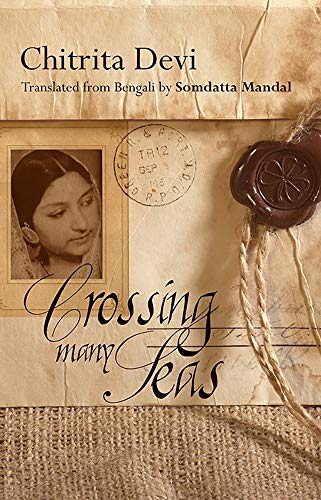
In Conversation with Somdatta Mandal, a translator, scholar and writer who has much to say on the state of Santiniketan, Tagore, women’s writing on travel and more. Click here to read.

Translations

Rebel or ‘Bidrohi’

Nazrul’s signature poem,Bidrohi, translated by Professor Fakrul Alam. Click here to read.

Motorcar

Jibonananda Das‘s poetry translated from Bengali by Rakibul Hasan Khan. Click here to read.

The Beloved City

Poetry of Munir Momin, translated from Balochi by Fazal Baloch. Click here to read.

Rebranding

A poem in Korean, written & translated by Ihlwha Choi. Click here to read.

Perhaps the Last Kiss

A short story by Bhupeen giving a vignette of life in Nepal, translated from Nepali by Ishwor Kandel. Click here to read.

Morichika or Mirage by Tagore

Tagore’s poetry translated by Mitali Chakravarty. Click here to read.

Poetry

Click on the names to read

Rhys Hughes, Sutputra Radheye, Luis Cuauhtémoc Berriozábal, Sheshu Babu, Michael Lee Johnson, Prithvijeet Sinha, George Freek, Sujash Purna,  Ashok Manikoth, Jay Nicholls, Pramod Rastogi, Ryan Quinn Flanagan, Vijayalakshmi Harish, Mike Smith, Neetu Ralhan, Michael R Burch

Poets, Poetry & Rhys Hughes

A story poem about The Clock Tower of Sir Ticktock Bongg. Click here to read.

Nature’s Musings

Penny Wilkes takes us for a stroll into the avian lives with photographs and poetry in Of Moonshine & Birds. Click here to read.

Stories

Waking Up

Christina Yin takes us on a strange journey in Sarawak, Malaysia. Click here to read.

Rains

A pensive journey mingling rain and childhood memories by Garima Mishra. Click here to read.

Khatme Yunus

Jackie Kabir brings us a strange story from Bangladesh. Click here to read.

First International Conference on Conflict Continuation

Steve Davidson explores an imaginary conference. Click here to read.

The Literary Fictionist

In Fragments of a Strange Journey, Sunil Sharma sets out with Odysseus on a tour of the modern day world. Click here to read.

Musings/Slices from Life

Yesterday Once More?

Ratnottama Sengupta recalls her experiences of the Egyptian unrest while covering the 35th Cairo International Film Festival in 2012. Click here to read.

Embroidering Hunger

An account of life of dochgirs (embroiderers) in Balochistan by Tilyan Aslam. Click here to read.

To Daddy — with Love

Gita Viswanath takes us into her father’s world of art and wonder. Click here to read.

Simon Says

Ishita Shukla, a young girl, explores patriarchal mindset. Click here to read.

Welcoming in the dark half of the year

Candice Louisa Daquin takes a relook at the evolution of Halloween historically. Click here to read.

Musings of the Copywriter

In Crematoriums for the Rich, Devraj Singh Kalsi regales his readers with a dark twist of the macabre. Click here to read.

Essays

Renewal

Jayat Joshi, a student of development studies, takes a dig at unplanned urban development. Click here to read.

Once Upon A Time in Burma: Leaving on a Jet Plane

John Herlihy’s last episode in his travels through Burma. Click here to read.

A Legacy of Prejudice, Persecution and Plight

Suvrat Arora muses on the impact of a classic that has been coloured with biases. Click here to read.

The Observant Migrant

In Is Sensitivity a Strength or a Weakness?, Candice Louisa Daquin explores our value systems. Click here to read.

Book Excerpts

Arundhathi Subramaniam’s Women Who Wear Only Themselves. Click here to read.

CJ Fentiman’s award winning book, The Cat with Three Passports. Click here to read.

Book Reviews

Himadri Lahiri reviews Somdatta Mandal’s ‘Kobi’ and ‘Rani’: Memoirs and Correspondences of Nirmalkumari Mahalanobis and Rabindranath Tagore. Click here to read.

Suzanne Kamata reviews Iain Maloney’s Life is Elsewhere/ Burn Your Flags. Click here to read.

Bhaskar Parichha reviews Anita Agnihotri’s Mahanadi –The Tale of a River, translated from Bengali by Nivedita Sen. Click here to read.

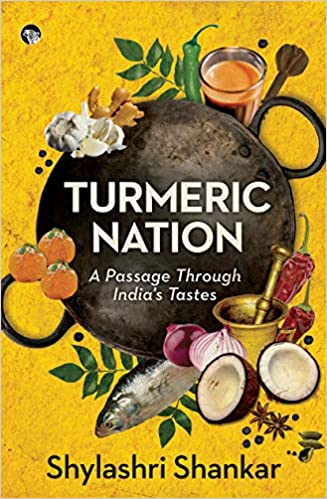
Meenakshi Malhotra reviews Turmeric Nation: A Passage Through India’s Tastes, authored by Shylashri Shankar. Click here to read.

Categories
Editorial

Colours of the Sky

A riot of colours starts the day
with happiness, vibrancy and hope,
dispelling the winter of discontent
with whispers of new lores…
Courtesy: Sohana Manzoor

Devi (The Goddess) is a 1960 Satyajit Ray film, based on a story by a writer called Prabhat Kumar Mukhopadhyay, that showcases nineteenth century India, where the silence of a young girl who is deified, wreaks havoc in her home, village and life. In an interview, Satyajit Ray contended that the film was to make people rethink ‘messiahdom’. The exact words he used to state this was that the film was against ‘religious dogmatism’ as the film and story literally dealt with the deification of a young bride. Tagore had similarly questioned blind deification in a number of his poems and plays. These (as Ray spelt out in his interview) did not address religion per se but malpractices, among them, the tendency to worship an idol to a point where flaws are justified, accepted and emulated. Satyajit Ray and Tagore were both Brahmos — which can be seen as a reform movement. These two were not criticising religion but talking of rising above gawky hero worship to think logically and arrive at logical conclusions. When we talk of characters from the Ramayana, the Mahabharata, other mythologies or substitute the adulated with stars, writers, politicians and businessmen who run huge concerns, we tend to idolise them. But these were and are all characters with flaws, whether fictitious or real. We can well learn from their mistakes, rather than deify and worship them to justify bad behaviour by quoting instances from lives of past legends or prominent persons in the current world.

Akbar Barakzai, a poet exiled from Balochistan, talks in a similar vein in his interview. You can see it in his poetry too — some of which can be found translated by Fazal Baloch in our pages. Barakzai talks of transcending barriers we draw for ourselves in the real world, of writing with honesty and sincerity. He has shared vignettes of his life as he changed countries to continue his work. Baloch has also brought to us another excellent poet in translation, Munir Momin. A major poem by Nazrul (the ‘bidrohi kobi’), ‘Bidrohi or Rebel’ has wound its way to our pages translated by Professor Fakrul Alam. We are honoured and grateful that Prof Alam chose to share this excellent translation with us. We have more translations: Jibonananda’s ‘Motorcar’(1934) by Rakibul Hasan Khan, a Korean translation by Ihlwha Choi, another short story from Nepal and Tagore’s powerful poem,Morichika or Mirage’, which is a wake-up call for the inert affluent who hold themselves aloof from common masses. We have also interviewed a major prose translator of Tagore, Professor Somdatta Mandal. With much to share on Santiniketan, Nabanita Deb Sen and many interesting anecdotes, Mandal talks of her extensive work with her translations spanning many more writers from the past.

We have a colourful ensemble this time almost as vibrant as the autumnal colours that have invaded nature in some parts of the Northern Hemisphere. Michael R Burch has given us beautiful poems on autumn, including the autumn of life. We have a poem in a similar vein by George Freek whose work continues influenced by Liu Yong (1719-1805), an influential minister and calligrapher in the Qing Dynasty. Ryan Quinn Flanagan touches on Leonardo Da Vinci’s Mona Lisa in his poetry. Rhys Hughes has given us humour in both his poetry and his column. Our other humorist, Devraj Singh Kalsi has given us darker, more caustic black humour in his narrative. We have lovely photographs from Penny Wilkes with her verses in Nature’s Musings. It is amazing the way she photographs birds in flight. Stories from Malaysia, Bangladesh, India and America add to the richness of our oeuvre. Sunil Sharma has given us an avant-garde telling of Odysseus’s voyage in the modern world, transcending the borders of time and ethnicity.

A well-known senior journalist, Ratnottama Sengupta, has also travelled through time to give us a recall of her experience at the 35th Cairo Film Festival one November, nine years ago. Her narrative about the time that the Shariat law was adopted by Egypt reminds me of the way things moved in Afghanistan few months ago and what is even more stunning is the way in which organisations dubbed extremists earlier are allowed to run countries now. Is it really not yet time to get rid of messiahs and look for one world?

We conclude our travels in Burma with John Herlihy and his friend, Peter, this month. And start a column with Candice Louisa Daquin, The Observant Immigrant. Her essays always draw much discussion. An experienced psychotherapist, she has looked into our value systems. We have books excerpts from Arundhathi Subramaniam’s Women Who Wear Only Themselves and CJ Fentiman’s award winning book, The Cat with Three Passports. Himadri Lahiri has done an in-depth review of Somdatta Mandal’s ‘Kobi’ and ‘Rani’: Memoirs and Correspondences of Nirmalkumari Mahalanobis and Rabindranath Tagore. It is amazing how much we can learn about a person from their letters. Suzanne Kamata has shared her review of Iain Maloney’s Life is Elsewhere/ Burn Your Flags. Reviewed by Meenakshi Malhotra, Shylashri Shankar’s Turmeric Nation: A Passage Through India’s Tastes, sounds like an erudite read that spans thousands of years of history. Anita Agnihotri’s Mahanadi –The Tale of a River, translated from Bengali by Nivedita Sen, has been reviewed by Bhaskar Parichha. The narrative sounds like a powerful voice weaving together the lores around the river.

Do pause by and find many more authors who dot our November edition. As usual, naming each one will keep you away from our delectable reads for longer. We thank all our readers for their continued patronage, and I would like to thank my fabulous team who are now even providing visuals to brighten our pages. A huge thanks to Sohana Manzoor and Sybil Pretious, who write as well as they paint. Thanks to all our wonderful contributors for making Borderless a reality.

Wish you all sunshine and laughter!

Best,

Mitali Chakravarty

Borderless Journal

Categories
Review

Turmeric Nation: A Passage Through India’s Tastes

Book Review by Meenakshi Malhotra
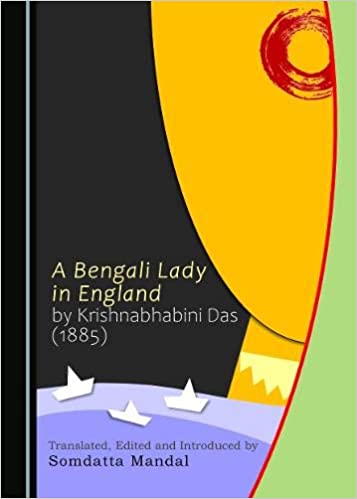
Title: Turmeric Nation: A Passage Through India’s Tastes

Author: Shylashri Shankar

Publisher: Speaking Tiger Books

Shyalashri Shankar is an academic whose third non-fiction, Turmeric Nation: A Passage through India’s Taste, won a woman author’s award in India called the AutHer Award (2021). This book is a detailed and rich journey through India’s multiple cuisines and culinary cultures divulging interesting facts like Aurangzeb was a vegetarian.

In the literature of food writing, we have both advocates of diversity, food fusionists as well as food fashionistas. Shankar’s approach is fairly eclectic and informed, drawing on the anthropology and sociology of both food and the cultures they originate from. Professing to write a “food biography” of India, she also realises that such a task is both “challenging and daunting”, given the magnitude and diversity of the task involved. She describes Indian cuisine as layered and pluralistic, where there is no one cuisine which can be described as ‘Indian’. Her book proceeds to map these regional diversities not only in food and food cultures, but also cooking styles.

Giving veritable gastronomic glimpses into the fascinating world of the great Indian kitchen, Shankar explores food histories of ancient India dating back to Harappans, while keeping a keen eye for networks of customs, habits and styles of living. From time to time, the cuisine has absorbed new methods of food processing and cooking and been hospitable to new and foreign influences. At the same time, it has at times exerted injustices since the sociology of food is shown to be intricately linked to the that of the caste as shown in the section on Dalit foods. Shankar rightly refuses to mythify or romanticise food, instead she refers to social anthropologist James Laidlaw’s notion that nowhere in the world are food transactions socially or morally neutral, and that the politics of and around food are probably the sharpest in South Asia.

She draws from the theories of ethnologist Claude Levi-Strauss, who, she argues, analysed different cooking techniques to put forward an influential structuralist idea of the raw and the cooked. Food, according to this theory, is a medium between nature and culture. The activity of cooking performs a process of civilising nature.

Shankar asks more fundamental questions: Did our ancestors determine the way we eat? What is the DNA of food preferences? Which is a better diet — vegetarian, non-vegetarian or paleo (what Is paleo)? Does food have a religion? What food creates ardour and desire? What are the transgressions and taboos on certain kinds of foods? What is the purpose and function of certain rituals around food — for instance, the logic of feasting and fasting? As Shankar takes us on this fascinating journey of culinary exploration, we see the emergence of a rich map of cultural anthropology.

Turmeric Nation is an ambitious and insightful project which answers these questions, and then quite a few more. Through a series of fascinating essays—delving into geography, history, myth, sociology, film, literature and personal experience—Shylashri Shankar traces the myriad patterns that have formed Indian food cultures, taste preferences and cooking traditions. From Dalit ‘haldiya dal’ to the last meal of the Buddha; from aphrodisiacs listed in the Kamasutra to sacred foods offered to gods and prophets; from the use of food as a means of state control in contemporary India to the role of lemonade in stoking rebellion in 19th-century Bengal; from the connection between death and feasting and between fasting and pleasure, this book offers a layered and revealing portrait of India, as a society and a nation, through food. It takes us on a fascinating culinary journey through the length and breadth of the subcontinent.

The proof of the pudding, many might feel, is in the eating. Why such a learned dissertation on food, gastronomy and culinary traditions? Is it ultimately to map unity, diversity, and work towards an idea of syncretism? Either ways, the book is worth keeping on our shelves and stocking in libraries, swelling the corpus on food studies which is now studied as an important part of Cultural Studies in many universities. The book ultimately gives us much food for thought as it theorises the practices of cooking and eating across Indian cultures.

.

  Dr Meenakshi Malhotra is Associate Professor of English Literature at Hansraj College, University of Delhi, and has been involved in teaching and curriculum development in several universities. She has edited two books on Women and Lifewriting, Representing the Self and Claiming the I, in addition  to numerous published articles on gender, literature and feminist theory.       

.

PLEASE NOTE: ARTICLES CAN ONLY BE REPRODUCED IN OTHER SITES WITH DUE ACKNOWLEDGEMENT TO BORDERLESS JOURNAL
Categories
Greetings

Festival of Lights

After welcoming the dark half of the year with Halloween, we light lamps to observe yet one more homecoming festival — that of the legendary Rama. Though Diwali or Deepavali is interpreted variously in different parts of India, in the North, Rama’s homecoming after fourteen years of exile and victory over various demons is celebrated with the lighting of lamps and fireworks. Simultaneously, in Eastern India, they celebrate the victory of good over evil with the worship of Goddess Kali. In the Southern part, the victory of Krishna over a demon or asura known as Narakasura is jubilated. This festival is observed as a national holiday across a dozen countries now. There are a dozen different rituals, Gods and Goddesses correlated with the festivities. But victory of good over evil is a concurrent narrative along with prayers for prosperity and well being of the world. Both of these themes are a felt need in the present times.

In keeping with the theme of light, at Borderless, we celebrate this season with stories and poems connected with lights or lamps along with narratives around the festivals themselves… all from within our treasury.

Poetry

Light a Candle by Ameenath Neena. Click here to read.

One Star by Ihlwha Choi. Click here to read.

The Candle by Matthew James Friday. Click here to read.

The Starry Night by Sunil Sharma. Click here to read.

Prose

What Ramayan taught me about my parents: Smitha R gives a humorous recap of how the legendary epic brought the family together. Click here to read.

How a dark Goddess lights up a Fallen World: Meenakshi Malhotra talks of Kali and the narrative of the festival that lights up during this festive season. Click here to read.

The Dark House: A Balochi folk tale translated by Fazal Baloch that reflects on the crucial role of light in a young girl’s life. Click here to read.

Categories
Contents

Borderless, October 2021

An Ode to Autumn: Painting by Sohana Manzoor.

Editorial

Making a Grecian Urn… Click here to read.

Interviews

Unveiling Afghanistan: In Conversation with Nazes Afroz, former editor of BBC and translator of a book on Afghanistan which reflects on the present day crisis. Click here to read.

The Traveller in Time: An interview with Sybil Pretious who has lived through history in six countries and travelled to forty — she has participated in the first democratic elections in an apartheid-worn South Africa and is from a time when Rhodesia was the name for Zimbabwe. Click here to read.

Translations

Travels & Holidays: Humour from Rabindranath

Translated from the original Bengali by Somdatta Mandal, these are Tagore’s essays and letters laced with humour. Click here to read.

The Quest for Home

Nazrul’s Kon Kule Aaj Bhirlo Tori translated from Bengali by Professor Fakrul Alam. Click here to read.

Mysteries of the Universe

Akbar Barakzai’s poetry in Balochi, translated by Fazal Baloch. Click here to read.

Gandhi & Robot

A poem reflecting the state of Gandhi’s ideology written in Manipuri by Thangjam Ibopishak and translated from the Manipuri by Robin S Ngangom. Click here to read.

Sorrows Left Alone

A poem in Korean, written & translated by Ihlwha Choi. Click here to read.

The Song of Advent by Tagore

Written by Tagore in 1908, Amaar Nayano Bhulano Ele describes early autumn when the festival of Durga Puja is celebrated. It has been translated from Bengali by Mitali Chakravarty. Click here to read.

Poetry

Click on the names to read

Michael R Burch, A Jessie Michael, John Grey, Rupali Gupta Mukherjee, Mike Smith, Saranyan BV, Tony Brewer, Baisali Chatterjee Dutt, Jay Nicholls, Beni S Yanthan, Luis Cuauhtémoc Berriozábal, Pramod Rastogi, Jason Ryberg, Michael Lee Johnson, Oormila Vijayakrishnan Prahlad, Rhys Hughes

Animal Limericks by Michael R Burch. Click here to read.

Nature’s Musings

In The Lords of Lights, with photographs and a story, Penny Wilkes makes an interesting new legend. Click here to read.

Poets, Poetry & Rhys Hughes

In Pessoa and Cavafy: What’s in a Name?, Rhys Hughes comically plays with the identity of these two poets. Click here to read.

Musings/ Slices From Life

At the Doctor’s

In this lighthearted narration, Farouk Gulsara uses humour to comment on darker themes. Click here to read.

Taking an unexpected turn

Nitya Pandey talks of a virtual friendship that bloomed across borders of countries during the pandemic. Click here to read.

Travel in the Time of Pandemics: Select Diary Entries of an Urban Nomad

Sunil Sharma gives us a slice from his travels with vibrant photographs, changing continents and homes during the pandemic. Click here to read.

Musings of a Copywriter

In Surviving to Tell a Pony-taleDevraj Singh Kalsi journeys up a hill on a pony and gives a sedately hilarious account. Click here to read.

Essays

A Season of Magical Mellow Wistfulness

Meenakshi Malhotra through folk songs that are associated with Durga Puja explores the theme of homecoming. Click here to read.

What Gandhi Teaches Me

Candice Louisa Daquin applies Gandhiism to her own lived experiences. Click here to read.

How Women’s Education Flourished in Aligarh Muslim University

Sameer Arshad Khatlani dwells on the tradition of education among Muslim women from early twentieth century, naming notables like Ismat Chughtai and Rashid Jahan. Click here to read.

Once Upon a Time in Burma: Of Friendships & Farewells

John Herlihy takes us through more of Myanmar with his companion, Peter, in the third part of his travelogue through this land of mystic pagodas. Click here to read.

When Needles Became Canons…

Ratnottama Sengupta, who has edited an encyclopaedia on culture and is a renowned arts journalist, gives us the role ‘kanthas’ (hand-embroidered mats, made of old rags) played in India’s freedom struggle. Click here to read.

Stories

Lunch with Baba Rinpoche in Kathmandu

Steve Davidson takes us for a fictitious interview with a Tibetan guru in Nepal. Click here to read.

The Tree of Life

An unusual flash fiction by Parnil Yodha about a Tibetan monk. Click here to read.

Odysseus & Me: A Quest for Home

A short fiction from Bangladesh by Marzia Rahman on immigrants. Click here to read.

Dawn in Calicut

Krishna Sruthi Srivalsan writes of a past that created the present. Click here to read.

I am a Coward with Priorities

Tejaswinee Roychowdhury tells a story from a soldier’s perspective. Click here to read.

The Literary Fictionist

In Bapu, Denied, Sunil Sharma explores the fate of Gandhiism in a world where his values have been forgotten. Click here to read.

Book Excerpts

An excerpt of In a Land Far From Home: A Bengali in Afghanistan by Syed Mujtaba Ali, translated by Nazes Afroz. Click here to read.

An excerpt from letters written by Tagore from Kobi & Rani, translated by Somdatta Mandal. Click here to read.

Book Reviews

Aruna Chakravarti reviews Golden Bangladesh at 50: Contemporary Stories & Poems edited by Shazia Omar. Click here to read.

Somdatta Mandal reviews Wooden Cow by T. Janakiraman, translated from Tamil by Lakshmi Kannan. Click here to read.

Gracy Samjetsabam reviews Suzanne Kamata’s The Baseball Widow. Click here to read.

Bhaskar Parichha reviews Mohona Kanjilal’s A Taste of Time: A Food History of Calcutta. Click here to read.


Categories
celebrations

Homecoming Festivals

As the year stretches towards the next one, festivals welcome the delights of autumn. Though our celebrations have been restricted by the ongoing pandemic, human spirit continues to revel with music, words and more. Festivals are a part of this jubilation — a refulgent celebration of our existence across the globe. Some of these occasions jubilate the commencement of our journey home and some of the arrival of Gods and Goddesses, who other than killing demons, are shown to like being with their families too. For those who abstain from worshipping forms, a festival could be just visiting and meeting with families to express their thanks. Autumn is a time when tradition had many headed home to celebrate these events with their near and dear ones.

During Durga Puja, a festival which celebrates the home coming of the Goddess along with that of her devotees, we had a cultural splurge — music, dancing, theatre and special magazines featuring writing that moves to unite people in the spirit of love and harmony. Concerts of songs by bauls or traveling minstrels, Kazi Nazrul Islam and Tagore — both of who believed differently from Hindus — are a part of the celebrations. Writings by many, irrespective of their religious preferences, featured in the special editions of journals around literary and non-literary issues. Often these issues were coveted for being exquisite melanges, showcasing the most flavourful writers.

The cultural mingling despite being attached to a religious observance transcended narrow barriers imposed on faith. It continued inclusive in its celebrations, with food and embracing all cultures. Anyone could attend the festivities, even the British in colonial India. Taking a page off that, Borderless celebrates with writings across all boundaries.

Poetry

The Quest for Home

Nazrul’s Kon Kule Aaj Bhirlo Tori translated from Bengali by Professor Fakrul Alam explores the theme of spiritual homecoming . Click here to read.

The Song of Advent by Tagore

Tagore’s Amaar Nayano Bhulano Ele describes early autumn when the advent of the Goddess, translated from Bengali by Mitali Chakravarty. Click here to read.

Prose

An excerpt from Shakti Ghoshal’s The Chronicler of the Hooghly & Other Stories describes the historic evolution of the Durga Puja around the eighteenth century as a social occasion where the colonials and the nabobs mingled. Click here to read.

Meenakshi Malhotra through autumnal folk songs around Durga Puja explores homecoming in Season of Magical Mellow Wistfulness. Click here to read.

Somdatta Mandal translates from Bengali Travels & Holidays: Humour from Rabindranath. Both the essay and letters are around travel, a favourite past time among Bengalis, especially during this festival. Click here to read.

An excerpt of In a Land Far From Home: A Bengali in Afghanistan by Syed Mujtaba Ali, translated from Bengali by Nazes Afroz. Syed Mujtaba Ali was a popular writer who often featured in such journals. Click here to read.

Bhaskar Parichha reviews Mohona Kanjilal’s A Taste of Time: A Food History of Calcutta. Exploring food has always been a part of festivities. Hope you find some good hints here. Click here to read.

Aruna Chakravarti reviews Golden Bangladesh at 50: Contemporary Stories & Poems edited by Shazia Omar. Click here to read.


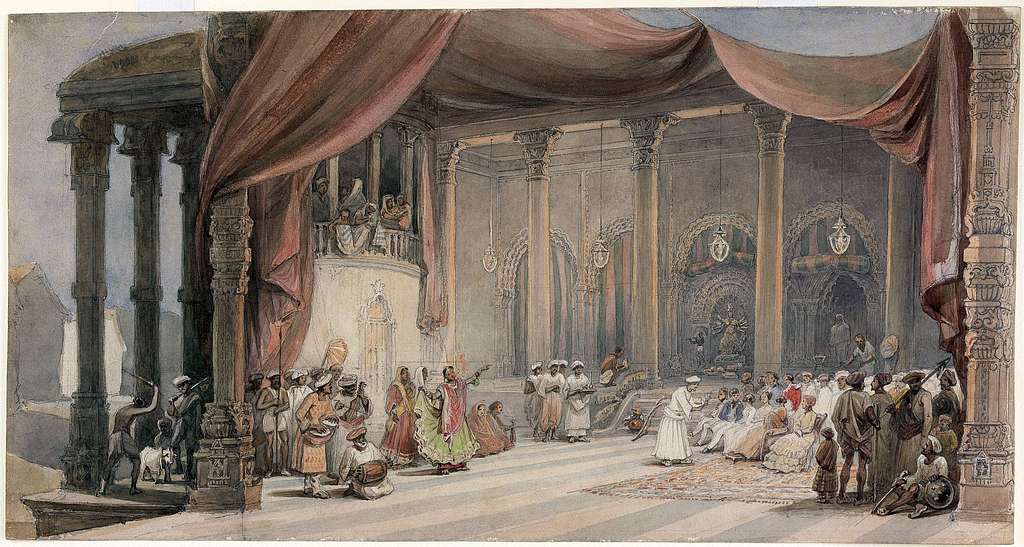
A depiction of celebrations inside a house during Durga Puja in  Calcutta (around 1830-40), West Bengal, India, where Europeans are being entertained, water colour by William Prinsep(1794–1874), a merchant with the Calcutta firm of Palmer & Company. Courtesy: Creative Commons
Categories
Essay

A Season of Magical Mellow Wistfulness

Meenakshi Malhotra demystifies the autumnal celebration of Durga Puja as a time of homecoming for married daughters through folk songs that are associated with the festival

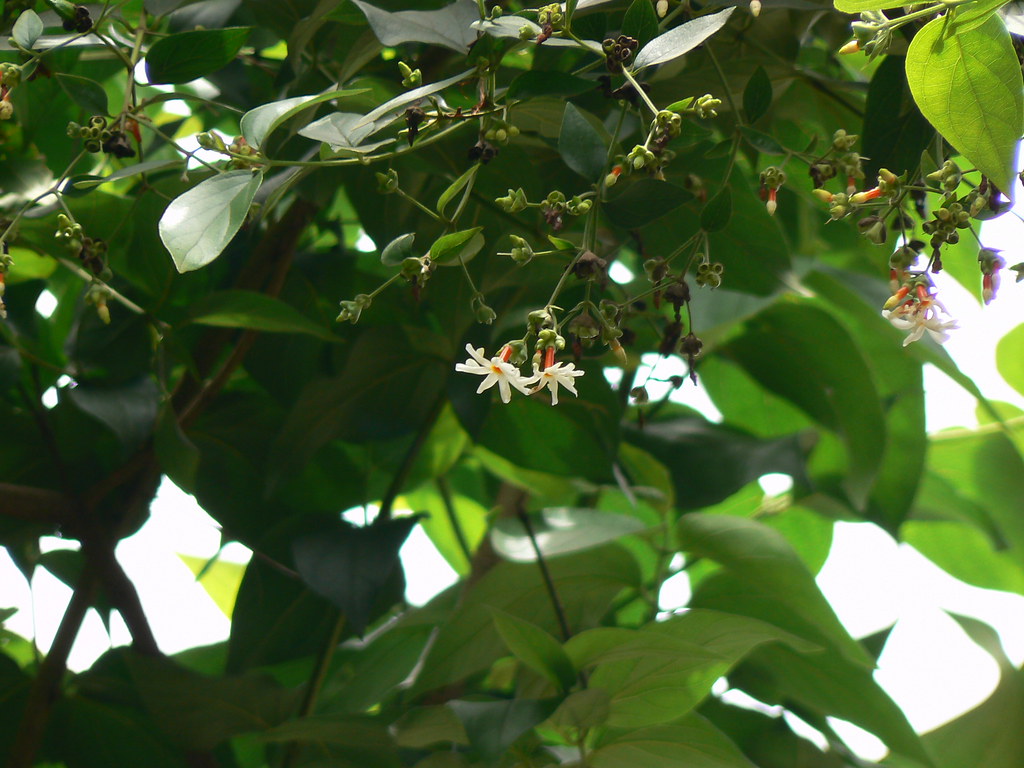
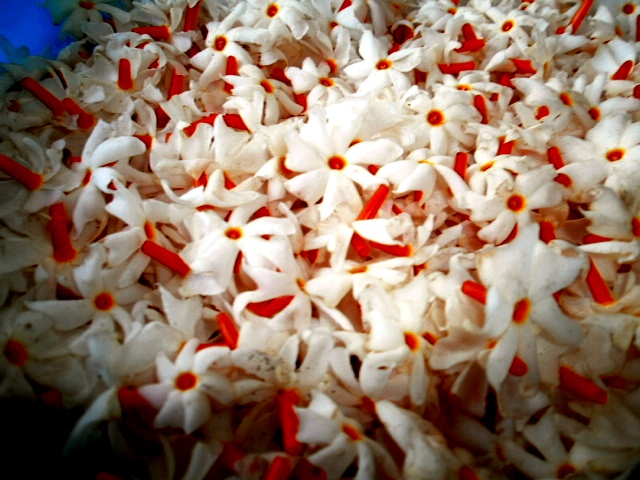
It is that time of the year again… a time of magic and enchantment when the air comes wafting with the fragrance of shiuli flowers, a species of night-flowering coral jasmine also known as the parijat. Legend has it that this flower is from a heavenly tree  that was brought to Earth  by Lord Krishna, one of the central gods in the Hindu pantheon. Interestingly, in a somewhat unusual twist, this tree is considered so sacred that its flowers picked up from the ground are also deemed appropriate for worship, to make sacred offerings. This is rare, given that flowers offered for worship are usually to be plucked from the tree and not picked up from the ground.

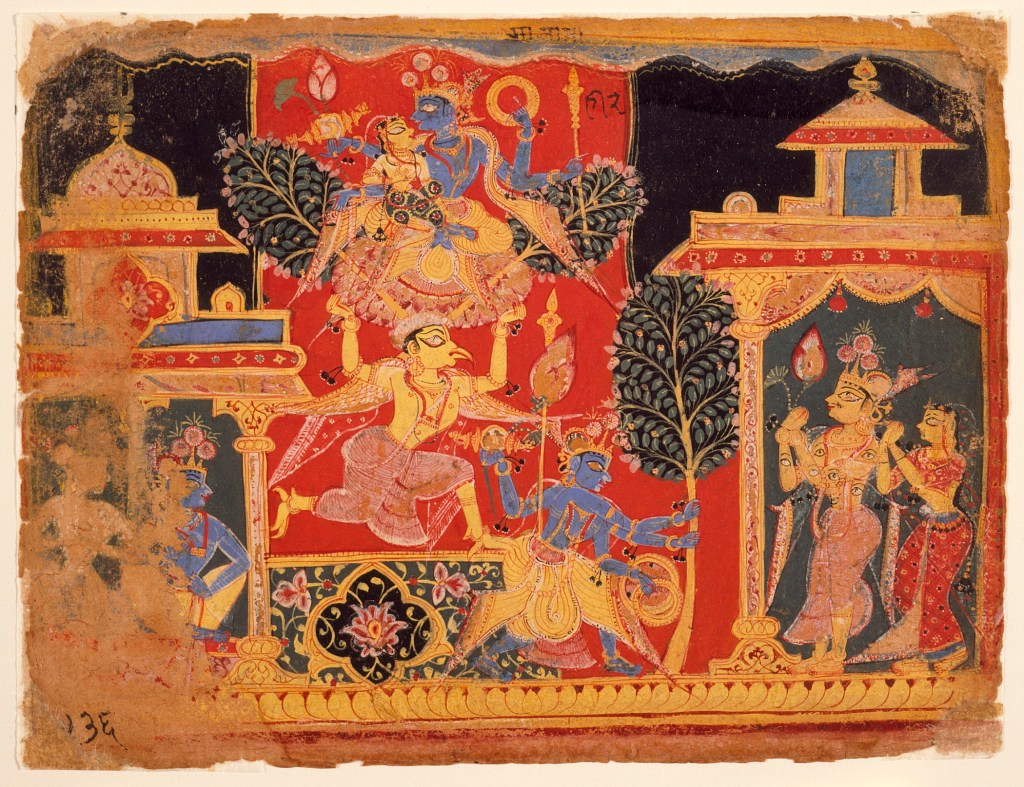
In Hindu mythology, the parijat tree is the tree of the universe which is owned by Indrani, the consort of Indra or the king of the Gods in Hindu mythology. Apparently Krishna stole it from Indra’s consort, Indrani and planted it in a region located between heaven and earth. The tree, also known as “kalpa-taru” or wishing tree, is one which grants all objects of desire.

From the sacred texts like Bhagawat Purana, the Vishnu Purana and the Mahabharata, we  learn that the elaborate process of samudra manthan (churning of the ocean of milk) yielded the  parijat tree as one of the three valuables.  This tree is said to have blossomed atop Mount Meru, the garden of paradise. It was claimed by Indra when  it rose to the surface and emitted its fragrance.

Krishna steals the Parijat tree from Mount Meru. Water colour India, app 1525-1550 CE. Courtesy: Creative commons

This is only one of the many gifts of nature, the exquisitely fragrant flowering tree which sheds blossoms and carpets the Earth  around it. Autumn, that season so famously invoked as the time of “mellow fruitfulness”, carries hints of ripening and a mature fecundity. For many sections of Indians, it is the time of the goddess, a time that a lot of us associate with the advent of the goddess Durga, who signifies the triumph of good over evil. In Durga, we have the divine represented both in terms of mythic abstractions and the material everyday, as power and poetry, as divine and human, as mother and daughter. Similarly the goddess Durga’s descent on Earth for the days of the festival, is also the advent of the daughter to the house of the mother, a moment which overflows with affection, feelings and emotions.

The event happens at a certain time in the Hindu calendar and participates in linear time, as well as being a part of time imagined as part of a larger ongoing cycle of temporality. Similarly, it  participates in mythic and magical time or eternity as it were. For the daughter, longing to be enfolded in the mother’s arms, who counts  the days till she can go back to her natal home, albeit for a few days, this is also a special time indeed.

It is this note of longing, dispossession and exile that is captured in the folk songs in the Bengali or Bangla language, which were documented in the 18th century. These songs are called Aagamoni which translates into advent, here referring to one who arrives. Why this gains a certain poignancy is that girlhood in Indian and many traditional cultures was viewed as a fleeting and fugitive time, haunted by transience. Female children were in the past often regarded as temporary occupants in their natal homes and were  characterised as ones who do not belong or belong to someone else, whose real home is with their in-laws.

Durga Puja celebrations
Courtesy: Creative Commons

In the Hindu pantheon, Durga, Uma or Parvati is a prominent mother goddess, the consort of Shiva. Her names refer to split roles of the feminine imaginary. As Durga she is the fiery slayer of demons. But– and this is the central theme here– she is also the gentle daughter Uma. It is in her form of the daughter who is separated from her parents, that the songs of Aagomoni and Bijoya emphasise. Bijoya translates as victory and starts with the return of the Goddess to her spouse, Shiva. Aagomoni and Bijoya are genres of Bengali folk songs celebrating the return of the Goddess Durga/Parvati to the home of her parents on the eve of the autumn festival of Durga Puja. The Aagomani songs describe the return of Parvati to her home in rural Bengal, not as Goddess but as daughter, and are followed by Bijoya songs which describe the sorrow of parting three days later as Parvati returns to her husband ShivaAagomoni songs can be interpreted as an expression of collective feelings, experiences and aspirations, another way of rethinking or reimagining the self-inscription of a collectivity.

In one of the best known and common Aagomoni songs, ‘Ogo amar agomoni’ (‘The Advent of Durga’):

The Advent of Durga

I herald the advent of the Goddess 
With the lighting of my lamps 
During the autumn whirlwinds.
At the end of night, the sun bursts forth.

In the swirling storm, 
At the end of the night,
The light in my path is turned off.
The beacon of my life has turned off. 
I herald the advent of my Goddess.

The lamp that reveals my path,
Brightens my life by pouring 
The nectar of your presence. 
I am lost in the blackness of fear. 
When you come in your radiant chariot, 
Your refulgence will shatter the 
Deep darkness in all directions.

Play the aubade of aurora.
It will all be divine. 
I herald the advent of my Goddess 
With the lighting of my lamps.
I herald the advent of our Goddess. 

(Translated by Mitali Chakravarty)

The song is full of the imagery of light and refulgence. My goddess “light of my life’’ could be both a reference to the divine mother, as well as to a daughter, who was very often  referred to as ‘Ma’ as a term of affection. While this song maps the emotional link between the mother and the daughter and can be seen in terms of affect, the focus is on her refulgence and divinity. The reference to the goddess in terms of the mother/ daughter trope is much more evident in other songs, which narrates the saga of dispossession — the fair  princess who has to live in disorderliness and poverty.

Go Get Gouri

Go, go Giriraj
To fetch your daughter Gouri
Uma is in deep sorrow
Uma has cried for her mother
Living in misery

Bhang consuming Shiv
Ash-smeared and wild
Sold off her finery
All her jewellery
To fund his addiction 

Bhola revels in intoxication 
He has collected hashish from 
The three realms….heaven, hell and earth.

Bhola put the intoxicant, bhang
Made with crushed
Datura seed on my Uma’s face.

Go lord of the mountains go
Go to fetch Gouri
Uma has cried herself hoarse.

(Translated by Mitali Chakravarty)

In another evocative song, the mother cries –“Ebaar Uma ele/Aar pathabo naa ( This time when Uma comes/ I will not send her back)”.

When My Uma Returns…

This time when my Uma comes,
I will not send her back. 
If people call me bad, let them. 
I will not listen to anyone. 
This time when my Uma returns,
I will not send her back, 
This time when my Uma comes.

If the conqueror of death comes
To talk of taking Uma back, 
If Mritunjaya comes
To talk of taking her back, 
We, mother and daughter, 
together will quarrel with him.
I will not agree because 
he is my son-in -law       
 
This time when my Uma returns,
I will not send her back, 
This time when my Uma comes...

The poet says 
Can life tolerate such wounds?
Shiva roams the cremation grounds,
And does not think of his own home. 

This time when my Uma comes,
I will not send her back. 
If people call me bad, let them. 
I will not listen to anyone. 
This time when my Uma returns,
I will not send her back, 
This time when my Uma comes...

(Translated by Mitali Chakravarty)

Here, the mother vows not to send Uma back to her wild and undomesticated husband when she comes visiting. This articulates a resolve uttered by the mother not to jeopardize or endanger her daughter by ‘giving’ her to an undeserving husband. The anxiety, insecurity and fear for the daughter’s safety is clearly evident in these lines. Maternity and maternality is here described as a tortuous and beleaguered  state. In all these lines, we see a shift from the narrative account of arming and empowerment of the goddess to a more human and humble register. Begging, cajoling, importuning-the mother’s pain and anxiety for the daughter, married to that strange and alien  figure, the untamed and undomesticated God Shiva, is evident in every line.

The narrative of mother and daughter pining for each other, appears to have similarities with  the Greek myth of Demeter and Persephone. In some,  the daughter is imagined as asking her husband for permission to visit her mother: “It has been so many days since I went home and saw my mother face to face ceaselessly… she weeps for me…” (Bhattacharya, in Mc Dermott 2001:132). The men ( both father  Giriraj and husband Shiva ) emerge as emotionally unreceptive. (Kaul 2022:9) We hear Menaka bemoaning an emotionally unresponsive husband who won’t fetch the daughter:

“Whom can I tell
the way I feel for Uma?"

Thus the story of the festival of Durga embraces not only the radiant, refulgent and resplendent image of the goddess; behind it lurks the secret sorrows of generations of mothers and daughters caught in the inevitable dance of life as they play out sagas of dispossession. As autumn is the season of liminality poised between summer and on the cusp of winter, the goddess visiting her natal home, is poised between humanity and divinity, both as a daughter in exile and as a slayer of demons. From this paradox, this spectacle that hovers between the majestic and the everyday, a sublime beauty is born.   

.

  Dr Meenakshi Malhotra is Associate Professor of English Literature at Hansraj College, University of Delhi, and has been involved in teaching and curriculum development in several universities. She has edited two books on Women and Lifewriting, Representing the Self and Claiming the I, in addition  to numerous published articles on gender, literature and feminist theory.       

.

PLEASE NOTE: ARTICLES CAN ONLY BE REPRODUCED IN OTHER SITES WITH DUE ACKNOWLEDGEMENT TO BORDERLESS JOURNAL
Categories
Contents

Borderless August 2021

Editorial

Triumph of the Human Spirit… Click here to read.

Interviews

Goutam Ghose, multiple award-winning filmmaker, writer, actor discusses his films, film-books and journey as a humanitarian artiste. Click here to read.

Dr Kirpal Singh, a well-known poet and academic from Singapore, talks of his life and times through colonial rule, as part of independent Malaya, and the current Singapore. Click here to read.

Translations

Bundu, Consoler of the Rich

A story based on memories of Partition by Nadir Ali, translated from Punjabi by Amna Ali. Click here to read.

Akbar Barakzai’s Songs of Freedom

Akbar Barakzai’s poetry translated from Balochi by Fazal Baloch. Click here to read.

An August Account of ‘Quit India’ Movement

Ratnottama Sengupta translates from Bengali the excerpts recorded by Sandhya Sinha (1928-2016), who witnessed an upsurge in the wake of the Quit India Movement, part of India’s struggle against colonial rule. Click here to read.

Froth

A short story by Dev Kumari Thapa, translated from Nepali by Mahesh Paudyal. Click here to read.

Mother’s Birthday Dinner Table

Ihlwha Choi translates his own poem set in Santiniketan from Korean to English. Click here to read.

Deliverance by Tagore

Tran’ by Tagore translated from Bengali to English by Mitali Chakravarty, art and editing by Sohana Manzoor for Borderless Journal. Click here to read.

Essays

The Idea of India: Bharata Bhagya Bidhata – The Making of a Motherland

Anasuya Bhar explores the history of the National Anthem of India, composed by Tagore in Bengali and translated only by the poet himself and by Aruna Chakravarti. Click here to read.

A Life Well-Lived

Candice Louisa Daquin discusses the concepts of a life well-lived. Click here to read.

Once Upon a Time in Burma: Land of a Thousand Pagodas

John Herlihy explores the magnificent sites of Mandalay in company of a Slovenian friend in the first episode of his quartet on his Myanmar. Click here to read.

Bhaskar’s Corner

In Tagore & Odisha, Bhaskar Parichha explores Tagore’s interactions with Odisha, his impact on their culture and the impact of their culture on him. Click here to read

Poetry

Click on the names to read the poems

Jaydeep Sarangi, Joan McNerney, Vandana Sharma Michael Lee Johnson, Priyanka Panwar, Mihaela Melnic, Ryan Quinn FlanaganKirpal Singh, Sutputra Radheye, John Linwood Grant, Julian Matthews, Malachi Edwin Vethamani, Rhys Hughes, Rachel Jayan, Jay Nicholls, Jared Carter

Nature’s Musings

Becoming Marco Polo: Poetry and photography by Penny Wilkes

Poets, Poetry & Rhys Huges

In Dinosaurs in France, Rhys Hughes explores more than tall tales; perhaps, the passage of sense of humour in our lives. Click here to read.

Musings/Slices from Life

Me and Mr Lowry’s Clown

Mike Smith’s nostalgia about artist Pat Cooke (1935-2000) takes us back to England in the last century. Click here to read.

Seventy-four Years After Independence…

“Mil ke rahe gi Azadi” (We will get our Freedom) by Aysha Baqir muses on Pakistani women’s role in the independence movement and their current state. Click here to read.

The Road to Freedom

Kanchan Dhar explores personal freedom. Click here to read.

The Coupon

Niles Reddick tells us how Covid and supermarkets combined into a discount coupon for him. Click here to read.

Musings of a copywriter

 In 2147 without Borders, Devraj Singh Kalsi meanders over Partitions, borders and love stories. Click here to read.

Stories

Rituals in the Garden

Marcelo Medone discusses motherhood, aging and loss in this poignant flash fiction from Argentina. Click here to read.

The Best Word

Maliha Iqbal explores the impact of wars in a spine chilling narrative, journeying through a range of emotions. Click here to read.

Do Not Go!

Moazzam Sheikh explores dementia, giving us a glimpse of the lives of Asian immigrants in America. Click here to read.

The Protests Outside

Steve Ogah talks of trauma faced by riot victims in Nigeria. Click here to read.

Brother Felix’s Ward

Malachi Edwin Vethamani takes us to an exploration of faiths and borders. Click here to read.

The Literary Fictionist

In The Chained Man Who Wished to be Free, Sunil Sharma explores freedom and democracy versus conventions. Click here to read.

Book Excerpts

Beyond The Himalayas by Goutam Ghose, based on a five-part documentary taking us on a journey along the silk route exploring parts of Pakistan and China. Click here to read.

Our Home in Myanmar – Four years in Yangon by Jessica Muddit, a first hand account of a journalist in Burma. Click here to read.

Book Reviews

A review by Meenakshi Malhotra of Somdatta Mandal’s The Last Days of Rabindranath Tagore in Memoirs, a translation from a conglomeration of writings from all the Maestro’s caregivers. Click here to read.

A review by Keith Lyons of Jessica Muddit’s Our Home in Myanmar – Four years in Yangon. Click here to read.

A review by Rakhi Dalal of Maithreyi Karnoor’s Sylvia: Distant Avuncular Ends. Click here to read.

A review by Bhaskar Parichha of Arundhathi Subramaniam’s Women Who Wear Only Themselves. Click here to read.

Categories
Editorial

Triumph of the Human Spirit

On August 8th 2021, the chief of the International Olympic Committee, Thomas Bach, pointed out during the closing ceremony that these games were “unprecedented” and brought messages of “hope, solidarity and peace” into a world torn with the desolation generated by the pandemic. It was a victory of the human spirit again, a precursor of what is to come. That the Japanese could get over their pandemic wrought hurdles, just as they did post the nuclear disasters wrought by the Second World War and by the 2011 earthquake-tsunami at Fukushimaya, to host something as spectacular and inspiring as these international games reflects, as the commentators contended, a spirit of ‘harmony and humility’. The last song performed by many youngsters seemed to dwell on stars in the sky — not only were the athletes and organisers the stars but this also reminded of unexplored frontiers that beckon mankind, the space.What a wonderful thing it was to see people give their best and unite under the banner of sports to bring messages of survival and glimpses of a future we can all share as human beings! Our way of doing things might have to evolve but we will always move forward as a species to thrive and expand beyond the known frontiers.

One such explorer of yet unknown frontiers who mingles the historic with the contemporary, Goutam Ghose, an award-winning filmmaker and writer, has honoured our pages with an extensive interview showing us how art and harmony can weave lores that can help mankind survive. This is reinforced by the other interview with Singaporean academic, Dr Kirpal Singh, whose poetry reflects his convictions of a better world. With our intelligence, we can redefine processes that hold us back and grind our spirits to dust — be it the conventional ‘isms’ or norms that restrict our movement forward – just as Tagore says in the poem, we have translated this time, ‘Deliverance’.

…On this auspicious dawn,
Let us hold our heads high in the infinite sky 
Amidst the light of bounteousness and the heady breeze of freedom.

As the Kobiguru mentioned earlier in the poem, the factors that oppress could be societal, political, or economic. Could they perhaps even be the fetters put on us by the prescribed preconceived definition of manmade concepts like ‘freedom’ itself? Freedom can be interpreted differently by multiple voices.

This month, on our pages, ‘freedom’ has found multiple interpretations in myriad of ways — each voice visualising a different dream; each dream adding value to the idea of human progress. We have discussions and stories on freedom from Nigeria, Argentina, India, Pakistan, Myanmar, Malaysia and more. Strangely enough, August holds multiple independence/ national days that are always for some reason seen as days of being ‘freed’ by many — at least from oppression. But is that true?

From Malaysia, Julian Matthews and Malachi Edwin Vethamani cry out against societal, religious and political bindings – quite a powerful outcry at that with a story and poems. Akbar Barakzai continues his quest with three poems around ideas of freedom translated from Balochi by Fazal Baloch. Jaydeep Sarangi and Joan Mcnerny pick up these reverberations of freedom, each defining it in different ways through poetry.

Jared Carter takes us back to his childhood with nostalgic verses. Ryan Quinn Flanagan, Michael Lee Johnson, Vandana Sharma and many more sing to us with their lines. Rhys Hughes has of course humour in verse that makes us smile as does Jay Nicholls who continues with her story-poems on Pirate Blacktarn – fabulous pieces all of them. The sport of hummingbirds and cats among jacaranda trees is caught in words and photographs by Penny Wilkes in her Nature’s Musings. A poetic tribute to Danish Siddiqui by young Sutputra Radheye rings with admiration for the Pulitzer prize-winning photographer who met his untimely end last month on 16th while at work in Afghanistan, covering a skirmish between Taliban and Afghanistan security forces. John Linwood Grant takes up interesting issues in his poetry which brings me back to ‘freedom’ from colonial regimes, perhaps one of the most popular themes for writers.

Indo-Pak independence, celebrated now on 14th (Pakistan) and 15th August (India), reflects not only the violence of the Partition which dislocated and killed millions historically but also the trauma caused by the event. Capturing this trauma is a short story based on memories of Partition by Nadir Ali, translated from Punjabi by his daughter, Amna Ali. Ratnottama Sengupta translates from the diary of Sandhya Sinha (1928-2016), a woman’s voice from the past that empathises with the subjugated who were subdued yet again after an upsurge of violence during the Quit India Movement (1942) against the colonials. Sinha contends that though the movement frittered away, the colonials were left with an after-taste of people hankering for self-rule. A thought-provoking short story by Sunil Sharma explores the results of self-rule in independent India.

Alluding to Jinnah’s vision for women, Aysha Baqir muses emotionally about the goals that remain yet to be fulfilled 74 years after independence. Moazzam Sheikh’s story of immigrants explores dementia, giving us a glimpse of the lives of Asian immigrants in America, immigrants who had to find a new home despite independence. Was this the freedom they dreamt of — all those who fought against various oppressive regimes or colonialism?

Tagore’s lyrics might procure a few ideas on freedom, especially in the song that India calls its National Anthem. Anasuya Bhar assays around the history that surrounds the National Anthem of India, composed by Tagore in Bengali and translated to English by the poet himself and more recently, only by Aruna Chakravarti. We also carry Dr Chakravarti’s translation of the National Anthem in the essay. Reflecting on the politics of Partition and romance is a lighter piece by Devraj Singh Kalsi which says much. ‘Dinos in France’ by Rhys Hughes and Neil Reddick’s ‘The Coupon’ have tongue-in-cheek humour from two sides of the Atlantic.

A coming-of-age story has been translated from Nepali by Mahesh Paudyal – a story by a popular author, Dev Kumari Thapa – our first Nepali prose piece.  We start a four-part travelogue by John Herlihy, a travel writer, on Myanmar, a country which has recently been much in the news with its fight for surviving with democracy taking ascendency over the pandemic and leaving the people bereft of what we take for granted.

Candice Louisa Daquin discusses a life well-lived in a thought provoking essay, in which she draws lessons from her mother as do Korean poet, Ihlwha Choi, and Argentinian writer, Marcelo Medone. Maybe, mothers and freedom draw similar emotions, of blind love and adulation. They seem to be connected in some strange way with terms like motherland and mother tongue used in common parlance.

We have two book excerpts this time: one from Beyond the Himalayas by the multi-faceted, feted and awarded filmmaker we have interviewed, Goutam Ghose, reflecting on how much effort went in to make a trip beyond boundaries drawn by what Tagore called “narrow domestic walls”. We carry a second book excerpt this time, from Jessica Muddit’s Our Home in Myanmar – Four years in Yangon. Keith Lyons has reviewed this book too. If you are interested in freedom and democracy, this sounds like a must read.

Maithreyi Karnoor’s Sylvia: Distant Avuncular Ends, is a fiction that seems to redefine norms by what Rakhi Dalal suggests in her review. Bhaskar Parichha has picked a book that many of us have been curious about, Arundhathi Subramaniam’s Women Who Wear Only Themselves. Parichha is of the opinion,Elevated or chastised, exonerated or condemned, the perturbation unworldly women in India face is that they have never been treated as equal to men as spiritual leaders. This lack of equality finds its roots not only in sociological and cultural systems, but more particularly at the levels of consciousness upon which spirituality and attitudes are finally based.”One wonders if this is conclusive for all ‘unworldly women’ in India only or is it a worldwide phenomenon or is it true only for those who are tied to a particular ethos within the geographical concept of India? The book reviewed by Meenakshi Malhotra,  Somdatta Mandal’s The Last Days of Rabindranath Tagore in Memoirs, dwells on the fierce independence of the early twentieth century women caregivers of the maestro from Bengal. These women did not look for approval or acceptance but made their own rules as did Jnadanandini, Tagore’s sister-in-law. Bhaskar Parichha has also added to our Tagore lore with his essay on Tagore in Odisha.

As usual, we have given you a peek into some of our content. There is more, which we leave for our wonderful readers to uncover. We thank all the readers, our fantastic contributors and the outstanding Borderless team that helps the journal thrive drawing in the best of writers.

I wish you all a happy August as many of the countries try to move towards a new normal.

Mitali Chakravarty

Borderless Journal, August 2021

Categories
Review Tribute

Under the Shadow of Death: Memoirs of Tagore’s Last Days

To Commemorate Tagore’s 80th Death anniversary, we present a review of Somdatta Mandal’s translation of memoirs around Tagore’s last days with a forward by Professor Fakrul Alam

Book Review by Meenakshi Malhotra

Title: The Last Days of Rabindranath Tagore in Memoirs

Translator/ Editor: Somdatta Mandal

Publisher: Birutjatio Sahitya Sammiloni, 2021

The Last Days of Rabindranath Tagore in Memoirs, selected, edited, translated, and put together from the original Bangla by Somdatta Mandal, hovers along a fine line between biography, autobiography and perhaps a bit of hagiography around the account of a life lived in the shadow of imminent death. Mandal draws on all these genres to create a rich chiaroscuro of effects, with a chorus of the memoirs of a few caregivers, mostly women, who were in close proximity to Tagore and served and took care of him in the last year of his life.

Criss-crossing between bouts of illness and creativity, the caregivers also doubled as scribes and notetakers, transcribing the precious words of the great poet. Together, they create an incredibly rich web of narratives, which have been very ably selected and translated by Professor Somdatta Mandal. The memoirs also convey a sense and flavour of the place, whether it is Santiniketan, Jorasanko, Kalimpong or Mongpu — the various places and haunts of Rabindranath in the twilight of his life. The interesting thing is that many of these ancillary memoirs were written by young people who later became famous as writers and artists, their talents often nurtured, encouraged and incubated by the greatly revered poet himself.

The titles of their respective memoirs attest to their unique writerly talents: ‘Nirbaan’ by Pratima Devi, representing a release and freedom from a painful state. Rani Chanda, the second section talks about the ‘alapchari’(Musical) Rabindranath and Gurudev, highlighting his sensitivity to and concern for others.  Mongpu-te Rabindranath and Swarger Kachakachi (Rabindranath at Mongpu and Close to Heaven) by Maitreyi Devi are deeply evocative pieces. Nirmalkumari’s “22nd Shravan” is perhaps given the most space by the editor/translator and shows his anxieties about the fate of the university built by him, a unique educational experiment very dear to his heart. Living in the shadow of the great man, it is as if each memoir and person measures up their life which gains in meaning and significance, as a result of the unique legacy bequeathed to them, with love and affection, by the poet.    

In reflecting and refracting, through the prism of their care and service, the closing year of Rabindranath’s life, the memoirs lay bare several facts. The bard was often a difficult patient, experiencing several crests and troughs as far as his moods — creative and otherwise — were concerned. Too intelligent and perceptive to avoid facts, he could see his imminent death, but did not want his caregivers to be morose and mournful. On them, fell the job of entertaining him, creating laughter and fun, in which he would participate when his health permitted him. He was less scared of death, he said, than of surgery advocated by his very eminent doctors like Dr Bidhan Chandra Roy (later he Chief Minister of West Bengal from 1948-1962) and Dr Nilratan Sarkar.

That this book is a labour of love is evident from Professor Mandal’s careful selection and editing, as well as her meticulous and competent translation. She has presented the momentous and moving final months of Rabindranath Tagore’s eventful life up to the day of his death which witnessed an outpouring of grief from many quarters. It is the final months of his life which is transcribed and inscribed by his memorialists, among whom are Pratima Devi, his daughter-in-law and son Rathindranath’s wife; Rani Chanda, his secretary Anil Chanda’s wife and a writer herself; Maitreyi Devi, the well-known writer and a protégé and favourite of Tagore’s; Nirmalkumari Mahalanabis, whose exchanges with the kobi-guru (great poet) have been detailed in Kobi and Rani (translated by Professor Mandal in 2020) and Amita Thakur, his granddaughter.

The first selection Pratima Devi’s ‘Nirbaan’ (1942) demonstrates his faith in and affection for his conscientious daughter-in-law, who, along with Rani Chanda and others, become an embodiment of care and nurture. He is aware of being a difficult patient and this awareness, which shines through in many of his comments and pet peeves, not only redeems him, but makes him more human. Musing “fondly on the poet’s twilight moments” while punning on the Robi (Bangla for sun) in the poet’s name, Maitreyi Devi, a Sahitya Akademi award-winning novelist writes: “The almost setting sun…was no less pleasant than the glory and radiance of the afternoon sun” and even within the sickroom, the poet continued “playing” his tunes, along with the march of time.

In his sensitive and nuanced foreword, Professor Fakrul Alam points out the memorialists’ refusal to minimize or sentimentalize Gurudev’s illness. In fact, Rani (Nirmalakumari Mahalanobis) expresses her impatience and criticism of the happenings and the people around the poet in the last stages. Amita Thakur, Rabindranath’s granddaughter was a notable exponent of his songs in her time, and he would depend on her to note down the songs as they came to him. Her work is chosen, says Alam, “as a coda for her assemblage of extracts from the memoirs of the five devoted caregivers who were women who had served him selflessly for sustained periods.”

The literary and archival value of such a work is undeniable and its benefits for exploring literary culture is immense. Between its glimpses of a towering giant in the world of letters with a truly international perspective to its comments about Tagore’s closeness to women and his seeking women as caregivers, the collection is also a testament to Tagore’s faith in the selfless capacity of women.

The book and Rabindranath’s close relationship with his many caregivers and later, memoirists, sometimes created a family dynamic of some tension between his natal family and adopted one. At one point, Maitreyi Devi (called “Mongpobi” or “Mitra” by the poet) talks of the negative comments made about her by Indira Debi (Bibi), one of Tagore’s favourite nieces, daughter of Satyendranath Tagore and Jnadanandini Debi. Later however, Maitreyi Devi also mentions the kindness shown to her by Indira Debi when they are together in Santiniketan.

Like in Kobi and Rani, the memoirs of Rani Mahalanobis (called Prathama or first to differentiate her from Rani Chanda who was referred to as Dwitiya or second) show the many facets of the great man himself — his many moods from his mellow moods even when he was in extreme pain to his irascible mood to his playful and humorous moments. It is to the credit of the editor/translator that she has organised and arranged the material very skillfully to bring out his mercurial nature, his flashes of temper and his expectation that his caregivers would wear their responsibilities lightly.

Overtly committed to personal memory, life narratives and biographies occasionally come  close to hagiography. They also lay bare a  performativity inscribed in the very form, implicit in the relationship between the great man/ luminary and those who are satellites in his orbit. The many layers of feeling get reflected in a plurality of forms that are both sedimented and fluid in structure — comprising letters, diaries, poems, fragments. These innovative narrative structures are evolved to convey through an overlapping of various genres: non-fiction, poetry, memoir, autobiography, letters, etc. Extending well beyond any coherent theoretical coordinates to streamline its disparate forms, life narratives are as much constructed by an individual artist — subject as they are the product of her/his intersecting textures of historical, social, political, economic, and cultural contexts.

The socio-cultural context  is specifically that of the progressive environment of Santiniketan and Vishwa Bharati. We see how the ambience of cultural efflorescence and Brahmo liberal ideas helped shape these young women. Perhaps, because of the reformist cast of Brahmo womanhood or the holistic educational schemes fostered by Tagore, in his caregivers, we see the emergence of relatively independent or mobile women, cast in agentic roles of decision making. We see an extraordinary sense of  a tightly-knit community of caregivers whether in Pratima Devi and Maitreyi Devi during the harrowing journey back from Kalimpong to Calcutta when Tagore’s illness worsens, the encounters of Maitreyi Devi with British doctors in Kalimpong or the journey undertaken by Maitreyi from Mongpu along with her young daughter immediately after a landslide, when her husband, Manmohan Sen, undertakes  to get the landslide cleared.

With a vibrant assembly of many pictures and voices, the story emerges from a collage. Piecemeal in bits and pieces, like the oranges sent to Rabindranath by Maitreyi Devi from Mongpu. Each experience, like the fruit, is savoured slowly and with relish. The remaining fruit, both actually and figuratively/symbolically, is given to the students.

A life, even one as extraordinary as Rabindranath Tagore’s, unfolds in time, simultaneously, it also participates in eternity. Thus, even as his nearness and the promise of proximate greatness draws his mentees into his magical orbit, we see him worrying about his imminent death and the fate of Santiniketan. We have to also see the life of the women, details of which get inscribed in their memoirs. The demands placed upon them are often relegated to the margins as they form part of the enchanted circle around the ailing poet, who at times seems to assert his claim on their time, albeit often  in jest, sometimes in a semi-serious way, competing for their attention with their other affections and preoccupations. Their lives, they realise, are given significance and irradiated by his presence, endowed with value through the care they could extend to the great soul.  

Ultimately the collection testifies to the power of great literature and poetry. As the poet himself says:

“Of course, literature is based upon lies — from beginning to end. Whatever I have said, whatever I am saying, how much of that is true? I have done a lot of farming for 80 years. I cannot vouch that all the grains will be stored in the barn. Some will be eaten by rats, but even then, something would be left behind. I cannot say that with certainty, eras change, times change and along with that everything also changes. But I can say with certainty that my songs will last the longest. Especially Bengalis will have no other way except to sing my songs in grief, sorrow, joy and happiness. They will have to go on singing them for ages.”

Kumar Sri Jayantanath is aptly quoted in Appendix B of the memoirs: “There is nothing new to say about Rabindranath because whatever we had to say has already been said by him.” Therefore, we pay a tribute to the poet in the poet’s own words:

You had brought along with you

 Deathless soul

In your death you have

Donated that

You have donated that

In your death.”

.

  Dr Meenakshi Malhotra is Associate Professor of English Literature at Hansraj College, University of Delhi, and has been involved in teaching and curriculum development in several universities. She has edited two books on Women and Lifewriting, Representing the Self and Claiming the I, in addition  to numerous published articles on gender, literature and feminist theory.       

.

PLEASE NOTE: ARTICLES CAN ONLY BE REPRODUCED IN OTHER SITES WITH DUE ACKNOWLEDGEMENT TO BORDERLESS JOURNAL